


Abstract
Organizations increasingly evaluate employee performance through digital traces alongside or in place of direct observation. This exploratory qualitative study examines how employees adapt not simply to monitoring technologies, but to the digital representations those technologies produce. Drawing on Reddit accounts and 72 cases retained for mechanism-level validation, the analysis identified five recurrent forms of representational adaptation across 47 core cases: representation simulation, boundary limitation and protection, behavioral reconfiguration, legitimate visibility production, and representation correction. Eleven additional cases targeted the broader monitoring relationship, while 14 did not meet the final mechanism-level criteria. The study introduces representational adaptation as a complementary analytical lens for practices through which employees reportedly intervene in the relationship between performed work and its digital representation. Rather than replacing established concepts such as resistance, gaming, impression management, or workarounds, the concept identifies a distinct analytical locus that can cut across some such behaviors. The findings contribute to algorithmic HRM and AI-assisted performance management by showing why increasing the volume of digital performance data cannot by itself ensure valid evaluation when the relationship between work and its digital representation remains uncertain.
1. Introduction
In many digitally mediated work settings, performance evaluation increasingly extends beyond direct supervisory observation to system-generated traces. This development occurs within a broader digitalization of HRM, including the increasing integration of information and communication technologies and AI-enabled tools into organizational HR processes (Angelova et al., 2023; Anguelov, 2022). Enterprise software, collaboration platforms, and AI-supported HR tools increasingly allow organizations to infer productivity, responsiveness, and engagement from digital traces—keystrokes, status indicators, ticket-closure times—rather than from direct observation (Bellesia et al., 2023; Kalischko & Riedl, 2021; Keegan & Meijerink, 2025; König, 2025). Two well-developed literatures explain much of what follows from this shift. Research on electronic performance monitoring (EPM) and algorithmic management documents how workers experience, negotiate, and sometimes resist digitally mediated and algorithmic control (Cini, 2023; Zhang et al., 2025); recent evidence has linked perceived workplace surveillance to psychological distress through increased job pressure and reduced autonomy (Glavin et al., 2024), while qualitative research has shown algorithmic control provoking organized as well as individual pushback (Dupuis, 2025). Research on performance measurement, separately, has long argued that indicators are selective representations of work rather than work itself (Franco-Santos et al., 2007; Micheli & Mari, 2014).
Importantly, digitally mediated performance monitoring is not synonymous with algorithmic HRM. Not every system that records employee activity uses artificial intelligence or algorithmic decision-making. Yet such monitoring can provide part of the representational infrastructure on which algorithmic HRM depends: employee activity is translated into digital traces that can subsequently be aggregated, scored, compared, or used as inputs to performance-related decisions (Kim et al., 2025; Meijerink et al., 2021). The validity of algorithmic evaluation therefore depends partly on the relationship between the work employees actually perform and the digital evidence available to organizational systems. Examining how employees act on that relationship addresses an upstream problem for algorithmic HRM: before an algorithm interprets performance data, the data themselves may already be partial, contested, or strategically shaped.
These literatures have largely developed along parallel lines, leaving their intersection comparatively underexamined. Studies of monitoring ask how employees respond to being watched; studies of measurement ask what indicators leave out. Between them sits a question neither fully answers: how do employees respond to the specific relationship between what they do and what a system records about it? A worker who is monitored intensively but whose contribution is well captured faces a different representational problem from one whose work is poorly captured by the monitored indicators. Conversely, employees may also learn how visible indicators are produced and act directly on those indicators without equivalently changing the work they appear to represent. Treating the digital record as a representation rather than as a neutral reflection of work therefore shifts attention from monitoring intensity alone to the relationship between performed work and the evidence through which performance becomes organizationally visible.
This study examines that relationship through employee accounts of digitally mediated performance monitoring on Reddit. We ask:
RQ: How do employees adapt to the digital representations of their work under digitally mediated performance monitoring, and what distinct forms of representational adaptation can be identified?
We introduce representational adaptation as an analytical concept for practices oriented toward the accessibility, production, content, accuracy, or interpretability of digital performance evidence. The concept is not intended to replace established accounts of resistance, gaming, workarounds, or impression management. Rather, it identifies a shared analytical target across behaviors that may otherwise appear different: the relationship between performed work and its digital representation.
Empirically, the study draws on 13,266 public Reddit comments, reduced through structural cleaning and relevance filtering to a 658-comment analytical corpus. Following AI-assisted initial coding and full researcher re-verification, 72 cases were retained for mechanism-level validation. Of these, 47 constituted the core evidence for representational adaptation, 11 defined its conceptual boundary, and 14 were excluded at the final mechanism-level review. Across the 47 core cases, the analysis identified five recurrent forms: representation simulation, boundary limitation and protection, behavioral reconfiguration, legitimate visibility production, and representation correction.
The study makes three contributions. First, it shifts the analytical focus from employee responses to monitoring technologies in general to reported employee interventions in the work–representation relationship. Second, it develops an empirically derived exploratory typology that distinguishes different ways employees reportedly restrict, reshape, produce, or correct digital performance evidence, or reorganize work in response to what that evidence makes consequential, while also identifying responses that fall outside the concept’s boundary. The typology is treated as provisional within the present evidence base rather than as an exhaustive taxonomy. Third, it connects employee adaptation under digital monitoring to a broader problem of performance-measure validity: where organizational or algorithmic judgments depend on digital proxies, the evidentiary quality of those proxies depends not only on how systems capture work but also on how employees report acting on the processes through which work becomes digitally represented. This perspective positions representational adaptation as a complementary link between research on electronic performance monitoring, algorithmic control, and performance measurement.
2. Theoretical Framework
2.1. Digital Performance Monitoring and Algorithmic Control
Electronic performance monitoring has long enabled organizations to observe employee behavior through technologically generated information rather than direct managerial observation. Contemporary digital systems extend this capacity by recording increasingly granular traces of work, including activity status, application use, communication patterns, task completion, and other behavioral indicators (Cascio, 2026; Kalischko & Riedl, 2021; König, 2025; Ravid et al., 2023). Within algorithmic management, such data may also feed systems that recommend, allocate, evaluate, or discipline work, embedding monitoring within broader structures of organizational control (Keegan & Meijerink, 2025; Kellogg et al., 2020; Zhang et al., 2025).
Research has documented substantial employee consequences of these developments. Digital and algorithmic monitoring can intensify perceived control, reduce autonomy, generate psychological strain, and provoke individual or collective resistance (Cini, 2023; Glavin et al., 2024; König, 2025; Noponen et al., 2024). Importantly, greater monitoring should not be assumed to translate into better performance: a comprehensive meta-analysis found no evidence that electronic performance monitoring improves worker performance and found its presence to be associated with increased worker stress (Ravid et al., 2023). Algorithmic management research similarly shows that workers do not simply comply with digitally mediated control. They interpret, negotiate, circumvent, and sometimes strategically respond to the systems through which their work is organized and evaluated (Bellesia et al., 2023; Kellogg et al., 2020). These responses range from overt resistance to less visible workarounds and adjustments to everyday work practices.
This literature establishes that monitoring systems alter the relationship between workers and organizational control. Yet its dominant analytical focus remains the monitoring or control relationship itself: whether employees accept surveillance, perceive it as legitimate, experience it as intrusive, comply with it, or resist it. This emphasis leaves a related issue less developed. Digital monitoring does not merely make workers more observable; it produces particular representations of what they are doing. Status indicators, activity scores, logged actions, and other digital traces become evidence through which work can be rendered visible and, in some settings, evaluated. Understanding employee adaptation therefore also requires attention to the characteristics of that evidence and to employees’ capacity to influence how it is produced.
Taken together, this literature distinguishes responses to surveillance and algorithmic control while pointing toward related practices—including gaming, impression management, and workarounds—that are examined in the sections that follow. However, it gives less direct attention to how employees may intervene in incomplete or inaccurate digital representations of otherwise genuine work. This gap raises an unresolved theoretical question: how should employee responses to digitally mediated evaluation be distinguished according to where they intervene in the relationship between ongoing work and its digital representation? This question provides the point of departure for the concept of representational adaptation developed below.
2.2. Performance Measures as Organizational Representations
Performance-measurement research provides a different starting point. Measures are not equivalent to the underlying performance they are intended to capture. They select observable dimensions of activity and translate them into indicators that organizations can record, compare, and use in decision-making (Franco-Santos et al., 2007; Micheli & Mari, 2014). The resulting measures are therefore representations of work: their usefulness depends on how well the selected indicators correspond to the underlying construct of interest.
This distinction creates a persistent measurement problem. Performance can contain dimensions that are difficult to observe or quantify, while easily measurable activities may only imperfectly correspond to meaningful output. When indicators become consequential targets, actors may also adapt their behavior to the measure itself, weakening the relationship between the indicator and the construct it was intended to represent (Bevan & Hood, 2006; Goodhart, 1975). Research on measurement reactivity makes the broader point that measurement is not simply a passive record of conduct: people may change their behavior in response to being evaluated, observed, or measured, so the measurement process itself can alter what it subsequently captures (Espeland & Sauder, 2007). Gaming is one manifestation of this problem, but the underlying issue is broader: organizational measures can become endogenous to the behavior of those being measured.
Digitalization does not eliminate this representational problem. Instead, it expands the volume, granularity, and availability of potential performance indicators. Recent reviews of digitally enabled performance measurement continue to identify difficulties in aligning available metrics with the constructs organizations seek to evaluate (Cosa & Torelli, 2024; de Araújo et al., 2024). Organizational visibility research likewise shows that digital technologies alter what becomes visible, to whom, and with what consequences, rather than simply revealing an otherwise complete organizational reality (Leonardi & Treem, 2020). Bernstein’s (2012) transparency paradox further shows that greater observability can induce concealment and behavioral adjustment, placing limits on the assumption that more transparency necessarily yields a more complete account of work. Orlikowski and Scott’s (2023) account of the “digital undertow” similarly cautions that digitalization can generate indirect and unintended organizational effects alongside its intended representational functions.
Together, these perspectives suggest that digital performance evidence should not be treated as a transparent record of work. The representational problem predates digitalization; digital technologies intensify it by expanding the volume, granularity, availability, and organizational use of performance traces. Digital evidence is produced through particular technical and organizational arrangements, and the relationship between underlying work and its representation can vary. Genuine work may be incompletely represented, observable indicators may overstate what has actually been accomplished, and employees themselves may participate in producing or modifying the traces through which their performance becomes visible. The validity of digital performance evidence is therefore not solely a property of measurement design; it can also depend on how workers interact with the processes that generate the representation.
2.3. Employee Adaptation to Digital Representation
Existing concepts capture important forms of employee response to monitoring and measurement. Employees may resist control (Cini, 2023; Kellogg et al., 2020), engage in impression management (Bolino et al., 2008), game consequential measures (Bevan & Hood, 2006; Goodhart, 1975), develop workarounds (Alter, 2014), or otherwise adjust their practices in response to algorithmic evaluation and control systems (Bellesia et al., 2023; Cameron, 2024; Rahman, 2021). These concepts differ in their theoretical origins and explanatory targets, but each can describe behaviors that occur under digitally mediated performance monitoring.
What these concepts do not make central is where an adaptive practice intervenes in the relationship between work and its digital representation. Importantly, the analytical meaning of an adaptive behavior cannot necessarily be inferred from its surface form alone. The same observable action may have different representational implications depending on its relationship to the work being performed and to the digital trace through which that work becomes visible. Maintaining an active-status signal, for example, may simulate activity when it is produced independently of work, but may correct an incomplete representation when genuine work is occurring without generating the expected trace. Conversely, behaviors conventionally assigned to different conceptual categories may act on the same part of the work–representation relationship. Representational adaptation therefore distinguishes practices by how they alter that relationship rather than by behavioral form alone.
Table 1 makes this distinction explicit by comparing representational adaptation with the neighboring concepts most relevant to the present study. These concepts are not treated as mutually exclusive. Rather, they differ in the analytical object they foreground and in the question through which employee behavior is interpreted.
Table 1.
Analytical Comparison of Representational Adaptation with Neighboring Concepts.
This comparison does not imply that a practice must belong exclusively to one conceptual category. A behavior may simultaneously constitute gaming, resistance, impression management, or a workaround and representational adaptation. The distinction lies in what each perspective makes analytically visible. Representational adaptation asks specifically whether and how the practice acts on the mapping between performed work and the digital evidence through which that work becomes organizationally visible. Thus, an act of resistance falls within representational adaptation only when it also changes this mapping; a workaround may or may not do so; and an impression-management practice may qualify when it operates through the production or modification of digital performance evidence.
This distinction matters increasingly for algorithmic HRM. Digitally captured employee activity can become an input to systems that aggregate, compare, score, or otherwise interpret performance-related information (Kim et al., 2025; Meijerink et al., 2021). If employees can influence the digital evidence before such interpretation occurs, then the relationship between work and representation becomes analytically prior to the algorithmic judgment itself. The issue is not that every digital monitoring system is algorithmic, but that algorithmic evaluation can inherit representational limitations already present in the data on which it operates.
We therefore use representational adaptation to describe practices oriented towards the accessibility, production, content, accuracy, or interpretability of digital evidence associated with one’s work. The concept does not designate a new surface behavior and is not proposed as a substitute for resistance, gaming, impression management, or workarounds. Rather, it provides a relationship-focused analytical lens: behaviors conventionally described using different labels can be compared according to whether and where they intervene in the mapping between performed work and its digital representation.
This framing also establishes a boundary. Not every response to monitoring constitutes representational adaptation. Employees may object to monitoring, leave a monitored setting, negotiate whether monitoring should occur, or become habituated to it without acting on the representation their work produces. Such responses concern the monitoring relationship itself. Representational adaptation, by contrast, requires an intervention directed toward the work–representation relationship. The empirical analysis therefore examines both the recurrent forms through which such intervention is reported and the cases that mark the concept’s boundary.
3. Materials and Methods
3.1. Research Design
We used an exploratory qualitative design combining computational text processing with researcher-led thematic analysis (Braun & Clarke, 2006), applied to publicly available Reddit discussions in which employees described experiences with digitally mediated performance monitoring. Large language models supported the initial organization and coding of the corpus, but all consequential analytical judgments—including case inclusion, mechanism boundaries, and final classification—were made and re-verified by the researcher. The workflow therefore treated AI output as an analytical first pass rather than as a finding in itself, consistent with methodological work emphasizing the need for human validation of LLM-assisted qualitative coding (De Paoli, 2024). Throughout the study, mechanism is used descriptively to mean a recurrent mode of intervention in the work–representation relationship, not a causal mechanism explaining why employees adopt a particular response. The resulting five-category framework is therefore treated as an exploratory, empirically derived typology within the present evidence base.
A scope condition applies throughout the analysis. The corpus consists of retrospective, platform-hosted accounts that could not be independently verified against employer records, colleague corroboration, or direct observation. The empirical object is therefore employees’ narrated accounts of adaptation rather than independently observed adaptation behavior. First-person narration indicates how an episode is presented by the commenter, not that the reported event occurred as described. This distinction is retained throughout the Results and addressed explicitly in the limitations section below.
3.2. Data Collection
Reddit is a largely public, pseudonymity-friendly discussion platform organized around topic-specific communities known as subreddits, and its breadth and depth of content have made it an established source of data for online research (Reagle, 2022). Its discussion structure allows users to provide relatively extended accounts of workplace practices and experiences, while its public searchability enables the construction of a large keyword-defined corpus without direct interaction with participants. These characteristics made Reddit particularly suitable for the present exploratory study of potentially sensitive practices surrounding workplace monitoring and employee adaptation.
Data were collected in April 2026 using a custom Python (3.14)/Playwright script targeting public search indices across major work-related subreddits (such as r/remotework, r/WFH, r/sysadmin, r/antiwork, and r/overemployed). Data collection was limited to publicly accessible platform pages and did not involve bypassing authentication barriers. The script returned 13,266 public comments together with URL, anonymous author identifier, and score. The comments included in the analytical corpus were posted between 15 July 2014 and 6 April 2026 and represented contributions from 589 unique users across a broad range of professional and technical communities. Table 2 shows the distribution of comments across the primary subreddits represented in the analytical corpus. No deleted, removed, or private content was accessed or reconstructed, and usernames were removed before analysis.
Table 2.
Distribution of Comments across the Primary Subreddits (Top 20).
The search strategy was designed to capture discussion spanning both monitoring technologies and employee responses to digitally mediated evaluation. It was not intended to generate a representative sample of monitored employees or an estimate of the population prevalence of particular adaptation practices. The implications of keyword-defined sampling—especially the inclusion of “mouse jiggler”—are addressed explicitly in the limitations.
3.3. Corpus Construction
Structural cleaning removed duplicate, bot-generated, and empty records, reducing the corpus from 13,266 to 12,114 comments. Because broad monitoring-related terms can retrieve substantial material from unrelated contexts, a rule-based Cartesian filter was then applied to require the co-occurrence of a monitoring-related term and a work-context term within the same comment (Welbers et al., 2017). This procedure reduced irrelevant material such as hardware advice, shipping discussion, and gaming content and produced a 658-comment analytical corpus (Stieglitz et al., 2018).
To validate the performance of the Cartesian filter used to reduce the corpus from 12,114 to 658 comments, a random audit sample of 250 discarded comments was manually reviewed by the research team. The audit showed that 237 of the 250 sampled comments (94.8%) had been appropriately excluded as irrelevant to the analytical scope, including unrelated technology troubleshooting and gaming discussions. This provided an additional check on the filtering procedure and indicated that the large majority of sampled exclusions were appropriate. The resulting 658-comment corpus was then used for the full coding and re-verification procedure. No comment was removed from this corpus solely on the basis of an AI-generated classification.
3.4. AI-Assisted Coding and Full Re-Verification
The initial hierarchical codebook was developed from the broader literature on digital performance monitoring, algorithmic control, employee responses, and related organizational consequences. It was intentionally broad, encompassing 82 third-level codes across 23 sub-themes and five main themes, and was used to organize potentially relevant patterns across the corpus rather than to impose the final representational-adaptation framework in advance. It was applied to the 658 comments using GPT-4o-mini in a zero-shot, multi-label configuration (Kojima et al., 2022). Each comment received a confidence score between 0 and 1 for each candidate code. Codes scoring 0.70 or higher were retained as provisional initial assignments. The 0.70 threshold was used pragmatically at this organizational stage to limit low-confidence and excessive code assignment in the multi-label coding task; it was not treated as an empirical cut-off and did not determine inclusion in, or classification within, the final mechanism-level analysis. An explicit Out-of-Context category was available to prevent forced classification (Gilardi et al., 2023).
The complete codebook (Appendix A) comprises 82 third-level codes organized under 23 sub-themes and five main themes: Visibility-Based Productivity; Output-Based Productivity; Managerial Control and Legitimacy Contestation; Worker Resistance and Compliance Strategies; and Psychosocial, Ethical and Organizational Justice Dimensions. The codebook was broader than the specific research question addressed in this article and therefore included constructs such as trust, procedural justice, algorithmic accountability, and psychological strain that are not reported here as findings. The five representational-adaptation mechanisms reported in Section 4 emerged from a focused mechanism-level analysis of the subset of cases bearing directly on the relationship between performed work and its digital representation. Throughout the analysis, the term mechanism refers to a recurrent form of intervention in the work–representation relationship rather than to a causal mechanism explaining why employees adopt a particular response.
To ensure reproducibility and minimize model-induced interpretive drift, GPT-4o-mini was deployed via the OpenAI API with deterministic generation parameters (temperature = 0.2, top_p = 1.0). The model was executed using a fixed, structured system prompt instructing it to evaluate multi-label categorical alignment against the 82-code hierarchical schema and assign calibrated confidence scores (0.00 to 1.00) alongside an explicit textual rationale (the complete system prompt template and operational guidelines are provided in Appendix A). An explicit Out-of-Context category was enforced to prevent forced classification of ambiguous, gaming-related, or non-workplace technical discourse. Crucially, both the prompt architecture and the 82-code codebook remained strictly invariant across the entire 658-comment analytical corpus; no mid-process parameter tuning, prompt revisions, or codebook alterations were introduced. Provisional multi-label assignments meeting the pragmatic 0.70 confidence threshold were not treated as empirical endpoints, and borderline or ambiguous outputs were flagged for mandatory human adjudication. Furthermore, we explicitly delineate the analytical boundary between AI-assisted data organization and researcher-led theorizing. The complete codebook (Appendix A) comprises 82 third-level codes organized under 23 sub-themes and five main themes: Visibility-Based Productivity; Output-Based Productivity; Managerial Control and Legitimacy Contestation; Worker Resistance and Compliance Strategies; and Psychosocial, Ethical and Organizational Justice Dimensions. The codebook was intentionally broader than the specific research question addressed in this article and served solely as an initial mapping heuristic to structure the corpus. The five-mechanism framework was neither generated by the LLM nor derived through an automated reduction or clustering of these 82 codes. Instead, it was developed entirely post hoc through researcher-led iterative qualitative comparison of the 72 retained cases, focusing specifically on where and how each reported behavior intervened in the work–representation relationship. All consequential analytical judgments, boundary definitions, and classification decisions were independently established and validated by human researchers.
The mechanism-level framework was developed through iterative comparison of the retained cases rather than by directly transferring categories from the initial hierarchical codebook. Cases were compared according to what the reported adaptive practice acted on in the work–representation relationship, including whether it altered the accessibility of monitoring, the production or content of a digital trace, the correspondence between the trace and underlying work, or the work practice itself in response to what the representation made consequential. Recurring distinctions identified through this comparison were progressively refined into candidate mechanisms, while cases whose primary orientation concerned the monitoring relationship rather than the representation were retained as conceptual boundary cases. Ambiguous and overlapping cases were revisited during this process before the final mechanism assignments were established.
Every one of the 658 comments subsequently underwent full-text researcher re-verification against a single eligibility question: Does this comment report, advise, or clearly indicate a potentially relevant adaptive action or practice? IN cases contained a potentially relevant adaptive action or practice; CONTEXT cases contained monitoring-related contextual material without a sufficiently identifiable adaptive action or practice; and OUT cases did not provide relevant evidence for the analytical question. This review yielded 72 IN cases, 416 CONTEXT cases, and 170 OUT cases, accounting for the complete 658-comment corpus.
Figure 1 illustrates the complete data collection, screening, analytical workflow, and reliability-assessment procedures, from the 13,266 initially collected comments to the 72 cases retained for mechanism-level validation, their final classification, and the second-coder reliability checks conducted at the case-retention and mechanism-classification stages.
Figure 1.
Data Collection, Screening, Analytical Workflow, and Reliability Assessments.
Each of the 72 cases retained for mechanism-level validation was also tagged for narrative perspective as first-person narrated, third-person narrated, or advice/opinion/policy-level discussion. This classification was descriptive rather than evidentiary and did not affect eligibility for mechanism-level review. Neither first-person nor third-person narration was treated as independent verification of the behavior described.
3.5. Reliability and Analytical Traceability
Reliability of the AI-assisted initial coding procedure was assessed independently of the mechanism-level evidence selection. A domain expert who was blind to the model’s coding assignments independently coded a random subsample of 70 comments, approximately 10% of the 658-comment analytical corpus. Agreement between the human coder and GPT-4o-mini was assessed using Krippendorff’s alpha for the multi-label coding design (Krippendorff, 2018). Agreement was α = 0.877 at the main-theme level and α = 0.713 at the sub-code level. This subsample was drawn independently of the 72 cases subsequently retained for mechanism-level validation and therefore served as an assessment of the initial coding procedure; the reliability of the final case-retention and mechanism-level classifications is reported below.
Reliability of the two subsequent human-judgment stages was assessed separately, as these determined the study’s reported findings. The second coder applied the same classification criteria independently, without access to the primary researcher’s case-level assignments. First, the classification of the 658-comment corpus into IN, CONTEXT, and OUT cases was independently replicated by the second coder; agreement with the primary researcher’s classification was α = 0.83 (Krippendorff’s alpha). Second, the final mechanism-level classification of the 72 cases retained for validation—including the distinction between the 47-core representational-adaptation cases, 11 conceptual boundary cases, and 14 excluded cases, as well as the assignment of core cases to the five mechanisms—was independently replicated using the same decision rules, yielding α = 0.91. Both coefficients indicate strong agreement (Krippendorff, 2018) and address reliability at the two analytical junctures most consequential for the study’s findings: case retention and mechanism assignment. These agreement statistics are evidence of classification consistency; they do not, by themselves, establish the conceptual validity or theoretical distinctiveness of the five categories. Conceptual boundaries were developed separately through iterative case comparison, attention to contrasting and boundary cases, and repeated review of cases that did not fit the emerging framework.
Researcher-led validation continued beyond these reliability assessments. AI-assigned codes were treated as provisional organizational aids, and all final inclusion, exclusion, and mechanism assignments were determined through full-text review. At this validation stage, candidate mechanism assignments developed through the iterative comparison described above were checked against mechanism-specific inclusion and exclusion criteria, with particular attention to the locus of the reported intervention in the work–representation relationship.
Four researcher-generated analytical records supported this process. The Evidence Matrix linked individual comments to coding decisions and candidate mechanisms. The Quote Bank retained representative source material for each mechanism. Theme Audit Sheets documented revisions to thematic boundaries and inclusion/exclusion criteria. The Results Traceability Matrix linked reported findings to the underlying empirical evidence, including comment identifiers, source material, and the level of analytical inference. Together, these records provided traceability from individual accounts through coding and mechanism development to the findings reported in Section 4.
3.6. Ethical Considerations
The study used publicly available Reddit material and involved no interaction with users. No deleted, removed, or private content was accessed or reconstructed, and usernames were removed before analysis. Public availability, however, was not treated as sufficient ethical justification for unrestricted reuse of user-generated content. Internet-mediated research requires ongoing attention to contextual privacy, user expectations, and the possibility that ostensibly anonymous material can be traced back to its author (Franzke et al., 2020; Gliniecka, 2023).
Particular care was therefore taken with illustrative material. Verbatim social-media quotations can be searchable and may enable reverse identification of users (Ayers et al., 2018; Reagle, 2022). For this reason, the examples reported in Section 4 are presented as close paraphrases that preserve the analytical meaning relevant to the mechanism while reducing searchability. Usernames are not reported, and comments containing a readily identifiable combination of employer, role, and location were not used as illustrative evidence. No individual user was contacted.
To preserve evidentiary fidelity, each close paraphrase used as illustrative evidence was checked against its source comment to ensure that the mechanism-relevant meaning of the account was retained without introducing behaviors, intentions, or causal claims not present in the original text. Paraphrasing was limited to wording and potentially identifying contextual detail rather than to the substantive content on which the analytical interpretation depended. Verbatim source excerpts corresponding to the illustrative cases reported in the Results were retained separately for confidential source verification but are not intended for public dissemination because searchable verbatim text could increase the risk of reverse identification.
The ethical approach to the study was also informed by Akdeniz University’s Scientific Research and Publication Ethics Directive and Scientific Research and Publication Ethics Guide. The Directive provides the broader institutional framework for the responsible use and protection of research data and information, while the Guide addresses ethical considerations specific to internet and social-media research. Consistent with this guidance, particular attention was given to privacy, anonymity, data protection, potential harm, and the context in which publicly accessible online material was used. These considerations informed the data-minimization and reporting practices applied throughout the study.
The study therefore treats the public status of Reddit data as a starting condition for ethical assessment rather than as an endpoint. The analytical procedure was designed to minimize unnecessary exposure of individual users while retaining sufficient evidentiary detail to support the qualitative claims made in the article.
4. Results
Table 3 summarizes the 72 cases retained for mechanism-level validation. The final analysis distinguished 47-core representational-adaptation cases, 11 boundary cases, and 14 cases excluded at the final mechanism-level review. Within the present evidence base, the five core categories form an exploratory typology of different ways the accounts described action on the relationship between work and its digital representation. This section reports the empirical patterns; their theoretical implications are developed in Section 5.
Table 3.
Distribution of Cases Retained for Mechanism-Level Validation (N = 72).
The 58 cases reported in Section 4.1, Section 4.2, Section 4.3, Section 4.4, Section 4.5 and Section 4.6 also differed in narrative perspective. Forty-eight (83%) were narrated in the first person as the commenter’s own adaptation, whereas 10 (17%) were narrated in the third person, attributed by the commenter to another employee, or framed as advice, opinion, or policy-level discussion rather than as a specific first-person episode. Among the 47-core representational-adaptation cases, 39 were first-person narrated and eight were not; among the 11 boundary cases, nine were first-person narrated and two were not. These categories describe narrative perspective only and should not be interpreted as independent verification of the behavior described.
4.1. Representation Simulation
Within the 47 core cases, 18 accounts were classified as representation simulation. These cases involved generating or maintaining digital indicators of activity independently of the underlying work. Illustrative accounts included placing a heavy cup on the keyboard so that a key remained pressed while the commenter returned to sleep (Comment 486), pairing a mouse jiggler with a continuously maintained Slack status while deliberately minimizing actual task effort during that period (Comment 528), and combining manipulated call states, fabricated outage evidence, and altered logs across multiple monitored channels (Comment 607).
Furthermore, an additional robustness check examined the influence of the “mouse jiggler” search term on this distribution. When the eight cases retrieved exclusively through this keyword were removed from the analysis, representation simulation decreased from 18 of 47 core cases (38.3%) to 10 of the 39 remaining core cases (25.6%), while all five forms remained represented in the reduced set. This pattern indicates that the inclusion of the term increased the discoverability of simulation cases, while simulation was not dependent on that term for its identification. Accordingly, the observed distribution should not be interpreted as evidence that simulation is intrinsically the dominant form of representational adaptation.
4.2. Boundary Limitation and Protection
Boundary limitation and protection accounted for 12 core cases. Here, the adaptive action concerned where or how monitoring could reach rather than the creation of a substitute activity signal. Examples included setting up a separate virtual machine used only for work tasks to keep employer software off the household’s main computer (Comment 37), physically covering a company laptop’s camera to prevent visual access to the home workspace (Comment 139), and maintaining separation between personal and work devices. Across these cases, employees restricted the accessible monitoring domain rather than manufacturing a performance-related trace.
4.3. Behavioral Reconfiguration
Seven core cases involved behavioral reconfiguration: employees changed aspects of their actual work practices in response to monitored criteria while leaving the monitoring system and its output intact. One account described feeling “glued” to a green presence indicator because inactivity could be interpreted as slacking (Comment 232), while another described deliberately slowing project completion following colleagues’ advice (Comment 117). Across this mechanism, the adjustment occurred in the underlying work behavior itself rather than through direct modification of the digital trace.
4.4. Legitimate Visibility Production
Six core cases were classified as legitimate visibility production. These accounts involved creating additional, authentic evidence when existing monitoring did not fully represent relevant work or availability. In one case, a participant proactively messaged the person monitoring them when stepping away from the primary workstation (Comment 447). In another, a participant maintained a visible record of genuine work through routine digital activities, including producing and sharing outputs, communicating with colleagues, and participating in online meetings (Comment 629). These practices supplemented the available representation with information corresponding to genuine work-related activity rather than generating an activity signal independently of work.
4.5. Representation Correction
Representation correction comprised four core cases. These cases addressed a specific mismatch between genuine activity and the digital indicator produced by the monitoring system. Illustrative examples included manually moving the mouse to maintain an active status while engaged in keyboard-light work such as thinking, planning, or whiteboarding (Comment 367), and recording research conducted on an iPad because that activity was not captured by the monitored work computer (Comment 560). The defining feature was not the observable action itself but its relationship to the underlying work: the intervention responded to an inaccurate or incomplete digital representation of activity reported as ongoing.
4.6. Beyond Representational Adaptation: Voice, Exit, Negotiated Acceptance, and Habituation
Eleven cases (n = 11) retained for mechanism-level validation described responses to monitoring that were analytically distinguished from the five representational-adaptation mechanisms and were therefore retained as boundary cases rather than classified as a sixth mechanism. Among these boundary responses, some resembled the classic distinction between voice and exit as alternative responses to dissatisfaction with organizational conditions (Hirschman, 1970), although these categories are used here only to characterize responses outside the representational-adaptation framework.
Some accounts described voice or direct confrontation, in which the primary response was directed at the monitoring arrangement itself rather than at correcting, simulating, or otherwise managing the digital representation of work. Examples included refusing to assist a manager in using a status indicator against employees (Comment 361) and repeatedly disabling monitoring software to which the employee objected, with the monitoring arrangement subsequently being discontinued following management involvement (Comment 346). Other accounts described exit. One employee reportedly resigned on the same day they were flagged for failing to meet a click quota while maintaining that their actual output had been strong (Comment 205); another left after three days under a continuous-webcam requirement (Comment 135).
The remaining boundary responses included negotiated acceptance and habituation. One case described acceptance of surveillance as part of an arrangement allowing hybrid work (Comment 28). Another described initial vigilance under monitoring fading over approximately six weeks, after which the participant returned to their prior working routine without describing further intervention in the digital representation (Comment 261).
Taken together, these cases help delineate the boundary of representational adaptation. Their primary orientation was toward contesting, leaving, accepting, or becoming accustomed to the monitoring arrangement, rather than toward managing how ongoing work was digitally represented as performance evidence. They were therefore retained as boundary evidence but excluded from the five-mechanism core.
4.7. Cases Excluded at Final Mechanism-Level Review
Fourteen of the 72 cases (n = 14) retained for mechanism-level validation did not meet the final criteria for either a core representational-adaptation mechanism or a boundary response. These cases included tool use, ambiguous status management, and general commentary in which potentially relevant behavior was described, but the monitoring-related purpose of that behavior could not be established from the available text.
Rather than assigning these cases to a mechanism on the basis of inference beyond the available text, they were excluded at the final mechanism-level review. The final empirical structure therefore consists of 47 core representational-adaptation cases and 11 boundary cases, with 14 additional cases excluded from the framework (see Figure 2).
Figure 2.
Representational Adaptation Under Digital Performance Monitoring: Five Core Mechanisms and Boundary Cases.
5. Discussion
5.1. Reframing the Question
The findings shift the analytical question from how employees respond to monitoring in general to where they intervene in the relationship between performed work and the digital evidence through which that work becomes organizationally visible. The five core mechanisms are not five attitudes toward surveillance. They identify different points of intervention in a common representational process: work is performed, aspects of that work are captured as digital traces, those traces become organizational evidence, and that evidence may subsequently inform performance judgments. Representation simulation, boundary limitation and protection, behavioral reconfiguration, legitimate visibility production, and representation correction each intervene differently in that process.
The boundary cases sharpen this distinction. Voice, exit, negotiated acceptance, and habituation were responses to monitoring, but they did not act on the relationship between performed work and its digital representation. Their exclusion from the five-mechanism core therefore provides an empirical boundary for representational adaptation rather than simply a residual category. The distinction matters because it separates adaptation to the monitoring relationship from adaptation to the evidence that monitoring produces.
Two findings are especially important for developing this argument. First, the analyzed accounts included both efforts to enrich the representation of genuine work and efforts to produce visible signals independently of it. The relative number of cases in each category is treated only as a feature of this keyword-defined corpus and not as evidence that one form is generally more common than another. Second, the five recurrent modes show that the object of adaptation is not necessarily the monitoring technology itself. Employees can instead report acting on the accessibility, production, content, accuracy, or interpretability of the representation through which their work becomes visible. This provides the basis for reconsidering both the proxy problem in performance measurement and the role of employee agency in digitally mediated evaluation.
5.2. The Proxy Problem, Reconsidered
Goodhart’s original observation—that a measure can lose validity once it becomes a target—was developed in monetary policy and has subsequently been applied to organizational performance systems as a warning about the consequences of making indicators consequential (Bevan & Hood, 2006; Goodhart, 1975; Strathern, 1997). Recent research on algorithmic HRM provides direct evidence of this problem, showing that algorithmic personnel evaluation can itself alter worker behavior in ways that threaten the validity of the measures on which evaluation depends (Scheibmayr & Reichel, 2024). In this conventional reading, gaming weakens the relationship between a measure and the underlying construct it is intended to represent. The indicator becomes less informative because actors adapt to the measure itself.
Digitally mediated performance evaluation adds a representational dimension to this problem. Enterprise systems, activity logs, and platform status indicators can become consequential channels through which distributed and less directly observable work is rendered organizationally visible (Franco-Santos et al., 2007; Leonardi & Treem, 2020; Micheli & Mari, 2014). Recent reviews of performance-measurement practice similarly indicate that digitalization has not eliminated persistent difficulties in aligning available metrics with the constructs organizations intend to evaluate (Cosa & Torelli, 2024; de Araújo et al., 2024). Under these conditions, the validity of the proxy matters not only because it produces a score but because it contributes to the representation through which work becomes visible and evaluable.
Representation simulation illustrates this extension. When an employee generates an activity signal independently of the work that signal is taken to indicate, the intervention does more than alter a numerical measure. It changes the evidentiary relationship between performed work and its digital representation. The resulting trace may remain technically valid as a record of activity while becoming substantively weaker as evidence of the performance construct attributed to it. Conversely, representation correction shows the opposite problem: genuine work can occur while the available digital trace fails to represent it accurately. Taken together, these mechanisms suggest that the Goodhart problem under digital monitoring is partly a problem of representational validity. The vulnerability arises where consequential performance judgments rely heavily on digital proxies whose relationship to underlying work can be influenced by the workers being represented.
This interpretation does not require digital traces to be the organization’s only source of information. The theoretical point is narrower: as a digital proxy becomes more consequential for evaluation, interventions that alter the work–representation relationship become more consequential for the evidentiary basis of judgment. Representational adaptation therefore directs attention upstream of the final evaluation, to the production and validity of the evidence on which that evaluation may depend.
5.3. Where the Object of Adaptation Moves
Viewed through this representational lens, the five categories form a coherent exploratory typology rather than a list of unrelated employee responses. Representation correction addresses a mismatch between genuine activity and its trace. Representation simulation separates the visible trace from the underlying work. Boundary limitation and protection restrict where the work–representation mapping can be established. Behavioral reconfiguration changes the underlying activity in response to what the existing representation makes consequential. Legitimate visibility production supplements the representation by making genuine work more visible. The categories therefore differ in behavioral form but share an analytical object: the relationship between work and its digital representation.
The present evidence does not establish why employees adopt one form rather than another, nor does it allow causal comparison of the organizational or technological conditions associated with different forms. The observed distribution is therefore not used to infer relative effort, accessibility, disclosure costs, or organizational recognition. These questions are better addressed through comparative and longitudinal designs that can observe decision processes and variation across monitoring architectures.
Accordingly, the contribution of the present analysis is classificatory and interpretive: it identifies recurrent forms of reported intervention in the work–representation relationship and the boundary separating them from responses directed primarily at the monitoring relationship itself.
5.4. Algorithmic Control and the Limits of More Data
The findings have direct relevance for algorithmic and AI-assisted performance management. Such systems can expand the range, frequency, and granularity of employee data available for organizational evaluation. Yet greater data availability does not by itself resolve the representational problem identified here. Where performance judgments rely substantially on digital traces, the relevant question is not only how much information is captured but how validly that information represents the work construct being evaluated.
This distinction extends existing research on algorithmic control. Studies have shown that workers can resist, circumvent, or contest algorithmically mediated control even when organizations seek to improve the systems through which work is monitored and managed (Cini, 2023; Kellogg et al., 2020; Zhang et al., 2025). Representational adaptation identifies an additional point of intervention: employees may act on the evidence entering the evaluative process itself. Representation simulation shows that a digitally observable signal can be produced independently of the work it is assumed to indicate, while representation correction shows that genuine work can remain poorly represented by the available signal. In both cases, the problem precedes the final algorithmic interpretation.
This suggests a limit to data-intensive approaches to performance management. Adding signals or increasing measurement frequency can improve informational coverage, but it cannot guarantee construct validity when the relationship between observable activity and meaningful performance remains uncertain or open to employee intervention. Algorithmic HRM therefore inherits an upstream representational problem: the quality of an algorithmic judgment depends partly on the validity of the evidence supplied to it. More data can enrich that evidence, but data volume should not be treated as a substitute for representational validity.
5.5. Relation to Resistance, Gaming, Impression Management, and Workarounds
Representational adaptation is not proposed as a replacement for established concepts such as resistance (Cini, 2023), gaming (Bevan & Hood, 2006), impression management (Bolino et al., 2008), or workarounds (Alter, 2014). Several mechanisms identified here could reasonably be described using those concepts. Representation simulation can constitute gaming; boundary limitation can operate as a workaround or form of resistance; legitimate visibility production can involve self-presentation. These established concepts remain useful for explaining the motives, meanings, and social forms of such behavior. Recent studies of algorithmic management similarly show that workers may respond to evaluative systems in heterogeneous ways, including experimenting with evaluation criteria, constraining their activity, engaging with algorithmic directives, and manipulating inputs into algorithmic management systems (Cameron, 2024; Rahman, 2021).
The theoretical value of representational adaptation therefore lies not in relabeling behaviors already described as gaming, resistance, impression management, or workarounds, but in distinguishing behaviors that may look similar while having different consequences for the relationship between work and its digital representation. Conversely, behaviors conventionally assigned to different categories may share the same representational mechanism when they intervene at the same point in that relationship. The framework thus changes the unit of analytical comparison: from the surface form or presumed motive of employee behavior to the locus and effect of intervention in the production of digital performance evidence. Viewed in this way, simulation separates the trace from the work it appears to represent; correction attempts to restore correspondence; legitimate visibility adds authentic evidence; boundary limitation restricts what can enter the representation; and behavioral reconfiguration changes the work itself in relation to what the representation makes consequential.
The distinction is visible in closely related cases. Comments 528 and 367 both describe activity-status practices, but their representational effects differ. In Comment 528, the activity trace is maintained independently of corresponding work and is therefore classified as representation simulation. In Comment 367, manual mouse activity accompanies genuine keyboard-light work, such as thinking, planning, or whiteboarding, that would otherwise appear as inactivity; this is classified as representation correction. Comment 205 marks the outer boundary: resignation after being flagged for failing to meet a click quota can be understood as exit or resistance, but it does not alter how ongoing work is digitally represented and therefore falls outside representational adaptation.
A second contrast helps distinguish intervention in the digital trace from intervention in the monitoring domain or in the underlying work behavior. In Comment 37, the employee reportedly used a separate virtual machine to keep employer monitoring software away from the household’s main computer; the case was classified as boundary limitation because the intervention restricted the monitoring domain rather than producing or altering a performance signal. By contrast, Comment 232 was classified as behavioral reconfiguration because the reported response to the presence indicator involved changing the employee’s actual work behavior rather than directly manipulating the digital trace.
The boundary cases reinforce this distinction. Voice, exit, negotiated acceptance, and habituation were clearly responses to monitoring, but their primary orientation was toward contesting, leaving, accepting, or becoming accustomed to the monitoring arrangement rather than toward managing the digital representation of ongoing work. Their presence outside the five-mechanism core therefore helps establish the analytical boundary of the concept. Representational adaptation is not a general label for everything employees do under monitoring; it applies specifically when the adaptive practice is primarily directed toward the work–representation relationship.
5.6. Implications for Algorithmic HRM and Performance Management
The findings suggest three practical implications for performance-management systems that rely on digitally captured activity. First, digital indicators should be treated as partial evidence of performance rather than as self-validating measures of the underlying work. Representation simulation and representation correction illustrate opposite forms of representational error: an observable signal can exist without the work it appears to represent, while genuine work can occur without producing the signal expected by the monitoring system. Increasing the volume or frequency of monitoring does not by itself resolve either mismatch. Organizations should therefore assess the validity of the relationship between captured activity and the work construct on which consequential judgments are based.
Second, evaluation processes should allow employees to contextualize or correct digital representations that they believe are inaccurate or incomplete. This is particularly important where digitally captured indicators provide only a partial representation of actual contribution. Recent work on AI-enabled HR governance similarly emphasizes procedural safeguards that allow employees to correct errors, explain contextual factors that automated systems may not fully capture, and challenge or seek human review of consequential outputs (Shanmugam et al., 2026). Such safeguards are also consistent with broader concerns about the accuracy and perceived justice of algorithm-based performance evaluation (Chen, 2026). The representation-correction cases in the present study show that workers may recognize mismatches that monitoring systems cannot detect, including productive activities that generate an idle indicator or work conducted outside the monitored channel. Providing a route for contextualization or correction therefore treats employees as potential sources of information about representational error rather than solely as objects of measurement.
Third, performance-management design should reduce unnecessary dependence on easily manipulable proxies while making authentic evidence feasible to provide, consistent with calls to manage remote and hybrid work through results and outcomes rather than time, activity, or physical presence (Cascio, 2026). The contrast between representation simulation and legitimate visibility production shows that employees can respond to representational gaps in different directions: they may enrich the record with genuine evidence or produce a visible signal that does not correspond to the underlying work. The present study cannot establish which design features cause one response rather than another. Accordingly, digital indicators in algorithmic performance management should be treated as contestable evidence to be interpreted alongside relevant context rather than as complete representations of performance.
5.7. Scope Conditions
Representational adaptation should be most applicable where digital representations are consequential for evaluation and where employees have some practical capacity to influence how those representations are produced, accessed, or interpreted. The cases in this study point to three especially relevant conditions: performance evaluation relies substantially on a digital proxy; some aspect of the proxy-production process is accessible to the worker being represented; and the worker has sufficient visibility into what the monitored indicator records or makes consequential.
These conditions should be treated as proposed scope conditions rather than as empirically tested moderators. The present study did not systematically compare monitoring systems that vary in technical accessibility, transparency, or dependence on digital proxies. It therefore cannot establish that the absence of these conditions causes employees to shift toward voice, exit, acceptance, or habituation. The boundary cases nevertheless suggest a useful proposition for future research: when employees cannot meaningfully intervene in the production or interpretation of the representation, responses directed at the monitoring relationship itself may become more salient than representational adaptation.
This distinction provides a testable extension of the framework. Comparative research could examine whether differences in proxy accessibility, measurement transparency, and the organizational weight assigned to digital indicators systematically alter the forms of adaptation employees report. Such research would establish more precisely where the representational-adaptation framework travels and where other theories of employee response to monitoring provide greater explanatory leverage.
5.8. Limitations and Future Research
Several limitations qualify these findings. First, the empirical material consists of narrated accounts of adaptation rather than independently verified behavior. Nothing in the coding procedure establishes that a described episode occurred exactly as reported, and first-person narration indicates how a comment is framed rather than verifying its factual accuracy or the employee’s precise intention. This matters especially when similar observable practices could represent simulation or correction depending on the surrounding account. The findings are therefore interpreted as reported or narrated interventions in the work–representation relationship, not as independently observed behavior.
Second, the study draws from a single platform and a keyword-defined, self-selected body of public discussion. Reddit’s pseudonymous, community-based setting may influence both what users choose to discuss and how experiences are presented. Accounts may be selective, stylized, humorous, exaggerated, or otherwise performative, and employees who do not use Reddit, do not discuss monitoring publicly, or use terminology outside the selected search terms will not appear in the corpus. The findings should therefore not be assumed to generalize equally across occupations, industries, employment arrangements, organizational sizes, or national contexts.
Third, the retrieval strategy may have shaped more than the relative number of cases in each category. Because some forms of adaptation have distinctive and readily searchable vocabulary while others may be expressed in less predictable language, keyword selection may have influenced which forms became sufficiently visible to contribute to the emerging typology and, to some extent, its boundaries. The inclusion of “mouse jiggler” is particularly relevant because it may have increased the discoverability of simulation accounts. For this reason, the five-category framework is treated as an empirically derived exploratory typology within the present evidence base rather than as an exhaustive taxonomy of representational adaptation.
Future research should develop this exploratory framework in three directions. First, studies using interviews, surveys, organizational fieldwork, and comparative datasets should examine whether the five forms recur or require revision across different monitoring technologies, occupations, industries, employment arrangements, organizational sizes, and national contexts. Second, longitudinal research should examine how representational adaptation develops or changes over time rather than inferring decision processes from retrospective accounts. Third, comparative designs should investigate how organizational and technological conditions—including measurement transparency, proxy accessibility, opportunities for employee correction, and the organizational consequences attached to digital indicators—shape different forms of adaptation. Multi-actor studies involving employees, managers, HR professionals, and system designers would further allow the framework to be examined from different positions in the production, interpretation, and contestation of digital performance evidence.
6. Conclusions
Digital performance monitoring does more than make employee activity visible. It produces representations of work that can become evidence for organizational and, increasingly, algorithmic performance judgments. The Reddit accounts examined here suggest that employees may adapt not only to monitoring itself but also to the relationship between their work and the digital evidence through which that work becomes visible. Across 47 core cases, the analysis identified five recurrent forms of reported intervention: representation simulation, boundary limitation and protection, behavioral reconfiguration, legitimate visibility production, and representation correction. A further 11 boundary cases—voice, exit, negotiated acceptance, and habituation—demonstrated that not every response to monitoring constitutes representational adaptation. Within the limits of this evidence base, these categories are best understood as an exploratory typology rather than an exhaustive taxonomy of employee behavior.
This perspective extends existing research on monitoring, gaming, resistance, and performance measurement by drawing attention to the production and validity of digital performance evidence before it becomes the basis for evaluation. Goodhart’s classic problem therefore acquires a representational dimension under digital monitoring: when consequential judgments rely substantially on digital proxies, reported employee intervention may alter the relationship between the proxy and the work it is intended to represent. The implication for algorithmic HRM is not that more data necessarily produces poorer evaluation, but that data volume alone cannot guarantee valid performance evidence. Digital indicators are most defensible when treated as contestable representations whose relationship to underlying work can be examined, contextualized, and, where necessary, corrected. Representational adaptation provides a complementary analytical lens for studying that relationship. Future research is needed to test whether the exploratory forms identified here recur across monitoring technologies and organizational settings, how they change over time, and how they are understood by employees, managers, HR professionals, and system designers.
Author Contributions
Conceptualization, N.A. and R.M.Y.Ö.; methodology, T.Y., I.H. and R.M.Y.Ö.; software, T.Y. and Ö.T.; validation, N.A., I.H., Ö.T. and R.M.Y.Ö.; formal analysis, T.Y. and R.M.Y.Ö.; investigation, T.Y. and Ö.T.; resources, I.H.; data curation, T.Y. and N.A.; writing—original draft preparation, N.A. and T.Y.; writing—review and editing, N.A., I.H. and R.M.Y.Ö.; visualization, Ö.T.; supervision, N.A.; project administration, N.A. All authors have read and agreed to the published version of the manuscript.
Funding
This research received no external funding.
Institutional Review Board Statement
Not applicable. The study involved no interaction, intervention, or recruitment of users and used only publicly accessible online material. The ethical considerations and relevant institutional guidance governing the use of such material are described in Section 3.6.
Informed Consent Statement
Not applicable.
Data Availability Statement
The data presented in this study are available on request from the corresponding author due to privacy and ethical restrictions associated with the potential re-identification of Reddit users through searchable verbatim content.
Acknowledgments
During the preparation of this study, the authors used OpenAI’s GPT-4o-mini for AI-assisted initial coding of the Reddit corpus, as described in Section 3.4. The tool was used as an analytical first pass to support the organization and provisional coding of the data; all consequential analytical decisions, including case inclusion, mechanism development, and final classification, were made and re-verified by the researchers. The authors also used ChatGPT (GPT-5.4) to assist with language editing and refinement of the manuscript. The authors reviewed and edited all AI-assisted output and take full responsibility for the content of this publication.
Conflicts of Interest
The authors declare no conflicts of interest.
Appendix A. Full Coding Scheme
Table A1 presents the complete hierarchical codebook applied to the 658-comment analytical corpus during the initial AI-assisted coding stage described in Section 3.4. The codebook comprises 82 third-level codes organized under 23 sub-themes and five main themes: Visibility-Based Productivity; Output-Based Productivity; Managerial Control and Legitimacy Contestation; Worker Resistance and Compliance Strategies; and Psychosocial, Ethical and Organizational Justice Dimensions.
The codebook was intentionally broader than the specific research question addressed in this article. Accordingly, not all codes contributed directly to the five representational-adaptation mechanisms reported in Section 4. The final mechanism structure was developed through full researcher re-verification and subsequent mechanism-level analysis of cases bearing directly on the relationship between performed work and its digital representation. The codebook should therefore be understood as the initial analytical framework used to organize the 658-comment corpus, rather than as a one-to-one representation of the final five-mechanism typology.
Prompt for this codebook:
“You are an expert qualitative research assistant specializing in organizational behavior, digital performance monitoring, and algorithmic management.
TASK:
Analyze the provided Reddit comment and perform a zero-shot, multi-label classification using the hierarchical codebook defined below. Evaluate whether the commenter discusses, describes, or reflects upon any of the 82 predefined third-level themes related to workplace surveillance, visibility, performance measurement, employee resistance, or psychosocial impacts.
GUIDELINES & RULES:
- Multi-Label Assignment: A single comment may be assigned multiple codes if distinct dimensions are clearly present.
- Confidence Scoring: For each assigned code, provide a calibrated confidence score between 0.00 and 1.00 reflecting your certainty based strictly on explicit textual evidence.
- Invariance & Objectivity: Do not extrapolate beyond the literal or direct narrative meaning of the text. Do not assume intent unless explicitly expressed.
- Avoid Forced Classification: If a comment does not clearly align with any of the codebook categories (e.g., general technological troubleshooting, gaming/hardware advice unrelated to employment, off-topic discourse), you MUST assign the code “OUT_OF_CONTEXT” with an appropriate confidence score.
- Structured Output: Return your analysis strictly as a valid JSON object matching the requested schema. Do not include introductory or concluding conversational prose.”
Table A1.
Hierarchical Codebook Used in the Initial AI-Assisted Coding Stage.
References
- Alter, S. (2014). Theory of workarounds. Communications of the Association for Information Systems, 34, 1041–1066. [Google Scholar] [CrossRef] [Scilit]
- Angelova, M., Stoyanova, T., & Stoyanov, P. (2023). Improving HR management in innovative business organizations through digitalization and ICT. Entrepreneurship and Sustainability Issues, 11(2), 403–418. [Google Scholar] [CrossRef] [Scilit] [PubMed]
- Anguelov, K. (2022). ICT as the new age of development of HR management. In D. Dias, & C. Magalhães (Eds.), People management—Highlighting futures. IntechOpen. [Google Scholar] [CrossRef] [Scilit]
- Ayers, J. W., Caputi, T. L., Nebeker, C., & Dredze, M. (2018). Don’t quote me: Reverse identification of research participants in social media studies. npj Digital Medicine, 1, 30. [Google Scholar] [CrossRef] [Scilit] [PubMed]
- Bellesia, F., Mattarelli, E., & Bertolotti, F. (2023). Algorithms and their affordances: How crowdworkers manage algorithmic scores in online labour markets. Journal of Management Studies, 60(1), 1–37. [Google Scholar] [CrossRef] [Scilit]
- Bernstein, E. S. (2012). The transparency paradox: A role for privacy in organizational learning and operational control. Administrative Science Quarterly, 57(2), 181–216. [Google Scholar] [CrossRef] [Scilit]
- Bevan, G., & Hood, C. (2006). What’s measured is what matters: Targets and gaming in the English public health care system. Public Administration, 84(3), 517–538. [Google Scholar] [CrossRef] [Scilit]
- Bolino, M. C., Kacmar, K. M., Turnley, W. H., & Gilstrap, J. B. (2008). A multi-level review of impression management motives and behaviors. Journal of Management, 34(6), 1080–1109. [Google Scholar] [CrossRef] [Scilit]
- Braun, V., & Clarke, V. (2006). Using thematic analysis in psychology. Qualitative Research in Psychology, 3(2), 77–101. [Google Scholar] [CrossRef] [Scilit]
- Cameron, L. D. (2024). The making of the “good bad” job: How algorithmic management manufactures consent through constant and confined choices. Administrative Science Quarterly, 69(2), 458–514. [Google Scholar] [CrossRef] [Scilit]
- Cascio, W. F. (2026). The new management imperatives: Culture, connectedness, and performance. Administrative Sciences, 16(1), 22. [Google Scholar] [CrossRef] [Scilit]
- Chen, Z. (2026). Algorithmic human resource management as a mode of algorithmic governance: Transparency, fairness, and human agency in the digital workplace. Humanities and Social Sciences Communications, 13, 594. [Google Scholar] [CrossRef] [Scilit]
- Cini, L. (2023). Resisting algorithmic control: Understanding the rise and variety of platform worker mobilisations. New Technology, Work and Employment, 38(1), 125–144. [Google Scholar] [CrossRef] [Scilit]
- Cosa, M., & Torelli, R. (2024). Digital transformation and flexible performance management: A systematic literature review of the evolution of performance measurement systems. Global Journal of Flexible Systems Management, 25(3), 445–466. [Google Scholar] [CrossRef] [Scilit]
- de Araújo, M. L., Caldas, L. S., Barreto, B. S., Menezes, P. P. M., Silvério, J. C. dos S., Rodrigues, L. C., Serrano, A. L. M., Neumann, C., & Mendes, N. (2024). How to evaluate the effectiveness of performance management systems? An overview of the literature and a proposed integrative model. Administrative Sciences, 14(6), 117. [Google Scholar] [CrossRef] [Scilit]
- De Paoli, S. (2024). Performing an inductive thematic analysis of semi-structured interviews with a large language model: An exploration and provocation on the limits of the approach. Social Science Computer Review, 42(4), 997–1019. [Google Scholar] [CrossRef] [Scilit]
- Dupuis, M. (2025). Algorithmic management and control at work in a manufacturing sector: Workplace regime, union power and shopfloor conflict over digitalisation. New Technology, Work and Employment, 40(1), 81–101. [Google Scholar] [CrossRef] [Scilit]
- Espeland, W. N., & Sauder, M. (2007). Rankings and reactivity: How public measures recreate social worlds. American Journal of Sociology, 113(1), 1–40. [Google Scholar] [CrossRef] [Scilit] [PubMed]
- Franco-Santos, M., Kennerley, M., Micheli, P., Martinez, V., Mason, S., Marr, B., Gray, D., & Neely, A. (2007). Towards a definition of a business performance measurement system. International Journal of Operations & Production Management, 27(8), 784–801. [Google Scholar] [CrossRef] [Scilit]
- Franzke, A. S., Bechmann, A., Ess, C. M., & Zimmer, M. (Eds.). (2020). Internet research: Ethical guidelines 3.0 (AoIR ethics 3.0 report). Association of Internet Researchers. [Google Scholar]
- Gilardi, F., Alizadeh, M., & Kubli, M. (2023). ChatGPT outperforms crowd workers for text-annotation tasks. Proceedings of the National Academy of Sciences, 120(30), e2305016120. [Google Scholar] [CrossRef] [Scilit] [PubMed]
- Glavin, P., Bierman, A., & Schieman, S. (2024). Private eyes, they see your every move: Workplace surveillance and worker well-being. Social Currents, 11(4), 327–345. [Google Scholar] [CrossRef] [Scilit] [PubMed]
- Gliniecka, M. (2023). The ethics of publicly available data research: A situated ethics framework for Reddit. Social Media + Society, 9(3). [Google Scholar] [CrossRef] [Scilit]
- Goodhart, C. A. E. (1975). Problems of monetary management: The U.K. experience. In Papers in monetary economics (Vol. 1). Reserve Bank of Australia. [Google Scholar]
- Hirschman, A. O. (1970). Exit, voice, and loyalty: Responses to decline in firms, organizations, and states. Harvard University Press. [Google Scholar]
- Kalischko, T., & Riedl, R. (2021). Electronic performance monitoring in the digital workplace: Conceptualization, review of effects and moderators, and future research opportunities. Frontiers in Psychology, 12, 633031. [Google Scholar] [CrossRef] [Scilit] [PubMed]
- Keegan, A., & Meijerink, J. (2025). Algorithmic management in organizations? From edge case to center stage. Annual Review of Organizational Psychology and Organizational Behavior, 12, 395–422. [Google Scholar] [CrossRef] [Scilit]
- Kellogg, K. C., Valentine, M. A., & Christin, A. (2020). Algorithms at work: The new contested terrain of control. Academy of Management Annals, 14(1), 366–410. [Google Scholar] [CrossRef] [Scilit]
- Kim, S., Khoreva, V., & Vaiman, V. (2025). Strategic human resource management in the era of algorithmic technologies: Key insights and future research agenda. Human Resource Management, 64(2), 447–464. [Google Scholar] [CrossRef] [Scilit]
- Kojima, T., Gu, S. S., Reid, M., Matsuo, Y., & Iwasawa, Y. (2022). Large language models are zero-shot reasoners. Advances in Neural Information Processing Systems, 35, 22199–22213. [Google Scholar] [CrossRef] [Scilit]
- König, C. J. (2025). Electronic monitoring at work. Annual Review of Organizational Psychology and Organizational Behavior, 12, 321–342. [Google Scholar] [CrossRef] [Scilit]
- Krippendorff, K. (2018). Content analysis: An introduction to its methodology (4th ed.). Sage. [Google Scholar]
- Leonardi, P. M., & Treem, J. W. (2020). Behavioral visibility: A new paradigm for organization studies in the age of digitization, digitalization, and datafication. Organization Studies, 41(12), 1601–1625. [Google Scholar] [CrossRef] [Scilit]
- Meijerink, J., Boons, M., Keegan, A., & Marler, J. (2021). Algorithmic human resource management: Synthesizing developments and cross-disciplinary insights on digital HRM. The International Journal of Human Resource Management, 32(12), 2545–2562. [Google Scholar] [CrossRef] [Scilit]
- Micheli, P., & Mari, L. (2014). The theory and practice of performance measurement. Management Accounting Research, 25(2), 147–156. [Google Scholar] [CrossRef] [Scilit]
- Noponen, N., Feshchenko, P., Auvinen, T., Luoma-aho, V., & Abrahamsson, P. (2024). Taylorism on steroids or enabling autonomy? A systematic review of algorithmic management. Management Review Quarterly, 74(3), 1695–1721. [Google Scholar] [CrossRef] [Scilit]
- Orlikowski, W. J., & Scott, S. V. (2023). The digital undertow and institutional displacement: A sociomaterial approach. Organization Theory, 4(2), 26317877231180898. [Google Scholar] [CrossRef] [Scilit]
- Rahman, H. A. (2021). The invisible cage: Workers’ reactivity to opaque algorithmic evaluations. Administrative Science Quarterly, 66(4), 945–988. [Google Scholar] [CrossRef] [Scilit]
- Ravid, D. M., White, J. C., Tomczak, D. L., Miles, A. F., & Behrend, T. S. (2023). A meta-analysis of the effects of electronic performance monitoring on work outcomes. Personnel Psychology, 76(1), 5–40. [Google Scholar] [CrossRef] [Scilit]
- Reagle, J. (2022). Disguising Reddit sources and the efficacy of ethical research. Ethics and Information Technology, 24(3), 41. [Google Scholar] [CrossRef] [Scilit] [PubMed]
- Scheibmayr, I., & Reichel, A. (2024). The future of HRM incentivizing Strathern’s paradox? Workers’ responses to algorithmic human resource management. Academy of Management Discoveries, 10(3), 393–415. [Google Scholar] [CrossRef] [Scilit]
- Shanmugam, U., Rajendran, M. K., Natarajan, J., & Karri, V. V. S. R. (2026). Integrating artificial intelligence into workplace conflict management: A socio-technical justice framework for HR policy, ethical governance, and capability development. Administrative Sciences, 16, 327. [Google Scholar] [CrossRef] [Scilit]
- Stieglitz, S., Mirbabaie, M., Ross, B., & Neuberger, C. (2018). Social media analytics—Challenges in topic discovery, data collection, and data preparation. International Journal of Information Management, 39, 156–168. [Google Scholar] [CrossRef] [Scilit]
- Strathern, M. (1997). “Improving ratings”: Audit in the British university system. European Review, 5(3), 305–321. [Google Scholar] [CrossRef] [Scilit]
- Welbers, K., van Atteveldt, W. H., & Benoit, K. (2017). Text analysis in R. Communication Methods and Measures, 11(4), 245–265. [Google Scholar] [CrossRef] [Scilit]
- Zhang, M. M., Cooke, F. L., Ahlstrom, D., & McNeil, N. (2025). The rise of algorithmic management and implications for work and organisations. New Technology, Work and Employment, 40(3), 659–671. [Google Scholar] [CrossRef] [Scilit]
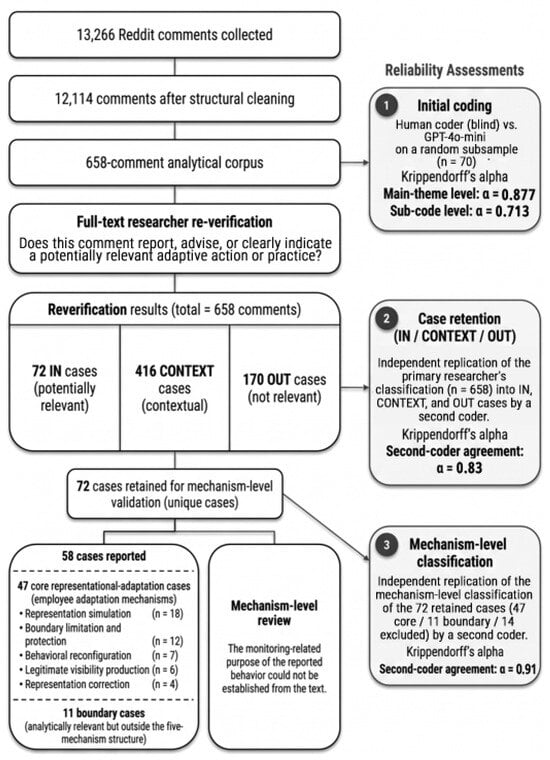
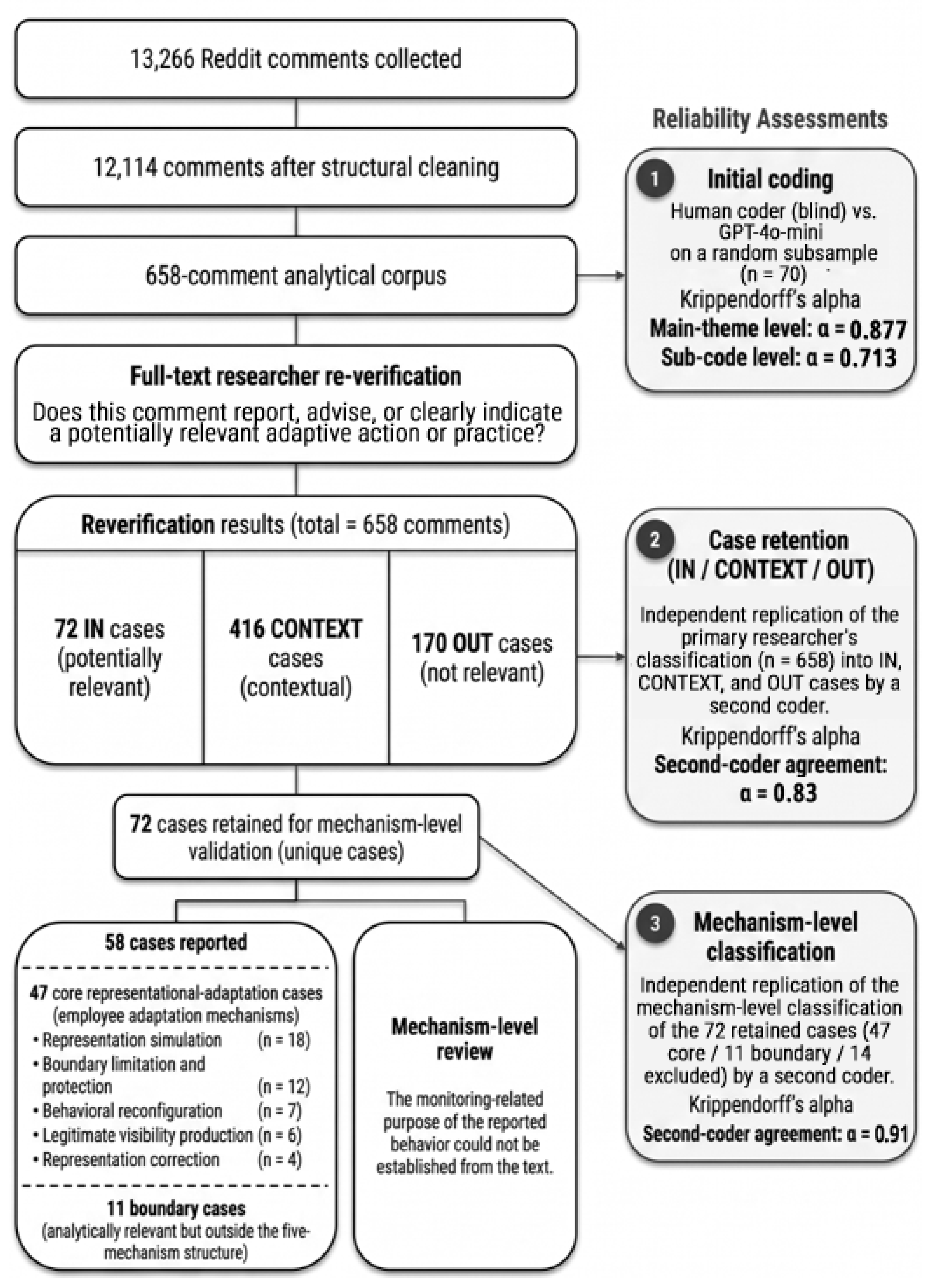
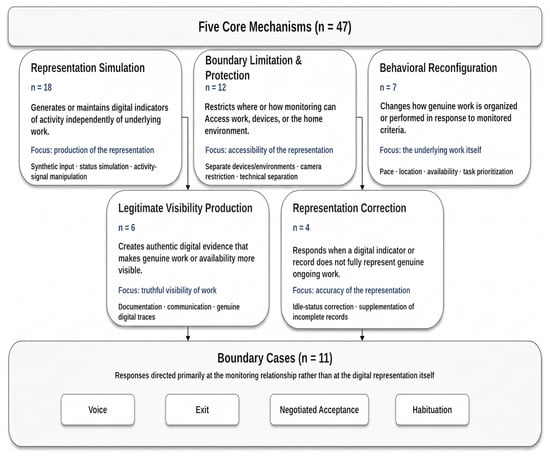
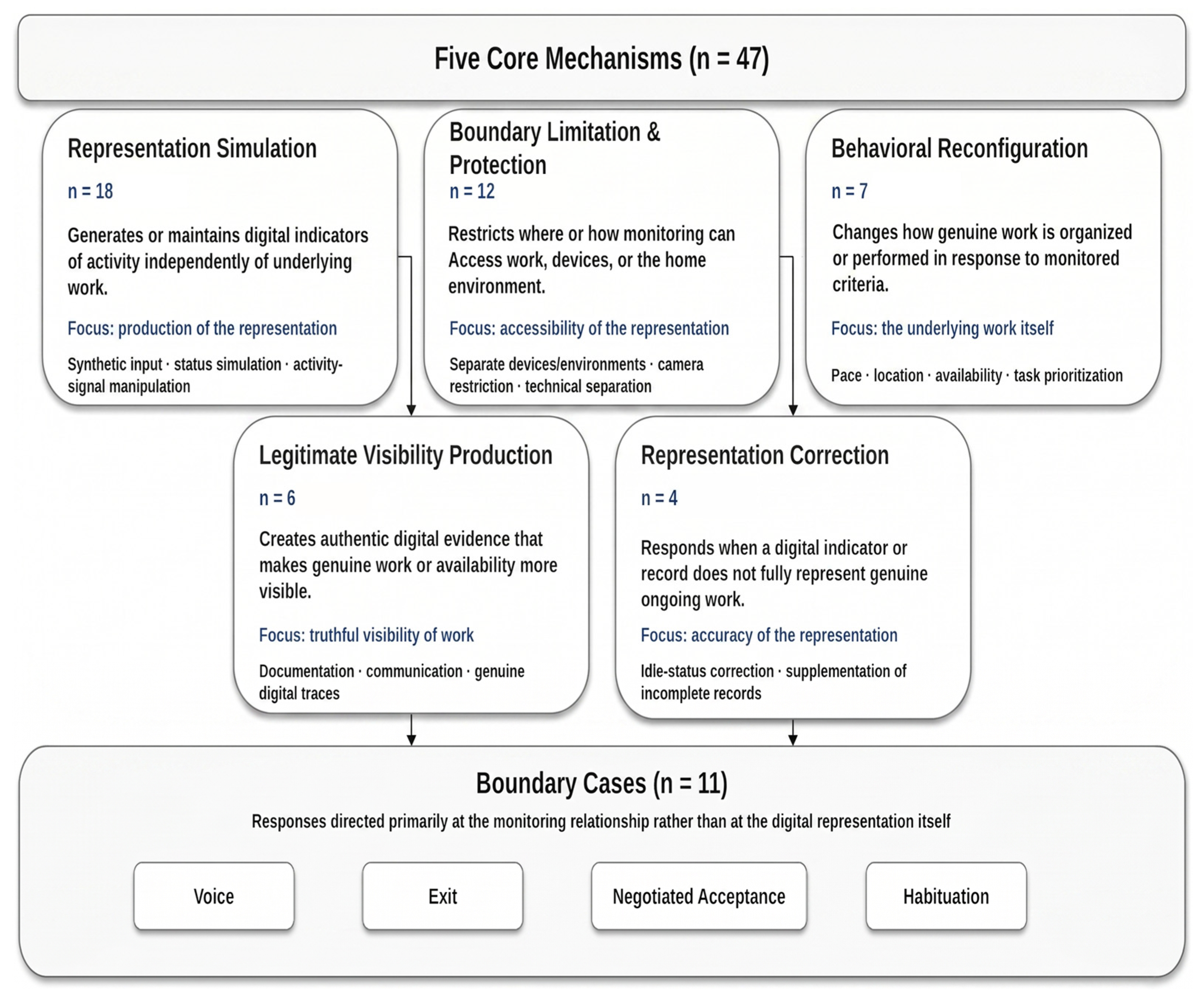

Disclaimer/Publisher’s Note: The statements, opinions and data contained in all publications are solely those of the individual author(s) and contributor(s) and not of MDPI and/or the editor(s). MDPI and/or the editor(s) disclaim responsibility for any injury to people or property resulting from any ideas, methods, instructions or products referred to in the content. |
© 2026 by the authors. Licensee MDPI, Basel, Switzerland. This article is an open access article distributed under the terms and conditions of the Creative Commons Attribution (CC BY) license.