


Abstract
Blockchain technology has emerged as a promising instrument for public sector digital transformation, yet its implementation remains constrained by technological, organizational, and institutional factors. This study’s aim is to identify the influence factors of blockchain implementation in the Romanian public sector by examining the effects of decision-makers’ knowledge and understanding of blockchain, existing technological infrastructure, legislative regulations, blockchain system interoperability, and public–private collaboration. Data was collected through a questionnaire applied to public sector employees involved in digitalization processes at central, regional, and local levels, resulting in 125 valid responses. The designed conceptual model was tested using Partial Least Squares Structural Equation Modeling (PLS-SEM). The findings support all five research hypotheses and highlight that decision-makers’ knowledge and understanding of blockchain has the strongest direct effect on blockchain implementation (β = 0.354, p < 0.001), while legislative regulations, interoperability, and public–private collaboration also exert significant positive effects. The study contributes to the literature by integrating technological, organizational, institutional, and relational determinants into an empirical framework designed for public administration and provides practical insights for public decision-makers.
1. Introduction
Over time, blockchain technology has established itself as a set of innovations that captures interest and attracts investment from both government institutions and private enterprises, its innovative potential being evident both in its ability to replace traditional technologies and processes, as well as in its capacity to improve performance and enhance cost and operational efficiency in public administration activities.
Public sector activity is constantly shaped by legislative, technological, and strategic changes. The significant influence that public administration exerts on sustainable economic growth, social cohesion, and the overall governance of a state is intrinsically linked to the skills and competencies acquired by public sector employees. Among the competencies with a major impact on improving the efficiency of public sector operations, innovative digital capabilities rank first (OECD/CAF, 2023). Growing awareness and increased interest in the implementation of digital technologies have brought digital transformation to the forefront of organizational agendas and within the public sector (Hafeez et al., 2025). As a result of this recognition, the value and impact of emerging technologies, such as blockchain, have increased, and blockchain is now beginning to play an essential role in driving digital transformation.
The adoption of blockchain in the public sector is attracting increasing attention as governments seek innovative solutions to keep up with social changes and scientific advances in society (Dehghani et al., 2022). The public sector is a key area for blockchain applications, with an increasing number of use cases being reported globally by governments and public organizations. The public sector’s interest in blockchain stems from its potential to restore and maintain trust in public institutions through decentralization and transparency.
The purpose of this research is to identify the impact on the implementation of blockchain technology in the public sector of variables such as the level of knowledge and understanding of blockchain technology, the capacity of the existing technological infrastructure in public institutions, the current legislative regulations, the interoperability among existing blockchain systems, and the collaboration between the public and private sectors.
2. Literature Review
The digital transformation of public administration is one of the major priorities of governments around the world, and blockchain technology is considered an innovative solution capable of contributing to the modernization of public services. The literature highlights that blockchain offers the possibility of creating decentralized, transparent, and secure systems that can improve administrative efficiency, reduce bureaucracy, and increase citizens’ trust in public institutions (Alketbi et al., 2020; Ali et al., 2026). Unlike traditional databases, blockchain allows for information to be stored and verified in a distributed ledger, reducing the risk of unauthorized data alteration and enhancing the traceability of administrative processes.
The researchers point out that the technological advantages of blockchain are one of the main factors driving the adoption of this technology in the public sector. Features such as decentralization, immutability of ledgers, and transaction transparency help increase trust in administrative processes and reduce the risks associated with data manipulation (AlShamsi et al., 2022; Taherdoost, 2022).
The blockchain’s ability to ensure information integrity and resistance to unauthorized modifications is one of the main arguments for its adoption in the public sector. Research shows that the perception of security levels directly influences the intention to implement blockchain (Benchis et al., 2025). Cybersecurity is one of the most important factors influencing blockchain adoption in the public sector. In an empirical study of national governments, Allessie et al. (2019) demonstrated that the level of cybersecurity and government effectiveness are significant predictors of blockchain adoption.
Scalability is one of the major challenges of blockchain technology. Public administrations handle large volumes of data and transactions, and limitations on processing speed can affect system performance. Integrating blockchain with existing IT systems is essential for successful implementation. The lack of common standards and interoperability challenges are frequently identified as significant barriers. Although blockchain offers significant benefits in terms of data traceability and integrity, limitations regarding scalability and interoperability continue to pose major challenges (Murano et al., 2026). Recent studies show that difficulties in integrating with existing IT systems and the lack of common standards are slowing the pace of implementation in public organizations (Y. Chen & Bellavitis, 2020; Murano et al., 2026).
Systematic reviews of the literature indicate that the availability of resources, staff digital skills, and management support directly influence the adoption process (Sharma et al., 2022). The level of employee training significantly influences an organization’s ability to adopt and effectively use new technologies. The blockchain skills gap is a challenge frequently mentioned in studies. The shortage of blockchain specialists is one of the most frequently cited barriers in the recent literature. The lack of technical expertise affects the ability of public institutions to develop, implement, and manage distributed ledger-based solutions (Murano et al., 2026). Financial, technical, and human resources influence the ability of public institutions to implement and maintain blockchain infrastructures. Furthermore, recent studies highlight that public institutions are motivated to adopt blockchain to improve transparency and administrative accountability, but maintaining compatibility with existing systems is often an essential condition (Benchis et al., 2025; Almi’ani et al., 2026).
Recent studies highlight that blockchain can improve transparency, transaction security, and coordination among stakeholders in public administration (Ølnes et al., 2017; Ali et al., 2026). However, the literature also highlights the existence of significant barriers, such as high implementation costs, a lack of standardization, difficulties in integrating with existing IT systems, and low levels of digital readiness within some public entities (Batubara et al., 2018; Khalfan et al., 2022).
The Level of Knowledge and Understanding of Blockchain Technology Among Decision-Makers in Public Administration (NCI)
The literature on the adoption of emerging technologies highlights the fact that the level of knowledge and understanding of a technology significantly influences the decision-making process regarding its implementation. Currently, the biggest challenges in the workplace are related to digital transformation (Hajian Berenjestanaki et al., 2023; Bisoyi, 2025). The rapid evolution of digital technologies has a significant impact on work management and human resource strategies (Tan et al., 2021). Digital transformation is revolutionizing the workplace and the business environment, driven by the primary goal of increasing efficiency and productivity (Viriyasitavat et al., 2022). In the case of blockchain, decision-makers must understand both the technological principles (decentralization, traceability, immutability) and the benefits and limitations associated with its use in the public sector. A lack of specific skills and knowledge can generate resistance to change and slow down the adoption of technology.
Studies conducted by Zhang et al. (2024) highlight that a lack of technical knowledge is one of the main barriers to the adoption of blockchain at the organizational level. In the context of public administration, decision-makers play a crucial role in initiating and supporting digital transformation processes. According to research by Alketbi et al. (2020), the success of blockchain implementation depends to a significant extent on the level of understanding of the technology among managers and leaders of public institutions. The authors emphasize that low levels of digital literacy and a lack of skills regarding emerging technologies can generate resistance to change and difficulties in assessing the potential benefits of blockchain.
In line with these findings, we designed first hypothesis:
H1.
The level of knowledge and understanding of blockchain technology by public administration decision-makers (NCI) has a significant positive influence on blockchain technology implementation and adoption (ITB).
Capacity of the Existing Technological Infrastructure in Public Institutions (CIT)
Blockchain implementation requires an adequate digital infrastructure capable of supporting the integration of new technological solutions. The literature on digital transformation highlights the fact that IT infrastructure is a critical factor in the successful implementation of innovative technologies. The availability of modern IT systems, adequate hardware and software resources, and specialized technical staff facilitates the adoption of blockchain.
According to research conducted by Ølnes et al. (2017), public institutions with a high level of digital maturity are more likely to adopt and integrate blockchain solutions into their administrative processes. Furthermore, Yli-Huumo et al. (2016) and Khalfan et al. (2022) show that the success of implementation depends on the availability of adequate technological resources and specialized staff capable of managing the new systems. Thus, the capacity of the technological infrastructure becomes an essential factor in reducing implementation costs and increasing the efficiency of the adoption process.
Based on these arguments, the following hypothesis was proposed:
H2.
The capacity of the existing technological infrastructure in public institutions (CIT) significantly influences the level of knowledge and understanding of blockchain technology among decision-makers in public administration (NCI).
Current Legislative Regulations (RLA)
The adoption of blockchain technology in the public sector is strongly influenced by the legislative and regulatory framework. Clear regulations adapted to new technologies help reduce legal uncertainties and increase organizations’ confidence in using blockchain. In the absence of an adequate legislative framework, implementation may be delayed or limited.
According to a study by Atzori (2017), the development of blockchain applications is often slowed down by legal uncertainties regarding liability, security, and data protection. Similarly, the European Blockchain Observatory and Forum (https://eblockchainconvention.com) highlights that harmonizing regulations at the European level is essential for stimulating the adoption of blockchain in public administration. Thus, the existence of clear regulations adapted to new technological realities can create a favorable environment for the widespread implementation and use of blockchain.
These arguments lead to the proposal of the following hypothesis:
H3.
Current legislative regulations (RLA) have a positive impact on blockchain technology implementation and adoption (ITB).
Interoperability Between Existing Blockchain Systems (ISB)
Interoperability is the ability of different IT systems to communicate and exchange information efficiently. In the context of blockchain, interoperability facilitates the exchange of data between different institutions and platforms, helping to increase efficiency and expand the use of the technology in the public sector.
According to Popoola et al. (2024), the lack of interoperability between blockchain platforms can significantly limit the potential of this technology and generate fragmentation of the digital ecosystem.
In public administration, interoperability facilitates the integration of services and the development of digital ecosystems capable of delivering efficient and transparent public services. According to research conducted by Janssen et al. (2020), technological interoperability contributes to reducing data redundancy, optimizing information flows, and improving inter-institutional collaboration. Furthermore, projects developed within the European Blockchain Services Infrastructure (EBSI) highlight the importance of standardization and compatibility of blockchain systems for creating integrated digital public services at the European level.
Thus, we formulated the following hypothesis:
H4.
There is a positive correlation between interoperability among existing blockchain systems (ISB) and blockchain technology implementation and adoption (ITB).
Public–Private Partnerships (CPP)
Public–private partnerships are a key factor in the transfer of knowledge, expertise, and resources needed to implement emerging technologies. In the case of blockchain, collaboration with IT companies, universities, and specialized organizations can accelerate the adoption process and reduce the risks associated with implementation. According to research by Konstantinidis et al. (2018), public–private partnerships help reduce implementation costs, facilitate the transfer of skills, and mitigate the risks associated with adopting emerging technologies. At the same time, Li et al. (2022) show that blockchain projects implemented in the public sector achieved better results when they benefited from the expertise of specialized companies and collaboration with academia. Thus, collaboration between the public and private sectors can be a determining factor in the successful implementation of blockchain.
Based on a review of the relevant literature, we have formulated the following hypothesis:
H5.
Public–private partnerships (CPP) have a positive influence on the blockchain technology implementation and adoption (ITB).
The present study adopts the Technology–Organization–Environment (TOE) framework as its primary theoretical lens for explaining blockchain adoption in public administration. The TOE framework provides an appropriate organizational-level perspective because technology adoption is understood as the result of the interaction between technological conditions, organizational capabilities, and the external environment in which an organization operates. This perspective is particularly relevant to public organizations, where emerging technology adoption depends not only on the technical characteristics of the innovation but also on internal administrative capabilities, regulatory constraints, institutional arrangements, and relationships with external actors.
Within the technological context, the model incorporates the technological infrastructure capacity (CIT) and interoperability between blockchain systems (ISB), both of which determine whether public institutions possess an adequate technological environment for integrating distributed ledger solutions. The organizational context is represented by decision-makers’ knowledge and understanding of blockchain technology (NCI), reflecting the internal cognitive and managerial capacity required to evaluate and support technological innovation. Finally, the environmental context includes current legislative regulations (RLA) and public–private partnership (CPP), reflecting the regulatory and inter-organizational environment surrounding blockchain adoption. Accordingly, the proposed model adapts the TOE logic to the institutional characteristics of public administration and provides an integrated framework for examining blockchain implementation readiness in the Romanian public sector.
These relationships reflect complementary mechanisms through which the technological, organizational, and environmental contexts shape blockchain implementation in public administration. Technological infrastructure and interoperability determine whether blockchain solutions can be technically accommodated and integrated, while decision-makers’ knowledge provides the organizational cognitive capacity required to evaluate their benefits, limitations, and implementation requirements.
3. Research Methodology
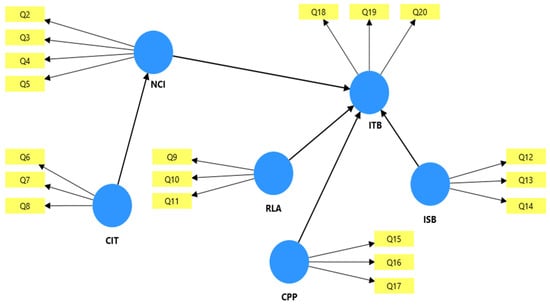
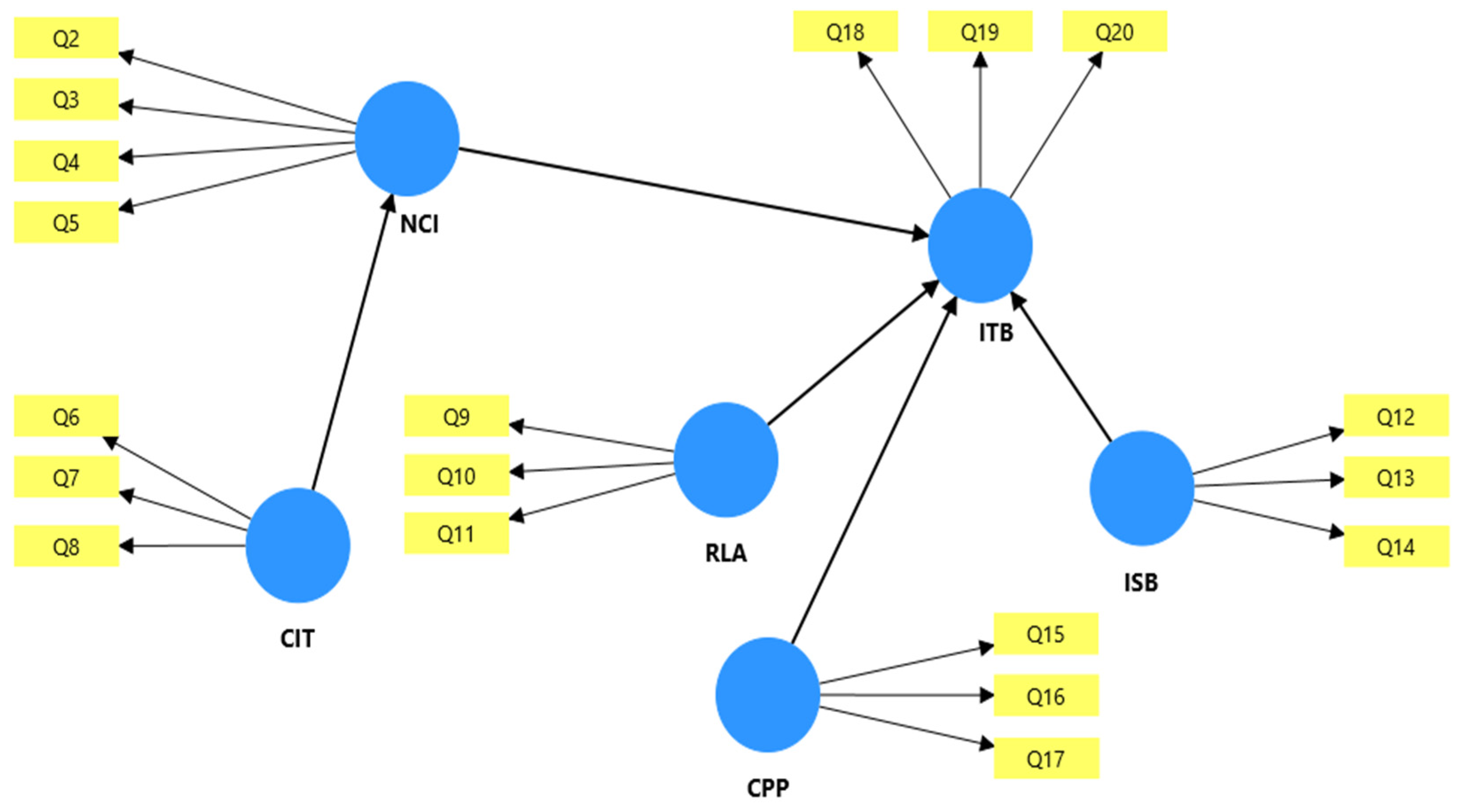
We conducted this research using structural equation modeling with the partial least squares method (SEM-PLS), since for each mentioned variable, which serves as a predictor of blockchain technology implementation, specific indicators were identified that reflect that variable. All six constructs included in the model were specified as reflective measurement models. This specification was theoretically based on the assumption that the observed indicators represent manifestations of their underlying latent constructs. Accordingly, changes in the latent construct are expected to be reflected in changes in its associated indicators, while the indicators are expected to share a common conceptual domain. The reflective specification is also consistent with the subsequent assessment of internal consistency reliability, convergent validity, and discriminant validity. The structural model developed is presented in Figure 1, highlighting the relationships between variables through five hypotheses. Six latent variables are presented: NCI (level of knowledge and understanding); CIT (technological infrastructure capacity); RLA (current legislative regulations); ISB (interoperability between blockchain systems); CPP (public–private partnership); and ITB (blockchain technology implementation and adoption).
Figure 1.
Conceptual model. Source: Results generated in SmartPLS 4 software.
The empirical research was based on an analysis of a questionnaire distributed via Google Forms; invitations to complete the questionnaire were sent between November 2025 and December 2025 to the representatives of Romanian public institutions at the central, regional, and local levels. The questionnaire was developed based on the theoretical determinants of blockchain adoption identified in the literature review. The items were formulated to operationalize six constructs relevant to blockchain adoption in public administration: knowledge and understanding of blockchain technology among decision-makers (NCI), capacity of the existing technological infrastructure (CIT), current legislative regulations (RLA), interoperability between blockchain systems (ISB), public–private partnership (CPP), and blockchain technology implementation and adoption (ITB). The theoretical basis used to inform the operationalization of each construct and the corresponding measurement items is presented in Table 1.
Table 1.
Constructs and items.
The ITB construct was operationalized through three items representing different stages of institutional engagement with blockchain technology: the existence of pilot projects, current or planned use of blockchain for data or official document management, and the intention to expand blockchain use in the near future. ITB is interpreted in this study as blockchain technology implementation and adoption, encompassing a continuum from experimentation and planned adoption to current use and prospective expansion.
A total of 125 responses were collected from both senior/leading civil servants and front-line staff involved in the digitization process and validated. All 19 questionnaire items relating to the variables on which the hypotheses were based were evaluated using a 5-point Likert scale with the following values: 1—totally agree; 2—agree; 3—neither agree nor disagree; 4—disagree; 5—totally disagree.
The sample analyzed, consisting of 125 respondents from public administration institutions, reveals the following socio-demographic characteristics (Table 2). In terms of gender distribution, there is a slight predominance of females (54.4%) compared to males (45.6%). This relatively balanced distribution helps to reduce the risk of potential distortions caused by the predominance of a particular gender and allows for the capture of diverse perspectives on the digitization process and the implementation of blockchain technology in the public sector.
Table 2.
Respondent profile.
An analysis of the age distribution shows that the majority of respondents fall into the 36–45 age group (39.2%) and the 46–55 age group (40.8%), which means that over 80% of the participants are in the age range associated with significant professional experience and active involvement in decision-making and operational processes within public institutions. The low proportion of respondents under the age of 35 (15.2%) suggests that the implementation of digital transformation projects is primarily managed by staff with extensive professional experience and a good knowledge of administrative processes.
In terms of their position within the institution, most of the respondents are operational staff (56%), followed by middle management (30.4%) and top management (13.6%). This distribution is relevant to the research objectives, as it allows for the collection of opinions both from the perspective of staff directly involved in the implementation and use of digital solutions, and from the perspective of decision-makers responsible for initiating and coordinating digital transformation projects.
An important aspect of the respondents’ profile is their experience in implementing digital technologies. The data show that half of the participants (50.4%) have more than 10 years of experience in this field, while 19.2% have between 5 and 10 years of experience. Thus, approximately 70% of respondents have considerable professional experience in digitization processes, which provides credibility and relevance to the answers delivered.
The respondents’ high level of experience suggests that they have been involved in various digital transformation projects and are familiar with the challenges associated with implementing emerging technologies in public administration. From this perspective, the opinions expressed can be considered based on practical experience and direct knowledge of organizational processes, which contributes to the validity of the conclusions drawn in this study.
4. Results and Discussion
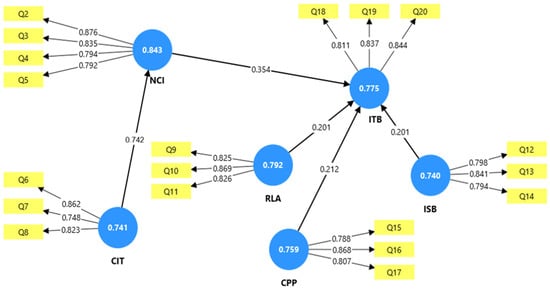
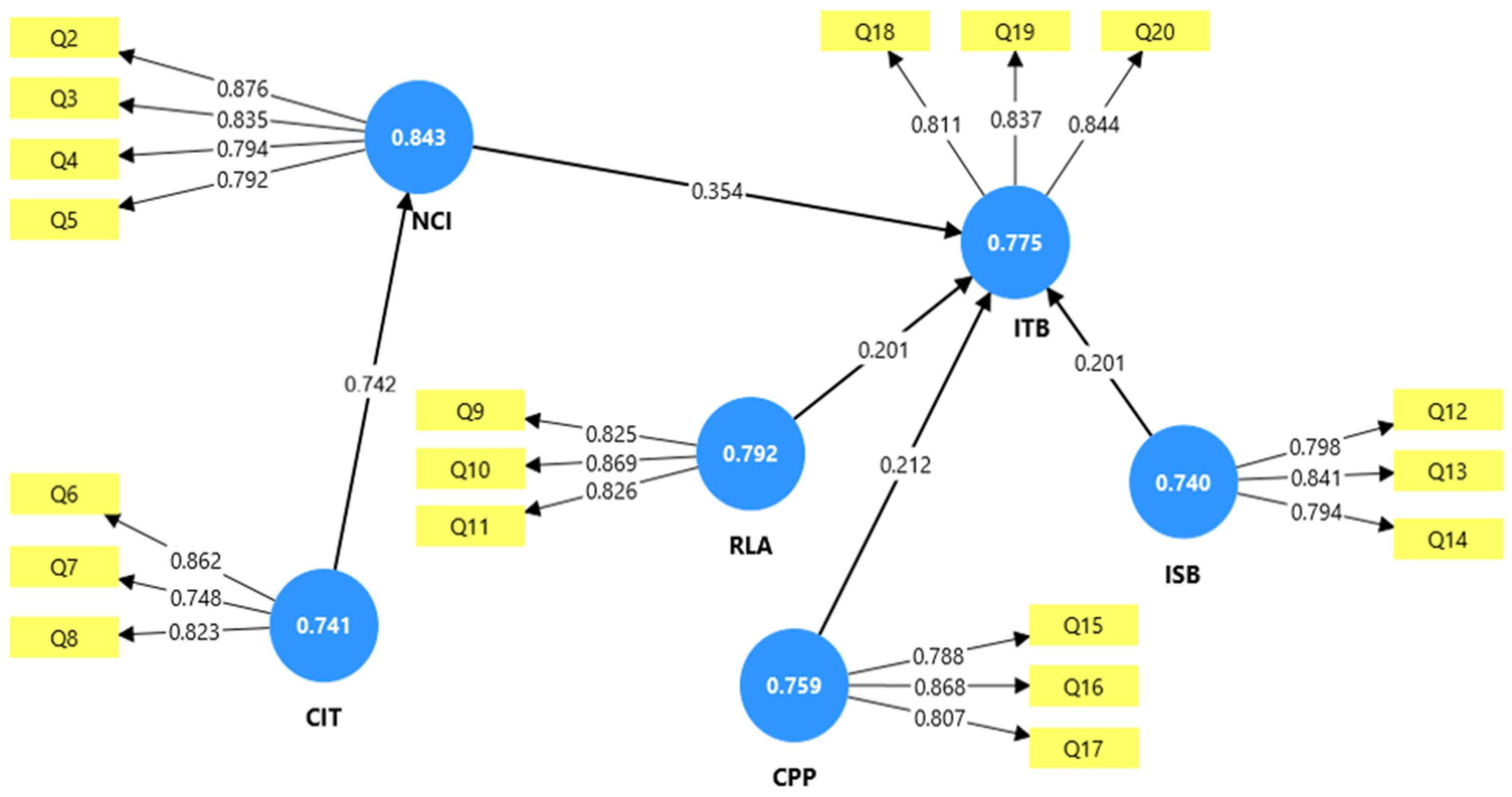
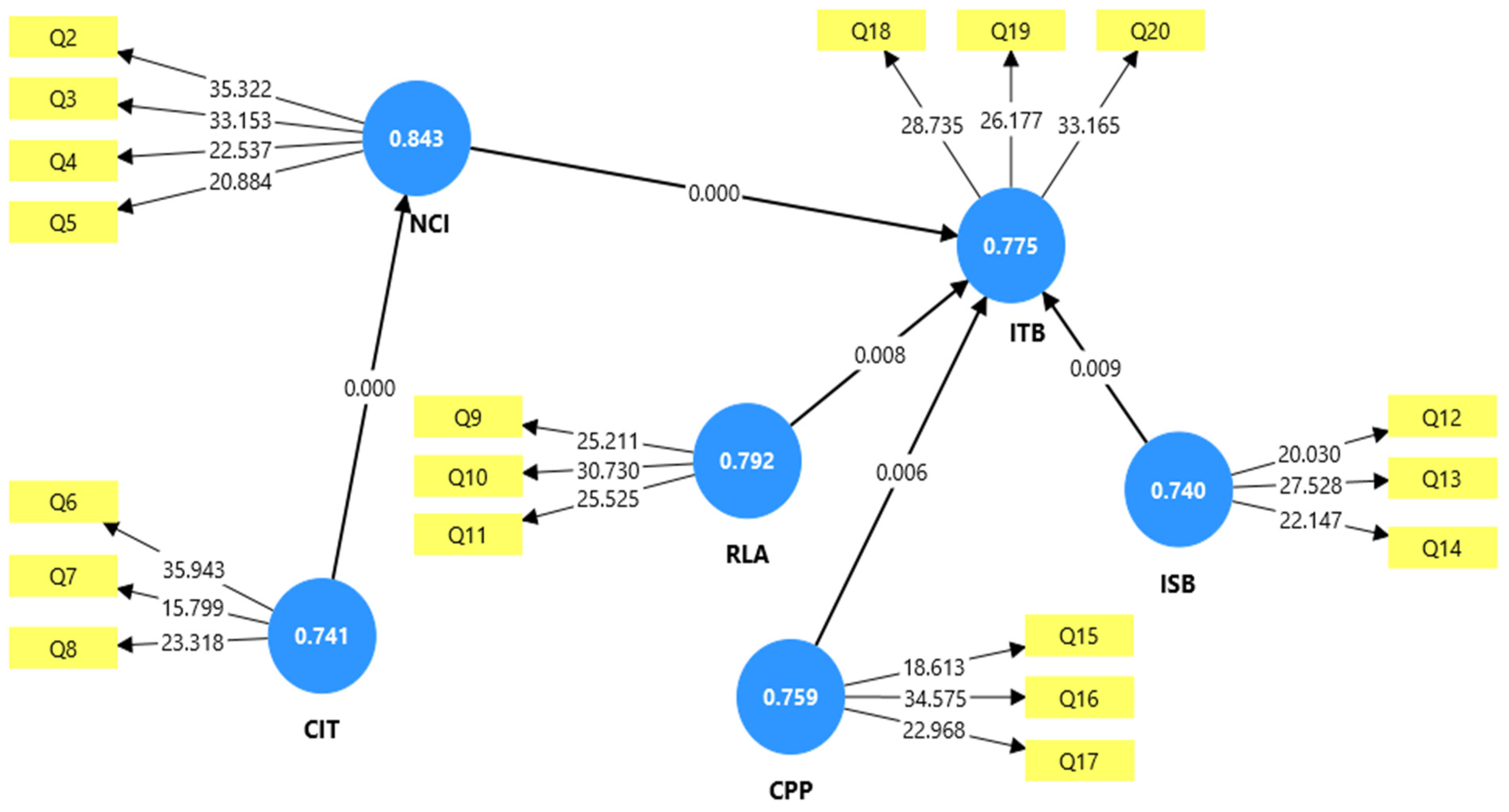
Figure 2 highlights the relationships between the latent variables included in the research model, indicated by arrows pointing from the exogenous latent variable (considered a predictor) to the dependent (endogenous) latent variable. The diagram also illustrates variables that can be measured using a reflective approach (the arrows point from the variables to the indicators).
Figure 2.
Effect coefficients and external loadings of latent reflective variables. Source: SmartPLS 4 software processing.
The statistical contributions of each item to each latent variable are reflected in the external values of the latent reflective variables. The structural model shows us that the variable capacity of the existing technological infrastructure in public institutions (CIT) has the strongest effect on the level of knowledge and understanding of blockchain technology among public administration decision-makers (NCI), as the effect coefficient associated with this relation is the highest (0.742), while current legislative regulations (RLA) and interoperability among existing blockchain systems (ISB) have a weaker effect on the blockchain technology implementation and adoption (ITB), as the value of the effect coefficients associated with these two relations is the lowest (0.201). Public and private partnership (CPP) also has a low effect on blockchain technology implementation and adoption (ITB), with the effect coefficient associated with this connection being 0.212, while the level of knowledge and understanding of blockchain technology among public administration decision-makers (NCI) has a moderate effect on the implementation of this technology, with an effect coefficient of 0.354 associated with this relation.
The model explains 84.3% of the variance in NCI (R2 = 0.843) and 77.5% of the variance in ITB (R2 = 0.775), indicating substantial explanatory power for the endogenous constructs.
The next phase of the analysis involved evaluating the reflective measurement model by determining the level of internal consistency (Cronbach’s alpha and composite reliability), convergent validity using average variance extracted (AVE), and discriminant validity assessed according to the Fornell–Larcker criterion and the heterotrait–monotrait (HTMT) correlation ratio. As can be seen in Table 3, all alpha values exceed the minimum threshold of 0.7 accepted for this indicator (very high values, such as those above 0.95, may suggest redundancy among items). This indicates the strength of the correlation among the variables within the structural model.
Table 3.
Construct reliability and validity.
By combining all the variances and covariances of the actual score of the composite indicators within the latent variables, we obtained composite reliability (composite confidence level), a measure of reliability that takes into account the varying values of the indicators. Acceptable values for composite reliability should be greater than 0.7. In this analysis, we observe that the scores for this indicator exceeded the recommended minimum threshold for all six reflective variables.
The degree of association between two variables was measured using a nonparametric test, namely Spearman’s Rho correlation coefficient (r = 1—perfect positive correlation; r = −1—perfect negative correlation). A positive correlation was observed for all six reflective variables.
The convergent validity of the model is evaluated using the extracted average variance (AVE), which measures the variance that is captured by a variable in relation to the variance due to the measurement error. Generally, an AVE value of at least 0.5 is expected; otherwise, the variance due to measurement error is greater than the explained variance. In our case, all six variables have AVE values above the recommended threshold, with the highest value (0.706) found for the RLA variable (current legislative regulations).
Discriminant validity was assessed by comparing the square root of the extracted average variance (AVE) with the correlation of the latent variables (the Fornell–Larcker criterion). A latent variable should better explain the variance of its own indicators than the variance of other latent variables. Therefore, the square root of the AVE for each reflective variable should have a higher value than the correlations with other latent variables, a finding confirmed in this study, where it can be observed (Table 4) that the values obtained for all six reflective variables are higher than the correlations with the other latent variables.
Table 4.
Assessment of discriminant validity for the reflective measurement model (Fornell–Larcker criterion).
Another measure for ensuring discriminant validity is the heterotrait–monotrait (HTMT) correlation ratio, which is used to increase the consistency of the analysis. This ratio allows for higher rates of specificity and reliability than the cross-loading method and the Fornell–Larcker criterion (Hair et al., 2021). HTMT values close to 1 indicate a lack of discriminant validity. Using the HTMT as a criterion involves comparing it to a predefined threshold, with some authors suggesting a minimum threshold of 0.85. If the HTMT value is higher than this threshold, it can be concluded that there is a lack of discriminant validity. In our study, the HTMT ratio values fell below the minimum threshold for all structural relations between variables (Table 5). HTMT values below 0.85 are considered acceptable, as discriminant validity is clear and the constructs are sufficiently distinct.
Table 5.
Evaluation of discriminant validity for the reflective measurement model (heterotrait–monotrait correlation ratio—HTMT).
The PLS-SEM method uses a nonparametric bootstrap procedure to test the significance of the estimated relationship coefficients. Thus, subsamples are created using observations randomly extracted from the original dataset (by replacement). The subsample is then used to estimate the structural model. This process is repeated until a large number of random data samples have been generated.
The assessment of collinearity at the indicator level shows that all VIF values are well below the commonly recommended thresholds. The values range from 1.338 (Q7) to 2.316 (Q2), indicating a low degree of collinearity among the measurement indicators (Table 6). None of the indicators exceed the conservative threshold of 3, and all values are also substantially below the threshold of 5. The results provide no evidence of problematic multicollinearity at the indicator level, supporting the stability of the measurement model.
Table 6.
VIF assessment of the structural model.
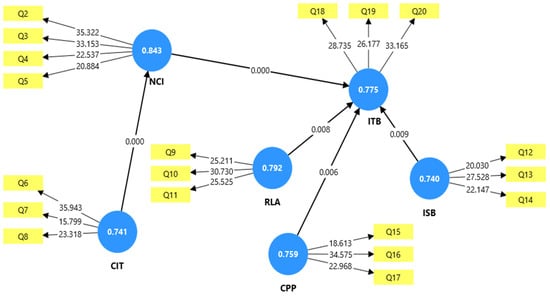
Figure 3 shows the structural model generated after applying the bootstrap procedure; the asymptotic significance values (p-values) for the relations between the latent variables are highlighted.
Figure 3.
Determining p-values associated with the relationships between the model variables following bootstrapping. Source: processed using Smart PLS 4 software.
The data in Table 7 is necessary to validate or invalidate the hypotheses of the structural model under analysis. Since the p-values do not exceed the maximum acceptable significance level of 0.05, all five hypotheses have been validated.
Table 7.
Values of the asymptotic significance p and the t-test for the 5 hypotheses in the structural model.
This study, conducted using structural equation modeling with the partial least squares method, summarizes the validity of the measurement model and the predictive power of the structural relations. These findings confirm the theoretical hypotheses by evaluating the R2 coefficients, the statistical significance of the path coefficients, and the relevance of the effects.
5. Conclusions
The research results contribute to the development of the literature on the adoption of emerging technologies in the public sector by validating a conceptual model that integrates technological, organizational, and institutional factors influencing the implementation of blockchain technology. The validation of all hypotheses confirms that the process of adopting blockchain technology in public administration does not depend exclusively on the technological characteristics of the solution but is the result of the interaction between decision-makers’ competencies, existing technological infrastructure, the legislative framework, system interoperability, and collaboration with external stakeholders. Thus, this research extends the applicability of established technology adoption model, such as the Technology Organization Environment Framework (TOE), to the specific context of public administration and blockchain technologies. The TOE model is considered particularly relevant to the public sector because it allows for the simultaneous analysis of technological, organizational, and environmental factors that influence blockchain implementation (Benchis et al., 2025; Zhang et al., 2024).
An important theoretical contribution is the highlighting of the central role played by decision-makers’ level of knowledge and understanding of blockchain technology. The validation of Hypothesis H1 confirms that the success of blockchain implementation is influenced not only by the availability of the technology, but also by the ability of the stakeholders involved to understand its benefits, limitations, and implications. At the same time, the validation of Hypothesis H2 demonstrates the existence of an indirect relationship between technological infrastructure and blockchain implementation. This relation contributes to a deeper understanding of the mechanisms through which organizational digital maturity influences the adoption of technological innovations.
The results also highlight the importance of institutional and relational factors in the blockchain implementation process. The validation of hypotheses regarding the legislative framework, interoperability, and public–private collaboration supports the view that the success of digital transformation depends on the existence of an ecosystem favorable to innovation. Thus, this research contributes to the literature on digital governance and the digital transformation of public administration, demonstrating that blockchain implementation must be analyzed within a systemic approach, in which technological, organizational, and institutional aspects are interdependent.
From a managerial perspective, the research findings highlight the need to develop the digital skills of decision-makers in public administration. The validation of the hypothesis regarding the positive influence of the level of knowledge and understanding of blockchain on the implementation of this technology suggests that professional training programs, specialized courses, and digital literacy initiatives should be a priority for public institutions. Investments in human capital development can help reduce resistance to change and increase an organization’s capacity to adopt emerging technologies.
The results also highlight the importance of strengthening the existing technological infrastructure in public administration. Since the capacity of the infrastructure influences the level of knowledge and readiness for blockchain adoption, public institutions must continue to invest in modernizing IT systems, digitizing processes, and developing internal technical skills. A high-performance digital infrastructure is an essential prerequisite for the efficient implementation of blockchain solutions and their integration into existing digital ecosystems.
At the same time, the validation of the legislative framework’s influence on blockchain implementation highlights the need to develop clear regulations adapted to emerging technologies. Decision-makers must promote public policies that provide legal predictability and reduce the uncertainties associated with the use of blockchain in public administration. At the same time, it is necessary to develop standards and mechanisms for interoperability among existing systems to facilitate data exchange and the integration of digital public services.
The research results highlight the strategic role of collaboration between the public and private sectors. Public–private partnerships can accelerate the transfer of expertise, access to technological resources, and the development of pilot projects that demonstrate the benefits of using blockchain in public administration. In this context, public institutions should encourage collaboration with technology companies, universities, and research centers to develop innovation ecosystems capable of supporting the digital transformation and modernization of public services.
At the strategic level, the research results suggest that the implementation of blockchain in public administration must be approached through integrated policies that combine investments in digital infrastructure, skills development, adaptation of the legislative framework, and the promotion of inter-institutional collaboration. The validation of all hypotheses indicates that the success of blockchain implementation cannot be ensured through isolated interventions, but requires a coordinated approach aimed at creating a mature and interoperable digital ecosystem.
A further limitation concerns respondents’ direct blockchain implementation experience. Although all participants were professionally involved in the implementation of digital technologies within public institutions, the questionnaire did not separately measure whether they had personally participated in blockchain implementation projects. Future research should explicitly distinguish between respondents with blockchain experience and those with broader digitalization responsibilities.
The relatively small sample size and the uneven distribution of respondents across administrative levels and geographical regions may limit the generalizability of the results to the entire Romanian public sector. Future research will focus on extensive empirical analyses, the evaluation of implemented projects, and the development of methodological frameworks capable of supporting decisions regarding the adoption of blockchain technology in public administration.
Author Contributions
Conceptualization, R.O.K. and F.O.V.; methodology, R.O.K. and F.O.V.; software, C.G.Z.; validation, R.O.K., F.O.V. and D.Z.; formal analysis, C.G.Z. and D.Z.; investigation, C.G.Z.; resources, R.O.K.; writing—original draft preparation, F.O.V.; writing—review and editing, R.O.K. and F.O.V. All authors have read and agreed to the published version of the manuscript.
Funding
This research received no external funding.
Institutional Review Board Statement
Ethical review and approval were not required for this study in accordance with the national legislation and the EU General Data Protection Regulation (GDPR) (EU) 2016/679 (https://eur-lex.europa.eu/eli/reg/2016/679/oj, accessed on 10 January 2026). The present study involved anonymous questionnaires with no risk to participants, and the data collected did not constitute personal data as defined in Recital 26 of the GDPR.
Informed Consent Statement
Informed consent was obtained from all subjects involved in this study.
Data Availability Statement
The authors declare that all data underlying the findings are fully accessible without restriction, and researchers interested in these data can contact the corresponding author to request the data used to make the results in this article.
Conflicts of Interest
The authors declare no conflicts of interest.
References
- Ali, M. F., Abbasi, M. H., Zeb, A., Joshi, S., & Javaid, S. (2026). Blockchain-based systems for public sector transparency: Exploring the use of blockchain technology to enhance transparency and accountability in public sector transactions. Social Science Review Archives, 4(1), 904–919. [Google Scholar] [CrossRef] [Scilit]
- Alketbi, A., Nasir, Q., & Talib, M. A. (2020). Novel blockchain reference model for government services: Dubai government case study. International Journal of System Assurance Engineering and Management, 11(6), 1170–1191. [Google Scholar] [CrossRef] [Scilit]
- Allessie, D., Sobolewski, M., Vaccari, L., & Pignatelli, F. (2019). Blockchain for digital government: An assessment of pioneer projects. European Commission—Joint Research Centre. Available online: https://interoperable-europe.ec.europa.eu/sites/default/files/document/2019-04/JRC115049%20blockchain%20for%20digital%20government.pdf (accessed on 12 March 2026).
- Almi’ani, K., Mirza, S. B., Siyam, N., & Al-Jaziri, S. A. (2026). Global adoption and impact of blockchain technology in government: Enhancing transparency, efficiency, and trust in public services. Information, 17(3), 235. [Google Scholar] [CrossRef] [Scilit]
- AlShamsi, M., Al-Emran, M., & Shaalan, K. (2022). A systematic review on blockchain adoption. Applied Sciences, 12(9), 4245. [Google Scholar] [CrossRef] [Scilit]
- Atzori, M. (2017). Blockchain technology and decentralized governance: Is the state still necessary? Journal of Governance and Regulation, 6(1), 45–62. [Google Scholar] [CrossRef] [Scilit]
- Batubara, F. R., Ubacht, J., & Janssen, M. (2018, May 30–June 1). Challenges of blockchain technology adoption for e-government: A systematic literature review. Proceedings of the 19th Annual International Conference on Digital Government Research, Delft, The Netherlands. [Google Scholar] [CrossRef] [Scilit]
- Benchis, M. P., Shahzad, K., & Dan, S. (2025). Comparative analysis of blockchain adoption in the public and private sectors: A technology-organization-environment (TOE) framework approach. Journal of Innovation & Knowledge, 10(4), 100746. [Google Scholar] [CrossRef] [Scilit]
- Bisoyi, A. (2025). Understanding blockchain and its normative implications blockchain and legitimacy. In Blockchain and legitimacy. Springer. [Google Scholar] [CrossRef] [Scilit]
- Chen, Y., & Bellavitis, C. (2020). Blockchain disruption and decentralized finance: The rise of decentralized business models. Journal of Business Venturing Insights, 13, e00151, (Erratum in 2021, Journal of Business Venturing Insights, 15, e00230). [Google Scholar] [CrossRef] [Scilit]
- Chen, Z., Celik, S. E., & Sarkis, J. (2026). A systematic review of academic literature for blockchain application in government and public service. Journal of Enterprise Information Management, 39(1), 381–409. [Google Scholar] [CrossRef] [Scilit]
- Dehghani, M., William Kennedy, R., Mashatan, A., Rese, A., & Karavidas, D. (2022). High interest, low adoption. A mixed-method investigation into the factors influencing organisational adoption of blockchain technology. Journal of Business Research, 149, 393–411. [Google Scholar] [CrossRef] [Scilit]
- Hafeez, S., Shahzad, K., & De Silva, M. (2025). Enhancing digital transformation in SMEs: The dynamic capabilities of innovation intermediaries within ecosystems. Long Range Planning, 58(3), 102525. [Google Scholar] [CrossRef] [Scilit]
- Hair, J. F., Jr., Hult, G. T. M., Ringle, C. M., Sarstedt, M., Danks, N. P., & Ray, S. (2021). An introduction to structural equation modeling. In Partial least squares structural equation modeling (PLS-SEM) using R: A workbook (pp. 1–29). Springer. [Google Scholar] [CrossRef] [Scilit]
- Hajian Berenjestanaki, M., Barzegar, H. R., El Ioini, N., & Pahl, C. (2023). Blockchain-based e-voting systems: A technology review. Electronics, 13(1), 17. [Google Scholar] [CrossRef] [Scilit]
- Janssen, M., Weerakkody, V., Ismagilova, E., Sivarajah, U., & Irani, Z. (2020). A framework for analysing blockchain technology adoption: Integrating institutional, market and technical factors. International Journal of Information Management, 50, 302–309. [Google Scholar] [CrossRef] [Scilit]
- Khalfan, M., Azizi, N., Haass, O., Maqsood, T., & Ahmed, I. (2022). Blockchain Technology: Potential applications for public sector e-procurement and project management. Sustainability, 14(10), 5791. [Google Scholar] [CrossRef] [Scilit]
- Konstantinidis, I., Siaminos, G., Timplalexis, C., Zervas, P., Peristeras, V., & Decker, S. (2018). Blockchain for business applications: A systematic literature review. In International conference on business information systems (pp. 384–399). Springer. [Google Scholar]
- Kshetri, N., & Voas, J. (2018). Blockchain-enabled e-voting. IEEE Software, 35, 95–99. [Google Scholar] [CrossRef] [Scilit]
- Li, G., Xue, J., Li, N., & Ivanov, D. (2022). Blockchain-supported business model design, supply chain resilience, and firm performance. Transportation Research Part E: Logistics and Transportation Review, 163, 102773. [Google Scholar] [CrossRef] [Scilit]
- Murano, A., Bruno, B., & Vespri, V. (2026). Blockchain barriers in public organizations: A systematic literature review. Socio-Economic Planning Sciences, 103, 102364. [Google Scholar] [CrossRef] [Scilit]
- OECD/CAF. (2023). Digital government review of Latin America and the Caribbean: Building inclusive and responsive public services. OECD Digital Government Studies. OECD Publishing. [Google Scholar] [CrossRef] [Scilit]
- Ølnes, S., Ubacht, J., & Janssen, M. (2017). Blockchain in government: Benefits and implications of distributed ledger technology for information sharing. Government Information Quarterly, 34(3), 355–364. [Google Scholar] [CrossRef] [Scilit]
- Popoola, O., Rodrigues, M., Marchang, J., Shenfield, A., Ikpehai, A., & Popoola, J. (2024). A critical literature review of security and privacy in smart home healthcare schemes adopting IoT & blockchain: Problems, challenges and solutions. Blockchain: Research and Applications, 5(2), 100178. [Google Scholar] [CrossRef] [Scilit]
- Reddick, C. G., Purón Cid, G., & Ganapati, S. (2019). Determinants of blockchain adoption in the public sector: An empirical examination. Information Polity, 24(4), 379–396. [Google Scholar] [CrossRef] [Scilit]
- Sharma, M., Gupta, R., & Acharya, P. (2022). Blockchain technology adoption in government organizations: A systematic literature review. Journal of Global Operations and Strategic Sourcing, 15(3), 473–501. [Google Scholar] [CrossRef] [Scilit]
- Taherdoost, H. (2022). A critical review of blockchain acceptance models—Blockchain technology adoption frameworks and applications. Computers, 11(2), 24. [Google Scholar] [CrossRef] [Scilit]
- Tan, E., Mahula, S., & Crompvoets, J. (2021). Blockchain governance in the public sector: A conceptual framework for public management. Government Information Quarterly, 39(1), 101625. [Google Scholar] [CrossRef] [Scilit]
- Viriyasitavat, W., Da Xu, L., Niyato, D., Bi, Z., & Hoonsopon, D. (2022). Applications of blockchain in business processes: A comprehensive review. IEEE Access, 10, 118900–118925. [Google Scholar] [CrossRef] [Scilit]
- Yli-Huumo, J., Ko, D., Choi, S., Park, S., & Smolander, K. (2016). Where is current research on blockchain technology?—A systematic review. PLoS ONE, 11(10), e0163477. [Google Scholar] [CrossRef] [Scilit]
- Zhang, Y., Tavalaei, M. M., Parry, G., & Zhou, P. (2024). Evolution or involution? A systematic literature review of organisations’ blockchain adoption factors. Technological Forecasting and Social Change, 208, 123710. [Google Scholar] [CrossRef] [Scilit]

Disclaimer/Publisher’s Note: The statements, opinions and data contained in all publications are solely those of the individual author(s) and contributor(s) and not of MDPI and/or the editor(s). MDPI and/or the editor(s) disclaim responsibility for any injury to people or property resulting from any ideas, methods, instructions or products referred to in the content. |
© 2026 by the authors. Licensee MDPI, Basel, Switzerland. This article is an open access article distributed under the terms and conditions of the Creative Commons Attribution (CC BY) license.