


Abstract
Contemporary occupational environments are characterized by complex exposure scenarios involving multiple contaminants, exposure pathways, and variable working conditions. Occupational exposure assessment approaches provide complementary information but offer limited guidance for selecting assessment strategies according to exposure scenario complexity. This study presents Occupational Exposure Complexity Characterization (OECC), a conceptual methodology developed through an examination of the principal occupational exposure assessment approaches. The methodology characterizes occupational exposure scenarios using six complementary dimensions describing chemical, exposure pathway, temporal, occupational activity, monitoring, and interpretation complexity. The findings obtained across these dimensions are organized into the Occupational Exposure Complexity Profile (OECP), which provides a structured characterization of exposure scenario complexity and may support the selection of environmental monitoring, personal exposure monitoring, human biomonitoring, exposure modeling, or integrated assessment approaches. The methodology includes a workflow from exposure characterization to support assessment strategy selection and was illustrated using published occupational exposure scenarios involving per- and polyfluoroalkyl substances, engineered nanomaterials, and microplastics. Occupational Exposure Complexity Characterization (OECC) provides a preliminary framework for support exposure assessment strategy selection according to the characteristics of the exposure scenario.
1. Introduction
Occupational environments have evolved over recent decades in response to changes in industrial production, manufacturing technologies, work organization, and the increasing digitalization of work [1,2]. Changes in technology, work organization, and employment conditions can modify workplace hazards and occupational exposure conditions [1]. These changes affect the occupational safety and health knowledge and competencies required to recognize and manage workplace risks [3].
These changes have transformed occupational exposure patterns, with workers exposed to combinations of contaminants from different sources through multiple exposure pathways, including inhalation, dermal contact, and inadvertent ingestion [4,5,6]. Exposure conditions vary according to work tasks, production processes, workplace characteristics, and worker behavior, resulting in occupational exposure scenarios that differ across occupations and over time [4,5].
These scenarios require characterization of workplace exposure, including contaminant sources, exposure pathways, occupational activities, temporal variability, and factors influencing exposure during work activities [4]. This requires information from different exposure components [6].
Occupational exposure assessment relies on several methodological approaches that differ in the exposure information they generate and the occupational exposure scenarios for which they are appropriate. The principal approaches considered in this study include environmental monitoring, human biomonitoring, personal exposure monitoring, and exposure modeling. Environmental and personal exposure monitoring both characterize external exposure, but they are distinguished here according to the spatial relationship between the measurement and the worker. Biological effect biomarkers provide complementary information on biological responses, while integrated exposure assessment combines information generated through two or more assessment approaches.
Environmental monitoring characterizes workplace contamination through air sampling or direct measurements at fixed locations, such as near an emission source or workstation. Air monitoring remains the primary approach for assessing inhalation exposure, although measurements may be performed in other environmental media depending on the exposure scenario. Environmental measurements provide information on exposure sources, contaminant concentrations, and temporal variations under workplace conditions. Repeated measurements at fixed locations can be used to characterize temporal variability. Environmental monitoring evaluates external exposure and does not reflect the internal dose received by workers, which is influenced by work practices, exposure duration, personal protective equipment, and multiple exposure pathways [4,7,8]. In OECC, environmental monitoring refers to measurements at fixed workplace locations that do not follow an individual worker.
Human biomonitoring assesses occupational exposure by measuring chemicals, their metabolites, or other exposure biomarkers in biological matrices, including blood, urine, saliva, exhaled air, hair, and nails. Measurements reflect the internal dose resulting from exposure through relevant pathways and provide a measure of chemical uptake under working conditions. Human biomonitoring accounts for individual variability in exposure and is applied in exposure assessment, evaluation of exposure control measures, and occupational health surveillance. Interpretation of biomonitoring results requires appropriate biomarker selection, sampling strategy, analytical methods, and consideration of toxicokinetic properties. Biomonitoring alone provides limited information on exposure sources and pathways and should be interpreted together with workplace exposure assessment [8,9,10,11].
Biological effect biomarkers measure biological responses associated with chemical exposure. Unlike exposure biomarkers, they do not directly characterize external exposure or internal dose. They provide complementary information on early biological changes, including oxidative stress, DNA damage, chromosomal alterations, and micronucleus frequency. Their interpretation requires consideration of biological variability, exposure history, and mechanistic evidence. Within Occupational Exposure Complexity Characterization (OECC), biological effect biomarkers are considered as complementary information relevant to the interpretation of exposure data rather than as a separate exposure assessment approach [12,13].
Personal exposure monitoring is treated in OECC as a specific form of external exposure monitoring in which air sampling or direct measurement is performed in the worker’s breathing zone during occupational activities. Personal air sampling involves collecting airborne contaminants on a suitable sampling medium in the worker’s breathing zone, followed by laboratory analysis. Traditional personal air sampling remains an established approach for quantitative assessment of personal external exposure. Portable or wearable monitoring devices can follow the worker during routine occupational activities and record exposure conditions throughout the work shift, improving the characterization of individual exposure and its temporal variability. Direct reading instruments can provide information on short-term and task-related variations, but their use may be limited by measurement performance, reliability, and calibration requirements [7]. Wearable technologies may combine environmental, physiological, and activity-related measurements under workplace conditions. Their use requires sensor reliability, appropriate calibration, data interoperability, worker acceptance, data management, and privacy protection [14,15].
Exposure modeling estimates occupational exposure by predicting contaminant concentrations using mathematical models based on environmental conditions and exposure determinants. Depending on the exposure scenario, modeling may be used in combination with workplace measurements or when monitoring data are unavailable [16,17]. Exposure models are used in occupational risk assessment and decision-making. Their performance depends on the quality of input data, model assumptions, and the suitability of the selected model for the exposure scenario. Comparisons with workplace measurements remain important for evaluating model performance under workplace conditions [17,18]. Mechanistic models are combined with data-driven approaches, including machine learning and Bayesian networks, to improve exposure predictions [19].
Occupational exposure assessment uses complementary methods that generate different types of exposure information. Environmental monitoring may be combined with human biomonitoring to relate external exposure to systemic uptake, or with exposure modeling to compare measured and predicted exposure estimates [8,18]. Exposure models differ in their theoretical assumptions, input parameters, applicability domains, level of detail, validation status, and predictive performance [17,19].
Existing occupational exposure assessment frameworks include elements used in OECC. The American Industrial Hygiene Association (AIHA) occupational exposure assessment strategy begins with basic characterization of the workplace, workforce, and environmental agents. Information on tasks, materials, processes, and existing controls is collected to characterize exposure conditions [20].
Integrated exposure assessment combines information obtained through two or more assessment approaches. Environmental monitoring characterizes potential external exposure, while human biomonitoring reflects systemic uptake [8]. Workplace measurements can be compared with exposure model estimates and used to refine exposure judgments [18]. Aggregate and cumulative exposure assessment considers multiple exposure pathways and sources, including occupational and non-occupational sources [5].
Risk-ranking methods use risk scores to classify risks and establish priorities for preventive actions [21]. Occupational exposure banding uses qualitative and quantitative hazard information to assign chemicals without occupational exposure limits to exposure bands [22]. OECC does not assign exposure bands, calculate a risk score, or rank contaminants.
The exposure characteristics included in OECC are used in occupational exposure assessment. OECC groups these characteristics into six dimensions: chemical complexity, exposure pathway complexity, temporal complexity, occupational activity complexity, monitoring complexity, and interpretation complexity. Each dimension is assessed separately before the assessment strategy is selected. The Occupational Exposure Complexity Profile (OECP) records the methodological requirements identified for each dimension without combining them into an overall score. These requirements are matched with the capabilities of environmental monitoring, personal exposure monitoring, human biomonitoring, exposure modeling, or a combination of these methods. OECC does not introduce new exposure determinants. It uses the six dimensions to identify the methodological requirements of the exposure scenario and relate them to the methods needed for its assessment.
The objective of this study was to develop a conceptual methodology for characterizing occupational exposure scenario complexity before assessment strategy selection: Occupational Exposure Complexity Characterization (OECC). The methodology is intended for defined occupational exposure scenarios and is used before assessment methods are selected. The proposed methodology examines six dimensions of exposure complexity and generates an Occupational Exposure Complexity Profile (OECP), which may support the selection of environmental monitoring, human biomonitoring, personal exposure monitoring, exposure modeling, or integrated assessment approaches. The methodology was developed through a conceptual examination of the principal occupational exposure assessment approaches and was illustrated using occupational exposure information reported for emerging contaminants.
2. Materials and Methods
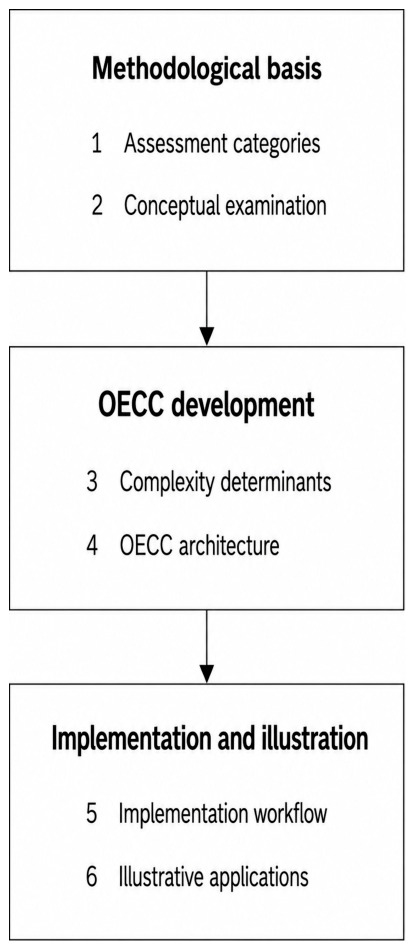
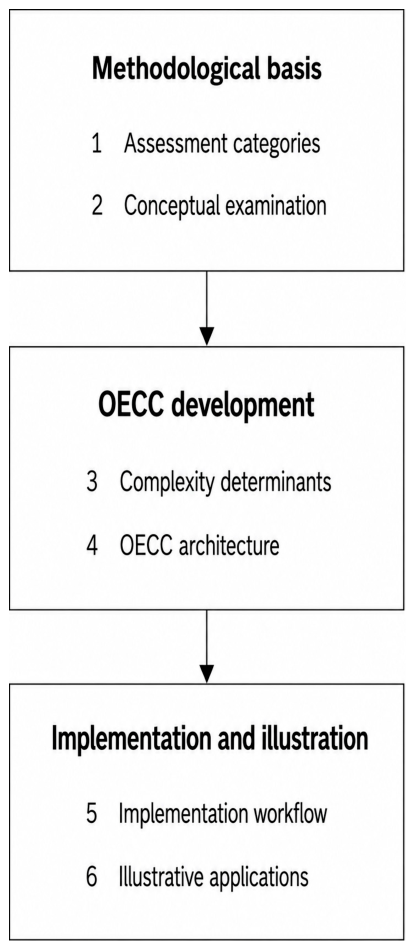
The study was designed to develop the Occupational Exposure Complexity Characterization (OECC) methodology. Methodological development followed six sequential stages: (i) definition of the principal occupational exposure assessment categories; (ii) conceptual examination; (iii) identification of exposure complexity determinants; (iv) development of the Occupational Exposure Complexity Characterization (OECC) methodology; (v) development of an integrated methodological workflow; and (vi) illustrative application using published occupational exposure scenarios. Figure 1 summarizes the methodological development process.
Figure 1.
Methodological development process of Occupational Exposure Complexity Characterization (OECC).
The OECC methodology was developed through a conceptual examination of the principal occupational exposure assessment approaches. The objective was to identify the methodological components used in occupational exposure assessment, examine how existing approaches characterize complex occupational exposure scenarios, and develop a conceptual framework for selecting appropriate exposure assessment strategies.
The methodological synthesis began with identifying the principal approaches used in occupational exposure assessment. Four primary methodological categories were included: environmental monitoring, personal exposure monitoring, human biomonitoring, and exposure modeling. For the purpose of this framework, personal exposure monitoring was treated separately from general environmental monitoring because it characterizes external exposure in the worker’s personal environment during occupational activities. This distinction reflects the location and context of measurement rather than a different type of exposure. Integrated exposure assessment was examined as the combined use of two or more of these approaches rather than as a separate methodological category. Biological effect biomarkers were considered as complementary information relevant to the interpretation of human biomonitoring and exposure data. The four categories were selected because they generate the principal sources of information used to characterize occupational exposure. The methodological analysis was structured around established components of exposure assessment [23,24].
An analytical framework was developed to extract methodological information from the four occupational exposure assessment approaches. For each approach, information was collected on the exposure scenario, contaminants, exposure sources, exposure pathways, environmental and biological matrices, exposure metrics, temporal characteristics, occupational activities, monitoring techniques, modeling variables, and the type of exposure information generated. Data requirements, methodological assumptions, reported limitations, and each approach’s ability to characterize exposure variability, multiple contaminants, multiple exposure pathways, and heterogeneous occupational activities were recorded. The analytical variables were defined based on the exposure assessment components, exposure metrics, sources of exposure variability, and assessment strategy principles described in methodological sources [23,24,25,26]. The extracted variables were classified according to the component of the exposure scenario or assessment process that they represented. Contaminant-related characteristics were assigned to chemical complexity, exposure routes to exposure pathway complexity, exposure duration and variation over time to temporal complexity, work tasks and processes to occupational activity complexity, sampling, measurement, and data requirements to monitoring complexity, and methodological assumptions, uncertainty, and limitations affecting the interpretation of exposure information to interpretation complexity. The initial classification was performed by one author and reviewed by the other authors.
Temporal complexity and occupational activity complexity were treated separately because they describe different characteristics of the exposure scenario. Occupational activity complexity refers to differences in work tasks, processes, and job assignments that affect exposure. Temporal complexity refers to the duration, frequency, and variation of exposure over time, including variation within or between work shifts. A work task may produce temporal variation in exposure, but the task is classified under occupational activity complexity, while the resulting exposure pattern over time is classified under temporal complexity. This distinction avoids assigning the same characteristic to both dimensions.
Monitoring complexity refers to the measurement requirements imposed by the exposure scenario before a monitoring method is selected, rather than to the technical complexity of a selected method. Interpretation complexity refers to characteristics of the exposure scenario that affect the interpretation of exposure information, including background exposure, multiple sources, uncertainty in source attribution, and the integration of information generated by different assessment approaches. Characteristics were assigned to dimensions according to their role in the exposure scenario or assessment process. Related characteristics may affect more than one dimension, but each characteristic is classified according to its primary role in the exposure scenario or assessment process. The six dimensions are evaluated before method selection and are not combined into a numerical score. Method-specific requirements identified after method selection are therefore not used to redefine the OECC dimensions.
The extracted information was compared across the four primary methodological categories and their use in integrated assessment strategies. The comparison examined differences in the type and scope of exposure information generated, data requirements, methodological assumptions, reported limitations, and applicability to complex occupational exposure scenarios. Particular attention was given to each approach’s capacity to address exposure variability, multiple contaminants, multiple exposure pathways, and heterogeneous occupational activities. On the basis of this comparison, methodological characteristics relevant to exposure assessment design were identified. These characteristics were classified according to the component of the exposure scenario or assessment process that they represented. Contaminant-related characteristics were assigned to chemical complexity, exposure routes to exposure pathway complexity, exposure duration and variation over time to temporal complexity, work tasks and processes to occupational activity complexity, sampling, measurement, and data requirements to monitoring complexity, and methodological assumptions, uncertainty, and limitations affecting the interpretation of exposure information to interpretation complexity [23,24,25,26]. This classification resulted in six dimensions: chemical complexity, exposure pathway complexity, temporal complexity, occupational activity complexity, monitoring complexity, and interpretation complexity. The mapping between the extracted assessment elements and the six dimensions is presented in Table 1. The six dimensions constitute the OECC methodology and provide the structure used to generate the OECP.
Table 1.
Mapping of the extracted assessment elements to the six OECC dimensions.
3. Results
3.1. Occupational Exposure Complexity Characterization (OECC)
The Occupational Exposure Complexity Characterization (OECC) is a conceptual methodology for characterizing the complexity of an occupational exposure scenario before selecting exposure assessment methods. OECC examines the scenario characteristics that influence assessment design and organizes them into six methodological dimensions. The resulting findings are organized into an Occupational Exposure Complexity Profile (OECP), which may support exposure assessment strategy selection.
The methodological input is an occupational exposure scenario described using structured exposure descriptors. These descriptors capture the contaminants, exposure sources and pathways, worker groups, occupational activities, temporal characteristics, relevant matrices, and workplace processes. They describe the scenario without quantifying exposure and provide the information required to examine its methodological complexity.
After the initial exposure characterization, the standardized descriptors are examined across six distinct but related methodological dimensions that form the OECC architecture. Each dimension examines a specific component of exposure complexity and is evaluated separately to preserve its methodological implications.
The first dimension, chemical complexity, examines the composition of the exposure scenario. It includes the number of contaminants, the diversity of chemical classes, the presence of complex mixtures, transformation products, and contaminants originating from different occupational sources. The chemical diversity requires additional analytical considerations because contaminants may require different sampling strategies, analytical methods, or biological matrices.
The second dimension, exposure pathway complexity, examines the diversity of exposure routes contributing to the occupational scenario. It considers exposure through inhalation, dermal absorption, ingestion, or combinations of these pathways. Scenarios involving multiple exposure pathways may require integrated exposure assessment because external measurements alone may not reflect internal exposure.
The third dimension, temporal complexity, examines the temporal behavior of occupational exposure. It considers the stability of exposure conditions, intermittent exposure events, task-dependent exposure peaks, seasonal variations, production cycles, and changes in work organization that influence exposure over time. This dimension indicates if a single measurement is sufficient to represent occupational exposure or if repeated or task-based measurements are needed.
The fourth dimension, occupational activity complexity, examines the influence of work organization on exposure. It considers task diversity, process variability, worker mobility, changes in work practices, simultaneous activities, and operational interactions that modify exposure patterns. This dimension identifies situations in which occupational exposure cannot be represented by a single job title or fixed workplace but varies according to specific work activities.
The fifth dimension, monitoring complexity, examines the technical and practical requirements for obtaining representative exposure information. It considers the availability of sampling and analytical methods, relevant environmental and biological matrices, detection limits, calibration requirements, temporal and spatial coverage, field applicability, and data quality requirements. This dimension records the methodological constraints that must be examined during assessment strategy selection but does not determine which assessment methods should be used.
The sixth dimension, interpretation complexity, refers to characteristics of the exposure scenario that affect the interpretation of exposure information, including background exposure, multiple sources, uncertainty in source attribution, and the integration of information generated by different assessment approaches. It considers the consistency of the available data, differences between environmental and biological measurements, variability among monitoring techniques, uncertainties associated with modeling results, and the need to combine heterogeneous datasets into a coherent interpretation of occupational exposure.
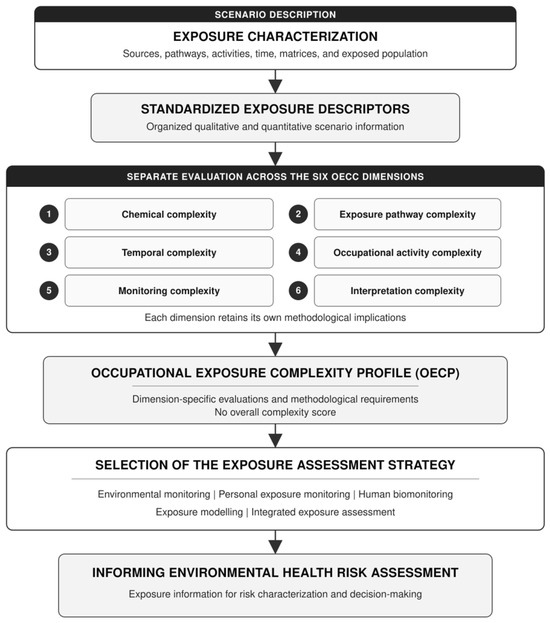
After the six dimensions have been evaluated separately, the findings are organized into the Occupational Exposure Complexity Profile (OECP). The OECP retains the results for each dimension and records the methodological requirements identified for the exposure scenario. It does not aggregate the dimensions into an overall score. The OECP connects exposure complexity characterization with support for assessment strategy selection. It provides a scenario-centered basis for identifying the assessment requirements that must be addressed. Figure 2 presents the methodological architecture of OECC.
Figure 2.
Methodological architecture of Occupational Exposure Complexity Characterization (OECC).
3.2. Implementation Workflow of the Occupational Exposure Complexity Characterization (OECC)
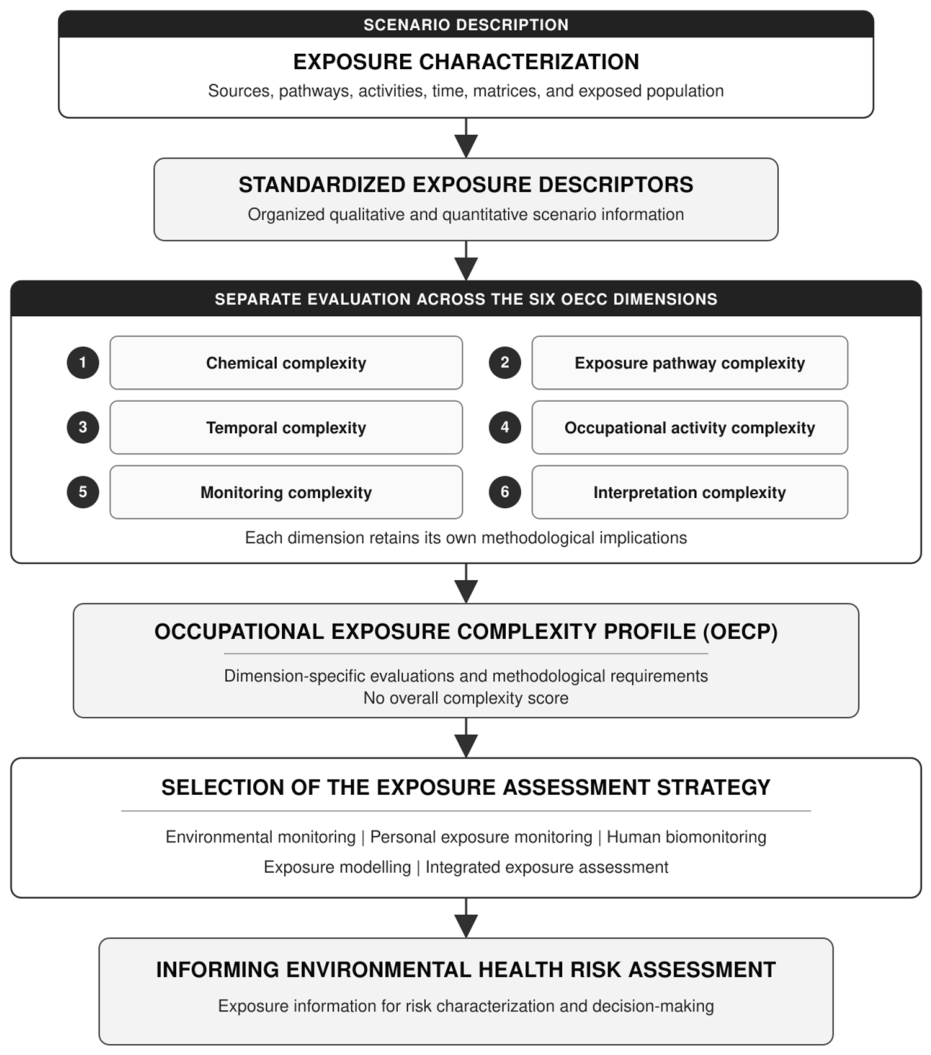
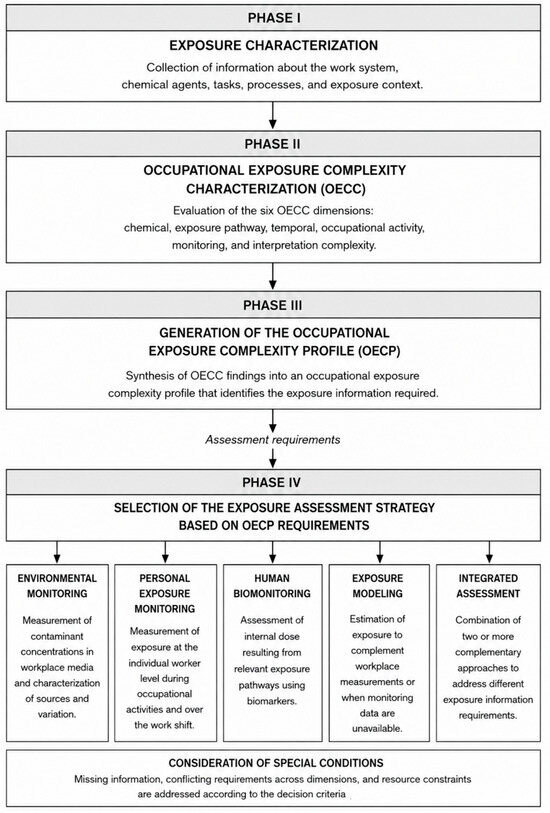
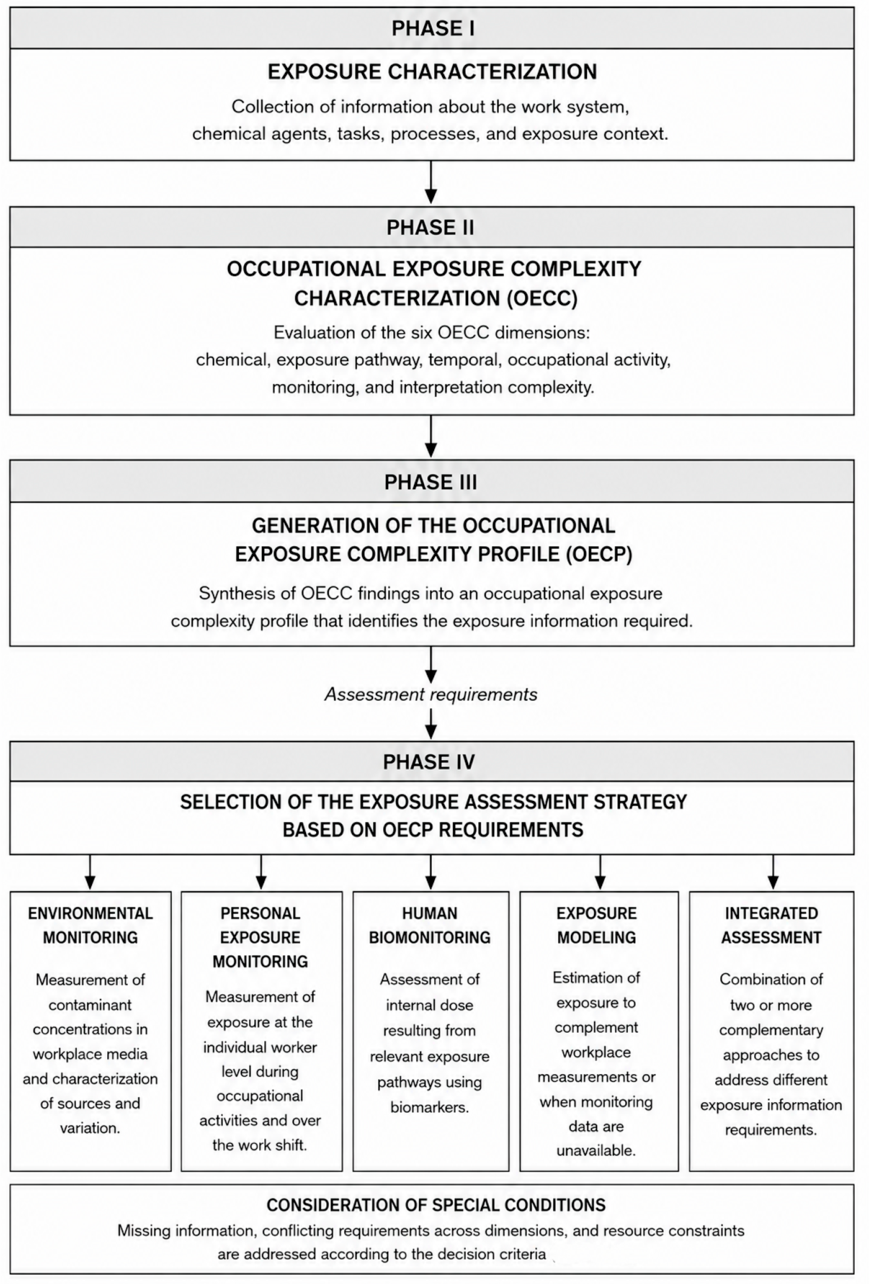
Figure 3 presents the operational workflow for implementing OECC. The workflow consists of four sequential phases, from the initial characterization of the occupational exposure scenario to support for exposure assessment strategy selection. Each phase has a defined input, methodological process, and output, with the output of one phase providing the input for the next.
Figure 3.
Occupational Exposure Complexity Characterization (OECC) implementation workflow.
The workflow begins with the characterization of the occupational exposure scenario using structured exposure descriptors. Phase I organizes information on contaminants, occupational emission sources, exposure pathways, work activities, temporal characteristics, exposed worker groups, environmental and biological matrices, available measurements, biomonitoring results, modeling outputs, and workplace conditions. Its output consists of the structured exposure descriptors required for the OECC evaluation.
In Phase II, the structured exposure descriptors are evaluated across the six OECC dimensions: chemical complexity, exposure pathway complexity, temporal complexity, occupational activity complexity, monitoring complexity, and interpretation complexity. Each dimension is examined separately to identify its implications for assessment design. The output consists of six dimension-specific evaluations.
In Phase III, the six dimension-specific evaluations are organized into the Occupational Exposure Complexity Profile (OECP). The profile retains the findings for each dimension and identifies the methodological requirements relevant to selecting an exposure assessment strategy. It serves as the decision component of the OECC methodology.
In Phase IV, the methodological requirements and constraints recorded in the OECP are matched with the capabilities of available exposure assessment approaches. This process may support the selection of environmental monitoring, personal exposure monitoring, human biomonitoring, exposure modeling, or a combination of complementary approaches. The output is a preliminary exposure assessment strategy for the characterized scenario.
The operational characteristics of each implementation phase, including the corresponding inputs, methodological processes, and outputs, are summarized in Table 2.
Table 2.
Operational structure of the OECC implementation workflow.
The operational workflow describes the sequence of methodological steps from exposure characterization to support strategy selection. Table 3 presents the main evaluation questions associated with each OECC dimension and their implications for exposure assessment design. The dimensions are evaluated descriptively and are not converted into numerical scores.
Table 3.
Practical considerations for applying the OECC methodology.
The findings recorded for each dimension form the OECP and provide the methodological basis to support assessment strategy selection.
Method selection is based on the type of exposure information required by the OECP. Environmental monitoring is selected when workplace contaminant concentrations, exposure sources, or environmental variation must be characterized. Personal exposure monitoring is selected when exposure must be characterized at the individual worker level or in relation to specific tasks or periods of the work shift. Human biomonitoring is selected when internal dose resulting from relevant exposure pathways must be assessed and a suitable biomarker and biological matrix are available. Exposure modeling is selected when exposure estimates are required to complement workplace measurements or when monitoring data are unavailable. When the requirements identified across the OECC dimensions cannot be addressed by one method, complementary methods are combined in an integrated assessment. The decision criteria are summarized in Table 4.
Table 4.
Decision criteria for selecting exposure assessment methods within the OECC methodology.
3.3. Illustrative Application of the Occupational Exposure Complexity Characterization (OECC)
OECC was applied to three occupational exposure scenarios involving per- and polyfluoroalkyl substances (PFAS), engineered nanomaterials (ENMs), and microplastics. These contaminants were selected because they differ in physicochemical properties, occupational sources, exposure pathways, temporal patterns, monitoring requirements, and interpretation challenges. The applications were based on information reported in the published literature and were intended to examine the use of OECC across exposure scenarios with different methodological requirements.
For each scenario, information on contaminants, exposure sources, occupational activities, exposure pathways, temporal characteristics, and available monitoring approaches was organized according to the six OECC dimensions. The findings were organized into an illustrative OECP and used to identify the exposure assessment requirements associated with each scenario.
3.3.1. Illustrative Scenario 1: Occupational Exposure to per- and Polyfluoroalkyl Substances (PFAS) During Aqueous Film-Forming Foams (AFFF) Handling by Firefighters
Chemical complexity results from the presence of multiple PFAS compounds with different physicochemical and toxicokinetic properties. Firefighters handling aqueous film-forming foams (AFFF) may be exposed to multiple PFAS simultaneously. The PFAS profile associated with AFFF exposure can include compounds with different persistence and biological half-lives [27,28].
Exposure pathway complexity includes inhalation, dermal exposure, and incidental ingestion. These pathways may contribute differently to PFAS exposure during firefighting and AFFF handling. Dermal contact may occur through direct contact with foam or contaminated equipment, while inhalation and incidental ingestion may contribute depending on the exposure conditions and work practices [27,29].
Temporal complexity results from intermittent occupational exposure and the persistence of PFAS in the human body. Exposure may occur during AFFF application, training, emergency response, and subsequent handling of contaminated equipment. The long biological half-lives of several PFAS compounds can lead to internal accumulation, and biological measurements may reflect previous and current exposure [30].
Occupational activity complexity is related to the tasks involving AFFF and contaminated equipment. Exposure conditions may differ between foam application, training activities, emergency response, and subsequent equipment handling. Exposure may therefore vary among firefighters according to the tasks performed and the frequency of AFFF contact [27,28].
Monitoring complexity arises from the need to characterize external and internal exposure. Environmental monitoring can provide information on PFAS contamination in workplace media, while human biomonitoring, primarily based on serum PFAS concentrations, reflects internal exposure resulting from relevant exposure pathways over extended periods. Combining environmental measurements with biomonitoring provides complementary information on external and internal occupational PFAS exposure [29,30].
Interpretation complexity is associated with exposure to multiple PFAS compounds, differences in toxicokinetic behavior and biological half-lives, and the contribution of background and non-occupational exposure. PFAS are present in the general population, and background exposure can contribute to serum concentrations. This makes the occupational contribution difficult to distinguish from cumulative exposure. Interpretation requires occupational history, AFFF contact, potential exposure pathways, and environmental and biological measurements to be considered together [28,30].
For this defined scenario, the illustrative OECP identified multiple PFAS compounds, several potential exposure pathways, intermittent exposure associated with AFFF-related activities, the need for external and internal exposure information, and background exposure as a factor affecting interpretation. The OECP may support a preliminary assessment strategy combining environmental monitoring, human biomonitoring, and task-related information on AFFF exposure.
3.3.2. Illustrative Scenario 2: Occupational Exposure to Carbon Nanotubes During Powder Handling
Chemical complexity results from the physicochemical characteristics of carbon nanotubes (CNTs). CNT materials may differ in particle size, morphology, surface properties, agglomeration state, and chemical composition. These characteristics influence their behavior in the workplace and the selection of sampling and analytical methods [31].
Exposure pathway complexity includes inhalation, dermal exposure, and incidental ingestion. Inhalation may occur when airborne CNT particles or agglomerates are released during powder handling, weighing, transfer, or cleaning. Dermal exposure may result from contact with CNT materials, contaminated equipment, or workplace surfaces, while incidental ingestion may occur through secondary workplace contamination. The contribution of each pathway depends on material form, handling procedures, containment, and engineering controls [31,32].
Temporal complexity is associated with task-related releases and short-duration exposure peaks. Activities such as weighing, powder transfer, and cleaning may generate transient airborne particle concentrations. Exposure can therefore vary during the work shift according to the task performed and the duration of material handling [33].
Occupational activity complexity is related to the tasks performed during CNT powder handling. Weighing, transfer, handling of containers, and cleaning can involve different opportunities for particle release and worker contact. Exposure conditions may vary according to work procedures, engineering controls, personal protective equipment, and routine and non-routine activities [32,33].
Monitoring complexity arises from the need to characterize airborne CNT exposure using complementary measurement methods. Real-time instruments can provide information on changes in particle concentrations during specific tasks, while laboratory analyses can provide information on particle morphology and composition. Electron microscopy and physicochemical analyses can be used to confirm particle identity and distinguish CNTs from background aerosols [31,33].
Interpretation complexity is associated with differences among exposure metrics, background aerosols, and the relationship between real-time measurements and CNT- specific laboratory analyses. The absence of validated occupational exposure limits for many engineered nanomaterials also affects interpretation. Biological monitoring has been proposed as a complementary approach, but validated biomarkers remain limited. Environmental measurements therefore require interpretation together with information on CNT handling activities and workplace conditions [31,34].
For this defined scenario, the illustrative OECP identified task-related particle release, potential exposure through several pathways, temporal variation associated with powder handling, the need for real-time measurements and laboratory confirmation of CNT identity, and background aerosols as a factor affecting interpretation. The OECP may support a preliminary assessment strategy combining task-based real-time monitoring, laboratory confirmation of CNT identity and physicochemical characteristics, and contextual information on powder handling activities and workplace controls.
3.3.3. Illustrative Scenario 3: Occupational Exposure to Microplastics During Plastic Recycling
Chemical complexity results from the diversity of polymer types, particle morphologies, and associated additives present in plastic waste. Workers involved in plastic recycling may be exposed to microplastic particles generated during the handling and processing of plastic materials. Differences in polymer composition, particle size, morphology, surface properties, and associated additives influence exposure conditions and the selection of sampling and analytical methods [35,36].
Exposure pathway complexity includes inhalation, dermal contact, and incidental ingestion. Inhalation may occur when airborne microplastic particles are released during material handling, cutting, grinding, and other recycling operations. Dermal contact may occur through contaminated materials and workplace surfaces, while incidental ingestion may result from contamination of hands, equipment, or the workplace environment. The contribution of each pathway varies according to the processed materials, recycling operations, engineering controls, and work practices [35,36].
Temporal complexity is associated with emissions during routine recycling operations and concentration peaks generated by specific tasks. Material transfer, cutting, grinding, cleaning, and other processing activities may produce transient increases in particle concentrations. Exposure may therefore vary during the work shift according to the task performed and operating conditions. Exposure characterization should account for these task-related emission patterns [35].
Occupational activity complexity is related to the different tasks performed during plastic recycling. Material sorting, transfer, cutting, grinding, processing, and cleaning involve different materials and particle generation mechanisms. Exposure conditions may therefore vary between tasks within the same recycling process [35,36].
Monitoring complexity arises from the absence of harmonized procedures for sampling, identification, characterization, and quantification of microplastics. Available methods include microscopy, Fourier transform infrared spectroscopy, Raman spectroscopy, scanning electron microscopy, and pyrolysis gas chromatography mass spectrometry. These methods differ in detection limits, detectable size ranges, analytical sensitivity, and sample preparation requirements. Differences in sampling strategies, particle size thresholds, polymer identification criteria, and analytical protocols reduce comparability between measurements [35,36,37].
Interpretation complexity is associated with polymer diversity, particle morphology, environmental background contamination, the absence of occupationally specific reference values, and the limited availability of validated biological monitoring methods. Microplastics measured in the workplace may originate from recycling activities or background environmental sources, making source attribution difficult. Differences in analytical methods, contamination control procedures, particle classification criteria, and quality assurance protocols introduce additional uncertainty into exposure estimates. Interpretation requires workplace activities, analytical methods, and background exposure data to be considered together [36,38].
For this defined scenario, the illustrative OECP identified task-related particle generation, potential exposure through several pathways, temporal variation between recycling activities, the need for particle identification and characterization, contamination control, and background particles as a factor affecting interpretation. The OECP may support a preliminary assessment strategy combining task-specific sampling, complementary particle identification methods, contamination control, and information on recycling activities and background particle concentrations.
Table 5 summarizes the illustrative OECPs and the preliminary assessment strategies for the three defined occupational exposure scenarios.
Table 5.
Comparative illustrative OECPs for the three occupational exposure scenarios.
The profiles differ in the information required for monitoring and interpretation. PFAS assessment requires integrating environmental and biological data; ENM assessment depends on various particle metrics and confirmation of particle identity; and microplastic assessment requires complementary analytical methods and contamination control.
4. Discussion
Exposure classifications and risk estimates can vary according to the assessment method applied to the same occupational setting [39]. Occupational exposure can occur through inhalation, dermal contact, inadvertent ingestion, and other related routes. The definition of exposure determines the variables and pathways included in measurement [4]. Method selection requires prior consideration of the characteristics of the exposure scenario.
Published guidance describes methods for occupational exposure monitoring and the interpretation of exposure estimates in risk assessment [40,41]. Current methodological frameworks include preliminary characterization of workplace and exposure conditions. These frameworks do not organize exposure scenario complexity across distinct methodological dimensions to support assessment strategy selection. This distinction becomes relevant when the assessment must account for several contaminants, exposure pathways, work activities, or temporal patterns.
Environmental monitoring, human biomonitoring, and personal sensors generate different types of exposure data. Their combined use permits the estimation of exposure from several sources and pathways [4,42]. Using several methods does not explain why a specific combination is required for a particular scenario. OECC provides a preliminary framework for examining this requirement before the monitoring plan is established.
Retrospective occupational exposure assessment involves methods with different data, time, and resource requirements [43]. The suitability of a method depends on the type, route, intensity, frequency, and duration of exposure [44]. OECC adds the characterization of scenario complexity to these methodological considerations. It does not replace existing assessment methods. It may indicate which parts of the scenario require measurement and which methods could be considered for this purpose.
The OECP is not an exposure index, a risk score, or an indicator of health effects. It records the methodological requirements identified for each complexity dimension. The dimensions remain separate because they affect different parts of the assessment design. Temporal variability can require repeated or task-specific measurements. Multiple exposure pathways can require environmental monitoring and biomonitoring. Environmental measurements, biological data, and personal sensor data describe different components of exposure [4,8,42]. A single score would remove the information needed to select methods, matrices, exposure metrics, and sampling periods.
The applications involving PFAS exposure during AFFF handling by firefighters, CNT exposure during powder handling, and microplastic exposure during plastic recycling examined scenarios with different assessment requirements. In the AFFF handling scenario, the main requirements concerned multiple exposure pathways, intermittent exposure, environmental and biological monitoring, and background exposure. For CNT powder handling, task-related particle releases, short exposure peaks, particle identification, and background aerosols influenced the preliminary assessment strategy. For microplastics during plastic recycling, the main requirements concerned task-specific sampling, particle identification, background contamination, and differences among analytical methods. The same OECC dimensions were applied to all three scenarios, although each scenario produced a different illustrative OECP. These applications were based on published data and were not tests of OECC performance under workplace conditions.
The choice and reliability of exposure assessment methods affect exposure classification in occupational epidemiology [45]. Aggregated exposure assessment presents gaps in integrating occupational and nonoccupational sources and exposure pathways [5]. In study design, OECC may be used to record the reasons for selecting particular methods, matrices, sampling periods, and exposure metrics. Applying the same dimensions across studies may clarify whether methodological differences result from exposure scenarios or from investigator decisions. This information may facilitate comparison between studies examining similar occupational settings. Empirical evaluation is required to assess the effect of OECC on variation in method selection and reporting.
Existing standards provide structured strategies for occupational exposure assessment. EN 689:2018 includes a basic characterization of workplace and exposure conditions before measurements are performed and considers factors such as chemical agents, work processes, exposure patterns, and the frequency and duration of exposure [46]. EN 17058:2018 provides a measurement strategy for assessing inhalation exposure to nano objects and their aggregates and agglomerates, including characterization of the exposure situation and a tiered measurement approach [47]. These standardized strategies share elements with OECC, particularly those related to chemical characteristics, occupational activities, temporal variability, and measurement requirements. OECC does not replace these standards or the assessment procedures they provide. Its proposed role is different: it characterizes the methodological requirements of an exposure scenario across six dimensions before the assessment strategy is selected. The resulting OECP may indicate if the scenario requires environmental monitoring, personal exposure monitoring, human biomonitoring, exposure modeling, or a combination of these approaches. Applicable standardized procedures can then be used to perform the selected assessment [46,47].
Several limitations should be acknowledged. OECC remains a conceptual methodology. Its development was based on published assessment approaches, and the three applications used information reported in the literature. The methodology has not been tested with empirical workplace data or in prospective investigations. The evaluation criteria for each dimension require further definition. Future studies should apply OECC in different occupational sectors, compare OECPs prepared independently by several assessors and evaluate inter-rater agreement, determine if the selected strategies generate representative exposure data, and examine if the six dimensions cover the assessment requirements of conventional and emerging occupational exposures.
5. Conclusions
This study developed OECC to examine the complexity of an occupational exposure scenario before the assessment methods are chosen. The resulting OECP records six dimensions separately and indicates which characteristics of the scenario need to be considered by the assessment strategy. It does not classify exposure using an overall score. It identifies the information needed to characterize the scenario and the methods that can provide it.
The examples involving PFAS, engineered nanomaterials, and microplastics indicated that different sources of complexity lead to different methodological needs. These may include environmental and biological measurements, task-specific monitoring, repeated sampling, several exposure metrics, or the combined interpretation of data obtained through different methods. OECC can therefore help explain why a particular assessment strategy was selected.
The methodology has not been tested in workplace environments. The next stage of development should define the evaluation criteria for each dimension, compare profiles generated by different users, and assess the effect of OECC on the selection of representative exposure assessment strategies.
Author Contributions
Conceptualization, D.-O.B., V.-I.F. and L.-I.C.; methodology, D.-O.B., V.-I.F. and L.-I.C.; formal analysis, D.-O.B., V.-I.F. and L.-I.C.; investigation, D.-O.B., V.-I.F. and L.-I.C.; writing—original draft preparation, D.-O.B.; writing—review and editing, D.-O.B., V.-I.F. and L.-I.C.; visualization, D.-O.B., V.-I.F. and L.-I.C.; supervision, L.-I.C.; project administration, L.-I.C. All authors have read and agreed to the published version of the manuscript.
Funding
This research was funded by the PREPARE project, Proactive Resilience and Emergency Preparedness for Adaptive Response and Efficiency, project number PN-IV-P6-6.1-CoEx-2024-0102, funded by the Ministry of Education and Research through CCCDI-UEFISCDI within the National Research Development and Innovation Plan, PNCDI IV.
Data Availability Statement
All data generated or analyzed during this study are included in this published article.
Conflicts of Interest
The authors declare no conflicts of interest.
References
- Schulte, P.A.; Delclos, G.L.; Felknor, S.A.; Streit, J.M.K.; McDaniel, M.; Chosewood, L.C.; Newman, L.S.; Bhojani, F.A.; Pana-Cryan, R.; Swanson, N.G. Expanding the Focus of Occupational Safety and Health: Lessons from a Series of Linked Scientific Meetings. Int. J. Environ. Res. Public Health 2022, 19, 15381. [Google Scholar] [CrossRef] [Scilit] [PubMed]
- Iordache, R.; Cioca, V.R.; Mihaila, D. Digitalization in the world of work–benefits and new risks for employees’ mental health. Pol. J. Manag. Stud. 2025, 32, 111–124. [Google Scholar] [CrossRef] [Scilit]
- Radu, S.M.; Badea, D.O.; Cioca, V.-R. Occupational Safety and Health as Assessable Transversal Competence in Higher Education. Educ. Sci. 2026, 16, 297. [Google Scholar] [CrossRef] [Scilit]
- Cherrie, J.W. Occupational exposure science. Ann. Work Expo. Health 2023, 67, 915–919. [Google Scholar] [CrossRef] [Scilit] [PubMed]
- Lentz, T.J.; Dotson, G.S.; Williams, P.R.D.; Maier, A.; Gadagbui, B.; Pandalai, S.P.; Lamba, A.; Hearl, F.; Mumtaz, M. Aggregate exposure and cumulative risk assessment: Integrating occupational and non occupational risk factors. J. Occup. Environ. Hyg. 2015, 12, S112–S126. [Google Scholar] [CrossRef] [Scilit] [PubMed]
- Sillé, F.C.M.; Karakitsios, S.; Kleensang, A.; Koehler, K.; Maertens, A.; Miller, G.W.; Prasse, C.; Quiros-Alcala, L.; Ramachandran, G.; Rappaport, S.M.; et al. The exposome: A new approach for risk assessment. ALTEX-Altern. Anim. Exp. 2020, 37, 3–23. [Google Scholar] [CrossRef] [Scilit] [PubMed]
- Fanti, G.; Borghi, F.; Spinazzè, A.; Rovelli, S.; Campagnolo, D.; Keller, M.; Cattaneo, A.; Cauda, E.; Cavallo, D.M. Features and Practicability of the Next-Generation Sensors and Monitors for Exposure Assessment to Airborne Pollutants: A Systematic Review. Sensors 2021, 21, 4513. [Google Scholar] [CrossRef] [Scilit] [PubMed]
- Jones, K. Human biomonitoring in occupational health for exposure assessment. Port. J. Public Health 2020, 38, 2–5. [Google Scholar] [CrossRef] [Scilit]
- Jeddi, M.Z.; Jones, K.; Leese, E.; Fustinoni, S.; Galea, K.S.; Santonen, T.; Porras, S.P.; Hopf, N.B.; Göen, T.; Bader, M.; et al. An introduction to BASIC Guide: Human biomonitoring and surveillance of chemical exposure in occupational settings. Ann. Work Expo. Health 2026, 70, wxaf074. [Google Scholar] [CrossRef] [Scilit] [PubMed]
- Morton, J.; Sams, C.; Leese, E.; Garner, F.; Iqbal, S.; Jones, K. Biological monitoring: Evidence for reductions in occupational exposure and risk. Front. Toxicol. 2022, 4, 836567. [Google Scholar] [CrossRef] [Scilit] [PubMed]
- Longo, V.; Forleo, A.; Giampetruzzi, L.; Siciliano, P.; Capone, S. Human Biomonitoring of Environmental and Occupational Exposures by GC-MS and Gas Sensor Systems: A Systematic Review. Int. J. Environ. Res. Public Health 2021, 18, 10236. [Google Scholar] [CrossRef] [Scilit] [PubMed]
- Hernández, A.F.; Jeddi, M.Z.; Wilks, M.F.; FitzGerald, R.; Duca, R.C.; Villeneuve, D.; Viegas, S.; Hotta, A.; Baucher, M.-A.; Browne, P.; et al. Using effect biomarker thresholds in regulatory risk assessment: An OECD based framework for assessing cumulative exposures to chemical mixtures. Environ. Int. 2026, 211, 110215. [Google Scholar] [CrossRef] [Scilit] [PubMed]
- Protano, C.; Antonucci, A.; De Giorgi, A.; Zanni, S.; Mazzeo, E.; Cammalleri, V.; Fabiani, L.; Mastrantonio, R.; Muselli, M.; Mastrangeli, G.; et al. Exposure and Early Effect Biomarkers for Risk Assessment of Occupational Exposure to Formaldehyde: A Systematic Review. Sustainability 2024, 16, 3631. [Google Scholar] [CrossRef] [Scilit]
- Moon, J.; Ju, B.-K. Wearable Sensors for Healthcare of Industrial Workers: A Scoping Review. Electronics 2024, 13, 3849. [Google Scholar] [CrossRef] [Scilit]
- Mendes, D.; Terradillos, E.; Navas, H.V.G.; Costa, O.; Matias, J.; Soares, V. Wearable Technologies in Occupational Safety and Health: A Systematic Review and a Human-Centered Implementation Model. Appl. Sci. 2026, 16, 4715. [Google Scholar] [CrossRef] [Scilit]
- Vadali, M.; Ramachandran, G.; Mulhausen, J. Exposure modeling in occupational hygiene decision making. J. Occup. Environ. Hyg. 2009, 6, 353–362. [Google Scholar] [CrossRef] [Scilit] [PubMed]
- Schlüter, U.; Arnold, S.; Borghi, F.; Cherrie, J.; Fransman, W.; Heussen, H.; Jayjock, M.; Jensen, K.A.; Koivisto, J.; Koppisch, D.; et al. Theoretical Background of Occupational-Exposure Models—Report of an Expert Workshop of the ISES Europe Working Group “Exposure Models”. Int. J. Environ. Res. Public Health 2022, 19, 1234. [Google Scholar] [CrossRef] [Scilit] [PubMed]
- Anhäuser, L.; Piorr, B.; Arnone, M.; Wegscheider, W.; Gerding, J. Occupational inhalation exposure during surface disinfection: Exposure assessment based on exposure models compared with measurement data. J. Expo. Sci. Environ. Epidemiol. 2024, 34, 345–355. [Google Scholar] [CrossRef] [Scilit] [PubMed]
- Franken, R.; Ottenbros, I.; Ge, C.; Fransman, W.; Krone, T. Advancing occupational exposure models: Insights from a case study. Ann. Work Expo. Health 2026, 70, wxag019. [Google Scholar] [CrossRef] [Scilit] [PubMed]
- Jahn, S.D.; Bullock, W.H.; Ignacio, J.S. (Eds.) A Strategy for Assessing and Managing Occupational Exposures, 4th ed.; American Industrial Hygiene Association: Falls Church, VA, USA, 2015.
- Băbuț, G.B.; Moraru, R.I.; Cioca, L.I. “Kinney methods”: Useful or harmful tools in risk assessment and management process? In Proceedings of the 5th International Conference on Manufacturing Science and Education (MSE 2011), Sibiu, Romania, 1–3 June 2011; Volume 2, pp. 315–318. [Google Scholar]
- Lentz, T.J.; Seaton, M.; Rane, P.; Gilbert, S.J.; McKernan, L.T.; Whittaker, C. The NIOSH Occupational Exposure Banding Process for Chemical Risk Management; DHHS (NIOSH) Publication No. 2019-132; National Institute for Occupational Safety and Health: Cincinnati, OH, USA, 2019. [CrossRef] [Scilit]
- Stewart, P.; Stenzel, M. Exposure assessment in the occupational setting. Appl. Occup. Environ. Hyg. 2000, 15, 435–444. [Google Scholar] [CrossRef] [Scilit] [PubMed]
- Nieuwenhuijsen, M.J. (Ed.) Exposure Assessment in Environmental Epidemiology, 2nd ed.; Oxford University Press: New York, NY, USA, 2015. [Google Scholar] [CrossRef] [Scilit]
- Rappaport, S.M. Selection of the measures of exposure for epidemiology studies. Appl. Occup. Environ. Hyg. 1991, 6, 448–457. [Google Scholar] [CrossRef] [Scilit]
- Ramachandran, G. Toward better exposure assessment strategies: The new NIOSH initiative. Ann. Occup. Hyg. 2008, 52, 297–301. [Google Scholar] [CrossRef] [Scilit] [PubMed][Green Version]
- Christensen, B.T.; Calkins, M.M. Occupational exposure to per and polyfluoroalkyl substances: A scoping review of the literature from 1980–2021. J. Expo. Sci. Environ. Epidemiol. 2023, 33, 673–686. [Google Scholar] [CrossRef] [Scilit] [PubMed]
- He, A.; Liang, Y.; Li, J.; Zhou, Z.; Li, F.; Li, Z.; Wang, Y.; Jiang, G. A critical review of populations with occupational exposure to per and polyfluoroalkyl substances: External exposome, internal exposure levels, and health effects. Environ. Sci. Technol. 2025, 59, 10715–10733. [Google Scholar] [CrossRef] [Scilit] [PubMed]
- Paris-Davila, T.; Gaines, L.G.T.; Lucas, K.; Nylander-French, L.A. Occupational exposures to airborne per- and polyfluoroalkyl substances (PFAS)—A review. Am. J. Ind. Med. 2023, 66, 393–410. [Google Scholar] [CrossRef] [Scilit] [PubMed]
- Lucas, K.; Gaines, L.G.T.; Paris-Davila, T.; Nylander-French, L.A. Occupational exposure and serum levels of per- and polyfluoroalkyl substances (PFAS): A review. Am. J. Ind. Med. 2023, 66, 379–392. [Google Scholar] [CrossRef] [Scilit] [PubMed]
- McCormick, S.; Niang, M.; Dahm, M.M. Occupational exposures to engineered nanomaterials: A review of workplace exposure assessment methods. Curr. Environ. Health Rep. 2021, 8, 223–234. [Google Scholar] [CrossRef] [Scilit] [PubMed]
- Prasath, S.; Palaniappan, K.; Chan, S.; James, C. A scoping review to evaluate occupational controls and their effectiveness when handling engineered nanomaterials in workplaces. J. Occup. Environ. Hyg. 2024, 21, 515–528. [Google Scholar] [CrossRef] [Scilit] [PubMed]
- Galey, L.; Audignon, S.; Brochard, P.; Debia, M.; Lacourt, A.; Lambert, P.; Le Bihan, O.; Martinon, L.; Bau, S.; Witschger, O.; et al. Strategies to assess occupational exposure to airborne nanoparticles: Systematic review and recommendations. Saf. Health Work 2023, 14, 163–173. [Google Scholar] [CrossRef] [Scilit] [PubMed]
- Gulumian, M.; Verbeek, J.; Andraos, C.; Sanabria, N.; de Jager, P. Systematic review of screening and surveillance programs to protect workers from nanomaterials. PLoS ONE 2016, 11, e0166071. [Google Scholar] [CrossRef] [Scilit] [PubMed]
- Murashov, V.; Geraci, C.L.; Schulte, P.A.; Howard, J. Nano- and microplastics in the workplace. J. Occup. Environ. Hyg. 2021, 18, 489–494. [Google Scholar] [CrossRef] [Scilit] [PubMed]
- Boccia, P.; Mondellini, S.; Mauro, S.; Zanellato, M.; Parolini, M.; Sturchio, E. Potential Effects of Environmental and Occupational Exposure to Microplastics: An Overview of Air Contamination. Toxics 2024, 12, 320. [Google Scholar] [CrossRef] [Scilit] [PubMed]
- Chen, Y.-N.; Rani, A.; Chiang, C.-Y.; Kim, H.; Pan, S.-Y. Monitoring, control and assessment of microplastics in bioenvironmental systems. Environ. Technol. Innov. 2023, 32, 103250. [Google Scholar] [CrossRef] [Scilit]
- Walker-Franklin, I.; Villalobos Santeli, A.; Neal-Walthall, N. Tracking microplastics from source to impact: A review of environmental presence, exposure, remediation, and health risks. Curr. Environ. Health Rep. 2026, 13, 12. [Google Scholar] [CrossRef] [Scilit] [PubMed]
- Peters, S.; Vermeulen, R.; Cassidy, A.; Mannetje, A.; van Tongeren, M.; Boffetta, P.; Straif, K.; Kromhout, H.; INCO Group. Comparison of exposure assessment methods for occupational carcinogens in a multi-center lung cancer case-control study. Occup. Environ. Med. 2011, 68, 148–153. [Google Scholar] [CrossRef] [Scilit] [PubMed]
- Smedley, J.; Dick, F.; Sadhra, S. (Eds.) Monitoring exposure. In Oxford Handbook of Occupational Health, 2nd ed.; Oxford University Press: Oxford, UK, 2013; pp. 367–379. [Google Scholar] [CrossRef] [Scilit]
- Waters, M.; McKernan, L.; Maier, A.; Jayjock, M.; Schaeffer, V.; Brosseau, L. Exposure estimation and interpretation of occupational risk: Enhanced information for the occupational risk manager. J. Occup. Environ. Hyg. 2015, 12, S99–S111. [Google Scholar] [CrossRef] [Scilit] [PubMed][Green Version]
- Pronk, A.; Loh, M.; Kuijpers, E.; Albin, M.; Selander, J.; Godderis, L.; Ghosh, M.; Vermeulen, R.; Peters, S.; Mehlum, I.S.; et al. Applying the exposome concept to working life health: The EU EPHOR project. Environ. Epidemiol. 2022, 6, e185. [Google Scholar] [CrossRef] [Scilit] [PubMed]
- Borghi, F.; Mazzucchelli, L.A.; Campagnolo, D.; Rovelli, S.; Fanti, G.; Keller, M.; Cattaneo, A.; Spinazzè, A.; Cavallo, D.M. Retrospective Exposure Assessment Methods Used in Occupational Human Health Risk Assessment: A Systematic Review. Int. J. Environ. Res. Public Health 2020, 17, 6190. [Google Scholar] [CrossRef] [Scilit] [PubMed]
- Semple, S. Assessing occupational and environmental exposure. Occup. Med. 2005, 55, 419–424. [Google Scholar] [CrossRef] [Scilit] [PubMed]
- Ge, C.B.; Friesen, M.C.; Kromhout, H.; Peters, S.; Rothman, N.; Lan, Q.; Vermeulen, R. Use and reliability of exposure assessment methods in occupational case-control studies in the general population: Past, present, and future. Ann. Work Expo. Health 2018, 62, 1047–1063. [Google Scholar] [CrossRef] [Scilit] [PubMed]
- EN689:2018; Workplace Exposure—Measurement of Exposure by Inhalation to Chemical Agents. Strategy for Testing Compliance with Occupational Exposure Limit Values. European Committee for Standardization (CEN): Brussels, Belgium, 2018.
- EN 17058:2018; Workplace Exposure—Assessment of Exposure by Inhalation of Nano Objects and Their Aggregates and Agglomerates. European Committee for Standardization (CEN): Brussels, Belgium, 2018.

Disclaimer/Publisher’s Note: The statements, opinions and data contained in all publications are solely those of the individual author(s) and contributor(s) and not of MDPI and/or the editor(s). MDPI and/or the editor(s) disclaim responsibility for any injury to people or property resulting from any ideas, methods, instructions or products referred to in the content. |
© 2026 by the authors. Licensee MDPI, Basel, Switzerland. This article is an open access article distributed under the terms and conditions of the Creative Commons Attribution (CC BY) license.