


Abstract
Landslides pose a significant natural hazard requiring cost-effective, sustainable mitigation strategies. Nature-based solutions utilizing vetiver (Chrysopogon zizanioides) demonstrate considerable potential due to its deep, dense root system, which enhances soil reinforcement. This study examines the effects of growth medium composition and NPK fertilization on the root mechanical properties, biomass accumulation, and vegetative growth of vetiver under controlled greenhouse conditions. The planting medium comprised landslide-affected soil mixed with compost in varying proportions, combined with different NPK fertilizer levels. Root tensile strength was measured to assess mechanical performance, while biomass and vegetative parameters were evaluated to determine growth responses. Results indicate that both growth medium composition and fertilization significantly influence biomass production, root diameter, and tensile strength. The highest biomass (178.33 g) was recorded under T80P20N7.5, while the greatest root diameter (1.47 mm) and tensile strength (21.9 MPa) were observed under T100P0N0. These outcomes suggest a trade-off between biomass production and mechanical reinforcement. Overall, optimizing soil amendments and nutrient inputs enhances vetiver’s bio-reinforcement capacity, supporting its application in sustainable slope stabilization and landslide mitigation.
1. Introduction
Landslide mitigation strategies increasingly require environmentally sustainable approaches in addition to conventional structural measures, which are often associated with higher costs. Nature-based solutions (NbSs) have therefore gained prominence for their capacity to enhance slope stability through ecological processes. Vegetation-based bioengineering provides mechanical stabilization via root–soil interactions. Root systems increase soil shear strength by forming a reinforcing matrix that enhances apparent cohesion. Tan et al. [1] demonstrated that root–soil interactions significantly contribute to slope resistance, while Jian et al. [2] and Tan et al. [1] identified root mass density and tensile strength as key factors in reinforcement. Roots play a dominant role in soil cohesion, and root cohesion is widely incorporated into slope stability analyses [3,4]. The composite tensile strength of the root–soil system also restrains crack propagation and limits water infiltration, thereby increasing resistance to slope failure [5,6]. The substantial variation in tensile strength and pull-out resistance among plant species indicates that vegetation selection is a key determinant of mechanical contributions to soil stability [7]. Additionally, recent studies emphasize the importance of root architecture and spatial distribution in determining reinforcement efficiency.
Vetiver (Chrysopogon zizanioides) is widely recognized among candidate species for its effectiveness in slope stabilization, attributed to its deep, dense, and vertically oriented root system. These root characteristics substantially increase soil cohesion and reduce surface erosion in steep tropical landscapes. Vetiver roots penetrate several meters into the soil, reinforcing soil structure, reducing runoff, and minimizing the risk of rainfall-induced slope failure [8]. Furthermore, vetiver-based systems have been integrated into community-based mitigation strategies [9] and contribute to broader environmental benefits, including ecosystem restoration and climate resilience [10].
The effectiveness of vetiver in slope stabilization is closely associated with its rapid growth and high biomass production, which affect the mechanical behavior of the root–soil system. Increased root complexity and density enhance soil cohesion and internal friction angle, thereby improving slope stability [11]. Denser root systems also promote greater water uptake, reduce pore water pressure, and increase composite shear strength [12]. However, a significant research gap persists regarding the influence of soil conditions and nutrient availability on the root mechanical properties that determine bio-reinforcement performance, particularly in disturbed post-landslide environments. This research gap is evident in Banar Landslide, Bogor, West Java, where vetiver was implemented after a landslide event but exhibited suboptimal establishment due to unfavorable soil conditions. This situation underscores the need for systematic evaluation of soil amendments and nutrient management to enhance both plant growth and mechanical effectiveness. Although previous studies have addressed field performance or general growth characteristics, limited research has quantified the relationships among growth medium composition, fertilization, and root tensile strength as indicators of bio-reinforcement capacity. Accordingly, this study aims to identify optimal growth conditions for vetiver by integrating assessments of root tensile strength, biomass accumulation, and vegetative growth across various soil medium compositions and NPK fertilization levels. The novelty of this research is the explicit coupling of agronomic treatments with root mechanical properties to optimize the bio-reinforcement function of vetiver, thereby providing a quantitative basis for enhancing nature-based solutions for slope stabilization in landslide-prone areas.
2. Materials and Methods
2.1. Field Survey
Field surveys were conducted after the landslide in Banar to assess the growth of vetiver (Chrysopogon zizanioides). Soil samples from affected areas were collected for greenhouse experiments. The Banar landslide is located in Harkat Jaya Village, Sukajaya District, Bogor Regency, West Java, Indonesia, with a mountainous, steep landscape underlain by weathered volcanic material. On 1 January 2020, Sukajaya experienced a major rainfall-induced landslide that severely impacted the Harkat Jaya and Pasir Madang villages. Landslide records from the Sukajaya District identified 748 incidents, reflecting frequent slope failures [13]. The landslide damaged infrastructure, disrupted transport and communication, and forced evacuations. Field observations showed widespread removal of surface soil and exposed slopes—increasing erosion and future slope failure risks. These factors make Sukajaya a priority for slope stabilization and bioengineering, including the use of vetiver grass for erosion control, soil reinforcement, and reduced landslide risk.
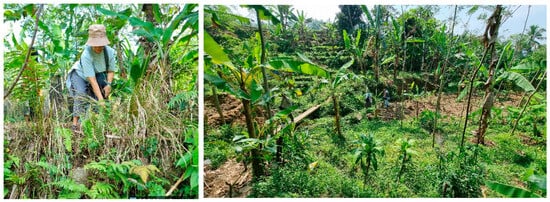
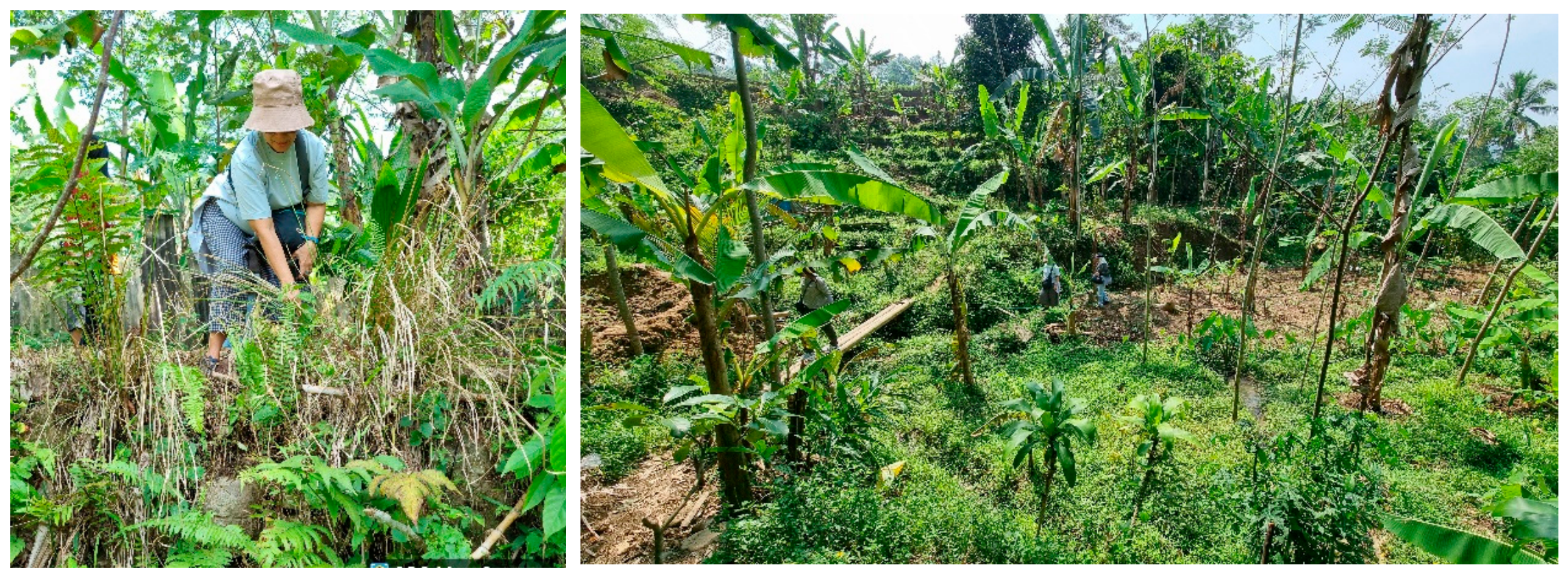
Rehabilitation in Harkat Jaya included planting vetiver on landslide-affected slopes. In February 2020, thousands of vetiver seedlings were planted in Harkat Jaya and nearby areas to stabilize slopes, reduce future failures, and support ecosystem recovery. Previous field observations across most sites indicated suboptimal vetiver growth (Figure 1). Accordingly, this study aimed to optimize vetiver growth by adjusting soil media and NPK fertilization to achieve more effective slope stabilization.
Figure 1.
Landslide location in Harkat Jaya, Sukajaya, Bogor, within the accumulation zone where vetiver (Chrysopogon zizanioides) was planted. Suboptimal vetiver growth is shown in the left panel.
Field surveys at the Banar landslide site in Harkat Jaya focused on areas with poor vetiver growth. Survey sites were chosen to identify environmental and geomorphological factors affecting vetiver establishment on post-landslide slopes. The Banar landslide was divided into accumulation, transition, and depletion zones, reflecting variations in slope materials, soil moisture, and surface stability [14]. Most vetiver at the site was planted in the accumulation zone. Soil samples were collected and used as growth media in the greenhouse experiments.
2.2. Greenhouse Experiment
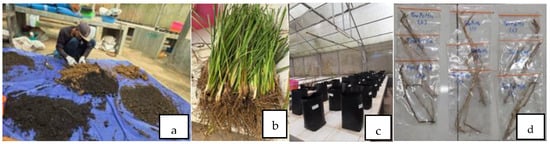
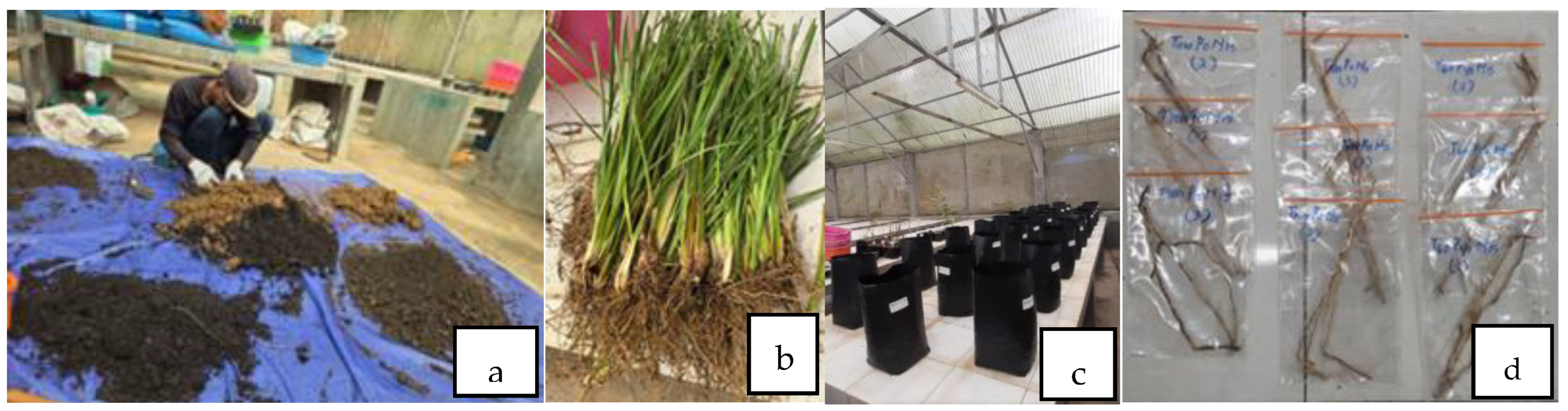
The vetiver growth experiment was conducted in a greenhouse, using landslide-affected soil as the growth medium, combined with compost and NPK fertilizer (Figure 2a). Soil was collected from a landslide-affected area within the assimilation zone. The compost (fertilizer) used in this study was a commercial compost obtained from the local market in ready-to-use condition and applied according to the specifications provided on the product packaging. Before being used as planting media with compositions of Soil = 20:80 (T20P80), Soil = 40:60 (T40P60), and 100% soil, the samples were analyzed in the laboratory to determine their chemical characteristics, including pH, organic carbon (C-organic), total nitrogen (N-total), C/N ratio, phosphorus (P), and potassium (K). Soil pH was measured potentiometrically, organic carbon was analyzed using the spectrophotometric method, total nitrogen using the Kjeldahl method, available P and K using spectrophotometric methods, and cation exchange capacity (CEC) using the titrimetric method.
Figure 2.
(a) Mixing the growing medium. (b) Experimental design. (c) Vetiver seed (Chrysopogon zizanoides). (d) Root samples for tensile strength testing.
Vetiver seedlings of the species Chrysopogon zizanioides were used (Figure 2b). The experiment employed a completely randomized design (CRD) with a two-factor factorial arrangement. The first factor was the composition of the growth medium (A), consisting of three levels: 100% soil (T100P0), 80% soil + 20% compost (T80P20), and 60% soil + 40% compost (T60P40). The second factor w as the NPK fertilizer dosage (B), also with three levels: 0 g (N0), 7.5 g (N7.5), and 15 g (N15). NPK 16-16-16 compound fertilizer containing 16% N, 16% P2O5, and 16% K2O was applied at 0, 7.5, and 15 g per pot. Each pot contained 10 kg of planting media; therefore, these rates were equivalent to 0, 0.75, and 1.5 g fertilizer kg−1 of planting media. The combination of these two factors resulted in nine treatment formulations, each replicated three times, yielding a total of 27 experimental units. All experimental units were randomly assigned to minimize the effects of uncontrolled environmental variability (Figure 2c). This experimental design was used to evaluate both the individual and interactive effects of growth medium composition and NPK fertilizer dosage on the observed parameters.
The experiment was conducted over 14 weeks (3.5 months), during which plant morphological characteristics; root traits; and soil physical, chemical, and biological properties were evaluated. Vegetative growth parameters, including plant height, leaf number, and tiller number, were recorded at 2-week intervals up to 14 weeks after planting (WAP). Measurements of root tensile strength and biomass accumulation were performed at the end of the experiment. Root tensile strength was determined using a Universal Tensile Machine (UTM). Root samples were selected based on qualitative visual assessment to ensure relative uniformity in shape, size, and texture. The measured root length was standardized to 40 mm, while the root diameter was selected to be uniform and less than 8 mm. To minimize stress effects, root samples were immediately stored in plastic sample bags (Figure 2d) containing a 15% ethanol solution, following [15,16], to maintain moisture and prevent damage prior to testing. Subsequently, samples were stored at 4 °C [15,17]. Tensile strength testing was conducted within 1–2 weeks after sampling [15,17]. Prior to measurement, root samples were carefully re-examined for potential damage, and recalibration was performed when necessary. At the end of the experiment, comprehensive analyses of soil physical, chemical, and biological properties were also conducted. AMF spore density was used as an indicator of inoculum potential and AMF community response to planting media and fertilization treatments.
2.3. Statistical Analysis
All experimental data were analyzed using a two-factor factorial completely randomized design (CRD), consisting of three growing medium compositions and three NPK fertilizer levels, with three replications per treatment. Data were first tested for normality and homogeneity of variance prior to statistical analysis.
A two-way analysis of variance (ANOVA) was performed to evaluate the effects of growing medium (M), NPK fertilizer level (N), and their interaction (M × N) on plant growth, root characteristics, biomass production, and tensile strength. The ANOVA model used was:
where:
Yijk = observed value;
μ = overall mean;
Mi = effect of the i-th growing medium;
Nj = effect of the j-th NPK fertilizer level;
(MN)ij = interaction effect between growing medium and NPK fertilizer;
εijk = experimental error.
Significant differences among treatments were determined using analysis of variance at the 95% confidence level (p < 0.05). When ANOVA indicated a significant treatment effect, mean comparisons were performed using Tukey’s Honestly Significant Difference (HSD) test at the 5% probability level.
For graphical presentation, treatment means were expressed as mean ± standard error (SE). The standard error was calculated according to:
where:
SE = SD/√n
SE = standard error of the mean;
SD = standard deviation;
n = number of replications (n = 3).
The SE values were used as error bars to represent the variability and precision of the estimated treatment means. All statistical analyses were conducted at a significance level of p < 0.05.
3. Results and Discussion
3.1. Geomorphological and Environmental Characteristics
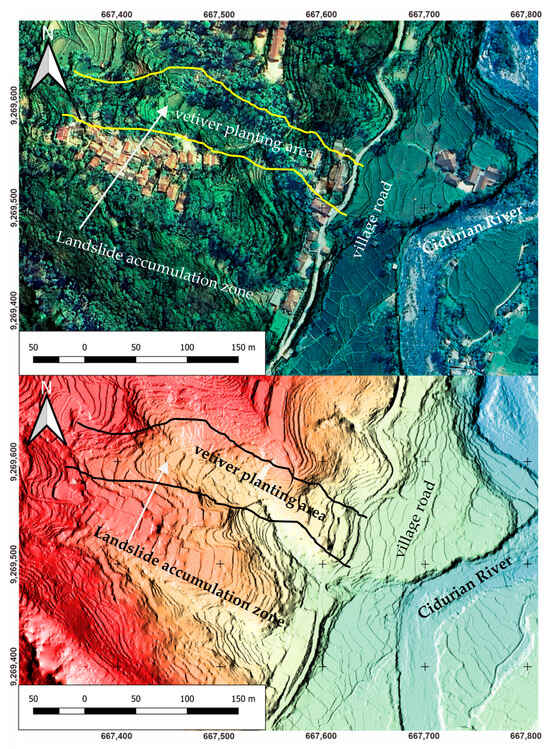
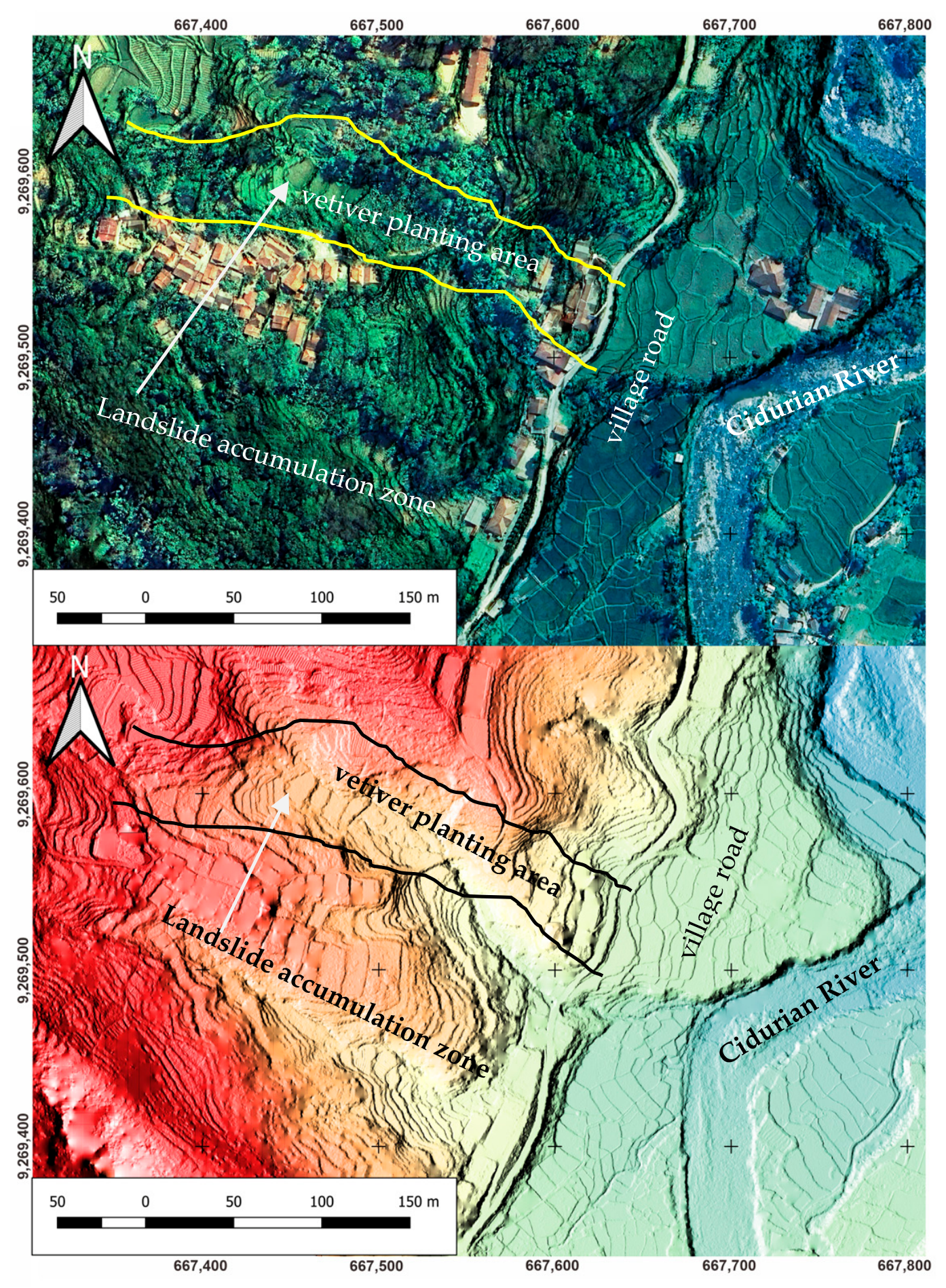
The vetiver planted in the accumulation zone of the Banar landslide grows on gentle slopes ranging from 0° to about 10°. These are depositional landforms that mark the terminal area of landslide movement. Here, material transport shifts to low-energy flow, causing relatively thin sediment deposition (about 0.4 to 0.8 m). Figure 3 shows the geomorphology and slope characteristics of the Banar landslide area, as derived from LiDAR drone imagery, with emphasis on the gentle slope present in the landslide accumulation zone. The sediments are loosely packed, poorly sorted, and moderately weathered breccia. They consist of Andesite, tuff, and pumice fragments within a silty to sandy matrix. The open fabric and high porosity of these materials mean low mechanical strength but relatively high water retention. These geomorphological and environmental features create both opportunities and constraints for slope stabilization. Gentle slopes favor vegetation establishment. However, the loose structure and limited cohesion reduce soil stability, especially under high moisture from downslope groundwater flow or surface flow, including a small river to the east–southeast. In this situation, using vetiver is highly relevant. Vetiver’s deep, dense, and vertically oriented roots penetrate the loose deposits. This enhances soil cohesion and resists surface erosion and shallow mass movement. Vetiver roots offer crucial mechanical reinforcement in the accumulation zone, where stabilization mainly depends on root-induced soil strength rather than inherent soil resistance. Therefore, the accumulation zone should be a priority for vetiver-based bioengineering strategies. These efforts can enhance slope stability and reduce post-landslide erosion risk.
Figure 3.
Geomorphology and slope characteristics of the Banar landslide area, as derived from LiDAR drone imagery, with emphasis on the gentle slope present in both the landslide accumulation zone and the vetiver planting area.
3.2. Growth Medium Analysis
3.2.1. Chemical and Physical Properties of the Growth Media
The results of the chemical and physical analyses of the growth media, including pH, organic carbon (C-organic), total nitrogen (N-total), C/N ratio, P2O5, K2O, and cation exchange capacity (CEC), are presented in Table 1. The results of micronutrient analyses, including Fe, Mn, Zn, and Cu, are presented in Table 2, while the results of microbiological analyses are shown in Table 3. Values presented in Table 1 and Table 2 are descriptive measurements intended to characterize the treatment media.
Table 1.
Chemical and physical properties of the growth medium.
Table 2.
Micronutrient content of the growth media.
Table 3.
Two-way factorial ANOVA (3 × 3) for fresh biomass weight.
Initial soil pH was neutral, but fluctuations occurred after treatment depending on medium composition and NPK rate. Compost-amended media maintained neutral-to-slightly-alkaline pH, indicating its buffering capacity through the release of base cations during decomposition, whereas sole NPK application tended to reduce pH due to H+ release from nitrification [18,19]. Soil organic C and total N generally declined after planting, reflecting mineralization and plant uptake; however, the decrease was less pronounced under compost + NPK, demonstrating a synergistic effect in maintaining soil organic matter (SOM) and N supply [20]. The lower C/N ratio indicated rapid N mineralization and improved N availability, with moderate ratios (8–15) minimizing N immobilization [21]. The relatively stable C/N ratio across different treatments indicates that the increase in organic carbon resulting from compost application was accompanied by enhanced nitrogen availability through the mineralization and fertilization processes, helping maintain a balanced carbon and nitrogen dynamic within the soil system. This condition suggests that the combined application of organic and inorganic fertilizers not only improves soil fertility but also helps maintain the stability of nutrient cycling processes during the plant growth period. The increase in soil organic carbon in treatment T80P20 was likely associated with the accumulation of vetiver root biomass and root exudates exceeding the rate of organic matter decomposition. In contrast, the decrease in soil organic carbon observed in treatment T60P40 may have resulted from more intensive mineralization in media with higher compost content, causing part of the organic carbon to be lost as CO2 during decomposition. These findings indicate that changes in soil organic carbon are determined not only by the amount of organic material added, but also by the balance between carbon inputs from plants and carbon losses due to microbial activity.
Available P2O5 remained higher in compost + NPK treatments, confirming the role of organic matter in sustaining P availability [22]. Higher K2O and CEC in compost media reflected enhanced K retention and nutrient-holding capacity [23,24]. These improvements in pH stability and nutrient availability are expected to support greater biomass accumulation and deeper root development of vetiver, strengthening its effectiveness for slope stabilization and landslide mitigation.
The highest Fe total content was observed in 100% soil, followed by 20% compost + 80% soil (T80P20), and the lowest in 40% compost + 60% soil (T60P40). The total micronutrient values represent micronutrient reserves within the planting media. Higher total concentrations of Fe, Zn, Mn, and Cu indicate greater nutrient reserves in the growth media. Fe plays a key role in chlorophyll formation and photosynthesis [25]. The elevated Fe concentration observed in the pure soil indicates that mineral soil serves as the primary source of Fe. The addition of compost tended to reduce the measured Fe content, likely due to the formation of organo-metallic complexes that regulate Fe availability. This condition may be beneficial for plant growth, as it can reduce the risk of Fe toxicity while promoting more gradual and efficient Fe uptake. Zanin et al. [26] reported that humic substances (HS) act as metal chelators, including for Fe, facilitating the formation of Fe–HS complexes that influence Fe availability to plants and plant cellular metabolism.
Zn concentrations were relatively similar among media; Zn functions as an enzyme activator and in auxin synthesis [27]. The stable Zn levels indicate that compost did not significantly reduce its availability and may enhance bioavailability through microbial activity. Mn was highest in 20% compost + 80% soil (T80P20). Mn is essential for photosynthesis and N metabolism [28]. Cu decreased with higher compost rates; Cu is involved in redox enzymes and lignification [29]. This balanced availability of Fe, Zn, Mn, and Cu in compost-amended media is expected to support physiological processes and root development in vetiver, thereby improving biomass production and stress tolerance.
3.2.2. Microbiological Analysis
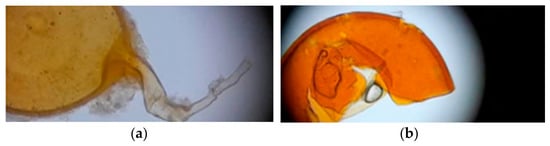
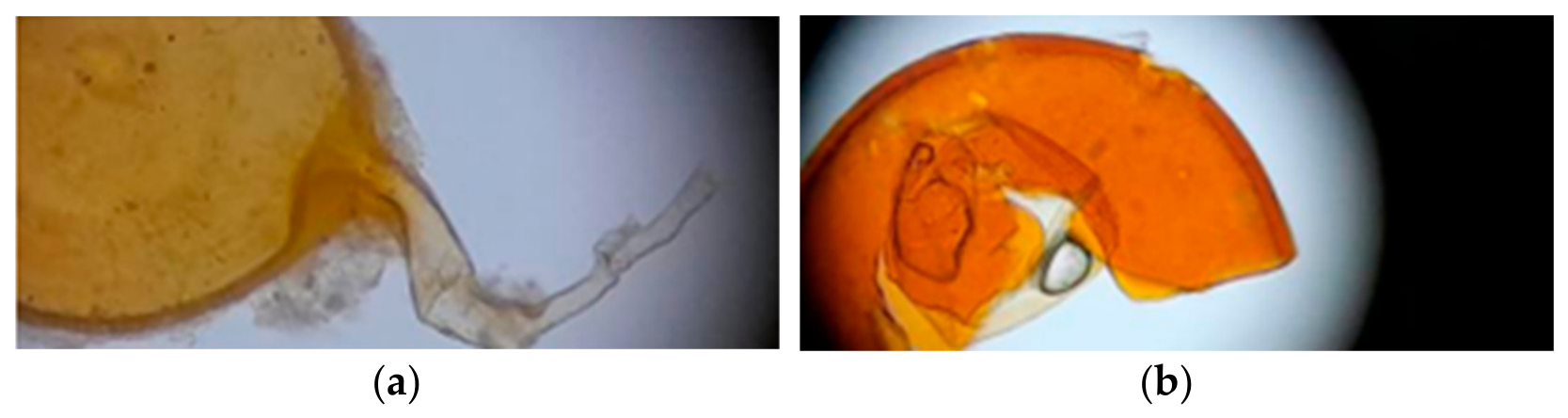
Microbiological analysis of the landslide-affected soil was conducted to identify indigenous arbuscular mycorrhizal fungi (AMF) with potential to enhance soil fertility and plant productivity. Laboratory results indicated the presence of two AMF morphospecies, both belonging to the genus Glomus, namely Glomus sp. 1 (Figure 4a) and Glomus sp. 2 (Figure 4b). Identification was based on spore morphological characteristics, including color, diameter, spore wall structure, and the attachment of the spore to the subtending hypha. The abundance of Glomus sp. 1 was two spores per 20 g of soil, while Glomus sp. 2 was three spores per 20 g, resulting in a total of five spores per 20 g of soil sample. The morphospecies Glomus sp. 1 was characterized by transparent spores with an approximate diameter of 110 µm. The spores had a single spore wall layer, a typical feature of the genus Glomus.
Figure 4.
(a) Morphospecies of Glomus sp1. (b) Morphospecies of Glomus sp2.
The relatively small spore size and transparent coloration suggest that Glomus sp. 1 (Figure 4a) may represent an AMF type adapted to soils with low-to-moderate nutrient availability, and likely plays an active role in early-stage root colonization [30]. In contrast, the morphospecies Glomus sp. 2 (Figure 4b) exhibited distinct morphological characteristics, including reddish-brown spores with a relatively larger diameter, ranging from 80 to 120 µm. Similar to Glomus sp. 1, the spores consisted of a single spore wall layer; however, their darker coloration indicates a more advanced stage of spore maturity. The differences in spore color and size between Glomus sp. 1 and Glomus sp. 2 reflect the morphological diversity of AMF present in the analyzed soil samples.
The presence of two Glomus morphospecies in the soil samples indicates a relatively diverse AMF community, which may enhance nutrient uptake efficiency—particularly phosphorus (P)—and improve plant tolerance to environmental stress. The genus Glomus is widely recognized as one of the most dominant and adaptable AMF groups across various agroecosystems, owing to its rapid colonization ability, tolerance to a wide range of pH conditions, and capacity to form symbiotic associations with diverse plant species. These findings suggest that the studied soil contains indigenous AMF with potential application as bio-inoculants to improve soil fertility and plant productivity. The presence of Glomus sp. 1 and Glomus sp. 2 further supports the potential use of AMF in sustainable agricultural practices and environmentally friendly soil management strategies [31]. The application of indigenous mycorrhiza for post-landslide land remediation is expected to have more adaptability, resulting in faster mycorrhiza performance [32]. AMF and bamboo interventions can accelerate plant growth and redirect root growth. According to the study, bamboo tubes combined with AMF can stimulate root growth and direction [33]. AMF spore density provides information regarding inoculum potential and AMF community responses to planting media and fertilization treatments; however, this parameter does not directly reflect root colonization levels or the effectiveness of mycorrhizal symbiosis. Therefore, future studies should combine spore density analysis with root colonization measurements to obtain a more comprehensive understanding of the role of AMF in plant growth and soil quality improvement.
3.3. Plant Growth Performance of Vetiver (Crysopogon zizanioides)
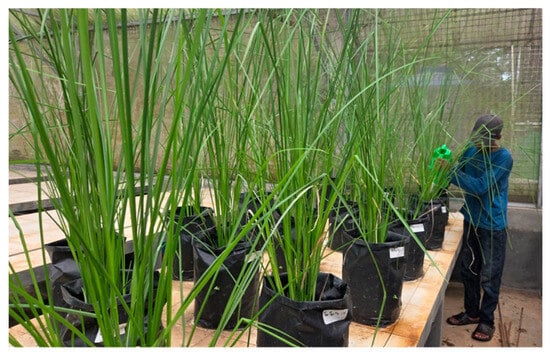
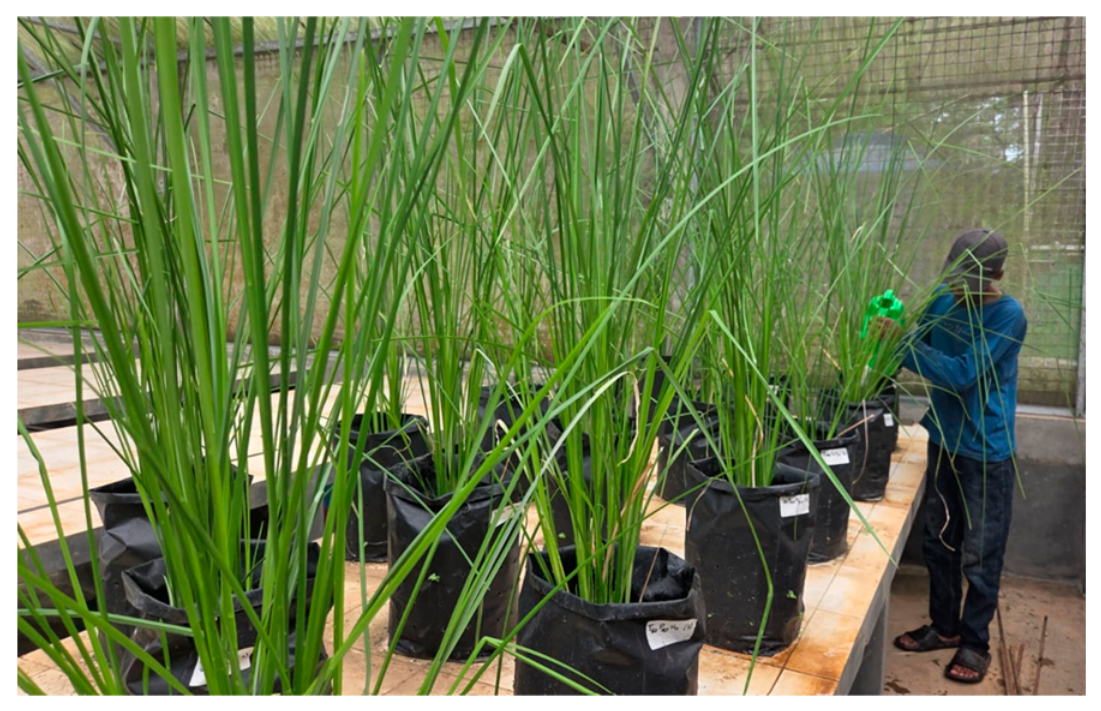
Plant growth performance was evaluated by measuring plant height, number of leaves, and number of tillers, which served as indicators of vegetative growth and regenerative capacity. These parameters provide a comprehensive representation of plant morphological responses to variations in NPK fertilizer rates and growth medium composition. The physical growth performance of vetiver observed in this study is presented in Figure 5.
Figure 5.
The growth performance of vetiver (Chrysopogon zizanioides) measured at the end of the experiment.
3.3.1. Plant Height
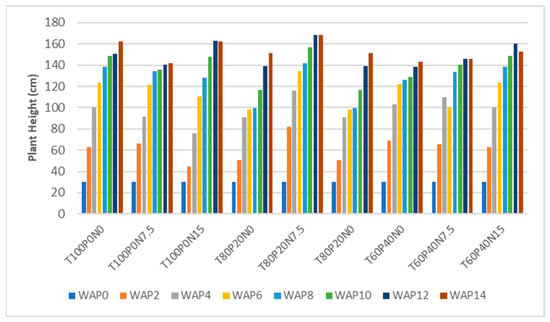
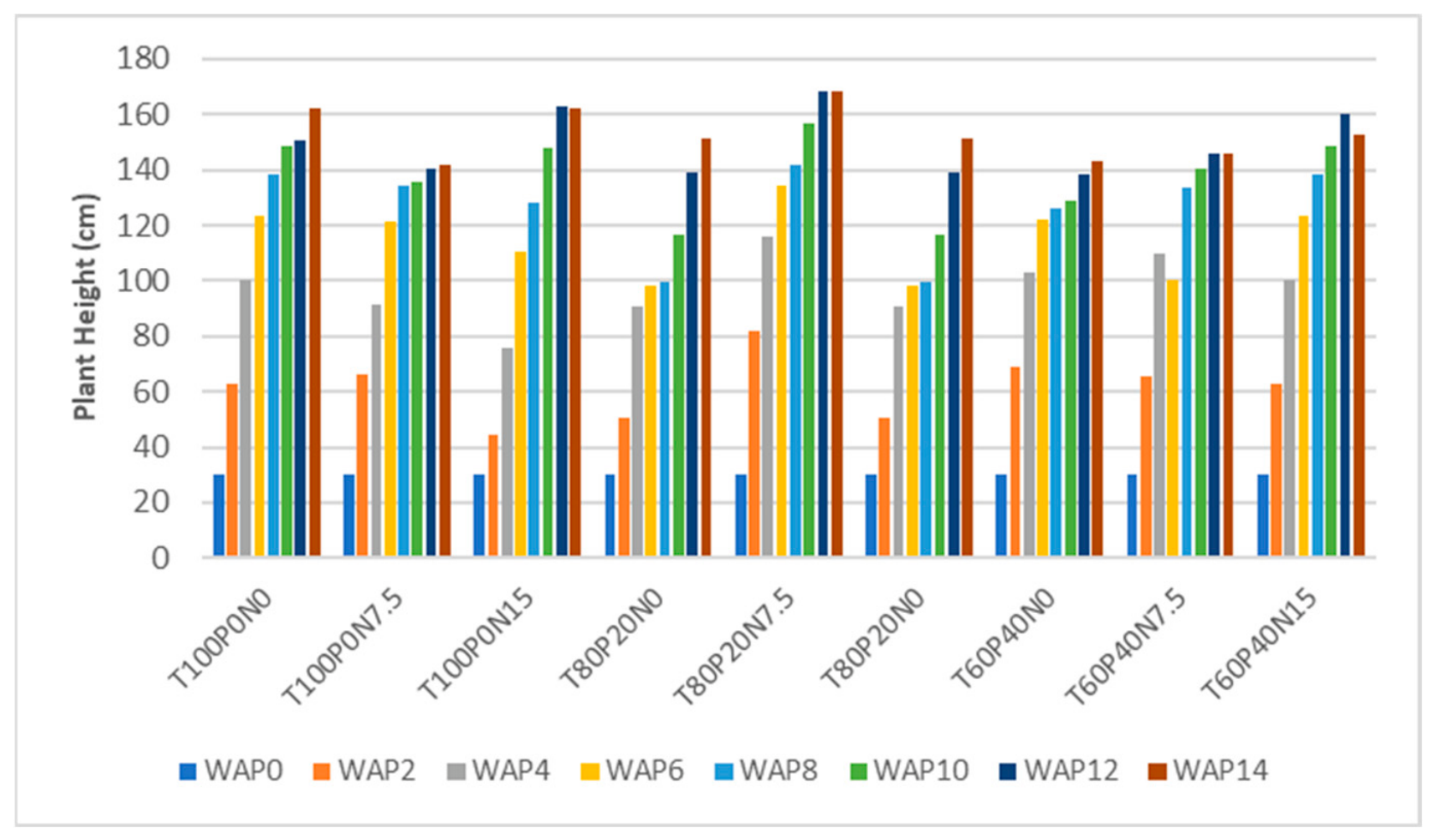
Plant height increased consistently across all treatments from 2 to 14 weeks after planting (WAP), although growth rates varied among different medium formulations and NPK fertilizer levels (Figure 6). During the early growth stage (2–4 WAP), differences in plant height were relatively small; however, these differences became more pronounced from 8 to 14 WAP. The highest plant height at the end of the observation period was recorded under treatment T80P20N7.5 (168.33 cm), while the highest growth rate occurred during 2–6 WAP, representing a critical phase of canopy development associated with root system establishment. Treatments receiving NPK fertilizer (N7.5 and N15) generally produced greater final plant height compared to the unfertilized treatment (N0) across most medium compositions. Mixed medium treatments (T60P40 and T80P20) tended to result in taller plants than the single soil medium (T100P0), particularly at moderate-to-high NPK application rates. This pattern indicates that nutrient availability and the physical properties of the growth medium interact to control vegetative growth. The observed increase in plant height under NPK treatments is consistent with the roles of nitrogen, phosphorus, and potassium in chlorophyll and protein synthesis, energy transfer, root development, and the regulation of enzymatic activity and plant water balance, which collectively enhance photosynthesis and stem elongation [19,32]. Improved growth responses in mixed media are associated with enhanced porosity, water-holding capacity, and cation exchange capacity, which contribute to more efficient nutrient uptake and fertilizer use [18].
Figure 6.
Average plant height under various soil–compost compositions and NPK fertilization treatments.
3.3.2. Leaf Number
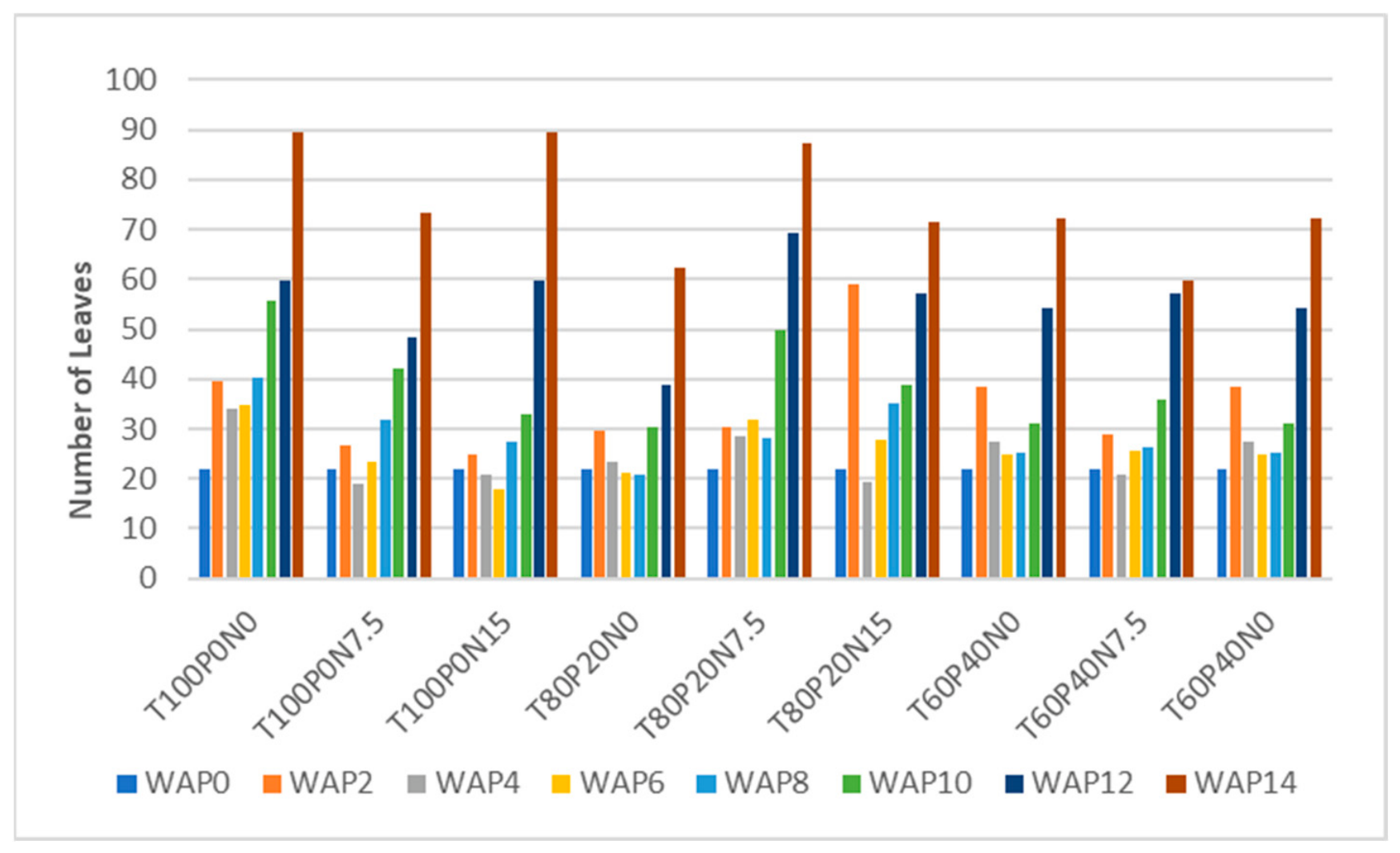
Leaf number increased in all treatments from 2 to 14 weeks after planting (WAP), with growth rates varying according to medium formulation and NPK fertilizer levels (Figure 7). In the early growth stage (2–4 WAP), differences among treatments were minimal, but these differences became more pronounced from 8 to 14 WAP. Treatments receiving NPK fertilizer (N7.5 and N15) generally produced more leaves than the unfertilized control (N0). The highest leaf number occurred with the N7.5 dose in the T80P20 medium, followed by several N15 treatments in mixed media. In contrast, the single soil medium (T100P0) produced fewer leaves than mixed media at equivalent fertilizer levels. The higher leaf production observed under NPK fertilization was reflected in the subsequent increase in tiller formation and biomass accumulation [34].
Figure 7.
Average number of leaves under different growth medium compositions and NPK fertilization.
These results align with previous studies indicating that increased NPK supply stimulates stem elongation, leaf area development, and leaf dry weight [35]. Phosphorus and potassium further support canopy development by facilitating energy transfer, root system development, enzyme activation, and stomatal regulation, which enhance photosynthetic efficiency and leaf metabolism [19]. The increasingly pronounced differences in leaf number at later growth stages reflect the rising nutrient demand associated with greater canopy biomass, consistent with findings that interactions between nutrient availability and growth medium quality determine canopy formation capacity in grasses and horticultural crops [36].
3.3.3. Number of Tillers
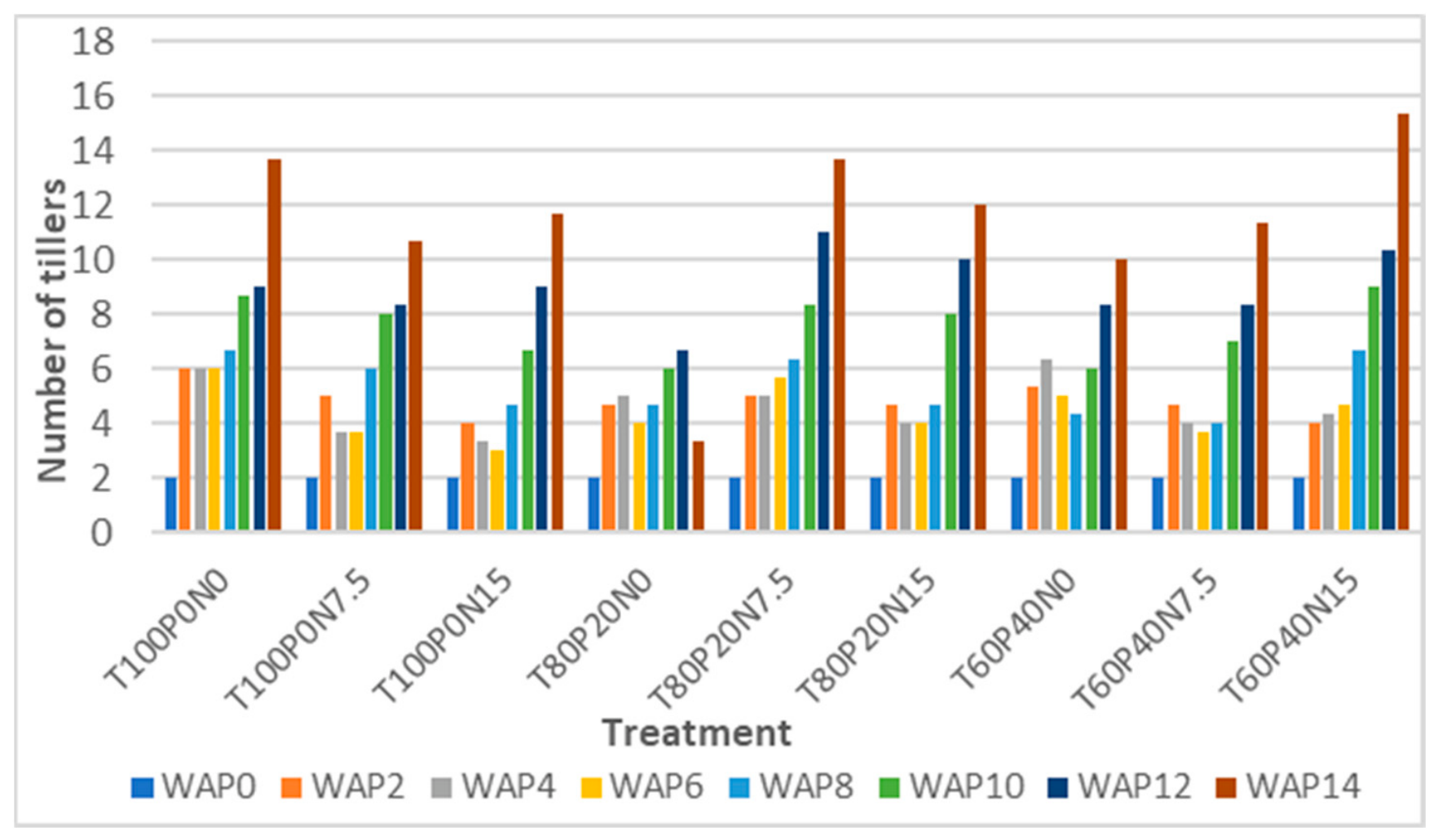
The development of tillers during the experiment is shown in Figure 8. Tiller formation is an important indicator of vegetative growth, as it is directly associated with biomass production and canopy coverage. Phosphorus and potassium further support this process through their roles in energy transfer, root development, enzyme regulation, and osmotic balance, resulting in more intensive lateral shoot growth compared to unfertilized plants [19,36]. The higher tiller response observed in mixed media highlights the importance of physical medium properties, particularly improved aeration, water-holding capacity, and nutrient retention, which promote root development and enhance fertilizer use efficiency [18]. The increasingly pronounced differences at later growth stages indicate cumulative effects of nutrient availability and media conditions, consistent with findings in grasses and cereals that NPK supply and growth medium quality are key determinants of tiller formation dynamics [34,36]. The higher tiller response observed in mixed media highlights the importance of physical medium properties, particularly improved aeration, water-holding capacity, and nutrient retention, which promote root development and enhance fertilizer use efficiency. Consequently, plants grown in media containing compost were able to sustain greater tiller production throughout the growing period than those grown in soil alone. This result is consistent with the overall enhancement of vegetative growth promoted by balanced nutrient availability.
Figure 8.
Average number of tillers under different growth medium compositions and NPK fertilization.
3.4. Interaction Effects of NPK Fertilizer and Growth Medium
The interaction effects between NPK fertilizer dosage and growth medium composition were evaluated using biomass fresh weight, root diameter, root length, and root tensile strength, all measured at harvest. Biomass fresh weight refers to the total fresh biomass of vetiver plants, including both shoot and root components. This parameter represents the overall plant growth response, encompassing both aboveground and belowground development, to variations in NPK application and medium formulation. Plant growth responses were further assessed through root diameter, root length, and root tensile strength, which serve as key indicators of root system development and mechanical reinforcement capacity.
3.5. Analysis of Variance (ANOVA)
3.5.1. Fresh Biomass Weight
Based on fresh biomass weight data obtained from three planting medium compositions (T100P0, T80P20, and T60P40), three NPK fertilizer rates (N0, N7.5, and N15), and three replications, a two-way factorial ANOVA was conducted. The results are presented in Table 3.
The factorial ANOVA showed that NPK fertilizer rate had a significant effect on vetiver fresh biomass weight (p < 0.05), whereas planting medium composition had no significant effect (p > 0.05). However, the interaction between planting medium and NPK fertilizer rate was significant (p < 0.05), indicating that the plant response to fertilization depended on the composition of the planting medium.
The treatment combination T80P20N7.5 produced the highest fresh biomass (178.33 g), whereas T80P20N0 produced the lowest (73.33 g). These findings suggest that adding 20% compost, combined with a moderate NPK application rate, provided the most favorable conditions for enhancing vetiver biomass accumulation.
Because the ANOVA results indicated a significant interaction between planting medium and NPK fertilizer rate (p = 0.037), Tukey’s Honestly Significant Difference (HSD) test was subsequently performed to compare the nine treatment combinations, following the principles of factorial analysis.
The Tukey HSD test showed that T80P20N7.5 produced the highest fresh biomass weight (178.33 g), although it was not significantly different from T80P20N15 (170.00 g) and T60P40N15 (161.67 g). In contrast, T80P20N0 produced the lowest biomass (73.33 g) and differed significantly from the treatments with the highest biomass values.
These findings indicate that compost addition should be accompanied by adequate nutrient availability from NPK fertilization to optimize vetiver vegetative growth. The combination of T80P20 medium and 7.5 g NPK fertilizer produced the highest biomass, suggesting a synergistic effect between the improvement of physical growing medium properties by compost and the enhanced nutrient availability provided by NPK fertilization.
3.5.2. Root Diameter
Based on root diameter data obtained from three planting medium compositions (T100P0, T80P20, and T60P40), three NPK fertilizer rates (N0, N7.5, and N15), and three replications, a two-way factorial ANOVA was conducted. The results are presented as follows (Table 4).
Table 4.
Two-Way ANOVA for root diameter of vetiver under different growth medium and NPK fertilizer levels.
NPK fertilizer significantly affected root diameter (p = 0.006). Tukey’s HSD test revealed that plants grown without NPK fertilizer (N0) exhibited the largest root diameter (1.40 mm), which was significantly greater than that of plants receiving 7.5 g NPK (1.03 mm). The 15 g NPK treatment showed intermediate values and did not differ significantly from either N0 or N7.5. These findings suggest that increased nutrient availability did not promote root thickening and may have shifted assimilate allocation toward shoot growth rather than root development.
3.5.3. Root Tensile Strength
Based on root tensile strength data obtained from three planting medium compositions (T100P0, T80P20, and T60P40), three NPK fertilizer rates (N0, N7.5, and N15), and three replications, a two-way factorial ANOVA was conducted. The results are presented in Table 5.
Table 5.
Two-way ANOVA for root tensile strength of vetiver under different growth medium and NPK fertilizer levels.
3.5.4. Interaction Effects of Growing Medium Composition and NPK Fertilization on Vetiver Growth and Root Characteristics
The interaction between growing medium composition and NPK fertilizer application significantly influenced vetiver grass performance, particularly in fresh biomass production and root structural traits, while root length was not significantly affected.
Fresh Biomass Production
Fresh biomass weight was significantly affected by the interaction between growing medium and NPK fertilization (Table 6). The highest biomass production was observed in the T80P20 medium combined with N7.5 (178.33 ± 30.87 g) and N15 (170.00 ± 15.00 g), indicating a strong synergistic effect between moderate organic amendment and mineral fertilization. In contrast, the lowest biomass was recorded in T80P20 without fertilizer (73.33 ± 8.33 g), suggesting that this medium requires external nutrient supplementation to reach optimal productivity.
Table 6.
Interaction effect of growing medium composition and NPK fertilizer on fresh biomass weight of vetiver grass.
In the T100P0 medium, biomass remained relatively stable across fertilization levels (113.33–138.33 g), indicating limited responsiveness to NPK addition. Meanwhile, T60P40 showed an increasing trend under higher fertilization, reaching 161.67 ± 19.22 g at N15, suggesting improved nutrient utilization efficiency in media with higher organic content when combined with sufficient mineral nutrients. These results indicate that a balanced medium (T80P20) optimizes nutrient availability and plant growth, likely due to improved physical properties and nutrient-retention capacity that enhance fertilizer use efficiency.
Root Diameter
Root diameter was also influenced by the interaction of treatments (Table 7), although the response pattern was less pronounced than that of biomass. The largest root diameter was observed in T100P0 without fertilizer (1.47 ± 0.12 mm). This suggests that under nutrient-limited conditions, vetiver allocates more resources to root thickening as an adaptive strategy to improve soil exploration and mechanical stability.
Table 7.
Interaction effect of growing medium composition and NPK fertilizer application on root diameter of vetiver grass.
However, applying NPK at N7.5 in the same medium reduced root diameter to 0.83 ± 0.21 mm, indicating a shift in biomass allocation toward growth processes other than root thickening under improved nutrient availability. In contrast, treatments involving T80P20 and T60P40 exhibited relatively stable root diameters across fertilization levels, suggesting that organic matter in the medium may buffer nutrient effects and stabilize root structural development.
Root Length
Root length was not significantly affected by the interaction between growing medium and fertilizer (Table 8), indicating that root elongation is a relatively stable trait in vetiver grass under the tested conditions. Nevertheless, descriptive trends showed that T100P0 consistently maintained high root length (88.67–96.00 cm) across fertilization levels, reflecting vetiver’s inherent deep-rooting capacity even under low nutrient availability.
Table 8.
Interaction effect of growing medium composition and NPK fertilizer application on root length of vetiver grass.
In T80P20, root length increased with fertilization, reaching 85.67 ± 18.48 cm at N15, compared to 63.33 ± 2.08 cm under N0, suggesting a positive but non-significant response to nutrient addition. Overall, these findings indicate that root elongation is less sensitive to nutrient and medium interactions compared to biomass accumulation and root mechanical traits.
Root Tensile Strength
Root tensile strength showed clear interaction effects between treatments (Table 9). In the T100P0 medium, tensile strength decreased with increasing NPK application, from 21.59 ± 1.89 MPa (N0) to 12.75 ± 2.34 MPa (N15). This suggests that higher nutrient availability may reduce root mechanical strength, possibly due to faster growth rates and reduced structural tissue reinforcement (e.g., lignification).
Table 9.
Interaction effect of growing medium composition and NPK fertilizer application on root tensile strength of vetiver grass.
Conversely, in the T60P40 medium, tensile strength increased with fertilization, reaching 16.61 ± 1.87 MPa at N15, indicating that organic-rich media combined with sufficient nutrients can enhance root structural quality. The T80P20 treatment showed relatively stable tensile strength across fertilizer levels, suggesting a buffering effect of this medium in maintaining root mechanical stability.
3.5.5. Integrated Interpretation
Overall, the results demonstrate that the growing medium composition strongly modulates vetiver grass’s response to NPK fertilization. The T80P20 medium consistently produced the highest biomass under fertilized conditions, indicating optimal nutrient availability and utilization efficiency. Meanwhile, T100P0 favored root structural adaptation under low nutrient input, producing thicker, more mechanically robust roots under unfertilized conditions. The T60P40 medium responded positively to increased fertilizer input, particularly in biomass and tensile strength.
These patterns reflect a clear trade-off between growth and structural investment. Under nutrient limitation, vetiver prioritizes root reinforcement, whereas under nutrient sufficiency, biomass production becomes dominant. From an applied perspective, the combination of moderate organic amendment (T80P20) with moderate fertilization (N7.5–N15) appears most suitable for achieving balanced aboveground productivity and stable root development. This has important implications for vetiver use in soil stabilization, slope protection, and phytoremediation systems, where both biomass production and root mechanical strength are critical functional traits.
The significant interaction between growing medium composition and NPK fertilization (p = 0.037) indicates that fertilization effects depended on the planting medium. In the T80P20 medium, biomass production increased markedly from 73.33 g in the absence of NPK to 178.33 g at N7.5 and 170.00 g at N15. Conversely, biomass responses in T100P0 were relatively limited, suggesting that nutrient addition alone was insufficient to maximize growth in pure landslide soil. In T60P40, biomass increased progressively with increasing NPK dosage. These findings demonstrate that fertilization effectiveness is strongly influenced by the growing medium composition, highlighting the importance of optimizing both organic amendments and nutrient supply to maximize vetiver biomass production.
3.5.6. Interaction Effects of Growth Medium Formulation and NPK Fertilization on Root Length, Root Diameter, and Root Tensile Strength
The results demonstrate that the combination of growth medium formulation and NPK fertilizer dosage significantly affected root diameter, but did not significantly influence root length and root tensile strength (Table 3).
The uniformity of root length across treatments indicates that root elongation is predominantly governed by plant genetic factors and the physical characteristics of the growth medium. In contrast, root mechanical properties are more responsive to nutrient status and root tissue quality. These findings align with recent studies showing that root mechanical characteristics are primarily determined by anatomical structure, tissue density, and cell wall composition, rather than root length alone [9,37].
The greatest root diameter was recorded in treatment T100P0N0 (1.47 mm), which was significantly different from T100P0N7.5 but not from treatments that included compost. The application of NPK without compost generally reduced root diameter, suggesting that elevated NPK availability encourages the development of finer roots and may decrease root mechanical strength. This pattern is evident in the root tensile strength values, which ranged from 12.75 to 21.60 MPa, with the highest value in T100P0N0 and the lowest in T100P0N15.
The reduction in root tensile strength observed with high NPK application, especially in media lacking compost, indicates that increased nutrient supply does not necessarily enhance tissue structural quality. This observation is consistent with studies showing that high NPK levels can reduce lignin content and increase the proportion of parenchymatous tissue [38,39]. Conversely, in compost-amended media (T80P20 and T60P40), root tensile strength remained stable despite smaller root diameters, underscoring the importance of organic matter in improving soil physical and biological properties and promoting the development of denser, stronger root tissues [9].
The observed positive correlation between root diameter and tensile strength supports mechanical models that propose tensile strength is proportional to cross-sectional area and cell wall density [37]. In this study, root tensile strength ranged from 14.927 to 21.599 MPa. Previous reviews indicate that roots with tensile strength above 10 MPa contribute substantially to soil cohesion in slope stability models [40]. These findings are consistent with biomechanical studies of vetiver roots, which report values between 10 and 30 MPa. Higher tensile strength values are generally associated with conditions lacking intensive fertilization [41], while values in compost-amended media correspond to those observed in soils managed with organic inputs [42].
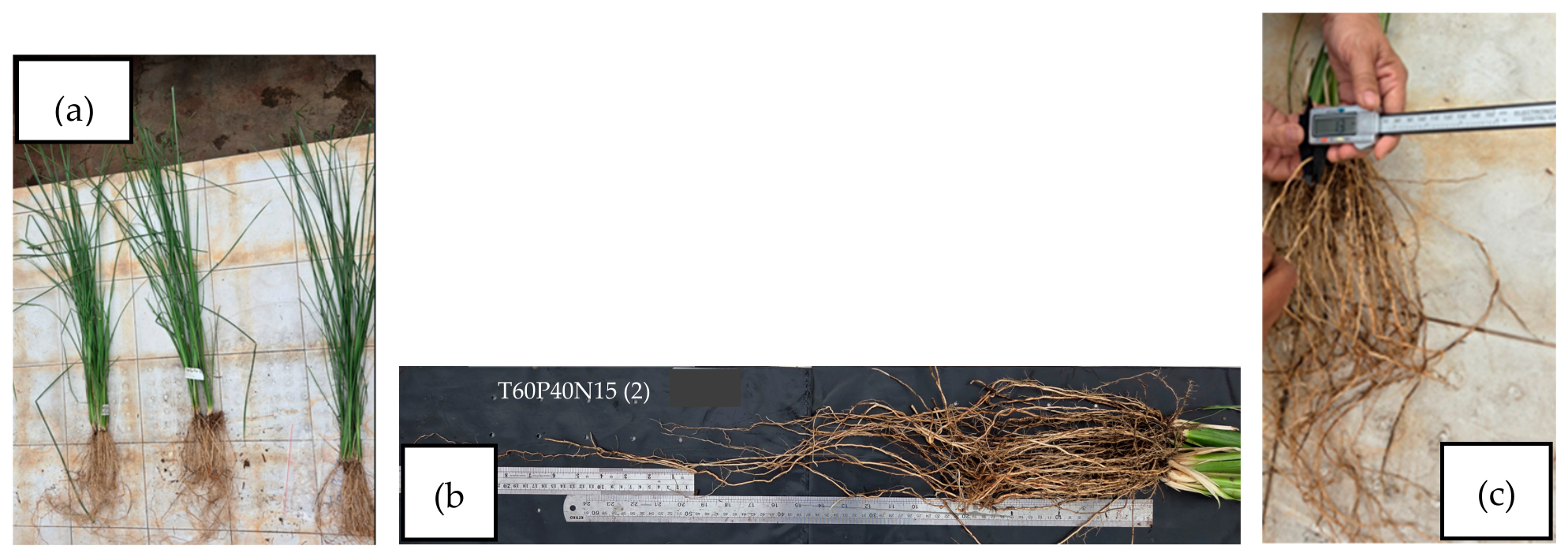
Elevated root tensile strength enhances soil cohesion and slope stability through root reinforcement mechanisms. All treatments exhibited mechanical properties relevant to improving soil cohesion and slope stability, although high NPK application without compost reduced root mechanical quality. These results emphasize the importance of incorporating compost into vetiver cultivation systems to support bioengineering applications and landslide mitigation. Root performance data, including root length and diameter, are presented in Figure 9a–c.
Figure 9.
Vetiver root performance: (a) overall root system, (b) root length measurement, and (c) root diameter measurement.
4. Optimizing the Potential and Function of Vetiver (Chrysopogon zizanioides) for Landslide Mitigation
Vetiver (Chrysopogon zizanioides) roots play a critical role in slope stabilization and landslide mitigation through root reinforcement mechanisms. The root system is characterized by deep, dense, and predominantly vertical growth, which increases soil cohesion and resists tensile and shear forces along potential slip surfaces [43]. Biomechanically, vetiver roots exhibit relatively high tensile strength, typically exceeding 10 MPa, thereby contributing substantially to soil shear strength and slope safety factors [38,42]. The dense root distribution increases the root area ratio, enhancing soil anchoring and reducing deformation, especially under saturated conditions following rainfall [5]. The combined effects of root tensile strength, root architecture, and improved soil physical properties render vetiver highly effective in reducing surface erosion, slowing mass movement, and mitigating shallow slope failures. As a result, vetiver is widely recommended as a key component in soil bioengineering strategies for land conservation and landslide mitigation [9,39].
Optimizing vetiver for landslide mitigation through improved growth medium formulation and NPK fertilization revealed that the T80P20N7.5 treatment significantly increased biomass fresh weight to 178.33 g. This treatment also achieved the highest cation exchange capacity (CEC) at 44.92. Increased biomass under higher CEC conditions demonstrates that the growth media’s ability to retain and supply essential nutrient cations is critical for supporting vegetative growth. Media with high CEC effectively retain nutrients such as K+, Ca2+, Mg2+, and NH4+ within the root zone, enhancing nutrient uptake efficiency. In vetiver, this not only promotes aboveground growth but also supports the development of a more extensive root system, as indicated by increased biomass accumulation. Improved pH stability and nutrient availability in the T80P20N7.5 treatment further contributed to biomass production. Additionally, the highest manganese (Mn) content was observed in the T80P20 medium formulation. Mn is essential for photosynthesis and nitrogen metabolism [28]. The presence of indigenous arbuscular mycorrhizal fungi (AMF) in the T80P20 formulation also enhanced soil fertility and plant productivity by functioning as bio-inoculants. A well-developed root system not only increases biomass but also strengthens the plant’s capacity to reinforce soil structure through root reinforcement mechanisms, thereby improving slope stability in landslide-prone areas [18,44,45].
The highest root tensile strength was recorded in the treatment without NPK fertilization (T100P0N0), reaching 21.59 MPa. Variations in NPK availability in the growth medium influence root mechanical properties by altering cell wall composition and structure. While high NPK availability generally promotes vegetative growth and cell expansion, it is often associated with reduced relative lignin content in structural plant tissues.
Lignin is a primary component responsible for the rigidity and tensile strength of plant tissues; thus, reduced lignification can result in lower root tensile strength. In contrast, tissues with lower lignification levels typically exhibit greater deformation capacity before mechanical failure, as indicated by higher break strain values. The findings indicate that NPK application decreased tensile strength across all medium formulations while increasing root ductility (break strain) (Table 10). Previous studies have established that lignin content is positively correlated with root tensile strength, whereas tissues with lower lignification display more plastic or ductile mechanical behavior [46,47]. Nitrogen availability regulates lignin biosynthesis by influencing key enzymatic pathways and gene expression, often leading to reduced lignin content and altered monomer composition under high-nitrogen conditions [48].
Table 10.
Root tensile strength and break strain of vetiver (Chrysopogon zizanioides) roots under different growth medium formulations.
In slope bioengineering, roots with lower tensile strength but greater deformation capacity may enhance soil stabilization by allowing the root system to accommodate soil deformation before structural failure occurs. Thus, the influence of NPK on vetiver root mechanical properties affects both root biomass and the mechanical characteristics that determine soil reinforcement and slope stabilization.
5. Conclusions
Planting medium composition and NPK fertilization significantly affected the vegetative growth, biomass accumulation, and root mechanical properties of vetiver grass (Chrysopogon zizanioides). NPK availability not only influenced fresh biomass production but also altered root mechanical characteristics, particularly tensile strength and deformation capacity prior to failure. Root length uniformity was primarily determined by the plant’s genetic factors and the physical characteristics of the growth media, whereas root mechanical properties were more responsive to nutrient availability and root tissue quality.
Root tensile strength varied substantially among treatments, with mean values ranging from 12.75 to 21.599 MPa. The highest value occurred in T100P0N0 (21.599 ± 4.37 MPa), while the lowest was recorded in T100P0N15 (12.75 ± 3.04 MPa). Notably, all treatments exceeded 10 MPa, demonstrating that vetiver roots possess sufficient mechanical strength to contribute effectively to soil reinforcement and slope stability.
Optimization of vetiver potential for landslide mitigation vetiver through growth medium formulation and NPK fertilization showed that the T80P20N7.5 treatment produced the highest biomass fresh weight (178.33 g). This treatment also exhibited effective root tensile strength (14.74 MPa), indicating its suitability for contributing to slope stability. Thus, T80P20N7.5 is identified as the most effective treatment for enhancing vetiver root performance as a soil reinforcement element and improving its contribution to slope stabilization.
Increased biomass fresh weight directly contributes to soil reinforcement by enhancing cohesion, improving soil particle binding, and promoting the development of a dense root network within shallow to intermediate soil layers. Furthermore, optimal vegetative growth supports higher photosynthetic activity and greater carbon allocation to the root system, resulting in deeper and more extensive vertical root distribution. This is particularly important for vetiver in stabilizing steep slopes. Therefore, strategies that optimize vetiver performance through growth medium formulation and nutrient management not only enhance biomass production but also strengthen its ecotechnical function, increasing slope safety factors and reducing landslide risk sustainably.
This study provides preliminary experimental evidence supporting the potential application of vetiver-based solutions; however, further field-scale investigations are required to validate their effectiveness under actual landslide conditions. The results suggest that optimal vetiver growth conditions may enhance root-mediated soil reinforcement, supporting the potential application of nature-based approaches for slope stabilization.
Author Contributions
Conceptualization, E.H.S., T.H. and I.G.T.; methodology, E.H.S., T.H. and A.M.; software, H.E.H.F., T.P., F.S. and E.B.B.; writing—original draft preparation, E.H.S., T.H., I.G.T., A.M., Z.Z., N.U., D.T. and I.S.; validation, E.H.S., I.G.T., T.H. and H.E.H.F.; formal analysis, N.W., N.U., M.R.N., W.C. and T.W.; investigation, E.H.S., T.H., N.U. and D.T.; resources, W.C., T.P., D.T. and E.B.B.; data curation, F.S., M.L.A., M.R.N., N.W. and T.W.; drawing, F.S., M.L.A., H.E.H.F. and T.W.; writing—review and editing, E.H.S., T.H., I.G.T. and A.M.; visualization, M.R.N., N.W., T.W. and M.L.A.; supervision, Z.Z., A.M., I.S. and D.T.; project administration, I.G.T., E.H.S. and T.H.; funding acquisition, I.G.T., E.H.S. and E.B.B. All authors have read and agreed to the published version of the manuscript.
Funding
The study has been supported by the National Research and Innovation Agency (BRIN) for the fiscal year 2025, under number 1/III.4/Hk/2025.
Data Availability Statement
The raw data supporting the conclusions of this article will be made available by the corresponding author on request.
Acknowledgments
The research team thanks Ocky Karna Rajasa and Luki Subehi, the Head and Acting Head of the Earth and Maritime Research Organisation (ORKM), and Adrin Tohari, Head of the Research Center for Geological Disaster of the National Research and Innovation Agency (BRIN), for their leadership, administrative support, and institutional facilitation, which greatly assisted the execution of this research.
Conflicts of Interest
The authors declare no conflicts of interest.
Abbreviations
The following abbreviations are used in this manuscript:
| NPK | Nitrogen Phosphorus Potassium |
| NbSs | Nature-based solutions |
| CRD | Completely randomized design |
| WAP | Weeks after planting |
| LiDAR | Light detection and ranging |
| C | Carbon |
| N | Nitrogen |
| P2O5 | Phosphorus pentoxide |
| K2O | Potassium oxide |
| CEC | Cation exchange capacity |
| SOM | Soil organic matter |
| Zn | Zinc |
| Fe | Iron |
| Mn | Manganese |
| Cu | Copper |
| AMF | Arbuscular mycorrhizal fungi |
References
- Tan, S.; Xiang, G.; Xu, X.; Liu, T. Mechanical Characteristics of Herbaceous Plant Root System and Slope Stability Research. Sci. Rep. 2025, 15, 24916. [Google Scholar] [CrossRef] [Scilit] [PubMed]
- Jian, S.; Niu, Y.; Zhang, X.; Wei, Y.; Gao, J. Study on Shear Strength of Soil–Root Systems of Different Vegetation Types. Plants 2024, 13, 2963. [Google Scholar] [CrossRef] [Scilit] [PubMed]
- Fata, Y.A.; Hendrayanto; Murtilaksono, K.; Erizal. The Role of Hydro-Mechanical Vegetation in Slope Stability: A Review. In IOP Conference Series: Earth and Environmental Science; IOP Publishing: Bristol, UK, 2021; Volume 794, p. 012041. [Google Scholar] [CrossRef] [Scilit]
- Nguyen, T.S.; Likitlersuang, S.; Jotisankasa, A. Influence of the Spatial Variability of the Root Cohesion on a Slope-Scale Stability Model: A Case Study of Residual Soil Slope in Thailand. Bull. Eng. Geol. Environ. 2019, 78, 3337–3351. [Google Scholar] [CrossRef] [Scilit]
- Zhao, X.; Fan, H.; Xu, J.; Du, X. Impact of Vegetation Root Reinforcement on the Shallow Slope Stability of Unsaturated Soil Under Rainfall Infiltration Conditions. J. Beijing Univ. Technol. 2024, 50, 1100–1110. [Google Scholar] [CrossRef]
- Nong, R.; Wan, Y.; Ding, Y.; Chai, M.; Zhu, L. Effects of root systems on crack formation: Experiments, modeling, and analyses. Soil Tillage Res. 2023, 233, 105784. [Google Scholar] [CrossRef] [Scilit]
- Saifuddin, M.; Osman, N.; Khandaker, M.M. Evaluation of Root Profiles and Engineering Properties of Plants for Soil Reinforcement. J. Trop. For. Sci. 2022, 34, 176–186. [Google Scholar] [CrossRef] [Scilit]
- Pandey, K.; Kumar, S.; Sekar, K.C.; Roy, C. Vetiver Grass as a Nature-Based Solution for Soil and Water Conservation in the Garhwal Himalaya. Discov. Sustain. 2025, 6, 1148. [Google Scholar] [CrossRef] [Scilit]
- Phan, T.T.T.; Pham, T.Q.; Vu, T.; Nguyen, T.V.; Phan, T. The Role of Vetiver Grass in Soil Erosion and Slope Stabilization in Vietnam: A Review. In Proceedings of the International Conference on Bio-Mediated and Bio-Inspired Geotechnics; Arizona State University: Tempe, AZ, USA, 2025. [Google Scholar] [CrossRef]
- Leknoi, U.; Yiengthaisong, A.; Likitlersuang, S. Promoting Use of Vetiver Grass for Landslide Protection: A Pathway to Achieve Sustainable Development Goals in Thailand. Environ. Dev. 2025, 54, 101155. [Google Scholar] [CrossRef] [Scilit]
- Deng, Y.; Yao, Z.; Duan, B.; Li, L.; Meng, L.; Zhao, H. Mechanical Properties of Slope Protection by Vetiver Root Using Fractal Theory. Trans. Chin. Soc. Agric. Eng. 2024, 40, 147–154. [Google Scholar] [CrossRef]
- Wang, X.; Li, Z.; Chen, Y.; Yao, Y. Influence of Vetiver Root Morphology on Soil–Water Characteristics of Plant-Covered Slope Soil in South Central China. Sustainability 2023, 15, 1365. [Google Scholar] [CrossRef] [Scilit]
- Mahaputra, P.A.; Hendrayanto; Prihanto, B. Karakteristik dan Faktor Penyebab Longsor di Kecamatan Sukajaya, Kabupaten Bogor; IPB University: Bogor, Indonesia, 2022. [Google Scholar]
- Tejakusuma, I.G.; Sittadewi, E.H.; Mulyono, A.; Handayani, T.; Tohari, A.; Fatahillah, H.E.H.; Zakaria, Z.; Budiman, E.B.; Utami, N. A Spatial Slip Plane-Based Vegetation Model for Slope Reinforcement and Shallow Landslide Mitigation. Glob. J. Environ. Sci. Manag. 2025, 11, 875–896. [Google Scholar] [CrossRef]
- Bischetti, G.B.; Bassanelli, C.; Chiaradia, E.A.; Minotta, G.; Vergani, C. The Effect of Gap Openings on Soil Reinforcement in Two Conifer Stands in Northern Italy. For. Ecol. Manag. 2016, 359, 286–299. [Google Scholar] [CrossRef] [Scilit]
- Bischetti, G.B.; Chiaradia, E.A.; Simonato, T.; Speziali, B.; Vitali, B.; Vullo, P.; Zucco, A. Root Strength and Root Area Ratio of Forest Species in Lombardy (Northern Italy). Plant Soil 2005, 278, 11–22. [Google Scholar] [CrossRef] [Scilit]
- Abdi, E. Root Tensile Force and Resistance of Several Tree and Shrub Species of Hyrcanian Forest, Iran. Croat. J. For. Eng. 2018, 39, 255–270. [Google Scholar]
- Weil, R.R.; Brady, N.C. The Nature and Properties of Soils, 15th ed.; Pearson Education: London, UK, 2017. [Google Scholar]
- Havlin, J.L.; Tisdale, S.L.; Nelson, W.L.; Beaton, J.D. Soil Fertility and Fertilization: An Introduction to Nutrient Management, 8th ed.; Pearson Prentice Hall: London, UK, 2017. [Google Scholar]
- Bai, J.; Zhang, S.; Huang, S.; Xu, X.; Zhao, S.; Qiu, S.; He, P.; Zhou, W. Effects of the Combined Application of Organic and Chemical Nitrogen Fertilizers on Soil Aggregate Carbon and Nitrogen. J. Integr. Agric. 2023, 22, 3517–3534. [Google Scholar] [CrossRef] [Scilit]
- Iser, J.; Wehrle, R.; Bauke, S.L. Is Sulfur Storage in Grassland Topsoils Controlled by the Same Factors as Carbon and NPK Storage? A Global Meta-Analysis. Biogeochemistry 2025, 168, 84. [Google Scholar] [CrossRef] [Scilit]
- Pangalila, W.; Runtunuwu, S.D.; Lengkong, E.F. Effect of Combination of Organic Fertilizer and Inorganic Fertilizer on the Growth and Production of Hybrid Corn of Variety JH37. J. Agroekoteknologi Terap. 2023, 4, 311–322. [Google Scholar] [CrossRef] [Scilit]
- Fauzan, M.I.; Firmansyah, T.B.; Kristanto, B.A.; Arafat, S.; Afiefah, C.N. Integrated Application of Compost and Potassium Fertilizer Enhances Soil Fertility and Stevia Productivity in Inceptisols. J. Ecol. Eng. 2025, 26, 422–437. [Google Scholar] [CrossRef] [Scilit] [PubMed]
- Ramos, F.T.; de Carvalho Dores, E.F.G.; dos Santos Weber, O.L.; Beber, D.C.; Campelo, J.H., Jr.; de Souza Maia, J.C. Soil Organic Matter Doubles the Cation Exchange Capacity of Tropical Soil under No-till Farming in Brazil. J. Sci. Food Agric. 2018, 98, 3595–3602. [Google Scholar] [CrossRef] [Scilit] [PubMed]
- Wang, Y.; Kang, Y.; Zhong, M.; Zhang, L.; Chai, X.; Jiang, X.; Yang, X. Effects of Iron Deficiency Stress on Plant Growth and Quality in Flowering Chinese Cabbage and Its Adaptive Response. Agronomy 2022, 12, 875. [Google Scholar] [CrossRef] [Scilit]
- Zanin, L.; Tomasi, N.; Cesco, S.; Varanini, Z.; Pinton, R. Humic Substances Contribute to Plant Iron Nutrition Acting as Chelators and Biostimulants. Front. Plant Sci. 2019, 10, 675. [Google Scholar] [CrossRef] [Scilit] [PubMed]
- Noulas, C.; Tziouvalekas, M.; Karyotis, T. Zinc in Soils, Water, and Food Crops. J. Trace Elem. Med. Biol. 2018, 49, 252–260. [Google Scholar] [CrossRef] [Scilit] [PubMed]
- Khoshru, B.; Mitra, D.; Nosratabad, A.F.; Reyhanitabar, A.; Mandal, L.; Farda, B.; Djebaili, R.; Pellegrini, M.; Guerra-Sierra, B.E.; Senapati, A.; et al. Enhancing Manganese Availability for Plants through Microbial Potential: A Sustainable Approach for Improving Soil Health and Food Security. Bacteria 2023, 2, 129–141. [Google Scholar] [CrossRef] [Scilit]
- Khoshru, B.; Mitra, D.; Khoshmanzar, E.; Myo, E.M.; Uniyal, N.; Mahakur, B.; Rani, A. Current Scenario and Future Prospects of Plant Growth-Promoting Rhizobacteria: An Economic Valuable Resource for the Agricul-Ture Revival under Stressful Conditions. J. Plant Nutr. 2020, 43, 3062–3092. [Google Scholar] [CrossRef] [Scilit]
- Janowski, D.; Leski, T. Factors in the Distribution of Mycorrhizal and Soil Fungi. Diversity 2022, 14, 1122. [Google Scholar] [CrossRef] [Scilit]
- Soibam, H.; Bhupenchandra, I.; Sinyorita, S.; Lamalakshmi, E. Mycorrhizal Fungi and Sustainable Agriculture. In Nitrogen in Agriculture-Physiological, Agricultural and Ecological Aspects; IntechOpen: London, UK, 2021. [Google Scholar] [CrossRef] [Scilit]
- Sittadewi, E.H.; Tejakusuma, I.G.; Handayani, T.; Tohari, A.; Lailati, M.; Zakaria, Z.; Shomim, A.F.; Mulyono, A. Exploration and Isolation of Indigenous Arbuscular Mycorrhizal Fungi in Post-Landslide Sandy and Clayey Silt for Eco-Friendly Remediation. BIO Web Conf. 2023, 73, 01009. [Google Scholar] [CrossRef] [Scilit]
- Tejakusuma, I.G.; Sittadewi, E.H.; Handayani, T.; Hernaningsih, T.; Wisyanto, W.; Rifai, A. Root Growth and Arbuscular Mycorrhizal Fungi on Woody Plants for Vegetative Stabilization of Tropical Slopes. Glob. J. Environ. Sci. Manag. 2024, 10, 267–286. [Google Scholar] [CrossRef]
- Marschner, P. Marschner’s Mineral Nutrition of Higher Plants, 3rd ed.; Academic Press: London, UK, 2012. [Google Scholar]
- Bote, A.D.; Ayalew, B.; Ocho, F.L.; Anten, N.P.R.; Vos, J. Analysis of Coffee (Coffea arabica L.) Performance in Relation to Radiation Levels and Rates of Nitrogen Supply I. Vegetative Growth, Production and Distribution of Biomass and Radiation Use Efficiency. Eur. J. Agron. 2018, 92, 115–122. [Google Scholar] [CrossRef] [Scilit]
- Fageria, N.K. The Use of Nutrients in Crop Plants, 1st ed.; CRC Press: Boca Raton, FL, USA, 2009. [Google Scholar]
- Fata, Y.A.; Hendrayanto, H.; Erizal, E.; Tarigan, S.D.; Katsumi, T. Modelling of Mechanical Roots on Slope Stability. J. Degrad. Min. Lands Manag. 2023, 10, 4779. [Google Scholar] [CrossRef] [Scilit]
- Lann, T.; Bao, H.; Lan, H.; Zheng, H.; Yan, C.; Peng, J. Hydro-Mechanical Effects of Vegetation on Slope Stability: A Review. Sci. Total Environ. 2024, 926, 171691. [Google Scholar] [CrossRef] [Scilit] [PubMed]
- Spears, A.; Khan, S.; Alzeghoul, O.E.; Whalin, R.W. Climate-Resilient Slope Stability Improvement Using Vetiver on a Test Levee. Nat. Hazards Rev. 2024, 25, 04024034. [Google Scholar] [CrossRef] [Scilit]
- Masi, E.B.; Segoni, S.; Tofani, V. Root Reinforcement in Slope Stability Models: A Review. Geosciences 2021, 11, 212. [Google Scholar] [CrossRef] [Scilit]
- Badhon, F.F.; Islam, M.S.; Islam, M.A.; Arif, M.Z.U. A Simple Approach for Estimating Contribution of Vetiver Roots in Shear Strength of a Soil–Root System. Innov. Infrastruct. Solut. 2021, 6, 96. [Google Scholar] [CrossRef] [Scilit]
- Wu, Z.; Leung, A.K.; Boldrin, D.; Ganesan, S.P. Variability in Root Biomechanics of Chrysopogon zizanioides for Soil Eco-Engineering Solutions. Sci. Total Environ. 2021, 776, 145943. [Google Scholar] [CrossRef] [Scilit]
- Giadrossich, F.; Schwarz, M.; Cohen, D.; Cislaghi, A.; Vergani, C.; Hubble, T.; Phillips, C.; Stokes, A. Methods to Measure the Mechanical Behaviour of Tree Roots. Ecol. Eng. 2017, 109, 256–271. [Google Scholar] [CrossRef] [Scilit]
- Lehmann, J.; Kleber, M. The Contentious Nature of Soil Organic Matter. Nature 2015, 528, 60–68. [Google Scholar] [CrossRef] [Scilit]
- Truong, P.; Van, T.T.; Pinners, E. Vetiver System Applications: Technical Reference Manual; The Vetiver Network International: San Antonio, TX, USA, 2018. [Google Scholar]
- Genet, M.; Stokes, A.; Salin, F.; Mickovski, S.B.; Fourcaud, T.; Dumail, J.F.; van Beek, R. The Influence of Cellulose Content on Tensile Strength in Tree Roots. Plant Soil 2005, 278, 1–9. [Google Scholar] [CrossRef] [Scilit]
- Zhang, C.B.; Chen, L.H.; Jiang, J. Why Fine Tree Roots Are Stronger than Thicker Roots: The Role of Cellulose and Lignin in Relation to Slope Stability. Geomorphology 2014, 206, 196–202. [Google Scholar] [CrossRef] [Scilit]
- Peng, Q.; Shrestha, A.; Zhang, Y.; Fan, J.; Yu, F.; Wang, G. How Lignin Biosynthesis Responds to Nitrogen in Plants: A Scoping Review. Plant Biol. 2024, 26, 881–895. [Google Scholar] [CrossRef] [Scilit] [PubMed]

Disclaimer/Publisher’s Note: The statements, opinions and data contained in all publications are solely those of the individual author(s) and contributor(s) and not of MDPI and/or the editor(s). MDPI and/or the editor(s) disclaim responsibility for any injury to people or property resulting from any ideas, methods, instructions or products referred to in the content. |
© 2026 by the authors. Licensee MDPI, Basel, Switzerland. This article is an open access article distributed under the terms and conditions of the Creative Commons Attribution (CC BY) license.