


Abstract
Phytoremediation is one of the most widely used techniques for the removal of heavy metal pollutants from soil. This investigation explored the effect of soil co-contamination on Cd accumulation levels in hemp. To this end, a series of experiments were carried out on Cd-contaminated Mediterranean soils, which were subsequently contaminated with different levels of additional metals (Zn, Cu and their combination). The amount of Cd accumulated in hemp plants grown in the mono- and multi-contaminated soils was determined in each case, along with the Cd distribution in the different plant parts. The results showed that Cd accumulated mainly in the roots of hemp plants, regardless of the presence or absence of Cu and Zn. Co-contamination with Zn at moderate levels resulted in antagonistic effects on Cd uptake, whereas higher Zn concentrations increased hemp’s Cd accumulation capacity. On the other hand, Cu presence resulted in a synergistic increase in Cd uptake, notably at higher levels of contamination. Both Cu and Zn presence did not significantly alter Cd accumulation patterns, suggesting that hemp remains a sustainable candidate for phytoremediation in multi-metal contaminated soils. These findings provide valuable insights regarding the potential of hemp for soil remediation, highlighting its suitability for Cd-contaminated soils, even in complex contaminated environments. In light of the ongoing accumulation of heavy metals in soil environments, the implementation of cost-effective and environmentally sustainable remediation strategies is becoming increasingly necessary and can be regarded as essential.
1. Introduction
Heavy metals have numerous industrial applications, but their large-scale production and use pose significant risks to human health and agricultural systems [1]. This issue is becoming increasingly urgent as modern industries rely more on advanced and sustainable technologies involving potentially toxic elements (PTEs) [2]. For example, cadmium (Cd) is widely used in batteries, solar cells, and plastic stabilization [3]. At the same time, growing global food demands have increased the need for fertile land, yet contamination from mining, industrial activities, urban waste, fertilizers, and sewage has rendered extensive areas unsuitable for cultivation [4]. Unlike organic pollutants, metals persist in the environment, undergoing transformation rather than degradation [5].
The toxicity of non-essential metals such as Cd, Ni, and Hg is concentration-dependent, while essential elements like copper (Cu) and zinc (Zn) can also become toxic at high levels [6,7]. In natural environments, plants are typically exposed to mixtures of metals, resulting in complex interactions that can enhance or reduce toxicity depending on factors such as plant species, metal type, concentration, and soil properties [8,9]. Consequently, linking plant responses to combined metal exposure remains challenging [10].
Many researchers have explored the processes behind toxicity from Cd, as well as its absorption, movement, and buildup in various plants [11,12,13]. Cd toxicity harms plant growth, disrupts photosynthesis, causes water loss and reduces the synthesis of carbohydrates and nucleic acids [14,15]. Several factors influence the absorption and accumulation of Cd in crops, including the species of the plant, Cd levels, soil pH, and the amount of organic matter present [13]. Moreover, the uptake and movement of Cd in crops can be greatly influenced by the presence of other soil elements due to the complex interactions between heavy metals (HMs), which may be antagonistic, additive, or synergistic [16,17]. Although zinc (Zn) and copper (Cu) are essential for plant structural and biochemical functions, excessive concentrations can be toxic to plants [18,19]. Cu in soil, for instance, can limit Cd absorption by the roots of maize and rice [20,21]. Similarly, Zn can notably lower Cd buildup and toxicity in crops like wheat, rice, maize, and leafy vegetables, as both metals share similar absorption pathways, resulting in competition for uptake [22,23]. However, some research suggests that the application of Zn or Cu does not always inhibit Cd accumulation in certain crops [24].
Conventional soil remediation methods are costly and often harmful to the environment [25,26]. These approaches typically involve excavating the contaminated soil and transporting it to hazardous waste sites, applying chemicals to stabilize metals in the soil, or utilizing acidic solutions to remove the metals, followed by returning the treated soil to its original location [27]. On the other hand, nowadays, phytoremediation provides a viable, affordable, and eco-friendly solution for rehabilitating contaminated soils [28,29]. This technique involves using plants to either extract the PTEs from the soil or to neutralize their adverse effects [30].
Many plant species have the ability to absorb heavy metals, though their capacity to do so varies widely between different species and even among varieties within the same species [31]. Most plants that accumulate metals tend to be small shrubs with shallow root systems, and they often require specific environmental conditions to thrive [30,32]. For soil remediation to be truly effective, pollutants must be removed from more than just the surface layer of the soil [33]. Hemp, with its deep root system, its wide adaptation to different soil conditions and climates, as well as its potential for commercial use, is an excellent candidate for phytoremediation [34]. Due to its ability to extract metals from deeper soil layers, hemp has the potential to transform degraded land into arable farmland, providing a cost-effective and environmentally sustainable solution to global soil contamination [35].
Furthermore, Cannabis sativa L. is widely recognized for its medicinal potential, largely attributed to the presence of biologically active compounds such as cannabinoids, terpenoids, and flavonoids. Among these, Δ9-tetrahydrocannabinol (THC) and cannabidiol (CBD) are the most extensively studied and have demonstrated significant pharmacological activities, including analgesic, anti-inflammatory, antiemetic, and neuroprotective effects [36]. Cannabis-based formulations have been increasingly utilized in the treatment and management of chronic pain, epilepsy, multiple sclerosis, chemotherapy-induced nausea, and anxiety-related disorders [37]. Furthermore, cannabis extracts have been reported to exhibit strong antioxidant and antimicrobial properties, which further enhance their therapeutic relevance [38]. Due to these diverse medicinal applications, Cannabis sativa is considered an important therapeutic plant; thus, it is essential to evaluate how environmental stress factors, such as heavy metal contamination, influence its growth, biochemical composition, and overall medicinal quality [39].
While the influence of co-occurring minerals on Cd accumulation in different crops has been widely explored, studies examining interactions among HMs within a single crop species have produced inconsistent results. Despite its recognized potential, hemp-based phytoremediation still faces several challenges, among which, metal cross-talk remains one of the least explored aspects of metal removal research. Antagonistic and synergistic interactions among different metal ions have not yet been systematically exploited to enhance phytoextraction efficiency or to limit the uptake of non-essential metals [8].
Notably, there is a significant lack of research addressing the combined effects of Zn and Cu in the presence of Cd on hemp plants. This knowledge gap is particularly important given the frequent co-occurrence of these metals in contaminated soils. Based on these observations, the present study hypothesizes that interactions between Cd and other metals significantly influence the phytoextraction potential of Cannabis sativa L.
To address this gap, this study investigates the uptake, translocation, and accumulation patterns of Cd in Cannabis sativa L. tissues grown in Mediterranean soils under multi-element pollution conditions. By focusing on metal–metal interactions within a single crop species, this work provides new insights into the role of Zn–Cu–Cd interactions in shaping hemp-based phytoremediation efficiency.
2. Materials and Methods
2.1. Experimental Set-Up
For the experiment, soil samples were collected from the ELGO-DIMITRA farm in Thermi, Thessaloniki, Greece (40°32′ N, 22°60′ E). Six subsamples were collected using a wooden spade from an area with a radius of approximately 150 cm. Composite surface soil samples (0–20 cm depth) were prepared to minimize the number of analyses required while ensuring that a representative sample was obtained for replication purposes [40]. The samples were then transported to the Laboratory of Soil Science at Aristotle University of Thessaloniki (AUTh, Thessaloniki, Greece), where they were air-dried and sieved to obtain particles smaller than 2 mm. This preparation enabled the subsequent pot experiment and analyses that were conducted.
To study the effects of combined heavy metals on Cannabis sativa L., the sieved soil samples were treated with nitrate solutions of Cd, Cu, and Zn (specifically Cd(NO3)2·4H2O, Cu(NO3)2·3H2O, and Zn(NO3)2·6H2O) and incubated for 30 days. After the incubation period, seeds of Cannabis sativa L. cv. Felina 32 were sown in pots containing the metal-treated soil. The selection of combined heavy metal treatments was based on the need to simulate realistic environmental conditions. In agricultural and industrial areas, soils are rarely contaminated by a single element; instead, multiple metals often coexist and may interact synergistically, antagonistically, or additively, thereby influencing plant growth, metal uptake, and translocation. Therefore, the use of combined Cd, Zn, and Cu treatments provides a more realistic representation of field conditions and allows for the evaluation of their interactive effects on Cannabis sativa growth and metal accumulation.
The experimental design included two control treatments (CdA, CdB), four treatments with Cd and Zn (CdA_300Zn, CdA_600Zn, CdB_300Zn, CdB_600Zn), four treatments with Cd and Cu (CdA_140Cu, CdA_280Cu, CdB_140Cu, CdB_280Cu) and four treatments with Cd, Zn and Cu (CdA_300Zn_140Cu, CdA_600Zn_280Cu, CdB_300Zn_140Cu, CdB_600Zn_280Cu). The added metal levels were chosen considering the actual limit for the presence of each metal in topsoil, which are fixed by the European Union [41]. So, for each metal, the lowest metal concentration represents moderately contaminated soils, while the highest indicates heavily contaminated soils. For example, the Cd limit in soils is established at 3 mg kg−1, a threshold used in this study to represent moderately contaminated soils. Additionally, a concentration of 30 mg kg−1—ten times the standard limit—was included to mimic conditions of severe contamination. Although such high Cd levels are rare in Mediterranean soils, this extreme concentration was deliberately selected to assess the ability of Felina 32 hemp plants to absorb Cd under highly contaminated conditions [42]. The coding of each treatment is represented in the following table (Table 1).
Table 1.
Metal concentrations in each treatment of the experimental design.
2.2. Pot Experiment
The soil sample was selected because it contained undetectable levels of the metals being studied, allowing for controlled contamination to be performed in the laboratory. For this purpose, aqueous solutions of Cd(NO3)2, Cu(NO3)2, and Zn(NO3)2 were formulated in a 1 L volumetric flask by adding 0.04 g and 0.4 g of Cd(NO3)2, 2.66 g and 5.32 g of Cu(NO3)2, 6.82 g and 13.65 g of Zn(NO3)2 to obtain final concentrations of 3 and 30 mg kg−1 Cd, 140 and 280 mg kg−1 Cu, 300 and 600 mg kg−1 Zn, respectively, which were then added to the soil sample of each treatment. This whole procedure was conducted in plastic bags (5 kg of soil per bag). After the contamination of the soil, the bags were sealed for incubation, during which, they were manually shaken every 2–3 days to ensure good homogenization of the soil. After the 30-day incubation period, the pots were filled with the heavy metal-treated soil and sown with the Cannabis sativa L. cv. Felina 32 cannabis variety.
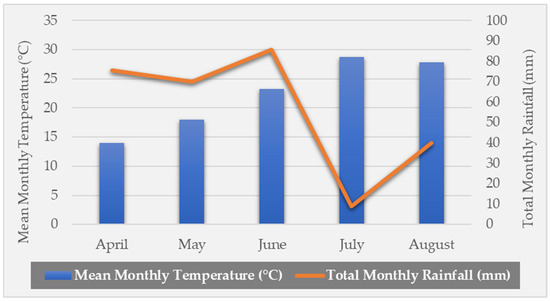
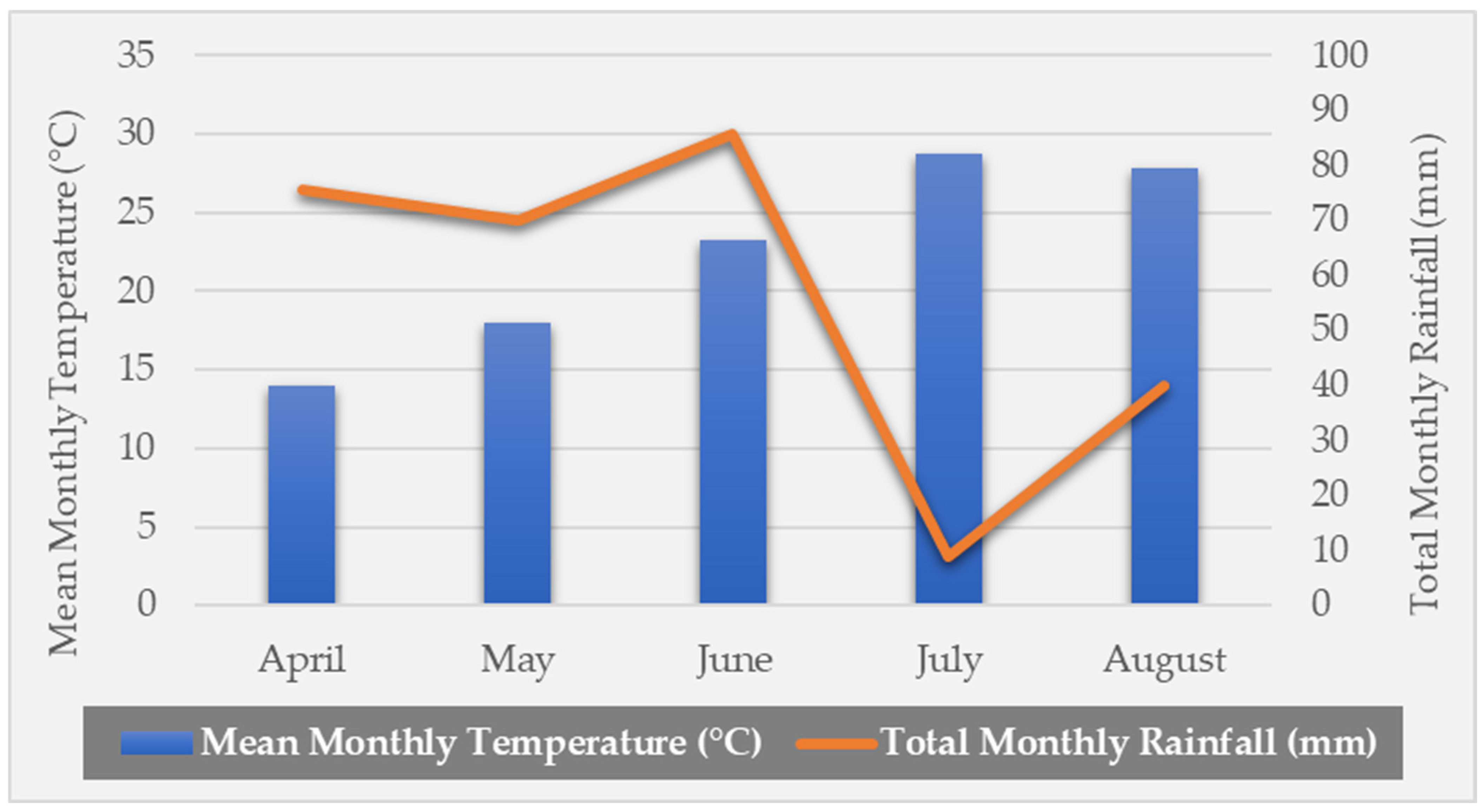
Felina 32, a monoecious variety of French origin, is well-suited to the Mediterranean climate and is typically grown for seed or fiber production. Additionally, Felina 32 is registered in the European Catalogue, with a Δ-9 tetrahydrocannabinol content below 0.3%, as required by European legislation. Plants were grown under greenhouse conditions with a natural photoperiod. The average temperature ranged from 15 °C to 27 °C, depending on the month of cultivation, as illustrated in Figure 1. Relative humidity was maintained between 60 and 70%. The pots were irrigated regularly with deionized water to maintain soil moisture at approximately 60–70% of field capacity. No additional fertilizers were applied during the experimental period. The pots were randomly arranged and repositioned periodically to minimize positional effects. Weed growth was removed manually when necessary. Felina 32 is distinguished by a high yield of inflorescences, which could be reconsidered potential by-products for pharmaceutical and medical applications [43]. The primary reason for selecting this variety was its height (approximately one meter), making it ideal for a pot experiment [44]. A total of 70 pots were used, with 10 seeds of the specified variety placed around the perimeter of each pot. One month after sowing, only one plant per pot was left in order to avoid competition effects between samples growing in the same soil. The harvest occurred during the flowering stage, following the UPOV protocol [45]. and then the analysis was performed.
Figure 1.
Total monthly rainfall and mean monthly temperature during the hemp growing season.
2.3. Soil and Plant Analysis
Soil samples from the pot experiments were subjected to physical and chemical analyses following the methods described by Dimirkou et al. (2009) [46] and Girousi et al. (1997) [47]. Electrical conductivity (EC) and soil pH were measured using a 1:1 soil-to-water ratio. Particle size distribution was determined via the Bouyoucos method, and soil organic matter (OM) content was evaluated using the modified Walkley–Black method, as outlined by Page (1982) [48]. Calcium carbonate (CaCO3%) in soil samples was determined using a Bernard–Scheibler calcimeter as part of the soil physicochemical characterization. In contrast, the Cd concentration in plant tissues was measured following acid digestion using the Aqua Regia method (HCl:HNO3, 3:1 v/v) at 180 °C for 2 h (1995) [49]. The Bernard–Scheibler technique was used exclusively for soil analysis, while Aqua Regia digestion was applied to plant material to ensure complete metal extraction prior to determination by atomic absorption spectrophotometry [49].
Moreover, two soil indices—the translocation factor (TF) and the bioconcentration factor (BCF)—were calculated. In addition, the actual phytoextraction efficiency (Cd removal) was determined.
Specifically, the translocation factor (TF) was calculated as follows [50]:
If the TF value > 1, it means that the plant is able to transfer the substance through the shoots, otherwise the substance remains in the roots. Thus, plants with high TF values are useful for phytoextraction; when TF values are low, they can be selected for phytostabilization.
Regarding bioconcentration factor (BCF) was calculated as follows [50]:
When the BCF value > 1, it means that the target compound remains in the roots and is efficiently taken up from the soil. High values of BCF and TF indicate that the plants are ideal for phytostabilization processes.
The actual phytoextraction efficiency was calculated as follows [51]:
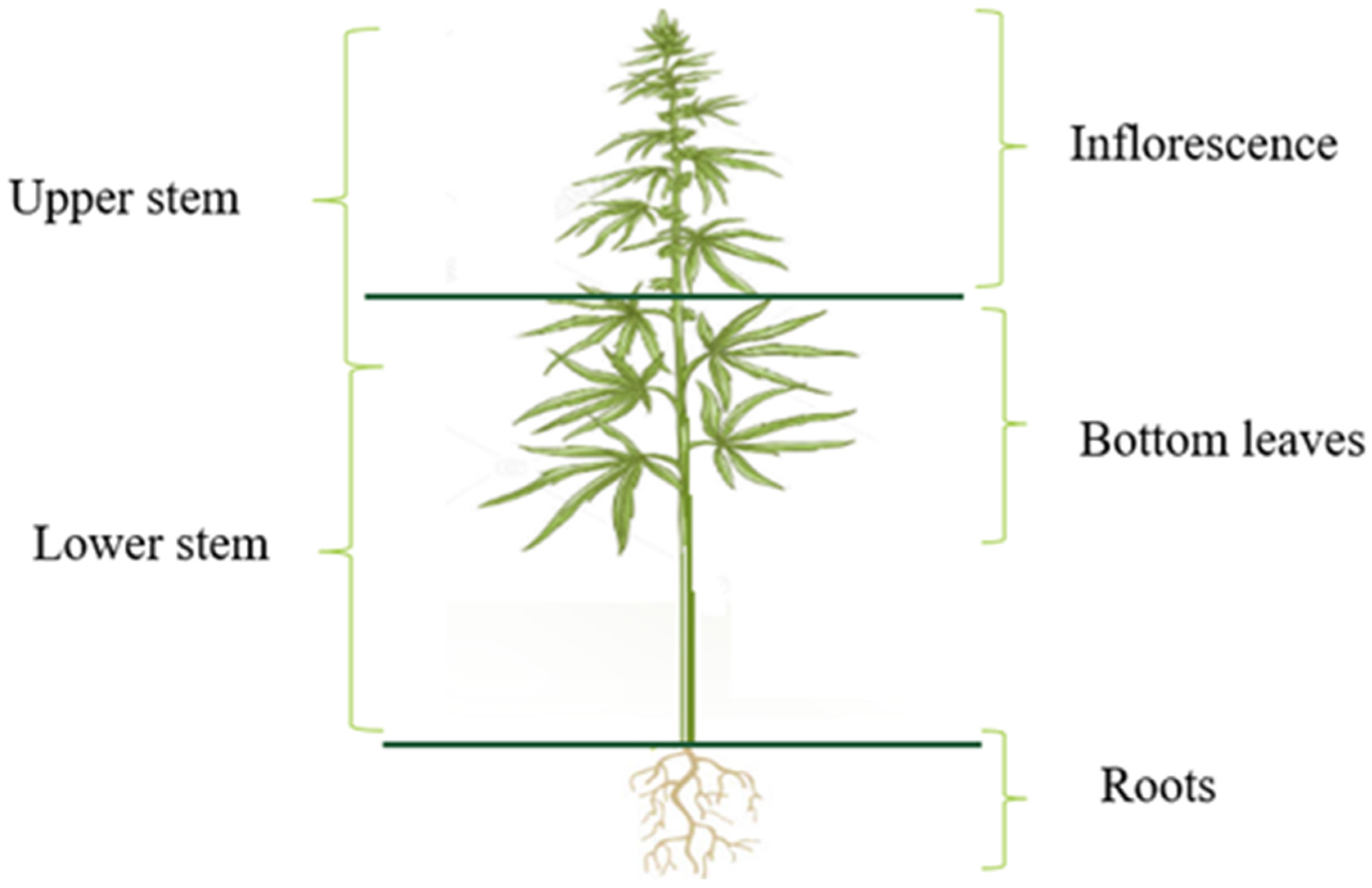
Cd concentrations were measured using atomic absorption spectrophotometry (AAS), employing either the flame (F-AAS) or graphite furnace (GF) technique. Each plant was divided in the following different tissues: roots, lower stem (0 to 30 cm), upper stem (60 to 90 cm), bottom leaves and inflorescence (Figure 2).
Figure 2.
The different tissues used for plant analysis.
Moreover, in the present study, the focus was on metal accumulation and distribution within plant tissues. Biochemical parameters, such as chlorophyll content, antioxidant activity, and secondary metabolites, were not measured, as the primary objective was to evaluate the phytoremediation potential of Cannabis sativa under combined heavy metal stress. Nevertheless, it is well established that heavy metal exposure can affect biochemical characteristics, including oxidative stress responses and cannabinoid composition, which warrant investigation in future studies.
2.4. Statistical Interpretation
The data were recorded and then analyzed using the statistical software packages SigmaPlot 12 (Systat Software, San Jose, CA, USA) and Microsoft Excel (Microsoft 365 Version 2408). Prior to analysis, the Shapiro–Wilk normality test and an equal variance test were performed to verify the normal distribution and homogeneity of variance. A two-way analysis of variance (ANOVA) was then conducted to assess the effects of Cd levels in contaminated soil (Factor A), the levels of Zn and Cu in Cd-contaminated soil (Factor B), and the interaction between these factors (A × B) on Cd accumulation in plant tissues. Differences between means were analyzed using Fisher’s least significant difference (LSD) test at a significance level of p = 0.05.
3. Results
3.1. Soil Physicochemical Properties
In terms of soil properties, several parameters were measured to comprehensively evaluate the physicochemical characteristics of the soil matrices used in the experiment. These properties play a crucial role in the obtained results as they influence the behavior and interactions of the targeted metal pollutants. Specifically, Table 2 summarizes the physicochemical properties measured for the soil used in this study.
Table 2.
The values of physicochemical properties of the soil sample.
According to the exported results, the soil pH was found to be 8.11, which, according to the MAFF classification [52], is alkaline. The relatively high soil pH observed in the present study is an important factor to consider since alkaline conditions are known to limit the mobility of Cd, Zn, and Cu compared with acidic soils, potentially affecting their uptake by plants.
In particular, the pH value is one of the most crucial factors influencing the availability of metals in the soil. For cations, lower pH values lead to increased mobility and, consequently, increase availability [53], whereas the opposite effect occurs for anions [54]. More specifically, the uptake of Cd by plants and its bioavailability are negatively correlated with soil pH [55]. Furthermore, divalent cations like Cu2+ and Zn2+ in the soil solution can alter Cd bioavailability by competing for absorption sites and affecting ion activity [56].
The impact of CaCO3 is closely associated with pH; in this study, the CaCO3 content (13.07%) was directly correlated with the soil’s pH level. The EC value (1075 μS cm−1) indicates that the soil has a concentration of water-soluble salts that is characteristic of non-saline soils as it is lower than 2000 μS cm−1 [57]. Highly saline soils are generally a problem for crop growth, and even hemp growth has been shown to be negatively affected by increasing salinity [58]. Based on its different percentages of clay and sand (26 and 45%, respectively), the experimental soil was defined as a sandy clay loam, with a high capacity for retaining minerals. As stated by Amaducci et al. (2015) [59], sandy loam and clay loam are the best soil types for hemp cultivation and thus our experimental soil provided almost optimal conditions for the growth of our samples. Lastly, soil organic matter (SOM) was measured too, resulting in a low value of 2.69% and thus defining the growing medium as an inorganic soil, which is typical for Mediterranean climates [60].
Soil properties play a significant role in determining the bioavailability of metals, which in turn influences metal interactions. For instance, pH affects the retention of free metal ions, while dissolved organic matter exhibits a strong affinity for metals in the soil solution [61]. Gao et al. (2021) [62] confirmed that metal threshold prediction models incorporating pH and SOM are effective, and Wu et al. (2021) [63] emphasized the importance of SOM in controlling Cd accumulation in multi-metal contaminated acidic soils, particularly in soil–rice systems. Similarly, significant correlations were observed between soil Cd concentrations, soil properties, and metal levels in wheat. Empirical models consistently show that the impact of soil properties on metal bioavailability varies based on the type of metal, toxicity endpoint, species, and soil type [64]. As a result, understanding the crucial soil properties that affect combined metal phytotoxicity is vital for managing and mitigating soil metal contamination.
Last but not least, it is important to note that, in this study, only the total metal content in plant tissues was measured, while the bioavailable fractions of Cd, Zn, and Cu in the soil after the 30-day incubation were not assessed. The soil pH and calcium carbonate (CaCO3) content can strongly influence metal solubility and mobility. Specifically, the alkaline conditions observed in our soils likely promoted the precipitation of metal cations, thereby reducing their bioavailability for plant uptake. Consequently, the actual fraction of metals accessible to Cannabis sativa may have been lower than the total applied concentrations, which should be considered when interpreting the accumulation results. Differences in metal contents among plant tissues and treatments may therefore reflect not only the species’ uptake capacity, but also variations in metal bioavailability under these specific soil chemical conditions.
3.2. Cd Concentrations in the Different Tissues of Cannabis sativa L. Cultivated in Cd–Zn Co-Contaminated Soils
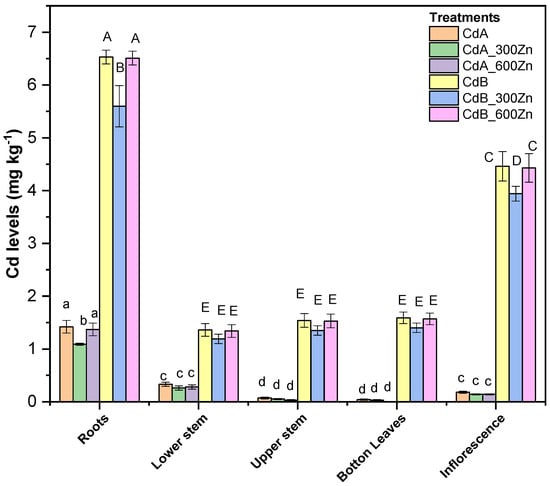
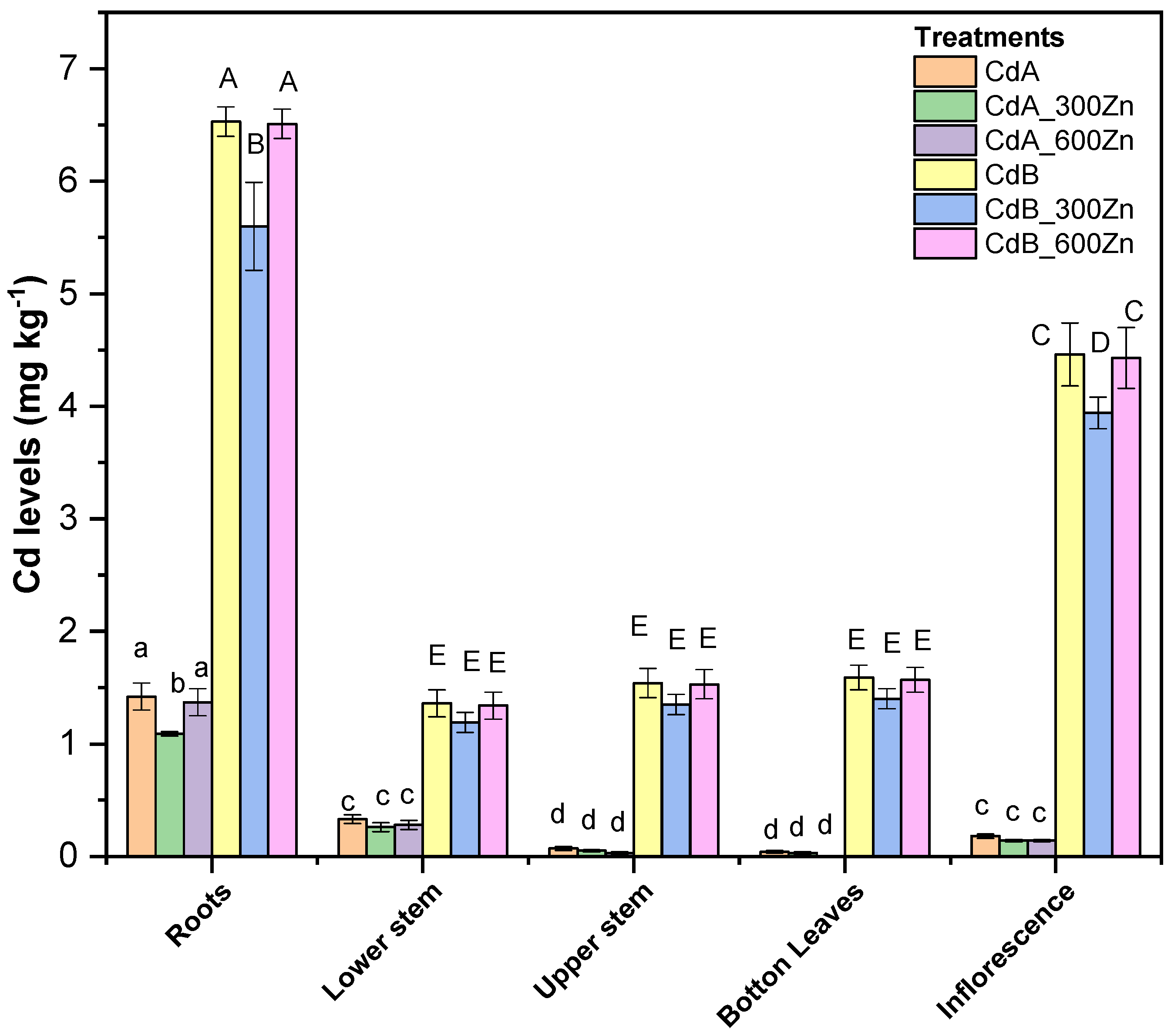
This section describes the examination of soils co-contaminated with the heavy metals Cd and Zn, focusing on their interactions within the soil system and subsequent accumulation in different tissues of Cannabis sativa L. Figure 3 presents the Cd concentrations measured in various hemp tissues from plants grown in soils contaminated with Cd alone or in combination with Zn. Comparing the two Cd-only controls (CdA and CdB), which received 3 mg kg−1 and 30 mg kg−1 of Cd, respectively, it is evident that higher soil Cd levels corresponded to significantly increased Cd concentrations in all plant parts. A similar pattern was observed in the four combined treatments (CdA_300Zn, CdA_600Zn, CdB_300Zn, and CdB_600Zn) where Cd and Zn were applied together. Across all Zn concentrations, Cd accumulation in individual hemp tissues increased with rising soil Cd levels, indicating that the plant’s Cd uptake is proportional to the degree of soil contamination (level A < level B).
Figure 3.
Cd concentrations (mg kg−1) in the different plant parts of C. sativa L. in the groups given the treatments spiked with Cd and Zn. The lowercase letters (a, b, c, and d) indicate significant differences in Cd concentrations between the treatments at level A (3 mg kg−1), while the capital letters (A, B, C, D, and E) represent significant differences in Cd concentrations at level B (30 mg kg−1) (p < 0.05).
Moreover, it was also observed that, among the various plant tissues, hemp roots accumulated the highest Cd concentrations, followed by the inflorescence, while the lowest levels were detected in the stems and lower leaves. Cd, Zn, and their interaction significantly influenced Cd accumulation in the roots and inflorescence. In treatments where Zn was added at a moderate level (300 mg kg−1; CdA_300Zn and CdB_300Zn), Cd concentrations in the roots and inflorescence were significantly lower compared to the two Cd-only controls (CdA and CdB). In contrast, at the higher Zn level (600 mg kg−1; CdA_600Zn and CdB_600Zn), no significant differences in Cd accumulation were observed relative to the controls. The highest root Cd concentration was recorded under the CdB_600Zn treatment, while the lowest occurred under CdB_300Zn. Additionally, Cd, Zn, and their interaction did not significantly affect Cd concentrations in the stems or lower leaves across the treatments.
Cd and Zn frequently coexist in polluted soils due to their comparable behavior in the environment, following similar pathways from their sources to contaminated regions [65,66]. Their interactions, both at the root surface and within plant tissues, can influence uptake and translocation. Although Cd is not essential for plants and Zn is a vital nutrient, the two elements share similar geochemical and environmental traits. This similarity may lead to interactions during key plant processes, including uptake, root-to-shoot transport, and accumulation in edible or industrially relevant plant parts [67].
When exposed to Cd, plants initially deploy avoidance mechanisms to limit the metal’s entry into root cells, including the production of organic acids, chelation, and sequestration. Nevertheless, Cd can still translocate through roots, stems, and leaves via both apoplastic and symplastic pathways. Unlike essential elements, plants lack transport proteins specific to Cd; the metal primarily enters roots through transporters intended for essential cations. The apoplastic pathway facilitates solute movement through extracellular fluids and spaces within and between cell walls, whereas the symplastic pathway involves intracellular transfer via plasmodesmata, requiring transmembrane ion transport. These processes are regulated by key regions, including the root surface, root cortex, xylem-loading cells, the root–shoot transition zone, and tissues along the stem [68].
In our study, Cd concentrations in hemp tissues indicated that accumulation in various plant parts was directly correlated with soil Cd levels, regardless of Zn presence. This suggests that the amount of Cd applied to the soil strongly influences hemp’s capacity for uptake and accumulation. Similar findings were reported by Huang et al. (2020) [69], where higher metal concentrations in controlled pot experiments led to increased plant uptake and accumulation. Other studies involving industrial hemp varieties also support this trend, showing that elevated soil Cd levels correspond to greater Cd accumulation in plant tissues [70].
Specifically, the pattern of Cd accumulation in Cannabis sativa L. across all treatments was roots > inflorescences > stems > lower leaves. This pattern is also supported by the reported TF values (Table A2), which were < 1 in all cases. This finding indicates that Cannabis sativa L. is an ideal plant for phytostabilization [71]. Furthermore, the BCF was sufficiently high, supporting the same conclusion [72], while the actual phytoextraction efficiency highlights hemp as a sufficient accumulator species [51].
Comparison of our results with previous research indicates that over 70% of Cd can accumulate in hemp roots under Cd stress [73], acting as a defense mechanism to limit toxicity in aboveground tissues. Additionally, under combined Cd and Zn stress, more Zn tends to translocate to shoots, while Cd is largely retained in roots. This is likely due to Zn’s essential role in enzyme function and gene expression that support shoot growth and photosynthesis [74].
Figure 3 further illustrates that Cd accumulation in roots and inflorescences depended on the Zn level added to the soil, whereas Cd–Zn interactions did not significantly affect Cd concentrations in stems or lower leaves. At moderate Zn levels (300 mg kg−1; CdA_300Zn and CdB_300Zn), Zn exerted an antagonistic effect on Cd uptake and accumulation in roots and inflorescences, suggesting shared transport pathways from roots to shoots, as observed in Thlaspi caerulescens [75] and wheat [76]. Due to the chemical similarity between Cd and Zn, these metals act as competitive cations, with Cd being absorbed via Zn transporters, displaying affinity for Zn-specific binding sites [76]. This aligns with reports that Zn generally inhibits Cd uptake as Zn addition to Cd-contaminated soils can dilute Cd, reduce its uptake, mitigate physiological stress, and improve plant performance.
Conversely, at higher Zn concentrations (600 mg kg−1; CdA_600Zn and CdB_600Zn), synergistic effects were observed, with elevated Zn levels increasing Cd concentrations in hemp tissues. These results are consistent with previous studies: Grüter (2019) [77] reported that repeated sludge applications increased both Cd and Zn in corn leaves and grain in calcareous soils, while Smilde et al. (1992) [78] observed synergistic interactions between Cd and Zn in loam soils, with Cd uptake increasing upon Zn addition.
In general, plants share common physiological mechanisms for Cd and Zn uptake and accumulation [77]. The interactions between these metals are complex and may be synergistic, antagonistic, or neutral, depending on the species, tissue type, cultivation method, growth conditions, metal types, and concentrations in the growth medium [79]. Our study indicates that Cannabis sativa L. is a promising candidate for Cd phytoremediation in soils co-contaminated with Cd and Zn while also providing valuable biomass for industrial applications such as in the production of fiber and composite materials.
Last but not least, Cd and Zn share similar chemical characteristics and transporters (e.g., OsIRT1, OsHMA2, and OsZIP7), which may explain the observed antagonistic interactions. Zn application can enhance Cd extrusion from roots by upregulating Cd-transporting ATPases, reducing Cd accumulation in roots under combined exposure. Additionally, Zn supplementation can induce metallothionein expression and mitigate Cd-induced oxidative stress. However, excessive Zn may exacerbate Cd toxicity and promote translocation, slightly increasing Cd accumulation in roots and inflorescences compared to Cd exposure alone [80].
3.3. Cd Concentrations in the Different Tissues of Cannabis sativa L. Cultivated in Cd–Cu Co-Contaminated Soils
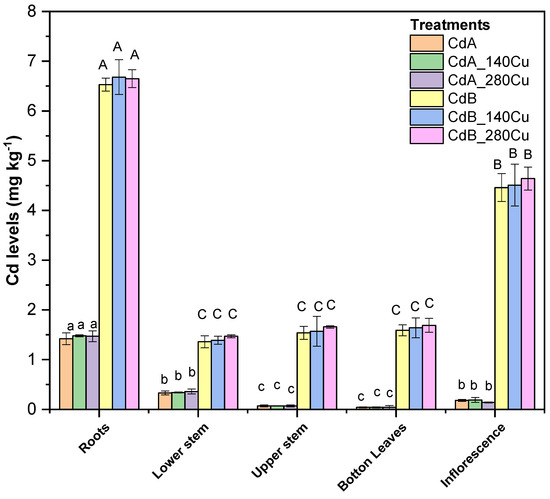
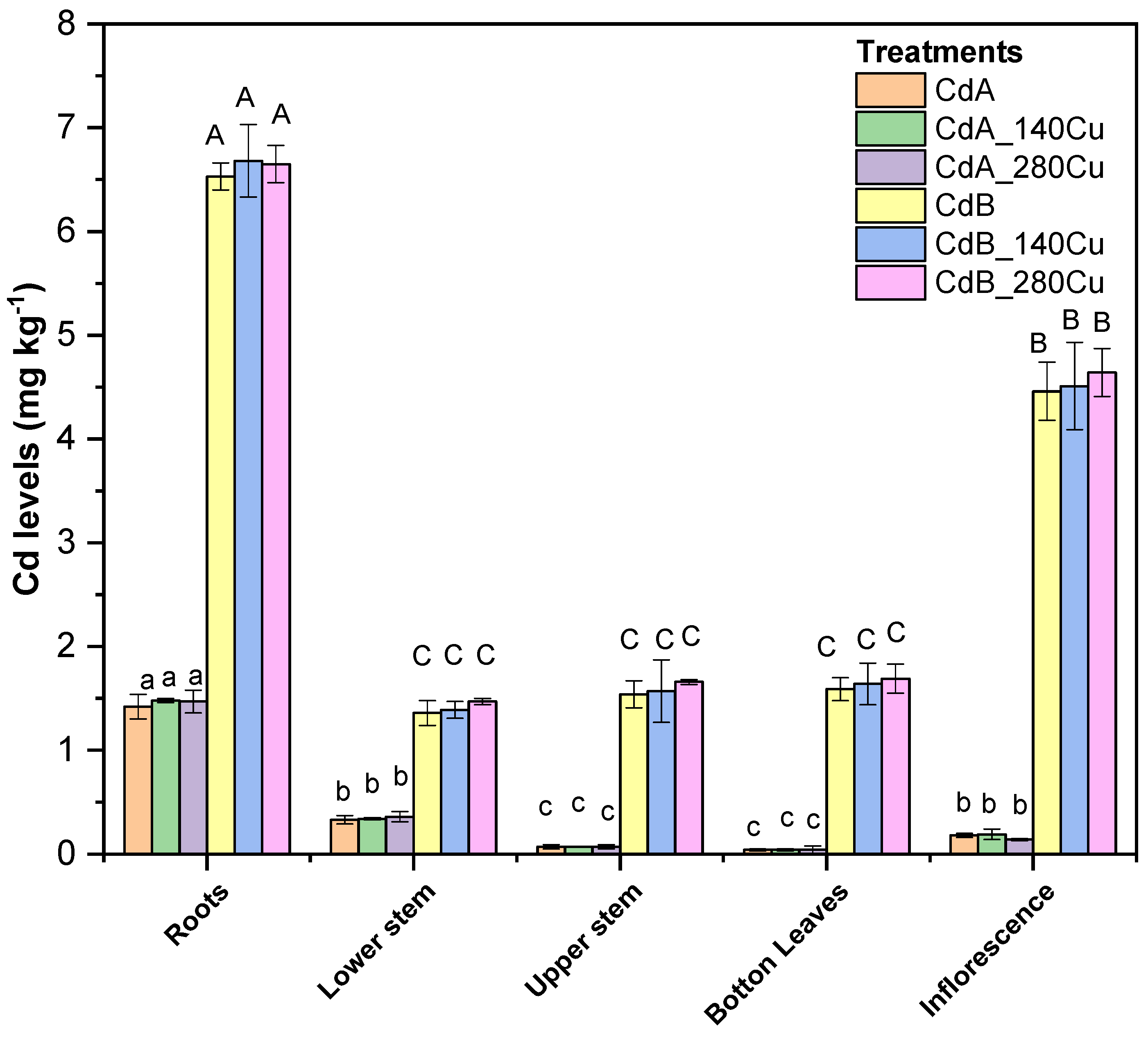
The coexistence of Cd and Cu in soil systems, their interactions, and their accumulation in Cannabis sativa L. tissues were evaluated. Figure 4 illustrates the effects of Cd–Cu co-contamination on Cd accumulation in plants. Although no important differences in Cd uptake were observed among treatments, a clear accumulation trend was evident at Cd level B. Compared to the control (CdB), the presence of Cu at higher contamination levels (CdB_140Cu and CdB_280Cu) led to increased Cd accumulation in all plant parts, suggesting that the extent of co-contamination influences the movement and accumulation of heavy metals within soil–plant systems. Specifically, in the roots, where Cd concentrations were highest, accumulation increased by 1.87% and 2.40% in the CdB_140Cu and CdB_280Cu treatments, respectively, compared to CdB. These results indicate a synergistic interaction between Cd and Cu in hemp at Cd level B. In contrast, under Cd level A (CdA_140Cu and CdA_280Cu), the Cd–Cu interaction produced variable effects across different plant tissues.
Figure 4.
Cd concentrations (mg kg−1) in the different plant parts of C. sativa L. in the groups given the treatments spiked with Cd and Cu. The lowercase letters (a, b, and c) indicate significant differences in Cd concentrations between the treatments at level A (3 mg kg−1), while the capital letters (A, B, and C) represent significant differences in Cd concentrations at level B (30 mg kg−1) (p < 0.05).
Similar to the results shown in Figure 3, Cd concentrations in each part of Cannabis sativa L. were primarily determined by soil Cd levels, regardless of Cu concentration. Compared to Cd level A (3 mg kg−1), the control treatment at Cd level B (30 mg kg−1) resulted in higher Cd concentrations in both roots and aboveground tissues. Furthermore, the Cd accumulation pattern under Cd–Cu co-contamination closely mirrors that observed under Cd–Zn co-contamination (Figure 3), indicating that Cd accumulation is largely independent of the presence of other metals.
Cd concentrations in Cannabis sativa L. were measured to evaluate the plant’s phytoremediation potential in soils co-contaminated with Cu. As a known Cd accumulator, industrial hemp demonstrated a strong capacity for Cd uptake, even when exposed to elevated levels of both Cd and Cu. The highest Cd concentrations were consistently observed in the roots. This observation aligns with previous studies reporting that metals predominantly accumulates in hemp roots [44], while lower concentrations in aboveground tissues allow for potential biomass utilization.
At Cd level B, Cd–Cu co-contamination led to a further increase in Cd concentrations in all plant tissues compared to the Cd-only treatments. This observation is consistent with Khaliq et al. (2019) [81], who reported that Cd addition increased Cu uptake in roots, though it contrasts with the findings of Zhang et al. (2023) [21]. This finding is further supported by the TF values (Table A2), which remained consistently below 0.481 for the Cd and Cu treatments, indicating a greater accumulation of pollutants in the roots of the examined plants. In rice, for instance, root Cd concentrations decrease with increasing Cu levels as Cd tends to localize in root cell walls and soluble fractions. Cell wall components, such as polysaccharides and proteins, provide polar functional groups (e.g., hydroxyl or carboxyl groups) that bind heavy metal ions, thereby restricting their translocation [80]. Discrepancies across studies may arise from differences in plant species, soil properties, and contamination levels.
Metal interactions, whether synergistic, additive, or antagonistic, depend on the specific metals, plant species, and soil conditions [82]. In some species, Li et al. (2021) [83] reported a synergistic relationship for Cd and Cu transport from soil to roots and from roots to leaves, with significant positive correlations between Cd and Cu levels in both tissues. Similarly, Huang et al. (2021) [20] found that Cu supplementation increased rice biomass and grain yield by reducing Cd uptake into roots and its translocation to shoots, although excessive Cu ultimately increased Cd accumulation in grains. These studies underscore the complex and context-dependent interactions between Cd and Cu in plants.
In our study, Cd–Cu co-contamination resulted in increased Cd bioaccumulation in hemp tissues, highlighting Cannabis sativa as a strong candidate for Cd phytoremediation. The results suggest that Cd and Cu interactions in hemp exhibit a synergistic pattern. The presence of Cd2+ may enhance ferric reductase activity, increasing the Cu+ pool by facilitating the reduction of Cu2+ to Cu+, a critical step for Cu uptake. Moreover, both Cu and Cd can alter root cell membrane permeability, potentially facilitating the simultaneous entry of these metals into root cells [84].
3.4. Cd Concentrations in the Different Tissues of Cannabis sativa L. Cultivated in Cd–Zn–Cu Co-Contaminated Soils
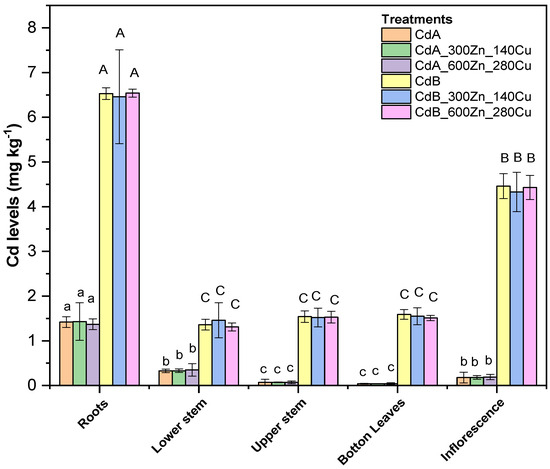
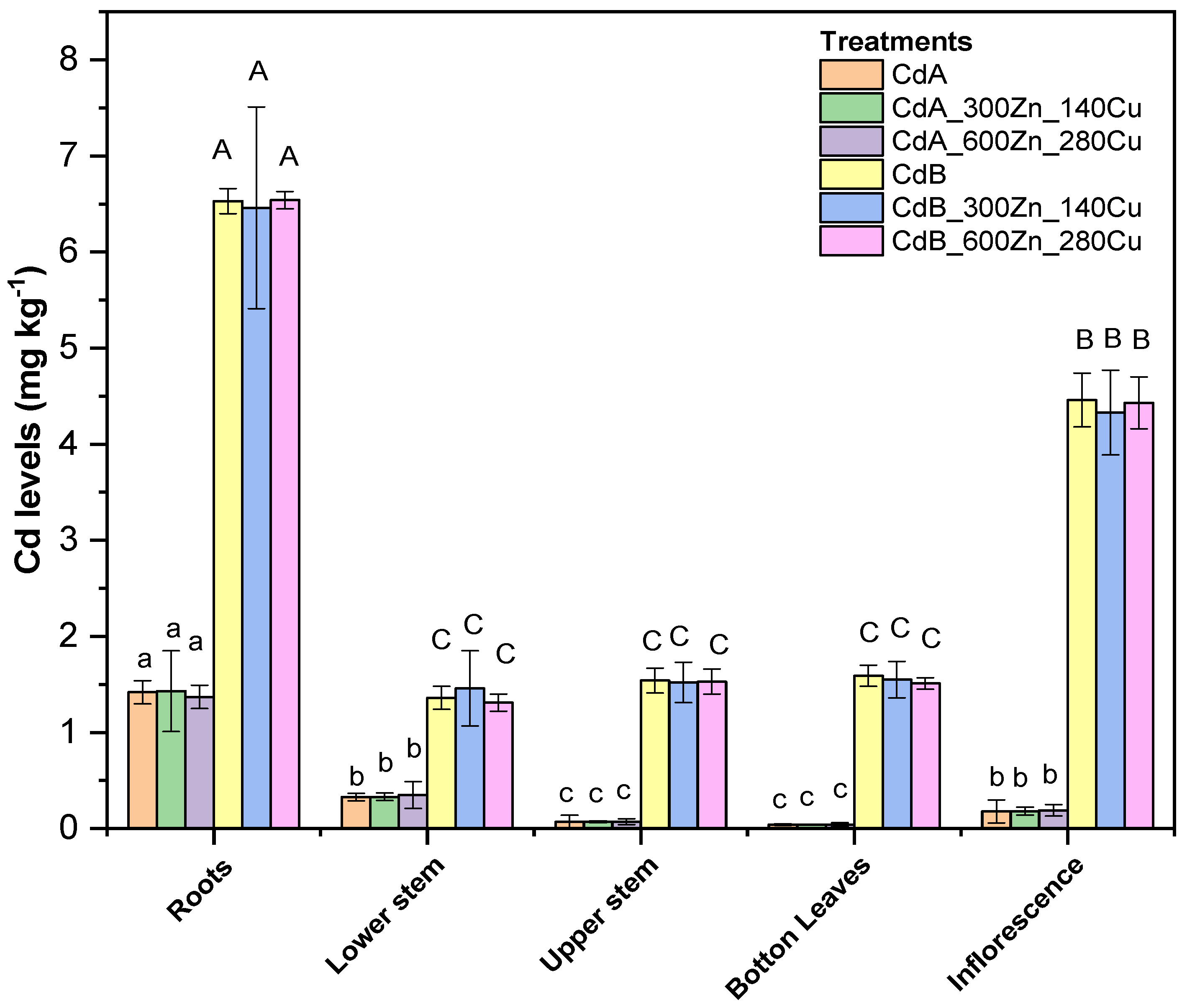
To further investigate the effects of multi-metal contamination on hemp, the Cd distribution across different plant tissues was assessed under various treatment conditions. Figure 5 presents the Cd concentrations in each plant part of plants grown in soils contaminated with Cd alone or in combination with Zn and Cu. In treatments containing both Cu and Zn (CdA_300Zn_140Cu, CdA_600Zn_280Cu, CdB_300Zn_140Cu, and CdB_600Zn_280Cu), no significant impact on Cd uptake was observed across plant tissues or contamination levels. These results indicate that hemp maintains its potential as a phytoremediation candidate under all tested multi-metal conditions.
Figure 5.
Cd concentrations (mg kg−1) in the different plant parts of C. sativa L. in the groups given the treatments spiked with Cd, Zn and Cu. The lowercase letters (a, b, and c) indicate significant differences in Cd concentrations between the treatments at level A (3 mg kg−1), while the capital letters (A, B, C) represent significant differences in Cd concentrations at level B (30 mg kg−1) (p < 0.05).
The observed Cd accumulation pattern aligns with the trends reported in Figure 3 and Figure 4, with Cd levels being consistently higher in underground tissues than in aboveground parts. This suggests that Cd partitioning in hemp is largely independent of the presence or concentration of Cu and Zn in the soil. Unlike the Cd–Zn and Cd–Cu co-contamination scenarios, where synergistic or antagonistic interactions were often observed, Cd–Zn–Cu co-contamination did not significantly alter Cd accumulation compared to the control treatments.
The consistent Cd accumulation pattern observed in this study (underground > aboveground) has important implications for phytoremediation strategies. Hemp’s capacity to sequester Cd in its roots indicates that it is particularly well-suited for phytostabilization, as this reduces the mobility of the metal in the environment and limits its spread through soil erosion or leaching into groundwater [62]. These results can also be explained by the TF and BCF values (Table A2), as TF was generally <1 and BCF was >1 in most cases for the combined treatments, indicating that hemp is ideal for phytostabilization processes [71].
These findings are especially encouraging for the Felina 32 variety. Shi et al. [85], who evaluated 18 industrial hemp varieties in soil containing 25 mg kg−1 of Cd, reported significant differences in metal bioaccumulation across varieties. The ability of Felina 32 to accumulate Cd without substantial influence from coexisting Cu and Zn further highlights its potential as a remediation agent in multi-metal contaminated soils, a common issue in industrial and mining areas [63]. This variety could also serve as an energy crop in urban environments, offering an economically feasible, environmentally sustainable approach to soil remediation that aligns with circular economy principles and may support human mental and physical health improvements [35].
Our findings on Cd concentrations differ from those reported by Yu et al. (2015) [86], who observed significant increases in root Cd levels in plants grown in soils contaminated with multiple metals (Cu, Zn, and Cd). This discrepancy may arise from differences in plant species, metal concentrations, and soil properties. Hemp may exhibit a distinct tolerance to co-contaminants, as suggested by its consistent Cd uptake across treatments, indicating that its metal transport mechanisms are less affected by competitive or synergistic interactions between Cd, Cu, and Zn. Additionally, Cu and Zn concentrations in our study may not have been sufficient to trigger significant competition or interactions with Cd at uptake sites [86].
The present study demonstrates that the combined effects of Cd, Zn, and Cu on Cannabis sativa L. vary depending on the specific metal combinations and the plant tissues examined. Evidence of interactions between these metals suggests that they influence the plant’s biochemical processes in additive, antagonistic, or synergistic ways, potentially due to the formation of metal complexes with differing bioavailabilities [16,17]. Variations in metal toxicity across plant tissues may reflect differences in metal mobility from roots to shoots. Cd, in particular, tends to accumulate in roots, resulting in more pronounced combined effects in underground tissues compared to aboveground parts [73]. This highlights the potential of the Felina 32 variety, cultivated under a Mediterranean climate (Figure 1), for phytostabilization of Cd in multi-element contaminated soils while still allowing for utilization of the aboveground biomass, which has significant economic value, for industrial purposes [87].
These findings may also be influenced by seasonal weather patterns. Precipitation decreases markedly during the summer months but remains relatively high during other seasons, which could affect plant uptake of water-soluble heavy metals. Furthermore, higher soil moisture in June may have promoted rapid plant growth, which was accompanied by increased metal accumulation.
Examining the existing literature, it is clear that many studies have examined metal uptake by hemp under varying conditions. These studies differ widely in growth environments, sampled tissues, metals analyzed, and phenotypic characteristics, making it challenging to compare metal uptake efficiency across hemp cultivars [31]. Consequently, there is a pressing need for systematic research that directly compares metal concentrations and tissue localization across multiple hemp varieties under standardized experimental conditions.
4. Conclusions
The findings of this study indicate that industrial hemp (Cannabis sativa L.) holds significant potential for the phytoremediation of Cd-contaminated soils, even in the presence of additional contaminants such as Cu and Zn. Our results suggest that Cannabis sativa L. is a suitable crop for Cd phytoremediation in soils highly co-contaminated with Cd and Zn, whereas in moderately co-contaminated soils, antagonistic effects between Cd and Zn can occur. In soils co-contaminated with Cd and Cu, or Cd, Cu, and Zn, synergistic effects of the metals on Cd uptake were observed at all contamination levels, with the strongest effects occurring at the highest metal concentrations.
The antagonistic and synergistic effects of Zn and Cu on Cd uptake observed in this study highlight the importance of understanding metal interactions in co-contaminated soils. The consistent accumulation of Cd in roots suggests that hemp is particularly suitable for phytostabilization, sequestering the metal underground and reducing its environmental mobility. Hemp’s capacity to tolerate and accumulate Cd across various contamination scenarios makes it a versatile option for remediating multi-metal polluted sites. These results contribute to the growing body of research on sustainable and environmentally friendly soil remediation technologies, particularly in regions affected by industrial and agricultural contamination. Future studies should investigate the molecular mechanisms underlying hemp’s metal uptake and assess the uptake efficacy of different hemp varieties.
Author Contributions
Conceptualization, E.E.G., P.T., E.B., M.A. and E.T. (Eleni Tsaliki); methodology, E.E.G., P.T. and E.T. (Eleni Tsaliki); software, E.B., M.A. and E.T. (Eleni Triantafyllidou); validation, E.E.G., E.B. and M.A.; formal analysis, E.E.G., E.B. and M.A.; resources, E.E.G. and E.T. (Eleni Tsaliki); data curation, E.B. and M.A.; writing—original draft preparation, E.B., P.T., M.A. and E.T. (Eleni Triantafyllidou); writing—review and editing, E.E.G., P.T., E.B., M.A., D.K. and E.T. (Eleni Triantafyllidou); visualization, E.E.G., E.B., M.A., E.T. (Eleni Triantafyllidou) and E.T. (Eleni Tsaliki); supervision, E.E.G.; project administration, E.E.G.; funding acquisition, E.E.G. and E.T. (Eleni Tsaliki). All authors have read and agreed to the published version of the manuscript.
Funding
This research received no external funding.
Data Availability Statement
The data supporting the findings of this study are available from the corresponding author upon reasonable request.
Conflicts of Interest
The authors declare no conflicts of interest.
Appendix A
Table A1.
Statistical analysis of soil indices presented in the manuscript along with factors extracted from ANOVA software v.3.1 (sum of squares, degrees of freedom, mean square, F, and significance).
Table A2.
The soil indices TF and BCF, along with actual phytoextraction (mg kg−1), biomass (g), and total Cd (mg kg−1) under the different treatments of the experimental design. Statistical analysis was carried out using ANOVA; letters (a–h) indicate significant differences between treatments.
References
- Hou, D.; Jia, X.; Wang, L.; McGrath, S.P.; Zhu, Y.-G.; Hu, Q.; Zhao, F.-J.; Bank, M.S.; O’Connor, D.; Nriagu, J. Global Soil Pollution by Toxic Metals Threatens Agriculture and Human Health. Science 2025, 388, 316–321. [Google Scholar] [CrossRef] [Scilit]
- Xu, Y.; Shi, H.; Fei, Y.; Wang, C.; Mo, L.; Shu, M. Identification of Soil Heavy Metal Sources in a Large-Scale Area Affected by Industry. Sustainability 2021, 13, 511. [Google Scholar] [CrossRef] [Scilit]
- Genchi, G.; Sinicropi, M.S.; Lauria, G.; Carocci, A.; Catalano, A. The Effects of Cadmium Toxicity. Int. J. Environ. Res. Public Health 2020, 17, 3782. [Google Scholar] [CrossRef] [Scilit] [PubMed]
- Tziourrou, P.; Golia, E.E. Phytoremediation of Co-Contaminated Environments: A Review of Microplastic and Heavy Metal/Organic Pollutant Interactions and Plant-Based Removal Approaches. Soil Syst. 2025, 9, 137. [Google Scholar] [CrossRef] [Scilit]
- He, J.; Li, C.; Tan, X.; Peng, Z.; Li, H.; Luo, X.; Tang, L.; Wei, J.; Tang, C.; Yang, W.; et al. Driving Factors for Distribution and Transformation of Heavy Metals Speciation in a Zinc Smelting Site. J. Hazard. Mater. 2024, 471, 134413. [Google Scholar] [CrossRef] [Scilit] [PubMed]
- Hou, D.; O’Connor, D.; Igalavithana, A.D.; Alessi, D.S.; Luo, J.; Tsang, D.C.W.; Sparks, D.L.; Yamauchi, Y.; Rinklebe, J.; Ok, Y.S. Metal Contamination and Bioremediation of Agricultural Soils for Food Safety and Sustainability. Nat. Rev. Earth Environ. 2020, 1, 366–381. [Google Scholar] [CrossRef] [Scilit]
- Mourinha, C.; Palma, P.; Alexandre, C.; Cruz, N.; Rodrigues, S.M.; Alvarenga, P. Potentially Toxic Elements’ Contamination of Soils Affected by Mining Activities in the Portuguese Sector of the Iberian Pyrite Belt and Optional Remediation Actions: A Review. Environments 2022, 9, 11. [Google Scholar] [CrossRef] [Scilit]
- Kutrowska, A.; Małecka, A.; Piechalak, A.; Masiakowski, W.; Hanć, A.; Barałkiewicz, D.; Andrzejewska, B.; Zbierska, J.; Tomaszewska, B. Effects of Binary Metal Combinations on Zinc, Copper, Cadmium and Lead Uptake and Distribution in Brassica Juncea. J. Trace Elem. Med. Biol. 2017, 44, 32–39. [Google Scholar] [CrossRef] [Scilit]
- Redha, A.; Al-Hasan, R.; Afzal, M. Synergistic and Concentration-Dependent Toxicity of Multiple Heavy Metals Compared with Single Heavy Metals in Conocarpus Lancifolius. Environ. Sci. Pollut. Res. 2021, 28, 23258–23272. [Google Scholar] [CrossRef] [Scilit]
- Adamczyk-Szabela, D.; Lisowska, K.; Romanowska-Duda, Z.; Wolf, W.M. Associated Effects of Cadmium and Copper Alter the Heavy Metals Uptake by Melissa Officinalis. Molecules 2019, 24, 2458. [Google Scholar] [CrossRef] [Scilit]
- Rizwan, M.; Ali, S.; Adrees, M.; Ibrahim, M.; Tsang, D.C.W.; Zia-Ur-Rehman, M.; Zahir, Z.A.; Rinklebe, J.; Tack, F.M.G.; Ok, Y.S. A Critical Review on Effects, Tolerance Mechanisms and Management of Cadmium in Vegetables. Chemosphere 2017, 182, 90–105. [Google Scholar] [CrossRef] [Scilit] [PubMed]
- Rizwan, M.; Ali, S.; Adrees, M.; Rizvi, H.; Zia-Ur-Rehman, M.; Hannan, F.; Qayyum, M.F.; Hafeez, F.; Ok, Y.S. Cadmium Stress in Rice: Toxic Effects, Tolerance Mechanisms, and Management: A Critical Review. Environ. Sci. Pollut. Res. 2016, 23, 17859–17879. [Google Scholar] [CrossRef] [Scilit] [PubMed]
- Li, Z.; Liang, Y.; Hu, H.; Shaheen, S.M.; Zhong, H.; Tack, F.M.G.; Wu, M.; Li, Y.-F.; Gao, Y.; Rinklebe, J.; et al. Speciation, Transportation, and Pathways of Cadmium in Soil-Rice Systems: A Review on the Environmental Implications and Remediation Approaches for Food Safety. Environ. Int. 2021, 156, 106749. [Google Scholar] [CrossRef] [Scilit]
- Küpper, H.; Andresen, E. Mechanisms of Metal Toxicity in Plants. Metallomics 2016, 8, 269–285. [Google Scholar] [CrossRef] [Scilit] [PubMed]
- Qiao, K.; Tian, Y.; Hu, Z.; Chai, T. Wheat Cell Number Regulator CNR10 Enhances the Tolerance, Translocation, and Accumulation of Heavy Metals in Plants. Environ. Sci. Technol. 2019, 53, 860–867. [Google Scholar] [CrossRef] [Scilit]
- Hu, B.; Shao, S.; Fu, T.; Fu, Z.; Zhou, Y.; Li, Y.; Qi, L.; Chen, S.; Shi, Z. Composite Assessment of Human Health Risk from Potentially Toxic Elements through Multiple Exposure Routes: A Case Study in Farmland in an Important Industrial City in East China. J. Geochem. Explor. 2020, 210, 106443. [Google Scholar] [CrossRef] [Scilit]
- Sharma, A.; Nagpal, A.K. Contamination of Vegetables with Heavy Metals across the Globe: Hampering Food Security Goal. J. Food Sci. Technol. 2020, 57, 391–403. [Google Scholar] [CrossRef] [Scilit]
- Kumar, A.; Jigyasu, D.K.; Kumar, A.; Subrahmanyam, G.; Mondal, R.; Shabnam, A.A.; Cabral-Pinto, M.M.S.; Malyan, S.K.; Chaturvedi, A.K.; Gupta, D.K.; et al. Nickel in Terrestrial Biota: Comprehensive Review on Contamination, Toxicity, Tolerance and Its Remediation Approaches. Chemosphere 2021, 275, 129996. [Google Scholar] [CrossRef] [Scilit]
- Faizan, M.; Alam, P.; Hussain, A.; Karabulut, F.; Tonny, S.H.; Cheng, S.H.; Yusuf, M.; Adil, M.F.; Sehar, S.; Alomrani, S.O.; et al. Phytochelatins: Key Regulator against Heavy Metal Toxicity in Plants. Plant Stress 2024, 11, 100355. [Google Scholar] [CrossRef] [Scilit]
- Huang, T.; Deng, Y.; Zhang, X.; Wu, D.; Wang, X.; Huang, S. Distribution, Source Identification, and Health Risk Assessment of Heavy Metals in the Soil-Rice System of a Farmland Protection Area in Hubei Province, Central China. Environ. Sci. Pollut. Res. 2021, 28, 68897–68908. [Google Scholar] [CrossRef] [Scilit] [PubMed]
- Zhang, Z.; Lu, Y.; Li, H.; Gao, Y.; Yang, Z. The Role of Nickel in Cadmium Accumulation in Rice. Sci. Total Environ. 2023, 859, 160421. [Google Scholar] [CrossRef] [Scilit]
- Cai, Y.; Xu, W.; Wang, M.; Chen, W.; Li, X.; Li, Y.; Cai, Y. Mechanisms and Uncertainties of Zn Supply on Regulating Rice Cd Uptake. Environ. Pollut. 2019, 253, 959–965. [Google Scholar] [CrossRef] [Scilit]
- Yu, Y.; Gu, C.; Bai, Y.; Zuo, W. Impact of Organic Amendments on the Bioavailability of Heavy Metals in Mudflat Soil and Their Uptake by Maize. Environ. Sci. Pollut. Res. 2022, 29, 63799–63814. [Google Scholar] [CrossRef] [Scilit]
- Green, C.E.; Chaney, R.L.; Bouwkamp, J. Increased Zinc Supply Does Not Inhibit Cadmium Accumulation by Rice (Oryza sativa L.). J. Plant Nutr. 2017, 40, 869–877. [Google Scholar] [CrossRef] [Scilit]
- Sharma, S.; Tiwari, S.; Hasan, A.; Saxena, V.; Pandey, L.M. Recent Advances in Conventional and Contemporary Methods for Remediation of Heavy Metal-Contaminated Soils. 3 Biotech 2018, 8, 216. [Google Scholar] [CrossRef] [Scilit] [PubMed]
- Correia, A.A.S.; Rasteiro, M.G. A Review of Persistent Soil Contaminants: Assessment and Remediation Strategies. Environments 2025, 12, 229. [Google Scholar] [CrossRef] [Scilit]
- Ahmed, S.F.; Kumar, P.S.; Rozbu, M.R.; Chowdhury, A.T.; Nuzhat, S.; Rafa, N.; Mahlia, T.M.I.; Ong, H.C.; Mofijur, M. Heavy Metal Toxicity, Sources, and Remediation Techniques for Contaminated Water and Soil. Environ. Technol. Innov. 2022, 25, 102114. [Google Scholar] [CrossRef] [Scilit]
- Shen, X.; Dai, M.; Yang, J.; Sun, L.; Tan, X.; Peng, C.; Ali, I.; Naz, I. A Critical Review on the Phytoremediation of Heavy Metals from Environment: Performance and Challenges. Chemosphere 2022, 291, 132979. [Google Scholar] [CrossRef] [Scilit]
- Grifoni, M.; Franchi, E.; Fusini, D.; Vocciante, M.; Barbafieri, M.; Pedron, F.; Rosellini, I.; Petruzzelli, G. Soil Remediation: Towards a Resilient and Adaptive Approach to Deal with the Ever-Changing Environmental Challenges. Environments 2022, 9, 18. [Google Scholar] [CrossRef] [Scilit]
- Golia, E.E.; Barbieri, E.; Papadimou, S.G.; Alexiadis, D. Energy, Aromatic, and Medicinal Plants’ Potential and Prospects for the Remediation of Potentially Toxic Element-Contaminated Agricultural Soils: A Critical Meta-Analysis. Toxics 2024, 12, 914. [Google Scholar] [CrossRef] [Scilit]
- Muthusaravanan, S.; Sivarajasekar, N.; Vivek, J.S.; Paramasivan, T.; Naushad, M.; Prakashmaran, J.; Gayathri, V.; Al-Duaij, O.K. Phytoremediation of Heavy Metals: Mechanisms, Methods and Enhancements. Environ. Chem. Lett. 2018, 16, 1339–1359. [Google Scholar] [CrossRef] [Scilit]
- Sumiahadi, A.; Acar, R. A Review of Phytoremediation Technology: Heavy Metals Uptake by Plants. In Proceedings of the IOP Conference Series: Earth and Environmental Science; Institute of Physics Publishing: New York, NY, USA, 2018; Volume 142. [Google Scholar]
- Suman, J.; Uhlik, O.; Viktorova, J.; Macek, T. Phytoextraction of Heavy Metals: A Promising Tool for Clean-up of Polluted Environment? Front. Plant Sci. 2018, 9, 1476. [Google Scholar] [CrossRef] [Scilit]
- Zulfiqar, U.; Farooq, M.; Hussain, S.; Maqsood, M.; Hussain, M.; Ishfaq, M.; Ahmad, M.; Anjum, M.Z. Lead Toxicity in Plants: Impacts and Remediation. J. Environ. Manag. 2019, 250, 109557. [Google Scholar] [CrossRef] [Scilit]
- Golia, E.E.; Bethanis, J.; Ntinopoulos, N.; Kaffe, G.-G.; Komnou, A.A.; Vasilou, C. Investigating the Potential of Heavy Metal Accumulation from Hemp. The Use of Industrial Hemp (Cannabis sativa L.) for Phytoremediation of Heavily and Moderated Polluted Soils. Sustain. Chem. Pharm. 2023, 31, 100961. [Google Scholar] [CrossRef] [Scilit]
- Odieka, A.E.; Obuzor, G.U.; Oyedeji, O.O.; Gondwe, M.; Hosu, Y.S.; Oyedeji, A.O. The Medicinal Natural Products of Cannabis Sativa Linn.: A Review. Molecules 2022, 27, 1689. [Google Scholar] [CrossRef] [Scilit] [PubMed]
- Pisanti, S.; Malfitano, A.M.; Ciaglia, E.; Lamberti, A.; Ranieri, R.; Cuomo, G.; Abate, M.; Faggiana, G.; Proto, M.C.; Fiore, D.; et al. Cannabidiol: State of the Art and New Challenges for Therapeutic Applications. Pharmacol. Ther. 2017, 175, 133–150. [Google Scholar] [CrossRef] [Scilit] [PubMed]
- Andre, C.M.; Hausman, J.F.; Guerriero, G. Cannabis Sativa: The Plant of the Thousand and One Molecules. Front. Plant Sci. 2016, 7, 19. [Google Scholar] [CrossRef] [Scilit] [PubMed]
- Baron, E.P. Medicinal Properties of Cannabinoids, Terpenes, and Flavonoids in Cannabis, and Benefits in Migraine, Headache, and Pain: An Update on Current Evidence and Cannabis Science. Headache 2018, 58, 1139–1186. [Google Scholar] [CrossRef] [Scilit]
- Papadimou, S.G.; Barbayiannis, Ν.; Golia, E.E. Preliminary Investigation of the Use of Silybum marianum (L.) Gaertn. as a Cd Accumulator in Contaminated Mediterranean Soils: The Relationships among Cadmium (Cd) Soil Fractions and Plant Cd Content. EuroMediterr. J. Environ. Integr. 2024, 9, 405–417. [Google Scholar] [CrossRef] [Scilit]
- Ballabio, C.; Jones, A.; Panagos, P. Cadmium in Topsoils of the European Union—An Analysis Based on LUCAS Topsoil Database. Sci. Total Environ. 2024, 912, 168710. [Google Scholar] [CrossRef] [Scilit]
- Golia, E.E.; Aslanidis, P.-S.C.; Papadimou, S.G.; Kantzou, O.-D.; Chartodiplomenou, M.-A.; Lakiotis, K.; Androudi, M.; Tsiropoulos, N.G. Assessment of Remediation of Soils, Moderately Contaminated by Potentially Toxic Metals, Using Different Forms of Carbon (Charcoal, Biochar, Activated Carbon). Impacts on Contamination, Metals Availability and Soil Indices. Sustain. Chem. Pharm. 2022, 28, 100724. [Google Scholar] [CrossRef] [Scilit]
- Di Giacomo, S.; Mariano, A.; Gullì, M.; Fraschetti, C.; Vitalone, A.; Filippi, A.; Mannina, L.; Scotto D’Abusco, A.; Di Sotto, A. Role of Caryophyllane Sesquiterpenes in the Entourage Effect of Felina 32 Hemp Inflorescence Phytocomplex in Triple Negative MDA-MB-468 Breast Cancer Cells. Molecules 2021, 26, 6688. [Google Scholar] [CrossRef] [Scilit]
- Vasilou, C.; Tsiropoulos, N.G.; Golia, E.E. Phytoremediation & Valorization of Cu-Contaminated Soils Through Cannabis Sativa (L.) Cultivation: A Smart Way to Produce Cannabidiol (CBD) in Mediterranean Soils. Waste Biomass Valorization 2024, 15, 1711–1724. [Google Scholar] [CrossRef] [Scilit]
- UPOV. Guidelines for the Conduct of Tests for Distinctness, Uniformity and Stability; UPOV: Geneva, Switzerland, 2023. [Google Scholar]
- Dimirkou, A.; Ioannou, Z.; Golia, E.E.; Danalatos, N.; Mitsios, I.K. Sorption of Cadmium and Arsenic by Goethite and Clinoptilolite. Commun. Soil Sci. Plant Anal. 2009, 40, 259–272. [Google Scholar] [CrossRef] [Scilit]
- Girousi, S.T.; Golia, E.E.; Voulgaropoulos, A.N.; Maroulis, A.J. Fluorometric Determination of Formaldehyde. Fresenius J. Anal. Chem. 1997, 358, 667–668. [Google Scholar] [CrossRef] [Scilit]
- Page, A.L. Methods of Soil Analysis: Part 2 Chemical and Microbiological Properties; Page, A.L., Ed.; American Society of Agronomy, Inc.: Madison, WI, USA; Soil Science Society of America, Inc.: Madison, WI, USA, 1982. [Google Scholar]
- INTERNATIONAL STANDARD 11466:1995; Soil Quality-Extraction of Trace Elements Soluble in Aqua Regia. International Electrotechnical Commission: Geneve, Switzerland, 1995.
- Alexiadis, D.; Golia, E.E.; Vogia, R.; Liava, V.; Pérez-Gimeno, A. Microplastics in Mediterranean Agricultural Soils: Effects on Soil Properties, Metal Accumulation in Plants, and Implications for Sustainable Agroecosystems. Sustainability 2026, 18, 2777. [Google Scholar] [CrossRef] [Scilit]
- Asgari Lajayer, B.; Khadem Moghadam, N.; Maghsoodi, M.R.; Ghorbanpour, M.; Kariman, K. Phytoextraction of Heavy Metals from Contaminated Soil, Water and Atmosphere Using Ornamental Plants: Mechanisms and Efficiency Improvement Strategies. Environ. Sci. Pollut. Res. 2019, 26, 8468–8484. [Google Scholar] [CrossRef] [Scilit]
- Ministry of Agriculture, Fisheries and Food. Fertiliser Recommendations for Agricultural and Horticultural Crops; H.M. Stationery Office, Ed.; MAFF Reference Book; H.M. Stationery Office: London, UK, 1988; Volume 5, ISBN 9780112428138.
- Brokbartold, M.; Grupe, M.; Marschner, B. Effectiveness of Different Soil Amendments to Reduce the Pb and Zn Extractability and Plant Uptake in Soils Contaminated by Anticorrosion Paints beneath Pylons. J. Plant Nutr. Soil Sci. 2012, 175, 443–455. [Google Scholar] [CrossRef] [Scilit]
- Kader, M.; Lamb, D.T.; Megharaj, M.; Naidu, R. Sorption Parameters as a Predictor of Arsenic Phytotoxicity in Australian Soils. Geoderma 2016, 265, 103–110. [Google Scholar] [CrossRef] [Scilit]
- Wielgusz, K.; Praczyk, M.; Irzykowska, L.; Świerk, D. Fertilization and Soil PH Affect Seed and Biomass Yield, Plant Morphology, and Cadmium Uptake in Hemp (Cannabis sativa L.). Ind. Crops Prod. 2022, 175, 114245. [Google Scholar] [CrossRef] [Scilit]
- Abedi, T.; Mojiri, A. Cadmium Uptake by Wheat (Triticum aestivum L.): An Overview. Plants 2020, 9, 500. [Google Scholar] [CrossRef] [Scilit]
- Smith, J.L.; Doran, J.W. Measurement and Use of PH and Electrical Conductivity for Soil Quality Analysis. In Methods for Assessing Soil Quality; John Wiley & Sons, Ltd.: London, UK, 1997; pp. 169–185. ISBN 9780891189442. [Google Scholar]
- Formisano, C.; Fiorentino, N.; Di Mola, I.; Iaccarino, N.; Gargiulo, E.; Chianese, G. Effect of Saline Irrigation and Plant-Based Biostimulant Application on Fiber Hemp (Cannabis sativa L.) Growth and Phytocannabinoid Composition. Front. Plant Sci. 2024, 15, 1293184. [Google Scholar] [CrossRef] [Scilit] [PubMed]
- Amaducci, S.; Scordia, D.; Liu, F.H.; Zhang, Q.; Guo, H.; Testa, G.; Cosentino, S.L. Key Cultivation Techniques for Hemp in Europe and China. Ind. Crops Prod. 2015, 68, 2–16. [Google Scholar] [CrossRef] [Scilit]
- Golia, E.E.; Bethanis, J.; Xagoraris, C.; Tziourrou, P. Potentially Toxic Elements in Urban and Peri-Urban Soils -A Critical Meta-Analysis of Their Sources, Availability, Interactions, and Spatial Distribution. J. Ecol. Eng. 2024, 25, 335–350. [Google Scholar] [CrossRef] [Scilit]
- Zeng, L.; Wang, Y.; Jing, L.; Cheng, Q. Quantitative Determination of Auxiliary Information for Mapping Soil Heavy Metals and Soil Contamination Risk Assessment. Appl. Geochem. 2021, 130, 104964. [Google Scholar] [CrossRef] [Scilit]
- Gao, J.; Ye, X.; Wang, X.; Jiang, Y.; Li, D.; Ma, Y.; Sun, B. Derivation and Validation of Thresholds of Cadmium, Chromium, Lead, Mercury and Arsenic for Safe Rice Production in Paddy Soil. Ecotoxicol. Environ. Saf. 2021, 220, 112404. [Google Scholar] [CrossRef] [Scilit] [PubMed]
- Wu, J.; Song, Q.; Zhou, J.; Wu, Y.; Liu, X.; Liu, J.; Zhou, L.; Wu, Z.; Wu, W. Cadmium Threshold for Acidic and Multi-Metal Contaminated Soil According to Oryza sativa L. Cadmium Accumulation: Influential Factors and Prediction Model. Ecotoxicol. Environ. Saf. 2021, 208, 111420. [Google Scholar] [CrossRef] [Scilit]
- Eid, E.M.; Galal, T.M.; El-Bebany, A.F. Prediction Models for Monitoring Heavy-Metal Accumulation by Wheat (Triticum aestivum L.) Plants Grown in Sewage Sludge Amended Soil. Int. J. Phytoremediation 2020, 22, 1000–1008. [Google Scholar] [CrossRef] [Scilit]
- Saifullah; Sarwar, N.; Bibi, S.; Ahmad, M.; Ok, Y.S. Effectiveness of Zinc Application to Minimize Cadmium Toxicity and Accumulation in Wheat (Triticum aestivum L.). Environ. Earth Sci. 2014, 71, 1663–1672. [Google Scholar] [CrossRef] [Scilit]
- Sarwar, N.; Ishaq, W.; Farid, G.; Shaheen, M.R.; Imran, M.; Geng, M.; Hussain, S. Zinc–Cadmium Interactions: Impact on Wheat Physiology and Mineral Acquisition. Ecotoxicol. Environ. Saf. 2015, 122, 528–536. [Google Scholar] [CrossRef] [Scilit]
- Das, K.; De Groof, A.; Jauniaux, T.; Bouquegneau, J.M. Zn, Cu, Cd and Hg Binding to Metallothioneins in Harbour Porpoises Phocoena Phocoena from the Southern North Sea. BMC Ecol. 2006, 6, 2. [Google Scholar] [CrossRef] [Scilit] [PubMed]
- Song, Y.; Jin, L.; Wang, X. Cadmium Absorption and Transportation Pathways in Plants. Int. J. Phytoremediation 2017, 19, 133–141. [Google Scholar] [CrossRef] [Scilit]
- Huang, L.; Wang, Q.; Zhou, Q.; Ma, L.; Wu, Y.; Liu, Q.; Wang, S.; Feng, Y. Cadmium Uptake from Soil and Transport by Leafy Vegetables: A Meta-Analysis. Environ. Pollut. 2020, 264, 114677. [Google Scholar] [CrossRef] [Scilit] [PubMed]
- Huang, R.; Dong, M.; Mao, P.; Zhuang, P.; Paz-Ferreiro, J.; Li, Y.; Li, Y.; Hu, X.; Netherway, P.; Li, Z. Evaluation of Phytoremediation Potential of Five Cd (Hyper)Accumulators in Two Cd Contaminated Soils. Sci. Total Environ. 2020, 721, 137581. [Google Scholar] [CrossRef] [Scilit] [PubMed]
- Singh, R.; Singh, D.P.; Kumar, N.; Bhargava, S.K.; Barman, S.C. Accumulation and Translocation of Heavy Metals in Soil and Plants from Fly Ash Contaminated Area. J. Environ. Biol. 2010, 31, 421–430. [Google Scholar]
- Boim, A.G.F.; Melo, L.C.A.; Moreno, F.N.; Alleoni, L.R.F. Bioconcentration Factors and the Risk Concentrations of Potentially Toxic Elements in Garden Soils. J. Environ. Manag. 2016, 170, 21–27. [Google Scholar] [CrossRef] [Scilit] [PubMed]
- Androudi, M.; Liava, V.; Tsaliki, E.; Ipsilantis, I.; Golia, E.E. Use of Cannabis sativa L. for Improving Cadmium-Contaminated Mediterranean Soils—Effect of Mycorrhizal Colonization on Phytoremediation Capacity. Soil Syst. 2024, 8, 100. [Google Scholar] [CrossRef] [Scilit]
- Taeprayoon, P.; Pongphontong, K.; Somtrakoon, K.; Phusantisampan, T.; Meeinkuirt, W. Synergistic Effects of Zinc and Cadmium on Phytoremediation Potential of Christmas Moss (Vesicularia montagnei). Sci. Rep. 2024, 14, 17754. [Google Scholar] [CrossRef] [Scilit]
- Zha, H.G.; Jiang, R.F.; Zhao, F.J.; Vooijs, R.; Schat, H.; Barker, J.H.A.; McGrath, S.P. Co-Segregation Analysis of Cadmium and Zinc Accumulation in Thlaspi Caerulescens Interecotypic Crosses. New Phytol. 2004, 163, 299–312. [Google Scholar] [CrossRef] [Scilit]
- Tavarez, M.; Macri, A.; Sankaran, R.P. Cadmium and Zinc Partitioning and Accumulation during Grain Filling in Two near Isogenic Lines of Durum Wheat. Plant Physiol. Biochem. 2015, 97, 461–469. [Google Scholar] [CrossRef] [Scilit]
- Grüter, R.; Costerousse, B.; Mayer, J.; Mäder, P.; Thonar, C.; Frossard, E.; Schulin, R.; Tandy, S. Long-Term Organic Matter Application Reduces Cadmium but Not Zinc Concentrations in Wheat. Sci. Total Environ. 2019, 669, 608–620. [Google Scholar] [CrossRef] [Scilit]
- Smilde, K.W.; Van Luit, B.; Van Driel, W. The Extraction by Soil and Absorption by Plants of Applied Zinc and Cadmium. Plant Soil 1992, 143, 233–238. [Google Scholar] [CrossRef] [Scilit]
- Clabeaux, B.L.; Navarro, D.A.; Aga, D.S.; Bisson, M.A. Combined Effects of Cadmium and Zinc on Growth, Tolerance, and Metal Accumulation in Chara Australis and Enhanced Phytoextraction Using EDTA. Ecotoxicol. Environ. Saf. 2013, 98, 236–243. [Google Scholar] [CrossRef] [Scilit]
- Zhao, Y.; Wang, Y.; Sun, G.; Feng, L. The Effects of Coexisting Elements (Zn and Ni) on Cd Accumulation and Rhizosphere Bacterial Community in the Soil-Tomato System. Processes 2023, 11, 1523. [Google Scholar] [CrossRef] [Scilit]
- Khaliq, M.A.; James, B.; Chen, Y.H.; Ahmed Saqib, H.S.; Li, H.H.; Jayasuriya, P.; Guo, W. Uptake, Translocation, and Accumulation of Cd and Its Interaction with Mineral Nutrients (Fe, Zn, Ni, Ca, Mg) in Upland Rice. Chemosphere 2019, 215, 916–924. [Google Scholar] [CrossRef] [Scilit]
- Wang, X.; Meng, X.; Ma, Y.; Pu, X.; Zhong, X. The Prediction of Combined Toxicity of Cu–Ni for Barley Using an Extended Concentration Addition Model. Environ. Pollut. 2018, 242, 136–142. [Google Scholar] [CrossRef] [Scilit]
- Li, J.J.; Zhao, X.Q.; Wang, J.L.; Shen, R.F. Strategies of Cadmium and Copper Uptake and Translocation in Different Plant Species Growing near an E-Waste Dismantling Site at Wenling, China. Environ. Sci. Pollut. Res. 2021, 28, 62562–62571. [Google Scholar] [CrossRef] [Scilit]
- Zhang, X.; Zhu, Y.; Li, Z.; Li, J.; Wei, S.; Chen, W.; Ren, D.; Zhang, S. Assessment Soil Cadmium and Copper Toxicity on Barley Growth and the Influencing Soil Properties in Subtropical Agricultural Soils. Environ. Res. 2023, 217, 114968. [Google Scholar] [CrossRef] [Scilit]
- Shi, J.; Qian, W.; Jin, Z.; Zhou, Z.; Wang, X.; Yang, X. Evaluation of Soil Heavy Metals Pollution and the Phytoremediation Potential of Copper-Nickel Mine Tailings Ponds. PLoS ONE 2023, 18, e0277159. [Google Scholar] [CrossRef] [Scilit] [PubMed]
- Yu, C.; Peng, X.; Yan, H.; Li, X.; Zhou, Z.; Yan, T. Phytoremediation Ability of Solanum nigrum L. to Cd-Contaminated Soils with High Levels of Cu, Zn, and Pb. Water Air Soil Pollut. 2015, 226, 157. [Google Scholar] [CrossRef] [Scilit]
- Placido, D.F.; Lee, C.C. Potential of Industrial Hemp for Phytoremediation of Heavy Metals. Plants 2022, 11, 595. [Google Scholar] [CrossRef] [Scilit]

Disclaimer/Publisher’s Note: The statements, opinions and data contained in all publications are solely those of the individual author(s) and contributor(s) and not of MDPI and/or the editor(s). MDPI and/or the editor(s) disclaim responsibility for any injury to people or property resulting from any ideas, methods, instructions or products referred to in the content. |
© 2026 by the authors. Licensee MDPI, Basel, Switzerland. This article is an open access article distributed under the terms and conditions of the Creative Commons Attribution (CC BY) license.