


Abstract
Food waste prevention and reduction are some of the important initiatives to improve the environmental sustainability of food systems. The global agenda of the United Nations provides a framework of targets and actions against food waste to which the European Union (EU), within the “Farm to Fork” strategy, aims to contribute. In this context, evaluating the impacts of food prevention measures is of great importance for supporting policies. This LCA analyzes the impact of classic lasagna from cradle to grave, through a generic food case study, prepared by food shops in Bologna (Northern Italy). Four scenarios are simulated, comparing the impacts of some end-of-life alternatives for the management of leftover lasagna (landfilling, composting, and redistribution with the digital application of the circular start-up “Squiseat”) versus the ideal scenario where no leftover lasagna is assumed. The results show that the preparation of classic lasagna generates non-negligible impacts on the analyzed LCA categories due to some of its ingredients, such as Bolognese sauce and Parmigiano Reggiano, and their associated production processes. For this reason, it is important to prevent classic lasagna leftovers from being wasted. The comparison of the four scenarios shows that redistribution is the scenario with the lowest impacts in all the investigated impact categories, including global warming (6.24 kg CO2 eq./kg of lasagna). The impacts are also lower than the ideal scenario due to the assumption of more sustainable means of transport. Normalization of characterized results confirms that Global Warming (GW) is only one of the most relevant impact categories in the life cycle of classic lasagna. The results have practical implications for raising awareness concerning the impacts of food production throughout the whole life cycle and the need for preserving the value of food by avoiding waste. Moreover, this study also shows that a reduction in the impact is a shared outcome that could be achieved by the joint efforts of all the stakeholders involved in the life cycle of food. In this regard, urban centers are confirmed to be important hubs of circular and more sustainable innovation. Finally, the LCA enriches the current research by investigating redistribution through the relationship of the food shop–virtual intermediate–consumer. So far, the prevalent focus of the LCA research allows us to assess the redistribution of collected surplus food from retailers and its delivery to the consumers by means of physical intermediaries and related infrastructures (e.g., food hubs, food banks, and food emporiums).
1. Introduction
Preventing and reducing food waste generation is a priority for the European Union, EU [1], and it is part of the global agenda of the United Nations Sustainable Development Goal 12. The latter includes a specific target for food waste [2]. By 2030, global food waste per capita at the retail and consumer stages should be substantially reduced [3]. The achievement of this goal requires rethinking the current dominant economic and social paradigm [4,5] and moving faster towards the adoption of alternative production and consumption models [6,7] based on the concept of circular economy (CE) [8,9].
The EU has adopted policies and actions within the “Farm to Fork” strategy aimed at tackling food losses and waste in the whole life cycle of food [1,10,11] and making food systems more fair, healthy, and environmentally friendly [12,13]. This strategy promotes the active engagement of all stakeholders, such as enterprises, consumers, policy makers, universities, and public administrations, as well as their collective involvement [14] in advancing a new food culture [15,16] and new circular models [17]. In regard to the latter, cities—where most of the population lives—are important innovation centers towards circularity and sustainability [18,19], while also being places that show multiple stakeholders’ frameworks [20], best practices, and winning ways for tackling food waste generation [21].
Currently, in the EU, households are one of the most important contributors to the generation of food waste [22]. In the year 2024, households produced 54% of total food waste. The remaining fraction is derived from the manufacturing of food and beverages (19%), restaurants and food services (11%), retailers and other distributors of food (8%), and the production stage (8%). A similar distribution of the contributors to food waste generation can be found worldwide, with households accounting for 60% of total food waste produced, while food services, including restaurants, account for 28%, and retailers for 12% [2]. Some of the factors that drive food waste generation at the consumption stage are the lack of adequate meal planning, the marketing offers focused on over-purchasing, and the lack of knowledge of, or misinformation on, the impacts of food waste generation [23]. In food services, the presence of standard portions of meals in restaurants and canteens, and difficulties related to determining the demand of consumers, actually challenge food waste prevention [7,24].
Within the initiatives against food waste, those carried out by circular start-ups (CSUs) are meaningful for promoting sustainable innovation [25,26,27] and the move towards more circular food production systems [28,29], as well as responsible consumption lifestyles [30,31]. CSUs in the food sector propose digital platforms for the recovery and redistribution of food leftovers (leftover and surplus terms are used as synonyms in this study) [6,32], the production and transformation of agri-food waste using upcycled raw materials and products [32,33,34], platforms for helping households in purchasing planning [35,36], and, finally, the adoption of zero-waste models in the culinary sector [25].
This study will focus in particular on digital CSUs that develop platforms to reduce/reuse food surplus or waste by connecting food shops with consumers [35,36]. The environmental impacts of food surplus distribution by means of the digital platforms of CSUs will be evaluated in one of the scenarios of the life cycle assessment (LCA) applied in this study.
The goal of this LCA is to compare, for environmental policy purposes, a base/ideal scenario with three scenarios for the management of surplus classic lasagna in the city of Bologna (Emilia Romagna Region, Northern Italy), which is engaged in many initiatives to prevent and recover food waste [36]. The previous literature has found that the impacts on climate change and other impact categories of classic lasagna are the highest compared to other international foods [37,38,39]. The previous literature [39] assessed landfilling as the only option for the management of lasagna at the end-of-life. However, diverse options such as composting [11,12,13,14,15,16,17,18,19,20,21,22] and redistribution of food surplus [4,5,6] are currently available to the disposal in landfill [17]. Furthermore, most of the current literature on food surplus redistribution [6,40,41,42,43,44,45,46] has not yet assessed the environmental impacts of scenarios involving the use of digital applications and platforms created by CSUs. Food redistribution platforms are currently receiving growing attention from consumers [35], while their environmental impacts and role in food waste prevention should still be further explored [35].
Therefore, it is important to analyze digital platforms for food redistribution by means of LCA, given their potential for rendering food systems more sustainable [4]. The novel aspects presented in this manuscript are the following:
- Comparison of the environmental impacts of the adoption of circular scenarios (redistribution, composting, and prevention) as alternatives to landfilling for the end-of-life management of classic lasagna [37,38,39];
- Deeper assessment of the impacts of classic lasagna and its main ingredients, such as fresh pasta, Bolognese sauce, béchamel, and Parmigiano Reggiano, to provide environmental information about very popular food products widely consumed in daily meals both in Italy and worldwide;
- Analysis of the LCA impacts of food redistributed by means of a digital application, integrating the existing LCA literature on surplus food redistributed from physical organizations after collection from retailers (such as food hubs [6], food banks [40], and food emporiums [42]). This LCA study is therefore an opportunity to shed light on the organizational characteristics of digital food platforms, further enriching the current LCA research on these topics [40,41,42,43,44,45,46].
This manuscript starts with an Introduction that describes the main research context, the gaps in the literature, and the novelty of the study. Section 2 summarizes the previous literature on LCA studies assessing the impacts of lasagna and other popular meals and the analyzed waste management options. This LCA study will be presented over its four main stages according to the standards ISO 14040: 2021 [47] and ISO 14044: 2022 [48] from Section 3.2. The results of the LCA inventory and impact assessment stages will be analyzed and interpreted in Section 4, in light of the goal and scope of the study, the literature review, and other suggested solutions to prevent food waste at the food shop stage [7]. It is worthwhile to note that food shops are retailers specializing in the preparation and selling of lasagna and other meals to the final consumer.
Finally, Section 5 interprets the results. Section 5.1 discusses the environmental impacts of classic lasagna after its preparation and possible improvements while Section 5.2 the environmental impacts of the four modeled scenarios, Section 5.3 analyses the social implications of each one of the modeled scenarios. Section 5.4 discusses the novelty of this study compared to the previous LCA research on the redistribution of food surplus. Section 6 concludes by summarizing the main results, the contribution provided to the research in the field, its practical implications, proposals for future research, and the main uncertainties associated with the type of collected data.
2. Literature Review
The previous literature (summarized in Appendix A) assessed the impacts of the production of ready-made and home-made lasagna with the aim of improving our understanding of the impacts of both types of lasagna [37]. Flury et al. [37] underlined that, at the time of the study, EU consumers mainly bought ready-made lasagna for convenience, with little attention to their impact compared to home-made lasagna. The life cycle considered in [37] included, for the ready-made lasagna, the stages from raw materials production to processing, preparation, distribution, consumption, and end-of-life treatments. The home-made lasagna is prepared with ingredients bought in a supermarket, and its life cycle differs from the life cycle of the ready-made lasagna because it does not consider the distribution at the retail/food shop. The F.U. is the same for both types and is defined as “the preparation of two portions (1 kg) of lasagna ready to consume in a household”.
Flury et al. [37] show that the impacts on GWP are a bit higher for the ready-made lasagna from stores (7.5 kg CO2 eq./kg of lasagna) compared to the home-made lasagna (7.2 kg CO2 eq./kg of lasagna). The ingredients in both ready-made lasagna and home-made lasagna contribute to the total impacts with the highest share, accounting for more than 5 kg CO2 eq./per kg of lasagna provided to households, while the rest of the impacts are concentrated in the preparation stage, as well as in distribution and selling, home transport, and packaging, which are slightly different in the two cases. The authors have also found that most of the food losses of ready-made lasagna in the food industry are due to the preparation and selling stages. Ready-made lasagna may be entirely wasted or disposed of due to production defects or the expiration date; instead, home-made lasagna is generally consumed by households, and only a small fraction of ingredients are wasted. The authors pointed out that both the industry and households could improve their environmental performance by increasing efficiency and planning better for all activities. Moreover, the impacts can be further decreased by reducing the content of meat and by relying on an efficient cold chain [37].
Schmidt-Rivera and Azapagic [38] have investigated the impacts of ready-made meals of different cuisines, including classic lasagna and spaghetti Bolognese, and have found that classic lasagna is one of the meals with the highest environmental impacts to GWP, ADP (elements and fossil), AP, and EP compared to the other meals considered in the LCA. On the other hand, pork roast was the meal with the lowest contribution to GWP, ADP (elements and fossil), AP, and EP. Takacs et al. [39] compared the impacts of beef, vegetarian, vegan, and whole vegan lasagna with the impacts of chili, curry, and teriyaki based on meat as well as vegetarian, vegan, and whole vegan. The authors have found that whole-food vegan meals have lower impacts (GWP, FEP, TAP, and WDP) while the vegetarian and meat-based meals resulted in three times and 14 times higher impacts than vegan meals. The authors found evidence that the environmental impacts of the investigated meals mainly depend on the type of ingredients used (animal-based or plant-based) rather than on the type of cuisine (e.g., Italian, Indian, or Asian).
Moreover, other studies widen the assessment to other typical foods consumed in the United Kingdom (UK), such as the different kinds of sandwiches. In this context, Espinosa-Orias and Azapagic [49] assessed the carbon footprint of ready-made and home-made sandwiches in the UK from cradle to grave. They assumed that food waste was landfilled. The authors have found that in all the analyzed cases, the highest share of the carbon footprint is due to the agricultural stage and the processing of the ingredients, while waste management has a low weight in the total carbon footprint. For home-made sandwiches, ham and cheese resulted in a lower carbon footprint (399–843.2 g CO2 eq./F.U.) than ready-made sandwiches (1349.5 g CO2 eq./F.U.), with the potential advantage of reducing the amount of food waste since home-made sandwiches can be prepared with leftovers, contrary to ready-made sandwiches.
The analysis of food waste impacts at restaurants also revealed important results. Avató and Mannheim [50] compared primary energy and impacts of eight environmental categories of two main dishes in a Hungarian restaurant, which are also well-known in the international cuisine (Viennese Steak and Wiener Schnitzel), on a life cycle basis from the production stage until the end-of-life stage. For this latter evaluation, they compared three alternatives for food waste: landfilling, incineration, and composting. Their results show that in the life cycle of the two main dishes, the production stage generated potentially higher impacts (to GWP, EP, MAETP, and POCP) compared to the cooking stage, also due to the fact that the dishes are based on meat. With regard to the end-of-life options for food waste, composting also resulted in lower impacts in terms of primary energy consumption, compared to landfilling and incineration. Similarly, a study in Finland analyzing the impacts of food waste (edible and inedible fractions) found that biowaste treatment with anaerobic digestion generates higher environmental benefits than waste-to-energy treatments [51].
Several studies investigated the impacts of catering services preparing meals for schools, universities, and other organizations [52,53,54]. Campobasso et al. [52] found that meals based on salmon and meals containing red meat potentially generate the highest impacts to GW, eutrophication, acidification, and abiotic depletion, particularly in the production stage [52]. This latter stage was also the most significant in terms of global energy demand in school catering services in Northern Italy [53].
In terms of composition, a study in Sweden in two school canteens in the city of Uppsala [54] found that most of the plate waste collected in a period of 8 days was edible waste (94%) compared to inedible waste (5%). Moreover, the most wasted foods were pasta, potatoes, rice, and vegetarian meals, while meat-based meals containing pork, beef, and chicken were the least wasted. One of the meals served at the school canteens was also red lasagna with cottage cheese. The carbon footprint of total plate waste in the two canteens resulted in 127 kg CO2 eq., which amounts to 1.0 kg CO2 eq. per kg of plate waste and 0.026 kg CO2 eq. per guest. It is interesting to note that the carbon footprint of beef meat contributed to more than 50% (54.7 kg CO2 eq.) of the carbon footprint of total plate waste (127 kg CO2 eq.), while bread (1.5 kg CO2 eq.), eggs, and pancakes’ contributions (1.0 kg CO2 eq.) were the lowest. References, the goal of the study, and further details and results are provided in Appendix A.
3. Materials and Methods
3.1. The Investigated Case Study
The LCA performed in this study, and the modeled scenarios with particular regard to redistribution, have implied the collection of data useful for understanding the functioning of the digital application developed by a CSU named “Squiseat” located in Bologna (Emilia Romagna Region, Northern Italy), the main actors involved, the profile of the consumers, and the environmental, economic, and social benefits. For this purpose, the research team of this article conducted some interviews with one of the four founders and managers of Squiseat. The collection of data from the interviews with “Squiseat” started in the year 2023 and was completed at the end of the year 2025, for further clarification. The first round of interviews focused on the creation of the CSU and its mission [32], while the second round of interviews collected information about the profile of the consumers/users of Squiseat. The latter venture started in the year 2019, following the creation of the main entrepreneurial idea based on the development of a digital application to link consumers in Bologna with restaurants, bakeries, and other food shops for the distribution of leftover food that was unsold at the end of the day.
The digital application of the CSU provides an option for the user: select the number of preferred meals available and purchase them. Consumers can select the preferred food and its price in a transparent way. This is a specific characteristic of the application compared to similar ones developed by other start-ups also active in Bologna, as it provides preferred options rather than a surprise bag. Alternatively, the user can purchase their favorite meal in advance, allowing restaurants to better plan the amount of food to be produced. Both solutions have the potential to reduce food waste generation. The CSU earns a percentage of the money paid for each meal [36]. On average, the CSU receives 500 orders per month, and up until now it has sold 30,000 food portions, recovering raw materials for an economic value of € 100,000 [36]. Currently, the CSU is in a stand-by stage, which is useful to better understand the possible development of their activity. Other CSUs using digital applications to recover leftover food are also active in Bologna beyond Squiseat, such as Too Good To Go and Phenix [35].
Bologna is a good example of city that is fighting against food waste with all the important stakeholders, such as the local municipality, the University and its spinoffs “Last Minute Market” and the Waste Watcher International Observatory on food and sustainability [55,56], consumers, large companies (e.g., the multiutility Hera [57]), the Banco Alimentare Foundation [58], Cucine Popolari [59], Antoniano Canteen [60], and other associations engaged in contributing to the reduction in food waste generation by means of their participation in several projects. As a result of this virtuous model, the amount per capita of food waste in Bologna is 12.5 kg compared to the national average of 20 kg [61,62].
3.2. Life Cycle Assessment
This study adopts the life cycle assessment method to investigate the environmental impacts of the life cycle of classic lasagna, as an example to understand the actual environmental impact of food waste. The structure and procedures are regulated by the international standards UNI EN ISO 14040:2021 [47] e UNI EN ISO 14044:2021 [48]. Each one of the stages of this LCA study is described in the following sections.
3.2.1. Goal and Scope
The main goals of this LCA study are:
- Assessing the impacts of classic lasagna over its whole life cycle and using the results of this study for environmental policy purposes [13];
- Comparing four scenarios for the management of end-of-life lasagna, with reference to a functional unit of 1 kg of classic lasagna in its original recipe. The same F.U of 1 kg of classic lasagna has already been adopted by [37] and by studies focused on the impacts of ready-made meals [52] and on surplus food redistribution [42]. The FU is also the most common lasagna package, containing 4 portions for an average Italian family. The geographical context of this study is a city (Bologna) where there is a great awareness of the issue of food waste (start-ups, university, and administration, as mentioned in Section 3.1 [55,56,57,58,59,60]). In more detail, three scenarios (landfilling: scenario 1; composting: scenario 2; and redistribution: scenario 4) are compared to the “ideal” scenario 3, where lasagna prepared at the food shop is entirely consumed and sold by the end of the day, avoiding lasagna leftovers. The choice of these scenarios reflects both the current management of surplus food in the city of Bologna and Italy, as well as other European and international cities and areas, as confirmed by the analyzed literature [40,41,42,43,44,45,46].
The absence of a surplus contributes to preventing food waste in shops and, more importantly, in all the previous stages before the potential generation of the surplus. This approach is in agreement with the previous study by Albizzati et al. [45], who compared the environmental savings resulting from three scenarios managing food surplus in France (current situation, anaerobic digestion, and incineration) with a fourth scenario, considered the benchmark and the ideal situation, in which there is no surplus food to be managed as waste and no surplus ingredient preparation in the earlier stages.
The boundaries of the system are represented in Figure 1 and start with the production of the primary ingredients (e.g., wheat flour, eggs, beef and pig meat, milk, and others) required to make the main ingredients of the lasagna, such as the fresh pasta, Bolognese sauce, béchamel, and Parmigiano Reggiano. Boundaries also include the preparation/cooking of the lasagna at the food shop, its purchasing, packaging, and transport to the home for consumption, and potential end-of-life management according to the four scenarios mentioned above. The stages of each one of the four scenarios are also described in Figure 2 and Figure 3.
Figure 1.
Processes, input, and output considered in this LCA study.
Figure 2.
Life cycle stages considered in scenario 1 and scenario 2. Transport of the lasagna from and to home is considered as detailed in the inventory (T).
Figure 3.
Life cycle stages considered in scenario 3 and scenario 4. Transport of the lasagna from and to home is considered as detailed in the inventory (T).
The life cycle inventory provides data and information on the classic lasagna preparation at the food shop (Section 3.2.2) and the next Section 3.2.3 those related to the four scenarios. The latter have in common the stages leading up to the preparation of lasagna at the food shop and differ from each other in the lasagna leftover end-of-life management.
3.2.2. Life Cycle Inventory (Stages Until Preparation of Classic Lasagna)
This stage involved the collection of the data for the LCA. The primary data regard the local recipe of classic lasagna (data of its specific ingredients), while the secondary data are those of the processes from the production of the ingredients of classic lasagna (e.g., the energy data used in the farm and in the dairy for the production of Parmigiano Reggiano) to the end-of-life of lasagna. Secondary data come from the Ecoinvent database 3.1 [63] and the reviewed literature (the data sources are reported in all the Tables of the life cycle inventory). The life cycle inventory is presented in Table 1 with the inputs and outputs associated with the functional unit of 1 kg of classic lasagna. This study used the Registered Recipe of lasagna at the Chamber of Commerce of Bologna [64]. The recipe of Bolognese sauce is also registered at the Chamber of Commerce of Bologna [65].
Table 1.
Life cycle inventory for 1 kg of classic lasagna (functional unit) prepared at the food shop of Bologna.
Table 1 shows that lasagna is made with four main ingredients: Bolognese sauce, béchamel, pasta, and Parmigiano Reggiano. Input and output of each one of the ingredients are summarized in Table 2, Table 3, Table 4 and Table 5.
The energy data for cooking the lasagna in the oven, boiling the milk for bechamel, boiling the spinach for the pasta, and finally boiling the pasta for the lasagna have been collected from a local energy company with headquarters near Bologna [66]. The production processes of electricity and natural gas (low pressure) are from the Ecoinvent database 3.1. No cut-off rules have been applied.
The ingredients of the pasta (Table 2) involve wheat flour, whose data come from a local mill located about 40 km from Bologna (the production process of wheat is from Ecoinvent 3.1). The egg production process data were collected for the LCA study by Pelaracci et al. [67]. The authors analyzed the impacts of the life cycle of eggs by using, as a case study, a farm rearing hens in the Emilia Romagna Region, modeling two scenarios (conventional and organic). The production process of spinach comes from the Ecoinvent database 3.1.
Table 2.
Life cycle inventory for 1 kg of pasta to be used in the preparation of classic lasagna.
The production processes of the ingredients for making the Bolognese sauce (Table 3) have been retrieved from the Ecoinvent 3.1 database and from Arrigoni et al. [69] for pig raising. In the case of beef meat, it was assumed that beef and pigs had been raised on a farm in the province of Bologna, which also self-produced the animal feed for the cattle and pigs. Data for the slaughtering and refrigeration processes before selling to the food shop have been collected from Schmidt Rivera and Azapagic [38] in the case of pigs and Mauri [70] for cattle (LCA of slaughterhouse activity in Northern Italy).
Table 3.
Life cycle inventory for 1 kg of Bolognese sauce to be used in the preparation of classic lasagna.
The production process of béchamel (Table 4) used the data for wheat flour of the above-mentioned local mill and Ecoinvent 3.1, while the data for milk and butter processes also come from Ecoinvent 3.1.
Table 4.
Life cycle inventory for 1 kg of béchamel to be used in the preparation of classic lasagna.
The data for the production of milk for Parmigiano Reggiano (Table 5) regards a local farm in the Emilia Romagna Region with a herd of 110 cows whose diet is in agreement with the regional regulation of Parmigiano Reggiano cheese [71]. The data on the consumption of electricity, diesel, and water are from Lovarelli et al. [72], while the processes of feed production (except alfa-alfa: data from Ribaudo [73]), electricity, and diesel are from Ecoinvent 3.1. The dairy data for the production of Parmigiano Reggiano have been collected from the energy analysis by Giovenzana et al. [74] and Caseificio Bazzanese [75]. The latter is located near Bologna.
Table 5.
Life cycle inventory for 1 kg of Parmigiano Reggiano used in the preparation of classic lasagna.
3.2.3. Life Cycle Inventory of the Four Scenarios
Table 6 and Table 7 summarize the input and output flows of end-of-life scenarios 1 and 2 (landfilling and composting) for classic lasagna. In both scenarios 1 and 2, it is assumed that 0.800 kg of lasagna is purchased, transported by car, and consumed at home by the consumer, while 0.200 kg of lasagna is not sold (surplus) at the end of the day, and the food shop requires its disposal by means of landfilling or composting. In scenario 1, no separated collection is performed for the packaging paper containing the lasagna, while this is assumed in the other 3 scenarios, along with material paper recycling.
Table 6.
Inventory flows for scenario 1 (landfilling) for the management of the leftover lasagna.
Table 7.
Inventory flows for scenario 2 (composting) for the management of leftover lasagna.
The life cycle inventories of scenario 3 and scenario 4 are presented in Table 8 and Table 9, respectively.
Table 8.
Inventory flows for scenario 3 (no leftover lasagna).
Table 9.
Inventory flows for scenario 4 (redistribution of leftover lasagna).
Scenario 3 assumes that all the lasagna prepared in a day at the food shop is purchased and consumed at home, while scenario 4 explores the redistribution of leftover lasagna (0.200 kg) by means of the digital application by Squiseat. Scenario 3 does not generate leftover lasagna, avoiding the fact that such food becomes waste, unlike in scenario 1 and scenario 2. This implies that all the impacts before the generation of surplus lasagna are avoided. Scenario 3 indicates in the output flows the avoided lasagna surplus impacts (−0.200 kg) as an avoided product. Scenario 4 assumes the redistribution of leftover lasagna, avoiding its treatment within the organic fraction in the composting plant. The avoided composting impacts have been accounted for as avoided waste in the input of scenario 4. Scenario 3 differs from scenario 4 in the means of transport (car versus on foot) of the lasagna transported to the home. In scenario 4, leftover lasagna is expected to be purchased by people who have a higher environmental awareness and ethics towards food waste avoidance. These aspects related to the profile of the consumers in scenario 4 have emerged during the interview with Squiseat. In line with this, people in scenario 4 purchasing the leftover lasagna (0.200 kg) reach the food shop by walking rather than using a car. In both scenarios, the waste paper packaging is sorted and sent to the closest recycling plant (11 km) for material recovery.
3.2.4. Life Cycle Impact Assessment
The LCA study was performed by means of the Open LCA software (https://www.openlca.org/download/) (accessed on 30 March 2026) coupled with the database Ecoinvent 3.1 and the ReCiPe midpoint 2016 (Hierarchist cultural approach) Environmental Impact Assessment method [80]. The inputs and outputs from the life cycle inventory have been assigned to all of the 18 midpoint ReCiPe impact categories in order to quantify, through specific characterization factors, the contribution to each one of the environmental problems (ISO 14040: 2021 [47]), e.g., particulate matter, troposphere ozone formation, ionizing radiation, stratosphere ozone depletion, human toxicity (cancer effect), human toxicity (non-cancer effect), GW, water use, and so on [80].
The choice behind the selection of ReCiPe (2016) midpoint indicators [80] is in agreement with the goal of this study and the intended application for environmental management policy purposes [10,11,12,13]. Midpoint indicators provide information on 18 impact categories, while the ReCiPe endpoint indicators merge the impacts of only three categories (human health, ecosystems, and resource availability). The low number of endpoint indicators could facilitate the interpretation compared to the higher number of midpoint indicators, but this implies lower information for policy decision-making [80]. Midpoint indicators are useful for monitoring and evaluating the pursuit of environmental sustainability goals and the potential contribution of food systems to key indicators for the latter, such as GWP, water consumption, ecotoxicity, eutrophication, fossil resource use, and acidification [8,10,11]. These midpoint indicators are also often used in Environmental Product Declarations by many companies in the food industry [10].
The results of this stage are presented and discussed in Section 4.
4. Results and Discussion
4.1. Environmental Impacts of 1 kg of Classic Lasagna Prepared at the Food Shop
Table 10 shows the results in terms of environmental impacts generated in the life cycle of classic lasagna (until the preparation stage in the food shop) according to the 18 impact categories and a functional unit (F.U.) equal to 1 kg of lasagna. The contribution to GWP resulted in 7.26 kg CO2 eq/F.U., while terrestrial acidification was 0.052 kg SO2 eq/FU., freshwater eutrophication was 0.006 kg P eq./F.U., fossil resource scarcity: 1.059 kg oil eq./F.U., water consumption: 0.150 m3/F.U., and land use: 0.167 m2a crop eq./F.U.
Table 10.
Characterized midpoint impacts for the life cycle of 1 kg of classic lasagna prepared at the food shop.
Previous LCA studies calculated the impacts using different impact assessment methods, and for this reason, the comparison is not feasible.
Moreover, regarding the recipe of classic lasagna in this study, the ingredients and their amounts change compared to the previous studies [38,39]. The types of ingredients (animal-based versus plant-based) mainly influence the impacts [37,38,39]. Takacs et al. [39] adopted as F.U. a single meal, while Schmidt Rivera and Azapagic [38] adopted a portion of 360 g, and the LCA study by Flury et al. [37] provided 1 kg of lasagna to households.
Schmidt Rivera and Azapagic [38] estimated a GWP of 5 kg CO2 eq./F.U, while Takacs et al. [39] estimated a contribution to GWP of 5.78 kg CO2 eq./F.U. Classic lasagna [38] and beef lasagna [39] achieved the highest contribution to GWP compared to the other ready-made meals: pork roast in [38] and vegan curry in [39], which resulted in having a lower contribution to GWP per F.U.
With regard to the other categories, the impacts of lasagna in [38] were some of the highest for most of them (ADP (fossil), ADP (elements), AP, EP, and POCP) compared to the other meals. As a result, the overall ranking was high, expressing one of the worst performances along with spaghetti Bolognese, cottage pie, and lamb masala curry. On the other hand, pork roast dinner was the meal that achieved the best performance, with the lowest overall ranking of impacts. In Takacs et al. [38], in all the other impact categories (FEP, TAP, and FDP), beef lasagna achieved the highest impacts compared to beef chili, chicken teriyaki, and chicken curry. Instead, the difference in the impacts between whole-food vegan lasagna and whole-based vegan curry, chili, and teriyaki is minimal. Flury et al. [37] calculated the GWP per F.U. as well as per kg of lasagna produced at households. The values were 7.5 and 7.2 kg CO2 eq./F.U., considering both the ready-made and home-made lasagna. There was no significant difference between the two types of lasagna.
Figure 4 (and Table 11 in more detail) shows the distribution of the total GWP impact of lasagna among its ingredients. Parmigiano Reggiano (31.35%) and Bolognese sauce (46.07%) mainly contribute to the total GWP impacts. The other ingredients, such as béchamel (15.69%) and pasta (2.13%), provide a lower contribution along with the electricity used for cooking the lasagna. The contribution is mainly due to the production process of the ingredients in the agricultural stage, compared to the cooking of the lasagna at the food shop. This is in agreement with the previous LCA studies that included lasagna amongst the investigated meals mentioned above [38,39] and LCA studies focused on other meals such as Avató and Mannheim [49], who also found that the upstream impacts of the production processes are higher than at the cooking stage, using a restaurant’s two main dishes, Viennese Steak/Wiener Schnitzel, in the analyzed Hungarian case study. The primary production stage is also the most impactful in the whole life cycle of other popular international foods [49,50] or meals served at school canteens [53], hospitals, and universities [52]. The same pattern was also found in the systematic literature reviews evaluating the impacts of food waste throughout the life cycle from the upstream to the core and downstream stages [11,12,13,51].
Figure 4.
Percentage distribution of characterized GWP impacts of 1 kg of classic lasagna prepared at the food shop.
Table 11.
Breakdown percentage distribution of characterized potential environmental impacts to GW (kg CO2 eq.) for 1 kg of classic lasagna.
The analysis of the total impacts of the two main ingredients of lasagna, such as Bolognese sauce and Parmigiano Reggiano, was performed to further understand their impacts. The characterized impacts of 1 kg of Bolognese sauce are presented in Table 12, showing that its life cycle generates a contribution to GWP of about 10.01 kg CO2 eq./F.U., a contribution to terrestrial acidification equal to 0.081 kg SO2 eq./F.U., to fossil resource scarcity equal to 1.107 kg oil eq./F.U., and to water impacts equal to 0.092 m3 per F.U., while the impacts to land use resulted in 0.360 m2a crop eq./F.U.
Table 12.
Impact analysis associated with the cooking of 1 kg of Bolognese sauce.
Figure 5 also shows that in Bolognese sauce, 90% of the GWP impacts are generated by the production process of beef meat, including the process of slaughtering, compared to the production of the other ingredients of Bolognese sauce. The LCA by Campobasso et al. [52] assessed the impacts of a wide range of foods composing the meals consumed in an Italian canteen, including Ragù sauce (from cradle to grave), adopting the EPD method (combining different impact assessment methods such as CML-IA, AWARE, and ReCiPe 2008). These authors have found that the impacts of Ragù sauce, whose recipe should be similar to Bolognese sauce, are: GWP equal to 4.43 kg CO2 eq./F.U., acidification potential equal to 0.12 kg SO2 eq./F.U., ADP fossil equal to 29.20 MJ/F.U., and water scarcity potential equal to 29.80 m3/F.U. There are no other recent LCA studies evaluating the impacts of Bolognese sauce or Ragù sauce.
Figure 5.
Percentage distribution of characterized impacts to GWP related to the cooking of Bolognese sauce.
Table 13 shows the impacts of 1 kg of Parmigiano Reggiano cheese production. The comparison of the impacts with previous studies [72,74,81,82] is difficult due to the differences in the functional units, impact assessment methods, and allocation choices [72,82]. This study adopted the same F.U. as Giovenzana et al. [74] and Dal Prà et al. [82] of 1 kg of Parmigiano Reggiano. The results of GWP (16.97 kg CO2 eq./kg of Parmigiano Reggiano) are in the same range as the LCA by Dal Prà et al. [82], who calculated 16 kg CO2 eq. per kg of Parmigiano Reggiano, from the production of milk to the transformation in the Parmigiano Reggiano-controlled designation of origin. Borghesi et al. [81] also used ReCiPe 2016 as one of the impact assessment methods for their LCA, but adopted 1 kg of organic fat and protein-corrected milk to produce 1 kg of organic Parmigiano Reggiano (as a functional unit). They have found a carbon footprint ranging from 7.49 to 8.12 kg CO2 eq. per kg for Parmigiano Reggiano. They have also allocated the impact of the farming stage to milk and meat, while for the dairy process, they allocated the impacts to whey and Parmigiano Reggiano.
Table 13.
Characterized impacts of 1 kg of Parmigiano Reggiano production process until its use in the food shop for the production of classic lasagna.
Figure 6 shows that most of the impacts for 1 kg of Parmigiano Reggiano are due to the farming stage during the production of milk (75.55% of the total impacts) compared to the stage of its transformation into Parmigiano Reggiano in the dairy process (24.39%) and transport to the food shop (0.06%).
Figure 6.
GWP impacts for the production of 1 kg of Parmigiano Reggiano.
4.2. Cumulative Energy Demand for 1 kg of Classic Lasagna Until Preparation
The results for the cumulative energy demand (CED) are presented in Table 14. The total CED is 135.77 MJ/kg of classic lasagna. The largest contribution to the CED derives from two out of six of its components, such as the non-renewable fossil (48.33 MJ) and renewable biomass (78.80 MJ).
Table 14.
Characterized CED impacts associated with the life cycle of 1 kg of classic lasagna.
The analysis of the non-renewable fossil fraction in Figure 7 shows that the production process of Parmigiano Reggiano (17.57 MJ) and Bolognese sauce (16.87 MJ) mainly affects the characterized energy impacts of the non-renewable fossil of the CED. These two components account for 71.26% of the total non-renewable characterized CED impacts (48.33 MJ).
Figure 7.
Contribution to the non-renewable fossil component of the CED from the ingredients and energy inputs of classic lasagna.
4.3. Analysis of the Impacts of the Four Scenarios
Table 15 shows the results for each one of the 18 investigated impact categories of the impact assessment method ReCiPe (2016).
Table 15.
Comparison of the LCA-characterized impacts for the eighteen environmental categories (ReCiPe, 2016) for each one of the functional units considered in this study (scenario 1 and 2: 0.800 kg of lasagna treated in landfill or composting plant, and scenario 3 and 4: 1 kg of lasagna consumed at home).
Scenario 2, involving the treatment of lasagna as organic waste in the composting plant, shows the highest impacts compared to the other scenarios. However, the difference with scenario 1 (treatment of leftover lasagna in landfill) is low, while it is more marked with scenario 3 and scenario 4 for all the impact categories. GW achieves the highest values in scenario 1 (7.72 kg CO2 eq.) and scenario 2 (7.81 kg CO2 eq.), while the impacts reduce to 6.51 kg CO2 eq. and 6.24 kg CO2 eq. in scenario 3 and scenario 4, respectively. The accounting of the avoided impacts contributes to reducing the burdens in these two scenarios. Scenario 2 also accounts for some avoided impacts of the production of chemical fertilizers due to the production of compost as an alternative to their use.
The results of some impact categories, including GW, are also displayed in Figure 8, where it is possible to see that human non-carcinogenic toxicity is the category most visible in the graph, along with GW. However, the normalized characterized results in Figure 9 show that marine ecotoxicity and freshwater ecotoxicity are the most significant impact categories in all four scenarios, with human non-carcinogenic toxicity and GW to a lesser extent. Figure 10, Figure 11, Figure 12 and Figure 13 show the percentage contribution of each stage of the life cycle for the most significant impact categories. In all four Figures, the stages until preparation of lasagna have the highest share compared to the other stages, including the transport of lasagna from and to home by the consumer (by car in scenarios 1, 2, or 3, or on foot in scenario 4). Moreover, in scenario 3 and scenario 4, the avoided impacts are very evident.
Figure 8.
Comparison of LCA-characterized impacts across the different scenarios for the most significant impact categories.
Figure 9.
Comparison of the normalized characterization impacts across the four scenarios.
Figure 10.
Percentage contribution of each stage of the life cycle to the total characterized LCA midpoint impacts associated with marine ecotoxicity across the four scenarios.
Figure 11.
Percentage contribution of each stage of the life cycle to the total characterized LCA midpoint impacts associated with freshwater ecotoxicity across the four scenarios.
Figure 12.
Percentage contribution of each stage of the life cycle to the total characterized LCA midpoint impacts associated with human carcinogenic toxicity across the four scenarios.
Figure 13.
Percentage contribution of each stage of the life cycle to the total characterized LCA midpoint impacts associated with GW across the four scenarios.
The avoided impacts are the main factors contributing to the reduction in the impacts and the generation of environmental savings. For marine ecotoxicity (Figure 10), in scenarios 3 and 4, the savings amount to −0.15 kg 1,4-DCB/kg of lasagna and −0.13 kg 1,4-DCB/kg of lasagna, respectively. For freshwater ecotoxicity (Figure 11), the savings amount to −0.12 kg 1,4-DCB/kg of lasagna (scenario 3) and −0.010 kg 1,4-DCB/kg of lasagna (scenario 4). The total contribution to human carcinogenic toxicity (Figure 12) decreases by 23.50% (−0.08 kg 1,4-DCB/kg of lasagna) in scenario 3 and by 23.75% (−0.08 kg 1,4-DCB/kg of lasagna). Finally, the total impact on GW (Figure 13) reduces by 22.29% (−1.45 kg CO2 eq/kg of lasagna) in scenario 3 and by 23.08% (−1.44 kg CO2 eq/kg of lasagna) in scenario 4.
5. Interpretation of the Results
5.1. The Impacts of Lasagna Until Preparation
The results show that lasagna, as a kind of fresh-filled pasta, generates higher impacts on GW and other impact categories compared to unfilled pasta due to its rich ingredients, such as Bolognese sauce, Parmigiano Reggiano, and béchamel, and their life cycles. With regard to GW, Bolognese sauce and Parmigiano Reggiano account by 77% of the total impacts of classic lasagna. This is due to the impacts of meat production for Bolognese sauce, as well as those for the production of milk for Parmigiano Reggiano. Improvements of the impacts of the agricultural stage for the two ingredients will have the potential to reduce the whole life cycle impacts of lasagna. It is important to underline that the production of Parmigiano Reggiano is also impactful because it requires a high amount of milk (14–16 L) for 1 kg of cheese. Other types require a lower amount of milk for the production of 1 kg of cheese, e.g., mozzarella (about 4.2 L) [83,84], pecorino (7–8 L) [85,86], and Emmenthal from Switzerland (12 L) [87].
Further improvements in the life cycle of lasagna can be obtained by replacing meat with other ingredients such as soy granulates and seitan, as suggested by Schmidt Rivera and Azapagic [38], or by substituting animal-based ingredients (beef, cheese, pork, and chicken) with vegan meat (e.g., tofu) or minimally processed vegetables, as proposed by Takacs et al. [39]. Overall, an evaluation of less environmentally intensive recipes is proposed [38,39] in view of the climate change issue and the possible disruptions to the availability of the ingredients that could arise [88].
However, lasagna has a very long history and is an institution in Italian tradition and culture. It is typically eaten at Sunday lunches or on particular occasions when there is something to celebrate. The impacts are greater than those of other foods (e.g., pork roast or other international meals), as found by previous studies [38,39]. The consumption of lasagna is limited compared to durum wheat pasta [89] and egg pasta [90,91], whose impacts are lower than those of lasagna but are consumed daily. Consequently, further research would be needed in conjunction with the experts on the traditional recipe of the Chamber of Commerce of Bologna in order to understand how to reduce the impacts and, at the same time, preserve the cultural heritage of classic lasagna.
With regard to the data used, it would be important to strengthen the collection of the primary data, particularly for beef raising, to more closely reflect the local context of the Emilia Romagna Region. The data about milk production for Parmigiano Reggiano are more representative since they come from case studies in the literature that collected primary local data [71,72,74] and a previous project by the co-authors [92].
5.2. Distribution of Lasagna and Different End-of-Life Alternatives
The goal of this study was to assess the impacts of classic lasagna in the whole life cycle and compare, for policy planning purposes, an ideal scenario where there is no generation of lasagna surplus with three scenarios where there is a surplus of lasagna that needs to be dealt with by the food shop. The results show that the impacts are the lowest for all the impact categories in scenario 4, where there is a redistribution of leftover lasagna in Bologna (0.200 kg) by means of the digital application created by the CSU Squiseat, and consumers reach the food shop on foot and avoid using a car. The contribution to GW ranges between 7.72 kg CO2 eq. (scenario 1), 7.81 kg CO2 eq. (scenario 2), 6.51 kg CO2 eq. (scenario 3), and 6.24 kg CO2 eq. (scenario 4).
Both scenario 3 and scenario 4 avoid impacts of a similar magnitude. With regard to marine ecotoxicity, the accounting of the avoided impacts in scenario 3 and scenario 4 reduces the contribution of the life cycle of lasagna by 23.04% (−0.15 kg 1,4-DCB/kg of lasagna) and 20.04% (−0.13 kg 1,4-DCB/kg of lasagna), respectively. For GW, the avoided impacts mitigate the contribution by 22.29% (−1.45 kg CO2 eq/kg of lasagna) in scenario 3, while in scenario 4, they are mitigated by 23.08% (−1.44 kg CO2 eq/kg of lasagna).
Previous studies showed that food recovery and redistribution of food generate net environmental benefits [6,40,41,42,43,44,45,46]. The comparison with other alternatives also shows that the environmental savings are higher for food redistribution compared to anaerobic digestion and incineration [45]. The values of our study for GW are in the range of the study by Albizzati et al. [45] and Damiani et al. [42], where the environmental savings amounted to between 0.4 and 1.9 kg CO2 eq/kg of surplus food.
Scenario 2 assumes the collection and treatment of leftover lasagna within the organic fraction of the municipal collection system. Northern Italy, where Bologna is located, has a very high separate waste collection rate (73.4% in the year 2023), and landfilling has a marginal role compared to composting and recycling in the management of urban waste. There is also a diffuse network of composting and recycling plants. On the contrary, in many areas of Italy [93], the European Union [94], or in the rest of the world [95,96,97,98,99,100], landfilling in the form of open dumps [101,102] or sanitary landfills [97,98,100] is still one of the most adopted options for waste management [95,96,97,98,99,100]. Composting is expanding in the replacement of landfilling, but not uniformly across the world [95,96].
Landfilling and composting options are rather destructive to the value of lasagna and the richness of its ingredients. The outputs of the modeled composting plant in this study are the production of compost (0.033 kg/200 g of leftover lasagna) and a non-negligible amount of waste (0.0625 kg) to be further treated.
The redistribution of leftover lasagna by means of the digital application (scenario 4) is then more in line with the principles of the CE that suggest maintaining the highest value of products to the furthest possible extent and making the most of food by redistributing surplus edible food [103].
5.3. Linking Environmental Results with Socio-Economic Implications
The environmental impacts of the whole life cycle of lasagna decrease when shifting from scenario 1 and scenario 2 to scenarios 3 and 4. The shift also has social and economic implications because disposal by landfilling or treatment in the composting plant are services financed by the citizens. Both types of plants are sources of negative external costs due to the transport activities and the operability of the plants [104,105]. In particular, landfills generate various impacts on the local communities living in the surroundings [104]. In Italy, particularly in the Emilia Romagna Region, some policy documents provide the concept of “environmental discomfort/hardship” [106] and use the tool of economic compensations for the local communities living near the plants who are exposed to some damages, such as the noise due to vehicles accessing the plants, damages to the landscape, and olfactory impacts [107]. There are also impacts and safety risks for workers employed in the plants [108].
Scenarios 3 and 4 avoid all these social costs in the end-of-life of lasagna, as well as avoiding lasagna being managed as waste and thus losing its high environmental value [109]. In the case of scenarios 3 (assuming no leftover lasagna at the end of the day), the adoption of the digital application by Squiseat could also help food shops to better plan the amount of meals they prepare because consumers have the option of purchasing their favorite meals in advance. From the point of view of the food shop, this is the best scenario since it sells all the prepared lasagna at the full price.
Scenario 4 (redistribution) is the scenario more favorable to consumers because they can purchase lasagna at half its full price. By means of redistribution, the lasagna still conserves all its environmental and social value for which it has been produced by the food shop. Importantly, as a result of the interviews, consumers who buy the leftover lasagna have an ethic of needing to avoid food waste. The digital application by Squiseat allows consumers to choose their favorite leftover food. The latter may not always be available because it means lower profits for the food shop. This aspect could impact the further scalability of Squiseat’s model, which is different from those of other food redistribution platforms (e.g., Too Good To Go) that offer, e.g., the so-called surprise bags.
Finally, in scenario 4, the price of lasagna is reduced at the end of the day to redistribute lasagna with the digital application. The lasagna has a higher price before it is sold with the digital application. Our case follows the law of demand, by which there is an inverse relation between the price and the quantity demanded by consumers. The decrease in the price stimulates the demand in particular from consumers [110], who have a lower income, as found also in a recent survey [29]. On the contrary, the recent literature by Heijnk and Hess [111] has found for other types of food (e.g., fresh fruit and vegetables) that there is a negative relation between the price and the amount of avoidable food waste since a 10% higher food price leads to a reduction by 1% in food waste. Instead, Aureli et al. [112] found that the lower the price of a food group is, the greater the associated amount of food wasted. Both studies investigated fruits and vegetables that are very different from classic lasagna. The improvements in the understanding of these factors affecting the choices and behaviors of the consumers of food shops and redistribution with digital applications could be a matter for future research.
5.4. Comparison with Previous LCA Studies on Redistribution
Table 16 provides an overview of the recent LCA studies [40,41,42,43,44,45,46] in different geographical contexts that assessed the impacts of food redistribution and compared such an option with other alternatives. Their analyses show that the prevalent methodological frameworks comprised LCA and, only in some cases, LCC and S-LCA [6,44]. Moreover, the redistribution option has been compared with landfilling [40,43,46] and/or with anaerobic digestion [41,42,45,46], as well as with incineration and composting [42,46].
Table 16.
Recent literature investigating and comparing redistribution of food waste with other food waste management alternatives.
Overall, redistributing/donating food surplus resulted, in most of the cases, as being the best option in environmental terms than other investigated options (in particular with regard to landfilling) [40,43,46]. Our results confirm these patterns, showing the environmental advantage of redistribution over landfilling and composting also for classic lasagna as a type of stuffed pasta based on the use of meat and dairy products. Previous LCAs are mainly centered on the analysis of surplus fruits and vegetables, except the LCA by [42,45].
This LCA differs from most of the previous literature [40,41,42,43,44,45,46] because it introduces a new perspective in the model of organization of the redistribution. The digital application developed by the CSU Squiseat of Bologna conserves the relationship between the food shop (retailer) and the final consumers. There is a virtual intermediate in the model proposed in our LCA. The maintenance of the relation between the food shop and the consumer in the redistribution of classic lasagna could provide more visibility to the retailer and its products, compensating for the lower revenues of the redistributed surplus food by means of the digital application. This model certainly requires further investigation in order to assess its environmental performance compared to redistribution/donation models mainly investigated in the literature (in Table 16). These models are certainly more complex and involve several actors and an infrastructure for the sorting and redistribution of surplus food collected from retailers and delivered to the final consumers.
6. Conclusions
The main goal of this research was the assessment of the impacts of classic lasagna from cradle to grave by considering some end-of-life alternatives (no leftover and redistribution with a digital application) that were not assessed in previous LCA studies of classic lasagna and other meals, as well as those focused on the comparison of redistribution and other end-of-life options for surplus food management. This stream of LCA research mainly assessed the impacts of the collection of surplus food from retailers’ donors to intermediaries (food hubs, food emporiums, and food banks) and its redistribution to final consumers. Instead, this LCA investigated the impacts at an earlier stage and with a different organizational model where there is still a relationship between the retailer (food shop) producing the surplus and the final consumers, while the intermediate is virtual.
The impacts of classic lasagna until preparation at the food shop reach values, e.g., for GW, in line with previous studies. At the end-of-life, if lasagna is not sold, this study assumed that it is collected and treated within the municipal system to be disposed of in a landfill or treated in a composting plant. These two scenarios generate the highest impacts on GW and on all other 18 impact categories investigated. Scenario 2 generates as output a certain amount of compost that can be used in substitution for the chemical fertilizers, avoiding their production. These are certainly important environmental benefits compared to landfilling.
The two scenarios (3 and 4) that avoid the lasagna surplus account for environmental savings that are useful to reduce the impacts of the whole life cycle of classic lasagna. The delivery of the leftover lasagna by means of the digital app by Squiseat resulted in the best alternative and, as in scenario 3, mainly met the principles of the CE and improved sustainability.
The results have practical implications for raising awareness concerning the impacts of food production in its whole life cycle and the need for preserving its value to the largest possible extent. In this regard, the digital application by Squiseat is an important tool that is useful for the promotion of more sustainable production and consumption patterns. The impacts vary depending on the means of transport, and for this reason, the engagement of the consumers is a relevant factor for enhancing the impacts. This study also has implications for other cases because digital applications of CSUs other than Squiseat for food recovery are developing internationally.
The classic lasagna is made of different ingredients that are also used in other Italian recipes (e.g., fettuccine and egg pasta with Bolognese sauce, stuffed cannelloni, and tortellini) that are commonly available in canteens [52,53,54]. The impacts of different redistribution procedures compared to landfilling are assessed more or less in the same way as for lasagna. For this reason, the lasagna case can be considered an example applicable to many other cases aimed at food waste prevention and reduction.
Future research can further assess the impacts of the life cycle of classic lasagna by strengthening the collection of primary data, in order to better reflect the locality of the production processes of the ingredients and reduce the uncertainties related to the data used for the LCA. The use of secondary data is the main source of uncertainty in this study and may have affected the calculated impacts. However, comparing the results of this study with the previous literature shows that the impacts of classic lasagna in its life cycle (in particular in the preparation phase) match the order of magnitude of previously investigated typologies of food, mainly depending (as also found by the literature) on the type of ingredients (animal-based such as beef and pig meat, and cheese) used in the recipe of classic lasagna [38,39]. Future research may also investigate redistribution scenarios with the digital application by integrating the comparison with other types of meals and foods.
Author Contributions
Conceptualization, P.G. and S.U.; methodology, P.G. and S.U.; software, P.G.; validation, S.U.; formal analysis, P.G.; investigation, P.G.; data curation, P.G.; visualization, P.G. and Y.L.; writing—original draft preparation, P.G.; writing—review and editing, P.G., Y.L., I.Q., R.P., and S.U.; supervision, S.U.; funding acquisition, R.P. All authors have read and agreed to the published version of the manuscript.
Funding
The research presented in this study has received funding from the Research Project of Relevant National Interest INSPIRE: Digital Innovation EcoSystem DeveloPment for the Circular Economy: the startups’ perspective CUPI53D23006150001.
Data Availability Statement
The original contributions presented in the study are mainly included in the article; further requests can be directed to the corresponding author.
Acknowledgments
The authors sincerely thank Amos Ncube for his useful suggestions and the anonymous reviewers for their very valuable and accurate review work.
Conflicts of Interest
The authors declare no conflicts of interest.
Abbreviations
List of acronyms used in the manuscript.
| Acronym | Full term |
| EU | European Union |
| CSUs | Circular start-ups |
| CE | Circular economy |
| LCA | Life cycle assessment |
| F.U. | Functional unit |
| GWP | Global warming potential |
| GW | Global warming |
| FEP | Freshwater eutrophication potential |
| TEP | Terrestrial acidification potential |
| WDP | Water depletion potential |
| ADP | Abiotic depletion potential |
| AP | Acidification potential |
| EP | Eutrophication potential |
| POCP | Photochemical ozone formation potential |
| CED | Cumulative energy demand |
| CH | Switzerland |
| GLO | Geographical Location Global |
| IT | Italy |
| ROW | Rest of the World |
| RER | Regions of Europe |
Appendix A
Table A1.
Recent literature investigating the impacts of classic lasagna and other meals and their waste treatment options.
References
- European Union. Farm to Fork Strategy. 2020. Available online: https://food.ec.europa.eu/horizontal-topics/farm-fork-strategy_en#F2F-Publications (accessed on 30 March 2026).
- United Nations. Stop Food Loss and Waste. For the People. For the Planet. 2024. Available online: https://www.un.org/en/observances/end-food-waste-day (accessed on 17 July 2025).
- United Nations. Ensure Sustainable Production and Consumption. 2025. Available online: https://sdgs.un.org/goals/goal12#targets_and_indicators (accessed on 25 September 2025).
- Casson, A.; Valentini, G.; Rizzuni, A.; Narote, A.D.; Scotti, G.; Guidetti, R.; Giovenzana, V. Redistribution through urban food hubs: A comprehensive sustainability assessment. Environ. Impact Assess. Rev. 2026, 117, 108149. [Google Scholar] [CrossRef] [Scilit]
- Ciccullo, F.; Fabbri, M.; Abdelkafi, N.; Pero, M. Exploring the potential of business models for sustainability and big data for food waste reduction. J. Clean. Prod. 2022, 340, 130673. [Google Scholar] [CrossRef] [Scilit]
- Principato, L.; Comis, C.; Yu, M.; Secondi, L. Food Sharing Platforms as a Technology to Reduce Food Waste at Food Service Level: Recommendations for Businesses and Society. Bus. Ethics Environ. Responsib. 2025, 35, 860–875. [Google Scholar] [CrossRef] [Scilit]
- Sultan Kamal, G.; Bozkurt, İ.; Bölükbas, R.; Özhasar, Y.; Demirci, B.; Yazicioğlu, İ. The strategy food waste in restaurants: A systematic literature review. Trends Food Sci. Technol. 2024, 151, 104625. [Google Scholar] [CrossRef] [Scilit]
- Rabbi, M.F.; Amin, M.B. Circular economy and sustainable practices in the food industry: A comprehensive bibliometric analysis. Clean. Responsible Consum. 2024, 14, 100206. [Google Scholar] [CrossRef] [Scilit]
- Kanwal, N.; Zhang, M.; Zeb, M.; Batool, U.; Khan, I.; Rui, L. From plate to palate: Sustainable solutions for upcycling food waste in restaurants and catering. Trends Food Sci. Technol. 2024, 152, 104687. [Google Scholar] [CrossRef] [Scilit]
- Ghisellini, P.; Ncube, A.; Rotolo, G.; Vassillo, C.; Kaiser, S.; Passaro, R.; Ulgiati, S. Evaluating Environmental and Energy Performance Indicators of Food Systems, within Circular Economy and “Farm to Fork” frameworks. Energies 2023, 16, 1671. [Google Scholar] [CrossRef] [Scilit]
- Amicarelli, V.; Lagioia, G.; Bux, C. Global warming potential of food waste through the life cycle assessment: An analytical review. Environ. Impact Assess. Rev. 2021, 91, 106677. [Google Scholar] [CrossRef] [Scilit]
- Catellani, E.; Manfredini, S.; Amico, C.; Ciccullo, F.; Cigolini, R. Sustainability on the plate: Unveiling the environmental footprint of pasta supply chain through Life Cycle Assessment. Environ. Impact Assess. Rev. 2025, 112, 107921. [Google Scholar] [CrossRef] [Scilit]
- Notarnicola, B.; Sala, S.; Anton, A.; McLaren, S.; Saouter, E.; Sonesson, U. The role of life cycle assessment in supporting sustainable agri-food systems: A review of the challenges. J. Clean. Prod. 2017, 140, 399–409. [Google Scholar] [CrossRef] [Scilit]
- Maselli, G.; Zucaro, A.; Ulgiati, S. Editorial: Insights in urban resource management: 2021. Front. Sustain. Cities 2023, 4, 1114692. [Google Scholar] [CrossRef] [Scilit]
- Elimelech, E.; Segal-Klein, H.; Kaplan Mintz, K.; Katz-Gerro, T.; Ayalon, O. Food waste prevention and reduction: Practices, cultural and personal determinants. Appetite 2024, 200, 107565. [Google Scholar] [CrossRef] [Scilit] [PubMed]
- Chiu, A.S.F.; Aviso, K.B.; Baquillas, J.; Tan, R.R. Can disruptive events trigger transitions toward sustainable consumption? Clean. Responsible Consum. 2020, 1, 100001. [Google Scholar] [CrossRef] [Scilit]
- Santagata, R.; Ripa, M.; Genovese, A.; Ulgiati, S. Food waste recovery pathways: Challenges and opportunities for an emerging bio-based circular economy. A systematic review and an assessment. J. Clean. Prod. 2020, 286, 125490. [Google Scholar] [CrossRef] [Scilit]
- Bourdin, S.; Jacquet, N. Closing the loop at the local scale: Investigating the drivers of and barriers to the implementation of the circular economy in cities and regions. Ecol. Econ. 2025, 231, 108542. [Google Scholar] [CrossRef] [Scilit]
- Zhang, W.; Liu, G.; Ghisellini, P.; Yang, Z. Ecological risk and resilient regulation shifting from city to urban agglomeration: A review. Environ. Impact Assess. Rev. 2024, 105, 107386. [Google Scholar] [CrossRef] [Scilit]
- Compagnucci, L.; Cavicchi, A.; Spigarelli, F.; Natali, L. A multi-stakeholder attempt to address food waste: The case of Wellfood Action EU project. Econ. Agroaliment./Food Econ. 2018, 20, 503–528. [Google Scholar] [CrossRef] [Scilit]
- Ghisellini, P.; Ulgiati, S. Evolution and current development of the circular economy concept with insights from worldwide cities and regions. In Regions, Cities and the Circular Economy; Bourdin, S., Torre, A., Van Leeuven, E., Eds.; Edward Elgar: Cheltenham, UK, 2024; pp. 14–43. [Google Scholar] [CrossRef] [Scilit]
- Schanes, K.; Dobernig, K.; Gõzet, B. Food waste matters—A systematic review of household food waste practices and their policy implications. J. Clean. Prod. 2018, 182, 978–991. [Google Scholar] [CrossRef] [Scilit]
- Vittuari, M.; Pagani, M.; Johnson, T.G.; De Menna, F. Impacts and costs of embodied and nutritional energy of food waste in the US food system: Distribution and consumption (Part B). J. Clean. Prod. 2020, 252, 119857. [Google Scholar] [CrossRef] [Scilit]
- European Commission. Food Waste. 2024. Available online: https://food.ec.europa.eu/food-safety/food-waste_en (accessed on 10 October 2025).
- Daryana, A.P.; Akita, A.; Gabriella, V. Circular Economy Startups: How the Zero Waste Culinary Business Model Creates a Competitive Advantage in the City of Medan. Rev. Leadersh. Innov. Econ. Manag. 2025, 1, 42–57. [Google Scholar] [CrossRef] [Scilit]
- Colimoro, M.; Ripa, M.; Santagata, R.; Ulgiati, S. Environmental Impacts and Benefits of Tofu Production from Organic and Conventional Soybean Cropping: Improvement Potential from Renewable Energy Use and Circular Economy Patterns. Environments 2023, 10, 73. [Google Scholar] [CrossRef] [Scilit]
- Nãrvãnen, E.; Mattila, M.; Mesiranta, N. Institutional work in food waste reduction: Start-ups’ role in moving towards a circular economy. Ind. Mark. Manag. 2021, 93, 605–616. [Google Scholar] [CrossRef] [Scilit]
- Ghisellini, P.; Passaro, R.; Ulgiati, S. Circular Economy Transition in EU and Italy in Key Priority Sectors: Policies, Initiatives and Perspectives. In Circular Economy Adoption; Ghosh, S.K., Ed.; Springer Nature: Singapore, 2023. [Google Scholar] [CrossRef] [Scilit]
- Pirolo. Modelli di Business Contro lo Spreco Alimentare: Il Caso Studio Della Piattaforma Too Good to Go. Università Ca’ Foscari Venezia. 2023. Available online: https://unitesi.unive.it›bitstream (accessed on 18 September 2025). (In Italian)
- Goossens, Y.; Wegner, A.; Schmidt, T. Sustainability Assessment of Food Waste Prevention Measures: Review of Existing Evaluation Practices. Front. Sustain. Food Syst. 2019, 3, 90. [Google Scholar] [CrossRef] [Scilit]
- Ranjbari, M.; Kuděi, M.; Kubalek, J.; Ferraris, A. A Typology of Circular Economy Startups in Agri-Food Supply Chains: An Analysis of 79 Innovative Startups. Bus. Strategy Environ. 2025, 34, 9301–9320. [Google Scholar] [CrossRef] [Scilit]
- Ghisellini, P.; Quinto, I.; Passaro, R.; Ulgiati, S. Exploring environmental and social performances of circular start-ups: An orientation and certification assessment. Bus. Strategy Environ. 2024, 33, 3222–3241. [Google Scholar] [CrossRef] [Scilit]
- Mehrotra, S.; Rupa Jaladi, S. How start-ups in emerging economies embrace circular business models and contribute towards a circular economy. J. Enterpreneurship Emerg. Econ. 2022, 14, 727–753. [Google Scholar] [CrossRef] [Scilit]
- Sehnem, S.; Bispo, D.S.; João, J.O.; de Souza, M.A.L.; Bertoglio, O.; Ciotti, R.; Deon, S.M. Upscaling circular economy in foodtechs businesses in emergent countries: Towards sustainable development through natural resource-based view. Sustain. Dev. 2022, 30, 1200–1221. [Google Scholar] [CrossRef] [Scilit]
- Ranjbari, M.; Shams Esfandabadi, Z.; Siebers, P.-O.; Pisano, P.; Quatraro, F. Digitally enabled food sharing platforms towards effective waste management in a circular economy: A system dynamics simulation model. Technovation 2024, 130, 102939. [Google Scholar] [CrossRef] [Scilit]
- Squiseat. 2025. Available online: https://www.squiseat.it/blog/squiseat-ci-presentiamo (accessed on 22 October 2025).
- Flury, K.; Jungbluth, N.; Houlder, G. Food Losses in the Life Cycle of Lasagna Bolognese: Ready-to-Serve vs. Home Made. The 6th International Conference on Life Cycle Management in Gothenburg. 2013. Available online: https://www.google.com/url?sa=t&source=web&rct=j&opi=89978449&url=https://esu-services.ch/fileadmin/download/flury-2013-lasagne-food-waste-paper.pdf (accessed on 12 October 2025).
- Schmitdt-Rivera, X.C.; Azapagic, A. Life cycle environmental impacts of ready-made meals considering different cuisines and recipes. Sci. Total Environ. 2019, 660, 1168–1181. [Google Scholar] [CrossRef] [Scilit]
- Takacs, B.; Stegemann, J.A.; Kalea, A.Z.; Borrion, A. Comparison of environmental impacts of individual meals—Does it really ake a difference to choose plant-based meals instead of meat-based ones? J. Clean. Prod. 2022, 379, 134782. [Google Scholar] [CrossRef] [Scilit]
- Guo, Z.; Mu, T.; Feingold, B.; Hosler, A.; Bozlak, C.; Pettigrew, S.; Romeiko, X. Comparing the Environmental Impacts of Representative Food Donation and Redistribution Strategies. Foods 2026, 15, 645. [Google Scholar] [CrossRef] [Scilit]
- Sundin, N.; Bartek, L.; Persson Osowski, C.; Strid, I.; Eriksson, M. Sustainability assessment of surplus food donation: A transfer system generating environmental, economic, and social values. Sustain. Prod. Consum. 2023, 38, 41–54. [Google Scholar] [CrossRef] [Scilit]
- Damiani, M.; Pastorello, T.; Carlesso, A.; Tesser, S.; Semenzin, E. Quantifying environmental implications of surplus food redistribution to reduce food waste. J. Clean. Prod. 2021, 289, 125813. [Google Scholar] [CrossRef] [Scilit]
- Sulis, F.; Agostinho, F.; Almeida, C.M.V.B.; Giannetti, B.F. Recognizing the wealth of non-marketable food in distribution centres: The environmental benefits of donation. J. Clean. Prod. 2021, 318, 128482. [Google Scholar] [CrossRef] [Scilit]
- Bergström, P.; Malefors, C.; Strid, I.; Ole Jørgen Hanssen, O.J.; Eriksson, M. Sustainability Assessment of Food Redistribution Initiatives in Sweden. Resources 2020, 9, 27. [Google Scholar] [CrossRef] [Scilit]
- Albizzati, P.F.; Tonini, D.; Chammard, C.B.; Astrup, T.F. Valorisation of surplus food in the French retail sector: Environmental and economic impacts. Waste Manag. 2019, 90, 141–151. [Google Scholar] [CrossRef] [Scilit]
- Eriksson, M.; Strid, I.; Hansson, P.-A. Carbon footprint of food waste management options in the waste hierarchy—A Swedish case study. J. Clean. Prod. 2015, 93, 115–125. [Google Scholar] [CrossRef] [Scilit]
- ISO 14040; Environmental Management—Life Cycle Assessment—Principles and Framework. ISO: Geneva, Switzerland, 2006. Available online: https://www.iso.org/standard/37456.html#amendment (accessed on 22 October 2025).
- ISO 14044; Environmental Management—Life Cycle Assessment—Requirements and Guidelines. ISO: Geneva, Switzerland, 2006. Available online: https://www.iso.org/standard/38498.html#amendment (accessed on 22 October 2025).
- Espinoza-Orias, N.; Azapagic, A. Understanding the impact on climate change of convenience food: Carbon footprint of sandwiches. Sustain. Prod. Consum. 2018, 15, 1–15. [Google Scholar] [CrossRef] [Scilit]
- Avató, J.L.; Mannheim, V. Life Cycle Assessment Model of a Catering Product: Comparing Environmental Impacts for Different End-of-Life Scenarios. Energies 2022, 15, 5423. [Google Scholar] [CrossRef] [Scilit]
- Mayanti, B. Life cycle assessment and waste reduction optimisation of household food waste in Finland. Sci. Total Environ. 2024, 957, 177438. [Google Scholar] [CrossRef] [Scilit] [PubMed]
- Campobasso, V.; Gallucci, T.; Crovella, T.; Vignali, G.; Paiano, A.; Lagioia, G.; Ingrao, C. Life cycle assessment of food catering menus in a university canteen located in Southern Italy. Sci. Total Environ. 2024, 957, 177482. [Google Scholar] [CrossRef] [Scilit] [PubMed]
- Mistretta, M.; Caputo, P.; Cellura, M.; Cusenza, M.A. Energy and environmental life cycle assessment of an institutional catering service: An Italian case study. Sci. Total Environ. 2019, 657, 1150–1160. [Google Scholar] [CrossRef] [Scilit] [PubMed]
- Sundin, N.; Halvarsson, R.; Scherhaufer, S.; Schneider, F.; Eriksson, M. From plate to waste: Composition of school meal waste and associated carbon footprint and nutrient loss. Resour. Conserv. Recycl. 2024, 206, 107656. [Google Scholar] [CrossRef] [Scilit]
- Wastemeter. 2025. Available online: https://sprecometro.it/scopri-il-metodo (accessed on 10 October 2025).
- Last Minute Market. 2025. Available online: https://www.lastminutemarket.it/ (accessed on 22 October 2025).
- HERA. 2024. Available online: https://www.gruppohera.it/-/spreco-alimentare-con-ciboamico-oltre-8-750-pasti-recuperati-dalle-mense-aziendali-del-gruppo-hera-nel-primo-semestre-2024 (accessed on 22 October 2025).
- Banco Alimentare Foundation. Available online: https://www.bancoalimentare.it/sedi-locali/emilia-romagna (accessed on 22 October 2025).
- Cucine Popolari. Available online: https://www.cucinepopolari.org/ (accessed on 22 October 2025).
- Antoniano Canteen. Available online: https://www.antoniano.it/progetti/pasto/?gad_source=1&gad_campaignid=12458912633&gclid=CjwKCAjwgeLHBhBuEiwAL5gNEWNUlzG5LKhEW0p88bz0KedzpOf5c_ok2EpeUZPEVZ1LSvd3WY674BoCTosQAvD_BwE (accessed on 22 October 2025).
- Emilia Romagna Region and ARPAE, 2024. La Gestione dei Rifiuti in Emilia Romagna. Report 2024. Available online: https://www.arpae.it/it/notizie/la-gestione-dei-rifiuti-in-emilia-romagna-report-2024 (accessed on 10 October 2025).
- Benedetti, A.C.; Costantino, C.; Gulli, R.; Predari, G. The process of digitalization of the urban environment for the development of sustainable and circular cities: A case study of Bologna, Italy. Sustainability 2022, 14, 13740. [Google Scholar] [CrossRef] [Scilit]
- Ecoinvent Database. Available online: https://ecoinvent.org/database/ (accessed on 22 October 2025).
- Bologna Welcome. Recipe Classic Lasagna. Available online: https://www.bolognawelcome.com/it/altro/ricette-e-prodotti-tipici/lasagne-verdi-alla-bolognese (accessed on 30 March 2026).
- Chamber of Commerce of Bologna. Recipe of Bolognese Sauce. Available online: https://www.bo.camcom.gov.it/it/blog/depositata-la-rinnovata-ricetta-del-vero-ragu-alla-bolognese (accessed on 22 October 2025).
- Hera Group. Changes Circular Energy. Available online: https://heracomm.gruppohera.it/cambiamenti/consigli-per-la-sostenibilt%C3%A0/quanto-consuma-un-forno-elettrico-consigli-per-risparmiare (accessed on 22 October 2025).
- Pelaracci, S.; Paolotti, L.; Rocchi, L.; Boggia, A.; Castellini, C. Life cycle assessment of organic and conventional egg production: A case study in northern Italy. Clean. Environ. Syst. 2024, 15, 100226. [Google Scholar] [CrossRef] [Scilit]
- Molino Pivetti. Presentation of the Second Sustainability Report. Available online: https://www.molinipivetti.it/molini-pivetti-presenta-il-secondo-report-di-sostenibilita/ (accessed on 22 October 2025).
- Arrigoni, A.; Marveggio, D.; Allievi, F.; Dotelli, G.; Scaccabarozzi, G. Environmental and health-related external costs of meat consumption in Italy: Estimations and recommendations through life cycle assessment. Sci. Total Environ. 2023, 869, 161773. [Google Scholar] [CrossRef] [Scilit]
- Mauri, R. Sostenibilità ambientale di un mattatoio innovativo. Il caso Fontetto. Tesi Sperimentale. Corso di laurea in Scienze e Tecnologie Agrarie. Università Politecnica Delle. Marche 2020. Available online: https://www.google.com/url?sa=t&source=web&rct=j&opi=89978449&url=https://tesi.univpm.it/retrieve/3d547c26-0672-4856-b239-22e6c9746c17/4Sostenibilit%25C3%25A0%2520ambientale%2520di%2520un%2520mattatoio%2520innovativo.pdf&ved=2ahUKEwjBnLjXi56QAxXg0gIHHU0VJJYQFnoECBcQAQ&usg=AOvVaw02CUziouD100S29m3D3dVp (accessed on 12 October 2024).
- Formigoni, A. Uso Della Materie Prime del Territorio nel Razionamento Della Vacca da Latte per Parmigiano Reggiano. 2024. Available online: https://www.google.com/url?sa=t&source=web&rct=j&opi=89978449&url=https://www.crpa.it/media/documents/feedpr_www/presentazioni-CF/27_02_2024_Feed_PR_Formigoni.pdf%3Fv%3D20240228&ved=2ahUKEwjPwq2h74CQAxXnlf0HHW6NKhIQFnoECB4QAQ&usg=AOvVaw08ujs_SclXCOc-BSMaajXC (accessed on 30 September 2025). (In Italian)
- Lovarelli, D.; Tamburini, A.; Garimberti, S.; D’Imporzano, G.; Adani, F. Life cycle assessment of Parmigiano Reggiano PDO cheese with product environmental footprint method: A case study implementing improved slurry management strategies. Sci. Total Environ. 2022, 842, 156856. [Google Scholar] [CrossRef] [Scilit] [PubMed]
- Ribaudo, F. Prontuario di Agricoltura; Hoepli: Milano, Italy, 2021; p. 1025. (In Italian) [Google Scholar]
- Giovenzana, V.; Beghi, R.; Guidetti, R. L’analisi Energetica Integrate per la Filiera Lattiero Casearia. Convegno di Medio Termine Dell’associazione Italiana di Ingegneria Agraria Belgirate, 22–24 Settembre 2011. Available online: https://air.unimi.it/handle/2434/167359 (accessed on 12 October 2025).
- Caseificio Bazzanese. Available online: https://caseificiobazzanese.com/it/content/10-artigianalita (accessed on 22 October 2025).
- Caseificio Lanfredini. Production of Parmigiano Reggiano. Available online: https://www.caseificiolanfredini.it/produzione.php (accessed on 22 October 2025).
- CREA (Council for the Research in Agriculture). Nutritional Tables. Available online: https://www.alimentinutrizione.it/tabelle-nutrizionali/135010 (accessed on 22 October 2025).
- Sinkko, T.; Amadei, A.; Venturelli, S.; Ardente, F. Exploring the Environmental Performance of Alternative Food Packaging Products in the European Union. Life Cycle Impacts of Single-Use and Multiple-Use Packaging. Available online: https://publications.jrc.ec.europa.eu/repository/handle/JRC136771 (accessed on 27 February 2026).
- Buratti, C.; Barbanera, M.; Testarmata, F.; Fantozzi, F. Life Cycle Assessment of organic waste management strategies: An Italian case study. J. Clean. Prod. 2015, 89, 125–136. [Google Scholar] [CrossRef] [Scilit]
- Schumacher, L. ReCiPe. 2025. Available online: https://pre-sustainability.com/articles/recipe/ (accessed on 19 September 2025).
- Borghesi, G.; Stefanini, R.; Vignali, G. Life cycle assessment of packaged organic dairy product: A comparison of different methods for the environmental assessment of alternative scenarios. J. Food Eng. 2022, 318, 110902. [Google Scholar] [CrossRef] [Scilit]
- Dal Prà, A.; Pignedoli, S.; Valli, L.; Lasorella, M.V. Quando il Formaggio è “Sostenibile”: Un Progetto per Ridurre L’impatto Ambientale Delle Attività di Allevamento e di Trasformazione Casearia. 2020. Available online: https://www.pianetapsr.it/flex/cm/pages/ServeBLOB.php/L/IT/IDPagina/2309 (accessed on 25 September 2025).
- Campania Region. Mozzarella di Bufala. Available online: https://agricoltura.regione.campania.it/Tipici/mozzarella-bufala.html (accessed on 22 October 2025).
- Dalla Riva, A.; Burek, J.; Kim, D.; Thoma, G.; Cassandro, M.; De Marchi, M. Environmental life cycle assessment of Italian mozzarella cheese: Hotspots and improvement opportunities. J. Dairy Sci. 2017, 100, 7933–7952. [Google Scholar] [CrossRef] [Scilit] [PubMed]
- Caseificio Val D’Orcia. Production of Pecorino. Available online: https://www.caseificiovaldorcia.it/it/faq-8 (accessed on 22 October 2025).
- Mondello, G.; Salomone, R.; Neri, E.; Patrizia, N.; Bastianoni, S.; Lanuzza, F. Environmental hot-spots and improvement scenarios for Tuscan “Pecorino” cheese using Life Cycle Assessment. J. Clean. Prod. 2018, 195, 810–820. [Google Scholar] [CrossRef] [Scilit]
- Emmentaler Switzerland. Available online: https://www.emmentaler.ch/it/tutto-il-fascino-di-una-forma-di-formaggio (accessed on 22 October 2025).
- Cadeddu, C. Applying a Planetary Health approach in the European urban context: Lessons from Preparing Traditional Lasagna. Eur. J. Public Health 2024, 34, ckae144.831. [Google Scholar] [CrossRef] [Scilit]
- Paolotti, L.; Corridoni, F.; Rocchi, L.; Boggia, A. Evaluating Environmental Sustainability of Pasta Production through the Method LCA. Environ. Clim. Technol. 2023, 27, 593–605. [Google Scholar] [CrossRef] [Scilit]
- Barilla. Emiliane, Environmental Product Declaration. Available online: https://www.bing.com/search?q=barilla+emilane+environmental+product+declaration+&qs=n&form=QBRE&sp=-1&ghc=1&lq=0&pq=barilla+emilane+environmental+product+declaration+&sc=12-50&sk=&cvid=6E96B3301C4C443495843C58ABD09794 (accessed on 22 October 2025).
- Cimini, A.; Moresi, M. Fresh versus Dry Pasta: What is the difference in their environmental impacts? Chem. Eng. Trans. 2023, 102, 7–12. [Google Scholar] [CrossRef]
- Ghisellini, P.; Protano, G.; Viglia, S.; Gaworski, M.; Setti, M.; Ulgiati, S. Integrated Agricultural and Dairy Production within a Circular Economy Framework. A Comparison of Italian and Polish Farming Systems. J. Environ. Account. Manag. 2014, 2, 367–384. [Google Scholar] [CrossRef] [Scilit]
- ISPRA (Higher Institute for Environmental Protection and Research). Rapporto Rifiuti Urbani 2025. Available online: https://www.isprambiente.gov.it/it/pubblicazioni/rapporti/rapporto-rifiuti-urbani-edizione-2025 (accessed on 9 February 2026).
- European Union. Waste and Recycling. Available online: https://environment.ec.europa.eu/topics/waste-and-recycling_en (accessed on 9 February 2026).
- Cao, X.; Williams, P.N.; Zhan, Y.; Coughlin, S.A.; McGrath, J.W.; Chin, J.P.; Xu, Y. Municipal solid waste compost: Global trends and biogeochemical cycling. Soil Environ. Health 2023, 1, 100038. [Google Scholar] [CrossRef] [Scilit]
- Karimi, N. Assessing Global Waste Management: Alternatives to Landfilling in Different Waste Streams—A Scoping Review. Sustainability 2023, 15, 13290. [Google Scholar] [CrossRef] [Scilit]
- Ouedraogo, A.S.; Kumar, A.; Frazier, R.; Sallam, K.A. Comparative Life Cycle Assessment of Landfilling with Sustainable Waste Management Methods for Municipal Solid Wastes. Environments 2024, 11, 248. [Google Scholar] [CrossRef] [Scilit]
- Wang, Y.; Levis, J.W.; Barlaz, M.A. Life-Cycle Assessment of a Regulatory Compliant U.S. Municipal Solid Waste Landfill. Environ. Sci. Technol. 2021, 55, 13583−13592. [Google Scholar] [CrossRef] [Scilit] [PubMed]
- Ashraf, A.I.; Mohareb, E.; Vahdati, M.; Khandakar, A. Social Life Cycle Assessment (S-LCA) of formal and informal waste collectors in decentralized waste to compost facility. Clean. Environ. Syst. 2025, 17, 100284. [Google Scholar] [CrossRef] [Scilit]
- Abduli, M.A.; Naghib, A.; Yonesi, M.; Akbari, A. Life cycle assessment (LCA) of solid waste management strategies in Tehran: Landfill and composting plus landfill. Environ. Monit. Assess. 2011, 178, 487–498. [Google Scholar] [CrossRef] [Scilit]
- Krishnan, R.B.; Sharma, N.K. Solid waste open dumpsite mining in India and sustainable deployment through circular economy. Int. J. Environ. Stud. 2025, 82, 891–901. [Google Scholar] [CrossRef] [Scilit]
- Ravish, P. Sustainable Management of Landfill Sites in India: Addressing Environmental, Health, and Socioeconomic Challenges. Curr. World Environ. 2025, 20, 19. [Google Scholar] [CrossRef] [Scilit]
- Ellen Mac Arthur Foundation. Food and the Circular Economy. 2019. Available online: https://www.ellenmacarthurfoundation.org/food-and-the-circular-economy-deep-dive (accessed on 12 October 2025).
- Eshet, T.; Ayalon, O.; Shecter, M. Valuation of externalities of selected waste management alternatives: A comparative review and analysis. Resour. Conserv. Recycl. 2006, 46, 335–364. [Google Scholar] [CrossRef] [Scilit]
- Bottausci, S.; Magrini, C.; Tuci, G.A.; Bonoli, A. Plastic impurities in biowaste treatment: Environmental and economic life cycle assessment of a composting plant. Environ. Sci. Pollut. Res. 2024, 31, 9964–9980. [Google Scholar] [CrossRef] [Scilit] [PubMed]
- Emilia-Romagna Territorial Agency for Water and Waste Services. Landilling. Available online: https://www.atersir.it/servizio-rifiuti/riconoscimento-oneri-di-disagio-ambientale (accessed on 9 February 2026).
- Comincioli, N.; Romani, I.G.; Vergalli, S. Cost–benefit analysis of landfill emergency securing: Two applications in Southern Italy. Ann. Public Coop. Econ. 2026, 97, 183–205. [Google Scholar] [CrossRef] [Scilit]
- Mauri, F. Valutazione dei Rischi per i Lavoratori Nella Gestione e nel Risanamento di Discariche. Ph.D. Thesis, Sapienza University of Rome, Rome, Italy, 2023. Available online: https://www.google.com/url?sa=t&source=web&rct=j&opi=89978449&url=https://iris.uniroma1.it/retrieve/dd0dca8a-04d6-4570-9133-5f8dd6c9a2b8/Tesi_dottorato_Mauro.pdf (accessed on 9 February 2026).
- Ulgiati, S.; Ghisellini, P.; Liu, Y.; Passaro, R. Emergy-based environmental decision making: H.T. Odum’s heritage for appropriate use of resources and environmental services. Ecol. Model. 2026, 513, 11435. [Google Scholar] [CrossRef] [Scilit]
- Muñoz-Torres, M.J.; Ferrero-Ferrero, I.; Gisbert-Navarro, J.V.; Rivera-Lirio, J.M. Environmental assessment of food loss and waste prevention and reduction solutions: Navigating the complexity of integrating stakeholders’ decisions. Environ. Impact Assess. Rev. 2025, 112, 107788. [Google Scholar] [CrossRef] [Scilit]
- Heijnk, V.; Hess, S. The effect of food prices on fruit and vegetable food waste in private households. Ecol. Econ. 2025, 238, 108748. [Google Scholar] [CrossRef] [Scilit]
- Aureli, V.; Scalvedi, M.L.; Rossi, L. Food Waste of Italian Families: Proportion in Quantity and Monetary Value of Food Purchases. Foods 2021, 10, 1920. [Google Scholar] [CrossRef] [Scilit] [PubMed]
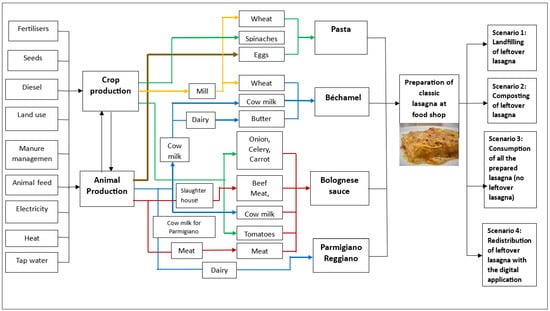
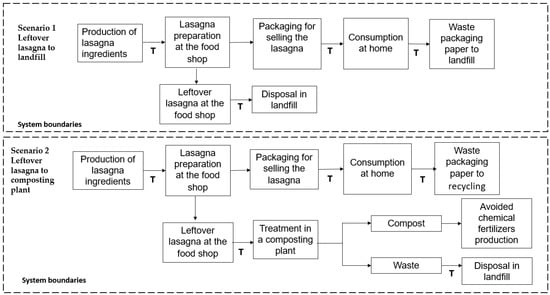
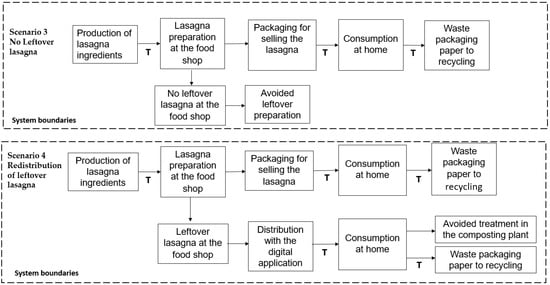
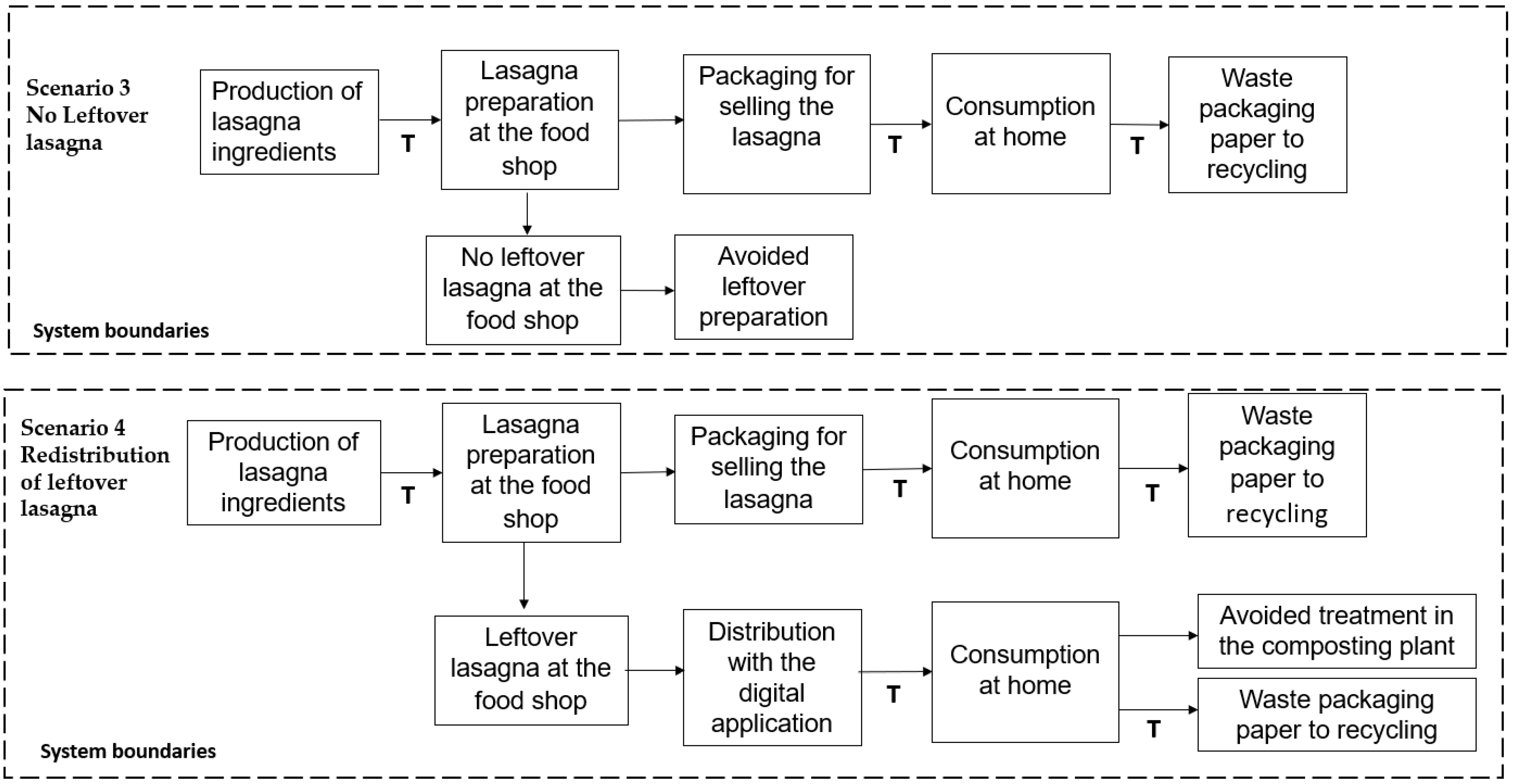
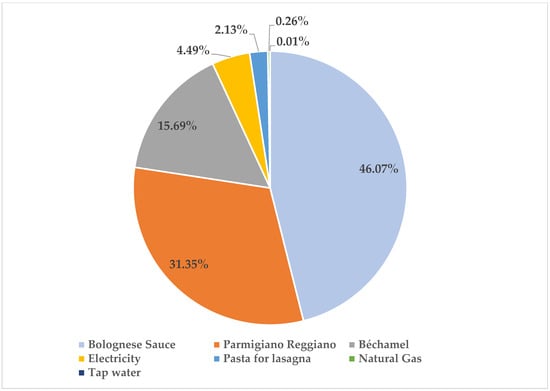
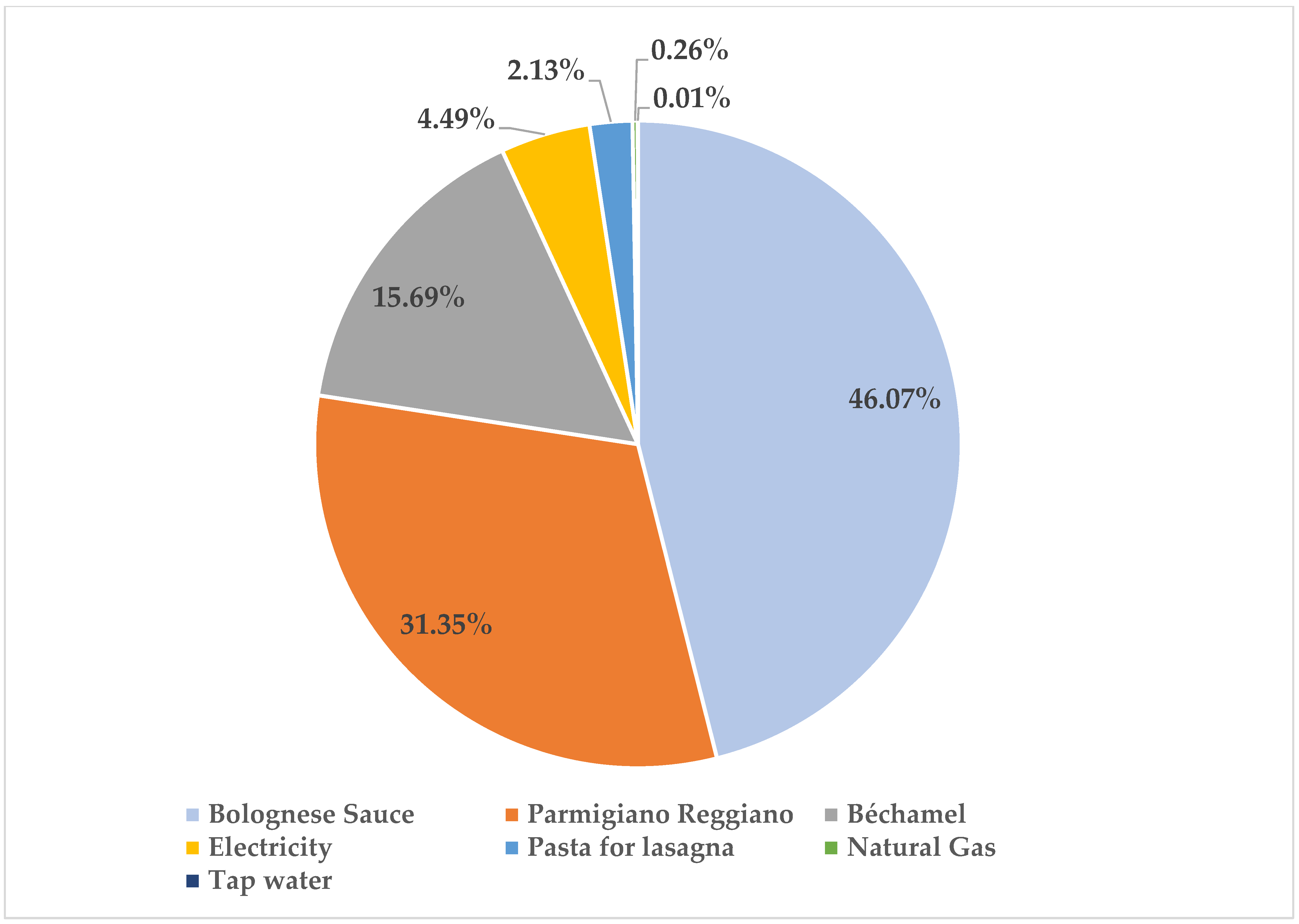
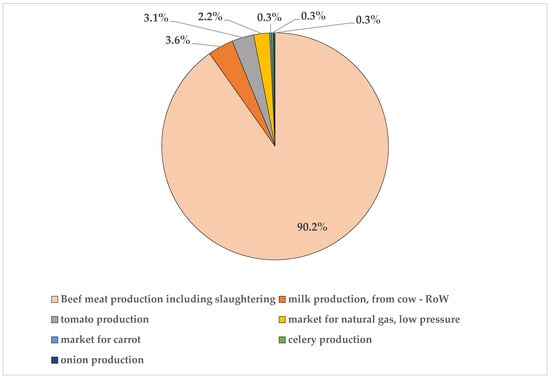
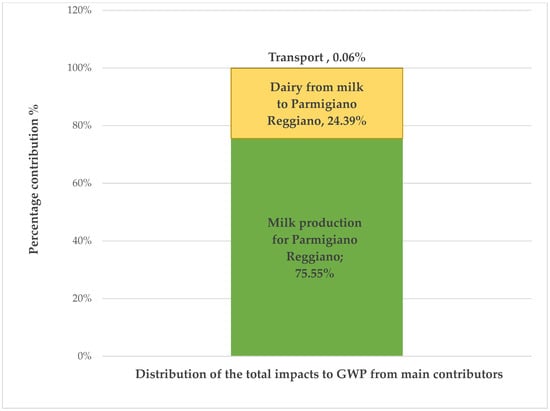
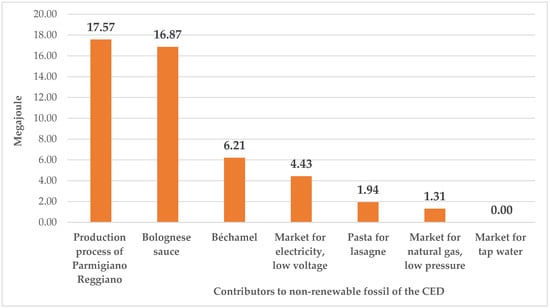
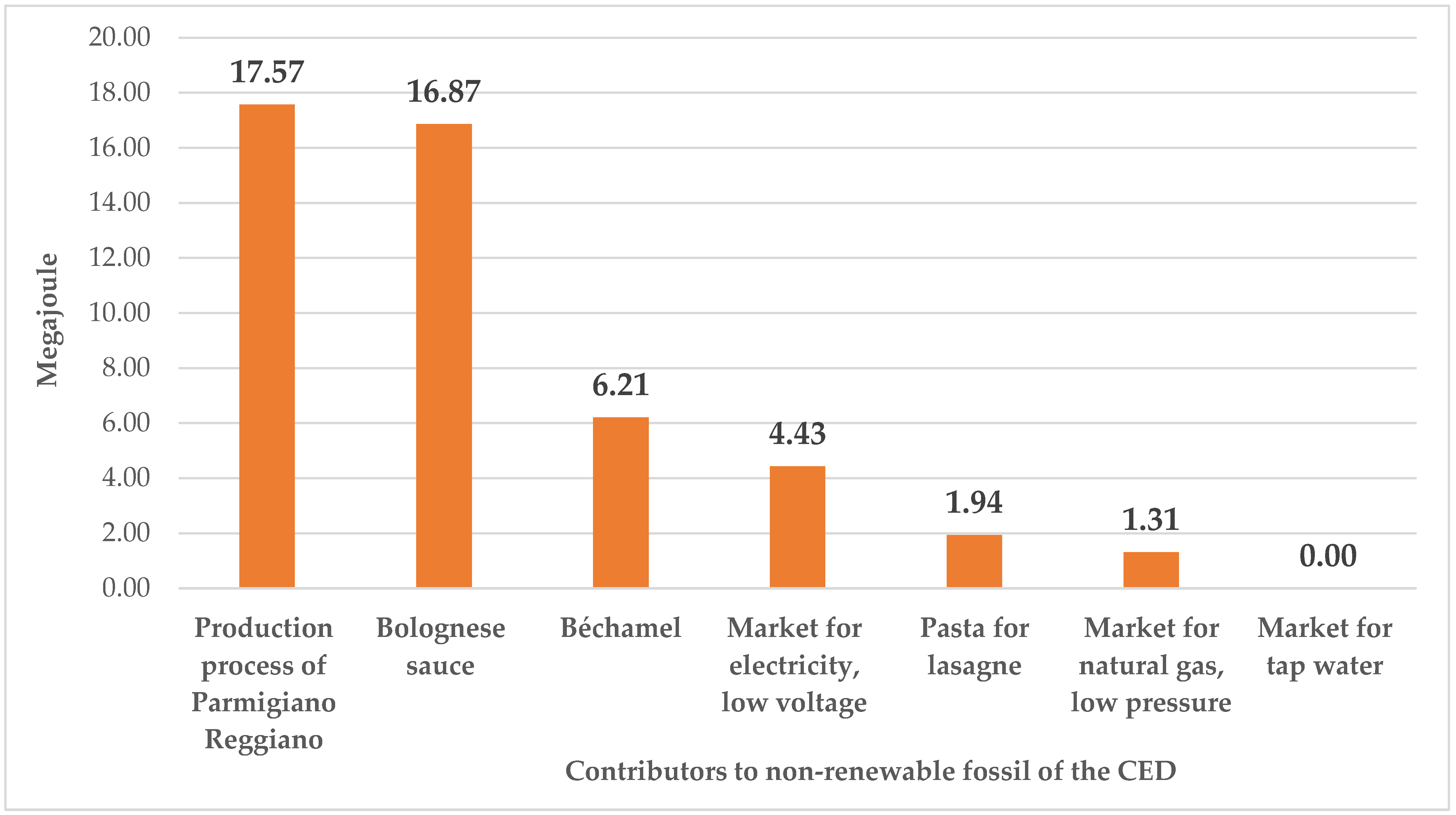
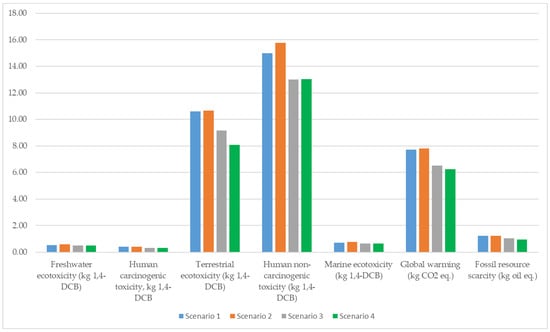
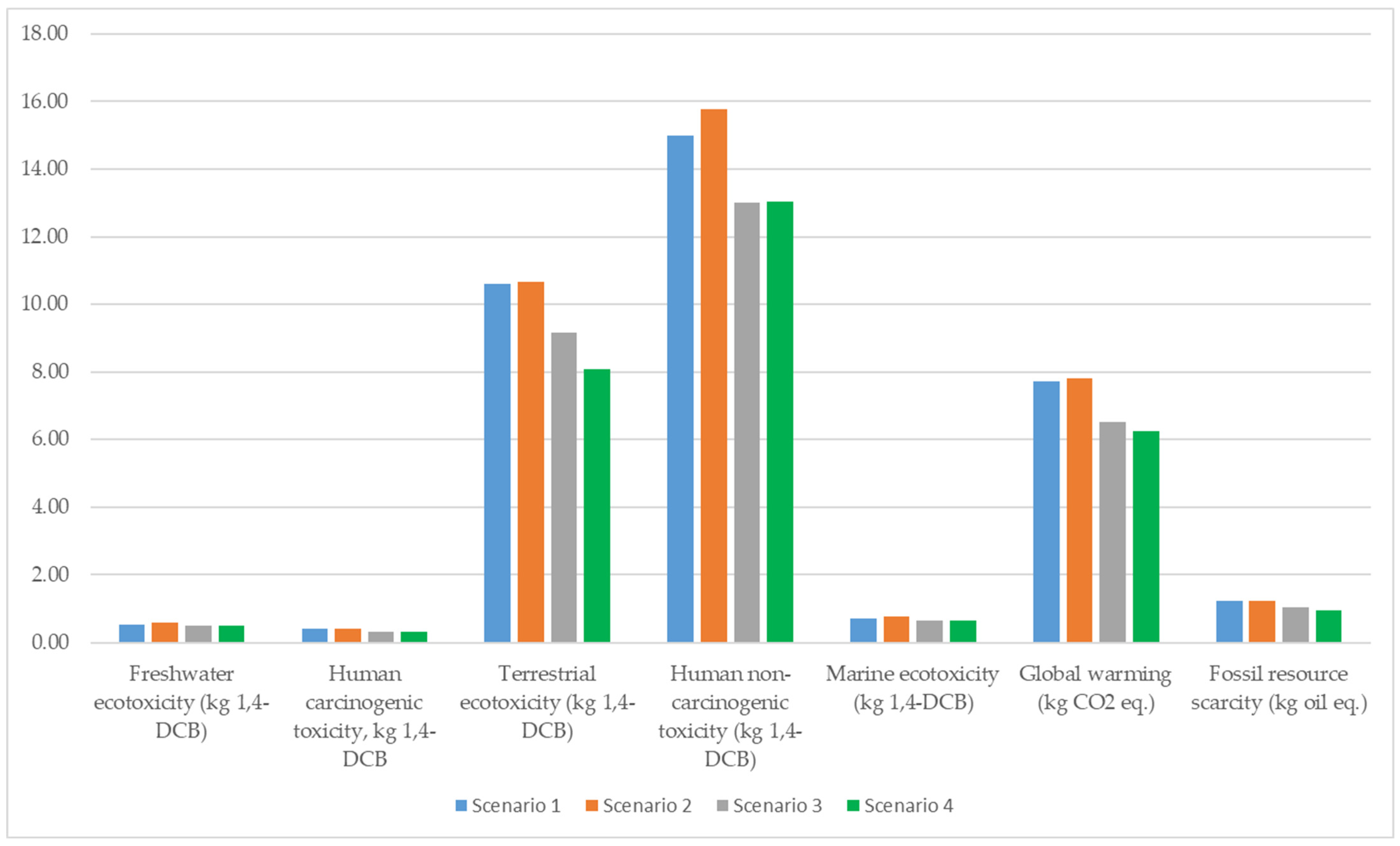
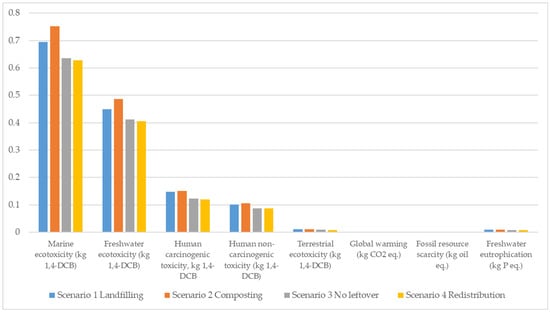
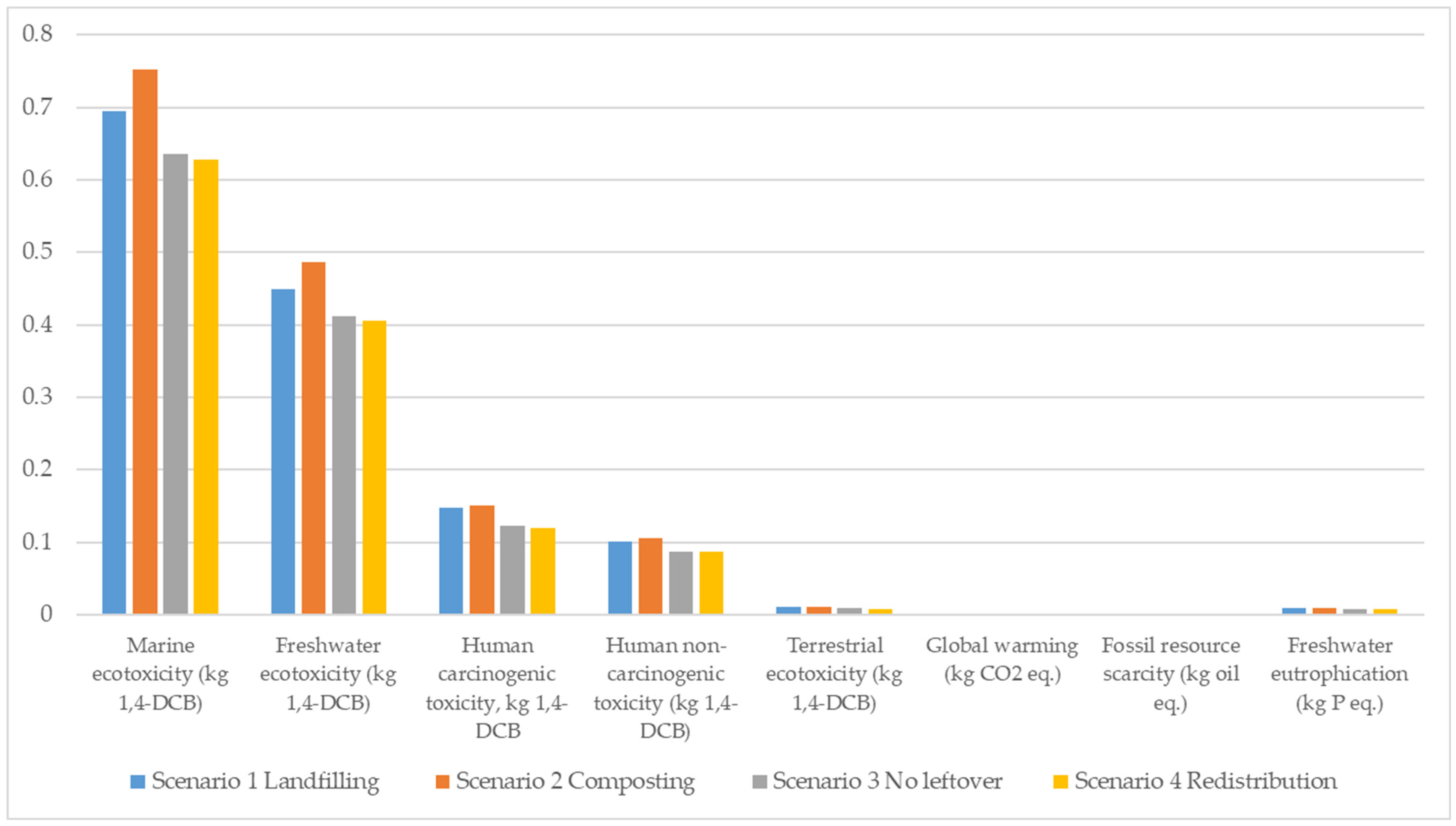
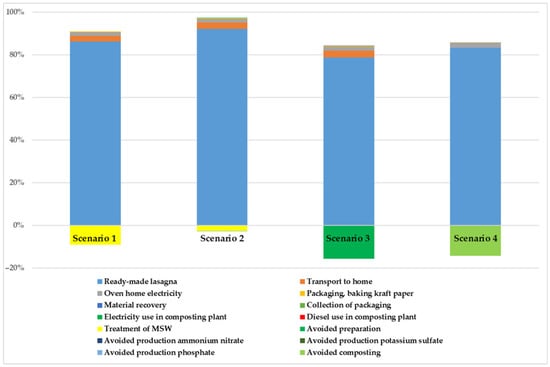
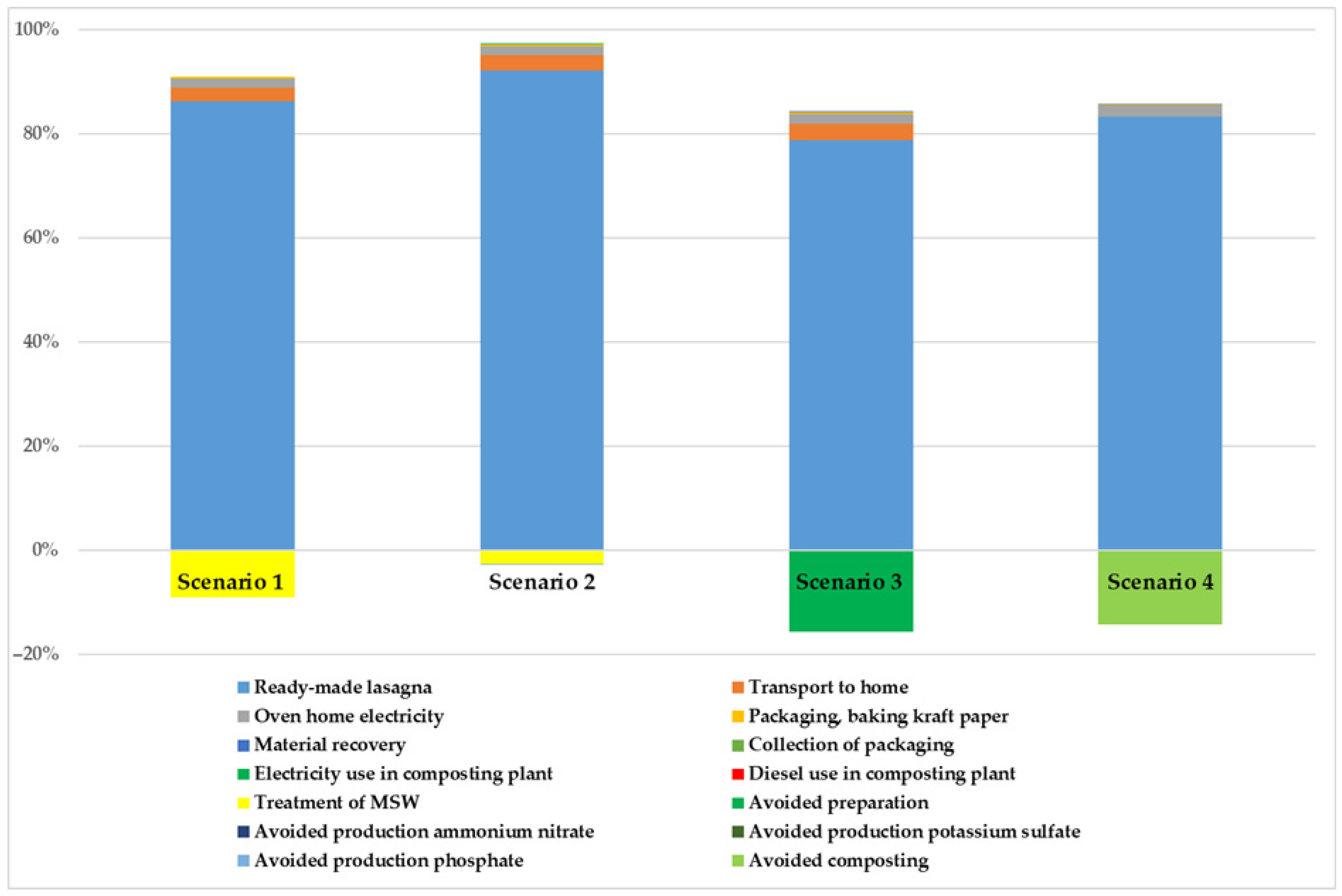
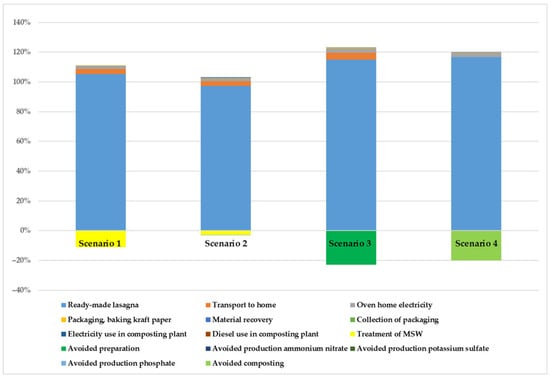
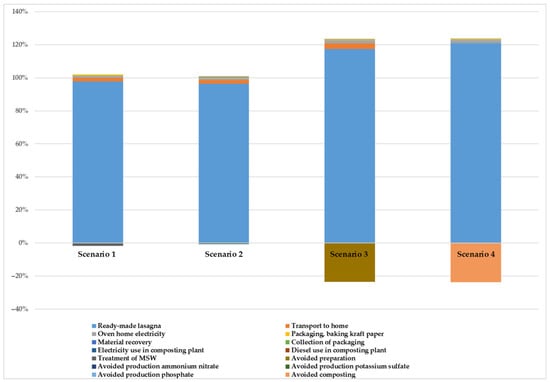
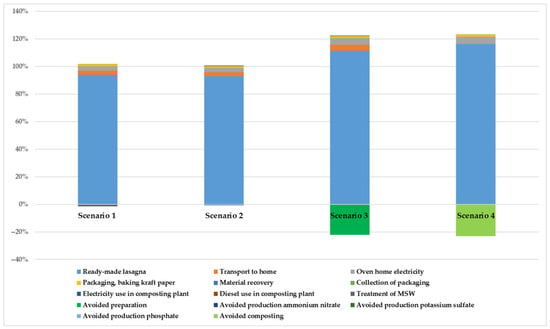
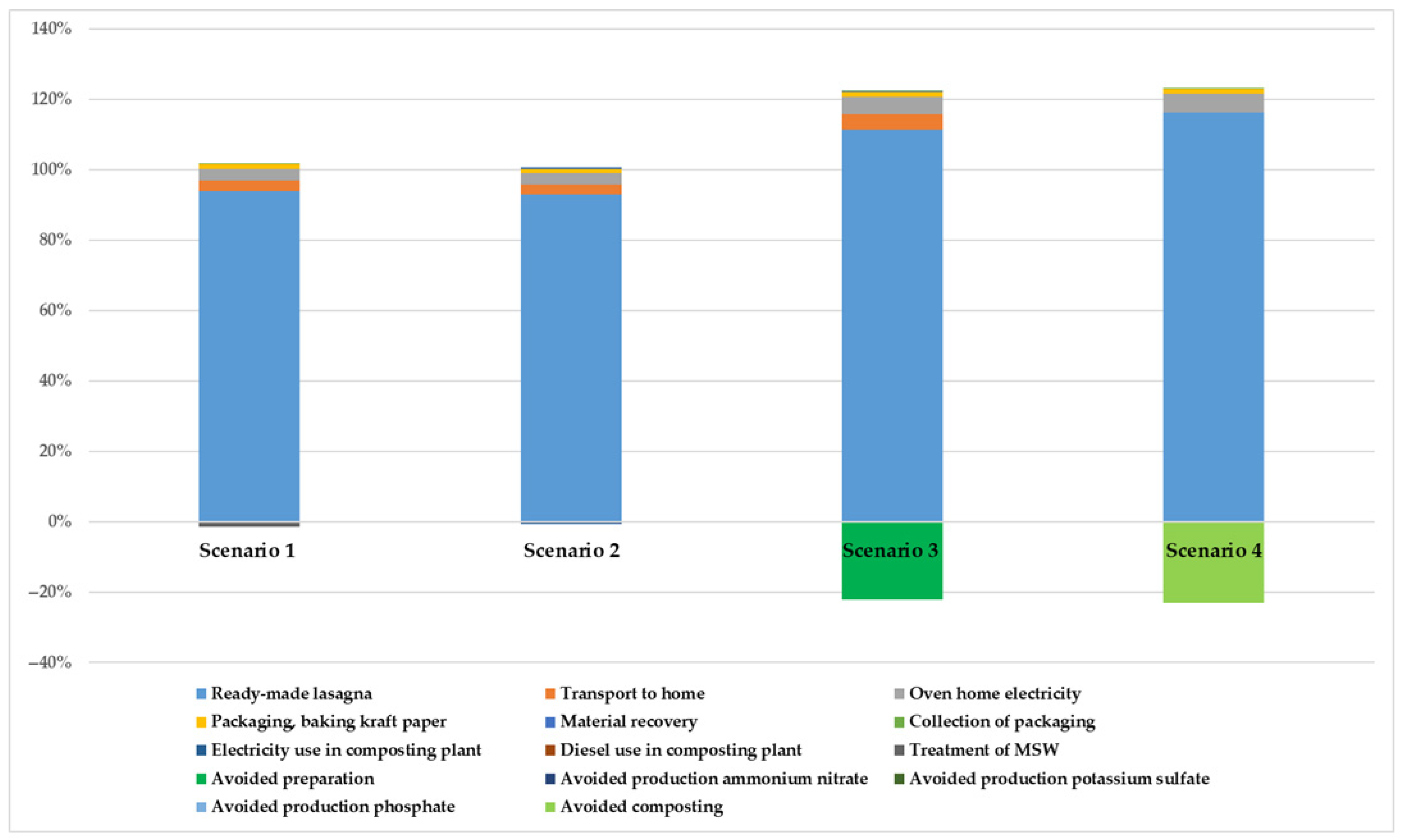

Disclaimer/Publisher’s Note: The statements, opinions and data contained in all publications are solely those of the individual author(s) and contributor(s) and not of MDPI and/or the editor(s). MDPI and/or the editor(s) disclaim responsibility for any injury to people or property resulting from any ideas, methods, instructions or products referred to in the content. |
© 2026 by the authors. Licensee MDPI, Basel, Switzerland. This article is an open access article distributed under the terms and conditions of the Creative Commons Attribution (CC BY) license.