


Abstract
In recent decades, antibiotic-resistant bacteria have become an increasingly urgent public health concern. The uncontrolled use of antibiotics, along with inadequate implementation of prevention and control measures, is the primary factor contributing to this issue. The hospital environment is a major source of multidrug-resistant bacteria, and in recent years, there has been growing concern about hospital wastewater, which acts as a significant reservoir for these bacteria and their resistance genes. This situation leads to the spread of multidrug-resistant bacteria in the environment. One particular concern is Acinetobacter, especially Acinetobacter baumannii, which has emerged as a pathogenic threat in healthcare-associated infections. This bacterium is found in high densities in hospital wastewater. Most strains of A. baumannii express resistance not only to carbapenems but also to several other classes of antibiotics, including tetracyclines, fluoroquinolones, and aminoglycosides. These strains must be combated through effective measures. Bacteriophages represent a potential mitigation strategy for antibiotic-resistant Acinetobacter spp. originating from hospital wastewater. This review summarizes studies from online databases regarding the identification and characterization of Acinetobacter strains in hospital wastewater worldwide, and presents progress in isolating and characterizing bacteriophages against A. baumannii found in hospital wastewater.
1. Introduction
The genus Acinetobacter comprises non-motile, Gram-negative coccobacilli that form smooth, mucoid colonies on solid media. Biochemically, the organisms exhibit catalase activity, lack oxidase activity, and do not ferment carbohydrates. According to a genome-based study, the genus Acinetobacter comprises 144 species, including 68 formally named species and 76 unnamed taxa [1]. The main virulence factors of Acinetobacter baumannii include lipopolysaccharides (LPSs), capsular polysaccharides (CPSs), and various outer membrane proteins (such as OmpA, CarO, Omp33, OprD, and OmpW). Additionally, outer membrane vesicles (OMVs), phospholipase, pili, and biofilm formation contribute to its pathogenicity. Among these, OmpA is one of the most significant virulence factors. It plays a crucial role in cell adhesion, invasiveness, and apoptosis in the respiratory tract, as well as in biofilm formation. LPSs can trigger an exaggerated inflammatory response, leading to the release of pro-inflammatory cytokines such as IL-6, IL-8, and TNF-alpha. This response is a key factor in the clinical manifestations of infections caused by this organism. The CPS antigen is vital for protecting against the complement system, phagocytic cells, antimicrobial factors, and disinfectants. Furthermore, capsular polysaccharides are responsible for the development of a mucoid phenotype, which creates a protective barrier around the microorganism, helping to prevent the effects of antibiotics [2,3].
A. baumannii can form biofilms on both living tissues and inert surfaces, such as various types of hospital equipment, like endotracheal tubes. A central role in biofilm formation is played by the polysaccharide capsule. The mechanisms involved in biofilm formation differ between biotic (living) and abiotic (non-living) surfaces. For instance, on abiotic surfaces, the chaperone-usher pilus system known as Csu pili is crucial for biofilm formation, whereas on biotic surfaces it is not. A. baumannii forms mature biofilms by utilizing large surface proteins such as BapAb and Bap-like proteins, which are secreted via the type I secretion system. These proteins facilitate cell-to-cell adhesion and help establish the biofilm structure on medical materials. Additionally, other factors such as RTX-like proteins, PNAG, capsular polysaccharides, and autotransporters contribute to biofilm development and could serve as potential therapeutic or vaccine targets [4].
About one-third of the species within the genus Acinetobacter are involved in hospital-associated infections [5]. Among the clinically relevant species of Acinetobacter, A. baumannii is the most commonly associated with infections, followed by A. calcoaceticus and A. lwoffii. Other species, such as A. haemolyticus, A. johnsonii, A. junii, A. nosocomialis, A. pittii, A. schindleri, and A. ursingii, have been reported as occasional opportunistic pathogens. Additionally, A. seifertii has recently emerged as a clinically significant pathogen in Asia. A. baumannii primarily affects immunosuppressed individuals and is known to colonize the skin, as well as oropharyngeal and respiratory secretions, although it is less commonly found in urine. Gastrointestinal colonization is rare. This species can cause a wide range of infections, including pneumonia, skin infections, endocarditis, meningitis, and urinary tract infections. The main modes of transmission for this microorganism are through contaminated surfaces, as it can survive in the external environment, and via transient colonization on the hands of healthcare personnel. Its transmission may also occur through aerosols from infected or colonized patients [6,7].
A. baumannii infections account for 4% of healthcare-associated infections in Asia, compared to about 2% in Europe and the United States. A significant issue with this organism is that nearly half of the isolated strains are multidrug-resistant, with the percentage reaching up to 70% in Latin American countries [4]. This bacterium is highly resilient in the external environment and can survive exposure to various disinfectant solutions [8].
A. baumannii exhibits intrinsic resistance to several antibiotic classes, including aminopenicillins and first- and second-generation cephalosporins. It also has an extraordinary ability to acquire resistance to other antibiotics, leading to multidrug-resistant or extensively drug-resistant strains. This extensive antimicrobial resistance is facilitated by multiple mechanisms, including enzymatic inactivation or modification of antibiotics, mutations in target genes, reduced permeability of the external membrane, and overexpression of multidrug efflux systems [5]. In 2019, the CDC classified carbapenem-resistant A. baumannii infection as an “urgent threat” in the United States [9]. A consistent increase in the number of cases has been observed in recent years. A study conducted in China between 2020 and 2021 among ICU patients found an increase in infections in 2021 compared to 2020. Most of these infections were caused by multidrug-resistant strains, primarily isolated from the lower respiratory tract. Additionally, the study found a higher prevalence of strains resistant to tobramycin, gentamicin, and trimethoprim-sulfamethoxazole in 2021 compared to the previous year [10].
It has been demonstrated that strains of A. baumannii responsible for hospital-acquired pneumonia (HAP) and ventilator-associated pneumonia (VAP) exhibit an average multidrug-resistance of 80%. In reported cases from Central America and Croatia, this resistance reaches 100%. The mortality rate in these cases exceeds 50% [11]. Traditionally, carbapenems have been the preferred treatment for multidrug-resistant A. baumannii strains. However, in recent years, resistance to these antibiotics has become increasingly common, creating significant challenges in patient management. Extensively drug-resistant (XDR) A. baumannii refers to isolates that are resistant to three or more major classes of antimicrobials, including penicillins and cephalosporins (with or without β-lactamase inhibitors), fluoroquinolones, and aminoglycosides, and often also to carbapenems. Pandrug-resistant (PDR) A. baumannii refers to XDR strains that additionally exhibit resistance to last-resort agents, specifically polymyxins and tigecycline [11].
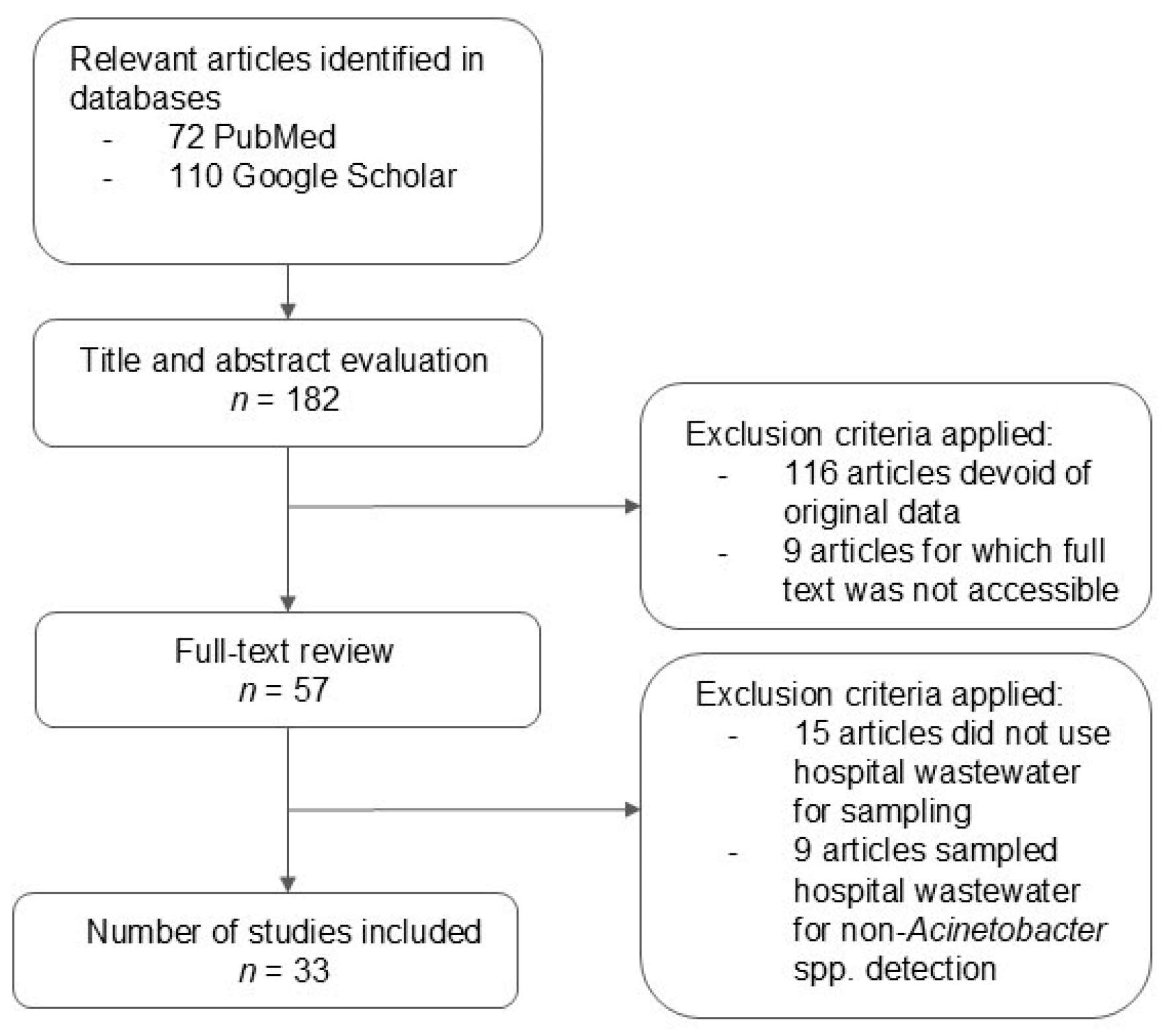
This review summarizes studies from online databases regarding the identification and characterization of Acinetobacter strains in hospital wastewater worldwide, and presents progress in isolating and characterizing bacteriophages that infect A. baumannii in hospital wastewater. We conducted a narrative review of studies published in the last 5 years (2021–2025) across databases such as PubMed and Google Scholar. We chose the period 2021–2025 to provide a recent analysis of the data on this topic. We used the keywords “acinetobacter” AND “hospital wastewater”. We included original articles, written in English, and excluded reviews, clinical cases, articles that analyzed Acinetobacter spp. from sources other than hospital wastewater, and articles that analyzed Acinetobacter spp. from veterinary hospital wastewater (Figure 1). The items were imported into Zotero, and duplicates were removed with the Duplicate function.
Figure 1.
Flowchart describing the selection method for the articles included in this review.
2. Hospital Wastewater as a Reservoir for Multidrug-Resistant A. baumannii
A. baumannii is a microorganism capable of surviving in a wide range of environmental conditions and can persist on surfaces for extended periods. In aquatic environments, it can survive for up to 50 days and thrives in saline conditions, being commonly found in seawater [12]. Environmental reservoirs of A. baumannii can harbor various clinically relevant β-lactam resistance determinants, including the ADC-5 cephalosporinase and OXA enzymes. The detection of these enzymes in sequences from non-clinical environments highlights the ecological scope of resistance mechanisms and underscores the importance of monitoring environmental sources for emerging resistance-associated genotypes [13]. According to a report by the European Centre for Disease Prevention and Control (ECDC), data on antibiotic use in hospitals are concerning. The report indicates that at least one in three hospitalized patients and one in two patients undergoing surgery receive antibiotic treatment. It is crucial to recognize that hospital effluents contain numerous bacteria that may pass through treatment plants and enter the environment. Despite dilution, this can lead to water contamination. Additionally, even if these microorganisms do not reach the natural environment, the presence of antibiotics is a major factor in the development of antibiotic resistance [14].
Hospital wastewater harbors a wide variety of bacteria, fungi, parasites, and viruses, making it a significant reservoir for pathogenic microorganisms [15]. Recent advances in medicine have enabled the successful identification of more pathogens in hospital wastewater. The most common bacterial phyla included Proteobacteria (51%), Bacteroidetes (34%), Firmicutes (11%), and Actinobacteria (1%) [16]. Hospital wastewater is a significant source of pollution to soil and aquatic environments and serves as a pathway for the transmission of infectious diseases, often involving highly resistant germs [13].
Hospital wastewater generation is higher in developed countries than in developing ones. Hospital wastewater contains an accumulation of various drugs, many of which remain active, along with microorganisms exhibiting different degrees of resistance, resistance genes, and toxic substances, including disinfectants, detergents, and heavy metals such as cadmium, copper, nickel, mercury (Hg), and tin (Sn) [17]. The main sources of heavy metals are medical devices, pharmaceuticals, imaging contrast agents, etc. [18]. The most commonly detected antibiotics in hospital wastewater are ciprofloxacin, sulfamethoxazole, trimethoprim, and norfloxacin [17]. Thus, sublethal amounts of antibiotics found in hospital wastewater allow bacteria to develop resistance [19,20].
A recent meta-analysis showed that carbapenem, sulfonamide, and tetracycline resistance genes, along with mobile genetic elements, were detected at high relative levels (>10−4 gene copies per 16S rRNA gene copy) in hospital wastewater. From 2014 to 2018, the prevalence of genes conferring resistance to extended-spectrum β-lactams, carbapenems, sulfonamides, and glycopeptides declined significantly, whereas the abundance of tetracycline resistance genes increased. ARG levels varied significantly among countries but showed no significant seasonal variation. On-site hospital wastewater treatment processes were unable to fully eliminate ARGs, and their removal efficiencies differed depending on the specific resistance genes involved [21]. The main resistance genes identified in hospital wastewater include extended-spectrum β-lactamase (ESBL) genes, carbapenemases (blaKPC, blaNDM, and blaOXA variants), as well as colistin resistance determinants (mcr-1 and related variants). It also encompasses vancomycin resistance genes (vanA and vanB) [22].
The following sections summarize data on the presence of Acinetobacter spp. in hospital wastewater from studies conducted in the last five years, categorized by region.
2.1. Europe
Carbapenem resistance is the most common form of antibiotic resistance among isolates in Europe. Resistance to aminoglycosides, tetracyclines, and fluoroquinolones has also been reported [23,24,25]. There is significant variation in strains. For instance, in Finland, where antibiotic use is lower, the presence of Acinetobacter in hospital wastewater is less frequent than in countries with excessive antibiotic use [22]. In Romania, several strains of A. baumannii carrying multiple resistance genes have been identified [24,26,27,28] (Table 1).
Table 1.
Summary of the studies that identified A. baumannii in hospital wastewater in Europe.
Across Europe, Acinetobacter baumannii is a critical sentinel germ for the dissemination of antimicrobial resistance (AMR) from clinical settings into the broader environment. Methodologically, these studies employ a combination of culture-based techniques (isolating specific strains from hospital sewage and WWTPs) and culture-independent metagenomic profiling, the latter of which reveals that Acinetobacter spp. often hosts a high abundance and diversity of carbapenemase-encoding genes. Results consistently demonstrate a “spillover” effect: phylogenetic analyses in Romania and Germany show that high-risk clinical clones (notably the ST2 cluster) migrate from hospitals into municipal wastewater and survive treatment, appearing in downstream surface waters. While geographical variations exist—such as Finland’s lower prevalence, attributed to stricter antibiotic stewardship—the overarching trend indicates that hospital effluents serve as primary “hotspots” where high antibiotic concentrations (such as ciprofloxacin and β-lactams) exert selective pressure. Furthermore, recent longitudinal data suggest that the COVID-19 pandemic may have exacerbated resistance levels, underscoring the dynamic nature of the A. baumannii resistome and the necessity of integrating wastewater-based epidemiology into national public health surveillance. Metagenomic results need to be carefully analyzed, as they seem to show the presence of ARGs from Enterobacterales associated with Acinetobacter spp.
2.2. Asia
In 2025, Mallonga et al. reported the first strain of Acinetobacter towneri carrying both the NDM-1 and tet(x7) resistance genes [34]. An interesting finding comes from the study of Wang et al. They analyzed bacteria in hospital wastewater aerosols and found higher concentrations during the summer. They concluded that bioaerosols from hospital sewage in summer pose a significant pathogenic risk [35]. Conversely, Zhao et al. examined the COVID-19 pandemic and noted that the amount of Acinetobacter in hospital wastewater decreased in winter. However, they emphasized that COVID-19 may have influenced the expression of resistance genes. During the COVID-19 pandemic, antibiotics were frequently used in patients infected with the SARS-CoV-2 virus, often in an irrational manner. Additionally, bacterial infections caused by microorganisms such as E. coli, Klebsiella, and Acinetobacter, carrying resistance genes such as blaOXA, blaKPC, and blaNDM, were more frequently identified among hospitalized COVID-19 patients. These findings support the conclusions drawn in the study by Zhao et al. [36].
A. baumannii, found in hospital wastewater in Asia, exhibits various resistance mechanisms, with mutations in the genes responsible for carbapenem resistance being the most frequently identified. Other species, such as A. pittii, A. nosocomialis, and A. towneri, have also been detected and show antibiotic resistance. Notably, resistance to carbapenems and the latest generation of tetracyclines has been observed among these species [37] (Table 2).
In this context, monitoring hospital wastewater is crucial, and metagenomics plays a vital role by providing valuable information. Researchers warn of the imminent spread of this multidrug-resistant microorganism from the hospital environment into the broader ecosystem, with serious implications for public health [38].
Table 2.
Summary of the studies that identified A. baumannii in hospital wastewater in Asia.
Research from Asia (including the Philippines, Thailand, Bangladesh, China, and India) identifies hospital wastewater as a volatile reservoir for multidrug-resistant (MDR) Acinetobacter species, characterized by a unique preponderance of blaNDM-1. Methodologically, these studies utilize Whole-Genome Sequencing (WGS) and shotgun metagenomics to reveal that Acinetobacter is often the primary host for antimicrobial resistance genes (ARGs) in general hospital effluents, frequently carrying clinically significant markers such as blaKPC, tet(X7) and tet(39). A critical observation across the region is the role of non-baumannii species, such as A. towneri, in harboring these high-threat carbapenemases. Furthermore, studies show that existing wastewater treatment infrastructures are often ineffective, as viable pathogenic Acinetobacter and plasmid-mediated ARGs persist in treated effluents and even disseminate via bioaerosols. Notably, experimental evidence suggests that interventions like silver nanoparticles (AgNPs) may inadvertently favor the conjugation of plasmids carrying blaNDM-1, potentially exacerbating the resistance profile of the wastewater microbiome.
2.3. Africa
In Africa, pandrug-resistant and extensively resistant bacterial strains have drawn significant attention to the urgent need for methods to control and prevent antibiotic resistance across the continent. Most studies analyzing hospital wastewater in Africa report a high prevalence of Acinetobacter strains with considerable antibiotic resistance, including MDR and XDR strains. Analyses of isolated strains reveal that many carry the carbapenemase genes, particularly NDM-1 and OXA-23, as well as genes associated with resistance to antibiotics such as tetracyclines, aminoglycosides, sulfonamides, and even colistin [46,47,48]. These findings suggest that hospital wastewater serves as a significant reservoir for multidrug-resistant bacteria that survive despite existing preventive measures. In this context, recent studies have also explored the use of nano-adsorbent materials and artificial intelligence to help control the spread of these bacteria [49] (Table 3).
Table 3.
Summary of the studies that identified A. baumannii in hospital wastewater in Africa.
The collective findings from research in Africa (including Egypt, Nigeria, and South Africa) characterize hospital wastewater as a critical reservoir for pandrug-resistant and extensively drug-resistant (XDR) Acinetobacter baumannii. Similarly to findings in Asia, African isolates show an increasing prevalence of the blaNDM-1 carbapenemase, often co-occurring with blaOXA-23 in high-risk clones such as ST-231. Methodologically, African studies place a unique emphasis on advanced remediation and monitoring; for instance, nano-adsorbents such as nano-zero-valent iron (nZVI) and nano-copper (CuONPs) have shown high efficiency in removing both antibiotics and ARGs, while smart artificial intelligent systems (SAISs) like XGB and Cubist models are proposed to reduce the turnaround time for evaluating bacterial density in water. Unlike the phenotypic resistance without detectable genes observed in some Mexican isolates, African strains frequently harbor high-frequency markers such as ampC (92%) and tetA (70%). Furthermore, these studies conclude that the robust biofilm-forming capacity of A. baumannii allows it to withstand treatment procedures, leading to the discharge of viable, resistant pathogens into the environment, which poses a severe risk to surrounding communities.
2.4. America
There are a few studies analyzing Acinetobacter in hospital wastewater in America. Among the studies conducted, A. baumannii was identified most frequently, whereas other species, such as A. haemolyticus and A. johnsonii, were rarely observed [54] (Table 4).
Table 4.
Summary of the studies that identified A. baumannii in hospital wastewater in America.
The findings from the Americas (encompassing the USA, Brazil, and Mexico) reinforce the concept that hospital wastewater is not merely a waste stream but a direct, functional extension of the clinical reservoir of antimicrobial resistance. Methodologically, these studies utilize shotgun metagenomics and culture-dependent clonal tracking to demonstrate how high-risk lineages, such as the OXA-23-producing ST79 clone, transition from clinical environments to urban rivers. A critical observation from South American and Mexican settings is the high environmental fitness of these strains; for instance, ST79 has successfully adapted to aquatic ecosystems, while diverse A. haemolyticus clones exhibit the capacity to persist through the hospital water treatment process, maintaining viability even in treated effluents. Furthermore, longitudinal analysis in North America shows that hospital-linked A. baumannii ARGs are significantly enriched at discharge points, accounting for 37% of the total ARG burden and persisting for multiple kilometers downstream in rural river systems. This regional data underscores that current treatment protocols are insufficient to contain the dissemination of these pathogens, necessitating more robust surveillance of hospital effluents to mitigate the public health risk posed by environmental “hotspots.”
3. Hospital Wastewater as a Source of Bacteriophages
Bacteriophage therapy appears to be a promising alternative for treating patients with multidrug-resistant bacterial infections. Bacteriophages are widely distributed in nature, and sewage represents the main reservoir, particularly in hospital settings [58]. Compared with antibiotic therapy, the use of bacteriophages has the advantage of their specific action against bacteria, without altering the normal microbial flora. Another significant advantage of bacteriophage therapy is its safety compared to antibiotics, which often have numerous side effects [52]. However, it is important to note that bacteriophage cocktails can affect the intestinal barrier and potentially lead to conditions such as leaky gut. Studies on laboratory animals have demonstrated that oral administration of bacteriophages can trigger an inflammatory response, resulting in increased levels of circulating pro-inflammatory cytokines and changes in intestinal mucosal permeability [59]. Furthermore, using a single bacteriophage over an extended period can lead to the development of resistant bacterial strains through natural selection. Other disadvantages are immunogenicity issues, regulatory approval, and phage delivery systems [60].
In recent years, significant progress has been made in the discovery and characterization of bacteriophages in hospital wastewater (Table 5). Recently, in Benin, three new phages (fBenAci001, fBenAci002, and fBenAci003) associated with the genus Friunavirus were isolated from hospital wastewater and evaluated against 57 clinical Acinetobacter spp. The phages met the criteria established for phage therapy. However, they had a small host range [52]. Also, in Dakar (Senegal), two novel Friunavirus bacteriophages, vAbBal23 and vAbAbd25, active against XDR-resistant A. baumannii, were characterized and shown to significantly disrupt biofilm formation, highlighting the potential of phage therapy as an alternative or adjunctive strategy [53]. The same authors described a novel lytic bacteriophage, vAbaIN10, belonging to the genus Friunavirus, active against carbapenem-resistant A. baumannii. The phage exhibited robust lytic activity and broad environmental stability, and lacked identifiable antibiotic resistance or virulence genes, indicating its potential suitability as a biocontrol agent against carbapenem-resistant A. baumannii infections [61]. Furthermore, Essam et al. isolated and characterized two phages that could be useful against carbapenem-resistant A. baumannii. The two phages showed lytic activity against 24.3% and 31.7% of the clinical isolates, respectively. The phages demonstrated promising stability in different tested conditions, including pH, temperature, and UV exposure. The study concluded that phage ΦZC3 could be a potentially effective therapy for pneumonia caused by MDR A. baumannii [62]. In line with this, a study by Zhang et al. identifies and characterizes MRABP9, a novel lytic bacteriophage in the genus Friunavirus, effective MDR A. baumannii clinical isolates, demonstrating its potential as a therapeutic agent for challenging MDR infections. The genomic and phenotypic properties of MRABP9 support its broad lytic ability and suitability for further preclinical investigation as an alternative or adjunct to conventional antibiotics [63]. In Iran, the bacteriophage vB_AbaS_SA1, isolated from hospital sewage, exhibits potent lytic activity against MDR A. baumannii clinical isolates. Its combination with conventional antibiotics enhances antibacterial efficacy, demonstrating significant phage–antibiotic synergy. These findings underscore the therapeutic potential of bacteriophages sourced from clinical wastewater environments to mitigate MDR A. baumannii infections [58]. Another study from Iran, conducted by Ghaznavi-Rad et al., investigated bacteriophages isolated from hospital wastewater against 19 strains of Acinetobacter baumannii, which were classified as XDR and exhibited the following resistance genes: adeA, adeB, adeC, adeR, adeS, blaOXA-23, and blaOXA-24. In this study, a novel lytic bacteriophage, vB-AbauM-Arak1, belonging to the Myoviridae family, targeting extensively drug-resistant A. baumannii clinical isolates, was isolated and shown to possess favorable lytic properties and in vitro stability, as well as therapeutic effectiveness in a rat burn infection model. These findings support the potential of phage therapy to combat XDR A. baumannii infections, particularly when conventional antibiotics fail [64].
Numerous studies have highlighted A. baumannii’s ability to form biofilms, a significant virulence factor that contributes to increased antibiotic resistance. Biofilms can significantly reduce the effectiveness of antibiotic treatments, making biofilm-producing strains a considerable threat. In response, various methods have been developed and implemented to inhibit biofilm formation or eliminate biofilms. One promising approach is the use of bacteriophages [65]. Bacteriophages can disrupt the biofilm matrix, thereby exposing bacterial receptors. This exposure enables specific binding between the bacteriophage and the bacterium, facilitating penetration of the bacteriophage and initiating its replication cycle [65]. Wang et al., in a recent study, used a clinical isolate of A. baumannii (AB48) as a host to isolate phage HZY2308 from hospital wastewater. After 24, 48, and 72 h, the phage drastically lowered the overall biofilm mass of the A. baumannii strain. The phage exhibited considerable antibiofilm activity and enhanced antibacterial activity when combined with antibiotics, suggesting that it could be used as an antibacterial agent to manage A. baumannii infections. Furthermore, a study conducted in Iran characterized a new lytic bacteriophage specific to A. baumannii, named vB-AbaMfThrA, which was isolated from hospital wastewater. The phage has demonstrated the ability to block biofilm formation or destroy existing biofilms, positioning it as a potential candidate for phage therapy. In another study, Lin et al. isolated an A. baumannii phage, P425, from medical wastewater and showed that it increased the survival rate of mice infected with a multidrug-resistant strain of A. baumannii. Similarly, Zheng et al. isolated phage P1068, which exhibits lytic activity against A. baumannii strains resistant to carbapenems, as well as those capable of producing biofilms [66].
Table 5.
Summary of the phages isolated from hospital wastewater.
4. Conclusions
This review emphasizes that hospital wastewater represents a significant reservoir for Acinetobacter species. It is important to note that many of the isolated strains meet the criteria for multidrug-resistant, extensively drug-resistant, or even pandrug-resistant strains. The rise of blaNDM (New Delhi metallo-beta-lactamase) in Acinetobacter baumannii represents a significant evolution in the species’ resistance profile, shifting the threat from serine-carbapenemases (Class D OXA enzymes) to metallo-beta-lactamases that render most current beta-lactamase inhibitors ineffective. The isolation of A. baumannii strains from hospital effluents highlights the serious risks posed by hospital wastewater to surrounding communities and the environment. The integration of culture-based isolation with high-resolution metagenomic sequencing is transitioning from specialized research into routine environmental surveillance, providing a standardized, real-time “radar” for tracking the persistence and dissemination of multidrug-resistant Acinetobacter across global water systems. These findings underscore the necessity for hospital wastewater surveillance and the implementation of effective treatment measures. Hospital wastewater serves as a reservoir for bacteriophages that lyse multidrug-resistant strains of A. baumannii, making it a valuable option for treating patients infected with these resistant strains.
Author Contributions
Conceptualization, C.G.S., M.I.M. and M.I.P.; methodology, M.I.M., C.I.M. and A.A.M.; validation, C.G.S. and M.I.P.; database interrogation and summarization, M.I.M., C.I.M. and C.C.D.; formal analysis, M.I.M. and C.I.M.; writing—original draft preparation, M.I.M. and C.I.M.; writing—review and editing, C.G.S., G.L.P., A.A.M. and M.I.P.; supervision, G.L.P., A.A.M. and M.I.P. All authors have read and agreed to the published version of the manuscript.
Funding
This research received no external funding.
Informed Consent Statement
Not applicable.
Data Availability Statement
All data are contained within the article.
Conflicts of Interest
The authors declare no conflicts of interest.
Abbreviations
The following abbreviations are used in this manuscript:
| A. baumannii | Acinetobacter baumannii |
| MRSA | Methicillin-resistant Staphylococcus aureus |
| ICU | Intensive Care Unit |
| CDC | Centers for Disease Control and Prevention |
| HAP | Hospital-acquired pneumonia |
| VAP | Ventilator-associated pneumonia |
| XDR | Extensively drug-resistant |
| PDR | Pandrug-resistant |
| ECDC | European Centre for Disease Prevention and Control |
| Cd | Cadmium |
| Cu | Copper |
| Ni | Nickel |
| Hg | Mercury |
| Sn | Tin |
| ARG | Antibiotic resistance gene |
| AME | Aminoglycoside-modifying enzyme |
| WWTP | Wastewater treatment plant |
| AMR | Antimicrobial resistance |
| Ag NP | Silver nanoparticle |
| MDR | Multidrug-resistant |
| P. aeruginosa | Pseudomonas aeruginosa |
| K. pneumoniae | Klebsiella pneumoniae |
| AST | Antibiotic susceptibility testing |
| WGS | Whole-Genome Sequencing |
| nZVI | Nano-zero-valent iron |
| CuONP | Nano-copper |
| SAIS | Smart artificial intelligent system |
| MIC | Minimum inhibitory concentration |
| UV | Ultraviolet |
References
- Qin, J.; Feng, Y.; Lü, X.; Zong, Z. Precise Species Identification for Acinetobacter: A Genome-Based Study with Description of Two Novel Acinetobacter Species. mSystems 2021, 6, e00237-21. [Google Scholar] [CrossRef] [Scilit]
- Nowak, P.; Paluchowska, P. Acinetobacter baumannii: Biology and Drug Resistance—Role of Carbapenemases. Folia Histochem. Cytobiol. 2015, 54, 61–74. [Google Scholar] [CrossRef] [Scilit] [PubMed]
- Yao, Y.; Chen, Q.; Zhou, H. Virulence Factors and Pathogenicity Mechanisms of Acinetobacter baumannii in Respiratory Infectious Diseases. Antibiotics 2023, 12, 1749. [Google Scholar] [CrossRef] [Scilit] [PubMed]
- Harding, C.M.; Hennon, S.W.; Feldman, M.F. Uncovering the Mechanisms of Acinetobacter baumannii Virulence. Nat. Rev. Microbiol. 2018, 16, 91–102. [Google Scholar] [CrossRef] [Scilit]
- Ayoub Moubareck, C.; Hammoudi Halat, D. Insights into Acinetobacter baumannii: A Review of Microbiological, Virulence, and Resistance Traits in a Threatening Nosocomial Pathogen. Antibiotics 2020, 9, 119. [Google Scholar] [CrossRef] [Scilit] [PubMed]
- Wong, D.; Nielsen, T.B.; Bonomo, R.A.; Pantapalangkoor, P.; Luna, B.; Spellberg, B. Clinical and Pathophysiological Overview of Acinetobacter Infections: A Century of Challenges. Clin. Microbiol. Rev. 2017, 30, 409–447. [Google Scholar] [CrossRef] [Scilit]
- Brady, M.F.; Jamal, Z.; Pervin, N. Acinetobacter. In StatPearls; StatPearls Publishing: Treasure Island, FL, USA, 2025. [Google Scholar]
- Tiku, V. Acinetobacter baumannii: Virulence Strategies and Host Defense Mechanisms. DNA Cell Biol. 2022, 41, 43–48. [Google Scholar] [CrossRef] [Scilit]
- Darwish, M.M.; Catalan, M.I.; Wilson, T.; McGlynn, C.C.; Suhd-Brondstatter, J.; Dow, A.L.; Kingsley, A.; Reilly, M.E.; Cohen, S.H.; Desai, A.N. Hospital Outbreak of Carbapenem-Resistant Acinetobacter baumannii in the Context of Local Facility Transmission. Am. J. Infect. Control 2024, 52, 739–741. [Google Scholar] [CrossRef] [Scilit]
- Ayobami, O.; Brinkwirth, S.; Eckmanns, T.; Markwart, R. Antibiotic Resistance in Hospital-Acquired ESKAPE-E Infections in Low- and Lower-Middle-Income Countries: A Systematic Review and Meta-Analysis. Emerg. Microbes Infect. 2022, 11, 443–451. [Google Scholar] [CrossRef] [Scilit]
- Kyriakidis, I.; Vasileiou, E.; Pana, Z.D.; Tragiannidis, A. Acinetobacter baumannii Antibiotic Resistance Mechanisms. Pathogens 2021, 10, 373. [Google Scholar] [CrossRef] [Scilit] [PubMed]
- Męcik, M.; Stefaniak, K.; Harnisz, M.; Korzeniewska, E. Hospital and Municipal Wastewater as a Source of Carbapenem-Resistant Acinetobacter baumannii and Pseudomonas Aeruginosa in the Environment: A Review. Environ. Sci. Pollut. Res. 2024, 31, 48813–48838. [Google Scholar] [CrossRef] [Scilit] [PubMed]
- Sykes, E.M.E.; Mateo-Estrada, V.; Zhanel, G.; Dettman, J.; Chapados, J.; Gerdis, S.; Akineden, Ö.; Khan, I.I.U.; Castillo-Ramírez, S.; Kumar, A. Emergence of ADC-5 Cephalosporinase in Environmental Acinetobacter baumannii from a German Tank Milk with a Novel Sequence Type. Access Microbiol. 2023, 5, acmi000485.v3. [Google Scholar] [CrossRef] [Scilit]
- Mackuľak, T.; Cverenkárová, K.; Vojs Staňová, A.; Fehér, M.; Tamáš, M.; Škulcová, A.B.; Gál, M.; Naumowicz, M.; Špalková, V.; Bírošová, L. Hospital Wastewater-Source of Specific Micropollutants, Antibiotic-Resistant Microorganisms, Viruses, and Their Elimination. Antibiotics 2021, 10, 1070. [Google Scholar] [CrossRef] [Scilit]
- Yuan, X.; Lv, Z.; Zhang, Z.; Han, Y.; Liu, Z.; Zhang, H. A Review of Antibiotics, Antibiotic Resistant Bacteria, and Resistance Genes in Aquaculture: Occurrence, Contamination, and Transmission. Toxics 2023, 11, 420. [Google Scholar] [CrossRef] [Scilit]
- Azuma, T.; Hayashi, T. On-Site Chlorination Responsible for Effective Disinfection of Wastewater from Hospital. Sci. Total Environ. 2021, 776, 145951. [Google Scholar] [CrossRef] [Scilit] [PubMed]
- Majumder, A.; Gupta, A.K.; Ghosal, P.S.; Varma, M. A Review on Hospital Wastewater Treatment: A Special Emphasis on Occurrence and Removal of Pharmaceutically Active Compounds, Resistant Microorganisms, and SARS-CoV-2. J. Environ. Chem. Eng. 2021, 9, 104812. [Google Scholar] [CrossRef] [Scilit] [PubMed]
- Rajoria, S.; Vashishtha, M.; Sangal, V.K. Heavy Metal Ions in Wastewater: A Review on Detection and Toxicity. Chem. Eng. Process Tech. 2023, 8, 1082. [Google Scholar]
- Promariya, A.; Treenarat, S.; Akrimajirachoote, N.; Sricharern, W.; Raksajit, W. Cultivation of Arthrospira Platensis in Veterinary Hospital Wastewater Enhances Pigment Production and Reduces Antibiotic Resistance Genes. Biology 2025, 14, 1396. [Google Scholar] [CrossRef] [Scilit]
- Endalamaw, K.; Tadesse, S.; Asmare, Z.; Kebede, D.; Erkihun, M.; Abera, B. Antimicrobial Resistance Profile of Bacteria from Hospital Wastewater at Two Specialized Hospitals in Bahir Dar City, Ethiopia. BMC Microbiol. 2024, 24, 525. [Google Scholar] [CrossRef] [Scilit] [PubMed]
- Zhang, S.; Huang, J.; Zhao, Z.; Cao, Y.; Li, B. Hospital Wastewater as a Reservoir for Antibiotic Resistance Genes: A Meta-Analysis. Front. Public Health 2020, 8, 574968. [Google Scholar] [CrossRef] [Scilit] [PubMed]
- Lymperatou, D.; Konstantopoulou, R.; Mentsis, M.; Atzemoglou, N.; Diamanti, C.; Tzourtzos, I.; Naka, K.K.; Mitsis, M.; Konstantina, G.; Milionis, H.; et al. Hospital Wastewater Surveillance and Antimicrobial Resistance: A Narrative Review. Microorganisms 2025, 13, 2739. [Google Scholar] [CrossRef] [Scilit]
- Neidhöfer, C.; Buechler, C.; Neidhöfer, G.; Bierbaum, G.; Hannet, I.; Hoerauf, A.; Parčina, M. Global Distribution Patterns of Carbapenemase-Encoding Bacteria in a New Light: Clues on a Role for Ethnicity. Front. Cell. Infect. Microbiol. 2021, 11, 659753. [Google Scholar] [CrossRef] [Scilit]
- Gheorghe-Barbu, I.; Dragomir, R.-I.; Gradisteanu Pircalabioru, G.; Surleac, M.; Dinu, I.A.; Gaboreanu, M.D.; Czobor Barbu, I. Tracing Acinetobacter baumannii’s Journey from Hospitals to Aquatic Ecosystems. Microorganisms 2024, 12, 1703. [Google Scholar] [CrossRef] [Scilit] [PubMed]
- Savin, M.; Sib, E.; Heinemann, C.; Eichel, V.M.; Nurjadi, D.; Klose, M.; Andre Hammerl, J.; Binsker, U.; Mutters, N.T. Tracing Clinically-Relevant Antimicrobial Resistances in Acinetobacter baumannii-Calcoaceticus Complex across Diverse Environments: A Study Spanning Clinical, Livestock, and Wastewater Treatment Settings. Environ. Int. 2024, 186, 108603. [Google Scholar] [CrossRef] [Scilit]
- Gheorghe-Barbu, I.; Surleac, M.; Barbu, I.C.; Paraschiv, S.; Bănică, L.M.; Rotaru, L.-I.; Vrâncianu, C.O.; Niță Lazăr, M.; Oțelea, D.; Chifiriuc, M.C. Decoding the Resistome, Virulome and Mobilome of Clinical versus Aquatic Acinetobacter baumannii in Southern Romania. Heliyon 2024, 10, e33372. [Google Scholar] [CrossRef] [Scilit]
- Gheorghe-Barbu, I.; Corbu, V.M.; Vrancianu, C.O.; Marinas, I.C.; Popa, M.; Dumbravă, A.Ș.; Niță-Lazăr, M.; Pecete, I.; Muntean, A.A.; Popa, M.I.; et al. Phenotypic and Genotypic Characterization of Recently Isolated Multidrug-Resistant Acinetobacter baumannii Clinical and Aquatic Strains and Demonstration of Silver Nanoparticle Potency. Microorganisms 2023, 11, 2439. [Google Scholar] [CrossRef] [Scilit] [PubMed]
- Gheorghe-Barbu, I.; Barbu, I.C.; Popa, L.I.; Pîrcălăbioru, G.G.; Popa, M.; Măruțescu, L.; Niță-Lazar, M.; Banciu, A.; Stoica, C.; Gheorghe, Ș.; et al. Temporo-Spatial Variations in Resistance Determinants and Clonality of Acinetobacter baumannii and Pseudomonas Aeruginosa Strains from Romanian Hospitals and Wastewaters. Antimicrob. Resist. Infect. Control 2022, 11, 115. [Google Scholar] [CrossRef] [Scilit]
- Silvester, R.; Perry, W.B.; Webster, G.; Rushton, L.; Baldwin, A.; Pass, D.A.; Byrnes, N.A.; Farkas, K.; Heginbothom, M.; Craine, N.; et al. Metagenomic Profiling of Hospital Wastewater: A Comprehensive National Scale Analysis of Antimicrobial Resistance Genes and Opportunistic Pathogens. J. Infect. 2025, 90, 106503. [Google Scholar] [CrossRef] [Scilit]
- Ramos, B.; Lourenço, A.B.; Monteiro, S.; Santos, R.; Cunha, M.V. Metagenomic Profiling of Raw Wastewater in Portugal Highlights Microbiota and Resistome Signatures of Public Health Interest beyond the Usual Suspects. Sci. Total Environ. 2024, 946, 174272. [Google Scholar] [CrossRef] [Scilit] [PubMed]
- Dželalija, M.; Kvesić, M.; Novak, A.; Fredotović, Ž.; Kalinić, H.; Šamanić, I.; Ordulj, M.; Jozić, S.; Goić Barišić, I.; Tonkić, M.; et al. Microbiome Profiling and Characterization of Virulent and Vancomycin-Resistant Enterococcus faecium from Treated and Untreated Wastewater, Beach Water and Clinical Sources. Sci. Total Environ. 2023, 858, 159720. [Google Scholar] [CrossRef] [Scilit]
- Teban-Man, A.; Szekeres, E.; Fang, P.; Klümper, U.; Hegedus, A.; Baricz, A.; Berendonk, T.U.; Pârvu, M.; Coman, C. Municipal Wastewaters Carry Important Carbapenemase Genes Independent of Hospital Input and Can Mirror Clinical Resistance Patterns. Microbiol. Spectr. 2022, 10, e02711-21. [Google Scholar] [CrossRef] [Scilit] [PubMed]
- Majlander, J.; Anttila, V.-J.; Nurmi, W.; Seppälä, A.; Tiedje, J.; Muziasari, W. Routine Wastewater-Based Monitoring of Antibiotic Resistance in Two Finnish Hospitals: Focus on Carbapenem Resistance Genes and Genes Associated with Bacteria Causing Hospital-Acquired Infections. J. Hosp. Infect. 2021, 117, 157–164. [Google Scholar] [CrossRef] [Scilit] [PubMed]
- Mallonga, Z.; Tokuda, M.; Yamazaki, R.; Tsuruga, S.; Nogami, I.; Sato, Y.; Tarrayo, A.G.; Fuentes, R.; Parilla, R.; Kimbara, K.; et al. Emergence of Acinetobacter towneri Harbouring a Novel Plasmid with BlaNDM-1 and Tet(X7) from Hospital Wastewater in the Philippines. J. Glob. Antimicrob. Resist. 2025, 41, 287–289. [Google Scholar] [CrossRef] [Scilit]
- Wang, Y.; Liu, Y.; Xue, S.; Chai, F.; Zhang, S.; Yang, K.; Liu, Y.; Li, J.; Yu, F. Comparative Analysis of Bioaerosol Emissions: Seasonal Dynamics and Exposure Risks in Hospital vs. Municipal Wastewater Treatment Systems. Environ. Pollut. 2024, 359, 124608. [Google Scholar] [CrossRef] [Scilit]
- Zhao, L.; Lv, Z.; Lin, L.; Li, X.; Xu, J.; Huang, S.; Chen, Y.; Fu, Y.; Peng, C.; Cao, T.; et al. Impact of COVID-19 Pandemic on Profiles of Antibiotic-Resistant Genes and Bacteria in Hospital Wastewater. Environ. Pollut. 2023, 334, 122133. [Google Scholar] [CrossRef] [Scilit]
- Gu, D.; Wu, Y.; Chen, K.; Zhang, Y.; Ju, X.; Yan, Z.; Xie, M.; Chan, E.W.C.; Chen, S.; Ruan, Z.; et al. Recovery and Genetic Characterization of Clinically-Relevant ST2 Carbapenem-Resistant Acinetobacter baumannii Isolates from Untreated Hospital Sewage in Zhejiang Province, China. Sci. Total Environ. 2024, 916, 170058. [Google Scholar] [CrossRef] [Scilit]
- Aydin, E.; Karaynir, A.; Ozkan, R.G.; Bozdogan, B. Metagenomic Analysis of Bacteriome and Phageome of Wastewater from a Ceramic Factory in Türkiye. Int. Microbiol. 2025, 28, 3161–3172. [Google Scholar] [CrossRef] [Scilit]
- Chaudhury, S.; Oransathit, W.; Peerapongpaisarn, D.; Oransathit, W.; Thamnurak, C.; Pradipol, C.; Kirativanich, K.; Ruekit, S.; Boonsiri, T.; Thanyathada, Y.; et al. Identification of Clinically Relevant Multi-Drug Resistant ESKAPEE Isolates from Hospital Wastewater Surveillance in Thailand. Front. Microbiol. 2025, 16, 1657219. [Google Scholar] [CrossRef] [Scilit]
- Mannan, S.J.; Akash, S.; Jahin, S.A.; Saqif, A.T.; Begum, K.; Yasmin, M.; Ahsan, C.R.; Sitotaw, B.; Dawoud, T.M.; Nafidi, H.-A.; et al. Occurrence and Characterization of β-Lactamase-Producing Bacteria in Biomedical Wastewater and in Silico Enhancement of Antibiotic Efficacy. Front. Microbiol. 2023, 14, 1292597. [Google Scholar] [CrossRef] [Scilit]
- Wang, H.; Min, C.; Xia, F.; Xia, Y.; Tang, M.; Li, J.; Hu, Y.; Zou, M. Metagenomic Analysis Reveals the Short-Term Influences on Conjugation of BlaNDM-1 and Microbiome in Hospital Wastewater by Silver Nanoparticles at Environmental-Related Concentration. Environ. Res. 2023, 228, 115866. [Google Scholar] [CrossRef] [Scilit] [PubMed]
- Talat, A.; Blake, K.S.; Dantas, G.; Khan, A.U. Metagenomic Insight into Microbiome and Antibiotic Resistance Genes of High Clinical Concern in Urban and Rural Hospital Wastewater of Northern India Origin: A Major Reservoir of Antimicrobial Resistance. Microbiol. Spectr. 2023, 11, e04102-22. [Google Scholar] [CrossRef] [Scilit] [PubMed]
- Ma, X.; Dong, X.; Cai, J.; Fu, C.; Yang, J.; Liu, Y.; Zhang, Y.; Wan, T.; Lin, S.; Lou, Y.; et al. Metagenomic Analysis Reveals Changes in Bacterial Communities and Antibiotic Resistance Genes in an Eye Specialty Hospital and a General Hospital Before and After Wastewater Treatment. Front. Microbiol. 2022, 13, 848167. [Google Scholar] [CrossRef] [Scilit]
- Wang, Y.; Zhang, S.; Hong, Q.; Song, H.; Yang, L.; Yang, K.; Xu, H.; Yu, F. Characteristics, Non-Carcinogenic Risk Assessment and Prediction by HYSPLIT of Bioaerosol Released from Hospital and Municipal Sewage, China. Ecotoxicol. Environ. Saf. 2022, 246, 114131. [Google Scholar] [CrossRef] [Scilit]
- Yao, S.; Ye, J.; Yang, Q.; Hu, Y.; Zhang, T.; Jiang, L.; Munezero, S.; Lin, K.; Cui, C. Occurrence and Removal of Antibiotics, Antibiotic Resistance Genes, and Bacterial Communities in Hospital Wastewater. Environ. Sci. Pollut. Res. Int. 2021, 28, 57321–57333. [Google Scholar] [CrossRef] [Scilit]
- Eze, E.C.; El Zowalaty, M.E.; Pillay, M. Antibiotic Resistance and Biofilm Formation of Acinetobacter baumannii Isolated from High-Risk Effluent Water in Tertiary Hospitals in South Africa. J. Glob. Antimicrob. Resist. 2021, 27, 82–90. [Google Scholar] [CrossRef] [Scilit] [PubMed]
- Eze, E.C.; Falgenhauer, L.; El Zowalaty, M.E. Draft Genome Sequences of Extensively Drug Resistant and Pandrug Resistant Acinetobacter baumannii Strains Isolated from Hospital Wastewater in South Africa. J. Glob. Antimicrob. Resist. 2022, 31, 286–291. [Google Scholar] [CrossRef] [Scilit]
- Eze, E.C.; El Zowalaty, M.E.; Falgenhauer, L.; Pillay, M. Genome Sequence of a Carbapenemase-Encoding Acinetobacter baumannii Isolate of the Sequence Type 231 Isolated from Hospital Wastewater in South Africa. J. Glob. Antimicrob. Resist. 2022, 29, 150–154. [Google Scholar] [CrossRef] [Scilit]
- Ekundayo, T.C.; Adewoyin, M.A.; Ijabadeniyi, O.A.; Igbinosa, E.O.; Okoh, A.I. Machine Learning-Guided Determination of Acinetobacter Density in Waterbodies Receiving Municipal and Hospital Wastewater Effluents. Sci. Rep. 2023, 13, 7749. [Google Scholar] [CrossRef] [Scilit]
- Hamad, M.T.M.H.; El-Sesy, M.E. Adsorptive Removal of Levofloxacin and Antibiotic Resistance Genes from Hospital Wastewater by Nano-Zero-Valent Iron and Nano-Copper Using Kinetic Studies and Response Surface Methodology. Bioresour. Bioprocess. 2023, 10, 1. [Google Scholar] [CrossRef] [Scilit] [PubMed]
- Odih, E.E.; Sunmonu, G.T.; Okeke, I.N.; Dalsgaard, A. NDM-1- and OXA-23-Producing Acinetobacter baumannii in Wastewater of a Nigerian Hospital. Microbiol. Spectr. 2023, 11, e0238123. [Google Scholar] [CrossRef] [Scilit]
- Cherak, Z.; Loucif, L.; Moussi, A.; Bendjama, E.; Benbouza, A.; Rolain, J.-M. Emergence of Metallo-β-Lactamases and OXA-48 Carbapenemase Producing Gram-Negative Bacteria in Hospital Wastewater in Algeria: A Potential Dissemination Pathway Into the Environment. Microb. Drug Resist. 2022, 28, 23–30. [Google Scholar] [CrossRef] [Scilit] [PubMed]
- Mapipa, Q.; Digban, T.O.; Nnolim, N.E.; Nontongana, N.; Okoh, A.I.; Nwodo, U.U. Molecular Characterization and Antibiotic Susceptibility Profile of Acinetobacter baumannii Recovered from Hospital Wastewater Effluents. Curr. Microbiol. 2022, 79, 123. [Google Scholar] [CrossRef] [Scilit]
- Galarde-López, M.; Velazquez-Meza, M.E.; Bobadilla-del-Valle, M.; Cornejo-Juárez, P.; Carrillo-Quiroz, B.A.; Ponce-de-León, A.; Sassoé-González, A.; Saturno-Hernández, P.; Alpuche-Aranda, C.M. Antimicrobial Resistance Patterns and Clonal Distribution of E. coli, Enterobacter spp. and Acinetobacter spp. Strains Isolated from Two Hospital Wastewater Plants. Antibiotics 2022, 11, 601. [Google Scholar] [CrossRef] [Scilit]
- Krul, D.; Negoseki, B.R.d.S.; Siqueira, A.C.; Tomaz, A.P.d.O.; dos Santos, É.M.; de Sousa, I.; Vasconcelos, T.M.; Marinho, I.C.R.; Arend, L.N.V.S.; Mesa, D.; et al. Spread of Antimicrobial-Resistant Clones of the ESKAPEE Group: From the Clinical Setting to Hospital Effluent. Sci. Total Environ. 2025, 973, 179124. [Google Scholar] [CrossRef] [Scilit]
- Martins-Gonçalves, T.; Sano, E.; Melocco, G.; Dantas, K.; Esposito, F.; Becerra, J.; Fontana, H.; Queiroga, G.; Pariona, J.G.M.; Cayô, R.; et al. Phylogenomic Analysis of Aquatic and Clinical OXA-23-Positive Acinetobacter baumannii Belonging to the International Clone 5 (ST79) from Southeast Brazil. One Health 2025, 21, 101140. [Google Scholar] [CrossRef] [Scilit]
- Murphy, A.; Barich, D.; Fennessy, M.S.; Slonczewski, J.L. An Ohio State Scenic River Shows Elevated Antibiotic Resistance Genes, Including Acinetobacter Tetracycline and Macrolide Resistance, Downstream of Wastewater Treatment Plant Effluent. Microbiol. Spectr. 2021, 9, e00941-21. [Google Scholar] [CrossRef] [Scilit]
- Rastegar, S.; Sabouri, S.; Tadjrobehkar, O.; Samareh, A.; Niaz, H.; Sanjari, N.; Hosseini-Nave, H.; Skurnik, M. Characterization of Bacteriophage vB_AbaS_SA1 and Its Synergistic Effects with Antibiotics against Clinical Multidrug-Resistant Acinetobacter baumannii Isolates. Pathog. Dis. 2024, 82, ftae028. [Google Scholar] [CrossRef] [Scilit] [PubMed]
- Lin, D.M.; Koskella, B.; Lin, H.C. Phage Therapy: An Alternative to Antibiotics in the Age of Multi-Drug Resistance. World J. Gastrointest. Pharmacol. Ther. 2017, 8, 162–173. [Google Scholar] [CrossRef] [Scilit]
- Ranveer, S.A.; Dasriya, V.; Ahmad, M.F.; Dhillon, H.S.; Samtiya, M.; Shama, E.; Anand, T.; Dhewa, T.; Chaudhary, V.; Chaudhary, P.; et al. Positive and Negative Aspects of Bacteriophages and Their Immense Role in the Food Chain. npj Sci. Food 2024, 8, 1. [Google Scholar] [CrossRef] [Scilit] [PubMed]
- Ndiaye, I.; Debarbieux, L.; Sow, O.; Sambe Ba, B.; Diagne, M.M.; Cissé, A.; Fall, C.; Dieye, Y.; Dia, N.; Constantin de Magny, G.; et al. Isolation and Characterization of Acinetobacter Phage vAbaIN10 Active against Carbapenem-Resistant Acinetobacter baumannii (CRAB) Isolates from Healthcare-Associated Infections in Dakar, Senegal. J. Glob. Antimicrob. Resist. 2025, 41, 151–158. [Google Scholar] [CrossRef] [Scilit]
- Essam, K.; Kamel, A.G.; Zaki, B.M.; Elhadidy, M.; Aziz, A.A.A.; Fayed, A.; Roshdy, T.; El-Shibiny, A. Isolation and Characterization of Phages ΦZC2 and ΦZC3 against Carbapenem-Resistant Acinetobacter baumannii, and Efficacy of ΦZC3 on A549 Cells. Virol. J. 2025, 22, 262. [Google Scholar] [CrossRef] [Scilit]
- Zhang, Y.; Shao, Y.; You, H.; Shen, Y.; Miao, F.; Yuan, C.; Chen, X.; Zhai, M.; Shen, Y.; Zhang, J. Characterization and Therapeutic Potential of MRABP9, a Novel Lytic Bacteriophage Infecting Multidrug-Resistant Acinetobacter baumannii Clinical Strains. Virology 2024, 595, 110098. [Google Scholar] [CrossRef] [Scilit]
- Ghaznavi-Rad, E.; Komijani, M.; Moradabadi, A.; Rezaei, M.; Shaykh-Baygloo, N. Isolation of a Lytic Bacteriophage against Extensively Drug-resistant Acinetobacter baumannii Infections and Its Dramatic Effect in Rat Model of Burn Infection. J. Clin. Lab. Anal. 2022, 36, e24497. [Google Scholar] [CrossRef] [Scilit] [PubMed]
- Tu, Q.; Pu, M.; Li, Y.; Wang, Y.; Li, M.; Song, L.; Li, M.; An, X.; Fan, H.; Tong, Y. Acinetobacter baumannii Phages: Past, Present and Future. Viruses 2023, 15, 673. [Google Scholar] [CrossRef] [Scilit] [PubMed]
- Lin, M.; Xiong, L.; Li, W.; Xiao, L.; Zhang, W.; Zhao, X.; Zheng, Y. Isolation and Identification of a Newly Discovered Broad-Spectrum Acinetobacter baumannii Phage and Therapeutic Validation against Pan-Resistant Acinetobacter baumannii. Virol. Sin. 2025, 40, 587–600. [Google Scholar] [CrossRef] [Scilit]
- Arazi, P.; Skurnik, M.; Mohsenipour, Z.; Abtahi, H.R.; Jahanbin, B.; Kianian, F.; Feizabadi, M.M. Genomic and Functional Characterization of a Novel Lytic Phage vB-AbaM-fThrA with Anti-Biofilm Activity against CR-MDR Acinetobacter baumannii. BMC Microbiol. 2025, 26, 71. [Google Scholar] [CrossRef] [Scilit]
- Zheng, X.; Liu, M.; Li, P.; Xu, S.; Chen, L.; Xu, G.; Pang, X.; Du, H.; Zheng, Y.; Huo, X.; et al. Antibacterial Activity Evaluation of a Novel K3-Specific Phage against Acinetobacter baumannii and Evidence for Receptor-Binding Domain Transfer across Morphologies. Virol. Sin. 2024, 39, 767–781. [Google Scholar] [CrossRef] [Scilit]
- Kolsi, A.; Haukka, K.; Dougnon, V.; Agbankpè, A.J.; Fabiyi, K.; Virta, M.; Skurnik, M.; Kantele, A.; Kiljunen, S. Isolation and Characterization of Three Novel Acinetobacter baumannii Phages from Beninese Hospital Wastewater. Arch. Virol. 2023, 168, 228. [Google Scholar] [CrossRef] [Scilit]
- Bagińska, N.; Harhala, M.A.; Cieślik, M.; Orwat, F.; Weber-Dąbrowska, B.; Dąbrowska, K.; Górski, A.; Jończyk-Matysiak, E. Biological Properties of 12 Newly Isolated Acinetobacter baumannii-Specific Bacteriophages. Viruses 2023, 15, 231. [Google Scholar] [CrossRef] [Scilit] [PubMed]
- Zhu, Y.; Han, K.; Chen, L.; Luo, S.; Fan, H.; Tong, Y. Biological Characterization and Genomic Analysis of Acinetobacter baumannii Phage BUCT628. Arch. Virol. 2022, 167, 1471–1474. [Google Scholar] [CrossRef] [Scilit]
- Yang, Z.; Liu, X.; Shi, Y.; Yin, S.; Shen, W.; Chen, J.; Chen, Y.; Chen, Y.; You, B.; Gong, Y.; et al. Characterization and Genome Annotation of a Newly Detected Bacteriophage Infecting Multidrug-Resistant Acinetobacter baumannii. Arch. Virol. 2019, 164, 1527–1533. [Google Scholar] [CrossRef] [Scilit] [PubMed]

Disclaimer/Publisher’s Note: The statements, opinions and data contained in all publications are solely those of the individual author(s) and contributor(s) and not of MDPI and/or the editor(s). MDPI and/or the editor(s) disclaim responsibility for any injury to people or property resulting from any ideas, methods, instructions or products referred to in the content. |
© 2026 by the authors. Licensee MDPI, Basel, Switzerland. This article is an open access article distributed under the terms and conditions of the Creative Commons Attribution (CC BY) license.