


Error in Figures
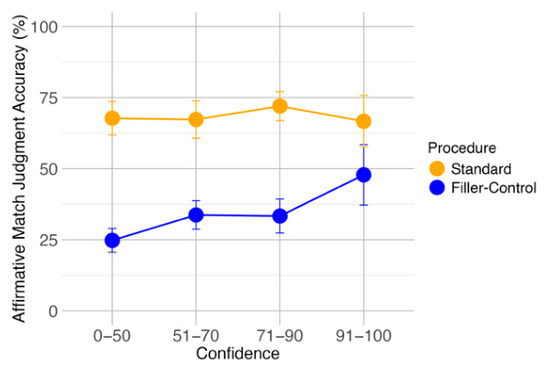
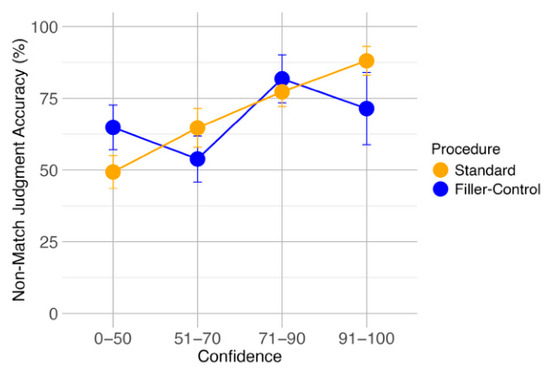
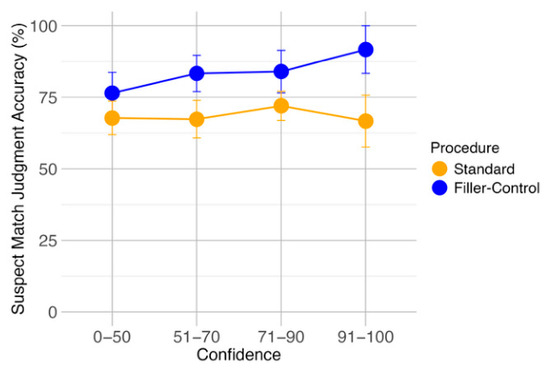
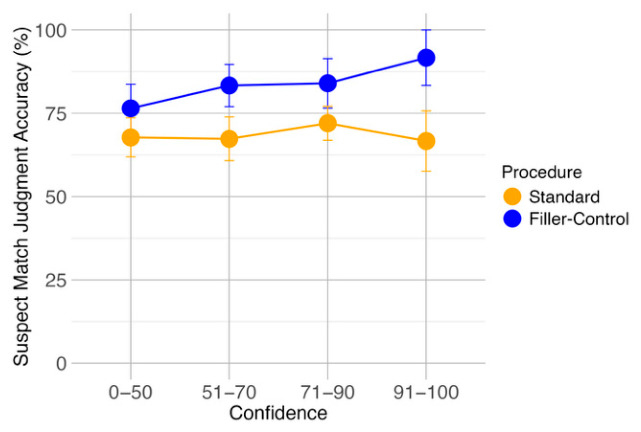
In the original publication (Rath et al., 2025), there were some mistakes in Figures 1–6, S2 and S4 as published. Incorrect error bars appeared in the figures. The corrected “Figure 1, Figure 2, Figure 3, Figure 4, Figure 5, Figure 6, Figure S2 and Figure S4” appear below.
Figure 1.
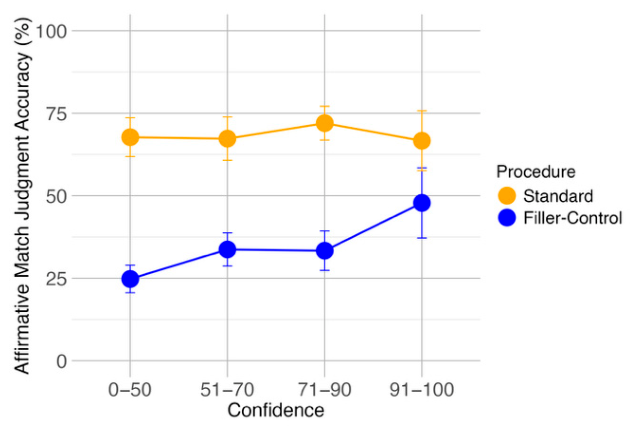
Experiment 1 Calibration Curves for Affirmative Match Judgments in the Standard and Filler-Control Procedures. Note. Error bars represent standard errors.
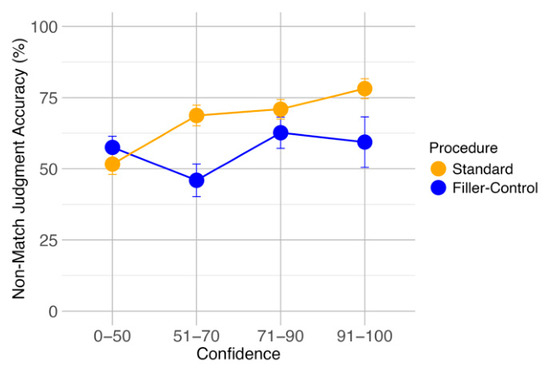
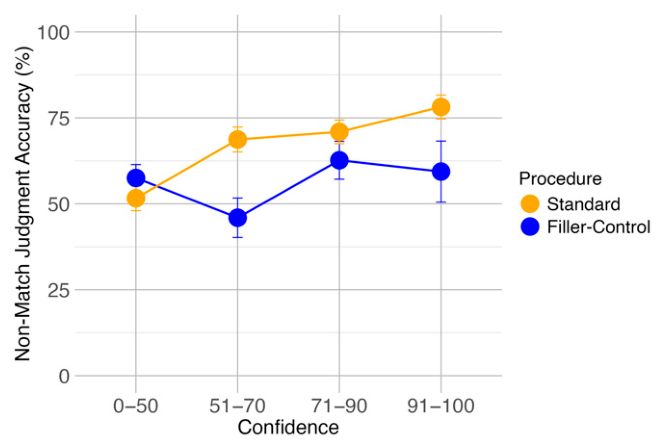
Figure 2.
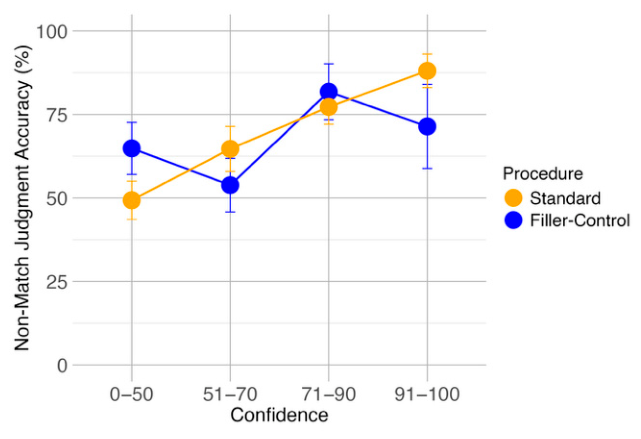
Experiment 1 Calibration Curves for Non-Match Judgments in the Standard and Filler-Control Procedures. Note. Error bars represent standard errors.
Figure 3.
Experiment 1 Confidence–Accuracy Characteristic Curves Across Procedures. Note. Error bars represent standard errors.
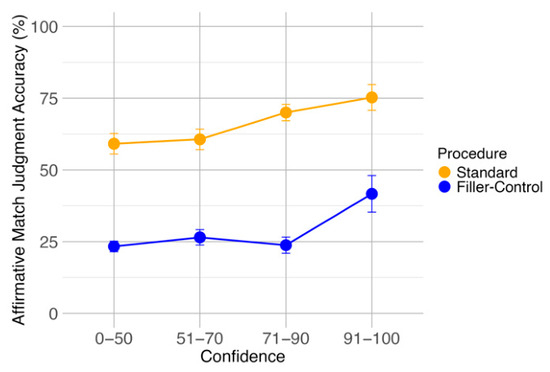
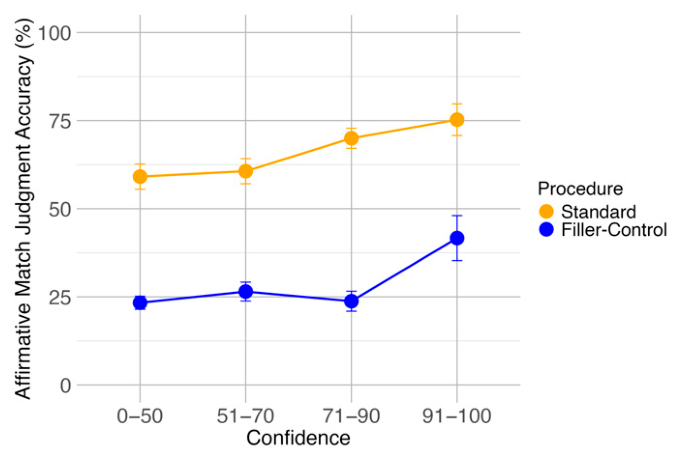
Figure 4.
Experiment 2 Calibration Curves for Affirmative Match Judgments in the Standard and Filler-Control Procedures. Note. Error bars represent standard errors.
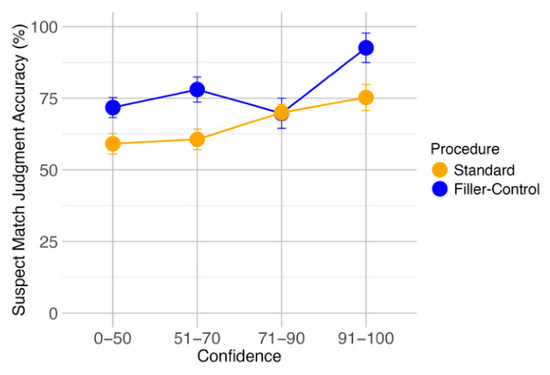
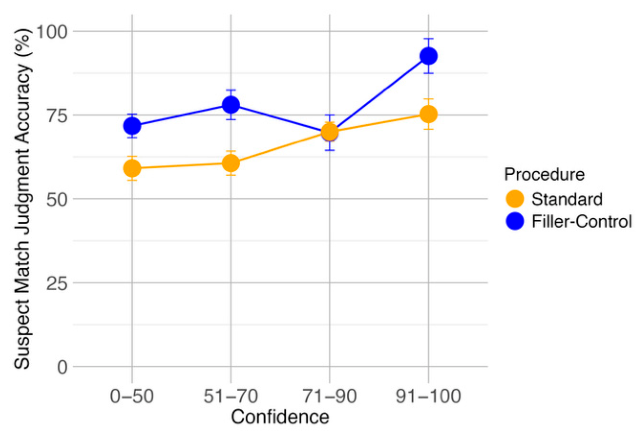
Figure 5.
Experiment 2 Calibration Curves for Non-Match Judgments in the Standard and Filler-Control Procedures. Note. Error bars represent standard errors.
Figure 6.
Experiment 2 Confidence–Accuracy Characteristic Curves in the Standard and Filler-Control Procedures. Note. Error bars represent standard errors.
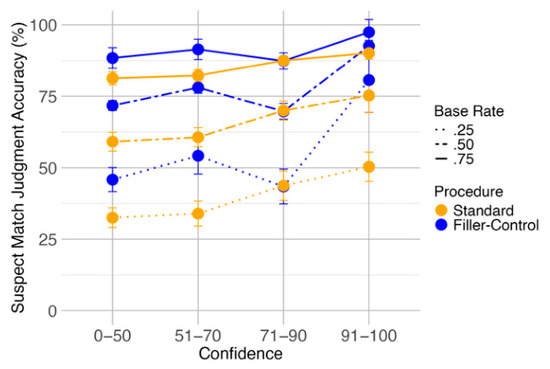
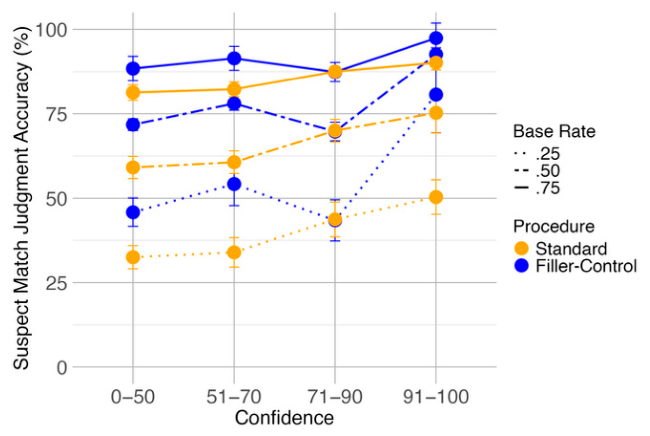
Figure S2.
Experiment 1 Confidence-Accuracy Characteristic Curves in the Standard and Filler-Control Procedures at Varying Base Rates of Match Presence.
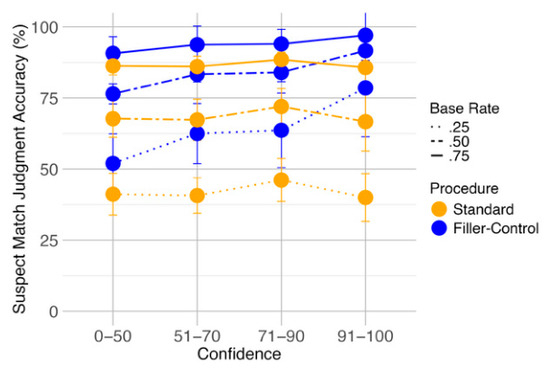
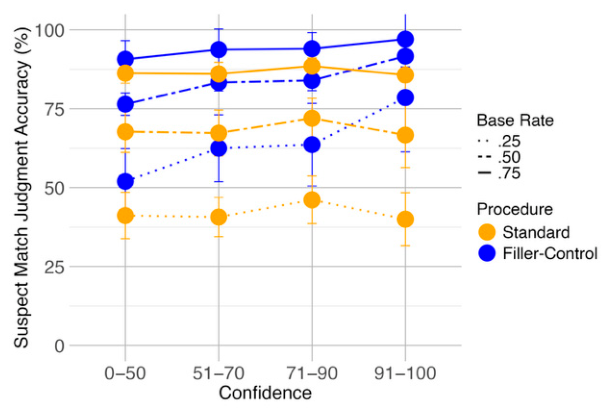
Figure S4.
Experiment 2 Confidence-Accuracy Characteristic Curves in the Standard and Filler-control Procedures at Varying Base Rates of Match Presence.
Error in Tables
In the original publication (Rath et al., 2025), there were some mistakes in Tables 2, 3, 6 and 7 as published. The values for adjusted resolution were not adjusted properly. The corrected “Table 2, Table 3, Table 6 and Table 7” appear below.
Table 2.
Experiment 1 confidence statistics for affirmative match judgments across procedures.
Table 3.
Experiment 1 confidence statistics for non-match judgments across procedures.
Table 6.
Experiment 2 confidence statistics for affirmative match judgments across procedures.
Table 7.
Experiment 2 confidence statistics for non-match judgments across procedures.
The authors state that the scientific conclusions are unaffected. This correction was approved by the Academic Editor. The original publication has also been updated.
Reference
- Rath, H. J., Rocha, B., Smith, A. M., & Smalarz, L. (2025). Does the forensic filler-control method reduce examiner overconfidence? An experimental investigation using mock fingerprint examiners. Behavioral Sciences, 15(9), 1191. [Google Scholar] [CrossRef] [Scilit]

Disclaimer/Publisher’s Note: The statements, opinions and data contained in all publications are solely those of the individual author(s) and contributor(s) and not of MDPI and/or the editor(s). MDPI and/or the editor(s) disclaim responsibility for any injury to people or property resulting from any ideas, methods, instructions or products referred to in the content. |
© 2026 by the authors. Licensee MDPI, Basel, Switzerland. This article is an open access article distributed under the terms and conditions of the Creative Commons Attribution (CC BY) license.