


Abstract
As livestreaming e-commerce rapidly expands, impulsive buying has become increasingly prominent in online consumption. However, although prior studies have examined impulsive buying in general e-commerce contexts, little attention has been paid to impulsive buying in sports livestreaming e-commerce. Drawing on the stimulus-organism-response framework and Dual-System Theory, this study examined the associations among consumer herding tendency, perceived scarcity, hedonic benefits of sales promotion tools, pleasure emotion, trust in seller, and impulsive buying. A cross-sectional self-report survey was conducted with 775 university students in eastern China with prior purchase experience in sports livestreaming e-commerce, and the model was analyzed using partial least squares structural equation modeling. The results showed that consumer herding tendency, perceived scarcity, and hedonic benefits of sales promotion tools were positively associated with pleasure emotion and trust in seller. Perceived scarcity showed the strongest path coefficient with trust in seller. Trust in seller and pleasure emotion were positively associated with impulsive buying, whereas self-control was negatively associated with impulsive buying. Specific indirect associations through trust in seller were generally stronger than those through pleasure emotion. The moderating effect of self-control was not significant, and the gender-based multi-group analysis revealed no significant differences between male and female consumers. Given the cross-sectional self-report design, these findings should be interpreted as associations rather than causal effects.
1. Introduction
Digital technologies and mobile commerce have reshaped how consumers obtain product information and make purchase decisions (Paul & Rosenbaum, 2020; Xu et al., 2020). Within this broader transformation, livestreaming e-commerce has emerged as an interactive form of digital commerce that integrates real-time communication, product demonstration, entertainment, and instant purchasing functions (Geng et al., 2020; Sarstedt et al., 2016). The growing convergence of e-commerce platforms, social media, and short-video applications has further positioned livestreaming commerce as a highly interactive shopping environment and provides an important context for examining impulsive buying.
Sports livestreaming e-commerce has become an increasingly important form of sports-related retailing, as sports brands, retailers, and related sellers use livestreaming to present and sell sports products and related merchandise (Geng et al., 2020). Compared with general livestreaming commerce, sports livestreaming e-commerce may involve shopping opportunities embedded within sport-related content, collective interaction, fan-oriented communication, and event-based consumption contexts. In this setting, social cues, scarcity cues, and promotional cues may acquire more context-specific meanings and may be closely associated with impulsive buying within a limited time frame (Parboteeah et al., 2009). However, existing research has not sufficiently explained how marketing-related cues and evaluations in sports livestreaming e-commerce are associated with impulsive buying through consumers’ affective and trust-based psychological states.
Impulsive buying is an important topic in consumer behavior research (Y. Sun & Bao, 2023). Existing studies suggest that impulsive buying is typically an unplanned purchase behavior closely associated with external cues and immediate emotional arousal, and its decision-making process differs from planned purchasing, which is based on clearly defined needs and rational evaluation (Stern, 1962). Compared with goal-oriented rational decision-making, impulsive buying is characterized by greater spontaneity, situational dependence, and emotional motivation (Iyer et al., 2020). Although previous studies have documented the relationship between livestreaming shopping and impulsive buying, limited attention has been given to understanding how marketing-related cues and evaluations in sports livestreaming e-commerce are associated with consumers’ impulsive buying through pleasure emotion and trust in seller.
To examine impulsive buying-related associations in sports livestreaming e-commerce, this study adopts the stimulus–organism–response (SOR) framework and integrates dual-system theory (DST) as a complementary perspective. The SOR framework provides a structure for examining how consumer-perceived marketing-related constructs are associated with consumers’ internal psychological states and behavioral responses, while DST helps distinguish affective and trust-based evaluative processes within the organism component. Specifically, this study focuses on three stimulus-side consumer-perceived marketing-related constructs, namely consumer herding tendency, perceived scarcity, and hedonic benefits of sales promotion tools, and examines their associations with impulsive buying through pleasure emotion and trust in seller. These constructs are measured through consumers’ self-reported tendencies, perceptions, and evaluations in the recalled sports livestreaming shopping context. Questionnaire data were collected from university students in eastern China with prior experience purchasing sports-related products through livestreaming e-commerce, and the proposed research model was tested using partial least squares structural equation modeling (PLS-SEM). By comparing the roles of pleasure emotion and trust in seller, this study provides insights into both affective and trust-based psychological pathways related to impulsive buying in sports livestreaming e-commerce and offers practical implications for responsible marketing strategies in livestreaming sports platforms and sports brands.
2. Literature Review
2.1. SOR Model
The SOR model originates from environmental psychology. Its central premise is that external environmental stimuli are associated with individuals’ behavioral responses through internal cognitive and emotional states (Mehrabian & Russell, 1974; Mummalaneni, 2005). The SOR model has been widely applied to studies of consumers’ online purchasing behavior and has been shown to effectively explain consumers’ emotional and behavioral response mechanisms in complex environments (Laato et al., 2020; Mehrabian & Russell, 1974). In online retail research, Mummalaneni (2005) validated the explanatory power of the SOR framework by examining the relationships among website characteristics, consumers’ emotional states, and online shopping behavior. In the context of online impulsive buying, Parboteeah et al. (2009) found that virtual cues were associated with consumers’ urge to buy impulsively through perceived usefulness and pleasure. Dawson and Kim (2010) further indicated that online cues such as time-limited offers, discounts, and promotional reminders were significantly and positively associated with impulsive buying, while Flight et al. (2012) emphasized the importance of a favorable shopping atmosphere in triggering impulsive purchases.
With the development of livestreaming e-commerce, the application of the SOR model in digital consumption contexts has been further extended. In the post-pandemic business environment, online settings have made consumers more prone to impulsive buying motivations and online settings have been associated with a greater likelihood of such behavior (Laato et al., 2020). Lin et al. (2022), in the context of livestreaming shopping, conceptualized demand, convenience, interactivity, and playfulness as stimulus variables, perceived enjoyment as the organism variable, and impulsive buying intention as the response variable, thereby showing how livestreaming environmental conditions are associated with impulsive buying intention through internal psychological states. Furthermore, X. Li et al. (2021a), in their study of social commerce, found that social interaction was associated with impulsive buying intention through physical presence, social presence, and flow experience. Xia et al. (2024) further categorized livestreaming stimuli into social cues and media cues, demonstrating that streamer interaction, peer interaction, vividness, and authenticity were jointly associated with impulsive buying through pleasure, arousal, and perceived uncertainty. Chung et al. (2025) also showed that information quality and platform social presence were positively associated with consumers’ flow state, which in turn was associated with impulsive buying behavior.
It can thus be observed that, in the context of livestreaming e-commerce, the organism component within the SOR model is no longer confined to a single dimension of pleasure emotion. Instead, it has progressively evolved into a multidimensional psychological construct encompassing affective perception, cognitive evaluation, and immersive experience, thereby providing a more comprehensive and contextually appropriate theoretical framework for explaining consumers’ impulsive buying behavior.
2.2. Dual-System Theory
Dual-System Theory posits that individual judgment and decision-making are not governed by a single psychological mechanism, but are instead shaped by two functionally distinct processing systems. System 1 is characterized by fast, automatic, intuitive, and impulse-driven processing, and tends to generate immediate responses to consumer-perceived marketing-related constructs. In contrast, System 2 operates through a slower, more rational, and deliberative analytical process, enabling individuals to evaluate and regulate impulsive tendencies (Frankish, 2010). Within this theoretical framework, consumer responses can be understood as the outcome of the joint operation of affective-intuitive and cognitive-evaluative processes across different decision-making contexts (Cui et al., 2022; Metcalfe & Mischel, 1999; Rustichini, 2008).
In marketing and information systems research, Dual-System Theory has been widely used to distinguish affective and cognitive pathways in explaining consumer responses (Frankish, 2010; X. Li et al., 2021b). Existing studies have shown that external cues in livestreaming contexts, such as key opinion leader characteristics and streamer linguistic features, were significantly associated with consumers’ emotional responses, cognitive judgments, purchase intention, and sales performance (He & Jin, 2024; Luo et al., 2025). This suggests that, in livestreaming shopping environments characterized by high interactivity, strong stimulation, and dense information flows, consumer decision-making may involve the joint operation of affective and cognitive processes.
Furthermore, Dual-System Theory can provide a more fine-grained explanation of the internal psychological processing mechanism at the “organism” stage of the SOR model (He & Jin, 2024; X. Li et al., 2021b). In consumer behavior research, consumer-perceived marketing-related constructs may be associated not only with affective responses, such as pleasure emotion and emotional arousal, but also with cognitive evaluations, such as trust, perceived uncertainty, and perceived value (Ahmad & Lilani, 2025; Huang et al., 2024; L. Li et al., 2024; X. Li et al., 2021b; Ma et al., 2024; C. Wang et al., 2025b; Xia et al., 2024; Xu et al., 2020; Y. Zhou & Huang, 2023). Therefore, integrating Dual-System Theory into the SOR framework helps explain how affective and cognitive organism states are related to consumers’ impulsive buying responses in livestreaming e-commerce.
Based on Dual-System Theory, this study conceptualizes pleasure emotion as an immediate affective response that may arise rapidly in response to marketing cues and consumer-perceived stimulus-related factors in sports livestreaming shopping. Trust in seller, by contrast, reflects consumers’ confidence in the seller’s reliability, expertise, and integrity. However, in livestreaming contexts, trust is not necessarily a slow or fully deliberative judgment. Given the real-time and interactive nature of livestreaming shopping, trust can also form quickly through cues such as seller professionalism, product presentation, social feedback, and transaction assurance. Trust in seller may be associated with lower perceived uncertainty and purchase risk, making immediate purchase decisions feel safer and more acceptable. Together, pleasure emotion and trust in seller represent affective and trust-based evaluative processes within the organism component, providing two psychological pathways for understanding impulsive buying in sports livestreaming e-commerce.
2.3. Impulse Buying in Sports Livestreaming E-Commerce
Livestreaming e-commerce refers to a form of electronic commerce in which product presentation, promotion, and transactions are conducted through livestreaming platforms (Xu et al., 2020). Prior research has examined livestreaming e-commerce from several perspectives, including streamer characteristics, platform functions, social interaction, service quality, and trust, thereby providing important insights into consumer responses in livestreaming shopping contexts (Guo et al., 2025; Ji et al., 2024; Lu et al., 2025; Pan et al., 2022).
Against this backdrop, impulsive buying has gradually become an important issue in livestreaming e-commerce research. Impulsive buying generally refers to an immediate purchase behavior made by consumers without prior planning or sufficient deliberation (Karbasivar & Yarahmadi, 2011). Existing studies indicate that impulsive buying often emerges during the shopping process and is jointly shaped by consumer-perceived marketing-related constructs and internal psychological states (Badgaiyan & Verma, 2015; Parboteeah et al., 2009; Xu et al., 2020). Positive emotions, such as pleasure and satisfaction, have also been widely discussed as important psychological states related to impulsive buying (Saad & Metawie, 2015; Souiden et al., 2019).
Compared with general livestreaming e-commerce, sports livestreaming e-commerce is characterized by greater contextual specificity (Y. Liu et al., 2025). When consumers enter such livestreaming environments, they may not be motivated solely by shopping purposes, but also by obtaining sports-related content, engaging with sports culture, or participating in interactions (H. Liu et al., 2025). Sports brand live streaming can be understood as a representative form of this context, integrating sports content presentation, consumer interaction, and product sales within the same livestreaming environment (H. Liu et al., 2025; Wongkitrungrueng & Assarut, 2020). Unlike general product-oriented live streaming, streamers in sports livestreaming e-commerce often simultaneously perform the functions of product demonstration, sports scenario construction, and brand image communication, which may make consumers more attentive to external cues during content participation (Chung et al., 2025; Lin et al., 2022; Xia et al., 2024).
Existing research has shown that, in sports livestreaming e-commerce contexts, content quality, parasocial interaction, and perceived ease of use were associated with impulsive buying through flow experience, and that this relationship may be stronger among consumers with higher fan identification (H. Liu et al., 2025). Similarly, Z. Li et al. (2025) investigated sporting goods e-commerce live streaming and found that scene features, including visual appeal, presence, and scene-product matching, were related to consumers’ flow experience and purchase intention. W. Wang and Oh (2025) found that social media livestreaming characteristics, such as interactivity, entertainment, visualization, and professionalization, were associated with attitudes, trust, and purchase intention among sports consumers.
Nevertheless, prior sports-related livestreaming studies have paid relatively limited attention to consumer-perceived marketing-related cues and evaluations. Prior literature suggests that these cues may be particularly salient due to interactive fan communities, visible peer purchasing, real-time engagement, and sports-specific promotions, such as event-based limited-time offers, livestream-exclusive benefits, and athlete- or team-branded merchandise. Trust in seller is also especially important in this context, as consumers often have concerns about product authenticity, quality, brand credibility, and after-sales reliability. Accordingly, this study examines how consumer-perceived marketing-related cues and evaluations are associated with impulsive buying in sports livestreaming e-commerce through pleasure emotion and trust in seller.
3. Research Model and Hypotheses
3.1. Consumer Herding Tendency, Trust in Seller, and Pleasure Emotion
Consumer herding tendency captures consumers’ inclination to rely on, follow, or imitate other consumers’ choices when making purchase decisions (Avery & Zemsky, 1998; Banerjee, 1992). Thus, it reflects a consumer-side decision tendency rather than a perception of product availability or purchase opportunity. Prior research suggests that decision uncertainty and the observability of others’ behaviors are important conditions for the emergence of herding behavior (H. Sun, 2013). In livestreaming e-commerce contexts, consumers are often unable to directly inspect products, while information asymmetry and difficulties in product evaluation are associated with greater decision uncertainty (C.-H. Lee & Chen, 2021; Schlosser et al., 2006). At the same time, indicators such as the number of online viewers, comment interactions, likes, and other consumers’ real-time purchase information make others’ behaviors highly visible within livestreaming rooms (X. Wang et al., 2019; Xu et al., 2020). M. Ali and Amir (2024) further reported that visible cues such as consumer ratings and sales volume were significantly associated with herding behavior, and that this relationship was stronger under higher perceived uncertainty. These findings support the relevance of herding tendency in explaining consumer responses in livestreaming e-commerce contexts.
Consumer herding tendency may also be positively associated with trust in seller. In livestreaming e-commerce, when consumers observe a large number of others making purchases, providing positive feedback, or continuously participating, such collective behaviors may serve as a form of social proof. Such social proof may be associated with lower perceived uncertainty in purchase decision-making and more favorable trust-related judgments regarding the livestreaming selling entity (Zhu, 2022). Prior studies have shown that reference group behavior, social interaction, and livestreaming cues were associated with consumer trust and subsequent purchase responses (Yin et al., 2025). Wongkitrungrueng and Assarut (2020) also indicated that various value cues in live streaming were indirectly associated with consumers’ subsequent behavior through different forms of trust, including seller trust. In the context of sports livestreaming e-commerce, social proof may be particularly salient because of the event atmosphere, community interaction, and sense of collective participation. Therefore, consumers’ herding tendency may be positively associated with trust in seller. Based on this reasoning, the following hypothesis is proposed:
H1.
Consumer herding tendency is positively associated with trust in seller.
From the affective pathway perspective, consumer herding tendency may also be positively associated with consumers’ positive emotional experiences. Real-time interaction, collective participation, and synchronized purchasing in livestreaming shopping may be associated with a stronger sense of involvement and positive emotions such as excitement and pleasure. Xia et al. (2024) reported a significant positive association between peer interaction and consumers’ levels of pleasure and arousal in livestreaming contexts. G. Li et al. (2022) further reported an indirect association between interaction quality and impulsive purchase intention through pleasure emotion and arousal in livestreaming shopping. These findings suggest that social participation and group interaction in livestreaming environments are associated with both consumers’ cognitive judgments and immediate emotional responses.
In the context of sports livestreaming e-commerce, this relationship may be particularly relevant because consumers are embedded in a sports-specific and interactive viewing environment (H. Liu et al., 2025). Pleasure emotion can be understood as an affective response that may arise in relation to social cues in livestreaming shopping environments (Xia et al., 2024). Therefore, consumers with stronger herding tendencies may report stronger positive emotional experiences. H. Liu et al. (2025) further found that interaction and platform characteristics in sports livestreaming e-commerce are associated with impulsive buying through flow experience, with fan identification strengthening this effect. This suggests that, in sports livestreaming contexts, emotional experiences associated with group participation and social cues may be particularly relevant (H. Liu et al., 2025; Xia et al., 2024). Consumers’ herding tendency reflects their reliance on and imitation of others’ behaviors in decision-making contexts (M. Ali & Amir, 2024; Banerjee, 1992). In livestreaming shopping, consumers with stronger herding tendencies may be more sensitive to social cues and collective participation and may therefore report stronger pleasure emotion. Based on this reasoning, the following hypothesis is proposed:
H2.
Consumer herding tendency is positively associated with pleasure emotion.
3.2. Perceived Scarcity, Trust in Seller, and Pleasure Emotion
Perceived scarcity refers to consumers’ subjective perception that product quantity, purchase opportunities, or promotional benefits are limited. When many consumers are buying or planning to buy a product, consumers may perceive that available inventory is being depleted and that the product may soon become unavailable. Therefore, such items capture demand-induced scarcity rather than consumers’ tendency to follow others’ choices. Within the SOR model, scarcity can be regarded as an external stimulus associated with consumers’ internal cognitive and emotional states and subsequent behavioral responses (Kamboj et al., 2018; Mehrabian & Russell, 1974). In livestreaming e-commerce, scarcity cues are frequently presented through time-limited offers, limited quantities, countdowns, and exclusive discounts, making them salient in consumers’ decision-making (R. Zhou, 2025). Prior studies suggest that external livestreaming cues may contribute to consumers’ trust-related evaluations and subsequent responses (Feng et al., 2024; Qu et al., 2023).
From the cognitive pathway perspective, perceived scarcity may also serve as an informational cue in consumers’ evaluation of the seller. In livestreaming commerce, consumers form judgments about sellers through cues available in the livestreaming environment (Wongkitrungrueng & Assarut, 2020; Zhang et al., 2022). Trust in seller refers to consumers’ overall evaluation of the credibility of the livestreaming selling entity, including the streamer’s credibility and the merchant’s ability to reliably fulfill the transaction, rather than trust in the product, platform, or livestreaming room itself. Prior studies suggest that various external cues in livestreaming are associated with consumers’ trust-related evaluations and subsequent responses (X. Li et al., 2024; Wongkitrungrueng & Assarut, 2020; Zhang et al., 2022). Therefore, in sports livestreaming e-commerce, scarcity cues such as limited-edition jerseys, event co-branded products, and live-stream-exclusive purchase quotas may be interpreted as signals of limited availability or time-sensitive purchase opportunities (Qu et al., 2023; Wu et al., 2012; R. Zhou, 2025). However, this positive interpretation may depend on whether scarcity cues are perceived as credible. When consumers recognize scarcity appeals as persuasive tactics, their persuasion knowledge may be activated, leading them to question the credibility of the message (Aguirre-Rodriguez, 2013). If such claims are perceived as deceptive or manipulative, they may be associated with lower trust in the seller (Darke & Ritchie, 2007). Nevertheless, in sports livestreaming e-commerce, scarcity cues are often tied to product features or event contexts and are therefore more likely to be viewed as legitimate signals of limited availability. Based on this reasoning, the following hypothesis is proposed:
H3.
Perceived scarcity is positively associated with trust in seller.
From the affective pathway perspective, perceived scarcity may also be associated with consumers’ emotional responses. Scarcity cues can be associated with a sense of urgency and competitive arousal, and scarcity-induced purchase decisions may be accompanied by anticipated emotions such as rejoicing (Duong et al., 2025; Qu et al., 2023). Prior research has reported indirect associations between scarcity promotions and purchase intention through emotional experience (Qu et al., 2023; R. Zhou, 2025). From the perspective of Dual-System Theory, pleasure emotion is more closely associated with rapid affective responses arising in response to external cues (Metcalfe & Mischel, 1999). Thus, when consumers perceive a product as scarce, they may be more likely to experience immediate affective responses. In sports livestreaming e-commerce, this affective pathway may be particularly relevant because content quality and para-social interactivity were positively associated with viewers’ flow experience, immersion, and enjoyment, while the relationship between flow experience and impulsive buying was stronger among consumers with higher fan identification (H. Liu et al., 2025). Time-limited offers, limited quantities, and event-related products may be associated with stronger feelings of excitement and pleasure. Accordingly, the following hypothesis is proposed:
H4.
Perceived scarcity is positively associated with pleasure emotion.
3.3. Hedonic Benefits of Sales Promotion Tools, Trust in Seller, and Pleasure Emotion
Hedonic benefits of sales promotion tools refer to consumers’ promotion-specific evaluations of the enjoyable, exploratory, and value-expressive benefits derived from promotional tools such as discounts, coupons, gifts, and livestream-exclusive offers in sports livestreaming e-commerce. Rather than capturing the objective presence or intensity of promotions, this construct reflects the hedonic value consumers perceive from such tools. Prior research distinguishes hedonic benefits, such as value expression, entertainment, and exploration, from utilitarian benefits related to savings, convenience, and economic efficiency (Chandon et al., 2000; Sinha & Verma, 2020). Accordingly, the items used in this study capture consumers’ pride, enjoyment, pleasure, and willingness to try new brands under sales promotion conditions.
From a trust-related evaluative perspective, consumers’ perceived hedonic benefits of sales promotion tools may be positively associated with trust in seller. In livestreaming shopping, consumers often rely on visible cues to evaluate the seller and the reliability of the transaction (Zhang et al., 2022). In sports livestreaming e-commerce, event-based promotions, fan-exclusive benefits, livestream-only offers, and time-limited incentives may function as salient cues within an interactive shopping environment. When these promotional tools are perceived as enjoyable, exploratory, and value-expressive, consumers may form more favorable evaluations of the transaction experience. Such evaluations may contribute to stronger trust-related judgments toward the seller.
However, excessive or ambiguous discounts may increase consumers’ perceived risk (J. E. Lee & Stoel, 2014) or lower their perceived product quality (J. E. Lee & Chen-Yu, 2018). Consumers may also question the seller’s intent when promotional tactics are perceived as overly strategic or misleading due to their persuasion knowledge (Hardesty et al., 2007). Thus, the positive association between hedonic benefits of sales promotion tools and trust in seller may depend on promotion transparency, seller credibility, product involvement, and consumers’ persuasion knowledge. In the context of sports livestreaming e-commerce, sales promotion tools may be perceived not only as economic incentives but also as sources of enjoyment, exploration, and value expression, and may therefore be evaluated in hedonic terms. Accordingly, the following hypothesis is proposed:
H5.
Hedonic benefits of sales promotion tools are positively associated with trust in seller.
From the affective pathway perspective, consumers’ perceived hedonic benefits of sales promotion tools may also be associated with pleasure emotion (Sinha & Verma, 2020). This argument is consistent with prior research suggesting that online shopping cues may shape consumers’ affective and cognitive responses during the shopping experience (Eroglu et al., 2001; Mehrabian & Russell, 1974). Although these two constructs are conceptually related, they are treated in this study as reflecting different aspects of consumer psychology. Hedonic benefits of sales promotion tools refer to consumers’ promotion-specific evaluations of enjoyment, exploration, and value expression derived from promotional tools (Chandon et al., 2000), whereas pleasure emotion refers to consumers’ broader positive affective state during the sports livestreaming shopping experience (Mehrabian & Russell, 1974). Prior research suggests that sales promotions can generate hedonic benefits, including entertainment, exploration, and value expression, in addition to utilitarian benefits such as monetary savings and convenience (Chandon et al., 2000; Sinha & Verma, 2020). Moreover, research on shopping value indicates that hedonic value reflects the experiential, enjoyable, and fun-oriented aspects of shopping and is related to important retail outcomes (Babin et al., 1994; Jones et al., 2006). Therefore, when consumers perceive livestream-exclusive offers, instant discounts, or time-limited incentives as enjoyable, exploratory, or value-expressive, these promotion-specific evaluations may correspond to stronger pleasure emotion in the livestreaming shopping process. In sports livestreaming e-commerce, such promotional tools may be especially salient when they are connected with sport-related products, event-based consumption, or fan-oriented promotional contexts. Accordingly, the following hypothesis is proposed:
H6.
Hedonic benefits of sales promotion tools are positively associated with pleasure emotion.
3.4. Trust in Seller, Pleasure Emotion, and Impulsive Buying
Trust is a multidimensional concept that can be divided into cognitive trust and affective trust (Aiken, 2006). Cognitive trust is based on judgments of others’ competence and reliability, reflecting individuals’ reasoning from behavioral information in a specific context (Tu et al., 2020). Affective trust, by contrast, is grounded in positive emotions generated by the other party’s perceived care and concern (S. Chen et al., 2021). Prior studies have found that both cognitive trust and affective trust are positively associated with consumers’ online purchase intentions (Hao et al., 2023). Livestreaming shopping combines virtuality with real-time interaction. Consumers usually cannot directly verify product quality as they would in offline shopping and therefore rely more heavily on trust to reduce transaction risk and decision uncertainty (X.-B. Wang & Gu, 2020). When consumers develop a high level of trust in the selling entity’s credibility, the accuracy of product information, and its ability to reliably fulfill the transaction, this trust may be associated with lower purchase hesitation and a smoother decision-making process, corresponding to a greater likelihood of impulsive buying (X. Li et al., 2024). Existing research has shown that trust in livestreaming contexts is significantly and positively associated with consumers’ purchase intentions and impulsive buying behavior (C. Wang et al., 2025a; Yang et al., 2025). In sports livestreaming e-commerce, sports equipment, event-related merchandise, and functional products are typically highly information-dependent. Consumers therefore need to rely more strongly on trust in seller to complete their purchase judgments. Accordingly, in sports livestreaming e-commerce contexts, higher trust in seller is more likely to be positively associated with consumers’ impulsive purchase decisions. Based on this reasoning, the following hypothesis is proposed:
H7.
Trust in seller is positively associated with impulsive buying.
3.5. Self-Control and Impulsive Buying
Self-control refers to individuals’ ability to regulate and constrain their own responses, including the capacity to inhibit impulses, resist temptation, and adjust behavior (Tangney et al., 2018). Prior research has shown that self-control failure is one of the key causes of impulsive buying (Baumeister, 2002). When individuals are unable to effectively restrain immediate desires, they are more likely to make unplanned and emotionally driven purchase decisions (Baumeister, 2002). In consumption contexts, impulsive buying typically reflects a conflict between the desire for immediate gratification and long-term rational goals, and self-control is often discussed as a factor related to lower impulsive buying tendencies (Baumeister, 2002; Nagar, 2016). Consumers with higher self-control are generally better able to restrain immediate purchase impulses and avoid unplanned purchasing decisions. In sports livestreaming e-commerce, where real-time interaction, social cues, and hedonic benefits of sales promotion tools may intensify purchase temptation, self-control is expected to be negatively associated with consumers’ tendency to engage in impulsive buying. Accordingly, the following hypothesis is proposed:
H8.
Self-control is negatively associated with impulsive buying.
Pleasure emotion is often associated with a stronger sense of immediate gratification and a greater likelihood of impulsive buying (Flight et al., 2012; Huang et al., 2024). However, consumers differ in the extent to which they translate pleasure emotion into actual purchase behavior. Consumers with higher levels of self-control are better able to suppress immediate purchase impulses associated with pleasure emotion. Conversely, when individuals’ emotional responses and purchase desires exceed their self-control capacity, they are more likely to make irrational and impulsive purchase decisions (M. Li et al., 2020; Loewenstein, 1996). In sports livestreaming e-commerce, where interaction and immersion are salient features of the viewing experience, pleasure-related responses may be especially prominent. Therefore, self-control may be relevant as a potential boundary condition in the relationship between pleasure emotion and impulsive buying. Based on this reasoning, this study argues that self-control negatively moderates the relationship between pleasure emotion and impulsive buying. Specifically, the higher the level of self-control, the weaker the positive relationship between pleasure emotion and impulsive buying; conversely, the lower the level of self-control, the more likely pleasure emotion is more strongly associated with impulsive buying. Accordingly, the following hypothesis is proposed:
H9.
Self-control negatively moderates the relationship between pleasure emotion and impulsive buying.
3.6. Research Framework
Based on the SOR model, Dual-System Theory, and the hypotheses developed above, the research model of this study is proposed, as shown in Figure 1. Specifically, consumer herding tendency, perceived scarcity, and hedonic benefits of sales promotion tools are positioned within the stimulus (S) component as consumer-perceived marketing-related constructs, while trust in seller and pleasure emotion are positioned within the organism (O) component as psychological states. Pleasure emotion reflects consumers’ pleasure-related positive affective experience during sports livestreaming shopping, and impulsive buying is positioned as the response (R) variable. In addition, this study introduces self-control as a moderating variable and conducts gender-based multi-group analysis to examine whether the proposed associations differ across male and female respondents.
Figure 1.
Research model.
4. Method
4.1. Constructs and Measurement Items
The measurement items were adopted or adapted from prior studies. The constructs include three stimulus-side consumer-perceived marketing-related factors (X. Chen et al., 2025; Duong et al., 2025; Sinha & Verma, 2020; Wu et al., 2012), two organism factors (L. Li et al., 2024; Sullivan & Kim, 2018), one response factor (L. Li et al., 2024), and one moderating factor (S. Chen et al., 2022). The detailed measurement items and questionnaire sources are presented in Table 1 below.
Table 1.
Measurement items and sources of constructs.
4.2. Survey Design and Sampling Process
This study collected data through a questionnaire survey. The questionnaire consisted of three parts. The first part provided a brief introduction to sports livestreaming e-commerce, an explanation of impulsive buying, and a confidentiality statement. Respondents were instructed to complete the questionnaire based on their most recent sports livestreaming shopping experience. The second part collected respondents’ demographic and behavioral information, including gender, age, education level, monthly living expenses, prior purchase experience in sports livestreaming e-commerce, viewing frequency, and monthly expenditure on sports livestreaming e-commerce. The third part asked respondents to rate the measurement items listed in the table using a five-point Likert scale ranging from 1 = strongly disagree to 5 = strongly agree. All reverse-coded items were recoded before data analysis.
Since the survey was conducted in China, the original English questionnaire items were translated into Chinese using Brislin’s (1970) back-translation method. The original and back-translated versions were then compared to verify semantic consistency and ensure that no substantial differences in meaning existed. The initial questionnaire was submitted to professors in sport management for expert review and was revised based on their feedback. A pilot survey was then conducted using the revised version. A total of 130 questionnaires were distributed in the pilot survey. After excluding 12 invalid responses and 27 responses from participants without prior sports livestreaming e-commerce purchase experience, 91 valid responses remained. Based on these pilot data, the questionnaire was further refined to form the final version.
4.3. Data Collection and Sample Description
This study conducted an online survey to collect data for hypothesis testing. The research model was tested using data collected from university students through Wenjuanxing, a professional online survey platform in China, based on a purposive sampling approach. In this study, sports livestreaming e-commerce refers to livestreaming shopping contexts in which sports-related products are promoted and sold through real-time livestreaming platforms.
University students were selected as the sample for three main reasons. First, compared with other age groups, young consumers are more prone to impulsive emotions (Pechmann et al., 2005). Second, young people are major users of social media (Van Tran et al., 2023), and in the Internet era, they tend to rely more on social media communication than face-to-face communication (Punyanunt-Carter et al., 2018). Third, young consumers are generally more willing to accept new things and are more proficient in online shopping practices (Van Tran et al., 2023). Accordingly, the use of university students was appropriate for examining young consumers who are familiar with livestreaming platforms and online shopping. However, this sampling strategy was not intended to produce a nationally representative sample of all sports livestreaming e-commerce consumers.
Before completing the online questionnaire, respondents were informed of the research purpose, the voluntary nature of participation, the anonymity and confidentiality of their responses, and their right to withdraw from the survey at any time before submission. All respondents provided electronic informed consent before proceeding to the questionnaire. For respondents under the age of 18, informed consent from their parents or legal guardians was obtained with the assistance of school counselors before survey participation. No direct monetary or course-credit incentive was provided by the researchers.
For the purpose of this study, sports livestreaming e-commerce was understood as a livestreaming shopping context in which sports-related products or sports-related content was presented together with product promotion and purchasing opportunities. To reduce potential common method bias and improve response quality, several procedural remedies were incorporated into the questionnaire design and data collection process. Respondents were assured that there were no right or wrong answers, demographic and behavioral questions were separated from substantive measurement items, and only individuals with prior purchase experience in sports livestreaming e-commerce were eligible to participate. Before proceeding to the measurement items, respondents were asked to recall their most recent sports livestreaming shopping experience and answer the items with reference to that experience. Respondents from the same IP address were allowed to complete the questionnaire only once, and invalid responses were screened using completion time, identical response patterns, and logical consistency checks.
In total, 900 questionnaires were distributed. This study first excluded 17 invalid responses, including questionnaires completed in less than one minute, responses with identical answers throughout, and responses containing logical inconsistencies. It then excluded 108 responses from participants who answered “No” to the screening question. Ultimately, questionnaire data from 775 university students were included in the analysis, yielding a valid response rate of 86.11%.
The respondents were mainly located in eastern China, a relatively economically developed region with a high concentration of higher education institutions. A total of nine institutions were sampled, including two key universities, four regular universities, and three vocational colleges. The final sample of 775 valid responses was considered adequate for PLS-SEM because it substantially exceeded common minimum sample-size requirements. In the proposed model, the largest number of predictors pointing to a single endogenous construct was four, and the final sample size provided sufficient statistical power for estimating the structural model, including the structural paths and the interaction term.
As shown in Table 2, among the respondents, 449 were female and 326 were male, indicating a slightly higher proportion of female participants. Most respondents were aged between 19 and 22, and 82.7% held or were pursuing undergraduate or postgraduate qualifications. Since all respondents were university students, the sample generally reflects the typical characteristics of a student population. Specifically, 72.1% of respondents reported average monthly living expenses below RMB 3000, suggesting relatively limited disposable living expenses. Regarding the viewing frequency of sports livestreaming e-commerce, 83.6% of respondents watched such streams one to two times per week on average, indicating a relatively low overall viewing frequency. In terms of consumption level, 72.5% of respondents spent RMB 500 or less per month on livestreaming e-commerce, while 89% kept their monthly spending within RMB 1500. Overall, the sample is characterized by relatively low living expenses, low viewing frequency, and prudent consumption, which is consistent with the basic attributes of university students.
Table 2.
Respondents’ demographic information.
4.4. Data Analysis
Data screening, descriptive statistical analysis, and preliminary common method bias diagnostics, including Harman’s single-factor test, were conducted using IBM SPSS Statistics 29.0.1.0. The measurement model and structural model were assessed using SmartPLS 4.0. Specifically, reliability and validity were evaluated using Cronbach’s alpha, composite reliability, average variance extracted, the Fornell–Larcker criterion, and the heterotrait–monotrait ratio. The structural relationships, specific indirect effects, and the interaction effect related to self-control were tested using the bootstrapping procedure. In addition, model explanatory power and predictive relevance were assessed using R2, f2, and Q2predict. Finally, the MICOM procedure and gender-based multi-group analysis were conducted to examine measurement invariance and group differences.
5. Analysis and Results
5.1. Common Method Bias
Because all variables were collected from the same respondents using a cross-sectional self-report questionnaire, common method bias (CMB) was a potential concern. To reduce this risk, respondents were assured of anonymity and confidentiality, and data quality screening procedures were applied.
As a preliminary statistical assessment, Harman’s single-factor test was conducted by entering all measurement items into an unrotated principal component analysis in SPSS. The results showed that the first common factor explained 30.637% of the total variance, which was below the commonly used threshold of 40%. In addition, collinearity diagnostics were examined using the inner-model VIF values in SmartPLS. The results showed that all inner-model VIF values ranged from 1.004 to 1.294, below the recommended threshold of 3.3 (M. B. Ali et al., 2022; Sarstedt et al., 2016). Taken together, the procedural remedies and statistical diagnostics suggest that these preliminary diagnostics did not indicate severe common method bias. Nevertheless, these tests should be interpreted as preliminary diagnostics and do not by themselves eliminate the possibility of common method variance in a cross-sectional same-source survey design.
5.2. Test of the Measurement Model
This study employed Partial Least Squares Structural Equation Modeling (PLS-SEM) for data analysis. PLS-SEM is particularly suitable for prediction-oriented research, complex model analysis, and situations in which sample data may not satisfy the assumption of multivariate normality (M. B. Ali et al., 2022; Henseler et al., 2016). Accordingly, SPSS was first used to preprocess the sample data, and SmartPLS was then employed to assess both the measurement model and the structural model.
The results of the PLS-SEM measurement model assessment are presented in Table 3. The outer loadings of all latent variables ranged from 0.757 to 0.901, exceeding the recommended threshold of 0.70. This indicates that the observed variables adequately represent their corresponding latent constructs and that the measurement model demonstrates satisfactory indicator reliability. All latent constructs also showed strong internal consistency and convergent validity. Cronbach’s alpha values for all constructs exceeded 0.80, ranging from 0.809 to 0.899. The rho_a values ranged from 0.809 to 0.904, while composite reliability (rho_c) ranged from 0.875 to 0.929, all exceeding the recommended criteria. In addition, the average variance extracted (AVE) values ranged from 0.636 to 0.767, surpassing the critical threshold of 0.50 (Fornell & Larcker, 1981). This suggests that the latent variables adequately explain the variance in their corresponding measurement items. Overall, the measurement model demonstrates satisfactory internal consistency and convergent validity.
Table 3.
Results of measurement model analysis.
This study comprehensively assessed discriminant validity using the Fornell–Larcker criterion and the heterotrait–monotrait ratio (HTMT) (Fornell & Larcker, 1981). As shown in Table 4 and Table 5, the square root of the AVE for each latent variable was greater than the absolute values of its correlations with other latent variables, satisfying the Fornell–Larcker criterion (Fornell & Larcker, 1981). Meanwhile, the HTMT values among the constructs ranged from 0.020 to 0.571, all below the recommended threshold of 0.85, indicating satisfactory discriminant validity among the latent variables (Hair et al., 2019). Furthermore, the VIF values of the measurement items ranged from 1.544 to 2.835, all below 3.0. This suggests that there was no serious multicollinearity problem in the model and that the degree of overlap among the measurement indicators remained within an acceptable range (Dijkstra & Henseler, 2015). These results support empirical discriminant validity among the latent variables, while the content-based distinction between hedonic benefits of sales promotion tools and pleasure emotion is further addressed in the construct definitions, hypothesis development, and limitations section.
Table 4.
Fornell–Larcker Criterion.
Table 5.
HTMT.
5.3. Structural Model Analysis
The results of the structural model assessment are presented in Table 6. The bootstrapping analysis indicated that most direct paths reached statistical significance (Soroya et al., 2021). From the paths between the stimulus variables and organism variables, the path coefficients from CHT to PE (β = 0.136, t = 3.489, p < 0.001) and TS (β = 0.138, t = 3.644, p < 0.001) were positive and statistically significant, supporting H1 and H2. The path coefficients from PS to PE (β = 0.233, t = 6.166, p < 0.001) and TS (β = 0.301, t = 8.812, p < 0.001) were also positive and statistically significant, supporting H3 and H4. Similarly, the path coefficients from HBSPT to PE (β = 0.215, t = 5.966, p < 0.001) and TS (β = 0.229, t = 6.976, p < 0.001) were positive and statistically significant, supporting H5 and H6.
Table 6.
Path Coefficients of Direct Effects.
From the paths between the organism variables and impulsive buying, PE (β = 0.275, t = 8.297, p < 0.001) and TS (β = 0.314, t = 9.084, p < 0.001) showed positive and statistically significant path coefficients with IB, supporting H7. The path coefficient from SC to IB was negative and statistically significant (β = −0.154, t = 4.819, p < 0.001), supporting H8. By contrast, the interaction path coefficient for SC × PE→IB was not statistically significant (β = −0.053, t = 1.629, p = 0.103). Therefore, H9 was not supported.
The explanatory power of the structural model was assessed using the coefficient of determination (R2), while effect sizes were evaluated using the f2 statistic. As shown in Table 7, the model explained 30.6%, 20.4%, and 27.0% of the variance in IB, PE, and TS, respectively, indicating that the model has a certain level of explanatory power for the endogenous variables. Overall, the f2 values of all paths fell within the small-effect range. Among them, the effect size of TS on IB was relatively higher (f2 = 0.118), followed by PS on TS (f2 = 0.096) and PE on IB (f2 = 0.092). By contrast, the effect size of SC × PE on IB was the smallest (f2 = 0.004), suggesting that its practical contribution was limited.
Table 7.
Model Explanatory Power and Predictive Relevance Indicators.
The predictive ability of the model was further assessed using the PLSpredict procedure in SmartPLS 4 (Ringle et al., 2024). The results showed that the Q2predict values for PE, TS, and IB were 0.194, 0.263, and 0.284, respectively, all greater than 0. These results indicate satisfactory predictive relevance for the endogenous constructs, with relatively stronger predictive performance for IB.
5.4. Indirect-Effect Analysis
To examine the specific indirect effects, this study used the bootstrap method. The results are presented in Table 8. The findings indicate that significant indirect associations between the antecedent variables and IB were observed through both PE and TS.
Table 8.
Bootstrap Results for Specific Indirect Effects.
Specifically, for the indirect paths through PE, the indirect association between PS and IB through PE was significant (β = 0.064, t = 4.924, p < 0.001), as was the indirect association between HBSPT and IB through PE (β = 0.059, t = 4.808, p < 0.001). The indirect association between CHT and IB through PE was also significant (β = 0.037, t = 2.975, p < 0.01).
For the indirect paths through TS, the indirect association between PS and IB through TS was significant (β = 0.094, t = 6.129, p < 0.001), as was the indirect association between HBSPT and IB through TS (β = 0.072, t = 5.380, p < 0.001). The indirect association between CHT and IB through TS was likewise significant (β = 0.043, t = 3.158, p < 0.01).
Overall, all six specific indirect effects reached statistical significance, indicating statistically significant indirect associations between the antecedent variables and IB through both PE and TS. In terms of effect size, the PS→TS→IB path showed the largest indirect effect (β = 0.094), followed by HBSPT→TS→IB (β = 0.072) and PS→PE→IB (β = 0.064). These results should be interpreted as statistical indirect associations within the proposed model, because the cross-sectional design does not establish temporal ordering or causal mediation.
5.5. Moderating Effect Analysis
To examine the moderating role of SC in the relationship between PE and IB, this study further included the interaction term SC × PE in the structural model and tested its significance using the bootstrap method. The results, as shown in the direct effects Table 6, indicated that the interaction path coefficient for SC × PE→IB was not statistically significant (β = −0.053, t = 1.629, p = 0.103). This suggests that self-control did not significantly moderate the relationship between pleasure emotion and impulsive buying; therefore, the corresponding hypothesis was not supported.
5.6. Gender-Based Multi-Group Analysis
To examine the stability of the model across gender groups, this study conducted a multi-group analysis based on gender. The MICOM procedure was used to assess measurement invariance. As shown in Table 9, configural invariance was established for all constructs in Step 1, and the original correlation coefficients in Step 2 were all above the 5% critical values. This indicates that the model satisfied the requirements for partial measurement invariance, allowing further multi-group comparisons. In Step 3, full measurement invariance was established for IB, PE, SC, and TS, whereas CHT, PS, and HBSPT did not fully satisfy the equal mean and/or equal variance requirements.
Table 9.
Results of Invariance Measurement Testing Using Permutation.
Based on this, bootstrap MGA was further used to compare the direct paths between the male and female groups. As shown in Table 10, none of the between-group differences in the direct paths reached statistical significance (p > 0.05), indicating no significant gender differences were observed in the direct relationships within the model.
Table 10.
Bootstrap MGA Results for Direct Paths.
In addition, the between-group comparison of total indirect effects (Table 11) also showed that the differences for CHT→IB, PS→IB, and HBSPT→IB were not statistically significant (p > 0.05). This suggests that no significant gender differences were identified at the level of overall indirect effects.
Table 11.
Bootstrap MGA Results for Total Indirect Effects.
Overall, the gender-based multi-group analysis indicates that the proposed model remained generally stable across male and female respondents. Neither the structural paths nor the total indirect effects differed significantly between male and female respondents
6. Discussion
6.1. Discussion of Findings
Based on the SOR framework and Dual-System Theory, this study examined the structural associations among consumer-perceived marketing-related cues and evaluations, internal psychological states, and impulsive buying in the context of sports livestreaming e-commerce (Evans & Stanovich, 2013; Frankish, 2010; H. Liu et al., 2025; Mehrabian & Russell, 1974). The proposed hypotheses were tested using PLS-SEM (Hair et al., 2019). The results show that consumer herding tendency, perceived scarcity, and hedonic benefits of sales promotion tools were positively associated with both pleasure emotion and trust in seller (C.-H. Lee & Chen, 2021; Lin et al., 2022; Xia et al., 2024). Pleasure emotion and trust in seller were further positively associated with impulsive buying, whereas self-control was negatively associated with impulsive buying. These findings suggest that impulsive buying among consumers with sports livestreaming shopping experience is related to both positive affective experience and trust-based evaluation, while self-control appears to be more closely related to impulsive buying as a direct negative correlate (Baumeister, 2002; S. Chen et al., 2022; Flight et al., 2012; Huang et al., 2024; C. Wang et al., 2025a; Yang et al., 2025).
The indirect-effect analysis showed that consumer herding tendency, perceived scarcity, and hedonic benefits of sales promotion tools were indirectly associated with impulsive buying through both pleasure emotion and trust in seller. Notably, the indirect associations through trust in seller were generally stronger than those through pleasure emotion. This pattern suggests that impulsive buying among consumers with sports livestreaming shopping experience is associated not only with pleasure-related affective experience but also with consumers’ trust-based evaluation of sellers (C.-H. Lee & Chen, 2021; Xia et al., 2024). From an SOR perspective, these results can be organized as associations among consumer-perceived cue-related conditions, psychological states, and behavioral responses. From a Dual-System Theory perspective, the findings suggest that impulsive buying may be related to both affective responses and trust-related evaluative processes. However, because this study used a cross-sectional self-report design, these findings should be interpreted as indirect associations rather than evidence of causal mediation.
Contrary to expectations, the moderating effect of self-control was not supported. Although self-control was directly and negatively associated with impulsive buying (Tangney et al., 2018), it did not significantly moderate the relationship between pleasure emotion and impulsive buying. One possible explanation is that self-control may be more appropriately interpreted as a general negative correlate of impulsive buying, rather than as a boundary condition that weakens the association between pleasure emotion and impulsive buying (Baumeister, 2002). In sports livestreaming shopping, real-time interaction, collective participation, time-limited promotions, and sport-related excitement may create salient situational experiences (Lin et al., 2022; H. Liu et al., 2025; Xia et al., 2024). These experiences may be associated with a relatively stable link between pleasure-related affect and impulsive buying across different levels of self-control. Thus, self-control appears to be more relevant as a direct negative correlate of impulsive buying than as a moderator of the pleasure emotion–impulsive buying relationship. In addition, the gender-based multi-group analysis revealed no significant differences between male and female consumers, suggesting that the examined associations were broadly similar across gender groups in this sample.
Overall, the findings can be interpreted within the SOR framework by organizing the observed associations among consumer-perceived marketing-related cues and evaluations, psychological states, and impulsive buying (Van Tran et al., 2023; Xia et al., 2024). Dual-System Theory also provides a useful interpretive lens for understanding why impulsive buying among consumers with sports livestreaming shopping experience is associated with both pleasure-related affect and trust-based evaluation (Evans & Stanovich, 2013). Taken together, these findings suggest that impulsive buying among consumers with sports livestreaming shopping experience reflects the joint relevance of affective experience and trust-based evaluation.
6.2. Theoretical Implications
This study offers three main theoretical implications. First, by applying the SOR framework to consumers with sports livestreaming shopping experience, this study adds to existing SOR research by suggesting that consumer-perceived marketing-related cues and evaluations are associated with impulsive buying through internal psychological states. The findings indicate that pleasure emotion and trust in seller may help explain the association between marketing-related perceptions and impulsive buying (C.-H. Lee & Chen, 2021; Mehrabian & Russell, 1974).
Second, by integrating Dual-System Theory, this study offers a theoretical rationale for considering both affective and evaluative psychological processes in sports livestreaming e-commerce. Specifically, the findings suggest that impulsive buying is associated not only with pleasure-related affect but also with trust-based evaluation. This implication helps move the discussion beyond a single affective explanation of impulsive buying and highlights the relevance of trust in understanding consumers’ purchase-related responses in livestreaming environments (Evans & Stanovich, 2013; Wongkitrungrueng & Assarut, 2020).
Third, the stronger indirect associations through trust in seller suggest that trust-based evaluation may play a particularly relevant role in understanding impulsive buying in sports livestreaming e-commerce. In livestreaming shopping, consumers often rely on sellers, streamers, and real-time information when evaluating products and transactions. Therefore, trust in seller may be closely related to consumers’ willingness to make impulsive purchases. In contrast, the non-significant moderating effect of self-control and the non-significant gender-based multi-group differences suggest limited evidence for these boundary conditions in the present sample. These findings indicate that future research should identify additional contextual or individual-level moderators, such as fandom, product involvement, streamer credibility, or platform characteristics, to better explain when and for whom impulsive buying is more likely to occur.
6.3. Practical Implications
The findings offer practical implications for responsible sports livestreaming e-commerce. First, platforms and sellers should manage popularity cues, scarcity information, and promotional claims transparently. Popularity indicators, stock information, countdowns, and promotional benefits should be truthful, clearly disclosed, and updated in real time. Such practices may help maintain consumer trust and support long-term seller–consumer relationships.
Second, the stronger association involving trust in seller suggests that impulsive buying in sports livestreaming e-commerce is related not only to pleasure emotion but also to consumers’ evaluation of seller credibility. Therefore, sellers should strengthen trust by providing accurate product information, professional explanations, authentic demonstrations, clear transaction rules, and reliable after-sales service.
Finally, the negative association between self-control and impulsive buying suggests the value of consumer-supportive platform design. Platforms may provide clear product comparisons, transparent price information, purchase confirmation prompts, spending reminders, and accessible refund or complaint channels. These measures can support more informed purchasing decisions while preserving the interactive advantages of sports livestreaming e-commerce.
7. Conclusions
This study examined the psychological processes associated with consumers’ impulsive buying in sports livestreaming e-commerce. The results show that consumer herding tendency, perceived scarcity, and hedonic benefits of sales promotion tools were positively associated with both pleasure emotion and trust in seller. Pleasure emotion and trust in seller were positively associated with impulsive buying, whereas self-control was negatively associated with impulsive buying. The indirect-effect analysis further showed that these consumer-perceived marketing-related cues and evaluations were indirectly associated with impulsive buying through pleasure emotion and trust in seller, with the indirect associations through trust in seller being generally stronger. However, the moderating effect of self-control was not supported, and the gender-based multi-group analysis revealed no significant differences.
Overall, this study suggests that impulsive buying among consumers with sports livestreaming shopping experience is associated with both pleasure-related affect and trust-based evaluation. The findings can be interpreted through the SOR framework and Dual-System Theory, while highlighting the relevance of trust in seller for understanding consumers’ impulsive buying tendencies in this context.
Research Limitations and Future Directions
This study has several limitations. First, the sample consisted of university students from eastern China, which may limit the generalizability of the findings. Although this group is relevant to sports livestreaming e-commerce, their consumption patterns may differ from those of older consumers, working adults, higher-income consumers, or consumers from other regions and cultural contexts. Future research should test the proposed model using more diverse samples.
Second, although respondents were asked to recall their most recent sports livestreaming shopping experience, the survey did not collect detailed contextual information, such as product categories, platform types, streamer or seller characteristics, live-event versus sports-product livestreaming formats, or fan identification with particular sports, athletes, teams, or brands. Therefore, the sport-specific interpretation of the findings should be made cautiously, as the present study did not directly compare sports livestreaming e-commerce with other livestreaming shopping contexts. Accordingly, sport-specific features such as fandom, team identification, athlete or brand endorsement, event-based promotions, limited-edition products, sport-product involvement, seller type, and perceived authenticity concerns provide useful contextual background for interpreting the findings, but their explanatory role should be directly tested in future research. Future research should compare sports and non-sport livestreaming contexts and directly examine these sport-specific factors.
Third, this study used cross-sectional same-source self-report data, which limits its ability to examine temporal ordering, causal relationships, and dynamic changes among the variables. In addition, because all substantive variables were collected from the same respondents using the same questionnaire, common method variance cannot be fully ruled out. Although Harman’s single-factor test and VIF diagnostics were conducted as preliminary checks, the questionnaire did not include a theoretically unrelated marker variable, and an unmeasured latent method factor was not estimated. Therefore, the indirect-effect results should be interpreted as statistical indirect associations rather than evidence of temporal or causal mediation. Future studies should adopt longitudinal, experimental, multi-source, or behavioral-data designs and apply more rigorous procedural and statistical controls for common method variance.
Fourth, the conceptual proximity among several self-reported constructs should be acknowledged. Although the measurement model showed acceptable reliability, convergent validity, discriminant validity, and HTMT results, these statistical results do not fully eliminate the possibility that some constructs share related affective or evaluative content. For example, some items related to hedonic sales promotion and pleasure emotion may involve closely related affective or evaluative elements. Future research should develop more precise measures to better distinguish consumer-perceived marketing-related cues, affective experiences, and evaluative psychological states.
Finally, the non-significant moderating effect of self-control and the non-significant gender-based multi-group differences suggest that future research should examine additional boundary conditions. Potential moderators may include product involvement, fan identification, platform type, perceived risk, seller credibility, promotion transparency, persuasion knowledge, cultural background, or sports involvement. These factors may help clarify when and for whom impulsive buying is more likely to occur in sports livestreaming e-commerce. Taken together with the limitations noted above, these non-significant boundary-condition findings suggest that the explanatory scope of the current model should be interpreted cautiously.
Author Contributions
Conceptualization, X.L. and S.-B.N.; Methodology, X.L.; Validation, X.L. and S.-B.N.; Formal Analysis, X.L.; Investigation, X.L.; Data Curation, X.L.; Visualization, X.L.; Writing—Original Draft Preparation, X.L.; Writing—Review & Editing, S.-B.N.; Supervision, S.-B.N.; Project Administration, S.-B.N. All authors have read and agreed to the published version of the manuscript.
Funding
This research received no external funding.
Institutional Review Board Statement
Ethical review and approval were not required for this study because it was conducted as a non-interventional anonymous online questionnaire survey. The study did not involve any physical intervention, did not collect or record personally identifiable information, did not involve sensitive personal information or commercial interests, and posed no more than minimal risk to participants. This is consistent with Article 13(1) of the Enforcement Rule of the Korean Bioethics and Safety Act and Article 32 of the Measures for Ethical Review of Life Science and Medical Research Involving Humans in China, which allow exemption from ethical review for certain minimal-risk studies using anonymized information data without sensitive personal information or commercial interests.
Informed Consent Statement
Informed consent was obtained from all participants prior to their participation in the online questionnaire survey.
Data Availability Statement
The data presented in this study are available on reasonable request from the corresponding author. The data are not publicly available due to privacy and ethical restrictions.
Acknowledgments
The authors would like to thank all participants who took part in the questionnaire survey.
Conflicts of Interest
The authors declare no conflicts of interest.
References
- Aguirre-Rodriguez, A. (2013). The effect of consumer persuasion knowledge on scarcity appeal persuasiveness. Journal of Advertising, 42(4), 371–379. [Google Scholar] [CrossRef] [Scilit]
- Ahmad, K., & Lilani, K. (2025). From scrolling to buying: Role of beauty influencers on impulse buying a stimulus-organism-response perspective. Telematics and Informatics Reports, 19, 100239. [Google Scholar] [CrossRef] [Scilit]
- Aiken, K. D. (2006). Trustmarks, objective-source ratings, and implied investments in advertising: Investigating online trust and the context-specific nature of internet signals. Journal of the Academy of Marketing Science, 34(3), 308–323. [Google Scholar] [CrossRef] [Scilit]
- Ali, M., & Amir, H. (2024). Understanding consumer herding behavior in online purchases and its implications for online retailers and marketers. Electronic Commerce Research and Applications, 64, 101356. [Google Scholar] [CrossRef] [Scilit]
- Ali, M. B., Quaddus, M., Rabbanee, F. K., & Shanka, T. (2022). Community participation and quality of life in nature-based tourism: Exploring the antecedents and moderators. Journal of Hospitality & Tourism Research, 46(3), 630–661. [Google Scholar] [CrossRef] [Scilit]
- Avery, C., & Zemsky, P. (1998). Multidimensional uncertainty and herd behavior in financial markets. The American Economic Review, 88(4), 724–748. [Google Scholar]
- Babin, B. J., Darden, W. R., & Griffin, M. (1994). Work and/or fun: Measuring hedonic and utilitarian shopping value. Journal of Consumer Research, 20(4), 644. [Google Scholar] [CrossRef] [Scilit]
- Badgaiyan, A. J., & Verma, A. (2015). Does urge to buy impulsively differ from impulsive buying behaviour? Assessing the impact of situational factors. Journal of Retailing and Consumer Services, 22, 145–157. [Google Scholar] [CrossRef] [Scilit]
- Banerjee, A. V. (1992). A simple model of herd behavior. The Quarterly Journal of Economics, 107(3), 797–817. [Google Scholar] [CrossRef] [Scilit]
- Baumeister, R. F. (2002). Yielding to temptation: Self-control failure, impulsive purchasing, and consumer behavior. Journal of Consumer Research, 28(4), 670–676. [Google Scholar] [CrossRef] [Scilit] [PubMed]
- Brislin, R. W. (1970). Back-translation for cross-cultural research. Journal of Cross-Cultural Psychology, 1(3), 185–216. [Google Scholar] [CrossRef] [Scilit]
- Chandon, P., Wansink, B., & Laurent, G. (2000). A benefit congruency framework of sales promotion effectiveness. Journal of Marketing, 64(4), 65–81. [Google Scholar] [CrossRef] [Scilit]
- Chen, S., Waseem, D., Xia, Z., Tran, K. T., Li, Y., & Yao, J. (2021). To disclose or to falsify: The effects of cognitive trust and affective trust on customer cooperation in contact tracing. International Journal of Hospitality Management, 94, 102867. [Google Scholar] [CrossRef] [Scilit] [PubMed]
- Chen, S., Zhi, K., & Chen, Y. (2022). How active and passive social media use affects impulse buying in Chinese college students? The roles of emotional responses, gender, materialism and self-control. Frontiers in Psychology, 13, 1011337. [Google Scholar] [CrossRef] [Scilit] [PubMed]
- Chen, X., Wang, Y., Wei, S., & Shen, J. (2025). The effect of herd behavior on consumer intention in live streaming E-commerce: The moderating role of interaction. International Journal of Human–Computer Interaction, 41(2), 1674–1687. [Google Scholar] [CrossRef] [Scilit]
- Chung, X. L., Yasmin, F., Haider, S. A., Sinnappan, P., Poulova, P., Baskaran, S., Tehseen, S., & Idris, I. (2025). Impulsive buying behaviour in live-streaming commerce: An application of S-O-R theory. Cogent Social Sciences, 11(1), 2474861. [Google Scholar] [CrossRef] [Scilit]
- Cui, L., Ye, M., Sun, L., Zhang, S., & He, G. (2022). Common and distinct neural correlates of intertemporal and risky decision-making: Meta-analytical evidence for the dual-system theory. Neuroscience & Biobehavioral Reviews, 141, 104851. [Google Scholar] [CrossRef] [Scilit] [PubMed]
- Darke, P. R., & Ritchie, R. J. B. (2007). The defensive consumer: Advertising deception, defensive processing, and distrust. Journal of Marketing Research, 44(1), 114–127. [Google Scholar] [CrossRef] [Scilit]
- Dawson, S., & Kim, M. (2010). Cues on apparel web sites that trigger impulse purchases. Journal of Fashion Marketing and Management, 14(2), 230–246. [Google Scholar] [CrossRef] [Scilit]
- Dijkstra, T. K., & Henseler, J. (2015). Consistent partial least squares path modeling. MIS Quarterly, 39(2), 297–316. [Google Scholar] [CrossRef] [Scilit]
- Duong, N.-H., Nhi Diep, M., Thanh Van Tran, T., Nhi Phung, U., & Yen Nhi Bui, T. (2025). From scarcity to purchase: Psychological mechanisms influencing gen z impulsive buying. Innovative Marketing, 21(4), 60–73. [Google Scholar] [CrossRef] [Scilit]
- Eroglu, S. A., Machleit, K. A., & Davis, L. M. (2001). Atmospheric qualities of online retailing. Journal of Business Research, 54(2), 177–184. [Google Scholar] [CrossRef] [Scilit]
- Evans, J. S. B. T., & Stanovich, K. E. (2013). Dual-process theories of higher cognition: Advancing the debate. Perspectives on Psychological Science, 8(3), 223–241. [Google Scholar] [CrossRef] [Scilit] [PubMed]
- Feng, Z., Al Mamun, A., Masukujjaman, M., Wu, M., & Yang, Q. (2024). Impulse buying behavior during livestreaming: Moderating effects of scarcity persuasion and price perception. Heliyon, 10(7), e28347. [Google Scholar] [CrossRef] [Scilit] [PubMed]
- Flight, R. L., Rountree, M. M., & Beatty, S. E. (2012). Feeling the urge: Affect in impulsive and compulsive buying. Journal of Marketing Theory and Practice, 20(4), 453–466. [Google Scholar] [CrossRef] [Scilit]
- Fornell, C., & Larcker, D. F. (1981). Evaluating structural equation models with unobservable variables and measurement error. Journal of Marketing Research, 18(1), 39–50. [Google Scholar] [CrossRef] [Scilit]
- Frankish, K. (2010). Dual-process and dual-system theories of reasoning. Philosophy Compass, 5(10), 914–926. [Google Scholar] [CrossRef] [Scilit]
- Geng, R., Wang, S., Chen, X., Song, D., & Yu, J. (2020). Content marketing in e-commerce platforms in the internet celebrity economy. Industrial Management & Data Systems, 120(3), 464–485. [Google Scholar] [CrossRef] [Scilit]
- Guo, Y., Zhang, Y., Goh, K.-Y., & Peng, X. (2025). Can social technologies drive purchases in E-commerce live streaming? An empirical study of broadcasters’ cognitive and affective social call-to-actions. Production and Operations Management, 34(12), 4039–4059. [Google Scholar] [CrossRef] [Scilit]
- Hair, J. F., Risher, J. J., Sarstedt, M., & Ringle, C. M. (2019). When to use and how to report the results of PLS-SEM. European Business Review, 31(1), 2–24. [Google Scholar] [CrossRef] [Scilit]
- Hao, J., Hao, X., Tian, Z., Wang, Y., & Zheng, D. (2023). Effects of service attributes and competition on electronic word of mouth: An elaboration likelihood perspective. Information Technology and Management, 24(4), 367–379. [Google Scholar] [CrossRef] [Scilit] [PubMed]
- Hardesty, D. M., Bearden, W. O., & Carlson, J. P. (2007). Persuasion knowledge and consumer reactions to pricing tactics. Journal of Retailing, 83(2), 199–210. [Google Scholar] [CrossRef] [Scilit]
- He, W., & Jin, C. (2024). A study on the influence of the characteristics of key opinion leaders on consumers’ purchase intention in live streaming commerce: Based on dual-systems theory. Electronic Commerce Research, 24(2), 1235–1265. [Google Scholar] [CrossRef] [Scilit]
- Henseler, J., Hubona, G., & Ray, P. A. (2016). Using PLS path modeling in new technology research: Updated guidelines. Industrial Management & Data Systems, 116(1), 2–20. [Google Scholar] [CrossRef] [Scilit]
- Huang, Q., Dastane, O., Cham, T.-H., & Cheah, J.-H. (2024). Is ‘she’ more impulsive (to pleasure) than ‘him’ during livestream e-commerce shopping? Journal of Retailing and Consumer Services, 78, 103707. [Google Scholar] [CrossRef] [Scilit]
- Iyer, G. R., Blut, M., Xiao, S. H., & Grewal, D. (2020). Impulse buying: A meta-analytic review. Journal of the Academy of Marketing Science, 48(3), 384–404. [Google Scholar] [CrossRef] [Scilit]
- Ji, G., Fu, T., Choi, T.-M., Kumar, A., & Tan, K. H. (2024). Price and quality strategy in live streaming E-commerce with consumers’ social interaction and celebrity sales agents. IEEE Transactions on Engineering Management, 71, 4063–4075. [Google Scholar] [CrossRef] [Scilit]
- Jones, M. A., Reynolds, K. E., & Arnold, M. J. (2006). Hedonic and utilitarian shopping value: Investigating differential effects on retail outcomes. Journal of Business Research, 59(9), 974–981. [Google Scholar] [CrossRef] [Scilit]
- Kamboj, S., Sarmah, B., Gupta, S., & Dwivedi, Y. (2018). Examining branding co-creation in brand communities on social media: Applying the paradigm of stimulus-organism-response. International Journal of Information Management, 39, 169–185. [Google Scholar] [CrossRef] [Scilit]
- Karbasivar, A., & Yarahmadi, H. (2011). Evaluating effective factors on consumer impulse buying behavior. Asian Journal of Business Management Studies, 2(4), 174–181. [Google Scholar]
- Laato, S., Islam, A. K. M. N., Farooq, A., & Dhir, A. (2020). Unusual purchasing behavior during the early stages of the COVID-19 pandemic: The stimulus-organism-response approach. Journal of Retailing and Consumer Services, 57, 102224. [Google Scholar] [CrossRef] [Scilit]
- Lee, C.-H., & Chen, C.-W. (2021). Impulse buying behaviors in live streaming commerce based on the stimulus-organism-response framework. Information, 12(6), 241. [Google Scholar] [CrossRef] [Scilit]
- Lee, J. E., & Chen-Yu, J. H. (2018). Effects of price discount on consumers’ perceptions of savings, quality, and value for apparel products: Mediating effect of price discount affect. Fashion and Textiles, 5(1), 13. [Google Scholar] [CrossRef] [Scilit]
- Lee, J. E., & Stoel, L. (2014). High versus low online price discounts: Effects on customers’ perception of risks. Journal of Product & Brand Management, 23(6), 401–412. [Google Scholar] [CrossRef] [Scilit]
- Li, G., Jiang, Y., & Chang, L. (2022). The influence mechanism of interaction quality in live streaming shopping on consumers’ impulsive purchase intention. Frontiers in Psychology, 13, 918196. [Google Scholar] [CrossRef] [Scilit] [PubMed]
- Li, L., Chen, X., & Zhu, P. (2024). How do e-commerce anchors’ characteristics influence consumers’ impulse buying? An emotional contagion perspective. Journal of Retailing and Consumer Services, 76, 103587. [Google Scholar] [CrossRef] [Scilit]
- Li, M., Zhao, T., Huang, E., & Li, J. (2020). How does a public health emergency motivate people’s impulsive consumption? An empirical study during the COVID-19 outbreak in China. International Journal of Environmental Research and Public Health, 17(14), 5019. [Google Scholar] [CrossRef] [Scilit] [PubMed]
- Li, X., Huang, D., Dong, G., & Wang, B. (2024). Why consumers have impulsive purchase behavior in live streaming: The role of the streamer. BMC Psychology, 12(1), 129. [Google Scholar] [CrossRef] [Scilit] [PubMed]
- Li, X., Ren, R., & Jie, Z. (2021a). Influence of social interaction on the purchase behavior of social commerce consumers. Human Systems Management, 40(6), 917–935. [Google Scholar] [CrossRef] [Scilit]
- Li, X., Zhou, Y., Wong, Y. D., Wang, X., & Yuen, K. F. (2021b). What influences panic buying behaviour? A model based on dual-system theory and stimulus-organism-response framework. International Journal of Disaster Risk Reduction, 64, 102484. [Google Scholar] [CrossRef] [Scilit]
- Li, Z., Wang, Y., Cianfrone, B. A., Guo, Z., Liu, B., Zhang, J., & Shi, C. (2025). Impact of scene features of E-commerce live streaming on consumers’ flow and purchase intentions of sporting goods. Behavioral Sciences, 15(2), 238. [Google Scholar] [CrossRef] [Scilit] [PubMed]
- Lin, S.-C., Tseng, H.-T., Shirazi, F., Hajli, N., & Tsai, P.-T. (2022). Exploring factors influencing impulse buying in live streaming shopping: A stimulus-organism-response (SOR) perspective. Asia Pacific Journal of Marketing and Logistics, 35(6), 1383–1403. [Google Scholar] [CrossRef] [Scilit]
- Liu, H., Tan, K. H., Chung, L., Yoshie, O., & Ieiri, Y. (2025). Examining viewers’ impulsive buying behaviour in sports livestreaming commerce. Operations Management Research, 18(1), 422–436. [Google Scholar] [CrossRef] [Scilit]
- Liu, Y., Park, Y., & Wang, H. (2025). The mediating effect of user satisfaction and the moderated mediating effect of AI anxiety on the relationship between perceived usefulness and subscription payment intention. Journal of Retailing and Consumer Services, 84, 104176. [Google Scholar] [CrossRef] [Scilit]
- Loewenstein, G. (1996). Out of control: Visceral influences on behavior. Organizational Behavior and Human Decision Processes, 65(3), 272–292. [Google Scholar] [CrossRef] [Scilit]
- Lu, W., Wu, J., & Ji, X. (2025). Consumer environmental preference information sharing with green manufacturer’s short video platform-selling. Annals of Operations Research, 355(2), 2199–2221. [Google Scholar] [CrossRef] [Scilit]
- Luo, L., Liu, L., Zheng, Y., & Wang, Y. (2025). The power of voice: Investigating the effects of streamer voice characteristics on sales performance in live streaming E-commerce. Journal of Retailing and Consumer Services, 84, 104260. [Google Scholar] [CrossRef] [Scilit]
- Ma, X., Aw, E. C.-X., & Filieri, R. (2024). From screen to cart: How influencers drive impulsive buying in livestreaming commerce? Journal of Research in Interactive Marketing, 18(6), 1034–1058. [Google Scholar] [CrossRef] [Scilit]
- Mehrabian, A., & Russell, J. A. (1974). An approach to environmental psychology. The MIT Press. [Google Scholar]
- Metcalfe, J., & Mischel, W. (1999). A hot/cool-system analysis of delay of gratification: Dynamics of willpower. Psychological Review, 106(1), 3–19. [Google Scholar] [CrossRef] [Scilit] [PubMed]
- Mummalaneni, V. (2005). An empirical investigation of web site characteristics, consumer emotional states and on-line shopping behaviors. Journal of Business Research, Special Section: Attitude and Affect, 58(4), 526–532. [Google Scholar] [CrossRef] [Scilit]
- Nagar, K. (2016). Mediating effect of self-control between life satisfaction and counterfeit consumption among female consumers. Journal of Global Fashion Marketing, 7(4), 278–290. [Google Scholar] [CrossRef] [Scilit]
- Pan, R., Feng, J., & Zhao, Z. (2022). Fly with the wings of live-stream selling—Channel strategies with/without switching demand. Production and Operations Management, 31(9), 3387–3399. [Google Scholar] [CrossRef] [Scilit]
- Parboteeah, D. V., Valacich, J. S., & Wells, J. D. (2009). The influence of website characteristics on a consumer’s urge to buy impulsively. Information Systems Research, 20(1), 60–78. [Google Scholar] [CrossRef] [Scilit]
- Paul, J., & Rosenbaum, M. (2020). Retailing and consumer services at a tipping point: New conceptual frameworks and theoretical models. Journal of Retailing and Consumer Services, 54, 101977. [Google Scholar] [CrossRef] [Scilit]
- Pechmann, C., Levine, L., Loughlin, S., & Leslie, F. (2005). Impulsive and self-conscious: Adolescents’ vulnerability to advertising and promotion. Journal of Public Policy & Marketing, 24(2), 202–221. [Google Scholar] [CrossRef] [Scilit]
- Punyanunt-Carter, N. M., Cruz, J. J. D. L., & Wrench, J. S. (2018). Analyzing college students’ social media communication apprehension. Cyberpsychology, Behavior, and Social Networking, 21(8), 511–515. [Google Scholar] [CrossRef] [Scilit] [PubMed]
- Qu, Y., Khan, J., Su, Y., Tong, J., & Zhao, S. (2023). Impulse buying tendency in live-stream commerce: The role of viewing frequency and anticipated emotions influencing scarcity-induced purchase decision. Journal of Retailing and Consumer Services, 75, 103534. [Google Scholar] [CrossRef] [Scilit]
- Ringle, C. M., Wende, S., & Becker, J.-M. (2024). SmartPLS 4. Bönningstedt: SmartPLS. Available online: https://www.smartpls.com (accessed on 25 June 2026).
- Rustichini, A. (2008). Dual or unitary system? Two alternative models of decision making. Cognitive, Affective, & Behavioral Neuroscience, 8(4), 355–362. [Google Scholar] [CrossRef] [Scilit] [PubMed]
- Saad, M., & Metawie, M. (2015). Store environment, personality factors and impulse buying behavior in Egypt: The mediating roles of shop enjoyment and impulse buying tendencies. Journal of Business and Management Sciences, 3(2), 69–77. [Google Scholar]
- Sarstedt, M., Hair, J. F., Ringle, C. M., Thiele, K. O., & Gudergan, S. P. (2016). Estimation issues with PLS and CBSEM: Where the bias lies! Journal of Business Research, 69(10), 3998–4010. [Google Scholar] [CrossRef] [Scilit]
- Schlosser, A. E., White, T. B., & Lloyd, S. M. (2006). Converting web site visitors into buyers: How web site investment increases consumer trusting beliefs and online purchase intentions. Journal of Marketing, 70(2), 133–148. [Google Scholar] [CrossRef] [Scilit]
- Sinha, S. K., & Verma, P. (2020). Impact of sales Promotion’s benefits on perceived value: Does product category moderate the results? Journal of Retailing and Consumer Services, 52, 101887. [Google Scholar] [CrossRef] [Scilit]
- Soroya, S. H., Farooq, A., Mahmood, K., Isoaho, J., & Zara, S. (2021). From information seeking to information avoidance: Understanding the health information behavior during a global health crisis. Information Processing & Management, 58(2), 102440. [Google Scholar] [CrossRef] [Scilit] [PubMed]
- Souiden, N., Ladhari, R., & Chiadmi, N.-E. (2019). New trends in retailing and services. Journal of Retailing and Consumer Services, 50, 286–288. [Google Scholar] [CrossRef] [Scilit]
- Stern, H. (1962). The significance of impulse buying today. Journal of Marketing, 26(2), 59–62. [Google Scholar] [CrossRef] [Scilit]
- Sullivan, Y. W., & Kim, D. J. (2018). Assessing the effects of consumers’ product evaluations and trust on repurchase intention in e-commerce environments. International Journal of Information Management, 39, 199–219. [Google Scholar] [CrossRef] [Scilit]
- Sun, H. (2013). A longitudinal study of herd behavior in the adoption and continued use of technology. MIS Quarterly, 37(4), 1013–1042. [Google Scholar] [CrossRef] [Scilit]
- Sun, Y., & Bao, Z. (2023). Live streaming commerce: A compulsive buying perspective. Management Decision, 61(11), 3278–3294. [Google Scholar] [CrossRef] [Scilit]
- Tangney, J. P., Boone, A. L., & Baumeister, R. F. (2018). High self-control predicts good adjustment, less pathology, better grades, and interpersonal success. In Self-regulation and self-control (1st ed., pp. 173–212). Routledge. [Google Scholar]
- Tu, X., Liu, L., Zhang, Y., Peng, Y., & Lin, C. (2020). How prosocial motivation and helping behavior influence contextual performance: The mechanism and context situation of cognitive trust. Nankai Business Review, 23(2), 203–213. [Google Scholar]
- Van Tran, D., Nguyen, T., & Nguyen, D. M. (2023). Understanding how upward social comparison stimulates impulse buying on image-sharing social commerce platforms: A moderated mediation model of benign envy and self-esteem. Current Psychology, 42(22), 18777–18792. [Google Scholar] [CrossRef] [Scilit]
- Wang, C., Chen, B., Hu, S., & Li, J. (2025a). Streamer interaction and consumer impulsive buying in live-stream commerce: The mediating roles of trust and emotional arousal with anticipated regret as boundary condition. Frontiers in Communication, 10, 1547639. [Google Scholar] [CrossRef] [Scilit]
- Wang, C., Chen, B., Li, M., & Li, J. (2025b). Interaction orientation and impulse buying in live streaming: Moderated by streamer expertise and attractiveness. Current Psychology, 44(18), 14914–14931. [Google Scholar] [CrossRef] [Scilit]
- Wang, W., & Oh, E.-S. (2025). Social media live-streaming characteristic, attitudes, trust, and purchase intent: A study of sports consumers engaging in live shopping. International Journal of Contents, 21(2), 75–87. [Google Scholar] [CrossRef] [Scilit]
- Wang, X., Guo, J., Wu, Y., & Liu, N. (2019). Emotion as signal of product quality: Its effect on purchase decision based on online customer reviews. Internet Research, 30(2), 463–485. [Google Scholar] [CrossRef] [Scilit]
- Wang, X.-B., & Gu, B. (2020). Study of the influencing factors of mobile social electronic commerce purchasing intention based on trust. China Business and Market, 34(4), 21–32. [Google Scholar]
- Wongkitrungrueng, A., & Assarut, N. (2020). The role of live streaming in building consumer trust and engagement with social commerce sellers. Journal of Business Research, 117, 543–556. [Google Scholar] [CrossRef] [Scilit]
- Wu, W.-Y., Lu, H.-Y., Wu, Y.-Y., & Fu, C.-S. (2012). The effects of product scarcity and consumers’ need for uniqueness on purchase intention. International Journal of Consumer Studies, 36(3), 263–274. [Google Scholar] [CrossRef] [Scilit]
- Xia, Y. X., Chae, S. W., & Xiang, Y. C. (2024). How social and media cues induce live streaming impulse buying? SOR model perspective. Frontiers in Psychology, 15, 1379992. [Google Scholar] [CrossRef] [Scilit] [PubMed]
- Xu, X., Wu, J.-H., & Li, Q. (2020). What drives consumer shopping behavior in live streaming commerce? Journal of Electronic Commerce Research, 21(3), 144–167. [Google Scholar]
- Yang, C. Y., Koh, B. X., & Chew, K. W. (2025). How live streaming influences trust in social commerce: A parasocial relationship perspective. Telematics and Informatics, 99, 102274. [Google Scholar] [CrossRef] [Scilit]
- Yin, Y., Bai, B., & Xu, S. (2025). The role of social community in influencing purchase intention in live-streaming E-commerce: A social learning theory perspective. Marketing Intelligence & Planning, 43(5), 934–951. [Google Scholar] [CrossRef] [Scilit]
- Zhang, M., Liu, Y., Wang, Y., & Zhao, L. (2022). How to retain customers: Understanding the role of trust in live streaming commerce with a socio-technical perspective. Computers in Human Behavior, 127, 107052. [Google Scholar] [CrossRef] [Scilit]
- Zhou, R. (2025). The impact of scarcity promotions in live streaming e-commerce on purchase intention: The mediating effect of emotional experience. Asia Pacific Journal of Marketing and Logistics, 37(7), 1733–1749. [Google Scholar] [CrossRef] [Scilit]
- Zhou, Y., & Huang, W. (2023). The influence of network anchor traits on shopping intentions in a live streaming marketing context: The mediating role of value perception and the moderating role of consumer involvement. Economic Analysis and Policy, 78, 332–342. [Google Scholar] [CrossRef] [Scilit]
- Zhu, K. (2022). Follow others: A study of the influence of herd behavior on customer experience in group-buying. In C. Stephanidis, M. Antona, S. Ntoa, & G. Salvendy (Eds.), HCI international 2022—Late breaking posters (Vol. 1655, pp. 340–347). Springer Nature Switzerland. [Google Scholar] [CrossRef] [Scilit]
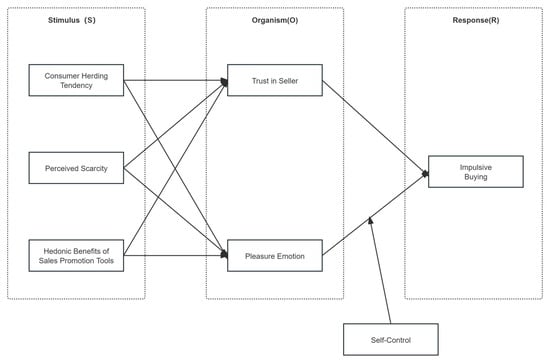
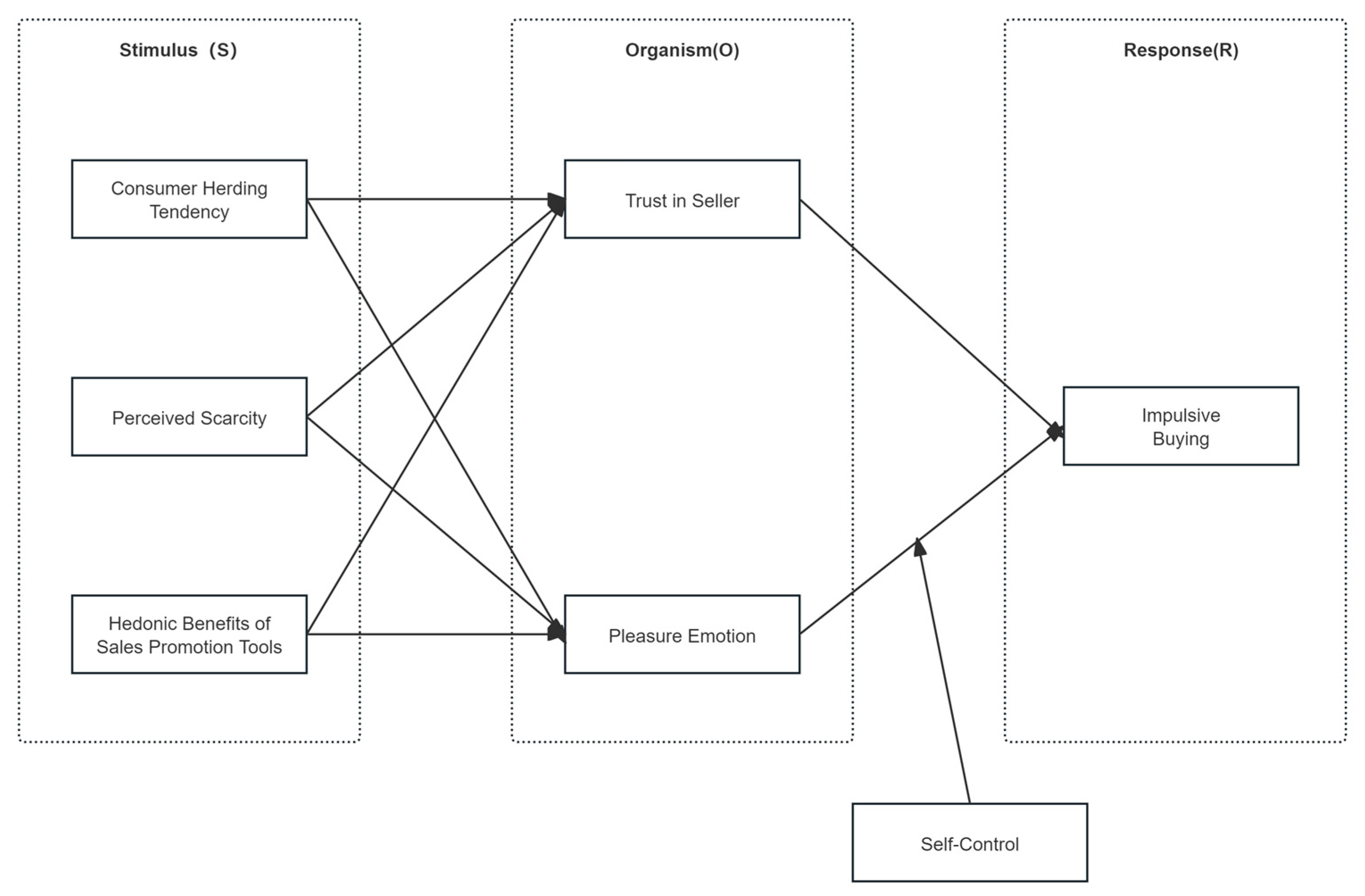

Disclaimer/Publisher’s Note: The statements, opinions and data contained in all publications are solely those of the individual author(s) and contributor(s) and not of MDPI and/or the editor(s). MDPI and/or the editor(s) disclaim responsibility for any injury to people or property resulting from any ideas, methods, instructions or products referred to in the content. |
© 2026 by the authors. Licensee MDPI, Basel, Switzerland. This article is an open access article distributed under the terms and conditions of the Creative Commons Attribution (CC BY) license.