


Abstract
Adverse childhood experiences (ACEs) are a public health concern in the United States. Using the 2019 National Survey of Children’s Health, this cross-sectional secondary analysis examined associations between cumulative ACEs (0, 1, 2, and 3 or more) and three health behaviors among children ages 6 to 17, including physical activity, recreational screen time, and sleep. Interaction models were also estimated by child sex and race/ethnicity (White non-Hispanic, Black non-Hispanic, and Hispanic) to assess whether these associations differed across groups. Nearly half of children experienced at least one ACE, and about one in eight experienced three or more. In adjusted models, higher numbers of ACEs were associated with a lower likelihood of meeting recreational screen time guidelines and sleep recommendations, while no statistically significant association was observed for meeting physical activity recommendations. Interaction analyses by child sex and race/ethnicity found no statistically significant differences in these associations across groups. These findings suggest that children with higher numbers of ACEs may be less likely to meet recommended sleep and recreational screen time guidelines, underscoring the potential value of trauma-informed strategies that strengthen sleep routines and healthy media practices.
1. Introduction
Adverse childhood experiences (ACEs) refer to stressful and potentially traumatizing life events occurring before the age of 18. These experiences can include child maltreatment, household challenges, exposure to violence or crime, or economic hardship (Felitti et al., 1998; Giano et al., 2020). ACEs represent a substantial public health concern in the United States. In 2022, national estimates indicate that 39.7% of U.S. children had experienced at least one ACE, and 17.8% had experienced two or more (HRSA Maternal and Child Health Bureau, 2026). ACEs are also influenced by social and structural conditions. Children and families living in economically disadvantaged neighborhoods and children from racial and ethnic minority families are more likely to experience higher numbers of ACEs, reflecting broader inequities that influence exposure to stressors (Giano et al., 2020).
Since the seminal ACE study by Felitti et al. (1998), extensive research has documented associations between ACEs and a wide range of health outcomes across the course of life. ACEs have been linked to depression (Chapman et al., 2004; Elmore & Crouch, 2020; Leban & Gibson, 2020; Lee et al., 2020), substance use disorders (Leban & Gibson, 2020; Shin et al., 2018), suicidal behaviors (Dube et al., 2001; Thompson et al., 2019), increased healthcare costs (Koball et al., 2019; Miller et al., 2020), and chronic diseases such as obesity (Elsenburg et al., 2017; Wiss & Brewerton, 2020), cardiovascular disease (Godoy et al., 2021; Su et al., 2015; Suglia et al., 2018), and cancer (Holman et al., 2016). Importantly, prior research consistently supports a dose–response relationship, such that the likelihood of negative outcomes increases as the number of ACEs rises (Bethell et al., 2017; Felitti et al., 1998; Garner et al., 2021; Hughes et al., 2017; Jones et al., 2020; Swedo et al., 2024). For example, Felitti et al. (1998) documented a graded pattern in which higher cumulative ACE counts were associated with greater risk of multiple adult health risk factors and leading causes of mortality. A systematic review and meta-analysis similarly found that individuals reporting four or more ACEs experienced substantially elevated risk across a broad range of outcomes compared with those reporting none (Hughes et al., 2017). Using Youth Risk Behavior Survey data, Swedo et al. (2024) also found particularly strong associations between four or more ACEs and suicidal ideation, suicide attempts, and prescription opioid misuse.
A growing body of research also links ACEs to children’s health-related behaviors, including physical activity, screen time, and sleep. Prior studies suggest that a higher number of ACEs may be associated with lower levels of physical activity. For example, Raney et al. (2022) found that higher cumulative ACE scores were associated with fewer hours of physical activity and fewer days meeting the 60 min per day benchmark among youth. More recent work using objective indicators such as daily steps similarly reported an inverse graded relationship in which higher cumulative ACEs were associated with fewer daily steps (Al-shoaibi et al., 2024). Prior research has also documented associations between cumulative ACEs and screen-based behaviors. Studies using nationally representative data suggest that higher numbers of ACEs are associated with greater digital media use and more recreational screen time (Jackson et al., 2021; Raney et al., 2022). A substantial literature also links cumulative ACEs to poorer sleep health, including shorter sleep duration and more sleep problems (Desch et al., 2023; Hunt et al., 2024; Lin et al., 2022; Qu et al., 2024; Rojo-Wissar et al., 2021). These patterns are biologically plausible given evidence that chronic stress may dysregulate stress response systems, increase physiological arousal, and disrupt circadian rhythms in ways that can interfere with sleep onset and continuity (Buckley & Schatzberg, 2005; Koss & Gunnar, 2018).
Given the serious consequences associated with cumulative ACEs, it is important to identify modifiable behaviors that may be linked to health outcomes among children with a history of childhood adversity (Su et al., 2015; Suglia et al., 2018). Physical activity, recreational screen time, and sleep are particularly relevant because they are embedded in daily routines and amenable to prevention and intervention strategies. However, limited research has examined these associations in nationally representative samples of children while also accounting for multilevel factors that influence activity, screen time, and sleep, including child characteristics, family socioeconomic conditions, and neighborhood and contextual environments. Further, because cumulative ACEs and health behaviors may vary across subgroups, it is important to examine whether these associations are consistent across groups and whether tailored trauma-informed prevention and intervention strategies should be considered.
To address these gaps, this study examined associations between cumulative ACEs categorized as 0, 1, 2, and 3 or more, and three modifiable health behaviors among children ages 6 to 17. The behaviors were meeting physical activity recommendations (at least 60 min per day), meeting recreational screen time guidelines (2 h or less per day), and meeting age-specific sleep guidelines (9–11 h per night for children ages 6 to 12 and 8 to 10 h per night for adolescents ages 13 to 17). The study also explored whether these associations differed by child sex and race/ethnicity, including White non-Hispanic, Black non-Hispanic, and Hispanic children. It was hypothesized that a higher number of ACEs would be associated with a lower likelihood of meeting physical activity recommendations, recreational screen time guidelines, and sleep guidelines. It was also hypothesized that these associations might differ by child sex and race/ethnicity.
2. Methods
2.1. Data Source and Sample
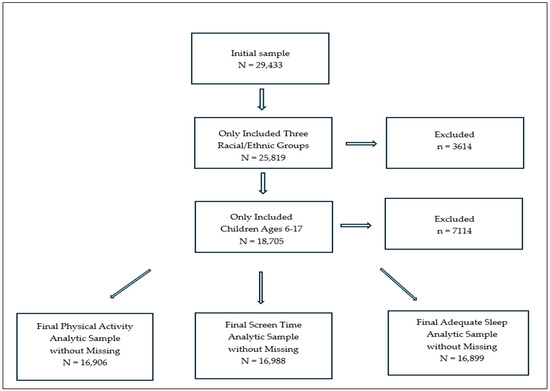
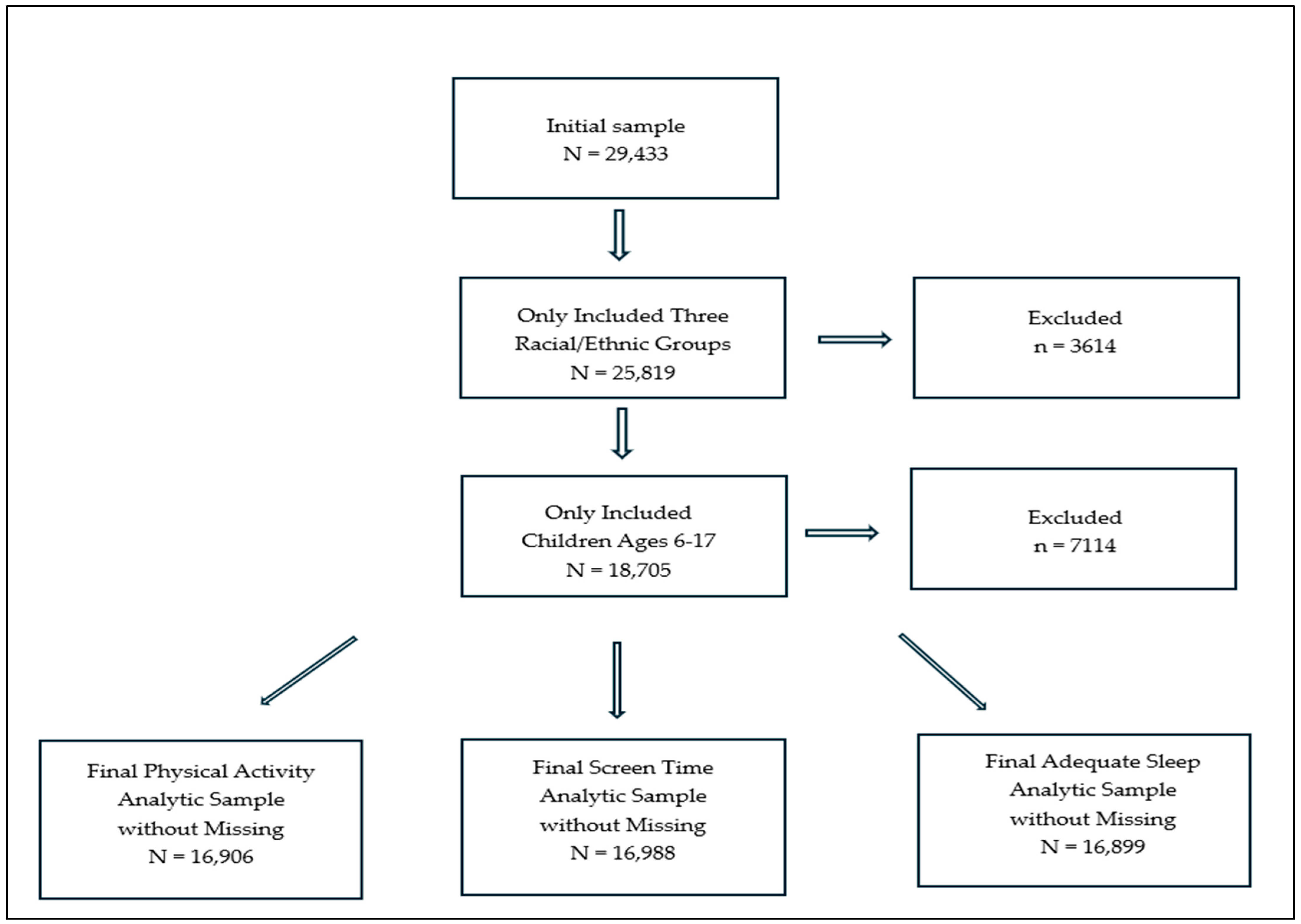
This study utilized data from the 2019 National Survey of Children’s Health (NSCH), a cross-sectional survey sponsored by the Health Resources and Services Administration (HRSA)’s Maternal and Child Health Bureau (MCHB). The data were weighted to represent the entire population of non-institutionalized U.S. children between less than 1 year and 17 years of age at the time of sampling (HRSA Maternal and Child Health Bureau, 2020). The survey respondents were parents or guardians of a randomly selected child within their household (hereafter referred to as “parents”). The NSCH gathered information on children’s health and well-being, along with factors related to their families and communities. The survey was administered in both English and Spanish. The overall response rate for the 2019 survey was 42.4%. For the 2019 NSCH, a total of 68,500 initial screener surveys were completed between June 2019 and January 2020, with 29,433 households completing a topical interview (HRSA Maternal and Child Health Bureau, 2020). As shown in Figure 1, the analytic sample was limited to children classified as White non-Hispanic, Black non-Hispanic, or Hispanic, and to those ages 6 to 17 years, yielding an eligible sample of 18,705 children. Analytic samples were then defined separately for each outcome using complete case analysis, also referred to as listwise deletion, which included only children with non-missing values on the outcome, cumulative ACEs, and all covariates in the corresponding model. The final analytic sample sizes were 16,906 for physical activity, 16,988 for limited screen time, and 16,899 for adequate sleep. Missing data diagnostics were conducted using binary indicators of missingness to assess whether missingness was related to cumulative ACEs and each outcome variable. These analyses indicated that missingness was not completely random. Accordingly, although complete-case analysis offers a transparent and reproducible approach, it can reduce precision and may introduce bias when missingness is related to the outcome or other variables in the analysis, or to unmeasured factors associated with these variables (White & Carlin, 2010). This study received exempt status from the Institutional Review Board of [Name Redacted] University.
Figure 1.
Final Analytic Sample Selection Flow Diagram.
2.2. Measures
2.2.1. Outcome Variables: Physical Activity, Limited Screen Time, and Adequate Sleep
Physical activity was measured in the NSCH by the number of days a child engaged in physical activities, such as exercise or sports, for at least 60 min per day. Parents were asked, “During the past week, on how many days did this child exercise, play a sport, or participate in physical activity for at least 60 min?” This variable had four response options, ranging from “0 days” to “every day.” Based on CDC guidelines recommending at least 60 min of moderate- to vigorous-intensity physical activity per day for children aged 6 and 17 years (U.S. Department of Health and Human Services, 2018), children were categorized as “yes” (every day) or “no” (0–6 days) for the analysis.
Screen time was defined as time spent watching television, playing games, or using computers, cell phones, or other electronic devices for recreational purposes. Parents were asked, “On most weekdays, about how much time did this child spend in front of a TV, computer, cellphone, or other electronic device watching programs, playing games, accessing the internet, or using social media?” Response options included: less than 1 h, 1 h, 2 h, 3 h, and 4 or more hours. Consistent with prior studies defining appropriate hours of screen exposure (Guram & Heinz, 2018), children were categorized as “yes” (≤2 h) or “no” (≥3 h) for the analysis.
The NSCH assessed average sleep duration by asking parents, “During the past week, how many hours of sleep did this child get on most weeknights?” The initial response options ranged from less than 6 h to 11 or more hours. These responses were collapsed into a binary variable (yes/no), indicating whether the child met the American Academy of Pediatrics (AAP) sleep recommendations. The AAP recommends 9–11 h of sleep per night for children aged 6–12 years and 8–10 h per night for adolescents aged 13–17 years (Paruthi et al., 2016).
2.2.2. Predictor: Adverse Childhood Experiences (ACEs)
The NSCH measured ACEs using nine parent-reported items that were adapted from the original CDC Kaiser ACE study. These items were developed with input from a technical expert panel and were evaluated through cognitive testing by the CDC’s National Center for Health Statistics (HRSA Maternal and Child Health Bureau, 2020). Importantly, the NSCH ACE module does not include abuse and neglect items included in the original CDC Kaiser ACE study, including physical, emotional, and sexual abuse and physical and emotional neglect. Therefore, cumulative ACEs in this study reflect an NSCH-specific set of adversities. Specifically, parents were asked, “To the best of your knowledge, has this child ever experienced any of the following?” The nine listed childhood adversities were:
- Difficulty covering basic needs like food or housing;
- Parent or guardian divorce or separation;
- Death of a parent or guardian;
- Parent or guardian incarceration;
- Witnessing physical violence between adults in the home;
- Being a victim of or witnessing violence in the neighborhood;
- Living with someone who is mentally ill, suicidal, or severely depressed;
- Living with someone who has alcohol or drug problems;
- Being treated or judged unfairly based on race or ethnicity.
Each ACE item was coded as “yes” or “no” except for economic hardship. Economic hardship was initially assessed using a 4-point Likert scale ranging from “never” to “very often” and then dichotomized as “yes” (somewhat often/very often) or “no” (rarely/never). The cumulative ACE score was created by summing items, producing values from 0 to 9. For analysis, cumulative ACEs were categorized into four groups (0, 1, 2, and 3 or more ACEs), with 0 ACEs serving as the reference group.
2.2.3. Covariates
Covariates were grouped into child-, parent-, household-, and neighborhood-level factors. Child-level factors included sex, age in years, race/ethnicity, and special health care needs (CSHCN). For stratified analyses by race and ethnicity, the analytic sample was limited to White non-Hispanic, Black non-Hispanic, and Hispanic children. The NSCH identified children with special health care needs using five screening questions related to prescription medication use, functional limitations, medical or mental health services, specialized therapies, and treatment for emotional or developmental problems (Bethell et al., 2002). If a parent responded affirmatively to any of these questions, and the condition was expected to last at least 12 months, the child was classified as having special health care needs. Parent- and household-level factors included the mother’s age, parental educational attainment, family structure, household size, household income as a percentage of the federal poverty level, and participation in government assistance programs such as food or cash assistance within the past year.
Neighborhood factors were assessed using three measures. Specifically, supportive neighborhood was measured with three parent-reported items: (1) people in the neighborhood help each other out, (2) neighbors watch out for each other’s children, and (3) families know where to go for help in the community. A neighborhood was classified as supportive if the parent “definitely agreed” with at least one item and “somewhat agreed” or “definitely agreed” with the other two items. Neighborhood amenities were assessed by counting the number of four specific amenities present in the neighborhood: (1) sidewalks or walking paths, (2) parks or playgrounds, (3) recreation centers, community centers, or boys’ and girls’ clubs, and (4) libraries or bookmobiles. Each item was coded as “1” if present and “0” otherwise. A binary variable was then constructed to indicate the presence of neighborhood amenities (1 = all four amenities present, 0 = otherwise). Distracting neighborhood conditions were assessed by counting the number of three detracting factors present: (1) litter or garbage on the street or sidewalk, (2) poorly maintained or rundown housing, and (3) vandalism, such as broken windows or graffiti. Each item was coded as “1” if present and “0” otherwise. A binary variable was then constructed to indicate distracting neighborhood conditions (1 = all three detracting factors present; 0 = otherwise).
2.3. Statistical Analyses
Both unweighted and weighted frequency distributions were examined for all study variables. Associations between cumulative ACEs and the three modifiable health outcomes (physical activity, limited screen time, and adequate sleep) were examined using multivariable logistic regression models that adjusted for child, parent, household, and neighborhood covariates. Interaction terms between cumulative ACEs and child sex and between cumulative ACEs and race/ethnicity were then estimated to assess whether these associations differed across groups. Due to the substantial amount of missing data for household income, six imputed federal poverty level variables provided by the MCHB were included in the analyses using the multiple imputation function (i.e., mi estimate). All analyses were conducted in STATA (version 18). To account for the complex survey design, cluster and sampling weights were applied to adjust for nonresponse and unequal selection bias. Statistical significance was set at p < 0.05.
3. Results
3.1. Sample Characteristics
Descriptive characteristics of the study sample are shown in Table 1. The sample included slightly more males (51.5%), with an average child age of 11.6 years (SD = 3.4). More than half of children were White (55.9%), followed by Hispanic (28.6%) and Black (15.5%). About 23.6% of children were classified as having special health care needs. The average age of mothers was 29 years (SD = 6.1), and 11.1% of parents did not have a high school degree. Most children (69.9%) lived with two parents. Approximately 41% of households lived below 200% of the federal poverty level, and 39.2% received food or cash assistance within the past 12 months. The average household size was 4.4 people (SD = 1.3). In terms of neighborhood characteristics, 55.1% of children lived in a supportive neighborhood, 86.7% lived in neighborhoods with amenities, and 27.4% lived in neighborhoods with distracting conditions.
Table 1.
Descriptive Characteristics of Study Sample.
3.2. Prevalence of Physical Activity, Limited Screen Time, and Adequate Sleep
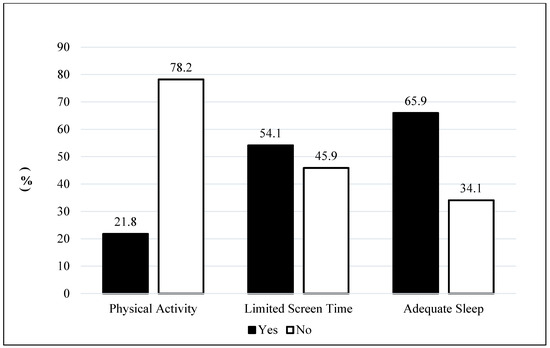
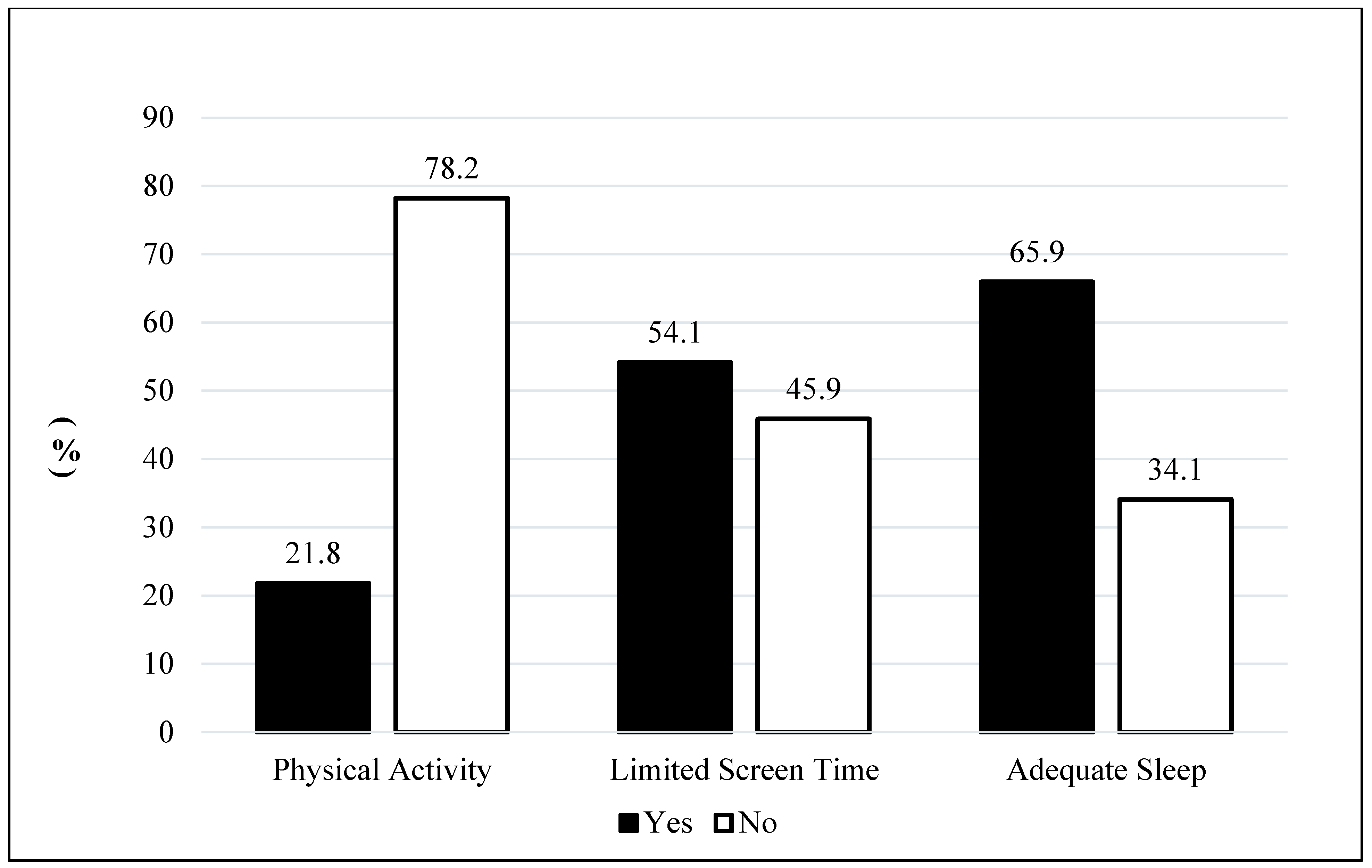
Figure 2 shows the prevalence of physical activity, limited screen time, and adequate sleep in the sample. About 21.8% of children engaged in at least 60 min of physical activity every day and 54.1% had 2 h or less of screen time on most weekdays. In addition, 65.9% met the recommended sleep guidelines.
Figure 2.
Prevalence of Physical Activity, Limited Screen Time, and Adequate Sleep. Notes. Weighted proportions are presented. Outcome definitions: Physical activity (=Yes) indicates 60 min of activity every day in the past week; Limited screen time (=Yes) indicates ≤2 h of recreational screen time on most weekdays; Adequate sleep (=Yes) indicates 9–11 h/night for ages 6–12 and 8–10 h/night for ages 13–17.
3.3. Prevalence of ACEs
Table 2 presents descriptive characteristics of individual and cumulative ACEs in the sample. Slightly less than half of children (45.4%) experienced at least one ACE, with 12.8% reporting three or more ACEs. The most common ACE was parental divorce or separation (29.5%), whereas parental death was the least common (4.1%).
Table 2.
Descriptive Statistics for Individual and Cumulative Adverse Childhood Experiences.
3.4. Associations Between ACEs and Physical Activity, Limited Screen Time, and Adequate Sleep
Table 3 presents the results of the multivariate logistic regression models. After adjusting for individual-, parent-, household-, and neighborhood-level covariates, ACEs showed significant negative associations with limited screen time and adequate sleep. Specifically, children with 1 ACE and 2 ACEs had 26% (AOR = 0.74, 95% CI = 0.61, 0.89, p < 0.01) and 30% (AOR = 0.70, 95% CI = 0.53, 0.92, p < 0.05) lower odds of having limited screen time, respectively, compared with children with 0 ACEs. Children with 3 or more ACEs also had 31% (AOR = 0.69, 95% CI =0.51, 0.93, p < 0.05) lower odds of having limited screen time than those with 0 ACEs. For sleep, children with 2 ACEs had 30% (AOR = 0.70, 95% CI = 0.52, 0.92, p < 0.05) lower odds of having age-appropriate adequate sleep compared with children with 0 ACEs. Additionally, children with 3 or more ACEs had 33% (AOR = 0.67, 95% CI = 0.50, 0.89, p < 0.01) lower odds of having adequate sleep than their counterparts with 0 ACEs. No significant associations were found between ACEs and physical activity.
Table 3.
Results of Multivariate Logistic Regression Models Predicting Physical Activity, Limited Screen Time, and Adequate Sleep among Children Aged 6–17 Years.
3.5. Interactions Effects Between ACEs and Physical Activity, Limited Screen Time, and Adequate Sleep by Child Sex and Race/Ethnicity
Table 4 presents the interaction effects of ACEs with child sex and race/ethnicity on physical activity, limited screen time, and adequate sleep. These interaction models were adjusted for the same individual, parent, household, and neighborhood covariates included in the main models. For physical activity, the interaction between Black race/ethnicity and 1 ACE was significant (AOR = 1.78, 95% CI =1.02, 3.10, p < 0.05), suggesting that the association of 1 ACE with physical activity differed for Black children relative to White non-Hispanic children. For adequate sleep, the interaction between Hispanic ethnicity and 2–3 ACEs was significant (AOR = 0.46, 95% CI =0.24, 0.87, p < 0.05), indicating a stronger negative association between 2 and 3 ACEs and adequate sleep among Hispanic children relative to White non-Hispanic children. However, the omnibus interaction tests indicate that the associations between ACEs and these three health behaviors did not differ significantly by child sex or race/ethnicity.
Table 4.
Interaction Effects of ACEs with Child Sex and Race/Ethnicity on Physical Activity, Limited Screen Time, and Adequate Sleep.
4. Discussion
4.1. Associations Between ACEs and Three Health Behaviors
This study examined associations between cumulative ACEs and three health behaviors, including physical activity, recreational screen time, and sleep, and assessed whether these associations varied by child sex and race/ethnicity. Using a nationally representative sample of U.S. children ages 6 to 17, the study documents both the high prevalence of ACEs and their associations with health behaviors. Specifically, nearly half of children experienced at least one ACE, and about one in eight experienced three or more ACEs. This level of prevalence underscores that childhood adversity remains a substantial public health issue and highlights the importance of prevention strategies and policies that reduce exposure to adversity and support families in maintaining healthy daily routines. As documented in prior research (Bhutta et al., 2023; Felitti et al., 1998; Shonkoff et al., 2012), ACE-related toxic stress may be linked to disruptions in neurobiological, physiological, and emotional development, which may be associated with differences in children’s daily routines and coping behaviors and longer-term risks for mental and physical health problems.
The findings indicate that higher numbers of cumulative ACEs were associated with a lower likelihood of meeting recreational screen time guidelines. This aligns with earlier studies linking childhood adversity to greater screen engagement (Fakhouri et al., 2013; Hardy et al., 2010; Jackson et al., 2021; Raney et al., 2022; Xu et al., 2024). For example, Xu et al. (2024) found that adolescents with three or more ACEs had higher odds of excessive recreational screen use across multiple media types, even after adjusting for sociodemographic factors. One plausible interpretation is that screen use may function as an accessible coping strategy for stress or dysregulation, particularly when supportive resources are limited. This association warrants attention because excessive recreational screen time can displace sleep and physical activity and is associated with poorer mental health and higher cardiometabolic risk (Nakshine et al., 2022).
The study also found that higher numbers of cumulative ACEs were associated with a lower likelihood of meeting age-specific sleep recommendations. This is consistent with literature linking adversity to shorter sleep duration and sleep problems (Desch et al., 2023; Hunt et al., 2024; Lin et al., 2022; Qu et al., 2024; Rojo-Wissar et al., 2021). Adversity-related stress is associated with sleep disruption through pathways such as heightened physiological arousal, worry or anxiety, and dysregulated stress physiology, which can interfere with sleep initiation and sleep continuity. Prior research has shown that exposure to violence and trauma is associated with poorer sleep in children and adolescents (Kliewer & Lepore, 2015; Spilsbury et al., 2014), and trauma-related symptoms such as PTSD commonly co-occur with sleep disturbance (Kovachy et al., 2013). Evidence from specific trauma contexts also supports this link, including elevated sleep problems among adolescents exposed to childhood sexual abuse and co-occurring mental health symptoms such as depression and PTSD (Brown et al., 2022; Steine et al., 2012).
In contrast, no statistically significant association was observed between cumulative ACEs and the physical activity outcome in this study. Several factors may help explain this finding. First, the NSCH physical activity item captures daily attainment of 60 min rather than overall activity volume, intensity, or objective movement. In addition, physical activity is highly constrained by opportunity structures such as safe spaces, caregiver time, transportation, and access to programs. These constraints may reduce detectable differences across cumulative ACE categories when many children face barriers regardless of adversity history. Even without a statistically significant association in this study, physical activity remains a potentially important health behavior for children experiencing adversity because it is linked to mental and physical health benefits and may support stress management and emotional regulation (Carcelén-Fraile et al., 2025; Wang et al., 2022).
Additionally, interaction analyses were conducted to examine whether the associations between cumulative ACEs and the three health behaviors differed by child sex and race/ethnicity. Overall, the interaction effects were not statistically significant, suggesting that the associations between cumulative ACEs and three health behaviors were generally similar across child sex and race/ethnicity in this sample. This difference from prior research may reflect several factors. First, subgroup variation may depend on developmental stage, and the present study included a broad age range of children and adolescents, potentially obscuring differences that are more pronounced at particular ages. Second, variation across studies in how ACEs and health behaviors are measured, including reliance on parent-reported indicators and broad behavioral categories, may contribute to differing findings. Third, the inclusion of a broad set of child, household, and neighborhood covariates may have attenuated subgroup differences by accounting for contextual factors that are unevenly distributed across groups.
4.2. Practice and Policy Implications
The findings have several implications for social work practice and policy in healthcare, school, and community settings. Because higher cumulative ACEs were associated with a lower likelihood of meeting sleep recommendations and recreational screen time guidelines, these behaviors may represent particularly actionable targets for trauma-informed prevention and early intervention. The results support the value of integrating trauma-informed approaches with guidance on sleep hygiene and family media practices. In pediatric primary care and school-based health settings, clinicians and social workers may incorporate brief questions about sleep and recreational screen time into routine visits and connect families to supportive resources when they report adversity-related stressors. Such efforts may help identify children whose daily routines are being disrupted by stress before those patterns become more deeply entrenched (Strait & Meagher, 2019).
The findings also suggest the importance of family-centered approaches. Sleep and recreational screen use are often shaped by household routines, caregiver stress, and material constraints rather than solely by children’s individual choices. Accordingly, practice approaches may be most effective when focused on strengthening family routines, supporting caregiver capacity, and addressing stressors that interfere with healthy daily patterns, rather than focusing only on behavior restriction (Khalsa et al., 2024). In school settings, trauma-informed initiatives may extend beyond classroom strategies by promoting predictable routines, supportive adult relationships, and coordinated referral pathways for mental health and family support services (Avery et al., 2021). Community-based programs may also play an important role by offering structured, low-cost opportunities for after-school engagement that support healthy routines and reduce reliance on unsupervised screen time (Haycraft et al., 2020).
At the policy level, the findings underscore the importance of investments that help families maintain healthy daily routines while navigating adverse life events. Policies that expand access to affordable mental health care, including trauma-focused services for children and caregivers, may help reduce stress-related dysregulation associated with sleep disruption and increased screen use as a coping strategy. Strengthening the social safety net through stable housing support, income support, and food assistance may also promote healthier routines by reducing chronic household strain (Hock et al., 2024; Na et al., 2019). In addition, place-based investments that improve neighborhood conditions and expand access to safe green space, sidewalks, recreation facilities, and other family-supportive resources may strengthen the broader environments in which healthy routines are established and maintained. Although physical activity was not significantly associated with cumulative ACEs in the present study, it remains an important health-promoting behavior, and policies that improve access to safe and affordable opportunities for physical activity may still benefit children experiencing adversity (Reuben et al., 2020).
4.3. Study Limitations
While this study provides valuable insights, several limitations should be noted. First, because this study is cross-sectional, it is designed to examine associations rather than causation. The primary implication of the design is that temporal ordering cannot be established, and therefore causal pathways or precedence between cumulative ACEs and health behaviors cannot be determined. Reverse causality is possible. For example, poor sleep or high screen use could contribute to family stress and conflict, which may co-occur with or influence the reporting of adversity. Second, ACEs and health behaviors were based on parent reports, which may be subject to recall errors and social desirability bias. Because some adversities may involve caregiver or household behaviors, parents may underreport certain experiences, which could lead to underestimation of cumulative ACEs and attenuation of associations. Third, as aforementioned, the NSCH ACE module does not include abuse and neglect items captured in the original CDC Kaiser ACE framework, and the cumulative ACE measure therefore reflects an NSCH-specific set of adversities. Fourth, the physical activity and screen time measures rely on threshold-based indicators, which may be less sensitive than continuous measures or objective monitoring and could attenuate associations. Fifth, unmeasured confounding may remain despite adjustment for multiple covariates. Factors such as caregiver mental health, parenting stress, household routines, digital literacy, parental supervision practices, and aspects of the home environment such as stability and crowding could plausibly influence both cumulative ACE reporting and children’s sleep and screen time behaviors. Future research would benefit from longitudinal designs, multi-informant measurement of adversity including youth reports where developmentally appropriate, and richer measures of family routines and parental digital mediation to clarify mechanisms linking cumulative adversity with sleep and media behaviors.
5. Conclusions
Given the high prevalence of ACEs among children in the United States, substantial opportunities exist to strengthen multisector approaches that promote modifiable health behaviors, including recreational screen use, healthy sleep, and physical activity. Prioritizing these behaviors during childhood and adolescence may help buffer the effects of adversity on development and reduce downstream risk for mental and physical health problems. Coordinated efforts across families, schools, healthcare, and community settings—especially those that are trauma-informed and responsive to structural barriers—may support healthier daily routines and promote more positive health trajectories across the course of life.
Funding
The author was supported by Health Resources and Services Administration (HRSA), U.S. Department of Health and Human Services (T32HP30034).
Institutional Review Board Statement
This study was reviewed by Case Western Reserve University Institutional Review Board and determined to be exempt because it involved secondary analysis of publicly available data (IRB number = STUDY20191158).
Informed Consent Statement
Not applicable.
Data Availability Statement
The data analyzed in this study are publicly available from the United States Census Bureau website. Specifically, the data were obtained from the National Survey of Children’s Health, available at: https://www.census.gov/programs-surveys/nsch.html (accessed on 20 November 2020).
Conflicts of Interest
The author declares no conflicts of interest. The funding sponsors had no role in the design of the study; in the collection, analyses, or interpretation of data; in the writing of the manuscript; or in the decision to publish the results.
References
- Al-shoaibi, A. A. A., Iyra, P., Raney, J. H., Ganson, K. T., Dooley, E. E., Testa, A., Jackson, D. B., Gabriel, K. P., Baker, F. C., & Nagata, J. M. (2024). Associations between adverse childhood experiences and early adolescent physical activity in the United States. Academic Pediatrics, 24(4), 662–668. [Google Scholar] [CrossRef] [Scilit]
- Avery, J. C., Morris, H., Galvin, E., Misso, M., Savaglio, M., & Skouteris, H. (2021). Systematic review of school-wide trauma-informed approaches. Journal of Child & Adolescent Trauma, 14(3), 381–397. [Google Scholar] [CrossRef] [Scilit]
- Bethell, C. D., Carle, A., Hudziak, J., Gombojav, N., Powers, K., Wade, R., & Braveman, P. (2017). Methods to assess adverse childhood experiences of children and families: Toward approaches to promote child well-being in policy and practice. Academic Pediatrics, 17(7), S51–S69. [Google Scholar] [CrossRef] [Scilit] [PubMed]
- Bethell, C. D., Read, D., Stein, R. E. K., Blumberg, S. J., Wells, N., & Newacheck, P. W. (2002). Identifying children with special health care needs: Development and evaluation of a short screening instrument. Ambulatory Pediatrics, 2(1), 38–48. [Google Scholar] [CrossRef] [Scilit] [PubMed]
- Bhutta, Z. A., Bhavnani, S., Betancourt, T. S., Tomlinson, M., & Patel, V. (2023). Adverse childhood experiences and lifelong health. Nature Medicine, 29, 1639–1648. [Google Scholar] [CrossRef] [Scilit]
- Brown, S. M., Rodriguez, K. E., Smith, A. D., Ricker, A., & Williamson, A. A. (2022). Associations between childhood maltreatment and behavioral sleep disturbances across the lifespan: A systematic review. Sleep Medicine Reviews, 64, 101621. [Google Scholar] [CrossRef] [Scilit]
- Buckley, T. M., & Schatzberg, A. F. (2005). On the interactions of the hypothalamic–pituitary–adrenal (HPA) axis and sleep: Normal HPA axis activity and circadian rhythm, exemplary sleep disorders. The Journal of Clinical Endocrinology & Metabolism, 90(5), 3106–3114. [Google Scholar] [CrossRef] [Scilit]
- Carcelén-Fraile, M. D. C., Hita-Contreras, F., Mesas-Aróstegui, M. A., & Aibar-Almazán, A. (2025). Effects of physical activity on executive function and emotional regulation in children and adolescents with neurodevelopmental disorders: A systematic review and meta-analysis. Healthcare, 13(19), 2415. [Google Scholar] [CrossRef] [Scilit]
- Chapman, D. P., Whitfield, C. L., Felitti, V. J., Dube, S. R., Edwards, V. J., & Anda, R. F. (2004). Adverse childhood experiences and the risk of depressive disorders in adulthood. Journal of Affective Disorders, 82(2), 217–225. [Google Scholar] [CrossRef] [Scilit]
- Desch, J., Bakour, C., Mansuri, F., Tran, D., & Schwartz, S. (2023). The association between adverse childhood experiences and insomnia symptoms from adolescence to adulthood: Evidence from the add health study. Sleep Health, 9(5), 646–653. [Google Scholar] [CrossRef] [Scilit]
- Dube, S. R., Anda, R. F., Felitti, V. J., Chapman, D. P., Williamson, D. F., & Giles, W. H. (2001). Childhood abuse, household dysfunction, and the risk of attempted suicide throughout the life span: Findings from the adverse childhood experiences study. JAMA, 286(24), 3089–3096. [Google Scholar] [CrossRef] [Scilit]
- Elmore, A. L., & Crouch, E. (2020). The association of adverse childhood experiences with anxiety and depression for children and youth, 8 to 17 years of age. Academic Pediatrics, 20(5), 600–608. [Google Scholar] [CrossRef] [Scilit] [PubMed]
- Elsenburg, L. K., van Wijk, K. J. E., Liefbroer, A. C., & Smidt, N. (2017). Accumulation of adverse childhood events and overweight in children: A systematic review and meta-analysis. Obesity, 25(5), 820–832. [Google Scholar] [CrossRef] [Scilit] [PubMed]
- Fakhouri, T. H. I., Hughes, J. P., Brody, D. J., Kit, B. K., & Ogden, C. L. (2013). Physical activity and screen-time viewing among elementary school-aged children in the United States from 2009 to 2010. JAMA Pediatrics, 167(3), 223–229. [Google Scholar] [CrossRef] [Scilit] [PubMed]
- Felitti, V. J., Anda, R. F., Nordenberg, D., Williamson, D. F., Spitz, A. M., Edwards, V., Koss, M. P., & Marks, J. S. (1998). Relationship of childhood abuse and household dysfunction to many of the leading causes of death in adults: The adverse childhood experiences (ACE) study. American Journal of Preventive Medicine, 14(4), 245–258. [Google Scholar] [CrossRef] [Scilit]
- Garner, A., Yogman, M., Committee on Psychosocial Aspects of Child and Family Health, Section on Developmental and Behavioral Pediatrics & Council on Early Childhood. (2021). Preventing childhood toxic stress: Partnering with families and communities to promote relational health. Pediatrics, 148(2), e2021052582. [Google Scholar] [CrossRef] [Scilit]
- Giano, Z., Wheeler, D. L., & Hubach, R. D. (2020). The frequencies and disparities of adverse childhood experiences in the U.S. BMC Public Health, 20, 1327. [Google Scholar] [CrossRef] [Scilit]
- Godoy, L. C., Frankfurter, C., Cooper, M., Lay, C., Maunder, R., & Farkouh, M. E. (2021). Association of adverse childhood experiences with cardiovascular disease later in life: A review. JAMA Cardiology, 6(2), 228–235. [Google Scholar] [CrossRef] [Scilit]
- Guram, S., & Heinz, P. (2018). Media use in children: American academy of pediatrics recommendations 2016. Archives of Disease in Childhood: Education and Practice Edition, 103(2), 99–101. [Google Scholar] [CrossRef] [Scilit]
- Hardy, L. L., Denney-Wilson, E., Thrift, A. P., Okely, A. D., & Baur, L. A. (2010). Screen time and metabolic risk factors among adolescents. Archives of Pediatrics & Adolescent Medicine, 164(7), 643–649. [Google Scholar] [CrossRef] [Scilit] [PubMed]
- Haycraft, E., Pearson, N., Johnston, J. P., Kiefner-Burmeister, A., Foote, G., & Golley, R. K. (2020). Screen-time during the after-school period: A contextual perspective. Preventive Medicine Reports, 19, 101116. [Google Scholar] [CrossRef] [Scilit] [PubMed]
- Health Resources and Services Administration, Maternal and Child Health Bureau. (2020, June). Adverse childhood experiences: National Survey of Children’s Health (NSCH) data brief. U.S. Department of Health and Human Services.
- Health Resources and Services Administration, Maternal and Child Health Bureau. (2026). National Survey of Children’s Health (NSCH). U.S. Department of Health and Human Services. Available online: https://mchb.hrsa.gov/data-research/national-survey-childrens-health (accessed on 16 January 2026).
- Hock, E. S., Blank, L., Fairbrother, H., Clowes, M., Cuevas, D. C., Booth, A., & Goyder, E. (2024). Exploring the impact of housing insecurity on the health and wellbeing of children and young people in the United Kingdom: A qualitative systematic review. BMC Public Health, 24, 2453. [Google Scholar] [CrossRef] [Scilit]
- Holman, D. M., Ports, K. A., Buchanan, N. D., Hawkins, N. A., Merrick, M. T., Metzler, M., & Trivers, K. F. (2016). The association between adverse childhood experiences and risk of cancer in adulthood: A systematic review of the literature. Pediatrics, 138(Suppl. 1), S81–S91. [Google Scholar] [CrossRef] [Scilit]
- Hughes, K., Bellis, M. A., Hardcastle, K. A., Sethi, D., Butchart, A., Mikton, C., Jones, L., & Dunne, M. P. (2017). The effect of multiple adverse childhood experiences on health: A systematic review and meta-analysis. The Lancet Public Health, 2(8), e356–e366. [Google Scholar] [CrossRef] [Scilit]
- Hunt, E. T., Brazendale, K., Kelder, S. H., Lanza, K. L., Mantey, D. S., Cristol, B., Crouch, E. L., Schroeder, K., & Hoelscher, D. M. (2024). Sleep, screen behaviors, and adverse childhood experiences: A cross-sectional study of U.S. children and adolescents. Journal of Child & Adolescent Trauma, 17(4), 1169–1176. [Google Scholar] [CrossRef] [Scilit]
- Jackson, D. B., Testa, A., & Fox, B. (2021). Adverse childhood experiences and digital media use among U.S. children. American Journal of Preventive Medicine, 60(4), 462–470. [Google Scholar] [CrossRef] [Scilit]
- Jones, C. M., Merrick, M. T., & Houry, D. E. (2020). Identifying and preventing adverse childhood experiences: Implications for clinical practice. JAMA, 323(1), 25–26. [Google Scholar] [CrossRef] [Scilit]
- Khalsa, A. S., Andridge, R. R., & Keim, S. A. (2024). Screen time, outdoor play, and sleep routines in early childhood: Longitudinal associations with parenting stress during toddler to preschool years. Journal of Pediatric Health Care, 38(6), 765–774. [Google Scholar] [CrossRef] [Scilit]
- Kliewer, W., & Lepore, S. J. (2015). Exposure to violence, social cognitive processing, and sleep problems in urban adolescents. Journal of Youth and Adolescence, 44(2), 507–517. [Google Scholar] [CrossRef] [Scilit] [PubMed]
- Koball, A. M., Rasmussen, C., Olson-Dorff, D., Klevan, J., Ramirez, L., & Domoff, S. E. (2019). The relationship between adverse childhood experiences, healthcare utilization, cost of care and medical comorbidities. Child Abuse & Neglect, 90, 120–126. [Google Scholar] [CrossRef] [Scilit] [PubMed]
- Koss, K. J., & Gunnar, M. R. (2018). Annual research review: Early adversity, the hypothalamic–pituitary–adrenocortical axis, and child psychopathology. Journal of Child Psychology and Psychiatry, 59(4), 327–346. [Google Scholar] [CrossRef] [Scilit] [PubMed]
- Kovachy, B., O’Hara, R., Hawkins, N., Gershon, A., Primeau, M. M., Madej, J., & Carrion, V. (2013). Sleep disturbance in pediatric PTSD: Current findings and future directions. Journal of Clinical Sleep Medicine, 9(5), 501–510. [Google Scholar] [CrossRef] [Scilit]
- Leban, L., & Gibson, C. L. (2020). The role of gender in the relationship between adverse childhood experiences and delinquency and substance use in adolescence. Journal of Criminal Justice, 66, 101637. [Google Scholar] [CrossRef] [Scilit]
- Lee, H. Y., Kim, I., Nam, S., & Jeong, J. (2020). Adverse childhood experiences and the associations with depression and anxiety in adolescents. Children and Youth Services Review, 111, 104850. [Google Scholar] [CrossRef] [Scilit]
- Lin, S. X., Cheslack-Postava, K., McReynolds, L., Amsel, L., Bresnahan, M., & Hoven, C. W. (2022). Adverse childhood experiences and insufficient sleep among U.S. children and adolescents. Academic Pediatrics, 22(6), 965–971. [Google Scholar] [CrossRef] [Scilit]
- Miller, T. R., Waehrer, G. M., Oh, D. L., Purewal Boparai, S., Ohlsson Walker, S., Silverio Marques, S., & Burke Harris, N. (2020). Adult health burden and costs in California during 2013 associated with prior adverse childhood experiences. PLoS ONE, 15(1), e0228019. [Google Scholar] [CrossRef] [Scilit] [PubMed]
- Na, M., Eagleton, S. G., Jomaa, L., Lawton, K., Savage, J. S., & Davey, A. (2019). Food insecurity is associated with suboptimal sleep quality, but not sleep duration, among low-income Head Start children of pre-school age. Public Health Nutrition, 23(4), 701–710. [Google Scholar] [CrossRef] [Scilit] [PubMed]
- Nakshine, V. S., Thute, P., Khatib, M. N., & Sarkar, B. (2022). Increased screen time as a cause of declining physical, psychological health, and sleep patterns: A literary review. Cureus, 14, e30051. [Google Scholar] [CrossRef] [Scilit]
- Paruthi, S., Brooks, L. J., D’Ambrosio, C., Hall, W. A., Kotagal, S., Lloyd, R. M., Malow, B. A., Maski, K., Nichols, C., Quan, S. F., Rosen, C. L., Troester, M. M., & Wise, M. S. (2016). Consensus statement of the American academy of sleep medicine on the recommended amount of sleep for healthy children: Methodology and discussion. Journal of Clinical Sleep Medicine, 12(11), 1549–1561. [Google Scholar] [CrossRef] [Scilit]
- Qu, G., Liu, H., Han, T., Zhang, H., Ma, S., Sun, L., Qin, Q., Chen, M., Zhou, X., & Sun, Y. (2024). Association between adverse childhood experiences and sleep quality, emotional and behavioral problems and academic achievement of children and adolescents. European Child & Adolescent Psychiatry, 33(2), 527–538. [Google Scholar] [CrossRef] [Scilit]
- Raney, J. H., Testa, A., Jackson, D. B., Ganson, K. T., & Nagata, J. M. (2022). Associations between adverse childhood experiences, adolescent screen time and physical activity during the COVID-19 pandemic. Academic Pediatrics, 22(8), 1294–1299. [Google Scholar] [CrossRef] [Scilit]
- Reuben, A., Rutherford, G. W., James, J., & Razani, N. (2020). Association of neighborhood parks with child health in the United States. Preventive Medicine, 141, 106265. [Google Scholar] [CrossRef] [Scilit]
- Rojo-Wissar, D. M., Sosnowski, D. W., Ingram, M. M., Jackson, C. L., Maher, B. S., Alfano, C. A., Meltzer, L. J., & Spira, A. P. (2021). Associations of adverse childhood experiences with adolescent total sleep time, social jetlag, and insomnia symptoms. Sleep Medicine, 88, 104–115. [Google Scholar] [CrossRef] [Scilit] [PubMed]
- Shin, S. H., McDonald, S. E., & Conley, D. (2018). Patterns of adverse childhood experiences and substance use among young adults: A latent class analysis. Addictive Behaviors, 78, 187–192. [Google Scholar] [CrossRef] [Scilit]
- Shonkoff, J. P., Garner, A. S., Committee on Psychosocial Aspects of Child and Family Health, Committee on Early Childhood, Adoption, and Dependent Care & Section on Developmental and Behavioral Pediatrics. (2012). The lifelong effects of early childhood adversity and toxic stress. Pediatrics, 129(1), e232–e246. [Google Scholar] [CrossRef] [Scilit] [PubMed]
- Spilsbury, J. C., Babineau, D. C., Frame, J., Juhas, K., & Rork, K. (2014). Association between children’s exposure to a violent event and objectively and subjectively measured sleep characteristics: A pilot longitudinal study. Journal of Sleep Research, 23(5), 585–594. [Google Scholar] [CrossRef] [Scilit] [PubMed]
- Steine, I. M., Harvey, A. G., Krystal, J. H., Milde, A. M., Grønli, J., Bjorvatn, B., Nordhus, I. H., Eid, J., & Pallesen, S. (2012). Sleep disturbances in sexual abuse victims: A systematic review. Sleep Medicine Reviews, 16(1), 15–25. [Google Scholar] [CrossRef] [Scilit]
- Strait, J., & Meagher, S. (2019). Trauma-informed care in pediatrics: A developmental perspective in twelve cases with narratives. The Permanente Journal, 23, 19.045. [Google Scholar] [CrossRef] [Scilit]
- Su, S., Jimenez, M. P., Roberts, C. T. F., & Loucks, E. B. (2015). The role of adverse childhood experiences in cardiovascular disease risk: A review with emphasis on plausible mechanisms. Current Cardiology Reports, 17(10), 88. [Google Scholar] [CrossRef] [Scilit]
- Suglia, S. F., Koenen, K. C., Boynton-Jarrett, R., Chan, P. S., Clark, C. J., Danese, A., Faith, M. S., Goldstein, B. I., Hayman, L. L., Isasi, C. R., Pratt, C. A., Slopen, N., Sumner, J. A., Turer, A., Turer, C. B., Zachariah, J. P., American Heart Association Council on Epidemiology and Prevention, Council on Cardiovascular Disease in the Young, Council on Functional Genomics and Translational Biology, … Council on Quality of Care and Outcomes Research. (2018). Childhood and adolescent adversity and cardiometabolic outcomes: A scientific statement from the American Heart Association. Circulation, 137(5), e15–e28. [Google Scholar] [CrossRef] [Scilit]
- Swedo, E. A., Pampati, S., Anderson, K. N., Thorne, E., McKinnon, I. I., Brener, N. D., Stinson, J., Mpofu, J. J., & Niolon, P. H. (2024). Adverse childhood experiences and health conditions and risk behaviors among high school students-youth risk behavior survey, United States, 2023. MMWR Supplements, 73(Suppl. 4), 39–49. [Google Scholar] [CrossRef] [Scilit] [PubMed]
- Thompson, M. P., Kingree, J. B., & Lamis, D. (2019). Associations of adverse childhood experiences and suicidal behaviors in adulthood in a U.S. nationally representative sample. Child: Care, Health and Development, 45(1), 121–128. [Google Scholar] [CrossRef] [Scilit] [PubMed]
- U.S. Department of Health and Human Services. (2018). Physical activity guidelines for Americans, 2nd ed.; U.S. Department of Health and Human Services.
- Wang, X., Cai, Z. D., Jiang, W. T., Fang, Y. Y., Sun, W. X., & Wang, X. (2022). Systematic review and meta-analysis of the effects of exercise on depression in adolescents. Child and Adolescent Psychiatry and Mental Health, 16(1), 16. [Google Scholar] [CrossRef] [Scilit] [PubMed]
- White, I. R., & Carlin, J. B. (2010). Bias and efficiency of multiple imputation compared with complete-case analysis for missing covariate values. Statistics in Medicine, 29(28), 2920–2931. [Google Scholar] [CrossRef] [Scilit]
- Wiss, D. A., & Brewerton, T. D. (2020). Adverse childhood experiences and adult obesity: A systematic review of plausible mechanisms and meta-analysis of cross-sectional studies. Physiology & Behavior, 223, 112964. [Google Scholar] [CrossRef] [Scilit]
- Xu, J., Farooq, B., Crick, D. C. P., Zhou, X., & Howe, L. D. (2024). Adverse childhood experiences and excessive recreational screen time among adolescents in the United Kingdom: A national longitudinal study. Journal of Adolescent Health, 75(3), 451–460. [Google Scholar] [CrossRef] [Scilit]

Disclaimer/Publisher’s Note: The statements, opinions and data contained in all publications are solely those of the individual author(s) and contributor(s) and not of MDPI and/or the editor(s). MDPI and/or the editor(s) disclaim responsibility for any injury to people or property resulting from any ideas, methods, instructions or products referred to in the content. |
© 2026 by the author. Licensee MDPI, Basel, Switzerland. This article is an open access article distributed under the terms and conditions of the Creative Commons Attribution (CC BY) license.