


Abstract
Digital treatments of archival film can make historical images more accessible while changing how viewers judge their authenticity. This qualitative study examines how viewers interpret different technological presentations of archival film. Sixty Turkish Cypriot adults viewed three versions of an excerpt from Almost Arcady (1930): a source black-and-white baseline (V1), a restored and enhanced black-and-white version (V2), and a modernized version incorporating colorization, selected-scene retiming, and limited audio treatment (V3). Participants viewed all versions in cyclic sequences and completed open-ended written questionnaires after each viewing. Audience Reception Analysis used Framework Analysis and was considered alongside a scene-level Comparative Version Analysis. Engagement preferences were distributed across the versions, whereas perceived historical authenticity judgments predominantly favored V1. Participants associated clearer images with viewing comfort and access to detail, while monochrome appearance and signs of age supported historical credibility or viewing pleasure. Family narratives, remembered practices, and familiar places contributed to personal significance, including nostalgic responses that could coexist with criticism of the film’s colonial framing. Some participants distinguished preferred viewing versions from those selected for preservation. The findings identify purpose-dependent criteria for audience engagement, perceived historical authenticity, and preservation within immediate comparative reception and inform proposals for transparent presentation of archival versions.
1. Introduction
The digital presentation of archival film raises a question about audience experience: how does the appearance of a historical recording enter viewers’ judgments of its emotional appeal and credibility? Film-restoration scholarship treats the relationship between a surviving film, its digital derivatives, and its historical presentation as a matter of interpretation as well as technical intervention (Enticknap, 2013; Fossati, 2018). Media psychology supplies a complementary perspective by examining how representational features shape emotional responses and perceptions of the past (Detenber et al., 2000; Yamashiro & Pérez-Amparán, 2024). Bringing these perspectives together makes it possible to investigate how viewers distinguish an image that feels accessible or immediate from one they regard as an authentic historical representation.
This distinction is consequential for the reception of archival nonfiction, where audiovisual presentation and judgments about historical evidence meet. A version may invite close attention while also prompting questions about what has been altered. Conversely, signs of age may contribute to a viewer’s sense of historical credibility while making the footage harder to follow. These possibilities motivate the present study; their relationship requires examination through viewers’ accounts. The article investigates engagement and perceived historical authenticity through a qualitative comparison of three digital versions of the same archival-film excerpt, attending to the audiovisual characteristics and cultural references participants use to explain their evaluations.
1.1. Engagement, Audiovisual Form, and Temporal Proximity
Engagement with screen media encompasses experiences that cannot be adequately represented by a single judgment of enjoyment. Oliver and Bartsch (2010) distinguished enjoyment from appreciation associated with being moved and finding a film thought-provoking. Their research gives particular relevance to serious and emotionally complex viewing experiences alongside pleasurable ones. This distinction is useful for archival material, for which interest in people, places, or historical circumstances may accompany unease, sadness, or critical reflection. Accordingly, engagement is approached here through participants’ descriptions of attention, emotional involvement, and interest, while allowing these experiences to carry different meanings for different viewers.
Experimental research indicates that color can affect some aspects of audiovisual response, although the findings depend on what is presented and how responses are assessed. Detenber et al. (2000) found that color television clips were rated as more pleasing and exciting than their monochrome equivalents, without corresponding main effects of color on the physiological measures they recorded. In their first experiment, Cao et al. (2024) found that color and editing interacted in judgments of the emotional valence of neutral faces embedded in film sequences. These studies support examining visual presentation as part of audience response, while also showing why a general assumption that color uniformly strengthens engagement would be inadequate.
Visual format can also influence the perceived distance between historical events and the present. Using historical photographs, Yamashiro and Pérez-Amparán (2024) found greater subjective temporal distance for monochrome images in one experiment and earlier estimated event dates in a second. Their findings concern still images and temporal judgments, leaving open how such judgments enter the evaluation of moving archival images. They nevertheless identify a relevant distinction: the sense that an event feels closer in time is a feature of the viewer’s experience, separate from the event’s actual date or the evidentiary status of its representation.
Processing-fluency theory offers a further interpretive perspective. Reber et al. (2004) proposed that ease of processing can contribute to positive aesthetic responses, with these responses also depending on expectations and the interpretation of processing experience. For archival-film reception, this directs attention to descriptions of legibility, distraction, and viewing effort. A viewer’s expectations of historical footage may affect how its clarity is evaluated, making accessibility and historical associations relevant to the same judgment.
1.2. Perceived Authenticity and the Mediation of Historical Images
Authenticity introduces a different evaluative problem. In film restoration, judgments about an appropriate presentation depend on the material that survives, the historical state being referenced, and the purposes of the intervention. Fossati (2018) examines the different meanings attached to a film’s originality and authenticity across archival practices and theoretical frameworks. Enticknap (2013) similarly locates restoration within the relationship between technical work, historical research, and cultural judgment. This scholarship provides a basis for asking how audiences encounter particular versions without presuming that restoration simply retrieves a single, self-evident original.
The present article uses perceived historical authenticity to refer to viewers’ judgments that a version credibly represents its historical subject and retains a convincing relationship to the past. Such judgments may draw on visible characteristics, assumptions about intervention, and expectations of historical footage. Establishing the material lineage of a film requires a different kind of evidence. Maintaining this distinction allows audience judgments to be examined as meaningful interpretations without treating them as technical verification of a version’s provenance.
The historical associations of monochrome illustrate the importance of this separation. In his analysis of Time magazine, Grainge (1999) argues that black-and-white imagery can confer a sense of pastness and historical authority even on representations of contemporary events. The association is therefore culturally produced and available for deliberate stylistic use. Applied to archival reception, this suggests that a viewer’s recognition of an image as historical may involve learned representational conventions as well as its surviving photographic content. Whether viewers regard these conventions as evidence of credibility, as aesthetic preferences, or as obstacles to immediate involvement remains an empirical question.
Debates around They Shall Not Grow Old further demonstrate the relevance of distinguishing access to historical subjects from judgments about their representation. Napper (2021) examines the archival and historical issues raised by the film’s transformations of First World War footage, questioning claims that technological intervention straightforwardly reconnects audiences with an otherwise inaccessible past. The implications for reception require attention to what viewers themselves value. Monk’s (2011) study of period-film audiences offers a methodological precedent for examining spectators’ accounts alongside critical interpretations of film aesthetics. Although period fiction and archival nonfiction have different evidentiary relationships to history, this attention to audiences’ articulated reasons is relevant to both. The present comparison therefore considers how participants explain credibility and involvement together, including occasions when their criteria differ.
1.3. Culturally Situated Memory and Nostalgia
Interpreting historical images also involves the social contexts through which the past becomes familiar. Assmann’s (1988/1995) distinction between communicative and cultural memory differentiates everyday exchanges about the past from its organization in more durable cultural forms. This distinction helps specify possible connections between a viewer and archival footage: recognition may relate to family accounts, remembered practices, or public representations of history, even when the depicted events fall outside that viewer’s lived experience. These connections make culturally situated reception relevant to the interpretation of audiovisual form. Kuhn (2010) likewise examines how visual media mediate connections among personal, public, and collective practices of remembering.
Contemporary memory scholarship also cautions against equating collective memory with a uniform set of recollections. Erll (2022) examines how narrative schemata and habitual frames can transmit versions of the past, including through processes that participants do not consciously identify as remembering. Her account emphasizes the uneven circulation and activation of memory across groups and individuals. For the present study, this perspective encourages attention to the specific cultural references respondents articulate. Differences among accounts remain central to this culturally situated comparison.
Nostalgia provides a more specific lens on affective relations to the past. Wulf et al. (2018) distinguish direct nostalgia for media encountered in the past from indirect nostalgia elicited when media evoke personally meaningful people or events. Their theoretical account connects these mixed emotional experiences to entertainment and well-being. This distinction is relevant to archival footage: a viewer need not have encountered the film previously for its images to evoke personal associations. The relationship between such associations and nostalgic feeling must nevertheless be established through the account given.
Accordingly, the analysis distinguishes historical recognition, cultural familiarity, emotional closeness, and expressions of longing for the past. Nostalgia is used as a sensitizing concept where participants’ descriptions support it. This approach leaves room for several responses to the same representation, including affection for recognizable practices, discomfort with the filmmaker’s perspective, or interest without nostalgic attachment. Cultural familiarity is therefore examined as a possible source of personal significance, not as evidence that viewers must judge a particular digital version historically authentic.
1.4. The Present Study
These bodies of scholarship establish a focused empirical problem: how do viewers explain the relationship between engagement and perceived historical authenticity when comparing differently processed versions of the same archival film? Experimental studies of audiovisual form and temporal distance provide evidence about particular perceptual and evaluative responses. Film and memory scholarship situates historical images within interpretive practices and cultural histories. A qualitative comparison can connect these perspectives by examining the criteria viewers bring to particular versions and how they articulate relations among those criteria. Preservation choices introduce a further, future-oriented evaluative purpose alongside engagement and perceived historical authenticity.
The case is Almost Arcady (1930), a British colonial travelogue assembled from earlier footage of Cyprus. The screened excerpt includes bread making and textile practices such as spinning, weaving, and lace making. Stubbs (2020) shows how the film’s selection and narration position Cypriot customs within an exoticizing, pastoral representation addressed to a Western tourist gaze. This history matters for the reception study: participants encounter a mediated representation of Cyprus, with its own selection of subjects and explanatory voice. Digital treatment changes the presentation of that representation while retaining its underlying colonial framing. Recognition of culturally familiar content can therefore be considered alongside the historical perspective through which that content is presented.
The study draws on open-ended written responses from 60 purposively sampled Turkish Cypriot adults who viewed three versions of the same excerpt, lasting approximately 2 min 55 s. V1 is the source black-and-white digital baseline. V2 is the restored and enhanced black-and-white version derived from V1, with image cleaning, stabilization, and resolution enhancement. V3 is the modernized version derived from V2, adding colorization, selected-scene retiming, and limited audio treatment (Table 1). The comparison preserves the narrative sequence and corresponding scene units, while the versions differ through combinations of interventions. It therefore supports interpretation of responses to the versions as presented, with those combinations and the repeated-viewing design taken into account.
Table 1.
Study versions and principal interventions.
The article addresses two research questions:
RQ1. How do Turkish Cypriot viewers negotiate engagement and perceived historical authenticity when comparing the source baseline, restored version, and modernized version of the same archival film?
RQ2. How do audiovisual characteristics―including clarity, monochrome or color presentation, and motion―and culturally situated memories enter the explanations viewers give for these evaluations?
This qualitative study examines how viewers interpret different technological presentations of archival film, focusing on the relationship between experiential accessibility and perceived historical authenticity in their immediate comparative judgments. Participants’ written explanations are considered alongside documented audiovisual differences to identify the grounds on which they value each version. This bounded approach brings culturally situated reception into dialogue with media psychology and film-restoration scholarship, providing evidence about how the presentation of archival material becomes part of its meaning for viewers. In particular, the analysis examines whether viewers apply different criteria when identifying an engaging version, a historically credible version, and a version they would preserve for future audiences.
In this framework, engagement and perceived historical authenticity are the two principal evaluative domains, while preservation is a distinct, future-oriented choice. Cultural familiarity and personal or family memory provide contexts for these evaluations; processing fluency, perceived temporal proximity, and nostalgia are supporting interpretive perspectives rather than independently measured psychological mechanisms.
2. Materials and Methods
2.1. Study Design
This qualitative comparative reception study examined how Turkish Cypriot viewers explained engagement and perceived historical authenticity across three digital versions of the same archival film sequence. It combined a documented, scene-by-scene Comparative Version Analysis (CVA) with an Audience Reception Analysis (ARA), in which open-ended written responses were examined using Framework Analysis. The present article draws on the audience corpus and audiovisual records produced within a doctoral project, focusing on viewers’ evaluations and the audiovisual and culturally situated references used to explain them. The versions were produced and the CVA completed before participant recruitment and data collection; the two evidence bases were subsequently brought together for interpretation. Participants’ explanations were treated as situated evaluations of the versions as presented.
The design supported comparisons within participants and across cases. Restoration and modernization involved combinations of changes, so comparisons concerned the completed audiovisual versions rather than isolated manipulations. Engagement and authenticity were examined through written explanations of immediate reception and retrospective comparisons within the screening session; neither the separate contribution of individual interventions nor psychological mechanisms were experimentally measured.
2.2. Participants and Sampling
Sixty Turkish Cypriot adults were purposively recruited on a voluntary basis. The sampling logic prioritized participants’ relevance to the research question, consistent with qualitative purposive sampling as selection for pertinent perspectives rather than statistical representativeness (Braun & Clarke, 2013). Eligibility required participants to identify as Turkish Cypriots, to be at least 18 years old, and to have sufficient vision, hearing, and cognitive ability to view the materials and complete written responses independently.
Recruitment proceeded through informal personal and community networks. The researcher informed people about an opportunity to participate voluntarily in a film screening linked to the doctoral study. Interested individuals volunteered, and some introduced additional prospective participants. Eligibility and the planned age-cohort structure guided inclusion; recruitment thus combined purposive selection, voluntary self-selection, and informal referrals.
The sample comprised two age cohorts: Group A, younger than 40 years (n = 30), and Group B, aged 40 years or older (n = 30). The age grouping provided a consistent basis for examining variation in historical familiarity and interpretation across younger and older participants. Each cohort was divided into three subgroups of 10 participants to accommodate three viewing sequences. Within the older cohort, seven participants were aged 40–59 and 23 were aged 60 or above. Participants represented a range of generalized occupational categories, including healthcare, education, administration, creative and technical work, and retirement. No refusals, withdrawals, or incomplete questionnaires were recorded, and no incentives were provided.
The planned sample of 60 provided equal coverage of the six cohort–sequence combinations and supported comparison of individual accounts within and across cohorts and viewing phases. Qualitative sample requirements depend on the research aims, study design, and amount and depth of information contributed by participants (Braun & Clarke, 2013). Each participant provided written responses after all three viewings, and the complete corpus of 60 participant records was analyzed using the fixed deductive coding framework for the ARA (Section 2.5). Recruitment was planned around this comparative structure rather than stopped following a saturation assessment. Cohort comparisons remained descriptive.
2.3. Film Materials and Version Preparation
The stimulus comprised approximately 2 min 55 s from the beginning of Almost Arcady (1930), a travelogue depicting Cyprus. This short excerpt was selected to limit the burden of three viewings and repeated written responses while retaining a common sequence for comparison. The scene-level comparison (CVA) covered 22 numbered scenes. All versions retained the sequence’s narrative order and corresponding completed scene durations. Table 1 summarizes the version definitions and principal interventions. Figure 1 illustrates the three versions using sample frames from the loom-weaving scene. V2 and V3 were produced by the researcher for this study. Distinguishing the available source from subsequent interventions follows the concern in film-restoration scholarship with the historical reference of a restoration and documentation of the materials and choices through which it is produced (Fossati, 2018).
Figure 1.
Sample frames from the loom-weaving scene: (a) V1, source baseline; (b) V2, restored and enhanced black-and-white version; (c) V3, modernized version.
V2 was produced through digital restoration and enhancement to improve legibility and viewing stability while retaining black-and-white presentation. Operations included cleaning, exposure and flicker correction, stabilization, scene-dependent cropping or rescaling, and resolution enhancement. V2 remained a derivative of the study’s received digital baseline, not a photochemical original or an unaltered transfer. Abbreviated scene-level visual comparisons are provided in Supplementary Table S1.
V3 incorporated frame-based colorization with manual color assignments and corrections. The color palette represented interpretive choices, not recovered historical color information. Retiming was used in 17 of the 22 numbered scenes to address motion appearing accelerated or uneven in the source baseline; it did not reconstruct a verified historical camera or projection speed. Retimed scenes were trimmed to match the completed durations of their V1 counterparts. Selected soundtrack treatment reduced noise without redesigning the existing narration and music. Thus, V3 combined color, temporal, texture, grading, and audio interventions rather than serving as a color-only condition; any response to V3 cannot be causally attributed to colorization alone.
Restoration used Adobe After Effects with Neat Video Pro 5.3.0 and Digital Anarchy Flicker Free 2.0. Topaz Labs Video AI 6 was used for upscaling and frame interpolation, Adobe Photoshop’s Colorize Neural Filter for colorization with manual corrections, and Adobe Premiere Pro for audio treatment. Final assembly, grading, and grain addition were completed in Adobe After Effects.
All three screening files were MP4 files at 25 frames per second with stereo audio sampled at 48 kHz and a 4:3 aspect ratio. V1 was 640 × 480 pixels; V2 and V3 were 1280 × 960 pixels.
2.4. Viewing Procedure and Written Questionnaires
Participants were allocated across three cyclic viewing sequences to maintain balanced subgroup sizes within each age cohort (Table 2). Each sequence included 20 participants, comprising 10 from each cohort, and each version occupied each presentation position for 20 viewers. Allocation was organized to achieve this balance rather than through random assignment. This balancing did not remove possible effects of repeated viewing or of the preceding version.
Table 2.
Viewing sequences and subgroup composition.
Screenings took place in the same setting from 28 November 2025 to 6 March 2026. Screenings used the same 65-inch Samsung QN90F television, with a viewing distance of approximately 2.6 m and an eye-level display position. Curtains were closed to reduce ambient light and reflections, and environmental noise was minimized. Display, sound, and seating conditions were kept as consistent as possible. The original English narration was retained without subtitles or translation; participants’ English-narration comprehension was not formally assessed.
Questionnaires were administered simultaneously within the subgroups, but participants completed their responses individually without discussion. A written questionnaire followed each version immediately. Participant information described the study’s concern with restoration and modernization, including colorization. The specific identities of V1, V2, and V3 and the upcoming viewing order were not explicitly disclosed to participants. Because version differences were visible and the research topic was known, this procedure should not be characterized as full blinding.
Open-ended written questionnaires were selected to collect participants’ own formulations under consistent prompts within each phase. Qualitative surveys can support comparison across accounts while allowing respondents to describe experiences and perceptions in their own words (Braun & Clarke, 2013). Simultaneous individual completion kept responses close to each screening.
Questionnaires were administered in the participants’ native Turkish. The Turkish and English questionnaire and consent materials were reviewed by the supervisor and an associate professor in the Faculty of Communication at Cyprus International University who served on the thesis monitoring committee. Background questions concerned age, nationality, gender, occupation or field of study, and previous exposure to the film.
The three viewing phases used different sets of open-ended questions. Following the first version, five questions addressed emotions, personal familiarity or significance, understanding of the historical period, perceived authenticity or truthfulness, and distractions. Following the second version, five comparative questions addressed emotional response, authenticity or realism, visual engagement or entertainment, understanding or remembering, and perceived gains, losses, or distractions. Following the third version, eight questions invited comparisons across all versions, including emotional impact, authenticity, visual engagement, restoration and colorization, memory, differences between versions, remembrance by future generations, and a version to preserve with an explanation. An additional field allowed for optional comments. Appendix A provides the English wording and identifiers of all phase-specific questionnaire items.
Interpretation distinguished first-exposure responses from later comparative judgments. The questionnaire items paired authenticity with truthfulness or realism, and visual engagement with entertainment. Because the terms were presented together in the open-ended questions, they were not assessed as separate psychological measures; participants could nevertheless interpret them differently. Where responses differentiated, qualified, or combined these meanings, the distinctions were retained rather than imposed through new categories. Nostalgia was interpreted from participants’ accounts rather than measured with a dedicated instrument.
2.5. Audience Reception Analysis
Written responses were analyzed using the Framework approach, which organizes material by case and analytic category while retaining connections within individual accounts (Ritchie & Spencer, 1994). Its matrix structure supports comparison within and across cases, and it can accommodate deductive coding adapted to textual materials (Gale et al., 2013). It was selected to compare participants and viewing phases within predefined domains while retaining links to individual accounts. The analysis proceeded through familiarization, indexing with the established framework, charting, and interpretive comparison.
The codebook was developed before data collection from the study objectives and the five higher-order questionnaire domains. Appendix B (Table A4) provides the categories, definitions, and inclusion examples. The use of explicit category meanings and distinguishable coding dimensions was informed by qualitative content-analytic guidance (Schreier, 2012). The predefined framework contained 12 codes: Emotion, Familiarity, Understanding, Authenticity, Engagement, Gain R, Loss R, Gain C, Loss C, Distractions, Memory, and Preservation. The R and C categories recorded perceived gains and losses that participants associated with restoration and colorization, respectively; these respondent-oriented labels do not isolate technical effects of restoration or colorization. Specifically, Gain C and Loss C record participants’ attributions to colorization within V3, whereas the CVA documents observable differences between completed versions; neither can isolate colorization from V3’s other interventions.
Engagement covered accounts of attention, interest, viewing pleasure, immersion, and vividness; Authenticity covered judgments of credibility, realism, truthfulness, and trust in the image as a historical record. Emotion, Familiarity, and Memory distinguished expressed feelings, personally or culturally recognizable connections, and implications for collective remembrance or identity. Meaning units could receive more than one code where a response addressed multiple domains. The code set remained fixed; unexpected or divergent content was retained in the full responses and charted records rather than represented as newly generated codes. The analysis was deductive, with systematic indexing bounded by the predefined framework. Coding was undertaken from the original Turkish responses. Participant identifiers linked each account to its cohort, viewing sequence, phase, question, and relevant version.
The Audience Reception Analysis Dataset (ARA dataset) retained the Turkish responses, assigned codes, selective memory-theory tags, and English translations. The theory tags formed a secondary interpretive layer, applied where the account supported the relevant coding rule; they were not measures of psychological states. For this article, engagement and authenticity provide the principal comparison, with Emotion, Familiarity, Understanding, and Memory supplying context for participants’ explanations. References relevant to nostalgia are considered within those accounts rather than treated as a separately measured outcome or an additional established code.
The researcher, a Turkish Cypriot and native Turkish speaker, conducted coding and theory tagging using the original Turkish responses, then prepared English renderings for reporting. A colleague compared the English quotations selected for reporting against the corresponding original Turkish responses to check whether their meanings were preserved. This review was not a back-translation exercise or independent coding. Analysis in the source language preserved access to linguistic context before translation, an interpretive stage at which meanings may shift (van Nes et al., 2010). Quotations were interpreted alongside participants’ other responses and their viewing sequences, including qualifications and apparently inconsistent judgments.
The same researcher produced the processed versions, conducted the CVA, and undertook all ARA coding and theory tagging. No second coder, inter-rater assessment, or formal peer-debriefing procedure was used. This concentration of roles required attention to the distinction between production intentions and participants’ evaluations and remained a limitation of analytical independence. The CVA preceded audience data collection, the deductive codebook and inclusion rules were explicit, and the original Turkish responses, coded matrices, and scene-level records were retained as audit trails. These measures support scrutiny and dependability but do not replace independent analytical verification (Tracy, 2010). These records provide a basis for assessing credibility through correspondence with original responses, dependability through explicit procedures and coding rules, and confirmability through traceable analytic decisions. Reporting the sampling context and study conditions also enables readers to assess transferability, although these safeguards do not remove the limitations of purposive recruitment and single-researcher analysis.
Comparisons used the full participant corpus, with quotations interpreted in the context of the corresponding participant records. For descriptive tabulation of the final-phase items (Q3.2, Q3.3, and Q3.8), a single-version choice was assigned when the explanation identified a sufficiently clear primary preference, including cases that also acknowledged an alternative. Responses without one defensible primary choice—including unresolved multiple, conditional, or non-specific preferences—were retained as mixed or no single choice. The counting unit was the participant, with 60 as the denominator for each criterion. Each pairwise cross-tabulation includes all 60 participants, including mixed responses. The counts comparing whether participants selected the same or different versions include only cases with a clear single-version preference on both questions. Descriptive counting can clarify patterns in qualitative material (Sandelowski, 2001), but these frequencies are neither inferential statistics nor population-distribution estimates. Original qualifications remained available for contextual interpretation.
2.6. Audiovisual Comparison and Integration
The CVA table documented the corresponding visual scenes across V1, V2, and V3 using scene identifiers, timecodes, descriptions of the received baseline, changes from V1 to V2, and further changes from V2 to V3. Scene-level visual characteristics were recorded separately from theoretical interpretation. The table did not constitute a systematic scene-by-scene analysis of soundtrack quality; the selected audio treatment was documented as part of the technical production workflow. The fixed scene units and version columns made the visual comparison inspectable. This structured-display approach follows Miles et al. (2014).
Cross-dataset integration compared the CVA table with participants’ explanations of engagement, authenticity, familiarity, and memory recorded in the ARA dataset. Convergence described cases in which a recorded change and the participant’s evaluation pointed in the same direction. Qualified convergence retained an accompanying reservation; extension identified meanings introduced by the audience account that were not inferable from the image alone; and divergence retained non-alignment on the same evaluative dimension. Scene-specific connections were made where the response identified a relevant scene or feature; general evaluations were not assigned to individual scenes without textual support. The two sources supplied complementary information about the materials and their reception; cohort and sequence comparisons remained descriptive. A structured record of the source characteristics, scene-level visual differences, and qualified audience links is provided as Supplementary Table S1.
2.7. Ethics and Confidentiality
The study received approval from the Scientific Research and Publication Ethics Committee of Cyprus International University at its meeting on 26 November 2025 (Decision No. EKK25-26/05/02). Participants provided written informed consent before the first screening and were informed that participation was voluntary and that they could withdraw without penalty. Consent records were stored separately from questionnaire responses, with access restricted to the researcher. Responses were identified using participant codes. Personal identifiers and detailed participant-level demographic profiles are omitted from the article to reduce the risk of indirect identification. The study’s screening-group summary reports ages in bands and occupations in generalized categories; the cohort and viewing-sequence structure relevant to the present analysis is summarized in Table 2.
3. Results
The findings first compare engagement with perceived historical authenticity, including participant-level relationships between their final preferences. They then examine clarity, motion, and historical distance; cultural familiarity, nostalgia, and critical distance; and qualifications arising across successive viewing sequences. The final section considers preservation choices and anticipated future audiences. V1 denotes the received black-and-white digital baseline, V2 the restored and enhanced black-and-white derivative, and V3 the modernized derivative.
Quotations are translated from the original Turkish responses. Participant identifiers encode the age cohort (A or B), viewing-sequence subgroup (1–3), and individual participant (01-10; Table 2). Question references identify the items reproduced in Appendix A. For example, Q3.3 asked which version felt most visually engaging or entertaining after all three viewings. The first number identifies the viewing phase, not a film version. Version labels added within quotations appear in square brackets. Participants’ descriptions of a version as original or untouched are reported as perceptions of its historical status, rather than verification of its provenance.
3.1. Engagement and Historical Authenticity as Distinct Evaluations
Engagement preferences were distributed across the three versions, with participants invoking visual comfort, access to detail, familiarity with contemporary images, and the appeal of an older recording format. In the final comparison (Q3.3), V1 was the clearest engagement choice in 17 responses, V2 in 18, and V3 in 20; five responses remained mixed or conditional (Table 3). Final authenticity judgments were more concentrated. In the responses to Q3.2, V1 was the clearest single-version choice for 38 participants and V2 for 15; seven responses were mixed, conditional, or did not identify a single version. No participant selected V3 alone as the most historically authentic or realistic version in that final comparison (Table 3). This distribution did not imply that V3 was uniformly rejected or never described as realistic.
Table 3.
Final engagement, historical authenticity, and preservation preferences (N = 60).
The distinction between engagement and authenticity was visible within individual accounts. A1-09 selected V3 for engagement, explaining that it “helped me notice details” (Q3.3; Table 4). The same participant selected V1 for authenticity because its older camera characteristics and the speed of people’s movements conveyed the period more strongly (Q3.2). B1-01 likewise chose V3 for visual engagement because it was in color, while choosing V1 for authenticity and preservation (Q3.2, Q3.3, Q3.8).
Table 4.
Illustrative participant quotations supporting the reception findings.
Conversely, A1-04 valued V1 on both authenticity and engagement: “Watching the past with the image quality of the past is more enjoyable” (Q3.3; Table 4). An older visual appearance could therefore be part of the appeal of watching, as well as a reason to trust the representation.
Some answers also distinguished the terms combined within a question. A3-09 described V1 as authentic and V3 as realistic (Q3.2). A1-10 assigned authenticity to V1 when considering recording technology, but favored V3 when considering the information a documentary might convey about building materials and the colors and textures of clothing (Q3.2). These conditional judgments qualified the concentration of single-version authenticity choices around monochrome imagery: participants could value V3’s apparent informational richness without identifying it as the closest representation of an earlier recording form.
Participant-level cross-tabulation further specifies this distinction (Table 5). Of the 50 participants with identifiable single-version engagement and authenticity preferences, 27 selected different versions. In particular, 13 of the 20 participants favoring V3 for engagement selected V1 for authenticity, four selected V2, and three gave mixed authenticity responses. This result describes coexisting judgments within individual accounts, not separate experimental effects or a generalizable association.
Table 5.
Cross-tabulation of final engagement (Q3.3) and perceived historical authenticity (Q3.2) preferences (N = 60).
3.2. Clarity, Motion, and the Experience of Historical Distance
Accounts favoring V2 frequently connected cleaner images with easier attention while retaining an appearance that participants associated with the past. B2-10 described V2 as more comfortable to watch and explained, “I could focus more on what I was watching” (Q3.3; Table 4). B2-08 similarly linked V2’s monochrome presentation to realism and its sound and fluidity to easier concentration (Q3.3). The sound observation reflects the participant’s perception, not a documented audio-processing operation in V2. For B3-03, the reduction in visible dust and dirt made V2 more comfortable to watch while leaving the emotional character of the material apparently intact; V3, by comparison, prompted a sense of manipulation (Q3.3). These accounts joined perceptual accessibility to judgments about how much intervention the image appeared to contain.
The CVA (Section 2.6) documented corresponding changes in visible detail. In the bread-making scene, V2 reduced dirt and scratches and clarified the oven surface, peel, bread, and clothing edges. In the loom-weaving scene, the loom structure, thread lines, faces, and courtyard textures became more legible. Audience descriptions of easier focus thus aligned with documented improvements in visibility. The alignment was not universal: after first viewing V2, A2-03 found the whites excessively bright in some scenes (Q1.5), while A1-05 later described V2 as appearing filtered (Q3.3). Restoration could reduce one source of interference while remaining noticeable as a treatment.
V3 attracted participants through color, visual differentiation, and a presentation closer to familiar contemporary viewing. A1-02 described it as more enjoyable and fluid because its colored images matched what the participant was accustomed to watching (Q3.3). A2-02 associated the second viewing, of V3, with clearer access to particular content, including children going to school and women doing needlework (Q2.3). These scene references gave specificity to the participant’s stated gain in visibility. They were consistent with the CVA’s observations of stronger differentiation among figures, clothing, objects, and backgrounds in V3, although the responses did not separate the contributions of colorization from the other treatments included in that version.
The same presentation also attracted criticism. A1-05 reported color fluctuation that disrupted attention (Q3.3), and A3-09 noticed variable image color near the beginning of V3 (Q1.5). The CVA recorded color-edge instability, smoothing, and conspicuous grading in parts of the excerpt. These records establish that processing artifacts were present, without identifying an exact scene for every general audience complaint. After viewing V3, B2-03 reported no added benefit and some discomfort with its artificial appearance (Q2.5; Table 4). This participant continued to prefer V2 for engagement and authenticity after all three viewings (Q3.2–Q3.3).
Motion and image wear also entered judgments of historical distance. A3-01 acknowledged V2’s greater clarity but found V1’s distortions more interesting to watch; the faster movement of people and the period-associated image quality supported the preference for V1’s authenticity (Q3.2–Q3.3). A2-01 referred to V1’s crackling sound and dark screen marks as fitting the period (Q3.2).
B1-04 made the temporal comparison explicit, describing V3 as seeming to show a more recent time than V1 (Q3.2; Table 4).
3.3. Cultural Familiarity, Nostalgia, and Critical Distance
The footage became personally meaningful through references that extended beyond its image treatment. Bread making, textile work, domestic tools, and recognizable places connected the film to remembered activities and inherited accounts. After first viewing V1, B1-01 recalled their mother’s bread making (Q1.2; Table 4) and carrying wood and brush to heat the oven (Q1.3). B2-03, first encountering V2, associated the women at the loom with two aunts who had woven and described remembering them (Q1.2). The visible practices supplied the occasion for these responses, while the particular family connections came from participants’ accounts. Recollection also extended to earlier media experiences: after first viewing V1, B1-03 recalled going to the cinema (Q1.1).
Younger participants also described family-mediated connections. A3-02’s first response to V3 recalled grandparents and their stories: “I went back to the stories they had told me” (Q1.1; Table 4). The same participant connected bread still made in the village, photographs shown by grandparents, lacework, thread, and the bread oven to personal meaning (Q1.2). A1-06 described visualizing what elders had recounted, while recognizing lacework and clothing associated with present-day folk performances (Q1.2). Familiarity could also arise from current use of a place: A2-03 recognized locations by the walls where the participant walked a dog and reported pleasure and excitement (Q1.2). The accounts therefore encompassed recollection, transmitted stories, and continuing everyday contact with the represented environment.
Explicit nostalgia appeared alongside these connections, but recognition was not uniformly nostalgic. After first seeing V3, A3-08 reported nostalgia and described the images as having “made me a little sad and made me smile a little” (Q1.1; Table 4).
B3-02’s initial emotional response to V3 was “Nostalgia” (Q1.1), yet that participant also judged colorization to distance the image from reality (Q1.4). Nostalgic feeling and reservations about authenticity could thus coexist in the same first encounter. Other responses took a different affective direction: A1-01 imagined having felt bored and depressed if living in the period shown (Q1.1). These examples preserve distinctions among familiarity, nostalgic feeling, and evaluations of past living conditions.
Cultural recognition also accompanied criticism of whose perspective the footage presented. B3-01 found details such as lacework, tools, and the church bell recognizable and authentic, while questioning the apparent absence of Turkish Cypriots, Armenians, and Maronites from the excerpt (Q1.4; Table 4). B3-03 described the English narration and tone as distant from the visible setting and the absence of speech from the depicted people as making the account feel one-sided (Q1.5). B1-10 objected to the narration’s description of Cyprus as British and connected it to continuing colonial relations (Q1.5). These were participant interpretations of the excerpt’s representational perspective, which remained present across the three versions. Affective connection to familiar content did not preclude critical distance from its presentation.
3.4. Qualifications Across Successive Viewings
Individual trajectories showed how evaluations could become more differentiated during comparison. A2-02 first encountered V2 through associations with family accounts of Cypriot daily life (Q1.1–Q1.2). After viewing V3 second, the participant described its color, image quality, and light transitions as bringing the depicted environment closer to reality (Q2.2). Once V1 had been viewed last, the final authenticity and preservation preferences favored V1, while the engagement preference remained with V3 (Q3.2, Q3.3, Q3.8). The final account retained a positive evaluation of modernization while assigning historical credibility to another version.
A1-10’s explanation of emotional impact also changed across the session. The initial response to V1 included nostalgia, while the participant subsequently described V2’s perceived clarity of image and sound as aiding information transfer but weakening the sense of connection to the time of filming (Q1.1, Q2.1). This reported sound perception should not be treated as evidence that V2 underwent a separately documented soundtrack intervention. After V3, the participant identified the strongest emotional impact with that version and distinguished the earlier nostalgia associated with recording technology from the later response to the depicted content (Q3.1). The distinction was part of the participant’s retrospective explanation of the viewing experience.
Other responses remained conditional or explicitly acknowledged the viewing situation. A3-10 preferred V1 for the short excerpt but stated that V2 would be preferable for a longer viewing (Q3.3). B2-09 suggested that the engagement preference for V2 might reflect having watched it first (Q3.3). B3-04 found all versions interesting and saw little need to compare them because their subject was the same (Q3.3). The final judgments consequently included differences in criterion, anticipated viewing duration, and perceived importance of repeated content, as well as changes in preferred version.
Final preferences also varied by cyclic viewing sequence (Table 6). V3 was selected for engagement by 13 participants when shown last in the V1–V2–V3 sequence, compared with four in the V2–V3–V1 sequence and three in the V3–V1–V2 sequence. V1 remained the most frequent authenticity choice in each sequence. For comparison, V2 engagement choices across those sequences numbered 0, 10, and 8, while V1 authenticity choices numbered 16, 10, and 12 (Table 6). These descriptive differences cannot be attributed to sequence position alone because prior exposure, the preceding comparison, question context, and unmeasured participant differences may contribute.
Table 6.
Final engagement, authenticity, and preservation preferences by cyclic viewing sequence.
3.5. Preservation and Anticipated Future Audiences
Preservation choices further distinguished present viewing experience from what participants wanted others to encounter. V1 was the clearest choice in 38 responses, V2 in 12, and V3 in five, with five responses remaining mixed or conditional (Table 3). Among 49 participants with single-version choices on both authenticity and preservation, 43 selected the same version for both purposes; this correspondence had exceptions and should not be interpreted as a population-level association. B3-03 preferred V2 for comfortable viewing but selected V1 for preservation, valuing the opportunity for future viewers to encounter the period in its rawness (Q3.3, Q3.8). A2-09 likewise favored V2 for engagement and authenticity but selected V1 because the participant considered transmission of the original important (Q3.2, Q3.3, Q3.8).
Choices of V3 could instead reflect an anticipated audience. B3-10 preferred V1 for emotional impact, authenticity, and engagement, yet selected V3 for preservation on the expectation that contemporary colors and filming would help future generations remember old Cyprus (Q3.1–Q3.3, Q3.8). A3-09 similarly chose V3 because the participant expected black-and-white images to be less interesting to future viewers (Q3.8).
Some responses explicitly resisted a single-version solution. A1-09 assigned V1 to naturalness and realism but V3 to future viewers’ ability to see and understand (Q3.8). B3-02 called for access to all three versions while designating V2 for widespread use (Q3.8; Table 4). Among 50 participants with identifiable single engagement and preservation choices, 28 selected different versions, demonstrating a further distinction between personal viewing and prospective preservation judgments. Even where a primary choice could be identified, the accompanying reasoning could retain a role for another version. Preservation responses thus introduced a prospective criterion rather than simply repeating the immediate engagement preference.
4. Discussion
The comparison of three versions of Almost Arcady suggests that engagement and perceived historical authenticity were connected but not interchangeable evaluations. Participants could welcome easier access to visible detail while assigning greater historical credibility to another version. They could also find an older image appearance enjoyable in its own right. These evaluations drew on perceived audiovisual characteristics, expectations about historical images, and associations with family practices and familiar places. The study’s contribution lies in showing how these criteria were articulated and qualified within viewers’ accounts, including cases in which one participant assigned different functions to different versions.
The participant-level comparisons further distinguish the three evaluative purposes. Of the 50 participants with identifiable single-version choices for both engagement and authenticity, 27 selected different versions; among the 49 with identifiable single-version choices for both authenticity and preservation, 43 selected the same version. These descriptive patterns support the argument that viewers do not simply rank the three versions along a single scale of preference. They are not population-level estimates, and participants’ conditional explanations remain necessary to understand the counts.
The study makes three bounded contributions to the understanding of archival-film reception. Conceptually, participants did not always apply the same criteria when judging engagement and perceived historical authenticity. Interpretively, expectations associated with monochrome imagery, visible image wear, motion, and contemporary audiovisual styles entered their explanations of historical credibility. Culturally, familiar places and practices could acquire personal meaning through family memory while coexisting with criticism of the travelogue’s colonial perspective. These are qualitative interpretations of this sample’s responses, not evidence of universal psychological mechanisms or isolated technical effects.
4.1. Engagement Beyond Visual Comfort
Accounts favoring V2 associated cleaner images with easier concentration and a continued sense of historical character. B2-10’s explanation of more comfortable viewing illustrates this relationship between visibility and attention. Processing-fluency theory provides one possible interpretation: the ease with which a stimulus is processed can contribute to positive aesthetic evaluation, although expectations and the attribution of that ease also matter (Reber et al., 2004). The present responses are compatible with this account, but processing fluency was not measured. Moreover, participants evaluated a historically situated film whose apparent age could itself be valued. A1-04’s enjoyment of V1’s period-associated image quality shows why ease of viewing alone would provide an incomplete account of engagement in this setting.
Color likewise entered explanations without providing a uniform basis for preference. Some participants welcomed V3’s resemblance to contemporary screen images; others found its treatment conspicuous or artificial. Detenber et al. (2000) found that color television clips elicited higher self-reported pleasure and arousal than their monochrome counterparts, without corresponding main effects of color on the physiological measures. That result establishes a relevant experimental comparison, but it does not predict how a particular archival treatment will be received. Here, color was bundled with changes to motion, texture, and other audiovisual characteristics, and participants also considered whether the treatment suited the material’s historical status.
The appeal of historical appearance also connects the findings to entertainment research that distinguishes enjoyment from appreciation. Oliver and Bartsch (2010) examined moving and thought-provoking responses alongside fun and suspense, broadening the account of what audiences value in entertainment. The present study did not measure those gratifications separately, so historical interest or emotional connection should not automatically be classified as appreciation. Nevertheless, participants’ explanations show why an engagement question can encompass several kinds of value. This attention to viewers’ criteria also follows Monk’s (2011) critique of assumptions about period-film audiences derived chiefly from textual interpretation. Although an archival travelogue differs from the period films Monk studied, both contexts require attention to what viewers themselves find compelling.
The comparative procedure also qualifies these final preferences. The first-phase items concerned the version just viewed, whereas subsequent items invited comparisons and the final engagement and authenticity choices followed all three screenings. Responses may therefore reflect repeated exposure, the preceding comparisons, and phase-specific question wording. The deliberate balance across three cyclic sequences supports descriptive order comparisons but does not isolate fatigue, carry-over, or order effects. These considerations also qualify the concentration of final authenticity choices around V1.
4.2. Historical Authenticity and Temporal Proximity
Participants sometimes distinguished the credibility of a historical recording from the apparent realism of the world represented. A3-09 assigned authenticity to V1 and realism to V3, while A1-10 evaluated authenticity differently depending on whether recording technology or information about depicted materials was at issue. Such responses suggest that apparent immediacy and perceived fidelity to a historical image could support different judgments. B1-04’s description of V3 as seeming to show a more recent time further connects version appearance to an articulated sense of temporal proximity. A version could bring objects or activities into clearer view while appearing further removed from the recording form that a viewer expected.
Research on photographic presentation offers a useful comparison. Yamashiro and Pérez-Amparán (2024) found that historical events depicted in black-and-white photographs were judged more temporally distant than events depicted in color. Their experiments concerned still photographs and temporal judgments, whereas the present study examined accounts of moving images with several simultaneous treatments. Grainge’s (1999) analysis of monochrome imagery in TIME further shows how black and white can operate as a convention of historical authenticity. Erll’s (2022) account of culturally transmitted narrative and visual frameworks offers a broader context for considering how such expectations become available to viewers.
These distinctions matter because a convincing historical appearance is not evidence of a version’s provenance. Participants’ favorable readings of V1’s wear and movement concerned their experience of pastness. Equally, V3’s apparently informative colors were interpretive additions, not independently verified evidence of the colors present during filming. Fossati (2018) places historical reference, human mediation, and documentation at the center of restoration practice. The reception findings extend that concern by showing how viewers may use visible qualities as evidence when explaining authenticity. They make a case for giving viewers information with which to assess those qualities, including documented source relationships and interventions. Baron’s (2014) account of archival footage as an experience of reception offers a related perspective on historical authority, although the present study compares differently processed presentations of the same excerpt rather than footage reused in other films.
4.3. Nostalgia, Family Narratives, and Cultural Position
The accounts distinguish several routes through which the film acquired personal significance. Memories of bread making or relatives’ textile work drew on participants’ experiences of family life. References to grandparents’ stories connected the images to accounts transmitted by others, while recognition of places still visited connected the footage to present routines. Assmann’s (1988/1995) distinction between communicative memory in social interaction and cultural memory sustained through durable forms helps situate these relationships. In this case, a preserved film provided material that viewers interpreted through family narratives and continuing cultural practices. In a different national and domestic context, Öktem Erkartal and Yasar (2025) examine lace as inherited household work and material cultural heritage; this comparison does not establish that the Cypriot practices depicted in the film have the same historical trajectory.
Nostalgia was one response within this wider field of recognition. Wulf et al. (2018) emphasize the social relationships and mixed emotions involved in nostalgia, including responses to media that recall personally meaningful aspects of the past. The simultaneous sadness and pleasure reported by A3-08 is consistent with the bittersweet character of that account. Such responses need not depend on earlier familiarity with the film itself: participants also referred to relatives, places, and practices beyond it. B1-03’s recollection of cinema-going similarly situates the encounter within a personal history of film viewing. A1-10’s distinction between responses to recording technology and depicted content further suggests that viewers could locate emotional significance in different aspects of the encounter. These accounts support treating the object of nostalgia as an empirical question.
Emotional connection also coexisted with criticism. B3-02 reported nostalgia while questioning colorization, and other participants challenged the excerpt’s narration and representational selectivity. Stubbs (2020) situates Almost Arcady within colonial travelogue practices that presented Cyprus through a pastoral and exoticizing perspective. Participants’ comments about the English narration, British designation, and perceived absences in the excerpt consequently addressed the film’s framing as well as its visible content. Their observations should remain specific to the material screened; they do not establish that the complete film omitted particular communities. The coexistence of recognition and criticism is central to the interpretation: familiarity with represented practices did not require acceptance of the perspective through which those practices were presented. A common Turkish Cypriot sampling context therefore cannot be taken to imply a uniform nostalgic or cultural response. The cultural significance of the depicted material therefore need not establish the perceived authenticity of any particular digital treatment.
4.4. Implications for Presenting Archival Versions
For media psychology, these findings suggest that engagement and historical credibility can involve different evaluative criteria. Participants referred to legibility, recognizable historical appearance, and culturally familiar practices, but processing fluency, subjective temporal distance, and nostalgic response were not independently measured as psychological mechanisms. Their accounts support interpretation of possible relationships, not a causal test of those mechanisms. Future research could test how disclosure of interventions or separately varied audiovisual features affects these judgments.
The distinction between immediate viewing preferences and preservation choices supports presenting related versions with clear information about their purposes. Some participants preferred V2 for comfortable viewing while wanting V1 retained for future audiences; others anticipated a role for V3 despite their own preference for monochrome imagery. These accounts suggest that a single presentation may not accommodate the different criteria viewers bring to archival footage.
The relevant values are traceability and viewers’ ability to evaluate intervention. Fossati’s (2018) emphasis on documenting restoration choices and Napper’s (2021) argument for connecting creative uses of archival footage to their sources provide a basis for these priorities. Concise labels could identify the source baseline, restored monochrome version, and interpretive colorized and retimed version, linked to records of their source relationships and principal interventions. Such information could help viewers distinguish historical provenance from an appearance of realism or immediacy. This is a proposed application of the findings; its effects on understanding and trust require evaluation. Illustrative labels might read: “Source black-and-white digital baseline (V1)”; “Restored and enhanced black-and-white version (V2): cleaned and stabilized”; and “Modernized interpretive version (V3): colorized, selected-scene retimed, and audio-treated.”
Contextual information should also address the film’s production perspective: image treatment leaves the underlying colonial narration and selection substantially in place. Community feedback could inform this context while retaining the differences in interpretation evident within the sample. Decisions about additional versions would also require assessment of storage and stewardship costs, which this study did not examine.
4.5. Limitations and Directions for Further Research
The findings concern a short excerpt from one colonial travelogue and a purposive sample of 60 Turkish Cypriot adults. Recruitment through informal personal and community networks, voluntary participation, and participant referrals may have introduced self-selection and network-related biases; those willing to participate in a thesis-related screening may differ from those who did not volunteer. The represented places and activities had particular relevance to these viewers, and responses to other genres, communities, and lengths of material may differ. Cohort comparisons cannot establish age as the cause of different forms of memory or preference. The findings offer situated accounts of evaluation rather than population estimates or a general ranking of archival treatments.
The versions combined changes to resolution, cleaning, color, motion, texture, and sound. Consequently, responses to V3 cannot be attributed to colorization alone, and associations between any complete version and a reported experience cannot be assigned to one technical operation. Viewing groups were balanced across three cyclic orders; allocation was not randomized. Repeated viewing of the same excerpt in different sequences and the use of phase-specific questions mean that possible order, carry-over, recency, fatigue, and question-context influences cannot be independently separated. The final authenticity question was administered after all three viewings. Participant information disclosed the study’s general focus on restoration and modernization, which may have primed attention to manipulation or artificiality despite non-disclosure of version labels.
The written questionnaires provided individually recorded explanations but did not allow for follow-up probing. Combining authenticity with realism, or engagement with entertainment, allowed for different interpretations of those terms and limits their consistency across responses. The English narration was retained without translation or subtitles, but participant comprehension was not formally assessed. The same researcher produced the derivatives and undertook all coding and theory tagging, without a second coder or formal peer debriefing; a colleague checked the selected English quotations against Turkish originals, but that check was not independent coding or back-translation. The fixed codebook, original responses, and scene-level and participant-level audit trails support examination of the analysis without eliminating researcher judgment. Nostalgia, appreciation, processing fluency, and temporal distance remain interpretive concepts rather than separately measured psychological constructs. The study does not establish enduring changes in recall, identity, or well-being.
Further research could separate color, motion, and source information in controlled comparisons while retaining qualitative questions about why a presentation feels credible or compelling. Comparing labeled and unlabeled treatments would examine the proposed role of intervention transparency. Longer viewing sessions, other genres, and audiences with different relationships to the represented culture would help assess the scope of the present patterns. Studies of enduring memory or psychological benefits would require appropriate outcome measures and follow-up. Further research could also examine whether familiarity with digitally modernized archival images changes the criteria viewers use to judge artificiality and historical authenticity, testing how reception varies with changing media conventions.
5. Conclusions
The comparison of three digital versions of Almost Arcady shows that engagement and perceived historical authenticity could be evaluated differently within the same viewer’s account. Clearer or colorized images could make details more accessible and the depicted past seem closer, while monochrome appearance and signs of age could support historical credibility or viewing pleasure. Family narratives, remembered practices, and familiar places also gave the footage personal significance. Personal significance and nostalgic feeling could coexist with criticism of the film’s presentation. The contribution is a culturally situated account of the criteria viewers used to explain their responses to archival versions. These distinctions motivate transparent presentation of version differences, although its effects on audience evaluation remain to be tested. The findings concern this sample’s immediate comparative reception and do not establish a universally preferable treatment. In participant-level comparisons, 27 of 50 respondents who made identifiable single-version choices for engagement and authenticity selected different versions, while 43 of 49 selected the same version for authenticity and preservation. These are descriptive, sample-specific relationships rather than population estimates.
These findings support a version-plural approach that recognizes distinct viewing purposes for the source baseline, restored and enhanced black-and-white version, and modernized version. Retaining access to the baseline alongside clearly identified derivatives could allow audiences to consider the relationship between audiovisual treatment and historical evidence. Concise information about interventions and the film’s colonial perspective could support that comparison. For reception research, the corresponding priority is to examine the criteria through which viewers connect attention, emotional involvement, and historical credibility. In this case, the value of a digital version was assessed in relation to what viewers wanted it to make accessible and what they expected it to preserve. The proposed benefits of version labeling and multiple-version access have not been directly tested in this study.
Supplementary Materials
The following supporting information can be downloaded at https://www.mdpi.com/article/10.3390/bs16112041/s1, Table S1: Source characteristics, scene-level interventions, and selected audience-response connections across 22 aligned scenes. The supplementary document also includes examples of primary, mixed, and conditional preference-classification rules. The full participant-response dataset is not provided as supplementary material.
Author Contributions
Conceptualization, O.Ö. and J.S.; methodology, O.Ö.; formal analysis, O.Ö.; investigation, O.Ö.; resources, O.Ö.; data curation, O.Ö.; writing―original draft preparation, O.Ö.; writing―review and editing, O.Ö. and J.S.; visualization, O.Ö.; supervision, J.S.; project administration, O.Ö. All authors have read and agreed to the published version of the manuscript.
Funding
This research received no external funding.
Institutional Review Board Statement
The study was approved by the Scientific Research and Publication Ethics Committee of Cyprus International University (Decision No. EKK25-26/05/02, 26 November 2025).
Informed Consent Statement
Written informed consent was obtained from all participants involved in the study.
Data Availability Statement
The data presented in this study are available on reasonable request from the corresponding author. The data are not publicly available due to privacy and ethical considerations relating to qualitative participant responses from a small community sample.
Acknowledgments
During the preparation of this manuscript, the authors used ChatGPT (GPT-5.6) for language refinement, grammar checking, and formatting. The authors have reviewed and edited the output and take full responsibility for the content of this publication.
Conflicts of Interest
The authors declare no conflicts of interest.
Abbreviations
| ARA | Audience Reception Analysis |
| CVA | Comparative Version Analysis |
Appendix A. English Rendering of the Screening Questionnaire Items
The questionnaire was administered in Turkish. Table A1, Table A2 and Table A3 reproduce the English renderings of the phase-specific items. Identifiers indicate the viewing phase and item number; the version shown in each phase depended on the viewing sequence (Table 2).
Table A1.
Items after the first viewing. Please clearly state your impressions of the first version.
Table A2.
Items after the second viewing. Please compare the version you just watched with the first one.
Table A3.
Items after the third viewing. Now that you have seen all three versions, please reflect on your overall impressions.
Appendix B. Fixed Deductive Codebook
Table A4 presents the fixed deductive codebook used for Audience Reception Analysis (Section 2.5). Inclusion examples are illustrative coding cues, not additional participant quotations. Gain C and Loss C identify what participants attributed to colorization within V3; the CVA separately records observed differences between completed versions, and neither establishes the independent effect of colorization alone.
Table A4.
ARA categories, definitions, and inclusion examples.
References
- Assmann, J. (1995). Collective memory and cultural identity. New German Critique, 65, 125–133, (Original work published 1988). [Google Scholar] [CrossRef] [Scilit] [PubMed]
- Baron, J. (2014). The archive effect: Found footage and the audiovisual experience of history. Routledge. [Google Scholar] [CrossRef] [Scilit]
- Braun, V., & Clarke, V. (2013). Successful qualitative research: A practical guide for beginners. SAGE Publications. [Google Scholar]
- Cao, Z., Wang, Y., Li, R., Xiao, X., Xie, Y., Bi, S., Wu, L., Zhu, Y., & Wang, Y. (2024). Exploring the combined impact of color and editing on emotional perception in authentic films: Insights from behavioral and neuroimaging experiments. Humanities and Social Sciences Communications, 11, 1349. [Google Scholar] [CrossRef] [Scilit]
- Detenber, B. H., Simons, R. F., & Reiss, J. E. (2000). The emotional significance of color in television presentations. Media Psychology, 2(4), 331–355. [Google Scholar] [CrossRef] [Scilit] [PubMed]
- Enticknap, L. (2013). Film restoration: The culture and science of audiovisual heritage. Palgrave Macmillan. [Google Scholar] [CrossRef] [Scilit]
- Erll, A. (2022). The hidden power of implicit collective memory. Memory, Mind & Media, 1, e14. [Google Scholar] [CrossRef] [Scilit]
- Fossati, G. (2018). From grain to pixel: The archival life of film in transition (3rd rev. ed.). Amsterdam University Press. [Google Scholar] [CrossRef] [Scilit]
- Gale, N. K., Heath, G., Cameron, E., Rashid, S., & Redwood, S. (2013). Using the framework method for the analysis of qualitative data in multi-disciplinary health research. BMC Medical Research Methodology, 13, 117. [Google Scholar] [CrossRef] [Scilit] [PubMed]
- Grainge, P. (1999). TIME’s past in the present: Nostalgia and the black and white image. Journal of American Studies, 33(3), 383–392. [Google Scholar] [CrossRef] [Scilit]
- Kuhn, A. (2010). Memory texts and memory work: Performances of memory in and with visual media. Memory Studies, 3(4), 298–313. [Google Scholar] [CrossRef] [Scilit]
- Miles, M. B., Huberman, A. M., & Saldaña, J. (2014). Qualitative data analysis: A methods sourcebook (3rd ed.). SAGE Publications. [Google Scholar]
- Monk, C. (2011). Heritage film audiences: Period films and contemporary audiences in the UK. Edinburgh University Press. [Google Scholar] [CrossRef] [Scilit]
- Napper, L. (2021). The Battle of the Somme (1916) and They Shall Not Grow Old (2018): Archivists, historians, lies and the archive. Studies in European Cinema, 18(3), 212–221. [Google Scholar] [CrossRef] [Scilit]
- Oliver, M. B., & Bartsch, A. (2010). Appreciation as audience response: Exploring entertainment gratifications beyond hedonism. Human Communication Research, 36(1), 53–81. [Google Scholar] [CrossRef] [Scilit]
- Öktem Erkartal, P., & Yasar, D. (2025). Lace as a cultural element in Turkish home decoration. TEXTILE: Cloth and Culture, 23(2), 185–196. [Google Scholar] [CrossRef] [Scilit]
- Reber, R., Schwarz, N., & Winkielman, P. (2004). Processing fluency and aesthetic pleasure: Is beauty in the perceiver’s processing experience? Personality and Social Psychology Review, 8(4), 364–382. [Google Scholar] [CrossRef] [Scilit] [PubMed]
- Ritchie, J., & Spencer, L. (1994). Qualitative data analysis for applied policy research. In A. Bryman, & R. G. Burgess (Eds.), Analyzing qualitative data (pp. 173–194). Routledge. [Google Scholar] [CrossRef] [Scilit]
- Sandelowski, M. (2001). Real qualitative researchers do not count: The use of numbers in qualitative research. Research in Nursing & Health, 24(3), 230–240. [Google Scholar] [CrossRef] [Scilit] [PubMed]
- Schreier, M. (2012). Qualitative content analysis in practice. SAGE Publications. [Google Scholar]
- Stubbs, J. (2020). Visualizing empire: Cyprus and the colonial travelogue film in the 1920s. Journal of Balkan and Near Eastern Studies, 22(5), 666–683. [Google Scholar] [CrossRef] [Scilit]
- Tracy, S. J. (2010). Qualitative quality: Eight “big-tent” criteria for excellent qualitative research. Qualitative Inquiry, 16(10), 837–851. [Google Scholar] [CrossRef] [Scilit]
- van Nes, F., Abma, T., Jonsson, H., & Deeg, D. (2010). Language differences in qualitative research: Is meaning lost in translation? European Journal of Ageing, 7(4), 313–316. [Google Scholar] [CrossRef] [Scilit] [PubMed]
- Wulf, T., Rieger, D., & Schmitt, J. B. (2018). Blissed by the past: Theorizing media-induced nostalgia as an audience response factor for entertainment and well-being. Poetics, 69, 70–80. [Google Scholar] [CrossRef] [Scilit]
- Yamashiro, J. K., & Pérez-Amparán, E. (2024). Memory media design shapes perceived temporal distance of depicted historical events: Color versus black and white photographs. Journal of Applied Research in Memory and Cognition, 13(4), 526–532. [Google Scholar] [CrossRef] [Scilit]
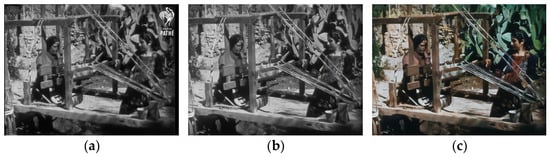
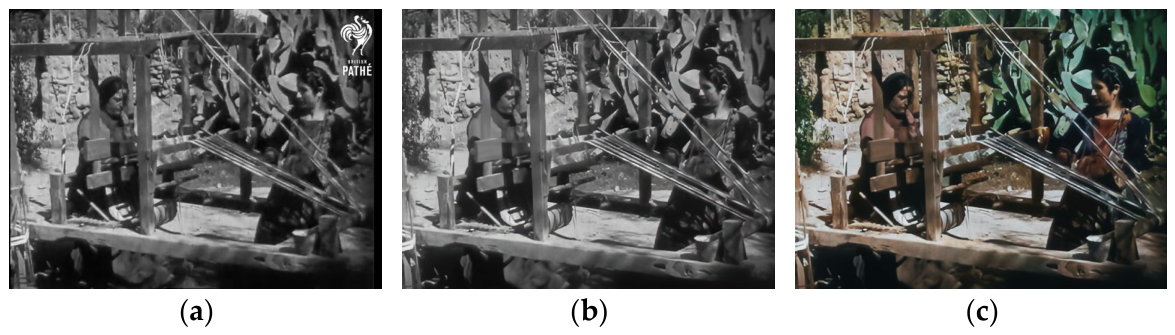

Disclaimer/Publisher’s Note: The statements, opinions and data contained in all publications are solely those of the individual author(s) and contributor(s) and not of MDPI and/or the editor(s). MDPI and/or the editor(s) disclaim responsibility for any injury to people or property resulting from any ideas, methods, instructions or products referred to in the content. |
© 2026 by the authors. Licensee MDPI, Basel, Switzerland. This article is an open access article distributed under the terms and conditions of the Creative Commons Attribution (CC BY) license.