


Abstract
Clinical perfectionism is associated with disordered eating, but the roles of self-compassion and emotion regulation difficulties in this association warrant further investigation. This study examined these relationships in a cross-sectional sample and described the delivery of a perfectionism-focused group intervention and changes observed during the intervention period in an exploratory case series. Study 1 recruited a convenience sample of 317 adults through university online platforms and social media, who completed self-report measures of clinical perfectionism, self-compassion, emotion regulation difficulties, and disordered eating. Regression-based serial mediation analysis examined the indirect associations between clinical perfectionism and disordered eating through self-compassion and emotion regulation difficulties. Clinical perfectionism was positively associated with disordered eating, with a standardized direct effect of 0.282 after accounting for the mediators. The standardized serial indirect effect through lower self-compassion and greater emotion regulation difficulties was 0.094 (95% bootstrap CI [0.049, 0.147]), whereas neither indirect effect through a single mediator had a confidence interval excluding zero. Study 2 was an exploratory, uncontrolled case series of six participants enrolled in a six-session perfectionism-focused group program incorporating self-compassion components. Attendance varied, and one participant withdrew and subsequently received individual counseling and written materials. Mean pre–post changes were −12.50 points in FMPS-assessed perfectionism (95% CI [−18.12, −6.88]), −1.02 in disordered eating (95% CI [−1.88, −0.16]), and 3.33 points in self-compassion (95% CI [0.04, 6.63]). A sensitivity analysis excluding the participant who withdrew showed a similar direction of change, although the 95% CI for self-compassion included zero. Interview accounts described perceived increases in cognitive flexibility and reductions in self-criticism. Together, the studies identify associations warranting further investigation and provide participant feedback to inform intervention refinement. Longitudinal and controlled studies are needed to establish causal mechanisms and intervention efficacy.
1. Introduction
Eating disorders are increasingly viewed as existing along a continuum, ranging from normative eating behaviors to clinically diagnosable disorders (Vainik et al., 2015). Within this continuum, disordered eating refers to maladaptive eating-related cognitions and behaviors associated with negative physical and psychological outcomes, which can occur across both clinical and non-clinical populations (Krahn et al., 2005; Loth et al., 2014). Common manifestations include restrictive eating, binge eating, excessive exercise, purging behaviors, and excessive concerns about weight, shape, and eating control (APA, 2013). These behaviors, such as body dissatisfaction, restrictive eating, and weight-control behaviors, are well-established risk factors for eating disorders (Fitzsimmons-Craft et al., 2015). Disordered eating is prevalent among adolescents and young adults, and approximately 10% of college freshmen are identified as being at risk for disordered eating (Öztürk et al., 2022). In China, eating disorder-related symptoms and eating disorder tendencies are also common among adolescents and university students (M. Liu et al., 2022; Y. Liu et al., 2023). Therefore, further research on psychological factors associated with disordered eating may inform the development and evaluation of intervention approaches.
Perfectionism has been proposed as a transdiagnostic factor that contributes to the development and maintenance of various psychological disorders, including eating disorders (Wade et al., 2008). Within a cognitive–behavioral framework, Shafran et al. (2002) conceptualized clinical perfectionism as a pattern in which self-evaluation depends excessively on pursuing and meeting demanding, self-imposed standards in personally important domains, even when this pursuit has adverse consequences (Riley & Shafran, 2005). Its defining feature is therefore the contingent basis of self-evaluation, rather than high standards alone; perceived failure may consequently provoke harsh self-criticism and renewed efforts to meet those standards (Kobori et al., 2009). In eating disorders, clinical perfectionism is reflected in the overvaluation of weight, shape, and eating control. Individuals may experience intense self-criticism and shame when failing to meet their strict standards, accompanied by fear of failure, excessive monitoring of body shape and weight, and rigid control over food intake (Fairburn et al., 2003b). Empirical studies have consistently demonstrated associations between clinical perfectionism and disordered eating or even eating disorders (Egan et al., 2011; Livet et al., 2023), while meta-analyses suggest that perfectionism-focused cognitive behavioral therapy (CBT) can effectively reduce eating disorder symptoms (Galloway et al., 2022; Robinson & Wade, 2021).
Self-compassion has been proposed as a protective factor that may buffer the psychological consequences of perfectionism. In perfectionism-focused CBT, cultivating self-compassion is often used to reduce self-criticism (Egan et al., 2014; Shafran et al., 2010). Previous studies have shown that lower self-compassion is associated with higher levels of perfectionism across both clinical and non-clinical samples (Ferrari et al., 2018; Ong et al., 2019; Yeshua et al., 2019). When self-evaluation depends heavily on meeting demanding, self-imposed standards, perceived failure may elicit harsh self-criticism and distress (Shafran et al., 2002). Self-compassion offers a more accepting and less judgmental way of responding to such difficulties (Gilbert, 2014). Its relevance to eating-related problems is supported by evidence linking self-compassion and self-criticism to disordered eating (Paranjothy & Wade, 2024). These findings provide a rationale for examining lower self-compassion as a potential statistical mediator of the association between clinical perfectionism and disordered eating.
Emotion regulation difficulties offer another potential account of the association between clinical perfectionism and disordered eating. When self-evaluation depends heavily on meeting demanding standards, perceived failure may generate persistent distress and rigid efforts to control unwanted experiences (Shafran et al., 2002). This provides a theoretical rationale for examining whether clinical perfectionism is associated with difficulties in accepting and managing emotions. The transdiagnostic cognitive–behavioral model proposes that eating-related behaviors may serve as attempts to manage distress (Fairburn et al., 2003b), and emotion regulation difficulties have been associated with disordered eating (Prefit et al., 2019). Accordingly, an indirect association through emotion regulation difficulties may be present beyond the component involving self-compassion.
Self-compassion and emotion regulation difficulties may also be connected within the same model. Self-compassion reflects how individuals respond to perceived failure, whereas emotion regulation difficulties concern how they manage the associated distress. Harsh self-criticism may intensify distress and hinder emotional acceptance and regulation. An experimental study showing that a self-compassion strategy reduced depressed mood supports the plausibility of this link, although it does not directly establish a process underlying disordered eating (Diedrich et al., 2014). Integrating these perspectives allows the model to examine indirect associations through self-compassion alone, emotion regulation difficulties alone, and their proposed sequence. Its contribution is to assess whether the two variables show specific indirect associations when considered together and whether their connection forms an additional serial indirect association. However, the proposed ordering is theoretically motivated; cross-sectional data cannot establish its temporal or causal priority over reverse or reciprocal relationships.
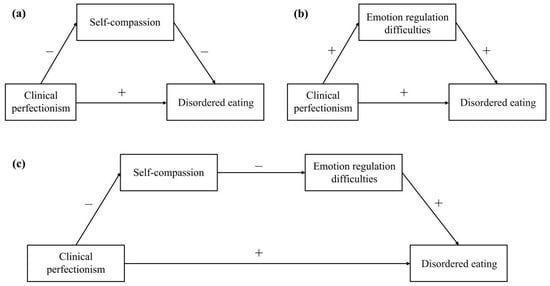
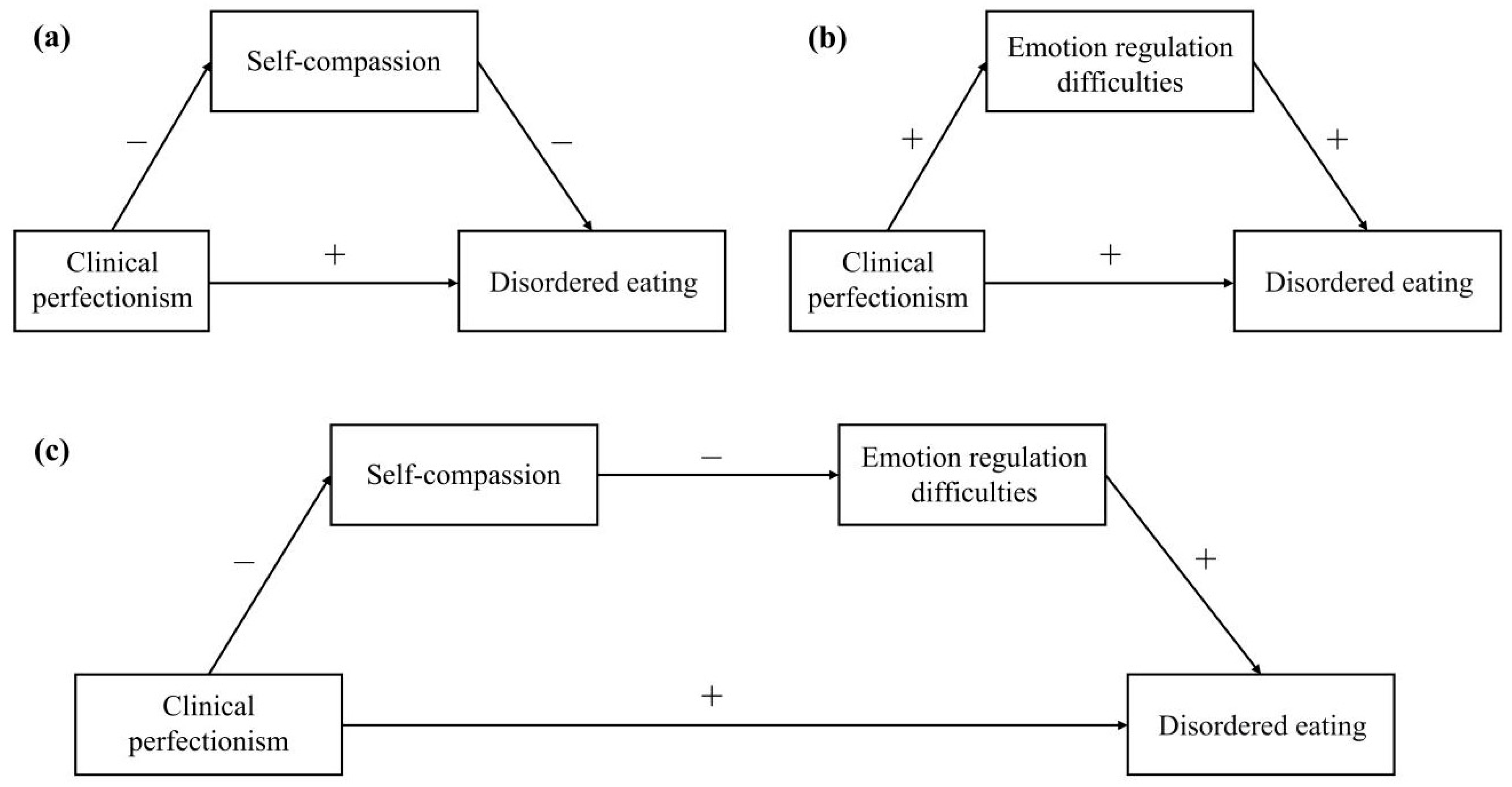
The present research comprised two studies with complementary aims. Using a cross-sectional sample of Chinese adults, Study 1 addressed four theory-informed research questions: Is clinical perfectionism positively associated with disordered eating? (RQ1). Is there a specific indirect association through self-compassion alone? (RQ2, see Figure 1a). Is there a specific indirect association through emotion regulation difficulties alone? (RQ3, see Figure 1b). Is there a serial indirect association through lower self-compassion and greater emotion regulation difficulties? (RQ4, see Figure 1c). All indirect associations were examined within a single integrated model. Study 2 explored the delivery of a perfectionism-focused group program incorporating self-compassion components, participant experiences, and descriptive changes in measured outcomes in an uncontrolled case series. Together, the studies aimed to inform further investigation of the proposed associations and refinement of the intervention.
Figure 1.
Conceptual pathways linking clinical perfectionism to disordered eating. Panels illustrate the theory-informed indirect pathways examined in Study 1: (a) through self-compassion (RQ2); (b) through emotion regulation difficulties (RQ3); and (c) through self-compassion and emotion regulation difficulties in sequence (RQ4). The clinical perfectionism-disordered eating association (RQ1) is shown in all panels. Plus (+) and minus (−) signs indicate theoretically expected positive and negative associations, respectively. The pathways were estimated within a single integrated model; panels display selected paths for clarity. Arrows represent the proposed analytical direction.
2. Study 1: A Cross-Sectional Study Linking Clinical Perfectionism and Disordered Eating
2.1. Materials and Methods
2.1.1. Participants
Participants were recruited through university online platforms and social media aged 18 years or older, yielding a convenience sample of predominantly young, highly educated adults. Before completing the survey, participants received information about the study and provided informed consent. Participation was compensated with 10 RMB after completing the questionnaire. A total of 330 questionnaires were received during June, 2025. Responses were excluded for completion times below 700 s (considering the time taken for the pre-test answering, the number of items and the average reading speed; n = 6), failed attention checks (n = 2), or implausible demographic responses (n = 5). After these quality checks, 317 participants were retained for descriptive analyses, yielding a valid response rate of 96.06%.
The final sample had a mean age of 24.26 years (SD = 5.17), ranging from 18 to 65 years; 41.3% were male and 58.7% were female. BMI data were available for 316 participants, with a mean BMI of 22.06 kg/m2. Of these, 59 participants were underweight (BMI < 18.5), 214 were in the normal-weight range (BMI = 18.5–24.9), and 43 were overweight (BMI > 24.9). Since there was only one missing value, in the subsequent mediation effect analysis, the missing value was filled in using the sample mean. Regarding educational attainment, 71.3% of participants had an undergraduate education, while 5.0% had completed high school/vocational school or below, 12.3% had a junior college education, and 11.4% had postgraduate education or above.
A retrospective Monte Carlo power analysis was conducted for the serial indirect effect using the application developed by Schoemann et al. (2017), with standardized path coefficients estimated from the present data. The simulation used 1000 replications per sample-size condition, 20,000 Monte Carlo draws per replication, 95% confidence intervals, and a random seed of 1234. At N = 230, estimated power for the serial indirect effect was 0.97 (95% CI [0.95, 0.98]), exceeding the target of 0.95. This analysis describes power under the specified parameter assumptions and was not used to determine the sample size before recruitment.
This study has been approved by the Institutional Review Board of School of Psychological and Cognitive Sciences, Peking University (#2024-11-06).
2.1.2. Assessment
Disordered eating was assessed using the Eating Disorder Examination Questionnaire 6.0 (EDE-Q 6.0; Fairburn & Beglin, 1994; Gu et al., 2017). This questionnaire consists of 28 items, of which six open-ended items assess the frequency of disordered eating behaviors over the past 28 days. Items are rated on a 7-point Likert scale ranging from 0 (no days/not at all) to 6 (every day/markedly). In the present study, the global score, calculated as the mean of the four subscales (Restraint, Eating Concern, Shape Concern, Weight Concern), was used to indicate the severity of disordered eating, with higher scores reflecting greater severity. Cronbach’s α was 0.955, and McDonald’s ω = 0.958, indicating good internal consistency. The fitness indices from the confirmatory factor analysis were adequate as well, χ2 = 314.96, df = 202, CFI = 0.937, TLI = 0.928, RMSEA = 0.042 (90% CI [0.036, 0.049]), SRMR = 0.064.
Clinical perfectionism was assessed using the Clinical Perfectionism Questionnaire (CPQ; Fairburn et al., 2003a). The Chinese version consists of 12 items, which are rated on a 4-point Likert scale ranging from “not at all” to “all the time,” with higher scores indicating higher levels of clinical perfectionism. The Chinese version was translated by the researchers following a translation-back translation-expert review and revision procedure. Cronbach’s α was 0.795, and McDonald’s ω = 0.792, indicating acceptable internal consistency. The fitness indices from the confirmatory factor analysis were adequate as well, χ2 = 85.53, df = 53, CFI = 0.921, TLI = 0.917, RMSEA = 0.044 (90% CI [0.031, 0.057]), SRMR = 0.077. It is particularly necessary to emphasize that both the CPQ and the Frost Multidimensional Perfectionism Scale were administered in Study 1. During manuscript revision, the CPQ was adopted as the predictor in the mediation analyses because it more directly reflects the conceptualization of clinical perfectionism underlying the present study, particularly the excessive dependence of self-evaluation on meeting demanding personal standards (Shafran et al., 2002).
Self-compassion was assessed using the Self-Compassion Scale-Short Form (SCS-SF; Raes et al., 2011; Meng et al., 2019). The Chinese version consists of 12 items, which are rated on a 5-point Likert scale ranging from 1 (never) to 5 (always), with higher scores indicating higher self-compassion. Cronbach’s α was 0.837, and McDonald’s ω = 0.853, indicating acceptable internal consistency. The fitness indices from the confirmatory factor analysis were adequate as well, χ2 = 125.76, df = 51, CFI = 0.914, TLI = 0.903, RMSEA = 0.068 (90% CI [0.055, 0.082]), SRMR = 0.059.
Emotion regulation difficulties were assessed using the Difficulties in Emotion Regulation Scale (DERS; Gratz & Roemer, 2004; Li et al., 2018). The Chinese version consists of 32 items, which are rated on a 5-point Likert scale ranging from 1 (almost never) to 5 (almost always), with higher scores indicating greater difficulties in emotion regulation. In the present study, Cronbach’s α was 0.943, and McDonald’s ω = 0.937, indicating acceptable internal consistency. The CFA yielded χ2 = 1249.62, df = 449, CFI = 0.909, TLI = 0.899, RMSEA = 0.075 (90% CI [0.070, 0.080]), SRMR = 0.074. Although most fit indices met the stated criteria, the TLI was marginally below the threshold of 0.90, indicating that model fit was not uniformly acceptable across all indices.
2.1.3. Data Analysis
Data were analyzed using SPSS 29.0 (IBM Corp., Armonk, NY, USA) for data screening, descriptive statistics, correlation and mediation analyses. The sequential mediation model was established using the PROCESS plugin by Hayes (2022). Clinical perfectionism was set as the independent variable, disordered eating was set as the dependent variable, while self-compassion and emotion regulation difficulties were respectively set as mediating variables. Model 6 was selected from the PROCESS plugin for the sequential mediation model, and indirect effects were evaluated using 5000 bootstrap samples, with effects considered significant when the 95% bootstrap confidence interval (CI) did not include zero. Gender, age, education level, BMI, and subjective economic status were set as covariates. Subjective economic status was assessed using a single self-report item rated on a ten-point scale, with higher scores indicating higher perceived economic status. All the scales were set as mandatory responses and there were no missing values for the core variables.
Mplus 8.3 (Muthén & Muthén, Los Angeles, CA, USA) was used for confirmatory factor analysis. Model parameters were estimated using the weighted least squares mean- and variance-adjusted (WLSMV) estimator. The specified measurement models included two correlated factors for the CPQ, four correlated factors for the EDE-Q, three correlated factors for the SCS-SF, and six correlated factors for the DERS. The EDE-Q model included a cross-loading of Item 8 on the Shape Concern and Weight Concern factors. No correlated residuals were specified in any of the models. Model fit was primarily evaluated using indices including the CFI, TLI, RMSEA, and SRMR. In general, CFI and TLI values above 0.90 and RMSEA and SRMR values below 0.08 indicate a good model fit (Kline, 2023).
Study 1 was not preregistered; the mediation analyses addressed theory-informed research questions and should not be interpreted as preregistered confirmatory tests.
2.2. Results
2.2.1. Common Method Bias Test
The deviation problem of common method was tested by Harman single factor method. Exploratory factor analysis found that there were 13 factors with eigenvalue greater than 1, and the explanation rate of the first factor was 21.68%, and the single factor model fitting was poor, χ2 = 12,517.60, df = 2925, CFI = 0.707, TLI = 0.699, RMSEA = 0.102 (90% CI [0.100, 0.104]), SRMR = 0.153. This indicates that there is no obvious common method bias problem in this study.
2.2.2. Descriptive Statistics and Correlation Analysis
Descriptive statistics and correlation analysis of each variable are shown in Table 1. Each variable showed significant correlations, and the directions were in line with theoretical expectations.
Table 1.
Descriptive statistics and correlation analysis of each variable (N = 317).
2.2.3. Cross-Sectional Mediation Models
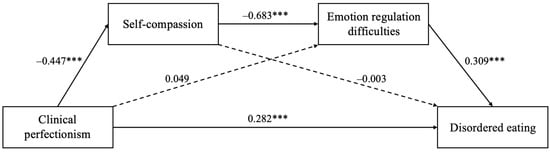
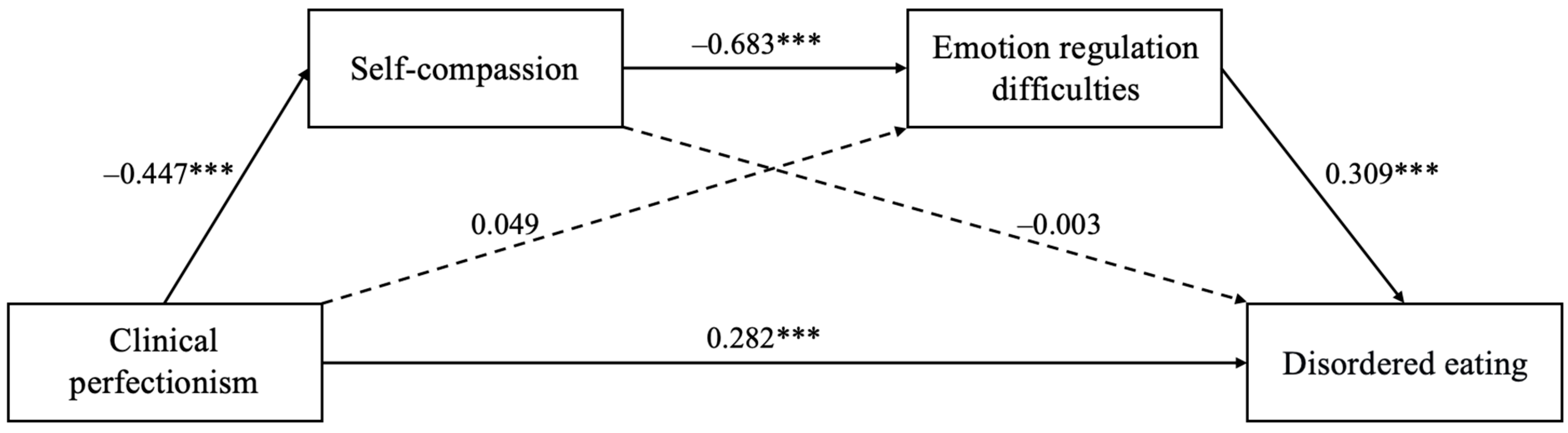
As shown in Figure 2, clinical perfectionism was significantly associated with lower self-compassion, β = −0.447, p < 0.001. In turn, lower self-compassion was strongly associated with greater emotion regulation difficulties, β = −0.683, p < 0.001. After self-compassion and the covariates were taken into account, however, the direct association between clinical perfectionism and emotion regulation difficulties was not significant, β = 0.049, p = 0.284.
Figure 2.
Standardized path coefficient results of the mediation models with the covariates included. Solid lines indicate statistically significant paths, whereas dashed lines indicate nonsignificant paths. *** p < 0.001.
For disordered eating, greater emotion regulation difficulties were significantly associated with higher symptom severity, β = 0.309, p < 0.001. Clinical perfectionism also remained significantly associated with disordered eating after both mediators and covariates were included in the model, β = 0.282, p < 0.001. In contrast, self-compassion was not directly associated with disordered eating after emotion regulation difficulties and the other predictors were controlled, β = −0.003, p = 0.967.
The standardized total, direct, and indirect effects are presented in Table 2. The total indirect effect of clinical perfectionism on disordered eating was significant. Examination of the specific indirect effects indicated that neither the indirect pathway through self-compassion alone (RQ2) nor the indirect pathway through emotion regulation difficulties alone (RQ3) was significant. In contrast, the serial indirect pathway from clinical perfectionism to disordered eating through lower self-compassion and subsequently greater emotion regulation difficulties was significant (RQ4).
Table 2.
Mediation effects of clinical perfectionism on disordered eating (standardized estimates).
2.3. Discussion for Study 1
Study 1 examined the association between clinical perfectionism and disordered eating and the specific indirect associations involving self-compassion and emotion regulation difficulties. Clinical perfectionism was positively associated with disordered eating, consistent with broader evidence linking perfectionism to eating-related symptoms (Bills et al., 2023; Bulik et al., 2003; Livet et al., 2023; Stackpole et al., 2023). This association remained significant after accounting for both proposed mediators and gender, age, education level, BMI, and subjective economic status. Within the cognitive–behavioral account of clinical perfectionism, excessive dependence of self-evaluation on meeting demanding standards provides a theoretical context for understanding this association (Shafran et al., 2002). However, the present findings do not establish a causal contribution to disordered eating.
The integrated model distinguished the proposed serial indirect association from the two indirect associations through individual mediators. Clinical perfectionism was associated with lower self-compassion, which was associated with greater emotion regulation difficulties; greater emotion regulation difficulties were, in turn, associated with more disordered eating. These component associations are broadly consistent with previous research linking perfectionism to lower self-compassion (Ong et al., 2019; Yeshua et al., 2019), experimental evidence concerning self-compassion as an emotion regulation strategy (Diedrich et al., 2014), and evidence relating emotion regulation difficulties to disordered eating (Prefit et al., 2019). However, the strong association between self-compassion and emotion regulation difficulties (β = −0.683) may partly reflect content overlap between the uncompassionate items of the SCS-SF and the DERS, which warrants caution when interpreting the serial indirect association. The serial indirect effect had a bootstrap confidence interval excluding zero, whereas neither specific indirect effect through self-compassion alone nor through emotion regulation difficulties alone did. Thus, the findings were consistent with the proposed serial association but did not support the two single-mediator indirect associations within this model.
Considering self-compassion and emotion regulation difficulties together provides a more differentiated account of their associations with disordered eating. Previous evidence links self-compassion and self-criticism to disordered eating (Paranjothy & Wade, 2024), while the transdiagnostic cognitive–behavioral model describes eating-related behaviors as potentially serving a distress-regulation function (Fairburn et al., 2003b). The present pattern brings these perspectives together: the indirect association involving self-compassion was consistent with a connection through emotion regulation difficulties rather than a separate indirect association through self-compassion alone. This does not contradict evidence of a broader self-compassion–disordered eating association, because the specific indirect effect was estimated conditional on emotion regulation difficulties and the other variables in the model. Likewise, the nonsignificant individual indirect effects do not demonstrate that either variable is unimportant. The remaining direct association indicates that the proposed mediators did not fully account for the observed relationship, but it does not identify additional causal mechanisms.
Several limitations constrain interpretation. First, the cross-sectional design cannot establish temporal or causal ordering. Reverse and reciprocal relationships remain plausible, including eating-related distress reinforcing self-criticism or difficulties in emotion regulation undermining self-compassion. The present findings cannot distinguish the proposed sequence from these alternatives. Second, all constructs were assessed by self-report at a single occasion. Shared response tendencies, overlapping item content, and current emotional state may contribute to the observed associations and potentially inflate them. Although demographic covariates were included, adjustment does not eliminate unmeasured confounding. Third, recruitment through university platforms and social media yielded a convenience sample of predominantly young, highly educated adults. The findings concern variation in self-reported eating-related symptoms and cannot be assumed to generalize to diagnosed eating disorders or other clinical and high-risk populations.
Taken together, Study 1 provides evidence of a cross-sectional serial indirect association that warrants longitudinal and experimental investigation. Alongside existing work on perfectionism-focused CBT and its incorporation of self-compassion (Egan et al., 2014), these findings inform the exploration of an intervention addressing perfectionistic self-evaluation and self-compassion. They do not demonstrate that changing these factors would reduce disordered eating. Study 2 therefore focused on intervention delivery, participant experiences, and descriptive changes in an exploratory, uncontrolled case series.
3. Study 2: An Exploratory Case Series of a Group-Based Intervention for Disordered Eating
3.1. Materials and Methods
3.1.1. Participants
Participants were recruited through online distribution of recruitment posters. Eligibility criteria for the interview were: (1) a score greater than 69 on the negative perfectionism composite of the Chinese Frost Multidimensional Perfectionism Scale (FMPS) (Zhang & Wang, 2014); (2) reporting improvement in disordered eating as the primary reason for seeking help; and (3) willingness to participate in the group intervention and provide written informed consent. Exclusion criteria were: (1) currently receiving psychological counseling or psychotherapy; (2) current moderate or high suicide risk; and (3) the presence of psychotic symptoms.
A total of 27 application questionnaires were received, of which 13 applicants met the criteria for an interview. Nine participants completed a scheduled interview; the remaining four did not proceed because of scheduling conflicts. Following the interviews, two applicants were not offered a place because they were quite older than the other prospective members and had lower motivation for participation; thus, the facilitator judged that differences in life stage and the lower motivation might make it difficult for them to integrate into the group. One additional participant withdrew because of scheduling conflicts. The final group therefore consisted of six participants, with a mean age of 24.00 years (SD = 4.34). Four participants were female and two were male. Two participants were undergraduate students, two were master’s students, one had obtained a bachelor’s degree, and one had obtained a master’s degree.
This study has been approved by the Institutional Review Board of School of Psychological and Cognitive Sciences, Peking University (#2024-11-06).
3.1.2. Study Design and Procedure
Study 2 used an exploratory, uncontrolled case-series design to describe intervention delivery, participant experiences, and changes in measured outcomes. The study was not prospectively registered.
Applicants completed an online screening questionnaire covering demographic information, psychiatric history, suicide risk based on the Mini International Neuropsychiatric Interview (MINI), eating-related concerns, and the FMPS. Those meeting the initial screening criteria were invited to a 30–60 min online intake interview conducted by the group facilitator. The interview assessed perfectionism-related distress or impairment, motivation for participation, expectations regarding the program, and suitability for the group. Participants provided written informed consent before the interview and were informed about confidentiality and audio recording for research and professional supervision. Applicants identified as being at moderate or high suicide risk received information about counseling and crisis-support services.
Six participants entered the group program, which comprised six sessions delivered over three weeks. Participants who missed sessions were provided with written summaries of the session content and relevant skills. One participant withdrew from the group following an interpersonal conflict and subsequently received written materials and two individual counseling sessions, each lasting one hour. This participant continued to complete the outcome assessments. Participants therefore received different amounts and forms of intervention. The primary analyses included all six participants with complete outcome assessments; a sensitivity analysis excluding the participant who withdrew preserved the direction of mean changes, although effect-size estimates and confidence intervals differed (see Appendix A).
Perfectionism, self-compassion, and disordered eating were assessed at three time points: T1, before the first session; T2, before the fourth session; and T3, after the intervention period. All six participants completed assessments at all three time points. Because the intervention did not directly target emotion regulation difficulties, this variable was not assessed in Study 2. Study 2 therefore did not test the serial model examined in Study 1. Questionnaire assessments were administered by other researchers, without involvement of the group facilitator. The facilitator conducted qualitative interviews lasting approximately 30–60 min before and after the intervention to explore participants’ experiences, perceived changes, and feedback on the program.
3.1.3. Intervention Protocol
The intervention used a self-developed perfectionism-focused group program, The Courage to Be Imperfect. This program consisted of six modules: understanding perfectionism, analyzing perfectionism, coping with self-criticism, increasing the allowance for mistakes, changing behavioral patterns, and review and future planning. Sessions were conducted twice weekly for 2 h each over three consecutive weeks, resulting in a total intervention duration of 12 h. The theoretical basis, development and design process, and detailed outline of the intervention program are provided in the Supplementary Material.
3.1.4. Facilitator and Quality Control
The group was conducted by one facilitator and one observer. The facilitator (XD) had received training in CBT and group psychotherapy and had approximately one and a half years of experience providing individual CBT. The facilitator had previously led mindfulness groups and perfectionism-focused intervention groups and had contributed to the development of the first three chapters of the group intervention manual The Courage to Be Imperfect. The observer was a third-year undergraduate student major in psychology who had also received CBT training. When the facilitator encountered difficulties that could not be adequately addressed during the group sessions, supervision was sought from the academic supervisor (PH and ZF), who had extensive experience in CBT research and clinical practice. Due to the exploratory nature of the study, the treatment fidelity was not formally evaluated.
3.1.5. Assessment
Although Study 1 used a researcher-translated Chinese version of the CPQ, evidence concerning its test–retest reliability and validated screening thresholds in Chinese populations remains limited. Study 2 therefore used the Chinese version of the FMPS, for which published psychometric evidence was available (Zi & Zhou, 2006), for participant screening and repeated assessment. The FMPS scores were interpreted as indicators of the assessed perfectionism dimensions rather than as a direct measure of clinical perfectionism. The Chinese version consists of 27 items, which are rated on a 5-point Likert scale ranging from “strongly disagree” to “strongly agree,” with higher scores indicating higher levels of perfectionism. According to Zi and Zhou (2006), the negative perfectionism dimension of the FMPS was operationalized as the combined score of the Concern over Mistakes, Personal Standards, Doubts about Actions, and Parental Expectations subscales, with higher scores indicating greater perfectionism.
Disordered eating and self-compassion measurement tools used in this study were the same as those in Study 1.
3.1.6. Data Analysis
Quantitative analyses were conducted using SPSS 29.0. Given the small sample and uncontrolled design, interpretation emphasized descriptive statistics and individual trajectories across T1, T2, and T3. Exploratory Friedman tests examined differences across the three assessments, and pairwise Wilcoxon signed-rank tests examined differences between time points. Pairwise comparisons were exploratory and were not restricted to outcomes with significant Friedman tests. Two-tailed exact p-values were reported and were not interpreted as evidence of intervention efficacy. The primary analyses included all six participants, who completed all three assessments. A sensitivity analysis excluded the participant who withdrew from the group and subsequently received individual counseling; the overall pattern of findings remained similar, although effect-size estimates and confidence intervals differed (see Appendix A).
The qualitative component was presented as a descriptive summary of interview accounts organized around four areas: perfectionism, self-compassion, disordered eating, and feedback on the group program. Accounts of perceived change were illustrated through participants’ descriptions before and after the intervention. The summary covered all-or-nothing thinking and flexibility in personal standards; self-criticism, acceptance of mistakes, and shared experiences; eating-related concerns and behaviors; and perceived usefulness of intervention activities, difficulties with homework, and the program’s duration. Accounts of limited change and difficulties were included alongside reports of improvement. Participant labels A-F were used to attribute illustrative quotations and preserve anonymity. The quotations were translated by the interviewer and then reviewed by other researchers.
Interview findings were used to describe participants’ perspectives and inform refinement of the program, rather than to establish intervention efficacy or corroborate the serial model examined in Study 1. Because the facilitator conducted the interviews, participants’ accounts may have been influenced by social desirability or expectations concerning the intervention.
3.2. Results
3.2.1. Changes in Measured Outcomes
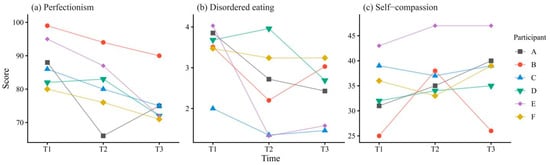
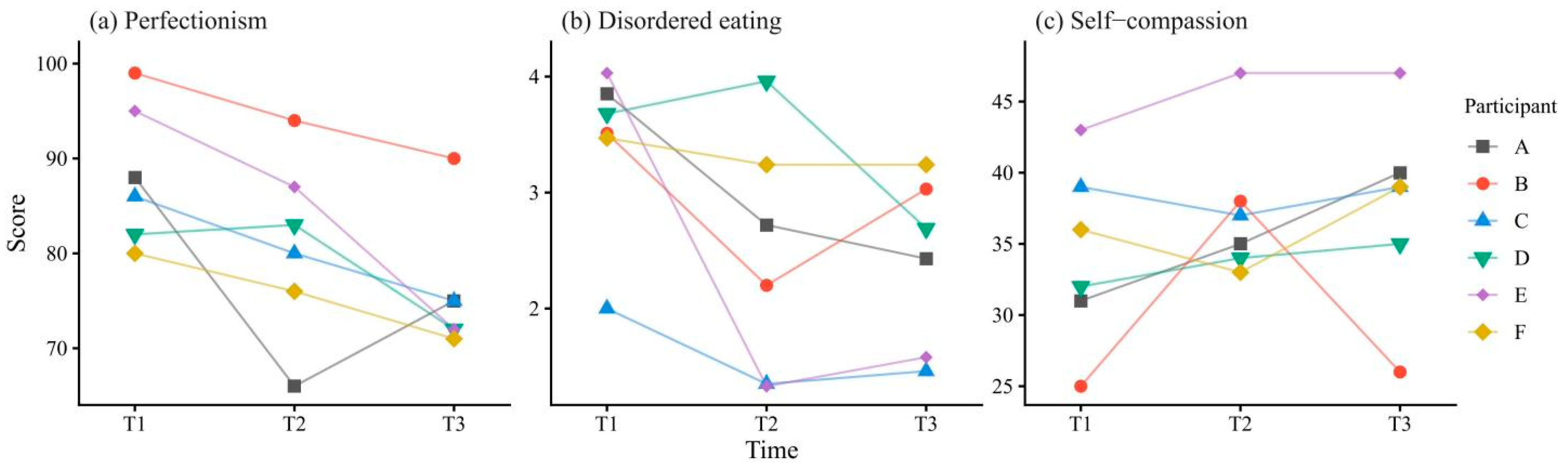
Descriptive statistics for perfectionism, disordered eating, and self-compassion at T1, T2, and T3 are presented in Table 3, and individual trajectories are shown in Figure 3. Exploratory pairwise comparisons are reported in Table 4.
Table 3.
Descriptive statistics of all measured variables at three time points (N = 6).
Figure 3.
Changes in the measured variables of each group member at three time points. (a) Perfectionism, (b) disordered eating, and (c) self-compassion.
Table 4.
The post hoc test results of pairwise comparisons using the Wilcoxon signed-rank test (N = 6).
From T1 to T3, mean changes were −12.50 points for perfectionism (95% CI [−18.12, −6.88]), −1.02 for disordered eating (95% CI [−1.88, −0.16]), and 3.33 points for self-compassion (95% CI [0.04, 6.63]). Corresponding paired standardized change estimates were dz = −2.33, −1.24, and 1.06, respectively. These estimates describe within-sample changes and do not establish intervention efficacy.
Exploratory Friedman tests indicated differences across time for perfectionism, χ2(2) = 8.33, exact p = 0.016. The corresponding results for disordered eating and self-compassion were χ2(2) = 6.52, exact p = 0.052, and χ2(2) = 5.18, exact p = 0.070, respectively. The exact Wilcoxon p-values for the T1–T3 comparisons were approximately 0.031 for perfectionism and disordered eating and 0.063 for self-compassion. Given the six-person sample and the discrete distribution of these tests, these p-values provide limited information and were treated as supplementary to the descriptive patterns.
The sensitivity analysis excluding the participant who withdrew showed a similar overall pattern of findings, although effect-size estimates and confidence intervals differed (see Appendix A).
3.2.2. Attendance Records and Adverse Events
Attendance varied across the six group sessions. All six participants attended Session 1; four attended Session 2 (A, B, E, F); three attended Session 3 (B, D, E); and five attended each of Sessions 4–6 (except for E). During Session 3, a conflict occurred between participants B and E. Participant E subsequently missed one session and later decided to withdraw from the group. Following withdrawal, the facilitator provided participant E with two individual counseling sessions, each lasting 1 h. No other adverse events occurred.
3.2.3. Descriptive Summary of Interview Accounts
Perfectionism: Participants described changes in how they approached personal standards and perceived mistakes, although their experiences varied. At baseline, participant B described all-or-nothing thinking, explaining that tasks were often abandoned if they could not be completed exceptionally well. After the intervention, B continued to endorse high standards but reported greater awareness of perfectionistic thinking and estimated that their all-or-nothing thinking had “decreased by about 15%.” Participant C described less detailed planning and greater comfort with spontaneous choices. Participant A, who initially regarded gradual goals as “worthless,” reported becoming more accepting of completing only “30% or 40%” of planned thesis revisions in a day. Participant F described placing fewer demands on themselves across studying, eating, and exercise.
Self-compassion: Participants described feeling less alone in their difficulties and becoming more accepting of mistakes. Participant A reported relief on recognizing that “there are other people struggling with similar problems,” while participant D described a sense of resonance when listening to other members. Participant B reported that mistakes no longer felt “so frightening” and could instead be approached as problems to work through or seek help with. Participant C perceived fewer self-critical comments in the group over time. Participant A also described becoming less judgmental about eating, stating that “having something to eat does not seem like such a serious problem anymore.” These accounts illustrate perceived changes in self-directed responses rather than establishing that the group increased self-compassion.
Disordered eating: Participant B initially described restrictive eating, including consuming “zero calories today” and subsequently feeling that intake the following day no longer mattered. After the intervention, B reported eating more regularly, including having a typical lunch such as rice with tomato and scrambled eggs. Participant F initially described body dissatisfaction and withdrawal from social interactions. F later reported less emotional eating while attending to other personal difficulties: “When I started focusing on those other problems, I found that my emotional eating decreased a lot. I realized there were more important issues that I needed to address.” These accounts describe participants’ perceived changes but do not establish their causes.
Feedback on the group intervention: Participants identified activities they found useful alongside difficulties with the program. Participant C valued behavioral experiments because “the actual outcome showed me that nothing bad happened.” Participant F found functional analysis helpful in understanding the longer-term consequences of perfectionistic behavior, while participant D valued psychoeducation and imagery exercises. However, D reported confusion about worksheets with similar content and suggested clearer explanations of their distinct purposes. Participants also described barriers involving habitual responses, limited time for self-monitoring, and the short program duration. C noted that the three-week format allowed limited time to observe substantial changes. These accounts provide practical suggestions for refining homework instructions and allowing more time for practice.
3.3. Discussion for Study 2
Study 2 described the delivery of a perfectionism-focused group program and changes in perfectionism, self-compassion, and disordered eating in six participants. Mean perfectionism and disordered eating scores decreased from T1 to T3, while self-compassion increased. These changes were accompanied by interview accounts of greater flexibility in personal standards, less self-criticism, and changes in eating-related experiences. Together, the findings document changes observed during the intervention period and participants’ perspectives.
The program’s focus on perfectionistic thinking and self-criticism was informed by cognitive–behavioral approaches to perfectionism that incorporate self-compassion (Egan et al., 2014). Participants’ accounts illustrate how they understood and applied these ideas, while also identifying difficulties with homework and limited time for practice. However, perfectionism was assessed using an FMPS composite rather than the CPQ, so the observed score changes concern the measured perfectionism dimensions rather than directly demonstrating changes in clinical perfectionism. Moreover, emotion regulation difficulties were not assessed because the program did not directly target this variable. Study 2 therefore did not test the serial model examined in Study 1, and the interview accounts cannot establish that the proposed mechanism operated during the intervention.
Variation in participation further limits interpretation. Attendance differed across sessions, and participant E withdrew from the group and subsequently received written materials and individual counseling. E’s FMPS score decreased by 23 points from T1 to T3, but this change cannot be attributed to either group or individual intervention. Excluding E preserved the direction of mean change across outcomes, although effect-size estimates and confidence intervals differed, and the self-compassion interval included zero. The sensitivity analysis therefore indicates consistency in the direction of change rather than equivalent results or evidence that treatment format was unimportant. These observations underscore the need to document attendance, supplementary support, and intervention dose in future evaluations.
The assessment schedule also constrains interpretation of eating-related changes. The EDE-Q assesses the preceding 28 days, whereas the program lasted three weeks and T2 and T3 were approximately one week apart. The recall periods therefore overlapped substantially, and the final assessment included some experiences preceding the intervention. Consequently, the scores do not provide independent measures of eating-related experiences confined to each intervention stage. Future evaluations should align assessment timing with the instrument’s recall period and include follow-up assessments to examine whether changes persist.
Several additional limitations should be acknowledged. First, the six-person sample and absence of a control condition prevent separation of intervention-related changes from natural fluctuation, regression to the mean, expectancy, or other influences. Regression to the mean is particularly relevant because participants were selected for elevated screening scores. Effect-size estimates are also unstable at this sample size and should not be interpreted as controlled treatment effects. Second, group selection included the facilitator’s judgment about age and group suitability, which limits reproducibility and representativeness. Third, although other researchers administered the questionnaires, the facilitator conducted the qualitative interviews. This dual role may have influenced disclosure and encouraged accounts consistent with perceived expectations. The interview material was therefore treated as illustrative rather than independent confirmation of quantitative findings. Finally, the short intervention period and absence of follow-up prevent conclusions about sustained change.
The principal contribution of Study 2 is to identify practical issues for refining and evaluating the program. Participants’ feedback suggests clearer differentiation of homework tasks and more time for practice, while attendance variation and withdrawal highlight the importance of explicit procedures for missed sessions and additional support. Future studies should use transparent eligibility criteria, document intervention fidelity and dose, and include independent interviews and controlled comparisons. The present case series informs this further development without establishing the program’s effectiveness or its preventive or clinical utility.
4. Discussion
The present research combined a cross-sectional examination of clinical perfectionism and disordered eating with an exploratory case series of a perfectionism-focused group program. Study 1 identified a positive association between clinical perfectionism and disordered eating and a serial indirect association involving lower self-compassion and greater emotion regulation difficulties. Neither specific indirect association through an individual mediator had a bootstrap confidence interval excluding zero. Study 2 documented intervention delivery, participant experiences, and descriptive changes in perfectionism, self-compassion, and disordered eating. The studies provide complementary information about associations and intervention implementation, but they do not constitute a sequential test of a shared causal mechanism.
4.1. Theoretical Implications
Study 1 contributes by examining self-compassion and emotion regulation difficulties within a single model. Previous research has linked self-compassion and self-criticism to disordered eating (Paranjothy & Wade, 2024) and emotion regulation difficulties to eating-related symptoms (Prefit et al., 2019). The present results suggest that these associations may be interconnected: the specific indirect association involving self-compassion was consistent with a connection through emotion regulation difficulties rather than through self-compassion alone. This interpretation is also compatible with experimental evidence concerning self-compassion as an emotion regulation strategy, although that evidence does not establish the same process in disordered eating (Diedrich et al., 2014).
The findings are relevant to the cognitive–behavioral account of clinical perfectionism, which emphasizes the excessive dependence of self-evaluation on meeting demanding standards (Shafran et al., 2002). Examining self-directed responses and emotion regulation together offers a way to investigate how this pattern is associated with eating-related difficulties. However, the cross-sectional model cannot establish that self-compassion precedes emotion regulation difficulties, nor do the nonsignificant individual indirect effects demonstrate that either variable is unimportant. The remaining direct association likewise indicates that the proposed mediators did not fully account for the observed relationship without identifying additional mechanisms.
The two studies also differed in their measurement of perfectionism. Study 1 used a researcher-translated CPQ, whereas Study 2 used an FMPS composite. These instruments assess related but nonidentical aspects of perfectionism, limiting direct comparison across studies. Moreover, Study 2 did not assess emotion regulation difficulties and therefore cannot confirm or extend the serial model empirically. Its contribution concerns the application of a theoretically informed program and the experiences reported during its delivery.
4.2. Practical Implications
The practical contribution of this research is to inform intervention refinement and future evaluation. Perfectionism-focused CBT already incorporates work on demanding standards and self-criticism, including self-compassion components (Egan et al., 2014). Study 1 identifies associated psychological processes that could be examined prospectively, while Study 2 illustrates participants’ experiences of applying related activities. Neither study determines which intervention components are necessary or whether changing these processes produces improvements in disordered eating.
Participant feedback provides specific directions for program development, including clearer explanations of homework tasks and more time for practice. Attendance variation, interpersonal conflict, and the provision of individual support also indicate a need for transparent procedures governing missed sessions, withdrawal, and additional intervention. These observations may help improve consistency of delivery, but they do not establish acceptability or feasibility across a broader population.
Future versions could incorporate explicit emotion regulation content and assess the corresponding outcomes, given the associations observed in Study 1 and previous evidence linking emotion regulation difficulties to disordered eating (Prefit et al., 2019). Such additions would require evaluation rather than an assumption that they improve outcomes. The present findings do not establish prevention of eating disorders, effectiveness in diagnosed patients, benefits for athletes or dancers, or value as an adjunct to existing treatment. These applications remain questions for future research.
4.3. Limitations and Future Directions
Several limitations affect interpretation across the studies. Study 1 relied on concurrent self-report measures in a convenience sample of predominantly young, highly educated adults. Temporal ordering, unmeasured confounding, and shared method influences remain unresolved. Its indirect effects were estimated from observed composite scores without explicitly modeling measurement error. Interpretation also depends on the validity of the researcher-translated CPQ and the other measures in this sample. Further measurement validation and longitudinal studies are needed before stronger conclusions can be drawn about the proposed processes. Meanwhile, although the correlated-factors CFA models showed generally acceptable fit, this does not necessarily justify the use of single composite scores. Future research should further examine the appropriateness of total-score interpretations for these multidimensional constructs.
Study 2 included only six participants, lacked a control condition, and involved variation in attendance and intervention format. Selection based on elevated screening scores makes regression to the mean a plausible contributor to change, alongside natural fluctuation and expectancy. Sensitivity analysis preserved the direction of mean changes but did not eliminate these explanations. The facilitator’s role as interviewer may also have influenced participants’ accounts, although other researchers administered the questionnaires. The illustrative interview summaries should therefore not be treated as independent evidence of efficacy.
The three-week intervention period, overlapping EDE-Q recall windows, and absence of follow-up further limit conclusions about the timing and persistence of change. Future evaluations should use transparent selection criteria, document intervention dose and fidelity, align assessment schedules with instrument recall periods, and include independent assessment where possible. Longitudinal mechanism studies and adequately planned controlled intervention studies would help distinguish the proposed associations from alternative explanations.
5. Conclusions
Clinical perfectionism was positively associated with disordered eating in a cross-sectional sample of Chinese adults. The findings supported a serial indirect association through lower self-compassion and greater emotion regulation difficulties, whereas neither specific indirect association through a single mediator was statistically significant. These results highlight the value of examining self-compassion and emotion regulation difficulties together when investigating the relationship between clinical perfectionism and disordered eating, while leaving the temporal and causal ordering unresolved.
The exploratory case series documented decreases in FMPS-assessed perfectionism and disordered eating and an increase in self-compassion during a perfectionism-focused group program. However, the self-compassion confidence interval included zero when the participant who withdrew was excluded. Participant accounts provided practical directions for refining the program, including clearer homework instructions and more time for practice. Together, these studies identify associations for further investigation and inform intervention development. Longitudinal studies and adequately powered controlled trials are needed to clarify the proposed processes and evaluate intervention efficacy and the persistence of changes.
Supplementary Materials
The following supporting information can be downloaded at https://www.mdpi.com/article/10.3390/bs16111994/s1. Supplementary Material: The theoretical basis, development and design process, and detailed outline of the intervention program.
Author Contributions
Conceptualization: P.H. and Z.F.; Methodology: X.D. and J.W.; Formal Analysis: X.D. and J.W.; Investigation: X.D.; Writing—Original Draft: X.H. and X.D.; Writing—Review & Editing: P.H., X.H., X.D. and Z.F. All authors have read and agreed to the published version of the manuscript.
Funding
This research was funded by The Social Science Research Project Fund of Jiangsu Province (Project No. 2025SJYB0835), and Chen Zhonggeng Clinical and Counseling Psychology Development Foundation (Project No. 2023YJ002-LC). The funder provided research funding and covered publication fees but had no role in the study design, data collection, analysis or interpretation, manuscript preparation, or the decision to submit the manuscript for publication.
Institutional Review Board Statement
The study was conducted in accordance with the Declaration of Helsinki and approved by the Institutional Review Board of School of Psychological and Cognitive Sciences, Peking University (protocol code: #2024-11-06; date of approval: 21 November 2024).
Informed Consent Statement
Informed consent was obtained from all participants involved in the study. Written informed consent has been obtained from the participants to publish this paper.
Data Availability Statement
The data of this study are available from the corresponding author upon reasonable request.
Acknowledgments
The authors would like to thank all the participants for their valuable assistance to this work.
Conflicts of Interest
The authors declare no conflicts of interest.
Abbreviations
The following abbreviations are used in this manuscript:
| BMI | Body Mass Index |
| CBT | Cognitive Behavioral Therapy |
| CBT-E | Enhanced Cognitive Behavioral Therapy |
| CFI | Comparative Fit Index |
| CI | Confidence Interval |
| CPQ | Clinical Perfectionism Questionnaire |
| DERS | Difficulties in Emotion Regulation Scale |
| EDE-Q | Eating Disorder Examination Questionnaire |
| FMPS | Frost Multidimensional Perfectionism Scale |
| MINI | Mini International Neuropsychiatric Interview |
| RMSEA | Root Mean Square Error of Approximation |
| SCS-SF | Self-Compassion Scale-Short Form |
| SPSS | Statistical Package for the Social Sciences |
| SRMR | Standardized Root Mean Square Residual |
| TLI | Tucker–Lewis Index |
Appendix A
The sensitivity analysis excluding the participant who withdrew preserved the direction of mean changes, although effect-size estimates and confidence intervals differed.
From T1 to T3, mean changes were −10.40 points for perfectionism (95% CI [−12.48, −8.32]), −0.73 for disordered eating (95% CI [−1.32, −0.15]), and 3.20 points for self-compassion (95% CI [−1.14, 7.54]). Corresponding paired standardized change estimates were dz = −6.22, −1.55, and 0.92, respectively. These estimates describe within-sample changes and do not establish intervention efficacy.
Exploratory Friedman tests indicated differences across time for perfectionism, χ2(2) = 6.40, exact p = 0.041. The corresponding results for disordered eating and self-compassion were χ2(2) = 5.16, exact p = 0.076, and χ2(2) = 4.11, exact p = 0.128, respectively. The exact Wilcoxon p-values for the T1–T3 comparisons were approximately 0.063 for perfectionism and disordered eating and 0.125 for self-compassion. Given the five-person sample and the discrete distribution of these tests, these p-values provide limited information and were treated as supplementary to the descriptive patterns.
Table A1.
Descriptive statistics of all measured variables at three time points (N = 5).
Table A2.
The post hoc test results of pairwise comparisons using the Wilcoxon signed-rank test (N = 5).
References
- APA. (2013). Diagnostic and statistical manual of mental disorders: DSM-5 (5th ed.). American Psychiatric Association. [Google Scholar]
- Bills, E., Greene, D., Stackpole, R., & Egan, S. J. (2023). Perfectionism and eating disorders in children and adolescents: A systematic review and meta-analysis. Appetite, 187, 106586. [Google Scholar] [CrossRef] [Scilit] [PubMed]
- Bulik, C. M., Tozzi, F., Anderson, C., Mazzeo, S. E., Aggen, S., & Sullivan, P. F. (2003). The relation between eating disorders and components of perfectionism. American Journal of Psychiatry, 160(2), 366–368. [Google Scholar] [CrossRef] [Scilit] [PubMed]
- Diedrich, A., Grant, M., Hofmann, S. G., Hiller, W., & Berking, M. (2014). Self-compassion as an emotion regulation strategy in major depressive disorder. Behaviour Research and Therapy, 58, 43–51. [Google Scholar] [CrossRef] [Scilit] [PubMed]
- Egan, S. J., Wade, T. D., & Shafran, R. (2011). Perfectionism as a transdiagnostic process: A clinical review. Clinical Psychology Review, 31(2), 203–212. [Google Scholar] [CrossRef] [Scilit] [PubMed]
- Egan, S. J., Wade, T. D., Shafran, R., & Antony, M. M. (2014). Cognitive-behavioral treatment of perfectionism. Guilford Publications. [Google Scholar]
- Fairburn, C. G., & Beglin, S. J. (1994). Assessment of eating disorders: Interview or self-report questionnaire? International Journal of Eating Disorders, 16(4), 363–370. [Google Scholar] [CrossRef] [Scilit]
- Fairburn, C. G., Cooper, Z., & Shafran, R. (2003a). Clinical Perfectionism Questionnaire (CPQ) [Database record]. APA PsycTests. [Google Scholar] [CrossRef] [Scilit]
- Fairburn, C. G., Cooper, Z., & Shafran, R. (2003b). Cognitive behaviour therapy for eating disorders: A “transdiagnostic” theory and treatment. Behaviour Research and Therapy, 41(5), 509–528. [Google Scholar] [CrossRef] [Scilit] [PubMed]
- Ferrari, M., Yap, K., Scott, N., Einstein, D. A., & Ciarrochi, J. (2018). Self-compassion moderates the perfectionism and depression link in both adolescence and adulthood. PLoS ONE, 13(2), e0192022. [Google Scholar] [CrossRef] [Scilit] [PubMed]
- Fitzsimmons-Craft, E. E., Accurso, E. C., Ciao, A. C., Crosby, R. D., Cao, L., Pisetsky, E. M., Le Grange, D., Peterson, C. B., Crow, S. J., Engel, S. G., Mitchell, J. E., & Wonderlich, S. A. (2015). Restrictive eating in anorexia nervosa: Examining maintenance and consequences in the natural environment. International Journal of Eating Disorders, 48(7), 923–931. [Google Scholar] [CrossRef] [Scilit] [PubMed]
- Galloway, R., Watson, H., Greene, D., Shafran, R., & Egan, S. J. (2022). The efficacy of randomised controlled trials of cognitive behaviour therapy for perfectionism: A systematic review and meta-analysis. Cognitive Behaviour Therapy, 51(2), 170–184. [Google Scholar] [CrossRef] [Scilit] [PubMed]
- Gilbert, P. (2014). The origins and nature of compassion focused therapy. British Journal of Clinical Psychology, 53(1), 6–41. [Google Scholar] [CrossRef] [Scilit] [PubMed]
- Gratz, K. L., & Roemer, L. (2004). Multidimensional assessment of emotion regulation and dysregulation: Development, factor structure, and initial validation of the difficulties in emotion regulation scale. Journal of Psychopathology and Behavioral Assessment, 26(1), 41–54. [Google Scholar] [CrossRef] [Scilit]
- Gu, L., Chen, J., Huang, Y., Kang, Q., Huang, J., He, Y., & Xiao, Z. (2017). Validity and reliability of the Chinese version of the Eating Disorder Examination Questionnaire 6.0 in female patients with eating disorders. Chinese Mental Health Journal, 31(5), 350–355. [Google Scholar] [CrossRef]
- Hayes, A. F. (2022). Introduction to mediation, moderation, and conditional process analysis: A regression-based approach (3rd ed.). Guilford Press. [Google Scholar]
- Kline, R. B. (2023). Principles and practice of structural equation modeling (5th ed.). Guilford Press. [Google Scholar]
- Kobori, O., Hayakawa, M., & Tanno, Y. (2009). Do perfectionists raise their standards after success? An experimental examination of the revaluation of standard setting in perfectionism. Journal of Behavior Therapy and Experimental Psychiatry, 40(4), 515–521. [Google Scholar] [CrossRef] [Scilit] [PubMed]
- Krahn, D. D., Kurth, C. L., Gomberg, E., & Drewnowski, A. (2005). Pathological dieting and alcohol use in college women—A continuum of behaviors. Eating Behaviors: An International Journal, 6(1), 43–52. [Google Scholar] [CrossRef] [Scilit] [PubMed]
- Li, J., Han, Z. R., Gao, M. M., Sun, X., & Ahemaitijiang, N. (2018). Psychometric properties of the Chinese version of the Difficulties in Emotion Regulation Scale (DERS): Factor structure, reliability, and validity. Psychological Assessment, 30(5), e1–e9. [Google Scholar] [CrossRef] [Scilit] [PubMed]
- Liu, M., Zhong, Y., & Zhang, X. (2022). A meta-analysis of the detection rate of eating disorder symptoms among college students in China. Advances in Psychology, 12(11), 3913–3923. [Google Scholar] [CrossRef]
- Liu, Y., Cui, T., Barnhart, W. R., Wang, Q., Yu, Y., & He, J. (2023). Associations among retrospective parenting styles, retrospective food parenting, and current eating behaviors in Chinese adults. Appetite, 180, 106512. [Google Scholar] [CrossRef] [Scilit] [PubMed]
- Livet, A., Navarri, X., Pomerleau, P. P., Champagne, S., Yunus, F. M., Chadi, N., McVey, G., & Conrod, P. (2023). Perfectionism in children and adolescents with eating-related symptoms: A systematic review and a meta-analysis of effect estimates. Adolescents, 3(2), 305–329. [Google Scholar] [CrossRef] [Scilit]
- Loth, K. A., MacLehose, R., Bucchianeri, M., Crow, S., & Neumark-Sztainer, D. (2014). Predictors of dieting and disordered eating behaviors from adolescence to young adulthood. Journal of Adolescent Health, 55(5), 705–712. [Google Scholar] [CrossRef] [Scilit] [PubMed]
- Meng, R., Yu, Y., Chai, S., Luo, X., Gong, B., Liu, B., Hu, Y., Luo, Y., & Yu, C. (2019). Examining psychometric properties and measurement invariance of a Chinese version of the Self-Compassion Scale–Short Form (SCS-SF) in nursing students and medical workers. Psychology Research and Behavior Management, 12, 793–809. [Google Scholar] [CrossRef] [Scilit] [PubMed]
- Ong, C. W., Barney, J. L., Barrett, T. S., Lee, E. B., Levin, M. E., & Twohig, M. P. (2019). The role of psychological inflexibility and self-compassion in acceptance and commitment therapy for clinical perfectionism. Journal of Contextual Behavioral Science, 13, 7–16. [Google Scholar] [CrossRef] [Scilit]
- Öztürk, A., Limnili, G., & Kartal, M. (2022). Association between eating disorder risk and family structure and social appearance anxiety among college freshman. Alpha Psychiatry, 23(1), 27–32. [Google Scholar] [CrossRef] [Scilit]
- Paranjothy, S. M., & Wade, T. D. (2024). A meta-analysis of disordered eating and its association with self-criticism and self-compassion. International Journal of Eating Disorders, 57(3), 473–536. [Google Scholar] [CrossRef] [Scilit] [PubMed]
- Prefit, A. B., Candea, D. M., & Szentagotai-Tătar, A. (2019). Emotion regulation across eating pathology: A meta-analysis. Appetite, 143, 104438. [Google Scholar] [CrossRef] [Scilit] [PubMed]
- Raes, F., Pommier, E., Neff, K. D., & Van Gucht, D. (2011). Construction and factorial validation of a short form of the self-compassion scale. Clinical Psychology & Psychotherapy, 18(3), 250–255. [Google Scholar] [CrossRef] [Scilit] [PubMed]
- Riley, C., & Shafran, R. (2005). Clinical perfectionism: A preliminary qualitative analysis. Behavioural and Cognitive Psychotherapy, 33(3), 369–374. [Google Scholar] [CrossRef] [Scilit]
- Robinson, K., & Wade, T. D. (2021). Perfectionism interventions targeting disordered eating: A systematic review and meta-analysis. International Journal of Eating Disorders, 54(4), 473–487. [Google Scholar] [CrossRef] [Scilit] [PubMed]
- Schoemann, A. M., Boulton, A. J., & Short, S. D. (2017). Determining power and sample size for simple and complex mediation models. Social Psychological and Personality Science, 8, 379–386. [Google Scholar] [CrossRef] [Scilit]
- Shafran, R., Cooper, Z., & Fairburn, C. G. (2002). Clinical perfectionism: A cognitive–behavioural analysis. Behaviour Research and Therapy, 40(7), 773–791. [Google Scholar] [CrossRef] [Scilit] [PubMed]
- Shafran, R., Egan, S. J., & Wade, T. D. (2010). Overcoming perfectionism: A self-help guide using cognitive-behavioural techniques. Constable & Robinson. [Google Scholar]
- Stackpole, R., Greene, D., Bills, E., & Egan, S. J. (2023). The association between eating disorders and perfectionism in adults: A systematic review and meta-analysis. Eating Behaviors, 50, 101769. [Google Scholar] [CrossRef] [Scilit] [PubMed]
- Vainik, U., Neseliler, S., Konstabel, K., Fellows, L. K., & Dagher, A. (2015). Eating traits questionnaires as a continuum of a single concept. Uncontrolled eating. Appetite, 90, 229–239. [Google Scholar] [CrossRef] [Scilit] [PubMed]
- Wade, T. D., Tiggemann, M., Bulik, C. M., Fairburn, C. G., Wray, N. R., & Martin, N. G. (2008). Shared temperament risk factors for anorexia nervosa: A twin study. Psychosomatic Medicine, 70(2), 239–244. [Google Scholar] [CrossRef] [Scilit] [PubMed]
- Yeshua, M., Zohar, A. H., & Berkovich, L. (2019). ‘Silence! The body is speaking’—A correlational study of personality, perfectionism, and self-compassion as risk and protective factors for psychosomatic symptoms distress. Psychology, Health & Medicine, 24(2), 229–240. [Google Scholar] [CrossRef] [Scilit] [PubMed]
- Zhang, P., & Wang, W. (2014). Study on the relationship between procrastination and perfectionism of college students. Advances in Psychology, 4, 531–536. [Google Scholar] [CrossRef]
- Zi, F., & Zhou, X. (2006). The Chinese frost multidimensional perfectionism scale: An examination of its reliability and validity. Chinese Journal of Clinical Psychology, 14(6), 560–563. [Google Scholar] [CrossRef]

Disclaimer/Publisher’s Note: The statements, opinions and data contained in all publications are solely those of the individual author(s) and contributor(s) and not of MDPI and/or the editor(s). MDPI and/or the editor(s) disclaim responsibility for any injury to people or property resulting from any ideas, methods, instructions or products referred to in the content. |
© 2026 by the authors. Licensee MDPI, Basel, Switzerland. This article is an open access article distributed under the terms and conditions of the Creative Commons Attribution (CC BY) license.