


Abstract
Background/Objectives: Evidence linking genetic variation to direct oral anticoagulant (DOAC) exposure and clinical outcomes remains inconsistent. This study evaluated drug-specific pharmacogenetic associations with pharmacokinetics, bleeding, and thromboembolism. Methods: PubMed, Embase, Cochrane CENTRAL, Web of Science, CINAHL, and ClinicalTrials.gov were searched from inception through 17 December 2025. Random-effects models pooled pharmacokinetic outcomes as mean differences (MDs) and adjusted clinical estimates as odds ratios (ORs) or hazard ratios (HRs). Results: Forty-seven studies were included; 30 contributed to meta-analyses. For dabigatran, CES1 rs2244613 was associated with higher bleeding odds for GT + TT versus GG (pooled OR 1.96, 95% confidence interval [CI] 1.20–3.22; two studies) and TT versus GG + GT (pooled OR 1.66, 95% CI 1.32–2.08; two studies). Each additional T allele was associated with higher odds of any, major, and minor bleeding (two studies per analysis). CES1 rs8192935 GG carriers had higher peak dabigatran concentrations in selected genotype comparisons. ABCB1 rs4148738 was associated with lower trough concentrations (Ctrough) for dabigatran and apixaban. For rivaroxaban, CYP3A5 rs776746 GG carriers had higher Ctrough than AG carriers (pooled MD 13.23 ng/mL, 95% CI 7.06–19.40), while ABCB1 rs1045642 CT + TT carriers had a lower hazard of thromboembolic events than CC carriers (pooled HR 0.29, 95% CI 0.15–0.58; two studies). Edoxaban data were insufficient for meta-analysis. Conclusions: Selected pharmacogenetic associations were observed, but clinical findings relied on few studies. Current evidence remains insufficient to support routine pharmacogenetic testing or genotype-guided DOAC selection or dose adjustment.
1. Introduction
Direct oral anticoagulants (DOACs), including dabigatran, rivaroxaban, apixaban, and edoxaban, are widely used for the prevention and treatment of thromboembolic disorders [1]. Compared with vitamin K antagonists, DOACs permit fixed-dose administration, have relatively predictable pharmacokinetic profiles, and generally do not require routine coagulation monitoring [1]. However, considerable interindividual variability in drug exposure and clinical response remains. Some patients experience bleeding despite receiving recommended doses, whereas others develop thromboembolic events [2,3,4,5]. This variability likely reflects the combined influence of pharmacokinetic, pharmacodynamic, patient-related, and treatment-related factors [6,7].
DOAC exposure and treatment response may be affected by renal and hepatic function, age, body weight, comorbidities, adherence, and concomitant medications [6,7]. Genetic variation in proteins involved in drug activation, metabolism, transport, and elimination may also contribute [7]. The relevance of individual genetic variants may differ among DOACs because of differences in their disposition pathways [7,8]. For instance, dabigatran etexilate undergoes esterase-mediated conversion to active dabigatran via intestinal carboxylesterase 2 (CES2) and hepatic carboxylesterase 1 (CES1) [9]. Apixaban and rivaroxaban undergo partial cytochrome P450 (CYP)-mediated metabolism, primarily via CYP3A4/5, with CYP2J2 also contributing to rivaroxaban metabolism [7]. CYP-mediated metabolism contributes minimally to edoxaban disposition and does not contribute to dabigatran metabolism [7,8]. Dabigatran etexilate, rivaroxaban, apixaban, and edoxaban are substrates of P-glycoprotein, while the breast cancer resistance protein (BCRP) contributes to the transport of certain factor Xa inhibitors [7,8]. Other pathways, including glucuronidation and hepatic uptake, may also contribute to the disposition of specific DOACs or their metabolites [10]. These differences provide a strong biological rationale for evaluating pharmacogenetic associations according to the specific drug, gene, variant, and outcome, rather than assuming uniform class-wide effects [6,7].
Variants in genes encoding components of these pathways, including CES1, CYP3A4, CYP3A5, CYP2J2, ABCB1, ABCG2, and SLCO1B1, have been investigated in relation to DOAC pharmacokinetics and clinical outcomes [2,4,11,12,13,14,15]. However, the direction and magnitude of the reported associations vary substantially across drugs, study populations, genetic models, and outcome definitions [10,16,17,18,19,20,21]. Previous systematic reviews and meta-analyses have differed in scope and analytical approach. Some examined selected genetic associations across multiple DOACs collectively (e.g., ABCB1 variants) [22,23], while others focused narrowly on specific drug–gene combinations, such as CES1 in dabigatran or pharmacogenetic predictors of rivaroxaban response [24,25,26,27]. Consequently, comparisons across studies remain challenging due to inconsistencies in allele orientation, genotype definitions, pharmacokinetic sampling, and the ascertainment of clinical outcomes [22,23,24,25,26,27].
Further drug-specific quantitative synthesis is needed to assess the consistency and potential clinical relevance of reported pharmacogenetic associations. This systematic review and meta-analysis evaluated associations between genetic variants and pharmacokinetic, bleeding, and thromboembolic outcomes separately for each DOAC.
2. Materials and Methods
This systematic review and meta-analysis was conducted in accordance with the Preferred Reporting Items for Systematic Reviews and Meta-Analyses (PRISMA) 2020 statement [28]. The protocol was registered in the International Prospective Register of Systematic Reviews (PROSPERO; registration number CRD42021269302). Ethical exemption was granted by the Human Ethics Committee of the University of Phayao (UP-HEC 1.1/029/64).
2.1. Data Sources and Search Strategy
PubMed, Embase, the Cochrane Central Register of Controlled Trials, Web of Science, the Cumulative Index to Nursing and Allied Health Literature (CINAHL), and ClinicalTrials.gov were searched from inception through 17 December 2025. The search strategies combined controlled vocabulary—including Medical Subject Headings (MeSH) and Emtree terms—with keywords and truncated terms related to genetic variation, drug-metabolizing enzymes, membrane transporters, and DOACs. Full search strategies for all databases are provided in Supplementary Table S1.
2.2. Eligibility Criteria and Study Selection
Studies were eligible if they (i) evaluated associations between genetic variants and the pharmacokinetics or clinical outcomes of dabigatran, rivaroxaban, apixaban, or edoxaban; (ii) reported at least one pharmacokinetic or clinical outcome of interest; and (iii) used an interventional or observational study design. Studies involving healthy volunteers or patients receiving a DOAC were included. These study designs were considered because genetic variants represent naturally occurring exposures rather than randomized interventions. The inclusion of different study designs allowed a comprehensive evaluation of the available pharmacogenetic evidence. Genetic variants in genes encoding drug-metabolizing or activating enzymes and membrane transporters involved or potentially involved in DOAC disposition were considered.
The pharmacokinetic outcomes included maximum or peak concentrations (Cmax or Cpeak), minimum or trough concentrations (Cmin or Ctrough), and area under the concentration–time curve (AUC), as defined in the original studies. For consistency in reporting pooled results, peak and trough concentration outcomes are denoted as Cpeak and Ctrough, respectively. Original endpoint terminology is retained when describing individual studies. Clinical outcomes comprised bleeding and ischemic or thromboembolic events. Bleeding outcomes included any bleeding, major bleeding, minor bleeding, and clinically relevant non-major bleeding. Ischemic or thromboembolic outcomes included any ischemic or thromboembolic event, ischemic stroke, systemic embolism, and composite thromboembolic outcomes, as defined in the original studies.
Studies were excluded if they were case reports, case series, editorials, notes, conference abstracts, reviews, news articles, letters, posters, comments, in vitro studies, animal studies, or non-English-language publications. Studies reporting pharmacokinetic or clinical outcomes only for DOACs as a combined drug class, without drug-specific data, were also excluded. For reports involving overlapping populations or duplicate datasets, the report providing the most complete and informative data was retained. When relevant outcome data were missing or unclear, the corresponding authors were contacted for clarification. Studies were excluded if eligible outcome data could not be obtained.
All identified records were imported into EndNote 21, and duplicates were removed. Two investigators (N.S. (Noppaket Singkham) and P.M.) independently screened the titles and abstracts. Subsequently, the same investigators independently evaluated the full-text articles against the predefined eligibility criteria. Any discrepancies at either stage were resolved through discussion to reach a consensus.
2.3. Data Extraction and Quality Assessment
Two investigators (N.S. (Noppaket Singkham) and N.S. (Niwat Saksit)) independently extracted data using a standardized Microsoft Excel template. The extracted data included study design and setting, participant characteristics, DOAC dosing regimens, genetic variants and genotyping methods, pharmacokinetic outcomes, and clinical outcomes. Discrepancies were resolved through discussion until consensus was reached.
Reporting completeness was evaluated using the STrengthening the REporting of Genetic Association Studies (STREGA) checklist [29]. The assessment focused on how studies reported their genetic association methods and results, including genotyping procedures, quality-control measures, Hardy–Weinberg equilibrium, population stratification, statistical analyses, and interpretation of findings. For descriptive purposes, we calculated the percentage of applicable STREGA items reported in each study and classified reporting completeness according to prespecified thresholds: high (>70%), moderate (50–70%), and low (<50%).
Methodological quality was assessed using the 11-item Quality of Genetic Studies (Q-Genie) tool [30]. This tool evaluates the study rationale; definition of outcomes; selection and comparability of study groups; classification of genetic variants; potential sources of bias; sample size and statistical power; prespecification of analyses; statistical methods and control of confounding; testing of assumptions and inferences; and appropriateness of conclusions. Each applicable item was scored from 1 (poor) to 7 (excellent). For studies with case–control groups, total scores of ≤35, 36–45, and >45 indicated poor, moderate, and good methodological quality, respectively. For studies without case–control groups, the item assessing the description of comparison groups was not applicable, and the corresponding thresholds were ≤32, 33–40, and >40, respectively.
Both assessments were independently performed by two investigators (N.S. (Noppaket Singkham) and N.S. (Niwat Saksit)). Disagreements were resolved through discussion or, when necessary, adjudication by a third investigator (P.M.). Detailed STREGA and Q-Genie assessments are provided in Supplementary Tables S2 and S3.
2.4. Variant Annotation and Genetic-Model Alignment
Before data synthesis, genomic variant annotations were standardized according to Human Genome Variation Society (HGVS) nomenclature using the forward strand of the GRCh38 reference assembly. Study-reported alleles and genotypes were mapped to a common analytical orientation based on predefined effect and reference alleles, while conventional genotype labels were retained for analysis and reporting.
Depending on data availability, six genetic comparison patterns were considered: (1) effect-allele homozygotes versus reference-allele homozygotes; (2) heterozygotes versus reference-allele homozygotes; (3) effect-allele homozygotes versus heterozygotes; (4) a dominant model, comparing carriers of at least one effect allele with reference-allele homozygotes; (5) a recessive model, comparing effect-allele homozygotes with carriers of at least one reference allele; and (6) an additive model estimating the association per additional copy of the effect allele. Variant annotations and genetic comparisons are summarized in Supplementary Table S4.
2.5. Statistical Analysis
Meta-analysis was conducted when at least two independent studies provided sufficiently comparable data for the same DOAC, genetic variant, genetic comparison, and outcome. Each DOAC and outcome was analyzed separately.
For pharmacokinetic outcomes, mean differences (MDs) with 95% confidence intervals (CIs) were used when outcomes were reported in compatible units. Pooled MDs were calculated from the mean, standard deviation (SD), and sample size of each genotype group. When only the sample size, median, and interquartile range were reported, the corresponding mean and SD were estimated using the method proposed by Wan et al. [31]. When a dominant or recessive comparison required combining genotype groups, the mean and SD of the combined group were calculated from the genotype-specific sample sizes, means, and SDs using standard formulas recommended in the Cochrane Handbook [32].
For clinical outcomes, bleeding and thromboembolic events were analyzed separately for each DOAC. Within comparable outcomes and genetic contrasts, adjusted odds ratios (ORs) and adjusted hazard ratios (HRs) were pooled in separate meta-analyses, with corresponding 95% CIs. ORs and HRs were not combined in the same meta-analysis. Only adjusted effect estimates were included to address potential confounding. When a study reported multiple adjusted models, we selected the estimate from the most comprehensively adjusted and clinically relevant model.
All meta-analyses were conducted using a random-effects model, with the between-study variance (τ2) estimated using the restricted maximum likelihood (REML) method [33]. To assess the robustness of findings based on limited evidence, targeted sensitivity analyses were conducted for statistically significant associations with clinical outcomes supported by only two independent studies. These analyses addressed uncertainty in estimating between-study heterogeneity when only two studies were available. Specifically, pooled effect estimates obtained using common-effect models were compared with those from the primary random-effects models using REML estimation. In addition, the direction and magnitude of individual study estimates were examined to assess the consistency of associations across the contributing studies. The consistency of effect estimates and their corresponding 95% confidence intervals across analytical approaches was evaluated, rather than relying solely on statistical significance.
Statistical heterogeneity was assessed using Cochran’s Q test, with p < 0.10 indicating evidence of heterogeneity, and quantified using the I2 statistic. I2 values of approximately 25%, 50%, and 75% were considered to indicate low, moderate, and high heterogeneity, respectively [34].
Ethnicity-stratified subgroup analyses (Asian versus non-Asian) were conducted for CES1 rs2244613 and rs8192935, the variants with sufficient data for subgroup analysis. These analyses were restricted to genetic comparisons evaluated in at least three studies and represented in both ethnic groups.
Small-study effects and potential publication bias were assessed using Begg’s rank correlation test and Egger’s regression test when at least 10 independent studies contributed to a meta-analysis. Except for Cochran’s Q test, all statistical tests were two-sided, with p < 0.05 considered statistically significant. Analyses were performed using Stata version 18 (StataCorp, College Station, TX, USA).
3. Results
3.1. Search Results and Study Selection
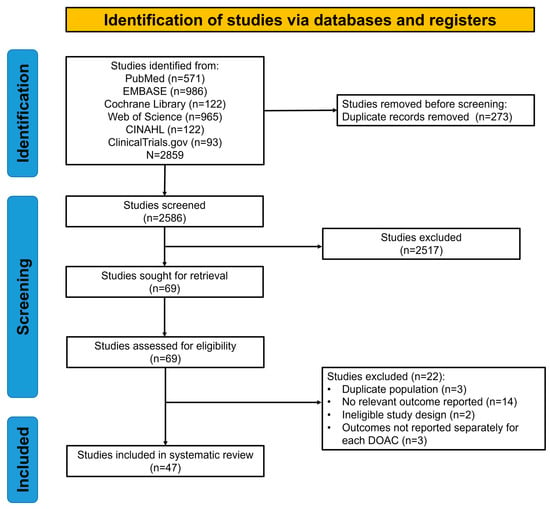
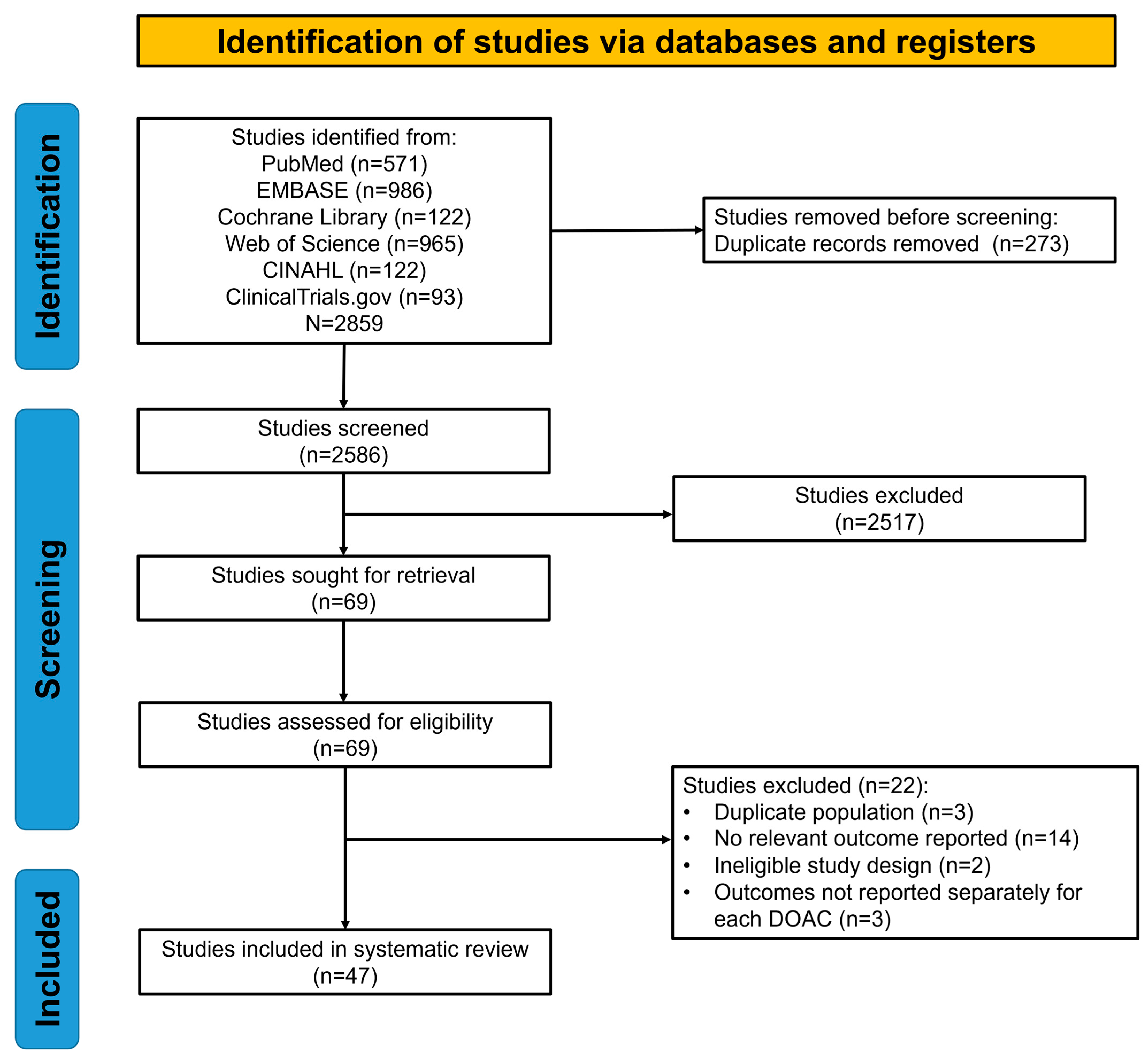
Database searches identified 2859 records, of which 69 full-text reports were assessed for eligibility. Overall, 47 studies were included in the systematic review, with 30 contributing to at least one meta-analysis. The study selection process and reasons for exclusion are summarized in Figure 1.
Figure 1.
PRISMA flow diagram.
3.2. Study Characteristics
Table 1 summarizes the 30 studies contributing to meta-analyses, and Supplementary Table S5 provides detailed characteristics of all 47 included studies. Study designs comprised 15 prospective cohort studies [3,4,14,16,21,35,36,37,38,39,40,41,42,43,44], 12 cross-sectional studies [11,12,18,19,45,46,47,48,49,50,51,52], 12 interventional pharmacokinetic studies [10,13,53,54,55,56,57,58,59,60,61,62], five retrospective cohort studies [15,20,63,64,65], two secondary analyses of randomized trials [2,66], and one case–control study [17].
Table 1.
Characteristics of studies contributing to meta-analyses.
Thirty-six studies enrolled patients and 11 enrolled healthy volunteers [10,13,53,55,56,57,58,59,60,61,62]. Among the patient studies, 31 involved patients with atrial fibrillation (AF), of which 23 specifically enrolled patients with nonvalvular atrial fibrillation (NVAF) [2,3,4,11,12,14,17,18,19,20,21,36,37,38,39,40,41,42,44,45,46,47,48,49,50,51,52,54,63,65,66]. The remaining five studies included DOAC users with mixed indications [15], patients with venous thromboembolism (VTE) [43], patients with ischemic stroke [64], and patients receiving thromboprophylaxis after total knee or hip replacement [16,35].
Sample sizes ranged from 17 to 2800 participants. Reported median ages ranged from 22.0 to 87.5 years. Based on population characteristics reported in the original studies, 21 studies predominantly included participants described as White or of European ancestry [2,3,12,15,16,19,21,35,36,37,46,48,49,51,52,53,54,58,63,64,66], 23 included Asian populations [4,11,13,14,17,18,20,38,39,40,41,42,43,44,45,47,50,56,57,60,61,62,65], and three included mixed populations [10,55,59].
Dabigatran [2,4,12,13,14,15,16,21,37,40,45,51,53,55,56,61,62,64,65] and rivaroxaban [3,15,20,35,38,39,41,42,43,44,47,48,49,53,58,59,60,63,65] were the most frequently investigated DOACs, with each evaluated in 19 studies. Apixaban was evaluated in 13 studies [11,15,19,21,36,40,46,50,52,54,57,63,66] and edoxaban in four [10,17,18,65]. Six studies evaluated more than one DOAC [15,21,40,53,63,65].
The most frequently investigated genes were ABCB1, CYP3A5, CES1, ABCG2, and CYP3A4. Study-level details of the investigated variants and genotyping methods are provided in Supplementary Table S6.
3.3. Reporting Completeness and Methodological Quality
Based on the STREGA checklist, reporting completeness was classified as high in 32 studies (68.1%) and moderate in 15 studies (31.9%); none were classified as low. Reporting gaps were most apparent for methods addressing relatedness and population stratification, detailed laboratory and genotyping procedures, and missing-data handling (Supplementary Table S2).
According to the Q-Genie assessment, 40 studies (85.1%) were classified as having good methodological quality and seven (14.9%) as having moderate quality; none were classified as poor. Lower ratings were commonly observed for a priori analysis planning, statistical methods and control of confounding, testing of assumptions and inferences for genetic analyses, and sample size and statistical power (Supplementary Table S3).
3.4. Drug-Specific Pharmacogenetic Associations
3.4.1. Dabigatran
CES1 rs2244613
No significant overall pooled pharmacokinetic associations were observed across the evaluated genetic comparisons (Supplementary Table S7). In ethnicity-stratified analyses, Ctrough was lower in GT carriers than in GG carriers (pooled MD −16.70 ng/mL, 95% CI −23.32 to −10.08), in GT + TT carriers than in GG carriers (pooled MD −14.98 ng/mL, 95% CI −22.08 to −7.88), and in TT carriers than in GG carriers (pooled MD −15.38 ng/mL, 95% CI −22.90 to −7.87) in the non-Asian subgroup, whereas the corresponding associations were nonsignificant in the Asian subgroup (p for subgroup differences < 0.05 for all three comparisons; Supplementary Table S8) [16,51,64,67].
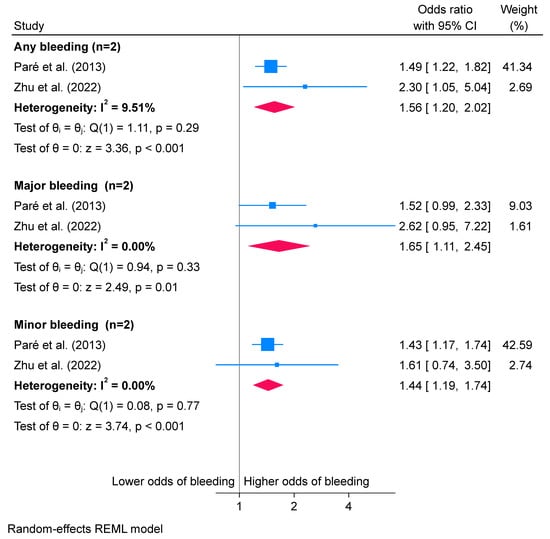
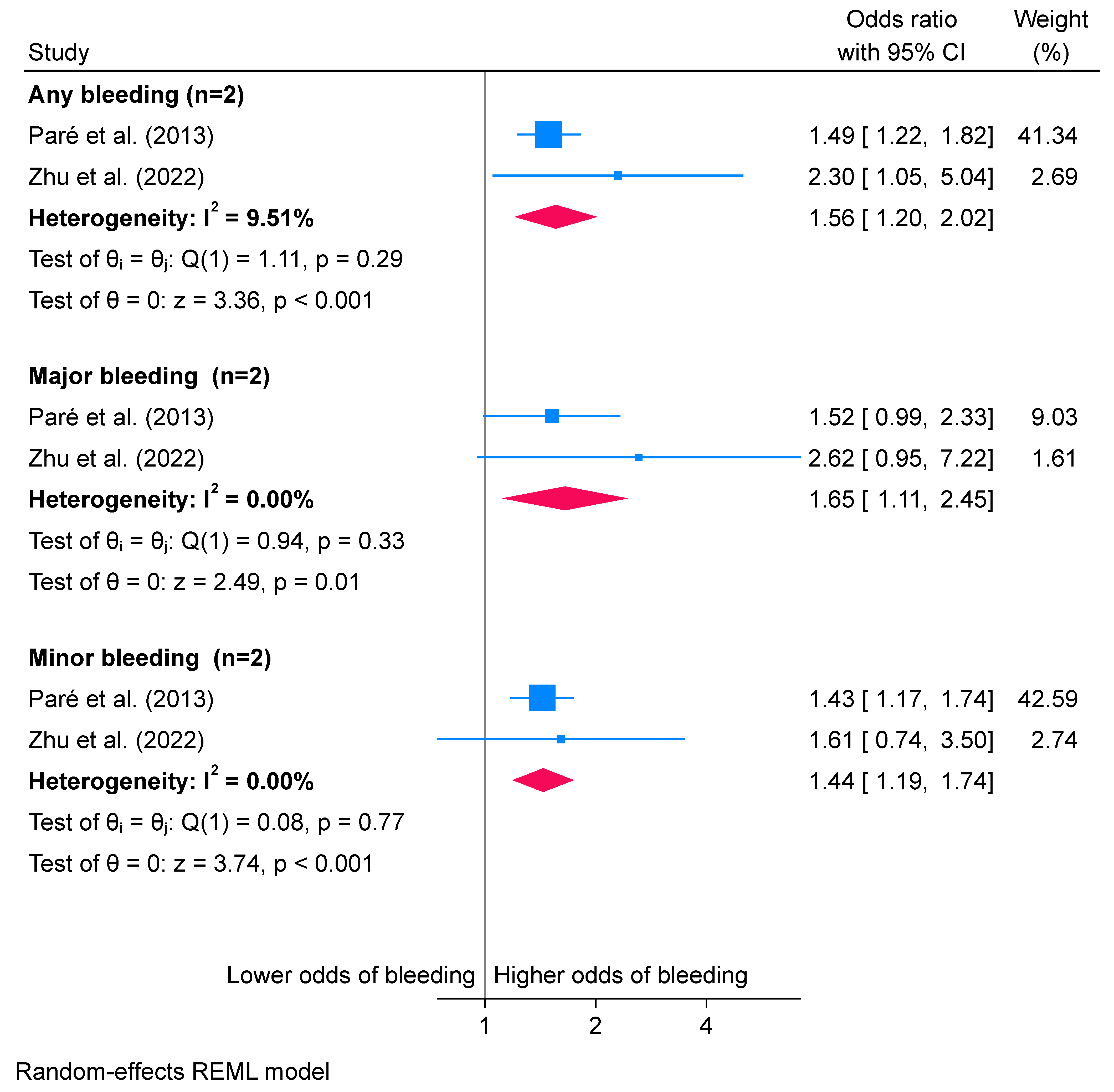
Bleeding odds were higher for GT + TT versus GG (pooled OR 1.96, 95% CI 1.20–3.22; p = 0.01) [4,14] and TT versus GG + GT (pooled OR 1.66, 95% CI 1.32–2.08; p < 0.001) [2,14], with I2 = 0% for both comparisons (two studies per comparison; Supplementary Figure S1). Additive-model analyses showed higher odds of any bleeding (pooled OR 1.56, 95% CI 1.20–2.02; p < 0.001; I2 = 9.51%), major bleeding (pooled OR 1.65, 95% CI 1.11–2.45; p = 0.01; I2 = 0%), and minor bleeding (pooled OR 1.44, 95% CI 1.19–1.74; p < 0.001; I2 = 0%) per additional T allele (two studies per analysis; Figure 2) [2,14]. No significant thromboembolic associations were observed in the additive-model meta-analysis (Supplementary Figure S2) [2,14].
Figure 2.
Forest plot of the association between CES1 rs2244613 and bleeding outcomes by type (any, major, and minor bleeding) among dabigatran users [2,14]. Study-specific and pooled adjusted odds ratios (ORs) with 95% confidence intervals (CIs) are presented per additional T allele under an additive genetic model, with G as the reference allele.
CES1 rs8192935
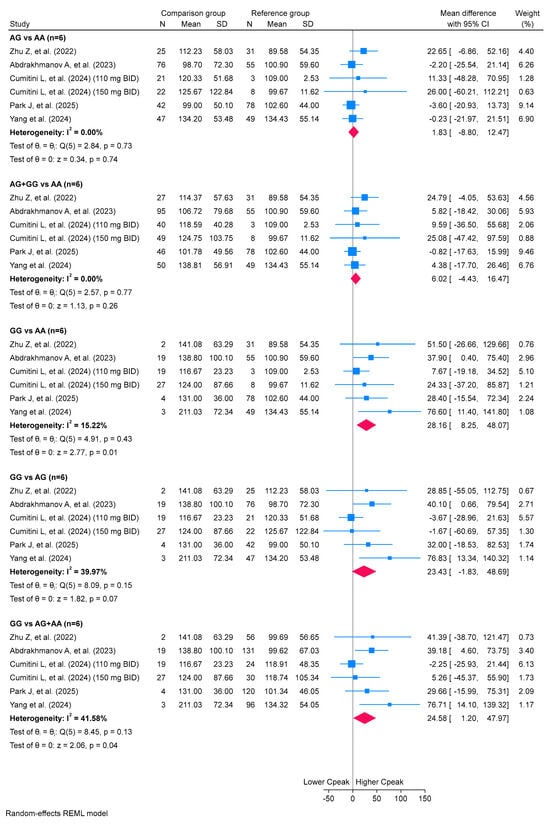
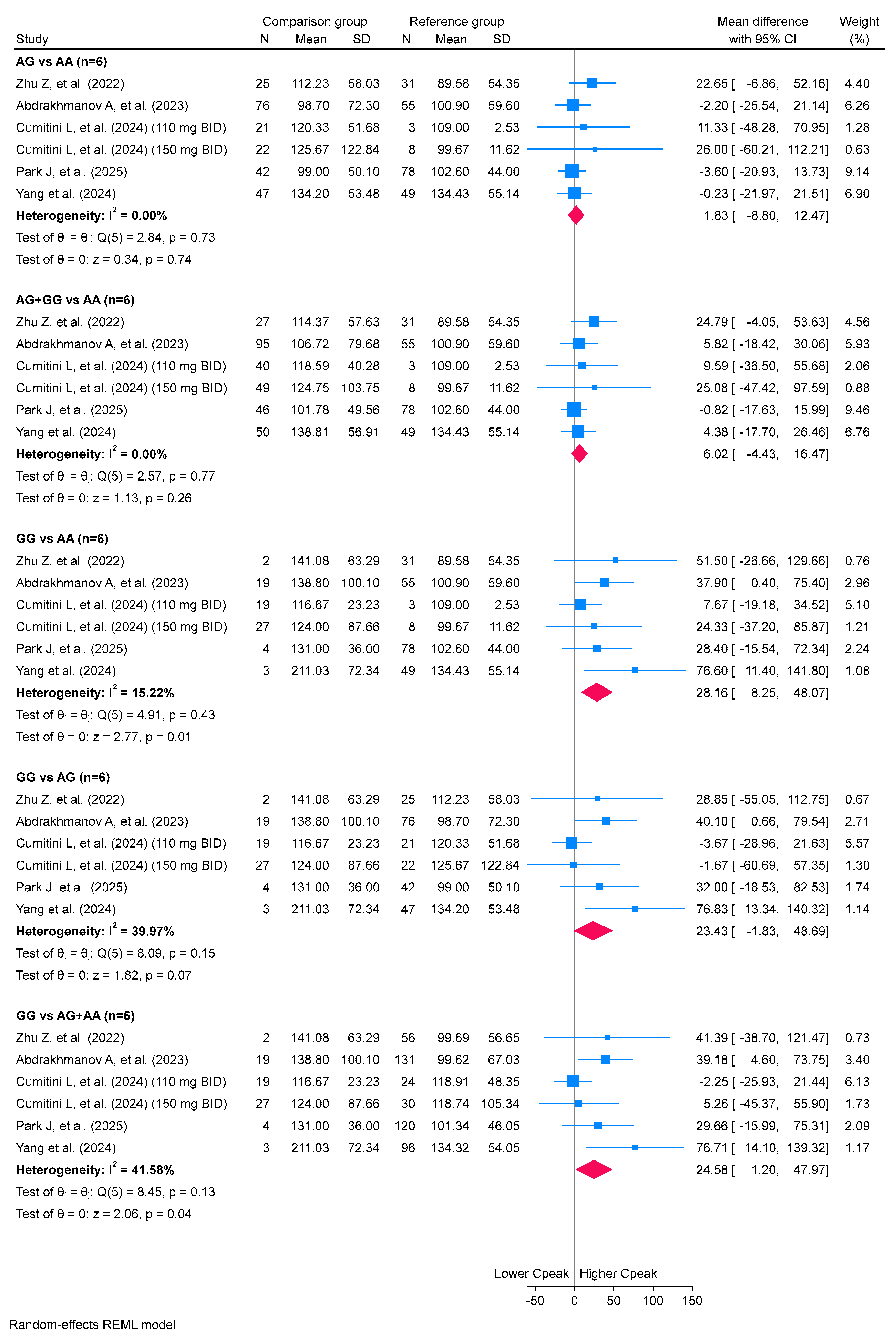
Pooled analyses showed higher Cpeak for GG versus AA (pooled MD 28.16 ng/mL, 95% CI 8.25–48.07; p = 0.01; I2 = 15.22%) and GG versus AG + AA (pooled MD 24.58 ng/mL, 95% CI 1.20–47.97; p = 0.04; I2 = 41.58%) (Figure 3; Supplementary Table S7) [14,40,51,61,62]. Higher dose- and body-weight-normalized Cpeak was also observed for AG, AG + GG, and GG versus AA [13,55], and higher AUC0–t was observed for GG versus AG [61,62]. Overall pooled associations with Ctrough and dose- and body-weight-normalized AUC0–∞ were nonsignificant (Supplementary Table S7 and Figures S3 and S4).
Figure 3.
Forest plot of the association between CES1 rs8192935 and dabigatran peak concentrations (Cpeak) across genetic comparisons [14,40,51,61,62]. Pooled mean differences (MDs) with 95% confidence intervals (CIs) are expressed in ng/mL.
In ethnicity-stratified analyses, Cpeak was higher for GG versus AG, AA, and AG + AA in the Asian subgroup [14,40,61,62], whereas the corresponding estimates from a single study in the non-Asian subgroup were nonsignificant [51]. Tests for subgroup differences were significant for GG versus AG and GG versus AG + AA (both p = 0.01). For Ctrough, concentrations were higher for GG versus AA in the Asian subgroup (pooled MD 44.54 ng/mL, 95% CI 3.27–85.81) [14,40] but lower in the non-Asian subgroup (MD pooled across two dose strata from a single study: −27.22 ng/mL, 95% CI −53.47 to −0.98) [51]. Tests for subgroup differences were significant for GG versus AA (p < 0.01) and GG versus AG + AA (p = 0.04) (Supplementary Table S8).
No significant pooled associations with bleeding or thromboembolic outcomes were observed (Supplementary Figures S5–S7) [2,4,14], although an individual study reported lower bleeding odds for GG versus AG + AA [14].
ABCB1 rs4148738
Pooled analyses showed lower Ctrough for CT, TT, and CT + TT versus CC. Under the dominant model (CT + TT versus CC), the pooled MD was −14.64 ng/mL (95% CI −25.31 to −3.97; p = 0.01; I2 = 74.35%) [14,40,51,64]. Substantial heterogeneity was observed across these comparisons (I2 = 61.51–77.77%). The remaining Ctrough comparisons and pooled analyses of Cpeak and AUC0–t were nonsignificant (Supplementary Table S7).
Additive-model meta-analyses showed no significant associations with bleeding or thromboembolic outcomes (Supplementary Figures S8–S10) [2,14]. One study reported higher bleeding odds for CT + TT versus CC and lower odds for TT versus CC + CT [14]. A separate study reported no significant thromboembolic association under the dominant model [15].
Other ABCB1 variants
No significant pooled pharmacokinetic associations were observed for ABCB1 rs1045642, rs1128503, or rs2032582 (Supplementary Table S7) [14,16,40,53,56,61,62].
For rs1045642, comparable adjusted bleeding estimates were insufficient for meta-analysis. One study reported higher odds of any bleeding for CT + TT versus CC and per additional T allele [14], whereas other studies reported no significant bleeding associations [4,15,37,65]. No significant thromboembolic associations with rs1045642 were reported in individual studies [14,15,65].
3.4.2. Rivaroxaban
CYP3A5 rs776746
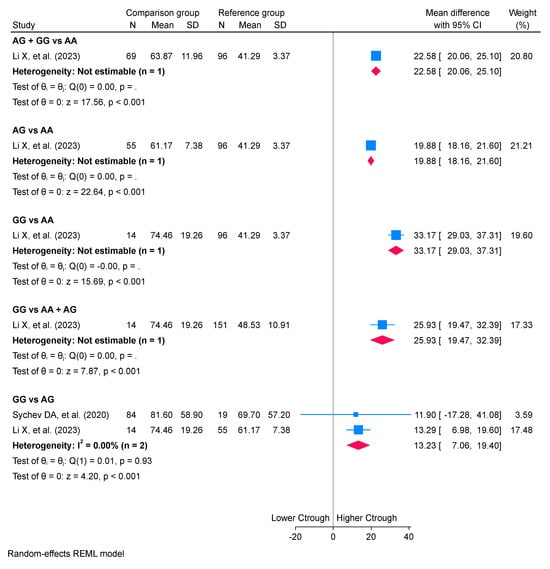
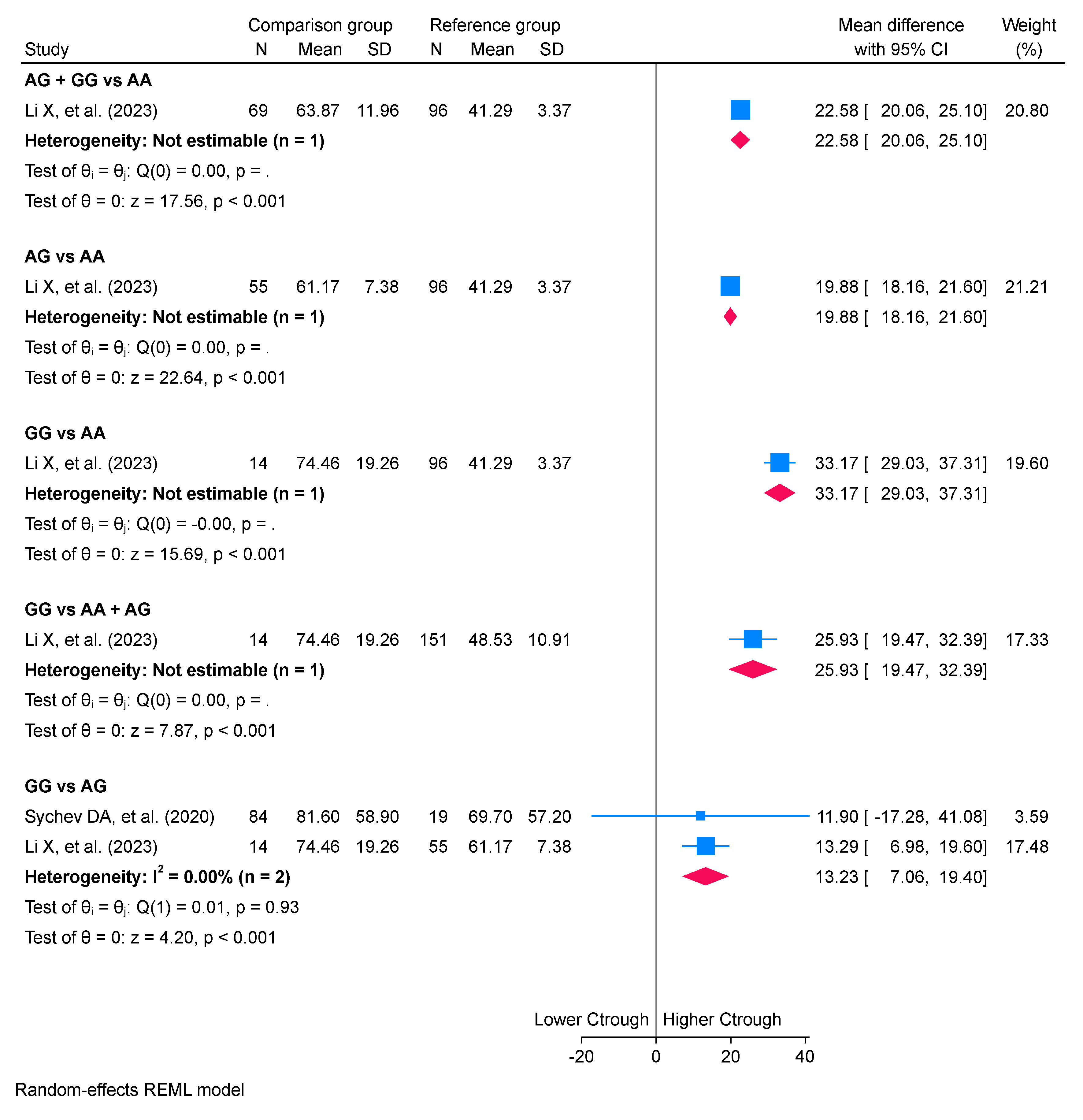
A meta-analysis of two studies showed higher Ctrough in GG than in AG carriers (pooled MD 13.23 ng/mL, 95% CI 7.06–19.40; p < 0.001; I2 = 0%) (Figure 4) [3,39]. No significant pooled associations were observed with Cpeak or dose-normalized Ctrough (Supplementary Table S9).
Figure 4.
Forest plot of the association between CYP3A5 rs776746 and rivaroxaban trough concentrations (Ctrough) across genetic comparisons [3,39]. Mean differences (MDs) with 95% confidence intervals (CIs) are expressed in ng/mL. A dot (.) indicates that the p-value for Cochran’s Q test is not estimable when only one study contributes to the genetic comparison.
Most studies reported no significant bleeding associations [3,38,39,41,42,65], although one exploratory comparison showed a lower hazard of major or clinically relevant non-major bleeding in G-allele carriers than in AA carriers [63]. No significant thromboembolic association was reported in an individual study [65]. Clinical associations were not pooled because comparable adjusted estimates were insufficient.
Other CYP variants
No significant pharmacokinetic associations were reported for CYP3A4 rs35599367 [35,49] or CYP2J2 rs890293 [38,43,47], whereas one study reported higher Ctrough in selected comparisons involving CYP3A4 rs2242480, rs2246709, and rs3735451 [39]. Pharmacokinetic findings were not pooled because comparable data were insufficient (Supplementary Table S9).
Most bleeding comparisons were nonsignificant [38,41,43,63,65], although one study reported higher odds of minor bleeding associated with CYP3A4 rs3735451 and rs2246709 [39]. No significant thromboembolic associations were reported for CYP3A4 rs2242480 or CYP2J2 rs890293 in unadjusted analyses [65].
ABCB1 rs1045642
Pooled analyses showed no significant associations with Cpeak or AUC0–∞ (Supplementary Table S9).
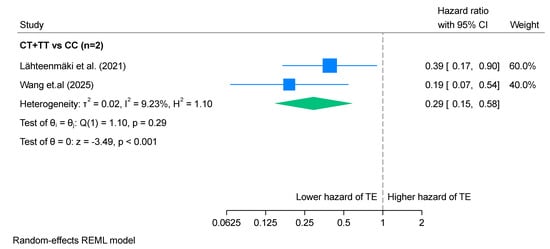
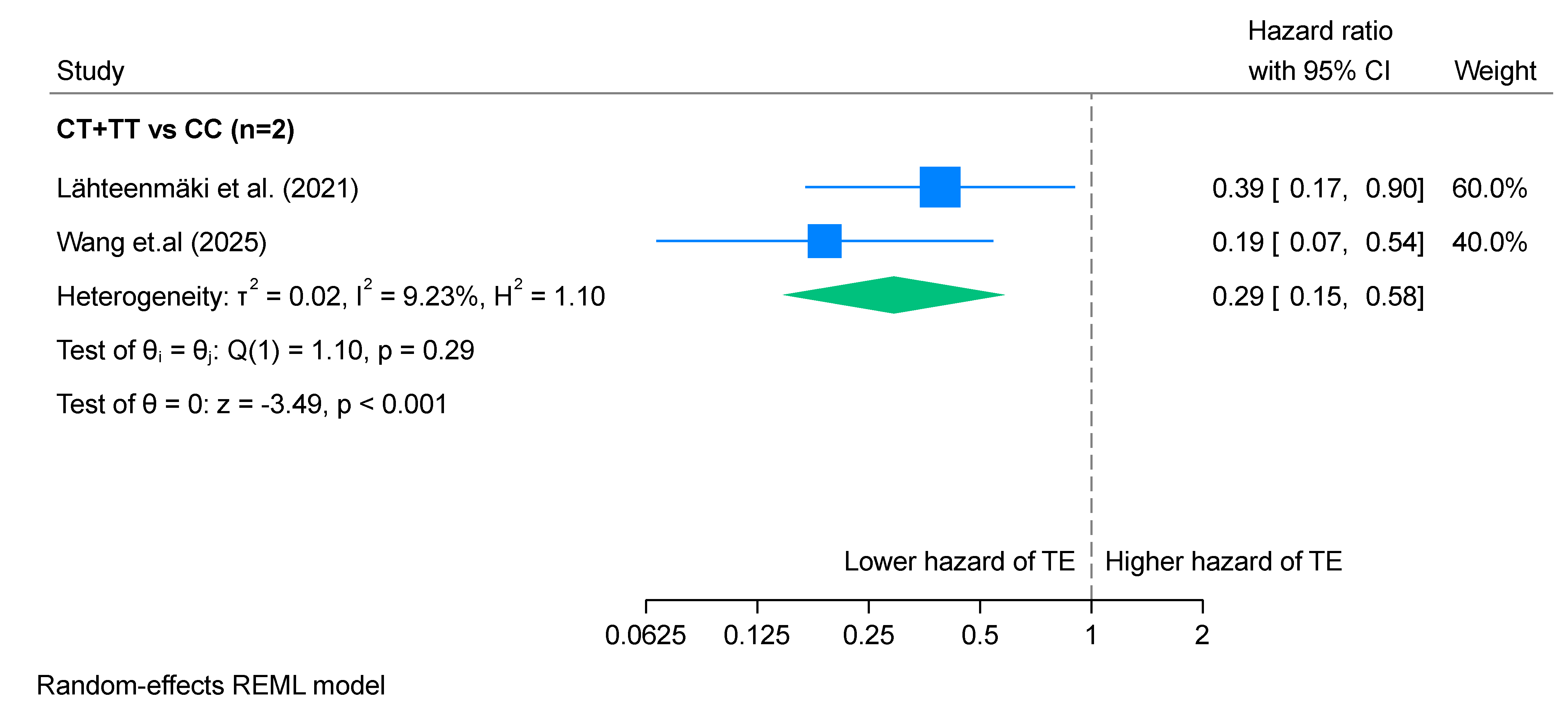
Most bleeding comparisons in individual studies were nonsignificant [15,41,42,63,65]. However, one study in patients aged ≥80 years reported a higher incidence of clinically relevant non-major bleeding in TT than in CC carriers (29.3% vs. 4.5%; p = 0.021) [48]. For thromboembolic outcomes, a meta-analysis of two studies showed a lower hazard for CT + TT versus CC (pooled adjusted HR 0.29, 95% CI 0.15–0.58; p < 0.001; I2 = 9.2%) (Figure 5) [15,65].
Figure 5.
Forest plot of the association between ABCB1 rs1045642 and thromboembolic events (TE) among rivaroxaban users under a dominant genetic model (CT + TT versus CC) [15,65]. Study-specific and pooled adjusted hazard ratios (HRs) are presented with 95% confidence intervals (CIs), with CC as the reference genotype.
Other ABCB1 variants
No significant pooled pharmacokinetic associations were observed for ABCB1 rs1128503, rs2032582, or rs4148738 (Supplementary Table S9).
Most bleeding comparisons were nonsignificant [15,20,41,42,63,65]. However, one study reported lower bleeding odds in rs2032582 AA carriers than in G-allele carriers [38]. Another reported a higher incidence of clinically relevant non-major bleeding in rs4148738 TT carriers than in CC + CT carriers among patients aged ≥80 years [48]. Comparable adjusted estimates were insufficient for bleeding meta-analysis. No significant thromboembolic associations were reported for rs2032582 T-allele carriage or rs1128503 [15,65].
ABCG2 rs2231142
Pooled analyses showed no significant associations with Cpeak, AUC0–t, or dose-normalized Ctrough (Supplementary Table S9). Individual healthy-volunteer studies reported differing findings, with higher Cpeak and AUC in AA than in CC carriers in one study [60] but no significant associations in another [59].
No significant bleeding or thromboembolic associations were reported [41,63,65]. Clinical associations were not pooled because comparable adjusted estimates were insufficient.
3.4.3. Apixaban
ABCB1 rs4148738
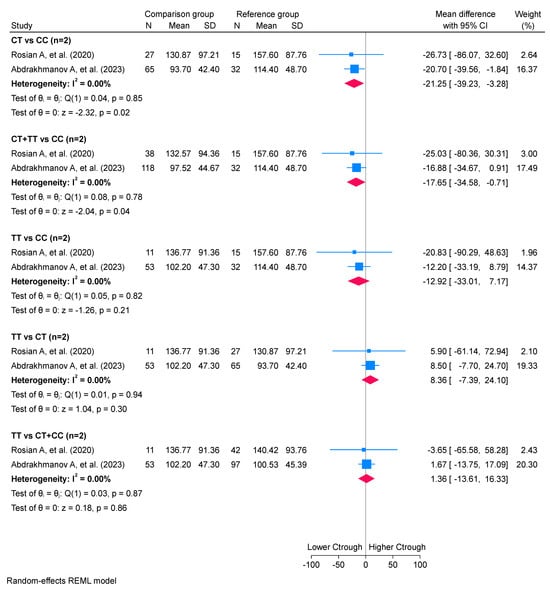
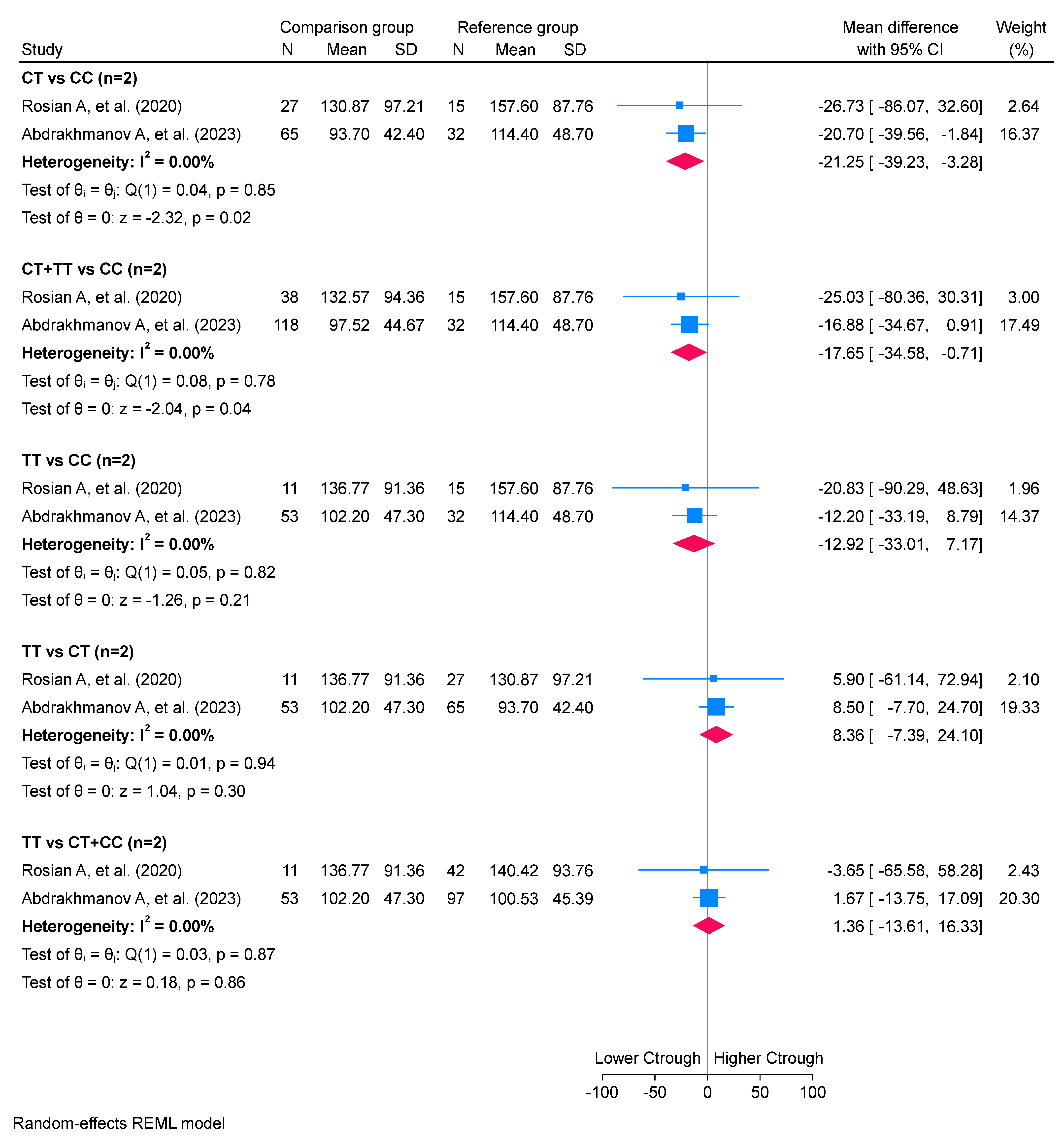
A meta-analysis of two studies showed lower Ctrough for CT versus CC (pooled MD −21.25 ng/mL, 95% CI −39.23 to −3.28; p = 0.02) and CT + TT versus CC (pooled MD −17.65 ng/mL, 95% CI −34.58 to −0.71; p = 0.04), with I2 = 0% for both comparisons (Figure 6) [36,40]. No significant pooled associations were observed with Cpeak (Supplementary Table S10). Individual studies also reported no significant associations with AUC [54,66].
Figure 6.
Forest plot of the association between ABCB1 rs4148738 and apixaban trough concentrations (Ctrough) across genetic comparisons [36,40]. Study-specific and pooled mean differences (MDs) with 95% confidence intervals (CIs) are expressed in ng/mL.
The bleeding meta-analysis of two studies showed no significant association for CT + TT versus CC (Supplementary Figure S11) [15,63]. Individual studies reported no significant associations with non-major bleeding [21] or thromboembolic outcomes [15].
Other ABCB1 variants
No significant pooled pharmacokinetic associations were observed for rs1045642, rs1128503, or rs2032582 (Supplementary Table S10).
Most bleeding comparisons were nonsignificant [15,21,63], although one study reported higher bleeding odds per additional rs1045642 C allele in an unadjusted analysis, with significance retained after Bonferroni correction [52]. No significant thromboembolic associations were reported in single-variant analyses [15].
ABCG2 rs2231142
Pharmacokinetic findings differed across studies and endpoints. One study reported higher dose- and body-weight-normalized Ctrough in AA than in CC carriers [11], whereas another found no significant association with dose-normalized Ctrough [50]. The A allele was associated with higher apixaban concentrations in a multivariable analysis [46] and higher model-derived steady-state exposure in another study [66].
Meta-analyses comparing AC + AA with CC showed no significant associations with bleeding (three studies; Supplementary Figure S12) [15,63,66] or thromboembolic outcomes (two studies; Supplementary Figure S13) [15,66].
CYP3A4 and CYP3A5 variants
No significant pharmacokinetic associations were reported for CYP3A4 variants [52,66]. For CYP3A5 rs776746, one study reported higher dose- and body-weight-normalized Ctrough in *1/*3 and *3/*3 carriers than in *1/*1 carriers [11], whereas other studies reported no significant pharmacokinetic associations [52,54,66].
No significant bleeding associations were reported for the evaluated CYP variants [15,52,63], and one study reported no significant thromboembolic association with CYP3A5 rs776746 [15].
3.4.4. Edoxaban
Comparable data were insufficient for meta-analysis. SLCO1B1 rs4149056 was associated with higher M4 metabolite exposure in healthy participants receiving a single dose [10], while patients with NVAF carrying the SLCO1B1 *15 haplotype had higher dose-normalized M4 trough concentrations at steady state [18]. No significant associations with parent edoxaban exposure were observed for these SLCO1B1 variants [10,18] or ABCB1 rs1045642 [10].
For bleeding outcomes, one study reported higher risk with the SLCO1B1 rs4149056 C allele and ABCB1 rs3842 CC genotype, and lower risk associated with the SLCO1B1 rs2306283 GG genotype [17]. Another cohort reported no significant bleeding association with rs4149056 C-allele carriage [65]. No significant thromboembolic associations were reported for the evaluated ABCB1, CES1, CYP3A4, CYP3A5, or SLCO1B1 variants [65].
3.5. Sensitivity Analyses
Targeted sensitivity analyses were conducted for statistically significant associations with clinical outcomes supported by only two studies. The common-effect models yielded pooled estimates and 95% CIs that were identical or very similar to those obtained from the primary random-effects REML models. All evaluated associations remained statistically significant, with consistent directions of effect across both models (Supplementary Table S11). Individual study estimates also showed consistent directions of association within each evaluated genetic comparison, although the magnitudes of the estimates and widths of the 95% CIs varied between studies.
4. Discussion
4.1. Main Findings
This systematic review and meta-analysis identified drug-specific pharmacogenetic associations with pharmacokinetic and clinical outcomes. The CES1 rs2244613 T allele was associated with higher bleeding odds in dabigatran users, although overall pooled Ctrough comparisons were nonsignificant. Pharmacokinetic associations involving CES1 rs8192935, ABCB1 rs4148738, and CYP3A5 rs776746 were not consistently accompanied by associations with bleeding or thromboembolic outcomes. ABCB1 rs1045642 was associated with a lower hazard of thromboembolic events in rivaroxaban users without significant pooled pharmacokinetic associations. For edoxaban, limited evidence mainly linked SLCO1B1 variants to M4 exposure rather than parent drug exposure.
4.2. Drug-Specific Pharmacogenetic Associations
4.2.1. Dabigatran
The CES1 rs2244613 T allele was associated with higher bleeding odds among dabigatran users, whereas overall pooled Ctrough comparisons were nonsignificant. The bleeding findings broadly agreed with previous meta-analyses, but the significant pooled Ctrough associations reported in those reviews were not statistically significant in our analysis [24,26].
An exposure-related contribution to the bleeding association is biologically plausible. In the RE-LY pharmacogenetic analysis, Paré et al. reported associations of rs2244613 with Ctrough and bleeding [2], while Reilly et al. linked higher trough concentrations to greater risk of major bleeding [68]. However, our pharmacokinetic findings did not consistently support this explanation. Moreover, the pharmacokinetic and clinical analyses involved partly different populations and genotype comparisons and did not directly assess mediation. Renal function, age, body weight, and concomitant medications remain important determinants of dabigatran exposure [69,70,71]. In patients with stage 3 chronic kidney disease, renal function rather than genotype predicted dose-normalized Ctrough in multivariable analysis [37].
For CES1 rs8192935, pharmacokinetic associations were not accompanied by consistent clinical associations. Higher Cpeak in selected comparisons, including dose- and body-weight-normalized analyses, broadly agreed with previous meta-analyses [26,27]. However, the AUC findings did not indicate a consistent effect on total exposure.
The biological basis of these CES1 associations remains incompletely defined. Dabigatran etexilate activation involves intestinal CES2 and hepatic CES1 [8,9]. Neither rs2244613 nor rs8192935 was associated with dabigatran etexilate activation in human liver samples, whereas the coding loss-of-function variant G143E impaired activation [72]. Associations of rs2244613 with CES1 expression and splicing suggest a possible regulatory mechanism or linkage to a functional variant, but do not establish a direct effect on CES1 catalytic activity [24].
Ethnicity-stratified analyses suggested variation in pharmacokinetic associations for both CES1 variants. For rs2244613, lower Ctrough was observed in selected comparisons in the non-Asian subgroup, with significant differences between ethnicity subgroups. For rs8192935, selected Ctrough estimates for GG versus AA differed in direction between Asian and non-Asian subgroups. However, substantial heterogeneity in selected comparisons limits interpretation. The non-Asian evidence for rs8192935 came from a single study [51], and estimates from separate dose strata within that study do not constitute independent replication. The available data cannot distinguish ancestry-related factors, including differences in linkage disequilibrium, from differences in dosing, renal function, sampling schedules, and other study characteristics. These findings therefore remain exploratory and do not establish population-specific genetic effects.
Among transporter variants, ABCB1 rs4148738 was associated with lower dabigatran Ctrough, although substantial between-study heterogeneity limits interpretation. The CT-versus-CC finding was directionally consistent with the meta-analysis by Aldiban et al. [27]. No significant pooled associations with Cpeak or bleeding were observed, consistent with Chai et al. [26]. Other evaluated ABCB1 variants—rs1045642, rs1128503, and rs2032582—showed no consistent pooled pharmacokinetic associations, and clinical evidence remained inconclusive.
4.2.2. Rivaroxaban
Higher rivaroxaban Ctrough in CYP3A5 rs776746 GG than in AG carriers [3,39] is biologically plausible given the reduced functional expression associated with the *3 allele [73]. Reduced CYP3A5-mediated metabolism could contribute to higher rivaroxaban concentrations, although the drug’s multiple metabolic, transport, and renal elimination pathways may limit the influence of this enzyme on exposure [74]. Shi et al. [23] reported an association with Cpeak, whereas our analysis identified an association with Ctrough. However, pooled findings for Cpeak and dose-normalized Ctrough were nonsignificant, indicating that the association was not consistent across exposure measures.
For ABCB1 rs1045642, adjusted estimates from two independent cohorts supported a lower thromboembolic hazard in CT + TT than in CC carriers [15,65]. The directionally consistent adjusted estimates warrant further investigation, but the limited evidence requires cautious interpretation. Wang et al. [44], whose unadjusted estimate was not included in the clinical meta-analysis, reported a higher thromboembolic risk in TT than in CC carriers (RR 3.48, 95% CI 1.02–11.85). Direct comparison with our pooled adjusted HR is limited by differences in genotype contrast, effect measure, and confounder adjustment.
Previous pharmacokinetic meta-analyses have also produced differing results. Mardi et al. [25] identified genotype-related differences in rivaroxaban Cpeak, whereas Chai et al. [26] reported significant associations with dose-normalized Ctrough under selected genetic comparisons. Our pooled pharmacokinetic analyses for rs1045642 were nonsignificant. These differences emphasize the importance of considering the exposure measure, genetic comparison, and analytical approach when interpreting this variant’s associations. Although reported associations of rs1045642 with ABCB1 expression and P-glycoprotein function provide a possible biological basis for altered disposition [75], an exposure-mediated explanation for the thromboembolic association remains unconfirmed.
4.2.3. Apixaban
The lower Ctrough observed in ABCB1 rs4148738 CT and CT + TT carriers than in CC carriers among apixaban users was consistent with the findings for dabigatran [36,40]. Both dabigatran etexilate and apixaban are P-glycoprotein substrates, but the observed associations do not establish a shared transporter-mediated mechanism [7]. Their clinical relevance remains uncertain because the apixaban findings were not accompanied by significant pooled bleeding associations [15,63] and thromboembolic evidence was limited to one study [15].
For ABCB1 rs1045642, differences between our clinical findings and those of Chai et al. [26] may partly reflect the use of adjusted versus crude estimates, as well as differences in genetic comparisons and outcome definitions. The higher bleeding odds per additional C allele reported in one study were based on an unadjusted estimate and were therefore excluded from our clinical meta-analyses [52].
For ABCG2 rs2231142, one study reported higher model-derived steady-state exposure, but the variant explained approximately 1% of exposure variability, suggesting a limited contribution to differences in apixaban exposure [66]. Pooled clinical analyses were nonsignificant, leaving its clinical relevance uncertain [15,63,66].
4.2.4. Edoxaban
The available evidence suggests that SLCO1B1 variation may influence exposure to the active metabolite M4 more than exposure to the parent drug. Associations of rs4149056 and the SLCO1B1 *15 haplotype with M4 exposure, but not parent edoxaban exposure, support a metabolite-specific pharmacokinetic signal [10,18]. However, the limited and noncomparable data precluded quantitative synthesis.
These findings are biologically plausible because M4 is a substrate of organic anion transporting polypeptide 1B1 (OATP1B1), the hepatic uptake transporter encoded by SLCO1B1 [6,7]. Reduced transporter activity may decrease hepatic uptake and increase systemic M4 exposure. However, M4 accounts for less than 10% of total anticoagulant exposure in healthy individuals [10], limiting the extent to which changes in M4 alone can be assumed to affect overall anticoagulant response.
Clinical evidence was limited. Han et al. [17] reported a significantly higher bleeding risk among rs4149056 C-allele carriers, whereas Wang et al. [65] observed a directionally similar but nonsignificant increase in bleeding hazard. Whether altered M4 exposure contributes to this association has not been established.
4.3. Strengths and Limitations
The present study has several strengths. Associations were evaluated separately by DOAC, variant, pharmacokinetic endpoint, clinical outcome, and genetic comparison to reduce the risk of combining biologically or analytically distinct findings. Variant annotations, allele orientation, and genetic comparisons were harmonized before analysis, and pharmacokinetic endpoints were distinguished by measurement and normalization method. Clinical meta-analyses included only adjusted effect estimates to account for measured confounders.
Several limitations should also be considered. First, the genetic association analyses were observational, including those conducted within trials, and were therefore susceptible to confounding, selection bias, and other design-related limitations. Although genetic variants precede treatment initiation, the observed associations do not establish causality, and residual confounding remains possible despite adjustment of clinical estimates.
Second, many drug–variant–outcome combinations were supported by few studies, often with small numbers of participants carrying uncommon genotypes or experiencing clinical events. In particular, several statistically significant associations between CES1 rs2244613 and dabigatran-related bleeding were based on only two studies per genetic comparison. Although sensitivity analyses using common-effect models yielded results consistent with the primary random-effects REML analyses, the limited evidence and variability in individual effect estimates warrant cautious interpretation. Multiple testing across variants, genetic comparisons, and outcomes without adjustment increased the risk of chance findings. Statistically significant associations should therefore be considered exploratory rather than confirmatory. Consistency across genetic comparisons or outcome categories does not constitute independent replication when analyses involve overlapping studies or participants.
Third, pharmacokinetic methods varied across studies in sampling schedules, peak and trough definitions, single-dose versus steady-state assessment, dose or body-weight normalization, and observed versus model-derived exposure measures. Populations ranged from healthy volunteers to patients with different indications for anticoagulation and varied in renal function, dosing regimens, and concomitant medications. These factors may influence genotype-associated exposure differences, but pharmacokinetic analyses generally relied on genotype-specific summary data and could not consistently account for them. Pooled findings may therefore have limited generalizability beyond the populations and treatment conditions studied. Differences in bleeding definitions further limited the comparability of clinical estimates. These sources of clinical and methodological heterogeneity remain relevant even when statistical heterogeneity was low.
Fourth, STREGA assessments identified reporting gaps that limited assessment of potential bias, while item-level Q-Genie assessments highlighted methodological concerns relevant to specific pooled associations. For example, Zhu et al. [14] reported few bleeding events and did not specify adjustment covariates, limiting assessment of estimate stability and confounding control for the CES1 rs2244613–dabigatran bleeding association. Sychev et al. [3] included only 19 heterozygous participants and reported an unadjusted genotype-specific concentration comparison for CYP3A5 rs776746 and rivaroxaban Ctrough. These study-level limitations reduced confidence in the corresponding pooled associations, each supported by only two studies per comparison.
Finally, this study focused on genes involved in drug metabolism and transport and did not systematically evaluate pharmacodynamic or coagulation-related genes. Associations of F2 and FGG variants with bleeding during DOAC treatment have been reported in a combined DOAC cohort [76], but their drug-specific relevance remains unclear and requires further investigation.
4.4. Clinical Implications and Research Priorities
Current evidence does not support routine pharmacogenetic testing or genotype-guided DOAC selection or dose adjustment. Statistical significance does not establish clinical relevance, and the observed pharmacokinetic differences cannot be directly translated into changes in bleeding or thromboembolic risk. The available evidence does not establish whether altered exposure mediates the observed clinical associations or whether genetic information improves risk prediction beyond established clinical factors. Clinically relevant effects cannot be excluded, but their magnitude remains uncertain.
Research priorities include independent replication and assessment of whether genetic information adds predictive value beyond renal function, age, body weight, dose, and concomitant medications. Prospective studies should assess genotype, exposure, and subsequent outcomes within the same participants, using standardized variant nomenclature, prespecified genetic comparisons, clearly defined pharmacokinetic endpoints, and appropriate confounder adjustment. This approach is particularly relevant to CES1 rs2244613 and dabigatran bleeding, for which each pooled comparison included only two studies. Such studies could directly assess whether altered exposure mediates the genotype–bleeding association.
Other priorities include replication of the ABCB1 rs1045642–thromboembolism association in rivaroxaban users, clarification of the ABCB1 rs4148738–Ctrough associations, and evaluation of the exploratory population-related differences involving CES1 rs2244613 and rs8192935 in larger, clinically comparable cohorts. For edoxaban, joint assessment of SLCO1B1 genotype, parent drug and M4 exposure, and clinical outcomes is needed to determine the clinical relevance of metabolite-specific findings. Clinical implementation ultimately requires evidence that genotype-guided treatment improves patient outcomes beyond usual clinical assessment.
5. Conclusions
Pharmacogenetic associations were identified for selected DOAC–variant combinations. The most consistent clinical evidence involved CES1 rs2244613 and dabigatran bleeding, although this evidence was based on a limited number of studies. Other associations showed limited alignment between pharmacokinetic and clinical outcomes. These findings remain exploratory. Current evidence is insufficient to support routine pharmacogenetic testing or genotype-guided DOAC selection or dose adjustment.
Supplementary Materials
The following supporting information can be downloaded at https://www.mdpi.com/article/10.3390/medsci14080819/s1, Table S1: Search strategies from inception to 17 December 2025; Table S2: Reporting completeness of the included studies assessed according to STREGA; Table S3: Methodological quality of the included studies assessed using Q-Genie; Table S4: Variant annotations and genetic comparisons; Table S5: Characteristics of the included studies; Table S6: Genotyping methods and variants investigated in the included studies; Table S7: Meta-analysis of pharmacogenetic associations with dabigatran pharmacokinetics; Table S8: Ethnicity-stratified meta-analysis of CES1 associations with dabigatran pharmacokinetics; Table S9: Meta-analysis of pharmacogenetic associations with rivaroxaban pharmacokinetics; Table S10: Meta-analysis of pharmacogenetic associations with apixaban pharmacokinetics; Table S11: Sensitivity analyses of statistically significant pharmacogenetic associations with clinical outcomes supported by two studies; Figure S1: Forest plot of the association between CES1 rs2244613 and bleeding outcomes among dabigatran users across genetic comparisons; Figure S2: Forest plot of the association between CES1 rs2244613 and thromboembolic outcomes among dabigatran users across genetic comparisons; Figure S3: Forest plot of the association between CES1 rs8192935 and dose- and body-weight-normalized dabigatran Cpeak across genetic comparisons; Figure S4: Forest plot of the association between CES1 rs8192935 and dabigatran AUC0–t across genetic comparisons; Figure S5: Forest plot of the association between CES1 rs8192935 and bleeding outcomes among dabigatran users across genetic comparisons; Figure S6: Forest plot of the association between CES1 rs8192935 and bleeding outcomes by type (any, major, and minor bleeding) among dabigatran users under an additive genetic model; Figure S7: Forest plot of the association between CES1 rs8192935 and thromboembolic outcomes among dabigatran users across genetic comparisons; Figure S8: Forest plot of the association between ABCB1 rs4148738 and bleeding outcomes among dabigatran users across genetic comparisons; Figure S9: Forest plot of the association between ABCB1 rs4148738 and bleeding outcomes by type (any, major, and minor bleeding) among dabigatran users under an additive genetic model; Figure S10: Forest plot of the association between ABCB1 rs4148738 and thromboembolic outcomes among dabigatran users across genetic comparisons; Figure S11: Forest plot of the association between ABCB1 rs4148738 and bleeding outcomes among apixaban users across genetic comparisons; Figure S12: Forest plot of the association between ABCG2 rs2231142 and bleeding outcomes among apixaban users across genetic comparisons; Figure S13: Forest plot of the association between ABCG2 rs2231142 and thromboembolic outcomes among apixaban users for AC + AA versus CC.
Author Contributions
Conceptualization, N.S. (Noppaket Singkham) and P.M.; Methodology, N.S. (Noppaket Singkham) and P.M.; Software, P.M.; Validation, N.S. (Noppaket Singkham) and P.M.; Formal Analysis, N.S. (Noppaket Singkham) and P.M.; Investigation, N.S. (Noppaket Singkham), N.S. (Niwat Saksit), and P.M.; Resources, N.S. (Noppaket Singkham) and P.M.; Data Curation, N.S. (Noppaket Singkham), N.S. (Niwat Saksit), and P.M.; Writing—Original Draft Preparation, N.S. (Noppaket Singkham) and P.M.; Writing—Review & Editing, N.S. (Noppaket Singkham), N.S. (Niwat Saksit), and P.M.; Visualization, P.M.; Supervision, P.M.; Project Administration, N.S. (Noppaket Singkham). All authors have read and agreed to the published version of the manuscript.
Funding
This research received no funding.
Institutional Review Board Statement
Not applicable.
Informed Consent Statement
Not applicable.
Data Availability Statement
The original contributions presented in this study are included in the article/Supplementary Materials. Further inquiries can be directed to the corresponding author.
Acknowledgments
We would like to thank Ratthanon Prasitwarachot for his technical assistance.
Conflicts of Interest
The authors declare no conflicts of interest.
Abbreviations
The following abbreviations are used in this manuscript:
| Abbreviation | Definition |
| ACS | Acute coronary syndrome |
| AF | Atrial fibrillation |
| AUC | Area under the concentration–time curve |
| AUC0–t | AUC from time zero to the last measurable concentration |
| AUC0–∞ | AUC from time zero extrapolated to infinity |
| BCRP | Breast cancer resistance protein |
| CI | Confidence interval |
| Cmax | Maximum concentration |
| Cmin | Minimum concentration |
| Cpeak | Peak concentration |
| Ctrough | Trough concentration |
| CYP | Cytochrome P450 |
| DOAC | Direct oral anticoagulant |
| GRCh38 | Genome Reference Consortium Human Build 38 |
| HGVS | Human Genome Variation Society |
| HR | Hazard ratio |
| I2 | I-squared heterogeneity statistic |
| M4 | Active metabolite of edoxaban |
| MD | Mean difference |
| MeSH | Medical Subject Headings |
| NA | Not assessed |
| NVAF | Nonvalvular atrial fibrillation |
| OATP1B1 | Organic anion transporting polypeptide 1B1 |
| OR | Odds ratio |
| PK | Pharmacokinetics |
| PRISMA | Preferred Reporting Items for Systematic Reviews and Meta-Analyses |
| PROSPERO | International Prospective Register of Systematic Reviews |
| Q-Genie | Quality of Genetic Studies |
| REML | Restricted maximum likelihood |
| RR | Risk ratio |
| SD | Standard deviation |
| STREGA | Strengthening the Reporting of Genetic Association Studies |
| TE | Thromboembolic events |
| THR | Total hip replacement |
| TKR | Total knee replacement |
| VTE | Venous thromboembolism |
References
- Chen, A.; Stecker, E.; Warden, B. Direct Oral Anticoagulant Use: A Practical Guide to Common Clinical Challenges. J. Am. Heart Assoc. 2020, 9, e017559. [Google Scholar] [CrossRef] [Scilit]
- Paré, G.; Eriksson, N.; Lehr, T.; Connolly, S.; Eikelboom, J.; Ezekowitz, M.D.; Axelsson, T.; Haertter, S.; Oldgren, J.; Reilly, P.; et al. Genetic determinants of dabigatran plasma levels and their relation to bleeding. Circulation 2013, 127, 1404–1412. [Google Scholar] [CrossRef] [Scilit]
- Sychev, D.A.; Baturina, O.A.; Mirzaev, K.B.; Rytkin, E.; Ivashchenko, D.V.; Andreev, D.A.; Ryzhikova, K.A.; Grishina, E.A.; Bochkov, P.O.; Shevchenko, R.V. CYP2C19*17 May Increase the Risk of Death Among Patients with an Acute Coronary Syndrome and Non-Valvular Atrial Fibrillation Who Receive Clopidogrel and Rivaroxaban. Pharmgenom. Pers. Med. 2020, 13, 29–37. [Google Scholar] [CrossRef] [Scilit]
- Ji, Q.; Zhang, C.; Xu, Q.; Wang, Z.; Li, X.; Lv, Q. The impact of ABCB1 and CES1 polymorphisms on dabigatran pharmacokinetics and pharmacodynamics in patients with atrial fibrillation. Br. J. Clin. Pharmacol. 2021, 87, 2247–2255. [Google Scholar] [CrossRef] [Scilit]
- Yoon, H.Y.; Song, T.J.; Yee, J.; Park, J.; Gwak, H.S. Association between Genetic Polymorphisms and Bleeding in Patients on Direct Oral Anticoagulants. Pharmaceutics 2022, 14, 1889. [Google Scholar] [CrossRef] [Scilit]
- Thompson, L.E.; Davis, B.H.; Narayan, R.; Goff, B.; Brown, T.M.; Limdi, N.A. Personalizing Direct Oral Anticoagulant Therapy for a Diverse Population: Role of Race, Kidney Function, Drug Interactions, and Pharmacogenetics. Clin. Pharmacol. Ther. 2023, 113, 585–599. [Google Scholar] [CrossRef] [Scilit]
- Hindley, B.; Lip, G.Y.H.; McCloskey, A.P.; Penson, P.E. Pharmacokinetics and pharmacodynamics of direct oral anticoagulants. Expert Opin. Drug Metab. Toxicol. 2023, 19, 911–923. [Google Scholar] [CrossRef] [Scilit]
- Fawzy, A.M.; Lip, G.Y.H. Pharmacokinetics and pharmacodynamics of oral anticoagulants used in atrial fibrillation. Expert Opin. Drug Metab. Toxicol. 2019, 15, 381–398. [Google Scholar] [CrossRef] [Scilit]
- Laizure, S.C.; Parker, R.B. Is genetic variability in carboxylesterase-1 and carboxylesterase-2 drug metabolism an important component of personalized medicine? Xenobiotica 2020, 50, 92–100. [Google Scholar] [CrossRef] [Scilit]
- Vandell, A.G.; Lee, J.; Shi, M.; Rubets, I.; Brown, K.S.; Walker, J.R. An integrated pharmacokinetic/pharmacogenomic analysis of ABCB1 and SLCO1B1 polymorphisms on edoxaban exposure. Pharmacogenom. J. 2018, 18, 153–159. [Google Scholar] [CrossRef] [Scilit]
- Ueshima, S.; Hira, D.; Fujii, R.; Kimura, Y.; Tomitsuka, C.; Yamane, T.; Tabuchi, Y.; Ozawa, T.; Itoh, H.; Horie, M.; et al. Impact of ABCB1, ABCG2, and CYP3A5 polymorphisms on plasma trough concentrations of apixaban in Japanese patients with atrial fibrillation. Pharmacogenet. Genom. 2017, 27, 329–336. [Google Scholar] [CrossRef] [Scilit]
- Dimatteo, C.; D’Andrea, G.; Vecchione, G.; Paoletti, O.; Cappucci, F.; Tiscia, G.L.; Buono, M.; Grandone, E.; Testa, S.; Margaglione, M. Pharmacogenetics of dabigatran etexilate interindividual variability. Thromb. Res. 2016, 144, 1–5. [Google Scholar] [CrossRef] [Scilit]
- Liu, Y.; Yang, C.; Qi, W.; Pei, Z.; Xue, W.; Zhu, H.; Dong, M.; Guo, Y.; Cong, D.; Wang, F. The Impact of ABCB1 and CES1 Polymorphisms on Dabigatran Pharmacokinetics in Healthy Chinese Subjects. Pharmgenom. Pers. Med. 2021, 14, 477–485. [Google Scholar] [CrossRef] [Scilit]
- Zhu, Z.; Qian, C.; Su, C.; Tao, H.; Mao, J.; Guo, Z.; Zhu, X.; Pan, J. The impact of ABCB1 and CES1 polymorphisms on the safety of dabigatran in patients with non-valvular atrial fibrillation. BMC Cardiovasc. Disord. 2022, 22, 481. [Google Scholar] [CrossRef] [Scilit]
- Lähteenmäki, J.; Vuorinen, A.L.; Pajula, J.; Harno, K.; Lehto, M.; Niemi, M.; van Gils, M. Pharmacogenetics of Bleeding and Thromboembolic Events in Direct Oral Anticoagulant Users. Clin. Pharmacol. Ther. 2021, 110, 768–776. [Google Scholar] [CrossRef] [Scilit]
- Sychev, D.A.; Levanov, A.N.; Shelekhova, T.V.; Bochkov, P.O.; Denisenko, N.P.; Ryzhikova, K.A.; Mirzaev, K.B.; Grishina, E.A.; Gavrilov, M.A.; Ramenskaya, G.V.; et al. The impact of ABCB1 (rs1045642 and rs4148738) and CES1 (rs2244613) gene polymorphisms on dabigatran equilibrium peak concentration in patients after total knee arthroplasty. Pharmgenom. Pers. Med. 2018, 11, 127–137. [Google Scholar] [CrossRef] [Scilit]
- Han, J.M.; Jang, E.J.; Yee, J.; Song, T.J.; Kim, D.H.; Park, J.; Gwak, H.S. Association between SLCO1B1 genetic polymorphisms and bleeding risk in patients treated with edoxaban. Sci. Rep. 2023, 13, 15967. [Google Scholar] [CrossRef] [Scilit]
- Nakagawa, J.; Kinjo, T.; Aiuchi, N.; Ueno, K.; Tomita, H.; Niioka, T. Associations among Plasma Concentrations of Edoxaban and M-4, Prothrombin Time, and the SLCO1B1*15 Haplotype in Patients with Nonvalvular Atrial Fibrillation. Ther. Drug Monit. 2023, 45, 409–416. [Google Scholar] [CrossRef] [Scilit]
- Dimatteo, C.; D’Andrea, G.; Vecchione, G.; Paoletti, O.; Tiscia, G.L.; Santacroce, R.; Correale, M.; Brunetti, N.; Grandone, E.; Testa, S.; et al. ABCB1 SNP rs4148738 modulation of apixaban interindividual variability. Thromb. Res. 2016, 145, 24–26. [Google Scholar] [CrossRef] [Scilit]
- Wang, Y.; Chen, M.; Chen, H.; Wang, F. Influence of ABCB1 Gene Polymorphism on Rivaroxaban Blood Concentration and Hemorrhagic Events in Patients with Atrial Fibrillation. Front. Pharmacol. 2021, 12, 639854. [Google Scholar] [CrossRef] [Scilit]
- Roşian, A.N.; Iancu, M.; Trifa, A.P.; Roşian, Ş.H.; Mada, C.; Gocan, C.P.; Niţă, T.; Istratoaie, S.; Boarescu, P.M.; Buzoianu, A.D. An Exploratory Association Analysis of ABCB1 rs1045642 and ABCB1 rs4148738 with Non-Major Bleeding Risk in Atrial Fibrillation Patients Treated with Dabigatran or Apixaban. J. Pers. Med. 2020, 10, 133. [Google Scholar] [CrossRef] [Scilit]
- Xie, Q.; Xiang, Q.; Mu, G.; Ma, L.; Chen, S.; Zhou, S.; Hu, K.; Zhang, Z.; Cui, Y.; Jiang, J. Effect of ABCB1 Genotypes on the Pharmacokinetics and Clinical Outcomes of New Oral Anticoagulants: A Systematic Review and Meta-analysis. Curr. Pharm. Des. 2018, 24, 3558–3565. [Google Scholar] [CrossRef] [Scilit]
- Shi, J.; Wu, T.; Wu, S.; Chen, X.; Ye, Q.; Zhang, J. Effect of Genotype on the Pharmacokinetics and Bleeding Events of Direct Oral Anticoagulants: A Systematic Review and Meta-analysis. J. Clin. Pharmacol. 2023, 63, 277–287. [Google Scholar] [CrossRef] [Scilit]
- Li, H.; Zhang, Z.; Weng, H.; Qiu, Y.; Zubiaur, P.; Zhang, Y.; Fan, G.; Yang, P.; Vuorinen, A.L.; Zuo, X.; et al. Association between CES1 rs2244613 and the pharmacokinetics and safety of dabigatran: Meta-analysis and quantitative trait loci analysis. Front. Cardiovasc. Med. 2022, 9, 959916. [Google Scholar] [CrossRef] [Scilit]
- Mardi, P.; Abbasi, B.; Shafiee, A.; Afsharmoghaddam, T. Pharmacogenetic Approach for the Prevention of Rivaroxaban’s ADRs: A Systematic Review and Meta-Analysis. Genet. Res. 2023, 2023, 6105320. [Google Scholar] [CrossRef] [Scilit]
- Chai, H.; Huo, J.; Chen, H. Pharmacogenomics of direct oral anticoagulants: A systematic review and meta-analysis. Front. Cardiovasc. Med. 2026, 13, 1792186. [Google Scholar] [CrossRef] [Scilit]
- Aldiban, W.; Hamam, N.G.; Almosilhy, N.A.; Elsamman, K.; Wagdy, M.; Mashaly, D.; Batarseh, S.F.; El-Sherif, Y.; Khalefa, B.B.; Otmani, Z. The role of ABCB1 and CES1 genotypes on the efficacy and safety of dabigatran: A systematic review and meta-analysis. Hum. Genom. 2025, 19, 121. [Google Scholar] [CrossRef] [Scilit]
- Page, M.J.; McKenzie, J.E.; Bossuyt, P.M.; Boutron, I.; Hoffmann, T.C.; Mulrow, C.D.; Shamseer, L.; Tetzlaff, J.M.; Akl, E.A.; Brennan, S.E.; et al. The PRISMA 2020 statement: An updated guideline for reporting systematic reviews. BMJ 2021, 372, n71. [Google Scholar] [CrossRef] [Scilit]
- Little, J.; Higgins, J.P.; Ioannidis, J.P.; Moher, D.; Gagnon, F.; von Elm, E.; Khoury, M.J.; Cohen, B.; Davey-Smith, G.; Grimshaw, J.; et al. STrengthening the REporting of Genetic Association Studies (STREGA): An extension of the STROBE statement. PLoS Med. 2009, 6, e22. [Google Scholar] [CrossRef] [Scilit]
- Sohani, Z.N.; Meyre, D.; de Souza, R.J.; Joseph, P.G.; Gandhi, M.; Dennis, B.B.; Norman, G.; Anand, S.S. Assessing the quality of published genetic association studies in meta-analyses: The quality of genetic studies (Q-Genie) tool. BMC Genet. 2015, 16, 50. [Google Scholar] [CrossRef] [Scilit]
- Wan, X.; Wang, W.; Liu, J.; Tong, T. Estimating the sample mean and standard deviation from the sample size, median, range and/or interquartile range. BMC Med. Res. Methodol. 2014, 14, 135. [Google Scholar] [CrossRef] [Scilit]
- Higgins, J.P.T.; Li, T.; Deeks, J.J. Chapter 6: Choosing effect measures and computing estimates of effect. In Cochrane Handbook for Systematic Reviews of Interventions, version 6.5; Higgins, J.P.T., Thomas, J., Chandler, J., Cumpston, M., Li, T., Page, M.J., Welch, V.A., Eds.; Cochrane: London, UK, 2024. [Google Scholar]
- Veroniki, A.A.; Jackson, D.; Viechtbauer, W.; Bender, R.; Bowden, J.; Knapp, G.; Kuss, O.; Higgins, J.P.; Langan, D.; Salanti, G. Methods to estimate the between-study variance and its uncertainty in meta-analysis. Res. Synth. Methods 2016, 7, 55–79. [Google Scholar] [CrossRef] [Scilit]
- Higgins, J.P.; Thompson, S.G.; Deeks, J.J.; Altman, D.G. Measuring inconsistency in meta-analyses. BMJ 2003, 327, 557–560. [Google Scholar] [CrossRef] [Scilit]
- Sychev, D.; Minnigulov, R.; Bochkov, P.; Ryzhikova, K.; Yudina, I.; Lychagin, A.; Morozova, T. Effect of CYP3A4, CYP3A5, ABCB1 Gene Polymorphisms on Rivaroxaban Pharmacokinetics in Patients Undergoing Total Hip and Knee Replacement Surgery. High Blood Press Cardiovasc. Prev. 2019, 26, 413–420. [Google Scholar] [CrossRef] [Scilit]
- Roşian, A.N.; Roşian Ş, H.; Kiss, B.; Ştefan, M.G.; Trifa, A.P.; Ober, C.D.; Anchidin, O.; Buzoianu, A.D. Interindividual Variability of Apixaban Plasma Concentrations: Influence of Clinical and Genetic Factors in a Real-Life Cohort of Atrial Fibrillation Patients. Genes 2020, 11, 438. [Google Scholar] [CrossRef] [Scilit]
- Sychev, D.; Skripka, A.; Ryzhikova, K.; Bochkov, P.; Shevchenko, R.; Krupenin, P.; Ivashchenko, D.; Kogay, V.; Listratov, A.; Krainyaya, A.; et al. Effect of CES1 and ABCB1 genotypes on the pharmacokinetics and clinical outcomes of dabigatran etexilate in patients with atrial fibrillation and chronic kidney disease. Drug Metab. Pers. Ther. 2020, 35, 20190029. [Google Scholar] [CrossRef] [Scilit]
- Zhang, D.; Qin, W.; Du, W.; Wang, X.; Chen, W.; Li, P. Effect of ABCB1 gene variants on rivaroxaban pharmacokinetic and hemorrhage events occurring in patients with non-valvular atrial fibrillation. Biopharm. Drug Dispos. 2022, 43, 163–171. [Google Scholar] [CrossRef] [Scilit]
- Li, X.; Gu, Z.; Wang, Z.; Xu, Q.; Ma, C.; Lv, Q. Mutant CYP3A4/5 Correlated with Clinical Outcomes by Affecting Rivaroxaban Pharmacokinetics and Pharmacodynamics in Patients with Atrial Fibrillation. Cardiovasc. Drugs Ther. 2023, 38, 1315–1325. [Google Scholar] [CrossRef] [Scilit]
- Abdrakhmanov, A.; Akilzhanova, A.; Shaimerdinova, A.; Zhalbinova, M.; Tuyakova, G.; Abildinova, S.; Albayev, R.; Ainabekova, B.; Chinybayeva, A.; Suleimen, Z.; et al. The Distribution of the Genotypes of ABCB1 and CES1 Polymorphisms in Kazakhstani Patients with Atrial Fibrillation Treated with DOAC. Genes 2023, 14, 1192. [Google Scholar] [CrossRef] [Scilit]
- Wu, T.; Wu, S.; Li, L.; Xiang, J.; Wang, N.; Chen, W.; Zhang, J. The impact of ABCB1, CYP3A4/5 and ABCG2 gene polymorphisms on rivaroxaban trough concentrations and bleeding events in patients with non-valvular atrial fibrillation. Hum. Genom. 2023, 17, 59. [Google Scholar] [CrossRef] [Scilit]
- Ain, N.U.; Ali, N.; Ullah, A.; Ullah, S.; Ahmad, S. Bleeding Events Associated with Rivaroxaban Therapy in Naive Patients with Nonvalvular Atrial Fibrillation: A Longitudinal Study from a Genetic Perspective with INR Follow-Up. Medicina 2024, 60, 1712. [Google Scholar] [CrossRef] [Scilit]
- Li, H.; He, X.; Guan, Y.; Lu, Q.; Fang, J.; Bian, X. Association of Genetic Variants with Rivaroxaban Pharmacokinetics and Pharmacodynamics and Hemorrhage Risk Factors in Patients with Venous Thromboembolism. J. Am. Heart Assoc. 2025, 14, e040698. [Google Scholar] [CrossRef] [Scilit]
- Wang, F.; Li, Z.; Huang, Y.; Liu, Q.; Zhao, L.; Wang, H.; Gao, H.; Chen, M.; Lin, Y.; Li, X.; et al. Effect of ABCB1 SNP polymorphisms on the plasma concentrations and clinical outcomes of rivaroxaban in Chinese NVAF patients: A population pharmacokinetic-based study. Front. Pharmacol. 2025, 16, 1574949. [Google Scholar] [CrossRef] [Scilit]
- Tomita, H.; Araki, T.; Kadokami, T.; Yamada, S.; Nakamura, R.; Imamura, Y.; Fukuyama, T.; Nagano, D.; Hashimoto, T.; Uematsu, A.; et al. Factors influencing trough and 90-minute plasma dabigatran etexilate concentrations among patients with non-valvular atrial fibrillation. Thromb. Res. 2016, 145, 100–106. [Google Scholar] [CrossRef] [Scilit]
- Gulilat, M.; Keller, D.; Linton, B.; Pananos, A.D.; Lizotte, D.; Dresser, G.K.; Alfonsi, J.; Tirona, R.G.; Kim, R.B.; Schwarz, U.I. Drug interactions and pharmacogenetic factors contribute to variation in apixaban concentration in atrial fibrillation patients in routine care. J. Thromb. Thrombolysis 2020, 49, 294–303. [Google Scholar] [CrossRef] [Scilit]
- Nakagawa, J.; Kinjo, T.; Iizuka, M.; Ueno, K.; Tomita, H.; Niioka, T. Impact of gene polymorphisms in drug-metabolizing enzymes and transporters on trough concentrations of rivaroxaban in patients with atrial fibrillation. Basic Clin. Pharmacol. Toxicol. 2021, 128, 297–304. [Google Scholar] [CrossRef] [Scilit]
- Sychev, D.; Ostroumova, O.; Cherniaeva, M.; Shakhgildian, N.; Mirzaev, K.; Abdullaev, S.; Denisenko, N.; Sozaeva, Z.; Kachanova, A.; Gorbatenkova, S.; et al. The Influence of ABCB1 (rs1045642 and rs4148738) Gene Polymorphisms on Rivaroxaban Pharmacokinetics in Patients Aged 80 Years and Older with Nonvalvular Atrial Fibrillation. High Blood Press. Cardiovasc. Prev. 2022, 29, 469–480. [Google Scholar] [CrossRef] [Scilit]
- Sychev, D.A.; Sokolov, A.V.; Reshetko, O.V.; Fisenko, V.P.; Sychev, I.N.; Grishina, E.A.; Bochkov, P.O.; Shevchenko, R.V.; Abdullaev, S.P.; Denisenko, N.P.; et al. Influence of ABCB1, CYP3A5 and CYP3A4 gene polymorphisms on prothrombin time and the residual equilibrium concentration of rivaroxaban in patients with non-valvular atrial fibrillation in real clinical practice. Pharmacogenet. Genom. 2022, 32, 301–307. [Google Scholar] [CrossRef] [Scilit]
- Nakagawa, J.; Kinjo, T.; Aiuchi, N.; Ueno, K.; Tomita, H.; Niioka, T. Impacts of pregnane X receptor and cytochrome P450 oxidoreductase gene polymorphisms on trough concentrations of apixaban in patients with non-valvular atrial fibrillation. Eur. J. Clin. Pharmacol. 2023, 79, 127–135. [Google Scholar] [CrossRef] [Scilit]
- Cumitini, L.; Renda, G.; Giordano, M.; Rolla, R.; Shail, T.; Sacchetti, S.; Iezzi, L.; Giacomini, L.; Zanotti, V.; Auciello, R.; et al. Role of CES1 and ABCB1 Genetic Polymorphisms on Functional Response to Dabigatran in Patients with Atrial Fibrillation. J. Clin. Med. 2024, 13, 2545. [Google Scholar] [CrossRef] [Scilit]
- Kondrakhin, A.P.; Abdullaev, S.P.; Sychev, I.V.; Bochkov, P.O.; Tuchkova, S.N.; Mirzaev, K.B.; Maksimov, M.L.; Sychev, D.A. Impact of Xenobiotic Detoxification Gene Polymorphisms on Steady-State Plasma Concentrations of Apixaban and the Development of Hemorrhagic Complications in Older Patients with Non-Valvular Atrial Fibrillation. Genes 2025, 16, 1179. [Google Scholar] [CrossRef] [Scilit]
- Gouin-Thibault, I.; Delavenne, X.; Blanchard, A.; Siguret, V.; Salem, J.E.; Narjoz, C.; Gaussem, P.; Beaune, P.; Funck-Brentano, C.; Azizi, M.; et al. Interindividual variability in dabigatran and rivaroxaban exposure: Contribution of ABCB1 genetic polymorphisms and interaction with clarithromycin. J. Thromb. Haemost. 2017, 15, 273–283. [Google Scholar] [CrossRef] [Scilit]
- Kryukov, A.V.; Sychev, D.A.; Andreev, D.A.; Ryzhikova, K.A.; Grishina, E.A.; Ryabova, A.V.; Loskutnikov, M.A.; Smirnov, V.V.; Konova, O.D.; Matsneva, I.A.; et al. Influence of ABCB1 and CYP3A5 gene polymorphisms on pharmacokinetics of apixaban in patients with atrial fibrillation and acute stroke. Pharmgenom. Pers. Med. 2018, 11, 43–49. [Google Scholar] [CrossRef] [Scilit]
- Zubiaur, P.; Saiz-Rodríguez, M.; Ochoa, D.; Navares-Gómez, M.; Mejía, G.; Román, M.; Koller, D.; Soria-Chacartegui, P.; Almenara, S.; Abad-Santos, F. Effect of Sex, Use of Pantoprazole and Polymorphisms in SLC22A1, ABCB1, CES1, CYP3A5 and CYP2D6 on the Pharmacokinetics and Safety of Dabigatran. Adv. Ther. 2020, 37, 3537–3550. [Google Scholar] [CrossRef] [Scilit]
- Xie, Q.; Li, Y.; Liu, Z.; Mu, G.; Zhang, H.; Zhou, S.; Wang, Z.; Wang, Z.; Jiang, J.; Li, X.; et al. SLC4A4, FRAS1, and SULT1A1 Genetic Variations Associated with Dabigatran Metabolism in a Healthy Chinese Population. Front. Genet. 2022, 13, 873031. [Google Scholar] [CrossRef] [Scilit]
- Mu, G.; Xie, Q.; Liu, Z.; Zhang, H.; Meng, X.; Song, J.; Zhou, S.; Wang, Z.; Wang, Z.; Zhao, X.; et al. Identification of genetic biomarkers associated with pharmacokinetics and pharmacodynamics of apixaban in Chinese healthy volunteers. Expert. Opin. Drug Metab. Toxicol. 2023, 19, 43–51. [Google Scholar] [CrossRef] [Scilit]
- Villapalos-García, G.; Zubiaur, P.; Ochoa, D.; Soria-Chacartegui, P.; Navares-Gómez, M.; Matas, M.; Mejía-Abril, G.; Casajús-Rey, A.; Campodónico, D.; Román, M.; et al. NAT2 phenotype alters pharmacokinetics of rivaroxaban in healthy volunteers. BioMed Pharmacother. 2023, 165, 115058. [Google Scholar] [CrossRef] [Scilit]
- Santos, A.F.D.; Francisco, Q.A.S.; Nunes, J.B.; Colombo, F.A.; Boralli, V.B. ABCG2 polymorphism and rivaroxaban pharmacokinetics in healthy individuals after a single dose. Braz. J. Med. Biol. Res. 2024, 57, e13257. [Google Scholar] [CrossRef] [Scilit]
- Guo, L.; Sun, X.; Bo, Q.; Bai, W.; Du, Y.; Song, H. Effects of ABCG2 421C>A genetic polymorphism on the pharmacokinetics of rivaroxaban in healthy Chinese subjects. Xenobiotica 2025, 55, 445–453. [Google Scholar] [CrossRef] [Scilit]
- Park, J.W.; Kim, J.M.; Bang, Y.Y.; Kim, K.A.; Yu, S.; Park, J.Y. UGT2B15 single nucleotide polymorphism reduces dabigatran acylglucuronide formation in humans. Front. Pharmacol. 2024, 15, 1507915. [Google Scholar] [CrossRef] [Scilit]
- Yang, Z.; Tan, W.R.; Li, Q.; Wang, Y.; Liu, S.; Chen, L.; Zhou, Y.; Zeng, C.; Zeng, Y.; Xiong, Y.; et al. Population pharmacokinetic study of the effect of polymorphisms in the ABCB1 and CES1 genes on the pharmacokinetics of dabigatran. Front. Pharmacol. 2024, 15, 1454612. [Google Scholar] [CrossRef] [Scilit]
- Campos-Staffico, A.M.; Dorsch, M.P.; Barnes, G.D.; Zhu, H.J.; Limdi, N.A.; Luzum, J.A. Eight pharmacokinetic genetic variants are not associated with the risk of bleeding from direct oral anticoagulants in non-valvular atrial fibrillation patients. Front. Pharmacol. 2022, 13, 1007113. [Google Scholar] [CrossRef] [Scilit]
- Olšerová, A.; Janský, P.; Magerová, H.; Šrámková, T.; Kešnerová, P.; Kmetonyová, S.; Šulc, V.; Halmová, H.; Šrámek, M.; Šarbochová, I.; et al. The Effect of ABCB1 and CES1 Polymorphisms on Plasma Levels of Dabigatran and Risk of Hemorrhagic Complications in Ischemic Stroke Patients. Am. J. Ther. 2024, 31, e362–e371. [Google Scholar] [CrossRef] [Scilit]
- Wang, D.; An, Y.; Zhou, X.; Chai, H.; Huo, J.; Li, C.; Du, M.; Dai, D.; Li, C.; Chen, H. Relevance of selected pharmacogenetic polymorphisms to bleeding and thromboembolic risks in Chinese patients taking direct-acting oral anticoagulants. Br. J. Clin. Pharmacol. 2025, 91, 2736–2744. [Google Scholar] [CrossRef] [Scilit]
- Attelind, S.; Hallberg, P.; Wadelius, M.; Hamberg, A.K.; Siegbahn, A.; Granger, C.B.; Lopes, R.D.; Alexander, J.H.; Wallentin, L.; Eriksson, N. Genetic determinants of apixaban plasma levels and their relationship to bleeding and thromboembolic events. Front. Genet. 2022, 13, 982955. [Google Scholar] [CrossRef] [Scilit]
- Sychev, D.A.; Levanov, A.N.; Shelekhova, T.V.; Bochkov, P.O.; Denisenko, N.P.; Ryzhikova, K.A.; Mirzaev, K.B.; Grishina, E.A.; Gavrilov, M.A.; Ramenskaya, G.V.; et al. Erratum: The impact of ABCB1 (rs1045642 and rs4148738) and CES1 (rs2244613) gene polymorphisms on dabigatran equilibrium peak concentration in patients after total knee arthroplasty [Corrigendum]. Pharmgenom. Pers. Med. 2018, 11, 167. [Google Scholar] [CrossRef] [Scilit]
- Reilly, P.A.; Lehr, T.; Haertter, S.; Connolly, S.J.; Yusuf, S.; Eikelboom, J.W.; Ezekowitz, M.D.; Nehmiz, G.; Wang, S.; Wallentin, L. The effect of dabigatran plasma concentrations and patient characteristics on the frequency of ischemic stroke and major bleeding in atrial fibrillation patients: The RE-LY Trial (Randomized Evaluation of Long-Term Anticoagulation Therapy). J. Am. Coll. Cardiol. 2014, 63, 321–328. [Google Scholar]
- Liesenfeld, K.H.; Lehr, T.; Dansirikul, C.; Reilly, P.A.; Connolly, S.J.; Ezekowitz, M.D.; Yusuf, S.; Wallentin, L.; Haertter, S.; Staab, A. Population pharmacokinetic analysis of the oral thrombin inhibitor dabigatran etexilate in patients with non-valvular atrial fibrillation from the RE-LY trial. J. Thromb. Haemost. 2011, 9, 2168–2175. [Google Scholar] [CrossRef] [Scilit]
- Lin, S.Y.; Tang, S.C.; Kuo, C.H.; Tsai, L.K.; Yeh, S.J.; Shen, L.J.; Jeng, J.S. Factors affecting serum concentration of dabigatran in Asian patients with non-valvular atrial fibrillation. J. Formos. Med. Assoc. 2019, 118, 1154–1160. [Google Scholar] [CrossRef] [Scilit]
- Ng, J.W.; Mohd Tahir, N.A.; Chin, P.K.L.; Makmor-Bakry, M.; Mohd Saffian, S. A systematic review and meta-analysis of dabigatran peak and trough concentration in adults. Br. J. Clin. Pharmacol. 2022, 88, 4443–4459. [Google Scholar] [CrossRef] [Scilit]
- Shi, J.; Wang, X.; Nguyen, J.H.; Bleske, B.E.; Liang, Y.; Liu, L.; Zhu, H.J. Dabigatran etexilate activation is affected by the CES1 genetic polymorphism G143E (rs71647871) and gender. Biochem. Pharmacol. 2016, 119, 76–84. [Google Scholar] [CrossRef] [Scilit]
- MacPhee, I.A. Pharmacogenetic biomarkers: Cytochrome P450 3A5. Clin. Chim. Acta 2012, 413, 1312–1317. [Google Scholar] [CrossRef] [Scilit]
- Mueck, W.; Stampfuss, J.; Kubitza, D.; Becka, M. Clinical pharmacokinetic and pharmacodynamic profile of rivaroxaban. Clin. Pharmacokinet. 2014, 53, 1–16. [Google Scholar] [CrossRef] [Scilit]
- Hodges, L.M.; Markova, S.M.; Chinn, L.W.; Gow, J.M.; Kroetz, D.L.; Klein, T.E.; Altman, R.B. Very important pharmacogene summary: ABCB1 (MDR1, P-glycoprotein). Pharmacogenet. Genom. 2011, 21, 152–161. [Google Scholar]
- Choi, K.H.; Yee, J.; Song, T.J.; Park, J.; Gwak, H.S. Association between genetic polymorphisms in fibrinogen genes and bleeding risk in patients treated with direct oral anticoagulants. Ann. Acad. Med. Singap. 2023, 52, 340–347. [Google Scholar] [CrossRef] [Scilit]

Disclaimer/Publisher’s Note: The statements, opinions and data contained in all publications are solely those of the individual author(s) and contributor(s) and not of MDPI and/or the editor(s). MDPI and/or the editor(s) disclaim responsibility for any injury to people or property resulting from any ideas, methods, instructions or products referred to in the content. |
© 2026 by the authors. Licensee MDPI, Basel, Switzerland. This article is an open access article distributed under the terms and conditions of the Creative Commons Attribution (CC BY) license.