


Abstract
Hypothyroidism is common and is usually caused by autoimmune thyroiditis in iodine-sufficient settings, whereas iodine deficiency remains an important cause globally. Nutrition is biologically relevant because iodine is a substrate for thyroid hormone synthesis. Selenium, iron, and zinc support enzymes involved in thyroid hormone production, conversion, and antioxidant defense. Dietary exposures can modify levothyroxine absorption. Biologic plausibility does not establish that supplements or restrictive diets prevent or reverse hypothyroidism. This review critically evaluates evidence on macronutrients, iodine, selenium, iron, zinc, vitamin D, vitamin B-12, dietary patterns, gluten-free and ketogenic diets, goitrogen-containing foods, and food-drug interactions. Recent systematic reviews suggest that selenium and vitamin D supplementation can lower thyroid antibody concentrations in some patients with Hashimoto thyroiditis, but effects on symptoms, progression, and levothyroxine requirements remain uncertain. Evidence for Mediterranean-style diets is promising but largely observational or based on small interventions. Routine gluten avoidance is not supported for patients without celiac disease, and ordinary consumption of cooked brassica vegetables or soy is unlikely to impair thyroid function when iodine intake is adequate. Clinical care should prioritize adequate, not excessive iodine intake, correction of documented nutrient deficiencies, cardiometabolic diet quality, and consistent separation of levothyroxine from interfering foods and supplements. Larger, longer randomized trials with patient-centered outcomes are needed.
Keywords:
hypothyroidism; Hashimoto thyroiditis; iodine; selenium; vitamin D; iron; zinc; vitamin B-12; dietary patterns; levothyroxine; nutrition 1. Introduction
Hypothyroidism is one of the most common endocrine disorders globally, characterized by insufficient thyroid hormone action [1,2]. It ranges from subclinical disease, defined by elevated serum thyroid-stimulating hormone (TSH) and normal free thyroxine (FT4) to overt disease characterized by elevated TSH and low FT4 [1]. Major etiologies include autoimmune thyroiditis (Hashimoto thyroiditis), iatrogenic causes such as thyroid surgery or radioiodine therapy, certain medications, and chronic iodine imbalance [1,2]. Prevalence varies widely depending on age, sex, population iodine status, and diagnostic thresholds, creating a substantial clinical and public health burden [1,2].
While levothyroxine replacement remains the standard treatment for primary hypothyroidism [3,4], patients frequently turn to dietary modifications, nutritional supplements, and restrictive regimens to manage persistent symptoms, address weight concerns, or attempt to ‘heal’ underlying autoimmunity [5,6]. Consequently, nutrition is a frequent focus of clinical inquiry and patient self-management, yet it is also an area prone to misinformation and potential drug–nutrient interactions [6,7].
The nutrition–thyroid relationship operates across three clinically distinct dimensions: (1) specific micronutrients serve as structural substrates or enzymatic cofactors for hormone synthesis and peripheral metabolism [8,9]; (2) broader dietary patterns may influence systemic inflammation, oxidative stress, body composition, and cardiometabolic risk, although causal evidence remains limited [5,10,11]; and (3) food matrices, meal timing, and oral supplements can alter levothyroxine bioavailability [4,7]. These dimensions are frequently conflated in popular discourse, fostering unrealistic claims about dietary cures [6]. This narrative review aims to distinguish established physiologic mechanisms from observational associations and experimental findings, evaluate the strength of current human evidence across micronutrients and dietary patterns, and provide practical, evidence-based guidance for clinicians and patients.
2. Methods
This narrative review was conducted using a targeted literature search across major biomedical databases, including PubMed/MEDLINE, Embase, and the Cochrane Library, covering English-language publications from database inception through early August 2026. Search terms and Boolean combinations included variations of “hypothyroidism”, “Hashimoto thyroiditis”, “thyroid function”, “dietary patterns”, “micronutrients” (specifically iodine, selenium, iron, zinc, vitamin D, and vitamin B-12), “gluten-free diet”, “ketogenic diet”, “Mediterranean diet”, “ultra-processed food”, “soy”, “Brassica”, and “levothyroxine interactions”.
Priority was given to clinical practice guidelines, systematic reviews, meta-analyses, randomized controlled trials (RCTs), and large prospective cohort studies. Mechanistic and animal studies were utilized to explain underlying biochemical pathways and were not treated as proof of clinical efficacy.
Articles were screened by the authors for clinical relevance, methodological rigor, and direct applicability to patients with hypothyroidism or autoimmune thyroiditis. Because this was designed as a narrative synthesis rather than a formal systematic review, a protocol was not registered (e.g., PROSPERO) and an exhaustive PRISMA-style article count was not performed; instead, literature selection prioritized high-impact consensus guidelines and recent evidence syntheses. For the clinician-focused evidence matrix (Table 1), evidence strength was categorized as high, moderate, low, or very low based on a qualitative synthesis of study design, directness to patients with hypothyroidism, consistency across studies, outcome precision, and clinical relevance. These narrative ratings serve to guide clinical interpretation rather than represent a formal GRADE assessment.
Table 1.
Clinician-focused evidence matrix for diet, supplements, and hypothyroidism 1.
3. Evidence Synthesis
3.1. Nutrients in Thyroid Physiology and Hypothyroidism
3.1.1. Iodine
Iodine is an indispensable component of thyroxine (T4) and triiodothyronine (T3). Iodide is actively transported into thyroid follicular cells by the sodium-iodide symporter, oxidized by thyroid peroxidase (TPO), and incorporated into thyroglobulin. The adult Recommended Dietary Allowance is 150 µg/day in the US, increasing to 220 µg/day during pregnancy and 290 µg/day during lactation [8,12,13]. Severe deficiency reduces hormone synthesis and can cause goiter and hypothyroidism. However, a 2025 systematic review found that associations between mild-to-moderate iodine deficiency and thyroid-function measures were heterogeneous across life stages, underscoring the limitations of extrapolating population urinary iodine measurements to individual patients [52].
Dietary sources include iodized salt, dairy products, eggs, and seafood, but iodine content varies with agricultural and food-processing practices. Patients avoiding dairy and seafood, using only noniodized salts, following vegan diets, or living in regions without effective salt iodization may have inadequate intake [53,54]. A careful dietary history is therefore more informative than indiscriminate testing; a spot urinary iodine concentration is useful for population surveillance but is not a reliable diagnostic test of an individual’s habitual intake [52,53,54].
Excess intake is also clinically important. Kelp, seaweed concentrates, iodine drops, amiodarone, and iodinated contrast can deliver pharmacologic iodine loads. Susceptible patients, particularly those with autoimmune thyroid disease, nodular thyroid disease, renal impairment, or previous iodine deficiency, may develop hypothyroidism through failure to escape the acute Wolff–Chaikoff effect or may develop hyperthyroidism through the Jod–Basedow phenomenon [53,54]. Thus, the therapeutic target is nutritional adequacy rather than high-dose supplementation; routine iodine supplements are not indicated for patients with established hypothyroidism who already have adequate intake.
3.1.2. Iron
Iron supports thyroid physiology through several pathways. TPO is a heme-containing enzyme, and iron deficiency may reduce TPO activity, impair iodine organification, and alter peripheral thyroid-hormone metabolism. Iron deficiency and hypothyroidism also share symptoms such as fatigue, impaired concentration, exercise intolerance, and hair loss, making clinical attribution difficult without laboratory assessment [8,24,25].
A 2023 systematic review and meta-analysis found that iron deficiency was associated with lower thyroid-hormone concentrations and a higher frequency of thyroid dysfunction, particularly among women of reproductive age and during pregnancy, although the underlying studies were largely observational and heterogeneous [25]. A separate 2025 meta-analysis of pregnancy studies found associations involving hemoglobin but no significant differences in TSH or thyroid-hormone concentrations by ferritin-defined iron status; trimester-specific relationships remain uncertain [26]. These data support evaluating complete blood count and ferritin when symptoms, menstrual blood loss, pregnancy, celiac disease, autoimmune gastritis, bariatric surgery, or restrictive dietary patterns raise concern, rather than screening every patient solely because hypothyroidism is present [25,26,27].
Confirmed iron deficiency should be treated according to standard hematologic practice. Evidence that iron supplementation improves thyroid outcomes in iron-replete adults is insufficient, and iron should not be prescribed as a thyroid treatment by itself. Oral iron forms insoluble complexes with levothyroxine and can increase TSH by reducing drug absorption; patients should generally separate iron and levothyroxine by at least four hours and repeat thyroid testing after major changes in iron therapy [4,7].
3.1.3. Selenium
The thyroid contains a high concentration of selenium. Selenoproteins include iodothyronine deiodinases, which activate or inactivate thyroid hormones, and glutathione peroxidases and thioredoxin reductases, which limit oxidative injury generated during hormone synthesis [8]. The selenium content of whole foods varies geographically depending on soil composition; seafood, meats, eggs, and cereals contribute to intake, while Brazil nuts exhibit substantial natural variation in selenium concentration depending on their region of origin and can occasionally deliver excessive amounts [55].
Meta-analyses of randomized trials investigating selenium supplementation in patients with Hashimoto thyroiditis have reported modest reductions in TPO-antibody concentrations and, in some subgroups not receiving thyroid hormone, small reductions in TSH [14,15,16,17,18]. However, effects on FT4, FT3, thyroid volume, symptoms, quality of life, disease progression, and levothyroxine requirements have been inconsistent or insufficiently studied [14,15,16,17,18]. Heterogeneity in baseline selenium status, dose, chemical form, duration, and concomitant levothyroxine limits interpretation; antibody reduction alone should not be assumed to represent clinical benefit [16,17,18].
Routine selenium supplementation for every patient with Hashimoto thyroiditis is therefore not established. Selective use may be considered when dietary inadequacy or deficiency is plausible, but chronic high intake should be avoided. Selenium has a relatively narrow safety margin; as detailed in safety assessments by the European Food Safety Authority, excessive exposure can cause gastrointestinal upset, brittle hair and nails, garlic-like breath, neuropathy, and metabolic toxicity [56]. Multi-ingredient ‘thyroid support’ products and frequent, unmonitored Brazil-nut consumption can unintentionally produce toxic intake levels [55,56].
3.1.4. Zinc
Zinc participates in thyroid-hormone receptor function, transcription, thyrotropin-releasing-hormone synthesis, deiodinase-related metabolism, and antioxidant defense. Conversely, thyroid hormones influence zinc absorption and distribution, so low circulating zinc in hypothyroidism may reflect poor intake, inflammation, malabsorption, or altered metabolism rather than a primary causal deficiency [28,29].
A systematic review of human studies found associations between blood zinc concentrations and thyroid-hormone measures, but supplementation studies were few, clinically heterogeneous, and not sufficient to establish benefit in zinc-replete adults [29]. A small, randomized trial of combined zinc, vitamin A, and magnesium supplementation reported changes in thyroid-function and oxidative-stress measures, but the multi-nutrient design prevents attribution to zinc alone [30]. A cross-sectional analysis of NHANES 2007–2012 reported an interaction between dietary zinc and selenium intakes in their associations with hypothyroidism; these findings cannot establish incident risk or a preventive dose [31].
Testing and treatment should therefore focus on patients with plausible deficiency, including those with malabsorption, chronic diarrhea, bariatric surgery, severe dietary restriction, or prolonged inadequate intake [28,29]. High-dose zinc can cause nausea, interfere with intestinal copper absorption, and precipitate iatrogenic copper-deficiency anemia or neurologic complications [57]. Zinc supplements should not be recommended routinely as a substitute for levothyroxine or as a means to normalize thyroid antibodies [29].
3.1.5. Vitamin D
Low serum vitamin D concentrations are frequently reported in autoimmune thyroid disease and hypothyroidism. Vitamin D has immunomodulatory actions, but observed associations may be explained partly by obesity, reduced outdoor activity, season, chronic illness, dietary patterns, and reverse causation [19,20]. Accordingly, low vitamin D should not be assumed to cause Hashimoto thyroiditis.
A meta-analysis and individual controlled trials suggest that vitamin D supplementation can reduce TPO- and thyroglobulin-antibody concentrations and may produce small changes in TSH or thyroid-hormone measures in selected patients [20,21,22,23]. The trials are generally small, use heterogeneous doses and durations, and often enroll vitamin D-deficient participants. Antibody titers are surrogate outcomes, while convincing evidence for improvement in symptoms, quality of life, progression to overt hypothyroidism, or levothyroxine requirements remain lacking [20,22,23].
Vitamin D status should be assessed and deficiency corrected for established skeletal and general-health indications, using dosing appropriate to baseline concentration and clinical context. Routine high-dose therapy solely to treat thyroid autoimmunity is not supported. Excessive supplementation can cause hypercalcemia, nephrolithiasis, and renal injury; combined use of multiple vitamin D-containing products should be reviewed.
3.1.6. Vitamin B-12
Vitamin B-12 is not a substrate for thyroid-hormone synthesis, but deficiency can coexist with hypothyroidism and produce overlapping manifestations, including fatigue, cognitive symptoms, neuropathy, anemia, and macrocytosis. Risk is increased by vegan or highly restrictive diets, metformin or acid-suppressive therapy, gastric surgery, celiac disease, autoimmune gastritis, and pernicious anemia [32,33].
A 2023 systematic review and meta-analysis reported lower vitamin B-12 concentrations in patients with hypothyroidism and an estimated deficiency frequency of about 27%, but heterogeneity was high and no consistent difference was found for autoimmune thyroid disease or subclinical hypothyroidism considered separately [33]. Anti-parietal-cell antibodies were also relatively common in autoimmune thyroid disease, supporting attention to autoimmune gastritis when deficiency is recurrent or unexplained [33]. Individual observational studies show that holotranscobalamin may be lower in subclinical hypothyroidism even when the difference in serum B-12 is not significant [34], and that B-12 deficiency can coexist with primary hypothyroidism [35]. These findings do not establish a screening rule for every patient.
Testing is appropriate when dietary history, anemia or macrocytosis, glossitis, neuropathy, cognitive symptoms, malabsorption, or autoimmune comorbidity raises suspicion. Borderline serum B-12 should be interpreted with the blood count and, when necessary, methylmalonic acid or homocysteine. Replacement is effective for confirmed or strongly suspected deficiency, but supplementation of B-12-replete patients has not been shown to improve thyroid function or reduce levothyroxine requirements.
3.1.7. Nutrient Interactions
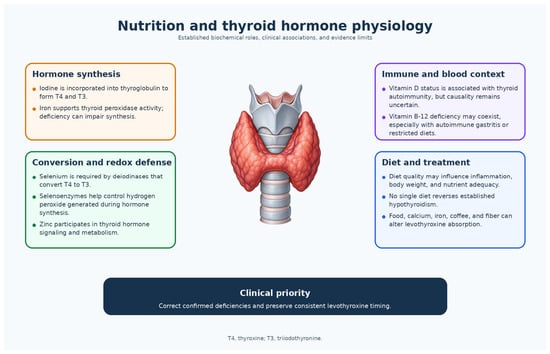
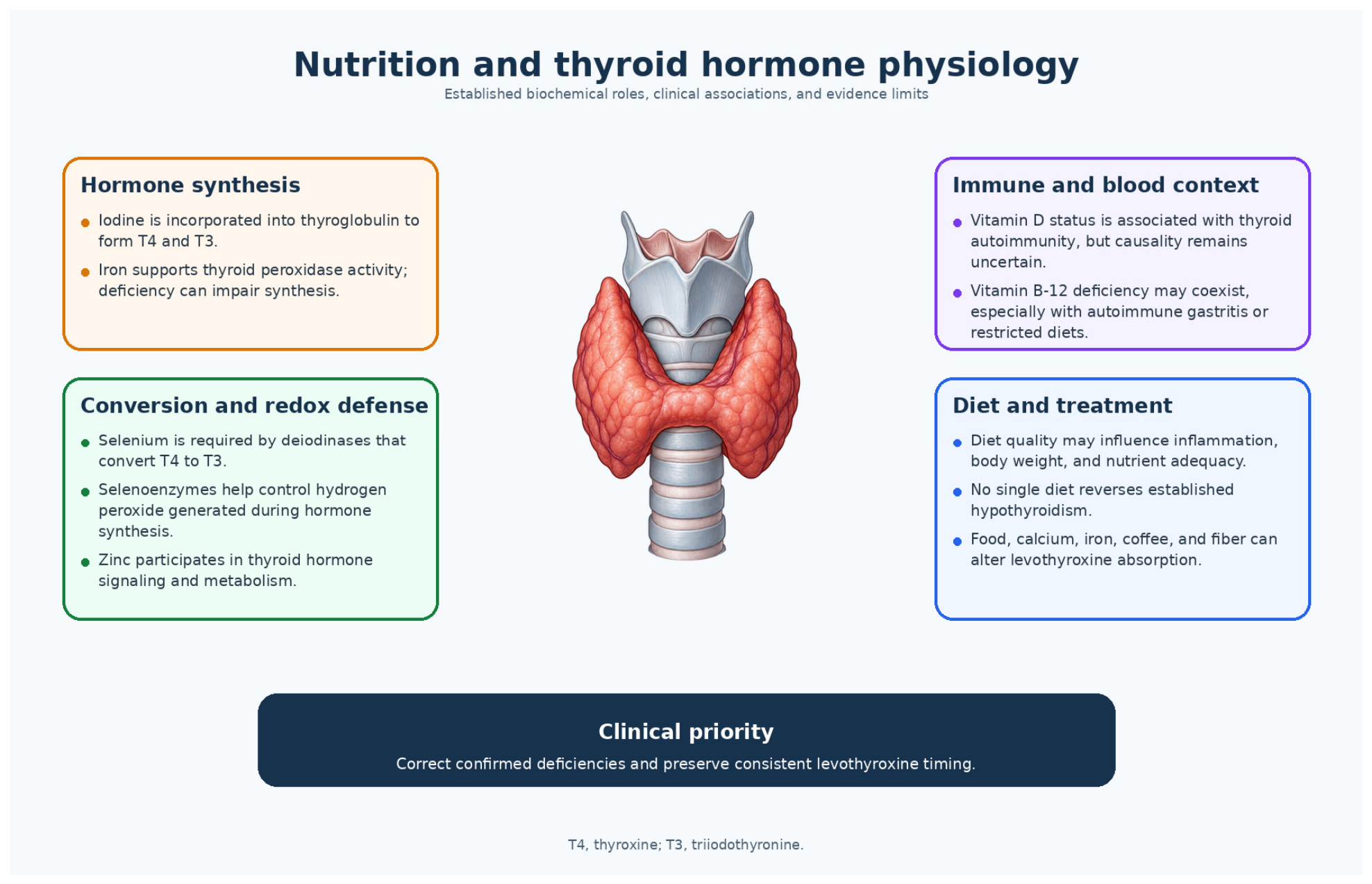
Nutrient status should not be considered one element at a time. Iodine, iron, and selenium interact at the level of hormone synthesis and redox control, while inflammatory and gastrointestinal disorders can affect several nutrients simultaneously [8,9]. This supports targeted assessment of likely deficiencies rather than indiscriminate multi-ingredient ‘thyroid support’ products, which may contain excessive iodine, selenium, or undeclared thyroid-active compounds. Interactions between nutrients and diet, and thyroid hormone are shown in Figure 1.
Figure 1.
Nutrition and thyroid hormone physiology. The figure separates established biochemical roles from clinical associations and treatment considerations. Nutrient adequacy supports thyroid physiology, but supplements have not been shown to replace indicated levothyroxine therapy. T4, thyroxine; T3, triiodothyronine.
3.2. Macronutrient Foods and Dietary Exposures
3.2.1. Energy and Carbohydrate Availability
Severe energy restriction, fasting, and very-low-carbohydrate diets can lower circulating T3 as part of metabolic adaptation. In a small, randomized crossover trial of 11 healthy adults, a ketogenic diet reduced T3 and increased T4 relative to an isocaloric high-carbohydrate, low-fat diet without changing TSH [44]. These short-term changes in healthy participants do not establish that ketogenic diets cause clinical hypothyroidism. For patients with hypothyroidism, carbohydrate quantity should be individualized around cardiometabolic health, treatment goals, and dietary sustainability rather than a presumed requirement to ‘boost’ thyroid function.
3.2.2. Dietary Fat and Protein
Dietary fat and protein influence thyroid physiology indirectly through energy balance, substrate availability, body composition, and cardiometabolic health. A review of dietary protein and the hypothalamic–pituitary–thyroid axis found that marked protein or essential-amino-acid insufficiency can alter thyroid-hormone metabolism, although much of the mechanistic evidence comes from animal or severe-restriction models [58]. A broader 2024 review likewise concluded that nutritional imbalance may affect thyroid function but did not establish that ordinary variation in fat or protein intake treats established hypothyroidism [5]. In clinical practice, adequate protein intake should therefore be individualized to age, kidney function, energy intake, and preservation of lean mass rather than prescribed as a thyroid-specific therapy.
Fat quality is more clinically relevant to cardiovascular risk than to direct thyroid-hormone replacement. Replacing saturated fat with unsaturated fats from fish, nuts, seeds, and olive oil is consistent with cardiometabolic guidance for patients who also have dyslipidemia. Experimental evidence nevertheless warrants caution against overinterpretation: in a 2026 mouse study, a high-fat, high-sucrose diet rapidly impaired thyroid-hormone biosynthesis and peripheral T4 activation, with preliminary histologic parallels in human thyroid tissue [59]. These findings are mechanistically important but do not prove that usual dietary fat intake causes hypothyroidism in humans or that a low-fat diet reverse established disease.
3.2.3. Soy and Brassica Vegetables
Soy isoflavones can inhibit thyroid peroxidase in vitro, but a systematic review and meta-analysis found no clinically meaningful effect of soy consumption on FT3 or FT4 and only a small rise in TSH of uncertain significance [45]. An earlier clinical review similarly found little evidence of harm in euthyroid, iodine-replete adults, while emphasizing that risk may be greater when iodine intake is inadequate [46]. Patients with established hypothyroidism do not need to avoid soy foods, but a major change in soy intake can justify reassessment of TSH after steady state is reached.
The more immediate clinical issue is medication timing. Evidence on soy-related levothyroxine malabsorption is limited and consists largely of case reports and small studies. A 2023 review found that the evidence does not resolve whether soy milk interferes with levothyroxine absorption [47]. Patients should take levothyroxine consistently relative to meals and discuss major dietary changes with their clinicians. For Brassica vegetables, a systematic review found no clear adverse thyroid effects from ordinary consumption of cooked vegetables in iodine-sufficient diets [48]. Reviews of goitrogenic plant constituents indicate that clinically important effects generally require unusually large exposures or coexistence of iodine deficiency [49]. Routine avoidance of broccoli, cabbage, kale, or cauliflower is therefore unsupported.
3.3. Dietary Patterns
3.3.1. Mediterranean and Minimally Processed Dietary Patterns
Mediterranean-style diets emphasize vegetables, fruit, legumes, whole grains, nuts, olive oil, and fish while limiting refined grains, processed meat, and added sugars. This pattern can lower cardiometabolic risk, an important consideration because hypothyroidism often coexists with dyslipidemia and weight gain. Observational studies have examined Mediterranean diet adherence in relation to oxidative-stress markers in Hashimoto thyroiditis [36], thyroid-function measures in adults with obesity [37], and thyroid nodules or cancer [38]. These studies do not establish a treatment effect in hypothyroidism. A 12-week randomized study of 40 patients with Hashimoto thyroiditis found changes in FT3 and anthropometric measures after Mediterranean, gluten-free, or combined interventions, while between-group antibody differences were not significant [39].
Similarly, a pilot study favored the Mediterranean pattern for oxidative-stress markers but did not show clear improvement in thyroid function or autoimmunity with a gluten-free diet [40]. These findings support overall diet quality but not a disease-specific diet prescription. A cross-sectional study of 2119 Portuguese workers further showed that Mediterranean-diet adherence varied with age, smoking, and the place of food preparation, emphasizing that counseling should account for practical and social determinants of adherence [60].
3.3.2. Vegetarian and Vegan Diets
Vegetarian and vegan diets can be nutritionally adequate and may improve body weight and cardiometabolic health. In the Adventist Health Study 2, vegan eating was associated with a nonsignificant lower risk of hypothyroidism, whereas lacto-ovo- vegetarian eating showed a small positive association [43]. Interpretation is limited by self-reported diagnosis and residual confounding. The clinical priority is nutrient adequacy, particularly iodine, vitamin B-12, iron, zinc, selenium, protein, and vitamin D, rather than the presence or absence of animal foods.
3.3.3. Gluten-Free Diets
Celiac disease is more common in autoimmune thyroid disease than in the general population. A gluten-free diet is required when celiac disease is confirmed. For non-celiac Hashimoto thyroiditis, the evidence is inconsistent. An earlier meta-analysis suggested small improvements in TSH and FT4 but concluded that evidence was insufficient for routine recommendation [41]. A more recent systematic review and meta-analysis of three small trials found no significant benefit for TSH, FT3, or FT4; anti-thyroglobulin antibodies decreased, but TPO antibodies increased. Certainty was very low for all outcomes [42]. Unnecessary gluten restriction can increase costs, reduce fiber, and micronutrient intake, and complicate diagnosis if initiated before celiac testing.
3.3.4. Ultra-Processed Foods and Antioxidant-Rich Diets
New prospective evidence has strengthened, but not proven, the link between overall diet quality and thyroid outcomes. In UK Biobank participants followed for a median of 11.2 years, the highest versus lowest quintile of ultra-processed food intake was associated with a 31% higher risk of autoimmune-related hypothyroidism [50]. Residual confounding and exposure measurement limitations remain possible [50]. Cross-sectional NHANES analyses yielded mixed findings: a fruit-, whole-grain-, and vegetable-rich dietary pattern was not associated with hypothyroidism [61], whereas a comprehensive dietary antioxidant index was inversely associated with hypothyroidism in a separate analysis [51]. Behavioral studies also highlight the complexity of confounding factors in dietary research; for example, a cross-sectional study of female university students found lower ultra-processed food consumption among nutrition students, yet the association with electronic healthy-diet literacy was attenuated after multivariable adjustment for sociodemographic and lifestyle factors [62]. Although such behavioral studies do not measure thyroid endpoints directly, they reinforce the importance of accounting for confounding variables and avoiding premature causal interpretations [62]. Collectively, current findings do not establish that dietary antioxidants or avoidance of ultra-processed foods prevent or reverse hypothyroidism; guidance to limit ultra-processed foods rests primarily on broad cardiometabolic and general health considerations [50,51].
3.3.5. Summary of Dietary Patterns
Taken together, the current literature does not identify a single therapeutic diet that reliably normalizes thyroid function or permits withdrawal of levothyroxine in established hypothyroidism [6,10,11]. A systematic review found only nine heterogeneous dietary-intervention studies in Hashimoto thyroiditis and highlighted the need for better trials [10]. A 2025 review reached a similar conclusion: correction of documented deficiencies and generally anti-inflammatory, minimally processed eating patterns may be reasonable adjuncts, whereas benefits of restrictive regimens remain inconsistent [11]. While a Mediterranean-style pattern is beneficial for overall cardiometabolic health, gluten-free or lactose-free diets should be reserved strictly for individuals with confirmed clinical indications such as celiac disease or proven malabsorption [6,41,42]. Dietary counseling across all dietary patterns should therefore prioritize nutritional adequacy, cardiovascular risk reduction, and stable levothyroxine administration rather than promise reversal of autoimmune thyroid disease [4,6,11].
3.4. Levothyroxine and Diet
Food generally reduces and delays tablet levothyroxine absorption. Current European Thyroid Association guidance emphasizes a reproducible regimen. The same formulation taken consistently under similar conditions, usually on an empty stomach 30–60 min before breakfast or at bedtime at least 3 h after the evening meal [4]. Coffee, soy, high-fiber meals, calcium, iron, aluminum-containing antacids, bile-acid sequestrants, and several medications can impair absorption [7]. Calcium and iron supplements are commonly separated from levothyroxine by at least 4 h. The exact interval and formulation should be individualized with the prescriber.
When TSH remains elevated despite an apparently adequate dose, clinicians should first review adherence, administration timing, interacting products, formulation changes, and gastrointestinal conditions such as celiac disease, atrophic gastritis, Helicobacter pylori infection, or bariatric surgery. Liquid or soft-gel formulations may be useful in selected patients with absorption problems, but are not necessary for everyone [4,7].
4. Discussion
4.1. Evidence Synthesis and Clinical Interpretation
Table 1 translates the available human evidence into practical counseling guidance. Evidence strength refers to confidence in a thyroid-specific clinical conclusion, not merely evidence that a nutrient has a biochemical role. The strongest recommendations are to maintain adequate iodine intake, correct documented deficiencies, and administer levothyroxine consistently. Most disease-modifying claims for supplements and restrictive diets remain supported by low- or very-low-strength evidence.
4.2. Synthesis of Key Findings
A critical evaluation of the literature demonstrates a clear distinction between foundational nutritional physiology and unproven therapeutic claims [6,8]. Micronutrients including iodine, selenium, iron, zinc, vitamin D, and vitamin B-12 are essential as structural substrates or enzymatic cofactors in thyroid hormone synthesis, peripheral deiodination, redox defense, and systemic metabolism [8,24,28,32]. However, observing a cross-sectional association or a modest reduction in surrogate autoimmune markers—such as anti-TPO or anti-thyroglobulin antibody titers following selenium or vitamin D supplementation—does not equate to clinical symptom relief, prevention of disease progression, or a reduced requirement for exogenous thyroid hormone [14,15,16,17,18,20,21,22,23].
Similarly, broader dietary patterns show divergent levels of evidence depending on the clinical outcome evaluated. Minimally processed, Mediterranean-style diets offer well-established cardiometabolic benefits, which are particularly valuable given the frequent coexistence of hypothyroidism with dyslipidemia and weight gain [11,36,37]. Conversely, restrictive dietary regimens—including routine gluten avoidance in non-celiac patients, ketogenic diets, or the elimination of soy and cooked Brassica vegetables—lack robust clinical trial support for improving thyroid function and may inadvertently compromise dietary quality or micronutrient adequacy [41,42,44,45,48].
4.3. Clinical Implications for Patient Counseling
Clinicians counseling patients with hypothyroidism should focus on practical, evidence-based strategies while dispelling common misconceptions:
- Optimize Levothyroxine Administration: Consistent medication timing on an empty stomach—separated from meals, coffee, calcium, iron, and interfering supplements—remains the most impactful nutrition-related intervention for maintaining biochemical euthyroidism [4,7].
- Prioritize Targeted Assessment Over Routine Supplementation: Rather than recommending multi-ingredient ‘thyroid support’ supplements that carry risks of iodine or selenium toxicity [53,56], clinicians should screen for and correct documented deficiencies (such as iron, vitamin B-12, or vitamin D) guided by dietary history, clinical symptoms, and comorbidities [20,25,33].
- Maintain Iodine Adequacy Without Excess: Ensure adequate iodine intake—particularly during pregnancy, lactation, or when following plant-based diets—while advising against kelp concentrates and pharmacologic iodine supplements [12,13,53].
- Promote Sustainable Cardiometabolic Diet Quality: Encourage whole-food, Mediterranean-style eating patterns to support cardiovascular and metabolic health without framing diet as a replacement for hormone therapy [6,11,39,40].
- Discourage Unwarranted Food Restrictions: Reassure patients that ordinary consumption of cooked Brassica vegetables and soy is safe when iodine intake is adequate, and reserve gluten-free diets for confirmed celiac disease or wheat allergy [41,42,45,48].
4.4. Limitations of Current Evidence Base
Several methodological limitations constrain current clinical guidance. First, as a narrative review, this synthesis did not employ formal systematic screening or quantitative meta-analysis, although priority was placed on high-level evidence syntheses and clinical guidelines [3,4,14,42,52]. Second, the underlying clinical trials evaluating nutritional interventions in Hashimoto thyroiditis and hypothyroidism are frequently small, short in duration, and heterogeneous in baseline iodine or micronutrient status, supplement formulation, and concomitant levothyroxine use [10,16,22]. Third, observational studies linking dietary patterns or serum micronutrients to hypothyroidism are susceptible to residual confounding and reverse causation [19,43,50]. Finally, most trials emphasize surrogate biochemical markers rather than patient-centered endpoints [10,14,21].
4.5. Research Priorities
Future trials should enroll well-characterized participants stratified by disease etiology, baseline iodine status, baseline nutrient sufficiency, thyroid hormone treatment status, and celiac serology [10,42]. Interventions studies require adequate sample sizes and follow-up durations, evaluating patient-centered outcomes including validated symptom scores, quality of life, adverse events, and levothyroxine dose requirements, alongside biochemical thyroid parameters [10,11,16]. Standardized dietary assessment tools, preregistered protocols, blinded outcome evaluations, and replication across diverse iodine-intake regions are essential to distinguish the correction of true nutritional deficiencies from routine supplementation in nutrient-replete individuals [10,52].
5. Conclusions
Nutrition is integral to thyroid physiology and comprehensive patient care, but clinical recommendations must remain grounded in human evidence [6,8]. Ensuring adequate iodine intake, identifying and correcting documented micronutrient deficiencies, and promoting a minimally processed, cardiometabolic-supportive dietary pattern serve as sound adjuncts to medical therapy [4,11,25,33]. Current evidence does not support routine supplementation with selenium, zinc, or vitamin D, nor does it justify universal gluten-free diets, ketogenic regimens, or avoidance of soy and Brassica vegetables to treat hypothyroidism [21,29,42,44,45,48]. For patients requiring levothyroxine, consistent administration and careful management of food and supplement interactions remain central to achieving stable euthyroidism [4,7]. Large, long-term randomized trials with clinically meaningful endpoints are needed to clarify the role of targeted nutritional interventions in modifying disease course and patient well-being [10,11].
Author Contributions
D.A. and V.G. contributed to conceptualization, literature interpretation, and manuscript development. Both authors contributed to writing, review, and editing and approved the submitted version of the manuscript. All authors have read and agreed to the published version of the manuscript.
Funding
This research received no external funding.
Institutional Review Board Statement
Not applicable.
Informed Consent Statement
Not applicable.
Data Availability Statement
No new data were created or analyzed in this study. Data sharing is not applicable to this article.
Conflicts of Interest
The authors declare no conflicts of interest.
References
- Chaker, L.; Bianco, A.C.; Jonklaas, J.; Peeters, R.P. Hypothyroidism. Lancet 2017, 390, 1550–1562. [Google Scholar] [CrossRef] [Scilit] [PubMed]
- Taylor, P.N.; Albrecht, D.; Scholz, A.; Gutierrez-Buey, G.; Lazarus, J.H.; Dayan, C.M.; Okosieme, O.E. Global epidemiology of hyperthyroidism and hypothyroidism. Nat. Rev. Endocrinol. 2018, 14, 301–316. [Google Scholar] [CrossRef] [Scilit] [PubMed]
- Jonklaas, J.; Bianco, A.C.; Bauer, A.J.; Burman, K.D.; Cappola, A.R.; Celi, F.S.; Cooper, D.S.; Kim, B.W.; Peeters, R.P.; Rosenthal, M.S.; et al. Guidelines for the treatment of hypothyroidism. Thyroid 2014, 24, 1670–1751. [Google Scholar] [CrossRef] [Scilit] [PubMed]
- Centanni, M.; Duntas, L.; Feldt-Rasmussen, U.; Koehrle, J.; Peeters, R.P.; Razvi, S.; Trimboli, P.; Virili, C. ETA guidelines for the use of levothyroxine sodium preparations in monotherapy to optimize the treatment of hypothyroidism. Eur. Thyroid J. 2025, 14, e250123. [Google Scholar] [CrossRef] [Scilit] [PubMed]
- Shulhai, A.M.; Rotondo, R.; Petraroli, M.; Patianna, V.; Predieri, B.; Iughetti, L.; Esposito, S.; Street, M.E. The role of nutrition on thyroid function. Nutrients 2024, 16, 2496. [Google Scholar] [CrossRef] [Scilit] [PubMed]
- Ruggeri, R.M.; Virili, C.; Mocini, E.; Campennì, A.; Centanni, M.; Rotondi, M.; Cannavò, S.; Croce, L.; Migliaccio, S. The role of nutrition on thyroid health and disease: Myths and facts. J. Endocrinol. Investig. 2026, 49, 1759–1779. [Google Scholar] [CrossRef] [Scilit] [PubMed]
- Wiesner, A.; Gajewska, D.; Paśko, P. Levothyroxine interactions with food and dietary supplements: A systematic review. Pharmaceuticals 2021, 14, 206. [Google Scholar] [CrossRef] [Scilit] [PubMed]
- Köhrle, J. Selenium, iodine and iron-essential trace elements for thyroid hormone synthesis and metabolism. Int. J. Mol. Sci. 2023, 24, 3393. [Google Scholar] [CrossRef] [Scilit] [PubMed]
- Krishnamurthy, H.K.; Reddy, S.; Jayaraman, V.; Krishna, K.; Song, Q.; Rajasekaran, K.E.; Wang, T.; Bei, K.; Rajasekaran, J.J. Effect of micronutrients on thyroid parameters. J. Thyroid Res. 2021, 2021, 1865483. [Google Scholar] [CrossRef] [Scilit] [PubMed]
- Osowiecka, K.; Myszkowska-Ryciak, J. The influence of nutritional intervention in the treatment of Hashimoto’s thyroiditis: A systematic review. Nutrients 2023, 15, 1041. [Google Scholar] [CrossRef] [Scilit] [PubMed]
- Santos, C.S.; Carteri, R.B.; Coghetto, C.; Czermainski, J.; Rosa, C.B. Nutritional interventions in the treatment of Hashimoto’s disease: A systematic review. World J. Meta-Anal. 2025, 13, 100523. [Google Scholar] [CrossRef] [Scilit]
- Sorrenti, S.; Baldini, E.; Pironi, D.; Lauro, A.; D’orazi, V.; Tartaglia, F.; Tripodi, D.; Lori, E.; Gagliardi, F.; Praticò, M.; et al. Iodine: Its role in thyroid hormone biosynthesis and beyond. Nutrients 2021, 13, 4469. [Google Scholar] [CrossRef] [Scilit] [PubMed]
- National Institutes of Health Office of Dietary Supplements. Iodine: Fact Sheet for Health Professionals. Available online: https://ods.od.nih.gov/factsheets/Iodine-HealthProfessional/ (accessed on 10 October 2026).
- Huwiler, V.V.; Maissen-Abgottspon, S.; Stanga, Z.; Mühlebach, S.; Trepp, R.; Bally, L.; Bano, A. Selenium supplementation in patients with Hashimoto thyroiditis: A systematic review and meta-analysis of randomized clinical trials. Thyroid 2024, 34, 295–313. [Google Scholar] [CrossRef] [Scilit] [PubMed]
- Peng, B.; Wang, W.; Gu, Q.; Wang, P.; Teng, W.; Shan, Z. Effects of different supplements on Hashimoto thyroiditis: A systematic review and network meta-analysis. Front. Endocrinol. 2024, 15, 1445878. [Google Scholar] [CrossRef] [Scilit] [PubMed]
- van Zuuren, E.J.; Albusta, A.Y.; Fedorowicz, Z.; Carter, B.; Pijl, H. Selenium supplementation for Hashimoto’s thyroiditis. Cochrane Database Syst. Rev. 2013, 2013, CD010223. [Google Scholar] [CrossRef] [Scilit] [PubMed]
- Kong, X.Q.; Qiu, G.Y.; Yang, Z.B.; Tan, Z.X.; Quan, X.Q. Clinical efficacy of selenium supplementation in patients with Hashimoto thyroiditis: A systematic review and meta-analysis. Medicine 2023, 102, e33791. [Google Scholar] [CrossRef] [Scilit] [PubMed]
- Zhang, H.; Yang, Y.; Liu, S.; Yang, Y.; Liu, Z. Clinical efficacy of selenium supplementation in patients with Hashimoto thyroiditis: A systematic review and meta-analysis. Medicine 2025, 104, e44043. [Google Scholar] [CrossRef] [Scilit] [PubMed]
- Appunni, S.; Rubens, M.; Ramamoorthy, V.; Saxena, A.; Tonse, R.; Veledar, E.; McGranaghan, P. Association between vitamin D deficiency and hypothyroidism: Results from NHANES 2007-2012. BMC Endocr. Disord. 2021, 21, 224. [Google Scholar] [CrossRef] [Scilit] [PubMed]
- Chahardoli, R.; Saboor-Yaraghi, A.A.; Amouzegar, A.; Khalili, D.; Vakili, A.Z.; Azizi, F. Can supplementation with vitamin D modify thyroid autoantibodies in Hashimoto’s thyroiditis? A double-blind randomized clinical trial. Horm. Metab. Res. 2019, 51, 296–301. [Google Scholar] [CrossRef] [Scilit] [PubMed]
- Tang, J.; Shan, S.; Li, F.; Yun, P. Effects of vitamin D supplementation on autoantibodies and thyroid function in patients with Hashimoto thyroiditis: A systematic review and meta-analysis. Medicine 2023, 102, e36759. [Google Scholar] [CrossRef] [Scilit] [PubMed]
- Nodehi, M.; Ajami, A.; Izad, M.; Omran, H.A.; Chahardoli, R.; Amouzegar, A.; Yekaninejad, S.; Hemmatabadi, M.; Azizi, F.; Esfahanian, F.; et al. Effects of vitamin D supplements on frequency of CD4+ T-cell subsets in women with Hashimoto’s thyroiditis: A double-blind placebo-controlled study. Eur. J. Clin. Nutr. 2019, 73, 1236–1243. [Google Scholar] [CrossRef] [Scilit] [PubMed]
- Krysiak, R.; Szkróbka, W.; Okopień, B. The effect of vitamin D on thyroid autoimmunity in levothyroxine-treated women with Hashimoto’s thyroiditis and normal vitamin D status. Exp. Clin. Endocrinol. Diabetes 2017, 125, 229–233. [Google Scholar] [CrossRef] [Scilit] [PubMed]
- Zimmermann, M.B. The influence of iron status on iodine utilization and thyroid function. Annu Rev. Nutr. 2006, 26, 367–389. [Google Scholar] [CrossRef] [Scilit] [PubMed]
- Garofalo, V.; Condorelli, R.A.; Cannarella, R.; Aversa, A.; Calogero, A.E.; La Vignera, S. Relationship between iron deficiency and thyroid function: A systematic review and meta-analysis. Nutrients 2023, 15, 4790. [Google Scholar] [CrossRef] [Scilit] [PubMed]
- Parsaei, M.; Dashtkoohi, M.; Amirkhalili, E.; Chashmyazdan, M.; Korevaar, T.I.M.; Nazeri, P. Association of iron status indicators with thyroid hormone concentrations during pregnancy: A systematic review and meta-analysis. Front Endocrinol. 2025, 16, 1533169. [Google Scholar] [CrossRef] [Scilit] [PubMed]
- Luo, J.; Wang, X.; Yuan, L.; Guo, L. Iron deficiency, a risk factor of thyroid disorders in reproductive-age and pregnant women: A systematic review and meta-analysis. Front. Endocrinol. 2021, 12, 629831. [Google Scholar] [CrossRef] [Scilit] [PubMed]
- Severo, J.S.; Morais, J.B.S.; de Freitas, T.E.C.; Andrade, A.L.P.; Feitosa, M.M.; Fontenelle, L.C.; de Oliveira, A.R.S.; Cruz, K.J.C.; Marreiro, D.D.N. The role of zinc in thyroid hormones metabolism. Int. J. Vitam. Nutr. Res. 2019, 89, 80–88. [Google Scholar] [CrossRef] [Scilit] [PubMed]
- Beserra, J.B.; Morais, J.B.S.; Severo, J.S.; Cruz, K.J.C.; de Oliveira, A.R.S.; Henriques, G.S.; Marreiro, D.d.N. Relation between zinc and thyroid hormones in humans: A systematic review. Biol. Trace Elem. Res. 2021, 199, 4092–4100, Correction in Biol. Trace Elem. Res. 2021, 199, 4876. https://doi.org/10.1007/s12011-021-02597-2. [Google Scholar] [CrossRef] [Scilit] [PubMed]
- Rabbani, E.; Golgiri, F.; Janani, L.; Moradi, N.; Fallah, S.; Abiri, B. Randomized study of the effects of zinc, vitamin A, and magnesium co-supplementation on thyroid function, oxidative stress, and hs-CRP in patients with hypothyroidism. Biol. Trace Elem. Res. 2021, 199, 4074–4083. [Google Scholar] [CrossRef] [Scilit] [PubMed]
- Lu, L.; Huang, Z.; Wang, X.; Chen, J. Interaction between dietary selenium and zinc intakes on hypothyroidism. Biol. Trace Elem. Res. 2023, 201, 4667–4676. [Google Scholar] [CrossRef] [Scilit] [PubMed]
- Obeid, R.; Heil, S.G.; Verhoeven, M.M.A.; van den Heuvel, E.G.H.M.; de Groot, L.; Eussen, S.J.P.M. Vitamin B12 intake from animal foods, biomarkers, and health aspects. Front. Nutr. 2019, 6, 93. [Google Scholar] [CrossRef] [Scilit] [PubMed]
- Benites-Zapata, V.A.; Ignacio-Cconchoy, F.L.; Ulloque-Badaracco, J.R.; Hernandez-Bustamante, E.A.; Alarcón-Braga, E.A.; Al-Kassab-Córdova, A.; Herrera-Añazco, P. Vitamin B12 levels in thyroid disorders: A systematic review and meta-analysis. Front. Endocrinol. 2023, 14, 1070592. [Google Scholar] [CrossRef] [Scilit] [PubMed]
- Al-Mousawi, M.; Salih, S.; Ahmed, A.; Abdullah, B. Serum vitamin B12 and holotranscobalamin levels in subclinical hypothyroid patients in relation to thyroid-stimulating hormone (TSH) levels and the positivity of anti-thyroid peroxidase antibodies: A case-control study. Cureus 2024, 16, e61513. [Google Scholar] [CrossRef] [Scilit] [PubMed]
- Jabbar, A.; Yawar, A.; Waseem, S.; Wasim, S.; Islam, N.; Haque, N.U.; Zuberi, L.; Khan, A.; Akhter, J. Vitamin B12 deficiency common in primary hypothyroidism. J. Pak. Med. Assoc. 2008, 58, 258–261. [Google Scholar] [PubMed]
- Ruggeri, R.M.; Giovinazzo, S.; Barbalace, M.C.; Cristani, M.; Alibrandi, A.; Vicchio, T.M.; Giuffrida, G.; Aguennouz, M.H.; Malaguti, M.; Angeloni, C.; et al. Influence of dietary habits on oxidative stress markers in Hashimoto thyroiditis. Thyroid 2021, 31, 709. [Google Scholar] [CrossRef] [Scilit] [PubMed]
- Zupo, R.; Castellana, F.; Panza, F.; Lampignano, L.; Murro, I.; Di Noia, C.; Triggiani, V.; Giannelli, G.; Sardone, R.; De Pergola, G. Adherence to a Mediterranean diet and thyroid function in obesity. Nutrients 2020, 12, 3173. [Google Scholar] [CrossRef] [Scilit] [PubMed]
- Barrea, L.; Muscogiuri, G.; de Alteriis, G.; Porcelli, T.; Vetrani, C.; Verde, L.; Aprano, S.; Fonderico, F.; Troncone, G.; Colao, A.; et al. Adherence to the Mediterranean diet as a modifiable risk factor for thyroid nodular disease and thyroid cancer. Front. Nutr. 2022, 9, 944200. [Google Scholar] [CrossRef] [Scilit] [PubMed]
- Ülker, M.T.; Arıtıcı Çolak, G.; Baş, M.; Erdem, M.G. Evaluation of the effect of gluten-free diet and Mediterranean diet on autoimmune system in patients with Hashimoto thyroiditis. Food Sci. Nutr. 2024, 12, 1180–1188. [Google Scholar] [CrossRef] [Scilit] [PubMed]
- Laganà, M.; Piticchio, T.; Alibrandi, A.; Le Moli, R.; Pallotti, F.; Campennì, A.; Cannavò, S.; Frasca, F.; Ruggeri, R.M. Effects of dietary habits on markers of oxidative stress in subjects with Hashimoto thyroiditis: Comparison between the Mediterranean diet and a gluten-free diet. Nutrients 2025, 17, 363. [Google Scholar] [CrossRef] [Scilit] [PubMed]
- Piticchio, T.; Frasca, F.; Malandrino, P.; Trimboli, P.; Carrubba, N.; Tumminia, A.; Vinciguerra, F.; Frittitta, L. Effect of gluten-free diet on autoimmune thyroiditis progression in patients with no symptoms or histology of celiac disease: A meta-analysis. Front. Endocrinol. 2023, 14, 1200372. [Google Scholar] [CrossRef] [Scilit] [PubMed]
- Araújo, E.M.Q.; Coutinho-Lima, C.R.O.; Silva de Sousa, A.; de Souza, L.M.S.; Ramos, H.E.; de Almeida-Pititto, B.; Canto, G.D.L.; Trevisani, V.F.M. Effects of gluten-free diet in non-celiac Hashimoto thyroiditis: A systematic review and meta-analysis. Nutrients 2025, 17, 3437. [Google Scholar] [CrossRef] [Scilit] [PubMed]
- Tonstad, S.; Nathan, E.; Oda, K.; Fraser, G. Vegan diets and hypothyroidism. Nutrients 2013, 5, 4642–4652. [Google Scholar] [CrossRef] [Scilit] [PubMed]
- Iacovides, S.; Maloney, S.K.; Bhana, S.; Angamia, Z.; Meiring, R.M. Could the ketogenic diet induce a shift in thyroid function and support a metabolic advantage in healthy participants? PLoS ONE 2022, 17, e0269440, Correction in PLoS ONE 2023, 18, e0295112. [Google Scholar] [CrossRef] [Scilit] [PubMed]
- Otun, J.; Sahebkar, A.; Östlundh, L.; Atkin, S.L.; Sathyapalan, T. Systematic review and meta-analysis on the effect of soy on thyroid function. Sci. Rep. 2019, 9, 3964. [Google Scholar] [CrossRef] [Scilit] [PubMed]
- Messina, M.; Redmond, G. Effects of soy protein and soybean isoflavones on thyroid function in healthy adults and hypothyroid patients: A review of the relevant literature. Thyroid 2006, 16, 249–258. [Google Scholar] [CrossRef] [Scilit] [PubMed]
- Gatta, E.; Maltese, V.; Cavadini, M.; Anelli, V.; Bambini, F.; Buoso, C.; Facondo, P.; Pirola, I.; Delbarba, A.; Cappelli, C. Interference or noninterference between soy and levothyroxine: That is the question. A narrative review of literature. Endocr. Pract. 2023, 29, 897–901. [Google Scholar] [CrossRef] [Scilit] [PubMed]
- Galanty, A.; Grudzińska, M.; Paździora, W.; Służały, P.; Paśko, P. Do Brassica vegetables affect thyroid function? A comprehensive systematic review. Int. J. Mol. Sci. 2024, 25, 3988. [Google Scholar] [CrossRef] [Scilit] [PubMed]
- Di Dalmazi, G.; Giuliani, C. Plant constituents and thyroid: A revision of the main phytochemicals that interfere with thyroid function. Food Chem. Toxicol. 2021, 152, 112158. [Google Scholar] [CrossRef] [Scilit] [PubMed]
- Liu, D.; Zhang, Y.; Chen, Z.; Hong, Y.; Liu, T.; Chen, L.H. Ultra-processed food consumption and incident autoimmune-related hypothyroidism: A sex-stratified prospective analysis from the UK Biobank. Am. J. Clin. Nutr. 2026, 123, 101142. [Google Scholar] [CrossRef] [Scilit] [PubMed]
- Chang, J.; Wang, N.; Cheng, Y.; Chen, X. Relationship of comprehensive dietary antioxidant index and hypothyroidism risk: Evidence from NHANES 2007-2012. BMC Endocr. Disord. 2025, 25, 50. [Google Scholar] [CrossRef] [Scilit] [PubMed]
- Aarsland, T.E.; Aakre, I.; Stea, T.H.; Henjum, S.; Markhus, M.W.; A Strand, T.; Dahl, L.; Korevaar, T.I.; Bakken, K.S.; Sleire, S.N. Association of mild-to-moderate iodine deficiency with thyroid function: A systematic review and meta-analysis. Adv. Nutr. 2025, 16, 100471. [Google Scholar] [CrossRef] [Scilit] [PubMed]
- Lee, S.Y.; Pearce, E.N.; Braverman, L.E. Risks of iodine excess. Endocr. Rev. 2024, 45, 858–879. [Google Scholar] [CrossRef] [Scilit] [PubMed]
- Lisco, G.; De Tullio, A.; Triggiani, D.; Zupo, R.; Giagulli, V.A.; De Pergola, G.; Piazzolla, G.; Guastamacchia, E.; Sabbà, C.; Triggiani, V. Iodine deficiency and iodine prophylaxis: An overview and update. Nutrients 2023, 15, 1004. [Google Scholar] [CrossRef] [Scilit] [PubMed]
- Silva Junior, E.C.; Wadt, L.H.O.; Silva, K.E.; Lima, R.; Batista, K.; Guedes, M.; Carvalho, G.; Carvalho, T.; Reis, A.; Lopes, G.; et al. Natural variation of selenium in Brazil nuts and soils from the Amazon region. Chemosphere 2017, 188, 650–658. [Google Scholar] [CrossRef] [Scilit] [PubMed]
- EFSA Panel on Nutrition; Novel Foods and Food Allergens (NDA); Turck, D.; Bohn, T.; Castenmiller, J.; de Henauw, S.; Hirsch-Ernst, K.; Knutsen, H.K.; Maciuk, A.; Mangelsdorf, I.; et al. Scientific opinion on the tolerable upper intake level for selenium. EFSA J. 2023, 21, e07704. [Google Scholar] [CrossRef] [Scilit] [PubMed]
- Duncan, A.; Morrison, I.; Bryson, S. Iatrogenic copper deficiency: Risks and cautions with zinc prescribing. Br. J. Clin. Pharmacol. 2023, 89, 2825–2829. [Google Scholar] [CrossRef] [Scilit] [PubMed]
- Pałkowska-Goździk, E.; Lachowicz, K.; Rosołowska-Huszcz, D. Effects of dietary protein on thyroid axis activity. Nutrients 2018, 10, 5. [Google Scholar] [CrossRef] [Scilit] [PubMed]
- Rampy, J.; Torres-Manzo, A.P.; Hoffsmith, K.; Loberg, M.A.; Sheng, Q.; Salas-Lucia, F.; Bianco, A.C.; e Drigo, R.A.; Wang, H.; Weiss, V.L.; et al. Overnutrition in mice impairs thyroid hormone biosynthesis and utilization, causing hypothyroidism, despite remarkable thyroidal adaptations. J. Clin. Investig. 2026, 136, e194207. [Google Scholar] [CrossRef] [Scilit] [PubMed]
- Rei, M.; Leão, P.; Rodrigues, S. Adherence to the Mediterranean dietary pattern and its associated factors in Portuguese workers. Nutr. Food Sci. 2025, 55, 801–818. [Google Scholar] [CrossRef] [Scilit]
- Alkhatib, D.; Shi, Z.; Ganji, V. Dietary patterns and hypothyroidism in U.S. adult population. Nutrients 2024, 16, 382. [Google Scholar] [CrossRef] [Scilit] [PubMed]
- Akyüz, E.Y.; Karahan, T.Ö.; Ören, Ş.; Kavak, R.; Koçkar, İ. The power of nutrition education: Exploring the link between e-healthy diet literacy and ultra-processed food intake among female university students. Nutr. Food Sci. 2026, 56, 1215–1229. [Google Scholar] [CrossRef] [Scilit]

Disclaimer/Publisher’s Note: The statements, opinions and data contained in all publications are solely those of the individual author(s) and contributor(s) and not of MDPI and/or the editor(s). MDPI and/or the editor(s) disclaim responsibility for any injury to people or property resulting from any ideas, methods, instructions or products referred to in the content. |
© 2026 by the authors. Licensee MDPI, Basel, Switzerland. This article is an open access article distributed under the terms and conditions of the Creative Commons Attribution (CC BY) license.