


Abstract
Background: Telemedicine represents a rapidly evolving tool for delivering specialist healthcare in structurally constrained environments. Correctional facilities face significant barriers to in-person specialist care, and telemedicine offers a scalable solution. This study provides the first systematic description of telemedicine utilization across Georgian penitentiary institutions following the introduction of teleconsultation services. Methods: A retrospective descriptive observational study was conducted using anonymized administrative data from the Special Penitentiary Service of Georgia. All registered telemedicine consultations conducted across the entire national penitentiary system between 7 June 2023 and 18 February 2025 were included. Data were analyzed by medical specialty, facility type, and patient sex using descriptive statistics and the Chi-square (χ2) test. Utilization volumes were contextualized using institutional bed capacities. Results: A total of 347 teleconsultations were recorded across six medical specialties. Endocrinology was the most frequently utilized specialty (n = 123; 35.45%), followed by gastroenterology (n = 92; 26.51%), rheumatology (n = 61; 17.58%), nephrology (n = 49; 14.12%), hematology (n = 21; 6.05%), and otorhinolaryngology (n = 1; 0.29%). Consultations involving male inmates accounted for 72.89% of all recorded consultation events (n = 253); note that the unit of analysis is the consultation, not the individual patient. All endocrinology consultations were conducted exclusively with male inmates. Hematology consultations were predominantly conducted with female inmates (90.48%). Closed-type and special-risk facilities accounted for 68.88% of all consultations. Temporal analysis revealed highly divergent trajectories across medical specialties; while endocrinology exhibited an accelerating upward growth pattern, gastroenterology showed a fluctuating trend with a late-stage resurgence, and both nephrology and rheumatology demonstrated long-term downward trends. The overall utilization rate was 27.63 consultations per 1000 available beds. A highly significant statistical association was confirmed between patient sex and utilized medical specialties (χ2 = 139.11, p < 0.001). Conclusions: Telemedicine utilization in Georgian penitentiary institutions has grown steadily since its introduction, with endocrinology emerging as the dominant specialty. Differences in teleconsultation utilization by sex and specialty were observed, including the absence of recorded endocrinology teleconsultations among female inmates during the study period. Further investigation is needed to determine whether these differences reflect variations in clinical needs, referral patterns, or other factors influencing service utilization.
1. Introduction
Telemedicine enhances healthcare providers’ ability to care for patients without requiring physical presence and represents a rapidly evolving tool in healthcare systems worldwide. Technological advancements and increased access to information technologies have facilitated its introduction and adoption globally [1,2,3].
Its applications include performing diagnostic evaluations, monitoring patients following treatment or therapy, and facilitating access to specialists who are not co-located with the patient [4].
The COVID-19 pandemic demonstrated the substantial demand for telemedicine services. During the pandemic, telemedicine enabled patients to consult qualified specialists remotely, regardless of geographic location. In OECD countries, patients who used telemedicine services were predominantly satisfied with the experience, and evidence indicates that telehealth conserves financial and time resources. Approximately two in five patients who used remote care services during the pandemic expressed a preference for telehealth over in-person visits [5,6]. Following these developments, the WHO and UNICEF developed guidelines to support the introduction of telemedicine in primary healthcare systems and to share best practices, aiming to improve patient access and quality of medical care [7,8].
Research has demonstrated sex-based differences in telemedicine utilization. Evidence from the United States indicates that women use online consultations more frequently than men, and that telemedicine use increases with age [9]. The nature and content of teleconsultations may also differ by sex [10]. Telemedicine has been particularly valuable in supporting women during the prenatal and postpartum periods and in addressing healthcare disparities for populations facing geographic and financial constraints [11].
The role of telemedicine is especially critical for vulnerable populations, including incarcerated individuals. Factors limiting healthcare access during imprisonment are complex and diverse [12]. People in penitentiary facilities typically have more restricted access to healthcare and experience worse health outcomes than the general population [13]. Teleconsultations reduce both the direct and indirect costs associated with conventional clinical practice in correctional settings and are considered invaluable for incarcerated patients [12,14,15].
Georgia’s penitentiary system is defined and regulated under Article 40(1)(g) and (h) of the Criminal Code of Georgia [16] and comprises the following institution types, as established by the Law of Georgia Penitentiary Code [17,18]: pre-release detention facilities, low-risk detention facilities, semi-open detention facilities, closed-type prison facilities, special-risk detention facilities, a special women’s detention facility, and juvenile rehabilitation facilities.
A defendant or inmate has the legal right to receive necessary medical care, provided in accordance with the medical service requirements established in the civilian healthcare sector [17]. The legal framework governing healthcare equivalence in Georgian penitentiary institutions is established by Order No. 381 of the Minister of Justice of Georgia, approved on 15 February 2019, entitled ‘On the Approval of Standards for the Provision of Medical Services in Penitentiary Institutions, Additional Standards for the Provision of Medical Services to Persons with Special Needs, the Preventive Healthcare Service Package, and the List of Essential Basic Medicines Required for Medical Care.’ Under this framework, all incarcerated persons are guaranteed access to medical services equivalent to those available in the civilian sector. Telemedicine is accessible in Georgia’s penitentiary institutions and is regulated in accordance with established national regulations [19,20].
Between 2007 and 2008, a healthcare needs assessment was conducted in Georgia’s penitentiary institutions, which identified a lack of access to medical services and led to the planning and implementation of primary healthcare reforms within the penitentiary system [21]. To our knowledge, published evidence on telemedicine consultation patterns in Georgian penitentiary institutions remains limited. Therefore, the present study aims to describe the distribution of telemedicine consultations by medical specialty, facility type, and sex.
2. Materials and Methods
2.1. Data Collection
This study employed a retrospective descriptive observational design based exclusively on secondary administrative data obtained from the Special Penitentiary Service of Georgia. The dataset included all registered online medical consultations conducted across the Georgian penitentiary system between 7 June 2023 and 18 February 2025. In Georgia, the penitentiary system comprises several types of institutions, including pre-release detention facilities, low-risk detention facilities, semi-open type detention facilities, closed-type prison facilities, special-risk detention facilities, special women’s detention facilities, and juvenile rehabilitation facilities. Detailed legal definitions of each facility type are available in Table 1. The total prison population in Georgia is dynamic and fluctuates over time, typically reaching up to approximately 10,000 incarcerated individuals. The collected dataset covered telemedicine consultations conducted in all types of penitentiary institutions, thereby ensuring comprehensive national-level coverage. The available administrative data did not allow a detailed assessment of service availability and referral procedures across individual penitentiary institutions.
Table 1.
Types and maximum accommodation capacities of penitentiary institutions under the Special Penitentiary Service of Georgia (as of January 2026).
The study was conducted in accordance with the Declaration of Helsinki. Ethical approval was obtained from the Commission of Medical Ethics Assessing Medical-Biological Research of the LEPL L. Sakvarelidze National Center for Disease Control and Public Health (Protocol No. 2024-055, approved on 18 June 2024; IRB0000215). As the study was based solely on anonymized administrative data, individual informed consent was not required.
The dataset included information on the consultation date, medical specialty, and originating penitentiary institution, including facility type. Sex was not recorded as a separate individual-level variable; therefore, consultation events were classified by sex according to the originating institution. All 94 consultation events originating from the Women’s Imprisonment Facility were classified as female, whereas the remaining 253 consultation events from institutions accommodating male beneficiaries were classified as male. The administrative dataset did not contain unique anonymized patient identifiers, making it impossible to identify repeated consultations involving the same individual or determine the number of unique patients. Accordingly, the unit of analysis was the consultation event rather than the individual patient. The primary objective was to analyze patterns and trends in the utilization of online medical consultations, with a particular focus on differences according to sex, facility type, and medical specialty.
2.2. Statistical Analysis
Descriptive statistical methods were applied to summarize consultation frequency, temporal trends, and distribution across medical specialties and facility types. Categorical variables were presented as counts and percentages. To evaluate the statistical significance of differences in telemedicine utilization between male and female inmates across medical specialties, the Chi-square (χ2) test of independence was performed (excluding otorhinolaryngology due to a single recorded event to ensure test validity). Furthermore, consultation volume was contextualized by calculating the descriptive consultation density per 1000 statutory beds, based on the accommodation capacities established by Order No. 1178 of the Minister of Justice of Georgia. This measure was used solely to describe consultation volume relative to statutory bed capacity and was not considered a population-based utilization rate. All statistical analyses were performed using Statistica software (StatSoft Polska Sp. z o.o. 2026, Version 5.2.67, https://www.statsoft.pl/).
3. Results
3.1. General Characteristics
A total of 347 online medical consultations were recorded across all Georgian penitentiary institutions between 7 June 2023 and 18 February 2025. It is important to note that the unit of analysis throughout this study is the individual consultation, not the individual patient: a single inmate may have undergone more than one teleconsultation during the study period. Accordingly, all references to consultations attributed to male or female inmates describe consultation events, not unique individuals. Of the 347 consultations recorded, 253 (72.91%) were attributed to male beneficiaries and 94 (27.09%) to female beneficiaries. Regarding institutional distribution, 239 consultations (68.88%) originated from closed-type, semi-open and closed-type, and special-risk penitentiary facilities. The remaining 108 consultations (31.12%) were recorded in the Women’s Imprisonment Facility (n = 94) and low-risk/pre-release facilities (n = 14). Based on the statutory maximum accommodation capacity of the Georgian penitentiary system (12,548 beds, as of January 2026), the descriptive consultation density was 27.65 consultations per 1000 statutory beds (Table 1). This indicator reflects consultation volume relative to statutory accommodation capacity rather than the actual incarcerated population.
3.2. Distribution by Medical Specialty Including Sex-Stratification Analysis
The full distribution by specialty, sex, and facility type is presented in Table 2. Consultations were delivered across six medical specialties. Endocrinology accounted for the largest proportion (n = 123; 35.45%), followed by gastroenterology (n = 92; 26.51%), rheumatology (n = 61; 17.58%), nephrology (n = 49; 14.12%), hematology (n = 21; 6.05%), and otorhinolaryngology (n = 1; 0.29%).
Table 2.
Distribution of telemedicine consultations by medical specialty, sex, and facility type (Georgian penitentiary institutions, June 2023–February 2025).
Differences in the distribution of recorded teleconsultations by sex were observed across medical specialties. All 123 endocrinology consultations (100%) were conducted with male inmates; no endocrinology teleconsultations were recorded among women during the study period. Similarly, nephrology consultations were predominantly utilized by male inmates (n = 48; 97.96%), with only one consultation involving a female inmate. Conversely, hematology consultations were predominantly utilized by women, who accounted for 19 of 21 cases (90.48%).
Gastroenterology and rheumatology showed more balanced distributions by sex, though men remained the majority users in absolute terms, consistent with their greater overall representation in the prison population.
Regarding facility distribution, all endocrinology consultations were conducted exclusively in closed or special-risk penitentiary institutions. Gastroenterology consultations were relatively evenly distributed between male (n = 49; 53.3%) and female (n = 43; 46.7%) beneficiaries. A similar distribution was observed in rheumatology, with 30 consultations (49.2%) attributed to male beneficiaries and 31 (50.8%) to female beneficiaries.
The cross-tabulation analysis revealed a highly significant statistical association between patient sex and the utilized medical specialties: χ2 = 139.11; df = 4; p < 0.001.
3.3. General Trends in Consultations Across Facilities
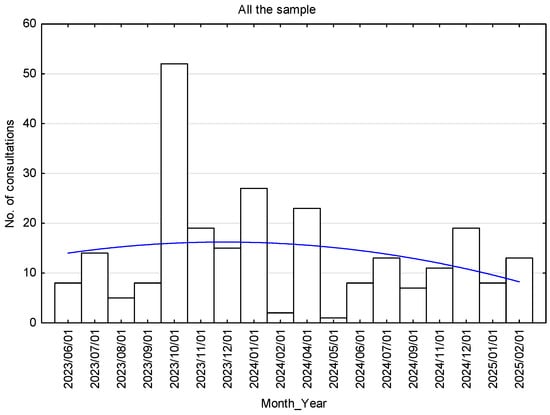
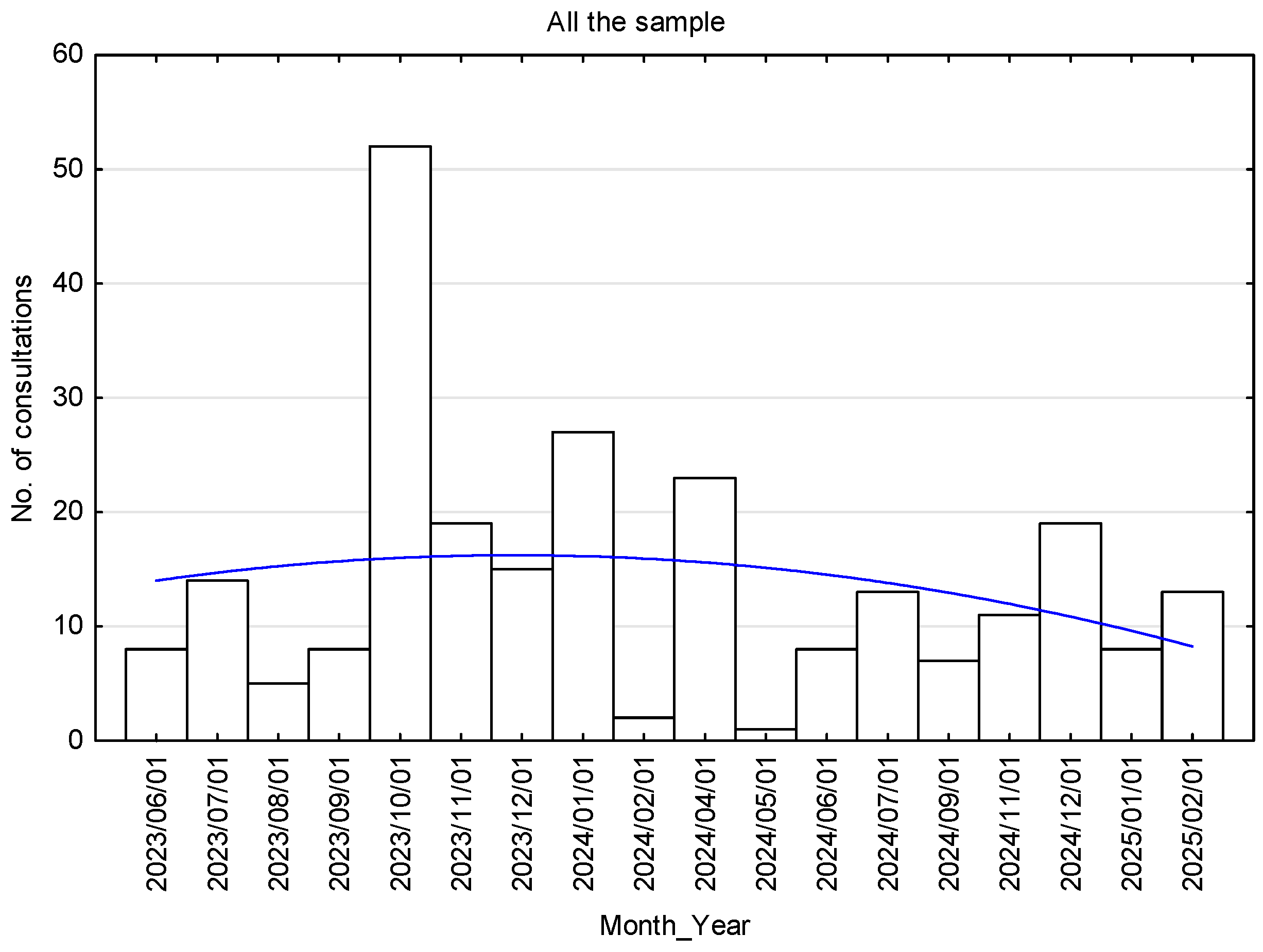
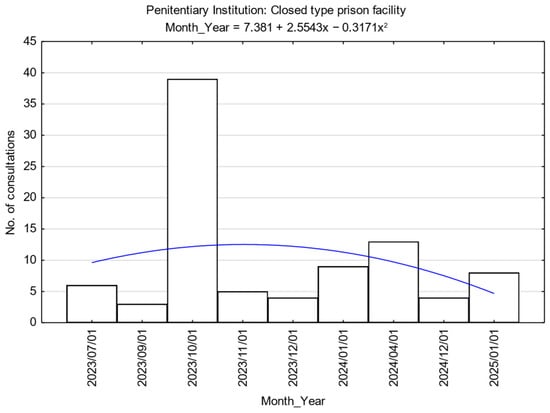
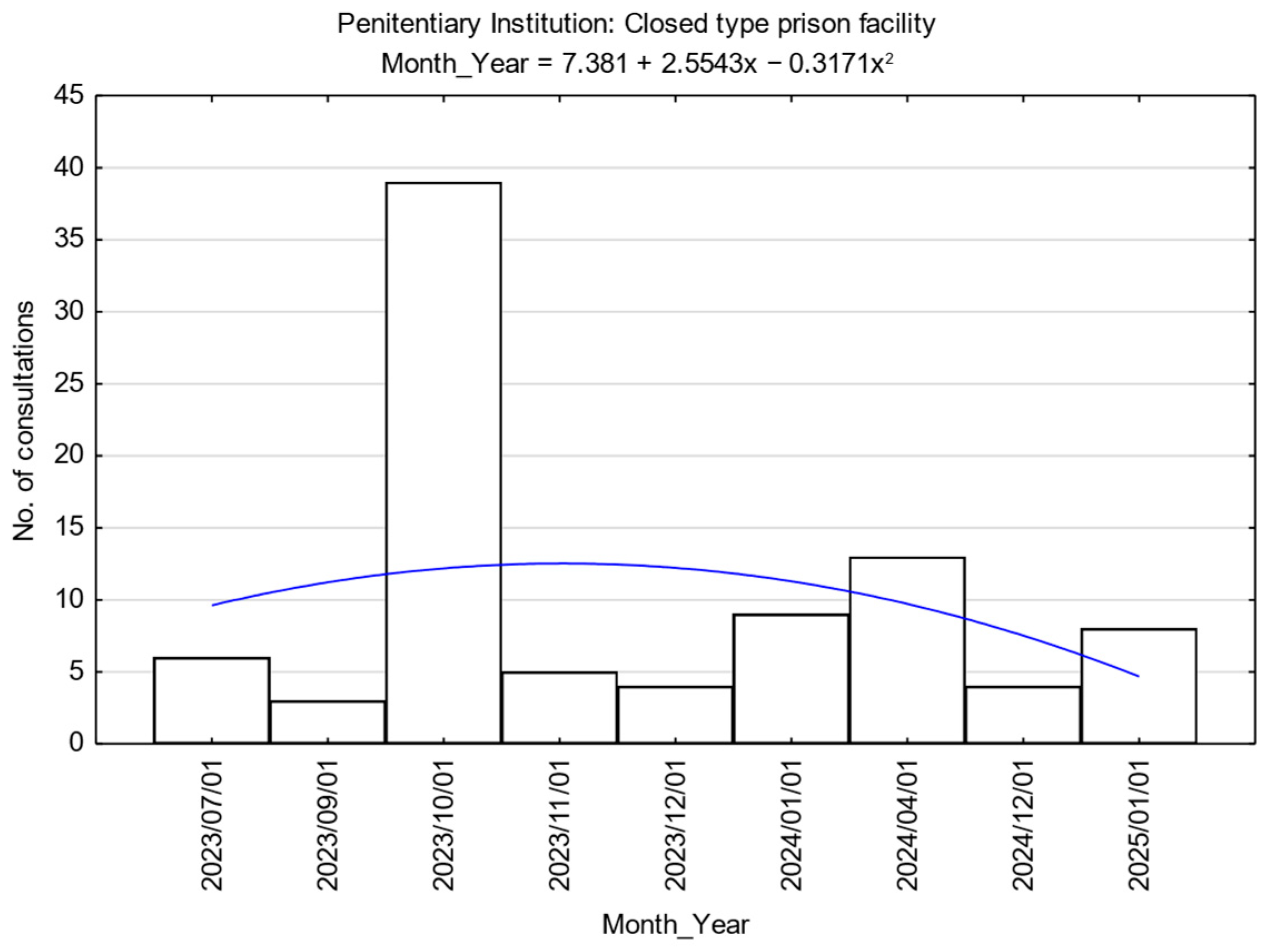
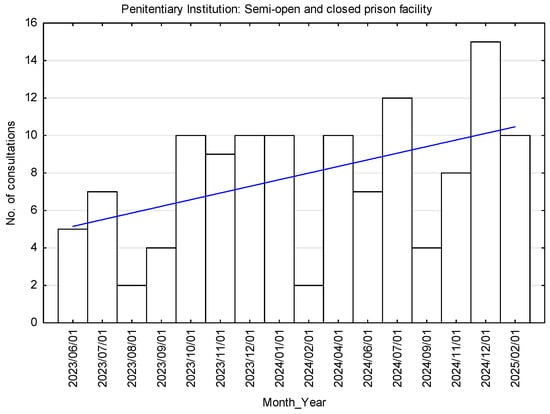
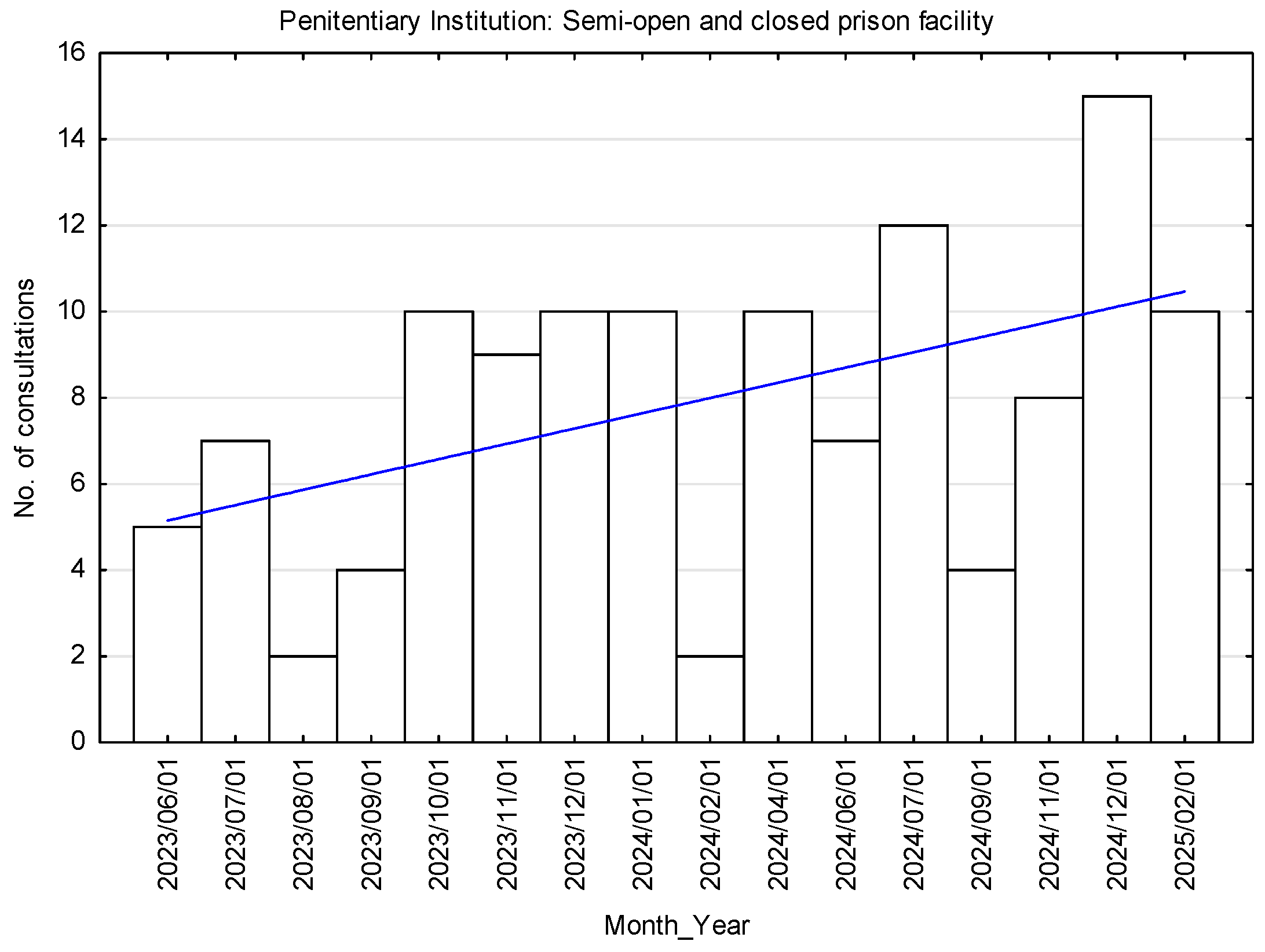
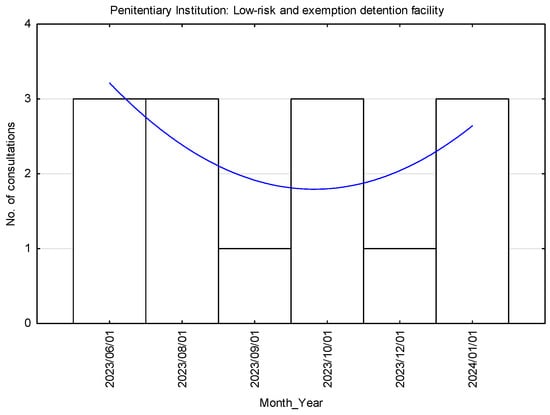
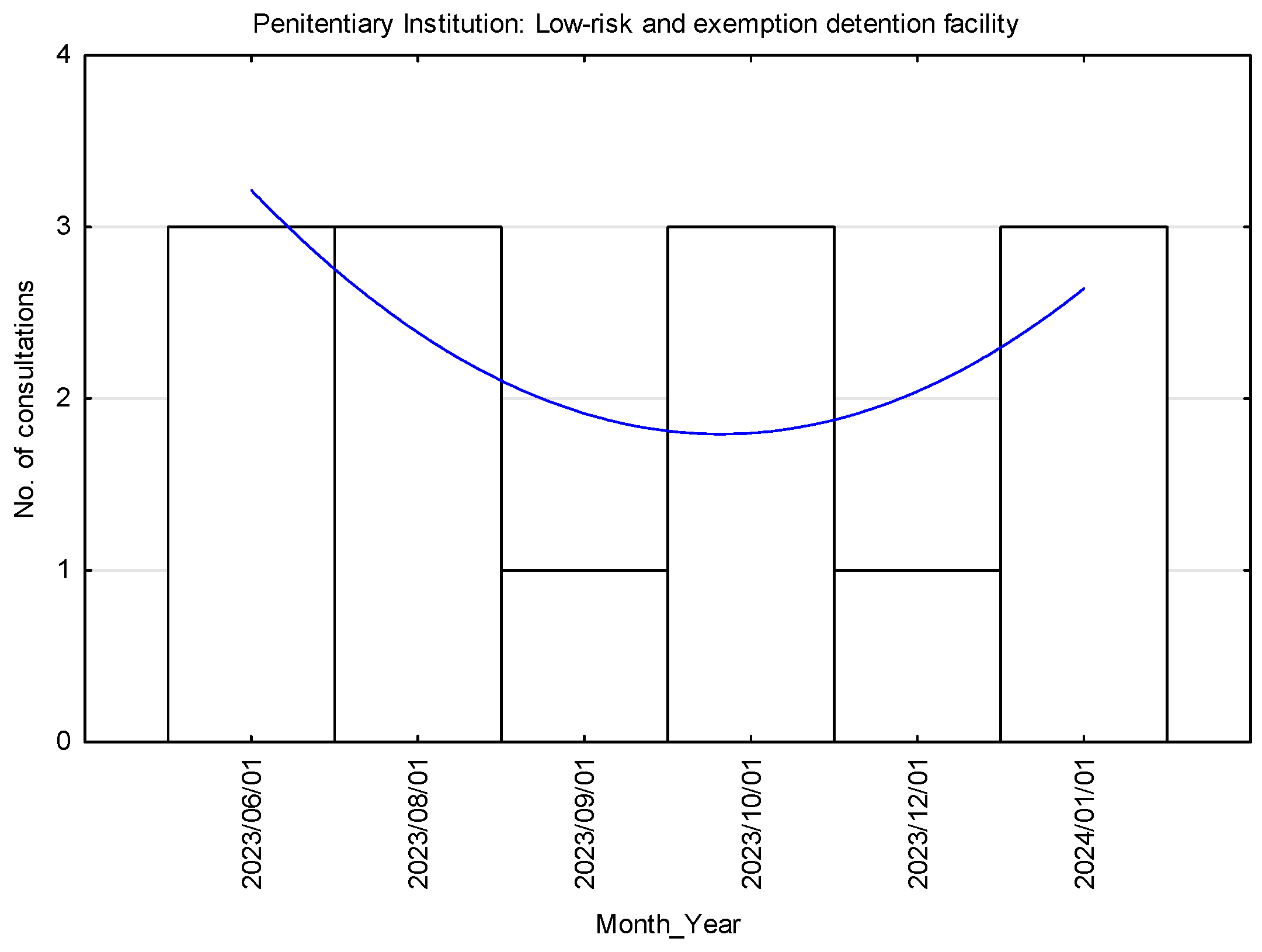
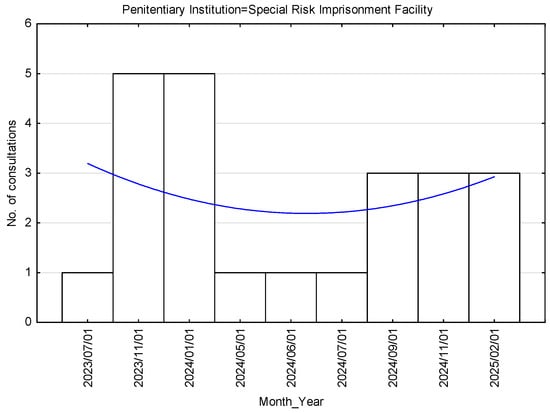
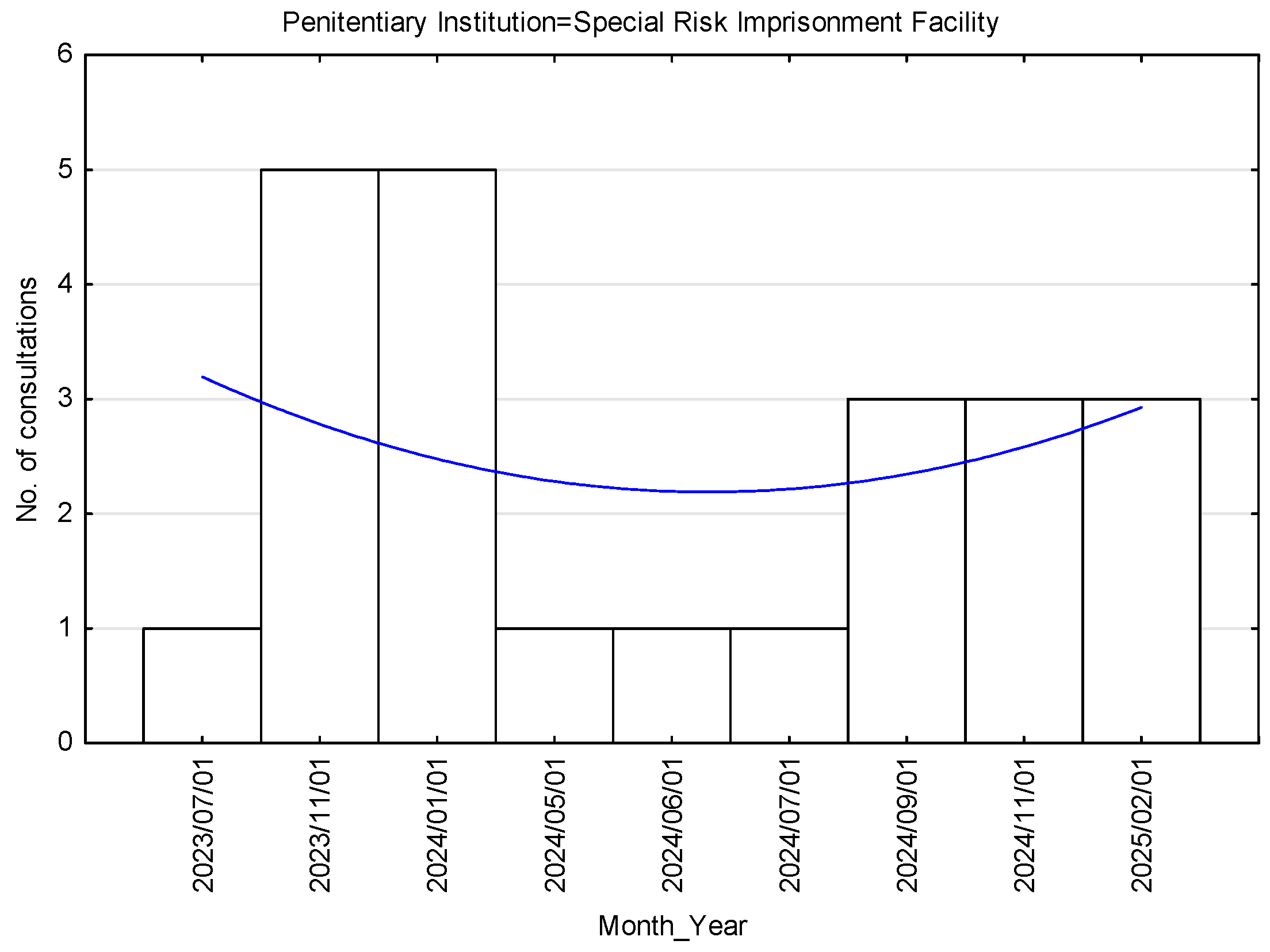
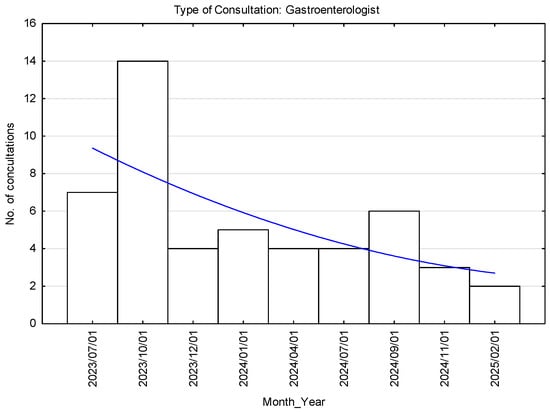
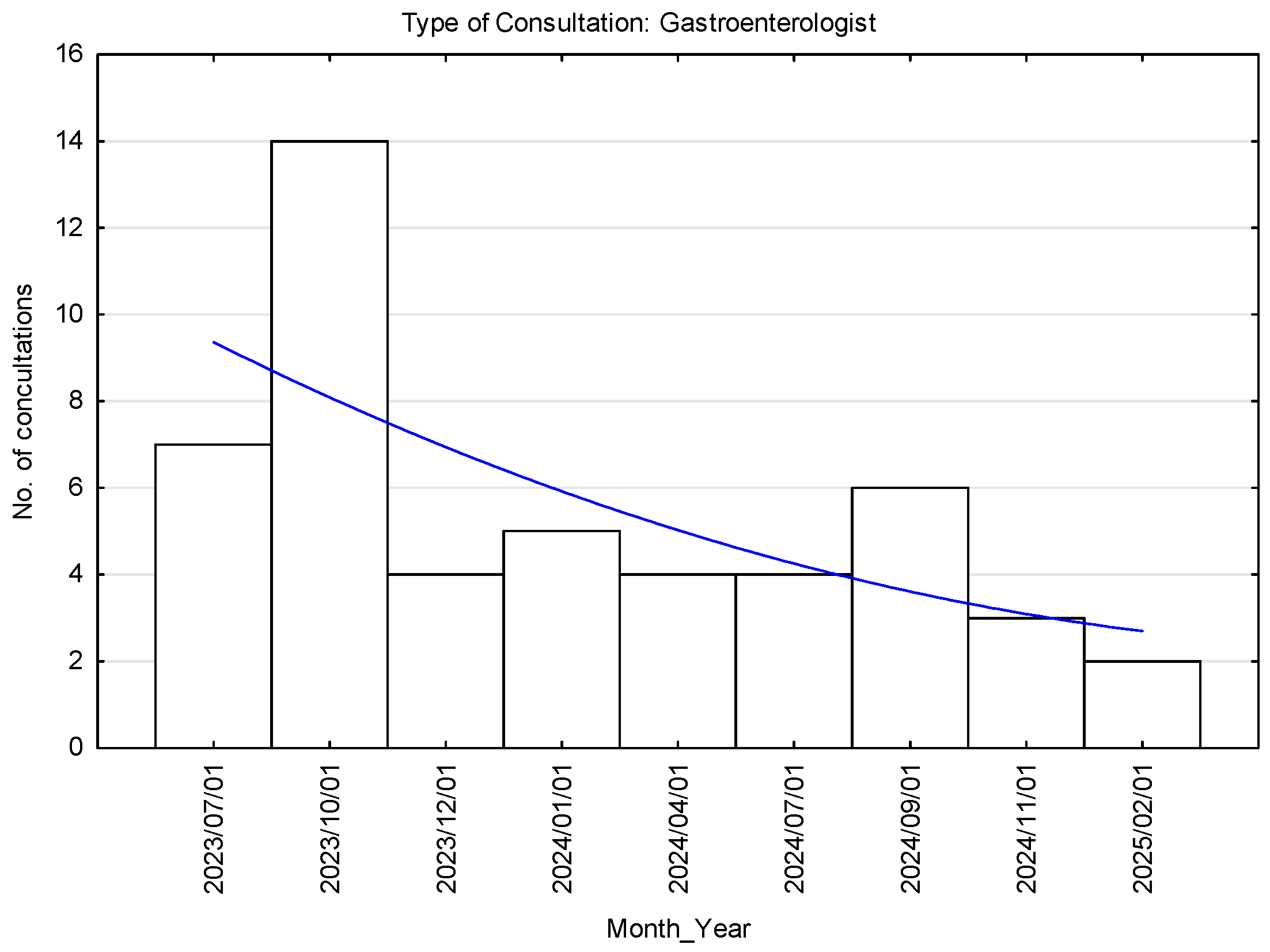
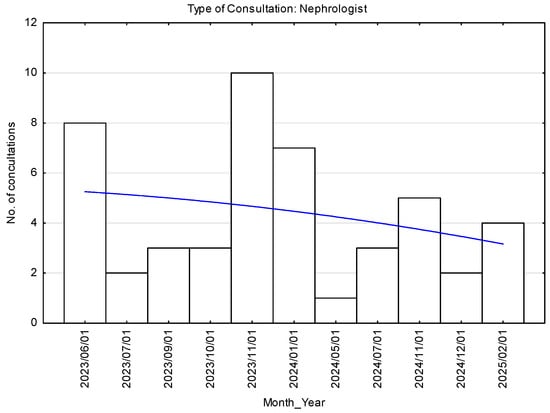
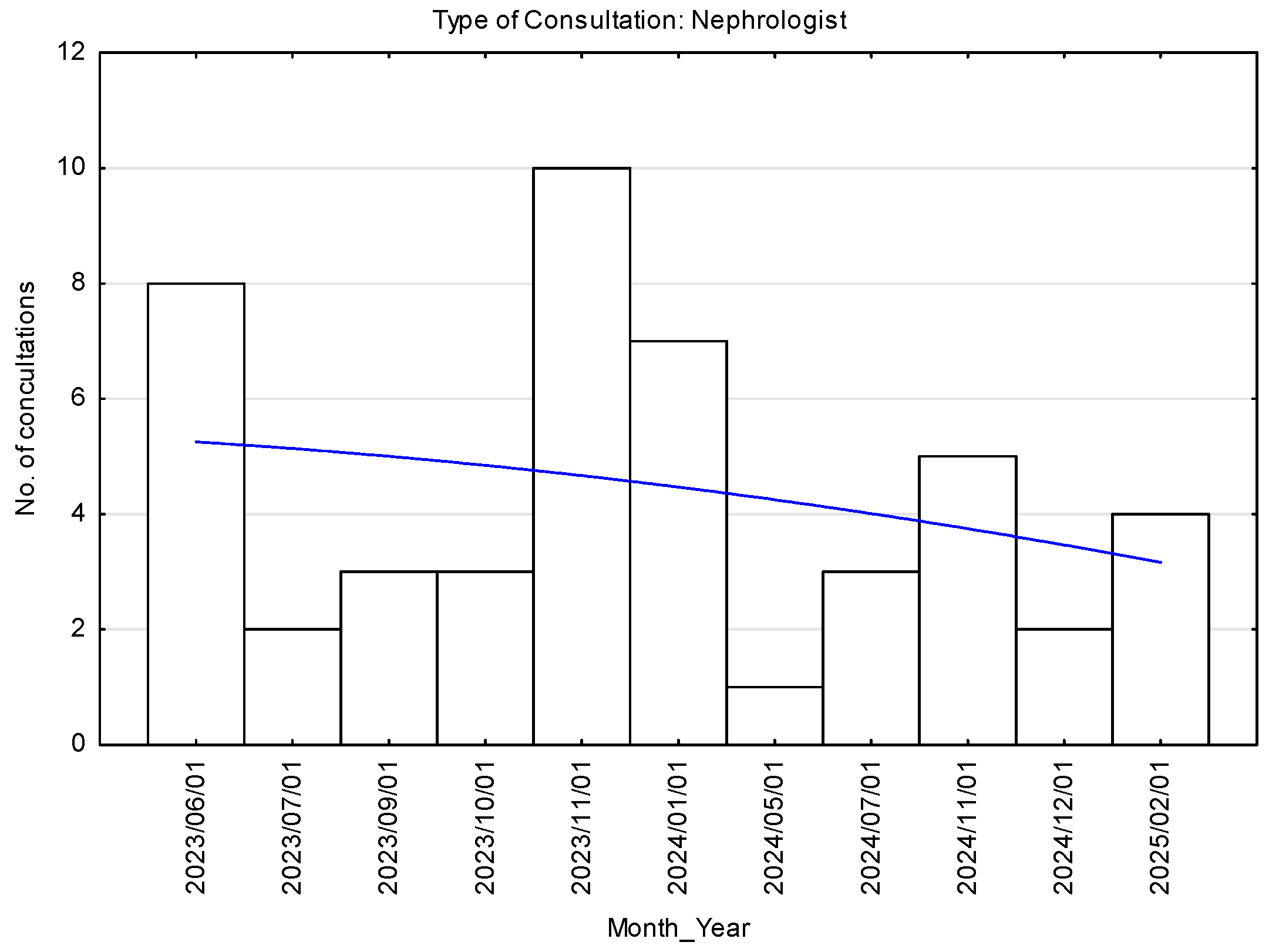
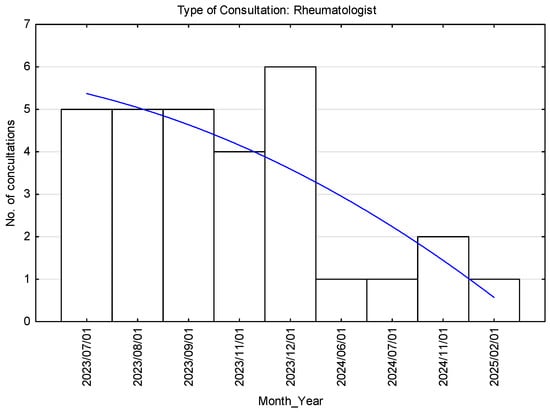
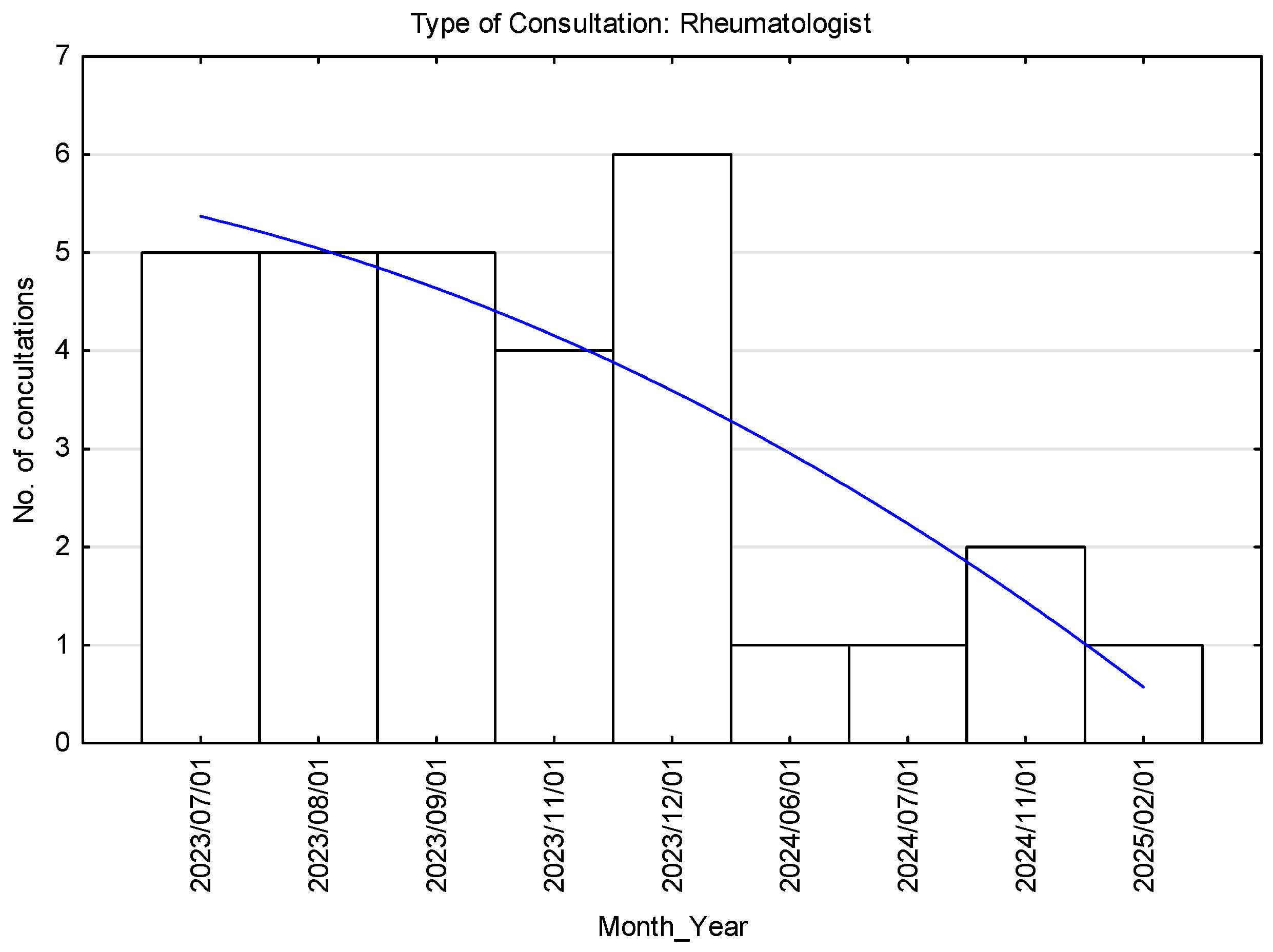
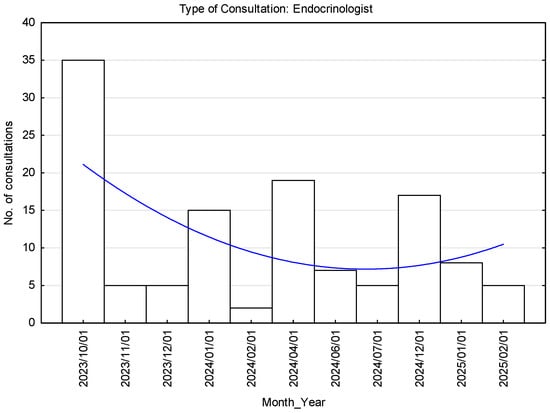
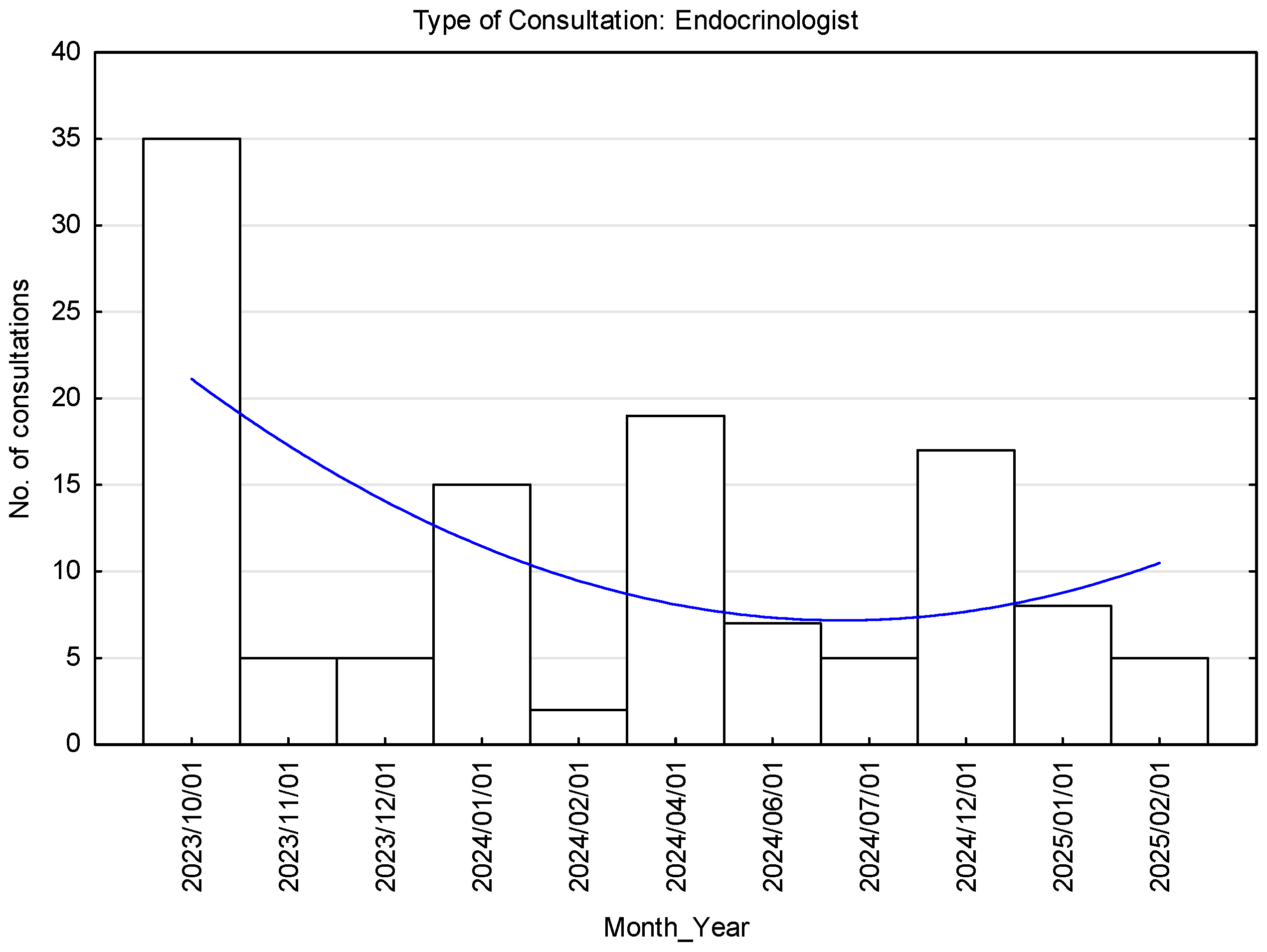
Analysis of consultation frequency over the study period revealed overall highly variable trajectories across different facility types and medical specialties (Figure 1, Figure 2, Figure 3, Figure 4, Figure 5, Figure 6, Figure 7, Figure 8 and Figure 9). Regarding institutional distribution, a sustained linear upward trend was observed exclusively in semi-open facilities (Figure 3). In contrast, closed-type exhibited non-linear trends characterized by an initial increase followed by a subsequent decline in teleconsultation volume (Figure 2). Low-risk facilities and special-risk facilities followed a U-shaped trajectory (Figure 4 and Figure 5). Linear trend analysis for specific medical specialties revealed long-term downward trajectories for nephrology (Figure 7) and rheumatology (Figure 8). Interestingly, while gastroenterology (Figure 6) showed an overall slight downward linear trend, the data blocks reveal a fluctuating pattern characterized by a distinct decline in the mid-study period followed by a noticeable upward resurgence in consultation volume toward the final months (late 2024–early 2025). Endocrinology (Figure 9) was the sole specialty displaying an accelerating, non-linear positive growth pattern, driven by a sharp influx of consultations in the latter half of the study period.
Figure 1.
Temporal trend in the number of telemedicine consultations across all penitentiary institutions (June 2023–February 2025).
Figure 2.
Temporal trend in telemedicine consultations in closed-type penitentiary facilities.
Figure 3.
Temporal trend in telemedicine consultations in semi-open and closed penitentiary facilities.
Figure 4.
Temporal trend in telemedicine consultations in low-risk and open-type penitentiary facilities.
Figure 5.
Temporal trend in telemedicine consultations in special-risk penitentiary institutions.
Figure 6.
Temporal trends in gastroenterology telemedicine consultations across penitentiary institutions.
Figure 7.
Temporal trends in nephrology telemedicine consultations across penitentiary institutions.
Figure 8.
Temporal trends in rheumatology telemedicine consultations across penitentiary institutions.
Figure 9.
Temporal trends in endocrinology telemedicine consultations across penitentiary institutions.
4. Discussion
The steady growth documented in Georgian penitentiary institutions suggests increasing institutional confidence in telemedicine and confirms its operational feasibility in high-security settings in June 2023. The findings demonstrate a highly specialty-specific temporal trajectory heavily concentrated within closed-type and special-risk facilities. While endocrinology exhibited a clear and accelerated upward trend, other major specialties such as nephrology and rheumatology demonstrated long-term downward trends, and gastroenterology showed a fluctuating pattern with a late-stage resurgence.
The COVID-19 pandemic has affected the delivery and organization of healthcare services in correctional settings internationally [22]. Correctional facilities represent one of the most structurally constrained healthcare environments, where security protocols, escort requirements, and transportation logistics create substantial barriers to in-person specialist access [13,14]. Telemedicine has been explored as a means of improving access to healthcare services in correctional settings, including in studies from the United States [10] and international systematic reviews [12]. These logistical challenges may be particularly relevant in penitentiary institutions with large accommodation capacities, where arranging external specialist consultations can require additional transportation and security resources. Previous studies have examined the potential of telemedicine to improve healthcare access and service delivery in correctional settings [23,24]. However, the present study did not assess patient transfers, healthcare outcomes, or changes in institutional confidence, and therefore cannot determine whether similar effects occurred in Georgia. Endocrinology consultations constituted the largest proportion of teleconsultations (35.45%). Chronic disease management is an important aspect of prison healthcare [25]. Previous research has demonstrated the potential of telemedicine to support diabetes management in correctional facilities [26]. Endocrinology consultations were recorded exclusively in closed-type and special-risk facilities; however, the available data do not explain the reasons for this distribution.
Gastroenterology accounted for 26.51% of consultations, displaying a fluctuating temporal pattern. Although the overall linear trend indicates a slight decline, a detailed look at the data blocks reveals a notable resurgence and upward shift in consultation frequency during the final months of the study (late 2024 to early 2025), reflecting a potentially volatile or cyclical demand for gastrointestinal care in correctional settings. Previous research has documented digestive diseases among older incarcerated individuals in Taiwan [27]. However, the present study did not include diagnostic information, making it difficult to explain the observed distribution of gastroenterology consultations. The present study showed a more balanced distribution of gastroenterology consultations by sex compared with endocrinology, although the reasons for this difference remain unclear. In contrast to endocrinology, rheumatology and nephrology consultations accounted for 17.58% and 14.12% of the total, respectively and demonstrated significant downward linear trends over the 16-month observation period. This decline suggests that initial backlogs of chronic cases may have been cleared following the introduction of the service, leading to a stabilization and reduction in active remote monitoring sessions. The near-absence of otorhinolaryngology consultations may reflect lower clinical demand or alternative referral pathways, although these explanations cannot be confirmed from the available data. The most striking finding of this study is the pronounced sex-based imbalance in teleconsultation distribution of consultations. Male inmates accounted for almost three-quarters of all consultations, and all endocrinology teleconsultations were conducted exclusively with men. Several non-mutually exclusive explanations may account for this disparity, and each warrants critical consideration in light of available evidence. International standards, including the WHO guide to prison health [26], the Nelson Mandela Rules [28], and the Bangkok Rules [29], emphasize the importance of appropriate healthcare that addresses the specific needs of incarcerated women. Women accounted for 90.48% of hematology consultations in this study. These findings raise questions about possible differences in referral practices across penitentiary institutions. However, the available data do not establish unequal access to telemedicine. Further investigation is needed. Since consultations involving women were recorded in a single facility, sex-related differences cannot be separated from institutional differences.
It is critical to note that the institutional concentration of teleconsultations within closed-type and special-risk facilities (68.88% of all events) is structurally confounded by patient sex. In the Georgian penitentiary system, these high-security tiers house male inmates exclusively, while incarcerated women are consolidated within the Special Women’s Detention Facility. Consequently, the lack of female representation in maximum-security teleconsultations is a direct reflection of structural infrastructure allocation rather than differential clinical utilization within those specific tiers.
The use of telemedicine services documented in this study may be understood as an operational mechanism to fulfill Georgia’s legal obligation of healthcare equivalence established by Order No. 381 of the Minister of Justice (15 February 2019). This principle is further reinforced by international human rights frameworks, including the Nelson Mandela Rules [30], which require that prisoners receive healthcare services comparable to those available in the civilian sector. The integration of telemedicine aligns with these obligations, particularly for specialist care that would otherwise require off-site transfer.
A primary strength of this study is its comprehensive national coverage: all Georgian penitentiary institutions and all registered teleconsultations over a 20-month period were included, providing a complete census of telemedicine utilization within the system. To our knowledge, this is the first systematic analysis of telemedicine consultations in the Georgian correctional context, offering a novel empirical baseline for future research and policy development.
Several limitations have to be acknowledged. First, the study does not assess clinical outcomes, treatment effectiveness or changes in health status following teleconsultations. Second, the unit of analysis is the consultation event rather than the individual patient: a single inmate may have contributed multiple consultations during the study period, meaning that comparisons between male and female inmates describe patterns of consultation use, not necessarily differences between individuals. Third, sex-disaggregated prisoner population data were unavailable, preventing the calculation of consultation rates per 1000 prisoners. The statutory capacity of 12,548 beds was used only to provide institutional context and does not represent the actual prison population. Finally, due to the lack of unique anonymized patient identifiers in the administrative dataset, the independence assumption required for the Chi-square test could not be strictly verified, as some individuals may have undergone multiple teleconsultations. Consequently, the Chi-square test results must be interpreted with caution as an event-level description of consultation distribution rather than a patient-level inferential measure. Future studies should aim to secure exact sex-disaggregated dynamic population rates to refine these utilization benchmarks further.
Future research should address these limitations through outcome-based evaluations, cost-effectiveness analyses, sex-disaggregated consultation rate calculations incorporating population denominators, and qualitative exploration of sex-specific healthcare barriers and referral practices in correctional settings. Because unique patient identifiers were unavailable, the independence assumption of the chi-square test could not be verified.
5. Conclusions
This study provides the first systematic description of telemedicine utilization in Georgian correctional institutions, covering all 347 teleconsultations recorded across six medical specialties between June 2023 and February 2025. The findings confirm that telemedicine has become an operational component of correctional healthcare delivery in Georgia. However, instead of a uniform expansion, utilization frequency followed highly divergent trajectories: a clear and sustained upward trend was characteristic primarily of endocrinology and semi-open facilities, whereas specialties like rheumatology, nephrology, and gastroenterology exhibited structural downward trends or temporal fluctuations. Endocrinology emerged as the dominant specialty, especially in closed and special-risk facilities, although the underlying clinical reasons could not be assessed.
Due to the descriptive design of the study, the findings should be interpreted with caution. However, strategic expansion of telemedicine infrastructure, especially in high-security facilities, where logistical barriers to specialist access are greatest, would be relevant. Also, gender-sensitive referral protocols and more general monitoring and evaluation mechanisms of clinical quality, cost-effectiveness and equity of teleconsultation services should be considered.
Author Contributions
Conceptualization, M.J. and M.A.; methodology, M.J. and M.A.; software, A.L. and G.H.; validation, G.H., M.A. and A.L.; formal analysis, A.L. and M.A.; investigation, M.A.; resources, M.J.; data curation, M.A. and M.J.; writing—original draft preparation, M.A. and G.H.; writing—review and editing, A.L.; visualization, M.A. and G.H.; supervision, A.L. and M.J.; project administration, A.L. and M.J.; funding acquisition, A.L., G.H. and M.J. All authors have read and agreed to the published version of the manuscript.
Funding
This research received no external funding.
Institutional Review Board Statement
The study was conducted in accordance with the Declaration of Helsinki. Ethical approval was obtained from the Commission of Medical Ethics Assessing Medical-Biological Research of the LEPL L. Sakvarelidze National Center for Disease Control and Public Health (Protocol No. 2024-055, approved on 18 June 2024; IRB0000215).
Informed Consent Statement
The requirement for individual informed consent was waived because this part of the study was based exclusively on the analysis of a pre-existing administrative database. The database provided to the researchers contained no personally identifiable information, and no direct contact with patients or intervention involving participants took place. Therefore, individual participants could not be identified from the dataset used for the analysis.
Data Availability Statement
The data presented in this study are available upon request from the corresponding author (due to the sensitive nature of the data originating from the correctional system, restrictions apply to protect institutional security, operational confidentiality, and the privacy of individuals, in accordance with applicable legal and ethical regulations).
Conflicts of Interest
The authors declare no conflicts of interest.
References
- Alruwaili, L.H.; Alshalawi, T.A.D.; Al-Shahrani, Z.M.B.; Alanazi, N.F.Z.; Al Anaziy, H.F.E.; Alshammari, A.S.R.; Alanazi, M.H.J.; Alanazi, G.A.M. Revolutionizing Primary Healthcare: The Role of Telemedicine in Improving Access, Efficiency, and Patient Care. J. Int. Crisis Risk Commun. Res. 2024, 7, 75–80. Available online: https://jicrcr.com/index.php/jicrcr/article/view/712/507 (accessed on 28 March 2025).
- Stoumpos, A.I.; Kitsios, F.; Talias, M.A. Digital Transformation in Healthcare: Technology Acceptance and Its Applications. Int. J. Environ. Res. Public Health 2023, 20, 3407. [Google Scholar] [CrossRef] [Scilit] [PubMed]
- Stoltzfus, M.; Kaur, A.; Chawla, A.; Gupta, V.; Anamika, F.N.U.; Jain, R. The role of telemedicine in healthcare: An overview and update. Egypt. J. Intern. Med. 2023, 35, 1–5. [Google Scholar] [CrossRef] [Scilit]
- Federal Communications Commission. Telehealth, Telemedicine, and Telecare: What’s What? Available online: https://www.fcc.gov/general/telehealth-telemedicine-and-telecare-whats-what (accessed on 28 March 2025).
- OECD. The COVID-19 Pandemic and the Future of Telemedicine; OECD: Paris, France, 2023. [Google Scholar] [CrossRef] [Scilit]
- Messal, H.T.; Müller, T.; Richter, L. Germany’s e-Health Transformation Makes Uneven Progress. McKinsey. 2022. Available online: https://www.mckinsey.com/industries/life-sciences/our-insights/germanys-ehealth-transformation-makes-good-but-uneven-progress (accessed on 22 February 2024).
- World Health Organization. Consolidated Telemedicine Implementation Guide; WHO: Geneva, Switzerland, 2022; Available online: https://iris.who.int/bitstream/handle/10665/364221/9789240059184-eng.pdf (accessed on 28 March 2025).
- World Health Organization; ITU. National eHealth Strategy Toolkit; WHO: Geneva, Switzerland, 2012; Available online: https://iris.who.int/server/api/core/bitstreams/473ac620-2b2d-4538-9680-40c8b8f22a5f/content (accessed on 28 March 2025).
- Lucas, J.W.; Villarroel, M.A. Telemedicine Use Among Adults: United States, 2021. NCHS Data Brief. 2022, 445, 1–8. [Google Scholar]
- Khairat, S.; Wallace, E.; Bohlmann, A.; Zebrowski, A.; Stabile, K.; Yao, Y.; Lakdawala, A.; Edson, B.; Catlett, T. Digital Health Experiences of Incarcerated Populations Using Telemedicine in North Carolina Prisons. J. Patient Exp. 2022, 9, 23743735221092611. [Google Scholar] [CrossRef] [Scilit] [PubMed]
- Hawkins, S.S. Telehealth in the Prenatal and Postpartum Periods. J. Obstet. Gynecol. Neonatal Nurs. 2023, 52, 264–275. [Google Scholar] [CrossRef] [Scilit] [PubMed]
- Tian, E.J.; Venugopalan, S.; Kumar, S.; Beard, M. The impacts of and outcomes from telehealth delivered in prisons: A systematic review. PLoS ONE 2021, 16, e0251840. [Google Scholar] [CrossRef] [Scilit] [PubMed]
- Edge, C.; George, J.; Black, G.; Gallagher, M.; Ala, A.; Patel, S.; Edwards, S.; Hayward, A. Protocol: Using telemedicine to improve access, cost and quality of secondary care for people in prison in England: A hybrid type 2 implementation effectiveness study. BMJ Open 2020, 10, e035837. [Google Scholar] [CrossRef] [Scilit] [PubMed]
- Mateo Soler, M.; Álvarez, R.; Cobo, C.; Pallas, J.R.; López, A.M.; Gaite, L. Telemedicine: Contributions, difficulties and key factors for implementation in the prison setting. Rev. Esp. Sanid. Penit. 2019, 21, 95. [Google Scholar] [CrossRef] [Scilit]
- Reno, J.; Fisher, R.C.; Robinson, L.; Brennan, N.; Travis, J. Telemedicine Can Reduce Correctional Health Care Costs: An Evaluation of a Prison Telemedicine Network; US Department of Justice: Washington, DC, USA, 1999. [Google Scholar]
- Parliament of Georgia. Criminal Code of Georgia. Legislative Herald of Georgia. Available online: https://matsne.gov.ge/en/document/view/16426 (accessed on 28 March 2025).
- Parliament of Georgia. Law of Georgia Penitentiary Code. Legislative Herald of Georgia. Available online: https://matsne.gov.ge/en/document/view/6009420?publication=2 (accessed on 28 March 2025).
- Minister of Corrections and Probation of Georgia. On Penitentiary Institutions of the Ministry of Corrections and Probation of Georgia. Legislative Herald of Georgia. Available online: https://matsne.gov.ge/ka/document/view/2962334?publication=21 (accessed on 28 March 2025).
- Ministry of Health of Georgia. On the Classification of Medical Interventions and the Determination of Minimum Requirements for Outpatient Service Providers. Legislation Herald of Georgia. Available online: https://matsne.gov.ge/ka/document/view/5984902?publication=0 (accessed on 28 March 2025).
- Parliament of Georgia. On Medical Practice. Legislative Herald of Georgia. Available online: https://matsne.gov.ge/en/document/view/15334?publication=17 (accessed on 28 March 2025).
- Verulava, T.; Omanadze, K. Results of Primary Healthcare Reforms in the Penitentiary System. Health Policy Insurance. 2015. Available online: https://eprints.iliauni.edu.ge/2991/1/%E1%83%9E%E1%83%94%E1%83%9C%E1%83%98%E1%83%A2%E1%83%94%E1%83%9C%E1%83%AA%E1%83%98%E1%83%A3%E1%83%A0%E1%83%98%20%E1%83%A1%E1%83%98%E1%83%A1%E1%83%A2%E1%83%94%E1%83%9B%E1%83%98%E1%83%A1%20%E1%83%9E%E1%83%98%E1%83%A0%E1%83%95%E1%83%94%E1%83%9A%E1%83%90%E1%83%93%E1%83%98%20%E1%83%AF%E1%83%90%E1%83%9C%E1%83%93%E1%83%90%E1%83%AA%E1%83%95%E1%83%98%E1%83%A1%20%E1%83%A0%E1%83%94%E1%83%A4%E1%83%9D%E1%83%A0%E1%83%9B%E1%83%94%E1%83%91%E1%83%98%E1%83%A1%20%E1%83%A8%E1%83%94%E1%83%93%E1%83%94%E1%83%92%E1%83%94%E1%83%91%E1%83%98.pdf (accessed on 28 March 2025).
- Hearty, P.; Canvin, K.; Bellass, S.; Hampton, S.; Wright, N.; Sheard, L. Understanding the impact of COVID-19 on the delivery and receipt of prison healthcare: An international scoping review. Health Justice 2023, 11, 42. [Google Scholar] [CrossRef] [Scilit] [PubMed]
- Fox, K.C.; Somes, G.W.; Waters, T.M. Timeliness and Access to Healthcare Services via Telemedicine for Adolescents in State Correctional Facilities. J. Adolesc. Health 2007, 41, 161–167. [Google Scholar] [CrossRef] [Scilit] [PubMed]
- Williams, K.S.; Singh, M.J.; Elumn, J.E.; Threats, M.; Sha, Y.; McCall, T.; Wang, K.; Massey, B.; Peng, M.L.; Wiley, K. Enhancing healthcare accessibility through telehealth for justice impacted individuals. Front. Public Health 2024, 12, 1401950. [Google Scholar] [CrossRef] [Scilit] [PubMed]
- Møller, L.; Stöver, H.; Jürgens, R.; Gatherer, A.; Nikogosian, H. Health in Prisons: A WHO Guide to the Essentials in Prison Health; WHO Regional Office for Europe: Copenhagen, Denmark, 2007; Available online: https://iris.who.int/handle/10665/107829 (accessed on 23 February 2026).
- Kassar, K.; Roe, C.; Desimone, M. Use of Telemedicine for Management of Diabetes in Correctional Facilities. Telemed. e-Health 2017, 23, 55–59. [Google Scholar] [CrossRef] [Scilit] [PubMed]
- Jiesisibieke, Z.L.; Tao, P.; Wang, Y.C.; Chien, C.W.; Tung, T.H. An epidemiological investigation of the prevalence of digestive diseases in the older prisoner population in Taiwan. J. Health Popul. Nutr. 2024, 43, 202. [Google Scholar] [CrossRef] [Scilit] [PubMed]
- United Nations. The United Nations Standard Minimum Rules for the Treatment of Prisoners (the Nelson Mandela Rules); United Nations: New York, NY, USA, 2015; Available online: https://www.unodc.org/documents/justice-and-prison-reform/Nelson_Mandela_Rules-E-ebook.pdf (accessed on 23 February 2026).
- United Nations General Assembly. United Nations Rules for the Treatment of Women Prisoners and Non-Custodial Measures for Women Offenders (the Bangkok Rules); Resolution 65/229; United Nations: New York, NY, USA, 2010; Available online: https://digitallibrary.un.org/record/702724 (accessed on 26 October 2026).
- Beheshti, L.; Kalankesh, L.R.; Doshmangir, L.; Farahbakhsh, M. Telehealth in Primary Health Care: A Scoping Review of the Literature. Perspect. Health Inf. Manag. 2022, 19, 1n. Available online: https://pmc.ncbi.nlm.nih.gov/articles/PMC9013222/ (accessed on 23 February 2026). [CrossRef] [Scilit]

Disclaimer/Publisher’s Note: The statements, opinions and data contained in all publications are solely those of the individual author(s) and contributor(s) and not of MDPI and/or the editor(s). MDPI and/or the editor(s) disclaim responsibility for any injury to people or property resulting from any ideas, methods, instructions or products referred to in the content. |
© 2026 by the authors. Licensee MDPI, Basel, Switzerland. This article is an open access article distributed under the terms and conditions of the Creative Commons Attribution (CC BY) license.