


Abstract
In October 2016, Hurricane Matthew passed along the east coast of Florida, USA. Intense coastal erosion by storm waves made sandy beaches reveal a multitude of trunk molds of ancient palm trees that once flourished along what is now the intertidal zone. A combination of coastal engineering efforts and natural processes caused the ancient palms to be reburied by beach sand. Fortunately, two retired geologists quickly responded after the hurricane ended, conducting a detailed investigation of the fossil palms. The trunk molds occur in two adjacent parallel zones that have an overall length of 1.4 km. The seaward-facing zone contains trunk molds where wood has been mineralized by calcite, enclosed within a coquinoid outer zone. The molds are associated with areas of gray coquina. In contrast, the landward-facing zone is characterized by trunk molds that contain mummified wood tissues within a weakly cemented sand matrix. These molds have thin coquina outer boundaries, but they occur within loose beach sand. Geological and botanical characteristics suggest a Holocene age for the ancient palm groves; their occurrence and demise are associated with small-scale regression/transgression cycles. A 14C radiocarbon age of 160 yrs BP for one of the younger cycles suggests the possibility that the landward- facing coastal palm growth was related to tidal changes that were related to the temperature fluctuations of the Little Ice Age (1300–1850).
1. Introduction
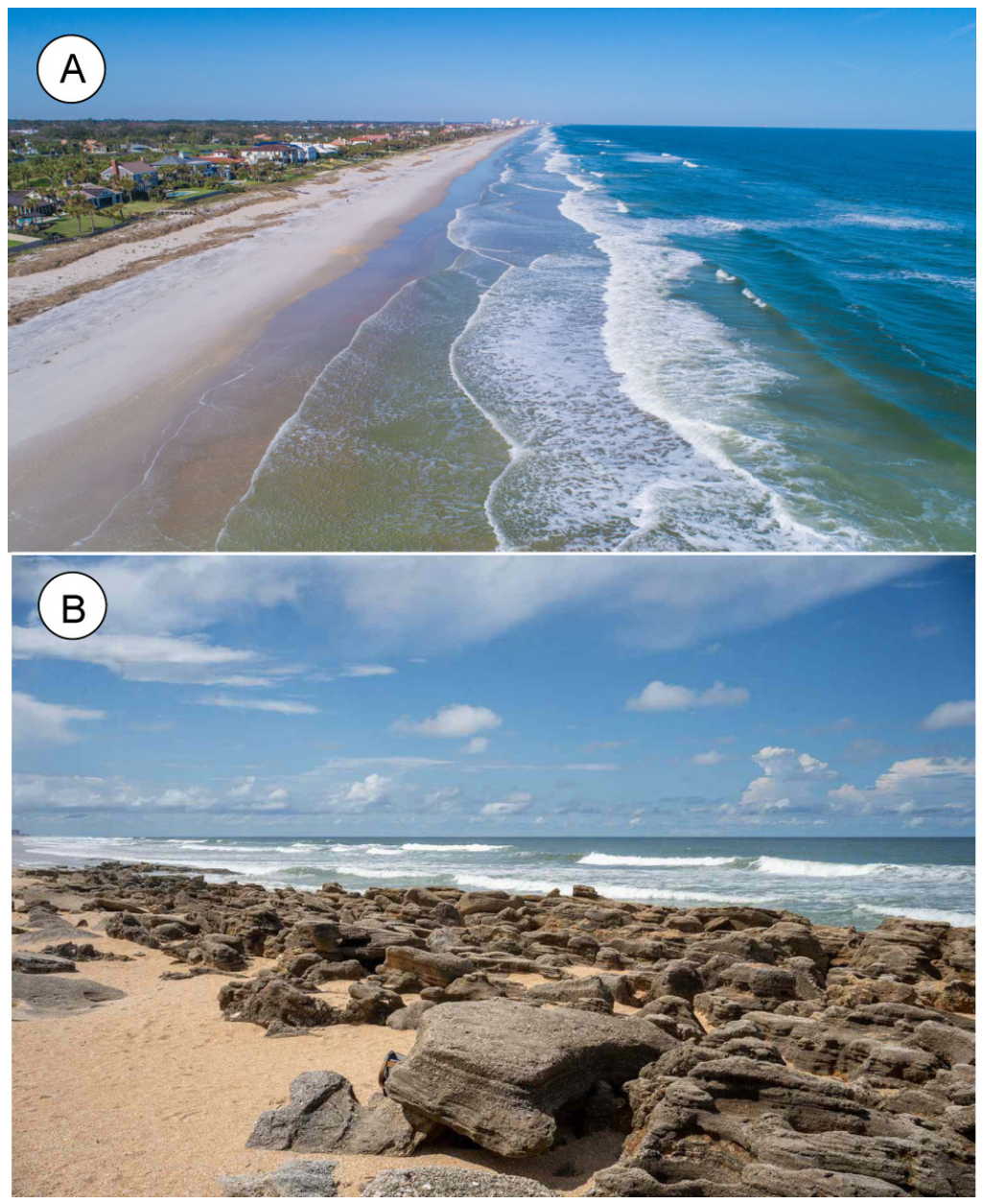
Because of low topography and young geologic history, the state of Florida, USA, lacks rocky coastal headlands. Indeed, the highest elevation in Florida is only 105 m. The nearest analog to rocky beaches is coastlines that contain layers of Pleistocene coquina that formed when calcareous shell fragments became cemented to form sedimentary rock. Florida is much better known for its sandy beaches (Figure 1).
Figure 1.
Beaches in northeast Florida: (A) Sandy beach near Jacksonville, Duval County; (B) Coquina beach at Washington Oaks Gardens State Park, Flagler County.
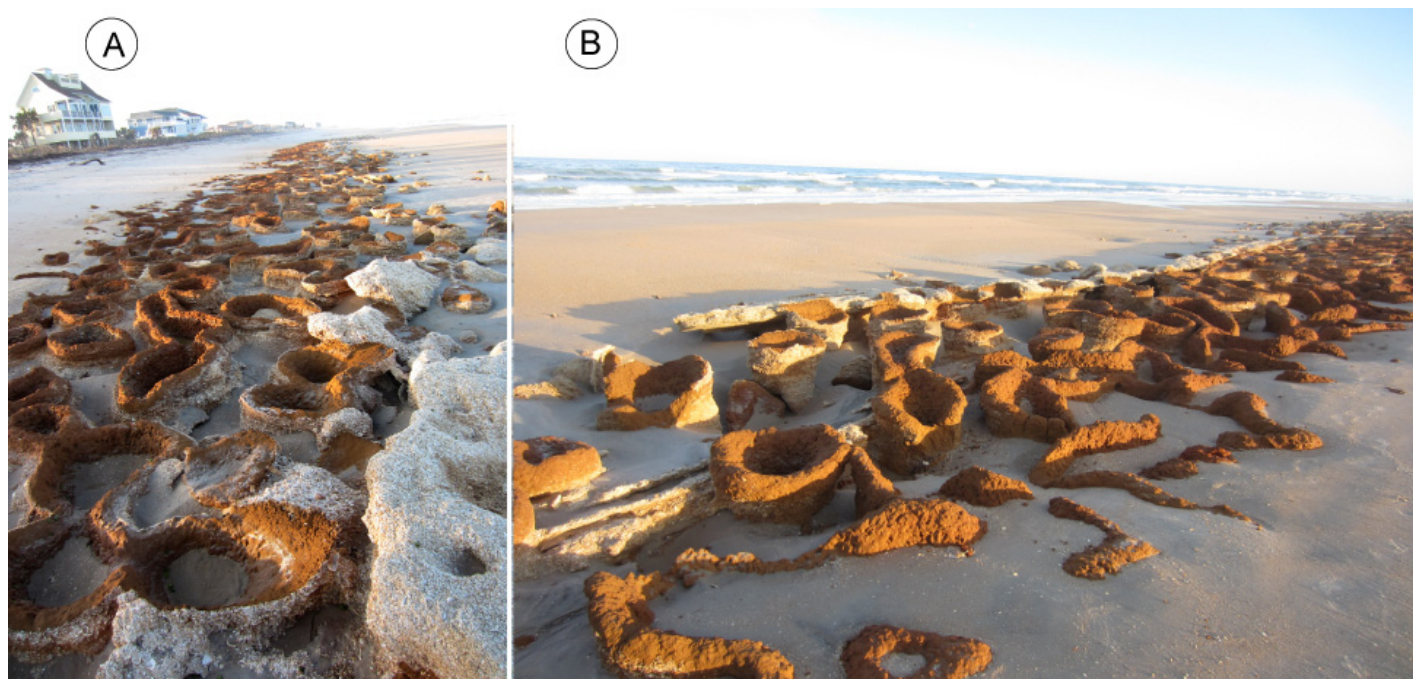
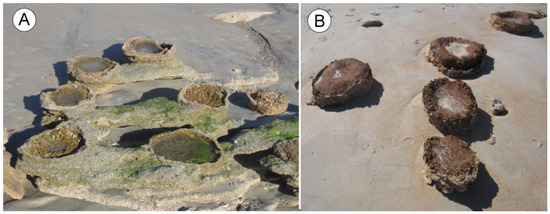
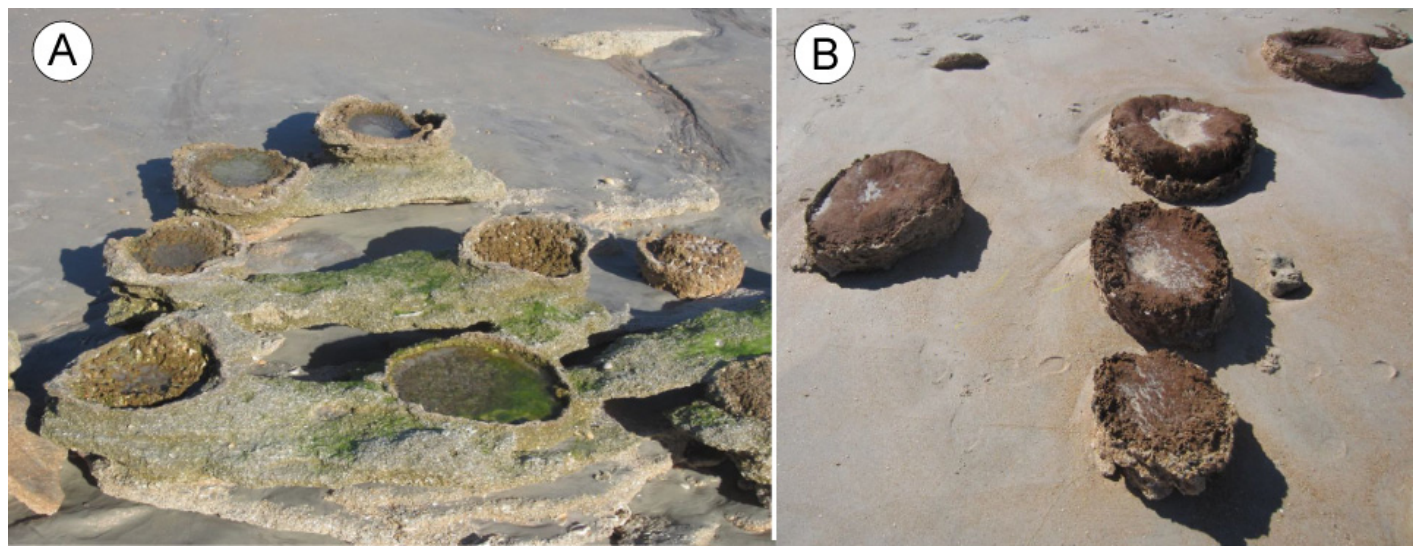
In October 2016, Hurricane Matthew caused coastal erosion that revealed spectacular fossil palm trunks over a distance of 1.4 km in the intertidal zone of a sandy beach near the Flagler County city of Palm Coast (Figure 2 and Figure 3). Within a year or less, the fossil palm zone became obscured as sand was replenished by a combination of coastal engineering efforts and natural processes.
Figure 2.
Location Map. This report describes ancient palm trunk remains at a coastal site near the town of Palm Coast, Flagler County, Florida, USA.
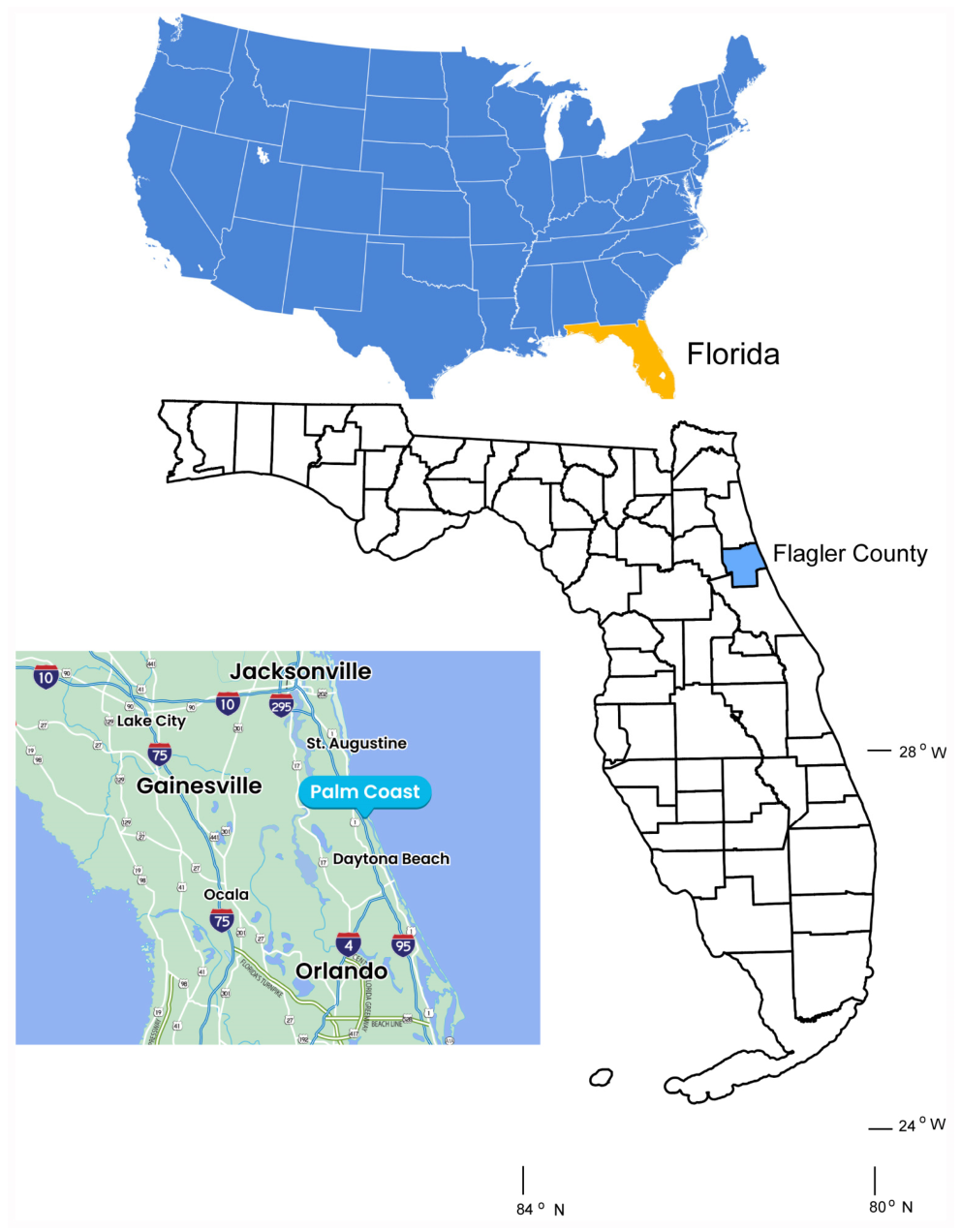
Figure 3.
Mineralized bases of palm tree trunks in the intertidal zone of the sandy beach near Palm Coast, Florida, exposed in 2016 by erosion caused by Hurricane Matthew. (A) View of fossil palm trunks showing their intertidal orientation being parallel to the coast. (B) Closer view.
Closely spaced circular features have previously been observed from the Florida coast in coquinoid limestone of the Anastasia Formation. These holes, which have depths of one m or more and widths of 0.25 to 0.5 m, have been described as having originated as “solution pipes” caused by the downward percolation of acidic rainwater [1]. This explanation has been repeated by later investigators, and the smooth diameters and cylindrical shape have been ascribed to wave abrasion [2]. Similar features occur in coastal coquina in Texas [3]. The latter authors [2,3] described the cylindrical cavities as “remarkable”; they offered no explanation of how wave erosion could have produced these shapes. Our observations suggest that these columnar cavities may have had a paleobotanical origin.
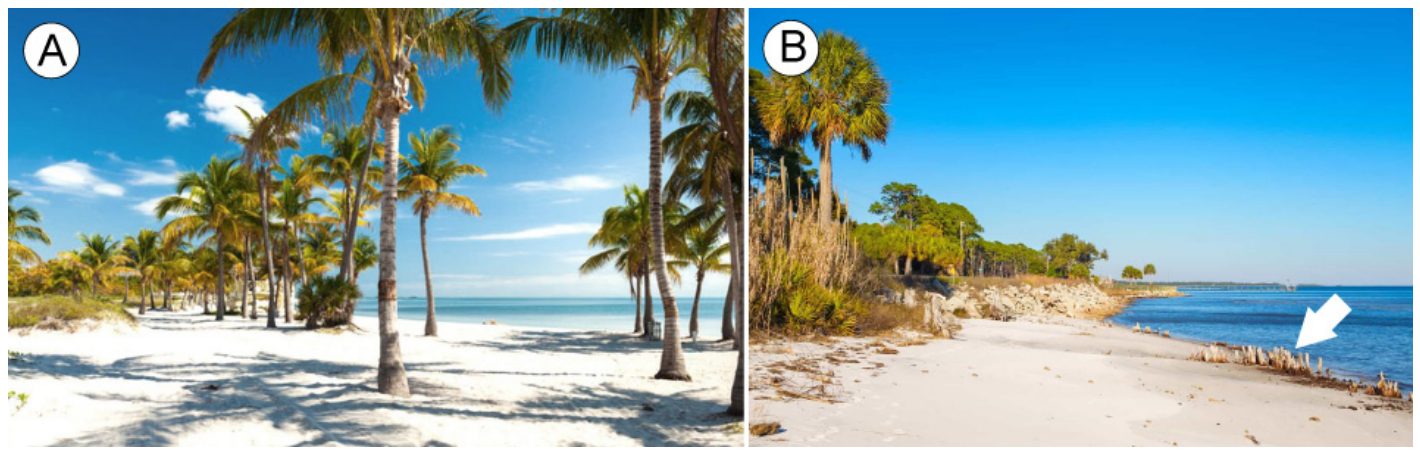
The palm base molds along Palm Coast, Florida, presumably represent the linear growth patterns of modern coastal palm groves (Figure 4), where trees are able to flourish in soil that consists of nearly pure sand.
Figure 4.
Florida coastal palms. (A) Crandon Park beach, southeast Florida near Miami. (B) Carabelle Beach, northwest Florida near Tallahassee. The arrow shows stubs of trunks of an earlier generation of palms that grew when sea level was slightly lower.
Hurricane Matthew
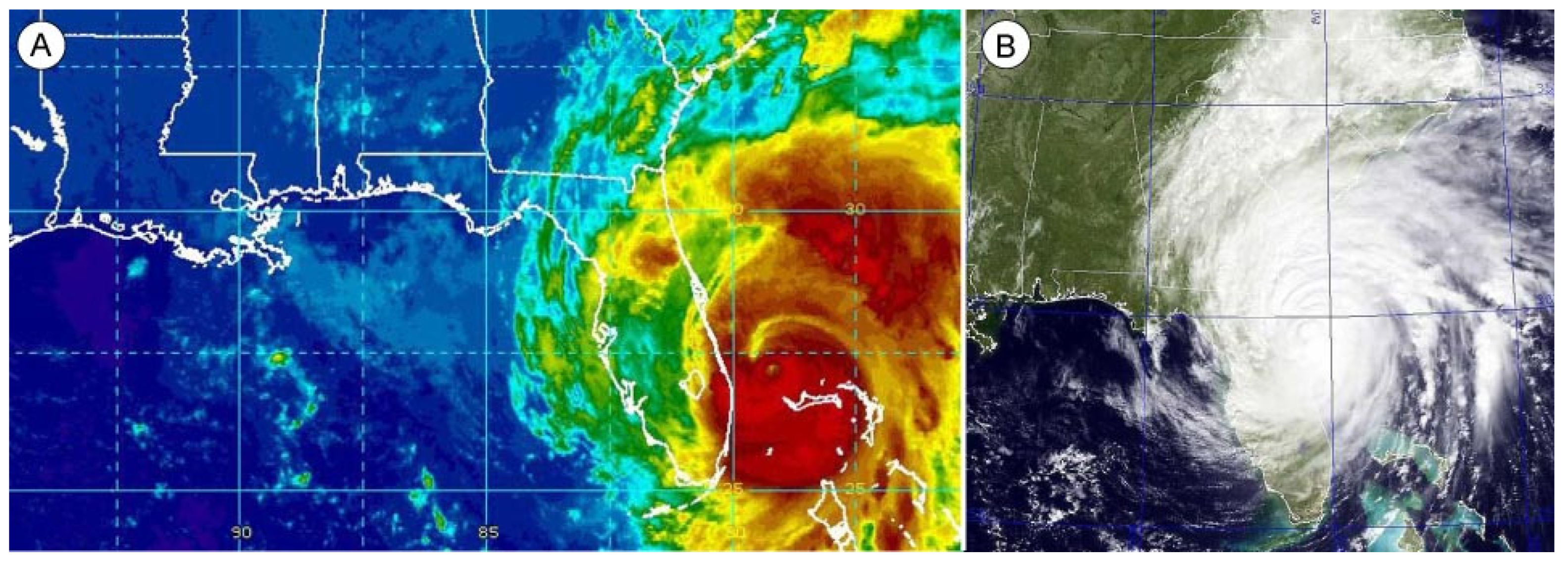
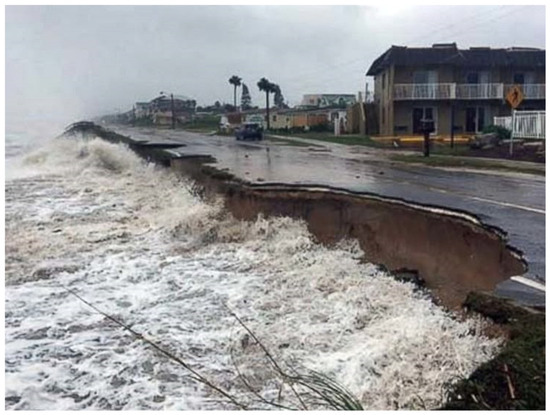
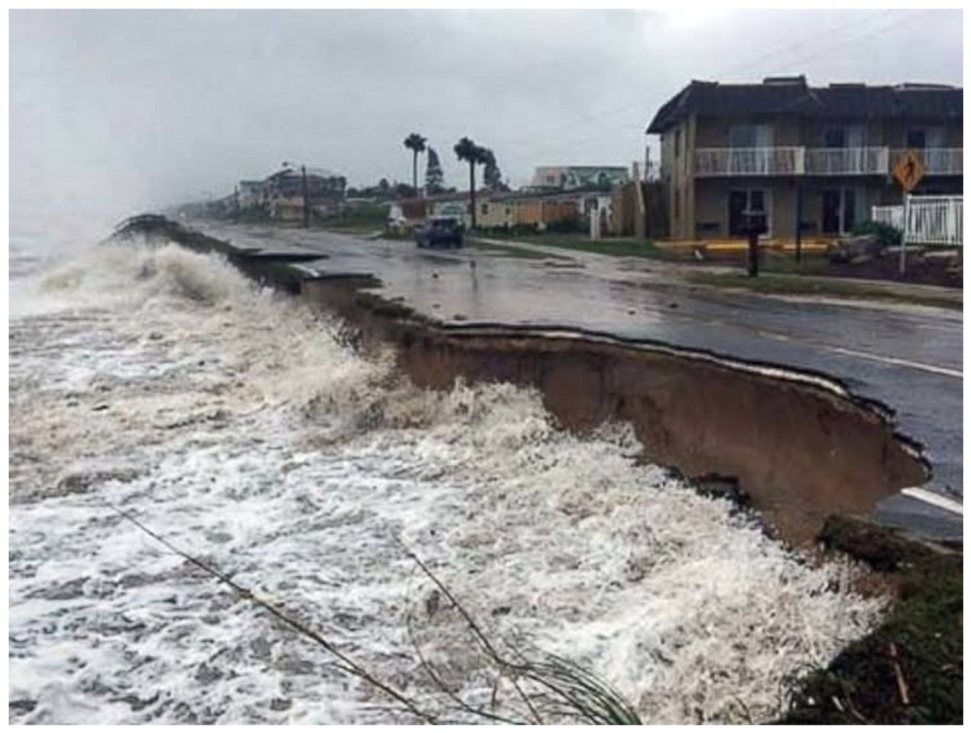
Hurricane Matthew was a long-lived cyclone that originated from offshore Africa on 22 September 2016. The storm explosively intensified as it crossed the Caribbean Sea to reach Category 5 hurricane strength by 30 September. Hurricane Matthew made its first landfall on 4 October at Haiti’s Tiburon Peninsula, decreasing to Category 4 intensity before making a second landfall in Cuba later that evening, and a third landfall in Grand Bahama, 24 km from the Florida coast. On 7 October 2016, Hurricane Matthew passed along the east coast of Florida, causing high winds and torrential rain, leading to six deaths and a need for widespread evacuations (Figure 5 and Figure 6). For the next 36 h, the hurricane paralleled the Atlantic coast of the southeastern USA as far north as North Carolina, gradually declining in strength along the way.
Figure 5.
Satellite images of Hurricane Matthew approaching the Florida coast: (A) first Florida coast arrival on 6 October 2016. National Atmospheric and Oceanic Association photo. (B) Storm centered on Flagler County area, 7 October 2016. Office of Naval Research photo.
Figure 6.
Storm waves at the Flagler County coast, one day after the passing of Hurricane Matthew.
Storm damage was particularly severe in Flagler County, where the hurricane caused a coastal tidal surge of as much as 3 m above normal. Severe shoreline erosion was caused when water-borne sand was transported both seaward and landward; breaching of the dune berm allowed sand to be carried inland. The resulting erosion removed intertidal sands to reveal the fossil palm trunks described in this report (Figure 3).
This investigation is significant for several reasons. The apparent scarcity of storm-revealed in situ wood fossils along the Atlantic coast limits our understanding of botanical responses to Holocene sea level fluctuations. The relatively fast reburial of these intertidal palm trunk molds is evidence of the need for quick scientific investigation.
2. Geologic Setting
The ancient palm trunk remains are preserved over a distance of approximately 1.4 km between St. Augustine and Palm Coast, along the Florida East Coast (Figure 2). The predominant coastal geologic unit is the Anastasia Formation, named in 1912 [4]. The Anastasia Formation is predominantly coquina, composed of mollusk shell fragments, intermixed with minor quartz sand and indurated with calcareous cement. The rock is sometimes described as coquinoid limestone.
Evidence for Holocene Age
The Anastasia Formation contains abundant coquina. However, growth of the ancient palms must have occurred during a time when the shell-rich sediment had not yet been lithified. As discussed later in this report, several characteristics suggest that the intertidal palm trunk molds are relatively young, the youngest of them being only a few hundred years old, and the oldest still of Holocene age.
Because the palm trunk molds are typically surrounded by a thin coquina zone, the cementation process is important. However, the cementation rate may have complexities that complicate interpretations. For example, the mixed carbonate and siliclastic Pleistocene sediments contain beds that alternate between highly cemented coquina and layers with little or no cementation. In addition, lithology is geographically variable, with shell fragments being coarser in northern localities with more abundant quartz sand in southern exposures [5]. The Anastasia Formation has long been considered to have originated as a high-energy beach facies, where shell-rich coquina is interbedded with marine sands, originating as a nearshore sandbar deposit. Anastasia Formation outcrops in West Palm Beach consist of two distinct units: the most common being bioturbated marine coquina, along with a unit comprising cross-bedded dune sand rich in small mollusk shell fragments. Eolian sands locally overlie the caliche crust on top of the cemented coquina, suggesting that the age of this dune sand may be either late Pleistocene or early Holocene.
Bed-scale cementation has long been recognized [5], and for this reason, cementation of the coquina does not provide a definitive age for ancient palm trunks that occur in the Anastasia Formation. One complexity is that calcareous cementation may undergo diagenetic change. For example, the original marine sedimentation may be metastable, potentially overprinted by several generations of vadose cement from meteoric water [5]. A second complication is that although most indurated sediments on the east coast of Florida are of Pleistocene age, some of the hard ground originated from beach rock that was cemented during the Holocene. Hoenstein et al. [6] offered this comment: “When examining an Anastasia specimen, there is no convenient way of knowing if the rock was cemented within the last 100 years or is a much older relic.”
3. Methods
Initial field photographs were taken along the Palm Coast by Leslie and Geri Maxwell in late October 2016, following the demise of Hurricane Matthew, with additional photographs made in December. Representative specimens were collected in January, 2017. Detailed specimen descriptions are provided in an accessory file.
Scanning electron microscope photos came from a Tescan Vega3 microscope (Tescan, Brno, Czech Republic) at Scientific Technical Services, Western Washington University. Samples were prepared by attaching freshly fractured specimens to 1 cm dia. aluminum stubs using epoxy adhesive. Mounted specimens were sputter-coated with Pd to provide electrical conductivity. Beam voltage was 10 keV, with photographs taken using a secondary electron detector.
One specimen of cellulose extracted from mummified wood (specimen A.T.2.0) was sent on 19 April 2018 to Direct AMS Radiocarbon Dating Services, Accium Biosciences, Seattle, WA, USA for 14C dating. Cellulose for dating was prepared by treating fragments of mummified wood using the A-B-A method, where wood was treated with 6 M HCl and 1 M NaOH [7]. This preparative work was performed by G.Mustoe, using geochemistry laboratory facilities at Western Washington University.
A detailed specimen catalog is provided as a Supplementary File.
4. Results
This investigation combines field observations with laboratory microscopy.
4.1. Field Observations
A multitude of circular objects were discovered exposed in the intertidal zone of beaches of Flagler County after the departure of Hurricane Matthew. These features were quickly recognized as being molds of palm trunks because of the presence of mineralized wood and mummified wood fragments. Detailed field investigations, including many photographs, were made by Geri and Leslie Maxwell, retired geologists who lived in Flagler County. Their rapid response was important, because many of the fossil palm sites eventually became buried under beach sand.
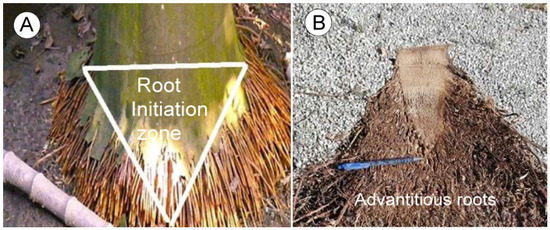
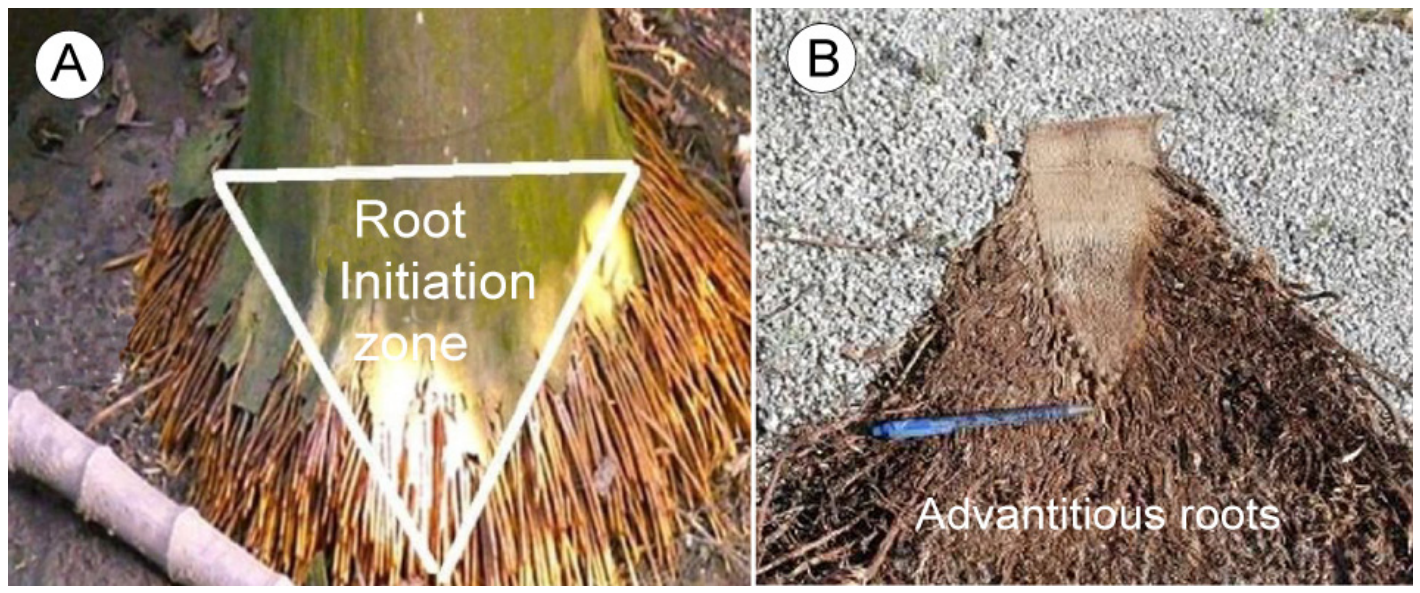
The intertidal molds have several characteristics typical of palm trunks. The diameters are relatively uniform, being in the size range of modern coastal palms. The circular objects follow linear trends, reminiscent of the growth pattern of modern palms that inhabit sandy coasts, where individual trunks may grow in proximity to form a narrow band parallel to the coastline. The individual molds have inverted cone shapes, which is consistent with the trunk morphologies of palms, where the roots commonly have triangular shapes that eventually develop intricate adventitious roots as the trees age (Figure 7).
Figure 7.
Cone shape of palm roots: (A,B) longitudinal views of the stem-root interface of Phoenix roebelenii. Photos by T. K. Broschat [8].
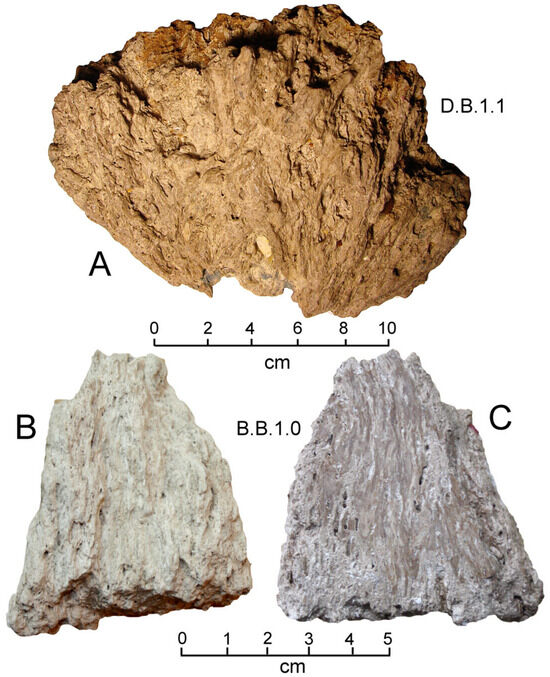
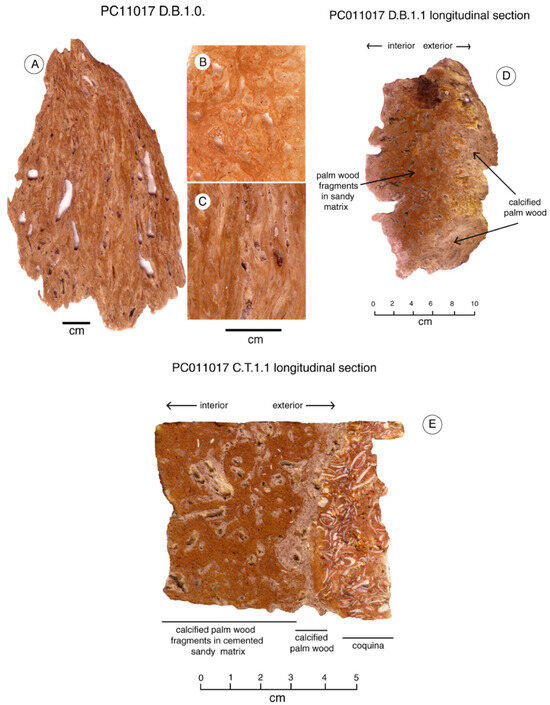
Additional botanical evidence comes from the preservation of wood cellular tissue, both as calcareous petrifactions (Figure 8 and Figure 9) and as inclusions of mummified wood fragments (Figure 10).
Figure 8.
Specimens that show fibrous texture of calcified palm wood: (A,B) exterior views of two specimens; (C) sawn and polished interior of sample (B).
Figure 9.
Palm wood mineralized with calcite. (A) Polished slab showing longitudinal orientation. (B) Transverse view. (C) Longitudinal view. (D) Transverse view. (E) polished slab showing contact of calcified palm wood and outer coquina zone.
Figure 10.
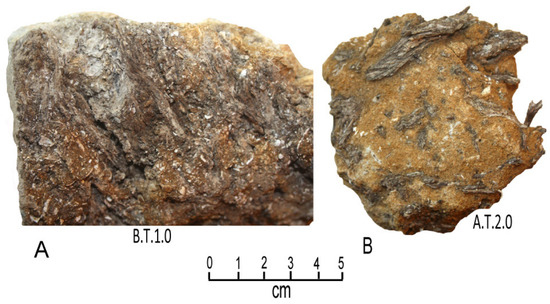
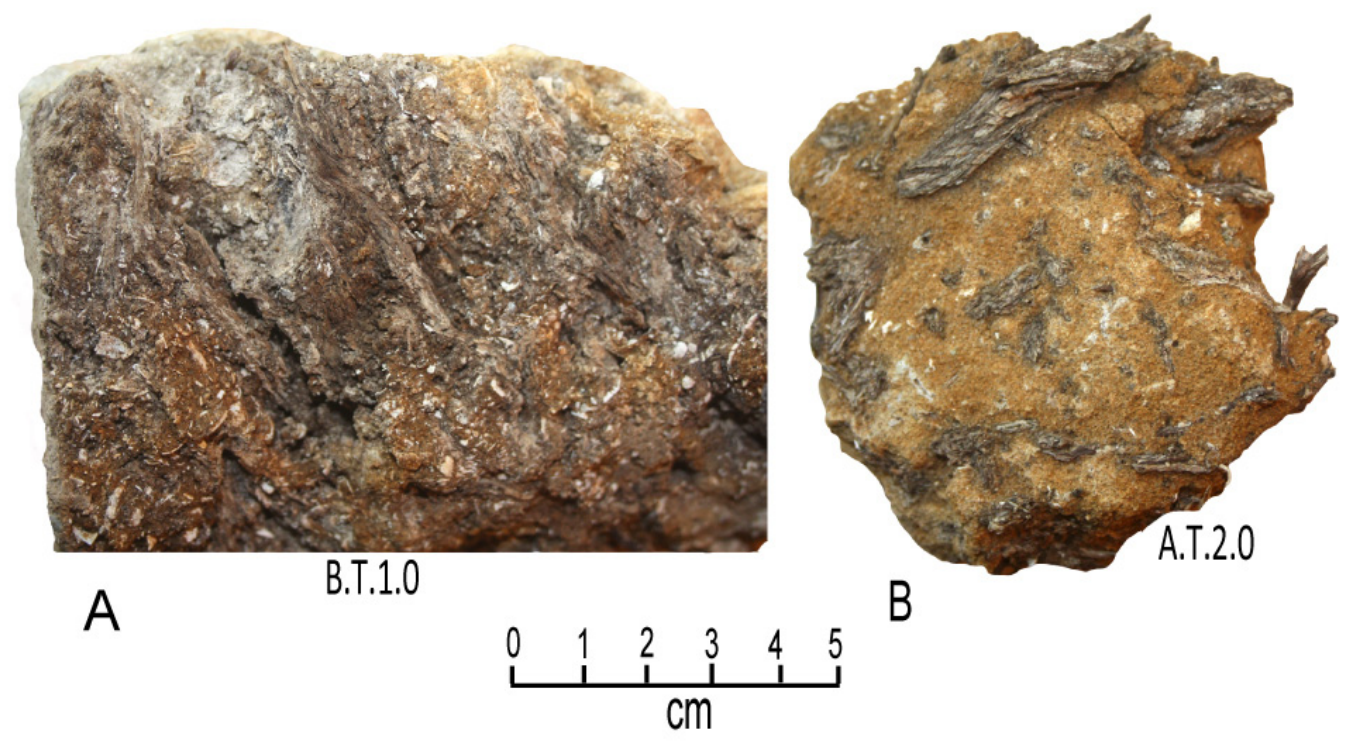
These two photos show samples that abundantly preserve fibrous bundles of mummified palm wood within a weakly cemented sandy matrix. The morphologies and dispersed nature of these wood fragments suggest that they represent adventitious roots (Figure 7).
The geographic distribution of the palm trunk fossils suggests that the original trees represent at least two different growth episodes, presumably representing times when regression caused palm-favorable environments to temporarily move seaward.
The oldest palm zone occurs as a north/south linear band, with a width of approximately 5 m (Figure 11 and Figure 12). These individual trunk molds commonly contain wood tissue that has been mineralized with calcite. We informally refer to these as “hard trunks”. A relatively sharp line of demarcation separates the seaward “hard” zone from a landward linear zone where the trunk molds contain “soft” material, e.g., weakly cemented sediment and mummified wood tissue.
The host sediments of the “hard” and “soft” zones show lithologic differences. The coquinoid dark zone is darker in color and more strongly cemented than the lighter-colored rock of the “soft” zone (Figure 11). “Soft” zone palm trunks commonly occur within unlithified beach sand (Figure 11 and Figure 12), although blocks of light-colored coquina are locally present (Figure 11). These features are evidence that the two zones represent differences in coastal environment during the two episodes of palm tree growth.
Figure 11.
The ancient trunk molds occur in two parallel distribution patterns. A seaward line of molds contains wood that is mineralized with calcite, and is associated with outcrops of gray coquina. A landward cone contains molds that contain mummified wood in a sandy matrix. This zone is characterized by blocks of light-colored coquina. The line of demarcation between the two zones is well-defined, marked in this photograph with a dashed line.
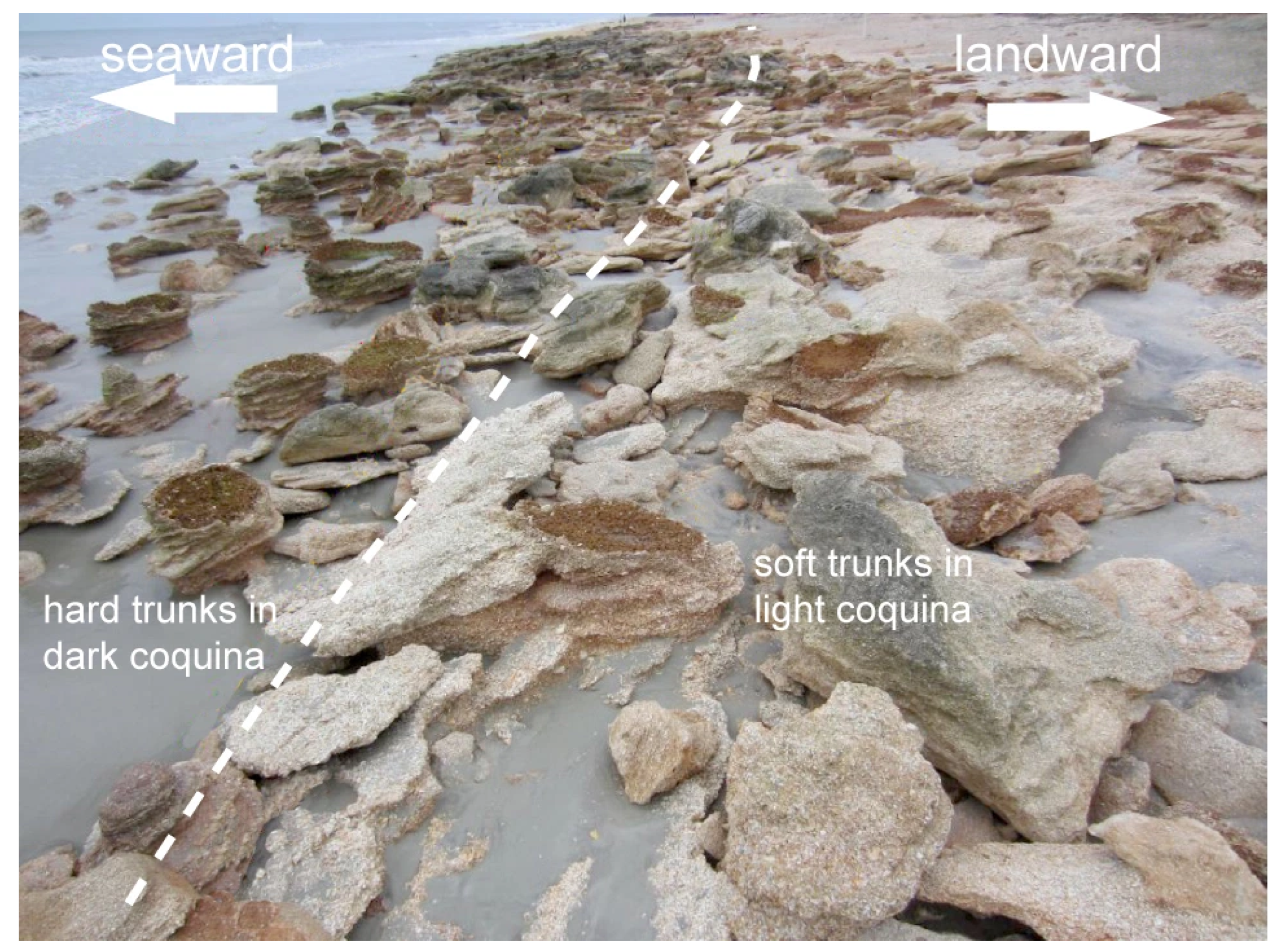
Figure 12.
Palm trunk molds and casts occur in two distribution zones. (A) The seaward-facing “hard” zone contains calcified palm trunk bases that are associated with outcrops of gray coquina. Trunk fossils in the “soft” landward zone are outlined with a dashed line. (B) Close view of trunk molds in the “soft” zone. Although these molds occur within the sandy beach, each mold has a thin coquina border zone.
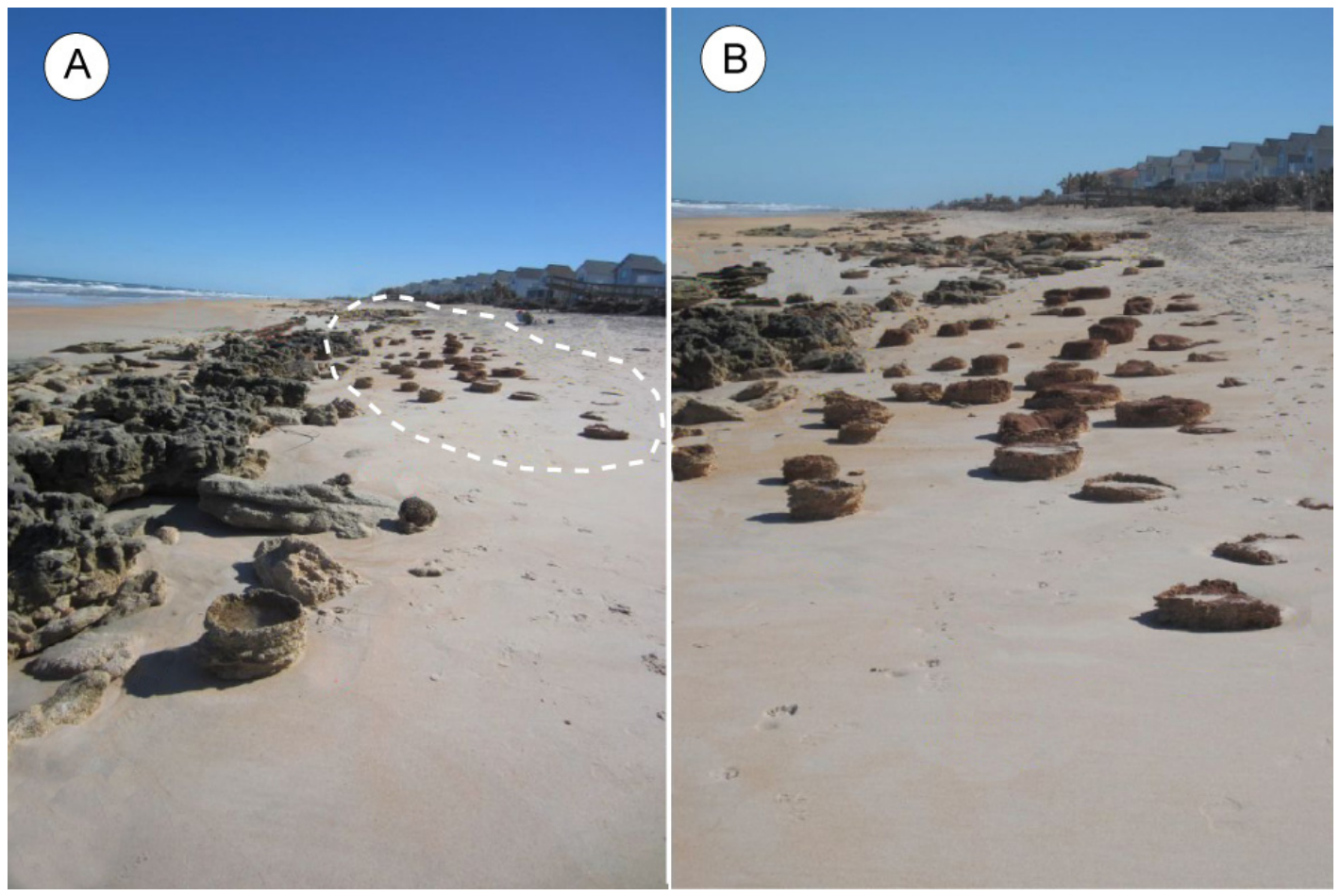
Figure 13 shows closer views of palm trunk molds and casts in the “hard” and “soft” zones. In both environments, each trunk is enclosed within a thin, hard coquina layer.
Figure 13.
Palm trunk molds and casts occur in two distribution zones: (A) “hard” zone trunk fossils are partially enclosed by gray coquina; (B) “soft” zone trunk fossils occur in sand. The interior region of each mold consists of weakly cemented sand that encloses mummified wood fragments. The reddish color is caused by small amounts of iron oxide in the sandy matrix. A thin coquina zone preserves the trunk’s circular shape.
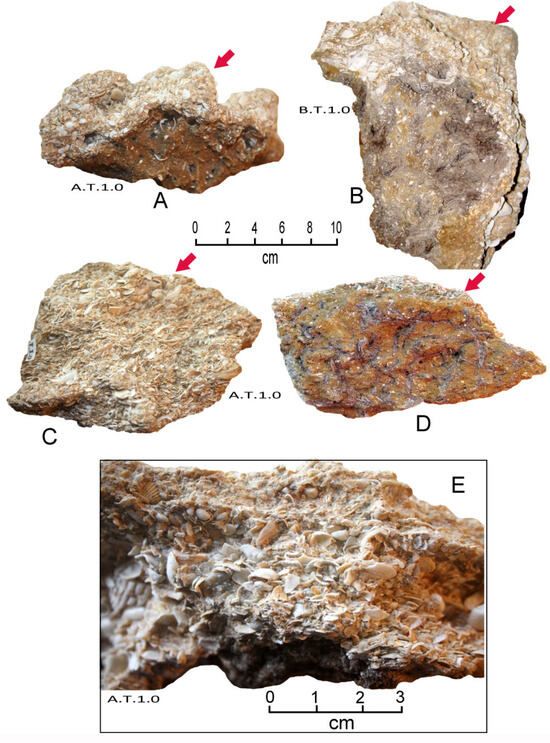
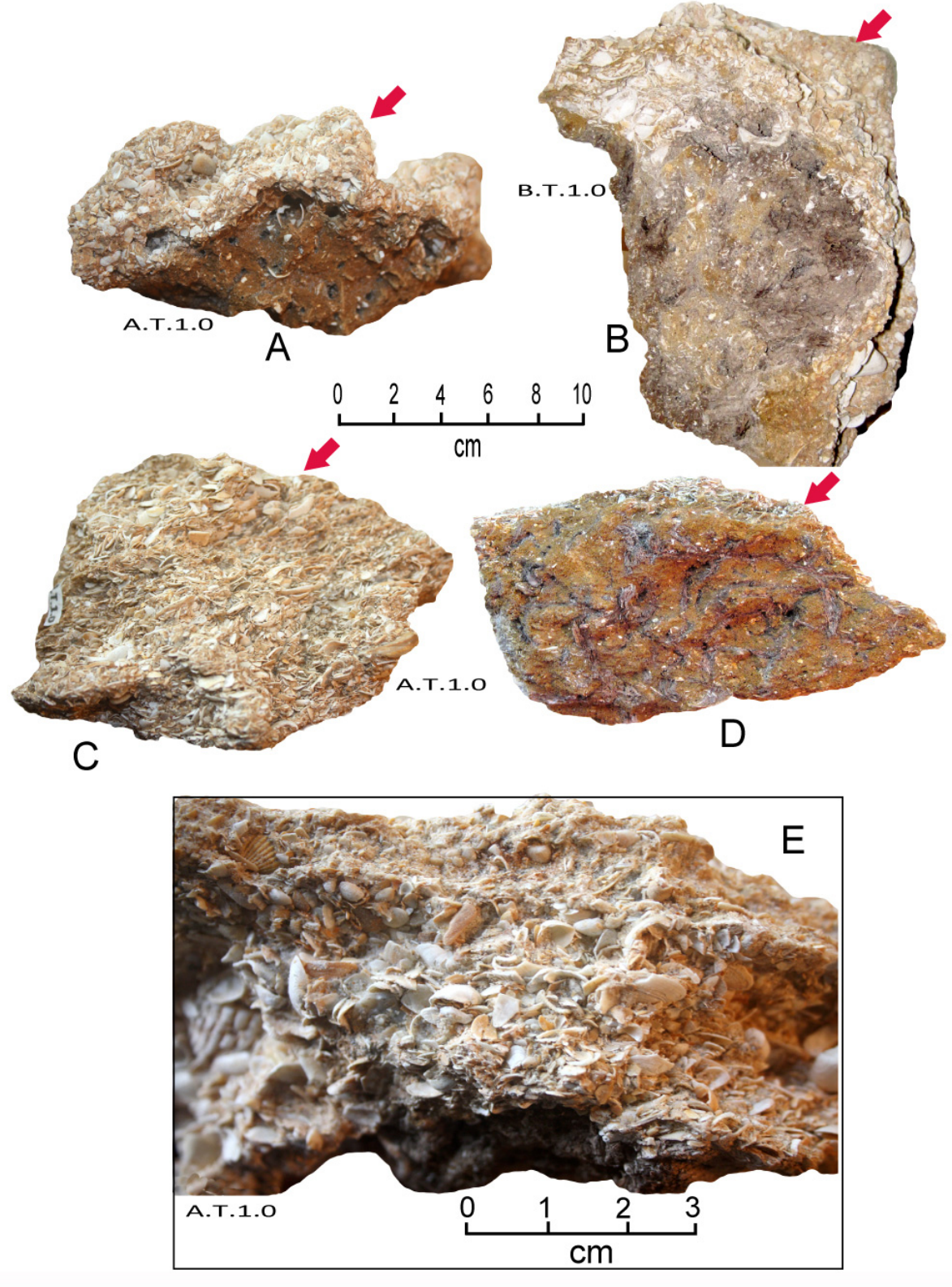
The thickness of the coquina exterior zone is typically only a few cm. This material is rich in sharp-margined mollusk shell fragments set in calcareous cement (Figure 14). The fragmental characteristics differ from those of typical Anastasia Formation coquina, where shell fragments have typically been reduced to flat plates with rounded edges as a result of abrasion in a high-energy coastal environment [9]. This lithology supports the interpretation that the coquina zones that surround palm trunk fossils are of Holocene age.
Figure 14.
Thin coquina external zones (marked with arrows) typically surround palm trunk casts in the soft zone. (A) Side view of specimen A.T.1.0 shows the coquina layer overlays an interior zone where wood fragments occur in a reddish sandy matrix. (B) Specimen B.T.1.0 has a similar composition. (C) Exterior view of specimen A.T.1.0 shows coquina texture. (D) Interior view of specimen B.T.1.0 reveals an abundance of mummified wood in a sandy matrix. (E) Close side view of coquina layer in specimen A.T.1.0 shows the sharp margins of mollusk shell fragments.
4.2. SEM Images
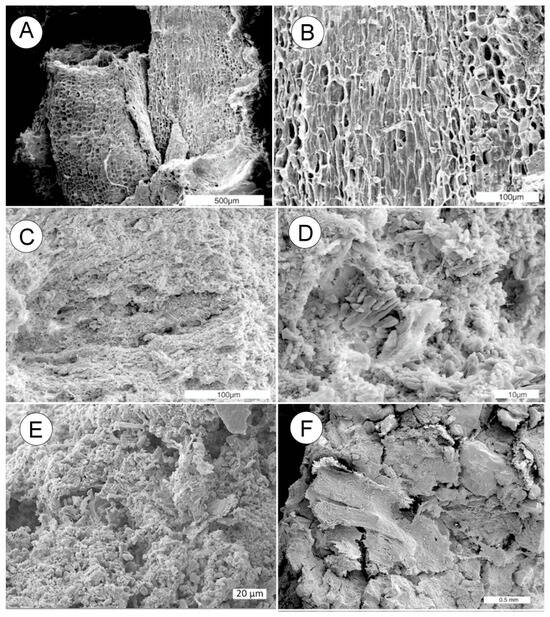
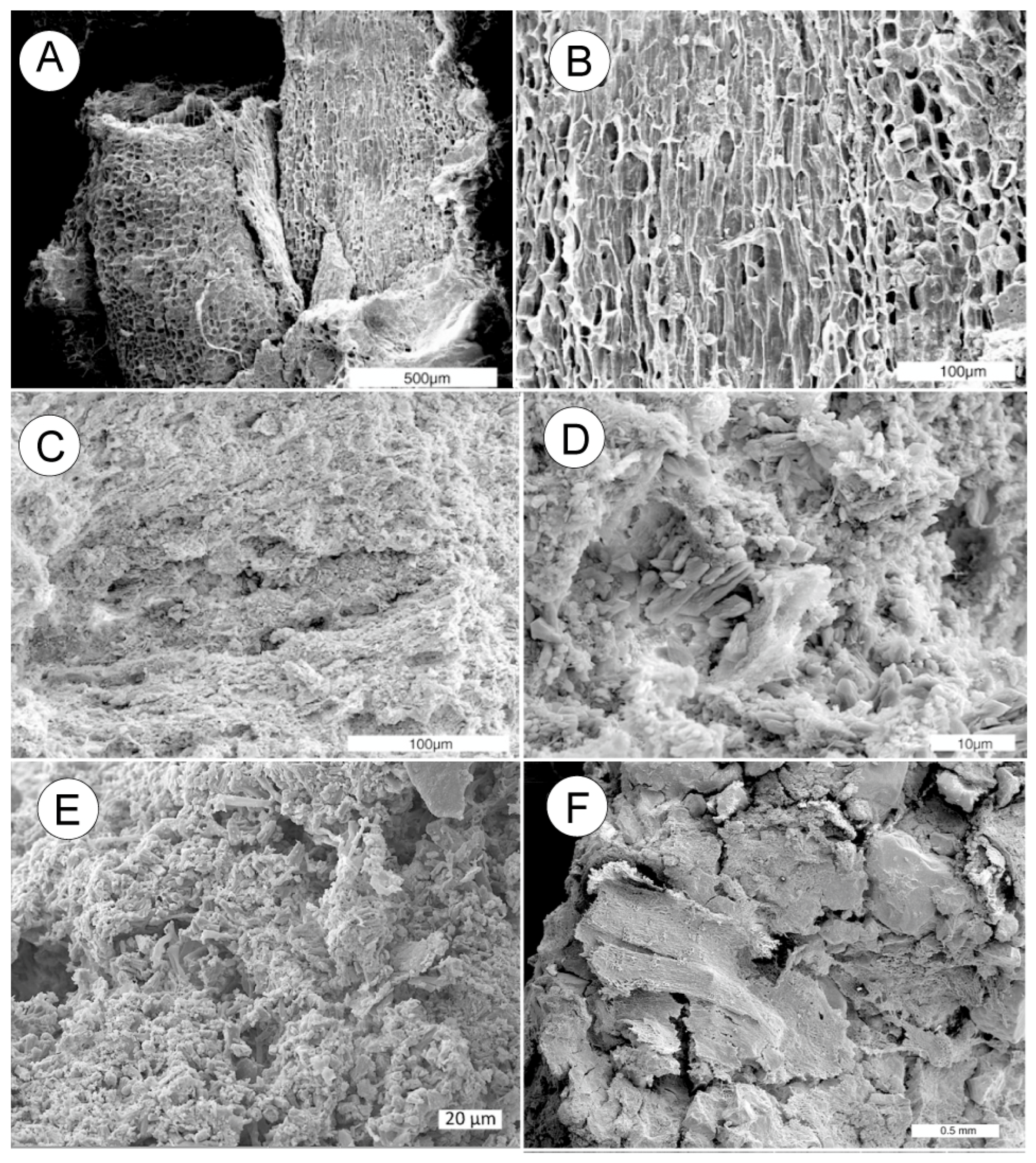
SEM images (Figure 15) reveal the preservation of anatomical detail of wood in the interior regions of the ancient palm trunk base molds.
Figure 15.
SEM images of ancient palm specimens (A,B). SEM photomicrograph showing mummified palm wood cells in sample A.T.1.0. (C–E) Calcified wood, specimen D.B.1.0. Upper image shows relict wood grain texture, but no visible evidence of cell structure. (F) Small fragments of fossil wood in well-cemented sandstone that fill the C.T.1.1 mold.
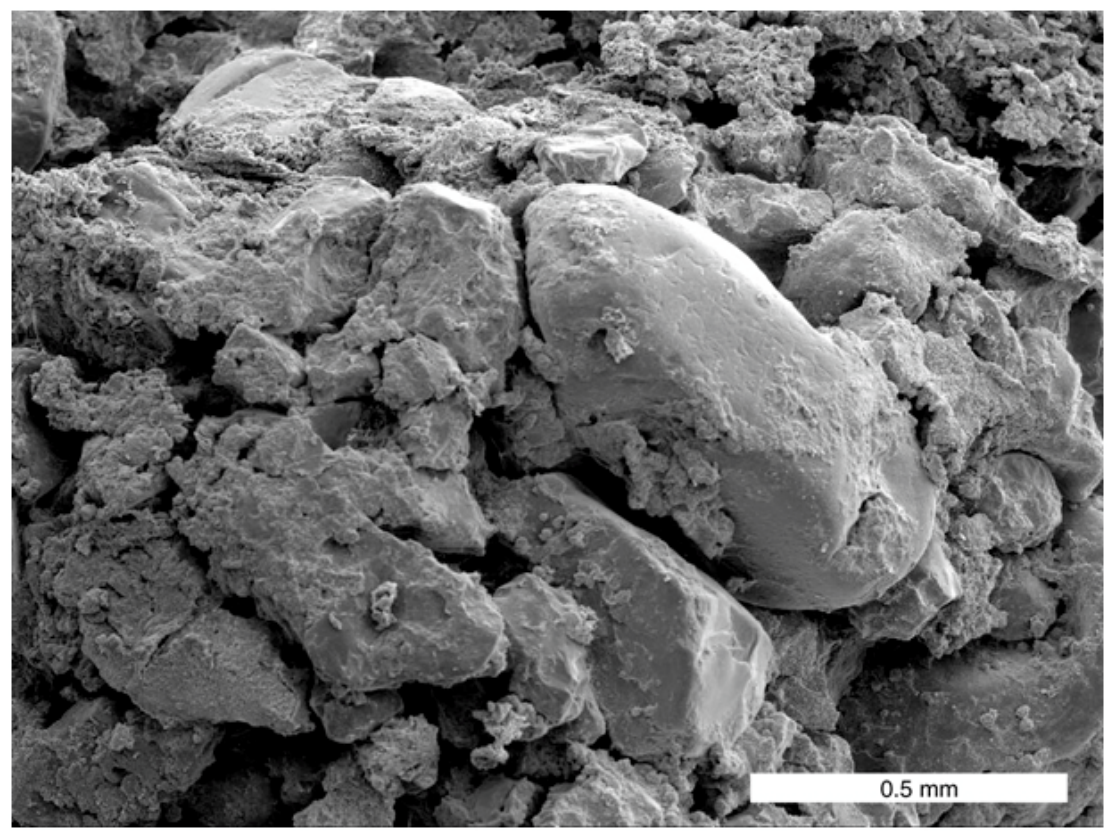
Palm trunk molds in the “soft” zone typically contain fragmental bundles of mummified wood enclosed with weakly cemented sandstone. This sediment contains well-rounded quartz sand grains, weakly cemented by argillaceous and calcareous material (Figure 16).
Figure 16.
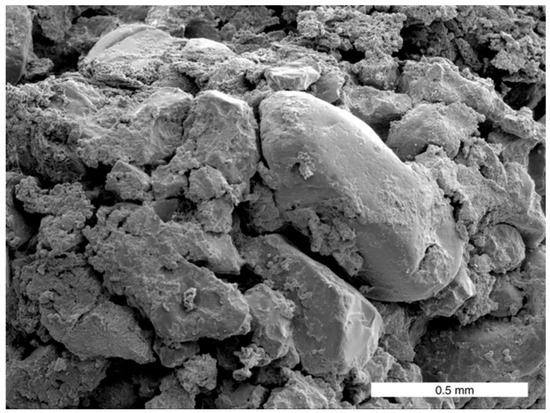
SEM photomicrograph showing well-rounded quartz grains in cemented sandstone from the interior region of sample B.T.1. Cement is a combination of argillaceous and calcareous material.
4.3. Optical Microscopy
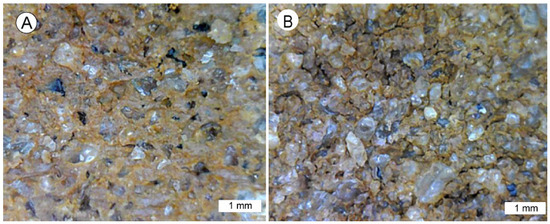
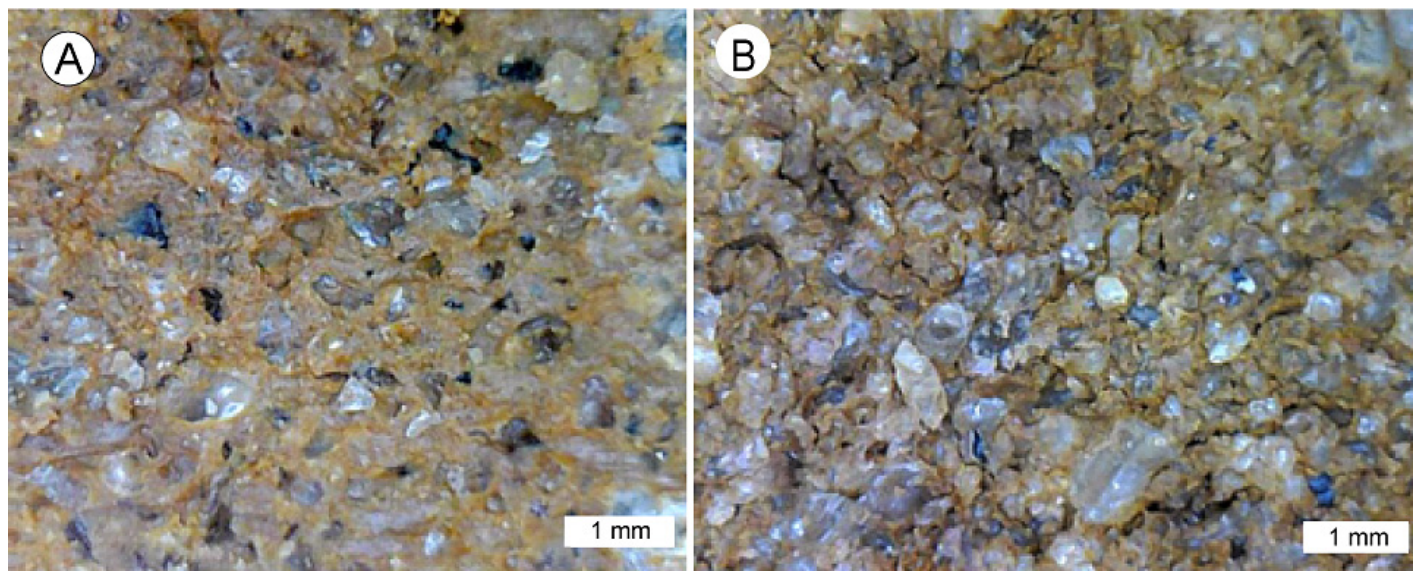
Transmitted light microscopy shows the lithology of sandy sediment associated with two palm trunk molds (Figure 17). The degree of cementation is somewhat variable among individual trunk fossils.
Figure 17.
This photo pair shows indurated sandy matrix in D.B.1.1 (upper) and poorly cemented sandy matrix in A.T.1.0. (lower). Sand-sized clasts are predominantly quartz. (A) The cement in the D.B.1.1 sample is mostly calcareous, and (B) mostly argillaceous in sample A.T.1.0. This compositional difference explains why the A.T.1.0 sample (B) becomes very soft when wet. For both samples, the color of the sediment is primarily determined by the color of the interstitial material.
4.4. 14C Dating
Cellulose extracted from mummified wood from specimen A.T.2.0 (Figure 9B) was submitted on 16 April 2018 for 14C dating using the AMS method, direct AMS code D-MS 027630. The uncalibrated radiometric age is 175 ± 22 yr BP, with a mean calibrated age of 160.5 calendar yr BP. This modern age came from a “soft zone” specimen that is presumably from the youngest palm group of the trunk base molds that are in what is now the landward assemblage of the intertidal zone. This conjecture is supported by the presence of mummified wood tissue in weakly cemented beach sand. No radiometric ages are available for calcite-mineralized wood in the seaward-facing “hard zone”, but the probability is that this palm grove is also relatively young, based on the unconsolidated nature of the adjacent beach sand.
5. Discussion
Palms have a long evolutionary history, with worldwide distribution by the late Cretaceous. In Florida, fossil palm leaves were first reported from the Miocene Alum Bluff Group in Liberty County in 1894 [10], with more detailed later publications [11,12]. The Miocene Alum Bluffs environment was quite different from that of the Holocene coastal palms, as evidenced by the diversity of Alum Bluff plant fossils, which include leaves, seeds, and fruit that represent 38 angiosperms and one gymnosperm. The paleoflora is inferred to have been an elm–hickory–cabbage palm forest in a deltaic or shore-face environment [12]. The possible occurrence of coastal palm groves during the large tidal fluctuations of the Pleistocene is evidenced by circular cavities in coquina [2,3].
5.1. Paleoenvironment
Along sandy coasts, palms commonly occur in a narrow band parallel to the coastline (Figure 4). Palm trees may grow in other habitat zones, but the coastal occurrences are an example of an ecotone, a transitional shoreline zone where palms flourish in sandy sediment in proximity to saltwater, an environment that is hostile to most other land plants. Palms require enough meteoric groundwater flow to mitigate salinity, resulting in the existence of coastal palm groves as narrow bands parallel to the shoreline. Individual palms may grow very close to each other, consistent with the close spacing and linear pattern of the fossilized trunks. These ancient trunks presumably represent multiple generations, because geological conditions that favored their preservation may have lasted longer than a single generation of trees. The hard/soft distribution of trunks is indicative of changing geologic conditions.
Our speculation is that the “hard” trunk zone represents the earliest palm grove, whose demise was triggered by an episode of transgression. The destruction of the palms was apparently not caused by an intense storm event, because of the scarcity of toppled trunks. A later regression stage once again allowed coastal palms to move into what is now the intertidal zone, represented by “soft” trunks.
The host sediments of the “hard” and “soft” zones show lithologic differences that are evidence that the two zones represent two episodes of palm tree growth. The “hard zone” palms may perhaps have originated at a time when rapid calcification produced cementation of shell material, leading to coquina and calcification of wood tissue. Because coquina cementation occurs subtidally, this explanation fits the hypothesis that rising sea level was the cause of palm death. “Soft” zone palm trunks commonly occur within unlithified beach sand (Figure 11 and Figure 12), although blocks of light-colored coquina are locally present (Figure 11). Our interpretation is that this rock probably originated as Holocene cementation, i.e., being young “beach rock” rather than Anastasia Formation coquina. The same may be true for the darker rock of the “hard zone” (Figure 1A).
5.2. Taxonomy
The intertidal trunk molds lack information for identifying the palm species that produced them, but several constraints can be considered. The linear patterns are indicative of palms that grow as individuals rather than as clusters. In addition, the coastal environment favors palm taxa that have tolerance to salt spray and can flourish in sandy soil. Twelve species of palms are presently native to Florida, and their young age suggests that the fossils represent extant species. Taxonomic challenges of palm identification were discussed in a 1972 paper [13], where fossil palm leaves were divided into two form genera, Sabalites (fan palms) and Palmacites (feather palms). Fossil palm wood is traditionally placed in the form genus Palmoxylon. The Holocene trunk molds cannot be assigned to any extant species, but the growth histories of extant species are relevant. For example, modern Florida palms may reach heights of more than 2 m in two years [14]. This fast rate is evidence that only a brief episode of tidal regression could result in establishment of a new coastal palm community.
5.3. Sea Level Changes
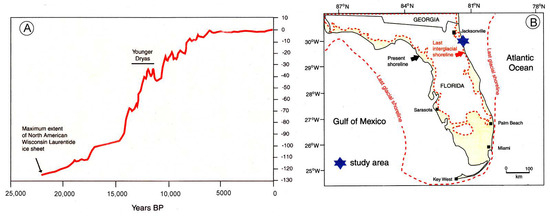
Because of the presence of late Pleistocene sediments of the Anastasia Formation along Florida’s coastline, we began our study assuming that the presence of palm trunk molds in the present intertidal zone was related to glaciation-related tidal changes. This was an attractive hypothesis, because late Pleistocene glacial cycles resulted in sea level changes that exceeded 100 m (Figure 18).
Figure 18.
Sea level changes in the Gulf of Mexico after the last Pleistocene glacial event. (A) Atlantic Ocean sea levels for the last 22,000 years. Redrawn from [15]. (B) Late Pleistocene shorelines in Florida. Adapted from [16].
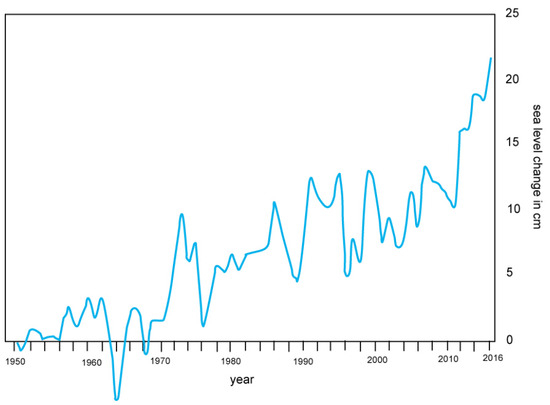
However, as discussed elsewhere in this report, the palm trunk molds are likely of Holocene age, and their occurrence was related to small-scale changes in sea level. Because of the gentle inclination of beaches in eastern Florida, the growth of palms in what is now the intertidal zone only requires a sea level retreat of a meter or two. Local or regional sea levels may be affected by land subsidence or isostatic rebound, changes in circulation of ocean currents (e.g., the Gulf Stream), and by thermal expansion of ocean water caused by warmer temperatures. Figure 19 is a detailed plot of sea level between 1950 and 2016. Global sea level has generally been rising because of climate change, and the graph data show an overall increase in tide level of ~20 cm, but during this interval tidal levels displayed short-term variations.
Figure 19.
Tide gauge data from Miami, Florida between 1950 and 2016. Graph adapted from [17]. The overall tide level increase for 2016–2050 is estimated to be about an additional 40 cm.
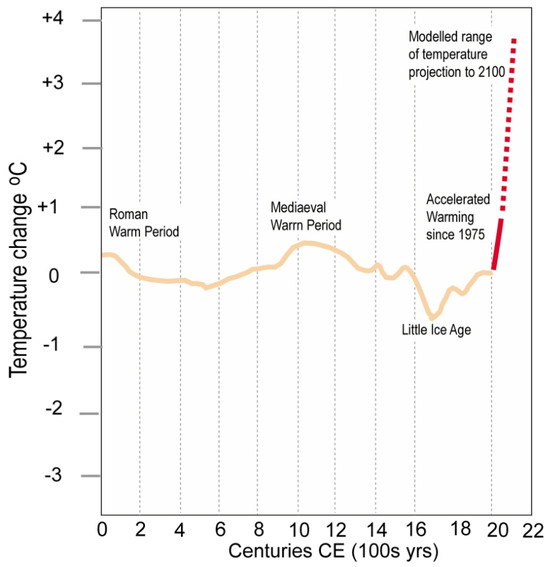
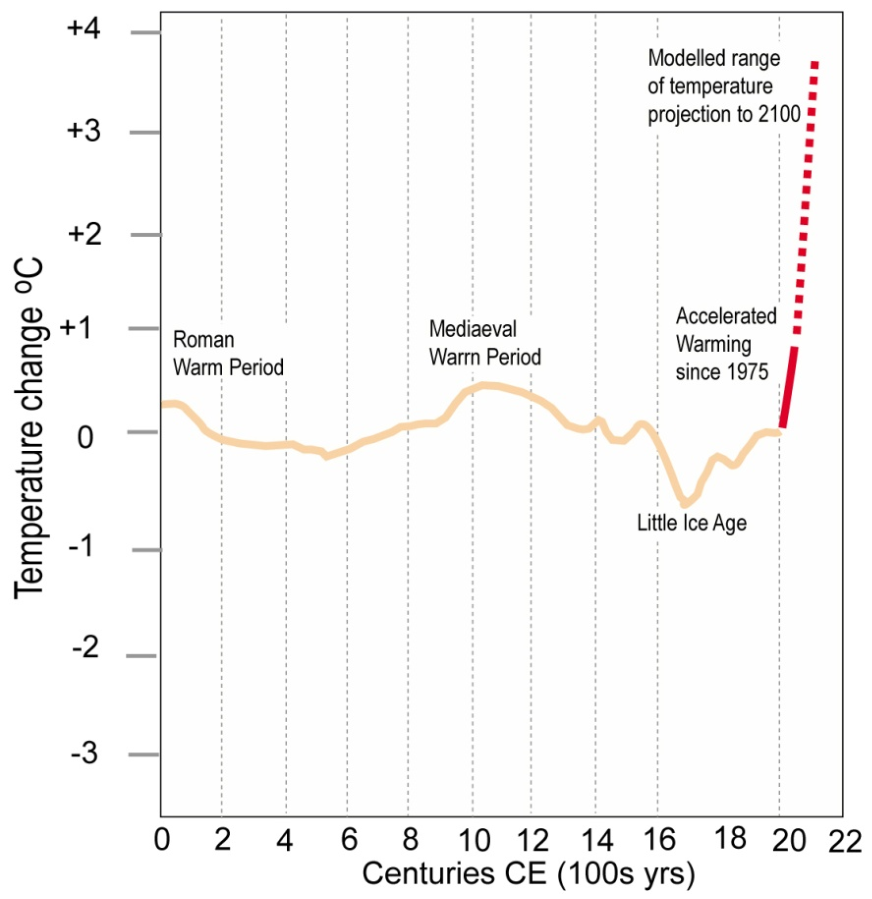
Tidal gauge information is not available prior to 1950, and earlier Holocene sea level changes cannot be documented. However, temperature records provide a basis for speculation, when episodes of climatic cooling (Figure 20) may have been related to sea level regression. If the palm trunk molds are only a few hundred years old, they may be evidence of palm groves that existed during the time of the Little Ice Age, a climatic episode that had an approximate time span of 1300 to 1850.
Figure 20.
Mean temperatures during the Holocene. Adapted from [18]. Decline in temperatures during the “Little Ice Age” may explain sea level retreat that allowed the growth of coastal palm trees in what later became the intertidal zone. The orange line is historic temperature data, the dashed red line is a future projection based on modern data.
6. Conclusions
At least two generations of palm trees appear to have existed in what is now the intertidal zone of the Florida east coast. The oldest trees are evidenced by molds that contain petrified palm wood, where the original tissue was mineralized with calcite. This petrifaction occurred at a time when calcium carbonate precipitation was a very active process, consistent with the extensive carbonate cement present in the surrounding coquina.
A second generation of coastal palms appears to be represented by molds that primarily consist of quartz-rich beach sand. In these molds, the wood was mostly lost to decay, but small fragments remain. They are mummified wood, not mineralized. Only small amounts of carbonate cement are present in the sandy material. The more durable outer zones of the molds appear to have resulted from carbonate cement derived from the surrounding coquina; the brownish interior regions predominantly consist of quartz-rich sand with argillaceous material partially occupying interstitial spaces.
The ages of the two palm zones are uncertain, but the geologic setting and the botanical characteristics support the interpretation that both palm zones represent transient episodes of Holocene sea level change. A 14C age of 160 ± 22 yrs B.P. was determined for wood from the landward-facing “soft” zone. No radiometric age information is available from trunks in the seaward-facing “hard” zone because of the lack of preservation of relict wood. However, a Holocene age is likely, because the trunks post-date the late Pleistocene Anastasia Formation.
A possible scenario is that a meter or two of Holocene sea level regression allowed a line of palms to reach maturity, and that they were killed by a subsequent sea level advance. Although Florida has long experienced hurricanes (more than 100 between 1851 and 2007 [19]), the scarcity of toppled trunks is evidence that the demise of the ancient palms was not caused by storm damage. Tidal rise allowed for the precipitation of calcite, causing the palm wood in the seaward zone to become petrified, and for the cementation of shell fragments to produce “beach rock”, a Holocene form of coquina. A later regression episode allowed the growth of a younger line of palms, which grew in loose quartz-rich beach sand. Like before, these palms were subsequently killed by sea level rise. Calcification was limited to the formation of a thin coquina outer zone for each trunk mold. Decay allowed the trunk molds to become filled with sand, but bundles of mummified wood representing advantageous roots are abundantly preserved within this sandy matrix.
Our knowledge of this unusual fossilization came immediately following the coastal passage of Hurricane Matthew in 2016. The trunk molds were soon buried under new sand, and future studies of the ancient palms will likely be dependent on some future storm event that causes coastal erosion.
Supplementary Materials
The following supporting information can be downloaded at: https://www.mdpi.com/article/10.3390/geosciences16110471/s1.
Author Contributions
All three authors participated in the design of the research and in the writing of the manuscript. L.M. and G.M. discovered the fossil palm trunks in the week following the October 2016 Hurricane Matthew, and they provided field photos and collected specimens for study. Laboratory analyses were performed by Mustoe using facilities at Western Washington University, Bellingham WA 98225, USA. All authors have agreed to the content of the manuscript. L.M. died in 2023, so he will not be a contributor for manuscript changes during production editing, but he was a participant in the writing of the first draft. G.M. remains active as a coauthor. The final manuscript was prepared by G.E.M. and G.M. Author L.M. passed away prior to the publication of this manuscript. All other authors have read and agreed to the published version of this manuscript.
Funding
This research received no external funding.
Data Availability Statement
Specimens described in this study, photographs, and microscope specimens are archived in Mustoe’s research collection at the Geology Department, Western Washington University, WA 98225, USA (https://geology.wwu.edu). For access, please contact George Mustoe at mustoeg@wwu.edu.
Acknowledgments
This report is dedicated to the late Leslie Maxwell (photo taken in 2023 by Geri Maxwell), who passed away in 2023. He retired after a long career as a professional geologist, with extensive international experience. His wife, Geri, also a geologist, retired to coastal Florida, where the 2016 arrival of Hurricane Matthew plunged them into a flurry of research after their discovery that ancient palm trunk molds had been exposed by the erosion that accompanied the storm. 
Conflicts of Interest
The authors declare no conflicts of interest.
References
- Perkins, R.D. Depositional framework of Pleistocene rocks in South Florida. In Quaternary Sedimentation in Florida; Enos, P., Perkins, R.D., Eds.; Geological Society of America. Memoir 147: Boulder, CO, USA, 1977; pp. 131–198. [Google Scholar] [CrossRef] [Scilit]
- Lovejoy, D.W. Extensive temporary exposures of the Anastasia Formation in Palm Beach County, Florida. Fla. Sci. 2005, 68, 1–7. Available online: www.jstor.org/stable/24321232 (accessed on 18 September 2026).
- Prouty, J.S.; Lovejoy, D.W. Remarkable cylindrical solution pipes in coquina south of Baffin Bay, Texas, Abstract. In Proceedings of the AAPG Search and Discovery Article #91014, AAPG, GCAGS and GC-SEPM Meeting, Jackson, MS, USA, 21–23 October 1992. [Google Scholar]
- Sellards, E.H. The soils and other residual materials of Florida. In Florida Geological Survey, Fourth Annual Report; Florida Geological Survey: Tallahassee, FL, USA, 1912; Volume 4, pp. 1–79. [Google Scholar]
- Missimer, T.M.; Maliva, R.G. Diagenesis of the Anastasia Formation in eastern coastal Florida: Beach rock or bed-scale cementation. Gulf Coast Assoc. Geol. Soc. Trans. 2005, 55, 543–553. [Google Scholar]
- Hoenstein, R.; Freedenberg, J.; Dabous, A.; Cross, B.; Fischler, C.; Lachance, M. A Geological Investigation of Sand Along Florida’s Central-East Coast; Final Summary Report; Florida Geological Survey: Tallahassee, FL, USA, 2002; p. 3.
- Santos, G.M.; Bird, M.I.; Pillans, B.; Fifield, L.K.; Alloway, B.V.; Chappel, J.; Hausladen, P.A.; Arneth, A. Radiocarbon dating of wood using different pretreatment procedure: Application to the chronology of Rhotoehu Ash, New Zealand. Radiocarbon 2001, 43, 239–248. [Google Scholar] [CrossRef] [Scilit]
- Broschat, T.K. Palm Morphology and Anatomy, Document ENH1212, University of Florida, Environmental Horticulture Department, UF/IFAS Extension. 2013. Available online: https://scispace.com/pdf/palm-morphology-and-anatomy-3mmcff0ohj.pdf (accessed on 18 September 2026).
- Lovejoy, D.W. Classic Exposures of the Anastasia Formation in Martin and Palm Beach Counties, Florida, Miami Geological Society Field Trip Guide; Miami Geological Society: South Miami, FL, USA, 1998; pp. 21–49. [Google Scholar]
- Foerste, A.F. Fossil palmettos at Alum Bluff, Florida. Bot. Gaz. 1894, 11, 37. [Google Scholar]
- Berry, E.W. The Physical Condition and Age of the Flora of the Alum Bluffs Formation; United States Geological Survey Professional Paper 98-E; U.S. Government Printing Office: Washington, DC, USA, 1916; pp. 41–59.
- Lott, T.A.; Manchester, S.R.; Corbett, S.L. The Miocene flora of Alum Bluff, Liberty County, Florida. Acta Palaeobot. 2019, 59, 75–129. [Google Scholar] [CrossRef] [Scilit]
- Read, R.W.; Hickey, L.J. A revised classification of fossil palms and palm-like leaves. Taxon 1972, 21, 129–137. [Google Scholar] [CrossRef] [Scilit]
- Florida Palm Trees. Available online: https://www.florida-palm-trees.com/ (accessed on 14 September 2026).
- Balsillie, J.H.; Donoghue, J.F. High Resolution Sea-Level History for the Gulf of Mexico Since the Last Glacial Maximum; Florida Geological Survey Report of Investigations No. 103; Florida Geological Survey: Tallahassee, FL, USA, 2004; p. 17. [Google Scholar]
- Muhs, D.R.; Wehmiller, J.F.; Simmons, K.R.; York, L.L. Quaternary sea-level history of the United States. Dev. Quat. Sci. 2003, 1, 147–183. [Google Scholar] [CrossRef] [Scilit]
- Florida Sea Level is Rising. Available online: https://sealevelrise.org/ (accessed on 11 September 2026).
- Climate Lab Book- Open Climate Science. Available online: www.climate-lab-book.ac.uk (accessed on 9 September 2026).
- Chronological List of All Hurricanes Which Affected the Continental United States: 1851–2007. Available online: www.aoml.noaa.gov (accessed on 15 September 2026).
Disclaimer/Publisher’s Note: The statements, opinions and data contained in all publications are solely those of the individual author(s) and contributor(s) and not of MDPI and/or the editor(s). MDPI and/or the editor(s) disclaim responsibility for any injury to people or property resulting from any ideas, methods, instructions or products referred to in the content. |
© 2026 by the authors. Licensee MDPI, Basel, Switzerland. This article is an open access article distributed under the terms and conditions of the Creative Commons Attribution (CC BY) license.