


Simple Summary
Molds that grow on cereals produce toxic compounds, called mycotoxins, that are detected in most feed samples worldwide, though not always at harmful levels. Even at low levels, they can slow growth, waste feed, damage the liver and gut, weaken immunity and leave residues in meat and eggs. Feed additives that bind, break down or counteract these toxins are widely used, but how well they work, as well as whether they also bring environmental benefits, is unclear. We reviewed studies of such additives in meat chickens, laying hens, breeding birds, turkeys and ducks from two sustainability perspectives: the circular economy, which keeps food-industry by-products in use as feed, and life cycle assessment, which measures the environmental footprint of meat and eggs. In controlled trials, the additives usually reduced, but rarely fully prevented, the harm caused by mycotoxins. Evidence from commercial farms is limited to one unreplicated comparison of two flocks. Because feed accounts for most of the climate impact of chicken meat, protecting feed efficiency could reduce this impact, but no study has yet measured it. Replicated farm trials and environmental assessments are needed before sustainability claims can be made.
Abstract
A ten-year global survey of feed and feed raw materials, not specific to poultry, detected at least one mycotoxin in 88% of samples; however, detection does not imply harmful concentrations. Aflatoxin B1, ochratoxin A, deoxynivalenol, T-2/HT-2 toxins, fumonisins, zearalenone and emerging Alternaria toxins such as tenuazonic acid (TeA) impair poultry performance, organ integrity, immunity and egg production, and leave residues in meat and eggs. This narrative review, based on a structured two-database search, synthesizes the mechanisms of adsorbents, biotransforming agents, phytogenic antioxidants and multicomponent agents, and 22 selected, non-exhaustive poultry intervention studies. Seventeen controlled challenge trials, mostly at high doses, showed mainly partial mitigation; within these studies, improvements were more often observed for feed conversion than for body weight. The only commercial-scale evidence identified in the present search, an unreplicated comparison of two broiler flocks, associated a grape- and olive-extract agent with better plasma redox biomarkers and lower semi-quantitative hepatic TeA. A role for these agents in enabling co-product-rich circular diets remains untested. Because feed dominates modeled broiler greenhouse gas emissions, protecting feed efficiency could lower environmental impacts, but illustrative scenarios show that this depends on the assumed efficacy, and no poultry life cycle assessment has measured it; we propose a design to do so.
1. Introduction
Mycotoxin contamination of cereal grains and compound feeds is a near-universal challenge for poultry production. In the largest global feed survey to date, 88% of 74,821 samples of feed and feed raw materials from 100 countries contained at least one mycotoxin, and 64% contained two or more [1]. These data describe feed and feed raw materials in general rather than poultry feed specifically, and detection does not necessarily indicate concentrations associated with adverse effects. The long-cited estimate that 25% of the world’s crops are contaminated substantially understates current occurrence once modern analytical sensitivity is considered [2]. Because poultry diets are dominated by maize, wheat and soybean meal, birds are frequently exposed to low or moderate concentrations of aflatoxin B1 (AFB1), ochratoxin A (OTA), deoxynivalenol (DON), T-2/HT-2 toxins, fumonisins (FUMs) and zearalenone (ZEN), together with modified (“masked”) and emerging mycotoxins (Table 1) [3,4,5].
Poultry occupy a particular position among livestock. Modern broilers reach slaughter weight in five to six weeks, so even a transient insult during the starter phase can depress the whole growth curve, whereas laying hens and breeders are exposed for more than a year. Mycotoxin exposure in poultry impairs feed intake, weight gain and feed conversion ratio (FCR); damages the liver, kidneys and intestinal barrier; depresses lymphoid organs and vaccine responses; reduces egg production, eggshell quality and hatchability; and leads to residue carry-over into meat and eggs [3,4,5]. Low-dose mixtures can be harmful even when each mycotoxin complies with EU guidance values (Table 2): a longitudinal broiler study showed reduced performance at mixture concentrations below regulatory limits [6].
Feed is also the dominant environmental hotspot of poultry production. One life cycle assessment (LCA) attributes 88–92% of the greenhouse gas (GHG) emissions of modern broiler genotypes fed conventional soy-based diets to feed-related processes [7], and other LCAs likewise find that environmental impacts are driven largely by feed efficiency [8,9]. Any FCR loss caused by mycotoxins is therefore transmitted almost proportionally to global warming potential (GWP), eutrophication potential (EP), acidification potential (AP) and land occupation (LO) per kg of meat or eggs. Conversely, interventions that protect FCR could deliver co-reductions across the feed-driven LCA impact categories.
Circular economy (CE) principles add a further dimension. Using co-products such as distillers’ dried grains with solubles (DDGS), bakery meal, former foodstuffs and cereal screenings in poultry diets keeps biomass in productive use, but these streams frequently concentrate mycotoxins [10]. Anti-mycotoxin agents have therefore been proposed as possible enabling technologies for safe circular feeding; however, this role has not yet been tested in poultry (Section 6.2). Several are, themselves, recovered from by-products: grape and olive pomace extracts (Table 3), spent brewer’s yeast and residues of herbal processing. Field data on one such by-product-derived agent are limited to a single unreplicated comparison of two commercial broiler flocks (Section 5.1) [11]. Such agents are potentially relevant to by-product-rich diets, in which mycotoxins are frequently detected [12]. This builds on an analogous program in pigs, recently synthesized through the same CE and LCA lens [13,14].
Despite the growing literature on mycotoxins in poultry [3,4,5], the search described in Section 2 did not identify a review that integrates poultry-specific evidence on anti-mycotoxin agents with CE and LCA sustainability frameworks. The research questions below follow from this gap: RQ1 and RQ2 define the poultry evidence base, and RQ3 and RQ4 link it to the CE and LCA frameworks and identify what is needed to quantify the proposed benefits.
Poultry differ from pigs in ways that change both the problem and its solutions, so the framework we recently applied to pigs [13] cannot simply be transferred. Five-to-six-week broiler cycles leave little time for recovery from an early insult. Agents can be delivered through drinking water and pulsed into high-risk periods (Section 4.4). In-feed agents must be compatible with the coccidiostats used in almost every broiler diet; binders did not alter the bioavailability of diclazuril or salinomycin in broilers [4]. Residues reach consumers through eggs, as well as meat (Section 3.4), and breeder exposure propagates to hatchability and progeny immunity (Section 5.3). This review addresses these poultry-specific elements with four research questions (RQs):
RQ1: Which mycotoxins and exposure patterns are most relevant to broilers, layers, breeders, turkeys and ducks today, and how much intervention evidence exists for each category?
RQ2: How do the main classes of anti-mycotoxin agents act, and what is the in vivo and field evidence for their efficacy in poultry?
RQ3: How do anti-mycotoxin agents interact with circular feed strategies and with the LCA profile of poultry meat and eggs?
RQ4: Which regulatory, methodological and research gaps must be closed to quantify these benefits?
Figure 1 presents the integrated framework that structures the review. The review covers feed and drinking-water additives; feed-processing interventions such as physical sorting, ultraviolet irradiation, ozonation and other chemical treatments of grain are outside its scope. Its alignment with the Sustainable Development Goals (SDGs) is discussed in Section 8.
Figure 1.
Integrated conceptual framework linking anti-mycotoxin agents and multicomponent mycotoxin-detoxifying agents (MMDAs) in poultry production to bird health and food safety (orange), circular economy objectives (green) and life cycle assessment outcomes (blue). The evidence-base panel summarizes the strength of the poultry intervention evidence (Section 5), which qualifies, rather than drives, the other relationships. The One Health band shows the eight Sustainable Development Goals (SDGs) mapped in Section 8. FCR, feed conversion ratio; DDGS, distillers’ dried grains with solubles; GHG, greenhouse gas; GWP, global warming potential; EP, eutrophication potential; AP, acidification potential.
2. Materials and Methods
2.1. Review Design and Protocol
This study was conceived as a narrative and exploratory literature review. Its design follows the approach recently applied by our group to phytogenics and anti-mycotoxin agents in pigs [13,14]. This review is non-systematic. We used elements of the PRISMA 2020 statement [15,16] as a reporting scaffold to enhance transparency, but the methodology prioritized flexibility and iterative discovery, as appropriate for an interdisciplinary field spanning veterinary toxicology, poultry nutrition, the circular bioeconomy and environmental assessment. Unlike a full systematic review, this approach combined primary research, field studies and review articles, integrating evidence from three intersecting bodies of literature into a single framework (Figure 1). The PRISMA elements adopted were an a priori definition of eligibility criteria (Section 2.3), a structured and reproducible description of sources and search terms (Section 2.2) and transparent reporting of the included corpus (Figure 2). A registered protocol and a formal risk-of-bias assessment were not implemented; this is acknowledged as a limitation in Section 10.2. Because this is a narrative review, its reporting was checked against the six items of the Scale for the Assessment of Narrative Review Articles (SANRA) [17]; Table A1 (Appendix A) shows how each item is addressed, without a numerical self-score.
2.2. Search Strategy and Data Sources
A literature search was conducted between 1 June and 30 September 2026 across two databases—PubMed and Scopus—selected for their coverage of peer-reviewed literature in veterinary science, animal nutrition, toxicology and environmental science. Keywords were grouped into conceptual categories (mycotoxins, target species, mitigation agents and sustainability frameworks) and combined with Boolean operators against the title, abstract and keyword fields. The core search string (conceptual) was as follows:
(“mycotoxin*” OR “aflatoxin” OR “ochratoxin” OR “deoxynivalenol” OR “fumonisin” OR “zearalenone” OR “T-2 toxin” OR “tenuazonic acid”) AND (“poultry” OR “broiler*” OR “laying hen*” OR “layer*” OR “breeder*” OR “turkey*” OR “duck*”) AND (“binder” OR “adsorbent” OR “detoxif*” OR “biotransformation” OR “phytogenic” OR “yeast cell wall” OR “multicomponent” OR “circular economy” OR “by-product” OR “life cycle assessment” OR “oxidative stress”).
This conceptual string was adapted to the syntax of each database (title/abstract/keyword fields: [tiab] in PubMed and TITLE-ABS-KEY in Scopus); the database-specific strings are given in Table A2 (Appendix A). We ran the final search in both databases on 30 September 2026; restricted to records added by that date, the strings returned 542 records in PubMed and 1136 in Scopus before removing duplicates (Table A2). Additional parameters were as follows: publication period, 2000–2026, with an emphasis on the last decade; document type, peer-reviewed journal articles (primary research and reviews); and language, English. Foundational methodological, regulatory and classic toxicological sources published before 2000 were retained where they remain standard reference points.
The third block of the string combined agent classes with the sustainability terms required by RQ3, so that it would retrieve studies in which an agent was tested against mycotoxin exposure in poultry, as well as sources linking mycotoxins to by-products and LCA. It did not name individual microbial or phytogenic agents (e.g., “probiotic*”, “synbiotic*”, “Bacillus”, “Lactobacillus”, “enzyme*”, “curcumin” or “silymarin”). Studies of these agents were retrieved when their records also contained broader terms, such as “detoxif*”, “biotransformation”, “phytogenic” or “oxidative stress”, and further studies were identified by snowballing (Section 2.3); nevertheless, coverage of microbial and phytogenic interventions may be less complete than that of adsorbents and multicomponent products, as acknowledged in Section 10.2. Accordingly, statements in this review that a type of study was not found, or that only one study was available, refer to the results of the present search and selection, not to the literature as a whole.
Figure 2.
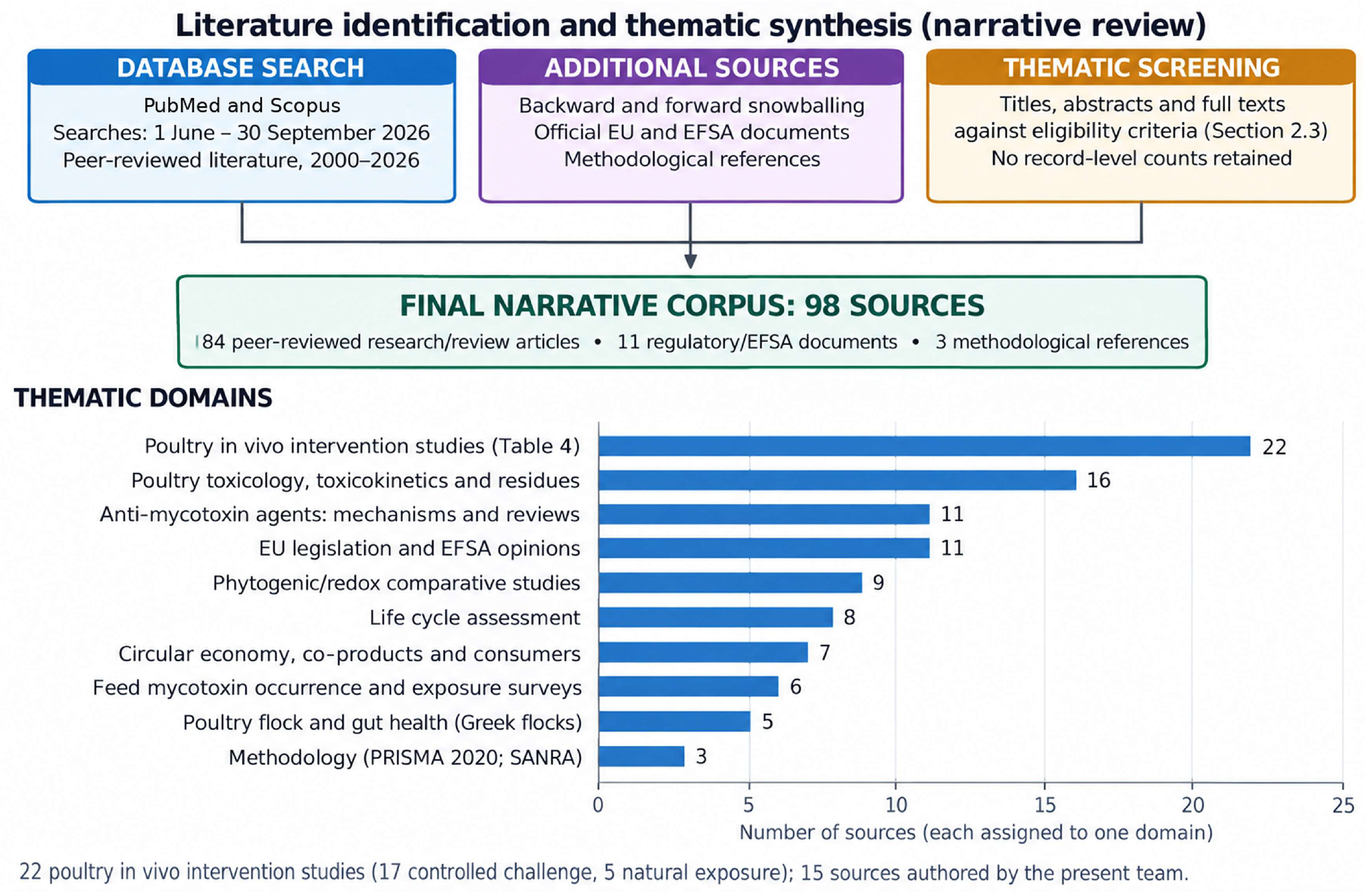
Literature identification, screening and inclusion workflow for this narrative review. The figure reports the final corpus by identification route and thematic domain; it is not a PRISMA 2020 flow diagram, because record-level screening counts were not retained. The database searches returned 542 (PubMed) and 1136 (Scopus) records before removal of duplicates (Section 2.2). Counts refer to the 98 sources of the literature corpus (the methodological sources for the water-to-feed ratio in Section 2.5 and coefficients of variation in Section 10.1 and the ISO standards cited in Section 10.1 are not included); each source is assigned to one domain only. Of these, 22 are poultry in vivo intervention studies (Table 4); members of the present team authored 15 of the 98 sources, only one of which [11] is among the 22 intervention studies. The nine sources added during revision, on dietary exposure and carry-over, co-products, avian clinical chemistry and the supplementary search (Section 2.2), are not part of this corpus. The 103 additional in vivo poultry intervention studies identified by the supplementary searches are also reported separately in Section 2.2 and are not part of the 98-source corpus or the 22 purposively selected studies in Table 4.
To assess this gap, supplementary searches were run in both databases on 5 November 2026 (Table A2). They combined the mycotoxin and species blocks with a block of these seven terms, excluded records retrieved by the core string and used the same limits. In PubMed, restricted to records entered by 30 September 2026, the supplementary string returned 252 additional records (re-running the core string with these limits reproduced the 542 records reported above). In Scopus, where the entry date cannot be restricted reliably, it returned 840 additional records; on the same day, the core string returned 1214 records, against 1136 on 30 September, so part of the yield reflects database growth since the original search. After removal of studies found in both databases, screening against the criteria of Section 2.3 identified 103 additional in vivo poultry intervention studies: 53 of phytogenic agents (most often curcumin or silymarin), 30 of microbial agents (probiotics, synbiotics, yeasts or Bacillus preparations; e.g., [18,19,20]), 4 of mycotoxin-degrading enzymes, 13 of adsorbents or commercial multicomponent products and 3 of unspecified feed additives. Most tested AFB1 in broilers or other chickens (82 studies); ten were in ducks, three in turkeys, three in laying hens, three in quail and two in breeders. The eligibility of all 103 studies was verified on titles and abstracts by eight authors (V.G.P., Z.P., G.I.P., N.T., L.V.A., C.E., M.S. and D.A.) working in pairs, with disagreements resolved by discussion. Nearly all reported partial protection, mainly of antioxidant, hepatic or intestinal endpoints. These 103 supplementary studies are reported separately and are not part of the 98-source literature corpus shown in Figure 2 or the 22 purposively selected intervention studies summarized in Table 4. These studies were not added to Table 4, whose purposive selection is described in Section 2.3. They show that the phytogenic and microbial literature is considerably larger than Table 4 suggests, but they mostly document downstream protection rather than reduced exposure, and their predominance of positive findings is consistent with the possible publication bias discussed in Section 10.2.
2.3. Study Selection, Eligibility Criteria and Iterative Identification
Titles, abstracts and full texts were screened for thematic relevance to the review objectives rather than for formal methodological appraisal. Screening was performed independently by three authors (V.G.P., K.K. and Z.P.); disagreements were resolved by discussion until consensus was reached. Inclusion criteria: Primary studies (controlled or field) evaluating anti-mycotoxin agents in poultry; studies on occurrence, toxicokinetics, toxicity or residues of mycotoxins in poultry feed and tissues; reviews synthesizing poultry mycotoxicology or mitigation; CE studies on by-products and mycotoxin risk in feed; LCA studies of broiler or egg production; EU regulatory and guidance documents; and peer-reviewed journal articles. Exclusion criteria: Non-peer-reviewed sources (conference proceedings, abstracts, theses and trade press); studies without original data or validation; studies in non-poultry species unless retained and flagged, as comparative or mechanistic evidence (e.g., the authors’ biomarker studies in pigs and dairy sheep); and publications on economics or policy without a nutritional, toxicological or environmental component. Intervention studies were tabulated (Table 4) if they compared, in poultry in vivo, a mycotoxin-exposed group with and without an anti-mycotoxin agent (or a treated flock with an untreated flock under natural exposure) and reported the agent, its dose and at least one performance, biochemical, redox, histological or residue outcome. Table 4 is not an exhaustive census of this literature: a published meta-analysis of binders alone pooled 31 broiler studies (Section 5.2). Studies were selected to cover each agent class, poultry category and exposure scenario, with priority given to natural contamination, multi-toxin challenges, and biomarker or residue endpoints. When several eligible publications addressed the same agent class, poultry category and exposure scenario, we retained the study that (i) used natural or multi-toxin exposure, (ii) reported the experimental unit and replication, (iii) reported whole-period performance together with biomarker or residue outcomes and (iv) was the most recent; the other studies were cited in the text only where they added specific information. Because broiler binder trials are numerous and have already been pooled in a meta-analysis [21], we relied on that meta-analysis rather than tabulating individual binder trials, which is why Table 4 contains fewer broiler binder trials than the meta-analysis. Studies involving feed-additive manufacturers were not excluded, because they form a large share of the poultry evidence; instead, industry involvement is reported for each study (Section 5). The criteria did not depend on the direction of results, and studies with null or partial findings [22,23,24,25] were retained. Of the 22 studies in Table 4, only one [11] was authored by members of the present team; the other 14 team-authored sources are context, mechanistic or comparative (pig and sheep) references. Counts and summary statistics derived from Table 4 (for example, the FCR recovery in Table A3) therefore describe the selected studies and should not be read as estimates for the literature as a whole.
To cover an interdisciplinary literature not indexed under a single controlled vocabulary, identification was iterative. The initial database search produced a core corpus; the reference lists of key studies and reviews were then examined (backward snowballing), and recent citing articles were checked (forward snowballing). All records, whatever their route of identification, were evaluated against the same eligibility criteria. Sources on LCA, the circular economy and EU legislation that do not concern mycotoxins in poultry (for example, the LCA studies in Section 7) cannot be retrieved by the core string and were identified through these additional routes. Because identification was iterative and screening was thematic rather than protocol-driven, record-level counts for each screening stage were not retained; Figure 2 therefore reports the final corpus by identification route and thematic domain rather than a full PRISMA count cascade, and this review should be read as non-systematic (see also the limitations in Section 10.2).
2.4. Data Extraction, Synthesis and Quality Considerations
For primary intervention studies, extracted information included species and production stage, number of birds and experimental units, mycotoxin type and dose (or natural contamination), agent composition and dose, duration, validation context (controlled or field) and outcomes (performance, serum biochemistry, redox biomarkers, histopathology, residues and microbiota). For reviews and LCA studies, extraction focused on synthesis frameworks, functional units, system boundaries and quantified contributions. Given the heterogeneity of designs, extraction was intentionally descriptive rather than standardized to a single outcome metric, and the material was organized thematically into the domains structuring Section 3, Section 4, Section 5, Section 6, Section 7 and Section 8. No quantitative pooling (meta-analysis) was attempted. For the trials in Table A3 whose source tables reported a standard deviation or standard error of FCR, we computed Hedges’ g for the difference between the toxin-only and toxin-plus-agent groups, and 95% intervals for the recovery ratio by Monte Carlo propagation of the reported group means and their standard errors (200,000 draws; File S1). For the recovery-ratio simulation, draws were retained only when the simulated FCR in the toxin-only group exceeded that in the uncontaminated control; therefore, the reported recovery intervals are conditional on a positive deterioration in FCR. The recalculated Hedges’ g values and recovery intervals are approximate, descriptive estimates derived from the reported group summaries and should not be interpreted as reproductions of the statistical tests or p-values reported in the original studies.
In line with the narrative approach, no formal quality-scoring instrument was applied. Quality was considered qualitatively: for primary studies, the clarity of experimental design, transparency of validation, reporting of the experimental unit and statistical model, and applicability to commercial conditions; and for reviews, breadth of coverage and coherence of the analytical framework. Studies funded by, or conducted with, feed-additive manufacturers—including several by the present author team—are identified as such in Section 5 so that readers can weigh the evidence accordingly. For each primary poultry study, we noted whether allocation was randomized, the experimental unit and replication, whether blinding was reported, the EU regulatory status of the agent and any industry involvement; these features are summarized in Section 5.1, Section 5.2, Section 5.3 and Section 9.
2.5. Illustrative Scenario Analysis of Environmental Effects
To illustrate how the environmental effect of protecting FCR depends on assumptions, we built a first-order model of the net change in global warming potential (GWP) per kg live weight: net reduction (%) = 100 × [s × L × r − s × (q/1000) × f], where s is the share of farm-gate GWP attributable to feed, L is the relative mycotoxin-induced deterioration in FCR, r is the fraction of L recovered by the agent, q is the agent inclusion rate (kg/t feed) and f is the cradle-to-gate GWP of the agent per kg relative to that of compound feed. The first term is the GWP avoided by the recovered FCR; the second is the burden of the agent itself. Final live weight, mortality, slaughter age and non-feed emissions were held constant. The model is an illustrative scenario assessment, not a predictive model, and its limitations are discussed in Section 7.2.
Inputs were drawn independently from uniform distributions: s, 0.80–0.92; L, 0.02–0.08; q, 1–3 kg/t; and f, 0.5–3. Two ranges were used for r: an assumed range (scenario A, 0.20–0.80) and a range based on the FCR recovery observed in the eight trials (six controlled challenge trials and two natural-contamination trials) that reported FCR for control, toxin-only and toxin-plus-agent groups (scenario B, 0.11–1.00; Section 5.2). Restricting Table A3 to the six broiler trials gives the same range, so scenario B is unchanged when the layer and duck trials are excluded. All other ranges are assumptions chosen for illustration, not estimates fitted to data. The principal range of q (1–3 kg/t) reflects the doses of most clay and multicomponent products in Table 4 (1–3 g/kg [25,26,27,28,29,30]); f was set at 0.5–3 because no cradle-to-gate inventory exists for these agents, and this range is intended to span minimally processed mined clays to dried, activated or blended products. Inputs were treated as independent; a possible dependence between L and r (for example, greater recovery when losses are larger) was not modeled. Three sensitivity scenarios were added. Scenario C resampled r with replacement from the eight trial-level recovery values of Table A3 (arms averaged within trials), instead of drawing it from a uniform range. Scenario D represented concentrated phytogenic extracts or enzymes, with q of 0.05–0.5 kg/t and f of 1–30. Scenario E widened the feed share to 0.60–0.92 to allow for other allocation rules or larger non-feed emissions. Scenarios D and E used the r range of scenario A. Because scenarios A–E all assume non-negative recovery, four further scenarios were added in revision: scenario F assumed no efficacy (r = 0); scenario G allowed adverse, as well as beneficial, effects (r uniform from −0.2 to 0.8); scenario H used inclusion rates of 5–10 kg/t, as reported for some adsorbents and yeast products [22,24,31], with the r range of scenario A; and scenario I resampled r from the six broiler trials of Table A3 only, to test the extrapolation from layer and duck trials to a broiler model. Reductions are expressed relative to the GWP of the uncontaminated reference; relative to the contaminated flock, they are smaller by a factor of about 1/ (1 + s × L), that is, by at most about 7%. Water-delivered agents are not represented directly by q. At a water-to-feed ratio of about 1.8 L/kg (1.6–1.8, depending on drinker type [32]), 2 L per 1000 L of water given continuously corresponds to roughly 3.6 L per tonne of feed, at the upper end of the modeled range, whereas 500 mL per 1000 L given on 9 days of the cycle corresponds to well under 1 L per tonne. A product density of about 1 kg/L was assumed for these conversions, so 3.6 L corresponds to about 3.6 kg per tonne of feed; the unit footprint of liquid agents is unknown, and their burden was therefore represented only within the ranges of q and f above. One hundred thousand draws per scenario were generated in Python 3.13 (Python Software Foundation, Wilmington, DE, USA) with NumPy 2.5 and SciPy 1.18 (random seed 2026), and sensitivity was summarized by standardized regression coefficients (SRCs) of the net reduction on the five inputs. The code is provided as File S1 (Supplementary Materials).
2.6. Use of Generative Artificial Intelligence
Generative artificial intelligence tools (Claude Opus 5.5, Anthropic, San Francisco, CA, USA; ChatGPT GPT-4o, May 2024 version, OpenAI, San Francisco, CA, USA) were used to identify and organize the literature, to write and check the Python code for the illustrative calculations (File S1) and to render figures from data and conceptual structures defined by the authors. All outputs were checked by the authors against the cited sources and the underlying data, and the authors take full responsibility for the content.
3. Principal Mycotoxins in Poultry: Occurrence, Toxicity and Sustainability Costs
3.1. Global Occurrence, Co-Contamination and Climate
Co-contamination, not single-toxin exposure, is the rule in poultry feed. In the ten-year global survey, DON, FUMs and ZEN were detected in 64%, 60% and 45% of samples, and AFB1, T-2 and OTA in 23%, 19% and 15% (Figure 3A); the commonest mixtures were DON + ZEN + FUMs and FUMs + AFB1, and finished feed, which blends the contaminants of its raw materials, was among the most frequently positive matrices [1]. Maize-based poultry diets inherit the profile of their main cereal [33], and European surveys confirm frequent co-occurrence [34]. These surveys [1,34], like a multi-mycotoxin screening of feed [35], come from a feed-additive manufacturer’s surveillance program rather than probability-based sampling, so they may over-represent suspect lots and regions with active testing; sample numbers also differed widely between regions, so these percentages should not be generalized as estimates of the prevalence of mycotoxins in poultry feed worldwide.
Figure 3.
Occurrence of the principal mycotoxins in animal feed. (A) Percentage of positive samples in all feed and raw materials, maize and maize distillers’ dried grains with solubles (DDGS, a circular co-product); n.r., not reported for that commodity in the source. (B) Percentage of samples exceeding the EU maximum level for AFB1 in complete feed (20 µg/kg) in selected regions. Data from Gruber-Dorninger et al. [1] (74,821 samples, 100 countries, 2008–2017), collected within a manufacturer’s surveillance program and not by probability-based sampling. AFB1, aflatoxin B1; DON, deoxynivalenol; FUM, fumonisins; ZEN, zearalenone; OTA, ochratoxin A.
Weather drives much of the year-to-year variation: wet silking seasons favor DON and ZEN, and hot, dry seasons fumonisins and AFB1 [1]. Exceedances of the EU maximum level for AFB1 (20 µg/kg) reached 41.1%, 38.5% and 20.9% of samples from South Asia, Sub-Saharan Africa and Southeast Asia, against 2.1% in Southern Europe (Figure 3B) [1], but AFB1 contamination of maize is predicted to increase in Southern Europe under climate change [1,36]. For Mediterranean producers, aflatoxin control is therefore no longer an import-only problem.
3.2. Toxicity and Species Sensitivity
Ducklings and turkey poults are among the most AFB1-sensitive farm animals because they bioactivate AFB1 efficiently to the exo-8,9-epoxide and detoxify it poorly, whereas broilers are comparatively tolerant [37,38]; the 1960 “Turkey X disease” outbreak in the United Kingdom led to the discovery of aflatoxins [26,38]. AFB1 causes hepatic lipidosis, bile duct hyperplasia, coagulopathy and atrophy of the bursa of Fabricius and thymus, with immunosuppression and vaccine failure at concentrations encountered in practice [4,37,38]; younger birds are more sensitive [4]. Mycotoxin-induced immunosuppression also amplifies infectious disease: AFB1-exposed broilers responded poorly to laryngotracheitis vaccination, and vaccinated birds exposed to mycotoxins shed more Eimeria oocysts [4]. Pathogens that circulate in Greek flocks and target the liver, respiratory tract and lymphoid tissue [39,40,41] could compound these effects; however, their interaction with mycotoxins has not been studied. Mycotoxin control therefore belongs in flock health and vaccination programs, not only in nutrition.
The Fusarium toxins act mainly on the intestine and immune system: DON disrupts tight junctions and villus architecture, lowers antibody titers to Newcastle disease and infectious bronchitis vaccines, and predisposes to necrotic enteritis and coccidiosis [4,42]. OTA is primarily nephrotoxic and also damages the gut barrier [43], reducing growth in broilers from 100 µg/kg [4]. T-2 toxin causes oral lesions, feathering defects, hepatic oxidative stress and lower egg production [44]; ZEN may impair fertility in breeders [4,45]; and FUMs disrupt sphingolipid metabolism, with ducks and turkeys being more sensitive than chickens [3,4].
Co-exposure modifies these effects. AFB1 and FB1 act additively in broilers [46], mixtures are often additive or synergistic on performance [47], and combined AFB1 and OTA can be antagonistic for some endpoints, thus complicating field diagnosis [26]. Table 1 summarizes the principal mycotoxins and their sustainability-relevant consequences.
Table 1.
Principal mycotoxins of concern in poultry: Main producers, target organs, key effects and sustainability implications.
3.3. Emerging and Modified Mycotoxins
Routine feed control misses much of the true exposure. Modified (masked) forms, such as ZEN-14-glucoside or DON-3-glucoside, escape conventional analysis but can be hydrolyzed to the parent toxin in the gut, so analyses of samples containing them can underestimate exposure [5]. Emerging Fusarium and Alternaria toxins—enniatins, beauvericin, alternariol, alternariol monomethyl ether and tenuazonic acid (TeA)—are frequently detected in feed: in samples analyzed between 2010 and 2012, alternariol monomethyl ether, alternariol and TeA were found in 82%, 80% and 65%, respectively [48]. Contamination levels are usually in the µg/kg range, but higher TeA concentrations occasionally occur [48].
TeA deserves particular attention in poultry. It shows complete oral bioavailability and low total body clearance in broiler chickens [49], and, given the limited toxicity data, a health risk cannot be excluded [48]. Hepatic TeA has also been detected in commercial broiler flocks [11]. None of these compounds is regulated in feed, although Commission Recommendation (EU) 2022/553 sets indicative levels for Alternaria toxins, including TeA, in certain foods [50]. In flocks, their effects are therefore usually attributed to “non-specific” performance losses unless liver or biomarker analysis is performed. Broader adoption of multi-analyte LC-MS/MS screening of feed and of liver or excreta biomarkers would allow these hidden exposures to be quantified and related to flock performance.
3.4. Food Safety and the Carry-Over Problem
Carry-over into poultry products links animal exposure to consumer exposure. AFB1 residues in broiler meat increase with dietary concentration and duration of exposure and are higher in younger birds [51]. In broilers fed 200 µg/kg AFB1 or more, aflatoxin M1 (AFM1) was detected in both liver and muscle, whereas at 100 µg/kg, it was detected in liver only, indicating a tissue-specific, dose-dependent distribution [4]. OTA, with its long half-life and strong protein binding, accumulates in muscle and reproductive tissues, and AFB1 metabolites and OTA have also been reported in eggs [3,4]. Cooking and processing reduce some of these residues only partly; however, the evidence varies by toxin and process [4], so prevention at farm level remains the most effective safeguard for consumers. Detection of residues does not, however, by itself demonstrate a consumer risk. Risk depends on the residue concentration; on the tissue; on the exposure that produced it (often experimental doses well above those of commercial feed); and on the contribution of poultry products to total dietary exposure, which, for aflatoxins and OTA, is generally small compared with that of plant-based foods [52,53]. Quantitative data support this distinction. A review of 33 feeding studies found that less than 1% of dietary aflatoxin was carried over to edible broiler tissues and that residues averaged about 0.5 µg/kg across tissues (about 0.3 µg/kg in eggs under natural contamination); even with feed concentrations above 300 µg/kg, residues did not exceed 10 µg/kg in liver or 5 µg/kg in eggs, although 4% of muscle samples exceeded 20 µg/kg, and feed and tissue concentrations were only weakly correlated (r2 < 0.2) [54]. OTA residues reported in poultry are likewise in the low µg/kg range and are highest in kidney and liver (for example, 1.14 µg/kg in broiler kidney and 2.41 µg/kg in layer liver) [55]. Most of these values come from experimental exposure above typical commercial concentrations, so they are likely to overestimate residues under field conditions.
3.5. Regulatory Thresholds and Sustainability Costs
Only AFB1 has a legally binding EU maximum level in poultry feed (Annex I of Directive 2002/32/EC, as amended); the other values in Table 2 are guidance or indicative levels [56,57,58]. The legal status of these values and of anti-mycotoxin additives is discussed in Section 9. Commission Recommendation (EU) 2026/1801 of 24 July 2026, based on updated EFSA opinions, will replace Recommendations 2006/576/EC and 2013/165/EU from 1 July 2027 and markedly lowers the guidance values for poultry feed: DON to 1.0 mg/kg for chickens for fattening and turkeys, OTA to 0.03 mg/kg, fumonisins B1 + B2 to 2.0 mg/kg for poultry other than turkeys and ducks and T-2 + HT-2 toxins to 0.1 mg/kg for poultry other than laying hens; it also sets, for the first time, a ZEN value (2.0 mg/kg) that applies to poultry (Table 2) [59]. The poultry values summarized in Table 2 are complete-feed values at 12% moisture; Recommendation (EU) 2026/1801 also provides separate guidance values for certain feed materials, which are not reproduced in Table 2. The fumonisin and T-2/HT-2 values refer to the respective sums (FB1 + FB2 and T-2 + HT-2), rather than to individual toxins. These guidance values apply to single-toxin concentrations in the specified feed category and do not establish safety for mixtures, emerging toxins or co-products that may concentrate mycotoxins before blending (Section 6); however, low-dose mixtures below these limits can impair broiler performance [6]. Because feed dominates the modeled broiler carbon footprint (88–92% in one UK study [7]), every point of FCR lost to subclinical mycotoxicosis also has an environmental cost (Section 7).
Table 2.
EU maximum and guidance levels for the principal mycotoxins in poultry feed (complete feed, 12% moisture): Current values and guidance values applicable from 1 July 2027.
4. Classification and Mechanisms of Anti-Mycotoxin Agents
No single mechanism covers the chemical diversity of the mycotoxins that co-occur in poultry feed. Agents are therefore grouped into four classes—adsorbents, biotransforming agents, phytogenic antioxidants and multicomponent formulations—which act at different points between the feed trough and the target cell (Figure 4). In this review, “anti-mycotoxin agent” is used as an umbrella term for products that reduce exposure (by binding or biotransformation) and for products that only protect against downstream effects. Only the former can be authorized in the EU with a mycotoxin-reduction claim (functional group 1(m); Section 9). Throughout, we distinguish four types of effect: reduction of exposure by adsorption in the gut, biotransformation to less toxic metabolites, mitigation of toxic effects (for example, hepatoprotection) and antioxidant protection. Only the first two are detoxification in a strict sense. The four classes are not defined on a single basis: adsorbents, biotransforming agents and phytogenic antioxidants are defined by mechanism, whereas multicomponent formulations combine these mechanisms, and drinking-water delivery (Section 4.4) is a route of administration rather than a class.
Figure 4.
Classification of anti-mycotoxin agents used in poultry by mechanism of action and representative components (left), and their expected coverage of the principal mycotoxins (right) [60,61,62,63]. The coverage matrix is a qualitative synthesis of in vitro and in vivo evidence; the ratings are the authors’ judgment, made with explicit criteria: ✓✓, consistent direct reduction of exposure (binding or degradation) in vitro and confirmed in at least one poultry in vivo study; ✓, direct reduction for some toxins or under some conditions, or in vitro evidence only; ±, effects limited to protection against downstream damage (antioxidant or hepatoprotective) or inconsistent results; and –, no documented effect. The supporting references for each agent class are listed in Table A4 (Appendix A). Where in vitro and in vivo results conflicted, the in vivo poultry result determined the rating, and inconsistent in vivo results were rated ±. Direct reduction of exposure was not inferred from improved performance or antioxidant biomarkers; accordingly, the rating of phytogenic agents for AFB1 reflects protection against downstream effects (±). HSCAS, hydrated sodium calcium aluminosilicate; MMDA, multicomponent mycotoxin-detoxifying agent; TeA, tenuazonic acid.
4.1. Adsorbents
Adsorbents bind mycotoxins in the gastrointestinal lumen and form complexes that are excreted with the feces. Aluminosilicate clays—bentonite/montmorillonite, hydrated sodium calcium aluminosilicate (HSCAS) and clinoptilolite—bind the planar, polar AFB1 molecule with high efficiency, whereas the binding of DON, FUMs and other less polar toxins is weak or inconsistent [60]. Clinoptilolite, for example, has shown in vitro adsorption indices above 80% for AFB1 but is far less effective against trichothecenes [26]. Natural zeolites, of which clinoptilolite is the most widely used, have also been reviewed as feed additives and alternatives to in-feed antibiotics in pigs, poultry and ruminants, with adsorption of mycotoxins, particularly aflatoxins, among their proposed benefits [64,65]. Organically modified clays extend affinity to ZEN and OTA [60].
High inclusion rates of mineral adsorbents carry trade-offs: possible binding of micronutrients, vitamins and veterinary drugs, and variable purity and contamination with dioxins or heavy metals in some natural clays [66]. As noted in Section 1, binders did not alter the bioavailability of diclazuril or salinomycin in broilers [4]. Yeast cell-wall extracts, rich in β-glucans and mannoproteins, adsorb OTA and ZEN and modulate immunity; in broilers, a yeast cell-wall extract reduced OTA accumulation in tissues [22].
4.2. Biotransforming Agents
Biotransforming agents convert mycotoxins into non-toxic or less toxic metabolites within the gut. Enzymes now used or investigated in feed include fumonisin esterase (hydrolyzing FB1 to hydrolyzed FB1), ZEN lactonohydrolase (opening the lactone ring), OTA amidohydrolase (cleaving OTA to ochratoxin α and phenylalanine) and microbial de-epoxidation of trichothecenes to de-epoxy metabolites [61,62]. Because each enzyme is highly substrate-specific, biotransformation is usually combined with broad-spectrum adsorbents.
Whole microorganisms provide a complementary route. Bacillus licheniformis has degraded more than 90% of AFB1 in vitro, and Bacillus spp. and lactic acid bacteria can degrade AFB1 or reduce its absorption while supporting gut health [26,61]. In broilers, enzymatic detoxifiers have reduced the severity of aflatoxin-associated hepatic and renal lesions [4]. The efficacy of microbial agents nonetheless varies between strains and conditions, which makes standardization and dose definition more demanding than for clays [4].
4.3. Phytogenic Antioxidants
Standardized phytogenic extracts act mainly against the downstream effects of mycotoxins rather than by removing them; however, some unprocessed plant by-products also adsorb mycotoxins in vitro (see below). Silymarin (Silybum marianum) stabilizes hepatocyte membranes and promotes hepatocyte regeneration; curcumin (Curcuma longa), grape-seed proanthocyanidins and olive polyphenols scavenge reactive oxygen species, activate the Nrf2/ARE pathway, induce endogenous antioxidant enzymes and modulate CYP450-dependent bioactivation of AFB1 [63]. Silymarin can also inhibit the CYP450 system and thereby the activation of AFB1, which is why it is frequently included in multicomponent products [26].
In broilers, curcuminoids from turmeric reduced AFB1-induced oxidative damage [67], and grape-seed proanthocyanidin extract improved growth, immune function, antioxidant capacity and liver histology and reduced aflatoxin residues in birds exposed to AFB1 [68]. Grape pomace itself adsorbs several mycotoxins in vitro [69], and other agricultural by-products show comparable sequestering capacity [70], suggesting a possible dual adsorbent–antioxidant role for these unprocessed by-products, which differ from standardized extracts; whether this in vitro adsorption lowers exposure in poultry has not been shown. Table 3 summarizes the phytogenics most relevant to poultry.
Table 3.
Principal phytogenic anti-mycotoxin agents relevant to poultry: source, active principles, protective mechanisms and circular-economy origin.
4.4. Drinking-Water Delivery as a Route of Administration
Drinking-water delivery is a poultry-specific innovation. It is a route of administration rather than a mechanistic class; the liquid products considered here are phytogenic formulations (Section 4.3). Unlike in-feed additives, liquid agents can be administered strategically during high-risk periods (feed changes, heat stress and vaccination) without reformulating the feed and can be started as soon as a contamination problem is suspected. A water-soluble solution based on grape and olive pomace extracts, given at 2 L per 1000 L throughout days 1–42, improved broiler performance under natural multi-mycotoxin challenge [71]. The same formulation class was given at 500 mL per 1000 L of water in three short windows in a commercial comparison of two flocks (Section 5.1) [11]. Pulsed administration also limits the quantity of additive used per bird, which matters for the agent’s own environmental footprint (Section 7.3). Water delivery raises practical questions that the two available studies did not address. The following points reflect general principles of water medication rather than published data on these agents. Live vaccines given in drinking water are inactivated by sanitizers and by changes in water chemistry, so acidified or preservative-containing liquid agents should be withheld around water vaccination. Compatibility with water-soluble medications should be verified product by product, and organic additives can support biofilm formation in drinker lines, so line hygiene should be monitored. Finally, only two dosing schemes have been tested (500 mL/1000 L in three pulses and 2 L/1000 L continuously), and no dose–response study is available.
4.5. Microbial Agents and Gut-Health Biotics
Mycotoxins and the gut microbiota interact in both directions, so agents that strengthen the intestinal ecosystem are logical partners of anti-mycotoxin strategies. Probiotic Lactobacillus strains can reduce AFB1 absorption while enhancing gut barrier function and immune responses [4]. Microbial agents can act in three distinct ways, which should not be confused. Some strains bind mycotoxins to their cell walls (adsorption); others produce enzymes that degrade them (biotransformation); and many act only indirectly, by supporting the intestinal barrier and microbiota. Efficacy is strain- and condition-specific. Among the studies in Table 4, the direct poultry evidence on microbial agents concerns biotransformation: a Bacillus subtilis preparation (strain ANSB060) improved FCR at one of three doses and lowered liver AFB1 residues in ducks fed naturally contaminated maize (about 22 µg/kg AFB1) [72]; a Bacillus CotA laccase lowered liver AFB1 in ducks under natural contamination [73]; Bacillus subtilis and B. licheniformis were components of the multicomponent agents tested in broilers [26,74], so their individual contribution cannot be separated; and a trichothecene-de-epoxidizing Eubacterium strain was part of the additive tested in breeders [30] (Section 5). By contrast, the multi-genus synbiotic studies by our group in broilers and broiler breeders [75,76] were conducted without mycotoxin challenge; they show only that such products can be given to these birds, and combined synbiotic–detoxifier trials were not identified in the present search. The supplementary searches (Section 2.2) identified a further 30 in vivo poultry studies of microbial agents—mostly Lactobacillus, Bacillus or yeast preparations tested against AFB1, DON, OTA or T-2 toxin in broilers and turkeys—which reported mainly intestinal, antioxidant and residue benefits; they support a protective role but rarely distinguish adsorption, degradation and indirect effects, and some reported no effect on performance [18] or only modest protection [19,20].
4.6. Multicomponent Mycotoxin-Detoxifying Agents (MMDAs)
MMDAs combine physical binding of polar toxins, enzymatic or microbial biotransformation of non-adsorbable toxins, antioxidant and hepatoprotective support, and immunomodulation in a single product. They do not represent a separate mechanism: they combine the mechanisms described in Section 4.1, Section 4.2, Section 4.3 and Section 4.5, and they are treated as a separate category only because their efficacy must be evaluated for the formulation as a whole. This multi-mechanism logic matches the multi-toxin reality of commercial feed (Section 3.1) and parallels the systems thinking of CE approaches. Formulations differ widely in composition and dose, so efficacy claims are product-specific and cannot be extrapolated from one MMDA to another. Representative formulations evaluated in poultry are discussed in Section 5.
5. Clinical and Field Evidence for Anti-Mycotoxin Agents in Poultry
5.1. Broilers Under Commercial Field Conditions
Field evidence under natural, multi-mycotoxin exposure is scarce in poultry, yet it is the evidence most relevant to commercial decision-making and to LCA modeling. In the only commercial-scale comparison identified, Papatsiros et al. compared two commercial broiler groups—22,950 birds (control) and 23,256 birds (treatment)—receiving a phytogenic liquid anti-mycotoxin agent based on grape and olive extracts at 500 mL per 1000 L of drinking water on days 9–11, 23–25 and 31–33 [11]. Liver samples were screened for fungal metabolites by liquid chromatography–tandem mass spectrometry with a quadrupole time-of-flight analyzer (LC–QTOF-MS). TeA was therefore expressed as relative abundance (a semi-quantitative measure) rather than as a calibrated concentration, and it was 83% lower in the treated flock. Although livers were collected from 15 birds per flock on day 35, TeA was reported as a single relative-abundance value per flock (8.1 vs. 1.3, from one chromatogram per group); whether these were pooled samples, as well as how the signal was normalized, was not stated. Within the two sampled flocks, plasma thiobarbituric acid reactive substances (TBARS); protein carbonyls (CARBS); and the activities of alanine aminotransferase (ALT), aspartate aminotransferase (AST) and alkaline phosphatase (ALP) were lower, and total antioxidant capacity (TAC) and total protein were higher, in the treated flock. Mortality was similar (3.0% vs. 3.1%), and the treated flock had a numerically lower FCR (1.58 vs. 1.65) but also a lower average body weight at 42 days (2.343 vs. 2.479 kg); these flock-level differences could not be tested statistically, and liver histopathology did not differ between flocks [11] (Figure 5A). Figure 5B shows, for the controlled trials with complete FCR data, the FCR of the toxin-only and toxin-plus-agent groups relative to unchallenged controls (Table A3).
Figure 5.
Performance, plasma enzyme activities and redox status in poultry receiving anti-mycotoxin agents. (A) Direction of change in broilers receiving a phytogenic liquid anti-mycotoxin agent in a paired comparison of two commercial flocks (n = 1 flock per arm) [11]; cells show direction only, because bird-level tests within one flock per arm cannot test the treatment effect. Body weight and FCR in panel A are flock-level values from [11] that could not be tested statistically. (B) FCR of the toxin-only (orange) and toxin-plus-agent (blue) groups relative to unchallenged controls in the eight controlled trials that reported FCR for all three groups (Table A3); labels give the share of the toxin-induced FCR loss recovered by each agent and dose. Points are group means, as reported by the source authors; measures of dispersion were not reported consistently, so no intervals are shown. In panel A, green cells mark a favorable change, and “not assessed” marks parameters not measured in [11]. Arrows indicate the direction of change in the treated flock (↑, higher; ↓, lower), not tested statistically. Data in panel B are from [23,25,26,27,67,68,71,73]. The semi-quantitative hepatic TeA result of [11] is reported in Section 5.1. ADG, average daily gain; FCR, feed conversion ratio; ALT, alanine aminotransferase; AST, aspartate aminotransferase; ALP, alkaline phosphatase; MDA, malondialdehyde; TBARS, thiobarbituric acid reactive substances; TAC, total antioxidant capacity; TeA, tenuazonic acid; GSPE, grape-seed proanthocyanidin extract; MMDA, multicomponent mycotoxin-detoxifying agent; AFB1, aflatoxin B1; OTA, ochratoxin A; FB1, fumonisin B1; ZEN, zearalenone.
These results come from a single paired comparison. Each treatment was applied to one flock, so the flock is the experimental unit and n = 1 per arm. Clinical evaluation and laboratory analyses were reported as blinded to treatment, but the feed was analyzed by the manufacturer’s laboratory, with lateral-flow assays, and five feed samples showed low concentrations of all regulated mycotoxins (e.g., AFB1 3.2, DON 173 and fumonisins 391 µg/kg). Differences between birds therefore cannot be separated from house, farm or batch effects, and p-values computed on individual birds describe the two sampled flocks rather than the effect of the treatment. This study is best regarded as hypothesis-generating field evidence that motivates replicated trials (Section 10). Accordingly, throughout this review, the biochemical and TeA differences reported in [11] are described as associations with the treated flock, not as confirmed treatment effects, and they are not considered evidence of commercial efficacy.
Arora et al. evaluated a water-soluble solution of the same class (2 L/1000 L water, days 1–42) in a 2 × 2 factorial pen trial with 288 male Ross 308 broilers (six pens of 12 birds per treatment, completely randomized design). Diets were formulated with naturally contaminated maize, maize gluten meal and groundnut meal (aflatoxins 80 µg/kg, fumonisins 1600 µg/kg, OTA 50 µg/kg). Contamination reduced body weight at days 24 and 42 and worsened FCR over days 1–42. The solution improved FCR over days 1–42 to a value that did not differ significantly from that of uncontaminated controls (1.58 vs. 1.56), which does not by itself demonstrate equivalence, but body weight at day 42 remained lower (2494 vs. 2647 g); livability and carcass traits were unaffected [71]. Authors of that study were affiliated with a contract research company and with the manufacturer of a product of this class, and the broiler field study above was also conducted in collaboration with industry. Independent replication is therefore needed.
Natural contamination at concentrations permitted in feed has also been studied under controlled conditions. In 192 female Arbor Acres Plus broilers fed moldy maize with AFB1, DON and ZEN within the Chinese permitted feed limits for 42 days, modified palygorskite (1 g/kg) returned bursa weight, intestinal secretory IgA, villus morphology and tight-junction expression and lowered jejunal MDA and serum diamine oxidase [77] to values not significantly different from those of controls. Such low-dose designs are closer to commercial exposure than the high single-toxin challenges summarized below.
5.2. Broilers Under Controlled Challenge
Controlled challenge trials confirm that multicomponent agents partially, rather than completely, offset mycotoxicosis. Tsiouris et al. fed 160 Ross 308 broilers for 42 days a diet contaminated with 0.1 mg/kg AFB1 and 1 mg/kg OTA—five times the EU maximum level for poultry other than young animals (20 times that for young poultry) and ten times the current OTA guidance value, and more than 30 times the OTA guidance value applicable from July 2027 [59]—with or without an MMDA containing modified clinoptilolite, Bacillus subtilis, B. licheniformis, Saccharomyces cerevisiae cell walls, and silymarin at 1 or 3 g/kg [26]. Mycotoxins reduced body weight from day 25 and raised AST; the MMDA improved FCR in the second half of the trial, attenuated biochemical changes (ALT at 3 g/kg), lowered jejunal and ileal pH, and reduced cecal E. coli counts [26]. The higher dose was more effective for some biochemical endpoints, but not for FCR. Body weight, nonetheless, remained below that of unchallenged controls in all challenged groups, AST remained elevated, and, over the whole trial, FCR showed only a trend toward improvement at either dose (0.05 < p < 0.1 in the source table) [26]. A similar MMDA (0.2% of feed) was tested in 96 Cobb 500 broilers challenged with AFB1 (0.1 mg/kg) and T-2 toxin (0.5 mg/kg), alone and combined, for 42 days. It increased final body weight by 12.5% and 12.1% relative to the single-toxin groups, but by only 2.9% under combined exposure; reduced liver AFB1 residues by 51%; and reduced, without preventing, histological lesions [74]. A third multicomponent detoxifier (1.1 or 1.6 g/kg) altered haematological indices in broilers fed 0.1 mg/kg each of AFB1 and OTA, but the trial used only 20 birds (five replicates per treatment) and reported blood profile as its only endpoint [78].
Single-class agents remain informative. Sodium bentonite (0.3%) largely prevented the growth depression caused by 2.5 mg/kg AFB1 (body weight gain −3% vs. −22% relative to controls) but gave little protection under combined exposure to AFB1 and 200 mg/kg FB1 (−19% vs. −28%), when FCR was not improved; growth was analyzed per bird rather than per pen, which overstates precision [23], and four Greek bentonites were tested in broilers fed 0.1 mg/kg AFB1 alone (three binders at 1%) or combined with 0.1 mg/kg OTA (one binder at 0.5%) for 42 days: no binder restored body weight, the toxin mixture depressed performance more than AFB1 alone, and the binder tested against the mixture reduced liver OTA about fourfold [24]. Because OTA alone was not tested, the AFB1 × OTA interaction could not be separated from the effect of the binder. With a modified palygorskite (1.0 g/kg), growth and FCR did not differ significantly from control values (1.73 vs. 2.09 with ZEN alone; control, 1.73) in broilers fed 2.0 mg/kg purified ZEN for 42 days and reduced hepatic and renal ZEN residues [27]. At a dietary AFB1 concentration equal to the EU maximum level for poultry other than young animals (0.02 mg/kg; four times the 0.005 mg/kg level for young poultry), two smectite-based agents (0.5%) reduced the apparent absorption of AFB1 by about 30% and returned serum antioxidant capacity and hepatic MDA to control values in broilers within 10 days, without effects on performance [31]. Turmeric powder supplying 74, 222 or 444 mg/kg curcuminoids returned FCR to values not significantly different from control at all doses and improved weight gain at 74 and 222 mg/kg in broilers fed 1.0 mg/kg AFB1 for 21 days, and 222 mg/kg normalized antioxidant markers [67]. Grape-seed proanthocyanidin extract (250 or 500 mg/kg) improved growth and FCR in broilers fed 1 mg/kg AFB1 for 28 days, reduced hepatic malondialdehyde by 40–45% and reduced liver AFB1 residues by 42–51% [68]. A yeast cell-wall extract (4 or 8 kg/t) reduced liver OTA deposition by up to 30% in broilers fed 0.09 mg/kg OTA, with no further gain at the higher dose [22]. Most of these trials used single toxins or binary mixtures at doses well above those typical of commercial feed, which strengthens mechanistic inference but limits extrapolation to field conditions. A meta-analysis of 161 in vivo datasets from 31 broiler studies found that mycotoxin binders improved body weight and FCR, and reduced mortality under contamination; however, it pooled heterogeneous products and challenge models [21]. Its direction of effect agrees with that of the selected trials summarized here, but neither source allows the benefit to be attributed to specific agent classes or to field-level exposure. The two sets are complementary rather than directly comparable: the meta-analysis was restricted to binders in broilers, whereas our selection spans all agent classes and poultry categories and favors natural contamination and biomarker endpoints.
Null and partial results deserve equal weight. Only in a few studies in Table 4 did body weight with the agent not differ significantly from that of unchallenged controls: a modified palygorskite against purified ZEN [27] and a CotA laccase against natural AFB1 contamination in ducks [73]. FCR responded more often in these selected studies (a descriptive pattern, not a tested comparative effect): in the eight trials that reported FCR for control, toxin-only and toxin-plus-agent groups, the agents recovered 11–100% of the toxin-induced FCR deterioration (median 75% across the twelve agent–dose arms, or 72% with each trial counted once; Table A3), and FCR with the agent did not differ significantly from control values in four of them [27,67,71,73], which does not demonstrate equivalence or full restoration. The lowest recoveries were observed under combined AFB1 and FB1 exposure (11%) [23] and in laying hens (19%) [25]. Each estimate is a ratio of two differences and is therefore imprecise when the toxin-induced deterioration is small (7.7% in [25]); confidence intervals were not derived, because the source tables report dispersion inconsistently. Small absolute differences produce large swings in this ratio: in [25], a difference of 0.03 FCR units corresponds to 19% recovery, and in [67], a difference of 0.009 units separates 91% from 100%. The 11–100% range therefore describes eight small, heterogeneous trials and should not be read as an estimate of the general efficacy of anti-mycotoxin agents; in several of these trials, the difference between the agent and toxin-only groups was not statistically significant [23,25,26]. Where the source tables reported dispersion (five trials, seven agent arms), the 95% intervals for the recovery were wide—for example, 21–128% around a point estimate of 62% [68] and −163% to 72% around 19% [25]—and the standardized effect of the agent on FCR (Hedges’ g) ranged from 0.22 to 2.70, with intervals including zero in two arms (Table A3). These recalculated Hedges’ g intervals are approximate and should be distinguished from the inferential tests reported in the original studies. For example, for the 1 g/kg treatment in Tsiouris et al. [26], the approximate 95% interval for Hedges’ g excludes zero, whereas the original whole-period FCR comparison was reported as a trend (p = 0.076). These estimates come from small trials, mostly at challenge doses above field concentrations, and several of the differences were not statistically significant. In the yeast cell-wall trial, neither OTA nor the agent affected body weight, feed intake, FCR or mortality, so the benefit was limited to tissue residues [22]. In the field study, mortality did not differ between flocks [11]. Protection was also weaker under combined than under single exposure [23,74], which is the situation that prevails in commercial feed (Section 3.1). Most trials were small: several had four to six replicates per treatment, and one had 20 birds in total [78]. Several were also funded by, or co-authored with, the manufacturer of the product tested [11,22,26,71,74] (Section 5.3 for layers and breeders), and we did not identify independent poultry studies that reported a complete absence of effect, which may reflect publication bias.
Design features also varied considerably between the controlled trials (Table 4). Replication ranged from three replicates per treatment [79] to eight [22,25,77]; one trial used single birds as replicates [78], and one analyzed growth per bird rather than per pen [23]. Random allocation was reported in most trials, whereas blinding of outcome assessment was rarely reported, and no trial reported a sample-size calculation. Most trials compared treatment means by analysis of variance with post hoc tests, and few reported effect sizes or confidence intervals. With such small trials, a nonsignificant difference cannot be read as absence of an effect, nor a significant difference as a precise estimate. Challenge design matters as well. High single-toxin doses produce large losses against which recovery is easier to detect; under the low-dose, multi-toxin exposure typical of commercial feed, both the losses and the benefit of an agent are likely to be smaller and harder to detect, and toxins not covered by the agent may continue to act (Section 3.2). Results from high-dose trials should therefore not be extrapolated directly to field conditions.
5.3. Laying Hens, Breeders, Turkeys and Ducks
Evidence in layers, breeders, turkeys and ducks has grown but remains thin relative to their economic weight and long exposure periods. In layers, three controlled challenge trials met our criteria. In 105 Lohmann Brown hens housed in 35 pens and fed graded levels of AFB1 and T-2 toxin for 42 days, egg mass decreased as mycotoxin levels increased, an effect partly modified by an MMDA at 2–3 g/kg, which also reduced AFB1, T-2 and their metabolites in liver and kidney [28]. In 400 Isa Brown hens fed AFB1 (up to 546 µg/kg) and fumonisins (7.9 mg/kg) for 28 days, bentonite and fumonisin esterase restored egg production (+7% relative to high AFB1 alone) and reduced liver AFB1 residues by 71–82% and carry-over into eggs [29]. In Hy-Line Brown hens fed 0.2 mg/kg AFB1 for 12 weeks, a bentonite and β-glucan adsorbent reversed the rise in serum AST and improved eggshell strength and oviduct development, whereas egg production (91.2% vs. 87.5%; control 95.4%) and FCR were only partly, and not significantly, restored [25].
Two trials addressed breeders. In 45-week-old Arbor Acres broiler breeder hens fed 4 mg/kg OTA with a lipopolysaccharide challenge, clay-based binders with or without plant extracts and yeast lowered liver OTA, and the multicomponent product restored egg production, whereas hatchability was not significantly improved [80]. In Cobb 500 breeder hens and roosters fed ZEN from 28 to 65 weeks of age, a multicomponent additive containing bentonite and ZEN- and fumonisin-degrading enzymes alleviated the ZEN-induced fall in fertility, improved chick quality, and more than halved ZEN and its metabolites in excreta [30]. Both trials, like the multicomponent and bentonite trials in layers [28,29], involved the manufacturer of the products tested.
In turkey poults fed 250 µg/kg AFB1 for 28 days, powdered alfalfa leaves (0.5%) limited the loss of body weight (−4.4% vs. −12.9% relative to controls) and prevented liver lesions, whereas a yeast cell-wall product was less effective [81]. Three trials were in ducks, the most AFB1-sensitive poultry species [37,38]. Two used naturally contaminated diets with about 20 µg/kg AFB1, the EU maximum level for poultry other than young animals and four times that for young poultry: a Bacillus subtilis preparation improved FCR at one of three doses and reduced liver AFB1 residues by 42–58% in Cherry Valley ducks [72], and a Bacillus CotA laccase restored body weight and FCR (1.72 vs. 1.92; control 1.68) and lowered liver AFB1 residues in Pekin ducks [73]. In a spiked-feed trial, an extract of Thunbergia laurifolia improved growth, FCR and serum AST in ducks fed 0.1 mg/kg AFB1 [79].
No field study in these categories met our criteria, and none measured redox biomarkers, egg residues and hatchability together. Because AFB1 and OTA carry over into eggs and impair egg production, egg quality and hatchability, and because maternal AFB1 exposure reduces the transfer of maternal antibodies to progeny [3,4], this remains a priority gap (Section 10). Breeders are particularly relevant, since a single breeder flock determines the immune competence and early performance of hundreds of thousands of broiler chicks. The evidence summarized in this review is therefore predominantly broiler evidence, and conclusions for layers, breeders, turkeys and ducks rest on few, small trials and on toxicological data. In particular, statements on reproductive performance, egg quality, hatchability and carry-over into eggs rest on three layer and two breeder trials and on toxicological data, and they should not be extrapolated from broiler trials.
Table 4 summarizes the poultry intervention studies. Of the 22 studies selected, 17 used controlled challenge with spiked or culture material, and five used natural contamination: four replicated pen or cage trials [71,72,73,77] and one commercial comparison of two flocks [11]. Measured against the guidance values applicable from July 2027 [59], even some natural-contamination designs are not low-dose: in [71], total aflatoxins were reported (80 µg/kg) without the AFB1 fraction, so they cannot be compared directly with the AFB1 maximum level, and OTA (50 µg/kg) exceeded the new 0.03 mg/kg value, whereas fumonisins (1.6 mg/kg) remained below the new 2.0 mg/kg value.
5.4. Biomarkers of Exposure and Effect, and Cross-Species Evidence
The biomarkers used in the reviewed studies fall into two groups. Biomarkers of exposure—the parent toxin or its metabolites in liver, kidney, excreta, plasma or eggs, measured by LC-MS/MS—show that a toxin reached the bird and, when lower with an agent, that exposure was reduced. Biomarkers of effect—TBARS, CARBS, TAC, plasma enzyme activities and histopathology—describe the biological response. Mycotoxin-induced oxidative stress is a common mechanism across toxins and species [82], and redox markers may change before performance losses appear, which makes them useful for monitoring. They are, however, nonspecific: diet (for example, oxidized fat or vitamin E and selenium supply), heat stress, infection and vaccination also affect them, and antioxidant additives can improve them without any change in exposure. An improvement in TBARS, CARBS or TAC therefore indicates antioxidant protection, not reduced mycotoxin exposure. Similarly, ALT, AST and ALP are not liver-specific in poultry: hepatic ALT activity is low in birds, AST is also released from skeletal and cardiac muscle, and ALP largely reflects osteoblastic activity in growing birds [83]. Changes in these enzymes should be described as changes in enzyme activity rather than as improved liver function, and interpreted together with more specific measurements, such as bile acids, creatine kinase to identify muscle damage, liver histopathology and exposure biomarkers. Field monitoring should therefore pair at least one exposure biomarker with the redox and enzyme panel. The same TBARS–CARBS–TAC triad has been applied by our group in pigs and sheep; these studies are comparative, not poultry, evidence and cannot substitute for poultry trials. On commercial farms, an MMDA containing bentonite, sepiolite, curcumin, silymarin and yeast postbiotics improved this triad in sows [84] and in fumonisin-exposed weaned piglets [85]; a phytogenic detoxifier was evaluated in dairy sheep [86]; and slaughter-stage LC-MS/MS liver analysis in finishing pigs linked hepatic FB1 concentrations with histopathological lesions [87], a design transferable to broilers. By-product-derived antioxidants act through the same redox pathways that mycotoxins disrupt: phenolic phytogenics in heat-stressed sows [88], a polyphenolic product from olive mill wastewater in piglets [89] and grape pomace in broilers [90] all improved redox status.
Table 4.
In vivo studies of anti-mycotoxin agents in poultry included in the synthesis: Design, exposure, agent and main outcomes.
This balance in the selected corpus—17 controlled challenge trials and five studies under natural contamination, only one of them commercial—is the inverse of what LCA modeling requires. Controlled trials establish mechanism, but their high single-toxin doses do not reflect the low-dose mixtures of commercial feed (Section 3.1), and only field studies supply the flock-level FCR, mortality and condemnation data needed to compute environmental benefits (Section 7).
6. Anti-Mycotoxin Agents in the Framework of the Circular Economy
6.1. Circular Feed and the Mycotoxin Paradox
The circular economy replaces the take–make–dispose model with closed loops that keep biomass in productive use at the highest possible value. Poultry efficiently convert co-products into high-quality protein. These include DDGS, bakery meal and other former foodstuffs, cereal screenings, wheat bran and brewers’ grains. Yet the streams most attractive for circular feeding are often those that concentrate mycotoxins. In the global survey, maize DDGS showed DON in 83%, FUMs in 78%, and ZEN in 75% of samples. It also had the highest median DON concentration (1490 µg/kg) of any commodity analyzed (Figure 3A) [1]. Because mycotoxins are not degraded during ethanol fermentation, they partition into the solid fraction, and DON concentrations in DDGS are about three times those of the starting grain [91,92].
Food-industry by-products more broadly carry the same risk. A systematic review confirmed mycotoxin occurrence across food-industry by-products [12], and circular agricultural practices have been identified as a route for unintended reintroduction of mycotoxins into the food chain [10]. Food-safety assurance is therefore recognized as a precondition for circular agrifood policies [93], and policy analyses call for explicit integration of livestock into the circular bioeconomy [94]. Under EU law, anti-mycotoxin additives may be used only in feed that already complies with the limits for undesirable substances (Section 9). The room for anti-mycotoxin agents in circular diets therefore lies with co-products that comply with legal limits but still carry subclinical, modified or unregulated toxin loads. Recommendation (EU) 2026/1801 will narrow this room from July 2027 [59]. With a DON guidance value of 1.0 mg/kg in complete feed for chickens for fattening and turkeys, maize DDGS at the median concentration of the global survey (1490 µg/kg [1]) would already supply 0.15–0.30 mg/kg DON, 15–30% of the new allowance, at inclusion rates of 10–20%, before the contribution of maize, wheat and other ingredients is considered. Because agents cannot bring non-compliant feed into compliance, the lower values make lot testing and toxin-specific formulation more important than before.
6.2. Anti-Mycotoxin Agents as Circular-Economy Enablers
Anti-mycotoxin agents could contribute to circularity through four pathways, which differ in their evidence base. The nutritional value of co-products such as DDGS and bakery meal in poultry diets is well documented [95]; the claim that an agent allows these co-products to be included at higher rates is, by contrast, a hypothesis, because no poultry study identified in the present search has tested it. First, for co-products that comply with legal limits but carry appreciable subclinical or unregulated toxin loads, agents might raise the inclusion rate at which these materials can be used without loss of performance, expanding the circular feedstock base. Second, where they protect FCR, they would reduce feed wasted through reduced intake and poor conversion: feed that is eaten but not converted, because of gut damage or liver dysfunction, has consumed all upstream land, water, fertilizer and energy without yielding product. Third, they could reduce whole-bird losses—mortality, culls and slaughter condemnations from liver and kidney lesions—each of which represents the total loss of every resource invested in that bird; however, none of the reviewed trials that reported mortality found an effect of the agent [11,22,71]. Fourth, agents shown to reduce tissue residues [29,68,73,74] could help products from circular diets to meet the same safety standards as conventional ones [10,93].
These contributions are not automatic. An agent widens the inclusion window only for the toxins it actually covers (Figure 4): a clay that binds AFB1 does little for DON-rich DDGS, which instead calls for biotransforming or multicomponent products. The CE value of an agent must therefore be judged against the contamination profile of the specific co-product, verified by lot testing. No poultry study identified in the present search tested an agent in a co-product-rich diet, so this role remains hypothetical; it requires trials that compare co-product inclusion rates with and without an agent.
6.3. Circular Sourcing of the Agents Themselves
Some anti-mycotoxin agents are, or could be, sourced from secondary resources. Grape pomace and olive pomace, major Mediterranean agro-industrial residues, supply proanthocyanidins and hydroxytyrosol and are the basis of the liquid agent tested in broilers [11,71]. Grape pomace also binds mycotoxins in vitro [69] and reduced urinary mycotoxin biomarkers in pigs in vivo [96]. Yeast cell walls and hydrolyzed yeast are recovered from brewing and bioethanol fermentation [22]. Olive mill wastewater, a problematic effluent, has been converted into a polyphenolic feed product with antioxidant effects in piglets [89]. Bentonite, sepiolite and clinoptilolite are primary geological resources available in Greece and other Southern European countries; local extraction can shorten supply chains, but this is a sustainability attribute distinct from circularity, because no secondary resource is recovered; Greek bentonites have already been tested in broiler diets, but none has restored body weight under AFB1 challenge [24].
This double circularity—circular inputs that may enable circular feeding, a mechanism not yet tested in poultry (Section 6.2)—is the conceptual core of Figure 1. Its environmental value nonetheless depends on processing: extraction solvents, drying energy and transport can offset part of the benefit of using a residue, so by-product origin should be documented and quantified rather than assumed to be beneficial (Section 7.3). Demonstrated by-product origin (grape and olive pomace, olive mill wastewater and spent yeast) should also be distinguished from proposed sourcing opportunities, such as the recovery of curcumin or silymarin from processing residues.
7. Life Cycle Assessment of Poultry Production and the Role of Anti-Mycotoxin Agents
7.1. Feed as the Environmental Hotspot
LCA studies consistently identify feed production as the dominant environmental hotspot of poultry meat and eggs. In UK systems, feed production drove most impact categories for both broilers [8] and laying hens [9]. For modern fast- and slow-growing broiler genotypes, feed-related emissions accounted for 88–92% of GHG emissions on a conventional soy-based diet; the fastest-growing genotypes had the lowest GWP when meeting their performance objectives, a difference of more than 1 kg CO2-eq per kg eviscerated carcass, and differences between genotypes were explained by feed-energy efficiency [7].
Other production systems show the same pattern. In an Italian vertically integrated chain, the fattening phase contributed on average 87% of impacts, mainly through feed, with purchased protein feeds, especially soybean meal, as the largest single contributor; heavier birds with poorer FCR had higher impacts per kg, and reducing final live weight from 2.6 to 1.6 kg could lower the sector’s GWP by about 12% [97]. Predicted genetic improvement over 15 years could reduce EP by 12%, AP by 10% and GWP by 9%, largely through better feed efficiency [98], and between 1965 and 2010, a fall in US broiler FCR from 2.4 to 1.94 was the largest source of GWP improvement [99]. In each case, feed efficiency is the lever, which is exactly what mycotoxins erode. The 88–92% feed share is nevertheless a modeled value for UK genotypes on a conventional soy-based diet. The share can differ where soybean-linked land-use change is included, where other allocation rules are applied or where non-feed emissions are larger, so it should be treated as system-specific. The LCA studies cited here also differ in functional unit (kg live weight, kg eviscerated carcass or kg eggs), system boundary (farm gate or later stages), allocation between co-products and treatment of land-use change, so their absolute values are not directly comparable; they are used here only for their consistent qualitative finding that feed dominates impacts and that feed efficiency is the main lever.
7.2. From FCR Loss to Environmental Cost
Where feed dominates the footprint, as in the systems modeled in [7], the environmental cost of a mycotoxin-induced FCR loss can be approximated to first order as the feed share multiplied by the relative FCR change, provided that final live weight, mortality and non-feed emissions are unchanged. On this approximation, a 5% deterioration in FCR adds about 4.5% to GWP per kg of live weight, and a 10% deterioration about 9% (Figure 6B). The same logic applies to EP, AP and LO, which are also feed-driven, and to nitrogen and phosphorus excretion. Disease-related productivity losses have been shown to translate measurably into higher environmental footprints in other livestock sectors, as reviewed for pigs [14].
Figure 6.
Life cycle assessment context. (A) Share of modeled GWP attributable to feed-related processes in UK broiler genotypes (range) [7] and to the fattening phase (feed plus on-farm emissions) in an Italian integrated chain [97]; the two values measure different quantities. (B) Illustrative first-order relationship between mycotoxin-induced FCR deterioration and the increase in GWP per kg live weight for feed shares of 88% and 92% (ΔGWP ≈ feed share × ΔFCR, with final weight, mortality and non-feed emissions held constant). (C) Median (dot) and 5th–95th percentile (line) of the net reduction in GWP per kg live weight in the Monte Carlo analysis (100,000 draws per scenario) for scenarios A–I (purple, scenarios A–E; orange, sensitivity scenarios F–I added in revision); r, fraction of the FCR loss recovered; q, inclusion rate; f, unit footprint of the agent relative to feed. The model and inputs are given in Section 2.5 and Section 7.2 and File S1. Panels (B,C) are illustrative calculations, not measured LCA results.
This calculation is a hypothesis to be tested, not a measured result. It holds non-feed emissions constant and ignores mycotoxin-related changes in mortality and condemnations, slaughter age and final weight, and manure emissions. Because mycotoxicosis usually also raises mortality and delays slaughter, holding this constant is likely to understate the benefit of effective mitigation. Conversely, the model does not capture real-world flock dynamics: in commercial flocks, final body weight, slaughter age, mortality and culling interact with FCR, birds may be marketed at a fixed age rather than a fixed weight, and an agent that improves FCR but lowers final weight—as in the field comparison, in which the treated flock had a lower FCR but also a lower body weight [11]—may have a smaller, or even opposite, effect per kg of product. The direction and size of the bias introduced by these simplifications are therefore uncertain. As an illustrative scenario assessment rather than a quantitative prediction—the inputs are assumed ranges, not trial-derived estimates—and including the footprint of the agent itself, we propagated plausible ranges through the same first-order model in a Monte Carlo analysis (Section 2.5; File S1; Figure 6C). The net reduction in GWP per kg live weight had a median of 1.6% (5th–95th percentile, 0.4–4.0%) and was positive in 99.7% of draws (scenario A). With the fraction recovered drawn from the range observed in the eight trials of Table A3 (scenario B), the median was 1.8% (0.2–4.9%), and the net reduction was positive in 98.8% of draws. Resampling r from the eight trial-level values (scenario C) gave a median of 2.2% (0.1–5.5%), positive in 96.5% of draws. For concentrated extracts or enzymes with unit footprints up to 30 times that of feed (scenario D), the median was 1.6% (0.3–3.9%), and the burden of the agent had a 95th percentile of 0.9% of GWP. With a feed share as low as 60% (scenario E), the median was 1.4% (0.3–3.6%). Because scenarios A–E assume non-negative recovery, the proportion of positive draws reflects this assumption and is not an empirically established probability of environmental benefit under commercial conditions. In the sensitivity scenarios added in revision, an agent with no efficacy (scenario F) increased GWP in every draw (median net change −0.3%; 5th–95th percentile −0.6 to −0.1%), by the amount of its own burden. Allowing adverse, as well as beneficial, effects (scenario G) gave a median net reduction of 0.8% (−0.9 to 3.6%), with a net increase in 28% of draws. At adsorbent inclusion rates of 5–10 kg/t (scenario H), the burden of the agent rose to a median of 1.1% of GWP, and the median net reduction fell to 0.9% (−0.7 to 3.3%), negative in 21% of draws. Restricting the resampled recovery values to the six broiler trials in Table A3—[23,26,27,67,68,71]—gave a median of 2.5% (0.1–5.7%), so the results of the broiler model were not driven by the layer [25] and duck [73] trials. The high share of positive draws in scenarios A–E follows largely from the assumptions: with inclusion rates of 1–3 kg/t and unit footprints 0.5–3 times that of feed, within the assumed ranges the burden of the agent cannot exceed about 0.8% of GWP (median 0.3%). Variance was driven by the size of the FCR loss and the fraction recovered (in scenario A, SRC = 0.68 for each and R2 of the linear model = 0.94; in scenario B, 0.57 and 0.77, R2 = 0.93), whereas the feed share and the burden of the agent mattered little (|SRC| ≤ 0.11). These results show how the outcome depends on the assumed efficacy, inclusion rate and unit footprint; they are not a prediction of the environmental benefit of anti-mycotoxin agents. Field-measured FCR effects, including for water-delivered agents, are needed to replace these assumptions. Table 5 links each impact category to its mycotoxin pathway and expected benefit, and Figure 7 sets out the design we propose for a measured LCA.
Table 5.
Integration of LCA impact categories with mycotoxin effects and expected benefits of anti-mycotoxin agents in poultry.
Figure 7.
Proposed design for a dedicated poultry anti-mycotoxin life cycle assessment (LCA): cradle-to-farm-gate system boundary, three comparator arms, primary flock data from replicated field trials, functional units, impact categories and methods. GWP, global warming potential; EP, eutrophication potential; AP, acidification potential; LO, land occupation; DDGS, distillers’ dried grains with solubles.
7.3. Accounting for the Agent’s Own Footprint
A credible net benefit requires the footprint of the agent itself to be included. In the only feed-additive LCA identified with an explicit additive inventory, a live yeast probiotic in dairy cows reduced the annual carbon footprint by 2.9%, while the additive’s own production represented only 0.005–0.016% of the total [100]. Equivalent inventories for clays, enzymes, yeast fractions and phytogenic extracts in poultry are not yet available, and no published poultry LCA has modeled an anti-mycotoxin agent as a functional input (Section 10).
Inclusion rate is the main determinant of the agent’s burden. An order-of-magnitude estimate is possible for clays. At 1–3 kg/t, a clay makes up 0.1–0.3% of the feed mass. If its cradle-to-gate footprint per kg is similar to that of compound feed, it adds about 0.1–0.3% to feed-related GWP. It would exceed 1% only if its unit footprint were roughly three to ten times that of feed. This is small compared with the FCR effects in Section 7.2. Clays are typically added at kilograms per tonne of feed, whereas enzymes, phytogenic extracts and liquid agents are used at grams per tonne or milliliters per tonne of water; because of these larger masses, mining, drying and transport of mineral binders may weigh more in an inventory than their low unit impact suggests. Allocation rules for by-product-derived extracts (system expansion versus economic or mass allocation) will also strongly influence results and must be reported explicitly.
8. Alignment with the UN Sustainable Development Goals and One Health
Table 6 maps, conceptually, how effective mycotoxin management in poultry could contribute to eight SDGs through three pathways, each with a measurable indicator: health and food safety (SDGs 2 and 3; AFB1 is an International Agency for Research on Cancer Group 1 carcinogen and OTA a Group 2B carcinogen), circular feeding (SDGs 8 and 12) and LCA outcomes (SDGs 6, 13 and 15). None of these contributions has yet been quantified or demonstrated experimentally; they are potential contributions to be tested with the indicators shown, not established environmental or societal benefits. The One Health approach of the FAO–UNEP–WHO–WOAH Quadripartite provides the shared language (SDG 17): a common set of metrics—redox biomarkers, residues, FCR and kg CO2-eq per kg product—would allow animal-health, food-safety and environmental benefits to be compared.
Table 6.
Conceptual alignment of anti-mycotoxin agents, circular feed strategies and LCA outcomes in poultry production with the SDGs, with indicators through which each contribution could be measured.
Verified LCA metrics could also substantiate environmental claims for poultry products, provided that such claims comply with Directive (EU) 2024/825, which, from 27 September 2026, prohibits generic environmental claims unless recognized excellent environmental performance can be demonstrated [101]; life cycle approaches that extend the UK poultry chain to the household stage show how such metrics can follow the product to the consumer [102]. Whether upstream veterinary interventions build consumer trust has not yet been tested (Section 10).
9. Regulatory Framework
This section focuses on the EU, because the field evidence discussed here was generated in an EU member state. After all, the 2027 guidance values change the room for circular feeding in EU production and because EU law defines a specific functional group for mycotoxin-reducing additives, regulations in other jurisdictions were not reviewed. In the EU, anti-mycotoxin agents are authorized as technological feed additives under Regulation (EC) No. 1831/2003 [103]. Commission Regulation (EC) No. 386/2009 established the functional group “substances for reduction of the contamination of feed by mycotoxins” (category 1, technological additives; functional group (m), hereafter group 1(m)) [104], and each product in this group requires a European Food Safety Authority (EFSA) opinion demonstrating efficacy and target-animal, consumer, user and environmental safety before authorization. Additives authorized in this group include, for example, bentonite and specific enzymes or microorganisms that degrade fumonisins or trichothecenes, each authorized for specified target species and conditions of use. Clinoptilolite of sedimentary origin, by contrast, is authorized for all animal species as a technological additive in the functional groups of binders and anticaking agents (1g568), not in group 1(m) [105]; it therefore cannot be marketed in the EU with a mycotoxin-reduction claim, whatever its binding capacity in vitro. Products marketed only on antioxidant, hepatoprotective or gut-health claims, including many phytogenic and liquid formulations, fall outside this functional group and cannot legally claim to reduce mycotoxin contamination in the EU. This distinction affects how field results translate into practice. A study of a product outside group 1(m) can document physiological effects in exposed birds, but it cannot support a mycotoxin-reduction claim. Intervention studies should therefore report the regulatory classification of the product tested. Among the studies reviewed, only bentonite-, fumonisin-esterase- and Eubacterium-based products [23,24,29,30] belonged to classes authorized in group 1(m); for most other agents, including the phytogenic and clinoptilolite-based products, no such authorization was reported. For example, the liquid grape- and olive-extract agent evaluated in [11,71] (BIŌNTE® QUIMITŌX® LIVŌX®) is registered in the EU as a feed product intended to mitigate the effects of mycotoxins; the effects reported for it are physiological and should not be read as evidence that it reduces mycotoxin contamination of feed. Accordingly, in this review, the effects of products outside group 1(m) are described as physiological or protective effects (for example, on redox or enzyme markers), not as decontamination or detoxification of feed.
Maximum and guidance levels for poultry feed (Table 2) [56,57,58,59] are set for single toxins; EFSA’s recent reassessment of DON toxicity for poultry [106], reflected in the lower guidance values of Recommendation (EU) 2026/1801 [59], illustrates how these values are revisited as new data emerge. Neither mixtures, nor modified forms, nor emerging toxins such as TeA are covered, even though they are common in commercial feed [1,48] and in by-product-rich circular diets [10,12].
Three kinds of values in Table 2 should not be treated interchangeably. The maximum level for AFB1 is legally binding; the guidance values for DON, OTA, fumonisins and, from 2027, ZEN and T-2 + HT-2 toxins, and the current indicative level for T-2 + HT-2 toxins, are recommendations that guide official control and risk management but do not by themselves make a feed non-compliant. In the same way, the technological function for which an additive is authorized—group 1(m), under the conditions of use set in its authorizing regulation—differs from the efficacy reported in individual experiments, which may concern other endpoints, species or doses. EU law also constrains how contaminated feed can be managed: products that exceed a maximum level may not be mixed with other products for dilution (Directive 2002/32/EC, Article 5) [56], detoxification processes must meet the acceptability criteria of Commission Regulation (EU) 2015/786 [107], and additives authorized to reduce mycotoxin contamination are permitted only in feed that complies with EU legislation on undesirable substances. Anti-mycotoxin agents therefore cannot be used to bring non-compliant feed, including co-product-rich circular diets, into compliance (Section 6.1).
10. Critical Appraisal, Research Priorities and Practical Implications
10.1. Research Gaps and Priorities
The evidence base has seven main gaps, each with a concrete research response:
Field evidence gap. Only five of the 22 poultry intervention studies in Table 4 were conducted under natural contamination, only one under commercial conditions, and that study compared one flock per arm [11]. Multi-farm, multi-flock field trials are needed. Controlled trials should also include low-dose, multi-toxin challenges that resemble commercial exposure, rather than only high single-toxin doses (Section 5.2). They should use the house as the experimental unit, with several houses per arm; randomized allocation; blinded laboratory analysis; and, where water delivery allows, blinding of farm staff, calibrated quantification of exposure biomarkers, mixed-effects models and pre-specified primary outcomes. Trials in co-product-rich diets are also needed to test the circular-economy role proposed in Section 6.2.
Layers, breeders, turkeys and ducks. Long-lived and highly sensitive categories remain under-represented (nine of the 22 studies, none under field conditions). Priority endpoints are egg production and quality, egg residues (AFB1, AFM1 and OTA), hatchability and progeny immunity.
Outcome standardization. Heterogeneous endpoints prevent meta-analysis. We propose a minimum poultry core set: FCR, mortality and condemnations; LC-MS/MS liver or excreta biomarkers of exposure, including emerging toxins; and, as nonspecific biomarkers of effect, TBARS, CARBS and TAC, together with plasma AST, creatine kinase, bile acids and total protein, interpreted with liver histopathology (Section 5.4).
Emerging and modified mycotoxins. Screening has revealed 139 different fungal metabolites in feed and feed ingredients [35], and hepatic TeA has been detected in commercial broilers [11]. Toxicokinetic and dose–response data for TeA and other Alternaria toxins in poultry are needed before guidance values can be considered [48,49].
Nutritional antagonism and safety. Mineral adsorbents may bind micronutrients, vitamins or veterinary drugs at high inclusion rates, and natural clays vary in purity [66]. These trade-offs should be quantified and included in net-benefit calculations.
No dedicated poultry anti-mycotoxin LCA. We propose an ISO 14040/14044-compliant design [108,109] with: a functional unit of 1 kg live weight at the farm gate (broilers) or 1 kg of eggs (layers); a cradle-to-farm-gate boundary; three comparator arms (uncontaminated diet, naturally contaminated diet and contaminated diet plus agent); primary flock data on FCR, mortality and condemnations from field trials; a full inventory for the agent, including extraction and transport of phytogenic components and system-expansion allocation for by-product-derived inputs; GWP, EP, AP and LO as minimum categories, with circularity indicators reported alongside; and Monte Carlo uncertainty analysis. This design (Figure 7) would replace the illustrative estimates of Figure 6B,C with measured values, as proposed for phytogenics in pigs [14].
Downstream consumer trust. Whether certified food-safety validation and verified eco-labels reduce consumer concerns, including food neophobia, about poultry products from circular feed systems remains to be tested [110].
The number of houses needed depends on the variation in FCR between houses, which integrators can estimate from their own records. In 3516 commercial broiler flocks from 977 farms, the residual and between-farm standard deviations of corrected FCR were 0.078 and 0.037 around a mean of about 1.4, that is, coefficients of variation of about 5.6% and 2.6% [111]. Between-house variation in a synchronized trial on the same farms should be lower than the first value; if it approaches it, about 56 houses per arm would be needed to detect a 3% difference. Table 7 gives the number of houses (or flocks) per arm needed to detect relative FCR differences of 2%, 3% and 5% for between-house coefficients of variation (CV) of 2–6%. For example, a 3% improvement requires nine houses per arm if the CV is 2%, and 17 if it is 3%. Pairing houses within farms, or alternating treatments across consecutive flocks in the same houses, would reduce these numbers. Table 7 assumes independent houses; houses on the same farm are correlated, so unpaired designs need more houses than shown, and the analysis should use a mixed model with farm as a random effect. As an approximation, the numbers in Table 7 should be multiplied by the design effect 1 + (m − 1) × ICC, where m is the number of houses per farm and ICC the intra-farm correlation of house-level FCR; with two houses per farm and an ICC of 0.3, for example, 17 houses per arm become 23. Alternating treatments across consecutive flocks in the same houses also requires period and carry-over effects to be modeled.
Table 7.
Houses (or flocks) per treatment arm needed to detect a relative difference in FCR between two arms (two-sided α = 0.05, power 80%, two-sample t-test on house means).
10.2. Limitations of This Review
This review also has limitations. The search was narrative rather than systematic and had no registered protocol; record-level screening counts were not retained, so selection bias cannot be excluded, and no formal risk-of-bias tool was applied. This hybrid approach—a structured search reported with PRISMA elements, combined with thematic screening, snowballing and purposive selection of intervention studies—is more transparent than a purely narrative review but does not protect against qualitative selection bias: the choice of which studies to tabulate and emphasize involved author judgment, and readers cannot reproduce a full screening cascade. The core search string did not name individual microbial or phytogenic agents, so its coverage of these classes was incomplete; supplementary searches in PubMed and Scopus identified 103 further studies, mainly of phytogenic and microbial agents, which are summarized but not tabulated (Section 2.2). The occurrence data in Section 3.1 come mainly from one manufacturer’s surveillance program, with uneven regional coverage and non-probability sampling, and concern feed and raw materials in general; they should not be generalized as prevalence estimates for poultry production worldwide. Restricting the search to English-language, peer-reviewed sources may under-represent the regional poultry literature, for example, in Chinese- and Portuguese-language journals. Fifteen of the 98 sources in the literature corpus (15%) are by the present authors; only one of them [11] is among the 22 intervention studies, and the others are context, mechanistic or comparative references, and part of the field evidence comes from our own group. Several studies, including our own, involved manufacturers of the tested products, and we did not identify independent null-result studies, which may indicate publication bias. Manufacturer-involved studies may favor endpoints, doses or challenge models under which a product performs well and are more likely to be published when results are positive; because most controlled trials of multicomponent products in Table 4 involved a manufacturer [26,28,29,30,71,74,80], the efficacy reported for these products may be overestimated. Finally, the intervention evidence is predominantly from broilers. Independent, replicated studies are therefore essential.
10.3. Practical Implications for Flock Veterinarians and Nutritionists
Table 8 translates the evidence into practical guidance. Because the supporting trials are few, small, and mostly conducted under high-dose challenge, these suggestions should be applied as hypotheses to be verified in each flock rather than as established recommendations. Three principles follow from Section 3, Section 4, Section 5, Section 6, Section 7, Section 8 and Section 9. First, the agent should match the toxin profile measured in the feed, because no class covers all mycotoxins (Figure 4). Second, efficacy is product-specific and partial, so the effect should be measured in the flock—through FCR, mortality and condemnations, and, where possible, redox and exposure biomarkers—rather than assumed. Third, only products authorized in functional group 1(m) may claim to reduce mycotoxin contamination, and no agent may be used to bring non-compliant feed into compliance (Section 6.1 and Section 9).
Table 8.
Practical guidance on the use of anti-mycotoxin agents in poultry flocks, by situation, with the basis for each suggestion in this review.
11. Conclusions and Future Directions
Anti-mycotoxin agents occupy a multidimensional role in poultry production at the intersection of bird health, food safety and environmental sustainability. Mycotoxin co-contamination is the rule rather than the exception in poultry feed, and emerging toxins such as TeA add an exposure that routine analysis does not capture. Controlled trials show that adsorbents, biotransforming agents, phytogenic antioxidants and their multicomponent combinations partially offset the effects of AFB1, OTA, DON, T-2, FUMs and ZEN, but only in a few selected trials did body weight or FCR with the agent not differ significantly from the unchallenged control (body weight in two and FCR in four selected trials; Section 5.2), which does not demonstrate full restoration; most of these trials used high single-toxin or binary challenges. Under commercial conditions, the only commercial-scale evidence identified in the present search is a single paired comparison of two broiler flocks, which associated a by-product-derived phytogenic agent with improved redox markers and lower semi-quantitative hepatic TeA abundance; this association cannot be attributed to the agent.
Within the circular economy, these agents might support the use of legally compliant co-products that still carry mycotoxin loads, a hypothesis not yet tested in poultry, and they are themselves often recovered from agro-industrial residues. Within LCA, because feed dominates the modeled broiler footprint, protecting FCR could lower GWP, EP, AP and land occupation; our illustrative scenario analysis shows that any net reduction depends on the assumed efficacy, inclusion rate and footprint of the agent, and that an ineffective agent adds a small net burden; it is not an estimate of the expected benefit, and no poultry LCA has yet measured it. Well-established findings (the toxicity of the principal mycotoxins, the dominance of feed in poultry footprints and partial mitigation in controlled trials) should therefore be distinguished from preliminary observations (the single field comparison) and from proposed applications (circular feeding and environmental benefits). Independent, replicated commercial trials and a directly measured LCA are needed before substantial sustainability benefits can be claimed.
Supplementary Materials
The following supporting information can be downloaded at https://www.mdpi.com/article/10.3390/ani16233747/s1, File S1: Python code and input assumptions for the illustrative Monte Carlo analysis of net GWP change, including the sensitivity scenarios F–I added in revision (Section 2.5), the FCR recovery calculation (Table A3) and the sample-size calculation (Table 7), and the effect sizes and recovery intervals added to Table A3.
Author Contributions
Conceptualization, V.G.P. and K.K.; methodology, V.G.P., G.I.P., L.V.A. and Z.P.; investigation, Z.P., G.I.P., C.E., M.S., N.T. and D.A.; writing—original draft preparation, Z.P., G.I.P., M.S., N.T. and V.G.P.; writing—review and editing, K.K., V.G.P., D.A. and L.V.A.; visualization, G.I.P. and Z.P.; supervision, K.K. and V.G.P.; project administration, V.G.P. All authors have read and agreed to the published version of the manuscript.
Funding
This research received no external funding.
Institutional Review Board Statement
Not applicable.
Informed Consent Statement
Not applicable.
Data Availability Statement
No new experimental data were created in this study. The code used for the illustrative calculations is provided in File S1 (Supplementary Materials).
Acknowledgments
During the preparation of this manuscript, the authors used Claude (Anthropic; Claude Opus 5.5) and ChatGPT (OpenAI, GPT-4o, May 2024 version) to identify and organize the literature, write and check the analysis code, and render figures from data and conceptual structures defined by the authors (Section 2.6). The authors have reviewed and edited the output, checked all figures against the cited source data and take full responsibility for the content of this publication.
Conflicts of Interest
The authors declare no conflicts of interest.
Abbreviations
The following abbreviations are used in this manuscript:
| ADG | average daily gain |
| AFB1/AFM1 | aflatoxin B1/M1 |
| ALT/AST/ALP | alanine aminotransferase/aspartate aminotransferase/alkaline phosphatase |
| AP | acidification potential |
| CARBS | protein carbonyls |
| CE | circular economy |
| CV | coefficient of variation |
| DDGS | distillers’ dried grains with solubles |
| DON | deoxynivalenol |
| EFSA | European Food Safety Authority |
| EP | eutrophication potential |
| FCR | feed conversion ratio |
| FUMs (FB1, FB2) | fumonisins (B1, B2) |
| GHG/GWP | greenhouse gas/global warming potential |
| GSPE | grape-seed proanthocyanidin extract |
| H/L | heterophil-to-lymphocyte ratio |
| HSCAS | hydrated sodium calcium aluminosilicate |
| IARC | International Agency for Research on Cancer |
| LCA | life cycle assessment |
| LC–QTOF-MS | liquid chromatography–quadrupole time-of-flight mass spectrometry |
| LC-MS/MS | liquid chromatography–tandem mass spectrometry |
| LO | land occupation |
| MDA | malondialdehyde |
| MMDA | multicomponent mycotoxin-detoxifying agent |
| OTA | ochratoxin A |
| PRISMA | Preferred Reporting Items for Systematic Reviews and Meta-Analyses |
| ROS | reactive oxygen species |
| SANRA | Scale for the Assessment of Narrative Review Articles |
| SDG | Sustainable Development Goal |
| SRC | standardized regression coefficient |
| TAC | total antioxidant capacity |
| TBARS | thiobarbituric acid reactive substances |
| TeA | tenuazonic acid |
| ZEN | zearalenone |
Appendix A
Table A1.
How this review addresses the six items of the Scale for the Assessment of Narrative Review Articles (SANRA) [17]. No numerical score is given, because the items were assessed by the authors.
Table A2.
Database-specific search strings (last search: 30 September 2026; supplementary searches, 5 November 2026; publication years, 2000–2026; English). The asterisk (*) is the truncation (wildcard) operator of each database.
Table A3.
Recovery of the mycotoxin-induced deterioration in FCR in trials that reported whole-period FCR for control, toxin-only and toxin-plus-agent groups.
Table A4.
Supporting references for the qualitative coverage ratings in Figure 4, by agent class.
References
- Gruber-Dorninger, C.; Jenkins, T.; Schatzmayr, G. Global Mycotoxin Occurrence in Feed: A Ten-Year Survey. Toxins 2019, 11, 375. [Google Scholar] [CrossRef] [Scilit]
- Eskola, M.; Kos, G.; Elliott, C.T.; Hajšlová, J.; Mayar, S.; Krska, R. Worldwide Contamination of Food-Crops with Mycotoxins: Validity of the Widely Cited ‘FAO Estimate’ of 25%. Crit. Rev. Food Sci. Nutr. 2020, 60, 2773–2789. [Google Scholar] [CrossRef] [Scilit]
- Murugesan, G.R.; Ledoux, D.R.; Naehrer, K.; Berthiller, F.; Applegate, T.J.; Grenier, B.; Phillips, T.D.; Schatzmayr, G. Prevalence and Effects of Mycotoxins on Poultry Health and Performance, and Recent Development in Mycotoxin Counteracting Strategies. Poult. Sci. 2015, 94, 1298–1315. [Google Scholar] [CrossRef] [Scilit]
- Olariu, R.M.; Fiţ, N.I.; Bouari, C.M.; Nadăş, G.C. Mycotoxins in Broiler Production: Impacts on Growth, Immunity, Vaccine Efficacy, and Food Safety. Toxins 2025, 17, 261. [Google Scholar] [CrossRef] [Scilit]
- Okash, H.; Song, B.; Song, Z. Hidden Hazards Revealed: Mycotoxins and Their Masked Forms in Poultry. Toxins 2024, 16, 137. [Google Scholar] [CrossRef] [Scilit]
- Kolawole, O.; Graham, A.; Donaldson, C.; Owens, B.; Abia, W.A.; Meneely, J.; Alcorn, M.J.; Connolly, L.; Elliott, C.T. Low Doses of Mycotoxin Mixtures below EU Regulatory Limits Can Negatively Affect the Performance of Broiler Chickens: A Longitudinal Study. Toxins 2020, 12, 433. [Google Scholar] [CrossRef] [Scilit]
- Leinonen, I. Potential Climate Performance of Modern Fast- and Slow-Growing Broiler Genotypes. Animal 2025, 19, 101499. [Google Scholar] [CrossRef] [Scilit]
- Leinonen, I.; Williams, A.G.; Wiseman, J.; Guy, J.; Kyriazakis, I. Predicting the Environmental Impacts of Chicken Systems in the United Kingdom through a Life Cycle Assessment: Broiler Production Systems. Poult. Sci. 2012, 91, 8–25. [Google Scholar] [CrossRef] [Scilit]
- Leinonen, I.; Williams, A.G.; Wiseman, J.; Guy, J.; Kyriazakis, I. Predicting the Environmental Impacts of Chicken Systems in the United Kingdom through a Life Cycle Assessment: Egg Production Systems. Poult. Sci. 2012, 91, 26–40. [Google Scholar] [CrossRef] [Scilit]
- Scott, C.K.; Wu, F. Unintended Food Safety Impacts of Agricultural Circular Economies, with Case Studies in Arsenic and Mycotoxins. npj Sci. Food 2024, 8, 52. [Google Scholar] [CrossRef] [Scilit]
- Papatsiros, V.G.; Prentza, Z.; Eliopoulos, C.; Papakonstantinou, G.I.; Polychronidou, N.; Arapoglou, D.; Meletis, E.; Castro, Ó.; Voulgarakis, N.; Riahi, I.; et al. Redox Modulation and Performance Outcomes in Broilers Supplemented with a Phytogenic Anti-Mycotoxin Agent. Foodborne Pathog. Dis. 2026, ahead of print. [Google Scholar] [CrossRef] [Scilit]
- Lopes, P.; Sobral, M.M.C.; Lopes, G.R.; Martins, Z.E.; Passos, C.P.; Petronilho, S.; Ferreira, I.M.P.L.V.O. Mycotoxins’ Prevalence in Food Industry By-Products: A Systematic Review. Toxins 2023, 15, 249. [Google Scholar] [CrossRef] [Scilit]
- Papakonstantinou, G.I.; Eliopoulos, C.; Arapoglou, D.; Tsekouras, N.; Manolakou, K.; Athanasiou, L.V.; Gougoulis, D.; Aris, S.; Papatsiros, V.G. Anti-Mycotoxin Agents in Pig Production Through the Lens of Circular Economy and Life Cycle Assessment: A Comprehensive Review. Toxins 2026, 18, 325. [Google Scholar] [CrossRef] [Scilit]
- Papatsiros, V.G.; Eliopoulos, C.; Fotos, L.; Tsekouras, N.; Arapoglou, D.; Papakonstantinou, G.I. The Role of Phytogenics in Pig Production and Their Proposed Association with the Circular Economy and Life Cycle Assessment: A Narrative Review and Conceptual Framework. Appl. Sci. 2026, 16, 8477. [Google Scholar] [CrossRef] [Scilit]
- Page, M.J.; McKenzie, J.E.; Bossuyt, P.M.; Boutron, I.; Hoffmann, T.C.; Mulrow, C.D.; Shamseer, L.; Tetzlaff, J.M.; Akl, E.A.; Brennan, S.E.; et al. The PRISMA 2020 Statement: An Updated Guideline for Reporting Systematic Reviews. BMJ 2021, 372, n71. [Google Scholar] [CrossRef] [Scilit]
- Page, M.J.; Moher, D.; Bossuyt, P.M.; Boutron, I.; Hoffmann, T.C.; Mulrow, C.D.; Shamseer, L.; Tetzlaff, J.M.; Akl, E.A.; Brennan, S.E.; et al. PRISMA 2020 Explanation and Elaboration: Updated Guidance and Exemplars for Reporting Systematic Reviews. BMJ 2021, 372, n160. [Google Scholar] [CrossRef]
- Baethge, C.; Goldbeck-Wood, S.; Mertens, S. SANRA—A Scale for the Quality Assessment of Narrative Review Articles. Res. Integr. Peer Rev. 2019, 4, 5. [Google Scholar] [CrossRef] [Scilit]
- Azizi, T.; Daneshyar, M.; Alimehr, M.; Shalizar-Jalali, A.; Tukmechi, A.; Khalilvandi-Behroozyar, H. Effect of Lactobacillus sp. and Yeast Supplementation on Performance and Some Blood Attributes in Deoxynivalenol-Challenged Broiler Chickens. Res. Vet. Sci. 2023, 159, 35–43. [Google Scholar] [CrossRef] [Scilit]
- Rawal, S.; Bauer, M.M.; Mendoza, K.M.; El-Nezami, H.; Hall, J.R.; Kim, J.E.; Stevens, J.R.; Reed, K.M.; Coulombe, R.A. Aflatoxicosis Chemoprevention by Probiotic Lactobacillius and Lack of Effect on the Major Histocompatibility Complex. Res. Vet. Sci. 2014, 97, 274–281. [Google Scholar] [CrossRef] [Scilit]
- Jamil, M.; Khatoon, A.; Saleemi, M.K.; Abbas, R.Z. Bacillus licheniformis as a Protective Agent in Broiler Chicken Concurrently Exposed to Mycotoxins and Necrotic Enteritis: Toxicopathological and Hematobiochemical Perspectives. Microb. Pathog. 2025, 198, 107108. [Google Scholar] [CrossRef] [Scilit]
- Albarki, H.R.; Susanto, I.; Sholikin, M.M.; Jayanegara, A. Efficacy of Mycotoxin Binder on Broiler Performance, Organ Weight, Wishbone Weight, and Gut Length: A Meta-Analysis. Vet. Integr. Sci. 2024, 22, 363–377. [Google Scholar] [CrossRef] [Scilit]
- Vartiainen, S.; Yiannikouris, A.; Apajalahti, J.; Moran, C.A. Comprehensive Evaluation of the Efficiency of Yeast Cell Wall Extract to Adsorb Ochratoxin A and Mitigate Accumulation of the Toxin in Broiler Chickens. Toxins 2020, 12, 37. [Google Scholar] [CrossRef] [Scilit]
- Miazzo, R.; Peralta, M.F.; Magnoli, C.; Salvano, M.; Ferrero, S.; Chiacchiera, S.M.; Carvalho, E.C.; Rosa, C.A.; Dalcero, A. Efficacy of Sodium Bentonite as a Detoxifier of Broiler Feed Contaminated with Aflatoxin and Fumonisin. Poult. Sci. 2005, 84, 1–8. [Google Scholar] [CrossRef] [Scilit]
- Pappas, A.C.; Tsiplakou, E.; Tsitsigiannis, D.I.; Georgiadou, M.; Iliadi, M.K.; Sotirakoglou, K.; Zervas, G. The Role of Bentonite Binders in Single or Concomitant Mycotoxin Contamination of Chicken Diets. Br. Poult. Sci. 2016, 57, 551–558. [Google Scholar] [CrossRef] [Scilit]
- Wei, Y.; Sun, M.; Sun, J.; Jiang, Q.; Zhang, B. Effect of Dietary Supplementation of Mycotoxin Adsorbent on Laying Performance and Oviduct Health of Laying Hens in Aflatoxin B1 Exposed. Agriculture 2024, 14, 2176. [Google Scholar] [CrossRef] [Scilit]
- Tsiouris, V.; Tassis, P.; Raj, J.; Mantzios, T.; Kiskinis, K.; Vasiljević, M.; Delić, N.; Petridou, E.; Brellou, G.D.; Polizopoulou, Z.; et al. Investigation of a Novel Multicomponent Mycotoxin Detoxifying Agent in Amelioration of Mycotoxicosis Induced by Aflatoxin-B1 and Ochratoxin A in Broiler Chicks. Toxins 2021, 13, 367. [Google Scholar] [CrossRef] [Scilit]
- Chen, Y.; Cheng, Y.; Wen, C.; Wang, W.; Kang, Y.; Wang, A.; Zhou, Y. The Protective Effects of Modified Palygorskite on the Broilers Fed a Purified Zearalenone-Contaminated Diet. Poult. Sci. 2019, 98, 3802–3810. [Google Scholar] [CrossRef] [Scilit]
- Raj, J.; Farkaš, H.; Jakovčević, Z.; Vasiljević, M.; Kumar, R.; Asrani, R.K. Effects of Supplemented Multicomponent Mycotoxin Detoxifying Agent in Laying Hens Fed Aflatoxin B1 and T2-Toxin Contaminated Feeds. Poult. Sci. 2023, 102, 102795. [Google Scholar] [CrossRef] [Scilit]
- Ochieng, P.E.; Kemboi, D.C.; Okoth, S.; De Baere, S.; Cavalier, E.; Kang’ethe, E.; Doupovec, B.; Gathumbi, J.; Scippo, M.-L.; Antonissen, G.; et al. Aflatoxins and Fumonisins Co-Contamination Effects on Laying Hens and Use of Mycotoxin Detoxifiers as a Mitigation Strategy. Mycotoxin Res. 2025, 41, 63–75. [Google Scholar] [CrossRef] [Scilit]
- Moura, V.; Lopes, M.; Butturi, L.; Doupovec, B.; Longhini, G.; Viviani, M.; Roque, F.; Pais, V.; Araújo, L.; Araujo, C. Dietary Inclusion of an Anti-Mycotoxin Additive for Breeder Hens and Roosters Alleviates the Toxic Effects of Zearalenone on Fertility Rates and Chick Quality. Toxins 2026, 18, 305. [Google Scholar] [CrossRef] [Scilit]
- Cuccato, M.; Amminikutty, N.; Spalenza, V.; Conte, V.; Bagatella, S.; Greco, D.; D’Ascanio, V.; Gai, F.; Schiavone, A.; Avantaggiato, G.; et al. Innovative Mycotoxin Detoxifying Agents Decrease the Absorption Rate of Aflatoxin B1 and Counteract the Oxidative Stress in Broiler Chickens Exposed to Low Dietary Levels of the Mycotoxin. Toxins 2025, 17, 82. [Google Scholar] [CrossRef] [Scilit]
- Aviagen. Ross Broiler Management Handbook; Aviagen: Huntsville, AL, USA, 2018. [Google Scholar]
- Guerre, P. Worldwide Mycotoxins Exposure in Pig and Poultry Feed Formulations. Toxins 2016, 8, 350. [Google Scholar] [CrossRef] [Scilit]
- Streit, E.; Schatzmayr, G.; Tassis, P.; Tzika, E.; Marin, D.; Taranu, I.; Tabuc, C.; Nicolau, A.; Aprodu, I.; Puel, O.; et al. Current Situation of Mycotoxin Contamination and Co-Occurrence in Animal Feed—Focus on Europe. Toxins 2012, 4, 788–809. [Google Scholar] [CrossRef] [Scilit]
- Streit, E.; Schwab, C.; Sulyok, M.; Naehrer, K.; Krska, R.; Schatzmayr, G. Multi-Mycotoxin Screening Reveals the Occurrence of 139 Different Secondary Metabolites in Feed and Feed Ingredients. Toxins 2013, 5, 504–523. [Google Scholar] [CrossRef] [Scilit]
- Battilani, P.; Toscano, P.; Van der Fels-Klerx, H.J.; Moretti, A.; Camardo Leggieri, M.; Brera, C.; Rortais, A.; Goumperis, T.; Robinson, T. Aflatoxin B1 Contamination in Maize in Europe Increases Due to Climate Change. Sci. Rep. 2016, 6, 24328. [Google Scholar] [CrossRef] [Scilit]
- Fouad, A.M.; Ruan, D.; El-Senousey, H.A.K.; Chen, W.; Jiang, S.; Zheng, C. Harmful Effects and Control Strategies of Aflatoxin B1 Produced by Aspergillus flavus and Aspergillus parasiticus Strains on Poultry: A Review. Toxins 2019, 11, 176. [Google Scholar] [CrossRef] [Scilit]
- Yunus, A.W.; Razzazi-Fazeli, E.; Bohm, J. Aflatoxin B1 in Affecting Broiler’s Performance, Immunity, and Gastrointestinal Tract: A Review of History and Contemporary Issues. Toxins 2011, 3, 566–590. [Google Scholar] [CrossRef] [Scilit]
- Koutsianos, D.; Athanasiou, L.V.; Spyropoulou, M.; Prentza, Z.; Dedousi, A.; Polizopoulou, Z.; Mossialos, D.; Koutoulis, K. Evaluation of Hematological Variables in Layer Pullets after Vaccination and Challenge with E. coli. Comp. Clin. Pathol. 2021, 30, 113–118. [Google Scholar] [CrossRef] [Scilit]
- Franzo, G.; Prentza, Z.; Paparounis, T.; Tsiouris, V.; Centonze, G.; Legnardi, M.; Catelli, E.; Tucciarone, C.M.; Koutoulis, K.; Cecchinato, M. Molecular Epidemiology of Fowl Adenoviruses in Greece. Poult. Sci. 2020, 99, 5983–5990. [Google Scholar] [CrossRef] [Scilit]
- Andreopoulou, M.; Franzo, G.; Tucciarone, C.M.; Prentza, Z.; Koutoulis, K.C.; Cecchinato, M.; Chaligianni, I. Molecular Epidemiology of Infectious Bronchitis Virus and Avian Metapneumovirus in Greece. Poult. Sci. 2019, 98, 5374–5384. [Google Scholar] [CrossRef] [Scilit]
- Riahi, I.; Pérez-Vendrell, A.M.; Schulthess, J.; Marquis, V. Biomarkers of Deoxynivalenol Toxicity in Chickens with Special Emphasis on Metabolic and Welfare Parameters. Toxins 2021, 13, 217. [Google Scholar] [CrossRef] [Scilit]
- Zhai, S.; Zhu, Y.; Feng, P.; Li, M.; Wang, W.; Yang, L.; Yang, Y. Ochratoxin A: Its Impact on Poultry Gut Health and Microbiota, an Overview. Poult. Sci. 2021, 100, 101037. [Google Scholar] [CrossRef] [Scilit]
- Vörösházi, J.; Neogrády, Z.; Mátis, G.; Mackei, M. Pathological Consequences, Metabolism and Toxic Effects of Trichothecene T-2 Toxin in Poultry. Poult. Sci. 2024, 103, 103471. [Google Scholar] [CrossRef] [Scilit]
- Liu, J.; Applegate, T. Zearalenone (ZEN) in Livestock and Poultry: Dose, Toxicokinetics, Toxicity and Estrogenicity. Toxins 2020, 12, 377. [Google Scholar] [CrossRef] [Scilit]
- Tessari, E.N.C.; Kobashigawa, E.; Cardoso, A.L.S.P.; Ledoux, D.R.; Rottinghaus, G.E.; Oliveira, C.A.F. Effects of Aflatoxin B1 and Fumonisin B1 on Blood Biochemical Parameters in Broilers. Toxins 2010, 2, 453–460. [Google Scholar] [CrossRef] [Scilit]
- Grenier, B.; Oswald, I.P. Mycotoxin Co-Contamination of Food and Feed: Meta-Analysis of Publications Describing Toxicological Interactions. World Mycotoxin J. 2011, 4, 285–313. [Google Scholar] [CrossRef] [Scilit]
- Fraeyman, S.; Croubels, S.; Devreese, M.; Antonissen, G. Emerging Fusarium and Alternaria Mycotoxins: Occurrence, Toxicity and Toxicokinetics. Toxins 2017, 9, 228. [Google Scholar] [CrossRef] [Scilit]
- Fraeyman, S.; Devreese, M.; Broekaert, N.; De Mil, T.; Antonissen, G.; De Baere, S.; De Backer, P.; Rychlik, M.; Croubels, S. Quantitative Determination of Tenuazonic Acid in Pig and Broiler Chicken Plasma by LC-MS/MS and Its Comparative Toxicokinetics. J. Agric. Food Chem. 2015, 63, 8560–8567. [Google Scholar] [CrossRef] [Scilit]
- European Commission. Commission Recommendation (EU) 2022/553 of 5 April 2022 on Monitoring the Presence of Alternaria Toxins in Food. Off. J. Eur. Union 2022, L107, 90–92. Available online: http://data.europa.eu/eli/reco/2022/553/oj (accessed on 30 September 2026).
- Hussain, Z.; Khan, M.Z.; Khan, A.; Javed, I.; Saleemi, M.K.; Mahmood, S.; Asi, M.R. Residues of Aflatoxin B1 in Broiler Meat: Effect of Age and Dietary Aflatoxin B1 Levels. Food Chem. Toxicol. 2010, 48, 3304–3307. [Google Scholar] [CrossRef] [Scilit]
- EFSA Panel on Contaminants in the Food Chain (CONTAM); Schrenk, D.; Bignami, M.; Bodin, L.; Chipman, J.K.; del Mazo, J.; Grasl-Kraupp, B.; Hogstrand, C.; Hoogenboom, L.; Leblanc, J.-C.; et al. Risk Assessment of Aflatoxins in Food. EFSA J. 2020, 18, e06040. [Google Scholar] [CrossRef] [Scilit]
- EFSA Panel on Contaminants in the Food Chain (CONTAM); Schrenk, D.; Bodin, L.; Chipman, J.K.; del Mazo, J.; Grasl-Kraupp, B.; Hogstrand, C.; Hoogenboom, L.; Leblanc, J.-C.; Nebbia, C.S.; et al. Risk Assessment of Ochratoxin A in Food. EFSA J. 2020, 18, e06113. [Google Scholar] [CrossRef] [Scilit]
- Chelenga, M.; Matumba, L.; Sitali, M.C.; Kachala, B.; Nambuzi, V.; Mwenifumbo, M.; Gama, A.P.; Mwanza, M.; Monjerezi, M.; Leslie, J.F. Are Aflatoxin Residues in Chicken Products a Real or Perceived Human Dietary Risk? Toxins 2025, 17, 179. [Google Scholar] [CrossRef] [Scilit]
- Ganesan, A.R.; Balasubramanian, B.; Park, S.; Jha, R.; Andretta, I.; Bakare, A.G.; Kim, I.H. Ochratoxin A: Carryover from Animal Feed into Livestock and the Mitigation Strategies. Anim. Nutr. 2021, 7, 56–63. [Google Scholar] [CrossRef] [Scilit]
- European Parliament and Council. Directive 2002/32/EC of 7 May 2002 on Undesirable Substances in Animal Feed. Off. J. Eur. Communities 2002, L140, 10–22. Available online: http://data.europa.eu/eli/dir/2002/32/oj (accessed on 30 September 2026).
- European Commission. Commission Recommendation 2006/576/EC of 17 August 2006 on the Presence of Deoxynivalenol, Zearalenone, Ochratoxin A, T-2 and HT-2 and Fumonisins in Products Intended for Animal Feeding. Off. J. Eur. Union 2006, L229, 7–9. Available online: http://data.europa.eu/eli/reco/2006/576/oj (accessed on 30 September 2026).
- European Commission. Commission Recommendation 2013/165/EU of 27 March 2013 on the Presence of T-2 and HT-2 Toxin in Cereals and Cereal Products. Off. J. Eur. Union 2013, L91, 12–15. Available online: http://data.europa.eu/eli/reco/2013/165/oj (accessed on 30 September 2026).
- European Commission. Commission Recommendation (EU) 2026/1801 of 24 July 2026 on the Presence of Deoxynivalenol, Zearalenone, Ochratoxin A, T-2 and HT-2 Toxins and Fumonisins in Feed. Off. J. Eur. Union 2026, L 2026/1801, 28.7.2026. Available online: http://data.europa.eu/eli/reco/2026/1801/oj (accessed on 30 September 2026).
- Vila-Donat, P.; Marín, S.; Sanchis, V.; Ramos, A.J. A Review of the Mycotoxin Adsorbing Agents, with Emphasis on Multi-Binding Capacity, for Animal Feed Decontamination. Food Chem. Toxicol. 2018, 114, 246–259. [Google Scholar] [CrossRef] [Scilit]
- Hassan, Y.I.; Zhou, T. Promising Detoxification Strategies to Mitigate Mycotoxins in Food and Feed. Toxins 2018, 10, 116. [Google Scholar] [CrossRef] [Scilit]
- Deng, J.; Huang, J.-C.; Xu, Z.-J.; Liu, Y.; Karrow, N.A.; Liu, M.; Sun, L.-H. Remediation Strategies for Mycotoxins in Animal Feed. Toxins 2023, 15, 513. [Google Scholar] [CrossRef] [Scilit]
- Quesada-Vázquez, S.; Codina Moreno, R.; Della Badia, A.; Castro, O.; Riahi, I. Promising Phytogenic Feed Additives Used as Anti-Mycotoxin Solutions in Animal Nutrition. Toxins 2024, 16, 434. [Google Scholar] [CrossRef] [Scilit]
- Papaioannou, D.; Katsoulos, P.D.; Panousis, N.; Karatzias, H. The Role of Natural and Synthetic Zeolites as Feed Additives on the Prevention and/or the Treatment of Certain Farm Animal Diseases: A Review. Microporous Mesoporous Mater. 2005, 84, 161–170. [Google Scholar] [CrossRef] [Scilit]
- Papatsiros, V.G.; Katsoulos, P.D.; Koutoulis, K.C.; Karatzia, M.; Dedousi, A.; Christodoulopoulos, G. Alternatives to Antibiotics for Farm Animals. CAB Rev. 2013, 8, 32. [Google Scholar] [CrossRef] [Scilit]
- Elliott, C.T.; Connolly, L.; Kolawole, O. Potential Adverse Effects on Animal Health and Performance Caused by the Addition of Mineral Adsorbents to Feeds to Reduce Mycotoxin Exposure. Mycotoxin Res. 2020, 36, 115–126. [Google Scholar] [CrossRef] [Scilit]
- Gowda, N.K.S.; Ledoux, D.R.; Rottinghaus, G.E.; Bermudez, A.J.; Chen, Y.C. Antioxidant Efficacy of Curcuminoids from Turmeric (Curcuma longa L.) Powder in Broiler Chickens Fed Diets Containing Aflatoxin B1. Br. J. Nutr. 2009, 102, 1629–1634. [Google Scholar] [CrossRef] [Scilit]
- Rajput, S.A.; Sun, L.; Zhang, N.; Khalil, M.M.; Gao, X.; Ling, Z.; Zhu, L.; Khan, F.; Zhang, J.; Qi, D. Ameliorative Effects of Grape Seed Proanthocyanidin Extract on Growth Performance, Immune Function, Antioxidant Capacity, Biochemical Constituents, Liver Histopathology and Aflatoxin Residues in Broilers Exposed to Aflatoxin B1. Toxins 2017, 9, 371. [Google Scholar] [CrossRef] [Scilit]
- Avantaggiato, G.; Greco, D.; Damascelli, A.; Solfrizzo, M.; Visconti, A. Assessment of Multi-Mycotoxin Adsorption Efficacy of Grape Pomace. J. Agric. Food Chem. 2014, 62, 497–507. [Google Scholar] [CrossRef] [Scilit]
- Greco, D.; D’Ascanio, V.; Santovito, E.; Logrieco, A.F.; Avantaggiato, G. Comparative Efficacy of Agricultural By-Products in Sequestering Mycotoxins. J. Sci. Food Agric. 2019, 99, 1623–1634. [Google Scholar] [CrossRef] [Scilit]
- Arora, S.S.; Debnath, A.; Dhara, A.K.; Haldar, S.; Codina Moreno, R.; Riahi, I. The Efficacy of a Novel Water-Soluble Anti-Mycotoxin Solution in Improving Broiler Chicken Performance Under Mycotoxin Challenge. Toxins 2025, 17, 212. [Google Scholar] [CrossRef] [Scilit]
- Zhang, L.; Ma, Q.; Ma, S.; Zhang, J.; Jia, R.; Ji, C.; Zhao, L. Ameliorating Effects of Bacillus subtilis ANSB060 on Growth Performance, Antioxidant Functions, and Aflatoxin Residues in Ducks Fed Diets Contaminated with Aflatoxins. Toxins 2017, 9, 1. [Google Scholar] [CrossRef] [Scilit]
- Ma, M.; Wang, Q.; Liu, Y.; Li, G.; Liu, L.; Wang, G.; Guo, Y.; Huang, S.; Ma, Q.; Ji, C.; et al. Bacillus CotA Laccase Improved the Intestinal Health, Amino Acid Metabolism and Hepatic Metabolic Capacity of Pekin Ducks Fed Naturally Contaminated AFB1 Diet. J. Anim. Sci. Biotechnol. 2024, 15, 138. [Google Scholar] [CrossRef] [Scilit]
- Stefanović, D.; Marinković, D.; Trailović, S.; Vasiljević, M.; Farkaš, H.; Raj, J.; Tolimir, N.; Radulović, S.; Nešić, V.; Trailović, J.N.; et al. Evaluation of Effectiveness of a Novel Multicomponent Mycotoxins Detoxification Agent in the Presence of AFB1 and T-2 Toxin on Broiler Chicks. Microorganisms 2023, 11, 574. [Google Scholar] [CrossRef] [Scilit]
- Prentza, Z.; Castellone, F.; Legnardi, M.; Antlinger, B.; Segura-Wang, M.; Kefalas, G.; Papaioannou, N.; Stylianaki, I.; Papatsiros, V.G.; Franzo, G.; et al. Administration of a Multi-Genus Synbiotic to Broilers: Effects on Gut Health, Microbial Composition and Performance. Animals 2023, 13, 113. [Google Scholar] [CrossRef] [Scilit]
- Prentza, Z.; Castellone, F.; Legnardi, M.; Antlinger, B.; Segura-Wang, M.; Kefalas, G.; Fortomaris, P.; Papaioannou, N.; Stylianaki, I.; Franzo, G.; et al. Effects of a Multi-Genus Synbiotic (PoultryStar® sol) on Gut Health and Performance of Broiler Breeders. J. World Poult. Res. 2022, 12, 212–229. [Google Scholar] [CrossRef] [Scilit]
- Cheng, Y.; Xu, Q.; Chen, Y.; Su, Y.; Wen, C.; Zhou, Y. Modified Palygorskite Improves Immunity, Antioxidant Ability, Intestinal Morphology, and Barrier Function in Broiler Chickens Fed Naturally Contaminated Diet with Permitted Feed Concentrations of Fusarium Mycotoxins. Toxins 2018, 10, 482. [Google Scholar] [CrossRef] [Scilit]
- Jannah, M.W.; Handayani, F.; Lukiswanto, B.S.; Al Arif, M.A.; Suwarno, S.; Purnobasuki, H.; Sugihartuti, R.; Utama, S.; Darodjah, S.; Lestari, T.D.; et al. Investigation of a Multicomponent Mycotoxin Detoxifying Agent for Aflatoxin B1 and Ochratoxin A-Induced Blood Profile in Broiler Chickens. Vet. World 2024, 17, 1044–1051. [Google Scholar] [CrossRef] [Scilit]
- Lumsangkul, C.; Kaewtui, P.; Huanhong, K.; Tso, K.-H. Antioxidative and Antimycotoxigenic Efficacies of Thunbergia laurifolia Lindl. for Addressing Aflatoxicosis in Cherry Valley Ducks. Toxins 2024, 16, 334. [Google Scholar] [CrossRef] [Scilit]
- Lee, J.; Cho, H.; Song, D.; Chang, S.; An, J.; Nam, J.; Lee, B.; Kim, S.; Kim, W.K.; Cho, J. Effects of Combinations of Toxin Binders with or without Natural Components on Broiler Breeders Exposed to Ochratoxin A. Animals 2023, 13, 2266. [Google Scholar] [CrossRef] [Scilit]
- Nava-Ramírez, M.J.; Maguey-González, J.A.; Gómez-Rosales, S.; Hernández-Ramírez, J.O.; Latorre, J.D.; Du, X.; López-Coello, C.; Hargis, B.M.; Téllez-Isaías, G.; Vázquez-Durán, A.; et al. Efficacy of Powdered Alfalfa Leaves to Ameliorate the Toxic Effects of Aflatoxin B1 in Turkey Poults. Mycotoxin Res. 2024, 40, 269–277. [Google Scholar] [CrossRef] [Scilit]
- Mavrommatis, A.; Giamouri, E.; Tavrizelou, S.; Zacharioudaki, M.; Danezis, G.; Simitzis, P.E.; Zoidis, E.; Tsiplakou, E.; Pappas, A.C.; Georgiou, C.A.; et al. Impact of Mycotoxins on Animals’ Oxidative Status. Antioxidants 2021, 10, 214. [Google Scholar] [CrossRef] [Scilit]
- Harr, K.E. Clinical Chemistry of Companion Avian Species: A Review. Vet. Clin. Pathol. 2002, 31, 140–151. [Google Scholar] [CrossRef] [Scilit]
- Papatsiros, V.G.; Eliopoulos, C.; Voulgarakis, N.; Arapoglou, D.; Riahi, I.; Sadurní, M.; Papakonstantinou, G.I. Effects of a Multi-Component Mycotoxin-Detoxifying Agent on Oxidative Stress, Health and Performance of Sows. Toxins 2023, 15, 580. [Google Scholar] [CrossRef] [Scilit]
- Papatsiros, V.G.; Papakonstantinou, G.I.; Voulgarakis, N.; Eliopoulos, C.; Marouda, C.; Meletis, E.; Valasi, I.; Kostoulas, P.; Arapoglou, D.; Riahi, I.; et al. Effects of a Curcumin/Silymarin/Yeast-Based Mycotoxin Detoxifier on Redox Status and Growth Performance of Weaned Piglets under Field Conditions. Toxins 2024, 16, 168. [Google Scholar] [CrossRef] [Scilit]
- Papakonstantinou, G.I.; Eliopoulos, C.; Meletis, E.; Riahi, I.; Stampinas, E.-G.; Arapoglou, D.; Gougoulis, D.; Dimoveli, K.; Filippou, D.; Manouras, A.; et al. Effects of a Phytogenic Mycotoxin Detoxifier on Oxidative Status, Health, and Performance in Dairy Sheep. Toxins 2025, 17, 425. [Google Scholar] [CrossRef] [Scilit]
- Papatsiros, V.G.; Stylianaki, I.; Tsekouras, N.; Papakonstantinou, G.; Gómez-Nicoláu, N.S.; Letsios, M.; Papaioannou, N. Exposure Biomarkers and Histopathological Analysis in Pig Liver After Exposure to Mycotoxins Under Field Conditions: Special Report on Fumonisin B1. Foodborne Pathog. Dis. 2021, 18, 315–321. [Google Scholar] [CrossRef] [Scilit]
- Papatsiros, V.G.; Katsogiannou, E.G.; Papakonstantinou, G.I.; Michel, A.; Petrotos, K.; Athanasiou, L.V. Effects of Phenolic Phytogenic Feed Additives on Certain Oxidative Damage Biomarkers and the Performance of Primiparous Sows Exposed to Heat Stress under Field Conditions. Antioxidants 2022, 11, 593. [Google Scholar] [CrossRef] [Scilit]
- Papakonstantinou, G.I.; Meletis, E.; Petrotos, K.; Kostoulas, P.; Tsekouras, N.; Kantere, M.C.; Voulgarakis, N.; Gougoulis, D.; Filippopoulos, L.; Christodoulopoulos, G.; et al. Effects of a Natural Polyphenolic Product from Olive Mill Wastewater on Oxidative Stress and Post-Weaning Diarrhea in Piglets. Agriculture 2023, 13, 1356. [Google Scholar] [CrossRef] [Scilit]
- Makri, S.; Kafantaris, I.; Stagos, D.; Chamokeridou, T.; Petrotos, K.; Gerasopoulos, K.; Mpesios, A.; Goutzourelas, N.; Kokkas, S.; Goulas, P.; et al. Novel Feed Including Bioactive Compounds from Winery Wastes Improved Broilers’ Redox Status in Blood and Tissues of Vital Organs. Food Chem. Toxicol. 2017, 102, 24–31. [Google Scholar] [CrossRef] [Scilit]
- Wu, F.; Munkvold, G.P. Mycotoxins in Ethanol Co-Products: Modeling Economic Impacts on the Livestock Industry and Management Strategies. J. Agric. Food Chem. 2008, 56, 3900–3911. [Google Scholar] [CrossRef] [Scilit]
- Schaafsma, A.W.; Limay-Rios, V.; Paul, D.E.; Miller, J.D. Mycotoxins in Fuel Ethanol Co-Products Derived from Maize: A Mass Balance for Deoxynivalenol. J. Sci. Food Agric. 2009, 89, 1574–1580. [Google Scholar] [CrossRef] [Scilit]
- Pearson, A.J.; Mukherjee, K.; Fattori, V.; Lipp, M. Opportunities and Challenges for Global Food Safety in Advancing Circular Policies and Practices in Agrifood Systems. npj Sci. Food 2024, 8, 60. [Google Scholar] [CrossRef] [Scilit]
- Arsic, M.; Gonzalez, E.; Mendez, J.; Rowland, D.; Becquet, P. Circular Bioeconomy: Policy and Regulatory Impacts on Livestock Production Systems. Anim. Front. 2025, 15, 76–83. [Google Scholar] [CrossRef] [Scilit]
- Świątkiewicz, S.; Koreleski, J. The Use of Distillers Dried Grains with Solubles (DDGS) in Poultry Nutrition. World’s Poult. Sci. J. 2008, 64, 257–266. [Google Scholar] [CrossRef] [Scilit]
- Gambacorta, L.; Pinton, P.; Avantaggiato, G.; Oswald, I.P.; Solfrizzo, M. Grape Pomace, an Agricultural Byproduct Reducing Mycotoxin Absorption: In Vivo Assessment in Pig Using Urinary Biomarkers. J. Agric. Food Chem. 2016, 64, 6762–6771. [Google Scholar] [CrossRef] [Scilit]
- Cesari, V.; Zucali, M.; Sandrucci, A.; Tamburini, A.; Bava, L.; Toschi, I. Environmental Impact Assessment of an Italian Vertically Integrated Broiler System through a Life Cycle Approach. J. Clean. Prod. 2017, 143, 904–911. [Google Scholar] [CrossRef] [Scilit]
- Leinonen, I.; Williams, A.G.; Kyriazakis, I. Potential Environmental Benefits of Prospective Genetic Changes in Broiler Traits. Poult. Sci. 2016, 95, 228–236. [Google Scholar] [CrossRef] [Scilit]
- Putman, B.; Thoma, G.; Burek, J.; Matlock, M. A Retrospective Analysis of the United States Poultry Industry: 1965 Compared with 2010. Agric. Syst. 2017, 157, 107–117. [Google Scholar] [CrossRef] [Scilit]
- Salah, N.; Legendre, H.; Paiva, E.; Duclos, J.; Briche, M.; Maaoui, M.; Scholten, J.; Garat Boute, C. Quantification of the Environmental Impact of Feeding Yeast Probiotic Saccharomyces cerevisiae Actisaf Sc 47 in Dairy Cow: A Life Cycle Assessment Approach. Animals 2024, 14, 2202. [Google Scholar] [CrossRef] [Scilit]
- European Parliament and Council. Directive (EU) 2024/825 of 28 February 2024 Amending Directives 2005/29/EC and 2011/83/EU as Regards Empowering Consumers for the Green Transition through Better Protection against Unfair Practices and through Better Information. Off. J. Eur. Union 2024, L 2024/825, 6.3.2024. Available online: http://data.europa.eu/eli/dir/2024/825/oj (accessed on 30 September 2026).
- Guo, R.; Torrejon, V.M.; Reynolds, C.; Fayad, R.; Pickering, J.; Devine, R.; Rees, D.; Greenwood, S.; Kandemir, C.; Fisher, L.H.; et al. Assessing the Environmental Sustainability of Consumer-Centric Poultry Chain in the UK through Life Cycle Approaches and the Household Simulation Model. Sci. Total Environ. 2024, 929, 172634. [Google Scholar] [CrossRef] [Scilit]
- European Parliament and Council. Regulation (EC) No 1831/2003 of 22 September 2003 on Additives for Use in Animal Nutrition. Off. J. Eur. Union 2003, L268, 29–43. Available online: http://data.europa.eu/eli/reg/2003/1831/oj (accessed on 30 September 2026).
- European Commission. Commission Regulation (EC) No 386/2009 of 12 May 2009 Amending Regulation (EC) No 1831/2003 of the European Parliament and of the Council as Regards the Establishment of a New Functional Group of Feed Additives. Off. J. Eur. Union 2009, L118, 66. Available online: http://data.europa.eu/eli/reg/2009/386/oj (accessed on 30 September 2026).
- European Commission. Commission Implementing Regulation (EU) 2026/167 of 26 January 2026 Concerning the Renewal of the Authorisation of Clinoptilolite of Sedimentary Origin as a Feed Additive for All Animal Species and Repealing Implementing Regulation (EU) No 651/2013. Off. J. Eur. Union 2026, L 2026/167, 27.1.2026. Available online: http://data.europa.eu/eli/reg_impl/2026/167/oj (accessed on 30 September 2026).
- EFSA Panel on Contaminants in the Food Chain (CONTAM); Schrenk, D.; Bignami, M.; Bodin, L.; Chipman, J.K.; del Mazo, J.; Grasl-Kraupp, B.; Hogstrand, C.; Leblanc, J.-C.; Nielsen, E.; et al. Assessment of Information as Regards the Toxicity of Deoxynivalenol for Horses and Poultry. EFSA J. 2023, 21, 7806. [Google Scholar] [CrossRef] [Scilit]
- European Commission. Commission Regulation (EU) 2015/786 of 19 May 2015 Defining Acceptability Criteria for Detoxification Processes Applied to Products Intended for Animal Feed as Provided for in Directive 2002/32/EC of the European Parliament and of the Council. Off. J. Eur. Union 2015, L125, 10–14. Available online: http://data.europa.eu/eli/reg/2015/786/oj (accessed on 30 September 2026).
- ISO 14040:2006; Environmental Management—Life Cycle Assessment—Principles and Framework. International Organization for Standardization: Geneva, Switzerland, 2006.
- ISO 14044:2006; Environmental Management—Life Cycle Assessment—Requirements and Guidelines. International Organization for Standardization: Geneva, Switzerland, 2006.
- Siddiqui, S.A.; Zannou, O.; Karim, I.; Kasmiati; Awad, N.M.H.; Gołaszewski, J.; Heinz, V.; Smetana, S. Avoiding Food Neophobia and Increasing Consumer Acceptance of New Food Trends—A Decade of Research. Sustainability 2022, 14, 10391. [Google Scholar] [CrossRef] [Scilit]
- Mesa, D.; Muniz, E.; Souza, A.; Geffroy, B. Broiler-Housing Conditions Affect the Performance. Braz. J. Poult. Sci. 2017, 19, 263–272. [Google Scholar] [CrossRef] [Scilit]
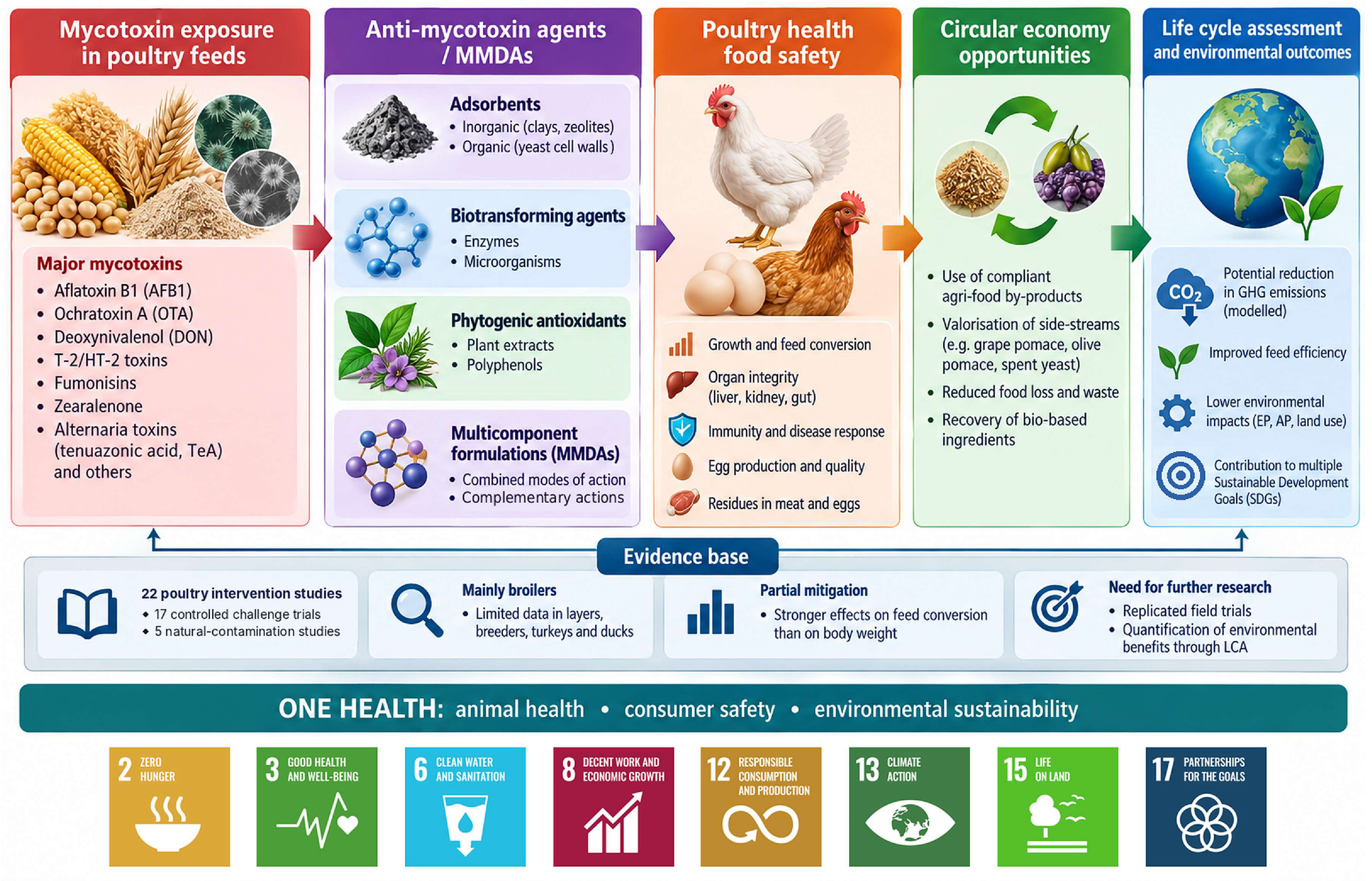
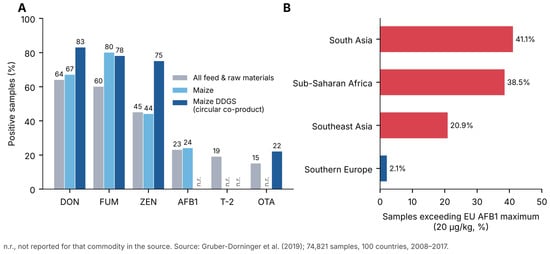
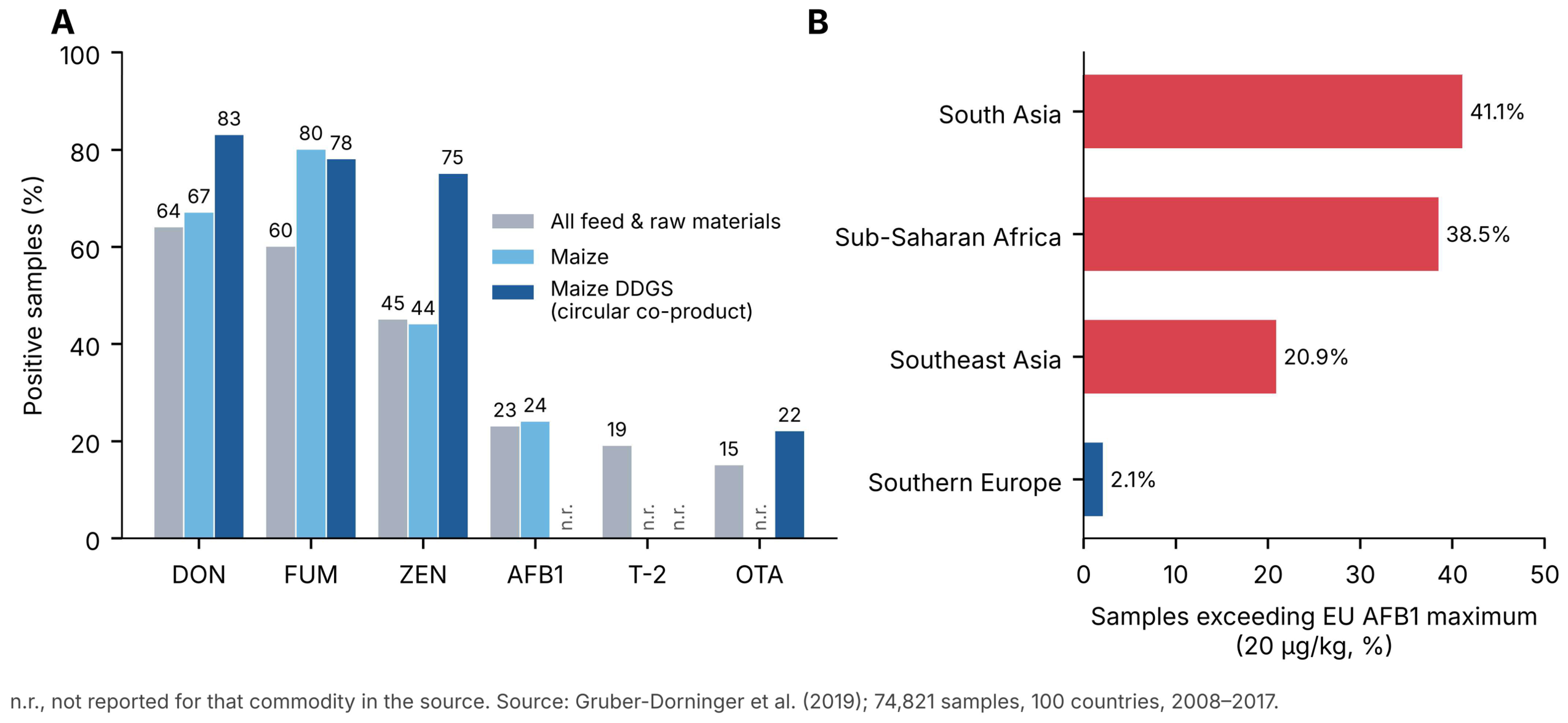
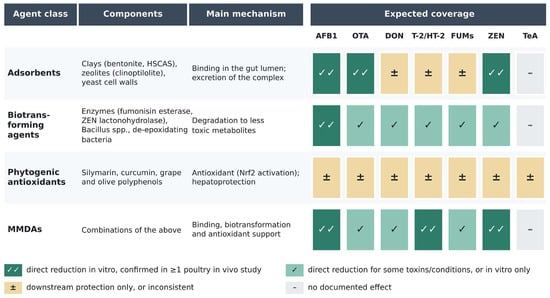
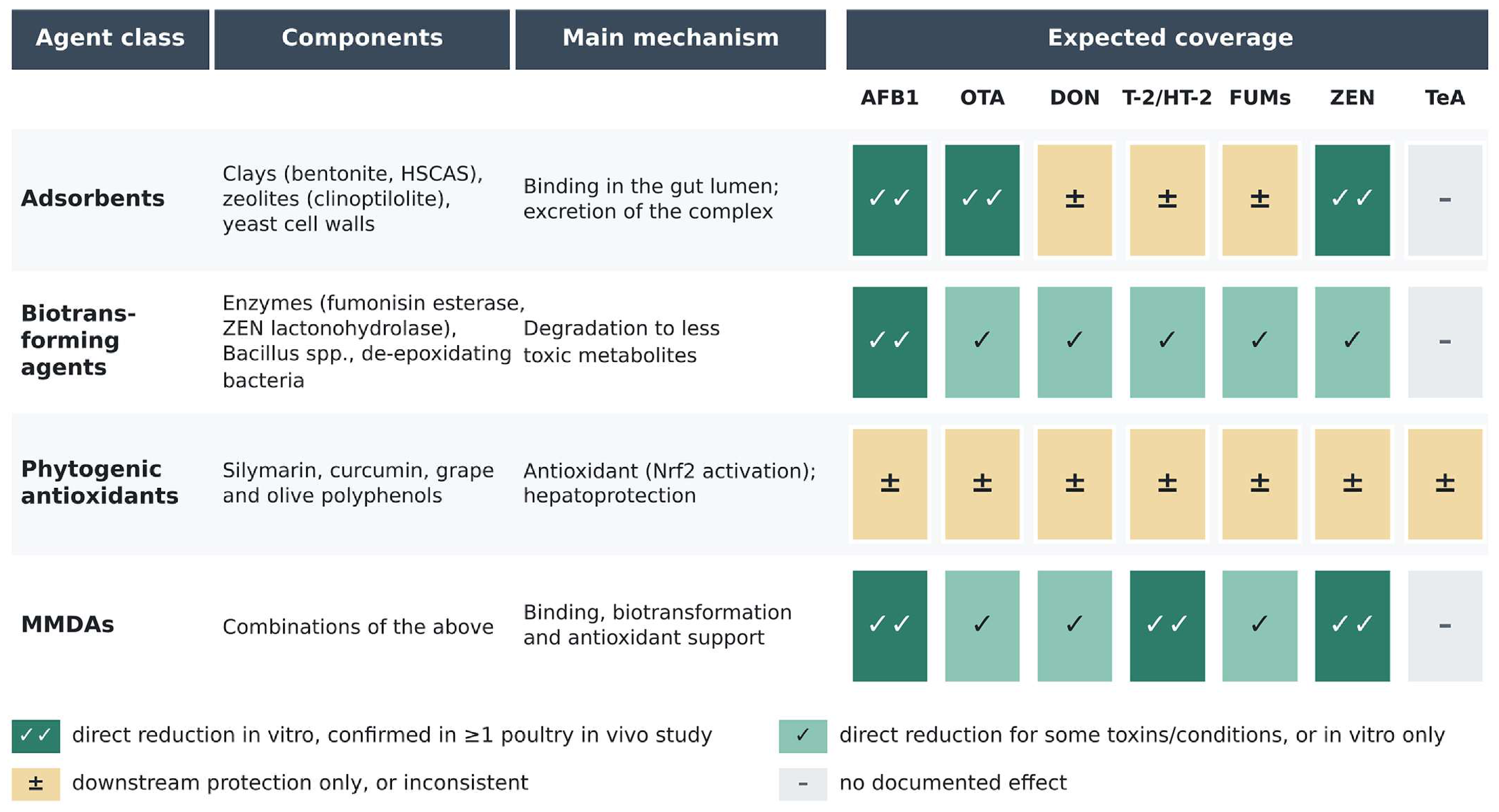
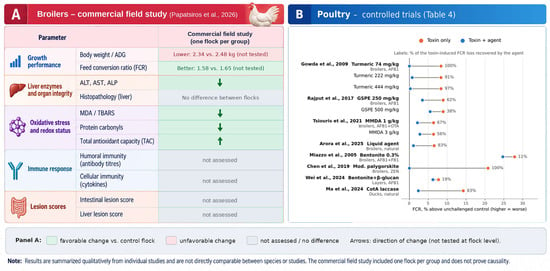
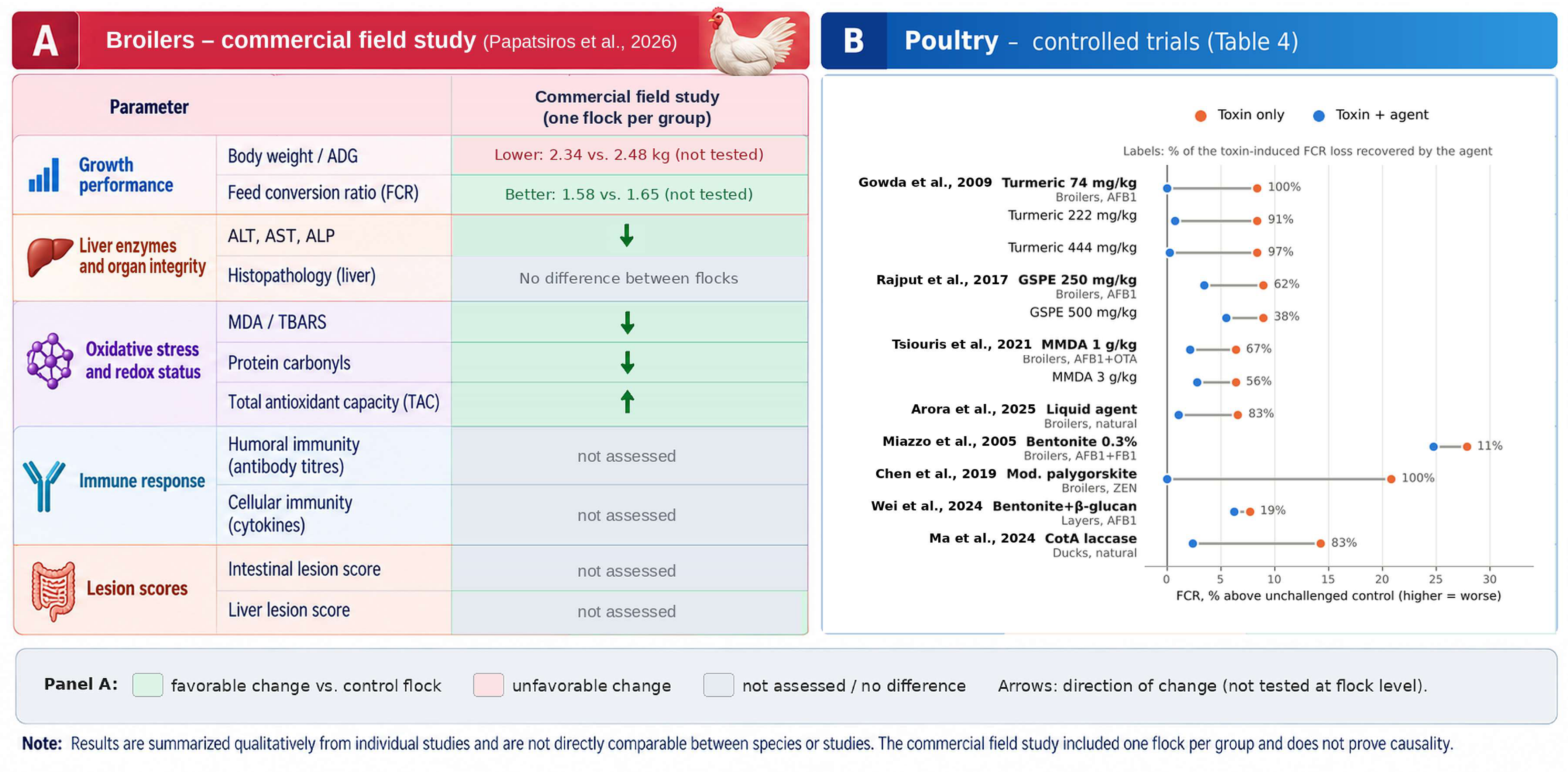
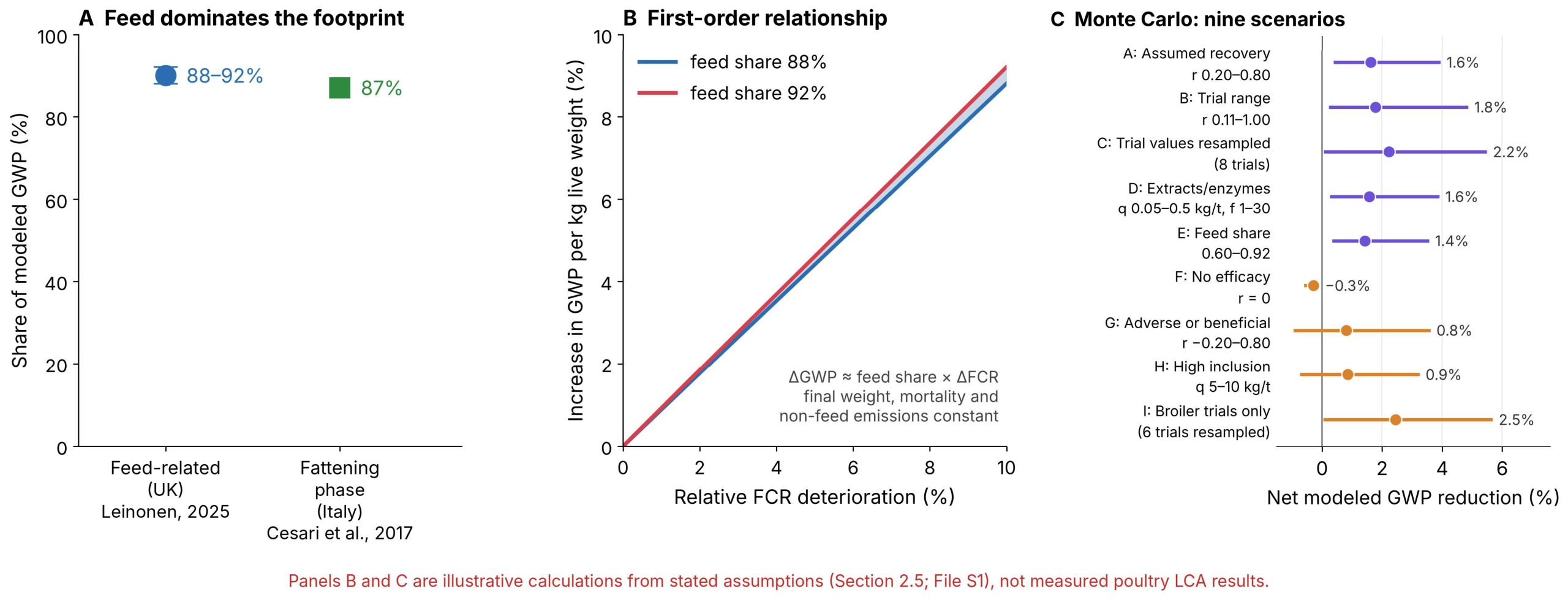
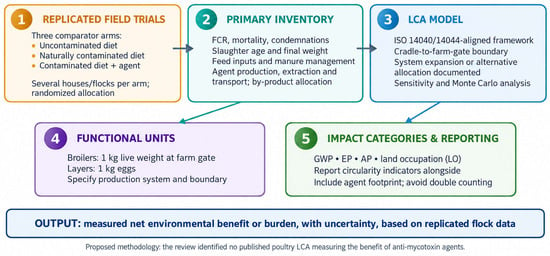
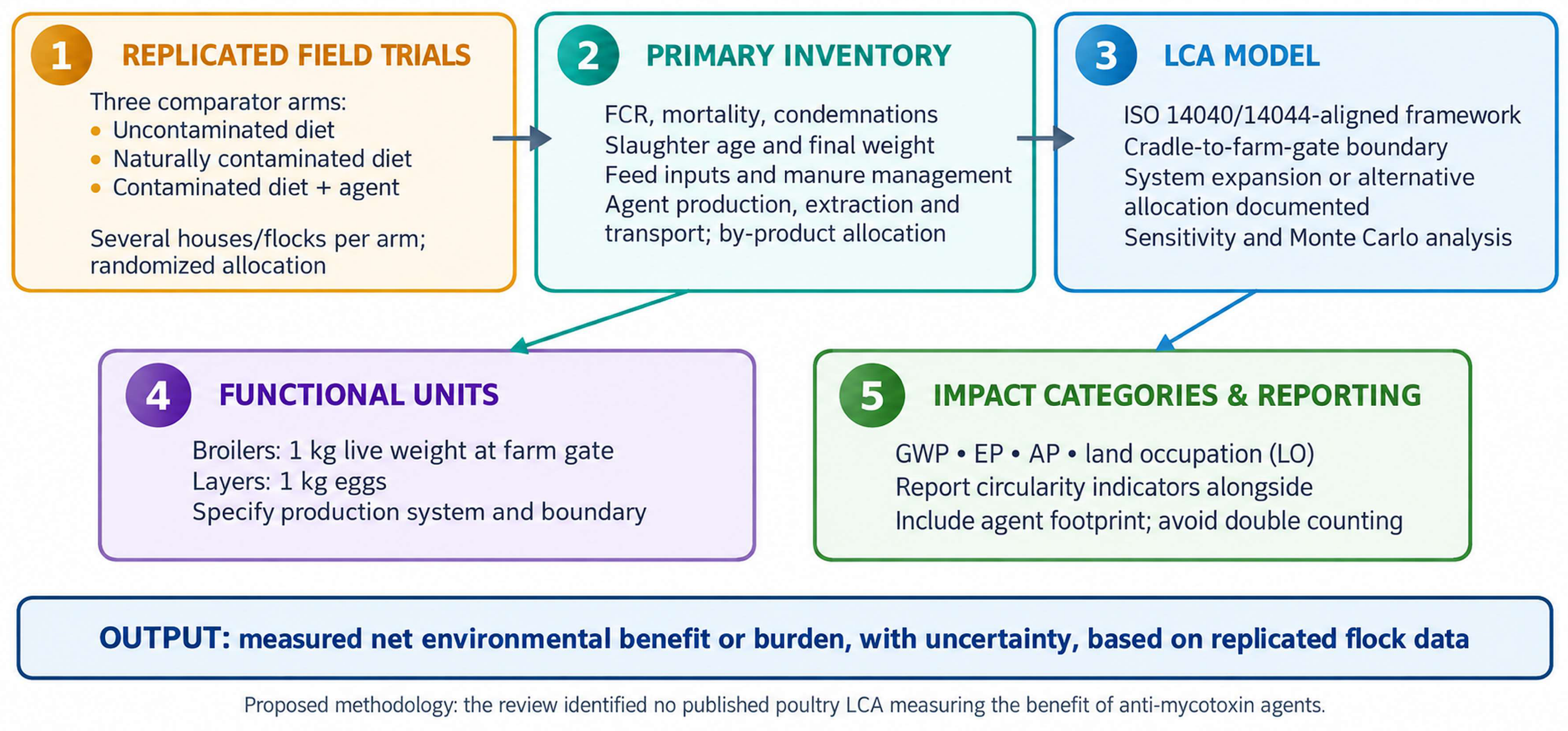





Disclaimer/Publisher’s Note: The statements, opinions and data contained in all publications are solely those of the individual author(s) and contributor(s) and not of MDPI and/or the editor(s). MDPI and/or the editor(s) disclaim responsibility for any injury to people or property resulting from any ideas, methods, instructions or products referred to in the content. |
© 2026 by the authors. Licensee MDPI, Basel, Switzerland. This article is an open access article distributed under the terms and conditions of the Creative Commons Attribution (CC BY) license.