


Simple Summary
Biotechnologies are increasingly promoted as means to control animal populations in nature. This article examines the representation of such biotechnologies in the media, specifically the cases of biotechnologies for so-called invasive alien species and pests control, and for de-extinction. The analysis focuses on identifying the main arguments, the types of voices recruited, and the ethical concerns raised in the media outlets. The results reveal that the media discourses analysed recurrently framed support for biotechnological interventions through instrumental arguments, whereas opposition was more commonly framed through appeals on expert authority. Overall, media discourse privileged pro-biotechnology perspectives and scientific expertise, systematically underrepresenting animal welfare concerns and prioritising human interests over those of nonhuman animals.
Abstract
Historically, biotechnological interventions on nonhuman animals have been developed primarily within the medical and agricultural sectors to secure human benefits. More recently, as global conservation agendas have intensified, conservation biotechnologies applied to free-roaming animal populations have been increasingly promoted as technofixes for contemporary conservation challenges. Drawing on Science and Technology Studies and Critical Animal Studies, our research examines how media discourses surrounding conservation biotechnologies applied to free-roaming animal populations—focusing in particular on invasive species and pest control, and de-extinction—construct and naturalise particular understandings of these interventions and whose interests these configurations ultimately serve. Through a Critical Discourse Analysis of a corpus of international English-language newspaper articles published between 2016 and 2026, this study first maps the recurring arguments deployed to legitimate or contest biotechnological interventions affecting animal populations in nature; it then examines how the dialogic organisation of media texts opens the space for critical perspectives; finally, it analyses the ethical concerns raised in relation to these interventions and examines the extent to which the interests and welfare of nonhuman animals are centred or marginalised within media discourse. The findings reveal that the media discourses analysed recurrently framed support for biotechnological interventions through instrumental arguments, whereas opposition was more commonly framed through appeals on expert authority. Overall, media discourse privileged pro-biotechnology perspectives and scientific expertise, systematically underrepresenting animal welfare concerns and prioritising human interests over those of nonhuman animals.
1. Introduction
The field of biotechnology is currently regarded as one of the most dynamic and influential areas of scientific innovation, widely promoted as a cutting-edge solution to pressing global challenges. The European Commission [1] defines biotechnology as “the application of science and technology to living organisms, as well as parts, products and models thereof, to alter living or non-living materials for the production of knowledge, goods and services”. The application of biotechnology to nonhuman animals is not new. Traditionally, the biomedicine and agriculture sectors have used biotechnology extensively in pursuit of human benefits, whether through the use of so-called “animal models” or through the genetic optimisation of farmed animals for increased productivity. Both practices are now well established in science, despite entailing enormous amounts of suffering for individual sentient beings, whose lives and bodies are instrumentalised in the name of scientific and industrial progress. With the expansion of biotechnological research into new domains of human–animal intervention, the normalisation of these practices risks foreclosing critical scrutiny and reproducing anthropocentric assumptions about whose interests matter in decisions affecting nonhuman animals.
As international conservation agendas become increasingly urgent in response to environmental crises, biotechnology is increasingly presented as a promising approach for the management of animals in nature, as exemplified in news reporting on so-called invasive alien species and pests (IASPs), where media coverage frames it as offering targeted, effective and ethically preferable alternatives to traditional methods [2,3,4]. Throughout this paper, the terms “invasive” species and “pests” are consistently italicised to signal a critical distance from these categories. Invasive alien species (IASs), in particular, are often referred to as one of the five major causes of biodiversity loss [5] and as a major environmental concern. As such, they have become the focus of European Strategies [6] and scientific research [7,8,9]. However, this is not the only conservation domain in which biotechnological interventions affecting animal populations are gaining prominence. Often dubbed “Jurassic Park science”, so-called de-extinction research relies on advances in biotechnology. Although scientists have long argued that de-extinction does not truly resurrect extinct species, the material repercussions for nonhuman animals are real enough. By engaging in de-extinction practices, scientists affect the lives of animals throughout the entire de-extinction pipeline, from the “animal models” used in preliminary phases, to the “surrogate mothers” used to gestate the trial animals, and the final proxy de-extinct animals, whose biological make-up has been altered.
These two practices, biotechnological approaches to IASP control and de-extinction efforts, may appear distinct, yet both are grounded in a shared technofix approach to environmental management that positions biotechnological intervention as a solution. Their relationship, however, extends beyond this common conservation rationale. The Species Survival Commission (SSC) of the International Union for the Conservation of Nature (IUCN) acknowledged this potential connection in its 2016 "Guiding Principles on Creating Proxies of Extinct Species for Conservation Benefit". In these guidelines, the IUCN SSC noted that proxy species “might have a negative utility” for several reasons, including “through health concerns if proxy species are vectors for pathogens or provide novel selection pressures for pathogens; [and] due to the deleterious environmental impacts if released proxies become invasive or pests” [10] (p. 3). Theoretically, these recognized risks illustrate a potential hypothetical scenario: a technofix approach could risk initiating a self-perpetuating cycle of intervention, wherein proxy species created to restore ecological function might subsequently be reclassified as vectors, invasive species or pests, and consequently become targets of further biotechnological interventions aimed at their control or elimination.
Although these biotechnologies are justified through different rationales, ranging from biodiversity conservation to agricultural protection and pest control, they share a common feature: they seek to manage animal populations through direct intervention in their biology and reproduction. In the context of IASP control, the principal techniques include CRISPR-based gene drives, which spread deleterious genes to reduce population viability; the sterile insect technique (SIT), which involves releasing genetically sterilised males to disrupt reproduction; RNA interference (RNAi), which involves silencing critical genes to induce mortality or sterility; and immunocontraception, which uses vaccines to inhibit fertility. For de-extinction efforts, the main techniques are cloning, which aims to create a genetically identical copy of the animal, and genetic engineering, which “aims to edit the genome sequence within cells of living species so that these genome sequences closely resemble that of a closely related extinct species” [11] (p. 996), with CRISPR gene editing as a key technique. All these interventions fundamentally alter the biology of the nonhuman animals exposed to them.
Examining how human societies intervene in the lives of free-living animals is essential to understanding both ecological consequences and ethical responsibilities. However, amidst the growing hype surrounding technofix conservation solutions, critical questions remain about whose interests are prioritised in decisions surrounding their development and application, and the extent to which the sentience and moral status of nonhuman animals are taken into account.
To contribute to this discussion, the present article examines how international English-language newspaper coverage between 2016 and 2026 constructs and legitimises biotechnological interventions affecting free-roaming animal populations, including interventions targeting invasive species and pests, and de-extinction practices involving nonhuman animals, by identifying the argumentative strategies deployed, the voices authorised to support them, and the ethical assumptions that determine whose interests are served. The findings contribute to Critical Animal Studies and research on the public communication of science and technology research by demonstrating that media discourse functions as a site of co-production in which the naturalisation of human-centred biotechnological governance is discursively reproduced and consolidated over time.
Theoretical Framework
The theoretical foundations of this study draw on two complementary strands of scholarship: Science and Technology Studies (STS) and Critical Animal Studies (CAS). Together, these perspectives provide the conceptual lens for examining how biotechnological interventions affecting free-roaming animal populations are embedded in broader questions of governance, knowledge production, and human–animal relations.
STS provides a useful framework for understanding biotechnologies not as neutral tools, but as sociotechnical interventions embedded within particular values, imaginaries, and forms of governance. Central to this perspective is Sheila Jasanoff’s [12,13] concept of co-production, which holds that scientific knowledge, technological systems, and social order are mutually constitutive. Through this lens, ways of knowing and ways of living are understood as being produced together, rather than as separate scientific and social domains. Biotechnologies are therefore seen not simply as tools for addressing ecological problems, but as interventions shaped by particular assumptions and visions of desirable futures. This understanding is closely aligned with the interpretive turn in STS [12,13] which emphasises the role of meaning, representation, discourse, and textual practices in the construction of sociotechnical realities. Rather than treating technologies as self-evident objects with fixed social effects, interpretive approaches examine how their meanings, purposes, and legitimacy are negotiated through social and communicative processes. Such an emphasis on meaning, representation, and legitimacy is especially relevant to the study of media discourse, as it draws attention to the role of public communication in shaping understandings of technological innovation and its social legitimacy.
Extending these insights to the broader public arena, Bauer and Gaskell [14] propose a triangular model of the public sphere of biotechnology, in which media coverage, public perceptions, and regulatory responses are understood as mutually influential. This model highlights the importance of media discourse not merely as a channel for communication about biotechnology, but as a key arena in which public understandings and governance arrangements are negotiated.
These concerns with co-production, public meaning-making, and technological governance have informed a growing body of STS scholarship on emerging biotechnologies and environmental management. In this context, STS frameworks have been applied to topics closely related to the present study, including the governance of gene drives [15,16], the sociotechnical imaginaries that accompany biotechnological innovation [17] and feminist critiques of invasion biology that highlight how scientific categories and interventions are shaped by broader social and political commitments [18]. Building on this tradition, this article examines media discourse as a site in which particular understandings of biotechnological interventions involving animal populations are constructed, legitimised, and contested.
Complementing this sociotechnical perspective, Critical Animal Studies (CAS) foregrounds the ethical and political dimensions of human interventions in the lives of nonhuman animals [19]. Challenging anthropocentric assumptions, CAS seeks to extend moral and political consideration beyond the human and critically interrogates the structures of power that shape human–animal relations. These concerns have been further developed within animal ethics and political animal studies through concepts such as interspecies ethics and interspecies justice [20,21], which draw attention to the interests, experiences, and political standing of nonhuman animals. From a CAS perspective, interventions affecting nonhuman animals are not assessed primarily in terms of their benefits for humans or ecosystems, but through their implications for animal welfare, agency, and the moral and political status of nonhuman animals.
Within CAS, Richard Twine [22] pioneered research into the implications of biotechnology for nonhuman animals, examining how emerging biotechnologies reproduce and reinforce human domination over other species. However, his analysis focuses primarily on animals used for food production. Subsequent CAS scholars have explored the ethical and political implications of biotechnology for nonhuman animals [23,24,25], raising concerns about the ways in which technological interventions reshape human–animal relations and reconfigure the boundaries of moral consideration. Nevertheless, these discussions have largely centred on animals in agricultural, biomedical, or laboratory contexts, leaving the application of biotechnologies to free-roaming animal populations comparatively underexamined. This gap is particularly significant given the growing use of biotechnological interventions in biodiversity governance, invasive species management, and other forms of environmental management.
Despite the insights provided by STS and CAS, relatively little attention has been paid to how media discourses construct and legitimise biotechnological interventions affecting free-roaming animal populations. Existing empirical research has examined media representations of invasive alien species far more extensively than representations of pests or de-extinction initiatives, assessing whether media attention reflects ecological impacts [26], how IAS management risks are communicated [27], how IAS management plans are presented to the public [28], and the ways in which IASs are framed in news coverage [29,30]. In the case of de-extinction, existing research has pointed out the representational gap between the scientific practice and the rhetoric of de-extinction promotional media materials [31], which supports the relevance of studying media representation on the topic as a mediator or third party between scientific discourse and advertisement discourse. There has also been research on media analysis on the framing of de-extinction of certain species, as in the case of the passenger pigeon [32], or the Tasmanian tiger [33]. While these studies delve into the representation of de-extinction in editorials and opinion pieces, and mass media, respectively, our analysis provides a broader scope on the topic of de-extinction discourse in media beyond case-studies and positions de-extinction discourse alongside IASP management to evaluate how ethical frameworks and nonhuman interests are comparatively represented across emerging biotechnological fields. Lastly, media framing has also been widely applied to the study of biotechnology across diverse domains [34,35,36]. However, the intersection of these two fields—namely, media discourses surrounding biotechnological interventions affecting animal populations in nature—remains underexplored.
This study addresses that gap by bringing together insights from STS and CAS to examine how media discourses construct, legitimise, and contest biotechnological interventions affecting free-roaming animal populations. In doing so, it extends STS analyses by applying the co-production framework to the underexplored field of biotechnological control of animal populations in nature and by examining the role of media discourse in shaping understandings of how biotechnological governance, human authority, and nonhuman animal interests are negotiated. At the same time, it advances CAS scholarship by extending critical analysis of human–animal relations to the growing use of biotechnological interventions in biodiversity governance and environmental management.
2. Materials and Methods
2.1. Research Design
This study adopts a qualitative Critical Discourse Analysis (CDA) approach to examine how media discourses construct, legitimise, and contest biotechnological interventions affecting free-roaming animal populations.
The analysis is guided by the following research questions:
RQ1. What are the main arguments used to defend or oppose biotechnological interventions affecting animal populations, and which legitimation strategies do these arguments recurrently draw on?
RQ2. How is dialogic space structured in media discourse on biotechnological interventions, and what epistemic hierarchies are produced by the distribution of voices?
RQ3. What ethical concerns are raised in relation to biotechnological interventions affecting animal populations, and whose interests—human or nonhuman—are centred or marginalised?
The following sections describe the analytical framework, corpus and coding procedure employed to address these questions.
2.2. Approach
Critical Discourse Analysis (CDA) is particularly well suited to the aims of this study because it enables an examination of how narratives about biotechnology, nonhuman animals, and environmental management are linguistically and ideologically constructed within media discourse. The approach pays particular attention to the discursive strategies and power relations through which certain understandings, forms of knowledge, and interventions are legitimised, contested, and circulated in the public sphere [37,38,39].
Following Fairclough [37], discourse is understood as a social practice that both reflects and shapes social reality. From this perspective, media representations do not simply describe biotechnological interventions but actively help construct understandings of what counts as legitimate conservation, governance, and human intervention in nature. Consequently, discourse is treated not as a neutral medium of communication but as central to the production and negotiation of meanings, values, and relations of power.
In line with van Dijk [38], media discourse is also understood as a key mechanism through which social knowledge, beliefs, and ideologies are reproduced and disseminated, influencing how particular social actors, practices, and forms of expertise are perceived and evaluated.
Finally, consistent with Wodak and Meyer [39], the analysis pays particular attention to the relationship between discourse and power, including whose voices are authorised to speak, which forms of knowledge are privileged, and which perspectives are marginalised or excluded. This approach is especially relevant in the context of biotechnological interventions affecting nonhuman animals, where scientific expertise, conservation priorities, economic interests, and ethical concerns frequently compete for legitimacy in the public sphere. CDA therefore provides the overarching analytical framework for the study.
2.3. Corpus
This study examines international English-language newspaper coverage of biotechnological interventions addressing conservation challenges focusing on the main fields identified in the literature: invasion science, pest management, and de-extinction. We analyse discourses in a corpus of English-language news articles retrieved from Factiva. Factiva is a database of newspapers, business, and financial sources, widely used for its international news coverage. For this study, we applied the following filters: first, we selected “All newspapers” as the source type to retrieve news articles from all newspapers internationally; second, we filtered by language, limiting the results to English-language articles, which retrieved articles published in English by newspapers from both English-speaking and non-English-speaking contexts; and finally, we established the time frame from 1 January 2016 to 28 April 2026, to obtain an overview of the articles published during this period. The search was built using the following keywords and parameters:
(“gene edit*” or “genetically engineered” or “CRISPR” or “sterile insect technique” or “immunocontraception” or “gene drive*” or “RNAi” or “RNA interference” or “synthetic biology” or “cloning”)
NEAR50
(“invasive species” or “invasive alien species” or “pest*” or “de-extinction”)
AND wc > 400
The first cluster of keywords was selected according to the names of the biotechnologies most commonly applied to animals in nature. As these methods are also used in other contexts, such as biomedicine, the second cluster of keywords ensured that the biotechnologies were discussed in relation to nonhuman animals in nature. We selected keywords referring both to categories of animals targeted for management interventions (IASPs) and to conservation practices involving nonhuman animals (de-extinction). Additionally, to strengthen the relevance of the biotechnologies to animal-related applications, we used the parameter “NEAR50”, which ensured that the keywords from the first cluster appeared within 50 words of the keywords from the second cluster. This proximity reduced the number of false positives caused by both topics being discussed in the same news article but not in relation to each other. Lastly, we added the parameter “AND wc > 400” to ensure that the retrieved texts had a minimum word count of 400 and were therefore suitable for qualitative analysis. It is also worth mentioning that we did not add “biotechnolog*” as a keyword, as a pilot search showed that it returned too many false positives due to its abstract character as an umbrella term.
This search retrieved a total of 779 news articles. First, we removed duplicates and false positives. The criteria we followed to exclude these duplicate and false positive articles was as follows: (1) duplicates with same or similar name, by the same author, and overall identical content (regardless of word count being the same or slightly differing); (2) articles that focus on companies or finances, rather than the technology for altering animals (e.g., about colossal acquisition of other companies); (3) articles that focused on how biotech researched for IASPs could be interesting for other purposes (e.g., the military); (4) articles that were book reviews; (5) articles that are a review of different technological breakthroughs and are not focused on animals, they just briefly mention them; and (6) articles that just use animals as an example to start a discussion on wider biotech regulations.
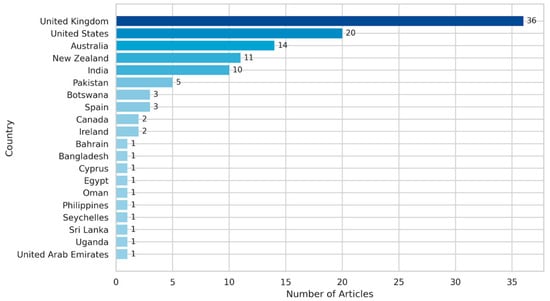
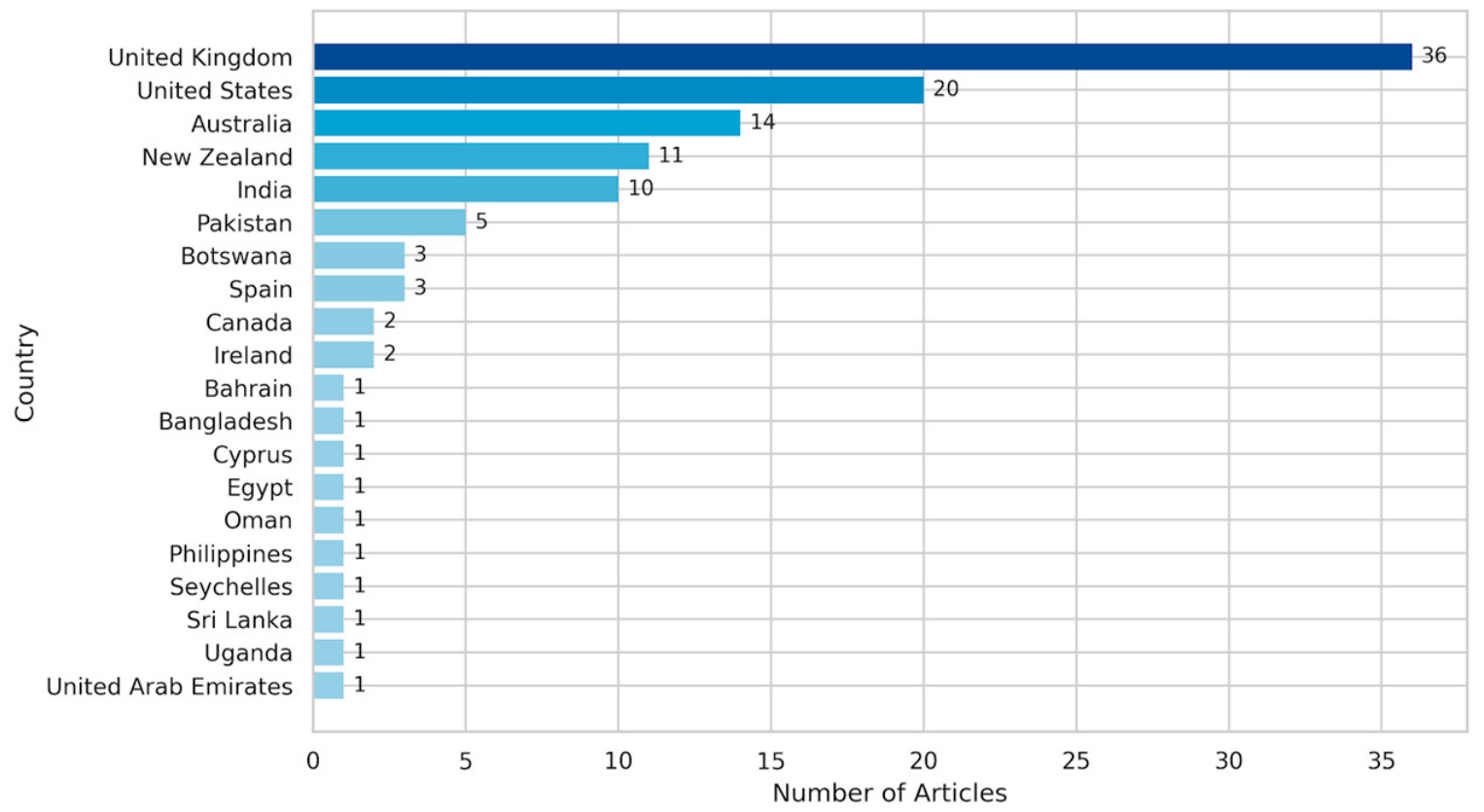
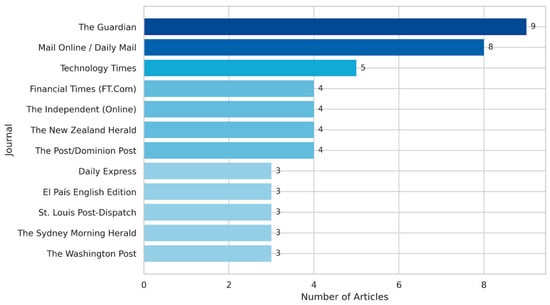
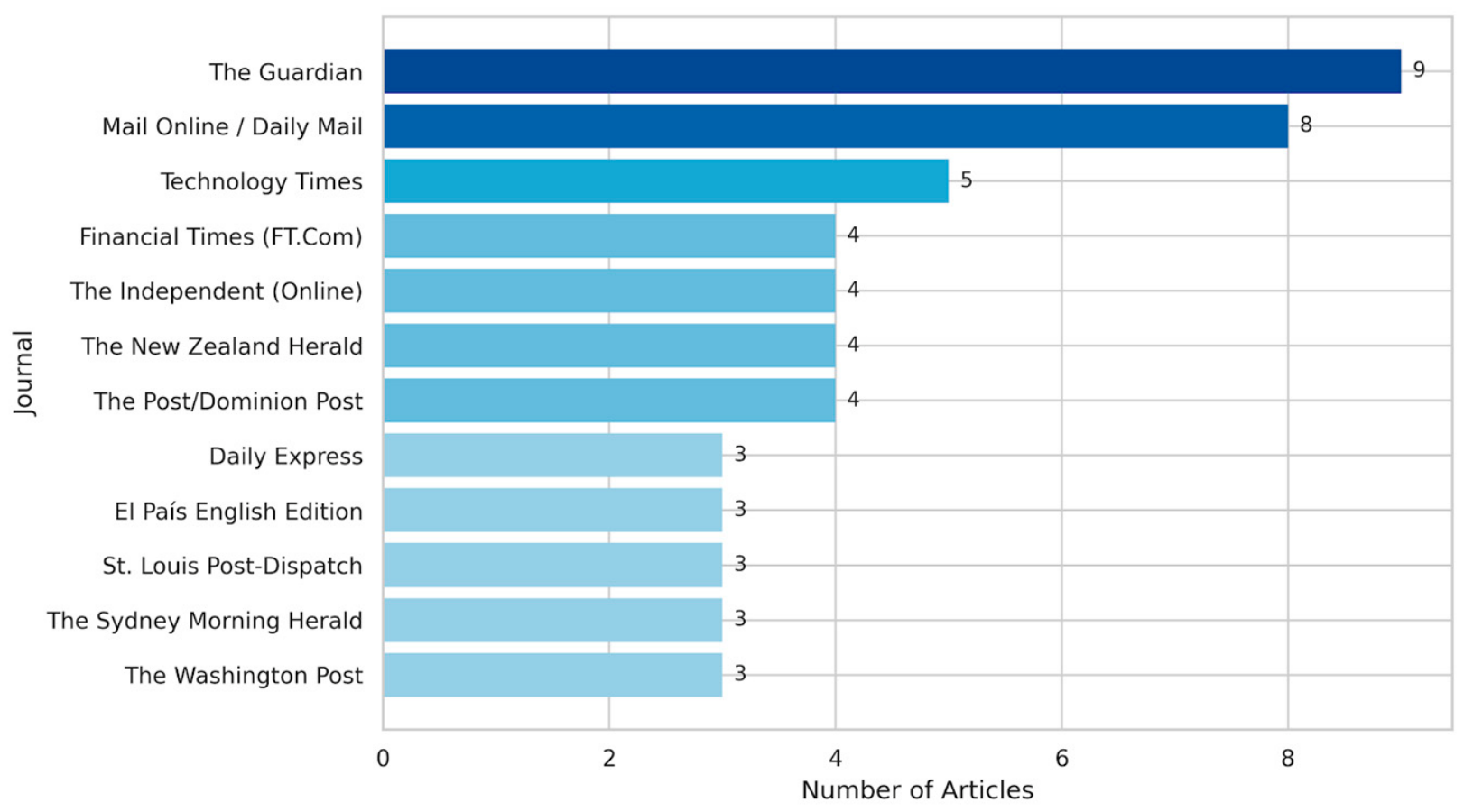
After reviewing all results and removing duplicates and false positives, we identified over 300 relevant articles. The eligible corpus was analysed in descending order of Factiva relevance, providing a consistent criterion for prioritising articles during qualitative coding. This ranking was used to organise the analytical process rather than to establish the statistical representativeness of the selected articles. Coding continued until no substantively new themes or patterns of legitimation emerged. To further assess thematic saturation, a random sample of the remaining eligible articles was examined; no additional substantive arguments or patterns of legitimation were identified in these supplementary texts. Thematic saturation was assessed at the level of the overall corpus, rather than independently for each subcorpus, in accordance with the study’s objective of identifying recurring patterns of legitimation across the dataset. The final sample consisted of 116 articles: 61 articles that focused on IASPs and 55 that focused on other conservation strategies, mostly de-extinction. Some of the articles, although focused primarily on one of the two topics, covered both. The final period analysed ranged from 12 January 2016 to 1 March 2026. Figure 1 shows the distribution of articles across the twenty different countries, while Figure 2 shows the top news outlets—those with more than three articles—within the corpus. The rest of the outlets were represented by two articles or, in most cases, by only one article in the corpus. For the complete list of outlets, see Appendix A, Table A1.
Figure 1.
Distribution of articles by country.
Figure 2.
Top journals (news outlets) by number of articles.
2.4. Coding and Analytical Procedure
To operationalise the analysis, a coding table was developed containing a series of pre-defined variables derived from the research questions and refined through an initial reading of the corpus. The coding framework was organised around three thematic categories. The first category focused on nonhuman animals, including their representation and the attribution of agency. The second examined representations of science and scientists, including the portrayal of biotechnological methods, scientific authority, and ethical concerns related to biotechnology. The third category focused on the distribution of voices within media discourse, examining which actors were quoted, how their perspectives were represented, and the hierarchy of voices constructed within the articles. The coding was conducted by one researcher. Ambiguous cases and uncertainties arising during the coding process were discussed jointly by the authors to refine the interpretation of the data and ensure consistency in the application of the analytical categories. These discussions provided a form of collaborative reflexive validation, particularly relevant to the interpretive identification of legitimation strategies, ethical framings, and marginalised perspectives.
The coding process generated a dataset of quotations, descriptions, and interpretive notes that served as the basis for the subsequent analyses. The coded material was then examined through a combination of inductive analysis and a theory-driven interpretive framework in order to address the three research questions.
To address RQ1, we first conducted an inductive analysis to identify recurring arguments used both in support of and in opposition to biotechnological interventions in the contexts of invasive alien species and pest management, and de-extinction initiatives. Once these arguments had been identified, we conducted an interpretive analysis based on van Leeuwen’s [40] legitimation framework. This framework examines the discursive resources through which social practices are justified, authorised, moralised, or rationalised. The analysis focused on identifying the primary and secondary legitimation strategies mobilised by different arguments and comparing the ways in which supportive and critical positions were legitimised in media discourse.
To address RQ2, we drew on Martin and White’s [41] Engagement framework to examine how texts position themselves in relation to alternative voices and viewpoints. Particular attention was paid to the distinction between monoglossic (homogeneous, single-voiced) and heteroglossic (heterogeneous, multi-voiced) discourse. This analytical framework enabled us to examine whether newspaper articles presented biotechnological interventions as uncontested and taken for granted, or as matters of debate involving competing perspectives. It also enabled us to analyse which voices were privileged, which were marginalised or excluded, and how epistemic authority was distributed across the corpus.
Finally, RQ3 was addressed through a qualitative interpretive analysis drawing on the findings generated through the coding process as well as the legitimation and engagement analyses.
Particular attention was paid to the ethical concerns raised in relation to biotechnological interventions and to the ways in which human and nonhuman interests were represented, prioritised, or marginalised within media discourse. This analysis examined not only the explicit ethical issues discussed in the articles but also the implicit assumptions regarding the value, agency, and moral status of nonhuman animals that underpinned media representations of biotechnological intervention.
3. Results
The results are presented according to the three research questions that guided the analysis. For RQ1 and RQ2, findings from the two subcorpora—biotechnological interventions targeting invasive alien species and pests (IASPs) and de-extinction-related biotechnologies involving nonhuman animals—are presented separately and subsequently compared in order to identify convergences and divergences in media representations and legitimation patterns. While the findings for RQ2 build on those for RQ1, the findings for RQ3 build on the findings for both RQ1 and RQ2. RQ3 focuses on examples from de-extinction-related biotechnologies, as the data on debates about animal ethics and interests are concentrated in this subcorpus. The absence of comparable data from the IASP subcorpus is also noted and included in the findings on ethical framings.
3.1. Arguments and Legitimation Strategies
RQ1. What are the main arguments used to defend or oppose biotechnological interventions affecting animal populations, and which legitimation strategies do these arguments recurrently draw on?
Within the sample of 61 international English-language newspaper articles discussing the use of biotechnological methods to manage IASPs, we identified five recurring arguments. Of these, three supported the use of biotechnology: (1) biotechnology is more eco-friendly than traditional methods; (2) biotechnology is more effective than traditional methods; (3) biotechnology is more humane than traditional methods. These arguments presented biotechnology as an advanced alternative to traditional methods such as pesticides, insecticides, poison, and culling. They highlight how comparisons between traditional techniques and biotechnology are frequently used to advocate for its use, rather than simply focusing on its potential benefits in isolation from its broader management context. The legitimation strategies associated with these pro-biotechnology arguments were consistent across the three arguments. Instrumental legitimation was the primary strategy in all cases. Specifically, the control of IASPs through biotechnology was rationalised by foregrounding the goals of these interventions—particularly conservation and agricultural management—as necessary and desirable. A recurrent pattern, therefore, involved a goal-oriented form of instrumental rationalisation. Additionally, because these arguments emphasised the progress that biotechnology represents in comparison with traditional methods, a secondary strategy of moral legitimation through positive comparison was identified across the three arguments. Lastly, since these arguments were often presented through reported speech from scientists, expert authority also functioned as a source of legitimation. However, expert voices were invoked less frequently in relation to the eco-friendly argument than in relation to the other two, suggesting that journalists may perceive environmental benefits as more self-evident and therefore less dependent on explicit expert endorsement.
By contrast, we identified two prominent recurring arguments against the use of biotechnology for IASP control: (4) biotechnology can result in uncontrolled spread/is too risky; (5) biotechnological solutions are not realistic. While the pro-biotechnology arguments highlighted comparisons with existing methods as a positive trait of biotechnology, the arguments against its use centred on biotechnology itself, displacing alternative methods from the discourse. These arguments were primarily legitimated through expert authority, meaning that the voices of scientists, scientific commissions and researchers were consistently invoked to support the claims that biotechnology is too risky or unrealistic. In addition, instrumental legitimation was also present, as the promised efficacy of biotechnological interventions was portrayed as unattainable or insufficiently demonstrated. Table 1 shows the relationship between arguments and legitimation strategies identified in the corpus.
Table 1.
Main arguments identified in international English-language newspaper coverage of the use of biotechnology for IASP control and the legitimation strategies associated with them. Specific quotations as examples for each argument can be found in Appendix A.2.
In the case of de-extinction biotechnologies, the sample exhibits a substantially wider range of arguments than the IASP sample. Amongst the 55 newspaper articles in the sample, we identified a total of eleven recurrent arguments. Of these, four supported this type of biotechnology: (1) biotechnology fights biodiversity loss and ecosystem degradation; (2) biotechnology provides an opportunity to rectify past harms (reparation); (3) inaction, that is, not using biotechnology, could be worse than using it; (4) biotechnology research constitutes scientific progress. All of these arguments are primarily legitimated through instrumental legitimation. Excluding the (3) inaction argument, the other three are legitimated through a goal-oriented strategy, since the claimed positive outcome of using biotechnology is central to the arguments. The (3) inaction argument is better classified as an effect-oriented legitimation strategy, as the alleged negative effects of not using biotechnology are at the centre of the argument. In all four cases, expert authority is invoked to legitimate the arguments. In this case, though, it is worth noting that these “expert” voices are not exclusively third-party scientists or researchers. A significant proportion of them are associated with the company Colossal Biosciences and therefore have a direct interest in its work.
By contrast, we identified seven arguments against the use of biotechnology for de-extinction in international English-language newspaper coverage: (5) technical capability does not justify the use of biotechnology; (6) de-extinction biotechnology does not constitute real science; (7) biotechnology leaves the causes of extinction unaddressed; (8) resources should focus on saving currently endangered species rather than on biotechnology; (9) biotechnology may open the door to legitimising other uses; (10) biotechnology could undermine public trust in science; (11) biotechnology does not take animal welfare into account. Some of these arguments tend to overlap and often complement each other, such as arguments (7) and (8). Most are legitimated through expert authority. However, the profile of the expert voices used to legitimate these arguments differs considerably from that of the experts cited in favour of de-extinction. In this case, the experts do not have a direct connection to the main company promoting the technology and offer a third-party perspective. The secondary legitimation strategies used are more varied and range from moral to instrumental legitimation patterns. Table 2 shows the relationship between arguments and legitimation strategies identified in the corpus.
Table 2.
Main arguments identified in international English-language newspaper coverage of de-extinction biotechnology and the legitimation strategies associated with them. Specific quotations as examples for each argument can be found in Appendix A.3.
These results reveal a pattern across both topics: the use of biotechnology for IASP control and for de-extinction. Arguments in favour of the use and development of these biotechnologies tend to emphasise their intended goals, which are presented as positive and socially desirable, thereby rationalising biotechnologies as instruments for achieving them. By contrast, arguments against these biotechnologies frequently draw on expert opposition as a source of legitimation. However, this contrast should not obscure the fact that both pro- and anti-biotechnology positions in the IASP and de-extinction debates make use of different legitimation strategies. This overlap in the use of legitimation strategies, together with the consistent reliance on expert authority across positions, points to the contested nature of these technologies. While international English-language newspaper coverage reflects this tension by accommodating both supportive and critical perspectives, most articles foreground pro-biotechnology arguments. In other words, although pro-biotechnology arguments are fewer than anti-biotechnology arguments overall, they are more prominent across the sample.
3.2. Voices
RQ2. How is dialogic space structured in media discourse on biotechnological interventions, and what epistemic hierarchies are produced by the distribution of voices?
To assess how news articles construct epistemic hierarchies through the selection and representation of voices, we analysed the distribution of sources using the concepts of monoglossic (homogeneous, single-voiced) and heteroglossic (heterogeneous, multi-voiced) discourse.
With respect to monoglossic and heteroglossic patterns, the findings suggest that international English-language newspaper coverage of biotechnology for IASP control combines both forms of discourse, simultaneously presenting some claims as taken for granted while opening dialogic space for alternative viewpoints. However, monoglossic articles tend to favour the use of these biotechnologies, suggesting that pro-biotechnology arguments are more often presented as uncontested than arguments opposing their use.
One of the main findings of this analysis is the emergence of a temporal pattern. From 2021 onwards, monoglossic articles supportive of biotechnology became considerably more prevalent in the corpus. This pattern may reflect changes in the broader context surrounding these technologies and their discursive construction of social acceptability. From 2021 to 2026, many of the technologies discussed in the articles had already undergone more extensive testing and, in some cases, had been deployed in the field, particularly for agricultural pest control. As a result, questions about whether these technologies should be used may have become less prominent, as their prior use provided precedents for their continued application and extension to new contexts.
While in the case of IASPs the number of articles was consistent across the 2016–2026 time frame, in the case of de-extinction biotechnologies, the number of newspaper articles increased markedly from 2021 onwards, with only six articles published before 2021 out of a total of 55. This imbalance is consistent with an event that appears to have influenced international English-language newspaper coverage of the topic: the public launch, in 2021, of the biotechnology company Colossal Biosciences. With the emergence of Colossal Biosciences, interest in de-extinction was renewed, as the company actively promoted its research and objectives. Prior to the emergence of Colossal Biosciences, articles on de-extinction were few and, with one exception, monoglossic, focusing on abstract discussions of de-extinction. Despite the wider range of arguments against de-extinction biotechnology identified in the corpus, as shown in the previous section, monoglossic articles tended to support the technology, with only a small number of monoglossic articles opposing it. By contrast, heteroglossic articles tended to adopt a critical stance towards biotechnology.
These findings suggest that, in both IASP control and de-extinction, monoglossic discourse is widely used to promote the technologies, while discourses that challenge them tend to include both pro and con perspectives. This is consistent with the pattern found in RQ1: pro-biotechnology arguments are more prominent in media discourse because they dominate monoglossic texts and also appear consistently in heteroglossic articles. As a result, pro-biotechnology perspectives occur more frequently across both subcorpora.
With respect to the distribution of voices and epistemic authority, the findings reveal a clear prominence of expert voices throughout the dataset. As the results for RQ1 showed, expert authority is one of the most commonly used legitimation strategies across the corpus, for both pro- and anti-biotechnology arguments. This means that expert voices are prominent in news articles concerning the use of biotechnology to manage animal populations in nature. Across both topics—IASP control and de-extinction—expert authority is primarily associated with scholars and scientists. Many of the quoted experts are identified as “professors” from different disciplines, including biology, ecology, and genomics.
One key difference between the IASP and de-extinction samples is that the former comprises a wider range of non-scholarly and non-scientific expert voices linked to the legislative and regulatory spheres, including a greater number of ministers and regulatory bodies. This may be due to the fact that biotechnology for IASP control has a longer history and that some practices have already been implemented. As a result, regulatory discussion and governmental approval are more prominent in contemporary debates. Another cluster of voices pertained to the agricultural sector, which largely supported the use of biotechnology.
In the case of de-extinction biotechnologies, the “expert” voices include members of the Colossal Biosciences team, including not only CEO Ben Lamm (the most visible public voice), but also key research figures in the company, such as co-founder George Church and genomics biologist Beth Shapiro. These voices are associated with a high number of pro-biotechnology arguments and with many of the monoglossic articles supporting the technology, some of which were authored by members of the Colossal Biosciences team themselves.
A striking gap in the distribution of voices is also evident. Although a small number of ethics professors are cited, there is a notable absence of voices from animal rights activists and animal welfare experts.
3.3. Ethical Concerns and Interests
RQ3. What ethical concerns are raised in relation to biotechnological interventions affecting animal populations, and whose interests—human or nonhuman—are centred or marginalised?
Across the international English-language newspaper corpus analysed, ethical concerns relating to nonhuman animals were comparatively rare and occupied a marginal position within the broader debate on biotechnological interventions. In RQ1 we identified two types of arguments related to animal welfare. In the first case regarding biotechnological solutions for IASP management, we encountered the pro argument of “Biotech is more humane than traditional methods”. Rather than challenging the imperative of eradication or considering non-lethal relationships with introduced species, “humane” framing positions biotechnology as a less distressing mechanism for achieving the same lethal objectives. Furthermore, media coverage frequently portrayed these biotechnologies not as total replacements for traditional culling, but as additive measures to be integrated into existing eradication regimes. Consequently, while these comparative animal welfare arguments exist when promoting the technology, broader intrinsic animal ethics—such as questioning eradication frameworks or prioritizing non-human agency—remain largely absent from the public dialogic space. Thus, these arguments would not constitute instances of intrinsic ethical concern for animals. On the other hand, the results for RQ1 regarding de-extinction biotechnologies showed just one argument that explicitly raises ethical concerns related to animal welfare and integrity in opposition to de-extinction biotechnology. This argument was found in only five instances across three different articles (see references of articles in Appendix A.4, Table A4). Although limited in number, these voices highlight critical points, such as the underlying ideological assumption that animals are not considered moral beings:
If we were to consider non-human animals as moral beings, “we wouldn’t tolerate the abortion rates or welfare harms” of such methods, argues Challenger.[Article 1]
In the same article, the same technofix narratives that sustain biotechnological developments are presented as having historically failed to deliver more ethical forms of human-animal relations:
The funny thing is that the tech sceptics can say the opposite: our obsession with technology hasn’t got us much closer to sustainability and ethical treatment of animals, at least not yet.[Article 1]
Another article highlights how the process of de-extinction entails animal suffering:
The ethical considerations surrounding de-extinction are multifaceted. One of the primary concerns is the welfare of the animals involved. Genetic engineering and cloning can result in significant suffering for the animals, including high rates of miscarriage, deformities, and other health issues. There are also concerns about the quality of life for the resurrected species, particularly if they are unable to thrive in the modern world.[Article 2]
However, ethical concerns are generally discussed in relation to issues other than nonhuman animals. For example, ethical issues are mentioned in relation to social justice decision-making, conservation more broadly, scientific research ethics, or the idea of intervening in nature in general terms. The marginalisation of ethical concerns relating to animals becomes evident when they are acknowledged but relegated to the background of the discussion in light of potential benefits for humans or other animals:
I still question the ethics and value of de-extinction projects, especially since the restored animals won’t live normal lives with parents in packs or groups. But if Colossal’s research yields additional benefits for those of us still alive—human and animal—that might be value enough.[Article 3]
Or when they do not even appear among the ethical concerns considered relevant, while aesthetic values are included:
But from an ethical perspective, Professor Sandler says cost-benefit analysis should not be the only factor. ‘What is needed for de-extinction, as well as for other novel species conservation strategies… is development of inclusive decision-making frameworks that situate cost–benefit analysis as one important consideration among many goods and values that might be at stake, such as cultural value, environmental rights, justice, intrinsic value and aesthetics.’[Article 4]
As this lack of engagement with ethical concerns relating to animals goes largely unchallenged, it becomes evident that biotechnology research and interventions, both in IASP control and de-extinction, are recurrently framed in relation to human interests. While biotechnologies for IASP management are presented as "humane", the presupposition that humans have the right to alter nonhuman animal biologies remains largely unquestioned in our sample. By differentiating between those arguments that explicitize welfare concerns labelling biotechnologies as “humane” only in comparison with classic methods from those arguments that explicitly foreground the ethical dilemmas based on the intrinsic worth of animals (some of the ones seen in this section), we do not aim to treat opposition to biotechnology as the principal indicator of concern for animals. Rather, we highlight how welfarist attitudes exemplified by the “humane” arguments do not challenge ethical assumptions regarding the moral status of animals nor the ethical acceptance of eradication approaches in IASP management. Qualitative analysis indicates that this argument operates primarily as a comparative legitimating device rather than a substantive engagement with animal ethics. The absence of explicit critical voices in the dialogic space challenging anthropocentric assumptions about the management of animals in nature speaks to the power relations that shape media discourses, as nonhuman animal interests and the voices that defend them beyond instrumental means remain largely marginalised within the conversation.
4. Discussion
In his work on public resistance to new technologies, Martin Bauer contends that “the public reaction to technology influences new technology in a circular process” [42] (p. 2). This circularity illustrates how technological development is shaped through the co-production of science, technology, and social structures [12], highlighting the role of social actors in influencing biotechnological developments. As public perception can shape policies and regulatory approvals, understood from a Science & Technology Studies perspective, the information readily available to lay audiences regarding biotechnological research carries broader political consequences. Furthermore, Bauer stresses that “the control of technology by those affected by it remains a desirable agenda,” and poses two related questions: “Who should be accountable to whom, and which procedures ensure this accountability?” [42] (p. 1).
Given the nature of the biotechnological interventions discussed in the international English-language media coverage analysed in the present article, this desirable agenda is structurally unattainable: nonhuman animals cannot control the technologies that affect their bodies and population dynamics, nor can they participate in the public debates through which those technologies are legitimated. The question of accountability is therefore paramount. Because nonhuman animals cannot advocate for themselves within the mechanisms through which technological governance is socially negotiated, their interests depend on being represented by others in public debate [43,44]. In this regard, the possibility of enhancing animals’ political agency has also been defended, provided that such enhancement becomes technologically feasible and that the moral reasons in its favour are not outweighed by other ethical considerations [44]. Since these technologies directly affect their bodies, welfare and population dynamics, the discursive construction of those biotechnologies carries a specific ethical responsibility. To foster that accountability, the public conversation must include critical perspectives that advocate for animal interests [43,45] and resist a human-centred co-production of biotechnology. However, as the analysis presented in this article has shown, these critical perspectives are marginalised in the analysed corpus of media discourse about the biotechnological management of animal populations in nature.
From a Critical Discourse Analysis viewpoint, this marginalisation has consequences that extend beyond individual texts to the development of discourse over time. As the linguist Arran Stibbe points out, “discourses have the power to erase animals or work against the forces of erasure” [46] (p. 4). Within the timeline of our corpus, the analysis of invasive alien species and pest control reporting suggests a qualitative shift: ethical concerns that appeared peripheral in earlier articles remained largely unexamined in subsequent coverage, rather than broadening or accumulating across the sampled period. Within this dataset, persistent ideological assumptions regarding which lives are valued and who holds the authority to intervene coincide with a narrowing of the discursive space over the analyzed time frame. This pattern of discursive contraction is not neutral: Huan explains how the practice of “engaging with different new sources” is “an important means for journalism practitioners to reorganize the structure of socio-cultural knowledge in the acquisition, perpetuation and change of ideology and power relations” [47] (p. 139). According to van Leeuwen, “legitimation is always the legitimation of the practices of specific institutional orders” [40] (p. 92). Interpreting the results from STS and CAS perspectives, when the arguments and voices that accumulate the greatest repetition are those framing biotechnological intervention as technically necessary rather than politically and morally contested, the institutional orders sustaining that framing—and the marginalisation of nonhuman interests it leaves unaddressed—risk being naturalised as self-evident rather than contestable. In the case of de-extinction biotechnologies, centring early debate on species conservation rather than individual welfare is ethically problematic [48], and media reporting within our corpus reflects a similar narrative trajectory to IASP control coverage, where the question of whose interests are served has been largely absorbed into an uncontested conservation rationale.
The corpus evidences a structural pattern: certain discursive constructions of biotechnological developments attract sustained media visibility and become focal points of debate, while others remain largely peripheral. As a result, certain discursive constructions of technologies enter the social imagination through extensive public discussion and promotion, whereas others (e.g., challenging narratives or ethical arguments) receive little opportunity for sustained public scrutiny.
Technologies, in this way mediatically constructed, might then be absorbed into public discourse as givens before the ethical questions they raise have had the opportunity to be publicly debated. This is what naturalisation looks like at the level of media ecosystems, and it is the mechanism through which Bauer’s warning becomes most relevant: “Technological determinism seems an inadequate account of our history” [42] (p. 1), yet it is precisely that determinism that a contracted dialogic space tends to reproduce.
Limitations
This study has specific empirical and geographic boundaries that should be considered when interpreting the findings. First, the search strategy was restricted to English-language publications indexed in Factiva, resulting in a corpus of heavily concentrated Anglophone nations (primarily the United Kingdom, the United States, Australia, and New Zealand). Consequently, the ethical framings and legitimation strategies identified here reflect dominant Western journalism conventions and may not generalize to non-English media environments, regional non-Western reporting, or different linguistic traditions where socio-cultural and regulatory attitudes toward biotechnology significantly differ. Thus, future research should expand beyond English-language media to examine cross-linguistic coverage and to determine how biotechnology applied to de-extinction and IASP discourses is framed in broader global contexts.
Our analysis treated the media corpus as an integrated discursive field without sub-analyzing variations between news reporting, opinion pieces, and company-authored contributions. While corporate and sponsored pieces inherently promote the sponsoring organization’s work, analyzing how specific genres alter argument strategies was beyond our study scope. Future research could systematically categorize articles by author provenance and genre to determine how commercial interests explicitly shift rhetorical framing relative to independent journalism. In addition, since the corpus was not stratified to control for temporal variations in publication genres or other variables, temporal patterns should be interpreted as descriptive contextual trends within our specific media sample. In that sense, the shifts in narrative tone noted in our analysis across the sample timeline represent observations of qualitative patterns across the dataset rather than a statistical longitudinal analysis.
5. Conclusions
This article has examined how international English-language newspaper coverage between 2016 and 2026 constructs and legitimises biotechnological interventions affecting free-roaming animal populations, focusing on interventions targeting invasive alien species and pests, as well as de-extinction biotechnologies involving nonhuman animals. To do so, we analysed the arguments mobilised in support of and against these technologies, the voices authorised to support these arguments and the ethical assumptions underpinning media representations. Our findings based on empirical analysis show that supportive arguments tend to be legitimated through instrumental rationales centred on conservation, agricultural management and technological progress, while opposition is more frequently articulated through expert criticism. Across both topics, expert authority occupies a privileged position in the dialogic space, whereas perspectives representing nonhuman animal interests remain scarce. Finally, ethical concerns relating to animal welfare and moral status occupy a marginal place in the corpus, rarely shaping the terms of the debate despite the fact that these interventions most directly affect nonhuman animals’ lives, bodies and welfare.
From a normative perspective, the implications of these findings are significant. Within the framework of co-production, demands for accountability in science and technology cannot be separated from demands for accountability in public discourse. Understood from a Critical Discourse Analysis perspective, a media discourse that structurally privileges authorisation through scientific and institutional voices, that includes critical perspectives only to subordinate them, and that treats biotechnological intervention as rationalised necessity rather than an ethical choice, does not merely reflect a particular configuration of power—it actively participates in its reproduction.
To resist technological determinism in this context is therefore also to insist on a dialogic space that genuinely accommodates non-speciesist perspectives—that is, perspectives that extend moral consideration to nonhuman animals and resist the human-centred framing that, as this analysis conducted through CAS lenses has shown, currently predominates. Such perspectives are necessary not merely because nonhuman animals lack a public voice, but because they are sentient beings capable of experiencing welfare and suffering and are those most directly affected by the interventions under discussion. That insistence is not external to the scientific and political project of biotechnology governance; within a co-production framework, it is constitutive of it.
Author Contributions
Conceptualization, S.V.-R. and N.A.; methodology, S.V.-R.; validation, S.V.-R. and N.A.; formal analysis, S.V.-R.; investigation, S.V.-R. and N.A.; resources, S.V.-R. and N.A.; data curation, S.V.-R.; writing—original draft preparation, S.V.-R.; writing—review and editing, N.A.; visualization, S.V.-R. and N.A.; supervision, N.A.; project administration, N.A.; funding acquisition, N.A. and S.V.-R. All authors have read and agreed to the published version of the manuscript.
Funding
This publication is part of the project PESTS, funded by the Ministerio de Ciencia, Innovación y Universidades (Grant No. PID2024-156807OB-I00/MICIU/AEI/10.13039/501100011033) and the European Regional Development Fund (ERDF) under the framework “A way of making Europe”. The first author also received support through a fellowship from the “la Caixa” Foundation (ID 100010434; Fellowship Code LCF/BQ/DFR25/12000061).
Institutional Review Board Statement
The research was based exclusively on publicly available media sources and did not involve human or animal subjects.
Informed Consent Statement
Not applicable.
Data Availability Statement
The raw data supporting the conclusions of this article will be made available by the authors on request.
Conflicts of Interest
The authors declare no conflicts of interest. The funders had no role in the design of the study; in the collection, analyses, or interpretation of data; in the writing of the manuscript; or in the decision to publish the results.
Appendix A
Appendix A.1
Table A1.
Full list of news outlets analysed in the corpus.
Appendix A.2
Table A2.
Biotechnology for IASP control arguments with examples. References of sources in Appendix A.4, Table A4.
Appendix A.3
Table A3.
Biotechnology for de-extinction arguments with examples. References of Sources in Appendix A.4, Table A4.
Appendix A.4
References
- European Commission. Biotechnology. Internal Market, Industry, Entrepreneurship and SMEs. 2025. Available online: https://single-market-economy.ec.europa.eu/sectors/biotechnology_en (accessed on 28 April 2025).
- Taylor, R. What is gene drive and how could it help in the fight against malaria? The Guardian, 11 December 2024. Available online: https://www.theguardian.com/global-development/2024/dec/11/what-is-gene-drive-and-how-could-it-help-in-the-fight-against-malaria (accessed on 28 April 2025).
- Cottingham, E. What are gene drives, and how can they help eradicate invasive species in Australia? ABC News, 27 November 2023. Available online: https://www.abc.net.au/news/science/2023-11-28/gene-drives-explainer-feral-cats-invasive-species-genetic/102953190 (accessed on 28 April 2025).
- Langin, K. Genetic engineering to the rescue against invasive species? National Geographic, 18 July 2014. Available online: https://www.nationalgeographic.com/science/article/140717-gene-drives-invasive-species-insects-disease-science-environment (accessed on 28 April 2025).
- European Commission. Invasive Alien Species. European Commission—Environment. 2025. Available online: https://environment.ec.europa.eu/topics/nature-and-biodiversity/invasive-alien-species_en (accessed on 28 April 2025).
- European Commission. EU Biodiversity Strategy for 2030: Bringing Nature Back into Our Lives; European Commission: Brussels, Belgium, 2020. Available online: https://eur-lex.europa.eu/resource.html?uri=cellar:a3c806a6-9ab3-11ea-9d2d-01aa75ed71a1.0001.02/DOC_1&format=PDF (accessed on 28 April 2025).
- Barker, K.; Francis, R.A. Routledge Handbook of Biosecurity and Invasive Species; Routledge: London, UK, 2021. [Google Scholar]
- Redford, K.H.; Adams, W.M. Strange Natures: Conservation in the Era of Synthetic Biology; Yale University Press: New Haven, CT, USA, 2021. [Google Scholar]
- Ziska, L.H. (Ed.) Invasive Species and Global Climate Change, 2nd ed.; CABI: Oxfordshire, UK, 2023. [Google Scholar]
- IUCN SSC. IUCN SSC Guiding Principles on Creating Proxies of Extinct Species for Conservation Benefit, Version 1.0; IUCN Species Survival Commission: Gland, Switzerland, 2016.
- Shapiro, B. Pathways to de-extinction: How close can we get to resurrection of an extinct species? Funct. Ecol. 2017, 31, 996–1002. [Google Scholar] [CrossRef] [Scilit]
- Jasanoff, S. (Ed.) States of Knowledge: The Co-Production of Science and Social Order; Routledge: London, UK, 2004. [Google Scholar]
- Jasanoff, S. The Fifth Branch: Science Advisers as Policymakers; Harvard University Press: Cambridge, MA, USA, 1990. [Google Scholar]
- Bauer, M.W.; Gaskell, G. Biotechnology: The Making of a Global Controversy; Cambridge University Press: Cambridge, UK, 2002. [Google Scholar]
- Ledingham, K.; Hartley, S. Transformation and slippage in co-production ambitions for global technology development: The case of gene drive. Environ. Sci. Policy 2021, 116, 78–85. [Google Scholar] [CrossRef] [Scilit]
- Hayirli, T.C.; Martelli, P.F. Gene drives as a response to infection and resistance. Infect. Drug Resist. 2019, 12, 229–234. [Google Scholar] [CrossRef] [Scilit] [PubMed]
- Jasanoff, S.; Kim, S.-H. (Eds.) Dreamscapes of Modernity: Sociotechnical Imaginaries and the Fabrication of Power; University of Chicago Press: Chicago, IL, USA, 2015. [Google Scholar]
- Subramaniam, B. Ghost Stories for Darwin: The Science of Variation and the Politics of Diversity, 1st ed.; University of Illinois Press: Urbana, IL, USA, 2014. [Google Scholar]
- Taylor, N.; Twine, R. (Eds.) The Rise of Critical Animal Studies: From the Margins to the Centre, 1st ed.; Routledge: London, UK, 2014. [Google Scholar]
- Meijer, E. Interspecies democracies. In Animal Ethics in the Age of Humans; Bovenkerk, B., Keulartz, J., Eds.; Springer: Cham, Switzerland, 2016; pp. 53–72. [Google Scholar] [CrossRef] [Scilit]
- Meijer, E. When Animals Speak: Toward an Interspecies Democracy; New York University Press: New York, NY, USA, 2019. [Google Scholar] [CrossRef]
- Twine, R. Animals as Biotechnology: Ethics, Sustainability, and Critical Animal Studies; Earthscan: London, UK, 2010. [Google Scholar] [CrossRef] [Scilit]
- Ferrari, A. Animals and technoscientific developments: Getting out of invisibility. NanoEthics 2015, 9, 5–10. [Google Scholar] [CrossRef] [Scilit]
- Ferrari, A. Animal enhancement: Technovisionary paternalism and the colonisation of nature. In Inquiring into Animal Enhancement: Model or Countermodel of Human Enhancement? Bateman, S., Gayon, J., Allouche, S., Goffette, J., Marzano, M., Eds.; Palgrave Macmillan: London, UK, 2015; pp. 13–33. [Google Scholar]
- Taylor, C. Foucault and critical animal studies: Genealogies of agricultural power. Philos. Compass 2013, 8, 539–551. [Google Scholar] [CrossRef] [Scilit]
- Geraldi, N.R.; Anton, A.; Lovelock, C.E.; Duarte, C.M. Are the Ecological Effects of the ‘Worst’ Marine Invasive Species Linked with Scientific and Media Attention? PLoS ONE 2019, 14, e0215691. [Google Scholar] [CrossRef] [Scilit] [PubMed]
- Leppanen, C.; Frank, D.M.; Lockyer, J.J.; Fellhoelter, C.J.; Cameron, A.K.; Hardy, B.A.; Smith, L.J.; Clevenger, M.R.; Simberloff, D. Media Representation of Hemlock Woolly Adelgid Management Risks: A Case Study of Science Communication and Invasive Species Control. Biol. Invasions 2018, 21, 615–624. [Google Scholar] [CrossRef] [Scilit]
- Lioy, S.; Marsan, A.; Balduzzi, A.; Wauters, L.A.; Martinoli, A.; Bertolino, S. The Management of the Introduced Grey Squirrel Seen through the Eyes of the Media. Biol. Invasions 2019, 21, 3723–3733. [Google Scholar] [CrossRef] [Scilit]
- Bartosch, R. Framing Framing: Aliens, Animals, and Anthropological Différance Across Media. In Literature, Pedagogy, and Climate Change; Palgrave Macmillan: Cham, Switzerland, 2020; pp. 121–136. [Google Scholar] [CrossRef] [Scilit]
- Clarke, M.K.; Roman, L.A.; Conway, T.M. Communicating with the Public about Emerald Ash Borer: Militaristic and Fatalistic Framings in the News Media. Sustainability 2020, 12, 4560. [Google Scholar] [CrossRef] [Scilit]
- Potvin, A.; Emerson, C. Thrones of resurrection: A rhetorical analysis of de-extincting advertising strategies. Front. Commun. 2026, 11, 1880654. [Google Scholar] [CrossRef] [Scilit]
- Takahashi, B.; Duan, R.; Joshi, A.; Van Witsen, A.; Freedman, E. Framing extinction. Societal attitudes toward the passenger pigeon in editorials and opinion pieces. In Biodiversity, Conservation, and Environmental Management in the Great Lakes Basin; Freedman, E., Neuzil, M., Eds.; Routledge: London, UK, 2017; pp. 63–74. [Google Scholar] [CrossRef] [Scilit]
- Fletcher, A.L. Bring ‘Em back alive: Taming the Tasmanian tiger cloning project. Technol. Soc. 2008, 30, 195–201. [Google Scholar] [CrossRef] [Scilit]
- Listerman, T. Framing of science issues in opinion-leading news: International comparison of biotechnology issue coverage. Public Underst. Sci. 2010, 19, 5–15. [Google Scholar] [CrossRef] [Scilit]
- Bauer, A.; Bogner, A. Let’s (not) talk about synthetic biology: Framing an emerging technology in public and stakeholder dialogues. Public Underst. Sci. 2020, 29, 492–507. [Google Scholar] [CrossRef] [Scilit] [PubMed]
- Takeda, K.F.; Komata, M.; Takae, K.; Tanaka, M.; Shineha, R. Comparative analysis of media coverage concerning the social implications on three life sciences in Japan during 1991–2020. Front. Sociol. 2025, 10, 1523795. [Google Scholar] [CrossRef] [Scilit] [PubMed]
- Fairclough, N. Analysing Discourse: Textual Analysis for Social Research, 1st ed.; Routledge: London, UK, 2003. [Google Scholar] [CrossRef] [Scilit]
- van Dijk, T.A. Critical Discourse Analysis. In The Handbook of Discourse Analysis; Tannen, D., Hamilton, H.E., Schiffrin, D., Eds.; John Wiley & Sons: Chichester, UK, 2015; pp. 466–485. [Google Scholar] [CrossRef] [Scilit]
- Wodak, R.; Meyer, M. Methods of Critical Discourse Studies, 3rd ed.; SAGE: London, UK, 2015. [Google Scholar]
- van Leeuwen, T. Legitimation in discourse and communication. Discourse Commun. 2007, 1, 91–112. [Google Scholar] [CrossRef] [Scilit]
- Martin, J.R.; White, P.R.R. The Language of Evaluation; Palgrave Macmillan: Basingstoke, UK, 2005. [Google Scholar]
- Bauer, M. Resistance to new technology and its effects on nuclear power, information technology and biotechnology. In Resistance to New Technology; Bauer, M., Ed.; Cambridge University Press: Cambridge, UK, 1997; pp. 1–41. [Google Scholar]
- Cochrane, A. Sentientist Politics: A Theory of Global Inter-Species Justice; Oxford University Press: Oxford, UK, 2018. [Google Scholar] [CrossRef] [Scilit]
- Paez, E.; Magaña, P. A democratic argument for animal uplifting. Inquiry 2023, 69, 1090–1121. [Google Scholar] [CrossRef] [Scilit]
- Paez, E.; Almiron, N. The neglected majority: Nonhuman animals as legitimate European Union environmental policy stakeholders. In De Gruyter Handbook of European Union Environmental Policy; Zito, A.R., Domorenok, E., Eds.; De Gruyter: Berlin, Germany, 2026; pp. 273–286. [Google Scholar] [CrossRef] [Scilit]
- Stibbe, A. Animals Erased: Discourse, Ecology, and Reconnection with the Natural World; Wesleyan University Press: Middletown, CT, USA, 2012. [Google Scholar]
- Huan, C. Journalistic engagement patterns and power relations: Corpus evidence from Chinese and Australian hard news reporting. Discourse Commun. 2016, 10, 137–156. [Google Scholar] [CrossRef] [Scilit]
- Faria, C. Creating Life, Creating Strife? Assisted Reproductive Technologies, Extinction, and Wild Animal Welfare. J. Appl. Anim. Ethics Res. 2025, 7, 68–90. [Google Scholar] [CrossRef] [Scilit]

Disclaimer/Publisher’s Note: The statements, opinions and data contained in all publications are solely those of the individual author(s) and contributor(s) and not of MDPI and/or the editor(s). MDPI and/or the editor(s) disclaim responsibility for any injury to people or property resulting from any ideas, methods, instructions or products referred to in the content. |
© 2026 by the authors. Licensee MDPI, Basel, Switzerland. This article is an open access article distributed under the terms and conditions of the Creative Commons Attribution (CC BY) license.