


Simple Summary
Cangzhu is the dried rhizome of Atractylodes lancea, a plant used in traditional Chinese medicine. This review examines whether it can support gut health in farm animals and reduce reliance on antibiotic growth promoters. Studies in pigs, poultry, ruminants, and experimental models suggest that Cangzhu extracts and polysaccharides may strengthen the intestinal lining, reduce inflammation and oxidative stress, support immune responses, and favor beneficial gut microorganisms. These effects have been associated with better growth, feed use, intestinal structure, and lower diarrhea rates in some studies. Readers should note that a substantial part of this evidence comes from laboratory (rodent and in vitro) models or from the related species Atractylodes macrocephala (Baizhu) and mixed herbal formulas, whereas direct trials using Cangzhu (A. lancea) itself in farm animals remain limited for several outcomes. However, the chemical composition of Cangzhu varies with plant origin and processing, and effective doses are not yet standardized across animal species. The inclusion levels reported in the primary studies therefore represent experimental study ranges rather than validated nutritional or therapeutic dose recommendations. Larger commercial studies, consistent quality-control markers, and economic assessments are needed before widespread use. Overall, Cangzhu is a promising plant-based feed ingredient for more sustainable animal production, but practical recommendations require further, species-specific validation in the target livestock species.
Abstract
The global transition to antibiotic-free livestock production, accelerated by antimicrobial-resistance concerns, has intensified the search for alternatives to antibiotic growth promoters, and phytobiotics have emerged as key candidates. Cangzhu, the dried rhizome of Atractylodes lancea (Thunb.) DC, is a crude drug of traditional Chinese medicine that has attracted substantial attention as a multipurpose phytobiotic. This review synthesizes current knowledge on the phytochemistry, gut-protective mechanisms, and practical application of Cangzhu in sustainable livestock production. Its principal bioactive constituents are sesquiterpenoids (atractylone, β-eudesmol, hinesol, atractylenolides I–III), polyacetylenes (including atractylodin), polysaccharides, and flavonoids. Reported gut-protective mechanisms comprise upregulation of tight junction proteins (ZO-1, occludin, claudin-1); dual suppression of the NF-κB and MAPK-signaling pathways; activation of the Nrf2–Keap1 antioxidant axis; modulation of the gut microbiota; and TLR4-mediated stimulation of mucosal immunity. In swine, poultry, and ruminant studies, Atractylodes-based supplementation has been associated with improved growth performance, a lower incidence of diarrhea, favorable intestinal morphology, downregulated pro-inflammatory cytokines (TNF-α, IL-1β, IL-6), beneficial microbiota shifts, and inhibited pathogens. However, much of the mechanistic evidence derives from rodent and in vitro models, and much of the in vivo livestock evidence from the related species A. macrocephala (Baizhu) or multi-herb formulations; direct livestock trials with pure A. lancea remain limited for several endpoints, and the responses observed in these heterogeneous studies depend on the formulation, dose, and animal species used, as indicated by the explicit evidence-tier and source-species tags applied throughout the text, tables, and figures. The reported effective inclusion levels should be read as experimental study ranges and not as standardized dose recommendations. Framed within the One Health paradigm, Cangzhu is therefore best characterized as a mechanistically substantiated candidate alternative to antibiotic growth promoters whose adoption requires species-specific dose validation, quality standardization, and commercial-scale economic confirmation.
1. Introduction
The global livestock industry is facing unprecedented challenges. Animal protein production must rise by 70% in order to feed the world’s anticipated 9.7 billion people by 2050; however, production systems are constrained by the escalating antimicrobial resistance (AMR) crisis [1,2]. Antimicrobial resistance (AMR) is one of the top ten worldwide public health hazards, according to the World Health Organization [3]. Bacterial AMR is directly responsible for an estimated 1.27 million deaths globally in 2019 [4]. The use of antibiotics in agriculture contributes substantially to this crisis, with an estimated 73% of all antimicrobials used globally in food-producing animals [5].
As a result, a worldwide regulatory change was sparked by the European Union’s 2006 ban on AGPs. Veterinary antibiotic consumption fell from 69,292 metric tons in 2014 to roughly 32,500 metric tons in 2021 when China, the world’s largest consumer of veterinary antibiotics, imposed a complete AGP ban in July 2020 [6]. However, these prohibitions have revealed weaknesses, such as a rise in necrotic enteritis in poultry and post-weaning diarrhea in piglets [7]. These outcomes highlight the critical need for long-term substitutes that actively promote gut health.
Phytobiotic plant-derived bioactive compounds incorporated into animal feed have emerged as promising alternatives to antibiotics [8,9]. In contrast to synthetic compounds, phytobiotics exert their effects through multiple bioactive constituents acting on diverse molecular targets, which may reduce selective pressure for resistance development [10]. Phytogenic feed additions have been shown to boost body weight gain by 5–13% in chicken and up to 30% in lambs, according to a recent systematic review. These additives are particularly beneficial under stressful conditions [11].
Cangzhu, the dried rhizome of Atractylodes lancea (Thunb.) DC. (Asteraceae), occupies a special place at the nexus of contemporary pharmacological research and traditional ethnomedical knowledge. For more than two millennia, gastrointestinal conditions like diarrhea, bloating, and anorexia have been treated with Cangzhu in traditional Chinese medicine (TCM) [12]. Its titles, “So-jutsu” in Japan and “Khod-Kha-Mao” in Thailand, demonstrate its pan-Asian therapeutic importance [13]. For clarity of nomenclature: throughout this review, “Cangzhu” refers specifically to Mao Cangzhu, the dried rhizome of A. lancea (Thunb.) DC, unless otherwise indicated; evidence derived from the closely related A. macrocephala Koidz. (Baizhu) or A. chinensis (Bei Cangzhu) is explicitly flagged as such in the text, tables, and figures.
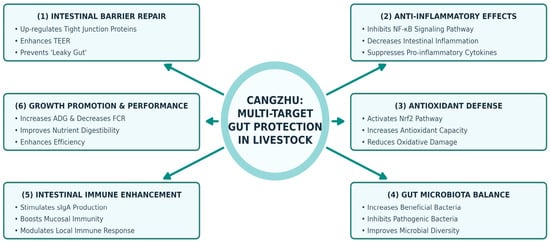
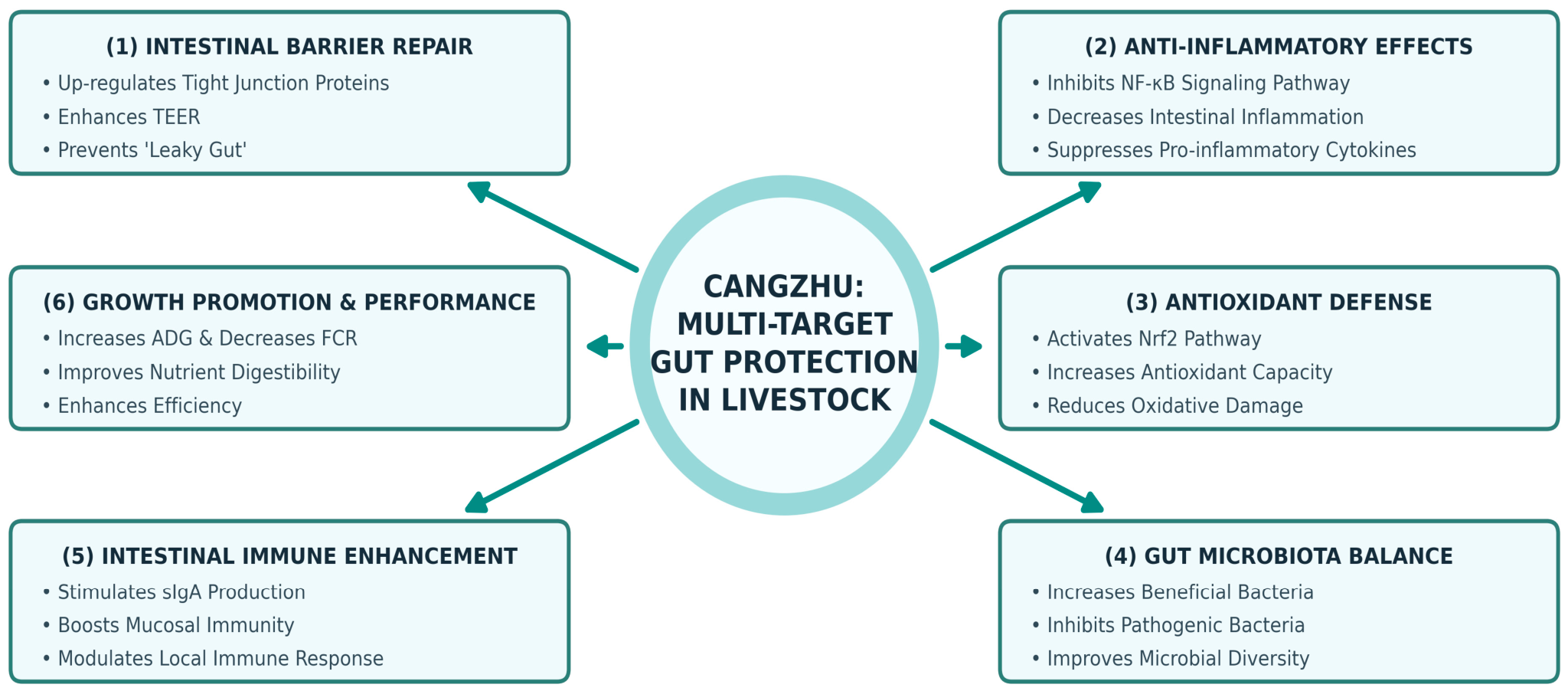
The six primary positive effects that were shown were tight junction protein upregulation for intestinal barrier repair, NF-κB suppression for anti-inflammatory activity, Nrf2 activation for antioxidant defense, microbiota composition modulation, immune function enhancement (IgA and sIgA), and growth performance promotion (improved ADG and FCR). The authors’ synthesis is based on Wang et al. [14], Qu et al. [15], Gao et al. [13], and Koonrungsesomboon et al. [16]. The figure was drawn specifically for this review: its content was synthesized and redrawn by the authors from the mechanistic findings reported in the cited sources, and no figure elements were reproduced directly from copyrighted material.
Despite mounting data including a recent broad overview of the biological functions of A. lancea in animal husbandry [13] what remains missing is a mechanistic, gut-centered synthesis that connects molecular mechanisms of intestinal protection with species-specific, dose-resolved application in livestock production. Distinct from that work, this review verifies livestock evidence at the species level (A. lancea vs. the frequently conflated A. macrocephala, Baizhu), analyzes dose–response across swine, poultry, and ruminants, and frames Cangzhu within AMR-mitigation, One Health, and standardization roadmaps. An overview of these multi-target gut-protective mechanisms is presented in Figure 1. To keep this species-level distinction transparent throughout, the subsequent synthesis tables explicitly identify the Atractylodes species/formulation used in each study together with its evidence tier (direct livestock in vivo, in vitro, or experimental model), and findings derived from A. macrocephala or multi-herb formulas are consistently labeled as extrapolated evidence rather than direct A. lancea data.
Figure 1.
The advantages of Cangzhu (Atractylodes lancea) for multi-target gut protection in livestock production.
2. Materials and Methods: Literature Search and Selection
This article is a narrative review prepared using a structured literature search guided by the PRISMA 2020 statement (Page et al. [17]). The PubMed/MEDLINE, Web of Science, Scopus, and China National Knowledge Infrastructure (CNKI) databases were searched from inception to August 2026 (the final literature update was completed in early August 2026, immediately prior to manuscript submission; accordingly, the review includes studies published in 2025 and 2026, e.g., [13,18,19]), supplemented by Google Scholar and hand-searching of the reference lists of retrieved articles, including the recent overview by Gao et al. [13]. The search strategy combined Atractylodes-related terms with gut-health terms: (“Atractylodes lancea” OR “Cangzhu” OR “atractylon” OR “atractylodin” OR “atractylenolide” OR “hinesol” OR “ β-eudesmol”) AND (“gut” OR “intestinal” OR “enteric” OR “microbiota” OR “intestinal barrier”).
Screening and study selection. After removal of duplicates (automated matching in reference-management software followed by manual confirmation), titles and abstracts were screened independently by two reviewers (M.S. and C.D.) against the eligibility criteria below, and candidate full texts were reassessed independently by the same two reviewers; disagreements were resolved by consensus and, where required, by adjudication of a third reviewer (C.L.). For each included study, the following fields were extracted: Atractylodes species and plant part, formulation and dose, animal model or in vitro system, study design, outcome measures, and reported statistics. Given the narrative character of this review and the heterogeneity of the primary literature, no formal risk-of-bias instrument (e.g., ROB 2 or SYRCLE) was applied; instead, evidentiary weight was appraised narratively according to study design, model species, sample size, and whether the intervention used pure A. lancea, a related Atractylodes species (e.g., A. macrocephala), or a multi-herb formulation. This evidence tier is indicated explicitly in the respective livestock synthesis tables (Section 5).
Peer-reviewed original research articles, reviews, and pharmacopoeial monographs published in English or Chinese were included if they (i) described the phytochemistry or biological activities of A. lancea or its constituents; (ii) reported in vitro or in vivo effects on gastrointestinal functions, including barrier integrity, inflammation, oxidative status, immunity, or microbial ecology; or (iii) evaluated Atractylodes-containing interventions in food-producing animals. Records not involving Atractylodes material, lacking gut-related outcomes, or unrelated to animal production, as well as conference abstracts without full text, were excluded.
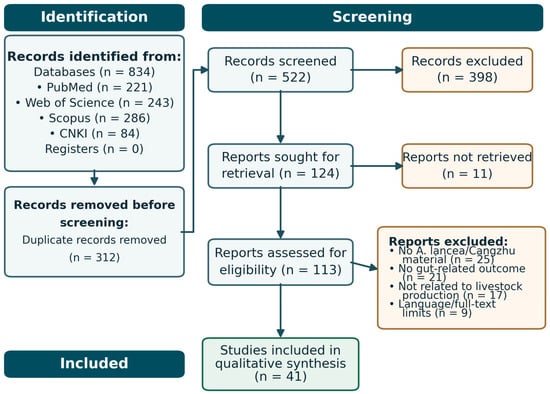
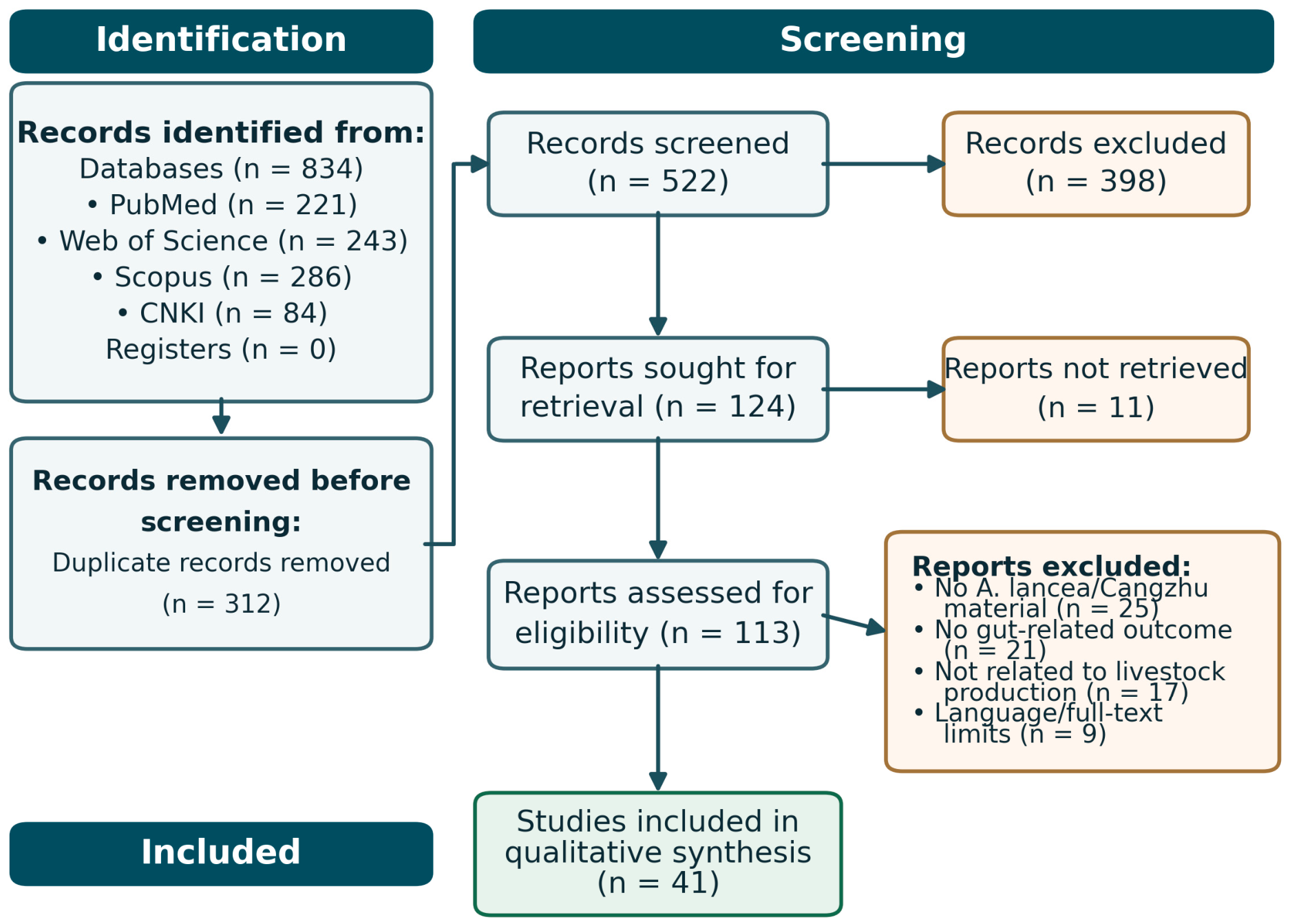
The search identified 834 records (PubMed n = 221; Web of Science n = 243; Scopus n = 286; CNKI n = 84). After removal of 312 duplicates, 522 records were screened by title and abstract; 124 reports were sought for retrieval, of which 113 were assessed for eligibility and 72 were excluded (Figure 2). Finally, 41 studies were included in the qualitative synthesis. Given the heterogeneity of study designs, species, and outcome measures, the findings were synthesized narratively; no meta-analysis was performed. Accordingly, subsequent figures are schematic syntheses of the individual cited studies and must not be interpreted as pooled or meta-analytic estimates (see the revised figure captions).
Figure 2.
PRISMA 2020 flow diagram of the literature search and study-selection process. Authors’ synthesis based on the PRISMA 2020 statement (Page et al. [17]).
The predominant reasons for exclusion at the title/abstract screening stage were records not involving Atractylodes material (largely pharmacological studies of other botanicals), records without gastrointestinal or gut-related outcomes, records unrelated to animal production or gut health, and conference abstracts without retrievable full text, and records published in languages other than English or Chinese; the complete screening log is available from the corresponding author upon request.
3. Botanical Identity and Phytochemical Arsenal of Cangzhu
3.1. Botanical Origin and Traditional Context
China, Japan, Korea, and Thailand are home to the perennial Asteraceae herbs Atractylodes lancea (Thunb.) DC. (Mao Cangzhu) and Atractylodes chinensis (DC.) Koidz. (Bei Cangzhu). Their dried rhizomes are the botanical drugs “Mao Cangzhu” and “Bei Cangzhu,” respectively [13,20]. Unless otherwise indicated, “Cangzhu” throughout this review refers specifically to Mao Cangzhu (A. lancea); any evidence from Baizhu (A. macrocephala) or Bei Cangzhu (A. chinensis) is explicitly flagged as such. Its dried rhizome is referred to as “cangzhu” [13,20]. The Chinese Pharmacopeia (2020 edition) states that dried rhizomes must have at least 0.30% atractylodin (C13H10O) [12]. The best Cangzhu is said to be produced in Jiangsu Province’s Maoshan region [20]. The Dabieshan chemotype (higher hinesol and β-eudesmol) and the Maoshan chemotype (enriched in atractylodin and atractylone) are the two main chemotypes that GC-MS metabolomic profiling has identified. The cumulative relative content of the three main actives ranges from 76.19% to 86.11% across developmental stages [18].
3.2. Major Bioactive Constituents
Comprehensive phytochemical studies have identified a diverse array of bioactive constituents in A. lancea rhizomes, as shown in Table 1 and Figure 3 [13,18,20,21]. Because reporting in the primary literature derives from different Atractylodes species and analytical bases, each class in Table 1 is annotated with the species from which the reported value originates, so that A. lancea data are not conflated with those obtained from A. macrocephala.
Table 1.
Atractylodes lancea rhizomes’ principal bioactive components and the basis on which their content is reported, with explicit source-species and evidence attribution.
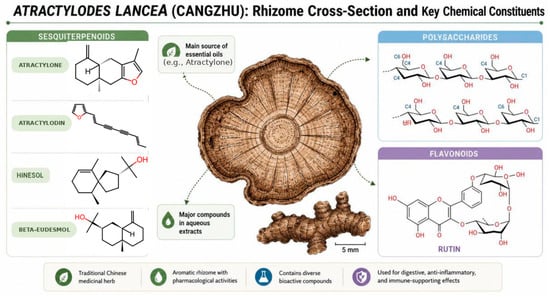
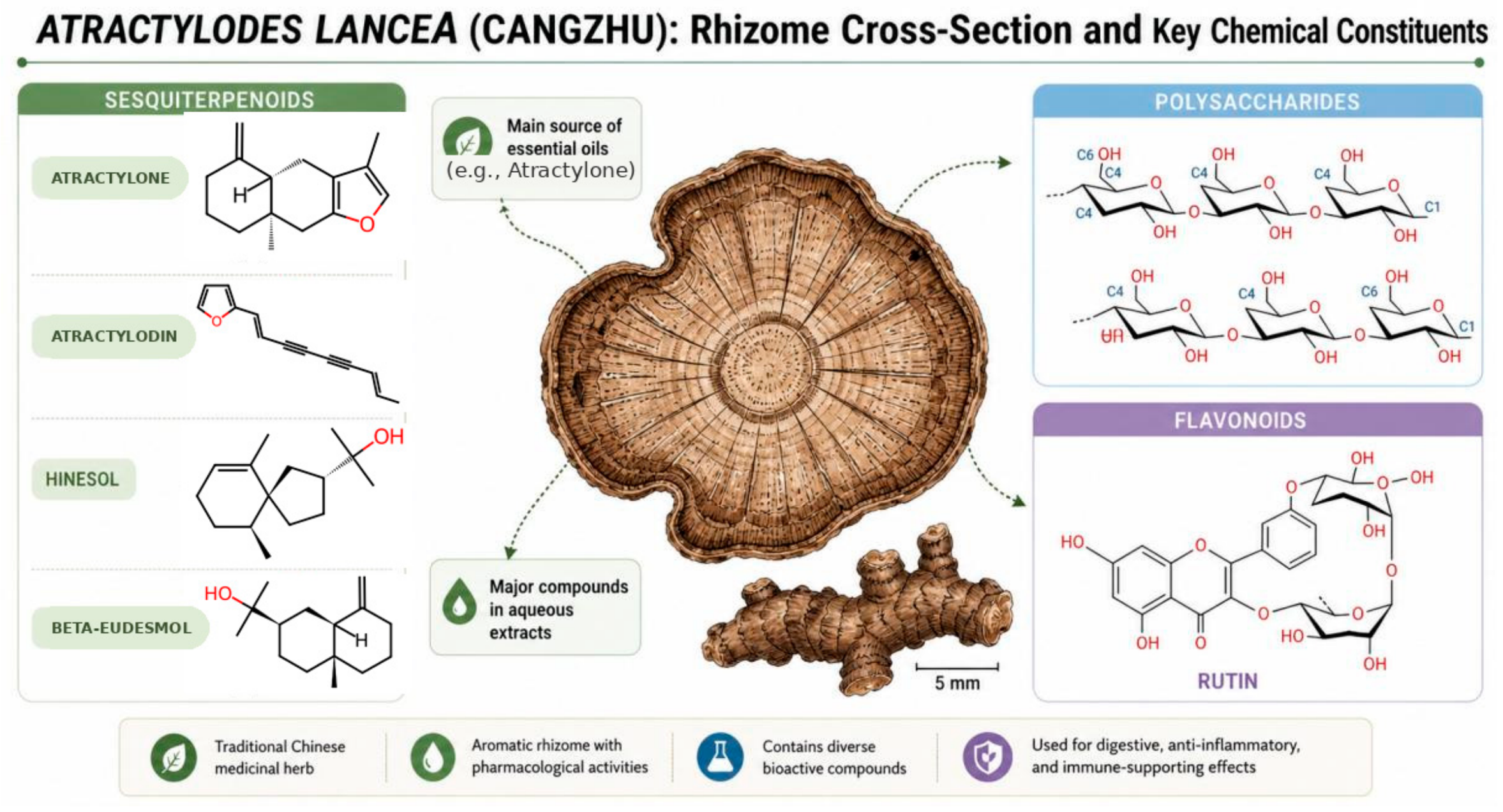
Figure 3.
The structural classification of the main bioactive components of the rhizome of Cangzhu (Atractylodes lancea).
The primary bioactive constituents include sesquiterpenoids (atractylone, β-eudesmol, hinesol, and atractylenolides I/II/III), polyacetylenes (including atractylodin and acetylatractylodinol), polysaccharides, flavonoids, and phenolic acids. GC-MS analysis revealed that the cumulative relative content of the three primary actives (hinesol, β-eudesmol, and atractylodin) ranged from 76.19% to 86.11% across developmental stages. The authors’ synthesis was based on Gao et al. [13], Wu et al. [21], and Zhang et al. [18]; the classification of the compounds (and the attribution of atractylodin to the polyacetylenes) was synthesized by the authors from the cited sources, and no elements were reproduced directly from them.
3.3. Phytochemical Variability and Standardization Challenges
A key barrier to Cangzhu’s broad usage as a standardized phytobiotic is the vast variance in its phytochemical makeup, which is influenced by botanical species, geographic origin, harvest season, post-harvest processing, and extraction technique [18]. In mice, bran-fried (Fu Chao) polysaccharides (FALP) demonstrated superior therapeutic efficacy at 1.2 g/kg/day compared to raw polysaccharides (SALP) [14]. These data are derived from a rodent model and should be read as preclinical evidence for A. lancea [direct: A. lancea; rodent model]. A critical step toward quality-controlled applications is the development of validated chemical fingerprinting techniques, such as the GC-MS-SIM approach for the simultaneous measurement of atractylone, hinesol, β-eudesmol, and atractylodin with recovery rates of 97.7–99.7% [22].
4. Molecular Mechanisms of Gut Protection by Cangzhu
The coordinated action of several bioactive components on linked signaling pathways is what gives Cangzhu its gut-protective properties (Figure 4). As detailed below, much of the mechanistic evidence originates from rodent models and in vitro systems, with direct demonstration in food-producing animals still emerging; the evidence tier of each finding is therefore indicated throughout this section and in the respective livestock synthesis tables (Section 5). A comprehensive synthesis of the molecular targets, active constituents, and biological outcomes across experimental models is detailed in Appendix A (Table A1).
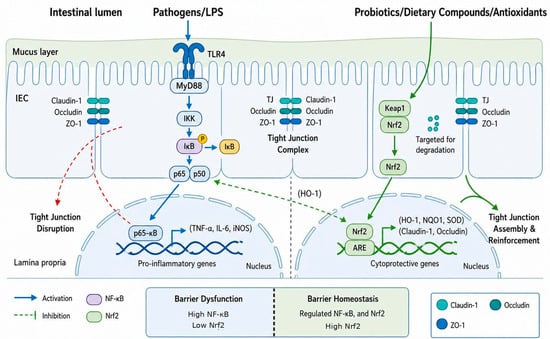
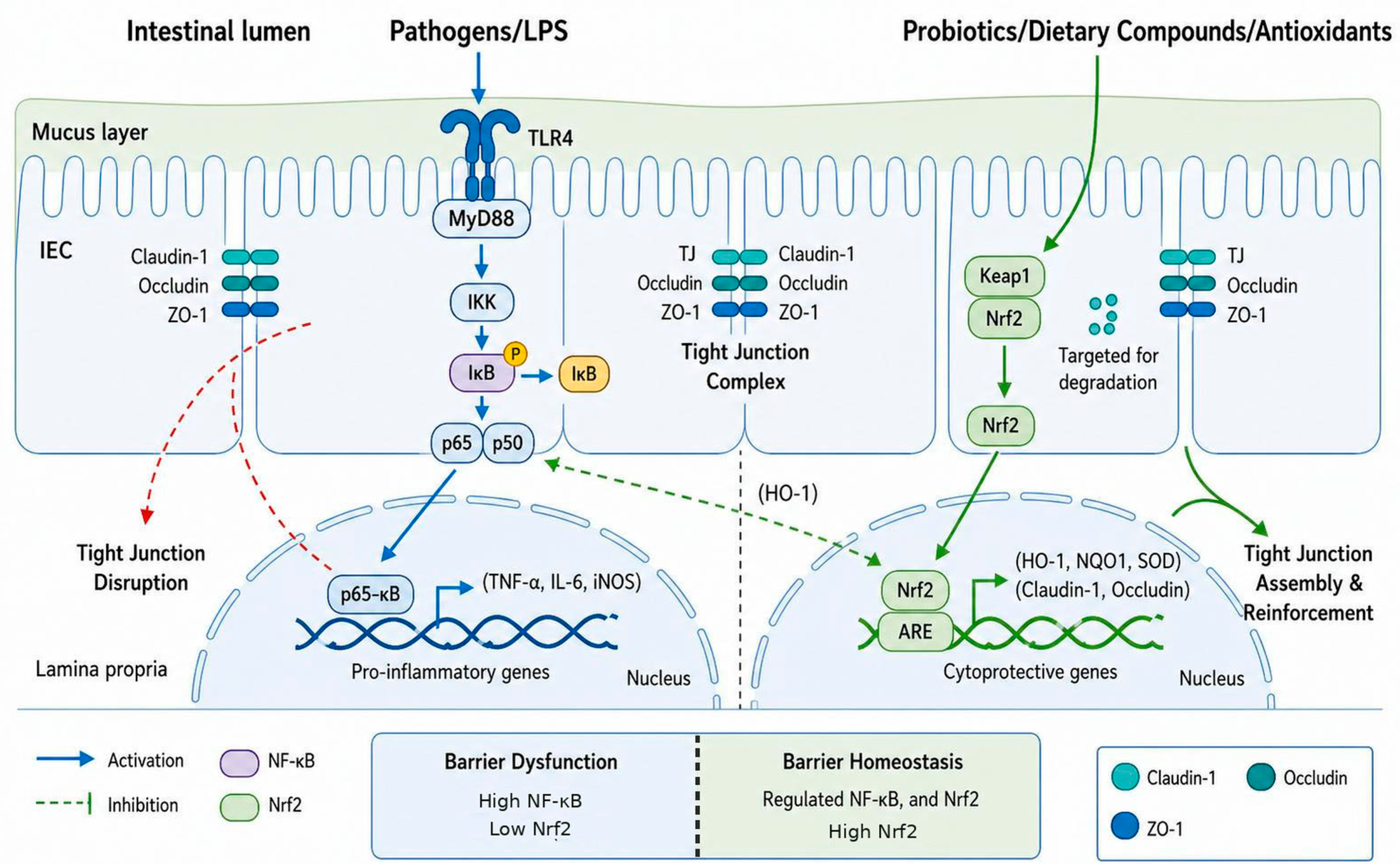
Figure 4.
Integrative molecular mechanisms of gut protection by Cangzhu (A. lancea). Red dashed arrows indicate processes contributing to tight junction disruption and intestinal barrier impairment.
(A) strengthening the intestinal epithelial barrier by upregulating tight junction proteins (ZO-1, Occludin, and Claudin-1) through inhibition of p38/MAPK-signaling; (B) suppressing the NF-κB pathway, which lowers pro-inflammatory cytokines (TNF-α, IL-1β, and IL-6) and enzymes (iNOS and COX-2); (C) activating the Nrf2-Keap1 antioxidant defense pathway, which increases the transcription of antioxidant enzymes; (D) reshaping the composition of the gut microbiota with more beneficial taxa; and (E) TLR4-mediated immunomodulation, which enhances mucosal immunity through T cell activation and sIgA secretion. The authors’ synthesis was based on Wang et al. [14], Qu et al. [15], Gao et al. [13], and Koonrungsesomboon et al. [16]. The figure was drawn specifically for this review based on the authors’ synthesis of these sources; no elements were reproduced directly from copyrighted material. Red dashed arrows indicate processes leading to tight junction disruption and epithelial barrier impairment.
4.1. Reinforcement of the Intestinal Epithelial Barrier
The intestinal epithelium is maintained by tight junction (TJ) protein complexes ZO-1, occludin, and claudins, which regulate paracellular permeability [23]. Compromised TJ integrity is a hallmark of post-weaning intestinal dysfunction and stress-induced enteropathy in poultry [11]. In rodent models and in vitro systems, A. lancea extracts and polysaccharides have been reported to increase the mRNA and protein expression of ZO-1, Claudin-1, and Occludin through the inhibition of p38/MAPK phosphorylation [13,14,15] [extrapolated: A. lancea in rodent/in vitro models]; to date, direct confirmation in livestock is limited to an A. macrocephala-containing herbal combination (GA) that upregulated jejunal ZO-1 and CLDN1 mRNA in broilers [19] [extrapolated: A. macrocephala in vivo; see the poultry synthesis table in Section 5.2]. This mechanism involves the direct stimulation of TJ protein gene transcription and, as described for Atractylodes extracts, promotion of mucin secretion by goblet cells [24]. It should be noted, however, that for A. lancea specifically, the TJ and mucin (MUC2) evidence is derived predominantly from rodent and in vitro settings; these barrier-enhancing responses are mechanistically plausible in livestock but have not yet been directly demonstrated in food-producing animals with pure A. lancea.
4.2. Anti-Inflammatory Signaling: NF-κB and MAPK Pathway Suppression
NF-κB and MAPK cascades are the main drivers of intestinal inflammation, culminating in the transcriptional activation of pro-inflammatory cytokines (TNF-α, IL-1β, IL-6) and enzymes (iNOS, COX-2) [25]. NF-κB p65 nuclear translocation is decreased by atractylenolides I and III (in vitro and rodent models) [16,21]. In LPS-stimulated RAW 264.7 macrophages (in vitro), A. lancea ethanolic extracts reduced the production of NO and PGE2 as well as the expression of iNOS and COX-2 mRNA [13] [extrapolated: A. lancea in vitro]. Atractylenolide II inhibits the phosphorylation of p38, ERK1/2, and JNK [13]. Cangzhu improves intestinal water reabsorption, increases autophagy genes, and decreases pro-inflammatory cytokine release in experimental (rodent) post-weaning colitis models [13] [extrapolated: A. lancea in rodent model]. Single-pathway strategies are limited by compensatory activation, which is circumvented via dual-pathway inhibition. These anti-inflammatory findings await direct confirmation in livestock species.
4.3. Nrf2-Keap1 Antioxidant Defense Pathway Activation
Under baseline conditions, Keap1 sequesters Nrf2, the main regulator of the cellular antioxidant response. According to Bellezza et al. [26], oxidative stress enables Nrf2 nuclear translocation, which drives the transcription of HO-1, NQO1, GSTA1, GSTM1, and SOD. In LPS-exposed mice, A. lancea polysaccharides decreased hepatic MDA levels while raising SOD and GSH-Px levels [13] [extrapolated: A. lancea in rodent model]. Atractylodes extracts block p38 phosphorylation while simultaneously promoting Nrf2 nuclear translocation and upregulating HO-1, NQO1, GSTA1, and GSTM1 [21]. Because these pathways are mutually antagonistic, the combination of Nrf2 activation and NF-κB repression is ideal [26]. This results in increased resistance to oxidative stress that is particularly relevant to heat-stressed chickens and early-weaned piglets [13,27], although direct antioxidant measurements in livestock following A. lancea supplementation remain scarce and this extrapolation is made cautiously.
4.4. Gut Microbiota Modulation and SCFA Metabolism
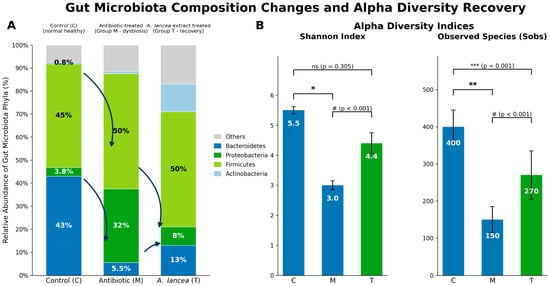
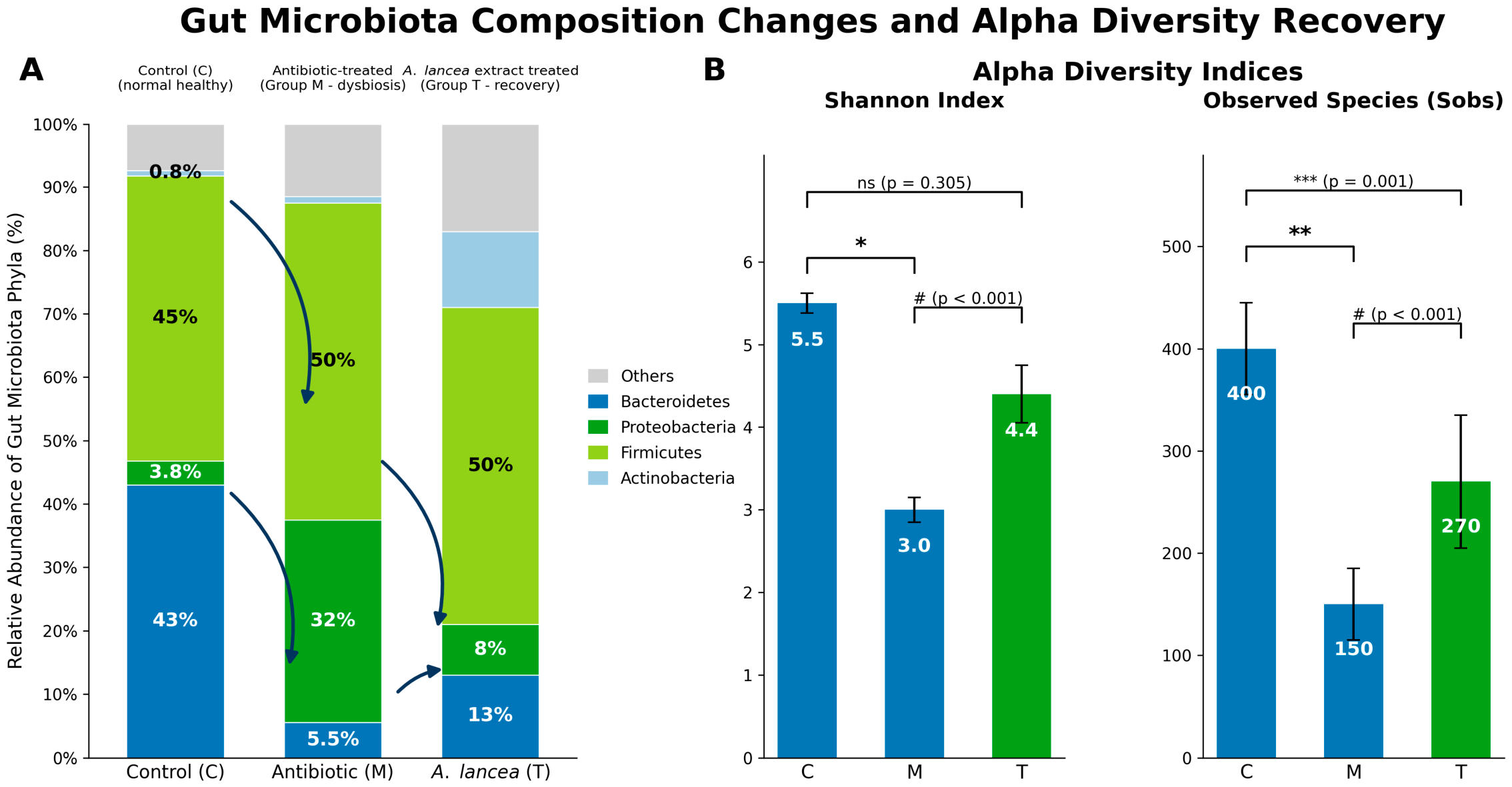
Stress-induced intestinal dysfunction is consistently characterized by dysbiosis, which has a significant impact on host nutrition, immunology, and barrier function [28,29]. The effects of A. lancea extract on antibiotic-induced dysbiosis in SPF mice were examined by Qu et al. [15] using 16S rRNA sequencing and metabolomics [extrapolated: A. lancea in rodent model]. The results showed that A. lancea treatment partially restored Bacteroidetes (from 5.5% to 13%), decreased Proteobacteria overgrowth, increased Lactobacillus, and restored arachidonic acid and L-methionine metabolism (Figure 5). Butyricicoccus and Muribaculaceae, two bacteria that produce SCFA, were more common in chicken when an Atractylodes-containing herbal combination was used, whereas Desulfovibrio and Campylobacter, two taxa that cause inflammation, were less common [19] [extrapolated: A. macrocephala-containing formula in poultry]. The main energy substrate for colonocytes is butyrate, which also suppresses NF-κB activation by acting as an HDAC inhibitor [30]. These compositional observations should be interpreted with caution: 16S rRNA-based profiling reflects relative (compositional) abundance shifts rather than demonstrated restoration of microbial balance, carries well-recognized primer and compositional biases, and does not by itself establish causality (see also Section 7.3). In vitro rumen fermentation of Rhizoma Atractylodis oil improved microbial-protein synthesis and nutrient degradability in batch cultures from Jinjiang yellow cattle [13,31] [extrapolated: A. lancea in vitro only]; these rumen findings are, however, restricted to in vitro batch-culture systems, in vivo dose confirmation in ruminants remains limited, and this caveat is likewise flagged in Section 5.3.
Figure 5.
The impact of Cangzhu (A. lancea extract) on the microbial diversity and composition of the gut microbiota in a mouse model of antibiotic-induced dysbiosis. (A) Phylum-level relative abundance of the gut microbiota (stacked bars) in control mice (C, normal healthy), antibiotic-treated mice (M, dysbiosis; cefradine + gentamicin), and A. lancea extract-treated mice (T, recovery): Proteobacteria increased from 3.8% to 32% after antibiotic injection, while Bacteroidetes fell from 43% to 5.5%; A. lancea treatment decreased Proteobacteria overgrowth and partially recovered Bacteroidetes (to 13%). Curved arrows in panel (A) indicate the direction of the treatment sequence (healthy control → antibiotic-induced dysbiosis → recovery with A. lancea extract treatment). (B) alpha-diversity indices—the Shannon index and the observed species (Sobs)—which returned to their pre-antibiotic levels. Statistical annotations are those reported in the original study [15]: ns denotes not significant; *, **, ***, and # denote statistically significant differences between groups, with exact p-values indicated in the respective panels. At the genus level, Escherichia–Shigella abundance decreased whereas Lactobacillus abundance increased. The authors’ synthesis was based on Qu et al. [15].
Proteobacteria increased from 3.8% to 32% after the injection of antibiotics (cefradine + gentamicin), while Bacteroidetes fell from 43% to 5.5%. Treatment with A. lancea extract decreased Proteobacteria overgrowth and partially recovered Bacteroidetes (to 13%). The diversity indexes of Shannon and Sobs alpha returned to their pre-antibiotic levels. At the genus level, Escherichia-Shigella abundance decreased whereas Lactobacillus abundance increased. The authors’ synthesis was based on Qu et al. [15]. Note: values are relative abundances from a single 16S rRNA-based mouse study [15]; they are summarized here as mechanistic (preclinical) evidence [extrapolated: A. lancea in rodent model] rather than livestock data, and the observed shifts reflect a partially normalized (rather than fully restored) microbial composition.
4.5. Immunomodulation and Mucosal Immunity
According to Pluske et al. [32], the largest immune organ in vertebrates is gut-associated lymphoid tissue (GALT). In the related species A. macrocephala (Baizhu), rhizome polysaccharides in early-weaned piglets stimulated lymphocyte proliferation, enhanced antibody production, and reduced diarrhea [33] [extrapolated: A. macrocephala in vivo], while an Atractylodes-containing fermented formulation at 0.1–0.3% dose-dependently elevated serum IgA, IgG, and IgM [34] [extrapolated: multi-herb formula in vivo]; these findings indicate translational potential for A. lancea polysaccharides in weanling piglets [13]. It must be emphasized that these swine immunomodulation data constitute extrapolated evidence obtained with A. macrocephala and mixed formulations, not direct A. lancea trials. In cyclophosphamide-immunosuppressed mice, A. lancea rhizome polysaccharides (ALP) at 1.2 g/kg/day enhanced immune organ indices, blood cell counts, T lymphocyte proliferation, and sIgA production at the cellular level [14] [extrapolated: A. lancea in rodent model]. According to Wang et al. [14], microbially produced SCFAs have immunomodulatory effects by upregulating GPR43 expression and triggering the TLR4 signaling pathway. Bran-fried ALP (FALP) had superior immunostimulatory activity in comparison to raw ALP (SALP), suggesting that traditional processing optimizes bioactivity [14].
5. Applications of Cangzhu in Livestock Production Systems
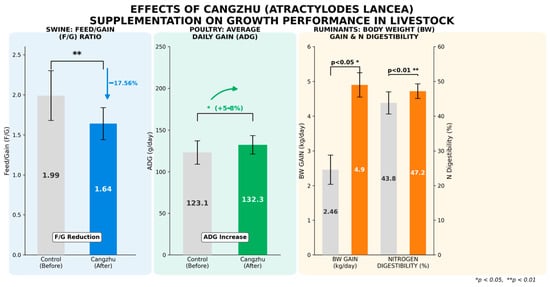
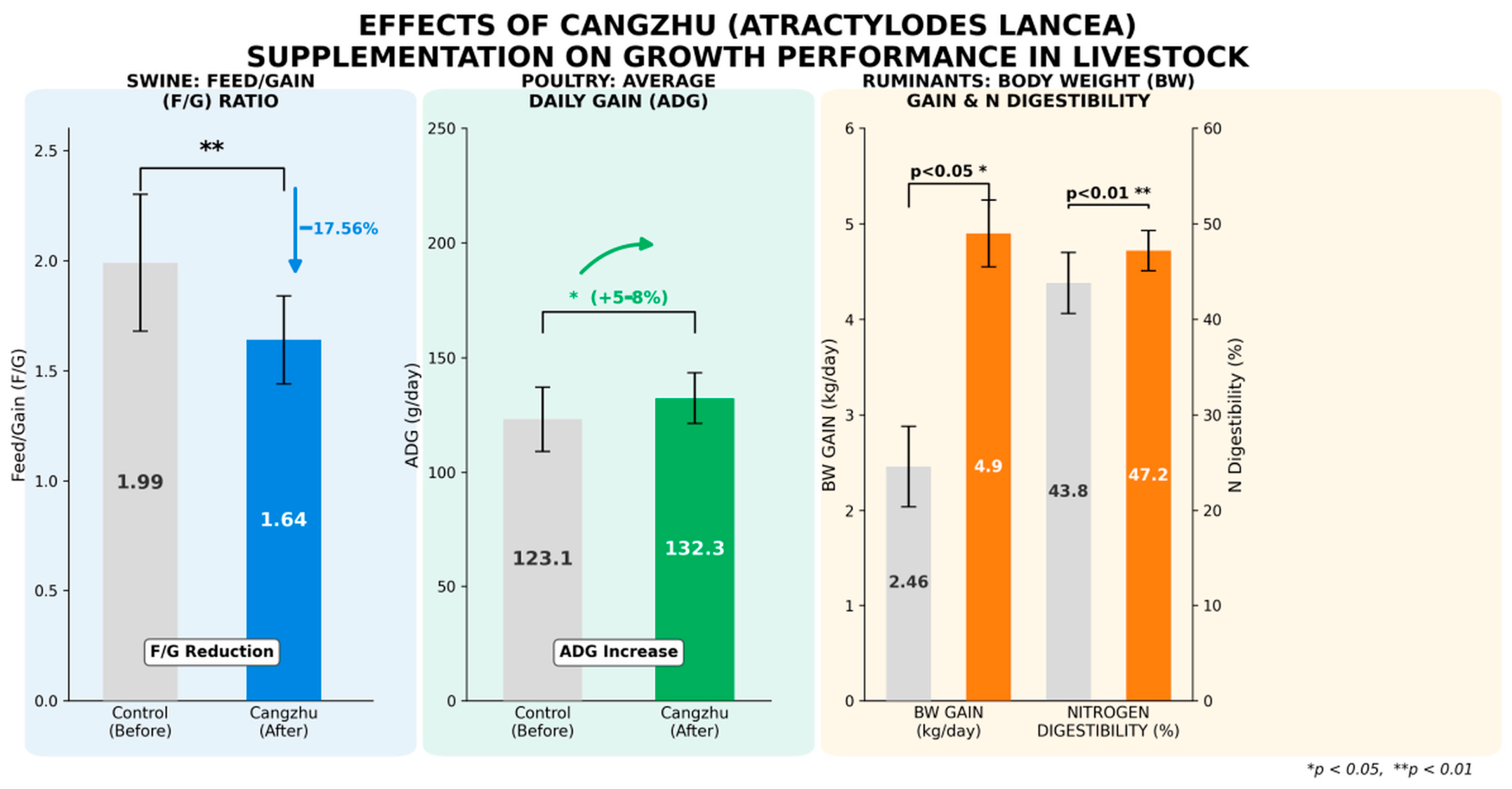
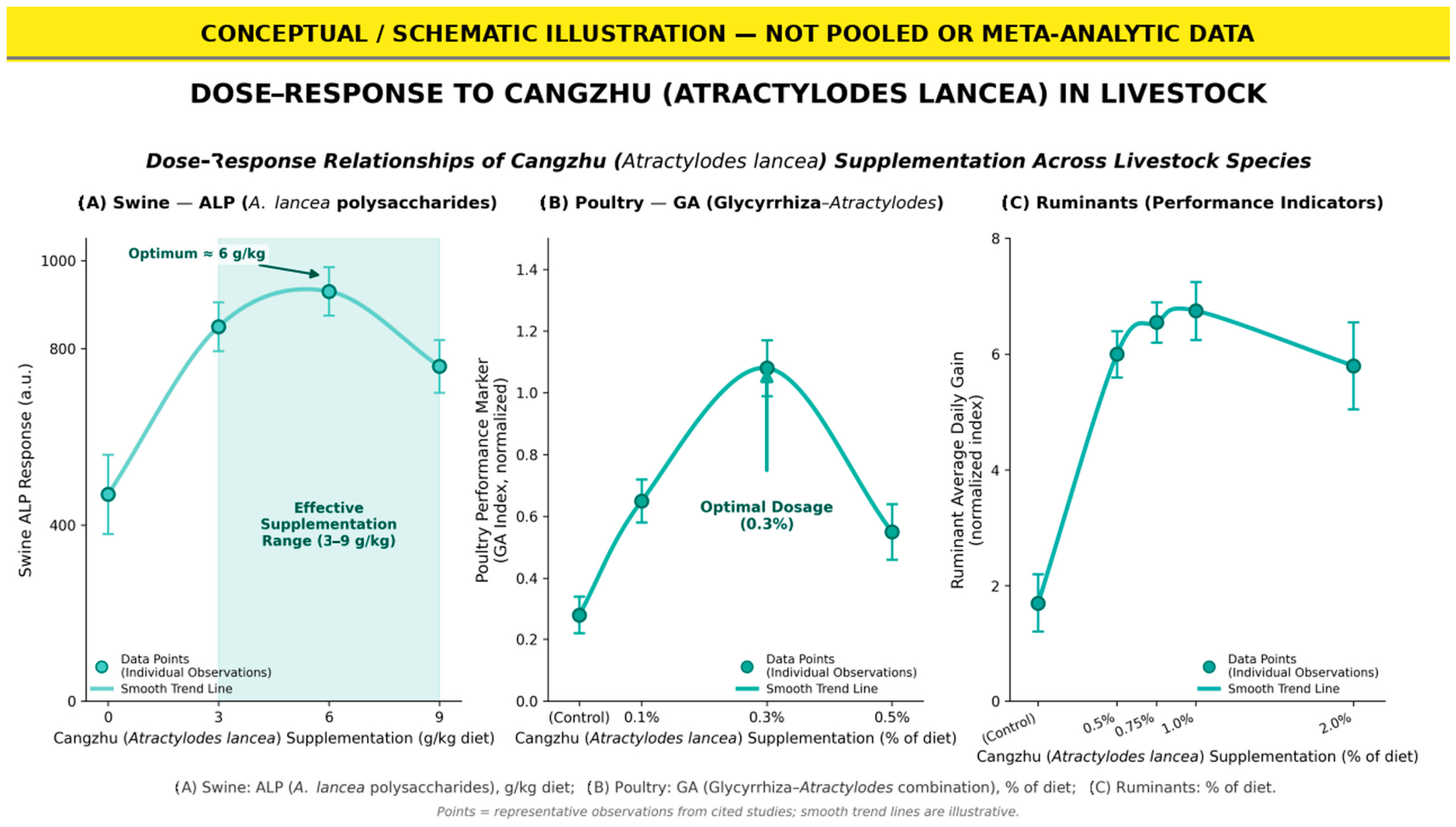
The quantifiable performance gains shown in significant livestock species are the best way to understand Cangzhu’s translational value as a phytobiotic. Figure 6 offers a comparative summary of the growth performance benefits reported in the individual cited studies, while Figure 7 provides a conceptual illustration of the reported effective inclusion ranges. Both figures are schematic syntheses of single studies; no pooling or meta-analysis was performed (Section 2), and the Atractylodes species/formulation behind each data point is specified in Table 2, Table 3 and Table 4.
Figure 6.
Comparative growth performance improvements from Atractylodes-based supplementation in three major livestock species.
Figure 7.
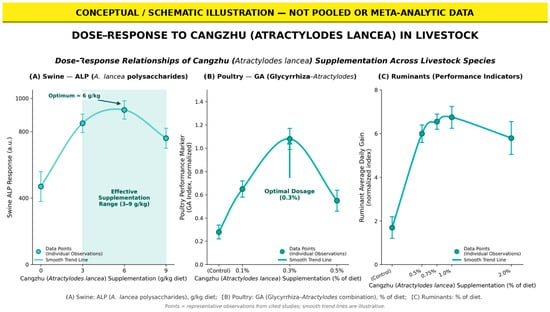
Conceptual, schematic illustration of species-specific dose–response patterns for Atractylodes supplementation.
Swine: F/G reduction of 17.56% reported by Lin et al. [35] with an Atractylodes-containing herbal formula; Poultry: ADG increase of 5–8% and F/G reduction with GA combination at 0.3% [19]; ruminants: body weight gain increase (p = 0.03) and nitrogen digestibility improvement with TCM mixture at 2% [36,37]. The authors’ synthesis was based on Gao et al. [13], Lin et al. [35], Tian et al. [19], and Liang et al. [36,37]. This panel is a schematic summary of the cited single studies (which used different Atractylodes species/formulations; see Table 2, Table 3 and Table 4); error bars and positions are illustrative, and no between-study pooling was performed.
This figure is illustrative only and serves as a conceptual synthesis across heterogeneous studies; it is not a data-derived dose–response analysis, and no pooling or meta-analysis was performed. The inclusion levels plotted are the experimental study ranges reported in the original investigations and must NOT be interpreted as standardized nutritional or therapeutic dose recommendations. Symbols denote representative observations from the cited studies, positioned within their reported inclusion ranges, and the smooth trend lines serve solely to convey the reported nonlinear, dose-dependent character of the responses; both axes are schematic (arbitrary units). Ruminants: A. lancea and Atractylodes-containing TCM formulations at 0.5–2.0% inclusion, supported by in vitro rumen fermentation [31] and in vivo formulation trials [13,36,37]; the effective range for pure A. lancea still requires in vivo dose–response confirmation in ruminants. Swine: A. lancea polysaccharides (ALP) at 3, 6, and 9 g/kg feed showed the highest range of efficacy for minimizing diarrhea and encouraging growth [13]. Poultry: the Glycyrrhiza uralensis-Atractylodes macrocephala (GA) combination was tested at 0.1%, 0.3% (optimal), and 0.5%, with the best performance at 0.3% [19]. The necessity of species-specific optimization is highlighted by the nonlinear and dose-dependent nature of these effects; given the heterogeneous formulations and study designs underlying each range, the curves must not be read as quantitative dose–response functions or as recommended inclusion levels. The authors’ synthesis was based on Gao et al. [13], Tian et al. [19], Xu et al. [31], and Liang et al. [36,37]; the schematic was conceived and drawn by the authors for this review, and no elements were reproduced directly from copyrighted material.
5.1. Swine Production
In intensive animal agriculture, swine production during the post-weaning transition (21–28 days) is one of the most physiologically demanding stages. Following the removal of AGP, post-weaning stress syndrome, which is marked by villous atrophy, crypt hyperplasia, reduced barrier function, dysbiosis, and a high frequency of diarrhea, has become increasingly prevalent [32]. Evidence summarized in Section 4.5 largely from the related species A. macrocephala and Atractylodes-containing formulations [13,33,34] indicates benefits on growth, immunoglobulins, and intestinal morphology in early-weaned pigs, while dedicated in vivo trials with pure A. lancea remain a priority gap. In growing-finishing pigs over a 120-day period, a Chinese herbal formulation including Atractylodes decreased F/G by 17.56% relative to negative controls after 120 days [35]. In cyclophosphamide-immunosuppressed mice, Wang et al. [14] showed that FALP at 1.2 g/kg/day enhanced immunological indices and intestinal barrier indicators (preclinical rodent model; Table 2).
Table 2.
Summary of studies evaluating Atractylodes-based interventions in pigs and preclinical pig models, with explicit identification of the Atractylodes species/formulation and evidence tier.
Critical synthesis (swine): For swine, the evidence base is strongest for the related species A. macrocephala and for multi-herb or fermented Atractylodes formulations, which consistently report favorable directional effects on growth, antibody titres, and intestinal morphology in early-weaned and growing-finishing pigs [33,34,35]. This evidence is nonetheless limited: most reported outcomes are directional with inferential statistics not reported, the active Atractylodes species is frequently unspecified, and two of the four studies (Li et al. [33] and Wang et al. [34]) do not use A. lancea at all. Discrepancies are therefore attributable primarily to differences in formulation (single herb vs. multi-herb), dose (0.1–0.3% vs. an undefined herbal-formula concentration), and pig category (early-weaned piglets vs. growing-finishing pigs) rather than to any biological inconsistency intrinsic to A. lancea. Direct evidence from pure A. lancea in swine in vivo is currently confined to a single preclinical rodent model (Wang et al. [14]); consequently, A. lancea-specific performance claims in pigs remain extrapolated and require dedicated, dose-capture trials in the target species.
5.2. Poultry Production
Modern broiler genotypes are more vulnerable to Eimeria spp. (coccidiosis) and Clostridium perfringens (necrotic enteritis) due to their high metabolic rates and increased oxidative stress [27]. Direct poultry trials with A. lancea remain scarce; most polysaccharide evidence in poultry currently derives from the related A. macrocephala (Baizhu) [13], and interspecific extrapolation should therefore be made cautiously. The glycyrrhiza uralensis–Atractylodes macrocephala combination (GA) at 0.3% was shown by Tian et al. [19] to significantly increase ADG from days 29–84 and decrease F/G, elevate thymus and bursa indices, increase IgA, IgM, and IL-10 while decreasing IL-2 and TNF-α, and upregulate ZO-1 and CLDN1 mRNA in the jejunum. Metabolomic profiling revealed enhanced butyric acid levels in the cecal microbiota, which also exhibited decreased abundance of Desulfovibrio and Campylobacter and increased abundance of Butyricicoccus and Muribaculaceae. Liu et al. [38] found that a TCM additive containing Atractylodes at 400 mg/kg increased egg production, improved GSH-Px, T-AOC, and SOD, and elevated IL-2, IFN-γ, IgA, IgM, and IgG in laying hens. Sun et al. [39] found that a designed herbal formula containing A. macrocephala at 1.0% increased body weight and decreased FCR, with increased beneficial Bacteroides and Faecalibacterium (Table 3; evidence tier and species identity are specified for each study).
Table 3.
Summary of Atractylodes-based interventions in poultry, with explicit identification of the Atractylodes species/formulation and evidence tier.
Critical synthesis (poultry): For poultry, the strongest and most internally consistent evidence derives from the A. macrocephala-containing GA combination (Tian et al. [19]), which reported significant, dose-modulated improvements in growth, immune indices, and gut-barrier markers at 0.3%. This finding is qualitatively supported by the A. macrocephala-containing formula of Sun et al. [39] and by the Atractylodes-containing TCM additive of Liu et al. [38] in laying hens, although the latter two report only directional effects. Agreement is therefore strongest for anti-inflammatory, immune-enhancing, and barrier-supporting effects of Atractylodes-containing formulations. Discrepancies arise mainly from differences in formulation (A. macrocephala vs. unspecified Atractylodes species), dose (0.1–0.5% in broilers vs. 400 mg/kg in layers), and production objective (broiler growth vs. egg production), rather than from conflicting biological findings. The only study reporting pure A. lancea in poultry (Wang et al. [34]) is directionally supportive but lacks reported statistics and dose resolution, so direct A. lancea evidence in poultry remains limited and should be interpreted cautiously pending confirmatory trials.
5.3. Ruminant Production
The rumen ecosystem supplies 70–80% of the host energy and 60–80% of the amino acid requirements via VFAs and microbial protein [41]. Gao et al. [13] note that 0.75% A. lancea enhances rumen fermentation, increases microbial protein and cellulose degradation, and promotes bacterial protein synthesis. Liang et al. [36] demonstrated that a TCM combination (Astragalus root, Angelica root, and Atractylodes rhizome) at 2% significantly increased sheep body weight gain (p = 0.03), total VFA concentration, and acetate generation (p = 0.04). Significantly higher N intake (p < 0.01), better N digestibility (p = 0.02), lower fecal N excretion (p = 0.02), and higher microbial N supply (p < 0.01) were also supported by a follow-up investigation by Liang et al. [37] (Table 4). As noted in Section 4.4, the ruminant evidence base is anchored by in vitro batch-culture data (Xu et al. [31]) and in vivo trials of multi-herb TCM mixtures containing Atractylodes rather than controlled dose–response trials with pure A. lancea; A. lancea-specific dosing in ruminants should therefore be extrapolated cautiously (Table 4, evidence-tier column).
Table 4.
Summary of ruminant studies incorporating Atractylodes, with explicit identification of the material, model, and evidence tier.
Critical synthesis (ruminants): The ruminant evidence is the thinnest of the three livestock groups and is almost entirely derived from either in vitro batch-culture systems (Xu et al. [31]) or multi-herb TCM mixtures in which Atractylodes is only one of several active components (Liang et al. [36,37]). Where strong, methodologically sound evidence exists (the two crossover trials of Liang et al.), the reported protein-energy and nitrogen-economy benefits are internally consistent and statistically supported, at a fixed 2% inclusion of the mixture. Agreement across studies is therefore limited to the general direction of rumen-fermentation and N-utilization improvement; direct comparisons are complicated by marked differences in model system (in vitro vs. sheep), formulation (essential oil vs. TCM mixture), and the absence of any pure A. lancea dose–response trial in ruminants. Consequently, species-specific effects cannot yet be attributed specifically to A. lancea, and the single A. lancea observation (0.75% reported by Gao et al. [13]) must be regarded as extrapolated pending in vivo confirmation.
6. Sustainability, One Health, and Broader Implications
6.1. AMR Mitigation
Cangzhu provides a mechanism-based alternative approach for the control of pathogens. Atractylodin had significantly higher potency (MIC 0.02–0.1 mg/mL against E. coli and S. aureus), while the MIC values of A. macrocephala essential oil against major livestock pathogens ranged from 0.5 to 2.0 mg/mL [21]. The antibacterial mechanism involves the disruption of the protein structure of the bacterial cell membrane, a physical mechanism that has been proposed to reduce selective pressure for resistance compared with a single-target antibiotic; this proposition is mechanistically reasonable but has not been experimentally demonstrated for A. lancea and therefore constitutes a hypothesis to be tested rather than an established property. Novel sesquiterpenoids and polyacetylenes from A. lancea have also been reported to show potent anti-MRSA activity (MIC 6.25–20.00 μg/mL) [13]. We emphasize, however, that these observations constitute direct antimicrobial activity demonstrated in vitro; experimentally demonstrated AMR mitigation (e.g., reduced resistance-gene transfer or reduced pathogen loads under field conditions) has not yet been shown for A. lancea and remains a research priority. In summary, the currently available data establish antimicrobial activity of A. lancea constituents that warrants investigation for a potential role in reducing pathogen pressure and, consequently, antibiotic use, rather than a proven reduction in resistance risk. Furthermore, A. lancea material has been reported to directly adsorb aflatoxins, which has been suggested to provide simultaneous protection against mycotoxicosis [13]; however, the underlying mechanism, binding efficacy, and performance relative to established mycotoxin binders (e.g., hydrated sodium calcium aluminosilicates) have not been characterized, so this putative benefit should be considered preliminary pending dedicated mycotoxin-binding assays.
6.2. Environmental Sustainability
Life cycle assessment studies have demonstrated that interventions that improve feed conversion efficiency through enhanced gut health reduce the carbon footprint of animal products by 8–15%, with each 0.1-unit FCR improvement associated with 3–5% reductions in GHG emissions [42]. These figures derive from general livestock LCA relationships [42] rather than from Cangzhu-specific life-cycle assessments; extrapolating them to Cangzhu is an inference and should be read as a potential, order-of-magnitude estimate rather than a measured outcome. Given the reported FCR improvements with Cangzhu or Atractylodes-based supplementation (F/G reductions of 5–18% in swine, [35]; 3–8% in poultry, [19,39]), the environmental benefits of its widespread adoption are plausible and potentially substantial. In ruminants, enhanced N utilization translates to reduced urinary and fecal N excretion [36,37].
6.3. One Health Integration
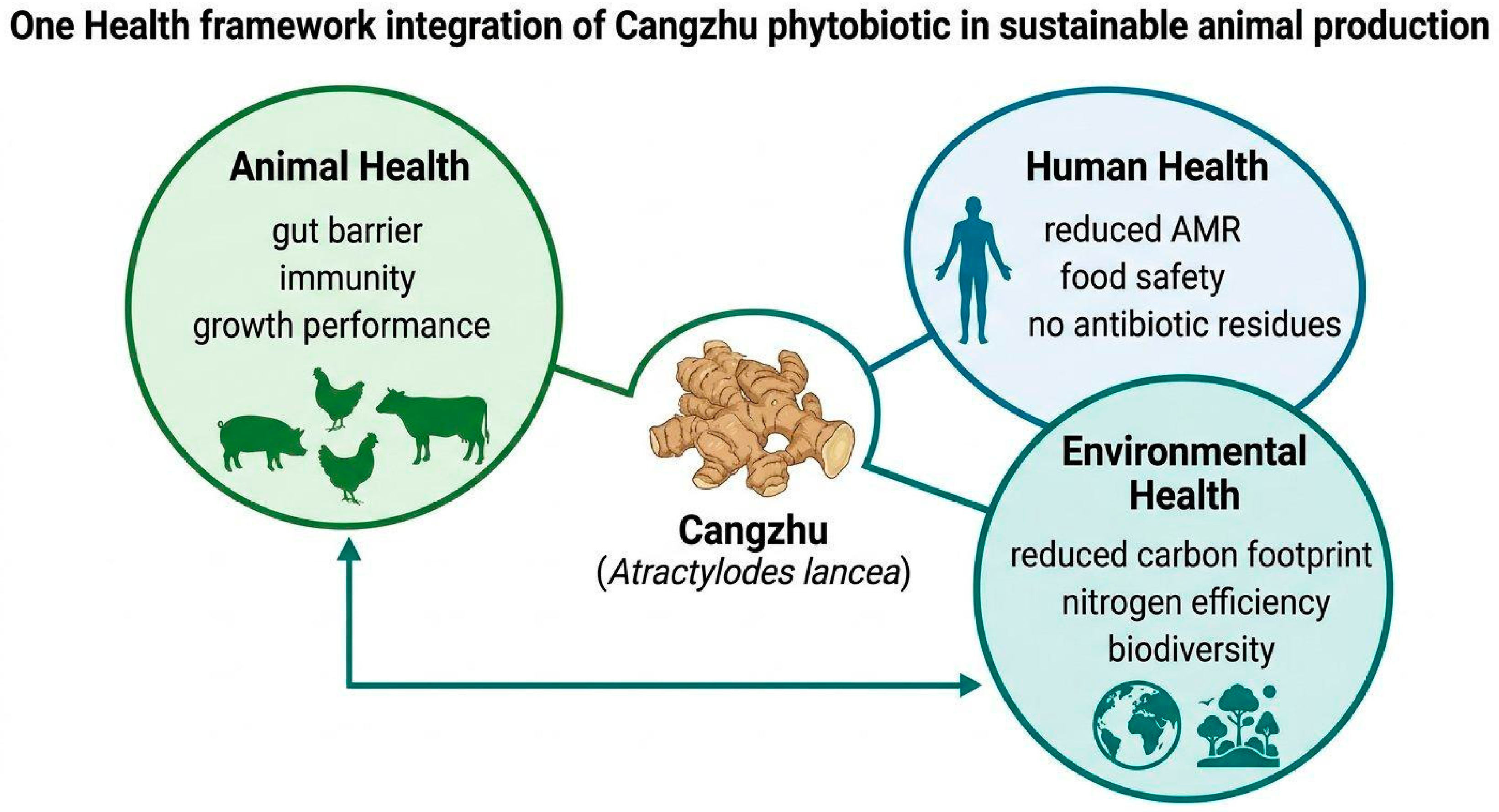
The connection of environmental, animal, and human health is acknowledged by the One Health concept (Figure 8). Within this framework it is important to distinguish between animal gut-health outcomes that have been empirically demonstrated (improved growth performance, immune competence, and gut-barrier function) and the human-health and environmental benefits that follow from them, which are currently potential and inferred rather than directly measured (Figure 8). According to Gao et al. [13] and Gerber et al. [42], Cangzhu’s mechanisms support the following three pillars: (i) Animal Health: improved growth performance, immune competence, and gut barrier function; (ii) Human Health: reduced antibiotic use has the potential to lower AMR selection pressure and antibiotic residues in animal products, although this downstream benefit has not yet been measured in Cangzhu-supplemented systems; and (iii) Environmental Health: improved feed efficiency and N economy are expected to reduce environmental impact while A. lancea cultivation may promote agricultural biodiversity. These environmental benefits are inferential extrapolations from general livestock relationships rather than Cangzhu-specific measurements.
Figure 8.
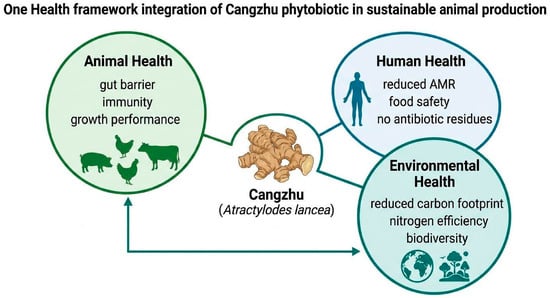
How Cangzhu (Atractylodes lancea) is included into the One Health framework for precision antibiotic-free animal production.
Cangzhu phytobiotic supplementation connects three interrelated domains: Animal Health (gut barrier integrity, immune competence, and growth performance), Human Health (AMR mitigation, food safety, and reduced antibiotic residues), and Environmental Health (reduced GHG emissions, improved nitrogen efficiency, and agricultural biodiversity). The animal-health outcomes shown in the central domain are the most directly supported by the current evidence; the human-health and environmental-health benefits are reasonable, mechanistically supported inferences that follow from these animal outcomes and are expected rather than already demonstrated for Cangzhu. The authors’ synthesis was based on Ogbuewu et al. [9], Gerber et al. [42], and Gao et al. [13]. The figure was designed and drawn specifically for this review from the authors’ synthesis of these sources; no elements were reproduced directly from copyrighted material.
7. Challenges, Knowledge Gaps, and Future Research Directions
7.1. Standardization and Quality Control
Strict quality criteria are needed to convert research-grade phytobiotics into commercial feed additives. Atractylodin is the only pharmacopoeial index; however, network pharmacology proposes atractylon, hinesol, and β-eudesmol as more functionally relevant Q-markers [38]. Additional barriers to standardization include batch-to-batch variability caused by genetic, geographic, seasonal, and processing factors [18], the lack of stability data under typical feed processing and storage conditions, as well as the absence of proven high-throughput analytical methods suitable for feed mill settings.
7.2. Dose–Response Optimization
The effects of Cangzhu are dose-dependent and frequently nonlinear (Figure 7), with different species having different effective inclusion rates reported in the cited literature: 0.5–2% in ruminants (in vitro and TCM-formulation trials) [13,36], 3–9 g/kg ALP in swine [13], and roughly 0.3% GA in poultry [19]. Because these ranges derive from heterogeneous formulations, species, and study designs (Table 2, Table 3 and Table 4), they should be viewed as starting points for systematic experimentation rather than validated recommendations. It must be emphasized that these inclusion levels are experimental study ranges reported in the primary investigations and are not standardized nutritional or therapeutic dose recommendations for any livestock species. They cannot be applied directly to commercial diets; dose selection for any production setting requires species- and stage-specific, dose–response validation carried out under controlled conditions regardless of the values plotted in Figure 7. In addition to assessing synergistic interactions with other phytobiotics, organic acids, probiotics, or enzymes, systematic dose–response experiments across production stages, genotypes, and management methods are required.
7.3. Gut Microbiota–Metabolite–Host Axes
Although compositional changes in gut microbiota after Cangzhu supplementation have been reported by 16S rRNA studies [15,19], the functional implications and causative roles of particular taxa are yet unknown. To identify modulated microbial metabolic pathways, characterize altered metabolites (SCFAs, bile acids, and tryptophan metabolites), establish causality through fecal microbiota transplantation in gnotobiotic models, and clarify the pharmacokinetics and microbial biotransformation of Cangzhu constituents, multi-omics integration (metagenomics, metatranscriptomics, and metabolomics) is necessary [30].
7.4. Large-Scale Field Validation and Economic Analysis
Most studies on the efficacy of Cangzhu have been conducted under controlled research conditions. Translation to commercial practice requires large-scale, multi-site field trials with rigorous economic analyses accounting for raw material costs, processing, feed incorporation, improved performance value, reduced therapeutic antibiotic expenditure, and potential market premiums for antibiotic-free products [8,11].
7.5. Novel Delivery Systems
The volatility and oxidation susceptibility of Cangzhu sesquiterpenoids pose practical challenges. Advanced technologies such as microencapsulation, nanoencapsulation, solid lipid nanoparticles, and enteric coating offer solutions by protecting bioactives during processing, masking unpalatable flavors, and enabling targeted gastrointestinal release [8,9]. Fermented Cangzhu products, which demonstrate enhanced bioactivity through microbial pre-digestion, simultaneously address challenges of stability, palatability, and bioavailability [13].
8. Conclusions
Cangzhu (Atractylodes lancea) constitutes a promising class of phytobiotics with genuine potential to reduce reliance on antibiotics in livestock production as part of integrated, gut-health-centered feeding strategies. The evidence that Cangzhu and its bioactive components provide gut-protective benefits through a coordinated, multi-target mechanism is summarized in this review. Tight junction protein upregulation, concurrent suppression of the NF-κB and MAPK inflammatory pathways, activation of the Nrf2-Keap1 antioxidant pathway, partial normalization of the gut microbial community, stimulation of mucosal immunity by TLR4-dependent and SCFA-GPR43 signaling, and direct antimicrobial activity that warrants investigation for a potential role in reducing pathogen pressure and antibiotic use are some of the mechanisms that improve the intestinal epithelial barrier. As summarized in Figure 5, Figure 6 and Figure 7 and Table 2, Table 3 and Table 4, these pathways frequently correlate with gains in livestock productivity, including increased growth rates, higher feed efficiency, decreased incidence of diarrhea, and strengthened immune competence across swine, poultry, and ruminant systems. Nevertheless, a substantial portion of the mechanistic evidence derives from rodent and in vitro models and from the related A. macrocephala or multi-herb formulations, and direct, species-specific livestock trials with pure A. lancea remain limited for several endpoints; this distinction is now made explicit throughout the review. International harmonization of quality standards, systematic dose–response trials, thorough multi-omics elucidation of microbiota-host interactions, large-scale field trials with economic analyses, and sophisticated formulation technology are all necessary for the shift from promising research to commercial adoption. When incorporated into precision animal nutrition programs under the guidance of species-specific optimal dosing, synergistic formulation, and ongoing quality monitoring and subjected to standardized, commercial-scale, species-specific validation Cangzhu holds substantial potential to contribute to sustainable, antibiotic-reduced animal agriculture. This transition from traditional knowledge to cutting-edge feed technology is a prime example of the fruitful dialog between ethnopharmacology and current animal science that will influence livestock production in the future.
Author Contributions
M.S.: Writing—original draft, investigation, visualization. C.D.: Methodology, writing—review and editing, validation. X.L.: Investigation, resources, writing—original draft. L.Z.: Visualization, methodology, writing—review and editing. H.S.: Supervision, funding acquisition. L.C.: Conceptualization, project administration, supervision, writing—review and editing, funding acquisition. All authors have read and agreed to the published version of the manuscript.
Funding
This research was funded by the China Agriculture Research System of the Ministry of Finance (MOF) and the Ministry of Agriculture and Rural Affairs (MARA) of the People’s Republic of China, grant number CARS-21.
Institutional Review Board Statement
Not applicable.
Informed Consent Statement
Not applicable.
Data Availability Statement
No new data were created or analyzed in this study. Data sharing is not applicable to this article.
Acknowledgments
The authors thank China Agricultural University (Beijing, China) and Kafrelsheikh University (Kafr El Sheikh, Egypt) for providing access to the library resources and scientific databases. The authors also appreciate the support of the Animal Husbandry Workstation of the Aba Tibetan and Qiang Autonomous Prefecture (Sichuan, China).
Conflicts of Interest
The authors declare no conflicts of interest.
Appendix A
A thorough overview of the molecular pathways, active ingredients, and physiological effects of Cangzhu-mediated gut protection in the species studied to date is given in Table A1. Evidence for the pathways below derives variously from rodent, in vitro, and livestock studies; study-level evidence tiers are specified in Table 2, Table 3 and Table 4.
Table A1.
Comprehensive summary of Cangzhu-mediated gut-protective mechanisms across experimental models. ALP, A. lancea polysaccharides; EO, essential oil.
References
- FAO. The Future of Food and Agriculture: Alternative Pathways to 2050; Food and Agriculture Organization of the United Nations: Rome, Italy, 2018. [Google Scholar]
- Godfray, H.C.J.; Beddington, J.R.; Crute, I.R.; Haddad, L.; Lawrence, D.; Muir, J.F.; Pretty, J.; Robinson, S.; Thomas, S.M.; Toulmin, C. Food security: The challenge of feeding 9 billion people. Science 2010, 327, 812–818. [Google Scholar] [CrossRef] [Scilit] [PubMed]
- WHO. Antimicrobial Resistance: Global Report on Surveillance; World Health Organization: Geneva, Switzerland, 2014. [Google Scholar]
- Murray, C.J.L.; Ikuta, K.S.; Sharara, F.; Swetschinski, L.; Robles Aguilar, G.; Gray, A.; Han, C.; Bisignano, C.; Rao, P.; Wool, E.; et al. Global burden of bacterial antimicrobial resistance in 2019: A systematic analysis. Lancet 2022, 399, 629–655, Erratum in Lancet 2022, 400, 1102. [Google Scholar] [CrossRef] [Scilit] [PubMed]
- Van Boeckel, T.P.; Brower, C.; Gilbert, M.; Grenfell, B.T.; Levin, S.A.; Robinson, T.P.; Teillant, A.; Laxminarayan, R. Global trends in antimicrobial use in food animals. Proc. Natl. Acad. Sci. USA 2015, 112, 5649–5654. [Google Scholar] [CrossRef] [Scilit] [PubMed]
- MARA-PRC. Announcement No. 194: Ban on the Use of Antibiotics as Feed Additives; Ministry of Agriculture and Rural Affairs of the People’s Republic of China: Beijing, China, 2019.
- Cheng, G.; Hao, H.; Xie, S.; Wang, X.; Dai, M.; Huang, L.; Yuan, Z. Antibiotic alternatives: The substitution of antibiotics in animal husbandry. Front. Microbiol. 2014, 5, 217. [Google Scholar] [CrossRef] [Scilit] [PubMed]
- Windisch, W.; Schedle, K.; Pitzner, C.; Kroismayr, A. Use of phytogenic products as feed additives for swine and poultry. J. Anim. Sci. 2008, 86, E140–E148. [Google Scholar] [CrossRef] [Scilit] [PubMed]
- Ogbuewu, I.P.; Okoro, V.M.; Mbajiorgu, E.F.; Mbajiorgu, C.A. Phytobiotics in poultry and swine nutrition: A review. Ital. J. Anim. Sci. 2018, 17, 92–99. [Google Scholar] [CrossRef] [Scilit]
- Valenzuela-Grijalva, N.V.; Pinelli-Saavedra, A.; Muhlia-Almazan, A.; Domínguez-Díaz, D.; González-Ríos, H. Dietary inclusion effects of phytochemicals as growth promoters. J. Anim. Sci. Technol. 2017, 59, 8. [Google Scholar] [CrossRef] [Scilit] [PubMed]
- Murugesan, G.R.; Syed, B.; Haldar, S.; Pender, C. Phytogenic feed additives as an alternative to antibiotic growth promoters in broiler chickens. Front. Vet. Sci. 2015, 2, 21, Erratum in Front. Vet. Sci. 2015, 2, 37, Front. Vet. Sci. 2016, 3, 28. [Google Scholar] [CrossRef] [Scilit] [PubMed]
- Chinese Pharmacopoeia Commission. Pharmacopoeia of the People’s Republic of China, Vol. I; China Medical Science Press: Beijing, China, 2020. [Google Scholar]
- Gao, Y.; Wang, D.; Ma, X.; Li, J.; Wang, D.; Chen, B.; Yang, X.; Leng, H. Biological functions of Atractylodes lancea and its applications in animal husbandry: A review. Front. Vet. Sci. 2025, 11, 1518433. [Google Scholar] [CrossRef] [Scilit] [PubMed]
- Wang, D.; Dong, Y.; Xie, Y.; Xiao, Y.; Ke, C.; Shi, K.; Zhou, Z.; Tu, J.; Qu, L.; Liu, Y. Atractylodes lancea rhizome polysaccharide alleviates immunosuppression and intestinal mucosal injury in mice treated with cyclophosphamide. J. Agric. Food Chem. 2023, 71, 17112–17129. [Google Scholar] [CrossRef] [Scilit] [PubMed]
- Qu, L.; Liu, C.; Ke, C.; Zhan, X.; Li, L.; Xu, H.; Xu, K.; Liu, Y. Atractylodes lancea Rhizoma attenuates DSS-induced colitis by regulating intestinal flora and metabolites. Am. J. Chin. Med. 2022, 50, 525–552. [Google Scholar] [CrossRef] [Scilit] [PubMed]
- Koonrungsesomboon, N.; Na-Bangchang, K.; Karbwang, J. Therapeutic potential and pharmacological activities of Atractylodes lancea (Thunb.) DC. Asian Pac. J. Trop. Med. 2014, 7, 421–428. [Google Scholar] [CrossRef] [Scilit] [PubMed]
- Page, M.J.; McKenzie, J.E.; Bossuyt, P.M.; Boutron, I.; Hoffmann, T.C.; Mulrow, C.D.; Shamseer, L.; Tetzlaff, J.M.; Akl, E.A.; Brennan, S.E.; et al. The PRISMA 2020 statement: An updated guideline for reporting systematic reviews. BMJ 2021, 372, n71. [Google Scholar] [CrossRef] [Scilit] [PubMed]
- Zhang, G.; Zhao, Z.; Li, Y.; Zhang, L.; Lu, J.; Qi, K.; Liang, H.; Zha, L.; Xie, J. Transcriptome and metabolome analysis of Atractylodes lancea across different developmental stages. Front. Plant Sci. 2025, 16, 1720423. [Google Scholar] [CrossRef] [Scilit] [PubMed]
- Tian, J.; Zhang, G.; He, N.; Tan, L.; Wu, J.; Chen, Y.; Yao, L.; Bi, Y.; Zhaxi, Y.; Lu, J.; et al. Glycyrrhiza uralensis–Atractylodes macrocephala combination supplementation enhances broiler growth performance, immunity, and intestinal health, potentially mediated through gut microbiota and metabolites. Front. Vet. Sci. 2026, 13, 1855302. [Google Scholar] [CrossRef] [Scilit] [PubMed]
- Qiu, H.; Shan, C.; Fei, C.; Xue, P.; Zhou, Y.; Yuan, J.; Liu, X. Geoherbalism metabolomic analysis of Atractylodes lancea (Thunb.) DC. by LC-Triple TOF-MS/MS and GC-MS. Molecules 2023, 28, 5974. [Google Scholar] [CrossRef] [Scilit] [PubMed]
- Wu, Y.; Lu, W.; Geng, Y.; Yu, C.; Sun, H.; Kim, Y.; Zhang, G.; Kim, T. Antioxidant, antimicrobial and anti-inflammatory activities of essential oil derived from the wild rhizome of Atractylodes macrocephala Koidz. Chem. Biodivers. 2020, 17, e2000268. [Google Scholar] [CrossRef] [Scilit] [PubMed]
- Zhang, L.; Ouyang, Z.; Zhao, M.; Wang, P.; Fang, J. Simultaneous determination of atractylone, hinesol, β-eudesmol, atractylodin in Atractylodes lancea and hierarchical cluster analysis. Zhongguo Zhong Yao Za Zhi 2010, 35, 725–728. [Google Scholar] [CrossRef] [Scilit] [PubMed]
- Turner, J.R. Intestinal mucosal barrier function in health and disease. Nat. Rev. Immunol. 2009, 9, 799–809. [Google Scholar] [CrossRef] [Scilit] [PubMed]
- Johansson, M.E.V.; Hansson, G.C. Immunological aspects of intestinal mucus and mucins. Nat. Rev. Immunol. 2016, 16, 639–649. [Google Scholar] [CrossRef] [Scilit] [PubMed]
- Chen, L.; Deng, H.; Cui, H.; Fang, J.; Zuo, Z.; Deng, J.; Li, Y.; Wang, X.; Zhao, L. Inflammatory responses and inflammation-associated diseases in organs. Oncotarget 2018, 9, 7204–7218. [Google Scholar] [CrossRef] [Scilit] [PubMed]
- Bellezza, I.; Giambanco, I.; Minelli, A.; Donato, R. Nrf2-Keap1 signaling in oxidative and reductive stress. Biochim. Biophys. Acta Mol. Cell Res. 2018, 1865, 721–733. [Google Scholar] [CrossRef] [Scilit] [PubMed]
- Mishra, B.; Jha, R. Oxidative stress in the poultry gut: Potential challenges and interventions. Front. Vet. Sci. 2019, 6, 60. [Google Scholar] [CrossRef] [Scilit] [PubMed]
- Gresse, R.; Chaucheyras-Durand, F.; Fleury, M.A.; Van de Wiele, T.; Forano, E.; Blanquet-Diot, S. Gut microbiota dysbiosis in post-weaning piglets: Understanding the keys to health. Trends Microbiol. 2017, 25, 851–873. [Google Scholar] [CrossRef] [Scilit] [PubMed]
- Oakley, B.B.; Lillehoj, H.S.; Kogut, M.H.; Kim, W.K.; Maurer, J.J.; Pedroso, A.; Lee, M.D.; Collett, S.R.; Johnson, T.J.; Cox, N.A. The chicken gastrointestinal microbiome. FEMS Microbiol. Lett. 2014, 360, 100–107. [Google Scholar] [CrossRef] [Scilit] [PubMed]
- Koh, A.; De Vadder, F.; Kovatcheva-Datchary, P.; Bäckhed, F. From dietary fiber to host physiology: Short-chain fatty acids as key bacterial metabolites. Cell 2016, 165, 1332–1345. [Google Scholar] [CrossRef] [Scilit] [PubMed]
- Xu, Z.S.; Qu, M.R.; Song, X.Z.; Zhao, X.H.; Huang, T.; Chen, Y.M. Effects of Rhizoma atractylodis oil on rumen fermentation and nutrient degradability in vitro in Jinjiang yellow cattle. Chin. J. Anim. Nutr. 2014, 26, 2373–2378. [Google Scholar]
- Pluske, J.R.; Turpin, D.L.; Kim, J.C. Gastrointestinal tract (gut) health in the young pig. Anim. Nutr. 2018, 4, 187–196. [Google Scholar] [CrossRef] [Scilit] [PubMed]
- Li, L.; Yin, F.; Zhang, B.; Peng, H.; Li, F.; Zhu, N.; Hou, D.; Yin, Y.; Luo, J.; Tang, Z.; et al. Dietary supplementation with Atractylodes macrocephala Koidz polysaccharides ameliorate metabolic status and improve immune function in early-weaned pigs. Livest. Sci. 2011, 142, 33–41. [Google Scholar] [CrossRef] [Scilit]
- Wang, X.; Wang, Y.; Mao, Y.; Hu, A.; Xu, T.; Yang, Y.; Wang, F.; Zhou, G.; Guo, X.; Cao, H.; et al. The beneficial effects of traditional Chinese medicine on antioxidative status and inflammatory cytokines expression in the liver of piglets. Front. Vet. Sci. 2022, 9, 937745. [Google Scholar] [CrossRef] [Scilit] [PubMed]
- Lin, Z.N.; Ye, L.; Li, Z.W.; Huang, X.; Lu, Z.; Yang, Y.; Xing, H.; Bai, J.; Ying, Z. Chinese herb feed additives improved the growth performance, meat quality, and nutrient digestibility parameters of pigs. Anim. Model. Exp. Med. 2020, 3, 47–54. [Google Scholar] [CrossRef] [Scilit] [PubMed]
- Liang, X.; Yamazaki, K.; Kamruzzaman, M.; Bi, X.; Panthee, A.; Sano, H. Effects of Chinese herbal medicine on plasma glucose, protein, and energy metabolism in sheep. J. Anim. Sci. Biotechnol. 2013, 4, 51. [Google Scholar] [CrossRef] [Scilit] [PubMed]
- Liang, X.; Bi, X.; Sano, H.; Jin, J. Supplementing forage with traditional Chinese medicine can increase microbial protein synthesis in sheep. Ruminants 2024, 4, 613–622. [Google Scholar] [CrossRef] [Scilit]
- Liu, B.; Ma, R.; Yang, Q.; Yang, Y.; Fang, Y.; Sun, Z. Effects of traditional Chinese herbal feed additive on production performance, egg quality, antioxidant capacity, immunity and intestinal health of laying hens. Animals 2023, 13, 2510. [Google Scholar] [CrossRef] [Scilit] [PubMed]
- Sun, Y.; Zhang, M.; Shi, D.; Dai, X.; Li, X. Effects of designed herbal formula on growth performance, blood indices, organ traits, and cecum microbiology in broilers. Vet. Sci. 2024, 11, 107. [Google Scholar] [CrossRef] [Scilit] [PubMed]
- Hu, W.; Huang, K.; Zhang, L.; Ni, J.; Xu, W.; Bi, S. Immunomodulatory effect of Atractylodis macrocephala Koidz. polysaccharides in vitro. Poult. Sci. 2024, 103, 103171. [Google Scholar] [CrossRef] [Scilit] [PubMed]
- Firkins, J.L.; Yu, Z. Ruminant Nutrition Symposium: How to use data on the rumen microbiome to improve our understanding of ruminant nutrition. J. Anim. Sci. 2015, 93, 1450–1470. [Google Scholar] [CrossRef] [Scilit] [PubMed]
- Gerber, P.J.; Steinfeld, H.; Henderson, B.; Mottet, A.; Opio, C.; Dijkman, J.; Falcucci, A.; Branca, G. Tackling Climate Change Through Livestock: A Global Assessment of Emissions and Mitigation Opportunities; FAO: Rome, Italy, 2013. [Google Scholar]

Disclaimer/Publisher’s Note: The statements, opinions and data contained in all publications are solely those of the individual author(s) and contributor(s) and not of MDPI and/or the editor(s). MDPI and/or the editor(s) disclaim responsibility for any injury to people or property resulting from any ideas, methods, instructions or products referred to in the content. |
© 2026 by the authors. Licensee MDPI, Basel, Switzerland. This article is an open access article distributed under the terms and conditions of the Creative Commons Attribution (CC BY) license.