


Simple Summary
First construction of intergeneric hybrid grouper (Epinephelus fasciatus ♀ × Plectropomus leopardus ♂).
Abstract
To develop superior grouper aquaculture varieties, in this study, a intergeneric hybrid breed was constructed by crossing a male Plectropomus leopardus, with a female parent Epinephelus fasciatus. Here, we researched embryonic development and mitochondrial composition of the new hybrid germplasm. Results revealed that the fertilization and hatching rate were 85.87 ± 5.22% and 70.37 ± 0.33%, respectively. Hatching occurred 28 h 55 min after fertilization at 24.8 ± 0.5 °C, and the newly hatched larvae were 2.05 ± 0.37 mm in total length. The mitochondrial genome length of the hybrid was 16,570 bp, preserving 13 protein-coding genes (PCGs), two ribosomal RNA (rRNA) genes, and 22 transfer RNA (tRNA) genes. The mitochondrial gene composition and arrangement of the hybrid were very similar to those of the maternal E. fasciatus. Additionally, analyses including co-linearity, Ka/Ks ratio, and phylogenetic tree all demonstrated that the hybrid’s mitochondria are inherited from the mother. Furthermore, the genetic distance between the hybrid and species from the maternal genus is shorter than that between the hybrid and the paternal P. leopardus. This study provides detailed insights into the embryonic development and mitochondrial inheritance of an intergeneric hybrid grouper, offering valuable molecular biological evidence to support grouper hybrid breeding, germplasm identification, and the conservation of genetic diversity.
1. Introduction
Within the Serranidae family, both the black-edged grouper (Epinephelus fasciatus) and the leopard coral grouper (Plectropomus leopardus) inhabit tropical and subtropical coral reefs. Known for their bright orange-red colors, they are highly valued for their tasty meat, making them important species in aquaculture and ornamental fish markets. Morphologically, E. fasciatus features an orange-red body, with a reddish-brown upper head and back. Its sides display 5–6 broad horizontal bands, and the tips of its dorsal fin spines are black. This species is mainly found in the eastern coastal waters of the Indian Ocean extending to the central Pacific Ocean, including the waters around Taiwan, China, and the South China Sea [1]. In contrast, P. leopardus has a vivid red body adorned with small blue spots on its trunk and head [2]. It is primarily distributed in the southwestern Pacific Ocean, northern Australia, and the South China Sea [3]. E. fasciatus is a recently developed and valuable aquaculture species, with juvenile fish (5–8 cm) priced at 40 Yuan each at the factory gate, though supply does not meet demand [4]. However, E. fasciatus grows slowly and is a medium-to-small sized fish, with adults reaching only about 50 cm in length [5]. Under artificial farming conditions, one-year-old fish weigh just 58.89 ± 18.78 g, which limits large-scale cultivation and industrial promotion. On the other hand, P. leopardus is also a prized aquaculture species, capable of reaching a maximum adult length of 120 cm and weighing 525 g at one year old [6]. Nevertheless, as aquaculture expands, challenges such as shrinking breeding stock size, low survival rates of juveniles, poor stress tolerance, and frequent diseases have arisen, severely hindering sustainable grouper farming. To overcome these industry challenges, developing fast-growing, high-quality aquaculture germplasm through effective genetic improvement is crucial for advancing the grouper seed industry and the overall grouper aquaculture sector.
Distant hybridization breeding technology allows the combination of genomes from species that are genetically distant, producing hybrid offspring with highly diverse genotypes and phenotypes. Groupers, with more than 160 species, offer a valuable genetic resource for hybrid breeding studies. In China, grouper aquaculture produces 267,488 tons annually, generating an output value of 30 billion Yuan, with hybrid varieties making up over 70% of this production. Among the newly approved grouper varieties, three hybrids of E. fuscoguttatus ♀ × E. lanceolatus ♂, E. moara ♀ × E. lanceolatus ♂, and E. fuscoguttatus ♀ × E. tukula ♂ have been successfully developed. These hybrids exhibit notable hybrid vigor in growth, enhanced stress resistance, and higher survival rates. For example, the body weight of the 245-day-old E. moara ♀ × E. lanceolatus ♂ was 2.6 times greater than that of the maternal E. moara [7]. Research on E. fuscoguttatus ♀ × E. tukula ♂ revealed that 15-month-old hybrids grew 103% faster than the maternal E. fuscoguttatus and demonstrated better cold tolerance, as evidenced by significantly less feeding stoppage at semi-lethal temperatures compared to the parent strains [8].
Currently, interspecific hybridization dominates grouper crossbreeding efforts, while intergeneric hybridization studies are rare. For instance, the hybrid offspring of Cromileptes altivelis ♀ × E. tukula ♂ exhibits significant growth heterosis. At 330 days old, their body weight averages 220.50 ± 25.30 g, which is 1.55 times that of the maternal C. altivelis, and their total length is 23.57 ± 0.94 cm, 1.28 times longer than the maternal parent [9]. Similarly, the intergeneric hybrid offspring of C. altivelis ♀ × E. lanceolatus ♂ grow significantly faster than the maternal C. altivelis, with an absolute weight growth rate 1.6 times greater and a 4.70% higher meat yield compared to the paternal E. lanceolatus [10]. In addition, embryos from the intergeneric hybrid E. fuscoguttatus ♀ × P. leopardus ♂ develop normally. Comparative transcriptomic analysis of embryonic development between hybrid and parental embryos revealed that the Wnt signaling pathway plays a key role in regulating the formation of the embryonic dorsal-ventral axis [11].
Previous research has shown that selecting large-bodied, fast-growing males as paternal parents is essential for achieving optimal growth in grouper hybrids [12]. Consequently, the large and brightly colored P. leopardus was chosen as the paternal parent to enhance the growth rate of E. fasciatus through distant hybridization breeding, successfully producing viable hybrid offspring. By analyzing early embryonic development and comparing mitochondrial genomes, the feasibility of intergeneric hybridization in groupers was assessed to develop new hybrid germplasm with faster growth, better quality, and improved appearance. This study offers theoretical and technical support for distant hybridization breeding and the development of new grouper varieties.
2. Materials and Methods
2.1. Sampling and Observation
The experimental site and broodstock were supplied by Laizhou Ming Bo Aquaculture Co., Ltd. (Laizhou, China). Seven well-developed maternal E. fasciatus and four paternal P. leopardus with sperm motility exceeding 80% were selected for mixed fertilization. The sexually mature broodstock was administered injections comprising LHRH-A3 at dosage of 15 μg/kg and HCG at dosage of 300 IU/kg (Hubei Tusuo Technology Co., Ltd., Wuhan, China) to induce maturation and spawning. After 48 h of hormone treatment, female E. fasciatus with protruded genital pores were selected, and mature eggs were collected by gently pressing the abdomen into a dry plastic basin. Concurrently, high-motility sperm from the male P. leopardus were collected for artificial insemination. After a 5 min settling period, high-quality floating fertilized eggs were placed in micro-flow incubation barrels at 24.8 ± 0.5 °C, with salinity 28–30‰, and dissolved oxygen > 6.0 mg/L.
Before incubation, the fish eggs were soaked in 1 ppm povidone–iodine solution for 1 min. After 20 min, 100 floating fertilized eggs were collected from each incubation tank to count and record the fertilization rate, and this process was repeated three times. When the embryos developed to the tail bud stage, the eggs were transferred to nursery tanks for subsequent rearing, with an egg density of 8.0 g/m3, seawater temperature was maintained at 25 ± 1 °C, salinity at 28–30‰, dissolved oxygen at 6–8 mg/L, and water flow rate of 0.2 m3/h.
Thirty buoyant eggs were regularly taken from the hatching barrel, and an optical microscope (Olympus CX43, Yijingtong Optics Technology Co., Ltd., Shanghai, China) was used to photograph and measure the embryonic development of the new hybrid groupers. The time and developmental characteristics of each developmental stage were recorded. The timing for each stage was determined when two-thirds of the fertilized eggs had reached that particular phase.
2.2. DNA Extraction and Sequencing
Genomic DNA was extracted from the parental lines and hybrid using the DNA kit (OMEGA, Guangzhou, China), and the concentration and quality of the DNA were detected and analyzed with a Qubit 4.0 fluorometer and 1.0% agarose gel electrophoresis, respectively. Genomic libraries were sequenced using paired-end reads on the Illumina NovaSeq 6000 platform, and the sequencing data were processed with Trimmomatic v0.39. The primary workflow included removing adapter sequences from reads, trimming 5′-end bases containing non-AGCT nucleotides before clipping, trimming low-quality read ends (sequencing quality value < Q20), filtering out reads with N content ≥ 10%, and discarding short fragments < 75 bp after adapter removal and quality trimming.
2.3. Mitogenome Assembly and Gene Annotation
The mitochondrial genomes of the parent and hybrid were assembled using GetOrganelle version 1.7.5. This tool performs iterative extraction of target reads using the SEED database, then employs the SPAdes assembler to construct the genome. Sequences with sufficiently high coverage and long assembled lengths were chosen as candidates and aligned against the NCBI database to verify mitochondrial scaffolds. The confirmed sequences were then merged according to their overlapping regions. Using the parental reference genome, the starting point and orientation of the assembled mitochondrial sequence were established to produce the final mitochondrial genome sequence. The MITOS software version 1.1.3 was used to predict protein-coding genes (PCGs), tRNAs, and rRNAs within the mitochondrial genome. After redundancy removal and manual correction of the predicted genes, the start and stop codon positions of the mitochondrial genes were confirmed, yielding a highly accurate set of conserved genes. Finally, CGView online software visualized the genome compositions through a circular map.
The base composition and gene distribution of animal mitochondria were statistically analyzed and summarized, with the coding genes, rRNA, and tRNA arranged in genomic coordinate order. The mitochondrial genome distribution was visually displayed by identifying information such as gene length, gene interval, and codon composition. The cusp software (EMBOSS v6.6.0.0) was used to calculate the Relative Synonymous Codon Usage (RSCU) to assess codon preference.
2.4. Mitogenome Collinearity Analysis
Blastp alignment (e-value < 1 × 10⁻⁵) was performed against the protein sequences of the parental and hybrid mitochondrial genomes. For genes with multiple alignments in the database, only the best alignment result for each gene was retained. AliTV software version 1.0.6 was used to analyze the collinearity of the mitochondrial genomes.
2.5. Mitogenome Ka/Ks Analysis
To understand natural selection pressure during the evolution of P. leopardus, E. fasciatus, and their hybrids, gene sequences were compared using the MUSCLE v3.8.31, and then the KaKs Calculator 2.0 was used to calculate the non-synonymous (Ka) synonymous (Ks) ratio (Ka/Ks) with −c 11 (codon table), −m = MS (model selection based on AICc index).
2.6. Mitogenome Phylogeny
To evaluate the genomic evolutionary relationship of the hybrid germplasm, mitochondrial genome sequences of known pure and hybrid groupers were downloaded from the NCBI database. Nucleotide sequences of 13 coding genes from 19 grouper genomes were selected for multiple sequence alignment of shared single-copy genes using MUSCLE v3.8.31. Maximum Likelihood and Bayesian phylogenetic trees were constructed in PlyML v3.0 and MrBayes v3.2.6, respectively, and the final evolutionary tree was displayed using iTOL 3.4.3.
3. Results
3.1. Embryonic Development Observation and Mitochondrial Group Comparative Analysis
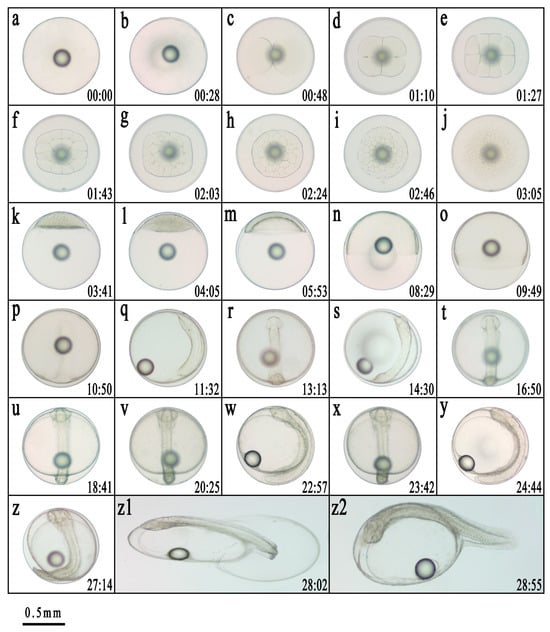
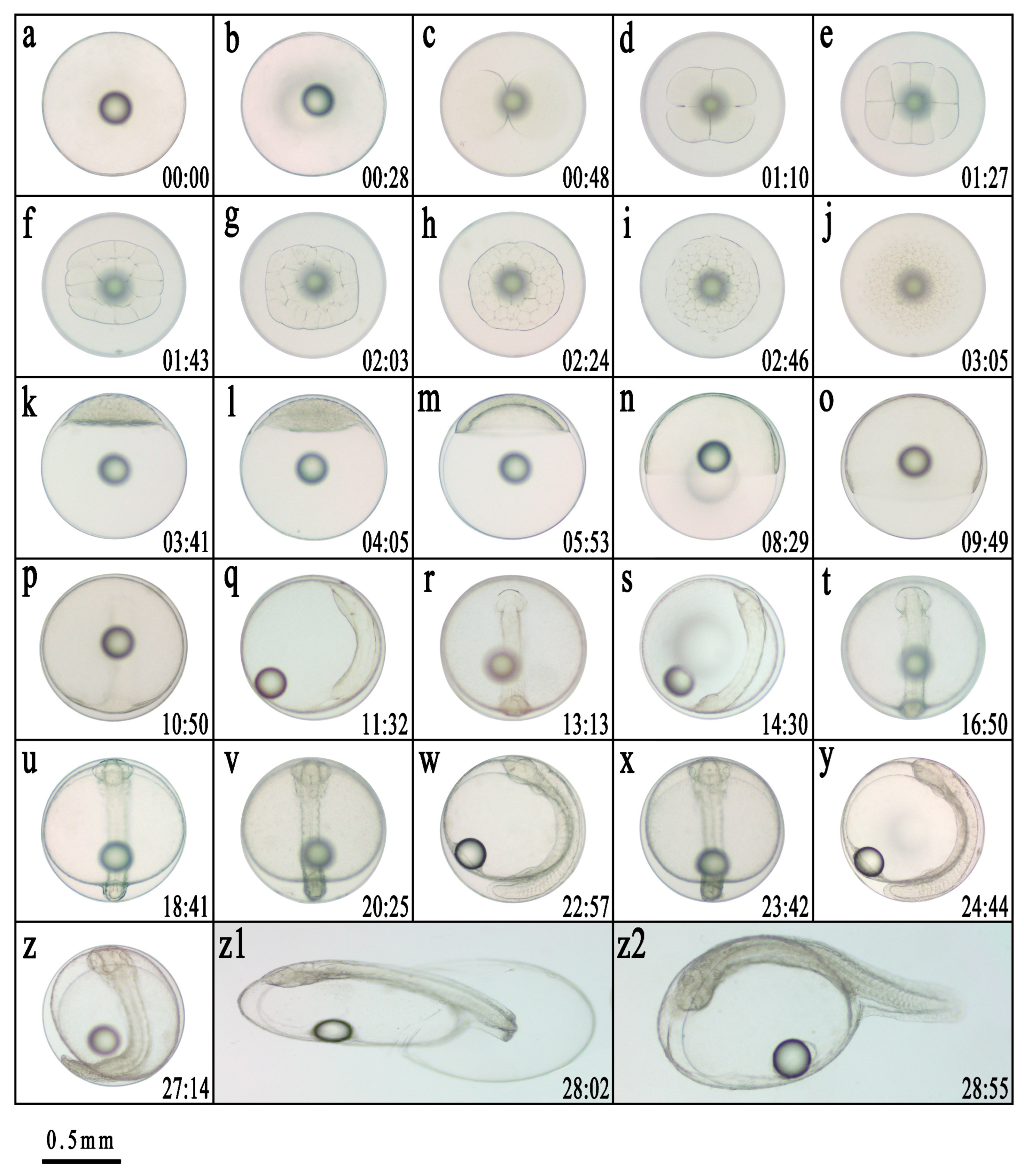
The fertilized eggs of the hybrid germplasm were transparent, spherical, and buoyant. At water temperatures of 24.8 ± 0.5 °C, the fertilized egg completed embryonic development in 28 h 55 min. Early embryonic development comprises six major stages: cleavage, blastula, gastrula, neurula, organogenesis, and hatching. The developmental characteristics of each stage are summarized in Table 1, and the main morphological features are illustrated in Figure 1.
Table 1.
Hybrid embryo development schedule of Epinephelus fasciatus ♀ × Plectropomus leopardus ♂.
Figure 1.
Embryonic development of Epinephelus fasciatus ♀ × Plectropomus leopardus ♂. (a): Fertilized egg; (b): Blastodisc formation; (c): 2-cell stage; (d): 4-cell stage; (e): 8-cell stage; (f): 16-cell stage; (g): 32-cell stage; (h): 64-cell stage; (i): Multi-cell stage; (j): morula stage; (k): High blastula stage; (l): Low blastula stage; (m): Early gastrula stage; (n): Middle gastrula stage; (o): Late gastrula stage; (p): Embryo body stage; (q): Closure of blastopore stage; (r): Optic capsule stage; (s): Muscle burl stage; (t): Otocyst stage; (u): Brain vesicle stage; (v): Heart stage; (w): Tail-bud stage; (x): Crystal stage; (y): Heart-beating stage; (z): Pre incubation stage; (z1): Hatching stage; (z2): Newly hatched larvae. The number in the lower right corner represents the time in hours and minutes after fertilization. The scale is 0.5 mm.
The cleavage pattern of the hybrid embryo was incomplete discoid cleavage, with an egg diameter of 0.90 ± 0.02 mm. At 00:41 h after fertilization (HAF) (Figure 1a), a curved disk-shaped blastoderm began to form at the animal pole (Figure 1b). At 00:48 HAF, the embryo reached the cleavage stage, which included eight phases: the 2-cell, 4-cell, 8-cell, 16-cell, 32-cell, 64-cell, multicellular, and morula stages (Figure 1c–j). The blastomeres were divided into equal-sized cells from the 2-cell stage to the 32-cell stage. However, the dividing cells were irregular and unequal in size and began to overlap. At 03:05 HAF, the embryo entered the morula stage, with the appearance of a mulberry-shaped mass of cells. At 03:41 HAF, the embryos progressed to the blastula stage (Figure 1k,l), and at 05:53 HAF, the embryo’s development reached the gastrula stage (Figure 1m–o). At 10:50 HAF, the embryos entered the neurula stage, followed by the organogenesis stage at 13:13 HAF (Figure 1p–w) and the hatching stage at 27:14 HAF (Figure 1(z1)). Embryonic development was completed when more than two-thirds of the larvae had hatched at 28:55 h after fertilization (HAF) (Figure 1(z2)). The fertilization rate was 85.87 ± 5.22%, and the hatching rate was 70.37 ± 0.33%. The rate of deformities observed during embryonic development was 8.94 ± 1.57%. The newly hatched hybrid larvae had plump yolk sacs on their abdomens, with no pigment deposition on the body surface, and the notochord showed the physiological S-shaped curve. The total length of the newly hatched larvae was 2.05 ± 0.37 mm.
3.2. Mitochondrial Genome Composition
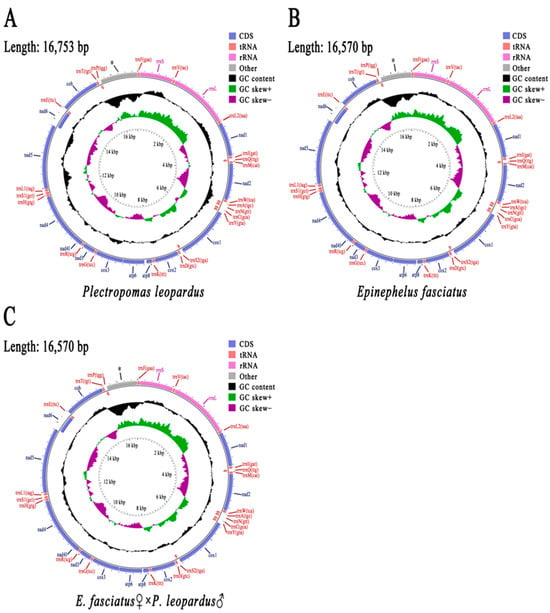
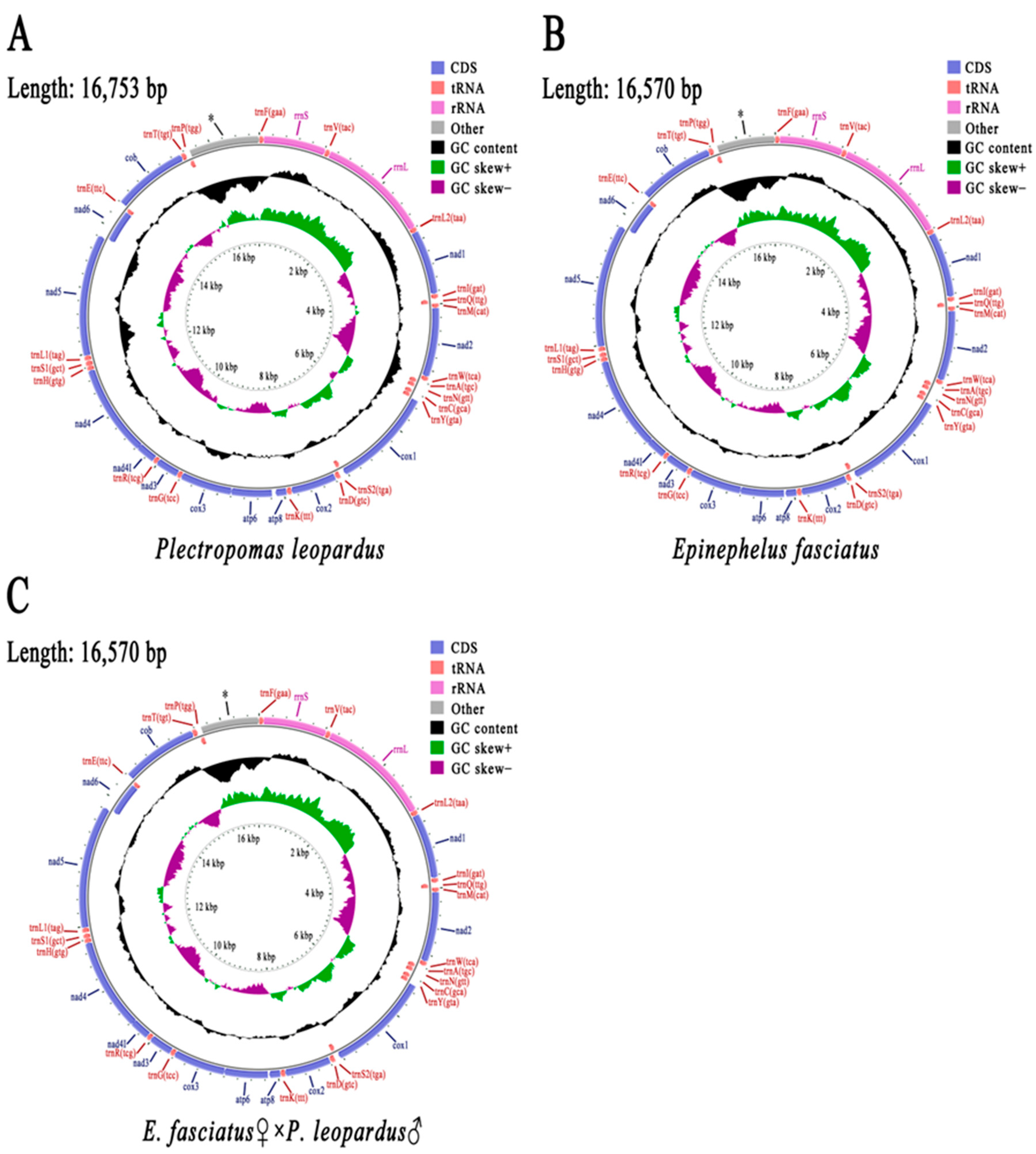
The mitochondrial genome sizes of the paternal P. leopardus, the maternal E. fasciatus, and their hybrid offspring were 16,753 bp, 16,570 bp, and 16,570 bp, respectively (Figure 2). A total of 37 known genes were separately identified in their mitochondrial genomes, including 13 PCGs, 22 tRNA genes, and two rRNA genes (Figure 2, Table S1).
Figure 2.
Mitochondrial genome maps of Plectropomas leopardus (A), Epinephelus fasciatus (B), and E. fasciatus ♀ × P. leopardus ♂ (C). The star * indicates A + T rich region containing origin of replication.
Among the 13 PCGs of the paternal genome, all genes started with ATG except for the start codon of cox1, which began with GTG. There were three stop codons for its PCGs, namely TAG, TAA, and T. For the maternal E. fasciatus, three start codons were found in the mitochondrial genes, where the atp6 gene started with ATA, while cox1 started with GTG, and all the other genes started with ATG. For its protein stop codons, only TAA and T were found. In the hybrid offspring, only three start codons (GTG, ATA, and ATG) and two stop codons (TAA and T) were found, and the mitochondrial composition was consistent with that of the maternal E. fasciatus. The shortest tRNA of 67 bp, trnC (GCA), and the longest tRNA of 78 bp, trnS1 (GCT), were also identified in the paternal mitochondrial genome. The shortest tRNA of E. fasciatus was 67 bp (trnC (GCA)), while the longest tRNA was 75 bp (trnL2 (TAA)). The corresponding results of the hybrid offspring were consistent with those of the maternal E. fasciatus (Table S1).
The mitochondrial base compositions of the three groupers are shown in Table 2. The ratios of P. leopardus were 29.11% A, 27.92% T, 26.75% C, 16.22% G, with an AT bias of 57.03%, and a GC bias of 42.97%. The nucleotide composition of E. fasciatus revealed 28.73% A, 26.81% T, 28.32% C, 16.14% G, an AT bias of 55.55%, and a GC bias of 44.45%. The hybrid genome included 28.73% A, 26.82% T, 28.32% C, 16.13% G, an AT bias of 55.55%, and a GC bias of 44.45%. The base composition of the hybrid germplasm was largely consistent with that of E. fasciatus, with only slight differences in the T and G base content.
Table 2.
Mitochondrial base composition of Plectropomas leopardus, Epinephelus fasciatus, and E. fasciatus ♀ × P. leopardus ♂.
3.3. Analysis of Mitochondrial PCGs
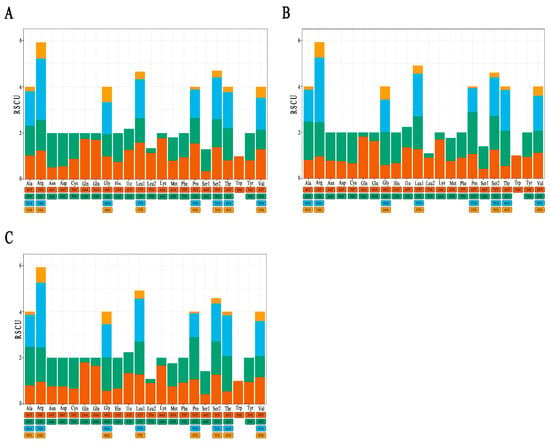
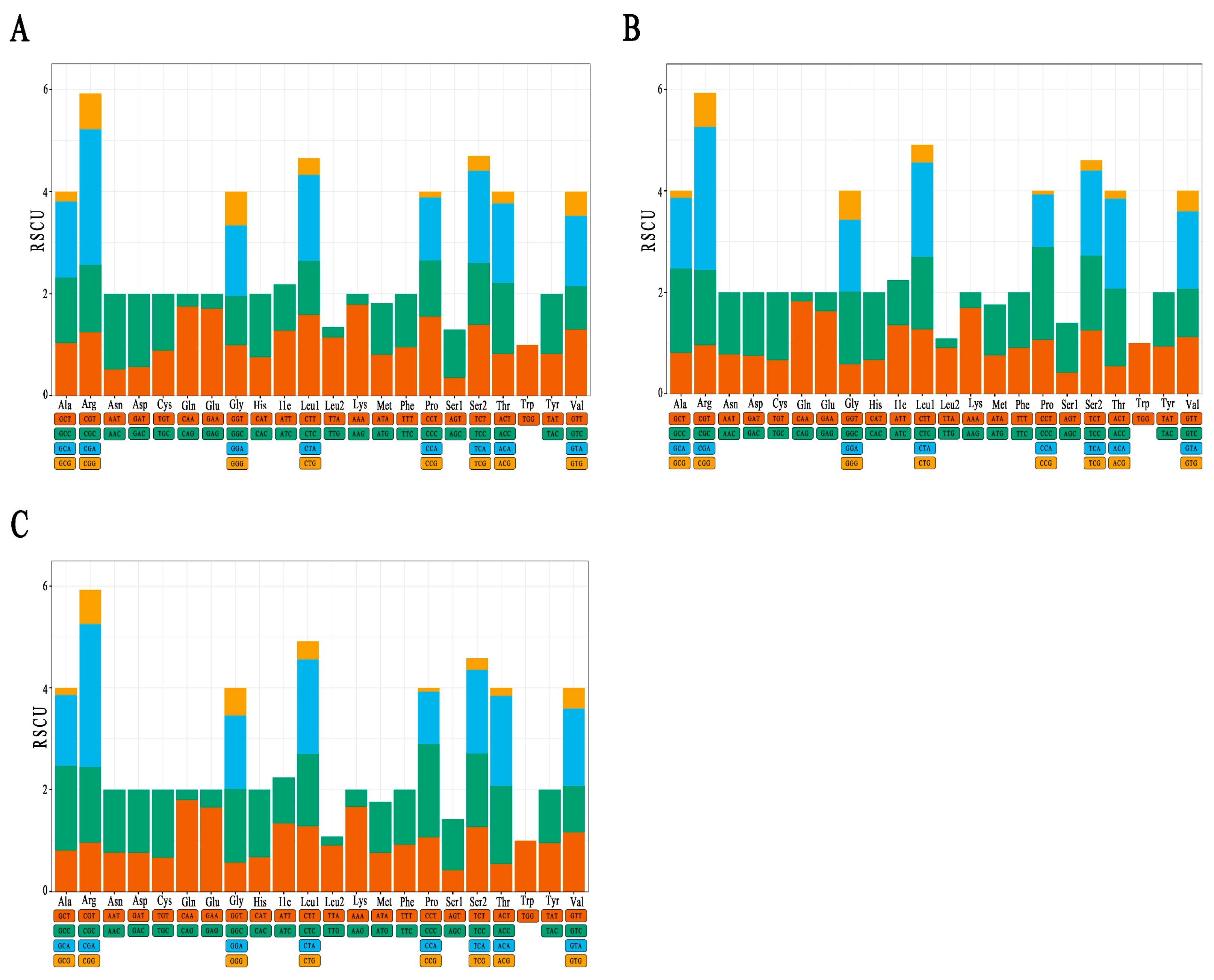
Figure 3 shows the RSCU values of the PCGs in three grouper species. The hybrid offspring had 29 codons with an RSCU greater than 1, and the composition of these codons was entirely consistent with that of the maternal E. fasciatus, but significantly different from the paternal P. leopardus. The paternal P. leopardus had 31 preferred codons with RSCU values above 1, which is two more than both the hybrid offspring and the maternal E. fasciatus. Regarding the nucleotide distribution at the 3′ end of the codons, P. leopardus had 12 codons ending with A, 12 ending with C, and seven ending with T. In contrast, the hybrid offspring and maternal E. fasciatus showed a high level of similarity in this distribution: among the 29 codons with RSCU > 1 in E. fasciatus, 11 ended with A, 13 with C, and five with T, and the hybrid offspring fully inherited this pattern from the mother.
Figure 3.
Relative synonymous codon usage (RSCU) of Plectropomas leopardus (A), Epinephelus fasciatus (B), and E. fasciatus ♀ × P. leopardus ♂ (C).
Furthermore, despite differences between parents and offspring in the number and types of preferred codons (RSCU > 1) among the three grouper species, they shared similar codon abundance patterns. Specifically, amino acids such as Ala, Arg, Gly, Leu1, Pro, Ser2, Thr, and Val had the highest codon abundance, while Trp was encoded by only one codon and showed the lowest abundance across all three species.
3.4. Collinearity Analysis
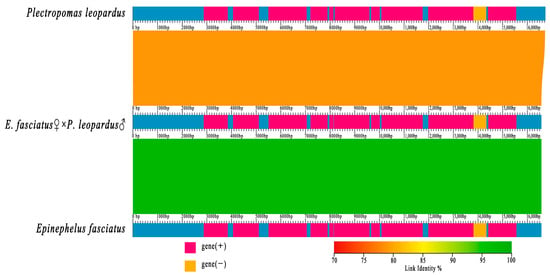
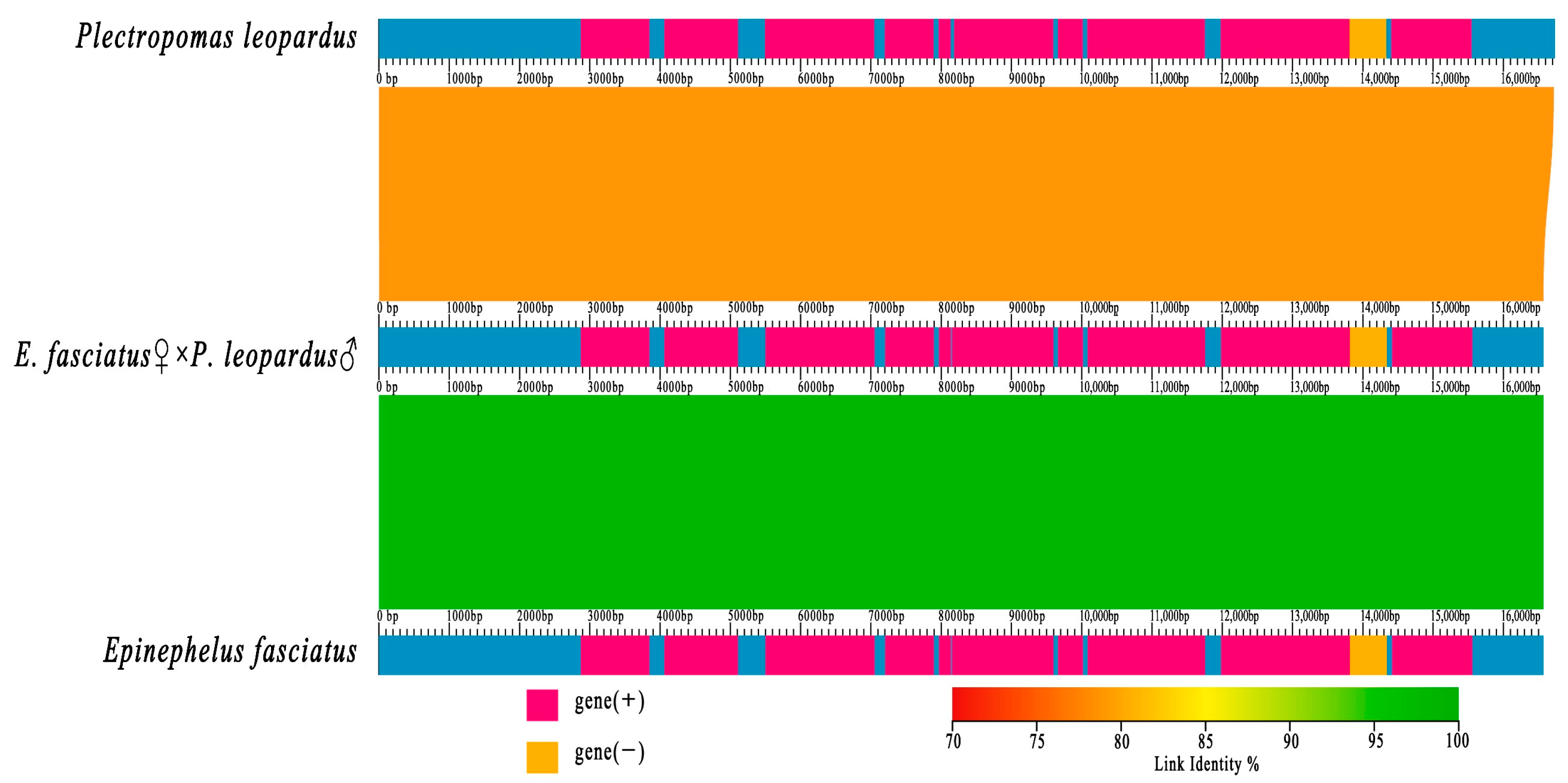
A collinearity comparison of the mitochondrial genomes of the hybrid and its parents was conducted based on their mitochondrial gene linkage relationships (Figure 4). The mitochondrial genomes of the three species were found to be largely consistent in both gene composition and arrangement. However, the hybrid was genetically closely related to the maternal E. fasciatus, which is consistent with the maternal inheritance pattern of vertebrates.
Figure 4.
Mitochondrial whole genome alignment of Plectropomas leopardus, Epinephelus fasciatus, and E. fasciatus ♀ × P. leopardus ♂.
3.5. Ka/Ks Analysis
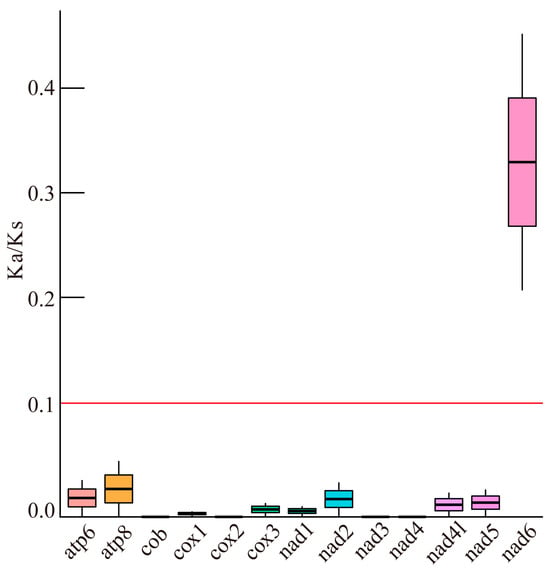
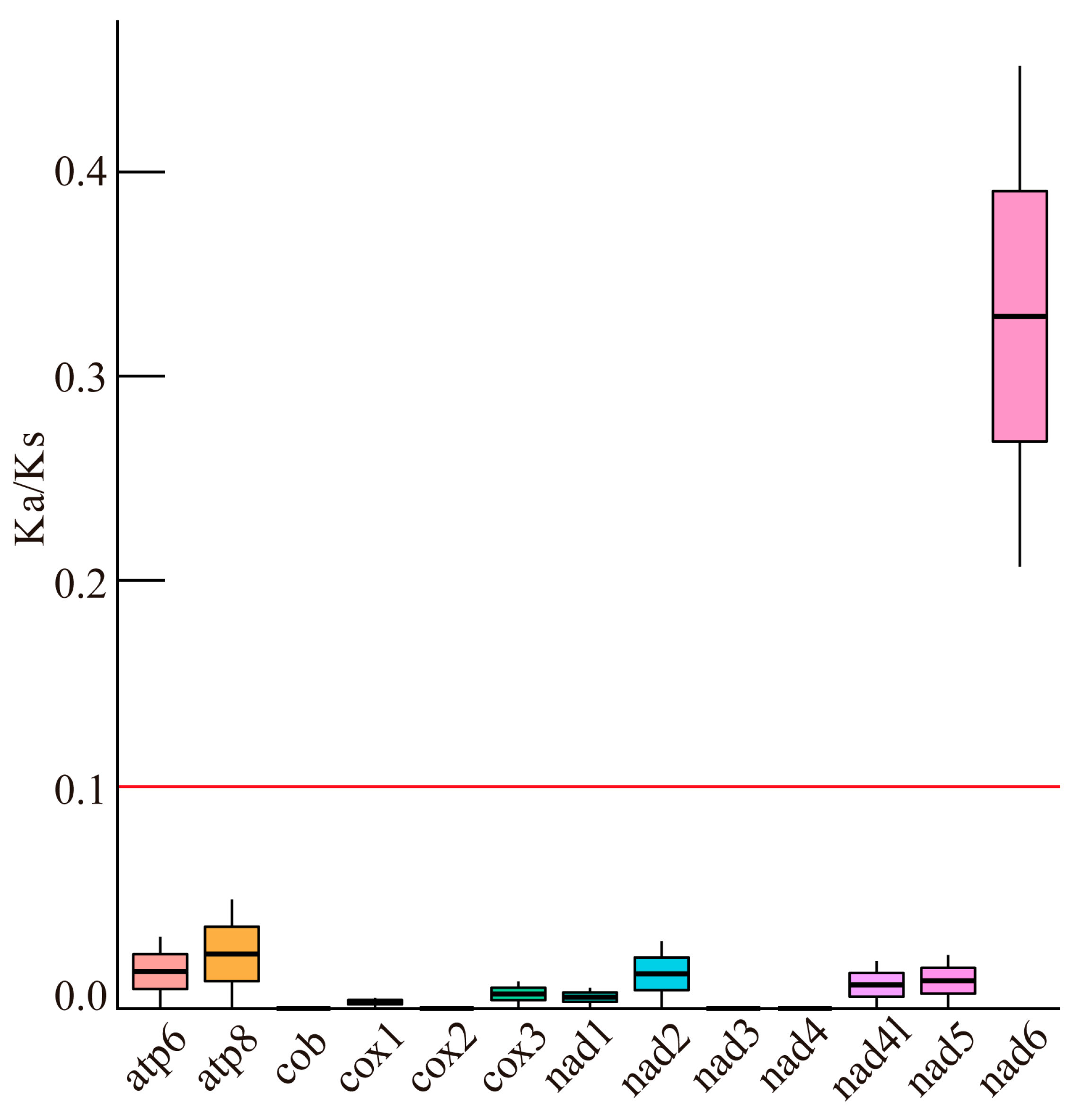
To assess the selective pressure on PCGs within the mitochondrial genome of the hybrid, the non-synonymous (Ka) and synonymous (Ks) substitution rates of each mitochondrial gene were determined (Figure 5). The results showed that the Ka/Ks ratio of all PCGs was less than 1, indicating that the mitochondrial genome underwent purifying selection. Excluding the nad6 gene, which exhibited a higher Ka/Ks ratio of 0.34, the Ka/Ks ratios of the other PCGs were all less than 0.10, suggesting that each gene experienced considerable negative selection pressure with high amino acid sequence conservation.
Figure 5.
Ka/Ks values for 13 PCGs of E. fasciatus ♀ × P. leopardus ♂ compared to Plectropomas leopardus and Epinephelus fasciatus. Boxes in various colors indicate different mitochondrial genes.
3.6. Phylogenetic Analysis
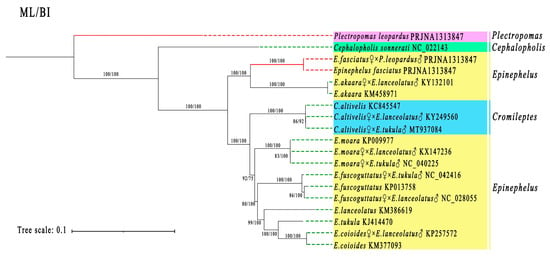
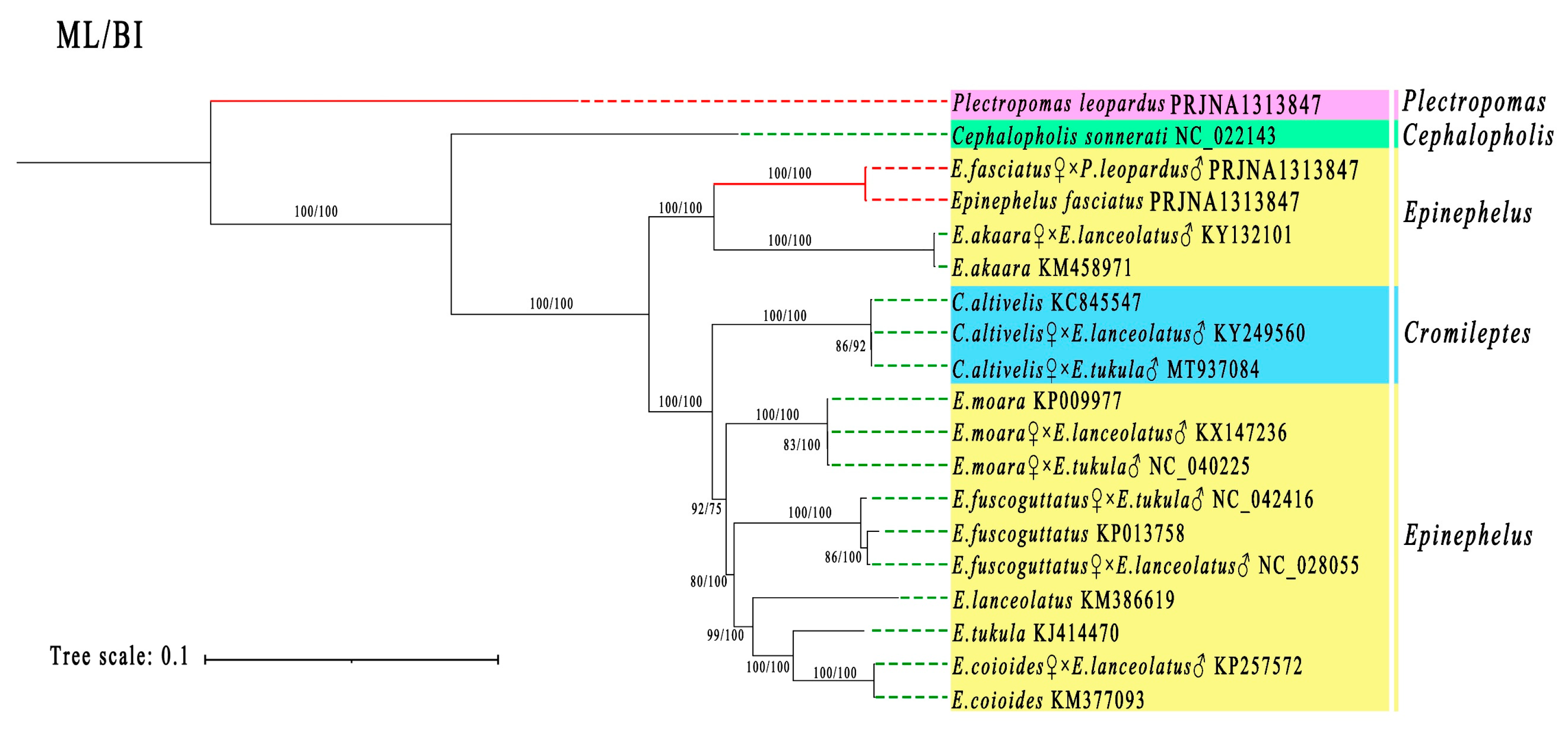
A phylogenetic analysis was conducted using the 13 PCGs sequences from 10 purebred grouper species (Epinephelus, Cromileptes, Plectropomus, and Cephalopholis), and their nine hybrid offspring (Figure 6). The analysis revealed that each hybrid offspring had a closer genetic relationship to its maternal parent, consistent with maternal inheritance patterns. Additionally, the genetic distance between the hybrid and the species from the maternal genus is shorter than that with the paternal P. leopardus. It is important to note that Cromileptes and Epinephelus share a relatively close genetic relationship, showing only slight differences between the genera.
Figure 6.
The combined maximum likelihood (ML) and Bayesian inference (BI) tree of 19 grouper species using 13 protein-coding genes (PCGs). Bootstrap values are shown at the base of each node. GenBank accession numbers follow scientific names. The species from the current study are highlighted with red dashed lines. Various background colors represent different genera of groupers.
4. Discussion
This study successfully bred intergeneric hybrid offspring between P. leopardus (♂) and E. fasciatus (♀) using hybridization breeding technology. At a water temperature of 24 ± 0.8 °C, the hybrid germplasm completed embryo development in 28 h 55 min, with a development rate that is faster than the maternal E. fasciatus (31 h 12 min) [13]. The total length of the newly hatched larvae was 2.05 ± 0.37 mm, significantly longer than that of the maternal E. fasciatus (1.44 ± 0.06 mm) [13], indicating that the hybrid germplasm exhibited growth heterosis in its early development, and providing theoretical support for the subsequent cultivation and promotion of this new hybrid germplasm. Similarly, the hybrid F1 of E. moara ♀ × E. septemfasciatus ♂ exhibited a greater body length than its parents E. moara ♀ and E. septemfasciatus ♂ [14]. Furthermore, the total length of the newly hatched larvae of E. moara ♀ × E. lanceolatus ♂ was 1.95 ± 0.06 mm, which was significantly longer than that of E. moara (1.64 ± 1.42 mm) or E. lanceolatus (1.53 ± 0.12 mm) [15]. The growth heterosis in response to hybridization breeding is crucial for the genetic improvement of the growth of E. fasciatus. This study represents the first successful breakthrough in cultivating viable intergeneric hybrid grouper (E. fasciatus ♀ × P. leopardus ♂). However, systematic growth comparison experiments have not yet been conducted, and relevant experiments will be supplemented in subsequent research.
The hybrid germplasm hatched earlier than the maternal E. fasciatus when incubated under the same conditions, indicating that the offspring developed embryonically at a faster rate, which suggests improved growth performance. The speed of embryonic development in groupers varies depending on incubation temperature. While the degree–hours model (calculated as water temperature multiplied by the number of hours elapsed) sums up temperature exposure, this two-parameter model uses the product of degree–hours to account for both acceleration and deceleration of development at high and low temperatures, providing more precise estimates of embryonic development [16]. The hybrid germplasm required fewer degree–hours than the maternal E. fasciatus but more than the paternal P. leopardus (Table 3). The incubation temperature for the paternal P. leopardus was relatively higher, about 30 °C, compared to 24.8 °C for both the hybrid germplasm and the maternal E. fasciatus. Temperature plays a crucial role in determining the speed of embryonic development [17]. Similarly to some fish species such as E. malabaricus and E. septemfasciatus, growth rates tend to increase with rising temperatures [18,19]. This observation may help in understanding species’ adaptability to water temperature and in optimizing temperature control for artificial breeding. Moreover, the hybrid germplasm, when incubated at the same relatively low temperature, showed initial potential to balance tolerance to low temperatures with efficient development. With further experimental data, this could offer a new approach for cultivating grouper seedlings under low-temperature conditions.
Table 3.
Comparison of degree–hours among different grouper species.
The mitochondrial genomes of P. leopardus, E. fasciatus, and their hybrid offspring were composed of 13 PCGs, 22 tRNA genes, and 2 rRNA genes. Most PCGs in the three mitochondrial genomes started with the typical ATG, which is common to many bony fish [20]. However, the GTG start codon of the cox1 gene has been reported in a few groupers [21]. In addition, the atp6 gene of most groupers usually starts with CTG or ATG. For example, in the hybrid Hyporthodus septemfasciatus ♀ × E. moara ♂, except for the cox1 and atp6, which use GTG and CTG as the start codons, respectively, all other genes use ATG as the start codon [16]. In the hybrid E. moara ♀ × E. tukula ♂, except for cox1 and nd4, which use GTG, atp6 that uses CTG, and nd3 that uses ATA, the remaining genes all use ATG [22]. Interestingly, the atp6 gene of the current hybrid germplasm and the maternal E. fasciatus uses ATA as the start codon, which is uncommon in most bony fish.
Stop codon usage varies among genes. In the new hybrid germplasm, only two types of stop codons, TAA and the incomplete stop codon T, were detected in the mitochondrial genome, which is consistent with that of the maternal E. fasciatus. However, the paternal P. leopardus had three types of stop codons, including TAA, TAG, and T. The presence of incomplete stop codons is relatively common in fish mitochondrial genomes and can be completed as TAA during post-transcriptional polyadenylation of the mRNA [23]. This is a “correction mechanism” in gene expression that ensures that even if the stop codon on the DNA is incomplete, it can still be correctly identified, avoiding translational read-through.
The mitochondrial genomes of P. leopardus, E. fasciatus, and their hybrid offspring all showed a higher AT than GC bias. The G content of the three groupers was lower than 17%, indicating a strong anti-G bias [24]. Most of the base composition of the hybrid largely corresponds to that of the maternal species, further supporting the theory of mitochondrial maternal inheritance. However, differences in the composition of T and G between the hybrid offspring and the maternal E. fasciatus can serve as the basis for discrimination between the two.
The relative probability of a specific codon in the synonymous codons encoding the corresponding amino acid can reflect the degree of codon preference, where the RSCU value is typically used to evaluate the usage bias of synonymous codons [25,26]. The RSCU results of P. leopardus, E. fasciatus and their hybrid offspring all indicate that Ala (GCT, GCC, GCA, and GCG), Arg (CGT, CGC, CGA, and CGG), Gly (GGT, GGC, GGA, and GGG), Leu1 (CTT, CTC, CTA, and CTG), Pro (CCT, CCC, CCA, and CCG), Ser2 (TCT, TCC, and T), Thr (ACT, ACC, ACA, and ACG), and Val (GTT, GTC, GTA, and GTG) are the most abundant amino acids, while Trp (TGG) is rarely used. The PCGs tend to use A and C rather than T and G on the third codon, similar to other bony fish. In E. bilobatus, E. maculatus, and E. longispinis, the PCG codons ending with A and C are the most common, while those ending with T and G are the fewest [23]. In addition, the hybrid offspring were highly consistent with the maternal E. fasciatus in codon preference, suggesting that maternal inheritance has a robust impact on the offspring’s mitochondrial coding sequence. Moreover, the RSCU values of the three species were not all equal to 1, indicating that there are varying degrees of bias in their utilization of amino acids. The frequency of codon usage is linked to how strongly a gene is expressed; genes that are expressed very efficiently show a stronger bias in codon usage compared to those expressed less efficiently, and they typically favor specific synonymous codons [27].
Genomic collinearity refers to the genetic linkage relationship, which assesses the evolutionary scale and phylogenetic distance between different species. In molecular evolution, Ka/Ks is a commonly used metric for assessing selection pressure and evolutionary relationships between species [28]. In this study, the Ka/Ks ratio for all PCGs was less than 1, signifying that the mitochondrial genomes of both the hybrid and parents underwent purifying selection. Mitochondrial PCGs are essential for oxygen use and energy metabolism, which are critical for an organism’s survival and growth. The low Ka/Ks ratios observed in all PCGs indicate their functional preservation, reflecting an evolutionary approach to adapting to ecological niches. Among the 13 PCGs, the nad6 gene exhibited a relatively higher Ka/Ks ratio (0.34), but it still fell under purifying selection (less than 1), implying it experienced weaker negative selection pressure. This observation is consistent with studies on vertebrate and mollusk mitochondrial genomes [29]. It also aligns with the more relaxed evolutionary constraints seen in other grouper species [22], suggesting that variations in this gene may play an important role in adaptive evolution by modulating energy metabolism [30]. Using mitochondrial nad6 as an additional marker to study population variation in Lepidoptera revealed generally low DNA polymorphism [31]. This corresponds with the typically low genetic diversity found in Lepidoptera pest populations, emphasizing the role of nad6 in population genetic diversity. Moreover, variations in the nad6 gene have been found to significantly impact the development of organs like kernels in distantly related species such as maize, underscoring the gene’s importance in regulating growth and development [32].
Phylogenetic studies, along with other analyses, indicate that the new intergeneric hybrid germplasm is genetically closer to the maternal E. fasciatus and follows the typical pattern of mitochondrial inheritance from the mother. Moreover, the genetic distance between the hybrid and the maternal genus species is shorter compared to that with the paternal P. leopardus. Within the Serranidae family, mitochondrial genomes of hybrid groupers consistently exhibit maternal inheritance [33,34,35]. This strict maternal transmission maintains the stability of essential genes involved in energy metabolism, providing a genetic basis for the hybrids’ high survival rates and adaptability to their environment. Importantly, the similarity between the hybrid’s mitochondrial genome and that of its maternal parent correlates positively with the genetic distance between the parents: the greater the genetic distance, the more intact the maternal mitochondrial genes inherited by the hybrid. For instance, in interspecific hybridization, the COⅠ gene haplotype of E. coioides ♀ × E. lanceolatus ♂ shows 99.7–100% similarity with the maternal E. coioides, with only minor nucleotide variations [36]. In contrast, in intergeneric hybridization, the genetic distance between Cromileptes and Epinephelus is much larger. The mitochondrial genes of the hybrid offspring from C. altivelis ♀ × E. tukula ♂ exhibit 100% homology with the maternal C. altivelis, completely excluding paternal gene influence [35]. Furthermore, the closer genetic relatedness of Cromileptes and Epinephelus render them suitable for distant hybridization breeding. In aquaculture, the hybrid offspring from these two genera have a relatively high survival rate and exhibit prominent growth heterosis. For example, the body weight of C. altivelis ♀ × E. tukula ♂ at 330 days of age was 220.50 ± 25.30 g, which was 1.55 times that of the maternal C. altivelis [9]. Furthermore, the growth rate of C. altivelis ♀ × E. lanceolatus ♂ was significantly faster than that of the maternal C. altivelis, at the absolute value of 1.6 times higher [10].
5. Conclusions
This study showed for the first time that E. fasciatus ♀ × P. leopardus ♂ intergeneric hybrid populations can be successfully established. The fertilized eggs of the new germplasm completed their embryonic development within 28 h 55 min, with newly hatched larvae measuring 2.05 ± 0.37 mm in total length. The hybrid’s mitochondrial genome was 16,570 base pairs long, and analyses of collinearity, Ka/Ks ratios, and phylogenetics collectively indicated that the hybrid germplasm is more closely related to its maternal E. fasciatus, following a maternal inheritance pattern. These findings contribute to expanding the mitochondrial genome database of groupers and offer a critical reference for developing new grouper germplasm.
Supplementary Materials
The following supporting information can be downloaded at: https://www.mdpi.com/article/10.3390/ani15233445/s1, Table S1: Mitochondrial genome characteristics of Plectropomas leopardus, Epinephelus fasciatus, and E. fasciatus ♀ × P. leopardus ♂.
Author Contributions
Conceptualization, Y.T., Y.G. and Y.L.; methodology, T.D., Y.G. and X.J.; software, S.W.; validation, Y.W., L.L. and C.Z.; formal analysis, X.J., T.D., L.W., Z.L., L.L. and Y.X.; investigation, X.J., T.D., Y.W., S.W., C.Z., F.Y., Y.X. and L.L.; resources, Y.T., T.D. and Y.L.; data curation, Y.W., S.W., C.Z. and F.Y.; writing—original draft preparation, X.J.; writing—review and editing, Y.L. and Y.X.; visualization, F.Y., Z.L. and L.W.; supervision, Y.G. and Y.L.; project administration, Y.T., Y.G. and Y.L.; funding acquisition, Y.T., L.W., Z.L. and Y.L. All authors have read and agreed to the published version of the manuscript.
Funding
This research was funded by Hainan Province Science and Technology Special Fund (ZDYF2025SXLH002); the Key Research and Development Project of Shandong Province (2022LZGC0-16); Shandong Province Natural Science Foundation (ZR2025QC146); Research on breeding technology of candidate species for Guangdong modern marine ranching (2024-MRB-00-001); Hainan Seed Industry Laboratory (B25H10CBP); the National Key Research and Development Program of China (2022YFD2400502; 2022YFD2400103); China Agriculture Research System of MOF and MARA (CARS-47-G31); Qingdao Natural Science Foundation (24-4-4-zrjj-39-jch); Qingdao Science and Technology Benefiting the People Demonstration Project (24-1-8-xdny-3-nsh); the Central Public-interest Scientific Institute Basal Research Fund, CAFS (2025CG02; 2020TD19); and the Yellow Sea Fisheries Research Institute Research Fees (20603022025002; 20603022024013).
Institutional Review Board Statement
The research in this manuscript has been conducted under the Experimental Animal Care, Ethics and Safety Inspection Form Yellow Sea Fisheries Research Institute, CAFS (approval code: YSFRI-2025072 and approval date: 4 February 2025).
Informed Consent Statement
Informed consent was obtained from all subjects involved in the study.
Data Availability Statement
The mitochondrial genome data presented in the study are deposited in the NCBI SRA repository (https://www.ncbi.nlm.nih.gov/ (accessed on 22 August 2025), accession number PRJNA1313847).
Conflicts of Interest
The author declares no conflicts of interest.
References
- Kuriiwa, K.; Chiba, S.N.; Motomura, H.; Matsuura, K. Phylogeography of Blacktip Grouper, Epinephelus fasciatus (Perciformes: Serranidae), and influence of the Kuroshio Current on cryptic lineages and genetic population structure. Ichthyol. Res. 2014, 61, 361–374. [Google Scholar] [CrossRef] [Scilit]
- Zhu, X.; Hao, R.; Tian, C.; Zhang, J.; Zhu, C.; Li, G. Integrative transcriptomics and metabolomics analysis of body color formation in the leopard coral grouper (Plectropomus leopardus). Front. Mar. Sci. 2021, 8, 726102. [Google Scholar] [CrossRef] [Scilit]
- Pratchett, M.S.; Caballes, C.F.; Hobbs, J.-P.A.; DiBattista, J.D.; Bergseth, B.; Waldie, P.; Champion, C.; Mc Cormack, S.P.; Hoey, A.S. Variation in the Physiological Condition of Common Coral Trout (Plectropomus leopardus) Unrelated to Coral Cover on the Great Barrier Reef, Australia. Fishes 2023, 8, 497. [Google Scholar] [CrossRef] [Scilit]
- Thành, P.N.; Takafumi, A.; Mushirobira, Y.; Murata, R.; Soyano, K. Growth, sexual transition, and maturation of blacktip grouper Epinephelus fasciatus under long-term artificial rearing: Puberty and its associated physiological and endocrine changes. Aquaculture 2022, 560, 738595. [Google Scholar] [CrossRef] [Scilit]
- Kawabe, K.; Kohno, H. Morphological development of larval and juvenile blacktip grouper, Epinephelus fasciatus. Fish. Sci. 2009, 75, 1239–1251. [Google Scholar] [CrossRef] [Scilit]
- Sun, Z.; Xia, S.; Feng, S.; Zhang, Z.; Rahman, M.M.; Rajkumar, M.; Jiang, S. Effects of water temperature on survival, growth, digestive enzyme activities, and body composition of the leopard coral grouper Plectropomus leopardus. Fish. Sci. 2015, 81, 107–112. [Google Scholar] [CrossRef] [Scilit]
- Li, Z.T.; Tian, Y.S.; Tang, J.; Cheng, M.L.; Ma, W.H.; Pang, Z.F.; Li, W.S.; Liu, J.C.; Wang, X.M.; Zhai, J.M. Growth characteristics and comparative analysis of Yunlong grouper with Epinephelus moara and Zhenzhulongdan grouper. J. Fish. China 2019, 43, 1005–1017. [Google Scholar] [CrossRef]
- Chen, S.; Tian, Y.; Li, Z.; Liu, Y.; Li, Z.; Duan, P.; Li, L.; Wang, X.; Wang, L.; He, X.; et al. Heterosis in growth and low temperature tolerance in Jinhu grouper (Epinephelus fuscoguttatus ♀ × Epinephelus tukula ♂). Aquaculture 2023, 562, 738751. [Google Scholar] [CrossRef] [Scilit]
- Li, Z.T.; Tian, Y.S.; Cheng, M.L.; Wu, Y.P.; Zhang, J.J.; Li, Z.Q.; Wang, L.N.; Ma, W.H.; Pang, Z.F.; Sun, L.J.; et al. Comparison of development and growth of hybrid Cromileptes altivelis (♀) × Epinephelus tukula (♂). S. China Fish. Sci. 2020, 16, 17–26. [Google Scholar] [CrossRef]
- Gong, S.; Wang, T.; Cai, C.; Cai, J.; Yang, Y.; Zhong, C.; Wu, X.; Tao, Y.; Zeng, L.; Wei, Q.; et al. Development and characterization of a novel intergeneric hybrid grouper (Cromileptes altivelis ♀ × Epinephelus lanceolatus ♂). Aquaculture 2025, 595, 741493. [Google Scholar] [CrossRef] [Scilit]
- Yan, F.; Wang, C.; Zhu, Y.; Wu, J.; Yang, J.; Gan, S.; Lin, H.R.; Zhang, Y.; Li, S. Transcriptome analysis reveals the dynamics of gene expression during early embryonic development of hybrid groupers. Aquaculture 2025, 596, 741746. [Google Scholar] [CrossRef] [Scilit]
- Liu, Y.; Tian, Y.; Wang, L.; Li, Z.; Zhang, J.; Wu, Y.; Chen, S.; Li, L.; Li, W.; Ma, W.; et al. Construction of high-density linkage maps and QTL mapping for growth-related traits in F1 hybrid Yunlong grouper (Epinephelus moara♀ × E. lanceolatus♂). Aquaculture 2022, 548, 737698. [Google Scholar] [CrossRef] [Scilit]
- Ding, T.T.; Tian, Y.S.; Bai, D.Q.; Sun, F.F.; Ma, W.H.; Pang, Z.F.; Liu, Y. Observation on Embryonic and Post-Embryonic Development, and Morphological Changes of Larval, Juvenile and Young Epinephelus fasciatus. Prog. Fish. Sci. 2025, 46, 156–166. [Google Scholar] [CrossRef]
- Li, L.Y.; Chen, C.; Wang, Q.Y.; Wu, L.M.; Song, Z.X.; Huo, J.M.; Ao, G.L.; Da, T.Z. Comparative analysis of growth characteristics between hybrid F1 by Epinephelus moara(♀) × Epinephelus septemfasciatus(♂) and the offspring of their parents. Prog. Fish. Sci. 2015, 36, 42–49. [Google Scholar] [CrossRef]
- Chen, Z.F.; Tian, Y.S.; Wang, P.-F.; Tang, J.; Liu, J.-C.; Ma, W.-H.; Li, W.-S.; Wang, X.-M.; Zhai, J.-M. Embryonic and larval development of a hybrid between kelp grouper Epinephelus moara♀ × giant grouper E. lanceolatus♂ using cryopreserved sperm. Aquacult. Res. 2018, 49, 1407–1413. [Google Scholar] [CrossRef] [Scilit]
- Kim, Y.H.; Park, J.Y.; Huynh, D.T.; Kim, K.R.; Bang, I.-C. Complete mitochondrial genome of the hybrid grouper Hyporthodus septemfasciatus (♀)× Epinephelus moara (♂)(Perciformes, Serranidae) and results of a phylogenetic analysis. Mitochondrial DNA Part B 2021, 6, 771–773. [Google Scholar] [CrossRef] [Scilit]
- Xu, Y.; Tian, Y.; Wang, S.; Ding, T.; Wang, L.; Li, Z.; Li, L.; Liu, Y. Embryonic and Larval Development of an Interspecific Grouper Backcross Between the Kelp Grouper (Epinephelus moara)♀ and KGGG (E. moara♀ × E. lanceolatus♂)♂. Fishes 2025, 10, 488. [Google Scholar] [CrossRef] [Scilit]
- Yoseda, K.; Dan, S.; Sugaya, T.; Yokogi, K.; Tanaka, M.; Tawada, S. Effects of temperature and delayed initial feeding on the growth of Malabar grouper (Epinephelus malabaricus) larvae. Aquaculture 2006, 256, 192–200. [Google Scholar] [CrossRef] [Scilit]
- Song, Y.B.; Lee, C.H.; Kang, H.-C.; Kim, H.-B.; Lee, Y.-D. Effect of water temperature and salinity on the fertilized egg development and larval development of sevenband grouper, Epinephelus septemfasciatus. Dev. Reprod. 2013, 17, 369. [Google Scholar] [CrossRef] [Scilit]
- Lü, Z.; Zhu, K.; Jiang, H.; Lu, X.; Liu, B.; Ye, Y.; Jiang, L.; Liu, L.; Gong, L. Complete mitochondrial genome of Ophichthus brevicaudatus reveals novel gene order and phylogenetic relationships of Anguilliformes. Int. J. Biol. Macromol. 2019, 135, 609–618. [Google Scholar] [CrossRef] [Scilit]
- Zhu, K.; Huang, G.; Zhang, D.; Guo, Y.; Yu, D. The complete nucleotide sequence of Malabar grouper (Epinephelus malabaricus) mitochondrial genome. Mitochondrial DNA Part A 2016, 27, 2087–2088. [Google Scholar] [CrossRef] [Scilit]
- Li, Z.; Tian, Y.; Cheng, M.; Wang, L.; Zhang, J.; Wu, Y.; Pang, Z.; Ma, W.; Zhai, J. The complete mitochondrial genome of the hybrid grouper Epinephelus moara (♀) × Epinephelus tukula (♂), and phylogenetic analysis in subfamily Epinephelinae. Acta Oceanol. Sin. 2020, 39, 65–75. [Google Scholar] [CrossRef] [Scilit]
- He, H.; Gao, Z.; Hu, Z.; Cai, L.; Huang, Y.; Zhou, M.; Liang, R. Comparative characterization and phylogenetic analysis of complete mitogenome of three taxonomic confused groupers and the insight to the novel gene tandem duplication in Epinephelus. Front. Mar. Sci. 2024, 11, 1450003. [Google Scholar] [CrossRef] [Scilit]
- Zhuang, X.; Qu, M.A.; Zhang, X.; Ding, S. Comprehensive description and evolutionary analysis of 22 grouper (Perciformes, Epinephelidae) mitochondrial genomes with emphasis on two novel genome organizations. PLoS ONE 2013, 8, e73561. [Google Scholar] [CrossRef] [Scilit] [PubMed]
- Wang, C.; Ye, P.; Liu, M.; Zhang, Y.; Feng, H.; Liu, J.; Zhou, H.; Wang, J.; Chen, X. Comparative analysis of four complete mitochondrial genomes of Epinephelidae (Perciformes). Genes 2022, 13, 660. [Google Scholar] [CrossRef] [Scilit] [PubMed]
- Wen, J. Complete Mitochondrial Genome of King Threadfin, Polydactylus macrochir (Günther, 1867): Genome Characterization and Phylogenetic Analysis. Genes 2025, 16, 88. [Google Scholar] [CrossRef] [Scilit]
- Liao, X.; Shih, Y.; Jia, C.; Gao, T. Complete Mitochondrial Genome of Four Peristediidae Fish Species: Genome Characterization and Phylogenetic Analysis. Genes 2024, 15, 557. [Google Scholar] [CrossRef] [Scilit]
- Zhang, D.; Zou, H.; Wu, S.G.; Li, M.; Jakovlić, I.; Zhang, J.; Chen, R.; Li, W.X.; Wang, G.T. Three new Diplozoidae mitogenomes expose unusual compositional biases within the Monogenea class: Implications for phylogenetic studies. BMC Evol. Biol. 2018, 18, 133. [Google Scholar] [CrossRef] [Scilit]
- Monnens, M.; Thijs, S.; Briscoe, A.G.; Clark, M.; Frost, E.J.; Littlewood, D.T.J.; Sewell, M.; Smeets, K.; Artois, T.; Vanhove, M.P. The first mitochondrial genomes of endosymbiotic rhabdocoels illustrate evolutionary relaxation of atp8 and genome plasticity in flatworms. Int. J. Biol. Macromol. 2020, 162, 454–469. [Google Scholar] [CrossRef] [Scilit]
- Dowling, D.K.; Friberg, U.; Lindell, J. Evolutionary implications of non-neutral mitochondrial genetic variation. Trends Ecol. Evol. 2008, 23, 546–554. [Google Scholar] [CrossRef] [Scilit]
- Silva-Brandão, K.L.; Lyra, M.L.; Santos, T.V.; Seraphim, N.; Albernaz, K.C.; Pavinato, V.A.; Martinelli, S.; Cônsoli, F.L.; Omoto, C. Exploitation of mitochondrial nad6 as a complementary marker for studying population variability in Lepidoptera. Genet. Mol. Biol. 2011, 34, 719–725. [Google Scholar] [CrossRef] [Scilit] [PubMed]
- Guan, Z.; Wang, Y.; Yang, J. The maize mTERF18 regulates transcriptional termination of the mitochondrial nad6 gene and is essential for kernel development. J. Genet. Genom. 2025, 52, 422–431. [Google Scholar] [CrossRef] [Scilit] [PubMed]
- Chen, J.; Ye, Z.; Yu, Z.; Wang, J.; Li, P.; Chen, X.; Liu, Y.; Zhang, Y. The complete mitochondrial genome of the hybrid grouper (Cromileptes altivelis♀ × Epinephelus lanceolatus♂) with phylogenetic consideration. Mitochondrial DNA Part B 2017, 2, 171–172. [Google Scholar] [CrossRef] [Scilit]
- Tang, Z.; Chen, J.; Tang, L.; Chen, X.; Li, S.; Liu, Y.; Zhang, Y.; Lin, H.; Zhao, M. The complete mitochondrial genome of the hybrid grouper Epinephelus coioides♀ × Epinephelus akaara♂ with phylogenetic consideration. Mitochondrial DNA Part B 2017, 2, 31–32. [Google Scholar] [CrossRef] [Scilit]
- Li, L.; Tian, Y.; Li, Z.; Li, Z.; Chen, S.; Wang, L.; Niu, Y.; Wang, Q.; Wang, X.; Lin, H.; et al. Characterization of the complete mitochondrial genome of the hybrid grouper (Cromileptes altivelis♀ × Epinephelus tukula♂) with phylogenetic consideration. Mitochondrial DNA Part B 2021, 6, 1034–1035. [Google Scholar] [CrossRef] [Scilit]
- Zhou, H.; Yang, S.; Gao, C.; Zhang, L.; Zhang, H.; Li, S.; Zhang, Y.; Meng, Z.; Liu, X.; Lin, H. Analysis of Genetic Variability of mtDNA COI Genes between two grouper hybrids and their parents. J. Trop. Biol. 2012, 3, 1–10. [Google Scholar] [CrossRef]

Disclaimer/Publisher’s Note: The statements, opinions and data contained in all publications are solely those of the individual author(s) and contributor(s) and not of MDPI and/or the editor(s). MDPI and/or the editor(s) disclaim responsibility for any injury to people or property resulting from any ideas, methods, instructions or products referred to in the content. |
© 2025 by the authors. Licensee MDPI, Basel, Switzerland. This article is an open access article distributed under the terms and conditions of the Creative Commons Attribution (CC BY) license (https://creativecommons.org/licenses/by/4.0/).