Increasing Risks to the Health of the Invertebrates—Balancing between Harm and Benefit

1
St. Petersburg Federal Research Center of the Russian Academy of Sciences, 199178 St. Petersburg, Russia
2
A.O. Kovalevsky Institute of Biology of the Southern Seas of the Russian Academy of Sciences, 299011 Sevastopol, Russia
*
Author to whom correspondence should be addressed.
Animals 2024, 14(11), 1584; https://doi.org/10.3390/ani14111584
Submission received: 25 March 2024
/
Revised: 23 May 2024
/
Accepted: 24 May 2024
/
Published: 27 May 2024
(This article belongs to the Special Issue Invertebrate Welfare)
Simple Summary
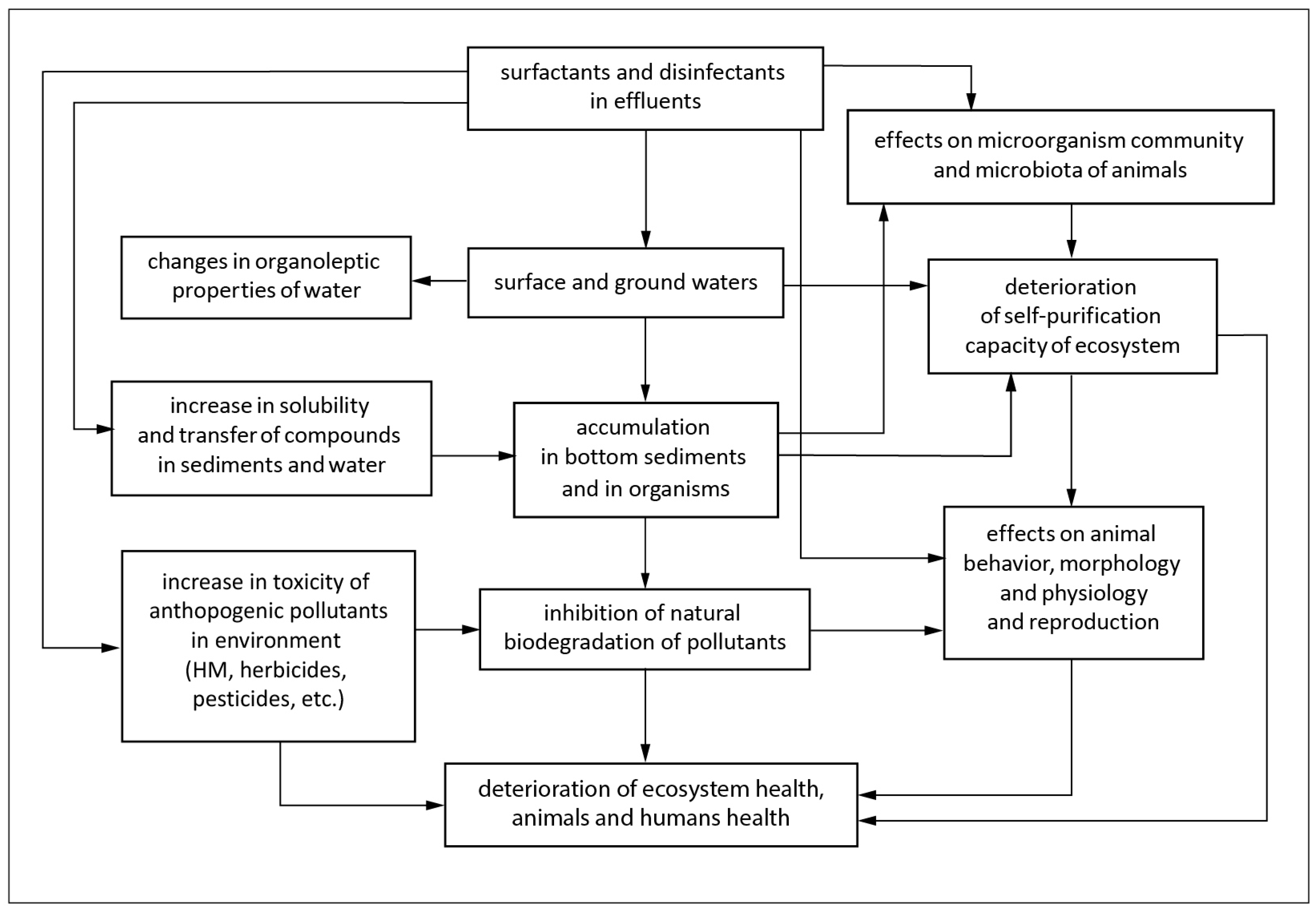
Emerging challenges associated with the COVID-19 (SARS-CoV-2) pandemic include the unpredictable biological effects of highly recommended detergents and disinfectants to reduce the risk of human infection. How these classes of substances affect living organisms, especially the health of the invertebrates as common representatives of biota, is still unclear. Due to the exceptional ability of disinfectants and detergents to penetrate biological membranes and alter the pH of the environment, these classes of substances, together with other environmental pollutants of concern (e.g., heavy metals), can have pronounced negative effects on macrobenthic invertebrates. The review analyzes the current state of research in this area and discusses ways to reduce risks to invertebrates.
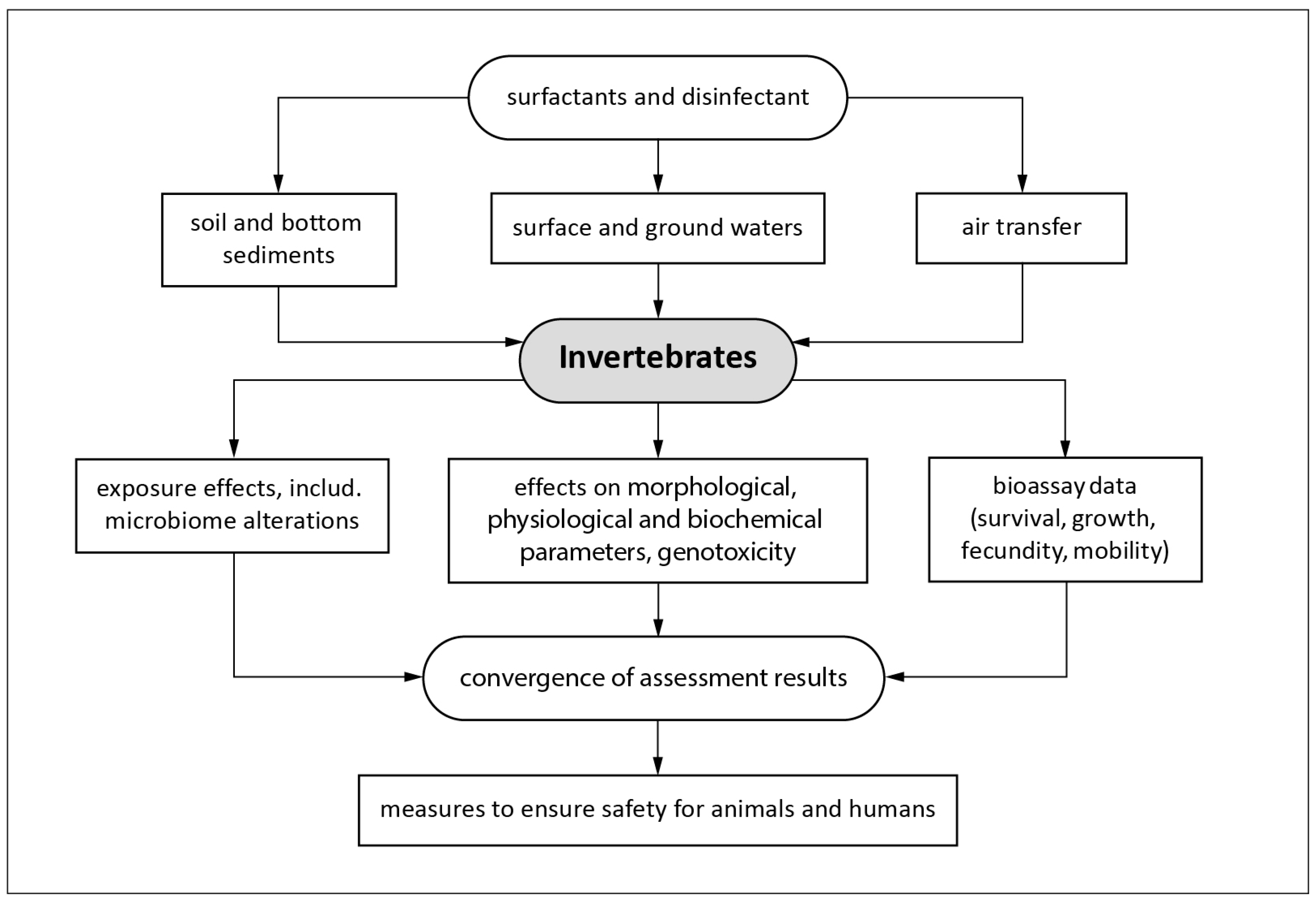
Abstract
The article discusses the issue of extensive use of detergents and sanitizers in the time of new challenges associated with the COVID-19 (SARS-CoV-2) pandemic. These agents could pose threats to the existence of free-living invertebrates as essential components of the ecosystem. The biological effects of the mentioned classes of substances, their metabolites, and combined effects in the mixture have not been studied enough. The main challenges in trying to balance the threats and benefits of using such substances are the lack of knowledge of the biological effects of these products, the gaps in testing invertebrates’ responses, and changes in environment-related regulations to minimize risks to animals and humans. Numerous studies in this field still leave research gaps, particularly concerning the combined toxicity of well-known and widely used disinfectants, surfactants, and heavy metals, posing potential future challenges. Additionally, the review identified the need for additional testing of invertebrates for their sensitivity to disinfectants and surfactants of different compositions, including improved (non-invasive) methods, studies for early life stages, and comparative studies of species resilience.