


Skip to Content
You are currently on the new version of our website. Access the old version .

Microorganisms, Volume 9, Issue 4

2021 April - 212 articles

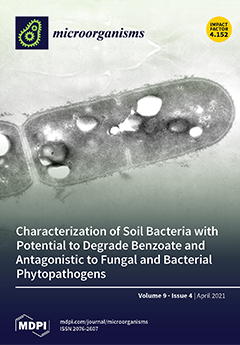
Cover Story: The aim of this work was to search for new strains of microbes. A number of microorganisms have been isolated from arable soil near Belgorod, Russia. Isolated strains of the genera Bacillus and Pseudomonas were characterized by high activity against fungal phytopathogens. Notably, one of the bacterial strains, identified as Priestia aryabhattai, had an unusual cell morphology and developmental cycle that was significantly different from all previously described bacterial Bacillus and Priestia genera. View this paper
  • Issues are regarded as officially published after their release is announced to the table of contents alert mailing list .
  • You may sign up for email alerts to receive table of contents of newly released issues.
  • PDF is the official format for papers published in both, html and pdf forms. To view the papers in pdf format, click on the "PDF Full-text" link, and use the free Adobe Reader to open them.

Articles (212)

  • Article
  • Open Access
14 Citations
5,049 Views
17 Pages

Comparing Sediment Microbiomes in Contaminated and Pristine Wetlands along the Coast of Yucatan

  • Herón Navarrete-Euan,
  • Zuemy Rodríguez-Escamilla,
  • Ernesto Pérez-Rueda,
  • Karla Escalante-Herrera and
  • Mario Alberto Martínez-Núñez

Microbial communities are important players in coastal sediments for the functioning of the ecosystem and the regulation of biogeochemical cycles. They also have great potential as indicators of environmental perturbations. To assess how microbial co...

  • Article
  • Open Access
15 Citations
4,069 Views
15 Pages

Bacterial Microbiota of Field-Collected Helicoverpa zea (Lepidoptera: Noctuidae) from Transgenic Bt and Non-Bt Cotton

  • Jean M. Deguenon,
  • Anirudh Dhammi,
  • Loganathan Ponnusamy,
  • Nicholas V. Travanty,
  • Grayson Cave,
  • Roger Lawrie,
  • Dan Mott,
  • Dominic Reisig,
  • Ryan Kurtz and
  • R. Michael Roe

The bollworm, Helicoverpa zea (Boddie) (Lepidoptera: Noctuidae), is an important agricultural pest in U.S. cotton and is managed using transgenic hybrids that produce insecticidal proteins from the bacterium, Bacillus thuringiensis (Bt). The reduced...

  • Communication
  • Open Access
14 Citations
3,561 Views
11 Pages

The neonatal Fc receptor (FcRn) transports maternal immunoglobulin G (IgG) to the foetus or newborn and protects the IgG from degradation. FcRn is expressed in several porcine tissues and cell types and its expression levels are regulated by immune a...

  • Article
  • Open Access
2 Citations
4,037 Views
14 Pages

Ambroxol Treatment Suppresses the Proliferation of Chlamydia pneumoniae in Murine Lungs

  • Dávid Kókai,
  • Dóra Paróczai,
  • Dezső Peter Virok,
  • Valéria Endrész,
  • Renáta Gáspár,
  • Tamás Csont,
  • Renáta Bozó and
  • Katalin Burián

Ambroxol (Ax) is used as a mucolytics in the treatment of respiratory tract infections. Ax, at a general dose for humans, does not alter Chlamydia pneumoniae growth in mice. Therefore, we aimed to investigate the potential anti-chlamydial effect of A...

  • Article
  • Open Access
31 Citations
5,122 Views
13 Pages

Antimicrobial Use in Brazilian Swine Herds: Assessment of Use and Reduction Examples

  • Mauricio Cabral Dutra,
  • Luisa Zanolli Moreno,
  • Ricardo Augusto Dias and
  • Andrea Micke Moreno

Brazil, as a major pig producer, is currently experiencing the widespread use of antimicrobials as a serious issue to be addressed. For measures to be taken in this direction, the extent of the problem must be known. The goal of this study was to eva...

  • Article
  • Open Access
6 Citations
3,999 Views
16 Pages

Immune Transcriptome of Cells Infected with Enterovirus Strains Obtained from Cases of Autoimmune Thyroid Disease

  • Anello Marcello Poma,
  • Sarah Salehi Hammerstad,
  • Angelo Genoni,
  • Alessio Basolo,
  • Knut Dahl-Jorgensen and
  • Antonio Toniolo

Background: Hashimoto’s thyroiditis and Graves’ disease are autoimmune thyroid disorders (AITD) of unknown origin. Enterovirus (EV) infection of thyroid cells has been implicated as a possible initiator of cell damage and of organ-specific autoimmuni...

  • Article
  • Open Access
24 Citations
7,981 Views
17 Pages

Encystation of Entamoeba histolytica in Axenic Culture

  • Jordan Wesel,
  • Jennifer Shuman,
  • Irem Bastuzel,
  • Julie Dickerson and
  • Cheryl Ingram-Smith

Entamoeba histolytica is a parasitic protozoan that causes amoebic dysentery, which affects approximately 90 million people each year worldwide. E. histolytica is transmitted through ingestion of food and water contaminated with the cyst form, which...

  • Article
  • Open Access
1 Citations
3,250 Views
15 Pages

Mitigating the Spread and Translocation of Salmonella Enteritidis in Experimentally Infected Broilers under the Influence of Different Flooring Housing Systems and Feed Particle Sizes

  • Marwa F. E. Ahmed,
  • Amr Abd El-Wahab,
  • Jan-Philip Kriewitz,
  • Julia Hankel,
  • Bussarakam Chuppava,
  • Christine Ratert,
  • Venja Taube,
  • Christian Visscher and
  • Josef Kamphues

This study aimed to evaluate the influences of different flooring designs and feed particle sizes on the spread of Salmonella (S.) in broiler chickens. Birds (n = 480) were allocated to four different housing systems (fully littered with and without...

  • Article
  • Open Access
11 Citations
3,958 Views
14 Pages

Enteric Ganglioneuritis, a Common Feature in a Subcutaneous TBEV Murine Infection Model

  • Mathias Boelke,
  • Christina Puff,
  • Kathrin Becker,
  • Fanny Hellhammer,
  • Frederic Gusmag,
  • Hannah Marks,
  • Katrin Liebig,
  • Karin Stiasny,
  • Gerhard Dobler and
  • Stefanie C. Becker
  • + 2 authors

Tick-borne encephalitis (TBE) is a severe neurologic disease in Europe and Asia. Disease expression ranges from asymptomatic to severe neurological clinical pictures, involving meningitis, encephalitis, meningoencephalitis and potentially fatal outco...

  • Communication
  • Open Access
4 Citations
3,609 Views
12 Pages

Biological Properties and Genetic Characterization of Novel Low Pathogenic H7N3 Avian Influenza Viruses Isolated from Mallard Ducks in the Caspian Region, Dagestan, Russia

  • Marina Gulyaeva,
  • Maria Alessandra De Marco,
  • Ganna Kovalenko,
  • Eric Bortz,
  • Tatiana Murashkina,
  • Kseniya Yurchenko,
  • Marzia Facchini,
  • Mauro Delogu,
  • Ivan Sobolev and
  • Alexander Shestopalov
  • + 2 authors

Avian influenza viruses (AIVs) are maintained in wild bird reservoirs, particularly in mallard ducks and other waterfowl. Novel evolutionary lineages of AIV that arise through genetic drift or reassortment can spread with wild bird migrations to new...

  • Article
  • Open Access
7 Citations
4,420 Views
15 Pages

The surge in mortality and morbidity rates caused by multidrug-resistant (MDR) bacteria prompted a renewal of interest in bacteriophages (phages) as clinical therapeutics and natural biocontrol agents. Nevertheless, bacteria and phages are continuall...

  • Article
  • Open Access
9 Citations
4,039 Views
17 Pages

Multi-Drug Resistant Plasmids with ESBL/AmpC and mcr-5.1 in Paraguayan Poultry Farms: The Linkage of Antibiotic Resistance and Hatcheries

  • Kristina Nesporova,
  • Adam Valcek,
  • Costas Papagiannitsis,
  • Iva Kutilova,
  • Ivana Jamborova,
  • Lenka Davidova-Gerzova,
  • Ibrahim Bitar,
  • Jaroslav Hrabak,
  • Ivan Literak and
  • Monika Dolejska

Poultry represents a common source of bacteria with resistance to antibiotics including the critically important ones. Selective cultivation using colistin, cefotaxime and meropenem was performed for 66 chicken samples coming from 12 farms in Paragua...

  • Article
  • Open Access
10 Citations
2,833 Views
13 Pages

Cryptosporidium spp. are protozoan parasites that infect perhaps all vertebrate animals, with a subset of species and genotypes that function as food- and waterborne pathogens. The objective of this work was to collate the Cryptosporidium species and...

  • Communication
  • Open Access
10 Citations
3,261 Views
14 Pages

Escherichia coli Affects Expression of Circadian Clock Genes in Human Hepatoma Cells

  • Urša Kovač,
  • Zala Žužek,
  • Lucija Raspor Dall’Olio,
  • Katka Pohar,
  • Alojz Ihan,
  • Miha Moškon,
  • Damjana Rozman and
  • Marjanca Starčič Erjavec

Recent research has indicated that dysbiosis of the gut microbiota can lead to an altered circadian clock of the mammalian host. Herein we developed an original system that allows real-time circadian studies of human HepG2 hepatoma cells co-cultured...

  • Article
  • Open Access
29 Citations
6,933 Views
16 Pages

Plant growth promoting endophytic bacteria, which can fix nitrogen, plays a vital role in plant growth promotion. Previous authors have evaluated the effect of Gluconacetobacter diazotrophicus Pal5 inoculation on plants subjected to different sources...

  • Article
  • Open Access
66 Citations
9,295 Views
13 Pages

The Gut Microbiota Can Provide Viral Tolerance in the Honey Bee

  • Christopher Dosch,
  • Anja Manigk,
  • Tabea Streicher,
  • Anja Tehel,
  • Robert J. Paxton and
  • Simon Tragust

Adult honey bees host a remarkably consistent gut microbial community that is thought to benefit host health and provide protection against parasites and pathogens. Currently, however, we lack experimental evidence for the causal role of the gut micr...

  • Review
  • Open Access
37 Citations
7,670 Views
29 Pages

Current Status of Putative Animal Sources of SARS-CoV-2 Infection in Humans: Wildlife, Domestic Animals and Pets

  • Max Maurin,
  • Florence Fenollar,
  • Oleg Mediannikov,
  • Bernard Davoust,
  • Christian Devaux and
  • Didier Raoult

SARS-CoV-2 is currently considered to have emerged from a bat coronavirus reservoir. However, the real natural cycle of this virus remains to be elucidated. Moreover, the COVID-19 pandemic has led to novel opportunities for SARS-CoV-2 transmission be...

  • Article
  • Open Access
29 Citations
4,743 Views
11 Pages

Occurrence of Salmonella in the Cattle Production in France

  • Laetitia Bonifait,
  • Amandine Thépault,
  • Louise Baugé,
  • Sandra Rouxel,
  • Françoise Le Gall and
  • Marianne Chemaly

Salmonella is among the most common foodborne pathogens worldwide, and can lead to acute gastroenteritis. Along with poultry, cattle production is recognized as an important source of human infection. Salmonella transmission from cattle to humans can...

  • Article
  • Open Access
11 Citations
4,116 Views
15 Pages

Increasing number of metagenome sequencing studies have proposed a central metabolic role of still understudied Archaeal members in natural and artificial ecosystems. However, their role in hydrocarbon cycling, particularly in the anaerobic biodegrad...

  • Article
  • Open Access
7 Citations
3,249 Views
12 Pages

Evaluation of Thymol-β-d-Glucopyranoside as a Potential Prebiotic Intervention to Reduce Carriage of Zoonotic Pathogens in Weaned and Feeder Pigs

  • Gizem Levent,
  • Robin C. Anderson,
  • Branko Petrujkić,
  • Toni L. Poole,
  • Haiqi He,
  • Kenneth J. Genovese,
  • Michael E. Hume,
  • Ross C. Beier,
  • Roger B. Harvey and
  • David J. Nisbet

The gut of food-producing animals is a reservoir for foodborne pathogens. Thymol is bactericidal against foodborne pathogens but rapid absorption of thymol from the proximal gut precludes the delivery of effective concentrations to the lower gut wher...

  • Review
  • Open Access
42 Citations
9,296 Views
30 Pages

Trends in Molecular Diagnosis and Diversity Studies for Phytosanitary Regulated Xanthomonas

  • Vittoria Catara,
  • Jaime Cubero,
  • Joël F. Pothier,
  • Eran Bosis,
  • Claude Bragard,
  • Edyta Đermić,
  • Maria C. Holeva,
  • Marie-Agnès Jacques,
  • Francoise Petter and
  • Joana Costa
  • + 6 authors

Bacteria in the genus Xanthomonas infect a wide range of crops and wild plants, with most species responsible for plant diseases that have a global economic and environmental impact on the seed, plant, and food trade. Infections by Xanthomonas spp. c...

  • Article
  • Open Access
33 Citations
4,959 Views
13 Pages

Comparison of In Vitro Killing Activity of Rezafungin, Anidulafungin, Caspofungin, and Micafungin against Four Candida auris Clades in RPMI-1640 in the Absence and Presence of Human Serum

  • Renátó Kovács,
  • Zoltán Tóth,
  • Jeffrey B. Locke,
  • Lajos Forgács,
  • Gábor Kardos,
  • Fruzsina Nagy,
  • Andrew M. Borman and
  • László Majoros

Candida auris is an emerging and frequently multidrug-resistant pathogen against which the echinocandins are the preferred therapeutic option. We compared killing activities of anidulafungin, caspofungin, micafungin, and rezafungin against 13 isolate...

  • Article
  • Open Access
8 Citations
2,972 Views
12 Pages

Comparative Study of Two Insulinlike Proteases in Cryptosporidium parvum

  • Wei He,
  • Cong Lai,
  • Fuxian Yang,
  • Yu Li,
  • Na Li,
  • Yaqiong Guo,
  • Ziding Zhang,
  • Lihua Xiao and
  • Yaoyu Feng

Cryptosporidiumparvum is a common protozoan pathogen responsible for moderate-to-severe diarrhea in humans and animals. The small genome of C. parvum has 22 genes encoding insulinlike proteases (INS) with diverse sequences, suggesting that members of...

  • Communication
  • Open Access
1 Citations
2,764 Views
9 Pages

Use of an Alignment-Free Method for the Geographical Discrimination of GTPVs Based on the GPCR Sequences

  • Tesfaye Rufael Chibssa,
  • Yang Liu,
  • Melaku Sombo,
  • Jacqueline Kasiiti Lichoti,
  • Janchivdorj Erdenebaatar,
  • Bazartseren Boldbaatar,
  • Reingard Grabherr,
  • Tirumala Bharani K. Settypalli,
  • Francisco J. Berguido and
  • Charles Euloge Lamien
  • + 4 authors

Goatpox virus (GTPV) belongs to the genus Capripoxvirus, together with sheeppox virus (SPPV) and lumpy skin disease virus (LSDV). GTPV primarily affects sheep, goats and some wild ruminants. Although GTPV is only present in Africa and Asia, the recen...

  • Article
  • Open Access
13 Citations
3,876 Views
19 Pages

Distribution of Prophages in the Oenococcus oeni Species

  • Olivier Claisse,
  • Amel Chaïb,
  • Fety Jaomanjaka,
  • Cécile Philippe,
  • Yasma Barchi,
  • Patrick M. Lucas and
  • Claire Le Marrec

Oenococcus oeni is the most exploited lactic acid bacterium in the wine industry and drives the malolactic fermentation of wines. Although prophage-like sequences have been identified in the species, many are not characterized, and a global view of t...

  • Review
  • Open Access
17 Citations
5,393 Views
18 Pages

Defeating Paediatric Tuberculous Meningitis: Applying the WHO “Defeating Meningitis by 2030: Global Roadmap”

  • Robindra Basu Roy,
  • Sabrina Bakeera-Kitaka,
  • Chishala Chabala,
  • Diana M Gibb,
  • Julie Huynh,
  • Hilda Mujuru,
  • Naveen Sankhyan,
  • James A Seddon,
  • Suvasini Sharma and
  • Suzanne T Anderson
  • + 2 authors

Children affected by tuberculous meningitis (TBM), as well as their families, have needs that lie at the intersections between the tuberculosis and meningitis clinical, research, and policy spheres. There is therefore a substantial risk that these ne...

  • Review
  • Open Access
27 Citations
8,749 Views
20 Pages

Brazilian Coffee Production and the Future Microbiome and Mycotoxin Profile Considering the Climate Change Scenario

  • Deiziane Gomes dos Santos,
  • Caroline Corrêa de Souza Coelho,
  • Anna Beatriz Robottom Ferreira and
  • Otniel Freitas-Silva

Brazil holds a series of favorable climatic conditions for agricultural production including the hours and intensity of sunlight, the availability of agricultural land and water resources, as well as diverse climates, soils and biomes. Amidst such di...

  • Review
  • Open Access
121 Citations
22,982 Views
25 Pages

Genome Editing in Bacteria: CRISPR-Cas and Beyond

  • Ruben D. Arroyo-Olarte,
  • Ricardo Bravo Rodríguez and
  • Edgar Morales-Ríos

Genome editing in bacteria encompasses a wide array of laborious and multi-step methods such as suicide plasmids. The discovery and applications of clustered regularly interspaced short palindromic repeats (CRISPR)-Cas based technologies have revolut...

  • Article
  • Open Access
56 Citations
7,672 Views
15 Pages

Impact of Chronic Exposure to Sublethal Doses of Glyphosate on Honey Bee Immunity, Gut Microbiota and Infection by Pathogens

  • Loreley Castelli,
  • Sofía Balbuena,
  • Belén Branchiccela,
  • Pablo Zunino,
  • Joanito Liberti,
  • Philipp Engel and
  • Karina Antúnez

Glyphosate is the most used pesticide around the world. Although different studies have evidenced its negative effect on honey bees, including detrimental impacts on behavior, cognitive, sensory and developmental abilities, its use continues to grow....

  • Article
  • Open Access
10 Citations
4,090 Views
19 Pages

A Mediation Analysis to Identify Links between Gut Bacteria and Memory in Context of Human Milk Oligosaccharides

  • Stephen A. Fleming,
  • Jonas Hauser,
  • Jian Yan,
  • Sharon M. Donovan,
  • Mei Wang and
  • Ryan N. Dilger

Elucidating relationships between the gut and brain is of intense research focus. Multiple studies have demonstrated that modulation of the intestinal environment via prebiotics or probiotics can induce cognitively beneficial effects, such as improve...

  • Correction
  • Open Access
1 Citations
1,863 Views
3 Pages

Correction: Wist et al. Phenotypic and Genotypic Traits of Vancomycin-Resistant Enterococci from Healthy Food-Producing Animals. Microorganisms 2020, 8, 261

  • Valerie Wist,
  • Marina Morach,
  • Marianne Schneeberger,
  • Nicole Cernela,
  • Marc J. A. Stevens,
  • Katrin Zurfluh,
  • Roger Stephan and
  • Magdalena Nüesch-Inderbinen

The authors wish to make the following correction to this paper [...]

  • Article
  • Open Access
6 Citations
3,613 Views
19 Pages

Candida albicans Hexokinase 2 Challenges the Saccharomyces cerevisiae Moonlight Protein Model

  • Romain Laurian,
  • Jade Ravent,
  • Karine Dementhon,
  • Marc Lemaire,
  • Alexandre Soulard and
  • Pascale Cotton

Survival of the pathogenic yeast Candida albicans depends upon assimilation of fermentable and non-fermentable carbon sources detected in host microenvironments. Among the various carbon sources encountered in a human body, glucose is the primary sou...

  • Article
  • Open Access
3 Citations
3,168 Views
16 Pages

Interactions of the Streptococcus pneumoniae Toxin-Antitoxin RelBE Proteins with Their Target DNA

  • Inmaculada Moreno-Córdoba,
  • Wai-Ting Chan,
  • Concha Nieto and
  • Manuel Espinosa

Type II bacterial toxin-antitoxin (TA) systems are found in most bacteria, archaea, and mobile genetic elements. TAs are usually found as a bi-cistronic operon composed of an unstable antitoxin and a stable toxin that targets crucial cellular functio...

  • Article
  • Open Access
12 Citations
5,541 Views
18 Pages

Fluoride is an inorganic monatomic anion that is widely used as an anti-cariogenic agent for the control of caries development. The aims of this study were to identify the mutated genes that give rise to fluoride-resistant (FR) strains of the carioge...

  • Communication
  • Open Access
5 Citations
2,748 Views
11 Pages

Growth of Staphylococcus epidermidis on the Surface of Teatcups from Milking Parlours

  • Eleni I. Katsarou,
  • Angeliki I. Katsafadou,
  • Theodoros Karakasidis,
  • Dimitris C. Chatzopoulos,
  • Natalia G. C. Vasileiou,
  • Daphne T. Lianou,
  • Vasia S. Mavrogianni,
  • Efthymia Petinaki and
  • George C. Fthenakis

The growth of two Staphylococcus epidermidis isolates (one biofilm-forming and one not) on teatcups for cattle (made of rubber) or sheep (made of silicone) were assessed in nine multiplicates for 24 h post-smearing on the teatcup surface. Staphylococ...

  • Article
  • Open Access
21 Citations
9,204 Views
15 Pages

SARS-CoV-2 IgG Antibodies Seroprevalence and Sera Neutralizing Activity in MEXICO: A National Cross-Sectional Study during 2020

  • José Esteban Muñoz-Medina,
  • Concepción Grajales-Muñiz,
  • Angel Gustavo Salas-Lais,
  • Larissa Fernandes-Matano,
  • Constantino López-Macías,
  • Irma Eloísa Monroy-Muñoz,
  • Andrea Santos Coy-Arechavaleta,
  • Iliana Donají Palomec-Nava,
  • Célida Duque-Molina and
  • Víctor Hugo Borja-Aburto
  • + 7 authors

Until recently, the incidence of COVID-19 was primarily estimated using molecular diagnostic methods. However, the number of cases is vastly underreported using these methods. Seroprevalence studies estimate cumulative infection incidences and allow...

  • Article
  • Open Access
25 Citations
6,735 Views
13 Pages

Classification of Salmonella enterica of the (Para-)Typhoid Fever Group by Fourier-Transform Infrared (FTIR) Spectroscopy

  • Miriam Cordovana,
  • Norman Mauder,
  • Markus Kostrzewa,
  • Andreas Wille,
  • Sandra Rojak,
  • Ralf Matthias Hagen,
  • Simone Ambretti,
  • Stefano Pongolini,
  • Laura Soliani and
  • Denise Dekker
  • + 8 authors

Typhoidal and para-typhoidal Salmonella are major causes of bacteraemia in resource-limited countries. Diagnostic alternatives to laborious and resource-demanding serotyping are essential. Fourier transform infrared spectroscopy (FTIRS) is a rapidly...

  • Article
  • Open Access
38 Citations
7,957 Views
11 Pages

Changes in Gut Microbiota Correlates with Response to Treatment with Probiotics in Patients with Atopic Dermatitis. A Post Hoc Analysis of a Clinical Trial

  • Eric Climent,
  • Juan Francisco Martinez-Blanch,
  • Laura Llobregat,
  • Beatriz Ruzafa-Costas,
  • Miguel Ángel Carrión-Gutiérrez,
  • Ana Ramírez-Boscá,
  • David Prieto-Merino,
  • Salvador Genovés,
  • Francisco M. Codoñer and
  • Vicente Navarro-López
  • + 2 authors

Atopic dermatitis (AD) is a chronic recurrent inflammatory skin disease with a high impact on the comfort of those who are affected and long-term treated with corticosteroids with limited efficacy and a high prevalence of relapses. Because of the lim...

  • Article
  • Open Access
7 Citations
3,530 Views
20 Pages

Effect of Antimicrobial Treatment on the Dynamics of Ceftiofur Resistance in Enterobacteriaceae from Adult California Dairy Cows

  • David B. Sheedy,
  • Emmanuel Okello,
  • Deniece R. Williams,
  • Katie Precht,
  • Elisa Cella,
  • Terry W. Lehenbauer and
  • Sharif S. Aly

Dairy farm use of antimicrobial drugs (AMD) is a risk for the selection of antimicrobial resistance (AMR); however, these resistance dynamics are not fully understood. A cohort study on two dairy farms enrolled 96 cows with their fecal samples collec...

  • Review
  • Open Access
109 Citations
21,850 Views
13 Pages

Update on Coagulase-Negative Staphylococci—What the Clinician Should Know

  • Ricarda Michels,
  • Katharina Last,
  • Sören L. Becker and
  • Cihan Papan

Coagulase-negative staphylococci (CoNS) are among the most frequently recovered bacteria in routine clinical care. Their incidence has steadily increased over the past decades in parallel to the advancement in medicine, especially in regard to the ut...

  • Article
  • Open Access
14 Citations
3,761 Views
17 Pages

Differences in Immune Response and Biochemical Parameters of Mice Fed by Kefir Milk and Lacticaseibacillus paracasei Isolated from the Kefir Grains

  • Viera Karaffová,
  • Dagmar Mudroňová,
  • Marián Mad’ar,
  • Gabriela Hrčková,
  • Dominika Faixová,
  • Soňa Gancarčíková,
  • Zuzana Ševčíková and
  • Radomíra Nemcová

The health benefits of kefir consumption have been well-known for hundreds of years. The objective of this study was to investigate the effect of kefir milk and the probiotic strain Lacticaseibacillus paracasei Ž2 isolated from kefir grains on the im...

  • Article
  • Open Access
6 Citations
3,746 Views
10 Pages

Field Evaluation of the Performance of Two Rapid Diagnostic Tests for Meningitis in Niger and Burkina Faso

  • Marc Rondy,
  • Mamadou Tamboura,
  • Fati Sidikou,
  • Issaka Yameogo,
  • Kambire Dinanibe,
  • Guetwende Sawadogo,
  • Chantal Kambire,
  • Halima Mainassara,
  • Ali Elhaj Mahamane and
  • Olivier Ronveaux
  • + 5 authors

New lateral flow tests for the diagnosis of Neisseria meningitidis (Nm) (serogroups A, C, W, X, and Y), MeningoSpeed, and Streptococcus pneumoniae (Sp), PneumoSpeed, developed to support rapid outbreak detection in Africa, have shown good performance...

  • Article
  • Open Access
18 Citations
4,309 Views
14 Pages

Probiotic and Metabolic Characterization of Vaginal Lactobacilli for a Potential Use in Functional Foods

  • Margherita D’Alessandro,
  • Carola Parolin,
  • Danka Bukvicki,
  • Lorenzo Siroli,
  • Beatrice Vitali,
  • Maria De Angelis,
  • Rosalba Lanciotti and
  • Francesca Patrignani

The main aim of this work was to verify the metabolic and functional aptitude of 15 vaginal strains belonging to Lactobacillus crispatus, Lactobacillus gasseri, and Limosilactobacillus vaginalis (previously Lactobacillus vaginalis), already character...

  • Article
  • Open Access
21 Citations
5,466 Views
22 Pages

Probiogenomics of Lactobacillus delbrueckii subsp. lactis CIDCA 133: In Silico, In Vitro, and In Vivo Approaches

  • Luís Cláudio Lima de Jesus,
  • Mariana Martins Drumond,
  • Flávia Figueira Aburjaile,
  • Thiago de Jesus Sousa,
  • Nina Dias Coelho-Rocha,
  • Rodrigo Profeta,
  • Bertram Brenig,
  • Pamela Mancha-Agresti and
  • Vasco Azevedo

Lactobacillus delbrueckii subsp. lactis CIDCA 133 (CIDCA 133) has been reported as a potential probiotic strain, presenting immunomodulatory properties. This study investigated the possible genes and molecular mechanism involved with a probiotic prof...

  • Article
  • Open Access
16 Citations
3,436 Views
15 Pages

Presence of Broad-Spectrum Beta-Lactamase-Producing Enterobacteriaceae in Zoo Mammals

  • Chloë De Witte,
  • Nick Vereecke,
  • Sebastiaan Theuns,
  • Claudia De Ruyck,
  • Francis Vercammen,
  • Tim Bouts,
  • Filip Boyen,
  • Hans Nauwynck and
  • Freddy Haesebrouck

Broad-spectrum beta-lactamase (BSBL)-producing Enterobacteriaceae impose public health threats. With increased popularity of zoos, exotic animals are brought in close proximity of humans, making them important BSBL reservoirs. However, not much is kn...

  • Review
  • Open Access
25 Citations
8,718 Views
14 Pages

Bartonella henselae (B. henselae) is a gram-negative bacterium that causes cat scratch disease, bacteremia, and endocarditis, as well as other clinical presentations. B. henselae has been shown to form a biofilm in vitro that likely plays a role in t...

  • Review
  • Open Access
49 Citations
11,905 Views
21 Pages

The Role of Bifidobacteria in Predictive and Preventive Medicine: A Focus on Eczema and Hypercholesterolemia

  • Luisa Marras,
  • Michele Caputo,
  • Sonia Bisicchia,
  • Matteo Soato,
  • Giacomo Bertolino,
  • Susanna Vaccaro and
  • Rosanna Inturri

Bifidobacteria colonize the human gastrointestinal tract early on in life, their interaction with the host starting soon after birth. The health benefits are strain specific and could be due to the produced polysaccharides. The consumption of probiot...

  • Communication
  • Open Access
14 Citations
4,216 Views
13 Pages

Methanogenic archaea operate an ancient, if not primordial, metabolic pathway that releases methane as an end-product. This last step is orchestrated by the methyl-coenzyme M reductase (MCR), which uses a nickel-containing F430-cofactor as the cataly...

  • Article
  • Open Access
19 Citations
5,114 Views
11 Pages

A Yarrowia lipolytica Strain Engineered for Pyomelanin Production

  • Macarena Larroude,
  • Djamila Onésime,
  • Olivier Rué,
  • Jean-Marc Nicaud and
  • Tristan Rossignol

The yeast Yarrowia lipolytica naturally produces pyomelanin. This pigment accumulates in the extracellular environment following the autoxidation and polymerization of homogentisic acid, a metabolite derived from aromatic amino acids. In this study,...

  • Article
  • Open Access
23 Citations
7,067 Views
13 Pages

Microorganisms causing anthracnose diseases have a medium to a high level of resistance to the existing fungicides. This study aimed to investigate neem plant extract (propyl disulfide, PD) as an alternative to the current fungicides against mango’s...

of 5

Get Alerted

Add your email address to receive forthcoming issues of this journal.

XFacebookLinkedIn
Microorganisms - ISSN 2076-2607