


Abstract
Underground coal extraction alters aquatic ecosystems. Quantitative evaluation of microbial responses serves as an indicator for ecological security. High-throughput amplicon sequencing and structural equation modeling were applied to analyze aquatic bacterial and fungal communities before and after operations at the Talahao coal mine. Mining activities correlated with altered physicochemical water properties and reduced microbial community evenness. Environmental variables, including ion accumulation and suspended solid concentrations, mediated the indirect effects of mining on microbial restructuring based on structural equation models. Taxonomic composition shifted across domains following extraction. Pre-mining bacterial communities contained higher proportions of the genera Devosia and Acidovorax. Post-mining bacterial communities experienced an enrichment of the genus Malikia and the family Methylomonadaceae. Pre-mining fungal communities included Cladosporium and Aspergillus. Post-mining fungal communities exhibited a subterranean response pattern dominated by unclassified lineages and taxa belonging to Basidiobolaceae diverging from surface soil reference frameworks. Functional predictions indicated divergent stability between the two domains. Bacterial inferred functional profiles remained stable despite taxonomic restructuring. Fungal assemblages underwent compositional shifts in trophic guilds. These data provide a baseline regarding the divergent functional stability between bacterial and fungal communities in water bodies before and after underground coal extraction and establish biological indicators for environmental assessment.
1. Introduction
Coal extraction supports global economic growth [1], alongside environmental degradation such as land subsidence, soil pollution, and microecological disruption [2]. These conditions alter native soil flora, fauna, and microbial communities [3,4]. Subsidence from mining converts terrestrial habitats into waterlogged lake ecosystems and reduces surface water quality [5]. Landscape structural changes disrupt soil pore distribution and nutrient retention, limiting plant growth and microbial stability [6]. The transformation of collapsed soil into sediment alters organic matter decomposition and reduces microbial diversity [7]. Underground mineral extraction disrupts deep groundwater aquifers, increasing pollutant diffusion and restructuring microbial communities along depth gradients [8]. Soil and aquatic microbiomes regulate nutrient cycling and ecosystem processes [9]. Changes in their biomass, diversity, and taxonomic composition due to mining impact ecosystem function [10]. Evaluating microbial community responses to pollution from mining provides a basis for comprehensive environmental assessment.
Ecological changes in coal mining areas are evaluated through microbial diversity sequencing [11]. Analysis of community structure informs the functional microorganism screening and remediation strategy optimization for environmental governance [12]. This sequencing method details the composition and diversity of microbial communities in extreme environments such as soil, tailings, and collapsed lake sediments in mining areas at high resolution without cultivation [13]. This method provides biological indicators for evaluating ecological disturbances caused by coal extraction. Comparing community differences across pollution gradients identifies groups resistant to acid and heavy metals, revealing microbial adaptation mechanisms to acidic mine drainage and substrates with high sulfur and heavy metals [14]. Data from 16S rRNA sequencing characterize microbial geographic patterns between collapsed lakes and detail the driving effects of chemical factors, including pH, total nitrogen, and total phosphorus on benthic bacterial communities [15]. This approach further identifies functional bacteria involved in sulfur, phosphorus, and organic matter cycling, showing how sediment bacteria drive phosphorus fixation and heavy metal precipitation through metabolic pathways to alleviate pollution diffusion [16]. Internal transcribed spacer sequencing provides data with high resolution regarding fungal community dynamics within disturbed ecosystems. Fungi are decomposers and potential pathogens in mine waters [17]. These eukaryotic assemblages display lower taxonomic diversity than bacterial counterparts yet mediate organic matter decomposition and structural nutrient cycling. These microorganisms exhibit sensitivity to hydrochemical fluctuations. Quantifying shifts in saprotrophic and pathogenic fungal guilds generates biological indicators for evaluating ecosystem resilience following mining degradation. Sequencing data reveal an increasing trend of Proteobacteria and enhanced activity of rare operational taxonomic units with increasing aquifer depth [18]. This trend functions as a biological indicator of aquifer pollution connectivity. Integrating functional prediction tools facilitates the inference of changes in bacterial phenotypes and fungal niches, supporting the screening of tolerant strains for bioremediation [12].
Water samples were collected at the Talahao coal mine to analyze microbial community characteristics before and after mining (AM) activities. The site is located at the junction of Tongchuan Town, Dongsheng District, Ordos City, Inner Mongolia Autonomous Region, and Zhungeerzhao Town, Zhungeerqi. Mine construction began in September 2012. Operations commenced in July 2016, and production transition occurred by February 2020. Underground mining caused overlying strata movement and destruction one year after operations began. Early extraction formed a goaf area of 11.8219 km2 by March 2024, triggering a ground subsidence area of 12.9722 km2. Ecological restoration across an 11 km2 area required an investment exceeding 160 million yuan and received expert approval in December 2024. Environmental degradation persists at the Talahao coal mine. This ongoing degradation indicates a requirement for optimizing current remediation strategies. Analyzing geological conditions and microbial communities provides a basis for environmental remediation.
Internal transcribed spacer sequencing provides high-resolution data on fungal community dynamics within disturbed ecosystems. Fungi are decomposers and potential pathogens in mine waters. These microorganisms exhibit sensitivity to hydrochemical fluctuations. Quantifying shifts in saprotrophic and pathogenic fungal guilds establishes biological indicators for evaluating ecosystem resilience following mining degradation. High-throughput amplicon sequencing and structural equation modeling were applied to analyze bacterial and fungal communities in Talahao coal mine water before and after operations. Objectives included quantifying alterations in microbial diversity, identifying physicochemical variables governing community assembly, and determining functional responses of bacteria and fungi to mining impacts. These data offer empirical evidence of environmental variables mediating microbial community restructuring. The integrated approach establishes quantitative biological indicators for evaluating environmental disturbances and informs ecological restoration strategies in coal mining ecosystems.
2. Materials and Methods
2.1. Sample Collection and Analysis
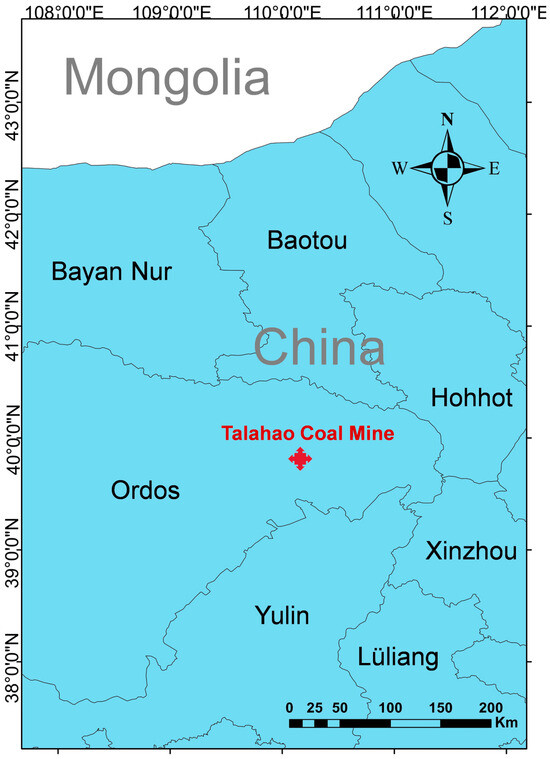
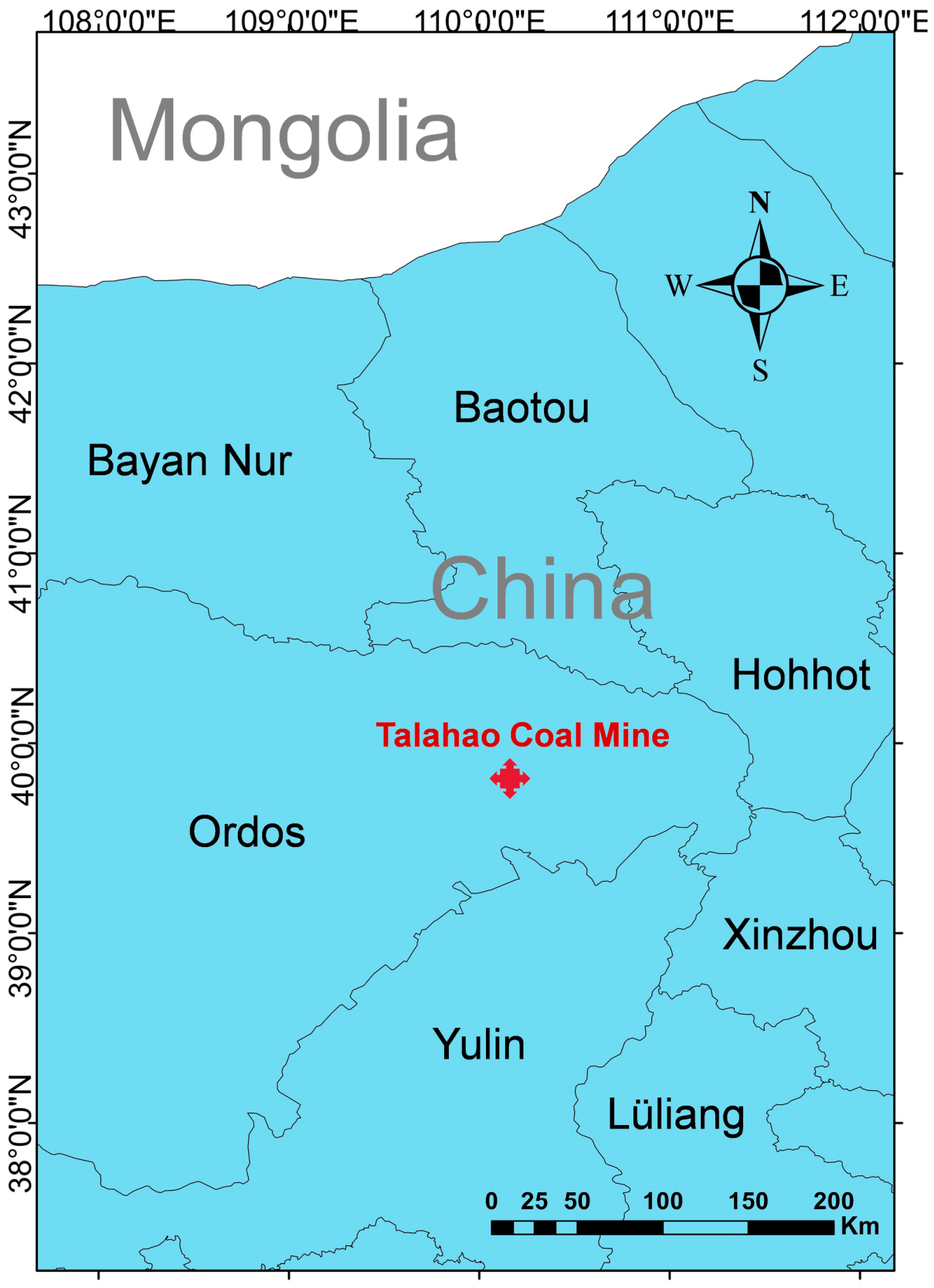
Microbial community dynamics before and AM activities were evaluated using a composite sampling strategy at the Talahao coal mine (110°08′25″ E, 39°45′55″ N). The site is located at the junction of Tongchuan Town in Dongsheng District, Ordos City, Inner Mongolia Autonomous Region and Zhungeerzhao Town in Zhungeerqi (Figure 1). All sampling points were situated within the active mining area of the third coal seam (out of six total seams) at a depth of 208 m beneath the surface. Before Mining (BM) samples were collected on 19 August 2024 from clean coal seam seepage water within established structural tunnels. These locations were unaffected by active coal extraction, which commenced on 26 August 2024. AM samples were collected from the active mining face after extraction began. These samples contained suspended coal dust, reflecting disturbed environmental conditions. Water samples were formulated by pooling liquid subsamples from six distinct locations at each point to overcome spatial heterogeneity, with three biological replicates taken per condition. Sterile 50 mL centrifuge tubes (Corning Incorporated, Corning, NY, USA) were utilized for collection. All samples were sealed immediately upon collection and preserved in liquid nitrogen and dry ice.
Figure 1.
Location map of the study area showing the Talahao Coal Mine in Ordos City, Inner Mongolia Autonomous Region, China.
2.2. Determination of Environmental and Physicochemical Parameters
Physicochemical monitoring of the goaf environment (Table 1 and Table 2) was conducted concurrent with microbial sampling. Ambient gas concentrations, including methane (CH4), carbon dioxide (CO2), sulfur dioxide (SO2), and carbon monoxide (CO), were measured in situ utilizing a portable multi gas detector (RAE Systems, San Jose, CA, USA). Water quality parameters such as pH, temperature (Tm), and total dissolved solids (T-DS) were recorded at the 208 m depth using a portable multiparameter water analyzer (Hach Company, Loveland, CO, USA). Collected water samples were transported to the laboratory for chemical analysis. Suspended solids (SS) were measured via the standard gravimetric method. Chemical oxygen demand (COD) and five-day biochemical oxygen demand (BOD5), along with nutrient levels such as ammonia nitrogen (NH3-N) and total phosphorus (T-P), were quantified using spectrophotometry (UV-2600, Shimadzu Corporation, Kyoto, Japan). Concentrations of specific anions and cations, including sulfate (SO42−), iron (Fe2+), and manganese (Mn2+), were determined using ion chromatography (CIC-D120, Qingdao Shenghan Chromatograph Technology Co., Ltd., Qingdao, China).
Table 1.
Monitoring data table of gas component concentration in goaf.
Table 2.
Monitoring data table of physical and chemical indicators of water quality in goaf.
2.3. DNA Extraction, Amplicon Library Preparation, and 16S rRNA Gene/ITS Sequencing
Genomic DNA was extracted from filtered water samples utilizing the TaKaRa MiniBEST Universal Genomic DNA Extraction Kit Ver. 5.0 in accordance with manufacturer guidelines. Extracted DNA was processed through a column purification kit to eliminate metal ions and humic substances that inhibit polymerase chain reactions in mineralized mine water samples. DNA quality and concentration were evaluated utilizing a NanoDrop 2000 spectrophotometer (Thermo Fisher Scientific, USA). Amplification inhibition was assessed through preliminary amplification of serially diluted template DNA. All template DNA concentrations were standardized to 10 ng/μL prior to library preparation. Sterile water was incorporated as blank extraction controls and polymerase chain reaction negative controls to monitor environmental contamination. These controls were sequenced alongside experimental samples, and background contaminant sequences were computationally subtracted from the final operational taxonomic unit dataset. The V3 and V4 regions of the bacterial 16S rRNA gene were amplified using the primer pair 338F and 806R. The internal transcribed spacer region was targeted for fungal community analysis using the primer pair ITS1F and ITS2R. Amplicons were sequenced on the Illumina MiSeq platform (Majorbio Bio Pharm Technology, Shanghai, China). Raw sequencing reads underwent quality filtration using fastp and merging via FLASH. High-quality sequences were clustered into operational taxonomic units at 97% sequence similarity utilizing USEARCH, and chimeric sequences were discarded during the clustering step [19,20]. Taxonomic assignments for representative sequences were performed via the RDP Classifier against the SILVA database for bacterial sequences and the UNITE database for fungal sequences [21,22].
2.4. Statistical Analyses
Bioinformatic processing and statistical analyses were performed via the integrated pipelines of the Majorbio Cloud Platform. Data normality was assessed using the Shapiro–Wilk test. Significant differences in microbial diversity between the BM and AM groups were evaluated using the Student t-test for normally distributed data and the Wilcoxon rank-sum test for nonparametric data. p-values were adjusted for multiple testing using the False Discovery Rate (FDR) control. Beta diversity was visualized via Principal Coordinate Analysis (PCoA) based on Bray–Curtis dissimilarities, with statistical significance determined by PERMANOVA (Adonis). Bacterial phenotypic traits were predicted using BugBase based on the 16S rRNA OTU table, and fungal functional guilds were assigned using the FUNGuild database based on the ITS OTU table [23].
2.5. PLS-SEM Modeling of Bacterial and Fungal Communities
Causal pathways linking mining activities, environmental factors, and water physicochemical properties to microbial community characteristics were elucidated using structural equation modeling based on the partial least squares approach. Two independent partial least squares structural equation modeling (PLS-SEM) models were constructed for the bacterial and fungal communities to capture distinct response patterns. All analyses were performed using SmartPLS 4 (Version 4.0, SmartPLS GmbH, Germany). The PLS algorithm with a path weighting scheme was applied for model estimation, with a maximum of 500 iterations and a convergence threshold of 10−7. The significance of structural path coefficients was assessed via nonparametric bootstrap resampling (5000 subsamples), and 95% bias-corrected and accelerated (BCa) confidence intervals were computed. Statistical significance was declared at p < 0.05. The explanatory power of the endogenous latent variables was evaluated by the coefficient of determination (R2). Discriminant validity was verified by the Fornell–Larcker criterion and the heterotrait-monotrait ratio of correlations. Multicollinearity was diagnosed using the variance inflation factor (VIF), and overall model fit was appraised by the standardized root mean square residual (SRMR).
3. Results
3.1. Genus-Level Composition of Bacterial and Fungal Communities in Mine Water
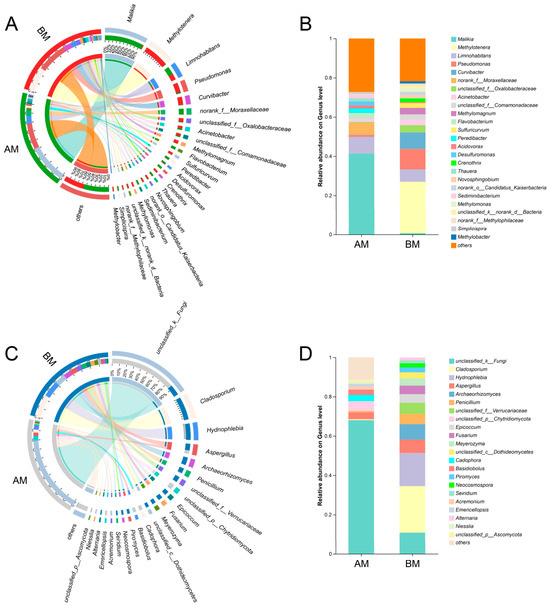
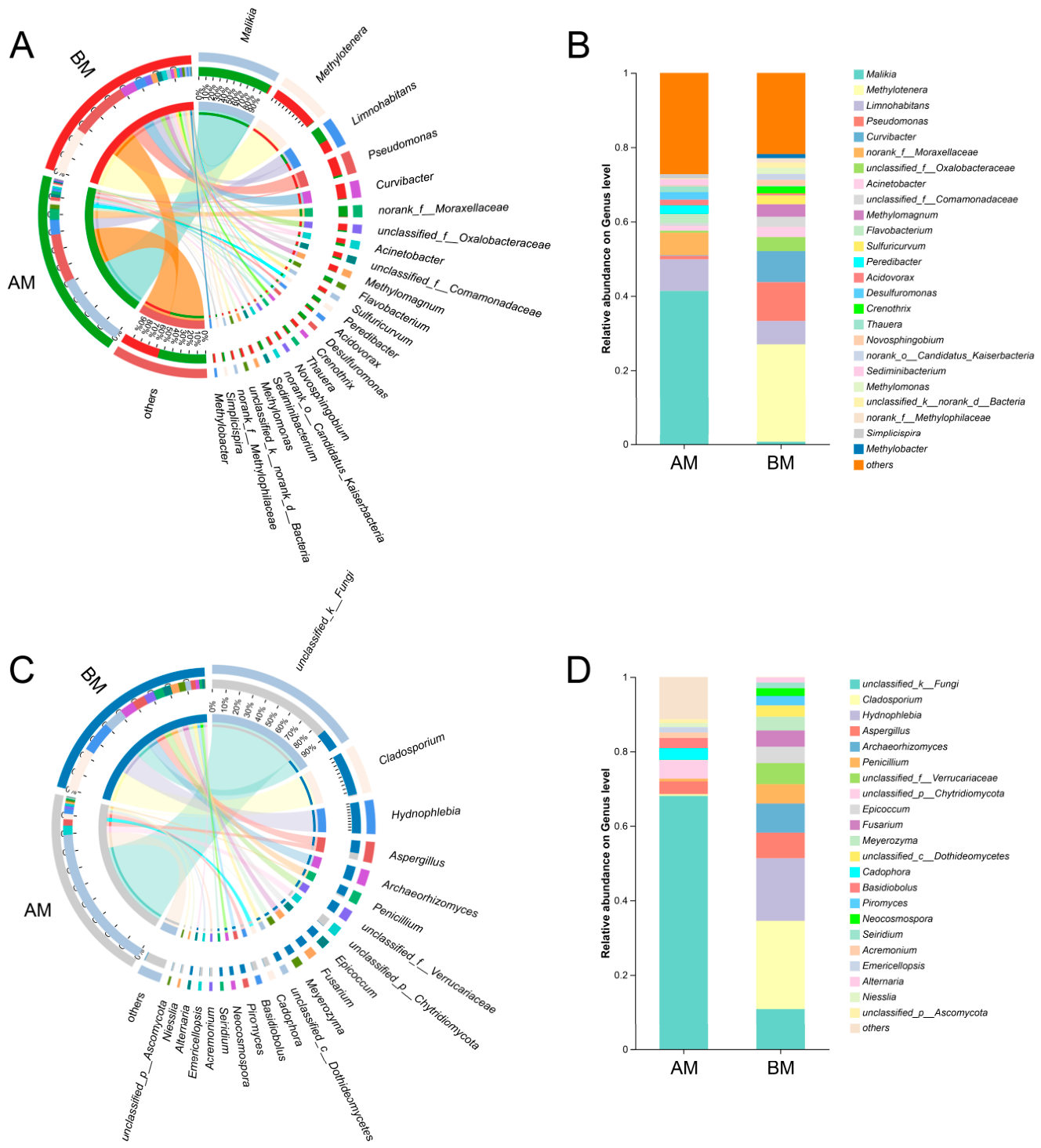
Differences in the relative compositions of bacterial and fungal communities between BM and AM water samples were identified via high-throughput sequencing (Figure 2). Taxonomic relative abundance distributions of bacterial communities were even prior to mining. Community structure differed in samples collected AM. The relative abundance of the genus Malikia constituted approximately 40 percent of the total bacterial sequences, compared to a near absence in pre-mining samples. Fungal communities showed a distinct compositional state following mining. Pre-mining water contained fungal taxa, including Cladosporium and Aspergillus. A single operational taxonomic unit accounted for approximately 70 percent of the total fungal sequences in post-mining samples. This sequence was unclassified at the genus level but assigned to the Kingdom Fungi. This dominant representative sequence was verified via BLAST + 2.17.0 against the NCBI database to exclude technical artifacts, chimeras, and non-fungal amplicons.
Figure 2.
Composition and relative abundance of microbial communities at the genus level. (A) Circular diagram showing the bacterial community structure in AM and BM; (B) stacked bar chart of bacterial relative abundance; (C) circular diagram showing the fungal community structure in AM and BM; and (D) stacked bar chart of fungal relative abundance.
3.2. Hierarchical Clustering of Dominant Bacterial and Fungal Genera
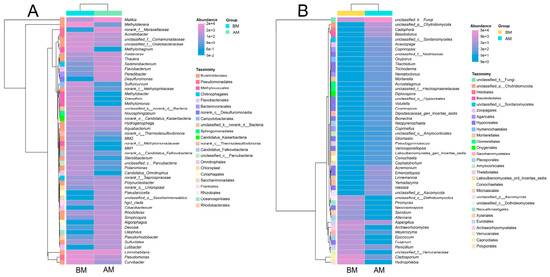
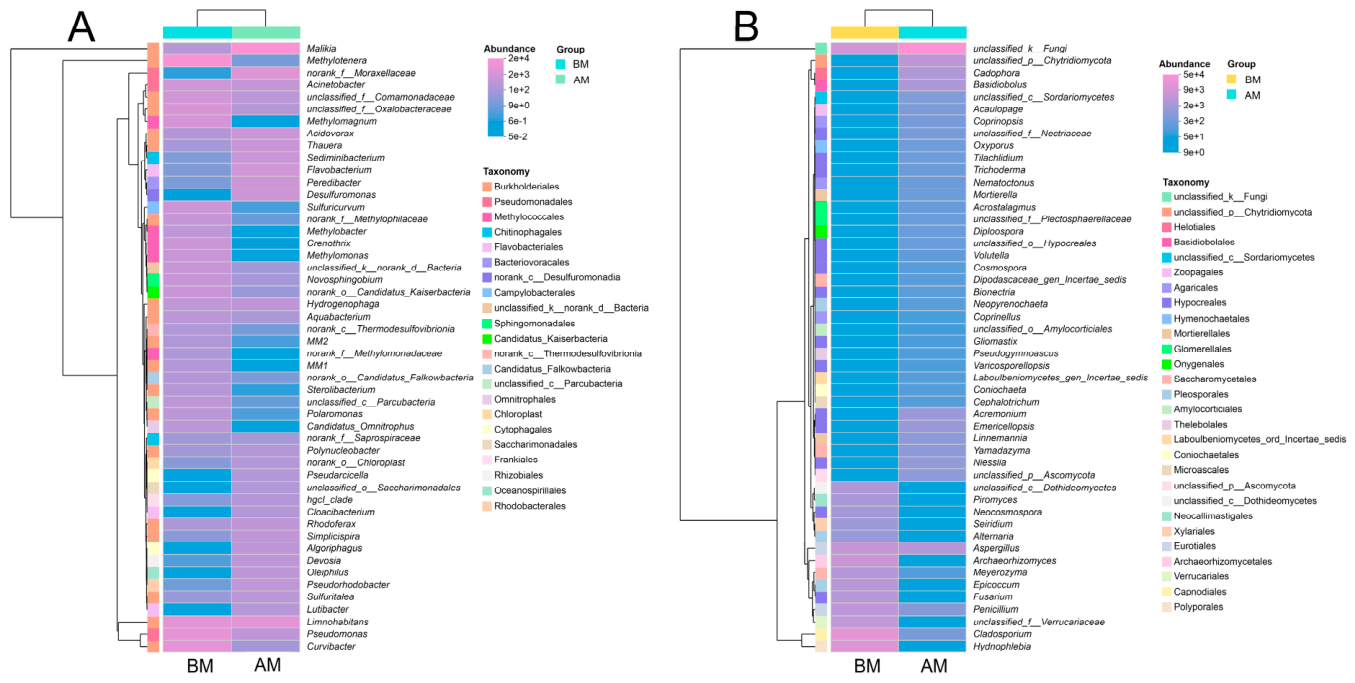
Differences in the relative abundances of microbial taxa between BM and AM water samples were visualized using hierarchical clustering heatmaps (Figure 3). Bacterial community samples clustered according to the sampling period (Figure 3A). Higher relative proportions of genera, including Devosia and Acidovorax, were observed in BM samples. AM samples were characterized by a statistically significant relative enrichment of Malikia (False Discovery Rate adjusted p < 0.05), and groups within the Methylomonadaceae family. Fungal communities clustered based on sampling period (Figure 3B). Fungal taxa, including Cladosporium and Aspergillus, were associated with BM conditions across all biological replicates. AM fungal communities were distinguished by higher relative abundances of the unclassified fungal group and taxa belonging to Basidiobolaceae.
Figure 3.
Heatmap analysis of differentially abundant bacterial (A) and fungal (B) taxa between AM and BM samples, with hierarchical clustering based on abundance patterns.
3.3. Phylogenetic Distribution and Functional Prediction of Bacterial and Fungal Communities
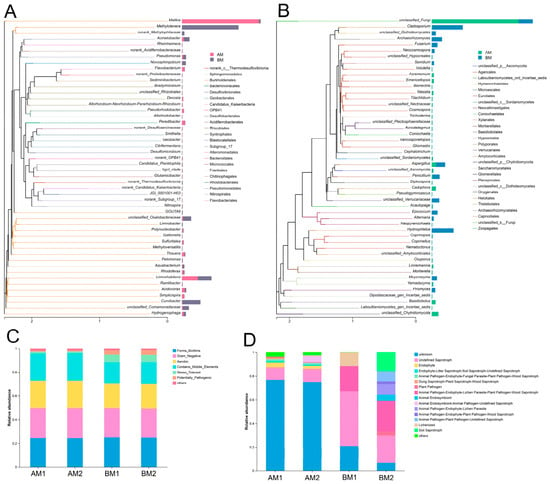
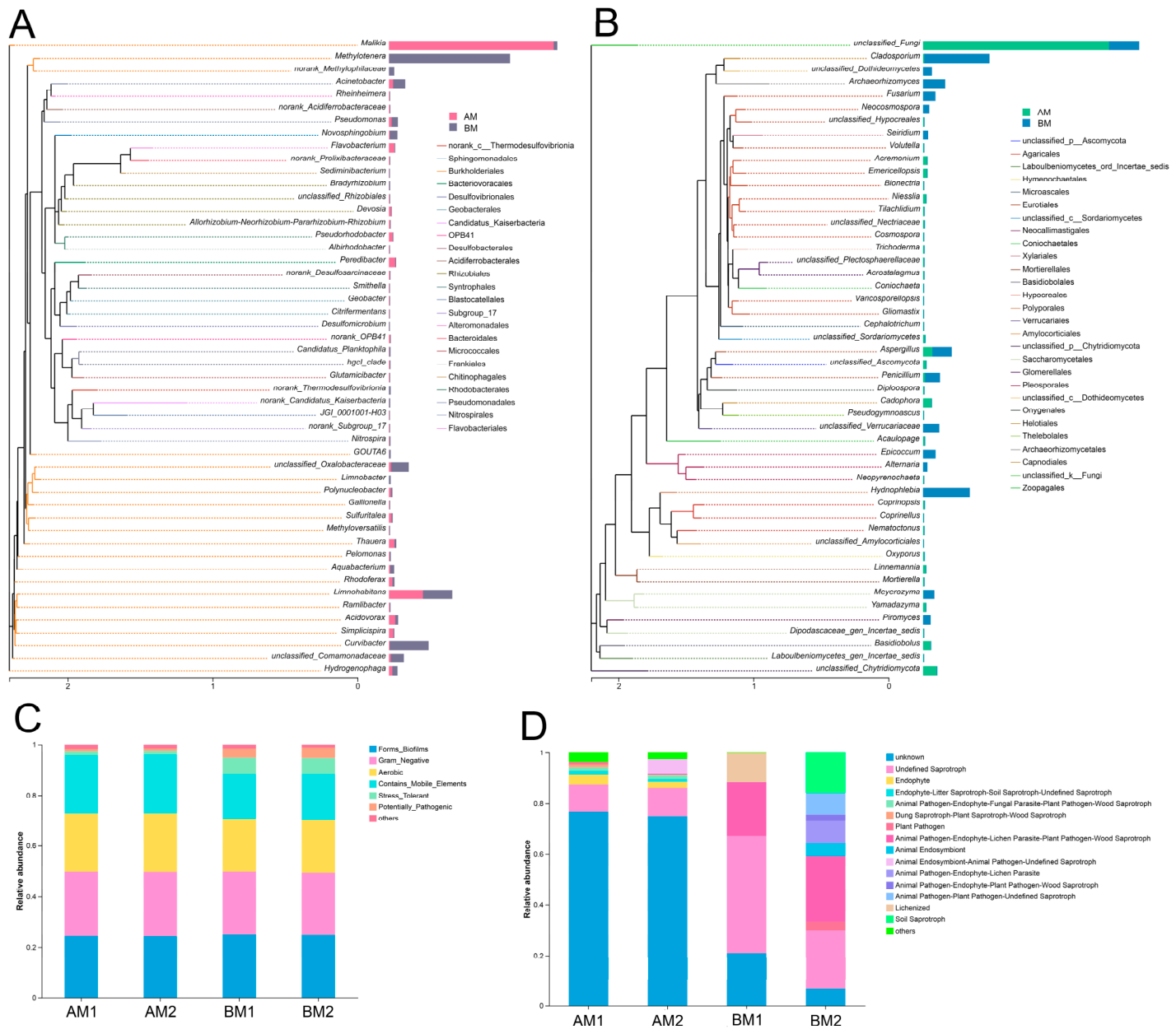
Relative microbial community composition and predicted functional characteristics of the water samples are presented in Figure 4. Compositional divergence between AM and BM samples was observed for bacterial and fungal communities based on PERMANOVA analysis with a False Discovery Rate adjusted p < 0.05. Community differences were characterized by changes in relative abundances of specific taxa, including Cladosporium. Phenotypic potentials were assigned to approximately 75 percent of the total bacterial sequences via the BugBase algorithm. Relative abundances of bacterial taxa assigned phenotypic potentials related to biofilm formation and aerobic metabolism remained similar between groups. These functional prediction profiles represent the annotated subset of the microbiome rather than confirmed metabolic activities. FUNGuild assignments differed between sampling periods. Relative proportions of all fungal functional guilds were calculated utilizing the total number of quality filtered sequences per sample as the denominator. Pre-mining samples contained a high proportion of functionally unassigned sequences and higher taxonomic clarity at the genus level. Post-mining samples were dominated by a fungal group unclassified at the genus level with functional assignments based on broader familial taxonomic affiliations. Higher relative proportions of taxa computationally assigned to potential plant pathogen and animal pathogen guilds were observed in post-mining samples. Predicted trophic potentials rather than verified pathogenic functions within the localized environment are indicated by these algorithmic assignments.
Figure 4.
Phylogenetic distribution of bacterial (A) and fungal (B) taxa using linear discriminant analysis, and predicted functional profiles of bacterial phenotypes using BugBase (C) and fungal trophic modes using FUNGuild (D) in AM and BM samples.
3.4. Relationships Between Environmental Factors and Microbial Communities
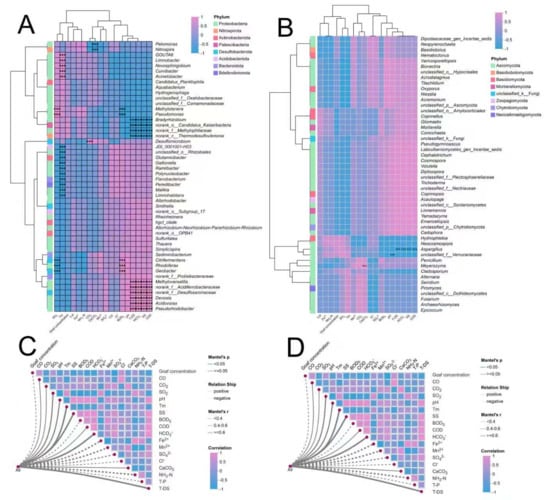
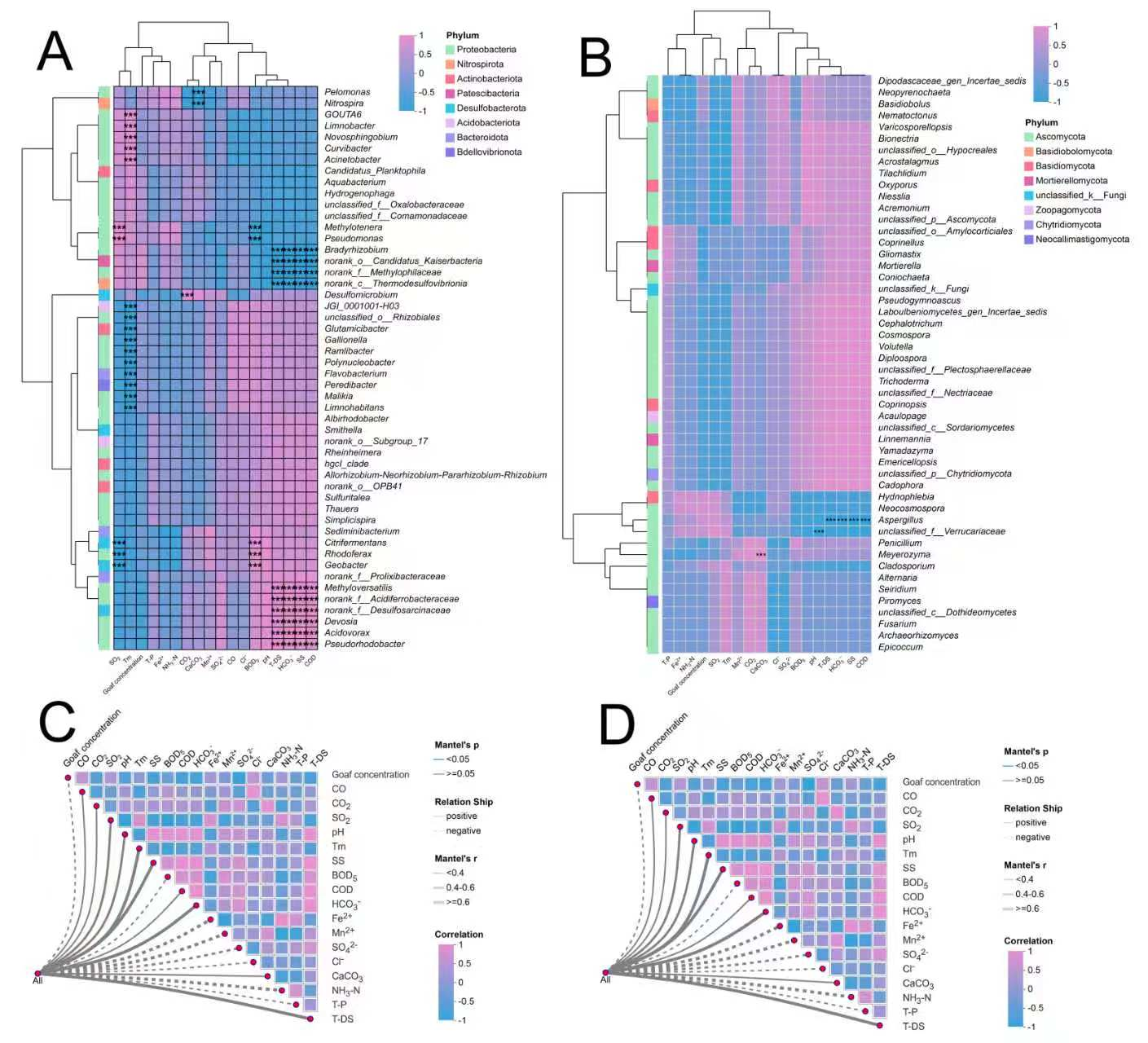
Statistical associations between environmental variables and community composition were evaluated using Mantel tests and Spearman correlation analyses (Figure 5). Genera, including Devosia, Acidovorax, and Pseudorhodobacter, in the bacterial community (Figure 5A) were positively correlated with pH, COD, and T-DS (r = X, p < Y) and negatively correlated with goaf related gas indicators (CO, CO2) (r = X, p < Y) and SO2 (r = X, p < Y). Aspergillus and Penicillium in the fungal community (Figure 5B) were positively correlated with pH and T-DS (r = X, p < Y). Shifts in water chemistry covaried with relative abundances of specific fungal taxa based on these mathematical relationships. Organic loading indicators (BOD5, COD) and dissolved gases were statistically linked with overall assembly patterns of bacterial and fungal communities based on network analyses (Figure 5C,D). These findings represent exploratory associations rather than definitive causal relationships given the three independent biological replicates per sampling condition. Alterations in chemical, physical, and organic parameters represent associated factors in aquatic microbial restructuring rather than primary drivers.
Figure 5.
Spearman correlation heatmaps of the top bacterial (A) and fungal (B) genera with environmental variables, and Mantel test analyses of the correlations between environmental factors and bacterial (C) and fungal (D) community structures. *** indicates p < 0.001 (highly significant).
3.5. Structural Equation Models Illustrating the Environmental Drivers of Microbial Communities
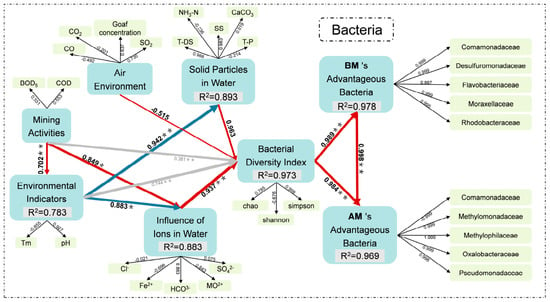
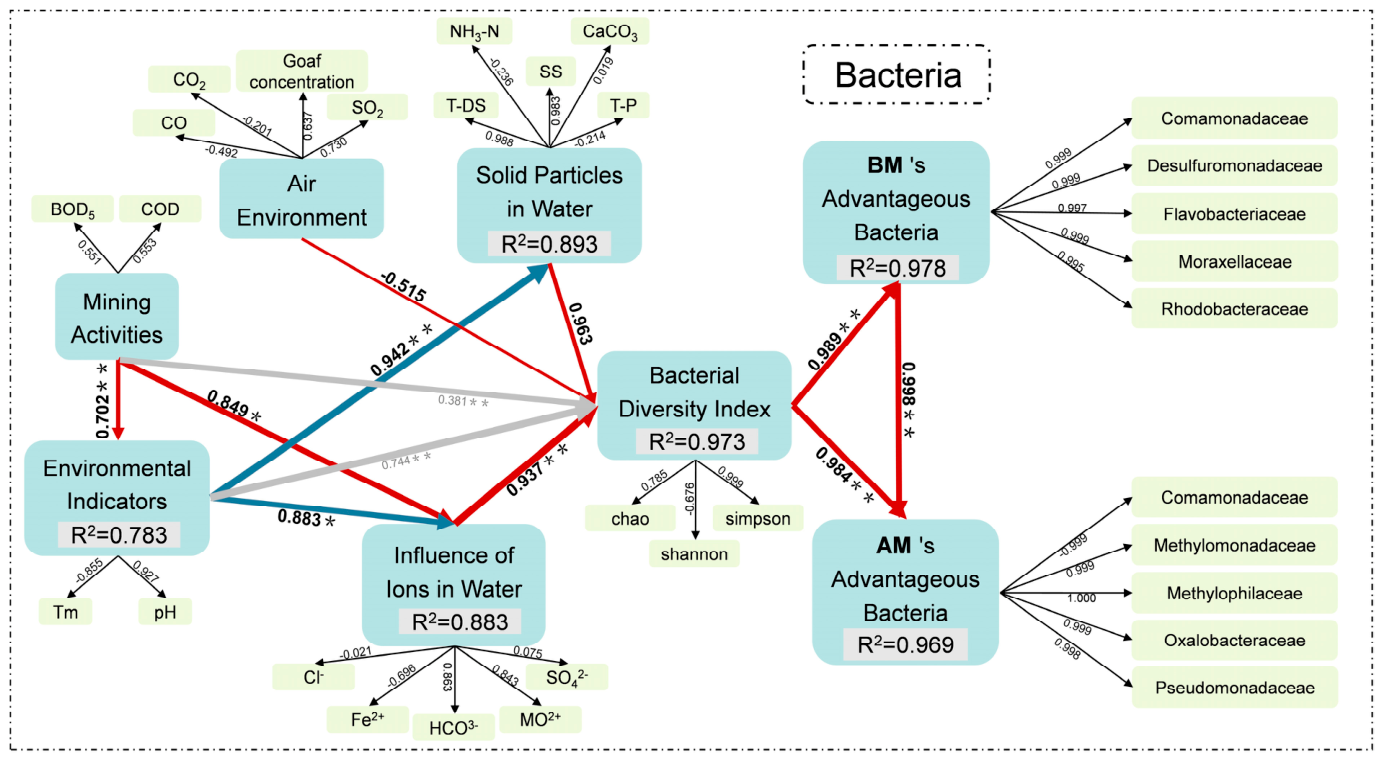
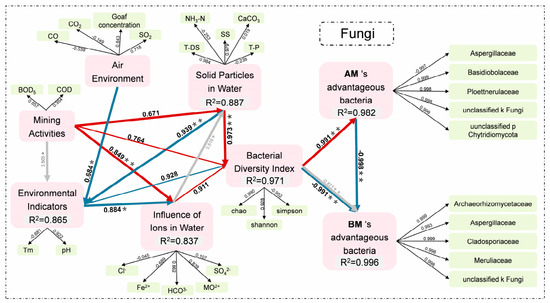
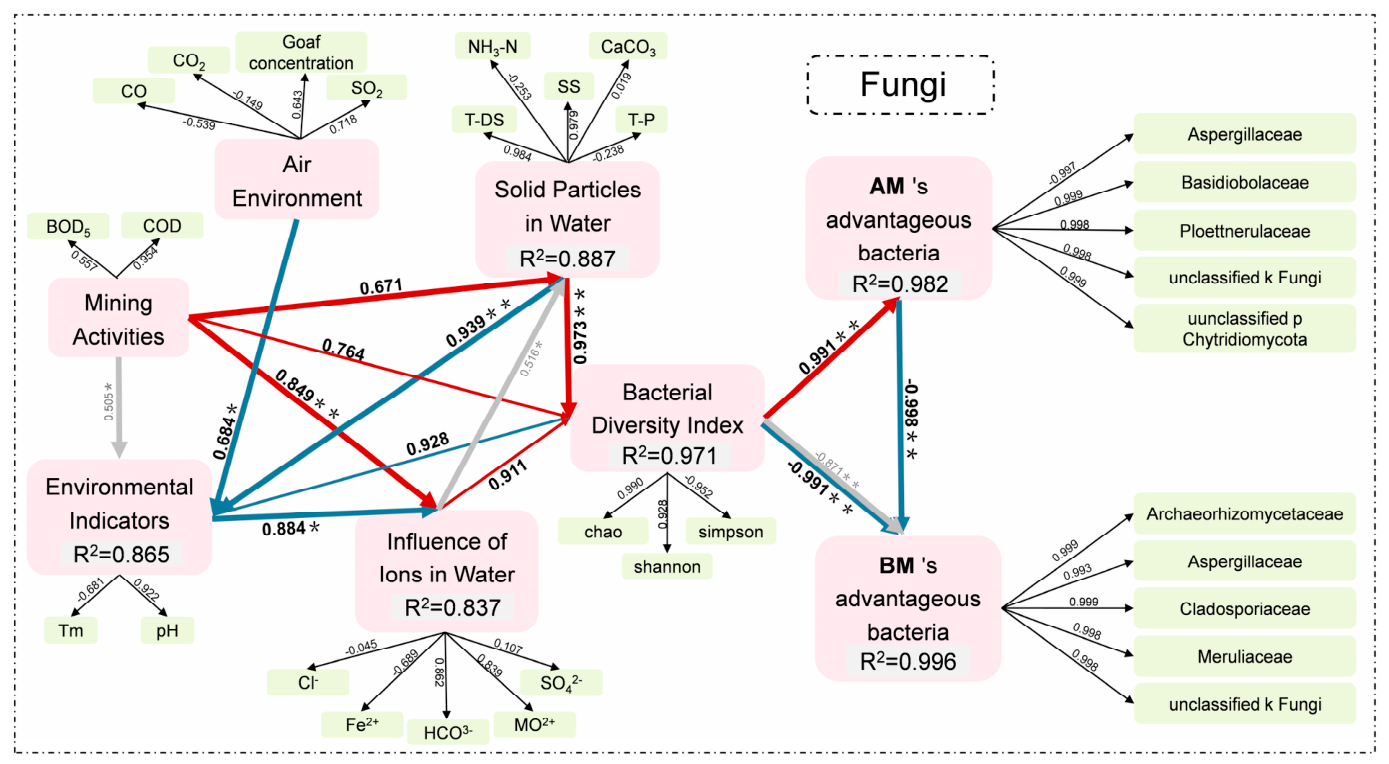
Regarding the bacterial community (Figure 6), mining activities exhibited strong positive associations with environmental indicator scores (path coefficient 0.702, p < X) and water ion accumulation (path coefficient = 0.849, p < X). These environmental variables collectively accounted for a substantial proportion of the variance in the bacterial diversity index (R2 = 0.973). Solid particle accumulation (path coefficient = 0.963, p < X) and ion concentration (path coefficient = 0.937, p < X) showed positive statistical linkages with bacterial diversity, whereas the air environment presented a negative association (path coefficient = −0.515, p < X). We observed that the diversity patterns covaried with the compositional differences between the periods, marked by the transition from pre-mining prominent families, including Comamonadaceae and Desulfuromonadaceae (R2 = 0.978), to post-mining prominent families, including Methylomonadaceae and Pseudomonadaceae (R2 = 0.969). Analysis of the parallel structural equation model for the fungal community (Figure 7) demonstrated that mining activities were positively associated with solid particle (path coefficient = 0.671, p < X) and ion concentrations (path coefficient = 0.849, p < X). These physicochemical variations were closely linked with fungal diversity (R2 = 0.971). The latent variables representing the respective community characteristics showed a strong positive correlation with the AM period (path coefficient = 0.991, p < X) and a negative correlation with the BM period (path coefficient = −0.991, p < X). Within this analytical framework, taxa including Basidiobolaceae, Ploettnerulaceae, and Chytridiomycota served as mathematical indicators measuring the latent construct of the post-mining fungal community (R2 = 0.982). These structural equation models represent exploratory pathways of statistical associations rather than causal relationships due to sample size limitations and the absence of continuous time series data. Data from these models indicate that physicochemical alterations induced by mining are associated with microbial community assemblies rather than acting as deterministic drivers.
Figure 6.
Structural equation model revealing the pathways through which mining activities and environmental factors drive bacterial community assembly in goaf water. * indicates p < 0.05 (significant), ** indicates p < 0.01 (very significant).
Figure 7.
Structural equation model revealing the pathways through which mining activities and environmental factors drive fungal community assembly in goaf water. * indicates p < 0.05 (significant), ** indicates p < 0.01 (very significant).
4. Discussion
Statistical associations between aquatic microbial community characteristics and physicochemical measurements in the Talahao coal mine during two sampling periods were evaluated. Differences in microbial community composition and lower relative diversity indices were associated with the AM period. The second sampling period covaried with higher relative proportions of taxa previously reported in disturbed environments. Variations in water physicochemical properties correlated with shifts in community structure. These relationships indicate that physicochemical differences correspond to altered microbial assembly patterns. Specific microbial community features serve as candidate indicators for assessing environmental disturbance. Developing biological monitoring tools requires validation through independent regional sampling and established continuous baselines to separate mining impacts from seasonal or hydrological variations. Current findings align with environmental filtering principles observed in regional metal mine studies, although alkaline and high particulate conditions at Talahao present aquatic selective pressures [24].
Differences in relative taxonomic compositions of bacterial and fungal communities were identified between the two sampling periods. Compositional data from amplicon sequencing sum to unity. The relative increase of specific taxa, including Malikia, may reflect a decline in absolute cellular abundance of other community members rather than biological proliferation. Shifts in relative proportions are consistent with statistical models of environmental filtering. The AM samples contained a high relative proportion of fungal sequences lacking genus level classification. This taxonomic ambiguity reflects limited representation of subterranean aquatic lineages within the internal transcribed spacer reference database rather than biological emergence of rare taxa. The unclassified category encompasses diverse lineages and does not constitute a single ecologically homogeneous group. Treating this aggregate category as a single dominant community introduces methodological bias. Differences in predicted fungal guild compositions suggest modifications in substrate utilization. These compositional shifts alter carbon mineralization rates and enzymatic activities during site recovery [25]. Future studies measuring absolute biogeochemical fluxes are required to test this prediction. Similar microbial diversity reductions are reported in open pit coal mining, yet the high proportion of unclassified fungi at the Talahao underground site indicates a subterranean response pattern uncaptured by surface soil reference frameworks [26,27].
Statistical linkages between hydrochemical parameters and relative abundances of microbial taxa were identified. The correlation between pH and community variation aligns with the biological reliance of microbial enzymatic activity on hydrogen ion concentrations [28,29]. The positive association between pH and genera, including Devosia and Acidovorax, reflects that alkaline conditions of the mine water fall within optimal growth ranges for these chemoheterotrophs [30,31,32,33,34,35]. These taxa possess genetic pathways for degrading complex organics and provide a biological basis for covariance with chemical oxygen demand. The influx of exogenous carbon substrates homogenizes spatial resources and favors opportunistic heterotrophs over specialized oligotrophs [36,37]. Increased organic loading enables a limited number of competitive microorganisms to dominate available ecological niches and contributes to the decline in overall microbial diversity [38]. Elevated total dissolved solids and suspended particles introduce physical and osmotic challenges. High ionic strength requires cellular osmoregulatory mechanisms. Taxa lacking these physiological adaptations experience competitive exclusion. This physical stressor provides a biological mechanism for the reduced community evenness in the compositional data [39,40]. Evaluating absolute quantitative changes across a broader temporal scale is required to isolate the causal impact of mining from background hydrological fluctuations. Mining introduces suspended particles and organic matter into aquatic systems and increases carbon substrate availability [41]. Elevated organic loading homogenizes spatial resource distributions. Resource homogenization facilitates the dominance of opportunistic taxa and concomitant reductions in alpha diversity under resource competition models [42]. Elevated total dissolved solids and ion concentrations alter water chemistry. Changes in osmotic and ionic conditions impose physiological stress. Community composition reflects the differential tolerance of resident taxa [43,44].
Indirect pathways linking mining to microbial communities were identified via structural equation modeling. Mining was positively associated with ion accumulation and suspended particle concentrations. These factors covaried with bacterial diversity and fungal community composition. The absence of a direct path from mining to microbial communities supports a model where physicochemical changes mediate mining effects [45]. This pattern aligns with the environmental filtering framework where disturbance alters habitat conditions to select for tolerant taxa. Environmental indicators, including pH and temperature, covaried with ion concentration and solid particle accumulation based on structural equation models. Bacterial diversity and fungal community composition were correlated in the models. This correlation reflects shared environmental responses rather than direct biotic interactions [46]. Bacteria and fungi participate in nutrient cycling. Alterations in bacterial community structure modify substrate availability for fungi. This mechanism remains hypothetical without experimental evidence.
Bacterial inferred functional profiles remained stable following taxonomic restructuring based on functional predictions. This stability aligns with the functional redundancy hypothesis where multiple taxa perform equivalent ecological functions to maintain biogeochemical processes. Distinguishing functional redundancy from phylogenetically conserved core metabolism requires an analysis of functional and taxonomic decoupling using shotgun metagenomics. Fungal trophic guilds exhibited higher compositional variability than bacterial functional profiles. This discrepancy reflects differences in bacterial and fungal responses to environmental change. Whether this represents functional plasticity in fungi or methodological differences in prediction approaches remains unresolved. Concurrent analysis of bacterial and fungal communities provides perspectives on ecosystem function given these groups mediate distinct interconnected biogeochemical processes [47].
Coal mining alters aquatic microbial community composition and diversity through physicochemical changes in mine water. Covariation between environmental variables and microbial communities supports the application of microbial monitoring as an assessment tool. Indirect pathways affecting microbial communities and differential responses between bacterial and fungal functional stability were identified by integrating bacterial and fungal analyses with structural equation modeling.
5. Conclusions
This study identified differences in aquatic microbial communities between the pre-mining and post-mining periods at the Talahao coal mine. The second sampling period coincided with altered physicochemical water properties, lower microbial community evenness, and distinct taxonomic compositions across both bacterial and fungal domains. The compositional data demonstrate the relative enrichment of specific taxa, including the bacterial genus Malikia and unclassified fungal lineages, following mining operations. Exploratory structural equation modeling indicates that these physicochemical variations are statistically associated with the observed microbial restructuring. Computational predictions suggest divergent phenotypic potentials between the two domains, with bacterial profiles showing less compositional variation than the predicted fungal trophic assignments. Assessing both bacterial and fungal communities concurrently offers valuable biological candidate indicators for monitoring environmental associations within subterranean aquatic ecosystems.
Author Contributions
Conceptualization, Y.H., D.G., D.L., H.W., Z.F., Z.L. and J.W.; Methodology, L.Y., Y.H., D.G., Y.G., D.L., H.W. and Z.L.; Software, L.Y., Y.H., D.G., Y.G., J.M., D.L. and Z.F.; Validation, Y.H., D.G., J.M., H.W. and Z.F.; Formal analysis, L.Y., Y.H. and D.G.; Investigation, Y.H., J.M., D.L. and J.W.; Resources, L.Y.; Data curation, Y.H., H.W., Z.L. and J.W.; Writing—original draft, L.Y., Y.H., Y.G. and Z.L.; Writing—review & editing, Y.H. and Z.L.; Visualization, Y.H., J.M., D.L., Z.F. and J.W.; Supervision, L.Y., H.W., Z.L. and J.W.; Project administration, L.Y., Z.L. and J.W.; Funding acquisition, L.Y., Z.L. and J.W. All authors have read and agreed to the published version of the manuscript.
Funding
This work received financial aid from the National Natural Science Foundation of the Higher Education Institutions of Anhui Province (2024AH051352, 2025AHGXZK31487, 2025AHGXZK31502), the Chizhou College High-Level Talent Research Start up Fund (CZ2024YJRC37, CZ2025YJRC153), and the Natural Students’ Innovation and Entrepreneurship Training Program (202511306005, 202611306001, 202611306004, 202611306018X, 202611306040).
Institutional Review Board Statement
Not applicable.
Informed Consent Statement
Not applicable.
Data Availability Statement
The original contributions presented in this study are included in the article. Further inquiries can be directed to the corresponding authors.
Acknowledgments
The authors gratefully acknowledge the State Key Laboratory of Mining Response and Disaster Prevention and Control in Deep Coal Mines, Anhui University of Science and Technology, and thank Ding Ke for his support.
Conflicts of Interest
The authors declare no conflicts of interest.
References
- Wang, G.F.; Xu, Y.X.; Ren, H.W. Intelligent and ecological coal mining as well as clean utilization technology in China: Review and prospects. Int. J. Min. Sci. Technol. 2019, 29, 161–169. [Google Scholar] [CrossRef] [Scilit]
- Worlanyo, A.S.; Jiangfeng, L. Evaluating the environmental and economic impact of mining for post-mined land restoration and land-use: A review. J. Environ. Manag. 2021, 279, 111623. [Google Scholar] [CrossRef] [Scilit] [PubMed]
- Fashola, M.O.; Ngole-Jeme, V.M.; Babalola, O.O. Heavy Metal Pollution from Gold Mines: Environmental Effects and Bacterial Strategies for Resistance. Int. J. Environ. Res. Public Health 2016, 13, 1047. [Google Scholar] [CrossRef] [Scilit] [PubMed]
- Gan, C.D.; Cui, S.F.; Wu, Z.Z.; Yang, J.Y. Multiple heavy metal distribution and microbial community characteristics of vanadium-titanium magnetite tailing profiles under different management modes. J. Hazard. Mater. 2022, 429, 128032. [Google Scholar] [CrossRef] [Scilit] [PubMed]
- Bagheri-Gavkosh, M.; Hosseini, S.M.; Ataie-Ashtiani, B.; Sohani, Y.; Ebrahimian, H.; Morovat, F.; Ashra, S. Land subsidence: A global challenge. Sci. Total Environ. 2021, 778, 146193. [Google Scholar] [CrossRef] [Scilit] [PubMed]
- Ma, K.; Zhang, Y.X.; Ruan, M.Y.; Guo, J.; Chai, T.Y. Land subsidence in a coal mining area reduced soil fertility and led to soil degradation in arid and semi-arid regions. Int. J. Environ. Res. Public Health 2019, 16, 3929. [Google Scholar] [CrossRef] [Scilit] [PubMed]
- Li, S.D.; Fang, J.; Zhu, X.S.; Spencer, R.G.M.; Salgado, X.A.A.; Deng, Y.C.; Huang, T.; Yang, H.; Huang, C.C. Properties of sediment dissolved organic matter respond to eutrophication and interact with bacterial communities in a plateau lake. Environ. Pollut. 2022, 301, 118996. [Google Scholar] [CrossRef] [Scilit] [PubMed]
- Leuko, S.; Koskinen, K.; Sanna, L.; D’Angeli, I.M.; De Waele, J.; Marcia, P.; Moissl-Eichinger, C.; Rettberg, P. The influence of human exploration on the microbial community structure and ammonia oxidizing potential of the Su Bentu limestone cave in Sardinia, Italy. PLoS ONE 2017, 12, e0180700. [Google Scholar] [CrossRef] [Scilit] [PubMed]
- Allison, S.D.; Martiny, J.B.H. Resistance, resilience, and redundancy in microbial communities. Proc. Natl. Acad. Sci. USA 2008, 105, 11512–11519. [Google Scholar] [CrossRef] [Scilit] [PubMed]
- Fierer, N.; Jackson, R.B. The diversity and biogeography of soil bacterial communities. Proc. Natl. Acad. Sci. USA 2006, 103, 626–631. [Google Scholar] [CrossRef] [Scilit] [PubMed]
- Yin, Y.; Wang, X.J.; Hu, Y.A.; Li, F.D.; Cheng, H.F. Soil bacterial community structure in the habitats with different levels of heavy metal pollution at an abandoned polymetallic mine. J. Hazard. Mater. 2023, 442, 130063. [Google Scholar] [CrossRef] [Scilit] [PubMed]
- Zeng, T.; Sha, H.; Xie, Q.; Lu, Y.; Nong, H.; Wang, L.; Tang, L. Comprehensive assessment of the microbial community structure in a typical lead-zinc mine soil. Environ. Sci. Pollut. Res. Int. 2025, 32, 13509–13522. [Google Scholar] [CrossRef] [Scilit] [PubMed]
- Zhang, L.; Xu, Z.M.; Sun, Y.J.; Gao, Y.T.; Zhu, L.L. Coal mining activities driving the changes in microbial community and hydrochemical characteristics of underground mine water. Int. J. Environ. Res. Public Health 2022, 19, 13359. [Google Scholar] [CrossRef] [Scilit] [PubMed]
- Xu, Q.; Tan, D.H.; Liu, J.Q.; Qiu, H.F.; Yang, Y. Microbial community structure and potential functional diversity in a post-mining ecosystem of central China. Front. Environ. Sci. 2025, 13, 1590925. [Google Scholar] [CrossRef] [Scilit]
- Shen, Z.J.; Shang, Z.J.; Wang, F.X.; Liang, Y.H.; Zou, Y.C.; Liu, F. Bacterial diversity in surface sediments of collapsed lakes in Huaibei, China. Sci. Rep. 2022, 12, 15784. [Google Scholar] [CrossRef] [Scilit] [PubMed]
- Li, S.; Zhang, L.; Fang, W.K.; Shen, Z. Variations in bacterial community succession and assembly mechanisms with mine age across various habitats in coal mining subsidence water areas. Sci. Total Environ. 2024, 948, 174822. [Google Scholar] [CrossRef] [Scilit] [PubMed]
- Gómez-Villegas, P.; Guerrero, J.L.; Pérez-Rodriguez, M.; Bolívar, J.P.; Morillo, A.; Vigara, J.; Léon, R. Exploring the microbial community inhabiting the phosphogypsum stacks of Huelva (SW SPAIN) by a high throughput 16S/18S rDNA sequencing approach. Aquat. Toxicol. 2022, 245, 106103, Erratum in Aquat. Toxicol. 2026, 299, 107937. https://doi.org/10.1016/j.aquatox.2022.106103. [Google Scholar] [CrossRef] [Scilit] [PubMed]
- Chen, J.Y.; Gui, H.R.; Guo, Y.; Li, J. Spatial distributions of microbial diversity in the contaminated deep groundwater: A case study of the Huaibei coalfield. Environ. Pollut. 2023, 318, 120866. [Google Scholar] [CrossRef] [Scilit] [PubMed]
- Chen, S.F.; Zhou, Y.Q.; Chen, Y.R.; Gu, J. fastp: An ultra-fast all-in-one FASTQ preprocessor. Bioinformatics 2018, 34, 884–890. [Google Scholar] [CrossRef] [Scilit] [PubMed]
- Magoc, T.; Salzberg, S.L. FLASH: Fast length adjustment of short reads to improve genome assemblies. Bioinformatics 2011, 27, 2957–2963. [Google Scholar] [CrossRef] [Scilit] [PubMed]
- Edgar, R.C. UPARSE: Highly accurate OTU sequences from microbial amplicon reads. Nat. Methods 2013, 10, 996–998. [Google Scholar] [CrossRef] [Scilit] [PubMed]
- Wang, Q.; Garrity, G.M.; Tiedje, J.M.; Cole, J.R. Naive Bayesian classifier for rapid assignment of rRNA sequences into the new bacterial taxonomy. Appl. Environ. Microbiol. 2007, 73, 5261–5267. [Google Scholar] [CrossRef] [Scilit] [PubMed]
- Shi, B.H.; Hou, K.X.; Cheng, C.; Bai, Y.; Liu, C.R.; Du, Z.K.; Wang, J.H.; Wang, J.; Li, B.; Zhu, L.S. Effects of the polyhalogenated carbazoles 3-bromocarbazole and 1,3,6,8-tetrabromocarbazole on soil microbial communities. Environ. Res. 2023, 239, 117379. [Google Scholar] [CrossRef] [Scilit] [PubMed]
- Zhang, B.G.; Wang, S.; Diao, M.H.; Fu, J.; Xie, M.M.; Shi, J.X.; Liu, Z.Q.; Jiang, Y.F.; Cao, X.L.; Borthwick, A.G.L. Microbial Community Responses to Vanadium Distributions in Mining Geological Environments and Bioremediation Assessment. J. Geophys. Res.-Biogeosci. 2019, 124, 601–615. [Google Scholar] [CrossRef] [Scilit]
- Liang, J.L.; Liu, J.; Jia, P.; Yang, T.T.; Zeng, Q.W.; Zhang, S.C.; Liao, B.; Shu, W.S.; Li, J.T. Novel phosphate-solubilizing bacteria enhance soil phosphorus cycling following ecological restoration of land degraded by mining. ISME J. 2020, 14, 1600–1613. [Google Scholar] [CrossRef] [Scilit] [PubMed]
- Siles, J.A.; Starke, R.; Martinovic, T.; Fernandes, M.L.P.; Orgiazzi, A.; Bastida, F. Distribution of phosphorus cycling genes across land uses and microbial taxonomic groups based on metagenome and genome mining. Soil Biol. Biochem. 2022, 174, 108826. [Google Scholar] [CrossRef] [Scilit]
- Li, Y.; Zhang, M.; Xu, R.; Lin, H.; Sun, X.; Xu, F.; Gao, P.; Kong, T.; Xiao, E.; Yang, N.; et al. Arsenic and antimony co-contamination influences on soil microbial community composition and functions: Relevance to arsenic resistance and carbon, nitrogen, and sulfur cycling. Environ. Int. 2021, 153, 106522. [Google Scholar] [CrossRef] [Scilit] [PubMed]
- Jones, D.S.; Kohl, C.; Grettenberger, C.; Larson, L.N.; Burgos, W.D.; Macalady, J.L. Geochemical Niches of Iron-Oxidizing Acidophiles in Acidic Coal Mine Drainage. Appl. Environ. Microbiol. 2015, 81, 1242–1250. [Google Scholar] [CrossRef] [Scilit] [PubMed]
- Sanchez, A.A.; Haas, K.; Jackisch, C.; Hedrich, S.; Lau, M.P. Enrichment of dissolved metal(loid)s and microbial organic matter during transit of a historic mine drainage system. Water Res. 2024, 266, 122336. [Google Scholar] [CrossRef] [Scilit] [PubMed]
- Xiao, E.Z.; Ning, Z.P.; Xiao, T.F.; Sun, W.M.; Jiang, S.M. Soil bacterial community functions and distribution after mining disturbance. Soil Biol. Biochem. 2021, 157, 108232. [Google Scholar] [CrossRef] [Scilit]
- Ma, F.; Zi, Z.D.; Li, W.; Wang, Z.X.; Lu, J.; Lv, J. Devosia sediminis sp. nov., isolated from subterranean sediment. Arch. Microbiol. 2021, 203, 4517–4523. [Google Scholar] [CrossRef] [Scilit] [PubMed]
- Cavalcanti, M.T.; Silveira, E.B.D.; Mariano, R.D.L.R.; Viana, I.O. Crescimento de Acidovorax avenae subsp. citrulli sob diferentes temperaturas, pH, concentrações de cloreto de sódio e fontes de carbono. Ciênc. Rural 2005, 35, 1313–1318. [Google Scholar] [CrossRef] [Scilit]
- Ko, D.J.; Kim, J.S.; Park, D.S.; Lee, D.H.; Heo, S.Y.; Seo, J.W.; Kim, C.H.; Oh, B.R. Tabrizicola fusiformis sp nov., isolated from an industrial wastewater treatment plant. Int. J. Syst. Evol. Microbiol. 2018, 68, 1800–1805. [Google Scholar] [CrossRef] [Scilit] [PubMed]
- Wheeler, K.A.; Hurdman, B.F.; Pitt, J.I. Influence of pH on the growth of some toxigenic species of Aspergillus, Penicillium and Fusarium. Int. J. Food Microbiol. 1991, 12, 141–149. [Google Scholar] [CrossRef] [Scilit] [PubMed]
- Diao, Y.Z.; Chen, Q.; Jiang, X.Z.; Houbraken, J.; Barbosa, R.N.; Cai, L.; Wu, W.P. Penicillium section Lanata-divaricata from acidic soil. Cladistics 2019, 35, 514–549. [Google Scholar] [CrossRef] [Scilit] [PubMed]
- Chen, L.X.; Huang, L.N.; Méndez-García, C.; Kuang, J.L.; Hua, Z.S.; Liu, J.; Shu, W.S. Microbial communities, processes and functions in acid mine drainage ecosystems. Curr. Opin. Biotechnol. 2016, 38, 150–158. [Google Scholar] [CrossRef] [Scilit] [PubMed]
- Shao, G.Y.; Li, C.S.; Liu, R.; Zhang, P.; Zuo, L.; Wang, Y.Q. Silicified Microorganisms and Microorganism-Like Particles in the Groundwater of an Abandoned Coal Mine. Mine Water Environ. 2023, 42, 489–499. [Google Scholar] [CrossRef] [Scilit]
- Cebekhulu, S.; Gómez-Arias, A.; Matu, A.; Alom, J.; Valverde, A.; Caraballo, M.A.; Ololade, O.; Schneider, P.; Castillo, J. Role of indigenous microbial communities in the mobilization of potentially toxic elements and rare-earth elements from alkaline mine waste. J. Hazard. Mater. 2024, 466, 133504. [Google Scholar] [CrossRef] [Scilit] [PubMed]
- Kinnunen, P.; Miettinen, H.; Bomberg, M. Review of Potential Microbial Effects on Flotation. Minerals 2020, 10, 533. [Google Scholar] [CrossRef] [Scilit]
- Levett, A.; Gleeson, S.A.; Kallmeyer, J. From exploration to remediation: A microbial perspective for innovation in mining. Earth-Sci. Rev. 2021, 216, 103563. [Google Scholar] [CrossRef] [Scilit]
- Zafeiropoulos, H.; Paragkamian, S.; Ninidakis, S.; Pavlopoulos, G.A.; Jensen, L.J.; Pafilis, E. PREGO: A Literature and Data-Mining Resource to Associate Microorganisms, Biological Processes, and Environment Types. Microorganisms 2022, 10, 293. [Google Scholar] [CrossRef] [Scilit] [PubMed]
- Liu, J.J.; Liu, W.; Zhang, Y.B.; Chen, C.J.; Wu, W.X.; Zhang, T.C. Microbial communities in rare earth mining soil after in-situ leaching mining. Sci. Total Environ. 2021, 755, 142521. [Google Scholar] [CrossRef] [Scilit] [PubMed]
- Chen, D.; Feng, Q.Y. Microbial Community Structure, Metabolic Function, and Phenotypic Characteristics of Sediment in Deep Coal Mine Underground Environment, China. Water 2023, 15, 2371. [Google Scholar] [CrossRef] [Scilit]
- Maltman, C.; Messner, K.; Kyndt, J.A.; Yurkov, V. Brevundimonas aurifodinae, sp. nov., an Aerobic Anoxygenic Phototroph Resistant to Metalloid Oxyanions Isolated from Gold Mine Tailings. Microorganisms 2024, 12, 2167, Erratum in Microorganisms 2026, 14, 86. https://doi.org/10.3390/microorganisms14010086. [Google Scholar] [CrossRef] [Scilit] [PubMed]
- Kay, C.M.; Haanela, A.; Johnson, D.B. Microorganisms in subterranean acidic waters within Europe’s deepest metal mine. Res. Microbiol. 2014, 165, 705–712. [Google Scholar] [CrossRef] [Scilit] [PubMed]
- Nguyen, T.H.; Won, S.; Ha, M.G.; Nguyen, D.D.; Kang, H.Y. Bioleaching for environmental remediation of toxic metals and metalloids: A review on soils, sediments, and mine tailings. Chemosphere 2021, 282, 131108. [Google Scholar] [CrossRef] [Scilit] [PubMed]
- Zhu, Z.K.; Gao, Y.T.; Zhang, L.; Sun, Y.J. Driving Effects of Coal Mining Activities on Microbial Communities and Hydrochemical Characteristics in Different Zones. Sustainability 2025, 17, 4000. [Google Scholar] [CrossRef] [Scilit]

Disclaimer/Publisher’s Note: The statements, opinions and data contained in all publications are solely those of the individual author(s) and contributor(s) and not of MDPI and/or the editor(s). MDPI and/or the editor(s) disclaim responsibility for any injury to people or property resulting from any ideas, methods, instructions or products referred to in the content. |
© 2026 by the authors. Licensee MDPI, Basel, Switzerland. This article is an open access article distributed under the terms and conditions of the Creative Commons Attribution (CC BY) license.