


Abstract
Microbiome-derived signatures are increasingly investigated as diagnostic biomarkers in children, yet their clinical readiness remains uncertain because pediatric microbiomes vary substantially with age, development, diet, medication exposure, geography, and sampling context. This narrative review evaluates the diagnostic potential and translational maturity of pediatric microbiome biomarkers across disease domains. A prespecified PubMed search identified 124 curated records evaluating taxonomic, functional, genomic, metabolomic, or composite microbiome-derived signatures. Evidence was examined according to clinical task, biological matrix, analytical platform, comparator selection, modeling strategy, diagnostic performance, and validation maturity. Gastrointestinal and hepatobiliary disorders, particularly inflammatory bowel disease, showed the most developed diagnostic evidence, including clinically relevant comparators and independent validation. Promising signals were also reported in neurodevelopmental, respiratory, immune/allergic, oral, and metabolic disorders, although most studies remained at the discovery or internal-validation stage. High discrimination in case–healthy-control studies frequently weakened when models were tested against symptomatic controls or independent populations, highlighting spectrum bias, overfitting, developmental confounding, and limited transportability. Clinical translation therefore requires prespecified clinical use, leakage-controlled models, independent multicenter validation, comparison with standard care, and prospective evaluation of calibration, feasibility, clinical impact, and cost. Pediatric microbiome diagnostics should be judged by reproducibility and clinical utility rather than by discovery-cohort accuracy alone.
1. Introduction
Children require diagnostic tests that are accurate, reproducible, minimally invasive, and interpretable within the context of rapidly changing developmental physiology. This need is especially apparent in disorders for which diagnosis remains syndromic, requires invasive procedures, or relies on combinations of laboratory, imaging, endoscopic, histologic, and behavioral assessments. The microbiome is an attractive diagnostic source because microbial communities can be sampled repeatedly from stool, saliva, the upper airway, skin, and other accessible sites, while sequencing and mass-spectrometry platforms can resolve taxonomic, functional, genomic, and metabolite-level features. The central clinical question, however, is not whether disease is accompanied by dysbiosis, but whether a microbiome-derived signature can reproduce the same diagnostic decision across children, centers, regions, laboratories, and analytical platforms.
This issue is particularly important in pediatrics. The microbiome undergoes marked maturation during infancy and early childhood, and its composition and developmental trajectory vary with age and geography and are shaped by delivery mode, breastfeeding or formula exposure, diet, and antibiotic use [1,2,3,4]. These sources of variation can obscure disease-related signals and complicate the definition of stable diagnostic thresholds. They may also interact with disease itself: restricted dietary preferences, for example, may mediate apparent autism-microbiome associations rather than simply confound them [5]. Pediatric microbiome biomarkers therefore need to remain robust across relevant developmental and exposure-related variation, rather than merely achieve statistical separation within a single cohort.
The diagnostic literature has also evolved substantially. Early studies emphasized individual taxa and measures of alpha diversity (the diversity of microbes within a single sample) and beta diversity (differences in microbial community composition between samples). More recent work combines taxa into panels, interrogates microbial functions, reconstructs metagenome-assembled genomes (MAGs), profiles microbial structural variants and insertion/deletion variants (InDels), quantifies volatile or soluble metabolites, and integrates microbiome features with host or clinical variables. Machine learning is increasingly used to extract diagnostic signals from high-dimensional microbiome data and can yield high apparent discrimination. However, high dimensionality and analytical flexibility also increase susceptibility to overfitting, data leakage, batch effects, and model instability, producing performance estimates that may not reproduce in independent populations [6,7].
This narrative review evaluates the diagnostic potential and translational maturity of pediatric microbiome biomarkers across disease areas. Particular emphasis is placed on the intended clinical task, biological matrix, biomarker layer, comparator selection, analytical and modeling strategy, validation design, transportability, and incremental value over established care. The review further considers which microbial signatures have progressed from biological association to reproducible and clinically interpretable diagnostic tools, and what evidence is required for the remainder to advance toward clinical implementation. The overall diagnostic and translational pathway is summarized in Figure 1.
Figure 1.
Framework for pediatric microbiome biomarker development and clinical translation. The framework summarizes the major steps in developing microbiome-derived biomarkers for pediatric diagnostic applications. The process begins with definition of the intended clinical use, including disease detection, differential diagnosis, and phenotyping or stratification, followed by selection of the biological matrix and control of pre-analytical factors. Subsequent stages include assay and biomarker-layer selection, leakage-controlled model development, assessment of clinical performance, and independent validation and implementation. Pediatric-specific determinants, including developmental stage, diet and environmental exposures, and medication or treatment, may influence biomarker performance throughout the workflow. Clinical evaluation should extend beyond discrimination to include clinically relevant comparators, calibration, incremental value over standard care, transportability, workflow feasibility, assay failure, cost, and clinical impact. AUC, area under the curve; ITS, internal transcribed spacer; MAG, metagenome-assembled genome; VOC, volatile organic compound.
2. Literature Search and Evidence Curation
This narrative review was informed by a prespecified PubMed search updated to 14 August 2026. PubMed was selected for its broad coverage of clinically relevant biomedical literature, although the absence of complementary searches in Embase, Scopus, or Web of Science may have limited the identification of relevant studies across certain disease domains. Search terms covered pediatric populations, the microbiome, and diagnostic performance, including microbiome- and microbiota-related terms together with terms for diagnosis, biomarkers, receiver operating characteristic (ROC) curves and area under the curve (AUC), classification, prediction, and machine learning. We focused on original studies evaluating microbiome-derived taxonomic, functional, genomic, metabolomic, or composite signatures in pediatric populations and reporting diagnostic discrimination, classification, or validation. Adult-only studies, Mendelian randomization and other etiological analyses, conventional microbiological diagnostic studies, purely methodological or in silico studies, and reports outside the diagnostic-biomarker scope were not included in the core synthesis. Prognostic, treatment-response, or association studies were considered when they also informed diagnostic or stratification questions or helped define the boundaries of the evidence base. Three authors (M.-S.W., Z.-J.H., and D.-Y.W.) contributed to the literature search, and four (P.W., Z.-J.H., D.-Y.W., and M.-S.W.) participated in evidence curation. Formal independent duplicate screening and inter-rater agreement assessment were not undertaken. The final curated dataset comprised 124 records (Supplementary Table S1). For each study, we considered the clinical task, population and comparator, biological matrix, analytical platform, biomarker layer, model-development strategy, diagnostic performance, and validation level. Clinical tasks and validation maturity were categorized pragmatically for narrative comparison. These records represent a curated evidence base rather than an exhaustive collection of eligible studies. As this review was designed as a narrative synthesis rather than a systematic review or meta-analysis, no pooled estimates were generated.
3. From Microbiome Associations to Diagnostic Biomarkers: Clinical Tasks and Evidence Maturity
Microbiome studies use the term “biomarker” for fundamentally different clinical tasks. Disease association denotes a reproducible group-level difference and can support mechanistic or feature discovery, but does not establish diagnostic utility. Disease detection asks whether a signature distinguishes affected from unaffected children, often using healthy controls. Differential diagnosis is more stringent and usually more clinically relevant because the comparator comprises children with similar symptoms, inflammatory states, or competing diagnoses. Phenotyping or stratification separates subtypes, severity states, or complications within an established disease. Prognosis concerns future outcomes, including disease progression or complications, whereas treatment-response prediction concerns subsequent response to therapy; neither should be conflated with cross-sectional diagnosis. Microbiome-derived signatures may also have prognostic or disease-monitoring value even when their specificity for initial diagnosis is limited, although such applications require longitudinal validation.
This taxonomy directly affects the interpretation of diagnostic performance. A classifier that separates severe, treatment-naive Crohn disease from healthy children can achieve a high AUC without demonstrating that it distinguishes inflammatory bowel disease (IBD) from irritable bowel syndrome, infection, or other causes of abdominal symptoms. In this context, symptomatic controls are children presenting with similar gastrointestinal symptoms in whom IBD has been excluded following appropriate clinical evaluation. Performance against clinically similar controls is generally more informative for clinical translation because case–control designs using highly selected cases and healthy controls can overestimate diagnostic accuracy. The pediatric IBD literature illustrates this contrast: microbiome discrimination can be very high against healthy controls but falls substantially against symptomatic gastrointestinal controls [8,9,10,11,12]. A lower AUC in this setting should therefore not automatically be interpreted as model failure; it may instead reflect a more clinically demanding and informative comparison.
Accordingly, this review describes diagnostic maturity as a pragmatic progression from discovery and internal validation to independent validation, clinically relevant differential diagnosis, and prospective or real-world evaluation. Internal validation using resampling methods such as cross-validation or bootstrapping can quantify optimism during model development but does not establish transportability. A random held-out subset drawn from the same dataset remains an internal validation sample and is not necessarily stronger than resampling. External validation in independent participants, particularly across hospitals, regions, or clinical settings, tests whether performance generalizes beyond the development data. Prospective validation in clinically representative populations further evaluates performance under realistic disease prevalence, case mix, and workflow. TRIPOD + AI and PROBAST + AI provide contemporary frameworks for transparent reporting and for assessing the quality, applicability, and risk of bias of prediction models developed using regression or machine-learning methods [13,14]. These clinical tasks, their target populations, and their implications for diagnostic translation are summarized in Table 1 and applied consistently throughout this review. Representative studies illustrating differences in comparator selection, validation maturity, external transportability, and comparison with standard care are presented in Table 2.
Table 1.
Clinical tasks in pediatric microbiome biomarker studies.
Table 2.
Representative pediatric microbiome diagnostic studies across stages of translational maturity.
4. The Microbiome Diagnostic Pipeline
As outlined in Figure 1, the microbiome diagnostic pipeline encompasses matrix selection, pre-analytical processing, assay and biomarker selection, leakage-controlled modeling, clinical-performance evaluation, and independent validation.
4.1. Biological Matrices
The biological matrix determines both the available signal and the clinical workflow in which a test could be deployed. Stool dominates the curated literature and is especially prominent in IBD, autism spectrum disorder (ASD), type 1 diabetes, metabolic disease, and immune conditions. It is non-invasive, repeatable, and scalable, but fecal microbiome composition varies with host and environmental factors, including age, diet, medication exposure, stool consistency, and intestinal transit [29]. Sample collection, preservation, storage, and processing introduce additional technical variation [30]. Mucosal tissue provides a disease-proximal signal in intestinal disease and may reveal information not captured in stool, but biopsy-based markers are difficult to justify as stand-alone screening tests when endoscopy is already required. Their translational value is therefore more likely to lie in adjunctive classification or mechanistic anchoring of less invasive assays.
Oral and salivary samples are highly feasible in children and permit repeated collection without specialized infrastructure. They are particularly attractive for caries, oral disease, and emerging systemic applications. Their limitations are equally important: the oral microbiome is strongly structured by local ecological niches and oral health status, so salivary signatures proposed as systemic biomarkers may also reflect local oral conditions [31]. Respiratory specimens span a feasibility gradient from nasopharyngeal or oropharyngeal swabs to sputum, tracheal aspirates, and bronchoalveolar lavage fluid (BALF), with greater disease proximity generally accompanied by greater sampling burden. Skin swabs combine lesion proximity with low sampling burden in atopic dermatitis. Urine and blood are conceptually different because they often contain microbiome-derived metabolites or microbial deoxyribonucleic acid (DNA) rather than a directly sampled microbial community; such signals should therefore be described carefully as “microbiome-derived” biomarkers. The clinical trade-offs of the principal biological matrices—including anatomical proximity, collection burden, major sources of variation, technical risks, and plausible clinical roles—are summarized in Table 3.
Table 3.
Clinical trade-offs of biological matrices for pediatric microbiome diagnostics.
4.2. Biomarker Layers
Taxonomic panels are the most intuitive biomarker layer and are often the easiest to translate into targeted assays. Their principal limitations are ecological resolution and data structure: a genus can contain functionally heterogeneous species and strains, while relative-abundance measurements are inherently compositional and require analytical approaches that account for this dependence [32]. Community-level diversity metrics summarize ecological structure but rarely provide stable clinical thresholds. Functional profiles can be more conserved across individuals than taxonomic composition, suggesting that gene- or pathway-level biomarkers may be more transferable in some settings; this potential advantage nevertheless requires external validation [33]. Genome-level markers such as MAGs, single-nucleotide polymorphisms, structural variants, and InDels offer greater resolution at the cost of dimensionality and analytical complexity. Microbiome-derived metabolites may bring assays closer to quantitative clinical chemistry, but their source is not always exclusively microbial. Multi-omics and composite models can combine complementary information and improve discrimination, but higher AUC alone does not justify greater cost, lower interpretability, or reduced transferability.
4.3. Analytical Platforms and Diagnostic Modeling
Platform choice defines the available feature space. Sequencing of the 16S ribosomal RNA (16S rRNA) gene, primarily used to characterize bacterial communities, and the internal transcribed spacer (ITS), a noncoding region within the ribosomal RNA gene cluster commonly used for fungal profiling, provides relatively cost-effective approaches to taxonomic profiling. However, results depend on target region, primer choice, and reference database. Shotgun metagenomics provides species-, strain-, gene-, and function-level resolution and enables MAG- and microbial-variant-based classifiers, but requires greater sequencing depth and computational standardization. Metabolomics captures downstream functional signals but introduces additional pre-analytical and instrument-specific variation. Multi-omics designs broaden biological coverage while also increasing opportunities for batch effects and analytical heterogeneity.
The modeling pipeline should keep feature discovery separate from unbiased performance estimation. Feature selection, normalization, imputation, and hyperparameter tuning should be confined to the training data and, where applicable, repeated within each resampling fold; performing these steps before cross-validation can leak information from the evaluation data and yield optimistically biased performance estimates [7]. Once finalized, a diagnostic classifier should be locked before independent validation. This separation is especially important for microbiome data, in which thousands of sparse, compositional features may be evaluated in cohorts of only tens to hundreds of children. Standardization studies have shown that DNA extraction and laboratory workflow can materially alter measured community structure [30,34], while sequencing experiments can contain systematic, protocol-dependent bias [35]. Without explicit safeguards, a classifier may therefore learn laboratory-specific signal rather than disease-related biology.
Diagnostic evaluation should extend beyond AUC. Sensitivity and specificity at clinically meaningful thresholds are required for interpretation, while calibration is essential when model outputs are used as probabilities. Decision-curve analysis, incremental value over existing tests, cost, turnaround time, and assay failure rate are also relevant to whether a model can change care. For multiclass or imbalanced problems, precision-recall performance may be more informative than ROC curves. The most credible studies predefine the clinical task, use clinically relevant comparators, maintain strict separation between training and validation, and report how performance changes under external transport.
5. Diagnostic Evidence Across Pediatric Diseases
The distribution of the 124 curated records across disease domains, biological matrices, and validation-maturity categories is shown in Figure 2. Gastrointestinal/hepatobiliary and neurodevelopmental/neurological disorders account for the largest proportions of the evidence base, while stool is the predominant matrix across multiple disease domains. Most records remain at the discovery or internal-validation stage, with relatively few reaching independent, external, prospective, or longitudinal evaluation. Selected studies illustrating the progression from discovery-cohort discrimination to clinically relevant or external validation are summarized in Table 2.
Figure 2.
Evidence landscape of pediatric microbiome biomarkers across disease domains and biological matrices. (A) Distribution of the 124 curated records across pediatric disease domains and biological matrices. Cell values represent record counts, and row totals indicate the number of records within each disease domain. Stool/gut samples account for the largest proportion of the evidence base, particularly in gastrointestinal/hepatobiliary and neurodevelopmental/neurological disorders, whereas oral, respiratory, skin, mucosal, urine, and blood-derived signals contribute to selected disease areas. (B) Validation maturity of the same evidence base by disease domain. Records are grouped according to the validation categories used in this review, spanning discovery or association studies, internal or internally unclear validation, independent or external validation, prospective or longitudinal evaluation, and studies for which diagnostic validation was not applicable. Values represent counts rather than percentages. The complete characteristics and validation details of the 124 curated records are provided in Table S1.
5.1. Gastrointestinal and Hepatobiliary Diseases
The gastrointestinal and hepatobiliary domain contains the most mature pediatric microbiome diagnostic evidence in the curated literature (42 of 124 records). IBD is the most developed indication, supported by a biologically plausible mucosal-microbial basis, well-characterized treatment-naive pediatric cohorts, and studies using both healthy and clinically relevant gastrointestinal comparators [36,37,38,39]. Research has expanded beyond taxonomic dysbiosis and taxon-based classifiers [40,41,42,43] to include fungal signatures [44,45], functional and metabolite-based approaches [8,46,47,48], and microbial genomic variants [16], with some studies also evaluating cross-geographic transportability [15] (Supplementary Table S1). This broader evidence base also includes a large multicenter study of the treatment-naive mucosa-associated microbiome in new-onset pediatric Crohn disease [37] and by longitudinal multi-omics profiling of host and microbial activity in IBD [38].
Early and intermediate Crohn disease studies illustrate why both matrix and validation design matter. In a North American pediatric cohort using ileal, rectal, and fecal microbiota, ileal models achieved AUCs of 0.85–0.91 across geographic regions, whereas rectal and fecal models were somewhat lower and less consistent, particularly in the western region [15]. In one small study, fungal dysbiosis classified pediatric Crohn disease more accurately in feces than in mucosa (AUC approximately 0.85 versus 0.71) [44], and a Saudi bacterial study similarly reported higher performance in stool than in tissue (AUC approximately 0.97 versus 0.83) [40]. Together, these findings indicate that the apparent optimal matrix depends on population, microbial kingdom, specimen type, sample size, and analytical approach. More recent high-resolution metagenomic approaches have extended beyond taxonomic markers. Shen et al. analyzed 1175 fecal metagenomes across discovery, independent-validation, and disease-specificity cohorts. Their InDel-based random forest classifier achieved an AUC of 0.982 in the Crohn disease discovery cohort and 0.996 in an independent validation cohort, with additional disease-specificity testing across five other pediatric disease cohorts [16]. Despite these promising results, prospective validation and direct comparison with established IBD diagnostics remain necessary before clinical implementation.
The most clinically informative studies are not necessarily those with the highest AUC. Studies enrolling children with gastrointestinal symptoms show how performance changes under a more realistic diagnostic comparison. A fecal model combining two microbes with four amino acids achieved an AUC of 0.94 for pediatric IBD versus healthy controls in discovery, but 0.84 when validated against symptomatic gastrointestinal controls [8]. In a large treatment-naive shotgun metagenomics study, Vermeer et al. (2026) reported that microbiome classification reached an AUC of 0.96 against healthy controls but only 0.71 against symptomatic gastrointestinal controls, while a clinical model incorporating fecal calprotectin and C-reactive protein outperformed the microbiome-only model [10]. Fecal volatile organic compound profiling similarly achieved an AUC of 0.71 for IBD versus gastrointestinal-symptom controls [9]. Earlier work in children and young adults with IBD and clinically similar gastrointestinal disorders reported an AUC of 0.83 in development and 0.84 in an independent validation cohort, with high sensitivity but more modest specificity [11]. Collectively, these studies demonstrate the importance of spectrum effects: performance is generally less striking when the comparator more closely resembles the population in whom the test would be used.
Other gastrointestinal and hepatobiliary indications range from clinically meaningful differential diagnosis to exploratory association. In a small pediatric study, fecal volatile organic compounds differentiated irritable bowel syndrome (IBS)/functional abdominal pain from IBD with an AUC of 0.94, whereas performance for IBS/functional abdominal pain versus healthy controls was only 0.59 [49]. A multidisease shotgun metagenomic classifier including acute pancreatitis, Crohn disease, IBS, and healthy controls reported one-vs-all AUCs of 0.83–0.97 [39]. In pediatric-onset primary sclerosing cholangitis, salivary microbiota showed stronger discrimination from ulcerative colitis (AUC 0.876) than from healthy controls (AUC 0.742), supporting the potential value of an easily collected matrix for differential diagnosis [17]. Biliary atresia studies included disease controls and a separate clinical cohort; in the initial database analysis, the Streptococcus/Bacteroides ratio achieved an AUC of 0.904, although the best-performing ratio differed in the subsequent clinical cohort [50]. By contrast, a recent celiac multi-omics study yielded only modest ROC-AUC values of 0.66–0.68 and precision-recall AUC values of 0.73–0.79 and explicitly did not support immediate diagnostic use [18]. Such moderate or negative findings are informative because they define the limits of microbiome-based discrimination and temper interpretation of highly separable discovery cohorts.
The remaining gastrointestinal and hepatobiliary studies—including celiac disease, IBS, functional constipation, metabolic dysfunction-associated steatotic liver disease/nonalcoholic fatty liver disease, pancreatitis, cholestasis, feeding intolerance, and related conditions (Supplementary Table S1) [17,18,39,42,47,48,50,51,52,53,54,55,56,57,58,59,60,61,62,63,64]—span a broad but uneven discovery landscape. Some are primarily association studies that subsequently evaluate ROC or classifier performance, whereas others incorporate disease controls, internal cross-validation, or independent cohorts. Overall, IBD most closely approximates a pediatric microbiome diagnostic-development pipeline; most hepatobiliary and functional gastrointestinal applications remain at discovery or internal-validation stages, with selected exceptions that include independent validation or clinically relevant disease controls.
5.2. Neurodevelopmental and Neurological Disorders
ASD is the largest single disease category in the curated evidence base (23 studies; Supplementary Table S1) and most clearly illustrates the gap between research volume and diagnostic maturity [19,20,21,22,65,66,67,68,69,70,71,72,73,74,75,76,77,78,79,80,81,82,83]. Reported approaches span stool, saliva, dental plaque, urinary microbially derived metabolites, taxonomic panels, volatile organic compounds (VOCs), MAGs, and microbial genomic variants. The most informative studies, however, are those that challenge a classifier with sibling comparators, external cohorts, developmental heterogeneity, or explicit assessment of confounding.
In a family-based oral metagenomic study involving 7812 participants from 2025 families, including 2154 children with ASD and 1646 neurotypical siblings, the oral microbiome distinguished children with ASD from their neurotypical siblings with an AUC of 0.66 [19]. This modest discrimination is informative because sibling comparators reduce some family-level environmental differences relative to unrelated healthy controls. Smaller oral studies have reported stronger performance: a salivary metatranscriptomic study of 346 children reported hold-out AUCs of 0.796 for ASD versus typically developing children and 0.765 for ASD versus non-autistic developmental delay [65]; a 2018 saliva/plaque study reported a salivary AUC of 0.963 [66]; and a 2025 dental-plaque random-forest model in 55 preschool children reported a test-set AUC of 0.937, sensitivity of 0.778, and specificity of 0.857, with leave-one-out cross-validation used during model development [67]. These contrasting results show how comparator choice, cohort structure, analytical approach, and validation design can materially influence apparent diagnostic performance.
Fecal microbiome studies have achieved higher biological resolution but continue to show substantial variation across validation cohorts. A combined panel of five bacterial taxa and 44 bacterial/viral MAG markers achieved an AUC of 0.886 in discovery and 0.734 in an independent validation cohort [20]. A large multikingdom metagenomic study of 1627 children integrated archaeal, bacterial, fungal, viral, gene, and pathway features; a 31-feature panel achieved an AUC of 0.91 in development, outperforming single-kingdom panels, and AUCs of 0.87, 0.89, and 0.78 in subsequent independent or external cohorts [21]. A large 16S-based developmental study similarly achieved an AUC of 0.86 in discovery but 0.78, 0.82, and 0.67 across three validation sets [22]. These results are more informative for translation than a single discovery AUC because they reveal how performance varies across populations.
Phenotype definition is equally important. A support-vector machine model distinguishing children aged 3–6 years with ASD and gastrointestinal symptoms from typically developing children without gastrointestinal symptoms achieved a validation-set AUC of 0.88 [78], whereas a fivefold cross-validated random-forest model distinguishing constipated ASD from typically developing controls achieved an AUC of 0.924 [77]. These findings apply to selected ASD phenotypes and should not be generalized to ASD as a whole. Diet is a major concern: a large independent Cell study found negligible direct associations between ASD diagnosis and the gut microbiome, while identifying stronger associations with dietary variables, stool consistency, and age, supporting a model in which ASD-related dietary behavior contributes to observed microbial differences [5]. Accordingly, studies restricted to gastrointestinally defined ASD phenotypes cannot exclude the possibility that classifiers capture diet- or gastrointestinal-related signals in addition to ASD-related variation.
Urinary metabolites linked to the microbiota-gut–brain axis provide another potentially scalable assay route. A targeted urinary metabolomics study reported a seven-indicator model with an AUC of 0.943, sensitivity of 92.6%, and specificity of 93.7% [68]. A 2026 multisite study of children aged 2–11 years reported 90% sensitivity and 100% specificity when one or more urinary microbially derived metabolites exceeded the reference range defined by typically developing controls [69]. These findings require independent replication using prespecified thresholds, particularly because some urinary metabolites may have microbial, host, and dietary sources. The latter diagnostic program is also associated with commercial testing and patent-pending intellectual property, further increasing the importance of transparent independent validation [69]. Earlier urinary aromatic-metabolite studies [70] and more recent structural-variant and broader microbial genomic-variant models [71,74] further illustrate the shift from simple taxonomic signatures toward metabolic function and microbial genome architecture.
Neurological conditions outside ASD remain at an earlier stage. Pediatric myasthenia gravis provides one of the stronger examples: a five-species model achieved a cross-validation AUC of 0.94 and an independent-validation AUC of 0.84 [84]. Other retained neurological and neuropsychiatric records cover migraine, depression, tic disorders, attention-deficit/hyperactivity disorder-related differential classification, viral encephalitis/meningitis, and epilepsy; these studies are generally smaller, more heterogeneous, or partly focused on phenotyping (Supplementary Table S1) [84,85,86,87,88,89,90,91,92]. In a prospective study involving 126 children with migraine and 50 healthy controls, Fan et al. identified altered gut microbial profiles, including reduced Bifidobacterium longum abundance, and investigated its therapeutic potential through animal experiments and a small pediatric probiotic intervention study [93]. These findings suggest a potential role for gut–brain interactions in pediatric migraine but do not establish a validated diagnostic classifier or demonstrate a causal contribution of the observed microbial alterations to disease pathogenesis.
5.3. Respiratory Diseases
Respiratory microbiome diagnostics involve a distinctive trade-off between anatomical proximity and sampling feasibility. Upper-airway samples are easy to obtain but may reflect colonization or upper-airway detection rather than lower-airway infection. Tracheal aspirates and BALF are more disease-proximal and can support etiologic or differential diagnosis, but collection is restricted to selected clinical populations and is unsuitable for population-scale screening. The most clinically relevant studies therefore ask whether microbial or host-microbial signals distinguish infection from carriage, competing infections, or noninfectious respiratory failure rather than simply from healthy children [23,24,94,95,96].
For Mycoplasma pneumoniae pneumonia, a BALF study of 158 cases and 29 children with other bacterial or viral pneumonia reported an AUC of 0.994, sensitivity of 97.5%, and specificity of 96.6% using Mycoplasma abundance [24]. The disease-control comparator is clinically relevant, although the invasiveness of BALF limits routine use. In mechanically ventilated children, an earlier integrated host/microbe metagenomic study distinguished established lower respiratory tract infection (LRTI) from noninfectious respiratory failure and evaluated diagnostically uncertain cases [23], whereas a subsequent host-microbe metatranscriptomic study explicitly separated adjudicated LRTI from incidental pathogen carriage and noninfectious respiratory failure [94]. These integrated approaches address the clinically important limitation that pathogen detection alone does not reliably establish causality.
Less invasive respiratory, salivary, or gut signals are attractive, but many have been evaluated in case-healthy-control designs that are particularly susceptible to spectrum bias. A nasopharyngeal study including invasive pneumococcal disease, mild viral upper-respiratory infection, and healthy children achieved AUCs of 0.90, 0.86, and 0.86 for invasive pneumococcal disease versus viral upper-respiratory infection, healthy controls, and all controls, respectively [95]. Studies of recurrent respiratory infection and sleep-disordered breathing have also used gut or salivary signatures; a nested cross-validated salivary random-forest model in 36 children with obstructive sleep apnea (OSA) and 22 controls achieved an AUC of 0.94 [97], whereas a gut model in 43 children with OSA/hypopnea and 45 controls achieved an AUC of 0.794 [98]. Adenoid hypertrophy is particularly instructive: an eight-operational taxonomic unit gut model achieved an AUC of 0.985 in discovery and 0.978 in a geographically distinct validation cohort [99]. However, both cohorts compared adenoid hypertrophy with healthy controls, so geographic reproducibility should not be equated with disease-specific performance in symptomatic children. Other retained respiratory syncytial virus, recurrent-infection, and adenoid studies remain predominantly at discovery or internal-validation stages (Supplementary Table S1). Overall, these findings support prospective testing with clinically relevant disease controls. Some respiratory studies [24,95,96] already incorporate such comparators, whereas [99] provides geographic external validation but still lacks symptomatic disease controls.
5.4. Immune and Allergic Diseases
Immune and allergic diseases provide a useful contrast between lesion-proximal and remote gut biomarkers. In pediatric atopic dermatitis, a 25-genus Microbial Index of Skin Health yielded a pooled three-city AUC of 0.90 and an accuracy of 86.4%. Geographic model transfer was weaker: a Beijing-trained model achieved AUCs of 0.75 in Qingdao and 0.70 in Denver, whereas a Qingdao-trained model achieved AUCs of 0.89 in Beijing and 0.73 in Denver [25]. These findings illustrate that strong pooled discrimination does not necessarily translate into consistent performance across geographic populations. The skin microbiome thus represents a promising source of minimally invasive, disease-proximal biomarkers for pediatric atopic dermatitis, although further validation against clinically relevant disease controls and in independent populations is needed. A six-feature fecal microbiota model achieved a cross-validated AUC of 0.941 and an accuracy of 84.6% for pediatric atopic dermatitis versus healthy controls [100]; however, its single-center healthy-control design and lack of external validation leave its incremental clinical value uncertain. A six-species fecal panel distinguished children with atopic dermatitis with versus without food allergy with an AUC of 0.83, sensitivity of 0.77, and specificity of 0.80 [101]; this is a phenotyping task rather than initial disease diagnosis.
Beyond atopic dermatitis, microbiome diagnostic studies in food allergy, cow’s milk protein allergy, immunoglobulin A (IgA) vasculitis, juvenile idiopathic arthritis, and periodic fever, aphthous stomatitis, pharyngitis, and adenitis (PFAPA) remain at relatively early translational stages (Supplementary Table S1) [25,28,100,101,102,103,104,105,106,107,108]. A six-taxon fecal panel for cow’s milk protein allergy achieved an AUC of 0.871 [105], whereas a single-family Burkholderiaceae signal distinguished children with IgA vasculitis from healthy controls with an AUC of 0.766 [103]. The PFAPA tonsil mycobiome study provides a valuable negative example: a cross-validated random-forest classifier achieved an AUC of 0.47 [28], demonstrating that biological plausibility and lesion proximity do not guarantee diagnostic discrimination. A personalized gut-microbiota-targeted therapy study in pediatric atopic dermatitis [109] addressed treatment response and prognostic associations rather than disease diagnosis and is therefore best retained as contextual evidence rather than counted as core diagnostic validation.
5.5. Oral Diseases
Childhood caries is a favorable test case for microbiome diagnostics because saliva and dental plaque are readily accessible and anatomically close to the disease process. Ten studies in the curated list examined saliva and/or dental plaque [26,110,111,112,113,114,115,116,117,118]. Several reported multispecies classifiers with internal, cross-geographic, or longitudinal validation. A 14-species salivary model achieved AUCs of 0.910 in Qingdao, 0.862 in Guangzhou, and 0.922 across the two cities; models trained in one city and tested in the other achieved AUCs of 0.87–0.89 [110]. In another study, the salivary microbiome achieved an AUC of 0.70 and was outperformed by salivary electrolytes (AUC 0.94) [26]. This comparison is particularly relevant to translation: a microbiome classifier should be judged not only by discrimination but also by whether it adds value beyond simpler conventional assays.
Longitudinal design is an additional strength of the caries literature. Cross-sectional classifiers use microbiome features measured at a single time point to distinguish children with existing dental caries from those without, whereas longitudinal models assess whether baseline features predict subsequent caries development. Spatiotemporal oral microbiome studies have examined both current disease classification and prospective prediction of incident caries [115,118]. This distinction matters because strong classification of prevalent disease does not necessarily imply accurate prediction of incident disease. Recent ensemble models have reported perfect subgroup discrimination in selected settings [113], but these results require cautious interpretation given small subgroup sizes, high-dimensional feature spaces, repeated random train-test splitting, and the absence of fully independent external validation. Overall, caries represents a plausible translational niche for disease-proximal microbial panels while also showing why conventional salivary measures and prospectively defined endpoints remain essential comparators.
5.6. Metabolic, Endocrine, Cardiovascular, and Other Emerging Applications
The remaining records cover type 1 diabetes, growth disorders, obesity, hypertension, pediatric sepsis, leukemia, neonatal jaundice, retinopathy of prematurity, congenital heart disease-associated pulmonary arterial hypertension, and other rare indications, forming a heterogeneous mix of diagnostic, prognostic, and association studies (Supplementary Table S1) [27,119,120,121,122,123,124,125,126,127,128,129,130,131,132,133,134,135,136,137,138]. In type 1 diabetes, oral microbiome models have reported AUCs of 0.933–0.94 in selected case-healthy cohorts [27,121], while a blood-microbiome random-forest model achieved an AUC of 0.82 [124]. In stool, an integrated nine-species/nine-metabolite model achieved AUCs of 0.976 in discovery and 0.809 in an independent validation cohort [122], whereas a separate 16S-based four-taxon model achieved an AUC of 0.830 [123]. These findings are promising but remain dominated by comparisons with healthy or non-diabetic controls and have not established incremental value over standard biochemical and autoantibody-based diagnostic pathways.
Other case–control studies report microbiome classifiers, with metabolomic integration in some, for central precocious puberty, idiopathic short stature, adolescent obesity, childhood undernutrition, and pediatric hypertension, with reported AUCs of approximately 0.83–1.00 across different evaluation settings [119,120,125,126,127,128]. However, these estimates include training-set performance, notably the AUC of 1.00 reported by Huang et al. for central precocious puberty [125], and should not be interpreted as uniformly validated diagnostic performance. Most models distinguish affected children from healthy or normal controls, although the pediatric hypertension study additionally evaluated improvement beyond body mass index [128]. High discrimination alone therefore does not establish clinical utility; relevant endpoints include incremental value over established diagnostic criteria, reduced invasiveness, earlier detection, or clinically useful phenotyping. Obesity may also confound microbiome-based studies of other pediatric disorders, as differences in adiposity, dietary patterns, and metabolic status can influence microbial profiles independently of the target disease. Studies should therefore assess whether diagnostic performance is maintained after accounting for relevant anthropometric and metabolic factors, using appropriately matched or stratified cohorts and multivariable adjustment where appropriate. The use of obesity-matched controls in pediatric metabolic dysfunction-associated steatotic liver disease [55] and the assessment of incremental value beyond body mass index in pediatric hypertension [128] illustrate these approaches.
The tail of the evidence base underscores the importance of maintaining clear diagnostic boundaries. A pediatric heart-failure study reported group-level gut microbiota and bilirubin-metabolism associations but no diagnostic classifier [139]. A longitudinal study detecting bloodstream-infection pathogens in the gut before bacteremia in children with leukemia/lymphoma represents an early-warning or surveillance application rather than cross-sectional diagnosis [133]. A neonatal-jaundice Mendelian-randomization study used adult-derived gut microbiome instruments and addressed causal associations rather than individual diagnosis [135]. A pediatric kidney-transplant diarrhea study used conventional culture, viral antigen testing, and cytomegalovirus testing rather than a microbiome classifier [137]. A two-sample Mendelian-randomization analysis of pediatric asthma and food allergy similarly evaluated genetically predicted associations rather than diagnostic performance [138]. These five studies were excluded from the 124-record core evidence set during scope refinement and are discussed here only to clarify the boundary between diagnostic biomarker studies and adjacent research questions; they do not support claims of pediatric microbiome diagnostic accuracy.
6. What Determines Diagnostic Performance Across Diseases?
6.1. Sample Proximity Versus Accessibility
Disease-proximal samples can provide more direct information about the affected compartment—for example, dental plaque in caries, skin swabs in atopic dermatitis, intestinal mucosa in IBD, and lower-airway specimens in pneumonia—but greater anatomical proximity does not necessarily yield higher diagnostic accuracy. Sampling burden also varies substantially by matrix: stool and saliva are readily repeatable in outpatient settings, whereas mucosal biopsies, tracheal aspirates, and BALF are restricted to selected clinical contexts. Accessible matrices, in turn, may be more susceptible to age, diet, stool consistency, oral hygiene, and other exposure-related influences. The optimal matrix is therefore not simply the one with the highest discovery AUC, but the least burdensome specimen that retains sufficient disease-specific information for the intended clinical task. When an invasive specimen is already obtained for clinical care, microbiome profiling may add etiologic or stratification information; for screening, surveillance, or triage, noninvasive sampling is generally preferable.
6.2. Single Taxa Versus Composite Signatures
Single-taxon markers are relatively simple to interpret and measure, but taxonomic abundance can vary with host, environmental, geographic, and technical factors. Composite and higher-resolution signatures may improve discrimination by integrating complementary information. In pediatric Crohn disease and ASD, models incorporating microbial genomic variants, MAGs, multikingdom and functional markers, or metabolomic features have outperformed simpler taxonomic or single-layer models in specific cohorts [16,20,21,74]. These findings support the potential value of higher-resolution feature layers but do not establish a universal hierarchy in which greater complexity is always superior. Indeed, a combined taxa-MAG ASD classifier declined from an AUC of 0.886 in discovery to 0.734 in independent validation [20]. Additional feature layers may also increase assay complexity, calibration requirements, missing-data problems, and platform-standardization burden. A more defensible translational goal is therefore a parsimonious, prespecified feature set that retains external performance and demonstrates added clinical value.
6.3. Healthy Controls Versus Clinically Relevant Controls
Comparator selection can strongly influence apparent diagnostic performance. Healthy controls are useful for discovery but often provide greater biological contrast than the symptomatic populations in which a test would actually be used. In one large pediatric IBD study, microbiome AUC was 0.96 against healthy controls but 0.71 against symptomatic gastrointestinal controls [10]. A separate six-marker microbiota-amino-acid panel achieved an AUC of 0.94 in a healthy-control discovery cohort and 0.84 in an independent symptomatic-control validation cohort [8], although this difference reflects both a change in comparator and independent validation. Clinically relevant differential-diagnosis designs include fecal VOC profiling of IBD versus IBS/functional abdominal pain [49], primary sclerosing cholangitis versus ulcerative colitis [17], biliary atresia versus other cholestatic diseases [50], and ASD versus non-autistic developmental delay [65]. Lower-airway studies have likewise distinguished LRTI from adjudicated incidental pathogen carriage and noninfectious respiratory failure [94], or from established noninfectious respiratory failure with subsequent application to diagnostically uncertain cases [23]. Such comparisons may be more clinically informative than case-healthy-control discrimination even when numerical performance is lower.
6.4. Internal Versus External Validation
Cross-validation estimates performance within resampled development data but does not establish transportability to a new center or population. External validation can reveal performance changes that are invisible within the development cohort. The combined taxa-MAG ASD classifier declined from an AUC of 0.886 in development to 0.734 in an independent validation cohort [20], while the developmental ASD model achieved AUCs of 0.78, 0.82, and 0.67 across three validation sets [22]. These external results are therefore more informative for transportability than discovery-only performance. Conversely, caries models retained AUCs of 0.87–0.89 when transferred between Qingdao and Guangzhou [110], an adenoid-hypertrophy classifier achieved an AUC of 0.978 in a geographically distinct validation cohort [99], and an ileal Crohn disease classifier achieved AUCs of 0.85–0.91 across North American regions [15]. These findings support geographic transportability within the settings studied, although the clinical relevance of the comparators varied. Representative examples of performance retention or decline under external validation are provided in Table 2.
7. Why Promising Microbiome Biomarkers Fail to Translate
Translation can fail when biological, technical, or statistical variation obscures the disease-specific signal. Pediatric biological heterogeneity is a fundamental challenge. The microbiome changes substantially during early childhood, and its developmental trajectory is shaped by age, feeding, birth mode, diet, and antibiotic exposure. Longitudinal pediatric studies show that early-life microbiome development is dynamic and sensitive to these factors [1,3,4]. A classifier that does not account for relevant developmental and exposure-related variables may therefore capture these signals alongside disease-related variation. As summarized in Figure 3, developmental factors, dynamic exposures, disease-related changes, and clinical care can alter the measured microbiome and thereby contribute to confounding, miscalibration, reduced reproducibility, and impaired transportability. Interpretation is further complicated by the relationship between microbiome alterations and disease. Disease-associated changes may reflect downstream consequences rather than causal contributors, while shared processes such as inflammation, dietary changes, and gastrointestinal dysfunction may generate overlapping microbial signatures across disorders, limiting diagnostic specificity. In neurodevelopmental disorders, potentially bidirectional gut–brain interactions further complicate causal interpretation [5]. Conversely, early-life microbial exposures may actively shape immune development. Henrick et al. reported that Bifidobacterium infantis supplementation in breastfed infants was associated with altered intestinal immune responses, including reduced Th2- and Th17-associated cytokine signaling, and identified a potential immunoregulatory role for microbial indole-3-lactic acid [140]. Human milk bioactive components, including human milk oligosaccharides, lactoferrin, and immunoglobulins, together with milk-associated microbiota, may further shape early microbial colonization and mucosal immune development [141]. These findings support the biological plausibility of microbiome-mediated immune imprinting, although the persistence of these effects and their implications for later disease susceptibility remain uncertain. Thus, infant microbiome signatures may reflect nutritional exposures and host–microbe immune interactions rather than disease-specific processes alone. Dietary variation is also an important source of microbiome heterogeneity beyond infancy. In an adult randomized trial, Rinott et al. reported changes in gut microbiome composition and cardiometabolic markers associated with Mediterranean dietary interventions, particularly a plant-enriched Green-Mediterranean diet [142]. Although these findings cannot be directly extrapolated to children, they underscore the importance of accounting for dietary exposures when developing and validating pediatric microbiome-based diagnostic signatures, particularly across populations with different dietary patterns.
Figure 3.
Pediatric determinants of microbiome biomarker reproducibility and diagnostic performance. Pediatric microbiome biomarkers are influenced by multiple developmental, environmental, clinical, and treatment-related factors that can alter the measured microbiome independently of the target disease. Baseline and developmental factors include age, developmental stage, delivery mode, feeding history, and puberty, whereas dynamic exposures include diet, antibiotics, probiotics, medication or disease treatment, geography, and household environment. These determinants can affect taxonomic composition, microbial functions and pathways, metabolites, temporal stability, and body-site-specific signals. As a result, diagnostic models may capture non-disease-related variation, leading to confounding, reduced reproducibility, subgroup miscalibration, impaired transportability, and false-positive or false-negative classification. Reverse causation and mediation further complicate interpretation because disease manifestations, disease-related behaviors, and clinical care can themselves modify microbiome profiles or lie on the pathway between disease and the measured microbial signal.
Microbiome-targeted interventions, including probiotics and prebiotics, may provide complementary insights into the biological relevance of disease-associated microbial alterations. However, limited or inconsistent therapeutic benefits do not necessarily indicate that these alterations are downstream consequences of disease, as intervention efficacy depends on formulation, dose, timing, host context, and the biological mechanisms targeted. Conversely, clinical improvement following microbiome modulation does not, by itself, establish that the original microbial signature contributed causally to disease. Longitudinal and mechanistic studies are therefore needed to distinguish causal contributions from downstream effects. Nevertheless, microbiome-derived signatures may retain diagnostic or prognostic value regardless of their causal role in disease pathogenesis. Pre-analytical variability compounds this problem. Sample collection, preservation, storage, DNA extraction, and related laboratory procedures can alter measured microbial composition. Standardization studies show that DNA extraction can be a major source of technical variation and that laboratory-specific effects may be substantial [30,34]. Contamination is an additional concern, particularly for low-biomass samples [30,34]. These effects are especially problematic when technical processing is confounded with case–control status.
Analytical variability adds a further layer. Differences in amplification protocols, primer or variable-region choice, sequencing workflows, and bioinformatic processing can alter measured community profiles [34,35]. Sequencing-based microbiome measurements are also subject to systematic, protocol-dependent bias that can distort abundance estimates [35]. A classifier may therefore capture protocol-specific as well as biological signal, making cross-platform validation an important test of translational robustness.
Model-related bias is another major barrier. Microbiome datasets often contain many candidate features relative to the number of participants. Feature selection and model tuning should therefore be confined to training data, with preprocessing and model specification kept separate from unbiased performance evaluation. Repeated observations or clustering by child, household, or site should also be handled explicitly. Even well-conducted internal resampling cannot substitute for independent external validation when the goal is to establish transportability.
Spectrum bias is pervasive across the evidence base. Healthy controls can differ from symptomatic controls in multiple clinical and exposure-related characteristics beyond the target disease, so high discrimination against healthy children may partly reflect a broad illness-wellness contrast rather than disease-specific information. This effect is particularly clear in pediatric IBD: a microbiota-amino-acid panel declined from an AUC of 0.94 against healthy controls to 0.84 in an independent symptomatic-control cohort [8], while a separate metagenomic model achieved an AUC of 0.96 against healthy controls but only 0.71 against children with gastrointestinal symptoms [10]. In ASD, the hold-out AUC was slightly lower for ASD versus non-autistic developmental delay (0.765) than for ASD versus typically developing children (0.796) [65], while a large sibling-comparator study yielded a more modest AUC of 0.66 [19]. Comparator selection should therefore be prespecified to reflect the population in whom the test would actually be used.
Geographic transportability and the validation gap are closely linked. Gut microbiomes vary across populations with different geographic, cultural, and dietary contexts [2], while technical site effects introduce an additional source of variation [30,34]. Several pediatric studies have deliberately tested geographic transportability, including cross-regional Crohn disease [15], adenoid hypertrophy [99], and cross-city caries classifiers [110]. These studies show that regional transportability is achievable, but they do not establish robustness across laboratories. External validation should therefore document whether sampling, extraction, sequencing, and preprocessing were standardized or intentionally varied, because transportability across populations under a common laboratory workflow addresses a different question from reproducibility across routine clinical laboratories.
A final and more consequential gap is clinical utility. AUC, sensitivity, and specificity alone do not show that a microbiome test improves clinical decision-making, and reporting of calibration, decision-analytic performance, incremental value over standard biomarkers, operational characteristics, cost, and patient impact remains limited across the studies reviewed. In pediatric IBD, a clinical model driven largely by fecal calprotectin and C-reactive protein outperformed the microbiome-only model against symptomatic gastrointestinal controls [10]. This does not argue against microbiome diagnostics; rather, it illustrates the comparison required for translation. A new assay should either provide clinically useful information beyond existing tests or deliver comparable information with lower burden, earlier availability, greater accessibility, or additional phenotypic value.
8. A Roadmap Toward Clinically Actionable Pediatric Microbiome Diagnostics
A seven-stage framework for translating pediatric microbiome biomarkers from biological discovery to clinical impact is presented in Figure 4. Stage 1 is biological discovery, in which disease-associated taxa, genes, pathways, genomic variants, or metabolites are identified with transparent control of pediatric covariates. Stage 2 is a reproducible signature, in which direction and effect persist in an independent sample or technical replication. Stage 3 is a locked diagnostic classifier, with feature definitions, preprocessing, algorithm, and threshold fixed before validation. Stage 4 is independent multicenter validation across regions and, ideally, laboratories or platforms. Stage 5 is comparison with the current standard of care, including incremental discrimination, calibration, and clinically interpretable thresholds. Stage 6 is prospective real-world validation in consecutively recruited children with realistic disease prevalence and competing diagnoses. Stage 7 is clinical impact and cost-effectiveness, demonstrating that use of the test changes decisions, outcomes, workflow, or resource use. The principal evidence threshold and common failure mode at each stage are also illustrated in Figure 4.
Figure 4.
Seven-stage framework from diagnostic discrimination to clinical utility. The proposed framework describes seven stages in the translation of pediatric microbiome biomarkers from biological discovery to clinical utility. Stage 1 identifies candidate microbial, functional, genomic, or metabolite signals. Stage 2 establishes a reproducible and internally validated signature, followed by development of a locked classifier with prespecified features, preprocessing, algorithm, and threshold at Stage 3. Stage 4 requires independent multicenter validation across relevant populations, regions, laboratories, or platforms. Stage 5 evaluates incremental value and calibration against the current standard of care. Stage 6 tests performance prospectively under real-world conditions, including realistic disease prevalence, competing diagnoses, missing samples, and assay failures. Stage 7 establishes clinical impact and cost-effectiveness through demonstrable improvements in decision-making, outcomes, workflow, accessibility, or resource use. As evidence matures, evaluation should progress from discrimination metrics toward external performance, calibration, transportability, net clinical benefit, operational performance, and cost-effectiveness. AUC, area under the curve.
Representative studies illustrate progress along this pathway while highlighting remaining translational gaps. Early taxonomic studies in pediatric Crohn disease identified disease-associated microbial signatures [37,41], while subsequent work evaluated the geographic transportability of microbiome-based classification [15]. More recent approaches have incorporated microbial genomic variants into diagnostic classifiers [16], although further prospective validation is needed to establish their performance across clinical settings. In pediatric IBD, independent validation against symptomatic gastrointestinal controls [8,11] and comparison with established clinical biomarkers [10] represent further progress toward clinically relevant evaluation. Nevertheless, these advances do not establish completion of the later translational stages. Prospective validation of locked classifiers in representative clinical populations, followed by evaluation of clinical impact and cost-effectiveness, remains necessary.
Three design priorities should be minimum expectations for the next generation of studies. First, recruitment should be anchored to a prespecified clinical decision rather than convenient case-healthy sampling. Second, data architecture should prevent leakage: child-level splitting, site-aware validation, nested feature selection, and locked preprocessing should be explicit. Third, pediatric metadata should be measured rather than assumed away. Age, developmental stage, diet, recent antibiotics, probiotic exposure, stool consistency, treatment status, and key local exposures should be incorporated into study design and analysis as appropriate. Where possible, harmonized protocols and shared reference materials should be used to distinguish biological transportability from laboratory reproducibility.
The most promising near-term applications are those in which the microbiome addresses an unmet clinical decision using a feasible biological matrix. Pediatric IBD has the strongest cross-study foundation and is progressing toward disease-control comparisons and independent validation. Oral diagnostics for caries and selected salivary applications benefit from simple repeated sampling. Disease-proximal respiratory or skin signatures may add value when specimens are already collected or can be obtained noninvasively. ASD research is biologically rich and technologically advanced, but clinical translation depends on demonstrating robustness to diet, development, gastrointestinal phenotype, family environment, and geography. Across domains, the central challenge is no longer whether microbial signatures can distinguish pediatric diseases in discovery cohorts, but whether they remain accurate across children, centers, populations, platforms, and real diagnostic settings. An important complementary research direction is to determine whether longitudinal microbiome profiles can predict disease progression, complications, or treatment response and provide incremental value beyond established clinical predictors. Such studies should define prognostic endpoints and prediction horizons and account for disease severity and treatment-related changes.
9. Limitations of This Review
Several limitations of this review warrant acknowledgment. First, the literature search was restricted to PubMed, and evidence selection followed a narrative rather than a systematic-review approach. Relevant studies indexed elsewhere or not captured by the search strategy may therefore have been missed. Second, formal independent duplicate screening and study-level risk-of-bias assessment were not undertaken, limiting the reproducibility of study selection and the consistency of methodological appraisal. Selection and publication biases cannot be excluded, particularly if studies reporting favorable diagnostic findings were more likely to be identified or published. Language-related selection bias is also possible because language eligibility criteria were not explicitly documented. Finally, the 124 curated records represent a selected cross-disease evidence base rather than an exhaustive survey of the literature. Comparisons of evidence maturity across disease domains should therefore be interpreted as descriptive rather than definitive.
10. Conclusions
Pediatric microbiome diagnostics has moved beyond descriptive dysbiosis, but the evidence remains uneven. IBD currently provides the most mature diagnostic pipeline, with studies that include treatment-naive populations, clinically relevant gastrointestinal controls, independent cohorts, and increasingly high-resolution functional or genomic biomarkers. Caries, selected respiratory applications, skin-based atopic dermatitis classifiers, and some oral or metabolic models occupy plausible translational niches. ASD has the largest biomarker literature outside IBD and includes sophisticated multikingdom and genome-level models, but it also provides the clearest warning that discovery performance can decline substantially under independent validation and that diet, development, gastrointestinal symptoms, and geography can compete with diagnosis as sources of signal.
The field should therefore move beyond the highest AUC as the primary marker of progress. Strong pediatric diagnostic evidence requires clinically relevant comparators, prespecified and locked analyses, independent multicenter validation, transparent handling of age and exposure-related heterogeneity, and direct comparison with standard care. Calibration, decision consequences, implementation burden, and cost should be evaluated before claims of clinical actionability. Etiologic, prognostic, treatment-response, adult, and conventional-microbiology studies remain informative but should not be counted as diagnostic validation. A reproducible pediatric microbiome test is more likely to emerge from well-defined clinical questions, rigorous study design, and deliberate testing of transportability than from ever larger feature spaces alone.
Supplementary Materials
The following supporting information can be downloaded at: https://www.mdpi.com/article/10.3390/microorganisms14112517/s1, Table S1: Characteristics, clinical tasks, and validation maturity of 124 curated records on pediatric microbiome biomarkers.
Author Contributions
P.W. contributed to the conceptual framing of the review, development of the overall structure, integration and interpretation of the evidence, and manuscript drafting and revision. Z.-J.H. assisted with literature screening, data checking, and manuscript revision. D.-Y.W. contributed to literature review, reference verification, and manuscript revision. Z.-F.Z. contributed to the conception and overall supervision of the review, interpretation of the evidence, and critical revision of the manuscript. M.-S.W. conceived the review, developed the review strategy, conducted the literature search and evidence synthesis, supervised the preparation of the manuscript, and critically revised the manuscript. All authors have read and agreed to the published version of the manuscript.
Funding
This research was funded by the Third Batch of National Demonstration Projects for Public Hospital Reform and High-Quality Development and by the National Science and Technology Major Project for the Prevention and Control of Major Infectious Diseases and Emerging Infectious Diseases of China, grant number 2025ZD01908504.
Institutional Review Board Statement
Not applicable.
Informed Consent Statement
Not applicable.
Data Availability Statement
No new datasets were generated. The study-level information extracted from the publications synthesized in this review is provided in Table S1.
Conflicts of Interest
The authors declare no conflicts of interest.
Abbreviations
| ASD | autism spectrum disorder |
| AUC | area under the curve |
| BALF | bronchoalveolar lavage fluid |
| DNA | deoxyribonucleic acid |
| IBD | inflammatory bowel disease |
| IBS | irritable bowel syndrome |
| IgA | immunoglobulin A |
| InDel | insertion/deletion |
| LRTI | lower respiratory tract infection |
| MAG | metagenome-assembled genome |
| OSA | obstructive sleep apnea |
| PFAPA | periodic fever, aphthous stomatitis, pharyngitis, and adenitis |
| ROC | receiver operating characteristic |
| VOC | volatile organic compound |
References
- Stewart, C.J.; Ajami, N.J.; O’Brien, J.L.; Hutchinson, D.S.; Smith, D.P.; Wong, M.C.; Ross, M.C.; Lloyd, R.E.; Doddapaneni, H.; Metcalf, G.A.; et al. Temporal development of the gut microbiome in early childhood from the TEDDY study. Nature 2018, 562, 583–588. [Google Scholar] [CrossRef] [Scilit]
- Yatsunenko, T.; Rey, F.E.; Manary, M.J.; Trehan, I.; Dominguez-Bello, M.G.; Contreras, M.; Magris, M.; Hidalgo, G.; Baldassano, R.N.; Anokhin, A.P.; et al. Human gut microbiome viewed across age and geography. Nature 2012, 486, 222–227. [Google Scholar] [CrossRef] [Scilit]
- Bokulich, N.A.; Chung, J.; Battaglia, T.; Henderson, N.; Jay, M.; Li, H.; Arnon, D.L.; Wu, F.; Perez-Perez, G.I.; Chen, Y.; et al. Antibiotics, birth mode, and diet shape microbiome maturation during early life. Sci. Transl. Med. 2016, 8, 343ra382. [Google Scholar] [CrossRef] [Scilit]
- Reyman, M.; van Houten, M.A.; Watson, R.L.; Chu, M.; Arp, K.; de Waal, W.J.; Schiering, I.; Plotz, F.B.; Willems, R.J.L.; van Schaik, W.; et al. Effects of early-life antibiotics on the developing infant gut microbiome and resistome: A randomized trial. Nat. Commun. 2022, 13, 893. [Google Scholar] [CrossRef] [Scilit]
- Yap, C.X.; Henders, A.K.; Alvares, G.A.; Wood, D.L.A.; Krause, L.; Tyson, G.W.; Restuadi, R.; Wallace, L.; McLaren, T.; Hansell, N.K.; et al. Autism-related dietary preferences mediate autism-gut microbiome associations. Cell 2021, 184, 5916–5931.e17. [Google Scholar] [CrossRef] [Scilit]
- Asnicar, F.; Thomas, A.M.; Passerini, A.; Waldron, L.; Segata, N. Machine learning for microbiologists. Nat. Rev. Microbiol. 2024, 22, 191–205. [Google Scholar] [CrossRef] [Scilit]
- Bernett, J.; Blumenthal, D.B.; Grimm, D.G.; Haselbeck, F.; Joeres, R.; Kalinina, O.V.; List, M. Guiding questions to avoid data leakage in biological machine learning applications. Nat. Methods 2024, 21, 1444–1453. [Google Scholar] [CrossRef] [Scilit]
- Vermeer, E.; Jagt, J.Z.; Lap, E.M.; Struys, E.A.; Budding, A.E.; Verhoeven-Duif, N.M.; Bosma, M.; van Limbergen, J.E.; Koot, B.G.P.; de Jonge, R.; et al. Fecal gut microbiota and amino acids as noninvasive diagnostic biomarkers of Pediatric inflammatory bowel disease. Gut Microbes 2025, 17, 2517828. [Google Scholar] [CrossRef] [Scilit]
- Vermeer, E.; Jagt, J.Z.; Stewart, T.K.; Covington, J.A.; Struys, E.A.; de Jonge, R.; de Boer, N.K.H.; de Meij, T.G.J. Faecal Volatile Organic Compound Analysis in De Novo Paediatric Inflammatory Bowel Disease by Gas Chromatography-Ion Mobility Spectrometry: A Case-Control Study. Sensors 2024, 24, 2727. [Google Scholar] [CrossRef] [Scilit]
- Vermeer, E.; Prins, F.M.; Hidding, I.J.; Jagt, J.Z.; de Jonge, R.; Benninga, M.A.; Gacesa, R.; Weersma, R.K.; de Boer, N.K.H.; de Meij, T.G.J. Metagenomic Sequencing Reveals Distinct Gut Microbiome Profiles in Therapy-Naive de Novo Pediatric Inflammatory Bowel Disease. Inflamm. Bowel Dis. 2026, 32, 207–219. [Google Scholar] [CrossRef] [Scilit]
- Papa, E.; Docktor, M.; Smillie, C.; Weber, S.; Preheim, S.P.; Gevers, D.; Giannoukos, G.; Ciulla, D.; Tabbaa, D.; Ingram, J.; et al. Non-invasive mapping of the gastrointestinal microbiota identifies children with inflammatory bowel disease. PLoS ONE 2012, 7, e39242. [Google Scholar] [CrossRef] [Scilit]
- Lijmer, J.G.; Mol, B.W.; Heisterkamp, S.; Bonsel, G.J.; Prins, M.H.; van der Meulen, J.H.; Bossuyt, P.M. Empirical evidence of design-related bias in studies of diagnostic tests. JAMA 1999, 282, 1061–1066, Erratum in JAMA 2000, 283, 1963. PMID: 10493205. [Google Scholar] [CrossRef] [Scilit]
- Collins, G.S.; Moons, K.G.M.; Dhiman, P.; Riley, R.D.; Beam, A.L.; Van Calster, B.; Ghassemi, M.; Liu, X.; Reitsma, J.B.; van Smeden, M.; et al. TRIPOD+AI statement: Updated guidance for reporting clinical prediction models that use regression or machine learning methods. BMJ 2024, 385, e078378, Erratum in BMJ 2024, 385, q902. https://doi.org/10.1136/bmj.q902. [Google Scholar] [CrossRef] [Scilit] [PubMed] [PubMed Central]
- Moons, K.G.M.; Damen, J.A.A.; Kaul, T.; Hooft, L.; Andaur Navarro, C.; Dhiman, P.; Beam, A.L.; Van Calster, B.; Celi, L.A.; Denaxas, S.; et al. PROBAST+AI: An updated quality, risk of bias, and applicability assessment tool for prediction models using regression or artificial intelligence methods. BMJ 2025, 388, e082505. [Google Scholar] [CrossRef] [Scilit]
- Shah, R.; Hoffman, K.; Denson, L.; Kugathasan, S.; Kellermayer, R. Mucosal microbiome is predictive of pediatric Crohn’s disease across geographic regions in North America. F1000Res 2022, 11, 156. [Google Scholar] [CrossRef] [Scilit]
- Shen, M.; Gao, S.; Zhu, R.; Wang, W.; Gao, W.; Tao, L.; Chen, W.; Zhu, X.; Yang, Y.; Xu, T.; et al. Multimodal metagenomic analysis reveals microbial InDels as superior biomarkers for pediatric Crohn’s disease. J. Crohns Colitis 2025, 19, jjaf03. [Google Scholar] [CrossRef] [Scilit]
- Iwasawa, K.; Suda, W.; Tsunoda, T.; Oikawa-Kawamoto, M.; Umetsu, S.; Takayasu, L.; Inui, A.; Fujisawa, T.; Morita, H.; Sogo, T.; et al. Dysbiosis of the salivary microbiota in pediatric-onset primary sclerosing cholangitis and its potential as a biomarker. Sci. Rep. 2018, 8, 5480. [Google Scholar] [CrossRef] [Scilit]
- Prendergast, P.J.; Aitchison, A.; Ho, S.S.C.; Morris, V.K.; Gobl, C.; Dobson, R.C.J.; Day, A.S.; Ogilvie, O.J. Integrated multiomics reveals stable microbe-metabolite relationships in pediatric celiac disease. Front. Microbiol. 2026, 17, 1866060. [Google Scholar] [CrossRef] [Scilit]
- Manghi, P.; Filosi, M.; Zolfo, M.; Casten, L.G.; Garcia-Valiente, A.; Mattevi, S.; Heidrich, V.; Golzato, D.; Perini, S.; Thomas, A.M.; et al. Large-scale metagenomic analysis of oral microbiomes reveals markers for autism spectrum disorders. Nat. Commun. 2024, 15, 9743. [Google Scholar] [CrossRef] [Scilit]
- Wan, Y.; Wong, O.W.H.; Tun, H.M.; Su, Q.; Xu, Z.; Tang, W.; Ma, S.L.; Chan, S.; Chan, F.K.L.; Ng, S.C. Fecal microbial marker panel for aiding diagnosis of autism spectrum disorders. Gut Microbes 2024, 16, 2418984. [Google Scholar] [CrossRef] [Scilit]
- Su, Q.; Wong, O.W.H.; Lu, W.; Wan, Y.; Zhang, L.; Xu, W.; Li, M.K.T.; Liu, C.; Cheung, C.P.; Ching, J.Y.L.; et al. Multikingdom and functional gut microbiota markers for autism spectrum disorder. Nat. Microbiol. 2024, 9, 2344–2355, Erratum in Nat. Microbiol. 2025, 10, 600. https://doi.org/10.1038/s41564-024-01900-w. Erratum in Nat. Microbiol. 2026. https://doi.org/10.1038/s41564-026-02496-z. [Google Scholar] [CrossRef] [Scilit] [PubMed]
- Lou, M.; Cao, A.; Jin, C.; Mi, K.; Xiong, X.; Zeng, Z.; Pan, X.; Qie, J.; Qiu, S.; Niu, Y.; et al. Deviated and early unsustainable stunted development of gut microbiota in children with autism spectrum disorder. Gut 2022, 71, 1588–1599. [Google Scholar] [CrossRef] [Scilit]
- Mick, E.; Tsitsiklis, A.; Kamm, J.; Kalantar, K.L.; Caldera, S.; Lyden, A.; Tan, M.; Detweiler, A.M.; Neff, N.; Osborne, C.M.; et al. Integrated host/microbe metagenomics enables accurate lower respiratory tract infection diagnosis in critically ill children. J. Clin. Invest. 2023, 133, e165904. [Google Scholar] [CrossRef] [Scilit]
- Wang, Y.; Yu, X.; Liu, F.; Tian, X.; Quan, S.; Jiao, A.; Yang, X.; Zeng, X.; Jiao, W.; Qi, H.; et al. Respiratory microbiota imbalance in children with Mycoplasma pneumoniae pneumonia. Emerg. Microbes Infect. 2023, 12, 2202272. [Google Scholar] [CrossRef] [Scilit]
- Sun, Z.; Huang, S.; Zhu, P.; Yue, F.; Zhao, H.; Yang, M.; Niu, Y.; Jing, G.; Su, X.; Li, H.; et al. A Microbiome-Based Index for Assessing Skin Health and Treatment Effects for Atopic Dermatitis in Children. mSystems 2019, 4, e00293-19. [Google Scholar] [CrossRef] [Scilit]
- Zhang, Y.; Huang, S.; Jia, S.; Sun, Z.; Li, S.; Li, F.; Zhang, L.; Lu, J.; Tan, K.; Teng, F.; et al. The predictive power of saliva electrolytes exceeds that of saliva microbiomes in diagnosing early childhood caries. J. Oral Microbiol. 2021, 13, 1921486. [Google Scholar] [CrossRef] [Scilit]
- Yuan, X.; Wu, J.; Chen, R.; Chen, Z.; Su, Z.; Ni, J.; Zhang, M.; Sun, C.; Zhang, F.; Liu, Y.; et al. Characterization of the oral microbiome of children with type 1 diabetes in the acute and chronic phases. J. Oral Microbiol. 2022, 14, 2094048. [Google Scholar] [CrossRef] [Scilit]
- Tejesvi, M.V.; Tapiainen, T.; Vanni, P.; Uhari, M.; Suokas, M.; Lantto, U.; Koivunen, P.; Renko, M. Tonsil Mycobiome in PFAPA (Periodic Fever, Aphthous Stomatitis, Pharyngitis, Adenitis) Syndrome: A Case-Control Study. Front. Cell. Infect. Microbiol. 2020, 10, 616814. [Google Scholar] [CrossRef] [Scilit]
- Falony, G.; Joossens, M.; Vieira-Silva, S.; Wang, J.; Darzi, Y.; Faust, K.; Kurilshikov, A.; Bonder, M.J.; Valles-Colomer, M.; Vandeputte, D.; et al. Population-level analysis of gut microbiome variation. Science 2016, 352, 560–564. [Google Scholar] [CrossRef] [Scilit]
- Costea, P.I.; Zeller, G.; Sunagawa, S.; Pelletier, E.; Alberti, A.; Levenez, F.; Tramontano, M.; Driessen, M.; Hercog, R.; Jung, F.E.; et al. Towards standards for human fecal sample processing in metagenomic studies. Nat. Biotechnol. 2017, 35, 1069–1076. [Google Scholar] [CrossRef] [Scilit]
- Baker, J.L.; Mark Welch, J.L.; Kauffman, K.M.; McLean, J.S.; He, X. The oral microbiome: Diversity, biogeography and human health. Nat. Rev. Microbiol. 2024, 22, 89–104. [Google Scholar] [CrossRef] [Scilit]
- Knight, R.; Vrbanac, A.; Taylor, B.C.; Aksenov, A.; Callewaert, C.; Debelius, J.; Gonzalez, A.; Kosciolek, T.; McCall, L.I.; McDonald, D.; et al. Best practices for analysing microbiomes. Nat. Rev. Microbiol. 2018, 16, 410–422. [Google Scholar] [CrossRef] [Scilit]
- Human Microbiome Project, C. Structure, function and diversity of the healthy human microbiome. Nature 2012, 486, 207–214. [Google Scholar] [CrossRef] [Scilit]
- Sinha, R.; Abu-Ali, G.; Vogtmann, E.; Fodor, A.A.; Ren, B.; Amir, A.; Schwager, E.; Crabtree, J.; Ma, S.; Microbiome Quality Control Project, C.; et al. Assessment of variation in microbial community amplicon sequencing by the Microbiome Quality Control (MBQC) project consortium. Nat. Biotechnol. 2017, 35, 1077–1086. [Google Scholar] [CrossRef] [Scilit]
- McLaren, M.R.; Willis, A.D.; Callahan, B.J. Consistent and correctable bias in metagenomic sequencing experiments. eLife 2019, 8, e46923. [Google Scholar] [CrossRef] [Scilit]
- Luo, Y.; Yang, Y. Network and machine learning integration reveals gut microbiome biomarkers in pediatric IBD. BMC Microbiol. 2025, 25, 797. [Google Scholar] [CrossRef] [Scilit]
- Gevers, D.; Kugathasan, S.; Denson, L.A.; Vazquez-Baeza, Y.; Van Treuren, W.; Ren, B.; Schwager, E.; Knights, D.; Song, S.J.; Yassour, M.; et al. The treatment-naive microbiome in new-onset Crohn’s disease. Cell Host Microbe 2014, 15, 382–392. [Google Scholar] [CrossRef] [Scilit]
- Lloyd-Price, J.; Arze, C.; Ananthakrishnan, A.N.; Schirmer, M.; Avila-Pacheco, J.; Poon, T.W.; Andrews, E.; Ajami, N.J.; Bonham, K.S.; Brislawn, C.J.; et al. Multi-omics of the gut microbial ecosystem in inflammatory bowel diseases. Nature 2019, 569, 655–662. [Google Scholar] [CrossRef] [Scilit]
- Santucci, N.R.; Dike, C.R.; Hellmann, J.; Ollberding, N.J.; Duan, Q.; Minar, P.; Denson, L.A.; Haslam, D.B.; Castillo, D.; Abu-El-Haija, M. Gut microbiome in pediatric acute pancreatitis and Crohn’s disease versus irritable bowel syndrome and healthy controls. J. Pediatr. Gastroenterol. Nutr. 2026, 83, 728–736. [Google Scholar] [CrossRef] [Scilit]
- El Mouzan, M.I.; Winter, H.S.; Al Sarkhy, A.A.; Korolev, K.; Menon, R.; Assiri, A.A. Bacterial dysbiosis predicts the diagnosis of Crohn’s disease in Saudi children. Saudi J. Gastroenterol. 2021, 27, 144–148. [Google Scholar] [CrossRef] [Scilit]
- Wang, F.; Kaplan, J.L.; Gold, B.D.; Bhasin, M.K.; Ward, N.L.; Kellermayer, R.; Kirschner, B.S.; Heyman, M.B.; Dowd, S.E.; Cox, S.B.; et al. Detecting Microbial Dysbiosis Associated with Pediatric Crohn Disease Despite the High Variability of the Gut Microbiota. Cell Rep. 2016, 14, 945–955. [Google Scholar] [CrossRef] [Scilit]
- El Mouzan, M.; Al Sarkhy, A.; Assiri, A. Gut microbiota predicts the diagnosis of ulcerative colitis in Saudi children. World J. Clin. Pediatr. 2024, 13, 90755. [Google Scholar] [CrossRef] [Scilit]
- Wang, X.; Xiao, Y.; Xu, X.; Guo, L.; Yu, Y.; Li, N.; Xu, C. Characteristics of Fecal Microbiota and Machine Learning Strategy for Fecal Invasive Biomarkers in Pediatric Inflammatory Bowel Disease. Front. Cell. Infect. Microbiol. 2021, 11, 711884. [Google Scholar] [CrossRef] [Scilit]
- El Mouzan, M.I.; Korolev, K.S.; Al Mofarreh, M.A.; Menon, R.; Winter, H.S.; Al Sarkhy, A.A.; Dowd, S.E.; Al Barrag, A.M.; Assiri, A.A. Fungal dysbiosis predicts the diagnosis of pediatric Crohn’s disease. World J. Gastroenterol. 2018, 24, 4510–4516. [Google Scholar] [CrossRef] [Scilit]
- El Mouzan, M.; Al Quorain, A.; Assiri, A.; Almasoud, A.; Alsaleem, B.; Aladsani, A.; Al Sarkhy, A. Gut fungal profile in new onset treatment-naive ulcerative colitis in Saudi children. Saudi J. Gastroenterol. 2025, 31, 28–33. [Google Scholar] [CrossRef] [Scilit]
- Douglas, G.M.; Hansen, R.; Jones, C.M.A.; Dunn, K.A.; Comeau, A.M.; Bielawski, J.P.; Tayler, R.; El-Omar, E.M.; Russell, R.K.; Hold, G.L.; et al. Multi-omics differentially classify disease state and treatment outcome in pediatric Crohn’s disease. Microbiome 2018, 6, 13. [Google Scholar] [CrossRef] [Scilit]
- Li, H.; Zhang, X.; Chen, R.; Cheng, K.; Ning, Z.; Li, J.; Twine, S.; Stintzi, A.; Mack, D.; Figeys, D. Elevated colonic microbiota-associated paucimannosidic and truncated N-glycans in pediatric ulcerative colitis. J. Proteom. 2021, 249, 104369. [Google Scholar] [CrossRef] [Scilit]
- Zuo, W.; Wang, B.; Bai, X.; Luan, Y.; Fan, Y.; Michail, S.; Sun, F. 16S rRNA and metagenomic shotgun sequencing data revealed consistent patterns of gut microbiome signature in pediatric ulcerative colitis. Sci. Rep. 2022, 12, 6421. [Google Scholar] [CrossRef] [Scilit]
- Bosch, S.; van Gaal, N.; Zuurbier, R.P.; Covington, J.A.; Wicaksono, A.N.; Biezeveld, M.H.; Benninga, M.A.; Mulder, C.J.; de Boer, N.K.H.; de Meij, T.G.J. Differentiation Between Pediatric Irritable Bowel Syndrome and Inflammatory Bowel Disease Based on Fecal Scent: Proof of Principle Study. Inflamm. Bowel Dis. 2018, 24, 2468–2475. [Google Scholar] [CrossRef] [Scilit]
- Xu, X.; Zhao, Y.; Wang, X.; Zhang, R.; Liu, S.; Sun, R.; Wang, Z.; Ge, L.; Sun, Y.; Zhang, S.; et al. Diagnostic and prognostic value of the gut microbiota and its metabolite butyrate in children with biliary atresia. Pediatr. Surg. Int. 2023, 40, 24. [Google Scholar] [CrossRef] [Scilit]
- Li, L.; Deng, X.; Wang, S.; Huang, T. Integrating traditional omics and machine learning approaches to identify microbial biomarkers and therapeutic targets in pediatric inflammatory bowel disease. Front. Pharmacol. 2025, 16, 1545392. [Google Scholar] [CrossRef] [Scilit]
- El Mouzan, M.; Assiri, A.; Al Sarkhy, A. Gut microbiota predicts the diagnosis of celiac disease in Saudi children. World J. Gastroenterol. 2023, 29, 1994–2000. [Google Scholar] [CrossRef] [Scilit]
- Zafeiropoulou, K.; Nichols, B.; Mackinder, M.; Biskou, O.; Rizou, E.; Karanikolou, A.; Clark, C.; Buchanan, E.; Cardigan, T.; Duncan, H.; et al. Alterations in Intestinal Microbiota of Children with Celiac Disease at the Time of Diagnosis and on a Gluten-free Diet. Gastroenterology 2020, 159, 2039–2051.e20. [Google Scholar] [CrossRef] [Scilit]
- Schwimmer, J.B.; Johnson, J.S.; Angeles, J.E.; Behling, C.; Belt, P.H.; Borecki, I.; Bross, C.; Durelle, J.; Goyal, N.P.; Hamilton, G.; et al. Microbiome Signatures Associated with Steatohepatitis and Moderate to Severe Fibrosis in Children with Nonalcoholic Fatty Liver Disease. Gastroenterology 2019, 157, 1109–1122. [Google Scholar] [CrossRef] [Scilit]
- Lin, Y.C.; Wu, C.C.; Li, Y.E.; Chen, C.L.; Lin, C.R.; Ni, Y.H. Full-length 16S rRNA Sequencing Reveals Gut Microbiome Signatures Predictive of MASLD in children with obesity. BMC Microbiol. 2025, 25, 146. [Google Scholar] [CrossRef] [Scilit]
- Zhang, J.; Shi, M.; Zhao, C.; Liang, G.; Li, C.; Ge, X.; Pei, C.; Kong, Y.; Li, D.; Yang, W.; et al. Role of intestinal flora in the development of nonalcoholic fatty liver disease in children. Microbiol. Spectr. 2024, 12, e0100623. [Google Scholar] [CrossRef] [Scilit]
- de Meij, T.G.; de Groot, E.F.; Eck, A.; Budding, A.E.; Kneepkens, C.M.; Benninga, M.A.; van Bodegraven, A.A.; Savelkoul, P.H. Characterization of Microbiota in Children with Chronic Functional Constipation. PLoS ONE 2016, 11, e0164731. [Google Scholar] [CrossRef] [Scilit]
- Wang, J.; Zhang, J.; Wang, J.; Lu, D.; Lai, S.; Wang, X. Differences in gut microbiota and faecal metabolomics characteristics in preterm infants with feeding intolerance. J. Med. Microbiol. 2026, 75, 002138. [Google Scholar] [CrossRef] [Scilit]
- Liu, X.C.; Sun, Q.; Ji, Y.C.; Fu, L.Z.; Wang, Z.L.; He, Y.; Li, L.Q. Differences in the Gut Microbiota Composition and Metabolites Associated with Feeding Intolerance in VLBW Infants with a Gestational Age of </= 30 Weeks: A Pilot Study. Front. Cell. Infect. Microbiol. 2022, 12, 726322. [Google Scholar] [CrossRef] [Scilit]
- Guo, C.; Li, Y.; Wang, P.; Li, Y.; Qiu, C.; Li, M.; Wang, D.; Zhao, R.; Li, D.; Wang, Y.; et al. Alterations of Gut Microbiota in Cholestatic Infants and Their Correlation with Hepatic Function. Front. Microbiol. 2018, 9, 2682, Erratum in Front. Microbiol. 2020, 11, 1599. https://doi.org/10.3389/fmicb.2020.01599. [Google Scholar] [CrossRef] [Scilit] [PubMed] [PubMed Central]
- Wang, W.; Xiao, Y.; Wang, X.; Zhou, Y.; Wang, T.; Xv, C.; Shen, B.Y. Disordered Gut Microbiota in Children Who Have Chronic Pancreatitis and Different Functional Gene Mutations. Clin. Transl. Gastroenterol. 2020, 11, e00150. [Google Scholar] [CrossRef] [Scilit]
- Hollister, E.B.; Oezguen, N.; Chumpitazi, B.P.; Luna, R.A.; Weidler, E.M.; Rubio-Gonzales, M.; Dahdouli, M.; Cope, J.L.; Mistretta, T.A.; Raza, S.; et al. Leveraging Human Microbiome Features to Diagnose and Stratify Children with Irritable Bowel Syndrome. J. Mol. Diagn. 2019, 21, 449–461. [Google Scholar] [CrossRef] [Scilit]
- Shankar, V.; Reo, N.V.; Paliy, O. Simultaneous fecal microbial and metabolite profiling enables accurate classification of pediatric irritable bowel syndrome. Microbiome 2015, 3, 73. [Google Scholar] [CrossRef] [Scilit]
- Saulnier, D.M.; Riehle, K.; Mistretta, T.A.; Diaz, M.A.; Mandal, D.; Raza, S.; Weidler, E.M.; Qin, X.; Coarfa, C.; Milosavljevic, A.; et al. Gastrointestinal microbiome signatures of pediatric patients with irritable bowel syndrome. Gastroenterology 2011, 141, 1782–1791. [Google Scholar] [CrossRef] [Scilit]
- Hicks, S.D.; Uhlig, R.; Afshari, P.; Williams, J.; Chroneos, M.; Tierney-Aves, C.; Wagner, K.; Middleton, F.A. Oral microbiome activity in children with autism spectrum disorder. Autism Res. 2018, 11, 1286–1299. [Google Scholar] [CrossRef] [Scilit]
- Qiao, Y.; Wu, M.; Feng, Y.; Zhou, Z.; Chen, L.; Chen, F. Alterations of oral microbiota distinguish children with autism spectrum disorders from healthy controls. Sci. Rep. 2018, 8, 1597. [Google Scholar] [CrossRef] [Scilit]
- Tang, J.W.; Hau, C.C.; Tong, W.M.; Watt, R.M.; Yiu, C.K.Y.; Shum, K.K. Alterations of oral microbiota in young children with autism: Unraveling potential biomarkers for early detection. J. Dent. 2025, 152, 105486. [Google Scholar] [CrossRef] [Scilit]
- Shen, K.; Huang, J.; Liu, D.; Lu, Q.; Kang, X.; Yan, Y. Alterations of several types of metabolites related to microbiota-gut-brain axis in urine of children with autism spectrum disorder. Front. Psychiatry 2026, 17, 1784658. [Google Scholar] [CrossRef] [Scilit]
- Flynn, C.K.; Carr, K.; Whiteley, P.; Nirmalkar, K.; Bellinghiere, A.; Hahn, J.; Liu, H.; Arici, H.; Hewitson, L.; Devlin, M.; et al. Elevated microbially-derived metabolites in autism: A possible diagnostic screening test for a distinct ASD phenotype. Mol. Psychiatry 2026, 31, 5323–5333. [Google Scholar] [CrossRef] [Scilit]
- Xiong, X.; Liu, D.; Wang, Y.; Zeng, T.; Peng, Y. Urinary 3-(3-Hydroxyphenyl)-3-hydroxypropionic Acid, 3-Hydroxyphenylacetic Acid, and 3-Hydroxyhippuric Acid Are Elevated in Children with Autism Spectrum Disorders. Biomed. Res. Int. 2016, 2016, 9485412. [Google Scholar] [CrossRef] [Scilit]
- Liu, W.; Lu, Y.; Ng, S.C.; Chan, F.K.; Sung, J.J.; Yu, J. Bacterial genomic structural variations in children with autism serve as diagnostic biomarkers. Gut 2026, 75, 937–948. [Google Scholar] [CrossRef] [Scilit]
- Kang, D.W.; Ilhan, Z.E.; Isern, N.G.; Hoyt, D.W.; Howsmon, D.P.; Shaffer, M.; Lozupone, C.A.; Hahn, J.; Adams, J.B.; Krajmalnik-Brown, R. Differences in fecal microbial metabolites and microbiota of children with autism spectrum disorders. Anaerobe 2018, 49, 121–131. [Google Scholar] [CrossRef] [Scilit]
- Peralta-Marzal, L.N.; Rojas-Velazquez, D.; Rigters, D.; Prince, N.; Garssen, J.; Kraneveld, A.D.; Perez-Pardo, P.; Lopez-Rincon, A. A robust microbiome signature for autism spectrum disorder across different studies using machine learning. Sci. Rep. 2024, 14, 814. [Google Scholar] [CrossRef] [Scilit]
- Chen, W.; Wang, X.; Zhu, R.; Gao, W.; Tao, L.; Yang, R.; Wei, Q.; Zhang, Y.; Gong, Y.; Zhong, H.; et al. Integrative multi-omics reveals microbial genomic variants driving altered host-microbe interactions in autism spectrum disorder. Cell Rep. Med. 2026, 7, 102516. [Google Scholar] [CrossRef] [Scilit]
- Basic-Cicak, D.; Hasic Telalovic, J.; Pasic, L. Utilizing Artificial Intelligence for Microbiome Decision-Making: Autism Spectrum Disorder in Children from Bosnia and Herzegovina. Diagnostics 2024, 14, 2536. [Google Scholar] [CrossRef] [Scilit]
- Vernocchi, P.; Marangelo, C.; Guerrera, S.; Del Chierico, F.; Guarrasi, V.; Gardini, S.; Conte, F.; Paci, P.; Ianiro, G.; Gasbarrini, A.; et al. Gut microbiota functional profiling in autism spectrum disorders: Bacterial VOCs and related metabolic pathways acting as disease biomarkers and predictors. Front. Microbiol. 2023, 14, 1287350. [Google Scholar] [CrossRef] [Scilit]
- He, J.; Gong, X.; Hu, B.; Lin, L.; Lin, X.; Gong, W.; Zhang, B.; Cao, M.; Xu, Y.; Xia, R.; et al. Altered Gut Microbiota and Short-chain Fatty Acids in Chinese Children with Constipated Autism Spectrum Disorder. Sci. Rep. 2023, 13, 19103. [Google Scholar] [CrossRef] [Scilit]
- Zhao, Y.; Wang, Y.; Meng, F.; Chen, X.; Chang, T.; Huang, H.; He, F.; Zheng, Y. Altered Gut Microbiota as Potential Biomarkers for Autism Spectrum Disorder in Early Childhood. Neuroscience 2023, 523, 118–131. [Google Scholar] [CrossRef] [Scilit]
- Wang, W.; Fu, P. Gut Microbiota Analysis and In Silico Biomarker Detection of Children with Autism Spectrum Disorder across Cohorts. Microorganisms 2023, 11, 291. [Google Scholar] [CrossRef] [Scilit]
- Wan, Y.; Zuo, T.; Xu, Z.; Zhang, F.; Zhan, H.; Chan, D.; Leung, T.F.; Yeoh, Y.K.; Chan, F.K.L.; Chan, R.; et al. Underdevelopment of the gut microbiota and bacteria species as non-invasive markers of prediction in children with autism spectrum disorder. Gut 2022, 71, 910–918. [Google Scholar] [CrossRef] [Scilit]
- Ding, X.; Xu, Y.; Zhang, X.; Zhang, L.; Duan, G.; Song, C.; Li, Z.; Yang, Y.; Wang, Y.; Wang, X.; et al. Gut microbiota changes in patients with autism spectrum disorders. J. Psychiatr. Res. 2020, 129, 149–159. [Google Scholar] [CrossRef] [Scilit]
- Zhai, Q.; Cen, S.; Jiang, J.; Zhao, J.; Zhang, H.; Chen, W. Disturbance of trace element and gut microbiota profiles as indicators of autism spectrum disorder: A pilot study of Chinese children. Environ. Res. 2019, 171, 501–509. [Google Scholar] [CrossRef] [Scilit]
- Wang, M.; Doenyas, C.; Wan, J.; Zeng, S.; Cai, C.; Zhou, J.; Liu, Y.; Yin, Z.; Zhou, W. Virulence factor-related gut microbiota genes and immunoglobulin A levels as novel markers for machine learning-based classification of autism spectrum disorder. Comput. Struct. Biotechnol. J. 2021, 19, 545–554. [Google Scholar] [CrossRef] [Scilit]
- Liu, P.; Jiang, Y.; Gu, S.; Xue, Y.; Yang, H.; Li, Y.; Wang, Y.; Yan, C.; Jia, P.; Lin, X.; et al. Metagenome-wide association study of gut microbiome revealed potential microbial marker set for diagnosis of pediatric myasthenia gravis. BMC Med. 2021, 19, 159. [Google Scholar] [CrossRef] [Scilit]
- Tian, N.; Liu, M.; Zhao, Y.; Lian, Y.; Jin, M.; Yang, F. Gut microbiota dysbiosis and metabolic reprogramming in pediatric migraine: A multi-omics analysis revealing diagnostic biomarkers. J. Headache Pain 2026, 27, 83. [Google Scholar] [CrossRef] [Scilit]
- Liu, J.; Xi, K.; Zhang, L.; Han, M.; Wang, Q.; Liu, X. Tryptophan metabolites and gut microbiota play an important role in pediatric migraine diagnosis. J. Headache Pain 2024, 25, 2. [Google Scholar] [CrossRef] [Scilit]
- Zeng, Y.; Jia, X.; Li, H.; Zhou, N.; Liang, X.; Liu, K.; Yang, B.Z.; Xiang, B. Oral microbiota among treatment-naive adolescents with depression: A case-control study. J. Affect. Disord. 2025, 375, 93–102. [Google Scholar] [CrossRef] [Scilit]
- Xi, W.; Gao, X.; Zhao, H.; Luo, X.; Li, J.; Tan, X.; Wang, L.; Zhao, J.B.; Wang, J.; Yang, G.; et al. Depicting the composition of gut microbiota in children with tic disorders: An exploratory study. J. Child. Psychol. Psychiatry 2021, 62, 1246–1254. [Google Scholar] [CrossRef] [Scilit]
- Richarte, V.; Sanchez-Mora, C.; Corrales, M.; Fadeuilhe, C.; Vilar-Ribo, L.; Arribas, L.; Garcia, E.; Rosales-Ortiz, S.K.; Arias-Vasquez, A.; Soler-Artigas, M.; et al. Gut microbiota signature in treatment-naive attention-deficit/hyperactivity disorder. Transl. Psychiatry 2021, 11, 382. [Google Scholar] [CrossRef] [Scilit]
- Li, Y.; Liu, J.; Zhu, Y.; Peng, C.; Dong, Y.; Liu, L.; He, Y.; Lu, G.; Zheng, Y. Alterations of oral microbiota in Chinese children with viral encephalitis and/or viral meningitis. J. Microbiol. 2022, 60, 429–437. [Google Scholar] [CrossRef] [Scilit]
- Li, F.; You, D.; Li, Y.; Wang, X.; Lin, Z.; Shi, X.; Li, Z.; Wu, J.; Liu, Z. Multi-omics integration reveals gut microbiota dysbiosis and metabolic alterations of cerebrospinal fluid in children with epilepsy. Front. Microbiol. 2025, 16, 1630062. [Google Scholar] [CrossRef] [Scilit]
- Liu, T.; Jia, F.; Guo, Y.; Wang, Q.; Zhang, X.; Chang, F.; Xie, Y. Altered intestinal microbiota composition with epilepsy and concomitant diarrhea and potential indicator biomarkers in infants. Front. Microbiol. 2022, 13, 1081591. [Google Scholar] [CrossRef] [Scilit]
- Fan, P.C.; Chua, H.H.; Lin, C.R.; Lai, T.H.; Chiou, L.C.; Lee, W.T.; Chen, H.L.; Ni, Y.H. Targeting the microbiome in pediatric migraine: Gastrointestinal manifestations and the therapeutic role of Bifidobacterium longum. Gut Microbes 2026, 18, 2606487. [Google Scholar] [CrossRef] [Scilit]
- Lydon, E.C.; Deosthale, P.; Glascock, A.; Phan, H.V.; Osborne, C.M.; Leroue, M.K.; Allen, J.; Mick, E.; Wagner, B.D.; DeRisi, J.L.; et al. Host-microbiome archetypes differentiate infection from pathogen carriage in the human lower airway. Nat. Commun. 2026, 17, 12–14. [Google Scholar] [CrossRef] [Scilit]
- Henares, D.; Brotons, P.; de Sevilla, M.F.; Fernandez-Lopez, A.; Hernandez-Bou, S.; Perez-Arguello, A.; Mira, A.; Munoz-Almagro, C.; Cabrera-Rubio, R. Differential nasopharyngeal microbiota composition in children according to respiratory health status. Microb. Genom. 2021, 7, 000661. [Google Scholar] [CrossRef] [Scilit]
- Gao, G.; Wei, Z.; Zhang, Q.; Wang, Y.; Zhao, Z.; Wang, Y.; Bao, H.; Lv, Y. Study on the correlation between respiratory microbiome alterations and disease location/severity in children with Mycoplasma pneumoniae pneumonia. BMC Microbiol. 2026, 26, 821. [Google Scholar] [CrossRef] [Scilit]
- Huang, X.; Chen, X.; Gong, X.; Xu, Y.; Xu, Z.; Gao, X. Characteristics of salivary microbiota in children with obstructive sleep apnea: A prospective study with polysomnography. Front. Cell. Infect. Microbiol. 2022, 12, 945284. [Google Scholar] [CrossRef] [Scilit]
- Wu, J.; Lu, Y.; Cai, X.; Chen, Y.; Shen, Z.; Lyv, Q. Gut microbiota dysbiosis in 4- to 6-year-old children with obstructive sleep apnea-hypopnea syndrome. Pediatr. Pulmonol. 2022, 57, 2012–2022. [Google Scholar] [CrossRef] [Scilit]
- Liu, W.; Jiang, H.; Liu, X.; Zheng, Y.; Liu, Y.; Pan, F.; Yu, F.; Li, Z.; Gu, M.; Du, Q.; et al. Altered intestinal microbiota enhances adenoid hypertrophy by disrupting the immune balance. Front. Immunol. 2023, 14, 1277351. [Google Scholar] [CrossRef] [Scilit]
- Peng, J.; Li, Z.; Wu, W.; Sun, N.; Yang, X.; Liu, Q.; Li, H. Non-invasive detection of pediatric atopic dermatitis based on fecal microbiota and metabolite profiles: A diagnostic approach. Front. Immunol. 2026, 17, 1836716. [Google Scholar] [CrossRef] [Scilit]
- Fieten, K.B.; Totte, J.E.E.; Levin, E.; Reyman, M.; Meijer, Y.; Knulst, A.; Schuren, F.; Pasmans, S. Fecal Microbiome and Food Allergy in Pediatric Atopic Dermatitis: A Cross-Sectional Pilot Study. Int. Arch. Allergy Immunol. 2018, 175, 77–84. [Google Scholar] [CrossRef] [Scilit]
- Pang, S.; Yan, Q.; Lu, Q.; Chen, W.; Dai, Y.; Yue, L.; Xu, Y.; Li, M. Tongue coating microbial communities vary in children with Henoch-Schonlein purpura. Sci. Rep. 2025, 15, 5466. [Google Scholar] [CrossRef] [Scilit]
- Chen, Y.; Zeng, Y.; Zhang, Y.; Chen, J.; Qian, Y.; Huang, J.; Chen, G.; Xia, G.; Wang, C.; Feng, A.; et al. Differential gut microbiota and inflammatory cytokines contribute to IgA vasculitis. Clin. Exp. Rheumatol. 2025, 43, 563–574. [Google Scholar] [CrossRef] [Scilit]
- Qian, X.; Liu, Y.X.; Ye, X.; Zheng, W.; Lv, S.; Mo, M.; Lin, J.; Wang, W.; Wang, W.; Zhang, X.; et al. Gut microbiota in children with juvenile idiopathic arthritis: Characteristics, biomarker identification, and usefulness in clinical prediction. BMC Genom. 2020, 21, 286. [Google Scholar] [CrossRef] [Scilit]
- Xu, J.; Sheikh, T.M.M.; Shafiq, M.; Khan, M.N.; Wang, M.; Guo, X.; Yao, F.; Xie, Q.; Yang, Z.; Khalid, A.; et al. Exploring the gut microbiota landscape in cow milk protein allergy: Clinical insights and diagnostic implications in pediatric patients. J. Dairy. Sci. 2025, 108, 73–89. [Google Scholar] [CrossRef] [Scilit]
- Jiang, Z.; Li, J.; Kong, N.; Kim, J.H.; Kim, B.S.; Lee, M.J.; Park, Y.M.; Lee, S.Y.; Hong, S.J.; Sul, J.H. Accurate diagnosis of atopic dermatitis by combining transcriptome and microbiota data with supervised machine learning. Sci. Rep. 2022, 12, 290. [Google Scholar] [CrossRef] [Scilit]
- Zhang, Y.; Jin, S.; Wang, J.; Zhang, L.; Mu, Y.; Huang, K.; Zhao, B.; Zhang, K.; Cui, Y.; Li, S. Variations in early gut microbiome are associated with childhood eczema. FEMS Microbiol. Lett. 2019, 366, fnz020. [Google Scholar] [CrossRef] [Scilit]
- Zhang, X.; Chen, H.; Wang, Y.; Xu, Q.; Qiu, X.; Cheng, L.; Xiao, Q.; Liu, Y.; Zhang, J.; Zhang, H.; et al. Gut microbiota signatures in food allergy children without and with malnutrition: A cross-sectional study. BMC Pediatr. 2025, 25, 220. [Google Scholar] [CrossRef] [Scilit]
- Miulescu, R.G.; Rosca, I.; Marin, R.C.; Muntean, C.; Pavel, A.N.; Stoleru, S.; Constantin, A.T.; Poenaru, E.; Parliteanu, O.A.; Popescu, D.E.; et al. Clinical Outcomes Following Personalized Gut Microbiota-Targeted Therapy in Children with Atopic Dermatitis and Laboratory-Confirmed Dysbiosis: A Single-Arm Prospective Pilot Study. Nutrients 2026, 18, 2572. [Google Scholar] [CrossRef] [Scilit]
- Li, S.; Huang, S.; Guo, Y.; Zhang, Y.; Zhang, L.; Li, F.; Tan, K.; Lu, J.; Chen, Z.; Guo, Q.; et al. Geographic Variation Did Not Affect the Predictive Power of Salivary Microbiota for Caries in Children with Mixed Dentition. Front. Cell. Infect. Microbiol. 2021, 11, 680288. [Google Scholar] [CrossRef] [Scilit]
- Wang, Y.; Wang, S.; Wu, C.; Chen, X.; Duan, Z.; Xu, Q.; Jiang, W.; Xu, L.; Wang, T.; Su, L.; et al. Oral Microbiome Alterations Associated with Early Childhood Caries Highlight the Importance of Carbohydrate Metabolic Activities. mSystems 2019, 4, e00450-19. [Google Scholar] [CrossRef] [Scilit]
- Hart, T.C.; Corby, P.M.; Hauskrecht, M.; Hee Ryu, O.; Pelikan, R.; Valko, M.; Oliveira, M.B.; Hoehn, G.T.; Bretz, W.A. Identification of microbial and proteomic biomarkers in early childhood caries. Int. J. Dent. 2011, 2011, 196721. [Google Scholar] [CrossRef] [Scilit]
- Wei, F.; Wu, Z.; Li, G.; Sun, X.; Shi, X.; Tan, L.; Ai, T.; Qu, L.; Zheng, S. Ensemble learning for microbiome-based caries diagnosis: Multi-group modeling and biological interpretation from salivary and plaque metagenomic data. BMC Oral Health 2025, 25, 1188. [Google Scholar] [CrossRef] [Scilit]
- Lee, E.; Park, S.; Um, S.; Kim, S.; Lee, J.; Jang, J.; Jeong, H.O.; Shin, J.; Kang, J.; Lee, S.; et al. Microbiome of Saliva and Plaque in Children According to Age and Dental Caries Experience. Diagnostics 2021, 11, 1324. [Google Scholar] [CrossRef] [Scilit]
- Teng, F.; Yang, F.; Huang, S.; Bo, C.; Xu, Z.Z.; Amir, A.; Knight, R.; Ling, J.; Xu, J. Prediction of Early Childhood Caries via Spatial-Temporal Variations of Oral Microbiota. Cell Host Microbe 2015, 18, 296–306. [Google Scholar] [CrossRef] [Scilit]
- Sun, Y.; Lu, J.; Yang, J.; Liu, Y.; Liu, L.; Zeng, F.; Niu, Y.; Dong, L.; Yang, F. Construction of a caries diagnosis model based on microbiome novelty score. Hua Xi Kou Qiang Yi Xue Za Zhi 2023, 41, 208–217. [Google Scholar] [CrossRef] [Scilit]
- Zhang, J.S.; Lu, W.; Zhu, H.; Liang, Z.; Chu, C.H.; Jakubovics, N.S.; Chen, Z.; Yu, O.Y. Staging-dependent dysbiosis of plaque microbiota in early childhood caries. J. Dent. 2026, 173, 106846. [Google Scholar] [CrossRef] [Scilit]
- Yang, F.; Teng, F.; Zhang, Y.; Sun, Y.; Xu, J.; Huang, S. Single-tooth resolved, whole-mouth prediction of early childhood caries via spatiotemporal variations of plaque microbiota. Cell Host Microbe 2025, 33, 1019–1032.e6. [Google Scholar] [CrossRef] [Scilit]
- Li, L.; Chen, L.; Yang, Y.; Wang, J.; Guo, L.; An, J.; Ma, X.; Lu, W.; Xiao, Y.; Wang, X.; et al. Characteristics of Gut Microbiome and Its Metabolites, Short-Chain Fatty Acids, in Children with Idiopathic Short Stature. Front. Endocrinol. 2022, 13, 890200. [Google Scholar] [CrossRef] [Scilit]
- Yan, L.; Ye, B.; Yang, M.; Shan, Y.; Yan, D.; Fang, D.; Zhang, K.; Yu, Y. Gut microbiota and metabolic changes in children with idiopathic short stature. BMC Pediatr. 2024, 24, 468. [Google Scholar] [CrossRef] [Scilit]
- Alqaderi, H.; Batorsky, R.; Azar, G.; Malik, M.Z.; Nizam, R.; Altabtbaei, K.; Devarajan, S.; Ahmad, R.; Michaud, D.S.; Zhao, N.; et al. Comparative machine learning analysis of saliva and plaque microbiomes in Kuwaitis with type 1 diabetes. Front. Microbiol. 2026, 17, 1735375. [Google Scholar] [CrossRef] [Scilit]
- Yuan, X.; Wang, R.; Han, B.; Sun, C.; Chen, R.; Wei, H.; Chen, L.; Du, H.; Li, G.; Yang, Y.; et al. Functional and metabolic alterations of gut microbiota in children with new-onset type 1 diabetes. Nat. Commun. 2022, 13, 6356. [Google Scholar] [CrossRef] [Scilit]
- Liu, X.; Cheng, Y.W.; Shao, L.; Sun, S.H.; Wu, J.; Song, Q.H.; Zou, H.S.; Ling, Z.X. Gut microbiota dysbiosis in Chinese children with type 1 diabetes mellitus: An observational study. World J. Gastroenterol. 2021, 27, 2394–2414, Erratum in World J. Gastroenterol. 2022, 28, 3006–3007. https://doi.org/10.3748/wjg.v28.i25.3006. [Google Scholar] [CrossRef] [Scilit] [PubMed]
- Yuan, X.; Yang, X.; Xu, Z.; Li, J.; Sun, C.; Chen, R.; Wei, H.; Chen, L.; Du, H.; Li, G.; et al. The profile of blood microbiome in new-onset type 1 diabetes children. iScience 2024, 27, 110252. [Google Scholar] [CrossRef] [Scilit]
- Huang, X.; Chen, J.; Zou, H.; Huang, P.; Luo, H.; Li, H.; Cai, Y.; Liu, L.; Li, Y.; He, X.; et al. Gut microbiome combined with metabolomics reveals biomarkers and pathways in central precocious puberty. J. Transl. Med. 2023, 21, 316. [Google Scholar] [CrossRef] [Scilit]
- Gao, X.F.; Wu, B.B.; Pan, Y.L.; Zhou, S.M.; Zhang, M.; You, Y.H.; Cai, Y.P.; Liang, Y. Gut microbiome biomarkers in adolescent obesity: A regional study. Health Inf. Sci. Syst. 2023, 11, 37. [Google Scholar] [CrossRef] [Scilit]
- Li, D.; Li, Y.; Dai, W.; Wang, H.; Qiu, C.; Feng, S.; Zhou, Q.; Wang, W.; Feng, X.; Yao, K.; et al. Intestinal Bacteroides sp. Imbalance Associated with the Occurrence of Childhood Undernutrition in China. Front. Microbiol. 2019, 10, 2635. [Google Scholar] [CrossRef] [Scilit]
- Sun, J.; Yang, L.; Ma, C.; Yang, L.; Zhao, M.; Magnussen, C.G.; Xi, B. Alteration of gut microbiota associated with hypertension in children. BMC Microbiol. 2025, 25, 282. [Google Scholar] [CrossRef] [Scilit]
- Zhang, X.; Cheng, L.; Zhou, Y.; Xie, J.; Gui, W.; Chen, J.; Zhang, Z.; Liu, K.; Ma, R. Microbiome-Metabolome Axis in BALF Reveals Novel Diagnostic Biomarkers for Congenital Heart Disease-Associated Pulmonary Arterial Hypertension. J. Cardiovasc. Dev. Dis. 2026, 13, 32. [Google Scholar] [CrossRef] [Scilit]
- Liu, X.; Zou, Y.; Ruan, M.; Chang, L.; Chen, X.; Wang, S.; Yang, W.; Zhang, L.; Guo, Y.; Chen, Y.; et al. Pediatric Acute Lymphoblastic Leukemia Patients Exhibit Distinctive Alterations in the Gut Microbiota. Front. Cell. Infect. Microbiol. 2020, 10, 558799. [Google Scholar] [CrossRef] [Scilit]
- Bai, L.; Zhou, P.; Li, D.; Ju, X. Changes in the gastrointestinal microbiota of children with acute lymphoblastic leukaemia and its association with antibiotics in the short term. J. Med. Microbiol. 2017, 66, 1297–1307. [Google Scholar] [CrossRef] [Scilit]
- Liu, J.; Wang, M.; Chen, W.; Ma, J.; Peng, Y.; Zhang, M.; Wang, C.; Yan, G.; Lu, G. Altered Gut Microbiota Taxonomic Compositions of Patients with Sepsis in a Pediatric Intensive Care Unit. Front. Pediatr. 2021, 9, 645060. [Google Scholar] [CrossRef] [Scilit]
- Schmidt, J.; Miguelez Sanchez, M.; Wolfs, T.; Jans, J.; van der Bruggen, J.T.; Budding, A.; El Manouni El Hassani, S.; de Meij, T.; Harmsen, H.; Goemans, B.; et al. Detection of Pathogens in the Gut Microbiome Prior to Bloodstream Infection in Children with Acute Myeloid Leukemia or Mature B-Cell Non-Hodgkin Lymphoma. J. Pediatr. Infect. Dis. Soc. 2026, 15, piag066. [Google Scholar] [CrossRef] [Scilit]
- Guo, L.; Wang, R.; Han, L.; Fu, Y.; Wang, X.; Nie, L.; Fu, W.; Ren, H.; Wu, L.; Li, G.; et al. Multi-omics integration identifies key biomarkers in retinopathy of prematurity through 16S rRNA sequencing and metabolomics. Front. Microbiol. 2025, 16, 1601292. [Google Scholar] [CrossRef] [Scilit]
- Li, Y.; Chen, Y.; Huang, X.; Yang, J.; Zhou, Z.; Ma, X.; Zeng, L. Causal associations between gut microbiota and inflammatory factors in neonatal jaundice: A Mendelian randomization study. J. Matern. Fetal Neonatal Med. 2026, 39, 2709189. [Google Scholar] [CrossRef] [Scilit]
- You, J.J.; Qiu, J.; Li, G.N.; Peng, X.M.; Ma, Y.; Zhou, C.C.; Fang, S.W.; Huang, R.W.; Xiao, Z.H. The relationship between gut microbiota and neonatal pathologic jaundice: A pilot case-control study. Front. Microbiol. 2023, 14, 1122172. [Google Scholar] [CrossRef] [Scilit]
- Aksoy, O.Y.; Baskin, E.; Siddiqui, M.A.; Akdeniz, A.; Ozcay, F.; Safak, A.; Karakaya, E.; Yildirim, S.; Haberal, M. Microbiological Evaluation of Diarrhea in Pediatric Kidney Transplant Recipients: A Retrospective Analysis. Exp. Clin. Transplant. 2026, 24, 172–176. [Google Scholar] [CrossRef] [Scilit]
- Han, Z.; Zang, C.; Zhang, C.; Di, W.; Zeng, Q. Genetically predicted gut microbiota and risk of pediatric asthma and food allergy in East Asian populations: A two-sample Mendelian randomization study. J. Asthma 2026, 27, 1–12. [Google Scholar] [CrossRef] [Scilit]
- Wei, W.; Zhou, L.; Huang, Y.; Lu, Z.; Zhang, R.; Zeng, M.; Wang, X. Association Between Gut Microbiota Dysbiosis and Bilirubin Metabolism Dysregulation in Children with Heart Failure. J. Cardiovasc. Transl. Res. 2026, 19, 106. [Google Scholar] [CrossRef] [Scilit]
- Henrick, B.M.; Rodriguez, L.; Lakshmikanth, T.; Pou, C.; Henckel, E.; Arzoomand, A.; Olin, A.; Wang, J.; Mikes, J.; Tan, Z.; et al. Bifidobacteria-mediated immune system imprinting early in life. Cell 2021, 184, 3884–3898 e3811. [Google Scholar] [CrossRef] [Scilit]
- Carr, L.E.; Virmani, M.D.; Rosa, F.; Munblit, D.; Matazel, K.S.; Elolimy, A.A.; Yeruva, L. Role of Human Milk Bioactives on Infants’ Gut and Immune Health. Front. Immunol. 2021, 12, 604080. [Google Scholar] [CrossRef] [Scilit]
- Rinott, E.; Meir, A.Y.; Tsaban, G.; Zelicha, H.; Kaplan, A.; Knights, D.; Tuohy, K.; Scholz, M.U.; Koren, O.; Stampfer, M.J.; et al. The effects of the Green-Mediterranean diet on cardiometabolic health are linked to gut microbiome modifications: A randomized controlled trial. Genome Med. 2022, 14, 29. [Google Scholar] [CrossRef] [Scilit]
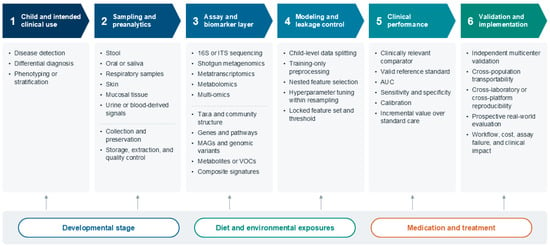
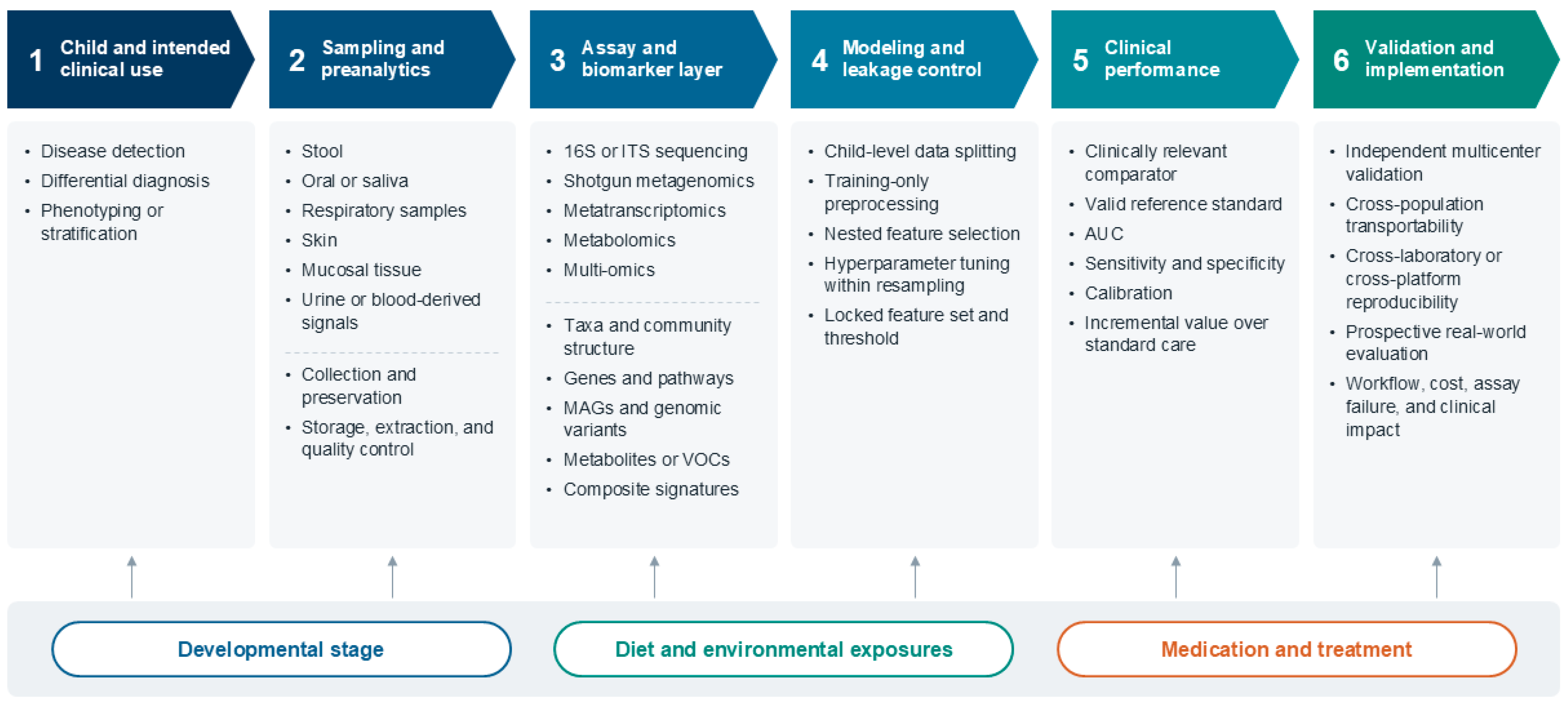
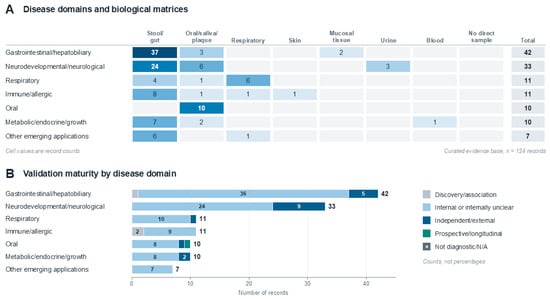
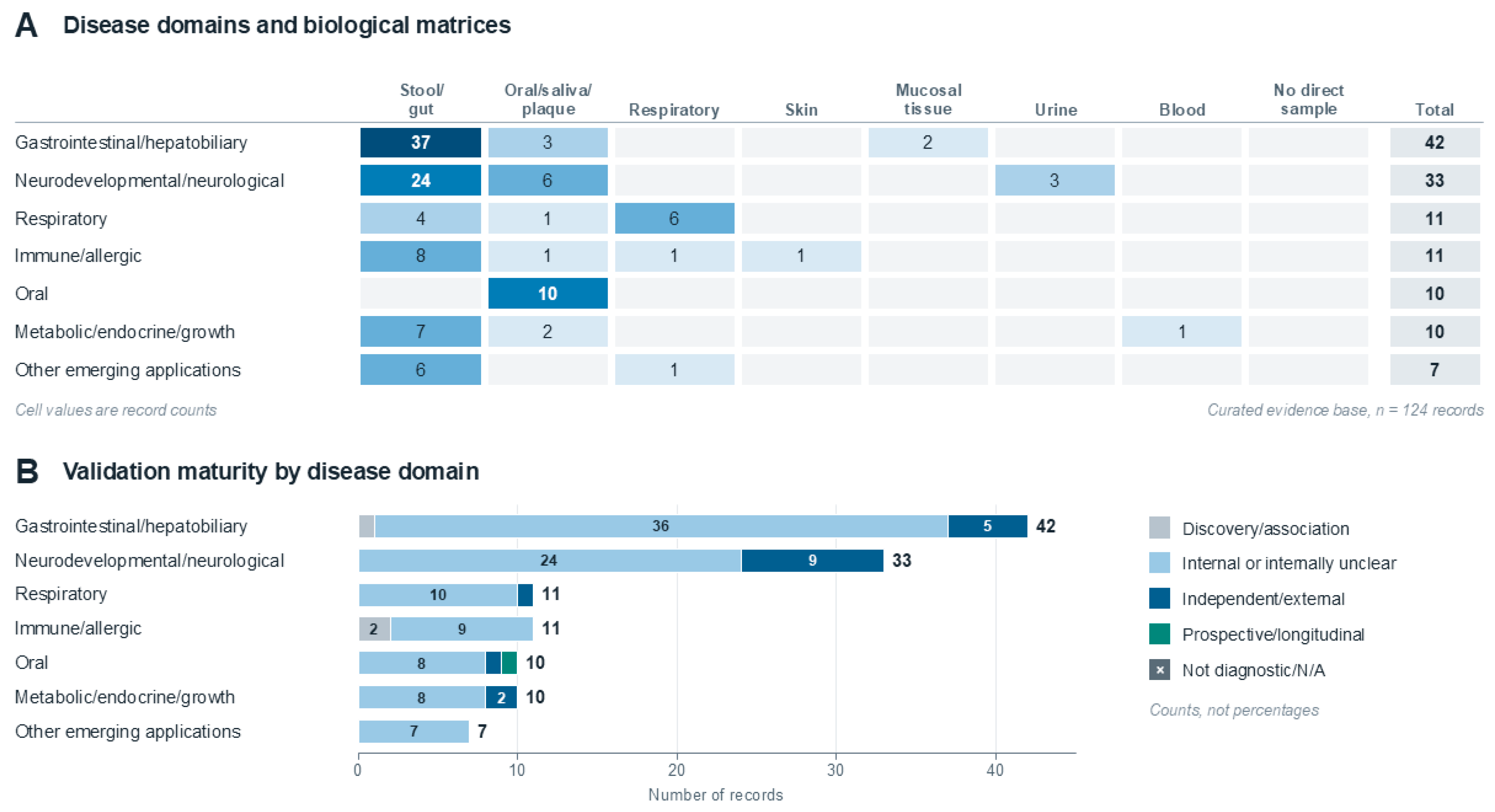
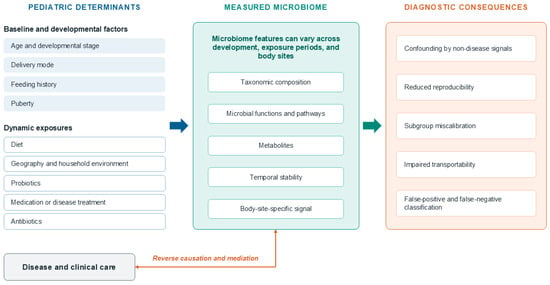
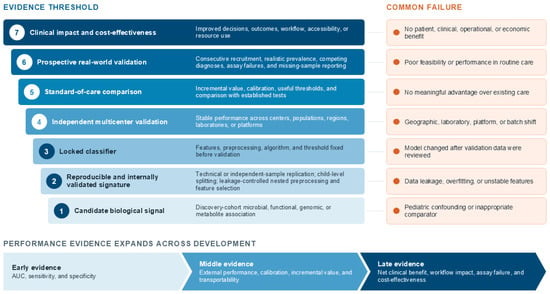

Disclaimer/Publisher’s Note: The statements, opinions and data contained in all publications are solely those of the individual author(s) and contributor(s) and not of MDPI and/or the editor(s). MDPI and/or the editor(s) disclaim responsibility for any injury to people or property resulting from any ideas, methods, instructions or products referred to in the content. |
© 2026 by the authors. Licensee MDPI, Basel, Switzerland. This article is an open access article distributed under the terms and conditions of the Creative Commons Attribution (CC BY) license.