


Abstract
Staphylococcus epidermidis encodes a variety of virulence- and pathogenicity-associated factors. These factors are insufficiently characterized owing to the absence of clearly defined criteria distinguishing clinically relevant S. epidermidis from commensals. The study analyzed the virulence-associated proteomic response of three S. epidermidis isolates of bacteremia patients of age 1 day to 5 months and three S. epidermidis isolates from healthy children skin. Isolates were characterized for pathogenicity marker mecA and commensalism marker fdh. One set of S. epidermidis isolates was exposed by growing in the presence of 10% human blood plasma, while another set was grown in nutrient broth only. Whole-cell proteins were analyzed through LC-MS/MS analysis (ESI-nano). In clinical isolates and in community isolates, 266 and 232 upregulated proteins were identified, respectively. Through in silico analysis, selectively expressed virulence-associated proteins were identified as being involved in stress responses, virulence regulation, toxin, and stress-associated metabolic pathways. This study concluded that S. epidermidis is selectively adapted to changing conditions. Clinically relevant isolates selectively expressed protein markers of virulence and pathogenicity, and therefore exhibit a distinct proteomic signature to understand virulence and pathogenicity of S. epidermidis. This study may provide insight into the virulence transition of S. epidermidis from a commensal background.
1. Introduction
Staphylococcus epidermidis is a common member of skin microbiota and has evolved as a commensal organism. With advances in medicines, a transition to a pathogenic phenotype from a commensal background has been detected in S. epidermidis [1]. This pathogenic nature is most often associated with the use of an IV device. An IV device contaminated with S. epidermidis during insertion can promote biofilm formation. Successful biofilm formation leads to the development of bacteremia, a prevalent invasive infection among children [2].
Due to its commensal background, S. epidermidis lacks traditional virulence factors such as potent toxins, e.g., toxic shock syndrome toxin (TSST-1), exfoliative exotoxins, and invasion-associated factors and is therefore less virulent than S. aureus [3]. These features hide the significance of this opportunistic pathogen in clinical infections. However, its frequent isolation in pediatric blood samples raises serious concerns over management of pediatric bacteremia. Furthermore, S. epidermidis is more resistant to antibiotics than S. aureus, which complicates treatment. Management may require removal or replacement of the infected/contaminated device [4].
Besides bacteremia, S. epidermidis frequently can contaminate blood culture samples [5]. It complicates diagnosis of S. epidermidis bacteremia through blood culture isolation. Studies conducted on differential diagnosis of S. epidermidis bacteremia have identified few reliable diagnostic markers. Our previous findings have also highlighted differential diagnosis and virulence of polysaccharide-dependent, biofilm-forming S. epidermidis [6,7]. However, these in vitro reports and findings do not clearly discriminate true bacteremia from culture contamination. Another factor affecting differential diagnosis is the limited understanding of the pathogenic determinants of S. epidermidis. Previous studies highlighted pathogenic traits associated with clinically significant S. epidermidis; however, a deeper understanding of pathogenicity and differential diagnosis is lacking [7,8].
This study was conducted to assess virulence potential and identify differential markers of pathogenicity of S. epidermidis under host-mimicking conditions. Virulence potential and pathogenesis of S. epidermidis remain poorly understood, except biofilm formation. This study was designed to identify virulence-associated adaptation and host-responsive mechanisms that may be expressed and activated during blood stream infection, providing insight into the virulence potential and pathogenicity beyond biofilm formation. Plasma-stressed proteomics can help this gape. Both commensal and bacteremia isolates produce biofilms. Biofilm-forming determinants are uniformly distributed among clinical isolates and commensal strains, making them potential contaminants that mask the pathogenesis and virulence of clinically relevant S. epidermidis. The objective of the study was to understand the virulence potential exhibited by clinical isolates of S. epidermidis using a differential proteomics approach. To our knowledge, this is the first comprehensive study for analyzing proteome changes in S. epidermidis exposed to host-mimicking conditions, i.e., human blood plasma. This study may help elucidate the adaptation and transition of pathogenic bacteria originating from a commensal background and the identification of protein markers of virulence and pathogenicity. The current study is an omics-based screening study for the identification of proteins markers of virulence and pathogenicity and is not intended for direct clinical validation. Selective investigation of proteins highlighted in this study is recommended. Furthermore, this study will provide a basis to differentiate clinically significant isolates from contaminated blood culture isolates.
2. Materials and Methods
2.1. Sampling
S. epidermidis isolates were obtained from clinical blood culture samples of patients (aged 1 day to 5 years) admitted to the Rehman Medical Institute, Peshawar, Pakistan. Commensal S. epidermidis were isolated from skin, axillary, and nasal samples of healthy community children of similar age ranges. Samples positive for viral infections were excluded. Informed consent was obtained from the patients and legal guardians of healthy children. Blood culture contamination is a major issue in diagnosis of pediatric bacteremia. To resolve this issue, multiple protocols have been developed, e.g., triple-bottle culture. For blood culture sampling of diseased individuals, this study adopted the recommended protocol of three blood culture samples taken at different time intervals. Isolation of S. epidermidis from all three samples was considered as representative of bacteremia and not contaminant. In cases where three different individual blood culture samples were not available, a single blood culture sample was accepted, along with clinical indications, including fever, febrile state, and clinical laboratory variables. This is the recommended protocol to avoid contaminated isolates [9]. This study was approved (RMI/RMI-REC/Approval/8, 8 December 2020) by the Research Ethics Committee of Rehman Medical Institute (RMI), Peshawar, Pakistan.
2.2. Screening for Methicillin Resistance and Formate Dehydrogenase
S. epidermidis was identified using combined morphological (Gram staining), biochemical (catalase and coagulase tests) and molecular identification (PCR amplification of rdr species-specific gene region, and mass spectrometry). Methicillin resistance was determined through the Kirby–Bauer disc diffusion method using a 30 µg cefoxitin disc (Oxoid, Hampshire, UK) [10]. Furthermore, these isolates were also screened for the main methicillin-resistance determinants, mecA and formate dehydrogenase (fdh), previously reported as pathogenic and commensal markers, respectively [7,10]. Primer sequences and PCR conditions are depicted in Supplementary Table S1.
2.3. Screening for Biofilm Formation
S. epidermidis was screened for the main virulence-associated trait of S. epidermidis, biofilm formation, using a 96-well microtiter plate assay with slight modification [10]. Briefly, 5 × 10⁶ cells/well were obtained by transfer of 2 µL of an overnight culture to the 96-well plate containing 198 µL nutrient broth, supplemented with 10% human blood plasma and 5% glucose. The plate was incubated at 37 °C under aerobic conditions for 24 h. Non-adherent cells were removed by washing, and the biofilms were fixed by heat fixation at 60 °C for one hour, followed by staining with crystal violet and elution by 33% acetic acid. The plate was kept in a reader (BioTek Instruments, Winooski, VT, USA) to note in vitro conditions OD570. Cut-off values for strong biofilm formation (4(ODC) < OD ≤ 5(ODC) to 4(ODC) < OD ≤ 9(ODC)) were interpreted as previously described [10].
The primers and PCR conditions used in the study were those previously described and validated in our earlier published works [10]. The same primers, analysis and thermal conditions, including PCR cycles, were used in the current study.
2.4. Sample Preparation for Mass Spectrometry
Three S. epidermidis clinical isolates and three community isolates constituting three independent biological replicates of both clinical and community isolates were selected for LC-MS/MS analysis.
2.4.1. Culturing in Host-Mimicking Conditions and In Vitro Conditions
S. epidermidis was cultured in the presence of filter-sterilized (0.2 µm pore-size syringe filter) human blood plasma obtained from blood banks. Human blood plasma obtained from blood bank was pooled healthy donor plasma. It was not screened for the presence of anti-S. epidermidis antibodies prior to use. The presence/absence of naturally occurring antibodies could potentially influence proteomic responses. Briefly, S. epidermidis was cultured in 90 mL nutrient broth supplemented with 10 mL (10% v/v) platelet-containing blood plasma of healthy donors. The culture flasks, prepared in triplicate with an initial OD600 ≈ 0.05–0.06, were incubated in a shaker incubator with 200 rpm at 37 °C under aerobic conditions. Another set of these replicates was cultured and incubated under similar conditions, using only nutrient broth with no blood plasma. The protocol was adopted for both clinical (pediatric bacteremia isolates) and community (healthy children’s skin) isolates. The designations 4a, 4b, 5a, and 5b were used for plasma-treated clinical S. epidermidis, plasma-untreated clinical S. epidermidis, plasma-treated community S. epidermidis, and plasma-untreated community S. epidermidis, respectively.
2.4.2. Whole-Cell Proteome Extraction, Quantification and In-Solution Digestion
Urea/thiourea buffer coupled with ultrasonication was used for cell lysis and protein extraction, followed by in-solution trypsin digestion (Sigma-Aldrich, St. Louis, MO, USA). Protein quantification was performed through a Bradford assay (Thermo Fisher Scientific, Hercules, UK).
2.5. Peptide Sequencing: LC-MS/MS Analysis (ESI-Nano)
Initially, proteins were desalted by loading onto EvoTip Pure tips and a 100 SPD gradient with a C18 performance column. A TOF HT mass spectrometer (Bruker, Billerica, USA) was interfaced with the system. Spectra were acquired through Compass HyStar software (version 6.2, Thermo Fisher Scientific, Hercules, UK). PASEF mass spectrometry with m/z 400–1200, 0.6–1.43 L/k0 mobile phase, and a 1.8 s cycle time was used. Protein identification and its relative quantification were obtained through DIA-NN (1.8.27), followed by in silico library prediction through the S. epidermidis UniProt FASTA database, with searches run at 1% FDR. Matches of all peptides were filtered to q < 0.01. DIA-NN output. KNIME software (version 4.18.x) was used for protein-centric comparison.
2.6. Statistical Analysis and Functional Annotation
Fold changes of >1.5 or <0.5 with p < 0.05 were considered significant for differential upregulation and downregulation, respectively. Proteins were searched through their IDs in the UniProt database (release 2023_05). KEGG and STRING databases were accessed through UniProt, where required for functional annotations. GO terms were derived through Gene Ontology and GO annotations. The role of these factors in virulence was further searched through extensive literature mining.
3. Results
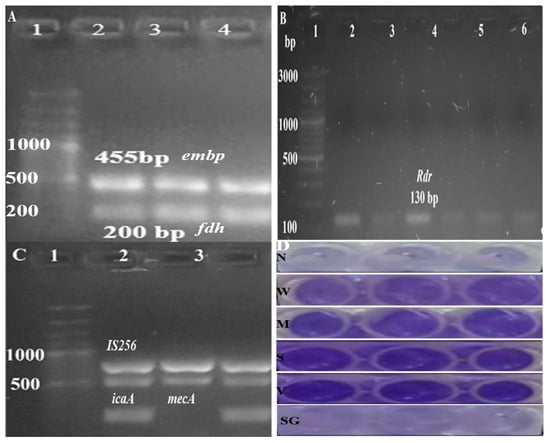
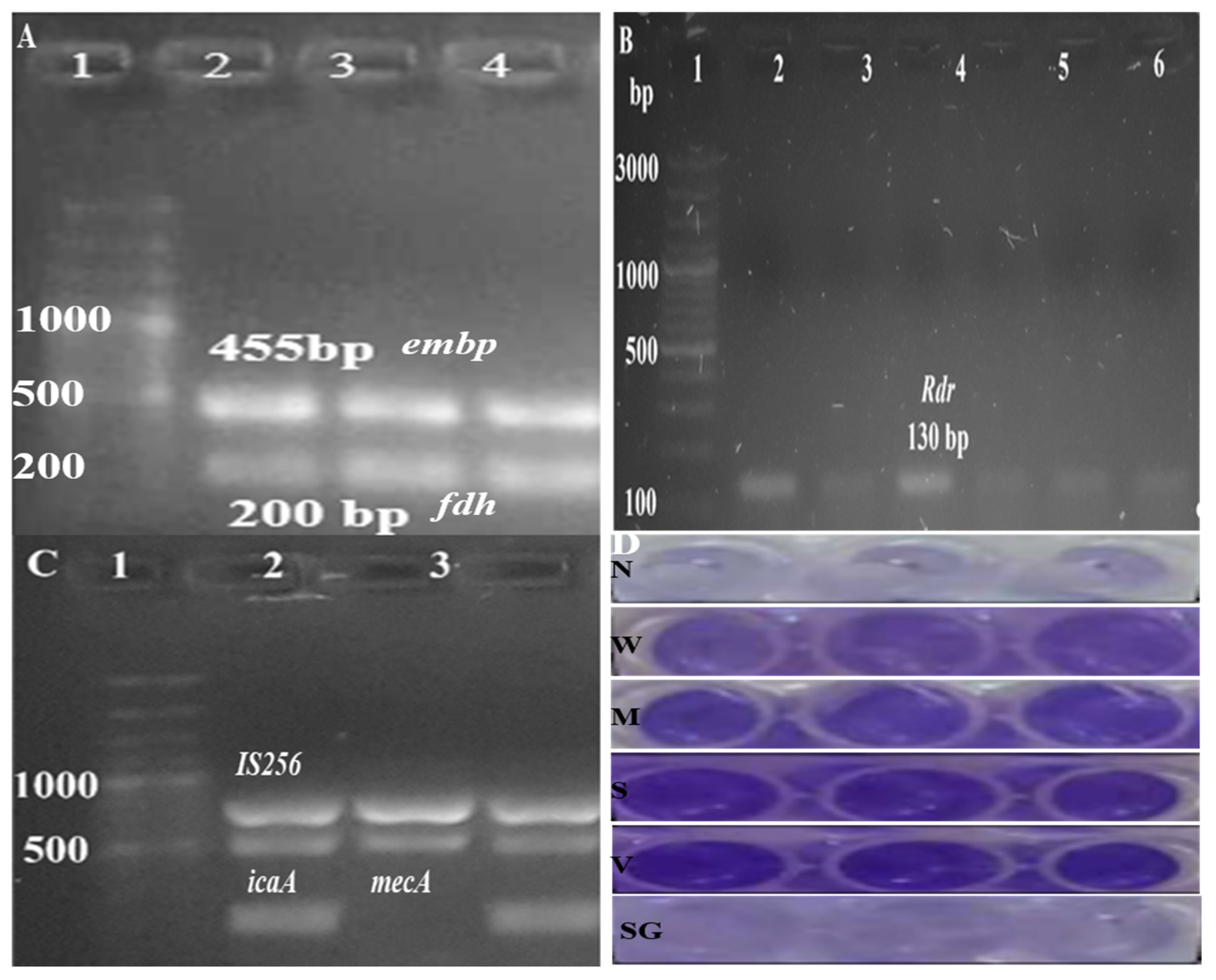
All isolates were strongly positive for biofilm formation. Clinical isolates carried the mecA gene and were methicillin-resistant but lacked the fdh gene, while all community isolates carried fdh and lacked mecA (Figure 1). These markers were used as screening markers for isolate selection and corresponding group assignment, based on our previously reported association of mecA with pathogenicity and fdh with commensalism, respectively. Hence, these markers were not primary targets and therefore were not intended for detailed qualitative and quantitative analysis. The main objective of this study was to explore the comparative/differential proteomic responses of mecA- and fdh-based selected isolates.
Figure 1.
Identification and characterization of S. epidermidis. (A) Formate dehydrogenase (fdh), 200 bp, 2–4 commensal isolates; all three clinical isolates were fdh negative; embp 455 bp. (B) Molecular identification through rdr, 130 bp gene amplification: S. epidermidis positive control (lane 2), tests (lanes 3, 4, 5, 6). (C) Multiplex PCR for virulence-associated genes and the 533-bp mecA amplicon (clinical isolates); 762 bp and 198 bp icaA. (D) Biofilm formation of clinical and commensal isolates; N, W, M, V, S, and SG represent negative (control), weak, medium, very strong, strong, slow grower biofilm formation, respectively. A 100 bp molecular marker and 1.5% agarose gel were used.
Upregulated proteins were checked for their association with virulence and pathogenicity traits, including stress response, biofilm formation and colonization, immune evasion, iron acquisition, homeostasis and nutrient scavenging, metabolism, antibiotic and heavy metal resistance, and virulence regulation, using in silico analysis and literature mining. The distribution of virulence- and pathogenicity-associated upregulated proteins varied among both groups. Some factors were evenly distributed, while some were markedly variable between individual groups, e.g., marked upregulation in plasma-treated clinical isolates. Variations in virulence- and pathogenicity-associated factors were markedly detected in isolates of different origin and incubation conditions, e.g., in vitro and host-mimicking conditions, highlighting an adapted infection-associated behavior of S. epidermidis originating from a commensal background. This study contributes to the understanding of virulence potential and pathogenicity of bacterial pathogens. This study also provides a basis for candidate differential diagnostic and therapeutic targets of methicillin-resistant S. epidermidis (MRSE) in pediatric bacteremia. These selective and uniform differential proteomics responses are given below. Differential upregulation, categorization and LC-MS/MS analysis are depicted in Supplementary Tables S2–S5.
3.1. Significant Upregulation of Stress Response, Nutrient Acquisition and Immune Evasion Proteins in Plasma-Treated S. epidermidis
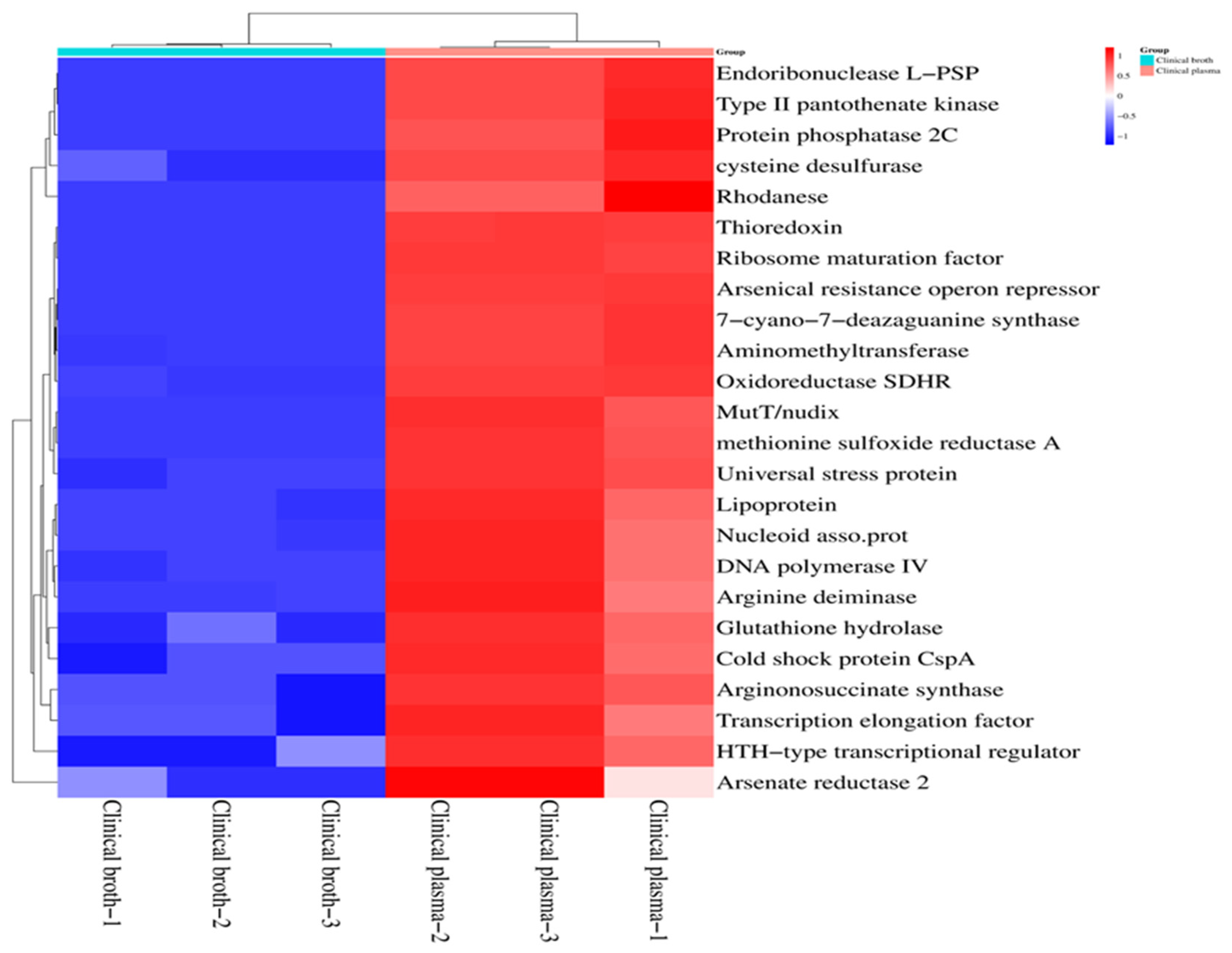
Proteins categorized in this group were markedly upregulated in plasma-exposed cultures. This category also included proteins that were significantly upregulated in clinical isolates compared to their commensal counterparts. Among these proteins, the endoribonuclease L-PSP, protein phosphatase 2C, thioredoxin, MutT/nudix, and rhodanese-like domain protein showed markedly increased abundance in both 4a and 5a, highlighting their significant role in plasma-treated conditions. Their significant upregulation in plasma-containing medium predicts their interaction with the host environment and virulence. The cysteine desulfurase Csd was upregulated several times (fold change of 9.3) in 4a compared to 5a (fold change of 1.7), suggesting an association with the clinical phenotype. Among the metabolic and nutrient acquisition proteins associated with virulence, type II pantothenate kinase CoaW and the ribosome maturation factor RimP showed markedly increased abundance in plasma-induced cultures in both clinical and commensal S. epidermidis, suggesting their possible role in host–pathogen interactions. Among immune evasion proteins, the amino methyltransferase GcvT was upregulated in both 4a and 5a, but markedly upregulated in clinical S. epidermidis (fold change of 80) compared to community isolates (fold change of 5).
3.2. Selective Upregulation of Stress Response, Arginine Metabolism, Biofilm Formation, Immune Evasion, and Virulence Regulation Proteins in Plasma-Treated Clinical S. epidermidis
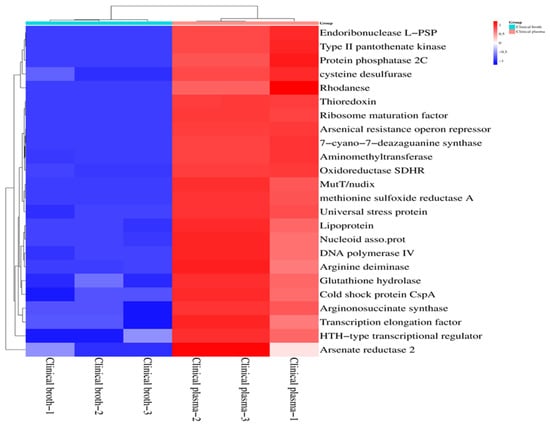
Among the proteins that were selectively upregulated in clinical S. epidermidis isolated from pediatric bacteremia were the iron–sulfur cluster repair protein ScdA and the GrpE protein associated with oxidative stress responses; the spermidine/putrescine import ATP-binding protein PotA, associated with biofilm formation and oxidative stress regulation; proteins of the arginine metabolic pathway, including ornithine carbamoyltransferase ArcB1, ornithine carbamoyltransferase ArcB2 and carbamate kinase ArcC, associated with virulence and survival under acidic stress; and the polyribonucleotide nucleotidyltransferase Pnp stress response protein involved in mRNA turnover. The YokE-like PH domain-containing protein involved in cytoskeleton organization, stress response, antimicrobial resistance and bacterial immunity was significantly upregulated in 4a, while it was upregulated in 5b, indicating its clinical significance. The selectively upregulated proteins also included toxin phenol-soluble modulin beta 1 and magnesium transporter MgtE, involved in biofilm formation and immune evasion; the ComA2 family protein, involved in virulence regulation; and the cysteine synthase CysK protein, involved in resistance to oxidative stress, virulence activation, biofilm formation, and antibiotic resistance. Differential expressions of these proteins are depicted in Figure 2 and in Supplementary Table S2.
Figure 2.
Heatmap of differentially expressed virulence- and pathogenicity-associated proteins of clinical S. epidermidis exposed to human blood plasma. Red represents significant upregulation, and blue represents significant downregulation. p < 0.05, and fold change > 1.5 was considered significant upregulation.
3.3. Selective Upregulation of Stress Response, General Metabolism, Antibiotic Resistance, and Iron Homeostasis Proteins in Plasma-Treated Community S. epidermidis
Virulence- and pathogenicity-associated proteins selectively upregulated in plasma-treated community isolates but downregulated in plasma-treated clinical isolates included bacilliredoxin, which contributes to oxidative stress responses and immune evasion, the redox-active bacillithiol system protein YtxJ; the Rrf2 family protein, a DNA-binding HTH-type transcriptional regulator of stress responses (e.g., nitric oxide stress); a GNAT family acetyltransferase associated with antibiotic resistance and virulence regulation; a universal stress protein family; the glycerol metabolic DAK2 domain protein; the metabolic stress response protein proline dehydrogenase PutA; the WalR transcriptional regulatory protein of the two-component regulatory system; coproporphyrinogen III oxidase HemG, involved in heme biosynthesis; the HslV subunit of the ATP-dependent protease, which contributes to protein homeostasis, and a thiamine-binding domain-containing protein associated with nutrient acquisition and virulence.
3.4. Uniform Upregulation of Stress Response, Arginine Metabolism and Heavy Metal Resistance Proteins in Plasma-Treated S. epidermidis
The oxidoreductase SDO, peptide methionine sulfoxide reductase MsrA, universal stress protein Q5HS48, S-formylglutathione hydrolase, 7-cyano-7-deazaguanine synthase QueC, DNA polymerase IV (DinB), cold shock protein CspA, transcription elongation factor GreA, and nucleoid-associated protein SERP0115 were uniformly upregulated in both 4a and 5a. Arginosuccinate synthase ArgG, arginine deiminase ArcA, associated with arginine metabolism, and the acetyltransferase GNAT family, associated with both virulence and antibiotic resistance, were uniformly upregulated in both 4a and 5a. Among the heavy metal resistance proteins uniformly upregulated in both 4a and 5a were the arsenical resistance operon repressor arsR-1 and arsenate reductase 2 arsC2. Moreover, arsR-1 was more strongly upregulated in clinical isolates than community isolates under host-mimicking conditions. Among the virulence regulatory proteins, the acetyltransferase GNAT family and the HTH-type transcriptional regulator SarZ were upregulated in both 4a and 5a.
3.5. Selective Upregulation of Stress Response, Immune Evasion, Antibiotic Resistance, Metabolism and Iron ABC Transporter Proteins in Nutrient Broth Cultured Clinical S. epidermidis
Interestingly, factors previously reported to be associated with virulence and pathogenicity were upregulated in nutrient broth cultures compared to plasma-treated cultures. Among stress response proteins uniformly upregulated in 4b and 5b but downregulated in 4a and 5a were pyridine nucleotide-disulfide oxidoreductase, an oxidoreductase of the short-chain dehydrogenase/reductase family; probable malate: quinone oxidoreductase 3 Mqo3; the alkaline shock response membrane anchor protein AmaP; thioredoxin SERP0483; universal stress protein family SERP2220; DNA-binding protein HU; alkyl hydroperoxide reductase AhpC; alkaline shock protein 23; putative aldehyde dehydrogenase AldA; superoxide dismutase (SodA); chaperone protein DnaK; ClpXP adapter protein SpxH; chaperone protein ClpB; the ATP-binding subunit of the ATP-dependent Clp protease, ClpX; organic hydroperoxide resistance protein-like 1; an NAD(P)-binding domain-containing protein; and thioredoxin reductase TrxB.
Among the stress response proteins downregulated in plasma-treated clinical S. epidermidis but upregulated in their nutrient broth culture counterparts were endoribonuclease YbeY; peptide methionine sulfoxide reductase MsrB; the putative universal stress protein SERP1273; an HtrA-like serine protease; a putative TrmH family tRNA/rRNA methyltransferase; the sigma factor B regulator protein; serine-protein kinase RsbW; ribosome-binding ATPase YchF; D-lactate dehydratase; 2_3-bisphosphoglycerate-dependent phosphoglycerate mutase; zinc-containing alcohol dehydrogenase; a Dps family protein; staphylococcal accessory regulator A SarA; superoxide dismutase [Mn/Fe] SodA; aldehyde-alcohol dehydrogenase; alkyl hydroperoxide reductase subunit F AhpF; nitric oxide dioxygenase; and the universal stress protein SERP1269. Among the immune system-evading proteins also involved in antibiotic resistance and biofilm formation and selectively upregulated in 4b were glyoxalase/fosfomycin resistance/dioxygenase domain-containing protein, probable transglycosylase IsaA, UTP-glucose-1-phosphate uridylyl transferase GtaB, copper chaperone CopZ, and glycerol-3-phosphate cytidylyltransferase TagD. Among the metabolic proteins associated with virulence and upregulated in 4b were the glycine cleavage system, including the glycine cleavage system H protein GcvH, probable glycine dehydrogenase (decarboxylating) subunit 1 GcvPA, and the glycerol catabolism DAK2 domain protein. Among the antibiotic resistance proteins upregulated in 4b were β-lactamase BlaZ and the GNAT family acetyltransferase SERP2082, which is also associated with virulence regulation. Among the nutrient acquisition and iron acquisition system upregulated proteins were ABC transporters, including amino acid ABC transporters, ATP-binding protein, and iron compound-binding protein, respectively.
3.6. Selective Upregulation of Stress Response Proteins in Nutrient Broth-Cultured Community S. epidermidis
Proteins selectively upregulated in 5b were the stress response cold shock protein CspA, and chaperone protein DnaJ, associated with protein folding regulation.
3.7. Uniform Upregulation of Stress Response, Immune Evasion, Biofilm Formation, Antibiotic and Heavy Metal Resistance, Metabolism and Virulence Regulation Proteins in Nutrient Broth-Cultured S. epidermidis
Among the stress response proteins uniformly upregulated in 4b and 5b but downregulated in the plasma-treated cultures were pyridine nucleotide-disulfide oxidoreductase; an oxidoreductase of the short-chain dehydrogenase/reductase family, probable malate: quinone oxidoreductase 3 Mqo3; alkaline shock response membrane anchor protein AmaP; thioredoxin SERP0483; universal stress protein SERP2220; DNA-binding protein HU; alkyl hydroperoxide reductase AhpC; alkaline shock protein 23; putative aldehyde dehydrogenase AldA; superoxide dismutase (SodA); chaperone protein DnaK; the ClpXP adapter protein SpxH; chaperone protein ClpB; the ATP-binding subunit of the ClpX protease; organic hydroperoxide resistance protein-like 1; an NAD(P)-binding domain-containing protein; and thioredoxin reductase TrxB.
Proteins categorized as immune evasion proteins were upregulated in non-plasma-treated cultures, while lower abundance in plasma-treated cultures may indicate a reduced contribution in virulence and pathogenicity. These proteins included D-alanyl carrier protein ligase DltA and D-alanyl carrier protein DltC, and immunodominant antigen B were uniformly upregulated in both 4b and 5b. Glutamate-1-semialdehyde 2_1-aminomutase 2 HemL2, and bacterial non-heme ferritin FtnA were upregulated in the 4b and 5b non-plasma-treated cultures.
Molybdopterin molybdenum transferase MoeA, which is involved in molybdenum cofactor (Moco) biosynthesis and associated with the regulation of formate dehydrogenase, a commensal-associated factor; transketolase Tkt; probable branched-chain amino acid aminotransferase ilvE; RNA polymerase sigma factor SigA; and urease accessory protein UreG, which is involved in urea metabolism and pH homeostasis, were upregulated in both the 4b and 5b non-plasma-treated cultures.
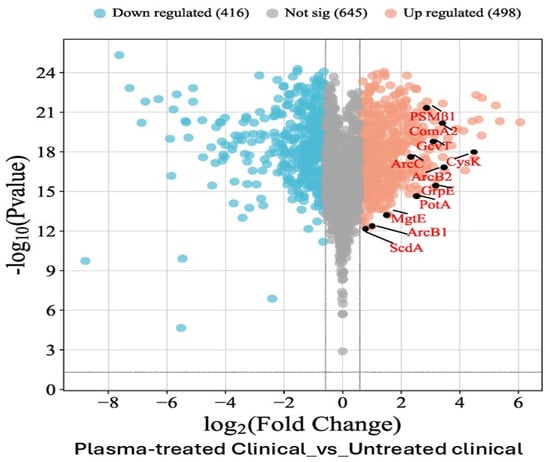
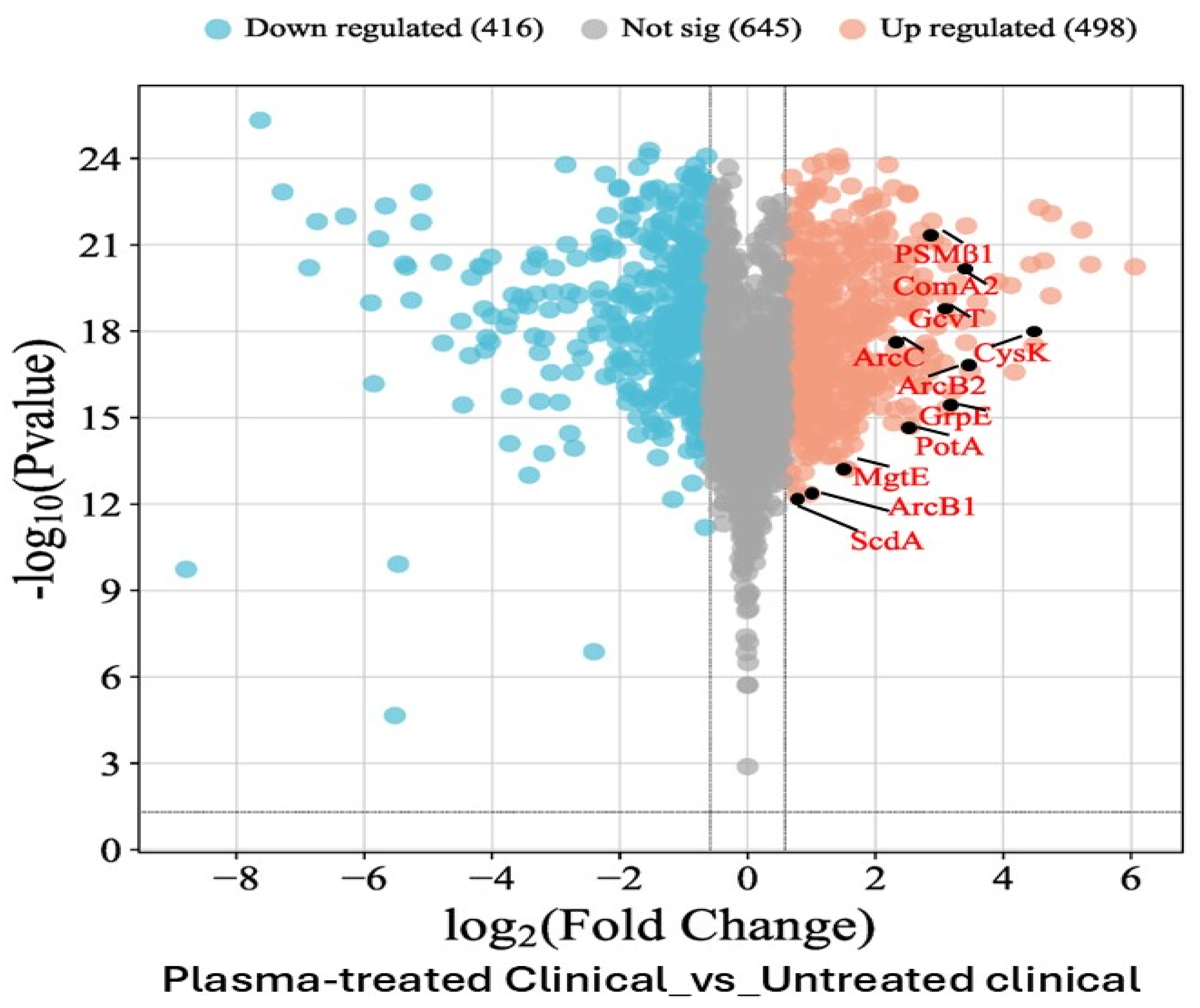
The GntR family transcriptional regulator, which is associated with virulence and regulation of mobility and biofilm formation; enolase, which is involved in adhesion and biofilm formation; putative septation protein SpoVG, which is associated with biofilm formation and virulence regulation; signal transduction protein TRAP TraP; and signal transduction protein TRAP SERP2068 were uniformly upregulated in both 4b and 5b. Differential expression of proteins in plasma-treated and plasma-untreated S. epidermidis is depicted in Figure 3.
Figure 3.
Differentially expressed virulence-associated proteins (represented by black dots and lines) of clinically isolated S. epidermidis under plasma stress: nutrient broth-cultured clinical S. epidermidis; p < 0.05; fold change > 1.5 was considered significant upregulation.
4. Discussion
This study analyzed S. epidermidis behavior under host-mimicking conditions. The objective of this study was to identify factors associated with virulence and pathogenicity of this opportunistic pathogen. For this purpose, both clinical and commensal strains of S. epidermidis were investigated using a differential proteomics approach. Although both groups encoded and differentially regulated virulence-associated factors under different incubation conditions, some factors were significantly and selectively upregulated only in the clinical isolates under host-mimicking conditions, suggesting their potential role in virulence and pathogenicity. This also highlights potential adaptation of S. epidermidis from a commensal to an opportunistic lifestyle. This study distinguished clinical and community isolates based on their proteomic profiles and identified factors associated with the virulence and pathogenicity of S. epidermidis. This study is a step towards the development of differential candidate diagnostic markers and potential therapeutic targets in pediatric bacteremia. However, further detailed investigation is required to analyze and verify in vivo models. Future studies on the secretome and surface-associated proteins are recommended.
We selectively identified significantly upregulated proteins in S. epidermidis exposed to host-mimicking conditions using 10% platelet-containing human plasma. Interestingly, among these proteins, some showed markedly increased abundance, indicating a distinct proteomic response of S. epidermidis in host-mimicking conditions. Moreover, the identification of stress response proteins differentially upregulated under host-mimicking conditions makes them potential candidate drug targets for the treatment of bacteremia. These proteins provide further insights into the understanding of S. epidermidis pathogenesis. Most of these upregulated proteins are stress response proteins, such as endoribonuclease L-PSP, which acts as an oxidative stress response protein and increases intracellular survival [11]. This could be a potential drug target for MDR S. epidermidis. Thioredoxin is a known oxidative stress response protein with reported links to virulence factors in several bacterial pathogens [12]. Arsenical resistance operon repressor arsR-1, and arsenate reductase 2 (ArsC2) indicates high metal resistance induction. Interestingly, the ArsR-1 showed markedly increased abundance only in clinical strains, which may raise questions regarding the effectiveness of heavy-metal coatings in IV devices for the prevention of IV-associated infections. Aminomethyl transferase GcvT, a glycine cleavage system enzyme, is reported as critical in F. tularensis bacteremia [13]. Interestingly, it was significantly upregulated in clinical isolates. These proteins may represent potential candidate targets in S. epidermidis bacteremia. The presence and upregulation of virulence factors in both clinical and community isolates indicate a background opportunistic pathogenic potential in S. epidermidis.
This study identified virulence- and pathogenicity-associated proteins selectively upregulated in clinical S. epidermidis under host-mimicking conditions. Selective upregulation of ornithine carbamoyl transferase ArcB1, ArcB2, and carbamate kinase ArcC, components of arginine deiminase pathways (ADI) in clinical isolates under plasma treatment indicate robust ADI pathway activation and adaptive phenotype, ATP production and metabolic reprogramming for host survival in clinical S. epidermidis. Downregulation of such selective metabolic pathways in the commensal counterparts suggests their limited potential for host adaptation. Arginine and arginine metabolic pathways play a significant role in host defense mechanisms and in microbial pathogenesis [14,15], making the ADI pathway a candidate therapeutic target and a potential diagnostic marker in management of S. epidermidis bacteremia.
Unlike true pathogens, S. epidermidis is considered to lack traditional virulence factors like toxins; however, cytotoxins such as phenol-soluble modulins (PSMs) are encoded by pathogenic staphylococcal species, including S. epidermidis [16,17]. However, there are discrepancies among previous studies about the role of PSMs in S. epidermidis pathogenesis [18]. The current study found selective upregulation of PSMβ1 in clinical S. epidermidis, suggesting an association with host interaction. This PSM is involved in cytotoxicity, biofilm dissemination, and immune evasion [17], highlighting invasive transition from a commensal background. The PSMβ1 may represent a potential therapeutic target. These findings also indicate that S. epidermidis utilizes a dual strategy of pathogenesis by metabolic modulation and direct host interaction. Therefore, unlike other types of PSMs, the PSMβ1 may be a potential virulence factor in clinical S. epidermidis. These findings define the aggressive nature of clinical S. epidermidis, usually considered a non-aggressive opportunistic pathogen lacking cytotoxicity.
The quorum sensing system ComA2 family protein was upregulated in clinical S. epidermidis. This protein is essential for pathogenesis and virulence regulation, acting “Trojan horse”-like in the pathogenic Bacillus nematocida, suggesting its potential relevance to virulence in clinical S. epidermidis [19]. The oxidative stress-associated protein PotA, a spermidine/putrescine import ATP-binding protein involved in polyamine uptake and associated with biofilm formation, virulence, and pathogenicity, was highly upregulated in clinical S. epidermidis. Previous have studies indicated its critical role in several bacterial pathogens [20,21,22]. In a range of stress response proteins, differential upregulation of PotA in clinical S. epidermidis suggests its pathogenic significance. The magnesium transporter MgtE, which is critical for Salmonella Typhimurium invasion to epithelial cells [23], biofilm formation in Aeromonas hydrophilia [24], and modulation of type III secretion system in Pseudomonas aeruginosa [25], was upregulated in clinical S. epidermidis, highlighting the selective ionic homeostasis and significance of magnesium transporters in pathogenesis. The polyribonucleotide nucleotidyl transferase Pnp selectively upregulated in clinical S. epidermidis is associated with mRNA turnover, regulation of virulence and persistence, an indication of host-adapted stress survival mode [26]. Upregulation of persistence-induced virulence factors highlights the selective competence of clinical strains compared to community isolates. It also highlights the persistence-associated response of S. epidermidis bacteremia, often associated with indwelling catheters.
The protein GrpE, part of the DnaK–DnaJ–GrpE chaperone system, was upregulated in clinical S. epidermidis, which suggests a stress response for maintaining protein folding. This further highlights the adaptive potential for survival under in vivo hostile conditions. Another stress response protein cysteine synthase CysK, which is involved in oxidative stress response, detoxification of ROS and antioxidant production, was upregulated. It has been implicated in virulence and antibiotic resistance. Upregulation in clinical S. epidermidis suggests redox balancing and sulfur metabolism under plasma-treated conditions.
This study identified several bacterial molecular chaperons, metabolic enzymes and highly conserved proteins. These proteins are generally classified as housekeeping proteins associated with basic cellular physiology and growth but also exhibit “moonlighting” functions involved in bacterial stress adaptation, cellular adhesion, persistence, immune evasion and virulence [27]. The first identified moonlighting protein with an additional role in pathogenic streptococci was an intracellular enzyme glyceraldehyde 3-phosphate dehydrogenase (GAPDH), an essential enzyme for the basic and central metabolic pathway of glycolysis [28]. These properties highlight their potential involvement in pathogenicity. The importance of moonlighting proteins increases in pathogens lacking a well-defined true virulence repertoire, e.g., S. epidermidis, which is an opportunistic bacterial pathogen most frequently isolated from pediatric bacteremia.
Previous studies have demonstrated that host-associated environments markedly remodel protein expression profiles, including upregulation of proteins involved in host interactions and nutrient acquisition [29]. In comparison, the current study analyzed comparative proteomics of clinically isolated and commensal S. epidermidis, further extending serum-based analysis to explore virulence mechanisms, pathogenesis, and differentiation between virulent and commensal phenotypes. In another study of S. epidermidis skin-to-blood transition, performed LC-MS/MS-based proteomics under skin- and blood-pH mimicking conditions. They identified differentially upregulated proteins and reported the upregulation of virulence-associated proteins, including immune evading proteins, iron and extracellular proteases in blood-like pH conditions [30].
The findings may reflect a coordinated, multilayered adaptation strategy involving clinical S. epidermidis, including metabolic fitness and survival, stress resistance, population-level regulation and direct virulence. This strategy encompasses metabolic reprogramming, redox homeostasis, proteostasis and RNA regulation, enabling in vivo survival and facilitating virulence regulation. These differentially regulated proteins provide a basis for differentiating invasive clinically relevant S. epidermidis from commensals, hence providing differential candidate biomarkers of S. epidermidis bacteremia. Furthermore, these differentially expressed proteins could offer potential targets for vaccine development and therapeutic interventions. Moreover, this protein signature defines the transition of S. epidermidis from a commensal state to an opportunistic pathogenic phenotype and provides insight into its role in pediatric bacteremia.
This study has certain limitations. The differentially expressed proteins were not validated using transcriptomic or targeted proteomic approaches. Another limitation is the lack of orthogonal validation (RT-PCR, Western blots) for the key proteins. It is recommended to individually verify the virulence potential of the differential signature of clinically isolated S. epidermidis using animal models. Moreover, the presence or absence of naturally occurring antibodies, plasma batch variations, potential host protein interference and uncontrolled blood groups may have contributed to the examined bacterial response. The findings should be considered as proteomics-based candidate virulence proteins/markers, which require further validation through independent experiments.
5. Conclusions
This study demonstrated that human blood plasma has a measurable impact on the physiology of S. epidermidis. Both community and clinical isolates adapted to changing environmental conditions, suggesting responses associated with virulence-related adaptation irrespective of isolate origin. Clinical isolates showed differential expressions of virulence- and pathogenicity-associated proteins. The distinct protein signatures of clinical S. epidermidis derived in the study may contribute to the differential diagnosis of S. epidermidis and minimize unnecessary antibiotic burden on patients associated with false-negative results and misreporting of S. epidermidis in bacteremia.
Supplementary Materials
The following supporting information can be downloaded at: https://www.mdpi.com/article/10.3390/microorganisms14112507/s1. Table S1: PCR primers used in the study; Table S2: Differentially expressed virulence associated proteins under plasma stress; Table S3: SEpidermidis_Group4_Protein_List; Table S4: SEpidermidis_Group5_Protein_List; Table S5: Differentially upregulated plasma Vs non plasma.
Author Contributions
Conceptualization, methodology, project administration, supervision, resources, validation, data analysis, writing—original draft, writing—review and editing: S.A. and H.R.; methodology, investigation, data analysis: J.M.; writing—original draft, writing—review and editing, data analysis: M.S.A., G.H.T., K.J.A. and I.K.; writing—review and editing: F.M.A. and K.F.A. All authors have read and agreed to the published version of the manuscript.
Funding
The authors would like to acknowledge the Research Center of Basic Sciences, Engineering and High Altitude, Taif University for funding this work.
Institutional Review Board Statement
The study was conducted in accordance with the Declaration of Helsinki, and approved by the Ethics Committee of Rehman Medical Institute, Peshawar, Pakistan (RMI/RMI-REC/Approval/8, 8 December 2020).
Informed Consent Statement
Verbal informed consent was obtained from participants and their legal guardians.
Data Availability Statement
The datasets analyzed during the study are available from the corresponding author upon request.
Acknowledgments
The authors would like to acknowledge the Research Center of Basic Sciences, Engineering and High Altitude, Taif University, for funding this work. The authors are also thankful to Rehman Medical Institute/College (RMI/RMC) for supporting the sampling process.
Conflicts of Interest
The authors declare no conflicts of interest.
References
- Au, S.; Cruz, W.D.; Lala, M.; Karthikeyan, S.; Venketaraman, V. The Evolution of Symbiosis in Staphylococcus epidermidis: From a Protective Mutualist to a Parasitic Pathogen. Biomolecules 2026, 16, 334. [Google Scholar] [CrossRef] [Scilit] [PubMed]
- Cheung, G.Y.; Otto, M. Understanding the significance of Staphylococcus epidermidis bacteremia in babies and children. Curr. Opin. Infect. Dis. 2010, 23, 208–216. [Google Scholar] [CrossRef] [Scilit] [PubMed]
- Otto, M. Staphylococcus epidermidis—The “accidental” pathogen. Nat. Rev. Microbiol. 2009, 7, 555–567. [Google Scholar] [CrossRef] [Scilit] [PubMed]
- Siciliano, V.; Passerotto, R.A.; Chiuchiarelli, M.; Leanza, G.M.; Ojetti, V. Difficult-to-Treat Pathogens: A Review on the Management of Multidrug-Resistant Staphylococcus epidermidis. Life 2023, 13, 1126. [Google Scholar] [CrossRef] [Scilit] [PubMed]
- Karlath, F.A.; Rehan, M.A.; Geiger, A.; Mitchell, M.J.; Arnaout, S.; Greenough, T.C.; Ellison, R.T., III. Retrospective Analysis of the Clinical Significance of Positive Blood Cultures in the Emergency Department: A Single-Center Study. Open Forum Infect. Dis. 2025, 12, 30, Erratum in Open Forum Infect. Dis. 2026, 13, ofag048. [Google Scholar] [CrossRef] [Scilit] [PubMed]
- Ahmad, S.; Rahman, H.; Akram, M.S.; Mehboob, J.; Thomas, G.H.; Alzahrani, K.J.; Alsharif, K.F.; Alzahrani, F.M. Virulence potential of polysaccharide dependent biofilm forming methicillin resistant Staphylococcus epidermidis: A differential proteomics approach. Microb. Pathog. 2026, 216, 108500. [Google Scholar] [CrossRef] [Scilit] [PubMed]
- Ahmad, S.; Rahman, H.; Mumtaz, S.; Qasim, M.; Rahman, Z.U.; Alsuwat, M.A.; Halawani, I.F.; Alzahrani, F.M.; Ali, S. MecA and fdh: Markers of pathogenicity and commensalism in Staphylococcus epidermidis of pediatric origin from Pakistan. Diagn. Microbiol. Infect. Dis. 2024, 108, 116109. [Google Scholar] [CrossRef] [Scilit] [PubMed]
- Conlan, S.; Mijares, L.A.; Becker, J.; Blakesley, R.W.; Bouffard, G.G.; Brooks, S.; Coleman, H.; Gupta, J.; Gurson, N.; Park, M. Staphylococcus epidermidis pan-genome sequence analysis reveals diversity of skin commensal and hospital infection-associated isolates. Genome Biol. 2012, 13, R64. [Google Scholar] [CrossRef] [Scilit] [PubMed]
- Osaki, S.; Kikuchi, K.; Moritoki, Y.; Motegi, C.; Ohyatsu, S.; Nariyama, T.; Matsumoto, K.; Tsunashima, H.; Kikuyama, T.; Kubota, J.; et al. Distinguishing coagulase-negative Staphylococcus bacteremia from contamination using blood-culture positive bottle detection pattern and time to positivity. J. Infect. Chemother. 2020, 26, 672–675. [Google Scholar] [CrossRef] [Scilit] [PubMed]
- Ahmad, S.; Rahman, H.; Qasim, M.; Nawab, J.; Alzahrani, K.J.; Alsharif, K.F.; Alzahrani, F.M. Staphylococcus epidermidis Pathogenesis: Interplay of icaADBC Operon and MSCRAMMs in Biofilm Formation of Isolates from Pediatric Bacteremia in Peshawar, Pakistan. Medicina (B. Aires) 2022, 58, 1510. [Google Scholar] [CrossRef] [Scilit] [PubMed]
- da Fonseca Pires, S.; Fialho, L.C., Jr.; Silva, S.O.; Melo, M.N.; de Souza, C.C.; Tafuri, W.L.; Bruna Romero, O.; de Andrade, H.M. Identification of Virulence Factors in Leishmania infantum Strains by a Proteomic Approach. J. Proteome Res. 2014, 13, 1860–1872. [Google Scholar] [CrossRef] [Scilit] [PubMed]
- May, H.C.; Yu, J.J.; Zhang, H.; Wang, Y.; Cap, A.P.; Chambers, J.P.; Guentzel, M.N.; Arulanandam, B.P. Thioredoxin-A is a virulence factor and mediator of the type IV pilus system in Acinetobacter baumannii. PLoS ONE 2019, 14, e0218505. [Google Scholar] [CrossRef] [Scilit] [PubMed]
- Brown, M.J.; Russo, B.C.; O’Dee, D.M.; Schmitt, D.M.; Nau, G.J. The contribution of the glycine cleavage system to the pathogenesis of Francisella tularensis. Microbes Infect. 2014, 16, 300–309. [Google Scholar] [CrossRef] [Scilit] [PubMed]
- Ryan, B.E.; Mike, L.A. Arginine at the host-pathogen interface. Infect. Immun. 2025, 12, 93. [Google Scholar] [CrossRef] [Scilit] [PubMed]
- Gogoi, M.; Datey, A.; Wilson, K.T.; Chakravortty, D. Dual role of arginine metabolism in establishing pathogenesis. Curr. Opin. Microbiol. 2016, 29, 43–48. [Google Scholar] [CrossRef] [Scilit] [PubMed]
- Bloes, D.A.; Haasbach, E.; Hartmayer, C.; Hertlein, T.; Klingel, K.; Kretschmer, D.; Planz, O.; Peschel, A. Phenol-Soluble Modulin Peptides Contribute to Influenza A Virus-Associated Staphylococcus aureus Pneumonia. Infect. Immun. 2017, 85, 10-1128. [Google Scholar] [CrossRef] [Scilit] [PubMed]
- Li, S.; Huang, H.; Rao, X.; Chen, W.; Wang, Z.; Hu, X. Phenol-Soluble Modulins: Novel Virulence-Associated Peptides of Staphylococci. Future Microbiol. 2014, 9, 203–216. [Google Scholar] [CrossRef] [Scilit] [PubMed]
- Cheung, G.Y.; Rigby, K.; Wang, R.; Queck, S.Y.; Braughton, K.R.; Whitney, A.R.; Teintze, M.; DeLeo, F.R.; Otto, M. Staphylococcus epidermidis Strategies to Avoid Killing by Human Neutrophils. PLoS Pathog. 2010, 6, e1001133. [Google Scholar] [CrossRef] [Scilit] [PubMed]
- Deng, X.; Tian, Y.; Niu, Q.; Xu, X.E.; Shi, H.; Zhang, H.; Liang, L.; Zhang, K.; Huang, X. The ComP-ComA Quorum System Is Essential For “Trojan horse” Like Pathogenesis in Bacillus nematocida. PLoS ONE 2013, 8, e76920. [Google Scholar] [CrossRef] [Scilit] [PubMed][Green Version]
- Thongbhubate, K.; Nakafuji, Y.; Matsuoka, R.; Kakegawa, S.; Suzuki, H. Effect of Spermidine on Biofilm Formation in Escherichia coli K-12. J. Bacteriol. 2021, 21, 203. [Google Scholar] [CrossRef] [Scilit] [PubMed]
- Chattopadhyay, M.K.; Chen, W.; Tabor, H. Escherichia coli glutathionylspermidine synthetase/amidase: Phylogeny and effect on regulation of gene expression. FEMS Microbiol. Lett. 2013, 338, 132–140. [Google Scholar] [CrossRef] [Scilit] [PubMed]
- Barbagallo, M.; Di Martino, M.L.; Marcocci, L.; Pietrangeli, P.; De Carolis, E.; Casalino, M.; Colonna, B.; Prosseda, G. A New Piece of the Shigella Pathogenicity Puzzle: Spermidine Accumulationby Silencing of the speG Gene. PLoS ONE 2011, 6, e27226, Erratum in PLoS ONE 2012, 7. [Google Scholar] [CrossRef] [Scilit] [PubMed]
- Papp-Wallace, K.M.; Nartea, M.; Kehres, D.G.; Porwollik, S.; McClelland, M.; Libby, S.J.; Fang, F.C.; Maguire, M.E. The CorA Mg 2+ Channel Is Required for the Virulence of Salmonella enterica Serovar Typhimurium. J. Bacteriol. 2008, 190, 6517–6523. [Google Scholar] [CrossRef] [Scilit] [PubMed][Green Version]
- Merino, S.; Gavín, R.; Altarriba, M.; Izquierdo, L.; Maguire, M.E.; Tomás, J.M. The MgtE Mg2+ transport protein is involved in Aeromonas hydrophila adherence. FEMS Microbiol. Lett. 2001, 198, 189–195. [Google Scholar] [CrossRef] [PubMed][Green Version]
- Anderson, G.G.; Yahr, T.L.; Lovewell, R.R.; O’Toole, G.A. The Pseudomonas aeruginosa Magnesium Transporter MgtE Inhibits Transcription of the Type III Secretion System. Infect. Immun. 2010, 78, 1239–1249. [Google Scholar] [CrossRef] [Scilit] [PubMed]
- Clements, M.O.; Eriksson, S.; Thompson, A.; Lucchini, S.; Hinton, J.C.D.; Normark, S.; Rhen, M. Polynucleotide phosphorylase is a global regulator of virulence and persistency in Salmonella enterica. Proc. Natl. Acad. Sci. USA 2002, 99, 8784–8789. [Google Scholar] [CrossRef] [Scilit] [PubMed]
- Jeffery, C. Intracellular proteins moonlighting as bacterial adhesion factors. AIMS Microbiol. 2018, 4, 362–376. [Google Scholar] [CrossRef] [Scilit] [PubMed]
- Pancholi, V.; Fischetti, V.A. A major surface protein on group A streptococci is a glyceraldehyde-3-phosphate-dehydrogenase with multiple binding activity. J. Exp. Med. 1992, 176, 415–426. [Google Scholar] [CrossRef] [Scilit] [PubMed]
- Sellman, B.R.; Howell, A.P.; Kelly-Boyd, C.; Baker, S.M. Identification of Immunogenic and Serum Binding Proteins of Staphylococcus epidermidis. Infect. Immun. 2005, 73, 6591–6600. [Google Scholar] [CrossRef] [Scilit] [PubMed]
- Gonçalves, L.G.; Santos, S.; Gomes, L.P.; Armengaud, J.; Miragaia, M.; Coelho, A.V. Skin-to-blood pH shift triggers metabolome and proteome global remodelling in Staphylococcus epidermidis. Front. Microbiol. 2022, 13, 28. [Google Scholar] [CrossRef] [Scilit] [PubMed]
Disclaimer/Publisher’s Note: The statements, opinions and data contained in all publications are solely those of the individual author(s) and contributor(s) and not of MDPI and/or the editor(s). MDPI and/or the editor(s) disclaim responsibility for any injury to people or property resulting from any ideas, methods, instructions or products referred to in the content. |
© 2026 by the authors. Licensee MDPI, Basel, Switzerland. This article is an open access article distributed under the terms and conditions of the Creative Commons Attribution (CC BY) license.