


Abstract
Cyanobacterial blooms are a widespread concern in freshwater ecosystems worldwide because of their impacts on water quality, ecosystem functioning, and human health. Bloom-forming cyanobacteria such as Microcystis coexist with diverse bacterial assemblages whose metabolic capabilities may contribute to the organization of the bloom-associated microbial environment, yet these traits remain comparatively understudied at genome resolution, particularly in South American freshwater systems. Here, we characterized a microbial community recovered after laboratory enrichment of Microcystis-dominated cyanobacterial biomass recovered from the El Loto urban wetland in southern Chile, using high-throughput DNA sequencing, co-assembly, and genome-resolved metabolic reconstruction. Five independent enrichments yielded 40 metagenome-assembled genomes (MAGs) across seven bacterial phyla, of which 19 (>90% completeness, <5% contamination) were retained for metabolic reconstruction. Pathway predictions were evaluated against pathway-specific diagnostic genes. Central carbon and respiratory functions were broadly represented, whereas carbon fixation, phototrophy, and nutrient-related traits showed more restricted, lineage-associated distributions. The Calvin–Benson–Bassham cycle was supported in four MAGs, while alternative carbon-fixation pathways lacked diagnostic-gene support. Oxygenic photosynthetic machinery was restricted to the two Cyanobacteriota MAGs, whereas seven Pseudomonadota encoded syntenic gene clusters consistent with anoxygenic phototrophic potential. Nitrogen fixation and canonical ammonia oxidation were not represented among the retained MAGs, although associated genes were detected in the community gene catalogue. Phosphonate-related traits were also unevenly distributed, with phnJ and the associated C–P lyase system detected in five Pseudomonadota MAGs, while phosphonate transport-related genes occurred more broadly. Taken together, these results reveal a broadly shared core metabolic repertoire alongside a more restricted, lineage-associated distribution of other metabolic traits within the enrichment-derived microbial community.
1. Introduction
Cyanobacterial blooms are complex microbial assemblages in which bloom-forming taxa interact with diverse associated bacteria. Within the phycosphere, gradients of dissolved organic carbon, nutrients, oxygen, and other metabolites create microscale niches that support close associations between phytoplankton and heterotrophic microorganisms [1]. In Microcystis blooms, colony-associated bacterial assemblages can differ from those in the surrounding water and harbor metabolic traits potentially relevant to carbon and nutrient transformations [2,3]. Understanding how these capacities are distributed among individual bacterial lineages therefore requires approaches that connect metabolic potential with genomic identity.
Genome-resolved analyses provide such information by reconstructing metagenome-assembled genomes (MAGs) and linking predicted metabolic traits to individual microbial populations. Studies of Microcystis-associated microbiomes have revealed substantial taxonomic and functional diversity, including differences in carbon metabolism, nutrient acquisition, and energy-related functions among associated bacterial lineages [2,3,4]. Of particular relevance, aerobic anoxygenic phototrophs can supplement heterotrophic metabolism through bacteriochlorophyll-based light harvesting and are widespread in freshwater environments, including cyanobacterial bloom microbiomes [5,6,7]. Bacterial associates may also contribute genomic capacities for phosphorus acquisition: C–P lyase-encoding bacteria associated with cyanobacteria can access phosphonate-derived phosphorus and have been experimentally shown to facilitate Microcystis growth under phosphorus-limited conditions [8]. These observations suggest that metabolic traits within Microcystis-associated assemblages may be distributed among distinct bacterial lineages rather than uniformly represented across the community.
Despite increasing knowledge of Microcystis-associated microbiomes, genome-resolved information from South American freshwater systems remains limited. The El Loto urban wetland in southern Chile experiences recurrent Microcystis-dominated blooms [9,10], providing a local system in which to examine the genomic potential of bacteria recovered in association with cyanobacterial colonies. Here, we used buoyancy-based enrichment followed by high-throughput DNA sequencing, co-assembly, and genome-resolved metabolic reconstruction to characterize an enrichment-derived microbial community associated with Microcystis-dominated material. Specifically, we evaluated the taxonomic composition of the recovered MAGs and the distribution of metabolic potential related to central carbon and energy metabolism, carbon fixation, phototrophy, and nutrient transformations. Because cultivation can reshape microbial composition, the recovered community is interpreted as a laboratory-enriched assemblage rather than a census of the native Microcystis phycosphere.
2. Materials and Methods
2.1. Sampling, Enrichment, and Sequencing
Surface water (2 L) was collected from the El Loto urban wetland (41°15′16.4″ S, 73°00′32.9″ W) (Figure A1) on 19 June 2023 and transported to the laboratory at 4 °C. After differential sedimentation, cyanobacterial colonies were concentrated by centrifugation 600× g. The pellet containing sedimented material was discarded, and the buoyant supernatant fraction, enriched in but not exclusively composed of Microcystis colonies, was retained. This fraction was inoculated onto BG-11 medium containing 1.5% agar and incubated at 25 °C under a 16 h light (4.8 klx)/8 h dark photoperiod. After seven days, biomass growing in direct association with visible Microcystis-dominated aggregates was recovered by plate scraping and transferred to liquid BG-11. Five independently propagated enrichment cultures (E1, E2, E4, E6, and E7), established from separate agar-plate scrapings derived from the same environmental source sample, were incubated for 14 days before DNA extraction. This interval provided sufficient biomass while limiting prolonged cultivation and the subsequent overgrowth of eukaryotic algae observed at longer incubation times. gDNA was extracted using a modified phenol–chloroform–isoamyl alcohol (25:24:1) protocol, with microbial cell disruption achieved through glass-bead treatment and enzymatic digestion. Genomic DNA libraries were prepared and sequenced by Novogene Corporation Inc. (Sacramento, CA, USA) on an Illumina NovaSeq 6000 platform, generating 150-bp paired-end reads (PE150). During library preparation, the sequencing provider generated two technical re-sequencing replicates: E3 (a technical replicate of E2) and E5 (a technical replicate of E4), representing repeat sequencing runs of the same biological DNA extracts rather than additional biological replicates. All seven read sets (E1–E7) were retained and pooled for co-assembly as described below. E3 and E5 were not treated as independent biological replicates in any comparison across cultures.
2.2. Read Processing, Co-Assembly, and Community-Level Analyses
Bioinformatic analyses were performed on the Chilean National Laboratory for High Performance Computing (NLHPC) infrastructure using the EasyMetagenome workflow [11]. Reads were quality-filtered with fastp v0.23.0 (minimum Phred score 20; minimum length 50 bp) [12], and human-associated reads were removed against hg38 using KneadData v0.12.4 and Bowtie2 [13]. The seven quality-filtered sequencing datasets were jointly co-assembled, with each dataset provided separately to the workflow; no dataset-specific assemblies were generated. Assemblies produced with metaSPAdes v3.15.0 [14] and MEGAHIT v1.2.9 [15] were compared using QUAST [16], and the MEGAHIT assembly was selected for downstream analyses based on overall contiguity metrics (Supplementary Table S6). Protein-coding genes were predicted using Prodigal v2.6.3 [17], and a non-redundant gene catalogue was generated using CD-HIT-EST at 95% nucleotide identity and 90% coverage [18]. Gene abundance was estimated by mapping individual sequencing datasets against the catalogue with Salmon v1.10.3 [19], and functional annotation was performed with eggNOG-mapper v2.1.7 [20], against eggNOG database v5.0.2 [21]. Read-level taxonomy was independently assessed using Kraken2 with the PlusPF-16 database [22] and taxonomy was reported according to GTDB nomenclature.
2.3. MAG Reconstruction, Taxonomy, and Quality Assessment
MAGs were reconstructed from the joint co-assembly using metaWRAP v1.3.2 [23], integrating MetaBAT2 [24] and MaxBin2 [25]. Each of the seven sequencing datasets was used separately to provide sequencing-run-specific coverage information for binning; E3 and E5 therefore provided technical coverage profiles corresponding to the E2 and E4 DNA extracts, respectively, rather than additional biological replicates. Bins were refined using metaWRAP v1.3.2, dereplicated with dRep v3.2.0 at 99% ANI [26] and assessed with CheckM2 v1.1.0 [27]. Taxonomy was assigned with GTDB-Tk v2.3.2 [28], and genome quality was evaluated according to MIMAG criteria [29]. MAGs with >90% completeness and <5% contamination were retained for metabolic reconstruction.
2.4. Genome Annotation and Metabolic Reconstruction
MAGs were structurally and functionally annotated with Bakta v1.12.0 [30] (database v6.0), with tRNA content independently assessed using tRNAscan-SE v2.0.13 [31]. For KEGG-based metabolic reconstruction, proteins predicted with Prodigal v2.6.3 were assigned to KEGG orthologues using KofamScan v1.3.0 [32], retaining only assignments exceeding their KO-specific adaptive score thresholds. Pathway completeness was calculated with KEGG-Decoder v1.3 [33]. Because completeness scores are aggregate measures, every pathway reported here was additionally evaluated against pathway-specific diagnostic genes and cross-checked against the corresponding Bakta annotations. Diagnostic genes and pathway-support criteria are provided in Supplementary Table S3. MAG-level annotations were further compared with KEGG orthologues detected in the community gene catalogue to identify community-level genetic potential not represented among the retained MAGs (Supplementary Table S2). Assignments of the type-II photosynthetic reaction-centre M subunit (PufM) in seven Pseudomonadota MAGs were independently evaluated by maximum-likelihood phylogenetic analysis against 31 curated reference sequences; alignment, trimming, model selection [34,35,36], phylogenetic parameters, and accession numbers are provided in and Supplementary Table S5.
3. Results
3.1. Enrichment Cultures and Community Composition
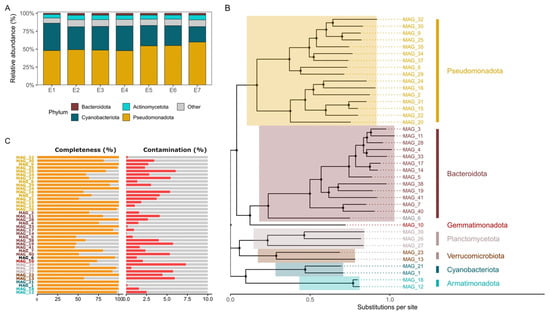
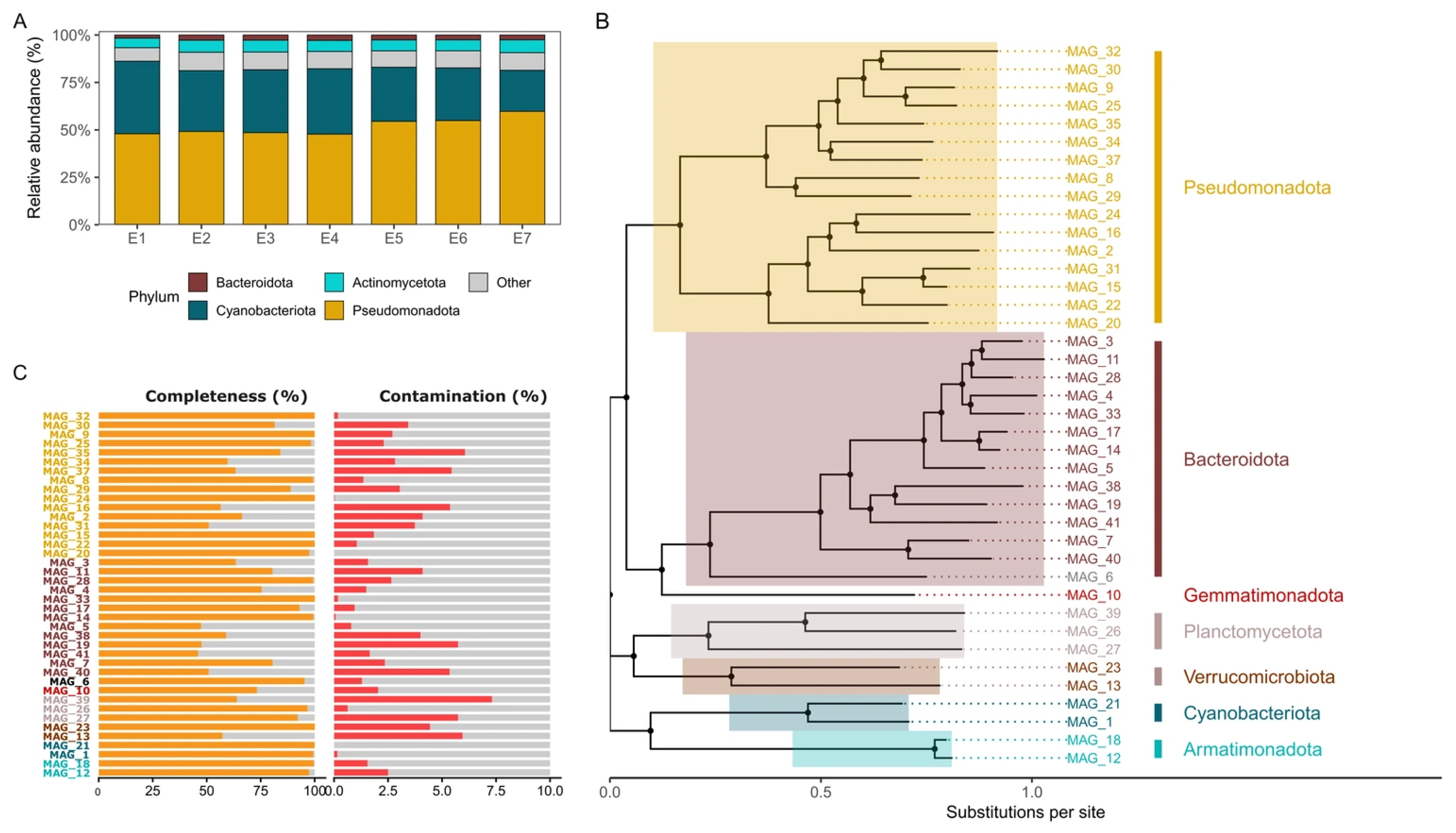
Microscopic examination of the enrichment cultures revealed buoyant mucilaginous colonies with coccoid, gas-vacuolate morphotypes consistent with Microcystis, together with morphologically distinct associated cells and filaments (Figure A2). Read-level taxonomic classification with Kraken2 showed that Pseudomonadota and Cyanobacteriota predominated across the seven sequencing datasets derived from the five independent enrichments (Figure 1A). Within Cyanobacteriota, most classified reads were assigned by Kraken2 to Microcystis aeruginosa (Supplementary Table S1), while Bacteroidota, Actinomycetota, Verrucomicrobiota, and other bacterial phyla were consistently detected at lower relative abundances. Thus, the enrichment procedure recovered Microcystis-dominated cyanobacterial material together with a taxonomically diverse enrichment-derived bacterial community.
Figure 1.
Taxonomic composition of enrichment cultures and recovery of MAGs. (A) Relative abundance of major bacterial phyla across the seven sequencing read sets (E1–E7), based on read-level taxonomic classification with Kraken2 and harmonized to GTDB nomenclature (see Supplementary Table S1). (B) Phylogenomic tree showing relationships among all recovered MAGs, inferred with GTDB-Tk using the WAG protein substitution model; colored backgrounds indicate major phylogenetic groups based on GTDB-Tk classification. (C) CheckM2 estimates of genome completeness and contamination for each recovered MAG.
3.2. Genome Recovery and METABOLIC Reconstruction
Co-assembly of the seven enrichment-derived read sets yielded 40 MAGs (CheckM2 completeness, 45.9–100%; contamination, 0.0–7.3%), of which 19 met the retention thresholds for metabolic reconstruction (>90% completeness and <5% contamination) (Figure 1B,C). These MAGs spanned seven bacterial phyla, with GTDB placeholder genus assignments predominating among genomes lacking closely related described representatives (Supplementary Table S1). Nine of the 19 MAGs additionally fulfilled all MIMAG high-quality draft criteria. Two MAGs belonged to Cyanobacteriota: MAG_21 was assigned to Microcystis sp. within the M. aeruginosa complex, whereas MAG_1 was assigned to Pseudanabaena but lacked a species-level reference match.
3.3. Metabolic Potential of the Retained MAGs
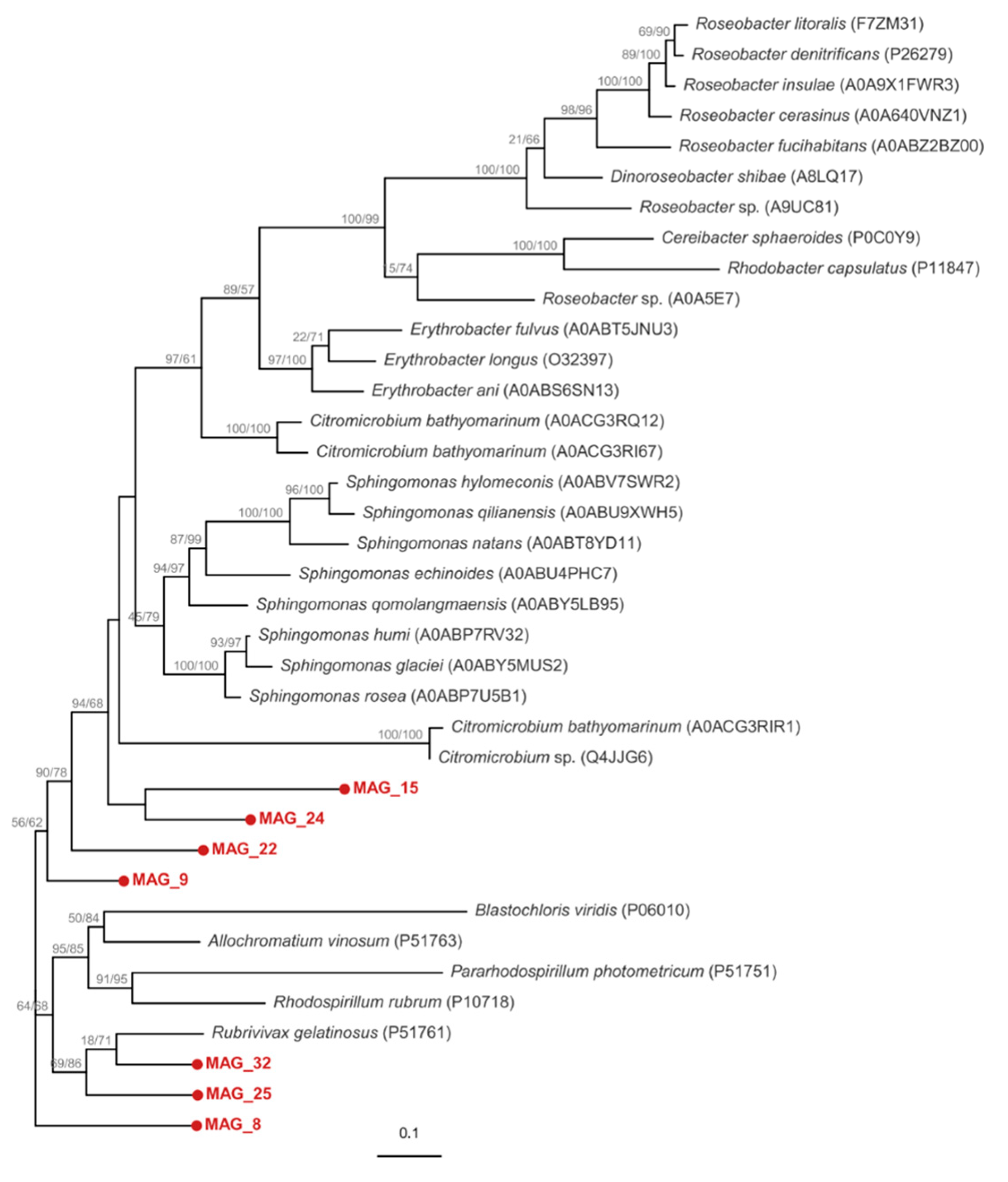
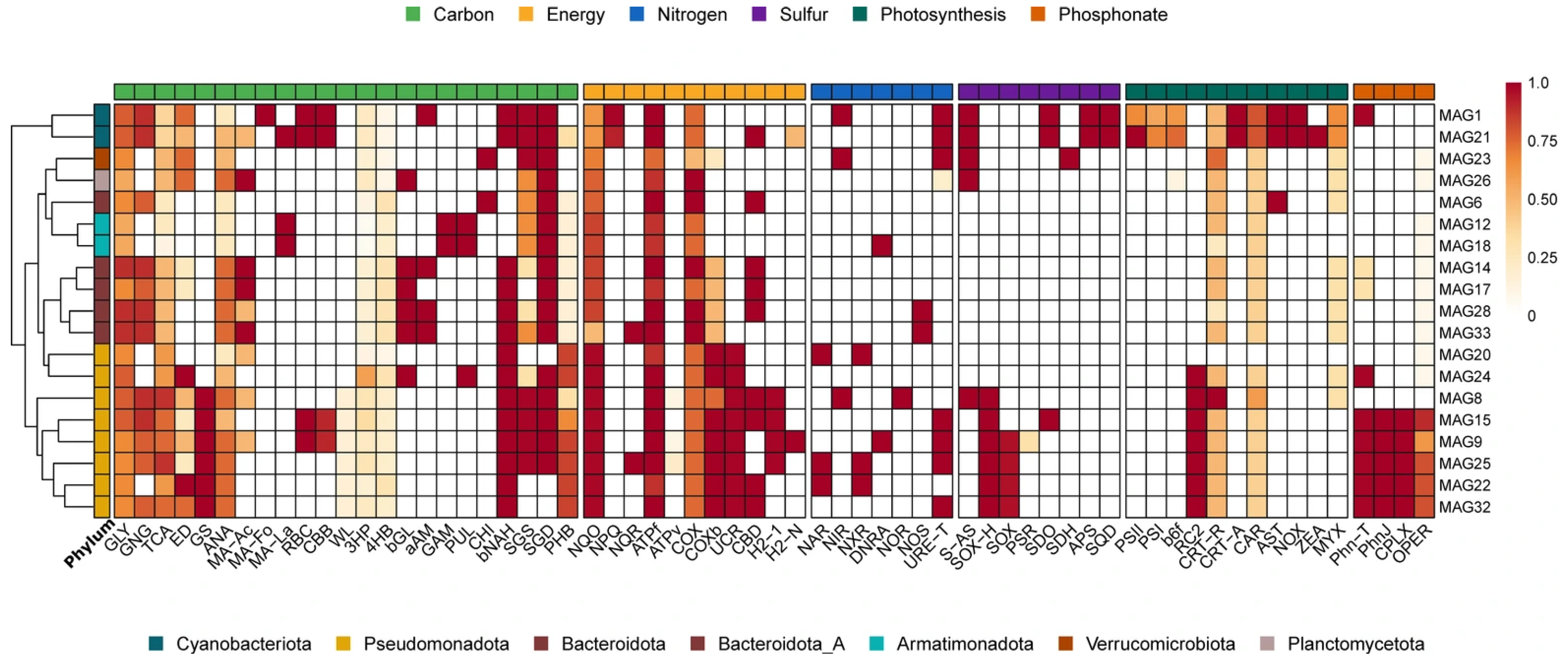
Metabolic reconstruction of the 19 retained MAGs revealed a broadly shared core of central carbon and respiratory functions, overlaid by a more restricted distribution of carbon fixation, phototrophic, and nutrient-related traits across bacterial lineages (Figure 2). Glycolysis, the TCA cycle, NADH: quinone oxidoreductase, F-type ATP synthase, and cytochrome c oxidase were detected in all MAGs, although TCA-cycle completeness was higher among Pseudomonadota than in Armatimonadota and Bacteroidota_A. Additional respiratory complexes showed a more restricted distribution, particularly among Pseudomonadota. Carbon-fixation potential was restricted to the Calvin–Benson–Bassham (CBB) cycle, supported by pathway-specific diagnostic genes in the two Cyanobacteriota (MAG_1 and MAG_21) and two Pseudomonadota (MAG_9 and MAG_15; completeness 0.91–1.00). Alternative carbon-fixation pathways were not supported by their diagnostic genes, with residual completeness scores attributable to enzymes shared with central metabolism (Supplementary Table S3). Phototrophic potential showed a clear lineage-associated distribution. Oxygenic photosynthetic machinery was restricted to the two Cyanobacteriota MAGs, whereas seven Pseudomonadota (MAG_8, MAG_9, MAG_15, MAG_22, MAG_24, MAG_25, and MAG_32) encoded syntenic gene clusters consistent with anoxygenic phototrophy, including adjacent type-II reaction-centre genes (pufLM) and associated antenna and bacteriochlorophyll-biosynthesis genes (Supplementary Table S4). Phylogenetic analysis independently supported the recovered PufM sequences as orthologues, although their specific phototrophic affiliations could not be resolved with sufficient support (Figure A3; Supplementary Table S5). Nitrogen- and sulfur-related traits were more sparsely distributed. No retained MAG encoded the diagnostic gene complement for nitrogen fixation or canonical ammonia oxidation, although associated genes were detected in the community gene catalogue and Nitrosomonas-affiliated reads were independently identified by Kraken2 (Supplementary Tables S1 and S2). Other nitrogen-transforming functions occurred in subsets of MAGs. Similarly, dissimilatory sulfate reduction was not supported, whereas assimilatory sulfate reduction and sulfur-oxidation-related traits occurred in subsets of the retained genomes. Phosphonate-related traits also showed a restricted distribution. Five Pseudomonadota MAGs (MAG_9, MAG_15, MAG_22, MAG_25, and MAG_32) encoded phnJ, a key component of the C–P lyase system, together with the corresponding C–P lyase complex and phosphonate transport-related genes (Figure 2; Supplementary Tables S3 and S7). Phosphonate transport-related genes showed a broader distribution than phnJ, indicating that these traits were not uniformly distributed among the retained MAGs.
Figure 2.
Metabolic potential of the 19 retained MAGs recovered from Microcystis-dominated enrichment cultures. Heatmap shows KEGG-Decoder pathway completeness scores (0–1.0, cell shading) for each MAG (rows, clustered by metabolic profile) with phylum-level GTDB classification indicated in the left-hand bar, full pathway names and abbreviations are provided in Supplementary Table S8, and the complete matrix of all pathways evaluated, including those absent from every genome, is provided in Supplementary Table S7. Only pathways with a non-zero completeness score in at least one MAG are shown. Selected metabolic traits of particular interpretative relevance were further evaluated against pathway-defining genes (see Supplementary Table S3).
4. Discussion
Genome-resolved reconstruction revealed a structured distribution of metabolic potential within the enrichment-derived microbial community. While central carbon metabolism and major respiratory functions were broadly represented across the retained MAGs, carbon fixation, phototrophy, and nutrient-related traits showed narrower distributions among bacterial lineages. Such differentiation is consistent with previous studies of Microcystis-associated microbiomes showing that phylogenetically distinct bacterial groups can harbor different repertoires related to carbon and nutrient metabolism [2,3,4]. In the present study, this pattern extends genome-resolved observations to a Microcystis-targeted enrichment from a South American urban wetland and highlights the coexistence of broadly conserved metabolic functions with more lineage-associated traits. Phototrophic potential showed one of the clearest lineage-associated patterns. Oxygenic photosynthetic machinery was restricted to the two Cyanobacteriota MAGs, whereas seven Pseudomonadota encoded syntenic gene clusters consistent with anoxygenic phototrophy, including pufLM and associated antenna and bacteriochlorophyll-biosynthesis genes. The independent phylogenetic support for the recovered PufM orthologues further supports the presence of anoxygenic phototrophy-related machinery in these genomes (Figure A3). Aerobic anoxygenic phototrophs are widespread in freshwater environments and can supplement heterotrophic energy metabolism through light harvesting [6,7,37]. Phototrophic heterotrophs have also been identified in Microcystis-associated microbiomes [5]. The occurrence of this genomic repertoire in seven Pseudomonadota therefore suggests that anoxygenic phototrophic potential was broadly represented among the Pseudomonadota recovered from the enrichment.
Carbon-fixation potential was more restricted. Among the pathways evaluated, only the Calvin–Benson–Bassham cycle was supported by pathway-specific diagnostic genes, occurring in two Cyanobacteriota and two Pseudomonadota MAGs. Notably, MAG_9 and MAG_15 were among the Pseudomonadota that also encoded the anoxygenic phototrophy-related gene clusters described above. The coexistence of these genomic traits is biologically plausible, as combinations of bacteriochlorophyll-based phototrophy and CBB-mediated carbon fixation occur among metabolically diverse Proteobacteria [38]. In the present study, their co-occurrence identifies a repertoire of carbon- and energy-related genes in these two MAGs that is not shared by most other recovered Pseudomonadota, without requiring inference of a specific trophic mode from genomic content alone.
Phosphonate-related traits provided an additional example of restricted metabolic potential. Five Pseudomonadota MAGs encoded phnJ, a key component of the C–P lyase system, together with C–P lyase and phosphonate transport-related genes, whereas phosphonate transport-related genes were more broadly distributed. This distribution is relevant in the context of cyanobacterial-associated bacteria because phosphonates can constitute an alternative phosphorus source when inorganic phosphorus is limiting [8,39]. In Microcystis-associated systems, C–P lyase-encoding bacteria have been shown experimentally to facilitate access to phosphonate-derived phosphorus under phosphorus-limited conditions [8]. The present results do not establish such an interaction, but identify a restricted distribution of phosphonate-related genomic traits among the recovered Pseudomonadota.
Nitrogen and sulfur metabolism further illustrated the uneven representation of nutrient-related traits. The diagnostic gene complements for nitrogen fixation and canonical ammonia oxidation were not represented among the retained MAGs, despite associated genes being detected in the community gene catalogue and Nitrosomonas-affiliated reads being identified independently at the read level (Supplementary Tables S1 and S2). This discrepancy is consistent with known limitations of genome recovery from metagenomes, as assembly and binning can incompletely represent community genomic diversity and may exclude genomic regions or populations that are difficult to reconstruct [40,41]. Other nitrogen-transforming functions, as well as assimilatory sulfate reduction and sulfur-oxidation-related traits, occurred only in subsets of MAGs, while dissimilatory sulfate reduction was unsupported.
The ecological scope of these patterns is defined by the experimental enrichment. Buoyancy-based concentration followed by cultivation in BG-11 selected a microbial community under laboratory conditions and therefore cannot be assumed to reproduce the composition or functional organization of the native Microcystis-associated community [1,42]. Nevertheless, within this experimentally defined system, the genome-resolved analysis consistently distinguishes broadly distributed central metabolic functions from more lineage-associated traits. Taken together, these findings reveal an enrichment-derived microbial community in which a shared central metabolic repertoire coexists with differentiated genomic potential for carbon fixation, phototrophy, phosphorus acquisition, and other nutrient transformations, providing a framework for identifying metabolic traits that may be relevant to Microcystis-associated bacterial communities in natural systems.
5. Conclusions
Genome-resolved reconstruction of the enrichment-derived microbial community revealed a broadly shared repertoire of central metabolic and respiratory functions alongside a more restricted, lineage-associated distribution of carbon fixation, phototrophy, phosphonate utilization, and other nutrient-related traits. In particular, anoxygenic phototrophy-related gene clusters were recovered across several Pseudomonadota, whereas carbon-fixation potential was restricted to four MAGs. Community-level analyses additionally detected nitrogen-related genes not represented among the retained genomes. Although these patterns reflect a community selected under laboratory enrichment conditions rather than the native Microcystis-associated microbiota, they identify specific genomic traits that provide a basis for future activity-based investigation of cyanobacteria–bacteria associations in freshwater systems.
Supplementary Materials
The following supporting information can be downloaded at: https://www.mdpi.com/article/10.3390/microorganisms14112429/s1, Table S1. all_MAGs; Table S2. N_cycling_genes; Table S3. verified_traits_; Table S4. photosynthetic_cluster; Table S5. pufM_references; Table S6. sequencing_assembly; Table S7. full_pathway_matrix; Table S8. figure2_abbreviations.
Author Contributions
G.I.: Conceptualization, Data curation, Formal analysis, Methodology, Software, Validation, Writing—original draft, Writing—review and editing, Funding acquisition. J.D.R.: Conceptualization, Methodology, Investigation, Validation, Project administration, Supervision, Writing—original draft, Writing—review and editing. Funding acquisition. C.B.C.-A.: Conceptualization, Methodology, Writing—original draft, Writing—review and editing. P.H.-V.: Conceptualization, Writing—review and editing. All authors have read and agreed to the published version of the manuscript.
Funding
This research was funded by Universidad San Sebastián through grants VRID-PDOC22/06 (JDR). The APC was funded by Program for the Monitoring, Detection, and Control of Alexandrium catenella (GI). This research was partially supported by the supercomputing infrastructure of the NLHPC (CCSS210001).
Institutional Review Board Statement
Not applicable.
Informed Consent Statement
Not applicable.
Data Availability Statement
The original data presented in the study are openly available in the European Nucleotide Archive (ENA) at BioProject PRJEB123320. Scripts implementing the annotation-verification workflow described in the Methods, together with the pathway matrix and the per-genome diagnostic gene calls, are available at https://github.com/IcazaG/Genome-resolved-metabolic-potential-of-colony-associated-bacteria/. Additionally, BioProject PRJEB84393, containing related sequencing data, is publicly available and is associated with a previously published genome report on Microcystis aeruginosa [https://doi.org/10.3389/fitd.2025.1565873].
Acknowledgments
CBCA acknowledges support from the IRIS Center (ANID CIN250047) and ANID Fondecyt Regular 1251604.
Conflicts of Interest
The authors declare no conflicts of interest.
Abbreviations
The following abbreviations are used in this manuscript:
| MAG | Metagenome-Assembled Genome |
| GTDB | Genome Taxonomy Database |
| NLHPC | National Laboratory for High-Performance Computing |
Appendix A
Figure A1.
Geographic location of the El Loto wetland in the Los Lagos Region, Chile (41°15′16.4″ S, 73°00′32.9″ W).
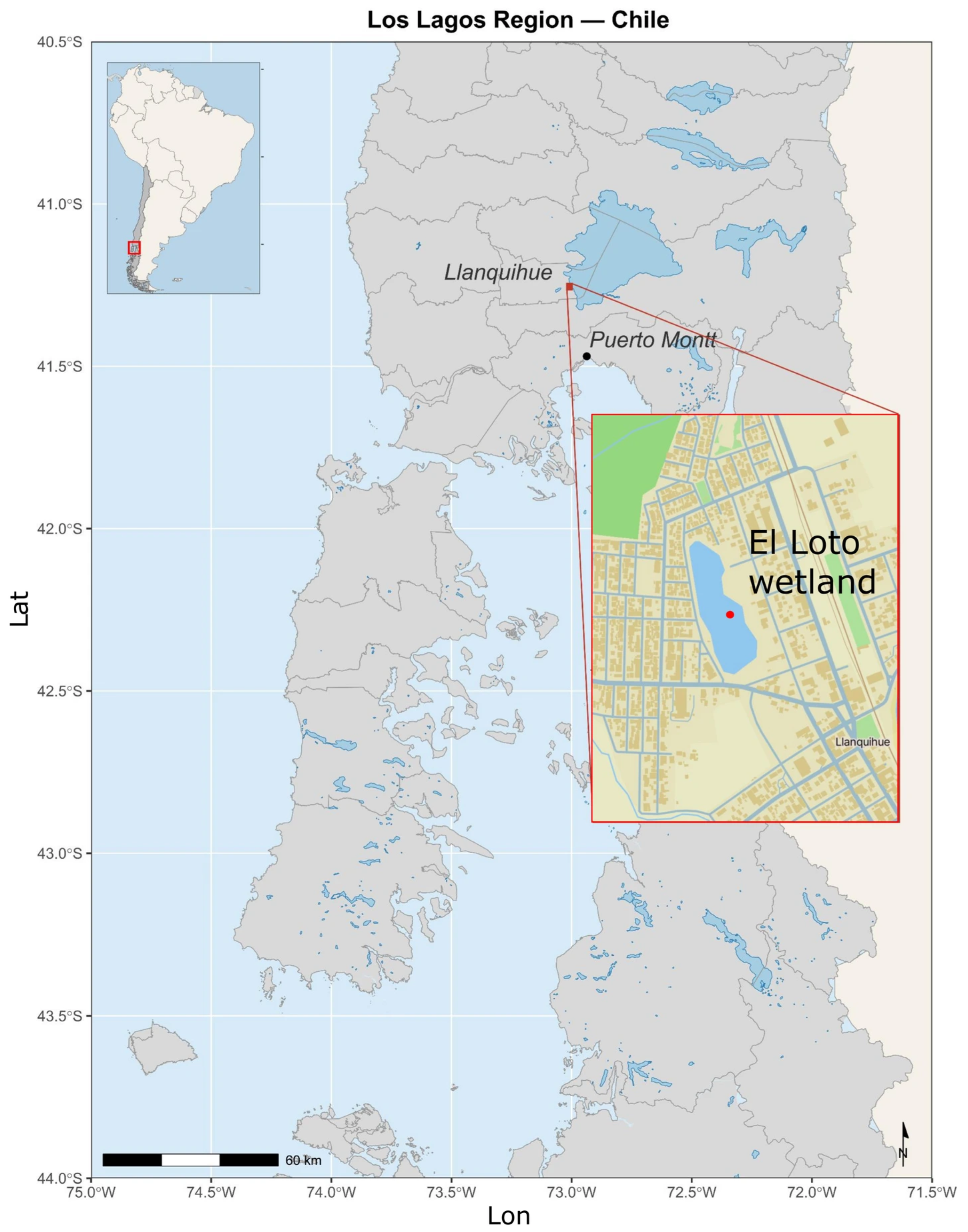
Figure A2.
Representative morphologies observed during cyanobacterial enrichment. (A,B) Light-microscopy images of buoyant mucilaginous aggregates containing coccoid cyanobacterial cells with morphology consistent with Microcystis. Panel B shows a smaller aggregate surrounded by a visible peripheral matrix after trypan blue staining. Scale bars, 10 µm. (C,D) Representative growth morphologies observed on BG-11 agar after 7 days of incubation at 25 °C under a 16 h light/8 h dark photoperiod. Scale bars, 1 cm.
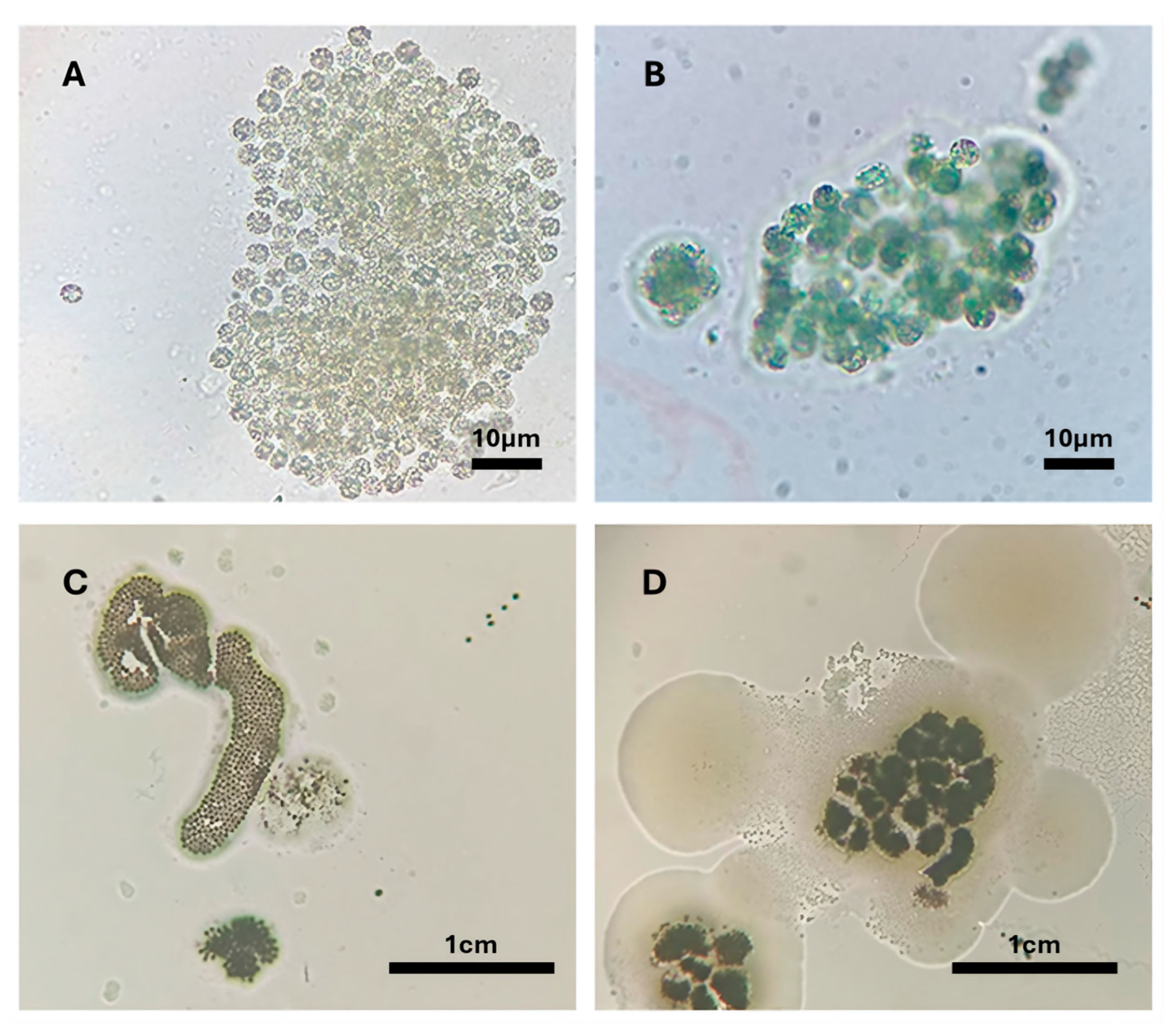
Figure A3.
Phylogenetic placement of PufM reaction-centre M chain sequences recovered from Pseudomonadota MAGs. Maximum-likelihood phylogeny of seven PufM sequences recovered from MAG_8, MAG_9, MAG_15, MAG_22, MAG_24, MAG_25 and MAG_32 (red) together with 30 curated UniProt reference sequences representing Alphaproteobacteria, Gammaproteobacteria and Chloroflexota. The tree was inferred from a 306-amino-acid alignment using IQ-TREE v3.1.3 under the Q.PFAM + F + R4 model selected by BIC, with 1000 ultrafast bootstrap and 1000 SH-aLRT replicates. Numbers at nodes indicate ultrafast bootstrap/SH-aLRT support values. The scale bar represents 0.1 amino-acid substitutions per site. The recovered MAG sequences were distributed within the PufM radiation, supporting their assignment as PufM orthologues; however, low and unstable support at several internal nodes precludes assignment to a specific phototrophic lineage.
References
- Seymour, J.R.; Amin, S.A.; Raina, J.-B.; Stocker, R. Zooming in on the Phycosphere: The Ecological Interface for Phytoplankton-Bacteria Relationships. Nat. Microbiol. 2017, 2, 17065. [Google Scholar] [CrossRef] [Scilit]
- Cook, K.V.; Li, C.; Cai, H.; Krumholz, L.R.; Hambright, K.D.; Paerl, H.W.; Steffen, M.M.; Wilson, A.E.; Burford, M.A.; Grossart, H.; et al. The Global Microcystis Interactome. Limnol. Oceanogr. 2020, 65, S194–S207, Erratum in Limnol. Oceanogr. 2021, 66, 2496–2497. [Google Scholar] [CrossRef] [Scilit]
- Xie, M.; Ren, M.; Yang, C.; Yi, H.; Li, Z.; Li, T.; Zhao, J. Metagenomic Analysis Reveals Symbiotic Relationship among Bacteria in Microcystis-Dominated Community. Front. Microbiol. 2016, 7, 56. [Google Scholar] [CrossRef] [Scilit]
- Li, Q.; Lin, F.; Yang, C.; Wang, J.; Lin, Y.; Shen, M.; Park, M.S.; Li, T.; Zhao, J. A Large-Scale Comparative Metagenomic Study Reveals the Functional Interactions in Six Bloom-Forming Microcystis-Epibiont Communities. Front. Microbiol. 2018, 9, 746. [Google Scholar] [CrossRef] [Scilit]
- Cai, H.; McLimans, C.J.; Jiang, H.; Chen, F.; Krumholz, L.R.; Hambright, K.D. Aerobic Anoxygenic Phototrophs Play Important Roles in Nutrient Cycling within Cyanobacterial Microcystis Bloom Microbiomes. Microbiome 2024, 12, 88, Erratum in Microbiome 2025, 13, 53. [Google Scholar] [CrossRef] [Scilit]
- Koblížek, M. Ecology of Aerobic Anoxygenic Phototrophs in Aquatic Environments. FEMS Microbiol. Rev. 2015, 39, 854–870. [Google Scholar] [CrossRef] [Scilit]
- Villena-Alemany, C.; Mujakić, I.; Fecskeová, L.K.; Woodhouse, J.; Auladell, A.; Dean, J.; Hanusová, M.; Socha, M.; Gazulla, C.R.; Ruscheweyh, H.-J.; et al. Phenology and Ecological Role of Aerobic Anoxygenic Phototrophs in Freshwaters. Microbiome 2024, 12, 65. [Google Scholar] [CrossRef] [Scilit]
- Zhao, L.; Lin, L.-Z.; Zeng, Y.; Teng, W.-K.; Chen, M.-Y.; Brand, J.J.; Zheng, L.-L.; Gan, N.-Q.; Gong, Y.-H.; Li, X.-Y.; et al. The Facilitating Role of Phycospheric Heterotrophic Bacteria in Cyanobacterial Phosphonate Availability and Microcystis Bloom Maintenance. Microbiome 2023, 11, 142. [Google Scholar] [CrossRef] [Scilit]
- Rocha, J.D.; Opitz, C.; Cárdenas, V.; Mella, C.; Medina, D. Identification of Potentially Harmful Bacterial Genera of Veterinary Relevance in the Llanquihue Urban Wetlands. Austral J. Vet. Sci. 2024, 56, 47–54. [Google Scholar] [CrossRef] [Scilit]
- Rocha, J.D.; Campanini-Salinas, J.; Opitz-Ríos, C.; Medina, D.A. Identification of the Harmful Cyanobacteria Microcystis aeruginosa in the Urban Wetlands El Loto, from Llanquihue City, Chile, Using Metagenomic and Microbiological Approaches. Geol. Ecol. Landsc. 2025, 10, 797–803. [Google Scholar] [CrossRef] [Scilit]
- Bai, D.; Chen, T.; Xun, J.; Ma, C.; Luo, H.; Yang, H.; Cao, C.; Cao, X.; Cui, J.; Deng, Y.-P.; et al. EasyMetagenome: A User-Friendly and Flexible Pipeline for Shotgun Metagenomic Analysis in Microbiome Research. Imeta 2025, 4, e70001. [Google Scholar] [CrossRef] [Scilit]
- Chen, S.; Zhou, Y.; Chen, Y.; Gu, J. Fastp: An Ultra-Fast All-in-One FASTQ Preprocessor. Bioinformatics 2018, 34, i884–i890. [Google Scholar] [CrossRef] [Scilit]
- Langmead, B.; Salzberg, S.L. Fast Gapped-Read Alignment with Bowtie 2. Nat. Methods 2012, 9, 357–359. [Google Scholar] [CrossRef] [Scilit]
- Nurk, S.; Meleshko, D.; Korobeynikov, A.; Pevzner, P.A. metaSPAdes: A New Versatile Metagenomic Assembler. Genome Res. 2017, 27, 824–834. [Google Scholar] [CrossRef] [Scilit]
- Li, D.; Liu, C.-M.; Luo, R.; Sadakane, K.; Lam, T.-W. MEGAHIT: An Ultra-Fast Single-Node Solution for Large and Complex Metagenomics Assembly via Succinct de Bruijn Graph. Bioinformatics 2015, 31, 1674–1676. [Google Scholar] [CrossRef] [Scilit]
- Gurevich, A.; Saveliev, V.; Vyahhi, N.; Tesler, G. QUAST: Quality Assessment Tool for Genome Assemblies. Bioinformatics 2013, 29, 1072–1075. [Google Scholar] [CrossRef] [Scilit] [PubMed]
- Hyatt, D.; Chen, G.-L.; LoCascio, P.F.; Land, M.L.; Larimer, F.W.; Hauser, L.J. Prodigal: Prokaryotic Gene Recognition and Translation Initiation Site Identification. BMC Bioinform. 2010, 11, 119. [Google Scholar] [CrossRef] [Scilit]
- Fu, L.; Niu, B.; Zhu, Z.; Wu, S.; Li, W. CD-HIT: Accelerated for Clustering the next-Generation Sequencing Data. Bioinformatics 2012, 28, 3150–3152. [Google Scholar] [CrossRef] [Scilit]
- Patro, R.; Duggal, G.; Love, M.I.; Irizarry, R.A.; Kingsford, C. Salmon Provides Fast and Bias-Aware Quantification of Transcript Expression. Nat. Methods 2017, 14, 417–419. [Google Scholar] [CrossRef] [Scilit]
- Cantalapiedra, C.P.; Hernández-Plaza, A.; Letunic, I.; Bork, P.; Huerta-Cepas, J. eggNOG-Mapper v2: Functional Annotation, Orthology Assignments, and Domain Prediction at the Metagenomic Scale. Mol. Biol. Evol. 2021, 38, 5825–5829. [Google Scholar] [CrossRef] [Scilit]
- Huerta-Cepas, J.; Szklarczyk, D.; Heller, D.; Hernández-Plaza, A.; Forslund, S.K.; Cook, H.; Mende, D.R.; Letunic, I.; Rattei, T.; Jensen, L.J.; et al. eggNOG 5.0: A Hierarchical, Functionally and Phylogenetically Annotated Orthology Resource Based on 5090 Organisms and 2502 Viruses. Nucleic Acids Res. 2019, 47, D309–D314. [Google Scholar] [CrossRef] [Scilit]
- Wood, D.E.; Lu, J.; Langmead, B. Improved Metagenomic Analysis with Kraken 2. Genome Biol. 2019, 20, 257. [Google Scholar] [CrossRef] [Scilit]
- Uritskiy, G.V.; DiRuggiero, J.; Taylor, J. MetaWRAP—A Flexible Pipeline for Genome-Resolved Metagenomic Data Analysis. Microbiome 2018, 6, 158. [Google Scholar] [CrossRef] [Scilit]
- Kang, D.D.; Li, F.; Kirton, E.; Thomas, A.; Egan, R.; An, H.; Wang, Z. MetaBAT 2: An Adaptive Binning Algorithm for Robust and Efficient Genome Reconstruction from Metagenome Assemblies. PeerJ 2019, 7, e7359. [Google Scholar] [CrossRef] [Scilit]
- Wu, Y.-W.; Simmons, B.A.; Singer, S.W. MaxBin 2.0: An Automated Binning Algorithm to Recover Genomes from Multiple Metagenomic Datasets. Bioinformatics 2016, 32, 605–607. [Google Scholar] [CrossRef] [Scilit]
- Olm, M.R.; Brown, C.T.; Brooks, B.; Banfield, J.F. dRep: A Tool for Fast and Accurate Genomic Comparisons That Enables Improved Genome Recovery from Metagenomes through de-Replication. ISME J. 2017, 11, 2864–2868. [Google Scholar] [CrossRef] [Scilit]
- Chklovski, A.; Parks, D.H.; Woodcroft, B.J.; Tyson, G.W. CheckM2: A Rapid, Scalable and Accurate Tool for Assessing Microbial Genome Quality Using Machine Learning. Nat. Methods 2023, 20, 1203–1212, Erratum in Nat. Methods 2024, 21, 735. [Google Scholar] [CrossRef] [Scilit]
- Chaumeil, P.-A.; Mussig, A.J.; Hugenholtz, P.; Parks, D.H. GTDB-Tk v2: Memory Friendly Classification with the Genome Taxonomy Database. Bioinformatics 2022, 38, 5315–5316. [Google Scholar] [CrossRef] [Scilit]
- Bowers, R.M.; Kyrpides, N.C.; Stepanauskas, R.; Harmon-Smith, M.; Doud, D.; Reddy, T.B.K.; Schulz, F.; Jarett, J.; Rivers, A.R.; Eloe-Fadrosh, E.A.; et al. Minimum Information about a Single Amplified Genome (MISAG) and a Metagenome-Assembled Genome (MIMAG) of Bacteria and Archaea. Nat. Biotechnol. 2017, 35, 725–731, Erratum in Nat. Biotechnol. 2018, 36, 196. [Google Scholar] [CrossRef] [Scilit]
- Schwengers, O.; Jelonek, L.; Dieckmann, M.A.; Beyvers, S.; Blom, J.; Goesmann, A. Bakta: Rapid and Standardized Annotation of Bacterial Genomes via Alignment-Free Sequence Identification: Find out More about Bakta, the Motivation, Challenges and Applications, Here. Microb. Genom. 2021, 7, 000685. [Google Scholar] [CrossRef] [Scilit]
- Chan, P.P.; Lin, B.Y.; Mak, A.J.; Lowe, T.M. tRNAscan-SE 2.0: Improved Detection and Functional Classification of Transfer RNA Genes. Nucleic Acids Res. 2021, 49, 9077–9096. [Google Scholar] [CrossRef] [Scilit] [PubMed]
- Aramaki, T.; Blanc-Mathieu, R.; Endo, H.; Ohkubo, K.; Kanehisa, M.; Goto, S.; Ogata, H. KofamKOALA: KEGG Ortholog Assignment Based on Profile HMM and Adaptive Score Threshold. Bioinformatics 2020, 36, 2251–2252. [Google Scholar] [CrossRef] [Scilit]
- Graham, E.D.; Heidelberg, J.F.; Tully, B.J. Potential for Primary Productivity in a Globally-Distributed Bacterial Phototroph. ISME J. 2018, 12, 1861–1866. [Google Scholar] [CrossRef] [Scilit]
- Capella-Gutiérrez, S.; Silla-Martínez, J.M.; Gabaldón, T. trimAl: A Tool for Automated Alignment Trimming in Large-Scale Phylogenetic Analyses. Bioinformatics 2009, 25, 1972–1973. [Google Scholar] [CrossRef] [Scilit]
- Katoh, K.; Standley, D.M. MAFFT Multiple Sequence Alignment Software Version 7: Improvements in Performance and Usability. Mol. Biol. Evol. 2013, 30, 772–780. [Google Scholar] [CrossRef] [Scilit]
- Wong, T.K.F.; Ly-Trong, N.; Ren, H.; Demotte, P.; Baños, H.; Roger, A.J.; Susko, E.; Bielow, C.; De Maio, N.; Goldman, N.; et al. IQ-TREE 3: Phylogenomic Inference Software Using Complex Evolutionary Models. Mol. Biol. Evol. 2026, 43, msag117. [Google Scholar] [CrossRef] [Scilit]
- Yurkov, V.V.; Beatty, J.T. Aerobic Anoxygenic Phototrophic Bacteria. Microbiol. Mol. Biol. Rev. 1998, 62, 695–724. [Google Scholar] [CrossRef] [Scilit]
- Badger, M.R.; Bek, E.J. Multiple Rubisco Forms in Proteobacteria: Their Functional Significance in Relation to CO2 Acquisition by the CBB Cycle. J. Exp. Bot. 2008, 59, 1525–1541. [Google Scholar] [CrossRef] [Scilit]
- Song, Y.; Li, R.; Song, W.; Tang, Y.; Sun, S.; Mao, G. Microcystis spp. and Phosphorus in Aquatic Environments: A Comprehensive Review on Their Physiological and Ecological Interactions. Sci. Total Environ. 2023, 878, 163136. [Google Scholar] [CrossRef] [Scilit]
- Chen, L.-X.; Anantharaman, K.; Shaiber, A.; Eren, A.M.; Banfield, J.F. Accurate and Complete Genomes from Metagenomes. Genome Res. 2020, 30, 315–333. [Google Scholar] [CrossRef] [Scilit]
- Nelson, W.C.; Tully, B.J.; Mobberley, J.M. Biases in Genome Reconstruction from Metagenomic Data. PeerJ 2020, 8, e10119. [Google Scholar] [CrossRef] [Scilit]
- Buchan, A.; LeCleir, G.R.; Gulvik, C.A.; González, J.M. Master Recyclers: Features and Functions of Bacteria Associated with Phytoplankton Blooms. Nat. Rev. Microbiol. 2014, 12, 686–698. [Google Scholar] [CrossRef] [Scilit]
Disclaimer/Publisher’s Note: The statements, opinions and data contained in all publications are solely those of the individual author(s) and contributor(s) and not of MDPI and/or the editor(s). MDPI and/or the editor(s) disclaim responsibility for any injury to people or property resulting from any ideas, methods, instructions or products referred to in the content. |
© 2026 by the authors. Licensee MDPI, Basel, Switzerland. This article is an open access article distributed under the terms and conditions of the Creative Commons Attribution (CC BY) license.