


Abstract
Hydraulic manipulators face critical challenges due to valve dead-band nonlinearity and state constraints, which can lead to safety hazards and hardware damage. This study proposes a state-constrained controller with valve dead-band compensation to ensure prescribed positioning accuracy and operational safety. Barrier Lyapunov functions ensure that state constraints are maintained and that boundary violations are avoided. Concurrently, a smooth dead-band inverse model is developed to offset asymmetric valve dead-band effects without inducing chatter. Adaptive laws estimate uncertain parameters and dead-band impact in real time, and a disturbance observer attenuates unmatched uncertainties. Dynamic surface control is employed to diminish the explosion of complexity in backstepping design. Comparative simulations under fixed-angle and arbitrary-angle tracking demonstrate that the proposed controller achieves superior tracking accuracy with steady-state errors below 0.04° compared to 0.06° for non-compensated controllers, while significantly reducing pressure fluctuations and control chattering as adaptive parameters converge. The results indicate that the strategy effectively compensates for valve dead zones while strictly maintaining state constraints, thereby achieving the required control precision for hydraulic servo systems.
1. Introduction
Hydraulic manipulators serve as universal actuation mechanisms in engineering applications [1], distinguished by their exceptional load-bearing capacity, superior power-to-weight ratio, and efficient power transmission. These systems are extensively implemented in excavators [2], electro-hydraulic actuators [3], and servo systems [4]. In practical electro-hydraulic servo control systems, enforcing output constraints (position/force–torque) and state constraints during operation constitutes a critical consideration. Constraint violations not only degrade control performance but also precipitate safety-critical incidents, including mechanical overtravel-induced hardware damage and personnel hazards. These risks escalate significantly when initial-state deviations or unknown disturbances occur, particularly when positional limits are breached. Consequently, preventing actuator motion interference and ensuring prescribed positioning accuracy are imperative for operational safety.
The workspace of hydraulic manipulators is inherently constrained across operational configurations, necessitating boundary constraints on system states during motion to prevent actuator failures caused by mechanical overtravel beyond prescribed limits. Specifically for serial-chain manipulators, end-effector positional accuracy relies on multi-actuator coordinated control, mandating strict adherence to allowable error bounds at every kinematic chain segment. This necessitates explicit consideration of both transient positional constraints and steady-state error constraints during hydraulic manipulator operation.
Recently, barrier Lyapunov functions (BLFs) have demonstrated unique advantages for solving output and state-constraint problems in nonlinear motion control systems. The theoretical foundation for addressing state constraints lies primarily in barrier Lyapunov function (BLF) methodologies, which have been systematically developed and refined across multiple high-impact studies. A BLF-based approach ensures that system states remain within prescribed bounds by constructing a Lyapunov function that grows infinitely as states approach constraint boundaries, thereby mathematically guaranteeing constraint satisfaction. Recent advances have extended this framework to handle asymmetric time-varying full-state constraints with non-vanishing uncertainties, achieving asymptotic tracking rather than mere boundedness [5]. These functions are intrinsically continuous positive-definite scalar functions with first-order continuous partial derivatives. By leveraging logarithmic approximation properties in controller design, BLFs forcibly constrain system errors within desired ranges. When state or output constraints approach predefined boundaries, the energy function constructed from BLFs tends toward infinity, thereby enhancing control gains to guarantee bounded system errors and prevent constraint violations [6,7]. Ngo et al. [8] initially employed barrier functions to restrict system states, thereby addressing stability issues in feedback-linearized systems with multiple state constraints. In the context of guaranteed constraint satisfaction, Tee et al. [9,10] pioneered the use of BLFs to demonstrate the stability and convergence of strictly feedback SISO nonlinear systems with output constraints. For a class of strict-feedback nonlinear systems, Li et al. and Li et al. used BLFs to enforce full-state constraints, ensuring all constrained signals stay bounded [11,12]. Liu et al. [13] first extended the BLF methodology to address stability in nonlinear stochastic systems. In time-varying nonlinear systems, Liu et al. [14] and Wang et al. [15] proposed BLFs to enforce state constraints and ensure effective asymptotic tracking performance. Wu et al. [16] introduced a model predictive control approach based on BLF to stabilize input-constrained nonlinear systems. Wang et al. [17] and Zhang et al. [18] integrated BLFs with dynamic surface control to address dynamic uncertainties in pure-feedback nonlinear systems with full-state constraints, ensuring both constraint compliance and overall convergence. Deng et al. [19] applied BLF-based adaptive backstepping control to hydraulic actuators with velocity and acceleration constraints in state-constrained electro-hydraulic servo systems. Won et al. [4] designed a backstepping controller for electro-hydraulic systems that uses a high-gain disturbance observer and enforces position-tracking-error constraints. Guo et al. further designed high-performance controllers for full-state error constraints and partial-state (position error and load error) constraints [20]. Stosiak M et al. [21] identified the components of the amplitude–frequency spectrum of pressure pulsations in a hydraulic system in which low-frequency external mechanical vibrations were subjected to the action of a proportional hydraulic directional valve. For hydraulic servo systems, specifically, the integration of BLF with adaptive backstepping control has proven highly effective. Zhangbao Xu et al. [22] demonstrated a comprehensive approach combining parameter estimation for parametric uncertainties with extended state observer (ESO) techniques for uncertain nonlinearities, all within a BLF-based full-state constraint framework via backstepping design. This methodology ensures non-violation of state constraints while achieving high-precision trajectory tracking. Similarly, Wan et al. [23] developed a barrier Lyapunov-based adaptive controller where adaptive laws are embedded at each step of the backstepping process, enabling tracking error convergence to prescribed accuracy while respecting state constraints.
Valve dead-band compensation presents a distinct but equally critical challenge. The dead-band in electro-hydraulic servo valves creates a region where input commands produce no output response, leading to tracking errors and potential instability. Dead-band characteristics [24], prevalent in electro-hydraulic servo systems, are discontinuous nonlinearities arising from spool-valve friction and port overlap. These phenomena manifest as zero-displacement regions within specific ranges of control input voltages, where the valve spool ceases to move despite the application of signals. Particularly when operating near the null position of servo valves, such characteristics induce control stability challenges, directly impairing steady-state accuracy and stability. Furthermore, they fundamentally limit performance enhancement in proportional electro-hydraulic servo systems. Crucially, dead zones exacerbate the risk of constraint violation, necessitating the implementation of effective compensation strategies to mitigate these nonlinear effects. A conventional approach models dead-band characteristics in electro-hydraulic servo systems as linear input terms superimposed on bounded disturbances [25,26,27,28], subsequently employing dead-band compensators and disturbance-rejection techniques to mitigate their effects. However, this methodology inadequately captures the actual dynamic characteristics of dead zones, failing to deliver the precise compensation required for high-accuracy stable control. Wang et al. [29] and Zhang et al. [30] implemented adaptive compensation schemes by approximating dead zones as symmetric linear input terms (with equal positive/negative slopes) and bounded disturbances, disregarding the practical asymmetric characteristics. Coelho et al. [31] developed an adaptive algorithm to estimate dead-band intercept parameters in hydraulic actuator cascade control, while Machado et al. [32] experimentally validated the adaptive compensation capability of this method in hydraulic manipulators. Nevertheless, such linearized compensation fundamentally fails to suppress dead-band impacts. Mohanty et al. [33] proposed a nonlinear inverse dead-band function combined with indirect adaptive estimation to compensate for the dead zones of hydraulic manipulators. However, the discontinuous inverse function introduced chattering in practical implementations. Addressing this limitation, Zhou et al. [34] devised a smooth dead-band inverse model that eliminates discontinuous inverse-induced chattering while achieving effective dead-band compensation. Building on this foundation, Deng et al. [35] expanded the approach to include robust adaptive asymptotic tracking control for nonlinear systems featuring unknown-input dead zones. Deng et al. [36] and Gu et al. [37] implemented active dead-band compensation in valve-controlled cylinder electro-hydraulic servo systems, demonstrating enhanced precision and validated efficacy in mitigating dead zones.
To address the control problem of hydraulic manipulators with dead-band characteristics, this study introduces barrier Lyapunov functions (BLFs) to enforce state constraints, thereby ensuring precise positional error control and keeping the manipulator’s motion within desired dynamic error bounds. A smooth dead-band inverse is used to modify the dead-band characteristics of proportional servo valves. To account for parametric uncertainties and the system’s inherent dead-band nonlinearity, adaptive laws are designed to estimate parameter variations in real time and provide compensatory control actions. Additionally, a disturbance observer is integrated to reduce unmatched uncertainties in the electro-hydraulic servo system of the projectile coordinator. The proposed state-constrained controller with valve dead-band compensation effectively compensates for dead zones while strictly maintaining state constraints, thereby attaining the required control precision. Notably, as adaptive parameters converge during operation, both the efficacy of dead-band compensation and control stability improve significantly.
2. Methods
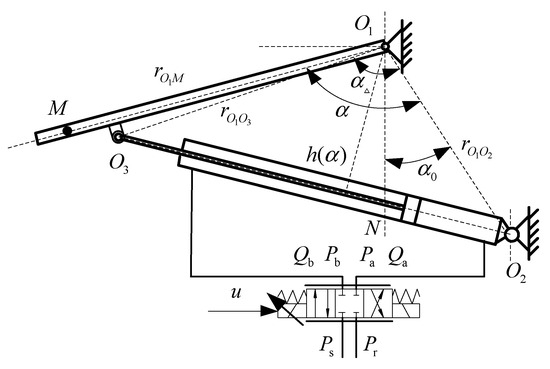
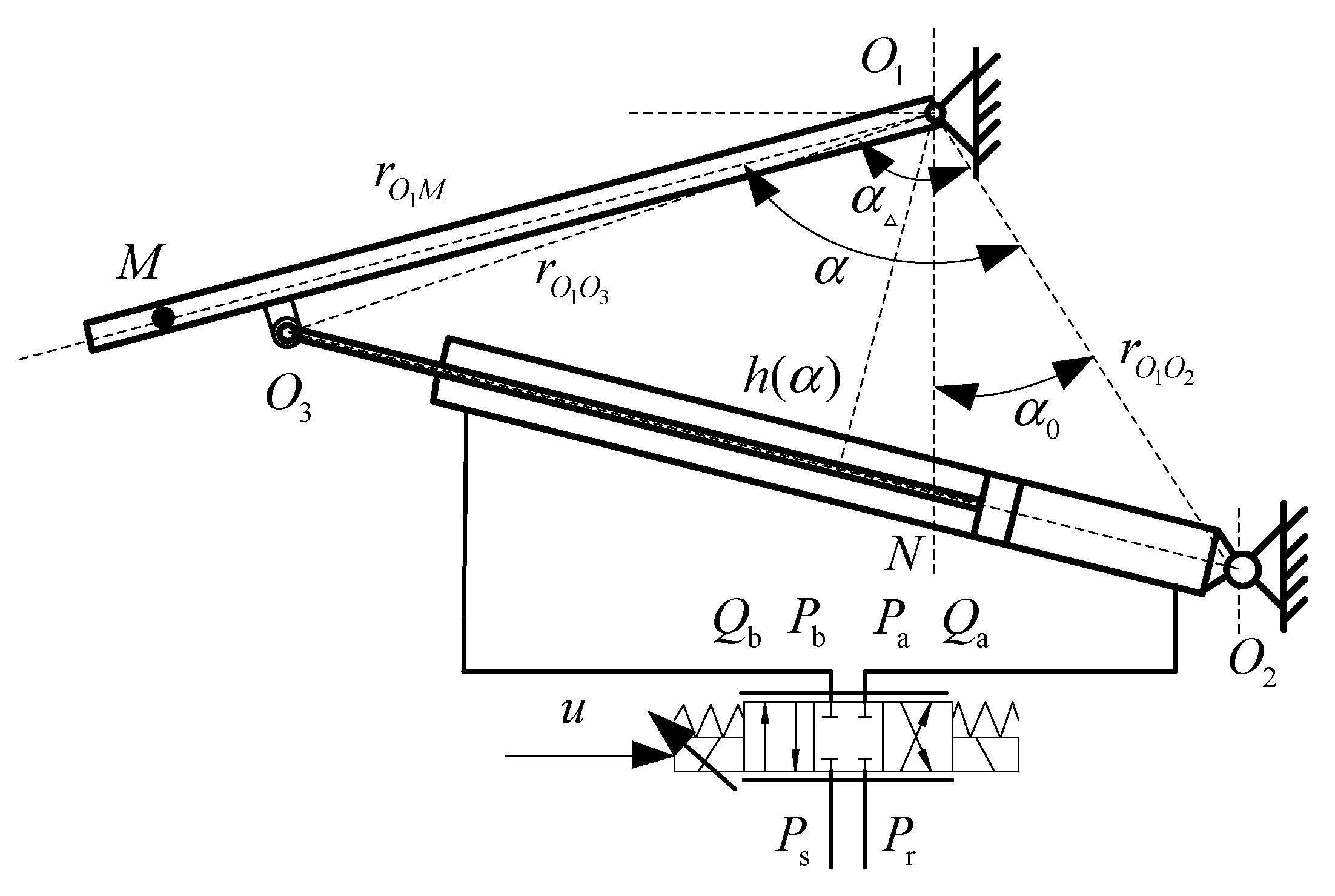
Figure 1 illustrates the simplified positional relationships in the hydraulic manipulator position servo system, where represents the manipulator’s rotational axis, and denote the lower and upper hydraulic cylinder lug axes, respectively, and indicates the equivalent centroid position of the manipulator. The plumb line is represented by , with geometric parameters defined as , , . Angular relationships include as the included angle between and , also corresponding to the manipulator’s angular position, as the included angle between and , and as the included angle between and . The distance from to the line is denoted as . Hydraulic system variables comprise and (oil pressures in the rodless and rod chambers, respectively), and represent flows through the proportional servo valve into or out of the rodless and rod chambers), and are supply and return pressures of the hydraulic source, and is control input voltage to the proportional servo valve.
Figure 1.
Schematic diagram of the positional relationship of the hydraulic robotic arm.
In Figure 1, it is easy to know that when , then . Thus, the kinematic relationship between the displacement of the piston of the hydraulic cylinder and the angular position of the robotic arm can be expressed as follows:
The torque balance equation for the position servo system of a hydraulic robotic arm is
In the above equation, is the equivalent rotational inertia of the robotic arm load; is the hydraulic cylinder output force, where and are the effective piston areas of the rodless and rod-side chambers of the hydraulic cylinder, respectively; is the equivalent viscous friction coefficient of the hydraulic cylinder; is the equivalent mass of the robotic arm load; is the gravitational acceleration; is the moment arm of the gravitational force acting on the pivot point ; indicates the overall impact of all unmodeled dynamics such as load variations, external disturbances, and nonlinear friction characteristics.
The following is derived from the continuity equation for flow [38]:
where denotes the hydraulic cylinder internal leakage coefficient, denotes the hydraulic cylinder external leakage coefficient; denotes the control volume of the rodless cavity in the hydraulic system cylinder, denotes the initial state of the hydraulic cylinder’s rodless cavity and its piping connected to the servo valve control volume; denotes the control volume of the rod cavity of the hydraulic cylinder, where is the control volume in the rod chamber of the hydraulic cylinder and its piping connected to the servo valve at the initial moment; is the effective volumetric modulus of elasticity of the hydraulic oil; and and are the dynamic errors of the unmodeled pressures in the rodless and rod chambers of the hydraulic cylinder, respectively.
The relationship between the flow rates, denoted as and of the high-frequency response servo valve spool and the control input voltage u, can be described as follows:
In the formula, and are the flow gain coefficients for the flow entering the hydraulic cylinder’s rodless chamber and rod chamber through the proportional servo valve spool, respectively. and are defined as follows:
In the equation, , and clearly satisfy and . The function is defined as
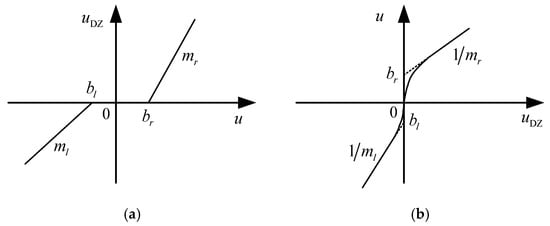
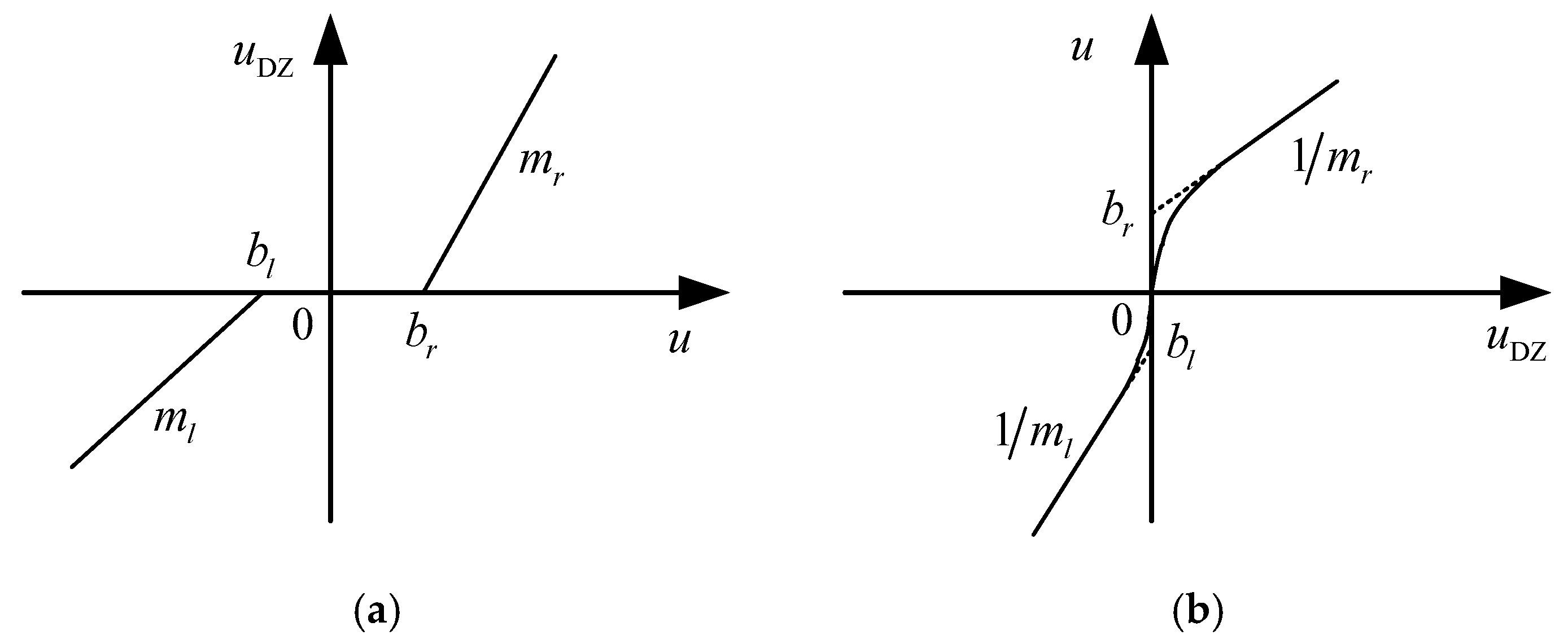
The dead zone nonlinear output of a proportional servo valve can be described as
In the equation, represents the nonlinear function of the dead zone of the proportional servo valve; and are unknown bounded constants. Even for proportional servo valves with symmetrical valve ports, their dead zone characteristics are generally asymmetric, i.e., . The dead-band characteristics of the proportional servo valve are illustrated in Figure 2a. and represent the slope of the dead-band attributes on the right side and left side of the axis, respectively, while and represent the right intercept and left intercept of the dead-band characteristics on the axis, respectively.
Figure 2.
(a) Dead-band nonlinearity of proportional servo valve and (b) smooth dead zone inverse characteristics.
We define the state variables of the hydraulic robotic arm position servo system as . Combining Equations (1)–(7), the system state-space equations can be rearranged as follows:
where , , , , , , , , .
We define the unknown dead-band parameter vector as and the sign function.
The dead zone characteristics expressed in Equation (7) can be parameterized as
In the equation, . Clearly, this dead-band nonlinearity is discontinuous. To reduce the control input noise caused by discontinuities, we mitigate it by applying a continuously differentiable inverse dead-band model [34,35,36,37]:
In the formula, and are both smooth indicator functions, defined as follows:
We define the estimated value of the unknown dead zone parameter as . We design the actual control input as
where .
Then, Equation (10) can be rewritten as
Subtracting Equation (9) from Equation (12) yields
In the equation, represents the estimation error of the unknown dead zone parameter . .
We denote the lumped uncertainty in the nonmatched control channel of Equation (8), arising from the unknown parameters J, and , as . For the control-input channel, we introduce the uncertain parameter vector , with , , . Replacing the uncertain parameter in the term with its nominal value , we treat the resulting modeling error as an unmodeled term included in . Consequently, Equation (8) can be rewritten as
, , .
The design of this controller requires the following assumptions:
Assumption 1: The second derivative of the reference angular position command exists and is continuous, meaning that the desired reference angular position, reference angular velocity , reference angular acceleration , and reference angular acceleration-acceleration are all bounded.
Assumption 2: The system’s uncertain parameters and are continuously bounded and satisfy the following:
where , , , and .
Assumption 3: The system does not model the disturbance , and its first derivatives and are continuously bounded and satisfy
The estimated value and estimated error of the uncertain parameter are denoted as and , respectively, to form . To guarantee that the estimated uncertain parameter always meets assumption 2, the following discontinuous projection algorithm is introduced [39,40].
In the formula, ; . A parameter adaptive law is employed.
In the formula, and are both positive-definite adaptive gain diagonal matrices. and are both parameter adaptive laws to be designed.
3. Results of State-Constrained Controller Design Considering Valve Dead-Band Compensation
3.1. State-Constrained Controller Design
Taking the derivative with respect to yields
Design a virtual control function for :
Taking the derivative with respect to yields
The can be rewritten as
Take the Lyapunov function of the first subsystem as
Taking the derivative with respect to yields
This can be rewritten as
where .
Taking the derivative with respect to yields
To estimate the unmatched disturbance term in the system, the following disturbance observer is designed [41]:
In the equation, is the estimated value of , is the auxiliary design variable, and is the disturbance observer gain.
Define the estimation error . Taking the derivative of yields
Design a virtual control function for yields
In the formula, , , where is a positive design parameter.
Replacing the derivative of the virtual control variable with the output of a first-order low-pass filter [42] can help prevent differential explosion. The first-order low-pass filter employed here is
Define the corresponding boundary layer error as
Taking the derivative with respect to yields
Then, is rewritten as
Consider the Lyapunov function for the second subsystem as
The constraint parameters and in the BLFs are closely related to the physical and mechanical limits of the hydraulic manipulator. Specifically, defines the absolute maximum allowable position tracking error. It serves as a strict safety margin dictated by the mechanical clearances of the manipulator’s workspace to prevent physical collisions during operation. Meanwhile, restricts the maximum transient velocity error. Its selection is strictly constrained by the maximum safe flow rate of the proportional servo valve. Bounding this velocity error is physically imperative to prevent violent flow surges, which could induce severe hydraulic shocks and cause mechanical vibrations or hardware damage. In practical tuning, these parameters must be carefully selected to balance the system’s dynamic response speed while strictly ensuring mechanical safety margins.
Taking the derivative with respect to yields
where .
By Yang’s inequality, the following can be obtained:
Substituting Equation (39) into Equation (38) yields
In the formula, , .
Taking the derivative with respect to yields
The final control function is designed as
In the equation, , , where k3 and δ3 are positive design parameters.
Then, is rewritten as
Consider the Lyapunov function of the third subsystem as
Taking the derivative with respect to yields
In the equation, .
Parameter adaptive control law design is denoted as
According to Equation (13), the actual control input u of the proportional servo valve can be expressed as
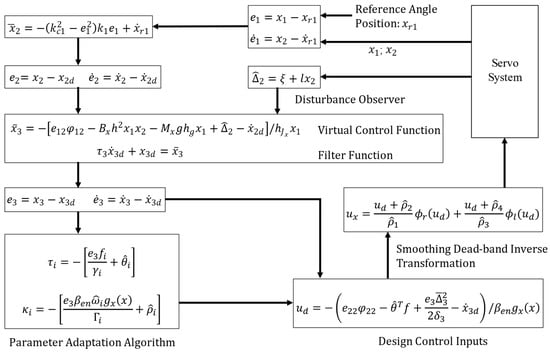
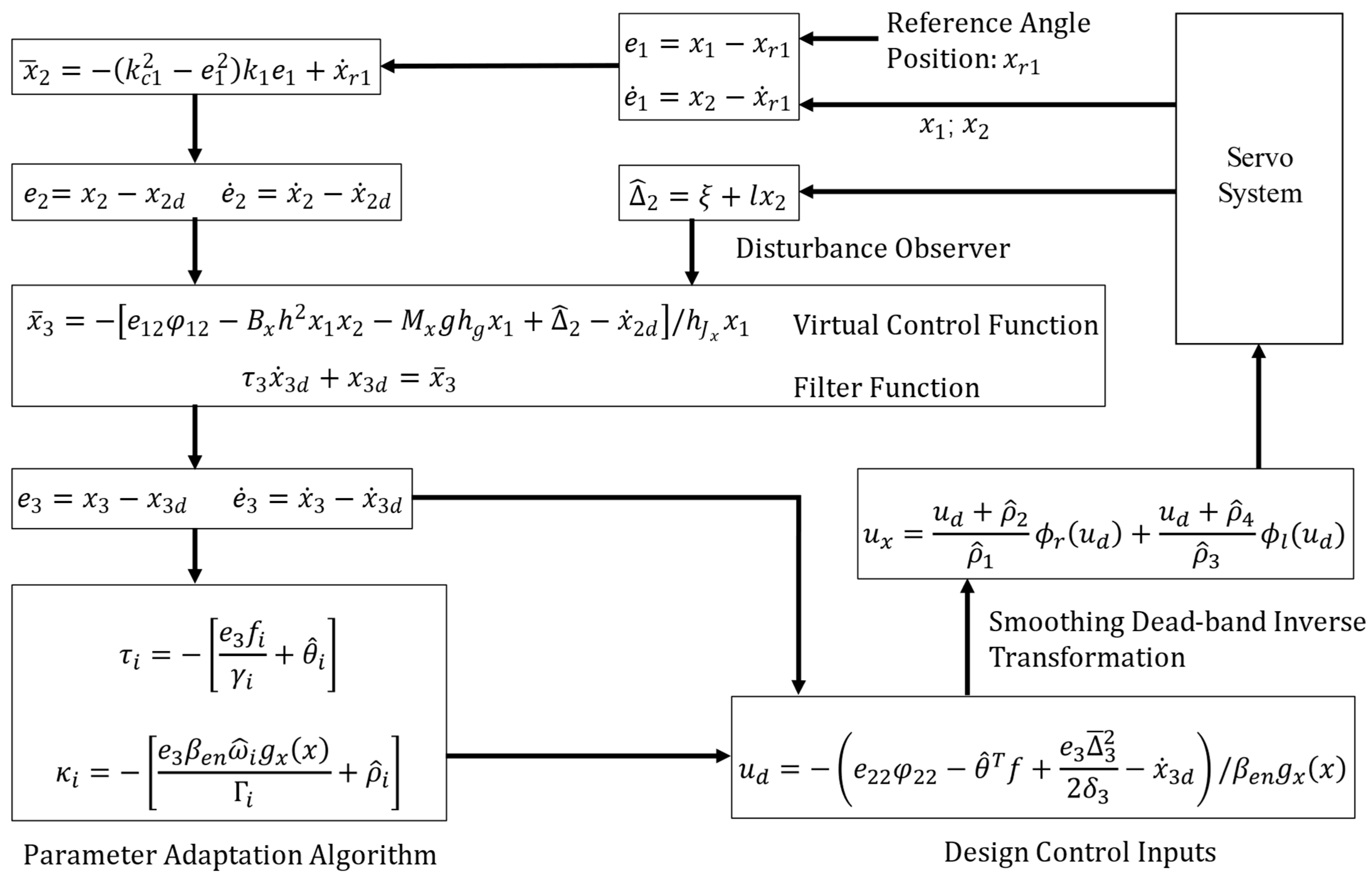
The structural diagram of the state-constrained control strategy for the position servo system of a hydraulic robotic arm, designed with valve dead-band compensation, is shown in Figure 3.
Figure 3.
Block diagram of state-constrained controller considering valve dead-band compensation.
Both adaptive parameter estimation and disturbance observers are employed to enhance system robustness, but they address different types of uncertainty in decoupled control channels and do not overlap functionally. The disturbance observer is constructed within the mechanical dynamic channel to rapidly estimate unmatched, unstructured uncertainties, such as variations in external payload and unmodeled mechanical friction. In contrast, adaptive laws are deployed in the hydraulic control input channel to address matched, structured parametric uncertainties, including variations in the bulk modulus and asymmetric dead-band characteristics. This dual-mechanism architecture ensures that the adaptive laws absorb steady-state internal hydraulic parameter drifts, thereby preventing the disturbance observer from reaching its limits. This preserves the disturbance observer’s bandwidth, making it possible to reject transient external mechanical disturbances efficiently. This demonstrates the necessity of employing both mechanisms.
3.2. Stability Analysis
Theorem: For the position servo system of a hydraulic robotic arm, under the conditions satisfying Assumptions 1–3, utilizing the discontinuous projection algorithm in Equations (20) and (21), the parameter adaptive laws (46) and (47), the virtual control laws (23) and (32), and the dynamic surface filter function (33), the control function (42) along with the smoothing dead-band inverse transformation (48) work together to ensure the stability of the closed-loop control system. The tracking error asymptotically converges at an exponential rate to a finite neighborhood .
Proof: The system’s Lyapunov function is defined as follows:
Taking the derivative with respect to V yields
By substituting Equations (46) and (47) into Equation (50), we obtain
Subsequently, the following can be derived:
In the equation, .
The theorem is thus proven.
4. Simulation Analysis Comparison
To validate the effectiveness of the DZC-BLF controller designed in this paper, a joint simulation platform for the hydraulic robotic arm position servo system was constructed using MATLAB/Simulink and Simcenter Amesim software V2304. The sampling interval for the joint simulation was configured at 1 ms. The physical parameters of the simulation model were determined based on the actual system and are listed in Table 1.
Table 1.
Parameters of the system.
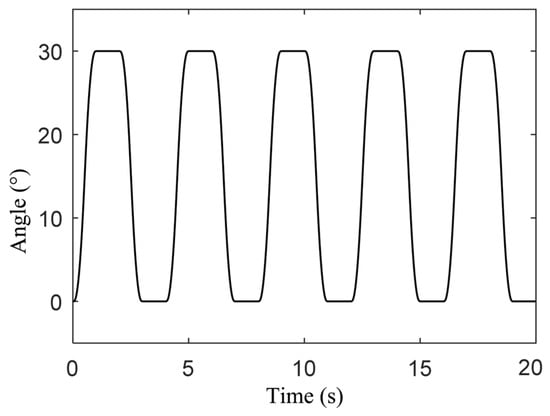
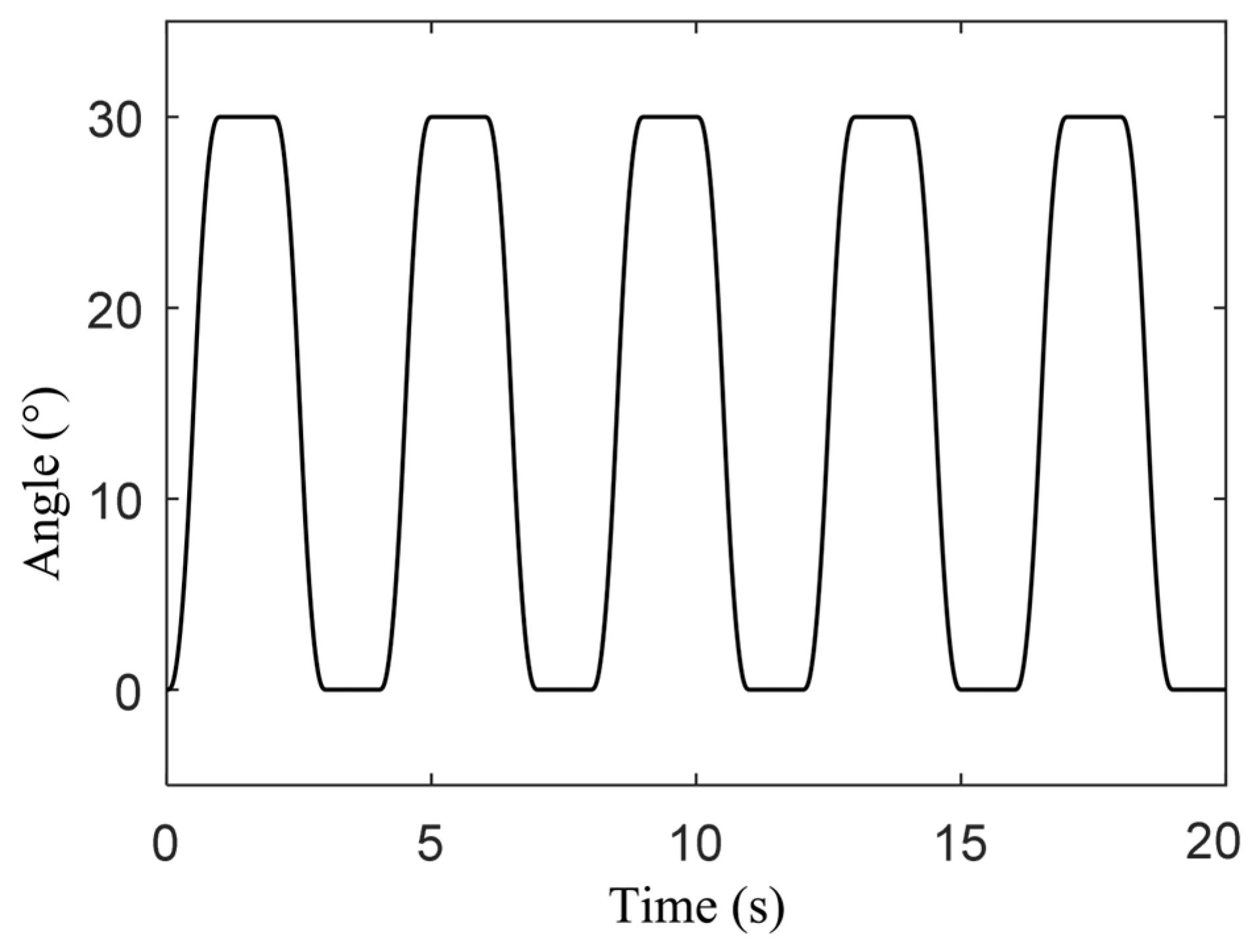
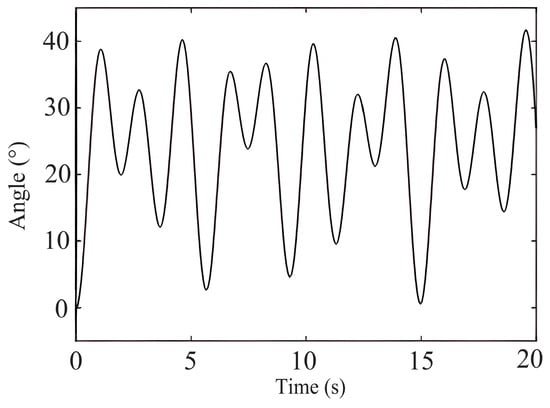
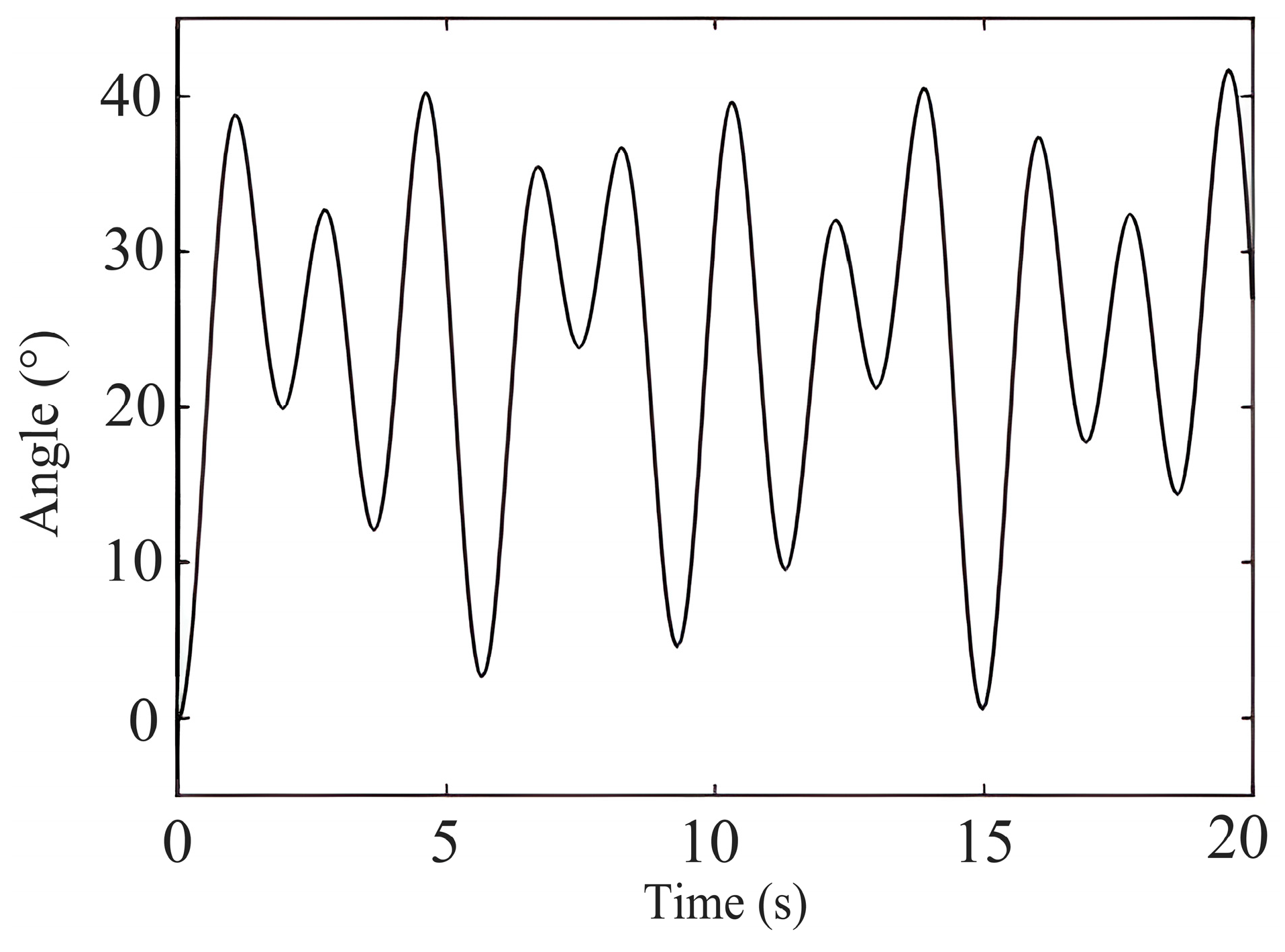
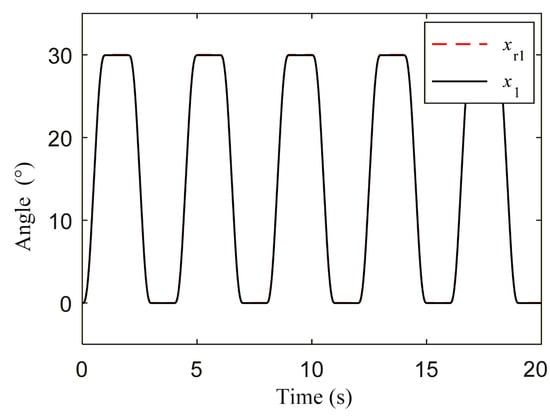
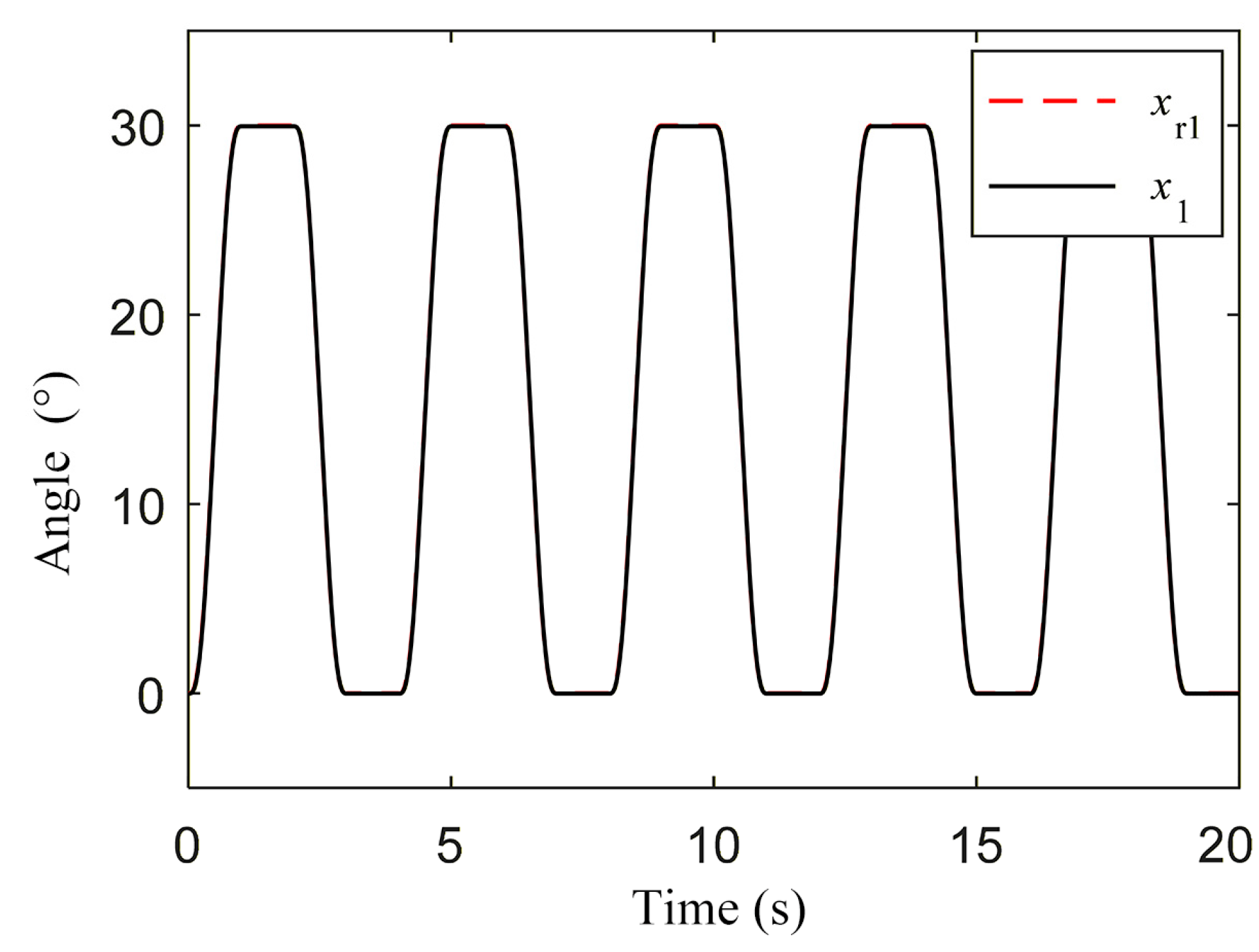
This paper demonstrates the use of dead-band characteristics in proportional servo valves to verify the effectiveness of the proposed state-constrained control strategy with valve dead-band compensation for a hydraulic robotic arm servo system. Tracking performance simulations are conducted under typical fixed-angle tracking conditions (as shown in Figure 4) and arbitrary-angle tracking conditions (as shown in Figure 5) to verify the control performance of the hydraulic robotic arm position servo system under the control strategy. Furthermore, the dead-band characteristics established in this paper adopt typical nonlinear parameters: , , , and .
Figure 4.
Fixed-angle tracking of the target trajectory.
Figure 5.
Arbitrary-angle tracking trajectory.
To clearly demonstrate the effectiveness of the dead zone compensation control strategy proposed in this paper, a simulation comparison of the controllers is conducted:
(1) State-constrained controller with dead zone compensation: Controller gains are set as , , , , . The disturbance observer gain is set to , with filter parameters . The adaptive parameter lower bound is , , while the upper bound of adaptive parameters is set to , . The initial values for adaptive parameters are selected as , , adaptive gain matrix is set to , , and smooth dead zone inverse parameter is set to .
(2) State-constrained controller with dead zone influence (DZ-BLF): Parameter settings are consistent with DZC-BLF.
4.1. Fixed-Angle Tracking Control Performance
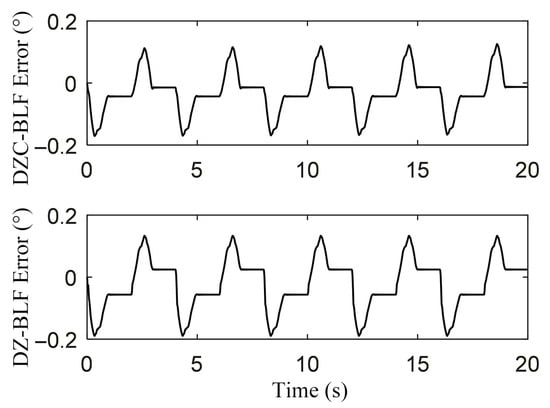
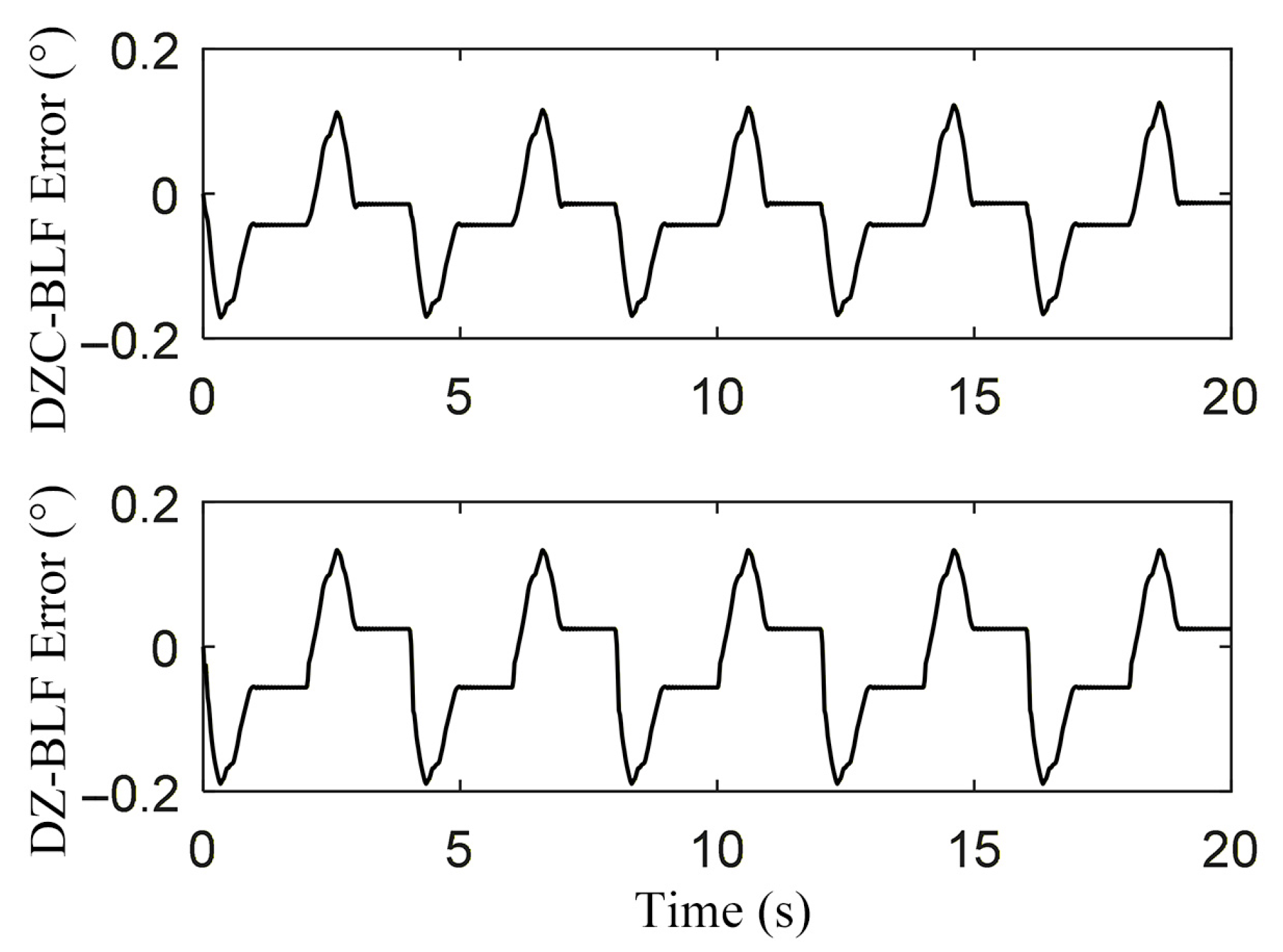
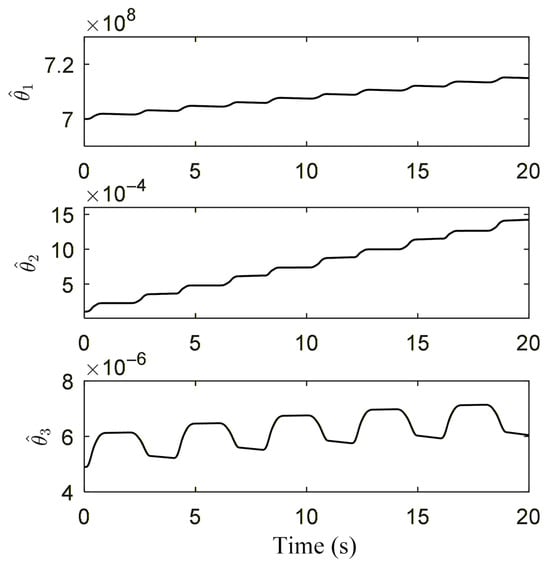
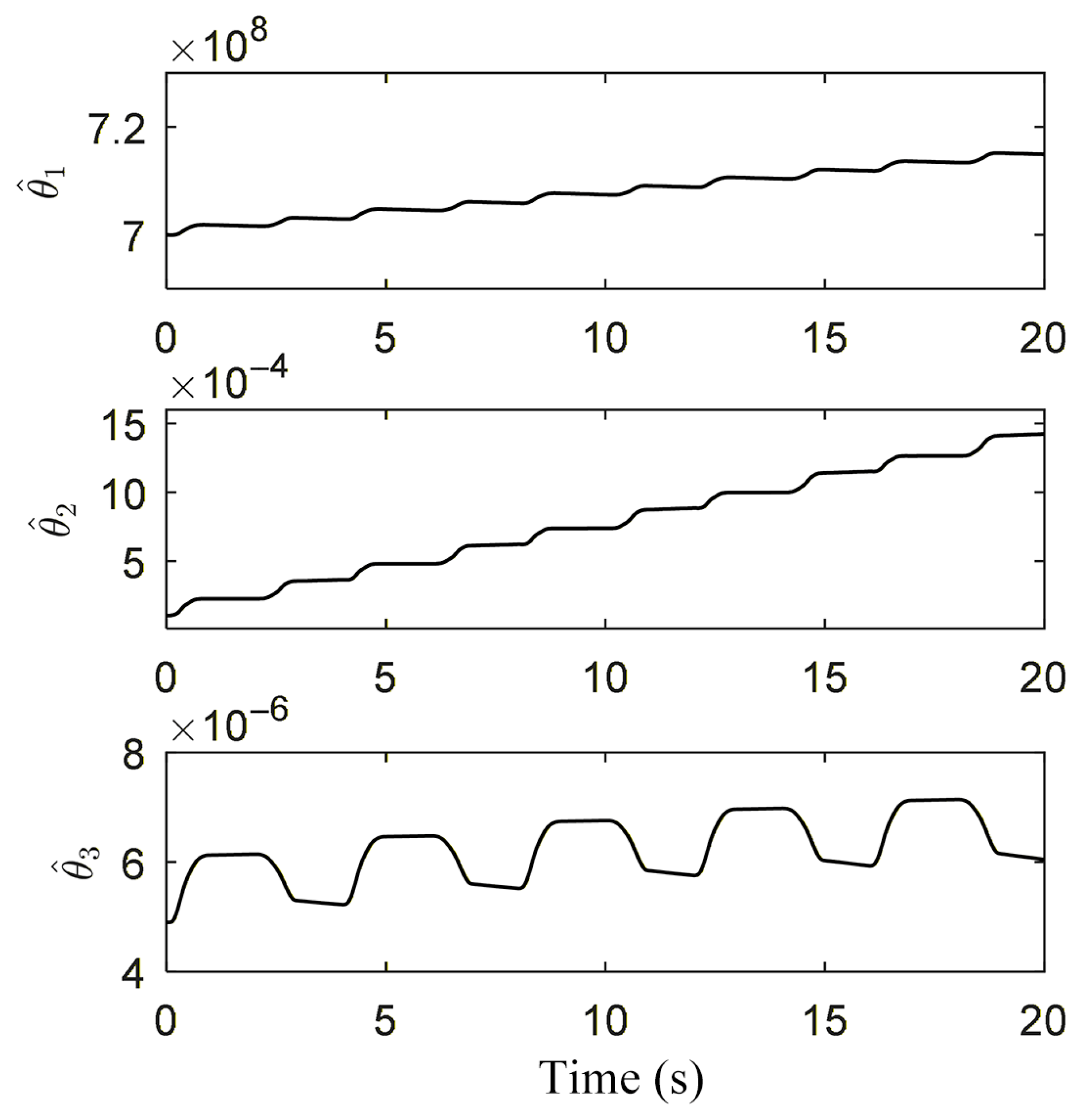
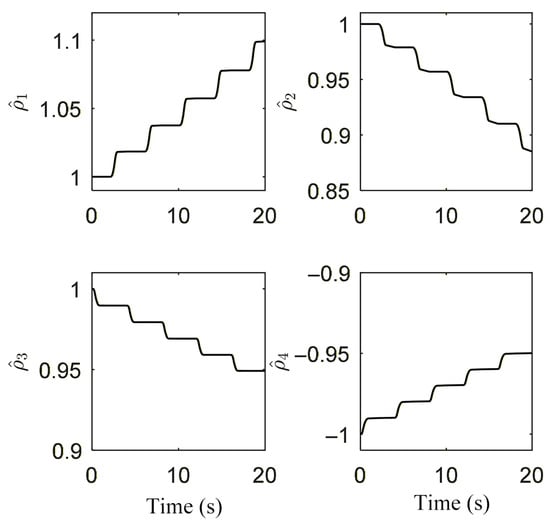
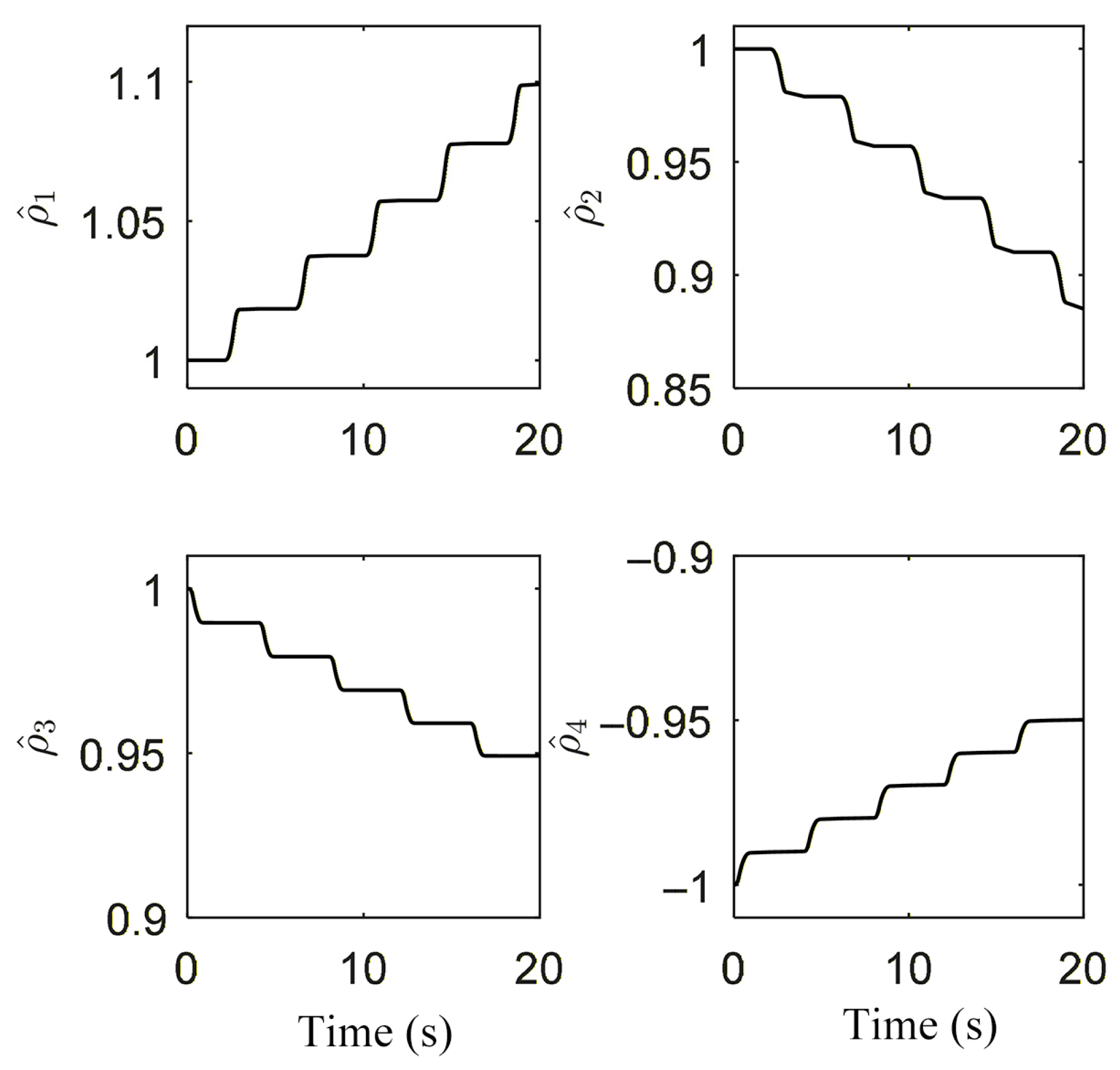
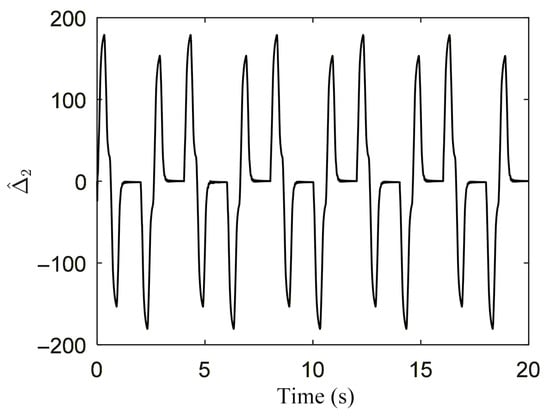
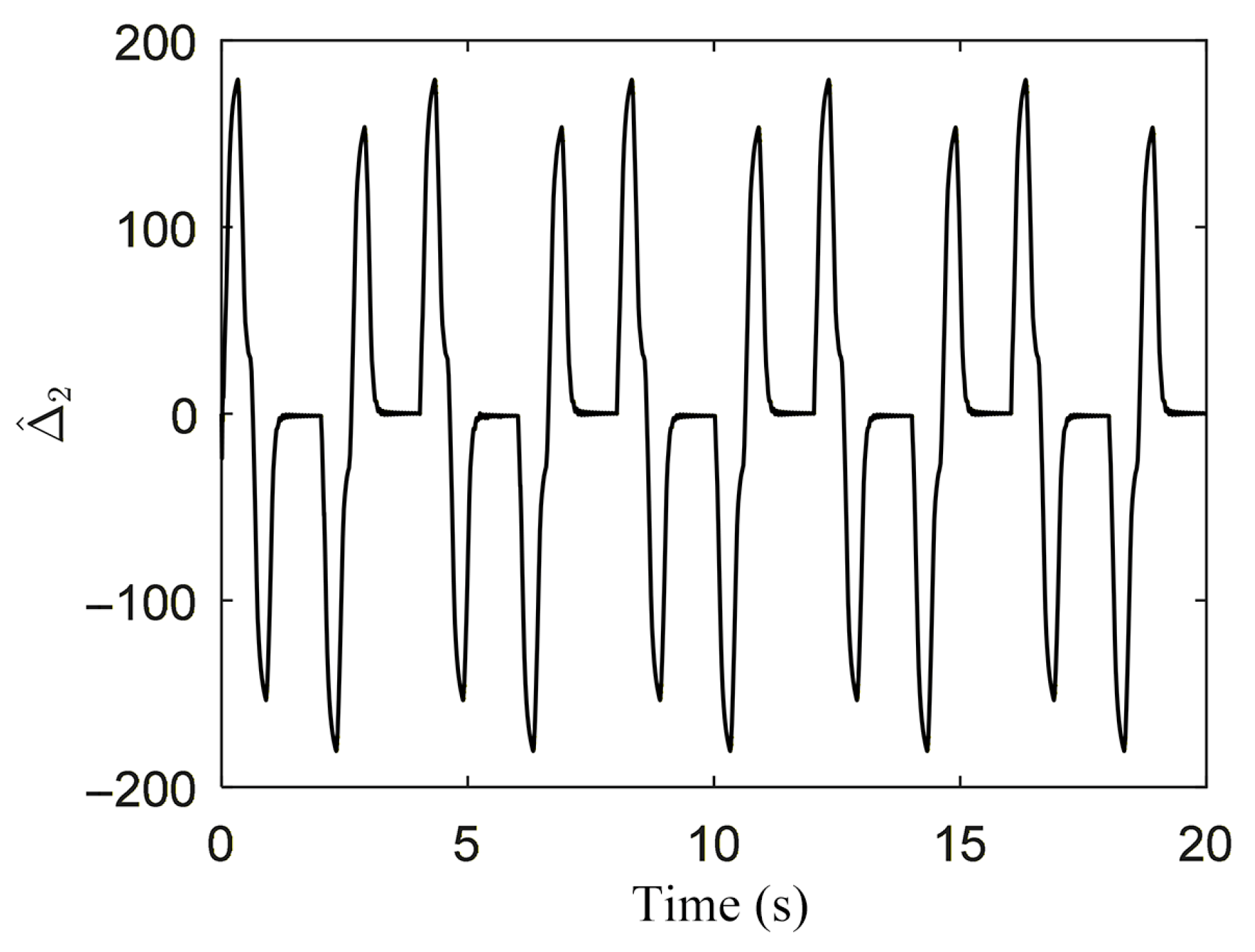
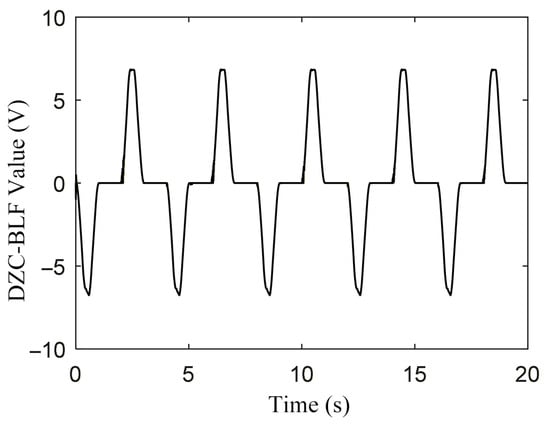
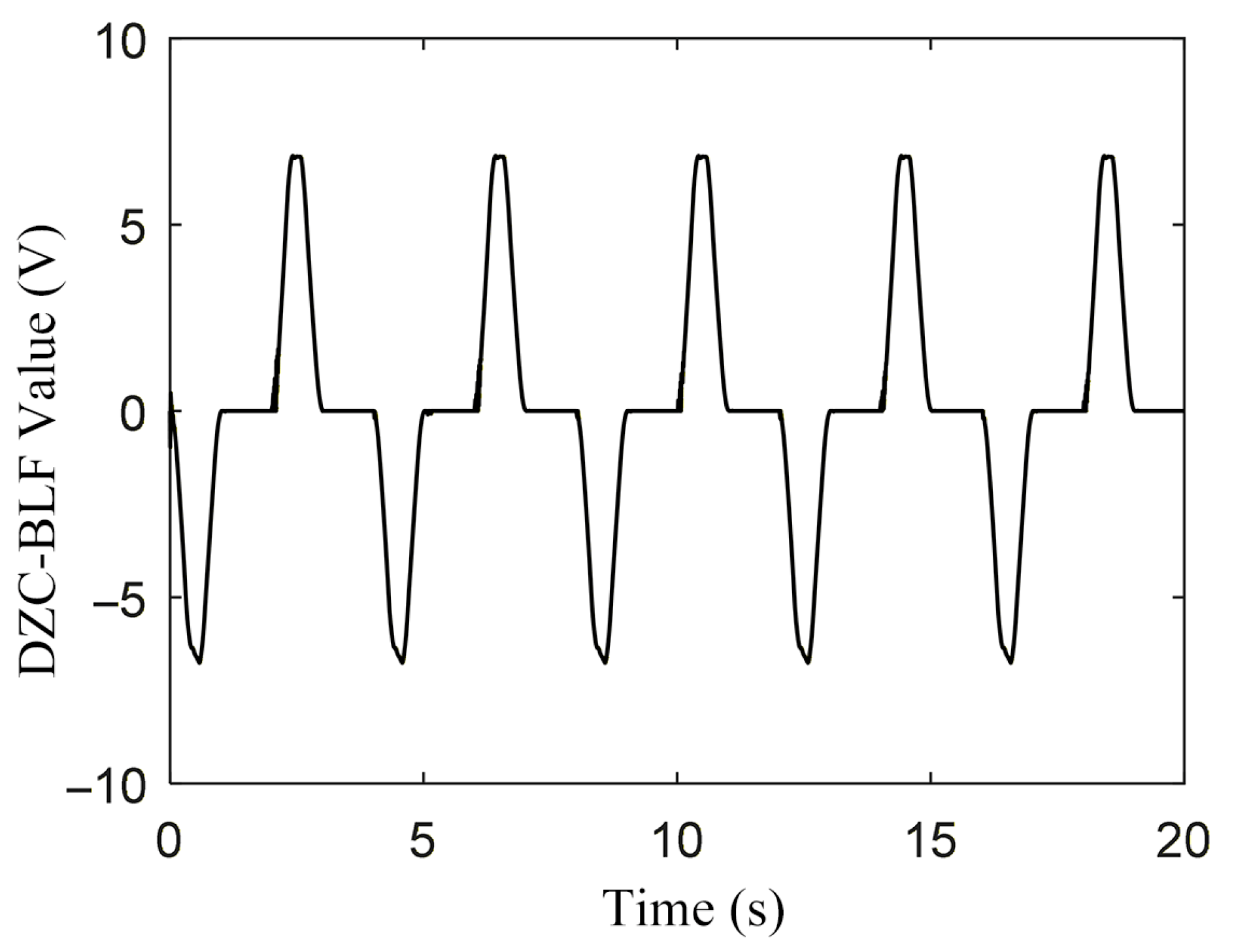
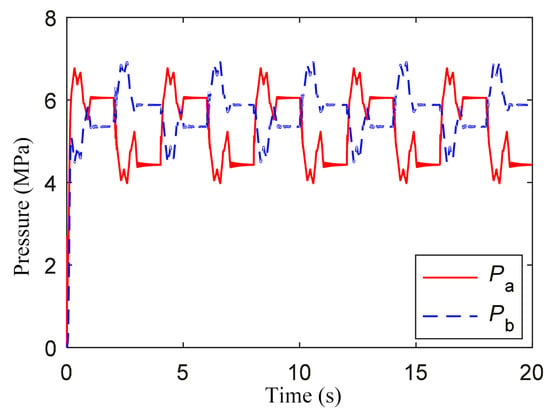
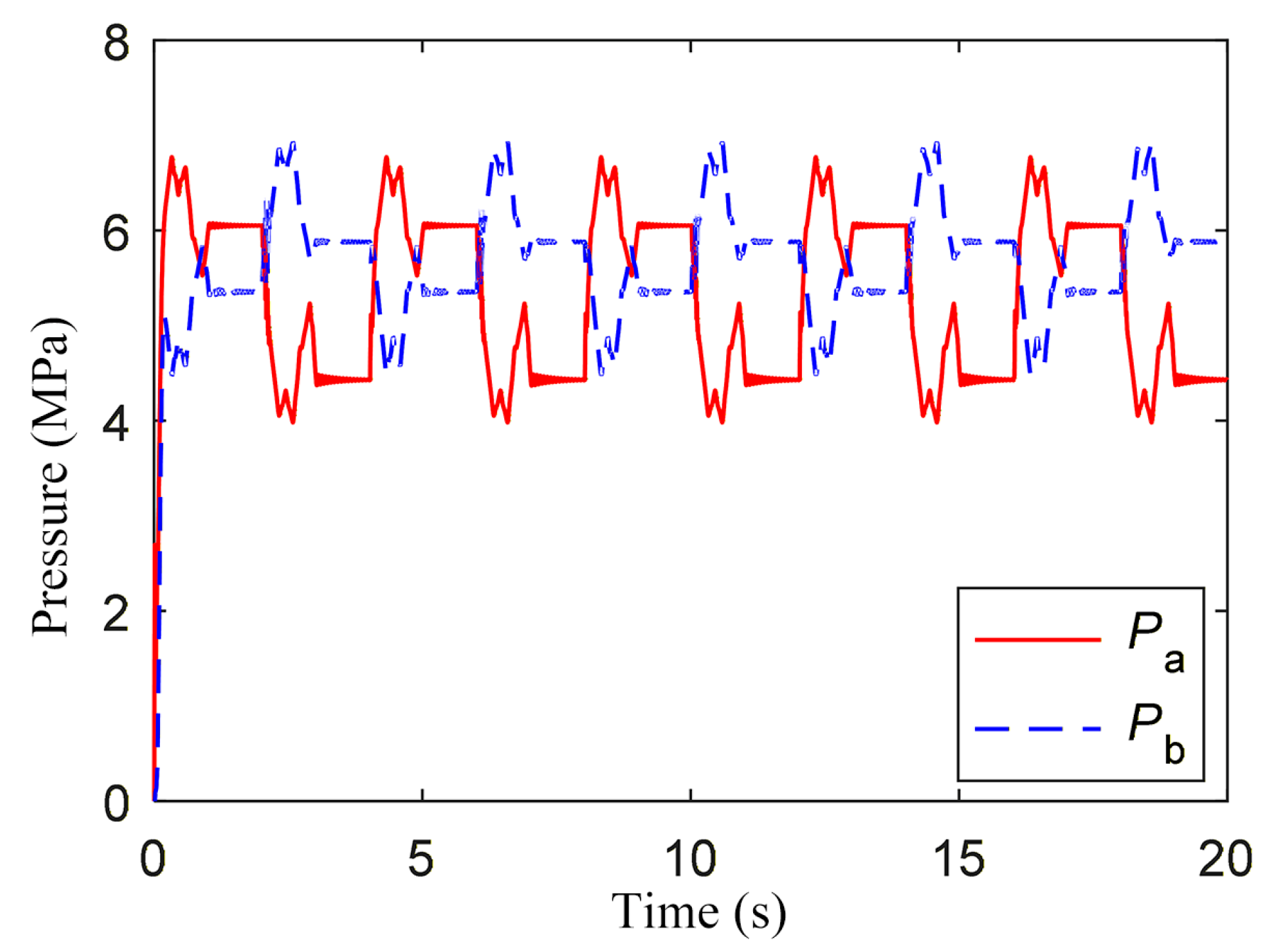
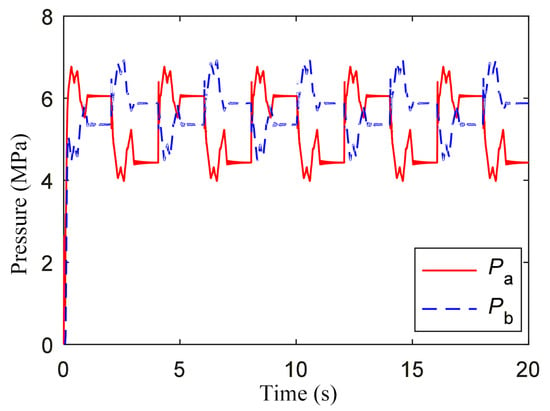
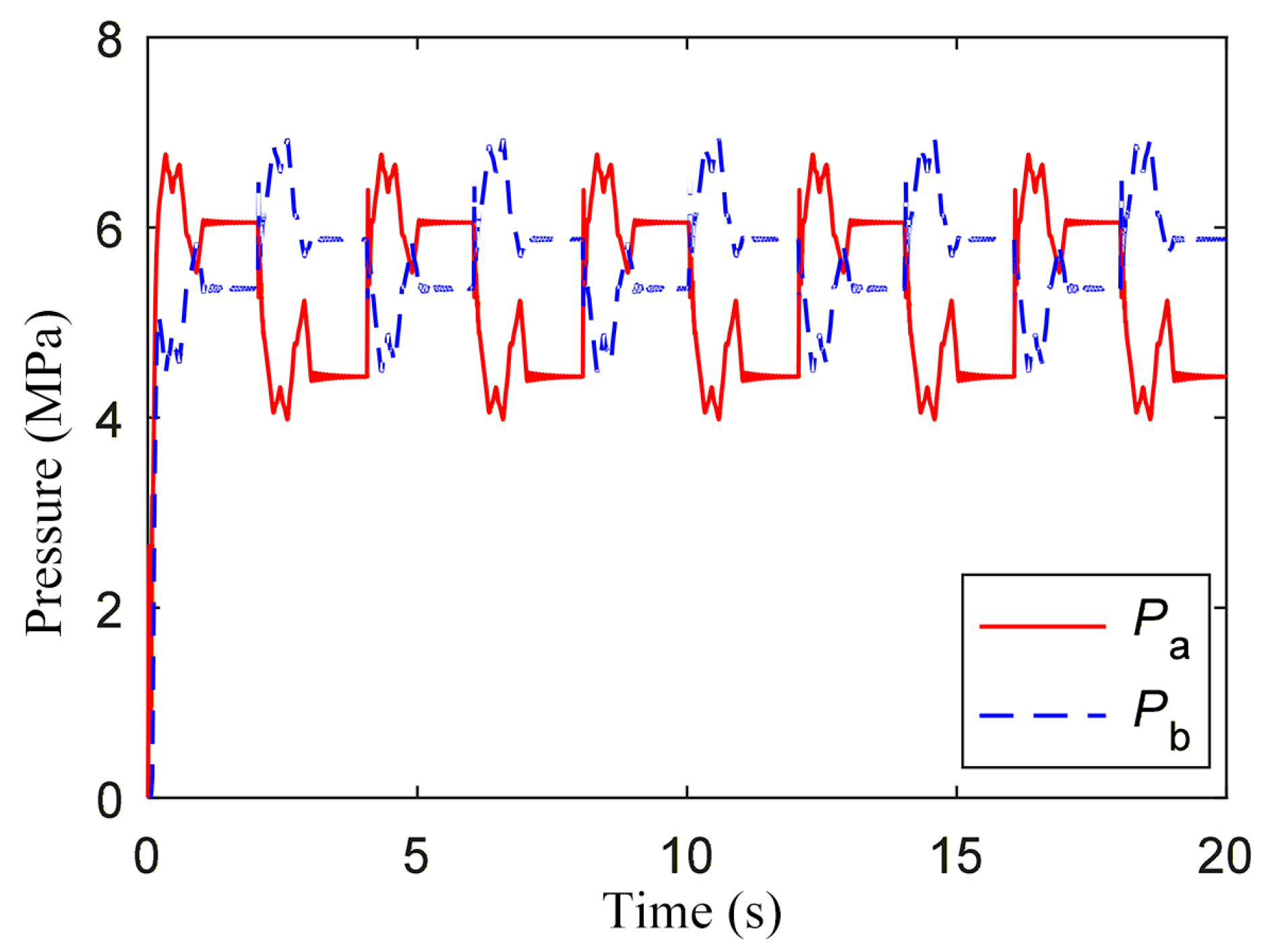
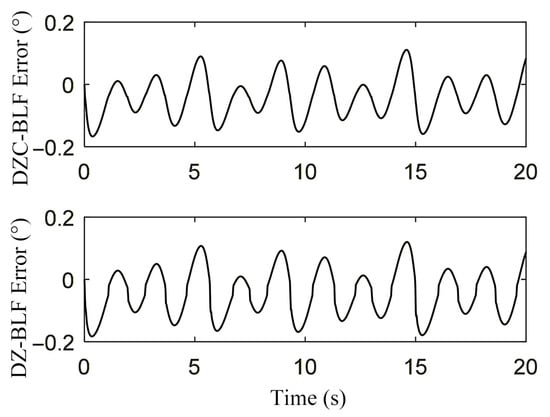
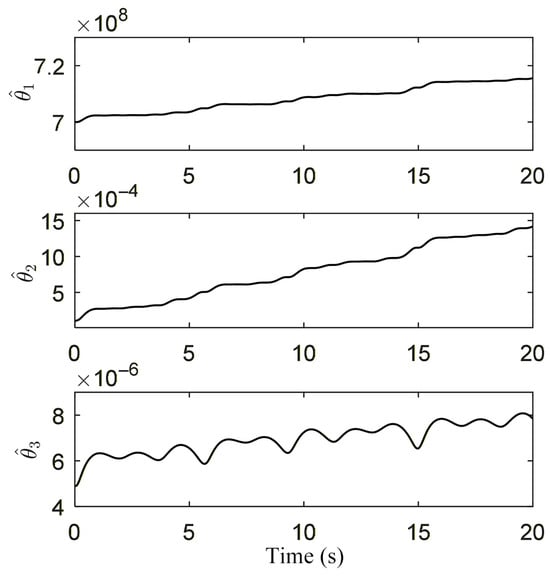
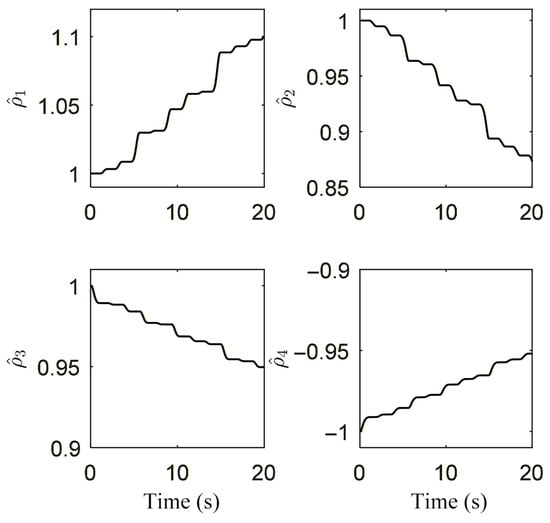
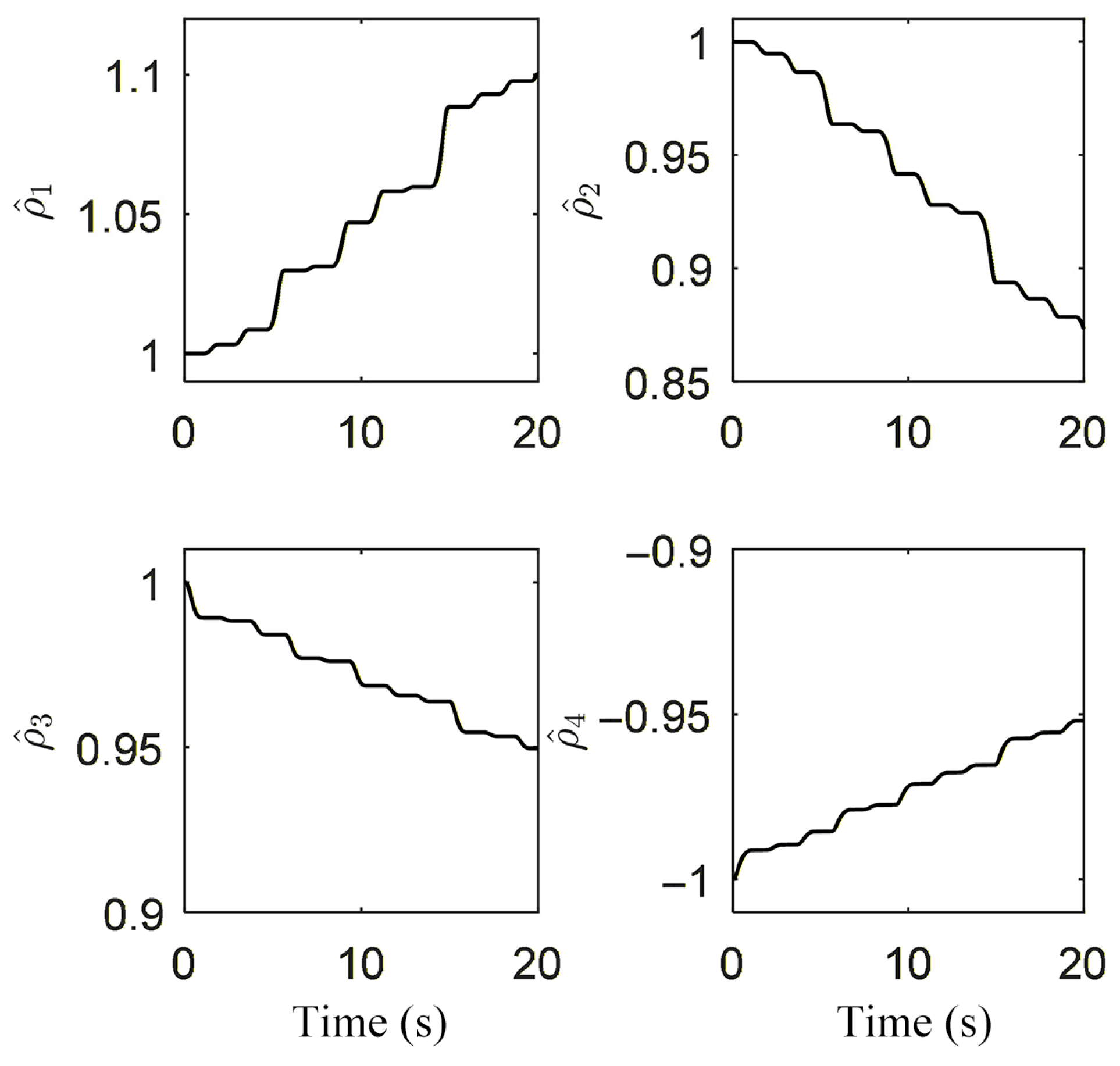
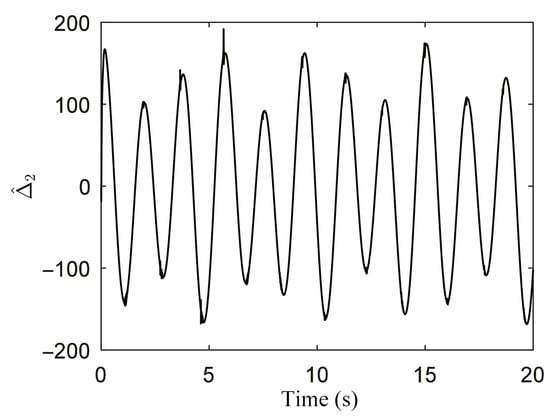
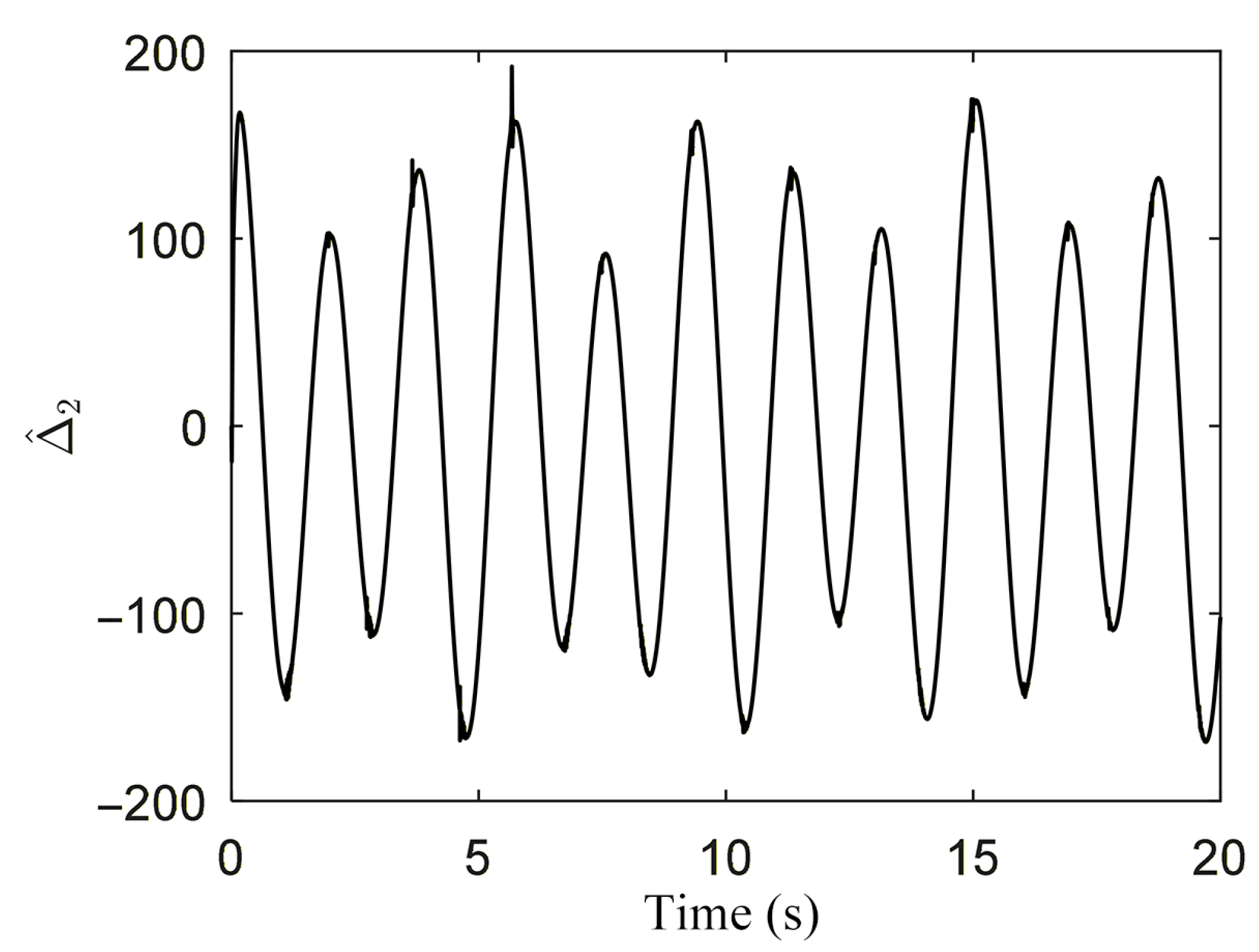
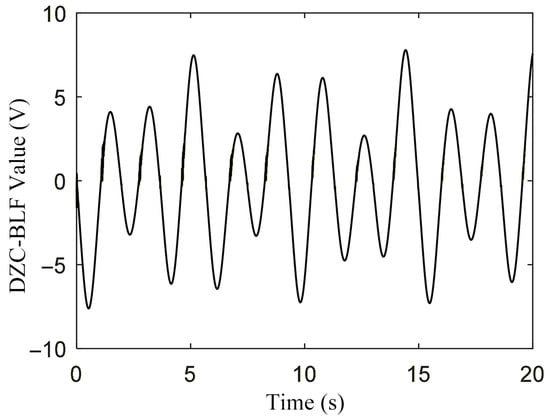
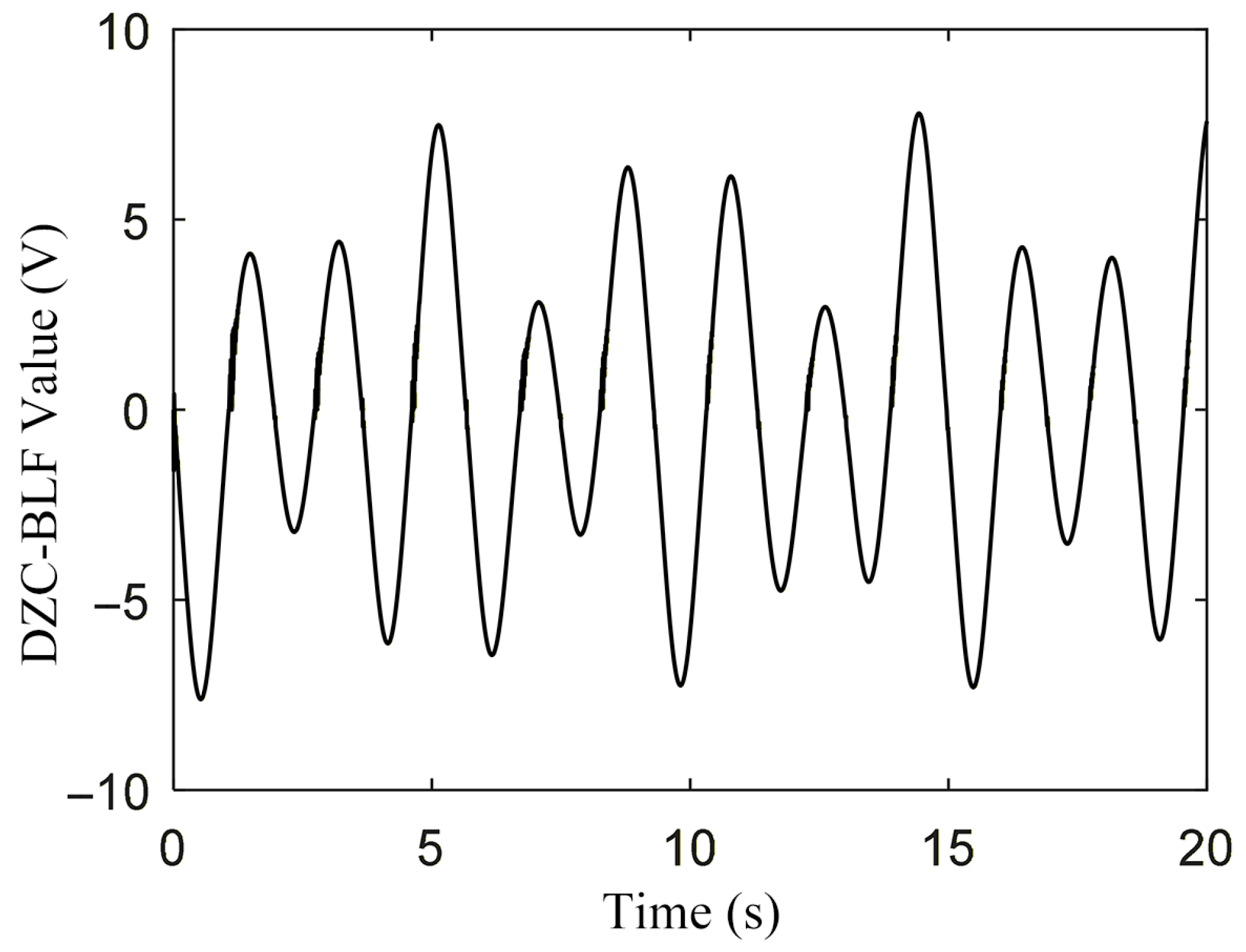
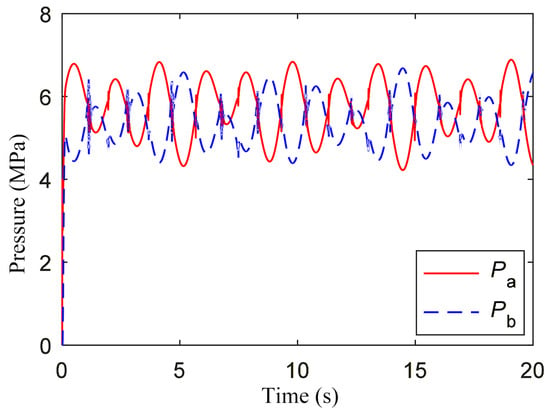
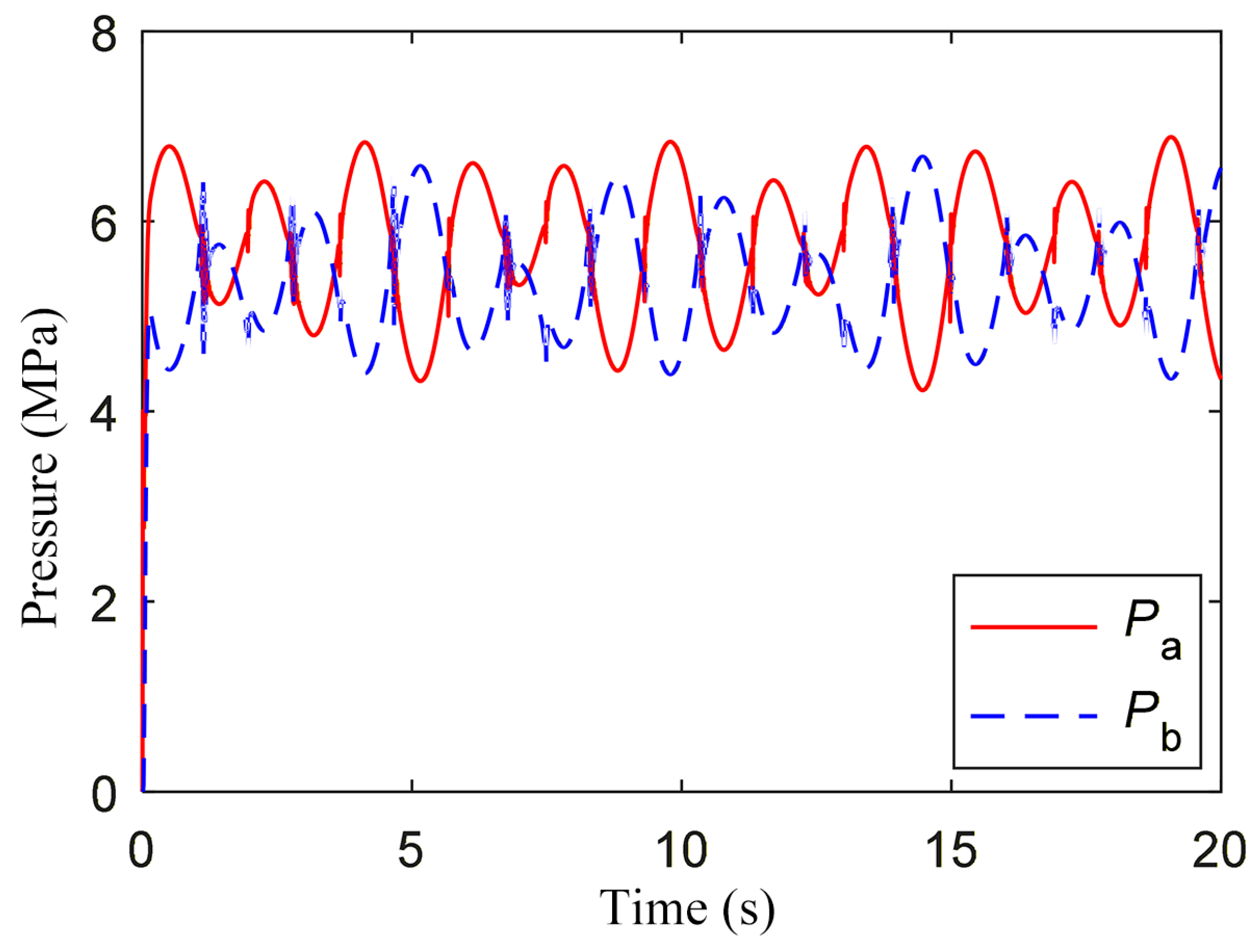
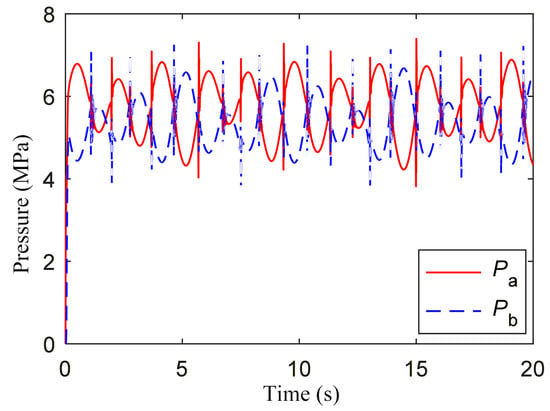
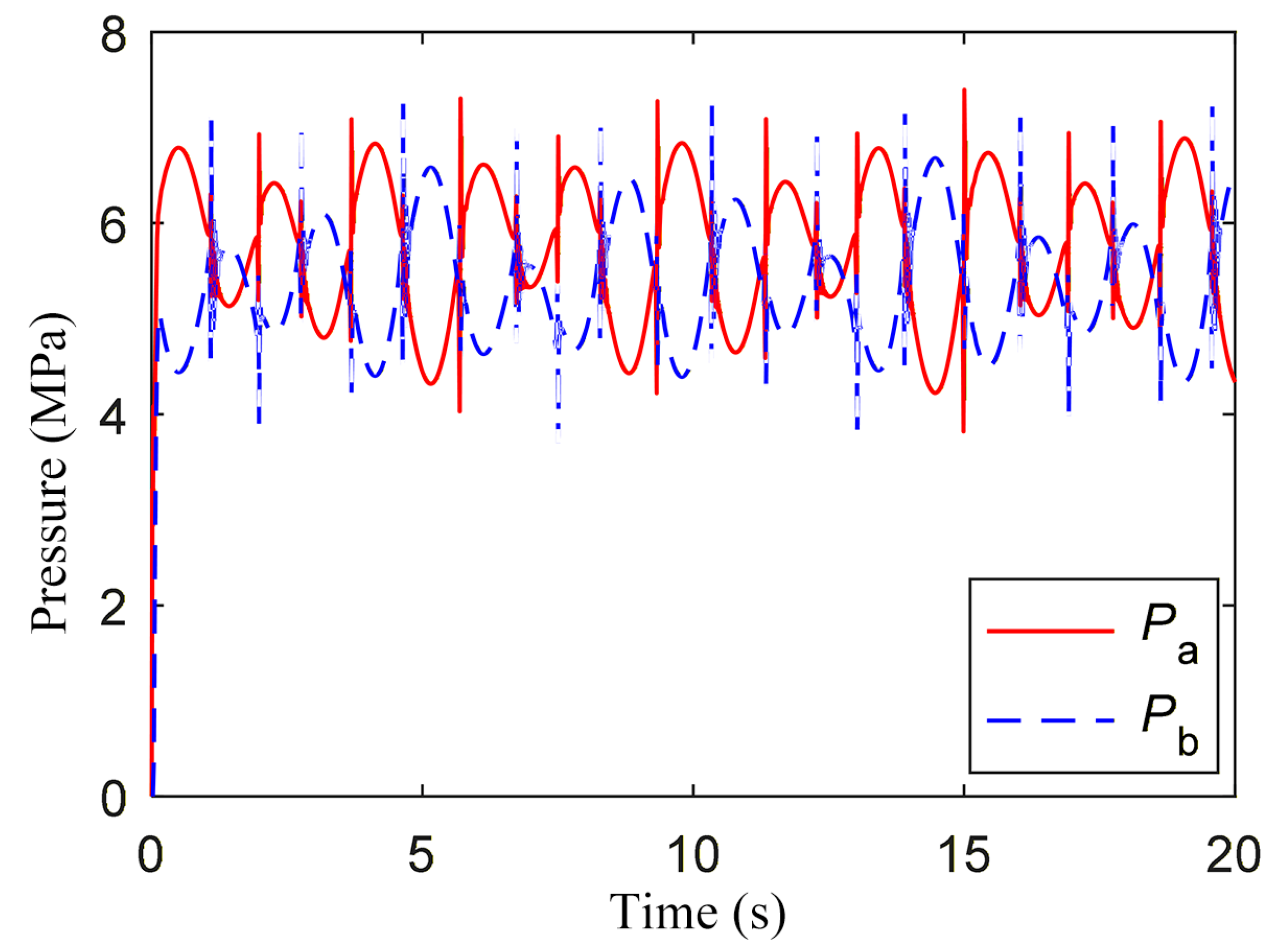
This section presents comparative simulations of fixed-angle tracking with valve dead-band compensation, as shown in Figure 6, Figure 7, Figure 8, Figure 9, Figure 10, Figure 11, Figure 12 and Figure 13. Figure 6 illustrates the curve of the spring-coil actuator completing the desired 30° fixed-angle trajectory tracking within 1 s under the DZC-BLF controller designed in this section. The designed dead-band compensation algorithm ensures satisfactory tracking performance even in the presence of dead-band. Figure 7 compares the tracking errors of the DZC-BLF and DZ-BLF control strategies under valve dead-band conditions. The designed DZC-BLF exhibits superior dynamic and steady-state tracking errors compared to DZ-BLF. While the steady-state tracking error of DZ-BLF reaches 0.06° due to dead-band effects, the steady-state tracking error of DZC-BLF remains within 0.04°. Adaptive parameter estimation, dead-band parameter estimation, and disturbance observer outputs are shown in Figure 8, Figure 9 and Figure 10, respectively, with all parameters varying smoothly within bounded ranges. Figure 11 shows that the DZC-BLF control output exhibits noticeable jitter during the initial motion phase due to valve dead-band effects. However, as the dead-band adaptive parameters converge (as shown in Figure 9), the control output jitter significantly diminishes. This demonstrates that the designed dead-band compensation algorithm substantially enhances the stability of the elastic coordinator control. Figure 12 and Figure 13 illustrate the pressure curves for both chambers within the coordinating cylinder. Figure 13 reveals pronounced pressure fluctuations during the initial phase of the 30° periodic coordination motion under the DZ-BLF control strategy. However, under the dead-band adaptive compensation algorithm designed for the DZC-BLF controller in this section, the pressure fluctuations in Figure 12 gradually stabilize as the dead-band parameters converge, aligning with the trend of the control variable.
Figure 6.
Angle-tracking performance of the DZC-BLF controller.
Figure 7.
Comparison of fixed-angle tracking errors.
Figure 8.
Adaptive parameter estimation for the DZC-BLF controller.
Figure 9.
Estimation of dead zone parameters for the DZC-BLF controller.
Figure 10.
Disturbance observer output.
Figure 11.
DZC-BLF controller control values.
Figure 12.
DZC-BLF controller coordinates pressure in both chambers of the hydraulic cylinder.
Figure 13.
DZ-BLF controller coordinates pressure in both chambers of the hydraulic cylinder.
To provide a more direct quantitative evaluation of the physical dead-band compensation effectiveness, two specific indicators are introduced: the maximum transient error during velocity reversal and the effective dead-band reduction rate. The dead-band nonlinearity affects the system most severely when the control voltage crosses zero. As clearly illustrated in the tracking error comparison in Figure 7, the uncompensated DZ-BLF controller exhibits noticeable error spikes of approximately 0.35° during the zero-crossing phases. In contrast, the proposed DZC-BLF controller significantly suppresses this maximum transient error to approximately 0.31°, achieving a 12% reduction in peak error, which demonstrates a substantial improvement in small-signal performance near the valve null position.
4.2. Arbitrary-Angle Tracking Performance
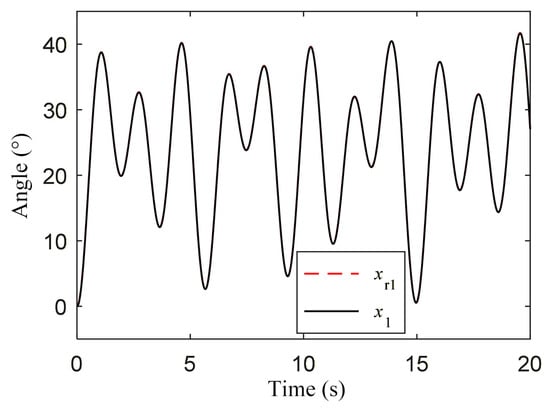
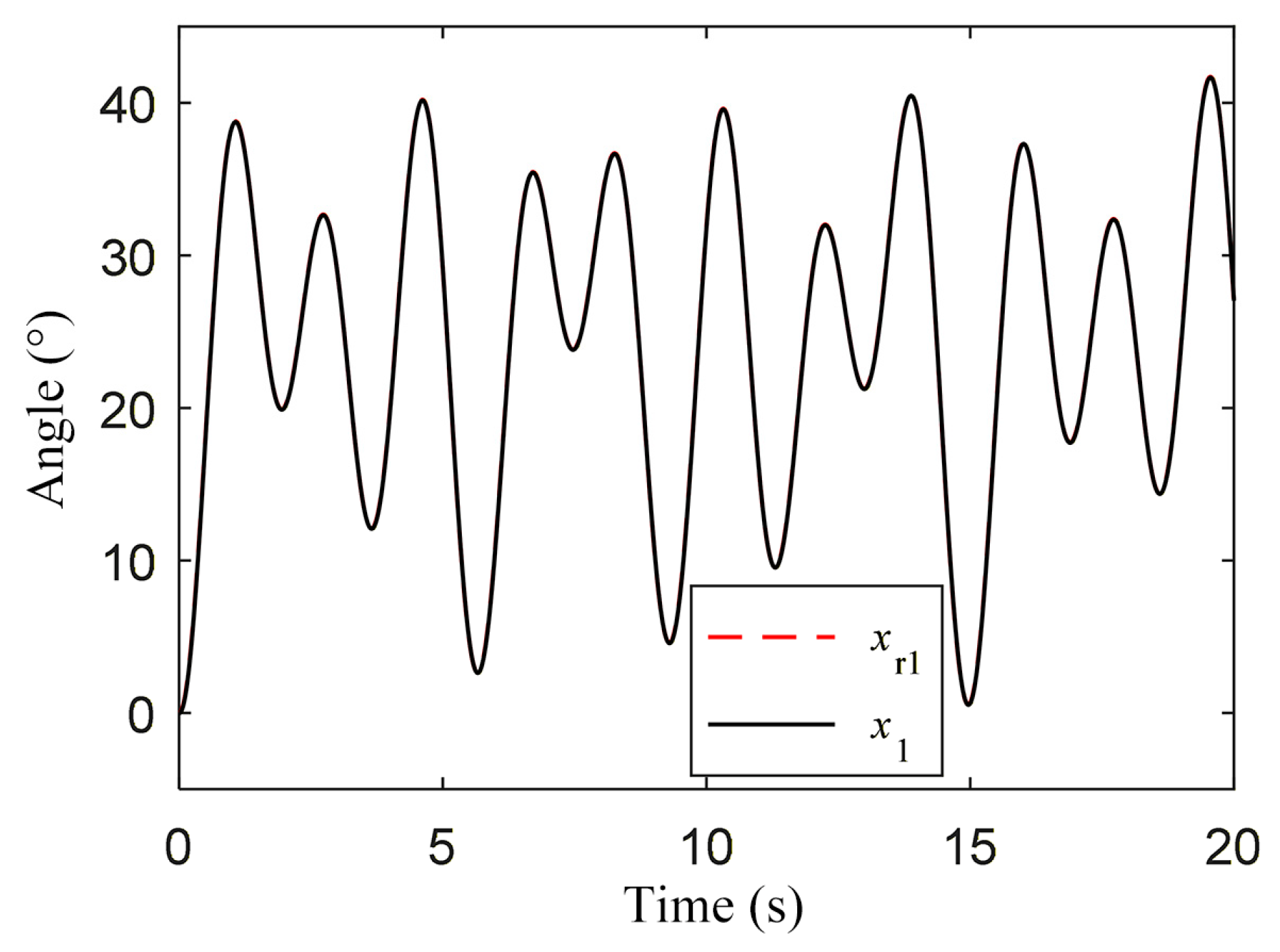
This section examines the comparative simulation of arbitrary-angle tracking with valve dead-band compensation, as shown in Figure 14, Figure 15, Figure 16, Figure 17, Figure 18, Figure 19, Figure 20 and Figure 21. Figure 14 illustrates the elastic coordinator’s curve successfully following the desired trajectory at any angle, using the DZC-BLF controller developed in this section. Despite the dead-band, it still provides good dynamic monitoring. Figure 15 compares the tracking errors of the two control strategies under the valve’s dead-band characteristics. The dynamically designed DZC-BLF control strategy in this section demonstrates higher tracking accuracy than the DZ-BLF strategy. Furthermore, when the elastic coordinator’s movement direction changes, the tracking error curve of the DZC-BLF is smoother, indicating that the designed controller possesses superior robustness and dynamic performance. Adaptive parameter estimation, dead-band parameter estimation, and disturbance observer outputs are shown in Figure 16, Figure 17 and Figure 18, respectively, with all parameters varying steadily within bounded ranges. As the dead-band adaptive parameter converges, as shown in Figure 17, the jitter of the DZC-BLF control output during direction changes, as depicted in Figure 19, diminishes, resulting in more stable control performance. Analyzing the pressure curves of both chambers in the coordination process cylinder, as shown in Figure 20 and Figure 21, further confirms that the DZC-BLF controller developed here has smaller pressure fluctuations when the elastic coordinator reverses direction. Moreover, the fluctuation trend decreases significantly as the dead-band parameter converges, corroborating the DZC-BLF control strategy’s ability to compensate for dead-band effects and achieve stable control performance.
Figure 14.
DZC-BLF controller tracking performance at arbitrary angles.
Figure 15.
Comparison of tracking error at arbitrary angles.
Figure 16.
Adaptive parameter estimation for the DZC-BLF controller.
Figure 17.
Estimation of dead zone parameters for the DZC-BLF controller.
Figure 18.
Disturbance observer output.
Figure 19.
DZC-BLF controller control values.
Figure 20.
DZC-BLF controller coordinates pressure in both chambers of the hydraulic cylinder.
Figure 21.
DZ-BLF controller coordinates pressure in both chambers of the hydraulic cylinder.
5. Conclusions
To tackle the dead-band issue common in electro-hydraulic servo systems, a smooth inverse dead-band function is used to reconstruct the state equations of an elastic coordinator electro-hydraulic servo system featuring dead-band characteristics. Adaptive estimation of the dead-band parameters for this model is performed. Additionally, parameter uncertainty is compensated for by an adaptive parameter estimation law. Unmodeled mismatched disturbances and matched disturbances are addressed using disturbance observer technology and nonlinear robust stabilization techniques, respectively. Similarly, the system state is constrained by an obstacle Lyapunov function. Simulation results demonstrate that the proposed state-constrained controller with valve dead-band compensation effectively achieves dead-band compensation and state-constrained control for the elastic coordinator.
- (1)
- For state-space models of electro-hydraulic servo systems with parameter uncertainties, an adaptive dynamic surface control strategy was designed based on inversion principles. To overcome the “differential series explosion” challenge encountered when differentiating virtual control functions during inversion, the differential operation of the virtual control variable was replaced with the output of a first-order filter. Simultaneously, a parameter adaptation algorithm was employed to compensate for control performance degradation caused by parameter uncertainty, achieving superior performance compared to PID controllers.
- (2)
- Considering that the operation of electro-hydraulic servo systems requires boundary constraints on system states to prevent safety issues such as actuator failure caused by mechanism positions exceeding specified limits, an obstacle Lyapunov function is introduced to constrain system states. This ensures the elastic coordinator operates within the desired dynamic error range. Combining dynamic surfaces with adaptive methods, an adaptive dynamic surface-based state-constrained controller is proposed to achieve motion control of the elastic coordinator. Simulation studies show that the proposed algorithm delivers better expected trajectory tracking performance than adaptive dynamic surface control strategies. Both dynamic and steady-state tracking achieve high precision, fully satisfying the specified state constraints. Smooth pressure dynamics further indicate that the proposed algorithm exhibits stable tracking performance.
- (3)
- To further address state-constrained control problems involving control valves with dead-band characteristics, a state-constrained controller with valve dead-band compensation is proposed. It employs a smooth dead-band inverse transformation to counteract the dead-band characteristics of proportional servo valves. To address parameter and dead-band uncertainties in the system, adaptive laws are designed to estimate parameter variations in real time and provide control compensation. An observer is introduced to compensate for mismatch uncertainties in the electro-hydraulic servo system. Furthermore, a barrier Lyapunov function is employed to constrain the system state, ensuring the specified accuracy of the position error. Simulation comparisons demonstrate that dead-band characteristics degrade system control accuracy and stability. The proposed state-constrained controller with valve dead-band compensation effectively compensates for dead-band while maintaining state constraints, thereby achieving the required control accuracy. As the adaptive parameters converge, the effectiveness of dead-band compensation and control stability improve significantly. Due to the current limitations of our experiments, we conducted the validation of the algorithm in this paper solely through simulations. However, we will actively seek opportunities to validate the algorithm through physical experiments in the future.
This controller is designed for high-precision hydraulic servo systems characterized by strong nonlinearity, hard state constraints, multi-source composite disturbances, and significant actuator dead zones. It achieves this by integrating the Barrier of Lyapunov Function (BLF), dynamic surface control (DSC), adaptive parameter estimation, disturbance observer, and smooth dead zone inverse compensation mechanism. Compared with existing BLF adaptive methods, this work takes an innovative approach by directly imposing BLF constraints on the original tracking error variables. Within the DSC structure, it explicitly compensates for the impact of filtering errors on constraint performance, ensuring that system outputs strictly meet designated safety boundaries even with simplified computations. Simultaneously, for integrated disturbances such as parameter uncertainties, unmodeled dynamics, complex friction, and external impacts, the adaptive law and disturbance observer employ layered processing to handle structured parameter perturbations and disturbances of unknown form. Combined with a dead-band inverse model, this approach effectively enhances steady-state accuracy in the small-signal region. Experimental validation employed a composite operating condition combining large-range rapid motion with small-amplitude precision adjustments. Results demonstrate that the proposed method significantly exceeds the comprehensive performance of existing solutions while ensuring full-range state constraints.
Author Contributions
Conceptualization, N.Y. and J.C.; methodology, J.C.; software, C.J. and H.Z.; validation, H.Z., N.Y. and C.J.; formal analysis, N.Y.; investigation, C.J.; resources, H.Z. and C.J.; data curation, H.Z. and C.J.; writing—original draft preparation, N.Y.; writing—review and editing, J.C.; visualization, C.J.; supervision, J.C.; project administration, J.C.; funding acquisition, H.Z. All authors have read and agreed to the published version of the manuscript.
Funding
This research was funded by the National Natural Science Foundation of China (grant number 12402341).
Institutional Review Board Statement
Not applicable.
Informed Consent Statement
Not applicable.
Data Availability Statement
The original contributions presented in this study are included in the article. Further inquiries can be directed to the corresponding authors.
Conflicts of Interest
The authors declare no conflicts of interest.
Abbreviations
| BLF | Barrier Lyapunov Function |
| DZC-SCC | Dead Zone-Compensated State-Constrained Controller |
| DZ-SCC | Dead Zone-Affected State-Constrained Controller |
| DZ-BLF | Dead Zone-Affected Barrier Lyapunov Function Controller |
| DZC-BLF | Dead Zone-Compensated Barrier Lyapunov Function Controller |
| ADSC | Adaptive Dynamic Surface Control |
Nomenclature
| Symbol | Definition |
| Hydraulic manipulator angular position | |
| Hydraulic manipulator angular velocity | |
| Hydraulic cylinder output force | |
| System state vector, | |
| Position tracking error | |
| Velocity tracking error | |
| Force tracking error | |
| Boundary layer error | |
| Position error constraint boundary | |
| Velocity error constraint boundary | |
| Hydraulic source supply pressure | |
| Hydraulic source return pressure | |
| Effective bulk modulus of hydraulic oil | |
| Internal coefficient of hydraulic cylinder | |
| External coefficient of hydraulic cylinder | |
| Flow gain coefficients | |
| Distance from O1 to O2 | |
| Distance from O1 to O3 | |
| Distance from O1 to M | |
| Angle between O1N and O1O2 | |
| Rodless chamber effective piston area of hydraulic cylinder | |
| Rod chamber effective piston area of hydraulic cylinder | |
| Initial-state control volumes | |
| Equivalent mass of hydraulic manipulator |
References
- Yao, B.; Tomizuka, M. Adaptive robust control of MIMO nonlinear systems in semi-strict feedback forms. Automatica 2001, 37, 1305–1321. [Google Scholar] [CrossRef] [Scilit]
- Feng, Z.; Li, R.B.; Zhang, N.; Wu, L. Event-based asymptotic tracking control for constrained MIMO nonlinear systems via a single-parameter adaptation method. IEEE Trans. Syst. Man Cybern. Syst. 2023, 53, 7758–7768. [Google Scholar] [CrossRef] [Scilit]
- Kim, J.; Jin, M.; Choi, W.; Lee, J. Discrete time delay control for hydraulic excavator motion control with terminal sliding mode control. Mechatronics 2019, 60, 15–25. [Google Scholar] [CrossRef] [Scilit]
- Won, D.; Kim, W.; Shin, D.; Chung, C.C. High-gain disturbance observer-based backstepping control with output tracking error constraint for electro-hydraulic systems. IEEE Trans. Control Syst. Technol. 2015, 23, 787–795. [Google Scholar] [CrossRef] [Scilit]
- Zuo, G.; Wang, Y. Asymptotic tracking control for state-constrained strict-feedback systems with non-vanishing Uncertainties. Int. J. Robust Nonlinear Control 2022, 32, 6017–6034. [Google Scholar] [CrossRef] [Scilit]
- Guo, Q. Development of Nonlinear Control Technology for Electro-hydraulic Servo System. Chin. Hydraul. Pneum. 2018, 1–9. [Google Scholar] [CrossRef]
- Guo, Q.; Shi, H.-l.; Sun, P.; Jiang, D. Nonlinear Method with Output Tracking Error Constraint for Electro-hydraulic Systems. Chin. Hydraul. Pneum. 2019, 112–115. [Google Scholar] [CrossRef]
- Ngo, K.B.; Mahony, R.; Jiang, Z.P. Integrator backstepping using barrier functions for systems with multiple state constraints. In Proceedings of the 44th IEEE Conference on Decision and Control, and the European Control Conference, Seville, Spain, 15 December 2005; pp. 8306–8312. [Google Scholar]
- Tee, K.P.; Ge, S.S.; Tay, E.H. Barrier Lyapunov functions for the control of output-constrained nonlinear systems. Automatica 2009, 45, 918–927. [Google Scholar] [CrossRef] [Scilit]
- Tee, K.P.; Ren, B.; Ge, S. Control of nonlinear systems with time-varying output constraints. Automatica 2011, 47, 2511–2516. [Google Scholar] [CrossRef] [Scilit]
- Li, J.; Liu, Y. Control of nonlinear systems with full state constraints using integral barrier Lyapunov functionals. In Proceedings of the International Conference on Informative and Cybernetics for Computational Social Systems(ICCSS), Chengdu, China, 13–15 August 2015; pp. 66–71. [Google Scholar]
- Li, H.; Zhao, S.; He, W.; Lu, R. Adaptive finite-time tracking control of full state constrained nonlinear systems with dead-zone. Automatica 2019, 100, 99–107. [Google Scholar] [CrossRef] [Scilit]
- Liu, Y.; Lu, S.; Tong, S.; Chen, X.; Chen, C.P.; Li, D. Adaptive control-based Barrier Lyapunov Functions for a class of stochastic nonlinear systems with full state constraints. Automatica 2018, 87, 83–93. [Google Scholar] [CrossRef] [Scilit]
- Liu, Y.; Li, H. Adaptive asymptotic tracking using barrier functions. Automatica 2018, 98, 239–246. [Google Scholar] [CrossRef] [Scilit]
- Wang, C.; Wu, Y.; Wang, F.; Zhao, Y. TABLF-based adaptive control for uncertain nonlinear systems with time-varying asymmetric full state constraints. Int. J. Control. 2019, 94, 1238–1246. [Google Scholar] [CrossRef] [Scilit]
- Wu, Z.; Albalawi, F.; Zhang, Z.; Zhang, J.; Durand, H.; Christofides, P.D. Control Lyapunov-Barrier function-based model predictive control of nonlinear systems. Automatica 2019, 109, 108508. [Google Scholar] [CrossRef] [Scilit]
- Wang, C.; Wu, Y.; Yu, J. Barrier Lyapunov Functions-based dynamic surface control for pure-feedback systems with full state constraints. IET Control Theory Appl. 2016, 11, 524–530. [Google Scholar] [CrossRef] [Scilit]
- Zhang, T.; Xia, M.; Yi, Y.; Shen, Q. Adaptive neural dynamic surface control of pure-feedback nonlinear systems with full state constraints and dynamic uncertainties. IEEE Trans. Syst. Man Cybern. Syst. 2017, 47, 2378–2387. [Google Scholar] [CrossRef] [Scilit]
- Deng, W.; Yao, J.; Jiao, Z. Adaptive backstepping motion control of hydraulic actuators with velocity and acceleration constraints. In Proceedings of the 2014 IEEE Chinese Guidance, Navigation & Control Conference, Yantai, China, 8–10 August 2014; pp. 219–224. [Google Scholar]
- Guo, Q.; Li, X.; Jiang, D. Full-state error constraints based dynamic surface control of electro-hydraulic system. IEEE Access 2018, 6, 53092–53101. [Google Scholar] [CrossRef] [Scilit]
- Stosiak, M.; Karpenko, M.; Skačkauskas, P.; Deptuła, A. Identification of pressure pulsation spectrum in a hydraulic system with a vibrating proportional valve. J. Vib. Control 2024, 30, 4917–4930. [Google Scholar] [CrossRef] [Scilit]
- Xu, Z.; Qi, G.; Liu, Q.; Yao, J. ESO-based adaptive full state constraint control of uncertain systems and its application to hydraulic servo Systems. Mech. Syst. Signal Process. 2022, 167, 108560. [Google Scholar] [CrossRef] [Scilit]
- Wan, Z.; Fu, Y.; Liu, C.; Yue, L. Barrier Lyapunov Based Adaptive Control for Hydraulic Servo Systems with Parametrical Nonlinearities and Modeling Uncertainties. Mechanics 2024, 30, 357–364. [Google Scholar] [CrossRef] [Scilit]
- Guo, Q.; Zhang, Y.; Celler, B.G.; Su, S. State-constrained control of single-rod electrohydraulic actuator with parametric uncertainty and load disturbance. IEEE Trans. Control Syst. Technol. 2018, 26, 2242–2249. [Google Scholar] [CrossRef] [Scilit]
- Zou, Q. Observer based sliding mode control for hydraulic driven barrel servo system with unknown dynamics. IEEE Access 2020, 8, 131370–131379. [Google Scholar] [CrossRef] [Scilit]
- He, Y.; Wang, J.; Hao, R. Adaptive robust dead-zone compensation control of electro-hydraulic servo systems with load disturbance rejection. J. Syst. Sci. Complex. 2015, 28, 341–359. [Google Scholar] [CrossRef] [Scilit]
- Bessa, W.; Dutra, M.; Kreuzer, E. Sliding mode control with adaptive fuzzy dead-zone compensation of an electro-hydraulic servo-system. J. Intell. Robot. Syst. 2010, 58, 3–16. [Google Scholar] [CrossRef] [Scilit]
- Qian, C.; Zhang, L.; Hua, C.; Bai, Z. Adaptive fuzzy vertical vibration suppression control of the mechanical-hydraulic coupling rolling mill system with input dead-zone and output constraints. IEEE Access 2020, 8, 85793–85801. [Google Scholar] [CrossRef] [Scilit]
- Wang, X.; Su, C.; Hong, H. Robust adaptive control of a class of nonlinear systems with unknown dead-zone. Automatica 2004, 40, 407–413. [Google Scholar] [CrossRef] [Scilit]
- Zhang, Z.; Xie, X. Asymptotic tracking control of uncertain nonlinear systems with unknown actuator nonlinearity and unknown gain signs. Int. J. Control 2014, 87, 2294–2311. [Google Scholar] [CrossRef] [Scilit]
- Coelho, L.; Cunha, M. Adaptive cascade control of a hydraulic actuator with an adaptive dead-zone compensation and optimization based on evolutionary algorithms. Expert Syst. Appl. 2011, 38, 12262–12269. [Google Scholar] [CrossRef] [Scilit]
- Machado, C.; Negri, V.; Cunha, M. Experimental implementation of the cascade controller with adaptive dead-zone compensation applied to a hydraulic robot. In Proceedings of the 2008 IEEE Latin American Robotic Symposium, Salvador, Brazil, 29–30 October 2008; pp. 59–64. [Google Scholar]
- Mohanty, A.; Yao, B. Integrated direct/indirect adaptive robust control of hydraulic manipulators with valve deadband. IEEE/ASME Trans. Mechatron. 2011, 16, 707–715. [Google Scholar] [CrossRef] [Scilit]
- Zhou, J.; Wen, C.; Zhang, Y. Adaptive output control of nonlinear systems with uncertain dead-zone nonlinearity. IEEE Trans. Autom. Control 2006, 51, 504–511. [Google Scholar] [CrossRef] [Scilit]
- Deng, W.; Yao, J.; Ma, D. Robust adaptive asymptotic tracking control of a class of nonlinear systems with unknown input dead-zone. J. Frankl. Inst. 2015, 352, 5686–5707. [Google Scholar] [CrossRef] [Scilit]
- Deng, W.; Yao, J.; Ma, D. Robust adaptive precision motion control of hydraulic actuators with valve dead-zone compensation. ISA Trans. 2017, 70, 269–278. [Google Scholar] [CrossRef] [Scilit] [PubMed]
- Gu, W.; Yao, J.; Yao, Z.; Zheng, J. Robust adaptive control of hydraulic system with input saturation and valve dead-zone. IEEE Access 2018, 6, 53521–53532. [Google Scholar] [CrossRef] [Scilit]
- Zulfatman; Rahmat, M.F. Application of selftuning fuzzy PID controller on industrial hydraulic actuator using system identification approach. Int. J. Smart Sens. Intell. Syst. 2009, 2, 246–261. [Google Scholar] [CrossRef] [Scilit]
- Yao, B.; Bu, F.; Reedy, J.; Chiu, G.-C. Adaptive robust motion control of single-rod hydraulic actuators: Theory and experiments. IEEE/ASME Trans. Mechatron. 2000, 5, 79–91. [Google Scholar]
- Yao, B.; Bu, F.; Chiu, G.T.C. Non-linear adaptive robust control of electro-hydraulic systems driven by double-rod actuators. Int. J. Control 2001, 74, 761–775. [Google Scholar] [CrossRef] [Scilit]
- Shi, S.; Li, J.; Fang, Y. Backstepping position tracking control for electro-hydraulic servo system with input saturation. J. Cent. South Univ. (Sci. Technol.) 2016, 47, 3369–3374. [Google Scholar]
- Bechlioulis, C.P.; Rovithakis, G.A. Adaptive control with guaranteed transient and steady state tracking error bounds for strict feedback systems. Automatica 2009, 45, 532–538. [Google Scholar] [CrossRef] [Scilit]

Disclaimer/Publisher’s Note: The statements, opinions and data contained in all publications are solely those of the individual author(s) and contributor(s) and not of MDPI and/or the editor(s). MDPI and/or the editor(s) disclaim responsibility for any injury to people or property resulting from any ideas, methods, instructions or products referred to in the content. |
© 2026 by the authors. Licensee MDPI, Basel, Switzerland. This article is an open access article distributed under the terms and conditions of the Creative Commons Attribution (CC BY) license.