


Abstract
This article examines the depiction of multiple forms of marginalization and exclusion in a recent Chinese film, Like a Rolling Stone (2024), through the prism of noise at the interface of politics and aesthetics. It starts with interrogating the ways in which the film transmits and amplifies the patriarch’s “Sacred Noise” as a dominant sonic presence in the domestic space, translating hierarchical social and familial structures into an oppressive acoustic order. As Jacques Rancière has reminded us, aesthetic hierarchies materialize political economic hierarchies, giving them sensible forms that structure our everyday embodied experiences. Therefore, the following section explores how political economic conditions devalue women’s domestic care work and recast their enunciations as undesirable, even non-human, noises. In this part, a series of Asian women’s films and writings are referenced to demonstrate a broader cultural trend in exposing the intertwined aesthetic and political economic inequities under capitalist patriarchy. Moreover, what has often been overlooked even in feminist scholarship and movements is that ageism, in conjunction with sexism and classism, reinforces aesthetic–political hierarchies that produce chasms and divisions even among women themselves (including between mothers and daughters) and push the aging (grand)mother further into the peripheries of the auditory regime. Unsettling such a patriarchal “distribution of the sensible,” Like a Rolling Stone deploys creative acoustic strategies to make audible the hidden exploitation of women’s affective labor and revitalizes the subversive potentials, affective energies and aesthetic values of women’s embodied experiences and everyday gendered noises.
- Nora’s Noise as a Sound Event
At the famous ending of Henrik Ibsen’s play A Doll’s House, Torvald Helmer angrily chastises his “dolly-wife” Nora for abandoning her “most sacred obligations” to her husband and children and dismisses her words as “delirious” ravings. Insisting that she has sacred obligations to herself, Nora declares aloud to her husband and to the entire world, “I think that first I’m a human being, the same as you” (Ibsen 1994) Then she leaves home and slams the door behind her. This last sound that audiences hear before the final curtain falls revolves around a struggling woman’s violence exerted on the door that traditionally serves as the spatial marker guarding the boundaries separating the private and the public, inside and outside, feminine and masculine. Accompanying Nora’s iconic act of door slamming, the astounding noise disturbs the peace of the bourgeois domestic order and shocks audiences as a defining sound event that brings the woman’s question into the public realm, making appear the hidden struggles of a fledgling gendered subject who extricates herself painfully and violently from the heteropatriarchal social networks. Following the 1918 publication of A Doll’s House in New Youth (Xin qingnian), countless rounds of translation, adaptation, and staging of the play appeared in modern China, stirring up waves of public debates about New Woman (xin nüxing) and modern family 1.
Not simply an acoustic nuisance, noise connects the sensory and the political as a direct manifestation of clashing values, power struggles and redistributions between wife and husband within the bourgeois domestic sphere. Hence, noisemaking has become a cultural and sociopolitical event that disrupts the given order and heralds changes in social structures, intimate relationships and gender politics. In his Economic and Philosophic Manuscripts of 1844, Karl Marx states, “the forming of the five senses is a labor of the entire history of the world down to the present” (Marx 1988). In other words, “Marx interpreted human sensory history as a changing form of the regulation of the senses in hierarchically structured social orders” (Wu and Huang 2023). Taking a Marxist approach to investigating the intricate entanglements between music/noise production and the making, unmaking and remaking of the world’s political economic order, Jacques Attali proposes that music is a tool of the operations of power that makes audible the order of things. As “the sounds of a new historical development tend to be heard as noise by the old order,” the history of music is a history of regulating, appropriating, organizing and transmitting noises to create new aesthetic forms and cultural products to foretell the birth of a new sociopolitical order (Keizer 2010). Building on Attali’s theorization of the close links between noise regulating and social hierarchies, Garret Keizer has put noises in human history into two categories: “In the end, …there are only two kinds of human noise in the world: the noise that says ‘The world is mine’ and the noise that says ‘It’s my world too.’ We need to quiet the first and make more of the second. We need to hear the whole world inside the too” (Keizer 2010).
The first kind of noise in Keizer’s typology resonates with Murray Schafer’s notion of “Sacred Noise”: those enormous monumental sounds (ranging from church bells in a medieval parish to the rumbling of machines during the Industrial Revolution) that “evoked fear and respect” and were perceived as “the expression of divine power” (Schafer 1994). In other words, “Sacred Noise” refers to privileged sonic forms that command unquestionable authority and collective reverence with their overwhelming sensory power and dominating presence that is legitimized and institutionalized. Embedded firmly within structures of authority, such sounds proclaim loudly, “The world is mine!” They set rules of social order and assert dominion by consolidating the proper boundaries of an acoustic regime that regulates normative auditory perception and reinforces broader relations of power through designating which sounds and whose voices can be heard and recognized.
The second type of noise refers to the unwanted sounds produced by the cultural Other whose voices are marginalized or diminished by dominant power structures along lines of race, ethnicity, gender, class, and age. Drawing on Tricia Rose’s musicological study, Keizer gave a famous example of hip-hop music, which was once considered polluting “black noise” made by the “uncivilized” racial Other (Keizer 2010; Tricia Rose 1994). Basically, these types of noises (with a small “n”) are those sounds that are deemed unwelcome, undesirable, and even dangerous for their potential to disrupt and reconfigure the given acoustic order formed under specific sociohistorical, cultural and ideological conditions.
Such a hierarchical classification of different types of auditory signals is characterized by “distribution of the sensible,” a term coined by Jacques Rancière to refer to a “system of divisions and boundaries that define, among other things, what is visible and audible within a particular aesthetic-political regime” (Rockhill 2006). More importantly, Rancière links the aesthetic system of the “distribution of the sensible” to the workings of political economy, contending that the authority to exercise power and regulate sensory experience is largely shaped by one’s positionality within the social division of labor and overarching political–economic structures.
Following this line of inquiry, this paper examines the depiction of multiple forms of marginalization and exclusion in a recent Chinese film, Chuzou de juexin (Like a Rolling Stone, L. Yin 2024a), through the prism of noise at the interface of politics and aesthetics. Like a Rolling Stone tells a story about an aging (grand)mother walking out of her home, leaving her husband, daughter and grandsons behind. It is loosely based on a real-life story: Su Min, a woman in her late fifties, left home to escape from her abusive husband. She bought a small RV and toured around China alone. Rather than make a woman’s road movie like Thelma and Louisa (Scott 1991) or Nomadland (Zhao 2020), the woman poet-filmmaker Yin Lichuan chose to focus on what happens before the female protagonist Li Hong (Yong Mei) leaves home, which is shown as a claustrophobic sensory space filled with clashes and contestations of different types of noises.
In the following sections, I will first examine the ways in which the film transmits and amplifies the patriarch’s “Sacred Noise” as a dominant sonic presence in the domestic space, translating hierarchical social and familial structures into an oppressive acoustic order. This uneven “distribution of the sensible” on the domestic site emerges from the convergence of two forces: the enduring Confucian ethical code that enshrines the patriarchal enunciative power while regulating women’s voices, and the unequal gendered division of labor in the modern world that designates women’s domestic care work as “unremunerated, undervalued, invisibilized [and inaudibilized]” (Bourgault 2025). As Rancière has reminded us, aesthetic hierarchies materialize political economic hierarchies, giving them sensible forms that structure our everyday embodied experiences. Therefore, the following section explores how political economic conditions devalue women’s domestic care work and recast their enunciations as undesirable, even non-human, noises. In this part, a series of Asian women’s films and writings are referenced to demonstrate a broader cultural trend in exposing the intertwined aesthetic and political economic inequities under capitalist patriarchy.
Moreover, what has often been overlooked even in feminist scholarship and movements is that ageism, in conjunction with sexism and classism, reinforces aesthetic–political hierarchies that produce chasms and divisions even among women themselves (including between mothers and daughters) and push the aging (grand)mother further into the peripheries of the auditory regime. Unsettling such a patriarchal “distribution of the sensible,” Like a Rolling Stone deploys creative acoustic strategies to make audible the hidden exploitation of women’s affective labor and revitalizes the subversive potentials, affective energies and aesthetic values of women’s embodied experiences and everyday gendered noises.
- Father’s Sacred Noises
Set in Zhengzhou, the capital city of Henan, a hinterland province in North China, the film Like a Rolling Stone unfolds mainly in cluttered domestic scenes where Li Hong is constantly busy doing all the household chores, taking care of the needs of her husband, daughter and twin grandsons. Recurring high-angle shots with tight composition framed by doors, windowsills, and curtains render this lonely caregiver’s precarious situation into a set of visuals showing her being encaged in a tightly sealed space, isolating her from her family and the outside world (see Figure 1).
Figure 1.
Li Hong trapped in a cage (a screenshot of the film on Tencent Video).
In stark contrast to Li Hong’s marginal position in the domestic space, her husband Sun Dayong (Jiang Wu) always sits at the family dinner table and bosses Li Hong around in a loud voice (see Figure 2). Not merely a physical site for family meals, this dinner table operates as the household’s central locus of power, around which most domestic scenes are organized. Although all the food served on the table is produced through Li Hong’s everyday toils, we barely see her sitting at the table, enjoying the products created by her own labor with other family members, which is a typical case of the separation of the laborer from the product of her labor. In a rare instance, she is shown seated with her back towards the camera. Her image is either displaced to the margins of the frame or rendered as an obscured mirror reflection, underscoring her peripheral status (see Figure 3). When she lowers her head, softly voicing her wish to visit her old friends, Sun refuses to listen, dismissing her request as nonsensical (bu ming shi li).
Figure 2.
Sun Dayong sits at the dinner table (a screenshot of the film on Tencent Video).
Figure 3.
Sun occupies the center of the frame and Li as a blurry reflection in the mirror (a screenshot of the film on Tencent Video).
Deviating from Su Min’s real-life situation, the film does not dwell on the graphic depiction of domestic violence inflicted upon the body of the aging woman. Instead of portraying Sun as a malicious and dangerous patriarch, the film makes audible the everyday forms of gendered oppression and exploitation that the aging (grand)mother endures through demonstrating a hierarchical “distribution of the sensible.” As the director Yin Lichuan reveals in an interview, she seeks to expose how everyday oppression operates not through physical abuse but through the often-overlooked violence of verbal aggression and psychological intimidation, which is also a theme explored in her earlier work Rebirth (Chong su 2020) (L. Yin 2024c).
Hence, the film zooms in on the ways in which Sun Dayong constantly asserts his authority as the head of the household through producing an overwhelming sonic presence to dominate the household’s auditory regime. Sitting comfortably at the dinner table, Sun is often shown enjoying his meal heartily without ever stepping into the kitchen. Whenever he needs something, he will either shout orders out loud or simply knock on the kitchen window to have Li Hong deliver it for him. While his wife is busy attending to household tasks, he does little beyond idling and playing ping-pong. If Li prepares a dish that does not meet his expectations, he responds by yelling insults at her. The soundtrack thus becomes dominated by a series of “Sacred Noises” produced by Sun Dayong: the violent banging on the window, his impatient commands and angry bawling, and the incessant patter of his ping-pong balls striking the walls. These “Sacred Noises” sound out Sun’s enunciative authority and privileged position in establishing and maintaining the everyday order of the domestic space. More than mere auditory signals, they function as sonic enactments of patriarchal power, structuring the household’s auditory regime and regulating each family member’s positionality within it. These loud sounds provide tangible forms for Sun’s patriarchal authority that commands the woman’s obedience, regulates her behavior and controls the conditions of audibility within the domestic sphere.
Murray Schafer has pointed out that “Sacred Noise” is the “expression of divine power” to set rules about who can speak and who should be listened and obeyed within an auditory regime. This power is not about who has the capacity to make the biggest noise, but about who has “the authority to make it without censure” (Schafer 1994). Along a similar line, Michel Foucault has also observed the disciplinary power of such “Sacred Noises” in regulating the ultimate order of an acoustic community and all residents in it. He gave an example of colonies established by Jesuits of Paraguay where people’s daily routines were strictly regulated by the bell at every turn: “Everyone was awakened at the same time, everyone began work at the same time; meals were at noon and five o’clock, then came bedtime, and at midnight came what was called the marital wake-up, that is, at the chime of the churchbell [sic], each person carried out her/his duty” (Foucault 1984).
Analogous to the sublime church bell that inspires awe and demands obedience, the father is entitled to make “Sacred Noises” without censure to announce his absolute power in the patriarchal family. Within such a hierarchical social structure and aesthetic regime, other types of noise (with a small “n”) are regarded as disruptive and annoying polluting sounds that must be controlled, tamed, and (self)censored. Sun Dayong draws his governing power and enunciative authority over the domestic space from the enduring Confucian family ethics and code of conduct that stipulates a gender-divided “distribution of the sensible.” When Li Hong attempts to voice her opinions, he repeatedly silences her by invoking the women’s virtue of obedience: “Whose old lady doesn’t listen to her old man?” (Shei jia lao niang’r men bu ting lao ye men de hua a?). When Li tries to rebut him, Sun then blames her for being “unreasonable” (bu ming shi li) and dismisses her utterances as feminine noises that should be tamed and filtered out of the auditory regime. In addition to the Confucian legacy, the unequal gendered division of labor plays an even more important role in assigning differential aesthetic–political values to different types of auditory signals along gender, class and age lines.
- Affective Labor, Dystopic (Grand)Motherhood
Throughout the film, the patriarchal figure’s “Sacred Noises” reverberate in Li Hong’s ears, forming an invisible yet palpable acoustic cage that confines her within the claustrophobic domestic space. As Jacques Rancière has pointed out, in structuring individuals’ positions within hierarchical social order, the “distribution of the sensible” derives its power from the unequal division of labor, which regulates their differential access to time, space and modes of social participation, thereby determining who can have access to public forms of visibility and audibility. Rancière provided an example borrowed from Plato: artisans cannot join the community’s public life because all their time has already been committed to their strenuous manual labor based on the strict division of labor. “They cannot be somewhere else because work will not wait. The distribution of the sensible reveals who can have a share in what is common to the community based on what they can do and on the time and space in which this activity is performed” (Rancière 2006). Since they cannot leave their posts to engage in public affairs, they became invisible and inaudible in communal life, or their existence cannot be sensed in public space. Similarly, the feminization of unpaid care work within the patriarchal household generates “structural obstacles” that limit women’s access to “the larger universe of human activities” and curtail their capacity to participate fully in communal life through voicing their views (Robinson 2011; Fraser 2018). In sum, the social division of labor governs how different individuals would be embedded into the community and conditions whether they are able to share a sense of commonality with other community members as equal constituents who can be seen and heard properly.
The film Like a Rolling Stone makes clear that Li Hong’s position within the “distribution of the sensible” is shaped by an entrenched gender division of labor. A series of flashbacks traces her winding life trajectory from the 1980s: Li Hong was born into a working-class family in a small town in Sichuan province. In 1985, when she graduated from high school, her father rejected her tearful plea to attend college. Instead, he forced her to take up a job as a factory worker to provide financial aid for her younger brother, an allusion to the common practice of “fu di mo” that still prevails in rural China2. In her twenties, Li lost her job during a round of massive lay-off and forced early retirement of factory workers that “disproportionately targeted women,” as a result of the restructuring of state-owned enterprises in the 1990s’ economic liberalization (Fong 2002). Joining the growing army of precariats without formal employment or a social safety net in an ever-expanding “gig economy,” she has spent most of her life doing various low-paid odd jobs while taking care of her brother, parents, husband, daughter and grandsons. Her unpaid and devalued affective labor within the domestic realm makes her an auxiliary figure who is compelled to attend to others’ needs and is thereby embedded within patriarchal institutions that deny her recognition as an equal community member.
Michael Hardt and Antonio Negri pinpoint the integral role of affective labor in the post-industrial capitalist economy and media ecology. According to their definition, affective labor is “immaterial in the sense that its products are intangible—a feeling of ease, well-being, satisfaction or passion” (Hardt and Negri 2000). As Hardt and Negri have observed, affective labor is usually noisy and loquacious because it deploys “linguistic, communicational, and affective skills” (Hardt and Negri 2004). This sonic dimension of gendered immaterial labor often involves noises made by laborers’ bodily movement and their linguistic acts of communicating, coordinating and, of course, conflicting, arguing and bickering. However, what has been left out in Hardt and Negri’s discussion is the unpaid affective labor performed on the domestic site that is considered a privatized space outside of the capitalist economy despite its essential role in social reproduction.
Such a dualistic view of productive vs. unproductive labor that excludes women’s domestic care work “outside the money economy” has also been a defining characteristic of Chinese perspectives on work (Folbre 1991). On the one hand, women’s affective labor is indispensable in sustaining our everyday lives, “a necessary precondition for wage labor”; on the other hand, it has been trivialized as jiawuhuo’r (household chores) instead of formal gongzuo (work) that refers to paid, non-household-bound, productive labor that contributes directly to the growth of the nation’s economic prowess3 (Robinson 2011; Fraser 2018). With the resurgence of a conservative gender ideology since the 1980s, when Li Hong comes of age, childcare, elderly care and other forms of domestic affective labor that nurture and maintain familial ties and social networks have been gendered and naturalized as Chinese women’s raison d’être. In their study, Emily Honig and Gail Hershatter draw on surveys, statistics, and literary works to bring to light the changing gender ideology and unequal division of labor that prescribes housework “as primarily a woman’s responsibility” in this transitional period (Honig and Hershatter 1988). The rise of new Confucianism (xin rujia) since the 1990s further consolidates such a hierarchical gendered division of labor through “the collusion of traditional culture and the capitalist narrative” in post-reform China (Zhu and Xiao 2021).
As a result, women caregivers become precarious subjects embedded in the asymmetrical power relations, and their voices and sounds generated in their everyday work are banished to the margins of the patriarchal system of the “distribution of the sensible.” Thanks to its empathetic portrayal of a woman faced with these braided sociopolitical and aesthetic inequalities, the film Like a Rolling Stone has resonated with many audiences. Li Wenli is one of them. Li is fifty-seven years old. Coming from the countryside, she has been working as a baomu, or domestic worker, in big cities where urban middleclass families resort to purchasing private home ownership as well as commodified affective labor to fulfill a dream of domestic bliss. However, what has often been overlooked is the structural inequalities that have been sensed in our everyday lives as a hierarchical auditory regime. Despite their physical closeness to their employers, silence is many domestic workers’ everyday norm. Since employers feel entitled to boss them around while showing little interest in their views, domestic workers often reduce everyday vocabulary to “short phrases of acquiescence like ‘Hmm’ and ‘OK’” and work quietly to minimize unwelcome aberrational noises (Mei 2020). In one of her poems, Li Wenli describes such self-silencing experiences from a domestic worker’s perspective:
People are still fast asleep in the bedroomWhile the domestic worker is already busy in the kitchen with herapron onSuppress the itch in your throatDon’t to sneezeYou’ve rested all nightWhy do your footsteps still sound so heavyYou should act like a thief moving around noiselesslylike a magician waving your hand lightlyTada!A great feast will be ready to satisfy everyone in the family(Li 2025)
More significantly, such a practice of self-silencing is not only routinized in Li Wenli’s urban employer’s family, but also demanded by the patriarch of her household, revealing the woman caregiver’s inferior position both at work (as a domestic worker) and at home (as a wife and mother). After viewing Like and Rolling Stone, Li Wenli’s older son Feifei has commented that the film depicts his mother’s life story. As he said in an interview, all that he can remember about his mother is that “she toils everyday doing household chores quietly with her head down” (Luo 2025). Once, when the sounds of her cooking got a bit louder, her husband gave her a punch, causing her eardrums to perforate. Even at her own home, Li Wenli must monitor herself closely and self-censor the noises produced by her everyday care labor.
In addition to Li Wenli’s poetry and Yin Lichuan’s filmmaking practices, a growing number of Asian cinematic and literary works has started paying attention to such structural inequities that “socially routinized” the everyday exploitation of and discrimination against women’s affective labor in the wake of the development of the Asian-style “familial modernity” buttressed by “hierarchical Confucian culture and social relations” (Chang 2010). One of these works is the South Korean film Kim Ji-young: Born 1982 (82 nyeon saeng Kim Ji-young, dir. Kim 2019), which is adapted from Cho Nam-joo’s novel (Cho 2019) of the same title. In a scene, the title character Kim Ji-young takes her young child to a fast-food restaurant, and the toddler accidentally knocks over the drink. Ji-young apologizes profusely while busily cleaning up the floor. Instead of helping her, a few people nearby call her a “mom worm,” suggesting that she is a loser mom who does nothing productive and lives a worthless life like a parasite on her husband. In an interview, Cho Nam-joo told the reporter that the misogynist term angered her and motivated her to write the novel. In 2015, the term “mom worm” was first coined to label those young moms who fail to properly discipline their noisy children and keep them from making a fuss in public. Originating from an accusation about women’s failure to abate noise associated with their maternal duties, the term was later used commonly to refer to all mothers. While Simone de Beauvoir’s negative characterization of the pregnant woman as “host to a parasite” aroused much social controversy, the contemporary view of the mother as social parasite has been popularized by the indiscriminate use of such a derogatory term, which attaches considerable social stigma to Korean women who bear the onerous burden of childcare and other domestic duties (de Beauvoir 2012; Cho 2019).
Living under persistent social discrimination and isolation, Kim Ji-young gradually develops symptoms of mental illness. At one point, as if possessed by her mother’s spirit, she suddenly speaks in a deep, hoarse voice, openly complaining about women’s unequal treatment and suffering in front of her husband and parents-in-law, authority figures that she has been taught to listen to and respect. As Kim is expected to perform the role of a devoted, tireless nurturer dutifully and silently in her normal self, she is only able to make noises of resistance and release suppressed frustration through a borrowed voice.
Similarly, also demoted to a non-human or sub-human status, full-time housewives are called kangaroos in Taiwanese woman writer Chu Tien-Hsin’s story “A Tale of the Kangaroo Clan” (Daishu zu wuyu). Paralleling the marginal positions of Kim Ji-young and other women caregivers within the patriarchal auditory regime, these “kangaroo” mothers are rendered incapable of speaking for themselves in forms recognized as legitimate human language. Busily attending to children’s everyday needs while abating noises they make, “kangaroo” mothers become accustomed to being silent and self-censored, avoiding the embarrassment and shame of “bothering their husbands with trivial details of their boring everyday lives described in a boring language” (Chu 2008). Confined to the domestic sphere and tasked with unpaid caregiving, they are deprived of the capacity for self-expression and become inaudible in the communal life. They gain visibility in mainstream media only when a “kangaroo” mother suffers severe depression and commits suicide.
The unequal gendered division of labor attaches differential values to different types of labor. Such a political economic hierarchy is then translated into an aesthetic hierarchy that not only devalues women’s affective labor but also demotes them to the non-human status of beasts and worms, or social parasites, while excluding their voices from the patriarchal auditory regime. As a result, like other voiceless mothers, including Kim Ji-young in South Korea and those unnamed kangaroo moms in Taiwan, Li Hong has also developed symptoms of depression. When her suppressed anger and frustration can no longer be contained, Li confronts her husband in a fierce argument. Sun Dayong attempts to silence her and reassert his authority by accusing her of being delirious (shen jing bing) and nonsensible, a typical scene of producing “Sacred Noises” to discipline and delegitimize women’s speech. Denied recognizable forms of expression in the patriarchal auditory regime, she turns the violence inward, stabbing herself with a knife and emitting a piercing howl akin to that of a wounded animal in pain. This animalistic cry signals the breakdown of her capacity to speak within the proper boundaries of human language that is rooted firmly in patriarchal social structures. Reminiscent of Nora, who walks out of her home over a century ago, Li Hong also unsettles the patriarchal “distribution of the sensible” through rupturing imposed silence violently and making offensive gendered noises in defiance of the acoustic governance of “Sacred Noises.”
- Becoming Mother, or Becoming Father Under Familial Capitalism?
Thanks to Li Hong’s fierce resistance to the patriarchal governance, film critics compare her to Nora, one of the most influential feminist figures in modern China and around the world4. However, age and aging continue to constitute a significant blind spot in much film criticism and feminist scholarship. This oversight obscures how aging intersects with gendered expectations and social division of labor, reconfiguring aging women’s visibility and audibility within the “distribution of the sensible” and producing generational stratifications constituted by differential positioning within the capitalist political economy. Attending to aging, therefore, not only addresses a lacuna in critical discourse, but also complicates existing theoretical frameworks by foregrounding temporal dimensions of women’s embodied experiences of multiple forms of marginalization and exclusion.
In 1970, 62-year-old Simone de Beauvoir published Old Age to “break the conspiracy of silence” around old age in our society (de Beauvoir 1972). Following in Simone de Beauvoir’s footsteps, other feminist and queer activists have chimed in, pointing out that such a conspiracy of silence even existed within the women’s movement, as feminists were slow to “recognize the theoretical and experiential importance of female-focused ageism, not just in its impact on old women but for all women” (Copper 1988). In her pioneering key text challenging social bias against the aged, Beauvoir has argued that aging is not merely a biological change. Rather, it is “a cultural fact,” a historical event and class-based situation (de Beauvoir 1972). In other words, aging goes far beyond one’s bodily change and functional deterioration. It profoundly “changes the individual’s relationship with time,” with the world, and with the public sensory system (de Beauvoir 1972). There is not a definitive certain point that marks the beginning of old age. Instead, the meaning of aging is defined under specific sociohistorical circumstances. Whether an old person’s existence could be perceived or not in the public sensory system is determined “by the social needs and power structures” around them (de Beauvoir 1972).
Translated into Chinese in 2020, fifty years after its first publication, Old Age has received far less critical attention in comparison to Beauvoir’s earlier work The Second Sex (1949), which exposes the general dismissive attitude towards aging, even among feminist scholars and activists. Similarly, in the course of China’s modernization, gendered images of Chinese Noras, taking different forms of Modern Girl, New Woman, and the Maoist Iron Girl, all put exclusive emphasis on young women’s life vitality and bodily strength in engaging in new sociohistorical practices, be it flamboyant consumption or (re)productive labor, to transform gender expectations and social norms. Yet, few feminist scholars have asked the important and inevitable question: What happens after Nora, or her Chinese reincarnations such as the Modern Girl, New Woman, and Iron Girl, gets old since all of us will get old one day?
In the twenty-first century, China (and East Asia in general) has experienced rapid social aging, with a higher life expectancy and a plummeting fertility rate at its historic low. The unequal social division of labor in the modern capitalist regime combines with traditional Confucian family ethics to reconfigure the domestic order. While the father or grandfather often remains to be the head of the household, an authority figure to be respected and listened to, elderly women such as the mother or grandmother are facing the double challenge of patriarchal chauvinism and youthful chauvinism that converge to produce dovetailing forms of labor injustices at the intersection of gender, age and class5.
Such double chauvinism is manifested vividly in the shifting and tension-ridden mother–daughter relationship in the film Like a Rolling Stone. When Sun Xiaoxue (Wu Qian), Li Hong’s daughter, is young, she witnesses her father yelling at her mother and bossing her around at home. After she goes to college, Xiaoxue urges her mother to end this unhappy marriage (see Figure 4). Li Hong lowers her head, saying quietly: “It’s not easy. We won’t even have a place to live after divorce.” Having been laid off in her twenties, Li can only take up temporary jobs with meager wages with which she cannot afford to rent an apartment on her own. Due to the lack of a social support network, she has no choice but to live under the same roof with Sun Dayong, who has been allocated a housing unit by his danwei (employer, workplace), a socialist legacy of work-based welfare policies. Refusing to hear her mother out, the teenage daughter rebuts furiously, “It’s just an excuse! You are so cowardly! I don’t want to be like you when I grow up! I won’t get married!”
Figure 4.
Sun Xiaoxue scolds her mother for being cowardly (a screenshot of the film on Tencent Video).
Born in the 1980s, Sun Xiaoxue is a member of China’s “Little Princesses” (xiao gongzhu), a term coined to name younger generations of urban women born after 1979 when the “One Child” policy was first implemented. They have arguably and unexpectedly become the biggest beneficiaries of the low fertility rate because of the compulsory national policy (Fong 2002). Since the only child is now the only hope of the family due to the absence of siblings, particularly brothers, girls, especially those living in the cities, are pampered by their parents and grandparents and are usually treated more or less equally to boys. Compared to her mother and grandmother, Xiaoxue has enjoyed concentrated financial and emotional investment of the nuclear family and obtained a college education. Occupying a far more privileged position in the familial and social structures, the well-educated young woman feels more empowered to “challenge detrimental gender norms” and more entitled to pursue her self-fulfillment and achieve upward mobility (Fong 2002). In her eyes, her aging mother is too weak and too cowardly to fight her way out of the dystopic domestic servitude. Xiaoxue’s budding feminist awareness leans more towards nüqiang zhuyi (strong woman-ism), which aligns with contemporary neoliberal logic to predicate female empowerment and autonomy on enhancing individual strength and personal self-fulfillment rather than tackling structural inequities and systemic prejudices, including ageism6.
However, such a naïve sense of superiority quickly evaporates when Xiaoxue gets married after graduating from college. She gives birth to twin boys and is later dismissed from her job due to frequent absences to care for her children. After she becomes a full-time stay-at-home mom, a nearly identical scene shows a tight composition encircled with windowpanes and door frames, which creates the visual and auditory effect of Xiaoxue’s silent laboring figure being imprisoned within the cage-like domestic space (see Figure 5).
Figure 5.
Sun Xiaoxue becomes her mother (a screenshot of the film on Tencent Video).
Despite her possession of a college diploma and her resolute rejection of her mother’s disempowering life choice, Xiaoxue still becomes her mother. This generational continuity of dystopic motherhood has also been a central theme in other Asian films. In the above-mentioned South Korean film Kim Ji-young: Born 1982, Ji-young continues her grandmother’s and mother’s life trajectory of making self-sacrifices to serve male folks and raise up young children. A Singaporean film Long Long Time Ago 2 (Women de gushi 2, dir. Neo 2016) interweaves a nation-building myth with family melodrama that depicts how Zhaodi, a single mother whose name literally means “to bring in a younger brother,” is subjected to unfair treatment as the eldest daughter in a Chinese Singaporean family. Expected to be a selfless caregiver who consistently prioritizes the needs of her children (particularly a posthumous male offspring) and brothers, Zhaodi is repeatedly silenced whenever she struggles to speak for herself. Having internalized this persisting pattern of gendered exploitation and censorship, she reproduces it intergenerationally by assigning her eldest daughter caregiving responsibilities and suppressing the latter’s attempts at self-expression. Having silently endured prolonged hardship and slaved away for the family, she ultimately succumbs to cancer. On her deathbed, Zhaodi passes on the maternal obligation of caregiving to her teenage daughter.
Similarly, a recent Thai film How to Make Millions Before Your Grandma Dies (Boonnitipat 2024) also tells a story about the invisible exploitation of multi-generation women’s affective labor in a patriarchal Chinese Thai family. The middle-aged daughter, who is also a single mother, toils tirelessly to provide care for her son and her aging mother, who is diagnosed with cancer, while her younger brother has inherited all the family property to pay off his gambling debts. Out of anger and disappointment, she laments bitterly, “Sons inherit property, and daughters inherit cancer.” Coincidentally or not, cancer appears to function as a recurring trope that signifies the cyclical pattern of women’s lifelong silent suffering and self-sacrifice—usually naturalized and rendered invisible—and its accumulative effect inscribed on their bodies. As illustrated in these Asian films, the feminization of care work is not only structurally imposed but also affectively transmitted across generations, perpetuating a patriarchal sensory order that governs audibility, visibility, and the conditions of recognition.
Ironically, such a generational continuity of gender injustice does not push Xiaoxue closer to her mother but makes her bond with her father to join the patriarchal exploitation of the aging mother’s affective labor. In the first half of the film, Xiaoxue is the only family member who has ever shown understanding and support for Li Hong. However, when she is confronted with a typical gender dilemma between childcare and professional advancement in the patriarchal capitalist regime, she has no choice but to transfer the maternal duty to her aging mother. Instead of being simply a personal choice, Xiaoxue’s decision of outsourcing gendered oppression and exploitation between different generations reveals a profound sense of precarity among younger generations, young women in particular. With the current economic downturn and rising unemployment rate, juan (overworking excessively to get ahead in the rat race) has become the everyday routine among Chinese young people7. Living under mounting social and economic pressure, young workers must cut back nearly all their personal time and stretch themselves to the limit if they wish to stay afloat in an efficiency-oriented corporate culture marked by routinized malicious competition and ruthless self-exploitation.
For women workers like Xiaoxue, achieving career success proves even more difficult due to a gender-discriminatory labor market and workplace culture that in turn reinforces the gendered division of labor at home. As a working mom, she feels the unbearable weight of time pressure and finds herself stuck in a viciously competitive market economy, which leaves women like her with little choice. She cries for help from her aging mother: “Mom, I’m already thirty! I got this job because I promised that I would never take leave for family business and that I would immediately show up if working overtime is needed. Our times are different from yours! Mom, it’s too competitive out there!”
It is a global trend that women are more likely to “experience time pressures and health problems due to an unequal distribution of unpaid care work” (Bourgault 2025). On top of gender, class and age are another two important factors at play in shaping the crisis of time poverty for women all over the world. If thirty-year-old well-educated urban professionals like Xiaoxue feel precarious in the cutthroat competition, then the more underprivileged group of working-class aging women faces even bigger challenges. A documentary Two-Yuan Women’s Hostel (2 yuan nüzi sushe, dir. Qi Xiaoguang 2010) depicts the dystopic existential conditions of elderly women workers in Jilin province, China’s rust belt8. Many of them are rural women who walked out of home to escape domestic violence. Instead of returning home or becoming sex workers, as Lu Xun famously predicted in his essay “What Happens after Noral Leaves Home” (Nuola zou hou zenyang, Lu 2005), these women found a new “home” in a cheap hostel run by a single mother that provided a temporary shelter at the low price of two CNY(approximately 28 cents in USD) per day for those who have no stable job or formal employment. Women living there could only take on odd menial jobs such as washing dishes, harvesting corn, handing out leaflets and so on. However, once they hit fifty, they were considered past their prime age and were ruthlessly pushed out of the job market. Even for this least-desirable low-pay gig work, younger workers are preferred by employers.
Similarly, in her autobiography, the above-mentioned domestic worker Li Wenli also discussed such ageist discrimination in the job market. When Li was younger, she left home to work in the city to stay away from her abusive husband. However, when she got older, it became increasingly difficult for her to land a job in the city. Left with no choice, this old Nora had to return home to the countryside to resume her caregiver’s role as a dutiful grandmother to look after her grandchildren (Li 2025; Luo 2025). In her critique of the capitalist world, Simone de Beauvoir observed, “The human working stock is of interest only insofar as it is profitable. When it is no longer profitable it is tossed aside” (de Beauvoir 1972). Such a historical process of economic and social marginalization demotes the aged to the subhuman status as “an entirely different species” who “have neither the same needs or the same feelings as other men” (de Beauvoir 1972).
When the naming of the massive army of laborers changes from working people (laodong renmin) in the socialist context to labor force (laodong li) in the post-socialist era, the value of industrial human capital is determined by people’s efficiency and productivity in the profit-oriented economy. Under such changing political economic conditions, aging women’s time is deemed unproductive because they are squeezed out of the labor force and their labor stops generating exchange value in the market economy. Hence, they must sacrifice their worthless personal time to engage in unpaid affective labor so that younger generations are enabled to perform productive labor in the public realm. In other words, “the organization of time is a critical way in which privilege is organized” (Bourgault 2025). Even within kinship networks, family members, including mother and daughter, are assigned unequal positions within this temporal regime that governs the organization of time in accordance with each individual’s differential value in the economic system. As a result, the trend of aging mothers subsidizing adult children with their unpaid care labor becomes so prevalent that they would be labeled as “selfish,” “irresponsible,” or “uncaring” and have to endure great familial and social pressure if they said no to such a request (Li and Ren 2025). This socially routinized and moralized practice of demanding aging mothers to aid younger generations to get ahead with intensive familial support and investment is a centerpiece of “familial capitalism.” Sociologist Chang Kyung-Sup has coined this term to highlight the indispensable role of families in South Korea’s speedy industrialization and development of a capitalist economy within a short span of several decades, a condensed historical process that he has characterized as “compressed modernity.” Moreover, Chang has also pointed out that in their struggles to counter the West’s aggravations, “Asian countries seem to have commonly undergone compressed modernity, albeit to varying extents and in diverse scopes” (Chang 2010).
Due to the lingering legacy of Confucianism in East Asia, contemporary China’s and South Korea’s rapid socioeconomic transformations follow a similar path of pursuing a “compressed modernity anchored on familism” (Chang 2010). Rather than being condemned as archaic ideology that hampers the process of modernization, Confucian family ethics have been revived to subsidize the compressed development of a highly industrialized capitalist economy. While South Korea’s “growth first, distribution later” strategy cuts governmental budgets for public services and shifts the “political responsibility for social welfare” to families, the dismantling of the state welfare system and traditional communal structures in post-socialist China, along with decreasing social trust, forces Chinese individuals to “fall back on the family and personal network of guanxi [social connections]” (Yan 2009). In the process of individualization and differentiation of Chinese society, “the family remains the most important reference point for the individual’s self-identity” (Yan 2009).
Of course, family’s roles on influencing the unprecedented political, economic and social transformations differ in many ways in contemporary South Korea and China. However, a common feature shared by the two countries is the “intensification of traditional norms for family support,” which combines with Confucianist gendered division of labor to shift the burden of care work to women in the patriarchal family (Chang 2010). In order to help younger generations to achieve professional advancement and upward mobility, older women, including mothers, grandmothers and sometimes aunts, feel obligated to pick up the slack by taking over domestic and childcare duties. The fundamental premise of such a patriarchal familial capitalism is that youth is valued as productive human capital while aging women are rendered worthless, vulnerable and precarious. The converging forces of a misogynist culture and the oppression of youthful chauvinism manifests its power not only through discriminating against aging women’s bodies, images and voices, exiling them from the mainstream media’s regime of visuality and audibility, but also through depriving their ownership of personal time and exploiting their affective labor.
Under the conditions of familial capitalism, inequalities between older and younger generations are amplified in pursuit of “inter-generational upward social mobility” (Chang 2010). Pressed by the familial and capitalist patriarchy, daughters choose to join the ranks of fathers instead of mothers, “who are outside of the system” (Macdonald and Rich 1983). Going along with their marginal and precarious positionality in the political economic system, aging women are hardly visible or audible, with their images and voices banished to the bottom rungs of a hierarchical “distribution of the sensible.” As a result of such gender and age-based social subordination and stratification, discrimination in the labor market is translated into aesthetic discrimination in the family and society. Therefore, aging women have become a double Other alienated by the media-shaped aesthetic system as the “shameful secret” that cannot be seen or heard (de Beauvoir 1972).
- Gendered Noises as a Medium of Care
In an interview, Yin Lichuan, the director of Like a Rolling Stone, talks about her own experience of growing up in post-socialist China (L. Yin 2024b). Her upbringing in an urban middle-class family marked by parental indulgence and support puts her in closer affinity with Xiaoxue, the film’s daughter character. However, also like Xiaoxue, Yin struggled with the structural pressure of intensive reproductive and affective labor after getting married and giving birth to her twin daughters. At that point, she started to realize what her mother’s and grandmother’s generations had been enduring in their everyday lives. Moreover, Yin continues to point out, many young working women in her generation re-assign their childcare duties to their mothers so that they can allocate more time to professional advancement. As a result, the feminized burden of social reproduction continues to be borne by women, particularly older women, whose perceived lack of economic productivity contributes to their structural invisibility and inaudibility. Combatting such a hierarchical “distribution of the sensible,” Yin’s film mediates her attempt to foster intergenerational empathy while interrogating the dynamics of family conflict that frequently manifests through the collision of a multitude of gendered noises.
In Like a Rolling Stone, a series of heightened acoustic events thread through the entire film, rendering audible women’s voices and struggles. In a retrospective scene set in the 1980s, Li Hong’s father shouts out loud orders, demanding her to forgo further education and enter the factory workforce in order to contribute financially to the family. She immediately yells back, “No, I want to go to college!” Her defiant screaming acts as a gendered sound of resistance, contesting the governance of the patriarchal “Sacred Noise” that rules over the domestic order.
Another sonic event of resistance takes place in the film’s concluding section: Sun Dayong, Sun Xiaoxue, and her husband all sit at the dinner table, the center of patriarchal power in the family, talking and laughing loudly when they celebrate their social and economic accomplishments in the public realm (see Figure 6). Meanwhile, Li Hong is busy cooking, cleaning and taking care of her toddler grandsons alone.
Figure 6.
Daughter sits with father at the dinner table (a screenshot of the film on Tencent Video).
Although her daughter’s professional advancement outside of the family would be impossible to achieve without her daily engagement with unremunerated childcare and affective labor, Li Hong’s figure remains unseen for her family and her voice is filtered out from the noisily triumphant moment. At several points, Li tries to get her daughter’s attention as she becomes too exhausted to handle everything all by herself. But her cries for help are simply ignored by Xiaoxue, who sits with her back to her mother. Xiaoxue’s deafness to her plight hits Li Hong hard because it shows the daughter’s alignment with patriarchal norms that demand women, particularly aging women, who are deemed economically redundant, expend all their time and energies in the flawless execution of unpaid and unseen care work.
Unable to hold it back anymore, Li Hong repeats Nora’s furious declaration over a century ago. She stands up and shouts aloud, “I am equal with you all!” (Wo he nimen shi yiyang de!) Then she gathers her belongings, preparing to leave. Obviously shocked by her mother’s sudden outburst, Xiaoxue pleas her to stay, to wait till her grandsons grow bigger. Li Hong rebuts furiously, “I’ve been waiting for my entire life! I cannot wait anymore!” The following sequence shows her dashing out the door, racing down the staircases, starting her car and hitting the road. The shaky hand-held camerawork intensifies the sense of urgency while accentuating the destabilizing force of Li Hong’s act of abrupt exit. The rapid montage of a succession of resolute action shots is punctuated by the accompanying music driven by a forceful rhythmic beat, which enhances the affective intensity of this climatic scene and signals Li Hong’s unwavering determination to leave home and embark on a solo journey. The woman filmmaker’s creative juxtaposition of Li Hong’s impassioned vocality with high-tempo extradiegetic score functions as an energizing sonic strategy that gives sensible forms to the aging (grand)mother’s kinetic momentum in unsettling the oppressive given order, while simultaneously articulating the woman filmmaker’s critical reflection on the daughter’s generation’s complicity with the patriarchal system.
In addition to these sounds of resistance, historically perceived as disruptive nuisances in the patriarchal auditory regime, a different type of gendered noise closely associated with the embodied experiences of women’s affective labor is also featured in the film’s soundtrack. In an earlier scene that visually confines Li Hong in a cage-like space tightly framed by windowsills and hanging laundry (see Figure 1), the recurring sounds of water dripping are amplified and repeated to an eerily disturbing level. These persistent acoustic signals give a sensible form to the repetitive and monotonous nature of her quotidian housework that is typically unseen, unheard, and unrecognized as something valuable, economically or aesthetically. In the subsequent scene, the water dripping sound changes to the high-pitched noise of harsh electrical buzzing 9. The abrupt emergence of this seemingly surreal sound with an unidentified source, together with the sudden shift of the visual pane to black and white, suggests that this auditory experience is Li Hong’s hallucination, a symptom of her depression, which the film reveals to the audience later. Instead of being minimized or dispelled as disruptive intrusions on domestic harmony, these recurrent noises bring back to the center stage the historically devalued affective labor of women and its embodied consequences through rendering audible its long-term impact on their physical and mental conditions.
With her strategic orchestration of different types of gender-coded noises, the woman filmmaker Yin Lichuan creates a highly reflexive and empathetic narrative space in which the aging (grand)mother’s needs, voices, and struggles are centralized and sensible. Such an auditory tactic aligns with the feminist ethics of care that interrogates “the feminization of care in most societies around the world” (Robinson 2011). Inspired by Carol Gilligan’s, Nel Noddings’ and Sara Ruddick’s trailblazing early works, feminist ethicists examine the inequitable distribution of care work and validate the value of care work based on acquiring sufficient knowledge of caregivers’ often inaudible “claims, desires and frustrations” (Bourgault 2025; Gilligan 1982; Noddings 1984; Ruddick 1989). Truly egalitarian care ethics should start with listening attentively to those marginalized groups who are providing care for others while they are also in need of care (Bourgault 2016; Van Nistelrooij and Van Der Waal 2025). Along a similar line, in his book on the feminist ethics of care in cinema, Joseph H. Kupfer also marks attentiveness, in addition to responsiveness and sympathy (other scholars use the term “empathy”), as a core feature of care that is centered upon fostering human relationships and affective connectedness (Kupfer 2012; Slot 2025). In order to cultivate such connectedness, being attentive is important, for it shows “a serious, sustained effort of looking and listening” (Kupfer 2012; Slot 2025). In the context of cinema, it is the filmmaker’s creative mediation that enables audiences to see, hear, and affectively engage with those whose embodied experiences, voices and vulnerabilities might otherwise remain marginalized and imperceptible in the mainstream cultural order.
Another recent film that also compels audiences to listen attentively to amplified gendered noises in close association with women’s everyday care work is Her Story (Shao 2024). Similarly to Like a Rolling Stone, this film also mobilizes creative acoustic strategies to enact a feminist ethics of care. One of the most memorable scenes revolves around sound making and listening, which offer tangible sensible forms to the normally invisible affective labor and make it appear on the big screen. In Her Story, Xiao Ye is a rock band singer living alone in Shanghai. She invites Wang Moli, who lives next door with her middle-aged single mother Wang Tiemei, to come visit her place. Xiao Ye plays a series of sound clips that she has collected from everyday routines and asks Moli to guess what or who makes these sounds. Moli put on headphones, immersing herself in a stream of auditory signals (see Figure 7).
Figure 7.
Sound making and (mis)recognition (a screenshot of the film on Tencent Video).
After listening carefully, Moli reports that she has heard a string of sounds either made by marvelous natural phenomena—thunderstorms, tornadoes, mudslides, volcanic eruptions—or by powerful industrial or technological machinery, including sawmills, excavators, and spacecraft launches. However, all her guesses miss the target. The sounds that she has heard are actually made by her mother Wang Tiemei when she goes shopping, climbs stairs, vacuums the room, and does dishes and other household chores. All these activities are performed day in and day out in Moli’s (and our) life, which is sustained precisely by such tedious but indispensable everyday routines. Despite being surrounded and nourished by these sounds in her everyday life, Moli has learned to filter out these unwanted noises. Since everyday noises produced by trivialized care work are banished out of the patriarchal “distribution of the sensible,” they become something that cannot be sensed or named, something that cannot be recognized as legitimate components in music creation. Therefore, when Moli hears these sounds in Xiaoye’s place, she immediately misrecognizes all of them.
In his book The Sublime Figure of the History, Ban Wang examines the genealogy of the sublime from Kantian classical German philosophy to Chinese works on aesthetics authored by Wang Guowei and Zhu Guangqian. Wang defines the philosophical and aesthetic category of the sublime as a process of “cultural edification and elevation” (Wang 1997). Through such a process, “whatever smacks too much of the human creature—appetite, feeling, sensibility, sensuality, imagination, fear, passion, lust, self-interest—is purged and repressed so that the all-too-human is sublimated into the super-human or even inhuman realm” (Wang 1997). This sublimated “super-human” figure of history, in turn, has been integrated with the philosophical category of “yanggang” (lofty, masculine, manly) in traditional Chinese aesthetics to gender the sublime as male (Wang 1997). In the realm of the sensible, the aesthetics of the sublime, grounded in patriarchal power structures and cultural institutions, manifests itself in the set pattern of “Sacred Noise” worship. As David E. Nye contends, the veneration and fear elicited by the awe-inspiring sights and sounds of “the natural sublime” (e.g., hurricanes, volcanic eruptions and raging tempests) and “the technological sublime” (e.g., atomic bombs and Apollo XI’s first manned lunar mission) are codified by the convergence of aesthetic regime and sociopolitical systems (Nye 1994). This dialectic process undergirds the historical formation of “Sacred Noise” as a privileged and sublimated form of tremendous sounds that wield overwhelming sensory power with “unashamed arrogance” at the center of the patriarchal auditory regime (Nye 1994).
In a differentiating system of the “distribution of the sensible,” different types of sounds and noises are never given equal right to be made, perceived and recognized aesthetically and politically. To question and counter such aesthetic and political hierarchies, women filmmakers, including Shao Yihui and Long Xiaozhu, the director and sound designer of Her Story, take advantage of the ambivalence of acoustic signals to explore more creative possibilities. In the sound montage described above, the deliberately amplified noises give tangible forms to women’s everyday affective labor, which has long been exploited yet usually remained obscured within the capitalist regime and mainstream cinema. They set on a transmedial journey to flow from Wang Tiemei’s everyday life space into Xiao Ye’s electronic music creation on her computer, where a series of digitized and technologized acoustic signals are generated, mixed and amplified to transmit to Wang Moli as well as to film audiences through the cinematic audio-visual apparatus.
Through the creative mobilization and mediation of gendered noises arising from women’s care work, this film transforms dystopic motherhood into a utopic process that continually transgresses boundaries to weave a fluid network of affective sensibilities across bodies, spaces, mediums and life situations. This process is utopic because the sound engineering sequence makes the vanishing mothers and their embodied experiences reappear in the public space and mass media. It also amplifies the disruptive and formative power of gendered noises to create a sensory experience of “shock” to attack audiences’ eardrums and changes their engrained sensory habits. Blurring the boundaries of everyday gendered noises and sublime sound aesthetics, which are normally associated with the super-human power of “the natural sublime” and masculinist industrial productivity, this sound montage unleashes the affective power of unnamed auditory signals and establishes new emotional connectivity and sensible resonances. Thus, the woman filmmaker’s creative labor turns noise into a medium of care to mediate a more empathetic and caring intergenerational relationship between mother and daughter.
- Conclusions: I Make Noise Therefore I Am
As Chantal Ackerman has pointed out, there is an aesthetic hierarchy in the mainstream film industry. Sex and violence are positioned near the top in this hierarchy, while the sights and sounds of women doing the dishes occupy the bottom rungs in this regime of visuality and audibility (Rich 2016). In the modern film industry, the cinematic representations of women engaging in everyday domestic chores and affective labor are not that common. Excluded from the capitalist economic system, women’s everyday care work is deemed worthless for its lack of exchange value in the market economy. Such political economic inequity has been translated as aesthetic inequity, or a hierarchical “distribution of the sensible.”
In recent years, a series of Asian films has started paying critical attention to these intersecting forms of marginalization and exclusion. Commenting on Like a Rolling Stone and Her Story, Mao Jian, a Shanghai-based film critic, states that although the duo are the highest-rated Chinese-language films released in 2024, their combined box office revenues do not amount to even one-third of that of Lost in the Stars (Xiaoshi de ta, literally meaning “vanished her,” dirs. Rui Cui and Liu Xiang 2023 (Cui and Liu 2023), a top-grossing crime thriller that capitalizes on gender stereotypes for profit (Mao 2024). However, it should be noted that the significance of these two films within the economic and aesthetic hierarchies of the mainstream film industry cannot be adequately measured by box office performance only. Rather, their importance lies in women filmmakers’ creative efforts to recuperate vanishing women’s figures and voices and to re-introduce them in the public sphere through the mediation of the cinematic audiovisual apparatus. In doing so, these films challenge dominant aesthetic conventions deeply mired in market logics to foreground alternative modes of visibility and audibility that resist the erasure of women’s embodied experiences.
In their cinematic works, these women filmmakers’ bold experimentation with highlighting, remixing and recoding sound signals attaches new aesthetic, affective and political values to women’s everyday care work and its gendered noises. Their creative endeavors transform an unnamed and unrecognized existence into a novel sound event that bursts onto the historical scene, unsettling the “distribution of the sensible” and heralding the emergence of a gendered expressive subject. From Nora’s slammed door at the end of the 19th century to Li Hong’s ear-piercing howling at the beginning of the 21st century, women’s noise-making practices are not merely biophysical phenomena or sensory experiences. Rather, they operate as sonic ruptures and interventions that catalyze transformations of the lifeworld and make audible utopic possibilities for creating new sensible forms of affective connections, caring relationships, and empathetic narratives.
Funding
This research received no external funding.
Data Availability Statement
The original contributions presented in this study are included in the article. Further inquiries can be directed to the author.
Conflicts of Interest
The authors declare no conflict of interest.
Notes
| 1 | For a history of this play’s translation and adaptation in China, see (Hsu 2003). |
| 2 | Fu di mo, literally meaning a monster whose only mission is to support her younger brother, is a tongue-in-cheek nickname for older sisters who, voluntarily or not, is committed to providing care, time and financial aid for their younger brothers. Borrowed from the transliteration of Voldemort in Harry Potter, this label attaches stigma to those older sisters instead of tackling the structural inequalities. A recent film Sister (Wo de Jiejie, dir. R. Yin 2021) critiques the traditional favoring of sons and the exploitation of daughters’ paid and unpaid labor in and out of the domestic realm to provide emotional and financial support for male heirs of the patrilineage. |
| 3 | For a more comprehensive discussion of the changing idea of gongzuo, see (Entwisle 2000), particularly Part One “Perspectives on Work”. |
| 4 | For some examples of such film reviews, see (Zhou 2024; J. Chen 2024; Wen and Fang 2025; H. Chen 2025). |
| 5 | Babara Macdonald and Cynthia Rich also talked about youthful chauvinism (Daughterism in Copper’s wording) in their books. Macdonald contends: “Today, the evidence is all around us that youth is bonded with the patriarchy in the enslavement of the older women. There would, in fact, be no youth culture without the powerless older women. There can be no leisure elite consuming class unless it is off the back of someone. The older woman is who the younger woman are better than—Who they are more powerful than and who is compelled to serve them.” |
| 6 | In their book (Macdonald and Rich 1983), Barbara Macdonald and Cynthia Rich have also identified the ageist prejudice and discrimination in the second wave feminism. In comparison with the first wave, the mass of the second wave feminists consists mainly of young women who tended to prioritized women’s self-strengthening, be it physically, economically or politically, and ghettoized those who were considered older, slower, and weaker even within the women’s movement (33–34). |
| 7 | The neologism juan is a shorthand of neijuan that is the Chinese rendition of the sociological term involution. Historian Philip Huang has borrowed the term from Clifford Geertz to describe the labor-intensive production mode of traditional Chinese agriculture. In 2020, Xiang Biao, a cultural anthropologist at Oxford University, applied the concept to his analysis of the rampant malicious competition in nearly all the facets of contemporary Chinese social life. His talks and essays resonated widely with younger generations and helped popularize this term as a new Internet meme (Geertz 1969; Huang 1985; The Paper (Pengpai Xinwen) 2020; Xiang and Wu 2020). |
| 8 | The documentary Two-Yuan Women’s Hostel (2 yuan nüzi sushe) directed by Qi Xiaoguang was never officially released. A 35-minute investigative documentary bearing the same title was produced by Hong Kong-based Pheonix TV and broadcast as an episode of its popular serialized program “Walking around the Greater China” (Zou du da Zhonghua) in 2010. |
| 9 | Thanks to an anonymous reviewer for bringing this to my attention. |
References
- Boonnitipat, Pat, dir. 2024. How to Make Millions Before Your Grandma Dies. Bangkok: Jor Kwang Films. [Google Scholar]
- Bourgault, Sophie. 2016. Attentive Listening and Care in a Neoliberal Era. Ethics and Politics 18: 311–37. [Google Scholar]
- Bourgault, Sophie. 2025. Feminist Care Ethics and Temporality. In The Bloomsbury Handbook of Care Ethics. London and New York: Bloomsbury Academic, pp. 409–20, 409, 416. [Google Scholar]
- Chang, Kyung-Sup. 2010. South Korea Under Compressed Modernity: Familial Political Economy in Transition. London and New York: Routledge, pp. 1, 10, xi, 70, 147. [Google Scholar]
- Chen, Hanqi. 2025. “Analyzing the Question of ‘Nora’s Walk-Out’ in Like a Rolling Stone through the Lense of Feminist Geography” (Nüxing zhuyi dilixue shiyu xia Chuzou de juexin zhong de “Nuola chuzou” wenti tanxi). Dongfang Yishu 6: 111–17. [Google Scholar]
- Chen, Jie. 2024. “Like A Rolling Stone: An Apocalypse of the Exit of a Contemporary ‘Nora’” (Chuzou de juexin: Yige dangdai “Nuola” de chuzou qishilu). Dianying Yishu 6: 88–91. [Google Scholar]
- Cho, Nam-joo. 2019. Kim Ji-Young: Born 1982. September 25. Available online: https://www.chinawriter.com.cn/n1/2019/0925/c404067-31371788.html (accessed on 1 April 2026).
- Chu, Tien-Hsin. 2008. “A Tale of the Kangaroo Clan” (Daishu zu wuyu). In A Tale of the Kangaroo Clan. Edited by Yu-hsiang Hao. Taipei: Guoli Bianyi Guan, pp. 26–49, 33. [Google Scholar]
- Copper, Baba. 1988. Over the Hill: Reflections on Ageism Between Women. Freedom: The Crossing Press, pp. 22–4. [Google Scholar]
- Cui, Rui, and Xiang Liu, dirs. 2023. Lost in the Stars. Beijing: As One Pictures. [Google Scholar]
- de Beauvoir, Simone. 1972. Old Age. Translated by Patrick O’Brian. London: André Deutsch and Weidenfeld and Nicolson, pp. 1–3, 6, 9, 13. [Google Scholar]
- de Beauvoir, Simone. 2012. The Second Sex. Translated by Constance Borde, and Sheila Malovany-Chevallier. New York: Vintage, p. 264. [Google Scholar]
- Entwisle, Barbara, and Gail E. Henderson, eds. 2000. Re-Drawing Boundaries: Work, Households, and Gender in China. Berkeley: University of California Press. [Google Scholar]
- Folbre, Nancy. 1991. The Unproductive Housewife: Her Evolution in Nineteenth-Century Economic Thought. Signs: Journal of Women in Culture and Society 16: 463–84. [Google Scholar] [CrossRef] [Scilit] [PubMed]
- Fong, Vanessa. 2002. China’s One-Child Policy and the Empowerment of Urban Daughters. American Anthologist 104: 1098–109, 1102. [Google Scholar] [CrossRef] [Scilit]
- Foucault, Michel. 1984. “Of Other Spaces: Utopias and Heterotopias. Architecture/Mouvement/Continuité, 8–9. [Google Scholar]
- Fraser, Nancy. 2018. Crisis of Care? On the Social-Reproductive Contradictions of Contemporary Capitalism. In Social Reproduction Theory: Remapping Class, Recentering Oppression. Edited by Tithi Bhattacharya. London: Pluto Press, p. 24. [Google Scholar]
- Geertz, Clifford. 1969. Agricultural Involution: The Processes of Ecological Change in Indonesia. Berkeley: University of California Press. [Google Scholar]
- Gilligan, Carol. 1982. In a Different Voice: Psychological Theory and Women’s Development. Cambridge: Harvard University Press. [Google Scholar]
- Hardt, Michael, and Antonio Negri. 2000. Empire. Cambridge: Harvard University Press, p. 292. [Google Scholar]
- Hardt, Michael, and Antonio Negri. 2004. Multitude. New York: Penguin Books, p. 201. [Google Scholar]
- Honig, Emily, and Gail Hershatter. 1988. Personal Voices: Chinese Women in the 1980’s. Standford: Stanford University Press, p. 259. [Google Scholar]
- Hsu, Hui-Chi. 2003. “Nora” in China: The Construction and Evolution of the Image of New Woman 1900s–1930s (“Nuola” zai Zhongguo: Xin nvxing xingxiang de suzao jiqi yanbian, 1900s–1930s). Taipei: National Cheng-Chi University Press. [Google Scholar]
- Huang, Philip. 1985. The Peasant Economy and Social Change in North China. Stanford: Stanford University Press. [Google Scholar]
- Ibsen, Henrik. 1994. A Doll’s House. Translated and Introduced by Kenneth McLeish. London: Nick Hern Books, pp. 96–7. [Google Scholar]
- Keizer, Garret. 2010. The Unwanted Sound of Everything We Want: A Book About Noise. New York: PublicAffairs, pp. 40–1, 162, Original emphasis. [Google Scholar]
- Kim, Bo-young, dir. 2019. Kim Ji-young: Born 1982. Seoul: Spring Wind Film Co. [Google Scholar]
- Kupfer, Joseph H. 2012. Feminist Ethics in Film: Reconfiguring Care through Cinema. Bristol and Chicago: Intellect, pp. 2–3. [Google Scholar]
- Li, Kanghui, and Yuchen Ren. 2025. “When the Migrant Elderly Yearns to Go Gome” (Dang “laopiao” shuo wo xiang huijia). Pengpai Sixiang Shichang. October 26. Available online: https://mp.weixin.qq.com/s/oXbOEVP0s9GOP20gIY1n3Q (accessed on 28 October 2025).
- Li, Wenli. 2025. My Life as a Domestic Worker in Beijing (Wo zai Beijing zuo jiazheng). Lanzhou: Duzhe Chubanshe, p. 159. [Google Scholar]
- Lu, Xun. 2005. “What Happens after Noral Leaves Home” (Nuola zou hou zenyang). In The Complete Works of Lu Xun. Beijing: Renmin Wenxue, vol. 1, pp. 161–71. [Google Scholar]
- Luo, Lan. 2025. “When Nora Returns Home with Glory” (Dang Nuola rong gui guli). Nanfang Zhoumo, May 5.
- Macdonald, Barbara, and Cynthia Rich. 1983. Look Me in the Eye: Old Women Aging and Ageism. San Francisco: Spinsters Book Company, pp. 39, 120. [Google Scholar]
- Mao, Jian. 2024. “2024, A Year When Women Unshackled Themselves” (2024, nüxing wei ziji songbang de yinian). Fenghuangwang. December 27. Available online: https://news.ifeng.com/c/8feMRsejUF4 (accessed on 1 April 2026).
- Marx, Karl. 1988. Economic and Philosophic Manuscripts of 1844. Translated by Martin Milligan. Amherst: Prometheus Books, p. 53. [Google Scholar]
- Mei, Ruo. 2020. China’s 35M Domestic Workers, Silent No More. Sixth Tone. July 22. Available online: https://www.sixthtone.com/news/1005964/China%E2%80%99s (accessed on 1 April 2026).
- Neo, Jack, dir. 2016. Long Long Time Ago 2. Singapore: J Team Productions. [Google Scholar]
- Noddings, Nel. 1984. Caring: A Feminine Approach to Ethical and Moral Education. Oakland: University of California Press. [Google Scholar]
- Nye, David E. 1994. American Technological Sublime. Cambridge: The MIT Press, pp. xvii, xix. [Google Scholar]
- Rancière, Jacques. 2006. The Politics of Aesthetics. Translated by Gabriel Rockhill. Afterword by Slavoj Žižek. London and New York: Continuum, p. 12, Original emphasis. [Google Scholar]
- Rich, B. Ruby. 2016. Chantal Akerman Interview, Chicago. Film Quarterly 70: 16–24. [Google Scholar] [CrossRef] [Scilit]
- Robinson, Fiona. 2011. The Ethics of Care: A Feminist Approach to Human Security. Philadelphia: Temple University Press, pp. 9, 23. [Google Scholar]
- Rockhill, Gabriel. 2006. Translator’s Introduction: Jacques Rancière’s Politics of Perception. In The Politics of Aesthetics. Edited by Jacques Rancière. Translated by Gabriel Rockhill. Afterword by Slavoj Žižek. London and New York: Continuum, pp. 1–6. [Google Scholar]
- Ruddick, Sara. 1989. Maternal Thinking: Towards a Politics of Peace. Boston: Beacon Press. [Google Scholar]
- Schafer, R. Murray. 1994. The Soundscape: Our Sonic Environment and the Tuning of the World. Rochester: Destiny Books, p. 76. [Google Scholar]
- Scott, Ridley, dir. 1991. Thelma and Louisa. Beverly Hills: Metro-Goldwyn-Mayer. [Google Scholar]
- Shao, Yihui, dir. 2024. Her Story. Beijing: China Film Co. [Google Scholar]
- Slot, Michael. 2025. Care Ethics and Chinese Philosophy. In The Bloomsbury Handbook of Care Ethics. London and New York: Bloomsbury Academic, pp. 9–16. [Google Scholar]
- The Paper (Pengpai Xinwen). 2020. Anthropologist Xiang Biao on Involution (Renlei xue jia Xiang Biao tan neijuan). The Paper (Pengpai Xinwen). October 22. Available online: https://m.thepaper.cn/wifiKey_detail.jsp?contid=9648585&from=wifiKey# (accessed on 11 October 2025).
- Tricia Rose. 1994. Black Noise: Rap Music and Black Culture in Contemporary America. Middletown: Wesleyan University Press. [Google Scholar]
- Van Nistelrooij, Inge, and Rodante Van Der Waal. 2025. Care Ethics, Maternity and Reproductive Justice. In The Bloomsbury Handbook of Care Ethics. London and New York: Bloomsbury Academic, pp. 356–75. [Google Scholar]
- Wang, Ban. 1997. The Sublime Figure of History. Stanford: Stanford University Press, pp. 2, 8–10. [Google Scholar]
- Wen, Limin, and Haoyu Fang. 2025. “Awakening and Re-summoning: Re-articulating the Nora Spirit through Like a Rolling Stone” (Juexing yu chonghuan: Cong Chuzou de juexin zai yanshuo “Nuola” yishi shanbian”). Changjiang Wenyi Pinglun 3: 86–92. [Google Scholar]
- Wu, Shengqing, and Xuelei Huang. 2023. Introduction. In Sensing China: Modern Transformations of the Sensory Culture. Edited by Shengqing Wu and Xuelei Huang. London and New York: Routledge, p. 2. [Google Scholar]
- Xiang, Biao, and Qi Wu. 2020. The Self as Method: In Conversation with Qiang Biao (Ba ziji zuowei fangfa: Yu Xiang Biao tanhua). Shanghai: Shanghai Wenyi. [Google Scholar]
- Yan, Yunxiang. 2009. The Individualization of Chinese Society. London and New York: Routledge, pp. 288–89. [Google Scholar]
- Yin, Lichuan. 2024a. Like a Rolling Stone. Shanghai: Huace Film Co. [Google Scholar]
- Yin, Lichuan. 2024b. “Mothers Don’t Have to be Perfect” (Muqin bubi wanmei). Zhongguo Qingnianbao, November 22, p. 7.
- Yin, Lichuan. 2024c. Rather Than Domestic Violence, I Am More Interested in Revealing the Verbal Abuse and Psychological Oppression That Women Endure. Nfnews.com. September 27. Available online: https://static.nfnews.com/content/202409/27/c10122836.html (accessed on 1 April 2026).
- Yin, Ruoxin. 2021. Sister. Tianjin: Turan Film Co. [Google Scholar]
- Zhao, Chloé. 2020. Nomadland. London: Highwayman Films. [Google Scholar]
- Zhou, Zhou. 2024. “Like a Rolling Stone: Finally, Nora Has Traveled Afar” (Chuzou de juexin: Nuola zhongyu zou yuan le). Zhongguo Dianying Bao, September 11, p. 10.
- Zhu, Ping, and Hui Faye Xiao. 2021. Feminisms with Chinese Characteristics: An Introduction. In Feminisms with Chinese Characteristics: 1995–2018. Edited by Ping Zhu and Hui Faye Xiao. Syracuse: Syracuse University Press, pp. 1–34. [Google Scholar]
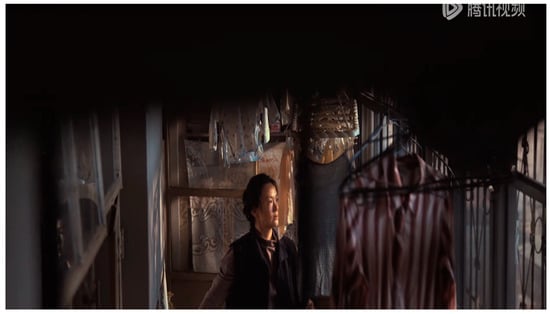
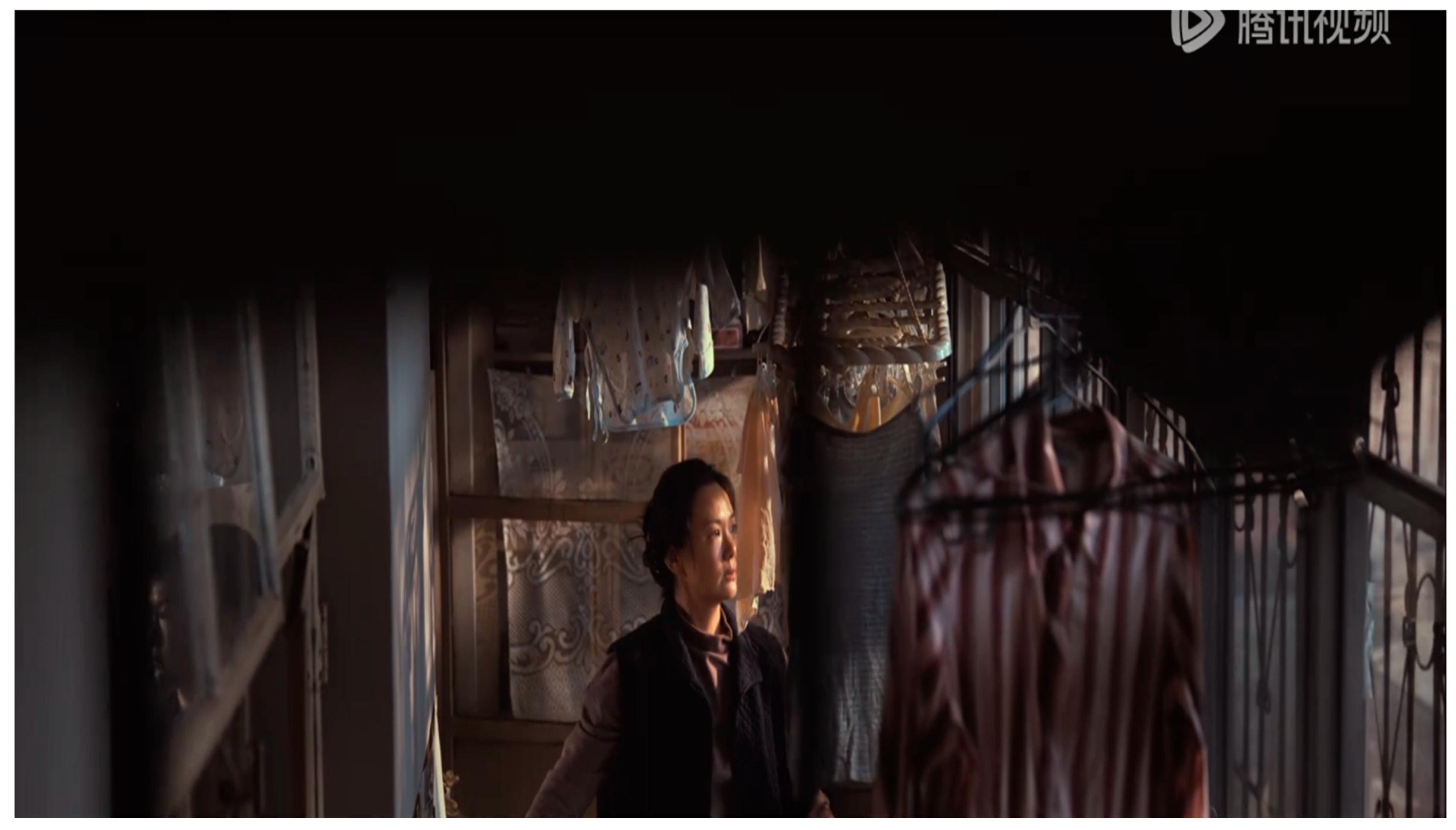
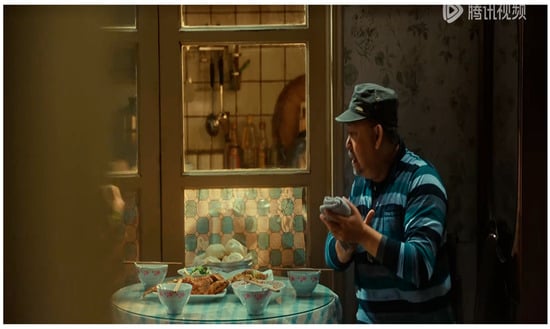
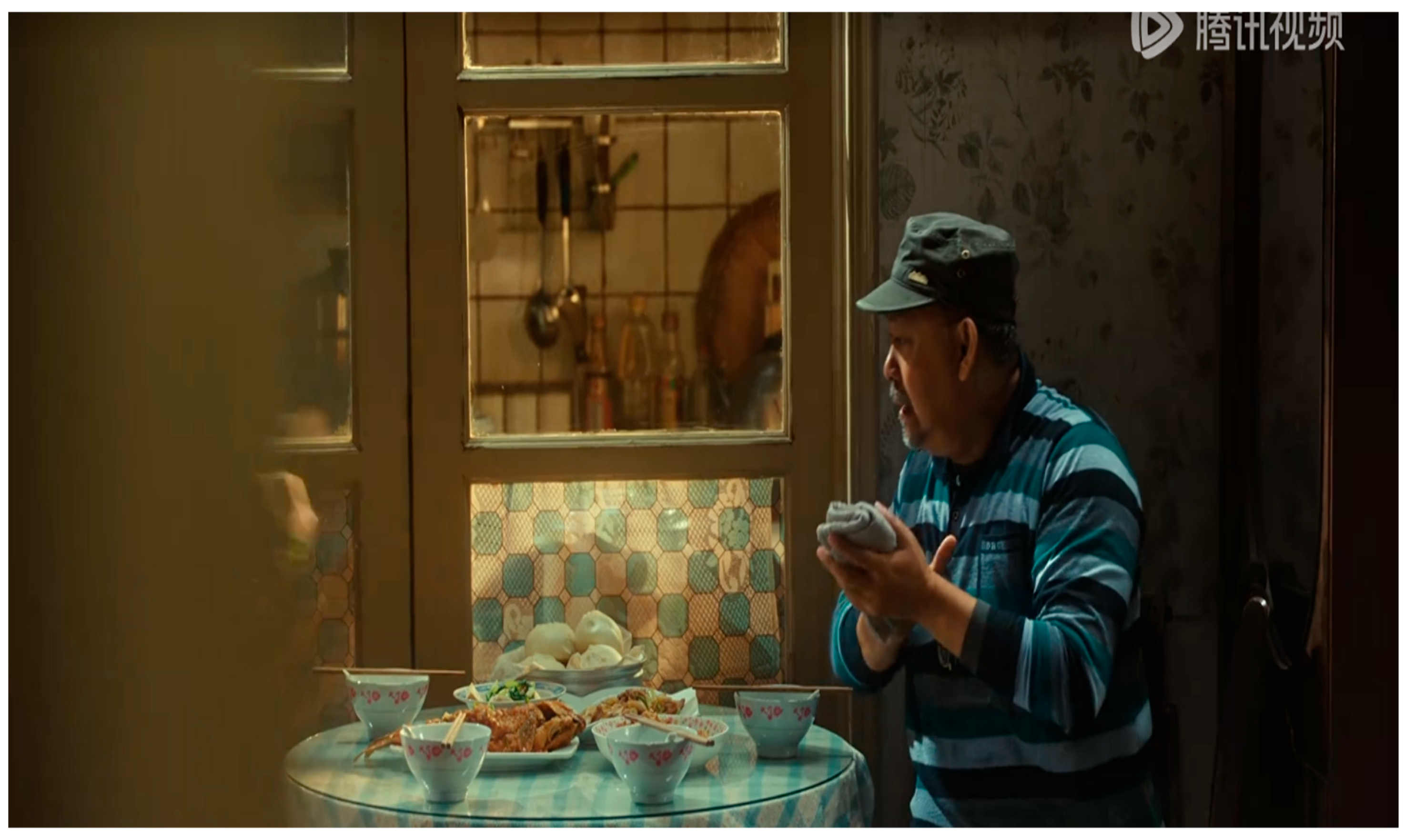
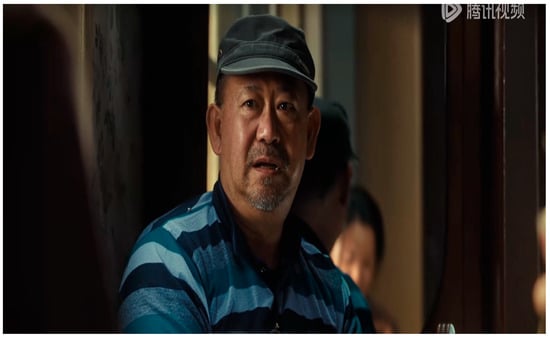
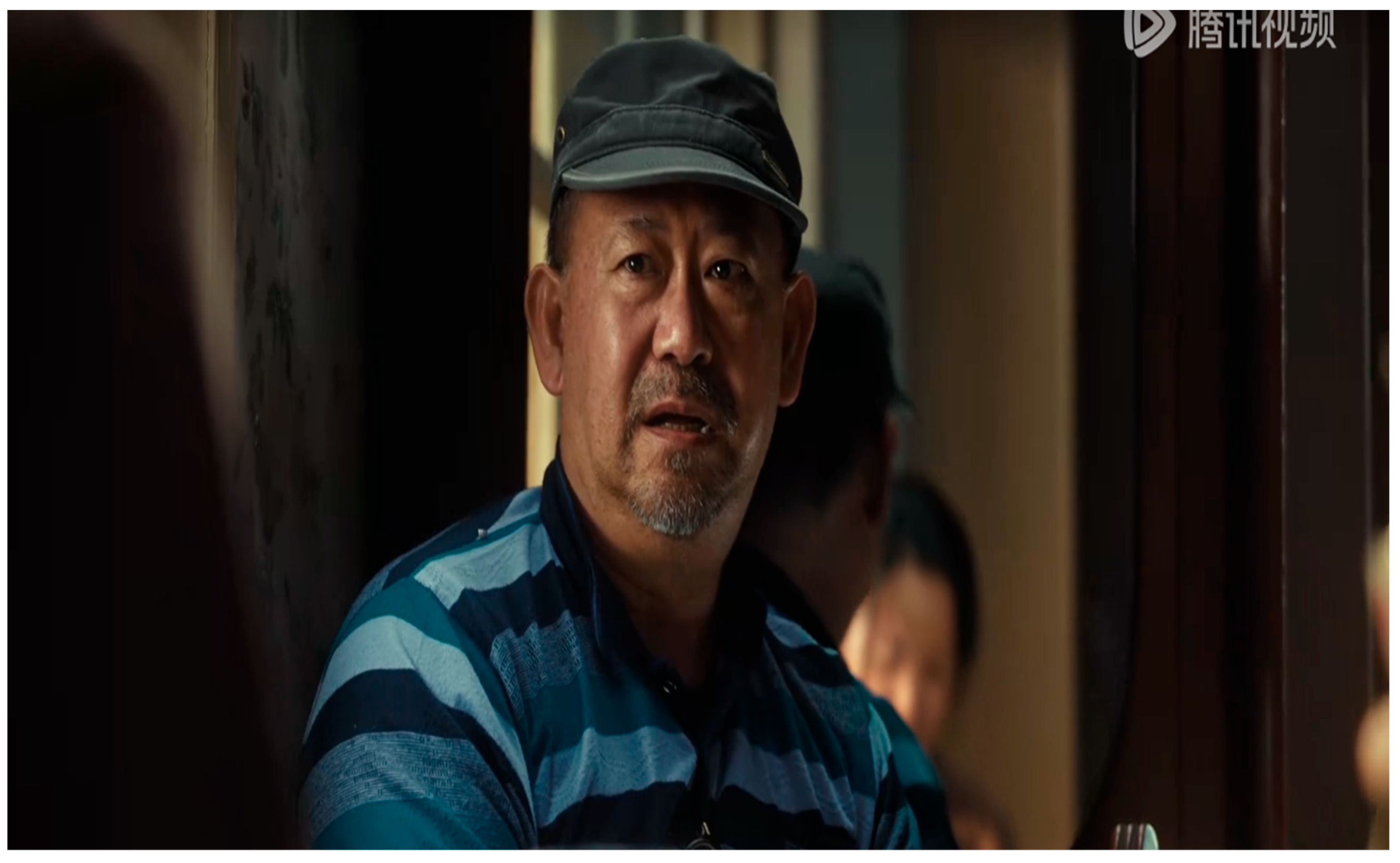
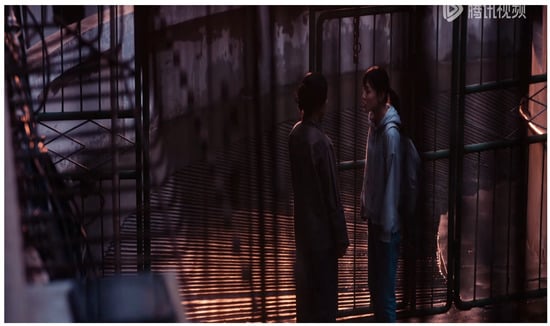
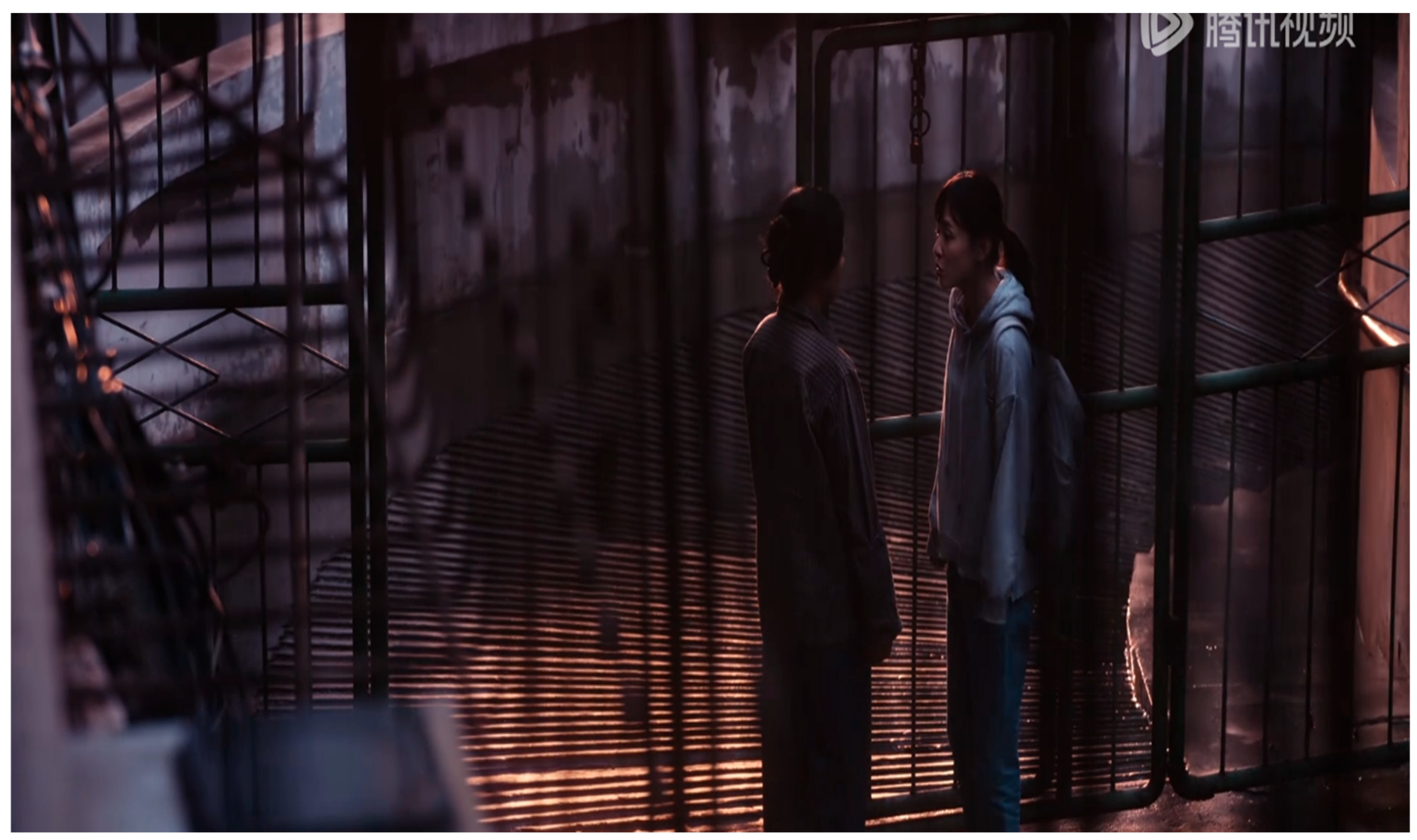
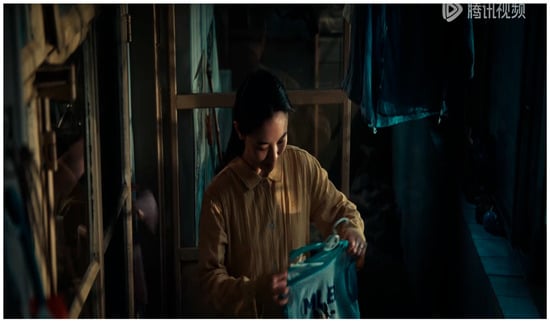
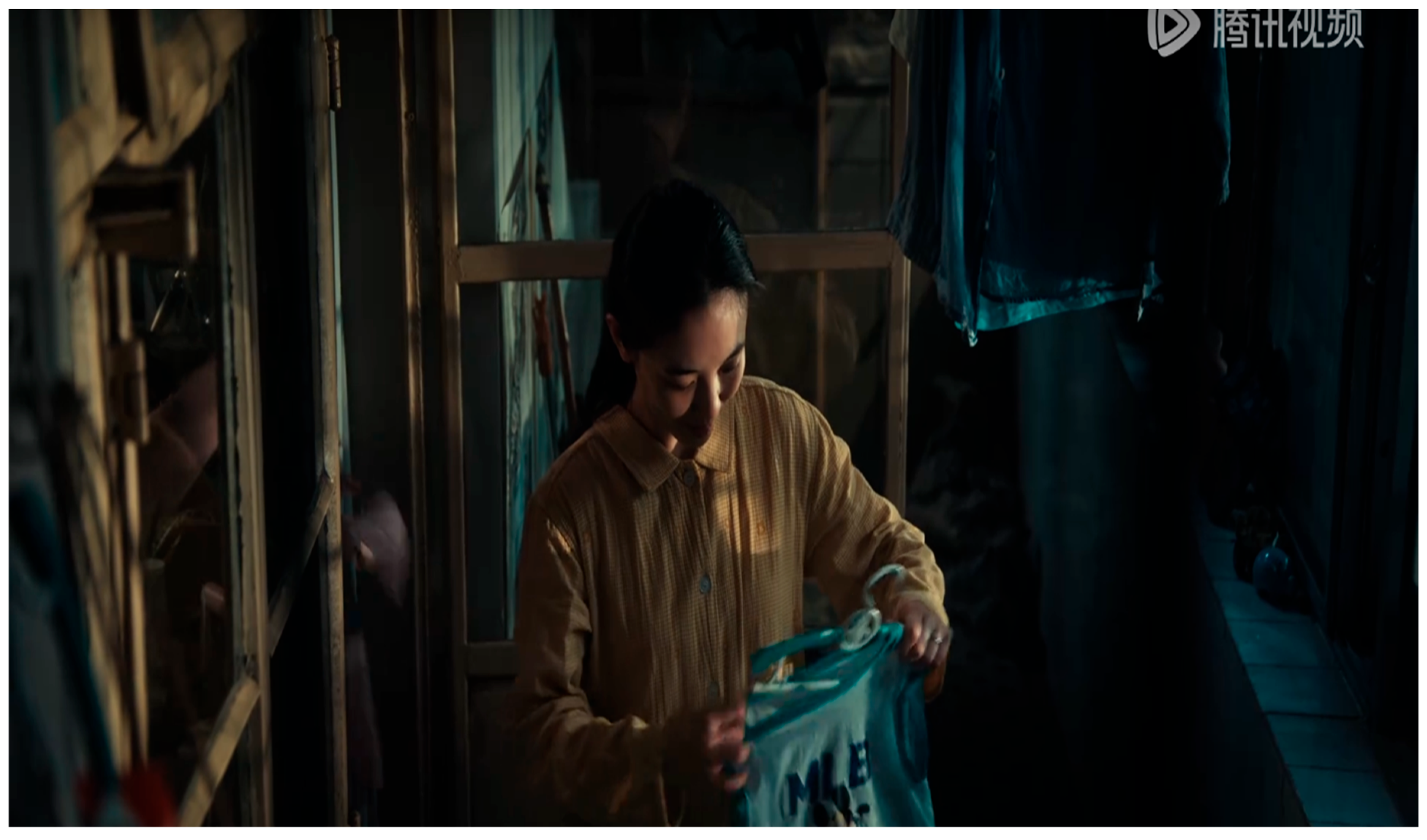
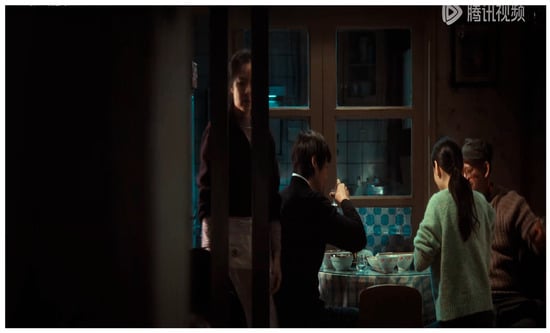
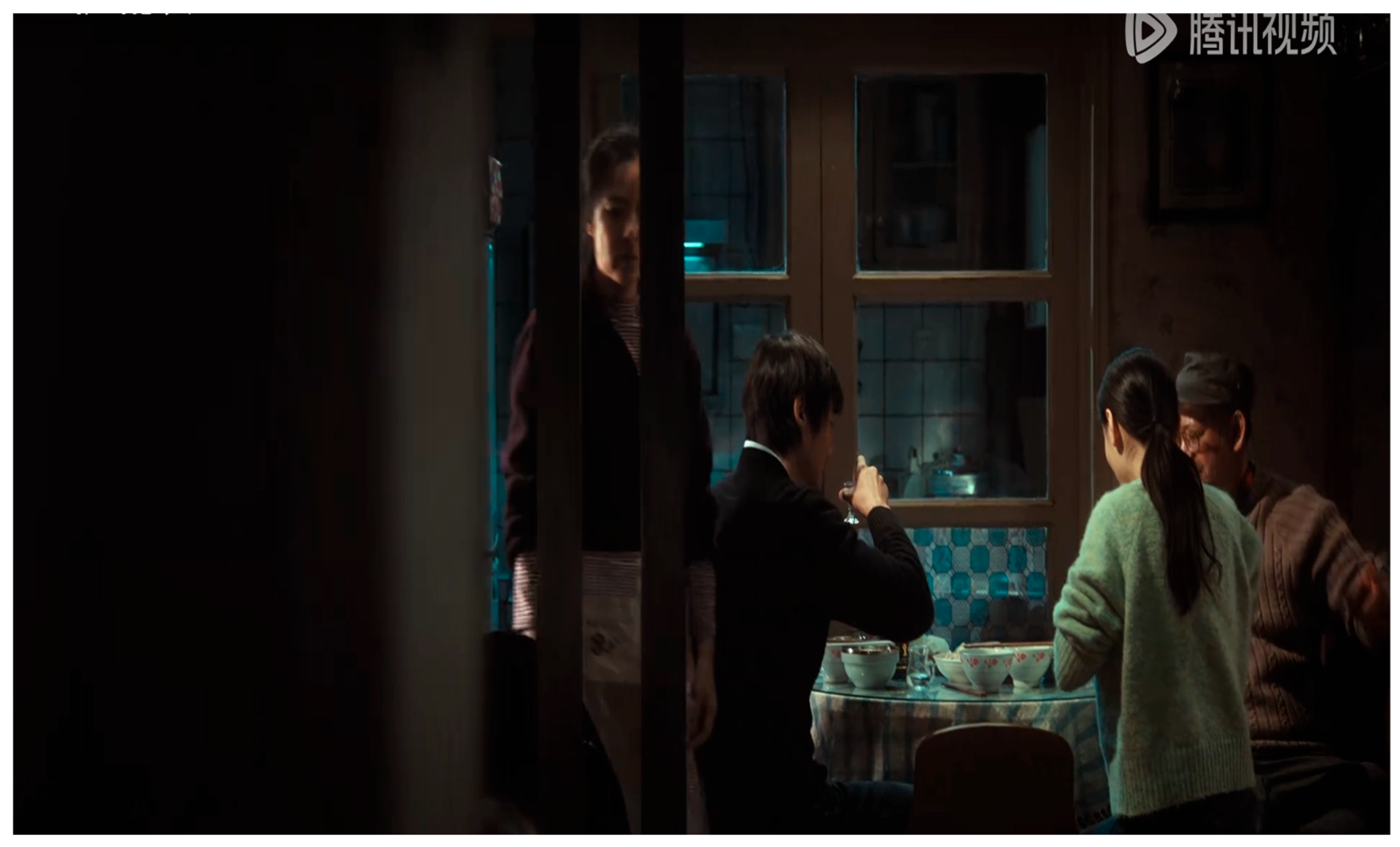
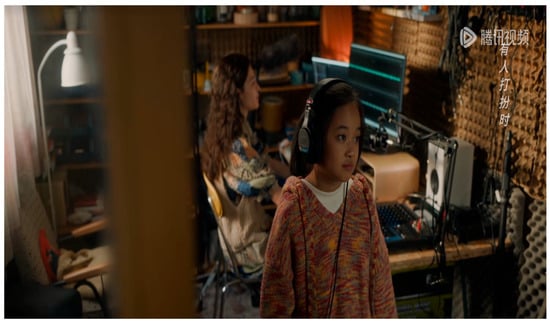
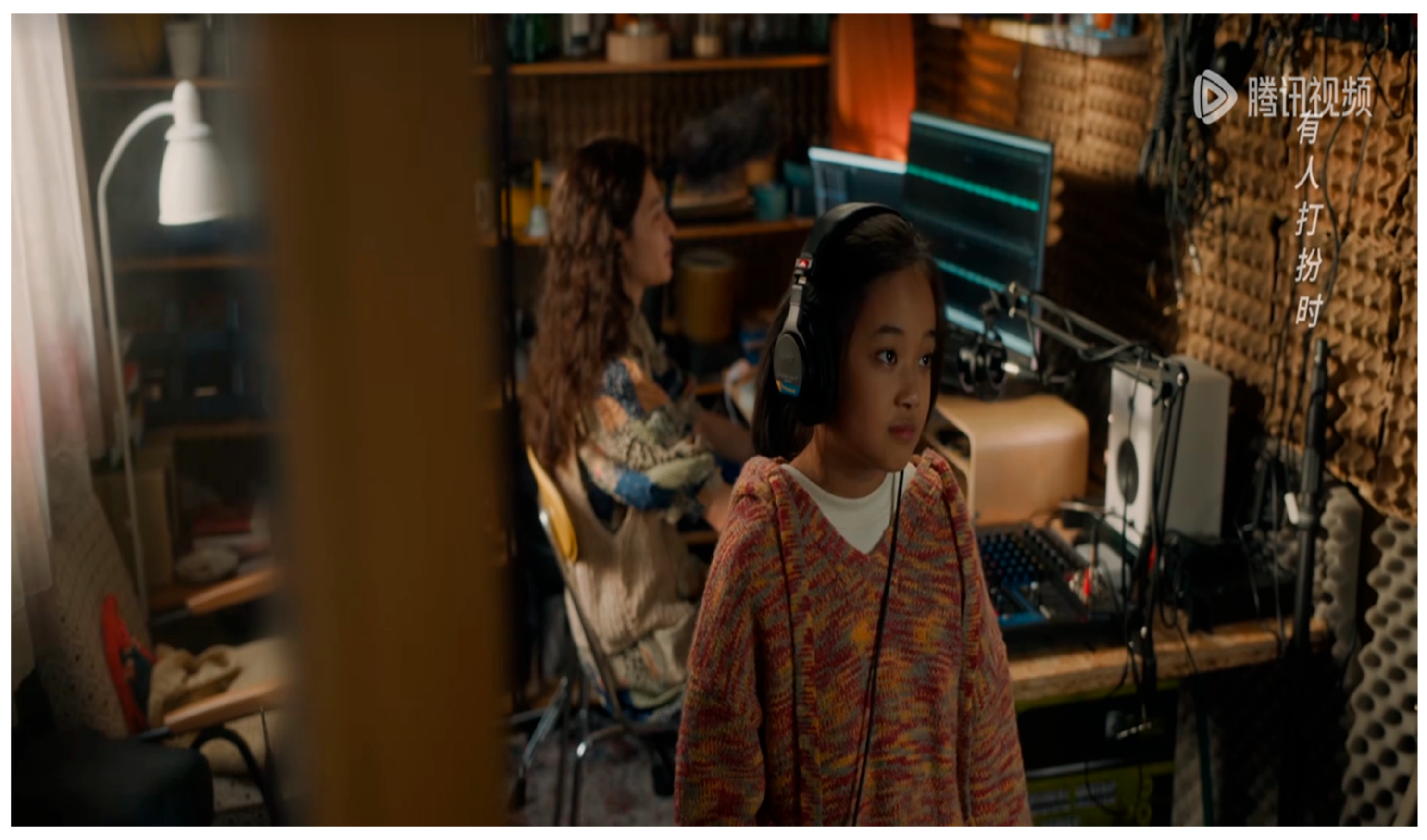
Disclaimer/Publisher’s Note: The statements, opinions and data contained in all publications are solely those of the individual author(s) and contributor(s) and not of MDPI and/or the editor(s). MDPI and/or the editor(s) disclaim responsibility for any injury to people or property resulting from any ideas, methods, instructions or products referred to in the content. |
© 2026 by the author. Licensee MDPI, Basel, Switzerland. This article is an open access article distributed under the terms and conditions of the Creative Commons Attribution (CC BY) license.