


Abstract
This article examines oil-spill-related environmental damage in the Russian North as an eco-social risk that affects ecosystems, Indigenous communities, traditional nature management, and territorial welfare. This paper develops a qualitative conceptual analysis based on interdisciplinary document analysis, literature-based synthesis, and illustrative case contextualization. It contributes to debates on eco-social policy and sustainable welfare by arguing that environmental remediation and monetary compensation often remain insufficient when ecological harm disrupts land-based livelihoods, food autonomy, cultural ecosystem services, and Indigenous participation. This article proposes the concept of traditional nature management as a form of territorial welfare: a place-based welfare arrangement that supports food security, mobility, intergenerational knowledge transfer, cultural continuity, and community autonomy. The analysis identifies several interconnected transformation channels through which oil spills affect Indigenous communities: resource degradation, disruption of mobility routes, weakening of traditional food systems, erosion of cultural ecosystem services, compensation conflicts, and marginalization of Indigenous and local knowledge. The synthesis further shows that the most important assessment gaps arise where legally recognized ecological damage is disconnected from fishery and food-system losses, seasonal mobility, cultural ecosystem services, and Indigenous participation. In the context of Russian legal policy, existing mechanisms recognize traditional nature use and compensation for damage to Indigenous habitat and livelihoods, but non-market territorial-welfare losses remain only partially operationalized in environmental damage assessment. The paper argues that these consequences reveal an institutional missing link between environmental liability, social protection, Indigenous rights, and corporate responsibility. To address this gap, this article proposes an eco-social assessment framework that combines economic valuation with participatory mapping, cultural ecosystem service assessment, Indigenous and local knowledge, long-term welfare-oriented compensation, and community-based monitoring. The framework is intended as a conceptual and policy-oriented instrument rather than an empirical valuation model; the 2020 Norilsk diesel spill is used solely as an illustrative vignette to demonstrate the institutional disconnect between legally recognized environmental damage and broader welfare-related losses. The findings are relevant for eco-social policy debates because they show how extractive-sector risks reshape welfare arrangements in peripheral regions and create new entanglements between state responsibility, corporate welfare, and community resilience in the context of conflicting ecological transitions. More broadly, this study demonstrates that sustainable recovery in northern resource-dependent territories requires the integration of ecological restoration, legally grounded compensation, long-term welfare monitoring, and meaningful Indigenous participation. Comparative Russian evidence from the Nenets and Khanty-Mansi Autonomous Okrugs, Sakhalin, and Yakutia further indicates that compensation and benefit-sharing arrangements vary substantially with regard to procedural inclusion and transparency. The framework does not replace existing Russian statutory loss-calculation procedures; its added value is to connect them with community-defined territorial relationships, participatory mapping, co-validation of locally relevant indicators and repeated assessment of welfare recovery.
1. Introduction
Rapid ecological, social, and economic transformations increasingly reveal the limitations of policy approaches that treat environmental protection and social welfare as separate domains. The debate on eco-social policy has emerged from the need to integrate environmental and social objectives in the context of climate change, biodiversity loss, economic restructuring, social inequality, and multiple overlapping crises (Boström 2012; Gough 2017; Hirvilammi and Koch 2020; Mandelli 2022; Benegiamo et al. 2023; Fritz and Lee 2023; Snell et al. 2023; Schulze Waltrup et al. 2025). In this debate, environmental degradation is not only an ecological problem. It is also a welfare problem because it affects health, livelihoods, social protection, territorial justice, and the capacity of communities to sustain their ways of life.
1.1. Russian North, Indigenous Peoples, and Legal-Policy Context
This article applies an eco-social perspective to the problem of oil-spill-related environmental damage in the Russian North. In this article, the term “Russian North” is used as an analytical umbrella concept for Arctic and sub-Arctic resource-dependent territories characterized by cold-climate ecosystems, long transport distances, dispersed settlements, extractive infrastructure, and land-based traditional livelihoods. It should therefore not be interpreted as synonymous with a single administrative unit or with the legally defined Arctic Zone of the Russian Federation. Rather, it identifies a group of northern territorial conditions that shape the environmental and social consequences of extractive-sector risks.
The northern territories of the Russian Federation are characterized by severe climatic conditions, high ecological vulnerability, resource extraction, weak transport accessibility, and the presence of Indigenous communities whose livelihoods are closely connected with land, water, pastures, fishing grounds, hunting areas, and seasonal mobility (Murashko 2011; Cherepovitsyn et al. 2021; Klokov 2023; Terekhina et al. 2024). Within Russian legislation and public policy, particular protection is afforded to the Indigenous small-numbered peoples of the North, Siberia, and the Far East. Federal Law No. 82-FZ establishes legal guarantees for the protection of their original habitats, traditional ways of life, economic activities, and cultural development, while Federal Law No. 49-FZ regulates the establishment, protection, and use of territories of traditional nature use (Federal Law No. 82-FZ 1999; Federal Law No. 49-FZ 2001). Government Order No. 631-r further specifies the places of traditional residence and traditional economic activities and identifies recognized forms of traditional economic activity, including reindeer herding, hunting, fishing, and the collection of wild biological resources (Government of the Russian Federation 2009). The relevant government list continues to be formally maintained and was most recently amended in 2025.
The institutional category of Indigenous small-numbered peoples of the North, Siberia, and the Far East is itself heterogeneous and should not be treated as referring to a single social or territorial setting. According to the current federal policy framework, the Russian Federation recognizes 40 Indigenous small-numbered peoples of the North, Siberia, and the Far East. The 2020 national census recorded approximately 261,000 persons belonging to these peoples, more than 95% of whom were living across 29 constituent entities recognized as territories of their traditional settlement. As of December 2024, 1661 Indigenous communities were officially registered. In some remote settlements, these communities also perform significant economic and social functions (Government of the Russian Federation 2025). This demographic and institutional diversity is important for the present analysis because exposure to extractive-sector risks, legal status, land-use arrangements, organizational capacity, and access to compensation mechanisms vary considerably between regions and communities.
Russian policy also contains a specific mechanism for compensating losses resulting from damage to the original habitat of Indigenous small-numbered peoples. Government Resolution No. 1488 establishes a procedure under which economic actors may compensate Indigenous peoples, their associations, and individual rights holders for losses caused by economic activities to their original habitat (Government of the Russian Federation 2020). This mechanism is particularly relevant to extractive regions because it creates a formal institutional connection between environmental disturbance, corporate responsibility, and Indigenous livelihoods. Nevertheless, the existence of a compensation procedure does not necessarily mean that all non-market, cultural, relational, or long-term welfare losses are fully recognized within conventional environmental damage assessment. The resolution specifically provides for compensation of such losses through arrangements with economic actors, including resource-extraction companies.
Importantly, the Russian system does not lack a methodology for calculating losses associated with traditional economic activities. The methodology approved by Order No. 565 of the Ministry of Regional Development in 2009 provides a standardized framework for calculating losses caused to associations of Indigenous small-numbered peoples by economic and other activities in territories of traditional residence and traditional economic activity (Ministry of Regional Development of the Russian Federation 2009). It accounts for real damage, documented expenses, and lost profit, and calculates expected income from major traditional economic activities, including reindeer herding, commercial hunting, fishing, and gathering. It also differentiates spatial zones of industrial stress and allows calculations to reflect regional and local characteristics. The methodology therefore represents an important and substantive economic instrument rather than a purely physical assessment of environmental contamination.
The limitation addressed in the present article is therefore not the absence or uselessness of existing Russian loss-calculation methods. Rather, it concerns the boundary of what such methods are designed to calculate. Order No. 565 primarily translates impairment of land, natural resources, and traditional economic activity into compensable economic losses of eligible rights holders. It does not establish a dedicated procedure for systematically documenting relational and cultural losses, disruption of intergenerational knowledge transfer, loss of trust in traditional food, perceived environmental safety, or community-defined meanings of affected places. Nor does it make participatory co-definition of damage indicators, community validation of assessment results, or long-term reassessment of welfare recovery constitutive stages of the calculation procedure. The territorial-welfare framework proposed here is intended to supplement and not to replace this established economic methodology.
This legal framework is complemented by the updated Concept for the Sustainable Development of Indigenous Small-Numbered Peoples of the North, Siberia and the Far East of the Russian Federation until 2036, approved in 2025 and implemented from 2026 (Government of the Russian Federation 2025). The Concept addresses the preservation of traditional economic activities, living environments, social and economic development, and participation of Indigenous peoples in decisions affecting their sustainable development. It also recognizes that traditional livelihoods are challenged by the accelerating economic development of northern territories, climate change, high operating costs, and infrastructure limitations.
A broader participatory precedent exists at the regional level in the Republic of Sakha (Yakutia). The regional Law on Ethnological Expertise, introduced in 2010, requires assessment of the effects of planned economic activities on the original habitat and socio-cultural conditions of Indigenous small-numbered peoples and provides for the calculation of compensation. Indigenous peoples and their associations may participate in the expertise process through representative and consultation mechanisms (Republic of Sakha (Yakutia) 2010; Sleptsov and Petrova 2019). This experience is particularly important for the present framework because it demonstrates that participatory and socio-cultural assessment is institutionally possible within the Russian context. At the same time, ethnological expertise remains a region-specific institution and is primarily oriented toward the assessment of planned development activities. It therefore does not eliminate the need for a broader analytical framework addressing post-accident territorial-welfare loss, long-term recovery, and the integration of ecological, economic, social, cultural, and procedural dimensions.
Oil and petroleum product spills in such territories may produce not only measurable environmental and economic losses, but also broader social and cultural consequences (Gryaznetsova et al. 2021; Fahd et al. 2021; Bi et al. 2025; Shipilov and Grenaderova 2025). These consequences may be especially significant for Indigenous peoples because traditional nature management is not merely an economic activity; it is a system of subsistence, ecological knowledge, intergenerational learning, cultural identity, and territorial belonging (Berkes 2018; Golovnev 2021; Fondahl et al. 2021; Hill et al. 2020).
The term “Indigenous and local knowledge” (ILK) is used in this article as an analytical concept consistent with international scholarship and IPBES terminology rather than as a verbatim category of Russian federal legislation (IPBES n.d.; Hill et al. 2020). In the Russian legal-policy context, closely related dimensions are expressed through the concepts of traditional ways of life, traditional economic activities, traditional nature use, original habitat, and territorially embedded practices of Indigenous small-numbered peoples. This distinction is important because this article uses ILK to describe experiential and intergenerational knowledge of ecosystems and territorial practices without implying that the term itself has a formal legal status in Russian law.
In conventional environmental damage assessment, oil spills are usually evaluated through the volume of pollutants, the area of contaminated land or water, the cost of remediation, the market value of lost resources, and compensation for property damage and lost profits. Such approaches are necessary for legal and economic purposes (Tkach and Berezovsky 2007; Potravny et al. 2018; Tulupov et al. 2021; Trapeznikova 2022; Novoselova and Novoselov 2025; Shipilov and Grenaderova 2025). However, they are insufficient when ecological harm disrupts traditional land use, food autonomy, mobility routes, cultural ecosystem services, and the social reproduction of Indigenous communities (Small et al. 2017; Davydov 2022; Davydov and Bobrova 2023; Davydov et al. 2023; Hill et al. 2020). In this sense, oil-spill damage in the Russian North exposes an institutional missing link between environmental liability, social protection, and Indigenous participation; this problem is also emphasized in international research on Indigenous environmental justice and community capabilities (Schlosberg and Carruthers 2010; McGregor et al. 2020).
In the Russian context, these general procedures coexist with the specific loss-calculation mechanisms described above, particularly Order No. 565, which extends valuation to traditional economic activities of Indigenous peoples.
The relevance of this problem is intensified by the specific conditions of northern ecosystems. Low temperatures, ice cover, permafrost landscapes, reduced sunlight, and long recovery periods make oil-spill response and ecological restoration particularly difficult in Arctic and sub-Arctic environments (Fahd et al. 2021; Chen et al. 2022; Bi et al. 2025). Pollutants may persist for long periods, spread through water and ice systems, and affect soils, rivers, pastures, and food chains. In remote regions, monitoring, clean-up, and infrastructure repair are expensive and logistically difficult (Cherepovitsyn et al. 2021; Franzke 2021; Bi et al. 2025). These constraints increase the risk that the full consequences of environmental damage will remain underestimated.
The social and cultural consequences are no less significant. For Indigenous communities, a contaminated river may be simultaneously a water body, a fishing area, a travel route, a place of memory, and a space for transmitting skills to younger generations. A polluted pasture may involve not only the loss of forage resources, but also the possible disruption of reindeer migration routes, additional labour costs, changes in seasonal mobility, conflicts over safe territories and weakening of pastoral resilience (Stammler 2005; Golovnev and Kukanov 2023; Klokov 2023; Terekhina et al. 2024). Traditional food systems may also be affected, as fish, reindeer meat, berries, mushrooms, and other local products are not only nutritional resources but also culturally meaningful elements of everyday life and collective identity (Berkes 2018; Davydov 2022; Davydov and Bobrova 2023; Davydov et al. 2023; Hill et al. 2020).
1.2. Research Gap, Contribution, and Research Questions
This article is positioned within debates on eco-social policies and sustainable welfare (Boström 2012; Gough 2017; Hirvilammi and Koch 2020; Mandelli 2022; Fritz and Lee 2023). It addresses concerns relating to the institutional, political, and social factors that shape eco-social responses to ecological transitions, by focusing on extractive northern regions where oil-spill risks intersect with Indigenous livelihoods, social vulnerability, and territorial dependence. The specific research gap addressed here concerns the weak conceptual and institutional connection between legally recognized environmental damage and the broader welfare functions provided through territorially embedded traditional nature management. Although substantial bodies of scholarship have developed relating to environmental liability, Indigenous rights, ecosystem-service valuation, and sustainable welfare, these are rarely integrated into a single framework capable of explaining how ecological damage can simultaneously become damage to livelihood, culture, and welfare in northern extractive territories.
The paper contributes to this debate in three ways. First, it conceptualizes traditional nature management as a form of territorial welfare that supports food security, mobility, intergenerational knowledge transfer, and cultural continuity. Second, it identifies an institutional missing link between environmental remediation, monetary compensation, and social welfare protection. Third, it shows how extractive industries may generate corporate welfare entanglements when companies become responsible not only for environmental compensation, but also for local infrastructure, social support, and community-level risk management. The proposed concept therefore complements, rather than replaces, existing approaches to sustainable welfare, ecosystem services, Indigenous well-being, territorial justice, and community resilience by focusing specifically on the territorial mechanisms through which ecological conditions become part of welfare provision.
To avoid methodological ambiguity, the proposed eco-social framework should not be interpreted as a new statutory formula for calculating environmental or economic damage, nor as a replacement for Order No. 565, Government Resolution No. 1488 or regional ethnological expertise. Its novelty lies instead in the architecture of assessment. First, it changes the analytical unit from a damaged environmental object or foregone economic income alone to the relationship between environmental resources, territorial practices, and welfare functions. Second, it treats community-defined evidence, including participatory mapping, locally meaningful environmental indicators, and Indigenous and local knowledge, as a constitutive source of assessment rather than a supplementary narrative input. Third, it distinguishes one-time calculation of compensable losses from the longer temporal process of welfare recovery. Fourth, it separates financial liability, expert assessment, public oversight, and community participation, in order to reduce conflicts of interest. The proposed framework therefore operates as an additional eco-social layer that can be connected to existing Russian damage-calculation and compensation mechanisms.
Although operationalized through Russian legal-policy categories, the framework addresses a broader problem documented across extractive regions; ecological restoration and legally recognized compensation do not necessarily restore livelihoods, cultural relations, or community well-being. The comparison developed below therefore treats Russia as one jurisdictional configuration of a wider problem of environmental justice rather than as an exceptional case (Miraglia 2002; Gill et al. 2016; Bozigar et al. 2016; Stenekes et al. 2020; Sam et al. 2024).
The aim of this article is to examine oil-spill-related environmental damage in the Russian North as an eco-social risk that transforms traditional nature management and exposes gaps between environmental remediation, social welfare, and Indigenous participation.
The article addresses four research questions, as follows:
- How does oil-spill-related environmental damage transform traditional nature management among Indigenous communities in the Russian North?
- In what ways can traditional nature management be conceptualized as a form of territorial welfare?
- What gaps remain between existing Russian environmental damage and Indigenous loss-compensation mechanisms and the broader territorial-welfare consequences of ecological harm?
- What additional analytical and participatory functions can a territorial-welfare framework add to existing Russian assessment and compensation practices?
This framing allows this paper to move beyond a narrow assessment of environmental damage and to contribute to broader debates on sustainable welfare, environmental justice, and eco-social policy in extractive regions. It also places the analysis within the wider sustainable-development debate by treating environmental restoration, social well-being, cultural continuity, participation, and institutional accountability as interconnected rather than separate policy objectives.
2. Materials and Methods
This article is designed as a qualitative conceptual article based on interdisciplinary document analysis, literature-based synthesis, and illustrative case contextualization. It does not aim to provide a systematic review or a meta-analysis. Instead, it develops an analytical framework for interpreting oil-spill-related environmental damage in the Russian North as an eco-social risk that affects Indigenous communities, traditional nature management, and territorial welfare.
The analytical strategy combined purposive literature selection with thematic synthesis. Scholarly sources were identified from four overlapping fields: environmental damage assessment, Arctic and sub-Arctic oil-spill risks, Indigenous livelihoods and traditional nature management, and eco-social policy and sustainable welfare. These scholarly sources were supplemented by a fifth source group comprising legal and policy documents relevant to Indigenous rights, traditional nature use, environmental liability, and compensation mechanisms. The selection focused on sources that could clarify how ecological harm is valued, how northern oil-spill risks differ from risks in more temperate regions, how Indigenous communities maintain land-based welfare systems, and how social policy scholarship conceptualizes ecological transitions, sustainable welfare, and corporate welfare.
Literature retrieval was conducted in both English and Russian. The international scholarly literature was identified through Scopus, Web of Science Core Collection, Google Scholar, and targeted searches of publisher databases, while the Russian-language literature was retrieved through eLIBRARY.RU and targeted searches of relevant academic journals. Official legal and policy documents were identified through governmental and legal information resources of the Russian Federation. Search combinations included terms such as “oil spill”, “environmental damage assessment”, “Indigenous peoples”, “traditional nature management”, “ecosystem services”, “eco-social policy”, “sustainable welfare”, “Russian North”, and “Arctic”, together with their Russian-language equivalents. The literature and policy search covered sources available up to May 2026. Because the purpose of the study was conceptual integration rather than exhaustive evidence aggregation, the retrieval process was used to identify theoretically and institutionally relevant sources rather than to produce a PRISMA-style systematic evidence inventory.
Additional targeted searches used the terms “Indigenous loss compensation”, “benefit-sharing”, “ethnological expertise”, and “free prior informed consent” together with their Russian-language equivalents in order to identify Russian institutional and comparative evidence on participation and compensation practices.
The source selection was purposive rather than exhaustive. This choice is appropriate for a conceptual article whose objective is not to estimate the prevalence of a phenomenon, but to build an analytical framework connecting several bodies of literature that are usually discussed separately. The inclusion criteria were as follows: (1) relevance to environmental damage assessment, ecosystem services or compensation; (2) relevance to Arctic, sub-Arctic or northern extractive regions; (3) relevance to Indigenous livelihoods, traditional nature management, mobility, food autonomy, or cultural landscapes; and (4) relevance to eco-social policy, sustainable welfare, environmental justice, corporate welfare, or just transition. Legal and policy documents were additionally included when they defined Indigenous rights, traditional nature use, environmental liability, compensation mechanisms, or current policy priorities relevant to northern territories. Sources were excluded when they addressed oil-spill remediation only from a technical perspective without implications for welfare, participation, or social policy.
The analysis proceeded in four stages. First, it the scope and limits of conventional environmental damage assessment and existing Russian Indigenous loss-compensation mechanisms, especially where valuation methods focus on restoration costs, market prices, traditional economic activities, and legally recognized losses. Second, it examined the transformation channels through which oil-spill-related harm affects traditional nature management, including resource, spatial, food, cultural, intergenerational, and institutional dimensions. Third, it compared documented Russian regional arrangements for compensation, benefit-sharing, ethnological expertise, and Indigenous participation in order to identify recurring procedural patterns and differences. Fourth, it linked these findings to eco-social policy debates by conceptualizing traditional nature management as a form of territorial welfare and by identifying gaps between environmental remediation, social protection, Indigenous participation, and corporate responsibility.
No original GIS remote sensing or other quantitative spatial analysis was conducted in this study. Spatial information drawn from published environmental, geographical, and remote-sensing studies was used as secondary contextual evidence. Within the proposed framework, the spatial dimension refers primarily to the territorial organization of welfare functions including fishing grounds, pastures, seasonal mobility routes, hunting areas, and culturally meaningful places, and to the potential use of participatory mapping for documenting locally experienced environmental harm. Accordingly, participatory mapping is proposed as a future co-assessment instrument rather than presented as a spatial dataset generated in the present study.
The 2020 Norilsk diesel spill is used as an illustrative contextual case rather than as a stand-alone empirical case study. Its analytical function is to demonstrate the mismatch between large-scale environmental liability and the broader welfare-related consequences of ecological harm. The case is not used to generalize empirically about all Indigenous communities in the Russian North; rather, it illustrates why monetary compensation and ecological restoration may remain insufficient when social, cultural, and territorial welfare losses are not explicitly assessed. Accordingly, the Norilsk spill functions solely as an illustrative analytical vignette of institutional disconnect and is not used to establish causal relationships, quantify community-level welfare effects or validate the proposed framework empirically.
To avoid treating the Norilsk accident as representative of the entire Russian North, the revised analysis additionally uses published comparative evidence from other Russian northern regions as secondary institutional cases. These materials include documented experiences of benefit-sharing and compensation in the Nenets and Khanty-Mansi Autonomous Okrugs, company–community relations on Sakhalin Island, and ethnological expertise and community consultation in the Republic of Sakha (Yakutia) (Tulaeva and Tysiachniouk 2017; Tysiachniouk et al. 2018; Sleptsov and Petrova 2019; Novoselov et al. 2021; Novoselov et al. 2023; Yakovleva et al. 2023). These examples are not treated as original empirical case studies and are not used to statistically validate the proposed framework. Rather, they are used comparatively to examine whether issues of participation, transparency, recognition of locally experienced harm, and compensation design recur across different institutional settings.
Table 1 summarizes the source selection logic used in the article.
Table 1.
Source selection logic for the conceptual analysis.
This article applies qualitative thematic analysis to the selected literature and documents. The themes were grouped into four analytical categories: environmental damage assessment; transformation of traditional nature management; territorial welfare and Indigenous livelihoods; and eco-social policy responses. These categories form the basis of the conceptual framework presented in the results and discussion sections. Evidence within each category was compared across disciplinary and institutional source types in order to identify recurring relationships, conceptual tensions and gaps between formally recognized environmental damage and broader welfare-related consequences.
Following Russian socio-legal and ethnographic usage (Murashko 2011; Golovnev 2021; Fondahl et al. 2021; Federal Law No. 49-FZ 2001), the term “traditional nature management” is used here as a translation of the Russian concept traditsionnoe prirodopolzovanie. It refers to historically developed Indigenous systems of land use, resource access, mobility, subsistence, ecological knowledge and territorial governance. In the Russian legal context, it is connected with the protection of territories of traditional residence and traditional economic activity of Indigenous small-numbered peoples of the North, Siberia, and the Far East (Federal Law No. 82-FZ 1999; Federal Law No. 49-FZ 2001). In the social-scientific context, it is understood as a set of practices through which communities maintain relations with land, water, animals, seasonal cycles, and cultural landscapes (Murashko 2011; Golovnev 2021; Fondahl et al. 2021).
3. Results
The results are presented as a set of interconnected conceptual findings derived from the thematic synthesis of the selected literature and documents.
3.1. Analytical Framework: Environmental Damage Creates an Eco-Social Risk
The first conceptual finding is that oil-spill-related environmental damage in the Russian North should be interpreted as an eco-social risk rather than only as an environmental or economic problem. Ecological harm simultaneously affects ecosystems, social reproduction, welfare arrangements, cultural continuity, and institutional relations (Boström 2012; Mandelli 2022; Fritz and Lee 2023; Hill et al. 2020). Such risks are not adequately captured by purely environmental or purely economic assessment (Small et al. 2017; Tulupov et al. 2021; Shipilov and Grenaderova 2025). They require a framework that integrates ecological vulnerability, livelihoods, welfare, rights, participation, and long-term community resilience (United Nations 2007; Berkes 2018; Hirvilammi and Koch 2020; Hill et al. 2020).
Table 2 summarizes the analytical framework used in the article and specifies how the main concepts are operationalized for the subsequent analysis.
Table 2.
Analytical framework of the article.
This framework allows environmental damage to be analyzed not only as a matter of restoration costs or compensation, but also as a process that may transform welfare conditions in peripheral extractive regions.
Figure 1 presents the logic of the proposed territorial welfare framework. The framework shows that environmental resources are not only ecological assets, but also the material basis of traditional nature management. Through fishing, reindeer herding, hunting, gathering, seasonal mobility, and local ecological knowledge, these resources support welfare functions such as food security, cultural continuity, intergenerational learning and community autonomy. Oil spills disrupt this chain by transforming environmental damage into welfare damage. The lower assessment layer is intended as a co-assessment architecture in which Indigenous participation is a procedural requirement rather than an optional source of information.
Figure 1.
Territorial welfare framework: pathways from environmental damage to eco-social risk. The framework illustrates how environmental resources support traditional nature management and welfare functions, including food security, mobility, intergenerational knowledge transfer, cultural continuity and community autonomy. Oil-spill-related environmental damage disrupts these relationships and generates eco-social risks for Indigenous communities. Solid arrows indicate the principal conceptual pathways among framework components, whereas dashed arrows indicate links between the eco-social assessment and policy-response layer and the affected components. Source: Authors’ conceptual synthesis.
3.2. Traditional Nature Management Functions as Territorial Welfare
For the purposes of this article, traditional nature management is interpreted as a territorial welfare arrangement rather than only as a set of subsistence or economic practices. This interpretation builds on studies of Indigenous livelihoods, sacred ecology, traditional ecological knowledge, and land-based practices, while connecting them to debates on sustainable welfare and environmental justice (Stammler 2005; Murashko 2011; Berkes 2018; Golovnev 2021; Fondahl et al. 2021; Davydov 2022; Klokov 2023; Terekhina et al. 2024).
The concept of territorial welfare is used here in a specific analytical sense. It refers to welfare functions that are produced through access to and use of particular territories, ecosystems, seasonal routes, and community knowledge systems. In remote northern settings, well-being may depend not only on income, formal employment, or social transfers, but also on the ability to maintain relations with rivers, pastures, hunting areas, fishing grounds, and culturally meaningful places (Small et al. 2017; Hill et al. 2020; Davydov et al. 2023).
Traditional nature management may support several welfare functions. These include food security through fish, reindeer meat, berries, and other locally sourced products; livelihood security through seasonal and adaptive use of land; intergenerational learning through participation in herding, fishing, hunting, and mobility practices; cultural identity through place-based meanings and collective memory; and community autonomy by reducing exclusive dependence on market provision and state transfers (Berkes 2018; Golovnev 2021; Davydov 2022; Davydov and Bobrova 2023; Klokov 2023).
This interpretation does not imply that all Indigenous communities experience environmental harm in the same way. Rather, it provides an analytical lens for identifying welfare functions that conventional environmental damage assessment may overlook. When oil spills affect rivers, pastures, fishing grounds, or seasonal routes, they may disrupt not only environmental quality, but also the territorial conditions through which communities maintain food autonomy, mobility, knowledge transmission, and cultural continuity.
3.3. Illustrative Analytical Vignette: The 2020 Norilsk Diesel Spill and the Limits of Monetary Compensation
The 2020 diesel spill in Norilsk is used in this article as a limited illustrative vignette rather than as an empirical case study. The accident resulted in the release of approximately 21,000 tons of pollutants into the environment and became one of the most visible examples of industrial environmental risk in northern territories (Gryaznetsova et al. 2021). Published remote-sensing studies additionally documented the spatial development and downstream propagation of the spill, providing independent environmental evidence for the scale and spatial complexity of the accident (Rajendran et al. 2021). The case is relevant here because it demonstrates how large-scale environmental liability and monetary compensation can coexist with uncertainty regarding broader social, cultural, and welfare-related consequences.
The analytical function of this vignette is therefore narrow. It does not provide direct empirical evidence for the full range of welfare effects discussed in the article, nor does it allow generalization about all Indigenous communities in the Russian North. Rather, it illustrates a conceptual problem; environmental accidents may trigger compensation and restoration procedures while leaving less-visible effects on welfare outside the formal assessment framework. Accordingly, no causal inference concerning specific community-level welfare outcomes is derived from the Norilsk spill itself; such outcomes are treated as theoretically and literature-grounded dimensions that require independent empirical assessment.
The Norilsk case nevertheless provides documented evidence that the consequences of environmental disturbance extended into the institutional domain of traditional nature management. Published assessment work undertaken in Taimyr after the accident estimated losses associated with traditional economic activities of Indigenous small-numbered peoples, with fisheries representing a major component of the calculated losses (Samsonova et al. 2021). Such estimates should not be interpreted as a comprehensive monetary valuation of territorial welfare. Rather, they demonstrate that an environmental accident can generate legally and socially relevant livelihood losses extending beyond the direct costs of ecological remediation.
From an eco-social perspective, accidents of this type raise questions about who defines damage, whose knowledge is included in assessment procedures, how compensation is distributed, and whether affected communities can participate in long-term monitoring and recovery (United Nations 2007; Berkes 2018; Hill et al. 2020; IPBES n.d.; Wilson et al. 2023). These questions are not specific to Norilsk alone; they are relevant for extractive regions where environmental risk, corporate responsibility, Indigenous participation, and local welfare are institutionally interconnected (Sulyandziga 2019; Cherepovitsyn et al. 2021; Bi et al. 2025). The documented Taimyr assessments further illustrate why ecological damage, traditional economic loss, and broader territorial-welfare loss should be analytically distinguished rather than automatically treated as equivalent categories.
Table 3 is therefore not intended to summarize empirical findings from the Norilsk spill. Its purpose is to clarify the analytical role of the vignette and to show how monetary environmental compensation may fail to capture broader eco-social issues.
Table 3.
The 2020 Norilsk diesel spill as an illustrative analytical vignette rather than an empirical case study.
3.4. Comparative Russian Evidence on Compensation, Participation and Procedural Gaps
The limitations highlighted by the Norilsk vignette should not be interpreted as unique to a single accident or company. Published research from other northern Russian regions shows substantial variation in the ways Indigenous interests, compensation, and participation are incorporated into extractive-sector governance. This comparative evidence is particularly relevant because it demonstrates that the central problem is not whether compensation mechanisms exist, but how damage is defined, who participates in that definition, and how transparent and responsive the resulting arrangements are.
Research comparing benefit-sharing arrangements in the Nenets and Khanty-Mansi Autonomous Okrugs and on Sakhalin found that distributive benefits could coexist with low procedural equity where key decisions were made primarily by companies and regional authorities, whereas partnership arrangements on Sakhalin showed higher procedural equity (Tulaeva and Tysiachniouk 2017). Research on the Nenets and Komi-Izhemtsi experience further documented that some socioeconomic agreements were not open to public input or scrutiny and that Indigenous activists raised concerns that communities did not receive funding directly and that the distribution of funding was not transparent (Tysiachniouk et al. 2018). Sulyandziga (2019) similarly concluded that Indigenous opinions are often given insufficient weight in areas where resource extraction is prioritized and where companies possess substantially greater negotiating capacity. These cases show that dissatisfaction can arise not only from the amount of compensation but also from the process through which harm, eligibility, and benefit distribution are defined.
The Sakhalin experience provides a contrasting institutional configuration. Tulaeva and Tysiachniouk (2017) found higher procedural equity where partnership mechanisms between Indigenous organizations and companies were more institutionalized. This comparison suggests that the quality of participation matters independently of the monetary value of compensation. Consultation, access to decision-making, and transparent negotiation procedures can affect how benefit-sharing and impact-management arrangements are perceived and implemented.
The Republic of Sakha (Yakutia) provides another important contrast because ethnological expertise institutionally incorporates assessment of socio-cultural effects and provides a formal role for Indigenous participation (Sleptsov and Petrova 2019). Field-based work in Arctic Yakutia has also been used to design compensation mechanisms based on economic, social, and cultural impact assessment (Novoselov et al. 2021). Research in the Anabar district shows that insufficient consideration of Indigenous interests can generate conflict and that explicit identification of community priorities can be incorporated into the selection of compensation projects (Novoselov et al. 2023). Recent analysis of free, prior, and informed consent practices in Russia likewise shows variation in corporate approaches and finds that rights-based participation is less developed than relational and procedural approaches (Yakovleva et al. 2023).
Taken together, these cases show that Russian practice ranges from predominantly company-state-centered compensation arrangements to more participatory forms of assessment and benefit sharing. They therefore do not support a claim that existing Russian methods simply “do not work”. Instead, they reveal uneven procedural inclusion, transparency, and recognition of non-market territorial relationships across regions and institutional settings. The added value of the territorial-welfare framework lies in making these procedural and relational dimensions explicit and systematic components of post-damage assessment.
3.5. Scope and Limits of Existing Environmental and Indigenous Loss-Assessment Approaches
The concept of environmental damage in environmental economics is traditionally associated with harm to ecosystems, natural resources, public health, property, and economic activity (Coase 1960; Pigou 1920; Gengut 2016; Potravny et al. 2018; Tulupov et al. 2021). In monetary terms, damage assessment aims to determine the cost of restoring soils, water and air; compensating for the loss of flora and fauna; reimbursing property losses; and estimating lost profits (Potravny et al. 2018; Tulupov et al. 2021; Novoselova and Novoselov 2025). These approaches are important because they create legal and economic mechanisms for liability and compensation.
Within the Russian system, Order No. 565 goes beyond standard environmental damage assessment by calculating real damage, documented expenses, and lost profit associated with traditional economic activities, including reindeer herding, hunting, fishing, and gathering, and by differentiating areas according to industrial stress (Ministry of Regional Development of the Russian Federation 2009). It should therefore not be characterized as a purely biophysical method. Its analytical boundary, however, is the translation of impairment of land, resources, and traditional economic activities into compensable economic losses of eligible rights holders. It does not establish dedicated procedures for community-defined relational or cultural loss, participatory co-validation of damage indicators, or repeated assessment of welfare recovery. Ethnological expertise in Yakutia adds socio-cultural assessment and participation, but it remains a region-specific institution oriented primarily toward planned economic activities (Republic of Sakha (Yakutia) 2010; Sleptsov and Petrova 2019). The proposed territorial-welfare framework therefore addresses a residual integration gap rather than replacing these existing approaches.
Against this background, several limitations remain relevant to eco-social assessment in the Russian North. First, conventional valuation tends to prioritize measurable ecological and economic losses (Tkach and Berezovsky 2007; Novoselova and Novoselov 2025; Shipilov and Grenaderova 2025). Second, it is often based on market prices, administrative standards, or restoration costs, while many Indigenous welfare functions are non-market and place-based (Small et al. 2017; Berkes 2018; Hill et al. 2020). Third, it may not adequately account for long-term effects, because oil degradation in northern environments can be slow and uncertain (Fahd et al. 2021; Chen et al. 2022; Bi et al. 2025). Fourth, it often depends on scientific monitoring data, which may be insufficient in remote regions and may not reflect local perceptions of harm (Berkes 2018; IPBES n.d.; Hill et al. 2020).
For Indigenous communities, harm does not affect only a natural object. It affects relations between the community and that object. A polluted river may be a water body, a fishing site, a route, a place of memory, and a site for teaching younger generations (Berkes 2018; Davydov 2022; Hill et al. 2020). A contaminated pasture may mean reduced forage, altered migration, additional labor, loss of route continuity, and weakening of reindeer herding resilience (Stammler 2005; Klokov 2023; Terekhina et al. 2024). These impacts are difficult to translate into monetary values without losing part of their meaning.
The main limitation is therefore not that economic valuation is unnecessary, but that it remains incomplete when it is not connected with social welfare, cultural ecosystem services, and Indigenous participation. The same limitation applies where formally estimated losses to traditional economic activities capture reduced resource use or income but do not fully represent relational, cultural, intergenerational, or place-based welfare losses. In eco-social terms, the problem is the separation between environmental compensation and welfare protection.
3.6. Transformation Channels of Traditional Nature Management
Oil-spill-related environmental damage can transform traditional nature management through several interconnected channels. These channels are ecological, economic, spatial, social, cultural, and institutional.
The first channel is resource-based (Fahd et al. 2021; Bi et al. 2025). Contamination of water, soils, pastures, fish spawning grounds, hunting areas, and gathering sites reduces the availability and perceived safety of resources. This may force communities to search for alternative territories, change practices, or become more dependent on imported goods.
The second channel is spatial and mobility-related (Golovnev and Kukanov 2023; Klokov 2023; Terekhina et al. 2024). Traditional nature management in the North is often organized through seasonal routes, camps, pastures, and movement between resource zones. If one area becomes contaminated or inaccessible, the entire spatial organization of mobility may be disrupted.
The third channel is food- and fishery-related (Davydov 2022; Davydov et al. 2023). Traditional food is central to both subsistence and cultural identity. For many northern communities, fisheries simultaneously provide food, household resources, livelihood opportunities, exchange and sharing practices, and a setting for intergenerational knowledge transfer. Oil-spill impacts on fisheries may therefore operate through several interconnected mechanisms, including contamination or perceived contamination of aquatic resources, reduced access to fishing grounds, restrictions on harvesting, uncertainty regarding food safety, changes in resource availability, increased household expenditure on substitute foods, and declining trust in traditionally harvested fish. Pollution may reduce trust in fish, meat, water, berries, and other local products. This may affect food security, household expenses, and cultural continuity. The documented assessment of traditional economic losses following the 2020 Norilsk spill is illustrative in this regard because fisheries constituted an important component of the identified losses (Samsonova et al. 2021). Fishery impacts should therefore be interpreted not only as resource or income losses, but also as potential disruptions of food autonomy, social relations, knowledge transmission, and territorially embedded welfare.
The fourth channel is cultural-symbolic (Berkes 2018; Golovnev 2021; Fondahl et al. 2021). Land, water, routes, and significant places are embedded in memory, identity, and intergenerational knowledge. Damage to these places may weaken cultural ecosystem services and may reduce the capacity of communities to reproduce place-based knowledge.
The fifth channel is institutional (Federal Law No. 82-FZ 1999; Federal Law No. 49-FZ 2001; United Nations 2007; Sulyandziga 2019). Compensation procedures may generate conflicts if communities perceive official assessments as incomplete or unfair. A gap may emerge between expert-defined damage and locally experienced harm. Russian studies of benefit-sharing arrangements show that such conflicts may involve low procedural equity, limited public scrutiny, unequal negotiating capacity, and dissatisfaction with the transparency of benefit distribution (Tulaeva and Tysiachniouk 2017; Tysiachniouk et al. 2018; Sulyandziga 2019; Yakovleva et al. 2023).
Table 4 summarizes these transformation channels and highlights the additional analytical value of linking ecological changes with welfare-related consequences.
Table 4.
Main transformation channels of traditional nature management under environmental damage.
The table shows that environmental damage may produce complex eco-social consequences. It may transform not only resources, but also everyday life, labor distribution, knowledge transfer, food systems, and relations with a territory. A narrow focus on direct costs therefore risks ignoring significant welfare losses.
3.7. Arctic and Northern Constraints
The Russian North creates specific ecological and geographical constraints for damage assessment. Oil and petroleum products degrade slowly in cold environments (Fahd et al. 2021; Bi et al. 2025). Low temperatures, ice cover, and limited sunlight can extend recovery processes for years or decades (Fahd et al. 2021; Chen et al. 2022; Bi et al. 2025).
When petroleum products enter surface waters, their environmental fate is governed by interacting physical, chemical, and biological weathering processes. In open water, these processes include spreading and advection, evaporation of volatile fractions, dissolution of soluble compounds, natural dispersion, emulsification, photo-oxidation, sedimentation, and microbial biodegradation. Their relative importance changes over time and depends on fuel composition, temperature, turbulence, salinity, and hydrological conditions. In Arctic marine environments, snow and sea ice further modify oil behavior by restricting surface spreading, trapping oil within or beneath ice, altering exposure to sunlight and water, and changing the rates of evaporation, dispersion, and biodegradation. Low temperatures generally increase oil viscosity and can slow several weathering and microbial transformation processes, thereby increasing persistence and complicating clean-up and exposure assessment (Heshka et al. 2024).
The 2020 Norilsk spill itself affected an inland freshwater river system rather than seawater. Accordingly, marine and sea-ice weathering processes are discussed here as part of the broader Arctic and sub-Arctic oil-spill context rather than as a direct mechanistic description of the Norilsk accident. In inland northern waters, river flow, floodplain connectivity, sediment interactions, and seasonal freezing may be particularly important for pollutant transport and persistence.
In many low-relief northern landscapes, hydrological connectivity among rivers, wetlands, floodplains, and waterlogged soils can facilitate lateral pollutant transport and increase spatial uncertainty. Pollutants frozen into ice or trapped in sediments may move over long distances, making it difficult to define the boundaries of contamination (Chen et al. 2022; Bi et al. 2025). Hydromorphic and cryogenic landscapes such as peatlands, wetlands, and waterlogged plains are particularly sensitive. In these environments, petroleum pollutants may persist for long periods and ecological recovery may require years or even decades (Efremova and Efremov 2014; Alexandrovskiy et al. 2025).
This persistence has important eco-social implications because prolonged environmental degradation may delay the recovery of traditional livelihoods, food systems, and mobility routes that depend on healthy ecosystems. As a result, the temporal gap between ecological restoration and social recovery may become a significant challenge for welfare-oriented compensation and community resilience.
Remote locations and weak infrastructure increase the cost of monitoring, response, and restoration (Cherepovitsyn et al. 2021; Franzke 2021; Shipilov and Grenaderova 2025). The situation is further complicated by the absence of universally accepted regulatory thresholds for petroleum contamination in northern soils (Okolelova et al. 2015; Lodygin et al. 2025). This creates uncertainty not only for environmental assessment, but also for compensation procedures, legal accountability, and negotiations between companies, authorities, and affected communities. As a result, disagreements may emerge regarding the scale of damage, the adequacy of compensation, and the timing of restoration measures.
These constraints are important for eco-social policy because delayed ecological recovery also delays welfare recovery. If a pasture, river, or fishing area remains unsafe or distrusted for a long period, affected communities may face long-term disruption of food systems, mobility, and local autonomy. Therefore, short-term compensation cannot fully address long-term welfare consequences.
Another constraint is the lack of baseline environmental data. Without sufficient monitoring stations and historical data, it is difficult to prove the extent of deterioration (Nevskaya et al. 2025; Bi et al. 2025; Shipilov and Grenaderova 2025). For Indigenous communities, however, environmental change may be perceived through everyday indicators: water taste, smell, fish quality, snow condition, animal behavior, or changes in migration routes. These indicators are often excluded from official assessment, even though they are central to local knowledge systems (Berkes 2018; IPBES n.d.; Hill et al. 2020).
3.8. Adaptation of Assessment Methods
Existing methods of environmental damage assessment have different levels of applicability to eco-social analysis (Ayusheeva 2020; Potravny et al. 2018; Tulupov et al. 2021). Restoration cost, replacement cost, avoided cost, alternative cost, and market price methods are useful for estimating financial losses and remediation expenses (Tkach and Berezovsky 2007; Trapeznikova 2022; Nevskaya et al. 2025). However, they do not fully capture cultural, symbolic, and territorial losses (Small et al. 2017; Berkes 2018; Hill et al. 2020). Expert sociological methods, willingness-to-pay and willingness-to-accept approaches, benefit transfer, and ecosystem service valuation can help assess non-market values, but they depend on data quality, trust, income levels, and research design (Small et al. 2017; Filiptsov and Lagun 2024; Nesterova 2025).
In the Russian North, the use of control areas for comparison is especially problematic because traditional livelihoods and cultural landscapes are locally specific (Ayusheeva 2020; Golovnev 2021; Fondahl et al. 2021; Klokov 2023). Territories with similar climatic conditions may differ in routes, kinship structures, intensity of resource use, sacred places, and seasonal practices. This makes simple comparison between polluted and non-polluted areas insufficient.
For this reason, economic valuation should be supplemented by participatory and qualitative methods (Berkes 2018; IPBES n.d.; Hill et al. 2020). These include expert interviews, community interviews, participatory mapping of routes and significant places, seasonal calendars, documentation of changes in employment and food practices, and cultural ecosystem service assessment. These methods should not replace scientific monitoring or economic valuation. Rather, they should be integrated into a broader eco-social assessment framework.
For fisheries and other territorially specific livelihoods, such integration should connect environmental monitoring with evidence on resource access, harvesting restrictions, perceived food safety, household substitution costs, and community-defined indicators of ecological change. Participatory mapping can additionally document fishing grounds, seasonal routes, and areas of cultural significance, while community-based monitoring can provide repeated observations during periods or in locations where conventional monitoring networks are sparse.
In the proposed framework, Indigenous participation is therefore not an optional supplementary technique but a procedural requirement for operationalizing territorial-welfare assessment. A minimum co-assessment sequence should include the following: (1) early identification of affected Indigenous communities, organizations, and rights holders before the boundaries of damage are fixed; (2) participatory mapping of fishing grounds, pastures, seasonal routes, gathering areas, and culturally meaningful places, subject to community consent and protection of sensitive spatial information; (3) iterative consultations with community representatives, local Indigenous leaders, elders, and knowledge holders to define locally meaningful indicators of harm; (4) joint validation of the spatial boundaries, welfare indicators, and compensation assumptions used in the assessment, including documentation of unresolved disagreements; and (5) community-based monitoring and scheduled reassessment during ecological and social recovery.
This sequence changes the role of affected communities from respondents consulted after an expert assessment has been completed to co-producers of the evidence used to define damage. Participatory mapping is particularly important because the same physical area may simultaneously function as a fishing ground, migration route, place of memory, intergenerational learning site, or culturally significant landscape. The framework should therefore not be considered fully implemented where Indigenous participation occurs only after monetary damage estimates and compensation boundaries have already been determined.
Table 5 presents possible adaptation of assessment methods by indicating how conventional valuation tools can be connected to eco-social assessment.
Table 5.
Eco-social adaptation of environmental damage assessment methods.
These methods should be understood as complementary. The specific conditions of the Russian North require a combined approach in which direct cost calculation is connected with social, cultural, and territorial analysis.
4. Discussion
4.1. From Environmental Compensation to Eco-Social Welfare
The findings suggest that oil-spill-related environmental damage in the Russian North should be understood as a welfare-relevant environmental risk. Existing assessment procedures are relatively well equipped to calculate remediation costs, restoration expenses, and market-based losses (Tkach and Berezovsky 2007; Tulupov et al. 2021; Novoselova and Novoselov 2025). They are less able to capture non-market and relational losses connected with mobility, food autonomy, cultural ecosystem services, and Indigenous participation (Small et al. 2017; Berkes 2018; Hill et al. 2020).
This argument contributes to eco-social policy debates by showing that environmental risks in extractive regions may become welfare risks when they affect the ecological and spatial conditions required for community reproduction (Gough 2017; Hirvilammi and Koch 2020; Fritz and Lee 2023). The implication is not that environmental compensation should be replaced by social policy, but that damage assessment and welfare protection need to be analytically and institutionally connected.
In this sense, the Russian North provides a useful setting for examining how ecological degradation, territorial dependence, and corporate responsibility interact. The discussion below clarifies the theoretical contribution of the territorial welfare concept and explains how the proposed framework can be used in assessment and policy practice. The Russian case is also analytically valuable for comparative research because it shows how eco-social consequences are filtered through jurisdiction-specific arrangements concerning Indigenous rights, traditional nature use, compensation, and corporate responsibility.
4.2. Theoretical Contribution
The theoretical contribution of this article lies in developing the concept of territorial welfare as a bridge between environmental damage assessment, Indigenous traditional nature management, and eco-social policy. The concept is not intended to replace existing concepts such as sustainable welfare, ecosystem services, Indigenous well-being, territorial justice, or community resilience. Rather, it specifies how these debates intersect when welfare depends on access to particular territories, ecological relations, and land-based practices.
Territorial welfare differs from sustainable welfare in analytical scale and object. Sustainable welfare usually refers to the broader transformation of welfare systems under ecological constraints and post-growth conditions (Gough 2017; Hirvilammi and Koch 2020; Fritz and Lee 2023; Snell et al. 2023). Territorial welfare, by contrast, focuses on place-based welfare functions that are embedded in specific landscapes, seasonal routes, subsistence practices, and community relations. It therefore helps explain how ecological degradation may affect welfare even when formal welfare institutions remain unchanged.
The concept also differs from ecosystem services. Ecosystem service approaches are useful for identifying material and non-material benefits provided by ecosystems, including cultural ecosystem services (Small et al. 2017; Hill et al. 2020). However, the territorial welfare perspective emphasizes that these benefits are not simply delivered by ecosystems to passive beneficiaries. They are co-produced through social practices, Indigenous and local knowledge, mobility, customary resource use, and intergenerational learning (Berkes 2018; Golovnev 2021; McGregor et al. 2020). This makes the concept especially relevant for communities whose well-being depends on continuing relations with particular territories.
Territorial welfare is also related to, but narrower than, Indigenous well-being and territorial justice. Indigenous well-being frameworks often emphasize relationality, cultural continuity, self-determination and responsibilities to land and non-human beings (Whyte 2018; McGregor et al. 2020). Territorial justice highlights the spatial distribution of risks, recognition and participation in decision-making (Boström 2012; Schlosberg and Carruthers 2010). The territorial welfare concept draws on these insights but applies them to environmental damage assessment. It asks which welfare functions are disrupted when ecological harm affects the territories through which communities maintain food autonomy, mobility, knowledge transfer, and cultural reproduction.
Finally, territorial welfare is connected to community resilience, but it should not be reduced to adaptation capacity. Community resilience often focuses on the ability of communities to respond to shocks and maintain functioning. Territorial welfare asks a prior question: which ecological, spatial, and institutional conditions must be protected so that communities are not forced to adapt to preventable environmental harm? This distinction is important because resilience language can sometimes shift responsibility from risk-producing institutions to affected communities.
The conceptual novelty of territorial welfare therefore lies in its integrative function. It links ecological damage, land-based welfare functions, Indigenous participation, and compensation mechanisms in a single framework. This framework makes visible forms of welfare loss that may be overlooked when environmental harm is assessed only through restoration costs, market values, or legally recognized property damage. It also helps explain why corporate welfare arrangements in extractive regions should be evaluated not only as social responsibility measures, but as part of eco-social governance involving public authorities, companies, and affected communities (Farnsworth 2013; Sulyandziga 2019; Fondahl et al. 2021). The concept is therefore particularly useful for distinguishing between restoration of environmental objects and restoration of the territorial conditions through which welfare is actually reproduced.
Accordingly, the methodological contribution of territorial welfare is not a new monetary valuation formula. It changes the architecture of assessment from a direct environmental-object-to-monetary-loss logic to a sequence linking environmental objects, territorial practices, welfare functions, community-defined evidence, and compensation/recovery responses. It also changes the governance of evidence from predominantly expert-defined assessment toward co-assessment involving affected communities.
4.3. Eco-Social Policy Failures in Environmental Damage Assessment
The analysis reveals several types of eco-social policy failure that are particularly relevant for extractive northern regions.
The first type of failure relates to a remediation-only strategy (Tulupov et al. 2021; Shipilov and Grenaderova 2025). Environmental damage assessment tends to prioritize the physical restoration of polluted sites, the calculation of remediation costs, and the monetary valuation of lost resources. This approach is necessary, but it is insufficient, because it does not fully address welfare losses related to food autonomy, mobility, cultural continuity, and community resilience.
Second, there are failures that relate to participation (United Nations 2007; Berkes 2018; IPBES n.d.; Hill et al. 2020). Indigenous communities may be affected by environmental damage, but their knowledge and priorities are often insufficiently integrated into expert assessment procedures. As a result, official damage calculations may diverge from local perceptions of harm, especially when communities identify changes through everyday indicators such as water taste, animal behavior, snow conditions, fish quality, or altered migration routes.
Russian studies provide concrete examples of this problem. Procedural equity has been found to be low in some company–state-centered benefit-sharing arrangements; Komi Indigenous activists reported that socioeconomic agreements were not open to public scrutiny and that funding distribution was not transparent (Tulaeva and Tysiachniouk 2017; Tysiachniouk et al. 2018). Sulyandziga (2019) and Yakovleva et al. (2023) similarly identify persistent limitations in the weight given to Indigenous opinions and rights-based participation in extractive-sector decision-making.
Third, there are failures relating to compensation (Small et al. 2017; Sulyandziga 2019; Fondahl et al. 2021). Monetary compensation may address measurable losses, but it cannot easily compensate for damaged cultural landscapes, disrupted intergenerational knowledge transfer, or the loss of trust in traditional food. This creates a gap between legally recognized damage and socially experienced harm. Even where losses to traditional economic activities are formally assessed, the resulting monetary estimate may remain narrower than the full territorial-welfare consequences of environmental disruption.
Fourth, there are failures in the context of corporate welfare (Farnsworth 2013; Sulyandziga 2019). In remote extractive regions, corporations may become providers of infrastructure, compensation, social support, and local development programs. However, this can create dependency on actors that are also sources of environmental risk. Such arrangements blur the boundary between corporate responsibility, public welfare, and community rights.
Fifth, there are failures relating to knowledge integration (Berkes 2018; IPBES n.d.; Hill et al. 2020). Scientific monitoring and official data remain essential, but they often dominate assessment procedures in ways that marginalize Indigenous and local knowledge. This reduces the ability of assessment systems to capture everyday and place-based indicators of harm.
Table 6 summarizes these failures.
Table 6.
Eco-social policy failures in oil-spill damage assessment.
These failures demonstrate that oil-spill damage in the Russian North should be interpreted as an eco-social risk rather than only as an environmental or economic problem. They also show that the central policy challenge is not simply to increase compensation, but to redesign assessment so that ecological, economic, social, cultural, and procedural dimensions are connected without being collapsed into a single monetary indicator.
4.4. Corporate Welfare and Extractive Responsibility
The extractive sector plays a dual role in northern regions (Sulyandziga 2019; Cherepovitsyn et al. 2021). On the one hand, oil and petroleum infrastructure generates employment, tax revenues, and regional development (Cherepovitsyn et al. 2021). On the other hand, it produces environmental risks that may undermine Indigenous livelihoods and territorial welfare (Sulyandziga 2019; Terekhina et al. 2024; Bi et al. 2025). When environmental accidents occur, companies may become responsible for remediation, compensation, infrastructure support, and social programs. This creates welfare entanglements between corporations, the state, and local communities.
The problem is not only whether companies pay compensation, but how responsibilities are distributed and monitored over time. One-time payments cannot address long-term ecological uncertainty, food insecurity, cultural loss, or weakened mobility. In addition, corporate social programs may create dependence on the same actors that produce environmental risks (Farnsworth 2013; Sulyandziga 2019). This raises questions about accountability, transparency, and the boundary between corporate responsibility and public welfare.
Eco-social policy should therefore avoid replacing public responsibility with corporate welfare. Instead, it should define long-term obligations for environmental monitoring, community participation, restoration of traditional-use territories, support for food security, and recognition of Indigenous rights. Benefit-sharing agreements and compensation schemes should be linked to independent assessment and community-based monitoring. The polluting or risk-producing company may legitimately bear the financial burden of assessment and recovery, but financial responsibility should not imply control over the assessment methodology, evidence selection, or final determination of welfare loss. This distinction is essential for avoiding conflicts of interest.
4.5. Policy Implications
The proposed eco-social interpretation of environmental damage has several policy implications. Table 7 functions as an implementation matrix by translating the conceptual framework into policy pathways and expected welfare outcomes.
Table 7.
Eco-social policy recommendations for oil-spill damage assessment in northern extractive regions.
First, environmental damage assessment should include welfare indicators (Gough 2017; Hirvilammi and Koch 2020; Fritz and Lee 2023). These may include food security, access to traditional resources, continuity of seasonal routes, availability of safe water, dependence on market food, and the ability to transmit traditional knowledge across generations.
Second, compensation mechanisms should move beyond one-time monetary payments (Small et al. 2017; Sulyandziga 2019; Fondahl et al. 2021). Long-term compensation may include community-based monitoring, restoration of pastures and fishing areas, support for traditional food systems, health monitoring, cultural landscape protection, and funding for Indigenous-led recovery initiatives.
Third, Indigenous and local knowledge should be institutionally embedded in assessment procedures (Berkes 2018; IPBES n.d.; Hill et al. 2020). This requires participatory mapping, community interviews, seasonal calendars and recognition of everyday environmental indicators used by local residents.
The findings also have implications for eco-social work (Matthies and Närhi 2017). In remote northern regions, eco-social work may include community-based environmental monitoring, support for Indigenous participation in compensation procedures, mediation between communities, companies and public authorities, and assistance in protecting food security, cultural continuity, and local autonomy after environmental accidents. From this perspective, eco-social work is not limited to individual social support; it also involves strengthening the collective capacity of communities to respond to ecological harm and to participate in decisions that affect their territorial welfare.
Fourth, corporate welfare arrangements should be made transparent and accountable (Farnsworth 2013; Sulyandziga 2019). Extractive companies should not replace public welfare institutions, but their responsibilities for long-term ecological and social consequences should be clearly defined.
Fifth, eco-social policy in northern regions should integrate environmental regulation, Indigenous rights, social protection, and regional development (United Nations 2007; Mandelli 2022; Snell et al. 2023; Schulze Waltrup et al. 2025). Such integration is necessary because oil-spill damage simultaneously affects ecosystems, livelihoods, welfare, and cultural continuity.
These recommendations are also consistent with the broader sustainable development agenda. Protection and restoration of traditional food systems are relevant to food security; protection of water resources contributes to safe access to water; recognition of unequal environmental burdens promotes social inclusion and reduction in inequality; restoration of aquatic and terrestrial ecosystems contributes to the protection of biodiversity; and participatory and transparent assessment enable inclusive and accountable governance. From this perspective, territorial welfare provides a place-based mechanism through which environmental, social, and institutional dimensions of sustainable development can be considered jointly rather than as separate policy domains.
These implications are relevant not only for the Russian North, but also for other Arctic and sub-Arctic extractive regions where Indigenous communities depend on land-based livelihoods and where ecological risks are closely connected with social welfare.
Comparative evidence reinforces this broader relevance. Research on the Exxon Valdez oil spill in Alaska documented consequences extending beyond ecological damage to subsistence practices, cultural values, traditional food resources, community relations, and long-term social well-being in Alaskan Native and fishing communities (Miraglia 2002; Gill et al. 2016). In northern Canada, community-based environmental monitoring has demonstrated how Indigenous knowledge, locally defined indicators, and scientific observations can be combined to assess changes in aquatic ecosystems and fishing livelihoods (Stenekes et al. 2020). These international examples suggest that the connection between environmental degradation and place-based welfare is not unique to the Russian North, although the legal categories, compensation mechanisms, and institutional responsibilities through which such losses are recognized remain jurisdiction-specific.
In relation to the questions posed by the Special Issue, this article shows that eco-social policy in extractive northern regions depends on the interaction of four groups of actors: state institutions, extractive companies, Indigenous communities, and expert bodies. It also demonstrates that the main missing link lies between environmental remediation and social welfare protection. Finally, it shows that extractive-sector risks create welfare entanglements through compensation, benefit-sharing, and corporate responsibility. These findings suggest that sustainable welfare in conflicting ecological transitions requires institutional arrangements that combine environmental regulation, social protection, Indigenous participation, and corporate accountability.
4.6. Comparative Perspectives and Eco-Social Recovery Scenarios
The findings allow three conceptual recovery scenarios to be distinguished. These scenarios are not predictions of actual post-spill trajectories, but ideal-type policy configurations that clarify how different institutional responses may produce different welfare outcomes.
The first scenario is remediation-centered recovery. Under this model, institutional action focuses primarily on physical clean-up, legally established environmental damage, restoration expenditure, and one-time compensation. This approach is necessary for environmental liability, but its welfare scope remains limited. Recovery may therefore be formally declared even when fishing grounds remain distrusted, mobility patterns are disrupted, traditional food systems have not recovered, or cultural relationships with affected territories remain damaged.
The second scenario is integrated eco-social recovery. Environmental remediation is combined with explicit assessment of livelihood and welfare effects. In addition to contaminated environmental media, the assessment covers access to fishing and hunting grounds, traditional food security, seasonal mobility, culturally significant sites, perceived environmental safety, and long-term community well-being. Compensation is supplemented by restoration of territorial functions, food-safety monitoring, and participatory assessment. This scenario therefore treats ecological recovery and welfare recovery as related but not automatically synchronized processes.
The third scenario is community-informed adaptive recovery. It includes the components of integrated eco-social recovery but adds long-term co-assessment, Indigenous participation, community-based monitoring, and periodic reassessment of recovery. Scientific indicators and Indigenous and local knowledge are treated as complementary evidence, while compensation and recovery measures can be revised when significant welfare effects persist beyond the initial remediation period. This model places particular emphasis on institutional learning, procedural justice, and the capacity of affected communities to influence the criteria by which recovery is evaluated.
These scenarios also clarify the international comparative dimension. The Exxon Valdez experience illustrates the limitations of treating ecological clean-up as equivalent to social recovery, because effects on subsistence, cultural values, fisheries, and community well-being persisted beyond the immediate spill response (Miraglia 2002; Gill et al. 2016). Canadian experience with Indigenous and community-based monitoring, by contrast, demonstrates the potential value of locally defined indicators and co-produced environmental knowledge for long-term decision-making (Stenekes et al. 2020; Wilson et al. 2023). The Russian North combines similar eco-social dependencies with a different legal architecture centered on Indigenous small-numbered peoples, traditional nature use, original habitats, and specific mechanisms for calculating and compensating certain livelihood losses.
Comparable disconnects are also documented outside the circumpolar North. In Ogoniland in the Niger Delta, remediation and restoration have had to address not only contaminated soils and water but also disrupted fishing and farming livelihoods, access to potable water, community trust, and socio-economic well-being; recent baseline research treats these welfare indicators as necessary for evaluating post-remediation recovery (Sam et al. 2024). In the northern Ecuadorian Amazon, longitudinal research with Indigenous households shows that oil extraction can reshape livelihood strategies and welfare outcomes in ways that cannot be inferred from physical environmental exposure alone (Bozigar et al. 2016). Although these regions differ substantially in climate, law, and political economy, they reveal a common eco-social problem; ecological remediation, compensation, and welfare recovery may proceed on different timelines and through different institutions. This convergence broadens the relevance of territorial welfare beyond the Russian case and suggests that the framework is transferable at the level of assessment logic, provided that legal categories, rights, and participation procedures are adapted to each jurisdiction.
For the purposes of the proposed framework, integrated eco-social and community-informed adaptive recovery are therefore more consistent with the concept of territorial welfare than remediation-centered recovery alone. The distinction is not intended to prescribe a universal institutional model; rather, it provides policymakers with a conceptual tool for identifying which welfare dimensions remain unresolved after formal environmental remediation has been completed.
4.7. Practical Application of the Framework
The proposed framework can be applied as a practical assessment tool by policymakers, environmental assessment bodies, Indigenous organizations, and companies operating in northern extractive regions. Its purpose is not to replace existing environmental liability procedures, but to supplement them with welfare-sensitive and participatory components.
An operational checklist for applying the territorial-welfare framework is presented. The framework can be translated into an actionable assessment process through the following minimum sequence:
- Define the trigger and scope, specifying the environmental incident or development pressure, the statutory assessment boundary, the time horizon, and the environmental media initially affected;
- Identify affected communities and rights holders before the final damage boundary is fixed, including Indigenous organizations, traditional-resource users, and other locally affected groups;
- Map territorial welfare functions, document fishing grounds, pastures, seasonal routes, gathering areas, culturally significant places, and the welfare functions associated with them, using participatory mapping where appropriate;
- Build a combined evidence matrix integrating scientific monitoring and statutory economic valuation with Indigenous and local knowledge, community-defined indicators, food- and livelihood-related evidence, and documented uncertainty;
- Co-validate the damage profile, reviewing mapped areas, indicators, valuation assumptions, and unresolved disagreements with affected communities, independent experts, and competent public authorities before conclusions are finalized;
- Match response measures to the identified losses, combining legally required compensation and ecological restoration with welfare-recovery measures such as food-safety monitoring, restoration of access and mobility, cultural-landscape protection, and support for community-led recovery;
- Monitor, reassess, and close, by assigning institutional responsibilities, defining indicators and review intervals, and establishing closure criteria. Formal ecological closure should not automatically terminate welfare assessment where agreed territorial-welfare indicators remain impaired.
The minimum outputs of this sequence are a map of the affected territory, a register of disrupted welfare functions, a combined evidence matrix, a record of agreed and disputed findings, a compensation-and-recovery plan, and a monitoring and reassessment schedule. Because these steps are functional rather than tied to one statute, they can supplement Russian procedures and can also be adapted to other liability, Indigenous-rights, and impact-assessment regimes.
Table 8 clarifies how the proposed framework relates to existing Russian assessment and compensation mechanisms and where its additional analytical and procedural role lies.
Table 8.
Existing Russian assessment mechanisms and the added role of the territorial-welfare framework.
First, assessment bodies can use the framework during the scoping stage of environmental damage assessment. In addition to identifying contaminated soils, water bodies, or biological resources, the scoping process should identify affected welfare functions: access to traditional food, seasonal mobility, culturally meaningful places, knowledge transmission, and dependence on alternative market-based resources.
Second, Indigenous organizations and local communities can use the framework to structure evidence about locally experienced harm. Participatory mapping, seasonal calendars, oral histories, community interviews, and local environmental indicators can help document impacts that may not be visible in standard monitoring datasets. This is particularly important where baseline environmental data are limited or where official indicators do not capture changes in perceived safety, trust in traditional food, or route accessibility.
Community engagement should occur at multiple decision points rather than through a single consultation. At the scoping stage, communities should participate in identifying affected territories and welfare functions. During assessment, participatory maps, community-defined indicators and locally documented changes should be considered alongside scientific monitoring and economic data. Before the final assessment is adopted, affected communities should be given an opportunity to review and comment on the interpretation of community-derived evidence and on the proposed compensation and recovery measures. During recovery, consultations should be repeated at agreed intervals so that persistent or newly identified welfare effects can trigger reassessment.
Participatory mapping should also follow explicit safeguards. Communities should determine which spatial information may be disclosed, aggregated or withheld, particularly where maps contain sacred sites, sensitive harvesting locations, or other culturally protected information. The purpose of participatory mapping is therefore not merely to increase the amount of spatial data available to assessors, but to give communities greater influence over how territorial relationships are represented and used in decision-making.
Third, policymakers can use the framework to design compensation mechanisms that extend beyond one-time monetary payments. Welfare-oriented compensation may include long-term support for community-based monitoring, restoration of fishing and pasture areas, protection of mobility routes, health and food-safety monitoring, and funding for Indigenous-led recovery initiatives.
Fourth, companies can use the framework to clarify long-term obligations and reduce the risk that corporate social programs substitute for public responsibility. Benefit-sharing agreements and compensation schemes should include transparent monitoring procedures, community participation, independent review, and mechanisms for revising support if long-term welfare consequences persist.
Institutional and financial responsibility for non-market welfare-loss assessment should, however, be clearly separated. Competent public authorities should establish assessment requirements, procedural safeguards and oversight. The responsible operator should finance assessment and recovery in accordance with environmental-liability and polluter-pays principles, but should not independently determine the methodology, evidence base, or conclusions concerning non-market welfare losses. Independent scientific or professional assessment bodies should conduct or verify the assessment, while Indigenous organizations and affected communities should participate in identifying relevant territorial-welfare functions, defining locally meaningful indicators, validating participatory maps, and interpreting community-based evidence.
Such an arrangement creates a four-part allocation of responsibility, as follows: public authorities provide regulatory authority and procedural oversight; responsible companies provide financing and implement legally established recovery obligations; independent experts provide methodological assessment and verification; and Indigenous communities participate as rights holders and knowledge holders rather than merely as sources of information. Where disagreement persists, assessment systems should provide transparent review, grievance, and reassessment mechanisms.
In the Russian context, this division of responsibilities can build upon existing environmental-liability and Indigenous loss-compensation procedures while extending assessment to non-market and long-term welfare dimensions that are more difficult to represent within conventional calculations. The framework therefore does not require companies to become welfare authorities, nor does it transfer public responsibility to Indigenous organizations. Instead, it separates financing, regulation, expert assessment, and community participation in order to reduce conflicts of interest and improve procedural legitimacy.
In practical terms, the framework is most useful when applied as a co-assessment process. Scientific monitoring, economic valuation, and Indigenous and local knowledge should be treated as complementary forms of evidence rather than as competing claims (Hill et al. 2020; McGregor et al. 2020; Wilson et al. 2023). This approach would make environmental damage assessment more responsive to procedural justice, cultural recognition, and sustainable territorial welfare.
4.8. Limitations and Future Research
This article has several limitations. First, it is based on a qualitative conceptual analysis and literature-based synthesis rather than original fieldwork. Therefore, the proposed framework should be tested through empirical case studies involving Indigenous communities, local authorities, environmental experts and extractive companies. Second, the article focuses on the Russian North, where legal categories such as traditional nature management have specific institutional meanings. The framework may require adaptation before being applied to other Arctic or sub-Arctic contexts. Third, the analysis relies on available literature and documented cases, while many community-level experiences of environmental harm may remain underreported.
The present study itself did not involve direct consultation, interviews, or participatory mapping with Indigenous communities. Consequently, it does not claim to demonstrate the empirical effectiveness, social acceptance, or legal feasibility of the proposed framework. Direct community engagement is instead specified as a procedural requirement for future application of the framework. The next stage of validation should therefore involve pilot co-assessments in more than one northern Russian region, with affected Indigenous communities participating in the definition of welfare indicators, participatory mapping, interpretation of locally experienced harm and evaluation of recovery measures. Comparing such applications across different regional legal and institutional settings would allow the framework to be tested against existing Russian assessment and compensation practices.
Because the article does not rely on original fieldwork, the claims about food autonomy, cultural continuity, intergenerational knowledge transfer, and community welfare should be read as theoretically grounded and literature-based propositions rather than as direct empirical findings from a single case. Similarly, the three recovery scenarios proposed in Section 4.6 are conceptual policy configurations rather than empirically validated post-spill trajectories. Their practical relevance should be evaluated through comparative case studies and stakeholder-based research.
The article answers the four research questions as follows. First, oil-spill-related environmental damage transforms traditional nature management through resource- based, spatial and mobility-related, food- and fishery-related, cultural—symbolic, and institutional channels. Second, traditional nature management can be conceptualized as territorial welfare because it provides food security, livelihood security, intergenerational knowledge transfer, cultural identity, and community autonomy. Third, gaps remain where existing Russian environmental damage and Indigenous loss-compensation mechanisms do not systematically capture broader relational, cultural, intergenerational, and procedural dimensions of territorial welfare. Fourth, the territorial-welfare framework adds value by linking statutory economic valuation with participatory co-assessment, community-defined indicators, Indigenous and local knowledge, long-term compensation, and repeated assessment of welfare recovery.
Future research should develop comparative and participatory studies of eco-social compensation in extractive regions. Such studies may examine how Indigenous communities define environmental harm, how local knowledge is integrated into assessment procedures, how compensation is negotiated and distributed, and how corporate welfare arrangements affect community autonomy. Comparative research across Arctic and sub-Arctic regions would be especially valuable for understanding how different welfare regimes, legal systems, and corporate responsibility models shape community resilience in the context of conflicting ecological transitions. Future empirical work should also test the proposed division of institutional and financial responsibilities and examine whether long-term co-assessment mechanisms improve trust, compensation legitimacy, and the alignment between ecological and welfare recovery. A priority should be pilot co-assessments in more than one region in the Russian North, with affected Indigenous communities participating from scoping through validation and recovery monitoring.
5. Conclusions
This article argues that environmental damage from oil spills in the Russian North should be understood as an eco-social risk (Mandelli 2022; Fritz and Lee 2023; Bi et al. 2025). Its consequences extend beyond ecological degradation and economic loss, affecting Indigenous communities, traditional nature management, food autonomy, fisheries, and other traditional resource-use practices, cultural ecosystem services, and territorial welfare.
This paper contributes to the literature on eco-social policy and sustainable welfare by showing that traditional nature management can be interpreted as a form of territorial welfare (Boström 2012; Gough 2017; Hirvilammi and Koch 2020; Murashko 2011; Golovnev 2021). It adds to existing debates on ecosystem services, Indigenous well-being, territorial justice, and community resilience by focusing specifically on welfare functions that are territorially embedded and therefore vulnerable to ecological damage. This form of welfare is maintained through access to land, water, pastures, fishing grounds, seasonal mobility, local ecological knowledge, and collective cultural practices. When oil spills disrupt these conditions, they may also disrupt the welfare foundations of Indigenous communities.
The Russian North differs from other more accessible and densely monitored regions because environmental damage assessment is shaped by long transport distances, sparse monitoring infrastructure, cold-climate conditions, prolonged ecological recovery, dispersed settlements, and the territorial dependence of traditional livelihoods on specific rivers, pastures, fishing grounds, and seasonal routes. In addition, the Russian institutional context uses specific legal categories related to Indigenous small-numbered peoples, traditional nature use, original habitat, and compensation for losses to traditional economic activities. These characteristics mean that damage assessment and post-spill recovery require longer time horizons, territorially differentiated evidence, and sustained participation rather than short-term remediation alone.
The analysis identifies an institutional missing link between environmental remediation, social protection, and Indigenous participation (Boström 2012; United Nations 2007; Mandelli 2022; Hill et al. 2020). Conventional damage assessment frameworks remain necessary, but they are insufficient when they fail to account for cultural losses, disrupted mobility, reduced food security, fishery-related livelihood losses, and weakened intergenerational knowledge transfer. Therefore, eco-social policy in extractive northern regions should combine environmental restoration with welfare-oriented compensation, participatory assessment, and recognition of Indigenous and local knowledge. Ecological recovery should not automatically be treated as equivalent to welfare recovery; restoration of soils or water bodies may precede restoration of trust in traditional food, access to fishing grounds, mobility patterns, cultural continuity, and community-defined perceptions of environmental safety.
The article also shows that extractive industries create complex entanglements between environmental risk, corporate responsibility, and local welfare (Farnsworth 2013; Sulyandziga 2019; Cherepovitsyn et al. 2021). In remote northern territories, companies may become providers of compensation and social support while simultaneously remaining sources of ecological risk. This creates a need for clearer institutional responsibility, stronger public oversight and long-term community-based recovery mechanisms. The proposed framework therefore separates financial responsibility from assessment authority. Responsible operators may finance assessment and recovery, while public authorities should provide oversight, independent experts should conduct or verify assessment, and Indigenous communities should participate as rights holders and knowledge holders in defining and evaluating territorially relevant losses.
The recovery scenarios developed in this article further demonstrate that remediation-centered recovery is unlikely to be sufficient where environmental damage disrupts place-based welfare functions. Integrated eco-social recovery and community-informed adaptive recovery offer broader policy pathways because they connect ecological restoration with livelihood recovery, participatory monitoring, long-term reassessment, and institutional learning. These scenarios are conceptual rather than empirically validated, but they provide a practical basis for future comparative and stakeholder-based research.
The proposed framework responds to the central questions of eco-social policy by identifying state institutions, extractive companies, Indigenous communities, and expert bodies as key actors shaping eco-social responses; by showing the missing link between environmental remediation and social welfare; and by demonstrating how extractive-sector risks generate welfare entanglements through compensation, benefit-sharing, and corporate responsibility. The comparison with other Arctic and sub-Arctic contexts further suggests that the coupling between environmental damage and place-based welfare is not unique to Russia, although the legal categories and compensation mechanisms through which these losses are recognized remain jurisdiction-specific.
The international comparison further indicates that the central disconnect identified here is not specific to the Russian legal context. Evidence from Alaska, northern Canada, Ogoniland, and the Ecuadorian Amazon also shows that ecological restoration, compensation, and recovery of livelihoods, cultural relations, and community well-being may follow different trajectories (Miraglia 2002; Gill et al. 2016; Stenekes et al. 2020; Sam et al. 2024; Bozigar et al. 2016). The framework is therefore intended to be jurisdiction-sensitive but internationally transferable at the level of assessment logic.
The analysis does not suggest that Russia lacks mechanisms for calculating losses to Indigenous traditional economic activities. Order No. 565, the compensation procedure established by Government Resolution No. 1488, regional ethnological expertise in Yakutia, and negotiated company–community arrangements all represent important components of the existing institutional landscape. The contribution of the territorial-welfare framework is to connect these existing instruments with dimensions that are unevenly institutionalized across Russian regions, including community-defined territorial relationships, cultural and intergenerational welfare functions, participatory mapping, transparent co-validation of evidence, and repeated assessment of welfare recovery. Its practical value must therefore be tested through direct application with affected Indigenous communities rather than inferred from the Norilsk scenario alone.
In this sense, oil-spill damage in the Russian North is not only an environmental issue, but a problem of sustainable welfare in a conflicting ecological transition. A more complete policy response therefore requires environmental liability, Indigenous rights, welfare protection, fisheries and food-system recovery, community-based monitoring, and long-term institutional accountability to be treated as interconnected components of territorial recovery.
Author Contributions
Conceptualization, O.S.S. and R.Y.B.; methodology, O.S.S., R.Y.B. and O.L.C.; validation, R.Y.B. and E.M.K.; formal analysis, R.Y.B., M.I.I. and O.S.S.; investigation, R.Y.B., M.I.I. and O.S.S.; resources, O.S.S. and O.L.C.; data curation, R.Y.B. and M.I.I.; writing—original draft preparation, R.Y.B., E.M.K. and O.S.S.; writing—review and editing, R.Y.B., M.I.I. and E.M.K.; visualization, R.Y.B.; supervision, O.S.S. and O.L.C.; project administration, O.L.C.; funding acquisition, O.L.C. All authors have read and agreed to the published version of the manuscript.
Funding
This research was funded by the Foundation for Scientific and Technological Development of Yugra, grant number 2025-628-08.
Institutional Review Board Statement
Not applicable.
Informed Consent Statement
Not applicable.
Data Availability Statement
No new empirical dataset was generated or analyzed in this study. The analysis is based on scholarly literature, regulatory materials, and analytical sources cited in the manuscript.
Conflicts of Interest
The authors declare no conflicts of interest.
References
- Alexandrovskiy, Alexander L., Andrey A. Yurtaev, and Andrey. V. Panin. 2025. Evolution of Soils in Northern Eurasia under Climate Change during the Late Glacial and Holocene. Eurasian Soil Science 58: 52. [Google Scholar] [CrossRef] [Scilit]
- Ayusheeva, Svetlana N. 2020. Comparative analysis of economic damage from environmental pollution in model territories of the Russian Federation. Regional Economics: Theory and Practice 18: 2205–20. [Google Scholar] [CrossRef] [Scilit]
- Benegiamo, Maura, Paul Guillibert, and Matteo Villa, eds. 2023. Work and welfare transformations in the climate crisis: A research pathway towards an ecological, just transition. Sociologia del Lavoro 165: 9–29. [Google Scholar] [CrossRef] [Scilit]
- Berkes, Fikret. 2018. Sacred Ecology, 4th ed. New York and London: Routledge. [Google Scholar] [CrossRef] [Scilit]
- Bi, Huifang, Zheng Wang, Rengyu Yue, Jiyao Sui, Catherine N. Mulligan, Kenneth Lee, Scott Pegau, Zhi Chen, and Chunjiang An. 2025. Oil spills in coastal regions of the Arctic and Subarctic: Environmental impacts, response tactics, and preparedness. Science of the Total Environment 958: 178025. [Google Scholar] [CrossRef] [Scilit]
- Boström, Magnus. 2012. A missing pillar? Challenges in theorizing and practicing social sustainability. Sustainability: Science, Practice and Policy 8: 3–14. [Google Scholar] [CrossRef] [Scilit]
- Bozigar, Matthew, Clark L. Gray, and Richard E. Bilsborrow. 2016. Oil Extraction and Indigenous Livelihoods in the Northern Ecuadorian Amazon. World Development 78: 125–35. [Google Scholar] [CrossRef] [Scilit]
- Chen, Xinqiang, Shuhao Liu, Ryan Wen Liu, Huafeng Wu, Bing Han, and Jiansen Zhao. 2022. Quantifying Arctic oil spilling event risk by integrating an analytic network process and a fuzzy comprehensive evaluation model. Ocean & Coastal Management 228: 106326. [Google Scholar] [CrossRef] [Scilit]
- Cherepovitsyn, Alexey E., Pavel S. Tsvetkov, and Olga O. Evseeva. 2021. A critical analysis of methodological approaches to assessing the sustainability of Arctic oil and gas projects. Journal of Mining Institute 249: 463–78. [Google Scholar] [CrossRef] [Scilit]
- Coase, Ronald H. 1960. The problem of social cost. Journal of Law and Economics 3: 1–44. [Google Scholar] [CrossRef] [Scilit]
- Davydov, Vladimir N. 2022. “Everyone has their own secrets”: Strategies for maintaining food autonomy in Taimyr. Etnografia 15: 6–27. [Google Scholar] [CrossRef] [Scilit]
- Davydov, Vladimir N., and Vasilisa V. Bobrova. 2023. Reindeer herders of Khatanga and Anabar: The changing way of life of tundra dwellers. Siberian Historical Research 3: 113–33. [Google Scholar]
- Davydov, Vladimir N., Veronika A. Beliaeva-Sachuk, and Elena A. Davydova. 2023. “Tastes of the Arctic”: New gastronomic trends in Chukotka, Taimyr and the Kola Arctic. Ural Historical Journal 78: 114–22. [Google Scholar] [CrossRef] [Scilit]
- Efremova, Tamara T., and Stanislav P. Efremov. 2014. Ecological and geochemical assessment of heavy-metal and sulfur pollution levels in hilly peatbogs of southern Taimyr. Contemporary Problems of Ecology 6: 685–93. [Google Scholar] [CrossRef] [Scilit]
- Fahd, Faisal, Ming Yang, Faisal Khan, and Brian Veitch. 2021. A food chain-based ecological risk assessment model for oil spills in the Arctic environment. Marine Pollution Bulletin 166: 112164. [Google Scholar] [CrossRef] [Scilit]
- Farnsworth, Kevin. 2013. Bringing corporate welfare in. Journal of Social Policy 42: 1–22. [Google Scholar] [CrossRef] [Scilit]
- Federal Law No. 49-FZ. 2001. On Territories of Traditional Nature Use of Indigenous Small-Numbered Peoples of the North, Siberia and the Far East of the Russian Federation. Available online: https://leap.unep.org/en/countries/ru/national-legislation/federal-law-no49-fz-2001-territories-traditional-nature (accessed on 22 May 2026).
- Federal Law No. 82-FZ. 1999. On Guarantees of the Rights of Indigenous Small-Numbered Peoples of the Russian Federation. Available online: https://leap.unep.org/en/countries/ru/national-legislation/federal-law-no-82-fz-ensuring-traditional-rights-sparsely (accessed on 22 May 2026).
- Filiptsov, Andrei Mikhailovich, and Marina Aleksandrovna Lagun. 2024. Methodology for assessing negative external effects in the environmental sphere. Journal of the Belarusian State University Economics 2: 13–21. [Google Scholar]
- Fondahl, Gail, Natalia Parlato, Viktoria Filippova, and Anna Savvinova. 2021. The evolution of forming “Territories of Traditional Nature Use” in the Sakha Republic (Iakutiia). Sibirica 20: 1–27. [Google Scholar] [CrossRef] [Scilit]
- Franzke, Christian L. E. 2021. Towards the development of economic damage functions for weather and climate extremes. Ecological Economics 189: 107172. [Google Scholar] [CrossRef] [Scilit]
- Fritz, Martin, and Jayeon Lee. 2023. Introduction to the special issue: Tackling inequality and providing sustainable welfare through eco-social policies. European Journal of Social Security 25: 315–27. [Google Scholar] [CrossRef] [Scilit]
- Gengut, Igor B. 2016. Economic Mechanisms for Managing the Elimination of Accumulated Environmental Damage. Doctoral dissertation, Plekhanov Russian University of Economics, Moscow, Russia. [Google Scholar]
- Gill, Duane A., Liesel A. Ritchie, and J. Steven Picou. 2016. Sociocultural and psychosocial impacts of the Exxon Valdez oil spill: Twenty-four years of research in Cordova, Alaska. The Extractive Industries and Society 3: 1105–16. [Google Scholar] [CrossRef] [Scilit]
- Golovnev, Andrei V. 2021. New Ethnography of the North. Etnografia 11. Available online: https://etnografia.kunstkamera.ru/archive/2021_nomer_1_11/golovnv_a_v_novaya_etnografiya_severa (accessed on 22 May 2026).
- Golovnev, Andrei V., and Denis A. Kukanov. 2023. Transformer in the Technologies of Arctic Nomads. Etnografia 22. Available online: https://etnografia.kunstkamera.ru/archive/2023_nomer_4_22/golovnv_a_v_kukanov_d_a_transformer_v_tehnologiyah_kochevnikov_arktiki (accessed on 22 May 2026).
- Gough, Ian. 2017. Heat, Greed and Human Need: Climate Change, Capitalism and Sustainable Wellbeing. Cheltenham: Edward Elgar. [Google Scholar]
- Government of the Russian Federation. 2009. Order No. 631-r of 8 May 2009 on the List of Places of Traditional Residence and Traditional Economic Activities of Indigenous Small-Numbered Peoples of the Russian Federation and the List of Types of Their Traditional Economic Activities. Available online: https://leap.unep.org/en/countries/ru/national-legislation/governmental-order-no-631-r-validating-list-living-and (accessed on 13 August 2026).
- Government of the Russian Federation. 2020. Resolution No. 1488 of 18 September 2020 on the Procedure for Compensation of Losses Caused to Indigenous Small-Numbered Peoples of the Russian Federation as a Result of Damage to Their Original Habitat. Available online: https://leap.unep.org/en/countries/ru/national-legislation/governmental-decree-no-1488-validating-regulation-procedure (accessed on 13 August 2026).
- Government of the Russian Federation. 2025. Order No. 1161-r of 8 May 2025 Approving the Concept for the Sustainable Development of Indigenous Small-Numbered Peoples of the North, Siberia and the Far East of the Russian Federation Until 2036. Available online: https://russianunesco.mid.ru/upload/iblock/49e/9fry6e2y52uizcj5z2m2gg2gh4ookmts.pdf (accessed on 13 August 2026).
- Gryaznetsova, Yu S., Inna A. Nemirovskaya, and Mikhail V. Flint. 2021. Investigation of the consequences of an emergency diesel fuel spill in Norilsk. Doklady Earth Sciences 501: 994–99. [Google Scholar] [CrossRef] [Scilit]
- Heshka, Nicole E., Christine Ridenour, Nayereh Saborimanesh, Qin Xin, Hena Farooqi, and James Brydie. 2024. A review of oil spill research in Canadian Arctic marine environments. Marine Pollution Bulletin 209: 117275. [Google Scholar] [CrossRef] [Scilit]
- Hill, Rosemary, Sandra Díaz, Unai Pascual, Marie Stenseke, Zsolt Molnár, Yildiz Aumeeruddy-Thomas, Peter Bridgewater, Maria Tengö, Randy Thaman, Constant Y. Adou Yao, and et al. 2020. Working with Indigenous, local and scientific knowledge in assessments of nature and nature’s linkages with people. Current Opinion in Environmental Sustainability 43: 8–20. [Google Scholar] [CrossRef] [Scilit]
- Hirvilammi, Tuuli, and Max Koch. 2020. Sustainable welfare beyond growth. Sustainability 12: 1824. [Google Scholar] [CrossRef] [Scilit]
- IPBES. n.d. Indigenous and Local Knowledge in IPBES. Available online: https://www.ipbes.net/indigenous-local-knowledge (accessed on 22 May 2026).
- Klokov, Konstantin B. 2023. Geographical variability and cultural diversity of reindeer pastoralism in northern Russia: Delimitation of areas with different types of reindeer husbandry. Pastoralism 13: 15. [Google Scholar] [CrossRef] [Scilit]
- Lodygin, Evgeny D., Ivan I. Alekseev, and Boris A. Nesterov. 2025. Ecological and hygienic assessment of natural hydrocarbons content in arctic and subarctic soils of the European North-East of the Russian Federation. Hygiene and Sanitation 104: 17–22. [Google Scholar] [CrossRef] [Scilit]
- Mandelli, Matteo. 2022. Understanding eco-social policies: A proposed definition and typology. Transfer 28: 333–48. [Google Scholar] [CrossRef] [Scilit]
- Matthies, Aila-Leena, and Kati Närhi. 2017. The Ecosocial Transition of Societies: The Contribution of Social Work and Social Policy. London: Routledge. [Google Scholar]
- McGregor, Deborah, Steven Whitaker, and Mahisha Sritharan. 2020. Indigenous environmental justice and sustainability. Current Opinion in Environmental Sustainability 43: 35–40. [Google Scholar] [CrossRef] [Scilit]
- Ministry of Regional Development of the Russian Federation. 2009. Order No. 565 of 9 December 2009 Approving the Methodology for Calculating Losses Caused to Associations of Indigenous Small-Numbered Peoples of the North, Siberia and the Far East of the Russian Federation as a Result of Economic and Other Activities in Places of Their Traditional Residence and Traditional Economic Activities. Available online: https://www.consultant.ru/document/cons_doc_LAW_96747/ (accessed on 21 August 2026).
- Miraglia, Rita A. 2002. The cultural and behavioral impact of the Exxon Valdez oil spill on the Native Peoples of Prince William Sound, Alaska. Spill Science & Technology Bulletin 7: 75–87. [Google Scholar] [CrossRef] [Scilit]
- Murashko, Olga A. 2011. Indigenous peoples of the Arctic and “peoples of the North”: History, traditions, contemporary problems. Arctic and North 3: 90–105. Available online: http://eng.arctica-ac.ru/article/426/ (accessed on 22 May 2026).
- Nesterova, OlgaV. 2025. Ecosystem services in the Arctic region of the Russian Federation: Approaches to assessment. Social and Economic Systems. Economics 6: 194–211. [Google Scholar]
- Nevskaya, Marina A., Viktoriya V. Vinogradova, and Diana I. Shagidulina. 2025. Analysis of methods of economic assessment of damage from accidental oil and petroleum product spills for the development of preventive measures. Bulletin of the Academy of Knowledge 67: 445–49. [Google Scholar]
- Novoselov, Andrey, Ivan Potravny, Irina Novoselova, and Violetta Gassiy. 2021. Compensation fund as a tool for sustainable development of the Arctic indigenous communities. Polar Science 28: 100609. [Google Scholar] [CrossRef] [Scilit]
- Novoselov, Andrey, Ivan Potravny, Irina Novoselova, Violetta Gassiy, and Antonina Sharkova. 2023. Harmonization of interests during Arctic industrial development: The case of mining corporation and indigenous peoples in Russia. Polar Science 35: 100915. [Google Scholar] [CrossRef] [Scilit]
- Novoselova, Irina Yu, and Andrey L. Novoselov. 2025. Alternative methods of economic assessment of environmental pollution by energy facilities. Economics Taxes Law 18: 67–76. [Google Scholar] [CrossRef] [Scilit]
- Okolelova, Alla A., Vladinir F. Zheltobryukhov, Alexander P. Tarasov, and Natalya G. Kasterina. 2015. Features rationing of petroleum products in soil cover. Fundamental Research 12: 315–19. [Google Scholar]
- Pigou, Arthur C. 1920. The Economics of Welfare. London: Macmillan. [Google Scholar]
- Potravny, Ivan M., Andrey L. Novoselov, and Irina Yu Novoselova. 2018. Development of methods for economic assessment of environmental damage and their practical application. Economic Science of Modern Russia 3: 35–48. [Google Scholar]
- Rajendran, Sankaran, Fadhil N. Sadooni, Hamad Al-Saad Al-Kuwari, Oleg Anisimov, Himanshu Govil, Sobhi Nasir, and Ponnumony Vethamony. 2021. Monitoring oil spill in Norilsk, Russia using satellite data. Scientific Reports 11: 3817. [Google Scholar] [CrossRef] [Scilit]
- Republic of Sakha (Yakutia). 2010. Law No. 820-Z No. 537-IV of 14 April 2010 on Ethnological Expertise in Places of Traditional Residence and Traditional Economic Activities of Indigenous Small-Numbered Peoples of the North of the Republic of Sakha (Yakutia). Available online: http://www.consultant.ru/regbase/cgi/online.cgi?req=doc&base=RLAW249&n=22006#07970534333235653 (accessed on 21 August 2026).
- Sam, Kabari, Nenibarini Zabbey, Ijeoma Favour Vincent-Akpu, Gentle Komi, Peter Oghogho Onyagbodor, and Bolaji Bernard Babatunde. 2024. Socio-economic baseline for oil-impacted communities in Ogoniland: Towards a restoration framework in Niger Delta, Nigeria. Environmental Science and Pollution Research 31: 25671–87. [Google Scholar] [CrossRef] [Scilit]
- Samsonova, Irina V., Ilya M. Potravny, Mariia B. Pavlova, and Lubov A. Semenova. 2021. Assessment of losses caused to the Indigenous peoples of the North in the Taimyr Dolgano-Nenets District of the Krasnoyarsk Territory due to the diesel spill at TPP-3 in Norilsk. Arctic: Ecology and Economy 11: 254–65. [Google Scholar] [CrossRef] [Scilit]
- Schlosberg, David, and David Carruthers. 2010. Indigenous struggles, environmental justice, and community capabilities. Global Environmental Politics 10: 12–35. [Google Scholar] [CrossRef] [Scilit]
- Schulze Waltrup, Robin, Vincent Gengnagel, Katharina Zimmermann, and Alexandra Kaasch. 2025. Setting the scene in Europe: Emerging national and transnational social policy responses to climate change. Global Social Policy 25: 3–16. [Google Scholar] [CrossRef] [Scilit]
- Shipilov, Nikolay Yu, and Mariia V. Grenaderova. 2025. Methodological approaches to the assessment of environmental and economic damage resulting from an accidental spill of petroleum products in the Black Sea. NEFU Bulletin 37: 63–76. [Google Scholar] [CrossRef] [Scilit]
- Sleptsov, Anatolii, and Aitalina Petrova. 2019. Ethnological Expertise in Yakutia: The Local Experience of Assessing the Impact of Industrial Activities on the Northern Indigenous Peoples. Resources 8: 123. [Google Scholar] [CrossRef] [Scilit]
- Small, Natalie, Max Munday, and Isabelle Durance. 2017. The challenge of valuing ecosystem services that have no material benefits. Global Environmental Change 44: 57–67. [Google Scholar] [CrossRef] [Scilit]
- Snell, Carolyn, Sarah Anderson, and Harriet Thomson. 2023. If not now, then when? Pathways to embed climate change within social policy. Social Policy and Society 22: 675–94. [Google Scholar] [CrossRef] [Scilit]
- Stammler, Florian. 2005. Reindeer Nomads Meet the Market: Culture, Property and Globalisation at the “End of the Land”. Münster: LIT Verlag. [Google Scholar]
- Stenekes, Sydney, Brenda Parlee, and Cristiana Seixas. 2020. Culturally driven monitoring: The importance of traditional ecological knowledge indicators in understanding aquatic ecosystem change in the Northwest Territories’ Dehcho Region. Sustainability 12: 7923. [Google Scholar] [CrossRef] [Scilit]
- Sulyandziga, Liubov. 2019. Indigenous peoples and extractive industry encounters: Benefit-sharing agreements in Russian Arctic. Polar Science 21: 68–74. [Google Scholar] [CrossRef] [Scilit]
- Terekhina, Anna, Andrei Volkovitskiy, Florian Stammler, Kenneth Mertens, Vladimir Y. Ivanov, Pavel Orekhov, Colin D. Wren, Bo Tian, Xinyi Shen, Anna Ivanova, and et al. 2024. Adaptive strategies of Indigenous Nenets reindeer herders for climate change in Yamal. Sibirica 23: 95–128. [Google Scholar] [CrossRef] [Scilit]
- Tkach, Vladimir E., and Petr V. Berezovsky. 2007. Analysis of existing approaches and methods for assessing environmental and economic damage from environmental pollution. Journal of Mining Institute 173: 200–2. [Google Scholar]
- Trapeznikova, Irina S. 2022. Economic assessment of complex damage from the activities of extractive industry enterprises, taking into account the environmental factor. Economics and Management: Problems, Solutions 122: 10–14. [Google Scholar] [CrossRef] [Scilit]
- Tulaeva, Svetlana, and Maria Tysiachniouk. 2017. Benefit-Sharing Arrangements between Oil Companies and Indigenous People in Russian Northern Regions. Sustainability 9: 1326. [Google Scholar] [CrossRef] [Scilit]
- Tulupov, Alexander S., Anatoly F. Mudretsov, Anton D. Vitukhin, and Andrey A. Avramenko. 2021. Assessment of harm from violations of environmental legislation: Review and systematization of methodological approaches and methodological support. Moscow University Bulletin 1: 3–25. [Google Scholar] [CrossRef] [Scilit]
- Tysiachniouk, Maria, Laura A. Henry, Machiel Lamers, and Jan P. M. van Tatenhove. 2018. Oil Extraction and Benefit Sharing in an Illiberal Context: The Nenets and Komi-Izhemtsi Indigenous Peoples in the Russian Arctic. Society & Natural Resources 31: 556–79. [Google Scholar] [CrossRef] [Scilit]
- United Nations. 2007. United Nations Declaration on the Rights of Indigenous Peoples: Resolution Adopted by the General Assembly on 13 September 2007. A/RES/61/295. Available online: https://www.un.org/development/desa/indigenouspeoples/declaration-on-the-rights-of-indigenous-peoples.html (accessed on 22 May 2026).
- Whyte, Kyle. 2018. Settler colonialism, ecology, and environmental injustice. Environment and Society 9: 125–44. [Google Scholar] [CrossRef] [Scilit]
- Wilson, Nicole J., Erin Worden, and Grainne O’Hanlon. 2023. Connecting community-based monitoring to Arctic environmental decision-making and governance: A systematic scoping review of the literature. Arctic Science 10: 261–80. [Google Scholar] [CrossRef] [Scilit]
- Yakovleva, Natalia, Tuyara N. Gavrilyeva, Andrey I. Makarov, and Nadezhda A. Krasilnikova. 2023. Free prior informed consent in the extractive industry: Approaches to involving Indigenous peoples in decision-making in Russia. Journal of Environmental Management 344: 118341. [Google Scholar] [CrossRef] [Scilit]
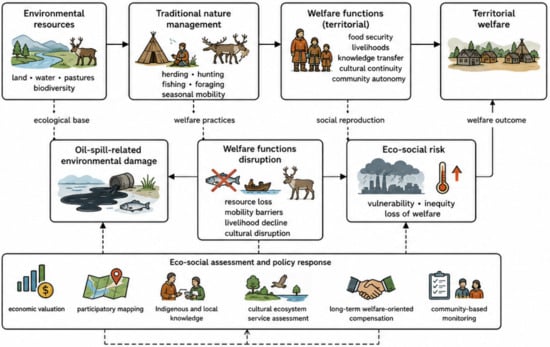
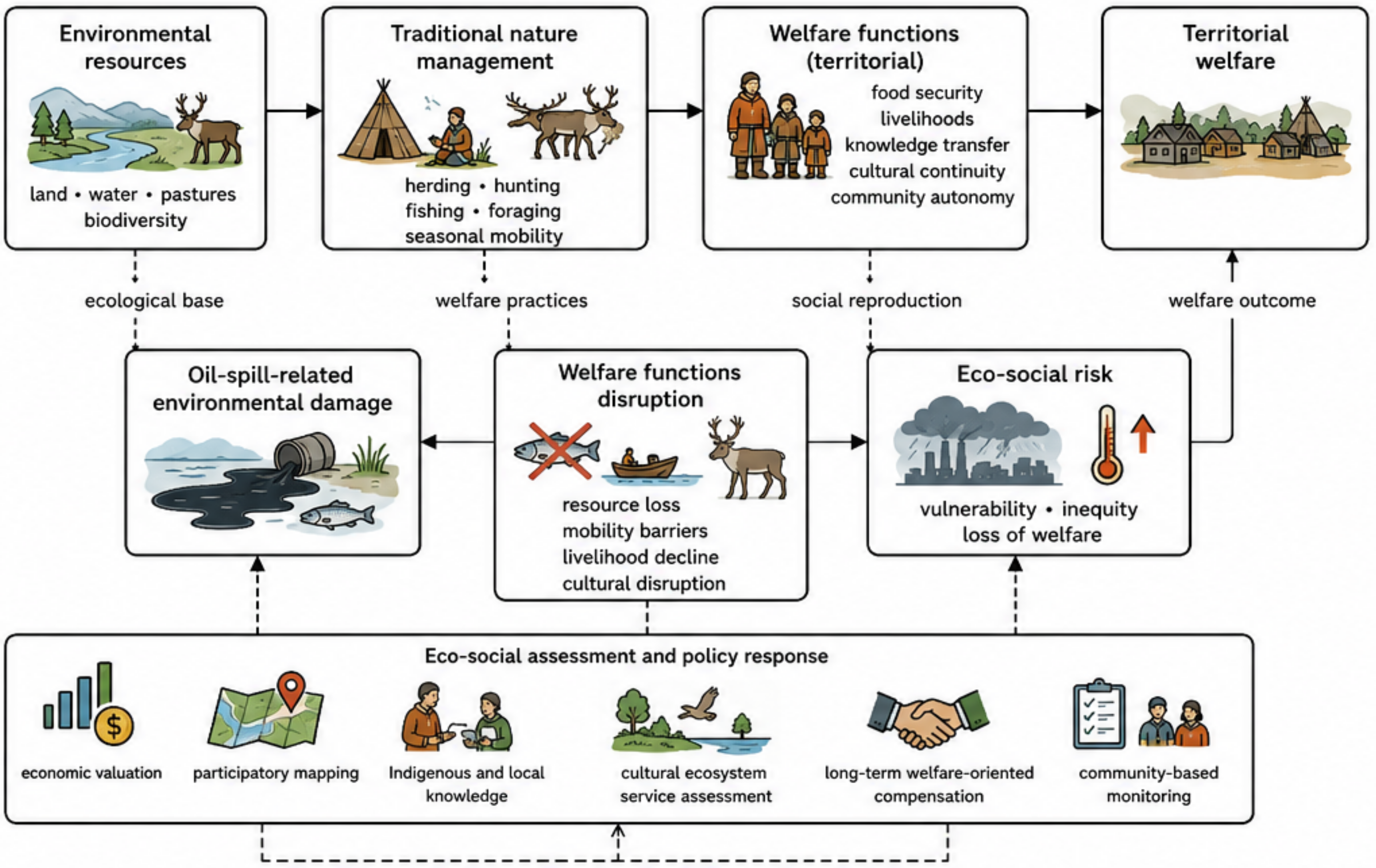

Disclaimer/Publisher’s Note: The statements, opinions and data contained in all publications are solely those of the individual author(s) and contributor(s) and not of MDPI and/or the editor(s). MDPI and/or the editor(s) disclaim responsibility for any injury to people or property resulting from any ideas, methods, instructions or products referred to in the content. |
© 2026 by the authors. Licensee MDPI, Basel, Switzerland. This article is an open access article distributed under the terms and conditions of the Creative Commons Attribution (CC BY) license.