


Abstract
This community-engaged qualitative study co-defined digital health and artificial intelligence (AI) priorities with First Nations communities in Manitoba, Canada, including those with disabilities. Grounded in Indigenous research methodologies and community-based participatory research, the project responded to persistent inequities in rehabilitation and health service access shaped by geography, colonial legacies, and jurisdictional fragmentation. These inequities are especially important in the context of aging, as older adults and Elders may experience compounded barriers related to disability, chronic conditions, mobility limitations, and digital exclusion. Over approximately 12 months, an interdisciplinary team consisting of First Nations scholars and partners, disability organizations, clinicians, and researchers conducted relationship-building visits and meetings with First Nations leadership, Elders/Knowledge Keepers, health providers, and community members to inform the design of a Gathering focused on disability, digital health, and AI. A one-day community-engaged Gathering was held on Treaty 1 and 2 Territory in Winnipeg and convened approximately 70 participants from multiple First Nations communities and disability/health organizations. Five facilitated roundtables explored: (1) health and research priorities for First Nations persons with disabilities; (2) primary care and disabilities; (3) digital access and cultural safety; (4) culturally safe and ethical AI use; and (5) health system challenges, disability, and digital health. Data consisted of facilitator-produced, de-identified table summaries, facilitator reflection forms, and participant-validated plenary notes; no recordings or individual sociodemographic data were collected. Using qualitative description and team-based content analysis, three interrelated domains emerged: (1) relationships, identity, trust, and cultural safety; (2) system, infrastructure, and equity conditions required for accessible care and digital inclusion (e.g., connectivity “dead zones,” device access, transport, and culturally safe services); and (3) opportunities, risks, and governance principles for AI and data use (e.g., AI literacy, privacy, bias, Indigenous data sovereignty, and Nation-specific governance). Findings emphasize that equitable digital health and AI must be relational, disability-informed, culturally safe, and led under First Nations authority, with AI positioned to support, rather than replace, human care relationships. The findings also highlight the importance of designing digital health and AI initiatives that remain accessible and trustworthy for older adults and Elders, particularly where aging, disability, and rural or remote living intersect.
1. Introduction
In Canada, Indigenous Peoples include First Nations, Inuit, and Métis Peoples, whereby within each grouping, there are distinct cultures, histories, languages, and governance systems. First Nations communities in Manitoba sustain rich languages, cultural practices, land-based knowledge systems, and strong traditions of collective governance and self-determination that continue to ground community wellbeing and visions for future generations (Walters and Simoni 2002; Fricke 1998). This positive depiction of First Nations communities and their diverse cultural practices is essential, as they counter narratives often overshadowed by the impacts of colonization and the resulting trauma (Tuck 2009). At the same time, many First Nations communities continue to live with systemic inequities rooted in colonial policies that negatively impact health, access to services, and opportunities to benefit from emerging digital technologies (Assembly of First Nations 2024; Lavoie et al. 2021). These inequities may be particularly consequential for older adults and Elders (i.e., respected Knowledge Keepers and community leaders) (Reichert et al. 2023) in addition to people aging with disability (Gii-pwaanawi’o, Anishinaabemowin language), who may face greater needs for continuity of care, mobility-related supports, and accessible pathways to rehabilitation and primary care (Khan et al. 2023; Yazdi-Feyzabadi et al. 2025; Reichert et al. 2023). As of October 2025, more than 182,000 people in Manitoba were registered under the Indian Act, an administrative category that reflects the status of First Nations—with over half living on-reserve, and 17 First Nations communities lacking all-weather road access (Indigenous Services Canada 2025). Geographic remoteness, alongside structural inequities, has contributed to social and economic disparities compared to the non-Indigenous population (Oosterveer and Young 2015; Blankinship and Lamb 2022). These conditions have created distinctive challenges for service delivery, including health care and rehabilitation, in many First Nations communities in the province (Indigenous Services Canada 2025; Lurch and Andrion 2024). These realities are rooted in a broader colonial harm across Canada in which policies such as the Indian Act, residential schools, Eurocentric pedagogy and other race-based systems have undermined Indigenous health systems, entrenched systemic racism in health institutions, and produced enduring disparities in social and health outcomes for Indigenous Peoples (Reichert et al. 2023; Jull et al. 2020; Monkman and Limoges 2023; Lurch and Andrion 2024).
Indigenous leaders, communities and scholars have emphasized that holistic healing practices, culture, language, ceremony and Indigenous ways of knowing are central to individual and collective wellbeing, in contrast to Western health systems that tend to focus more narrowly on illness (Reichert et al. 2023; Lovo Grona et al. 2018). A team of Treaty 4 First Nation members, health providers, administrators and researchers working with Treaty Four First Nations in Saskatchewan, for example, have highlighted how First Nation concepts such as “culture is good medicine” and the inherent Treaty right to health guide community-driven approaches to care and health sovereignty (Reichert et al. 2023; Sarah Kasleder for SHRF 2024). These perspectives underscore that any effort to improve rehabilitation, digital health, or artificial intelligence (Nibwaakaakaazowin, Anishinaabemowin language) services within First Nations contexts must be grounded in Indigenous knowledges, relational worldviews, community authority autonomy, and meaningful relationships rather than technology-driven initiatives imposed externally by a capitalist economy. Artificial intelligence (AI) is defined as computer systems that perform tasks associated with human cognition, such as learning and problem-solving (Ganesh et al. 2022). This grounding is also important in the context of aging, because digital health and AI initiatives intended to support older adults and Elders must do more than improve efficiency; they must also preserve relational care, cultural safety, autonomy, and trust (Joseph 2025; Veras et al. 2025b).
Access to rehabilitation services provides a concrete illustration of how structural barriers and colonial legacies intersect with geography and jurisdiction (Lovo et al. 2024b; Lovo Grona et al. 2017; Veras et al. 2023, 2025a, 2025b; Webber et al. 2022). A community-directed needs assessment with 11 First Nations communities served by the File Hills Qu’Appelle Tribal Council in Saskatchewan documented a significant decline in access to physical and occupational therapy and a heavy reliance on urban centers for outpatient care (Reichert et al. 2023). Community members described multiple challenges, including long travel distances, poor road and weather conditions, lack of transportation, extended time away from home, and long waiting lists (Reichert et al. 2023). These difficulties were compounded by jurisdictional complexity, financing gaps and experiences of racism that led many people to delay or avoid care. Participants linked limited rehabilitation access to pain medication, functional decline, diminished participation in cultural and social life, increased caregiver burden and negative impacts on mental health (Reichert et al. 2023). At the same time, communities articulated clear calls for action: locally based and fully funded rehabilitation staff; integration of therapy grounded in ceremony; cultural care and guidance from Knowledge Keepers; practitioner education in colonial history, systemic racism and trauma-informed practice; family-and community-directed care; and ongoing feedback and evaluation processes under Indigenous control (Reichert et al. 2023). Lovo and colleagues illustrate how relationship-centered, community-governed models are essential for addressing service gaps for rehabilitation in First Nation and Métis communities (Lovo et al. 2024a; Reichert et al. 2023). In a pilot trial, a team-based virtual approach achieved positive patient-reported outcomes and satisfaction comparable to in-person assessment while reducing travel-related implementation costs, an important consideration for communities where geography and limited workforce availability constrain access to rehabilitation services (Lovo et al. 2024b). Such barriers may be intensified among older adults and Elders, for whom disability often intersects with chronic illness, reduced mobility, and the desire to age in place within the community (Veras et al. 2025a).
These rehabilitation inequities are particularly important in the context of aging. Older adults and Elders in First Nations communities may experience intersecting needs related to chronic conditions, disability, pain, mobility limitations, caregiving, and continuity of care, while also holding vital roles as Knowledge Keepers, family members, and community leader (Lovo et al. 2024a). For many, aging well is closely connected to remaining in community, maintaining relationships, participating in cultural and land-based activities, and accessing care that is local, trusted, and culturally safe. Digital health, telerehabilitation, and AI may offer opportunities to support aging in place and improve continuity of care; however, these approaches may also reproduce exclusion if they are not designed with attention to accessibility, digital confidence, language, privacy, relational trust, local technical support, and community governance (Lovo et al. 2024a). Therefore, understanding community-defined priorities for digital health and AI is essential not only for improving rehabilitation access broadly, but also for ensuring that future innovations are responsive to the needs, strengths, and preferences of older adults, Elders, and people aging with disability.
Examples from relational approaches are also central in Indigenous maternal and child health. In very remote Aboriginal communities in the Northern Territory of Australia, the Maternal Early Childhood Sustained Home-visiting (MECSH) program brings nurses, social workers and community workers into women’s homes over the perinatal period (Gregory et al. 2024). Qualitative interviews with Aboriginal mothers and practitioners highlighted that trust was the foundation of women’s positive experience of the program (Gregory et al. 2024). Relationships developed gradually, often beginning with practical support to address immediate needs, such as transport, navigating services or meeting basic material needs (Gregory et al. 2024). Over time, women came to value the practitioner’s dependability, flexibility to follow their priorities, transparent and respectful communication, confidentiality, and concrete help for themselves and their families. Participants frequently described the relationship as blending professional support with elements of friendship and emotional support, noting that they felt “someone had their back” when working with MECSH practitioners (Gregory et al. 2024). The authors concluded that relationship-based, culturally safe and trauma-informed practice is not a peripheral feature but the core mechanism through which sustained home visiting supports Indigenous families (Gregory et al. 2024). Extending this relational logic, the IBSW Program illustrates how culturally safe, trauma-informed support combined with advocacy and service navigation can improve Indigenous women’s experiences across pregnancy, labour, and postpartum, particularly in settings where institutional barriers remain (Pandey et al. 2023).
Telehealth and telerehabilitation initiatives with Indigenous communities in western Canada show both the promise and the limits of technology for addressing long-standing gaps in access to rehabilitation (Choukou et al. 2021). Community-directed work in Saskatchewan has demonstrated that remote presence robots, team-based models combining physical therapists and nurse practitioners, and “ethical Space” approaches can extend assessment and follow-up for people with chronic back pain and other conditions in remote First Nations communities, particularly when services are locally governed and integrated with existing community programs (Reichert et al. 2023; Crockett et al. 2024; Lovo et al. 2024b; Lovo Grona et al. 2017). Ethical space refers to the relational “in-between” that emerges when distinct knowledge systems encounter one another without being reduced to a single framework. Drawing on British philosopher and literary theorist Roger Poole’s idea that different intentions shape how people meet, Ermine extends the concept to Indigenous–Western relations by emphasizing that this space becomes visible once difference is clearly acknowledged, differences rooted in history, philosophy, and social and political realities (Ermine 2007). In this sense, ethical space is “ethical” because it requires deliberate negotiation of how engagement will proceed, including attention to power, respect, and mutual accountability (Ermine 2007). At the same time, equity-focused reviews of telerehabilitation in physiotherapy and occupational therapy caution that virtual models can inadvertently exacerbate exclusion when connectivity, digital literacy, accessibility, hands-on assessment needs, and local technical support are not explicitly planned for, especially among older adults and those with complex chronic conditions (Veras et al. 2025a, 2025b). This is particularly relevant for First Nations communities, where older adults and Elders may encounter overlapping barriers related to disability, rural or remote living, affordability, digital confidence, and the need for trusted support when engaging with virtual care (Choukou et al. 2021).
A qualitative study of First Nations adults from rural and remote communities in north-central British Columbia explored perspectives on telehealth physiotherapy, with particular attention to the virtual therapeutic relationship (Moecke et al. 2024). Participants emphasized that the therapist’s attitude and way of relating empathy, genuine interest, listening, clear communication, and collaborative decision-making were more important than the mode of delivery itself. They valued practitioners who took time to learn about their lives, communities, and cultural context, and who approached care holistically, acknowledging the physical, emotional, mental, and spiritual dimensions of wellbeing (Moecke et al. 2024). At the same time, they described communication difficulties, discomfort with screens or phones, technological failures, household distractions, concerns about privacy and data security, and the absence of touch as important limitations, particularly in the context of ongoing trauma and mistrust linked to colonial histories (Moecke et al. 2024). The study also highlighted the impact of ongoing trauma and mistrust related to colonial histories, and the need for trauma-informed, culturally safe digital health practice (Moecke et al. 2024).
First Nations participants in the British Columbia study did not view telehealth and in-person care as interchangeable. Many preferred a hybrid model in which initial in-person visits established rapport, enabled hands-on assessment and contextual understanding, and were then complemented by telehealth for follow-up, education and exercise support. They also identified strategies to make telehealth more culturally appropriate and effective, including local telehealth support workers who could help with technology and act as cultural liaisons, greater continuity of providers, and integrating cultural elements and land-based activities into rehabilitation goals and practice (Moecke et al. 2024). Findings from Canadian and Australian studies indicate that relationship-centered, community-engaged approaches are feasible and valued in Indigenous rehabilitation and maternal–child health, including in digital and remote care models.
Alongside these program- and service-level examples, scholars have emphasized that relationship-centered work with Indigenous Peoples must be supported by organizational and governance structures that embed collaboration, consent, and accountability rather than relying solely on individual goodwill (Monkman and Limoges 2023). Organizational commitments to co-planning, co-delivery and co-evaluation of Indigenous-led and mainstream services, aligned with the Truth and Reconciliation Commission’s Call to Action 92 and the United Nations Declaration on the Rights of Indigenous Peoples (UNDRIP), create the conditions for Indigenous leadership, including Indigenous health professionals, to shape priorities and decision-making in health and digital innovation spaces (Bourque Bearskin et al. 2020; United Nations General Assembly 2007). Approaches grounded in Indigenous methodologies and principles such as the “4Rs” of respect, relevance, reciprocity and responsibility provide practical guidance for how institutions should engage, listen and remain answerable to communities over time, rather than treating engagement as a one-off consultation (Veras at al. 2025b) These structural and methodological commitments centered our work and informed our approach to relationship-building and co-design in the Manitoba context (Enari et al. 2024; Shirley and Angulo 2019).
Despite this emerging evidence, there remains limited empirical work in the Canadian Prairie context, particularly in Manitoba, that describes how relationships around digital health, AI and rehabilitation are built with First Nations communities, and how communities themselves articulate priorities, opportunities and concerns in these domains. Much of the current discourse on AI in health focuses on algorithmic performance and technical feasibility, with comparatively less attention to Indigenous data sovereignty, governance, community-defined benefits, or the relational work required to co-develop AI and digital health initiatives that are culturally safe and equity-enhancing. Concerns and apprehension surrounding AI should not necessarily be interpreted solely as resistance to innovation; they may also create opportunities for ethical reflection, inclusive governance, and greater public participation in shaping technological development (Veras 2025). There is a need for studies that trace not only the outcomes of engagement, but also the processes of relationship-building, listening and co-design that precede and shape discussions about digital health and AI. There is also a need to better understand how these discussions relate to aging, particularly where older adulthood, disability, caregiving, chronic conditions, and digital exclusion intersect in First Nations communities.
The present study responds to this gap by centering community-based participatory research (CBPR) and Indigenous methodologies to focus on First Nations communities in Manitoba. Specifically, (1) to describe a relationship-building process with First Nations leadership, health providers, Elders and community members, undertaken to understand local perspectives on digital health, AI and rehabilitation; and (2) to report the outcomes of a community-engaged Gathering that used five themed roundtables to explore First Nations’ experiences, priorities and conditions for future research in digital health and AI. This focus includes attention to how these priorities may shape access to care and digital inclusion across the life course, including for older adults and Elders.
2. Methods
2.1. Study Design
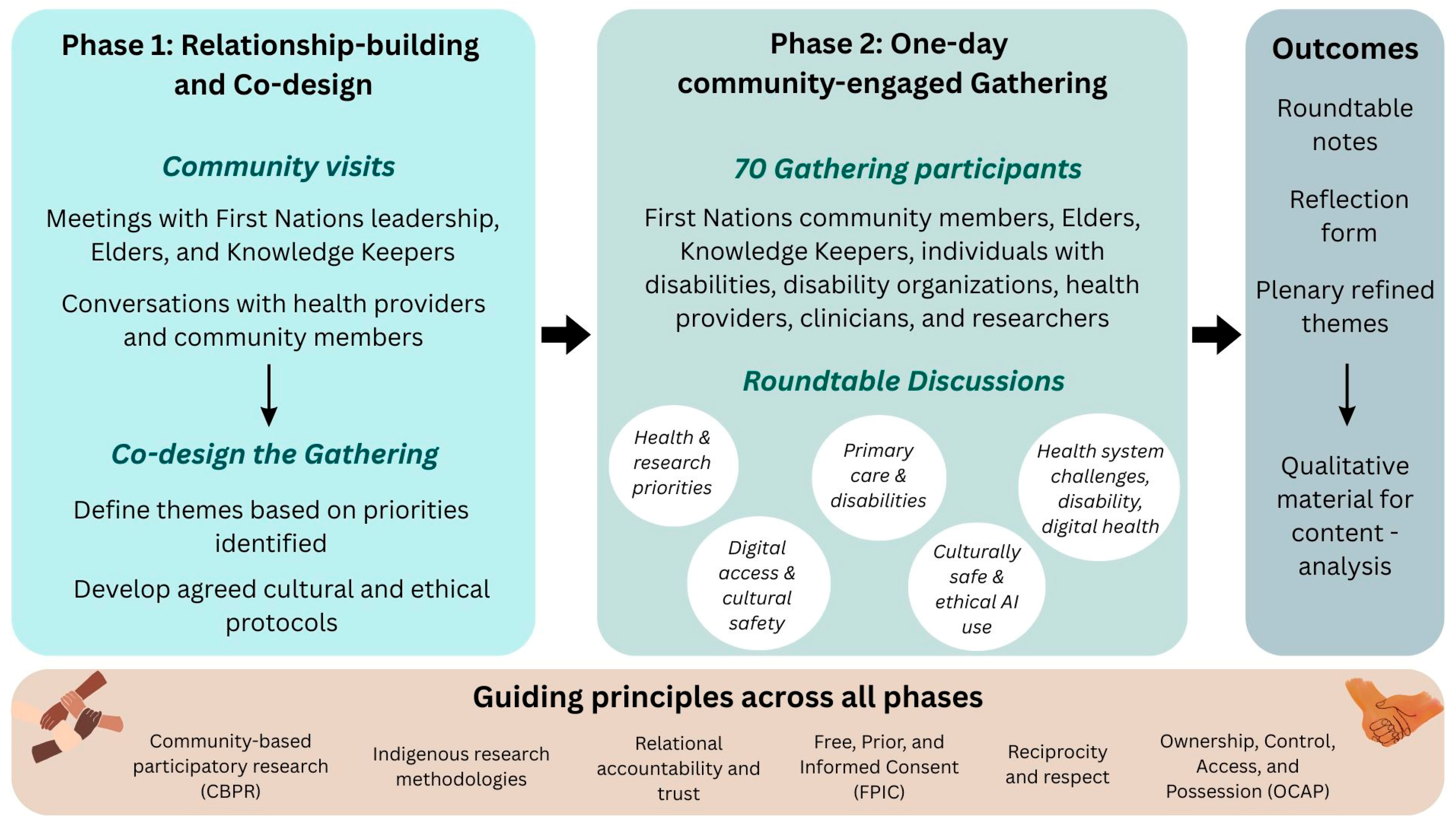
This study used a community-engaged qualitative design informed by community-based participatory research (CBPR) (Dadich et al. 2019) and Indigenous research methodologies that emphasize relational accountability, reciprocity, respect for Indigenous epistemologies, and community authority over research priorities (Dadich et al. 2019). The study consisted of two phases: (1) a 12-month relationship-building and co-design phase, and (2) a one-day community-engaged in-person Gathering with roundtable discussions (Figure 1). Phase one involved meetings, site visits, and conversations led by First Nations leaders, Elders, Knowledge Keepers, health providers, and community members to identify priorities for the Gathering. Next, phase two focused on facilitating discussions of disability, rehabilitation, digital health, and AI during the Gathering. Consistent with the CIHR Guidelines for Health Research Involving Indigenous People and the 4Rs of respect, relevance, reciprocity, and responsibility, First Nations scholars, students, and disability organizations’ partners strongly shaped the study’s purpose, co-designing the gathering and interpreting the findings (Jull et al. 2020; Monkman and Limoges 2023).
Figure 1.
Illustration of the two phases of the community-engaged and co-designed research process.
2.2. Setting and Partners
The study (i.e., phases one and two) took place in Manitoba, Canada, in collaboration with several First Nations communities and Indigenous-led health and disability organizations. The project was initiated through funding from the University of Manitoba and Research Manitoba to support relationship-building around digital health, artificial intelligence and rehabilitation with First Nations people with disabilities.
In phase one, an interdisciplinary research team, including First Nations scholars, disability partners, rehabilitation clinicians and academic researchers, met regularly to build trust, plan and reflect on this work. Relationship-building was structured around two interconnected components. First, the team undertook a series of community visits across different regions of Manitoba to listen to local perspectives on disability, rehabilitation and digital health, and to begin to identify community-defined priorities. These visits were conducted by the first author (MV) and a co-investigator (RU), alongside a trusted member and Anishinaabe educator (DBD) who acted as knowledge translator and co-facilitator. Second, perceptions from these visits informed the co-development of a community-engaged Gathering on Treaty 1 Territory in Winnipeg, focused on First Nations people with disabilities and the future of digital health and AI. This paper describes the methods and outcomes of this relationship-building process, with particular attention to the design and implementation of the Gathering.
2.3. Governance, Ethics and Data Sovereignty
This study was reviewed and approved by the University of Manitoba Research Ethics Board (CHIPER Health Research Ethics Board; approval no. HS27017) and was classified as minimal risk. The REB submission was developed at an early stage when data collection was initially envisioned to include focus groups and/or interviews; however, the project evolved through co-design with partners and ultimately relied on facilitator-produced, de-identified roundtable summaries and validated plenary notes rather than audio-recorded focus groups or interviews.
In addition, the first author met with the First Nations Health and Social Secretariat of Manitoba’s Health Information Research Governance Committee (HIRGC) to discuss the proposed Gathering and the planned use of roundtable summaries and to seek guidance on appropriate governance and ethical processes. HIRGC noted that, when research is undertaken with or on behalf of specific Nations, support from First Nations leadership at the community level (e.g., Band Council Resolutions and letters of support), alongside appropriate participant consent processes, may be expected. HIRGC further emphasized four ethical principles used in their regional review processes—Free, Prior, and Informed Consent (FPIC), OCAP®, benefits to First Nations, and First Nations ethical principles—and advised that these principles be considered as the work progressed.
In this work, the Gathering was convened as a community-engaged, multi-partner forum to share experiences and priorities across participating communities and organizations, rather than as research mandated by or conducted on behalf of any single Nation. Governance expectations were therefore addressed through partner-led co-design and agreed cultural and ethical protocols. For example, the agenda, discussion prompts, facilitation approach, and decisions about what knowledge participants wish to have documented and shared were developed with First Nations partners. Facilitators were instructed to record only high-level themes and questions (not names, identifying details, or verbatim quotes); and plenary notes were validated in-session with participants to confirm accuracy and appropriateness for sharing.
Throughout, the project was guided by First Nations data sovereignty and OCAP® (ownership, control, access and possession), with First Nations partners retaining collective authority over how knowledge from the Gathering is interpreted, shared, and used. In practice, this included agreement on what types of information could be disseminated (e.g., cross-cutting priorities rather than community-specific issues), partner review of draft outputs for cultural and contextual integrity, and the ability to revise or withhold content if it posed risks of misinterpretation or unintended community identification.
2.4. Relationship-Building and Co-Design Process (Pre-Gathering)
As part of phase one, relationship-building activities preceded the Gathering. This was not only an integral part of the research in terms of the qualitative research process, but an ongoing ethical and relationship responsibility (Dadich et al. 2019). Over approximately 12 months, the team engaged in a series of meetings, site visits and informal conversations with leadership, Elders, Knowledge Keepers and health providers to listen to local concerns about digital health, AI and rehabilitation and to co-define the focus of the roundtables. These conversations informed decisions about the themes of the five roundtables, the inclusion of student facilitators and note-takers, and how community members wanted their knowledge to be represented and returned. Although the Gathering comprised five roundtables, two were intentionally designed to explore the same overarching theme from complementary perspectives.
Community visits were undertaken only following invitation or agreement from local leadership, and each visit included at least one member of the relevant First Nation who acted as a knowledge translator and co-facilitator (DBD). This approach ensured that community preferences and protocols shaped travel plans, meeting formats and discussion topics, and that conversations remained respectful and centered on locally identified priorities. Throughout this phase, the research team met regularly to review planned activities, debrief after visits, and make joint decisions about subsequent steps, including the design and organization of the Gathering.
2.5. Gathering Procedures, Data Collection, Analysis
For phase two of the study, the community-engaged Gathering was held in-person in October 2025 on Treaty 1 Territory in Manitoba. The event was co-designed by a planning group that included First Nations partners, disability partners and members of the academic team through a series of virtual and in-person meetings that defined the overall purpose, structure and protocols for the day. The agenda centered cultural protocols, including an opening and closing led by Elders and Knowledge Keepers, territorial acknowledgement, and time for prayer, reflection and informal relationship-building. In accordance with local protocol, tobacco was offered to the Elder.
Participants were invited through First Nations leadership, community health services, disability organizations and existing networks of the research team. Invitations emphasized that the Gathering was a space to share experiences and priorities regarding digital health, AI and rehabilitation, rather than a forum for technology promotion. Travel arrangements, accessibility needs and honoraria were planned in collaboration with community partners to support participation by Elders, Knowledge Keepers, community members with disabilities, and providers from rural and remote communities. Descriptive information on the number of participants, their roles and the communities represented is presented in the Results section.
The core of the event consisted of five themed roundtables focused on dimensions of digital health, AI and rehabilitation identified during the pre-gathering relationship-building phase. Each table brought together a mix of community members, Elders or Knowledge Keepers, health and rehabilitation providers, disability advocates and university-based researchers. Roundtable discussions followed a semi-structured guide co-developed with First Nations partners and informed by discussions during the community visits. The guide prompted reflection on: (1) Health and Research Priorities for First Nations Persons with Disabilities; (2) Primary Care and Disabilities; (3) Digital Access and Cultural Safety; (4) Culturally Safe and Ethical Use of Artificial Intelligence (AI) in First Nations Communities; and (5) Health System Challenges, Disability and Digital Health.
Student facilitators supported the roundtables using a standardized summary and reflection form and were supported on site by a lead coordinator (“floater”) who monitored time, offered guidance, and helped ensure consistency across tables. Before the event, facilitators took part in an orientation session and received a written Facilitator Manual and table-specific topic sheets. The facilitation team was intentionally composed to bring relevant lived and applied experience, including facilitators with Indigenous backgrounds and facilitators with prior engagement with First Nations communities through related research. The team also included individuals with experience facilitating group discussions in visible minority/racialized community contexts, alongside trainees with experience in community-engaged methods, group facilitation, and qualitative documentation. Facilitators were responsible for creating an inclusive space, adhering to agreed cultural and ethical protocols, and documenting the conversation using de-identified notes that captured shared themes, questions, and priorities; no identifying information was recorded. At the end of the day, facilitators presented table summaries in a plenary session, where participants validated the topics, discussed them, and refined them. Two facilitators (TI, JG) also synthesized reflections across tables to support collective interpretation. These validated plenary summaries, together with the anonymized roundtable notes and facilitator reflection forms, formed the primary qualitative dataset for analysis.
2.6. Researcher Positionality and Reflexivity
MV identifies as Parda, which includes Indigenous ancestry. She approaches this work with a commitment to reflexivity and relational accountability, recognizing that she is a guest on Treaty 1 & 2 Territory and in Manitoba and that First Nations partners hold authority over how priorities and knowledge are interpreted and shared. Co-authors (DBD, LD, MM, EP and LH) include Indigenous scholars and First Nations/community partners, as well as individuals with lived experience of disability (including First Nations members), and contributors with experience in community leadership and healthcare. These perspectives informed the study through co-design, interpretation, and writing, strengthening accountability to partners and relevance to Indigenous priorities. Additionally, several concepts in this manuscript are described using Anishinaabemowin terms, shared by author DBD. Although this terminology varies across Indigenous communities, the inclusion of Indigenous language in academic and health research is important for supporting cultural visibility, respect, and recognition of Indigenous knowledge systems within scholarly spaces.
2.7. Data Management and Analytic Approach
The validated plenary summaries and written roundtable notes constituted the primary qualitative material for this study. Our analytic approach was guided by a qualitative description orientation (Jeffery et al. 2017), emphasizing a low-inference synthesis of facilitator-validated summaries. Building on this orientation, we used an iterative, team-based content-analytic process to summarize and compare priorities across roundtables (Jeffery et al. 2017). To support analytic rigor, the team used repeated reading, collaborative discussion, and documentation of decisions about convergence/divergence and cross-cutting patterns, maintaining an audit trail of revisions to the compiled summary document. The first author (MV) compiled the facilitator-validated table summaries and priority lists into a single document and, together with two co-authors (TI and JG), read and re-read the material to develop an overall understanding of discussions across tables. The team then compared table-level outputs to identify points of convergence and divergence and to distill the main messages participants wished to emphasize. The Results section is therefore organized to mirror the five roundtable topics and to highlight patterns that recurred across more than one table (e.g., trust and relationships, accessibility and local services, digital inclusion, and governance and data sovereignty), while remaining close to the wording and emphases of the original summaries.
For each roundtable, the facilitator-validated summary and list of priorities were treated as the core analytic outputs. The three authors (MV, TI, and JG) then compared these table-level summaries to identify points of convergence and divergence across topics and to distil the main messages that participants wished to emphasize. The Results section is therefore organized to mirror the four roundtable topics and to highlight cross-cutting patterns that recurred in more than one table (for example, trust and relationships, accessibility and local services, digital inclusion, and governance and data sovereignty), while remaining close to the wording and emphases of the original summaries.
3. Results
No individual sociodemographic data were collected, consistent with the governance approach described above. However, facilitator summaries indicated that participants reflected diverse genders and social locations, including women, men, and Two-Spirit people. Most participants were First Nations, with Métis participants and a small number of non-Indigenous allies working in Indigenous health and disability services. Roles spanned Elders and Knowledge Keepers, First Nations leadership, community health and disability advocates, pharmacists, nurses, community health workers, rehabilitation and allied health providers, service users with lived experience of physical, mobility, learning, and mental health-related disabilities, as well as undergraduate students, researchers, and health system leaders.
The pre-gathering visits and meetings with First Nations communities to confirm the relevance of focusing on disability, digital health, and artificial intelligence helped shape the design of the community-engaged Gathering. These relationship-building activities oriented the team toward locally identified concerns regarding access to rehabilitation, primary care, and virtual services and informed the selection of roundtable topics, facilitation approaches, and cultural protocols. The results presented below focus on what emerged during the Gathering itself, recognizing that the event represented one moment within a longer relational process.
The Gathering brought together approximately 70 participants from 13 First Nations communities and First Nations and Disability organizations, as well as representatives from provincial and regional services. Across the five roundtables, three interrelated domains emerged: (1) relationships, identity, trust, and cultural safety; (2) system, infrastructure, and equity conditions for digital health and rehabilitation; and (3) opportunities, risks, and governance principles for AI and data use.
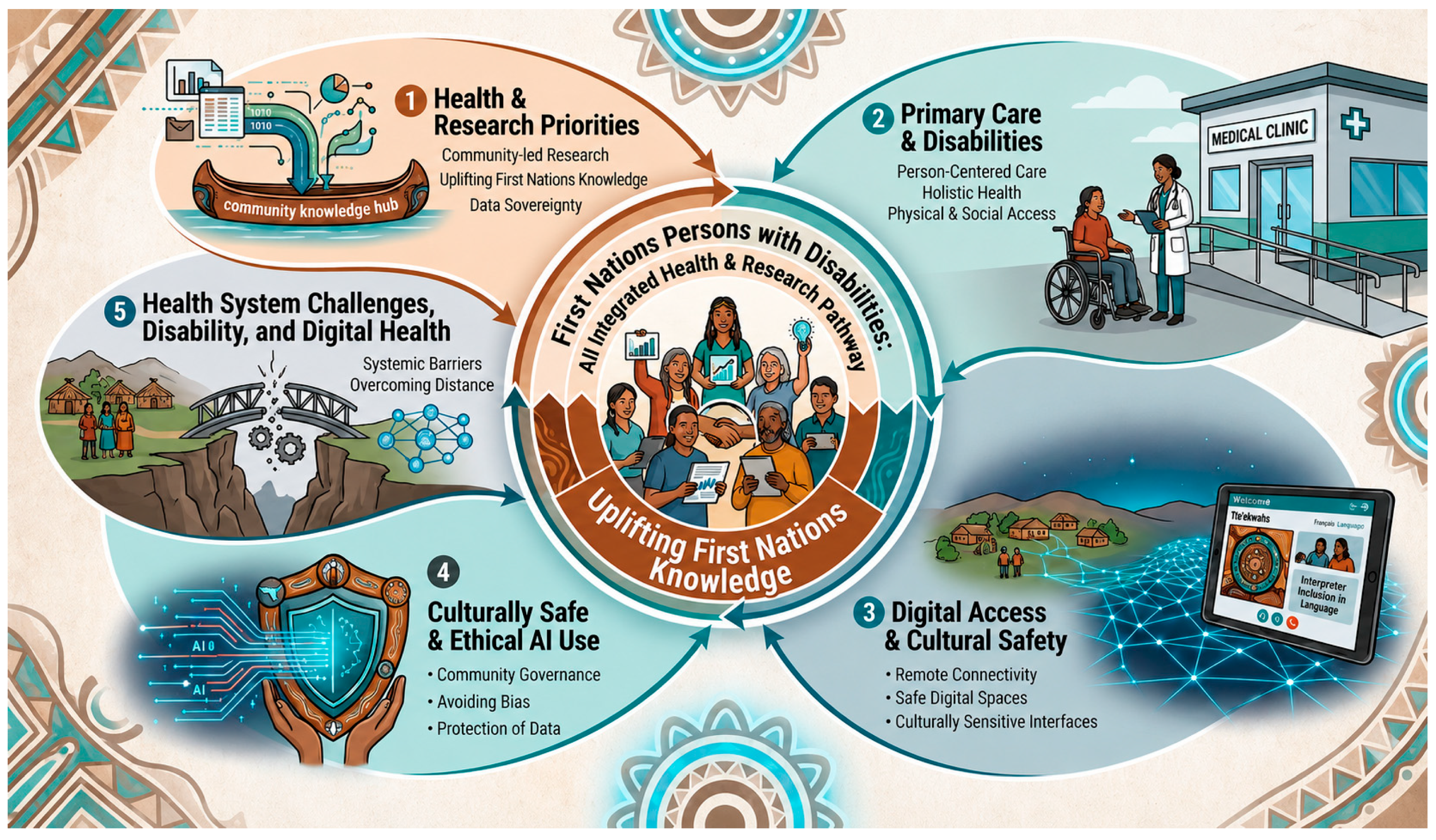
Facilitator reflections provided meta-level insight into the dynamics of the tables (Figure 2). Participation was generally inclusive, with most participants contributing and Elders explicitly supporting the voices of younger attendees. One AI-focused table highlighted how technical expertise can unintentionally dominate discussions and the need for strategies to balance participation. The overall tone across tables was respectful, often emotional and grounded in personal and community stories of disability, trauma care and colonial impacts. Several facilitators noted that 1 h was insufficient to address the depth and sensitivity of the issues raised.
Figure 2.
Uplifting First Nations Knowledge: Community-Led Priorities in Digital Health and AI Ethics (Image generated by Google Imagen 3 based on prompts provided by the author).
3.1. Domain 1: Relationships, Identity, Trust, and Cultural Safety in Discussions of Disability
At the roundtable on health and research priorities for First Nations persons with disabilities, conversations quickly moved from general questions to deeply personal narratives. Most participants either lived with disability or were closely connected to family members with physical, mobility, learning, or mental health-related disabilities. Many felt comfortable sharing, and several became emotional as they described the cumulative impacts of disability, stigma, and trauma on themselves and their families.
The language of “disability” itself was contested. Some participants described the term “disabled” as demeaning and inadequate, emphasizing that people should be recognized first as human beings rather than defined by impairment. One participant observed that “one has to look at the word disability and think about what it means,” and questioned the expectation that such experiences could be compressed into a one-hour conversation with people they might never see again.
Participants also challenged pan-Indigenous framings and linked this concern directly to digital health and AI initiatives intended for Indigenous people with disabilities. They stressed that “Indigenous” is often treated as a single category in technology discussions, despite distinct Nation-specific histories, governance structures, and priorities (e.g., First Nations, Métis, or Anishinabe, Anishininewak, and Dakota Oyate Denensuline). Participants emphasized that technologies and AI systems should be developed with—and where possible led by—Indigenous people (within community) lived experience of disability, including decisions about which data are collected, how models are trained and evaluated, and how benefits are returned to communities. They noted that without clear community benefit and accountable governance, sharing experiences or data may feel unsafe or extractive. Together, these reflections reinforced that relational work, Indigenous leadership, and precise Nation-specific language are foundational to ethical digital health and AI innovation.
3.2. Domain 2: System, Service, Infrastructure, and Equity Conditions for Equitable Care, Digital Health, and Rehabilitation
Roundtable discussions on primary care, disability-related supports, and digital access in rural, remote, and isolated communities highlighted how structural and jurisdictional conditions shape the feasibility of equitable care. Participants described the absence of consistent definitions of “rural,” “remote,” and “isolated” (absence of infrastructure) across federal and provincial systems, noting that these classifications influence funding eligibility and service delivery in ways that do not always reflect lived realities.
Jurisdictional fragmentation was identified as a persistent barrier. Participants emphasized that overlapping federal and provincial responsibilities, alongside multiple First Nations health organizations and independent providers, create gaps in disability-related supports and undermine continuity. They described shortages of physicians, nurses, and prescribers for assistive equipment in many communities; northern nursing stations oriented primarily to acute care; long waits for developmental pediatrics and other Jordan’s Principle services; and limited pathways for adults with disabilities. Navigating fragmented systems was also described as increasing privacy risks and contributing to inconsistent policy implementation.
Transport was repeatedly framed as a determinant of access and participation. For people with mobility limitations, participants described the cost, availability, and quality of accessible transport as constraining access to appointments, community engagement, and everyday activities. They also highlighted the fragility of supports for children with learning disabilities and other developmental needs, and called for smoother transitions from child to adult services, community-based housing and resources to support aging in place, and services for Elders that integrate biomedical, community, and traditional approaches. These discussions underscored that equitable service design must account for the needs of people aging with disability, as well as older adults and Elders who may require continuity of care, local supports, and culturally safe pathways to remain in community.
Digital health was discussed within these broader system realities, as both a potential support and a possible source of new inequities. Participants described “dead zones” on-reserve, limited access to devices (e.g., smartphones and computers), and circumstances in which Band offices had to purchase routers and phones to enable basic participation in schooling and services. For many, these infrastructure gaps made telehealth aspirational rather than consistently available. At the same time, participants identified potential value in user-friendly digital health for reducing travel burdens, strengthening access to specialist input, and supporting continuity of care—provided that foundational connectivity and device access are addressed and that in-person options remain available.
When invited to define “digital health” and “telehealth,” participants grounded these concepts in practical experiences, such as using a phone or computer to connect with a provider, joining a virtual appointment for themselves or a family member, or accessing advice at a distance that would otherwise require travel. Examples of perceived benefits included connecting with a speech-language pathologist online for a child living on-reserve and avoiding long trips for brief follow-up visits.
Participants emphasized that equitable digital health depends on relational and cultural safety conditions in addition to user-friendly infrastructure. Some described deficit-oriented or blaming encounters with clinicians and educators, particularly regarding children’s disabilities, and identified the need for mandatory cultural safety training and Two-Eyed Seeing approaches for health professionals, especially physicians. Trust and transparency were also central. Participants expressed concern about not knowing who might be present “behind the screen” during virtual care and possible distrust of practical privacy protocols (e.g., scanning the room at the start of a session). They also raised concerns about how information shared online is stored, who can access it, and how it might be used over time.
Finally, digital literacy and local capacity were positioned as prerequisites for inclusion. Older adults and Elders were described as particularly at risk of exclusion when technologies are introduced without adequate support and are not user-friendly. Participants suggested community-based training, embedding digital tools within meaningful social and cultural activities, and ensuring that virtual care supports, but does not replace, local, relationship-based services and traditional healing practices. Participants’ reflections suggested that digital inclusion in later life depends not only on connectivity, but also on confidence, usability, trusted assistance, and technologies that respect cultural and relational contexts.
3.3. Domain 3: Opportunities, Risks, and Governance Principles for AI and Data Use
Across the two AI-focused roundtables, participants expressed both interest and caution. Discussions frequently began with foundational questions—what AI is, how it works, and where it would sit within health systems, highlighting plain-language AI literacy as a prerequisite for informed dialogue and decision-making. This was especially relevant when considering possible future use among older adults and Elders, for whom understanding, trust, accessibility, and support may shape whether AI-enabled tools are acceptable or useful in practice.
Participants identified potential applications that could be helpful if developed under Indigenous governance and aligned with community priorities. Examples included tools to support patient understanding of X-ray results and diagnoses through diagrams and accessible language, and AI-supported explanations of rehabilitation concepts (e.g., pain education; passive and active range of motion) delivered through short videos to reinforce education and reduce clinician overload. Some participants also noted potential for AI to support individuals with autism or other neurodiversities, or to assist clinicians by flagging concerning vital signs across large patient cohorts to enable earlier intervention.
At the same time, participants identified risks that would need to be addressed before AI could be considered acceptable in First Nations health contexts. Concerns included privacy breaches, hacking, and misuse of sensitive health data; inaccurate or unsafe advice, particularly in mental health contexts; over-reliance on AI that could erode human judgement and employment; and the risk that AI could reinforce Western, individualistic paradigms of health misaligned with First Nations worldviews. Some participants described AI as “too Westernized” and fundamentally uncomfortable as a basis for Indigenous health care. Others emphasized that AI is “only as strong as the user,” underscoring the importance of critical thinking, transparent data sources, clear parameters, and robust ethical oversight to mitigate misinformation and bias.
Equity and accessibility were recurring themes. Participants raised concerns about the costs of high-quality software and hardware and suggested that text-based AI may privilege users with strong written communication skills and comfort in English. They questioned how AI could engage Indigenous languages, knowledge systems, and communication styles without flattening, misrepresenting, or extracting them.
Across tables, participants emphasized that AI initiatives must begin with First Nations leadership, Nation-specific engagement, and community-defined priorities. They called for data governance agreements that reflect Indigenous data sovereignty, co-design of tools with communities (including Indigenous co-created apps), and explicit commitments that AI should support—not replace—human relationships and clinical decision-making. AI literacy for clinicians and communities was framed as a foundational condition for future work.
4. Limitations
As individual sociodemographic information was not collected, we cannot describe the age composition of participants or compare priorities across age groups. Therefore, the findings should be interpreted as community-informed priorities relevant to digital health, AI, rehabilitation, disability, and aging in community, rather than as age-specific findings. Second, the Gathering reflected the perspectives of participants who were present and willing to engage in this relationship-building process; therefore, the findings may not capture the full diversity of perspectives across all First Nations communities in Manitoba. Third, because this was an early-stage community-engaged study focused on relationship-building and priority-setting, the findings should be viewed as a foundation for future co-design, implementation planning, and community-led evaluation rather than as definitive recommendations for specific digital health or AI interventions.
5. Conclusions
The current study examined community-engaged discussions of digital health and AI in First Nations contexts, highlighting the ongoing realities of colonialism, inequitable infrastructure, and barriers to health and rehabilitation services. Access to services depends not only on technological innovation, but also on culturally safe relationships, trust, continuity of care, reliable connectivity, accessible transportation, and local service capacity. Nation-specific engagement, First Nations governance, and community-defined priorities are therefore necessary for the ethical implementation of digital health and AI initiatives. At the same time, digital health and AI may offer opportunities to reduce travel burdens, improve access to services, enhance continuity of care, and support rehabilitation in rural and remote settings when they are designed and governed in ways that reflect community priorities.
These findings have practical and policy implications for multiple stakeholders. For policymakers and funders, the results indicate that investments in digital health and AI must be accompanied by sustained funding for broadband connectivity, device access, accessible transportation, local rehabilitation capacity, and community-based digital support roles. For health systems and rehabilitation providers, the findings highlight the need to preserve in-person options, strengthen culturally safe and trauma-informed care, integrate traditional and community-based supports, and ensure that virtual care complements rather than replaces local relationships. For digital health and AI developers, the findings underscore the importance of co-designing tools with First Nations communities from the earliest stages, using plain language, accessible interfaces, transparent data practices, and safeguards against bias, privacy risks, and inappropriate replacement of human judgement. For researchers and academic institutions, the findings call for longer-term relationship-building, Indigenous governance, community review of outputs, and research designs that respect First Nations data sovereignty and avoid extractive approaches. For First Nations leadership and community partners, the findings may support advocacy for digital health and AI initiatives that are Nation-specific, community-governed, disability-informed, and responsive to the needs of older adults, Elders, and people aging with disability.
Our findings also suggest that aging should not be treated as peripheral to digital health and AI discussions in First Nations contexts. Rather, aging intersects with disability, chronic conditions, mobility, caregiving, and place-based inequities in ways that can intensify exclusion from rehabilitation, primary care, and virtual services. For older adults and Elders, equitable digital health and AI require not only connectivity and devices, but also culturally safe implementation, trusted support, accessible design, and governance approaches that protect autonomy, dignity, and First Nations authority. Future work should continue to prioritize Indigenous-led, relationship-based, and community-governed approaches to digital health and AI, with attention to implementation planning, evaluation, and the long-term conditions needed to strengthen wellbeing across the life course.
Author Contributions
Conceptualization, M.V., D.B.D., L.D., R.U., J.R., D.C.S.-R., M.-A.C., S.G., D.K., L.H. and S.L.; methodology, M.V., D.B.D., L.D., R.U., J.R., T.I., J.G., D.C.S.-R., M.-A.C., S.G., D.K., M.M., E.P., L.H. and S.L.; software, M.V., R.U., J.R., M.-A.C. and S.L.; validation, M.V., D.B.D., L.D., R.U., J.R., M.M., E.P., L.H. and S.L.; formal analysis, M.V., D.B.D., L.D., R.U., J.R., T.I., J.G., D.C.S.-R., M.-A.C., S.G., D.K., M.M., E.P., L.H. and S.L.; investigation, M.V., D.B.D., L.D., R.U., J.R., T.I., J.G., M.-A.C., D.K. and S.L.; resources, M.V.; data curation, M.V., D.B.D., L.D., R.U., J.R., T.I., J.G., D.C.S.-R., M.-A.C., S.G., D.K., M.M., E.P., L.H. and S.L.; writing—original draft preparation, M.V.; writing—review and editing, M.V., D.B.D., L.D., R.U., J.R., T.I., J.G., D.C.S.-R., M.-A.C., S.G., D.K., M.M., E.P., L.H. and S.L.; visualization, M.V., R.U., J.R., T.I., J.G., M.-A.C. and S.L.; supervision, M.V. and S.L.; project administration, M.V.; funding acquisition, M.V., R.U., J.R., D.C.S.-R., M.-A.C., D.K., L.H. and S.L. All authors have read and agreed to the published version of the manuscript.
Funding
This work was supported by the University of Manitoba, funding number 328434 and Research Manitoba, funding number 329045. The funding bodies had no involvement in the design of the study; in the collection, analysis, or interpretation of data; or in the decision to submit the manuscript for publication.
Institutional Review Board Statement
The study received ethical approval from the CHIPER Health Research Board (HREB), University of Manitoba, ethics # HS27017 (approval date 17 July 2025).
Informed Consent Statement
In line with Health Information Research Governance Committee (HIRGC) guidance, formal HIRGC review was not required because participants attended as community members, providers, advocates, researchers, or organizational representatives, rather than as formally mandated representatives of their Nations. No community-level or program data were accessed, and no sociodemographic or identifying information about individual participants was collected. Table discussions were not audio- or video-recorded; instead, student facilitators produced anonymized summary notes capturing shared themes rather than quotations. As an additional safeguard, summaries were de-identified at the point of creation (e.g., removing role- or community-specific references that could enable deductive identification in small settings) and were used only in aggregate. Therefore, individual written consent was not collected from roundtable participants. Consistent with the governance, ethical, and relationship-building orientation of the Gathering, we did not collect individual sociodemographic information, including age and gender. This decision was made intentionally to reduce participant burden, support comfort and trust, and maintain the focus on collective community priorities rather than individual-level characterization.
Data Availability Statement
The data generated during the community gathering are not publicly available to protect the privacy, confidentiality, and collective interests of the participating Indigenous community. De-identified data may be made available by the corresponding author upon reasonable request, subject to community approval, applicable research ethics requirements, and Indigenous data governance principles.
Acknowledgments
We gratefully acknowledge all Gathering participants for sharing their time, experiences, and priorities. We also thank the participating Manitoba First Nations communities and our partner organizations—Manitoba Possible and Keewatinohk Inniniw Minoayawin Inc. (KIM)—for their guidance and support throughout the relationship-building and co-design process. We extend our sincere appreciation to Patty Thille for her contributions to the organization and delivery of the Gathering, and for her thoughtful feedback and critical input on the content of this work. We also thank the facilitators Funminiyi Olatoye, Corrine Clyne, and Priscila Werton for supporting the roundtable discussions, as well as Barbara Martins for coordinating the facilitation team.
Conflicts of Interest
The authors declare that they have no conflicts of interest.
References
- Assembly of First Nations. 2024. The Digital Connectivity Gap. In Closing the Infrastructure Gap. Ottawa: Assembly of First Nations. Available online: https://afn.ca/economy-infrastructure/infrastructure/closing-the-infrastructure-gap/digital-connectivity/ (accessed on 10 October 2025).
- Blankinship, Shawn, and Laura Lamb. 2022. Exploring First Nation Community Well-being in Canada: The Impact of Geographic and Financial Factors. Economic Papers 41: 128–54. [Google Scholar] [CrossRef] [Scilit]
- Bourque Bearskin, R. Lisa, Andrea Pritchard Kennedy, and Danielle Bourque Bearskin. 2020. Nursing Leadership in Indigenous Health. In Yoder-Wise’s Leading and Managing in Canadian Nursing. Edited by Patricia S. Yoder-Wise, Janice I. Waddell and Nancy A. Walton. Amsterdam: Elsevier, pp. 54–89. [Google Scholar]
- Choukou, Mohamed-Amine, Ali Maddahi, Anna Polyvyana, and Caroline Monnin. 2021. Digital health technology for Indigenous older adults: A scoping review. International Journal of Medical Informatics 148: 104408. [Google Scholar] [CrossRef] [Scilit] [PubMed]
- Crockett, Katie, Stacey Lovo, Alison Irvine, Catherine Trask, Sarah Oosman, Veronica McKinney, Terrence McDonald, Nazmi Sari, Rosmary Martinez-Rueda, Harini Aiyer, and et al. 2024. “Navigating chaos”: Urban, Rural, and Remote Patient Experiences in Accessing Healthcare with Indigenous and Non-Indigenous Perspectives of Living with Chronic Low Back Pain. Canadian Journal of Pain 8: 2318706. [Google Scholar] [CrossRef] [Scilit] [PubMed]
- Dadich, Ann, Loretta Moore, and Valsamma Eapen. 2019. What does it mean to conduct participatory research with Indigenous peoples? A lexical review. BMC Public Health 19: 1388. [Google Scholar] [CrossRef] [Scilit] [PubMed]
- Enari, Dion, Jacoba Matapo, Yvonne Ualesi, Radilaite Cammock, Hilda Port, Juliet Boon, Albert Refiti, Inez Fainga’a-Manu Sione, Patrick Thomsen, and Ruth Faleolo. 2024. Indigenising research: Moanaroa a philosophy for practice. Educational Philosophy and Theory 56: 1044–53. [Google Scholar] [CrossRef] [Scilit]
- Ermine, Willie. 2007. The ethical space of engagement. Indigenous Law Journal 6: 193–203. [Google Scholar]
- Fricke, Moni. 1998. Self-determination: The panacea for Canadian aboriginal people with disabilities? International Journal of Circumpolar Health 57: 719–24. [Google Scholar] [PubMed]
- Ganesh, Grandhi Sandeep, Aravinda Sai Kolusu, Konduri Prasad, Pavan Kumar Samudrala, and Kumar V. S. Nemmani. 2022. Advancing health care via artificial intelligence: From concept to clinic. European Journal of Pharmacology 934: 175320. [Google Scholar] [CrossRef] [Scilit]
- Gregory, Alexandra, Kayli Wild, Danielle Aquino, and Gary Robinson. 2024. ‘They got my back’: Thematic analysis of relationship building in nurse home visiting in Aboriginal communities. Australian Journal of Rural Health 32: 1227–38. [Google Scholar] [CrossRef] [Scilit] [PubMed]
- Indigenous Services Canada. 2025. Indigenous Peoples in Manitoba. Available online: https://sac-isc.gc.ca/eng/1626886719453/1626886859809?utm_source=chatgpt.com (accessed on 27 October 2025).
- Jeffery, Alvin D., Betsy Kennedy, Mary S. Dietrich, Lorraine C. Mion, and Laurie L. Novak. 2017. A Qualitative Exploration of Nurses’ Information-Gathering Behaviors Prior to Decision Support Tool Design. Applied Clinical Informatics 8: 763–78. [Google Scholar] [CrossRef] [Scilit] [PubMed]
- Joseph, Jeena. 2025. Designing for dignity: Ethics of AI surveillance in older adult care. Frontiers in Digital Health 7: 1643238. [Google Scholar] [CrossRef] [Scilit] [PubMed]
- Jull, Janet, Allison King, Malcolm King, Ian Graham, Melanie Morton Ninomiya, Kristen Jacklin, Peggy Moody-Corbett, and Joseph Moore. 2020. A Principled Approach to Research Conducted with Inuit, Métis, and First Nations People: Promoting Engagement Inspired by the CIHR Guidelines for Health Research Involving Aboriginal People (2007–2010). The International Indigenous Policy Journal 11: 1–30. [Google Scholar] [CrossRef] [Scilit]
- Khan, Anam M., Paul Lin, Neil Kamdar, Elham Mahmoudi, and Philippa Clarke. 2023. Continuity of Care in Adults Aging with Cerebral Palsy and Spina Bifida: The Importance of Community Healthcare and Socioeconomic Context. Disabilities 3: 295–306. [Google Scholar] [CrossRef] [Scilit] [PubMed]
- Lavoie, Josée Gabrielle, Wanda Phillips-Beck, Kathi Avery Kinew, and Alan Katz. 2021. Manitoba First Nation peoples’ use of hospital-based mental health services: Trends and solutions. Canadian Journal of Public Health 112: 231–39. [Google Scholar] [PubMed]
- Lovo, Stacey, Biaka Imeah, Nazmi Sari, Megan E. O’Connell, Steve Milosavljevic, Adriana Angarita-Fonseca, and Brenna Bath. 2024a. Effectiveness of an interprofessional assessment and management approach for people with chronic low back disorders delivered via virtual care: A randomized controlled trial pilot intervention. Digital Health 10: 20552076241260569. [Google Scholar] [CrossRef] [Scilit] [PubMed]
- Lovo, Stacey, Liz Harrison, Megan E. O’Connell, Thomas Rotter, and Brenna Bath. 2024b. A physical therapist and nurse practitioner model of care for chronic back pain using telehealth: Diagnostic and management concordance. Journal of Telemedicine and Telecare 30: 842–50. [Google Scholar] [CrossRef] [Scilit] [PubMed]
- Lovo Grona, Stacey, Brenna Bath, Luis Bustamante, and Ivar Mendez. 2017. Case Report: Using a Remote Presence Robot to Improve Access to Physical Therapy for People with Chronic Back Disorders in an Underserved Community. Physiotherapy Canada 69: 14–19. [Google Scholar] [CrossRef] [Scilit] [PubMed]
- Lovo Grona, Stacey, Sarah Oosman, and Brenna Bath. 2018. Teams, technology, and two-eyed seeing: Bridging health care access gaps in a remote Indigenous community. Physiotherapy Practice 8: 17–19. [Google Scholar]
- Lurch, Stephanie N., and Jeffrey John Andrion. 2024. Moving in complex spaces: A call to action for equity, diversity, and inclusion in physiotherapy. In Equity, Diversity, and Inclusion in Healthcare. Amsterdam: Elsevier, pp. 173–90. [Google Scholar]
- Moecke, Debora Petry, Travis Holyk, Stacy Maddocks, Kristin L. Campbell, Kendall Ho, and Pat G. Camp. 2024. First Nations Peoples’ perspectives on telehealth physiotherapy: A qualitative study focused on the therapeutic relationship. Rural Remote Health 24: 9022. [Google Scholar] [CrossRef] [Scilit] [PubMed]
- Monkman, Michelle, and Jacqueline Limoges. 2023. Pathways for Healthcare Organizations to Strengthen Indigenous Nurse Retention. Nursing Leadership 35: 68–84. [Google Scholar] [CrossRef] [Scilit] [PubMed]
- Oosterveer, Tim Michiel, and T. Kue Young. 2015. Primary health care accessibility challenges in remote indigenous communities in Canada’s North. International Journal of Circumpolar Health 74: 29576. [Google Scholar] [CrossRef] [Scilit] [PubMed]
- Pandey, Mamata, Leanne Smith, Nicole MacZek, Angela Tomkins, and JoLee Sasakamoose. 2023. Indigenous birth support worker (IBSW) program evaluation: A qualitative analysis of program workers and clients’ perspectives. BMC Pregnancy Childbirth 23: 367. [Google Scholar] [CrossRef] [Scilit] [PubMed]
- Reichert, Matthew, Rebecca Sawatsky, Rick Favel, Gail Boehme, Lorna Breitkreuz, Kristal Dickie, and Stacey Lovo. 2023. Indigenous Community-Directed Needs Assessment for Rehabilitation Therapy Services. International Journal of Circumpolar Health 82: 2183586. [Google Scholar] [CrossRef] [Scilit] [PubMed]
- Sarah Kasleder for SHRF. 2024. Dr. Stacey Lovo’s Community-Directed Approach to Establish Remote Rehabilitation Care for Indigenous Children in Saskatchewan. February 14. Available online: https://www.shrf.ca/post/dr-stacey-lovo-remote-rehabilitation-care-for-indigenous (accessed on 30 October 2025).
- Shirley, Valerie J., and Deidra Angulo. 2019. Enacting Indigenous Research Methods: Centering Diné Epistemology to Guide the Process. In Applying Indigenous Research Methods: Storying with Peoples and Communities. Edited by Sweeney Windchief and Timothy San Pedro. New York: Routledge, pp. 57–75. [Google Scholar]
- Tuck, Eve. 2009. Suspending Damage: A Letter to Communities. Harvard Educational Review 79: 409–28. [Google Scholar] [CrossRef] [Scilit]
- United Nations General Assembly. 2007. United Nations Declaration on the Rights of Indigenous Peoples. New York: United Nations. [Google Scholar]
- Veras, Mirella. 2025. How Humanity Has Always Feared Change: Are You Afraid of Artificial Intelligence? Cureus 17: e83602. [Google Scholar] [CrossRef] [Scilit] [PubMed]
- Veras, Mirella, David R. Labbé, Joyla Furlano, David Zakus, Derek Rutherford, Barry Pendergast, and Dahlia Kairy. 2023. A framework for equitable virtual rehabilitation in the metaverse era: Challenges and opportunities. Frontiers in Rehabilitation Sciences 4: 1241020. [Google Scholar] [CrossRef] [Scilit] [PubMed]
- Veras, Mirella, Jennifer Sigouin, Louis-Pierre Auger, Claudine Auger, Sara Ahmed, Zachary Boychuck, Sabrina Cavallo, Martine Lévesque, Stacey Lovo, William C. Miller, and et al. 2025a. A Rapid Review of Ethical and Equity Dimensions in Telerehabilitation for Physiotherapy and Occupational Therapy. International Journal of Environmental Research and Public Health 22: 1091. [Google Scholar] [CrossRef] [Scilit]
- Veras, Mirella, Louis-Pierre Auger, Jennifer Sigouin, Nahid Gheidari, Michelle LA Nelson, William C. Miller, Anne Hudon, and Dahlia Kairy. 2025b. Ethics and Equity Challenges in Telerehabilitation for Older Adults: Rapid Review. JMIR Aging 8: e69660. [Google Scholar] [CrossRef] [Scilit]
- Walters, Karina L., and Jane M. Simoni. 2002. Reconceptualizing native women’s health: An “indigenist” stress-coping model. American Journal of Public Health 92: 520–24. [Google Scholar] [CrossRef] [Scilit] [PubMed]
- Webber, Sandra C., Joanne L. Parsons, Taylor Arnott, Alexandra Bauer, Desiree D’Errico, Janique Fillion, Justin Giesbrecht, Adam Loewen, Chelsea Scheller, Joanna Y. Y. Tse, and et al. 2022. Signs of Inequitable Access: Users of Private Physiotherapy Services Do Not Reflect the Urban Population in Winnipeg, Manitoba. Physiotherapy Canada 74: 379–86. [Google Scholar] [CrossRef] [Scilit] [PubMed]
- Yazdi-Feyzabadi, Vahid, Mahin Sabermahani, Vahidreza Borhaninejad, and Mahla Iranmanesh. 2025. Breaking barriers: Challenges faced by the older adults in accessing primary healthcare in a developing country. BMC Geriatrics 25: 946. [Google Scholar] [CrossRef] [Scilit] [PubMed]
Disclaimer/Publisher’s Note: The statements, opinions and data contained in all publications are solely those of the individual author(s) and contributor(s) and not of MDPI and/or the editor(s). MDPI and/or the editor(s) disclaim responsibility for any injury to people or property resulting from any ideas, methods, instructions or products referred to in the content. |
© 2026 by the authors. Licensee MDPI, Basel, Switzerland. This article is an open access article distributed under the terms and conditions of the Creative Commons Attribution (CC BY) license.