Article

Territorial and Intergenerational Strategies for Social Sustainability in Aging Rural Communities: The Case of Pescueza (Spain)


by
Felipe Leco-Berrocal
1,
José Manuel Sánchez-Martín
2,*,
Ana Beatriz Mateos-Rodríguez
1 and
Juan Ignacio Rengifo-Gallego
1
1
Faculty of Philosophy and Letters, University of Extremadura, 10003 Cáceres, Spain
2
Faculty of Business, Finance, and Tourism, University of Extremadura, 10071 Cáceres, Spain
*
Author to whom correspondence should be addressed.
Soc. Sci. 2026, 15(5), 327; https://doi.org/10.3390/socsci15050327
Submission received: 10 February 2026 / Revised: 11 May 2026 / Accepted: 12 May 2026 / Published: 16 May 2026

Abstract

Depopulation and structural demographic challenges affect social and territorial cohesion in Europe, a phenomenon that is particularly evident in rural municipalities in Spain, where the loss of the working-age population and the concentration of older adults threaten sustainability. This study analyzes the case of Pescueza (Cáceres, Spain) using a mixed-methods design that combines longitudinal demographic analysis (2000–2024) with a qualitative evaluation of the community project “Quédate con nosotr@s,” which focuses on comprehensive care and intergenerational participation. The results are critical regarding the demographic structure, with an aging index of 500% and dependency levels three times higher than the national average, although a slight demographic recovery linked to local initiatives is observed. This project has positive effects on social cohesion, community capital, and resilience in the face of demographic challenges, establishing itself as a replicable model for rural micro-territories. The study proposes a strategic framework based on the SWOT-CAME matrix and social sustainability indicators, aligned with the Sustainable Development Goals and European territorial cohesion policies. It concludes that social innovation, collaborative governance, and multilevel cooperation are key elements for addressing rural aging, and recommends public policies aimed at stable funding, inclusive digitalization, attracting young people, specialized training, and the creation of adapted infrastructure.

1. Introduction

Recent sociodemographic changes in Spain, particularly pronounced in rural areas, necessitate a reevaluation of the design and assessment of public policies focused on well-being and care. The sustained growth of the population aged 65 and older has been driven by increased life expectancy and the chronic nature of diseases. This places strain on social and health care systems, which have historically relied on informal family and neighborhood networks, increasing the vulnerability associated with dependency and highlighting the need for sustainable and innovative models (Cattaneo et al. 2025; Abellán and Puyol 2006). At the same time, depopulation erodes community ties, increases the cost-of-service provision, and fragments daily life, shifting the debate from a “demographic” problem to an issue of rural well-being and healthy aging. Solving this problem requires place-based approaches, multilevel governance, and metrics focused on vital outcomes (OECD 2020; Comisión Europea 2024b).
This process emerged because of historical transitions toward industrialization and urbanization that concentrated population and opportunities in cities (Lawton 1973; Johnson 2006) and which, in various international contexts, have been linked to agricultural modernization, globalization, and the expansion of consumption (Jameson 1998; Cloke 1997). From a socio-spatial perspective, depopulation implies profound reconfigurations of space as a social product (Lefebvre 1974) and of contemporary rurality because of a persistent dialectic between the local and the global (Woods 2005). In Spain, the rural exodus of the mid-20th century left lasting consequences such as low population density, an aging male population, and economic fragility. These consequences have contributed to the erosion of territorial identities and to risks to the environmental and economic viability of vast rural areas (Pinilla and Sáez 2017; Del Molino 2016; Leco Berrocal and Mateos Rodríguez 2021; Sánchez-Martín et al. 2025).
At the policy level, the European Union promotes the Long-Term Vision for Rural Areas (LTVRA 2040), aimed at creating “stronger, more connected, resilient, and prosperous” territories through rural pacts, rural impact assessments, and observatories that reinforce evidence-based decision-making (Comisión Europea 2021, 2024a). The Comisión Europea also warns that the combination of depopulation and aging threatens territorial cohesion and equitable access to essential services, calling for integrated policies that combine innovation, service delivery, and repopulation strategies (Comisión Europea 2023). Recent research confirms the persistence of the phenomenon and its effects on territorial cohesion, with marked losses in Castile and León and particular vulnerability in inland areas with a deficit of services and opportunities (Gómez Falagán 2024; Vidal Domínguez and Fernández Portela 2022; Jurado Almonte and Pazos García 2022). Depopulation has also gained political relevance at the European level (Syssner 2020), and the evidence regarding the effectiveness of long-term subsidies is mixed; for example, it has been noted that Rural Employment Plans do not significantly reduce depopulation when funding intensity is low, with notable figures in Extremadura associated with a limited level of requested funds (Serra et al. 2023).
This shift aligns with the OECD’s rural well-being approach, which proposes moving from productivity to a comprehensive vision that incorporates access to services, social participation, environmental quality, autonomy, and community resilience while also recognizing the plurality of ruralities and the need for differentiated metrics across the rural–urban continuum (OECD 2020; OECD/Comisión Europea 2025). Complementarily, the WHO Decade of Healthy Ageing emphasizes adapted environments, combating ageism, and expanding integrated care and long-term care, with the practical goal of promoting ageing at home with dignity, safety, and participation (OMS 2020; OMS 2021–2030).
To understand why some communities sustain collective responses while others do not, social capital offers a useful explanatory framework: better-connected communities tend to adapt more effectively to demographic change and sustain innovative initiatives (Scharf and Bartlam 2008; Rémillard-Boilard and Doran 2024). In low-density areas, it is important to distinguish between bonding, bridging, and linking ties, as their configuration influences the attraction of external resources, cooperation, and the continuity of projects. This requires precise indicators and analytical strategies that avoid overlaps (Claridge 2018; González Heras 2023). When bridge and linking ties are weak, depopulation increases the risks of loneliness and disconnection from services in old age. In this scenario, intergenerational practices can help rebuild the social fabric if they are integrated into robust local governance structures and go beyond one-off initiatives (Forsyth and Lyu 2024; Liebzeit et al. 2022). Even so, social innovation is not a panacea: it works best when there is community control, effective participation, and access to resources; legitimacy; and management capacity. However, its sustainability often depends on combinations of local leadership and supra-local (“grassroots-linked”) support capable of institutionalizing change (Neumeier 2017; Schermer and Kroismayr 2020). In terms of territorial policy, the “place-based” approach emphasizes adaptation to specific needs, co-production, and evidence-driven iterative implementation, operationalized through instruments such as LEADER/CLLD and Smart Villages, alongside monitoring and evaluation mechanisms (Barca 2009; Comisión Europea 2021; DG AGRI 2019).
Within this framework, Pescueza (Cáceres, Spain) constitutes a particularly relevant case. In this small rural community, the “Quédate con nosotr@s” project has been implemented as an intergenerational and territorial intervention aimed at creating adapted environments, strengthening the social fabric, and retaining the population through community care, participation, and shared responsibility. International evidence supports the potential of these interventions to improve social well-being and reduce isolation. It aims to achieve positive effects on multiple health outcomes and community cohesion, positioning social participation as a central mechanism for inclusion (Demir and Kurtuluş 2024; Fu et al. 2025; Neville et al. 2021; Petersen 2023; Monika Kankarwal et al. 2025; Zhong et al. 2020; Pinazo-Hernandis et al. 2019; Silberman-Beltramella et al. 2022). Hence, integrated approaches are proposed that combine social innovation, community participation, and territorial policy to address demographic change (Buffel et al. 2018; Rémillard-Boilard and Doran 2024), consistent with the understanding of depopulation as a large-scale social problem requiring coordinated and territory-based responses (Cejudo García and Navarro Valverde 2019).
Building on this foundation, the article proposes a conceptual model of a “place-based local care ecosystem,” in which territorial governance and access to European instruments foster social innovation processes that transform social capital. Of note are the connecting links to bridges and, above all, connections that facilitate the sustainability of intergenerational practices and the improvement of well-being outcomes (OECD 2020; OMS 2020; Comisión Europea 2021; DG AGRI 2019; Forsyth and Lyu 2024; Neville et al. 2021). The research pursues two objectives: (O1) to characterize the local demographic and social structure (age, dependency, mobility, and residential networks) and (O2) to evaluate the “Stay with Us” program by examining its design (co-production and partnerships), mechanisms (activation of ties), and outcomes (participation, unwanted loneliness, and effective access to services). In line with this, it proposes three hypotheses: (H1) the almost exclusive predominance of bonding ties is associated with the erosion of functional social capital and worse social outcomes, which can be mitigated through external links promoted by local governance (Claridge 2018; Barca 2009); (H2) intergenerational initiatives co-designed with external actors generate greater cohesion and participation than isolated actions by simultaneously activating bonding–bridging–linking ties and organizational learning (Neumeier 2017; Forsyth and Lyu 2024); and (H3) the territorialization of aging policies improves well-being when multilevel governance is supported by instruments such as LEADER/CLLD and Smart Villages that facilitate continuity, scaling, and evaluation (Comisión Europea 2024a; DG AGRI 2019). In doing so, this article helps connect rural well-being and healthy aging agendas with observable mechanisms and transferable recommendations for small municipalities (OECD/Comisión Europea 2025; OECD 2020; OMS 2020).

2. Materials and Methods

2.1. Study Area

The Spanish demographic system exhibits particularly intense structural aging in rural areas. In numerous municipalities with fewer than 1000 inhabitants, older adults account for over 30% of the population, compared to about one-fifth at the national level (Abellán et al. 2017). This trend is explained by the selective emigration of young people to urban labor markets and by the sustained decline in fertility, which has kept natural growth in negative territory for a long period (Pinilla 2023).
In Extremadura, microdemographic trends highlight this vulnerability. Of its 388 municipalities, 218 have fewer than 1000 inhabitants (103,078 residents) with an average density of nearly 9 people per km2. Furthermore, if the threshold is expanded to fewer than 5000 inhabitants, the figure rises to 353 municipalities (385,280 residents) and an average density of ~13 inhabitants/km2, an indicator of a dispersed population and a limited critical mass to sustain local services and value chains. The peripheral location of many settlements reduces effective accessibility and functional connectivity. On the other hand, spatial friction with urban centers and infrastructure deficiencies reinforce primary specialization and hinder productive diversification, fueling a cycle of territorial decline (Camarero 2020).
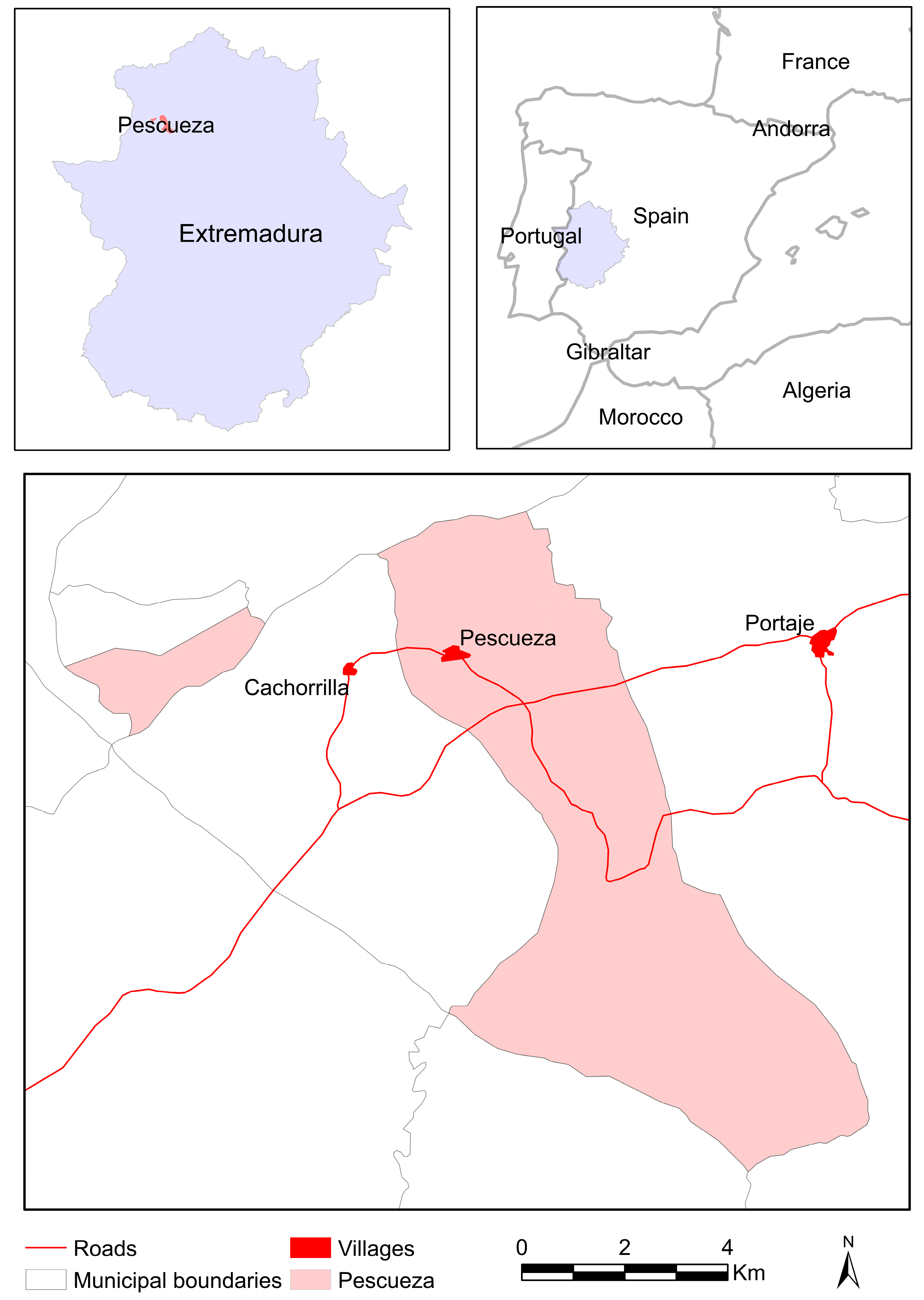
In this context, Pescueza (Figure 1) was selected as a case study due to its representativeness of the most depopulated and aging areas of western Iberia. With 125 inhabitants in a municipal area of just over 52 km2, it has an approximate density of 2.4 inhabitants/km2, among the lowest in Extremadura. Its age structure reflects extreme aging. The population aged 65 and over accounts for nearly half of the total, while children and adolescents barely exceed 7%, and the working-age population stands at around two-fifths. In accordance with Law 45/2007 on Sustainable Rural Development and the operational criteria of the Bank of Spain, Pescueza is classified as a deeply rural area (fewer than 5000 inhabitants and a density well below 100 inhabitants per km2), a category that covers more than 80% of Spanish territory and accounts for approximately one-sixth of its population (Bank of Spain 2020).
The local economy relies on agriculture and livestock farming and, to a lesser extent, on services associated with rural tourism. The shrinking labor force and limited diversification create a fragile labor market, with lower employment than in urban areas and high dependence on public transfers (Bank of Spain 2021). Added to this are business closures, a decline in agro-industrial activities, and the deterioration of the agricultural cultural landscape—factors that increase exposure to environmental risks such as wildfires. Overall, Pescueza lies at the heart of the demographic challenge: although recent policies—ranging from the National Strategy to address it to regional instruments—seek to reverse the trend through digitalization, strengthening essential services, and attracting young people, various studies point to still modest impacts and the need for more integrated frameworks with sufficient scale and temporal continuity to reverse deep-seated demographic trends (Abellán et al. 2017; Pinilla 2023; Elizalde-San Miguel 2018; Camarero 2020; Bank of Spain 2020).

2.2. Methodology

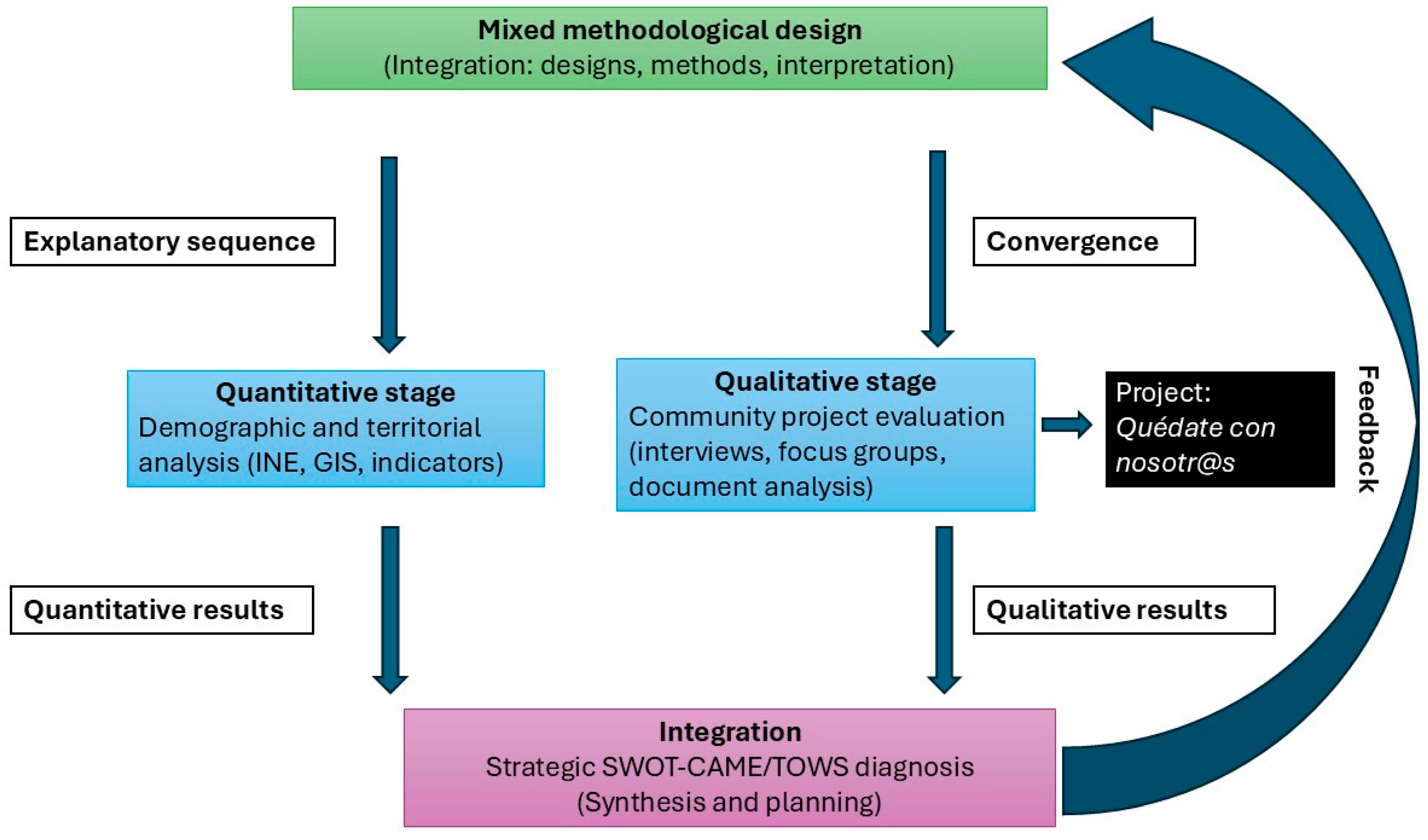
The study adopts a mixed-methods design that integrates quantitative and qualitative approaches to capture both the structural dynamics of aging and community responses (Figure 2). No surveys or questionnaires were conducted; therefore, the quantitative component relies on official statistics from the INE, and the qualitative component on the documentary analysis of project records and materials. Sequential explanatory and convergent strategies are combined to identify demographic patterns and delve into local experiences, integrating the results through connection, construction, fusion, and nesting, supported by integrated narratives, data transformation, and joint visualizations (Fetters et al. 2013; Bryman 2006).
The quantitative phase uses official sources from the INE (Continuous Register and censuses), supplemented by the Population Register, to estimate indicators (aging/over-aging, dependency, birth rate, mortality, sex ratio, and five-year age structure) and trends for 2000–2024. Using GIS, aging patterns and access to services are mapped with layers of settlements and road networks, identifying gradients of isolation and functional centrality (Walsh et al. 2017; Esparcia and Abbasi 2020; Wang and Liu 2024). This section quantifies the challenge and supports place-based interventions (Gómez-Ullate et al. 2020; Eurostat 2023b).
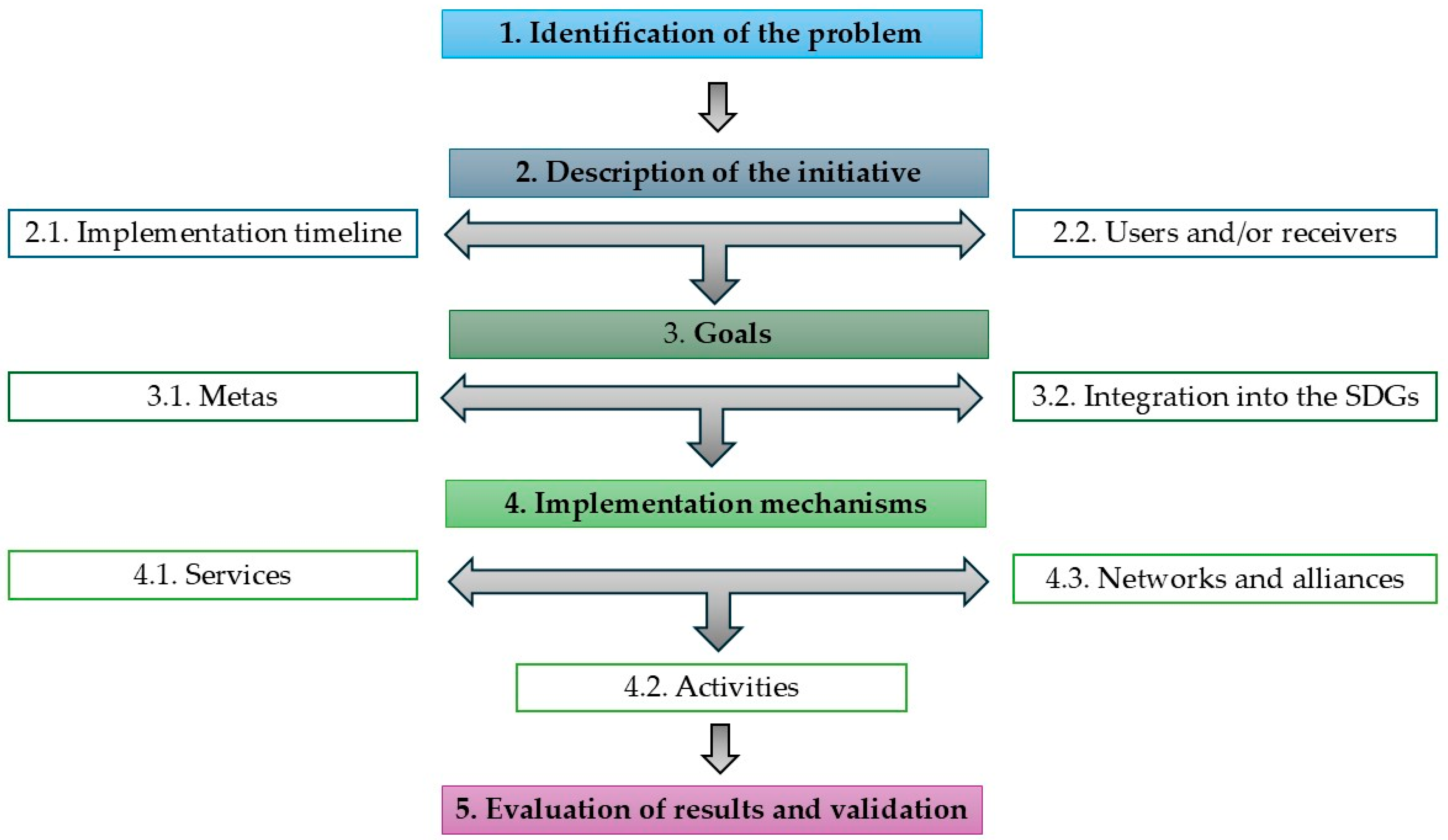
The qualitative phase evaluates “Quédate con nosotr@s” using the logical framework, reconstructing the value chain and critical assumptions (Figure 3) (Aune 2020; Baccarini 1999). Internal and public documentation provided by the Asociación de Amigos de Pescueza and the coordination team was analyzed; data collection was guided by thematic saturation. The corpus was managed through cataloging/versioning, inclusion criteria linked to O1–O2, quality controls, and an audit trail; a field journal and analytical notes ensured traceability. Credibility was reinforced through validation sessions with the project team and through hybrid thematic coding (deductive/inductive), a case–dimension matrix, triangulation, and peer review among co-authors. Ethical safeguards were applied (anonymization, de-identification, aggregation, and restricted access). The findings informed the Logical Framework and its integration into SWOT-CAME; the final categories were organized into social cohesion, social capital, intergenerational participation, and social innovation (Torku et al. 2021; Phillipson and Buffel 2020; Guest et al. 2020).
The analysis is synthesized into a SWOT and its operational translation into TOWS, identifying internal strengths/weaknesses and external opportunities/threats to guide concrete measures (Helms and Nixon 2010; Gürel and Tat 2017; Weihrich 1982; Pickton and Wright 1998), in line with the EU’s agenda and “demographic toolbox” (Comisión Europea 2023). In contexts of severe aging, the integration of demographic spatial analysis and qualitative evidence facilitates the translation of the diagnosis into viable proposals; to reduce biases due to unstable time series in small municipalities, multi-year windows and sensitivity tests are used, and ethical safeguards (consent, anonymization, and data protection) are applied (Skinner et al. 2020; Scharf and Bartlam 2008; Comisión Europea 2023, 2024b).

2.3. Sources

Quantitative data are obtained from INEbase (INE), ensuring quality and comparability (Table 1). The Continuous Register, the 2021 Census, the Basic Demographic Indicators, and the Nomenclature of Population Units are used, harmonized with Regulation (EC) No. 763/2008 and Eurostat, and include data cleaning/validation (sex-age, series reconciliation, and detection of outliers) (Instituto Nacional de Estadística [INE] 2023, 2024a, 2024b; Eurostat 2023a, 2023b). Indicators of aging and structure (aging/over-aging, dependency, birth/mortality rates, sex ratio, and five-year age groups) are analyzed and integrated into GIS to map patterns and accessibility to services (Walsh et al. 2017; Wang and Liu 2024). Qualitative sources come from internal project documentation and field observations.

3. Results

3.1. Analysis of Local Demographics

Since 1950, rural Spain has been marked by rural exodus and agricultural modernization, leading to depopulation, an aging population, and social decline (Pérez Díaz 2017). In Pescueza, the population fell from 730 (1950) to 448 (1970) and continued to decline to 271 (1991) and 201 (2001), with a slight uptick from 138 (2021) to 150 (2024). In Extremadura, the decline has been more moderate (1,360,598 in 1950 → 1,058,503 in 2024), stabilizing at around 77–78% of the 1950 level in recent decades. The comparison reveals a clear divergence (Table 2). Extremadura retains more than three-quarters of its 1950 population, while Pescueza retains barely one-fifth, which justifies specific policies for retention, diversification, and adaptation of services for the highly dependent.
Demographic indicators show that Pescueza has a profile that is clearly distinct from that of Extremadura, Spain (Abellán et al. 2017), and the EU-27 (Table 3), confirming an advanced process of depopulation and structural aging in this deeply rural municipality.
The equations used to obtain these indicators are:
AI = Population   aged   65   and   over Population   aged   0 14 × 100
YDR = Population   aged   0 14 Population   aged   15 64 × 100
OADR = Population   aged   65   and   over Population   aged   15 64 × 100
GDR = Population   aged   0 14 + Population   aged   65   and   over Population   aged   15 64 × 100
OAI = Population   aged   80   and   over Population   aged   65   and   over × 100
FMR 65 + = Female   population   aged   65   and   over Male   population   aged   65   and   over × 100
CBR = Number   of   births Total   population × 1000
CDR = Number   of   deaths Total   population × 1000
The underlying trends confirm a marked reversal of the age structure in Pescueza. The population under 15 years of age accounts for 9.5%, below the rates for Extremadura (12.5%), Spain (13.0%), and the EU (14.6%), pointing to low fertility and out-migration of young adults. Conversely, those aged 65 and over account for 50.7% (more than double the reference values), while the 15–64 age group has shrunk to 39.9% (compared to ~64–66%), weakening the local socioeconomic base and the provision of essential services.
The synthetic indicators reflect extreme aging: the Aging Index (AI) is 535.7% (more than five older adults for every person under 15), the old-age dependency ratio (OADR) stands at 127.1% (vs. 31–34% in comparable contexts), and the General Dependency Ratio (GDR) reaches 150.8%. Furthermore, the over-aging rate is high (OAI = 46.7%), with nearly half of the elderly aged 80+, and the feminization of old age is pronounced (RFV = 167.9%), associated with risks of widowhood, living alone, and social vulnerability. Natural dynamics reinforce this pattern: a very low birth rate (2.9‰ compared to 6.2–8.2‰) and a very high mortality rate (29.8‰ compared to 8.9–10.9‰), consistent with the concentration of the population in older age groups.
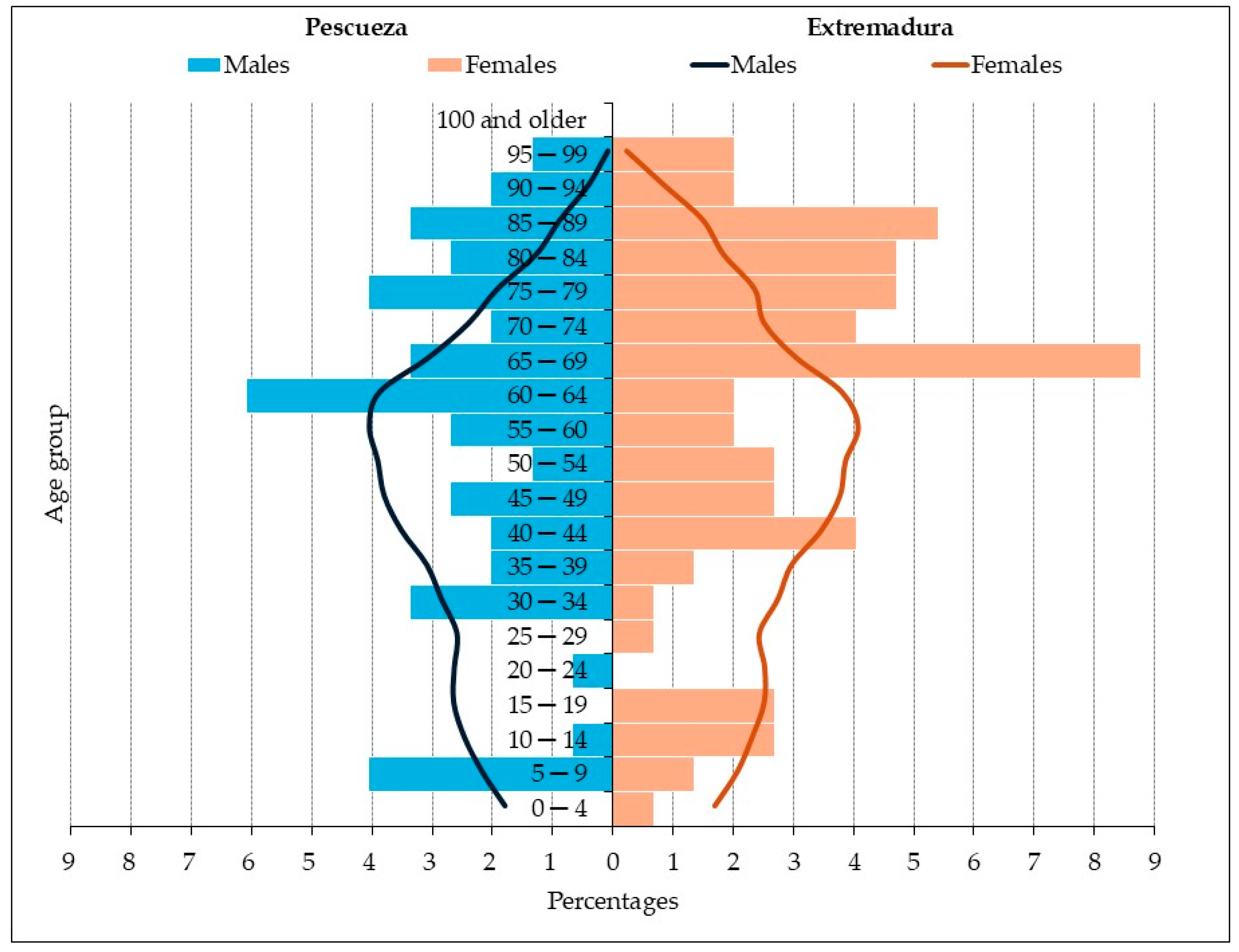
A comparison with Extremadura reveals a structural demographic divergence (Figure 4). In Pescueza, the population aged 0 to 14 accounts for 9.46% (compared to 12.50% regionally), while the 15-to-64 age group stands at 39.86% (vs. 65.12%). In contrast, the population aged 65 and older reaches 50% (vs. 20%), and those over 80 years of age account for 16.22% (vs. 5.48%). This shift toward older ages is reflected in a median age of 65.3 years, compared to 47.3 in Extremadura. The cohort analysis confirms a functionally inverted population pyramid, with surpluses concentrated in older age groups (85+ +6.41 pp; 65–69 +6.05; 75–79 +4.52; 80–84 +4.32) and deficits in young and working-age cohorts (20–24 −4.48; 25–29 −4.35; 50–54 −3.72; 55–59 −3.39; 0–4 −2.81), which simultaneously limits generational renewal and the potential base for labor and care. The gender dimension is consistent with biodemographic evidence: in the 65+ age group, there are 68.3 men for every 100 women (vs. 89.6 in Extremadura), a pattern consistent with greater female longevity and systematic differences in mortality by sex (Collantes and Pinilla 2019; UN 2013; Mosakova 2019; Lutz et al. 2008; Preston et al. 2001; Vaupel 2010).
From a planning perspective, this demographic profile places pressure on services, long-term care, accessibility, and transportation, and triggers a “cost penalty” that strains fiscal capacity and the local care economy, limiting the scalability and continuity of endogenous projects (Collantes and Pinilla 2019; Lee and Mason 2011). Therefore, a dual strategy is proposed, structured around two complementary axes: revitalization and adaptation. First, revitalization involves prioritizing population retention through affordable housing linked to local roots, the rehabilitation of vacant properties, the strengthening of physical and digital connectivity geared toward employment and teleservices, and an economic diversification tailored to the local scale. Second, adaptation requires consolidating a community care ecosystem that includes home care, respite services, telecare, support for independent living, and age-friendly environments—including mobility. Implementation must be carried out in phases, avoiding merely “cosmetic” measures (Collantes and Pinilla 2019; Lee and Mason 2011).
To improve efficiency and equity, both approaches must be coordinated at the supra-municipal level (shared social-health portfolios, mobile teams, on-demand transportation, joint procurement, and interoperable protocols), under multi-level governance and results-based evaluation (Collantes and Pinilla 2019; Lee and Mason 2011). Within this framework, the 2021–2024 improvement plan should be viewed as a window of opportunity: organized social capital and community innovation, with stable institutional support, can mitigate decline in micro-territories; it is advisable to institutionalize measures through protocols, partnerships, and flexible microfinancing, and to measure impacts using goal-oriented metrics (waiting times, reduction of unpaid care, retention of young households, educational continuity) (Coll-Planas et al. 2017; Walsh et al. 2020; Lutz et al. 2008; UN 2013). A timeline is proposed: stabilization (0–12 months), restructuring (12–36 months), and consolidation (>36 months), incorporating safeguards against touristification and short-lived projects (eligibility/residency clauses and service level agreements) (UN 2013; Lutz et al. 2008; Collantes and Pinilla 2019; Lee and Mason 2011). In summary, the combination of revitalization and adaptation constitutes an evidence-based operational roadmap, consistent with the demographic “regime” characterized by aging and dependency (Lee and Mason 2011) and with the observed divergence of scales (Table 2).

3.2. Evaluation of the “Stay with Us” Project

3.2.1. Description of the Problem

The project was launched in response to rural depopulation and the need to improve the quality of life for older adults, who represented approximately one-third of the municipality’s population at the time of its launch (today, older adults constitute more than 50% of the total population). The initiative aims to ensure the well-being of this group without resorting to institutionalization in nursing homes, encouraging them to continue living in familiar and community settings.
There is a recognized need for comprehensive services that enable older adults to maintain their independence, lead active lives, and remain integrated into the local community, thereby preventing social isolation, unwanted loneliness, and the erosion of social ties in a rural context.

3.2.2. Description of the Initiative

The initiative focuses on the social, physical, and emotional well-being of older adults while strengthening community cohesion and intergenerational engagement.
The “Quédate con nosotr@s” project, managed by the Asociación Amigos de Pescueza, was launched in 2011 with the aim of addressing the social and health needs of older adults in a rural setting (Table 4). The initiative aims to enable older adults to remain in their communities while leading active and fulfilling lives, and at the same time, to curb depopulation and reduce unwanted loneliness.
The project comprises a residential center, a municipal day center, and a comprehensive service platform offering home care, healthcare, nutrition, leisure and training activities, companionship, and accessibility aids. All services are organized around a person-centered approach and are designed to promote active and supportive community participation, strengthening social ties and reinforcing the resilience of the rural community.
In addition, the initiative is aimed at residents of the municipality of Pescueza (Cáceres), particularly those over 60 years of age, although it also includes other residents who require specific assistance or care. There are 26 beneficiaries of this initiative (10 in the residential center, 13 in the day center, and 3 who require other services).
The project promotes intergenerational integration by involving different sectors of the community and encouraging everyone to participate. It also extends to vulnerable individuals in nearby towns, such as Cachorrilla, Portaje, and Coria, ensuring that services and activities are available to those who need them most in rural areas and strengthening community ties.

3.2.3. Objectives

The main objective of the project is to promote the autonomy and overall well-being of older adults in their rural environment (Table 5). This objective is structured around specific goals.
Similarly, the objectives are fully aligned with some of the SDGs of the 2030 Agenda, demonstrating their social, community, and sustainable impact. In this regard, the project aligns with Goals 3, 5, 10, and 11 (Table 6).

3.2.4. Implementation Mechanisms

After reviewing the collected documentation and information provided by the project management team, a strategic plan was developed to launch the initiative through the following mechanisms:
Services. The project offers a wide range of services designed to promote the physical, social, and emotional well-being of older adults, supporting aging in place in a rural setting and fostering community participation. The Comprehensive Services Platform includes:
-
A day center. This offers health care and sociocultural services tailored to the needs of older adults.
-
A residential center. With capacity for 10 residents, the center offers supervised shared living and individualized support, including home care, healthcare, meals, recreational and educational activities, and companionship. Universal accessibility is ensured through an electric transportation service that facilitates access to the day center and medical appointments, as well as through specific improvements to the built environment, such as the construction and installation of ramps, handrails, and non-slip flooring, aimed at enhancing safety and independence.
All services are organized around a person-centered approach and are designed to foster active and supportive community participation, thereby strengthening social ties and reinforcing local resilience.
Activities. The project promotes intergenerational activities that facilitate interaction between children and older adults, both at the day center and in various municipal settings. These activities aim to strengthen community bonds, stimulate mutual learning, and support the intergenerational transmission of knowledge and experiences while reducing loneliness and social isolation among older adults. The program includes, among other things:
-
Active aging workshops, designed to prevent cognitive decline, maintain physical activity, and foster social interaction.
-
Training, recreational, and support activities aimed at promoting community participation, intergenerational integration, and emotional well-being.
-
Legal counseling and administrative support, ensuring that older adults receive assistance in understanding their rights, benefits, and essential procedures.
Networks and strategic partnerships. The initiative is supported by a strong collaborative network that brings together local and regional institutions with actors from the private and third sectors. Key partners include:
-
Asociación Amigos de Pescueza. This association forms the core of the local network and the main foundation of the project’s social and human capital. It currently has 125 members (approximately 83% of the local population) and 10 volunteers and is responsible for the community-based management of the project.
-
Pescueza Town Council. It provides institutional coordination and supports the management of local resources.
-
Professional staff. A team of 14 professionals provides comprehensive care and includes, among others, a psychologist, an occupational therapist, a nurse, and a coordinator of sociocultural activities.
-
Provincial and regional governments and the “La Caixa” Social Program. These entities provide financial support for the initiative.
-
Other local partners, such as the Association of Rural Women, which further strengthen community participation and intergenerational integration.

3.2.5. Evaluation of Results and Validation

The initiative is based on a participatory, community-centered approach, in which residents play an active role in planning, implementation, and evaluation. Biannual assemblies and regular meetings are held to gather residents’ needs, perspectives, and proposals, ensuring that services continue to respond to local conditions.
In a small municipality like Pescueza, the proximity among neighbors and informal communication channels facilitate community participation. Deliberative spaces support participatory decision-making, strengthen social bonds, and foster shared responsibility in the project’s governance.
A continuous evaluation process is implemented through direct community feedback obtained via meetings, assemblies, and ongoing contact with service users. This approach integrates evaluation and validation into the community’s daily life, allowing for timely adjustments to activities, services, and operational strategies in response to actual needs and reinforcing the project’s sustainability.
This evaluation framework is consistent with the logic model approach, which links activities to expected results, outcomes, and impacts, thereby supporting the coherence, relevance, and effectiveness of the community intervention.

3.3. Strategic Model for Demographic Sustainability: SWOT Analysis, CAME Strategies, and Evaluation Indicators

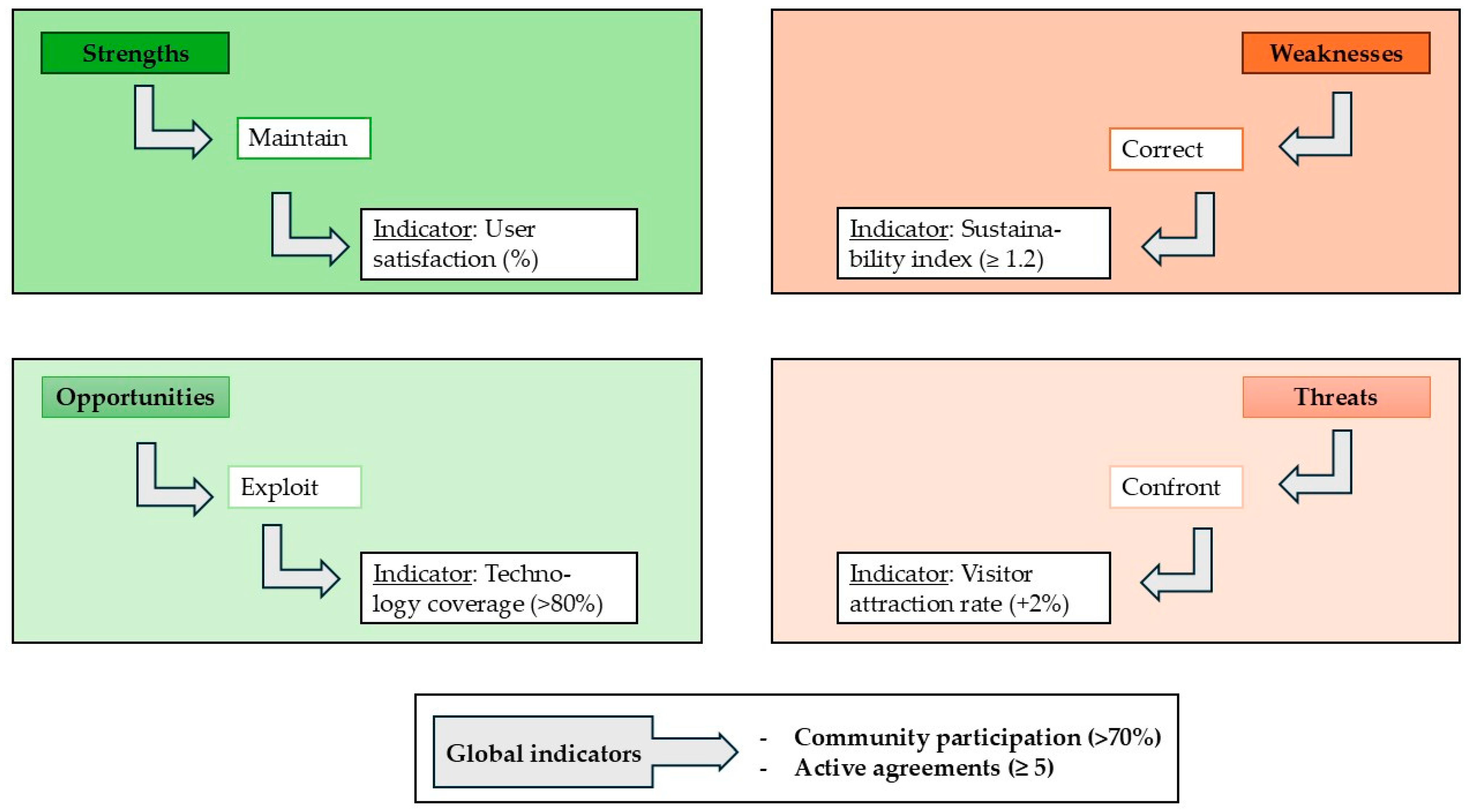
Strategic planning to address demographic challenges requires tools that facilitate the diagnosis, design, and evaluation of interventions aimed at population sustainability and active aging. In this context, combining the SWOT analysis (Strengths, Weaknesses, Opportunities, Threats) with the CAME methodology (Correct, Address, Maintain, Leverage) provides a solid framework for translating the diagnosis into operational measures (Figure 5).
This approach not only helps identify the internal and external factors that determine territorial viability but also guides decision-making toward resilience and social innovation. Finally, the incorporation of evaluation indicators allows for measuring the actual impact of the implemented strategies and ensures coherence between objectives, resources, and results. Consequently, the following sections present: (i) the SWOT analysis, (ii) the corresponding CAME strategies, and (iii) the proposed indicators for evaluating the model.

3.3.1. SWOT Analysis

The model is based on shared governance between the resident population and the local government, which reinforces shared responsibility and democratic decision-making. On this basis, the initiative provides comprehensive, person-centered care—in its health, social, and cultural dimensions—through coordinated support that aligns resources and priorities with changing needs and the actual capacity of local services.
A key strength lies in high community participation: older adults act as leaders and role models, while partner organizations, volunteers, and local government expand the capacity for design, implementation, and evaluation. This social capital sustains an environment that promotes residential continuity, emotional well-being, and intergenerational bonds, creating a virtuous cycle of participation, mutual support, quality of life, and social cohesion.
The model also demonstrates remarkable adaptability to aging micro-municipalities, facilitating its transferability with limited contextual adjustments. The observed results—greater participation, an increased sense of security, the creation of local jobs, and initial signs of operational viability and transformative potential, along with modest demographic recovery—reinforce this scalability.
These strengths open up opportunities on several fronts: (i) replication in municipalities with fewer than 1000 inhabitants through a modular design (shared governance, a portfolio of essential services, and coordination protocols); (ii) an institutional climate favorable to community care and active aging, with blended financing options (public–private, philanthropic, and European programs) that strengthen resilience, learning through benchmarking, and the transfer of best practices; (iii) the development of residential solutions (e.g., rural co-housing) and assistive technologies (telecare, monitoring, interoperable records, and digital platforms) aimed at ensuring continuity and personalization of care; and (iv) the revitalization of employment and the local economy by attracting professionals, supported by incentives, partial telework arrangements, and hybrid formats.
Significant weaknesses persist, however: dependence on stable funding, a shortage of permanent specialized staff (occupational therapy, psychology, coordination), and the inherent variability of volunteer work. Added to this are difficulties in sustaining broad community engagement—in terms of diversity and leadership renewal—initial resistance, and the need for continuous adjustment. Furthermore, certain infrastructure limitations may restrict both residential care and the availability of solutions consistent with a comprehensive care approach.
Notable external threats include the rising demand for complex care associated with an aging population, ongoing depopulation and low generational turnover, regional inequalities in access to resources, and the risk of financial exhaustion in the absence of stable revenue. At the institutional level, reliance on inter-administrative coordination and sustained participation can lead to fragmentation; volunteer burnout and the overburdening of local leaders can erode operational capacity; and potential political, economic, or administrative crises can disrupt funding agreements and governance mechanisms.

3.3.2. CAME Strategies

The CAME approach acts here as a bridge between diagnosis and intervention: it does not merely list problems and potentials, but rather prioritizes, aligns resources, and translates findings into an operational theory of change. Its logic is organized into four complementary movements—correct, address, maintain, and leverage—which are effective only if they translate into clear responsibilities, realistic timelines, and a streamlined set of indicators focused on outcomes that matter to people.
Correcting requires addressing structural weaknesses. Financially, this involves a multi-year plan with diversified funding sources (public, private, and philanthropic) and contingency measures to safeguard essential services. Organizationally, it requires strengthening human capital through partnerships with universities and professional associations (internships, support and replacement pools, and incentives compatible with rural life). To broaden the generational base, it is advisable to promote youth participation through flexible volunteering, paid micro-projects, and dual training, guided by a few operational indicators that allow for rapid adjustments.
Addressing these challenges involves anticipating external risks that strain local capacity for care and social cohesion. This requires long-term protocols and advanced home care—with social-health coordination, telecare, respite care, and clinical–functional and social activation thresholds—to prevent delayed or fragmented responses. At the same time, stemming population loss requires selective attraction aimed at retention (affordable housing through rehabilitation, support for remote work, and moderate conditional incentives), along with multilevel agreements and minimum standards that ensure continuity, and more structured volunteer management to reduce variability. Monitoring can be based on response times, households remaining for ≥24 months, inter-administrative compliance, and volunteer retention.
Sustaining the model involves consolidating its core: reinforcing shared governance with transparency, accountability, and traceability; stabilizing deliberative forums with predictable rules; and ensuring comprehensive care through quality standards, interdisciplinary protocols, and periodic internal reviews. At the same time, it is key to sustain social capital by preventing community burnout through peer mentoring, rotation of responsibilities, planned succession, and ongoing training.
“Exploitation” involves capitalizing on opportunities without adverse effects: pilot projects for rural coexistence and adapted housing integrated into the care ecosystem; interoperable and secure technology (telehealth, monitoring, record-keeping, and engagement) with measures to bridge the digital divide; and diversification into coherent niches (silver economy, senior tourism, and micro-entrepreneurship) with impact metrics. If replication is the goal, the priority is to package the model (manuals, kits, and technical assistance) for municipalities with fewer than 1000 inhabitants, with eligibility criteria and support.
Therefore, the reasonable roadmap is to stabilize the essentials (finances, staffing, protocols, and volunteering); to activate structural levers (housing and connectivity) and consolidate governance agreements; and to expand capabilities (interoperable technology, care-related employment, and replication manuals), guided by a concise scorecard and an evidence-based cycle of continuous improvement.

3.3.3. Evaluation of Indicators

The evaluation is based on a set of indicators that allow for the progress of the model to be tracked, in a comprehensible and comparable manner, across three key dimensions: sustainability, inclusion, and quality of life. First, priority is given to older adults’ participation in community activities (target >70%), due to its association with lower levels of functional decline and loneliness, and higher levels of well-being and mental health (Sepúlveda-Loyola et al. 2020; Vega Flores 2024). In parallel, financial sustainability is monitored through the revenue-to-expense ratio (≥1.2), understood as a composite measure of viability and exposure to the risk of insolvency (Gleißner et al. 2022). Institutional capacity is assessed through the number of active agreements with universities and professional organizations/associations (≥5), as these agreements typically serve as levers for innovation, training, and knowledge transfer (McLaren and Struwig 2019). In addition, a measure of demographic revitalization is incorporated, expressed as the annual rate of new resident recruitment (≥2%), with the aim of capturing early signals of population attraction and retention (Hussien et al. 2023). To assess quality from the user experience perspective, satisfaction with comprehensive care (≥85%) is used as an indicator of perceived quality and reported outcomes (Renzi and Franci 2024). Finally, technological coverage—the proportion of older adults with telecare (>80%)—is considered due to its association with autonomy and safety in digitally enabled care models (Park 2025; Albarqi 2024). Table 7 presents the operational definition of each indicator, its rationale, and the corresponding references.

4. Discussion

Rather than reiterating figures, this discussion focuses on the mechanisms linking demographic structure, community capacity for action, and institutional arrangements in low-density, rapidly aging micro-municipalities. Pescueza confirms the pattern described in the results, but its main contribution is analytical: it outlines a place-based local care ecosystem and operationalizes European and international agendas through a realistic sequence of interventions, a goal-oriented scorecard, and regional governance that harmonizes funding, regulations, and learning. The focus thus shifts from “how much we age” to “how we live and care for ourselves as we age,” and to why certain community and institutional configurations can cushion the decline without eroding autonomy and community roots (Lee and Mason 2011; UN 2013).
In terms of rural policy, the case aligns with the Long-Term Vision for Rural Areas and the Rural Pact, which call for accessible services, effective connectivity, and multilevel governance with a community voice. The commitment to a functional supra-municipal scale (shared portfolios for health, care, and mobility) responds to this demand and allows for the exploitation of economies of scale and scope. In parallel, the OECD’s approach to rural well-being—centered on people and territories—is translated here into concrete instruments (consortia, joint procurement, on-demand transportation, program-based contracts) and outcome metrics (access times, continuity of care, attraction/retention of households).
In care and aging, the European Care Strategy and the Council Recommendation establish the right to affordable, high-quality long-term care, prioritizing home and community-based care and strengthening working conditions and social-health coordination. The contribution of the proposed model is to specify the “how” in very low-density settings: activation protocols in the event of loss of autonomy, person-centered pathways consistent with ICOPE, and regional coordination through program contracts that ensure continuity and evaluation based on outcomes (Comisión Europea 2022; European Council 2022; OMS 2017, 2025).
The community dimension is causal. “Grassroots-linked” co-production (local leadership + partnerships with universities, the third sector, and public administrations) helps explain why sustained intergenerational initiatives can reduce loneliness, improve well-being, and increase participation: they simultaneously activate bonds of connection, bridging, and linkage and connect service delivery with measurable vital outcomes. Given that meta-analytic evidence equates the effect of loneliness and isolation on mortality with classic risk factors, social participation, satisfaction, and unwanted loneliness must be incorporated into the scorecard (Holt-Lunstad et al. 2010, 2015).
The residential environment acts as either a catalyst or a barrier to “aging in place.” Rural co-housing and collaborative models can serve as a bridge between isolated homes and institutionalization, combining autonomy, shared services, and democratic governance; their viability increases when they are integrated into regional portfolios and connected to local services and “useful” digital connectivity (Mahmood et al. 2022; OMS 2023). However, financial sustainability is a necessary condition: international comparisons show that, even with public support, care can be unaffordable for those with severe dependency, which requires transparent eligibility rules, a mix of funding sources, and measurable standards. In this vein, we propose a revenue-to-expense ratio ≥1.20, contingency funds, and audited annual reports, supplemented by process and outcome indicators and experience/value metrics (Gleißner et al. 2022; Araki et al. 2024; Ordonez-Cruickshank et al. 2024). Furthermore, conditions such as dementia require specific pathways and measurement focused on the individual and their environment, in line with the data gaps highlighted by the OECD (2018).
Academically, the work is situated within the tradition of place-sensitive policies that avoid “territorial traps”: generic transfers or megaprojects are not enough; rather, strategies are needed that mobilize local assets and build external partnerships with rigorous metrics. The key mechanism is the transition from “closed” social capital toward the union–bridge–link triad and a phased implementation sequence (stabilization, restructuring, consolidation) consistent with place-based approaches (Rodríguez-Pose 2018). Operationally, the case suggests four levers: (1) first ensuring a social foundation (community care, mobility, and adapted housing); (2) professionalizing teams through university/professional agreements and hybrid work adapted to low density; (3) digitize prudently, prioritizing reduced response times; and (4) govern through supra-municipal program contracts and results-oriented annual reviews (Comisión Europea 2022; OECD 2025; Oficina de Apoyo al Pacto Rural 2023).
That said, a balanced interpretation requires acknowledging limitations. Methodologically, qualitative evidence comes primarily from internal documentation and materials (without surveys), which provides reconstructive depth but restricts independent measurement of subjective well-being, satisfaction, or loneliness; despite triangulation and verification with stakeholders, risks of social desirability persist. Furthermore, in very small municipalities, minimal variations can produce striking percentage changes; the recent improvement should be interpreted as a plausible signal and a “window of opportunity,” not as an effect conclusively attributable to a single intervention, even when applying time windows and sensitivity checks (Skinner et al. 2020; Scharf and Bartlam 2008; Comisión Europea 2023, 2024b).
In terms of implementation, tensions emerge dependence on stable funding; difficulty in recruiting/retaining professionals; risk of volunteer burnout and concentration of leadership; and digitalization, which, without support and digital literacy, can widen gaps. Therefore, transferability must be understood as conditional, not as automatic replication: it is more likely when there is (i) a stable local organizational base, (ii) municipal capacity for coordination and accountability, (iii) integration into a supra-municipal network with economies of scale, (iv) multi-year funding and eligibility rules that ensure a “minimum” level of care, and (v) agreements to stabilize teams (universities/professional organizations and hybrid models). Otherwise, the risk is that the model will be reduced to partial versions (one-off activities, incomplete integration, or digitization without support) with modest results or unintended effects.
Finally, the improvement agenda aims at: (1) multi-site designs with validated cases; (2) incorporation of repeatable, person-centered measures (loneliness, participation, functional autonomy, satisfaction); (3) assessment of economic/organizational sustainability (costs, continuity, turnover); and (4) longitudinal monitoring that distinguishes program changes from contextual fluctuations. Applied lines of inquiry are also proposed: acceptability and cost-effectiveness of collaborative residential solutions and telecare for the very elderly; SROI estimation; regional quality standards; and coordination with policies to attract professionals to rural “medical deserts,” a priority already incorporated into the governance of the Rural Pact (Oficina de Apoyo al Pacto Rural 2023).
In summary, Pescueza serves as a proof of concept: when territory-based rural policy, integrated care, and community well-being are supported by predictable funding and evaluation focused on life outcomes, it is possible to mitigate decline, maintain autonomy, and rebuild community foundations, with transferability dependent on institutional capacities, resources, and available personnel (Comisión Europea 2021, 2022; OMS 2017, 2025; OECD 2025).

5. Conclusions

The analysis confirms that demographic aging and depopulation constitute structural dynamics that compromise social, economic, and territorial sustainability in Europe, with intensity in rural micro-territories such as Pescueza. Empirical evidence reveals a critical demographic situation—an aging index >500%, a dependency ratio ~3 times higher than the national average, and a minimal presence of children and youth—which restricts generational renewal, increases social vulnerability, and strains the provision of essential services, community cohesion, and local economic viability.
The results also suggest that the combination of territorial and intergenerational strategies, coordinated through collaborative governance and SWOT–CAME planning, can produce positive effects on social cohesion, well-being, and community resilience (Kaplan et al. 2017). Within this framework, “Quédate con nosotr@s” stands out as an example of rural social innovation by integrating community-based care, community participation, and alignment with SDGs 3, 5, 10, and 11, thereby helping to strengthen social capital and a sense of belonging.
With a view to the municipality’s sustainability (care, transportation, affordable housing, and support networks), the following priority lines of action are proposed:
-
Stable and diversified financing (European funds, public–private partnerships, and community mechanisms) to ensure operational continuity.
-
Inclusive digitalization with >80% technological coverage (telecare, monitoring, and participation), reducing access gaps.
-
Attracting and retaining young people through affordable housing, remote work, moderate incentives, and entrepreneurship linked to the silver economy and responsible tourism.
-
Professionalization and employment through agreements with universities and training centers to ensure qualified personnel in caregiving, occupational therapy, and sociocultural revitalization.
-
Adapted residential infrastructure and solutions, including co-living, assisted living, and multifunctional community spaces.
-
Continuous evaluation based on results, using a minimum scorecard: social participation >70%, income/expense ratio ≥1.2, satisfaction ≥85%, population growth ≥2% annually, and technological coverage >80%.
Finally, it is recommended to consolidate multilevel governance (local–regional–European) and networks of municipalities to share resources and learning, avoiding uniform approaches and ensuring the territorial fit of interventions. Overall, the case provides evidence that social innovation and sustained institutional cooperation can mitigate decline, preserve autonomy, and strengthen territorial cohesion, with the potential for integration into national and European strategies within the framework of the 2030 Agenda.

Author Contributions

Conceptualization, F.L.-B., J.M.S.-M., A.B.M.-R. and J.I.R.-G.; methodology, F.L.-B., J.M.S.-M., A.B.M.-R. and J.I.R.-G.; software, F.L.-B., J.M.S.-M., A.B.M.-R. and J.I.R.-G.; validation, F.L.-B., J.M.S.-M., A.B.M.-R. and J.I.R.-G.; formal analysis, F.L.-B., J.M.S.-M., A.B.M.-R. and J.I.R.-G.; research, F.L.-B., J.M.S.-M., A.B.M.-R. and J.I.R.-G.; resources, F.L.-B., J.M.S.-M., A.B.M.-R. and J.I.R.-G.; data curation, F.L.-B., J.M.S.-M., A.B.M.-R. and J.I.R.-G.; writing—preparation of the original draft, F.L.-B., J.M.S.-M., A.B.M.-R. and J.I.R.-G.; writing—review and editing, F.L.-B., J.M.S.-M., A.B.M.-R. and J.I.R.-G.; visualization, F.L.-B., J.M.S.-M., A.B.M.-R. and J.I.R.-G.; supervision, F.L.-B., J.M.S.-M., A.B.M.-R. and J.I.R.-G.; project management, F.L.-B., J.M.S.-M., A.B.M.-R. and J.I.R.-G.; securing funding, F.L.-B., J.M.S.-M., A.B.M.-R. and J.I.R.-G. All authors have read and agreed to the published version of the manuscript.

Funding

This research has been co-funded by the European Union, European Regional Development Fund (85%), and Junta de Extremadura. Managing authority: Ministerio de Hacienda (Spain), Grant GR24076.

Institutional Review Board Statement

Not applicable.

Informed Consent Statement

Not applicable.

Data Availability Statement

Not applicable.

Acknowledgments

The authors would like to thank the “Asociación de Amigos de Pescueza” (https://www.amigosdepescueza.org/la-asociaci%C3%B3n) (accessed on 10 October 2025) for all the information provided for the preparation of this article, and especially for their interest in promoting community social projects aimed at providing comprehensive care for the elderly population and fostering intergenerational participation.

Conflicts of Interest

The authors declare no conflicts of interest. The funders did not intervene in the study design; in the collection or interpretation of data; in the drafting of the manuscript; or in the decision to publish the results.

References

  1. Abellán, Antonio, Alba Ayala, and Rafael Pujol. 2017. Un Perfil de las Personas Mayores en España. Informes Envejecimiento en Red, n.º 15. Available online: http://hdl.handle.net/10261/164387 (accessed on 7 October 2025).
  2. Abellán, Antonio, and Rafael Puyol, coord. 2006. Envejecimiento y Dependencia en España. Una Mirada al Panorama Futuro de la Población Española. Madrid: Mondial Assistance. Available online: http://envejecimiento.csic.es/documentos/documentos/abellan-envejecimiento-01.pdf (accessed on 7 October 2025).
  3. Albarqi, Mohammed Nasser. 2024. Exploring the Effectiveness of Technology-Assisted Interventions for Promoting Independence in Elderly Patients: A Systematic Review. Healthcare 12: 2105. [Google Scholar] [CrossRef]
  4. Araki, Satoshi, Jacek Barszczewski, Karolin Killmeier, and Ana Llena-Nozal. 2024. Asequibilidad de los Sistemas de Cuidados de Larga Duración en Tiempos de Rápido Envejecimiento de la Población. VoxEU/CEPR, 29 de Noviembre de 2024. Available online: https://cepr.org/voxeu/columns/affordability-long-term-care-systems-times-rapid-population-Aging (accessed on 7 October 2025).
  5. Aune, Jens B. 2020. Enfoque de marco lógico y PRA: ¿Herramientas mutuamente excluyentes o complementarias para la planificación de proyectos? Development in Practice 10: 687–90. Available online: http://www.jstor.org/stable/4029542 (accessed on 7 October 2025). [CrossRef]
  6. Baccarini, David. 1999. El método del marco lógico para definir el éxito de un proyecto. Project Management Journal 30: 25–32. Available online: https://www.pmi.org/learning/library/project-success-logical-framework-5309 (accessed on 7 October 2025). [CrossRef]
  7. Bank of Spain. 2020. Tendencias Recientes de la Población en Las Áreas Rurales y Urbanas de España. Documentos Ocasionales n.º 2027. Available online: https://www.bde.es/f/webbde/SES/Secciones/Publicaciones/PublicacionesSeriadas/DocumentosOcasionales/20/Fich/do2027.pdf (accessed on 7 October 2025).
  8. Bank of Spain. 2021. Informe Anual, 2020. Madrid: Bank of Spain. 322p, Available online: https://www.bde.es/f/webbde/SES/Secciones/Publicaciones/PublicacionesAnuales/InformesAnuales/20/Fich/InfAnual_2020.pdf (accessed on 7 October 2025).
  9. Barca, Fabrizio. 2009. Una Agenda para una Política de Cohesión Reformada: Un Enfoque Basado en el Territorio para Responder a los Retos y Expectativas de la Unión Europea. Brussels: Comisión Europea, DG REGIO. [Google Scholar]
  10. Bryman, Alan. 2006. Integración de la investigación cuantitativa y cualitativa: ¿cómo se lleva a cabo? Qualitative Research 6: 97–113. [Google Scholar] [CrossRef]
  11. Buffel, Tine, Sophie Handler, and Cris Phillipson, eds. 2018. Ciudades y Comunidades Adaptadas a las Personas Mayores: Una Perspectiva Global. Bristol: Policy Press. [Google Scholar] [CrossRef]
  12. Camarero, Luis. 2020. Despoblamiento, baja densidad y brecha rural: Un recorrido por una España desigual. Panorama Social 31: 47–73. Available online: https://www.funcas.es/wp-content/uploads/2020/09/Luis-Camarero.pdf (accessed on 7 October 2025).
  13. Cattaneo, Andrea, Andrea Vitali, Daniele Regazzoni, and Caterina Rizzi. 2025. La carga del cuidado familiar informal en Europa, 2000–2050: Un estudio de modelización por microsimulación. The Lancet Regional Health–Europe 53: 101295. [Google Scholar] [CrossRef]
  14. Cejudo García, Eugenio, and Francisco Navarro Valverde. 2019. La Despoblación Rural Como Reto Social. Algunos Apuntes. Available online: http://siba-ese.unisalento.it/index.php/prd/article/download/21517/18246 (accessed on 7 October 2025).
  15. Claridge, Tristan. 2018. Funciones del Capital Social: Cohesión, Puente Y Enlace. Brisbane: Social Capital Research & Training. [Google Scholar] [CrossRef]
  16. Cloke, Paul. 1997. ¿De lugar apartado a pueblo virtual? Estudios rurales y «el giro cultural». Journal of Rural Studies 13: 367–75. [Google Scholar] [CrossRef]
  17. Collantes, Fernando, and Vicente Pinilla. 2019. ¿Lugares Que No Importan? La Despoblación de la España Rural Desde 1900 Hasta el Presente. Monografías de Historia Rural 15. Zaragoza: Prensas de la Universidad de Zaragoza. Available online: https://catedradespoblaciondpz.unizar.es/wp-content/uploads/2021/03/Lugaresquenoimportan.pdf (accessed on 7 October 2025).
  18. Coll-Planas, Laura, Gabriela del Valle Gómez, Petra Bonilla, Teresa Masat, Teresa Puig, and Rosa Monteserin. 2017. «Fomentar el capital social para paliar la soledad y mejorar la salud de las personas mayores en España». Health Soc Care Community 25: 145–57. [Google Scholar] [CrossRef]
  19. Comisión Europea. 2021. Visión a Largo Plazo Para las Zonas Rurales: Por Unas Zonas Rurales de la UE Más Fuertes, Conectadas, Resilientes y Prósperas (Comunicado de prensa), 30 de Junio de 2021. Available online: https://ec.europa.eu/commission/presscorner/api/files/document/print/en/ip_21_3162/IP_21_3162_EN.pdf (accessed on 7 October 2025).
  20. Comisión Europea. 2022. Comunicación Sobre la Estrategia Europea de Cuidados. Available online: https://eur-lex.europa.eu/legal-content/EN/TXT/?uri=CELEX:52022DC0440 (accessed on 7 October 2025).
  21. Comisión Europea. 2023. Demografía en Europa: Un (COM(2023) 577 Final). Available online: https://eur-lex.europa.eu/legal-content/EN/TXT/PDF/?uri=COM:2023:577:FINChangeToolboxAction (accessed on 7 October 2025).
  22. Comisión Europea. 2024a. La Visión a Largo Plazo Para las Zonas Rurales de la UE: Logros Clave y Perspectivas De Futuro (COM(2024) 450 Final). EUR-Lex. Available online: https://www.consilium.europa.eu/es/press/press-releases/2023/11/20/a-long-term-vision-for-the-eu-s-rural-areas-council-approves-conclusions/ (accessed on 7 October 2025).
  23. Comisión Europea. 2024b. Noveno Informe Sobre: Aspectos Destacados y Noveno Informe Sobre Cohesión Económica, Social y Territorial. Available online: https://ec.europa.eu/regional_policy/sources/reports/cohesion9/9CR_Highlights.pdf (accessed on 7 October 2025).
  24. Del Molino, Sergio. 2016. La España Vacía. Madrid: Turner. [Google Scholar]
  25. Demir, Zeynep Gümüs, and Elif Kurtuluş. 2024. El efecto de un programa de interacción intergeneracional en la satisfacción con la vida, el apoyo social y la soledad de las personas mayores. Ageing International 49: 621–41. [Google Scholar] [CrossRef]
  26. DG AGRI. 2019. Apoyo a Las Estrategias de Pueblos Inteligentes. Comisión Europea. Available online: https://agriculture.ec.europa.eu/cap-my-country/rural-development/supporting-smart-village-strategies_en (accessed on 7 October 2025).
  27. Elizalde-San Miguel, Begoña. 2018. El Envejecimiento en el Mundo Rural: ¿Una Oportunidad Para Cambiar las Relaciones de Género? Fundación La Caixa. Available online: https://elobservatoriosocial.fundacionlacaixa.org/es/-/el-envejecimiento-en-el-mundo-rural (accessed on 7 October 2025).
  28. Esparcia, Javier, and Fatemeh Abbasi. 2020. Gobernanza territorial y desarrollo rural: ¿Reto o realidad? In Desarrollo Neoendógeno en las Zonas Rurales Europeas. Edited by Eugenio Cejudo and Fernando Navarro. Springer Geography. Cham: Springer. [Google Scholar] [CrossRef]
  29. European Council. 2022. Recomendación del Consejo Sobre el Acceso a Cuidados de Larga Duración Asequibles y de Alta Calidad (2022/C 476/01), 15 de Diciembre de 2022. Available online: https://eur-lex.europa.eu/legal-content/EN/TXT/?uri=oj:JOC_2022_476_R_0001 (accessed on 7 October 2025).
  30. Eurostat. 2023a. Demografía—Población y. Available online: https://ec.europa.eu/eurostat/web/population-demography/demography-population-stock-balance/publications/demography-report (accessed on 7 October 2025).
  31. Eurostat. 2023b. Estadísticas Demográficas. Available online: https://ec.europa.eu/eurostat (accessed on 7 October 2025).
  32. Fetters, Michael D., Leslie A. Curry, and Jhon W. Creswell. 2013. Lograr la integración en diseños de métodos mixtos: Principios y prácticas. Health Services Research 48: 2134–56. [Google Scholar] [CrossRef] [PubMed]
  33. Forsyth, Ann, and Yingying Lyu. 2024. Crear comunidades adaptadas a las personas mayores: Lecciones de los programas implementados. Journal of Planning Literature 39: 3–24. [Google Scholar] [CrossRef]
  34. Fu, Yuanyuan, Xiachun Ke, and Yuyan Li. 2025. Relaciones intergeneracionales y síntomas depresivos entre las personas mayores: El papel moderador de las necesidades de cuidados no satisfechas en el hogar y la comunidad. Applied Research Quality Life 20: 1703–30. [Google Scholar] [CrossRef]
  35. Gleißner, Werner, Thomas Günther, and Chrisian Walkshäusl. 2022. Sostenibilidad financiera: Medición y evidencia empírica. Journal of Business Economics 92: 467–516. [Google Scholar] [CrossRef]
  36. González Heras, Alejandro. 2023. Los tipos de capital social bonding, bridging y linking: Una revisión de los indicadores cuantitativos utilizados para su operacionalización. Empiria. Revista de Metodología de Ciencias Sociales 58: 75–97. [Google Scholar] [CrossRef]
  37. Gómez Falagán, Isabel. 2024. «Despoblación en Castilla y León (España): Diseño institucional, vertebración territorial y centralidades desde 1983». AGER: Revista de Estudios Sobre Despoblación y Desarrollo Rural 40: 303–41. [Google Scholar] [CrossRef]
  38. Gómez-Ullate, Martín, Laurent Rieutort, Afroditi Kamara, Ana Sofía Santos, Antonio Pirra, and Merly Gotay Solís. 2020. Retos demográficos en la Europa rural y casos de resiliencia basados en la gestión del patrimonio cultural. Un análisis comparativo en las regiones del interior de los países mediterráneos. European Countryside 12: 408–31. [Google Scholar] [CrossRef]
  39. Guest, Greg, Emily Namey, and Mario Chen. 2020. Un método sencillo para evaluar y comunicar la saturación temática en la investigación cualitativa. PLoS ONE 15: e0232076. [Google Scholar] [CrossRef]
  40. Gürel, Emet, and Merba Tat. 2017. Análisis DAFO: Una revisión teórica. Journal of International Social Research 10: 994–1006. Available online: https://www.sosyalarastirmalar.com/articles/swot-analysis-a-theoretical-review.pdf (accessed on 7 October 2025).
  41. Helms, Marilyn M., and Judy Nixon. 2010. Explorando el análisis DAFO: ¿dónde nos encontramos ahora? Journal of Strategy and Management 3: 215–51. [Google Scholar] [CrossRef]
  42. Holt-Lunstad, Julianne, Timothy B. Smith, and J. Bradley Layton. 2010. Relaciones sociales y riesgo de mortalidad: Una revisión metaanalítica. PLoS Medicine 7: e1000316. [Google Scholar] [CrossRef]
  43. Holt-Lunstad, Julianne, Timothy B. Smith, Mark Baker, Tyler Harris, and David Stephenson. 2015. La soledad y el aislamiento social como factores de riesgo de mortalidad: Una revisión metaanalítica. Perspectives on Psychological Science 10: 227–37. [Google Scholar] [CrossRef]
  44. Hussien, Walaa, Hisham S. Gabr, and Mohamed A. Zayed. 2023. Análisis de los factores que influyen en el crecimiento urbano y la atracción de población: Un estudio de caso de Almere, Países Bajos. Information Sciences Letters 12: 530–40. [Google Scholar] [CrossRef]
  45. Instituto Nacional de Estadística (INE). 2023. Padrón Continuo. Metodología. Available online: https://www.ine.es/dyngs/INEbase/operacion.htm?c=Estadistica_C&cid=1254736177012&menu=metodologia&idp=1254734710990 (accessed on 7 October 2025).
  46. Instituto Nacional de Estadística (INE). 2024a. Censos de Población y Viviendas 2021. Metodología. Available online: https://ine.es/Censo2021/Inicio.do (accessed on 7 October 2025).
  47. Instituto Nacional de Estadística (INE). 2024b. INEbase—Demografía y población: Padrón y Nomenclátor. Available online: https://ine.es/nomen2/index.do (accessed on 7 October 2025).
  48. Jameson, Fredric. 1998. The Cultural Turn. Londres: Verso. Available online: https://monoskop.org/images/5/59/Jameson_Fredric_Cultural_Turn_Selected_Writings_on_the_Postmodern_1983-1998.pdf (accessed on 7 October 2025).
  49. Johnson, Kenneth M. 2006. Tendencias demográficas en las zonas rurales y los pueblos pequeños de Estados Unidos. Escuela Carsey de Políticas Públicas 5. [Google Scholar] [CrossRef]
  50. Jurado Almonte, José Manuel, and Francisco Javier Pazos García. 2022. Población y sostenibilidad territorial de los espacios rurales en España y Portugal. Cuadernos Geográficos 61: 61–87. [Google Scholar] [CrossRef]
  51. Kaplan, Matthew, Mariano Sánchez, and Jaco Hoffman. 2017. Estrategias intergeneracionales para promover el aprendizaje permanente y la educación. In Vías Intergeneracionales Hacia Una Sociedad Sostenible. Perspectivas sobre el crecimiento sostenible. Cham: Springer. [Google Scholar] [CrossRef]
  52. Lawton, Richard. 1973. La despoblación rural en la Inglaterra del siglo XIX. In Comunidades Rurales Inglesas. Edited by Dennis R. Mills. Londres: Palgrave. [Google Scholar] [CrossRef]
  53. Leco Berrocal, Felipe, and Ana Beatriz Mateos Rodríguez. 2021. Espacios naturales protegidos, reto demográfico y turismo: El ejemplo de la Reserva de la Biosfera y Parque Nacional de Monfragüe (Extremadura, España). Cuadernos de Turismo 48: 369–400. [Google Scholar] [CrossRef]
  54. Lee, Ronald, and Andrew Mason. 2011. Population Aging and the Generational Economy. Cheltenham: Edward Elgar. Available online: https://idrc-crdi.ca/sites/default/files/openebooks/514-4/index.html (accessed on 7 October 2025).
  55. Lefebvre, Henri. 1974. La Producción del Espacio. Madrid: Capitán Swing. [Google Scholar]
  56. Liebzeit, Daniel, Anna Krupp, Jacinda Bunch, and Harleah Buck. 2022. Ecosistemas rurales adaptados a las personas mayores: Una revisión exploratoria con recomendaciones. Innovation in Aging 6: 839. [Google Scholar] [CrossRef]
  57. Lutz, Wolfgang, Warren Sanderson, and Sergei Scherbov. 2008. La aceleración del envejecimiento de la población mundial. Nature 451: 716–19. [Google Scholar] [CrossRef]
  58. Mahmood, Atiya, Kishore Seetharaman, Haley-Thomas Jenkins, and Habib Chaudhury. 2022. Contextualización de modelos y servicios de vivienda innovadores dentro del marco de las comunidades adaptadas a las personas mayores. The Gerontologist 62: 66–74. [Google Scholar] [CrossRef] [PubMed]
  59. McLaren, James Ignis, and Ferdinand W. Struwig. 2019. Ratios financieros como indicadores de sostenibilidad financiera en una universidad sudafricana. Journal of Contemporary Management 16: 68–93. [Google Scholar] [CrossRef]
  60. Monika Kankarwal, Neetu Kataria, Sachin Kumar, Thokchom Soniya Devi, Kusum Kumari, I. Ananda Hariharan, Lizy Sonia Benjamin, and Vasantha C. Kalyani. 2025. Impacto de un programa de vínculos intergeneracionales en las dimensiones de la salud y los resultados relacionados entre las personas mayores: Un metaanálisis. Cureus 17: e95366. [Google Scholar] [CrossRef]
  61. Mosakova, Elizabeta. 2019. Transición demográfica en España en los siglos XX-XXI: Transformación de la institución de la familia y el matrimonio. Iberoamérica 1: 149–69. Available online: https://istina.ips.ac.ru/publications/article/193760791/ (accessed on 7 October 2025).
  62. Neumeier, Stefan. 2017. Innovación social en el desarrollo rural: Identificación de los factores clave del éxito. The Geographical Journal 183: 34–46. [Google Scholar] [CrossRef]
  63. Neville, Stephen, Sara Napier, Jeffery Adams, Kay Shannon, and Valerie Wright-St Clair. 2021. Opiniones de las personas mayores sobre el envejecimiento saludable en una comunidad rural. Ageing and Society 41: 2540–57. [Google Scholar] [CrossRef]
  64. OECD. 2018. Care Needed: Improving the Lives of People with Dementia. París: Publicaciones de la OECD. Available online: https://www.oecd.org/en/publications/care-needed_9789264085107-en.html (accessed on 7 October 2025).
  65. OECD. 2020. Bienestar Rural: Geografía de las Oportunidades, Estudios Rurales de la OECD. París: Ediciones de la OECD. [Google Scholar] [CrossRef]
  66. OECD. 2025. Reforzar la Resiliencia Rural. París: Publicaciones de la OECD. Available online: https://www.oecd.org/en/publications/reinforcing-rural-resilience_7cd485e3-en/full-report.html (accessed on 7 October 2025).
  67. OECD/Comisión Europea. 2025. Políticas Basadas en el Territorio Para el Futuro. París: Publicaciones de la OCDE. [Google Scholar]
  68. Oficina de Apoyo al Pacto Rural. 2023. Mejora del Acceso a Los Servicios Sanitarios en Las Zonas Rurales: Informe de Aspectos Destacados, 30 de Noviembre de 2023. Available online: https://ruralpact.rural-vision.europa.eu/sites/default/files/2024-01/gpw-health-highlights-report.pdf (accessed on 7 October 2025).
  69. OMS. 2017. Atención Integrada Para Las Personas Mayores: Directrices Sobre Intervenciones a Nivel Comunitario Para Gestionar el Deterioro de la Capacidad Intrínseca. Available online: https://iris.who.int/bitstreams/4639a0b9-f77e-48db-9617-987aabb143f2/download (accessed on 7 October 2025).
  70. OMS. 2020. Década del Envejecimiento Saludable: Plan de Acción 2021–2030. Available online: https://cdn.who.int/media/docs/default-source/decade-of-healthy-aging/decade-proposal-final-apr2020rev-es.pdf (accessed on 7 October 2025).
  71. OMS. 2021–2030. La labor de la OMS en el Decenio de las Naciones Unidas sobre el Envejecimiento Saludable. Available online: https://www.who.int/initiatives/decade-of-healthy-Aging (accessed on 7 October 2025).
  72. OMS. 2023. Programas Nacionales Para Ciudades y Comunidades Adaptadas a Las Personas Mayores: Una Guía. Available online: https://www.who.int/teams/social-determinants-of-health/demographic-change-and-healthy-Aging/age-friendly-environments (accessed on 7 October 2025).
  73. OMS. 2025. Atención Integrada Para Las Personas Mayores (ICOPE): Orientaciones Para la Evaluación Centrada en la Persona y Las Vías de Atención en la Atención Primaria, 2nd ed. Available online: https://www.who.int/publications/i/item/9789240103726 (accessed on 7 October 2025).
  74. Ordonez-Cruickshank, Ana M., Arina Zanuzdana, Valeria Marujo, Katharina Heldt, Judith Fuchs, Beate Gaertner, Martina Hasseler, and Christa Scheidt-Nave Eckmanns. 2024. Indicadores de calidad de los cuidados de larga duración para personas mayores en los países de la OCDE: Una revisión exploratoria rápida. European Journal of Public Health 34: ckae144.2108. [Google Scholar] [CrossRef]
  75. Park, Jaeyu. 2025. «La telesalud y las personas mayores: Una revisión exploratoria sobre el uso de la tecnología, las barreras de adopción y los resultados de salud». International Journal of Recent Innovations in Academic Research 9: 309–22. [Google Scholar]
  76. Petersen, Jennifer. 2023. Una revisión metaanalítica de los efectos de los programas intergeneracionales para jóvenes y adultos mayores. Educational Gerontology 49: 175–89. [Google Scholar] [CrossRef]
  77. Pérez Díaz, Antonio. 2017. Reto demográfico y sostenibilidad. In Paisajes Patrimoniales de Extremadura Para un Desarrollo Sostenible. Edited by Felipe Leco Berrocal. Badajoz: Universidad de Extremadura. [Google Scholar]
  78. Phillipson, Chris, and Tine Buffel. 2020. Ciudades y comunidades adaptadas a las personas mayores: Oportunidades y retos políticos. Journal of Elder Policy 1: 137–54. [Google Scholar] [CrossRef]
  79. Pickton, David W., and Sheila Wright. 1998. ¿Qué es el análisis DAFO en el análisis estratégico? Strategic Change 7: 101–9. [Google Scholar] [CrossRef]
  80. Pinazo-Hernandis, Sacramento, Manuela Torregrosa-Ruiz, María Jiménez-Martí, and Mauricio Blanco-Molina. 2019. Participación Social y Satisfacción Vital: Diferencias Entre Mujeres y Hombres Mayores. Available online: https://hdl.handle.net/11000/28509 (accessed on 7 October 2025).
  81. Pinilla, Vicente. 2023. El reto demográfico: Políticas frente a la despoblación rural en España. Papeles de Economía Española, n.º 176. Available online: https://www.funcas.es/wp-content/uploads/2023/06/PEE-176_Pinilla.pdf (accessed on 7 October 2025).
  82. Pinilla, Vicente, and Luis Antonio Sáez. 2017. La despoblación rural en España: Génesis de un problema y políticas innovadoras. Informes CEDDAR 2: 1–24. Available online: https://www.age-geografia.es/site/wp-content/uploads/2017/10/La-despoblaci%c3%b3n-rural-en-Espa%c3%b1a-CEDDAR.pdf (accessed on 7 October 2025).
  83. Preston, Samuel H., Patrick Heuveline, and Michel Guillot. 2001. Demografía: Medición y Modelización de Los Procesos Demográficos. Malden: Blackwell. [Google Scholar]
  84. Renzi, Pietro, and Alberto Franci. 2024. La medición de la satisfacción de los pacientes como indicador clave de la calidad de vida de las personas mayores: Comparación de dos servicios. Social Indicators Research 178: 1273–94. [Google Scholar] [CrossRef]
  85. Rémillard-Boilard, Samuèle, and Patty Doran. 2024. Desarrollo de ciudades y comunidades adaptadas a las personas mayores: Una perspectiva internacional. In Reimagining Age-Friendly Communities. Bristol: Policy Press. [Google Scholar] [CrossRef]
  86. Rodríguez-Pose, Andrés. 2018. La venganza de los lugares que no importan (y qué hacer al respecto). Cambridge Journal of Regions, Economy and Society 11: 189–209. [Google Scholar] [CrossRef]
  87. Sánchez-Martín, José Manuel, José Luis Gurría-Gascón, and Juan Ignacio Rengifo-Gallego. 2025. El reto demográfico analizado a través de índices de envejecimiento en Extremadura y Andalucía (España) con herramientas de cartografía de clústeres. Land 14: 1129. [Google Scholar] [CrossRef]
  88. Scharf, Thomas, and Bethan Bartlam. 2008. Envejecimiento y exclusión social en las comunidades rurales. In Envejecimiento Rural: ¿Un Buen Lugar Para Envejecer? Edited by Norah Keating. Serie «Envejecimiento y ciclo de vida»; Bristol: Bristol University Press, pp. 97–108. [Google Scholar]
  89. Schermer, Markus, and Sigrid Kroismayr. 2020. Innovación social en zonas rurales (Editorial). Österreichische Zeitschrift für Soziologie 45: 1–6. [Google Scholar] [CrossRef]
  90. Sepúlveda-Loyola, Walter, Rosielma Dos Santos Lopes, Renata P. Tricano Maciel, and Vanessa S. Probst. 2020. Participación social, un factor a considerar en la evaluación clínica del adulto mayor: Una revisión narrativa. Revista Peruana de Medicina Experimental y Salud Pública 37: 341–49. [Google Scholar] [CrossRef]
  91. Serra, Pere, Montserrat Pallares-Barbera, and Luca Salvati. 2023. ¿Puede una subvención económica a largo plazo contrarrestar la despoblación rural? Un análisis empírico de dos regiones españolas. Quality & Quantity 57: 3065–84. [Google Scholar] [CrossRef]
  92. Silberman-Beltramella, Mariela, Alba Ayala, Carmen Rodríguez-Blázquez, and Maria João Forjaz. 2022. Relaciones sociales y salud en las personas mayores en España a partir de los datos de la encuesta SHARE. BMC Geriatr 22: 276. [Google Scholar] [CrossRef]
  93. Skinner, Mark, Rachel Winterton, and Kieran Walsh, eds. 2020. Gerontología Rural: Hacia Perspectivas Críticas Sobre el Envejecimiento Rural, 1st ed. Abingdon: Routledge. [Google Scholar] [CrossRef]
  94. Syssner, Josefina. 2020. Implicaciones políticas de la despoblación rural. In Pathways to Demographic Adaptation. SpringerBriefs in Geography. Cham: Springer, pp. 37–52. [Google Scholar] [CrossRef]
  95. Torku, Alex, Albert Ping Chuen Chan, and Esther H. K. Yung. 2021. Ciudades y comunidades adaptadas a las personas mayores: Una revisión y orientaciones futuras. Ageing and Society 41: 2242–79. [Google Scholar] [CrossRef]
  96. United Nations. 2013. World Population Ageing 2013. New York: Department of Economic and Social Affairs, Population Division. Available online: https://digitallibrary.un.org/record/826632?v=pdf (accessed on 7 October 2025).
  97. Vaupel, James W. 2010. Biodemografía del envejecimiento humano. Nature 464: 536–42. [Google Scholar] [CrossRef] [PubMed]
  98. Vega Flores, Rosa. 2024. Participación social y bienestar subjetivo en las personas mayores. Journal of Health and Medical Sciences 10: 65–71. [Google Scholar]
  99. Vidal Domínguez, María Jesús, and José Fernández Portela. 2022. El reto demográfico en Castilla y León (España): Una región desequilibrada con una población envejecida. Perspectiva Geográfica 27: 76–100. [Google Scholar] [CrossRef]
  100. Walsh, Kieran, Eamon O’Shea, and Thomas Scharf. 2020. Exclusión social de las personas mayores en el medio rural: Un marco conceptual sobre los mediadores de la exclusión a lo largo del ciclo vital. Ageing and Society 40: 2311–37. [Google Scholar] [CrossRef]
  101. Walsh, Kieran, Thomas Scharf, and Norah Keating. 2017. Social exclusion of older persons: A scoping review and conceptual framework. European Journal of Ageing 14: 81–98. [Google Scholar] [CrossRef]
  102. Wang, Xuehan, and Zhihan Liu. 2024. Navegación por los servicios de atención a las personas mayores con SIG: Tendencias, desarrollos y orientaciones futuras. BMC Geriatrics 24: 243. [Google Scholar] [CrossRef]
  103. Weihrich, Heinz. 1982. La matriz TOWS: Una herramienta para el análisis situacional. Long Range Planning 15: 54–66. [Google Scholar] [CrossRef]
  104. Woods, M. 2005. Geografía Rural: Procesos, Respuestas y Experiencias en la Reestructuración Rural. London: SAGE Publications. [Google Scholar]
  105. Zhong, Sinan, Chanam Lee, Margaret J. Foster, and Jiahe Bian. 2020. Comunidades intergeneracionales: Una revisión sistemática de la literatura sobre las interacciones intergeneracionales y los resultados relacionados con la salud de las personas mayores. Social Science & Medicine 264: 113374. [Google Scholar] [CrossRef]
Figure 1. Study Area.
Socsci 15 00327 g001
Figure 2. Methodological Flowchart.
Socsci 15 00327 g002
Figure 3. Logic Framework Approach.
Socsci 15 00327 g003
Figure 4. Demographic Structure: Pescueza, 2024.
Socsci 15 00327 g004
Figure 5. Visual diagram of SWOT-CAME and indicators.
Socsci 15 00327 g005
Table 1. Methodological characteristics of the main sources.
SourceDescriptionFrequencyTerritorial LevelMain Indicators
Continuous registrationAdministrative registration of the resident populationAnnualMunicipal/Census tractAge, sex, nationality, residence
2021 Population CensusComprehensive statistical survey on population and housingDecennialMunicipal/Census tractStructure by age, households, and dwellings
Demographic indicatorsDerived statistics on birth, death, and aging rates AnnualProvincial/MunicipalAgeing index, dependency ratio, vital statistics
NomenclatureOfficial list of municipalities and population centersAnnualEntity/SettlementName, code, resident population
Table 2. Population in Pescueza and trends in Extremadura.
YearsPescuezaExtremadura
Inhabitants% (*)Population% (*)
1950730100.01,360,598100.0
197044861.41,374,495101.0
199127137.11,145,12384.2
200120127.51,050,14677.2
202113818.91,055,53877.6
202415020.51,058,50377.8
* % → 1950 = 100%. Source: INE (https://www.ine.es/).
Table 3. General demographic indicators, 2024.
Indicators (%)PescuezaExtremaduraSpainEU-27
Population aged 0–14 (%)9.512.513.014.6
Population aged 15–64 (%)39.965.166.463.8
Population aged 65 and over (%)50.722.420.621.7
Ageing Index (AI) (%)535.7178.9157.8148.8
Youth Dependency Ratio (YDR) (%)23.719.219.622.8
Old-Age Dependency Ratio (OADR) (%)127.134.331.034.0
General Dependency Ratio (GDR) (%)150.853.550.656.8
Excess Ageing Index (OAI) (%)46.731.629.828.6
Female-to-Male Ratio (FMR65+) (%)167.9122.6129.8125.4
Crude Birth Rate (CBR) *2.96.26.58.2
Crude Death Rate (CDR) *29.810.98.99.0
(*) The values correspond to the average for the 2020–2024 five-year period due to the absence of births in several years.
Table 4. Implementation Schedule.
YearsDescription
2009Initial contacts and project preparation, laying the groundwork for community-based management and planning activities focused on active aging.
2011Inauguration of the Municipal Day Center and creation of the “Friends of Pescueza Association,” consolidating community participation and formalizing the project’s organizational structure.
2010–2025Continuous development and expansion of the project, with processes to adapt to demographic and social needs, as well as consolidation of its impact on the community, reinforcing sustainability and intergenerational integration.
Source: Friends of Pescueza Association and the authors.
Table 5. Project Goals.
GoalsDescription
SocialEnsure that the basic and social needs of older adults are met, allowing them to age with dignity in their community.
Promote active aging and improve the emotional and social quality of life for this group.
Strengthen community cohesion through shared responsibility in the management of services and activities aimed at older adults.
DemographicsHelp curb depopulation and stabilize the population in the municipality, strengthening the local social fabric.
EconomicGenerate local employment linked to care, services, and activities for older adults.
CulturalPromote the cultural quality of life for older adults within their community.
Promote activities and services that reinforce local cultural identity through intergenerational engagement between older adults and young people.
EducationalPromote active aging (including educational components such as digital training, workshops, and lifelong learning).
Foster training opportunities that support the personal development and autonomy of older adults (implicit in the initiative).
Source: Association of Friends of Pescueza and the authors.
Table 6. Project alignment with the SDGs.
SDGProject Relationship
SDG 3. Good Health and Well-beingPromotion of active aging, comprehensive person-centered care, and prevention of physical and cognitive decline in older adults
SDG 5. Gender equalityPromoting the equal participation of men and women in community activities, project management, and access to services.
SDG 10: Reduced InequalitiesEnsuring that older and dependent people in rural areas have access to quality health, social, and cultural services, thereby narrowing the gap with urban areas
SDG 11: Sustainable Cities and CommunitiesAdapt the urban environment, improve accessibility, and retain the population within the municipality while creating an inclusive and safe environment for older adults.
Table 7. Indicators and references.
IndicatorJustificationReferences
Percentage of older adults participating in community activities (>70%)Social participation reduces isolation and improves older adults’ mental health and subjective well-being.Sepúlveda-Loyola et al. (2020); Vega Flores (2024)
Financial sustainability index (revenue-to-expense ratio ≥ 1.2)Ensures the economic viability of services and reduces the risk of insolvency.Gleißner et al. (2022); McLaren and Struwig (2019)
Number of active agreements with universities and professional organizations (≥5)Promotes innovation, knowledge transfer, and service quality improvement.McLaren and Struwig (2019)
New resident attraction rate (annual increase ≥ 2%)Reflects the environment’s capacity to foster inclusive and sustainable communities.Hussien et al. (2023)
User satisfaction with comprehensive care (≥85%)Key indicator of the quality of care and well-being of the elderly population.Renzi and Franci (2024)
Technology coverage: percentage of older adults with access to telecare (>80%)Promotes autonomy, safety, and access to digital assistance for older adults.Park (2025); Albarqi (2024)
Disclaimer/Publisher’s Note: The statements, opinions and data contained in all publications are solely those of the individual author(s) and contributor(s) and not of MDPI and/or the editor(s). MDPI and/or the editor(s) disclaim responsibility for any injury to people or property resulting from any ideas, methods, instructions or products referred to in the content.