1. Introduction
Over the last decade, the development of artificial intelligence, algorithmic data systems, and the proliferation of technological media have driven a transformation across various areas of social action (
Capraro et al. 2024;
Kopsaj 2025). From the impact on information dissemination and the educational field to occupational self-efficacy and healthcare service quality, it is evident that these innovations have reconfigured social, economic, and cultural dynamics with the promise of improving quality of life (
Capraro et al. 2024;
Khogali and Mekid 2023;
Strielkowski et al. 2025;
Van Deursen and Helsper 2018). Particularly following the global crisis of the COVID-19 pandemic, the widespread use of technology reflected exponential growth by allowing people from all over the world to access different social services (
Beaunoyer et al. 2020;
Guitton 2020;
De’ et al. 2020).
Nonetheless, this new era dominated by digital resources and AI-driven tools has also intensified forms of inequality and social exclusion that especially affect vulnerable groups (
Prasad 2025;
Reddick et al. 2020). While the digital divide initially represented a limitation in access to the Internet or technological resources, the concept has evolved toward new forms of stratification associated with the ability and confidence to interact effectively with technology, the economic availability to acquire it, and related sociodemographic factors (
Bentley et al. 2024;
Huxhold et al. 2020;
Kopsaj 2025;
Van Deursen and Helsper 2018). Consequently, low-income individuals, older adults, racial and ethnic minorities, migrants, and people with disabilities tend to experience digital exclusion to a greater extent due to literacy, infrastructure, and resource availability (
Raihan et al. 2025).
Simultaneously, the AI revolution, since the launch of GenAI and intelligent language models such as OpenAI’s ChatGPT, has established a new system where decision-making is delegated to these algorithmic models, thus falling into a cycle of automation increasingly present in the fields of health, education, and employment (
Eedelouei 2026;
Malik et al. 2022;
OpenAI 2022;
Prasad 2025) It is worth noting that from a sociological perspective, these tools broaden existing social hierarchies as they are trained on data reflecting inherent human judgments, institutional priorities, and specific conceptual categories (
Joyce et al. 2021;
Zajko 2022).
Pierre Bourdieu’s theory of social reproduction provides a conceptual framework that explains the exclusion generated by the digital divide, highlighting that institutions perpetuate pre-existing class stratifications, where algorithmic systems transform cultural and digital capital into privileges for those who possess the necessary resources (
Valdés 2022). In this context, the term algorithmic vulnerability refers to the exposure of individuals or social groups to automated systems that negatively affect them due to the bias generated by these intelligent tools of the digital age (
Crawford 2021;
Joyce et al. 2021;
Zajko 2022).
In line with the above, the development of AI-driven tools in the workplace has come to emphasize gender inequalities, leading to discriminatory decisions in personnel selection for job vacancies(
Al-Tkhayneh et al. 2023;
Morais Da Rosa and Guasque 2024). At the same time, studies show that the adoption of algorithm-based technologies affects the perception of work roles by diminishing the value and social complexity of tasks that can be automated (
Giwa and Ho 2026;
Jago et al. 2024). In the health sector, artificial intelligence negatively impacts access to quality healthcare by incorporating systems with data such as cost histories to determine medical care priority (
Chen et al. 2022;
d’Elia et al. 2022). Meanwhile, in the educational field, ethical implications regarding data management arise, compromising the privacy and security of the student population (
Al-Tkhayneh et al. 2023;
Ramírez et al. 2025). Thus, the consolidation of policies promoting equitable access to advanced technological resources becomes necessary, regardless of status, geographic location, or socioeconomic standing (
Xu and Wang 2024).
However, while studies have addressed the digital split and vulnerability to AI-driven algorithmic systems, the existing research field reflects an evident conceptual fragmentation. While some studies associate it with algorithmic bias and class stratification in automated recommendation models (
Al-Tkhayneh et al. 2023;
d’Elia et al. 2022), other research links the digital divide to barriers of access, literacy, affordability, and infrastructure (
Raihan et al. 2025;
Van Deursen and Helsper 2018). Furthermore, existing systematic reviews address aspects related to AI ethics, social justice, or digital inclusion, thereby limiting the vision of an integrative framework that evidences the underlying effects of social stratification (
Camacho et al. 2025;
Ortega et al. 2024;
Ramírez et al. 2025).
Given the complexity of the inequalities facing society in the AI era, it is fundamental to develop a more integrative, reflective, and interdisciplinary understanding of the mechanisms through which these algorithmic systems contribute to the transmission or reproduction of social stratification. Accordingly, this study seeks to synthesize scientific evidence from the last decade (2015–2025) regarding the transition from inequality in technological access to social stratification mediated by automated decision-making systems. To this end, a systematic and bibliometric analysis of the literature covering the digital divide and algorithmic vulnerability is proposed, also oriented by the PRISMA 2020 guidelines.
For the purpose of this study, the following research questions were formulated:
How has the definition of digital inequality evolved in social science literature between 2015 and 2025?
In which social sectors is AI creating new forms of exclusion?
What are the predominant methodologies in the study of algorithmic discrimination?
What are the specific mechanisms by which algorithms deepen social stratification in vulnerable populations?
What ethical and regulatory frameworks does current literature propose to mitigate systemic algorithmic bias?
To answer these questions, 74 records covering the period (2015–2025) were identified in high-impact academic databases such as Scopus, Web of Science, ProQuest, and PsycINFO. The structure of this article is detailed as follows:
Section 2 describes the literature review on the digital divide and algorithmic vulnerability.
Section 3 describes the materials and methods used to guide the research development.
Section 4 reveals the results of the systematic analysis complemented by bibliometric parameters.
Section 5 provides a critical discussion of the findings in relation to previous studies; and
Section 6 presents the conclusions, as well as the limitations encountered in the study and future lines of research.
2. Literature Review
Traditionally, the digital divide was attributed to inequality in access to information and communication technology (ICT) resources, commonly associated with the availability and affordability of technological media (
Pippa 2001;
Van Dijk 2005;
Van Deursen and Van Dijk 2019). This initial landscape posited that digital inclusion depended on full access to devices and internet networks, establishing a distinction between “connected” and “unconnected” individuals (
Sparks 2013;
Van Deursen and Helsper 2018). It was under this paradigm that the digital divide was conceived as a bottom-up phenomenon, mediated by the unprecedented expansion of technology and economic development (
Philip et al. 2017). However, the research field has progressively demonstrated that access to technology does not guarantee equitable participation within digital environments (
Choukou et al. 2022;
Raihan et al. 2025).
In response to these barriers, more complex approaches emerged to explain the restriction of certain groups to these resources, integrating dimensions based on digital skills, differentiated use, and subsequent benefits (
Blank and Groselj 2015;
Wilson et al. 2023). This new perspective expanded the scope of technological barriers, establishing “second-level” and “third-level” divides that no longer addressed only accessibility, but also integrated digital competence and the ability to leverage technology for social or economic purposes (
Blank and Groselj 2015;
Lutz 2019). Consequently, the digital divide became a multidimensional phenomenon with a close relationship to established social hierarchies (
Castells 2013;
Wilson et al. 2023).
Nonetheless, the era dominated by generative artificial intelligence tools introduced new forms of inequality that were superimposed upon this phenomenon (
Crawford 2021;
Joyce et al. 2021). Essentially, the increasingly predominant integration of algorithmic systems in sectors such as education, health, and employment gave rise to a concept termed “algorithmic vulnerability.” This is characterized by differential exposure to bias, opacity, and discriminatory attitudes that affect various social groups (
Malik et al. 2022;
Prasad 2025;
Köchling et al. 2021). For this new form of inequality, access to technology was no longer the central axis of the problem; instead, it acquired a new perspective regarding the capacity to understand, reflect upon, and resist automated decision-making (
Köchling et al. 2021;
Zajko 2022). In this sense, the literature has shifted from technological inclusion toward a more critical vision that analyzes algorithmic systems and their influence on forms of stratification (
Young et al. 2023). Such is the case of how algorithms are capable of amplifying existing social barriers by operating with biased data, which leads to discriminatory decisions and processes of exclusion in diverse social contexts (
Chen et al. 2022;
Young et al. 2023;
Al-Tkhayneh et al. 2023). In this way, it has come to be recognized that these systems are not entirely neutral, especially in dynamics that allude to power structures and hierarchical roles (
Zajko 2022).
It is essential to distinguish that algorithmic vulnerability is not a phenomenon exclusive to contemporary AI. While AI literacy focuses on the management of generative models, algorithmic literacy addresses the understanding of the underlying logic within data classification and filtering systems that have been operational since the Web 2.0 era (
Dogruel et al. 2022;
Oeldorf-Hirsch and Neubaum 2025;
Shin et al. 2022). Consequently, discrimination does not reside solely in the system’s complexity, but rather in the algorithm’s capacity to segregate users through proxy variables—even on non-AI-based platforms. This exacerbates the exclusion of those who lack the technical capital required to decipher these underlying power logics.
Currently, digital inequality has acquired an integrative focus, where individual factors (digital literacy), structural factors (corporate practices), and contextual factors (economic and technological development), together with algorithmic vulnerability, provide an analytical framework to explain emerging forms of exclusion in contemporary society dominated by digital media (
Blank and Groselj 2015;
Lutz 2019;
Zajko 2022). Therefore, accelerated automation has required ensuring informed, equal, and transparent participation in algorithmically mediated contexts, thereby redefining notions of equity and social justice (
Robinson et al. 2020). However, it remains to be determined whether the forms of vulnerability caused by exposure to these algorithmic systems represent a rupture of the traditional paradigm or if they present themselves as an evolution of pre-existing barriers conditioned by algorithmic data systems.
3. Materials and Methods
3.1. Study Design
The present study adopted a systematic literature review design with the objective of synthesizing scientific evidence from the last decade regarding the transition from inequality in technological access toward social stratification mediated by automated decision-making systems. The review followed internationally recognized methodological standards to ensure transparency, rigor, and reproducibility, guided by the PRISMA (Preferred Reporting Items for Systematic reviews and Meta-Analyses) framework (
Page et al. 2021). Furthermore, the protocol was registered on the free, open-source Open Science Framework (OSF) (Center for Open Science, Charlottesville, VA, USA) platform under the following identifier:
https://doi.org/10.17605/OSF.IO/MF36W (accessed on 11 April 2026).
Given the complexity of the phenomenon rooted in social, ethical, and technological dimensions a combination of quantitative bibliometric analysis and qualitative content evaluation was employed. The methodology refers to the set of approaches, tools, and criteria used to collect, classify, analyze, and interpret a corpus of scientific literature, aiming to guarantee scientific rigor and transparency while offering a structured and critical reading of the state of research.
3.2. Analytical Framework: SPIDER Model
To guide the search strategy and eligibility criteria, the SPIDER framework (Sample, Phenomenon of Interest, Design, Evaluation, Research type) was applied, as it is more suitable for addressing research questions in the social sciences involving qualitative and mixed-methods evidence (
Amir 2024). The components of the model were operationalized as follows:
Sample (S): Social groups in situations of vulnerability or at risk of exclusion.
Phenomenon of Interest (PI): Algorithmic vulnerability and AI-mediated stratification.
Design (D): Case studies, policy analysis, digital ethnographies, longitudinal studies.
Evaluation (E): Outcomes related to social impact, detected bias, levels of exclusion, and perception of justice.
Research Type (R): Qualitative, quantitative, and mixed-methods studies.
This framework allowed for an exhaustive and flexible identification of relevant literature aligned with the study’s objectives and research questions.
3.3. Search Strategy
A systematic search was conducted in the main academic databases, including Web of Science (WoS) (Clarivate, London, UK), Scopus (Elsevier, Amsterdam, Netherlands), ProQuest (Clarivate, Ann Arbor, MI, USA), and PsycINFO (American Psychological Association, Washington, DC, USA), to ensure broad coverage of peer-reviewed and high-impact literature. The search strategy combined controlled vocabulary and free-text terms using Boolean operators (AND, OR). Key descriptors were applied to titles, abstracts, and keywords. The detailed search string can be found in
Figure S1 of the Supplementary Material.
Additionally, temporal filters (2015–2025) were applied to the search, reflecting the rapid expansion of AI systems in social spheres during this period. Open access filters and versions in both Spanish and English were also utilized.
3.4. Eligibility Criteria
To ensure methodological rigor and relevance, explicit inclusion and exclusion criteria were established:
3.4.1. Inclusion Criteria
Studies published between January 2015 and December 2025.
Original empirical research, theoretical reviews, and peer-reviewed case studies.
Languages: English and Spanish (inclusion of English is vital for JCR impact).
Studies explicitly linking the use of algorithms/AI with processes of social stratification, inequality, or discrimination.
3.4.2. Exclusion Criteria
Purely technical or computational studies without social or ethical analysis.
Grey literature (unpublished theses, conference proceedings not peer-reviewed, popular science books, or press reports).
Duplicate records or preliminary versions of already published studies.
Studies exclusively focusing on AI in industrial or technical areas without considering the human or social component.
3.5. Study Selection Process
The selection process followed the PRISMA flow structure proposed by
Haddaway et al. (
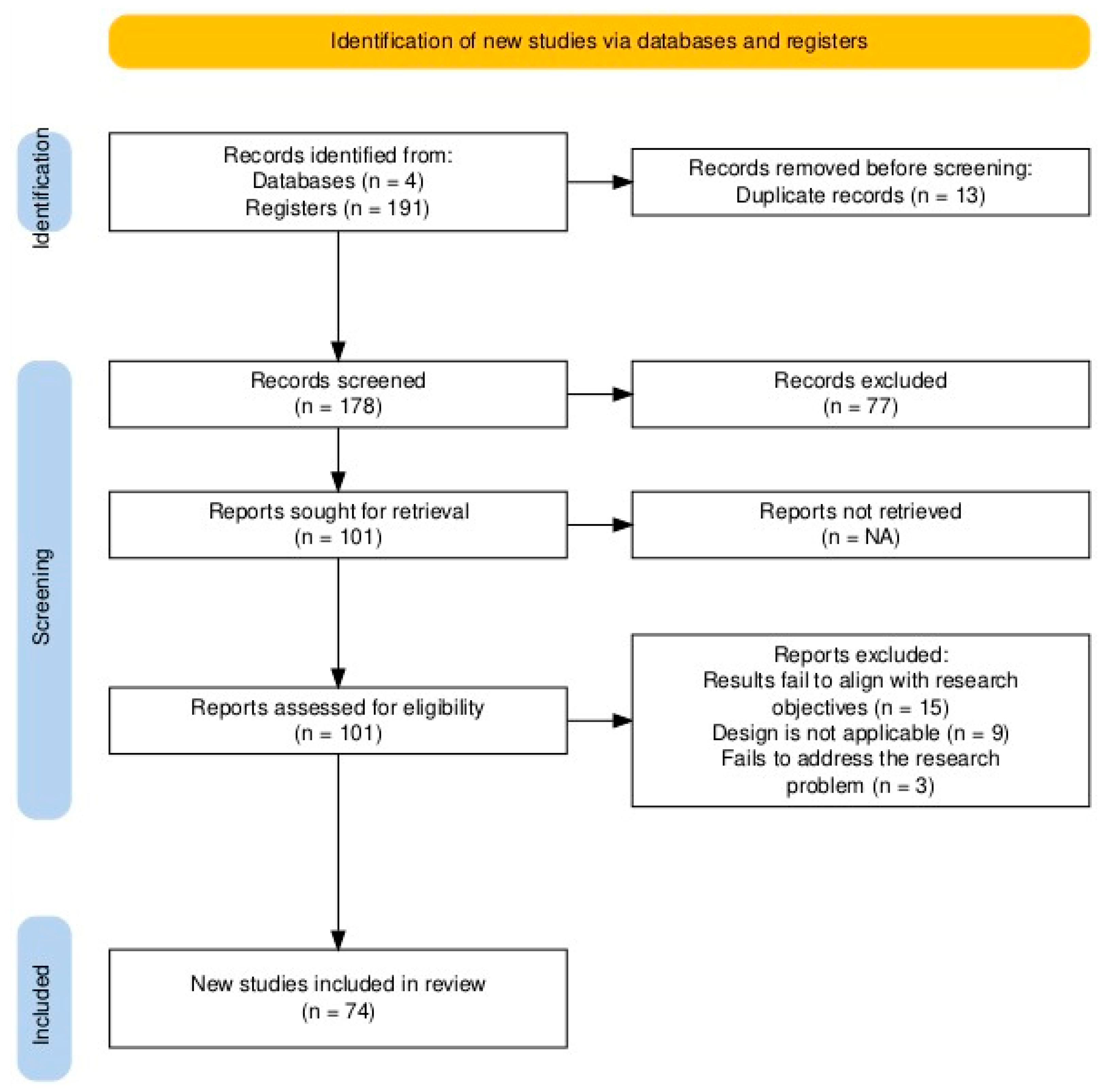
2022), comprising three phases. In the initial identification phase, a total of 191 records were located (
n = 4 through databases). After removing 13 duplicates, 178 records remained for the screening phase. During the initial screening, titles and abstracts were reviewed, resulting in the exclusion of 77 records. Subsequently, the full reports of the remaining 101 articles were sought; all of them were successfully retrieved for detailed evaluation. In the eligibility phase, a comprehensive full-text review of the 101 reports was conducted. Of these, 27 were excluded for the following reasons: Lack of alignment with the research objectives (
n = 15), Inapplicable study design (
n = 9), Failure to address the research problem (
n = 3). Ultimately, a total of 74 studies met all inclusion criteria and were incorporated into the systematic review for evidence synthesis (
Figure 1).
3.6. Data Extraction and Analysis
The Bibliometrix R-package (version 4.1.2; K-METRIC, Naples, Italy) was used to extract bibliometric indicators, such as the temporal distribution of publications, the most prolific authors, dominant journals, and the most cited contributions. Subsequently, Excel (version 2021; Microsoft Corp., Redmond, WA, USA) was used as the basis for a standardized manual coding matrix for qualitative variables not directly accessible, including: author(s) and year; country or region of study; study design and methodology; population/sample characteristics; type of algorithmic system analyzed; social sector; and main findings and theoretical contributions.
The analysis followed a thematic synthesis approach, identifying recurring patterns centered on: Conceptual evolution from the digital divide to algorithmic vulnerability; Mechanisms through which AI systems reinforce or transform social stratification; Categorization of social sectors (employment, health, justice) where AI is generating new forms of exclusion; Methodological approaches used to study algorithmic discrimination; and Emerging ethical and regulatory frameworks.
3.7. Quality Assessment
To ensure the robustness of the findings, the methodological quality of the included studies was evaluated using criteria adapted for mixed-methods systematic reviews: Clarity of research objectives, Appropriateness of the study design, Transparency in data collection and analysis, Validity and reliability of the results, Consideration of ethical implications.
Studies were not excluded solely based on quality; however, their methodological rigor was factored into the interpretation of the results.
3.8. Ethical Approval and Use of Generative AI
This study did not involve intervention research with humans or animals; therefore, no ethical approval code from an institutional authority was required.
Regarding the use of Generative Artificial Intelligence (GenAI), the Gemini model (version 1.5 Pro; Google LLC, Mountain View, CA, USA) was used for the translation and linguistic adaptation of the text. Additionally, Scopus AI (Elsevier, Amsterdam, Netherlands) was utilized to enhance the study’s scope, specifically to optimize the search for relevant literature and refine the identification of high-impact studies within the databases.
4. Results
4.1. Conceptual Evolution from the Digital Divide to Algorithmic Vulnerability
Table 1 indicates that the corpus analyzed, consisting of 74 studies published between 2018 and 2025, highlights a discipline in a state of full expansion. Although the initial search range was set from 2015, the results reflect a documentary presence with scientific rigor and thematic density starting from 2018. This time lag is justified by a paradigm shift in social science literature: prior to that year, research focused predominantly on the second digital divide (usage skills), whereas the critical study of algorithmic vulnerability and stratification mediated by automated decision-making systems only reached representative bibliometric maturity in the latter half of the decade. The annual growth rate of 71.7% is a critical indicator of how the academic community has rapidly shifted its interest from basic connectivity to the implications of AI on social structures.
This speed is reflected in an average document age of just 1.92 years, placing the core of scientific production within the 2024–2025 biennium. Such data freshness confirms that the phenomenon of algorithmic exclusion is a cutting-edge concern, where theoretical frameworks are being constructed almost in real-time as these technologies are deployed. Despite the relative youth of the field, the impact is notable, with an average of 34.72 citations per document. This corroborates that the selected texts are not merely exploratory but are laying the foundational and normative bases for what could be termed a new sociology of algorithms.
The collaboration structure and the content of the corpus reinforce the idea of a profound conceptual transition. The identified terminological diversity with 303 Author Keywords (DE) and 387 Keywords Plus (ID) indicates that the digital divide has ceased to be a matter of infrastructure and has become one of governance and rights. Furthermore, high international cooperation (33.78%) and an average of 4.11 co-authors per document indicate that algorithmic vulnerability is currently addressed as a transnational and interdisciplinary challenge. This analytical complexity suggests that the current problem of stratification lies not only in who accesses the network but in how the data of vulnerable populations is processed, classified, and ultimately used for new forms of social segregation.
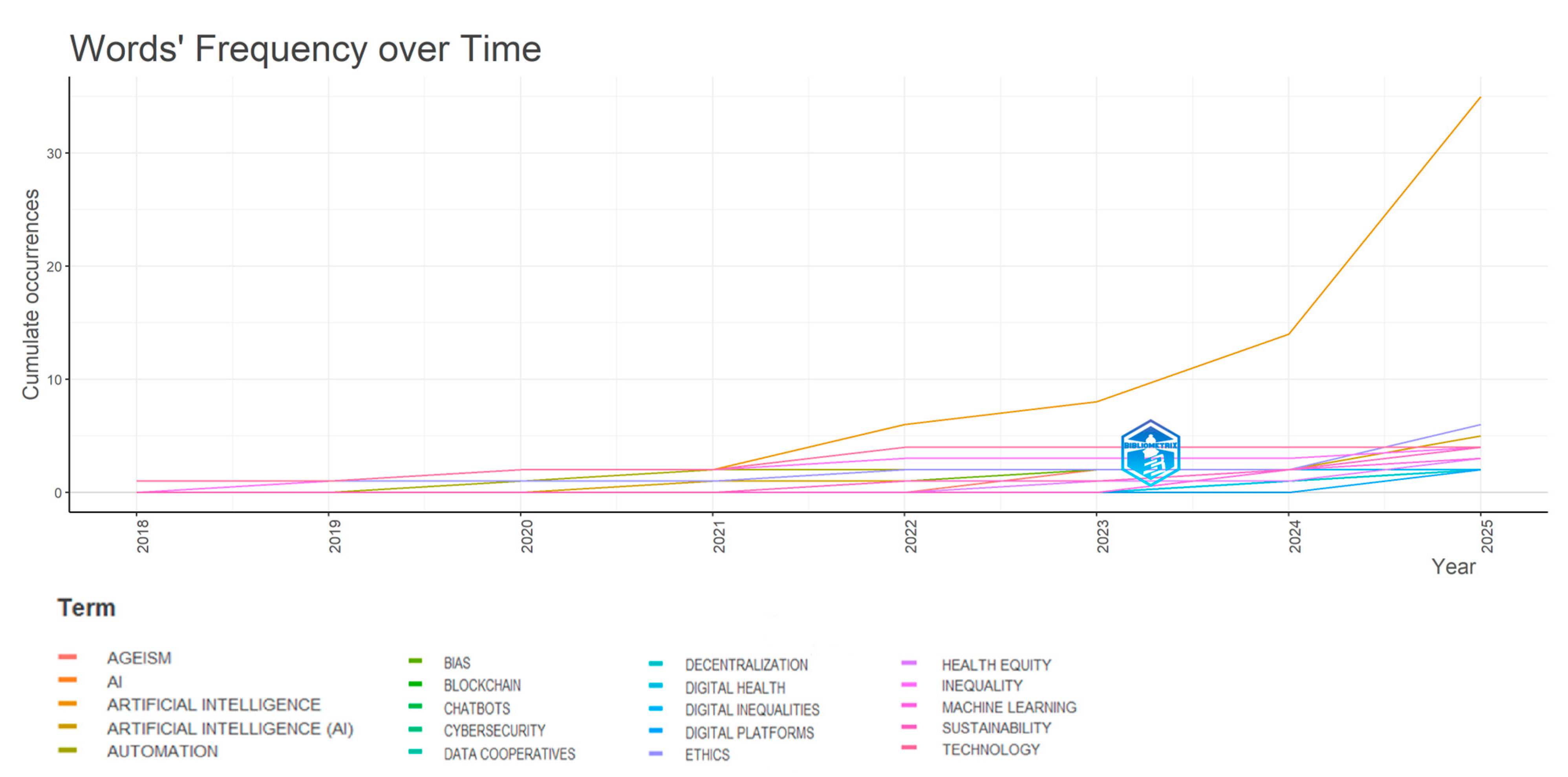
The analysis of keyword frequency in
Figure 2 demonstrates a substantive transformation in the discursive configuration of the social sciences. In the initial phase of the period, the debate was structured around broad categories such as “technology” and “ethics,” with an incipient presence of the concept of inequality. This stage reflects a classic digital divide approach, predominantly focused on access to technological resources and infrastructural conditions. However, from 2022 onwards, a significant qualitative turning point is identified: the term artificial intelligence experienced accelerated growth, rising from 2 mentions in 2021 to 35 in 2025, suggesting a shift from access-based divides toward more complex forms of social stratification mediated by algorithmic systems.
This transition is accompanied by a progressive lexical diversification that accounts for a more sophisticated understanding of exclusion mechanisms. The consolidation of terms such as automation, machine learning, and algorithms (reflected in the increase in AI references) indicates that inequality is no longer interpreted as a passive condition associated with the user, but rather as an active process structured by systemic logics. In this sense, the incorporation over the last three years of critical categories such as health equity, age discrimination, and data cooperatives is particularly relevant, evidencing a shift from purely technical concerns toward an approach centered on algorithmic vulnerability. This turn highlights the differential exposure of specific population groups to automated exclusion dynamics that affect the exercise of fundamental rights.
Furthermore, the increase in the frequency of terms like decentralization and cybersecurity toward 2025 suggests the emergence of academic responses oriented toward designing new technological governance frameworks aimed at mitigating systemic bias and strengthening algorithmic transparency. Meanwhile, the concept of inequality maintains a constant presence throughout the analyzed period; however, its articulation with increasingly technical and specific categories indicates the growing complexity and opacity of the phenomenon. Altogether, the evolution of keywords allows for the conclusion that digital inequality has moved from a conception focused on resource availability (“having or not having”) toward a deeper problem linked to automated classification and decision-making processes, where the inclusion or exclusion of individuals across various social spheres is at stake.
4.2. Categorization of Social Sectors (Employment, Health, Justice) Where AI Is Generating New Forms of Exclusion
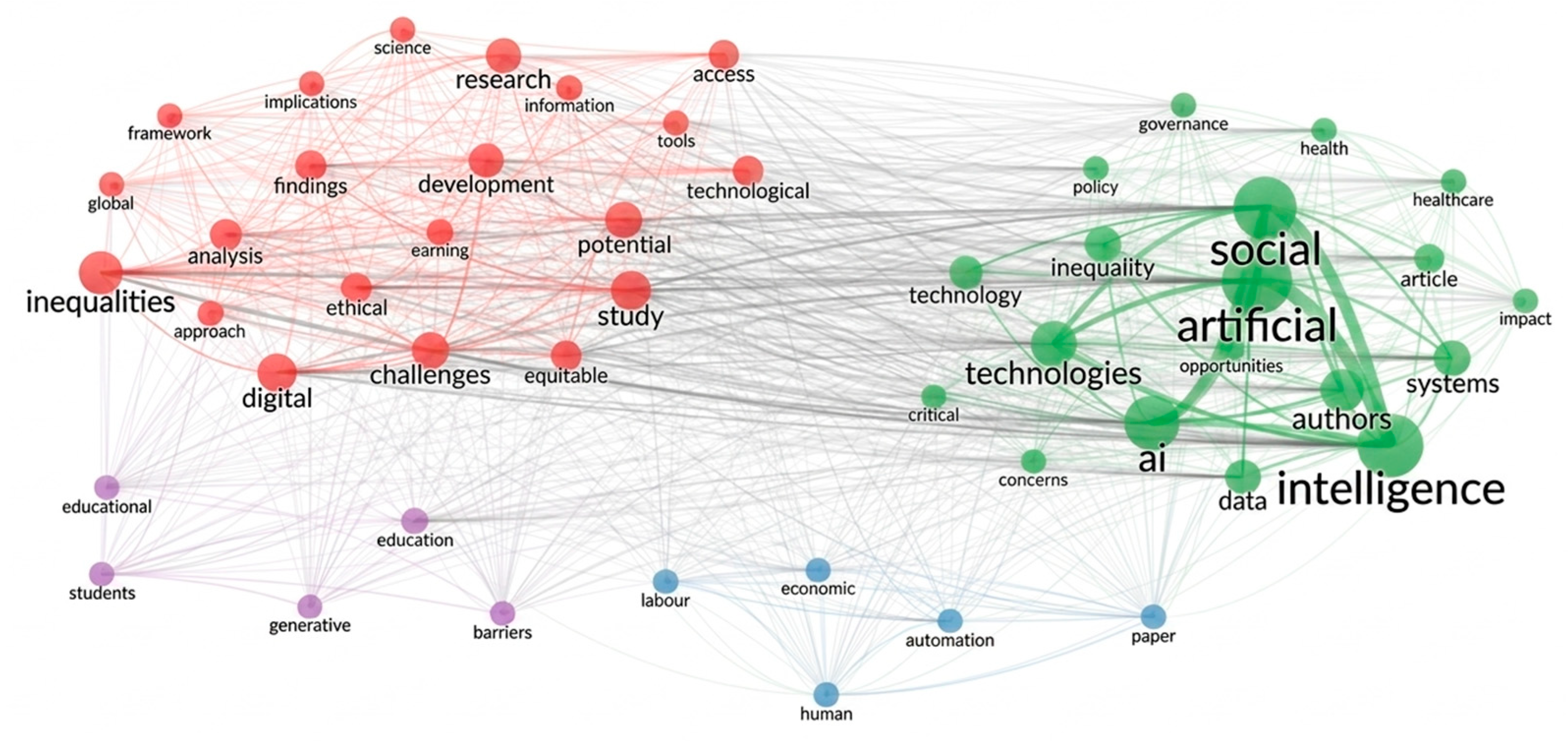
The co-occurrence analysis of keywords (
Figure 3) allows for the identification of the structure of social sectors where AI is reconfiguring exclusion dynamics. Through the examination of centrality metrics such as Betweenness and PageRank, it is observed that scientific literature not only reports the existence of biases but articulates algorithmic vulnerability across three predominant sectoral clusters: the socio-health sphere, the labor market, and the educational ecosystem.
In this context, Betweenness centrality measures the degree to which a node acts as a bridge between different parts of the network, highlighting terms that connect disparate research themes. PageRank, on the other hand, evaluates the importance of a node based on the quality and quantity of its connections, identifying the most influential concepts within the discourse of algorithmic stratification.
Socio-Health Nexus and Data Governance: The green cluster presents the highest centrality values (Artificial Intelligence with a Betweenness of 11.13 and Social with 8.35), consolidating itself as the core of the current debate. The statistical connection between the nodes “health,” “healthcare,” and “inequality” suggests that health is the primary sector of concern. In this area, exclusion is not limited to technological access but to “data vulnerability.” High scores for “governance” and “impact” indicate that literature focuses on how the absence of regulatory frameworks allows triage and diagnostic algorithms to perpetuate historical inequities, turning health management into a space for automated stratification.
Automation and the Human Capital Divide: The blue cluster directly links “automation” with the “labour” factor and “economic” implications. Although Betweenness values are lower compared to the central cluster, its cohesion indicates a robust research line regarding job precarity. The transition of the digital divide in this sector manifests through task replacement and algorithmic workplace surveillance. The presence of the “human” node underlines a latent ethical conflict: the dehumanization of hiring and performance evaluation processes, where automated decision systems act as invisible barriers for populations with non-standard professional trajectories or those belonging to minorities.
Barriers in the Educational Ecosystem: The purple cluster groups critical nodes such as “education,” “students,” and the emerging “generative” (Generative AI). This sector appears as a new front of exclusion where “barriers” are no longer just economic, but cognitive and methodological. The analysis suggests that the introduction of AI tools in the classroom, if not mediated by an equity-focused approach, generates a new stratification between students capable of “co-creating” with technology and those relegated due to a lack of algorithmic literacy or access to advanced models.
In summary, the co-occurrence network demonstrates that algorithmic exclusion is a transversal phenomenon. The high centrality of the terms “ethical” and “inequalities” in Cluster 1 acts as the theoretical glue binding all sectors, confirming that the transition to the AI era has transformed digital inequality into a systemic problem of social justice and fundamental human rights.
4.3. Methodological Approaches Used to Study Algorithmic Discrimination
The systematic analysis revealed a significant methodological transition in the study of algorithmic discrimination. Upon evaluating the methodologies used, three main approaches have structured the field during the last decade:
The analysis of the 74 records identified a significant methodological transition that responds to the increasing technical complexity of AI systems. The hegemony of quantitative approaches (58%) is primarily concentrated on external algorithmic auditing. This technique, frequently termed “black-box testing,” has allowed researchers to document statistical disparities in critical sectors—such as credit allocation and urban surveillance—without the need to access the source code. It is observed that 42% of these quantitative studies utilize large-scale databases (Big Data) to conduct fairness stress testing, evaluating proxy variables that mask race or gender biases.
A relevant finding is the emergence of a “vulnerability methodology” between 2021 and 2025, during which mixed methods grew by 25%. Unlike the initial years (2015–2018), where documentary and ethical–legal analysis (17%) predominated, recent investigations integrate digital ethnography and in-depth interviews with affected communities. This sociotechnical approach is fundamental for capturing lived “algorithmic vulnerability,” enabling an understanding of not only statistical bias but also the impact on subjectivity and the legal defenselessness of citizens in the face of automation.
An emerging niche of “Ethics by Design” methodologies was identified. Although they represent only 12% of the corpus, these studies propose ex-ante evaluation frameworks, shifting research from reactive bias detection toward preventive governance and regulatory compliance.
4.4. Mechanisms Through Which AI Systems Reinforce or Transform Social Stratification
Social stratification in the AI era is not a passive consequence of technological adoption but a process mediated by complex socio-technical mechanisms. The synthesis of the analyzed corpus reveals four primary dimensions of this phenomenon:
First, the mechanism of Opacity and Power Asymmetry. Stratification is articulated through what
Bulathwela et al. (
2024) and
Martínez-Rolán et al. (
2025) warn that the lack of system comprehensibility and the absence of transparency generate legal defenselessness for citizens, eroding fundamental rights by automating surveillance and exclusion without clear appeal mechanisms. This power structure is reinforced by what
Martínez-Rolán et al. (
2025) define as the lack of social control over code, which deepens the economic dependence of marginalized groups on technological elites.
Second, Data Exclusion and Algorithmic “Necropolitics” in Health. In the socio-health nexus, stratification operates through the “invisibilization” of minority groups.
Martínez-Rolán et al. (
2025) argue that the lack of gender and ethnic representativeness in training sets acts as a structural barrier to precision medicine. This mechanism becomes critical in crisis contexts; as
Occhipinti et al. (
2025) demonstrate, AI systems can prioritize resource allocation in ways that disproportionately harm the poorest sectors, effectively “coding” survival based on data availability. Furthermore,
Kaushik et al. (
2025) highlight a “data-extractivism” dynamic where low-income countries provide data but receive lower-quality digital care, perpetuating a global health gap.
Third, Capital Concentration and Labor Precaritization. From an economic perspective, stratification is accelerated by the devaluation of human labor and the accumulation of “algorithmic capital.”
Lowitzsch and Magalhães (
2025) argue that automation systematically favors machine owners, displacing low-skilled workers toward a new “digital precariat.” This is complemented by the normative standardization described by
Pashentsev and Kolotaev (
2025), where productivity algorithms penalize those who do not align with standard efficiency profiles. In the knowledge industry, a clear divide emerges between an elite with “digital agency” (
Yang et al. 2024) and a base relegated to consumption and misinformation (
Martínez-Rolán et al. 2025).
Fourth, Infrastructure and Governance Barriers. Finally, technical complexity acts as a gatekeeping mechanism.
Tabarés Gutiérrez (
2025) notes that the high entry barriers of AI infrastructure allow only powerful institutions to thrive. In education, the transition toward automated governance, without critical pedagogy, fragments knowledge into “ideological bubbles” (
Occhipinti et al. 2025;
Bernard and Bendraou 2025). This synergy between high costs and technical opacity naturalizes historical inequalities, scaling them through a facade of algorithmic objectivity that makes social mobility increasingly difficult for those outside the technological core.
4.5. Emerging Ethical and Regulatory Frameworks
The transition from abstract ethical principles to binding regulatory frameworks marks a turning point in the fight against algorithmic stratification. The analyzed literature highlights three strategic axes:
First, the consolidation of the Risk-Based Approach. The 2024 European Union Artificial Intelligence Act represents the first systemic attempt to normalize algorithmic governance. This framework establishes a normative hierarchy where systems impacting fundamental rights—such as those used in education, credit scoring, and criminal justice—are categorized as “high risk.” According to
Martínez-Rolán et al. (
2025) and
Sierocka (
2025), this classification implies that bias mitigation is no longer a voluntary corporate social responsibility but a legal prerequisite. These authors emphasize that mandatory technical transparency and ex-ante data audits are essential to dismantle the “statistical invisibility” of ethnic and gender minorities within training datasets.
Second, the shift toward Human-Centric Governance and “Algorithmic Justice”. Beyond regional regulations, international standards (UNESCO, 2021–2024; CEPEJ guidelines) propose a paradigm shift from technical efficiency to human oversight.
Sierocka (
2025) and
Wang and Segumpan (
2025) argue that for an architecture of “Algorithmic Justice” to be effective, the human operator—whether a judge, doctor, or teacher—must possess “algorithmic literacy”. This capacity is critical to challenge and override system outputs when statistical deviations that harm vulnerable groups are detected, ensuring that the algorithm remains a decision-support tool rather than a final, unappealable prescription.
Third, the Integration of Socio-Economic and Innovation Frameworks. A critical finding in the corpus is the conceptualization of algorithmic bias as a market failure rather than a purely technical error.
Acemoglu and Restrepo (
2020) provide the theoretical foundation for this, arguing that excessive automation exacerbates social stratification. They propose a “Reinstating AI” framework, which advocates for public policies that subsidize technologies designed to augment human capabilities. Complementing this,
Wang and Segumpan (
2025) suggest that reducing stratification requires the democratization of technological development. This involves the inclusion of diverse design teams and the adoption of “global-south” datasets, shifting the focus from the standards of technological power centers toward a more representative and inclusive cultural reality.
5. Discussion
The evidence gathered in this review suggests that the transition from the digital divide to algorithmic vulnerability is not an isolated technical phenomenon, but rather an evolution of Pierre Bourdieu’s concept of social reproduction. Empirical findings show that 58% of the studies focus on algorithmic auditing, revealing how AI systems act as new instruments of symbolic violence. By automating decisions in the health and employment sectors, the most recurrent in the corpus, AI does not merely process data; it encodes the cultural and social capital of individuals, transforming historical biases into seemingly neutral technical decisions.
This theoretical connection materializes in the labor market findings identified within the analyzed records. Stratification no longer depends solely on access to hardware (technical capital), but on the subject’s capacity to ‘negotiate’ with the algorithm. Following Bourdieu, the digital habitus of vulnerable populations is confronted by systems that penalize life patterns failing to conform to the dominant algorithmic norm (
Valdés 2022). Consequently, the results of this review confirm that AI is reconfiguring fields of power, where algorithmic opacity functions as a mechanism of social closure, excluding those who lack the necessary capital to audit or challenge automated decisions.
Regarding the conceptual evolution of digital inequality, the results demonstrate a shift from the “second digital divide” (usage skills) toward a stratification mediated by the opacity of automated decision-making systems. This phenomenon aligns with external literature describing the emergence of a “data gap,” where exclusion is defined not by the non-use of technology, but by the harmful and automated classification of subjects (
Ragnedda and Ruiu 2025). Previous studies have noted that this new dimension of inequality is particularly insidious due to its invisible nature and the lack of agility in traditional theoretical frameworks to capture discrimination in real-time (
Kuhn et al. 2023).
Regarding the social sectors where new exclusions are generated, the identification of socio-health, labor, and educational clusters as epicenters of vulnerability agrees with high-impact research warning about the “automation of inequality.” In the health sector, it has been widely documented how algorithms can underestimate the needs of patients belonging to ethnic minorities by using historical spending as a predictive variable, thereby perpetuating systemic disparities (
Chandra et al. 2025;
Hoffman 2021). Likewise, in the workplace, the literature warns that algorithmic surveillance and task substitution do not affect the population uniformly; rather, they tend to casualize employment in historically marginalized sectors, consolidating an elite with “digital agency” against a mass of workers subordinated to the logic of code (
Acemoglu and Restrepo 2020;
Rydzik and Kissoon 2022).
In view of the above, it is also imperative to recognize that while the analyzed literature focuses predominantly on health, employment, and education, emerging dimensions of human experience are beginning to exhibit signs of algorithmic vulnerability. Among these, cultural production and consumption are being reconfigured by recommendation algorithms that can crystallize gaps in taste and access (filter bubbles) (
Bruns 2019;
Reid 2024;
Rodilosso 2024). Similarly, the automation of administrative tasks in the public sector poses the risk of “invisible exclusion,” where citizens with lower digital capital are sidelined from social protection systems due to biases in eligibility models (
Buchert et al. 2023;
Larsson 2021;
Schou and Pors 2019;
Sheldrick 2023). Although these areas do not constitute the core of the current bibliometric corpus, they represent critical frontiers of social stratification in the AI era.
In terms of methodologies, the predominance of quantitative and algorithmic auditing approaches (58%) reflects a disciplinary effort to diagnose bias through “black box” testing. However, the rise of mixed methods identified since 2021 suggests that the scientific community recognizes that bias is not merely a mathematical error, but a socio-technical problem. This perspective is validated by research proposing “algorithmic justice” approaches, arguing that the technical correction of an algorithm is insufficient if the pre-existing power asymmetries in data collection are not considered (
Birhane 2021). The exclusion mechanisms detailed in the results such as opacity and lack of representativeness confirm that AI acts as an agent that naturalizes historical inequalities by processing biased data from vulnerable populations without clear appeal mechanisms.
The discussion on regulatory frameworks reveals a necessary transition from voluntary ethics toward binding regulations, such as the European Union AI Act (
Mueck et al. 2025). Nevertheless, mitigating systemic bias requires more than compliance audits; it demands a shift in the logic of the technology market. Contrasting these results with the global context highlights that the proposal for a “Reinstating” or complementary AI is fundamental to avoiding the massive devaluation of human labor.
In this vein, it is proposed that future lines of research should prioritize analyzing the impact of generative AI on the cognitive gap and the efficacy of data cooperatives as a mechanism for citizen resistance. It is imperative to move toward longitudinal socio-technical audits that move beyond the current black-box approach to integrate the intersectional perspective of vulnerable populations. Additionally, there is a need to study new models of democratic governance that transform automated decision systems from tools of exclusion into instruments of social justice and technological sovereignty.
6. Conclusions
This systematic review and bibliometric analysis offer a rigorous and structured overview of the scientific literature dedicated to the transition from the digital divide to algorithmic vulnerability between 2015 and 2025. It highlights an exponentially growing academic production, especially from 2018 onwards, a predominance of quantitative approaches focused on bias auditing, and a conceptual evolution that shifts the focus from simple technological access toward social stratification mediated by automated decision systems. The findings also emphasize the increasing importance of data governance, ethics by design, and algorithmic justice in critical sectors such as health, the labor market, and education, while noting a recent surge in interest regarding binding regulatory frameworks in the face of AI’s impact on vulnerable populations.
However, this study presents certain limitations. First, the reliance on strict inclusion criteria under PRISMA guidelines may have excluded grey literature or technical reports from human rights organizations which, though relevant, do not meet the format of an indexed scientific article. Second, while the bibliometric analysis allowed for the identification of thematic clusters and centrality metrics, the recency of the corpus (with an average age of 1.92 years) limits the observation of the long-term social impacts of newly implemented regulations. Furthermore, the methodology did not allow for an in-depth exploration of the subjective perceptions of users affected by algorithmic exclusion, nor did it capture the dynamics of civil resistance through qualitative field analysis.
Regarding future research, several lines of inquiry merit further exploration. On one hand, it is pertinent to expand studies to underrepresented contexts and emerging economies where privacy and data protection standards differ to develop a more equitable understanding of technological sovereignty. On the other hand, the incorporation of intersectional dimensions in sociotechnical audits and the study of the impact of generative AI on the cognitive divide constitute underexplored yet crucial areas within the context of current digital transitions. Furthermore, the development of mixed methods, longitudinal studies, and “AI Reinstatement” frameworks is essential to better grasp the complexity, opacity, and temporality of contemporary social stratification. Taken together, it is also necessary to delve deeper into the impact of AI on leisure management and cultural participation—areas where algorithmic mediation may be operating as a silent mechanism of distinction and social stratification, extending beyond the traditional realms of productivity and well-being.
This review provides a solid foundation for rethinking the theoretical frameworks and analytical tools used in the study of digital inequality, moving toward a more inclusive, transparent, and human rights-oriented perspective. Beyond its academic contributions, this review offers practical insights for key stakeholders in technological development and social policy. Software developers and data scientists can utilize the identified trends to integrate transparency mechanisms and human oversight from the earliest stages of algorithmic design. Professionals in healthcare, law, and education can benefit from this synthesized knowledge to identify invisible barriers in their respective fields and advocate for fairer decision-making processes. Policymakers and institutional leaders are encouraged to invest in person-centered governance frameworks and public policies that incentivize the democratization of access to advanced AI models, reflecting the evolving nature of inclusion in an algorithmic world.
The scarce presence of certain minority voices and regional contexts in the reviewed literature reflects broader structural deficiencies in the representation of digital vulnerability. These gaps affect not only the visibility of these groups in scientific discourse but also the quality of evidence available for lawmaking and the mitigation of systemic bias. By identifying these imbalances, this study contributes to current debates on algorithmic equity and the global relevance of socio-technological research. This offers not only a conceptual map of the field but also a strategic resource for researchers and decision-makers committed to creating more inclusive AI research agendas with a vision of future social justice.




 ,
,