


Abstract
This study examines how local social policies addressing young people’s well-being and working-life capacities within the framework of sustainable development are understood, and how they might be further developed in a Swedish municipal context. The study draws on three qualitative datasets: professionals from municipal social services, representatives of municipal units and civil society organisations, and young people aged 15–19. Data were analysed using abductive thematic analysis informed by Doyal and Gough’s theory of Human Need and Helne and Hirvilammi’s Having–Doing–Loving–Being model of relational well-being. Findings indicate that professional participants recognise links between social, economic, and ecological dimensions of sustainability, yet practice is largely oriented towards individual and social concerns, with limited engagement with the natural environment. Youth participants indicated detachment from both nature and societal processes, framed responsibility as habitual, and exhibited intergenerational detachment alongside temporal and geographical distance from sustainability issues. The findings also indicate siloed municipal sustainability policies. The study concludes that current policies may insufficiently integrate the ecological and relational dimensions of human needs and that there is a need to develop ecosocial policies and practices that promote more sustainable well-being and working-life capacities, especially for young people.
1. Introduction
Since its inception in the late nineteenth and early twentieth centuries in Europe and North America, professional social work has acknowledged broader environmental conditions, including the natural environment (Chang et al. 2025b; Närhi and Matthies 2016). In practice, however, Western social work has largely been organised around casework and individualised interventions, with a strong focus on the social environment rather than on ecological relations. As a result, community-based work and the natural environment have long been marginalised within the profession (Zapf 2010), including in Swedish social work (Chang et al. 2025b; Sjöberg and Turunen 2022). The person-in-environment perspective has therefore often been interpreted in social rather than ecological terms, leaving environmental and planetary conditions weakly theorised in mainstream social work practice (Bexell et al. 2019; Krings et al. 2020; Mathias et al. 2023; Molyneux 2010; Payne 2024). However, since the 1970s, there has been renewed interest in reintroducing the natural environmental perspective into social work. From the 2010s onwards, this interest has been further developed through approaches such as ecosocial work (Närhi and Matthies 2016). Ecosocial work has gradually taken shape as a clearer conceptual and analytical framework, and attention to this perspective has increased internationally, including in Sweden, although it remains limited (Chang et al. 2025b). Despite this growing interest, ecosocial work remains marginal within mainstream social work education, policy, and practice. In international debates, ecosocial work is understood as an approach that seeks to promote both human and planetary well-being by emphasising their interdependence, while also challenging the long-standing separation between social issues and environmental concerns within social work (Boetto et al. 2022; Chang et al. 2025a, 2025b; Mason et al. 2017; Närhi and Matthies 2018; Ramsay and Boddy 2017; Ranta-Tyrkkö and Närhi 2021; Stamm et al. 2023).
This development suggests that ecosocial work is not only a theoretical reorientation within social work but also a response to broader socio-ecological transformations that are reshaping welfare conditions and policy demands. If human and planetary well-being are understood as interdependent, social work and social policy cannot treat environmental change as a background context outside welfare. Instead, they must consider how ecological pressures and social inequalities are produced, reinforced, and governed together. This perspective places renewed attention on how public institutions define needs, organise support, and develop strategies that address both social and environmental risks (Koch 2022), an issue closely connected to current global sustainability agendas. In other words, the pressures created by climate change and widening social and ecological inequalities are not only “external” problems but also issues that increasingly shape everyday living conditions and, therefore, should be more clearly reflected in welfare priorities and the kinds of interventions public actors are expected to deliver. To address these intertwined challenges, there is a growing push for holistic, multidisciplinary, multiprofessional, and intergenerational approaches that connect social protection with ecological limits and justice concerns (Crosse et al. 2025).
These broader transformations are particularly relevant for social work, since it operates within welfare systems that are increasingly expected to respond to interconnected social and ecological pressures. As both a practice and a profession, social work draws on global principles (IFSW 2014), yet its meaning and practice are shaped by national and local realities, including how welfare systems (and related social policies) are organised, which problems are prioritised, and what resources are available. This tension between global principles and local practice can be understood through the idea of glocal social work. Glocal social work recognises that global challenges are closely intertwined with local conditions and therefore require context-sensitive responses: to think globally and act locally (Nothdurfter and Pedroni 2025). This dynamic can be exemplified by the relationship between the United Nations Sustainable Development Goals (hereafter, Sustainable Development Goals) and social work. While the Sustainable Development Goals provide shared global directions, interpretation, negotiation, and implementation occur within national contexts, particularly in municipalities and local communities (Breuer et al. 2023), where social workers and other actors confront the everyday consequences of social and ecological change.
Within this broader context, the Sustainable Development Goals provide an important global framework for addressing such challenges. These goals are based on the principle of ‘Leaving no one behind’ and are intended to guide policies at international, national, and local levels (Gustafsson and Krantz 2025). However, turning these broad goals into concrete local action is often difficult, and it is not always clear how municipalities should interpret and apply them in practice (Krantz and Gustafsson 2021; Ningrum et al. 2024). This matters because the main implementation work often happens locally, where policies meet everyday needs and local constraints. Thus, municipalities play a key role in translating the Sustainable Development Goals into local strategies, as they are responsible for many services and activities that directly shape residents’ well-being. Nevertheless, it remains uncertain how these goals are understood and implemented at the municipal level, partly because local welfare practice is complex and involves multiple actors, priorities, and resources (Fenton and Gustafsson 2017; Gustafsson and Krantz 2025; Krantz and Gustafsson 2021). While local policies can have a more immediate impact on residents’ everyday well-being than national policies (Biggeri 2021), national policy frameworks still matter because they set priorities, allocate resources, and shape how countries respond to challenges linked to the Sustainable Development Goals (Chevalier and Loncle 2021).
In this policy landscape, social work operates within the social policies of the contexts in which it is located. Social work, as a practice and a profession, draws on global principles (see IFSW 2014). Against this background, it becomes important to examine how global sustainability ambitions are interpreted and operationalised within local welfare systems. The developments discussed above point to a gap between global sustainability ambitions, such as those articulated in the Sustainable Development Goals, and their interpretation and operationalisation within local welfare systems. The mismatch is especially visible at the municipal level, where welfare responsibilities are extensive and social policies shape young people’s everyday lives, future opportunities, and transitions into working life. Youth are often positioned as key policy targets, yet their perspectives, needs, and lived experiences are not consistently reflected in local frameworks (Ramos et al. 2026). Relatedly, policies addressing well-being, including youth and working-life capacities, tend to remain sector-specific and siloed (Breuer et al. 2023; Lah 2025). In this article, working-life capacities refer to the combination of health, skills, motivation, social support, supportive environments, and work conditions that shape young people’s real opportunities to prepare for, enter, and remain in working life (Chang, forthcoming). This means that working-life capacities are not only about individual resources, but also about whether social, institutional, and environmental conditions create meaningful pathways into the labour market (Tengland 2011; van der Klink et al. 2016).
Taken together, these limitations point to a need for approaches that better connect social and ecological dimensions of well-being in local policy and practice, such as ecosocial work. Although ecosocial work offers a framework that links human and planetary well-being, it remains marginal in practice, and its implications remain underexplored, including in relation to policy development (Hermans 2025). This makes it important to examine how local policies can address intertwined social and ecological challenges and how ecosocial perspectives might inform policy development relevant to everyday practice. Addressing this gap also requires engaging young people where their contributions are most likely to lead to visible change: in the local arena. Research suggests that young people’s sense of political efficacy is often stronger when participation occurs in close proximity to their everyday environments (Brady et al. 2020). At the same time, research indicates that some young people experience detachment from society and limited confidence in their capacity to contribute to future societal development, which further underlines the importance of meaningful local participation (Fritz et al. 2025). As both current and future generations, young people are central to social work and to advancing the Sustainable Development Goals (Chang et al. 2022, 2025a). They can act as catalysts for necessary transitions and shoulder a pronounced intergenerational responsibility (Bessant et al. 2025), given that the long-term consequences of current environmental and social policies will directly shape their health and well-being. Against this background, this article aims to explore how local social policies focusing on young people’s well-being and working-life capacities, within the framework of sustainable development, can be understood and further developed in a Swedish municipal context.
1.1. Ecosocial Work and Sustainable Welfare: Fulfilling Needs Through Ecosocial Policies?
As stated above, a human socio-centric approach to social work is too narrow, because it tends to treat social problems as if they exist separately from ecological conditions (see, e.g., Stamm et al. 2023; Närhi and Matthies 2025). From this perspective, ecosocial work broadens social work’s concern from human well-being alone to include planetary well-being, recognising that human needs and well-being depend on the health of ecological systems (Stamm et al. 2023).
This broader framing is closely linked to how well-being and welfare are commonly understood in Scandinavian social policy and everyday language. In the Scandinavian context, the terms “welfare” and “well-being” are often used interchangeably, referring to both material and non-material aspects of people’s quality of life (Allardt 1976, 1993). This understanding is adopted in this article and is referred to as well-being. Welfare, however, is used more specifically to denote the public provisions and supports that operate across key social areas, including health and housing, education and employment, income support, and social services (Vella 2019). In the Swedish context from which the data were collected, employment is commonly understood as paid work and is closely linked to income generation, economic security, and participation in the labour market (Forslund 2019). This understanding is often shaped by dominant economic structures and growth-oriented perspectives, in which employment is associated with productivity and economic contribution. As a result, unpaid or low-paid work, including care work and environmental regeneration activities, may be perceived as marginalised or seen as secondary.
These understandings of welfare and employment shape how public provisions and supports are organised and how well-being is supported across the life course. These provisions and supports play a central role in shaping people’s opportunities for well-being across the life course. How well-being is understood, and which needs are prioritised, influence how welfare systems are designed, justified, and evaluated. In this sense, the concept of human needs becomes central to debates about welfare provision and social intervention, as it can be used both to justify existing social policies and to criticise them (Doyal and Gough 1991). Social policies, in turn, consist of guidelines, principles, and frameworks through which governments, institutions, and organisations seek to address social problems, allocate resources, provide services, and fulfil needs, thereby enhancing the well-being of individuals and communities (Adams 2002). Social policies encompass a wide range of areas, including healthcare, education, employment, housing, and social security, all of which aim to improve the quality of life and address social inequalities. Social policies provide the broader framework within which social work services operate, shaping conditions and determining the extent to which these services are enabled or constrained. Social workers not only implement social policies but also influence, shape, and advocate for policy development and reform, which reflects the profession’s ethical commitment to meeting human needs and promoting well-being within social and environmental contexts (Gal and Weiss-Gal 2022).
The social work profession has ethical foundations that align closely with the principles of sustainability (Peeters 2012). Within this framework, sustainability, framed within sustainable development, is among the focus areas of ecosocial work (Boetto 2017; Chang et al. 2025b; Stamm 2021). There are consistent calls for social workers to actively engage with sustainable development and its goals, as reflected in the IFSW’s policy document’s call for a holistic social work framework that incorporates the natural environment to address social issues and encourages social workers to adopt ecosocial practice to promote sustainable development and its objectives (IFSW 2022).
The Sustainable Development Goals, as a global framework for sustainability, require interpretation and implementation within specific national and local contexts. In Sweden, their incorporation into public policy intersects with a long-standing welfare tradition that has historically relied on economic growth to expand social welfare by redistributing resources generated by rising gross domestic product (Hirvilammi and Koch 2020; Koch 2022). This type of welfare was effective in the 20th century, with social policies designed to address the challenges of industrialisation, urbanisation, and globalisation (Hirvilammi et al. 2023). In the 21st century, a welfare system based on economic growth is viewed as unsustainable due to its ecological impact, as an increase in gross domestic product often correlates with high environmental degradation (Koch 2022). Additionally, the current climate emergency presents challenges that necessitate future policies to address socio-ecological issues by aligning social and ecological goals and fostering public support for ecosocial policies (Hirvilammi et al. 2023).
These challenges are not only multiple but also deeply interconnected. Recent scholarship (for example, Cucca et al. 2023; Fritz and Lee 2023; Lawrence et al. 2024; Snell et al. 2023) has therefore renewed attention to the concept of polycrisis. Within this framing, contemporary challenges such as climate change, economic instability, and social inequalities are not approached as discrete or self-contained problems, but as mutually shaping processes that cut across social, economic, political, and ecological spheres (Terrana et al. 2025). This highlights how policy responses in one domain may generate unintended consequences in others, thereby reproducing or intensifying existing vulnerabilities. The central issue, then, is not only how individual crises are managed, but also how the structural conditions and systemic relations that produce, sustain, and reinforce multiple crises are understood and addressed. Such a perspective also points to the limits of fragmented policy responses and strengthens the case for more integrated approaches that explicitly connect social justice with ecological sustainability. In this respect, ecosocial policies can be understood as one important response, as they comprise a set of initiatives and programmes that aim to foster a just and sustainable society by addressing the intersection of social and environmental issues (Brown and Chang 2026). Furthermore, ecosocial policies seek to ensure that the needs of future generations are considered, using a sufficiency threshold that prioritises basic needs over ‘wants’ (Gough 2017).
In this context, there is a need for welfare systems that operate in a way that is less dependent on economic growth, focusing on meeting human needs within the limits of our planet’s resources by fulfilling essential basic needs and maintaining ecological balance rather than pursuing economic expansion (Büchs 2021; Fritz et al. 2025; Gough 2017; Hirvilammi and Koch 2020). This type of welfare is referred to as sustainable welfare (Koch 2022). In this sense, ecosocial policies and sustainable welfare are mutually reinforcing: together they provide the direction and institutional means to secure basic need satisfaction within planetary boundaries. Framed relationally, this implies designing policies that ensure material security and safe environments, enable meaningful participation and livelihood pathways, foster a sense of belonging and care in everyday settings, and support identity, purpose, and autonomy. Organising programmes and policies around these interlinked dimensions translates sufficiency into practice, aligns short-term well-being with long-term ecological stability, and strengthens people’s working-life capacities, including those of the youth.
1.2. The Glocal Research Context: Gävle
The data were collected in Gävle, a municipality in east-central Sweden. Gävle provides a relevant case for examining how global sustainability ambitions are translated into local policy and practice. As a mid-sized Swedish municipality with established sustainability programmes, including both social and environmental strategies, it reflects broader national policy structures while also illustrating how these are operationalised at the local level. At the same time, the coexistence of ambitious policy frameworks and observable challenges, such as fragmentation across policy domains and limited youth participation, makes Gävle a suitable context for exploring tensions between policy intentions and everyday practice. In its work towards sustainable development, the municipality appears to treat the Sustainable Development Goals mainly as end-states to be achieved rather than as an ongoing process. It frames social sustainability as the ultimate goal, economic sustainability as the means to achieve it, and ecological sustainability as the overarching framework that sets limits for the other two (Gävle Kommun 2025a, 2025b). This work is structured around three core programmes as shown in Figure 1: Socialt hållbarhetsprogram 2025 (the Social Sustainability Programme), Miljöstrategiskt program 2.0 (the Environmental Strategy Programme) and Näringslivsprogram 2021–2025 (the Business Development Programme). These programmes operate at the same strategic municipal level and form a core part of Gävle’s approach to sustainable development, each addressing one of the dimensions (Gävle Kommun 2025a). Although each programme recognises the interrelationships between the three dimensions and aims to contribute to the others (Gävle Kommun 2025a, 2025b), their separate structures also reflect a degree of institutional division. In this article, the study results are also discussed in relation to the Social Sustainability Programme, which addresses youth needs, wellbeing, and working-life capacities, which are central elements of the research aim of this article.
Figure 1.
The three municipal sustainability programmes.
Gävle also reflects broader socio-economic and environmental challenges that are relevant to this study. In recent years, the municipality has experienced unusual environmental events, including a drought in 2018 and extensive flooding in 2021, both of which are relatively uncommon in the Swedish context. At the same time, Gävle faces labour market and educational challenges that are important for understanding youth well-being and working-life capacities. In 2024, Gävle had a population of 103,838 and was one of ten municipalities in Gävleborg County, which had a total of 285,642 inhabitants (SCB 2025). The local economy combines public-sector employment, which is the largest source of employment (Ekonomifakta 2026), with manufacturing, logistics, and port-related activities. The largest private employer is a world-leading company in high-performance paper and packaging materials (Gävle Kommun 2025c). Gävle is also a university town, with around 19,000 students at the University of Gävle. Despite these features, labour market conditions remain relatively weak. In 2024, youth unemployment (ages 18–24) in Gävleborg County reached 13.1%, the highest in Sweden, compared to the national rate of 8% (Arbetsförmedlingen 2024). Only 21% of young people aged 24 years or younger in the county had completed at least three years of post-secondary education, compared with 25% nationally (SCB 2025), which may partly explain the high unemployment rate. In 2025, overall unemployment in Gävle was 9.2%, compared with 6.9% nationally (Ekonomifakta 2026).
Gävle does not have a dedicated local youth policy. In 2018, the municipality introduced the Social Sustainability Programme, which combined several earlier policy documents, including the former Children and Youth Policy (Gävle Kommun 2025b). The Social Sustainability Programme was developed to ensure that municipal organisations work together towards a sustainable future for everyone in Gävle. It views children and young people not only as the future but also as central actors in the present, essential for building a socially sustainable society. Accordingly, the Social Sustainability Programme seeks to create socially sustainable living environments for this group, with access to housing, education, employment, and meaningful leisure opportunities (Gävle Kommun 2025b). The Social Sustainability Programme guides the municipality’s work with children and young people as well as its work with the child impact assessment checklist, the UN Convention on the Rights of the Child (incorporated into Swedish law in 2020), and the national youth policy. The national youth policy aims to ensure that all young people aged 13–25 have good living conditions, influence over their own lives, and opportunities to shape societal development (MUCF 2024). It addresses areas such as education, work, health, participation, and democracy. While the government and parliament define the national framework, the Swedish Agency for Youth and Civil Society (Myndigheten för ungdoms- och civilsamhällesfrågor, MUCF) monitors the living conditions of young people. At the same time, each of Sweden’s 290 municipalities has considerable autonomy in organising and delivering local welfare services and in shaping local youth policy. As a result, municipalities differ in their organisational structures and in the social services they provide. These differences reflect not only local needs, priorities, and adaptations, but also local political orientations and varying economic conditions and pressures (Chang, forthcoming).
Gävle and many other municipalities and regions use the ‘Local Follow-up of Youth Policy’ (in Swedish: Lokal Uppföljning av Ungdomspolitiken, LUPP) questionnaire, developed by MUCF, which captures information on work, school, health, future plans, and young people’s sense of influence and democracy. In the results from LUPP surveys in Gävle, which youth aged 13–25 responded to, interest in societal issues declined from 49% in 2016 to 44% in 2019 and further to 37% in 2022, while interest in politics followed a similar pattern, decreasing from 39% in 2016 to 29% in 2019 before rising slightly to 32% in 2022 (Gävle Kommun 2022). These results suggest a weakening connection between young people and local democratic processes, which makes it particularly concerning that the municipal Youth Council, intended as a platform for dialogue between youth and municipal politicians to ensure that their perspectives are represented in decision-making (Gävle Kommun 2025d), is currently inactive, with no information available on how long it has remained dormant. This is significant because youth engagement in political processes is important for both democratic inclusion and the development of policies that reflect young people’s needs and lived experiences (Brady et al. 2020). Without such platforms, there is a risk that young people will be treated mainly as policy targets rather than as active contributors, thereby reducing the relevance and effectiveness of local welfare and sustainability efforts. The absence of participatory structures such as the Youth Council may therefore weaken democratic inclusion and limit the capacity of local policy to respond to interconnected social and ecological challenges.
2. Theoretical and Conceptual Framework
Ecosocial work, sustainable development, sustainable welfare, and ecosocial policies share a common foundation: the recognition that human societies and ecological systems are interdependent and that human needs must be met within the planet’s ecological boundaries (Boetto 2019; Chang et al. 2025b; Hirvilammi and Kortetmäki 2025; Koch 2022). At the core of this perspective is the concept of need, understood not as individual desire or consumer preference but as a universal, ethical, and social concern. Within this framework, fundamental questions arise regarding what people genuinely require to live well and how these needs can be met without undermining the ecological systems that sustain life. From this standpoint, the fulfilment of human needs must be both socially just and ecologically sustainable, so that meeting social needs also involves protecting the natural environment. This represents a move away from defining progress through economic growth towards prioritising the satisfaction of needs that promote well-being and secure a viable future for all.
In analysing the data, the “needs” considered are those expressed by participants, some of whom link these needs to municipal policies, such as the Social Sustainability Programme (and to some extent, the Environmental Strategy Programme). These needs are examined through Doyal and Gough’s theory of Human Need (hereafter theory of Human Need), which identifies the key features of universal human needs required for sustainable well-being (Doyal and Gough 1991; Gough 2017), combined with Helne and Hirvilammi’s Having–Doing–Loving–Being (hereafter Having–Doing–Loving–Being) model of relational well-being (Helne 2021; Helne and Hirvilammi 2019; Hirvilammi and Kortetmäki 2025). Doyal and Gough (1991) contend that well-being extends beyond individual preferences and is achieved when universal and objective human needs are met, allowing individuals to lead healthy, autonomous, and fulfilling lives. Gough (2017) expands this by defining sustainable well-being as meeting present needs without jeopardising the capacities of future generations to meet theirs. Within sustainable welfare and ecosocial policy research, the concepts of sustainable well-being and sustainable welfare are commonly applied to analyse human well-being in relation to sustainable development and ecological pressures (Hirvilammi and Kortetmäki 2025).
Doyal and Gough (1991) argue that all individuals, everywhere and across time, share certain basic needs that are universal and objective. Meeting these needs is essential to achieving well-being, avoiding serious harm, enabling social participation, and fostering critical reflection (Doyal and Gough 1991; Gough 2017). Basic needs are fulfilled through the satisfaction of intermediate needs, which are the material and non-material conditions required for their realisation (Doyal and Gough 1991). While basic needs are universal, the ways they are met through specific ‘satisfiers’ vary across cultural and social contexts (Doyal and Gough 1991; Gough 2017). Recognising the universality of human needs makes it possible to plan and evaluate social and environmental goals for both current and future generations (Gough 2014, 2017, 2021), reflecting an intragenerational responsibility. It also highlights the ethical and practical priority of meeting needs over satisfying wants, providing a foundation for sustainable well-being and guiding social policy within planetary boundaries (Gough 2017).
While the theory of Human Need provides a foundational framework for understanding universal and objective human needs as essential for well-being and social participation, it lacks a broader view of well-being within ecological and relational contexts (Hirvilammi and Kortetmäki 2025). The Having–Doing–Loving–Being framework, developed by Helne and Hirvilammi (Helne 2021; Helne and Hirvilammi 2015, 2019; Hirvilammi and Helne 2014; Hirvilammi and Kortetmäki 2025), can address this gap by emphasising the interdependence and relation between human needs, well-being, and the broader web of life. It approaches well-being as fundamentally relational, recognising that humans are social beings whose universal needs are met through constant interaction and relations with their social and ecological surroundings (see Figure 2).
Figure 2.
Summary of how Doyal and Gough’s theory of Human Need (Doyal and Gough 1991; Gough 2014, 2017, 2021) and Helne and Hirvilammi’s Having–Doing–Loving–Being model of relational human well-being (Helne 2021; Helne and Hirvilammi 2015, 2019; Hirvilammi and Helne 2014; Hirvilammi and Kortetmäki 2025) complement each other in understanding relational sustainable well-being and informing ecosocial policies that meet human needs in harmony with planetary well-being.
Together, the theory of Human Need and the Having–Doing–Loving–Being model provide a more holistic understanding of well-being that extends beyond individual satisfaction to encompass wider relational and ecological interdependence. The theory of Human Need clarifies what must be met (e.g., health, education, autonomy), while Having–Doing–Loving–Being elucidates how needs are configured and experienced—through material security and infrastructures (Having), purposeful activity and participation (Doing), relationships and care (Loving), and identity, meaning, and autonomy (Being)—and how these dimensions are entwined with environmental conditions. Read together, they offer practical guidance for ecosocial policies by specifying essential needs, organising provision across these dimensions, and aligning need satisfaction with ecological limits through integrated and participatory approaches. Opportunities for participation and influence are not only democratic rights but also conditions for autonomy and social participation, which are central to well-being (Doyal and Gough 1991; Gough 2017). In this sense, youth engagement in politics as discussed earlier can be understood as part of the conditions required for meeting basic needs, rather than as an optional or secondary activity. The Having–Doing–Loving–Being framework further conceptualises such engagement as relational, where participation can be seen as a form of Doing, connected to Being (identity and agency) and Loving (relations of trust and belonging).
Work, whether paid employment, unpaid activity, or care, plays a central role in meeting needs and in sustainability, because need satisfaction almost always involves some form of labour (Littig and Grießler 2005). For young people, developing working-life capacities is closely linked to both participation and well-being. Building these capacities is not only about preparing for employment, but also about creating conditions that enable meaningful participation and contribution within social and ecological contexts. Together, the theoretical framework enables analysis not only of whether young people participate, but also of how their participation and working-life capacities are shaped by social, institutional, and ecological conditions.
3. Materials and Methods
3.1. Data and Participants
This article draws on three datasets collected at different times, as shown in Figure 3 below. Across these datasets, participants are grouped into two broad categories: professional and youth participants. S1 refers to participants in Dataset 1, S2 to participants in Dataset 2, and S3 to participants in Dataset 3. All participants provided informed consent after receiving written and verbal information about the study in which they took part. It is also important to note some limitations in how participants are represented. Across studies, and particularly in Study II, where the participants are youth themselves, youth are treated as a relatively homogeneous group. As a result, important intersections such as gender, class, socio-economic background, and other social positions receive limited attention in the interpretation of their accounts.
Figure 3.
Participants in this study.
In Study I, participants were recruited from organisations in Gävle municipality, including municipal social services, other municipal units, non-profit and civil society organisations involved in work related to the Sustainable Development Goals and social work practice with youth. The initial sampling strategy also aimed to include the private sector, but the one organisation that agreed to participate later withdrew before data collection began. To be included, participants needed to work in an organisation that engaged with young people and addressed sustainable development and social concerns. Their professional role also needed to involve sustainability work with young people aged 15 or older. In Study II, participants were recruited through schools, youth organisations, youth centres, private networks, and direct contact with young people. Recruitment was challenging, as many young people declined to participate due to limited time or little interest in the compensation offered. To be included, participants had to be aged 15 to 19 and either live in Gävle, attend school there, or regularly take part in activities in Gävle, particularly within programmes offered by organisations included in Study I. In Study III, the initial aim was to recruit only professionals from municipal social services. Recruitment began through manager referrals and direct contact with potential participants. However, because recruitment proved difficult, partly due to heavy workloads and organisational changes, the sample was expanded to include professionals from other municipal social units. Participants were divided into two groups. Group 1 consisted of social workers from municipal social services, while Group 2 included professionals from other municipal units working with youth and social issues. Some participants had also taken part in Study I, which may be seen as a limitation, as their earlier participation could have influenced their responses. To be included, participants needed to work with youth aged 15 or older in sustainability-related work.
3.2. Method of Analysis
An abductive thematic analysis, inspired by Thompson (2022a) and Braun and Clarke (2019, 2020, 2021, 2022), was conducted. In an abductive approach, the researcher does not enter the field with a completely open mind, as existing theories and concepts offer a starting point that helps focus the research aim and avoid irrelevant results (van Hulst and Visser 2025). At the same time, the researcher is not confined to testing or fitting data into existing theories (Thompson 2022b). Abductive research seeks the most logical and useful explanation for the phenomena studied, requiring continuous and balanced engagement with empirical data and theoretical understanding, including the consolidation of theories (Thompson 2022a, 2022b).
In this abductive approach, codes and themes were developed. A code is a short analytical label that the researcher applies to a segment of data in order to capture a single, clear idea or observation (Braun and Clarke 2019). Codes are tools for organising the material and for developing initial themes (Braun and Clarke 2019, 2021). A theme is an analytical outcome created by the researcher through and beyond the coding process (Braun and Clarke 2019, 2020, 2021). It represents a pattern of shared meaning across the dataset, organised around a central concept. A theme is an interpretive account of the data rather than something that simply exists within it. Themes can bring together data that may appear different on the surface and are often multifaceted. Topics or interview guide headings are not themes in themselves, as themes explain a patterned meaning rather than merely describe what was discussed (Braun and Clarke 2019, 2020, 2021, 2022).
In creating codes and themes, the first author listened to the recordings, read the transcripts, and conducted open inductive coding to identify initial meanings. The coding combined semantic meanings (explicit and overt) with latent meanings (implicit and underlying). The initial codes were non-exclusive and remained flexible both within and across the datasets. Related codes, such as “over here”, “over there”, “in Sweden”, “outside Sweden”, were clustered into a potential/initial theme, “geographical positions”—and codes such as “older generation” and “future generation”, were grouped as “intergenerational perspective”. The grouping of related codes into the initial themes was based on patterns of shared meaning (Braun and Clarke 2022). The first author created codes and themes within and across the datasets and then reviewed them for coherence, understood as recurring and patterned meaning across datasets, as well as for distinctiveness. Themes were merged or split when needed. The analytical process was interpretive and reflexive. This process was followed by an iterative comparison between emerging patterns and relevant theories to identify the most suitable explanations in relation to the study’s aim. The final themes were reviewed, revised, and finalised together with the co-authors. The purpose was not to achieve consensus or inter-rater reliability, but to acknowledge and value researchers’ subjectivity by recognising assumptions and treating prior understandings as resources in engagement with theory, data, and interpretation (Braun and Clarke 2021).
4. Results
Based on the data analysis, two themes were developed, as presented below. These themes capture shared patterns of meaning across the datasets described above. They are not linked to a single data source but were generated through an abductive analysis across three datasets. In presenting the results, the themes are organised thematically rather than by data type. Within each theme, empirical examples from the various datasets are combined to illustrate similarities and differences between the perspectives of professional and youth participants. This structure helps the reader to see how the themes cut across the datasets, while also recognising the different contexts and viewpoints from which the data were generated.
4.1. Social, Environmental and Economic Sustainability: Interrelated Yet Separated
Across the datasets, several professional participants observed that current municipal policies and programmes often address the social, environmental, and economic dimensions of sustainable development in isolation, which, in their view, contributes to segmentation.
Those who work within municipal organisations address all dimensions of sustainable development, but municipal management and leadership are … very segmented. There is a single social sustainability department headed by one leader, and a separate environmental team with its own leader.(S1.3)
Within the municipality, there are the Social Sustainability Programme and the Environmental Strategy Programme, and we see this as a wrong step by the municipality, which we have expressed to them. […] I think it would be easier if they were combined, it [segmentation] makes it more difficult to see sustainable development as a whole.(S1.4)
Although the Social Sustainability Programme and the Environmental Strategy Programme acknowledge the interconnectedness of the three dimensions of sustainable development, their separate departments, leaders, and programme structures risk reinforcing a segmented approach. Such segmentation can hinder collaborations between social and environmental (and economic) sustainability, suggesting a missed opportunity for a more holistic practice. It also limits the potential for an ecosocial approach, as separating social and environmental agendas into two programmes makes their interdependencies less visible in municipal measures that support residents’ well-being. From the perspective of the theory of Human Need (Doyal and Gough 1991; Gough 2017), this segmentation can be understood as a separation of the conditions required for need satisfaction, since the fulfilment of basic needs depends on integrated material and social conditions. Similarly, the Having–Doing–Loving–Being (Helne 2021; Helne and Hirvilammi 2015, 2019; Hirvilammi and Helne 2014; Hirvilammi and Kortetmäki 2025) framework emphasises that well-being emerges through interconnected dimensions rather than isolated domains. When social and environmental issues are addressed separately, these interdependencies are obscured, which may weaken the capacity of local policies to support relational sustainable well-being.
The work of all but two of the professional participants was mainly governed by the Social Sustainability Programme. Several of these participants described that, even though they were aware of the holistic interdependence among the three dimensions of sustainable development, their starting point was the social environment and sustainability. These participants stated, both directly and indirectly, that their work was about and fell within social sustainability and, to some extent, economic sustainability, but they were unsure about their role in environmental sustainability.
I think from my own perspective that what we are dealing with is social sustainability and economic sustainability. We are grappling with economic factors a lot, at the individual level, the family level, and the neighbourhood level. […]. So I think that’s where we are. Eco … environmental … well, I don’t know.(S3.4)
This uncertainty, as expressed in the quotes, can be interpreted as a lack of integration across the different dimensions of need satisfaction. While professionals focus on social and economic aspects, the ecological conditions that also sustain well-being remain less articulated. From a Having–Doing–Loving–Being framework (Helne 2021; Helne and Hirvilammi 2015, 2019; Hirvilammi and Helne 2014), this reflects an imbalance in which Having and Doing are emphasised, while the broader relational and ecological dimensions of “Being” are less developed. Even so, during the individual interviews (Dataset 1) and focus group discussions (Dataset 3), some professional participants did reflect on their work in relation to the environmental perspective.I also think we are, of course, working in projects that are about getting more people into the labour market, for example. And that is about both, of course, social sustainability, but also about economic sustainability—for the individuals and their families, but also for the municipality.(S3.8)
So, I think … we adopt it [the ecosocial perspective], but we could be much better at it. We would need … yes, in your language, we would need to sort of find ways to describe it so that in every project we carry out … we include this social and environmental perspective. […]. I think we are working with that, but we may not yet have a language for it.(S3.10)
This quote suggests that the ecosocial perspective may be present in practice but is not always consciously or explicitly articulated by the professional participants. This may be linked to the organisational divide between social and environmental programmes within the municipality. The lack of a shared language becomes a critical barrier: without a common vocabulary, the perspective remains implicit, secondary, or even accidental rather than intentionally embedded in projects. This absence of shared terminology also reflects the separate administration of the two programmes. Consequently, collaboration across social and environmental sustainability tends to be sporadic and limited rather than systematic. This division risks reinforcing siloed practices where professional participants focus on their own domain, with few opportunities to connect across programmes.
I think there are certain projects that we have been involved in that also include collaboration with the Environmental Strategy Programme. […] Recycling [in a neighbourhood], which can also be a social aspect … and at the same time it is good for the environment.(S3.4)
Yes, that’s what we’re working on all the time. […] for us, the focus is on the social aspects of sustainability. Sometimes we collaborate with the Environmental Strategy Programme … but not that often.(S3.8)
When discussing their understanding of sustainable development, most participants in the first and second datasets emphasised the environmental dimension, highlighting issues such as waste sorting, recycling, and collective and public transport. By contrast, participants in the third dataset discussed a more holistic understanding of sustainable development. As noted earlier, the three programmes—social sustainability, environmental strategy, and business development—represent the core of the municipality’s sustainability work, each addressing one dimension of sustainable development. Nevertheless, one participant reflected on how these programmes may not be equally visible, particularly when comparing the Social Sustainability Programme and the Environmental Strategy Programme, where residents are the direct target groups.
The Environmental Strategy Programme is perhaps more visible because its activities are concrete, more easily observed, and often highly symbolic. By contrast, social sustainability is more complex (Stamm 2021), less easily defined, and harder to quantify.Maybe the Environmental Strategy Programme is more visible in the whole municipality and municipal organisations, such as saving energy and waste sorting—but we who work with schools think that we are also good at social sustainability, as it is very clear in the curriculum.(S1.4)
While social sustainability is visible throughout the school curriculum, as observed in the quote above, another participant noted that education for sustainable development draws on both national school policy and the municipal Environmental Strategy Programme. In Sweden, compulsory schooling runs from preschool class (in Swedish, Förskoleklass, typically starting at age 6) to year 9, when students are typically 16, and most continue to upper secondary school until they are around 19. Schools, therefore, constitute a central arena where children and young people spend much of their time and encounter sustainable development through education for sustainable development. Integrated into the curriculum, education for sustainable development aims to equip students with the knowledge, skills, values, and capacities needed to contribute to sustainable development. It involves learning about ecological, social, and economic sustainability, as well as learning for sustainability through critical reflection, democratic participation, and action competence (Gävle Kommun n.d.). However, the lived experience is more complex. The youth participants reflected on how this education often becomes repetitive messaging that loses meaning rather than encouraging meaningful action:
I’m not saying that I don’t care, but it’s kind of like something you’ve been stuck with for so long … // … Since preschool, it’s always been, ‘oh no, we have to care about the climate’, and I understand that it’s true, that it’s a serious problem. But it’s just … it feels annoying to a degree.(S2.1)
I can say that … people my age don’t think about the environment … or mostly don’t. I think the school has lost it a little [with education for sustainable development]. […] When you are younger, there is a lot of talk about the environment … and so on. But you’ve lost that now as you get older, especially in upper secondary school, I think.(S2.2)
The repetition of climate messages ‘since preschool’ was described as tiring and even ‘annoying’, suggesting a form of sustainability fatigue where constant exposure has reduced the perceived relevance of environmental issues to their own well-being, even though some youth participants still recognised the importance of green spaces, pets, and animals for their well-being. While climate change is seen as a serious problem, there is also a sense of distance where environmental responsibility becomes a routine without meaningful commitment. This suggests that sustainable actions often are performed out of routine or social expectation rather than stemming from a deep personal or collective sense of connection to environmental well-being.
The youth participants perceived sustainable development as having low relevance for their health and well-being. Although they could not provide their own definitions of social and economic sustainability, elements of the social dimension (such as participation, inclusion, and safety) and the economic dimension (such as employment and decent work) were nonetheless detected in their discussions of health, well-being, and working-life capacities. They primarily discussed sustainable development through its environmental dimension at the individual and local level, such as recycling and waste sorting.
Yeah, I think it’s the same for me here too. I don’t think much [about links] between the environment and my health and well-being … sometimes I pick up some trash off the ground and throw it in the bin. But otherwise, not much.(S2.6)
While these practices contribute to sustainable development, they reflect a narrow and fragmented understanding of sustainability, where environmental action is reduced to individual behaviours and internalised as ‘good behaviour’ rather than as a meaningful part of one’s own or others’ well-being. This indicates that larger structural issues remain outside their scope of concern. From the perspective of the theory of Human Need (Gough 2017), this suggests that environmental issues are not experienced as directly linked to the satisfaction of basic needs, such as health, autonomy, and participation. Similarly, within the Having–Doing–Loving–Being framework (Helne 2021; Helne and Hirvilammi 2015, 2019) sustainability practices appear reduced to isolated Doing activities, disconnected from Loving (care, relationships) and Being (meaning and identity). This may limit the extent to which sustainability becomes meaningful in young people’s everyday lives. From a polycrisis perspective (Cucca et al. 2023; Fritz and Lee 2023; Lawrence et al. 2024; Snell et al. 2023), such a separation between environmental issues and everyday well-being becomes analytically problematic. Contemporary crises are not isolated, but interconnected processes that cut across social, economic, political, and ecological spheres. In this sense, environmental degradation, economic insecurity, and social inequalities are closely linked and may shape young people’s life conditions in indirect but significant ways. However, when sustainability is understood mainly as individual behaviour or as distant environmental events, these interconnections remain largely unrecognised, which may limit young people’s ability to relate environmental issues to their own needs, well-being, and future life opportunities.Yeah, I’m probably the same too. I don’t think much about the environment, unfortunately, but I do try to sort and recycle. […]. I guess that’s what I contribute … I don’t really think about what clothes I buy, whether they’re environmentally friendly or not.(S2.9)
When addressing the natural environment from a broader, global perspective, they stated that natural environmental and climate issues—such as floods, forest fires, and earthquakes—occur ‘over there’, far away from Sweden. For this reason, several stated that they were not worried or anxious about the consequences of these issues for their well-being. This sense of distance was reinforced in participants’ descriptions of climate impacts as events that primarily occur elsewhere, in other countries:
This indicates how young people position environmental issues, especially in other countries, as external to their own lives, as resulting from conditions or behaviours far removed from their own context. This distancing remains despite Gävle having experienced unusual environmental events, including a drought in 2018 and extensive flooding in 2021.… but in other countries. […] maybe there’s been a drought or forest fires because it’s been too dry or too hot. […] like in some countries … or when people release too much … yes … gases and such from cars.(S2.4)
4.2. Inter- and Intragenerational Needs and Responsibilities
The professional participants focused mainly on the social environment in their work and, to some extent, on its relationship to the built and natural environments in neighbourhoods, such as green spaces, which affect youth health and well-being. Those working with youth on a collective level discussed and engaged in sustainable practices, such as waste sorting, recycling, and developing safe and inclusive neighbourhoods. By contrast, those working with youth on an individual level had limited scope to incorporate an environmental perspective, and one participant noted that addressing issues such as climate change might instead create anxiety and add to young people’s burdens.
I just think like this … taking responsibility for the environment, the climate, or even for the whole world … I think that in some way, maybe it’s just me, but in some way, I want to spare my group from that too. […] Maybe we are cautious in bringing in this environmental responsibility when working with children and young people who are already burdened with a lot of responsibility in their immediate environment.(S3.3)
This caution expressed by the professional participants also mirrors how the youth place climate responsibility at a distance, and distance themselves from climate responsibility, with several participants articulating that such issues might only occur in Sweden, far in the future, beyond their own lifetime.
The environment … it’s not something that benefits you in the short term. […]. Society now … nobody wants or thinks in the long term. If I do something, then I want the results as quickly as possible. I can’t just do something and wait 20–30 years. I don’t care about my grandchildren, you know, people think like that [laughs]—so most people think that if you don’t get something in the short term, then people don’t even care.(S2.6)
These reflections indicate that the participants view their needs as primarily tied to immediate rather than future outcomes, and to personal rather than collective well-being. They also reveal how young people negotiate climate change and sustainability in temporal and generational terms. This orientation towards immediate outcomes can be understood in relation to the prioritisation of present need satisfaction over future needs. While the theory of Human Need (Gough 2014, 2017, 2021) emphasises both intragenerational and intergenerational responsibilities, the accounts of young people suggest that future-oriented needs remain abstract and disconnected from their current well-being. This highlights a tension between the temporal dimensions of need satisfaction. This points to a form of temporal detachment, in which environmental issues are seen as temporally distant, structurally unfair, and shaped by the inaction of older generations, while sustainability is framed as a concern for ‘later’ generations, thereby reducing its perceived urgency in the present. There is also a clear sense of intergenerational injustice, with youth participants feeling expected to ‘clean up’ or ‘make sacrifices’ for problems they did not create. Intergenerational injustice refers to the unequal distribution of responsibilities and consequences across generations, in which younger people are expected to address long-term environmental problems largely caused by earlier generations (Mulkeen 2025). This concept is important for understanding the relationship between youth and sustainability, since it draws attention to how environmental burdens, responsibilities, and opportunities for need satisfaction are distributed across time. From a needs-based perspective, this raises questions about fairness between present and future generations, while a relational perspective suggests how such inequalities may shape young people’s sense of agency, belonging, and willingness to engage. In this context, the discourse of sacrifice risks leading to withdrawal rather than encouraging youth in sustainability. The combination of temporal detachment and perceived intergenerational injustice may also reduce interest in engaging in sustainability and in broader social settings. For example, when offered the opportunity to share their photographs and discussion results with key stakeholders through exhibitions or other channels, all participants declined. This refusal can be understood as more than disinterest; it may signal scepticism as to whether their contributions would be taken seriously, or fatigue from repeatedly being positioned as responsible for problems created by others.It also feels like this: when older people are aware of the problem and do nothing about it, why should I […] do something that won’t affect my future? I’ll surely be dead.(S2.2)
While the youth participants implicitly discussed inter- and intragenerational perspectives on responsibility for and needs related to sustainability, the professional participants mostly referred to the needs of future generations more implicitly through sustainable development and education for sustainable development. However, their discussions of current practices and needs focused on addressing and fulfilling the needs of the present generation, such as enabling youth to influence neighbourhood renewal, access meaningful leisure activities, benefit from supportive social environments, and secure employment opportunities.
We hire young people for summer jobs […] those who may have a hard time can get an extra chance with us during the summer … those who are working on getting their first job, building their first CV, who may have quite a long way to go before getting a regular job, get to work with us. We also select young people who might be facing challenges, so they have the opportunity to build a story about themselves. […] they work with the outdoor environment and on creating good conditions in the areas where they already live.(S3.10)
This quote highlights the needs of young people regarding employment opportunities, work experience, and self-esteem. These factors are crucial for building working-life capacities, as they help young people acquire essential skills and prepare to enter the workforce. Summer jobs are described as more than just a source of income, as they can offer young people the opportunity to develop a positive identity while contributing to their local community. From the perspective of the theory of Human Need (Doyal and Gough 1991; Gough 2017), these opportunities help meet intermediate needs related to economic security, education, and social participation. At the same time, within the Having–Doing–Loving–Being framework (Helne 2021; Helne and Hirvilammi 2015, 2019; Hirvilammi and Helne 2014; Hirvilammi and Kortetmäki 2025), summer jobs can be understood as supporting Doing through meaningful activity, Having through access to material resources, and Being through identity and self-worth, while also connecting young people to their communities through Loving. This illustrates how working-life capacities are relational and embedded in broader social and ecological contexts. This resonates with the views of the youth participants who noted that although they engage in various activities, such as working, exercising, or job seeking, they share a common underlying need to improve their lives and secure a better future.
Yes, I see … I would say the similarities I notice are that we all maybe do different things. Some work, some exercise, some are looking for a job, and so on. But everyone kind of does it with the same goal, to make life better for oneself and to get a better future.(S2.7)
This statement highlights how these participants perceive their needs as extending beyond economic, social, and physical well-being, and that they understand these needs as interconnected for their future security and overall well-being. Taken together, these accounts suggest that both professional and youth participants view present opportunities as essential stepping stones towards sustainable future well-being. However, such a future cannot solely depend on individual efforts, such as those of youth and professional participants; it also requires political and structural frameworks that support and amplify individual and local efforts, ensuring that youth aspirations are met with systemic opportunities rather than short-term or fragmented initiatives.
There is a need for a new way of defining a good life and well-being. […] We need to rethink. It is now a crisis, and we need to treat it as a crisis. We need to demand that citizens treat climate change as a crisis. The longer we wait, the more sacrifices we will need to make. We can absolutely have a fantastic, good life, with few resources … and using fewer resources. It is not easy when we leave it to individual judgement and choice. We need political decisions that require us to do that.(S1.4)
This quote highlights an important dimension of sustainability that shifts the focus from individual to systemic and structural aspects. At the same time, it points to a tension between individual and collective responsibility: while everyday behaviours matter, they are shaped and constrained by broader political and economic systems. It also reflects an awareness of both inter- and intragenerational justice, where urgent structural change is needed not only to protect future generations but also to prevent disproportionate burdens from falling on those who already are vulnerable in the present.
This professional perspective stands in contrast to the views of several youth participants, who, as discussed earlier, emphasised short-term needs and questioned the fairness of making sacrifices for future generations. Together, these perspectives highlight a generational tension: professional participants stress the need to redefine ‘the good life’ and make sacrifices for long-term sustainability, while young people prioritise immediate needs and remain sceptical of demands for future-oriented responsibility. This highlights the importance of political and structural frameworks that not only support sustainable choices but also make them relevant and meaningful for young people in their everyday lives.
5. Discussion
The following discussion considers the implications of the study’s findings for understanding and further developing local ecosocial policies that aim to strengthen youth wellbeing and working-life capacities within a sustainable development framework.
The findings indicate that youth participants tend to prioritise immediate, tangible needs, focusing on individual well-being and adopting a short-term perspective in fulfilling them. In contrast, professional participants emphasise social conditions, safety, and inclusion, and incorporate broader environmental considerations only occasionally when addressing the needs of the youth they work with. While professional participants acknowledge the interdependence between the social, economic, and environmental dimensions of well-being, organisational structures and the lack of a shared vocabulary limit their capacities to act holistically. This gap highlights how institutional arrangements can hinder the integrated satisfaction of needs and, consequently, limit the development of sustainable well-being.
The theory of Human Need argues that humans have universal basic needs that are satisfied through context-specific ‘intermediate needs’, such as secure housing, safe environments, education, meaningful participation, and an income that supports social inclusion (Doyal and Gough 1991; Gough 2014, 2017, 2021). In our data, the municipality’s separation of the Social Sustainability Programme and the Environmental Strategy Programme appeared to contribute to fragmentation, as participants described limited coordination across policy areas and weak connections between environmental and social sustainability work. Viewed in this way, siloed policy structures may fragment systems of need satisfaction, even though intermediate needs are still met. The value of safe green spaces, which was recognised by participants, especially professional participants, is a good example, as such spaces are simultaneously an environmental necessity (clean air, heat mitigation) and a social one (belonging, informal meeting places). When responsibility is split between, for example, the Social Sustainability Programme and the Environmental Strategy Programme, mutual benefits and interdependencies may be lost or become less visible. At a system level, this fragmentation was also reflected in our empirical material. Professional participants, particularly municipal employees, described the separation between the Social Sustainability Programme and the Environmental Strategy Programme as an example of fragmented institutional arrangements. Their accounts further suggested some misaligned priorities, as sustainability work was often approached as either social or environmental, rather than as relational and interconnected. These accounts pointed to limited coordination across sectors and actors and to challenges in implementation. In this respect, our findings resonate with broader governance patterns identified in the literature, where siloed policies in sustainability work may produce fragmented institutions, misaligned priorities, insufficient resource allocation, and weak implementation (Breuer et al. 2023; Lah 2025). Such sectoral and inter-actor gaps can create day-to-day inefficiencies and limit the likelihood that policies will achieve their intended outcomes (Lah 2025). This may perhaps help explain why youth participants recognise sustainability mainly in small, individualised acts (such as waste sorting) while failing to link the natural environment and broader structural and environmental issues to their own well-being. As the institutional signals they receive are segmented, their needs are also understood and met in segmented ways. The split responsibility within the municipality between environmental and social concerns may also be related to historical developments: until about two decades ago, sustainability work in Swedish municipalities focused primarily on environmental concerns, whereas more recent approaches have broadened to encompass economic and social dimensions (Krantz and Gustafsson 2021).
The findings further indicate that youth participants appeared detached from society and expressed limited concern for the future, findings that align with earlier observations by Fritz et al. (2025). However, our analysis suggests that this detachment may be more pronounced in this context, as participants not only showed limited willingness to engage in building a sustainable and socially inclusive future, but also resisted disseminating their work and expressed reluctance to ‘make sacrifices’ for distant futures. This may indicate that invitations to participate lack credible influence, thereby constraining young people’s capacities to make their voices heard. Consequently, participation remains symbolic and autonomy is unsatisfied. This interpretation is further supported by municipal data. According to the municipality’s 2022 LUPP survey, the proportion of young people who want to influence municipal development fell from approximately 50% in 2016 to around 30% in 2022—a concerning trend. Among those who do wish to influence development, roughly 50% reported uncertainty about where to turn. Furthermore, the municipal Youth Council, intended to provide a platform for dialogue between young people and local politicians and to strengthen youth involvement in municipal decision-making, has been inactive for some time, as mentioned previously. Although other channels and initiatives exist, the council’s inactivity signals an important reality about the current state of youth engagement and perceived influence in local democratic processes.
From the perspective of Doyal and Gough’s theory of Human Need, this detachment can be interpreted as evidence that key needs (participation, autonomy, and critical understanding) are not adequately satisfied. These needs are objective, plural, and non-substitutable (Gough 2014, 2017, 2021), meaning that other resources cannot compensate for their absence. Our analysis suggests that constrained opportunities for participation may weaken young people’s capacities, including their working-life capacities, to shape their present and future well-being, both individually and collectively. While the youth participants did not necessarily articulate these needs explicitly, their responses suggested a limited sense of influence over issues affecting their lives and futures. Interpreted through this lens, such constraints may have cross-generational implications, as failures to support participatory capacities in the present risk reproducing weakened structures of participation and trust in collective welfare over time.
The findings also suggest that in relation to the Having–Doing–Loving–Being model of relational well-being (Helne 2021; Helne and Hirvilammi 2019; Hirvilammi and Kortetmäki 2025), the youth participants emphasise Doing (e.g., activities connected to their needs and well-being) while professional participants emphasise Having (e.g., safe social and built environments, employment). Being appears to be the dimension in which both groups of participants engage least actively, especially the youth participants, whose sustainability fatigue and geographical and temporal detachments indicate this gap. The Having–Doing–Loving–Being model can also inform policymakers on how to create a more balanced approach: namely, by strengthening Loving and Being in the present (e.g., trust, belonging, participation) while redesigning Having and Doing, so that environmental actions yield immediate local benefits and credible future security.
The youth participants emphasise both inter- and intragenerational justice, while the professional participants primarily focus on the needs of current generations. Doyal and Gough’s theory of Human Need reminds us that unmet intermediate needs today (such as safety, income, and participation) can damage health and autonomy, while deferring ecological needs externalises risks to future generations (Doyal and Gough 1991; Gough 2014, 2017, 2021). The youth participants’ short-termism and resistance to ‘making sacrifices’ can be read as a response to perceived intergenerational unfairness and injustice. Without credible intergenerational reciprocity, appeals to future-oriented responsibility in meeting needs run the risk of alienating young people rather than empowering them. This tension can be further understood through the lens of polycrisis (Cucca et al. 2023; Fritz and Lee 2023; Lawrence et al. 2024; Snell et al. 2023), which conceptualises contemporary challenges as interconnected processes across social, economic, and ecological domains. From this perspective, young people are not only asked to take responsibility for future environmental sustainability, but are also navigating present insecurities related to employment, housing, and social participation. These overlapping pressures may reinforce a focus on immediate needs and make long-term ecological concerns appear less urgent or less attainable. In this sense, what may be interpreted as short-termism or resistance can also be understood as a situated response to structurally produced uncertainties, where competing needs are experienced simultaneously across different temporal and social scales. This dynamic may limit working-life capacities. Young people may avoid longer training, skip apprenticeships or green skills pathways, and opt for short-term or precarious jobs. This weakens the development of skills, networks, and recognition necessary for stable employment. Over time, it also undermines autonomy and purpose (Being) and trustful relationships, including those with non-human others (Loving), making future transitions into sustainable employment become more fragile. Additionally, rather than promoting shared responsibility for sustainability, the discourse of ‘sacrifice’ and ‘guilt’ may contribute to cynicism and withdrawal, thereby weakening the possibilities for youth in long-term ecosocial transformation.
Based on the findings, there is an indication that the interconnectedness between the Social Sustainability Programme and the Environmental Strategy Programme needs to be highlighted, with an emphasis on interconnections and relationships. This is necessary because the structural segmentation of the two programmes is embedded in how the governance, planning, and implementation of sustainable development processes to achieve the goals are organised (Lah 2025). The findings also emphasise the need for a shared vocabulary among municipal staff and residents to facilitate the systematic implementation of these policies. These findings have implications for the municipality, local policymakers, and future research. One plausible implication concerns the need to develop ecosocial policies. Ecosocial policies integrate social justice and environmental aims within a coherent framework (Mandelli 2022), ensuring that environmental protection is aligned with meeting human needs. They bring together welfare provision and environmental goals rather than treating them as separate or competing agendas (Gough 2017). Acknowledging ecological limits within sustainable welfare is essential not only in response to global environmental challenges but also to maintain resilient and equitable local welfare systems. Ecosocial policies provide a glocal framework that addresses social needs and environmental sustainability by integrating strategies that meet essential human needs while respecting planetary boundaries. In this way, ecosocial policies aim to translate sustainable welfare principles into practice.
Ecosocial transformation through ecosocial policies and ecosocial work practices could, and should, be articulated as meeting needs and providing relief rather than involving sacrifice or punishment. This framing emphasises that sustainability must enhance, rather than undermine, people’s everyday lives. The implications are particularly significant for young people who are still developing their working-life capacities, as their transitions into adulthood and employment are often characterised by uncertainty, instability, and structural inequalities (Nielsen et al. 2023). Work, in both paid employment and as unpaid or care work, is central to sustainability because the fulfilment of human needs almost always requires some form of labour (Littig and Grießler 2005). When discussions focus narrowly on employment, environmental sustainability is frequently framed in contrasting ways: either as a potential threat when environmental measures lead to job losses in sectors such as mining or forestry, or as an opportunity when new forms of work appear in renewable energy and other green industries (Stamm 2021). Although the expansion of green industries may create new employment opportunities, it also requires new skills, adaptability, and robust social support systems to ensure equitable participation for young people. In policy and practice, municipalities could integrate ecosocial work approaches into youth employment initiatives, linking career preparation with environmental and social sustainability goals. This could include partnerships between schools, social services, and local employers to foster green skills, community engagement, and intergenerational learning. In doing so, young people’s working-life capacities would develop not only for economic participation but also to contribute to sustainable, equitable, and caring communities. This policy direction is further supported by our analysis, which suggests that most professional participants engaged in community work through local development and social planning approaches (Sjöberg and Turunen 2022). The social planning approach was described mainly as a top-down approach led by professional participants, especially municipal employees. Meanwhile, the local development approach was associated with collaboration between municipal professionals and civil society or non-profit organisations, with either party taking the lead and with greater room for active community participation, including young people. Taken together, these findings suggest that ecosocial work with youth, particularly in relation to employment, may be most effectively developed through approaches that combine institutional planning with participatory and collaborative local development.
For young people, developing working-life capacities involves not only Having (material security through employment) but also Being (a sense of purpose and inner motivation), Doing (meaningful participation in society), and Loving (connection, recognition, and belonging). Fragmented municipal structures in sustainability work provide limited space for the integrated fulfilment of Having, Doing, Loving, and Being. Although education for sustainable development aims to foster sustainable values and action competence, the youth participants’ account of fatigue and disconnection suggests that Doing is only partially realised. Repetitive environmental messaging without opportunities for participation or co-creation can lead to ‘sustainability fatigue’, which constrains Being. The absence of participatory mechanisms also means that young people’s relational needs, Loving, remain insufficiently supported, reinforcing perceptions of sustainability as external rather than embedded in their everyday lives. When young people are offered opportunities to shape their environments and contribute meaningfully, such as through summer employment or neighbourhood projects discussed by the participants, they develop a stronger sense of Doing and Being. These activities promote agency and belonging, reflecting the principle of the Human Need theory that meeting human needs should enhance individuals’ capacities for autonomous participation in social life. In this sense, such initiatives represent more than short-term engagement; they also support processes of youth empowerment. Here, empowerment refers to enabling young people to influence the social and environmental conditions that shape their futures, transforming them from passive recipients of support into active contributors to the sustainable communities in which they live.
6. Conclusions
This article has examined how local social policies for youth well-being and working-life capacities can be understood and further developed within a Swedish municipal context of sustainable development. It contributes to the field by extending research on ecosocial work by focusing on young people and their working-life capacities, an area that has received limited attention in existing studies. While ecosocial work has primarily been discussed at a conceptual or policy level, this article provides an empirical perspective by examining how these ideas are understood and practised in a local welfare context. Additionaly, it contributes theoretically by combining the theory of Human Need with the Having–Doing–Loving–Being framework to analyse how well-being, sustainability, and working-life capacities are interconnected. This combined approach offers a more integrated understanding of how needs are shaped by social, institutional, and ecological conditions. Moreover, it contributes empirically by analysing how municipal policies, professional practices, and youth perspectives interact, and where tensions and gaps emerge between policy intentions and everyday experiences.
The findings suggest that social and environmental aims are often treated separately, that participation opportunities have a limited influence, and that a shared vocabulary for ecosocial work is underdeveloped. As a result, needs are met in segmented ways and links between Having, Doing, Loving, and Being remain weak. These findings highlight the challenges of translating global sustainability goals into local practice and highlight the need for more integrated and participatory approaches to policy development. This need becomes even more important in a context marked by polycrisis, where social, economic, and ecological problems are increasingly interconnected and mutually reinforcing. In such a context, fragmented responses are unlikely to address the complexity of young people’s lived realities, which makes more joined-up and participatory approaches especially necessary. Moving forward, the municipality needs to coordinate social and environmental programmes more integratively to promote youth well-being and working-life capacities, give young people real influence in planning and implementation, connect green skills pathways with welfare supports, and attend to relational and ecological outcomes alongside employment. Such steps can align need-satisfaction with ecological limits and strengthen young people’s working-life capacities. Comparative work across Swedish municipalities, combined with local policy experimentation, is necessary to determine which integrated approaches are most effective and scalable.
Author Contributions
Conceptualisation, all authors; methodology, E.C. in discussion with the other co-authors; software, E.C.; formal analysis, E.C. in discussion with the other co-authors; data curation, E.C.; writing—original draft preparation, E.C.; writing—review and editing, all authors; visualisation, E.C.; supervision, K.R., P.T. and S.S. All authors have read and agreed to the published version of the manuscript.
Funding
This research received no external funding; it was supported by internal funding from the University of Gävle, Sweden.
Institutional Review Board Statement
Ethical approval for this project was given by the Swedish Ethical Review Authority (Ref. 2021-00426).
Informed Consent Statement
Written informed consent was obtained from all participants involved in the study.
Data Availability Statement
In line with the ethics approval and the terms of participant consent, the data are not publicly accessible.
Conflicts of Interest
The authors declare no conflicts of interest.
References
- Adams, Robert. 2002. Social Policy for Social Work. Hampshire: Palgrave. [Google Scholar] [CrossRef] [Scilit]
- Allardt, Erik. 1976. Dimensions of Welfare in A Comparative Scandinavian Study. Acta Sociologica 19: 227–39. [Google Scholar] [CrossRef] [Scilit]
- Allardt, Erik. 1993. Having, Loving, Being: An Alternative to the Swedish Model of Welfare Research. In The Quality of Life. Edited by Martha C. Nussbaum and Amartya Sen. New York: Oxford University Press Inc., pp. 88–94. [Google Scholar]
- Arbetsförmedlingen. 2024. Arbetslöshet och Arbetssökande [Unemployment and Jobseekers]. Available online: https://arbetsformedlingen.se/statistik/ (accessed on 17 October 2025).
- Bessant, Judith, Audrey Prost, and Rob Watts. 2025. Intergenerational Climate Justice: Applying Theory to Policy in the Anthropocene. Journal of Applied Youth Studies, 1–16. [Google Scholar] [CrossRef] [Scilit]
- Bexell, Sarah M., Jessica L. Decker Sparks, Jacqueline Tejada, and Andreas Rechkemmer. 2019. An Analysis of Inclusion Gaps in Sustainable Development Themes: Findings from A Review of Recent Social Work Literature. International Social Work 62: 864–76. [Google Scholar] [CrossRef] [Scilit]
- Biggeri, Mario. 2021. Editorial: A “Decade for Action” on SDG Localisation. Journal of Human Development and Capabilities 22: 706–12. [Google Scholar] [CrossRef] [Scilit]
- Boetto, Heather. 2017. A Transformative Eco-Social Model: Challenging Modernist Assumptions in Social Work. British Journal of Social Work 47: 48–67. [Google Scholar] [CrossRef] [Scilit]
- Boetto, Heather. 2019. Advancing Transformative Eco-Social Change: Shifting from Modernist to Holistic Foundations. Australian Social Work 72: 139–51. [Google Scholar] [CrossRef] [Scilit]
- Boetto, Heather, Kati Närhi, and Wendy Bowles. 2022. Creating “Communities of Practice” to Enhance Ecosocial Work: A Comparison between Finland and Australia. The British Journal of Social Work 52: 4815–35. [Google Scholar] [CrossRef] [Scilit]
- Brady, Bernadine, Robert J. Chaskin, and Caroline McGregor. 2020. Promoting Civic and Political Engagement among Marginalised Urban Youth in Three Cities: Strategies and Challenges. Children and Youth Services Review 116: 105184. [Google Scholar] [CrossRef] [Scilit]
- Braun, Virginia, and Victoria Clarke. 2019. Reflecting on Reflexive Thematic Analysis. Qualitative Research in Sport, Exercise and Health 11: 589–97. [Google Scholar] [CrossRef] [Scilit]
- Braun, Virginia, and Victoria Clarke. 2020. Can I Use TA? Should I Use TA? Should I Not Use TA? Comparing Reflexive Thematic Analysis and Other Pattern-Based Qualitative Analytic Approaches. Counselling and Psychotherapy Research 21: 37–47. [Google Scholar] [CrossRef] [Scilit]
- Braun, Virginia, and Victoria Clarke. 2021. One Size Fits All? What Counts as Quality Practice in (Reflexive) Thematic Analysis? Qualitative Research in Psychology 18: 328–52. [Google Scholar] [CrossRef] [Scilit]
- Braun, Virginia, and Victoria Clarke. 2022. Everything Changes… Well Some Things Do: Reflections on, and Resources for, Reflexive Thematic Analysis. QMiP Bulletin 33: 21–29. [Google Scholar] [CrossRef] [Scilit]
- Breuer, Anita, Julia Leininger, Daniele Malerba, and Jale Tosun. 2023. Integrated Policymaking: Institutional Designs for Implementing the Sustainable Development Goals (SDGs). World Development 170: 106317. [Google Scholar] [CrossRef] [Scilit]
- Brown, C. Taylor, and Yu-Ling Chang. 2026. Ecosocial Policy and the Social Risks of Climate Change: Foundations of the US Ecosocial Safety Net. Journal of Social Policy 55: 522–41. [Google Scholar] [CrossRef] [Scilit]
- Büchs, Milena. 2021. Sustainable Welfare: Independence between Growth and Welfare Has to Go Both Ways. Global Social Policy 21: 323–27. [Google Scholar] [CrossRef] [Scilit]
- Chang, Elvi. forthcoming. A Call for Ecosocial Work: Local Opportunities for Promoting Youth Well-Being. Doctoral thesis, University of Gävle, Gävle, Sweden. [Google Scholar]
- Chang, Elvi, Päivi Turunen, Stefan Sjöberg, and Komalsingh Rambaree. 2025a. Youth Perspectives on Health, Well-being, and Sustainable Development: A Photovoice Study. Journal of Social Work 25: 395–417. [Google Scholar] [CrossRef] [Scilit]
- Chang, Elvi, Stefan Sjöberg, Päivi Turunen, and Komalsingh Rambaree. 2022. Youth Empowerment for Sustainable Development: Exploring Ecosocial Work Discourses. Sustainability 14: 3426. [Google Scholar] [CrossRef] [Scilit]
- Chang, Elvi, Stefan Sjöberg, Päivi Turunen, and Komalsingh Rambaree. 2025b. A Call for Ecosocial Community Work: Challenges and Possibilities for Ecosocial Work in Local Neighbourhoods in Sweden. European Journal of Social Work 29: 438–54. [Google Scholar] [CrossRef] [Scilit]
- Chevalier, Tom, and Patricia Loncle. 2021. Introduction: The Development of Youth Policies in Europe in Past Decades. Youth and Globalization 3: 1–11. [Google Scholar] [CrossRef] [Scilit]
- Crosse, Ann Marie, Mary Jo Lavelle, Martin Power, and Margaret M. Barry. 2025. Policymakers’ Perspectives on Community Participation in EcoHealth Policy. Academia Environmental Sciences and Sustainability 2: 1–12. [Google Scholar] [CrossRef] [Scilit]
- Cucca, Roberta, Yuri Kazepov, and Matteo Villa, eds. 2023. Towards a Sustainable Welfare System? The Challenges and Scenarios of Eco-Social Transitions. Introduction to Special Issue. Social Policy 1: 3–26. [Google Scholar]
- Doyal, Len, and Ian Gough. 1991. A Theory of Human Need. London: Bloomsbury Academic. [Google Scholar]
- Ekonomifakta. 2026. Gävle. Available online: https://www.ekonomifakta.se/regional-statistik/din-kommun-i-siffror/gavle/ (accessed on 23 March 2026).
- Fenton, Paul, and Sara Gustafsson. 2017. Moving from High-level Words to Local Action—Governance for Urban Sustainability in Municipalities. Current Opinion in Environmental Sustainability 26–27: 129–33. [Google Scholar] [CrossRef] [Scilit]
- Forslund, Anders. 2019. Employment Outcomes and Policies in Sweden During Recent Decades (Working Paper 2019:15). Available online: www.ifau.se (accessed on 23 March 2026).
- Fritz, Martin, and Jayeon Lee. 2023. Tackling Inequality and Providing Sustainable Welfare through Eco-Social Policies: Introduction to the Special issue. European Journal of Social Security 25: 315–27. [Google Scholar] [CrossRef] [Scilit]
- Fritz, Martin, Max Koch, Håkan Johansson, and Kajsa Emilsson. 2025. “What Have Future Generations Ever Done for Us?” Future Expectations and Present Dispositions for Social-Ecological Transformations. Futures 169: 103593. [Google Scholar] [CrossRef] [Scilit]
- Gal, John, and Idit Weiss-Gal, eds. 2022. When Social Workers Impact Policy and Don’t Just Implement It: A Framework for Understanding Policy Engagement. Bristol: Policy Press. [Google Scholar]
- Gävle Kommun. 2022. LUPP 2022. Available online: https://www.gavle.se/kommunens-service/kommun-och-politik/samarbeten-projekt-och-arbetssatt/lupp-lokal-uppfoljning-av-ungdomspolitiken/ (accessed on 27 October 2025).
- Gävle Kommun. 2025a. Kommunplan 2025 [Municipal Plan 2025]. Available online: https://www.gavle.se/kommun-och-politik/statistik-fakta-och-oppna-data/kommunplan-och-budget/ (accessed on 27 October 2025).
- Gävle Kommun. 2025b. Socialt Hållbarhetsprogram 2025 [Social Sustainability Programme 2025]. Gävle: Gävle Kommun. [Google Scholar]
- Gävle Kommun. 2025c. Tillverkningsindustri [Manufacturing Industry]. Available online: https://www.gavle.se/foretagare-och-etablering/etablera-och-verka-i-gavle/branscher/tillverkningsindustri/ (accessed on 23 March 2026).
- Gävle Kommun. 2025d. Ungdomsrådet [Youth Council]. Available online: https://www.gavle.se/kommunens-service/kommun-och-politik/kommunens-organisation/radgivande-organ-i-gavle-kommun/ungdomsradet-i-gavle-kommun/ (accessed on 15 January 2026).
- Gävle Kommun. n.d. Lärande för Hållbar Utveckling [Education for Sustainable Development]. Available online: https://www.gavle.se/kommunens-service/kommun-och-politik/samarbeten-projekt-och-arbetssatt/larande-for-hallbar-utveckling-lhu/ (accessed on 25 October 2025).
- Gough, Ian. 2014. Lists and Thresholds: Comparing the Doyal-Gough Theory of Human Need with Nussbaum’s Capabilities Approach. In Capabilities, Gender, Equality: Towards Fundamental Entitlements. Edited by Flavio Comim and Martha C. Nussbaum. Cambridge: Cambridge University Press, pp. 357–81. [Google Scholar]
- Gough, Ian. 2017. Heat, Greed and Human Need: Climate Change, Capitalism and Sustainable Wellbeing. Cheltenham: Edward Elgar Publishing Limited. [Google Scholar]
- Gough, Ian. 2021. Two Scenarios for Sustainable Welfare: New Ideas for An Eco-Social Contract. Working Paper 2021.12. Brussels: European Trade Union Institute. [Google Scholar]
- Gustafsson, Sara, and Venus Krantz. 2025. Inside Out/Outside in—The Balance between Internal and External Localisation of the Sustainable Development Goals in Swedish Municipalities. Cities 158: 105696. [Google Scholar] [CrossRef] [Scilit]
- Helne, Tuula. 2021. Well-being for A Better World: The Contribution of A Radically Relational and Nature-inclusive Conception of Well-being to the Sustainability Transformation. Sustainability: Science, Practice, and Policy 17: 221–31. [Google Scholar] [CrossRef] [Scilit]
- Helne, Tuula, and Tuuli Hirvilammi. 2015. Wellbeing and Sustainability: A Relational Approach. Sustainable Development 23: 167–75. [Google Scholar] [CrossRef] [Scilit]
- Helne, Tuula, and Tuuli Hirvilammi. 2019. Having, Doing, Loving, Being: Sustainable Well-being for A Post-growth Society. In Towards A Political Economy of Degrowth. Edited by Ekaterina Chertkovskaya, Alexander Paulsson and Stefania Barca. London: Rowman & Littlefield International Ltd., pp. 225–42. [Google Scholar]
- Hermans, Koen. 2025. A European Ecosocial Work Research Agenda Starting from A More Radical Identity of Social Work Research. In Ecosocial Work and Sustainability Transition. Edited by Koen Hermans, Ingo Stamm, Aila-Leena Matthies and Susanne Elsen. Bristol: Policy Press, pp. 87–101. [Google Scholar]
- Hirvilammi, Tuuli, and Max Koch. 2020. Sustainable Welfare Beyond Growth. Sustainability 12: 1824. [Google Scholar] [CrossRef] [Scilit]
- Hirvilammi, Tuuli, and Teea Kortetmäki. 2025. Eco-social Policies for Planetary Well-being. In The Eco-Social Polity? Theoretical, Conceptual and Empirical Issues. Edited by Ekaterina Domorenok, Paolo Graziano and Katharina Zimmermann. Bristol: Policy Press, pp. 11–23. [Google Scholar]
- Hirvilammi, Tuuli, and Tuula Helne. 2014. Changing Paradigms: A Sketch for Sustainable Wellbeing and Ecosocial Policy. Sustainability 6: 2160–75. [Google Scholar] [CrossRef] [Scilit]
- Hirvilammi, Tuuli, Liisa Häikiö, Håkan Johansson, Max Koch, and Johanna Perkiö. 2023. Social Policy in A Climate Emergency Context: Towards an Ecosocial Research Agenda. Journal of Social Policy 52: 1–23. [Google Scholar] [CrossRef] [Scilit]
- IFSW [International Federation of Social Workers]. 2014. Global Definition of Social Work. Available online: www.ifsw.org/what-is-social-work/global-definition-of-social-work/ (accessed on 29 October 2025).
- IFSW [International Federation of Social Workers]. 2022. The Role of Social Workers in Advancing A New Eco-Social World. Available online: https://www.ifsw.org/the-role-of-social-workers-in-advancing-a-new-eco-social-world/ (accessed on 25 October 2025).
- Koch, Max. 2022. Social Policy Without Growth: Moving towards Sustainable Welfare States. Social Policy and Society 21: 447–59. [Google Scholar] [CrossRef] [Scilit]
- Krantz, Venus, and Sara Gustafsson. 2021. Localising the Sustainable Development Goals through An Integrated Approach in Municipalities: Early Experiences from A Swedish Forerunner. Journal of Environmental Planning and Management 64: 2641–60. [Google Scholar] [CrossRef] [Scilit]
- Krings, Amy, Bryan G. Victor, John Mathias, and Brian E. Perron. 2020. Environmental Social Work in the Disciplinary Literature, 1991–2015. International Social Work 63: 275–90. [Google Scholar] [CrossRef] [Scilit]
- Lah, Oliver. 2025. Breaking the Silos: Integrated Approaches to Foster Sustainable Development and Climate Action. Sustainable Earth Reviews 8: 1–15. [Google Scholar] [CrossRef] [Scilit]
- Lawrence, Michael, Thomas Homer-Dixon, Scott Janzwood, Johan Rockström, Ortwin Renn, and Jonathan F. Donges. 2024. Global Polycrisis: The Causal Mechanisms of Crisis Entanglement. Global Sustainability 7: e6. [Google Scholar] [CrossRef] [Scilit]
- Littig, Beate, and Erich Grießler. 2005. Social Sustainability: A Catchword between Political Pragmatism and Social Theory. International Journal of Sustainable Development 8: 65–79. [Google Scholar] [CrossRef] [Scilit]
- Mandelli, Matteo. 2022. Understanding Eco-Social Policies: A Proposed Definition and Typology. Transfer: European Review of Labour and Research 28: 333–48. [Google Scholar] [CrossRef] [Scilit]
- Mason, Lisa Reyes, Mary Katherine Shires, Catherine Arwood, and Abigail Borst. 2017. Social Work Research and Global Environmental Change. Journal of the Society for Social Work and Research 8: 645–72. [Google Scholar] [CrossRef] [Scilit]
- Mathias, John, Amy Krings, and Samantha Teixeira. 2023. Which Environmental Social Work? Environmentalisms, Social Justice, and the Dilemmas Ahead. Social Service Review 97: 569–601. [Google Scholar] [CrossRef] [Scilit]
- Molyneux, Rebecca. 2010. The Practical Realities of Ecosocial Work: A Review of the Literature, Critical Social Work. Critical Social Work 11: 61–69. [Google Scholar]
- MUCF [Myndigheten för ungdoms- och civilsamhällesfrågor]. 2024. Youth Policy. Swedish Agency for Youth and Civil Society. Available online: https://www.mucf.se/en/mission-and-knowledge/youth-policy (accessed on 12 December 2025).
- Mulkeen, Nicola. 2025. Intergenerational Harm and Injustice in Ageing Democracies: A Defence of Age-weighted Referendums and Intergenerational Commissions. Critical Review of International Social and Political Philosophy, 1–26. [Google Scholar] [CrossRef] [Scilit]
- Närhi, Kati, and Aila-Leena Matthies. 2016. Conceptual and Historical Analysis of Ecological Social Work. In Ecological Social Work: Toward Sustainability. Edited by Jennifer McKinnon and Margaret Alston. London: Palgrave Macmillan, pp. 21–38. [Google Scholar]
- Närhi, Kati, and Aila-Leena Matthies. 2018. The Ecosocial Approach in Social Work as A Framework for Structural Social Work. International Social Work 61: 490–502. [Google Scholar] [CrossRef] [Scilit]
- Närhi, Kati, and Aila-Leena Matthies. 2025. Ecological Social Work. In Handbook of Research Methods in Social Work. Edited by Margaret Alston, Penny Buykx, Wendy Foote and David Betts. Cheltenham: Edward Elgar Publishing Limited, pp. 118–29. [Google Scholar]
- Nielsen, Mette Lykke, Trine Nøhr Winding, Regine Grytnes, Mette Toft Rønberg, and Niels Ulrik Sørensen. 2023. A Toxic Combination: Performance, Temporariness, and Struggling for Success in Early Working Life. Young 31: 268–87. [Google Scholar] [CrossRef] [Scilit]
- Ningrum, Dianty, Shirin Malekpour, Rob Raven, Enayat A. Moallemi, and Gary Bonar. 2024. Three Perspectives on Enabling Local Actions for the Sustainable Development Goals (SDGs). Global Sustainability 7: 1–11. [Google Scholar] [CrossRef] [Scilit]
- Nothdurfter, Urban, and Maria Chiara Pedroni. 2025. Ecosocial Challenges as an Opportunity to Rethink Social Work in a Critical Glocal Perspective. In The Routledge International Handbook of Glocal Social Work. Edited by Panagiotis Pentaris and Janet Walker. London: Routledge, pp. 416–29. [Google Scholar]
- Payne, Malcolm. 2024. Why Social Work Is Important. Bristol: Policy Press. [Google Scholar]
- Peeters, Jef. 2012. The Place of Social Work in Sustainable Development: Towards Ecosocial Practice. International Journal of Social Welfare 21: 287–98. [Google Scholar] [CrossRef] [Scilit]
- Ramos, Flávio, António F. Tavares, and Nuno F. da Cruz. 2026. Between Promise and Practice: A Scoping Review of the Democratic Outcomes of Youth Participation in Local Governance. Children and Youth Services Review 181: 108738. [Google Scholar] [CrossRef] [Scilit]
- Ramsay, Sylvia, and Jennifer Boddy. 2017. Environmental Social Work: A Concept Analysis. British Journal of Social Work 47: 68–86. [Google Scholar] [CrossRef] [Scilit]
- Ranta-Tyrkkö, Satu, and Kati Närhi. 2021. Striving to Strengthen the Ecosocial Framework in Social Work in Finland. Community Development Journal 56: 608–25. [Google Scholar] [CrossRef] [Scilit]
- SCB [Statistics Sweden]. 2025. Befolkning 16–95+ år, Antal Efter Region, Utbildningsnivå, Ålder Och år [Population Aged 16–95+, by Region, Educational Level, Age and Year]. Available online: https://www.statistikdatabasen.scb.se/pxweb/sv/ssd/START__UF__UF0506__UF0506B/UtbBefRegionR/table/tableViewLayout1/ (accessed on 10 October 2025).
- Sjöberg, Stefan, and Päivi Turunen. 2022. Community Work in Nordic Welfare States in Transformation: Directions, Conditions, and Dilemmas. Nordic Social Work Research 12: 209–16. [Google Scholar] [CrossRef] [Scilit]
- Snell, Carolyn, Sara Anderson, and Harriet Thomson. 2023. If Not Now, Then When? Pathways to Embed Climate Change within Social Policy. Social Policy and Society 22: 675–94. [Google Scholar] [CrossRef] [Scilit]
- Stamm, Ingo. 2021. Ecosocial Work and Services for Unemployed People: The Challenge to Integrate Environmental and Social Sustainability. Nordic Social Work Research 13: 134–47. [Google Scholar] [CrossRef] [Scilit]
- Stamm, Ingo, Satu Ranta-Tyrkkö, Aila-Leena Matthies, and Kati Närhi. 2023. The ecosocial paradigm in social work. In Interdisciplinary Perspectives on Planetary Well-Being. Edited by Merja Elo, Jonne Hytönen, Sanna Karkulehto, Teea Kortetmäki, Janne S. Kotiaho, Mikael Puurtinen and Miikka Salo. London: Routledge, pp. 177–88. [Google Scholar]
- Tengland, Per-Anders. 2011. The Concept of Work Ability. Journal of Occupational Rehabilitation 21: 275–85. [Google Scholar] [CrossRef] [Scilit] [PubMed]
- Terrana, Ignazio, Mirella de Falco, and Mauro Sarrica. 2025. Depoliticizing the Just Transition? A Discursive Analysis of EU Parliamentary Debates on the Just Transition Mechanism. Social Sciences 14: 685. [Google Scholar] [CrossRef] [Scilit]
- Thompson, Jamie. 2022a. A Guide to Abductive Thematic Analysis. The Qualitative Report 27: 1410–21. [Google Scholar] [CrossRef] [Scilit]
- Thompson, Jamie. 2022b. Volunteer Tourism Fields: Spaces of Altruism and Unsustainability. Current Issues in Tourism 25: 779–91. [Google Scholar] [CrossRef] [Scilit]
- van der Klink, Jac J. L., Ute Bültmann, Alex Burdorf, Wilmar B. Schaufeli, Fred R.H. Zijlstra, Femke I. Abma, Sandra Brouwer, and Gert Jan Van der Wilt. 2016. Sustainable Employability—Definition, Conceptualization, and Implications: A Perspective based on the Capability Approach. Scandinavian Journal of Work, Environment and Health 42: 71–79. [Google Scholar] [CrossRef] [Scilit]
- van Hulst, Merlijn, and E. Lianne Visser. 2025. Abductive Analysis in Qualitative Research. Public Administration Review 85: 567–80. [Google Scholar] [CrossRef] [Scilit]
- Vella, Sue. 2019. Wellbeing: A Welfare Perspective. In Perspectives on Wellbeing—A Reader. Edited by Sue Vella, Ruth Falzon and Andrew Azzopardi. Leiden: Brill, pp. 159–72. [Google Scholar]
- Zapf, Michael Kim. 2010. Social Work and the Environment: Understanding People and Place. Critical Social Work 11: 30–46. [Google Scholar]
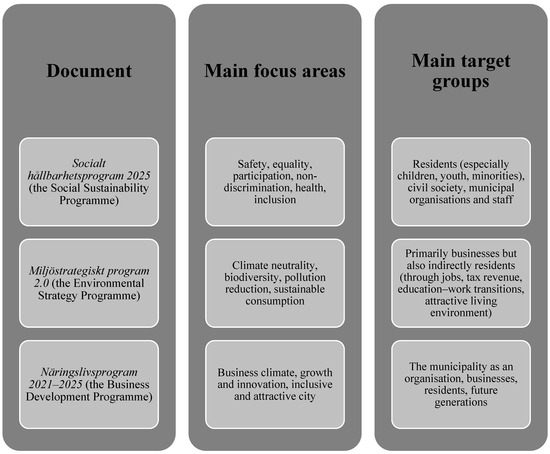
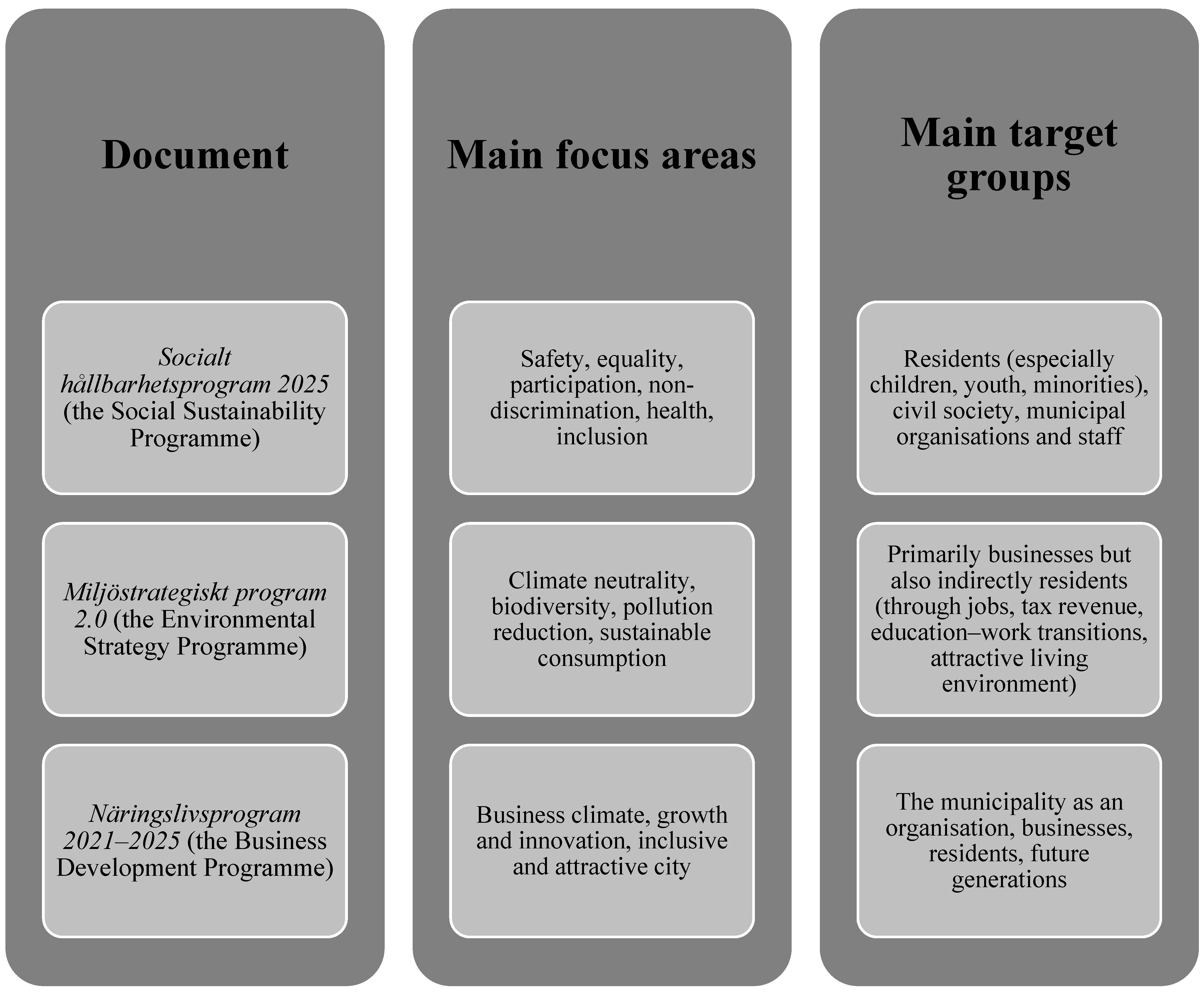
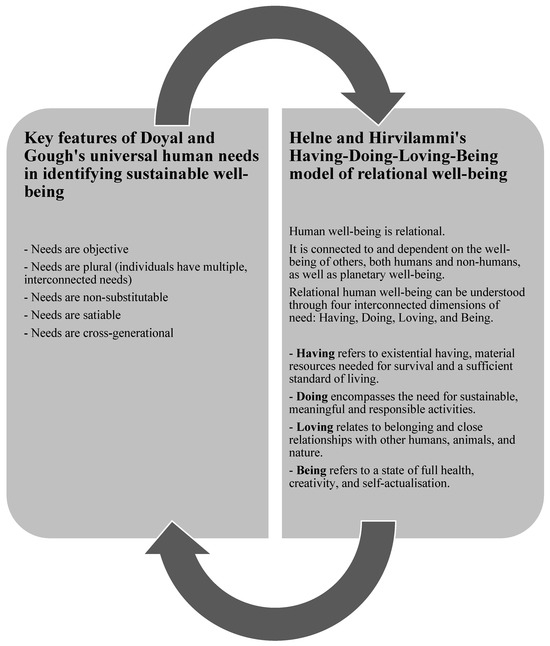
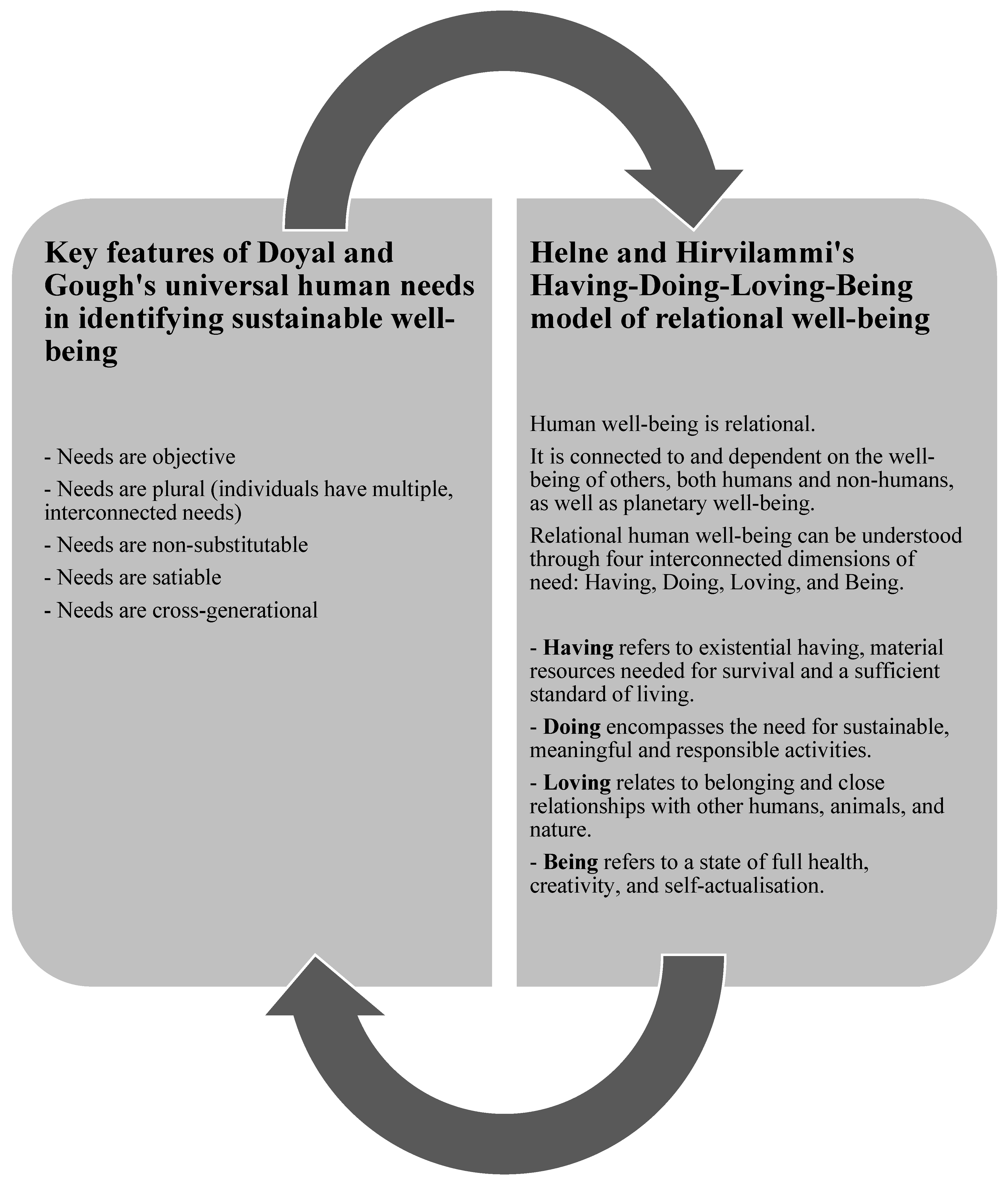
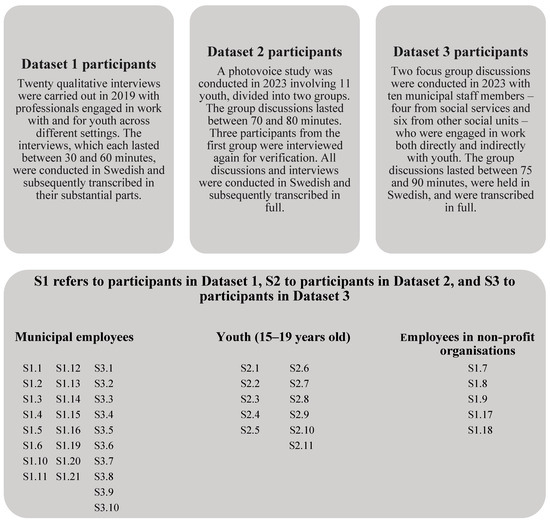
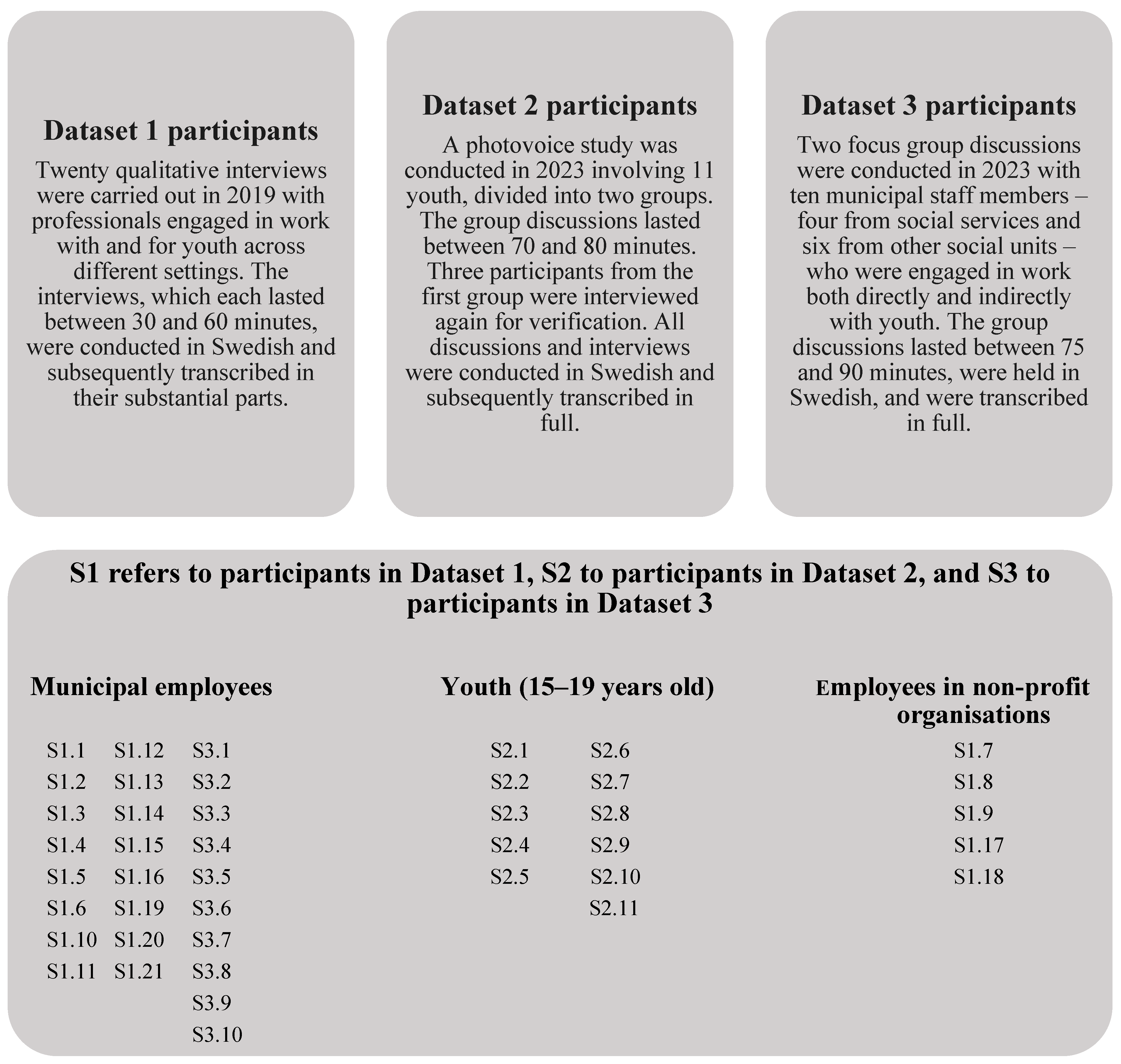
Disclaimer/Publisher’s Note: The statements, opinions and data contained in all publications are solely those of the individual author(s) and contributor(s) and not of MDPI and/or the editor(s). MDPI and/or the editor(s) disclaim responsibility for any injury to people or property resulting from any ideas, methods, instructions or products referred to in the content. |
© 2026 by the authors. Licensee MDPI, Basel, Switzerland. This article is an open access article distributed under the terms and conditions of the Creative Commons Attribution (CC BY) license.