


Abstract
Students are more likely to disclose their sexual orientation or gender identity with university staff compared to staff in high school or college. For some, higher education (HEI) offers the first opportunity to encounter “out” LGBTQIA+ role models, whose visibility can positively influence both students and colleagues. Rainbow Office Hours is an initiative that offers students a supportive, informal opportunity to engage with LGBTQIA+ staff. At a HEI in southwest England, LGBTQIA+ staff and allies were invited to host Rainbow Office Hours during LGBTQIA+ History Month. This research, using semi-structured interviews, is the first to explore the lived experience of staff hosting Rainbow Office Hours. Findings highlighted the impact on staff identity, professional connectedness, and students, as well the importance of visibility, validation, and allyship. Policy and practice recommendations are offered to strengthen LGBTQIA+ inclusion and address the emotional labour and under-recognised workload of equality, diversity, and inclusion activities that is regularly undertaken by minoritised identities. The research highlights the reciprocal benefits of such initiatives for students and staff, emphasising the need for sustained institutional commitment beyond celebratory months.
1. Introduction
The past decade has seen progress in lesbian, gay, bisexual, transgender, queer, intersex, asexual, pansexual, and other non-heterosexual and non-cisgender (LGBTQIA+) rights in many countries, including legislation such as same-sex marriage and gender recognition acts. However, there is growing concern over recent reversals in LGBTQIA+ rights across Europe (ILGA-Europe 2025) including the recent UK Supreme court ruling on “biological sex” (Supreme Court 2025) which detrimentally affect transgender human rights and increases the risks of stigma, harassment, and discrimination (Ellis 2009). These developments underscore a continued need for activism and visible support for LGBTQIA+ communities.
Universities often position themselves as inclusive environments for groups marginalised in wider society (Coley and Das 2020). However, they can simultaneously reinforce heteronormative and binary gender norms, thereby excluding those who do not conform. For many students, particularly those who are LGBTQIA+, university marks the first opportunity to explore identity independently from home environments. Higher education is generally perceived as a positive and transformative space for LGBTQIA+ students, with disclosure rates of sexual orientation and gender identity increasing from 64% in high school to 82% in university (UCAS 2021). In 2020, 7.2% of UK university applicants disclosed an LGBTQIA+ identity, and many LGBTQIA+ students—particularly transgender students—sought information on institutional support services before arrival (UCAS 2021).
Nonetheless, the dominance of neoliberal managerialism in UK higher education—prioritising efficiency, productivity, and cost-saving measures—presents significant barriers to advancing equality, diversity, and inclusion (EDI) agendas (Deem et al. 2007; Taylor 2017). Over the past three decades, university staff have faced growing pressure to demonstrate their efficiency through accountability exercises such as the Research Excellence Framework (REF) and the Teaching Excellence Framework (TEF), which reward or penalise staff based on measurable outputs (Tzanakou and Pearce 2019). These pressures have been accompanied by increasing casualisation and insecure working conditions across the sector (do Mar Pereira 2017). Within this precarious working environment, institutional action related to EDI often results in superficial, tokenistic gestures rather than meaningful structural change (Pizarro Milian and Wijesingha 2023). Thus, despite the rhetoric of equality, the marginalisation of socially disadvantaged groups remains deeply ingrained within the structures and cultures of academia (Rosa and Clavero 2020). Echoing this, LGBTQIA+ students continue to experience exclusion, particularly when institutional systems and language do not represent their identities (Sears 2013). This sense of exclusion is compounded for international students from countries with more restrictive LGBTQIA+ rights (UK Government 2023), for whom exposure to “out” role models in HEIs may be both challenging and transformative.
In addition, LGBTQIA+ individuals face increased mental health challenges, often shaped by experiences of discrimination, bullying, hate crime, and systemic erasure, contributing to “minority stress” (Meyer et al. 2021). The Millennium Cohort Study confirmed poorer mental health outcomes among sexual minority youth (Booth and Fitzsimons 2025). According to UCAS (2021), LGBTQIA+ students are more likely to disclose a disability than their non-LGBTQIA+ peers (30% and 12% respectively), especially related to mental health. Transgender and non-binary individuals are disproportionately affected, with 47% of Trans+ applicants declaring a disability, including 22% citing mental health conditions (UCAS 2021; Watkinson et al. 2024).
Advanced HE equality data (2019–2020) reports on average 3.8% of staff in higher education identifying as LGBTQIA+ across all UK universities. Visibility of LGBTQIA+ staff within higher education has personal, pedagogical, and political significance (Lee 2023). Both LGBTQIA+ and heterosexual students value LGBTQIA+ staff being “out”, as it signals institutional support and provides clear points of contact should issues arise (Ward and Gale 2016). This is especially important in disciplines like science, technology, engineering, and mathematics (STEM) subjects, which are perceived to be less LGBTQIA+-inclusive compared to humanities and social sciences where opportunities to discuss LGBTQIA+ issues are embedded in social inequalities and justice curricula as standard (Forbes 2020). LGBTQIA+ students also report that they would be more likely to seek support from staff in subjects perceived to be more LGBTQIA+ friendly, due to the teaching staff’s experience in discussing LGBTQIA+ issues (Forbes 2020).
The presence of LGBTQIA+ role models in the classroom and academic community fosters authenticity, which is strongly linked to improved professional relationships, leadership capacity, and institutional loyalty (Avolio and Gardner 2005; Yost and Smith 2014; Lee 2021). To ensure staff feel comfortable to share their identities with other staff and students, research highlights the importance of institutional leadership in enabling inclusive and affirming professional environments (Lee 2021).
The Ward-Gale Model of LGBTQIA+ inclusivity in Higher Education was designed to support colleagues to be inclusive of LGBTQIA+ identities in their curriculum as well as teaching and learning environment (Ward and Gale 2016). The model identifies three domains: Language—recognising verbal and non-verbal communication; Role Models—identifying “safe” people in the learning environment; Curriculum Content—teaching material. Of these domains, there are three levels: Awareness—basic awareness of diversity; Additive Approaches—visible diversity within HE culture; Transformative Practices—proactive social action within learning environment (Ward and Gale 2016). It positions visible LGBTQIA+ role models as critical to fostering inclusive learning environments. Broader LGBTQIA+-inclusive practices, such as visibility initiatives and staff support mechanisms, have also been shown to positively influence organisational culture and staff wellbeing (Fletcher and Everly 2021).
Rainbow Office Hours were first developed by Nordmann et al. (2022) as an initiative to provide students with the opportunity to speak with an LGBTQIA+ member of staff about any LGBTQIA+-related topics including advice on LGBTQIA+ spaces and organisations. The initiative aimed to increase visibility and connection between LGBTQIA+ staff and students. Whilst the presence of LGBTQIA+ role models in higher education has been linked to positive outcomes for students and institutional culture (Fletcher and Everly 2021; Lee 2023), there is limited research on the experiences of staff who participate in such visibility and inclusion efforts. Therefore, this study aims to address that gap by exploring the lived experiences of staff who hosted Rainbow Office Hours. This study aims to contribute to a deeper understanding of how inclusive practices affect staff identity, senior leadership, and professional development within higher education contexts.
2. Materials and Methods
The Rainbow Office Hours (ROH) initiative was adopted by a university in the southwest of England during LGBTQIA+ History Month (February), with ROH sessions offered both online and in person. All sessions operated as informal drop-ins, with no prior booking required. In this instance, unlike Nordmann et al. (2022), ROH were facilitated by both openly LGBTQIA+ staff and active allies, including individuals from academic and professional services roles.
To evaluate the ROH initiative, in-depth, semi-structured interviews were conducted. The interviews were used to explore the subjective experiences and perspectives of individuals who hosted ROH, in accordance with a phenomenological approach (Moustakas 1994).
2.1. Participants and Procedure
The study used purposive sampling (Ritchie et al. 2003), which includes selecting individuals that are especially knowledgeable or experienced with a phenomenon of interest, to invite participants who had hosted Rainbow Office Hours (n = 15) to take part in a one-to-one interview. Following informed consent, participants were invited to an online Microsoft Teams meeting at a time that suited their availability. Between March and July 2025, 11 semi-structured interviews were conducted by the first author, averaging 50 min in duration. The interview guide consisted of open-ended questions such as: “What motivated you to take part in Rainbow Office Hours?” and “Can you discuss the impact that taking part in Rainbow Office Hours has had on you?”. All interviews were recorded and following verbatim transcription, the data was anonymised. Participant LGBTQIA+ identity categories were not collected due to the increased identifiability risks in a small sample, in line with UK guidance on data minimisation and special-category data (Economic and Social Research Council 2026). This also supports participant autonomy and avoided imposing fixed identity labels, which can be restrictive and inaccurate (LGBT Foundation 2023).
2.2. Ethical Considerations
Ethical approval was received from Bournemouth University (reference: 57141) and the study was in line with the ethical guidelines of the British Sociological Association (2017) and the Declaration of Helsinki. Participants were required to e-sign an informed consent form before the interviews took place. All participants gave consent for their non-identifiable responses to be included in the analysis and reporting of the research. Participants were signposted to university staff wellbeing support services if they expressed concerns about their wellbeing during or after the interview.
2.3. Data Analysis
The interview data was analysed using Reflexive Thematic Analysis (Braun and Clarke 2006). This method allows the researcher to understand and make use of their data by categorising it into different key themes, which helps base the conclusions and findings. The six-step process of the analysis of the data from this study, which facilitated the identification of key themes and experiences, included the following. Step 1 included familiarisation of the data, where transcripts were read and reread, followed by step 2 where initial codes were identified in all transcripts. Following this, six major themes were identified (step 3), these included Motivation; Impact on Staff; Impact on Other Staff; Impact on Students; Allyship and Leadership; and Challenges and Format. These were then reviewed by the authors to refine them (step 4). For example, initially Impact on Other Staff and Allyship and Leadership were two separate themes; following the review and author discussion, these were merged into one main theme named Community, with sub-themes Allyship, Senior Leaders, and Immediate Colleagues (step 5). The Results Section was then generated (step 6).
2.4. Positionality
The research team engaged in critical reflexivity practices about how their positions, point of privilege, and biases influenced the research process (Kopec et al. 2025). It includes how these may impact our framing of the research questions, selection of methods, interviewer–interviewee interpersonal dynamics, and analytical process. The interviewer’s positionality is a white, cis-gendered lesbian woman, whilst the wider team comprises academics from diverse backgrounds in terms of ethnicity and specialist expertise, who are both allies of the LGBTQIA+ community. The lead author’s positionality as part of the LGBTQIA+ community provided the initial motivation for the implementation of the initiative and the subsequent research analysis. Whilst this unique position enables the author to connect authentically with the subject matter, this potential bias was discussed regularly as part of the critical reflexivity practices within the authorship group and care was taken throughout the research project to acknowledge the potential impact of such biases within the results and discussion.
3. Results
Eleven participants (seven academic; four professional services) took part in semi-structured interviews exploring their experiences of hosting Rainbow Office Hours. Participants in this study self-identified along the spectrum of sexual and gender-diverse identities, including, lesbian, gay, bisexual, transgender, cisgender, and queer, with some holding multiple identities within the broader LGBTQIA+ community.
3.1. Interview Findings
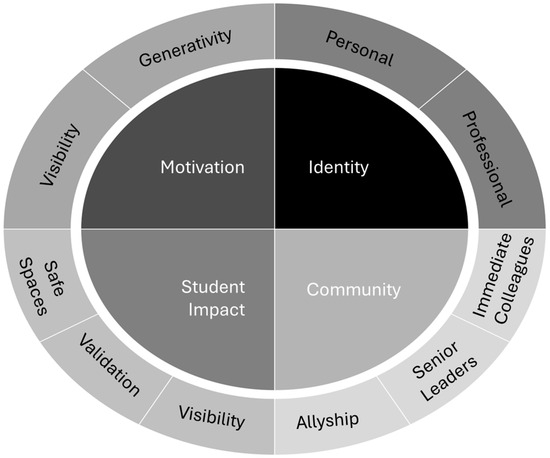
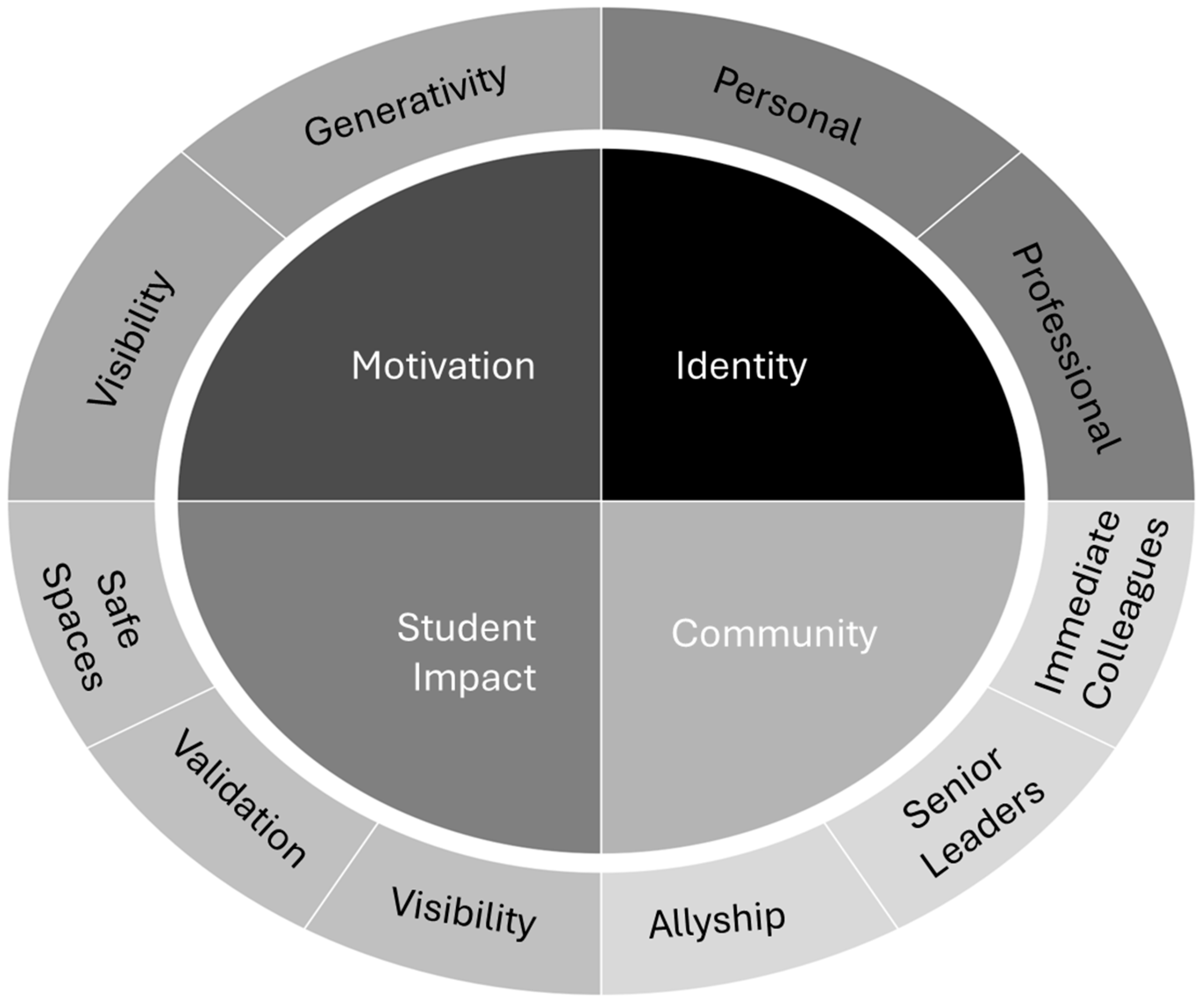
The thematic analysis produced four themes (Figure 1) illustrating the experiences of participating in Rainbow Office Hours: (1) Motivation (visibility and generativity), (2) Identity (professional and personal), (3) Community (colleagues, senior leaders, and allyship), and (4) Student Impact (visibility, validation, and safe spaces).
Figure 1.
Thematic map.
3.2. Theme 1: Motivation
Participants reported a mix of personal and professional drivers for taking part in the initiative. The two sub-themes focussed on (1) visibility and (2) generativity.
3.2.1. Visibility
Participants reported that engaging in Rainbow Office Hours was a way to normalise LGBTQIA+ identities and provide visible role models for the student community:
“Because it’s about visibility. Not being in the closet, not hiding…when I see a rainbow flag, I go OK, safe space. I don’t feel excluded, I feel included. I don’t need to hide… visibility is really important to me”(P5, Academic)
This demonstrates the importance of visibility to staff members, increasing feelings of belonginess and validation. Maimon et al. (2023) indicates that visibility functions as an “identity safety cue” and signals that identities are recognised and valued in an organisation. Participants also indicated that being visible during ROH was an act of resistance within the typically heteronormative and cisnormative HEI environment.
I’m always a firm believer that existence is resistance and being visible in itself is an act of protest, but it feels even more important now(P6, Academic)
This experience echoes Lee’s (2023) observation that visibility pushes back against institutional norms and identities. It was also common for participants to provide examples of their own personal lived experiences as drivers for motivation:
“I originally was dithering a little bit of do I want to put down that I’m trans? Because that can invite a lot of different opinions, but I decided yes, because I would like to be able to talk about my experience of my gender and to have that conversation with people… When I was a student, I very specifically remember… I didn’t really know how to go about navigating my experiences.”(P8, Professional Services)
They find sharing their own experiences validating and they reflect on not having that level of support when they were a student.
3.2.2. Generativity
Many participants identified the need to “give back” to the community and share their own living experiences:
“I think it’s positive because I think it’s important to give something back, share my experience and hope that some of the things that have happened in my life won’t happen to other people and that I can share things that I’ve done to try and make that better or share what’s happened in my world to make it seem better to somebody else”(P9, Professional Services)
Staff reported feeling empowered and fulfilled by giving back by sharing experiences. Many discussed being driven by giving back and mentoring younger people. This created a sense of re-writing their own experiences and paying it forward for the next generation. Indeed, people who have similar experiences can better relate and can therefore offer more authentic empathy and validation (Mead and MacNeil 2006). Participants identified the need for role models within the higher education community:
“I’d like to sort of reach out in the society and help raise the profile for LGBT people and sort of give them some sort of validation because I think being a kind of role model or icon is useful and helpful”(P3, Academic)
They discussed the perceived benefits this could have for staff and students. This highlights the role that visibility has in creating a feeling of safety and signalling support for LGBTQIA+ students (Lee 2023). Bird et al. (2012) demonstrate that there are benefits to affirmative role models beyond the education setting with significant positive impacts for the health and wellbeing of LGBTQIA+ young people. One participant highlighted their own role in wider professional contexts and not just limited to those involved directly within the LGBTQIA+ community.
“Is there something I could do… as a reminder to them…that people just tend to get complacent, and we all live in a heteronormative society as well. So just, you know, a quick reminder…is a good thing.”(P4, Academic)
Indeed, the presence of LGBTQIA+ role models in the academic community is strongly linked to improved professional relationships (Avolio and Gardner 2005).
3.3. Theme 2: Identity
When participants reflected on the impact taking part in Rainbow Office Hours, participants strongly reported two sub-themes: (1) personal identity and (2) professional identity.
3.3.1. Personal Identity
Participants reported an overwhelmingly positive personal impact with emotive responses ranging from feelings of personal pride to reduced self-doubt, greater sense of community belonging, and feelings of empowerment.
“I was very proud, to you know, we’ve allocated a room, I bought flags in and I put them on the door, and I wanted to make it very visible that we were here.”(P1, Academic)
One participant identified a greater sense of connection with their own LGBTQIA+ identity:
“But the one thing it has done… it’s made me feel a bit more confident about dressing how I want to dress. So, I think that maybe Rainbow Office Hours is kind of it’s just another part of me coming out at work”(P7, Professional Services)
This highlights the benefits that the scheme had for staff, not just the students who sought their support. Indeed, there are personal, pedagogical, and political benefits to being “out” in the workplace, with the literature indicating it can be empowering for other university staff and students, not just those identifying as part of the LGBTQIA+ community (Lee 2023).
3.3.2. Professional Identity
Participation acted as a catalyst for individual professional development, with examples of participants engaging in greater inclusive curriculum design, an awareness of inclusive language, and more confidence with supporting LGBTQIA+ students:
“It helped me to grow within my own role. I don’t take it for granted that the picture is actually how the student identifies themselves… I’m more aware of the pronouns that I use and when I don’t know which pronoun I should be using, then I use just a general they. And like… How to reply to emails and the use of pronouns, how important it is and just yeah, just keep those students that I was aware of, you know, under my wing a little.”(P10, Professional Services)
Staff members shared that taking part in the scheme increased their confidence in bringing their identity to work in other areas, highlighting that when educators are their authentic selves, they are shown to be more effective in their role (Lee 2020).
Due to the wide range of professional backgrounds and expertise of the participants interviewed, some participants had organically embedded LGBTQIA+ research and activities within their professional development before their involvement in Rainbow Office Hours:
“I have a specific teaching style and approach in that I do think about equality and equity, and I bear that a lot in mind that. When I give examples or when I do my teaching as to, you know, to be very conscious that to think about things like race and gender and sex and sexuality…I feel like I already do that a lot in my teaching…”(P11, Academic)
Others reported already feeling confident in embedding their identity and their lived experience into their teaching and research. This highlights the ease at which some subject disciplines (humanities and social sciences) enable social justice issues such as LGBTQIA+ issues to be discussed compared to other disciplines (science, technology, engineering, and maths), which are historically reported to be less LGBTQIA+ inclusive (Forbes 2020).
However, there were repeated concerns raised over what was considered “appropriate professional boundaries” whilst engaging in the initiative:
“sort of about kind of boundaries because we are marking them… (we are) in positions of power”(P2, Academic).
Whilst the initiative by nature is designed to provide students with the opportunity to discuss anything LGBTQIA+ related with LGBTQIA+ members of staff and active allies, this highlights how HE staff might feel more comfortable being out to colleagues, but less so with students (Lee 2023). Some participants also expressed their hesitancy to fully disclose their sexuality or gender identity:
“I wouldn’t necessarily disclose my own kind of sexuality or gender to them… I said part of the community rather than I think saying a specific thing because I don’t know if I’m necessarily comfortable disclosing that to my students.”(P11, Academic)
This highlights the importance of understanding positionality within HEI, particularly within staff–student interactions and understanding how this is embedded in education and the workplace will enable further understanding of how to build stronger learning communities for marginalised groups (Misawa 2010).
Indeed, some participants felt hesitant to fully disclose their sexuality or gender identity within the workplace setting:
“I didn’t talk to colleagues not really, I think there is still a little bit of stereotype and people are still scared maybe to come out.”(P10, Professional Services)
This indicates the need for wellbeing support for those delivering initiatives such as Rainbow Office Hours, acknowledging the vulnerability and sensitivity of sharing their experiences to other staff and students. This theme highlights the intersection between personal and professional identity.
3.4. Theme 3: Community
Participants reflected on the importance of the workplace community within (1) immediate colleagues, (2) senior leaders, and (3) allyship.
3.4.1. Immediate Colleagues
For participants, Rainbow Office Hours appeared to foster collegial support, with participants reporting positive conversations and dialogue with fellow staff:
“They were just, you know, congratulating me and just express there, I don’t wanna say amazement, but they would be like, oh, you’re very brave. And this is a very good thing for our students.”(P4, Academic)
Specifically, participants did identify some cultural change within their staff community, which are common features of communities of practice (McDonald and Cater-Steel 2017):
“A couple show interest in learning more and maybe take some courses to try to understand especially all the acronyms and the differences and how students or how like human beings can identify.”(P10, Professional Services)
The initiative appeared to increase sense of belongness and helped build relationships with colleagues. Initiatives like Rainbow Office Hours provide a platform for meaningful interpersonal interactions (Sink and Mastro 2018; Esses and Dovidio 2002), which have the potential to provide space for attitude change. This indicates that if staff believe in the intrinsic value of their fellow staff community, feel safe, and feel a sense of belonging and value, the community and the individual has the greatest chance of thriving.
However, participants described a frustration with the broader lack of awareness and appreciation of the initiative itself, describing colleagues who remained silent or neutral rather than actively engaging in discussion.
“You know, I’m gay at home, but I’m also gay at work. I don’t think it ever crossed their mind that maybe some of their colleagues might be more standoffish with me or more cold or, you know, not look me in the eyes when we shake hands.”(P4, Academic)
Whilst participants noted that colleagues may avoid engagement out of fear of “getting it wrong”, it is this silence which further perpetuates the invisibility of LGBTQIA+ identities (Ward and Gale 2016). Participants also highlighted how heteronormative and cisnormative language shape everyday interactions.
“they might have felt like this is your private life leaking too much into your professional life. But then again you know I tried to tell them, you mentioned your wife and your children three times!”(P4, Academic)
This showcases the influence of heteronormative and cisnormative assumptions, whereby everyday personal disclosures by heterosexual and cisgender colleagues are treated as ordinary, whereas similar disclosures by LGBTQIA+ staff remain emotionally loaded and potentially risky for LGBTQIA+ staff.
3.4.2. Senior Leaders
Given the multitude of professional backgrounds, expertise, and intersectional identities participants hold, wider opportunities to understand impact were discussed, with emphasis placed on the role of senior leaders. Discussions held by participants with senior leaders whilst taking part in ROH showcased the potential for ROH to be utilised as an example initiative within the wider gender equality narrative within the university structures:
“She (my Head of Department) asked me, would you want to include something like this (Rainbow Office Hours) in your Athena Swan efforts?”(P4, Academic)
This highlights the role senior leaders can play in recognising inclusive practices at a local level, which may contribute to institutional-level efforts (e.g., Athena Swan an example). However, caution must be taken to ensure that initiatives such as ROH are part of a genuine inclusivity drive and do not become a performative institutional reputation management tool, which is a criticism recently levelled at Athena SWAN (Yarrow and Johnston 2023). Participants raised concerns about inclusivity tokenism if not backed by sustained action:
“I’m like, you’ve got to make sure you’re not just doing it for Brownie points again, especially when you’re in a position of power.”(P6, Academic)
As Rainbow Office Hours was staff-led, yet had clear visible university support, this eased the burden for staff to volunteer to take part:
“It was a lot easier to be like to say, well, the university is asking people to if they want to, to do this rainbow office than to say I would like to book out a room for three hours in case gay people show up.”(P8, Professional Services)
Participants highlighted the importance of gaining support to take part in ROH from senior leaders and managers. Obtaining this easily and without question appears to amplify the legitimacy of the initiative amongst staff:
“Oh, it felt good. Yeah, that they (management) wholly support this. I felt respected, I suppose, and acknowledged, yeah…so it’s nice to be in an environment where management is willing to support an initiative like this. I think maybe people, members of staff or perhaps possibly even students who are dubious about it or wouldn’t or might not support it might think otherwise, because the Vice Chancellor is supporting it.”(P7, Professional Services)
This quote reiterates the importance for university-wide and line manager support for staff offering Rainbow Office Hours. Lee (2023) also highlights the important role senior leadership has in empowering staff to believe in their progress within the university, regardless of gender or sexual orientation, and especially if those who hold positions of seniority are also “out”.
3.4.3. Allyship
The importance of “active” allyship was key for many participants:
“So active allyship I absolutely support. It’s not just something that you kind of, you know you, you wear this (lanyard) because it looks pretty it needs to be meaningful, you need to open your mouth and you need to be an active ally and not just have it on your CV because it looks shiny.”(P5, Academic)
This highlights the need to better understand what active allyship means to ensure it is authentically received. De Souza and Schmader (2025) suggest that allyship is centred on the actions taken by an individual who belongs to an advantaged group, indicating that there are two types, proactive (behaviours that engender inclusion and respect) and reactive (behaviours that address bias, prejudice, and discrimination), of allyship action.
Discussion on the invitation for allies to host ROH (unlike Nordmann et al. 2022) centred on authenticity, with participants valuing genuine allyship in this format:
“I think especially in the current climate where we see a… rise of the right attack on minorities are intensifying, so I think it’s more important than ever to make sure that we welcome and include allies.”(P11, Academic)
However, many participants felt that efforts and involvement in inclusivity initiatives cannot be tokenistic and must be sustained beyond LGBTQIA+ History Month.
“Amazing to have so many allies, but it almost felt like a parade of people feeling good about their own tolerance. It’s important to have us as the main characters and allies should just be there, you know, a background, a very welcoming background.”(P4, Academic)
This indicates caution with perceived performative allyship, where allies’ motivations prioritise their own needs over the disadvantaged group and do not lead to challenging the status quo (Kutlaca and Radke 2022). This can have psychological and social consequences for people from marginalised groups and can serve to amplify institutionalised oppression (Grapin and Goldie 2025).
3.5. Theme 4: Student Impact
3.5.1. Visibility
Participants felt that the students benefitted from visible role models:
“I think that’s maybe students would have felt similar to how I felt seeing… that we’re welcome at the university, that there’s people who would think about what would be useful for us.”(P1, Academic)
Their comments indicate that the initiative contributed to wider institutional awareness of LGBTQIA+ identities across the university, as well as benefitting those students who were involved in the community. Identity-affirming staff interactions are identified in the literature as critical contributors to LGBTQIA+ students’ academic and psychosocial success, increasing the sense of belonging, engagement, and persistence in higher education but also as a symbolic recognition that student identity matters in the institution (Pitcher et al. 2018).
3.5.2. Validation
Participants who did have students attend their sessions highlighted the validation of the initiative:
“It felt a bit like the conversation I would have needed to have when I was at that point.”(P8, Professional Services)
This may be particularly relevant for students where higher education may be the first opportunity where they encounter an “out” LGBTQIA+ role model (Ellis 2009).
There was speculation amongst participants why students chose not to attend, suggesting that cultural factors may impact their attendance:
“Some find it difficult and I’m particularly thinking about some international students. Where they’re coming from, a place where there is a political issue with it, a criminal issue and then very often a religious issue with being LGBTQIA+, so they find that challenging”(P5, Academic)
This speaks to the concerns about the safety of LGBTQIA+ international students studying in the UK, and the need for anonymous routes to support for these students beyond this initiative. Students from diverse ethnic backgrounds including international students face additional barriers to accessing visible LGBTQIA+ supportive spaces and continue to experience high levels of marginalisation due to the intersection of their identities (Raja et al. 2024).
Additionally, staff raised the issue of complacency:
“The misconception I think with the general cohort of students broadly is that they don’t necessarily need role models. They think they’ve already got equality because they haven’t lived through the life of the terrible things that happened.”(P3, Academic)
Participants argue that the initiative should be sustained, despite increasing awareness of LGBTQIA+ experiences, to avoid a sense of complacency.
3.5.3. Safe Spaces
Participants highlight that Rainbow Office Hours provide another tool to have conversations and to inform and educate in safe spaces:
“I love the idea that people could see this and be like, oh, OK, there were staff who were actively saying we just want to talk and be happy… we want this safe space to exist.”(P8, Professional Services)
The visibility of Rainbow Office Hours functions as a campus-level safety cue, signalling that LGBTQIA+ identities are recognised, valued, and institutionally endorsed. By enhancing the visibility of LGBTQIA+ staff, Rainbow Office Hours provides a platform for meaningful interpersonal interactions which have the potential to support attitude change at an institutional level (Sink and Mastro 2018; Esses and Dovidio 2002).
Participants did however emphasise that hosting hours during LGBTQIA+ History Month (February) or Pride (June) month only may appear tokenistic to students:
“Appreciating that it’s lived experience every month of the year and probably out of LGBTQ history month and Pride Month—It’s the other ten months where it’s difficult. We are invisible… (hosting ROH) two or three times in the duration of their studies (once per year) that doesn’t feel particularly consistent, does it? So if we want to create a consistently inclusive community… for students and staff then, once a year doesn’t feel suffice.”(P5, Academic)
As the initiative is in part designed to discuss the living experience of LGBTQIA+ staff, reducing inclusion practices to symbols alone during Pride and LGBTQIA+ History Months only can appear to be half-hearted and hollow in the absence of any meaningful policy or inclusive practice changes (Prasad et al. 2011).
4. Discussion
This study aimed to explore the lived experiences and perceived impact of staff who hosted Rainbow Office Hours, contributing to a deeper understanding of how inclusive practices affect staff wellbeing, identity, and professional development within higher education contexts. The analysis of 11 interviews reveals a strong commitment to visibility, representation, and inclusivity through the initiative. Participants consistently emphasised its symbolic and practical value for both students and staff, while also identifying areas for improvement in format, uptake, and institutional support.
Participants consistently described their motivation as a conscious visible act to normalise LGBTQIA+ identities and signal safety. However, participants’ motivation to engage in the initiative can also be reframed as a form of “identity labour”, whereby marginalised communities meet unmet student needs and counter the systematic and inherent institutional invisibility (Reggiani et al. 2024). Such discussions are important learning points for HEIs to consider the emotional labour and time invested by staff by delivering these initiatives who tend to be socially marginalised groups, and ensuring they are adequately resourced and psychologically supported while supporting others (Carpineti et al. 2023).
This initiative blurs the boundaries of personal and professional identities. It is important to recognise that sexual and gender identities are constantly evolving and when they transcend from private into professional spaces, intertwining with social and political discourses of power (often aimed at preserving social institutions such as family), they can create an environment where the silencing of LGBTQIA+ identities becomes the norm (Paechter 2002). Meyer’s (2003) Minority Stress Theory explores how consistent exposure to proximal and distal stressors (such as homophobia) contribute to psychological stress and increases poor mental health. The dual burden of disclosing both gender and sexual identity has been linked to heightened psychological distress (Felner et al. 2020), and intersectionality frameworks suggest that those with multiple marginalised identities face compounded stress (Brooks 1981).
However, the conflation of personal and professional identities is never questioned when those identities are cis- and heteronormative. Horlin et al. (2024) identify that it is rarely controversial to mention the mere existence of an opposite binary gender partner in the workplace, yet such a freedom is less often afforded to queer people. This type of behaviour is often viewed as an inappropriate level of disclosure in the workplace setting and this was reflected amongst staff who participated in this study. The decision on whether to come out in a professional setting is negotiated by LGBTQIA+ academics in their daily professional life (Nodin 2022). This form of invisible emotional labour requires LGBTQIA+ staff to gauge the perceived safety of the recipient and strategically manage disclosure, often at personal emotional cost (Nodin 2022). Rainbow Office Hours seemingly created an affirming yet constrained space, where LGBTQIA+ staff continually negotiate personal authenticity, visibility, and professionalism simultaneously.
The participants’ description of positive collegial conversations within their staff community are common features of the concept of communities of practice (CoP). Developed by Lave and Wenger (1991), these are collaborative and informal networks focused on supporting staff to advance their shared understanding and inclusive practices with each other with believing, behaving, and belonging concepts at the centre (McDonald and Cater-Steel 2017). This sense of belonging and value through peer support and non-judgemental safe conversations was described as a strength by participants within the current analysis. Indeed, identity safety cues, which include visible cues and inclusive practices within staff culture, often lead to an increased sense of belonging (Maimon et al. 2023).
Participants highlighted the importance of authentic support from senior leaders and active allyship over perceived performative gestures within ROH. De Souza and Schmader (2025) suggest that allyship is centred on the actions taken by an individual who belongs to an advantaged group, exploring proactive (behaviours that engender inclusion and respect) and reactive (behaviours that address bias, prejudice, and discrimination) allyship action. This is imperative, as ROH risks being viewed as an opportunity for performative allyship where actions that are aimed at highlighting injustice for LGBTQIA+ individuals are often driven by insincere motives (Grapin and Goldie 2025). By offering ROH to staff and students, 1–2 times per year, this risks the initiative being viewed as tokenistic and as an opportunity for performative allyship by becoming an exploited and performative institutional reputation management tool (Yarrow and Johnston 2023). Indeed, LGBTQIA+ employees may therefore feel understandable uncertainty towards diversity and inclusion practices becoming reduced to symbols alone or fashionable corporatised initiatives (such as wearing “rainbow lanyards”) (Prasad et al. 2011). However, for a university to be truly inclusive, initiatives such as ROH must form part of culture and policy changes that result in LGBTQIA+-inclusive practices and genuinely celebrate diversity through engaging all university stakeholders including senior leaders (Calvard et al. 2020).
Visible LGBTQIA+ staff increase perceived safety for LGBTQIA+ students, and ROH provides an opportunity for students to seek support from LGBTQIA+ staff beyond the subject areas that are traditionally perceived to be more LGBTQIA+ friendly (Arts and Humanities, and Social Sciences) (Forbes 2020). Validation also functions as a counterweight to minority stress where microaggressions and heteronormativity persist (Meyer 2003). Whilst also demonstrating that even the availability of identity-affirming spaces, such as ROH, has symbolic and practical value (Coley and Das 2020), this itself is linked with the function of identity safety cues, which signal that one’s identity will be respected and valued (Maimon et al. 2023). Identity safety cues in higher education have been continually recognised to improve student engagement and belonging, which are key components to inclusive education (Maimon et al. 2023). The visibility of Rainbow Office Hours functions as a campus-level safety cue, signalling that LGBTQIA+ identities are recognised, valued, and institutionally endorsed (Maimon et al. 2023). By enhancing the visibility of LGBTQIA+ staff and facilitating both inter- and intragroup contact, Rainbow Office Hours provides a platform for meaningful interpersonal interactions and the potential to support attitude change at an institutional level (Sink and Mastro 2018; Esses and Dovidio 2002).
4.1. The Ward-Gale Model of LGBTQIA+ Inclusivity in Higher Education
Framed through the Ward-Gale Model of LGBTQIA+ inclusivity, Rainbow Office Hours (ROH) represents an inclusivity initiative in higher education (Ward and Gale 2016). Rainbow Office Hours is anchored primarily within the Role Model domain of the Ward-Gale Model since they provide explicit occasions for signposting to LGBTQIA+ opportunities and support services, consistent with the Basic Awareness level of Ward-Gale Model (Ward and Gale 2016). Aligned with the Additive Approaches level (Ward and Gale 2016), the initiative enhances the visibility of gender and sexual diversity within the culture of higher education by inviting LGBTQIA+ staff and active allies from both academic and professional service roles to host sessions.
The effectiveness of the initiative is particularly evident within the Transformative Practice level within the Role Model domain of the Ward-Gale Model. Ward and Gale (2016) describe a transformative higher education as one where LGBTQIA+ staff are comfortable being “out” and to act as role models to students directly, while heterosexual and cisgender staff demonstrate confidence in adopting ally roles. Evidence from the staff interviews indicates that participation in ROH impacted staff identify formation across both personal and professional contexts (Nodin 2022). For some participants, this involved negotiating complex boundaries, particularly when occupying positions of power (Lee 2023). Whilst interviews further highlight that allyship amongst colleagues, including senior leaders, is essential to the success, credibility, and sustainability of ROH (Sink and Mastro 2018; Esses and Dovidio 2002), the initiative highlights the critical role of the wider education environment beyond the formal curriculum in fostering safe spaces for staff and students.
Beyond its core function as a role modelling initiative, evidence from the present study demonstrates that this initiative extends across multiple domains and levels of inclusivity within the model. ROH contributes to the Ward-Gale Language domain by normalising and reinforcing inclusive communication practices. Evidence from our participants indicate that it increased foundational awareness and confidence in engaging in conversations about gender and sexual diversity consistent with the Basic Awareness level of the Ward-Gale Model (Ward and Gale 2016). In addition to supporting inclusive communication, ROH has emerging implications for the Curriculum Content domain. By creating safe spaces in which staff can engage in peer-to-peer learning through effective communities of practice (McDonald and Cater-Steel 2017), the initiative strengthens allyship and enhances understanding of LGBTQIA+ issues. These developments can create the conditions for more inclusive and transformative curriculum content development, but these need to be considered amongst a backdrop of supportive staff wellbeing and recognition of the emotional labour required to drive meaningful change (Nodin 2022; Carpineti et al. 2023). These findings demonstrate that ROH operates across multiple domains and levels of the Ward-Gale Model, positioning it as a multidimensional initiative that supports visibility, communication, and emerging curriculum development.
4.2. Limitations and Political Context
Interpretation of our results must be considered in the context of the study’s limitations. The study was conducted in one higher education institution in the southwest of England, during a period of significant change in LGBTQIA+ rights across the globe. Attitudes reflect the context of their time and place; the changing social morels and legal changes will undoubtedly effect people’s views of LGBTQIA+ rights as a priority. At the time of writing and data analysis for this manuscript the UK Supreme Court ruling of the definition of a woman as “Biological Sex” was publicised (Supreme Court 2025). With further roll back of LGBTQIA+ rights across European countries reported in the latest Rainbow Map (ILGA-Europe 2025) and a significant reduction in LGBTQIA+ human rights and diversity, equity, and inclusion (DEI) department budgets reported in the USA as a result of a slew of executive orders must be considered when interpreting the results (White House 2025).
The participants included in this study are not representative of all individuals within the LGBTQIA+ community. Indeed, their intersectional identities, positionality, and engagement in the changing political environment would have impacted the findings reported. It must also be recognised that there are well documented privileges associated with being cisgender, white, and queer, which stem from operating within society’s default standards for gender and race. Individuals from transgender and diverse ethnic backgrounds, for whom visibility and being “out” in the workplace carry different and often greater risks by comparison, are not well represented in this research, which is a significant limitation (Raja et al. 2024). Further, any disparate social identities of the interviewer and participants could have affected the questions asked and responses given. However, it is our lived experience that underpins our living reality as per the phenomenological framework, and this should be continually shared and highlighted.
5. Conclusions and Recommendations
Based on our research findings, several key recommendations emerge for policy and practice. First, HEI policy should ensure that Rainbow Office Hours (or equivalent identity-affirming initiatives) are embedded year-round, resource provisioned, with protected time formally integrated into workload models and recognised within career appraisal or promotion processes. Strengthening these structures would counter neoliberal tendencies towards episodic and performative diversity commitments, reducing the perception of “tokenism”.
Building on this, it is essential that senior leaders demonstrate visible and genuine support for such initiatives, to amplify their legitimacy and to enable their continued success. To maintain consistency and accountability, this work should be formalised through established mechanisms including Human Resources (HR) and other leadership groups.
Alongside this leadership engagement, HEI policy should operationalise allyship beyond statements, moving from passive support to advocating. A central component of this involves embedding LGBTQIA+ inclusivity training within staff development to ensure meaningful, institutional-wide cultural change.
Furthermore, HEIs should develop a formalised community of practice (McDonald and Cater-Steel 2017) in LGBTQ+ inclusivity. This would support the development of more inclusive pedagogy and shared language practices across the curriculum and the wider learning environment.
Finally, further research should consider the experiences and benefits of inclusive initiatives on staff wellbeing and sense of belonging at work. This would better understand the disproportionate emotional burden and under-recognised labour of equality, diversity, and inclusion (EDI) work that is regularly undertaken by minoritised identities (Nodin 2022; Carpineti et al. 2023).
Rainbow Office Hours showcased the importance of visibility, validation, and identity-affirming safe environments for LGBTQIA+ staff and students, while also supporting the professional development of those engaging in the initiative. The analysis highlights persistent concerns around disclosure and the risk of tokenism, reinforcing the need for institutionalisation beyond LGBTQIA+ celebratory months. Ensuring leadership support and engagement is essential for legitimacy, sustainability, and sector-wide cultural change. Positioning Rainbow Office Hours within wider communities of practice, recognising the sector-wide need to decolonise the curricula and expand identity safety cues across and beyond the learning environment, offers benefit particularly for international and intersectionally marginalised students. Collectively, these insights highlight the need to embed identity-affirming practices within the structural, cultural, and pedagogic frameworks of higher education institutions. Sustained institutional commitment is vital for advancing meaningful LGBTQIA+ inclusion and for creating equitable environments that recognise the labour, foster belonging, and support the wellbeing of all members of the university community.
Author Contributions
Conceptualisation, S.E.M.; Methodology, S.E.M., C.C. and H.-J.L.; Formal Analysis, S.E.M., C.C. and H.-J.L.; Writing—Original Draft Preparation, S.E.M., C.C. and H.-J.L.: Writing—Review and Editing, S.E.M., C.C. and H.-J.L.: Project Administration, S.E.M. All authors have read and agreed to the published version of the manuscript.
Funding
This research received no external funding.
Institutional Review Board Statement
The study was conducted in accordance with the Declaration of Helsinki and approved by the Research Ethics Committee of Bournemouth University for studies involving humans (approval code 57141, obtained on 26 February 2025).
Informed Consent Statement
Informed consent was obtained from all subjects involved in the study.
Data Availability Statement
The original contributions presented in this study are included in the article. Further inquiries can be directed to the corresponding author.
Acknowledgments
A sincere thank you to the staff who volunteer to be part of Rainbow Office Hours. “Coming out” to thousands of students and staff members on the 1st of February every year is courageous, and a decision not taken without consideration. A heartfelt thank you to Joanna Thurston, Emma Mosley, Rebecca Neal, Malika Felton, Susan Dewhurst and all members (past and present) of team Nutrition for continuing their unrelenting support of this initiative. Finally, we acknowledge with deep gratitude those who remain active in fighting for LGBTQIA+ rights around the world and who continue to show up for our community in allyship and activism. This work stands on the shoulders of those giants. The authors have reviewed and edited the output and take full responsibility for the content of this publication.
Conflicts of Interest
The authors declare no conflicts of interest.
Abbreviations
The following abbreviations are used in this manuscript:
| LGBTQIA+ | Lesbian, gay, bisexual, transgender, queer, intersex, asexual, pansexual, and other non-heterosexual and non-cisgender identities |
| ROH | Rainbow office hours |
| EDI | Equality, diversity, and inclusion |
References
- Avolio, Bruce J., and William L. Gardner. 2005. Authentic Leadership Development: Getting to the Root of Positive Forms of Leadership. The Leadership Quarterly 16: 315–38. [Google Scholar] [CrossRef] [Scilit]
- Bird, Jason D. P., Lisa Kuhns, and Robert Garofalo. 2012. The impact of role models on health outcomes for lesbian, gay, bisexual, and transgender youth. Journal of Adolescent Health 50: 353–57. [Google Scholar] [CrossRef] [Scilit] [PubMed]
- Booth, Charlotte, and Emla Fitzsimons. 2025. The onset of mental health disparities in sexual minority and majority youth: Evidence from the UK Millennium Cohort Study. Development and Psychopathology 37: 504–14. [Google Scholar] [CrossRef] [Scilit] [PubMed]
- Braun, Virginia, and Victoria Clarke. 2006. Using thematic analysis in psychology. Qualitative Research in Psychology 3: 77–101. [Google Scholar] [CrossRef] [Scilit]
- British Sociological Association. 2017. Statement of Ethical Practice 2017. Available online: https://www.britsoc.co.uk/media/24310/bsa_statement_of_ethical_practice.pdf (accessed on 16 January 2026).
- Brooks, Virginia R. 1981. Minority Stress and Lesbian Women. New York: Free Press. [Google Scholar]
- Calvard, Thomas, Michelle O’Toole, and Hannah Hardwick. 2020. Rainbow lanyards: Bisexuality, queering and the corporatisation of LGBT inclusion. Work, Employment and Society 34: 356–68. [Google Scholar] [CrossRef] [Scilit]
- Carpineti, Alfredo, Matthew Young, and Craig Poku. 2023. Ways to Improve Equitable Inclusion of LGBTQ+ People in Research and Higher Education. Times Higher Education. Available online: https://www.timeshighereducation.com/campus/ways-improve-equitable-inclusion-lgbtq-people-research-and-higher-education (accessed on 20 November 2025).
- Coley, Jonathan S., and Dhruba Das. 2020. Creating safe spaces: Opportunities, resources, and LGBTQ student groups at US Colleges and Universities. Socius: Sociology Research for a Dynamic World 6: 2378023120971472. [Google Scholar] [CrossRef] [Scilit]
- Deem, Rosemary, Sam Hillyard, Michael Reed, and Mike Reed. 2007. Knowledge, Higher Education, and the New Managerialism: The Changing Management of UK Universities, Online ed. Oxford: Oxford Academic. [Google Scholar] [CrossRef] [Scilit]
- De Souza, Lucy, and Toni Schmader. 2025. When People Do Allyship: A Typology of Allyship Action. Personality and Social Psychology Review 29: 3–31. [Google Scholar] [CrossRef] [Scilit]
- do Mar Pereira, Maria. 2017. Power, Knowledge and Feminist Scholarship: An Ethnography of Academia. London: Routledge. [Google Scholar]
- Economic and Social Research Council. 2026. Research Ethics Guidance—ESRC. Available online: https://www.ukri.org/councils/esrc/guidance-for-applicants/research-ethics-guidance/ (accessed on 13 February 2026).
- Ellis, Sonja J. 2009. Diversity and inclusivity at university a survey of the experiences of lesbian, gay, bisexual and trans (LGBT) students in the UK. Higher Education 57: 723–39. [Google Scholar] [CrossRef] [Scilit]
- Esses, Victoria M., and John F. Dovidio. 2002. The role of emotions in determining willingness to engage in intergroup contact. Personality and Social Psychology Bulletin 28: 1202–14. [Google Scholar] [CrossRef] [Scilit]
- Felner, Jennifer K., Jennifer P. Wisdom, Tenneill Williams, Laura Katuska, Sean J. Haley, Hee-Jin Jun, and Heather L. Corliss. 2020. Stress, coping and context: Examining substance use among LGBTQ young adults with probable substance use disorders. Psychiatric Services 71: 112–20. [Google Scholar] [CrossRef] [Scilit]
- Fletcher, Luke, and Benjamin A. Everly. 2021. Perceived lesbian, gay, bisexual, and transgender (LGBT) supportive practices and the life satisfaction of LGBT employees: The roles of disclosure, authenticity at work, and identity centrality. Journal of Occupational and Organizational Psychology 94: 485–508. [Google Scholar] [CrossRef] [Scilit]
- Forbes, TehQuin D. 2020. Queer-free majors?: LGBTQIA+ college students’ accounts of chilly and warm academic disciplines. Journal of Diversity in Higher Education 13: 330–49. [Google Scholar] [CrossRef] [Scilit]
- Grapin, Sally L., and Peter D. Goldie. 2025. A scoping review of empirical research on performative allyship. Peace and Conflict: Journal of Peace Psychology 31: 114–25. [Google Scholar] [CrossRef] [Scilit]
- Horlin, Chiara, Adrian Sandtvos, Rafael Venson, Lauren McDougall, Kirsty Hacking, and Emily Nordmann. 2024. Category is… Staff and student experiences of Rainbow Office Hours. Centre for Open Science 2: 1–11. [Google Scholar] [CrossRef] [Scilit]
- ILGA-Europe. 2025. Rainbow Map. Available online: https://rainbowmap.ilga-europe.org/ (accessed on 20 May 2025).
- Kopec, Anna, Alison Smith, and Genevieve Fuji Johnson. 2025. Relationships, Trust and Accountability, and Critical Reflexivity: Developing Quality Data with the “Hard to Reach”. Public Opinion Quarterly 89: 565–89. [Google Scholar] [CrossRef] [Scilit]
- Kutlaca, Maja, and Helena R. M. Radke. 2022. Towards an understanding of performative allyship: Definition, antecedents, and consequences. Social and Personality Psychology Compass 17: 2. [Google Scholar] [CrossRef] [Scilit]
- Lave, Jean, and Etienne Wenger. 1991. Situated Learning: Legitimate Peripheral Participation of Learning in Doing: Social, Cognitive and Computational Perspectives. Cambridge: Cambridge University Press. [Google Scholar]
- Lee, Catherine. 2020. How does openness about sexual and gender identities influence self-perceptions of teacher leader authenticity? Educational Management Administration and Leadership 50: 140–62. [Google Scholar] [CrossRef] [Scilit]
- Lee, Catherine. 2021. Promoting diversity in university leadership: The argument for LGBTQIA+ specific leadership programmes in higher education. Perspectives: Policy and Practice in Higher Education 25: 91–99. [Google Scholar] [CrossRef] [Scilit]
- Lee, Catherine. 2023. Coming out in the university workplace a case study of LGBTQIA+ staff visibility. Higher Education 85: 1181–99. [Google Scholar] [CrossRef] [Scilit]
- LGBT Foundation. 2023. Ethical Research: Good Practice Guide to Researching LGBT Communities and Issues. Available online: https://lgbt.foundation/wp-content/uploads/2023/08/Ethics20Guide.pdf (accessed on 13 February 2026).
- Maimon, Melanie, Kristina Howansky, and Diana T. Sanchez. 2023. Fostering Inclusivity: Exploring the impact of identity safety cues and instructor gender on students’ impressions and belonging. Teaching of Psychology 50: 105–11. [Google Scholar] [CrossRef] [Scilit]
- McDonald, Jacquelin, and Aileen Cater-Steel. 2017. Communities of Practice: Facilitating Social Learning in Higher Education. Berlin/Heidelberg: Springer. [Google Scholar] [CrossRef] [Scilit]
- Mead, Shery, and Cheryl MacNeil. 2006. Peer Support: What Makes It Unique. International Journal of Psychosocial Rehabilitation 10: 29–37. [Google Scholar]
- Meyer, Ilan H. 2003. Prejudice, social stress, and mental health in lesbian, gay, and bisexual populations. Psychological Bulletin 129: 674–97. [Google Scholar] [CrossRef] [Scilit]
- Meyer, Ilan H., Stephen T. Russell, Phillip L. Hammack, David M. Frost, and Bianca D. M. Wilson. 2021. Minority stress, distress, and suicide attempts in three cohorts of sexual minority adults: A U.S. probability sample. PLoS ONE 16: e0246827. [Google Scholar] [CrossRef] [Scilit] [PubMed]
- Misawa, Mitsunori. 2010. Queer race pedagogy for educators in higher education: Dealing with power dynamics and positionality of LGBTQ Students of color. International Journal of Critical Pedagogy 3: 26–35. [Google Scholar]
- Moustakas, Clark. 1994. Phenomenological Research Methods. Thousand Oaks: Sage. [Google Scholar]
- Nodin, Nuno. 2022. Queering the Curriculum. Reflections on LGBT+ inclusivity in Higher Education. Psychology Teaching Review 28: 21–30. [Google Scholar] [CrossRef] [Scilit]
- Nordmann, Emily, Chiara Horlin, Steven McNair, and Lisa DeBruine. 2022. Rainbow Office Hours: A Practical Guide for Staff. National Teaching Repository. Available online: https://figshare.edgehill.ac.uk/articles/educational_resource/Rainbow_Office_Hours_A_practical_guide_for_staff_pdf/19046726?file=33868508 (accessed on 13 February 2026).
- Paechter, Carrie. 2002. Educating the Other: Gender, Power and Schooling. Abingdon: Routledge. [Google Scholar]
- Pitcher, Erich N., Trace P. Camacho, Kristen A. Renn, and Michael R. Woodford. 2018. Affirming policies, programs, and supportive services: Using an organizational perspective to understand LGBTQIA+ college student success. Journal of Diversity in Higher Education 11: 117–32. [Google Scholar] [CrossRef] [Scilit]
- Pizarro Milian, Roger, and Rochelle Wijesingha. 2023. Why Do EDI Policies Fail? An Inhabited Institutions Perspective. Equality, Diversity and Inclusion: An International Journal 42: 449–64. [Google Scholar] [CrossRef] [Scilit]
- Prasad, Anshuman, Pushkala Prasad, and Raza Mir. 2011. One mirror in another: Managing diversity and the discourse of fashion. Human Relations 64: 703–24. [Google Scholar] [CrossRef] [Scilit]
- Raja, Ashikin, Karen Lambert, Lefteris Patlamazoglou, and Richard Pringle. 2024. Diversity and inclusion strategies for LGBTQ + students from diverse ethnic backgrounds in higher education: A scoping review. International Journal of Inclusive Education 28: 3585–605. [Google Scholar] [CrossRef] [Scilit]
- Reggiani, Marco, Jessica Dawn Gagnon, and Rebecca Jane Lunn. 2024. LGBT+ academics’ and PhD students’ experiences of visibility in STEM: More than raising the rainbow flag. Higher Education 87: 69–87. [Google Scholar] [CrossRef] [Scilit]
- Ritchie, Jane, Rachel Ormston, Carol McNaughton Nicholls, and Jane Lewis. 2003. Designing and selecting samples. In Qualitative Research Practice: A Guide for Social Sciences Students and Researchers. Edited by J. Richie and J. Lewis. London: Sage Publications Ltd., pp. 77–108. [Google Scholar]
- Rosa, Rodrigo, and Sara Clavero. 2020. The Challenge of Neoliberalism and Precarity for Gender Sensitivity in Academia. In The Gender-Sensitive University. Edited by Eileen Drew and Siobhan Titley. London: Routledge, pp. 16–27. [Google Scholar]
- Sears, James. 2013. Gay, Lesbian, and Transgender Issues in Education: Programs, Policies, and Practices. London: Routledge. [Google Scholar]
- Sink, Alexander, and Dana Mastro. 2018. Mediated contact with gay men as a predictor of modern homonegativity: An analysis of exposure to characters appearing on television between 2000 and 2015. Communication Research Reports 34: 78–90. [Google Scholar] [CrossRef] [Scilit]
- Supreme Court. 2025. For Women Scotland Ltd. vs. The Sottish Ministers. Available online: https://www.supremecourt.uk/cases/uksc-2024-0042 (accessed on 20 November 2025).
- Taylor, Arthur. 2017. Perspectives on the University as a Business: The Corporate Management Structure, Neoliberalism and Higher Education. Journal for Critical Education Policy Studies 15: 108–35. [Google Scholar]
- Tzanakou, Charikleia, and Ruth Pearce. 2019. Moderate feminism within or against the neoliberal university? The example of Athena SWAN. Gender, Work & Organization 26: 1191–211. [Google Scholar] [CrossRef] [Scilit]
- UCAS. 2021. Next Steps; What Is the Experience of LGBTQIA+ Students in Education? Available online: https://www.ucas.com/data-and-analysis/undergraduate-statistics-and-reports/ucas-reports/next-steps-ucas-report-lgbt-students (accessed on 1 February 2025).
- UK Government. 2023. Education and Training Statistics for the UK: Reporting Year 2023. Available online: https://explore-education-statistics.service.gov.uk/find-statistics/education-and-training-statistics-for-the-uk/data-guidance (accessed on 1 February 2025).
- Ward, Nicola, and Nicola Gale. 2016. LGBTQ-Inclusivity in the Higher Education Curriculum: A Best Practice Guide. Birmingham: University of Birmingham. [Google Scholar]
- Watkinson, Ruth Elizabeth, Aimee Linfield, Jack Tielemans, Igor Francetic, and Luke Munford. 2024. Gender-related self-reported mental health inequalities in primary care in England: A cross-sectional analysis using the GP Patient Survey. The Lancet Public Health 9: e100–8. [Google Scholar] [CrossRef] [Scilit]
- White House. 2025. Ending Radical and Wasteful Government DEI Programs and Preferencing—The White House. Available online: https://www.whitehouse.gov/presidential-actions/2025/01/ending-radical-and-wasteful-government-dei-programs-and-preferencing/ (accessed on 13 February 2026).
- Yarrow, Emily, and Karen Johnston. 2023. Athena SWAN: ‘Institutional peacocking’ in the neoliberal university. Gender, Work & Organization 30: 757–72. [Google Scholar] [CrossRef] [Scilit]
- Yost, Megan R., and T. Evan Smith. 2014. Transfeminist psychology. Feminism and Psychology 24: 145–56. [Google Scholar] [CrossRef] [Scilit]
Disclaimer/Publisher’s Note: The statements, opinions and data contained in all publications are solely those of the individual author(s) and contributor(s) and not of MDPI and/or the editor(s). MDPI and/or the editor(s) disclaim responsibility for any injury to people or property resulting from any ideas, methods, instructions or products referred to in the content. |
© 2026 by the authors. Licensee MDPI, Basel, Switzerland. This article is an open access article distributed under the terms and conditions of the Creative Commons Attribution (CC BY) license.