


Abstract
This study investigates the social and cultural context behind three generations of families in Qatar and the marriage selections that comprise them. The analysis focuses on the relationship between consanguineous marriage and the selection of a marriage partner. This project utilized a mixed-methods approach: A set of in-depth case studies explore the experiences of families that practice consanguineous marriage and the reasons for its ongoing prevalence. Data were also collected via semi-structured interviews with Qatari couples (n = 195 married people) in which spouses also had kinship relations. Additional qualitative data were also collected and analyzed using an inductive approach. The results reveal that consanguineous marriage is deeply rooted in contemporary Qatari society, especially between cousins and relatives on the father’s side. These marriages are seen to achieve genealogical and social objectives related to the preservation of familial social standing, to the integrity of the clan, and even the integrity of the tribe. The findings also indicate a high degree of satisfaction between spouses in these consanguineous marriages. Overall, this study helps to advance our knowledge of kinship and contemporary manifestations of consanguineous marriage observed in some Arab societies.
1. Introduction
Throughout time, social systems have coordinated and organized the reproduction of society. Over millennia, societies on the Arabian Peninsula have developed a set of norms, customs, and practices that guide, constrain, and encourage how, when, and who an individual selects for a marriage partner. As is customary in most other cultures around the world, in Qatari society, marriage partners were traditionally selected from within a particular subcommunity. As seen elsewhere, however, contextual changes in society can shift and alter marriage customs and practices. Indeed, consanguineous marriage, defined as marriage between partners who are closely related, is traditional and customary in Qatar and many other cultural contexts. However, this practice is also thought to become increasingly less common as rural peoples migrate to urban environments and encounter more cosmopolitan sets of social norms therein. In Qatari society, contemporary research points to many aspects of this hypothesized process of social change: populations are becoming increasingly urbanized; education is more widespread than ever; the social structure is shifting underfoot, as are the economic conditions for the whole of Qatar society. The declining social and cultural importance of the extended family is readily visible, and the contrasting importance of the nuclear family has been widely observed (Al-Khraif et al. 2020).
Theorizing these changes has been a central feature of scholarly energies in the last decade. Broadly, as societies industrialize, it has been noted that kinship relations become less important, and other variables shaping the social form rise to the fore. In more developed societies, factors such as one’s vocation, income, education level, and economic class become more prominent factors in the calculation of status. As Andrikopoulos and Duyvendak (2020) note, “in societies experiencing a shift from traditional agriculture to industrial means of production, urbanization and shrinking family sizes have led to changes in marriage types and family relations.” Similarly, the nucleation of families also seems to correlate with greater freedom in the selection of marriage partners (Allendorf 2013). Putting these ideas together, scholars and researchers suggest that as societies begin to industrialize or develop, incentives begin to change, and the structure of society morphs into new forms. One key feature of this process is the reorganization of societies around smaller and predominantly nuclear households. As the nuclear household emerges as the basic social unit, marriage patterns, family relations, gender roles, and status relations all shift accordingly.
Beginning in the middle of the 20th Century, the states of the Arabian Peninsula commenced a period of rapid modernization. This modernization was largely driven by the hydrocarbon wealth extracted from these nations’ sovereign territories. From a functionalist perspective undergirding much of the scholarship up to the present day, it was assumed that these changes—readily glossed as urbanization and modernization—must have resulted in the types of changes hypothesized above. This study, however, points in the opposite direction: despite the rapid urbanization of the Qatari peninsula, the pattern of consanguineous marriage remains widespread in Qatar, even in predominately urban settings. Indeed, this marriage pattern remains as common in the urban context as it does in rural settings on the peninsula (Al-Kandari and Al-Kandari 2018; De Bel-Air et al. 2018; Doha International Family Institute 2019; Islam 2012; Shawky et al. 2013; Shenk et al. 2016).
This points to a set of overlapping puzzles. Despite urbanization and modernization, what explains the perseverance of consanguineous marriage in contemporary Qatar? Can its perseverance be attributed to the ongoing social legitimacy of tribe, the clan, and the extended Arab family? Researchers in other social contexts have repeatedly noted that kinship relations can remain foundational to broader social structures, to family relations, and to social safety networks (Nyabundi 2023; Rácz et al. 2020; Shi 2017). Moreover, some scholars concerned with the Arabian Peninsula suggest that Arab societies seem particularly insulated from the structural and cultural transformations thought to be integral to modernization (Al-Najjar 2019; Maisel 2014). This paper navigates these positions carefully: the case studies and contextualizing data suggest that social and familial systems in the Gulf States are actively responding to modernization. While these social and familial systems continue to mutate, while individuals continue to adopt new roles, and while family members continue to explore new economic, political, and social horizons, all of this has occurred without significantly changing the underlying social structure. Urbanization and modernization in Qatar continue to culturally value the family, the clan, and the tribe.
I. Kinship Structures on the Arabian Peninsula and Beyond
In all societies, kinship practices and structures are social phenomena that are passed through time and replicated from one generation to the next. The characteristics of a society’s social organization, as well as the conceptualizations of kinship and belonging are fundamental aspects of that society. They are shaping social norms, the contours of family and household, the distribution of economic power and authority, and the landscape of social and economic classes. In Arab families, for example, kinship customs are integral to the patriarchal nature of these societies and define the gender relations characteristic of the region (K. Al-Ghanim 2013; Alhaidari 2003). To complicate matters further, in Arabian society, kinship norms and the calculations of ancestry are often tied to the tribal system of relations that anthropologically characterizes the entirety of the Arabian Peninsula.
In this context, the kinship system on the Arabian Peninsula includes two distinct and important elements. First, al-maharem is the term used to describe the individual’s father, mother, her or his siblings, as well as their spouse and any children. In a sense, this is the key and integral unit of kinship systems in many Arabian societies. In addition to the al-maharem, members of these societies also often refer to their alkhawal (uncles from the mother’s side), their al-amam (uncles from father’s side), and their al-arham, three interrelated kinship conceptualizations that point to a second valence of kinship calculation. One’s al-arham includes the first degree of relatives on both the mother’s and father’s side of the family. The other two terms are lineally specific: one’s alkhawal comprises relatives from the mother’s side of the family, while one’s al-amam comprises relatives from the father’s side of the family. Aspects of these kinship relations are described in the Holy Quran (An-Nisa’: Verse 23); marriage is customarily permitted from second-degree relatives on both sides.
These complicated and overlapping kinship networks are subject to inherited patterns of collective behavior—or what is commonly referred to as culture. This cultural system imposes endogamy, thereby guiding the continuation of the family and, broadly, social reproduction. Over time, these kinship units multiply to form a clan (al-eashira), and eventually a tribe (al-qabila). In summary, this “pattern of kin relationships highlights a common identity and neglected individuals identities” (Alkandari 2016; Alshawi and Gardner 2013). In this system, there are no structural differences in social status between the two sexes in terms of line of descent. Instead, social identities and social structures are linked to broader membership and belonging in this kinship system, which has been speculated to be an adaptation to the large areas in the Middle East that comprise the footprint of these social relations on the arid Arabian Peninsula.
Connections between kinship units may weaken or strengthen over time. In part, this depends on the tribe as a whole. As tribes grow, they oftentimes split into distinct branches. Via this ramification, the whole of the tribe is described by its constituent parts: new branches of the tribe are referred to as Faketha (“thigh”), while the core portion of the tribe is referred to as the Baten (Sub-tribe/Clan) and comprises multiple faketha. These kinship concepts and terms help illuminate Hammoudi’s (2017) explanation of the constituent kinship group, which is “affiliated with a common original ancestor as well as to its immediate ancestor. New branches with new names constantly appear but do not lose their affiliation to the original roots or the tribe.” In addition to the process of ramification described here, there is also the process of Al-Mkhuwa (as expressed in the local dialect of Qatar and the other Gulf States), whereby a family or a kinship group turns toward a powerful tribe seeking affiliation. Historically, Al-Mkhuwa was also an important part of the tribal system in the Middle East.
As Rahbari (2020) notes, consanguineal and affinal bonds as well as kinship can also be established through breastfeeding. Nasabmushaira-ridā (milk kinship) is one of the factors characteristic of kinship systems in the Middle East. Although it legitimized the relations defined by milk kinship, the tradition is thought to trace back to even before the emergence of Islam. Regardless, in Islamic law, breastfeeding institutes a set of relations that historically have provided a medium for building and maintaining complex social and political networks and associations (Clarke 2007). Although the practice is decreasingly practiced in modern times, in this longstanding tradition, a non-biological birth mother breastfeeds an infant in her extended family, tribe, or neighborhood, sometimes including infants from a different tribe or a stranger altogether to Arab Muslim societies.
This practice reveals a different form of kinship logic. In typical cases, lineage is calculated via a common ancestor whose children expand the kinship network. In this ancestral calculus, the calculation of kinship is essentially vertical. Even as those lineages may split, fragment, or divide, they remain united via nasab, or the common ancestor at the pinnacle of the familial hierarchy. While El Guindi (2012) suggests that “the kinship of milk is considered as blood kinship,” nasabmushaira-ridā (milk kinship) reveals a distinct horizontal kinship logic distinct from nasab (patrilineality) and from asabiya (loyalty to one’s clan or tribe). Instead, breastfeeding established a new kin relationship, wherein all the infant’s family members become relations to the breastfeeding woman’s family, and vice versa (Altorki 1980; Parkes 2005). In public interactions, people might introduce “my aunt by suckling” or “my sister by suckling” (El Guindi 2012). Indeed, marriage between relatives by milk is forbidden, as it is for relatives by blood. Notably, however, in accordance with Islamic Sharia, this type of kinship relationship does not yield the right to inheritance or property, as stated in the Quran (Surat Al-Nisa’ verse 23).
II. Consanguinity and Marriage Trends in Qatar and in the Middle East
A recent study of Saudi society found that one in every two Saudi adults favored consanguineous marriages, and the equal preference for consanguinity is explained by social custom and traditional cultural norms (Alharbi et al. 2015). This practice continues in Qatar (Kilshaw et al. 2015), in the U.A.E. (Al-Gazali et al. 2006, 1997), in Saudi Arabia (El-Hazmi et al. 1995; El Mouzan et al. 2008), in Kuwait (Al-Kandari and Crews 2011; Radovanovic et al. 1999) in Oman (Islam et al. 2013), and in Jordan (Hamamy et al. 2007; Islam et al. 2018). Notably, tribe and the tribal form is an organizational principle in the social structures found in all of these locations. In Qatar, one set of researchers found that consanguineous marriage practices not only persevere, but actually seem to be growing even more prevalent with the youngest generations (Bener et al. 2007). Other studies have indicated that the preference for consanguineous marriage is independent from factors like age and level of education. For example, a study in Kuwait revealed that “20% of undergraduates were opposed to consanguineous marriage,” and respondents reported such practices were widespread among relatives (Al-Shibani and Salah 2010). Similarly, a 2006 study of female students at Qatar University found that 54.4% of married female students were in consanguineous pairings, and that 66% of those female students were married to a first cousin (K. A. Al-Ghanim 2009). Both of these studies reveal the ongoing vitality of consanguineous marriage practices among successive generations in the region.
This assertion is further reinforced by data gathered by the Qatari state (see Table 1). These data not only reveal the ongoing prevalence of consanguineous marriage practices in Qatar, but also clarify that the practice does not seem to be diminishing with successive generations. Notably, these data portray fluctuations and changes in the practice, but there is clearly no overall decline in the prevalence of the practice.
Table 1.
Qatari consanguineous marriage contracts in 2009, 2011, and 2015–2022.
Additionally, while the divorce rate among Qatari couples with no kinship relation to their spouse was 78% in 2022, whereas the divorce rate for Qatari couples in consanguineous couplings of the first or second degree (to cousins or second cousins) was 22% (Planning and Statistics Authority 2023). As this suggests, there is a correlation between the absence of consanguineous ties and the rate of divorce.
2. Materials and Methods
This study used a mixed-methods approach to examine the factors behind consanguineous marriage selection in Qatar, with a particular focus on first-cousin marriage, which is one of the most prevalent forms of consanguineous marriage in the Arabian Peninsula. This research uses a mixed-methods design to develop a multifaceted understanding of consanguineous marriage practices, including attention to the practice’s social context, as well as inquiries about people’s motivations for pursuing such marriage practices. Through the integration of quantitative survey data and qualitative interviews, this research presents an in-depth explanation of the social, cultural, and demographic determinants of these marriage practices.
Prior to data collection, ethical approval was obtained from the Institute Review Committee (IRB) at Qatar University before collecting data to follow the existing ethical research guidelines involving humans. In order to protect their privacy and identity, participants voluntarily provided their informed consent prior to participation and carefully adhered to the confidentiality policy. Considering that consanguineous marriage involves a multitude of factors, this study adopted a convergent mixed-methods design, enabling the concurrent collection and analysis of numerical patterns and personal narratives. This methodological approach allowed us to investigate both quantitative trends and qualitative narratives of those involved in consanguineous marriages.
A multi-stage stratified sampling strategy was used to ensure a representative and diverse sample of Qatari families. First, a geographic stratification approach was used to select participants from multiple municipalities. This stratification accounted for regional variations in consanguineous marriage practices. Then, a simple randomized sampling was applied to select households within each municipality for participation. The eligibility criteria included participants who were Qatari nationals and 18 years of age or older. A total of 195 participants were collected, including 57 men and 138 women, from the study.
Structured questionnaires were administered to collect demographic and socio-cultural information about the respondents, parents, and grandparents, such as family size, education levels, polygamous status (if possible), and the form of consanguineous unions practiced. Qualitative data were gathered by trained field researchers using semi-structured interviews, thereby allowing the research team to also develop a set of in-depth case studies. These data were then classified using a coding strategy for quantitate data and an inductive approach for qualitative data (Burnard et al. 2008). The transcripts resulting from these interviews then passed two stages: first, they were coded; secondly, they were subjected to a content analysis. Using these data, researchers were able to draw a statistical image of the changes to consanguineous marriage across three generations of Qataris, as well as explore the social background of such practices, the notable differences in both practice and attitude between generations, and the general experiences of contemporary Qatari families formed through consanguineous marriages.
3. Results
The ethnographic methods at the basis of this research was configured to explore and better understand the variables shaping the practice of consanguineous marriage. The results suggest the ongoing adherence to the practice of arranged consanguineous marriage in Qatar is an inherited and sociologically sensible practice.
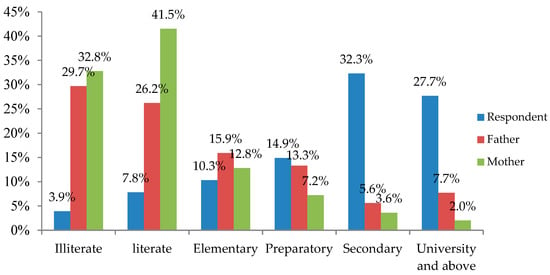
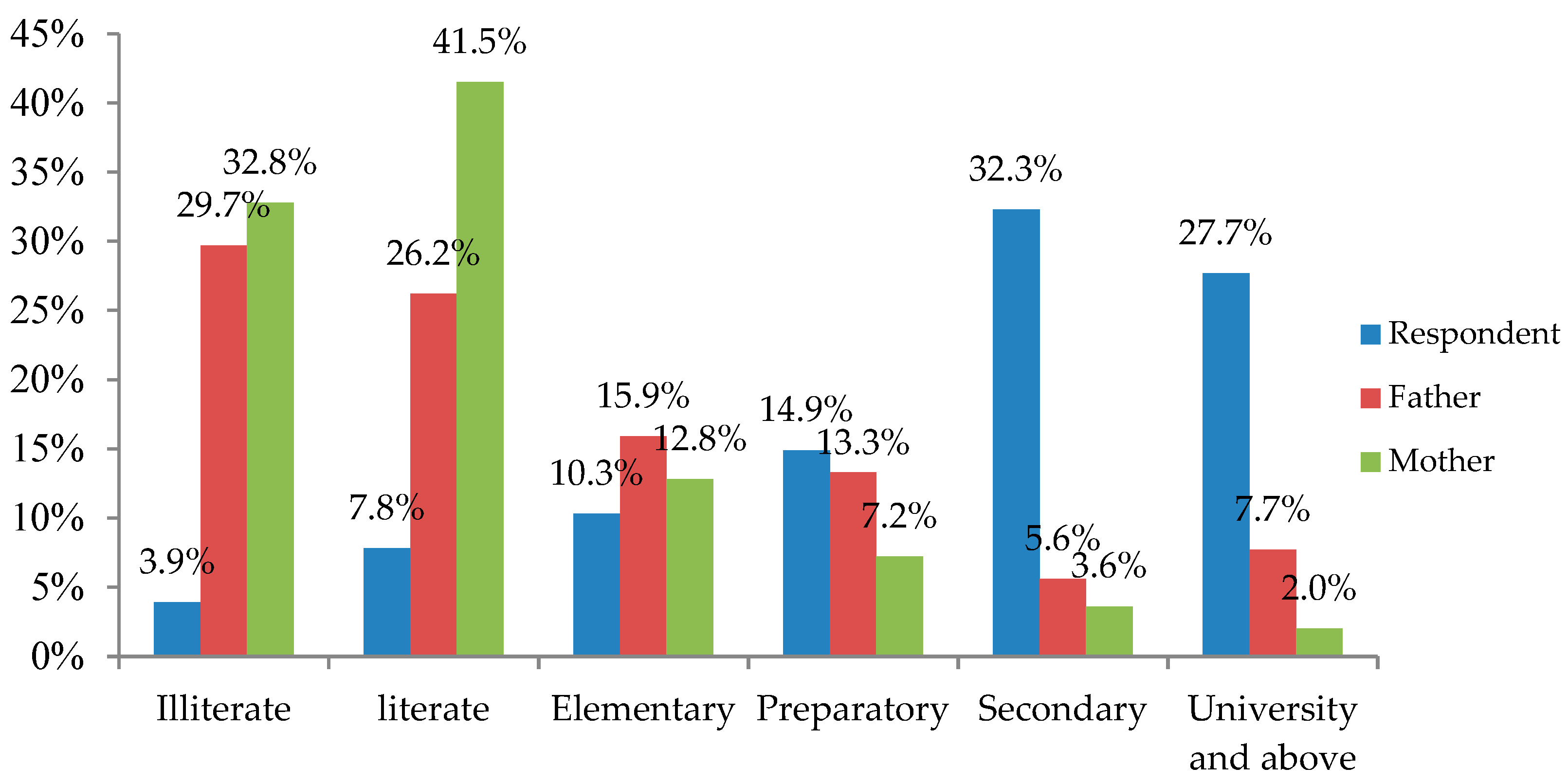
Education level was one variable of note. In the project’s subject population (composed of Qataris in consanguineous marriages with first cousins), the results showed a high proportion of the respondents have attained either a secondary (32.3%) or university and above (27.7%) education level. In contrast, their parents have a lower level of education, with only 5.6% of fathers and 3.6% of mothers having completed secondary education, and just 7.7% of fathers and 2.0% of mothers having reached university level or above. Additionally, a high percentage of parents have either attained literacy (mothers 41.5%, fathers 26.2%) or are illiterate (mothers 32.8%, fathers 29.7%). In comparison, a small proportion of respondents are literate (7.8%) or illiterate (3.9%) (see Figure 1).
Figure 1.
Educational status of respondents and their parents.
Although family size has been another area of substantial change in contemporary Qatar, the interviewed families had a relatively large number of children. In the analysis of the data collected, we found that the average for the family size is 4.5 members. The 2015 population, housing and establishments census (Table 15) showed that the average family size in Qatar is 4.7 members (Planning and Statistics Authority 2015).
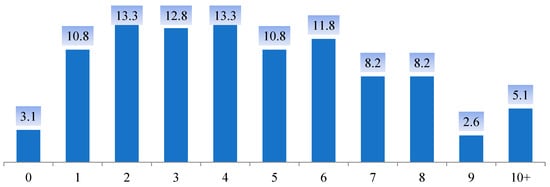
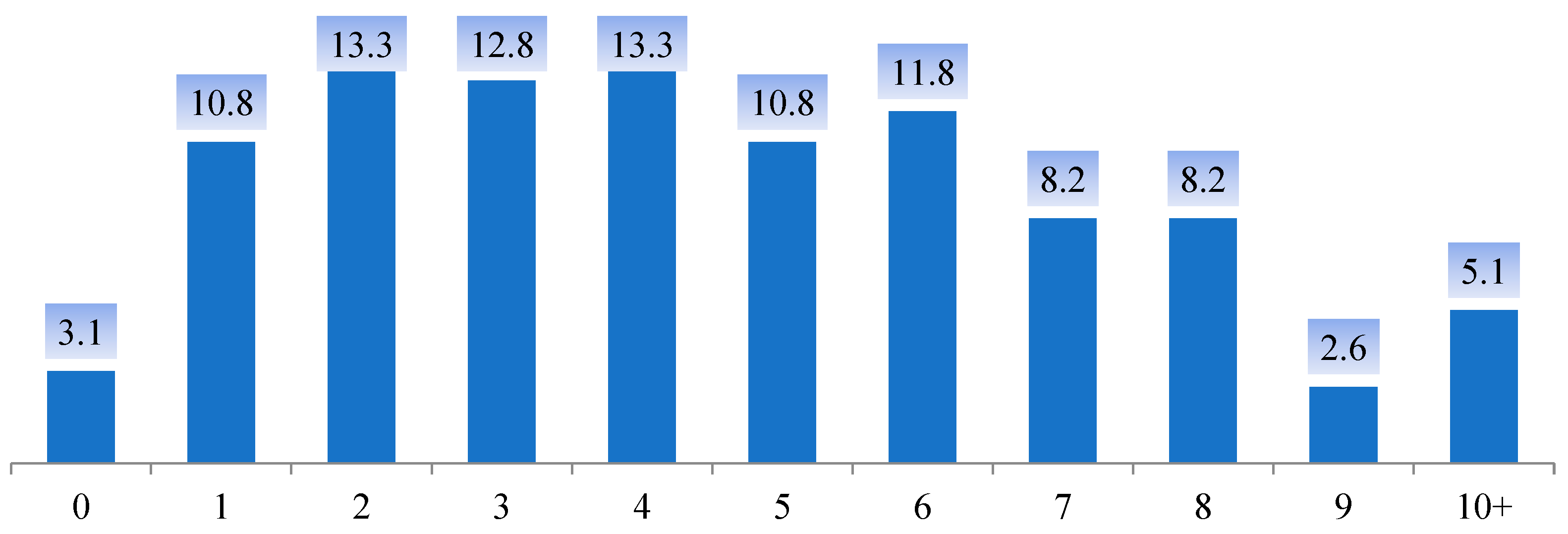
The statistical data published by the Qatari state do not indicate the percentage of men who have more than one wife. However, using published data, it is possible to determine the percentage of marriage contracts undertaken each year by men who are already married. This percentage varied from 9% in 2004, then dropped slightly to 8.3% in 2013, and then 7% in 2020, whereas the percentage of those who had two or three wives under marriage bond did not exceed 0.4% for Qataris and non-Qataris alike (Planning and Statistics Authority 2020a). In the study’s pool of respondents, 8 of the 57 men were polygamists, comprising 14% of the sample. Additionally, the number of children in these polygamous households varied between five and seventeen (Figure 2). The study also explored the prevalence of polygamy amongst the parents of respondents. We found that the number of male respondents whose fathers had multiple wives was 18, or 31.6%; the number of female respondents whose fathers had multiple wives was 27, or 19.6% of the female respondents. One thing these data suggest is that the incidence of polygamy seems to be declining with the successive generations, as portrayed in Figure 3. Notably, divorce rates also seem to be changing with successive generations. In our data set, the proportion of male respondents who divorce their wives was 10.5%, which was substantially larger than the divorce rate reported for their fathers (3.5%). Interestingly, while 4.3% of female respondents were divorced, only 2.2% reported their mothers had divorced.
Figure 2.
Percentages of children in the family.
Figure 3.
Percentages of respondents reporting polygamous households.
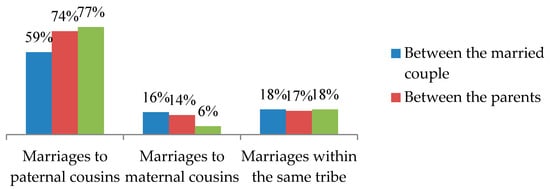
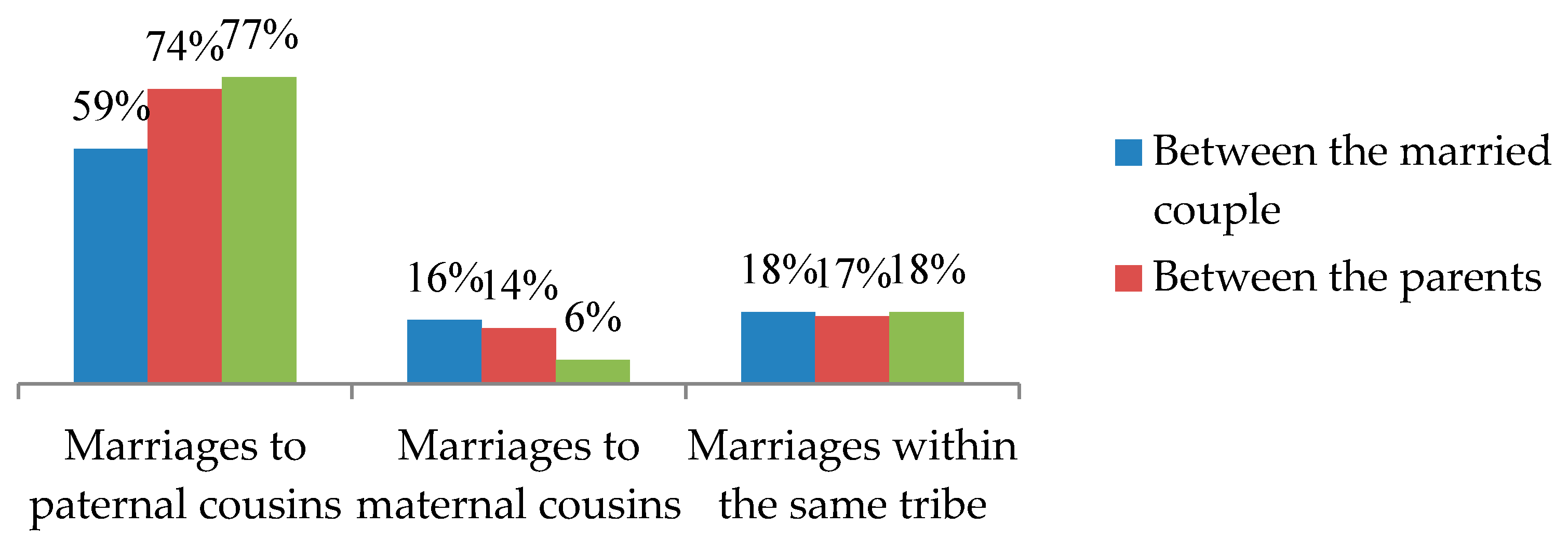
In regard to the marriage and kinship patterns at the center of attention in this study, 59% of the respondents were paternal cousins, 16% were maternal cousins, and 18% simply belonged to the same tribe. As the research team also collected information about the marriage patterns of the respondents’ parents, the analysis also revealed a relative decrease in the prominence of marriages to paternal cousins. Although this decrease was noted, the prevalence of consanguineous marriage did not decline overall. For example, 74% of the marriages in the respondents’ parents’ generation were paternal cousins; 14% were maternal cousins, and 17% belonged to the same tribe. This might also be compared with the generation preceding that: in the respondents’ grandparents’ generation, 77% of the marriages were to paternal cousins, 6% were to maternal cousins, and 18% were simply to others in the same tribe (see Figure 4). Perhaps the most remarkable change visible here is the steady increase in marriages to maternal cousins.
Figure 4.
Consanguineal marriage patterns over successive generations in Qatar.
The project’s interviews with Qatari citizens also asked about basic matters of health. Notably, it is oftentimes suggested that consanguineous marriages are the root cause behind the prevalence of genetic disorders and other maladies. In our subject pool, 81% of the respondents suffered from no illness at all. The most commonly reported health issues were diabetes (4%), asthma (3%), and high blood pressure (about 2.5%). Some 10% of the respondents suffered from some form of genetic disorder. In our analysis, we suggest that consanguineous marriages do not lead to significant increases in genetic diseases, and the health status of individuals did not seem to change significantly from one generation to the next.
In this study’s exploration of consanguineous marriage practices in Qatar, we also explored the process by which couples are arranged and by which spouses are selected. Although it remains the case that portions of the entire family participate in these decisions—fathers, mothers, and sisters, for example—it seems that grandfathers no long play their significant and traditional role in shaping these decisions. Our team analyzed the details of a series of case studies collected from both male and female respondents whose parents (fathers, mothers, or both) had suggested a certain fiancée for their son or daughter. As one respondent described this experience, “It is my destiny to marry my cousin, and this is normal in our family.”1 Another respondent described it thusly: “It was a request from my father, and as a head and commander of the family, I consider his request as an order.” These perspectives and experiences also speak to the tradition of al-heyar, the term used in local dialect to describe how young women are held or reserved so that a cousin can marry her once she reaches adulthood. While this social practice is lodged in tradition, few of our respondents actually married this way: 92% reported not marrying through this practice, and there were no significant differences between genders. Only eleven respondents (three men and eight women) reported marriages arranged in this traditional fashion.
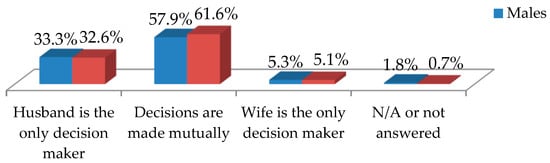
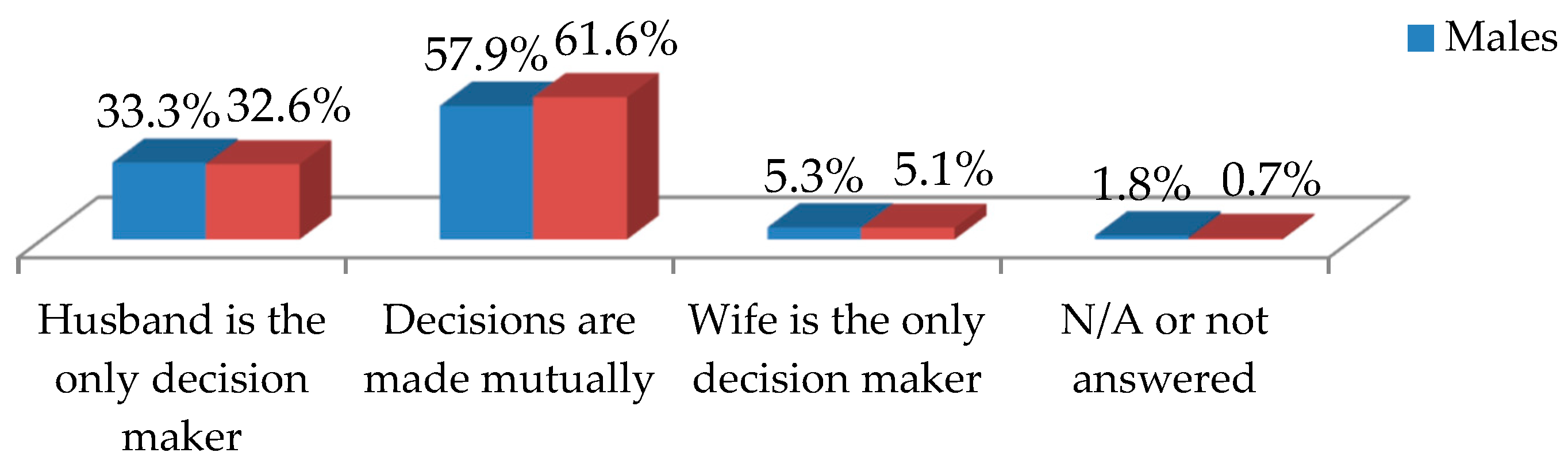
Our study also explored the terrain of power and decision-making in the families that result from consanguineous marriage practices. In the total pool of our respondents, some 61.6% of the female respondents and 57.9% of the male respondents reported that decisions were made mutually. Another 33.3% of the male respondents and 32.6% of the female respondents reported that only husbands make decisions for the households.
In terms of family decision-making processes, 61.6% of the female respondents and 57.9% of the male respondents said that the decisions made mutually. Meanwhile, 33.3% of male and 32.6% of female respondents said that the husband is the only decision-maker. Further unpacking these data, the responses also showed that younger respondents placed more emphasis on the importance of consultation in the resulting marriages. For example, 73% of the respondents under the age of 30 noted that family decisions were made in close consultation between the couple, compared with only 41% of those respondents 60 years or older. From another angle, only 25% of the younger age group reported that husbands unilaterally make all decisions for the household, compared to 41% for the older age group. Figure 5 below reveals the spousal role in decision-making by generation.
Figure 5.
Household decision-making by gender in percentages.
While our analysis revealed important differences between generations, we could see no impact of education levels on the pattern of household decision-making. Our results also indicated that working outside of the home had no significant impact on household decision-making: 59% of the housewives and 51% of employed women reported that decisions were shared and made via consultation. Only 37% of the respondent housewives reported that their husbands make decisions alone, as compared to 45% of those wives employed outside the home.
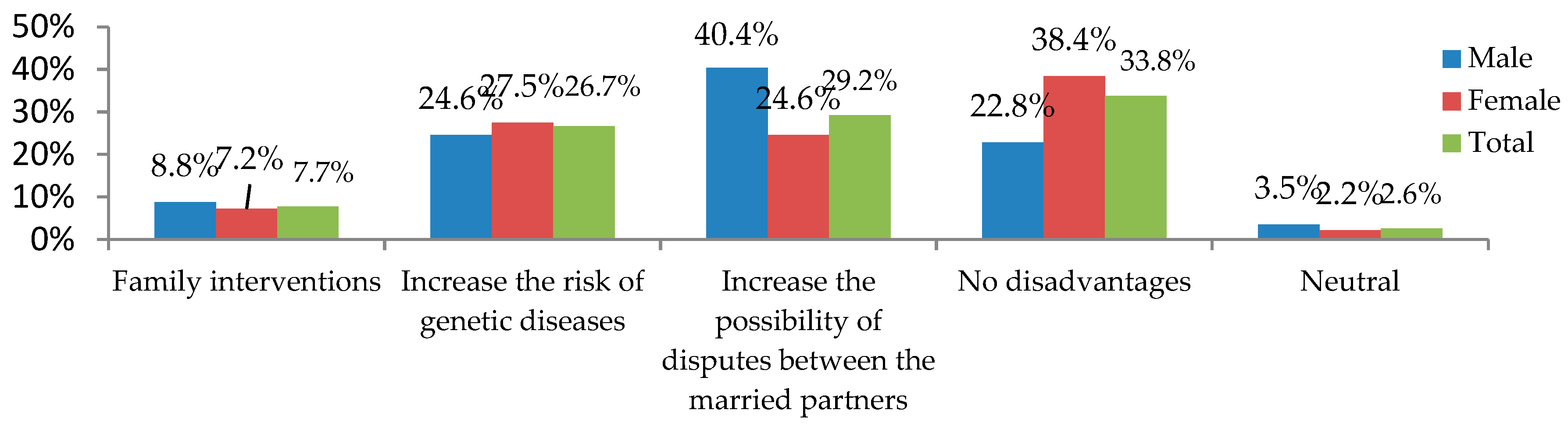
Finally, the interviews also explored respondents’ opinions and attitudes about consanguineous marriage. More than 86% of the respondents suggested the inherently harmonious nature of consanguineously married couples. Conversely, only 7% of the respondents were neutral on this topic (with responses like, “it’s all the same”), and another 7% suggested there were no advantages at all to consanguineous marriage. In the realm of these questions, there were almost no differences between men and women, between various age groups or education levels, or between various income levels of the respondents (see Figure 6).
Figure 6.
Respondents’ opinions on consanguineous marriage.
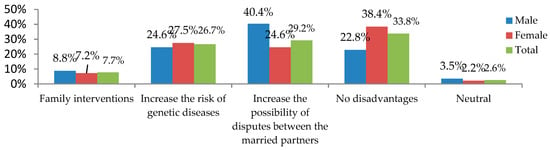
A high proportion of the females believes that consanguineous marriage has no disadvantages (38.4%) compared to only 22.8% of the males who agreed to this statement. Moreover, a high percentage of males (40.4%) believed consanguineous marriage increases the possibility of disputes between married partners, whereas only 24.6% of females agree with this perspective. Regarding the risk of genetic diseases, 27.5% of females and 24.6% of males believe that consanguineous marriage increases this risk. Fewer individuals agree that family intervention is effective in these cases, with 8.8% of males and 7.2% of females supporting this view (see Figure 6).
Additionally, over 86% of the respondents indicated that they would reject a consanguineous marriage if a direct medical examination showed that it would result in genetic disorders for their children. Respondents were also asked more general questions about the beneficial or harmful effects of consanguineous marriages for their community and society. In this juncture of the interviews, more than two-thirds of the respondents (67.2%) reported finding consanguineous marriage useful, while only 11% considered the practice socially harmful. The remainder of the respondents had contingent answers that pointed to certain conditions or understandings of genetic diseases. And notably, there were almost no differences between men and women in terms of their opinions about consanguineous marriage practices.
In conveying these attitudes and opinions, various traditional proverbs were conveyed by respondents to help illustrate the social practice of consanguineous marriage in Qatari society. The most common of these was the proverb that, “the beauty of the dress is maintained by patching it with its own material,” a proverb which speaks to the perceived social strengths conferred by consanguineous marriage practices. Some 67 of the respondents mentioned this proverb in the interviews. Another 16 participants related that, “our grease lies in our stoves,” a proverb which implies that consanguineous marriages maintain and reinforce the extended family’s resources. The reiteration of these proverbs in the interviews also speaks to the central role that social tradition continues to play in Qatari society.
4. Discussion
This study investigated the social structure and the cultural practices of three generations of families in Qatar by focusing on consanguineous marriage and the customary practices surrounding marriage selection. Utilizing a multi-generational and in-depth case-study approach concerning families that practice consanguineous marriage, we explored the reasons for its prevalence amongst Qatari families and society. Our findings reveal that consanguineous marriage is still expected and widely practiced in Qatari tribal families. Moreover, there is a strong desire to maintain such traditional marriage practices, and thereby ensure the survival of the tribe in Qatar and in Middle Eastern societies. These findings revealed in our in-depth interviews and the case studies we established for this project indicate that the tribe remains crucial and central to individuals’ identities in Qatar, and is a central feature in the organization of social and political power.
Recent studies have reinforced this perspective on contemporary tribalism: other works have indicated that the tribe remains an active source of identity in the region (Alshawi and Gardner 2013; Lowi 2018). In Qatar, the high rates of consanguineous marriages are in line with the maintenance of tribal solidarity and the concentration of resources within extended families. The strong parental role in spouse selection, particularly among the older generations, also reflects the tribal values of maintaining lineage. In fact, some have argued that the tribal structure became stronger in the era of modernization in the Middle East, as internal and external tribal relations were exploited in political conflicts, or that an unstable political situation generated a field of relations that catalyzed the tribal form (see Aldosari 2019; Maisel 2014; Prager 2014). All of this suggests the centrality and vitality of the tribal form—to individuals’ identity, to the distribution of power and political authority, and even to the distribution of economic resources. The contemporary social structure of the region is recognizably a mix of modern and traditional elements. As Chatty argued, citizenship, tribe, and class are in complex configurations in most contemporary Middle Eastern countries (Chatty 2014).
One of the significant findings of this research is that increased levels of educational attainment do not significantly reduce the prevalence of consanguineous marriages. Despite the fact that newer generations have higher levels of education compared to their parents, their preference towards family marriage has remained unchanged. This finding raises further questions about the hypothesis that education is the key factor affecting rapid social change and, more specifically, that education erodes socially traditional practices like consanguineous marriage (Al-Kandari and Al-Kandari 2018; Mahboub et al. 2020). As this study’s results have shown, education level does not seem to significantly shape the choice of partners in consanguineous marriage. This is consistent with some other work as well: Jurdi and Saxena (2003) surveyed 9762 women in Yemen, and found that most educated men, as well as those working in the most modernized economic sectors of the state, remained more likely to marry female relatives. Moreover, this study also found no clear differences between age groups in their support for the practice of consanguineous marriage. Younger generations seemed to be in support of the practice in nearly the same proportions as older generations. This result is consistent with findings from studies elsewhere on the Arabian Peninsula (Warsy et al. 2014). The result suggested that spouse selection in Qatar is strongly entrenched in social structures rather than in individual drive or level of education.
Another key feature of Qatari society, and a pattern characteristic of the wider region, is the patrilineal nature of the tribal structure. Because tribe and ancestry are almost always planned through the males, the tribe is also a factor that reduces the role and status of women in the family, in kinship calculations, and in society more generally. The tribe is a factor that shapes gender inequality in society. The study indicated a generational shift in family decision-making, with younger respondents, particularly those under 30, highlighting the importance of mutual consultation. The older generations, however, held more tightly to traditional patriarchal decision-making structures. Remarkably, occupational status had minimal influence on family decision-making, with working women and housewives both indicating similar levels of spousal consultation. This implies that although gender roles within Qatari families are evolving, patriarchal traditions deeply rooted remain dominant, especially with respect to marital and family organization.
Another important aspect of gender relations and power is the practice of polygamy, or al-taadud (whereby a man, under Islamic law, can marry up to four women). However, the result revealed a shift in the pattern of polygamous marriage patterns. While polygamy was more prevalent among the parents of male respondents (31.6%) and female respondents (19.6%), it has declined among the younger generation. This supports the findings from other nearby states—Kuwait, for example, also noted this practice to be in decline (Kuwait Central Administration of Statistics 2018). In part, these changes reflect the fact that women in the region are increasingly unwilling to become second, third, or fourth wives. We also noted a decline in al-heyar marriages in which a young girl is reserved for marriage with a cousin. Despite increasing education levels and almost ubiquitous urbanization, this practice is still fairly common in Qatar (see Doha International Family Institute 2019). Overall, this and the other findings suggest that while the social context, meaning, and practices associated with tribalism are shifting, they are not vanishing, and the household-level familial practices that support the tribal form remain customary and important to a constellation of Qatari citizens.
One of the most debated issues in the context of consanguineous marriage is whether it has any effect on genetic health risks. Though research from around the world has pointed to heightened risks of genetic disorders in the context of such marriages (Balwan and Saba 2024; Khayat et al. 2024), in this research, 81% of the interviewees indicated that they had no health problems, and only 10% indicated a genetic disorder. The results indicate either that genetic risks are exaggerated in the local context or, alternatively, that some risks are alleviated by health screening programs. Importantly, 86% of participants indicated that they would refuse consanguineous marriage if genetic testing were to show that there was a high risk to their children, indicating increased consideration of genetic health in marital choices.
5. Conclusions
Consanguineous marriage continues to be practiced by many families across generations in contemporary Qatar. The results of the study presented here suggest that despite changing economic conditions and the increasing influence of the labor market on people’s lives, the social position of the tribe remains strong in Qatar. Indeed, the symbolic importance of the tribe has been strengthened in the contemporary era.
The marriage practices that underpin the tribal form are sustained by older generations and imposed upon younger generations. Despite this reality, consanguineous marriage remains strongly supported by younger generations, and they continue to purvey the proverbs and sayings that support this practice. The smaller percentage of the young generation who do not support consanguineous marriage largely explained their stance in terms of a desire to exercise free choice, to step away from parental control, and to avoid the related health risks associated with consanguineous marriage.
These findings help better illuminate the cultural character of the contemporary Qatari family, and especially those families that continue to follow the customary practices of consanguinity. As a result of this study, we can better see the existing patterns, the longstanding social tendencies, and the factors at play in the tensions between social change and social continuity. However, differences in the attitudes regarding marriage practices are likely to grow in the future.
A slight decline in the size of the family is also expected in Qatar’s future. In this study, we have also explored some of the changing roles in the family. For example, women are increasingly going to work outside of the home and, as a result, are playing a stronger role in family decision-making, at least in some areas. In other areas—the process for deterring a marriage, criteria for partner choice, and the longstanding preference for marrying cousins—change is slow or not present at all.
In Qatar, marital choice is clearly not the product of individual conviction, as it is in some other places in the world. Despite the rapid transformation and modernization of Qatari society, tradition, the social context, and the local community remain the primary factors in determining appropriate and marriageable partners. This remains true for many other societies in the world, but this study helps clarify that modernization and urbanization do not play the determinative role in instantiating these changes as previously thought. In Qatar, parental choice and familial input remain significant factors in determining a marriageable partner. In this context, in Qatar consanguineous marriage remains a significant social fact.
In the qualitative portion of this study, it was revealed that women face psychological impacts from consanguineous marriage, generally. At the same time, however, women also considered marrying a relative a source of security, and embraced aspects of this social tradition. Interestingly, male support for consanguineous marriage tended to be more focused on maintaining the genealogical lineage of the family, thereby contributing to the maintenance of the patrilineal traditions that structure kinship in the region. This patrilineality underpins the patriarchal nature of Qatari society as well.
In conclusion, consanguineous marriage—largely involving paternal or maternal cousins—is still widely prevalent in Qatar. The impact of extended families on marriage selection was clear for all three generations interviewed in this study. This was especially clear for relatives on the father’s side. The fact that pressure was greater on women is a reflection of the structure of the extended family type with tribal origins. This study also revealed that consanguineous marriage has benefits related to the cohesion of marital relations: the divorce rate is far lower between spouses married to kin relations than for those couples who have no kinship relation. Consequently, this study concludes that structural factors, such as the tribal system and extended family, continue to shape the modes of marriage in Qatar and continue to guide marital selection among contemporary families. Moreover, it has an effect of reducing marital problems to some extent due to the overlap of kinship relationships. Further research is necessary to monitor the changes that occur in the family structure, in marriage patterns, and in youth attitudes towards marital selection. More specifically, further research is needed so that we might better utilize existing social spastics to understand the diverse and interrelated variables affecting the Qatari family.
Funding
This study was supported by a grant from QNRF. NPRP 4-086-5-007.
Institutional Review Board Statement
The study was conducted in accordance with the Institutional Review Board of Qatar University (QU-IRB 80/11, approved on 16 June 2012).
Informed Consent Statement
Informed consent was obtained from all subjects involved in the study.
Data Availability Statement
The data presented in this study are available on request from the corresponding author due to ethical restrictions.
Acknowledgments
We owe a sincere thanks to the participants who took part of this study.
Conflicts of Interest
The author declares no conflicts of interest. The funding sponsors had no role in the design of the study, in the collection, analyses or interpretation of data, in the writing of the manuscript, and in the decision to publish the results.
Note
| 1 | This particular respondent also used the phrase albint li’abn eamiha, meaning “a girl for her cousin.” |
References
- Aldosari, Noof. 2019. Tribe and Tribal Ideology in Arabian Gulf States Foreign Policy Making: A Case Study of the Qatar Crisis. Center for Middle Eastern Studies 233: 5–6. [Google Scholar]
- Al-Gazali, Lihadh, Hanan Hamamy, and Shaikha Al-Arrayad. 2006. Genetic disorders in the Arab world. BMJ: British Medical Journal 333: 831. [Google Scholar] [CrossRef] [Scilit] [PubMed]
- Al-Gazali, Lihadh Ibrahim, Abdulbari Bener, Yousef M. Abdulrazzaq, Ricarda Micallef, Abdulla Al-Khayat, and Tarek Gaber. 1997. Consanguineous marriages in the United Arab Emirates. Journal of Biosocial Science 29: 491–97. Available online: https://www.cambridge.org/core/journals/journal-of-biosocial-science/article/abs/consanguineous-marriages-in-the-united-arab-emirates/B009C15A823DF370BADA7D69D88E4871 (accessed on 1 January 2020). [CrossRef] [Scilit] [PubMed]
- Al-Ghanim, Kaltham. 2013. The Hierarchy of Authority Based on Kinship, Age, and Gender in the Extended Family in the Arab Gulf States. Int’l J. Jurisprudence Fam 3: 329. [Google Scholar]
- Al-Ghanim, Kaltham Ali. 2009. Violence Against Women in Qatari Society. Journal of Middle East Women’s Studies 5: 80–93. [Google Scholar] [CrossRef] [Scilit]
- Alhaidari, Ibrahim. 2003. The Patriarchal System and Problematic Sex Among the Arabs, 1st ed. London: Al Saqi Publishing. [Google Scholar]
- Alharbi, Omar A., Walaa A. Al-Shaia, Abdulaziz A. Al-Hamam, Hala M. Al-Marzoug, Anwar E. Ahmed, and Muhammed Bagha. 2015. Attitude of Saudi Arabian adults towards consanguineous marriage. Qatar Medical Journal 2015: 12. [Google Scholar] [CrossRef] [Scilit] [PubMed]
- Al-Kandari, Yagoub Y., and Douglas E. Crews. 2011. The effect of consanguinity on congenital disabilities in the Kuwaiti population. Journal of Biosocial Science 43: 65–73. [Google Scholar] [CrossRef] [Scilit] [PubMed]
- Al-Kandari, Yagoub Y., and Yousif Y. Al-Kandari. 2018. Consanguineous Marriage and its Relationship with Sociocultural Variables in Urban and Bedouin Geographical Regions in Kuwait. International Journal of Archaeology and Social Sciences in the Arabian Peninsula 10: 1–25. [Google Scholar] [CrossRef] [Scilit]
- Alkandari, Yacoub Yousef. 2016. The Tribe in Gulf Contemporary Political Concepts: The Kuwait Example. Imran Arab Center for Research and Policy 4: 51–80. Available online: https://omran.dohainstitute.org/ar/issue015/Pages/YakoubKandari.pdf (accessed on 1 January 2020).
- Al-Khraif, Rshood, Asharaf Abdul Salam, and Mohd Fadzil Abdul Rashid. 2020. Family Demographic Transition in Saudi Arabia: Emerging Issues and Concerns. SAGE Open 10: 2158244020914556. Available online: https://journals.sagepub.com/doi/epub/10.1177/2158244020914556 (accessed on 1 January 2020). [CrossRef] [Scilit]
- Allendorf, Keera. 2013. Schemas of Marital Change: From Arranged Marriages to Eloping for Love. Journal of Marriage and the Family 75: 469. [Google Scholar] [CrossRef] [Scilit] [PubMed]
- Al-Najjar, Baqer. 2019. Identity and Regional Conflicts in the Arabian Gulf. Contemporary Arab Affairs 12: 3–16. [Google Scholar] [CrossRef] [Scilit]
- Alshawi, A. Hadi, and Andrew Gardner. 2013. Tribalism, Identity and Citizenship in Contemporary Qatar. Anthropology of the Middle East 8: 46–59. [Google Scholar] [CrossRef] [Scilit]
- Al-Shibani, Badr Ibrahim, and Ahmad Salah. 2010. Attitudes of Kuwait University students towards marriage and its customs. Ournal of Gulf & Arabian Peninsula Studies 36: 97–146. [Google Scholar]
- Altorki, Soraya. 1980. Milk-Kinship in Arab Society: An Unexplored Problem in the Ethnography of Marriage. Ethnology 19: 244. [Google Scholar] [CrossRef] [Scilit]
- Andrikopoulos, Apostolos, and Jan Willem Duyvendak. 2020. Migration, mobility and the dynamics of kinship: New barriers, new assemblages. Ethnography 21: 299–318. [Google Scholar] [CrossRef] [Scilit]
- Balwan, Wahied Khawar, and Neelam Saba. 2024. Study of Genetic and Clinical Outcomes of Consanguineous Marriages. Saudi Journal of Medicine 9: 512–16. [Google Scholar] [CrossRef] [Scilit]
- Bener, Abdulbari, Rafat Hussain, and Ahmad S. Teebi. 2007. Consanguineous Marriages and Their Effects on Common Adult Diseases: Studies from an Endogamous Population. Medical Principles and Practice 16: 262–67. [Google Scholar] [CrossRef] [Scilit] [PubMed]
- Burnard, P. Gill, Kate Stewart, Elizabeth Treasure, and Barbara Chadwick. 2008. Analysing and presenting qualitative data. British Dental Journal 204: 429–32. [Google Scholar] [CrossRef] [Scilit] [PubMed]
- Chatty, Dawn. 2014. The persistence of Bedouin identity and increasing political self-representation in Lebanon and Syria. Nomadic Peoples 18: 16–33. [Google Scholar] [CrossRef] [Scilit]
- Clarke, Morgan. 2007. The modernity of milk kinship*. Social Anthropology/Anthropologie Sociale 15: 287–304. [Google Scholar] [CrossRef] [Scilit]
- De Bel-Air, Françoise, Jihan Safar, and Blandine Destremau. 2018. Marriage and Family in the Gulf Today: Storms over a patriarchal institution? Arabian Humanities 10: 1–40. [Google Scholar] [CrossRef] [Scilit]
- Doha International Family Institute. 2019. The State of Marriage in the Arab World. Qatar: Hamad Bin Khalifa University Publishing House. [Google Scholar]
- El Guindi, Fadwa. 2012. Milk and blood: Kinship among muslim Arabs in Qatar. Anthropos 107: 545–55. [Google Scholar] [CrossRef] [Scilit]
- El-Hazmi, Mohsen, Abdulrahman Al-Swailem, Arjumand Warsy, Riad Sulaimani, and Abdul Aziz Al-Meshari. 1995. Consanguinity among the Saudi Arabian population. Journal of Medical Genetics 32: 625. [Google Scholar] [CrossRef] [Scilit] [PubMed]
- El Mouzan, Mohammad I., Abdullah A. Al Salloum, Abdullah S. Al Herbish, Mansour M. Qurachi, and Ahmad A. Al Omar. 2008. Consanguinity and major genetic disorders in Saudi children: A community-based cross-sectional study. Annals of Saudi Medicine 28: 169–73. [Google Scholar] [CrossRef] [Scilit] [PubMed]
- Hamamy, Hanan Ali, Amira Taher Masri, Anas Al-Hadidy, and Kamel Mohammed Ajlouni. 2007. Consanguinity and genetic disorders. Profile from Jordan. Saudi Medical Journal 28: 1015–17. Available online: https://europepmc.org/article/med/17603701 (accessed on 1 January 2020). [CrossRef] [Scilit]
- Hammoudi, Abdallah. 2017. Emic and Etic in Re-theorizing «Tribe» A Step toward an Arab Anthropological Discourse. Omran 5: 11–56. Available online: https://omran.dohainstitute.org/ar/issue019/Pages/AbdallahHammoudi.pdf (accessed on 1 January 2020). [CrossRef] [Scilit]
- Islam, M. Mazharul. 2012. The practice of consanguineous marriage in oman: Prevalence, trends and determinants. Journal of Biosocial Science 44: 571–94. [Google Scholar] [CrossRef] [Scilit] [PubMed]
- Islam, M. Mazharul, Faisal M. Ababneh, and Hasinur Rahaman Khan. 2018. Consanguineous marriage in Jordan: An update. Journal of Biosocial Science 50: 573–78. [Google Scholar] [CrossRef] [Scilit] [PubMed]
- Islam, M. Mazharul, Khalid Al-Thihli, and Mohamed Abdellatif. 2013. Maternal and Neonatal Factors Influencing Preterm Birth and Low Birth Weight in Oman: A Hospital Based Study. International Journal of Child Health and Nutrition 2: 281–95. [Google Scholar] [CrossRef] [Scilit]
- Jurdi, Rozzet, and Prem C. Saxena. 2003. The prevalence and correlates of consanguineous marriages in Yemen: Similarities and contrasts with other Arab countries. Journal of Biosocial Science 35: 1–13. [Google Scholar] [CrossRef] [Scilit] [PubMed]
- Khayat, Abdullah M., Balsam Ghazi Alshareef, Sara F. Alharbi, Mohammed Mansour Al Zahrani, Bashaer Abdulwahab Alshangity, and Noha Farouk Tashkandi. 2024. Consanguineous Marriage and Its Association with Genetic Disorders in Saudi Arabia: A Review. Cureus 16: e53888. [Google Scholar] [CrossRef] [Scilit] [PubMed] [PubMed Central]
- Kilshaw, Susie, Tasneem Al Raisi, and Fouad Alshaban. 2015. Arranging marriage; negotiating risk: Genetics and society in Qatar. Anthropology & Medicine 22: 98–113. [Google Scholar] [CrossRef] [Scilit] [PubMed]
- Kuwait Central Administration of Statistics. 2018. Annual Publication of Marriage and Divorce. Available online: https://www.csb.gov.kw/Pages/Statistics_en?ID=12&ParentCatID=+1 (accessed on 1 January 2020).
- Lowi, Miriam R. 2018. Identity, Community and Belonging in gcc States: Reflections on the Foreigner. Sociology of Islam 6: 401–28. [Google Scholar] [CrossRef] [Scilit]
- Mahboub, Samira M., Alanoud A. Alsaqabi, Noura A. Allwimi, Dana N. Aleissa, and Basmah A. Al-Mubarak. 2020. Prevalence and pattern of consanguineous marriage among educated married individuals in Riyadh. Journal of Biosocial Science 52: 768–75. [Google Scholar] [CrossRef] [Scilit] [PubMed]
- Maisel, Sebastian. 2014. The new rise of tribalism in Saudi Arabia. Nomadic Peoples 18: 100–22. [Google Scholar] [CrossRef] [Scilit]
- Nyabundi, Agnetta Adiedo. 2023. From kinship networks to culture of relatedness: A shift of safety nets during health pandemics in the Kenyan context. Frontiers in Public Health 11: 1062962. [Google Scholar] [CrossRef] [Scilit] [PubMed]
- Parkes, Peter. 2005. Milk kinship in Islam. Substance, structure, history. Social Anthropology 13: 307–29. [Google Scholar] [CrossRef] [Scilit]
- Planning and Statistics Authority. 2010. Marriage and Divorce-State of Qatar 2009. Planning and Statistics Authority. Available online: https://www.npc.qa/en/statistics/Statistical%20Releases/Social/General%20Social%20Statistics/QatarSocialStatistics/Qatar_Social_Statistics_2009_2018_En.pdf (accessed on 1 January 2020).
- Planning and Statistics Authority. 2012. Marriage and Divorce-State of Qatar 2011. Planning and Statistics Authority. Available online: https://www.psa.gov.qa/en/statistics/Statistical Releases/Population/MarriagesDivorces/2011/Analytical_Summary_Marriage_Divorce_2011_Ar.pdf (accessed on 1 January 2020).
- Planning and Statistics Authority. 2015. Population and Social Statistics. In Planning and Statistics Authority. Available online: https://www.npc.qa/en/statistics/Statistical%20Releases/Social/General%20Social%20Statistics/QatarSocialStatistics/Qatar_Social_Statistics_2009_2018_En.pdf (accessed on 1 January 2020).
- Planning and Statistics Authority. 2016. Marriage and Divorce-State of Qatar 2015. Planning and Statistics Authority. Available online: https://www.npc.qa/en/statistics/Statistical%20Releases/Social/General%20Social%20Statistics/QatarSocialStatistics/Qatar_Social_Statistics_2009_2018_En.pdf (accessed on 1 January 2020).
- Planning and Statistics Authority. 2017. Marriage and Divorce-State of Qatar 2016. Planning and Statistics Authority. Available online: https://www.npc.qa/en/statistics/Statistical%20Releases/Social/General%20Social%20Statistics/QatarSocialStatistics/Qatar_Social_Statistics_2009_2018_En.pdf (accessed on 1 January 2020).
- Planning and Statistics Authority. 2018. Marriage and Divorce-State of Qatar 2017. Planning and Statistics Authority. Available online: https://www.npc.qa/en/statistics/Statistical%20Releases/Social/General%20Social%20Statistics/QatarSocialStatistics/Qatar_Social_Statistics_2009_2018_En.pdf (accessed on 1 January 2020).
- Planning and Statistics Authority. 2019. Marriage and Divorce-State of Qatar 2018. Planning and Statistics Authority. Available online: https://www.npc.qa/en/statistics/Statistical%20Releases/Population/Population/Population_social_1_2019_AE.pdf (accessed on 1 January 2020).
- Planning and Statistics Authority. 2020a. Available online: https://www.npc.qa/en/statistics/Statistical%20Releases/Population/Population/Population_Social_Statistics_Q4_2021_AE.pdf (accessed on 1 January 2022).
- Planning and Statistics Authority. 2020b. Marriage and Divorce-State of Qatar 2019. Planning and Statistics Authority. Available online: https://www.npc.qa/en/statistics/Statistical%20Releases/Population/Population/Population_Social_Statistics_Q4_2021_AE.pdf (accessed on 1 January 2022).
- Planning and Statistics Authority. 2021. Marriage and Divorce-State of Qatar 2020. Planning and Statistics Authority. Available online: https://www.npc.qa/en/statistics/Statistical%20Releases/Population/Population/Population_Social_Statistics_Q1_2022_AE.pdf (accessed on 1 January 2023).
- Planning and Statistics Authority. 2022. Available online: https://www.npc.qa/en/statistics/Statistical%20Releases/Population/Population/Population_Social_Statistics_Q1_2022_AE.pdf (accessed on 1 January 2023).
- Planning and Statistics Authority. 2023. Available online: https://www.npc.qa/en/statistics/Statistical%20Releases/Population/Population/Population_Social_Statistics_Q2_2023_AE.pdf (accessed on 1 January 2024).
- Prager, Laila. 2014. Introduction. Reshaping tribal identities in the contemporary Arab world: Politics, (self-) representation, and the construction of Bedouin history. Nomadic Peoples 18: 10–15. [Google Scholar] [CrossRef] [Scilit]
- Radovanovic, Zoran, Nasra Shah, and Jaafar Behbehani. 1999. Prevalence and Social Correlates of Consanguinity in Kuwait. Annals of Saudi Medicine 19: 206–10. [Google Scholar] [CrossRef] [Scilit] [PubMed]
- Rahbari, Ladan. 2020. Milk Kinship and the Maternal Body in Shi’a Islam. Open Theology 6: 43–53. [Google Scholar] [CrossRef] [Scilit]
- Rácz, Péter, Sam Passmore, and Fiona M. Jordan. 2020. Social Practice and Shared History, Not Social Scale, Structure Cross-Cultural Complexity in Kinship Systems. Topics in Cognitive Science 12: 744–65. [Google Scholar] [CrossRef] [Scilit] [PubMed]
- Shawky, Rabah M., Solaf M. Elsayed, Mouchira E. Zaki, Sahar M. Nour El-Din, and Ferihan M. Kamal. 2013. Consanguinity and its relevance to clinical genetics. Egyptian Journal of Medical Human Genetics 14: 157–64. [Google Scholar] [CrossRef] [Scilit]
- Shenk, Mary K., Mary C. Towner, Emily A. Voss, and Nurul Alam. 2016. Consanguineous Marriage, Kinship Ecology, and Market Transition. Current Anthropology 57: S167–80. [Google Scholar] [CrossRef] [Scilit]
- Shi, Jinqun. 2017. The evolvement of family intergenerational relationship in transition: Mechanism, logic, and tension. Journal of Chinese Sociology 4: 1–21. Available online: https://www.researchgate.net/publication/321952626_The_evolvement_of_family_intergenerational_relationship_in_transition_mechanism_logic_and_tension (accessed on 1 January 2020). [CrossRef] [Scilit]
- Warsy, As, Mh Al-Jaser, Abeer Mohammad Saad Al-Dbass, Sultan Al-Daihan, and Mohammed Alanazi. 2014. Is consanguinity prevalence decreasing in Saudis?: A study in two generations. African Health Sciences 14: 314–21. [Google Scholar] [CrossRef] [Scilit] [PubMed]



Disclaimer/Publisher’s Note: The statements, opinions and data contained in all publications are solely those of the individual author(s) and contributor(s) and not of MDPI and/or the editor(s). MDPI and/or the editor(s) disclaim responsibility for any injury to people or property resulting from any ideas, methods, instructions or products referred to in the content. |
© 2026 by the author. Licensee MDPI, Basel, Switzerland. This article is an open access article distributed under the terms and conditions of the Creative Commons Attribution (CC BY) license.