


Abstract
Engagement in the arts, particularly developing skills in an art form, represents a cognitively rich activity involving attention, memory, executive function, and sensorimotor coordination. Despite widespread assumptions that artistic abilities such as drawing are innate, they are highly trainable through targeted learning. Different techniques exemplify how structured observational drawing exercises can reshape perceptual and cognitive processing. For example, the negative space drawing technique directs attention to the shapes surrounding an object rather than the object itself. Specific techniques can map onto underlying cognitive processes, and this article examines the translational potential of learning to draw as a cognitive intervention. Due to the Arts’ aesthetic nature, the benefits extend beyond cognitive and can impact modifiable salutogenic factors at large. A toolkit of drawing techniques is provided, with information on the underlying cognitive processes. By connecting the cognitive neuropsychology of observational drawing to cognitive aging, this work contributes to a growing body of evidence supporting the arts as a vehicle for brain health, with particular promise in an aging global population. As technology transforms the landscape of arts and aesthetics, the cognitive value of embodied artmaking is underscored.
Keywords:
cognitive function; art and brain; neuroaesthetics; sketching; experts; prevention; arts therapy; aging The intersection of arts and health has received substantial recognition in the last few decades. We all experience the benefits that the arts can bring and attest to different ways in which they provide healing and joy. As research on this topic evolved, our understanding of the mechanisms of different artforms and their potential benefits has also grown. In the last 10–15 years, major health organizations like the World Health Organization (WHO) have emphasized the role of the arts in health and have called for more rigorous and intentioned research in this area. In the United States, The National Institutes of Health (NIH) has made great efforts to integrate the arts into their research portfolio, particularly through music. In 2019, the National Institute on Aging (NIA) released a Music-based Intervention Toolkit for cognitive disorders of aging alongside multiple notices for funding opportunities. Similarly, the National Center for Complementary and Integrative Medicine (NCCIH) has listed music as an evidence-based mode of healing for specific conditions. Other countries are also at the forefront of Arts and Health, with Arts on Prescription programs available in many European countries. These efforts point towards more needed research, such as with different art modalities, to understand mechanisms and applications.
Health is multifaceted and consists of biological, psychological, and social components. The arts can impact health outcomes by directly engaging these different components, often multiple at once (Fancourt and Finn 2019). One area in which the arts can have great impact is promoting aging well (Waddell et al. 2024). Building on early ideas of successful aging but extending towards a more inclusive definition, a biopsychosocial approach views aging as a combination of external and internal determinants, including active engagement with life and maintaining social relationships, physical engagement and the quality of one’s environment, and regular cognitive stimulation (e.g., careers or hobbies). These factors all contribute to healthy aging, particularly in the cognitive domain, which is critical for independence (Rowe and Kahn 1997; Waddell et al. 2024). While early life education can help set individuals on a positive trajectory, later-life engagement is critical for cognitive vitality. These ideas call for more research on arts for healthy cognitive aging, including understanding mechanisms and implementation strategies. This article highlights how artistic skill development can serve as an aesthetic activity that is cognitively stimulating. While the focus is specifically on observational drawing, a similar approach can be taken to studying other artforms and health benefits.
Observational drawing, also known as drawing or sketching from life, is one of the oldest forms of artistic expression. Learning to draw accurately from real life can transform how one views the world by shifting attention to visual and spatial properties that are not commonly attended to. Cognitive psychologists and neuroscientists have started to study the underlying mechanisms and proposed models of the drawing process (Seeley and Kozbelt 2008). Perception, attention, mental representation, and motor action have all been attributed to drawing skills. It is not yet clear, however, whether training in drawing can have measurable improvements on the involved cognitive domains. Most studies, to date, have used cross sectional or longitudinal approaches to identify the cognitive mechanisms of drawing skills, mainly in younger adults. In fields like cognitive training and perceptual learning, repeated exercise of specific cognitive domains through tasks or games can improve performance in the same and related domains (Jaeggi et al. 2017; Seitz 2017). Conceptualizing drawing expertise as exercising cognitive skills provides a path for understanding how this activity can support healthy cognitive aging. Going beyond regular cognitive training, developing artistic skills engages a creative and aesthetic experience that may provide additional benefits. The perspective presented here highlights how understanding the cognitive processes involved in observational drawing, and how the different techniques develop specific skills, can support mechanistic and implementation research into promoting healthy aging through arts engagement.
1. A Novel Approach to Arts Interventions for Healthy Cognitive Aging
Developing drawing skills could be thought of as a cognitive exercise. Drawing from observation involves many cognitive processes, ranging perception, attention, visuospatial skills, and the motor connection (Kozbelt and Ostrofsky 2018; Seeley and Kozbelt 2008). Artists show advantages in many of these processes compared to individuals with less visual arts experience and lower drawing skills (Kozbelt and Ostrofsky 2018). As such, drawing has received recognition as a potential way of training perception and thinking. This tool is widely used in different forms of early education but is missing from later-life learning. Training cognition through developing drawing skills could be particularly useful for promoting healthy cognitive aging. Aging is linked with changes across diverse cognitive processes; however, the course of these changes may be influenced by a variety of factors, including engagement in the arts (Cabeza et al. 2018; Park and Bischof 2013; Stine-Morrow and Manavbasi 2022). In addition to promoting cognition, the arts also promote physical and emotional wellbeing, engage the aesthetic experience, and provide a holistic approach to healthy aging (Fancourt and Finn 2019).
Cognitive Changes and the Aging Brain
Individuals’ cognition is constantly changing throughout different timescales. Aging in particular is accompanied by cognitive changes. Domains like memory and processing speed show a gradual decline after the age of 30 years and more rapid declines after 60 years (Hartshorne and Germine 2015; Park and Bischof 2013; Salthouse 2014). In visual perception, the dorsal stream, which is related to spatial and motor activities, declines faster than the ventral stream, which is related to visualizing objects (Andersen 2012). While fluid abilities like novel reasoning decline, crystallized and procedural knowledge remain stable in cognitively healthy older adults (Hartshorne and Germine 2015; Park and Bischof 2013). These changes in cognitive function have been linked to both neural challenges and functional deterioration. Additionally, biopsychosocial factors impact cognition, like depression, social isolation, physical inactivity, and diet (Livingston et al. 2024).
Aging well can be defined in different ways. Actively working on preventing disease and disability, sustaining an active lifestyle, and maintaining high physical and cognitive function have all been attributed to successful aging (Rowe and Kahn 1997). The idea of successful aging has evolved over the years, such as into more inclusive concepts like aging well, which also consider structural and other determinants of health (Waddell et al. 2024). Nyberg and Pudas (2019) provide two pathways for successful cognitive aging: maintenance and compensation. Genetics, epigenetics, and lifestyle factors impact age-associated memory changes through both paths (Nyberg and Pudas 2019). Many of such lifestyle factors can have positive impacts even when implemented later in life. As a result, engaging in challenging leisure activities, including the arts, stimulates key cognitive processes and sustains cognition in older age (Fioranelli et al. 2023; Park and Bischof 2013; Yang et al. 2022). In one longitudinal intervention study with cognitively stimulating activities, including arts and crafts, meaningful gains were found for everyday performance and a delay of dementia onset (Park et al. 2014).
Healthy cognitive aging is supported by cognitive reserve, which was initially proposed as a model for understanding the dissociation with behavior and structural changes in Alzheimer’s disease (Stern 2012). Cognitive reserve explains why some people can maintain cognitive function despite physical pathology by highlighting a type of tolerance to neural deterioration (Li et al. 2024; Stern 2012). Early life factors, such as education and family socioeconomic status, play a role in promoting cognitive reserve. Beyond the early life reserve, however, later enrichment and learning is particularly important for late-life cognitive functioning (Stine-Morrow and Manavbasi 2022). For example, someone with low early-life reserve can have later-life enrichment which can bring up their cognition to the level of someone who had high early-life reserve but no later-life enrichment. Further, engagement may be of different quality, such as ranging in the capacity for deep vs. shallow processing. Active lifestyles, social interactions, work, games and puzzles, language and literacy, pro-sociality, and arts and crafts all show positive evidence for promoting healthy cognitive aging. This opens the opportunity for targeted salutogenic strategies.
2. Promoting Successful Aging Through the Arts
Among activities that promote healthy cognitive aging, the arts, both viewing and creating, provide a unique opportunity. A review of arts participation studies in 2014 found significant effects of dance, music, writing, and acting on domains like attention, processing speed, memory, and visuospatial function (Noice et al. 2014). The review found minimal studies on visual arts, however, with no assessment of cognition in those studies. Since then, visual art therapies have gained popularity in modern medicine as an integrative approach grows. One meta-analysis demonstrates positive effects on health-related outcomes, including managing dementia and stroke recovery (Masika et al. 2020). The field is new and many studies utilize weaker methods, which hamper the strength of evidence. Studies with visual arts engagement frequently fail to look at behavioral and biological outcomes, relying on self-report surveys. In contrast, the field of music-based therapies has a stronger foundation of robust research practices. Music has been one of the most studied artforms, having received attention for at least 50 years (Stuckey and Nobel 2010). Learning a new instrument in old age is one area of music-based engagement that has positive impacts on cognition and wellbeing (Kim and Yoo 2019). Yet, in visual arts, the focus on building skill has been largely omitted. A cognitive approach to visual art interventions is critical as the aging population grows and prolonging healthy and active years of life is prioritized.
2.1. Visual Arts Training and Observational Drawing
A few studies have looked at the impacts of visual arts training on older adults. Alain et al. (2019) did not find behavioral improvements on an attentional task as a result of visual arts training, but found changes in visual evoked brain responses, suggesting neuroplasticity of the sensory system. The visual art group learned drawing and painting techniques, analyzed famous artworks, and created artwork (Alain et al. 2019). Bolwerk et al. (2014) compared the effects of visual art production and cognitive art evaluation in a group of older adults with a median age of 64. Although they did not look at behavioral outcome measures, they found changes in attentional brain networks and the sensorimotor cortex in the art production group. The art evaluation group was more related to aesthetic experience involving the parietal regions associated with visuospatial exploration and attention (Bolwerk et al. 2014). Vodyanyk and Jaeggi (2025) administered an 8-week remote and asynchronous observational drawing intervention with healthy older adults and found both improvements in drawing and enhancements in mindfulness and general wellbeing. Although the study’s sample was small and effects on cognition were not detected, the cognitive domains were explicitly engaged during training. Focusing on a specific type of visual arts engagement—building observational drawing skills—can allow for the development of more targeted interventions and training paradigms with stronger effects.
Observational drawing is a type of visual art that can be defined by drawing what one is observing to the best of their abilities. Observational drawing can also be called sketching or drawing from life. This type of drawing has an explicit definition and a clear goal, as well as ways to reach the goal, making it a potentially effective intervention focused on skill building. Drawing skills can be developed through different techniques, many of which have been outlined and implemented in arts education. The techniques provide novel information on how to pay attention during visual analysis and a reinforcement of the visuomotor connection. Multiple reviews (e.g., Benear et al. 2024; Chamberlain 2018; Seeley and Kozbelt 2008) have highlighted the role of cognitive processes like perception, memory, attention, and processing speed in drawing, pointing towards potential improvements in the underlying domains through targeted interventions, such as ones that support healthy cognitive aging.
Although research with older adults is lacking, an emerging breadth of work suggests that learning to draw can not only build skills but also shape cognition. Engineering students can train their spatial reasoning through drawing-based courses (Sorby 1999). Developing observational drawing skills can also improve outcomes in other STEM fields, like geosciences and biology (Alias et al. 2002; Titus and Horsman 2009). In medical education, art courses develop students’ observational and empathy skills (Mathon et al. 2021). In art students, longitudinal trajectories demonstrate that cognitive performance improves in the same domains in which an advantage is already present, such as visuospatial representation and processing speed (Chamberlain et al. 2021). Functional brain changes also resulted from skill development. Understanding the engagement as skill building provides a path towards mechanism-informed and evidence-based training that engages both cognition and the aesthetic experience.
2.2. The Neuroaesthetic Connection
The field of neuroaesthetics aims to provide a neuropsychological understanding of the aesthetic experience (Chatterjee and Vartanian 2014). While most of neuroaesthetic research and theory has been dedicated to arts appreciation, creative making has also been studied (Chatterjee 2004; Pearce et al. 2016; Sacheli et al. 2022). Different models have been outlined to understand the aesthetic experience in visual arts. The mirror model, for example, highlights the creative cycle of idea generation, to production, and ending with finalization of the artistic process (Tinio 2013). This model also posits that the viewing process follows in reverse: first seeing the details, then the bigger picture, and finally the underlying ideas. Additionally, another model highlights the connection between the sensorimotor, emotional, and conceptual processes (Chatterjee and Vartanian 2014). Cognition underlies each of these levels of processing and allows for the connection between them. An aesthetic experience can emerge from the creation of artwork, and with observational drawing, this aesthetic experience is fueled by the combination of hand-eye coordination, direction of attention based on prior knowledge to specific perceptual features, and an immersed state of flow involving positive emotions and pleasure. Feeling connected to the present moment through drawing can promote a type of mindfulness where one is focused on the external environment in the moment and learns to ‘touch’ the object with their mind through the hand-eye connection (Brew 2015; Franck 1993; Greenhalgh 2015). It has been suggested that developing expertise, such through learning different techniques, can further fuel creativity and the aesthetic experience (Chamberlain 2017). Overall, the benefits of arts-based interventions extend the cognitive realm and provide a more holistic approach to healthy aging.
3. Reframing Arts-Based Interventions
The arts can impact health through different mechanisms (Fancourt et al. 2026). First, the arts work through general health-promoting properties that are also present in other types of activities, like social, physical, and cognitive stimulation. The arts can also impact health outcomes through domain-general and specific aesthetic components. For better understanding the improvements that may be expected as a result of training, a cognitive and skill-based approach is useful. All artforms engage a specific set of underlying cognitive processes. Taking this into consideration highlights how skill development in an artform, such as observational drawing, can promote cognition across the lifespan. Within observational drawing specifically, the visuospatial domain underlies development in these skills, including perceptual, attentional, representational, and other, such as motor, processes. In addition to the direct involvement of cognitive domains, unlike traditional cognitive training paradigms, visual arts are inherently an aesthetic and creative experience. Considering the cognitive engagement within this broader context can help further speak to the benefits that may result from training.
4. A Toolkit for Learning to See Through Learning to Draw
The first step of cognitive changes through drawing is learning to draw. Different techniques that artists use to build skill map onto specific cognitive processes, and developing drawing skills may potentially enhance performance in these domains. In the following sections, key techniques used to develop drawing skills will be discussed, and cognitive domains they engage will be highlighted. Through developing skills and practicing these techniques, individuals deliberately engage specific areas of cognition. By considering this process of skill building within the lens of cognitive training and the framework of neuroplasticity, the ways through which developing drawing skills could impact cognition become clear.
For tens of thousands of years, observational drawing has shaped human cognition (Kozbelt and Seeley 2007). Drawing has pre-historic origins and has been long associated with certain visuomotor skills, like accurately portraying occlusion (Biederman and Kim 2008). Throughout history, and especially during the Renaissance, heuristics to aid drawing accuracy evolved, such mapping anatomical proportions and using a vanishing point for perspective (Gombrich 2000). Over the last century, techniques have become more process based. The drawing process and such heuristics or techniques map onto different levels of cognition. For example, early visual processing responds to intersections, which is a key feature of artists’ attention during drawing (Biederman and Kim 2008). This level of visual processing is further promoted by techniques specifically focused on drawing these points of intersection. The cognitive revolution has afforded new tools for understanding the mechanisms of drawing skills. The roles of visuospatial cognition, such as perceptual, attentional, and memory are now widely recognized in the drawing process (Kozbelt and Ostrofsky 2018). Different models of drawing skills can point towards areas of cognition that may be enhanced through training.
Understanding Drawing Abilities
The observational drawing process consists of different stages, such as perception, representation, action, and evaluation (Cohen and Bennett 1997). Although the stages were not initially described as moving in a circle, the perception-action loop helps inform how the stages might influence one another (Fuster 2004). In a series of short drawing studies with non-experts, the authors found that choosing which features to represent caused the greatest difficulty in drawing accurately (Cohen and Bennett 1997). Another model highlights the connection of perception and attention in the drawing process, and the impacts of motor memory and prior knowledge (Kozbelt and Seeley 2007). This model points both towards domains that are relevant to observational drawing and how skills can be built. Expertise is largely developed through practicing different drawing techniques that promote a new way of looking and improve accuracy, and these techniques engage different stages of models of drawing (Carson et al. 2014). Attention can be directed in a local or global way and is guided by prior conceptual and motor knowledge. The role of prior knowledge for representational accuracy has been attributed to helping overcome perceptual and memory-related limitations (Hertzmann and Fan 2026). Such models are influenced by art educators and historians, including Gombrich, who outlined how the development of representational skills is facilitated through guiding attention in useful ways (Gombrich 2000). Common examples of such ‘schemata’ include linear perspective and drawing the figure using compartmentalized boxes. The Kozbelt and Seeley (2007) model highlights the role of this knowledge accumulation in junction with the motor skills that are reinforced through practice. Models of drawing are useful for understanding the types of cognitive processes that may be engaged, and thus, potentially improved through training.
Cross-sectional studies over the last two decades have highlighted cognitive mechanisms involved in the drawing process. Perception and attention work together, combined with long-term and short-term memory (Chamberlain 2018; Kozbelt and Ostrofsky 2018; Seeley and Kozbelt 2008). Perception is focused on levels of feature and spatial processing, and less so on objects (Chow et al. 2022; Kozbelt and Ostrofsky 2018). Quick and efficient processing is necessary for effectively switching attention between different local and global elements (Chamberlain and Wagemans 2015). Positive correlations to drawing skills have been reported for tasks of disembedding figures, mental transformation, and identifying out of focus pictures (Chamberlain et al. 2019; Drake et al. 2021; Kozbelt 2001; Vodyanyk and Jaeggi 2023). Individuals with higher drawing skills excelled at integrating objects from presented features in space (Perdreau and Cavanagh 2013), yet, visual art experts as determined by an 8-point questionnaire did not perform higher than non-artists object recognition (Chow et al. 2022). During drawing, attention is focused on spatial and formal features rather than objects. While artists initially focus on global aspects (e.g., compositional space) when drawing, they are highly attuned to both local details (e.g., object features) and the global picture as seen by performance on attentional switching tasks (Drake et al. 2021). Studying the cognitive mechanisms through standardized measures used in fields such as cognitive training and perceptual learning can provide a clear way of testing mechanistic hypotheses.
5. Deliberate Training
Drawing skills are developed not by just spending time drawing from observation, but through the deliberate practice of specific techniques that guide attention and develop hand-eye coordination (Seeley and Kozbelt 2008). One study found that the use of drawing techniques, rather than time spent drawing, was predictive of students’ drawing skills (Chamberlain et al. 2015). Another study found that a subset of drawing techniques (making preliminary sketches and focusing on understanding the 3D structure) were positively correlated with both drawing skills and visuospatial performance (Vodyanyk and Jaeggi 2023). Art educators have described how drawing skills are on the decline in art students, and that this decline can be linked to a shift from focusing on developing technical to conceptual skills (Fava 2020). Over time, different drawing techniques have been developed to aid skill development, including shaping attentional, spatial, and motor processes. Such techniques include linear perspective, generalized face proportions, as well as more embodied techniques like the contour and gesture drawings. While techniques conceptualized earlier in history were more focused on generalized rules, modern ones emphasize tactile, perceptual, and process-based learning. Below, key drawing techniques for developing drawing skills and how they engage cognition are described. They are described as moving up the perceptual hierarchy, starting with line, intersections, then moving to shape, form, spatial relationships and composition.
5.1. Blind Contour Drawing
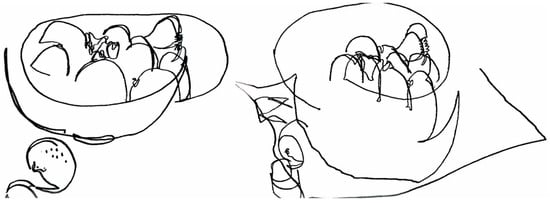
The blind contour drawing (cf. Figure 1) was first explicitly defined in the Natural Way to Draw (Nicolaïdes 1941). Nicolaides outlines a series of exercises aimed at improving drawing skills through multisensory exercises. The blind contour drawing is one technique that directly connects the hand and eye. In this exercise, the eye slowly traces the outline of what one is observing. As the eye moves, so does the hand, syncing together to make the same movements. Movements of the eyes become translated into physical marks. Artists over recent history have been observed to utilize blind contour drawing, including Rodin and Matisse (Tchalenko 2009; Tchalenko and Miall 2019). The blind contour drawing was popularized at the end of the 20th century with Betty Edwards’ book, Drawing on the Right Side of the Brain.
Figure 1.
Blind contour drawings starting at different points. The starting point of the blind contour will make the final drawing turn out different.
Studies have utilized the blind contour drawing to enhance drawing skills (Brew 2015; Keller 1987; Tchalenko and Miall 2009). Brew followed the drawing skill development of students who participated in Betty Edwards’ Draw Right workshop, where they learned key techniques like the blind contour drawing (Brew 2015). Over the five days, students observed more closely, better synced their hand and eye, and improved their drawing accuracy. Behavior was measured by calculating the amount of time participants were drawing vs. not drawing, as well as looking at the subject vs. the paper. Improvements in drawing skills were linked to how much time students looked at the model and taking more pauses during the drawing processes. From these findings, Brew concluded that techniques like the blind contour may be particularly useful for helping develop drawing skills while tuning perceptual and psychomotor processes.
5.2. Line and Intersection
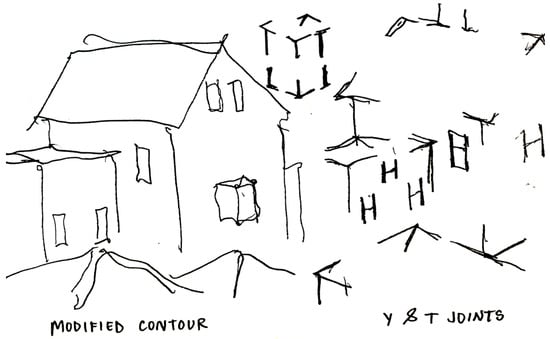
Following the visual processing hierarchy, drawing involves focusing on lower-level features. Naturally during drawing, artists focus their attention on verticals and horizontals, as well as intersections, such as L’s (i.e., angles) and T’s (i.e., intersections). Cognitive theories of visual processing also start with detection of such features and gradually grow to recognizing objects and spatial relationships. By explicitly guiding attention to such lower-level features, drawing accuracy can be improved (Biederman and Kim 2008). A technique called Y and T joints (cf. Figure 2) focuses attention on points of intersection where lines make a Y or T shape. This feature is common when one object is occluding, or covering, another. By explicitly drawing attention to such areas of intersection and their spatial relationships, drawing accuracy can be improved. When asked to trace an image with a limited number of lines, artists create more accurate representations by recreating areas of intersection more than non-experts (Ostrofsky et al. 2012). Together, Y and T joints and contour drawing help focus attention on lower-level features of a scene as well as how objects connect in space. Additionally, building on the blind contour is the modified contour (cf. Figure 2). While blind contour drawings are useful for local features of objects, a global accuracy cannot be achieved if one does not look at the paper at all. Taking occasional glances at the paper allows for planning the direction and size of the drawing, but the drawing process itself continues ‘blind’. Together, focusing on details and points of intersection allows for mapping of shapes and spatial relationships.
Figure 2.
Comparing modified contour with Y and T joints. Both techniques are useful for helping us understand space. Y and T joint drawings can help with understanding feature relationships that make shapes look three-dimensional.
5.3. Shape and Contrast
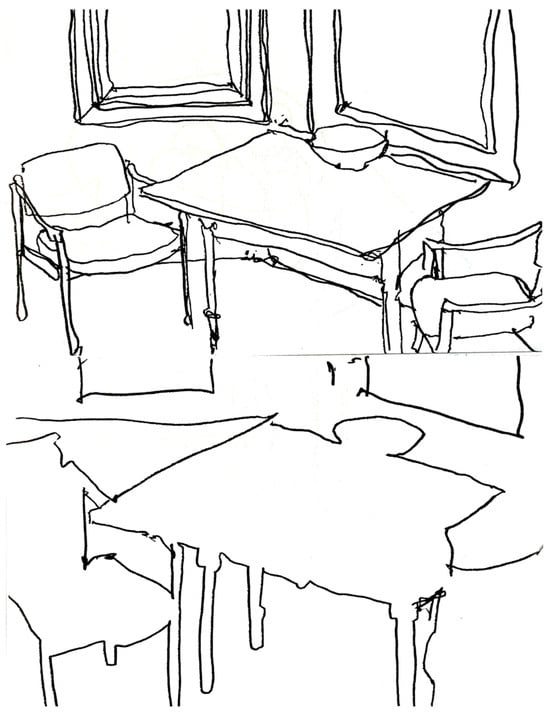
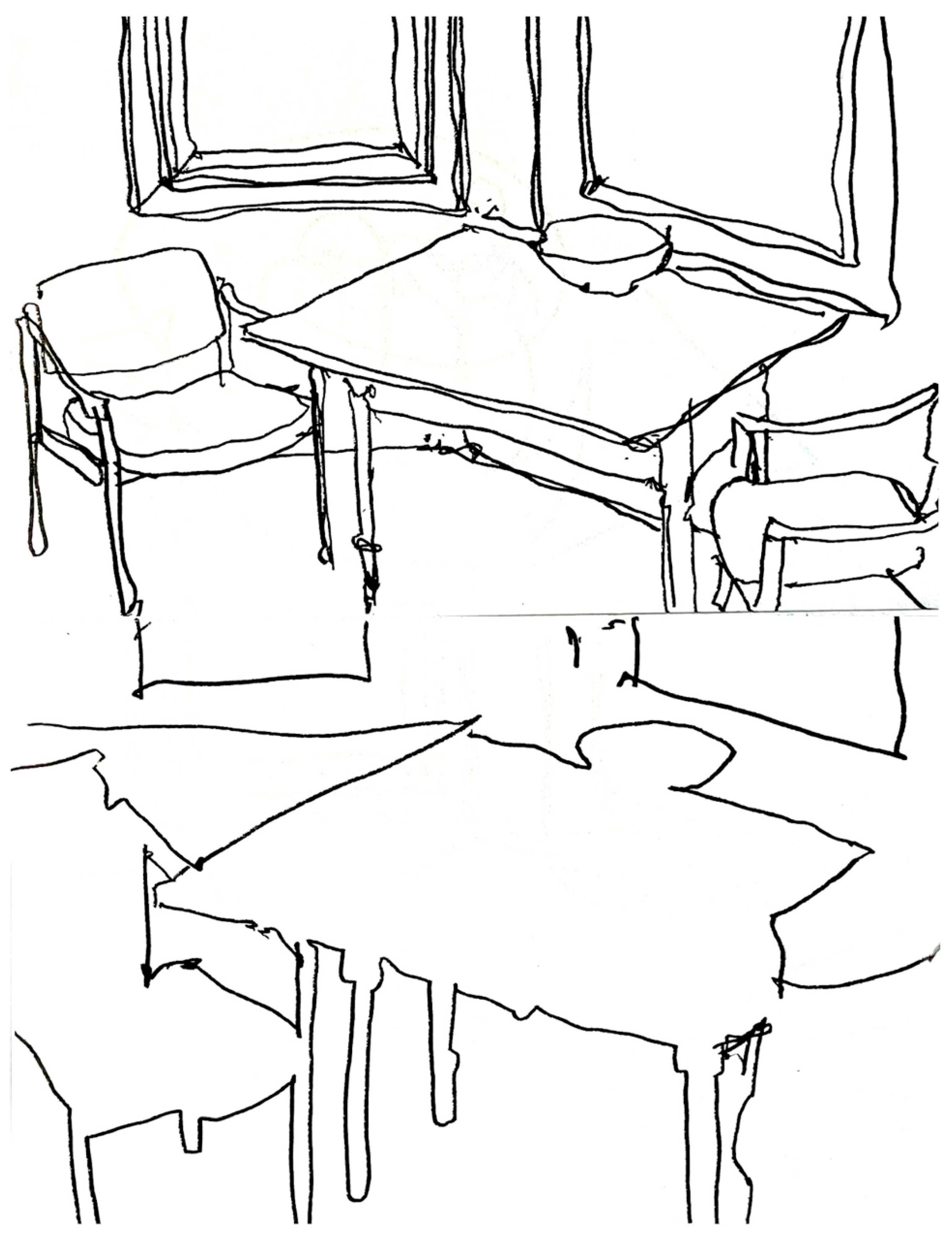
Objects can be perceived as their identities or as abstracted forms and flattened shapes. The latter is the perceptual task of the artist. Rather than seeing a book, the artist sees a combination of shapes, coming together to make a form. The top opening of a cup is visually an oval. Further, when the light is strong, the oval opening will have a ‘line’ cutting through that divides the shape into a section of light (where the light falls) and dark (the shadow). Learning to draw accurately involves both seeing (1) the shapes that make up objects and space and (2) the lines dividing the shadows from highlights. The negative space (cf. Figure 3) and Notan (cf. Figure 4) drawing are two techniques that support the development of these skills. The negative space drawing focuses the viewer’s attention on the spaces around objects and Notan refers to a Japanese idea of light and dark harmony involving dividing a composition into lights and shadows.
Figure 3.
Positive space (above) and negative space (below). The negative space drawing helps with capturing the relationships between objects. A positive space helps understand details and relationships within objects.
Figure 4.
Simple Notan drawing. In this Notan drawing, a modified contour technique first captured the general forms. Then, lines were made to divide the lights and darks, such as on the grass. The dark parts were filled, somewhat haphazardly, for a final drawing portraying light and shadow.
5.4. Form and Gesture
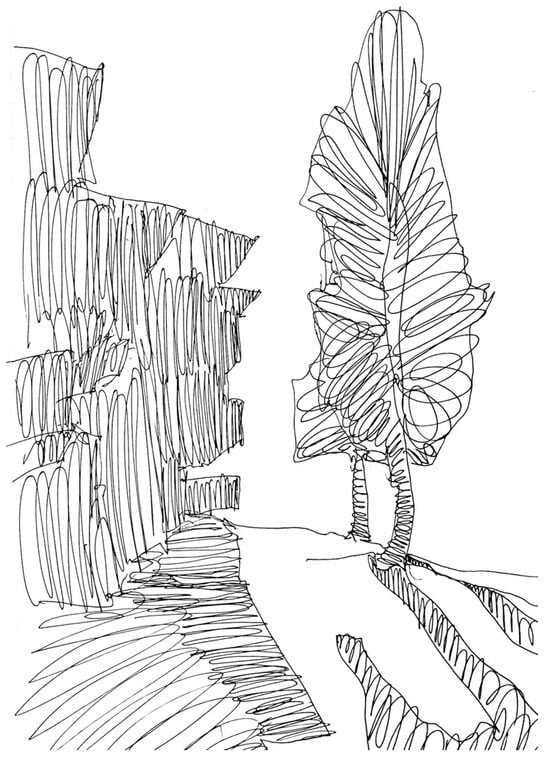
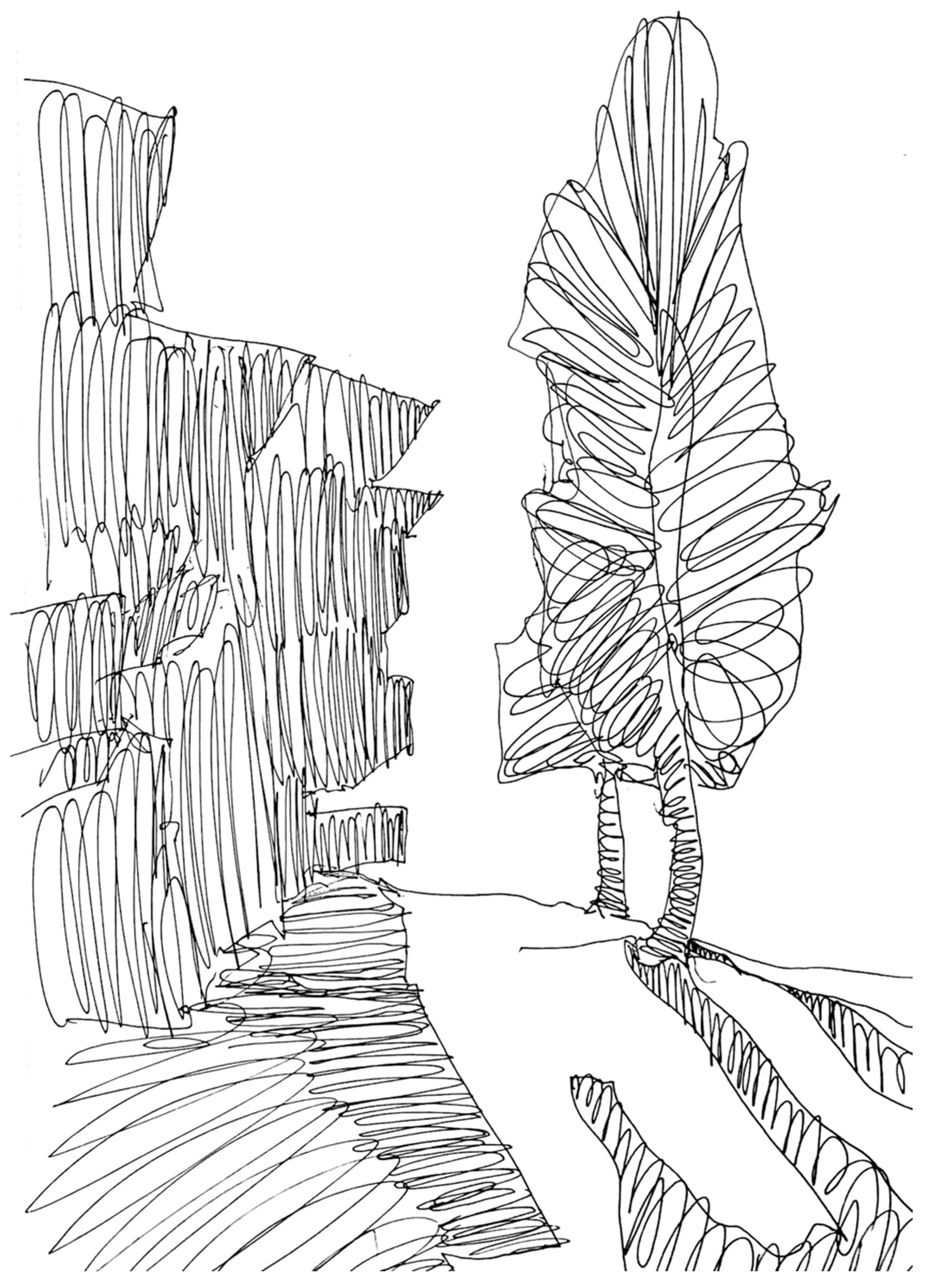
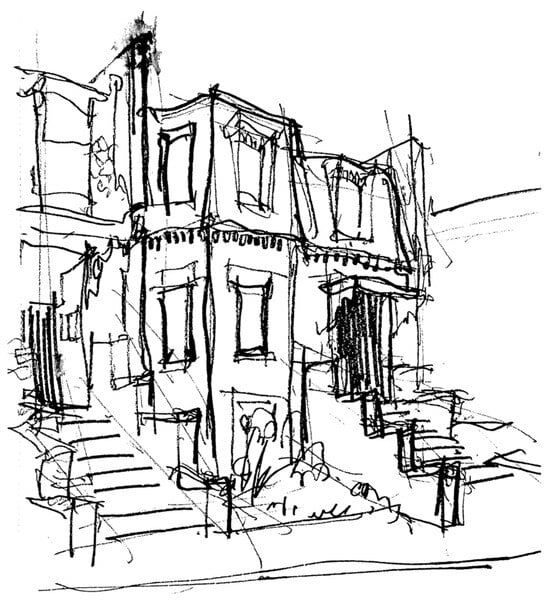
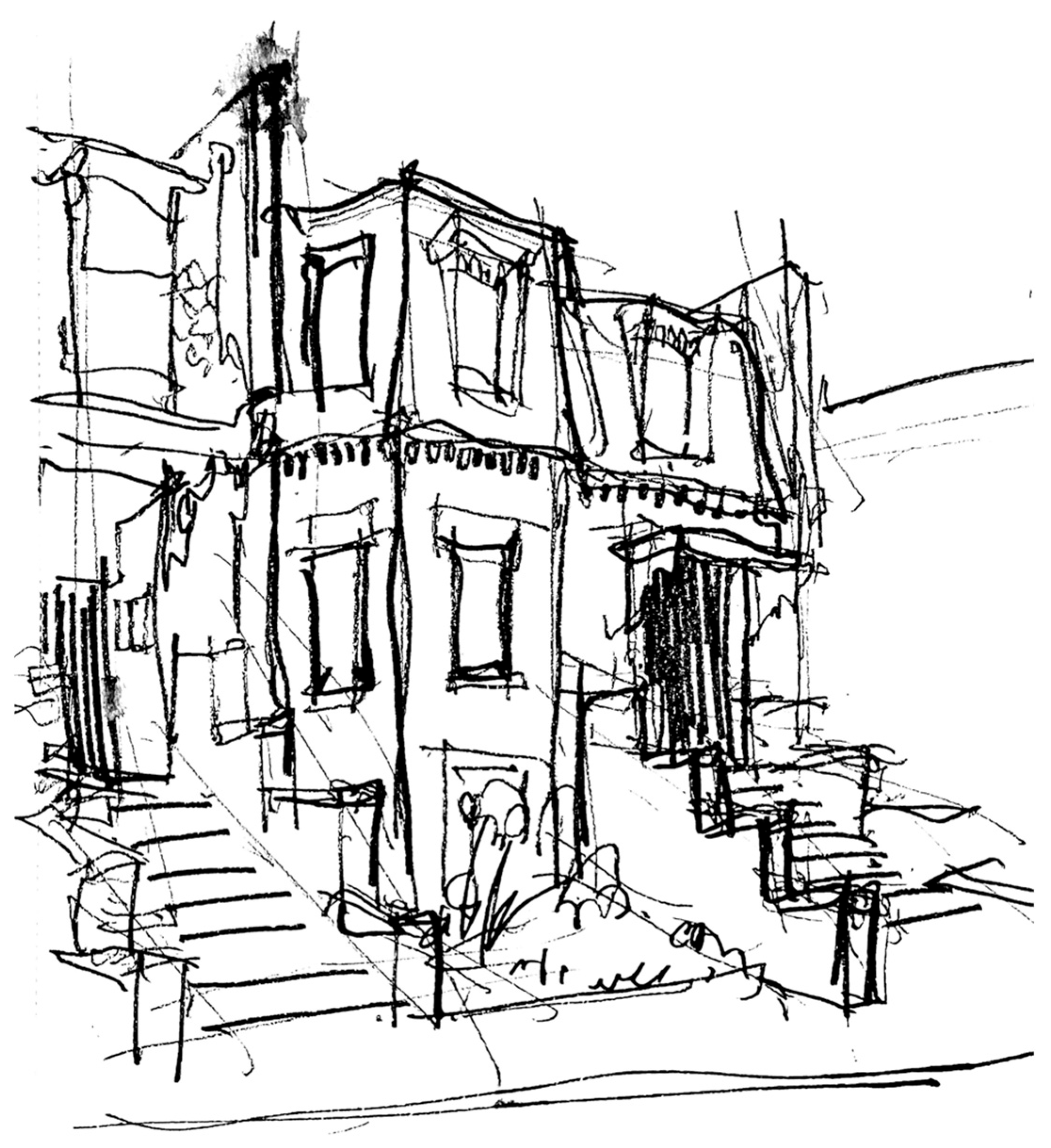
Gesture drawing (cf. Figure 5) is a technique that complements the contour drawing. Rather than sharp focus on details, the attention is diffused and focused on the general whole. The drawing process moves quickly, and dimension is built up through layering lines that travel along the surfaces of the reference. Traditionally, gesture drawings are for drawing moving figures. Through the gestural line, the artist embodies the movements of the model. The gesture drawing was described by Nicolaides in the Natural Way to Draw as a contrast to the blind contour drawing. While the blind contour drawing is focused on observing and drawing the edges of objects, the gesture drawing is dedicated to portraying the general forms. Contour and gesture can be thought of as focusing attention on different spatial frequencies of perceptual processing. Contour drawings of edges are more focused on high spatial frequencies, whereas gesture drawings focused on capturing the general forms are more related to low spatial frequencies in a scene. A combination of the two techniques, which can be referred to as a gestural contour, combines the principles of drawing blindly and syncing the hand and eye with capturing the larger forms of the subject.
Figure 5.
Structural gesture drawing. Quick and gestural drawings help capture the dimensionality of objects and a scene. The lines first start light, outlining the perspective and key forms, followed by bolder and more detailed lines.
5.5. Spatial Relationships
The monocular cues are a set of principles outlined by psychologists that describe a set of visual heuristics for understanding spatial relationships. These cues also play an important role in drawing accuracy. Cues like relative size and occlusion are present during artists’ descriptions of their drawing process. Explicitly paying attention to these cues to understand both within- and between-object relationships increases drawing accuracy. Techniques like the Y and T joints become easier when attention is focused on specific areas where occlusion occurs. Attention is guided to visual features that are not typically attended to, suggesting a way that artists shift from the more typical object-based perception associated with regular seeing to the feature- and space-related vision involved in drawing.
6. Learning to Draw as a Pathway to Wellbeing
The arts, with a focus on deliberate skill improvement, can be used to both train cognition and evoke an aesthetic response. Deliberate use of specific drawing techniques is related to both drawing skills and cognition, highlighting how targeted practice can engage specific areas of cognition. Cognitive health plays a major role in aging well, and the arts provide a rich way of engaging cognition, as well as other biopsychosocial aspects of wellbeing. The visual arts have a growing field of mechanistic understanding and a developing foundation of implementation. By connecting the cognitive mechanisms of drawing with applications in health, this article provides an example of how arts-based interventions can be designed to promote cognition.
Lifelong Learning and the Arts
One main takeaway is that drawing can be a powerful tool connecting arts, health, and cognition. Learning to draw is learning a new way of seeing, and one can learn this skill across the lifespan. When older adults successfully learn to draw from observation, they feel empowerment in the ability of discovering something new and gaining a sense of mastery. These activities contribute to the growing field of activity- and lifestyle-based interventions for promoting aging well, especially in the cognitive domain (Nyberg and Pudas 2019; Rowe and Kahn 1997; Stine-Morrow and Manavbasi 2022). In addition to cognitive processes, the arts engage aesthetic, socioemotional, and physical processes, including improved emotional wellbeing and regulation of heart rate and blood pressure (Fancourt and Finn 2019). The cognitive, socioemotional, and physical properties of the arts are what make them so appealing and potentially powerful, especially for harnessing therapeutic benefits across the lifespan. The arts’ ability to evoke an aesthetic response can serve as a way to amplify the benefits. This is particularly important within the context of dementia prevention and addressing modifiable risk factors, given that almost half of dementia cases may be modifiable through reducing risk (Livingston et al. 2024). The arts can both promote cognition and modify the risk attributed to other factors, like depression, social isolation, hypertension, and physical inactivity. For example, a drawing group that inspires individuals to create art in different locations may indirectly promote physical activity. Even more directly, drawing involves movement of the body in space and multisensory synchronization.
The arts, particularly music, have received recognition as an intervention for brain disorders of aging. Research on music-based interventions has grown significantly, largely due to the promotion of rigorously design and well-powered studies by the NIH. In 2023, the NIH Music-based Intervention Toolkit was released to guide research on health and music across the lifespan (Edwards et al. 2023). This toolkit highlights a set of building blocks for research studies, including a conceptual framework, an identified target population and disease condition, intervention characteristics, strategy, and optimization, study design and a recruitment and retention strategy, mechanistic clinical outcomes and multiple efficacy and effectiveness trials, a multidisciplinary team, and dissemination and implementation strategies. Research on other artforms, including the visual arts, would significantly benefit from adapting this approach and considering such different aspects of study design and implementation for the development of future studies to assess mechanisms and impacts.
7. Future Directions
The field can benefit from a deeper understanding of the connection between the aesthetic response, cognition, and skill development. One way to think about the connection between these areas is entering a state of flow—a feeling of being both skilled and challenged at the same time, when time starts to lose its meaning and awareness is focused on the present moment (Csikszentmihalyi and Csikszentmihalyi 1988; Dietrich 2004). A flow state plays a role in building skills where as individuals deepen their mastery and sharpen their cognition, it can become easier to enter a flow state (Chamberlain 2017; Chemi 2016). A flow state further connects the cognitive with the socioemotional aspects and aesthetic response. Better understanding and measuring flow, as well as the impacts of a flow state on skill building and health outcomes, will support future developments in arts-based interventions for healthy cognitive aging. There is a further need to understand the aesthetic response beyond arts appreciation. Arts creation may be driven by an aesthetic response. Initially, the artist may be aesthetically guided to an object and composition to draw. Then, during the creation of the drawing, the artist may also be immersed in an aesthetic response, which could relate to the state of flow that can be felt. Once the drawing is complete, the drawing could further evoke an aesthetic response, as well as the memory of any other emotions associated with its creation. The cognitive states that underlie the feelings of flow and aesthetic response need to be further investigated. This can be done through behavioral measures, self-reports, and biometric data collection.
Technological advancements can play a large role in potential health benefits of the arts, including drawing. Utilizing biometric measures, such as, eye tracking and heart rate could provide insights into different factors, such as attentional control and sympathetic response. One study compared the immediate effects on physiology of four conditions: drawing fast, drawing slow, clay forming slow, and clay forming fast (Rankanen et al. 2022). The authors found that heart rate was lowest and heart variability was highest for fast drawing, suggesting positive benefits on physiological outcomes. These results directly align with the findings in psychology of arts, including the association between drawing skills, cognition, the role of making preliminary sketches and the usefulness of quick and iterative exercises for building drawing skills (Vodyanyk and Jaeggi 2023). Measuring heart rate during such activities compared to a control could provide further insights into potential benefits. Considering that hypertension is a risk factor of dementia, regulating cardiovascular health through the arts may contribute to reducing the risk of dementia through multiple pathways (Livingston et al. 2024). With the developments of AI, collecting data, detecting patterns, and drawing conclusions will become easier, while the embodied and cognitively stimulating components of art-making will be emphasized.
Finally, much of the work at the intersection of drawing and cognition has been largely cross-sectional, comparing experts and non-experts (who are often young adults) in drawing skills and cognitive performance. While some longitudinal and training-based studies have started to emerge, more work is needed in this direction. By deliberately expanding the research on drawing and expertise to aging populations and looking explicitly at the effects of training, the field will gain a much deeper understanding of when and for whom effects best manifest. By understanding how skills can be improved and how they map onto different aspects of cognition, more effective training paradigms can be designed and tested. While this has clear implications for promoting healthy aging, developing drawing skills may also benefit individuals with neurological disorders or serve as a way of promoting cognitive development in early life.
8. Concluding on the Role of the Arts in Health
The role of the arts in health has been widely recognized. This includes arts reception and arts participation; for example, both attending cultural activities and participating in art creation can have positive benefits, broad and specific. As our mechanistic understanding of how the arts support healthy cognition grows, so will the development of tailored and optimized interventions to promote healthy lifespan development. Both early life and late life provide key timeframes for positive cognitive trajectories, yet lifelong development is often overlooked. Developing drawing skills has the potential to sharpen one’s senses and actions at any age. The techniques used to develop skills engage attention in a particular way and can potentially change one’s cognition. Through repeated engagement and reinforcing of motor and cognitive pathways, these domains may become stronger and more enhanced. By combining artistic engagement and the aesthetic experience with technological developments and mechanistic understanding, health can be promoted at the individual and societal levels.
Funding
This research received no external funding.
Institutional Review Board Statement
Not applicable.
Informed Consent Statement
Not applicable.
Data Availability Statement
No new data were created or analyzed in this study. Data sharing is not applicable to this article.
Conflicts of Interest
The author declares no conflict of interest.
References
- Alain, Claude, Aline Moussard, Julia Singer, Yunjo Lee, Gavin M. Bidelman, and Sylvain Moreno. 2019. Music and Visual Art Training Modulate Brain Activity in Older Adults. Frontiers in Neuroscience 13: 182. [Google Scholar] [CrossRef] [Scilit] [PubMed]
- Alias, Maizam, David E. Gray, and Thomas R. Black. 2002. Attitudes towards Sketching and Drawing and the relationship with Spatial Visualisation Ability in Engineering Students. International Education Journal 3: 165–75. [Google Scholar]
- Andersen, George J. 2012. Aging and vision: Changes in function and performance from optics to perception. WIREs Cognitive Science 3: 403–10. [Google Scholar] [CrossRef] [Scilit] [PubMed]
- Benear, Susan L., Mackenzie A. Sunday, Russell Davidson, Thomas J. Palmeri, and Isabel Gauthier. 2024. Can art change the way we see? Psychology of Aesthetics, Creativity, and the Arts 18: 882–93. [Google Scholar] [CrossRef] [Scilit]
- Biederman, Irving, and Jiye G. Kim. 2008. 17000 Years of Depicting the Junction of Two Smooth Shapes. Perception 37: 161–64. [Google Scholar] [CrossRef] [Scilit] [PubMed]
- Bolwerk, Anne, Jessica Mack-Andrick, Frieder R. Lang, Arnd Dörfler, and Christian Maihöfner. 2014. How Art Changes Your Brain: Differential Effects of Visual Art Production and Cognitive Art Evaluation on Functional Brain Connectivity. PLoS ONE 9: e101035. [Google Scholar] [CrossRef] [Scilit] [PubMed]
- Brew, Angela Clare. 2015. Learning to draw: An Active Perceptual Approach to Observational Drawing Synchronising the Eye and Hand in Time and Space. Ph.D. thesis, University of the Arts London, London, UK. [Google Scholar]
- Cabeza, Roberto, Marilyn Albert, Sylvie Belleville, Fergus I. M. Craik, Audrey Duarte, Cheryl L. Grady, Ulman Lindenberger, Lars Nyberg, Denise C. Park, Patricia A. Reuter-Lorenz, and et al. 2018. Maintenance, reserve and compensation: The cognitive neuroscience of healthy ageing. Nature Reviews Neuroscience 19: 701–10. [Google Scholar] [CrossRef] [Scilit] [PubMed]
- Carson, Linda, Nadine Quehl, Inara Aliev, and James Danckert. 2014. Angle-Based Drawing Accuracy Analysis and Mental Models of Three-Dimensional Space. Art & Perception 2: 183–212. [Google Scholar] [CrossRef] [Scilit]
- Chamberlain, Rebecca. 2017. The Development of Expertise in the Visual Arts. In The Science of Expertise, 1st ed. Edited by David Z. Hambrick, Guillermo Campitelli and Brooke N. Macnamara. New York: Routledge, pp. 129–50. [Google Scholar] [CrossRef] [Scilit]
- Chamberlain, Rebecca. 2018. Drawing as a Window Onto Expertise. Current Directions in Psychological Science 27: 501–7. [Google Scholar] [CrossRef] [Scilit]
- Chamberlain, Rebecca, Aaron Kozbelt, Jennifer E. Drake, and Johan Wagemans. 2021. Learning to see by learning to draw: A longitudinal analysis of the relationship between representational drawing training and visuospatial skill. Psychology of Aesthetics, Creativity, and the Arts 15: 76–90. [Google Scholar] [CrossRef] [Scilit]
- Chamberlain, Rebecca, and Johan Wagemans. 2015. Visual arts training is linked to flexible attention to local and global levels of visual stimuli. Acta Psychologica 161: 185–97. [Google Scholar] [CrossRef] [Scilit] [PubMed]
- Chamberlain, Rebecca, Chris McManus, Nicola Brunswick, Qona Rankin, and Howard Riley. 2015. Scratching the surface: Practice, personality, approaches to learning, and the acquisition of high-level representational drawing ability. Psychology of Aesthetics, Creativity, and the Arts 9: 451–62. [Google Scholar] [CrossRef] [Scilit]
- Chamberlain, Rebecca, Jennifer E. Drake, Aaron Kozbelt, Rachel Hickman, Joseph Siev, and Johan Wagemans. 2019. Artists as experts in visual cognition: An update. Psychology of Aesthetics, Creativity, and the Arts 13: 58–73. [Google Scholar] [CrossRef] [Scilit]
- Chatterjee, Anjan. 2004. The neuropsychology of visual artistic production. Neuropsychologia 42: 1568–83. [Google Scholar] [CrossRef] [Scilit] [PubMed]
- Chatterjee, Anjan, and Oshin Vartanian. 2014. Neuroaesthetics. Trends in Cognitive Sciences 18: 370–75. [Google Scholar] [CrossRef] [Scilit] [PubMed]
- Chemi, Tatiana. 2016. The Experience of Flow in Artistic Creation. In Flow Experience. Edited by László Harmat, Frans Ørsted Andersen, Fredrik Ullén, Jon Wright and Gaynor Sadlo. Cham: Springer International Publishing, pp. 37–50. [Google Scholar] [CrossRef] [Scilit]
- Chow, Jason K., Thomas J. Palmeri, and Isabel Gauthier. 2022. Visual object recognition ability is not related to experience with visual arts. Journal of Vision 22: 1. [Google Scholar] [CrossRef] [Scilit] [PubMed]
- Cohen, Dale J., and Susan Bennett. 1997. Why can’t most people draw what they see? Journal of Experimental Psychology: Human Perception and Performance 23: 609–21. [Google Scholar] [CrossRef] [PubMed]
- Csikszentmihalyi, Mihaly, and Isabella Selega Csikszentmihalyi, eds. 1988. Optimal Experience: Psychological Studies of Flow in Consciousness, 1st ed. Cambridge: Cambridge University Press. [Google Scholar] [CrossRef] [Scilit]
- Dietrich, Arne. 2004. Neurocognitive mechanisms underlying the experience of flow. Consciousness and Cognition 13: 746–61. [Google Scholar] [CrossRef] [Scilit] [PubMed]
- Drake, Jennifer E., Ariana Riccio, Rebecca Chamberlain, and Aaron Kozbelt. 2021. Artists have superior local and global processing abilities but show a preference for initially drawing globally. Psychology of Aesthetics, Creativity, and the Arts 18: 357–71. [Google Scholar] [CrossRef] [Scilit]
- Edwards, Emmeline, Coryse St Hillaire-Clarke, David W. Frankowski, Robert Finkelstein, Thomas Cheever, Wen G. Chen, Lisa Onken, Amy Poremba, Robert Riddle, Dana Schloesser, and et al. 2023. NIH Music-Based Intervention Toolkit: Music-Based Interventions for Brain Disorders of Aging. Neurology 100: 868–78. [Google Scholar] [CrossRef] [Scilit] [PubMed]
- Fancourt, Daisy, and Saoirse Finn. 2019. What Is the Evidence on the Role of the Arts in Improving Health and Well-Being?: A Scoping Review. Copenhagen: WHO Regional Office for Europe. [Google Scholar]
- Fancourt, Daisy, Argyris Stringaris, and Pier Luigi Sacco. 2026. Mechanisms underpinning the mental health impact of arts engagement. Nature Reviews Psychology 5: 290–302. [Google Scholar] [CrossRef] [Scilit]
- Fava, Michelle. 2020. A Decline in Drawing Ability? International Journal of Art & Design Education 39: 319–32. [Google Scholar] [CrossRef] [Scilit]
- Fioranelli, Massimo, Maria Grazia Roccia, and Maria Luisa Garo. 2023. The role of arts engagement in reducing cognitive decline and improving quality of life in healthy older people: A systematic review. Frontiers in Psychology 14: 1232357. [Google Scholar] [CrossRef] [Scilit] [PubMed]
- Franck, Frederick. 1993. Zen Seeing, Zen Drawing: Meditation in Action. New York: Bantam Books. [Google Scholar]
- Fuster, Joaquín M. 2004. Upper processing stages of the perception–action cycle. Trends in Cognitive Sciences 8: 143–45. [Google Scholar] [CrossRef] [Scilit] [PubMed]
- Gombrich, Ernst H. 2000. Art and Illusion: A Study in the Psychology of Pictorial Representation, Millennium ed. Princeton: Princeton University Press. [Google Scholar]
- Greenhalgh, Wendy Ann. 2015. Mindfulness & the Art of Drawing: A Creative Path to Awareness. East Sussex: Leaping Hare Press. [Google Scholar]
- Hartshorne, Joshua K., and Laura T. Germine. 2015. When Does Cognitive Functioning Peak? The Asynchronous Rise and Fall of Different Cognitive Abilities Across the Life Span. Psychological Science 26: 433–43. [Google Scholar] [CrossRef] [Scilit] [PubMed]
- Hertzmann, Aaron, and Judith E. Fan. 2026. Artists’ Drawing Strategies Serve to Overcome Visual Processing Limitations. Psychology of Aesthetics, Creativity, and the Arts, Advance online publication.
- Jaeggi, Susanne M., Julia Karbach, and Tilo Strobach. 2017. Editorial Special Topic: Enhancing Brain and Cognition Through Cognitive Training. Journal of Cognitive Enhancement 1: 353–57. [Google Scholar] [CrossRef] [Scilit] [PubMed]
- Keller, John Edwin. 1987. The Effect of Blind Contour Drawing on Visual Perception as Demonstrated in Naturalistic Drawing Ability. Ph.D. thesis, The University of Nebraska, Lincoln, NE, USA. Available online: https://digitalcommons.unl.edu/dissertations/AAI8722406/ (accessed on 26 August 2026).
- Kim, Soo Ji, and Ga Eul Yoo. 2019. Instrument Playing as a Cognitive Intervention Task for Older Adults: A Systematic Review and Meta-Analysis. Frontiers in Psychology 10: 151. [Google Scholar] [CrossRef] [Scilit] [PubMed]
- Kozbelt, Aaron. 2001. Artists as experts in visual cognition. Visual Cognition 8: 705–23. [Google Scholar] [CrossRef] [Scilit]
- Kozbelt, Aaron, and Justin Ostrofsky. 2018. Expertise in Drawing. In The Cambridge Handbook of Expertise and Expert Performance, 2nd ed. Edited by K. Anders Ericsson, Robert R. Hoffman, Aaron Kozbelt and A. Mark Williams. Cambridge: Cambridge University Press, pp. 576–96. [Google Scholar] [CrossRef] [Scilit]
- Kozbelt, Aaron, and William P. Seeley. 2007. Integrating art historical, psychological, and neuroscientific explanations of artists’ advantages in drawing and perception. Psychology of Aesthetics, Creativity, and the Arts 1: 80–90. [Google Scholar] [CrossRef] [Scilit]
- Li, Yuanjing, Serhiy Dekhtyar, Giulia Grande, Grégoria Kalpouzos, Caterina Gregorio, Erika J. Laukka, and Chengxuan Qiu. 2024. Association of cognitive reserve with transitions across cognitive states and death in older adults: A 15-year follow-up study. Alzheimer’s & Dementia 20: 4737–46. [Google Scholar] [CrossRef] [Scilit] [PubMed]
- Livingston, Gill, Jonathan Huntley, Kathy Y. Liu, Sergi G. Costafreda, Geir Selbæk, Suvarna Alladi, David Ames, Sube Banerjee, Alistair Burns, Carol Brayne, and et al. 2024. Dementia prevention, intervention, and care: 2024 report of the Lancet standing Commission. The Lancet 404: 572–628. [Google Scholar] [CrossRef] [Scilit] [PubMed]
- Masika, Golden M., Doris S. F. Yu, and Polly W. C. Li. 2020. Visual art therapy as a treatment option for cognitive decline among older adults. A systematic review and meta-analysis. Journal of Advanced Nursing 76: 1892–910. [Google Scholar] [CrossRef] [Scilit] [PubMed]
- Mathon, Bertrand, Lydia Chougar, Alexandre Carpentier, and Aymeric Amelot. 2021. Teaching brain imaging through a drawing method may improve learning in medical students. European Radiology 31: 4195–202. [Google Scholar] [CrossRef] [Scilit] [PubMed]
- Nicolaïdes, Kimon. 1941. The Natural Way to Draw: A Working Plan for Art Study. Boston: Houghton Mifflin. [Google Scholar]
- Noice, Tony, Helga Noice, and Arthur F. Kramer. 2014. Participatory Arts for Older Adults: A Review of Benefits and Challenges. The Gerontologist 54: 741–53. [Google Scholar] [CrossRef] [Scilit] [PubMed]
- Nyberg, Lars, and Sara Pudas. 2019. Successful Memory Aging. Annual Review of Psychology 70: 219–43. [Google Scholar] [CrossRef] [Scilit] [PubMed]
- Ostrofsky, Justin, Aaron Kozbelt, and Angelika Seidel. 2012. Perceptual constancies and visual selection as predictors of realistic drawing skill. Psychology of Aesthetics, Creativity, and the Arts 6: 124–36. [Google Scholar] [CrossRef] [Scilit]
- Park, Denise, and Gérard Nisal Bischof. 2013. The aging mind: Neuroplasticity in response to cognitive training. Dialogues in Clinical Neuroscience 15: 109–19. [Google Scholar] [CrossRef] [Scilit] [PubMed]
- Park, Denise C., Jennifer Lodi-Smith, Linda Drew, Sara Haber, Andrew Hebrank, Gérard N. Bischof, and Whitley Aamodt. 2014. The Impact of Sustained Engagement on Cognitive Function in Older Adults: The Synapse Project. Psychological Science 25: 103–12. [Google Scholar] [CrossRef] [Scilit] [PubMed]
- Pearce, Marcus T., Dahlia W. Zaidel, Oshin Vartanian, Martin Skov, Helmut Leder, Anjan Chatterjee, and Marcos Nadal. 2016. Neuroaesthetics: The Cognitive Neuroscience of Aesthetic Experience. Perspectives on Psychological Science 11: 265–79. [Google Scholar] [CrossRef] [Scilit] [PubMed]
- Perdreau, Florian, and Patrick Cavanagh. 2013. The Artist’s Advantage: Better Integration of Object Information across Eye Movements. I-Perception 4: 380–95. [Google Scholar] [CrossRef] [Scilit] [PubMed]
- Rankanen, Mimmu, Marianne Leinikka, Camilla Groth, Pirita Seitamaa-Hakkarainen, Maarit Mäkelä, and Minna Huotilainen. 2022. Physiological measurements and emotional experiences of drawing and clay forming. The Arts in Psychotherapy 79: 101899. [Google Scholar] [CrossRef] [Scilit]
- Rowe, John W., and Robert L. Kahn. 1997. Successful Aging. The Gerontologist 37: 433–40. [Google Scholar] [CrossRef] [Scilit] [PubMed]
- Sacheli, Lucia Maria, Giulia Tomasetig, Margherita Adelaide Musco, Stefano Pizzi, Gabriella Bottini, Luigi Pizzamiglio, and Eraldo Paulesu. 2022. The unexplored link between aesthetic perception and creativity: A theory-driven meta-analysis of fMRI studies in the visual domain. Neuroscience & Biobehavioral Reviews 140: 104768. [Google Scholar] [CrossRef] [Scilit] [PubMed]
- Salthouse, Timothy A. 2014. Correlates of cognitive change. Journal of Experimental Psychology: General 143: 1026–48. [Google Scholar] [CrossRef] [Scilit] [PubMed]
- Seeley, William, and Aaron Kozbelt. 2008. Art, Artists, and Perception: A Model for Premotor Contributions to Perceptual Analysis and Form Recognition. Philosophical Psychology 21: 149–71. [Google Scholar] [CrossRef] [Scilit]
- Seitz, Aaron R. 2017. Perceptual learning. Current Biology 27: 631–36. [Google Scholar] [CrossRef] [Scilit] [PubMed]
- Sorby, Sheryl A. 1999. Developing 3-D Spatial Visualization Skills. The Engineering Design Graphics Journal 63: 21–32. [Google Scholar]
- Stern, Yaakov. 2012. Cognitive reserve in ageing and Alzheimer’s disease. The Lancet Neurology 11: 1006–12. [Google Scholar] [CrossRef] [Scilit] [PubMed]
- Stine-Morrow, Elizabeth A. L., and Ilber E. Manavbasi. 2022. Beyond ‘Use It or Lose It’: The Impact of Engagement on Cognitive Aging. Annual Review of Developmental Psychology 4: 319–52. [Google Scholar] [CrossRef] [Scilit]
- Stuckey, Heather L., and Jeremy Nobel. 2010. The Connection Between Art, Healing, and Public Health: A Review of Current Literature. American Journal of Public Health 100: 254–63. [Google Scholar] [CrossRef] [Scilit] [PubMed]
- Tchalenko, John. 2009. Henri Matisse Drawing: An Eye-Hand Interaction Study Based on Archival Film. Leonardo 42: 433–38. [Google Scholar] [CrossRef] [Scilit][Green Version]
- Tchalenko, John, and R. Chris Miall. 2009. Eye–hand strategies in copying complex lines. Cortex 45: 368–76. [Google Scholar] [CrossRef] [Scilit] [PubMed]
- Tchalenko, John, and R. Chris Miall. 2019. Auguste Rodin Draws Blind: An Art and Psychology Study. Leonardo 52: 483–91. [Google Scholar] [CrossRef] [Scilit]
- Tinio, Pablo P. L. 2013. From artistic creation to aesthetic reception: The mirror model of art. Psychology of Aesthetics, Creativity, and the Arts 7: 265–75. [Google Scholar] [CrossRef] [Scilit]
- Titus, Sarah, and Eric Horsman. 2009. Characterizing and Improving Spatial Visualization Skills. Journal of Geoscience Education 57: 242–54. [Google Scholar] [CrossRef] [Scilit]
- Vodyanyk, Mariya M., and Susanne M. Jaeggi. 2023. Visuospatial components of drawing skill correlate with mental transformation performance. Psychology of Aesthetics, Creativity, and the Arts 19: 1453–66. [Google Scholar] [CrossRef] [Scilit]
- Vodyanyk, Mariya M., and Susanne M. Jaeggi. 2025. Promoting Successful Cognitive Aging Through Observational Drawing: A Feasibility Study. Research on Aging 47: 361–74. [Google Scholar] [CrossRef] [Scilit] [PubMed]
- Waddell, Chloe, George Van Doorn, Garry Power, and Dixie Statham. 2024. From Successful Ageing to Ageing Well: A Narrative Review. The Gerontologist 65: gnae109. [Google Scholar] [CrossRef] [Scilit] [PubMed]
- Yang, Xinxin, Xin Yi Xu, Linlin Guo, Yuanyuan Zhang, Shan Shan Wang, and Yan Li. 2022. Effect of leisure activities on cognitive aging in older adults: A systematic review and meta-analysis. Frontiers in Psychology 13: 1080740. [Google Scholar] [CrossRef] [Scilit] [PubMed]
Disclaimer/Publisher’s Note: The statements, opinions and data contained in all publications are solely those of the individual author(s) and contributor(s) and not of MDPI and/or the editor(s). MDPI and/or the editor(s) disclaim responsibility for any injury to people or property resulting from any ideas, methods, instructions or products referred to in the content. |
© 2026 by the author. Licensee MDPI, Basel, Switzerland. This article is an open access article distributed under the terms and conditions of the Creative Commons Attribution (CC BY) license.