
Article

Activating Embodied Memory Through a Fusion of Clay and Augmented Reality

by
Svetlana Atlavina
Private Institution [Cloud] Collective, Stoughton LE2 2FP, UK
Arts 2026, 15(3), 55; https://doi.org/10.3390/arts15030055
Submission received: 31 October 2025 / Revised: 26 February 2026 / Accepted: 27 February 2026 / Published: 16 March 2026

Abstract

The ACE-funded project Clay and Augmented Reality (CAR) explored how the combination of tactile and digital media might activate embodied memory, foster art expression, and stimulate new forms of creative learning. The project investigated memory recollection by integrating clay sculpting with immersive Augmented Reality (AR), focusing on psychoanalysis and participatory art research. The created multisensory environment was a significant element in reconnection with early-life experiences. Six workshops engaged over 40 participants in memory-mapping through AR interfaces and tactile activities. Extensive theoretical and methodological research focuses on theories of Freud, Polanyi, Ettinger, and art practice of Hepworth, integrating embodied making with experimental technologies, including 3D scanning, ARvid/HoloLens experiences, and qualitative feedback analysis. The outcome is a hybrid repository of over 120 memory-informed artefacts titled My Mother and I, presented on the sketchfab platform. The collection showcases intergenerational memory, imprints of intangible and visual storytelling. During the research, the significance of slowness, play, and relational presence was underlined as conditions for memory activation. It concludes that memory lives in gesture, spatial perception and given care, and that hybrid arts-based methods offer new epistemologies of healing, creativity and pedagogical inquiry. CAR presents a model for participatory research that bridges physical and digital realms in deeply human ways.

1. Introduction

In 2023–24, I was fortunate to receive funding from Arts Council England in support of my research project, Clay and Augmented Reality (CAR). As a clay artist and printmaker, I became interested in the potential of augmented reality (AR) to explore memory when, in the early days of the COVID-19 pandemic, making and sharing images with the art group Experimental Space Collective [esc] led to a series of international collaborations. Using scanned objects and shared digital spaces helped shape the participatory methods further developed in the CAR project. I had led several clay and memory workshops in the past, but this introduction to AR gave me the opportunity to explore how working with clay and translating it to an immediate exploration of virtual space in AR could enhance memory recall. CAR researched different ways of activating embodied memory, particularly early childhood and maternal memory, through participatory art workshops that combined tactile clay sculpting with immersive augmented reality (AR) environments. The proposed research for ACE was based on my own art practice, which investigates ceramics as a means to explore the tactile potentials of clay in the recollection of memory and embodied experiences, on one hand, and the facilitation of participatory and collaborative memory-based workshops within academia and public spaces, on the other hand.

1.1. Positioning the CAR Project Practice

The project was designed as a collaborative and social environment by positioning art-making as a shared process for memory recollection and care, active presence, and relational exchange. Over 2 years, I have woven together artistic research, embodied cognition, psychoanalytic theory, and participatory pedagogy through extensive experimental studio practice, mentoring, and 9 public workshops. Through the preparatory phase, I engaged with a wide range of artistic and theoretical resources, visited the Yorkshire Sculpture Park and the Freud Museum in London, had mentoring and discussions with ceramists, psychoanalysts and researchers in storytelling. This article focuses primarily on the influence of British sculptor Barbara Hepworth, whose understanding of sculpture as lived experience and the abstract art as an expressive tool became central to the project’s methodology. It also presents the analysis of the first workshop (WS1) as an example of participatory practices within the project.
My CAR art practice and methodology evolved by combining the grounded, tactile medium of clay with the weightless creative terrain of AR. The project provided multiple sensory-rich spaces for recollection of early childhood experiences, both preverbal and verbal, through participation and collaboration. Nicolas Bourriaud’s Relational Aesthetics proposes that the meaning of relational (participatory) art is generated through encounters between people, and it forms a social configuration, a space where meaning arises from interrelations activated between participants, their movements, actions, and shared presence (Bourriaud 2002, pp. 14–16). This perspective aligns with the CAR project’s participatory structure, where the hybrid combination of clay and AR creates a social field of experience in which embodied gestures, shared memory activation, and relational exchange constitute the artwork itself. In addition, I created a unique alignment of the art research environment and experimentation within the CAR project for myself as a leading artist, for six mentors and 48 participants, joining the contemporary chorus of research into the potentials and pitfalls of new AR technology. The findings may position the discussed workshops’ environments as tools for innovative art-based memory recollection across various applications.
The list of inspirational contextual sources was prepared in collaboration with one of the leading contemporary art mentors, Dr Jane Boyer, an independent researcher and co-founder of [cloud] Collective. There was also extensive research rooted in the theories of Sigmund Freud, Michael Polanyi, Melanie Klein, and Bracha Ettinger. My investigation into inspirational sources for workshops embraced a wide range of contemporary artists, such as Henry Moore, Richard Long, Piet Mondrian, Mary Kelley, Judith Scott, Betty Woodman, Lygia Clark, Brie Ruie, Grason Perry, Wolfgang Laib, and Ana Mendieta, and authors Oscar Wilde, Lewis Carroll, and Peter Sloterdijk, who worked on maternal care, empathy, and mixed media.

1.2. Clay and Augmented Reality as a Hybrid Artistic Method

During the project, I explored concepts of tacit knowledge, implicit memory, pre-symbolic learning, and embodied cognition. I experimented with methodologies that treated developmental psychology, psychoanalysis, creativity, and philosophy not as abstract constructs but as material tools for exploration within the safe space of shared, participatory art making. I also tried to avoid the use of prescribed, rules-based structures for learning, instead offering spaces that required participants’ active involvement in decision-making, as selection of activities, tools, concepts, and experimental sequences, as well as a democratic approach to shaping the outcomes of collective efforts. In addition, I tried to create a space where curatorial gestures of slowness, vulnerability, and memory-care allowed experimental learning, offering a new art-based, hybrid approach to memory revitalisation for a diverse group of participants.
My first aim was to research and design a safe multimedia workshop environment (Figure 1), an immersive, nurturing and creative sanctuary, where participants might come to recognise and say, “it is me, and my memories, embedded in the clay and carried through the AR space.” This resonated with Barbara Hepworth’s reflection on sculptural forms, “it isn’t a sculpture—it’s me in the landscape” (Bowness 2015, p. 54), The sculptures of Hepworth can be seen as an extension of her inner world and as metaphorical portals that connect viewers to her lived experiences through time, ideas, gestures, and feelings.
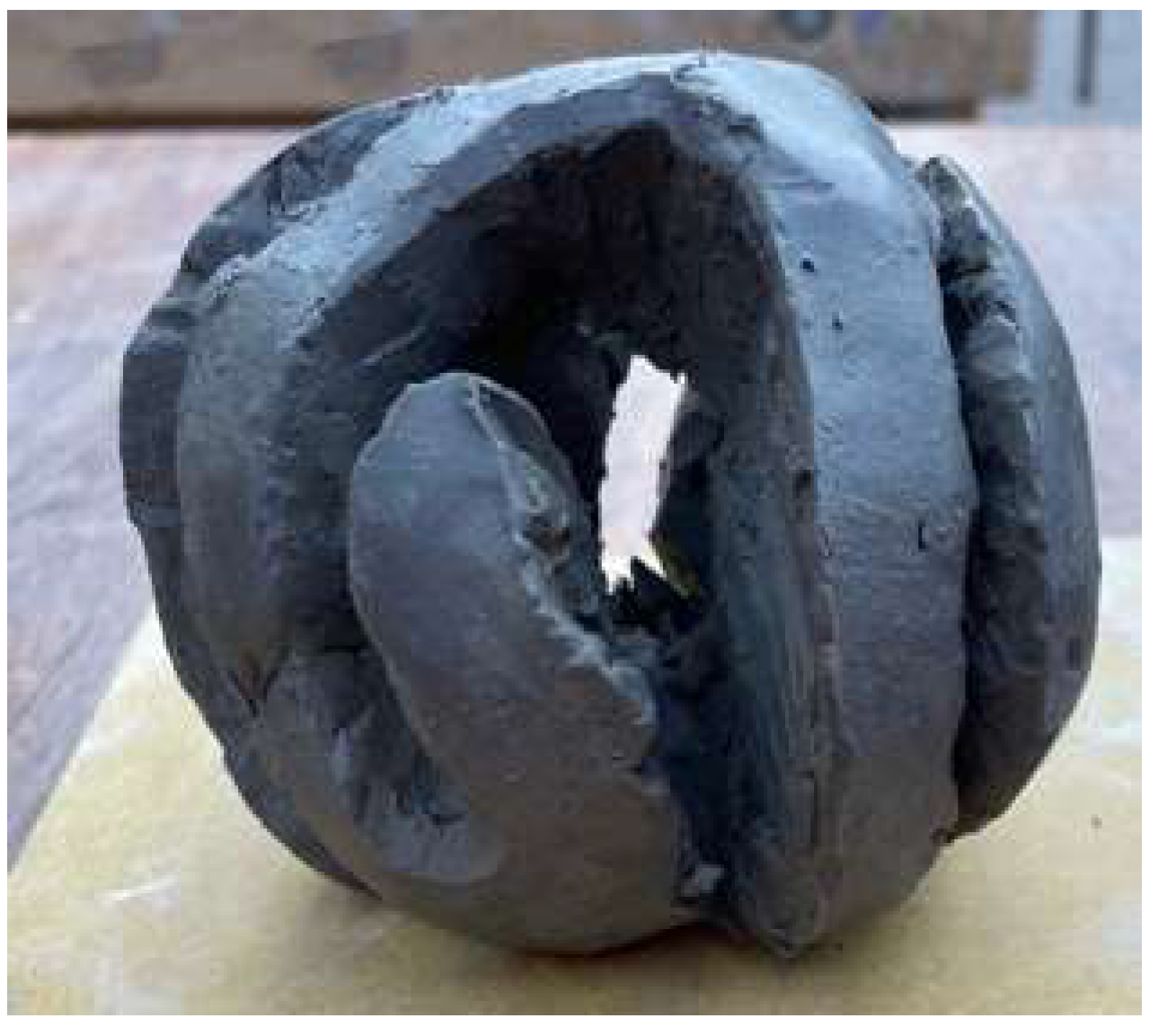
During workshops, I tried to create an intimate space of recollection in which participants’ memories materialised into tangible forms, with small clay containers bearing the artist’s marked imprints representing an extension of personal memory and embodying emotional stories from childhood. Clay is a slow, viscous, but resistant medium capable of holding even light trace and abstract gestures, withstanding multiple redesigns (example in Figure 2).
While working with clay, the engagement position is literally static, with a reach of a metre, and resembles the period of child development before crawling and walking. At the same time, augmented reality introduces a contrasting spatial condition characterised by weightlessness, constant free movements and expanded scale of creative gestures in space. This new media, as an element of new learning, captured the essence of the first uncertain steps in each person’s life, a sense of the vulnerable state when dealing with unknown tasks. The unusual choice of two opposing media was inspired by a new media development and complete artistic intuition of visualising human body functions and growth, which we live by crossing thresholds: between physical presence and inner contemplation, between the gravity of the body and the weightlessness of thought.

1.3. Why Augmented Reality? Subverting Technological Norms

Throughout the CAR project, I have been committed to a philosophy that positions augmented reality as a medium for exploring how humans navigate space through alternating modes of embodied movement and reflective anticipation. The project uses the technology as a human-centred tool that supports thinking, recollection of past sensing, and imagining what comes next, but strongly avoids reinforcing corporate, elite, or militarised applications of AR. Working with experts from Playla.bz (Marks and Matesan 2020), I have learned that over the past two decades, augmented reality has increasingly been explored within contemporary art as an embodied, spatial, and participatory medium rather than a purely technological tool. However, art historian and new media scholar Edward A. Shanken explains that new media art is not yet fully integrated into the mainstream art world, but suggests that new media art may still benefit from its discourse. Taking his cue from Nicholas Bourriaud’s notion of “implicit influences,” Shanken writes, ‘by appropriating the underlying logics of emerging technologies, taking them out of their native contexts and embedding them in more or less in traditional artistic media, their effects can be brought into greater relief’ (Shanken 2009, p. 473). This is what I hoped to achieve through CAR, but within a curative setting.
I have created step-by-step workshop plans that repurpose AR as a medium for intimate, embodied negotiations, in addition to tactile-rich experiences with clay. The choice of AR was inspired by a comparison of experiences within new mixed media options. While research in the hybridisation of physical and digital art therapies, and immersive technologies has been taking place since the late 1980s (Yoon et al. 2025), when virtual simulations were being tested for training astronauts (Barnard 2025), much of the recent research is focused on hybrid models using digital telecommunication, Virtual Reality, or AI. With the introduction of Phygital Art Therapy by art therapist Rami Yoon, there is an exploration of the hybridisation of immersive technologies within art therapies using augmented reality too. Researcher, Yoon writes:
These hybrid settings allow for deeper emotional articulation, symbolic reconstruction, and adaptive self-expression. Rather than viewing technology as a separate tool, the phygital approach frames it as a co-active element within the therapeutic relationship. The therapist’s role expands to include sensory attunement, media coordination, and ethical navigation across shifting experiential layers. Through this lens, art therapy becomes a responsive process in which sensation, memory, identity, and meaning are continually reconfigured. However, in research the clinical use of Augmented Reality in art therapy is at a very early experimental stage.
In addition to the art therapy, there is the field of neurological rehabilitation, developing tools using new media for the recovery of brain functions impaired by trauma, stroke, or neurological disease. The team of researchers also stated that ‘the scoping review aims to systematically map and analyse the use of art therapy integrated with digital and immersive technologies in neurorehabilitation. The goal is to understand how various creative modalities are supported and enhanced through technological tools’ (Albani-Rocchetti et al. 2026). However, more research for the use of AR within these fields is needed because it allows users to remain connected to their physical environments. This connection to physical environments is significant because, through the use of AR, participants experience spatial movements created in a real environment, in real time, surrounded by real objects, within a collective-making space and the gaze of colleagues. In this sense, AR functions as an overlay for an experiential spatial trigger.
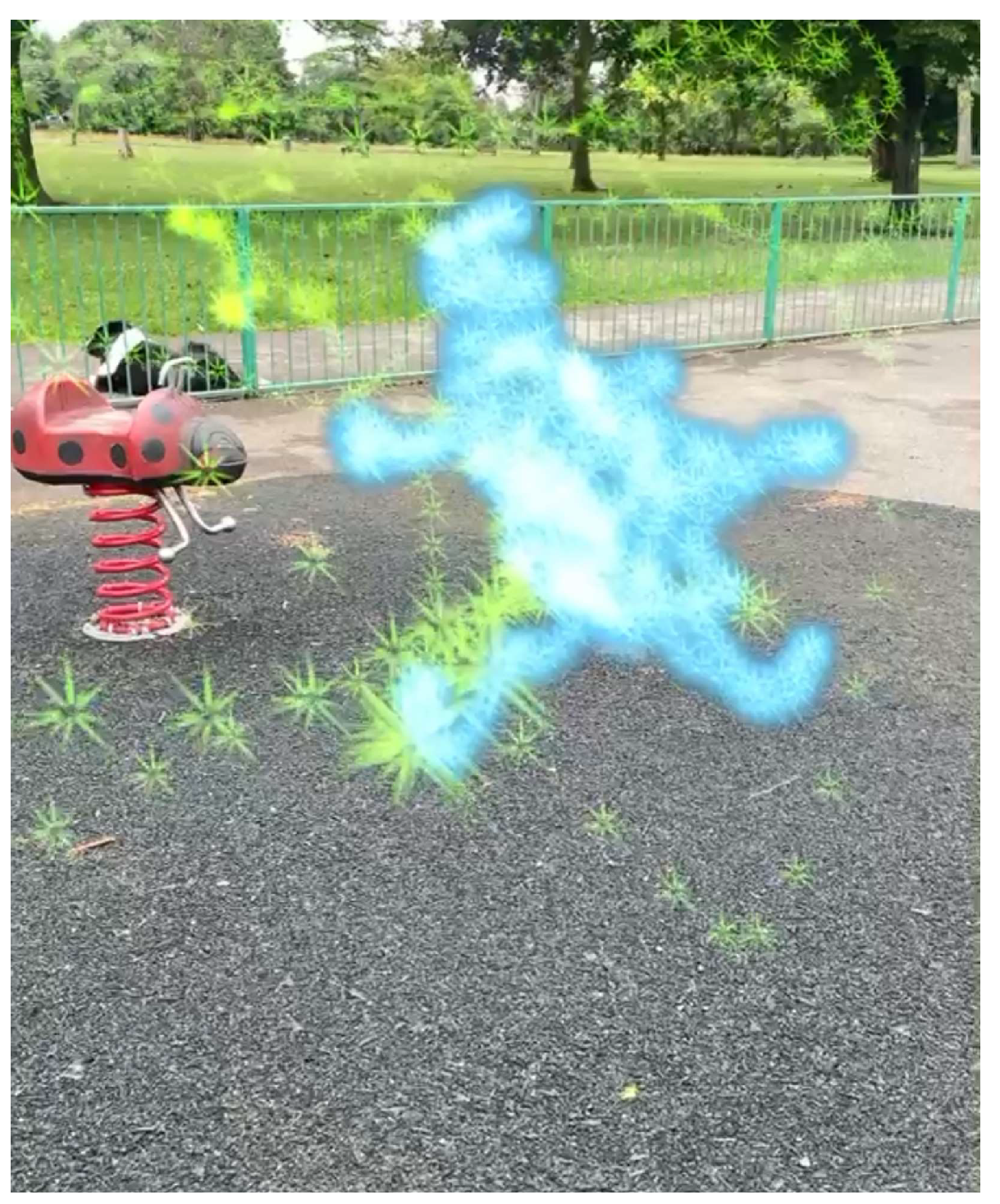
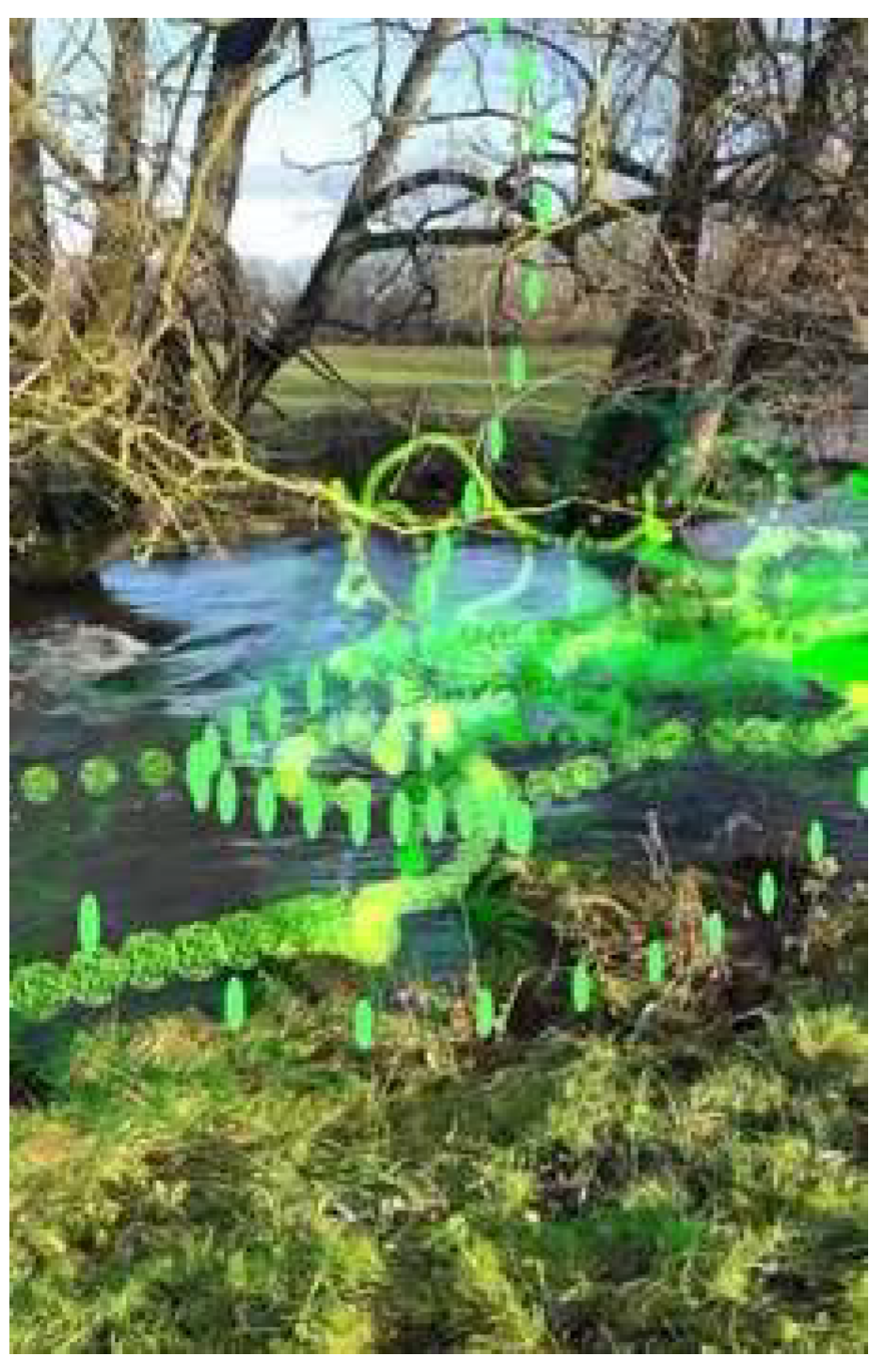
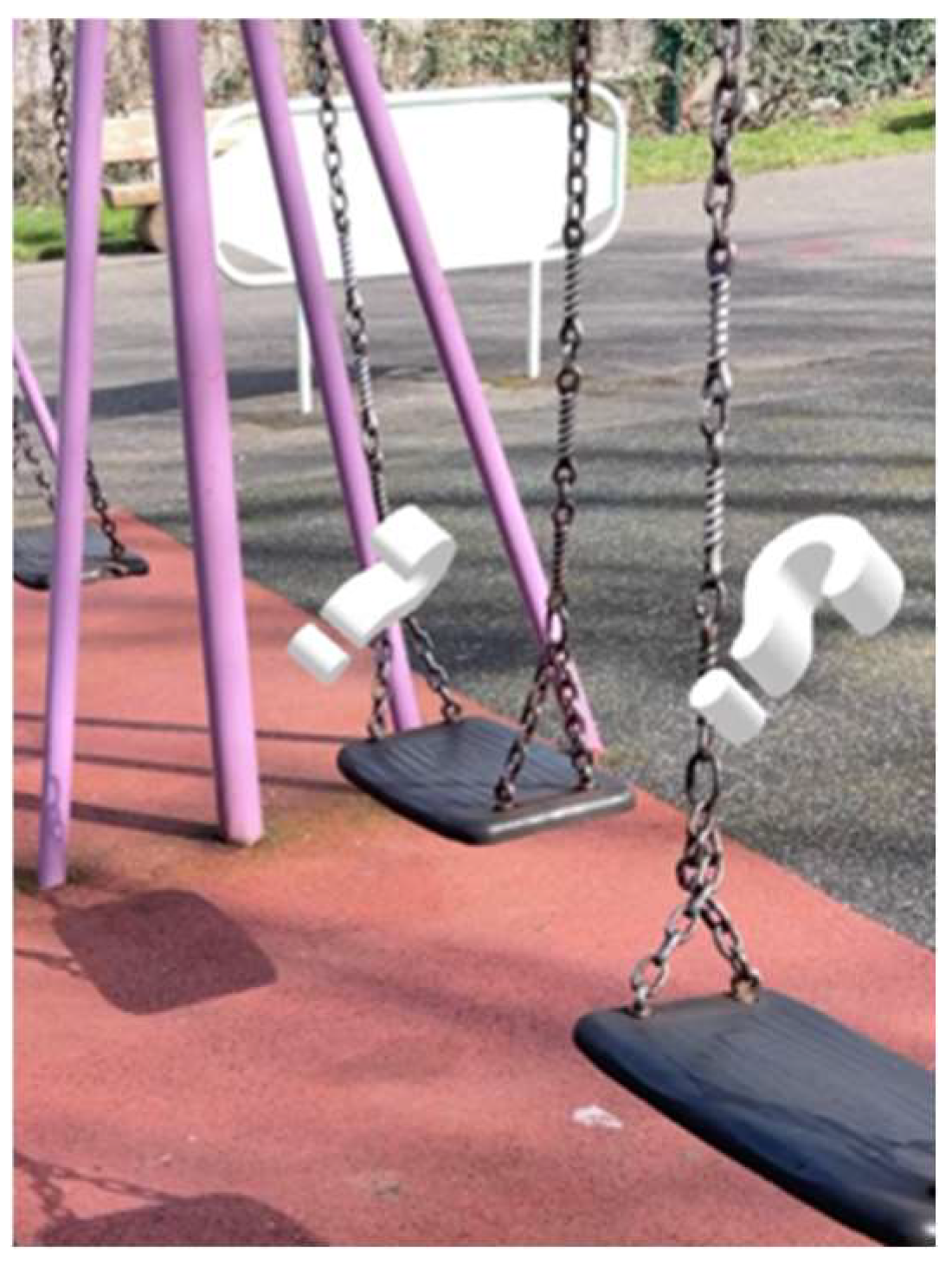
My research has also explored AR within clay fabrication and architectural design. For example, the ceARamics platform (Luo et al. 2023) proposes AR-assisted crafting systems that employ holographic guidance for clay fabrication, enabling distributed manufacturing. In this model, AR enhances precision, assembly, and transfers digital weaving patterns of human makers, situating clay within computational design workflows. Such projects demonstrate AR’s capacity to strengthen the dialogue between machine logic and craftsmanship. This approach resonates more closely with artistic practices such as those of Sougwen Chung, whose work explores human–machine collaboration through embodied gesture, brainwaves and spatial drawing (Ornes 2025). In these practices, digital systems become extensions of bodily movement rather than external activators. Similarly, in CAR, AR serves as a dynamic spatial environment in which participants move, orient, and project memory into navigable space. Clay anchors memory through tactile containment, while AR mobilises it through spatial exploration. However, the CAR project diverges from fabrication-oriented AR systems by repositioning AR not as a tool of production efficiency but as a spatial medium for memory activation. In addition, augmented reality could facilitate the recollection of past events by tracking inquisitive lines of sight, circular movements in space, gentle animal strokes, and imaginative gestural paintings or games on pavement or on the beach grounds. Still, all would happen in the collaborative and shared workshop environment populated by already recorded physical and virtual strokes of memories. Experiments depicted in Figure 3, Figure 4 and Figure 5 provided prompts used to test how minimal AR interventions can transform everyday environments into participatory spaces for reflection.
The continuous safe learning space was achieved by studying the immediate post-workshop feedback, artworks created, and AR recordings with mentors, and by listening to participants’ reflections on experiences. Afterwards, I adjusted the plans and tasks for the following workshop. Results indicated that the interplay of touch, spatial movement, and informal, open discussions around early years experiences could enhance large-scale, reflective, and intimate art-making in clay and AR. What was more interesting was that movement-provoking virtual AR tasks enhanced rediscovery of successive tacit, pre-verbal, and verbal shaping of memories during the clay-making process.
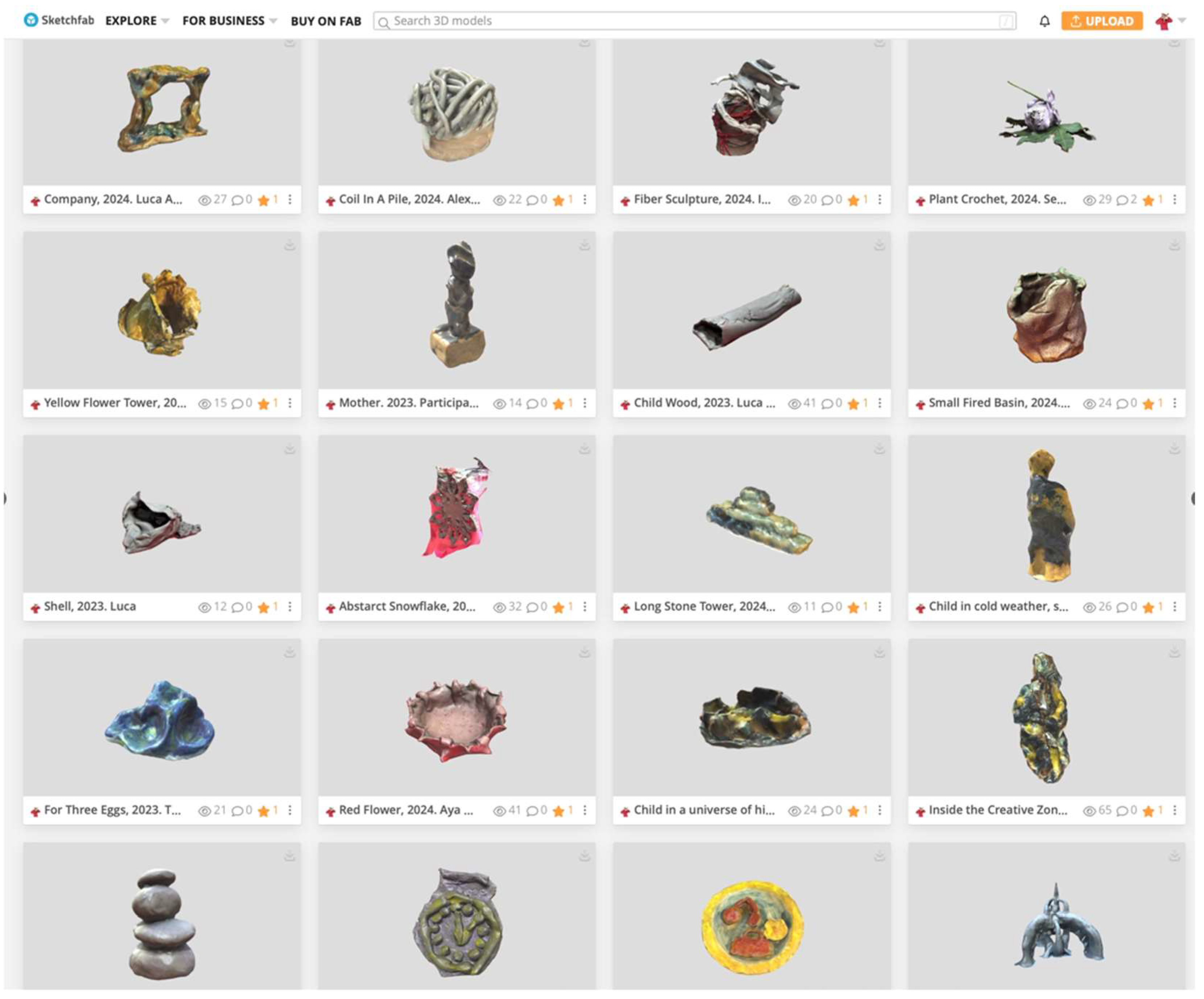
In mid 2023, I also limited my access to literature and experiments on AR and hybrid technologies across other media to prevent inadvertent assumptions influencing the course of the project. Therefore, the research positioned itself as an innovative and experimental practice, with the main contribution to the AR methodology coming from the team of mixed media technology specialists at Playla.bz, an award-winning experimental createch community interest company. The Ravensbourne University London Honorary Fellows, James Edward Marks FRSA and Marius Matesan, provided mentoring and detailed instructions during the preparation phase and workshops, assisting participants in learning the new spatial tools. The outcome of the CAR project presents a significant body of creative artefacts, including over 120 glazed ceramic sculptures and their digital twins, uploaded as 3D models to the Sketchfab.com platform. The open access for public use is required by the Arts Council England, so everyone is invited to explore the repository of the Museum of My Mother and I.
The entire sculptural collection was created together with participants over the course of four months, within six participatory workshops and a six-month preparatory phase. The final four months I spent on 3D scanning and digital collation of sculptures into the final project archive, which includes contextual materials that support the project concepts, databases of tactile sources for recollection and inspiration, workshop plans, and a collection of clay and AR techniques. The CAR project is strongly influenced by art-therapy ideas and ethical practices, but was not designed as clinical art therapy. As an artist-researcher, not a licensed art therapist, I set up the workshops as participatory artistic research. Still, I included key art therapy principles such as emotional safety, awareness of trauma, bodily and sensory memory, caregiver attachment, and facilitator responsibility in the session design. This approach was shaped by my three-year collaboration with the Art Therapists Department at Fulbourn Mental Health Hospital, where I saw the importance of containment, slowness, care and integration when working with vulnerable memories.
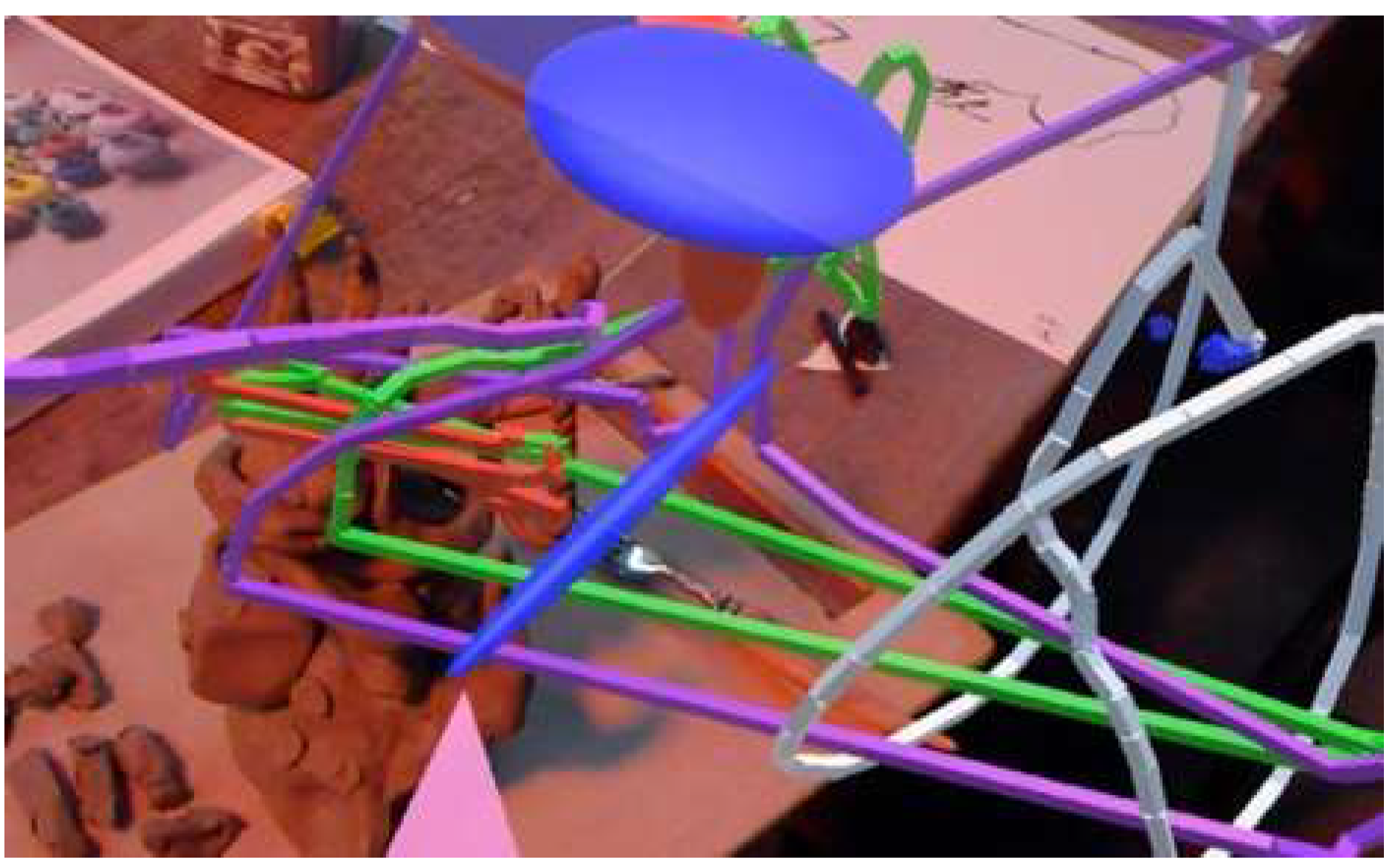
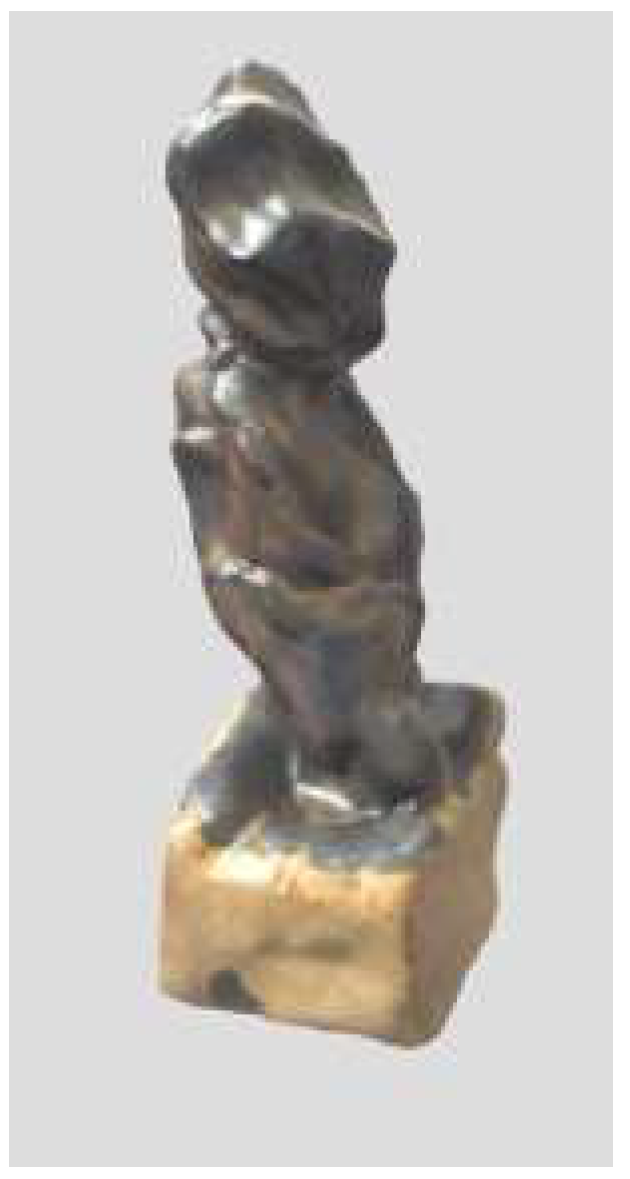
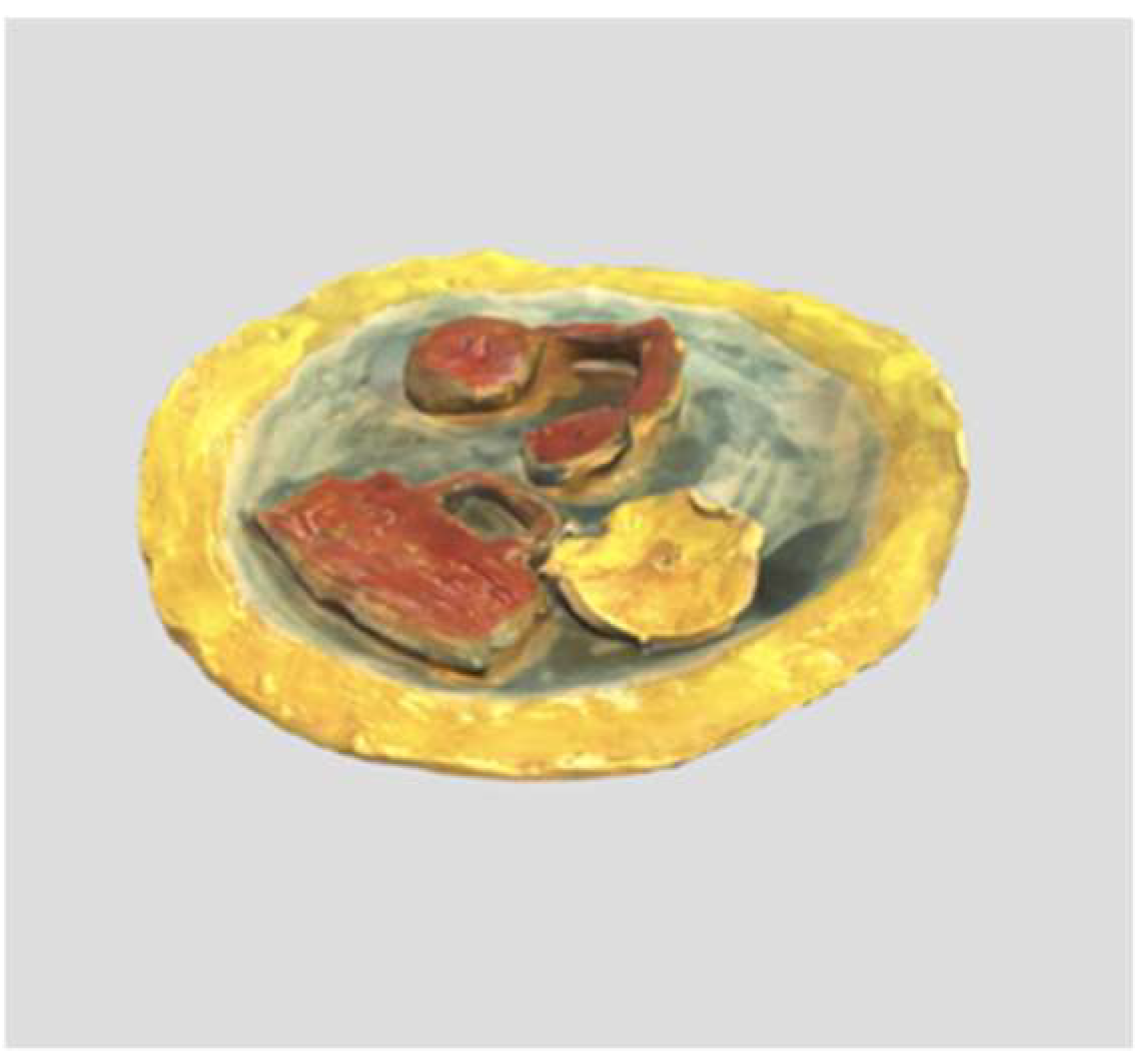
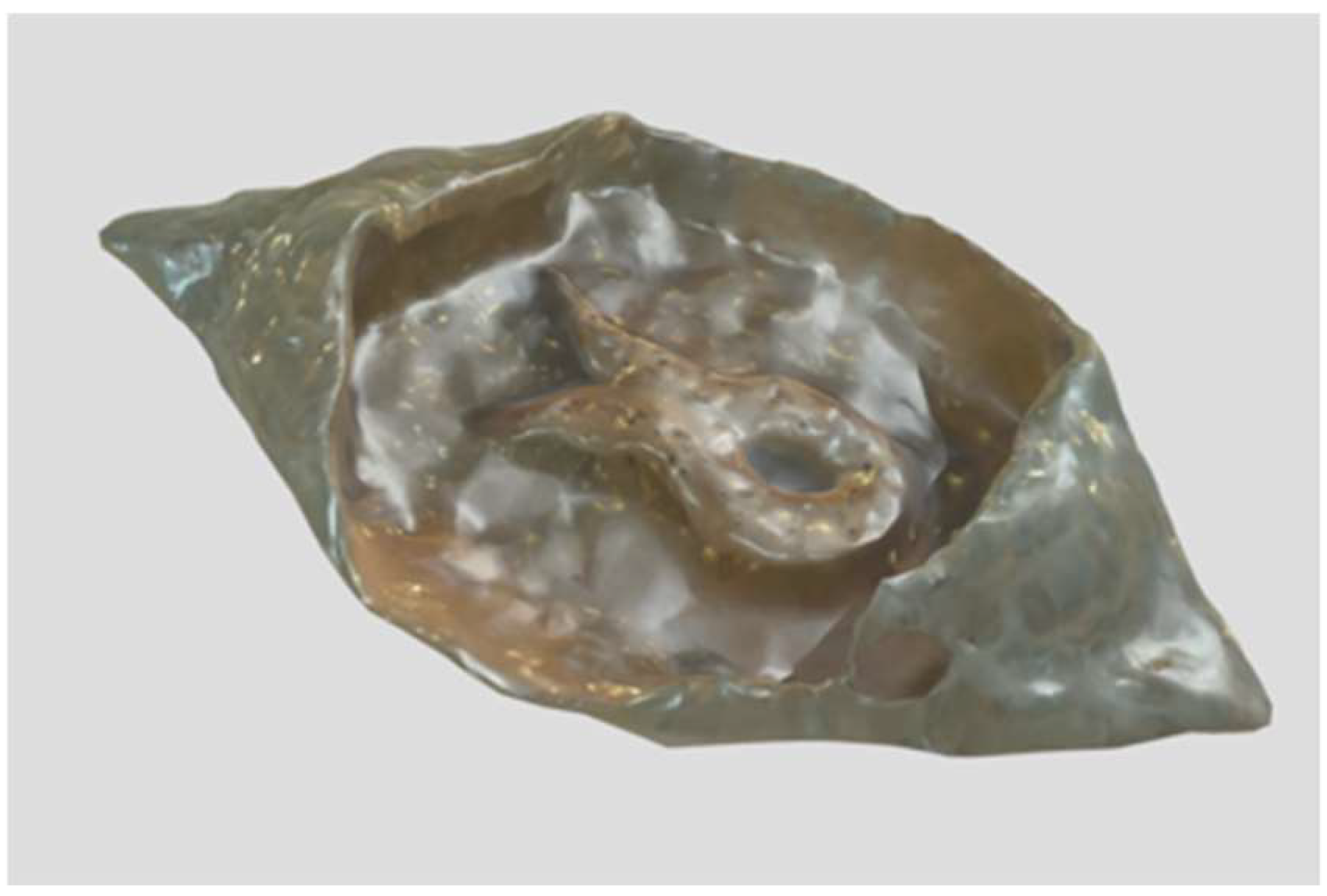
The following sections outline key creative outcomes, recollections of participants’ stories about their early memories and their feedback, with discussion of tactile sources and specific hybrid processes (Figure 6, Figure 7 and Figure 8). I will focus on Workshop 1 in greater detail as an example of work achieved in all the sessions, while the results in the Section 3 summarise participant feedback across the whole programme.

2. Materials and Methods

2.1. Artistic Foundations

Earlier in my own practice, I had been creating clay works that reflected on organic curves found in nature and the human body, culminating in a project I called Lines of Reproduction, which rhythmically tested unconscious recollections of early life scenarios from my own childhood and motherhood. The workshop practice was informed and guided by my experience in teaching collaborative and participatory modules for the Fine Art Department at Buckinghamshire New University. During the preparatory phase, I connected with mentors and professionals, and I travelled to research the work of Barbara Hepworth and Henry Moore at the Yorkshire Sculpture Park. There, I was fascinated by the Hepworth’s immense art practice and the analogy she shared with Reg Butler in their 1952 interview, “RB: …your sculpture is very often more a sculpture of the landscape than it is of the person. BH: It isn’t a sculpture—it’s me in the landscape” (Bowness 2015, p. 54). The significance of the quotation metaphor affected the project on two levels: the encapsulation of the artist’s interiority and reactions to an unpredictable practice development within the research landscape, on the one hand, and the opportunity for participants to realise the physical embodiment of their childhood events over an abstract memory landscape, on the other hand.

2.2. Workshop Structure

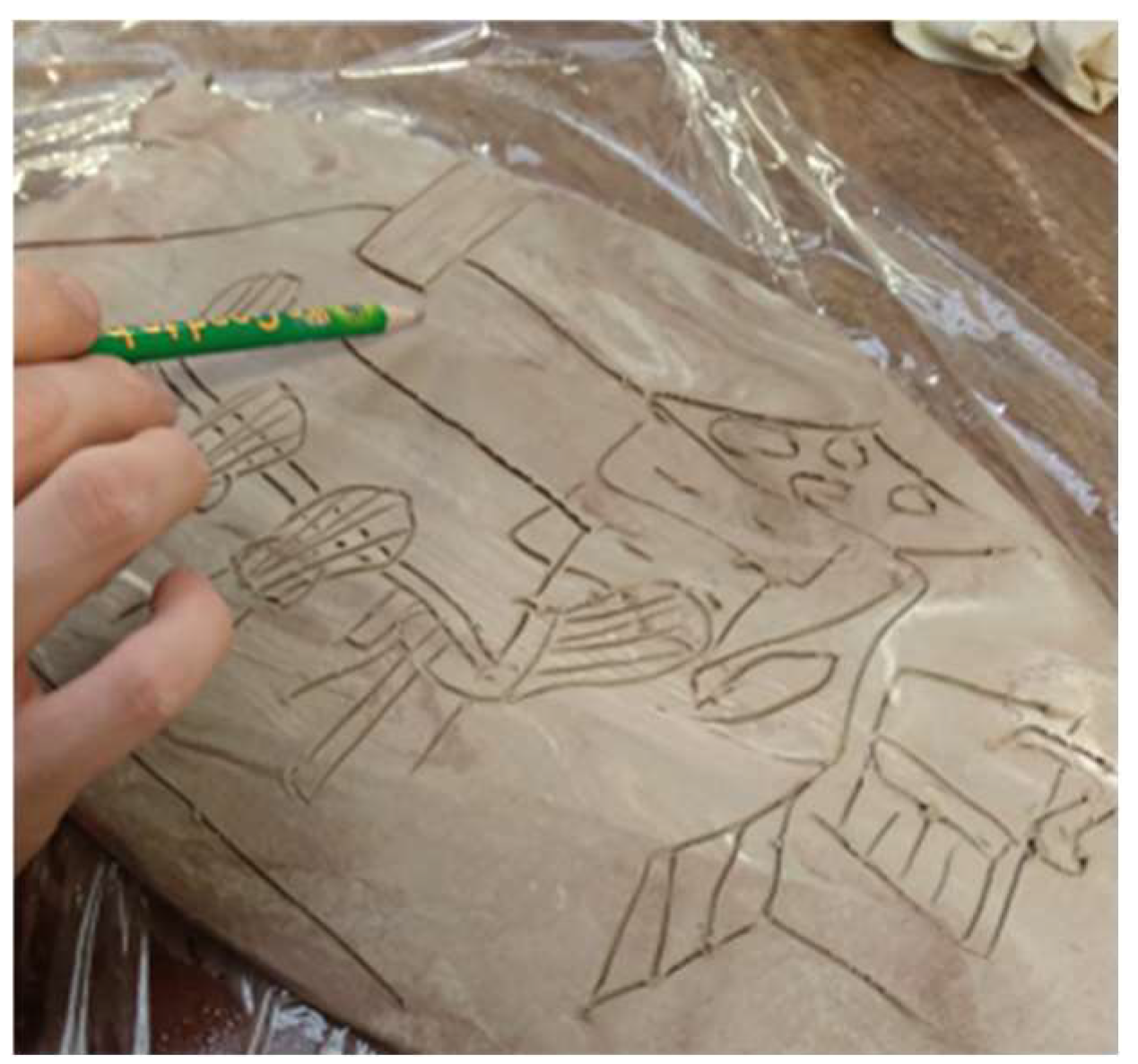
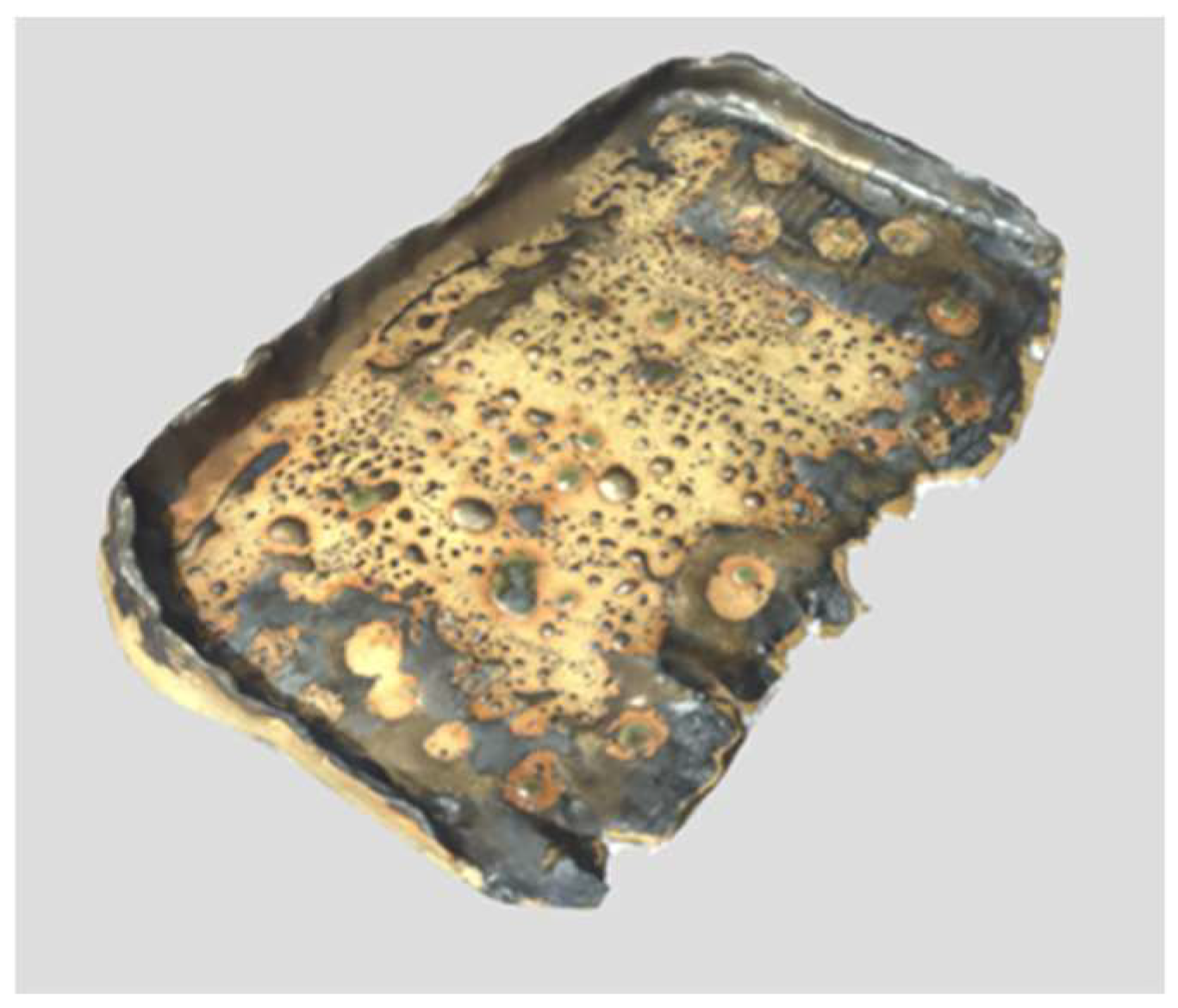
The structure of the CAR workshops comprised over sixty tactile, contextual, and art-based tasks designed to stimulate recollections of maternal care, early creative experiences, and both embodied visual and spatial memory. These activities were developed through experiments with various combinations of materials, objects, contextual texts about artists’ practices, media, and classical literary personages. We used warmed-up clay mixed with wax for various tactile tasks to recover the warmth of the caregiver’s hands and self- exploration. Adding graphite powder to the clay mixture, we experimented with recovering the visual memory of playing with shiny objects, stones and water. The pre-cut slabs, clay cylinders and coils were used to evoke memories of family customs and cultural traditions (Figure 9 and Figure 10).
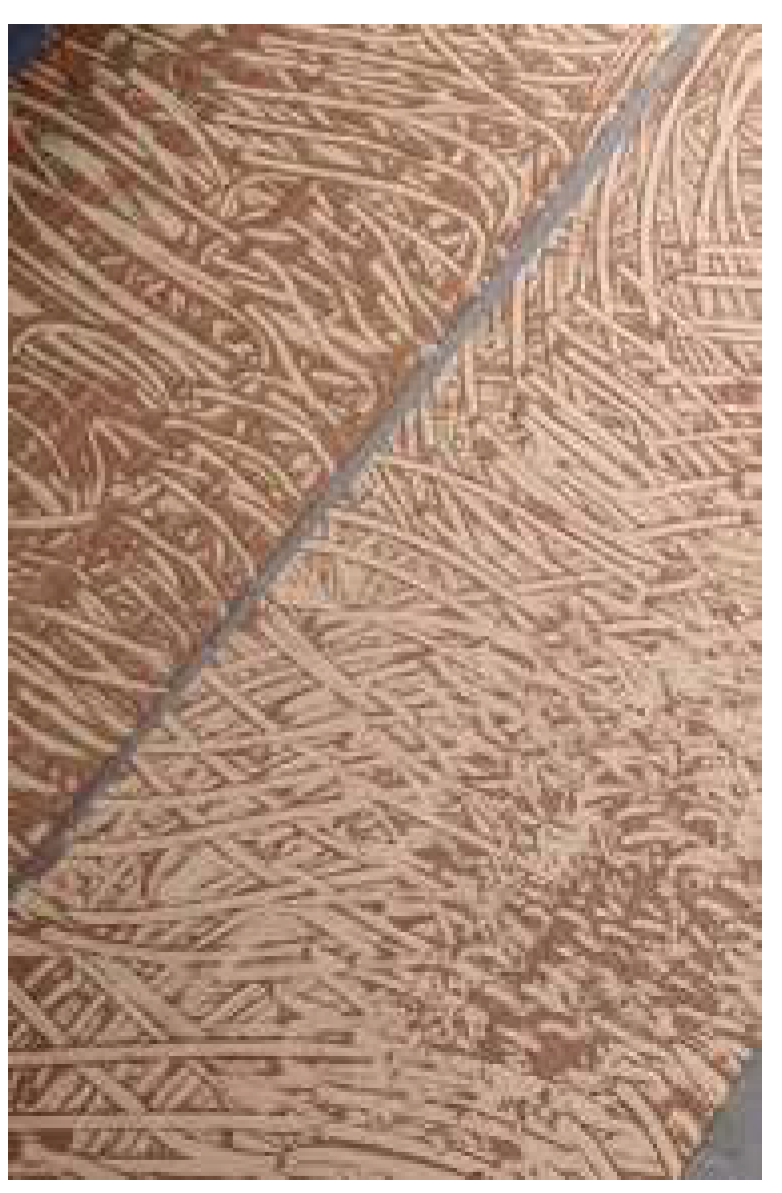
The clay slur was used for recovery of self-exploration and playing in mud (Figure 11 and Figure 12). Adding herbs to paper pulp evoked sensory and emotional responses to fragrant winter celebrations. Blindfolded tactile tasks targeted unconscious early memories associated with childhood surroundings. Repeated approaches to exercises with clay and AR developed a pattern, which assisted participants in rhythmic, gradual derivation of sensations about events, stories, and creativity from the past. AR activities focused on gesture mapping, eye-tracking, and proprioceptive navigation by creating an immersive dimension that echoed early physical exploration of movements and surroundings. The use of prenatal soundscapes of bodily liquids and a maternal heartbeat helped establish a sensory atmosphere reminiscent of the womb. The inspirational sources, such as tactile and contextual prompts, included curated texts, visual art catalogues, and children’s books. Combined with spatial movement tasks, sound, and visual narratives, the workshops offered a multisensory environment in which participants could reconnect with formative experiences that had shaped their aesthetic, emotional, or relational development.
The tactile tasks and novelty of AR targeted associative memory and focused participants on the importance of self-discovery in past experiences, concepts, and creativity (Figure 13). Barbara Hepworth suggested that the artwork does not represent a transformed landscape into a sculpture, but the opposite—it becomes a lived experience and extension of the artist’s being in the landscape. While participants were using clay and AR through various processes in shaping the past, they also worked on new memories within the time of present actions. Rhythmic visitations of particular mental zones activated within the CAR workshops traced identity, family customs, and traditions, bringing to the surface bright moments of significant events, unique experiences and spatial memory.
The notion of integration with the landscape Hepworth describes is also reflected in the project methodologies, where participants were asked to recollect geographical and emotional contours of the lived place by remembering sensory dialogue between materials, small body and the existing memory, also fragmented stories from mother-child relationships. The workshops also assisted in rethinking and re-understanding of the past events. The safe environment created within the workshop made it possible to open and realise that “this is me,” “this is where I come from,” or even “this is who I once was,” despite the self-consciousness participants may have felt. From a research perspective, this moment of recognition is significant; it has the potential to serve as a curatorial method for activating memory through participatory artmaking. The artworks, as personal containers of memory, operate simultaneously with captions from AR experiences, where weightless strokes, produced after much learning effort, mirror oneself in the landscape of a child’s learning efforts in walking, holding a pencil, catching a ball. For the participant, recognising the self within a sculpted form creates a loop between the present the past, when current polished skills are contrasted with the remembered awkward efforts. For the curator-researcher, it opens up a space to rethink sculpture not as a static artefact, but as an embodiment of a dynamic event from the past-present encounter between the facilitator as an art process caregiver from the present and the participants’ fragile growth as artist-makers from the past into the present moment.

2.3. It Is Me in the Clay and AR Space

The CAR project thus proposed an expanded definition of sculpture as a site for intergenerational connection and intimate archival processes. Hepworth’s statement, “it isn’t a sculpture. It is me in the landscape” became a turning point in my thinking. I realised that the goal of my research would be to create an environment in which participants could say: “it is me in the landscape,” or, in the context of this project, “it is me in the clay and AR space.” Hepworth also said, “working realistically replenishes one’s love for life, humanity and the earth, working abstractly seems to relieve one’s personality and sharpen the perceptions, so that in the observation of life it is the wholeness or inner intention which moves one so profoundly: the components fall into place, the detail is significant of unity” (Bowness 2015, p. 43). This statement articulates a duality between outer observation and inner expression (Figure 14).
By working realistically, the artist connects to the tangible world and the mimetic perception. In contrast, abstraction allows a release of the self, conveyed in intuitive, expressive marks and personal feelings of spaces (Figure 15). This art process leads to a deeper engagement with the unconscious and emotions, and it allows an impression of events stored in memory. This dual mode became central to the CAR project, moving between the tactility of realistic objects and evoked memories, where the weight of activities involving material clay would oppose the fundamentally abstract medium of augmented reality. Through these repeated experiences enhanced with prenatal sounds, participants were immersed in the abstract world itself, suspended in the space and time between the burden of learning and expressive creativity.

2.4. Abstract Gestures of Remembering: Embodied Play in Clay and AR

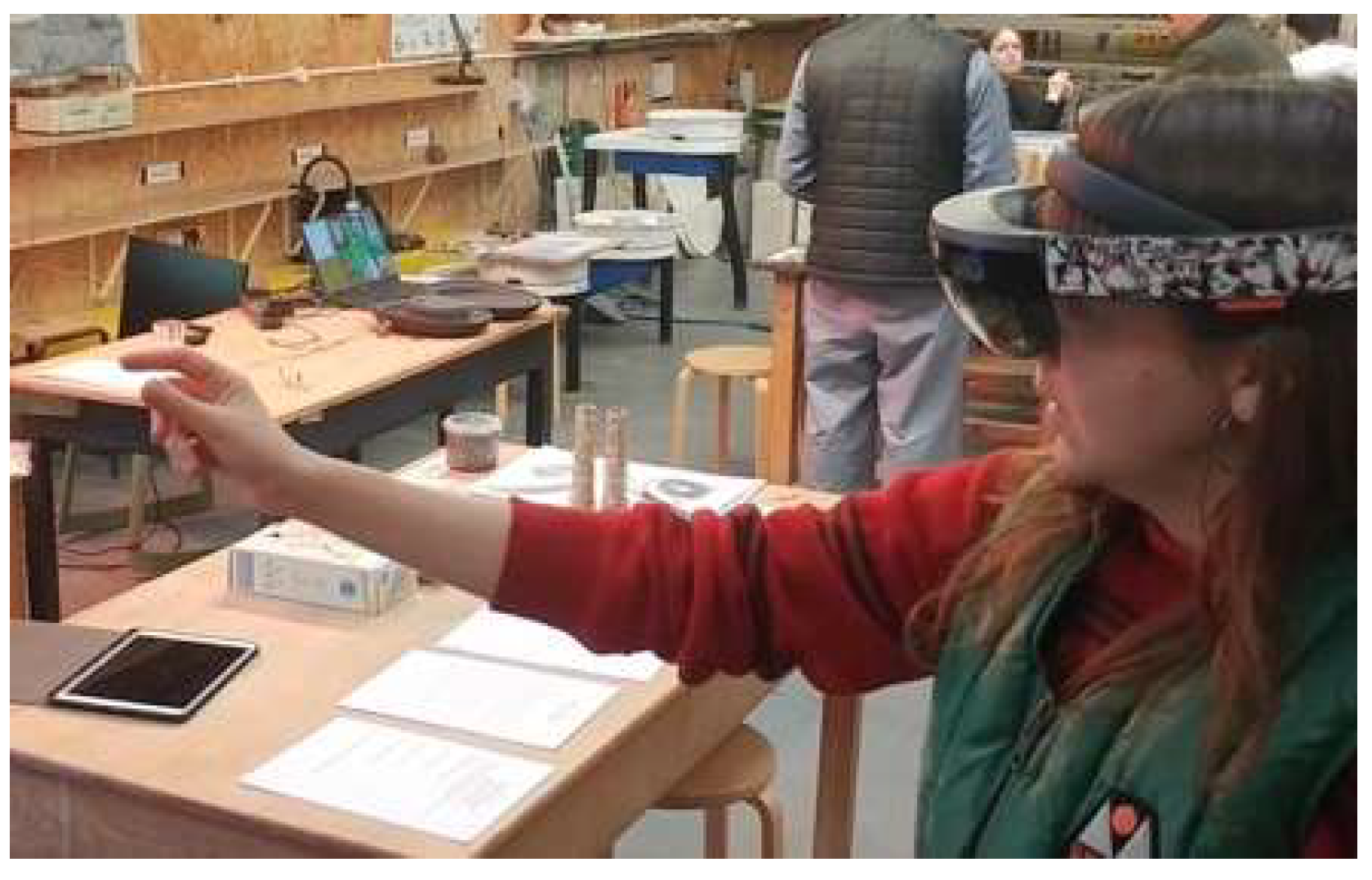
The aim of the project was not concerned with technical mastery. Instead, it sought to access the emotional hidden state in unconscious preverbal (Figure 16) and embodied memory. The warming-up drawing and breathing exercises of various techniques connected participants with their inner world and prepared them for a playful time in clay and AR. In parallel with abstract children’s drawings, they conveyed feelings in bold and fragile lines. In clay and AR space, this abstraction was intensified because participants could not rely on traditional drawing skills. In AR, the body itself became a contemporary tool—a kind of stylus. The created strokes were raw, beautifully undefined, yet expressive. In this sense, the imperfect strokes illustrated the complete acceptance of being totally and abstractly immersed into the learning mode like a child navigating slowly, awkwardly, and with joy through eating with a spoon or taking first steps. In general, the CAR abstraction became a method of emotional and physical rediscovery of living simultaneously in space and in memory. Workshop activities were designed to follow a rhythmic sequence, alternating between clay and AR, play and reflection, tactile focus on clay pieces and spatial novelty in movements while wearing a HoloLens (HoloLens One, manufactured & designed by Microsoft, Redmond, WA, USA in 2016) or Magic Leap helmets (Magic Leap Inc., 2018, Plantation, FL, USA), or holding an iPad (2013) with the ARvid Augmented Reality app (Version 10.2.11).
During my concurrent studio practice, a series of experiments led to creating a larger-scale clay womb (Figure 17), a series of real-size hearts, and using a stethoscope to coordinate strokes on the clay vessel with my heartbeats. This inspiration in the studio led to the introduction of a white-noise soundscape during the prenatal phase of a child’s development. In this way, the participants were guided through an immersion in recollection through all the senses, including visual, tactile, auditory, olfactory, and spatial. I also experimented with all the AR devices available to me, trying to recollect physical experiences, such as the early discovery of nature at ground level, the freedom of movement when learning to walk, sight tracking, and the spatial memory of the place I grew up. To stimulate this process of recollection, I travelled back home to Latvia to reflect and reconnect with my homeland. There, for the first time in my life, I felt the true meaning of visiting the Motherland. When my body recognised the geolocation where I grew up, there was a process of adjustment in remembering all the trees that had now become giants, and the streets and distances that shrank in size. Even from above the city, while landing, I remembered all the road bends and city maps; my perception of the city atmosphere shifted into teenage mode instantly. These experiences helped me to refine the workshop techniques and inspirational prompts.

2.5. Workshop 1: Freud, Polanyi, Ettinger and Tacit Knowledge

The first workshop was framed by psychoanalytic insights and alternative ways of knowing. Freud’s idea that “we do not remember anything of what we have forgotten and repressed, but act it out… not as memory but as an action” (Freud 1914, p. 150), and Michael Polanyi’s phrase about tacit knowledge, “we can know more than we can tell” (Polanyi 1966, pp. 4, 64) shaped the environment for embodied exploration of remembrance and repetition. Freud argues that repressed memories often return not as coherent recollections, but as repetitive behaviours or gestures repeated in the present. He describes the therapeutic task as working-through these repetitions in safe, guided conditions, allowing the patient to remember with the help of resistance. I experienced it during my visit to Latvia, when I recalled the immense number of unconscious memories by acting them out in a real environment. This closely aligns with the workshop behaviours of interactions with tactile sources and materials through bodily engagement. For example, a participant smoothing a clay slab may recall a forgotten domestic ritual, and touching the cold metal bed frame to remember the night’s reading sessions, or spin in the AR space, triggering sensory echoes of visits to places in nature and rolling on the grass.
Michael Polanyi’s theory that “we can know more than we can tell” expanded Freud’s notion of acting out the memory. Polanyi’s concept of ‘tacit knowledge’ (Polanyi 1958, p. 106) is based on Gestalt theory and argues that perception and knowledge arise through an unspoken depth of understanding. Polanyi distinguishes between focal awareness (the object of attention) and subsidiary awareness (a background of sensations, memories, and physical clues), which together enable comprehension (Polanyi 1958, p. 68). In CAR practice, this means that working with clay or with spatial AR draws on unspoken knowledge embedded in touch, rhythm and sensation. The safe environment of CAR was reinforced by sound and tactile sensorial provocations, which acted as a material bridge between these theories and the lived memory of the participants. Activities such as blindfolded drawing, walking with open arms, handling black boxes of childhood-sourced objects, and unconscious responding to prenatal soundscapes were not about recalling specific moments, but about creating a gestalt environment allowing the appearance of images from “it is I in the memory landscape”.
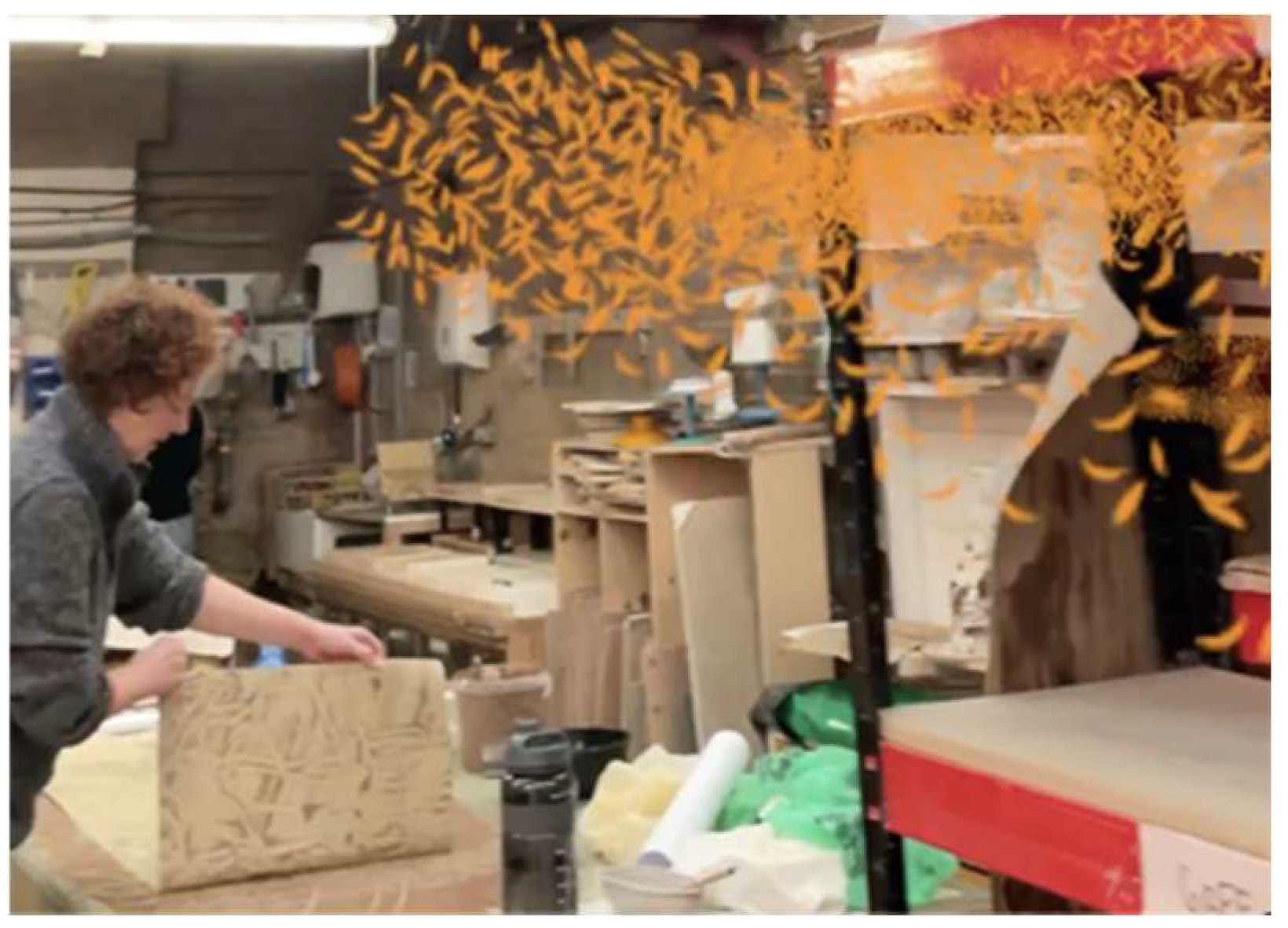
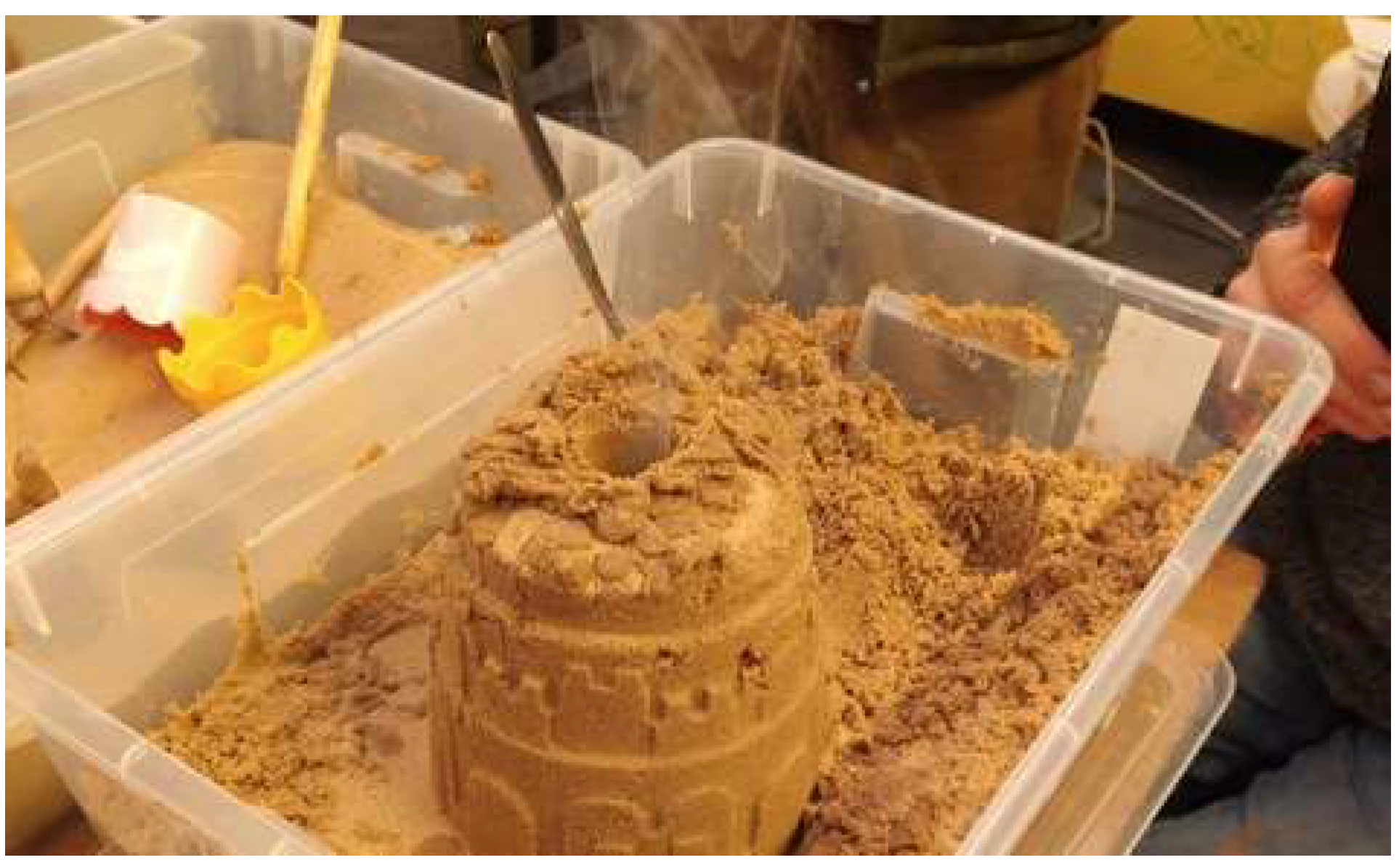
Combining the theories of Freud and Polyani into a theoretical framework for the CAR, project created a space for embodied, playful memory-strolling, where tacit knowing and acting it out were activated through creative research and group participation. For example, this manifested in the storytelling of customs on prepared clay slabs depicting schematic familial tables during celebration. One group collaboratively built a sandcastle with a chimney, adding smoke for realism, connecting memory to material gesture (Figure 18). Slur painting and using full-body movement generated long monoprints that evoked deep recollections of gymnastic stretches, dog massages, and childhood swimming.
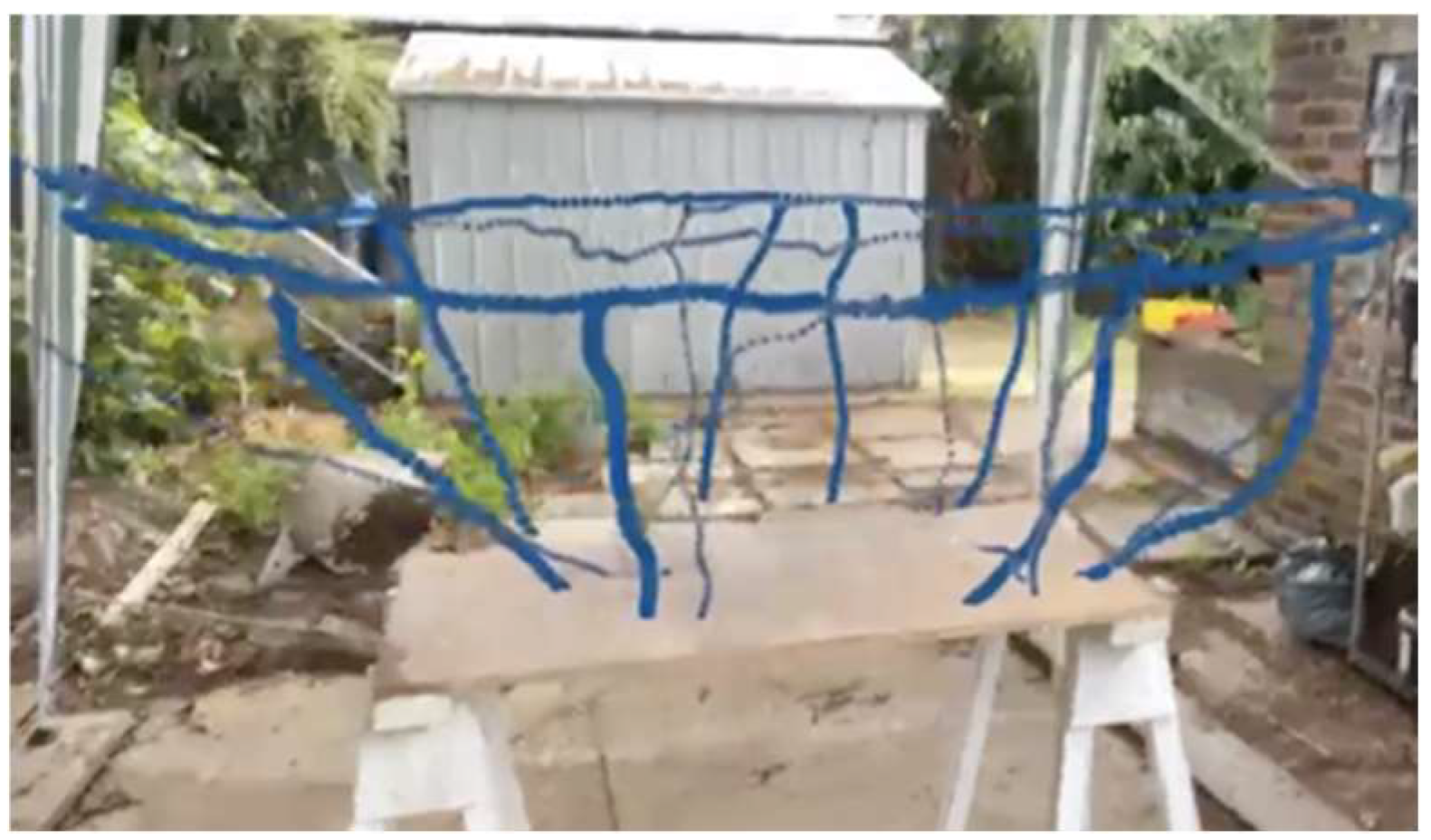
Participants using AR (via HoloLens and ARvid) traced their eye and body movements as they walked through gardens, creating spatialised memory paths. One participant sculpted a large blue ship from a childhood story, prompting a group discussion on how AR could support 3D sketching practices (Figure 19). Operating two kaleidoscopes simultaneously, participants recollected the colourful memories of stained-glass window patterns and architectural spaces (Figure 20). Two individuals encountered difficult memories, underscoring the importance of emotional safety and on-site therapeutic facilitation, yet within a safe, caring atmosphere, they continued their explorations.

2.6. Tacit and Transpersonal Memory of the Matrixial

Many recollections surfaced through the bodily movements described in the previous section. The spinning, crawling, and loving stroking of pets, for example, gave way to collective memory and tacit knowing that appeared as togetherness in united action. These physical gestures, paired with the materiality of clay and the expansiveness of AR, acted as conduits for tacit knowledge, experiences that are lived but not easily verbalised.
The handmade paper, with particles of dry plants, herbs, food, and animal hair, that I made available on the workshop tables elicited surprising reactions from participants, such as this statement, “I spent the whole session at this table. The fabric reminded me of my transitional object. The gingerbread biscuits I had as a child—I chose handmade paper in response to memories. It felt like a gift to have something available with added smell + textures + associations” (Atlavina 2025). The work on collaborative AR space and soap bubble play brought excited memories of childhood playfulness, as one participant’s reflection captures the interplay of scale, presence, and imagination that AR enabled, “I felt free and expressive, I was astonished at the potential. I could be small and detailed and fit into the textures of the AR line, which was also 3D and then zoom out into a space. Turning my memories [on] before enabling my curiosity.”
During the reflection time, participants commented on how vital a safe atmosphere is for unlocking playful creativity and unconscious memories. As one participant reflected, “touching warm clay stones brought the realisation that the habit of holding pebbles in my pocket came from early walks in the forest” (Atlavina 2025). And another one recalled, “I remember my mother taking me out on a winter day, telling me to move. I was probably 2 or 2.5 years old. She watched me from the first-floor kitchen window, looking over to the street and gesticulating for me to move, but I did not. I felt cold and started crying, feeling my toes and fingers freezing first. She ran down, picked me up, carried me in, warmed me up inside to stop crying” (Figure 21).
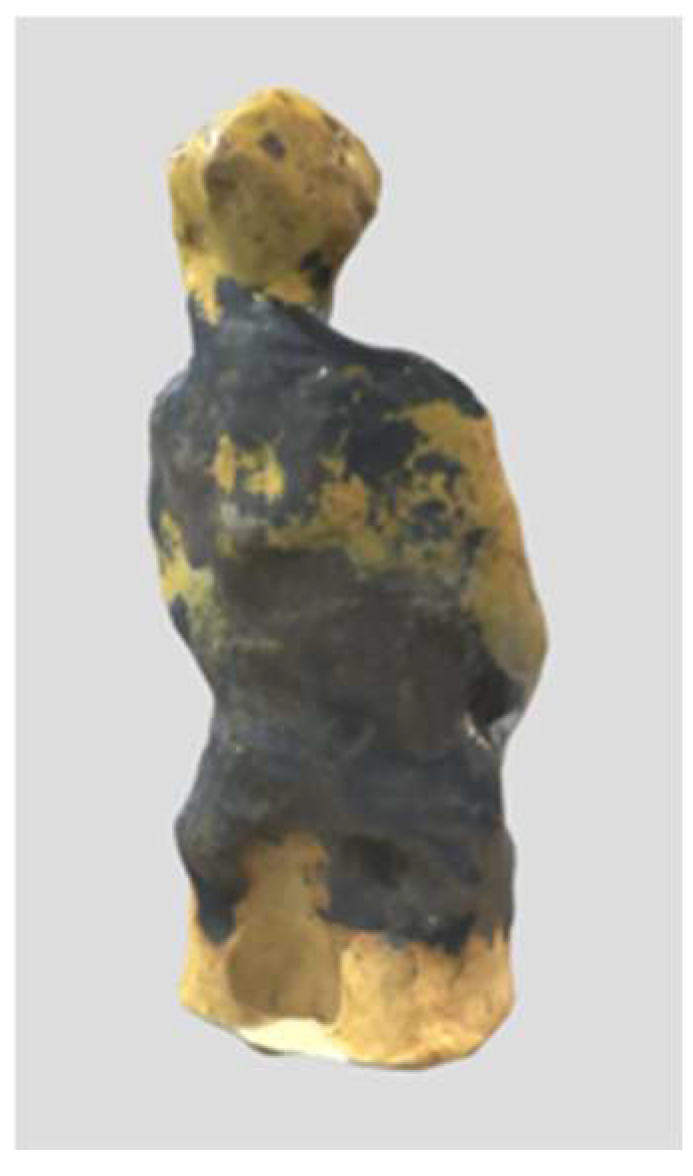
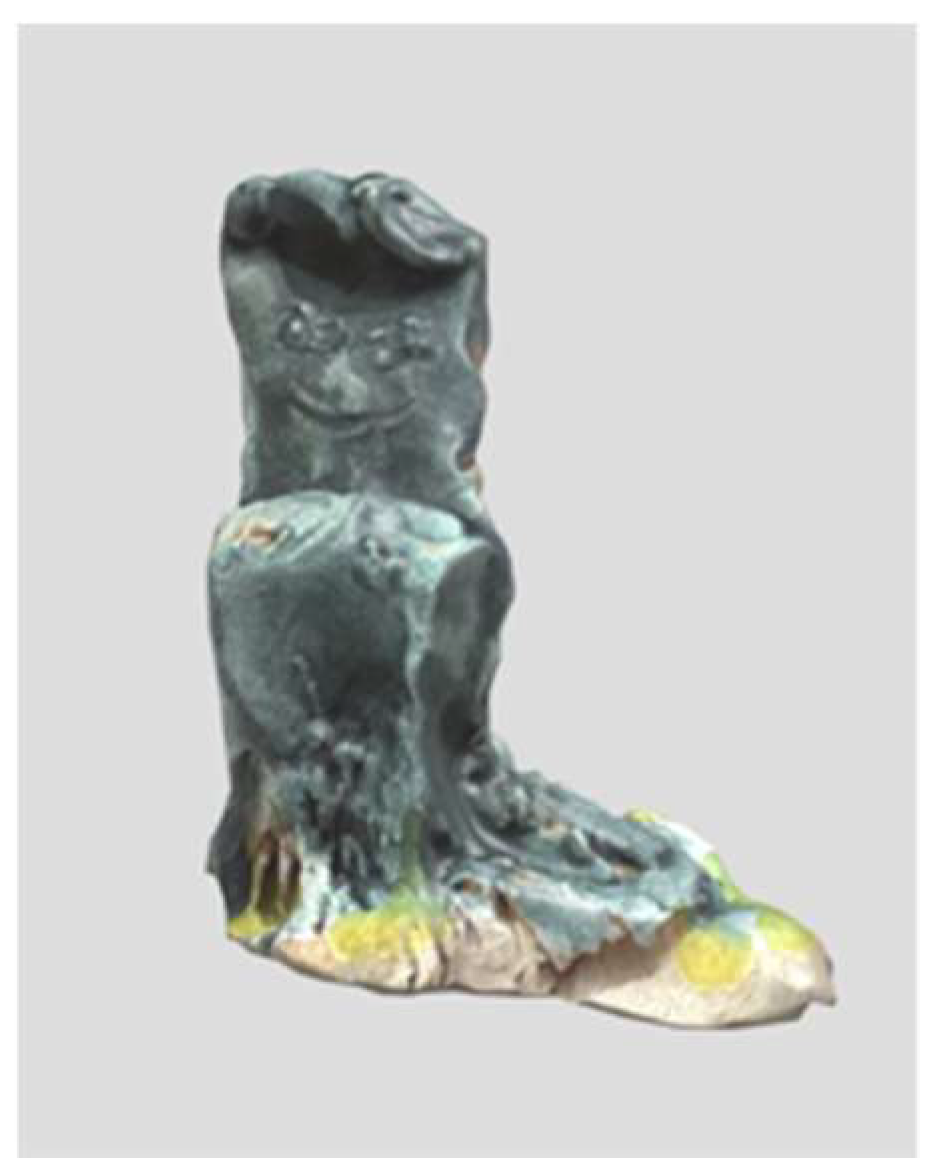
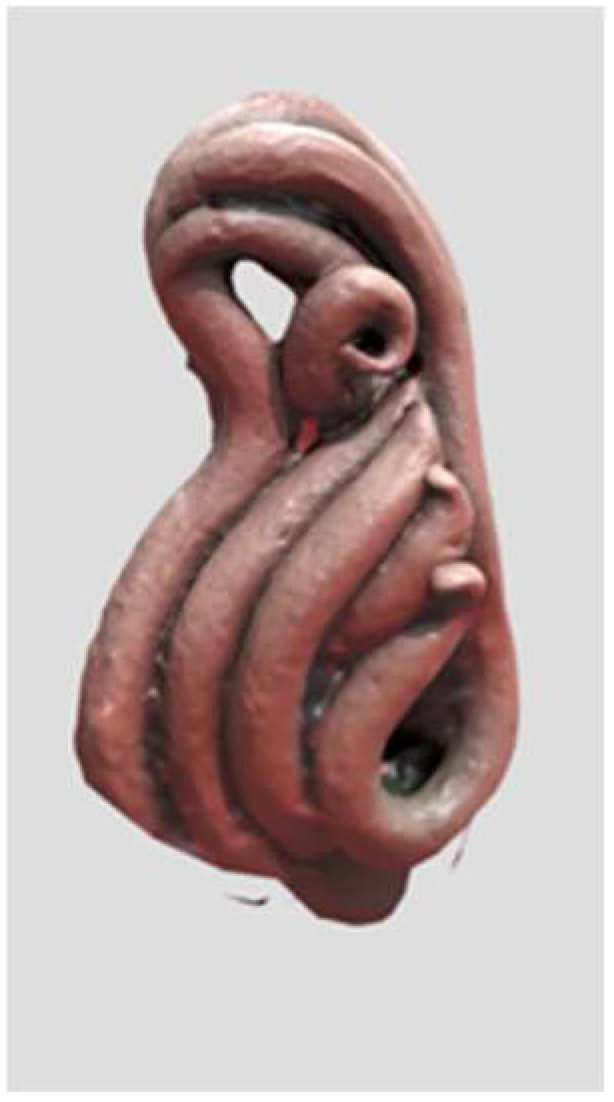
It is in these quiet recognitions, a stone in a pocket, snow and movements, a scent on paper, that the workshop achieved its most profound impact. These gestures resonated with Bracha Ettinger’s matrixial theory, the aesthetic relational experience of the shared space that becomes a tender threshold of compassionate witnessing, with the encounter between self and other in vulnerability and emotion. In my art practice, I have often referred to Ettinger’s writing, inviting viewers to installations in public spaces where intimate reflection on the artist’s gestures recalls intimate encounters from unconscious memories and relationships with mothers or carers. “The matrixial awareness accompanies us from the dawn of life. It is traced in the psyche by primitive models of experience-organisation” (Ettinger 2006). It is the space where mothers organised playful learning environments, and the matrixial gaze exists for both child and mother (Figure 22). The term matrixial derives from the Latin matrix (womb), signalling Ettinger’s focus on the feminine, maternal, and intra-uterine relations as foundational psychic experiences. Ettinger describes mother-child, artist-viewer encounters as a border-space, where memory, trauma, and desire can be transmitted trans-subjectively, not through clear-cut communication, but through resonance, intuition, and shared affect. Artists, curators, and psychoanalysts working in feminist, trauma, and care-based practices have taken up this model to reframe the meaning through the process of co-presence and co-emergence. In the CAR project, I found myself repeatedly returning to the idea that it was not about curating objects, but about curating encounters. That line, first written in my session notes, became the guiding principle of the whole process. The mental spaces discovered through the warmth of clay and shaped into real sculptures were also connected with the invisible pathways traced through augmented spaces. These outcomes emerged not through instruction, but through active presence, attention, and tuning into childhood frequencies of creativity and through the quiet openness to each other in the space. In this way, the matrixial becomes not just a theory, but a practice—one that allows for collective remembering, soft witnessing, and tender forms of shared spaces and relational aesthetics (Figure 23).

2.7. Relational Care Connected to Melanie Klein’s Observations

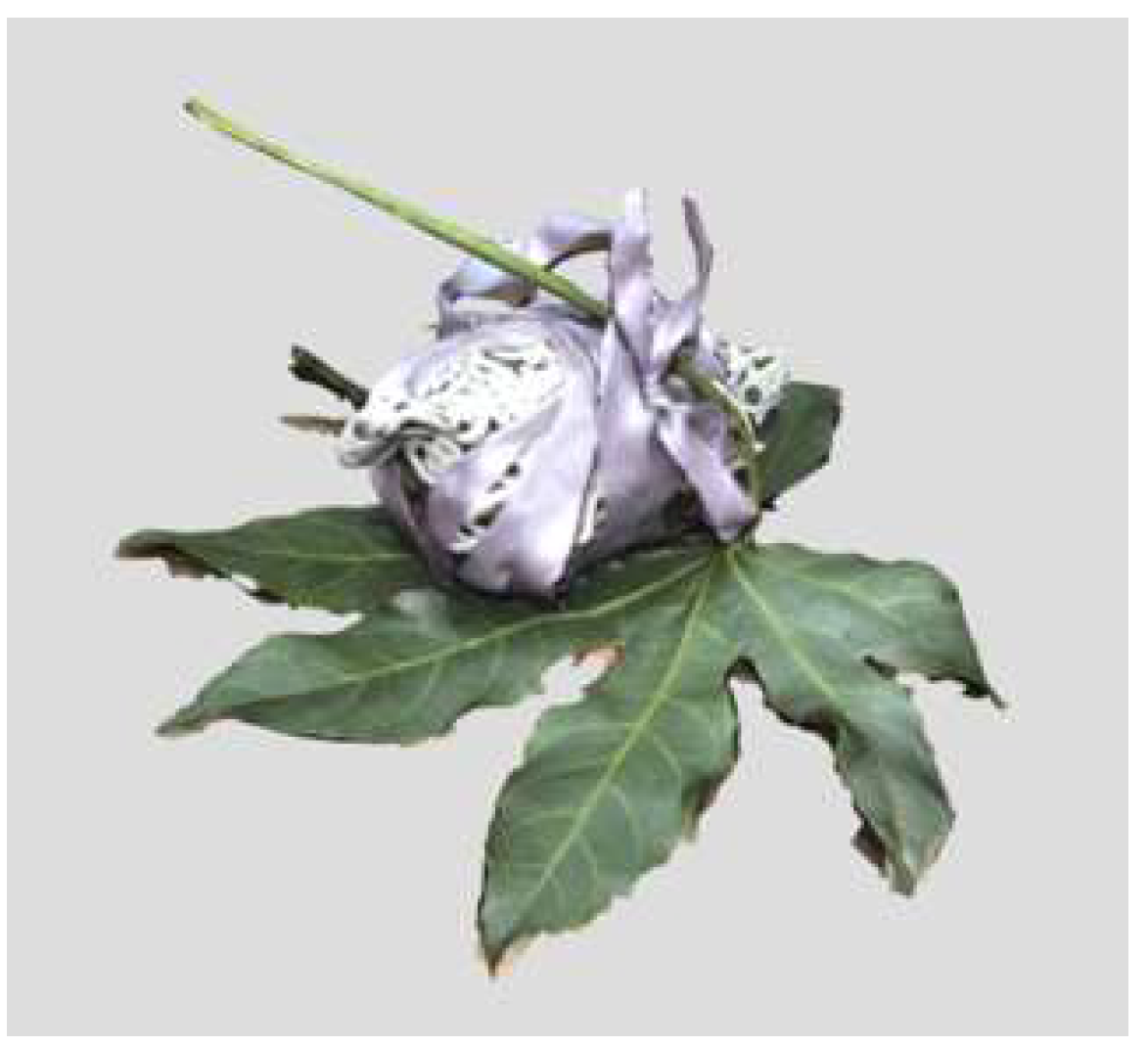
One participant described creating a sculpture wrapped in tree-shaped lace and leaves, “I made this work thinking about making and crafting objects with very simple materials, such as fabrics or dried plants and grasses, as a child. I thought about the idea of creating a ‘present’ for my mother or some of the other adults who looked after me as a child… (Figure 24) The actual piece of clay is hidden within the ball of fabric, hiding it from plain sight, wrapping it like a present” (Atlavina 2025). This artistic gesture can be seen as an enactment of Melanie Klein’s insight that “feelings of love and gratitude arise directly and spontaneously in the baby in response to the love and care of his mother” (Klein 1975, p. 311). Klein developed this observation within her broader exploration of infantile emotional development, especially her theory of projective identification, where the child internalises and recreates emotional states through symbolic actions. In this context, the gift was more than an object; it was an unconscious act of relational care—a sculptural metaphor for gratitude and early attachment. Drawing on this experience, future project development could directly explore caregiving narratives or symbolic gifting, encouraging participants to give form to moments of emotional reciprocity. By integrating reflective writing in AR space, audio-recorded memories as stories into the making process, the artefacts could become layered vessels, storing not only personal memory but intergenerational echoes of care, loss, and repair.
Observing the space, I noticed that patterns of memory recovery happen in at least two ways. Some started working on sculptures straight after the introduction of prompts, but others were contemplating, reading, circling around for more activators, similar to bees, they were tracing the memory, forging pathways. The provided collection of tactile and inspirational experiences, plus various tools for expressive strokes of self-motivated activities, made participants contented and tired at the end of 3.5 h of exploration but ready to go for more. By centring on tactile, spatial and sonic experiences the future research space could test the limits of intuitive structures of abstract expressiveness versus figurative art-making through a rich selection of tools and a rhythmic approach for evoking memories. This could be achieved by introducing modular workshop components that allow participants to move freely between abstract/figurative tasks and to build their own rhythm of collaboration within the collective environment.

3. Results

3.1. Feedback Collection and Analysis

During the CAR project, the feedback was collected regularly following each workshop via written forms and facilitated group reflections, with a short summary note taken by me. In total, 48 participants attended the CAR workshops and 44 submitted completed feedback forms, which gives a response rate of 92%. The questionnaires for all workshops began with Likert-scale questions to assess the workshop environment, including task distribution, clarity, materials, tools, and safety structure. These were followed by open-ended questions focused on each activity and assisted in capturing qualitative insights into clay and AR tasks. The final questions were intended to find participants’ preferences for the future workshop themes and creative art techniques. Participants were also invited to describe specific moments or memories that emerged during the session and how those memories were reflected when working with clay or within AR experiences. The gathered materials included written responses, as well as facilitator notes and observations, and were analysed using an arts-based thematic approach. Materials were reviewed iteratively, distributed for recurring motifs within different tasks, and consolidated into four themes, presented below.

3.2. Participant Feedback

Feedback from over 40 participants revealed four recurring themes:
Memory and creativity. The majority of participants reported feeling safe to explore memories and reconnect with playful, creative modes. The environment was described as conducive to “reconnecting with forgotten creativity” (Atlavina 2025). “Really a great pleasure connecting with my inner self, with others and with new ways of thinking and working. Loved it both times!” (Atlavina 2025). “I build a chain, when I grew up by the seaside, we had a shell shaped chain in the balcony. I have memories that whenever I needed to talk to my mother I would join her on that chain as a toddler” (Atlavina 2025).
AR novelty and challenge. Many participants remarked that AR introduced a weightless and effortless sense of movement, offering a new way to engage with spatial creativity. Though initially challenging, the unfamiliarity was generative. One participant wrote, “it was a visual and three-dimensional experiment, and I enjoyed its novelty” (Atlavina 2025). “I use training about how my limbs feel when I run. I’ve always enjoyed moving since I was a child. And I represented my legs in a very abstract way. Thinking of how light/strong I feel” (Atlavina 2025). “Yes, I felt it in that session, it was easier to create an intentional shape, and the fact that I could do it in real-life dimensions (Figure 17) and around a person added to the experience” (Atlavina 2025).
“The AR is amazing, it took me some time to work out controls—would be great to have more practice on it to see what could be produced. A sense of awe and possibility when using it and creating shapes in space—thought about Picasso light drawings—fair 80th computer games, adventure game—all things I loved in childhood. Heart drawn at the end” (Atlavina 2025). “Impressive technology, introduced for the first time, first struggling with how to use, but excited later, already thinking about how I can use and incorporate the technology” (Atlavina 2025). “I loved this activity as I found it more engaging, drawing with your body and movements” (Atlavina 2025). However, some participants refused to experiment with AR media, instead putting all their creativity into working with clay.
Desire for deeper exploration. Participants requested longer sessions to have enough time for experiments with all the provided materials and tools. The curatorial structure of the workshop allowed time for slow, collaborative making, which many valued as a shared memory bubble. This refers to the thoughtful way the workshops were designed, how the flow and interactions were shaped. The workshop structure presupposed the sensitivity factor that would contribute to the emotional and psychological atmosphere. Spaces for creative tasks were not rushed or driven by figurative resemblances. It encouraged a gentle pace that allowed participants to reflect, experiment, and co-create. This slowness fostered intimacy, care, and deep engagement, the key elements for art processes, which relied totally on memory recollection. One participant, working with clay for the first time, created a detailed abstraction of a spaceship, and was totally absorbed for 3.5 h, asking for a session extension at the end.
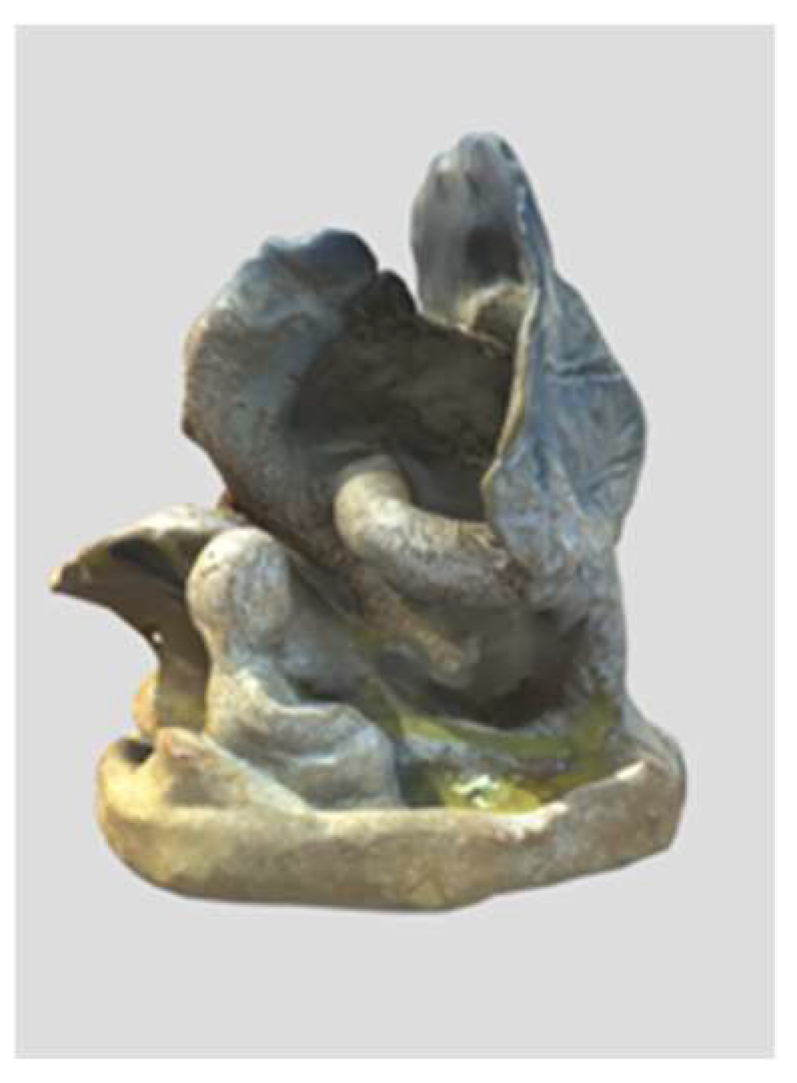
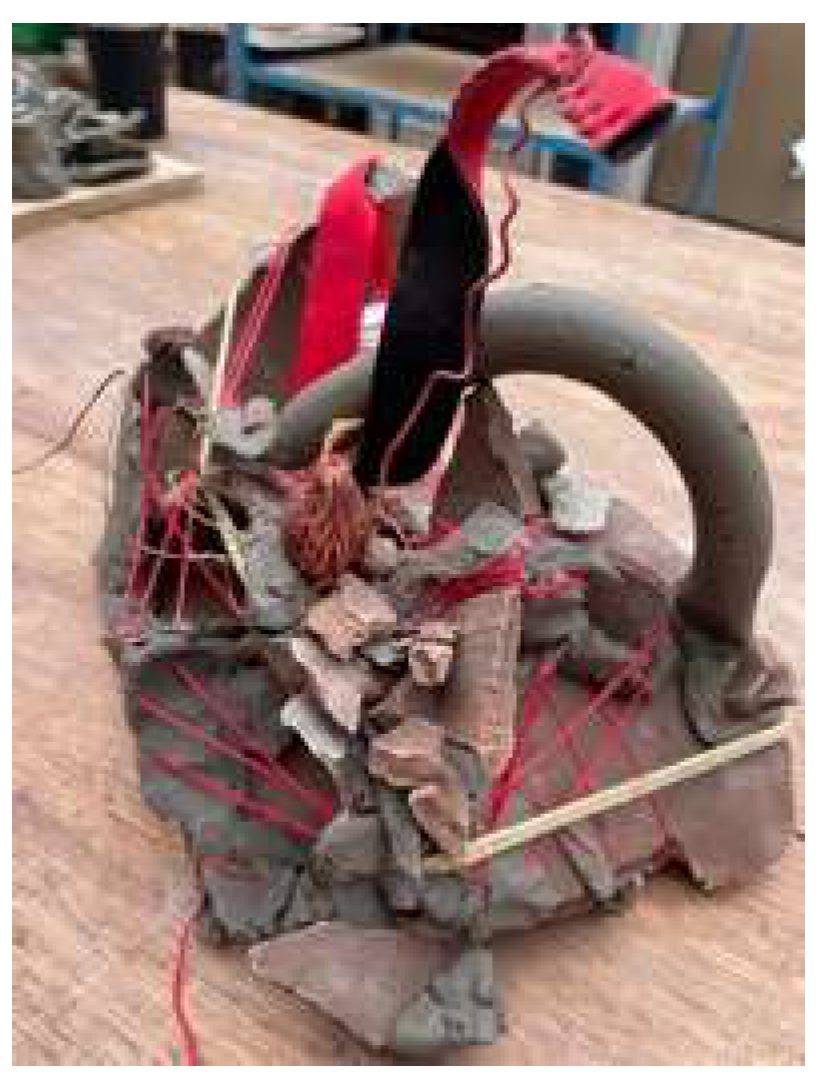
Collective resonance. Group discussion and mutual support amplified the recollection process. One participant remarked, “I was merging two worlds, Korean and Swedish breaking up a clay piece and re-connecting them with thread and clay strings” (Figure 25) (Atlavina 2025). While the use of the soundscape from the prenatal phase of bodily liquids and mother’s heartbeat was acknowledged by the group as a significant element of the workshop environment, saying, “I loved the soundtrack of the womb listening to mum’s heartbeat. I noticed a time when the sound was ‘on and of’” (Atlavina 2025). Psychological resonance found place in sculpture inspired by WS3 “I grew up in a big family of boys, often I hid in the room (Figure 26), the created sculpture of a big mushroom and tiny me hiding beneath the big cap, conveyed my shelter space, similar to Alice’s escapes into rooms and corridors” (Atlavina 2025). “A very friendly and safe space to create without any pressure or judgment that you own. Also, it was good that there was no time limit in each table joined” (Atlavina 2025).

3.3. Feedback Analysis

The four aspects identified after collation of feedback: memory and creativity, AR novelty and challenge, desire for deeper exploration, and collective resonance, highlight the deep affective and cognitive engagement participants experienced through the CAR workshops. The hybrid space of interplay between material (clay) and immaterial (AR, and soundscape) offered novelty but also the critical assessment of new AR technology. These tools created a multi-sensory space where memory was recalled and reactivated through touch, creative making and shared presence within the contrast of gravity characteristics. The emphasis on slowness cultivated an atmosphere of trust and attentiveness that became visible in the last glazing session when participants cared for each other’s memories with signs of empathy and compassion towards forming new relationships with their personal and collective pasts. In addition, feedback responses affirm the project’s core aim to offer a participatory hybrid methodology for evoking embodied memory within tactile making, exploratory tasks using new technology, and intergenerational sensory context.
While the above analysis was focused on immediate post-workshop feedback, a follow-up questionnaire was also circulated within a year to invite participants’ reflections on longer-term themes and influences. Here is an observation of the potential long-lasting impact of the participation. The following extracts from three participants were collected within a year of attending the sessions.
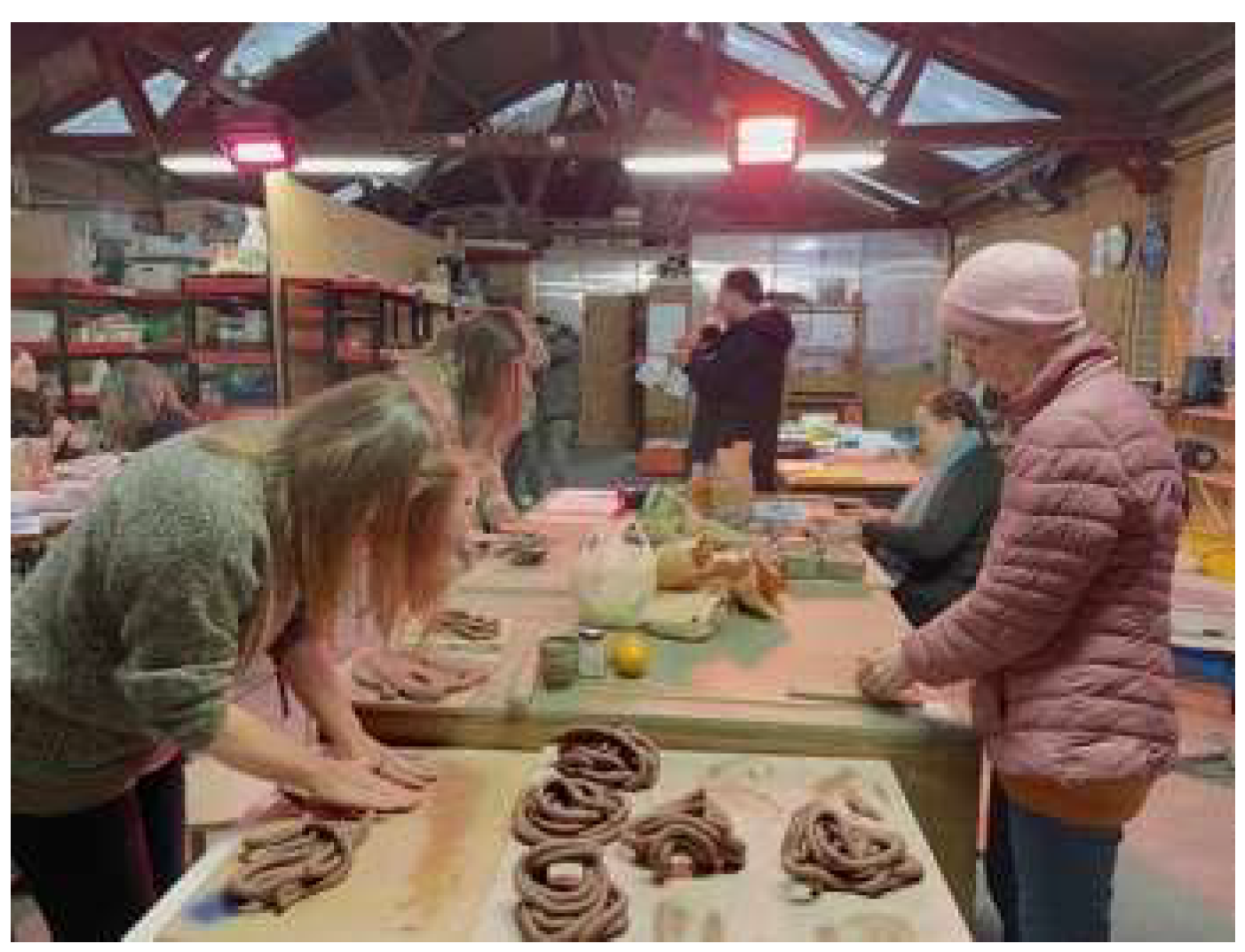
This response confirmed the safety of the space: “Overall it was a wonderful experience, one thing that stood out is that everyone felt comfortable sharing their memories with people, some of whom I have never met before (Figure 27), which also helped recollect my own past” (Atlavina 2025).
These responses demonstrate the impact of participatory practices: “The workshop experience was inspiring as it brought back various memories from my childhood. My Mum passed away when I was twelve, and it impacted me. Multiple feelings and experiences raised by the workshop included grief. It led me to create a memory photo journal based on Mum’s photographs, letters and documents” (Atlavina 2025).
And the next one: “The workshop was truly memorable. It stirred many good feelings and pleasant thoughts, bringing a vivid connection to my childhood. Trying to express my mood at that time has left a lasting impression—the experience brought something deeply visceral to the surface. (Figure 21) I’ll continue working on my biography with greater confidence and rigour, and I’ll also keep developing my mini-installation artworks made from discarded objects found on the streets” (Atlavina 2025).
“I guess, indirectly, yes, as my work has become more tactile and workshops helped me convey the intangible (whether it’s memory or anything on the spectrum of emotions) through tactile creation” (Atlavina 2025).

4. Conclusions

4.1. Intersection of Theories and Practices

The CAR project was a delicate research process because it operated at the threshold of inner recollection and outward, physical expression—a meeting point between memory and matter. The intimacy came not only from the personal content participants engaged with but also from the vulnerability exposed within the collaborative space of touching, shaping, and sharing memories through clay and AR gestures. Unlike the structured recall of conventional therapeutic or archival methods, this project invited what Freud called acting out rather than recollecting memory through verbal narration. Similarly, Polanyi’s notion of tacit knowledge, that “we know more than we can tell”, provides an understanding of material intelligence and the body as the holder of all experiences, conscious and unconscious, tactile and intangible too. Ettinger’s matrixial theory expands on this further, proposing art as a space of co-emergence, where the subjectivities of past events together form a shared, collective pool of knowledge, emotions, and mutual care. Hepworth, too, insisted on sculpture as an extension of the self, as a form through which the artist’s interiority projected itself and was felt in space. In this project, those ideas were embedded into the living processes of recollecting and making in clay, learning and tracing in AR, and echoed in the participants’ reflections. It tested the co-existence of theoretical depths inside the art practice of collective creativity.

4.2. Beyond the Sum of Its Parts and Embodied Synergy

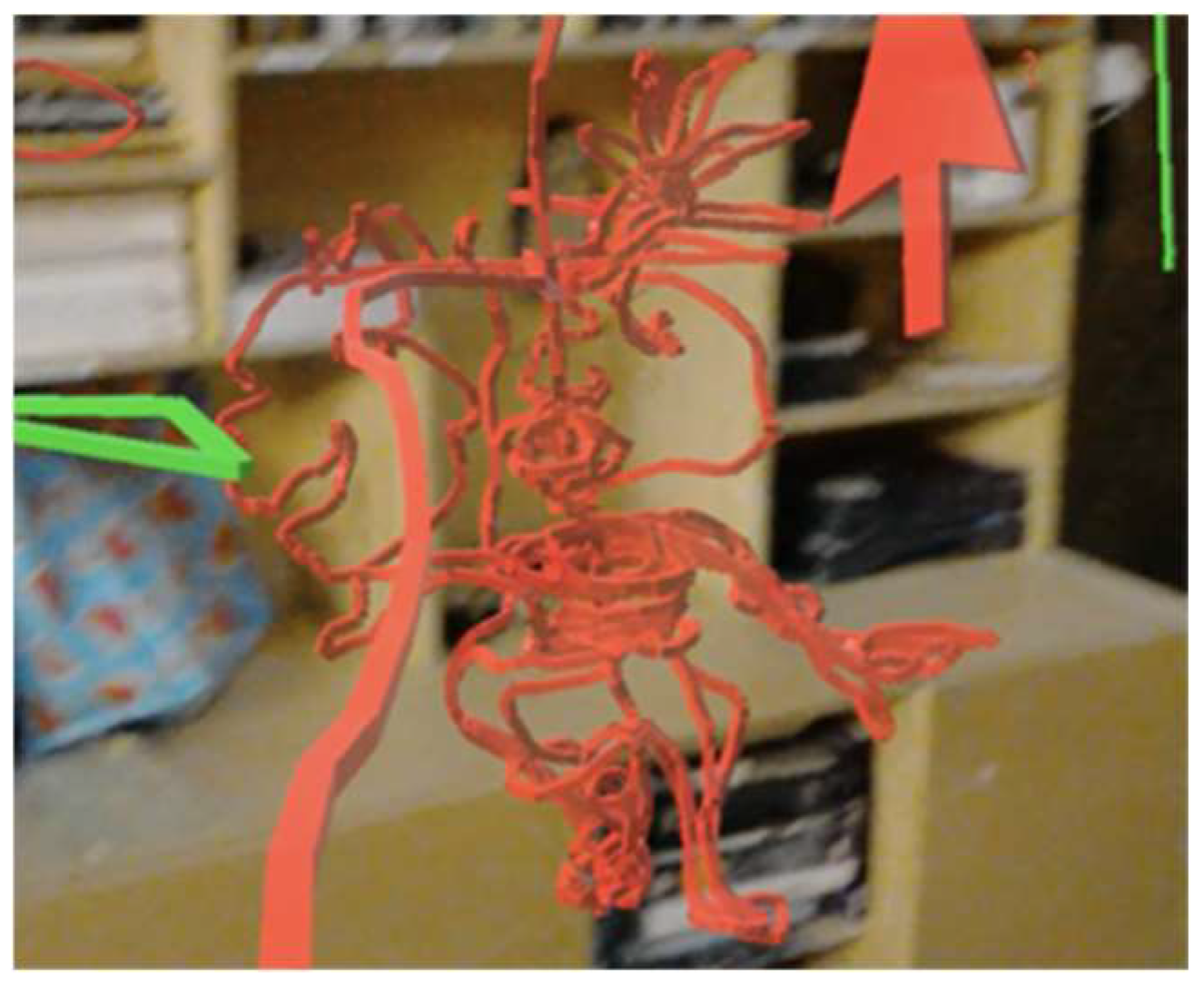
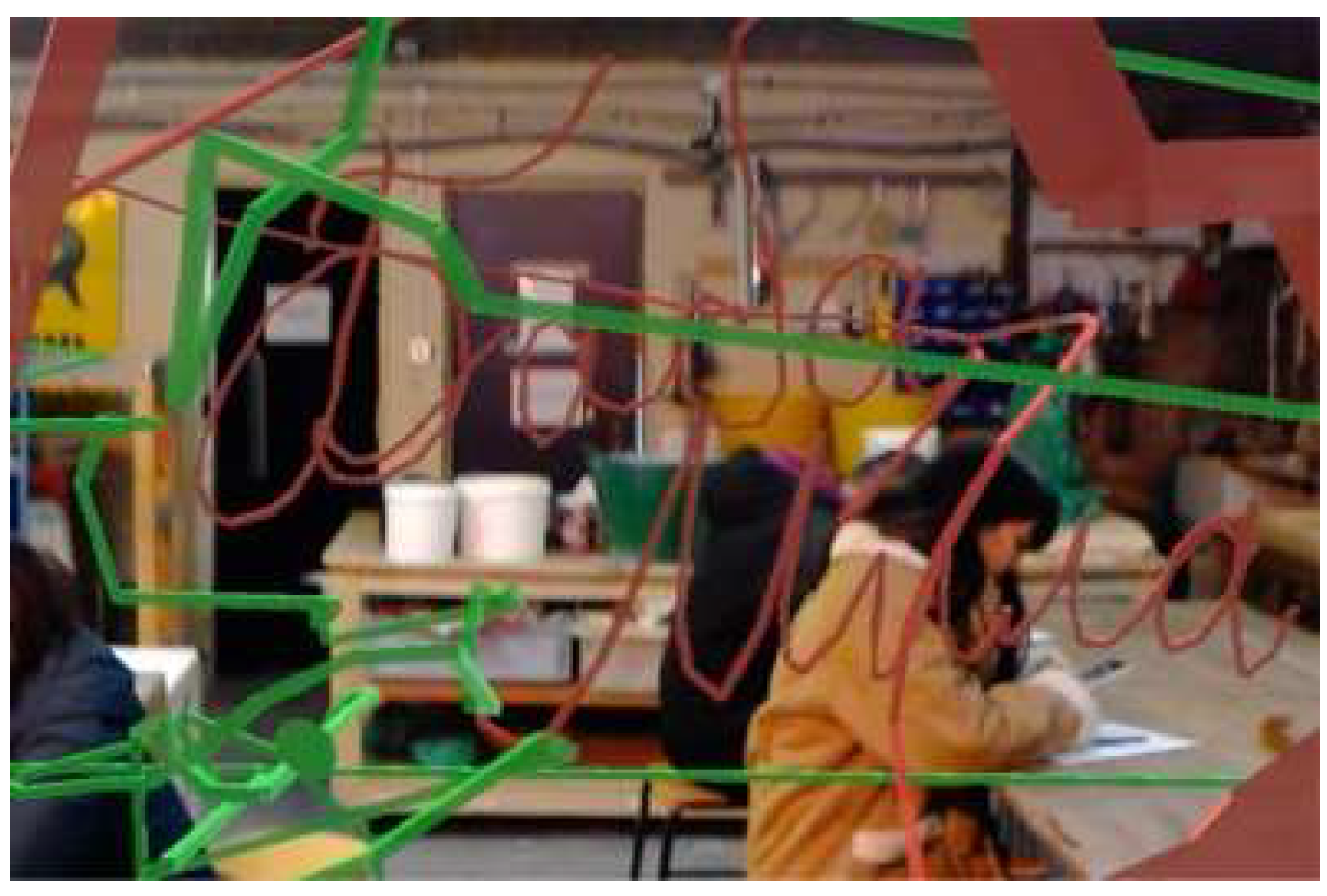
The interaction between two media brought to light interesting outcomes that participants commented on during the reflection time. The discussions focused on observations of the clay and AR activities, plus the gradual personal reimagination of the atmosphere of the past event. The participants noticed a chain of tasks that evoked the event with astonishing details. First, the inspirational sources marked the area of the recall; second, the tactile activities with clay triggered feelings experienced and connected to a general recall of the event. Some explained that it was more like looking at this child from a distance, like an artist observing the landscape, present but detached. Third, when they move around the space with augmented reality tools, these tasks allow the event (memory) to be replayed as a child. This re-enactment added more details about the recalled physical space and the atmosphere in which the event took place. It is due to broad movements allowed in AR, and the freedom to operate within weightless media. In this way, clay functions as an anchoring medium recording the initial memories inside the small sculpture through tactile recollection. Evoked feelings activate the mapping of spatial orientation in augmented reality that enhances and mobilises memory through a navigable, embodied experience. The summarised recollection of the event from tactile grounding and immersive expansion produces a reflexive mental zone that exceeds the limits of either medium in isolation. Participants who managed to work through a repetitive cycle of tactile-spatial-tactile-spatial began re-enacting deep memories, reimagining writing huge letters, feelings of being on the line, and commenting on recalls from learning how to write (Figure 28 and Figure 29).
The act of reimagining the past events during the recall is discussed by Bachelard, who wrote that “Our memory has to be reimagined. For we have in our memories micro-films that can only be read if they are lighted by the bright light of the imagination.” (Bachelard 1994, p. 175) Gaston Bachelard’s phenomenology of inhabited space provides a conceptual lens for understanding the hybrid spatial dynamics of CAR. Bachelard argues that “A house that has been experienced is not an inert box. Inhabited space transcends geometrical space” (Bachelard 1994, p. 47), emphasising that lived experience transforms physical environments into memory-bearing structures (Figure 30). In CAR, clay objects operate as intimate containers that “retain our memories” (Bachelard 1994, p. 6), while augmented reality extends these contained forms into navigable spatial fields that assist in the recollection of details of surroundings. Rather than functioning as a technological overlay, AR becomes a medium through which participants inhabit memory through movement, activating what Bachelard describes as the immensity within lived experience.

4.3. Curating the Hybrid Space

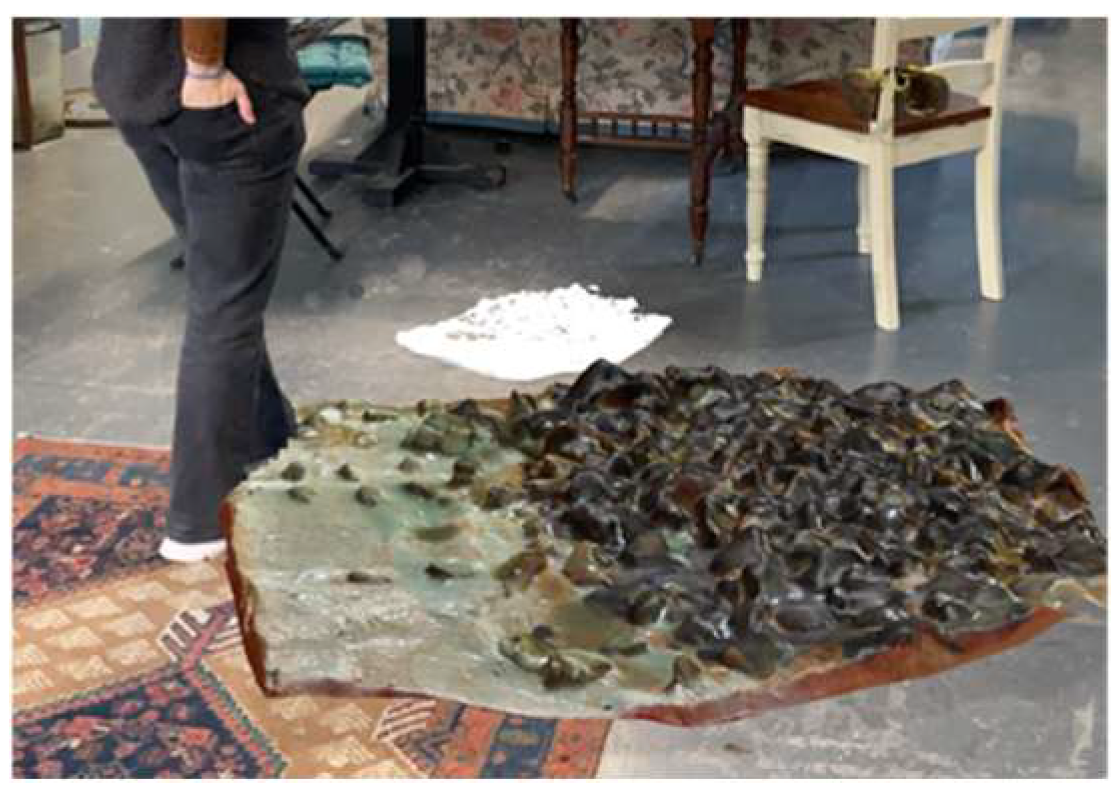
The potential area of development offers a new understanding of the comparison between the memory embedded in physical clay sculptures and that of their virtual 3D models, which could exist separately in the closed and open spaces. The clay sculptures invite tactile engagement and intimate recollection. These draw attention to two treasured times for the event of memory evocation—when the original encounter occurred, and when an artist transformed the memory into a sculpture. However, the possibility to set various sizes of virtual 3D models within the AR space initially seemed to disrupt the intimacy of tactile memory, yet they also offered a form of release and could offer reassurance for the emotional weight and burden of the memory. By manipulating the model to an enormous size, one can return it to minuscule dimensions in seconds. This resembles the manipulative structure of memory encounters in general and the power of art to heal wounds and elevate positive moments (Figure 31).
In the realms of workshops, the clay held the weight of bodies and the warmth of care. AR offered weightless presence, movement without touch, and spatial curiosity that returned participants to the joys of early exploration. Together, they formed a choreography of recollections with clay as the ground, and AR as the air. However, within the curatorial dimension of a hybrid exhibition, the option to change 3D memory models in size and position should become a significant feature, demonstrating the power of the mind to shape the duration and estimation of mental zones.
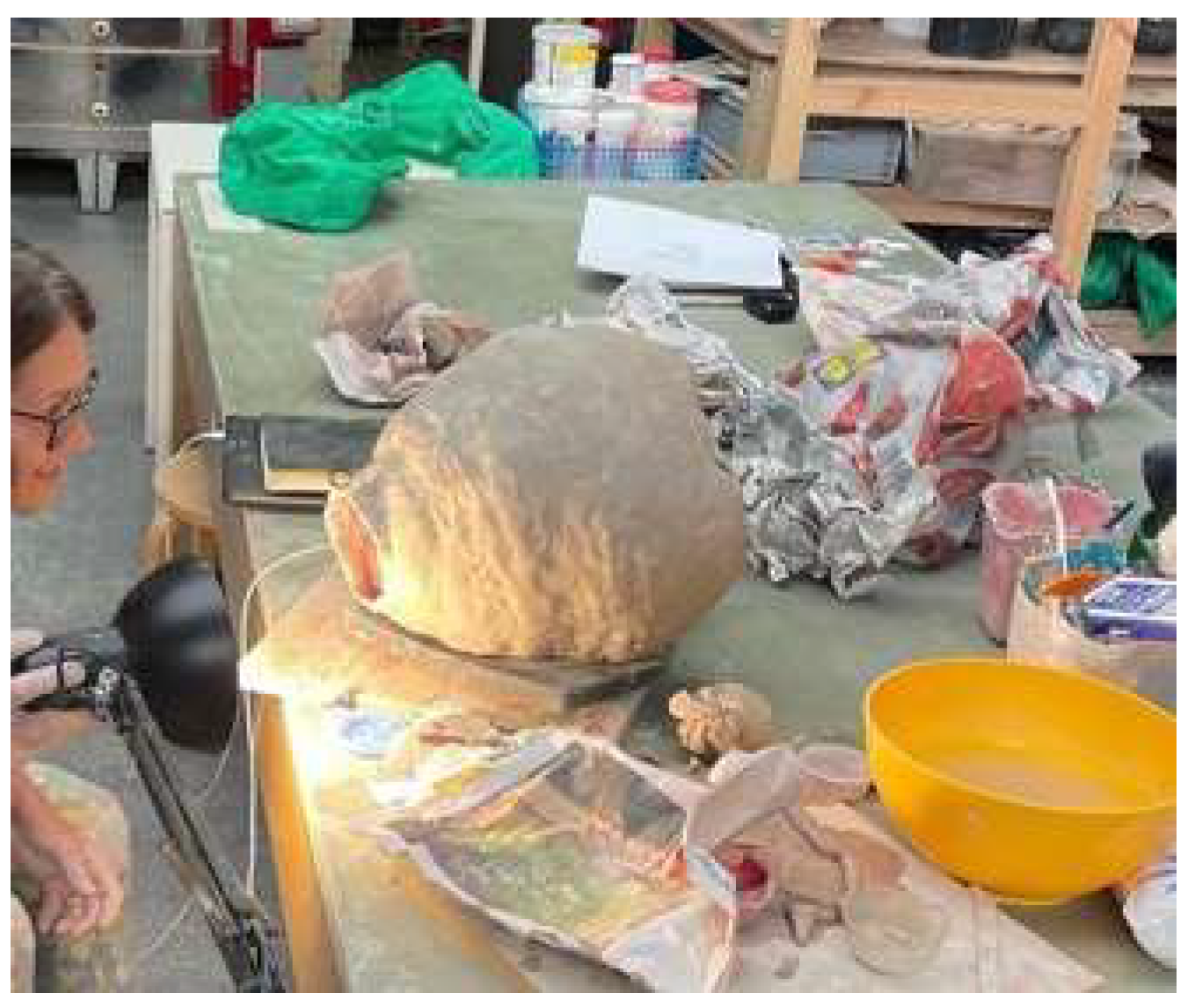
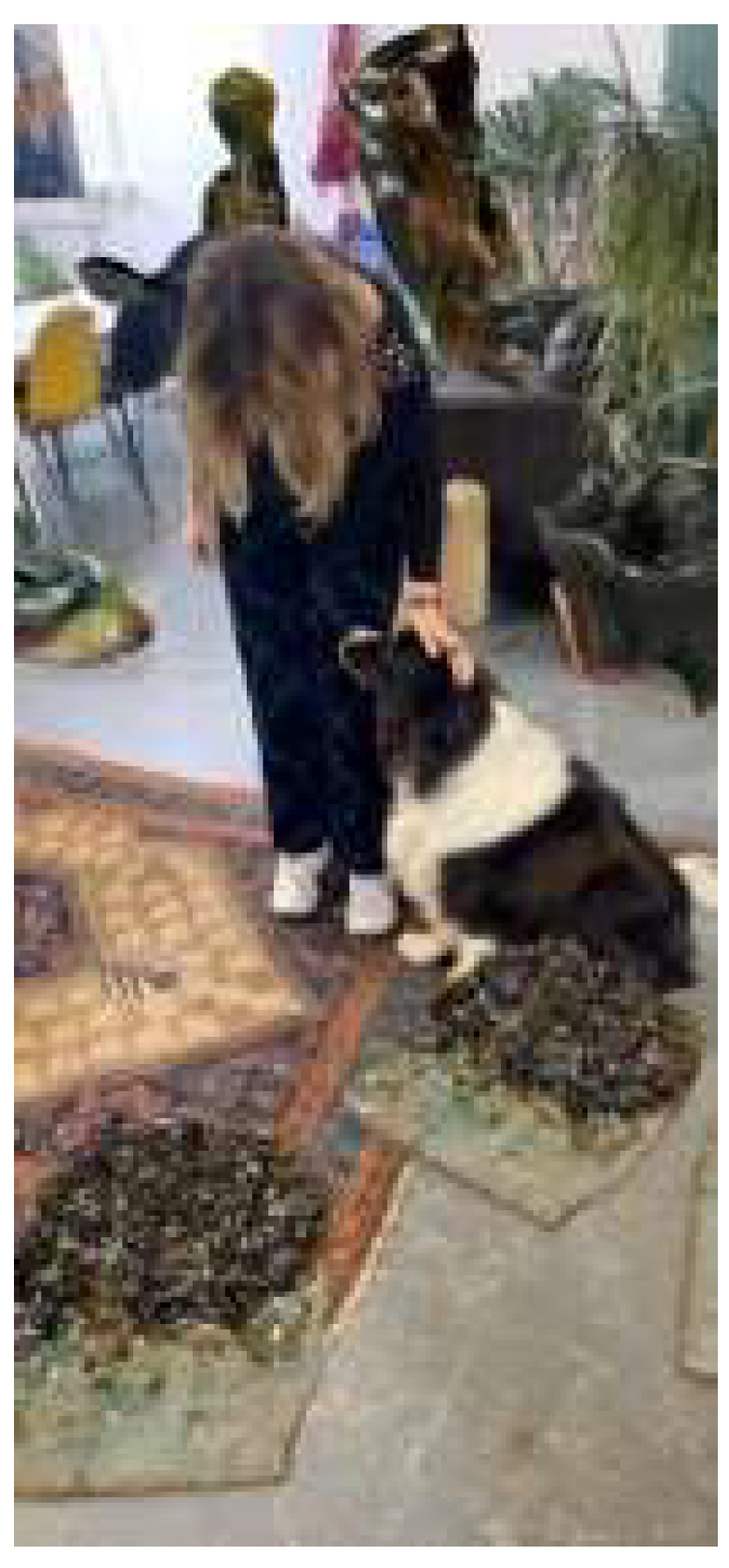
Curating the physical sculpture and its embodiment in AR makes a symbolic alignment between the entire process of transforming memories and human duality in the operation between the physical and mental worlds (Figure 32). The methodological framework of the workshops was not a space of mastery, but a space of encounter. The workshops did not aim to resolve the aesthetic norms of working with clay, but to open the dialogue between participants about embedded abstract imprints of childhood events and the hybrid essence of processes in clay and AR. In a collaborative group, participants could meet the memory of another in real and AR spaces, embedded in a clay slab, the process of glazing a vessel created by the other, or in a shared space of an AR spiral. Ettinger’s idea that art carries emotional resonance across time shaped my understanding of curation as a practice not of arranging objects, but of tending to what is felt between them. This was echoed in the way participants treated each other’s work during the glazing session, with tenderness, honouring what had been stirred into form. Creative slowness and non-verbal presence are essential to this unfolding. Participants were not asked to explain or justify, but to respond and observe. As in Bonnie Kemske’s reflections on the “art of touch,” participants engaged with clay on both levels, the inside feelings and outside surfaces of skin (Kemske 2022, pp. 416–30), through pressure and sensation, as well as through empathy and care for one another. Touch, in this context, was both material and emotional.
The project has shown that tactile-digital hybridity could be a methodological tool for engaging embodied memory, facilitating healing, and expanding the creative agency of participants. This also invites us to consider the additional mnemonic anchor—the soundscape, where sonic cues can help participants return to particular internal landscapes, just as the scent of cinnamon on handmade paper or the coolness of clay can. The hybrid space of CAR offered not only an aesthetic environment but also a deeply pedagogical one, supporting intergenerational healing, self-discovery, self-motivation and new understandings of care through making. As the physical and digital works continue to circulate in the “https://sketchfab.com/svetlana.atlavina/collections/museum-my-mother-and-i (accessed on 25 February 2026)” archive and soon in the hybrid exhibition at Fulbourn Mental Health Hospital, they carry not only form but also feeling, a testimony to what can be remembered when given space, care, and inspirational boosts.

4.4. Future of the Method

This research has the potential to expand into deeper acts of hybrid making, where workshops invite participants to inhabit a threshold between shaping clay with hands or their bodies and meeting the expansive gestures of AR. Rather than separating body from technology, in a hybrid form of making, there might be movement trackers, allowing the entire action to be an echo of childhood memories through the contemplation of opposed media on the spectrum of gravity, similar to rolling on the grass from the hill or tracing a fall of the feather. This might evoke long forgotten or suppressed creative actions, allowing encounters to slip literally between the maker’s fingers as they shape clay, with a sudden emergence that resembles the blink of a lighthouse across a darkened sea, not continuous but rhythmic in an internal mind landscape. Some memories surfaced in participants’ minds not through direct recollection but through what felt like spontaneous gestures that followed soft flashes on the memory’s foggy horizon, similar to Gestalt theory. Likewise, the presence of the prenatal soundscape, which unlocked a feeling of deep familiarity in participants, is worth exploring further. In addition to the sound, the experiments of PBSP psychomotor therapy described by Kolk, in The Body Keeps the Score, in the chapter Filling in the Holes: Creating Structures (van der Kolk 2015), could be transformed to the places of augmented reality with manipulation of sizes of 3D digital models. Future experiments might involve work on each other’s memories, and collaboration on the recollection of collective memories of historic and national events.

4.5. Final Thoughts

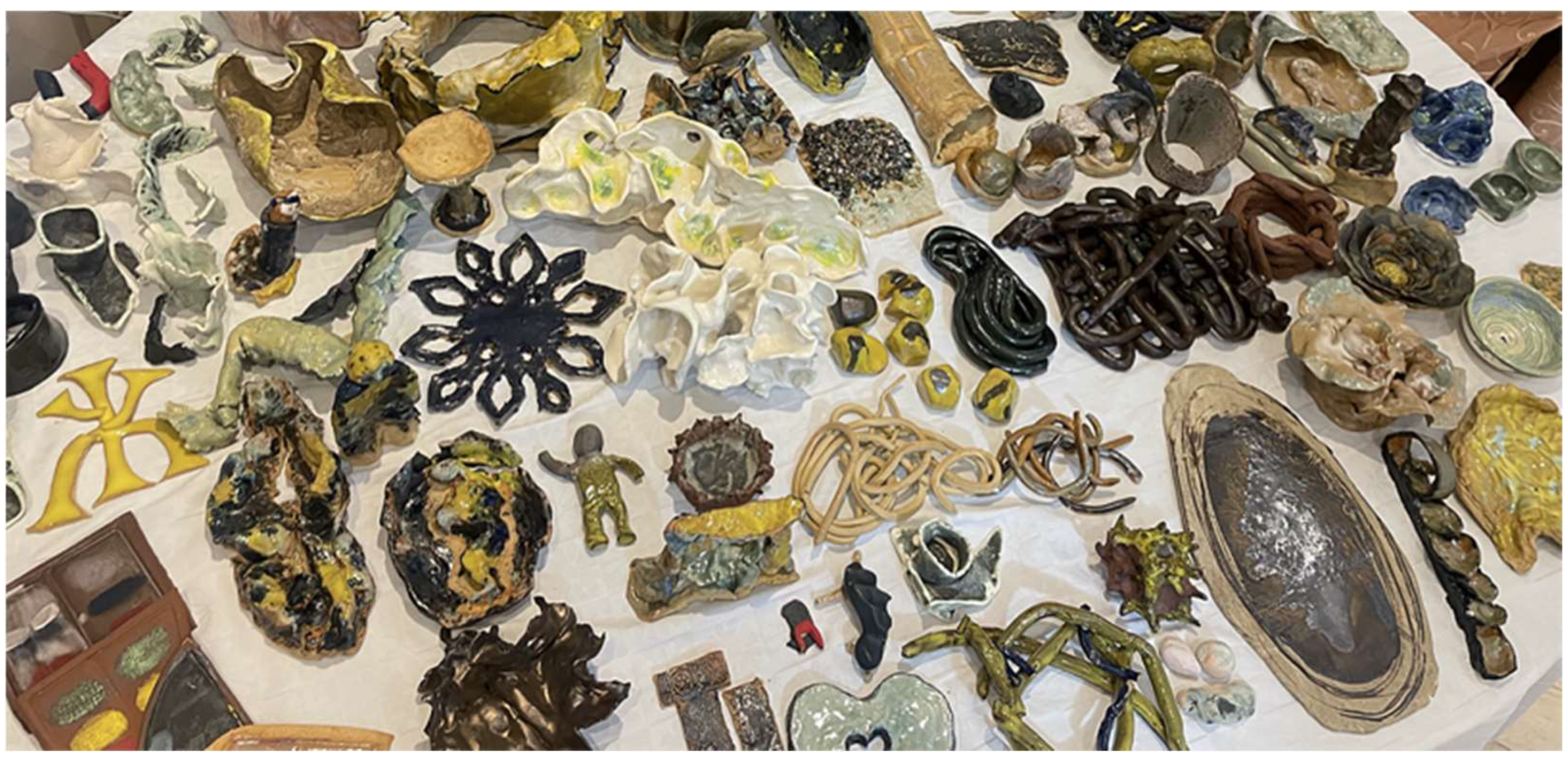
The Clay and Augmented Reality project has not sought definitive answers, but rather defined spaces of emotional, tactile, digital, and sonic dimensions where memory can stir, resurface, and be reshaped. In these hybrid environments, art became not a product but a process of becoming, remembering, recognising oneself in a chosen landscape and caring for the exposed vulnerability. Through a collaborative atmosphere, layering childhood activities and playful experimentation, participants engaged with their inner archives—sometimes joyfully, sometimes tenderly, sometimes in silence (Figure 33).
The dialogue between clay and AR, body and technology, opened a sanctuary of slowness, silence, and deep attention. The findings and outcomes suggest that memory lives in the fingers, on the surface of the skin and in the senses, in gestures, in sound, and in the space of care. When evoked through creative processes, it becomes a source of new understanding, allowing revisitation and revision of known but forgotten connections and patterns. With the Museum of My Mother and I, childhood memories enter the world through digital new media, spinning in spaces next to us, each offering access to learning about the other’s growth path. Once hidden in dark mental space, those memories come to light in physical form, representing the empathy and compassion of the contemporary matrixial space. The repository offers a unique collective view on what shaped our society in the previous 20- to 60-year period. These sorts of revelations of what resides in memory and then how they manifest into the physical world can be seen as a cross-section of our contemporary growth. In this way, CAR offers an ecology of care, curated through presence and self-motivation, through creativity mixed with fragility (Figure 34).
Finally, it is important to clarify the phrase introduced in the abstract: “CAR presents a model for participatory research that bridges physical and digital realms in deeply human ways.” While the project makes extensive use of digital technologies, including augmented reality, 3D scanning, and online platforms, the CAR model remains grounded in processes that can be experienced only by humans. Here, ‘human’ has two connected meanings. First, it refers to empathy in relationships, especially between facilitators and participants, and between participants and people they remember caring for them, like parents or caregivers. These empathic relations are brought out through art-making and are part of the project’s design at every stage, from planning to uploading the outcomes. The second meaning of the word ‘human’ refers to the capacity of human beings to memorise, evoke, and activate, in contrast to automated or artificial systems that lack the physical, spatial, and tactile experiences.
Human experiences exist within the body as autobiographical, sensory, tactile, procedural, emotional, and care-based memory. Throughout the project, memory was activated by tactile or spatial AR triggers and unfolded through various responses, such as imprints in clay, extensive sensory experiences with childhood objects, writing in space, drawing on notepads, embodied movements, spatial navigation, eye tracking, and gestural movements. It was expressed physically rather than in abstract data retrieval.
As a model, CAR brings together three elements: material anchoring through clay and tactile tasks, spatial immersion through augmented reality, and reflective facilitation of collaborative processes and outcomes. This structure is intentionally flexible and reproducible, adaptable to a range of social contexts, including art, school and higher education, museum-based public engagement, and community art programmes focused on memory and wellbeing. With appropriate ethical framing, the model also holds potential for exploratory application within psychological and care-oriented settings.
In this way, CAR works as a flexible framework for participatory research that is people-centred while using modern digital media. It connects physical and digital spaces not just through new technology, but through real presence, empathy, shared experience and relational aesthetics.

Funding

This research was funded by Arts Council England, DYCP grant number [DYCP-00606213] under proposal: Ceramics in Augmented Reality (CAR) Stage 1.

Institutional Review Board Statement

The project was carried out under the guidance of the UK Research Integrity Office, and Research Ethics Committee (REC) or IRB review was not required. The information used in this article does not require an ethical review.

Informed Consent Statement

I confirm that this research project, Clay and Augmented Reality (CAR), does not involve clinical or biomedical research and did not include vulnerable populations, animals or humans. All participation was entirely voluntary and focused on collaborative art-making in a workshop setting. It does not include community-based participatory research. Nonetheless, all participants completed informed consent forms and were free to withdraw at any time.

Data Availability Statement

All research results and participants’ feedback were submitted to Arts Council England. Below are links connected to the CAR research. “www.sketchfab.com/svetlana.atlavina/collections/museum-my-mother-and-i (accessed on 25 February 2026)”, “https://www.instagram.com/svetlana_atlavina_dycp_ace/ (accessed on 25 February 2026)”, “https://www.a-n.co.uk/person/svetlana-atlavina/ (accessed on 25 February 2026)”.

Acknowledgments

I would like to acknowledge the mentors of the ‘Clay and Augmented Reality’ research project: Matt Roberts Arts, Chris Hough and Ian Tucknott for their support during the initial conceptualisation phase. Special thanks to Jane Boyer for her invaluable input on proofreading, editorial formatting, and structural guidance for the manuscript, as well as for her long-standing mentorship of my artistic practice. I am grateful to Anne Worthington for our ongoing dialogue on the relationship between art, clay, AR and psychoanalysis. Further thanks go to Ravensbourne University London James Edward Marks FRSA and Marius Matesan of Playla.bz, partners of the CAR project and tech frame during workshops and the outcome phase for the Museum of My Mother and I. Tereza Stehlikova, Sharon Kivland, Irina Razumovskaya, Zeena Hicks. I also wish to thank Rochester Square Studio, London—in particular Francesca Anfossi, Ewelina Barkowska and Anastasia Sledkova—for their generous support. Special thanks to Aya Hastwell, Alexandra Abadjieva and Luca Aureli. Finally, my deepest gratitude goes to all participants in the Clay and Augmented Reality research, who gave their trust, time, and creativity to the experiments.

Conflicts of Interest

The author declares no conflicts of interest.

Abbreviations

The following abbreviations are used in this manuscript:
CARClay and Augmented Reality
WSWorkshop
WS1Workshop 1
WS2Workshop 2
WS3Workshop 3
WS4Workshop 4
WS5Workshop 5
WS6Workshop 6
ARAugmented Reality

References

  1. Albani-Rocchetti, Marta, Anna Roman, Sara Federico, Martina Regazzetti, Luisa Cacciante, Błażej Cieślik, Adam Wrzeciono, Joanna Szczepańska-Gieracha, Roman Nowobilski, and Pawel Kiper. 2026. Integrating art therapy and technology in neurorehabilitation: A scoping review. Frontiers in Neurology 17: 1727248. [Google Scholar] [CrossRef] [PubMed]
  2. Atlavina, Isvetlana. 2025. Project Feedback, Collated. Images. Available online: https://www.svetlanaatlavina.com/#/car-ceramics-and-ar/ (accessed on 25 February 2026).
  3. Bachelard, Gaston. 1994. The Poetics of Space. Boston: Bacon Press. Available online: https://sites.evergreen.edu/wp-content/uploads/sites/88/2015/05/Gaston-Bachelard-the-Poetics-of-Space.pdf (accessed on 21 February 2026).
  4. Barnard, Dom. 2025. History of VR—Timeline of Events and Tech Development. Virtual Speech. Available online: https://virtualspeech.com/blog/history-of-vr (accessed on 17 February 2026).
  5. Bourriaud, Nicolas. 2002. Relational Aesthetics. Dijon: Les Presses du Réel. Available online: https://www.are.na/block/26621261 (accessed on 17 February 2026).
  6. Bowness, Sophie. 2015. Barbara Hepworth: Writing and Conversations. London: Tate Publishing. [Google Scholar]
  7. Ettinger, Bracha. 2006. The Matrixial Borderspace. Minneapolis: University of Minnesota Press. [Google Scholar]
  8. Freud, Sigmund. 1914. Remembering, Repeating and Working-Through. In The Standard Edition of the Complete Psychological Works of Sigmund Freud, Volume XII (1911–1913): The Case of Schreber, Papers on Technique, and Other Works. London: Hogarth Press. Available online: https://marcuse.faculty.history.ucsb.edu/classes/201/articles/1914FreudRemembering.pdf (accessed on 17 October 2025).
  9. Kemske, Bonnie. 2022. Embracing Sculptural Ceramics: A Lived Experience of Touch in Art. Edited by Andrew Livingstone and Kevin Petrie. London: Bloomsbury Visual Arts. [Google Scholar]
  10. Klein, Melanie. 1975. The Writings of Melanie Klein. Volume I. Love, Guilt, Reparation and Other Works 1921–1945 by Melanie Klein. With an Introduction by R.E. Money-Kyrle. Under the General Editorship of Roger Money-Kyrle in Collaboration with Betty Joseph, Edna O’Shaughnessy and Hanna Segal. New York: The Free Press: A Division of Macmillan, Inc. [Google Scholar]
  11. Luo, Jiaxiang, Efthymia Mastrokalou, Rahaf Aldabous, Sarah Aldaboos, and Alvaro Lopez Rodriguez. 2023. Fabrication of complex structures through an augmented reality assisted platform. In Proceedings of the 28th International Conference of the Association for Computer-Aided Architectural Design Research in Asia (CAADRIA). Hong Kong: Association for Computer-Aided Architectural Design Research in Asia (CAADRIA), vol. 1, pp. 413–22. Available online: https://papers.cumincad.org/data/works/att/caadria2023_362.pdf (accessed on 25 February 2026).
  12. Marks, James Edward, and Marius Matesan. 2020. PlayLa.bZ CIC. Community Interest Company. Available online: https://www.playla.bz/ (accessed on 25 February 2026).
  13. Ornes, Stephen. 2025. This artist collaborates with AI and robots. Technology Review. Available online: https://www.technologyreview.com/2025/02/17/1111387/ai-sougwen-chung-art-robots-collaboration/ (accessed on 25 February 2026).
  14. Polanyi, Michael. 1958. Personal Knowledge: Towards a Post-Critical Philosophy. London: Routledge & Kegan Paul Ltd. Available online: https://martin.kcvs.ca/phil334/papers/polanyi-m-personal-knowledge-towards-a-post-critical-philosophy.pdf (accessed on 17 October 2025).
  15. Polanyi, Michael. 1966. The Tacit Dimension. Available online: https://monoskop.org/images/1/11/Polanyi_Michael_The_Tacit_Dimension.pdf (accessed on 17 February 2026).
  16. Shanken, Edward. 2009. Contemporary Art and New Media Digital Divide or Hybrid Discourse? Available online: https://artexetra.wordpress.com/wp-content/uploads/2009/02/shanken-con-art-new-media-paul-ed-2016.pdf (accessed on 21 February 2026).
  17. van der Kolk, Bessel. 2015. The Body Keeps the Score. New York: Penguin. [Google Scholar]
  18. Yoon, Rami, Hye-Won Hong, and Yun-Mi Park. 2025. Phygital art therapy: A theoretical model integrating digital and physical media in psychotherapeutic practice. The Arts in Psychotherapy 96: 102381. [Google Scholar] [CrossRef]
Figure 1. HoloLens capture of the workshop space. Captured with HoloLens One, manufactured and designed by Microsoft, Redmond, WA, USA in 2016.
Arts 15 00055 g001
Figure 2. Memory of soap bubbles in clay after the AR session: an attempt to transfer properties of weightless AR into clay—a material with weight.
Arts 15 00055 g002
Figure 3. The lines of sight tracking with AR. (ARvid app on iPhone 12 Pro).
Arts 15 00055 g003
Figure 4. Initial experiments of intervention with AR. Session in recollecting and reimagine events at the playground. The memory of running at 1 year old, wearing a blue coat. (ARvid app on iPhone 12 Pro).
Arts 15 00055 g004
Figure 5. Augmented question marks placed on a playground swing as part of preliminary CAR experiments. The intervention explored how AR prompts can transform ordinary environments into participatory spaces of inquiry, encouraging bodily movement and reflective engagement with memory and place. (ARvid app on iPhone 12 Pro).
Arts 15 00055 g005
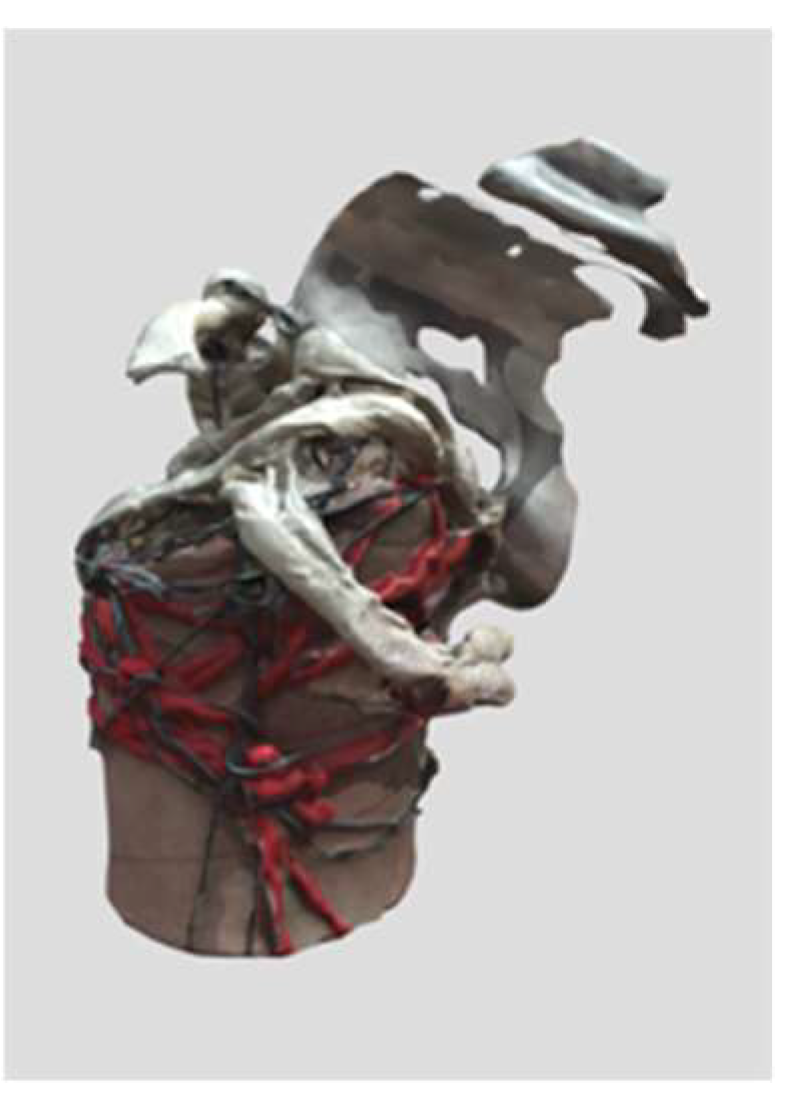
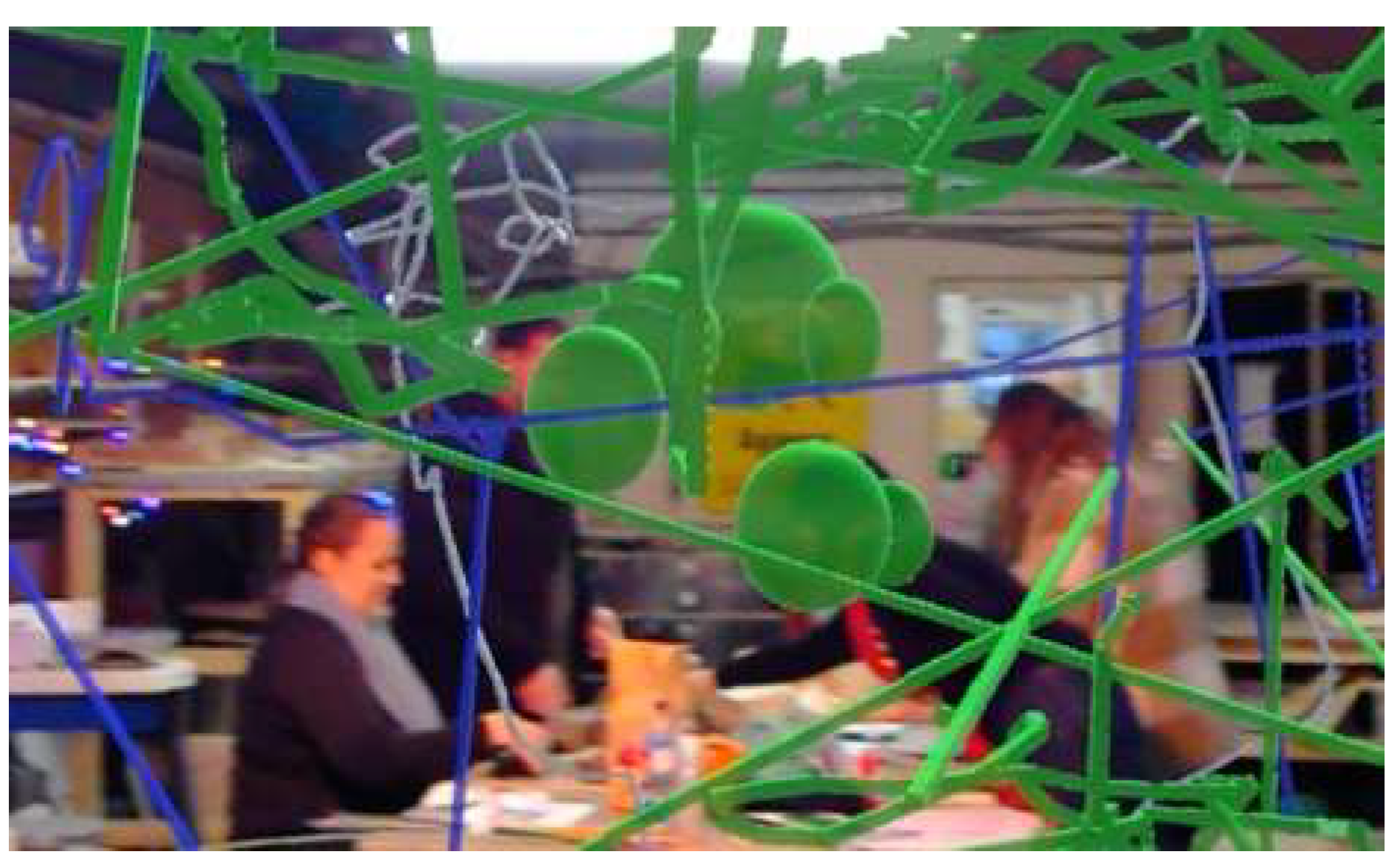
Figure 6. HoloLens capture of the hybrid work. Lines in blue, green, purple and grey are added within the session in augmented reality to the artwork depicted in Figure 7. Captured with HoloLens One, manufactured & designed by Microsoft, Redmond, WA, USA in 2016. Workshop 6 (WS6).
Arts 15 00055 g006
Figure 7. Clay artwork. WS6.
Arts 15 00055 g007
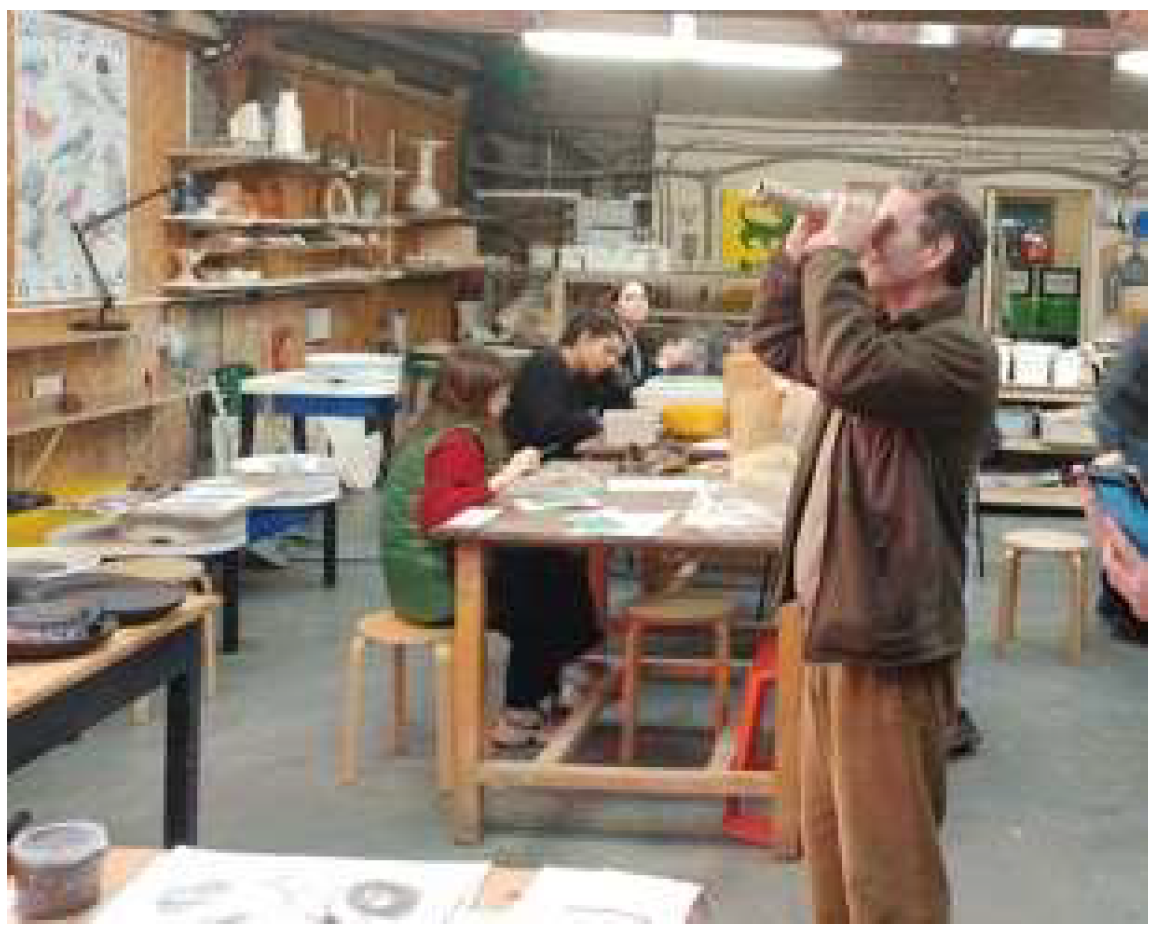
Figure 8. HoloLens user and the workshop space. Work with HoloLens One, manufactured & designed by Microsoft, Redmond, WA, USA in 2016. WS1.
Arts 15 00055 g008
Figure 9. Family traditions. Clay slabs were pre-cut for the work, inspired by family traditions and customs. WS1.
Arts 15 00055 g009
Figure 10. Mother. WS2. 3D-rendered models of ceramic sculptures. https://sketchfab.com/svetlana.atlavina/collections/museum-my-mother-and-i (accessed on 22 February 2025).
Arts 15 00055 g010
Figure 11. Slurry mono prints. WS1.
Arts 15 00055 g011
Figure 12. Slurry works. Strokes of petting animals. WS1.
Arts 15 00055 g012
Figure 13. 3D model of memory embedded in clay (https://sketchfab.com/svetlana.atlavina/collections/museum-my-mother-and-i (accessed on 22 February 2025)). Music box reminded me when my grandfather brought me to the music shop for the first time (Atlavina 2025).
Arts 15 00055 g013
Figure 14. Anonymous. Tactile work with clay produced during WS1. Glazed and fired at the last session. https://sketchfab.com/svetlana.atlavina/collections/museum-my-mother-and-i (accessed on 22 February 2025).
Arts 15 00055 g014
Figure 15. After Judith. 3D-rendered models of ceramic sculptures. WS5. https://sketchfab.com/svetlana.atlavina/collections/museum-my-mother-and-i (accessed on 22 February 2025).
Arts 15 00055 g015
Figure 16. 3D model of ceramic Enclosure. Memory of participant: “I smell the opening of flowers, I stick my nose into their blooms, and taste their pollen with my tongue. There were my early memories of exploring the garden where I grew up. With all my senses! I was a solitary little girl and spent days dreaming in that garden, away from the adults’ gaze.” WS6. https://sketchfab.com/svetlana.atlavina/collections/museum-my-mother-and-i (accessed on 22 February 2025).
Arts 15 00055 g016
Figure 17. Image of experiments that led to the white-noise soundscape track used as a background noise for all WS. Artwork: The First Shelter.
Arts 15 00055 g017
Figure 18. Collective memory. Sand castle and smoke. The group of participants collaborated to evoke memories from their holidays at the seaside.
Arts 15 00055 g018
Figure 19. Blue Ship in the ARvid app. WS1.
Arts 15 00055 g019
Figure 20. Starring into two kaleidoscopes. Atmosphere of WS1.
Arts 15 00055 g020
Figure 21. “I am in the snow”, Workshop 5 (WS5). https://sketchfab.com/svetlana.atlavina/collections/museum-my-mother-and-i (accessed on 22 February 2025).
Arts 15 00055 g021
Figure 22. Participant: I often associate my childhood memories with family holidays at the seaside. Mermaid appears in memory fragments. Workshop 2 (WS2). https://sketchfab.com/svetlana.atlavina/collections/museum-my-mother-and-i (accessed on 22 February 2025).
Arts 15 00055 g022
Figure 23. 3D-rendered models of ceramic sculptures created from a clay-graphite mix. WS6. https://sketchfab.com/svetlana.atlavina/collections/museum-my-mother-and-i (accessed on 22 February 2025).
Arts 15 00055 g023
Figure 24. My Gift. 3D-rendered models of ceramic sculptures. WS4. https://sketchfab.com/svetlana.atlavina/collections/museum-my-mother-and-i (accessed on 22 February 2025).
Arts 15 00055 g024
Figure 25. Merging two Worlds. Clay work inspired by family cross-cultural setting and the attempt to work with HoloLens One. WS5.
Arts 15 00055 g025
Figure 26. Mushroom and the Lonely Space. WS3. https://sketchfab.com/svetlana.atlavina/collections/museum-my-mother-and-i (accessed on 22 February 2025).
Arts 15 00055 g026
Figure 27. Workshop settings. WS2.
Arts 15 00055 g027
Figure 28. Drawing with Hololens in AR during WS2. The colour red and the arrow are from the capture of the overlay in augmented reality space. Participant worked with HoloLens One, manufactured & designed by Microsoft, Redmond, WA, USA in 2016.
Arts 15 00055 g028
Figure 29. Writing within augmented reality. Workshop 3 (WS3). The green lines are attempts from the participant to draw an architectural plan of the apartment from memory. The letters in brown are from the recollection of memories from writing in the school notebook. The overlay is captured when participant worked with HoloLens One, manufactured & designed by Microsoft, Redmond, WA, USA in 2016.
Arts 15 00055 g029
Figure 30. Image of a ceramic sculpture (10 cm × 15 cm). Memory the participant: “The sound of a wave retracting on a rocky coast. I grew up by the seaside; therefore, going to the beach played a big part in my upbringing. As a kid, I would sit at the coastline waiting for the waves to arrive and drag the small rocks toward the sea. To this day, that is one of my favourite natural sounds, and it always evokes a sense of comfort and relaxation.” WS6. https://sketchfab.com/svetlana.atlavina/collections/museum-my-mother-and-i (accessed on 22 February 2025).
Arts 15 00055 g030
Figure 31. One of the experiments in curating a hybrid exhibition at the artist studio in London.
Arts 15 00055 g031
Figure 32. Curating the hybrid space at the studio.
Arts 15 00055 g032
Figure 33. Embedded memories in clay. Insights into the physical part of the collection ‘Museum of My Mother and I’, presented on “www.sketchfab.com/svetlana.atlavina/collections/museum-my-mother-and-i (accessed on 22 February 2026)”.
Arts 15 00055 g033
Figure 34. Embedded memories in clay. Insights into digital part of the collection ‘Museum of My Mother and I’, presented on “www.sketchfab.com/svetlana.atlavina/collections/museum-my-mother-and-i (accessed on 22 February 2026)”.
Arts 15 00055 g034
Disclaimer/Publisher’s Note: The statements, opinions and data contained in all publications are solely those of the individual author(s) and contributor(s) and not of MDPI and/or the editor(s). MDPI and/or the editor(s) disclaim responsibility for any injury to people or property resulting from any ideas, methods, instructions or products referred to in the content.