


Abstract
The integration of digital tools and environmental design methods is widely recognised as essential for sustainable architectural practice. However, their influence on early design decisions and lifecycle continuity remains limited. This study introduces the concept of integration readiness and operationalises it through the Integrated Environmental Design Framework (ILPP+), which links environmental methods to project phases, decision leverage, and organisational conditions. An exploratory survey of 37 architectural design offices in the Lower Silesian region of Poland was conducted to examine how BIM, life cycle assessment (LCA), passive strategies, performance-based analysis, and monitoring practices are embedded in design workflows. The analysis combines descriptive statistics with exploratory correlation analysis to identify relationships between selected integration dimensions. The results indicate uneven patterns of integration. Passive strategies and simulations show moderate coupling (ρ = 0.60), while weaker relationships between simulations and structured decision processes (ρ = 0.40) suggest that analytical tools are not consistently used as decision-support mechanisms. Similarly, BIM shows only partial integration with LCA (ρ = 0.41) and post-occupancy evaluation (ρ = 0.46), indicating limited lifecycle continuity within the analysed sample. These findings suggest that environmental integration may be constrained not by the availability of tools but by their positioning within decision processes and across project phases. The study highlights the importance of aligning analytical methods with high-leverage design stages and strengthening feedback loops between design and operation.
1. Introduction
The decarbonisation of the built environment has become a central challenge in contemporary climate policy and architectural practice [1,2,3]. Buildings account for a substantial share of global energy consumption and greenhouse gas emissions, not only during operation but increasingly through embodied impacts associated with materials, construction processes, and end-of-life scenarios [4,5]. In response, the architecture, engineering, and construction (AEC) sector has seen rapid growth in digital tools and analytical methods intended to support environmentally informed design decisions, including Building Information Modelling (BIM), life cycle assessment (LCA), performance-based simulation, and, more recently, Digital Twins [6,7,8].
Despite their technical maturity and growing institutional endorsement, their practical influence on architectural decision-making remains uneven. In particular, these tools are often weakly embedded in early design stages and are not consistently integrated into structured, decision-oriented workflows. This misalignment between analytical capability and design processes limits their influence on high-impact design choices.
Over the past two decades, BIM has become the dominant paradigm for digital representation and coordination in building projects. Initially introduced to improve geometric consistency and interdisciplinary collaboration, BIM has progressively incorporated non-geometric data related to materials, costs, scheduling, and environmental performance [4,5]. In parallel, LCA has been established as a principal method for quantifying environmental impacts across the building life cycle, while performance-based design approaches enable more rigorous evaluation of thermal comfort, overheating risk, and resilience under changing climatic conditions [6,7]. More recently, Digital Twins have been positioned as a further step in digital transformation, promising real-time coupling between physical assets and virtual representations, continuous learning, and data-driven optimisation [3,8].
However, the coexistence of these instruments does not guarantee their coherent application. Empirical research in both education and professional practice indicates that BIM continues to function primarily as a modelling and documentation environment, with limited development as an integrated decision-support infrastructure [2,9]. Studies in architectural education and professional training show that BIM curricula frequently prioritise software proficiency over information governance, interdisciplinary coordination, and lifecycle reasoning [10,11]. As a result, graduates often enter professional environments equipped with strong modelling competencies but limited preparedness to manage integrated workflows that balance environmental, technical, and organisational considerations [12].
A similar pattern can be observed in the application of LCA and performance-based simulations. Although widely recognised as essential components of sustainable design, these methods are often introduced at later project stages, where their capacity to influence foundational architectural decisions is inherently reduced. Therefore, environmental assessment is frequently positioned as a verification or certification instrument instead of a structuring component of early design exploration. This sequencing weakens the potential of analytical tools to inform high-impact design choices and limits their contribution to lifecycle performance.
Taken together, these observations point to a structural challenge that extends beyond technological adoption. The key issue concerns how environmental methods are positioned within design processes, how they relate to stages of decision-making, and how their outputs circulate between conceptual design, detailed development, and building operation. Addressing this challenge requires attention not only to the availability of digital tools but also to the organisational and temporal conditions under which integration occurs.
The present study addresses this gap by conceptualising environmental integration capacity as a phase-dependent condition embedded within everyday architectural practice. It introduces and empirically applies a phase-aware framework designed to evaluate how environmental methods are embedded across decision stages and organisational contexts. In doing so, the article shifts the analytical focus from isolated tool maturity to the configuration of design processes that determine whether environmental assessment meaningfully informs architectural decisions.
1.1. Digital Tools and the Promise of Integrated Environmental Design
The promise of digitalisation in the AEC sector has long been associated with the concept of integrated environmental design. BIM, LCA, performance-based simulation tools, and, increasingly, nature-based and vegetation-integrated strategies are presented as enabling more comprehensive forms of decision-making. These approaches make it possible to evaluate multiple performance criteria simultaneously and to balance energy use, embodied emissions, thermal comfort, microclimatic conditions, and cost within a single analytical framework [1,13]. Within this paradigm, digital models are expected to function as shared information environments that support coordination across disciplines and project phases. At the same time, the extent to which such integration is achieved in routine design practice remains uneven, particularly in early design stages where decisions carry the greatest long-term consequences.
In this context, BIM is often described as the central infrastructural environment capable of integrating geometric, material, and performance-related data throughout the building life cycle [4]. When combined with BIM, LCA can be used to estimate environmental impacts during early design stages, supporting decisions related to material selection, structural systems, and construction strategies [6]. Performance-based design extends this approach by shifting attention from prescriptive compliance toward quantitative evaluation of comfort, overheating risk, and thermal resilience, enabling the comparison of alternative design strategies under defined climatic conditions [7].
More recently, Digital Twins have been introduced as a further development of integrated environmental design concepts, with the aim of linking design, construction, and operation through continuous data exchange [3,8]. The convergence of BIM, LCA, simulation, and monitoring data provides a technical basis for Integrated Design Process (IDP) approaches that are intended to support environmentally informed and data-driven decision-making [11,13]. However, the practical implementation of these approaches remains dependent on how and when these tools are incorporated into design workflows and decision structures.
1.2. Fragmentation of Practice: Evidence from Education and Professional Workflows
Despite these expectations, empirical studies point to persistent fragmentation in both education and professional practice. BIM is widely used for modelling and documentation, yet its development as a comprehensive decision-support environment remains limited [2,14]. This pattern is visible across educational programmes and design offices, where digital tools are often introduced in isolation and at relatively late stages.
The distinction between shallow BIM and deep BIM has been proposed to describe this condition. Shallow BIM refers to geometry-centred, discipline-specific use, whereas deep BIM involves coordinated integration of models, data, and analytical feedback within collaborative workflows [7]. Evidence indicates that shallow BIM continues to dominate in both academic and professional contexts. Educational curricula frequently treat BIM as a standalone technical subject, separated from environmental assessment, lifecycle reasoning, and interdisciplinary coordination [10,15]. As a result, students develop modelling proficiency without acquiring the competencies required to manage information flows, evaluate performance trade-offs, or operate within integrated project environments [11,12].
Comparable patterns are observed in professional practice, where BIM-based analyses are often outsourced or conducted after key design decisions have already been made [16]. A similar situation can be identified in the application of LCA. Although widely recognised as a fundamental method in sustainable design, LCA is often applied as a verification or certification tool and less frequently integrated into iterative early-stage design processes [1,6]. In many cases, LCA results are produced primarily to meet external requirements, which limits their influence on decisions concerning form, structure, and material selection. This sequencing reinforces compartmentalised workflows in which environmental assessment follows design development instead of informing it [7].
Fragmentation also reflects organisational and cultural conditions. Effective integration requires not only compatible technologies but also competencies that support coordination across disciplines and project stages. Studies on BIM-enabled collaboration show that organisational structures, role definitions, and responsibility allocation often lag behind technological development [14,16]. In the absence of clearly defined integrative roles, coordination tasks tend to be handled informally or delegated to external consultants. This limits the accumulation of internal knowledge and reduces continuity across projects.
1.3. From Technological Maturity to Integration Readiness
The rapid development of Digital Twin concepts has sharpened the distinction between technological capability and effective integration in architectural practice. Although advanced BIM-based Digital Twin frameworks demonstrate technical feasibility supported by data mining and artificial intelligence, empirical evidence indicates that most projects operate at relatively low levels of maturity [3]. Assessments focused on construction-phase implementation show that even technologically advanced projects frequently achieve only a connected level, characterised by data acquisition and visualisation without predictive, analytical, or adaptive capacities [8].
A central limitation concerns the weak incorporation of feedback mechanisms. Monitoring systems and post-occupancy data are increasingly available, yet they are seldom embedded into design environments or systematically transferred into subsequent projects [8,17]. Many implementations therefore function as digital shadows, offering situational awareness without supporting adaptive optimisation or cumulative organisational learning [18].
These shortcomings cannot be explained solely by technical barriers. Research examining organisational structures and market arrangements demonstrates that lifecycle-oriented BIM and Digital Twin implementation is constrained by fragmented responsibilities and stage-specific optimisation logics [19]. The rise in specialised lifecycle BIM service providers reflects attempts to address these discontinuities, but it also reveals limited integrative capacity within architectural offices. Reliance on external coordination points to a broader competence gap encompassing education, professional practice, and organisational culture [12].
Temporal misalignment within the design process further reduces integration effectiveness. Environmental performance is largely determined by early architectural decisions, while advanced analytical tools and digital integration are often introduced in later project stages [1,7]. The discrepancy between moments of high decision leverage and the timing of analytical input weakens the practical impact of digital tools and sustains reactive patterns of environmental assessment.
In this context, decision leverage is understood as the degree of environmental irreversibility associated with a design choice at a given project phase. Early decisions concerning form, orientation, structural logic, and material strategy typically establish environmental performance trajectories that become progressively more constrained in subsequent stages. When analytical tools are introduced after such trajectories have been structurally defined, their capacity to influence environmental outcomes is inherently reduced. At the same time, the absence of structured mechanisms for transferring operational insights back into design maintains separation between project delivery and long-term performance outcomes [17].
These observations point to the need to conceptualise environmental integration capacity as a structured, phase-dependent condition embedded within routine professional practice. Existing studies frequently concentrate on individual technologies, isolated phases, or exemplary projects, providing limited insight into how environmental methods interact within everyday workflows [3,8]. It remains insufficiently understood how BIM, life cycle assessment, passive strategies, performance-based analyses, certification requirements, and monitoring data are combined across project phases and organisational contexts.
The present study addresses this gap by investigating how environmental design methods are integrated into routine architectural practice with explicit attention to phase continuity, decision influence, and organisational conditions. Structured around the Integrated Environmental Design Framework (ILPP+), the survey evaluates not only the presence of digital tools but also their role in shaping architectural decisions across the building life cycle. By linking technological application to project phases, organisational roles, and feedback processes, the research develops an empirical basis for assessing environmental process maturity in the AEC sector and identifying structural leverage points for education, professional development, and policy intervention.
This article constitutes the empirical and operational continuation of our earlier conceptual work on environmental decision hierarchies in architectural design [20].
1.4. Research Gap in BIM Maturity and BIM–LCA Integration
The development of Building Information Modelling has been accompanied by a wide range of maturity models intended to evaluate the level of BIM adoption within organisations and projects. These models, typically derived from capability maturity frameworks, assess dimensions such as technological infrastructure, process standardisation, collaboration workflows, and organisational competence. A systematic review of organisational BIM maturity models indicates that most existing approaches focus on digital capability and process integration, while empirical validation and clarity regarding their field of application remain limited [21].
Although these models provide structured mechanisms for assessing BIM implementation, their analytical focus is predominantly internal. They emphasise digital proficiency, interoperability, and managerial readiness, whereas environmental performance, when considered, is often treated as a secondary outcome. In consequence, BIM maturity is commonly interpreted in terms of technological deployment, without explicit reference to its influence on lifecycle-oriented environmental decision-making.
In parallel, a growing body of research has examined the integration of BIM and LCA. A systematic review of BIM–LCA integration approaches identifies several dominant workflow types, ranging from manual export of Bills of Quantities to direct embedding of LCA data within BIM objects [22]. Despite this methodological diversity, most workflows continue to rely on semi-automated or manual data exchange, while fully interoperable solutions remain relatively limited.
Further studies indicate that interoperability constraints, inconsistent Environmental Product Declaration structures, and heterogeneous database formats continue to affect the reliability and scalability of BIM–LCA integration [23]. These limitations extend beyond technical issues and reflect a structural separation between digital modelling environments and environmental assessment methodologies, which are often developed and applied independently.
Broader analyses of BIM implementation across civil engineering contexts also point to a gap between technological potential and effective integration in practice [24]. While BIM is widely used for geometric coordination and visualisation, its linkage with lifecycle performance assessment remains uneven. This suggests that technological adoption alone does not ensure effective environmental integration.
Additional insight is provided by studies on lifecycle-based BIM maturity in prefabricated construction [25]. These approaches extend maturity assessment across design, production, construction, and operation phases, recognising the importance of lifecycle continuity. However, the evaluated criteria tend to focus on coordination processes, information exchange, and implementation levels. The extent to which BIM environments incorporate structured environmental performance assessment as a central dimension of maturity remains limited.
Overall, the literature indicates a disconnect between the evaluation of digital capability and the assessment of lifecycle environmental integration. Research on BIM maturity addresses organisational and technological readiness, yet only to a limited extent considers environmental performance as an explicit dimension. At the same time, BIM–LCA integration studies focus on interoperability and workflow configuration, without consistently situating these processes within broader organisational development pathways.
This separation points to a conceptual gap. Existing maturity models do not explicitly assess the readiness of organisations to carry out lifecycle-based environmental evaluation within BIM environments, while BIM–LCA research does not consistently frame integration as a staged process linked to capability development. As regulatory requirements related to lifecycle carbon assessment and environmental data management become more prominent, this gap gains practical relevance. Without a clearer linkage between digital maturity and environmental decision processes, both analytical frameworks and implementation strategies remain limited in scope.
The following section situates the present study within this context and outlines its specific contribution.
1.5. Novelty of Contribution
The contribution of this study lies in translating a conceptual understanding of environmental decision hierarchy into an operational framework that can be examined empirically. Building on earlier work that clarified how environmental responsibility shifts across successive decision orders, Bocheńska-Skałecka and Kuczyński [20] proposed an interpretative model linking decision order, reversibility, and the temporal distribution of environmental impacts. The present study develops this line of inquiry by introducing ILPP+ as a phase-aware integration model intended to examine how environmental methods are positioned and applied within routine architectural workflows.
The study addresses the structural separation identified in the literature between BIM maturity assessment and lifecycle-based environmental integration. Existing maturity models tend to focus on technological capability and organisational readiness, while BIM–LCA research concentrates on interoperability and data exchange. These domains are typically analysed independently, which limits the ability to assess how digital systems influence environmental decision-making across project phases [21,22,23]. The contribution of this research lies in establishing an analytical linkage between these perspectives and examining it through an exploratory empirical application.
Although the ILPP+ framework draws on general principles associated with the Integrated Design Process, it is not intended as a reformulation of existing IDP approaches. Conventional IDP frameworks emphasise interdisciplinary collaboration, coordination of design activities, and stakeholder involvement across project stages. The ILPP+ framework introduces a phase-sensitive perspective that relates environmental methods to points of differing decision influence within the design process. It focuses on when analytical methods are applied, how they contribute to architectural decisions at stages of higher design flexibility, and whether their effects extend across subsequent project phases. It also incorporates feedback between building operation and later design processes, positioning monitoring and post-occupancy evaluation within a broader understanding of environmental integration.
Within this perspective, BIM maturity is interpreted not only as a measure of technological or organisational capability, but also in relation to its role in supporting environmental decision processes. The framework examines whether digital tools are present in workflows and whether they are used at stages where they can influence design outcomes. This allows the analysis to consider the relationship between tool implementation and decision timing, which is central to understanding integration across the project life cycle.
The concept of integration readiness is operationalised as a set of phase-related conditions describing the alignment between analytical methods, decision processes, organisational capacity, and feedback mechanisms. It is assessed through indicators that capture both the use of environmental methods and the extent to which their outputs are incorporated into architectural decision-making across project phases. Interoperability, data management, lifecycle assessment, performance-based evaluation, certification processes, and post-occupancy monitoring are therefore considered as interrelated elements of a broader decision-support context within design workflows.
The ILPP+ framework is implemented through a structured survey instrument that translates these dimensions into observable variables. This enables the examination of how BIM, life cycle assessment, passive strategies, performance-based analysis, certification requirements, and monitoring practices are distributed across project phases and how they relate to architectural decision processes.
The empirical investigation presented in this study constitutes an exploratory application of the framework. The relatively small sample size reflects the regional scope and diagnostic purpose of the study, and the findings should be interpreted as indicative rather than statistically representative. The study provides an initial empirical perspective supporting further development and application of the framework in broader contexts.
By linking BIM maturity with lifecycle-oriented environmental assessment within a phase-aware analytical structure, the study examines how digital systems relate to environmental responsibility in architectural practice. The aim is to analyse how environmental methods and digital tools are positioned within architectural workflows and how they influence decision-making across project phases.
The remainder of the article is structured as follows. Section 2 presents the research methodology and survey instrument. Section 3 reports the empirical results. Section 4 discusses the findings in relation to existing literature. Section 5 outlines the limitations of the study and directions for future research, and Section 6 concludes the paper.
2. Methodology
2.1. Research Design
The study adopts a cross-sectional, survey-based research design to examine how environmental design methods are embedded in everyday architectural practice. The analysis focuses on integration readiness, understood here as the extent to which environmental analyses and digital methods influence architectural decisions across project phases and organisational settings. A structured questionnaire was selected as the primary research instrument to identify recurring patterns of professional practice across a diverse group of design offices.
This approach is particularly suited to situations where workflows are not directly observable and differ between organisations, especially when environmental assessment is carried out alongside, rather than within, design processes. Previous studies point to the persistence of parallel workflows and duplicated effort as a major barrier to the effective use of environmental assessment methods in practice [26]. Early-stage environmental assessments are also constrained by limited data availability and incomplete design information, as widely noted in the literature [27].
The survey design draws on prior research on BIM education and professional implementation, Digital Twin maturity models, and Integrated Design Process approaches, with particular attention to studies examining how digital tools are incorporated into design processes in practice.
2.2. Integrated Environmental Design Framework (ILPP+)
The questionnaire is structured around the Integrated Environmental Design Framework (ILPP+), which conceptualises environmental design integration as a multi-dimensional and phase-sensitive process extending across analytical methods, digital infrastructures, organisational roles, and feedback mechanisms throughout the building life cycle.
The framework comprises six core dimensions: Building Information Modelling (BIM) as a coordinating design infrastructure; life cycle assessment and life cycle costing (LCA/LCC); passive design strategies; performance-based design and quantitative environmental indicators; environmental certification systems; and monitoring, post-occupancy evaluation, and feedback loops. These dimensions correspond to components frequently identified in the literature as central to environmentally responsive design.
Within this structure, architectural decision-making is placed at the centre, with each dimension related to specific stages of the design process rather than treated as an isolated technological domain. This follows from the widely recognised role of early design decisions, which offer the greatest potential for reducing environmental impact while changes can still be introduced with relatively low cost and high effect.
The framework also incorporates analytical decision-support processes that structure multi-criteria trade-offs without privileging particular tools or algorithms. These processes are reflected in survey items addressing variant comparison, compromise formation, and the extent to which analytical outcomes influence architectural choices. In line with existing findings, LCA-based design support is most effective when used to compare alternatives and identify environmental hotspots, instead of producing single-value performance metrics.
In this way, ILPP+ provides a transferable reference structure for assessing environmental integration capacity in architectural practice, with emphasis on process alignment and decision influence.
2.3. Phase-Aware Assessment of Integration
To capture the phase-dependent nature of environmental integration in architectural practice, the survey adopts a phase-aware structure aligned with the project life cycle. Instead of assuming that environmental methods are applied uniformly throughout the design process, the study examines when specific methods are introduced, the stages at which they operate, and whether their influence extends beyond isolated analyses into architectural decision-making.
Respondents were asked to indicate the project phases in which selected environmental methods and design approaches are applied, including early design, detailed design, construction support, building operation, and feedback into subsequent projects. This structure reflects observations reported in the literature, where environmental integration tends to concentrate in particular stages and remains weakly connected across the project life cycle.
The issue becomes especially visible in the case of LCA, which has traditionally been applied at later stages due to data requirements and modelling complexity, limiting its influence on early design decisions. Moving environmental assessment towards earlier stages; therefore, it depends on both methodological adaptation and improved information flow across design phases. In this context, the phase-aware operationalisation is based primarily on phase selection (Q.5) and does not capture the precise timing of analytical inputs relative to specific decision moments.
The phase-aware structure underlying the survey is illustrated in Figure 1, which presents an integrated representation of the architectural process from early conceptual decisions to building operation and post-occupancy feedback.
Figure 1.
Integrated Environmental Design Framework (ILPP+) illustrates the phase-aware structure of environmental integration across the project life cycle, highlighting the central role of architectural decision-making and the feedback loop between operation and subsequent projects.
Architectural decisions concerning building form, orientation, envelope logic, and functional layout are positioned at the centre of the diagram, reflecting their role as high-leverage choices with long-term environmental consequences. These decisions are supported and constrained by passive strategies, performance-based evaluation, and lifecycle-oriented analyses, differentiated according to their functional role.
The model distinguishes between design actions, evaluative processes, and analytical decision-support mechanisms. Performance-based design and life cycle assessment are treated as structured processes that support variant comparison, trade-off articulation, and compromise formation across project phases, moving beyond one-time assessments towards iterative evaluation embedded in design workflows.
Monitoring and post-occupancy evaluation are included to enable feedback from building operation to subsequent design processes. The Digital Twin is described as a potential infrastructure supporting model calibration, performance interpretation, and organisational learning. Organisational and procedural conditions, including integrative roles, information governance, and interoperability practices, are represented as factors that can enable or constrain integration across phases.
Overall, the ILPP+ framework reflects the view that environmental integration depends not only on technical capability but also on organisational conditions and decision-making structures. Each dimension is operationalised through phase-specific survey items, allowing systematic assessment of how environmental methods are distributed across project phases and the extent to which they influence architectural decisions.
In this interpretation, the framework should be understood not as a linear sequence of design activities, but as a system of interacting processes whose effectiveness depends on their timing and alignment with decision leverage. This perspective allows environmental integration to be analysed not only in terms of tool availability, but also in relation to its influence on architectural decisions across project phases.
2.4. Questionnaire Structure and Measurement Scales
The questionnaire consists of closed-ended questions organised into thematic sections corresponding to the ILPP+ dimensions, complemented by a limited number of multiple-choice and open-ended questions addressing organisational roles, standards, and perceived barriers. Most items are measured using a five-point ordinal scale ranging from 0 to 4, where higher values indicate a greater degree of integration. The descriptors assigned to each level are adapted to the specific thematic context, reflecting a progression from absence or ad hoc use to systematic incorporation within an Integrated Design Process. This consistent scaling enables comparison across dimensions while remaining accessible and interpretable for respondents. In addition to technical and analytical aspects, the questionnaire includes items addressing organisational conditions, such as the presence of formally assigned integrative roles, the use of common data environments and information management standards, interoperability challenges, and recent professional training activities. These variables allow the analysis to capture non-technological factors influencing integration readiness, extending the assessment beyond the presence of tools alone.
2.5. Instrument Development and Validation
The questionnaire was developed on the basis of the conceptual structure of the Integrated Environmental Design Framework (ILPP+), with the aim of translating its key dimensions into observable variables applicable in architectural practice. The development process was informed by a review of literature on BIM maturity, lifecycle assessment integration, performance-based design, and Integrated Design Processes. Particular attention was given to studies examining the relationship between the availability of digital tools and their actual influence on architectural decision-making, especially in the context of BIM–LCA workflows and early-stage environmental assessment [26].
The six thematic dimensions included in the survey correspond to components commonly identified as central to environmentally responsive design processes, including BIM, LCA/LCC, passive strategies, performance-based design, certification systems, and monitoring with post-occupancy feedback. These dimensions reflect the growing emphasis on integrating environmental assessment into early design workflows, alongside persistent challenges related to data availability and standardisation in BIM–LCA integration processes [27].
Each dimension was operationalised through a set of phase-sensitive survey items designed to capture both the presence of environmental methods and the extent to which their outputs influence architectural decision-making. The questionnaire includes sections addressing organisational characteristics of design offices, the application of environmental methods across project phases, and the organisational and procedural conditions supporting integration.
Prior to distribution, the questionnaire was reviewed by researchers involved in the development of the ILPP+ framework and by practitioners experienced in sustainable architectural design and BIM implementation. This review focused on clarity of formulation, relevance to everyday professional workflows, and consistency of the scaling approach.
The instrument was not subjected to formal psychometric validation procedures, such as internal consistency testing, as it was not designed to measure a single latent construct. This limits the possibility of assessing measurement reliability and should be taken into account when interpreting the results.
Given the exploratory nature of the study, the questionnaire serves as a diagnostic tool for identifying patterns of environmental integration across project phases, where available information is limited, and results are interpreted in a comparative and indicative manner [28]. Therefore, the analysis focuses on individual indicators and their distribution rather than aggregated reliability indices. No statistical reliability testing was performed, and the interpretation concentrates on relationships between indicators, including exploratory correlation analysis. The full questionnaire structure and item wording are provided in Appendix A.
2.6. Sample and Data Collection
The target population comprises architectural design offices engaged in building design projects, including architectural, interdisciplinary, and engineering-oriented practices. The study focuses on firms operating within the Lower Silesian region of Poland and affiliated with the Lower Silesian Chamber of Architects. The survey was designed to capture variation in organisational profiles and office sizes, recognising that integration capacity may differ depending on the scale of practice, project typology, and organisational structure.
The final dataset consists of responses from 37 design offices active in the regional architectural sector. Participating firms represent a range of organisational configurations, including architectural studios and interdisciplinary practices involved in building design and construction-related projects. The distribution of office size indicates a strong representation of small practices. Firms employing 1–5 people account for 83.8% (n = 31) of the sample, while offices with 6–20 employees represent 8.1% (n = 3), and those with 21–50 employees also account for 8.1% (n = 3). No responses were recorded from firms employing more than 50 people. This structure reflects the predominance of small-scale architectural practices in the regional context and provides important background for interpreting the results, particularly in relation to resource availability, workflow organisation, and capacity to integrate environmental assessment methods.
The questionnaire included a section collecting general organisational information, covering professional profile (architectural, interdisciplinary, or engineering-oriented), office size, scope of activity (national or international), and involvement in research, competitions, or innovation initiatives related to sustainable architecture. Data collection was carried out using an online questionnaire distributed through professional networks and an open invitation published on the website of the Lower Silesian Chamber of Architects. In addition, targeted invitations were sent to selected design offices within the regional professional community. Participation was voluntary and anonymous. No personally identifiable information was collected, and all responses were analysed in aggregated form.
Survey-based research in architectural practice is frequently characterised by limited response rates and samples that reflect accessible segments of the professional population rather than statistically representative datasets. This is particularly evident in studies addressing design processes and environmental performance. In a survey of Polish architects examining energy-related design practices, Bac (2020) obtained 99 responses from approximately 1400 members of the Lower Silesian Chamber of Architects, corresponding to around 7%, and 23 responses from approximately 550 members of the Polish Green Building Council, corresponding to below 4%, resulting in an overall response rate of approximately 5.5% [29]. The study was conducted at the level of individual professionals, as respondents were members of professional associations rather than architectural offices. Despite the low response rate, the dataset was considered sufficient to identify prevailing tendencies and attitudes within the professional community.
A comparable pattern can be observed in studies conducted at the organisational level. In a survey of UK architectural offices, Jones (2020) collected responses from 43 firms in 2011, 37 firms in 2014, and 45 firms in 2018, resulting in a total of 125 participating companies across three independent cross-sectional samples [30]. Each dataset constitutes a separate survey wave without overlap between respondents, and the analysis is based on comparisons between these samples rather than on longitudinal tracking of individual organisations.
Similar limitations are also evident in large-scale international studies. For example, Sartori et al. (2022) conducted a global survey of 178 respondents using WBLCA tools; however, the geographical distribution was highly uneven, with 75 participants from Europe and 51 from North America, compared to only 21 from Australia and 10 from the rest of the world [31]. Despite this imbalance, the dataset was used to identify statistically significant patterns in software use and professional behaviour across regions. This demonstrates that, in practice, survey-based studies in the built environment often rely on uneven and non-representative samples while still providing valuable insights into prevailing trends and user needs.
Against this background, the response rate achieved in this study, at approximately 10% of the addressed population, can be considered relatively high for survey-based research conducted among architectural practices. The dataset therefore supports an exploratory and diagnostic interpretation aimed at identifying patterns of professional practice, while recognising the limits of statistical generalisation. In this context, sample sizes of a similar order can be regarded as typical in survey-based studies of architectural practice, particularly when the unit of analysis is the design office.
2.7. Data Analysis
The analysis focuses on descriptive and exploratory assessment of integration patterns across the ILPP+ dimensions. Descriptive statistics were used to characterise reported levels of adoption and integration within each dimension. Mean values were applied as summary indicators to facilitate comparison across passive strategies, BIM use, LCA application, performance-based evaluation, and monitoring practices.
Although responses were collected using an ordinal scale (0–4), mean values were used to support comparative interpretation across dimensions. To complement this, the distribution of responses was also examined, and standard deviations were calculated to capture variability among offices.
A phase-based perspective was applied to assess how environmental methods are distributed across project stages, making it possible to identify discontinuities between early design, later verification stages, and operational feedback. This interpretation is consistent with findings indicating that environmental assessment methods are often concentrated in later stages and only partially inform early design decisions.
Comparative analysis across the ILPP+ dimensions enabled the identification of asymmetries in integration maturity and highlighted areas where environmental methods remain weakly embedded in design workflows.
The analysis does not attempt to establish causal relationships or develop predictive models. No statistical significance testing was performed, and the reported correlations are interpreted as indicative associations rather than statistically robust relationships. Given the exploratory scope of the study and the limited sample size, inferential analysis was not undertaken. Therefore, the findings represent perception-based patterns reported by respondents and should not be interpreted as generalisable conditions across the architectural sector.
Open-ended responses were analysed qualitatively to provide additional context for the quantitative results. Thematic analysis supported the identification of perceived barriers, organisational conditions, and enabling factors influencing integration practices, including issues related to data availability, interoperability, and workflow fragmentation.
The dataset includes offices of different sizes and organisational profiles, which allows limited observation of variation across respondents. However, subgroup comparisons are not treated as statistically robust due to the sample size. Therefore, the analysis focuses on general patterns and tendencies in environmental integration across project phases.
3. Results and Analysis
3.1. Overall Profile of Environmental Integration in the Studied Region
The analysis of responses from 37 architectural offices operating in the Lower Silesian region provides an initial characterisation of environmental integration in routine professional practice. The 0–4 scale enables a comparable assessment of integration maturity across ILPP+ dimensions, ranging from absence to systematic process incorporation. In addition to mean scores, standard deviation values were calculated to capture the dispersion of responses across offices.
Table 1 summarises the mean scores across key dimensions of the ILPP+ framework and highlights the relative maturity of each domain.
Table 1.
Summary of integration maturity across ILPP+ dimensions.
Although the mean values reported in Table 1 are relatively low, these results are analytically significant. The consistently low levels of integration across multiple ILPP+ dimensions indicate that environmental methods, while present in practice, remain weakly embedded in structured decision-making processes. These findings therefore suggest the presence of a structural gap between tool availability and effective integration, which is central to the concept of integration readiness.
As shown in Table 1, integration maturity varies substantially across the dimensions of the Integrated Environmental Design Framework. The highest scores are observed for passive design strategies and selected performance-based analyses. The frequency of passive strategy application reaches 1.54, while their reported influence on architectural and functional decisions reaches 1.73. Climatic or energy simulations show a comparable mean value of 1.54. These results indicate a moderate embedding of climate-responsive design principles within everyday architectural workflows.
However, structured analytical decision support remains weaker. Variant comparison scores 1.03, suggesting that quantitative evaluation is not consistently used to structure design alternatives. General BIM use reaches 1.11, indicating moderate digital adoption. Yet integration of environmental data within BIM models scores 0.43, and the use of BIM to support environmental decisions at the conceptual stage scores 0.57. Digital modelling is therefore present, but its environmental dimension remains limited.
Lifecycle assessment indicates similarly low levels of integration. LCA/LCC application scores 0.46, full lifecycle consideration scores 0.38, and the influence of LCA results on design decisions scores 0.46, indicating that lifecycle thinking is only marginally embedded in routine decision-making.
Monitoring and feedback mechanisms show comparable results. Environmental monitoring scores 0.46, POE analysis 0.49, and BIM–operational linkage 0.38. The consistency of values below 0.5 across these domains indicates weak structural integration and limited lifecycle continuity.
Taken together, the numerical profile reveals a clear asymmetry. Climate-responsive strategies are relatively well established, yet their systematic coupling with quantitative evaluation remains incomplete. Digital modelling is moderately adopted, but its environmental integration is weak, while lifecycle assessment and operational feedback represent the least developed domains. Environmental integration is therefore uneven: visible at the level of design intent, but insufficiently embedded within structured, phase-spanning decision processes.
To complement the mean-based interpretation presented in Table 1, the distribution of responses across integration levels was examined for selected ILPP+ dimensions (Table 2). The selected dimensions were chosen to represent key components of the ILPP+ framework across both design-stage integration (passive strategies, BIM, LCA) and lifecycle continuity (monitoring and post-occupancy evaluation), allowing comparison between design-oriented and feedback-oriented processes.
Table 2.
Distribution of integration levels across selected ILPP+ dimensions.
The distribution-based analysis provides a more detailed view of integration patterns than mean values alone, revealing the concentration of responses across different levels of maturity. While passive strategies exhibit a broader distribution across integration levels, BIM and LCA remain strongly concentrated in the lowest categories. This contrast becomes even more pronounced in the case of monitoring and POE, where more than 80% of responses fall within the lowest integration levels (0–1). These results reinforce the interpretation that environmental integration is not only uneven across dimensions but also structurally limited in its extension beyond the design phase, particularly in relation to operational feedback and lifecycle learning processes.
3.2. Phase Dependency of Environmental Integration
A central objective of the study was to determine at which stages of the project life cycle environmental methods are applied and whether they meaningfully influence architectural decisions. The results indicate a clear phase imbalance: analytical methods tend to appear in later stages, while their influence during conceptual design remains limited.
The use of BIM to support environmental decisions at the early design stage scored 0.57, suggesting that digital models rarely function as tools for shaping high-impact decisions such as building form, orientation, or envelope logic. Although BIM is present in project workflows, its role in structuring environmentally significant choices at the point of highest decision leverage is constrained.
A comparable pattern is observed in relation to LCA. The influence of LCA/LCC results on design decisions scored 0.46, and full life cycle consideration in accordance with EN 15978 scored 0.38. These values indicate that life cycle thinking is weakly integrated into early-stage decision-making, with environmental assessment applied after key architectural choices have been established.
Performance-based evaluation presents a slightly stronger profile but does not indicate full phase integration. Thermal comfort analysis and overheating assessment reached mean values above 1.3, and climatic simulations scored 1.54. However, structured variant comparison scored only 1.03. This suggests that quantitative analyses are conducted, yet not consistently deployed as iterative tools for comparing alternatives during conceptual development.
The phase imbalance becomes particularly visible in relation to monitoring and feedback mechanisms. Low scores for environmental monitoring (0.46), POE analysis (0.49), and operational data linkage to digital models (0.38) indicate a weak connection between building operation and subsequent design processes. As a result, learning mechanisms across projects remain limited.
These findings indicate that environmental integration in the studied region is phase-discontinuous. Analytical tools are more frequently applied as verification instruments in later stages and only infrequently serve as structuring mechanisms during early design. This misalignment between analytical effort and decision leverage reduces the transformative potential of digital and environmental methods within the architectural process.
3.3. Coupling of Passive Strategies and Quantitative Analysis
A key objective of the study was to assess whether passive design strategies are systematically coupled with quantitative performance evaluation and whether analytical results meaningfully influence architectural decisions. Within the ILPP+ framework, genuine environmental integration requires more than the parallel presence of climate-responsive strategies and simulation tools; it requires their procedural interdependence.
In the surveyed offices, passive strategies indicate a moderate presence. Their frequency of application reached 1.54, while their reported influence on architectural and functional decisions reached 1.73. These values exceed those observed for LCA and monitoring, indicating that climate-responsive design principles are relatively well embedded in practice.
At the same time, quantitative analytical tools are not absent. Climatic and energy simulations reached a mean value of 1.54, and thermal comfort analyses reached 1.43. However, structured variant comparison scored only 1.03, and the influence of analytical results on the selection of technical solutions scored 1.38. These values suggest that while simulations are performed, they do not consistently function as structured decision-shaping mechanisms.
The data indicate partial coupling and incomplete integration. Passive strategies are present, and analytical tools are accessible, yet their interaction is inconsistent. Climate-responsive decisions frequently depend on professional experience and established heuristics, while quantitative evaluation is used primarily for validation and seldom functions as a mechanism for iterative optimisation.
Importantly, this pattern does not indicate a lack of competence. Team competence in passive strategies scored 1.54, suggesting a solid awareness of climate-related design principles. However, the relatively weaker performance of variant comparison and decision impact implies that analytical processes are not systematically embedded in the design workflow.
The resulting condition can be described as intermediate, positioned between intuitive climate-sensitive design and fully integrated performance-based decision-making. Passive strategies and quantitative analyses coexist, yet their relationship remains project-dependent and lacks structural institutionalisation. From an ILPP+ perspective, the surveyed offices show elements of partial integration but do not achieve consistent, decision-oriented coupling between architectural form and environmental evaluation.
3.4. Monitoring, POE, and the Learning Loop Gap
A central element of the ILPP+ framework is the presence of feedback between building operation and subsequent design cycles. Integrated environmental design assumes that operational data are used to verify assumptions, refine models, and inform future projects. The results indicate that this dimension remains weak in the studied region.
Environmental monitoring scored 0.46, POE analysis 0.49, and the linkage of operational data to BIM or Digital Twin models 0.38. These values fall below the threshold of partial integration. Monitoring activities appear sporadic and are not embedded in routine design workflows.
In most surveyed offices, building operation functions as a separate phase. Data collected during occupancy are not systematically incorporated into future projects. Even when environmental monitoring is conducted, it rarely feeds back into model calibration or design revision. As a result, predicted and actual performance remain insufficiently connected.
The low score for Digital Twin linkage further confirms limited lifecycle continuity. Digital models used during design are typically not extended into structured operational feedback systems. Real-time or post-occupancy data are not treated as strategic inputs for organisational learning.
Overall, these findings reveal a discontinuity between design and operation. Environmental integration is concentrated in the project phase, while the operational phase remains weakly connected. Without structured feedback mechanisms, opportunities for performance validation and iterative improvement are constrained. The learning potential embedded in lifecycle data is therefore underutilised.
3.5. Cross-Variable Relationships in Environmental Integration
To complement the descriptive analysis, an exploratory correlation analysis was conducted to examine relationships between selected ILPP+ dimensions. Given the ordinal nature of the data (0–4 scale), Spearman’s rank correlation coefficients were used. The analysis is intended to identify indicative associations within the analysed sample rather than to establish statistically generalisable or causal relationships.
The results indicate a moderate positive correlation between the use of passive strategies and the application of performance-based simulations (ρ = 0.60), suggesting partial coupling between intuitive climate-responsive design and analytical evaluation. However, the lower correlation between simulations and structured variant comparison (ρ = 0.40) indicates that analytical tools are not consistently used as decision-support mechanisms.
A moderate correlation was observed between BIM use and LCA application (ρ = 0.41), suggesting partial but not fully developed integration of lifecycle assessment within digital modelling environments. Similarly, the relationship between BIM use and post-occupancy evaluation remains moderate (ρ = 0.46), indicating that digital workflows are only partially extended into operational feedback processes.
These results reinforce the interpretation that environmental integration in the analysed sample is uneven and only partially coupled. While individual methods are present, their interrelationships remain moderate rather than strong, particularly across project phases. The findings support the ILPP+ perspective that integration should be understood not only as the presence of tools, but as the strength of their coupling within decision processes.
Importantly, the observed correlations should be interpreted as exploratory associations and do not imply causal relationships between the analysed variables.
4. Discussion
4.1. BIM and LCA in Early Design—From Tool Adoption to Decision Integration
The results indicate a persistent gap between tool presence and decision influence. BIM is widely used, yet its environmental dimension remains limited, and its contribution to early-stage architectural decisions remains modest. This suggests that technological implementation alone does not ensure meaningful integration at points of highest design leverage.
Earlier sustainability-oriented interpretations of BIM emphasised its potential as a decision-support environment integrating environmental performance within the design process [32]. However, empirical studies indicate that BIM adoption does not necessarily translate into effective sustainability integration in practice [32]. BIM continues to function primarily as a modelling and coordination platform, with limited influence on strategic architectural choices [1]. Educational research further highlights a dominant emphasis on software proficiency, with comparatively limited development of process-oriented and interdisciplinary competences [10,11]. Under such conditions, BIM operates mainly as an information management environment, with only partial development as a structured environmental decision-support infrastructure.
This limitation becomes more apparent in relation to lifecycle-based environmental assessment. Although BIM–LCA integration is technically feasible, it remains uneven across project stages and rarely forms a continuous decision-support structure [33]. Practical workflows often rely on manual data transfer, limited interoperability, and externally processed datasets [34]. Even in advanced contexts, lifecycle assessment is frequently introduced as early-stage estimation or post-design carbon accounting, which reduces its influence on iterative design processes [35]. As a result, LCA is often positioned as an evaluative step instead of a continuous decision-support mechanism [36].
The correlation analysis indicates a moderate relationship between BIM use and LCA application (ρ = 0.41), suggesting partial integration of lifecycle assessment within digital modelling environments. In practice, LCA outputs remain weakly connected to core modelling environments and to early-stage decisions, reinforcing a sequential logic of environmental integration.
Studies on BIM-based carbon optimisation demonstrate that advanced multi-objective frameworks linking embodied and operational carbon with cost are technically feasible [37]. However, these approaches depend on early-stage parameter definition, structured variant comparison, and integration into decision workflows. When such alignment is limited, optimisation capabilities remain underutilised.
The regional findings reflect this condition. LCA is occasionally performed, yet its influence on architectural decision-making remains limited and is typically confined to verification rather than iterative exploration. Therefore, environmental evaluation tends to follow design development and has limited influence on high-leverage decisions.
A similar pattern is observed in the relationship between passive strategies and analytical evaluation. Passive strategies appear more embedded in practice, and their correlation with performance-based simulations (ρ = 0.60) suggests partial coupling between intuitive design and analytical methods. However, the weaker relationship between simulations and structured variant comparison (ρ = 0.40) indicates that analytical tools are not consistently used as decision-support mechanisms and often serve a validation role.
Taken together, these findings indicate that the key issue concerns the alignment of analytical processes with decision timing and design sequencing. BIM and LCA are accessible and technically mature, yet their integration remains limited when they are not embedded within early conceptual stages, where design trajectories are still fluid. Without such alignment, environmental methods remain peripheral to core decision-making processes.
4.2. Lifecycle Continuity and the Learning Loop Gap
The results indicate that integration across the building life cycle remains discontinuous within the analysed sample. Monitoring, post-occupancy evaluation (POE), and operational data linkage to BIM or Digital Twin environments show consistently low levels of implementation. The moderate correlation between BIM use and post-occupancy evaluation (ρ = 0.46) further suggests that digital workflows are only partially extended into operational feedback processes. Environmental assessment remains concentrated in the design phase, with limited continuity into building operation.
From a life cycle assessment perspective, this discontinuity can be linked to limitations in the interpretative stage defined in ISO 14040 [38]. While LCA is structured around goal definition, inventory (LCI), impact assessment (LCIA), and interpretation, research indicates that BIM–LCA integration often concentrates on the inventory stage, with limited feedback into design decisions [34]. The absence of dynamic operational data further constrains the effective use of LCA within project workflows [39], while early-stage applications frequently rely on simplified datasets, reducing their influence on architectural decision-making [40]. Even studies proposing iterative whole-building LCA workflows acknowledge that lifecycle assessment is rarely institutionalised as a recursive mechanism spanning design and operation phases [34].
The regional findings are consistent with this pattern [41]. LCA is occasionally performed, yet it rarely evolves into a mechanism for continuous recalibration of design assumptions. Operational data are seldom reintegrated into modelling environments, and predictive simulations are not systematically confronted with measured performance outcomes. Therefore, lifecycle thinking remains only partially operationalised as a feedback-driven process within the analysed context.
Recent literature on Digital Twin frameworks proposes more dynamic models of lifecycle integration [42]. Digital Twins are described as infrastructures capable of synchronising physical assets with digital representations and supporting real-time monitoring and predictive optimisation [43,44]. However, empirical studies indicate that current implementations remain partial, often limited to monitoring, data visualisation, or isolated optimisation tasks. Bibliometric analyses confirm that fully integrated lifecycle applications remain rare in practice [45,46]. Similarly, BIM–GIS–LCA approaches extending assessment across lifecycle stages demonstrate technical feasibility but remain largely project-bound and do not consistently establish cross-project learning mechanisms [47].
The survey results suggest that this structural limitation is reflected in everyday architectural workflows. Monitoring activities are not systematically linked to design models, and operational data rarely inform subsequent projects. As a result, predicted and realised performance remain weakly coupled.
This gap has important organisational implications. Without mechanisms linking expected and actual performance, environmental integration cannot develop cumulatively across projects. The limitation appears to lie not in technical feasibility, but in the absence of institutionalised routines that embed operational feedback within decision-making processes. Until such routines are more consistently established, lifecycle integration is likely to remain partial, and environmental evaluation may continue to function primarily as a predictive rather than a learning-oriented process.
4.3. Organisational and Competence Conditions of Integration Readiness
The following interpretation of organisational and competence-related factors is exploratory and indicative, based on patterns observed in the analysed sample of 37 design offices, and does not represent statistically generalisable relationships across the broader architectural sector. It reflects reported practices and perceived levels of integration rather than directly observed organisational processes.
The findings suggest that the limited integration of BIM, LCA, monitoring, and Digital Twin technologies cannot be explained solely by technical constraints. Instead, organisational structures, competence profiles, and institutional routines appear to play a decisive role in shaping integration readiness. Environmental methods are present within practice, yet remain insufficiently embedded within formalised decision structures.
Research on BIM adoption consistently shows that technological implementation without procedural reconfiguration results in superficial integration. Gu and London (2010) [14] describe this as the persistence of fragmented workflows despite digital modelling capability, while Forgues et al. (2016) [16] highlight the importance of clearly defined integrative roles and structured information governance for achieving interoperability. Similar conclusions emerge in public-sector contexts, where the absence of institutional mandates and governance structures constrains implementation even when technical tools are available [48]. These observations align with the regional findings, where formalised roles responsible for environmental data coordination and lifecycle management remain weakly institutionalised.
Educational research reinforces this interpretation. Macdonald (2011) [11] emphasises the need to extend BIM education beyond software proficiency to include lifecycle reasoning and interdisciplinary collaboration. Barison and Santos (2012) [10] similarly identify the limitations of tool-centred curricula, while Correa (2023) [12] points to a persistent gap between graduate skill profiles and the demands of integrated professional practice. The survey results reflect a comparable imbalance, with stronger competence in passive strategies than in structured data integration and lifecycle-based analytical reasoning.
The literature on LCA integration points to similar structural constraints. Fnais et al. (2022) [40] emphasise that effective lifecycle assessment requires coordinated interpretation across disciplines, while Kumar et al. (2025) [27] highlight the importance of scenario-based and iterative evaluation in early design stages. Recent reviews further identify organisational and competence-related gaps as key limitations, noting the lack of empirical evidence for lifecycle-spanning implementation [27]. Under such conditions, LCA remains peripheral to core architectural decisions.
Digital Twin research similarly identifies organisational maturity as a limiting factor. Arsecularatne et al. (2024) [43] point to interoperability barriers and workforce skill gaps, while Zhang et al. (2024) [44] emphasise the need for advanced data governance. Sesana et al. (2026) [45] observe that empirical deployment remains partial, and Adu-Amankwa et al. (2023) [46] show that lifecycle-oriented Digital Twin integration is rarely embedded in routine workflows.
In this context, environmental integration capacity may be understood as a systemic property emerging from the alignment of organisational configuration, competence structures, and decision-making authority. It depends on the formalisation of roles responsible for environmental coordination, the establishment of information governance practices, and the development of analytical competences capable of interpreting multi-criteria trade-offs. When such alignment is limited, environmental tools remain functionally isolated within project workflows.
The regional findings reflect this condition. Environmental analyses are not consistently anchored within formal procedures, monitoring data are rarely treated as cumulative organisational assets, and professional development appears episodic rather than strategically aligned with lifecycle integration.
Therefore, integration readiness appears to require coherence across three interrelated domains: organisational structures, competence development, and organisational culture. When these conditions are absent, integration remains dependent on individual initiative or project-specific requirements. The findings suggest that technological capability alone is insufficient to produce systemic transformation, and that sustainable process embedding requires the institutionalisation of integrative practices across project phases and organisational contexts.
4.4. Implications for Policy and Professional Practice
The following implications emerge from exploratory findings and should be interpreted with caution. They reflect patterns observed within the analysed sample rather than statistically generalisable relationships. In this context, the integration gap identified in this study can be understood as a consequence of limited phase-aware structures that embed environmental evaluation within design decision-making processes.
BIM, LCA, and Digital Twin frameworks are well established in research and increasingly mature in technical capability [32,43,44]. However, their influence on architectural decision-making remains constrained when regulatory structures and professional standards do not explicitly require phase-aware environmental evaluation. Similar conclusions emerge in studies of public-sector BIM implementation, where institutional mandates and governance structures are identified as decisive factors in moving from isolated tool adoption to more systemic integration [47]. The correlation results further indicate that integration processes remain uneven and that stronger, institutionalised feedback loops may be required to support a transition from predictive evaluation to adaptive learning.
For professional practice, the results underscore the importance of embedding environmental assessment within early design stages. High-impact decisions concerning building form, orientation, envelope strategy, and material configuration occur during conceptual development, when design flexibility is greatest. When lifecycle assessment is introduced only in later stages, its influence is structurally limited. Kumar et al. (2025) [27] emphasise the importance of iterative scenario-based evaluation, while Fnais et al. (2022) [40] highlight the need to integrate interpretative processes into design workflows. Advanced BIM-based optimisation frameworks further demonstrate that simultaneous cost–carbon evaluation is technically feasible; however, these approaches depend on early parameterisation and structured variant comparison [37]. Under such conditions, environmental analyses can function as iterative design support rather than solely as compliance-oriented verification.
The weak linkage between operational data and design environments points to a second systemic priority. Monitoring and POE mechanisms may need to be institutionalised as components of organisational knowledge systems. Arsecularatne et al. (2024) [43] describe Digital Twin infrastructures as enablers of predictive optimisation, yet Sesana et al. (2026) [45] show that lifecycle-integrated implementations remain limited in practice. When operational data are not systematically reintegrated into design processes, predictive modelling does not evolve into adaptive learning. Similarly, BIM–GIS–LCA approaches extending lifecycle assessment remain largely project-bound and do not generate cross-project learning unless embedded in organisational routines [46].
From a policy perspective, these observations suggest that voluntary tool adoption is insufficient to achieve structural integration. Regulatory frameworks may need to shift from post-design documentation toward phase-dependent environmental evaluation. Linking certification schemes to demonstrable variant analysis during conceptual design could strengthen environmental decision leverage. Public procurement policies requiring lifecycle-oriented interoperability standards, structured data governance, and documented feedback mechanisms may further support systemic integration.
Educational policy represents a parallel domain of intervention. Research on BIM education identifies a predominance of software-centred instruction over interdisciplinary and lifecycle-oriented training [10,11], resulting in a persistent competence gap in professional practice [12]. Systematic reviews of BIM–sustainability integration similarly highlight organisational and educational deficits as key barriers to lifecycle continuity [38]. Curricula integrating modelling, lifecycle reasoning, performance evaluation, and decision leverage within unified design studios may support long-term improvements in integration readiness.
The broader implication is systemic. Environmental integration depends on the alignment between procurement logic, certification sequencing, educational standards, and the temporal structure of architectural decision-making. Where regulatory frameworks require early-stage evaluation, structured variant comparison, and lifecycle continuity, environmental integration may evolve from isolated project initiatives into a more stable and institutionalised condition of practice.
4.5. Structural Drivers of Phase Fragmentation
Beyond organisational configuration, the observed phase discontinuity appears to be reinforced by regulatory and procurement structures that shape the temporal sequencing of environmental evaluation. Environmental certification systems frequently operate through milestone-based documentation requirements, with compliance assessed at predefined project stages. Research on lifecycle assessment implementation indicates that such sequencing concentrates analytical effort around reporting obligations, limiting iterative early-phase integration [38,40]. Bibliometric analyses further show that integration between digital environments and lifecycle assessment remains uneven in practice, particularly in operational and feedback phases [45].
Project financing models may also influence the distribution of analytical effort across phases. In many delivery structures, remuneration is concentrated around formal design documentation and construction stages, while analytical iteration during conceptual development is not explicitly recognised as a compensated activity. Studies examining barriers to BIM and sustainability integration highlight the importance of governance structures and institutional incentives in determining whether digital tools translate into systemic process change [48]. Under such conditions, lifecycle assessment and performance simulations tend to remain ad hoc and project-dependent rather than systematically embedded in early design processes.
Public procurement procedures may further reinforce this configuration. Tender evaluation criteria frequently prioritise cost efficiency, delivery timelines, and formal compliance with technical standards. Empirical analyses of BIM implementation in public-sector contexts demonstrate that the absence of institutional mandates and structured governance mechanisms constrains lifecycle-oriented integration [47]. Where early-phase environmental analytics are not explicitly required or weighted within procurement criteria, their application depends primarily on organisational initiative.
These structural conditions suggest that phase fragmentation cannot be attributed solely to technological limitations or organisational immaturity. The distribution of environmental decision leverage appears to be shaped by regulatory sequencing, contractual arrangements, and procurement logic. Therefore, integration readiness depends not only on internal capabilities but also on institutional frameworks that define when and how environmental analyses influence architectural decision-making.
5. Limitations
This study is subject to several limitations that should be considered when interpreting the results. First, the sample comprised 37 architectural design offices from a single regional context, which limits the generalisability of the findings. The results should therefore be understood as indicative patterns within the analysed sample rather than statistically representative of the broader AEC sector. The sample size also constrains the statistical power of the analysis, and the reported relationships should be interpreted as exploratory associations rather than robust population-level effects.
Second, the study relied on self-reported data obtained through a questionnaire survey. While this approach provides valuable insight into reported practices and perceptions, it may not fully capture actual organisational processes, decision-making dynamics, or discrepancies between declared and implemented workflows.
Third, the research design is exploratory and diagnostic in nature. The primary aim was to test the analytical applicability of the ILPP+ framework and to identify structural patterns of environmental integration within professional practice. Accordingly, the findings are intended to support interpretation and hypothesis generation rather than confirmatory statistical inference.
Fourth, the study did not include formal statistical significance testing or causal modelling. The correlation analysis was used to explore potential relationships between integration dimensions, but these relationships should not be interpreted as evidence of causality.
Fifth, the questionnaire instrument was not subjected to formal psychometric validation procedures, such as reliability testing or construct validation. While the instrument was developed based on established literature and reviewed by experts, its performance should be interpreted as indicative rather than fully validated across different contexts.
By acknowledging these limitations, this study is positioned as a foundational step toward understanding environmental integration within architectural workflows. It provides an initial empirical basis for further research involving larger samples, multi-regional comparisons, mixed-method approaches, and longitudinal investigation of integration processes.
6. Conclusions
This exploratory study examined integration readiness in architectural practice using a phase-aware survey structured around the ILPP+ framework and applied to a sample of design offices operating within the Lower Silesian AEC sector. The aim was to understand how environmental methods and digital tools are positioned within design processes and how they relate to architectural decision-making across project phases.
The results indicate uneven environmental integration within the analysed sample, with only partial embedding of environmental methods in everyday design workflows. Passive strategies and performance-based simulations show a relatively strong relationship (ρ = 0.60), suggesting a degree of alignment between intuitive design approaches and analytical evaluation. However, weaker relationships between simulations and structured decision processes (ρ = 0.40) indicate that analytical tools are not consistently used to guide design decisions.
A similar pattern is observed for digital tools. BIM shows only partial integration with lifecycle assessment (ρ = 0.41) and post-occupancy evaluation (ρ = 0.46), indicating limited continuity between design-stage modelling and lifecycle-oriented evaluation. Therefore, environmental assessment tends to follow design development and has limited influence on early-stage decisions.
A clear discontinuity is also evident between design and operation. Monitoring and post-occupancy evaluation are weakly linked to design workflows, and feedback from building use is not systematically incorporated into subsequent projects. As a result, opportunities for iterative learning remain limited.
Taken together, these findings suggest that integration gaps are primarily procedural and organisational. Environmental methods remain only partially embedded within coordinated decision-support structures, and their influence depends on their alignment with decision timing and on the organisational capacity to sustain continuity across project phases.
The primary contribution of this study lies in operationalising the concept of integration readiness through a phase-aware analytical framework and demonstrating its applicability in diagnosing structural patterns of environmental integration in architectural practice. The findings should be interpreted as exploratory and indicative, reflecting patterns observed within the analysed sample rather than statistically generalisable relationships. At the same time, they provide a basis for future research aimed at expanding the empirical scope and further developing analytical approaches to environmental integration in the AEC sector.
Author Contributions
Conceptualization, A.B.-S.; methodology, A.B.-S., M.W.-S. and A.M.; formal analysis, A.B.-S., M.W.-S. and A.M.; investigation, A.B.-S., M.W.-S. and A.M.; resources, A.B.-S., M.W.-S. and A.M.; data curation, M.W.-S. and A.M.; writing—original draft preparation, A.B.-S., M.W.-S., A.M. and T.K.; writing—review and editing, A.B.-S. and T.K.; visualisation, A.B.-S.; supervision, A.B.-S. and T.K. All authors have read and agreed to the published version of the manuscript.
Funding
This research received no external funding.
Institutional Review Board Statement
Ethical review and approval were waived for this study, as it involved anonymous surveys with no greater than minimal risk to participants. Participation was voluntary, and informed consent was obtained from all participants before the survey.
Informed Consent Statement
Informed consent was obtained from all subjects involved in the study.
Data Availability Statement
The original contributions presented in this study are included in the article. Further inquiries can be directed to the corresponding author.
Acknowledgments
The authors would like to thank the Lower Silesian Chamber of Architects for making the survey available to its members.
Conflicts of Interest
The authors declare no conflicts of interest.
Appendix A
The ILPP+ Questionnaire
Integrated Environmental Design Framework (BIM–LCA–Passive–Performance–User–Monitoring)
Purpose of the Study
The aim of this questionnaire is to assess the extent to which design offices implement and integrate environmental design methods in their everyday professional practice. The study focuses not only on the use of digital and analytical tools but above all on their influence on design decisions and on the continuity of the design process across different phases of the building life cycle.
The questionnaire covers six main dimensions: BIM, LCA/LCC, passive strategies, performance-based design, user-oriented design, and monitoring and feedback (POE).
A1. General Information
- What is the profile of your design office?
☐ Architectural
☐ Interdisciplinary (architecture + engineering)
☐ Engineering
- 2.
- How many employees does your office employ?
☐ 1–5
☐ 6–20
☐ 21–50
☐ >50
- 3.
- What is the scope of your office’s activities?
☐ National
☐ International
- 4.
- Has your office participated in research and development projects, competitions, or innovative initiatives in the field of sustainable architecture?
☐ Yes
☐ No
☐ Occasionally
A2. Project Life Cycle Phases
- 5.
- At which stages of the project life cycle are environmental design methods actually applied in your office?
(more than one answer may be selected)
☐ Concept/early design
☐ Detailed design
☐ Construction phase (construction support)
☐ Operation/facility management
☐ Feedback into subsequent projects (learning loop)
B. BIM—Building Information Modelling
Scale: 0—none, 1—basic modelling, 2—data sharing, 3—environmental analyses, 4—full interdisciplinary integration.
- 6.
- Does your office use BIM software (e.g., Revit, Archicad, Rhino, Inside)?
0 ☐ 1 ☐ 2 ☐ 3 ☐ 4 ☐
- 7.
- Do BIM models include environmental data (materials, emissions, energy consumption, embodied carbon)?
0 ☐ 1 ☐ 2 ☐ 3 ☐ 4 ☐
- 8.
- Are BIM models shared across disciplines (architecture, structures, HVAC, environmental analysis, LCA)?
0 ☐ 1 ☐ 2 ☐ 3 ☐ 4 ☐
- 9.
- To what extent does BIM support environmental decision-making at the concept stage?
0 ☐ 1 ☐ 2 ☐ 3 ☐ 4 ☐
C. LCA/LCC—Life Cycle Assessment and Life Cycle Costing
Scale: 0—none, 1—occasional, 2—regular, 3—integrated, 4—fully integrated with the design process.
- 10.
- Does your office perform LCA or LCC analyses?
0 ☐ 1 ☐ 2 ☐ 3 ☐ 4 ☐
- 11.
- Do the analyses cover the full life cycle phases of the building (A1–C4 in accordance with EN 15978)?
0 ☐ 1 ☐ 2 ☐ 3 ☐ 4 ☐
- 12.
- Do the results of LCA/LCC analyses have a real impact on design decisions?
0 ☐ 1 ☐ 2 ☐ 3 ☐ 4 ☐
- 13.
- How often are LCA results presented to investors or clients as part of the design argumentation?
0 ☐ 1 ☐ 2 ☐ 3 ☐ 4 ☐
- 14.
- At which stage of the project do LCA/LCC analyses have the greatest impact?
☐ Concept/early design
☐ Detailed design
☐ After project completion
☐ Certification
☐ No impact
D. Passive Strategies
Scale: 0—not applied, 1—intuitively, 2—partially, 3—based on simulations, 4—fully integrated into the design process.
- 15.
- How often do you apply passive strategies?
0 ☐ 1 ☐ 2 ☐ 3 ☐ 4 ☐
- 16.
- Do you use climate analyses or energy simulations?
0 ☐ 1 ☐ 2 ☐ 3 ☐ 4 ☐
- 17.
- Do passive strategies influence architectural and functional decisions?
0 ☐ 1 ☐ 2 ☐ 3 ☐ 4 ☐
- 18.
- How do you assess your team’s competencies in the field of passive strategies?
0 ☐ 1 ☐ 2 ☐ 3 ☐ 4 ☐
E. Performance-Based Design
Scale: 0—not applied, 1—only code requirements, 2—occasionally, 3—regularly, 4—full modelling and multi-criteria analysis.
- 19.
- Are thermal comfort analyses conducted?
0 ☐ 1 ☐ 2 ☐ 3 ☐ 4 ☐
- 20.
- Is the risk of overheating assessed?
0 ☐ 1 ☐ 2 ☐ 3 ☐ 4 ☐
- 21.
- Are thermal resilience and overheating indicators applied?
0 ☐ 1 ☐ 2 ☐ 3 ☐ 4 ☐
- 22.
- Are analyses used in a comparative or variant-based manner?
0 ☐ 1 ☐ 2 ☐ 3 ☐ 4 ☐
- 23.
- To what extent do the results of analyses influence the selection of strategies and technical solutions?
0 ☐ 1 ☐ 2 ☐ 3 ☐ 4 ☐
F. Environmental Certification Systems
Scale: 0—not applied, 1—occasionally, 2—in some projects, 3—regularly, 4—fully integrated.
- 24.
- How often are certified projects delivered?
0 ☐ 1 ☐ 2 ☐ 3 ☐ 4 ☐
- 25.
- Are certification requirements incorporated into design analyses?
0 ☐ 1 ☐ 2 ☐ 3 ☐ 4 ☐
- 26.
- Does certification influence material and spatial decisions?
0 ☐ 1 ☐ 2 ☐ 3 ☐ 4 ☐
- 27.
- How do you perceive the certification process?
☐ Formal requirement
☐ Quality improvement tool
G. Monitoring, Users, and POE
Scale: 0—not applied, 1—occasionally, 2—regularly, 3—integrated, 4—fully integrated.
- 28.
- Do you conduct environmental monitoring of buildings?
0 ☐ 1 ☐ 2 ☐ 3 ☐ 4 ☐
- 29.
- Do you analyse POE data?
0 ☐ 1 ☐ 2 ☐ 3 ☐ 4 ☐
- 30.
- Do operational data influence subsequent projects?
0 ☐ 1 ☐ 2 ☐ 3 ☐ 4 ☐
- 31.
- Is collaboration with users an integral part of the design process?
0 ☐ 1 ☐ 2 ☐ 3 ☐ 4 ☐
- 32.
- How are POE data used?
☐ Input for subsequent projects
☐ Report
☐ Occasionally
☐ Not used
H. Process Integration, Standards and Barriers
Scale: 0—none, 1—very limited, 2—partial, 3—developed, 4—fully implemented.
- 33.
- Is there a formal integrative role within the organisation?
☐ Yes
☐ No
☐ Informally
- 34.
- Is CDE/ISO 19650 applied?
0 ☐ 1 ☐ 2 ☐ 3 ☐ 4 ☐
- 35.
- Are monitoring data linked to the BIM model/Digital Twin?
0 ☐ 1 ☐ 2 ☐ 3 ☐ 4 ☐
- 36.
- How often do interoperability issues limit integration?
0 ☐ 1 ☐ 2 ☐ 3 ☐ 4 ☐
- 37.
- What barriers hinder integration?
(max. three)
- 38.
- Has the team participated in training programmes?
I. Final Remarks
- 39.
- What actions could facilitate the integration of environmental design methods?
References
- Azhar, S.; Carlton, W.A.; Olsen, D.; Ahmad, I. Building information modeling for sustainable design and LEED® rating analysis. Autom. Constr. 2010, 20, 217–224. [Google Scholar] [CrossRef] [Scilit]
- Becerik-Gerber, B.; Kensek, K. Building information modeling in architecture, engineering, and construction: Emerging research directions and trends. J. Prof. Issues Eng. Educ. Pract. 2011, 136, 139–147. [Google Scholar] [CrossRef] [Scilit]
- Pan, Y.; Zhang, L. A BIM–data mining integrated digital twin framework for advanced project management. Autom. Constr. 2021, 124, 103564. [Google Scholar] [CrossRef] [Scilit]
- Eastman, C.; Teicholz, P.; Sacks, R.; Liston, K. BIM Handbook: A Guide to Building Information Modeling for Owners, Designers, Engineers, Contractors, and Facility Managers, 3rd ed.; Wiley: Hoboken, NJ, USA, 2018. [Google Scholar]
- Deutsch, R. BIM and Integrated Design: Strategies for Architectural Practice; Wiley: Hoboken, NJ, USA, 2011. [Google Scholar]
- Sotelino, E.D.; Natividade, V.; Travassos do Carmo, C.S. Teaching BIM and its impact on young professionals. J. Civ. Eng. Educ. 2020, 146, 04020006. [Google Scholar] [CrossRef] [Scilit]
- Turk, Ž.; Istenič, S.A. Toward deep impacts of BIM on education. Front. Eng. Manag. 2020, 7, 81–88. [Google Scholar] [CrossRef] [Scilit]
- Yang, Q.; Xia, Z.; Li, X.; Liu, Z.; Chen, Z.; Li, J.; Wang, Y.; Wang, J. Constructing a digital twin maturity assessment framework for the building construction phase based on an improved matter-element model: A case study of a construction project in Xinyang, China. PLoS ONE 2025, 20, e0332449. [Google Scholar] [CrossRef] [Scilit] [PubMed]
- Sabongi, F.J. The integration of BIM in the undergraduate curriculum: An analysis of undergraduate courses. In Proceedings of the 45th ASC Annual Conference; Associated Schools of Construction: Fort Collins, CO, USA, 2009. [Google Scholar]
- Barison, M.B.; Santos, E.T. BIM teaching: Current international trends. Gestão Tecnol. Proj. 2012, 6, 67–80. [Google Scholar]
- Macdonald, J.A. A framework for collaborative BIM education across the AEC disciplines. In Proceedings of the 37th AUBEA Conference; University of New South Wales: Sydney, Australia, 2011. [Google Scholar]
- Correa, S.D. The Effect of BIM in AEC Education: An Empirical Study. Master’s Thesis, University of Ljubljana, Ljubljana, Slovenia, 2023. [Google Scholar]
- American Institute of Architects. Integrated Project Delivery: A Guide; AIA: Washington, DC, USA, 2007. [Google Scholar]
- Gu, N.; London, K. Understanding and facilitating BIM adoption in the AEC industry. Autom. Constr. 2010, 19, 988–999. [Google Scholar] [CrossRef] [Scilit]
- Joannides, M.M.; Olbina, S.; Issa, R.R.A. Implementation of building information modeling into accredited programs in architecture and construction education. Int. J. Constr. Educ. Res. 2012, 8, 83–100. [Google Scholar] [CrossRef] [Scilit]
- Forgues, D.; Carignan, V.; Forgues, E.C.; Ben Rajeb, S. BIM project process modelling: Feedback on a co-construction collaborative process. In Proceedings of the Cooperative Design, Visualization, and Engineering Conference (CDVE 2016); Springer: Berlin/Heidelberg, Germany, 2016; pp. 34–42. [Google Scholar] [CrossRef] [Scilit]
- Messner, J.; Anumba, C.; Dubler, C.; Goodman, S.; Kasprzak, C.; Kreider, R.; Leicht, R.; Saluja, C.; Zikic, N.; Bhawani, S. BIM Project Execution Planning Guide, Version 3.0; Pennsylvania State University: University Park, PA, USA, 2021. [Google Scholar]
- McGlinn, K.; Wagner, A.; Pauwels, P.; Bonsma, P.; Kelly, P.; O’Sullivan, D. Interlinking geospatial and building geometry with existing and developing standards on the web. Autom. Constr. 2019, 103, 235–250. [Google Scholar] [CrossRef] [Scilit]
- Chen, G.; Feng, Q.; Jiang, C.; Zhang, S.; Li, Q. Towards digital transformation in the construction industry: A selection framework of building information modeling lifecycle service providers (BLSPs). Systems 2025, 13, 816. [Google Scholar] [CrossRef] [Scilit]
- Bocheńska-Skałecka, A.; Kuczyński, T. Interpreting life cycle assessment across architectural decision orders: Environmental conflict, circularity and temporal responsibility. Buildings 2026, 16, 811. [Google Scholar] [CrossRef] [Scilit]
- Alankarage, S.; Chileshe, N.; Samaraweera, A.; Rameezdeen, R.; Edwards, D.J. Organisational BIM maturity models and their applications: A systematic literature review. Archit. Eng. Des. Manag. 2022, 19, 567–585. [Google Scholar] [CrossRef] [Scilit]
- Potrč Obrecht, T. BIM and LCA integration: A systematic literature review. Sustainability 2020, 12, 5534. [Google Scholar] [CrossRef] [Scilit]
- Bolognesi, C.; Bassorizzi, D.; Balin, S.; Manfredi, V. An overview on LCA integration in BIM: Tools, applications, and future trends. Digital 2025, 5, 31. [Google Scholar] [CrossRef] [Scilit]
- Kaur, R.; Mwambegele, B.J.; Abraham, A.G.; Basheer, S.A.; Garia, S. A comprehensive review on building information modelling (BIM), its implementations and applications. Discov. Civ. Eng. 2025, 2, 177. [Google Scholar] [CrossRef] [Scilit]
- Wang, Y.; Li, X. The maturity evaluation of BIM application in prefabricated buildings in power energy projects. Sci. Technol. Energy Transit. 2025, 80, 50. [Google Scholar] [CrossRef] [Scilit]
- Bueno, C.; Pereira, L.M.; Fabricio, M.M. Life cycle assessment and environmental-based choices at the early design stages: An application using building information modelling. Archit. Eng. Des. Manag. 2018, 14, 332–346. [Google Scholar] [CrossRef] [Scilit]
- Kumar, D.; Maurya, K.K.; Mandal, S.K.; Mir, B.A.; Nurdiawati, A.; Al-Ghamdi, S.G. Life cycle assessment in the early design phase of buildings: Strategies, tools, and future directions. Buildings 2025, 15, 1612. [Google Scholar] [CrossRef] [Scilit]
- Röck, M.; Hollberg, A.; Habert, G.; Passer, A. LCA and BIM: Visualization of environmental potentials in building construction at early design stages. Build. Environ. 2018, 140, 153–161. [Google Scholar] [CrossRef] [Scilit]
- Bac, A. Research into the Possibility of Achieving the NZEB Standard in Poland by 2021—Architect’s Perspective. In Sustainability in Energy and Buildings: Proceedings of SEB 2019; Springer: Singapore, 2019; pp. 665–675. [Google Scholar] [CrossRef] [Scilit]
- Jones, B.I. A study of building information modeling (BIM) uptake and proposed evaluation framework. J. Inf. Technol. Constr. 2020, 25, 452–468. [Google Scholar] [CrossRef] [Scilit]
- Sartori, T.; Drogemuller, R.; Omrani, S.; Lamari, F. International survey of the usage of whole building life cycle assessment software. Buildings 2022, 12, 1278. [Google Scholar] [CrossRef] [Scilit]
- Krygiel, E.; Nies, B. Green BIM: Successful Sustainable Design with Building Information Modeling; Wiley: Hoboken, NJ, USA, 2008. [Google Scholar]
- Chong, H.Y.; Lee, C.Y.; Wang, X. A mixed review of the adoption of Building Information Modelling (BIM) for sustainability. J. Clean. Prod. 2017, 142, 4114–4126. [Google Scholar] [CrossRef] [Scilit]
- Tam, V.W.Y.; Zhou, Y.; Illankoon, C.; Le, K.N. A critical review on BIM and LCA integration using the ISO 14040 framework. Build. Environ. 2022, 213, 108865. [Google Scholar] [CrossRef] [Scilit]
- McCord, K.H.; Dillon, H.E.; Gunderson, P.; Carlson, S.; Phillips, A.R.; Griechen, D.; Antonopoulos, C.A. Strategies for connecting whole-building LCA to the low-carbon design process. Environ. Res. Infrastruct. Sustain. 2024, 4, 015002. [Google Scholar] [CrossRef] [Scilit]
- Hollberg, A.; Ruth, J. LCA in architectural design—A parametric approach. Int. J. Life Cycle Assess. 2016, 21, 943–960. [Google Scholar] [CrossRef] [Scilit]
- Soust-Verdaguer, B.; Llatas, C.; García-Martínez, A. Critical review of BIM-based LCA method to buildings. Energy Build. 2017, 136, 110–120. [Google Scholar] [CrossRef] [Scilit]
- ISO 14040:2006; Environmental Management—Life Cycle Assessment—Principles and Framework. International Organization for Standardization: Geneva, Switzerland, 2006.
- Heydari, M.; Heravi, G. A BIM-based framework for optimization and assessment of buildings’ cost and carbon emissions. J. Build. Eng. 2023, 79, 107762. [Google Scholar] [CrossRef] [Scilit]
- Fnais, A.; Rezgui, Y.; Petri, I.; Beach, T.; Yeung, J.; Ghoroghi, A.; Kubicki, S. The application of life cycle assessment in buildings: Challenges and directions for future research. Int. J. Life Cycle Assess. 2022, 27, 627–654. [Google Scholar] [CrossRef] [Scilit]
- Röck, M.; Saade, M.R.M.; Balouktsi, M.; Rasmussen, F.N.; Birgisdottir, H.; Frischknecht, R.; Habert, G.; Lützkendorf, T.; Passer, A. Embodied GHG emissions of buildings—The hidden challenge for effective climate change mitigation. Appl. Energy 2020, 258, 114107. [Google Scholar] [CrossRef] [Scilit]
- Boje, C.; Guerriero, A.; Kubicki, S.; Rezgui, Y. Towards a semantic Construction Digital Twin: Directions for future research. Autom. Constr. 2020, 114, 103179. [Google Scholar] [CrossRef] [Scilit]
- Arsecularatne, B.P.; Rodrigo, N.; Chang, R. Review of reducing energy consumption and carbon emissions through digital twin in built environment. J. Build. Eng. 2024, 98, 111150. [Google Scholar] [CrossRef] [Scilit]
- Zhang, Z.; Wei, Z.; Court, S.; Yang, L.; Wang, S.; Thirunavukarasu, A.; Zhao, Y. A review of digital twin technologies for enhanced sustainability in the construction industry. Buildings 2024, 14, 1113. [Google Scholar] [CrossRef] [Scilit]
- Sesana, M.M.; Dell’Oro, P.; Salvalai, G.; Gervasio, H. Building life cycle assessment and digital technologies: A bibliometric and systematic literature review and recent advances on their integration to boost the decarbonization of the construction sector. Energy Build. 2026, 352, 116833. [Google Scholar] [CrossRef] [Scilit]
- Adu-Amankwa, N.A.N.; Pour Rahimian, F.; Dawood, N.; Park, C. Digital twins and blockchain technologies for building lifecycle management. Autom. Constr. 2023, 155, 105064. [Google Scholar] [CrossRef] [Scilit]
- Zubair, M.U.; Ali, M.; Khan, M.A.; Khan, A.; Hassan, M.U.; Tanoli, W.A. BIM- and GIS-based life-cycle-assessment framework for enhancing eco efficiency and sustainability in the construction sector. Buildings 2024, 14, 360. [Google Scholar] [CrossRef] [Scilit]
- Al-Raqeb, H.; Ghaffar, S.H.; Haitherali, H.; Gopakumar, A. Overcoming barriers to implementing Building Information Modelling in Kuwait’s Ministry of Public Works: A framework for sustainable construction. Buildings 2024, 14, 130. [Google Scholar] [CrossRef] [Scilit]
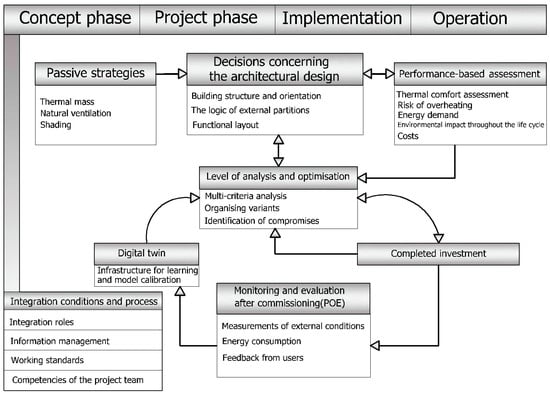
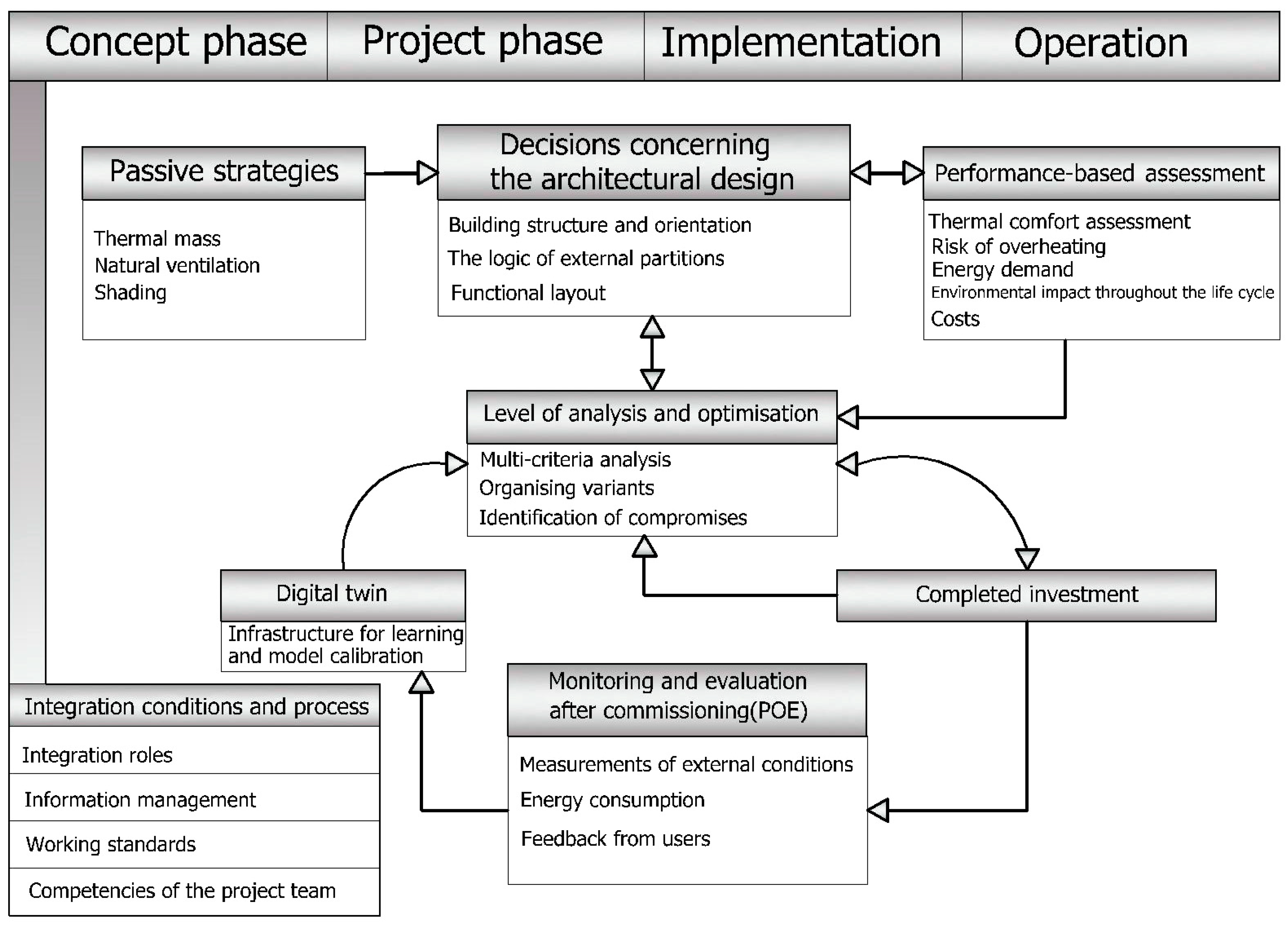

Disclaimer/Publisher’s Note: The statements, opinions and data contained in all publications are solely those of the individual author(s) and contributor(s) and not of MDPI and/or the editor(s). MDPI and/or the editor(s) disclaim responsibility for any injury to people or property resulting from any ideas, methods, instructions or products referred to in the content. |
© 2026 by the authors. Licensee MDPI, Basel, Switzerland. This article is an open access article distributed under the terms and conditions of the Creative Commons Attribution (CC BY) license.