


Abstract
Microbially induced desaturation and precipitation (MIDP) is a promising eco-friendly technique for liquefaction mitigation. However, existing studies have primarily focused on silica sands under element-scale cyclic loading, and the dynamic response of MIDP-treated marine sand under seismic excitation remains poorly understood. In this study, the denitrifying bacterium Pseudomonas stutzeri was used to generate nitrogen gas in situ within typical liquefiable marine sand from the Haikou Jiangdong New Area, producing treated specimens with degrees of saturation ranging from approximately 99% to 80%. Shaking table tests were performed under Wenchuan earthquake motions with peak ground accelerations of 0.10–0.20 g. The results show that reducing the degree of saturation by approximately 18.9% decreases surface settlement by 77.6%, while the peak pore water pressure and lateral displacement are reduced by 21% and 15%, respectively. The acceleration response of the treated specimens also exhibits a notable attenuation effect. These findings provide preliminary comparative experimental evidence for the application of MIDP in the eco-friendly liquefaction mitigation of coastal marine sand foundations.
1. Introduction
Coastal zones are among the most densely populated areas worldwide. Over one-third (approximately 30% to 40%) of the global population lives within 100 km of the coast, and this proportion continues to rise [1,2]. Rapid coastal development has driven the construction of ports, coastal cities, land reclamation projects, and cross-sea transportation infrastructure. Consequently, loose saturated marine sand has become the most common foundation medium in offshore and reef engineering. These foundations generally have high groundwater levels or are fully saturated. They are highly susceptible to liquefaction under seismic loading. Liquefaction causes a sharp decline in foundation strength and stiffness. This leads to massive uneven settlement, lateral displacement, and the tilting or failure of superstructures [3]. For instance, during the 2011 Great East Japan Earthquake, severe liquefaction occurred in over 190 municipalities along a 650 km stretch of the Pacific coast. Ports, industrial complexes, and extensive reclaimed lands suffered significant settlement and lateral displacement. Infrastructure, including breakwaters, roads, and underground pipelines, experienced massive damage [4,5]. Therefore, effectively mitigating the seismic liquefaction of marine sand and its associated ground deformation is crucial. This effort has significant engineering value for ensuring the safety of critical infrastructure in coastal and reef areas.
Engineers have developed various traditional ground improvement methods for liquefiable sand foundations. These techniques include vibro-compaction, dynamic compaction, sand or stone columns, deep cement mixing, chemical grouting, and rigid pile composite foundations [6,7,8,9,10]. These methods are mature and widely applied in onshore reclaimed lands and typical urban sites. However, they face numerous limitations when applied to deep marine sand layers, land reclamation projects, and existing coastal developed areas. First, they require extensive heavy machinery and joint land–sea operations, leading to strict construction conditions and high costs. Second, rigid reinforcement methods based on cement or chemical grouts inevitably cause high carbon emissions and secondary groundwater pollution. This contradicts the current concepts of green, low-carbon development and ecological restoration. Third, traditional methods mainly rely on densification or rigid reinforcement. They easily alter the natural soil skeleton and introduce new stiffness heterogeneities. This can trigger additional stress concentrations and post-earthquake differential deformations [11]. Consequently, exploring new liquefaction mitigation technologies for marine sand foundations has become an important research direction in coastal and reef geotechnical engineering. Such new technologies should feature low disturbance, controllable deformation, and environmental friendliness.
In recent years, bio-geo-engineering has developed rapidly. Various new ground improvement technologies based on microbial activities to regulate soil structure and pore water states have gained widespread attention. Among them, microbially induced calcium carbonate precipitation (MICP) generates calcium carbonate crystals at particle contacts through urea hydrolysis or denitrification metabolism. This process achieves point-to-face cementation between particles. MICP can significantly increase the compressive strength and deformation modulus of sand. It also reduces the permeability coefficient and the rate of pore pressure generation under dynamic strain. Extensive laboratory and model tests have investigated MICP for bearing capacity improvement, slope stabilization, and liquefaction mitigation [12,13,14]. In addition, some bacteria secrete abundant extracellular polymeric substances (EPS) during metabolism. These substances form biofilms coating the particles and create local biological clogging in the pores. This enhances the cohesion and erosion resistance of the soil. Related research primarily focuses on dam seepage control, bank slope erosion protection, and shallow surface soil consolidation [15,16,17,18]. Both of these biological cementation technologies follow the principle of precipitation and cementation. They improve the geotechnical structure through solid-phase filling and bridging.
In contrast, microbially induced desaturation and precipitation (MIDP) utilizes denitrifying bacteria to reduce nitrate to nitrogen gas through biological denitrification. Taking the commonly used carbon source sodium citrate as an example, this process primarily generates nitrogen gas (N2) and carbon dioxide (CO2). Because N2 has extremely low solubility in water, it forms stable micro- and nano-sized bubbles that remain trapped within the soil pore network, effectively reducing the degree of saturation from nearly 100% to a partially saturated state of 80% to 95%. In contrast, CO2 is highly soluble and contributes minimally to the stable gas phase [19,20]. The efficiency of this gas generation process is governed by several key factors, including temperature, pH, bacterial concentration, and nitrate concentration, as systematically demonstrated in a recent study by Hu [21]. It is important to note that the MIDP process exhibits a dual mechanism. The primary mechanism is desaturation: the compressibility of the generated gas bubbles can absorb and dissipate energy under cyclic loading, significantly suppressing the rapid accumulation of excess pore water pressure. The secondary mechanism is a minor cementation effect: during denitrification, a small amount of carbonate precipitation and biomass accumulation occurs at the particle contacts, which helps stabilize the interfaces between the gas bubbles and the soil particles [19,20]. However, unlike the extensive rigid cementation produced by MICP, this secondary precipitation in MIDP is relatively minor and does not create a brittle monolithic cemented structure. Previous cyclic triaxial, simple shear, and one-dimensional column tests have demonstrated the effectiveness of this method. MIDP can drastically improve the liquefaction safety factor of sand by slightly reducing the degree of saturation without significantly increasing stiffness or brittleness. Therefore, MIDP is considered a biological liquefaction mitigation approach more suitable for dynamic conditions, especially under seismic loading [22]. In comparison, MICP is more appropriate for constructing high-strength bio-cement layers or piles, while EPS technology is geared towards near-surface seepage control and slope protection.
Although MIDP is theoretically ideal for seismic liquefaction mitigation, current research mainly focuses on one-dimensional specimens or laboratory cyclic shear tests of silica sand [19]. Limited attention has been paid to marine sand. Marine sand is a special medium characterized by irregular particle shapes, relatively fine gradation, and abundant dissolved salts and shell components. Furthermore, most studies use the occurrence of liquefaction triggering or cyclic shear strength as evaluation indicators. The overall dynamic response process of sand containing microbial gas bubbles under seismic loading remains insufficiently understood. Systematic shaking table test data are particularly lacking for liquefiable marine sand. Specifically, there is a lack of systematic shaking table test data for liquefiable marine sand. Key missing information includes surface settlement evolution, pore water pressure generation at various depths, acceleration amplification, and the spatial distribution of lateral displacement under varying degrees of saturation and seismic intensities. The liquefaction mitigation and seismic attenuation mechanisms of sand containing microbial gas bubbles still harbor many uncertainties. To some extent, this restricts the engineering design and quantitative application of MIDP technology in coastal newly reclaimed cities and port projects. Therefore, a study that simultaneously captures settlement, pore water pressure, acceleration response, and lateral displacement of MIDP-treated marine sand under realistic seismic excitation would represent a meaningful advance over existing element-scale investigations on silica sand.
Based on these understandings, this study focuses on typical liquefiable marine sand from the Haikou Jiangdong New Area. The denitrifying bacterium Pseudomonas stutzeri, known for its high denitrification efficiency, was selected for gas generation. By regulating the formulation of the denitrification culture medium and reaction conditions, microbial gas bubbles with varying gas contents were generated in situ within the sand models. A series of liquefiable marine sand model foundations were constructed with varying degrees of saturation, ranging from nearly saturated (Sr ≈ 99%) to significantly unsaturated (Sr ≈ 80%). Shaking table tests were conducted using a small-scale shaking table apparatus. Representative Wenchuan earthquake motions with different peak ground accelerations (0.10–0.20 g) were applied as the input. Comparative shaking table tests were performed on untreated marine sand models and models treated with different levels of microbial gas generation. Laser displacement sensors, pore water pressure transducers, and accelerometers were installed. These devices systematically monitored key dynamic indicators under seismic loading, including surface settlement, pore water pressure response, acceleration amplification factors, and lateral displacement. Based on these tests, this study reveals the mechanisms of pore pressure suppression and acceleration peak attenuation in marine sand containing microbial gas bubbles under seismic loading from the perspective of microscopic bubble distribution characteristics. It quantitatively evaluates the influence of different degrees of saturation on liquefaction deformation and dynamic response. Empirical relationships are established between the degree of saturation and surface settlement, peak pore water pressure, and vibration attenuation indicators. The research findings help deepen the understanding of the liquefaction mitigation mechanism of microbial gas generation. They provide comparative experimental evidence and preliminary parameter references for understanding the eco-friendly liquefaction mitigation of coastal liquefiable marine sand foundations.
2. Materials and Methods
2.1. Test Materials
2.1.1. Test Sand and Physical Properties
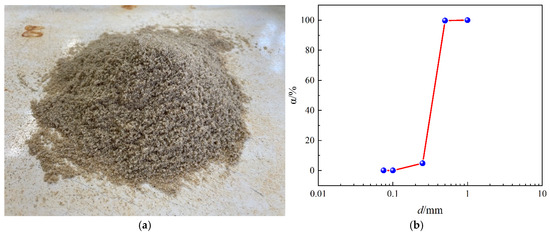
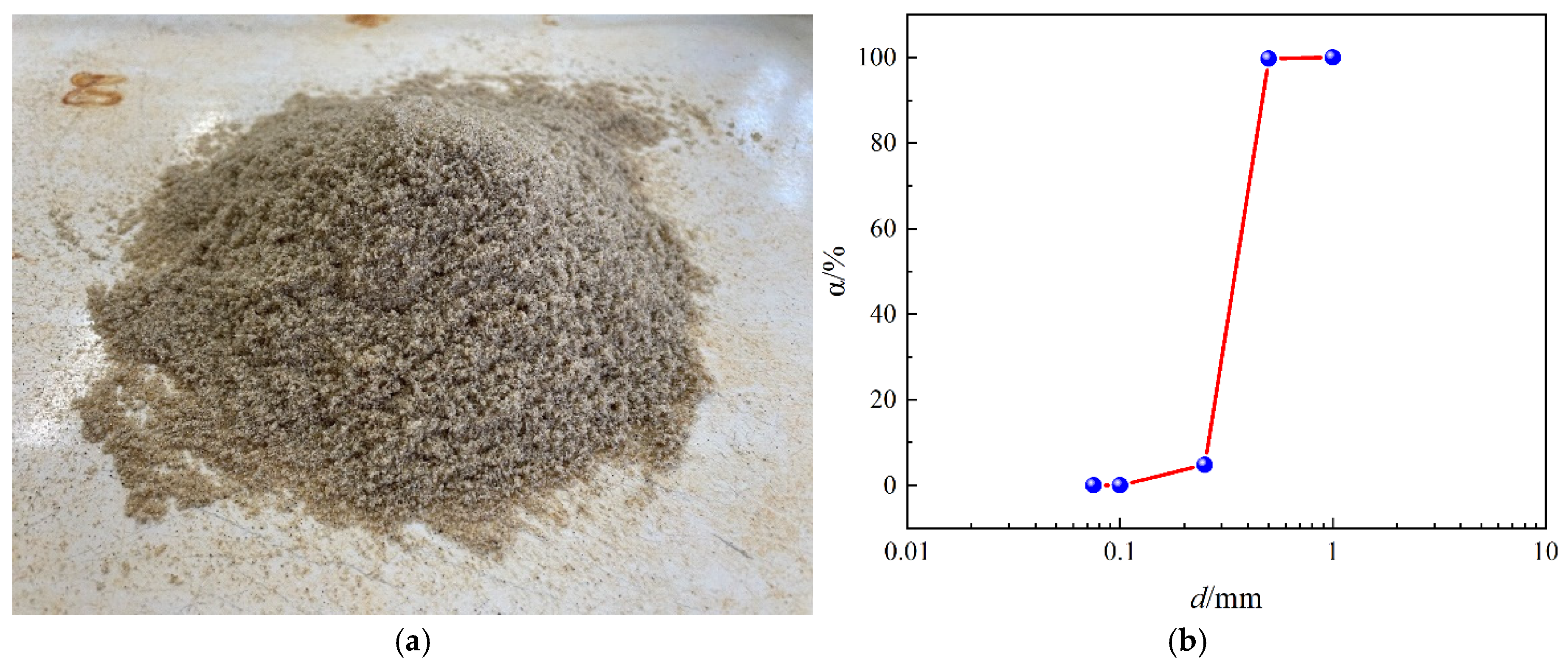
The marine sand used in the tests was sourced from the Haikou Jiangdong New Area. Figure 1 shows the appearance of the sand and its grain size distribution curve. Here, α represents the percentage of mass finer than a specific grain size, and d represents the grain size. Grain size analysis and specific gravity tests were conducted strictly following the Standard for Soil Test Method (GB/T 50123-2019) [23]. The effective grain size d10 is 0.26 mm, the grain size d30 is 0.32 mm, and the constrained grain size d60 is 0.40 mm. The coefficient of uniformity Cu is 1.54, and the coefficient of curvature Cc is 0.98. The specific gravity of the sand is 2.65. According to the Standard for Engineering Classification of Soil (GB/T 50145-2007) [24], this material is classified as poorly graded sand.
Figure 1.
Photograph and particle size distribution curve of the liquefiable sand. (a) Liquefiable marine sand; (b) Particle size distribution curve.
2.1.2. Microbial Strain and Culture Medium
The denitrifying bacterium Pseudomonas stutzeri was selected for microbial gas generation due to its high denitrification efficiency. This strain was purchased from the Beijing Culture Collection (Beijing, China) with the original strain number JCM 5965. The culture medium for bacterial growth and gas generation consists of a nitrogen source, a carbon source, and a basal nutrient solution. Potassium nitrate (KNO3) serves as the nitrogen source at a precisely controlled concentration of 3.0 g/L. Sodium citrate acts as the carbon source at a concentration of 5.0 g/L. The initial concentration of the bacterial suspension was adjusted using the optical density at 600 nm. An initial OD600 of approximately 0.10 was maintained to ensure sufficient gas generation efficiency. Table 1 lists the specific components and their contents. Furthermore, the optimum temperature and pH for bacterial gas generation are 30 and 9 °C, respectively.
Table 1.
Composition of denitrification medium.
The gas generation process of Pseudomonas stutzeri is primarily driven by biological denitrification. The typical chemical reaction involves the reduction of nitrate using a carbon source (e.g., sodium citrate), which can be expressed as: . The process primarily generates nitrogen gas () and carbon dioxide (). Because has extremely low solubility in water, it forms stable micro/nano-sized bubbles trapped within the sand pores. Conversely, is highly soluble and contributes minimally to the stable gas phase. It should be noted that the detailed biochemical characterization, gas generation kinetics, and optimal environmental parameters (temperature, pH, bacterial and nitrate concentrations) for this specific strain have been systematically investigated and reported in the literature [21]. Therefore, building upon these optimized biochemical parameters, the present study focuses specifically on the macroscopic dynamic response of the microbially desaturated marine sand under seismic loading.
2.2. Specimen Preparation and Saturation Control
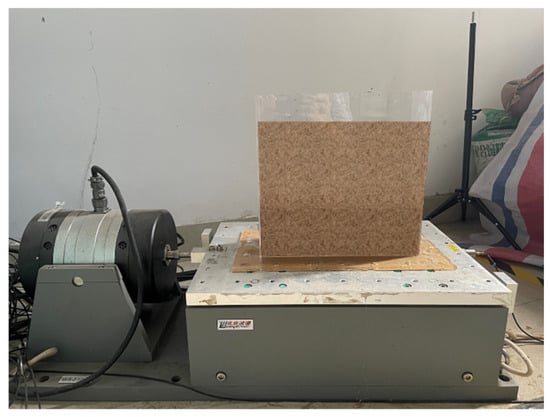
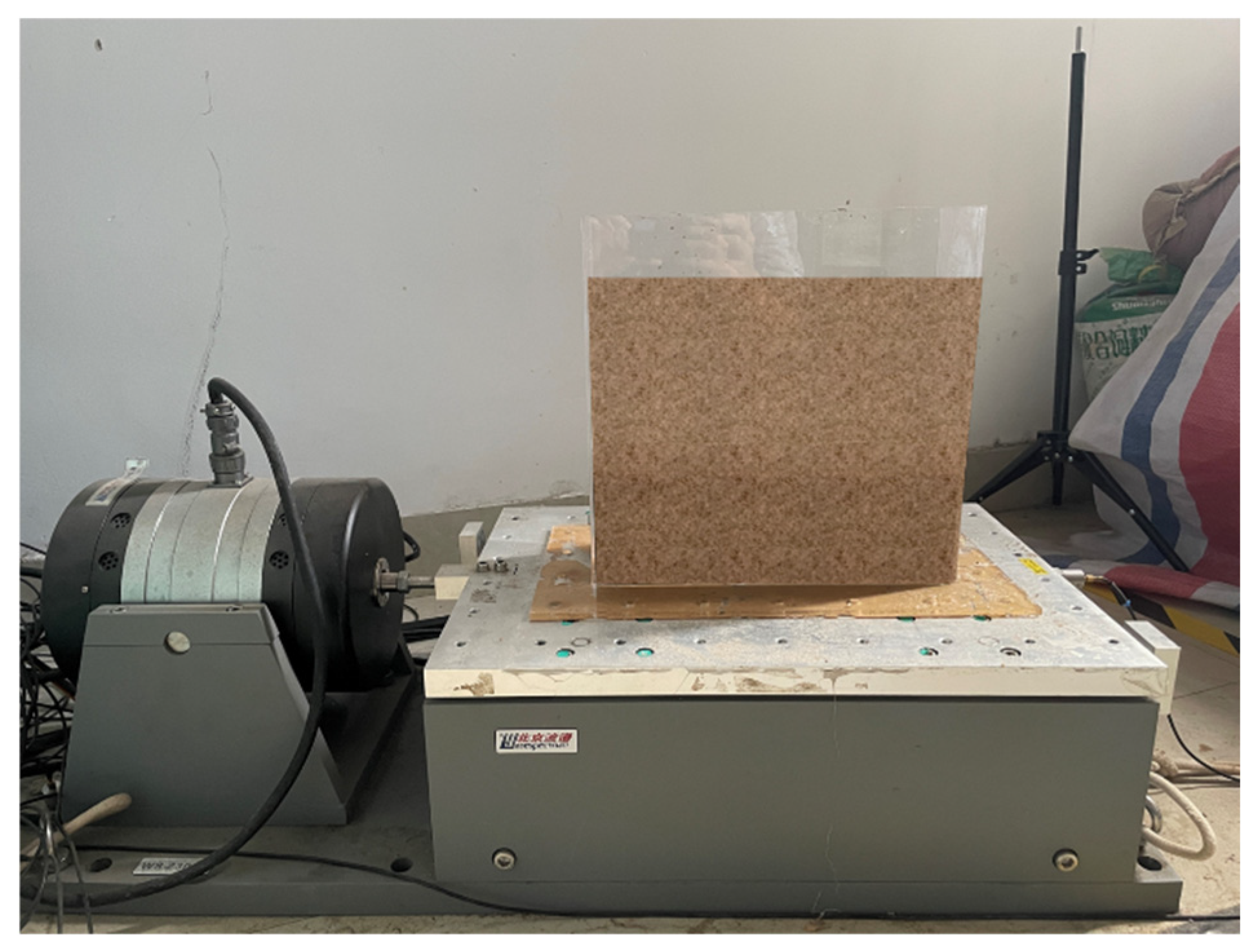
The tests utilized a PVC model box with dimensions of 30 cm (length) × 10 cm (width) × 30 cm (height). Bolts secured the bottom of the box to the shaking table. Specimens were prepared using the wet pluviation method. A bacterial suspension with an OD600 adjusted to 0.1 was first poured into the mold. Sand was then uniformly deposited into the suspension through a 1 mm sieve from a height of 10 cm. The liquid level was continuously maintained above the sand surface during this process. Pluviation ceased when the sand height reached 25 cm. The specimen surface was then leveled. Excess liquid was extracted, leaving a 1 cm liquid layer above the soil. Finally, a 1 cm layer of liquid paraffin oil was poured onto the surface. This prevented water evaporation from affecting the test results. The prepared specimens were placed in a constant-temperature incubator for 7 days. This allowed the denitrification reaction to proceed fully. Afterward, the change in the liquid level () was recorded to calculate the degree of saturation (). Because the generated gas displaces an equal volume of pore water, the gas volume () equals the cross-sectional area of the mold multiplied by . Thus, the degree of saturation is calculated as , where is the initial total void volume. Different target degrees of saturation were achieved by adjusting the KNO3 concentration in the denitrification medium. A higher nitrate concentration provides more electron acceptors for the denitrification reaction, resulting in greater gas production and a lower degree of saturation [21]. The models were then ready for the shaking table tests. Figure 2 shows the small-scale shaking table and the model box.
Figure 2.
Shaker model specimen.
It is worth noting that the MIDP process exhibits a dual effect. The primary mechanism is the generation of N2 gas bubbles for desaturation. Concurrently, a secondary mechanism involves minor biological clogging or precipitation (e.g., calcium carbonate or biomass accumulation) at the particle contacts. This secondary effect can slightly increase the initial density of the treated sand. However, in this study, the culture medium was specifically optimized to maximize denitrification and gas production [21]. Therefore, the significant reduction in surface settlement and lateral displacement is primarily attributed to the high compressibility of the generated gas bubbles, which effectively absorbs seismic energy and suppresses excess pore water pressure accumulation, rather than relying on a rigid cemented skeleton.
2.3. Experimental Apparatus and Sensor Layout
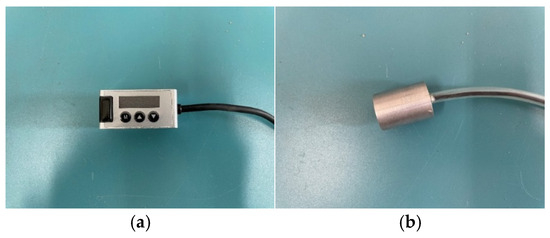
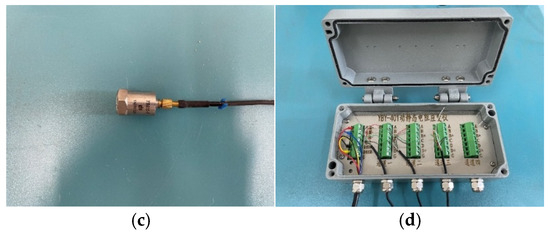
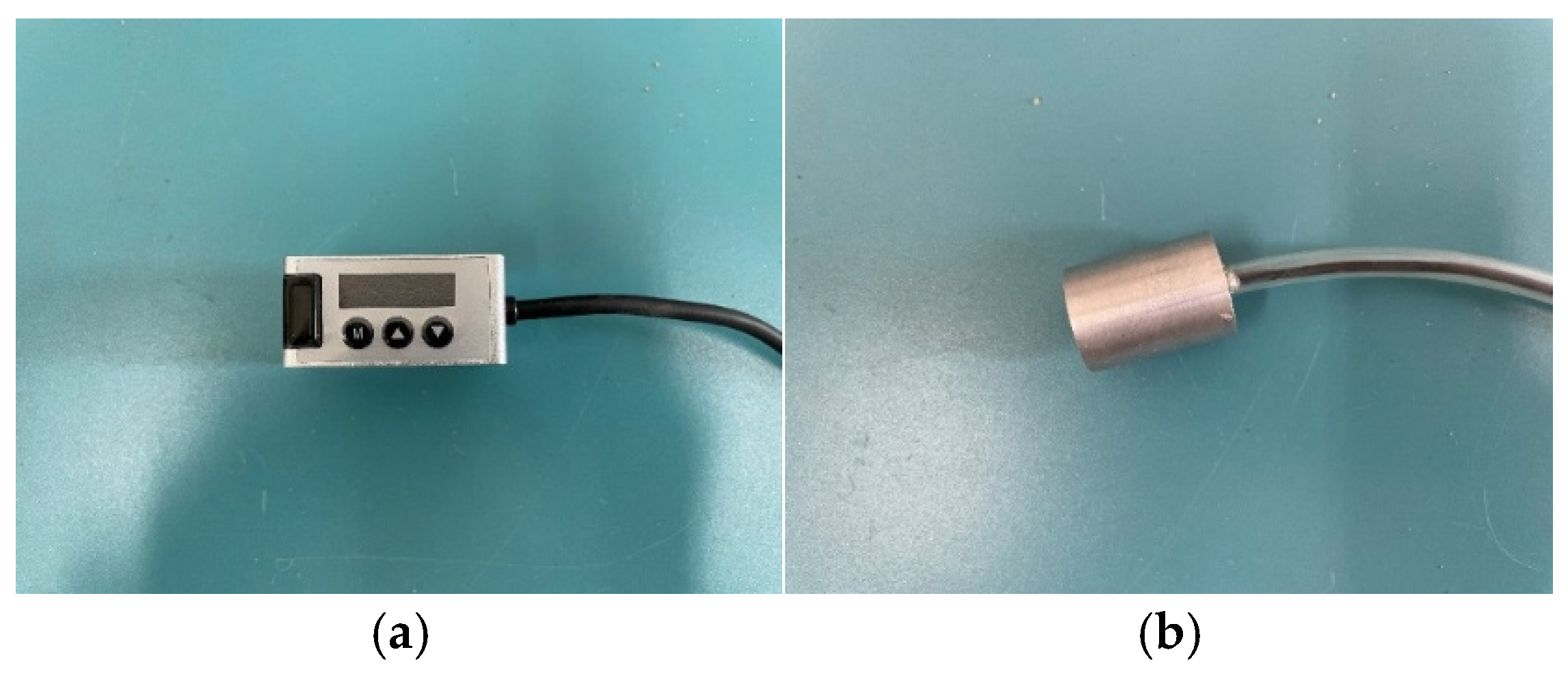
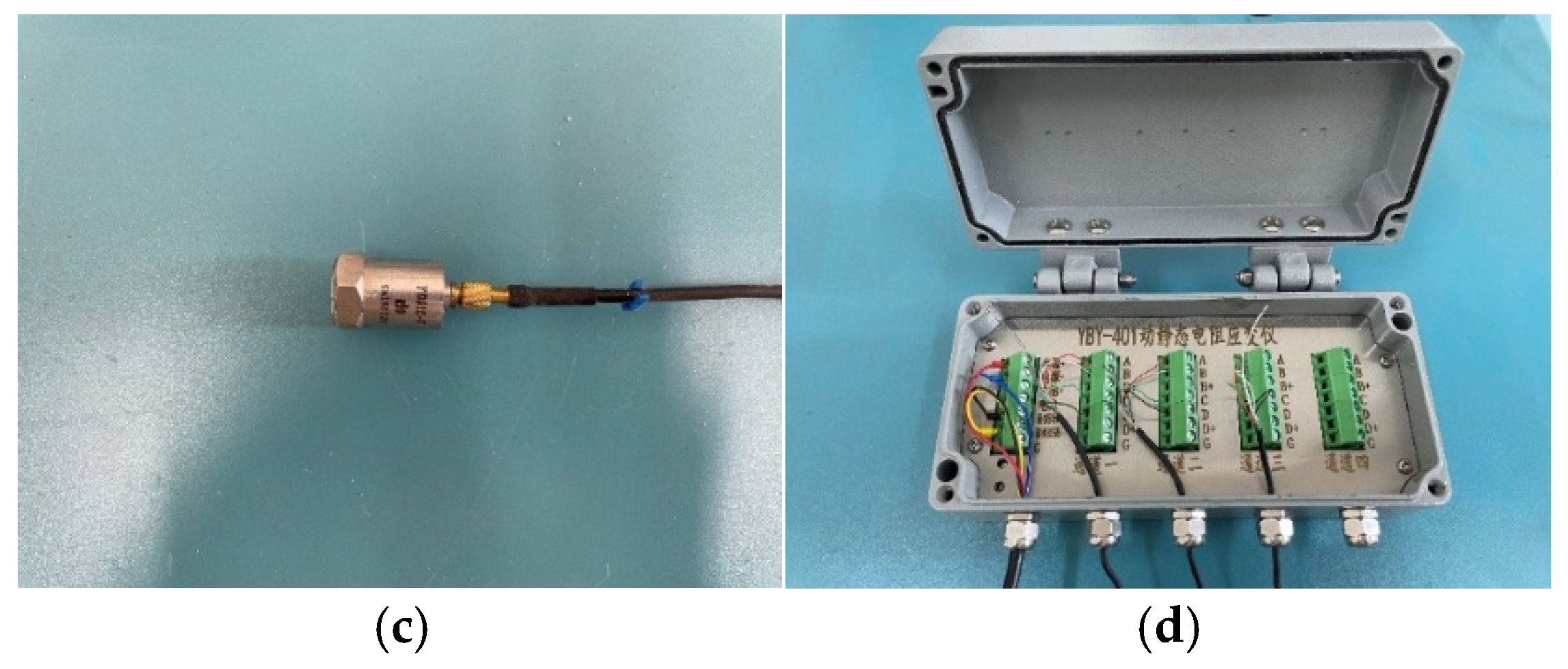
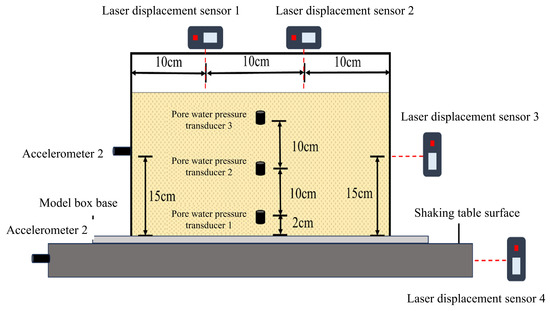
A small-scale shaking table (Model Vib’SQK, Suzhou Ligen Environmental Testing Equipment Co., Ltd., Suzhou, China) from the School of Civil Engineering and Architecture at Hainan University was utilized in this study. The table dimensions are 50 cm (length) × 36 cm (width) × 25 cm (height). It can apply seismic excitations with a maximum acceleration of 15 g. These tests monitored the surface settlement, pore water pressure, and lateral acceleration of the sand specimens. The instrumentation consisted of three types of sensors. Four laser displacement sensors (Model BL-100NZ, Shenzhen Boyi Jingke Technology Co., Ltd., Shenzhen, China; Figure 3a) measured the settlement. Three pore water pressure transducers (Model BWK-S, Bengbu Vanke Electronic Technology Co., Ltd., Bengbu, China; Figure 3b) recorded the pore pressure. Two accelerometers (Model S203L, Sinocera Piezotronics, Inc., Yangzhou, China; Figure 3c) captured the lateral acceleration. A dynamic and static strain analyzer (Model JC-YBY-401, Nanjing Juchuang Intelligent Technology Co., Ltd., Nanjing, China; Figure 3d) collected all the data. Figure 4 illustrates the sensor layout.
Figure 3.
Sensors. (a) Laser displacement sensor; (b) Pore water pressure transducer; (c) Accelerometer; (d) Dynamic and static strain analyzer.
Figure 4.
Sensor layout.
Prior to each test, all sensors were calibrated according to the manufacturer’s specifications. The laser displacement sensors have a measurement accuracy of ±0.05 mm and a resolution of 0.01 mm. The pore water pressure transducers have an accuracy of ±0.5% of full scale. The accelerometers have a sensitivity tolerance of ±5%. Due to the inherently destructive nature of liquefaction shaking table tests, where the soil fabric is irreversibly altered after each loading event, strict repetition of identical tests was not feasible. Instead, the reliability of the experimental results was ensured through the following measures: (1) surface settlement was averaged from two independent laser displacement sensors to reduce random measurement error; (2) pore water pressure was monitored at three different depths, providing internal cross-verification of the pressure response trends; (3) each group of specimens at the same target saturation level was tested under three different input accelerations (0.10 g, 0.15 g, and 0.20 g), and the consistent monotonic trends observed across these loading levels provide indirect evidence of result reliability; and (4) the specimen preparation procedure (wet pluviation method) was carefully standardized to minimize variability in initial density and uniformity.
2.4. Seismic Loading Scheme
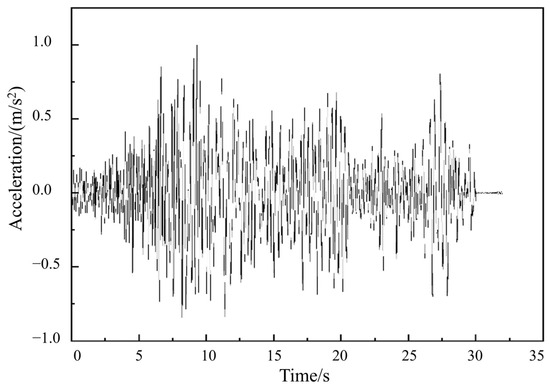
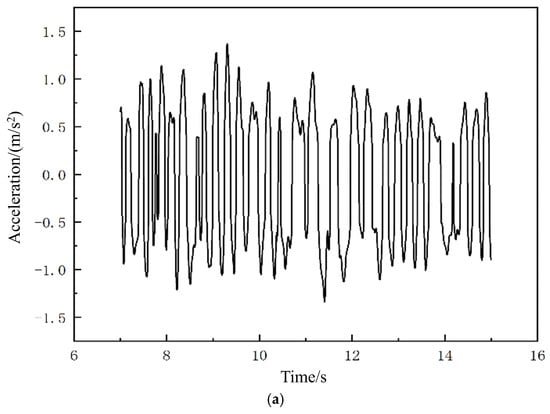
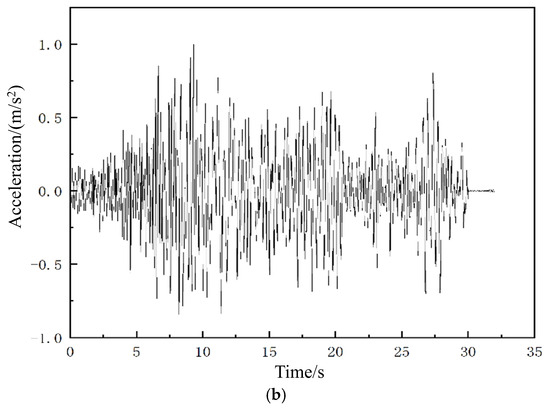
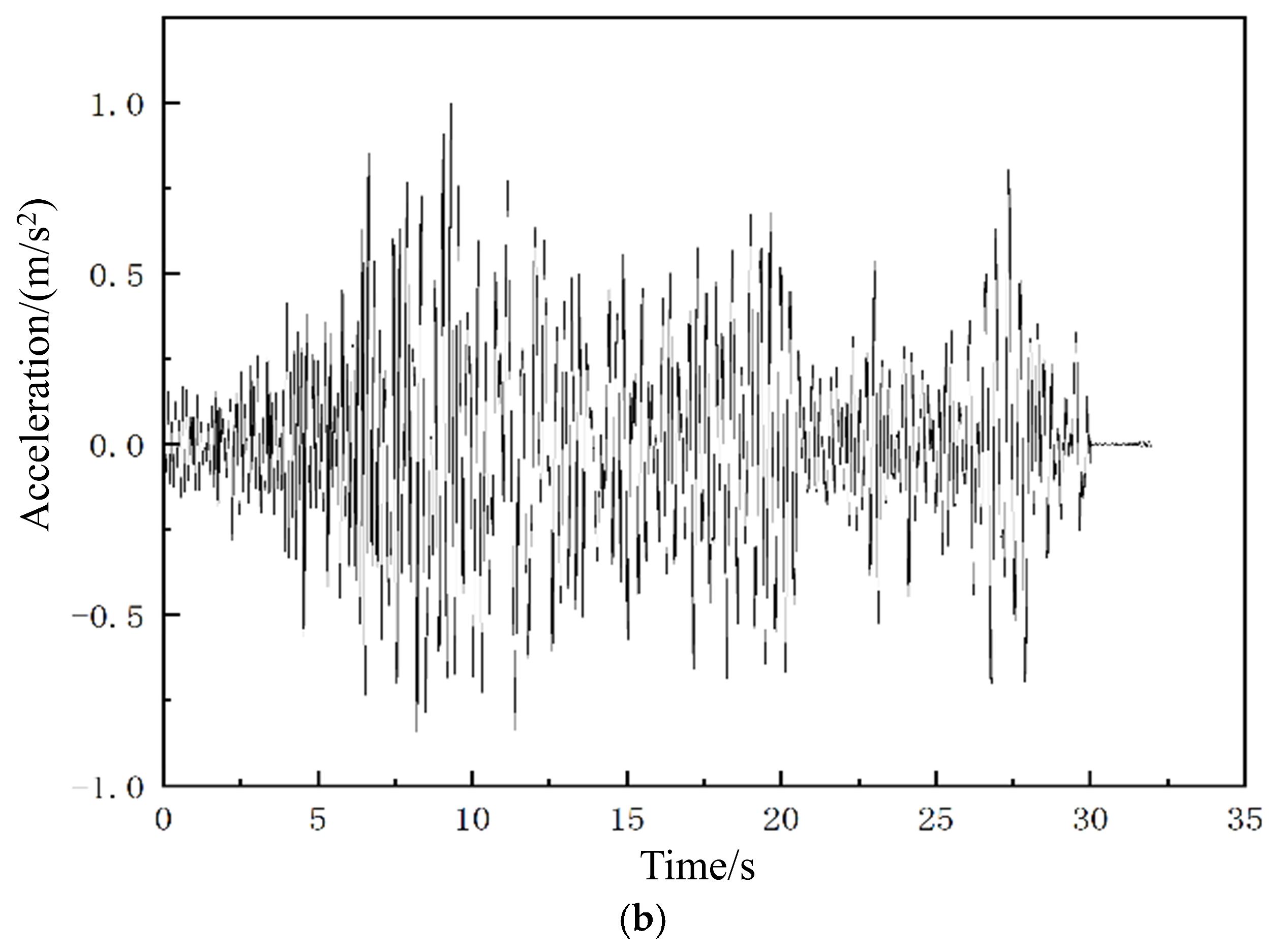
Shaking table tests evaluated the liquefaction resistance of the sand containing microbial gas bubbles. The Code for Seismic Design of Buildings (GB 50011-2010) [25] states that the maximum seismic acceleration in most regions of China is less than 0.20 g. Therefore, the maximum peak ground acceleration (PGA) input to the shaking table was limited to 0.20 g. The Wenchuan earthquake motion was selected as the input excitation. This selection helped investigate the effectiveness and durability of the microbial gas treatment under actual seismic conditions. Figure 5 illustrates the applied Wenchuan earthquake motion. Table 2 summarizes the experimental variables.
Figure 5.
Schematic diagram of the applied Wenchuan earthquake motion (a = 1.0 m/s2).
Table 2.
Shaking table test program.
It should be noted that due to the relatively small dimensions of the rigid PVC model box (30 cm × 10 cm × 30 cm) tested in a 1 g gravitational field, strict adherence to dynamic scaling laws (e.g., Iai’s similitude) for simulating a specific field prototype was not fully practical. The confining stress in the small-scale model is inherently lower than that of deep in situ soil, which affects the absolute values of soil dilatancy and pore pressure generation. Consequently, this study was designed as a comparative physical model rather than a strictly scaled representation of a specific site. The primary objective was to comparatively evaluate the mechanisms of MIDP treatment on liquefaction response. Regarding boundary effects, rigid sidewalls inevitably reflect incident seismic waves, which can lead to localized stress concentrations compared to free-field conditions. However, since both the untreated and MIDP-treated specimens were subjected to identical geometric boundaries, initial preparation methods, and seismic loading configurations, the comparative observations regarding the mitigation effectiveness of microbial desaturation remain reliable and valid.
3. Results and Discussion
3.1. Distribution of Microbial Gas Bubbles in Sand
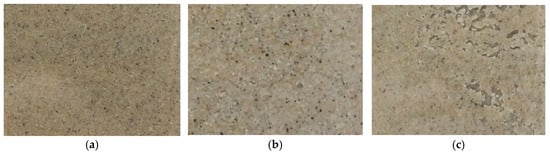
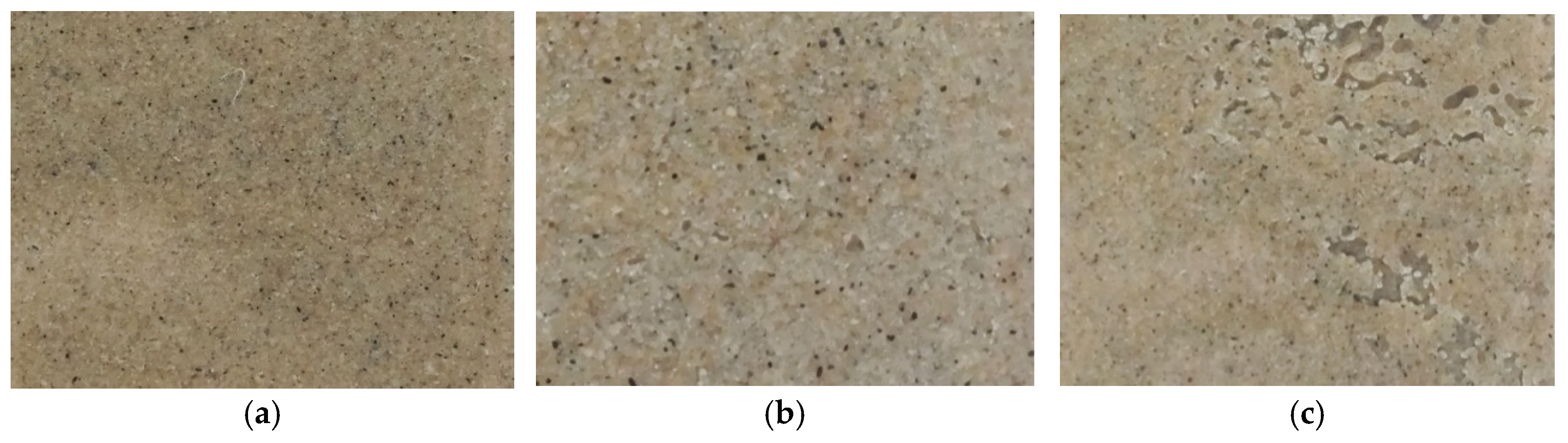
This section analyzes the microscopic distribution of microbial gas bubbles in the sand. A vivo X100 PRO macro camera (vivo Mobile Communication Co., Ltd., Dongguan, China) captured the images. Figure 6 shows the macro photographs of the specimens. Each photograph represents a specimen area of 0.5 cm × 0.5 cm. The figure reveals a non-uniform and highly random distribution of microbial gas bubbles at the same degree of saturation. As the degree of saturation decreases, the gas bubbles distribute more widely within the sand pores. The number of bubbles increases, and their diameters appear to grow larger. This non-uniform distribution of compressible gas voids is hypothesized to play a key role in altering the local stiffness and energy dissipation characteristics of the soil.
Figure 6.
Macro photographs of the specimens. (a) Specimen 1; (b) Specimen 4; (c) Specimen 7.
3.2. Effect on Pore Water Pressure
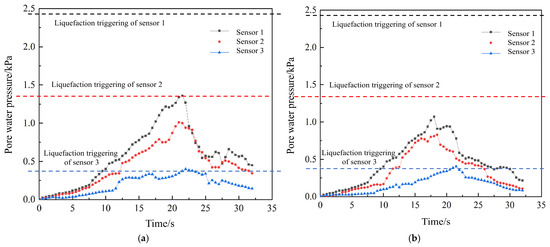
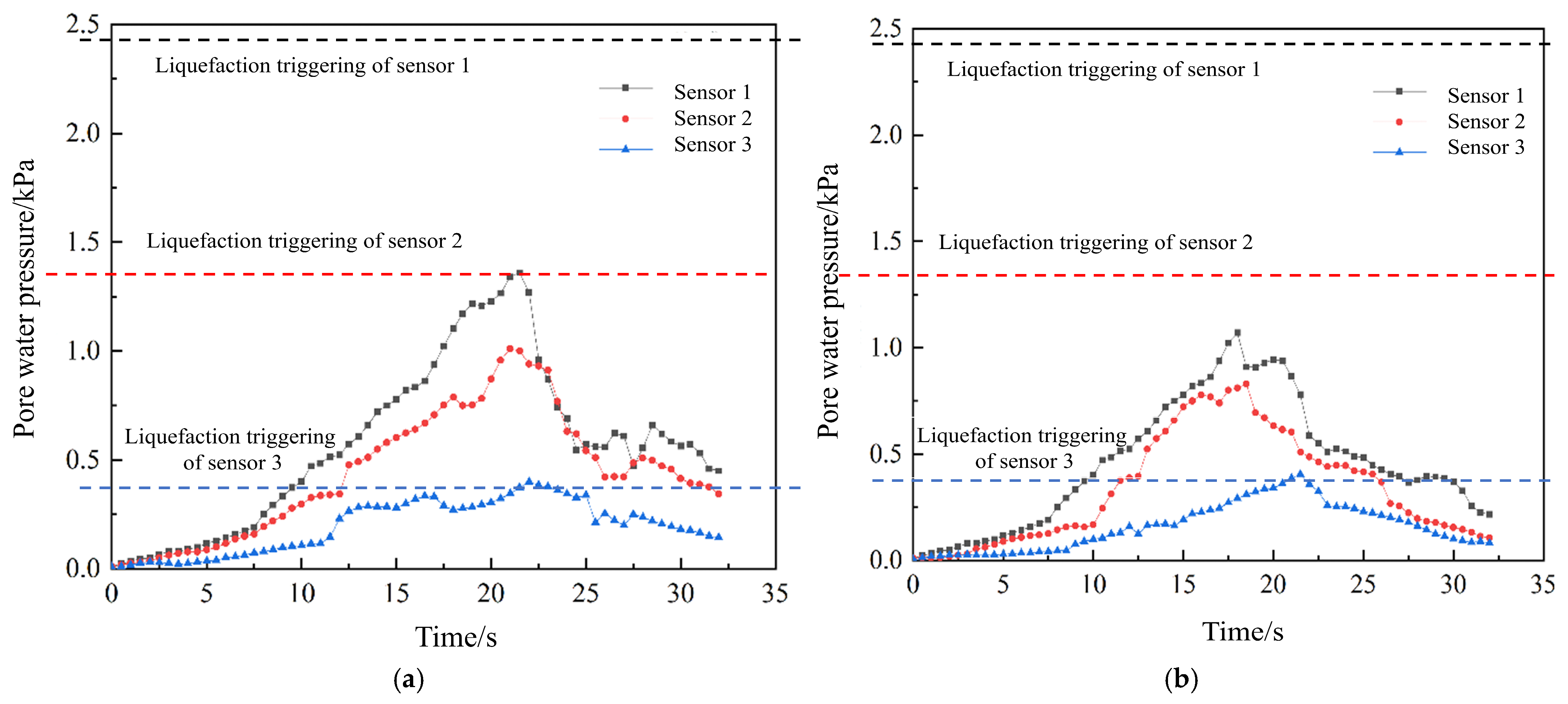
Reducing the degree of saturation significantly suppresses the generation of pore water pressure under seismic loading. Figure 7 illustrates the responses under an input acceleration of 2.0 m/s2. At a height of 2 cm from the base, the peak pore water pressure decreases from 1.36 kPa to 1.07 kPa. This represents a reduction of 21.32%. At a height of 12 cm, the peak pore water pressure drops from 1.01 kPa to 0.83 kPa, marking a 17.82% reduction. At a height of 22 cm, the peak value falls from 0.52 kPa to 0.45 kPa, corresponding to a 13.46% decrease. These results indicate that the suppression effect weakens gradually from the deep layer to the shallow layer. Consequently, the soil near the base is the most sensitive to the reduction in saturation.
Figure 7.
Pore water pressure of the specimens. (a) a = 2.0 m/s2, Sr = 99.4%; (b) a = 2.0 m/s2, Sr = 80.3%.
From a geotechnical perspective, seismic liquefaction potential is typically evaluated using the excess pore pressure ratio (), defined as the ratio of the generated excess pore water pressure () to the initial effective vertical stress (). The substantial reduction in the absolute peak pore water pressure () observed in the unsaturated specimens directly translates to a correspondingly lower . This indicates that the microbially desaturated marine sand remains significantly further from the liquefaction triggering state () compared to the saturated baseline.
3.3. Acceleration Response and Amplification Factor
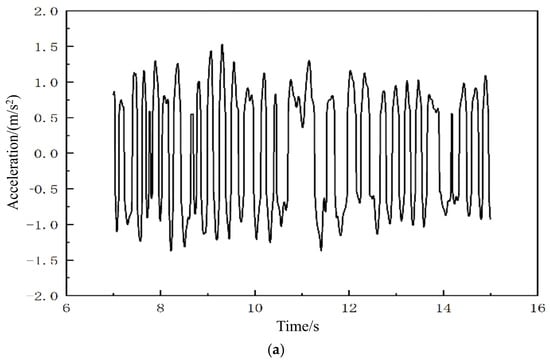
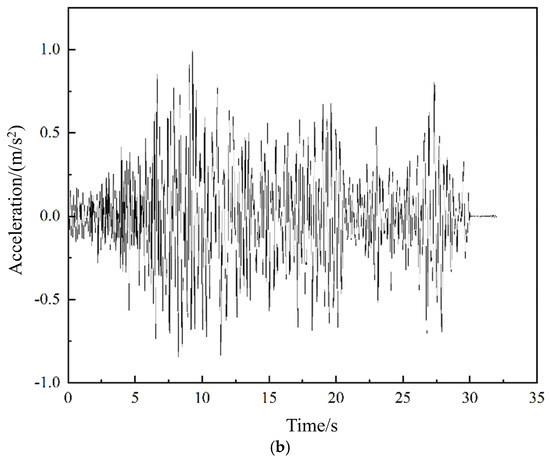
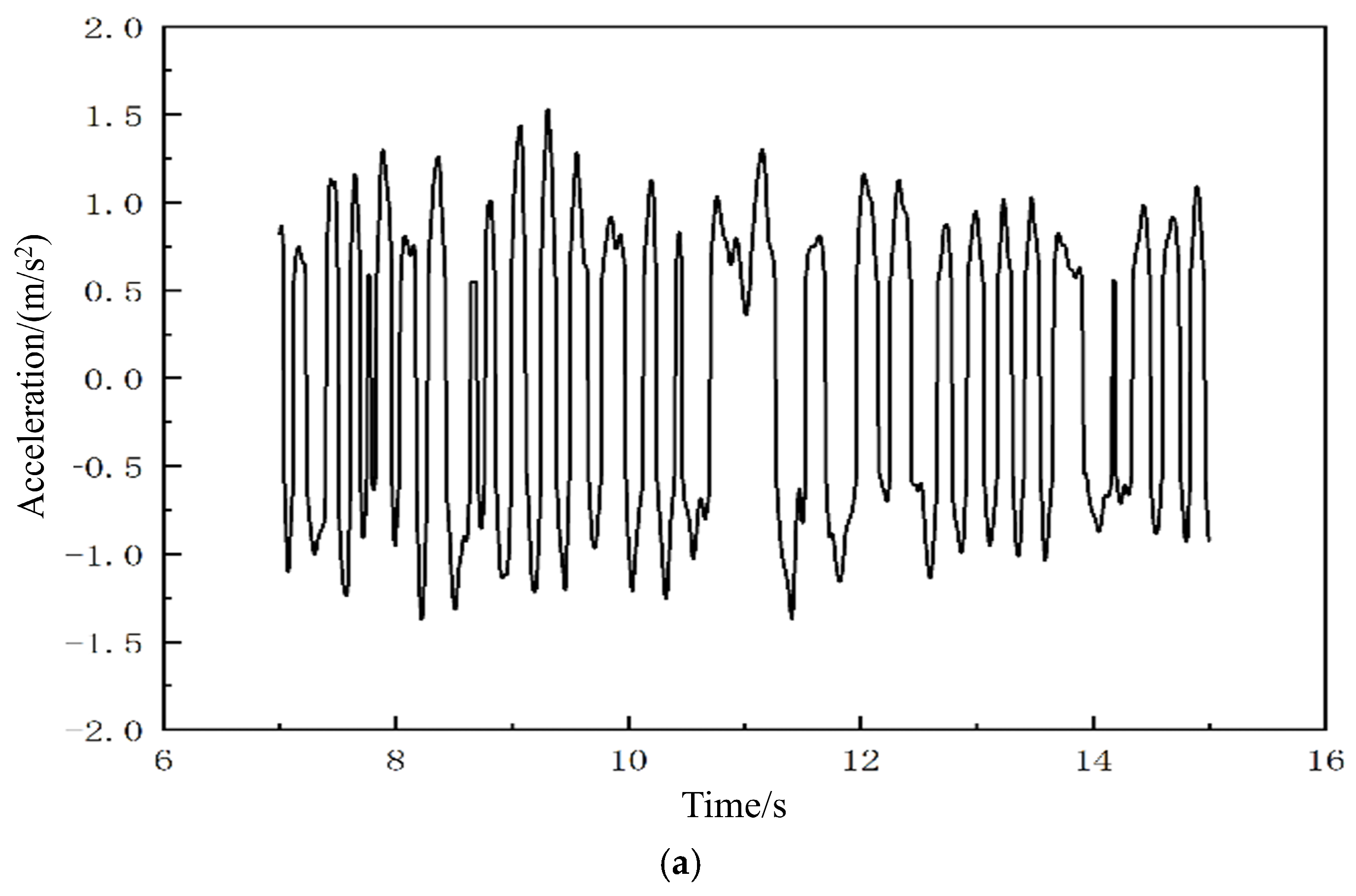
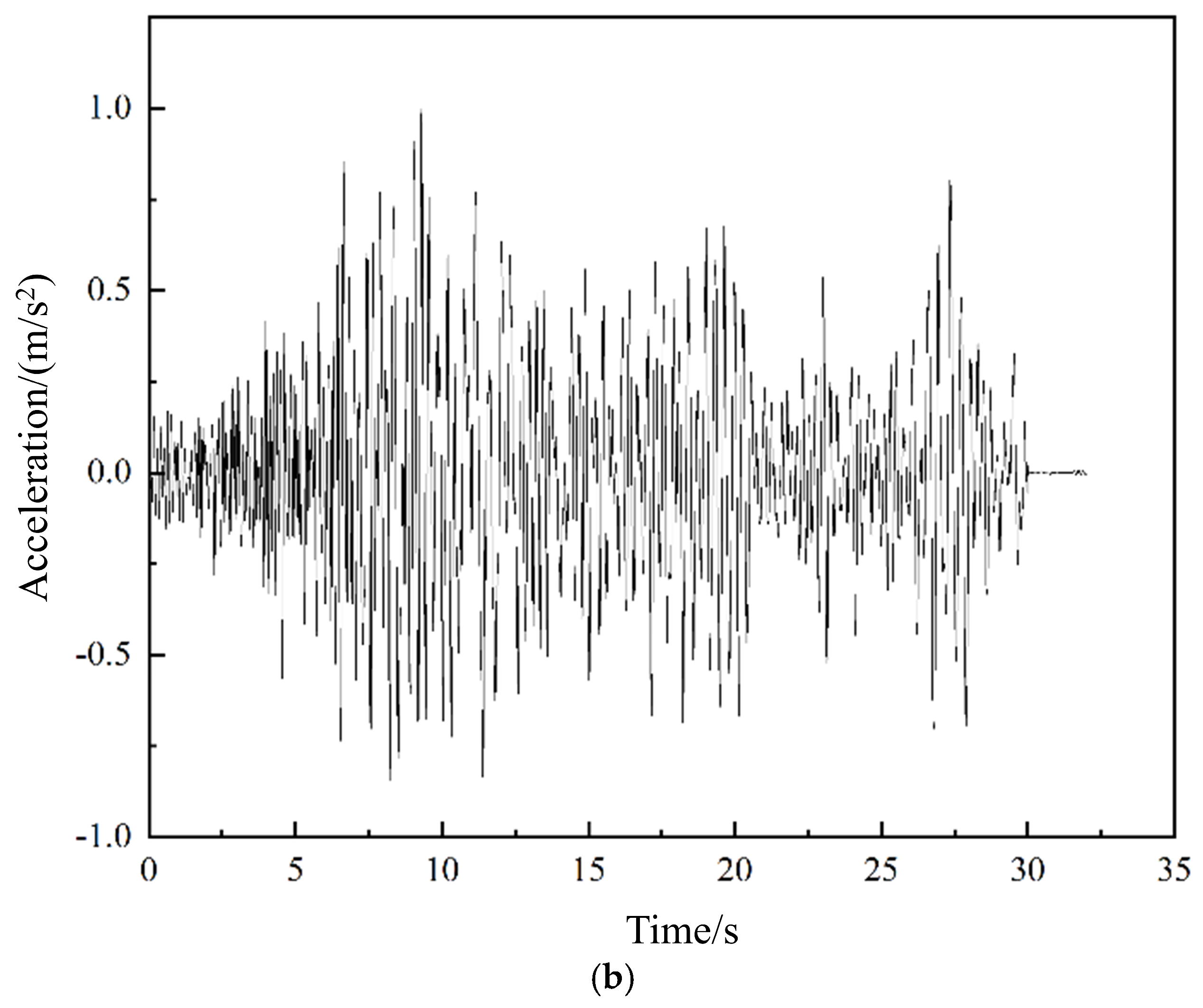
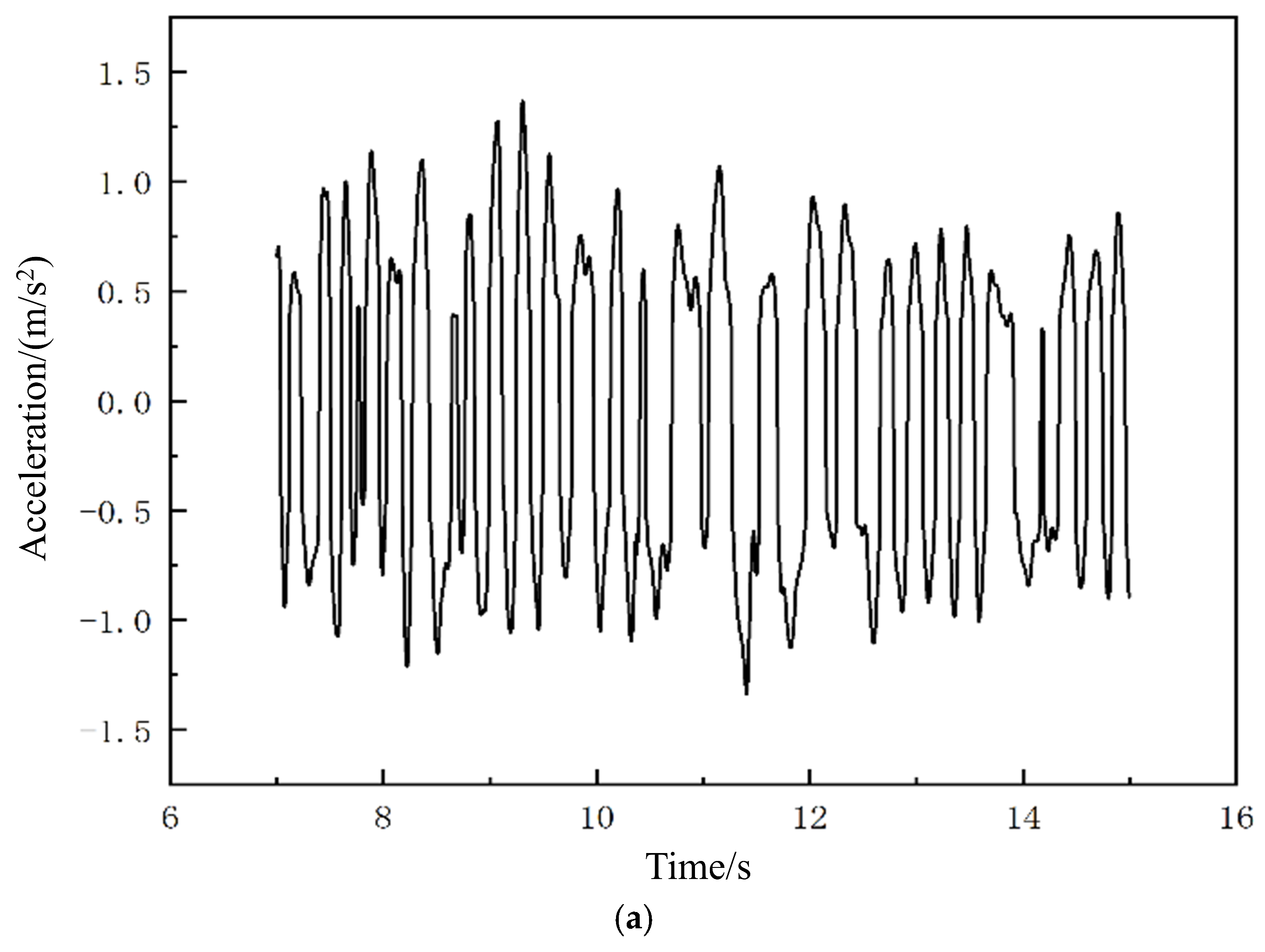
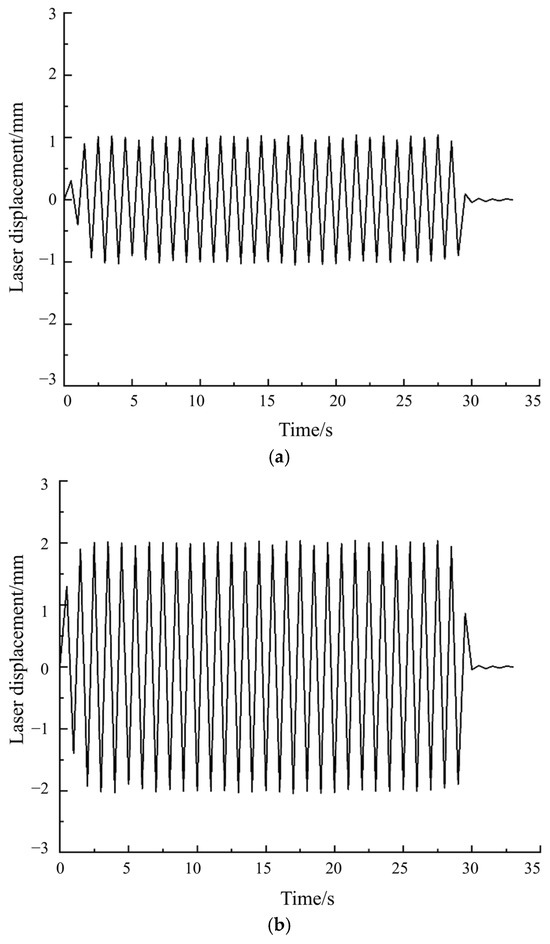
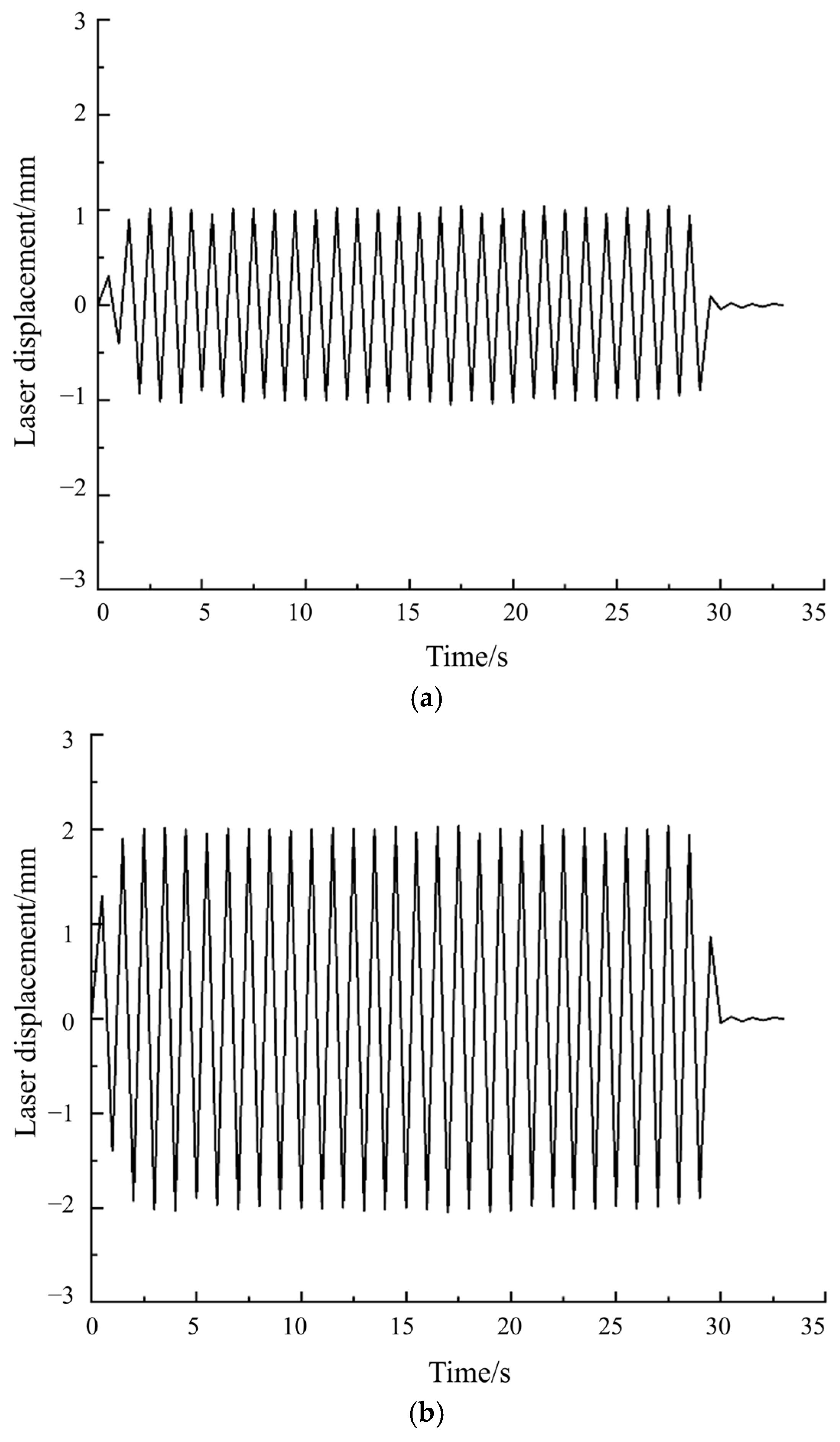
The tests investigated the difference between the output acceleration of the shaking table and the received acceleration of the model box. Two accelerometers (Accelerometer 1 and Accelerometer 2) were installed. They were positioned near the specimen surface and on the shaking table base, respectively. Figure 4 illustrates this layout. Figure 8 and Figure 9 display the acceleration time histories under the Wenchuan earthquake motion with an input acceleration of 1.0 m/s2. These figures compare the shaking table output acceleration and the specimen surface acceleration. Figure 8 shows the responses for the saturated specimen (Sr = 99.1%). Figure 9 presents the responses for the unsaturated specimen (Sr = 80.2%). Liquefiable sand specimens settle during shaking. Accelerometer 1 was therefore placed 10 cm below the initial specimen surface. This placement ensured the sensor remained buried beneath the sand surface throughout the test.
Figure 8.
Acceleration of the saturated specimen (a = 1.0 m/s2, Sr = 99.1%). (a) Accelerometer 1; (b) Accelerometer 2.
Figure 9.
Acceleration of the unsaturated specimen (a = 1.0 m/s2, Sr = 80.2%). (a) Accelerometer 1; (b) Accelerometer 2.
The figures reveal the responses when the shaking table output acceleration (Accelerometer 2) is 1.0 m/s2. The saturated specimen (Sr = 99.1%) receives a maximum base acceleration of 1.0 m/s2. Its peak surface acceleration reaches 1.52 m/s2. The unsaturated specimen (Sr = 80.2%) receives the same maximum base acceleration. However, its peak surface acceleration only reaches 1.37 m/s2. This indicates a peak acceleration attenuation effect in the unsaturated sand.
Based on the limited acceleration measurements, a plausible interpretation is that high-frequency energy may preferentially dissipate or bypass the highly compressible gas pockets during upward wave propagation, leading to a decreased acceleration amplification factor. These test results suggest a significant damping effect in the liquefiable sand containing microbial gas bubbles. Under seismic loading, the soil skeleton and bound water vibrate synchronously, providing minimal damping. In contrast, the non-uniform distribution of microbial gas bubbles (as observed in Section 3.1) likely exacerbates the asynchronous vibration between the pore fluid (gas and free water) and the solid skeleton. This differential movement is hypothesized to generate internal friction and local fluid flow, which provides a reasonable mechanism for dissipating seismic energy and achieving the observed damping effect.
3.4. Surface Settlement Analysis
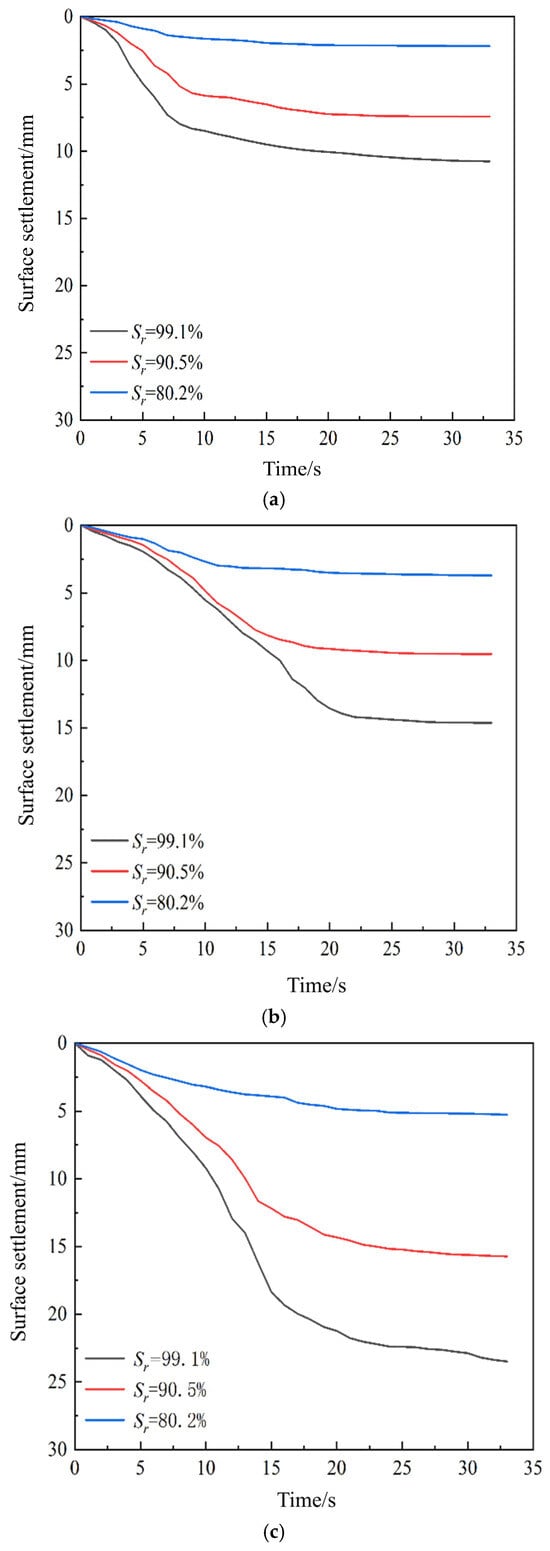
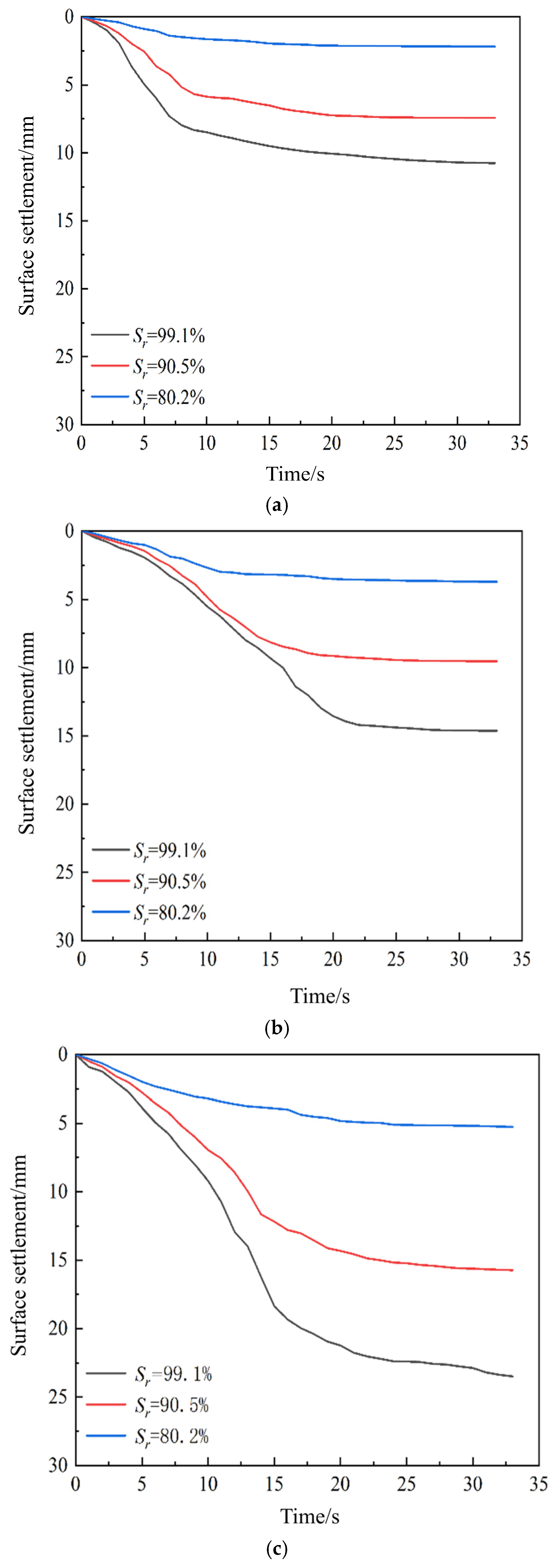
Figure 10 illustrates the surface settlement of the sand specimens under various seismic accelerations. Laser displacement sensors 1 and 2 (Figure 4) jointly measured the surface settlement. This dual measurement ensured testing accuracy. The final results represent the average of these two readings. Figure 10 reveals a clear trend under identical input accelerations. A higher degree of saturation leads to greater surface settlement. For specimens with similar initial degrees of saturation, the surface settlement increases gradually with higher input seismic accelerations. Under an input acceleration of 2.0 m/s2, the surface settlements for specimens with saturation degrees of 99.1%, 90.5%, and 80.2% are 23.49 mm, 15.73 mm, and 5.26 mm, respectively.
Figure 10.
Surface settlement of the specimens under different seismic accelerations. (a) a = 1.0 m/s2; (b) a = 1.5 m/s2; (c) a = 2.0 m/s2.
These results demonstrate that introducing microbial gas bubbles into liquefiable sand foundations effectively reduces surface settlement under dynamic loading. The introduction of highly compressible gas bubbles to replace the nearly incompressible pore water fundamentally alters the stiffness of the pore fluid. Under cyclic seismic loading, these gas bubbles can easily compress to absorb the volumetric contraction tendency of the soil skeleton. This buffering effect significantly dissipates seismic energy and suppresses the rapid buildup of excess pore water pressure, thereby fundamentally reducing the macroscopic settlement of the foundation. Consequently, the saturated sand experiences significant settlement when subjected to dynamic loading.
To place the present results in a broader context, the observed improvements are compared with those reported in prior MIDP and related studies. He et al. conducted shaking table tests on Ottawa sand desaturated by denitrification and found that nitrogen bubbles effectively reduced both excess pore water pressure and volumetric strain compared to fully saturated conditions [26]. Baziar et al. reported that microbial desaturation could reduce liquefaction-induced lateral displacement to approximately one-third to one-half of its original magnitude [27]. More recently, Gao et al. performed undrained cyclic triaxial tests on MIDP-treated Ottawa F60 sand and showed that reducing the degree of saturation to approximately 0.81 could increase the cyclic resistance ratio (CRR20) by a factor of 2.18 for medium-dense specimens [19]. In the present study, a comparable reduction in saturation (from 99% to 80%) resulted in a 77.6% decrease in surface settlement, a 21% reduction in peak pore water pressure, and a 15% decrease in lateral displacement. While direct quantitative comparison across these studies is complicated by differences in soil type (Ottawa silica sand vs. marine sand), testing scale (element tests vs. shaking table tests), and loading conditions, the consistent trend confirms that moderate desaturation through MIDP substantially improves the seismic performance of liquefiable sand. It is also worth noting that the improvement observed in the present marine sand appears somewhat lower than that reported for standard silica sands, which may be related to the irregular particle morphology and the presence of shell fragments in natural marine sand.
3.5. Lateral Displacement Response
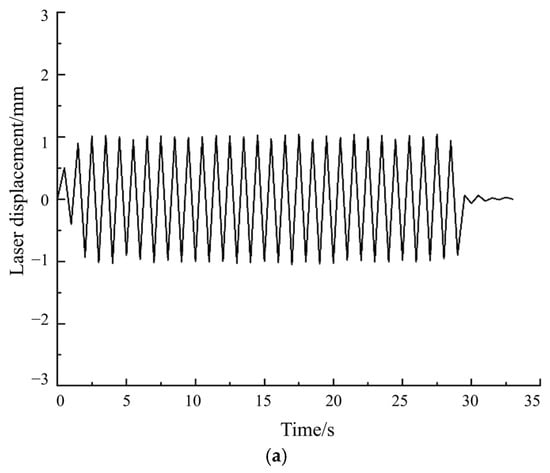
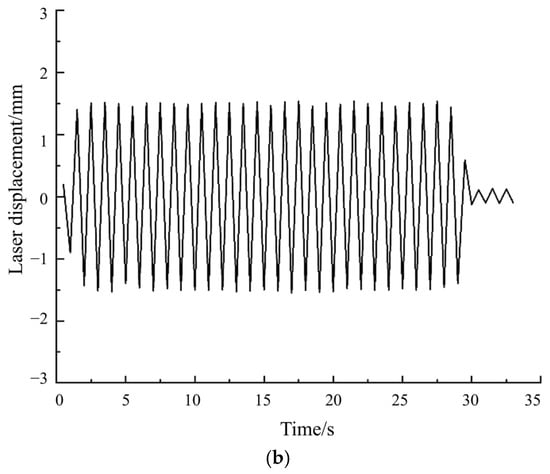
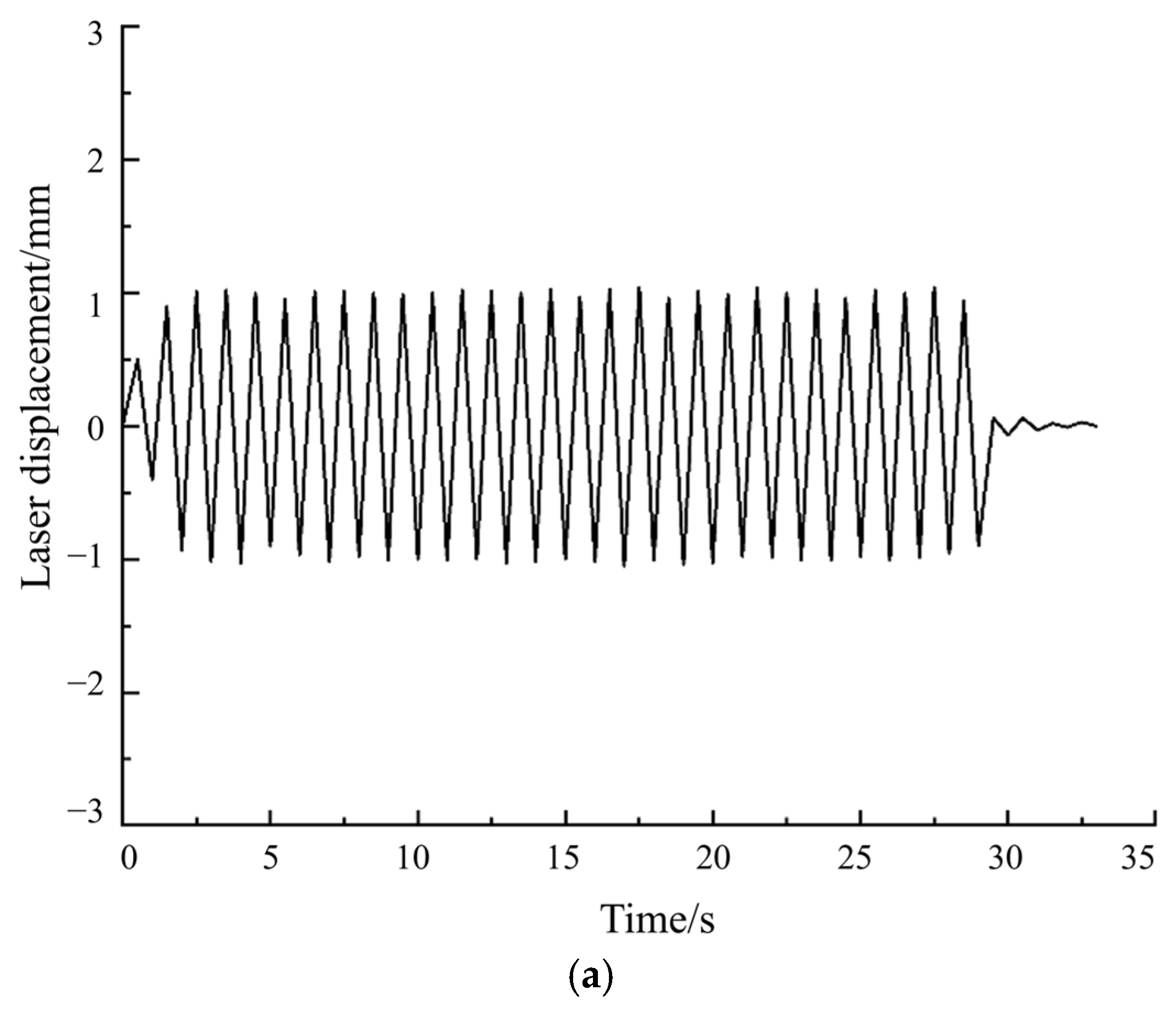
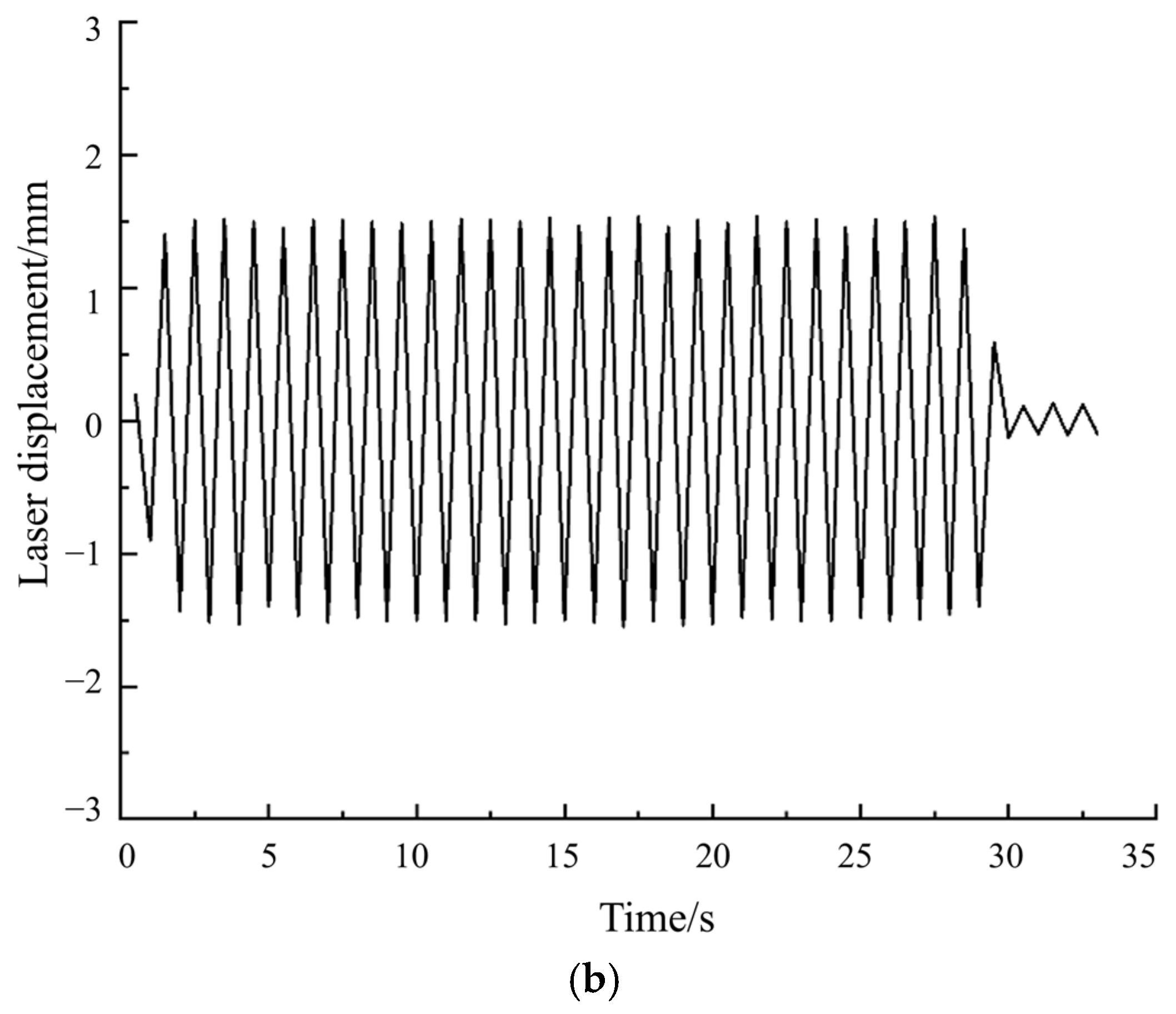
Figure 11 and Figure 12 illustrate the lateral displacement curves under a seismic acceleration of 1.0 m/s2. Laser displacement sensors 3 and 4 recorded these responses. Figure 11 shows the results for the saturated specimen (Sr = 99.1%). Figure 12 presents the data for the unsaturated specimen (Sr = 80.2%). For the saturated specimen, the maximum lateral displacement at the shaking table base is approximately 1.17 mm. At a depth of 15 cm, this peak value increases to 2.08 mm. For the unsaturated specimen, the maximum lateral displacement at the base is roughly 1.15 mm. At a depth of 15 cm, the peak displacement reaches only 1.52 mm. Section 3.3 demonstrated that liquefiable sand containing microbial gas bubbles exhibits a significant damping effect. Consequently, the unsaturated specimen experiences much less lateral displacement at a depth of 15 cm compared to the saturated specimen.
Figure 11.
Lateral displacement of saturated specimen (a = 1.0 m/s2 Sr = 99.1%). (a) Laser displacement sensor 3; (b) Laser displacement sensor 4.
Figure 12.
Lateral displacement of unsaturated specimen (a = 1.0 m/s2 Sr = 80.2%). (a) Laser displacement sensor 3; (b) Laser displacement sensor 4.
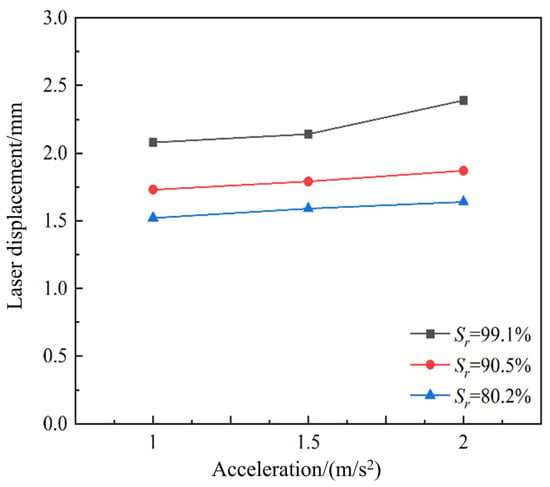
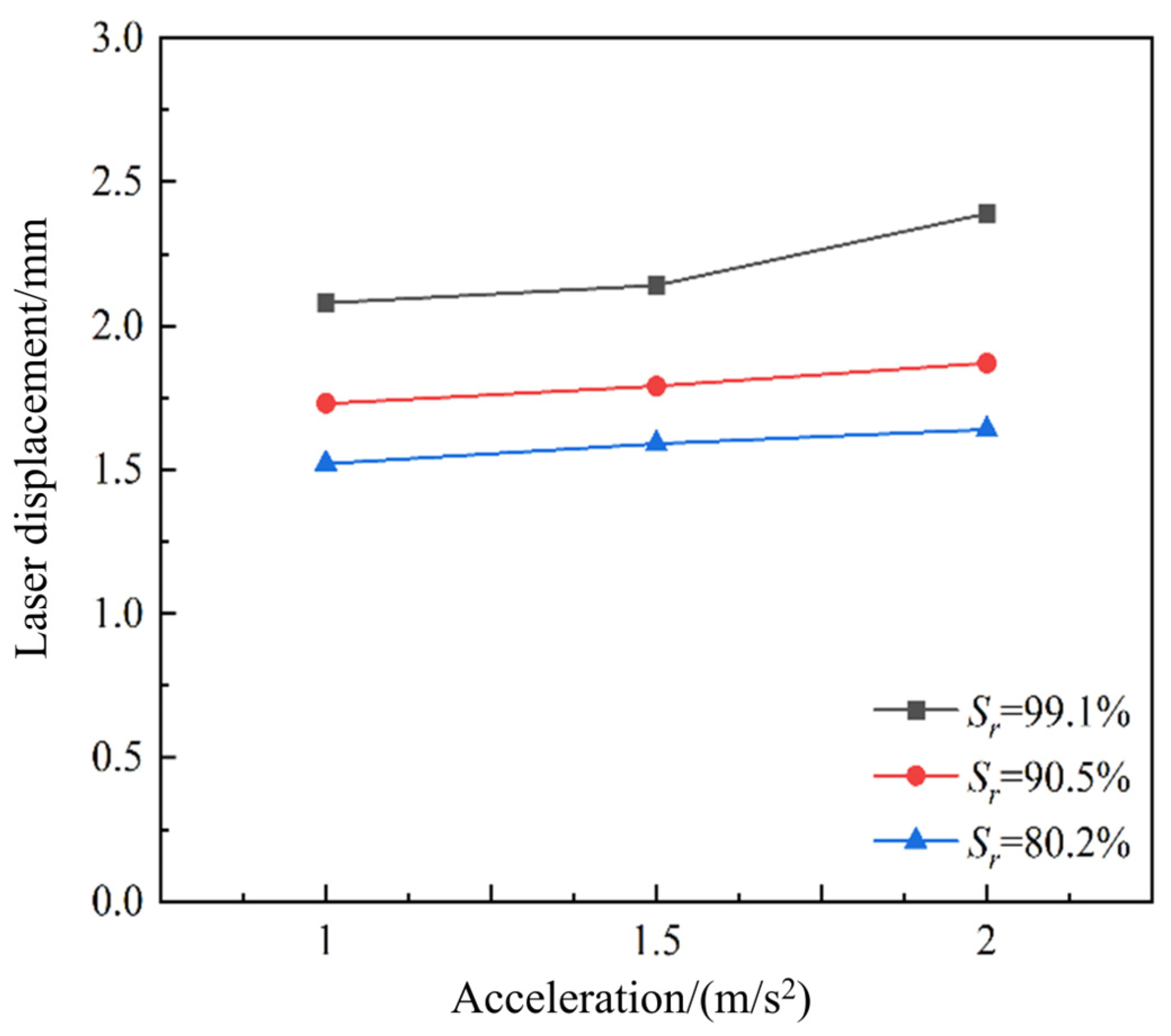
Figure 13 illustrates the relationship between lateral displacement and applied seismic acceleration. Lateral displacement at a specific depth increases with higher applied acceleration. This relationship appears approximately linear. Consider the saturated specimen at a depth of 15 cm. As the input acceleration increases from 1.0 m/s2 to 2.0 m/s2, the peak lateral displacement increases from 2.08 mm to 2.39 mm. This represents an increase of 0.31 mm. Under the same conditions, the unsaturated specimen (Sr = 80.2%) shows a peak lateral displacement growing from 1.52 mm to 1.64 mm. This corresponds to an increase of only 0.12 mm. A comparison of these results clearly highlights the effectiveness of the microbial gas bubbles. The unsaturated specimen exhibits a superior seismic damping effect.
Figure 13.
Relationship between lateral displacement and applied seismic acceleration.
4. Conclusions
This study focused on typical liquefiable marine sand from the Haikou Jiangdong New Area. The denitrifying bacterium Pseudomonas stutzeri was introduced to generate gas bubbles in situ within the sand pores. This process reduced the degree of saturation. Model foundations of liquefiable marine sand were constructed with varying degrees of saturation. Shaking table tests applied Wenchuan earthquake motions with different peak ground accelerations. Key dynamic indicators, including surface settlement, pore water pressure, acceleration response, and lateral displacement, were systematically monitored. The primary objective was to evaluate the effectiveness of microbially induced desaturation and precipitation (MIDP) in improving the liquefaction resistance and dynamic response of marine sand foundations. The study aimed to reveal the liquefaction mitigation and deformation reduction mechanisms of sand containing microbial gas bubbles. These findings provide experimental evidence and quantitative comparisons for the eco-friendly liquefaction mitigation of coastal foundations. Based on the test results and analysis, it should be noted that the following conclusions are primarily based on comparative observations under the tested small-scale laboratory conditions. The main findings are as follows:
- (1)
- Optimizing the denitrification culture conditions enabled Pseudomonas stutzeri to continuously generate nitrogen gas within the sand. This transitioned the specimens from a nearly saturated state to a partially saturated state without altering the particle composition or gradation. The maximum reduction in the degree of saturation was approximately 18.9%. The dry density of the specimen density increased slightly during this process. This densification enhances the shear strength and deformation resistance of the sand. Consequently, it provides a highly favorable initial state for suppressing seismic liquefaction.
- (2)
- The moderately desaturated specimens exhibited significantly less surface settlement compared to the untreated specimens under identical seismic input conditions. Reducing the degree of saturation by approximately 18.9% decreased the surface settlement amplitude by 77.6%. Simultaneously, the peak pore water pressure and peak lateral displacement dropped by about 21% and 15%, respectively. These results demonstrate that introducing a compressible gas phase into the pores effectively suppresses the rapid accumulation of excess pore water pressure. This mechanism mitigates macroscopic uneven settlement and lateral displacement. The treatment significantly improves the overall stability of liquefiable marine sand foundations under seismic loading.
- (3)
- Within the tested conditions, a lower degree of saturation effectively slows the generation rate of excess pore water pressure in the sand. As correlated with the measured absolute pore pressure data, the peak excess pore pressure ratio significantly decreases, ensuring the foundation remains further from the liquefaction triggering state. The acceleration response of the model foundation exhibits a clear peak attenuation effect. The post-earthquake residual deformation also decreases accordingly. The observed variations in settlement, pore pressure, and lateral displacement across different saturation levels provide quantitative evidence. They clearly demonstrate how microbial gas generation regulates and mitigates the liquefaction evolution process. These experimental data provide essential support for future systematic parameter analyses and the development of engineering design methods.
This study has certain limitations that restrict the direct extrapolation of the results to field-scale engineering design. The tests utilized relatively small-scale PVC laboratory models, which do not fully capture the complex stress fields, boundary conditions, and spatial variability of prototype foundations. Therefore, the current findings should be interpreted as comparative observations demonstrating the potential of MIDP treatment under specific tested conditions, rather than broadly generalizable design implications. Future research should utilize centrifuge modeling or large-scale shaking table tests. Regarding field implementation, MIDP treatment can be delivered through injection wells in a manner similar to conventional grouting, where the bacterial suspension and nutrient solution are sequentially injected into the target sand layer under low pressure. Previous field trials have confirmed the feasibility of this injection approach in sandy soils. As for the long-term durability, the N2 gas bubbles generated by denitrification have extremely low solubility in groundwater, which allows them to persist in the pore network over extended periods. Nevertheless, the potential dissolution of trapped gas under sustained hydrostatic pressure or fluctuating groundwater conditions warrants further investigation through long-term monitoring studies.
Author Contributions
All authors contributed to the study conception and design. Y.P.: Writing—original draft, Formal analysis. Y.Y.: Methodology, Data curation, S.Z.: Writing—original draft, Data curation, Conceptualization. J.H.: Writing—review and editing, Supervision, Methodology, Funding acquisition. J.R.: Formal analysis, Methodology. X.X.: Visualization, Validation. All authors have read and agreed to the published version of the manuscript.
Funding
This research was funded by an Independent project of the Hainan Key Laboratory of Marine Geological Resources and Environment: Study on the Constitutive Model and Engineering Usability of Typical Sea Sands in Hainan (22-HNHYDZZYHJZZ005), the National Natural Science Foundation of China (42467019), the Hainan Provincial Natural Science Foundation Enterprise Talent Project (525QY918), and the 2025 Hainan Province Construction Science and Technology Program (Grant No. 12).
Data Availability Statement
Data presented in the study are available on request from the corresponding author.
Conflicts of Interest
The authors declare no conflicts of interest.
References
- Cosby, A.G.; Lebakula, V.; Smith, C.N.; Wanik, D.W.; Bergene, K.; Rose, A.N.; Swanson, D.; Bloom, D.E. Accelerating growth of human coastal populations at the global and continent levels: 2000–2018. Sci. Rep. 2024, 14, 22489. [Google Scholar] [CrossRef] [Scilit] [PubMed]
- Reimann, L.; Vafeidis, A.T.; Honsel, L.E. Population development as a driver of coastal risk: Current trends and future pathways. Camb. Prism. Coast. Futures 2023, 1, e14. [Google Scholar] [CrossRef] [Scilit]
- Ruan, B.; Guo, Y.; Zhou, Z.; Cheng, K.; Liu, K.; Wu, Q.; Huang, H. Prediction of dynamic shear modulus of saturated coral sand based on explainable artificial intelligence. Constr. Build. Mater. 2025, 461, 139878. [Google Scholar] [CrossRef] [Scilit]
- Oka, F.; Kimoto, S.; Yui, H.; Matsuoka, H.; Tsai, P.S.Y. Liquefaction analyses of reclaimed ground and levee considering the damage by the 2011 great tohoku earthquake and lessons. J. Disaster Res. 2016, 11, 830–844. [Google Scholar] [CrossRef] [Scilit]
- Wakamatsu, K.; Senna, S. 650-km Long Zone of Liquefaction during the 2011 off the Pacific Coast of Tohoku, Japan Earthquake. In Proceedings of 6th International Conference on Earthquake Geotechnical Engineering; ISSMGE: London, UK, 2015; pp. 1–9. [Google Scholar]
- Geramian, A.; Ghazavi, M.; Attari, N.K.A. Liquefaction mitigation of saturated sand using ordinary, filtered, and geosynthetic-encased stone columns in shaking table tests. Geotech. Geol. Eng. 2024, 42, 7617–7634. [Google Scholar] [CrossRef] [Scilit]
- Kyaw, K.N.C.; Motohashi, T.; Sasahara, S.; Inazumi, S. Evaluation of liquefaction resistance in chemically grouted sand using cyclic triaxial tests. Results Eng. 2025, 27, 106875. [Google Scholar] [CrossRef] [Scilit]
- Ma, S.; Zhao, G.; Yang, X.; Xu, R.; Weng, Z.; Liu, J.; Zhou, C.; Li, C. Liquefaction response and reinforcement effect of saturated soil treated by dynamic compaction based on hydro-mechanically coupled explicit analysis. Buildings 2025, 15, 2527. [Google Scholar] [CrossRef] [Scilit]
- Zhang, D.; Wang, A.; Ding, X. Seismic response of pile groups improved with deep cement mixing columns in liquefiable sand: Shaking table tests. Can. Geotech. J. 2022, 59, 994–1006. [Google Scholar] [CrossRef] [Scilit]
- Massarsch, K.R.; Wersäll, C.; Fellenius, B.H. Liquefaction induced by deep vertical vibratory compaction. Proc. Inst. Civ. Eng.—Ground Improv. 2021, 174, 194–205. [Google Scholar] [CrossRef] [Scilit]
- Wang, K.; Wu, S.; Chu, J. Mitigation of soil liquefaction using microbial technology: An overview. Biogeotechnics 2023, 1, 100005. [Google Scholar] [CrossRef] [Scilit]
- Ahenkorah, I.; Rahman, M.M.; Karim, M.R.; Beecham, S. Cyclic liquefaction resistance of MICP- and EICP-treated sand in simple shear conditions: A benchmarking with the critical state of untreated sand. Acta Geotech. 2024, 19, 5891–5913. [Google Scholar] [CrossRef] [Scilit]
- Baziar, M.H.; Alibolandi, M. Liquefaction evaluation of microbial induced calcium carbonate precipitation (MICP) treated sands; a strain energy approach. J. Earthq. Eng. 2023, 27, 4512–4525. [Google Scholar] [CrossRef] [Scilit]
- Shan, Y.; Li, J.; Zhou, H.; Li, Y.; Yuan, J.; Cui, J. Liquefaction resistance of MICP treated silica and calcareous sand with carbon fiber. Bull. Eng. Geol. Environ. 2025, 84, 159. [Google Scholar] [CrossRef] [Scilit]
- Ali, N.; Abbas, S.A.A.A.; Sharif, L.; Shafiq, M.; Kamran, Z.; Masah; Haseeb, M.; Shahid, M.A. Microbial extracellular polymeric substance and impacts on soil aggregation. In Bacterial Secondary Metabolites; Elsevier: Amsterdam, The Netherlands, 2024; pp. 221–237. [Google Scholar] [CrossRef] [Scilit]
- Atmakuri, A.; Yadav, B.; Tiwari, B.; Drogui, P.; Tyagi, R.D.; Wong, J.W.C. Nature’s architects: A comprehensive review of extracellular polymeric substances and their diverse applications. Waste Dispos. Sustain. Energy 2024, 6, 529–551. [Google Scholar] [CrossRef] [Scilit]
- Du, M.; Wang, L.; Ebrahimi, A.; Chen, G.; Shu, S.; Zhu, K.; Shen, C.; Li, B.; Wang, G. Extracellular polymeric substances induced cell-surface interactions facilitate bacteria transport in saturated porous media. Ecotoxicol. Environ. Saf. 2021, 218, 112291. [Google Scholar] [CrossRef] [Scilit]
- Flemming, H.-C.; Van Hullebusch, E.D.; Little, B.J.; Neu, T.R.; Nielsen, P.H.; Seviour, T.; Stoodley, P.; Wingender, J.; Wuertz, S. Microbial extracellular polymeric substances in the environment, technology and medicine. Nat. Rev. Microbiol. 2025, 23, 87–105. [Google Scholar] [CrossRef] [Scilit]
- Gao, Y.; Wang, L.; Zhao, L.; Qi, Y.; Van Paassen, L.; Kim, D. Effects of microbial induced desaturation and precipitation (MIDP) on the cyclic response of sands with varying relative density. Biogeotechnics, 2025; in press. [CrossRef] [Scilit]
- Zeng, C.; Van Paassen, L.A.; Zheng, J.; Stallings Young, E.G.; Hall, C.A.; Veenis, Y.; Van Der Star, W.R.L.; Konstantinou, M.; Kavazanjian, E. Soil stabilization with microbially induced desaturation and precipitation (MIDP) by denitrification: A field study. Acta Geotech. 2022, 17, 5359–5374. [Google Scholar] [CrossRef] [Scilit]
- Hu, J.; Liu, M.; Ren, J.; Li, Y.; Yuan, H. Experimental investigation of factors affecting microbial liquefaction mitigation in coastal liquefied sand. Front. Microbiol. 2026, 17, 1800127. [Google Scholar] [CrossRef] [Scilit]
- Karmacharya, D. A Large-Scale Experiment on Performance of MIDP in Stratified Silty Sand. Master’s Thesis, Arizona State University, Tempe, AZ, USA, 2023. [Google Scholar]
- GB/T 50123-2019; Standard for Geotechnical Testing Method. China Planning Press: Beijing, China, 2019.
- GB/T 50145-2007; Standard for Engineering Classification of Soil. China Planning Press: Beijing, China, 2007.
- GB 50011-2010; Code for Seismic Design of Buildings. China Architecture & Building Press: Beijing, China, 2010.
- He, J.; Chu, J.; Ivanov, V. Mitigation of liquefaction of saturated sand using biogas. Géotechnique 2013, 63, 267–275. [Google Scholar] [CrossRef] [Scilit]
- Baziar, M.H.; Khoshniazpirkoohi, A.; Amirabadi, E. Mitigation of liquefaction and lateral spreading by biogas method using shaking table tests and the strain energy approach. Int. J. Geomech. 2022, 22, 04022236. [Google Scholar] [CrossRef] [Scilit]

Disclaimer/Publisher’s Note: The statements, opinions and data contained in all publications are solely those of the individual author(s) and contributor(s) and not of MDPI and/or the editor(s). MDPI and/or the editor(s) disclaim responsibility for any injury to people or property resulting from any ideas, methods, instructions or products referred to in the content. |
© 2026 by the authors. Licensee MDPI, Basel, Switzerland. This article is an open access article distributed under the terms and conditions of the Creative Commons Attribution (CC BY) license.