


Abstract
In the context of immersive technologies deeply integrated into the cultural tourism industry, immersive cultural tourism has become an important means of heritage revitalization. Immersive experience is both a crucial consumer element and a key indicator for evaluating the attractiveness of cultural tourism landscapes. This study evaluates the post-use experience of the cultural tourism landscape of Xidajie Street in Baoding from the perspective of tourist immersion. Through a literature review, investigation of typical immersive districts, and expert interviews, we extract immersive cultural tourism landscape evaluation criteria based on a depth model of immersion, focusing on three dimensions: narrative, enclosure, and interaction. Subjective perception data from tourists is then collected through a survey, and IPA (Importance–Performance Analysis) is employed to identify the strengths and weaknesses of Xidajie’s cultural tourism landscape. The results show that Xidajie excels in spatial environment shaping and historical preservation, but has room for improvement in cultural narrative extension, contextual immersion, and interactive experiences. Therefore, strategies are proposed to enhance the cultural IP, establish a complete narrative structure, create authentic enveloping environments, and enrich interactive games to build a high-quality online and offline immersive cultural tourism landscape. This aims to promote the renewal of Xidajie and the dynamic transmission of Baoding’s local culture.
1. Introduction
As an important component of the urban ecosystem, historical and cultural districts are the core carriers of a city’s material and spiritual wealth, offering a variety of cultural ecosystem services, including aesthetic experiences, inspiration, a sense of place identity, cultural education, and spiritual solace for people [1]. Protecting and renewing these areas, improving spatial quality, and ensuring the continuous supply of cultural ecosystem services are important approaches for China’s promotion of ecological civilization and sustainable socio-economic development [2]. Meanwhile, the deep development of cultural tourism integration and the experience economy is driving immersive experiences to become the core direction for the revitalization of historical and cultural districts. By integrating technology and cultural creativity, creating a sense of participation and emotional resonance for visitors has become the key to enhancing the attractiveness and competitiveness of cultural tourism districts.
Cultural tourism landscapes are comprehensive spatial carriers that integrate material spatial forms, cultural presentation methods, and tourism service functions, with regional cultural heritage as their core essence. They fulfill visitors’ needs for cultural experiences and leisure sightseeing, serving as a composite expression of both material and spiritual elements where cultural tourism resources converge with landscape spaces. These landscapes also function as the core vehicles for revitalizing cultural tourism in historic districts. Baoding’s Xidajie, Hebei Province, China, has rich historical heritage and houses intangible cultural heritage, time-honored brands, and traditional architectural styles. After micro-upgrades and progressive protective renovations, it has been selected as a national-level tourism leisure district. However, most of the existing research on Xidajie focuses on the district’s protection and the status of its commercial operations, lacking a systematic post-use evaluation from the perspective of immersive experiences. Current studies have not clearly identified visitors’ core needs and perceptual pain points in the landscape immersion experience, nor have they established a POE (Post-Occupancy Evaluation) system that is tailored to the unique characteristics of historical districts. This has led to a disconnect between landscape optimization and visitors’ actual experience needs. Research on residential satisfaction indicates that multiple factors, such as the physical environment, functional facilities, and cultural atmosphere, all influence user evaluations. This logic also applies to the evaluation of visitor experiences in cultural tourism districts, and research on visitor satisfaction helps analyze the current development of such areas.
Over the past two decades, POE has been regarded as an important tool for evaluating satisfaction and has been widely applied. This method integrates both subjective and objective data feedback, allowing for a clear identification of the strengths and weaknesses of the built environment in real-world usage [3]. Meanwhile, Importance–Performance Analysis (IPA) has also been proven to be a feasible method for evaluating the satisfaction of participants’ experience. The IPA assessment provides reliable information on areas of service that should be prioritized or immediately improved, and its application scenarios cover residential satisfaction evaluations [4], sustainable urban assessments [5], and evaluations of building environment quality [6]. The public spaces of historical districts, with traditional streets, alleys, and cultural relics as their physical carriers, not only preserve the urban cultural memory and public emotional identification but also serve as an important window for the public to perceive regional culture and establish cultural connections [7]. Relevant research shows that there is a direct link between the perceived value of historical districts and overall satisfaction, which plays a crucial role in the protection, inheritance, and sustainable development of such districts [8,9]. Specifically, residents’ satisfaction with the cultural environment of the district positively affects their subjective well-being [10], while visitors’ recreational satisfaction directly impacts their consumption decisions, revisitation intentions, and the development of environmental responsibility behaviors [11,12].
Therefore, this study proposes an original evaluation framework integrating POE and IPA methods. Our framework systematically evaluates the immersive experience effect and visitor satisfaction of cultural tourism landscapes, clarifies key indicators influencing immersion, and establishes optimization priorities. It provides scientific evidence for the precise renewal of district cultural tourism landscapes. It provides scientific evidence for the precise optimization and sustainable renewal of district cultural tourism landscapes.
Through this research, we aim to provide precise guidance for upgrading the immersive experience of Baoding Xidajie’s cultural tourism landscape, ensuring alignment with visitors’ core experience needs. Additionally, exploring the immersive perception and usage feedback of historical district cultural tourism landscapes will offer valuable insights and practical experiences for the revitalization, landscape optimization, and urban historical and cultural inheritance of similar districts, thereby promoting the sustainable development of urban cultural tourism and ecological cultural services.
2. Literature Review
2.1. Immersive Experience
An immersive experience refers to a psychological state in which an individual feels completely involved in an environment constructed by technology or narrative through intense sensory and cognitive processes. It is typically driven by extended reality (XR) technologies such as virtual reality (VR) and augmented reality (AR), characterized by strong presence, interactivity, and emotional engagement. Research indicates that creating successful immersive experiences plays a key role in enhancing educational outcomes, cultural communication depth, and user participation.
Through a review of the literature, we found that researchers have explored immersive experiences from various scenarios and dimensions. Djavaherpour et al. [13] proposed a workflow for constructing cross-cultural immersive visualization in residential spaces to promote cultural understanding. Evagelou et al. [14] designed an XR-based experiential learning project, allowing students to explore Neolithic lakeside settlements through role-playing. In the field of cultural heritage preservation, Lin et al. [15] reviewed the application of emotional design in XR, emphasizing its importance in maintaining long-term user engagement. Chen et al. [16] summarized five key themes in immersive experience design based on a study of metaverse concerts, including technology, content, interactivity, immersion, and autonomy. Wang et al. [17] focused on analyzing key factors affecting the immersive experience in VR museums, including core technological indicators and peripheral cultural context elements.
These studies can be initially categorized into three core dimensions of immersive experience: technological realization, content narrative, and user psychology. This provides a foundation for constructing a systematic framework for experience analysis. Balcerak-Jackson [18] proposed a foundational four-dimensional immersive typology framework, including representational immersion, participatory immersion, emotional immersion, and narrative immersion. This framework helps deconstruct the complex composition of experience. In practical applications, Ku et al. [19], in their study of immersive theater, pointed out how character design, freedom of participation, and narrative depth collectively shape the cultural identity and memory of the audience. Li et al. [20] demonstrated how VR technology, in the context of historical district renovation, promotes public participation and social sustainability by providing immersive preview solutions.
The essence of immersive experience is the user’s subjective perception of “presence” in a fictional or augmented environment. This perception is not only determined by technical realism, but is also deeply influenced by narrative coherence, interaction logic, and emotional resonance. Chen et al. [21] conducted an ontological review of concepts like “immersion,” “presence,” and “flow,” emphasizing the need to understand their psychological mechanisms under a unified theory. Additionally, as shown in Li et al.’s “Pre/Absence” project [22], high-level immersive experiences can guide deep reflection through dialectical narratives (such as presenting “presence” and “absence”), transcending mere sensory replication.
Although progress has been made, there are still significant gaps in the construction of immersive experiences. Current research primarily focuses on short-term, visually driven emotional stimuli, with limited exploration of how to design experiences that foster long-term emotional engagement and cultural identity formation. Moreover, the evaluation of experience effectiveness often relies on core indicators such as the technology acceptance model, with insufficient integration of contextual factors like cultural specificity and narrative depth. Furthermore, in different media and scenarios (e.g., from VR to immersive theater), the mechanisms and transfer patterns of immersive experience still require further clarification.
This study aims to establish an immersive experience depth model as a foundational framework, systematically reviewing and comparing domestic and international research on immersive experience, cultural tourism landscapes, flow theory, and spatial perception. This will clarify the research questions and objectives, and preliminarily propose the relevant elements for the evaluation criteria, providing theoretical support for subsequent empirical screening.
2.2. Immersive Experience: Three-Dimensional Framework Construction and Analysis
Based on the theoretical framework of the Immersive Experience Depth Model, this study integrates the spatial attributes and experiential characteristics of cultural tourism landscapes in historic districts. Through a logical sequence of hierarchical deconstruction, dimensional concretization, and scenario adaptation, it derives three core analytical frameworks: “narrative immersion,” “enveloping immersion,” and “interactive immersion.” The Immersive Experience Depth Model divides the experiential process into three progressive levels: sensory immersion, cognitive immersion, and behavioral immersion. Sensory immersion forms the foundation, establishing initial presence through environmental stimuli; cognitive immersion constitutes the core, achieving emotional connection with the scene through content comprehension; behavioral immersion extends the experience, completing deep immersion through active participation. Building upon this hierarchical logic, this study translates abstract immersion levels into quantifiable, perceptible dimensions suitable for cultural tourism landscape evaluation: Narrative corresponds to the cognitive immersion level, focusing on the cultural content expression of cultural tourism landscapes as the core vehicle for achieving visitor resonance with historic district cultures; Envelopment corresponds to the sensory immersion level, emphasizing the spatial environment creation of cultural tourism landscapes as the material foundation for building presence and enhancing experiential authenticity; Interaction corresponds to the behavioral immersion level, highlighting visitors’ active engagement with the landscape, culture, and others as the key pathway for upgrading immersive experiences from passive perception to active participation. These three elements mutually reinforce each other in a progressive sequence: narrative provides the cultural core for spatial design and interaction; spatial design constructs the spatial context for narrative and interaction; interaction enables the tangible realization of narrative and spatial design. Together, they form a comprehensive evaluation system for the immersive experience of cultural tourism landscapes in historic districts.
The three-dimensional framework of “narrative, immersion, and interaction” constructed in this study exhibits significant differences from existing immersive experience models in terms of research perspective, dimensional design, and scenario adaptation. Its core distinctions are highlighted in comparison with the classic Balcerak-Jackson four-dimensional typology of immersion and the Technology Acceptance Model (TAM): First, unlike Balcerak-Jackson’s four-dimensional framework of representational, participatory, affective, and narrative dimensions [18], this framework breaks away from its universal abstract deconstruction of immersive experiences. It reconstructs dimensions specifically tailored to the spatial characteristics and cultural attributes of historical and cultural district tourism landscapes. It introduces a new “Envelopment” dimension as a core analytical element, focusing on the material characteristics of historic districts—such as spatial form, architectural style, and multisensory environments—thereby addressing existing models’ shortcomings in researching how spatial carriers support immersive experiences. Simultaneously, it integrates the original “Participation” and “Emotionality” dimensions into a unified ‘Interaction’ dimension, better aligning with the experiential logic of “active participation—emotional feedback” in cultural tourism landscapes. Second, compared to the Technology Acceptance Model (TAM) and its derivative immersive experience evaluation models, existing frameworks predominantly center on technical metrics, emphasizing the impact of digital technologies like VR on realism and usability [17]. This framework de-emphasizes pure technology orientation and strengthens the integration of culture and space. It positions “narrative” as one of the core dimensions, highlighting the cultural heritage attributes of historic districts while considering the dual roles of technological and non-technological means. This approach aligns with the dual development needs of historic districts: “authentic preservation + digital revitalization.” Third, existing immersive experience models are mostly applicable to single-experience spaces like virtual environments, theaters, and museums [19,20]. whereas this framework fully considers the open, composite, and lived-in spatial characteristics of historic cultural districts. By integrating narrative, immersion, and interaction with the district’s functional zoning, heritage presentation, visitor flow, and other practical spatial conditions, it achieves a shift from “single-experience evaluation” to “spatial-cultural-experiential integrated assessment,” enhancing its practical guidance value.
2.3. Post-Occupancy Evaluation (POE)
This study integrates POE (Post-Occupancy Evaluation) and IPA (Importance–Performance Analysis) to construct a sequential evaluation framework: POE collects subjective and objective data on landscape usage, while IPA analyzes the gap between importance and performance of immersive experience indicators.
Post-occupancy evaluation (POE) is an evaluation analysis method that originated in the 1960s. Its core focus is to assess residential buildings’ performance issues from both physical and social dimensions, improving the quality of living environments by investigating residents’ behavior and satisfaction, and supporting subsequent design strategies. The theory, methodology, and practice of POE have become relatively mature in Western countries [23,24,25]. POE helps to identify existing issues in buildings, strengthen accountability mechanisms, and provide a basis for sustainable architectural design decision-making. Wolfgang F.E. Preiser [25] defines POE as “the process of systematically and rigorously evaluating a building after it has been constructed and in use for some time.” It not only reviews past designs but also guides future optimization. Through case studies, Emami et al. [26] have demonstrated that POE has the potential to address social issues, embodying both social responsibility and inclusivity.
With the global development of electronic technologies, from the mid-1990s to the early 2000s, POE research gradually shifted toward engineering, technology, and practicality. The widespread use of data mining, quantitative analysis, and other techniques led to the dominance of quantitative evaluation as the main research method [27]. Emerging technologies have driven POE toward objective data collection through technical means [28], integrating technologies such as the Internet, GIS, and VR into practice [29]. The scope of research has expanded from building interiors to include urban spaces such as parks and districts, forming a more comprehensive system [30].
In recent years, cutting-edge practices have become increasingly diverse. For example, Villeneuve et al. [31] conducted research on temporary accommodation IEQ (Indoor Environmental Quality) issues through Airbnb review mining. Lassen et al. [32] pointed out the limitations of using a single disciplinary standard. Abdallah et al. [33] used software simulations to assess the improvement of thermal environments by plants. Calligaro and Albatici [34] summarized the trends in POE’s development toward sustainability and user-centric approaches. Yanwei Zhou and others [35], focusing on historical and cultural districts, explored the core factors influencing satisfaction and proposed sustainable design strategies. Integrating POE with district scenarios is an effective path to bridging the gap between spatial experience and actual satisfaction by focusing on user needs and refining environmental evaluation dimensions. Its value lies in providing precise practical foundations for optimizing district functions and ensuring cultural heritage preservation.
2.4. Data Processing and Analysis Methods—IPA
Importance–Performance Analysis (IPA) is a comprehensive analytical method that combines the “perceived importance” and “actual performance level” of various evaluation indicators. This method was first introduced by Martilla and James [36] and has been widely applied in fields such as service quality evaluation, environmental satisfaction analysis, and landscape assessment.
IPA constructs a two-dimensional matrix with “importance” on the vertical axis and “performance (or satisfaction)” on the horizontal axis. This matrix divides the evaluation indicators into four quadrants, allowing for the identification of each indicator’s relative position and priority for improvement within the evaluation system. The method can intuitively reflect the alignment between the evaluator’s subjective focus on different elements and the objective perception of their effects, providing a basis for design optimization and decision-making.
Specifically, the IPA model uses a two-dimensional coordinate system for analysis, where the horizontal axis represents the average importance of each element and the vertical axis represents the average satisfaction level of each element. By plotting the intersection of importance and satisfaction and connecting it to the origin to form a linear function, the evaluation object is divided into four quadrants: Quadrant 1 (Strength Area): High performance and significant impact on the overall experience, requiring maintenance at the current level. Quadrant 2 (Maintain Area): Elements with low importance but high satisfaction, which need to be maintained and further optimized. Quadrant 3 (Opportunity Area): Elements with low importance but poor satisfaction, where selective improvement may be considered. Quadrant 4 (Repair Area): Elements with high importance but low satisfaction, which need to be prioritized for optimization and improvement.
Furthermore, the area below the linear function indicates that satisfaction has not reached expectations. In particular, the indicators in Quadrant 4, due to their high importance but low satisfaction, must be key optimization targets. Meanwhile, parts of Quadrant 3 that fall below the linear function should also be addressed with appropriate improvement measures to enhance the overall experience quality. This integrated analysis framework not only accurately identifies the key factors influencing immersive experiences but also provides quantifiable support for optimization design. Through scientific data analysis and reasonable strategy adjustments, the attractiveness and satisfaction of immersive experiences can be effectively improved, making them better aligned with visitors’ psychological needs and experiential expectations.
3. Research Subjects and Overview of the Study Area
3.1. Overview of Xidajie
Xidajie is part of a historic and cultural district. This district is one of the first provincial-level historical and cultural districts in Hebei Province. It is also the “largest in area, richest in historical relics, and most renowned” [37] of the three historical and cultural districts within the historical city center of Baoding, and it is the most developed area for the cultural tourism industry. Xidajie is located on the western side of this district and marks the westernmost point of the east–west axis of Baoding’s historical city center. It is approximately 846 m long and 7.5 m wide, and it retains well-preserved commercial buildings from the Ming, Qing, and Republican periods. Its unique street landscape forms an architectural gallery that blends “Chinese and Western styles, as well as northern and southern elements.” Known as the “Northern Famous Street,” Xidajie is a symbol of Baoding, a city rich in cultural history, and serves as an important catalyst for protection and restoration of Baoding’s ancient city (Figure 1).
Figure 1.
Geographical location and overview of the study area.
3.2. Historical Evolution and Contemporary Value of Xidajie
Baoding is an ancient city located on the North China Plain. Due to its significant strategic position, it has long been a vital transportation hub, historically described as “controlling the three passes in the north, extending to nine provinces in the south, connecting four regions, and standing as the foremost city in the Central Plains.” Its history dates back over 3000 years, with legends stating it is the birthplace of Emperor Yao. From the State of Zhao’s Guangyang City in the Warring States period, to the Northern Wei’s Qingyuan County, the Later Tang’s Taizhou, and the Northern Song’s Baosai Army and Baozhou, Baoding gradually evolved from a local administrative center to a regional core city. Its military strategic importance grew, and the initial form of the ancient city of Baoding began here. During the Jin and Yuan periods, Baozhou was destroyed by war, but after reconstruction by General Zhang Rou, the city’s appearance was completely transformed. This laid the foundation for the future urban layout of Baoding, and the name “Baoding” first appeared in historical records, meaning “to protect the capital and stabilize the world,” becoming a key area safeguarding the imperial capital. During the Ming Dynasty, for military purposes, the southwestern city wall was extended outward, incorporating the Xida Temple into the city, thus shaping the ancient city in the distinct form of an official boot. From then until the Republican period, Baoding became the capital of Zhili Province and later the capital of Hebei Province, further strengthening its political, economic, and military functions. However, the urban form largely adhered to previous structures without significant changes.
In terms of urban planning and design, the most prominent feature of Baoding’s ancient city is its crisscrossing road layout (Figure 2). Xidajie and Dongdajie are connected, running horizontally across the city, while Nan and Beidajie intersect with Dongdajie and Xidajie at the Daci Pavilion in the city center, forming an angular intersection. This area and its surroundings gradually became the core of political, commercial, and cultural integration, establishing the basic pattern of “southern yamen, northern market.” This functional structure was further strengthened after Baoding became the provincial capital, and Xidajie, benefiting from its advantageous geographic position and the opening of the Luhan Railway, became a commercial center with many government officials and merchants. The street was lined with shops and inns, flourishing greatly. Architecturally, Xidajie blends traditional and Western elements, with its blue brick, small-tile sloped roofs complementing arched mountain flower motifs and Western-style columns, showcasing the street’s diverse architectural styles.
Figure 2.
The boot-shaped outline of Baoding’s ancient city walls and its cross-shaped main road layout: (a) The boot-shaped outline of the city walls (Map of Baoding Prefecture during the Guangxu reign of the Qing Dynasty). (b) Cross-shaped Main Road Layout (Complete Map of Zhili Province Capital During the Tongzhi Era of the Qing Dynasty). (Image source: (a). The Baoding Prefecture Gazetteer of the Guangxu Reign of the Qing Dynasty, Volume 35: Engineering Administration, Part One, (b). Illustrations from the Qing Dynasty Tongzhi Edition of the Qingyuan County Annals · Preface Volume · [Redrawn by the Author]).
However, with the continuous modernization of the city after the founding of the People’s Republic of China, Xidajie’s position as a commercial center gradually declined as the newly developed Yuhua Road to the south emerged. As time-honored brands disappeared or relocated, the commercial offerings of Xidajie shifted toward lower-end businesses, and at one point, the street became a gathering place for small vendors selling funeral goods, labor insurance products, and electric bicycles.
Although Xidajie’s economic position today is incomparable to its peak in the past, its symbolic significance and value are increasingly apparent due to its numerous cultural heritage sites and unique architectural and cultural landscapes. According to statistics, Xidajie currently houses five provincial and municipal cultural heritage preservation units, along with dozens of historical buildings and traditional residences from various periods (Table 1). It can be said that Xidajie is not only a historical repository of cultural and artistic heritage, but also a contemporary engine for economic development, deeply rooted in the collective memory of every Baoding resident.
Table 1.
Basic Information and Preservation Status of Major Cultural Heritage Sites and Historic Buildings on West Street.
3.3. Cultural Heritage Inheritance and Tourism Revitalization of Xidajie
Xidajie, due to its proximity to prominent historical tourist sites within the ancient city, such as the Governor’s Mansion, the Ancient Lotus Pond, and the Daci Pavilion, coupled with its own rich cultural resources and diverse commercial offerings, has gradually developed a relatively complete set of tourism facilities. These factors provide a solid foundation for high-quality cultural tourism development. Leveraging these advantages, research and practice concerning the protection, renewal, and reuse of Xidajie have been ongoing for years. The earliest large-scale renovations can be traced back to the end of the last century, but it is only in recent years that a comprehensive urban renewal driven by the goal of enhancing its cultural and tourism functions has truly taken shape.
In 2021, Baoding City launched an ancient city protection and renewal project, with the Xidajie upgrade and renovation being the “first step.” According to the planning design, the renovated Xidajie will become a multi-functional cultural tourism pedestrian street, divided into three sections: the western section (from Daxi Men to Shuai Fu Hutong) will serve as the Zhili Cultural Experience Zone; the central section (from Shuai Fu Hutong to Chenghuangmiao Street) will be the Intangible Cultural Heritage and Time-Honored Brand Experience Zone; and the eastern section (from Chenghuangmiao Street to Lianchi South Street) will be the Commercial Support Service Zone. By fully tapping into historical and cultural resources, including intangible cultural heritage and time-honored brands, the aim is to create a street with memories, flavors, and stories—the “First Street of Zhili”—making it an important showcase for the distinctive culture of the ancient city. After nearly a year of closed construction, Xidajie held a grand opening ceremony on 11 November 2022, marking the reopening of the renovated street (Figure 3). Following its reopening, Xidajie attracted widespread attention, with crowds of tourists and unprecedented scenes of prosperity. However, there was also a period of prolonged quiet and desolation, and tourists’ opinions on its cultural tourism landscape varied significantly.
Figure 3.
Business Format Plan for West Street After Renovation.
4. Research Methods and Evaluation System
4.1. Research Methods
Post-Occupancy Evaluation (POE) is a method used to assess the built environment (Built Environment Evaluation, BEE), focusing on the discrepancy between the actual use of the built environment and its expected outcomes. The approach begins with the relationship between people and their environment, using systematic and standardized survey methods such as big data, interviews, and questionnaires to collect users’ evaluations of the environment. Through scientific quantitative analysis, POE helps to understand the extent to which the designed environment meets the needs of its users [38], providing a scientific reference for improving design quality and for the development of similar projects. The first essential step in conducting a POE is to clarify the core objectives of the design. In the context of historical district cultural tourism landscapes, the most important design objective is to immerse visitors in the district’s rich cultural and aesthetic atmosphere, while allowing them to gain a deep experience of the local history and culture during their leisure activities [39]. Based on this, this study uses the POE method to analyze visitors’ evaluations of the depth of immersion in Xidajie’s cultural tourism landscape, identify the strengths and weaknesses of the current cultural tourism landscape, and propose feasible and necessary optimization ideas for landscape and district renewal.
The overall research process consists of four stages: theoretical research, indicator construction, empirical investigation, and result analysis. In the theoretical research stage, through literature review and analysis of typical case studies, the logical structure and evaluation dimensions of immersive experiences in cultural tourism landscapes are outlined. Additionally, based on the immersive experience depth model, an analysis framework centered around three core elements—“narrative, enclosure, and interaction”—is defined. In the indicator construction stage, based on literature research, successful immersive district experiences, and expert opinions, representative immersive cultural tourism landscape evaluation factors are distilled, providing the foundation for empirical research. Subsequently, a questionnaire is designed based on the constructed indicator system, and research is conducted through a combination of online and offline methods to collect visitors’ subjective evaluation data on the importance and satisfaction of various indicators. Finally, IPA is used to systematically analyze the survey results, identifying key elements and directions for improvement in immersive cultural tourism landscape design. The overall process follows a “theory—empirical research—analysis—application” trajectory, forming a complete research loop from element extraction to strategic feedback, providing strong support for the design renewal of Xidajie and the creation of an immersive cultural tourism landscape (Figure 4).
Figure 4.
Framework Diagram of the Overall Research Workflow.
4.2. Evaluation System and Research Process
Construction of Evaluation Indicators
To further verify and complement the practical applicability of the indicator system, the study selected four mature immersive districts and spaces in China as research samples. The field investigation took place from May to August 2025, during which visitors were invited for semi-structured interviews to supplement the evaluation indicators. The selected cases were: the “Chang’an Twelve Hours” immersive experience district in Xi’an, Shaanxi; the “Again Pingyao” immersive performance space in Pingyao, Shanxi; the “Qingming Riverside Garden” immersive historical and cultural theme park in Kaifeng, Henan; and the “Time Trading Street” immersive light and shadow cultural tourism district in the Summer Palace, Beijing.
The selection criteria for the cases were as follows: First, the space has a mature immersive experience operation system, with outstanding performance in terms of visitor numbers, market response, and operational management. It serves as a model and guide in the industry, providing reliable references for the construction and development of immersive districts. Second, the space is centered around historical and cultural themes, deeply interpreting the cultural characteristics of different periods, with a strong emphasis on shaping the overall atmosphere and environmental representation in the spatial form. Third, the space provides significant experience in immersive narrative and visitor engagement, utilizing scripted storytelling methods and situational spatial settings that give visitors specific roles and identities, allowing them to experience “first-hand” cultural encounters within the context. Fourth, the space generally integrates diverse immersive technologies, which are organically combined with stage design, performance arts, and physical architectural spaces to form a multi-sensory immersive experience.
The case selection was also based on authoritative materials, including the “Guidelines for Smart Tourism Scenario Applications (Trial)” jointly issued by the Ministry of Culture and Tourism and the National Development and Reform Commission, the 20 immersive cultural tourism new business model demonstration cases published by the Ministry of Culture and Tourism in 2023, and the “First Batch of National Smart Tourism Immersive Experience New Space Cultivation Pilot Project List” from the three ministries.
Based on literature research and field investigations, the study further invited six experts and scholars from the fields of environmental design, cultural tourism planning, and cultural studies for interviews and evaluations. The Delphi method was employed for three rounds of expert questionnaire consultation. The expert group reviewed the scientific validity, completeness, and feasibility of the preliminary indicator system and provided revision suggestions based on the cultural characteristics and renovation practices of Xidajie. Finally, an immersive experience evaluation indicator system for Xidajie’s cultural tourism landscape was established (Table 2), consisting of three primary evaluation indicators and 18 secondary evaluation indicators. Simple and understandable vocabulary was used to describe the evaluation indicators to reflect visitors’ satisfaction with the cultural tourism landscape of Xidajie.
Table 2.
Evaluation Index System for the Immersive Experience of West Street’s Cultural Tourism Landscape.
4.3. Data Collection
4.3.1. Questionnaire Content
The Importance–Performance Analysis (IPA) questionnaire in this study was developed based on the immersive experience evaluation indicator system for Xidajie’s cultural tourism landscape, which was established in our prior research. The questionnaire consists of three components: basic information, importance questionnaire, and satisfaction questionnaire. The basic information section collects respondents’ gender, age, educational background, occupation, place of residence, and motivations for visiting. Both the importance and satisfaction sections adopt a 5-point Likert scale, which scores reflect decreasing levels of importance/performance from 5 to 1, to gather respondents’ evaluations of the immersive experience of Xidajie’s cultural tourism landscape. The importance scale is defined as: 1 = Very unimportant, 2 = Unimportant, 3 = Neutral, 4 = Important, 5 = Very important. The satisfaction scale is defined as: 1 = Very dissatisfied, 2 = Dissatisfied, 3 = Neutral, 4 = Satisfied, 5 = Very satisfied.
4.3.2. Questionnaire Distribution
The questionnaire data were collected via on-site random sampling. To ensure that the sample effectively represented the perceptions of the core visitor groups of Xidajie, the survey was administered during weekends and peak holiday periods between June and August 2025 at key locations along the main street and major nodes of Xidajie. This approach aimed to capture the authentic evaluations of actual visitors in high-traffic and atmosphere-rich situations. A total of 232 questionnaires were distributed. After excluding invalid questionnaires, such as those with incomplete responses or patterned response biases, 208 valid questionnaires were obtained, resulting in a valid response rate of 89.65%. This sample size provides a reliable data foundation for the subsequent IPA quadrant analysis.
4.3.3. Description of Neighborhood Spatial Characteristics and Limitations
This study conducted simultaneous questionnaire surveys and visitor behavior observations during weekends and peak tourist periods from June to August 2025. Based on neighborhood activity patterns, the research was divided into four time slots: 7:00–9:00, 11:00–13:00, 16:00–18:00, and 19:00–22:00. Survey and observation points comprehensively covered key nodes across the Western Zhili Cultural Experience Zone, Central Intangible Cultural Heritage Brands Zone, and Eastern Commercial Support Service Zone of West Street. The coupling relationship between visitor behavior characteristics and spatial functions in each functional segment was quantified through field observation data (Table 3).
Table 3.
The Coupling Relationship Between Spatial Functional Layout and Tourist Behavior Activities on West Street.
This study employs triangulation to integrate objective behavioral observation data with subjective satisfaction survey responses. Analysis reveals that during peak tourist periods, the central-western cultural tourism core zone exhibits the highest frequency of in-depth visitor engagement. This correlates significantly with high satisfaction ratings in the “interactive experience” dimension for this area. In contrast, the eastern support zone primarily featured rapid movement and basic supply activities, with only functional interactions like paid services and directions sought—no deep cultural-tourism experiences. This aligns with the lower satisfaction scores in the “narrative depth” dimension for this area in the questionnaire. This mutual corroboration of objective and subjective data reinforces the empirical robustness of the research conclusions.
This survey data precisely captures the perceptions and behavioral characteristics of leisure tourists in the district’s core cultural tourism zones during peak travel periods. The findings provide directly actionable insights for optimizing the immersive cultural tourism landscape of West Street. Due to limitations in the survey period and research focus, this study did not include usage scenarios of local residents on weekdays. As Xidajie is a historic district with both cultural tourism and urban living attributes, the experiential needs of residents and tourists differ, constituting a sample limitation of this research. The applicability of this study’s conclusions is confined to the optimization and upgrading of core cultural tourism functions. For comprehensive revitalization of the entire district, specialized evaluation studies targeting residents could be conducted based on this research.
4.4. Data Processing
4.4.1. Reliability Analysis
To ensure the reliability of the collected data, reliability and validity analyses were conducted subsequent to data collection. Reliability analysis was employed to assess the stability and effectiveness of the evaluation indicators in the questionnaire. The most widely adopted method for measuring reliability is Cronbach’s Alpha coefficient. Cronbach’s Alpha coefficient was utilized to perform a reliability analysis on the valid questionnaires, using the following calculation formula:
In the formula, represents the number of items in the scale, represents the sum of the variances of individual items, and represents the total variance. The value of Cronbach’s Alpha coefficient ranges from 0 to 1, with higher values indicating greater reliability. Generally, a reliability coefficient below 0.6 indicates that the questionnaire’s indicators are unreliable, requiring redesign or recollecting data for re-analysis. A coefficient between 0.6 and 0.7 is considered reliable, between 0.7 and 0.8 is considered fairly reliable, and a value greater than 0.8 is considered highly reliable. In this analysis, the overall Alpha coefficient of the questionnaire reached 0.922, a value very close to the ideal maximum of 1, indicating that the individual scale items within the questionnaire exhibit very high internal consistency and strongly supporting the rationality of the questionnaire design. Furthermore, Alpha coefficients for the key dimensions of satisfaction and importance were also calculated separately. The results showed that the Alpha coefficient for satisfaction was 0.892 and 0.909 for importance. Both values are at extremely high levels, meaning that the items in the satisfaction and importance dimensions also exhibit good consistency and stability, further validating the reliability and validity of the questionnaire content.
4.4.2. Validity Analysis
To assess the validity of the questionnaire and the degree of alignment between the questionnaire results and the research objectives, exploratory factor analysis (EFA) was conducted on the collected data. The study employed the Kaiser–Meyer–Olkin (KMO) measure and Bartlett’s test of sphericity to evaluate the suitability of the indicators for factor analysis. A higher KMO value indicates stronger correlation among indicators. The KMO test showed a value of 0.894, which exceeds the threshold of 0.6, indicating a very strong correlation and commonality among questionnaire items, thereby confirming high suitability for factor analysis. The significance level for Bartlett’s test of sphericity was less than 0.001, further verifying the data’s appropriateness for factor analysis. The null hypothesis of Bartlett’s test posits that the correlation matrix is an identity matrix, meaning variables are uncorrelated. The extremely low significance level led to the rejection of this null hypothesis, thereby supporting the feasibility of conducting factor analysis (Table 4).
Table 4.
KMO and Bartlett’s test of sphericity.
5. Results Analysis
5.1. Sample Size Analysis
Demographic data from the 208 valid questionnaires are shown below (Table 5). The gender distribution of the respondents is relatively balanced, with 101 male respondents (48.5%) and 107 female respondents (51.5%). Among the respondents, 66.8% belonged to the 18–35 age group, with the largest proportion (34.7%) falling within the 26–35 age range. Regarding visit motivations, the most prevalent reasons were “experiencing local history and culture” (84.1%) and “visiting historical buildings” (76.0%). Additionally, “tasting local cuisine” (64.9%) and “taking photos and checking in” (53.8%) also played significant roles. These findings indicate a balance between cultural experiences and leisure activities, with the core motivation clearly being the immersion in local cultural heritage.
Table 5.
Basic Profile Statistics of Respondents on West Street.
5.2. Analysis of Research Findings
5.2.1. Importance-Satisfaction Indicator Layer Analysis
This study employed SPSS 25.0 to conduct descriptive statistics and paired-samples t-tests on the importance–satisfaction data for the 18 indicator layers. The IPA results are presented in Table 6. Regarding importance, the mean values for all 18 indicators exceeded 3.0, indicating that respondents generally consider these experience elements to be significant in immersive cultural tourism. In terms of satisfaction, the mean scores for all indicators were also above 3.0, suggesting that visitors hold a generally positive view of the current experience at Xidajie. Moreover, the standard deviations for all indicators were below 0.5, indicating relatively low variability among respondents and a certain degree of consistency in their evaluations.
Table 6.
Statistical Analysis of Immersive Elements in West Street Cultural Tourism Landscape.
For importance, “Spatial Scene Restoration” (B1), “Story Setting Completeness” (A1), and “Interactive Technological Installations” (C4) received relatively higher scores, reflecting that visitors pay particular attention to the authenticity of historical scene presentation, the coherence of narrative structure, and the participatory engagement facilitated by interactive features. Regarding satisfaction, “Spatial Scene Restoration” (B1), “Participatory Performances” (C5), and “Historical Architecture” (B3) scored higher, indicating that visitors generally recognize the effectiveness of Xidajie’s efforts in historical preservation and spatial renewal. Overall, Xidajie has enhanced visitors’ on-site experience through diversified experiential forms while maintaining its historical spatial characteristics, providing a practical foundation for further development of an immersive cultural tourism environment.
5.2.2. Importance-Satisfaction Quadrant Matrix Analysis
The IPA chart was constructed with importance as the horizontal axis and satisfaction as the vertical axis. The results indicated that the overall mean value for importance is 3.9738, and the overall mean value for satisfaction is 3.4194 (Figure 5). These values serve as boundary lines for the horizontal and vertical axes, dividing the chart into four quadrants: the first quadrant (Strength Area), the second quadrant (Maintain Area), the third quadrant (Opportunity Area), and the fourth quadrant (Repair Area). A detailed analysis of the indicators in each quadrant of the IPA chart is provided below.
Figure 5.
IPA Quadrant Distribution of Immersive Cultural Tourism Landscape Elements on West Street.
First Quadrant: Strength Area. The projects achieved both importance and satisfaction scores higher than the average values, indicating that these factors are highly valued by visitors and have received positive feedback in their actual experiences. These are the prominent advantages of Xidajie’s cultural tourism landscape. This quadrant includes “Space Scene Restoration” (B1), “Atmosphere Creation” (B3), “Digitization of Historical Buildings and Relics” (B4), and “Participatory Performances” (C5). The results show that visitors have highly praised the district’s recent efforts in street renewal and historical preservation, particularly regarding the authenticity of space scene restoration and the preservation and adaptive reuse of historical buildings. This indicates that the district has achieved a high standard in respecting historical patterns and creating a suitable environmental atmosphere. Meanwhile, the high satisfaction with participatory performances reflects visitors’ positive attitudes towards interactive experiences and hands-on activities, which also indicates that Xidajie’s cultural tourism landscape has made initial progress in promoting cultural experiences and community interaction. Moving forward, while maintaining these strengths, the narrative extension of the cultural atmosphere should be further strengthened, and the close integration of spatial landscapes and cultural activities should be promoted to ensure the continued positive impact of these advantageous elements.
Second Quadrant: Maintain Area. The projects in the second quadrant have lower importance scores but higher satisfaction scores, including “Narrative and Space Integration” (A6) and “Role-playing and Situational Experience” (C3). This suggests that although visitors currently do not focus on these elements as much, they still express relatively high satisfaction during their experiences. This indicates that these elements hold untapped potential for appeal and development opportunities. The reason may lie in the fact that Xidajie’s cultural tourism landscape currently lacks a cohesive narrative thread that integrates situational experience with spatial storytelling. However, some immersive performances and guided tours already provide an initial sense of immersion. Therefore, these projects should be regarded as having “potential value” in the maintain area. By strengthening the narrative focus and optimizing the role-experience mechanism, visitors’ perception of narrative space integration can be deepened, making it an important extension of the district’s immersive experience in the future.
Third Quadrant: Opportunity Area. The projects in the third quadrant have relatively low scores in both importance and satisfaction, primarily including “Plot Tension and Rhythm” (A2), “Character/Role Orientation” (A4), “Multilinear Narrative Structure” (A5), “Real-time Interaction” (C2), and “Multiplatform Interactive Experiences” (C6). These indicators highlight that Xidajie’s cultural tourism landscape still has notable shortcomings in “narrative-driven” and “interactive expansion,” particularly in terms of the structural coherence of experience content. Currently, visitors’ perception of these elements is insufficient, which may stem from the district’s lack of systematic plot planning and cross-media interactive methods. However, considering the development trend of immersive cultural tourism, the elements in this quadrant are critical directions for fostering visitors’ deep engagement. Therefore, these projects should be prioritized for development. In the future, methods such as introducing plot-based tours, role-playing, interactive puzzles, and online-offline task systems can be used to stimulate visitors’ continued desire to explore, thereby enhancing the overall immersion depth and level of participation.
Fourth Quadrant: Repair Area. The projects in the fourth quadrant have high importance but low satisfaction, reflecting critical pain points where visitors are highly concerned but have not had a satisfactory experience. These include “Story Setting Completeness” (A1), “Cultural Symbol Embedding” (A3), “Multisensory Stimulation” (B2), “Equipment and Wearables” (B5), “Cultural Element Integration” (B6), “Interactive Guided Tours and Task Systems” (C1), and “Technological Interactive Installations” (C4). This indicates that Xidajie’s cultural tourism landscape still lacks effective integration in terms of content narrative, cultural expression, and technological interaction. While visitors have high expectations for these elements, the district still primarily relies on traditional exhibition and performance methods, which fail to create a strong sense of immersion. To address this, future efforts should focus on strengthening cultural IP development and multisensory interactive design, utilizing digital installations, virtual tours, wearable devices, and other technological means to reshape the narrative structure and cultural expression. This would truly achieve a seamless integration of culture, space, and experience, thereby effectively enhancing overall visitor satisfaction and immersion depth.
5.3. Analysis of Spatial Mechanisms with Insufficient Cultural Tourism Experiences
IPA reveals core issues such as weak narrative depth and insufficient interactive experiences. These are not merely defects in experiential design but are deeply intertwined with spatial conditions including West Street’s street form, functional zoning, commercial mix, heritage display, and visitor flow organization. Combining on-site spatial surveys with behavioral observation data, the underlying spatial mechanisms can be systematically analyzed as follows.
5.3.1. The Fragmented Street Layout and Lack of Spatial Continuity Disrupt Narrative Coherence
As a linear historic district, West Street suffers from insufficient physical continuity, directly causing narrative fragmentation. This deficiency is the core spatial factor behind low satisfaction scores in IPA metrics such as “story setting integrity” and “integration of narrative and space.” The abrupt elevation changes and the transition to hard paving at the entrance of the Western Zhili Cultural Experience Zone create a distinct visual and experiential disconnect from the continuous alley interfaces of the central intangible cultural heritage area. This disrupts the “narrative introduction” phase for visitors entering the district, hindering their ability to quickly immerse themselves in the historical context of “Zhili’s Premier Street.” Furthermore, cultural markers are sparsely distributed along the 846 m street, concentrated only in the central section. Historical building clusters in the west—such as the Yang Jisheng Memorial Hall and the Shrine of the Virtuous—lack cohesive narrative nodes connecting them to the commercial facilities in the east. Visitors cannot follow spatial cues to perceive the evolution of historical threads, ultimately making metrics like “multilinear narrative structure” a prominent weakness in the immersive experience. This spatial fragmentation of narrative directly resulted in significantly lower satisfaction scores for IPA metrics like “Story Setting Integrity (A1)” and “Narrative-Space Integration (A6)” compared to their perceived importance.
5.3.2. Imbalanced Functional Zoning and Commercial Mix Suppress the Occurrence of Interactive Behaviors
The three-segment functional layout of West Street features clear boundaries, yet its homogeneous business mix and disjointed functional connections suppress the emergence and deepening of interactive experiences from the spatial supply side. This directly correlates with the IPA assessment results showing high importance but low satisfaction for elements like “interactive technology installations” and “participatory performances.” As the cultural tourism core, the central Intangible Cultural Heritage (ICH) Heritage Brands Cultural Experience Zone features traditional retail formats accounting for over 70% of its mix. Participatory formats like ICH workshops and interactive exhibitions comprise only 23%, predominantly relying on “window-display-style” exhibits and lacking hands-on, co-creative physical interaction scenarios. The eastern commercial support zone, dominated by dining and FMCG retail, lacks transitional formats like cultural-creative spaces or experiential dining between the central and western cultural experience zones. Visitors depart quickly after completing core cultural activities, preventing the spatial formation of a “experience-interaction-consumption” loop. This hinders the effectiveness of extended metrics like “multi-platform interactive experiences.”
5.3.3. Heritage Display Strategies Tend to Be Static, Detached from Their Spatial Context
The heritage display on West Street has long employed an “isolated exhibition” model, failing to deeply integrate with the street’s spatial environment. This prevents cultural narratives from taking root within specific physical spaces, which is the key reason for poor performance in IPA metrics such as “cultural symbol embedding” and “multisensory stimulation.” Core content related to the Zhili Provincial Governor’s Office—including historical culture and intangible heritage crafts—is predominantly presented through indoor display panels at venues like the First Inn Museum. This disconnect from the street’s public space prevents visitors from experiencing historical scenes while walking, resulting in a significant gap between satisfaction and perceived importance regarding “spatial scene restoration.” Furthermore, exhibition methods remain confined to “visual viewing.” They fail to leverage the spatial advantages of distinctive venues like the Ancient Goods Warehouse to create immersive experiences, nor do they incorporate multi-sensory elements like auditory or tactile design. This lack of engagement struggles to stimulate visitors’ willingness to actively participate, ultimately leaving indicators like “role-playing and situational experiences” consistently in the IPA opportunity zone.
5.3.4. Disorganized Visitor Flow Exacerbates Fragmented Experiences
The spatial design lacks effective guidance for visitor flow, resulting in insufficient depth and breadth of interactive experiences, which further amplifies the shortcomings in the IPA findings. During peak hours, the central intangible cultural heritage zone reached a behavioral density of 1.8–2.2 people/m2, yet the absence of diversion points and experiential zoning resulted in visitors predominantly engaging in “check-in-style movement.” This made it difficult for them to deeply participate in intangible cultural heritage interactions and cultural experiences within the crowded space, making the “interactive guided tour and task system” a key focus for improvement in this area. Meanwhile, experiential nodes like the Collaborative Printing Bureau in the western Zhili Culture Zone and the Visitor Center in the eastern commercial support area lacked clear signage guidance and failed to connect with the core zone through circulation routes. Visitors tended to pass through these areas briefly, spending only 25–35 min in the west and 10–15 min in the east. This inability to form a complete interactive experience ultimately highlighted deficiencies in indicators such as “real-time interaction” and “character/role orientation.”
6. Discussion
Through the research and analysis of the immersive experience in the cultural tourism landscape of Xidajie in Baoding, it was found that visitors have a high overall satisfaction with the cultural tourism landscape of Xidajie. Especially after the restoration and renovation to preserve its original features, the district’s environment is clean and well-maintained, and its historical style strongly evokes a sense of historical immersion. However, the phenomenon of the district being “hollowed out” is also quite evident, with a low degree of cultural tourism integration, leading to weaker visitor participation and experience. This can be seen in three main aspects: First, there is a lack of distinct cultural themes and IP images, which has resulted in fragmented distribution of the district’s landscapes, making it difficult to form a cluster advantage. Its attractiveness and influence on external audiences need to be enhanced; second, there is a lack of integration between online and offline interfaces and multisensory interactive devices; third, the development of related cultural tourism creative products is inadequate, marked by a strong homogenization trend, a shortage of innovative and engaging exhibitions, performances, and theatrical entertainment projects, as well as a limited number of activities with low playability.
Cultural heritage should first function as a shared collective asset for local residents, rather than merely as a tourism resource. While immersive experiences and culture–tourism integration offer new possibilities for the revitalization of historic districts, interventions that lack clear value boundaries and scale control may risk undermining both the material authenticity and the social significance of heritage. Previous studies have shown that excessive emphasis on tourism-oriented experiences and consumption-driven attributes can lead to spatial overcapacity and the simplification of cultural expression, ultimately weakening heritage integrity.
In this regard, the incorporation of historic districts into highly concentrated or strongly guided tourist routes may place pressure on everyday spatial environments and local life, gradually detaching heritage spaces from their living contexts. Similarly, immersive and gamified strategies that prioritize stimulation or entertainment over interpretation may risk reducing cultural heritage to consumable symbols, thereby diminishing its role as a carrier of collective memory.
Therefore, immersive cultural tourism development should adopt a limited, selective, and context-sensitive approach, rather than a comprehensive transformation of historic districts. Immersive experiences are intended to function as cognitive and interpretive media, guiding visitors toward a deeper understanding of historical and cultural meanings, rather than replacing the historical substance of the site. In this process, the recognition, understanding, and safeguarding of heritage by local communities should remain a primary premise, ensuring that tourism development is grounded in respect for heritage values and community needs.
Historic districts with distinct cultural identities and IP characters can significantly enhance visitors’ perceived value and willingness to revisit, whereas ambiguous branding often results in weak visitor appeal and hinders the development of sustainable tourism momentum. Baoding’s West Street currently suffers from “a lack of prominent cultural themes and distinctive IP characters,” which fundamentally reflects a deficiency in place identity. This is the core reason why, despite possessing high-quality historical spatial foundations, it has failed to fully translate these assets into tourism appeal.
In conclusion, from the perspective of immersive experience, Xidajie’s cultural tourism landscape exhibits notable shortcomings across three dimensions. In terms of narrative depth, the cultural tourism landscape of Xidajie lacks sufficient spatial narrative, and the overall cultural image and spatial imagery are weak. There is no clear storyline or narrative path, and the activities are rather monotonous. In terms of enveloping depth, the material environmental atmosphere of Xidajie’s cultural tourism landscape shows relatively good visitor satisfaction, but there are still obvious shortcomings in the creation of virtual spaces and online environments. In terms of interactive depth, there are significant shortcomings in the interactive scenes and sensory devices within the landscape, which is why there is a lack of effective interfaces between the virtual and physical, creating direct obstacles to the realization of living heritage experiences and deep-level cultural engagement.
7. Immersive Optimization Strategies
7.1. General Planning: Creating a Virtual–Physical “Illusion” and Building Cultural IP
It should be emphasized that the immersive optimization strategies proposed in this study are not intended for comprehensive or uniform implementation across the entire historical district. Instead, they are conceived as a selective and incremental approach, applied at key nodes, within specific spatial contexts, and at controllable scales. The introduction of immersive experiences is therefore guided by considerations of cultural significance, spatial carrying capacity, and potential impacts on everyday community life. By adopting a strategy of localized, point-based interventions rather than continuous or intensive circuits, the proposed approach seeks to enhance experiential quality while avoiding disruption to the overall spatial structure and functional integrity of the historic district.
At the same time, the use of gamification and digital technologies is explicitly positioned as a means of interpretation and cognitive engagement, rather than as a pursuit of entertainment or sensory spectacle. Immersive experiences are designed to support the legibility of historical narratives and the understanding of spatial contexts, while maintaining a restrained mode of expression. In this way, technological interventions remain subordinate to historical content, ensuring that cultural heritage is not overshadowed by experiential effects nor reduced to a consumable spectacle.
A high-quality cultural tourism landscape not only needs to provide essential leisure and entertainment functions, but, most importantly, it must continually visualize, materialize, and conceptualize the unique culture of the destination to offer visitors differentiated tourism experiences. This process endows the place with a distinct cultural value. These cultural values, shaped through distinctive experiences, often crystallize into the unique identity of a place. Possessing this clear identity is crucial for attracting visitors. Spaces with ambiguous cultural positioning often struggle to be identified due to unclear identities [40]. In other words, they cannot be effectively visited or experienced. In reality, cultural resources at tourist destinations are often diverse and fragmented, which requires them to be integrated using thematic strategies anchored to a central cultural theme. Place identity not only embodies the unique cultural value of historic districts but also serves as the core driver that sparks visitors’ desire to explore and fosters emotional connection. As tourists increasingly seek differentiated experiences when choosing cultural destinations, a clear sense of place helps Baoding’s West Street stand out among homogenized historic district tourism offerings, creating a distinctive competitive advantage.
For Xidajie, the optimization of its cultural tourism landscape must first clarify the district’s cultural tone. It can rely on the region’s most distinctive late Qing and Republican-era commercial culture, with the theme of “Old Tales of the Boot City.” By leveraging digital and intelligent technologies, an immersive cultural tourism scene blending the ancient and modern, and the virtual and physical, can be created. This will showcase the historical trade exchanges between the north and south, and the fusion of Chinese and Western lifestyles. Additionally, through brand-oriented strategies, the market function of the heritage can be fully activated, creating a “branded location” [41]. By promoting online and offline synchronized development, the prosperity of “Zhili’s First Street” can be reshaped [42]. Meanwhile, using the character “Lv Xiaobao” from the 2024 cultural tourism micro-drama “The Donkey is On Fire” produced by the Baoding Municipal Bureau of Culture, Radio, Television, and Tourism as the model, an IP character can be created, combining the characteristics of merchants. This character can be promoted as an AI tour guide both online and offline. Through humor, dramatization, and interactivity, the tourism service level can be comprehensively enhanced, upgrading the tourism experience and establishing a smart tourism model. This will further strengthen visitors’ emotional resonance and brand loyalty, allowing them to deeply experience the rich history and legendary stories of Xidajie (Figure 6).
Figure 6.
Comprehensive Optimization Strategy for the Digital–Physical Co-Construction of Cultural Tourism Landscapes on West Street.
7.2. Narrative Dimension: Digging into the “Boot City” Story and Creating Exciting Scripts
“Narrative” refers to telling a story through space, shaping the “legibility” of the space via visual and participatory formats, with the goal of creating “talking environments” [40]. This dimension emphasizes the deep connection between visitors and the immersive experience story, and can be divided into levels based on participation, including passive observation, partial participation, protagonist-led involvement, and boundaryless storytelling. The core is to transform local cultural stories into engaging narrative scripts that guide visitors through a structured and immersive sightseeing experience.
In the digital age, the revitalization of Xidajie’s cultural tourism needs to transcend the material space and create virtual–physical scenes with the theme “Old Tales of the City West.” Online, based on the digital version of Xidajie, the district’s legendary stories can be developed into small games (Figure 7). The game is divided into four chapters in chronological order: first, the “Time-Honored Brand Legend,” set against the backdrop of the commercial rise and fall in the late Qing and early Republican period; second, “The Shadow of Espionage in the West City,” based on the novel and film “The Wildfires in Spring Fight the Ancient City” during the War of Resistance; third, “Xidajie Street Reconstruction,” showcasing the street’s chaotic and congested scenes at the turn of the century; and fourth, “Opening a Shop on Xidajie,” reflecting the district’s revitalization and the public’s involvement in heritage activation. Players can choose their script and role, immersing themselves in the district’s history and deepening their understanding of Xidajie through gameplay, which will stimulate their desire for offline visits. Offline, time-travel portals are set up at entrances, where visitors can use terminals to project game content onto the real world, with NPCs guiding offline games, and virtual items being redeemable offline. This will allow the story to unfold through the visitors’ participation, providing the conditions for the deep development of the immersive experience [43].
Figure 7.
Narrative Threads of the Base Landscape and Script Design: (a) Online Game Scene of Xidajie Renovation Site. (b) Opening a shop on Xidajie for online gaming scenarios.
To address fragmented street patterns and missing narrative nodes, the continuity of the narrative thread must be reinforced through physical space design, establishing a narrative spatial system that integrates “points, lines, and planes”: First, create a linear narrative axis by installing the “Zhili Culture Gateway” at the entrance to the western Zhili Culture Experience Zone. This structure, modeled after Ming and Qing dynasty archways, resolves elevation differences at the entrance while ground-level engravings of historical dates clearly mark the narrative’s starting point. At the transition between the central and western sections, a “Time-Space Station” features a cultural landscape wall displaying a commercial map from the late Qing to early Republican eras, facilitating the narrative transition between Zhili culture and intangible cultural heritage. At the exit of the eastern commercial support zone, a “Legacy Imprint” landscape installation engraved with historical milestones of West Street forms a narrative loop. Second, narrative expression is enhanced through architectural interfaces. Gray spaces along street-facing buildings—such as doors, windows, and eaves—feature additions like “Old Brand Story Reliefs” and “Illustrations of Intangible Cultural Heritage Techniques” on street-facing doors, windows, and eaves, transforming anecdotes about brands like Daoxiangcun and Wanbaotang into wall decorations. Utilizing idle walls in the district, create a “Light and Shadow Narrative Wall” that projects short films of Xidajie’s historical scenes at night, transforming the street interface into a “narrative carrier that speaks,” enabling visitors to immerse themselves in history as they walk.
In addition to the game, the AI tour guide offers guided services, with online voting sections selecting popular game content, which will prompt dynamic updates to the district’s scenes accordingly. Offline, exclusive copies or props will be set up, fostering dynamic, positive interaction between online and offline elements.
7.3. Package Dimension: Shaping Authentic Environments and Recreating Historical Scenes
Once the narrative framework and gameplay are defined, immersive scenes can be created through sensory enveloping, using a blend of virtual and physical techniques to recreate authentic historical landscapes. After the renovation of Xidajie, the street facades have been restored, but the interior businesses lack localized design, leading to a disconnect between the interior and exterior. Pure restoration and complete resetting cannot meet development needs, highlighting the significance of the advantages of virtual landscapes with temporal and spatial overlap.
First, online, based on the historical characteristics of cultural tourism scripts, digital wristbands can reconstruct historical scenes. Among them, “The Time-Honored Brand Legend” highlights the fusion of Chinese and Western elements and bustling market life on a famous northern street in the Qing Dynasty; “The Shadow of Espionage in the West City” creates an atmosphere of the decaying ancient northern city under Japanese occupation; “Xidajie Street Reconstruction” recreates the street’s chaotic and congested scenes at the turn of the century; and “Opening a Shop on Xidajie” presents the district’s revitalization and the public’s participation in heritage activation. Second, offline, locations like the Xiesheng Printing House and the First Inn will be selected to create authentic scenes, with spaces like the ancient Guoshun Goods Warehouse being used as immersive drama or escape room experience venues. Technologies like virtual reality, augmented reality, and holographic projection will be used to create a dynamic landscape that blends ancient and modern, virtual and real. Lastly, both online and offline will simultaneously reinforce multisensory design, incorporating dialects, local flavors, and dramatic sound effects to fully envelop visitors’ senses achieving a harmonious balance between future development and memory preservation.
To address the issues mentioned above—disconnected heritage displays, insufficient multisensory experiences, and crowd congestion in the core area—we optimized the immersive atmosphere through spatial design: First, we refined the spatial dimensions and functional layout of the core zone. In the central cultural experience area featuring time-honored intangible heritage brands, we established micro-experience units spaced 20 m apart. Using greenery, landscape features, and varied flooring materials, we created buffer zones to alleviate spatial pressure during peak hours. Leveraging the 6–8 m ceiling height of the historic warehouse, an immersive intangible cultural heritage workshop is created. The original beam-and-column structure is preserved while adding movable workstations and multi-sensory experience installations. Second, we establish a hybrid spatial interface by installing a “Digital Cultural Corridor” in the eastern commercial zone. AR technology projects late Qing dynasty commercial scenes onto existing building facades, merging traditional aesthetics with digital storytelling. An “Immersive Theater” is created on vacant land around the Yang Jisheng Ancestral Hall, utilizing the building’s enclosure to form a semi-private performance space for small-scale intangible cultural heritage exhibitions. Third, enhance multi-sensory spatial design by installing “scent stations” at key street nodes, releasing regionally evocative aromas like osmanthus and traditional Chinese medicine. At the former site of Xiesheng Printing House, recreate the mechanical sounds of a printing workshop. This synergy of visual, auditory, olfactory, and tactile experiences enriches the engagement with static exhibits.
Additionally, in creating immersive historical settings, modern digital technology and multi-sensory design approaches can be integrated. By focusing on the cultural tourism landscape of the district, visitor immersion behaviors and perceptions, and core pain points in scene creation, a multi-source heterogeneous analysis method blending virtual and real elements can be employed. This identifies key sections of Baoding’s West Street requiring priority optimization for immersive experiences. Scientific and intelligent methods can then be applied to achieve a synergistic balance between historical preservation and commercial development (Figure 8).
Figure 8.
Immersive Historical Scenario Framework Construction.
7.4. Interactive Dimension: Enriching Game Activities and Emphasizing Multiple Experiences
Interactivity is the direct way to connect visitors with the thematic narrative, enveloping environment, deepening cultural experiences and emotional resonance, and reducing superficial sightseeing. This dimension focuses on the depth of interaction between visitors and environmental elements, using multimodal methods to innovate modes of engagement. Interactivity can be divided into two categories: person-to-person and person-to-object. The former is more emotional and deeper, while the latter is more superficial. The shallow level of person-to-person interaction is eye contact, while deeper levels include role-playing.
Activate full-area participation through spatial design. Integrate interactive spatial nodes by installing “task check-in devices” at street intersections. Utilize GIS technology to design three themed routes: cultural exploration, intangible heritage experiences, and culinary check-ins. Visitors receive tasks via AI companions and complete interactive challenges at designated nodes. At the former site of Xiesheng Printing House, establish a “voice-activated interactive wall” that triggers historical scene sound effects and visuals through voice commands, enhancing spatial engagement. Second, optimize the spatial layout of commercial mixes. Introduce transitional formats like “cultural and creative concept stores” and “intangible cultural heritage experience restaurants” in the transitional zone between the central and western sections, deeply integrating interactive experiences with consumption scenarios to extend visitor dwell time. Establish “online-to-offline redemption spaces” in the eastern commercial support area, bridging digital games with physical experiences to form a closed-loop system of “virtual tasks → physical interactions → spatial consumption.” Third, enhance signage and wayfinding systems through a three-pronged approach: ground-level patterns, guide signs, and AI companions. Ground patterns employ distinct colors for different themes, while guide signs use wood-like materials to complement the neighborhood’s aesthetic. Prominent signage is added in peripheral areas like the western Zhili Culture Zone and eastern support zone to effectively guide visitor flow, resolving the spatial dilemma of “congestion in core areas and underutilization in peripheral zones.”
Based on this, in the online landscape creation, cultural tourism scripts provide multiple roles such as officials, commoners, etc., and players can portray historical figures, experience street life, or observe the district’s changes from a “flâneur” perspective. The plot is driven by NPCs based on real historical figures and local residents, while multiplayer online interactions are supported to build an open Xidajie network community. Offline, based on a multisensory environment, real NPCs, interactive devices, wearable equipment, and hidden mechanisms will be added to key scenes to enable multidimensional interactions between visitors and the surrounding environment [44] (Figure 9). For example, Xidajie IP can be materialized as a permanent NPC; voice commands and motion-capture interactive exhibitions can be set up at the Xiesheng Printing House; immersive escape rooms and drama activities can be created with the theme of escorting confidential documents; periodic theater performances can be held in immersive theaters, transforming visitors from spectators to participants in the plot; AI tour guide services, offering both guidance and emotional value, will be provided through professional facilities or personal terminals to enhance the overall appeal of offline visits.
Figure 9.
Virtual Spatial-Temporal Construction of Xidajie Cultural Tourism Landscape.
8. Conclusions
Historical districts are important cultural heritage resources for cities, and revitalizing them through cultural tourism is a significant means of district regeneration that holds substantial importance for the sustainable development of cities. In this process, the immersive experience delivered by cultural tourism landscapes is a key factor in the district’s attractiveness. The evaluation of immersive experience depth can be divided into three dimensions: narrative, enveloping, and interactivity. These three dimensions intertwine and synergize, collectively shaping a comprehensive, multi-dimensional, and compelling immersive cultural tourism landscape.
This study takes Xidajie in Baoding City as a case, conducting a survey and post-occupancy evaluation of the cultural tourism landscape following the district’s renewal and renovation, from the perspective of visitors’ immersive experiences. The goal is to identify the district’s unique strengths and existing shortcomings and to propose targeted optimization strategies, with the aim of providing a reference for the immersive tourism revitalization of similar historical districts.
The research results indicate that the overall cultural tourism landscape of Xidajie in Baoding lacks a compelling cultural theme and IP image, and its external appeal needs to be enhanced. It receives relatively high ratings in terms of the physical environmental aspects, which provide a strong sense of enveloping depth for visitors. However, the virtual environment aspect is somewhat insufficient. The district’s storytelling, playability, and activity richness are lacking, which fails to provide visitors with strong narrative depth and interactive depth. Clear place identity serves as the vital link connecting historical and cultural resources with visitor experience needs. Moving forward, Baoding’s West Street must enhance its distinctive place identity through the concretization of cultural IP, systematization of narrative frameworks, and integration of virtual and physical environments. This will elevate its sustained appeal to tourists and strengthen its market competitiveness. Therefore, under the context of digital empowerment and the high-quality integration of cultural tourism, it is necessary to deeply explore the district’s cultural heritage, build distinctive cultural IP, design engaging narrative frameworks and visitor pathways, create a space that blends the virtual and physical, and achieve multimodal interactions and comprehensive perceptions for visitors both online and offline.
Author Contributions
Y.Z. conceived the research idea and designed the manuscript framework, and participated in all phases of the research and manuscript writing. K.N. and J.F. were responsible for preliminary investigation, data collation, scheme design, manuscript writing, and figure illustration. C.W. was in charge of data analysis. H.W. helped perform the analysis with constructive discussion. All authors have read and agreed to the published version of the manuscript.
Funding
This research was funded by Science Research Project of Hebei Education Department, grant number BJ2025347.
Institutional Review Board Statement
The National Health Commission, Ministry of Education, Ministry of Science and Technology, and National Administration of Traditional Chinese Medicine jointly issued the “Guidelines for Life Sciences and Medical Research Involving Human Subjects” in February 2023. The document stipulates that ethical review may be exempted for certain types of research involving human subjects under the following conditions: the research utilizes human information data or biological samples, does not cause harm to human subjects, and does not involve sensitive personal information or commercial interests. This study employs anonymous questionnaires and non-interventional field observations, collecting only non-sensitive experiential evaluation data. The research risk is minimal, posing no harm to human subjects and involving no sensitive personal information or commercial interests.
Informed Consent Statement
Informed consent was obtained from all subjects involved in the study.
Data Availability Statement
Data are contained within the article.
Conflicts of Interest
The authors declare no conflicts of interest.
References
- Bertram, C.; Rehdanz, K. Preferences for cultural urban ecosystem services: Comparing attitudes, perception, and use. Ecosyst. Serv. 2015, 12, 187–199. [Google Scholar] [CrossRef] [Scilit]
- Li, H.H.; Han, H.J.; Luo, T.; Liu, J. Evaluation of landsenses satisfaction degree in historical districts and analysis of its spatial characteristics: Taking Zhangzhou Ancient City as an example. Acta Ecol. Sin. 2025, 45, 11589–11601. [Google Scholar]
- Cooper, B.A.; Ahrentzen, S.; Hasselkus, B.R. Post-occupancy evaluation: An environment-behaviour technique for assessing the built environment. Can. J. Occup. Ther. 1991, 58, 181–188. [Google Scholar] [CrossRef] [Scilit]
- Yin, J.; Cao, X.J.; Huang, X.; Cao, X. Applying the IPA–Kano model to examine environmental correlates of residential satisfaction: A case study of Xi’an. Habitat Int. 2016, 53, 461–472. [Google Scholar] [CrossRef] [Scilit]
- Lee, S.W.; Seow, C.W.; Xue, K. Residents’ sustainable city evaluation, satisfaction and loyalty: Integrating importance-performance analysis and structural equation modelling. Sustainability 2021, 13, 6766. [Google Scholar] [CrossRef] [Scilit]
- Agyekum, K.; Akli-Nartey, E.E.K.; Kukah, A.S.; Agyekum, A.K. Importance-performance analysis (IPA) of the indoor environ-mental quality (IEQ) of an EDGE-certified building in Ghana. Int. J. Build. Pathol. Adapt. 2023, 41, 73–95. [Google Scholar] [CrossRef] [Scilit]
- Chen, Z.; Ye, M. What is authentic urban public space?—A review of western public space theories and a evaluation of the “publicness” of public space. Urban Plan. Int. 2009, 24, 44–49+53. [Google Scholar]
- Zhao, J. Theoretical considerations on ecological civilization development and assessment. Acta Ecologica Sinica 2013, 33, 4552–4555. [Google Scholar] [CrossRef] [Scilit]
- Pandža Baji, I. Tourist perceived value, relationship to satisfaction, and behavioral intentions. J. Travel Res. 2015, 54, 122–134. [Google Scholar] [CrossRef] [Scilit]
- Kim, K.H.; Park, D.B. Relationships among perceived value, satisfaction, and loyalty: Community-based ecotourism in Korea. J. Travel Tour. Mark. 2017, 34, 171–191. [Google Scholar] [CrossRef] [Scilit]
- Kolar, T.; Zabkar, V. A consumer-based model of authenticity: An oxymoron or the foundation of cultural heritage marketing? Tour. Manag. 2010, 31, 652–664. [Google Scholar] [CrossRef] [Scilit]
- Chen, H.; Mei, Q.; Wang, Y.; Zhang, B.; Li, S. A research on the driving power about environmentally responsible behavior from the destination image of historic blocks: Satisfaction as mediator variable. China Popul. Resour. Env. 2017, 27, 106–116. [Google Scholar]
- Djavaherpour, H.; Dragicevic, P.; Jansen, Y. Cultural Windows: Towards a Workflow for Immersive Journeys into Global Living Spaces. In Proceedings of the 30th ACM Symposium on Virtual Reality Software and Technology, Trier, Germany, 9–11 October 2024. [Google Scholar]
- Evagelou, A.; Kleftodimos, A.; Grigoriou, M.; Lappas, G. Experiential Approach to a Neolithic Lakeside Settlement Using Extended Reality (XR) Technologies. Electronics 2025, 14, 4870. [Google Scholar] [CrossRef] [Scilit]
- Lin, C.; Xia, G.; Nickpour, F.; Chen, Y. A review of emotional design in extended reality for the preservation of culture heritage. npj Heritage Sci. 2025, 13, 86. [Google Scholar] [CrossRef] [Scilit]
- Chen, J.; Lee, Y.J.; Lehto, X.; Zhu, Y. Exploring experience design features in the metaverse concerts: A mixed-method approach. Inf. Technol. Tour. 2025, 27, 865–886. [Google Scholar] [CrossRef] [Scilit]
- Wang, N.; Jia, C.; Wang, J.; Li, Z. Identifying key factors influencing immersive experiences in virtual reality enhanced museums. Sci. Rep. 2025, 15, 31990. [Google Scholar] [CrossRef] [Scilit] [PubMed]
- Jackson, M.B.; Jackson, B.B. Immersive Experience and Virtual Reality. Philos. Technol. 2024, 37, 19. [Google Scholar] [CrossRef] [Scilit]
- Ku, M.-T.; Chiou, S.-C.; Chan, H.-T. Immersive Experience in Design: Participatory Practices of Audience Cultural Identity and Memory Construction. Arts 2025, 14, 106. [Google Scholar] [CrossRef] [Scilit]
- Li, Y.; Zhao, K.; Zheng, S.; Chen, X.; Chen, C.; Dai, W.; Jiang, W.; Dong, Q.; Zhao, Y.; Li, M.; et al. Pre/Absence: Prompting Cultural Awareness and Understanding for Lost Architectural Heritage in Virtual Reality. arXiv 2018, arXiv:2510.07967. [Google Scholar]
- Chen, C.; Hu, X.; Fisher, J. What is ‘Being There’? An ontology of the immersive experience. Ann. Int. Commun. Assoc. 2024, 48, 391–414. [Google Scholar] [CrossRef] [Scilit]
- Li, T.; Li, Q. Virtual Reality in Historic Urban District Renovation for Enhancing Social and Environmental Sustainability: A Case of Tangzixiang in Anhui. Sustainability 2024, 16, 2665. [Google Scholar] [CrossRef] [Scilit]
- Preiser, W.F.E. Post-occupancy evaluation: How to make buildings work better. Facilities 1995, 13, 19–28. [Google Scholar] [CrossRef] [Scilit]
- Zhao, Y.; Yang, Q. Development of an ontology-based semantic building post-occupancy evaluation framework. Int. J. Metrol. Qual. Eng. 2021, 12, 19. [Google Scholar] [CrossRef] [Scilit]
- Wolfgang, F.E.; White, E.; Rabinowitz, H. Post-Occupancy Evaluation, 1st ed.; Routledge: London, UK, 2015; pp. 47–53. [Google Scholar]
- Emami, A.; Sadeghlou, S. Residential satisfaction: A narrative literature review towards identification of core determinants and indicators. Hous. Theory Soc. 2021, 38, 512–540. [Google Scholar] [CrossRef] [Scilit]
- Preiser, W.; Hardy, A.; Schramm, U. Building Performance Evaluation: From Delivery Process to Life Cycle Phases; Springer: Berlin, Germany, 2017. [Google Scholar]
- Wang, Y.; Shao, L. Understanding occupancy and user behaviour through Wi-Fi-based indoor positioning. Build. Res. Inf. 2018, 46, 725–737. [Google Scholar] [CrossRef] [Scilit]
- Silva, M.F.; Maas, S.; Souza, H.A.D.; Gomes, A.P. Post-occupancy evaluation of residential buildings in Luxembourg with centralized and decentralized ventilation systems, focusing on indoor air quality (IAQ). Assessment by questionnaires and physical measurements. Energy Build. 2017, 148, 119–127. [Google Scholar] [CrossRef] [Scilit]
- Goličnik, B.; Ward Thompson, C. Emerging relationships between design and use of urban park spaces. Landsc. Urban Plan. 2010, 94, 38–53. [Google Scholar] [CrossRef] [Scilit]
- Villeneuve, H.; O’Brien, W. Listen to the guests: Text-mining Airbnb reviews to explore indoor environmental quality. Build. Environ. 2020, 169, 106555. [Google Scholar] [CrossRef] [Scilit]
- Lassen, N.; Hegli, T.; Dokka, T.H.; Løvold, T.; Edwards, K.; Goia, F.; Andresen, I. Enabling holistic design for high energy efficient office buildings through the use of subjective occupant feedback. Sustain. Cities Soc. 2021, 69, 102867. [Google Scholar] [CrossRef] [Scilit]
- Abdallah Amr, S.H. Passive design strategies to improve student thermal comfort in Assiut University: A field study in the Faculty of Physical Education in hot season. Sustain. Cities Soc. 2022, 86, 104110. [Google Scholar] [CrossRef] [Scilit]
- Callegaro, N.; Albatici, R. Integration of occupant voting systems and smart home platforms for collecting thermal feedback in indoor environments. J. Phys. Conf. Ser. 2023, 2600, 072012. [Google Scholar] [CrossRef] [Scilit]
- Yu, Z.; Zhou, Y.; Wang, H. Walking Environment Satisfaction in an Historic Block Based on POE and Machine Learning: A Case Study of Tianjin Five Avenues. Buildings 2023, 14, 3047. [Google Scholar] [CrossRef] [Scilit]
- Martilla, J.A.; James, J.C. Importance-performance analysis. J. Mark. 1977, 41, 77–79. [Google Scholar] [CrossRef] [Scilit]
- Zhou, Y. Baoding Governor’s Office—A Study on the Optimization Design of the Cultural and Tourism Landscape of West Street. J. Jilin Univ. Arts 2023, 43, 78–88. [Google Scholar]
- Li, S.; Wang, H.; Chen, G. Research on the Improving Strategies for the Revitalization of Industrial Heritage Based on POE: A Case Study of Taikoo Warehouse in Guangzhou. Zhuangshi 2023, 66, 130–132. [Google Scholar]
- Lin, Y.; Shen, Y. Immersive Experiences: The Integration of Creativity, Technology, and Tourism. Tour. Trib. 2022, 37, 6–8. [Google Scholar]
- Bella, D. Culture on Display: The Production of Contemporary Visitability; Open University Press: London, UK, 2004; Volume 1. [Google Scholar]
- Julier, G. The Culture of Design; Sage: Newcastle, UK, 2013. [Google Scholar]
- Zhou, Y.; Cui, Z.; Wang, C. Research on the Inheritance and Revitalization Strategies of Historical District Heritage from the Perspective of Immersive Cultural Tourism: A Case Study of Xidajie in Baoding City. Art Design 2025, 23, 76–78. [Google Scholar]
- Bai, X. Research on Immersive Storytelling in Digital Cultural Tourism Spaces. J. Shandong Univ. Philos. Soc. Sci. 2024, 74, 35–44. [Google Scholar]
- Fan, W.; Zeng, L. Exploring the Generation Path of Smart Data for the Activation and Utilization of Cultural Heritage in the New Era of AI. J. Libr. Sci. China 2024, 50, 4–29. [Google Scholar]
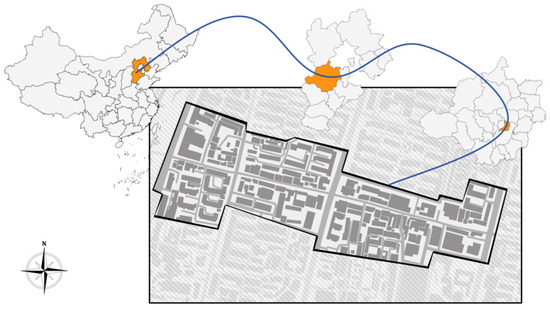
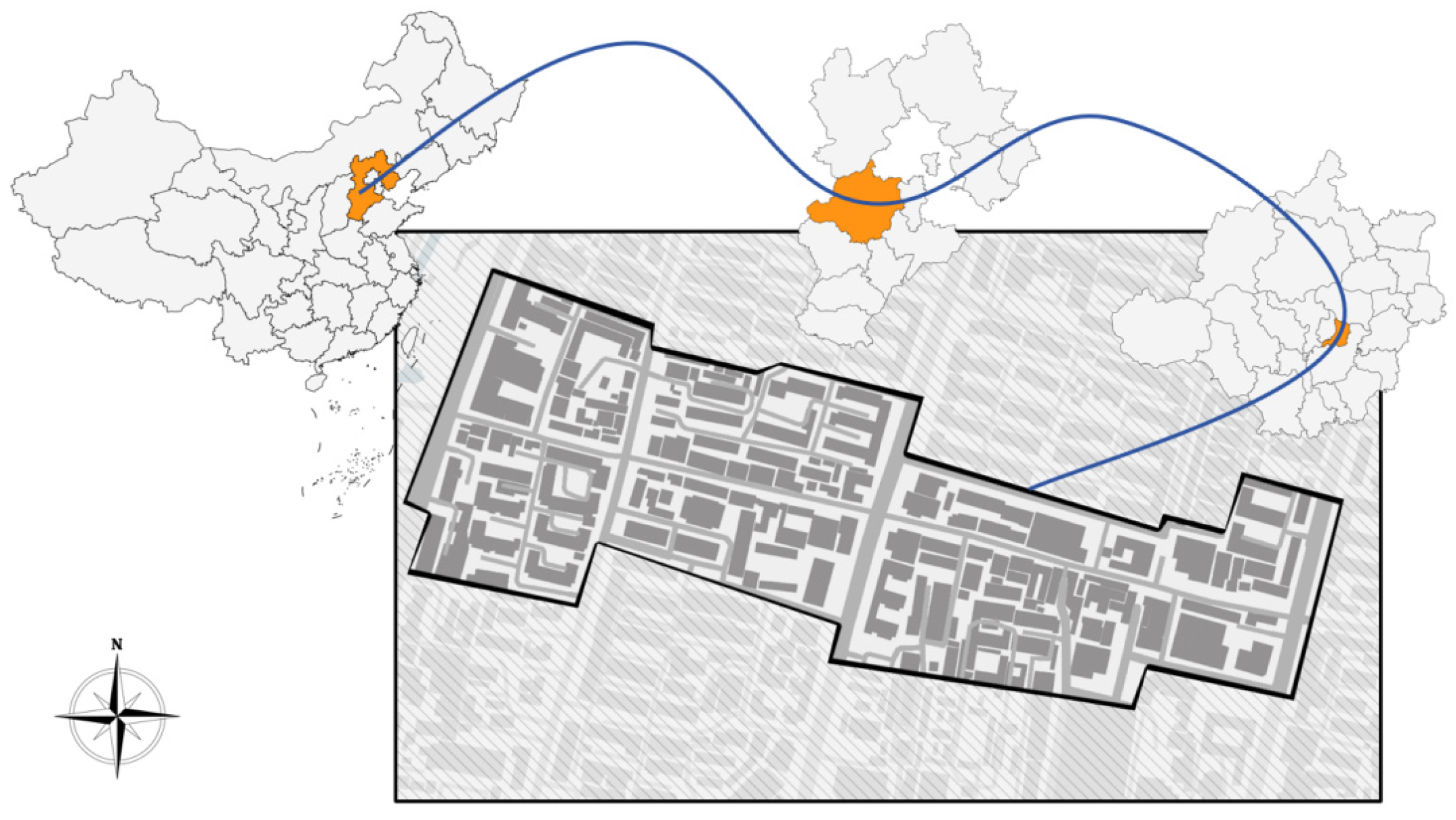
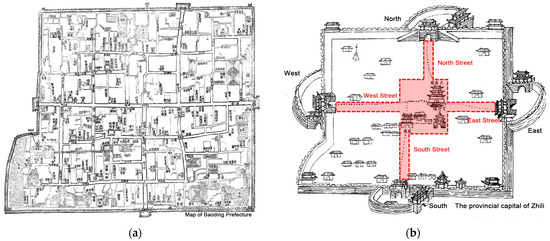
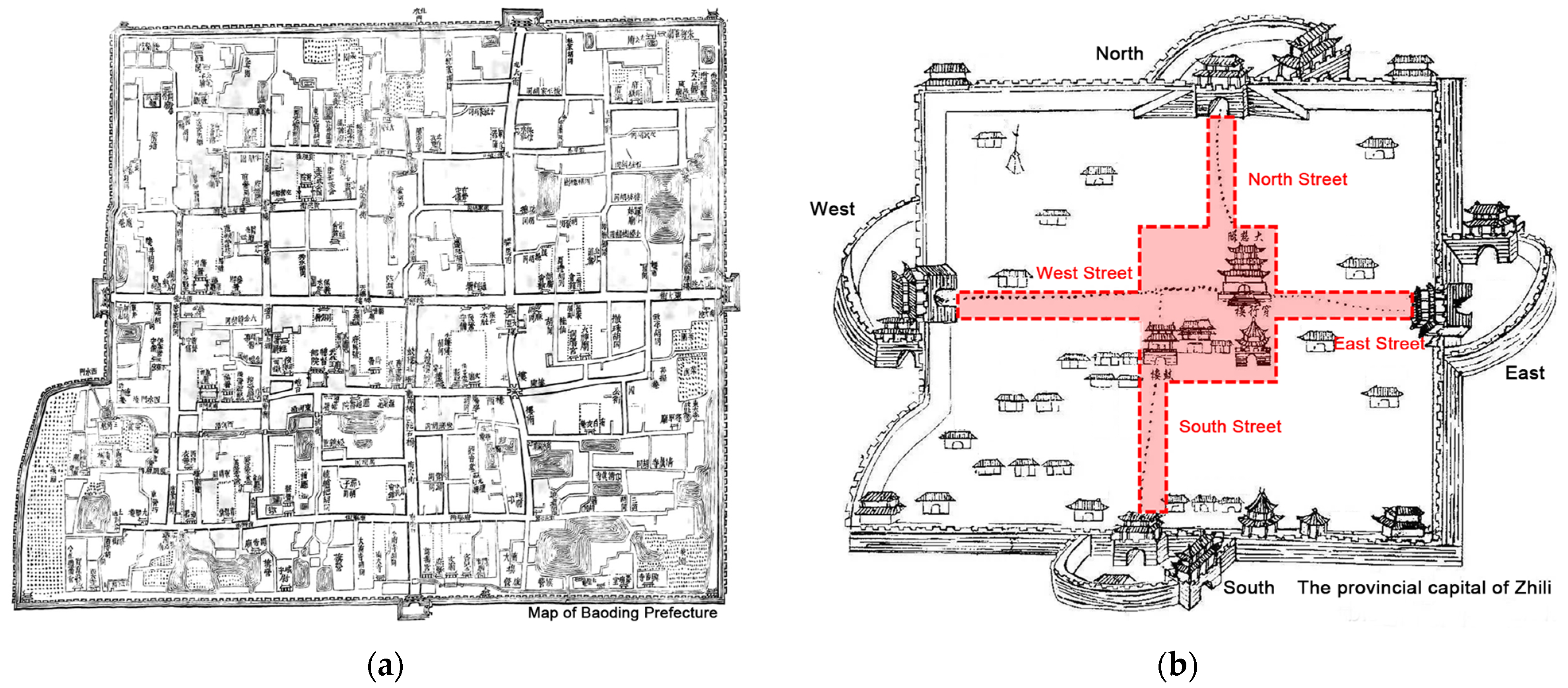
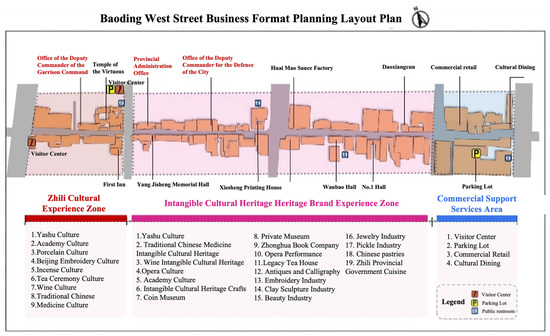
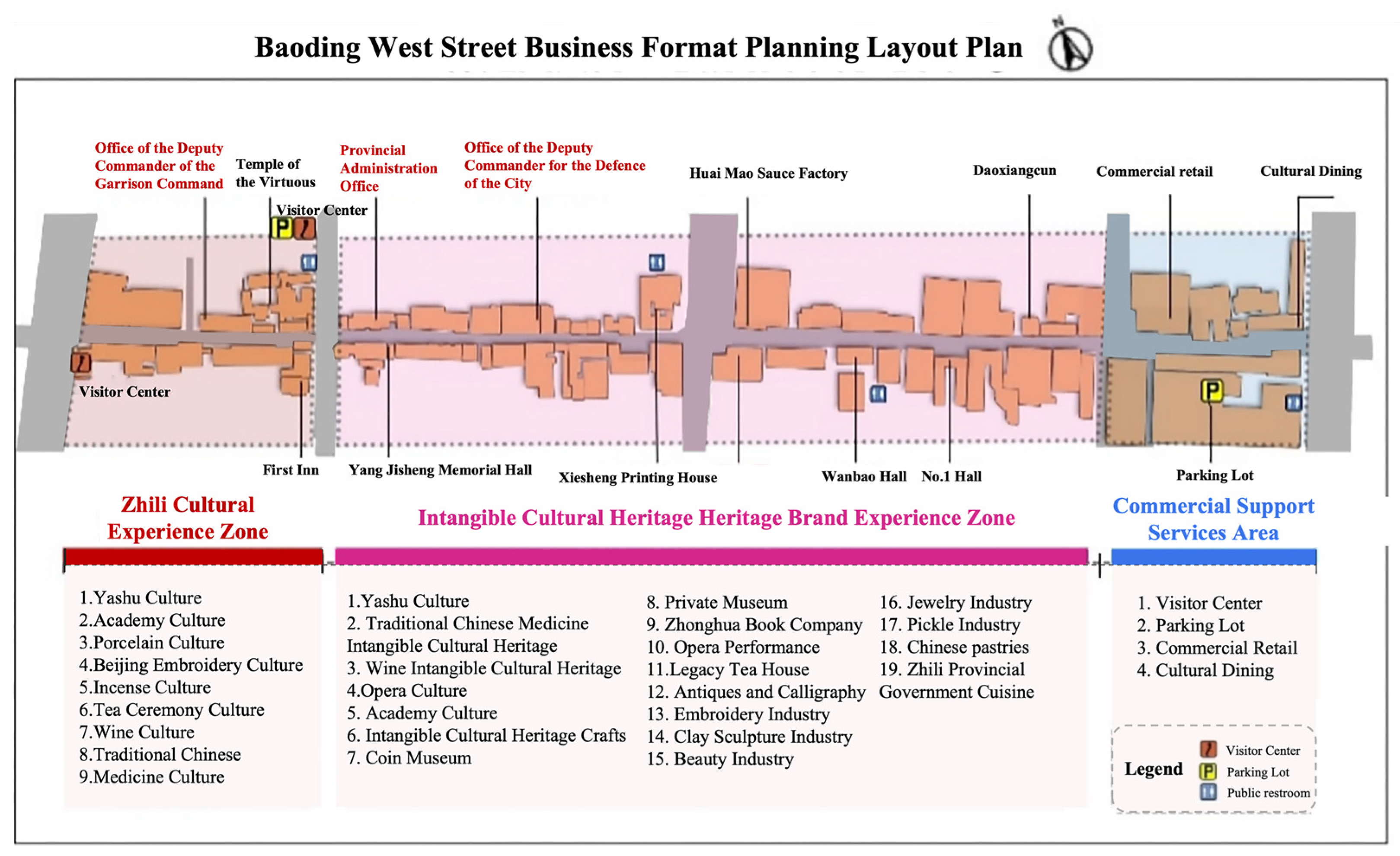
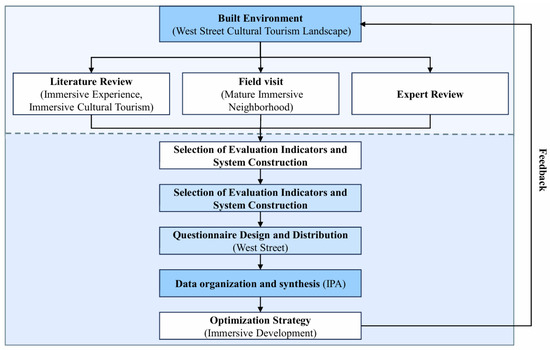
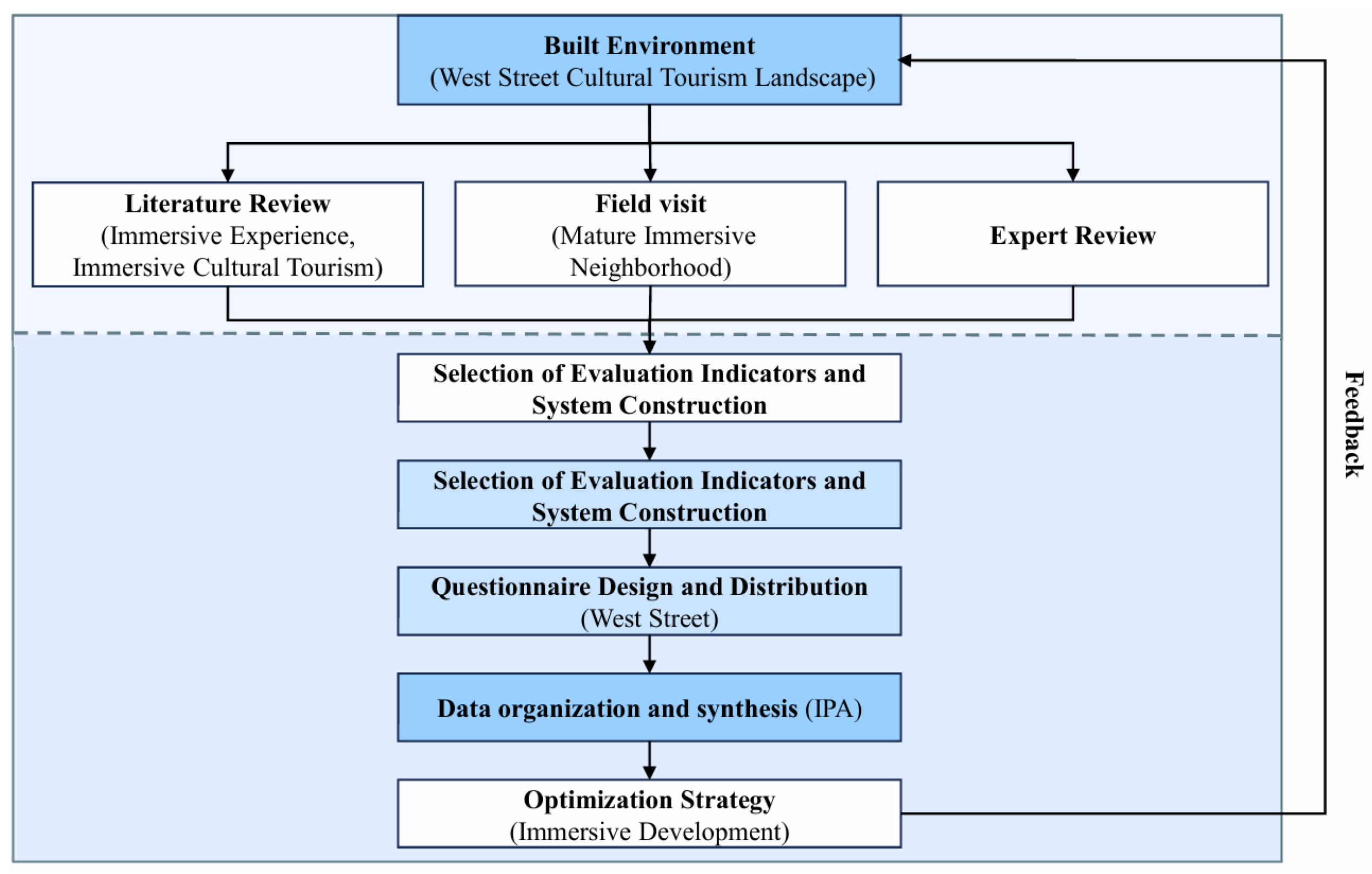
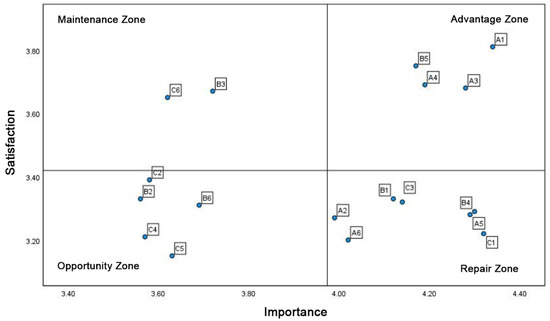
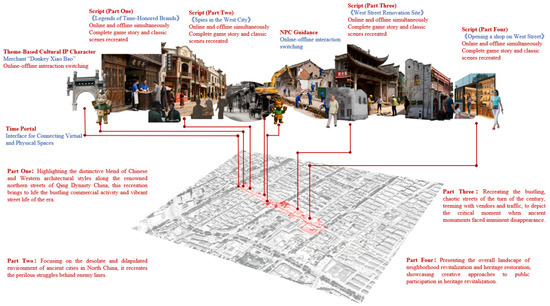
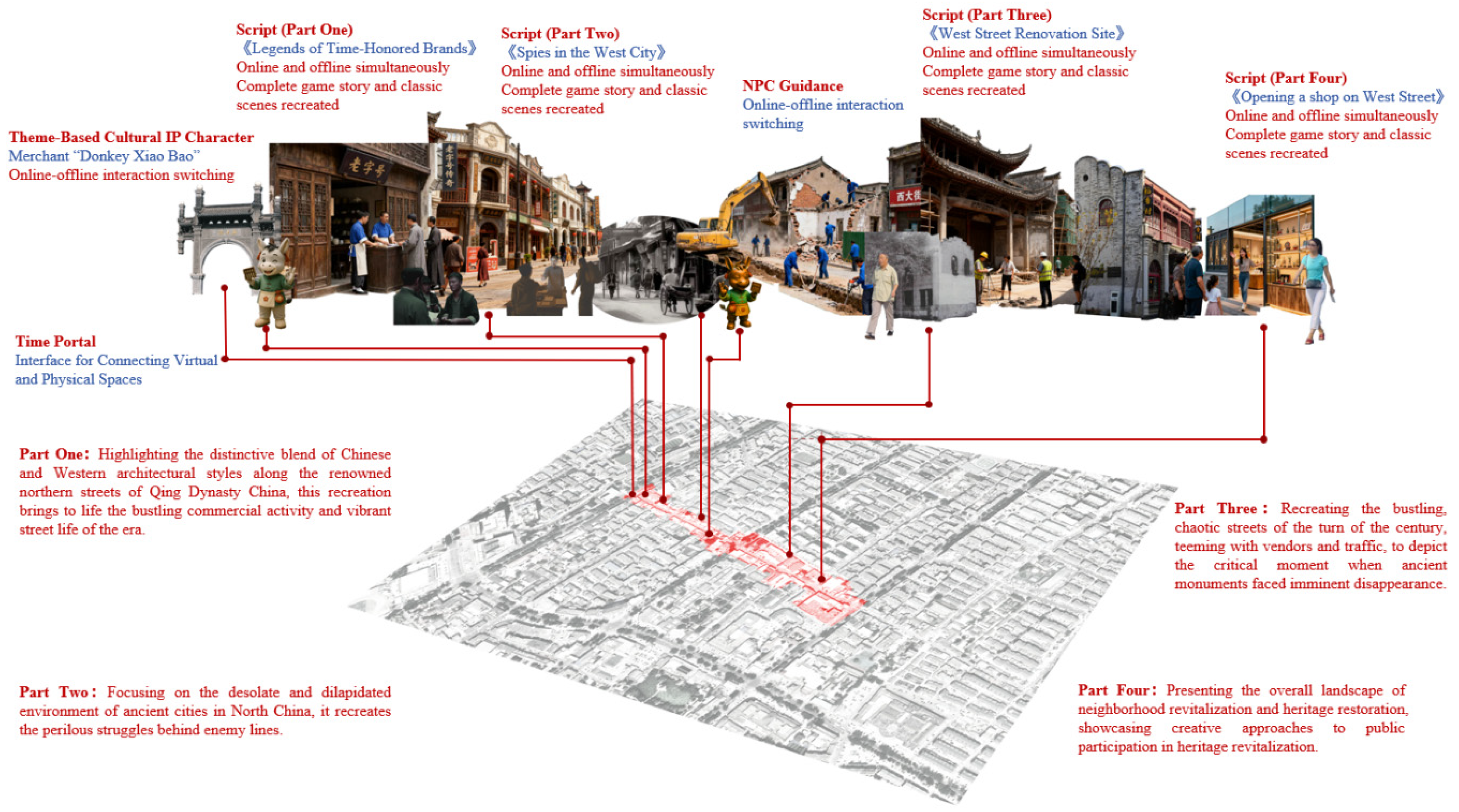
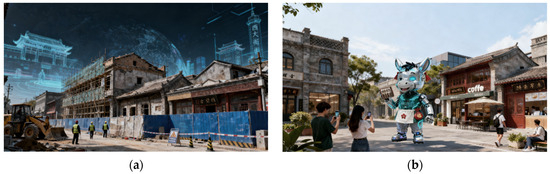
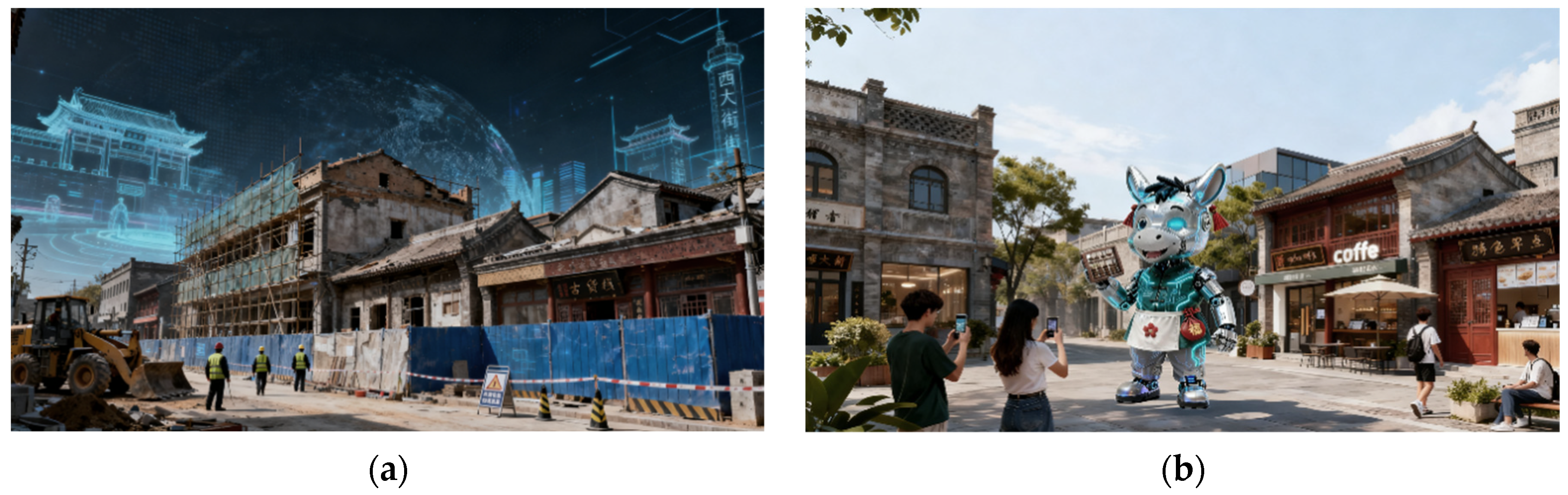
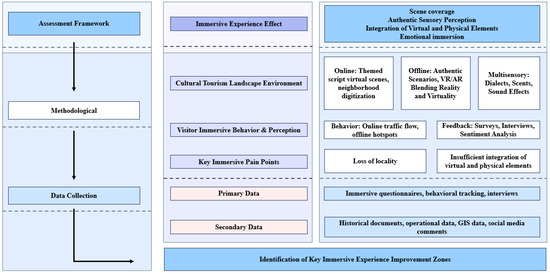
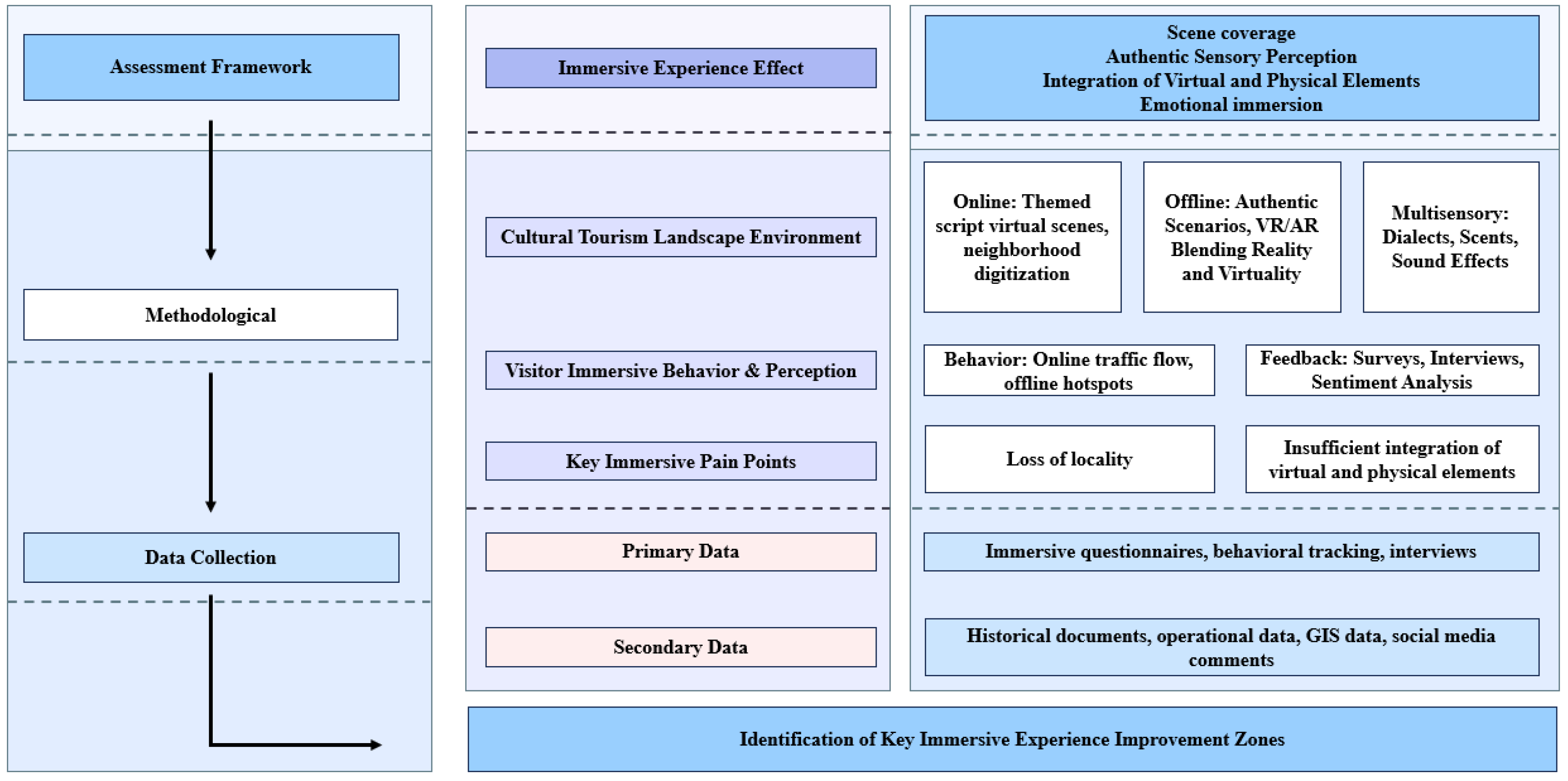
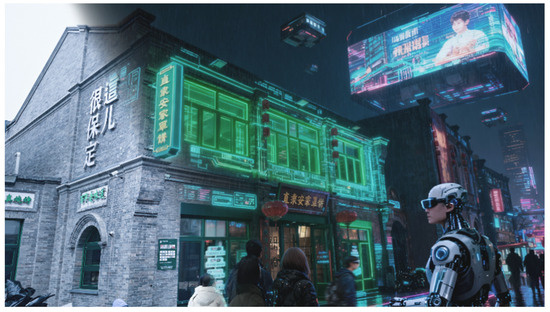
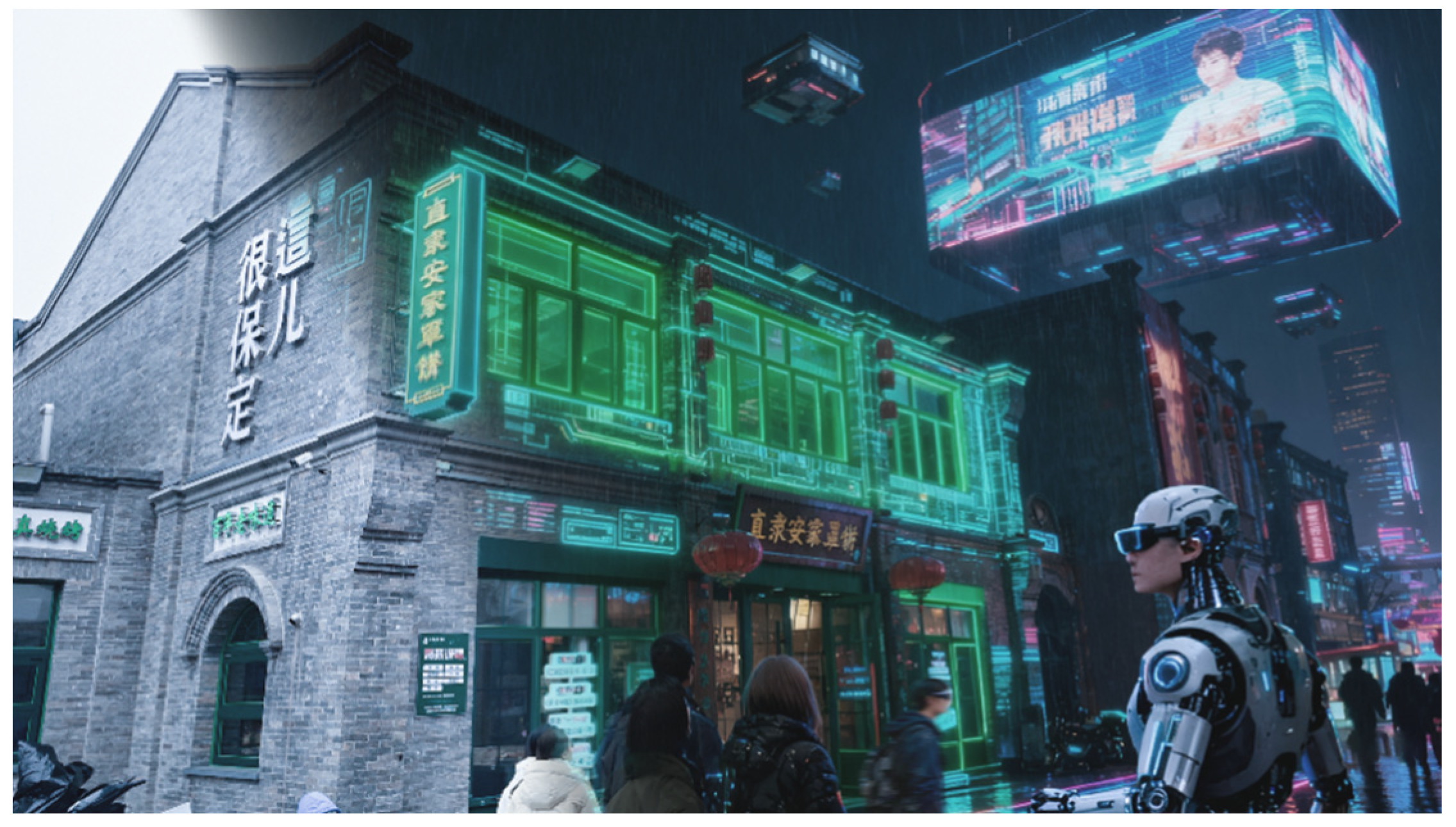

Disclaimer/Publisher’s Note: The statements, opinions and data contained in all publications are solely those of the individual author(s) and contributor(s) and not of MDPI and/or the editor(s). MDPI and/or the editor(s) disclaim responsibility for any injury to people or property resulting from any ideas, methods, instructions or products referred to in the content. |
© 2026 by the authors. Licensee MDPI, Basel, Switzerland. This article is an open access article distributed under the terms and conditions of the Creative Commons Attribution (CC BY) license.