


Abstract
Grey plastic is a representative traditional architectural decoration craft in the Lingnan region in China, carrying rich historical and cultural values as well as distinctive regional artistic characteristics. However, the grey plastic craft is currently facing problems such as inheritance gaps and a shortage of craftsmen, and its restoration projects impose extremely high professional requirements on contractors. Existing contractor selection methods are mostly applicable to ordinary construction projects and are difficult to adapt to its particularity, which may easily lead to risks such as substandard restoration quality. Therefore, this paper proposes a contractor selection method for grey plastic decoration projects of cultural relic buildings based on the BWM-TODIM method. Firstly, an evaluation system covering six core criteria is constructed; secondly, the BWM is adopted to determine the criteria weights; thirdly, the TODIM method is used to characterize the decision-makers’ loss aversion psychology and rank the candidate contractors; finally, an empirical analysis is conducted with a grey plastic restoration project in Lingnan as a case to verify the feasibility and effectiveness of the method. This study can provide decision support for the scientific selection of contractors for grey plastic decoration projects and contribute to the sustainable protection of cultural heritage. The scope of this study is limited to contractor selection for grey plaster decoration engineering of cultural relic buildings.
1. Introduction
At present, the academic community has conducted extensive exploration and research on contractor selection mechanisms in the general construction industry, forming a series of relatively mature theories and methods. However, research on contractor selection for the special field of cultural heritage protection remains scarce, with an obvious research gap. There are essential differences between cultural heritage building restoration projects and ordinary construction projects, as the former are characterized by engineering complexity, artistic uniqueness, and cultural bearing. Cultural heritage buildings carry profound historical deposits, unique esthetic values, and specific national and religious connotations.
Among the decorative systems of cultural heritage buildings, grey plastic is one of the most common and highly representative forms. According to historical records, the Chinese grey plastic craft can be traced back to 884 AD [1]. It reached its peak during the Ming and Qing dynasties, being widely used on roof ridges, eave corners, and other parts of ancestral halls, temples, monasteries, and grand mansions, and gradually developed into a distinctive folk handicraft [2]. Grey plastic art is widely distributed in the southeastern coastal areas of China. Among them, Lingnan grey plastic, with its vivid themes, exquisite shapes, and bright colours, is ingenious and unique in theme selection and style presentation, becoming an iconic symbol of Lingnan architectural culture. Grey plastic, known as “Hui Pi” in Lingnan, is an ancient architectural decoration art with a long history. Grey plastic art in Lingnan is comparable to other architectural carvings. It not only possesses the three-dimensional effect shown by the “three architectural carvings”, but also features the colour expression of murals [1].
Lingnan grey sculpture mainly employs materials such as lime, rice straw, jade button paper, glutinous rice flour, sugar, steel bars, steel nails, copper wires and pigments. Straw–lime mortar, lime paste and paper–lime mortar, which are prepared by mixing the above materials in certain proportions, respectively, serve as the raw materials for grey sculpture craftsmanship. To improve adhesiveness, some materials need to be fermented and cured for a period of time. In the creation of grey sculpture, craftsmen do not follow pre-drawn patterns; instead, they create directly on the wall with grey mortar held by a spatula, relying on their well-practiced skills. With simple gestures of patting, smearing, pushing, pressing and picking, a complete pattern can be swiftly finished. Craftsmen also adopt different carving techniques according to the decorative patterns on different architectural parts, including flat carving, half-relief carving and three-dimensional carving. Various images are exquisitely carved and vividly rendered. The significance of these carved totems is not limited to totem worship, but further embodies the profound implications of exorcizing evil spirits and praying for good fortune and blessings [3]. The ageing of inheritors is becoming a serious problem: the number of veteran artisans is gradually declining, while young people show low willingness to learn, putting the craftsmanship at risk of being lost. There is a contradiction between the complexity of the craft and the long-term nature of apprenticeship, resulting in a long learning cycle and high difficulty for grey sculpture techniques. Meanwhile, grey sculpture involves complex and time-consuming outdoor operations under harsh working conditions, coupled with a relatively low income for practitioners, leading to a serious imbalance between effort and reward. As a result, fewer and fewer young people are willing to learn grey sculpture [4]. At present, grey sculpture is facing an inevitable dilemma shared by most traditional handicraft industries—a lack of successors to pass on the manual skills. Due to the high time cost of learning grey sculpture and the relatively low remuneration in the industry, few people can persist in mastering the craft. Master Shao Chengcun, a representative inheritor of grey sculpture, noted that among apprentices learning grey sculpture, perhaps less than 20% can persist until the end [5]. Today, affected by multiple factors such as natural weathering of building materials, an inheritance gap in traditional craftsmanship, insufficient operational experience of practitioners, and a lack of professional restoration techniques, this precious traditional craft of grey plastic is gradually declining. As a key and difficult point in the protection of cultural heritage buildings, the technical protection and restoration of grey plastic are highly complex and professional. It not only requires a solid foundation in architectural history, systematic professional research in cultural heritage protection, and mature practical experience in restoration, but also demands that practitioners possess exquisite grey plastic craftsmanship, be able to precisely control the details of decorative techniques and the characteristics of traditional materials, and rely on the collaborative cooperation of professional restoration teams. In addition, the particularity of cultural heritage protection projects also imposes strict regulatory compliance requirements on contractors participating in construction. Contractors must not only be familiar with relevant laws and regulations in the general construction field, but also have an in-depth grasp of special regulations for cultural heritage protection and strictly abide by the core principles of cultural relic protection. Therefore, how to scientifically and reasonably select qualified and professional contractors for cultural heritage protection and restoration projects has become an urgent and important problem to be solved in the fields of construction management and cultural heritage protection.
In the field of conventional construction management, contractor selection is usually guided by three core objectives: on-time project completion, reasonable budget control, and compliance with engineering quality standards [6]. However, relying solely on these conventional evaluation indicators is insufficient to ensure that the selected contractors can stably guarantee project construction performance, making it especially difficult to adapt to the particularity of cultural heritage restoration projects. Practice shows that improper contractor selection can easily lead to a series of problems such as cooperation disputes, construction delays, engineering claims, and contract disputes, which in turn lead to a decline in overall project performance, a significant increase in additional costs for project organization, operation and management, and even irreversible damage to cultural heritage. Taking a project in southwest China as an example, in terms of contractor management, there were major potential safety hazards during the relocation of personnel and equipment in the inner yard, none of which were covered in the contract. Although risk control appeared to be checked at multiple levels and under multi-party responsibility in form, in actual implementation, in the absence of contract change and price adjustment clauses, problems such as cultural differences between the contractor and the employer, contractor opportunism, and declining service quality caused by neglect of outsourcing relationship management arose [7].
In the current engineering bidding process, price factors often become the core evaluation basis [8], but the lowest bid is not the optimal decision choice. Blindly adopting a low-price bidding strategy may instead lay serious hidden dangers for project failure. Behind low prices usually lie multiple risks, such as contractors’ misunderstanding of the core project requirements, passive performance with a lack of initiative, deliberate reduction in engineering quality, unjustified construction delays, frequent claims and disputes, legal litigation dilemmas, contractors’ own capital chain breaks and near bankruptcy, and substantial project cost overruns. The lack of professional competence and comprehensive quality of contractors is often the core root of such problems. Taking project cost overruns as an example, the main causes include contractors’ technical limitations, market economic fluctuations, loopholes in contract terms, deviations in project expectation judgments, and changes in relevant policies [9]. Adopting diversified and targeted evaluation standards helps to comprehensively identify and scientifically assess the comprehensive advantages and potential risks of contractors, while a single evaluation standard is difficult to fully align with the client’s project objectives, let alone meet the professional needs of cultural heritage grey plastic restoration projects. Therefore, the selection of evaluation standards is a complex and critical task, which needs to comprehensively consider factors such as economic rationality, social adaptability, technical feasibility, quality control level, and organizational management ability, while taking into account the cooperative relationship with clients and various stakeholders, so as to achieve a comprehensive, objective and accurate assessment of contractors’ comprehensive capabilities.
In response to the special needs of contractor selection for cultural relic building grey plastic decoration construction, combined with the professional requirements of grey plastic restoration projects and cultural heritage protection principles, this paper proposes six core evaluation criteria, constructs a targeted evaluation system, and comprehensively uses the Best–Worst Method (BWM) and the multi-criteria evaluation model TODIM to carry out special research, aiming to provide feasible methodological support for the scientific selection of contractors for cultural relic building grey plastic decoration projects (see Figure 1). This study focuses on the contractor selection of grey plaster restoration projects of historic buildings, and does not involve other types of construction projects.
Figure 1.
Research plan framework.
2. Literature Review
2.1. Research on Contractor Selection Methods
As the core executor in the construction phase of a project, a contractor’s comprehensive capability directly determines the final implementation effect and success or failure of the project. Therefore, selecting high-quality contractors that match project requirements is a critical step in project management [10]. In the actual selection process, the client adopts diverse pre-qualification models and selection procedures according to project characteristics, including qualification review, restricted tendering, open tendering, lowest-price bidding, and negotiation, to achieve preliminary screening and precise matching of contractors [11]. These procedures help filter out unqualified candidates at an early stage, ensure the competence and reliability of potential contractors, and lay a solid foundation for subsequent formal bidding and decision-making.
Among various contractor selection methods, the lowest bid method is one of the most widely used approaches in the engineering field. Specifically, Merna and Smith detailed the procedural frameworks for bid evaluation within UK public sector procurement, while Decarolis provided empirical evidence on how awarding prices and screening mechanisms in auctions influence subsequent contract performance [12,13]. To optimize and improve this method, El-Sayegh and Rabie constructed a bid evaluation model based on dual-parameter adjustment of price and time, further enhancing the scientificity of bid evaluation. Their study specifically refined the bi-parameter (A + B) bidding framework by incorporating the “float loss impact,” providing a quantitative approach to account for the financial risks associated with schedule fluctuations [14]. Regarding the priority of selection criteria, Nguyen pointed out through empirical analysis that price, quality, the number of past projects, on-time delivery capability, and supplier relationships are the five core indicators in contractor selection [15], while Khan, R.A. et al.’s research on the construction industry in developing countries showed that product price, construction quality, and the number of previous projects are the three key factors for contractor selection [16]. In addition, Keung found that behavioural performance and bid level are core variables affecting the bidding competitiveness of maintenance contractors. Their research specifically argued that these variables are not merely short-term tactics but are integral to a firm’s long-term sustainability, highlighting how contractors must align their bidding objectives with strategic market survival to maintain a competitive edge [17].
Different from studies focusing on price factors, some scholars argue that technical capability and construction quality should serve as core reference indicators for contractor selection. Mostafa Zahedirad proposed that multiple technical parameters of contractors, such as technical strength, professional expertise, and equipment coordination capability, should be included in the selection evaluation system [18]; Tafazzoli, M. emphasized that a contractor’s project delivery quality is an important indicator for measuring its performance capability, which is directly related to the achievement of project objectives. Specifically, this review highlights that worker fatigue is a critical internal factor that degrades operational performance, suggesting that a contractor’s ability to detect and mitigate fatigue is essential for maintaining consistent delivery standards and safety [19]. From the perspective of the supply chain, Gosling et al. proposed that supply chain flexibility should serve as a primary determinant in the selection process, emphasizing the importance of a contractor’s ability to adapt to volatile market demands [20]. Furthermore, Gao developed a Multi-Attribute Reverse Auction (MARA) method to balance economic efficiency with sustainability goals, providing a specialized decision-making framework for winner determination in Public–Private Partnership infrastructure projects [21].
With the popularization of the green development concept, environmental protection, safety, and sustainability have gradually become important dimensions in contractor selection. Zhang et al. constructed an interval-valued dual-uncertain fuzzy unbalanced linguistic set model for green contractor screening, integrating the Decision-Making Trial and Evaluation Laboratory (DEMATEL) and the Technique for Order Preference by Similarity to an Ideal Solution (TOPSIS), providing a new path for the scientific selection of green contractors [22]; Kog and Yaman developed a multi-agent system (MAS) for contractor pre-qualification, improving the efficiency and accuracy of the screening process. Their MAS-based model specifically simulates the decentralized interactions between diverse project entities, enabling a more dynamic assessment of contractor eligibility than traditional static methods [23]. Yang et al. introduced Data Envelopment Analysis (DEA) and Best Value (BV) methods into contractor and supplier screening, enriching the analytical tools in this field. By leveraging DEA, their work identifies the most “efficient” contractors by simultaneously evaluating cost and non-cost criteria, ensuring that the selection aligns with the best-value-for-money principle [24]. Palha et al. proposed the ROR-UTADIS method for subcontractor selection, improving the decision-making reference system by introducing new supply priority information. This approach excels at sorting outsourcing activities based on robust ordinal regression, allowing decision-makers to incorporate their specific preference intensities into the final ranking [25].
In actual engineering scenarios, there are often many uncertainties in the contractor selection process. To address this issue, the academic community mainly adopts three approaches: fuzzy programming, stochastic programming, and robust programming. Among them, fuzzy set theory has become one of the most widely used tools due to its effectiveness in handling uncertainties caused by the cognitive complexity of decision-makers [26,27]. Karami et al. introduced an interval-valued fuzzy decision-making model integrating Step-wise Weight Assessment Ratio Analysis (SWARA) and a Combined Compromise Solution (CoCoSo) to enhance the contractor selection process. Their research specifically contributes a robust framework for managing expert uncertainty, utilizing the SWARA-CoCoSo hybrid to balance subjective weight preferences with a consolidated ranking of alternatives [28]; Sun and Zhou applied the Analytic Hierarchy Process (AHP) combined with Grey Relational Analysis (GRA) to evaluate contractor performance across dimensions such as technical capability and financial status. This hybrid approach effectively captures the intricate relationships between qualitative indicators and historical performance data, allowing for more accurate ranking in scenarios where information may be incomplete or “grey” [29].
Multi-criteria decision-making (MCDM) methods have been increasingly applied in the field of contractor selection due to their ability to take into account multi-dimensional evaluation needs. Aldi Permana Etika Putra proposed constructing a specific standard-based MCDM support system integrating the Best–Worst Method (BWM) and TOPSIS, calculating criterion weights through BWM and determining alternative rankings through TOPSIS, thus improving the scientificity of selection decisions [30]; P. Trivedi integrated BWM, TOPSIS, and Simple Additive Weighting (SAW) to propose a hybrid MCDM method for structured analysis of indicator factors and alternative selection in road safety improvement projects [31]. For logistics supplier selection in an uncertain environment, Renpeng Yuan proposed a hesitant fuzzy BWM-TOPSIS robust decision-making method, constructing a decision matrix with interval-valued hesitant fuzzy values, determining attribute weights and alternative scores combined with BWM, calculating the distance between alternatives and positive/negative ideal solutions via TOPSIS, and verifying the feasibility and effectiveness of the method through multi-objective optimization and case studies [32].
In addition, Afshar et al. proposed a type-2 fuzzy set method for contractor pre-qualification. Their model specifically utilizes interval type-2 fuzzy sets to more effectively capture the linguistic ambiguities and the varying perceptions of multiple experts, which traditional fuzzy sets may fail to represent [33]; Similarly, Ulubeyli and Kazaz developed a subcontractor selection model (CoSMo) based on fuzzy set theory. This research contributes a specialized multi-criteria framework (CoSMo) that addresses the unique complexities and risk factors inherent in international construction projects, ensuring a more robust evaluation of subcontractors in global environments [34]; Fei Xiao et al. proposed an extended MULTIMOORA method for energy performance contracting mechanisms in public building energy-saving renovation projects to address risk issues in the decision-making process [35]. In other related fields, Li et al. constructed an extended multi-criteria group-level decision support model based on passenger preference characteristics. This study introduces Z-number theory to simultaneously evaluate the content and reliability of preference rankings, thereby providing a more robust decision-making framework for handling uncertain linguistic information [36]. Wang et al. proposed a cloud-based multi-criteria group decision support model for hotel selection and recommendation. By leveraging cloud model theory, their research effectively transforms vague qualitative preferences into quantitative data, addressing the inherent fuzziness and randomness in travellers’ subjective evaluations [37]. Sang-sang He combined expert psychological behaviour and linguistic term semantics to propose an improved Failure Mode and Effects Analysis (FMEA) method based on probabilistic linguistic information and the TODIM method for risk ranking [38]; Nie, R.X. adopted a cloud-supported Quality Function Deployment (QFD) model integrating the TODIM method and linguistic distribution assessment to improve medical service quality [39]; Wang et al. proposed a Multi-Criteria Group Decision-Making (MCGDM) method to solve building energy efficiency retrofit (BEER) project selection problems. Specifically, this study utilizes picture fuzzy sets to capture positive, neutral, and negative expert opinions simultaneously, providing a more nuanced representation of decision-maker preferences in energy-saving evaluations [40]. Furthermore, Wu et al. combined the Z-number extended TODIM-CPT method with K-means clustering for the site selection of electric vehicle battery swapping stations. Their work contributes a hybrid framework that accounts for both the reliability of fuzzy information via Z-numbers and the psychological risk-taking behaviour of decision-makers through Cumulative Prospect Theory (CPT), while using clustering to manage large-scale site alternatives [41].
With the deepening of research, the evaluation criteria for contractor selection have been continuously enriched. In addition to core indicators, risk factors [25], environmental impacts [42,43], equipment resource reserves and real-time workload [25,44], enterprise characteristics [8], business ethics [15], legal compliance capability [15,17], after-sales warranty services [6,15], and basic enterprise innovation strength [45] have all been incorporated into the evaluation system. Specifically, Ilies et al. demonstrated that the combined action of high temperatures and low relative humidity, alongside pollutants like formaldehyde (HCHO) and volatile organic compounds (VOCs), can significantly accelerate the deterioration of heritage exhibits [46]. Brauers conducted a comprehensive evaluation study on maintenance contractors using indicators such as construction input cost, comprehensive management level of common properties, total service scale, operation and maintenance building stock, and property maintenance revenue per employee [47]; Zavadskas and Vilutienė adopted qualitative evaluation indicators to construct a maintenance contractor screening system. Specifically, their research introduced the “I-Model” to systematically define and weigh selection criteria tailored for multi-family residential maintenance, while further validating the framework’s efficacy through a Lithuanian case study to demonstrate how qualitative indicators can be effectively integrated into multi-criteria evaluations [48,49]; and Juan selected multiple indicators in the assessment of housing renovation contractors, including schedule and budget variation, quality defect rate, years of experience, and dispute and complaint frequency, as well as tangible service presentation, customer empathy service capability, performance reliability, demand response efficiency, service quality assurance level, and customer satisfaction, forming a complete evaluation framework [50].
2.2. Literature Related to the Research on Contractor Selection and Evaluation Criteria
With the continuous deepening of contractor selection research, multi-criteria screening methods, which can comprehensively and objectively reflect contractors’ comprehensive capabilities, have gradually replaced single-standard screening and become the mainstream choice in academia and industry. Many researchers focusing on customer needs have proposed targeted contractor selection evaluation standard systems combined with different project types and application scenarios. Hatush and Skitmore suggested that financial robustness, technical management capability, safety risk control level, and corporate reputation should be used as core evaluation indicators for contractor pre-qualification [51]; El-Sawalhi et al. proposed that financial stability, technical and management capabilities, contractors’ past experience and performance, resource reserves, quality control level, and safety risk control capability are the basic evaluation criteria for contractor selection [52].
Contractor selection for heritage building restoration projects has particularities and is a task requiring key attention. Morkūnaitė, Z. et al. pointed out in their research that the selection of heritage building restoration contractors should focus on indicators such as financial strength, core values of contractors, subcontractor management level, project management capability, risk control capability, and corporate reputation [53]. To standardize cultural relic protection and restoration work, China revised the Principles for the Conservation of Cultural Heritage Sites in China in 2015. Based on the Cultural Relics Protection Law of the People’s Republic of China and formulated with reference to the 1964 Venice Charter, this principle was first issued in 2000 and revised and improved in 2015 [54,55].
The Principles for the Conservation of Cultural Heritage Sites in China clearly stipulate that cultural relic restoration requires corresponding technical capabilities and cultural literacy to ensure the authenticity and safety of cultural relics, which demands that contractors possess rich restoration experience, excellent professional skills, as well as stable performance capability and sustainability. Meanwhile, the Principles propose that hierarchical management should be implemented in cultural relic protection, and contractors should have the ability to formulate protection plans and analyze and solve various problems in the restoration process, which fully reflects the high requirements for contractors’ organizational management and coordination capabilities. Especially for the maintenance and restoration of modern and contemporary murals, painted sculptures and other cultural relics, the principle clearly requires contractors to have sufficient restoration experience, stable continuous working capabilities, and be able to complete various tasks within the specified construction period while ensuring restoration quality. Table 1 summarizes the core evaluation indicators most frequently cited in the contractor selection process.
Table 1.
The most frequently cited contractor selection criteria.
3. Methods
3.1. Research on Contractor Selection Evaluation Criteria
Unlike ordinary construction, cultural heritage projects—such as grey plaster decoration restoration—require a specialized balance of craftsmanship and cultural preservation, making traditional lowest-bid selection inadequate. Consequently, a scientific multi-criteria decision-making approach is essential to evaluate the professional capabilities and specialized experience required to ensure project success.
This paper adopts the Best–Worst Method (BWM) to address the multi-criteria decision-making (MCDM) problem of contractor selection for grey plaster decoration engineering in historic buildings (see Figure 2). Its core implementation logic is as follows: First, based on the relevant literature and project requirements, preliminary candidate evaluation indicators are identified, including price, financial capability, management capability, construction period, health and safety, reputation, technical capability, experience, past project performance, personnel qualifications, quality, and cooperative relationship. Subsequently, decision-makers identify the “Best” indicator, which is the most critical to the selection outcome, and the “Worst” indicator, which has the least impact. Through pairwise comparisons of the Best/Worst indicators with the remaining indicators, a max–min optimization model is constructed to calculate the weight of each indicator. Finally, core evaluation indicators with significant weight ratios that accurately match the requirements of grey plaster restoration projects are screened, providing a scientific basis for contractor selection.
Figure 2.
Research process.
MCDM is a core tool for scheme optimization and indicator screening in complex engineering management. As an efficient and robust MCDM method, the BWM was first proposed by Rezaei in 2015 [56]. Its key advantage lies in focusing on the comparative relationship between “key criteria” and “secondary criteria,” eliminating the need to construct a complete pairwise comparison matrix. This significantly reduces decision-making complexity while improving judgement consistency and the reliability of weight results. It is suitable for scenarios such as indicator system optimization and comprehensive scheme evaluation, particularly for identifying core standards in contractor selection. Currently, it is widely applied in fields such as engineering management, supply chain optimization, and decision-making for heritage conservation projects.
The core logic of the BWM is based on decision-makers’ intuitive judgments of criterion importance. It achieves quantitative calculation of criterion weights through a four-step process: “identifying key criteria–pairwise comparisons–weight optimization–consistency check.” The specific principles are as follows:
- (1)
- Criterion Set Construction: Define the core objectives of the decision problem and organize a candidate criterion set C = {C1, C2, ..., Cn} covering all key influencing factors, where n is the number of criteria.
- (2)
- Best/Worst Criterion Identification: The decision-maker (or expert team) directly selects the best criterion (the most critical and indispensable one for the decision outcome) and the worst criterion (the least influential and non-essential one) from the candidate set based on objective priorities.
- (3)
- Pairwise Comparison Judgments: Using CB (best) and CW (worst) as benchmarks, pairwise comparison relationships are established via the 1–9 scale method (1 = equally important, 3 = slightly more important, 5 = strongly more important, 7 = very strongly more important, and 9 = extremely more important; 2/4/6/8 represent intermediate values). The importance of each remaining criterion relative to CB(aBj) and relative to CW(ajW) is determined, respectively.
- (4)
- Weight Calculation and Consistency Check: A max–min optimization model is constructed to derive the objective weights of each criterion. Meanwhile, the logical rationality of the pairwise comparison judgments is verified using the consistency ratio (CR) to ensure reliable weight results.
Compared with the traditional AHP method, the BWM does not require a complete pairwise comparison matrix. It only needs limited comparisons centred on the best and worst criteria, effectively reducing the decision-maker’s cognitive load and scoring errors. It is particularly suitable for core standard screening scenarios with multiple criteria, e.g., n = 12 [57,58].
The specific steps of the BWM for deriving the weights of the criteria are briefly described as follows [55]:
Step 1. Determine a set of decision criteria. The decision-maker identifies n criteria C = {C(1), C(2),...,C(n)} that are closely related to the selection of contractors for cultural heritage grey sculpture decoration projects.
Step 2. Determine the best and the worst criteria.
Step 3. Determine the preference of the best criteria over the other criteria, using a number between 1 and 9. The resulting best-to-others (BO) vector would be the following: AB = (aB1,aB2,…, aBn). aBj indicates the preference of the best criterion B over criterion j. It is clear that aBB = 1.
Step 4. Determine the preference of all the criteria over the worst criterion, using a number between 1 and 9. The resulting others-to-worst (OW) vector would be the following: AW = (a1w; a2w;…; anw)T. ajw indicates the preference of the criterion j over the worst criterion W. It is clear that aww = 1.
Step 5. Find the optimal weights (w1*, w2*,…,wn) [59].
The aim is to determine the optimal weights of the criteria, such that the maximum absolute differences and for all j are minimized, which is translated to the following min–max Equation (1):
Equation (1) can be transferred to the following (2):
For any value of ξ, multiplying the first set of the constraints of (2) by wj and the second set of constraints by ww, it can be seen that the solution space of (2) is an intersection of 4n − 5 linear constraints and 2(2n − 3) comparison constraints, and one constraint for the weight sum, thus resulting in a large enough ξ that the solution space is non-empty. Solving (2), the optimal weights (w1*, w2*, …, wn*) and ξ* are obtained.
According to [56], a consistent comparison is defined as follows:
Definition 1.
A comparison is fully consistent when aBj × ajw = aBw, for all j, where aBj, ajw and aBw are, respectively, the preference of the best criterion over criterion j, the preference of criterion j over the worst criterion, and the preference of the best criterion over the worst criterion. Table 2 shows the maximum values of ξ (consistency index) for different values of aBw. Table 2 shows the maximum values of ξ (consistency index) for different values of aBw.
Table 2.
Consistency index (CI) table.
Table 3 presents the BO and OW pairwise comparison vectors for different examples, which can be used to verify the feasibility of the BWM in practical application.
Table 3.
BO and OW pairwise comparison vectors: example.
Based on the consistency index shown in Table 2, the consistency ratio (CR) is calculated as follows: Consistency Ratio = [59].
The consistency ratio CR ∈ [0, 1]. Values close to 0 indicate high consistency of the pairwise comparisons, while values close to 1 indicate low consistency, which requires an adjustment of the pairwise comparison results.
3.2. The TODIM Method
The TODIM method was proposed by Gomes and Lima in 1992. It is a discrete multi-criteria decision-making tool based on prospect theory, which was the core research achievement awarded the Nobel Prize in Economic Sciences in 2002 [60]. The key advantage of this method lies in its ability to accurately capture the irrational preferences of decision-makers in the process of risk perception. By quantifying the differences in the relative importance of criteria and the performance gaps of candidate alternatives under different criteria, it enables the scientific selection of the optimal alternative in complex decision-making scenarios [61,62]. Unlike traditional multi-criteria decision-making methods, the TODIM method does not assume perfect rationality of decision-makers and better aligns with the characteristics commonly found in actual decision-making, such as “loss aversion” and “heterogeneous risk preferences.” It has been widely applied in complex multi-objective decision-making scenarios such as engineering supplier selection, bid evaluation for cultural relic restoration projects, and technical scheme optimization [63,64].
For the contractor selection problem in the grey plaster decoration engineering of historic buildings, the core requirement is not only the quantitative evaluation of contractors’ comprehensive capabilities but also the accommodation of the particularities of grey plaster restoration: for example, the risk sensitivity of criteria such as the professionalism of the restoration technology, compliance with heritage protection regulations, and stability of restoration effects. By introducing a “loss–gain” perception matrix and a risk attitude coefficient, the TODIM method precisely meets the needs of such high-risk and highly professional decision-making scenarios, effectively compensating for the inherent deficiency of traditional linear weighting methods that ignore decision-makers’ risk preferences [65].
The TODIM method is applicable to both qualitative and quantitative evaluation criteria. For qualitative criteria, their linguistic description scales can be converted into cardinal scales, which are then standardized together with quantitative criteria. The core logic of the method is to calculate the relative dominance degree between each pair of alternatives, accumulate the contributions of gains, losses, or indifference of the alternatives under each criterion, and finally achieve the ranking and optimization of the alternatives.
First, a quantitative evaluation matrix is constructed based on the evaluation results of all candidate contractors under each criterion. The matrix is then standardized by normalizing all evaluation values to the interval [0, 1] using the method of “dividing the evaluation value of an alternative under a single criterion by the sum of the evaluation values of all alternatives under that criterion,” resulting in the standardized evaluation matrix P, which is an n × m matrix (n is the number of candidate contractors and m is the number of evaluation criteria), as shown in Table 4.
After determining the weights of each criterion and normalizing the weights, the local dominance matrix and the final dominance matrix need to be calculated sequentially. The decision-maker selects the criterion with the highest weight as the reference criterion according to the relative importance of the criteria to unify the evaluation dimensions of all criteria. We define w(rc) as the ratio of the weight of criterion c to the weight of reference criterion r. Through w(rc), the performance differences in alternatives under different criteria can be converted into the dimension of the reference criterion, ensuring the comparability of evaluation results.
Combined with prospect theory, the dominance degree δ(A(i), A(j)) of alternative A(i) relative to alternative A(j) can be calculated by the following mathematical expression: where m is the number of evaluation criteria; c is any evaluation criterion ; P(i)(c) and P(j)(c) represent the standardized evaluation values of alternatives A(i) and A(j) under criterion c, respectively; and θ is the loss attenuation coefficient, whose different values lead to different shapes of the prospect theory value function in the negative interval, used to characterize the decision-maker’s degree of loss aversion.
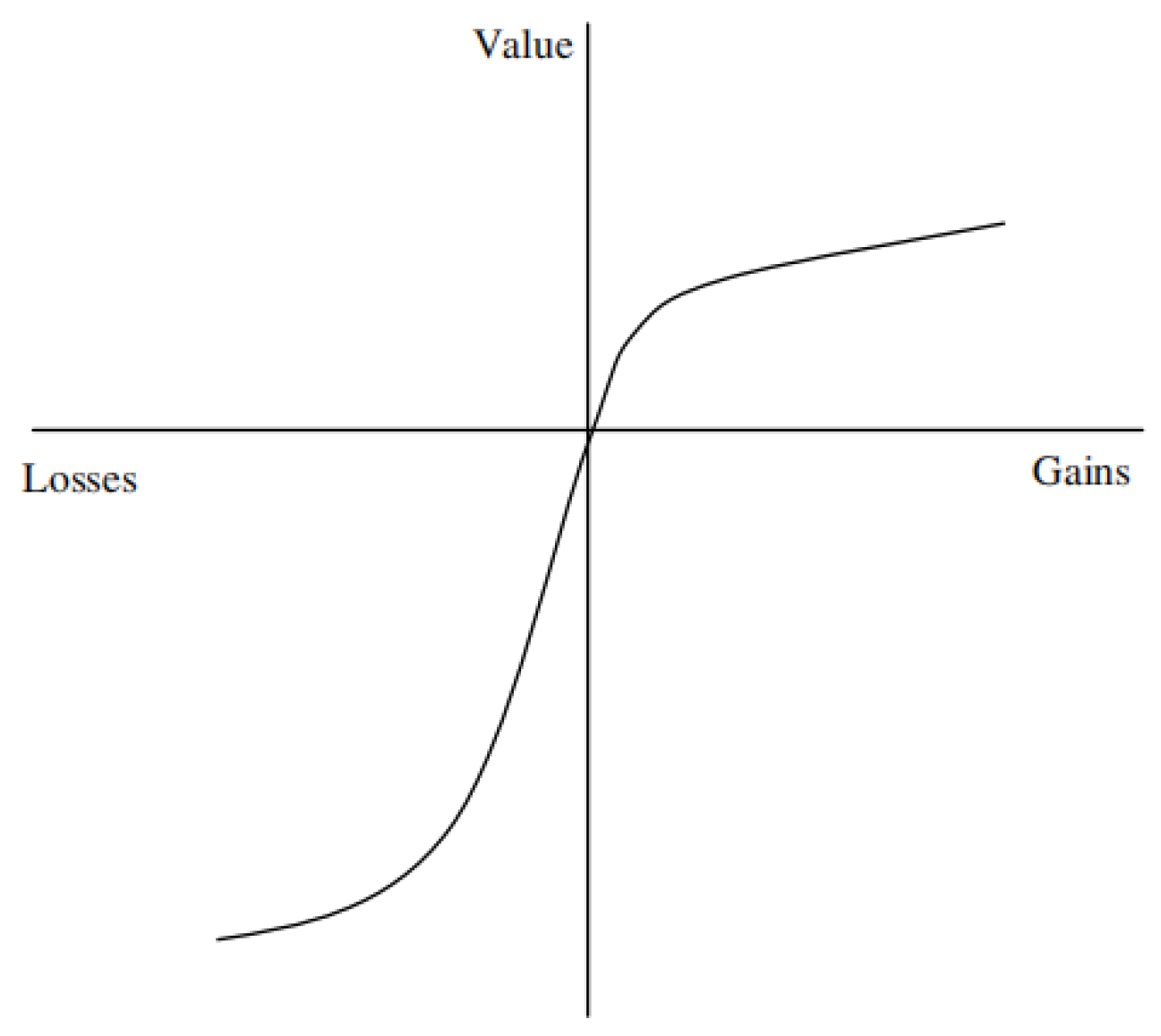
The expression ɸ(c)(A(i), A(j)) represents the contribution component of criterion c to the dominance function δ(A(i), A(j)) when comparing alternatives A(i) and A(j): when P(i)(c) − P(j)(c) > 0, it is a gain contribution, calculated using the corresponding gain formula; when P(i)(c) − P(j)(c) = 0, the contribution component is 0; and when P(i)(c) − P(j)(c) < 0, it is a loss contribution, calculated using the corresponding loss formula. The essence of constructing ɸ(c)(A(i), A(j)) is to adapt the decision data to the prospect theory value function, which can effectively characterize the decision-maker’s risk aversion and risk preference characteristics. Its function curve is S-shaped (Figure 3): the concave curve above the horizontal axis represents risk aversion in gain scenarios, and the convex curve below the horizontal axis represents risk preference in loss scenarios. After calculating the local dominance matrix corresponding to each criterion, the final dominance matrix can be obtained by accumulating its elements.
The specific calculation rules under each scenario are as follows [66]:
Table 4.
Matrix of normalized alternatives’ scores against criteria [67].
Figure 3.
Value function of the TODIM method [67].
The dominance degree of each alternative is normalized using Equation (5) to obtain the global evaluation value of each candidate contractor. The ranking of all contractors is then determined based on the magnitude of these global evaluation values. To ensure the stability of the decision results, a sensitivity analysis is further conducted, focusing on examining the impact of factors such as the loss attenuation coefficient θ, criterion weights, reference criterion selection, and alternative evaluation values on the ranking outcomes [66].
4. Case Study
To verify the feasibility and effectiveness of the contractor selection model for grey plaster decoration engineering of historic buildings based on the BWM-TODIM method, this chapter takes the grey plaster decoration restoration project of Kaiping Diaolou in Lingnan as an empirical research object.
4.1. Case Study of Kaiping Diaolou and Villages
Kaiping is a county-level city located in Jiangmen, Guangdong Province, China. It is situated at the junction of four counties: Xinhui, Taishan, Enping, and Xinxing. Historically, it was an unregulated border region plagued by rampant banditry and deteriorating public security. Coupled with its dense river network, the area was frequently hit by floods caused by typhoons and heavy rains. To protect themselves, local residents gradually sparked an upsurge in the construction of diaolou (fortified watchtowers). In 1644, Guan Zirui built Ruiyun Tower in Jingtouli Village. This tower served dual functions of flood control and theft prevention, standing as a typical example of early diaolou structures in Kaiping.
According to historical records, during the severe flooding of the Tan River in 1884, the Yinglong Lou, the oldest extant diaolou in Sanmenli Village, Kaiping (Guangdong, China), served as a vital refuge for local residents [68]. This historical event underscores the functional transition of these fortified multi-story watchtowers from simple defensive structures to multi-purpose shelters, highlighting their practical value in disaster mitigation. In 1912, the Situ clan constructed the Nan Tower to guard against bandits. It is a seven-storey, 19 m-high reinforced concrete building covering an area of 29 square metres. Each floor was equipped with rectangular embrasures; the sixth floor functioned as an observation post armed with machine guns and searchlights. During the War of Resistance against Japanese Aggression, it served as the headquarters of the Self-Defence Corps for the four townships of the Situ clan. In the same year, Mr. Xie Yongheng built the Zhongshan Tower to commemorate Dr. Sun Yat-sen, a distinctive diaolou integrating commemorative significance and defensive capabilities.
Starting from 1922, overseas Chinese had a profound recognition of the diaolou’s crucial role in combating banditry, and they successively raised funds and remitted them to their hometown for diaolou construction. Later, to ensure the safety of their families and the protection of their property, some overseas Chinese adopted the diaolou style when building new residences after returning to their hometown. At its peak, there were more than 3000 diaolou in Kaiping, with 1833 remaining intact to this day [69]. Currently, Kaiping Diaolou has been inscribed on the State-level Intangible Cultural Heritage List [70,71]. Figure 4 shows a real view of a well-preserved diaolou, while Figure 5 presents a diaolou with visible damage to its lime–plaster (hui su) decorative elements.
Figure 4.
Architectural cultural heritage of Kaiping Diaolou. (a) Zhongjian Lou; (b) Ruishi Lou. Photographed by Le Gao in Kaiping, Jiangmen, China, in July 2025.
Figure 5.
Damaged architectural cultural heritage of Kaiping Diaolou. (a) Diaolou 1; (b) Diaolou 2. Photographed by Le Gao in Kaiping, Jiangmen, China, in July 2025.
As a heritage building embodying the regional culture and historical memories of Lingnan, Kaiping Diaolou’s grey plaster decorative craftsmanship stands as one of the core manifestations of its architectural and artistic value. Its conservation and restoration must be conducted with a rigorous and responsible attitude, strictly abiding by the principle of restoring the old to its original state—a fundamental criterion in heritage conservation—so as to avoid unnecessary losses to its historical, architectural and artistic value, and any damage to the main body of the heritage building is strictly prohibited. In the process of conservation design for grey plaster decorations and preservation of heritage authenticity, restoration work must be underpinned by solid technical capabilities, stringent quality control and extensive practical experience [72,73]. For the restoration of Kaiping Diaolou involving grey plaster craftsmanship, professional conservation teams and construction contractors collaborated to conduct an analysis of historical features and a study on the developmental context of the buildings and formulate a scientific and comprehensive conservation and restoration plan. Subsequently, based on the research findings, the degree of building damage and the formulated plan, the damaged grey plaster components and building structures shall be replaced or restored to their original state, so as to ensure the professionalism and standardization of the entire restoration work.
4.2. Definition of Decision Criteria
This study adopts the BWM-TODIM method to conduct a systematic evaluation and scientific decision-making on the contractor selection for the grey plaster decoration restoration project of Kaiping Diaolou. A number of professional institutions specializing in the conservation and restoration of cultural heritage buildings with grey plaster craftsmanship were selected as candidate entities, among which three contractors have entered the final stage of selection discussion. To protect the commercial confidentiality of enterprises, the full names of the relevant companies are not disclosed.
To scientifically address the challenge of contractor selection for the restoration of heritage buildings involving grey plaster craftsmanship, a special expert evaluation panel was established, which is responsible for formulating evaluation criteria, determining the weights of each indicator and conducting scoring work. The panel consists of five professionals from the local government’s cultural relics administration department, the field of cultural heritage research in universities, and the field of cultural relic building restoration technology. All of them have more than ten years of professional experience in cultural heritage technology, with solid professional capabilities and rich practical knowledge, and are able to accurately grasp the core requirements and evaluation priorities for the selection of contractors for grey plaster restoration projects.
The indicator scoring sheets of the five experts correspond to the following in sequence (the relevant scoring criteria and details are shown in Table 5, Table 6, Table 7, Table 8, Table 9, Table 10 and Table 11).
Table 5.
Consistency index (CI) table.
Table 6.
RI (CR = ξ∗/RI).
Table 7.
BO and OW pairwise comparison vectors: Example 1.
Table 8.
BO and OW pairwise comparison vectors: Example 2.
Table 9.
BO and OW pairwise comparison vectors: Example 3.
Table 10.
BO and OW pairwise comparison vectors: Example 4.
Table 11.
BO and OW pairwise comparison vectors: Example 5.
4.3. Determination of the Weights of Criteria
Using the BWM model proposed earlier and combining it with expert evaluation opinions, the weights of each evaluation index for contractor selection in grey plaster decoration restoration projects were calculated, and the final weight results of each index are presented in Table 12.
Table 12.
Final weight table.
Technical capability emerges as the dominant evaluation index with a significant advantage, highlighting the core requirement for contractors’ professional technical strength in grey plaster restoration projects; experience (weight: 0.154) and quality (weight: 0.121) form the key supporting factors, reflecting the project’s high emphasis on contractors’ historical performance and the reliability of restoration outcomes; the weights of price, financial strength and management capability are close (all approximately 0.09), indicating that these three are basic conditions to be met in the contractor selection process rather than decisive factors; and the weights of risk (0.070), contractor value (0.076) and reputation (0.029) are relatively low, which means that they are secondary or auxiliary consideration indicators in the current evaluation system. Overall, this weight system constructs a multi-level, non-price-oriented comprehensive evaluation framework led by technical capability, supported by experience and quality, and with simultaneous consideration of economic rationality and operational stability, which is fully adapted to the specific requirements of grey plaster decoration restoration projects.
Derived from prospect theory, the TODIM method is a classic multi-attribute decision-making model intended to characterize the psychological behaviours of decision-makers. Its core idea is to realize alternative ranking by comparing the relative dominance degrees among candidate alternatives, and it has now been widely applied to multi-criteria decision-making problems in different information environments. For example, Fan et al. [74] extended it to the interval number context and measured gains and losses by calculating interval distances; Krohling and Souza [75] further processed trapezoidal fuzzy information and proposed the F-TODIM method; and Fan et al. [76] developed the hybrid TODIM method, which converts crisp numbers, interval numbers and linguistic terms into random variables in a unified manner to calculate the perceived dominance degree, effectively solving the hybrid attribute decision-making problem.
Combined with the case in this chapter, the TODIM method is applied to rank the three candidate contractors based on the indicator weights determined by the BWM. The relevant calculation tables involved in the process (Table 13, Table 14, Table 15 and Table 16) are presented as follows:
Table 13.
Expert scoring sheet and its indicators for contractor selection in the restoration of heritage buildings with grey plaster craftsmanship of Kaiping Diaolou.
Table 14.
Normalized decision matrix.
Table 15.
Indicator weight table.
Table 16.
Indicator relative weight table.
4.4. Sensitivity Analysis
After completing the contractor ranking based on the TODIM method, to further verify the validity and stability of the decision conclusions, a sensitivity analysis is conducted in this section. It focuses on simulating the uncertainty caused by changes in the loss attenuation coefficient θ—a key parameter characterizing decision-makers’ loss aversion psychology. The range of θ is set as θ ∈ [1, 5], and the stable range of the ranking results under parameter perturbation is analyzed to provide risk-controllable decision support for decision-makers.
Within the sensitivity analysis framework of the TODIM model, the value of the loss attenuation coefficient θ is usually set in the interval of one to five: when θ = 1, decision-makers are highly sensitive to losses and exhibit typical loss aversion behaviour; as the value of θ gradually increases to five, decision-makers’ sensitivity to losses decreases step by step, tending to a relatively rational risk-neutral preference. In this study, by systematically varying the value of θ () the pairwise dominance matrix and global dominance degree of each contractor are recalculated, and the corresponding ranking results are derived accordingly. Among them, the partial calculation results of the dominance degree ɸ(c) of the three contractors at θ = 1, 2, 3, 4, 5 are shown in Table 17, Table 18, Table 19, Table 20, Table 21, Table 22 and Table 23, respectively.
Table 17.
Partial dominance degree table of contractors A1, A2 and A3.
Table 18.
Overall dominance degree δ table of contractors A1, A2 and A3.
Table 19.
Final ranking table of global dominance degree at θ = 1.
Table 20.
Partial dominance degree table of contractors at θ = 2.
Table 21.
Partial dominance degree table of contractors at θ = 3.
Table 22.
Partial dominance degree table of contractors at θ = 4.
Table 23.
Partial dominance degree table of contractors at θ = 5.
Based on the partial dominance degree results under the aforementioned different θ values, the overall dominance degree δ of contractors corresponding to each θ value was calculated, with the summarized results presented in Table 24.
Table 24.
Overall dominance degree δ.
Based on the overall dominance degrees under different values of θ, a normalization process was conducted to obtain the global dominance degree ξ and final ranking of each contractor within the interval θ ∈ [1, 5], with the results presented in Table 25.
Table 25.
Final ranking table of global dominance degree ξ.
The sensitivity analysis results show that with different values of θ within the interval of θ ∈ [1, 5], the final ranking of the three contractors remains consistent as A1 > A2 > A3 without any reversal or change. This robustness characteristic indicates that in the current decision-making context, the relative dominance relationship among contractors is insensitive to changes in decision-makers’ psychological preferences, and the ranking results exhibit favourable robustness and reliability.
From the perspective of decision-making structure, the stability of the ranking can be attributed to the inherent consistency of performance differences among contractors: Contractor A1 demonstrates significantly better performance than A2 and A3 on most high-weight criteria such as technical capability and experience, forming a structural competitive advantage; Contractor A2 has no obvious outstanding strengths but maintains a relatively balanced performance across all criteria without critical shortcomings on key indicators; Contractor A3, by contrast, shows evident deficiencies in several core criteria, and its disadvantages are further amplified especially under the condition of strong loss aversion (with low values of θ). This performance pattern ensures that the superiority order among contractors remains stable even with varying levels of loss aversion.
The practical implication of this conclusion is that for multi-criteria decision-making problems, such as contractor selection for grey plaster decoration restoration projects, decision-makers with different risk attitudes—whether inclined to loss aversion or risk neutrality—are likely to reach a consensus on the final contractor ranking. This reduces decision-making disputes arising from differences in the setting of psychological parameters and enhances the scientific validity and acceptability of decision-making results.
4.5. Interpretation of Result
The empirical research results show that relying solely on the lowest bid price is often insufficient to guarantee the quality and cultural authenticity of grey plaster restoration projects [8]. Consequently, the proposed evaluation framework (see Figure 6) prioritizes technical strength and professional experience to address the stringent craftsmanship requirements of cultural heritage protection.
Figure 6.
Core evaluation dimensions.
Focusing on contractor selection for grey plaster decoration restoration projects, this study constructs nine core evaluation dimensions (see Figure 6), with each dimension and its corresponding code as follows: price (x1), C = corporate financial strength (x2), management capability (x3), risk (x4), professional technical capability (x5), industry experience (x6), contractor value (x7), quality (x8) and reputation (x9) [11,25,53,54,77].
In terms of indicator attribute classification, price (x1) and risk (x4) are defined as cost-type indicators, where lower values indicate better alternatives, corresponding to the economic bottom line and safety red line of the project, respectively. The remaining seven indicators (corporate financial strength x2, management capability x3, professional technical capability x5, industry experience x6, contractor value x7, quality x8, and reputation x9) are all benefit-type indicators, where higher values reflect better contractor performance. From the perspective of indicator functions, x1 and x4 delineate the economic and safety boundaries of project implementation; x2 and x6 verify the contractor’s market access qualification and operational stability; x3 and x5 determine the project’s execution efficiency and technical support level; x8 guarantees the project’s delivery quality and restoration effect; and x7 and x9 enhance the strategic height and long-term stability of cooperation. This indicator combination not only ensures the scientificity of evaluation by screening qualified construction entities through hard indicators, but also takes into account flexibility by exploring strategic partners with long-term cooperation potential through soft indicators, which is fully adapted to the specific needs of grey plaster decoration restoration projects.
5. Conclusions
This study is limited to the scope of cultural relic buildings’ grey plaster decoration engineering. Aiming at the specific needs of contractor selection for grey plaster decoration projects of cultural relic buildings, this paper addresses the deficiencies of poor adaptability of existing methods and single price orientation. Combining theoretical analysis and case empirical research, it draws core conclusions, clarifies research limitations and future prospects, and provides support for contractor selection in this field.
First, the core orientation of contractor selection for grey plaster restoration projects is clarified, abandoning the single-price model. Combined with relevant criteria and the literature, an evaluation system covering nine dimensions is constructed, which highlights the core status of technology, experience and quality, and adapts to the special needs of the project’s cultural bearing and technological professionalism.
Second, a BWM-TODIM integrated selection model is constructed. The BWM is adopted to determine indicator weights efficiently and reliably, and the TODIM method is used to introduce the loss attenuation coefficient to capture decision-makers’ risk preferences. This makes up for the deficiencies of traditional multi-criteria decision-making methods and realizes scientific decision-making.
Third, the feasibility of the model is verified through an empirical case of the grey plaster restoration project of the Kaiping Diaolou: the BWM shows that technical capability is the core indicator, and the TODIM method ranking and sensitivity analysis indicate that the contractor ranking has good robustness, which can provide reliable support for practical selection.
Finally, the BWM-TODIM model proposed in this paper effectively solves the core problems of contractor selection in this field, provides a new and feasible path, enriches the application of multi-criteria decision-making methods in cultural heritage protection projects, and has certain theoretical and practical value.
This paper has two limitations: the evaluation indicators do not include emerging dimensions such as the inheritance of grey plaster craftsmanship, and the case only focuses on projects in a single region. In the future, we will optimize the indicator system, expand the application scenarios of the model, develop decision-aid tools, promote the implementation of research results, and contribute to the inheritance of grey plaster craftsmanship and the protection of cultural heritage.
Author Contributions
Conceptualization, J.W. and Y.Q.; methodology, Y.Q., L.G. and X.D.; software, X.D. and Y.Q.; validation, J.W., H.C. and T.Y.; formal analysis, Y.Q. and X.D.; investigation, H.C., T.Y. and X.D.; resources, J.W.; data curation, X.D. and Y.Q.; writing—original draft preparation, Y.Q.; writing—review and editing, L.G. and X.H.; visualization, Y.Q.; supervision, L.G.; project administration, Y.Q.; funding acquisition, Y.Q. and L.G. All authors have read and agreed to the published version of the manuscript.
Funding
This research was funded by the Research on Agricultural Products UAV Direct Logistics Network Design and Air-Ground Collaborative Scheduling Optimization: A Case Study of Zengcheng District, Guangzhou, This research was supported by the 2025 Characteristic Innovation Project of Ordinary Universities in Guangdong Province, funded by the Guangdong Provincial Department of Education (Grant No. 2025WTSCX159).
Data Availability Statement
The original contributions presented in the study are included in the article; further inquiries can be directed to the first author.
Acknowledgments
We would like to express our gratitude to Guanghzou Huali College for providing laboratory assistance and project support.
Conflicts of Interest
The authors declare no conflicts of interest.
Abbreviations
The following abbreviations are used in this manuscript:
| BWM | Best–Worst Method |
| TODIM | Tomada de Decisão Interativa e Multicritério |
| BWM-TODIM | Best–Worst Method–Tomada de Decisão Interativa e Multicritério |
| F-TODIM | Fuzzy-Tomada de Decisão Interativa e Multicritério |
| MCDM | Multiple-Criteria Decision-Making |
| BO | Best-to-Others |
| OW | Others-to-Worst |
| CB | Best Criterion |
| CW | Worst Criterion |
| CR | Consistency Ratio |
References
- Zheng, R.L. Artistic Characteristics and Cultural Connotation of Lingnan Traditional Gray Sculpture. Great Stage 2014, 4, 217–218. [Google Scholar] [CrossRef]
- Liu, Z.J. Guangzhou Gray Plastice, 1st ed.; Guangzhou Publishing House: Guangzhou, China, 2010; pp. 22–25. [Google Scholar]
- Chen, L.H. Artistic Characteristics and Cultural Implications of Grey Sculpture Decorations in Drum Towers in Southeastern Guizhou. Zhuangshi 2013, 1, 81–83. [Google Scholar] [CrossRef]
- Tan, H. Research on the Contemporary Value and Cultural Inheritance Path of Lingnan Grey Sculpture from the Perspective of Cultural Identity. Ind. Innov. Res. 2025, 17, 136–138. [Google Scholar]
- Mao, W.Q.; Le, Y. New media fusion of horizon, Lingnan gray mold design application. Guangdong Sea Wind 2022, 6, 78–85. [Google Scholar] [CrossRef]
- Egemen, M.; Mohamed, A.N. Clients’ needs, wants and expectations from contractors and approach to the concept of repetitive works in the Northern Cyprus construction market. Build. Environ. 2006, 41, 602–614. [Google Scholar] [CrossRef] [Scilit]
- Wang, S.B. Exploration and Practice of Improving Contractor Management. J. Jianghan Pet. Univ. Staff Work 2022, 35, 102–104. [Google Scholar]
- Rajaprasad, S.V.S. Selection of Contractors for a Housing development Project in India by using Integrated Model. Int. J. Sustain. Constr. Eng. Technol. 2018, 9, 58–68. [Google Scholar] [CrossRef] [Scilit]
- Plebankiewicz, E. A fuzzy sets based contractor prequalification procedure. Autom. Constr. 2012, 22, 433–443. [Google Scholar] [CrossRef] [Scilit]
- El-Abbasy, M.S.; Zayed, T.; Ahmed, M.; Alzraiee, H.; Abouhamad, M. Contractor selection model for highway projects using Integrated Simulation and Analytic Network Process. J. Constr. Eng. Manag. 2013, 139, 755–767. [Google Scholar] [CrossRef] [Scilit]
- Niento-Morote, A.; Ruz-Vila, F. A fuzzy multi-criteria decision-making model for construction contractor prequalification. Autom. Constr. 2012, 25, 8–19. [Google Scholar] [CrossRef] [Scilit]
- Merna, A.; Smith, N.J. Bid evaluation for the U.K. public sector construction contracts. Proc. Inst. Civ. Eng. 1990, 88, 91–105. [Google Scholar] [CrossRef] [Scilit]
- Decarolis, F. Awarding price, contract performance, and bids screening: Evidence from procurement auctions. Am. Econ. J. Appl. Econ. 2014, 6, 108–132. [Google Scholar] [CrossRef] [Scilit]
- El-Sayegh, S.M.; Rabie, M.M. Modified price plus time bi-parameter bidding model incorporating float loss impact. Int. J. Constr. Manag. 2016, 16, 267–280. [Google Scholar] [CrossRef] [Scilit]
- Nguyen, P.T. Determination of construction supplier evaluation criteria using word tags. Int. J. Adv. Appl. Sci. 2018, 5, 75–79. [Google Scholar] [CrossRef] [Scilit]
- Khan, R.A.; Gazder, U.; Qayoom, A. Comparison of delay factors and remedies’ rankings for building construction projects in developing countries. Int. J. Adv. Appl. Sci. 2017, 4, 33–42. [Google Scholar] [CrossRef] [Scilit]
- Keung, C.W.; Yiu, T.W. Potential for long-term sustainability A visit of bidding objectives and strategies from maintenance contractor’s perspective. Facilities 2015, 33, 177–195. [Google Scholar] [CrossRef] [Scilit]
- Zahedirad, M.; Khalili-Damghani, K.; Ghezavati, V.; Komijan, A.R. Solving an Integrated Project Portfolio Selection and Contractor Selection Problem: Fuzzy Goal Programming Based on Fuzzy Preference Relations. Fuzzy Inf. Eng. 2025, 17, 75–107. [Google Scholar] [CrossRef] [Scilit]
- Tafazzoli, M.; Namian, M.; Al-Bayati, A. Workers’ Fatigue in Construction Projects, Assessment, Detection, and Mitigation, A Review. In Proceedings of 59th Annual Associated Schools of Construction International Conference; EasyChair Publications: Stockport, UK, 2023; Volume 4, pp. 488–496. [Google Scholar]
- Gosling, J.; Purvis, L.; Naim, M.M. Supply chain flexibility as a determinant of supplier selection. Int. J. Prod. Econ. 2010, 128, 11–21. [Google Scholar] [CrossRef] [Scilit]
- Gao, G.X. Sustainable Winner Determination for Public-Private Partnership Infrastructure Projects in Multi-Attribute Reverse Auctions. Sustainability 2018, 10, 4129. [Google Scholar] [CrossRef] [Scilit]
- Zhang, J.L.; Qi, X.W.; Liang, C.Y. Tackling Complexity in Green Contractor Selection for Mega Infrastructure Projects: A Hesitant Fuzzy Linguistic MADM Approach with considering Group Attitudinal Character and Attributes’ Interdependency. Complexity 2018, 2018, 4903572. [Google Scholar] [CrossRef] [Scilit]
- Kog, F.; Yaman, H. A multi-agent systems-based contractor pre-qualification model. Eng. Constr. Archit. Manag. 2016, 23, 709–726. [Google Scholar] [CrossRef] [Scilit]
- Yang, J.B.; Wang, H.H.; Wang, W.C.; Ma, S.M. Using Data Envelopment analysis to support Best-Value contractor selection. J. Civ. Eng. Manag. 2016, 22, 199–209. [Google Scholar] [CrossRef] [Scilit]
- Palha, R.P.; Almeida, A.T.; Alencar, A.H. A Model for Sorting Activities to Be Outsourced in Civil Construction Based on ROR-UTADIS. Math. Probl. Eng. 2016, 2016, 9236414. [Google Scholar] [CrossRef] [Scilit]
- Khalili-Damghani, K.; Ghasemi, P. Uncertain centralized/decentralized production-distribution planning problem in multi-product supply chains: Fuzzy mathematical optimization approaches. Ind. Eng. Manag. Syst. 2016, 15, 156–172. [Google Scholar] [CrossRef] [Scilit]
- Shafipour-Omrani, B.; Khalili-Damghani, K.; Ghasemi, P. Solving a supply chain problem using two approaches of fuzzy goal programming based on TOPSIS and fuzzy preference relations. J. Ind. Syst. Eng. 2020, 13, 27–48. [Google Scholar] [CrossRef] [Scilit]
- Karami, S.; Mousavi, S.M.; Antucheviciene, J. Enhancing contractor selection process by a new interval-valued fuzzy decision-making model based on SWARA and CoCoSo methods. Axioms 2023, 12, 729. [Google Scholar] [CrossRef] [Scilit]
- Sun, S.; Zhou, S. Analysis of Construction Contractor Selection and Evaluation Based on AHP and GRA. In ICCREM 2013: Construction and Operation in the Context of Sustainability; American Society of Civil Engineers: Reston, VA, USA, 2013. [Google Scholar] [CrossRef] [Scilit]
- Putra, A.P.E.; Sardi, I.L.; Adityaji, R. Implementation of Hybrid BWM-TOPSIS Method in the Selection of Tour Guide (Case Study: Guidemu). In Proceedings of the International Conference on Software Engineering and Information Technology (ICoSEIT), Bandung, Indonesia, 22–23 November 2022. [Google Scholar] [CrossRef] [Scilit]
- Trivedi, P.; Shah, J.; Čep, R.; Abualigah, L.; Kalita, K. A Hybrid Best-Worst Method (BWM)—Technique for Order of Preference by Similarity to Ideal Solution (TOPSIS) Approach for Prioritizing Road Safety Improvements. IEEE Access 2024, 12, 30054–30065. [Google Scholar] [CrossRef] [Scilit]
- Yuan, R.; Dou, Y.; Xiang, N.; Zhao, Q.; Xu, X.; Wang, J. A Logistics Supplier Combination Decision Method Based on Hesitation Fuzzy BWM-TOPSIS. In Proceedings of the 2024 36th Chinese Control and Decision Conference (CCDC), Xi’an, China, 25–27 May 2024. [Google Scholar] [CrossRef] [Scilit]
- Afshar, M.R.; Alipouri, Y.; Sebt, M.H.; Chan, W.T. A type-2 fuzzy set model for contractor prequalification. Autom. Constr. 2017, 84, 356–366. [Google Scholar] [CrossRef] [Scilit]
- Ulubeyli, S.; Kazaz, A. Fuzzy Multi-criteria decision making model for subcontractor selection in international construction projects. Technol. Econ. Dev. Econ. 2016, 22, 210–234. [Google Scholar] [CrossRef] [Scilit]
- Xiao, F.; Chen, Z.Y.; Wang, X.; Hou, W.H.; Wang, J.Q. Managing minority opinions in risk evaluation by a delegation mechanism-based large-scale group decision-making with overlapping communities. J. Oper. Res. Soc. 2022, 73, 2338–2357. [Google Scholar] [CrossRef] [Scilit]
- Li, J.; Xiang, Y.Y.; Peng, H.G.; Wang, J.Q. An extended multi-criteria group decision-making method based on preference ranking under Z-number environments. Eng. Appl. Artif. Intell. 2025, 149, 110573. [Google Scholar] [CrossRef] [Scilit]
- Wang, X.; Wang, S.H.; Zhang, H.Y.; Wang, J.Q. The recommendation method for hotel selection under traveller preference characteristics: A cloud-based multi-criteria group decision support model. Group Decis. Negot. 2021, 30, 433–1469. [Google Scholar] [CrossRef] [Scilit]
- He, S.-S.; Wang, Y.T.; Peng, J.J.; Wang, J.Q. Risk ranking of wind turbine systems through an improved FMEA based on probabilistic linguistic information and the TODIM method. J. Oper. Res. Soc. 2022, 73, 467–480. [Google Scholar] [CrossRef] [Scilit]
- Nie, R.X.; Tian, Z.P.; Sang, C.K.; Wang, J.Q. Implementing healthcare service quality enhancement using a cloud-support QFD model integrated with TODIM method and linguistic distribution assessments. J. Oper. Res. Soc. 2022, 73, 207–229. [Google Scholar] [CrossRef] [Scilit]
- Wang, L.; Zhang, H.Y.; Wang, J.Q.; Wu, G.F. Picture fuzzy multi-criteria group decision-making method to hotel building energy efficiency retrofit project selection. Rairo-Oper. Res. 2019, 104, 104395. [Google Scholar] [CrossRef] [Scilit]
- Wu, Y.C.; Chen, M.R.; Shen, K.W.; Wang, J.Q. Z-number extension of TODIM-CPT method combined with K-means clustering for electric vehicle battery swapping station site selection. J. Energy Storage 2024, 85, 110900. [Google Scholar] [CrossRef] [Scilit]
- Liu, B.S.; Huo, T.F.; Liao, P.C.; Gong, J.; Xue, B. A Group Decision-Making Aggregation Model for Contractor Selection in Large Scale Construction Projects Based on Two-Stage Partial Least Squares (PLS) Path Modeling. Group Decis. Negotiat. 2015, 24, 855–883. [Google Scholar] [CrossRef] [Scilit]
- Nassar, K.; Hosny, O. Fuzzy clustering validity for contractor performance evaluation: Application to UAE contractors. Autom. Constr. 2013, 31, 158–168. [Google Scholar] [CrossRef] [Scilit]
- Attar, M.M.; Khanzadi, M.; Dabirian, M.; Kalhor, E. Forecasting contractor’s deviation from the client objectives in prequalification model using support vector regression. Int. J. Proj. Manag. 2013, 31, 924–936. [Google Scholar] [CrossRef] [Scilit]
- Assaf, S.; Hassanain, M.A.; Hadidi, L.; Amman, A. A Systematic Approach for the Selection of the Architect/Engineer professional in Construction Projects. Arch. Civ. Eng. Environ. 2017, 10, 5–14. [Google Scholar] [CrossRef] [Scilit]
- Ilies, G.; Safarov, B.; Hodor, N. Analysis of the Interior Microclimate in Art Nouveau Heritage Buildings for the Protection of Exhibits and Human Health. Int. J. Environ. Res. Public Health 2022, 19, 16599. [Google Scholar] [CrossRef] [Scilit]
- Brauers, W.K.M.; Zavadskas, E.K.; Turskis, Z.; Vilutienė, T. Multi-objective contractor’s ranking by applying MOORA method. J. Bus. Econ. Manag. 2008, 9, 245–255. [Google Scholar] [CrossRef] [Scilit]
- Zavadskas, E.K.; Kaklauskas, A.; Vilutiene, T. Multicriteria evaluation of apartment blocks maintenance contractors: Lithuanian case study. Int. J. Strateg. Prop. Manag. 2009, 13, 319–338. [Google Scholar] [CrossRef] [Scilit]
- Zavadskas, E.K.; Vilutienė, T. A multiple criteria evaluation of multi-family apartment block’s maintenance contractors: I-Model for maintenance contractor evaluation and the determination of its selection criteria. Build. Environ. 2006, 41, 621–632. [Google Scholar] [CrossRef] [Scilit]
- Juan, Y.K. A hybrid approach using data envelopment analysis and case-based reasoning for housing refurbishment contractors’ selection and performance improvement. Expert. Syst. Appl. 2009, 36, 5702–5710. [Google Scholar] [CrossRef] [Scilit]
- Hatush, Z.; Skitmore, M. Criteria for contractor selection. Constr. Manag. Econ. 1997, 15, 19–38. [Google Scholar] [CrossRef] [Scilit]
- El-Sawalhi, N.; Eaton, D.; Rustom, R. Contractor prequalification model: State-of-the-art. Int. J. Proj. Manag. 2007, 25, 465–474. [Google Scholar] [CrossRef] [Scilit]
- Morkunaite, Z.; Bausys, R.; Kazimieras Zavadskas, E. Contractor Selection for Sgraffito Decoration of Cultural Heritage Buildings Using the WASPAS-SVNS Method. Sustainability 2019, 11, 6444. [Google Scholar] [CrossRef] [Scilit]
- ICOMOS China. Principles for the Conservation of Heritage Sites in China (Illustrated with Case Studies); ICOMOS China: Beijing, China, 2015. [Google Scholar]
- Zhang, B. Principles for the Conservation of Heritage Sites in China and Urban Culture; National Cultural Heritage Administration: Beijing, China, 2008.
- Rezaei, J. Best-worst multi-criteria decision-making method. Omega 2015, 53, 49–57. [Google Scholar] [CrossRef] [Scilit]
- Norouzi, A.; Ghayur Namin, H. A Hybrid Fuzzy TOPSIS–Best Worst Method for Risk Prioritization in Megaprojects. Civil. Eng. J. 2019, 5, 1567–1578. [Google Scholar] [CrossRef] [Scilit]
- Mota, V.R.R.; Gomes, C.F.S.; Santos, M. Uso do Best-Worst Method (BWM) para escolha de um local para almoxarifado central dos hospitais do Rio de Janeiro. In IX Simpósio de Engenharia de Produção, Pernambuco; Universidade Federal de Campina Grande: Campina Grande, Brazil, 2021. [Google Scholar] [CrossRef] [Scilit]
- Rezaei, J. Best-worst multi-criteria decision-making method: Some properties and a linear model. Omega 2016, 64, 126–130. [Google Scholar] [CrossRef] [Scilit]
- Roux, D. Nobel en Économie, 2nd ed.; Economica: Paris, France, 2002. [Google Scholar]
- Gomes, L.F.A.M.; Lima, M.M.P.P. TODIM: Basics and application to multicriteria ranking of projects with environmental impacts. Found. Comput. Decis. Sci. 1992, 16, 113–127. [Google Scholar]
- Kahneman, D.; Tversky, A. Prospect theory: An analysis of decision under risk. Econometrica 1979, 47, 263–292. [Google Scholar] [CrossRef] [Scilit]
- Sang, X.Z.; Liu, X.W.; Zhang, N. An interval type-2 fuzzy sets-based TODIM method and its application to green supplier selection. J. Oper. Res. Soc. 2016, 67, 1133–1147. [Google Scholar] [CrossRef] [Scilit]
- Kaur, P.; Dutta, V.; Pradhan, B.L.; Haldar, S.; Chauhan, S. A Pythagorean Fuzzy Approach for Sustainable Supplier Selection Using TODIM. Math. Probl. Eng. 2021, 2021, 4254894. [Google Scholar] [CrossRef] [Scilit]
- Wang, X.; Zhang, H.; Wang, J. Extended TODIM-PROMETHEE II method with hesitant probabilistic information for solving potential risk evaluation problems of water resource carrying capacity. Expert Syst. 2021, 38, e12681. [Google Scholar] [CrossRef] [Scilit]
- Gomes, L.F.A.M.; Lima, M.M.P.P. From modeling individual preferences to multicriteria ranking of discrete alternatives: A look at prospect theory and the additive difference model. Found. Comput. Decis. Sci. 1992, 17, 171–184. [Google Scholar]
- Gomes, L.F.A.M.; Rangel, L.A.D.; Maranhão, F.J.C. Multicriteria analysis of natural gas destination in Brazil: An application of the TODIM method. Math. Comput. Model. 2009, 50, 92–100. [Google Scholar] [CrossRef] [Scilit]
- Qian, Y. A Concise History of Ancient Jiangmen; Jinan University Press: Guangzhou, China, 2023; p. 250. [Google Scholar]
- Jia, W.W.; Zhang, W. Kaiping Diaolou in Jiangmen; China National Human Geography: Beijing, China, 2019. [Google Scholar]
- Li, M.Y. The Integration of Cantonese Culture and Overseas Chinese Culture in Jiangmen; Guangzhou Daily: Guangzhou, China, 2017. [Google Scholar]
- Cheng, L.; Lin, X.Q. Research on the Conservation and Restoration of Gray Sculpture Decoration in Minnan Traditional Buildings. Jian Zhu Xue Bao 2024, S2, 40–45. [Google Scholar]
- Jiang, T.; Zhang, C.Z. Formation and Characteristics of the Three-Dimensional Relationship of Dispersed Property Rights of Architectural Heritage in Overseas Chinese Homelands: A Case Study of Kaiping Diaolou. Nanjing Shehui Kexue 2021, 2, 166–172. [Google Scholar] [CrossRef]
- Jiang, T.; Zhang, C.Z. Tourist Interpretation of the Sense of Place of Kaiping Diaolou and Villages. Shijie Dili Yanjiu 2019, 28, 194–201. [Google Scholar] [CrossRef]
- Fan, Z.P.; Chen, F.D.; Zhang, X. Multi-attribute Decision Making Method with Interval Numbers Considering Decision Makers’ Psychological Behavior. Dongbei Daxue Xuebao Northeast. Univ. 2011, 32, 136–139. [Google Scholar] [CrossRef]
- Krohling, R.A.; Souza, T. Combining prospect theory and fuzzy numbers to multi-criteria decision making. Expert Syst. Appl. 2012, 39, 11487–11493. [Google Scholar] [CrossRef] [Scilit]
- Fan, Z.P.; Zhang, X.; Chen, F.D. Extended TODIM method for hybrid multiple attribute decision making problem. Knowl.-Based Syst. 2013, 42, 40–48. [Google Scholar] [CrossRef] [Scilit]
- Gomes, L.F.A.M. An application of the TODIM method to the multicriteria rental evaluation of residential properties. Eur. J. Oper. Res. 2009, 193, 204–211. [Google Scholar] [CrossRef] [Scilit]


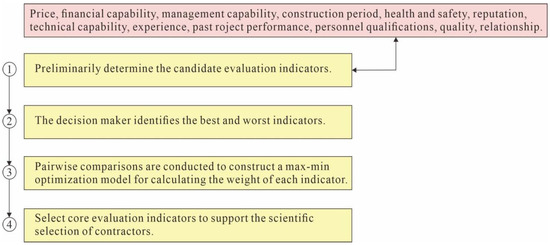
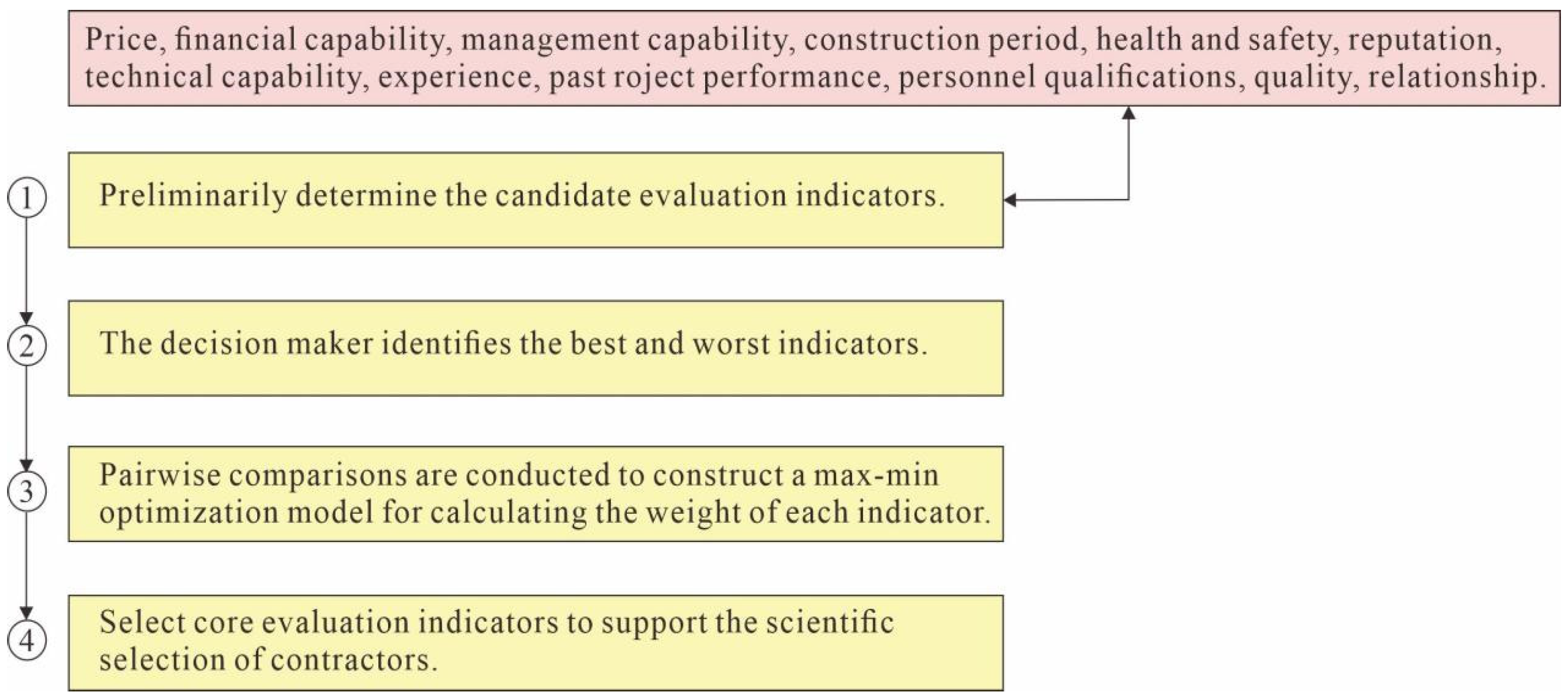
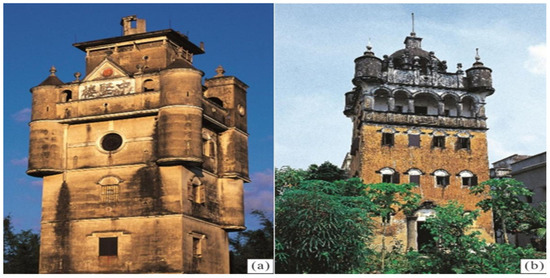
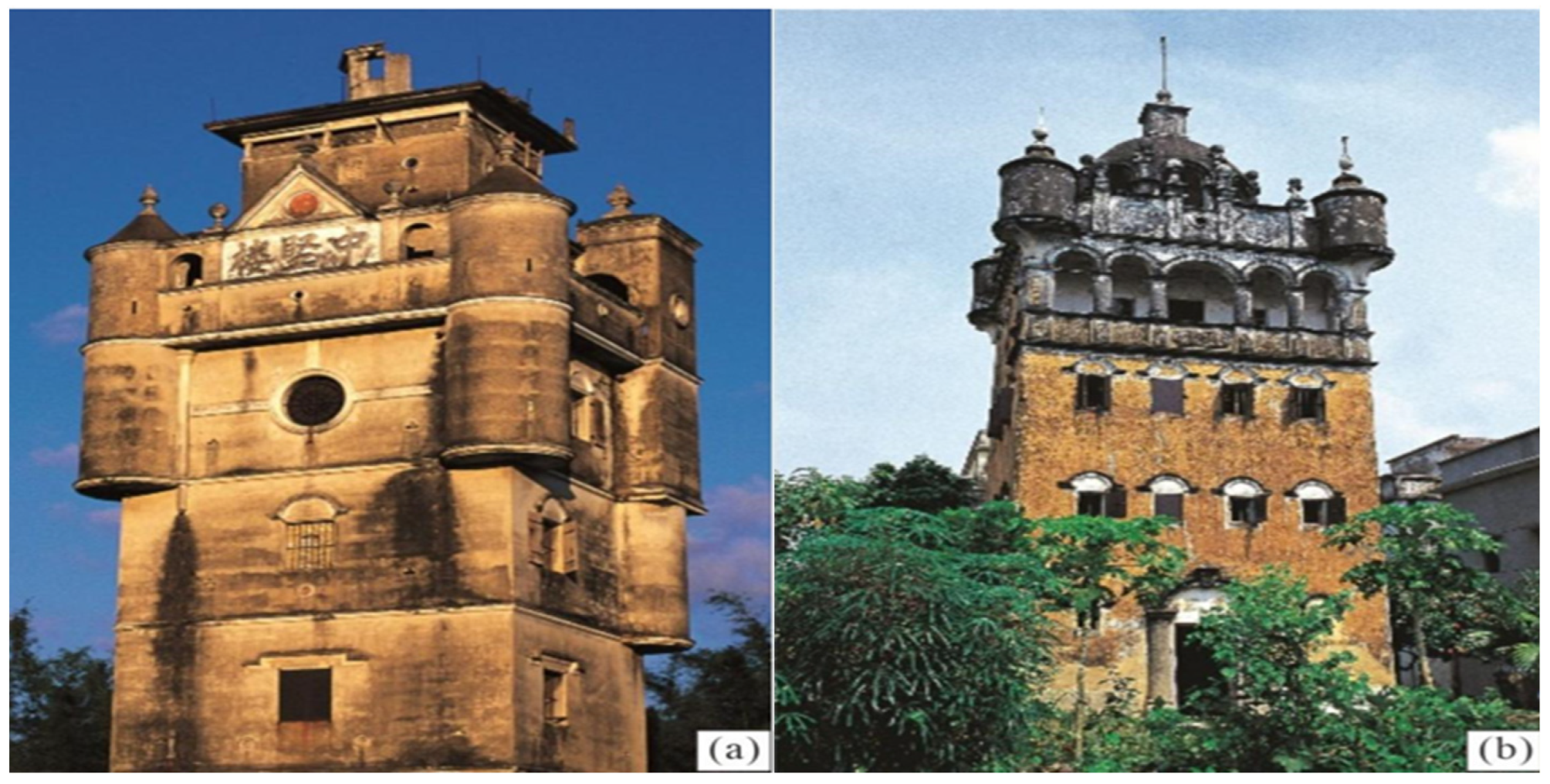
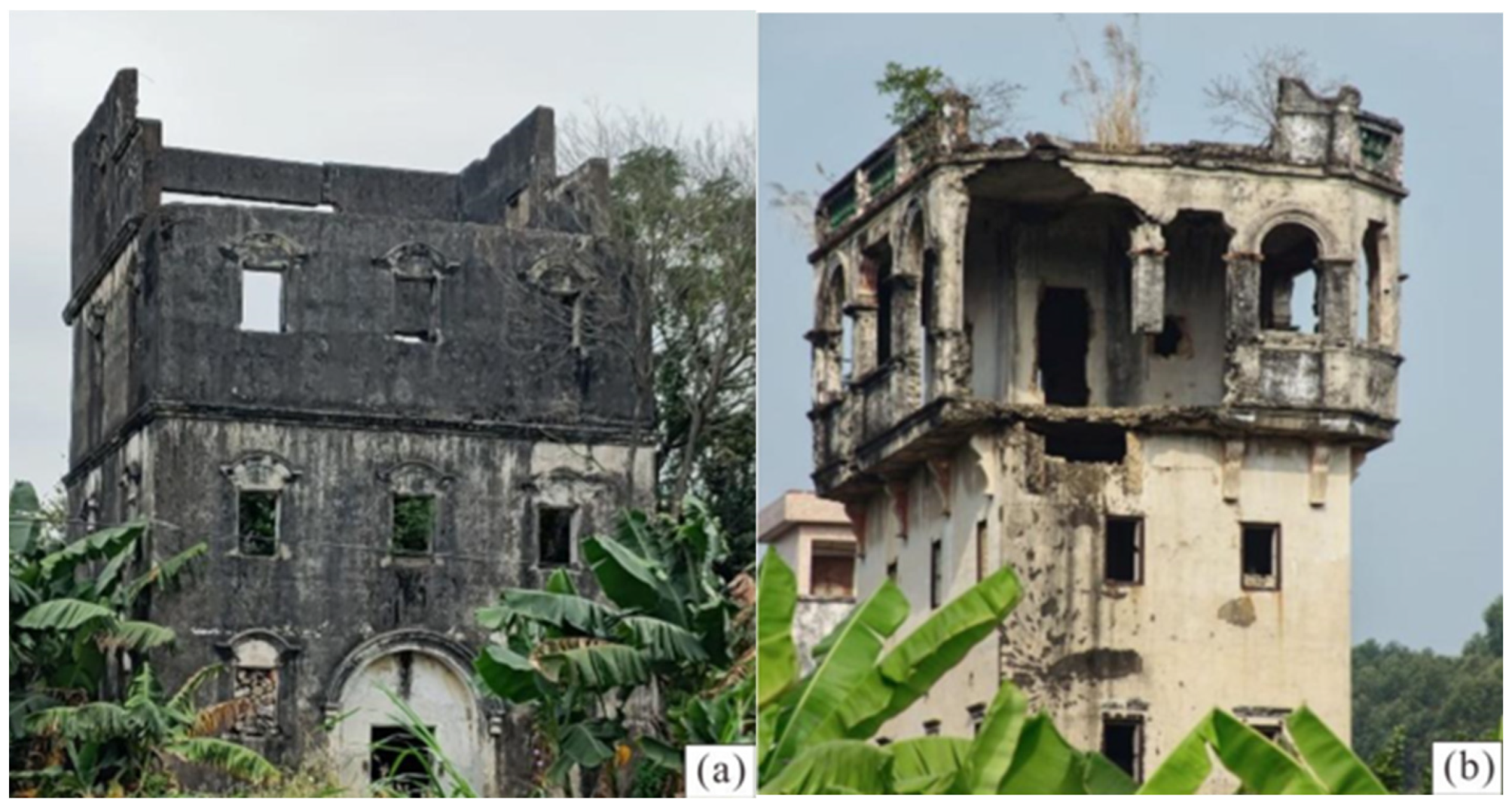
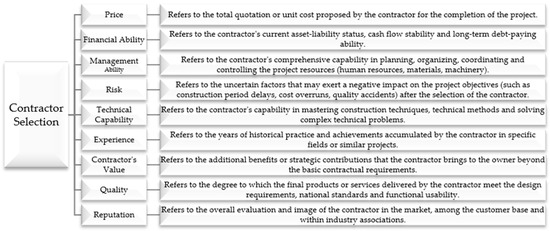
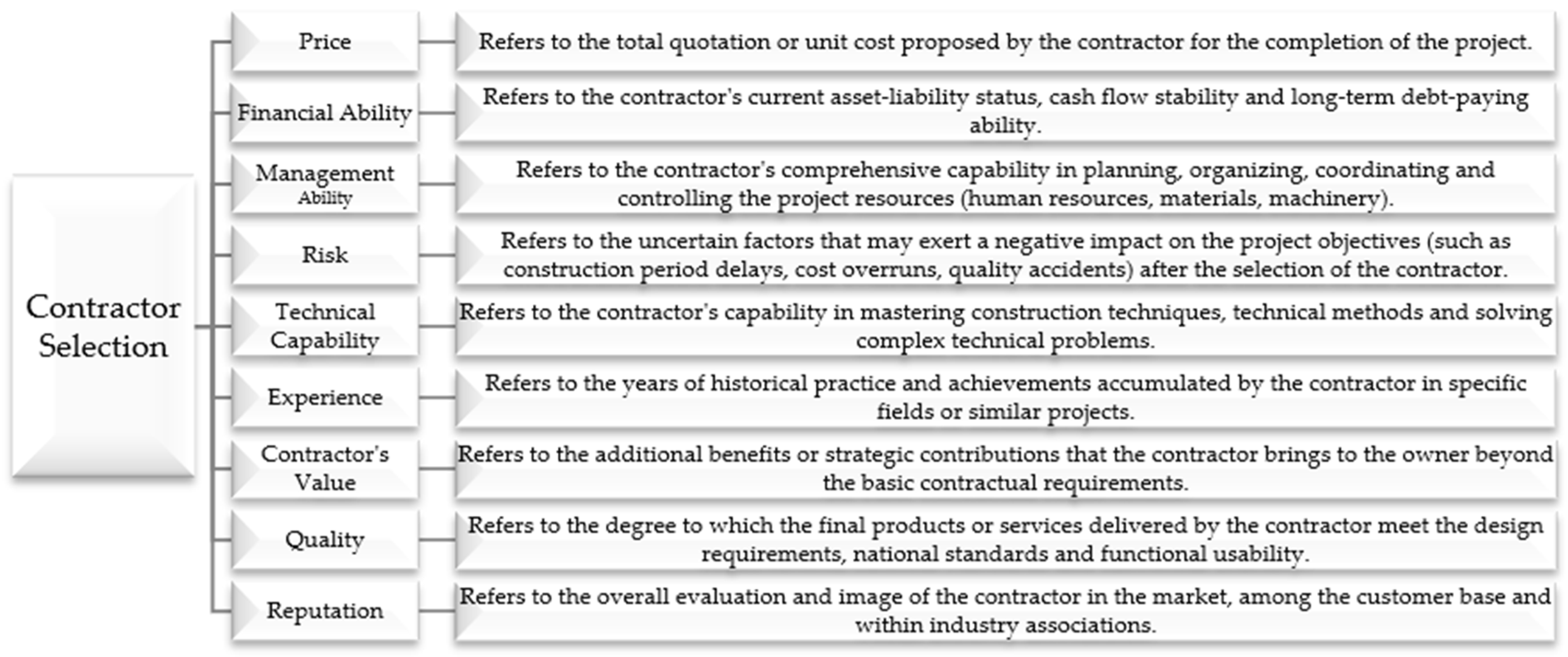

Disclaimer/Publisher’s Note: The statements, opinions and data contained in all publications are solely those of the individual author(s) and contributor(s) and not of MDPI and/or the editor(s). MDPI and/or the editor(s) disclaim responsibility for any injury to people or property resulting from any ideas, methods, instructions or products referred to in the content. |
© 2026 by the authors. Licensee MDPI, Basel, Switzerland. This article is an open access article distributed under the terms and conditions of the Creative Commons Attribution (CC BY) license.