Field Measurement and Data-Driven Modeling of a Photovoltaic/Thermal and Air-Source Dual-Source Heat Pump System in Dalian, China


 and
and
Abstract
1. Introduction
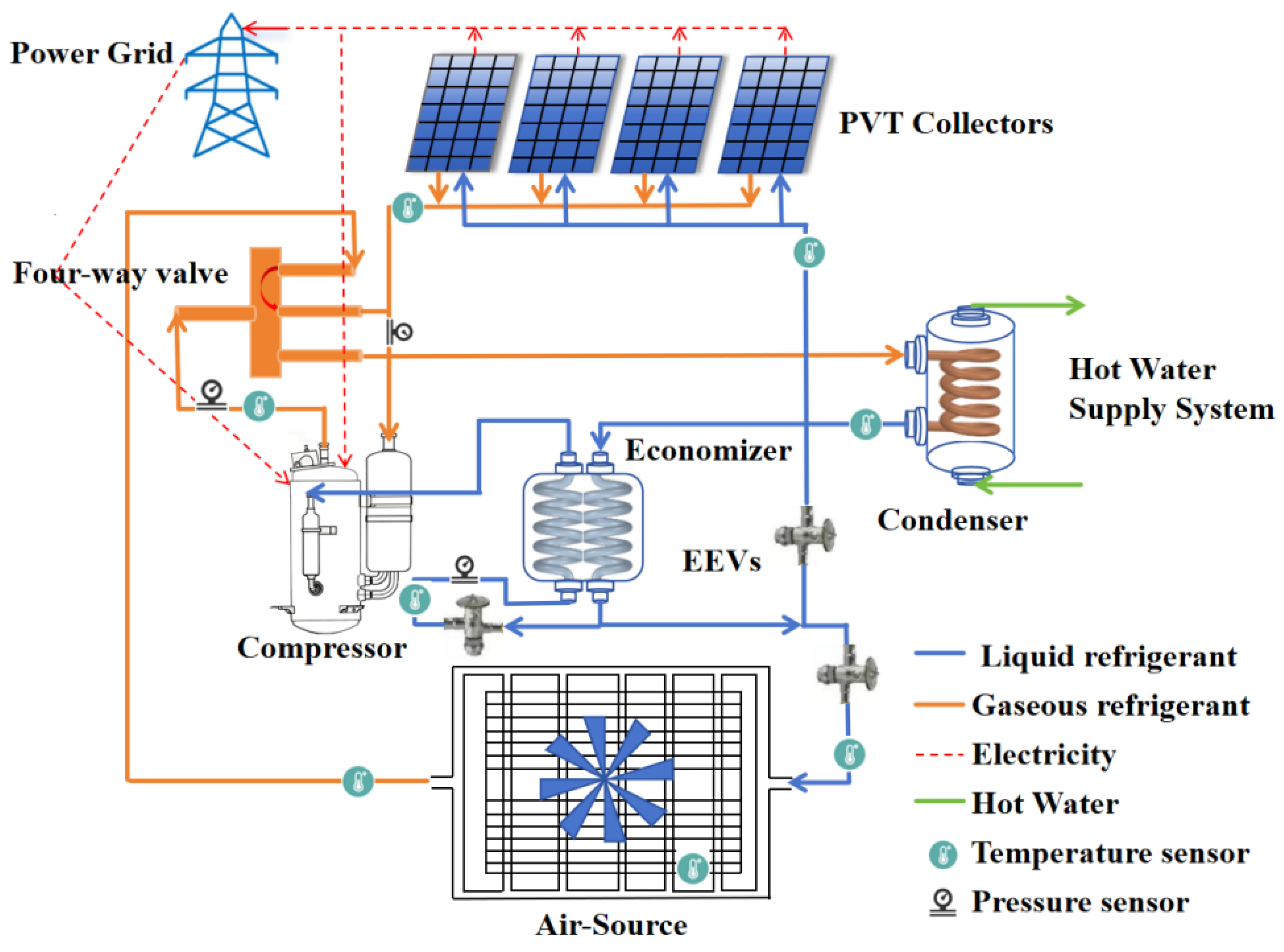
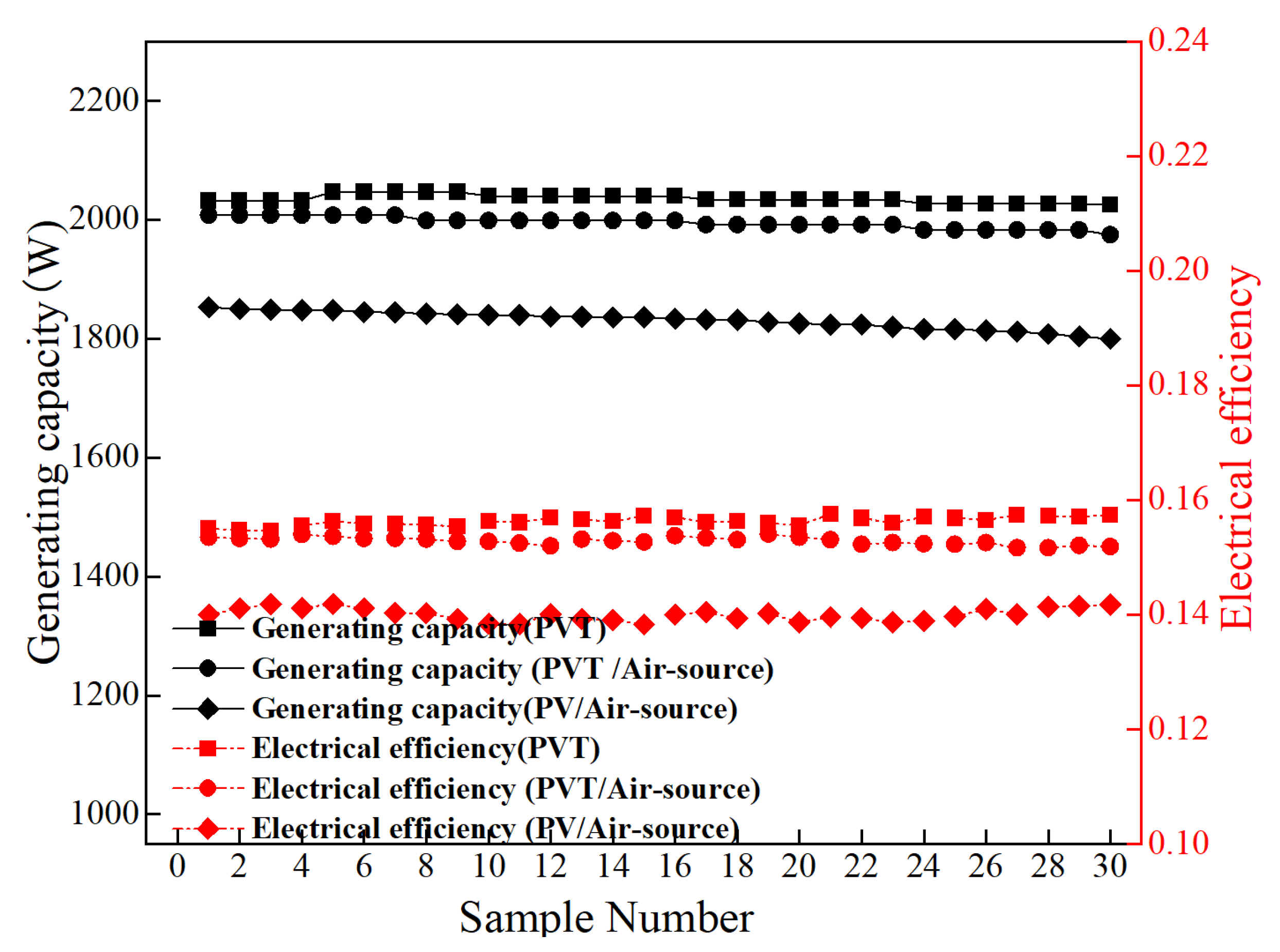
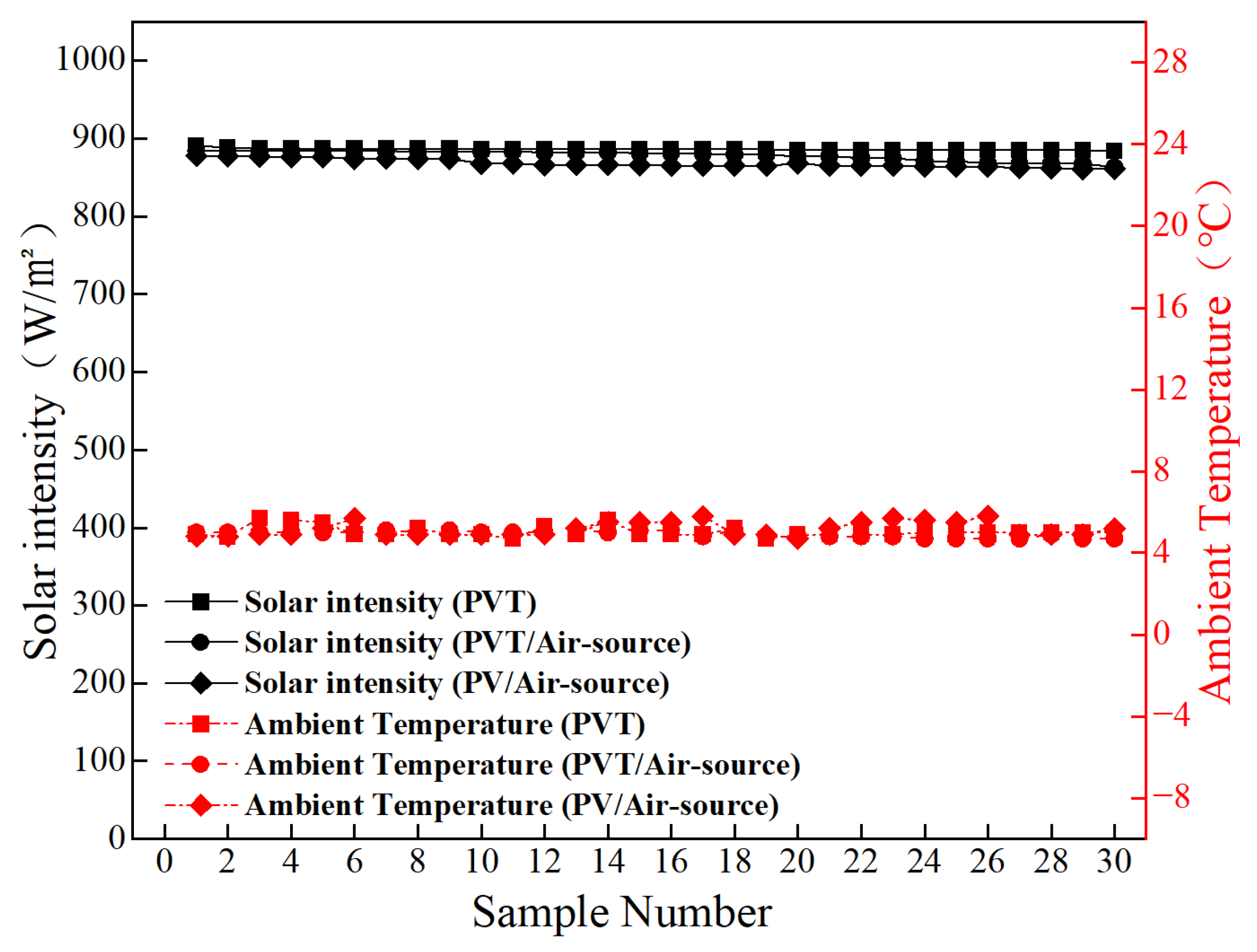
- Quantitative comparison of heating and power generation performance among the three operational modes was performed under consistent environmental conditions (ambient temperature 5.3 °C, solar irradiance 875 W/m2).
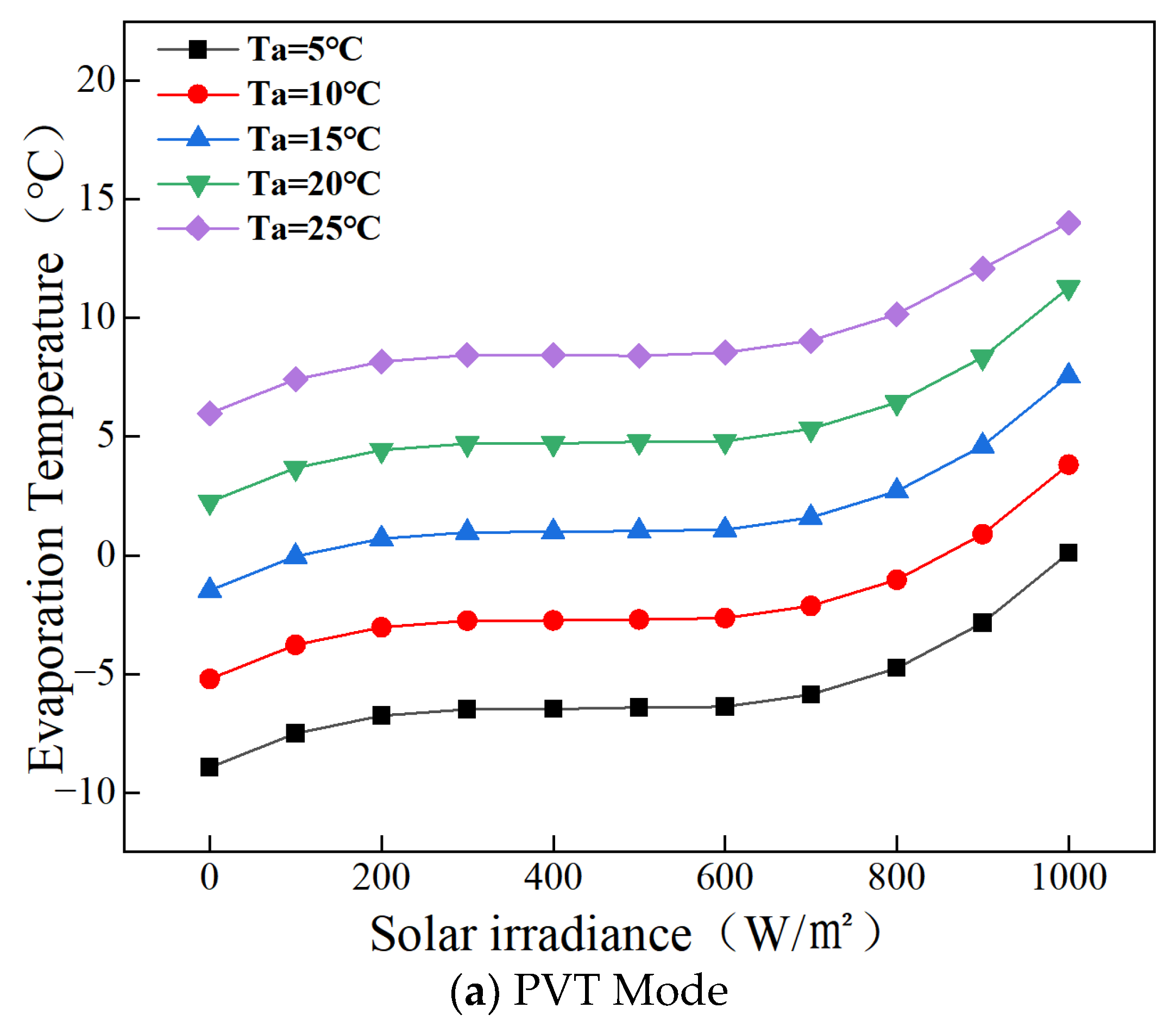
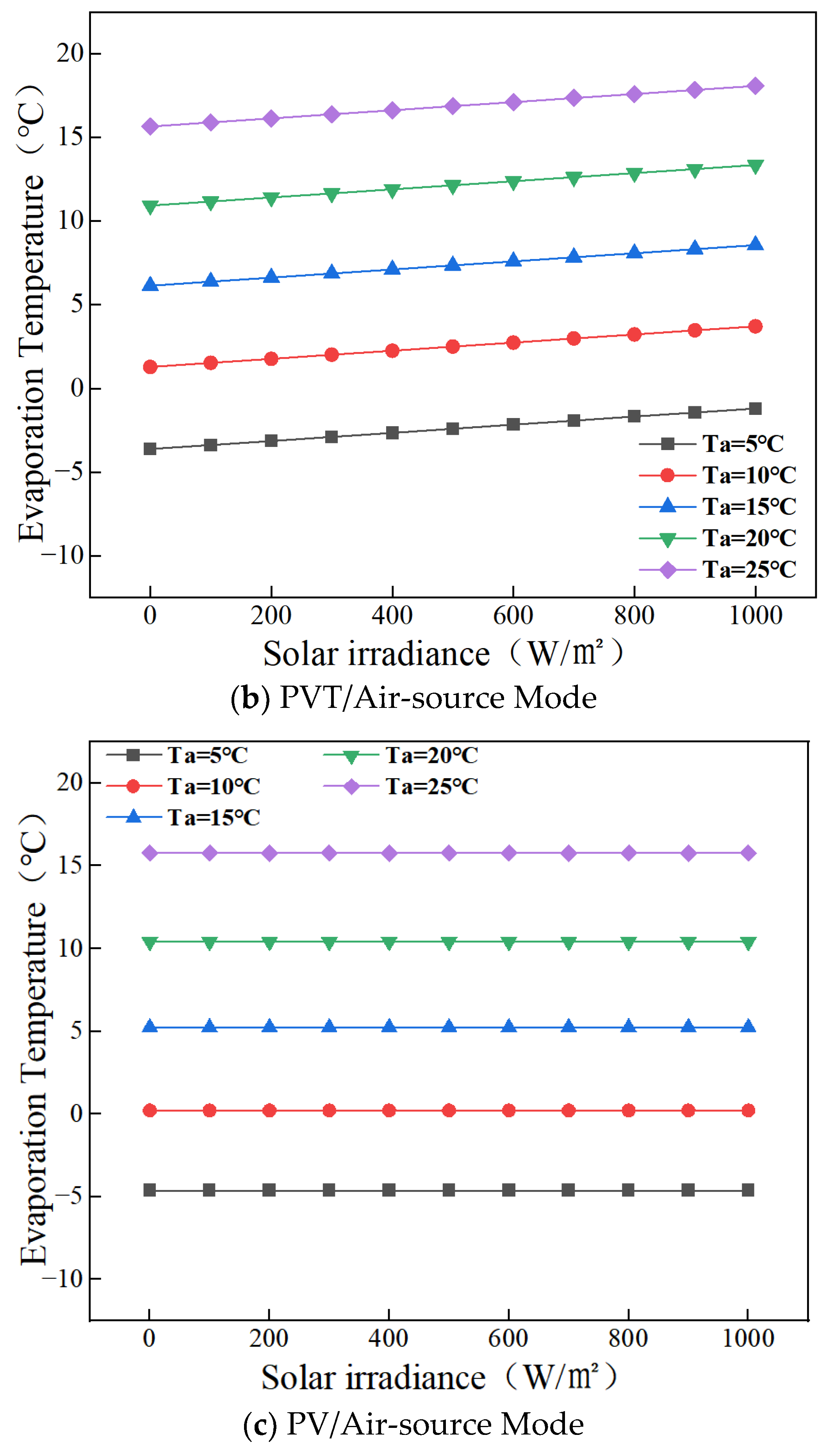
- Through experimental data fitting, the response relationships of evaporation temperature to solar irradiance and ambient temperature for the three modes were systematically quantified.
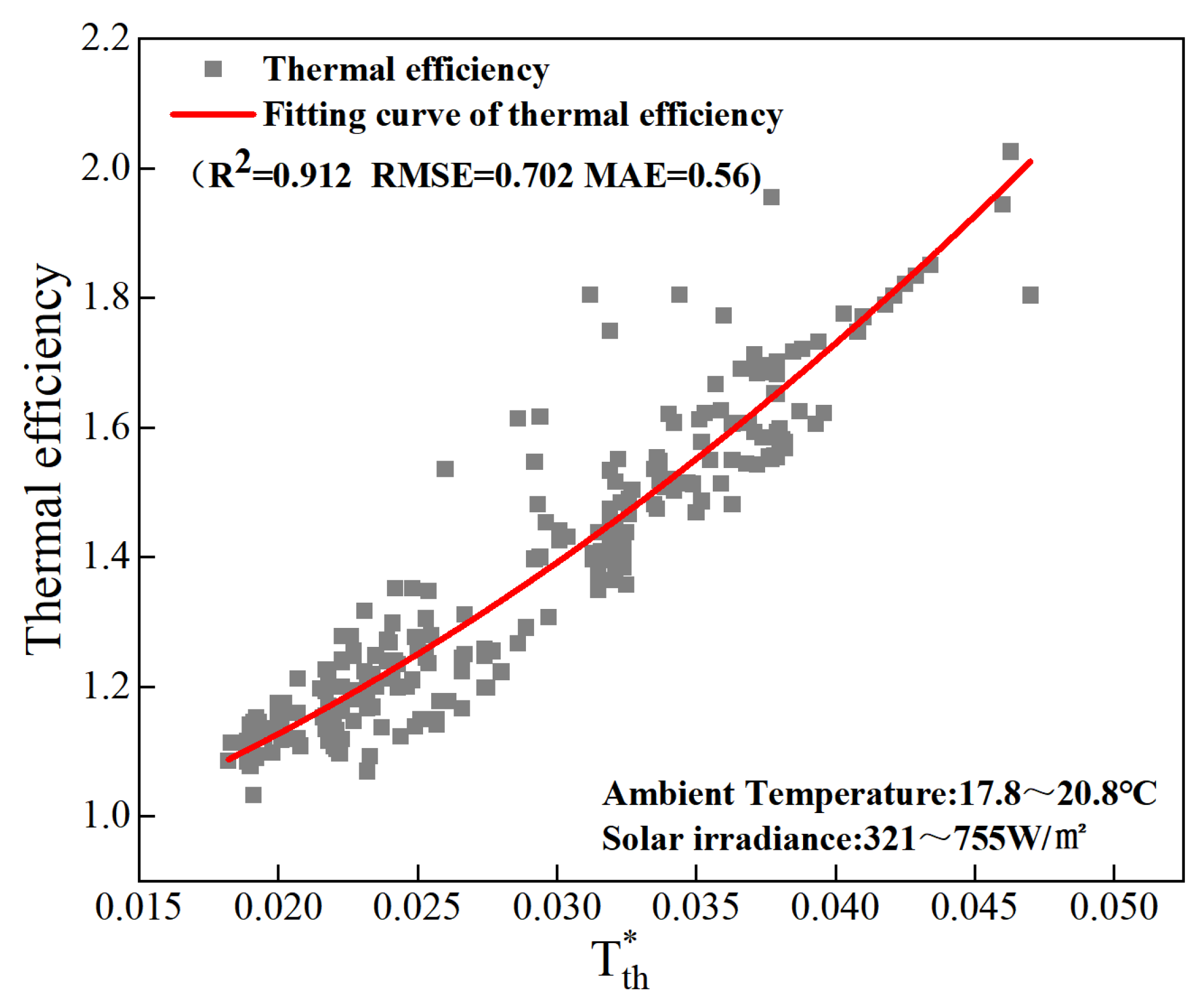
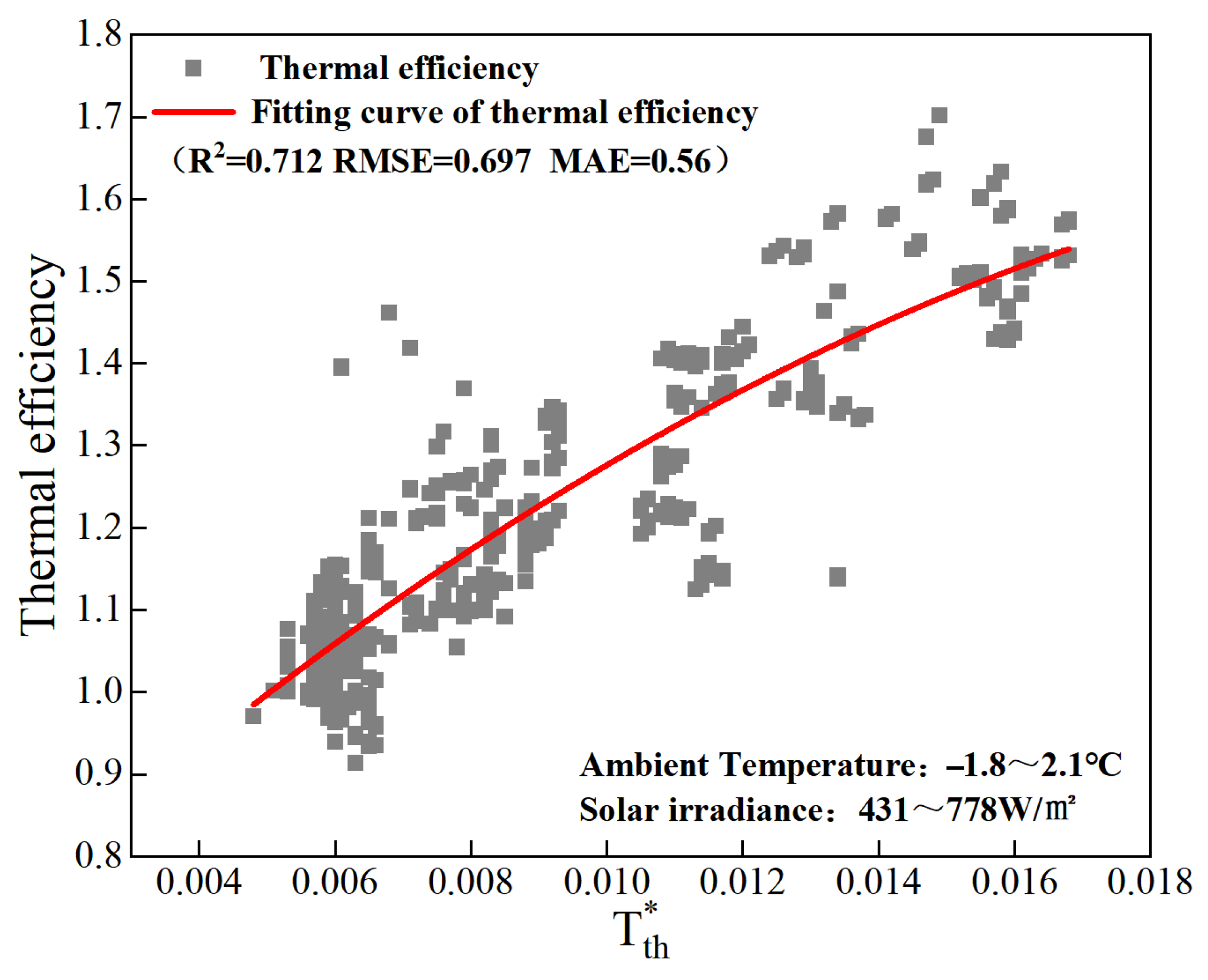
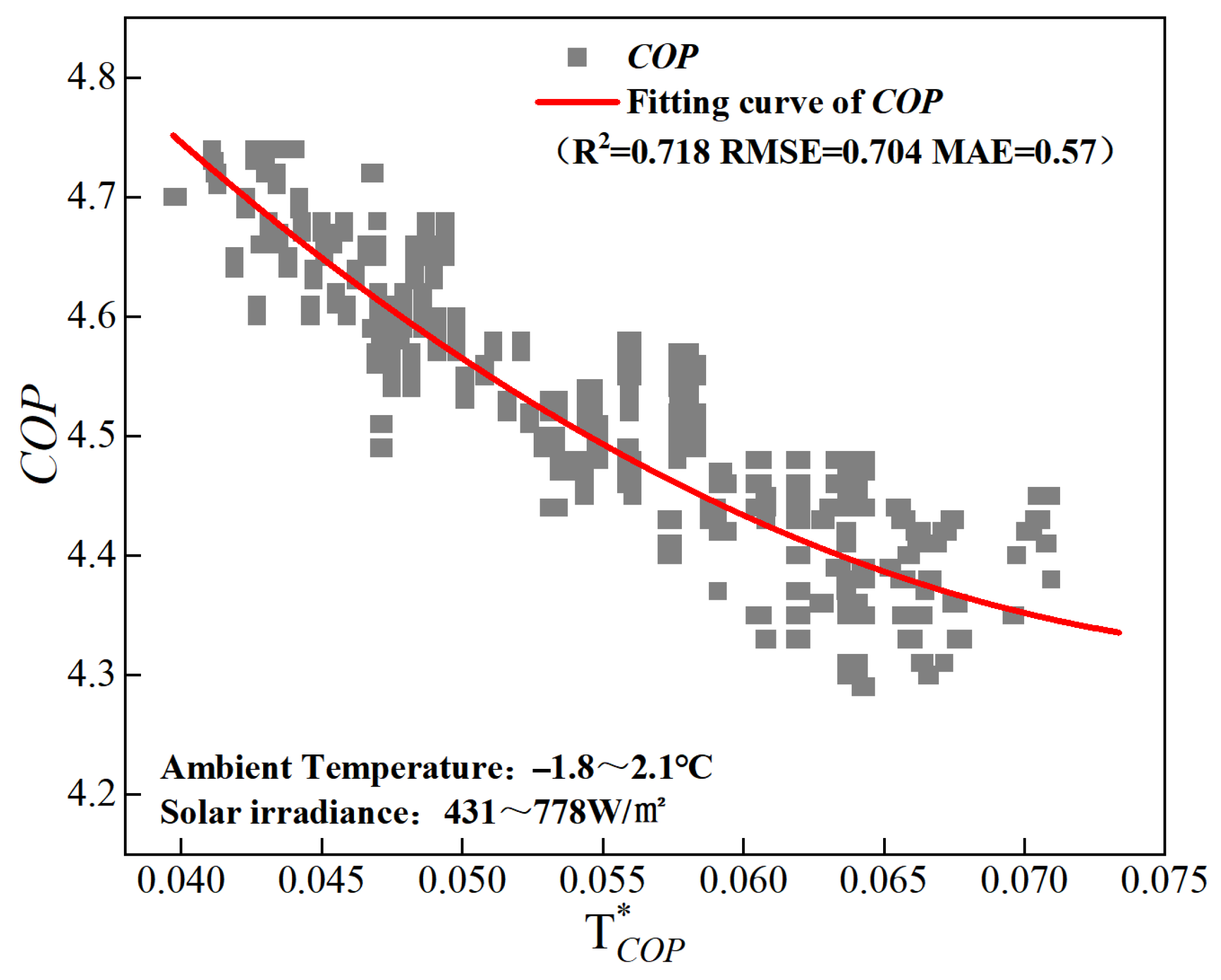
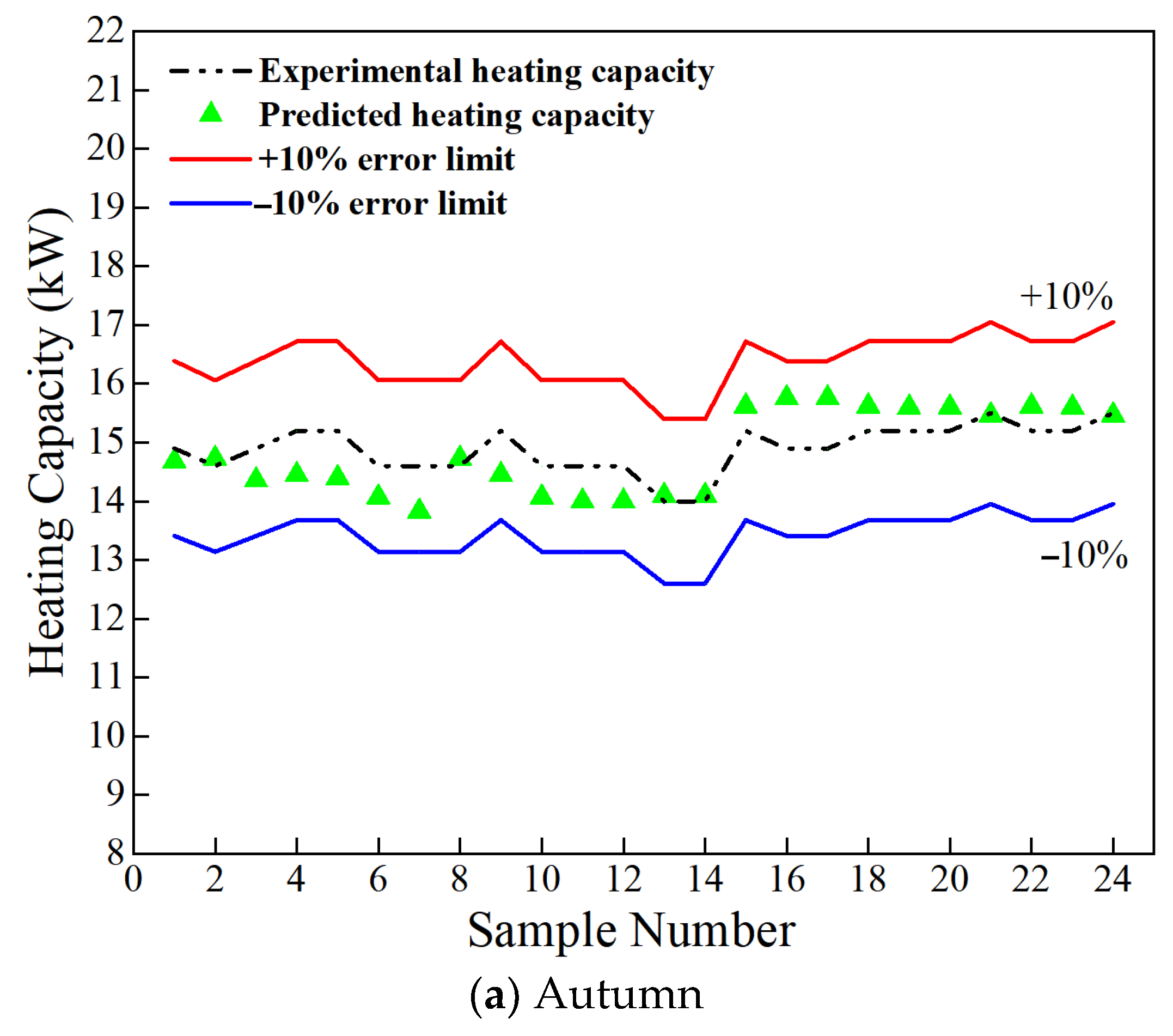
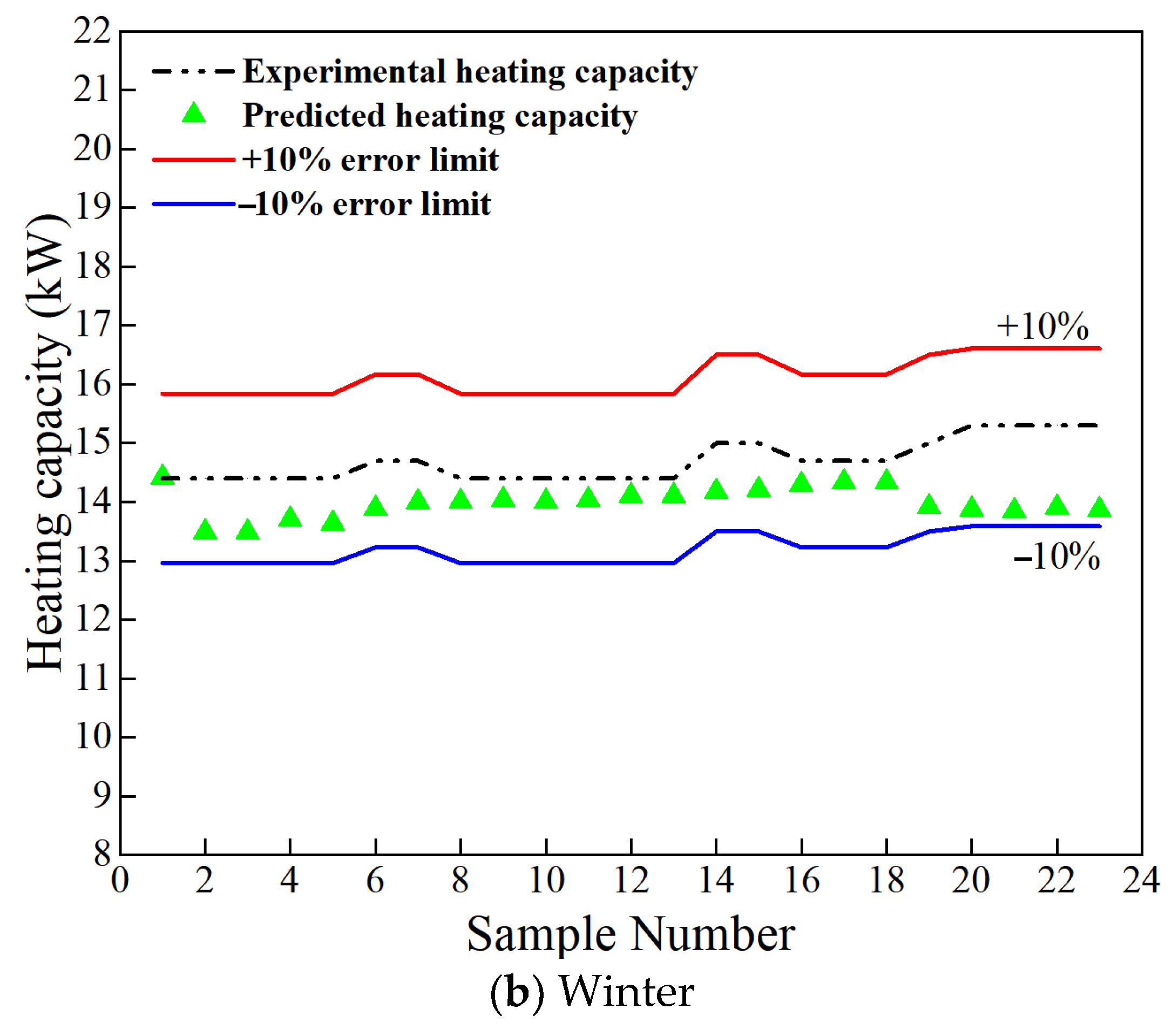
- A data-driven prediction method was proposed, with three mathematical models established based on experimental datasets to achieve the following objectives: prediction of the thermal efficiency of the PVT mode; estimation of the system COP; and determination of the matching relationship between heating capacity and PVT area.
2. System Design
2.1. Description of Dual-Source Heat Pump System
2.2. Instrumentation for System Testing
3. Performance Evaluation
4. Results and Discussion
4.1. Heating-Power Generation Performance Comparison Among Three Modes
4.2. Analysis of Evaporation Temperature
4.3. Data-Driven Modeling of the PVT Mode
- (a)
- The instantaneous thermal efficiency of the PVT mode is calculated using Equations (18) and (19);
- (b)
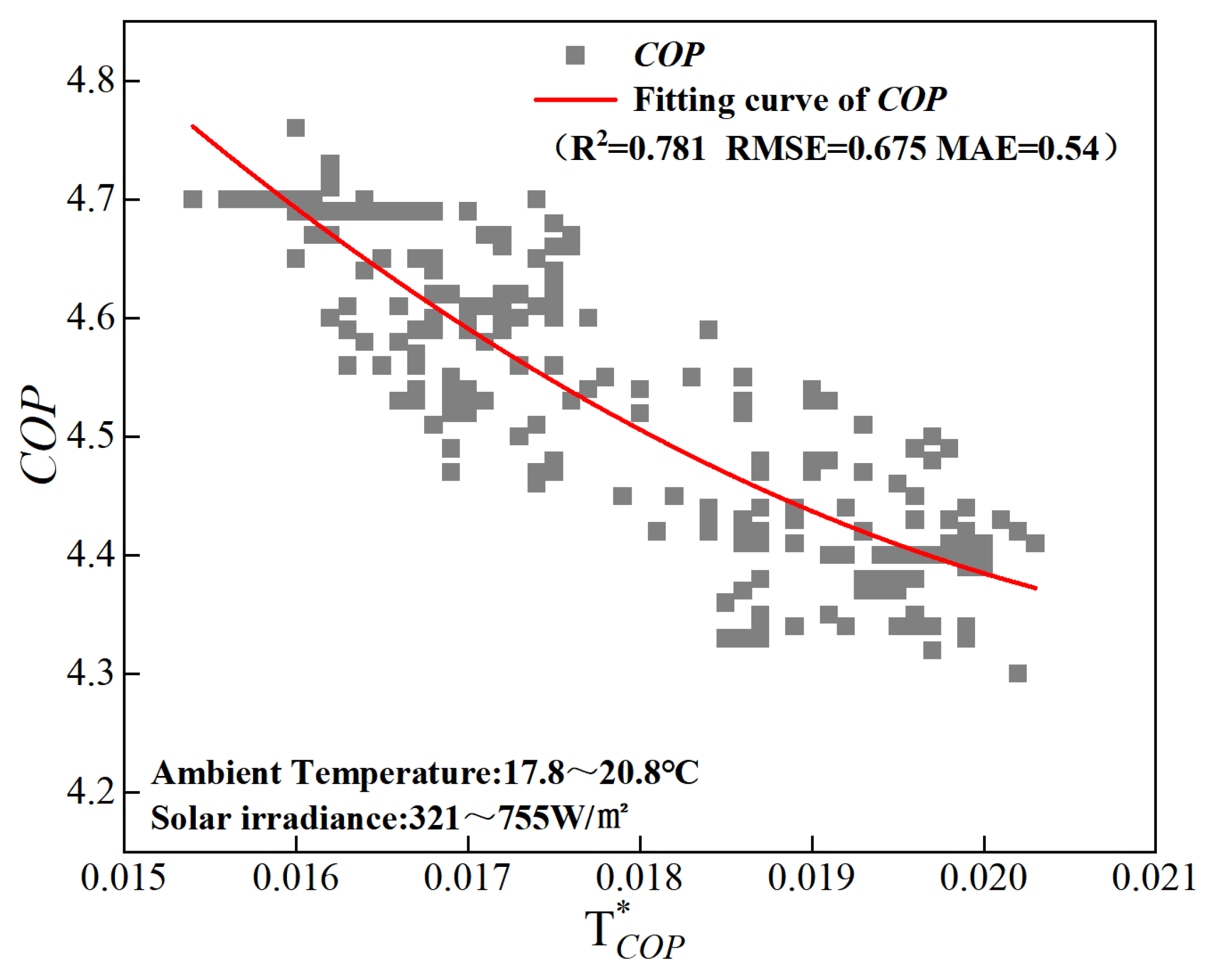
- The COP of the PVT heat pump is determined using Equations (20) and (21);
- (c)
- Equation (26) provides a dual-function capability, enabling either the calculation of system heating capacity for a given PVT collector area or the reverse-calculation of the required collector area for a target heating capacity.
4.4. Economic Analysis
5. Conclusions
- (1)
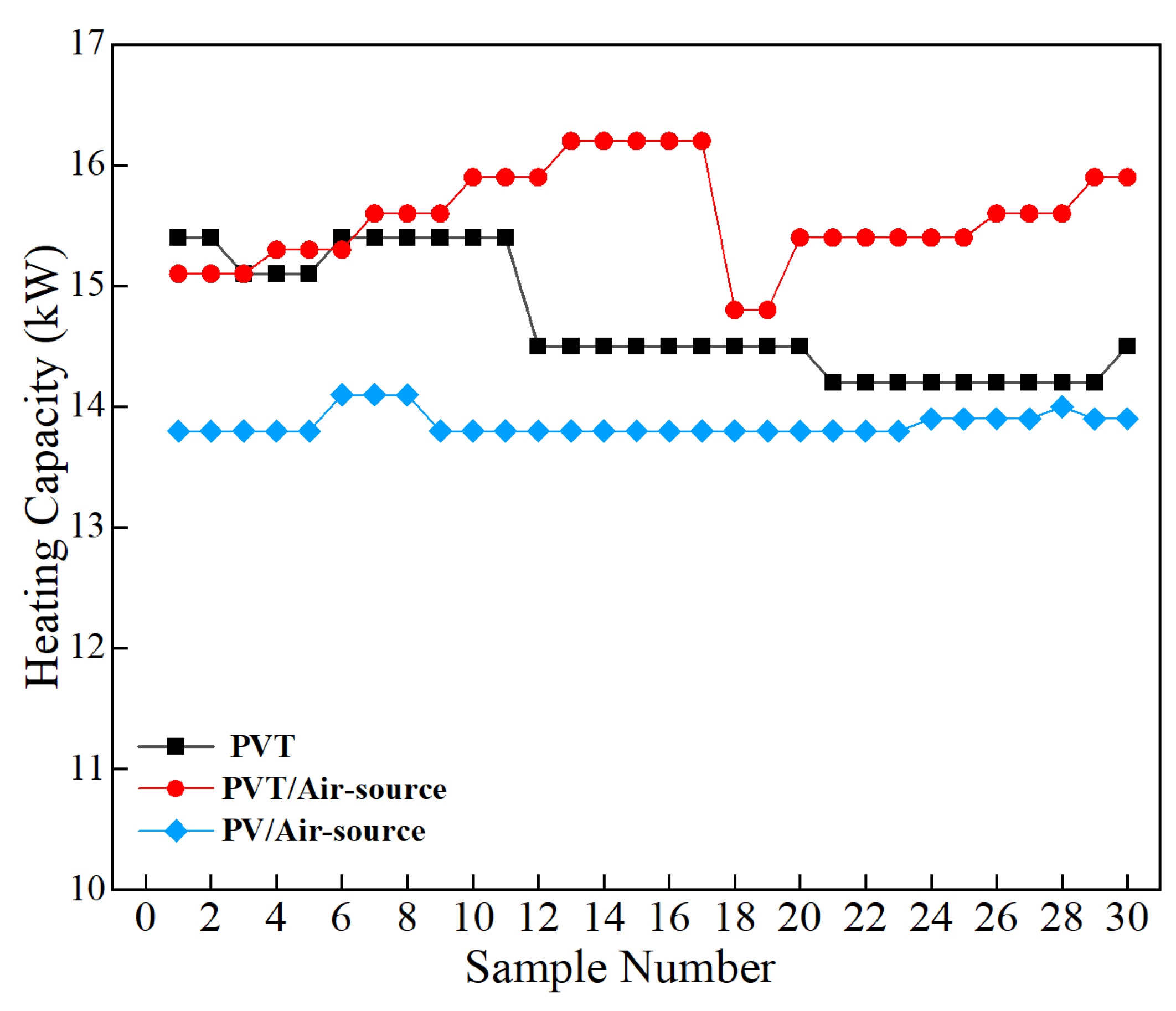
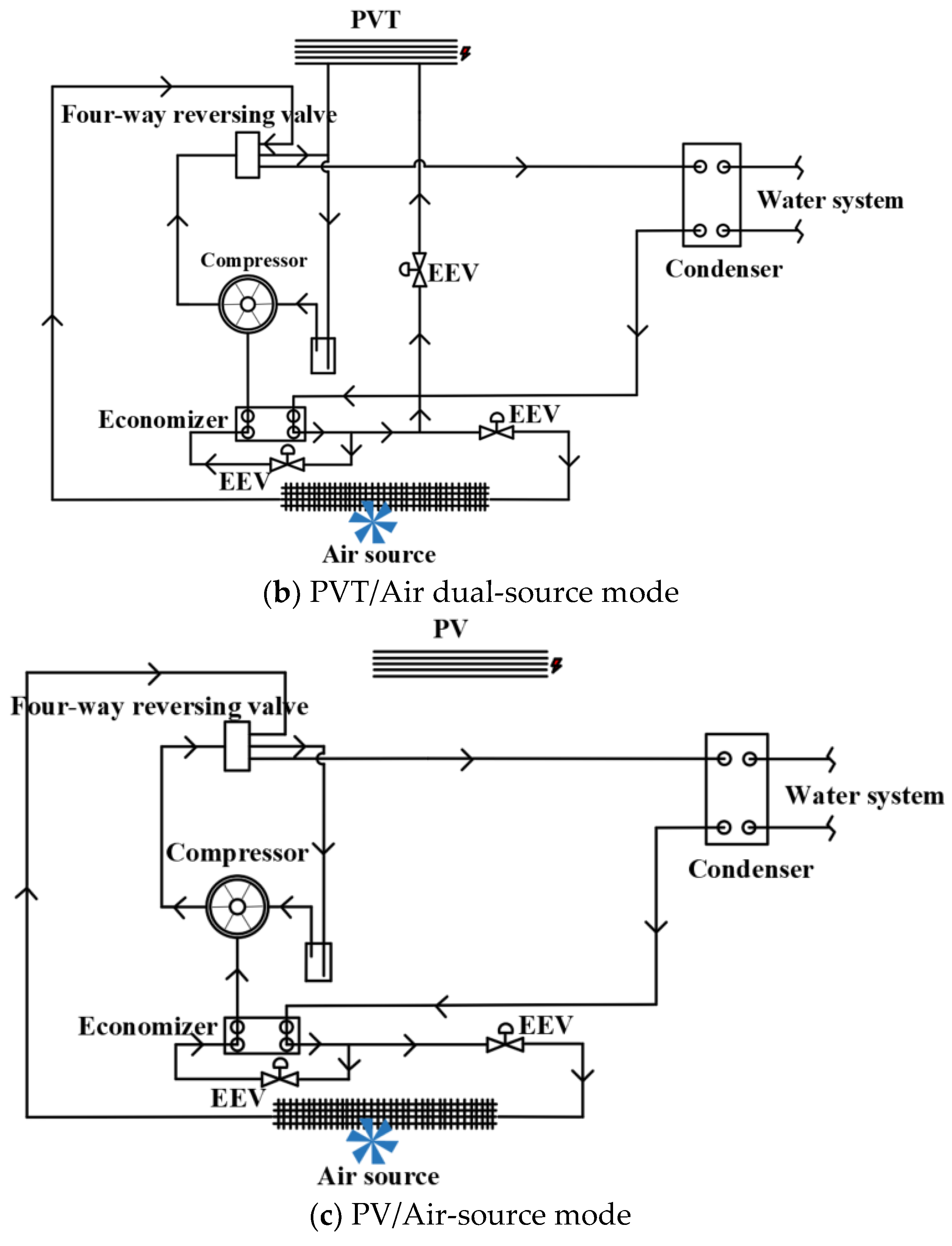
- With an average ambient temperature of 5.3 °C and solar irradiance of 875 W/m2, three integrated heating-power generation systems were evaluated: (1) PVT mode, (2) PVT/air dual-source mode, and (3) PV/air-source mode. Field measurements demonstrate that, compared to mode (3), mode (1) achieves a 5.76% increase in heating capacity and an 11.56% improvement in electrical efficiency. Mode (2) exhibits a 12.23% greater heating capacity and a 9.14% increase in electrical efficiency.
- (2)
- The research results on evaporation temperature indicate that in both the PVT and dual-source modes, the evaporation temperature increases with rising solar irradiance and ambient temperature. Compared to the PVT mode, the dual-source mode is less affected by solar irradiance. In contrast, in the air-source mode, the evaporation temperature depends solely on the ambient temperature.
- (3)
- This study developed a data-driven methodology for predicting PVT heat pump performance, which provides three key functions:
- (a)
- Calculating the instantaneous thermal efficiency of the PVT mode;
- (b)
- Predicting the heating COP;
- (c)
- Determining system heating capacity given a fixed collector area, or deriving the required PVT collector area for a target heating load.
- (4)
- From an economic perspective, the dual-source heat pump system demonstrates economic feasibility. Its unit heating cost (RMB 0.1125/kWh) is lower than that of electric boilers, gas boilers, and traditional air-source heat pump systems. Meanwhile, the payback period of 6.4 years is considerably shorter than its design service life of 10 to 12 years, proving its economic benefits over the entire life cycle.
Author Contributions
Funding
Data Availability Statement
Acknowledgments
Conflicts of Interest
Abbreviations
| cp | specific heat of the liquid, kJ/kg·°C |
| ta | ambient temperature, °C |
| tc | condensation temperature, °C |
| te | evaporation temperature, °C |
| ti,w | inlet temperature of water, °C |
| to,w | outlet temperature of water, °C |
| top | operation time, h |
| ηe | electrical efficiency |
| ηth | thermal efficiency |
| APVT | area of the PVT panels, m2 |
| ASHP | air source heat pump |
| COP | coefficient of performance |
| Cair | air-source unit cost, RMB |
| Cele | electricity price, RMB |
| Cinv | total investment cost, RMB |
| Cm | maintenance cost, RMB |
| Cop | operating cost, RMB |
| Cpur | purchase cost, RMB |
| Cpvt | PVT panel cost, RMB |
| Csa | annual cost savings, RMB |
| Ctot | total cost, RMB |
| Cwater | water system cost, RMB |
| E | the system’s power generation, W |
| EEVs | electronic expansion valves |
| EVA | ethylene vinyl acetate copolymer |
| G | irradiance, W/m2 |
| PPR | polypropylene-random |
| PV | photovoltaic |
| PVT | photovoltaic-thermal |
| PVT-ASHP | PVT/air-source dual-source heat pump |
| Qh | heating capacity, kW |
| TES | thermal energy storage |
| QPVT | heating capacity of the PVT, kW |
| TCOPhp* | normalized temperature difference, °C/(°C + W/m2) |
| Tth* | normalized temperature difference, °C·m2/W |
| W | power consumption, W |
References
- Emmi, G.; Baccega, E.; Cesari, S.; Mainardi, E.; Bottarelli, M. Energy analysis of multi-source heat pump system: A real case study application. Renew. Energy 2024, 221, 119708. [Google Scholar] [CrossRef] [Scilit]
- Zanetti, E.; Bordignon, S.; Conte, R.; Bisi, A.; Azzolin, M.; Zarrella, A. Experimental and numerical analysis of a CO2 dual-source heat pump with PVT evaporators for residential heating applications. Appl. Therm. Eng. 2023, 233, 121165. [Google Scholar] [CrossRef] [Scilit]
- Xu, Z.; Liu, F.; Xu, W.; Wang, Z.; Yang, Y.; Xu, C.; Wu, P.; Li, X. Atmospheric air quality in Beijing improved by application of air source heat pump (ASHP) systems. J. Clean. Prod. 2020, 257, 120582. [Google Scholar] [CrossRef] [Scilit]
- Liu, W.; Yao, J.; Jia, T.; Zhao, Y.; Dai, Y.; Zhu, J.; Novakovic, V. The performance optimization of DX-PVT heat pump system for residential heating. Renew. Energy 2023, 206, 1106–1119. [Google Scholar] [CrossRef] [Scilit]
- Li, R.; Zhang, J.; Ma, L.; Guo, X.; Han, Y. Field experimental study of a novel overfeed photovoltaic-thermal heat pump for residential heating in northern China. Energy 2025, 337, 138524. [Google Scholar] [CrossRef] [Scilit]
- Han, Y.; Zhang, J.; Ma, L.; Hou, B.; Gong, J.; Lv, H. Multigenerational performance analysis of a direct expansion PVT-HP system using year-long experimental data. Renew. Energy 2025, 244, 122615. [Google Scholar] [CrossRef] [Scilit]
- Domanski, P.A.; Didion, D.A.; Doyle, J.P. Evaluation of suction-line/liquid-line heat exchange in the refrigeration cycle. Int. J. Refrig. 1994, 17, 487–493. [Google Scholar] [CrossRef] [Scilit]
- Huang, H. (Ed.) Heat Pumps for Cold Climate Heating: Variable Volume Ratio Twostage Vapor Compression Air Source Heat Pump Technology and Applications; CRC Press: Boca Raton, FL, USA, 2020; 378p. [Google Scholar]
- Jiang, S.; Yu, Y.; Li, S.; Wang, S.; Ma, Z.; Wang, J. Simulation and optimum control of a two-stage compression air source heat pump system: A comparison of two kinds of variable volume approaches. Appl. Therm. Eng. 2023, 226, 120149. [Google Scholar] [CrossRef] [Scilit]
- Zhao, W.; Peng, J.; Cao, J.; Yin, R.; Song, J.; Yuan, Y. Characterization and prediction of demand response potential of air conditioning systems integrated with chilled water storage. Energy Build. 2024, 323, 114805. [Google Scholar] [CrossRef] [Scilit]
- Yousaf, S.; Ullah, S.; Bradshaw, C.R. A gray-box heat pump system model compatible with building energy modeling engines and reduced quantities of training data. Energy Build. 2025, 345, 116131. [Google Scholar] [CrossRef] [Scilit]
- Yousaf, S.; Raza, S.M.M.; Khan, A.; Bradshaw, C.R. A reduced-order model for predicting transient performance of air-source heat pumps. Appl. Energy 2026, 408, 127412. [Google Scholar] [CrossRef] [Scilit]
- Guan, S.; Zheng, W.; Guo, J.; Tian, Z.; Jiang, Y.; Shi, H. Experiments on the performance of low temperature air source heat pump based on parallel connection of evaporators. J. Build. Eng. 2024, 98, 111021. [Google Scholar] [CrossRef] [Scilit]
- Li, C.; Li, N.; Tan, X.; Yongga, A.; Long, J.; Shen, X. Prediction of evaporation temperature in air-water heat source heat pump based on artificial neural network. J. Build. Eng. 2024, 98, 111036. [Google Scholar] [CrossRef] [Scilit]
- Wang, W.; Tan, Y.; Wei, W.; Sun, Y.; Han, S.; Dai, C. A performance prediction model of variable frequency air source heat pump used for photovoltaic power generation scheduling in low-carbon buildings. Renew. Energy 2025, 238, 121960. [Google Scholar] [CrossRef] [Scilit]
- Sun, X.; Dai, Y.; Novakovic, V.; Wu, J.; Wang, R. Performance Comparison of Direct Expansion Solar-assisted Heat Pump and Conventional Air Source Heat Pump for Domestic Hot Water. Energy Procedia 2015, 70, 394–401. [Google Scholar] [CrossRef] [Scilit]
- Zhang, F.; Cai, J.; Ji, J.; Han, K.; Ke, W. Experimental investigation on the heating and cooling performance of a solar air composite heat source heat pump. Renew. Energy 2020, 161, 221–229. [Google Scholar] [CrossRef] [Scilit]
- Liu, X.; Wang, X.; Chuang, E.; Huang, K.; Feng, G.; Li, X.; Cui, Y. Research on solar-air source heat pump coupled heating system based on heat network in severe cold regions of China. Energy Built Environ. 2026, 7, 191–205. [Google Scholar] [CrossRef] [Scilit]
- Manesh, A.M.; Liu, H. Thermo-environ-economic analysis of a novel solar-assisted heat pump system; comparison with conventional single stage and cascaded air source heat pumps. Energy 2025, 322, 135647. [Google Scholar] [CrossRef] [Scilit]
- Bae, S.; Chae, H.; Nam, Y. Experimental analysis of an integrated system using photovoltaic–thermal and air source heat pump for real applications. Renew. Energy 2023, 217, 119128. [Google Scholar] [CrossRef] [Scilit]
- Wang, G.; Quan, Z.; Zhao, Y.; Sun, C.; Deng, Y.; Tong, J. Experimental study on a novel PV/T air dual-heat-source composite heat pump hot water system. Energy Build. 2015, 108, 175–184. [Google Scholar] [CrossRef] [Scilit]
- Chae, S.; Bae, S.; Nam, Y. Economic and environmental analysis of the optimum design for the integrated system with air source heat pump and PVT. Case Stud. Therm. Eng. 2023, 48, 103142. [Google Scholar] [CrossRef] [Scilit]
- Kamel, R.; Ekrami, N.; Dash, P.; Fung, A.; Hailu, G. BIPV/T+ASHP: Technologies for NZEBs. Energy Procedia 2015, 78, 424–429. [Google Scholar] [CrossRef] [Scilit]
- Wang, N.; Chu, S.; Cheng, C.; Zhang, H.; Chen, H.; Gao, D. Performance research and multi-objective optimization of concentrating photovoltaic/thermal coupled air source heat pump heating system. Energy 2024, 296, 131008. [Google Scholar] [CrossRef] [Scilit]
- Du, B.; Quan, Z.; Hou, L.; Zhao, Y.; Lou, X.; Wang, C. Experimental study on the performance of a photovoltaic/thermal-air dual heat source direct-expansion heat pump. Appl. Therm. Eng. 2021, 188, 116598. [Google Scholar] [CrossRef] [Scilit]
- Wang, F.; Liu, M.; Guo, W.; Liu, X.; Zhang, J.; Li, J.; Hu, G.; Yin, J. Photovoltaic/thermal integrated air source heat pump hot water system with phase change tank. Renew. Energy 2025, 240, 122204. [Google Scholar] [CrossRef] [Scilit]
- Wang, Y.; Quan, Z.; Zhao, Y.; Wang, L.; Bai, Z.; Shi, J. Energy and exergy analysis of a novel dual-source heat pump system with integrated phase change energy storage. Renew. Energy 2024, 222, 119905. [Google Scholar] [CrossRef] [Scilit]
- Liu, Y.; Quan, Z.; Du, B.; Bai, Z.; Zhao, Y.; Wang, H. Numerical analysis and optimization study of photovoltaic/thermal-air source evaporator based on micro heat pipe arrays. Sol. Energy 2024, 269, 112314. [Google Scholar] [CrossRef] [Scilit]
- Du, B.; Quan, Z.; Hou, L.; Zhao, Y.; Lou, X.; Shao, S. Simulation analysis of a photovoltaic/thermal-air dual heat source direct-expansion heat pump. Renew. Energy 2023, 218, 119019. [Google Scholar] [CrossRef] [Scilit]
- Zhang, L.; He, W.; Zhu, J.; Liu, X.; Hu, Z.; Yang, C.; Meng, Q.; Wang, S.; Li, M.; Zhang, X.; et al. Experimental study of dual-source heat pump coupled with water-cooled photovoltaic/thermal system. Appl. Therm. Eng. 2025, 258, 124758. [Google Scholar] [CrossRef] [Scilit]
- Wang, C.; Gao, Y.; Dai, Z.; Wu, D.; Huang, Z.; Zhang, X.; Jiang, L. Experimental investigation and performance evaluation on a direct expansion solar-air source heat pump system. Int. J. Refrig. 2023, 145, 168–176. [Google Scholar] [CrossRef] [Scilit]
- Kim, M.-H.; Kim, D.; Heo, J. Energy performance of direct-expansion solar heat pump integrated with thermal network. Case Stud. Therm. Eng. 2023, 49, 103267. [Google Scholar] [CrossRef] [Scilit]
- Yao, J.; Zheng, S.; Chen, D.; Dai, Y.; Huang, M. Performance improvement of vapor-injection heat pump system by employing PVT collector/evaporator for residential heating in cold climate region. Energy 2021, 219, 119636. [Google Scholar] [CrossRef] [Scilit]
- Li, S.; Yang, H.; Yuan, J.; Zeng, X.; Yang, Z.; Lu, J. Thermodynamic and economic analyses of modified ejector enhanced solar-air composite dual-source heat pump system in residential buildings. Energy Build. 2024, 308, 113978. [Google Scholar] [CrossRef] [Scilit]







| References | Experiment/Region | Simulation/Method | PVT Mode | ASHP Mode | PVT/ASHP Mode | Medium (PVT) | COP (Heating) |
|---|---|---|---|---|---|---|---|
| [4] | Shanghai | Matlab (https://www.mathworks.com/products/matlab.html) | √ | / | / | Refrigerant | 3.10 |
| [5,6] | Dalian | / | √ | / | / | Refrigerant | 2.97, 2.92 |
| [15] | Beijing | Matlab | / | / | √ | Refrigerant | 3.59 |
| [16] | Shanghai | / | √ | √ | / | Refrigerant | 5.1 (PVT); 3.7 (ASHP) |
| [17] | Hefei | / | / | / | √ | Refrigerant | 1.87~3.8 |
| [18] | / | TRNSYS (http://www.trnsys.com/) | / | √ | √ | Water | 3.55 (ASHP); 6.27 (PVT/ ASHP) |
| [19] | Nanjing | EES (https://fchartsoftware.com/ees/) | / | √ | √ | Refrigerant | 2.47 (ASHP); 3.14 (PVT/ ASHP) |
| [20] | Busan | / | / | √ | √ | Water | 4.05 (ASHP); 4.12 (PVT/ ASHP) |
| [21] | Beijing | / | √ | / | √ | Water | 1.40 (PVT); 2.49 (PVT/ ASHP) |
| [22] | / | Python (https://www.python.org/) | / | / | √ | Refrigerant | 1.49~5.64 |
| [23] | / | TRNSYS | / | / | √ | Air | 3.45 |
| [24] | / | TRNSYS | / | √ | √ | Air, Water | 4.17 (ASHP); air cooling: 5.12, water cooling: 3.92 (PVT/ASHP) |
| [25] | Zibo | / | √ | √ | √ | Refrigerant | 3.6 (PVT); 2.1 (ASHP; 2.0 (PVT/ASHP) |
| [26] | / | TRNSYS | / | / | √ | Water | 3.92 |
| [27] | Beijing | TRNSYS | √ | √ | / | Water | 7.0 (PVT); 5.0 (ASHP) |
| [28] | / | Matlab | / | / | √ | Refrigerant | 4.62 |
| [29] | / | Matlab | √ | / | √ | Refrigerant | 1.44~3.42 (PVT); 1.42~3.44 (PVT/ASHP) |
| [30] | Hefei | / | / | / | √ | Refrigerant | 4.73 |
| Component | Model | Parameters |
|---|---|---|
| PVT Collector | PVT-M3/60320 | Length: 1.77 m, Width: 1.05 m, Rated Power: 320 W |
| Compressor | WHP15600AEKPC9EQ | Rated Power: 3720 W, Displacement: 41.8 mL/rev |
| Plate heat exchanger | KAORI-K030S | Length: 194 mm, Width: 80 mm, Quantity: 20 pieces |
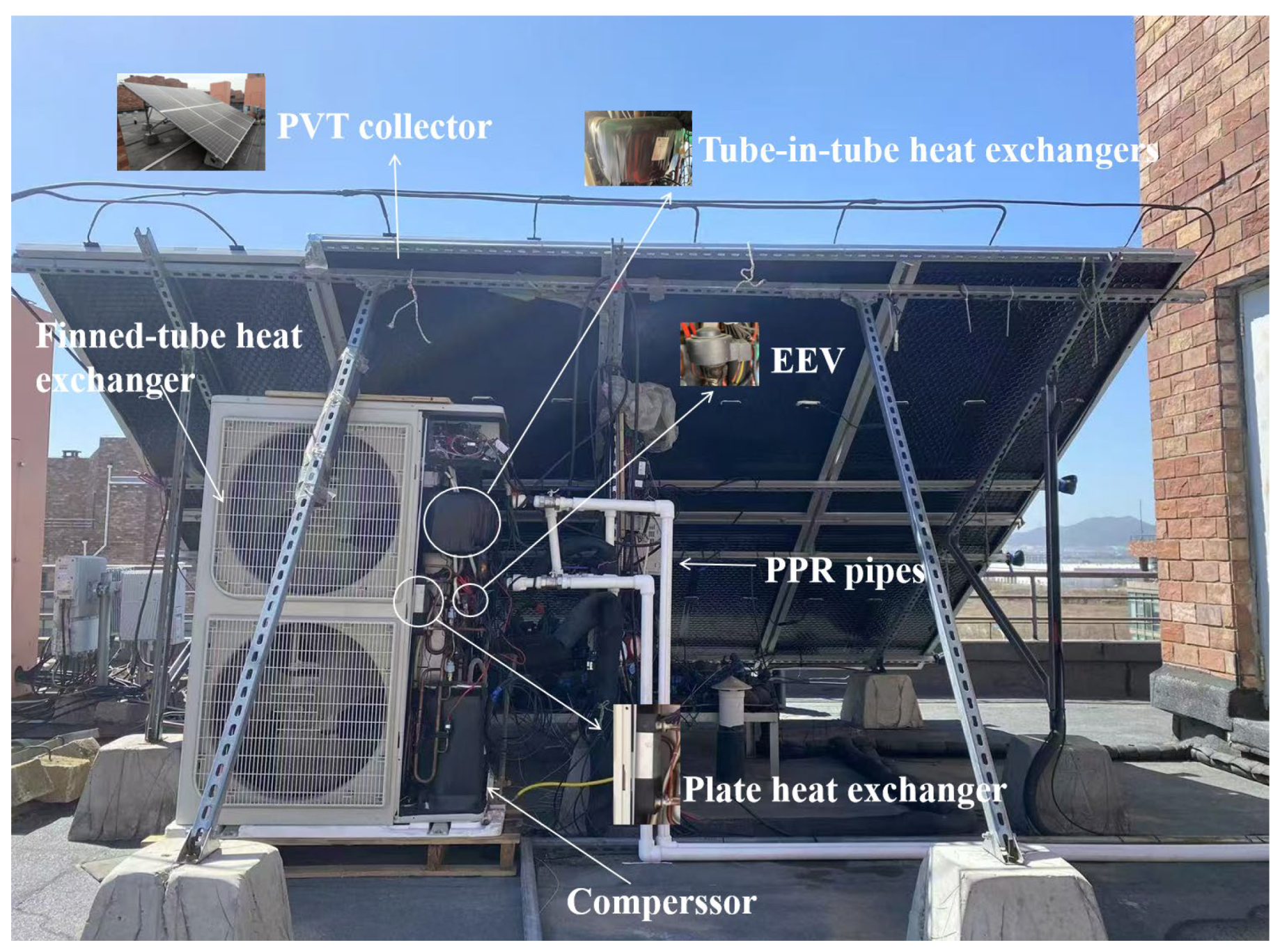
| Tube-in-tube heat exchangers | SS-H6000307-F-F1 | Maximum water-side pressure: 1.5 MPa, Maximum refrigerant-side pressure: 4.2 MPa |
| EEVs | TS132C | Full-open pulse: 500, Valve-opening pulse: 32 ± 20 |
| Water pump | CMF8-20T-A-W-G-BQBE | Maximum head: 34 m, Rated flow rate: 8 m3/h |
| Fan-coil units | FP-204LM | Airflow volume: 2040 m3/h, Heat output: 16,200 W |
| Component | Model | Span | Accuracy |
|---|---|---|---|
| Solar Irradiance Meter | MS-80 Pyranometer | 0–4000 W/m2 | ±0.2% |
| Temperature Sensor | Keshun PT100 Surface Mount Waterproof Temperature Sensor | −200–260 °C | 0.1%FS (Actual uncertainty: 0.46 °C) |
| Heat Meter | Feilong FLD-R-LSH Series Cold/Hot Water Electromagnetic Flow Meter | Mass flow rate: 0.8–8 m3/h | ±0.5%R (Actual uncertainty ± 0.0015 m3/s) |
| Inverter | GoodWe GW8000-SDT-30 | Maximum Output Power: 8.8 kW | 2% |
| Electricity Meter | Haixing Electric DDZY747 Single Phase Smart Electric Energy Meter | Voltage: 90% Un −110% Un | ±1% |
| Mode | Variable | Value |
|---|---|---|
| PVT | a | −12.667 |
| b | 1.848 × 10⁻² | |
| c | −4.505 × 10⁻⁵ | |
| d | 3.560 × 10⁻⁸ | |
| e | 0.764 | |
| PVT/Air-source | a | −8.5901 |
| b | 2.426 × 10⁻³ | |
| c | 1.000 | |
| d | −1.197 × 10⁻³ | |
| Air-source | a | −9.276 |
| b | 0.914 | |
| c | 3.518 × 10⁻³ |
| Mode | Metrics | Value |
|---|---|---|
| PVT Mode | R2 | 0.976 |
| RMSE | 0.701 | |
| MAE | 0.56 | |
| Uncertainty | 3.43% | |
| PVT/Air-source Mode | R2 | 0.990 |
| RMSE | 0.637 | |
| MAE | 0.51 | |
| Uncertainty | 4.55% | |
| Air-source Mode | R2 | 0.989 |
| RMSE | 0.673 | |
| MAE | 0.54 | |
| Uncertainty | 4.20% |
| Equipment | Unit | Purchase Cost |
|---|---|---|
| PVT | RMB/panel | 1200 |
| Air-source unit | RMB | 18,000 |
| Water system | RMB | 3000 |
Disclaimer/Publisher’s Note: The statements, opinions and data contained in all publications are solely those of the individual author(s) and contributor(s) and not of MDPI and/or the editor(s). MDPI and/or the editor(s) disclaim responsibility for any injury to people or property resulting from any ideas, methods, instructions or products referred to in the content. |
© 2026 by the authors. Licensee MDPI, Basel, Switzerland. This article is an open access article distributed under the terms and conditions of the Creative Commons Attribution (CC BY) license.
Share and Cite
Jia, X.; Wang, H.; Li, S.; Jiang, S.; Ning, Y.; Chen, H.; Hasanuzzaman, M.; Wang, S. Field Measurement and Data-Driven Modeling of a Photovoltaic/Thermal and Air-Source Dual-Source Heat Pump System in Dalian, China. Buildings 2026, 16, 1242. https://doi.org/10.3390/buildings16061242
Jia X, Wang H, Li S, Jiang S, Ning Y, Chen H, Hasanuzzaman M, Wang S. Field Measurement and Data-Driven Modeling of a Photovoltaic/Thermal and Air-Source Dual-Source Heat Pump System in Dalian, China. Buildings. 2026; 16(6):1242. https://doi.org/10.3390/buildings16061242
Chicago/Turabian StyleJia, Xin, He Wang, Shuangshuang Li, Shuang Jiang, Ye Ning, Hu Chen, M. Hasanuzzaman, and Shugang Wang. 2026. "Field Measurement and Data-Driven Modeling of a Photovoltaic/Thermal and Air-Source Dual-Source Heat Pump System in Dalian, China" Buildings 16, no. 6: 1242. https://doi.org/10.3390/buildings16061242
APA StyleJia, X., Wang, H., Li, S., Jiang, S., Ning, Y., Chen, H., Hasanuzzaman, M., & Wang, S. (2026). Field Measurement and Data-Driven Modeling of a Photovoltaic/Thermal and Air-Source Dual-Source Heat Pump System in Dalian, China. Buildings, 16(6), 1242. https://doi.org/10.3390/buildings16061242