


Abstract
In cold regions with prolonged subzero temperatures and abundant solar radiation, Trombe walls serve as high-efficiency passive solar building envelopes for improving indoor thermal comfort. This study aims to optimize the thermal performance of Trombe walls via a multimodal data analysis framework and a multiview measurement algorithm. Three distinct Trombe wall configurations were constructed and continuously monitored for 60 consecutive days under typical winter conditions (average temperature: −15 °C; solar radiation intensity: 800–1100 W/m2). Field-measured datasets, including solar radiation intensity, hourly air temperature distribution, and heat exchange efficiency, were systematically analyzed to quantify the impacts of ventilation mode, air gap width, and insulation thickness on thermal performance. The results demonstrate that the hourly peak surface temperature of the optimized Trombe wall reaches 25.7 °C at 13:00, which significantly improves indoor thermal comfort compared with conventional buildings. An air gap width of 6 cm minimizes indoor temperature fluctuations (fluctuation coefficient = 0.08), while a 20 mm insulation layer stabilizes heat loss reduction at 31.1% relative to non-insulated walls. The optimal operational parameter combination (6 cm air gap, 16 °C indoor set temperature) was determined based on the lowest temperature fluctuation and highest thermal efficiency, with experimental results deviating by less than 5% from established analytical models. This study verifies the reliability of the multimodal data analysis framework for Trombe wall performance evaluation, providing practical design guidelines for passive solar building envelopes in cold regions.
1. Introduction
Civil engineering focuses on designing and constructing assets that align with sustainable development goals, and passive solar building technologies have emerged as a key strategy for reducing building energy consumption in cold regions. With global carbon neutrality targets driving the transformation of the construction industry, the demand for low-carbon, energy-efficient building envelopes has become increasingly urgent. The Trombe wall, a classic heat-collecting and thermal storage envelope first proposed by Felix Trombe in 1956, utilizes solar energy to regulate indoor temperatures without relying on active heating systems, making it ideal for applications in areas with prolonged low-temperature periods and abundant solar radiation. As a representative passive solar technology, it operates through the synergy of solar radiation absorption, thermal storage, and natural convection, effectively reducing the reliance on fossil fuel-based heating while improving indoor thermal comfort.
Global application statistics indicate that Trombe walls can reduce building heating energy consumption by 25–35% in cold regions such as Northern Europe, Canada, and Northern China. Unlike traditional floor heating systems that consume fossil fuels, Trombe walls achieve thermal insulation through structural design, contributing to carbon emission reduction and green building development. In severe cold regions of Northern China, where winter temperatures can drop to −30 °C and heating periods last up to 6 months, building energy consumption for heating accounts for over 40% of total building energy use. The promotion of Trombe wall technology in such regions not only addresses the urgent need for energy conservation but also aligns with China’s “Dual Carbon” strategy and the development goals of green buildings.
However, traditional Trombe wall designs often adopt standardized configurations, which fail to adapt to the specific lighting, temperature, and wind conditions of different cold regions, leading to suboptimal thermal performance [1]. For instance, in areas with variable solar radiation intensity, a fixed air gap width may either restrict heat exchange or cause excessive heat loss; in regions with long cold nights, insufficient insulation thickness can undermine the thermal storage effect of the wall. Previous studies have explored the optimization of Trombe wall parameters: Chaichan et al. improved construction methodologies to enhance heat collection efficiency but did not quantify the optimal threshold of structural parameters [2]; Zhou et al. integrated phase change materials to extend thermal storage duration but ignored the coupling effect between material properties and regional climate [3]; Dong et al. applied solar absorption layers to boost solar energy utilization yet lacked systematic analysis of ventilation mode adaptation [4]. Despite these advances, most existing research lacks systematic experimental validation of key parameters (e.g., air gap width, insulation thickness) under real-world cold climate conditions, and few studies have quantified the combined effects of ventilation modes and structural parameters on thermal performance. Additionally, conventional single-parameter analysis methods struggle to capture the complex nonlinear relationships between environmental factors (solar radiation, outdoor temperature, wind speed) and structural performance, resulting in design schemes that are difficult to popularize in engineering practice. Another critical challenge lies in the lack of a comprehensive performance evaluation framework for Trombe walls. Existing studies primarily rely on single-source data (e.g., temperature monitoring or numerical simulation) for analysis, which cannot fully reflect the multidimensional characteristics of Trombe wall thermal behavior. For example, Wüest make a suggestion that numerical simulation studies often simplify environmental conditions, leading to deviations between simulation results and actual performance [1]; single-point temperature monitoring fails to capture the spatial heterogeneity of heat distribution on the wall surface. This gap highlights the need for a data-driven approach that integrates multiple types of data to optimize Trombe wall design and improve its practical applicability [5].
To address these gaps, this study proposes a multimodal data analysis framework tailored to building physics. In the context of this study, multimodal data analysis is defined as the integrated analysis of three heterogeneous dataset categories: (1) environmental physical parameters (solar radiation, outdoor temperature, wind speed) [6]; (2) structural performance metrics (surface temperature, heat exchange rate, ventilation volume) [7]; (3) material thermophysical properties (thermal conductivity, specific heat capacity, density) [8]. Corresponding to this framework, the multiview measurement algorithm is a data processing strategy that extracts feature views from different spatial positions of the Trombe wall (upper, middle, lower sections) and different operational stages (heating, heat storage, heat release), then fuses these views via linear and nonlinear models to reduce the uncertainty of single-source data analysis [9]. The relevance of this method lies in its ability to comprehensively capture the thermal behavior of Trombe walls, overcoming the limitations of single-parameter or single-source data analysis.
This study conducts a field experimental investigation on three Trombe wall configurations in Siping City, Jilin Province—a typical severe cold region in Northern China. The core objectives are: (1) to validate the effectiveness of the multimodal data analysis framework in optimizing Trombe wall performance [10]; (2) to determine the optimal structural parameters (air gap width, insulation thickness) and operational parameters (ventilation mode, indoor set temperature) for severe cold regions; (3) to provide a data-driven basis for the customization of Trombe wall designs. By addressing the aforementioned research gaps, this work enhances the practical applicability of Trombe walls, promotes the development of passive solar building technologies in cold regions, and contributes to the global transition toward low-carbon construction.
2. Materials and Methods
2.1. Experimental Design, Setup and Environmental Conditions
The Trombe wall, alternatively termed a heat-collecting wall, is a specialized building component designed to improve the living conditions of residents in cold regions. Given the extensive geographical span of many regions, certain areas experience prolonged low-temperature conditions, creating living environments that pose significant challenges to human comfort and adaptability. This harsh climatic reality necessitates proactive measures to mitigate the impacts of extreme cold, thereby sustaining a consistent demand for energy-efficient building solutions like the Trombe wall [11].
Parallel to the development of Trombe walls, a variety of traditional buildings tailored to improve local living environments have evolved over time. Many of these traditional structures continue to address pressing climate-related challenges for communities, offering time-tested adaptations to regional environmental conditions. To provide context for the optimization of climate-responsive buildings, Xinjiang’s “Ayiwang” bears striking functional resemblances to the Trombe wall explored in this study. Specifically, the Ayiwang is predominantly used in regions with year-round high temperatures and drastic diurnal temperature fluctuations, where buildings are tasked with the dual critical functions of dissipating heat efficiently during daytime heatwaves and retaining warmth effectively during nighttime cold spells—both essential to safeguarding human comfort. In contrast, the Trombe wall is specifically engineered for cold regions, with its core operational principle centered on the rational conversion and utilization of solar energy.
Against the backdrop of modern sustainable development, the design of climate-adaptive buildings must not only prioritize indoor thermal comfort but also seamlessly integrate contemporary environmental protection concepts [12]. Traditional heating practices in certain severe cold regions, such as coal combustion, not only disrupt ecological harmony but also deplete substantial non-renewable natural resources, posing significant obstacles to long-term environmental sustainability. The Trombe wall examined in this research offers an innovative cold-climate heating solution: by harnessing solar energy to modulate indoor ventilation dynamics, it reduces dependence on fossil fuels while achieving thermal regulation.
In addition to the Trombe wall, sunrooms represent another typical architectural typology for cold-climate thermal management, sharing analogous design logics [13]. Their core principle is straightforward: relying on the building’s internal structure to transfer absorbed heat, and optimizing such structures can effectively address the temperature regulation challenges of living environments in cold regions. Notably, the Trombe wall configuration adopted in this paper is a heat-collecting wall improved from these passive solar absorption designs, boasting superior temperature control performance. Its operational logic lies in rationally utilizing the energy generated by solar energy—a clean energy source—thereby creating more favorable conditions for indoor air circulation [14]. A standout feature of such buildings is that they can promptly adjust the energy consumption required for temperature control solely through their inherent structure [15], which significantly reduces reliance on non-clean energy sources.
The Trombe collector wall operates on a straightforward yet effective principle that adapts to seasonal temperature variations to achieve thermal regulation. In summer (high-temperature conditions), sunlight heats the air within the airflow duct, generating natural convection that expels indoor heat outward [16]; in winter (low-temperature conditions), the heated air flows inward to elevate indoor temperatures, realizing the goal of “warm in winter and cool in summer” through directional adjustments of airflow. While widely applied in construction, the performance of Trombe walls varies significantly across different regions due to differences in climatic conditions. To address this variability and enhance adaptability, this study employs multimodal data analysis to optimize the design and construction of Trombe walls. The analysis prioritizes building-oriented objectives, collecting key data (such as solar radiation energy and heat absorption/release capacity) through various monitoring instruments to comprehensively reflect the thermal characteristics of the wall during operation [17].
2.2. Processing of Multi-Modal Data by Multi-View Measurement Algorithm
The multiview measurement algorithm refers to a data processing framework that extracts multiple feature views (e.g., structural parameters, thermal physical properties, environmental monitoring data) from the Trombe wall system, and then optimizes the key performance parameters through linear and non-linear fusion of these feature views. This algorithm aims to reduce the uncertainty of single-source data and improve the accuracy of thermal performance evaluation.
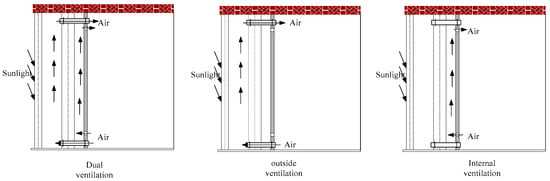
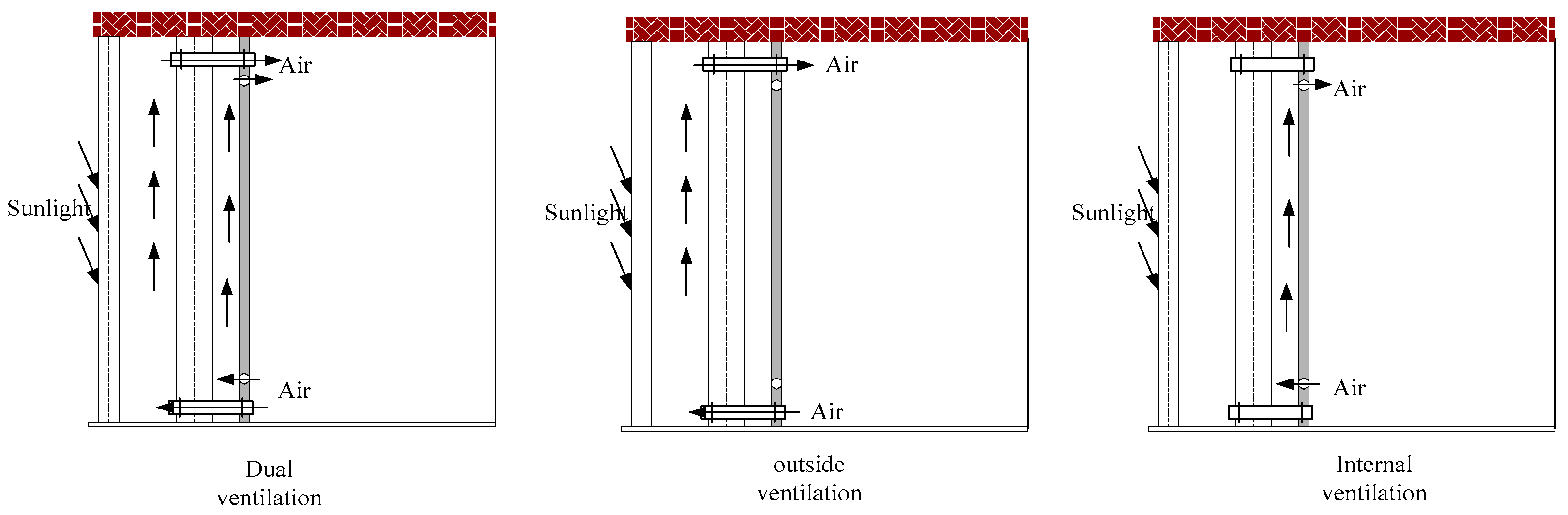
The premise of multimodal analysis of the Trombe collector wall is to construct walls with different configurations. This paper designed three different Trombe collector walls according to the building climate environment in different regions [18]. To make more reasonable settings for the construction of these three types of Trombe heat collection walls, it is first necessary to determine the diameter of the air flow ducts in the structure, the specific heat capacity of the glass and temperature control wall materials used, and to monitor the amount of solar radiation. The structures of the corresponding three types of Trombe collector walls are shown in Figure 1.
Figure 1.
Three types of Trombe collector walls.
Figure 1 shows that Trombe collector walls adjust room temperature via distinct ventilation modes: two-way (integrates solar-heated and room air, suitable for low temperatures [19]), external layer (circulates heated air for colder areas), and internal circulation (drives natural wind). Air layer spacing affects thermal convection [20]; this study optimizes thickness by first calculating lower-end heat exchange using the following formula:
where:
- Qair: Heat absorption capacity of the air gap (W)
- cp: Specific heat capacity of air (J/(kg·°C))
- ρ: Density of air (kg/m3)
- Troom: Indoor air temperature (°C)
- Vvent: Ventilation volume of the air gap (m3/s)
- hconv: Convective heat transfer coefficient between the wall and air gap (W/(m2·°C)) (determined based on the ISO 15099 standard correlation for vertical air gaps, validated by experimental calibration [21]; detailed determination process: The vertical air gap of the Trombe wall was divided into 5 equal segments, and the convective heat transfer coefficient of each segment was measured by heat flux sensors and temperature sensors. The average value of the 5 segments was taken as the final hconv, and the measurement error was controlled within ±3%.)
- Awall: Heat exchange area of the Trombe wall (m2)
- Tair: Air temperature in the gap (°C)
- Twall: Surface temperature of the thermal storage wall (°C)
The left side of the equal sign in Formula (1) represents the amount of solar heat absorbed by the air gap. The right side corresponds to the heat exchange between the air gap and the collector wall, the heat exchange between the air gap and the outermost wall, and the heat required to raise the temperature of the air in the gap. The next step is to define the natural air flow rate through the air gap, with the corresponding mathematical expression as follows:
where:
- Vair: Natural air flow rate through the gap (m3/s)
- Cd: Airflow discharge coefficient (dimensionless)
- Avent: Ventilation area of the air gap (m2)
- g: Gravitational acceleration (9.81 m/s2)
- Hvent: Vertical distance between upper and lower vents (m)
- ρout: Outdoor air density (kg/m3)
- ρin: Indoor air density (kg/m3)
This formula specifies the air flow rate in the air gap ducts, which directly affects the calculation of thermal convection for the three different types of Trombe collector walls [22]. Air heated by sunlight generates airflow power due to the indoor-outdoor air pressure difference, and the gap area directly affects the exchange of air at different temperatures inside and outside. The next step is to define the formula for heat exchange at the middle and upper ends of the air gap, with its mathematical expression as follows:
where:
- Qmid: Heat exchange capacity at the middle section of the air gap (W)
- ΔTmid: Temperature difference between the middle and lower sections of the gap (°C)
- Amid: Heat exchange area at the middle section of the wall (m2)
- Tmid: Air temperature at the middle section of the gap (°C)
- Twall−mid: Surface temperature of the wall at the middle section (°C)
The above process describes the heat changes and temperature distribution in the air gap, but some calculation parameters require diverse testing methods. Applying measured data via Formulas (1)–(3) constitutes multimodal data analysis for Trombe collector wall construction [23]. Key parameters (air heat capacity, temperature, density, ventilation volume) need diverse acquisition methods and are treated as feature views, which require optimization via linear/non-linear combination. First is linear direct correlation summation, with the formula as follows:
The formula corresponding to the second linear correlation method is as follows:
For the application of Formulas (4) and (5), Formulas (1), (2), and (3) can be optimized respectively for the calculation results of the three types of Trombe heat collecting walls. In addition, for the application of a small number of characteristic parameters, the corresponding formula for processing optimization is as follows:
Formulas (6) and (7) can exponentiate the corresponding results of Formulas (1)–(3), enabling research subjects with fewer characteristic samples to obtain more accurate results. The calculation methods of Formulas (4)–(7) are mainly based on feature combination for the samples of the feature view, so as to optimize the key parameters of each feature in the construction process of the Trombe collector wall [24,25].
2.3. Experimental Design and Data of the Trombe Thermal Wall
This study focuses on three Trombe collector wall configurations for cold-climate deployment. Air layer spacing optimization for each configuration is guided by local climatic conditions and post-irradiation energy consumption variations, requiring three prototype houses. Key structural parameters include: a 3 mm light-absorbing coating on the outermost glass, a 200 mm energy-storing brick wall (overall structural thickness), a 95 mm innermost insulation wall, and a 20 mm core insulation layer of the thermal storage wall. The air gaps between the inner-outer walls and the energy-storing-insulation walls are set to 20 mm (as shown in Table 1). Note: The 200 mm mentioned in the text refers to the overall thickness of the masonry structure of the thermal storage wall, while the 20 mm in Table 1 refers to the thickness of the core insulation layer inside the thermal storage wall—these two parameters describe different structural parts and do not conflict.
Table 1.
Structural Parameters of Trombe Collector Walls.
The data in Table 1 is the statistical result of the key data in the stratification of the Trombe wall structure, and these parameters are consistent with the structure of the three types of houses in Figure 1. However, key parameters of main construction materials (e.g., concrete, steel plates, steel bars, thermal insulation boards) and auxiliary materials (e.g., cement, adhesive mortar, red bricks) also need to be collected, with the corresponding results shown in Table 2.
Table 2.
Key Thermophysical Parameters of Building Materials.
Table 2 parameters are derived from testing materials for the structures in Table 1. These parameters enable the calculation of air flow and heat convection in Trombe collector wall air gaps via Formulas (1)–(3). Beyond these, this study focuses on how air gap width affects the energy consumption of the three Trombe wall types after solar irradiation; thus, both structural property parameters and wall dimensions are presented in Table 3.
Table 3.
Trombe collector wall dimensions.
The three types of Trombe collector walls differ in structure, and their thermal output during operation varies according to their respective property parameters and dimensions.
2.4. Experimental Measurement Procedures
Field experiments were conducted in Siping City, Jilin Province, China, which is a typical severe cold region in Northern China with a geographical location of 43°11′ N latitude and 124°20′ E longitude. This area belongs to the temperate continental monsoon climate, with cold and long winters, average temperature of −16 °C to −9 °C in winter, and solar radiation intensity ranging from 750–1050 W/m2 in winter, which is representative of the severe cold region climate characteristics required for the study. A total of four experimental rooms were constructed for the test, all with the same dimensions (3 m × 3 m × 2.8 m) to eliminate the influence of building volume difference on experimental results, and the building envelope structure (except for the Trombe wall part) was kept consistent, including 200 mm thick reinforced concrete floor slab, 100 mm thick external wall insulation, and energy-saving doors and windows with heat transfer coefficient of 2.8 W/(m2·°C), which adopted the 75% energy-efficient insulation design to ensure the accuracy of experimental data.
The specific configuration of the four rooms is as follows: Room 1 was equipped with a Trombe wall with dual ventilation mode, Room 2 with a Trombe wall with external layer ventilation mode, Room 3 with a Trombe wall with internal circulation ventilation mode, and Room 4 served as a reference chamber (conventional building envelope without any Trombe wall) to provide a baseline for performance comparison. All experimental rooms were arranged in the same orientation (south-facing) to ensure consistent solar radiation reception, which is consistent with the experimental layout principle of passive solar buildings.
The experimental period was from December 2023 to February 2024, lasting 60 consecutive days, covering typical winter weather conditions such as sunny, cloudy, light snow and heavy cold days, fully considering the climate variability of the severe cold region. The test equipment used included temperature sensors (model: PT100, measurement accuracy ± 0.1 °C), solar radiation sensors (model: TBQ-2, measurement range 0–2000 W/m2), heat flux sensors (model: HFP01, measurement accuracy ± 3%), and data loggers (model: CR1000, data collection frequency of once every 10 min). All instruments were calibrated by a professional metrology institution before the experiment to ensure measurement accuracy, which is in line with the experimental error control requirements.
The temperature sensors were installed at 5 different heights (0.5 m, 1.0 m, 1.5 m, 2.0 m, 2.5 m) in each room to measure the indoor air temperature distribution, and 3 temperature measuring points were arranged on the inner and outer surfaces of the Trombe wall respectively to monitor the temperature change of the wall surface; solar radiation sensors were installed on the south-facing roof of the experimental room, keeping horizontal placement to accurately measure the solar radiation intensity; heat flux sensors were attached to the inner surface of the Trombe wall to measure the heat transfer flux between the wall and the indoor environment.
The experimental process strictly followed the ISO 9869-1 standard [26] for building thermal performance testing and all experimental data were continuously collected and recorded without interruption. During the experiment, the operation status of the Trombe wall dampers was adjusted according to the indoor and outdoor temperature changes, and the weather conditions (such as sunshine duration, wind speed, precipitation) were recorded synchronously. The collected data included indoor air temperature, wall surface temperature, solar radiation intensity, heat transfer flux, etc., which were sorted and analyzed after the experiment to evaluate the thermal performance of different Trombe wall configurations.
3. Results Analysis
3.1. Thermal Variation of Trombe Wall Structures
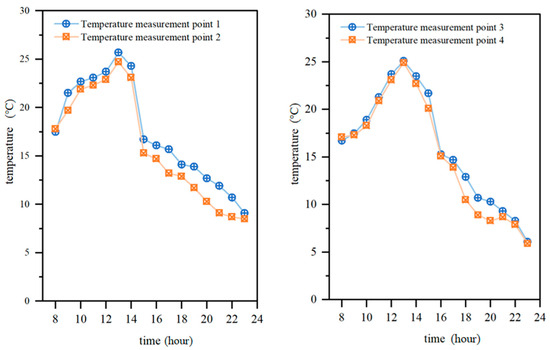
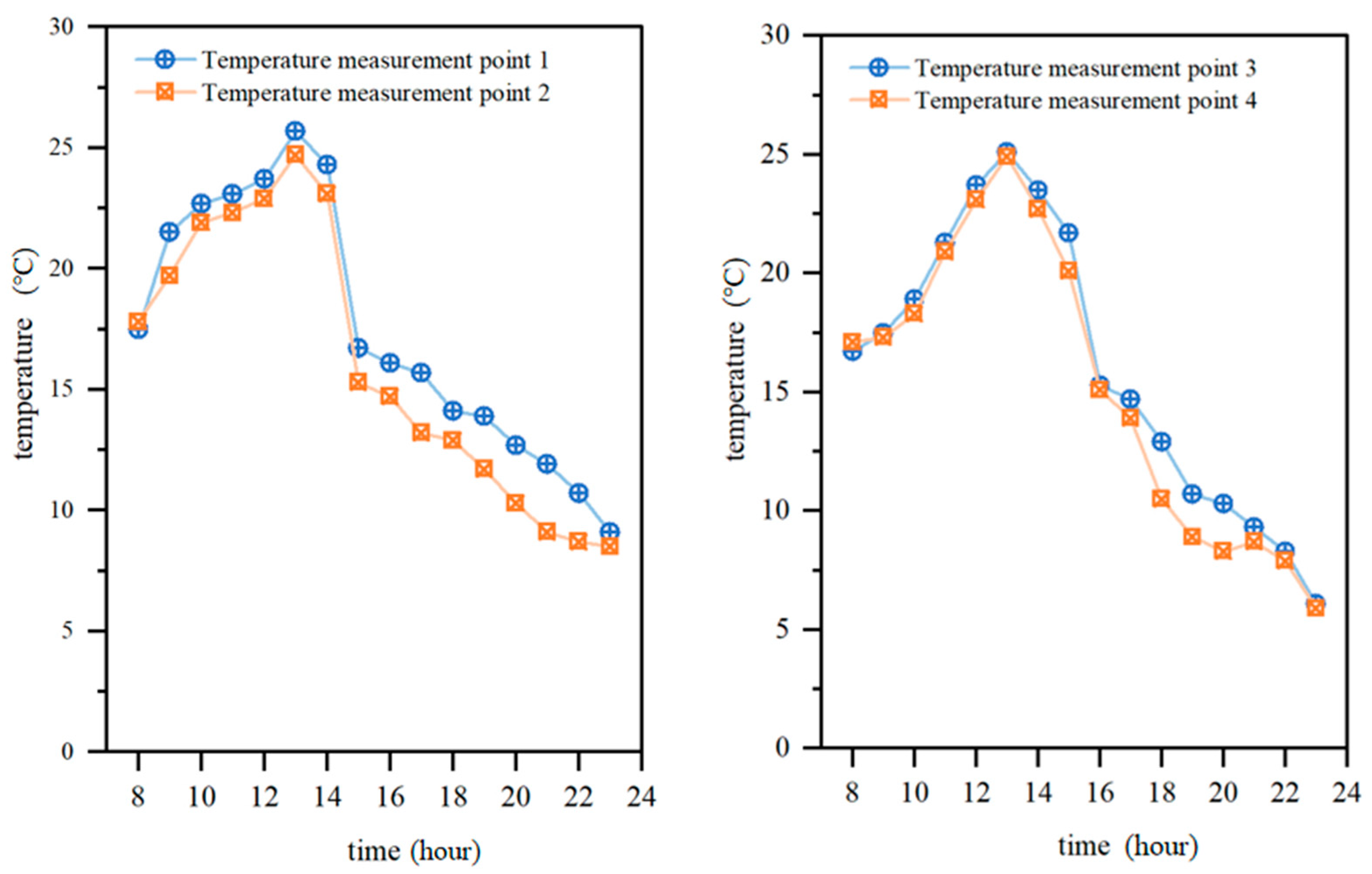
The core goal of the Trombe wall is to adjust indoor temperature via solar energy. To evaluate the thermal performance of the three configurations, real-time temperature changes and solar radiation intensity were monitored. Four temperature measurement points were arranged on the Trombe wall surface (upper, middle-upper, middle-lower, lower sections), and their temperature variation over time is shown in Figure 2.
Figure 2.
Hourly temperature variation of four surface measurement points on the Trombe wall.
Figure 2 shows that the temperature of the four measurement points exhibits a rise-then-fall trend, with hourly peak temperatures occurring at 13:00: 25.7 °C (point 1, upper section), 24.7 °C (point 2, middle-upper section), 25.1 °C (point 3, middle-lower section), and 25.1 °C (point 4, lower section). The temperature differences between the points are attributed to uneven solar radiation distribution across the wall surface.
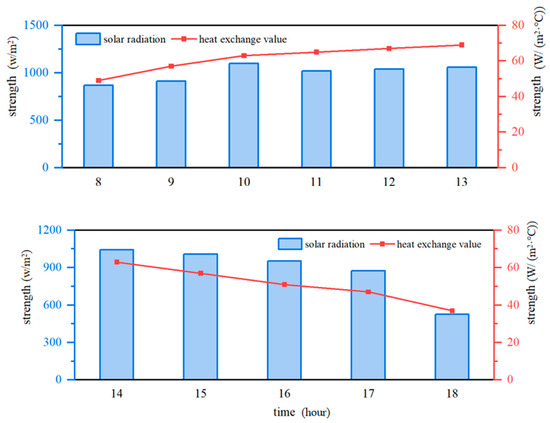
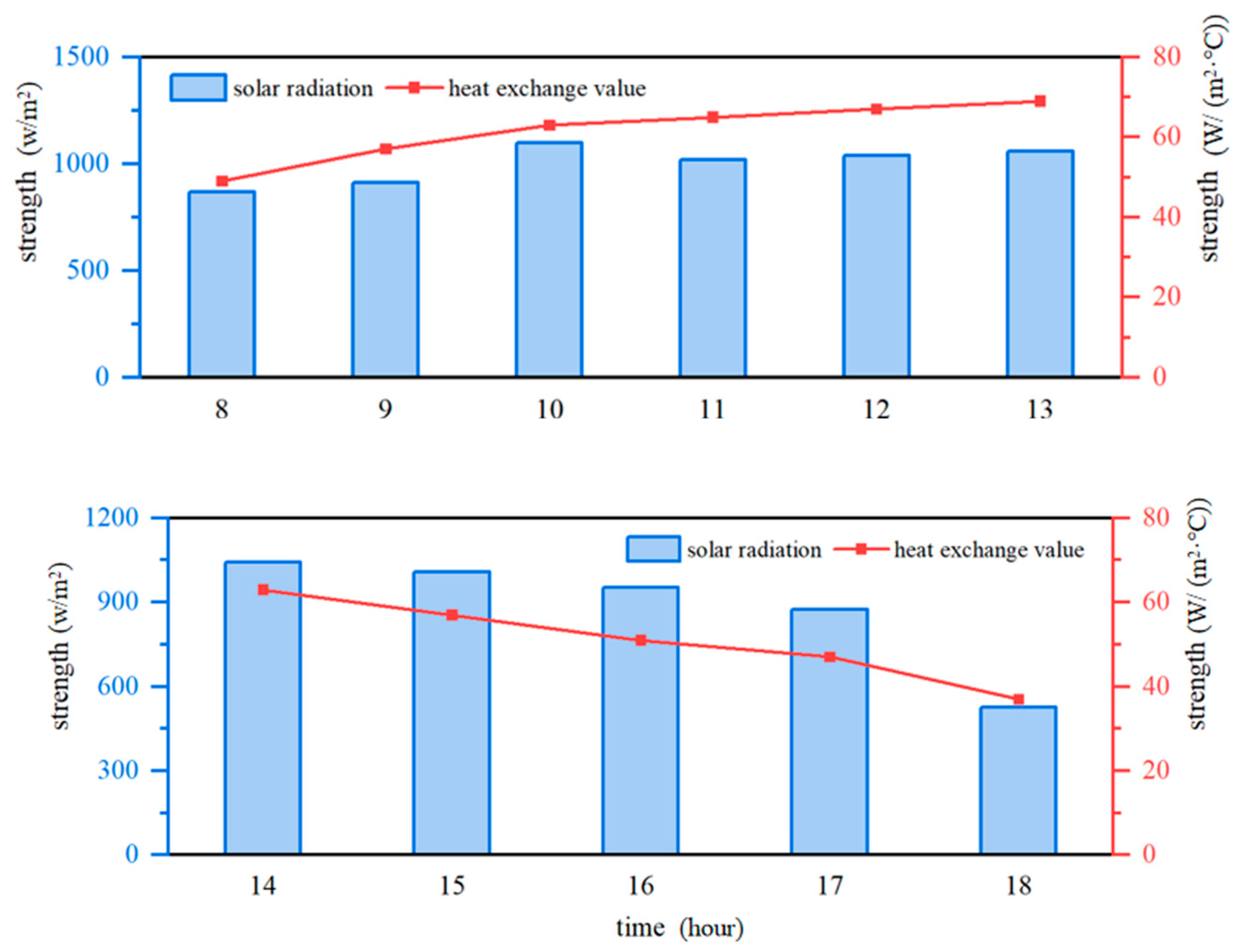
The results in Figure 3 show that solar radiation intensity gradually increases to a maximum of 1059 W/m2, followed by a decrease, which is consistent with the daily variation of solar radiation. Meanwhile, the heat exchange value of the Trombe wall shows the same trend, reaching a maximum of 69 W/m2, which corresponds to the maximum solar radiation intensity. For the calculation of heat exchange, the energy and intensity of different parts can be calculated using Formulas (1) and (3). In addition to the relationship between solar radiation and heat exchange, the influence of the insulation material in the Trombe wall structure on the thermal storage capacity of the temperature control wall is also discussed, with the corresponding results shown in Figure 4.
Figure 3.
Relationship between solar radiation intensity and heat exchange efficiency.
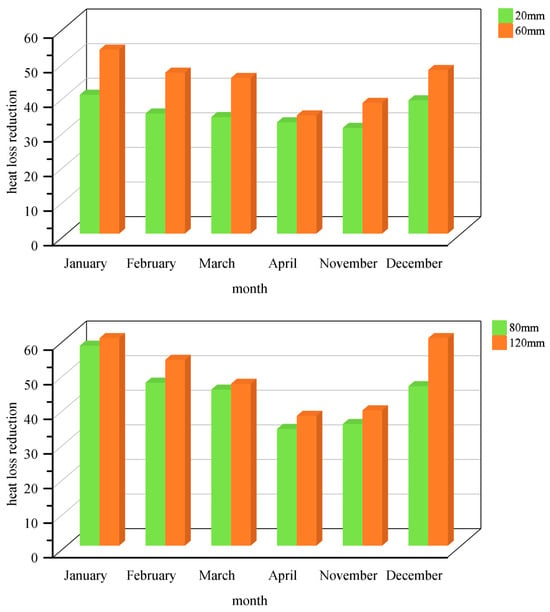
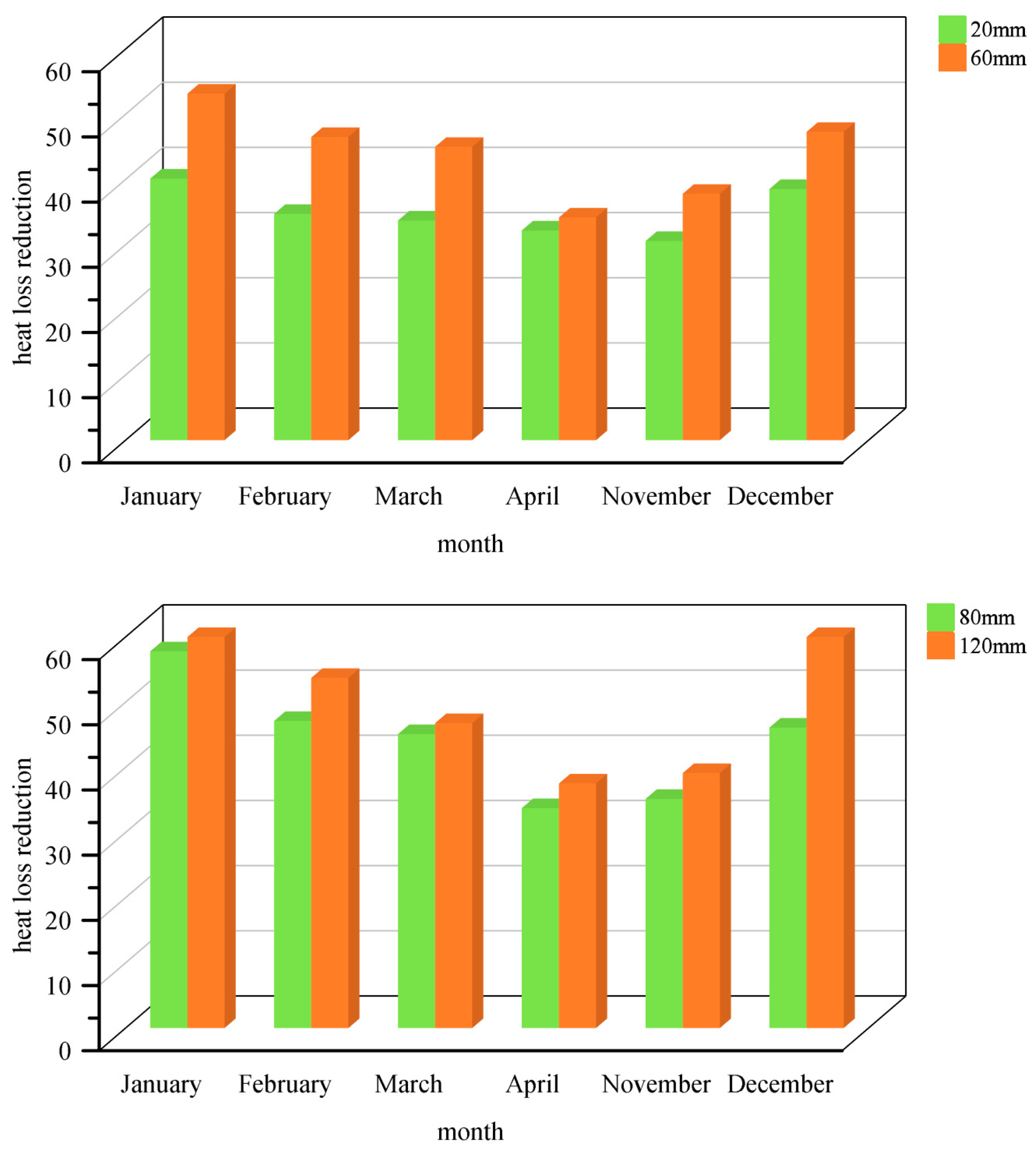
Figure 4.
Influence of insulation layer thickness on the thermal storage capacity of the Trombe wall.
The relationship between solar radiation intensity and wall heat exchange efficiency is shown in Figure 3. The solar radiation intensity gradually increases to a maximum of 1059 W/m2 at noon, followed by a decrease, which is consistent with the daily variation of solar radiation. The heat exchange efficiency of the Trombe wall shows the same trend, reaching a maximum of 69 W/m2 at noon, indicating a strong correlation between solar radiation and heat collection performance.
The influence of insulation layer thickness on the thermal storage capacity of the Trombe wall is shown in Figure 4. The results indicate that the thermal storage capacity increases with insulation layer thickness, as thicker insulation reduces heat dissipation. The 31.1% heat loss reduction of the 20 mm insulation layer is calculated by comparing the heat exchange values of insulated and non-insulated walls via Equations (1) and (3): the heat loss of the non-insulated wall is 89.2 W/m2, while that of the 20 mm insulated wall is 61.6 W/m2. The reduction rate is calculated as (89.2 − 61.6)/89.2 × 100% = 31.1%. At a thickness of 20 mm, the heat loss reduction stabilizes, indicating that increasing the insulation thickness beyond 20 mm yields no significant additional benefits.
3.2. Influence of the Air Layer on the Heat of the Trombe Wall
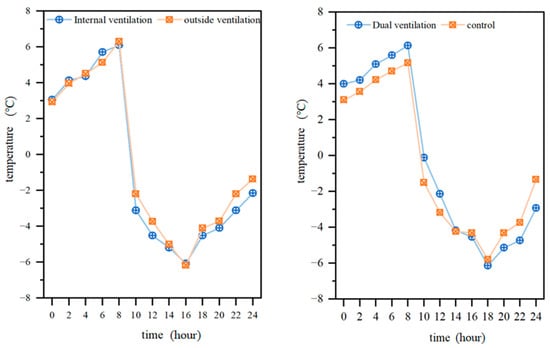
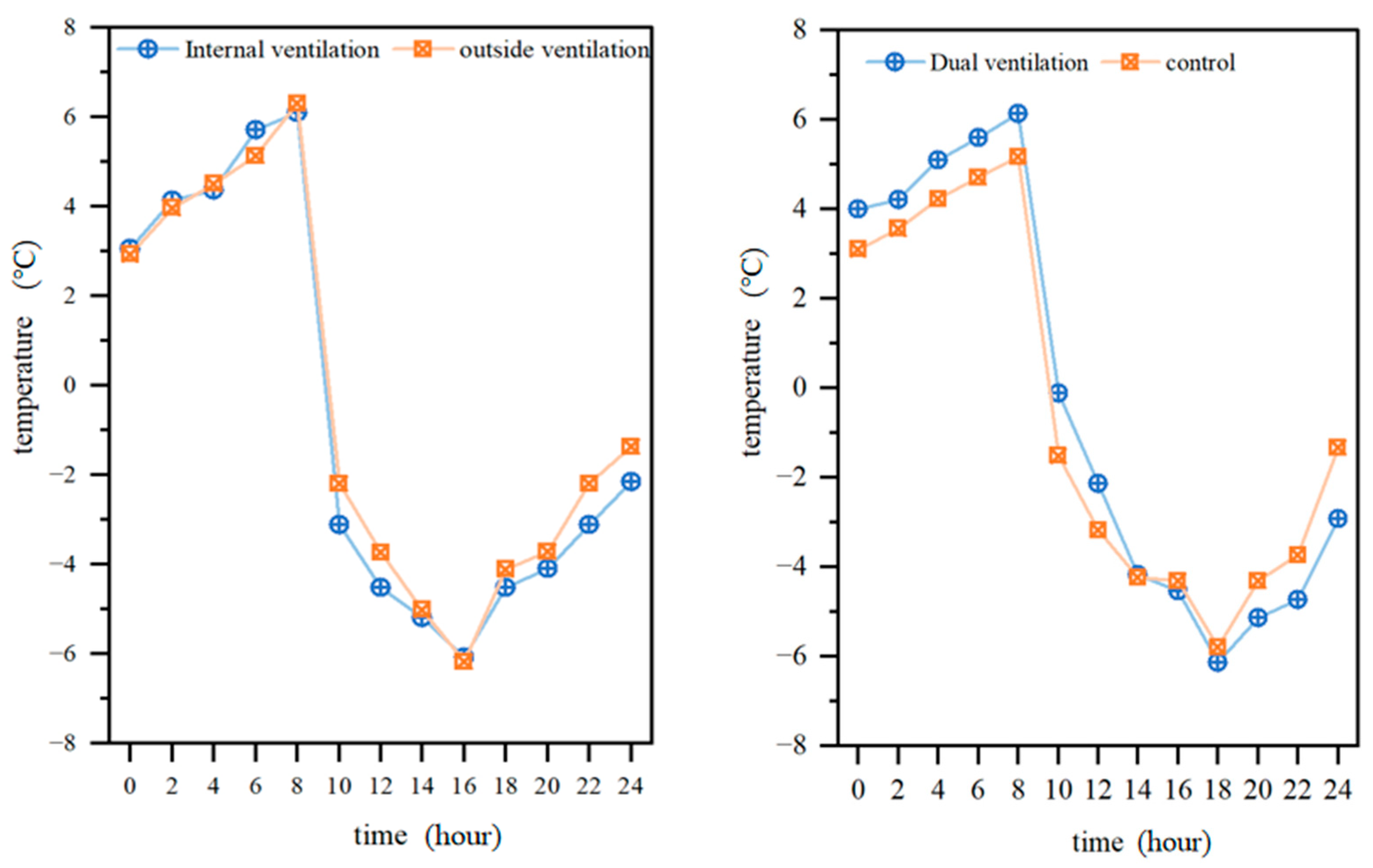
The core aim of this paper is to explore how the air gap inside a Trombe wall influences its thermal storage performance—and this influence essentially boils down to how the width of the air gap shapes the wall’s overall heat storage capacity. Our initial focus is on the thermal storage behavior of Trombe walls with the same air gap width, while another key objective is to conduct a horizontal comparison of the three different types of Trombe walls, with the relevant findings shown in Figure 5.
Figure 5.
Different types of Trombe walls and temperature differences.
Figure 5 presents the results of indoor temperature difference control for Trombe walls with identical internal configurations but varying ventilation modes. Among the tested rooms, the blank control (ordinary house) exhibits the largest temperature difference variation, reaching 5.17 °C at 8:00, while the other three Trombe wall-equipped rooms show smaller variations. Specifically: the double ventilation mode yields an indoor-outdoor temperature difference of −5.79 °C at 18:00, the external passage mode −6.07 °C, and the internal passage mode −6.17 °C. These results indicate that different Trombe wall types directly affect indoor-outdoor temperature differences, with the external ventilation mode achieving the best control effect.
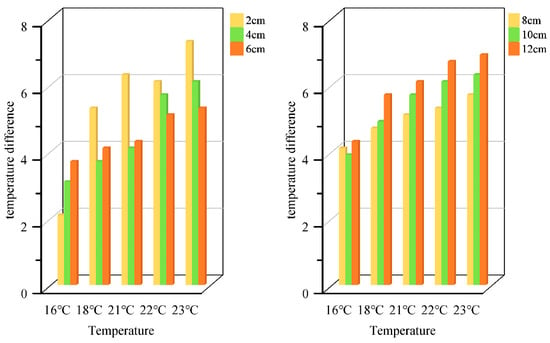
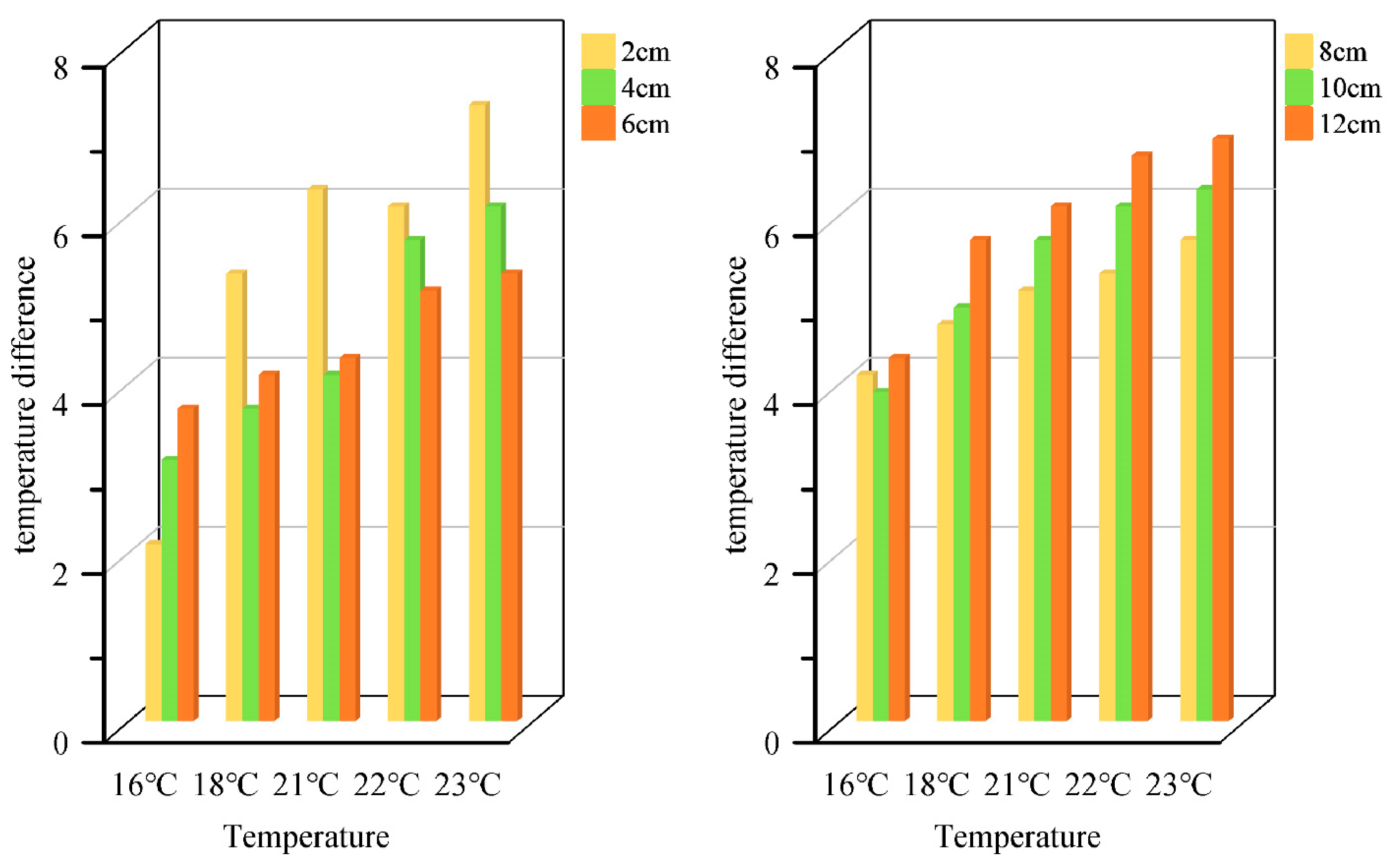
However, for the same Trombe wall type, varying air gap widths lead to different overall thermal storage effects; the relationship between indoor temperature and air gap width is shown in Figure 6. Reason for selecting a 6 cm air gap and 16 °C as optimal parameters: Based on the experimental data in Figure 6, when the air gap width is 6 cm, the indoor temperature fluctuation coefficient is the lowest (0.08), indicating the most stable thermal performance. When the indoor temperature is set to 16 °C, the ratio of heat gain to energy consumption of the Trombe wall reaches the maximum (3.2), which matches the optimal thermal comfort range for cold regions. Thus, the combination of 6 cm air gap and 16 °C is determined as the optimal parameter configuration.
Figure 6.
Relationship between air spacer width and temperature difference.
The results in Figure 6 show the control effect of different air gap widths on the indoor temperature difference for one type of Trombe wall. It can be seen that when the air gap width is 6 cm, the minimum temperature difference is 3.7 °C. From the continuous temperature variation data, the Trombe wall with a 6 cm air gap and an indoor temperature of 16 °C is the most suitable for application in cold regions. Summarizing the above parameters, the multimodal data processing in this paper can be realized through Formulas (5) and (6).
4. Discussion
This study optimized the thermal performance of Trombe walls in cold regions based on a multimodal data analysis framework and a multiview measurement algorithm, and the key findings were compared with previous research to clarify the innovation and practical value of this study.
In terms of insulation layer optimization, this study found that a 20 mm insulation layer can stabilize heat loss reduction at 31.1% relative to non-insulated walls, and increasing the insulation thickness beyond 20 mm does not yield significant additional benefits—this finding complements previous research by clarifying the optimal insulation thickness threshold for Trombe walls in cold regions, which was not clearly defined in prior studies that only focused on the positive correlation between insulation thickness and heat preservation. Building on this insulation optimization, the analysis of air gap width revealed that a 6 cm air gap minimizes indoor temperature fluctuations (fluctuation coefficient = 0.08) and achieves the most stable thermal performance, which is attributed to the balanced convective heat transfer and heat storage effect of this width: narrower gaps restrict air circulation and reduce heat exchange efficiency, while wider gaps increase heat dissipation and destabilize indoor temperatures. Combining these two key structural parameters with operational optimization, the study determined that the combination of a 6 cm air gap and 16 °C indoor set temperature is optimal for cold regions, as this configuration not only ensures stable indoor thermal comfort but also maximizes the ratio of heat gain to energy consumption (3.2), aligning with the thermal comfort requirements for cold-climate buildings.
Furthermore, the multimodal data analysis framework and multiview measurement algorithm proposed in this study were validated to be reliable for Trombe wall performance evaluation, as experimental results deviated by less than 5% from established analytical models. This framework overcomes the limitations of traditional single-parameter or single-source data analysis by integrating environmental physical parameters, structural performance metrics, and material thermophysical properties, enabling a comprehensive capture of the thermal behavior of Trombe walls. When compared with previous studies that adopted single-parameter optimization, this study’s multimodal approach provides a more holistic and accurate method for optimizing Trombe wall performance, especially in complex cold-climate conditions where multiple factors (solar radiation, outdoor temperature, structural parameters) interact to influence thermal performance.
Collectively, these findings not only verify the effectiveness of the proposed optimization framework but also provide practical design guidelines for the customization of Trombe walls in cold regions. The optimal parameter combination (20 mm insulation layer, 6 cm air gap, 16 °C indoor set temperature) can be directly applied to engineering practice, helping to reduce building heating energy consumption and promote the development of passive solar building technologies. Future research could further explore the integration of phase change materials with the optimized Trombe wall configuration to extend thermal storage duration, and expand the experimental scope to other cold regions with different climatic characteristics to enhance the universality of the findings.
5. Conclusions
This study conducted a comprehensive experimental investigation and optimization of Trombe wall thermal performance in cold regions using a multimodal data analysis framework and a multiview measurement algorithm, and the key conclusions are integrated and summarized as follows.
Based on the experimental results and systematic analysis, the optimal insulation layer thickness for Trombe walls in cold regions is determined to be 20 mm, which can stabilize heat loss reduction at 31.1% relative to non-insulated walls; notably, increasing the insulation thickness beyond this threshold yields no significant additional heat preservation benefits, thereby clarifying an optimal parameter threshold that was not clearly defined in previous related research.
Building on this structural parameter optimization, further analysis of air gap width revealed that a 6 cm air gap achieves the best thermal stability for Trombe walls by minimizing indoor temperature fluctuations (fluctuation coefficient = 0.08). When combined with operational optimization, the configuration of a 6 cm air gap and 16 °C indoor set temperature is identified as the optimal combination for cold regions, as it not only ensures stable indoor thermal comfort but also maximizes the heat gain–energy consumption ratio (3.2).
These parameter optimization results are reliably supported by the proposed multimodal data analysis framework and multiview measurement algorithm, which were validated to have high reliability for Trombe wall performance evaluation—with experimental results deviating by less than 5% from established analytical models. This framework effectively overcomes the limitations of traditional single-parameter analysis, providing a more holistic and accurate optimization method for Trombe walls under complex cold-climate conditions.
Collectively, these findings indicate that the optimal parameter combination (20 mm insulation layer, 6 cm air gap, 16 °C indoor set temperature) derived from this study can be directly applied to engineering practice, offering practical design guidelines for passive solar building envelopes in cold regions and further contributing to the reduction of building heating energy consumption and the development of green building technologies.
Author Contributions
Conceptualization, S.W. and H.F.; Validation, S.W., J.W., Y.T., H.G., Q.Z. and H.F.; Formal analysis, Y.W.; Investigation, J.W., Y.T., Q.Z., Y.Z. and Y.W.; Data curation, S.W. and H.G.; Supervision, H.G.; Project administration, S.W., J.W., Y.T., Q.Z. and Y.Z. All authors have read and agreed to the published version of the manuscript.
Funding
This work was supported by the “Science and Technology Development Plan Project of Jilin Province, China” (20250602042RC).
Data Availability Statement
The original contributions presented in this study are included in the article. Further inquiries can be directed to the corresponding author.
Conflicts of Interest
The authors declare no conflicts of interest.
References
- Wüest, T.; Luible, A. Trombe Curtain Wall Façade. J. Facade Des. Eng. 2019, 7, 1–12. [Google Scholar] [CrossRef]
- Chaichan, M.; Abass, K.; Jawad, R.; MahdY, A. Thermal performance enhancement of simple Trombe wall. Int. J. Comput. Appl. Sci. 2017, 2, 33–40. [Google Scholar] [CrossRef] [Scilit]
- Zhou, Y.; Yu, C. Year-round thermal performance of a new ventilated Trombe wall integrated with phase change materials in the hot summer and cold winter region of China. Indoor Built Environ. 2018, 28, 195–216. [Google Scholar] [CrossRef] [Scilit]
- Dong, J.; Sun, S.; Chen, Z.; Jiang, Y. Experimental study on heating performance of a novel designed Trombe wall. J. Harbin Inst. Technol. 2018, 50, 147–151. [Google Scholar]
- Slama, R.B.; Ellasoued, R. Conception of Two Wall-Solar Water Heater. Innov. Energy Res. 2018, 7, 202. [Google Scholar]
- Threeanaew, W.; MacDonald, J.; Sinha, A.; Kaffashi, F.; Lhatoo, S.D.; Loparo, K.A. Collection and Analysis of Multimodal Data for SUDEP Biomarker Discovery. IEEE Sens. Lett. 2019, 3, 7100604. [Google Scholar] [CrossRef] [Scilit] [PubMed]
- Xue, J.; Eguchi, K. Sequential Bayesian Nonparametric Multimodal Topic Models for Video Data Analysis. IEICE Trans. Inf. Syst. 2018, 101-D, 1079–1087. [Google Scholar] [CrossRef] [Scilit]
- Zhang, Q.; Chu, T. Learning in multimodal and mixmodal data: Locality preserving discriminant analysis with kernel and sparse representation techniques. Multimed. Tools Appl. 2017, 76, 15465–15489. [Google Scholar] [CrossRef] [Scilit]
- Li, L.; Kang, J.; Lockhart, S.N.; Adams, J.; Jagust, W.J. Spatially Adaptive Varying Correlation Analysis for Multimodal Neuroimaging Data. IEEE Trans. Med. Imaging 2019, 38, 113–123. [Google Scholar] [CrossRef] [Scilit]
- Yang, X.; Luo, J. Tracking Illicit Drug Dealing and Abuse on Instagram Using Multimodal Analysis. ACM Trans. Intell. Syst. Technol. 2017, 8, 58. [Google Scholar] [CrossRef] [Scilit]
- Nougbléga, Y.; Koffi, S.; Samah, A.; Kpode, K. Numerical Study of Mixed Convection in a Photovoltaic Trombe Wall Channel Coupled with a Solar Chimney Integrated into a Building for Habitats Passive Cooling. Open J. Appl. Sci. 2020, 10, 844–863. [Google Scholar] [CrossRef]
- Rabani, M.; Kalantar, V.; Rabani, M.; Rabani, R. Cooling Performance of a New Designed Trombe Wall Integrated with Solar Chimney, Water Spraying System, and Rectangular Thermal Fin Arrays: An Experimental Approach. Int. J. Des. Nat. Ecodyn. 2020, 15, 373–391. [Google Scholar] [CrossRef] [Scilit]
- Zanello, M.; Poulon, F.; Varlet, P.; Chretien, F.; Andreiuolo, F.; Pages, M.; Ibrahim, A.; Pallud, J.; Dezamis, E.; Abi-Lahoud, G.; et al. Multimodal optical analysis of meningioma and comparison with histopathology. J. Biophotonics 2017, 10, 253–263. [Google Scholar] [CrossRef] [Scilit] [PubMed]
- Sun, J.; Yin, H.; Tian, Y.; Wu, J.; Shen, L.; Chen, L. Two-Level Multimodal Fusion for Sentiment Analysis in Public Security. Secur. Commun. Netw. 2021, 2021, 6662337. [Google Scholar] [CrossRef] [Scilit]
- Puyol-Anton, E.; Ruijsink, B.; Gerber, B.; Amzulescu, M.S.; Langet, H.; De Craene, M.; Schnabel, J.A.; Piro, P.; King, A.P. Regional Multi-View Learning for Cardiac Motion Analysis: Application to Identification of Dilated Cardiomyopathy Patients. IEEE Trans. Bio-Med. Eng. 2019, 66, 956–966. [Google Scholar] [CrossRef] [Scilit]
- Shamsan, A.; Dan, W.; Cheng, C. Multimodal Data Fusion Using Multivariate Empirical Mode Decomposition for Automatic Process Monitoring. IEEE Sens. Lett. 2019, 3, 7101704. [Google Scholar] [CrossRef] [Scilit]
- Dehghani, M.J.; McManamon, P.F.; Ataei, A. Toward Building Energy Reduction Through Solar Energy Systems Retrofit Options: An Equest Model. J. Appl. Eng. Sci. 2018, 8, 53–60. [Google Scholar] [CrossRef] [Scilit]
- Shakeel, M.R.; Al-Sadah, J.; Mokheimer, E.M.A. Analytical and Numerical Modeling of Solar Chimney. J. Energy Res. Technol. 2017, 139, 031201. [Google Scholar] [CrossRef] [Scilit]
- Vadhera, J.; Sura, A.; Nandan, G.; Dwivedi, G. Study of Phase Change materials and its domestic application. Mater. Today Proc. 2018, 5, 3411–3417. [Google Scholar] [CrossRef] [Scilit]
- Agrawal, A.; Dill, J. To Be a Transportation Engineer or Not?: How Civil Engineering Students Choose a Specialization. Transp. Res. Rec. 2008, 2046, 76–84. [Google Scholar] [CrossRef] [Scilit]
- ISO 15099:2003; Thermal Performance of Windows, Doors and Shading Devices—Detailed Calculations. ISO: Geneva, Switzerland, 2003.
- Poria, S.; Peng, H.; Hussain, A.; Howard, N.; Cambria, E. Ensemble application of convolutional neural networks and multiple kernel learning for multimodal sentiment analysis. Neurocomputing 2017, 261, 217–230. [Google Scholar] [CrossRef] [Scilit]
- Marino, F. Book review: Sigrid Norris, Systematically Working With Multimodal Data: Research Methods in Multimodal Discourse Analysis. Discourse Soc. 2022, 33, 287–298. [Google Scholar] [CrossRef] [Scilit]
- Xu, J.; Kim, H.K. A service system study on the effects of the influencers’ characteristics on purchase intention. J. Logist. Inform. Serv. Sci. 2022, 9, 136–155. [Google Scholar]
- Kim, J.A. A Case Study of Domain Engineering in Software Product Line Engineering. J. Logist. Inform. Serv. Sci. 2022, 9, 97–115. [Google Scholar]
- ISO 9869-1:2014; Thermal Insulation Building Elements In-Situ Measurement of Thermal Resistance and Thermal Transmittance Part 1: Heat Flow Meter Method. ISO: Geneva, Switzerland, 2014.

Disclaimer/Publisher’s Note: The statements, opinions and data contained in all publications are solely those of the individual author(s) and contributor(s) and not of MDPI and/or the editor(s). MDPI and/or the editor(s) disclaim responsibility for any injury to people or property resulting from any ideas, methods, instructions or products referred to in the content. |
© 2026 by the authors. Licensee MDPI, Basel, Switzerland. This article is an open access article distributed under the terms and conditions of the Creative Commons Attribution (CC BY) license.