


Abstract
Promoting green housing (GH) on a large scale is essential for advancing urban sustainability and improving quality of life. However, prior research often equates purchasing intentions with actual behavior, overlooking the intention–behavior gap, which limits the effectiveness of market strategies and policies aimed at stimulating GH consumption. This study investigates whether such a gap exists in GH purchasing and explores ways to narrow it. Grounded in the Theory of Planned Behavior and extended with environmental concern and green trust, the research model was tested using survey data from 450 potential homebuyers in Shandong Province, China. Results confirm a significant intention–behavior gap in GH consumption. Notably, green trust positively moderates this gap, whereas environmental concern shows no significant moderating effect. These findings underscore that, from a sustainable urban development perspective, enhancing consumer trust in green housing can effectively promote actual purchasing behavior and support wider adoption of green buildings. The study offers valuable insights for policymakers designing interventions to bridge the intention–behavior gap and further environmental sustainability in cities.
1. Introduction
The Architecture Engineering and Construction (AEC) industry in China has experienced rapid expansion over the past few decades, accompanied by significant resource consumption [1,2,3]. This growth has also resulted in substantial carbon emissions, contributing to an intensified greenhouse effect [4]. According to the United Nations Environment Programme report [5], energy-related CO2 emissions from buildings accounted for 37% of the global total in 2020. China’s building sector contributed 50.9% of the national carbon emissions in 2020. Within this, building operational emissions accounted for 21.7% of the national total. Residential buildings were responsible for nearly 60% of these operational emissions, representing approximately 13.4% of China’s total carbon output. This makes the residential sector a significant and distinct contributor to the national carbon footprint [6]. Within the framework of sustainable urban development, green building (GB) is regarded as an innovative approach to mitigate the greenhouse effect within the AEC industry [7], aiming to reduce carbon dioxide emissions by approximately 20.0% throughout its lifecycle [8]. Therefore, the widespread promotion of GB is crucial not only for achieving ambitious targets related to global carbon neutrality and peak emission levels, but also for advancing the goals of sustainable cities and communities.
The Chinese government has actively promoted green buildings (GB) [9]. It has established relevant standard systems. Key standards include the Green Building Evaluation Standard (GB/T 50378-2019) [10], the Assessment Standard for Healthy Building (T/ASC 02-2021) [11], and the Technical Standard for Nearly Zero Energy Buildings (GB/T 51350-2019) [12]. The government has also implemented administrative regulations and incentive policies to encourage GB practices [13]. Despite these efforts, the overall market penetration of GB remains limited [14]. China’s Green Building (GB) Label is a four-tier certification system (Basic, One-Star, Two-Star, Three-Star). Star ratings are determined by a comprehensive scoring system across multiple performance categories. The Three-Star level requires the highest score and most stringent criteria, representing the top performance tier. Notably, green housing (GH), as the largest GB market segment [13,15], sees only about 14.9% of its products achieving this Three-Star designation [16]. Recent studies on China’s housing market further indicate that the economic value of “greenness” in second-hand housing transactions is becoming increasingly significant, suggesting a growing market recognition of GH benefits [17]. In the long-term, fostering a mature GH market becomes crucial in attracting both demand-side and supply-side participants voluntarily [18]. Concerning the demand side of GH, consumer purchasing behavior plays an essential role in stimulating market activities [7], and has garnered considerable interest from domestic and international scholars. From an urban sustainability perspective, promoting green housing uptake is directly linked to realizing low-carbon, resource-efficient, and healthy living environments in cities.
Previous research has examined the public’s attitude and intention to purchase GH in relation to socio-demographic characteristics [19] and individual psychological factors [1], as well as environmental knowledge and its influence through constructs like moral obligation [20], as well as product characteristics [19]. However, most of these studies primarily focused on purchasing intention or equated it with purchase behavior without considering the disparity between them. Although intention serves as a valuable reference point for predicting an individual’s actual behavior [21], consumers’ actual green purchasing behavior does not always align with their intentions [22,23]. For instance, one study found that only 30% of UK consumers translated their concerns into purchasing intentions and merely 3% made ethical product purchases [24]. In other words, the effective transformation of purchasing intention into actual behaviors may be limited [25]. The existence of an intention–behavior gap has been confirmed in various domains such as green consumption [22], new energy vehicle purchasing [26], e-waste recycling [27], energy-saving refrigeration appliances [28], and household-waste classification [29]. Similarly, GH is also considered as one of the typical environmentally friendly products. If a discrepancy exists between purchasing intention and behavior, it is imperative to adapt the corresponding guiding policies in order to facilitate widespread adoption of GH [30] and accelerate the transition toward sustainable urban habitats. However, there is currently a dearth of research addressing the gap between purchasing intention and behavior specifically in relation to GH within the context of sustainable urban development.
The Theory of Planned Behavior (TPB) is widely recognized as a robust model for elucidating consumers’ purchase intentions and behavior within the domain of consumer behavior [31]. Research in sustainable tourism has successfully extended TPB by incorporating green marketing tools and motives to explain purchase intention, demonstrating the framework’s adaptability across contexts [32]. However, the traditional TPB theoretical framework, in which behavioral intentions are affected by subjective norms, attitude, and perceived behavioral control, falls short in explaining the transformation from behavioral intentions to actual behavior [28,33]. To bridge this intention–behavior gap, several moderators have been proposed by scholars [7,34,35]. For instance, Hua and Dong [33] suggested that a heightened sense of environmental responsibility can facilitate the translation of individuals’ intentions to recycle courier packaging into concrete actions. Recent work focusing on Generation Z also highlights the critical role of environmental responsibility in translating sustainable attitudes into action [36]. Similarly, Sultan et al. [37] found that satisfaction and trust play a pivotal role in bridging the intention–behavior gap among Australian consumers when purchasing organic food.
In the context of GH and its role in sustainable cities, it is crucial to consider environmental concern and green trust when explaining the intention–behavior gap. Green trust, defined as a consumer’s willingness to rely on a product or brand based on its perceived environmental credibility and performance, serves as a critical psychological mechanism that reduces uncertainty in high-involvement sustainable purchases [38]. Empirical research demonstrates that green trust significantly mediates the relationship between environmental attitudes and pro-environmental behavior [39], while also directly enhancing green purchase intention in the housing sector [40]. The absence of such trust, particularly when eroded by greenwashing practices, can substantially weaken consumers’ motivation to act upon their positive intentions [41,42].
Concurrently, environmental concern represents an individual’s cognitive and affective engagement with ecological issues. This psychological construct functions as another pivotal moderator in the intention–behavior relationship. Consumers with heightened environmental concern tend to attribute greater value to the pro-environmental attributes of GH [7], thereby amplifying the motivational force behind their purchase intentions. This increased valuation can strengthen how attitudes translate into behavioral intentions [43,44] and enhance persistence in overcoming practical barriers [45]. External factors such as perceptions of environmental uncertainty may further intensify this concern, adding complexity to the decision-making process [46].
These moderators were selected based on their theoretical relevance in explaining the psychological transition from intention to action, unlike demographic variables that primarily influence access rather than motivation. Environmental concern provides the foundational motivation for considering GH, while green trust determines whether this motivation evolves into confident action [39,43]. Their inclusion is substantiated by the extensive literature examining sustainable consumption patterns [47,48], green marketing effectiveness [49,50], and the attitude–behavior gap [51,52]. Together, they offer a coherent framework for understanding the conditions under which green-housing purchase intentions are more likely to convert into actual behavior.
As mentioned above, there are several research gaps that need to be addressed in the context of GH consumption and sustainable urban development: (1) Is there an intention–behavior gap in GH consumption? (2) If such a gap exists, how can it be effectively bridged between purchase intention and behavior? To address these questions, we establish a theoretical framework based on the TPB model, using potential residential purchasers in Shandong Province as an example. We introduce two moderating factors—green trust and environmental concern—to empirically test the intention–behavior gap. It is expected to make three contributions to theory and practice. Firstly, it fills the research gap regarding the intention–behavior disparity in GH consumption by effectively converting purchase intentions into actual behaviors and promoting widespread adoption of GH practices. This is essential for scaling up green housing as a key component of sustainable urban infrastructure. Secondly, within the context of GH consumption, our extended TPB model incorporates additional constructs between intention and behavior to enhance its explanatory power. This can provide new insights into bridging the intention–behavior gap in GH consumption. Finally, this research not only expands our understanding of the influencing mechanisms behind GH purchase decisions but also offers practical guidance for governments and urban planners seeking to promote sustainable consumer behavior and foster green, livable cities. This provides new insights into bridging the intention–behavior gap in GH consumption in support of sustainable urban transitions.
2. Theoretical Framework and Hypotheses
2.1. Extending the Theory of Planned Behavior
In 1991, Ajzen [53] formally proposed TPB (theory of planned behavior, TPB) which integrates the variable of perceived behavioral control into rational behavior theory. This theoretical model is widely recognized for explaining individuals’ decision-making process regarding their behaviors. According to this theory, attitudes, subjective norms, and perceived behavioral control serve as antecedents to intentions, subsequently influencing actual behavior [27]. The theory of planned behavior was employed in various domains such as elucidating consumers’ green-consumption intention and behavior [54], exploring green-consumption practices [22], understanding new energy vehicle purchases [26], investigating e-waste recycling behaviors [27], examining the adoption of energy-saving electrical appliances [28] as well as studying household garbage classification practices [29]. TPB is particularly suited for explaining complex, high-involvement decisions such as housing purchases, due to the significant financial commitment, long-term implications, and emotional attachment involved. Its applicability in the green-housing context has been demonstrated in empirical studies conducted in both China [55] and other international markets [56]. These studies have consistently demonstrated its robust explanatory power. Further extensions in the marketing literature explore how specific tools like brand anthropomorphism and advertising appeals interact with consumer traits to influence green intentions, showcasing the model’s continued relevance and adaptability [57].
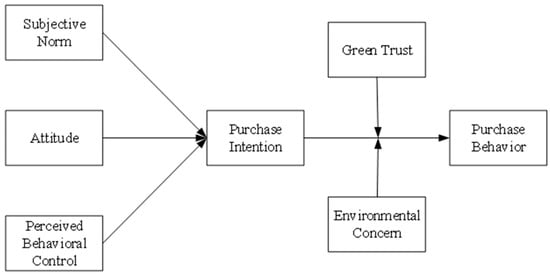
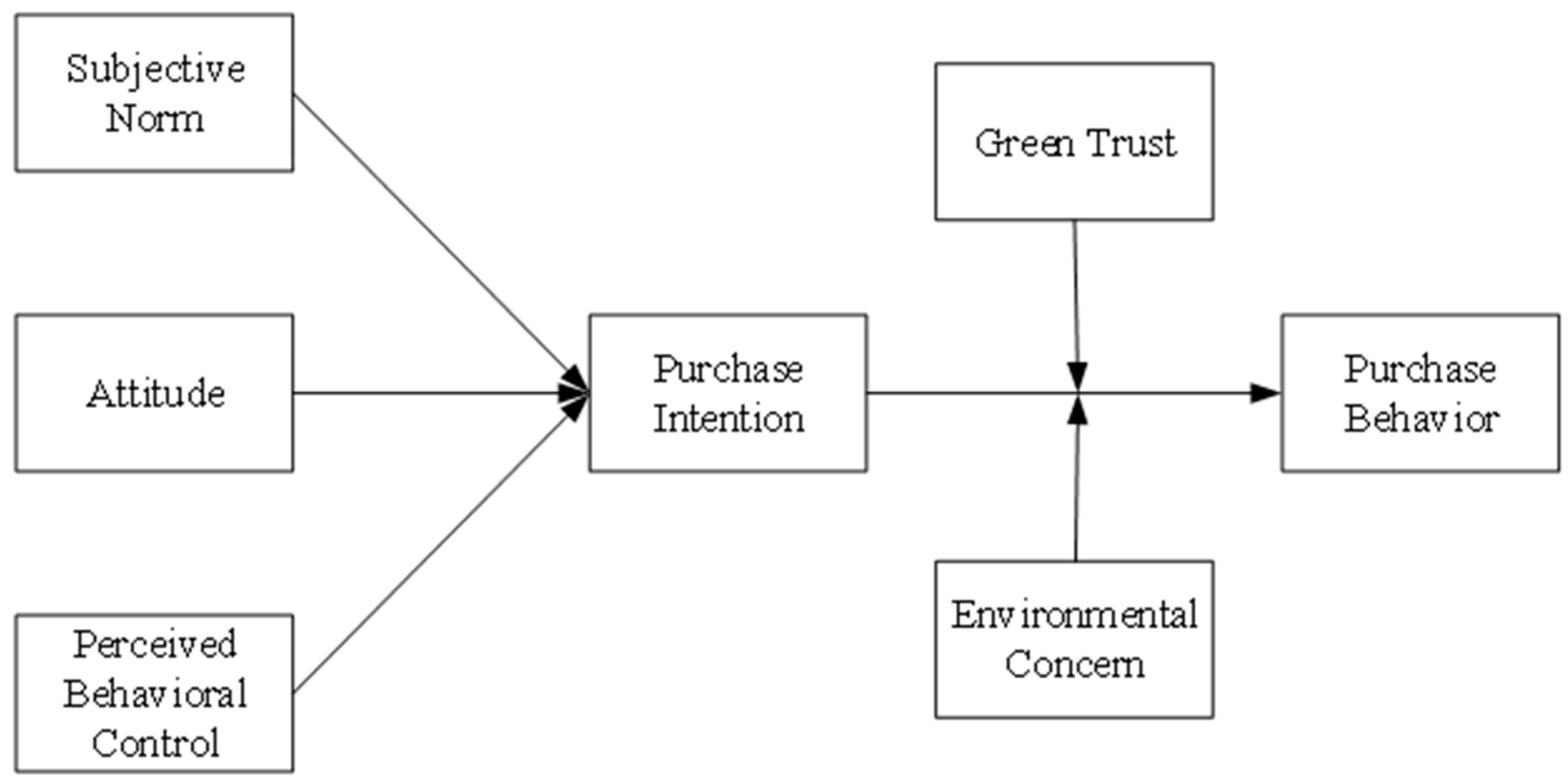
However, the applicability of the TPB in explaining the discrepancy between intention and behavior in green consumption has been questioned over the past decades [35,58]. Some scholars have expanded upon the traditional TPB model by introducing additional constructs to bridge this intention–behavior gap [7,34,35]. In the context of GH, particular attention should be given to green trust and environmental concern as explanatory factors for GH consumption behavior. When consumers possess a high level of trust in GHs, they are more inclined to choose them due to their perceived superior environmental performance, quality, and health benefits [7]. Furthermore, heightened environmental concerns among consumers lead to a greater preference for green products including GHs since they offer environmentally friendly design features and energy-efficient building materials [26,59]. The stronger their environmental concern is, the higher their willingness and behavioral inclination towards purchasing GHs become. Consequently, this study proposes a conceptual model based on an extended TPB framework that aims at addressing the behavioral gap in GH purchase intentions while exploring how environmental concerns and green trust moderate this intention–behavior relationship. Figure 1 presents the research model.
Figure 1.
GH purchasing intention–behavior gap theory model.
2.2. Research Hypothesis
2.2.1. Subjective Norms for Purchasing GH
According to Ajzen [53], subjective norms pertain to the social pressures experienced by individuals when engaging in a specific behavior. When influential individuals believe that something should be done, individuals feel compelled by normative beliefs and motivated to comply, thus fulfilling the expectations of others and society [60]. Individuals with strong subjective norms are more susceptible to social pressures and inclined to modify their behavioral choices based on the advice of their surroundings [61]. Consequently, the greater the subjective norm is, the more profound its impact on the decision-making. Previous studies examining individual green environmental behaviors such as waste separation [61], sustainable clothing [21], and electric vehicles [62] have found that subjective norms significantly contribute to individual behavioral intentions. Similarly, subjective norms positively influence consumers’ intentions to purchase green homes among Chinese consumers who also consider the thoughts and suggestions of trusted family members, relatives friends and social groups when making such decisions [13]. Therefore, we hypothesize the following:
H1.
Subjective norm has a positive impact on purchase intention for GH.
2.2.2. Attitude Toward Purchasing GH
Purchasing attitude as a psychological disposition reflects an individual’s preference for a particular object, issue, or entity [63]. Attitudes have been identified as indicators of consumers’ psychological evaluations towards products and exert a significant influence on their behavioral intentions [28,64]. Judge et al. [56] confirmed that positive attitudes toward purchasing sustainable housing are a strong positive predictor of purchase intentions. Guo et al. [65] demonstrated the substantial impact of attitudes on consumers’ intention to invest in healthy housing during the COVID-19 pandemic. Optimistic expectations regarding the benefits associated with purchasing GH facilitate decision-making in favor of such purchases. Conversely, negative attitudes toward GH discourage potential buyers from purchasing GH due to limited knowledge and high acquisition costs. Based on these observations, we propose the following hypothesis:
H2.
Attitude towards GH has a positive impact on purchase intention.
2.2.3. Perceived Behavior Control of Purchasing GH
According to Ajzen [52], perceived behavioral control refers to an individual’s perception of the ease or difficulty associated with engaging in a particular behavior. The behavior of individuals is influenced by their access to relevant resources (e.g., time, money, etc.) and opportunities. When consumers perceive a lack of resources and abilities, it becomes challenging for them to perform the desired behavior even if they are positively motivated. Perceived behavioral control was employed as a parameter for measuring consumer intention in various contexts, including e-waste recycling [27], garbage sorting [61], and new energy vehicles [66]. Given that the price of GH generally exceeds that of conventional housing, consumers are inevitably constrained by their consumption ability (including time, money, and skills) when making purchases [67]. Therefore, we propose the following:
H3.
Perceived behavioral control can promote the intention to purchase GH.
2.2.4. Purchase Intention of GH
Behavioral intention refers to an individual’s inclination towards engaging in a specific behavior, bridging the gap between cognitive processes and outward actions [61]. Typically preceding actual behavior, purchasing intention represents the likelihood of a consumer making a purchase. Rausch and Kopplin [21] have established that individuals’ behavioral intentions can exert a positive and significant influence on their ultimate behavioral implementation within the realm of sustainable clothing consumption. Generally speaking, stronger behavioral intentions are associated with higher probabilities of corresponding behaviors occurring. Consequently, we posit that individuals exhibiting strong intentions towards GH will actively strive to make GH purchases, thereby significantly enhancing the likelihood of completing such transactions. Based on this rationale, our hypothesis is as follows:
H4.
Purchase intention positively influences GH purchasing behavior.
2.2.5. The Moderating Effect of Green Trust and Environmental Concern
Trust has garnered significant attention in the field of social science. Sirdeshmukh et al. [68] define trust as consumers’ perception of a service provider’s reliability and ability to deliver promised product attributes. Chen [69] introduced the concept of “green trust”, which refers to consumers’ willingness to rely on a product or service based on confidence in its credibility, benevolence, and environmental performance capabilities. Referring to Sirdeshmukh et al. [68] and Chen [69], this study posits that green trust reflects consumer confidence in the environmental and economic benefits offered by GH products, as well as their belief in developers’ provision of reliable attributes associated with these products. However, consumer trust in GH is undermined by developers engaging in greenwashing and false advertising due to opportunistic behavior. Thus, GH consumption behavior is significantly influenced by green trust. Liu et al.’s [7] argument emphasizes the crucial role played by trust when individuals lack sufficient knowledge or resources for making informed decisions regarding GH purchases. Furthermore, Sultan et al.‘s [37] research established the moderating effect of perceived trust in organic food products on the relationship between consumer behavior and intention. The effectiveness of green marketing communications, including advertisements, in shaping intention is also moderated by the consumer’s existing level of environmental knowledge [70]. Based on these findings, we hypothesize the following:
H5.
Green trust positively moderates the relationship between GH purchase intention and behavior.
Environmental concern refers to individuals’ awareness of environmental problems and their intention to address these issues [21]. Consumers who possess environmental concerns are likely to consider the impact of their actions on the environment, which influences their decision-making behavior [71]. Previous research has highlighted the significance of environmental concern in explaining individuals’ pro-environmental behaviors [26,59]. As mentioned by Pagiaslis and Krontalis [72], individuals with high levels of environmental concerns demonstrate a greater willingness to pay extra for environmentally friendly products. Moreover, Molinillo et al. [73] discovered that environmental concern positively affects consumers’ health consciousness, thereby increasing their intention to purchase organic food. Concerning water-conservation behavior, individuals who exhibit higher levels of care towards environmental issues and limited water resources are more inclined to engage in water-conservation practices [74]. Therefore, individual environmental concerns may have an impact on the translation of intentions into actual behaviors related to purchasing GH. We thus hypothesize the following:
H6.
Environmental concern positively moderates the gap between the intention to purchase and the behavior of GH.
3. Methodology
3.1. Questionnaire Design
To ensure the scientific validity of the questionnaire design, we made the following efforts. Given the limited research on GH purchasing behavior, we drew inspiration from the established structure of green purchasing behavior research. All items in the questionnaire were derived from previously validated scales and modified to suit the specific context of GH purchasing. The variables of environmental concern and green trust were measured using relevant scales with well-established applicability in similar contexts. Additionally, a preliminary survey was conducted prior to formal research to assess item completeness, clarity of wording, and structural appropriateness. Firstly, we provided an explanation of the study’s content and purpose to respondents while defining GH; secondly, constructs were measured through proposed items; finally, participants were asked about their demographics. A five-point Likert scale was used for all variables except demographic ones (strongly disagree = 1; disagree = 2; neutral/undecided = 3; agree = 4; strongly agree = 5). Measures for green trust and environmental concern were based on previous exploratory findings with minor modifications made before finalizing the questionnaire. Table 1 presents the measurement items for each variable along with their reference scales.
Table 1.
Variable measurement item.
3.2. Data Collection
A survey was conducted in Shandong Province, located in eastern China. In the field of green building, Shandong Province stands out as highly representative due to its substantial number of green building projects and extensive green floor area. Firstly, it is worth noting that Shandong Province ranked third in China in terms of green building area (https://igreen.org/, accessed on 31 December 2025), which added to its significance as a representative province. During the “13th Five-Year Plan (2016–2020)” period, remarkable achievements were made by our province in terms of green building and building energy efficiency. Specifically, Shandong Province accumulated a total of 443 million square meters of completed and certified green building area during the 13th Five-Year Plan period (2016–2020), with an additional 813 million square meters dedicated to new construction and renovation of energy-saving building. Furthermore, renewable energy applications have been promoted across an area totaling 308 million square meters [79]. Additionally, during the same period, Shandong Province secured two-star and above green building labels for projects totaling 97.65 million square meters. It also established 59 provincial-level ultra-low-energy building demonstration projects [79]. These achievements placed the province among the national leaders. These achievements placed the province among the national leaders. For China, which is now in the rapid development stage of green building, it is crucial to initially explore the leading role played by representative sample provinces (specifically residential areas) and conduct comprehensive research on how trust in environmentally friendly practices influences purchasing intentions and behaviors. This will enable us to draw valuable insights from prior experiences which can be practically applied towards bridging the gap between residents’ willingness to purchase GH and their actual behavior throughout the country.
The survey was conducted from August to November 2023 using a mixed-mode approach. A team of 18 trained investigators was organized into three groups, with each group responsible for data collection within assigned areas of Shandong Province. The questionnaire was developed and distributed through a professional online survey platform. We employed a multi-channel recruitment strategy: online distribution primarily via social media platforms such as WeChat and QQ; offline recruitment involved visits to real estate sales centers and residential communities across multiple cities in Shandong Province. Investigators first explained the study’s purpose and introduced the concept of green housing (GH) to potential respondents. Those who agreed to participate were provided with either a QR code to access the online survey or a paper questionnaire. To supplement this approach, we also employed snowball sampling, where initial respondents could refer friends, relatives, or colleagues who expressed interest in purchasing GH. This combination of online and offline channels, coupled with snowball sampling, enhanced the diversity and representativeness of our sample.
To ensure statistical adequacy, we performed an a priori sample size calculation using the standard formula for infinite populations [80]:
With Z = 1.96 (95% confidence level), p = 0.5 (maximum variance), and d = 0.05 (margin of error), the minimum required sample size was 385. In total, 974 residents interested in purchasing GHs received these questionnaires through various channels mentioned above. A total of 482 questionnaires were subsequently recovered (recovery rate is 46.2%). During the data screening process, any questionnaires exhibiting zero standard deviation or incomplete data were excluded from analysis; thus leaving us with a final dataset comprising 450 coded questionnaires for further analysis purposes. The validity rate of our questionnaire reached an impressive level at 93.3%, ensuring that all collected data met our research requirements.
3.3. Sample Characteristics
Based on statistical analysis of the individual variations across formal samples, the sex ratio was found to be essentially balanced. The age group of respondents falls within the 25–35 range, constituting 73.3% of the total sample population. In China’s housing market, younger adults (aged 25–35) represent the primary demographic for first-time home purchases, driven by factors such as marriage, family formation, and urbanization. This group faces acute housing needs and is actively engaged in housing market decisions. While the financial resources of younger adults are typically more limited compared to older cohorts, their decision-making patterns regarding housing purchases are particularly valuable for understanding evolving trends in green housing adoption. In terms of income distribution, a majority of households (36.9%) report a monthly income between ¥5000 and ¥10,000 RMB, and 81.6% earn below ¥20,000 monthly. This suggests the sample largely represents urban middle-class consumers for whom the cost premium of green housing is a significant consideration. Educationally, the sample is highly advanced, with 79.6% holding a bachelor’s degree or higher. This high education level likely correlates with greater environmental awareness and comprehension of green housing benefits [81], which should be considered when generalizing the results. In terms of housing demand, the sample is split between “Rigid Demand” (53.8%) and “Improvement Demand” (46.2%), covering both first-time buyers and those seeking upgraded living standards.
Therefore, this sample is suitable for testing the theoretical model, as it comprises young, educated consumers with moderate incomes and established housing needs—a profile that represents the key target demographic for urban green housing. Detailed demographics are provided in Table 2.
Table 2.
Demographic characteristics of the sample. (Sample size = 450).
4. Results
Structural equation modeling (SEM) is widely used in consumer psychology and behavior research, particularly when analyzing questionnaire data [26,82]. Substantial evidence supports the suitability of SEM methods for multivariate regression analysis in both exploratory and validation research contexts. Two primary approaches exist for solving structural equations: covariance-based structural equation modeling using maximum likelihood estimation (CB-SEM), and partial least squares structural equation modeling (PLS-SEM). PLS-SEM is considered a more appropriate method for exploratory or comprehensive research models compared to CB-SEM [83]. Thus, this study employs PLS-SEM to examine the research model. To validate the research hypotheses, we first evaluated the reliability and validity of the measurement model and then assessed the structural model.
4.1. Measurement Model Evaluation
The reliability and validity of the measurement models were first assessed using the Smart-PLS software (4.1.0.9). Outer loadings were examined, employing a threshold of 0.708 [84], which ranged from 0.794 to 0.914 for all items. The result indicates that all indicators meet the required criteria for survive. Construct reliability is assessed based on composite reliability (CR) and Cronbach’s α. Table 3 demonstrates that all constructs’ Cronbach’s α values and CR values exceeded the acceptable threshold of 0.70, indicating a satisfactory level of reliability. Convergent validity was tested by calculating the average variance extracted (AVE) for each construct. Whereas, the average variance extracted (AVE) value was greater than the threshold value of 0.5, further confirming adequate convergent validity.
Table 3.
Construct validity and reliability.
The discriminant validity can be evaluated by two approaches: the Fornell–Larcker criterion(FLC) [85], as expressed in Table 4, and the HTMT criterion [86], which is employed for further analysis. The upper off-diagonal values in the table indicate the correlation between the constructs. Each value falls below the minimum threshold of 0.9. In addition, the square root of the AVE (diagonal values) for each construct in the HTMT matrix exceeds the squared correlation between the constructs (values indicated within parentheses on the off-diagonal line), thereby confirming adequate discriminant validity. These two tests indicate sufficient evidence supporting discriminant validity. In conclusion, this study has established reliability, validity, and discriminant validity of all constructs.
Table 4.
Fornell–Larcker criterion analysis and HTMT ratios.
4.2. Structural Model Evaluation
The structural model is then evaluated, encompassing an examination of the goodness of fit indices and proposed hypotheses. Multicollinearity between variables is assessed using the variance inflation factors (VIFs), while the values of VIF, ranging from 1.449 to 2.775, are rather low. Consequently, VIFs meet the conservative threshold of three for the absence of collinearity issues [87]. Next, R2 values are examined with PI showing a value of 0.642, and PB showing a value of 0.784 (R2-adjusted PI of 0.639 and PB of 0.782). Overall, the R2 values indicate that the structural model has a good degree of explanation. Since one of our main goals is to test the intention–behavior gap and the moderating influences of green trust and environmental concerns, R2 is preferred to Q2 as a measure of “explanatory modeling effort”. By employing blindfolding procedure to derive the Q2 value of the endogenous structure evaluation purposes, we obtain Q2 values equal to 0.425 for PI and 0.638 for PB, respectively. The value of Q2 is greater than 0.35, suggesting strong predictive relevance between exogenous and endogenous variables in our model, i.e., the stronger the predictive relevance of the model. Having ensured appropriate measures were taken into account, a bootstrapping technique was employed with 5000 re-samples in order to evaluate coefficient significance for each path proposed in our research model.
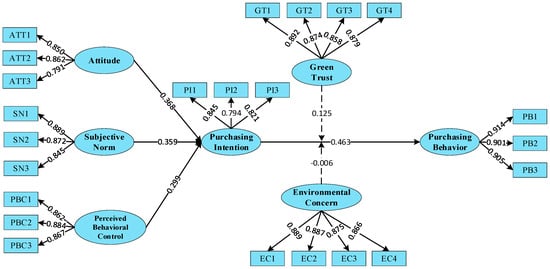
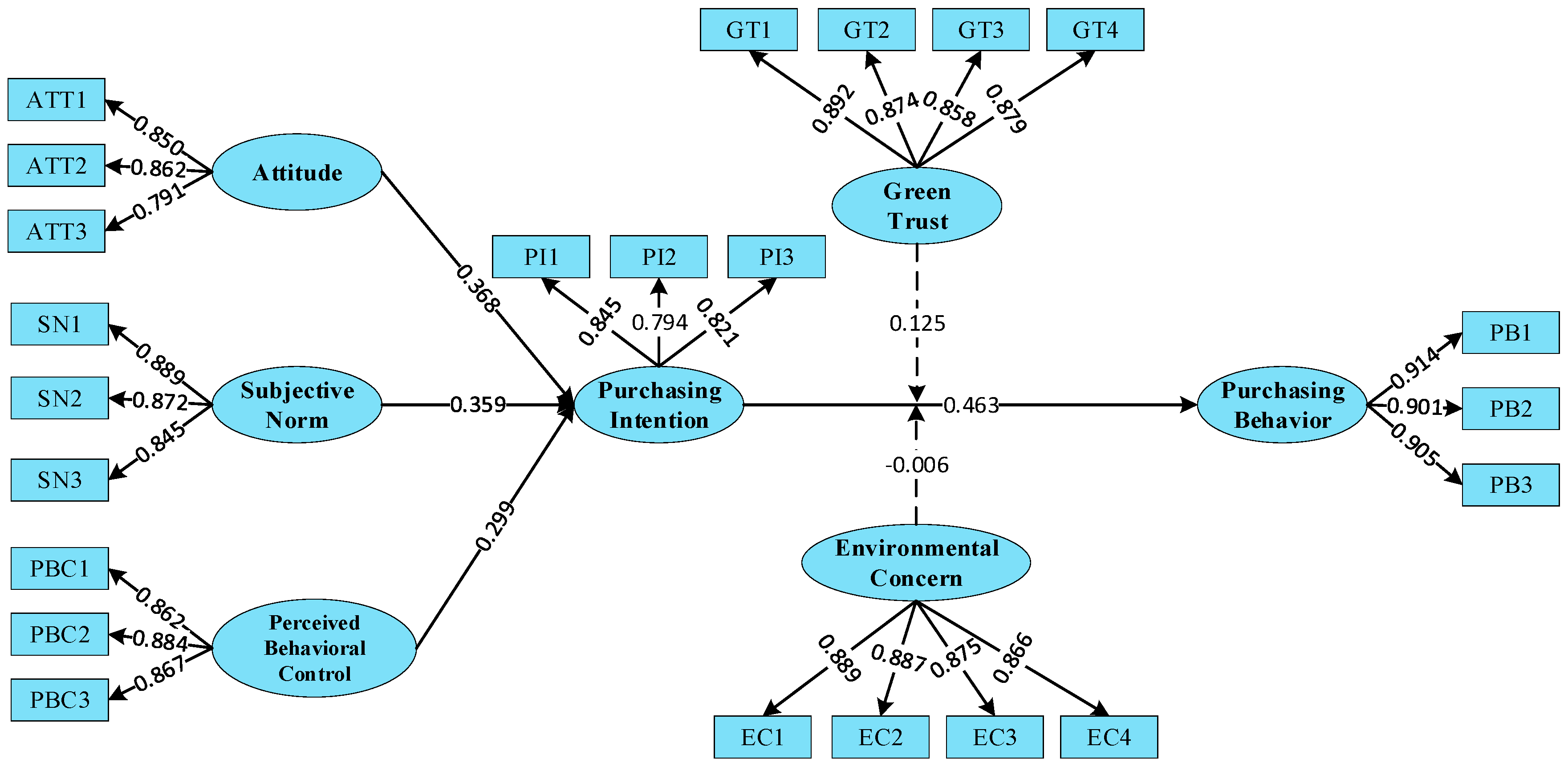
The SEM path diagram is shown in Figure 2. As presented in Table 5, all hypotheses were supported except for H6. Specifically, subjective norms (β = 0.359, p < 0.001), attitude (β = 0.368, p < 0.001) and perceived behavioral control (β = 0.299, p < 0.001) were found to have significant positive effects on purchase intention (PI), respectively, thus supporting H1, H2, and H3, respectively. Furthermore, the analysis revealed a significant positive impact of purchase intention on purchase behavior (β = 0.463, p < 0.001), confirming hypothesis H4 and suggesting that strong purchase intentions can significantly enhance actual purchasing behavior. Moreover, the findings demonstrate that green trust moderates the relationship between consumers’ purchase intention and their subsequent purchase behavior (β = 0.125, p < 0.001). This indicates that green trust plays a crucial role in bridging the gap between intention and behavior. However, the moderating effect of environmental concern on consumers’ purchase intention and purchase behavior is not significant (β = −0.006, p > 0.05), which does not provide support for hypothesis H6.
Figure 2.
GH purchase intention–behavior gap SEM path analysis.
Table 5.
Hypotheses testing.
4.3. Moderating Effect Analysis
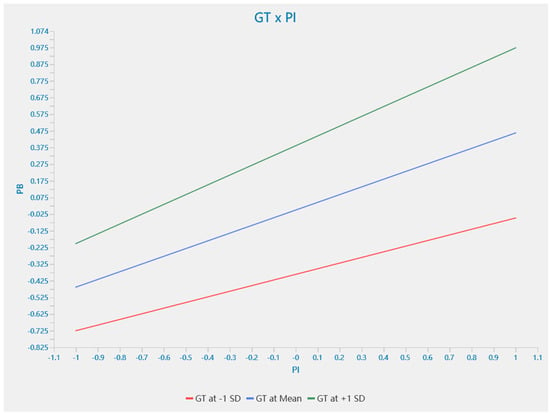
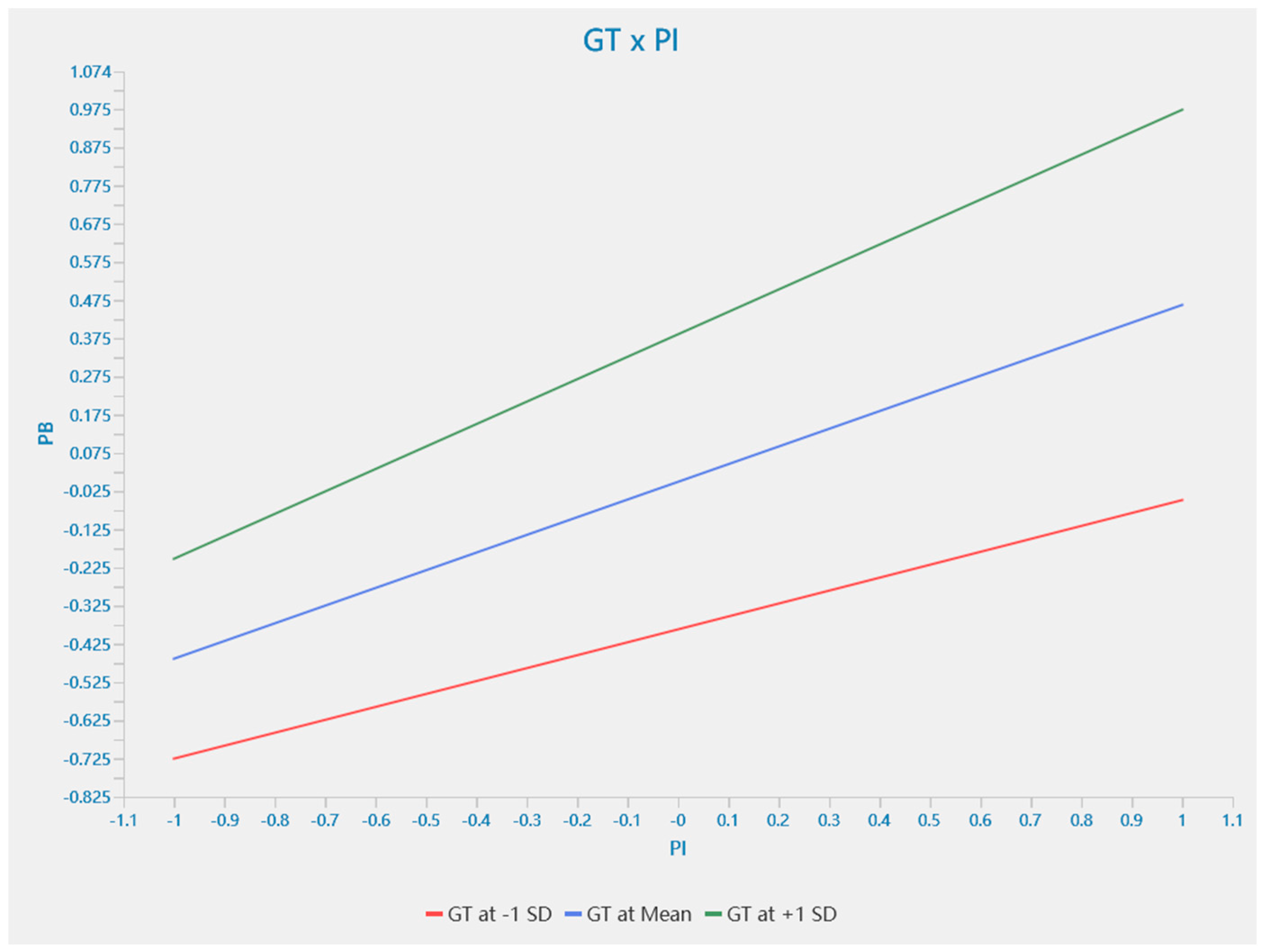
The moderating effect was examined using Smart-PLS3.0 through simple slope tests to elucidate the relationship between green trust and the interaction of purchase intention and purchase behavior. Green trust was employed as a moderator variable, with high-score (M + 1SD) and low-score (M − 1SD) groups created by adding or subtracting a standard deviation from the average score. Since no significant moderating effect of environmental concern on the relationship between purchase intention and purchase behavior was observed, a simple slope test was not conducted. A schematic diagram illustrating the regulatory effects is presented in Figure 3. When consumers exhibit higher levels of green trust towards GH, their purchase intention exerts a stronger influence on their actual purchasing behavior. Conversely, when consumers possess lower levels of trust in GH, the impact of their purchase intention on purchasing behavior weakens accordingly. Therefore, it can be concluded that green trust plays a significant moderated role in shaping the “purchase intention–purchase behavior” relationship.
Figure 3.
Moderating effect of green trust.
4.4. Intention–Behavior Gap
This study explores the “intention–behavior” gap, which pertains to the relationship between consumers’ intention to purchase GH and their actual purchasing behavior. A comparative analysis was conducted to examine the mean differences between individual intention variables and behavioral variables within the research sample. The validation results reveal a significant gap between consumers’ GH purchase intention and their subsequent behavior. Specifically, the mean value (3.89) of purchase intention exceeds that of purchase behavior (3.11). To test the statistical significance, a paired-sample t-test was performed on these two variables. The results indicate that the mean difference value between intention and behavior was 0.7878 below zero, with a 95% confidence interval ranging from 0.716 below zero to 0.860. Furthermore, the two-tailed t-value was 21.472 (p ≤ 0.01), highlighting a substantial disparity between behavioral intention and behavior in relation to GH purchase during decision process. This finding is consistent with other research situations [88]. That implies that consumers with high GH purchase intention, may not purchase GH in the end, and “intention–behavior gap” of GH existing.
5. Discussion and Practical Implications
5.1. Discussion
Promoting GH on a large scale is crucial for achieving environmental sustainability and enhancing global well-being. Previous research has predominantly focused on investigating the purchase intentions and behaviors of potential consumers towards GH [6]. Nevertheless, empirical studies addressing the gap between GH purchase intention and behavior are scarce. This study aims to explain the relationship between purchase intention and actual purchase behavior in the GH context, thereby addressing pressing concerns regarding prioritizing actual behavior over mere intentions [27,75,89].
The findings suggest that the extended theory of planned behavior (TPB) is suitable for investigating consumers’ GH purchasing behavior. We found that positive behavioral attitudes, subjective norms and perceived behavioral control can reasonably account for behavioral intention. Moreover, our findings echoed with the recent study in green consumerism, which have demonstrated a significant positive correlation between attitudes, subjective norms, and perceived behavioral control with intention across various contexts such as new energy vehicles [26] and e-waste recycling [27].
Moreover, the findings of this study provide further empirical evidence supporting the existence of an intention–behavior gap in the context of GH consumption process. A paired-sample t-test revealed a significant disparity between consumers’ GH purchase intention and actual purchasing behavior (p < 0.001). Specifically, the mean purchase intention (3.89) was found to be significantly higher than the mean purchase behavior (3.11), indicating that individuals with stronger intentions to engage in green housing consumption were not effectively translating their intentions into actual purchasing actions. This finding aligns with previous research on various domains of green consumerism, such as new energy vehicles [26] and energy-saving refrigeration appliances [28].
The results also indicate a significant and positive moderation effect of green trust on the conversion of purchase intention to purchase behavior (β = 0.125, T = 3.501, p < 0.01). This implies that the current augmentation of consumers’ green trust positively influences the transformation from their purchase intention to actual purchasing behavior. These findings are generally consistent with the previous literature on green consumerism. For instance, Tandon et al. [89] concluded that trust in organic food positively increased purchasing behavior and narrowed the gap between intention and behavior. Similarly, Liu et al. [6] identified a lack of social trust in organizations responsible for green-labeled residential buildings was identified as a potential psychological barrier to the GB movement in China. Given the information asymmetry prevalent in the GH market, establishing justified trust becomes even more crucial.
Surprisingly, the study provides evidence supporting the hypothesis that consumers’ environmental concerns significantly influence the gap between purchasing intentions and behaviors. Consumers’ environmental concerns are predominantly influenced by cost, quality, and green-product performance [90]. The high acquisition cost of GH, a product, may diminish individuals’ concern for environmental issues, hindering the translation of their purchase intentions into behavior. The purchase of GH entails both altruism and self-interest on the part of consumers as it promotes environmentally friendly practices. However, consumers primarily prioritize their own interests rather than considering the environmental impact of their actions, displaying less inclination towards reducing carbon emissions or making eco-friendly choices. Hu et al. [91] emphasize that improved health is the most appealing factor for homebuyers. The healthier living environment of GH serves as a significant selling point of a GH site [18]. Another possible reason could be attributed to limited understanding and awareness among most people regarding the environmental benefits associated with purchasing GHs. He et al. [13] argue that despite being environmentally friendly in nature, many customers lack knowledge about these benefits and thus refrain from buying GH.
5.2. Practical Implications
Our study takes a novel perspective in examining the relationship between consumers’ intentions to purchase green products and their actual purchasing behavior, confirming the existence of an intention–behavior gap. However, empirical research on how to effectively bridge this gap is insufficient, particularly when it comes to investigating GH consumption. These findings shed light on the potential influence of environmental concerns and trust in promoting a stronger link between intentions and behaviors related to GH purchases, providing valuable insights for policymakers seeking to address this issue.
Environmental concerns have been overlooked in the GH consumer sector, potentially leading to a weakening of individuals’ environmental consciousness due to the higher premium price associated with GH. Government subsidies or tax reductions for GH purchases are not a bad strategy to reduce consumer acquisition costs. In addition to providing direct support at the sales stage, the government can also reduce or waive electricity bills for GH consumers at the utilization stage. Developers can implement various promotional tools during the pre-sale of properties, such as choosing appropriate concessions to increase the sales of GH and create certain economies of scale. From the consumer perspective, willingness to pay more for GH is contingent upon perceived advantages [92]. When consumers do not understand the quality and functions of GH, they are easily disturbed by loss aversion and are naturally unwilling to pay extra for them. Therefore, when publicizing and promoting GH, the focus should be on the benefits of GH to the homebuyers themselves. The government can make public the information on the assessment of the living comfort and health improvement (especially the improvement of indoor air quality) of GH to consumers, so that they will realize that GH is value for money. At the same time, through the statistics and analysis of the whole process of GH projects, it can show consumers the benefits of building energy saving and emission reduction, and enhance consumers’ confidence in the upfront investment in GH. Finally, raising consumers’ awareness of the environmental benefits of GH may yield more promising results. Therefore, the government could increase consumers’ knowledge and awareness of GH through green education and awareness campaigns. Public-service advertising, community advocacy, and demonstration projects are considered effective means to disseminate information about the environmental benefits of GH. Success in urban green development, such as the green renovation of old communities, often hinges on fostering social capital and community participation [93], a principle that can be applied to promoting GH at the neighborhood level. Apart from improving consumers’ knowledge of GH, it is also important to raise their awareness of energy conservation and sustainable development issues [6].
Further, we find that consumer green trust positively affects the intention–behavior relationship. Prioritizing increasing consumer trust in the GH may therefore be more effective in closing the purchase intention–behavior gap. Notably, the current GH market is characterized by a high level of “greenwashing” [40], which may reduce consumer trust in GH with labeled certification. GH environmental claims are not always beneficial, and consumers are also affected by the reliability of information. Even if consumers’ environmental concern is high, it negatively affects their willingness to pay for GH because they doubt the authority and reliability of the organization’s disclosure of GH information. From both managerial and policy perspectives, concrete actions are needed. First, regulatory frameworks must be strengthened. This includes mandating independent third-party verification and post-occupancy audits to ensure performance matches claims, alongside establishing clear anti-greenwashing regulations with meaningful penalties for misleading information. Second, market incentives should be introduced. Financial mechanisms such as green mortgage discounts or tax rebates for certified green housing can effectively offset cost barriers. Third, transparency and consumer education must be enhanced. Standardized disclosure of all certification data and public campaigns to educate consumers on evaluating green claims will empower informed decisions. Ultimately, by strengthening certification integrity through rigorous oversight, stimulating demand through targeted incentives, and fostering transparency through information disclosure, consumer trust in green housing can be substantively increased. This multi-pronged approach will help translate environmental concern and purchase intention into actual green-housing adoption.
6. Conclusions
To facilitate the actual purchase of GH within the framework of sustainable urban development, we conducted a survey in Shandong Province, China, aiming to investigate the moderating effects of green trust and environmental concerns on the intention–behavior gap regarding GH purchases. The key research findings are as follows:
First, we extend the theory of planned behavior to identify the intention–behavior gap in the process of purchasing GH. Through mean comparison analysis, we observe a significant intention–behavior gap specifically related to GH consumption. In general, consumers holding positive attitudes, stronger social norms, and higher perceived behavioral control exhibit greater explanatory power for purchase intentions. Among these factors, attitudes toward GH exert the most substantial influence on subsequent purchase intentions, while perceived behavioral control has a comparatively weaker impact. Second, by conducting simple slope tests, we provide evidence that consumers’ trust in environmentally friendly practices positively influences the relationship between intention and behavior. However, our findings indicate that environmental concerns do not significantly moderate this relationship. These results underscore that, in the context of promoting green housing within sustainable cities, enhancing consumers’ trust in the credibility and performance of green housing may be more effective than relying solely on raising environmental awareness to drive actual purchase behavior.
From the perspective of sustainable urban planning and policy, our study highlights several actionable pathways. Policymakers and urban developers should recognize that closing the intention–behavior gap in green housing is not only a matter of individual consumer psychology but also a key mechanism for advancing urban sustainability goals, such as reducing carbon footprints, improving resource efficiency, and enhancing public health. Building consumer trust through transparent certification systems, reliable performance disclosures, and stringent oversight can help align individual purchasing decisions with broader urban sustainability objectives. Meanwhile, although environmental concern alone did not show a significant moderating effect in this study, it remains a foundational element of green consumption values and should be nurtured through long-term education and communication campaigns as part of a holistic urban sustainability strategy. This aligns with the broader understanding that enterprise-led green innovations are a key driver of smart and sustainable city development [94].
Furthermore, it is imperative to acknowledge the limitations of this study. Firstly, this study only selects environmental concern and green trust to bridge the gap between intentions and behavior, without considering other potential variables that may contribute to bridging the intention–behavior gap, such as financial incentives, policy interventions, or social influence mechanisms that are particularly relevant in urban governance contexts. Future research could also investigate how perceptions of natural environmental uncertainty shape GH demand [43], or how marketing communication strategies can be optimized for different consumer segments [56]. Future research should explore additional factors that could potentially bridge this gap. Secondly, it is important to note that the data for this study was collected exclusively from consumers in Shandong Province, China; therefore, caution must be exercised when generalizing these findings to the entire Chinese population, especially across diverse urban and regional contexts with varying levels of economic development, policy enforcement, and environmental awareness. Consequently, future studies should aim to include a more representative sample of the national population and conduct comparative analyses across different city types to validate and extend our conclusions. Third, the sample in this study was predominantly composed of younger adults aged 25–35. This demographic is more likely to be in the first-time homebuyer stage, where purchasing decisions may be shaped by different financial constraints, life priorities, and long-term planning considerations compared to older, more experienced buyers. Therefore, while the findings provide valuable insights into the intention–behavior gap among a key emerging consumer group, they may not fully represent the behavioral patterns of repeat buyers or older segments of the housing market. Future research would benefit from including participants across a wider age range to obtain a more comprehensive understanding of green-housing consumption dynamics.
Overall, this study contributes to the growing literature on green consumption and sustainable urban development by empirically validating the intention–behavior gap in green housing and identifying trust as a critical moderator. By fostering credible, trustworthy green housing markets, cities can better harness consumer demand to accelerate the transition toward sustainable, low-carbon, and healthy urban living environments.
Author Contributions
Conceptualization, L.Z., Y.Z. (Yanna Zhang) and Y.Z. (Youquan Zhang); methodology, Y.Z. (Youquan Zhang) and Y.Z. (Yanna Zhang); software, Y.Z. (Yanna Zhang); validation, L.Z., Y.Z. (Youquan Zhang) and Z.B.; resources, L.Z. and Y.Z. (Yanna Zhang); writing—original draft preparation, L.Z., Y.Z. (Yanna Zhang) and Y.Z. (Youquan Zhang); writing—review and editing, Y.Z. (Youquan Zhang) and Z.B. All authors have read and agreed to the published version of the manuscript.
Funding
This research received no external funding.
Institutional Review Board Statement
Ethical review and approval were waived for this study. This exemption is in compliance with China’s “Ethical Review Measures for Life Science and Medical Research Involving Humans” and the institutional policies of Shandong Jianzhu University, which do not mandate ethical review for this specific type of anonymous survey-based research.
Informed Consent Statement
Informed consent was obtained from all subjects involved in the study.
Data Availability Statement
The original contributions presented in this study are included in the article. Further inquiries can be directed to the corresponding authors.
Acknowledgments
The authors thank the experts and respondents who participated in the questionnaire surveys. The authors also thank the editors and the anonymous reviewers for their valuable and constructive suggestions for improving this study.
Conflicts of Interest
The authors declare no conflicts of interest.
References
- Zhao, S.W.; Chen, L.W. Exploring Residents’ Purchase Intention of Green Housings in China: An Extended Perspective of Perceived Value. Int. J. Environ. Res. Public Health 2021, 18, 4074. [Google Scholar] [CrossRef] [Scilit] [PubMed]
- Wu, Z.; Jiang, M.; Cai, Y.; Wang, H.; Li, S. What Hinders the Development of Green Building? An Investigation of China. Int. J. Environ. Res. Public Health 2019, 16, 3140. [Google Scholar] [CrossRef] [Scilit] [PubMed]
- Zuo, J.; Zhao, Z.-Y. Green building research–current status and future agenda: A review. Renew. Sustain. Energy Rev. 2014, 30, 271–281. [Google Scholar] [CrossRef] [Scilit]
- Zou, C.; Wu, S.; Yang, Z.; Pan, S.; Wang, G.; Jiang, X.; Guan, M.; Yu, C.; Shen, Y. Progress, challenge and significance of building a carbon industry system in the context of carbon neutrality strategy. Pet. Explor. Dev. 2023, 50, 210–228. [Google Scholar] [CrossRef] [Scilit]
- UN Environment Programme. 2021 Global Status Report for Buildings and Construction: Towards a Zero-Emission, Efficient and Resilient Buildings and Construction Sector; UN Environment Programme: Nairobi, Kenya, 2021. [Google Scholar]
- Cai, W.; Wu, Y.; Ni, J.; Yu, Y.; Wu, J.; Fu, Y.; Wang, B.; Shao, Q.; Fu, Y.; Hu, S.; et al. 2022 Research Report of China Building Energy Consumption and Carbon Emissions; Professional Committee of Building Energy and Emissions, China Association of Building Energy Efficiency: Chongqing, China, 2022. [Google Scholar]
- Liu, Y.; Hong, Z.; Zhu, J.; Yan, J.; Qi, J.; Liu, P. Promoting green residential buildings: Residents’ environmental attitude, subjective knowledge, and social trust matter. Energy Policy 2018, 112, 152–161. [Google Scholar] [CrossRef] [Scilit]
- Chang, S.; Feng, G.; Cui, H.; Zhang, L.; Li, Q. Research on carbon emission characteristics and emission reduction potential prediction of construction industry. J. Shenyang Jianzhu Univ. (Nat. Sci.) Chin. 2023, 39, 139–146. [Google Scholar]
- Liu, Y.; Zuo, J.; Pan, M.; Ge, Q.; Chang, R.; Feng, X.; Fu, Y.; Dong, N. The incentive mechanism and decision-making behavior in the green building supply market: A tripartite evolutionary game analysis. Build. Environ. 2022, 214, 108903. [Google Scholar] [CrossRef] [Scilit]
- GB/T 50378-2019; Assessment Standard for Green Building. Ministry of Housing and Urban-Rural Development of the People’s Republic of China: Beijing, China, 2019.
- T/ASC 02-2021; Assessment Standard for Healthy Building. China Architecture & Building Press: Beijing, China, 2021.
- GB/T 51350-2019; Technical Standard for Nearly Zero Energy Buildings. China Architecture & Building Press: Beijing, China, 2019.
- He, C.; Yu, S.; Han, Q.; de Vries, B. How to attract customers to buy green housing? Their heterogeneous willingness to pay for different attributes. J. Clean. Prod. 2019, 230, 709–719. [Google Scholar] [CrossRef] [Scilit]
- Zhang, L.; Wu, J.; Liu, H. Policies to enhance the drivers of green housing development in China. Energy Policy 2018, 121, 225–235. [Google Scholar] [CrossRef] [Scilit]
- Jiang, H.; Payne, S. Green housing transition in the Chinese housing market: A behavioural analysis of real estate enterprises. J. Clean. Prod. 2019, 241, 118381. [Google Scholar] [CrossRef] [Scilit]
- Zhao, S.; Huo, T.; Chen, L. The influence of multi-level factors on Chinese residents’ purchase decisions of green housing: A system dynamics approach. Sustain. Cities Soc. 2023, 99, 105001. [Google Scholar] [CrossRef] [Scilit]
- Li, Q.; Qian, T.; Wang, H.; Sun, C. Exploring the value of green: The impact factors on China’s second-hand green housing prices based on geographically weighted Lasso regressions. Pac.-Basin Financ. J. 2025, 90, 102661. [Google Scholar] [CrossRef] [Scilit]
- Liu, Y.; Sun, X.; Sun, T.; Liu, J. Promoting green residential buildings by increasing homebuyers’ willingness to pay: Evidence from Sino-Singapore Tianjin Eco-city in China. J. Clean. Prod. 2019, 238, 117884. [Google Scholar] [CrossRef] [Scilit]
- Khan, R.A.J.; Thaheem, M.J.; Ali, T.H. Are Pakistani homebuyers ready to adopt sustainable housing? An insight into their willingness to pay. Energy Policy 2020, 143, 111598. [Google Scholar] [CrossRef] [Scilit]
- Cui, M.; Li, Y.; Wang, S. Environmental Knowledge and Green Purchase Intention and Behavior in China: The Mediating Role of Moral Obligation. Sustainability 2024, 16, 6263. [Google Scholar] [CrossRef] [Scilit]
- Rausch, T.M.; Kopplin, C.S. Bridge the gap: Consumers’ purchase intention and behavior regarding sustainable clothing. J. Clean. Prod. 2021, 278, 123882. [Google Scholar] [CrossRef] [Scilit]
- ElHaffar, G.; Durif, F.; Dubé, L. Towards closing the attitude-intention-behavior gap in green consumption: A narrative review of the literature and an overview of future research directions. J. Clean. Prod. 2020, 275, 122556. [Google Scholar] [CrossRef] [Scilit]
- Carrington, M.J.; Neville, B.A.; Whitwell, G.J. Lost in translation: Exploring the ethical consumer intention–behavior gap. J. Bus. Res. 2014, 67, 2759–2767. [Google Scholar] [CrossRef] [Scilit]
- FUTERRA Sustainability Communications Ltd. Rules of the Game: Principles of Climate Change Communications; FUTERRA Sustainability Communications Ltd.: London, UK, 2005. [Google Scholar]
- He, Z.; Zhou, Y.; Wang, J.; Li, C.; Wang, M.; Li, W. The impact of motivation, intention, and contextual factors on green purchasing behavior: New energy vehicles as an example. Bus. Strategy Environ. 2020, 30, 1249–1269. [Google Scholar] [CrossRef] [Scilit]
- Lin, B.; Shi, L. Identify and bridge the intention-behavior gap in new energy vehicles consumption: Based on a new measurement method. Sustain. Prod. Consum. 2022, 31, 432–447. [Google Scholar] [CrossRef] [Scilit]
- Echegaray, F.; Hansstein, F.V. Assessing the intention-behavior gap in electronic waste recycling: The case of Brazil. J. Clean. Prod. 2017, 142, 180–190. [Google Scholar] [CrossRef] [Scilit]
- Li, Y.; Siddik, A.B.; Masukujjaman, M.; Wei, X. Bridging Green Gaps: The Buying Intention of Energy Efficient Home Appliances and Moderation of Green Self-Identity. Appl. Sci. 2021, 11, 9878. [Google Scholar] [CrossRef] [Scilit]
- Wang, Y.; Long, X.; Li, L.; Wang, Q.; Ding, X.; Cai, S. Extending theory of planned behavior in household waste sorting in China: The moderating effect of knowledge, personal involvement, and moral responsibility. Environ. Dev. Sustain. 2020, 23, 7230–7250. [Google Scholar] [CrossRef] [Scilit]
- He, R.; Jin, J.; Qiu, X.; Zhang, C.; Yan, J. Rural residents’ climate change perceptions, personal experiences, and purchase intention–behavior gap in energy-saving refrigeration appliances in Southwest China. Environ. Impact Assess. Rev. 2023, 98, 106967. [Google Scholar] [CrossRef] [Scilit]
- Wang, B.; Li, J.; Sun, A.; Wang, Y.; Wu, D. Residents’ green purchasing intentions in a developing-country context: Integrating PLS-SEM and MGA methods. Sustainability 2019, 12, 30. [Google Scholar] [CrossRef] [Scilit]
- Akram, U.; Lavuri, R.; Bilal, M.; Hameed, I.; Byun, J. Exploring the roles of green marketing tools and green motives on green purchase intention in sustainable tourism destinations: A cross-cultural study. J. Travel Tour. Mark. 2024, 41, 453–471. [Google Scholar] [CrossRef] [Scilit]
- Hua, Y.; Dong, F. Can environmental responsibility bridge the intention-behavior gap? Conditional process model based on valence theory and the theory of planned behavior. J. Clean. Prod. 2022, 376, 134166. [Google Scholar] [CrossRef] [Scilit]
- Jannah, N.; Bahri, M.I.; Kismawadi, E.R.; Handriana, T. The Effect of Green Brand Image and Green Satisfaction on Green Brand Equity Mediated Green Trust Outpatient’s. Qual.-Access Success 2024, 25, 381–390. [Google Scholar]
- Nieto-García, M.; Acuti, D.; Viglia, G. Consumer hypocrisy and researcher myopia: A scrutiny of the intention-behaviour gap in sustainable tourism. Ann. Tour. Res. 2024, 104, 103678. [Google Scholar] [CrossRef] [Scilit]
- Ghorbanzadeh, D.; Khan, M.A.; Vaca Cárdenas, M.L.; Prasad, K.D.V.; Abduvalieva, D.; Procel Silva, M.A. From attitude to action: Examining the factors affecting sustainable purchasing behavior in Generation Z with an emphasis on environmental responsibility. Environ. Dev. Sustain. 2025. [Google Scholar] [CrossRef] [Scilit]
- Sultan, P.; Tarafder, T.; Pearson, D.; Henryks, J. Intention-behaviour gap and perceived behavioural control-behaviour gap in theory of planned behaviour: Moderating roles of communication, satisfaction and trust in organic food consumption. Food Qual. Prefer. 2020, 81, 103838. [Google Scholar] [CrossRef] [Scilit]
- Chen, Y.-S. The Drivers of Green Brand Equity: Green Brand Image, Green Satisfaction, and Green Trust. J. Bus. Ethics 2009, 93, 307–319. [Google Scholar] [CrossRef] [Scilit]
- Di Pillo, F.; Palombi, G.; Strazzullo, S. Does Greenwashing Wash Away Gen Z’s Green Purchase Intention? Bus. Strategy Environ. 2025, 34, 9081–9092. [Google Scholar] [CrossRef] [Scilit]
- Imaningsih, E.S.; Ramli, Y.; Anggraeni, A. Impact of Green Awareness, Green Brand Image, and Green E-WOM with Trust as a Mediation on the Intention to Buy Eco-Friendly Houses. J. Sustain. Econ. Bus. 2024, 1, 167–185. [Google Scholar] [CrossRef] [Scilit]
- Ning, X.; Ye, X.; Li, H.; Rajendra, D.; Skitmore, M. Evolutionary Game Analysis of Optimal Strategies for Construction Stakeholders in Promoting the Adoption of Green Building Technology Innovation. J. Constr. Eng. Manag. 2024, 150, 04024037. [Google Scholar] [CrossRef] [Scilit]
- Do, A.D.; Ha, D.L.; Phan, T.T.L.; Bui, T.M.; Le, T.B.N.; Tran, M.N.; Dang, D.Q. Antecedents of Gen Z’s Green Purchase Intention in Vietnam’s Fashion Industry with the Moderating Role of Greenwash Perception. J. PLOS One 2025, 20, e0324923. [Google Scholar] [CrossRef] [Scilit]
- Taufique, K.M.R.; Vocino, A.; Polonsky, M.J. The influence of eco-label knowledge and trust on pro-environmental consumer behaviour in an emerging market. J. Strateg. Mark. 2017, 25, 511–529. [Google Scholar] [CrossRef] [Scilit]
- Konalingam, K.; Thivaakaran, T.; Kengatharan, N.; Sivapalan, A.; Hensman, G.H.; Harishangar, A. Exploring the drivers of pro-environmental behavioral intentions in an emerging nation. Soc. Responsib. J. 2024, 20, 1697–1723. [Google Scholar] [CrossRef] [Scilit]
- Ajzen, I. From intentions to actions: A theory of planned behavior. In Action Control: From Cognition to Behavior; Springer: Berlin/Heidelberg, Germany, 1985; pp. 11–39. [Google Scholar]
- Duan, Z.; Ding, Z.; Mou, Y.; Deng, X.; Zhang, H. Small green housing makes a big difference: The impact of natural environmental uncertainty on consumers’ willingness to purchase green housing. Asia Pac. J. Mark. Logist. 2025, 37, 1210–1227. [Google Scholar] [CrossRef] [Scilit]
- Tanwir, N.S. Predicting Purchase Intention of Hybrid Electric Vehicles: Evidence from an Emerging Economy. World Electr. Veh. J. 2020, 11, 35. [Google Scholar] [CrossRef] [Scilit]
- Zhang, X.V.; Ha, S.; Chan, G. Do Knowledge and Experience Value Affect Green Tourism Activity Participation and Buying Decision ? A Case Study of Natural Dyeing Experience in China. Sustainability 2021, 13, 8579. [Google Scholar] [CrossRef] [Scilit]
- Agarwal, S.; Dubey, R.S.; Gupta, A.K. Eco-labels, green trust and eudaimonic wellbeing: A sustainable linkage to shape purchase intentions. Int. J. Ethics Syst. 2025. [Google Scholar] [CrossRef] [Scilit]
- Borah, P.S.; Dogbe, C.S.K.; Marwa, N. Generation Z’s green purchase behavior: Do green consumer knowledge, consumer social responsibility, green advertising, and green consumer trust matter for sustainable development? Bus. Strategy Environ. 2024, 33, 4530–4546. [Google Scholar] [CrossRef] [Scilit]
- Sanjay, K.; Tewari, S.; Subbarao, A.N. Bridging the Attitude–Behavior Gap in Green Marketing: A Structural Equation Modeling Approach to Psychological and Environmental Influences. In Green Marketing Perspectives; Emerald Publishing Limited: Leeds, UK, 2025; pp. 53–67. [Google Scholar]
- Araújo, A.; Marques, I.A.; Moreno, L.L.; García, P.C. Bridging the Attitude–Behavior Gap in Sustainable Tourism: An Extended TPB Model of Green Hotel Purchase Intentions. Tour. Hosp. 2025, 6, 215. [Google Scholar] [CrossRef] [Scilit]
- Ajzen, I. The theory of planned behavior. Organ. Behav. Hum. Decis. Process. 1991, 50, 179–211. [Google Scholar] [CrossRef] [Scilit]
- Sung, P.L.; Hsiao, T.Y.; Huang, L.; Morrison, A.M. The influence of green trust on travel agency intentions to promote low-carbon tours for the purpose of sustainable development. Corp. Soc. Responsib. Environ. Manag. 2021, 28, 1185–1199. [Google Scholar] [CrossRef] [Scilit]
- Cai, T.; Choong, W.W.; Wee, S.C.; Xu, T. Urban residents’ intention to purchase green buildings in China’s emerging first-tier cities: A multigroup analysis. Energy Build. 2025, 344, 116031. [Google Scholar] [CrossRef] [Scilit]
- Judge, M.; Warren-Myers, G.; Paladino, A. Using the theory of planned behaviour to predict intentions to purchase sustainable housing. J. Clean. Prod. 2019, 215, 259–267. [Google Scholar] [CrossRef] [Scilit]
- Qin, C.; Zeng, X.; Zhou, X. Effects of Brand Anthropomorphism on Green Purchase Intentions: The Moderating Roles of Advertising Appeals and Consumer Relationship Orientation. J. Consum. Behav. 2025, 24, 2521–2544. [Google Scholar] [CrossRef] [Scilit]
- Zheng, G.W.; Akter, N.; Siddik, A.B.; Masukujjaman, M. Organic foods purchase behavior among generation Y of Bangladesh: The moderation effect of trust and price consciousness. Foods 2021, 10, 2278. [Google Scholar] [CrossRef] [Scilit]
- Li, Y.; Wang, B.; Cui, M. Environmental concern, environmental knowledge, and residents’ water conservation behavior: Evidence from China. Water 2022, 14, 2087. [Google Scholar] [CrossRef] [Scilit]
- Wang, L.; Jiang, Y.; Pan, L.; Ji, J.; Xu, A. Research on household emergency supplies storage from the theory of planned behavior and intention-behavior gap in the context of COVID-19. Front. Psychol. 2023, 13, 1069843. [Google Scholar] [CrossRef] [Scilit] [PubMed]
- Lou, S.; Zhang, X.; Zhang, D. What influences urban residents’ intention to sort waste?: Introducing Taoist cultural values into TPB. J. Clean. Prod. 2022, 371, 133540. [Google Scholar] [CrossRef] [Scilit]
- Shakeel, U. Electric vehicle development in Pakistan: Predicting consumer purchase intention. Clean. Responsible Consum. 2022, 5, 100065. [Google Scholar] [CrossRef] [Scilit]
- Ren, W.; Wang, Y. Study on the factors affecting the green housing purchase intention in urban residents—Taking the Beijing-Tianjin-Hebei region as an example. Sustainability 2023, 15, 3735. [Google Scholar] [CrossRef] [Scilit]
- Yu, X.; Wang, X. The effects of entrepreneurial bricolage and alternative resources on new venture capabilities: Evidence from China. J. Bus. Res. 2021, 137, 527–537. [Google Scholar] [CrossRef] [Scilit]
- Guo, X.; Fan, Z.; Zhu, H.; Chen, X.; Wang, M.; Fu, H. Willingness to pay for healthy housing during the COVID-19 pandemic in China: Evidence from eye-tracking experiment. Front. Public Health 2022, 10, 855671. [Google Scholar] [CrossRef] [Scilit]
- Wang, L.; Zhang, Q.; Wong, P.P.W. Purchase intention for green cars among Chinese millennials: Merging the value-attitude-behavior theory and theory of planned behavior. Front. Psychol. 2022, 13, 786292. [Google Scholar] [CrossRef] [Scilit]
- Wu, Q.; Zheng, Z.; Li, W.B. Can housing assets affect the Chinese residents’ willingness to pay for green housing? Front. Psychol. 2022, 12, 782035. [Google Scholar]
- Sirdeshmukh, D.; Singh, J.; Sabol, B. Consumer trust, value, and loyalty in relational exchanges. J. Mark. 2018, 66, 15–37. [Google Scholar] [CrossRef] [Scilit]
- Chen, Y.S. Towards green loyalty: Driving from green perceived value, green satisfaction, and green trust. Sustain. Dev. 2010, 21, 294–308. [Google Scholar] [CrossRef] [Scilit]
- Li, D. Impact of green advertisement and environmental knowledge on intention of consumers to buy green products. BMC Psychol. 2025, 13, 220. [Google Scholar] [CrossRef] [Scilit] [PubMed]
- Lashari, Z.A.; Ko, J.; Jang, J. Consumers intention to purchase electric vehicles: Influences of user attitude and perception. Sustainability 2021, 13, 6778. [Google Scholar] [CrossRef] [Scilit]
- Pagiaslis, A.; Krontalis, A.K. Green consumption behavior antecedents: Environmental concern, knowledge, and beliefs. Psychol. Mark. 2014, 31, 335–348. [Google Scholar] [CrossRef] [Scilit]
- Molinillo, S.; Vidal-Branco, M.; Japutra, A. Understanding the drivers of organic foods purchasing of millennials: Evidence from Brazil and Spain. J. Retail. Consum. Serv. 2020, 52, 101926. [Google Scholar] [CrossRef] [Scilit]
- Dolnicar, S.; Hurlimann, A.; Grün, B. Water conservation behavior in Australia. J. Environ. Manag. 2012, 105, 44–52. [Google Scholar] [CrossRef] [Scilit]
- Zhang, G.; Zhang, Y.; Tian, W.; Li, H.; Guo, P.; Ye, F. Bridging the intention–behavior gap: Effect of altruistic motives on developers’ action towards green redevelopment of Industrial brownfields. Sustainability 2021, 13, 977. [Google Scholar] [CrossRef] [Scilit]
- Haq, M.M.; Miah, M.; Biswas, S.; Rahman, S.M.M. The impact of deontological and teleological variables on the intention to visit green hotel: The moderating role of trust. Heliyon 2023, 9, e14720. [Google Scholar] [CrossRef] [Scilit]
- Wang, X.; Wang, Z.; Li, Y. Internet use on closing intention-behavior gap in green consumption-a mediation and moderation theoretical model. Int. J. Environ. Res. Public Health 2022, 20, 365. [Google Scholar] [CrossRef] [Scilit]
- Guerreiro, J.; Pacheco, M. How green trust, consumer brand engagement and green word-of-mouth mediate purchasing intentions. Sustainability 2021, 13, 7877. [Google Scholar] [CrossRef] [Scilit]
- Department of Housing and Urban-Rural Development of Shandong Province. The 14th Five-Year Plan for Green Building and Building Energy Conservation in Shandong Province; Department of Housing and Urban-Rural Development of Shandong Province: Jinan, China, 2021. [Google Scholar]
- Krejcie, R.V. Determining Sample Size for Research Activities. Educ. Psychol. Meas. 1970, 30, 607–610. [Google Scholar] [CrossRef] [Scilit]
- Li, Q.; Long, R.; Chen, H. Differences and influencing factors for Chinese urban resident willingness to pay for green housings: Evidence from five first-tier cities in China. Appl. Energy 2018, 229, 299–313. [Google Scholar] [CrossRef] [Scilit]
- Liu, R.; Ding, Z.; Jiang, X.; Sun, J.; Jiang, Y.; Qiang, W. How does experience impact the adoption willingness of battery electric vehicles? The role of psychological factors. Environ. Sci. Pollut. Res. Int. 2020, 27, 25230–25247. [Google Scholar] [CrossRef] [Scilit] [PubMed]
- Anderson, J.C.; Gerbing, D.W. Structural equation modeling in practice: A review and recommended two-step approach. Psychol. Bull. 1988, 103, 411–423. [Google Scholar] [CrossRef]
- Hair, J.F.; Risher, J.J.; Sarstedt, M.; Ringle, C.M. When to use and how to report the results of PLS-SEM. Eur. Bus. Rev. 2019, 31, 2–24. [Google Scholar] [CrossRef] [Scilit]
- Fornell, C.; Larcker, D.F. Evaluating structural equation models with unobservable variables and measurement error. J. Mark. Res. 1981, 18, 39–50. [Google Scholar] [CrossRef] [Scilit]
- Henseler, J.; Ringle, C.M.; Sarstedt, M. A new criterion for assessing discriminant validity in variance-based structural equation modeling. J. Acad. Mark. Sci. 2014, 43, 115–135. [Google Scholar] [CrossRef] [Scilit]
- Leguina, A. A primer on partial least squares structural equation modeling (PLS-SEM). Int. J. Res. Method. Educ. 2015, 38, 220–221. [Google Scholar] [CrossRef] [Scilit]
- Agag, G.; Brown, A.; Hassanein, A.; Shaalan, A. Decoding travellers’ willingness to pay more for green travel products: Closing the intention–behaviour gap. J. Sustain. Tour. 2020, 28, 1551–1575. [Google Scholar] [CrossRef] [Scilit]
- Tandon, A.; Dhir, A.; Kaur, P.; Kushwah, S.; Salo, J. Why do people buy organic food? The moderating role of environmental concerns and trust. J. Retail. Consum. Serv. 2020, 57, 102247. [Google Scholar] [CrossRef] [Scilit]
- Vazifehdoust, H.; Taleghani, M.; Esmaeilpour, F.; Nazari, K.; Khadang, M. Purchasing green to become greener: Factors influence consumers’ green purchasing behavior. Manag. Sci. Lett. 2013, 3, 2489–2500. [Google Scholar] [CrossRef] [Scilit]
- Hu, H.; Geertman, S.; Hooimeijer, P. The willingness to pay for green apartments: The case of Nanjing, China. Urban Stud. 2014, 51, 3459–3478. [Google Scholar] [CrossRef] [Scilit]
- Jiang, Y.; Hu, T.; Zhao, D.; Liu, B.; Zhang, H.; Zhang, Y.; Xu, Z. Decision model to optimize long-term subsidy strategy for green building promotion. Sustain. Cities Soc. 2022, 86, 104126. [Google Scholar] [CrossRef] [Scilit]
- Sun, G.; Zhang, H.; Feng, J. Factors Driving Social Capital Participation in Urban Green Development: A Case Study on Green Renovation of Old Residential Communities Under Urban Renewal in China. Buildings 2025, 15, 2075–5309. [Google Scholar] [CrossRef] [Scilit]
- Yang, S.; Jahanger, A.; Usman, M. Examining the influence of green innovations in industrial enterprises on China’s smart city development. Technol. Forecast. Soc. Change 2024, 199, 123031. [Google Scholar] [CrossRef] [Scilit]

Disclaimer/Publisher’s Note: The statements, opinions and data contained in all publications are solely those of the individual author(s) and contributor(s) and not of MDPI and/or the editor(s). MDPI and/or the editor(s) disclaim responsibility for any injury to people or property resulting from any ideas, methods, instructions or products referred to in the content. |
© 2026 by the authors. Licensee MDPI, Basel, Switzerland. This article is an open access article distributed under the terms and conditions of the Creative Commons Attribution (CC BY) license.