


Abstract
To promote the resource utilization of graphite tailings sand (GT), this study investigated the modification effects and mechanisms of GT and nano-silica (NS) on the mechanical properties of steel fiber-reinforced concrete, with steel fiber content fixed at 0.5% by volume. In this study, modified concrete was prepared by partially replacing fine aggregate with GT and incorporating steel fibers and NS. The experiments were designed with four gradients of NS content (as a percentage of cement mass): 0%, 0.5%, 1%, and 1.5%; four gradients of GT fine aggregate replacement rates: 0%, 10%, 20%, and 30%; and a fixed steel fiber content of 0.5% by volume. Through slump tests, 7-day and 28-day mechanical property tests, and elastic modulus tests—combined with scanning electron microscopy (SEM) characterization and two-factor analysis of variance—the study systematically investigated the influence of each component on concrete performance. The results indicated that in single-additive systems, the optimal dosage of NS was 1% for both 7 days and 28 days. It increased the compressive strength, split tensile strength, and flexural strength at 28 days by 13.5%, 19.48%, and 22.45%. The optimal incorporation rate of GT was 10% for both 7-day and 28-day cures; furthermore, as the incorporation rate increased, the mechanical properties of the modified steel fiber concrete showed a downward trend. For modified steel fiber concrete under dual-blending conditions, the optimal dosages of NS and GT at 7 days were 1% and 20%, respectively. At 28 days, the optimal dosages were 1% and 10%. Under dual-admixture conditions, the improvement rates for the compressive strength, split tensile strength, and flexural strength of the modified concrete at 28 days were 17.72%, 21.86%, and 24.87%. Analysis of variance (ANOVA) showed that at 7 days of curing, the effect of NS on all three mechanical strengths was highly significant (p < 0.01). At 28 days, NS remained the primary influencing factor. Microscopic analysis indicated that GT optimized the pore size distribution of the matrix through a fine-particle filling effect, while NS refined the pore structure and improved the interface transition zone between aggregates and steel fibers through pozzolanic reactions. The physical filling and chemical modification of the two factors complement each other, jointly enhancing the density of the cement matrix.
1. Introduction
Concrete, with its excellent overall stability, formability, and cost-effectiveness, has become a widely used and extensively applied cement-based composite material in modern civil engineering projects. It is extensively utilized in key sectors such as high-rise buildings, road and transportation infrastructure, water conservancy projects, underground engineering, and national defense infrastructure [1,2,3]. As China’s new urbanization initiatives continue to advance and major infrastructure projects are implemented on a large scale, the consumption of construction aggregates and cement-based materials has been rising year by year. Traditional concrete production relies heavily on natural resources such as natural river sand and manufactured aggregates. Long-term, large-scale, and unregulated extraction of natural aggregates has not only caused a series of ecological and environmental problems—including damage to river ecosystems, destruction of mountain vegetation, soil erosion, and reduced biodiversity—but has also led to the gradual depletion of natural sand and gravel resources. The imbalance between aggregate supply and demand has intensified year by year, severely constraining the construction industry’s transition toward green, low-carbon development and sustainable, high-quality growth [4,5]. At the same time, the production of cement-based materials is characterized by high energy consumption and significant carbon emissions, making it a key sector subject to regulatory control in China’s industrial sector for energy conservation, emissions reduction, and green upgrading [6]. Against the backdrop of national macro-policies—including the “Dual Carbon” strategy, the circular economy framework, and the “Zero-Waste City” initiative—promoting the resource recovery of industrial solid waste and developing low-carbon, green, high-performance concrete materials to replace traditional, resource-intensive building materials has become a cutting-edge research focus and an inevitable trend in the field of civil engineering materials [7,8]. This holds significant theoretical value and practical engineering significance for optimizing the construction industry’s structure, reducing carbon emissions from construction projects, and alleviating pressure on resources and the environment [9,10].
Graphite is a strategic non-metallic mineral resource. It holds irreplaceable core application value in high-tech industries such as new energy storage, semiconductor materials, aerospace, high-end equipment manufacturing, and national defense and military industries. In recent years, with the rapid development of China’s new energy industry, production capacity in downstream sectors such as lithium-ion batteries, thermal conductive materials, and graphene composites has continued to expand. Market demand for graphite concentrate has surged, driving the large-scale development of the graphite beneficiation industry. However, graphite ore purification processes are characterized by high tailings output and low solid waste utilization rates, resulting in the generation of massive amounts of graphite tailings (GTs) as solid waste during the beneficiation process [11,12,13]. For a long time, large quantities of GTs have primarily been managed through extensive methods such as open-air stockpiling and dry-discharge landfilling. Not only do these practices occupy vast tracts of land and result in the waste of land resources, but the small amounts of graphite, sulfides, and trace metal components contained in the tailings can also leach into the soil and groundwater through rainwater, posing risks of soil and water pollution [14]. Some mining areas even face geological safety hazards, such as tailings pond instability, landslides, and dam failures, which severely hinder the green, healthy, and sustainable development of the graphite mineral resource industry chain. Therefore, achieving large-scale, harmless, and high-value resource utilization of GTs is a key breakthrough for resolving the problem of solid waste accumulation in the graphite industry, mitigating ecological and environmental risks, and extending the added value of the mineral industry chain [15,16].
After undergoing crushing, screening, and mineral processing, GTs exhibit a continuous particle size distribution with a gradation profile highly similar to that of natural river sand commonly used in engineering. They also possess a certain micro-aggregate filling effect, demonstrating application potential as a substitute for natural fine aggregates in the preparation of cement-based concrete materials [17]. Using GTs as a partial or complete substitute for natural river sand in the preparation of concrete can, on the one hand, significantly reduce the accumulation of industrial tailings and solid waste, thereby addressing the environmental and safety issues caused by the stockpiling of graphite tailings at the source; on the other hand, it can effectively reduce the extraction and consumption of natural sand and gravel aggregates, conserve natural resources, and lower the raw material costs and ecological impact of concrete production. This approach offers significant ecological, economic, and social benefits and is highly aligned with national policy requirements and development directions regarding the intensive use of resources, the comprehensive utilization of industrial solid waste, and the low-carbon transformation and upgrading of the construction industry [18,19]. Quan et al. [20] used steel slag, granulated blast furnace slag, and fly ash as cementitious materials, with GT as fine aggregate, coal gangue and natural crushed stone as coarse aggregates, and employed an alkali-activation method to prepare high-blend tailings-aggregate concrete. Through various microscopic tests, they analyzed the strength development mechanism; clarified the influence patterns of the tailings substitution rate, coarse aggregate type, and steel slag content on concrete performance; revealed the mechanism of action of hydration products; and confirmed that this concrete offers environmental benefits in terms of carbon reduction and the immobilization of certain harmful substances. Liu et al. [21] pointed out that the GT content has a significant impact on the comprehensive performance of concrete; moderate incorporation can optimize the microstructure of cement-based materials and reduce microcrack density, but excessively high content leads to an increase in internal defects and a significant decrease in mechanical strength. Duan et al. [22] investigated the effect of replacing sand with 0–100% graphite tailings on the mechanical properties of concrete. Through compressive and flexural tests, combined with macroscopic and microscopic fracture morphology analysis and the physical properties of the tailings, they elucidated the underlying mechanism and found that concrete strength initially increased and then decreased as the tailings content increased, with a performance superior to that of the control group in the 10–60% replacement range, and 30% identified as the optimal replacement rate. When the replacement rate exceeded 70%, defects at the aggregate–matrix interface increased significantly, and cracks tended to propagate along the interface.
Although GT has a solid foundation for use as an aggregate substitute, numerous fundamental tests and engineering studies have shown that direct incorporation of excessive amounts of GT has a significant negative impact on the macroscopic mechanical properties and microstructural characteristics of concrete [23]. The mechanisms underlying this performance degradation manifest in several ways: First, the flake-like graphite particles remaining in GT have smooth surfaces and pronounced hydrophobic properties, resulting in poor wetting and bonding with the alkaline cement paste. This significantly weakens the bond strength in the interface transition zone between the aggregate and the cement matrix, leading to a weak concrete interface structure. Second, GT particles have an irregular morphology with prominent sharp edges and uneven surface roughness, which increases the water demand during the mixing of fresh concrete. Under the same water-to-binder ratio, this tends to reduce the workability of the concrete mix and lead to an increase in internal air bubbles and pores [24,25].
Fiber-reinforced modification is a classic and effective technical approach for addressing the brittleness of cement-based materials and enhancing their mechanical properties and crack resistance. Among these, steel fibers—due to their high strength, high modulus of elasticity, excellent ductility, and interfacial compatibility—are the most widely used in the field of high-performance concrete modification [26,27]. The appropriate incorporation of steel fibers into the concrete mixing system can create a uniformly distributed, three-dimensional interlocking network structure within the matrix [28]. When concrete is subjected to external loads, the initiation and propagation of internal microcracks are constrained and inhibited by the steel fibers, effectively delaying crack propagation and dissipating the energy of the external load. This significantly mitigates the inherent defects of ordinary concrete, such as brittle failure, susceptibility to cracking, and low tensile strength [29], while substantially enhancing the concrete’s flexural strength, splitting tensile strength, fracture toughness, and deformation adaptability. However, the use of steel fibers alone has obvious technical limitations. The effect of steel fibers on improving concrete compressive strength is very limited; they can only optimize the concrete’s tensile and crack-resistance properties. At the same time, when the steel fiber content exceeds a reasonable threshold, problems such as fiber agglomeration, uneven distribution, and deterioration of mix workability are highly likely to occur. This, in turn, introduces defects into the concrete, causing fluctuations and deterioration in mechanical properties, and fails to achieve a comprehensive improvement in the concrete’s overall performance [30]. W. Abbass et al. [31] systematically investigated the effects of hook-ended steel fibers with different geometric parameters and content levels on the mechanical properties of concrete with varying strengths, confirming that steel fibers can significantly enhance the concrete’s compressive, tensile, and flexural strengths. Furthermore, fibers with a high aspect ratio demonstrated superior reinforcement effects, and the authors established a compressive stress–strain analysis model that closely matched the experimental results. M. Pająk et al. [32] conducted a comparative study of the flexural performance of self-compacting concrete (SCC) and conventional vibrated concrete (NVC) reinforced with straight and hook-ended steel fibers at dosages ranging from 0.5% to 1.5%, and found that their flexural performance was comparable. DY Yoo et al. [33] fabricated steel fiber-reinforced ultra-high-performance concrete beams and investigated the effects of reinforcement ratio, steel fiber type, and length on their flexural performance. They found that steel fibers significantly improve the load-bearing capacity and crack resistance of the beams but reduce ductility; increasing fiber length and using twisted fibers can improve post-peak response and ductility. Furthermore, the results of cross-sectional analysis based on relevant codes agreed well with the experimental data.
Nanomaterial modification is an emerging cutting-edge technology in the field of high-performance cement-based materials in recent years, providing a novel technical approach for optimizing the microstructure of concrete and enhancing the density of the matrix [34]. Nano-silica (NS) possesses unique advantages, including fine particle size, high specific surface area, and excellent pozzolanic activity, and can exert multiple synergistic effects in concrete modification [35,36]. First, ultrafine NS particles can precisely fill the capillaries, gel pores, and microporosity formed during cement hydration, refining the internal pore size distribution of concrete, reducing overall porosity, and achieving densification and optimization of the microstructure. Second, NS possesses extremely strong pozzolanic activity, enabling it to undergo secondary hydration reactions with inert crystals—such as calcium hydroxide—in the cement hydration products, thereby generating a large amount of stable calcium silicate hydrate gel. This effectively consumes the calcium hydroxide enriched at the interface, optimizes the phase composition in the interfacial transition zone, and mitigates the interface weakness effect. Third, NS acts as heterogeneous nucleation sites for cement hydration crystals, inducing the uniform precipitation and rapid growth of hydration products, thereby accelerating the overall cement hydration process and enhancing early-age hydration and matrix density. Through these multiple mechanisms of action, NS can significantly improve the microstructure of concrete, enhance the interface structure, and increase the overall strength and stability of the matrix. However, modification using NS alone also has its limitations. Due to the high surface energy of nanomaterials, agglomeration and failure are highly likely to occur at high blending ratios. Furthermore, the high material cost means that excessive blending can degrade concrete workability, reduce modification efficiency, and increase engineering costs, making it difficult to achieve efficient modification of GT concrete through NS alone [37,38]. Abna et al. [39] used the response surface method to investigate the effects of silica fume, NS, and polypropylene fibers on the flexural strength and fracture energy of concrete. They found that polypropylene fibers can significantly improve the flexural performance and fracture energy of concrete, while silica fume and NS can enhance the uniformity and density of the matrix. Ultimately, they determined the optimal combination of dosages for all three materials. Paktiawal et al. [40] pointed out that adding an appropriate amount of silica fume to concrete can improve its mechanical properties. Karimipour et al. [41] investigated the effects of different dosages of steel fibers, polypropylene fibers, NS, and silica fume on the fresh and hardened properties of high-strength concrete, testing parameters such as slump, compressive strength, tensile strength, modulus of elasticity, water absorption, and resistivity. The results showed that a combination of 1% NS, 10% silica fume, and 0.5% polypropylene fibers increased the compressive strength of high-strength concrete by approximately 123%; steel fibers had a more significant effect on tensile strength, with a combination of 0.5% steel fibers, 2% NS, and 10% silica fume increasing tensile strength by 104%. Furthermore, steel fibers reduce the electrical resistivity of concrete, while polypropylene fibers improve this property; the optimal combination can increase electrical resistivity by approximately 68%.
Given the limitations of single-modification technologies, the academic community both domestically and internationally generally agrees that multi-component composite modification can fully leverage the performance advantages of different materials, achieving complementary benefits and synergistic effects, and thus represents the optimal technical approach for preparing high-performance solid waste concrete [42,43,44]. At present, research on the modification of GT concrete has largely focused on single-material modification or two-component composite admixture systems. Relevant studies have verified the improvement in concrete performance achieved by single fibers, single nanomaterials, or the composite use of two materials, and have preliminarily confirmed the independent mechanisms of action of various modifying materials as well as the synergistic potential of dual-component admixtures.
Extensive research has been conducted both domestically and internationally on multi-component admixtures for concrete, and concrete mix designs have been refined and optimized. Building on this foundation, multidimensional exploration of GT and NS for the modification of steel fiber-reinforced concrete may be implemented using prior research as a basis. First, studies on the coupling between multi-gradient GT replacement rates and NS dosage can further refine the dosage parameters. Second, statistical methods such as analysis of variance (ANOVA) can be adopted to assess the multifactorial contributions of NS and GT, so as to further clarify the quantitative indicators for these factors. Third, building on existing research, the synergistic effects of NS and GT on the interface transition zone in a concrete matrix with a fixed steel fiber content can be investigated [45,46].
Existing studies have separately confirmed the feasibility of using GT as an aggregate substitute, the toughening effect of steel fibers, and the matrix-modification effect of NS. They have preliminarily verified the synergistic potential of this binary composite system, laying the foundation for research on the composite modification of concrete made from solid waste. To further clarify the differences among the systems studied in various research efforts and identify areas for future expansion, this paper conducts a systematic comparison of representative literature (Table 1).
Table 1.
Comparison of literature.
Based on this, this paper systematically investigated the workability and mechanical properties of concrete modified with a composite blend of steel fibers and NS at different GT replacement levels. By setting multiple gradients of tailings sand replacement rates, steel fiber volume content, and NS content, the study analyzed the evolution patterns of concrete’s compressive strength, split tensile strength, flexural strength, and workability under both single-factor variations and the coupled effects of multiple factors. At the same time, scanning electron microscopy (SEM) characterization was employed to elucidate the complementary and synergistic mechanisms among GT, steel fibers, and NS. Based on these findings, the optimal combination of admixture ratios was identified.
2. Materials and Methods
2.1. Materials
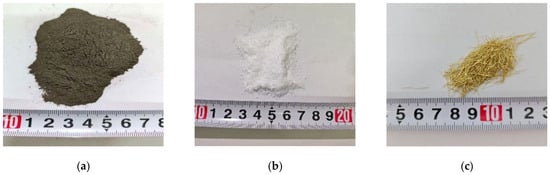
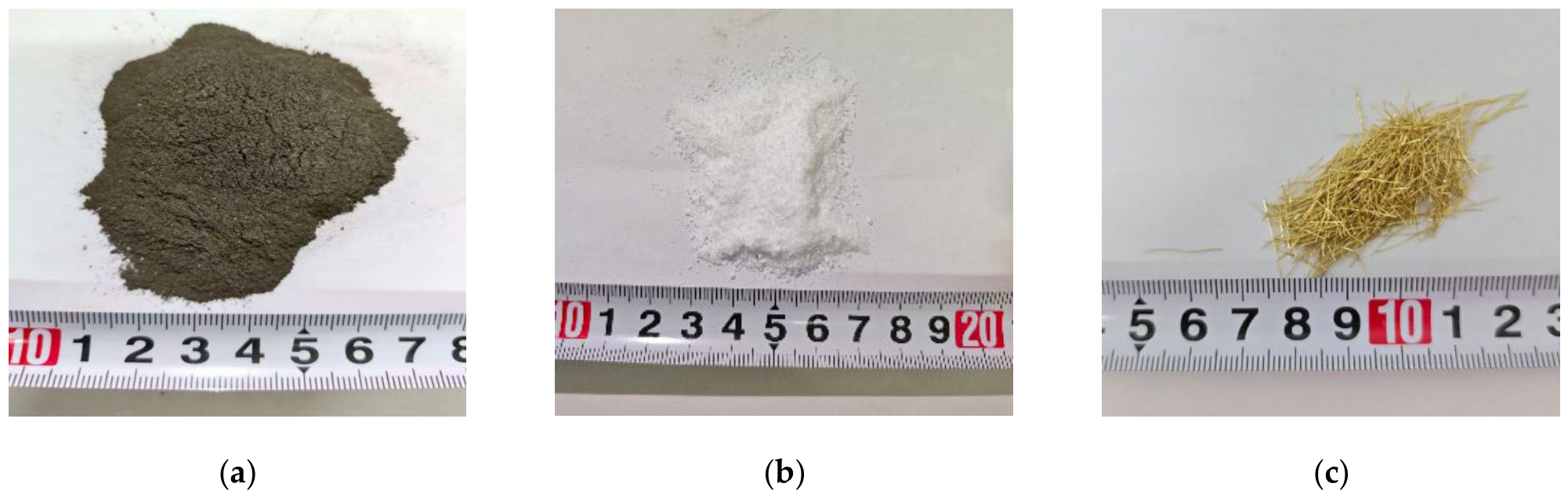
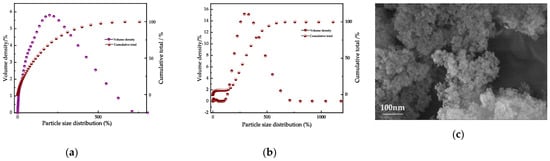
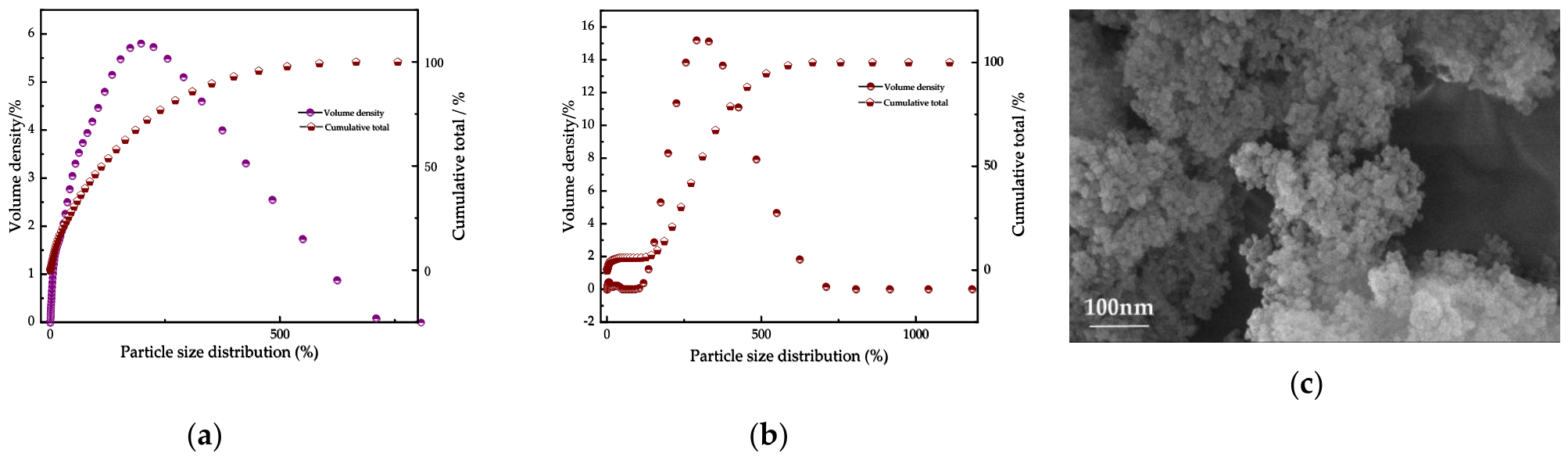
The macroscopic morphologies of GT, NS, and steel fibers are shown in Figure 1. P.O 42.5 ordinary Portland cement was selected as the cementitious material; its stability, setting time, and mechanical properties all meet the requirements listed in Table 2, and its main chemical composition is shown in Table 3. The relevant performance metrics for NS are shown in Table 4. The chemical composition of GT is shown in Table 5. The mechanical properties of the coarse aggregate are shown in Table 6. The properties of the fine aggregate are shown in Table 7. The properties of the steel fibers are shown in Table 8. A polycarboxylate-based high-efficiency water-reducing admixture with a water-reduction rate of ≥25% was selected. Tap water from the laboratory was used for mixing. The particle size distribution of GT and sand, as well as the micrographs of NS, are shown in Figure 2. NS had an average particle size of 20 nm and a purity of 99%.
Figure 1.
Materials: (a) GT; (b) NS; (c) steel fibers.
Table 2.
Cement performance indicators.
Table 3.
Material: XRF analysis results of cement/%.
Table 4.
Relevant metrics for NS.
Table 5.
Chemical composition of GT.
Table 6.
Coarse aggregate performance indicators.
Table 7.
Physical properties of sand.
Table 8.
Performance indicators of steel fibers.
Figure 2.
Materials: (a) particle size distribution of GT; (b) particle size distribution of medium sand; (c) microscopic scanning electron microscope images of NS.
2.2. Mix Proportions for Modified Concrete
To accurately investigate the modifying effects of GT and NS on the properties of steel fiber-reinforced concrete, the principle of controlling a single variable was adopted, and all mix proportions in this experiment were kept constant. The water–cement ratio was 0.42, the sand content was 36%, and the volumetric steel fiber content was 0.5%. A polycarboxylate-based high-performance water-reducing agent (water reduction rate ≥ 25%) was used at a dosage of 0.5%. Because nanoparticles had a large specific surface area and are prone to agglomeration, which can affect the modification effect, the nano-silica was first ultrasonically pre-dispersed in the test water prior to use. Tap water was used as the dispersion medium without the addition of any extra dispersants. The mixture was subjected to ultrasonic treatment for 15 min at room temperature (20 ± 3 °C). Once dispersion was complete, the mixture was immediately used for concrete mixing to prevent the nanoparticles from settling during standing. Modified concrete was poured and formed from concrete mix prepared in a single batch.
Before preparing the test specimens, appropriate amounts of cement, sand, aggregate, and GT were weighed and poured into a single-shaft concrete mixer, where they were mixed for 2 min. Steel fibers were then added and mixed for 3 min. Next, an appropriate amount of water was added to the mixer and mixed for another 2 min. The concrete was then poured into molds and manually compacted to produce PSC concrete. Cubic specimens (100 × 100 × 100 mm) were tested for compressive and split tensile strength. Prismatic specimens (100 × 100 × 400 mm) were tested for flexural strength. The tests were conducted in groups of three specimens each, and the measured values were recorded at 28 days. The mix proportions are shown in Table 9. No extra water or water-reducing agent was added during specimen preparation.
Table 9.
Mix proportions for modified concrete.
2.3. Test Methods for the Mechanical Properties of Modified Concrete
The tests were conducted in accordance with GB/T 50081-2019, “Standard for test methods of concrete physical and mechanical properties” [47]. Compressive strength and splitting tensile strength tests were performed using 100 mm × 100 mm × 100 mm cubic specimens, while flexural strength tests were conducted using 100 mm × 100 mm × 400 mm prismatic specimens, with three specimens in each group. The test was conducted using a universal testing machine (CSS-WAW1000, Jinan Zhonglu Chang Testing Machine Manufacturing Co., Ltd., Jinan, China). For the compressive strength test, a compression testing machine was used to apply continuous and uniform loading at a loading rate controlled between 0.5 and 0.8 MPa/s; the compressive strength of the specimens was calculated based on the measured failure load. For the splitting tensile strength test, a dedicated splitting fixture was used with a loading rate of 0.05 to 0.08 MPa/s; the strength was calculated using the splitting tensile strength formula. For the flexural strength test, a three-point loading method was used, with the effective span of the supports set at 300 mm and a loading rate of 0.05–0.07 MPa/s. Test data were calculated as the arithmetic mean of specimens within the same group, and outliers were excluded in accordance with code requirements.
Test data were calculated as the arithmetic average of measurements obtained from three replicate specimens in each group. When the deviation between the maximum or minimum measured value and the median value exceeded 15% of the median value, the corresponding extreme datum was discarded, and the median value was adopted as the representative result for this group. When deviations of both the maximum and minimum values from the median exceeded 15%, the test results of this group were regarded as invalid.
2.4. Experiment on the Dynamic Elastic Modulus of Concrete
Three specimens were used in each group to measure the dynamic elastic modulus, with the mass of the specimens in a saturated state serving as the initial mass and the transverse fundamental frequency serving as the initial reference value for the dynamic elastic modulus. The dynamic elastic modulus test was conducted in accordance with GB/T 50082—2024 using a DT-20 concrete dynamic elastic modulus tester [48], and the fundamental frequency of the specimens was determined using the transverse resonance method. During testing, the excitation transducer and receiving transducer were arranged in accordance with the standard. The transverse fundamental frequency corresponding to the specimen’s resonance peak was obtained by continuously adjusting the excitation frequency. Each measurement was repeated at least twice; when the difference between two consecutive measurements did not exceed 0.5% of their average value, the average of the two measurements was taken as the transverse fundamental frequency of that specimen. The dynamic elastic modulus of concrete is as follows.
where Ed is the modulus of elasticity of concrete (MPa), a is the side length of the square cross-section (mm), L is the length of the test specimen (mm), W is the mass of the test specimen (kg, accurate to 0.01 kg), and f is the fundamental vibration frequency of the test specimen during transverse vibration (Hz).
2.5. The Microstructure of Concrete
SEM (Hitachi SU8100, Hitachi High-Tech Corporation, Tokyo, Japan) was used to microimage the microstructure of different groups of fragments. To investigate the microstructure of concrete damage, microscopic test specimens were prepared from concrete test specimens selected from different groups. The specimens underwent pretreatment, including vacuum drying, and were then subjected to gold sputtering to improve their electrical conductivity. A scanning electron microscope was used to observe the microstructure of the specimens, and images of the microstructure were captured at various magnifications.
2.6. Slump Test Standards
Before the test, moisten the inner walls and base of the slump cone until no free water remains; place the base on a firm, level surface, and secure the slump cone at the center of the base. The concrete mixture is loaded in three layers. Each layer is compacted in a spiral motion from the edge toward the center 25 times. The bottom layer is compacted to the full thickness of the layer; the second and top layers are compacted to penetrate their own layers and extend into the surface of the layer below. The top layer of mixture should extend slightly above the rim of the slump cone. If the surface level drops during compaction, add material promptly. After loading is complete, level the surface with a trowel. Lift the slump cone vertically and steadily, controlling the lifting time to 3–7 s; the entire operation, from loading to lifting the cone, must be completed continuously within 150 s; Once the slump has stabilized or after the mixture has stood for 30 s, use a steel tape measure to measure the vertical difference between the top of the slump cone and the highest point of the slump specimen to determine the slump value. The measurement accuracy is 1 mm, and results are rounded to the nearest 5 mm. If the mixture collapses on one side or undergoes shear failure after the cone is lifted, a new sample must be taken and retested.
3. Results
3.1. Slump of Modified Concrete
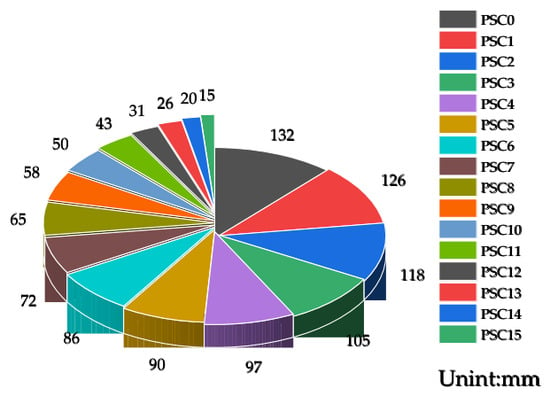
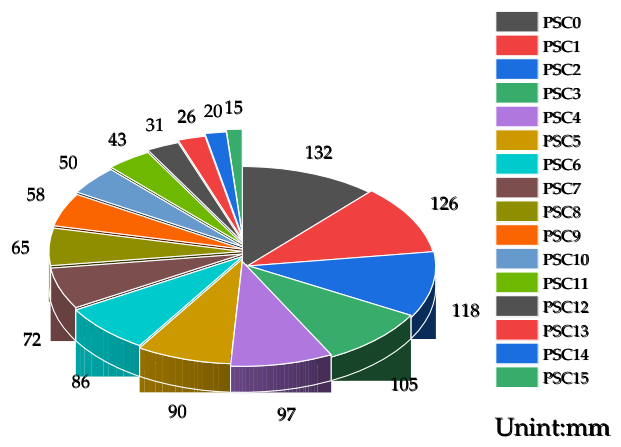
Slump is a key indicator of the workability of fresh concrete, directly reflecting the flowability and workability of the mixture. Various materials can alter the viscosity and uniformity of the concrete mix, which can easily lead to fluctuations in workability. Therefore, conducting slump tests is particularly necessary. This not only ensures consistent quality in the mixing and molding of each concrete batch—thereby avoiding issues such as uneven specimen compaction and internal porosity defects caused by differences in flowability—but also effectively evaluates the impact of modified materials on the workability of concrete during construction [49,50]. In this experiment, modified materials such as graphite tailings, NS, and steel fibers were added; the slump test results are shown in Figure 3.
Figure 3.
Slump of modified concrete.
The slump test results indicated that, with consistent mixture proportions, concrete slump generally decreased continuously as the dosage of modifying materials increased. Among them, the reference group PSC0 achieved a maximum slump of 132 mm, exhibiting optimal flowability of the mixed concrete, a full and uniform paste, and no segregation or bleeding. As graphite tailings, NS, and steel fibers were gradually added—first individually and then in combination—the slump of each group decreased stepwise. Ultimately, the PSC15 group, which contained a combination of additives, had a slump of only 15 mm, and the mixture was the driest and thickest. This may be attributed to the rough surface of graphite tailings particles, which adsorb free water in the system, increase particle friction resistance, and reduce concrete workability [51]. NS possesses a large specific surface area, which significantly enhances water absorption and the adsorption of water-reducing agents, thereby substantially increasing the viscosity of the paste [52]. Meanwhile, the interlocking of steel fibers within the mixing system forms a spatial skeleton that severely restricts the flow of the paste, serving as the primary factor causing the significant decrease in slump [53]. When multiple modified materials are blended, the water-absorption and viscosity-increasing effects, combined with particle flow resistance and the constraining effect of the fiber skeleton, interact synergistically, further exacerbating the deterioration of concrete workability and causing a continuous decrease in slump.
3.2. Seven-Day Mechanical Strength of Modified Concrete
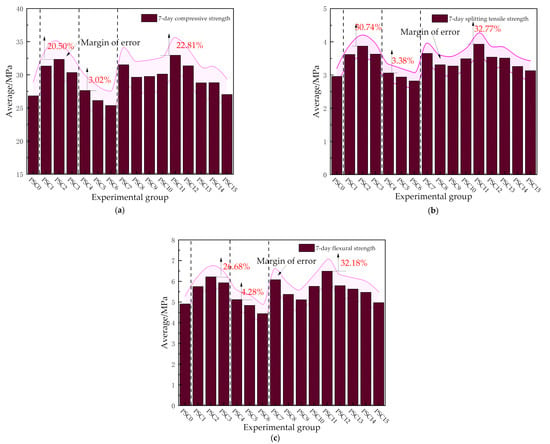
Figure 4 shows the trends in the 7-day compressive, split-tensile, and flexural strengths of steel fiber-reinforced concrete as a function of the combined addition of NS and GT. The test results showed that when NS was used as a single additive, the mechanical properties of concrete followed an increase-then-decrease trend with rising dosage. The optimal dosage was 1%, which increased the compressive, split tensile, and flexural strengths by 20.50%, 30.74%, and 26.68%, respectively, compared to the control group. When GT was added alone, performance improved slightly only at a low dosage of 10%; strength continued to decline as the dosage exceeded 10%. A significant strengthening effect was observed when the NS dosage was 1% and the GT dosage was 20%. This may be because an appropriate amount of NS, through its pozzolanic activity, consumes the Ca(OH)2 generated by cement hydration to produce more C-S-H gel; simultaneously, it acts as a nucleation agent to accelerate the hydration process and, through a filling effect, refines the internal pore structure of the concrete, thereby comprehensively enhancing mechanical properties [54]. However, an excessive amount of NS tends to agglomerate, forming internal defects that actually lead to a decrease in strength. When GT was used as a single additive, its strength was lower than that of natural sand, and its smooth surface resulted in weak bonding at the paste interface; excessive incorporation introduced abundant weak interfaces and caused performance deterioration. In contrast, the strengthening effects of 1% NS and 20% GT stem from the filling and modification of the transition zone at the cement paste interface by NS and GT, the complementary gradation between GT and natural sand, and the acceleration of the hydration process in the interface zone by NS. Furthermore, the improvement rates in split tensile strength and flexural strength with varying NS and GT dosages are significantly higher than those for compressive strength. This is likely because split tensile and flexural strengths primarily depend on the performance of the interface transition zone and the number of internal defects, while the modifying effect of NS on the interface and the bridging effect of steel fibers can more effectively suppress crack propagation.
Figure 4.
Seven-day mechanical strengths of modified concrete: (a) compressive strength; (b) split tensile strength; (c) flexural strength.
3.3. Twenty-Eight-Day Mechanical Strength of Modified Concrete
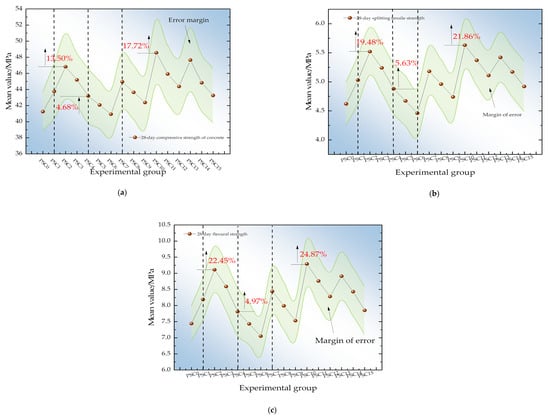
Figure 5 shows the mechanical strength of the modified concrete at 28 days. In the single-additive NS system, a 1% dosage still exhibited the best strengthening effect, with its 28-day compressive, split tensile, and flexural strengths increasing by 13.5%, 19.48%, and 22.45%, respectively, compared to the control group. This indicates that the pozzolanic reaction of an appropriate amount of NS is long-lasting and can continuously refine the pore structure as hydration progresses. In contrast, the 1.5% admixture group experienced a slowdown in late-stage strength gain due to internal defects caused by nanoparticle agglomeration.
Figure 5.
Twenty-eight-day mechanical properties of modified concrete: (a) compressive strength; (b) split tensile strength; (c) flexural strength.
In steel fiber-reinforced concrete with a single GT admixture, the strength of the 10% low-dosage group at 28 days was slightly higher than that of the control group. Its compressive strength, split tensile strength, and flexural strength increased by 4.68%, 5.63%, and 4.97%, respectively. However, as the GT content increased, the mechanical strength showed a downward trend. This indicates that as cement hydration products continue to form, an appropriate amount of GT can fill interfacial pores and improve the bond between GT and the cement paste, thereby enhancing the mechanical properties of the concrete.
In the modified steel fiber concrete system blended with NS and GT, the combination of 1% NS and 10% GT (PSC10) demonstrated the best performance improvement. Its compressive strength, split tensile strength, and flexural strength increased by 17.72%, 21.86%, and 24.87%, respectively. At 7 days of age, the optimal combination for the modified concrete was 1% NS and 20% GT (PSC11), which may be attributed to changes in the factors controlling concrete strength at different ages. At 7 days, the degree of cement hydration was relatively low, and the optimizing effect of the 20% GT admixture’s particle size distribution, combined with the rapid interfacial strengthening effect of NS, played a dominant role. However, by 28 days, cement hydration had reached a high level, and the strength of the matrix itself had also significantly increased. At this point, the filling effect of GT was no longer the dominant factor.
3.4. Analysis of Variance of the Mechanical Properties of Modified Concrete
Table 10 shows the significance of the effects of NS, GT, and their interaction on the 7-day and 28-day compressive, split tensile, and flexural strengths of steel fiber-reinforced concrete. SPSS software Statistics 27 was used to perform an analysis of variance of the mechanical strength of the modified concrete. This model is a two-factor analysis-of-variance model with interaction, with each group consisting of three parallel samples. The criteria for significance are p < 0.05 for significant effects and p < 0.01 for highly significant effects. At 7 days of age, NS was the dominant factor influencing all mechanical properties of the concrete, with its effects on all three strengths reaching a highly significant level (p < 0.01). This is because the degree of cement hydration is low in the early stages; the nucleation effect of NS significantly accelerates the hydration process, while its nanoscale filling effect rapidly refines the pores within the cement paste. At the same time, the pozzolanic reaction has already begun to consume calcium hydroxide to form C-S-H gel. The combination of these multiple effects makes NS the decisive factor in early-age strength development. As a substitute for natural sand, GT exhibits distinct differences in its effects depending on the type of strength: it has a significant effect on flexural strength (p < 0.05). The value of its effect on splitting tensile strength is p = 0.064 (p > 0.05). This may be due to the weakness of the early-stage interface transition zone, making interface-sensitive properties such as tensile and flexural strength more susceptible to the effects of aggregate replacement. At 7 days of age, the interaction between NS and GT did not reach a significant level for any of the three strength parameters (p > 0.05).
Table 10.
Analysis of significant factors affecting the mechanical properties of concrete.
At 28 days of age, NS remained the primary factor influencing the mechanical properties of concrete; its effect on split tensile and flexural strengths remained highly significant (p < 0.01), while its effect on compressive strength was significant (p < 0.05). The degree of GT’s influence increased compared to the 7-day age, and it had a significant effect on flexural strength (p < 0.05). The significance levels for the effects on splitting tensile strength and compressive strength were p = 0.076 (p > 0.05) and p = 0.148 (p > 0.05), respectively. This may be because, as cement hydration continues, the strength of the concrete matrix increases substantially, and the contribution of the properties in the interface transition zone between the aggregate and the matrix, as well as the mechanical properties of the aggregate itself, to the overall strength gradually increases. Consequently, the effects of the gradation changes and differences in interface characteristics resulting from the substitution of GT for natural sand become more pronounced.
Furthermore, regarding the 28-day compressive strength of modified steel fiber concrete, the overall correction model did not reach statistical significance (p = 0.311). This indicates that the linear combination of nanosilica and graphite tailings has limited explanatory power for the variation in 28-day compressive strength. There may be two reasons for this phenomenon. First, by the 28-day age, the degree of cement hydration is already high, and the matrix strength tends to stabilize, causing the marginal effects of aggregate replacement and nano-modification on compressive strength to weaken. Second, due to limitations in the number of parallel samples per group, the statistical power of the tests was insufficient. Although the overall model was not significant, the main effect of NS remained significant and had a large effect size (biased η2 = 0.270), indicating that NS remains the core factor influencing the 28-day compressive strength. In contrast, with regard to 28-day compressive strength, neither the main effect of GT nor the NS-GT interaction was statistically significant, indicating that their impact on this measure was limited.
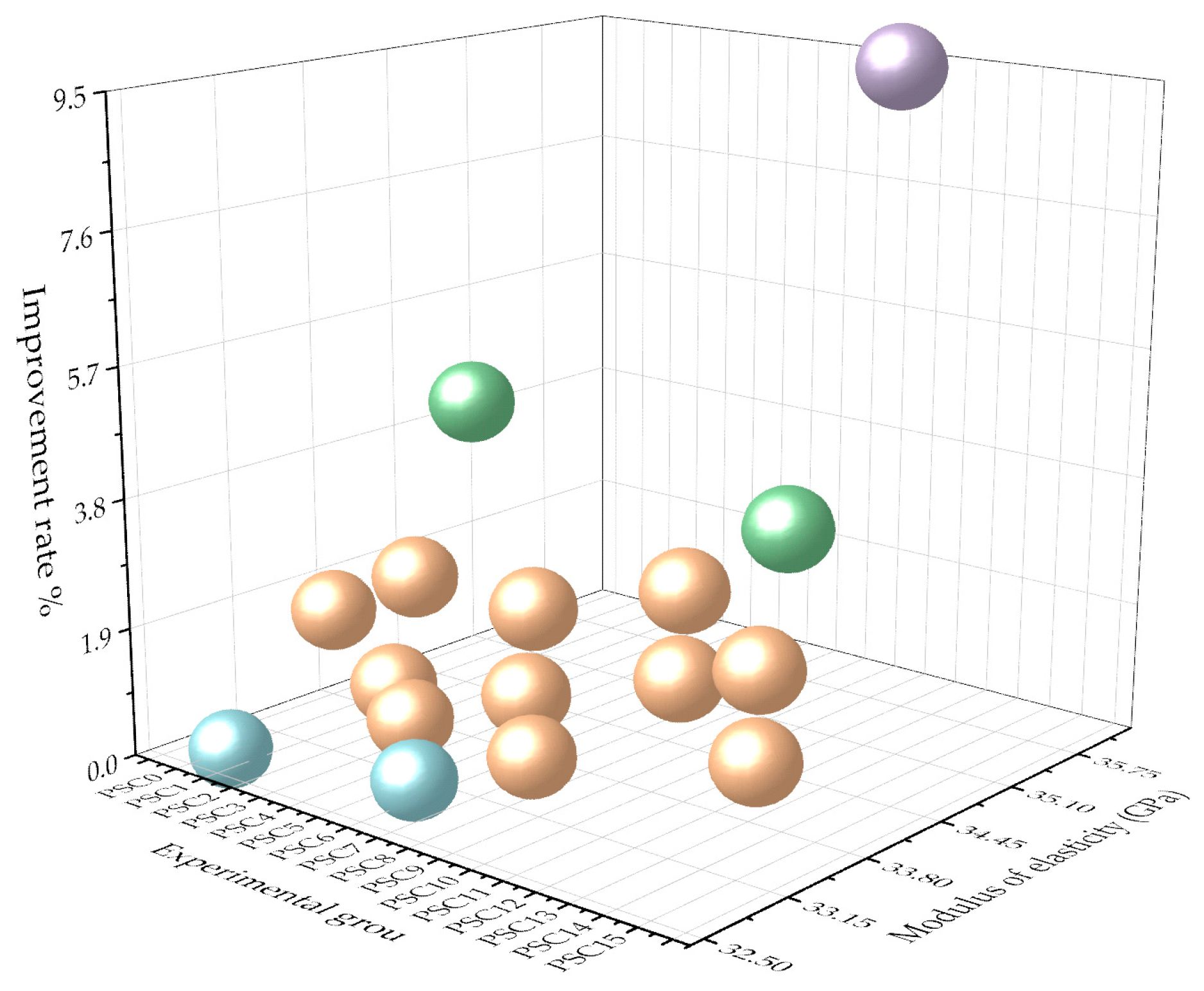
3.5. Dynamic Elastic Modulus of Concrete
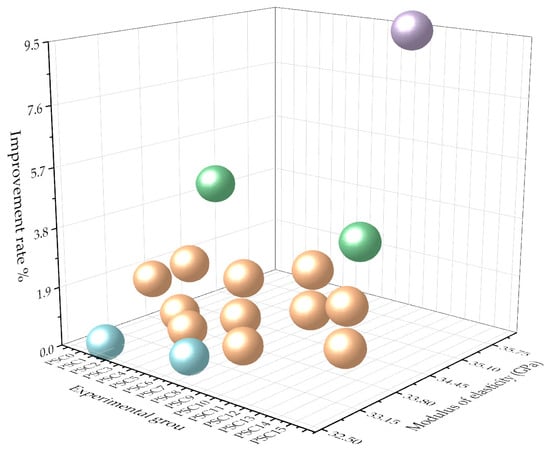
Figure 6 presents the test results of the dynamic elastic modulus of the modified concrete. As shown in Figure 6, for specimens with NS added individually, the dynamic elastic modulus first rises and then declines with the increase in NS dosage, peaking at 34.3 GPa at a NS dosage of 1%, which is 4.57% higher than that of the control group. An appropriate dosage of NS refines the internal pore structure of concrete via the filling effect and pozzolanic reaction, optimizing the compactness and homogeneity of the cement matrix and thus elevating the inherent stiffness of the material.
Figure 6.
Modulus of elasticity of modified concrete.
For specimens incorporating GT alone, the growth rate of the dynamic elastic modulus gradually declines as the GT replacement ratio increases. At GT replacement ratios of 10%, 20%, and 30%, the dynamic elastic modulus is 1.22%, 0.91%, and 0.30% higher than the control group, respectively. At low replacement levels, the fine filler effect of GT slightly improves the packing compactness of aggregates. Nevertheless, the adverse impacts of GT gradually dominate at higher replacement ratios: GT possesses a lower modulus than natural river sand and forms weaker interfacial bonding with the paste. Consequently, the increment of dynamic elastic modulus continuously diminishes.
In the dual-admixture system, the 1% NS, 10% GT10 group (PSC10) exhibited superior elastic modulus performance, reaching 35.9 GPa—a 9.45% increase over the control group. This improvement was significantly greater than that observed in the group with 1% NS alone, indicating a clear synergistic enhancement effect between the two admixtures in improving the concrete’s resistance to deformation. The essence of this phenomenon lies in the fact that NS not only increases the elastic modulus of the cement paste matrix but also enhances the synergistic deformation capacity between the aggregate and the matrix by improving the properties of the interfacial transition zone between GT and the cement paste, thereby more effectively increasing the overall stiffness of the concrete. However, when the GT content exceeded 10%, even with the modifying effect of NS, an excessive number of GT particles with low elastic modulus will became a weak link in the concrete’s deformation, leading to a gradual decrease in the elastic modulus. Overall, changes in the elastic modulus of concrete are primarily determined by the density of the matrix and the interfacial bonding properties. Its trend is highly correlated with compressive strength, but the increase is relatively small. This is because, as an intrinsic deformation property of the material, the elastic modulus is less sensitive to internal defects than compressive strength.
3.6. Microscopic Images of Modified Concrete
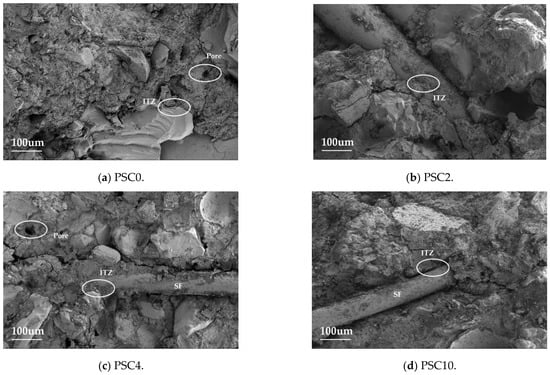
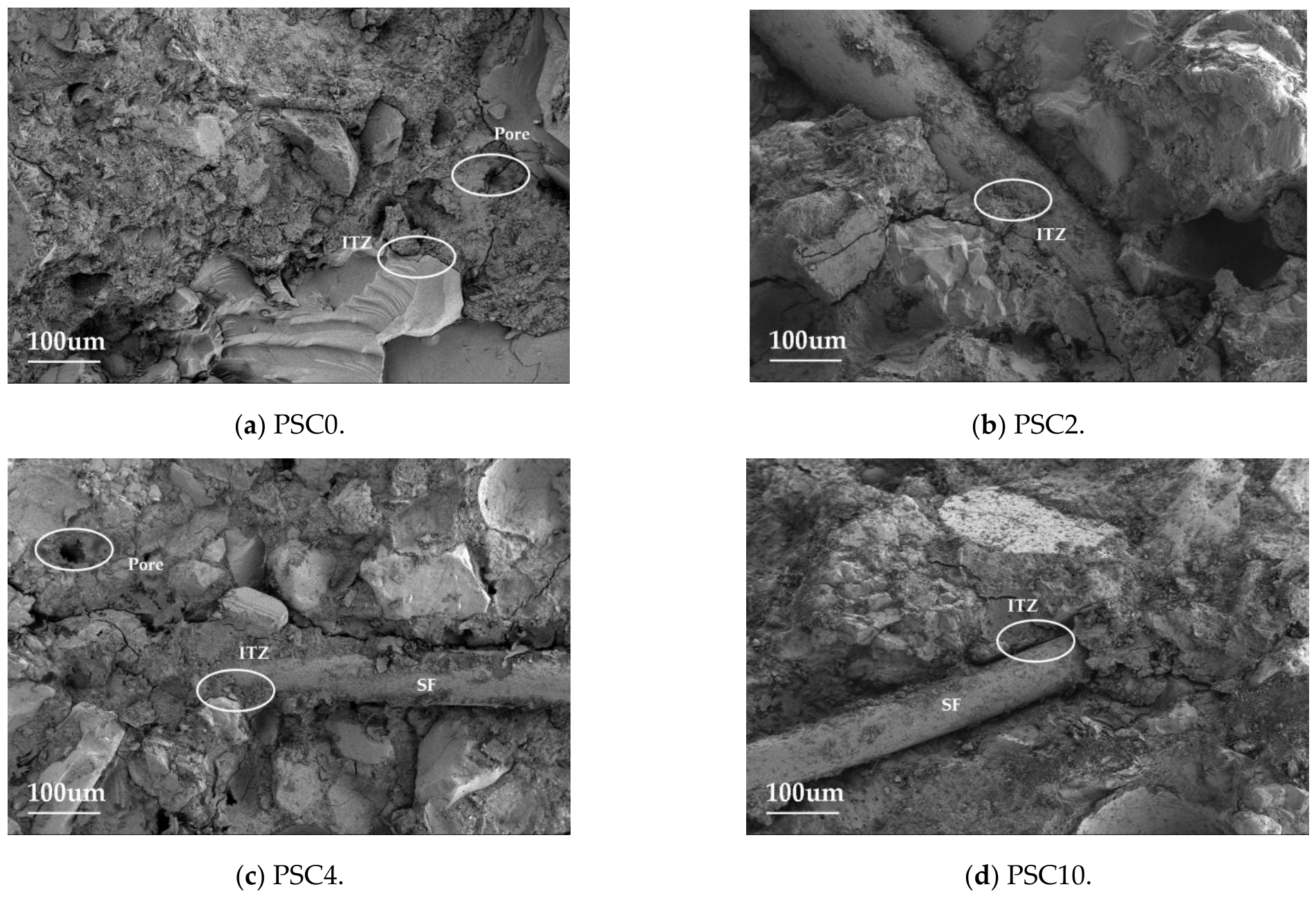
To further examine the density of the modified concrete after compressive failure, microstructural analyses were conducted on PSC0, PSC2, PSC4, and PSC10 (Figure 7). The macroscopic mechanical properties of concrete are influenced by its internal microstructural characteristics; the pore structure of the matrix, the interface transition zone (ITZ) between aggregates and cement paste, and the bond condition at the interface between steel fibers and the matrix are the key microstructural factors affecting the strength of steel fiber-reinforced concrete (The “SF” in the figure stands for steel fibers).
Figure 7.
Microscopic images of modified concrete: (a) PSC0; (b) PSC2; (c) PSC4; (d) PSC10.
In contrast, microstructural defects in the control group (PSC0) were more pronounced: relatively large voids were distributed throughout the matrix, hydration products were loosely accumulated, and there were distinct wide cracks in the interface transition zone between the aggregate and the cement paste. In the PSC4 group, which contained a single admixture of GT, steel fibers could be clearly observed spanning the matrix cross-section. The fine particles of GT exerted a physical filling effect, filling some of the large voids in the matrix, and the overall density of the matrix was improved compared to PSC0. However, relatively obvious interface gaps still existed in the interface transition zone between the steel fibers and the matrix, and the interfacial bonding performance was limited. This is because GT itself has weak pozzolanic activity; relying solely on particle filling to optimize the pore structure is insufficient to chemically modify the interface transition zone. In the PSC2 group, which was single-blended with NS, the microstructure showed significant improvement compared to the reference group. The number of large pores within the matrix decreased, pore sizes became finer, the width of cracks in the interface transition zone narrowed significantly, interface defects were greatly reduced, and the density of hydration products improved markedly. This modification stems from the pozzolanic effect of NS; nano-SiO2 can undergo a secondary hydration reaction with Ca(OH)2 generated from cement hydration, producing more C-S-H gel with a lower calcium-to-silica ratio. This not only fills the microscopic pores within the matrix but also fills the loose structure in the interfacial transition zone, resulting in a better microstructural strengthening effect than the group with single GT addition. The PSC10 group, which was dual-blended with NS and GT, exhibited the highest microstructural density among the four groups. It featured a low number of internal pores with fine pore sizes and virtually no noticeable large voids. The interface transition zone between the steel fibers and the cement matrix was tightly bonded, with no obvious interface cracks.
Considering the overall picture, GTs and NS produce a synergistic modification effect through different mechanisms of action. GTs primarily act as a physical filler, filling the large pores in the matrix with fine particles, optimizing the pore size distribution, and forming an initial structural framework. NS primarily acts through a chemical pozzolanic reaction, generating a C-S-H gel via secondary hydration, which further refines the micropores and strengthens the bond between the interface transition zone and the steel fibers. When blended, the physical filling and chemical modification effects complement each other, jointly creating the densest microstructure, minimizing defects in the matrix and at the interfaces, and providing the microstructural foundation for enhancing macroscopic mechanical strength.
4. Conclusions
In this study, GTs were used to partially replace fine aggregate, and modified concrete was prepared by co-blending NS and steel fibers. The 7-day and 28-day mechanical properties and elastic modulus of the concrete were investigated at different dosage levels. By combining microstructural characterization with analysis of variance (ANOVA), the interaction patterns and modification mechanisms of the various components were explored. The main conclusions are as follows:
- (1)
- Adding either NS or GTs alone can affect the properties of steel fiber-reinforced concrete. At 7 days of curing, the strengthening effect of NS is significant, while that of GTs is relatively weaker. At 28 days, the modifying effects of both additives are evident, with NS demonstrating an overall superior modifying effect compared to GT. The optimal dosage of NS is 1% by mass of cement; under single-additive conditions, it increases the 28-day compressive strength, splitting tensile strength, and flexural strength by 13.50%, 19.48%, and 22.45%, respectively, compared to the control group. GTs can slightly improve concrete performance at a 10% replacement rate; under single-additive conditions, they increase the 28-day compressive strength, split tensile strength, and flexural strength by 4.68%, 5.63%, and 4.97%, respectively, compared to the reference group. When the GT replacement rate exceeds 20%, the mechanical properties of steel fiber-reinforced concrete gradually decline.
- (2)
- The combined addition of NS and GTs can influence the mechanical properties of steel fiber-reinforced concrete. This reinforcing effect is evident at 7 days of age and becomes significant by 28 days of age. The optimal combination of additives varies across different ages: at 7 days of age, the combination of 1% NS and 20% GTs yields the best mechanical properties. At 28 days, the combination of 1% NS and 10% GTs yields the best overall performance, with the 28-day compressive strength, split tensile strength, and flexural strength increasing by 17.72%, 21.86%, and 24.87%, respectively, compared to the reference group, while the modulus of elasticity increases by 9.45% compared to the reference group. When the GT replacement rate is too high, the improvement in the performance of the blended system tends to decline. NS can participate in early-stage hydration reactions through pozzolanic activity and refine the pore structure; therefore, its effect on concrete modification is particularly pronounced during the early stages. GTs primarily act as a fine aggregate to provide a filling effect; at an appropriate replacement ratio, they optimize the aggregate packing framework. However, an excessively high replacement ratio may disrupt the original aggregate gradation, weaken the interfacial transition zone, and lead to an increase in internal defects within the matrix.
- (3)
- Analysis of variance results from the two-way ANOVA with interaction show that NS is the dominant factor affecting the mechanical properties of steel fiber-reinforced concrete at both curing ages. GTs exert a significant main effect on flexural strength at 7 d and 28 d, while their effects on other strength indicators are statistically insignificant. No significant interaction between NS and GTs is detected at 7 d. For the 28-d compressive strength, the overall ANOVA model is insignificant, yet the main effect of NS remains significant with a relatively large partial η2.
- (4)
- Microstructural analysis shows that GTs primarily optimize the pore size distribution of the matrix through a fine-particle filling effect, while NS primarily refines the pore structure and improves the properties of the interfacial transition zone through pozzolanic reactions. When the two are blended, physical filling and chemical modification complement each other, enhancing the overall density of the matrix and strengthening the interfacial bonding between the steel fibers and the matrix.
At present, this paper focuses primarily on the basic mechanical properties and microstructure of concrete. Future research could further explore the durability, long-term performance, and engineering applications of concrete in this system, thereby providing a comprehensive theoretical basis and technical support for the large-scale engineering application of GT.
Author Contributions
Conceptualization, P.W.; methodology, T.B. and N.S.; software, T.B.; validation, N.S.; formal analysis, P.W. and T.B.; investigation, T.B.; resources, T.B. and N.S.; data curation, P.W.; writing—original draft preparation, N.S., T.B. and P.W.; writing—review and editing, T.B. and P.W.; visualization, T.B. and N.S.; supervision, T.B.; project administration, T.B. and N.S.; funding acquisition, T.B. All authors have read and agreed to the published version of the manuscript.
Funding
This work was supported by the Information Management for Urban Elevated Road Bridges (2021-ZDJH-257).
Data Availability Statement
The available figures presented in this research are obtainable upon contact with the corresponding author.
Conflicts of Interest
The remaining authors declare that the research was conducted in the absence of any commercial or financial relationships that could be construed as a potential conflict of interest.
References
- Ghafoori, N.; Moradi, B.; Najimi, M.; Hasnat, A. Transport properties of nano-silica contained self-consolidating concrete. Constr. Build. Mater. 2021, 301, 124060. [Google Scholar] [CrossRef] [Scilit]
- Labaran, Y.H.; Atmaca, N.; Tan, M.; Atmaca, K.; Aram, S.A.; Kaky, A.T. Nano-enhanced concrete: Unveiling the impact of nano-silica on strength, durability, and cost efficiency. Discov. Civ. Eng. 2024, 1, 116. [Google Scholar] [CrossRef] [Scilit]
- Mukharjee, B.B.; Barai, S.V. Influence of incorporation of colloidal nano-silica on behaviour of concrete. Iran. J. Sci. Technol. Trans. Civ. Eng. 2020, 44, 657–668. [Google Scholar] [CrossRef] [Scilit]
- Gunasekara, C.; Sandanayake, M.; Zhou, Z.; Law, D.W.; Setunge, S. Effect of nano-silica addition into high volume fly ash–hydrated lime blended concrete. Constr. Build. Mater. 2020, 253, 119205. [Google Scholar] [CrossRef] [Scilit]
- Alhawat, M.; Ashour, A.; El-Khoja, A. Properties of concrete incorporating different nano silica particles. Mater. Res. Innov. 2020, 24, 133–144. [Google Scholar] [CrossRef] [Scilit]
- Shanmugam, K.; Deivasigamani, V.; Arunvivek, G.K.; Olaiya, B.C. Effect of nano-silica and sisal fibre on the mechanical and durability properties of concrete. Sci. Rep. 2026, 16, 8212. [Google Scholar] [CrossRef] [Scilit] [PubMed]
- Barbhuiya, G.H.; Moiz, M.A.; Hasan, S.D.; Zaheer, M.M. Effects of the nanosilica addition on cement concrete: A review. Mater. Today Proc. 2020, 32, 560–566. [Google Scholar] [CrossRef] [Scilit]
- Rupasinghe, M.; Mendis, P.; Ngo, T.; Nguyen, T.N.; Sofi, M. Compressive strength prediction of nano-silica incorporated cement systems based on a multiscale approach. Mater. Des. 2017, 115, 379–392. [Google Scholar] [CrossRef] [Scilit]
- Güneyisi, E.; Gesoglu, M.; Al-Goody, A.; İpek, S. Fresh and rheological behavior of nano-silica and fly ash blended self-compacting concrete. Constr. Build. Mater. 2015, 95, 29–44. [Google Scholar] [CrossRef] [Scilit]
- Lezgy-Nazargah, M.; Emamian, S.A.; Aghasizadeh, E.; Khani, M. Predicting the mechanical properties of ordinary concrete and nano-silica concrete using micromechanical methods. Sādhanā 2018, 43, 196. [Google Scholar] [CrossRef] [Scilit]
- Gao, Z.; Shan, S.; Zhang, B.; Zhang, Q.; Han, X.; Lu, K.; Quan, P. Mechanical analysis of support material for gob-side entry retaining prepared by graphite tailings. Nonferrous Met. (Min. Sec.) 2024, 76, 178–184. [Google Scholar]
- Li, B.; Liu, H.; Xue, J.; Wang, Z.; Shen, W. Discussion of ‘Graphite Ore Tailings as Partial Replacement of Sand in Concrete’. ACI Mater. J. 2019, 116, 133–135. [Google Scholar]
- Zhan, X.U.; Du, C.; Gao, J.; Yi, F.; Shi, K. Research on bearing capacity of soilbagged graphite tailings and numerical simulation of along empty lanes. COAL Sci. Technol. 2025, 53, 343–356. [Google Scholar]
- Zhang, Y.; Wang, C.; Zhang, F.; Xin, Y.; He, B.; Zhang, S.; Tian, H. High-performance micron-sized porous Si/C anodes from natural graphite tailings for lithium-ion batteries. Met. Adv. 2026, 4, 88–98. [Google Scholar] [CrossRef] [Scilit]
- Sun, J.; Xu, Z.; Zhao, X.; Gao, X.; Sun, M. Influence of graphite tailings with variable activation treatment on the frost resistance of ultra-high performance concrete. Constr. Build. Mater. 2026, 528, 146551. [Google Scholar] [CrossRef] [Scilit]
- Liu, S.-X.; Wei, S.-B. Study on recovery of sericite from the graphite tailings. CHINA Min. Mag. 2013, 22, 97–100. [Google Scholar]
- Fathi, H.; Jannaty, M.H. Sustainable low-carbon concrete made of drilling waste and graphite tailings. Eur. J. Environ. Civ. Eng. 2026, 30, 2660371. [Google Scholar] [CrossRef] [Scilit]
- Liu, H.; Li, B.; Xue, J.; Hu, J.; Zhang, J. Mechanical and electroconductivity properties of graphite tailings concrete. Adv. Mater. Sci. Eng. 2020, 2020, 9385097. [Google Scholar] [CrossRef] [Scilit]
- Xue, H.; Jiang, Q.; Song, Z.; Dai, J.; Wang, J. Impact resistance of graphite tailings concrete modified with basalt fibers. Constr. Build. Mater. 2025, 494, 143390. [Google Scholar] [CrossRef] [Scilit]
- Quan, P.; Sun, Q.; Xu, Z.; Shi, M.; Gao, Z.; Wang, D.; Liu, D.; Yang, L.; Song, S. Study on the mechanical properties and strength formation mechanism of high-volume graphite tailings concrete. J. Build. Eng. 2024, 84, 108500. [Google Scholar] [CrossRef] [Scilit]
- Liu, H.; Xue, J.; Li, B.; Wang, J.; Lv, X.; Zhang, J. Effect of graphite tailings as substitute sand on mechanical properties of concrete. Eur. J. Environ. Civ. Eng. 2022, 26, 2635–2653. [Google Scholar] [CrossRef] [Scilit]
- Duan, H.; Liu, H.; Li, B.; Wang, Z.; Gao, H. Mechanical properties and mechanism analysis of graphite tailings environment-friendly concrete. Materials 2022, 15, 8870. [Google Scholar] [CrossRef] [Scilit] [PubMed]
- Jiang, R.; Wang, Z.; Du, Y.; Wen, Y. Study on the Performance of High-Performance Mortar (HPM) Prepared Using Sodium-Silicate-Modified Graphite Tailing Sand. Buildings 2024, 14, 3269. [Google Scholar] [CrossRef] [Scilit]
- Du, C.; Xu, Z.; Yi, F.; Gao, J.; Shi, K. Bearing capacity mechanism of soilbagged graphite tailings. Bull. Eng. Geol. Environ. 2024, 83, 24. [Google Scholar] [CrossRef] [Scilit]
- Kathirvel, P.; Kwon, S.-J.; Lee, H.-S.; Karthick, S.; Saraswathy, V. Graphite Ore Tailings as Partial Replacement of Sand in Concrete. ACI Mater. J. 2018, 115, 481–492. [Google Scholar] [CrossRef] [Scilit]
- Banthia, N.; Sappakittipakorn, M. Toughness enhancement in steel fiber reinforced concrete through fiber hybridization. Cem. Concr. Res. 2007, 37, 1366–1372. [Google Scholar] [CrossRef] [Scilit]
- Caggiano, A.; Folino, P.; Lima, C.; Martinelli, E.; Pepe, M. On the mechanical response of hybrid fiber reinforced concrete with recycled and industrial steel fibers. Constr. Build. Mater. 2017, 147, 286–295. [Google Scholar] [CrossRef] [Scilit]
- Altun, F.; Aktaş, B. Investigation of reinforced concrete beams behavior of steel fiber added lightweight concrete. Constr. Build. Mater. 2013, 38, 575–581. [Google Scholar] [CrossRef] [Scilit]
- Uygunoğlu, T. Investigation of microstructure and flexural behavior of steel-fiber reinforced concrete. Mater. Struct. 2008, 41, 1441–1449. [Google Scholar] [CrossRef] [Scilit]
- Kachouh, N.; El-Hassan, H.; El-Maaddawy, T. Effect of steel fibers on the performance of concrete made with recycled concrete aggregates and dune sand. Constr. Build. Mater. 2019, 213, 348–359. [Google Scholar] [CrossRef] [Scilit]
- Abbass, W.; Khan, M.I.; Mourad, S. Evaluation of mechanical properties of steel fiber reinforced concrete with different strengths of concrete. Constr. Build. Mater. 2018, 168, 556–569. [Google Scholar] [CrossRef] [Scilit]
- Pająk, M.; Ponikiewski, T. Flexural behavior of self-compacting concrete reinforced with different types of steel fibers. Constr. Build. Mater. 2013, 47, 397–408. [Google Scholar] [CrossRef] [Scilit]
- Yoo, D.-Y.; Yoon, Y.-S. Structural performance of ultra-high-performance concrete beams with different steel fibers. Eng. Struct. 2015, 102, 409–423. [Google Scholar] [CrossRef] [Scilit]
- Abhilash, P.P.; Nayak, D.K.; Sangoju, B.; Kumar, R.; Kumar, V. Effect of nano-silica in concrete; a review. Constr. Build. Mater. 2021, 278, 122347. [Google Scholar] [CrossRef] [Scilit]
- Adetukasi, A.O.; Fadugba, O.G.; Adebakin, I.H.; Omokungbe, O. Strength characteristics of fibre-reinforced concrete containing nano-silica. Mater. Today Proc. 2021, 38, 584–589. [Google Scholar] [CrossRef] [Scilit]
- Saleh, N.J.; Ibrahim, R.I.; Salman, A.D. Characterization of nano-silica prepared from local silica sand and its application in cement mortar using optimization technique. Adv. Powder Technol. 2015, 26, 1123–1133. [Google Scholar] [CrossRef] [Scilit]
- Çevik, A.; Alzeebaree, R.; Humur, G.; Niş, A.; Gülşan, M.E. Effect of nano-silica on the chemical durability and mechanical performance of fly ash based geopolymer concrete. Ceram. Int. 2018, 44, 12253–12264. [Google Scholar] [CrossRef] [Scilit]
- Erdem, S.; Hanbay, S.; Güler, Z. Micromechanical damage analysis and engineering performance of concrete with colloidal nano-silica and demolished concrete aggregates. Constr. Build. Mater. 2018, 171, 634–642. [Google Scholar] [CrossRef] [Scilit]
- Abna, A.; Mazloom, M. Flexural properties of fiber reinforced concrete containing silica fume and nano-silica. Mater. Lett. 2022, 316, 132003. [Google Scholar] [CrossRef] [Scilit]
- Paktiawal, A.; Alam, M. Nano-silica and its role on performance of cement concrete-A review of experimental investigation. In IOP Conference Series: Earth and Environmental Science; IOP Publishing: Bristol, UK, 2020; Volume 614, p. 012085. [Google Scholar]
- Karimipour, A.; Ghalehnovi, M.; Edalati, M.; de Brito, J. Properties of fibre-reinforced high-strength concrete with nano-silica and silica fume. Appl. Sci. 2021, 11, 9696. [Google Scholar] [CrossRef] [Scilit]
- Zhang, B.; Tan, H.; Shen, W.; Xu, G.; Ma, B.; Ji, X. Nano-silica and silica fume modified cement mortar used as Surface Protection Material to enhance the impermeability. Cem. Concr. Compos. 2018, 92, 7–17. [Google Scholar] [CrossRef] [Scilit]
- Du, H.; Du, S.; Liu, X. Effect of nano-silica on the mechanical and transport properties of lightweight concrete. Constr. Build. Mater. 2015, 82, 114–122. [Google Scholar] [CrossRef] [Scilit]
- Arif, M.; Hasan, S.D.; Siddiqui, S. Effect of nano silica on strength and permeability of concrete. Mater. Today Proc. 2023; in press.
- Basar, G.; Der, O.; Kahraman, F.; Önder, S. Optimization of hole quality in drilling of direct hot-pressed Al/SiC composites using Taguchi method. Sci. Rep. 2026, 16, 13591. [Google Scholar] [CrossRef] [Scilit] [PubMed]
- Somaiah, A.; Prasad, B.A.; Nath, N.K. Taguchi-based optimization and ANOVA analysis of drilling parameters for enhanced hole quality in GFRP composites with MgO and TiO2 nanofillers. Mater. Circ. Econ. 2025, 7, 5. [Google Scholar] [CrossRef] [Scilit]
- GB/T 50081-2019; Standard for Test Methods of Concrete Physical and Mechanical Properties. China Architecture & Building Press: Beijing, China, 2019.
- GB/T 50082- 2024; Standard for Test Methods of Long-Term Performance and Durability of Concrete. China Architecture & Building Press: Beijing, China, 2024.
- Hawileh, R.A.; Al Rashed, A.; Mhanna, H.H.; Abdalla, J.A. Properties of concrete with partial replacement of cement with different percentages of micro silica and nano silica. Mater. Today Proc. 2023; in press.
- Nia, S.B.; Shafei, B. Synergistic effects of nano and micro silica on fresh and hardened properties of self-consolidating concrete. Case Stud. Constr. Mater. 2024, 21, e03443. [Google Scholar] [CrossRef] [Scilit]
- Liu, H.-B.; Xin, Z.; Ma, H.-Y.; Guo, H.-Y.; Bai, Q.; Jiang, C.-J. Utilization of finely ground graphite tailings as a sustainable substitute for quartz powder in ultra-high performance concrete: A comprehensive study on performance, microstructure, environmental impact. J. Build. Eng. 2026, 124, 116064. [Google Scholar] [CrossRef] [Scilit]
- Hamada, H.; Shi, J.; Yousif, S.T.; Al Jawahery, M.; Tayeh, B.; Jokhio, G. Use of nano-silica in cement-based materials–a comprehensive review. J. Sustain. Cem.-Based Mater. 2023, 12, 1286–1306. [Google Scholar] [CrossRef] [Scilit]
- Mohod, M.V. Performance of steel fiber reinforced concrete. Int. J. Eng. Sci. 2012, 1, 1–4. [Google Scholar]
- AlTawaiha, H.; Alhomaidat, F.; Eljufout, T. A Review of the Effect of Nano-Silica on the Mechanical and Durability Properties of Cementitious Composites. Infrastructures 2023, 8, 132. [Google Scholar] [CrossRef] [Scilit]

Disclaimer/Publisher’s Note: The statements, opinions and data contained in all publications are solely those of the individual author(s) and contributor(s) and not of MDPI and/or the editor(s). MDPI and/or the editor(s) disclaim responsibility for any injury to people or property resulting from any ideas, methods, instructions or products referred to in the content. |
© 2026 by the authors. Licensee MDPI, Basel, Switzerland. This article is an open access article distributed under the terms and conditions of the Creative Commons Attribution (CC BY) license.