


Abstract
Population ageing has made mental health among older adults an important public health concern. Although the community environment is associated with older adults’ mental health, the social pathways linking the two and how these pathways vary across age groups remain insufficiently understood. Using survey data from 32 urban communities in Yangpu District, Shanghai, this study employed structural equation modeling to examine the association between the community environment and mental health among older adults aged 60 years and above. Community attachment and neighborly interaction represented the affective and behavioral dimensions of community social connectedness, respectively. The results showed a significant positive association between the community environment and older adults’ mental health. Both the direct effect and the total indirect effect were statistically significant. The specific indirect effects through community attachment and neighborly interaction were also significant, with a larger estimated indirect effect through community attachment. Age-stratified analyses revealed different patterns of statistical significance across age groups, although formal between-group comparisons identified no statistically significant differences. Among young-old adults, the specific indirect effect through community attachment was statistically significant. Among oldest-old adults, the direct association and the specific indirect effect through neighborly interaction were significant, whereas the total indirect effect was not. These findings indicate that older adults’ mental health is associated with both physical environmental conditions and community social connectedness. They provide empirical evidence to inform age-friendly urban community development.
1. Introduction
Against the backdrop of accelerating global population ageing [1,2], mental health among older adults has become an important topic of global scholarly concern [3,4]. The global prevalence of depression among older adults is currently estimated at approximately 19.2% [5]. Mental health problems are closely associated not only with older adults’ quality of life, functional independence, and social participation, but also with greater family caregiving burdens and increased healthcare and social security expenditures [6,7,8,9]. At the same time, physiological functioning, mobility, and social relationships continue to change with advancing age, accompanied by increasing risks to mental health; moreover, mental health status and its associated factors may differ across stages of later life [10,11,12]. Therefore, examining the mechanisms associated with older adults’ mental health and their age-related heterogeneity is important for advancing research on mental health in later life and improving the targeting of interventions and support.
The community environment is an important external factor closely associated with older adults’ mental health. Environmental attributes such as community greening, facility conditions, walking environments, and public services have all been closely linked to mental health in later life [4]. Previous research has found that greater neighborhood tree-canopy coverage is associated with lower levels of depression among older adults [13]. Community facilities, walking environments, and public transport conditions are also closely related to older adults’ use of community resources and their mental health [14]. In addition, older adults living in areas with better neighborhood facilities and community infrastructure tend to report lower levels of depression [15]. A systematic review further showed that multiple dimensions of the community environment, including green-space provision, facility accessibility, and the time and distance required to reach daily destinations, are closely associated with older adults’ mental health, indicating that the relationship between the community environment and mental health involves several interrelated environmental dimensions [4]. Overall, substantial empirical evidence has documented the association between the community environment and older adults’ mental health. However, compared with the extensive attention given to their overall relationship, the underlying mediating mechanisms have received less systematic comparison, and differences across specific mediating pathways remain to be further examined.
Social ecological theory emphasizes the multilevel relationships between individual health, the environments in which individuals live, and related behavioral and psychosocial processes [16,17]. Within this theoretical framework, community social connectedness may serve as an important pathway linking the community environment to mental health among older adults [18,19]. Previous studies have shown that social connectedness is closely associated with psychosocial factors such as social support, sense of belonging, and loneliness, and has multidimensional attributes [20,21]. This study selected neighborly interaction and community attachment as mediating variables, representing the behavioral and affective dimensions of community social connectedness, respectively. Neighborly interaction primarily reflects daily contact, communication, and mutual assistance among residents, and is associated with the community environment and opportunities for social interaction [22,23,24,25,26,27]. Community attachment, in contrast, reflects residents’ sense of belonging, identification, and emotional attachment to their residential community, and is closely associated with mental health among older adults [25,26]. Although both represent connections between residents and their communities, they differ in their emphasis on social interaction behaviors and emotional belonging, respectively, providing a basis for examining distinct indirect pathways linking the community environment to mental health.
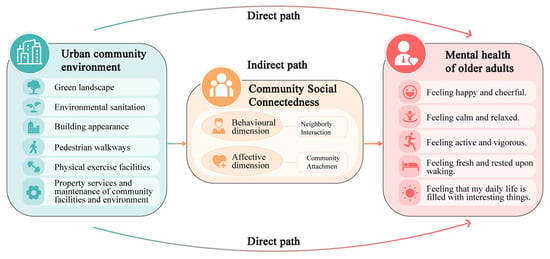
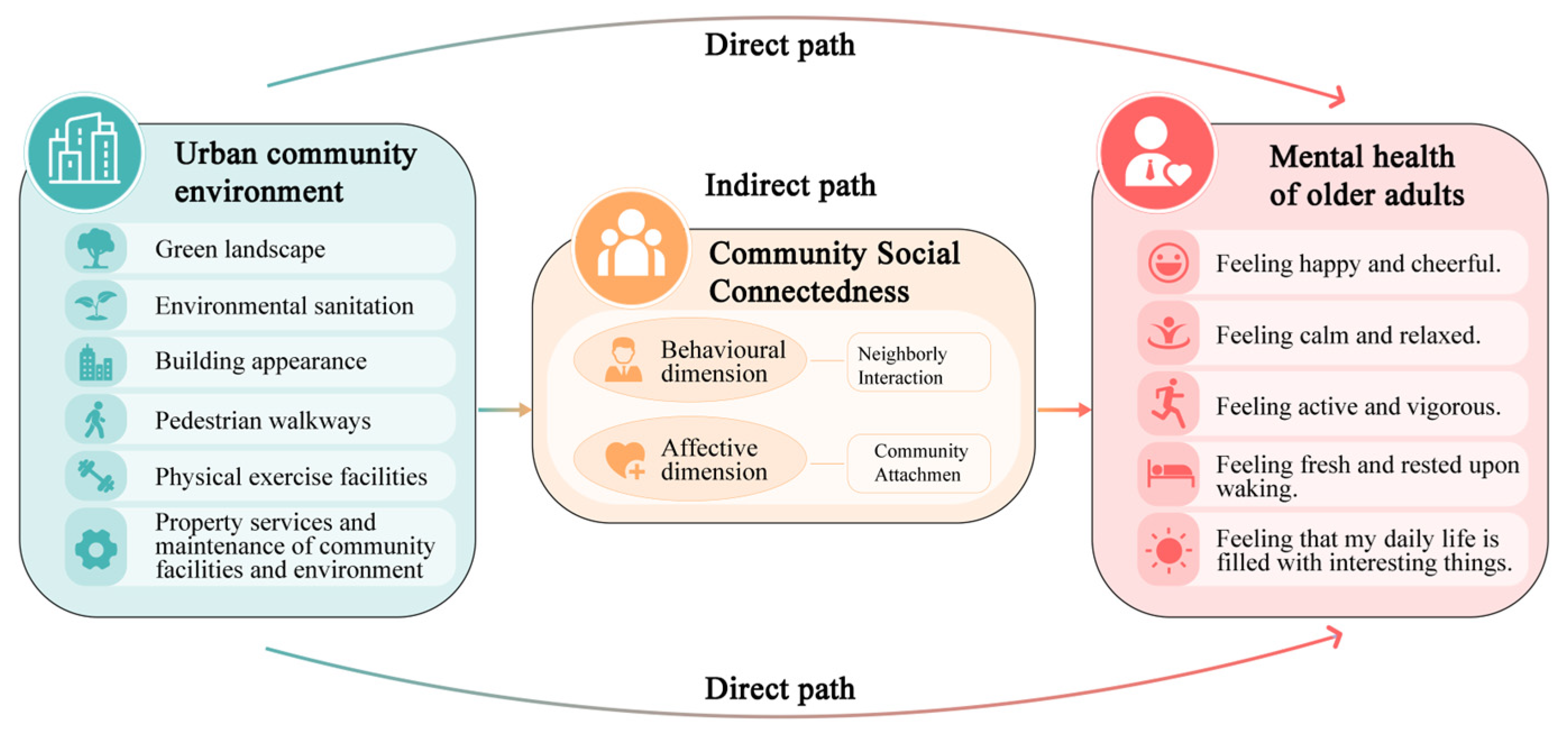
This study used survey data from 32 urban communities in Yangpu District, Shanghai, and structural equation modeling (SEM) to examine the association between the community environment and older adults’ mental health and to test the mediating roles of neighborly interaction and community attachment. According to Article 2 of the Law of the People’s Republic of China on the Protection of the Rights and Interests of Older Persons, which defines older persons as “citizens aged 60 or above,” [28] this study classified individuals aged 60 years and above as older adults and divided them into three groups: young-old adults (60–69 years), middle-old adults (70–79 years), and oldest-old adults (80 years and above). Drawing on social ecological theory, we developed a theoretical framework (Figure 1) in which the community environment was assessed using six indicators: green space and landscaping, environmental sanitation, building appearance, pedestrian pathways, exercise facilities, and property management services and maintenance of community facilities. Neighborly interaction and community attachment were included as mediating variables representing the behavioral and affective dimensions of community social connectedness, respectively, while mental health was specified as the outcome variable. On this basis, a multi-group structural equation model was used to compare the direct and indirect associations across the three age groups, and between-group difference tests were conducted to assess whether these pathways varied by age. Pan et al. examined the mediating roles of neighborly relationships and community attachment in the association between the perceived built environment and depressive symptoms across a broad age range, while also investigating differences in these associations across age–gender groups [29]. However, their study focused primarily on differences associated with the intersection of age and gender in the general population, rather than differences across later-life stages specifically among older adults. Building on this work, the present study focuses on adults aged 60 years and above in urban communities in Shanghai and distinguishes between the behavioral dimension of community social connectedness, represented by neighborly interaction, and its affective dimension, represented by community attachment. The mediating roles of these two dimensions in the association between the community environment and mental health are examined separately. Furthermore, the study compares the associated pathways among young-old, middle-old, and oldest-old adults. By shifting the focus from age–gender differences in the general population to age-group differences within the older population, this study seeks to provide a better understanding of the social pathways linking the urban community environment to older adults’ mental health and to inform age-friendly community planning for older adults at different stages of later life. This study seeks to address the following three research questions:
Figure 1.
Research Framework.
RQ1. What is the association between the urban community environment and older adults’ mental health?
RQ2. Do neighborly interaction and community attachment play mediating roles, and do their mediating effects differ?
RQ3. Do the association pathways between the community environment and mental health vary across age groups, and what distinct patterns are observed among young-old, middle-old, and oldest-old adults?
2. Materials and Methods
2.1. Data and Sample
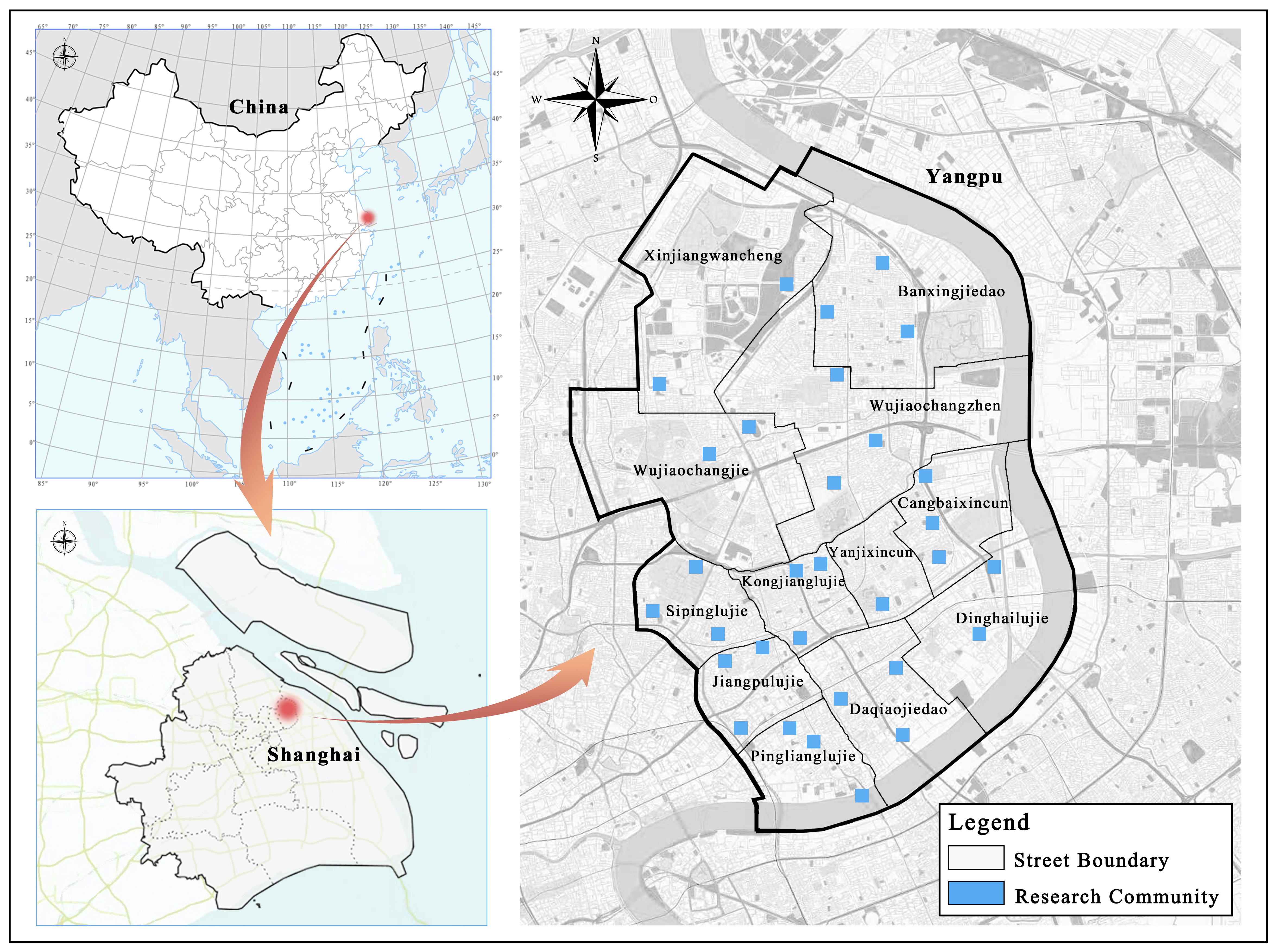
To examine the association between the urban community environment and older adults’ mental health, a questionnaire survey was conducted in Yangpu District, Shanghai, from November 2025 to January 2026, covering 12 subdistricts. Community selection took into account several factors, including year of construction, extent of physical deterioration, housing prices, residential quality, land area, and population composition. On this basis, 32 urban communities were randomly selected (Figure 2) to capture a range of community types with different physical environmental and socioeconomic characteristics and to avoid overrepresentation of any single type of residential environment.
Figure 2.
Survey Area.
Respondents were recruited primarily through on-site intercept sampling within the selected communities. Investigators approached residents who were present in the selected communities and invited them to participate voluntarily. Individual respondents were not selected through a formal random sampling procedure. In some communities, community staff assisted with survey organization and on-site coordination but were not involved in respondents’ completion of the questionnaires. Before the formal survey, trained investigators explained the research objectives and survey procedures to respondents. For older adults who had difficulty reading or understanding the questionnaire items, investigators provided only necessary, neutral clarification and assistance, without guiding or influencing their responses.
A total of 1260 questionnaires were distributed. The number of residents who declined participation before receiving a questionnaire was not systematically recorded. Therefore, a conventional response rate could not be calculated. During data screening, questionnaires were assessed against predefined criteria. In total, 110 invalid questionnaires were excluded because they had been completed in less than 120 s, contained identical responses to 10 or more consecutive items, or had missing data on study variables. The final sample comprised 1150 valid questionnaires, yielding a valid questionnaire rate of 91.27% (1150/1260).
Based on the age criteria for the study population, respondents aged 60 years and above were selected from the 1150 valid questionnaires, yielding a final sample of 596 older adults. The sample was further divided into three age groups: young-old adults aged 60–69 years (n = 239), middle-old adults aged 70–79 years (n = 232), and oldest-old adults aged 80 years and above (n = 125). These samples provided the basis for subsequent structural equation modeling and comparisons of mediating effects across age groups.
2.2. Variables and Measurement
2.2.1. Dependent Variable: Mental Health of Older Adults
Mental health among older adults was assessed using a questionnaire-based scale. This study adopted the WHO-5, which has been widely used to assess subjective well-being and mental health and is consistent with research in the field of human settlements that examines associations between environmental conditions and psychological perceptions [30,31]. The questionnaire comprised five positively worded items: (1) I feel happy and in good spirits; (2) I feel calm and relaxed; (3) I feel active and energetic; (4) I wake up feeling fresh and sufficiently rested; and (5) my daily life is filled with things that interest me. All items were scored from 0 to 5 (0 = at no time, 1 = some of the time, 2 = less than half of the time, 3 = more than half of the time, 4 = most of the time, and 5 = all of the time). Higher scores indicate better mental health.
2.2.2. Independent Variable: Urban Community Environment
The urban community environment was measured using a subjective evaluation approach, which captured older residents’ satisfaction with their community environment. Subjective environmental evaluation is based on residents’ actual experiences and perceptions of their surroundings and can directly reflect their perceptions of environmental quality, ease of use, and the condition of community services [32,33]. This approach has been widely applied in studies of community environments and older adults’ health in environmental psychology, urban planning, and public health [34,35,36]. Six observed variables were selected in this study: (1) greening landscape, (2) environmental sanitation, (3) building appearance, (4) walking roads, (5) sports and exercise facilities, and (6) property services and the maintenance of community facilities and the environment. All items were rated on a five-point scale (1 = very dissatisfied, 2 = relatively dissatisfied, 3 = neutral, 4 = relatively satisfied, and 5 = very satisfied), representing respondents’ evaluations of community environmental quality. Higher scores indicate better community environmental quality.
2.2.3. Mediating Variables: Neighborly Interaction and Community Attachment
Previous studies have indicated that the urban community environment may be associated with older adults’ mental health through mediating processes at both behavioral and psychosocial levels [27]. Accordingly, this study selected neighborly interaction and community attachment as mediating variables, representing the behavioral interaction and affective attachment dimensions of community social connectedness, respectively.
Neighborly interaction reflects older adults’ everyday communication, mutual assistance, and joint participation within the community. It was measured using three items: (1) I take the initiative to greet my neighbors when I meet them in the community; (2) when I need minor assistance, such as receiving a parcel, I am willing to ask my neighbors for help; and (3) I participate in activities together with my neighbors. Responses were scored from 1 to 5 (1 = never, 2 = occasionally, 3 = moderate, 4 = relatively frequent, and 5 = frequent). Higher scores indicate higher levels of neighborly interaction among older respondents.
Community attachment is generally defined as an individual’s emotional connection to a specific community and is commonly discussed in relation to neighborhood structure, everyday activities, social networks, and identity formed through memory [37,38]. This study focused on residents’ sense of belonging, identification, dependence, and emotional connection to their residential community. It included three items: (1) I have a strong sense of belonging to this community and feel close to it; (2) if I had to move away, I would feel very reluctant to leave; and (3) I feel proud when others mention this community. Responses were scored from 1 to 5 (1 = completely inconsistent, 2 = relatively inconsistent, 3 = neutral, 4 = relatively consistent, and 5 = completely consistent). Higher scores indicate stronger community attachment among older adults.
2.2.4. Control Variables
When examining the relationships among the urban community environment, neighborly interaction, community attachment, and older adults’ mental health, these associations may also be related to demographic characteristics. Therefore, gender, age, educational attainment, and income status were included as control variables in the conceptual model to enhance the robustness and reliability of the results. Because length of residence is closely related to residents’ familiarity with the community, social relationships, and life memories, and may also be associated with their perceptions of the community environment and mental health [14,39], length of residence was additionally included as a control variable to account for potential differences associated with varying durations of residence.
Educational attainment was coded from 1 to 6 (1 = below primary school, 2 = primary school, 3 = junior high school, 4 = senior high school/vocational secondary school, 5 = undergraduate/junior college, and 6 = postgraduate and above). Gender was coded from 1 to 2 (1 = male, 2 = female). Age was recorded as the respondent’s actual age in years. Income status was scored from 1 to 5 (1 = below RMB 2200, 2 = RMB 2200–5000, 3 = RMB 5000–10,000, 4 = RMB 10,000–30,000, and 5 = above RMB 30,000). Length of residence in the community was scored from 1 to 3 (1 = 0–5 years, 2 = 5–10 years, and 3 = 10 years or more).
2.3. Validation and Analysis
This study used descriptive statistics and structural equation modeling (SEM) to analyze the data. SEM allows multiple latent variables and their interrelationships to be examined simultaneously, making it suitable for assessing the direct and indirect associations among the community environment, community attachment, neighborly interaction, and mental health among older adults. Confirmatory factor analysis (CFA) was used to evaluate the measurement model. Mediation effects were tested using bias-corrected bootstrap confidence intervals, while multi-group SEM was employed to compare path relationships across age groups.
Before estimating the structural model, confirmatory factor analysis was conducted for each latent construct to assess the reliability and convergent validity of the measurement model. The results showed that standardized factor loadings ranged from 0.640 to 0.899, all exceeding 0.60. Composite reliability (CR) ranged from 0.810 to 0.918, average variance extracted (AVE) from 0.511 to 0.698, and Cronbach’s α from 0.810 to 0.920. All values met commonly accepted criteria. These results indicate good internal consistency and convergent validity across the measurement dimensions, supporting their use in subsequent SEM analyses (Table 1).
Table 1.
Reliability and Validity Tests of the Measurement Model.
The model fit results are presented in Table 2. Following estimation of the initial model, residual covariances were specified between selected observed indicators within the same latent construct, based on the modification indices (MI) generated by AMOS and the substantive content of the indicators. Specifically, within the community environment construct, residual covariances were allowed between building appearance (UCE3) and pedestrian pathways (UCE4), as well as between pedestrian pathways (UCE4) and exercise facilities (UCE5). These indicators all relate to the physical characteristics of the outdoor community environment and the conditions it provides for daily activities, and may therefore share some perceptual variance. Within the mental health construct, residual covariances were allowed between the indicators reflecting energy and vitality (MH3) and feeling refreshed and rested (MH4), as well as between feeling refreshed and rested (MH4) and finding daily life interesting (MH5). These indicators reflect different aspects of positive mental health and may share some variance beyond that explained by the underlying construct. All these modifications were restricted to observed indicators within the same latent construct and did not alter the original latent variable structure or hypothesized structural pathways. Following these modifications, the model was re-estimated, and the revised model was used for subsequent analyses.
Table 2.
Fit Indices for the Modified Measurement Model and Multi-Group Model.
For the overall model, the CFI, GFI, AGFI, and IFI were 0.950, 0.930, 0.906, and 0.951, respectively, with an RMSEA of 0.051 and a χ2/df ratio of 2.569, indicating good overall model fit. For the multi-group model, the CFI and IFI were 0.940 and 0.941, respectively, with an RMSEA of 0.035 and a χ2/df ratio of 1.710, all meeting the corresponding reference criteria. The GFI and AGFI were 0.879 and 0.838, respectively, below the commonly used reference value of 0.90. Overall, the main fit indices indicated an acceptable fit for the multi-group model. Given that structural equation model fit should be evaluated based on multiple indices rather than a single criterion [40,41], the overall fit of the multi-group model was considered acceptable.
As the community environment, community attachment, neighborly interaction, and mental health were all measured through self-reports in the same questionnaire, common method bias may be present. To conduct a preliminary assessment, Harman’s single-factor test was performed by entering all 17 observed items into an unrotated principal component analysis. The KMO value was 0.883, and Bartlett’s test of sphericity was statistically significant (χ2 = 5702.770, df = 136, p < 0.001), indicating that the data were suitable for factor analysis. Further analysis extracted four factors with eigenvalues greater than 1. The first factor accounted for 35.762% of the total variance, below the commonly used threshold of 50%. This indicates that no single factor accounted for the majority of the total variance, and no clear evidence of severe common method bias was identified.
3. Results
3.1. Descriptive Statistics of the Study Variables
Descriptive statistics for mental health showed that 7.4% of the older adults screened positive for possible depressive symptoms based on the WHO-5 screening threshold (Table 3). The proportion was highest among oldest-old adults (12.8%), followed by young-old adults (6.7%) and middle-old adults (5.2%). The proportions differed significantly across the three age groups (Pearson’s χ2 = 7.188, df = 2, p = 0.027).
Table 3.
Proportion of Older Adults Screening Positive for Depressive Symptoms Across Age Groups.
The descriptive statistics for the urban community environment, neighborly interaction, community attachment, and older adults’ mental health are presented in Table 4. Overall evaluations of the urban community environment were moderately favorable. Satisfaction with walking roads was relatively high, with a mean score of 3.62, whereas satisfaction with property facilities and environmental maintenance was relatively low, with a mean score of 3.31.
Table 4.
Description of the Main Variables.
Urban older adults reported relatively high levels of community attachment. The mean score for sense of community belonging was comparatively high at 3.95, whereas the score for community pride was lower at 3.64. Across age groups, community attachment increased with age. The oldest-old group reported generally higher mean scores than the young-old and middle-old groups for sense of belonging, reluctance to move away, and community pride, with scores of 4.05, 3.92, and 3.71, respectively. The mean scores for all indicators of neighborly interaction were above 3, indicating relatively frequent neighborly interaction among the respondents. Greeting neighbors had the highest mean frequency, at 4.11, whereas actively seeking help from neighbors had a lower mean frequency, at 3.57.
Among the control variables, the respondents had a mean age of approximately 72 years and had lived in their communities for an average of 5–10 years. Overall, the educational attainment of urban older adults was above the junior high school level on average, with the young-old group having relatively higher educational attainment and most having completed at least junior high school. In terms of income, the average monthly income of older adults in urban communities was concentrated at around RMB 5000.
3.2. Analysis of Model Fit for the Full Sample
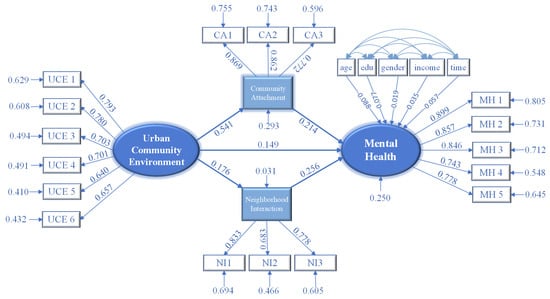
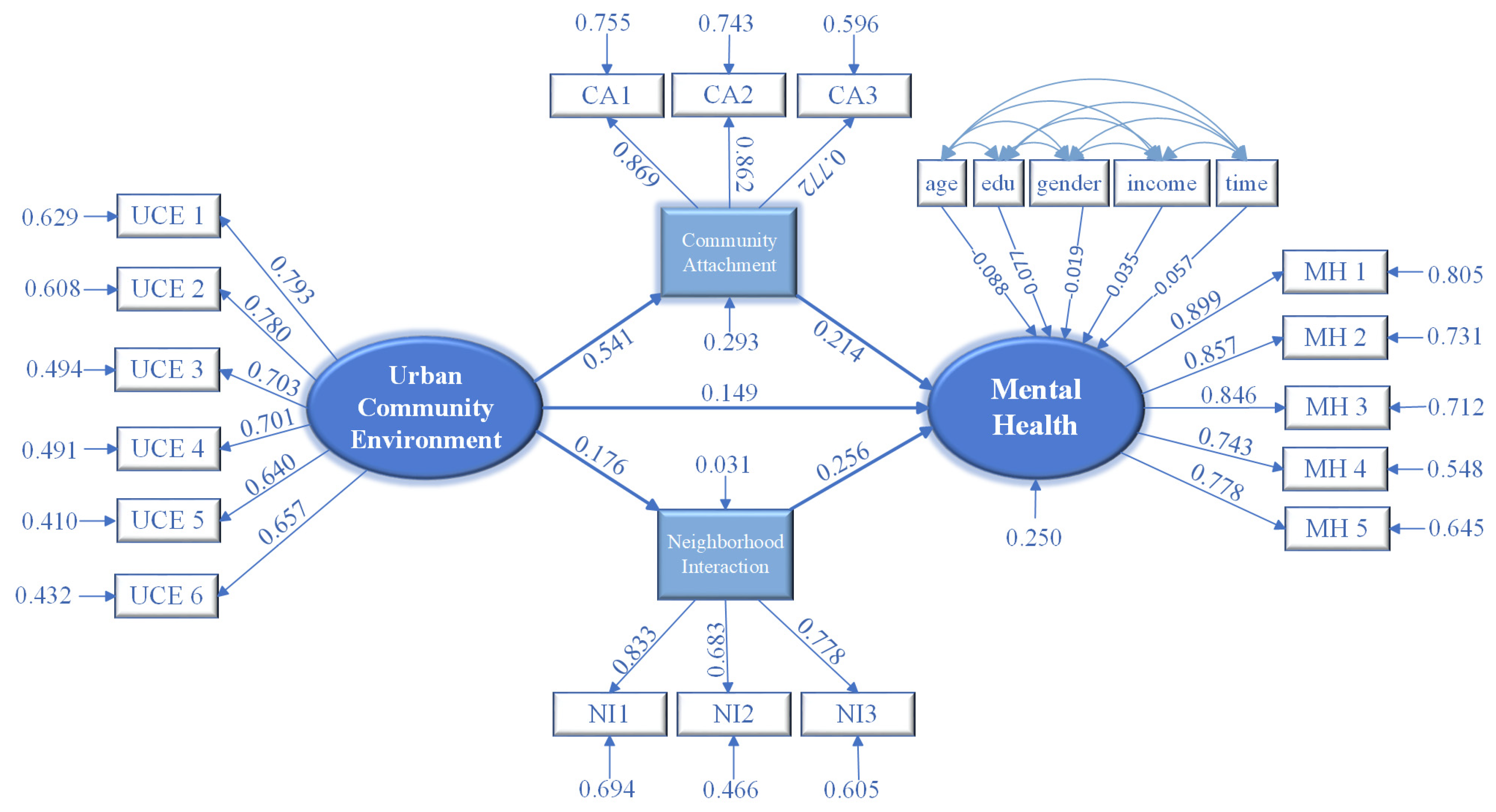
The structural model results for the full sample are presented in Table 5 and Figure 3. After controlling for gender, educational attainment, age, length of residence, and income status, the results showed that the total effect, direct effect, and total indirect effect of the urban community environment on older adults’ mental health were all statistically significant, with standardized estimates of 0.325, 0.149, and 0.176, respectively. This indicates that a better perceived community environment was positively associated with better mental health among older adults.
Table 5.
Total, Direct, and Indirect Effects in the Full Sample.
Figure 3.
Standardized Path Diagram of the Full-Sample Model.
Regarding the specific mediating pathways, community attachment and neighborly interaction both showed significant positive associations with the community environment and older adults’ mental health. Specifically, the community environment was positively associated with community attachment (β = 0.541, p < 0.001) and neighborly interaction (β = 0.176, p < 0.001). In turn, community attachment (β = 0.256, p < 0.001) and neighborly interaction (β = 0.214, p < 0.001) were both positively associated with mental health. The standardized specific indirect effects were 0.138 through community attachment and 0.038 through neighborly interaction, respectively, indicating a larger estimated indirect effect through community attachment.
To further examine the significance of the mediating pathways, bias-corrected bootstrap analysis was conducted using unstandardized estimates, as reported in Table 6. The indirect effect through community attachment was 0.153 (95% BC CI: [0.080, 0.247], p < 0.001), while the indirect effect through neighborly interaction was 0.041 (95% BC CI: [0.015, 0.081], p = 0.001). The total indirect effect was 0.194 (95% BC CI: [0.115, 0.296], p < 0.001). As all three confidence intervals excluded zero, both specific indirect pathways and the total indirect effect were statistically significant. The estimated indirect effect through community attachment was larger than that through neighborly interaction.
Table 6.
Bias-Corrected Bootstrap Tests of Unstandardized Indirect Effects in the Full Sample.
Overall, the findings indicate that the community environment was positively associated with older adults’ mental health through both direct and indirect pathways. Both the affective dimension (community attachment) and the behavioral dimension (neighborly interaction) of community social connectedness served as significant mediating pathways, with community attachment showing a larger estimated indirect effect.
3.3. Comparison of Model Pathways Across Age Groups
Before comparing structural paths across age groups, this study first conducted multi-group confirmatory factor analysis to assess measurement invariance across the three age groups. The fit indices for the configural invariance model (Unconstrained Model) were χ2 = 887.597, df = 519, χ2/df = 1.710, CFI = 0.940, IFI = 0.941, TLI = 0.927, RMSEA = 0.035, GFI = 0.879, and AGFI = 0.838. Equal constraints were then imposed on the factor loadings across the three age groups to establish the metric invariance model (Measurement Weights Model). The results showed that the model yielded χ2 = 939.812 and df = 545. Compared with the configural invariance model, the differences were Δχ2 = 52.215 and Δdf = 26, with the chi-square difference test reaching statistical significance (p = 0.002). However, the CFI decreased from 0.940 to 0.936 (ΔCFI = 0.004), below the 0.01 threshold, while the RMSEA remained unchanged at 0.035. Although the chi-square difference test was statistically significant, the changes in the other fit indices were small, indicating that the equality constraints on factor loadings did not result in substantial deterioration in model fit. Therefore, metric invariance was established across the three age groups, allowing subsequent comparisons of structural paths.
This study further employed multi-group structural equation modeling to examine differences in structural paths across the three age groups. Equality constraints were imposed on the structural regression paths across groups to establish the Structural Weights Model. The results showed that this model yielded χ2 = 956.566 and df = 563. Compared with the metric invariance model, the differences were Δχ2 = 16.754 and Δdf = 18, and the chi-square difference test was not statistically significant (p = 0.540). Meanwhile, the CFI remained at 0.936, and the RMSEA decreased from 0.035 to 0.034, with no substantial deterioration in model fit. These results indicate that the current data provide no statistical evidence of significant differences in the overall structural paths across the three age groups.
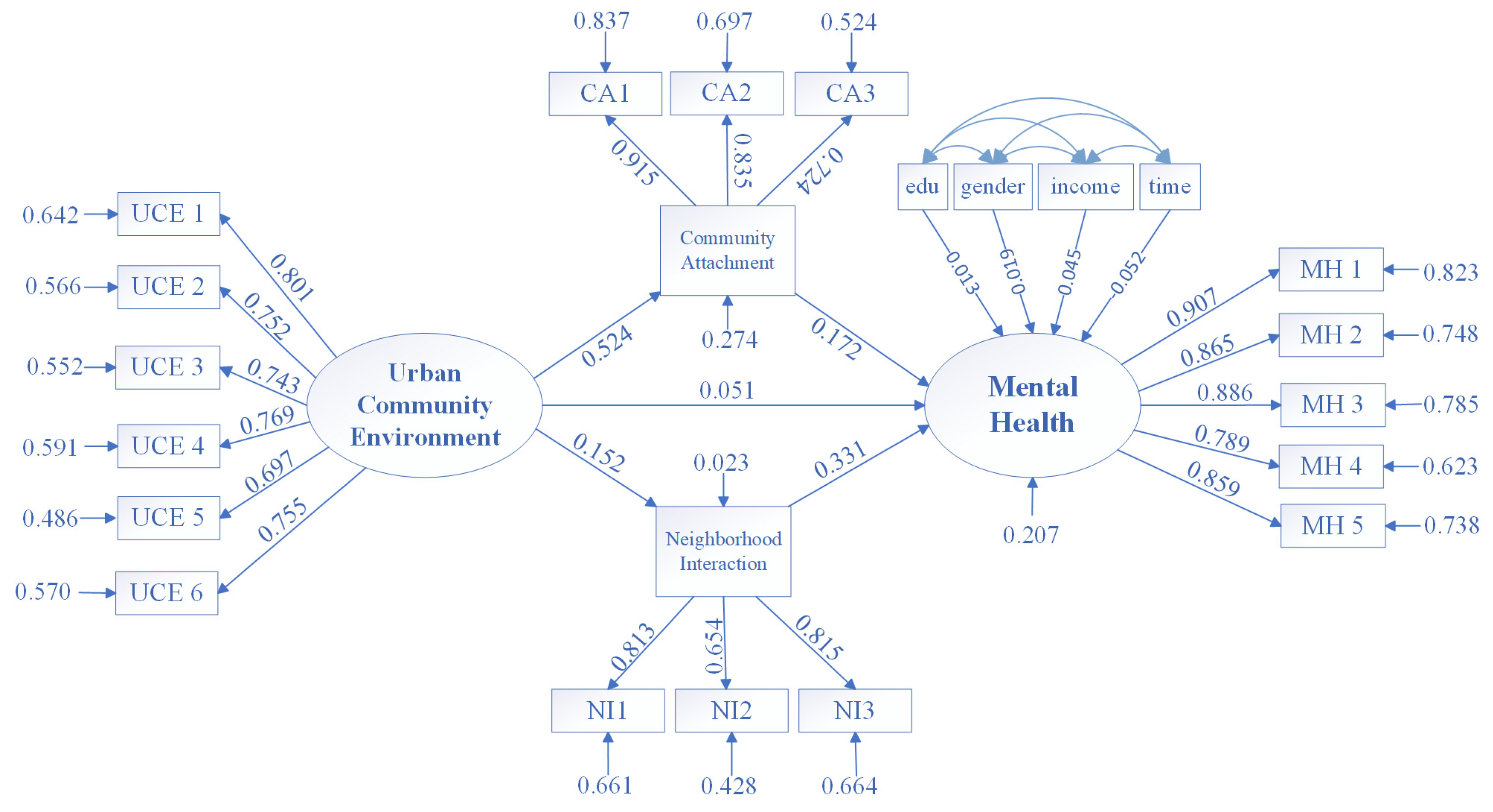
The standardized path coefficients and effect estimates for each age group are presented in Table 7 and Figure 4, Figure 5 and Figure 6. In the young-old group, the path coefficients from the community environment to community attachment and neighborly interaction were 0.524 and 0.152, respectively, both statistically significant. The total effect, direct effect, and total indirect effect of the community environment on mental health were 0.250, 0.051, and 0.199, respectively, with the direct effect not reaching statistical significance. The standardized indirect effects through community attachment and neighborly interaction were 0.173 and 0.026, respectively.
Table 7.
Total, Direct, and Indirect Effects in the Age-Stratified Models.
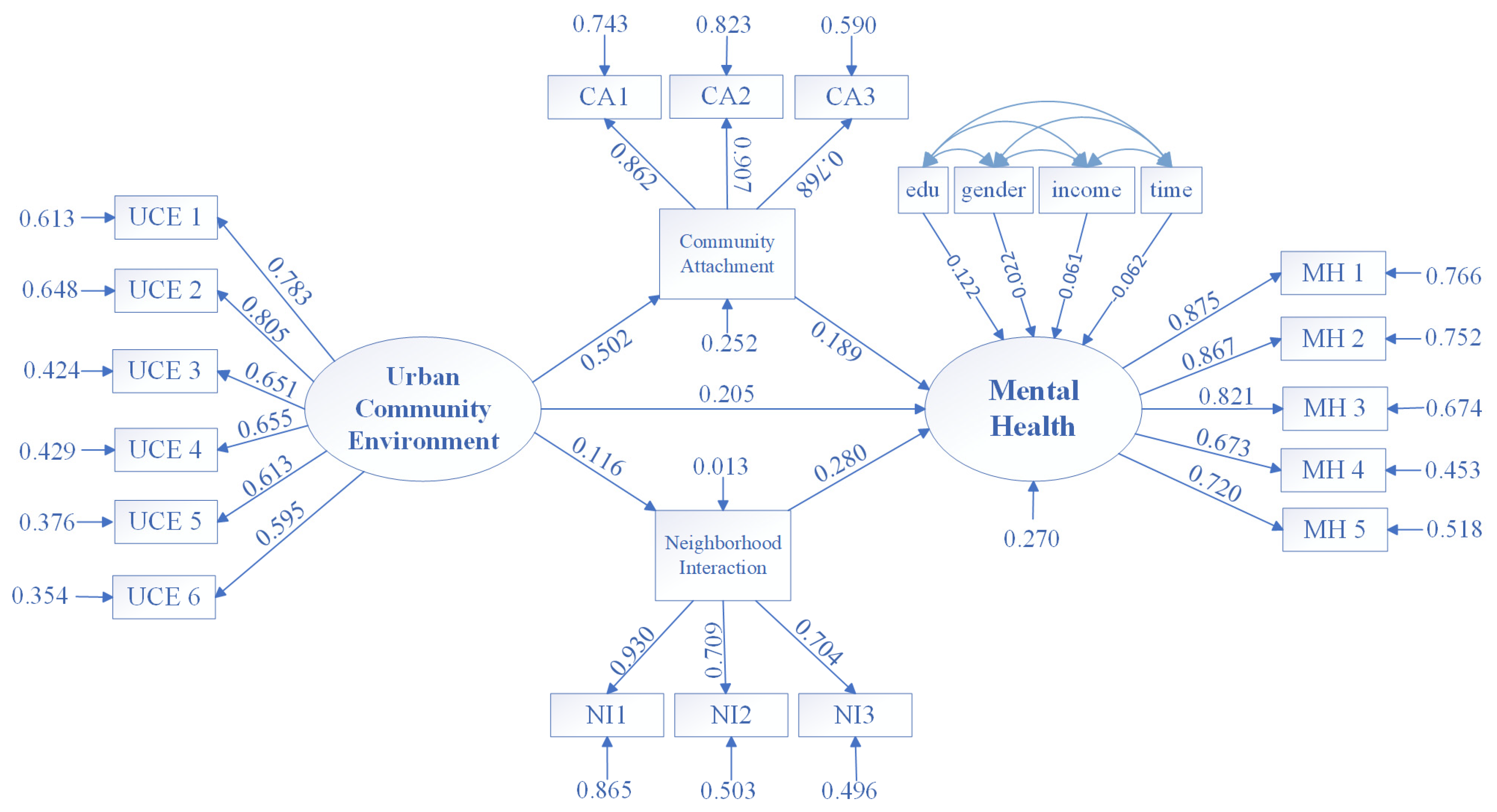
In the middle-old group, the path coefficient from the community environment to community attachment was 0.502 and statistically significant, whereas that to neighborly interaction was 0.116 and not statistically significant. The total effect, direct effect, and total indirect effect were 0.332, 0.205, and 0.127, respectively, all statistically significant. The standardized indirect effects through community attachment and neighborly interaction were 0.095 and 0.032, respectively.
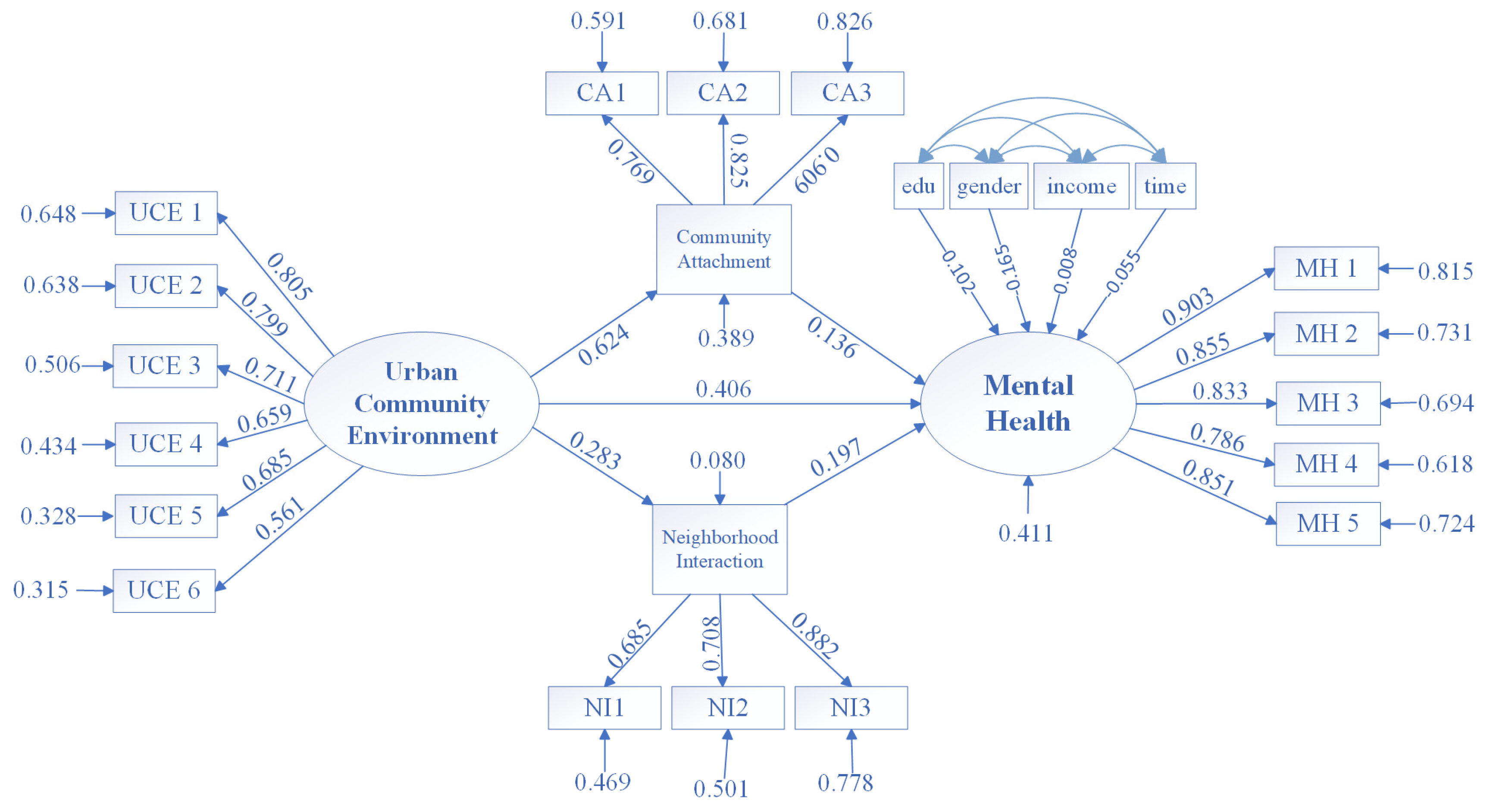
In the oldest-old group, the path coefficients from the community environment to community attachment and neighborly interaction were 0.624 and 0.283, respectively, both statistically significant. The total effect, direct effect, and total indirect effect were 0.547, 0.406, and 0.141, respectively, with the direct effect reaching statistical significance. The standardized indirect effects through community attachment and neighborly interaction were 0.085 and 0.056, respectively.
To further assess the statistical significance of mediation effects within each age group, bias-corrected bootstrap analysis was conducted (Table 8). In the young-old group, the unstandardized indirect effect through community attachment was 0.180 (95% BC CI: [0.077, 0.338], p = 0.001), indicating statistical significance. The indirect effect through neighborly interaction was 0.027 (95% BC CI: [0.000, 0.093], p = 0.057), which was not statistically significant. The total indirect effect was 0.207 (95% BC CI: [0.095, 0.357], p < 0.001), reaching statistical significance. In the middle-old group, the indirect effect through community attachment was 0.099 (95% BC CI: [0.016, 0.227], p = 0.020), which was statistically significant, whereas the indirect effect through neighborly interaction was 0.034 (95% BC CI: [−0.015, 0.096], p = 0.149), which was not statistically significant. The total indirect effect was 0.133 (95% BC CI: [0.032, 0.285], p = 0.010), reaching statistical significance. In the oldest-old group, the indirect effect through community attachment was 0.111 (95% BC CI: [−0.101, 0.428], p = 0.270), which was not statistically significant. The indirect effect through neighborly interaction was 0.073 (95% BC CI: [0.001, 0.298], p = 0.046), reaching statistical significance. The total indirect effect was 0.184 (95% BC CI: [−0.011, 0.549], p = 0.063), which was not statistically significant.
Table 8.
Bias-Corrected Bootstrap Tests of Unstandardized Indirect Effects Across Age Groups.
To determine whether indirect effects differed across age groups, pairwise comparisons were further conducted using the bias-corrected bootstrap method (Table 9). The results showed that none of the nine between-group comparisons of community attachment, neighborly interaction, or total indirect effects reached statistical significance (all p > 0.05), and all 95% bias-corrected bootstrap confidence intervals included zero. Specifically, the between-group differences in the indirect effect through community attachment were 0.081 (L–M), 0.069 (L–H), and −0.012 (M–H). The corresponding differences for neighborly interaction were −0.007, −0.046, and −0.039, respectively, while those for the total indirect effect were 0.074, 0.024, and −0.050, respectively. These results indicate that there is currently insufficient statistical evidence to support significant between-group differences in either the specific indirect effects or the total indirect effects across the three age groups.
Table 9.
Bias-Corrected Bootstrap Tests of Between-Group Differences in Unstandardized Indirect Effects.
Overall, the mediation pathways exhibited different patterns of statistical significance within the three age groups. In the young-old group, the indirect effect through community attachment was statistically significant, whereas that through neighborly interaction was not. In the middle-old group, only the indirect effect through community attachment was statistically significant. In the oldest-old group, only the indirect effect through neighborly interaction was statistically significant. In addition, the total indirect effects were statistically significant in the young-old and middle-old groups but not in the oldest-old group. However, neither the Structural Weights test nor the bootstrap comparisons of indirect effects identified statistically significant between-group differences. Therefore, these findings reflect differences in the patterns of statistical significance of mediation pathways within each age group.
(1) Young-Old Group
Figure 4.
Standardized Path Diagram of the Young-Old Group Model.
(2) Middle-Old Group
Figure 5.
Standardized Path Diagram of the Middle-Old Group Model.
(3) Oldest-Old Group
Figure 6.
Standardized Path Diagram of the Oldest-Old Group Model.
4. Discussion
This study used survey data from 32 urban communities in Yangpu District, Shanghai, to examine the association between the urban community environment and older adults’ mental health, the indirect effects of community attachment and neighborly interaction, and the association pathways within different age groups.
The results showed a significant positive association between the community environment and older adults’ mental health, with both direct and indirect associations. In the full sample, the indirect effects of both community attachment and neighborly interaction were statistically significant. Age-stratified analyses further revealed different patterns of statistical significance in the mediation pathways within the three age groups, although formal between-group comparisons identified no statistically significant differences. These findings indicate that the association between the community environment and older adults’ mental health involves both physical environmental conditions and community social connectedness. However, the different patterns observed within age groups do not, in themselves, establish statistically significant differences between groups.
The positive association between the community environment and older adults’ mental health is consistent with previous studies examining the relationships of green spaces, community facilities, walking environments, and public services with older adults’ mental health [13,14,15,39]. The community environment provides an important spatial foundation for older adults’ daily lives, and its quality is closely related to their perceptions of residential safety, convenience, and comfort [42,43]. Specifically, well-maintained greenery and environmental sanitation contribute to a more comfortable residential experience. Convenient walking routes and exercise facilities provide necessary conditions for daily mobility and physical activity, while property management services and the maintenance of community facilities may reduce the inconvenience and psychological stress associated with environmental deterioration and inadequate management [44,45,46]. For older adults, whose daily lives largely take place within their residential communities, these environmental conditions collectively provide an important foundation for everyday activities and residential experiences. A favorable community environment may therefore be associated with better mental health through improved daily living experiences, reduced environmental stress, and greater convenience for everyday activities.
Further mediation analysis showed that both community attachment and neighborly interaction had statistically significant indirect effects on the association between the community environment and older adults’ mental health. This indicates that the affective and behavioral dimensions of community social connectedness both represent important pathways linking the community environment to older adults’ mental health. Community attachment primarily reflects residents’ sense of belonging, identification, and emotional attachment to their residential community. A favorable community environment can improve residents’ everyday living experiences, while sustained exposure to such an environment may gradually foster familiarity with and emotional identification with the community. This emotional connection is closely associated with a stronger sense of belonging, psychological support, and lower levels of loneliness, which, in turn, are associated with better mental health [25,26]. Neighborly interaction, by contrast, reflects everyday contact, communication, and mutual assistance among residents. Its development is influenced not only by the opportunities for social interaction provided by the community environment but also by individual social preferences and existing social networks [47,48]. A favorable community environment provides spatial conditions for contact between neighbors and shared activities, while sustained everyday interaction may foster trust, reciprocity, and social support among residents, thereby being associated with better mental health [49,50]. These findings are broadly consistent with Pan et al. [29], who identified mediating roles for both neighborly relationships and community attachment. Overall, community attachment and neighborly interaction represent the affective and behavioral dimensions of community social connectedness, respectively. Their indirect effects indicate that the association between the community environment and older adults’ mental health involves not only physical environmental conditions but also residents’ emotional identification with their communities and everyday social interactions.
Age-stratified analyses revealed different patterns of statistical significance within the three age groups. Among young-old adults, the direct association between the community environment and mental health was not statistically significant, whereas the total indirect effect was significant. The specific indirect effect through community attachment was significant, whereas that through neighborly interaction was not. Among middle-old adults, both the direct association and the total indirect effect were statistically significant, with the indirect effect through community attachment reaching statistical significance, whereas that through neighborly interaction did not. Among oldest-old adults, the direct association was statistically significant, as was the specific indirect effect through neighborly interaction, whereas the indirect effect through community attachment and the total indirect effect were not statistically significant. The confidence interval for the total indirect effect was relatively wide (95% BC CI: [−0.011, 0.549], p = 0.063), indicating uncertainty in its estimation. Furthermore, neither the multi-group structural path tests nor the bootstrap comparisons of indirect effects identified statistically significant differences between age groups. These findings therefore reflect patterns within individual age groups rather than statistically established differences between groups.
Differences in physical functioning, life-space mobility, and dependence on the immediate community environment may offer possible explanations for these within-group patterns [51,52]. Previous studies have shown that physical functioning and external environmental conditions are closely related to older adults’ life-space mobility and patterns of community space use [53,54]. For young-old adults, relatively greater capacity for independent activity may provide more opportunities to use public community spaces and participate in community activities. Such experiences may contribute to familiarity with and emotional attachment to the community [55]. For middle-old adults, changes in activity capacity and daily environmental needs may be relevant to both their direct experiences of the community environment and their emotional attachment to the community. Among oldest-old adults, increasingly restricted activity spaces and greater dependence on the immediate residential environment may make nearby environmental conditions and everyday neighborly contact particularly relevant [56,57]. However, these explanations remain hypotheses for future research, as physical functioning, life-space mobility, and activity capacity were not directly measured in the present study.
Overall, age-friendly urban community development should improve environmental quality while recognizing the relationship between community social connectedness and older adults’ mental health. The full-sample results showed that both community attachment and neighborly interaction had significant indirect effects. Accordingly, community renewal should address basic environmental conditions, including greenery, environmental sanitation, walking routes, exercise facilities, property management services, and the maintenance of community facilities, while also fostering a sense of community belonging and emotional identification. For example, retaining places and landscape elements associated with shared memories, improving the continuity and legibility of public spaces, and supporting regular community activities and resident participation may strengthen emotional connections between residents and their communities. Attention should also be given to the spatial conditions required for neighborly interaction. Improving public activity spaces and providing resting areas that facilitate informal contact and conversation can create more convenient opportunities for everyday interaction and mutual assistance. Although age-stratified analyses revealed different patterns of statistical significance in the indirect effects within the three age groups, community environmental improvements should address both affective belonging and everyday interaction, with appropriate adjustments based on older adults’ actual activity capacities and spatial needs. In planning practice, the living needs of older adults at different stages of later life can serve as a reference for environmental renewal and the assessment of space use. For young-old and middle-old adults, alongside improvements to basic community environments, attention could be given to opportunities for participation in public spaces and the continuity of community activities, thereby providing conditions conducive to the development of community belonging and emotional connections. For oldest-old adults, greater attention could be paid to walking environments, facility accessibility, the convenience of everyday activities, and the maintenance of community facilities to reduce environmental barriers in daily use, while retaining public spaces that facilitate neighborly contact where appropriate. It should be emphasized that these recommendations are intended as planning references informed by the environmental characteristics measured and the within-group findings of this study; they do not constitute a direct assessment of differences in environmental needs between age groups.
This study has several limitations. First, the cross-sectional design does not allow the temporal sequence or causal relationships among the community environment, community social connectedness, and mental health to be established. Future research could use longitudinal data to further examine the dynamic associations among these factors. Second, the sample was drawn exclusively from 32 urban communities in Yangpu District, Shanghai. The concentration of the sample in a single urban district limits the generalizability of the findings, and further validation across different cities and community types is warranted. In addition, respondents were nested within 32 communities, but community identifiers were not retained in the available dataset. Consequently, intraclass correlation coefficients (ICCs) could not be calculated, nor could cluster-robust standard errors or multilevel models be used to account for within-community correlations. Unaccounted community-level clustering may have led to underestimated standard errors. Findings close to the conventional significance threshold therefore warrant caution. In particular, the indirect effect through neighborly interaction was not significant among young-old adults (p = 0.057), while it was significant but close to the 0.05 threshold among oldest-old adults (p = 0.046). These results should be interpreted cautiously. Although the study controlled for gender, age, educational attainment, income, and length of residence, unmeasured factors, including physical health, chronic diseases, living arrangements, social support, and individual psychological characteristics, may still have introduced residual confounding. Furthermore, the community environment, community attachment, neighborly interaction, and mental health were all measured through self-reports in the same questionnaire and may therefore have been jointly influenced by individual response tendencies. Future research could combine objective data, including GIS data, street-view imagery, green coverage, facility accessibility, and behavioral observations, to cross-validate subjective assessments of the community environment. Finally, data collection took place between November 2025 and January 2026. Winter conditions may have influenced older adults’ assessments of greenery, walking environments, and outdoor exercise facilities. Future studies could conduct cross-seasonal surveys, retain community-level identifiers, incorporate measures of physical functioning and activity capacity, and combine objective environmental measurements with longitudinal data to further examine the associations among the community environment, community social connectedness, and older adults’ mental health, as well as how these associations manifest across different age groups.
5. Conclusions
This study drew on survey data from 32 urban communities in Yangpu District, Shanghai, to examine the association between the community environment and older adults’ mental health. It investigated the mediating roles of community social connectedness through two dimensions, community attachment and neighborly interaction, and further compared the patterns of association within different age groups. The results showed that the community environment was positively associated with older adults’ mental health, with significant indirect effects through both community attachment and neighborly interaction. The estimated indirect effect through community attachment was relatively larger, suggesting that the association between the community environment and older adults’ mental health involves not only physical environmental conditions but also residents’ emotional attachment to their community and everyday neighborly interactions. This highlights the importance of considering both physical spatial conditions and community social connectedness when examining the relationship between the community environment and older adults’ mental health.
For age-friendly urban community development, the findings suggest that environmental improvement should move beyond a sole focus on physical-space renewal towards an approach that gives equal consideration to the physical environment and community social connectedness. Specifically, green spaces and landscaping, environmental sanitation, building appearance, pedestrian pathways, exercise facilities, property management services, and the maintenance of community facilities should be incorporated into overall environmental assessment and renewal to improve the convenience and comfort of older adults’ everyday use of community spaces. At the same time, greater attention should be paid to fostering community belonging and neighborly ties. Improving the usability of public spaces, retaining places associated with shared community memories, and organizing sustained community activities can help create conditions for stable emotional bonds and everyday social interaction. For older adults at different stages of later life, planning practice should incorporate differentiated assessments based on their actual activity capacities, patterns of spatial use, and environmental needs, rather than prescribing specific facility configurations solely on the basis of age. This study provides empirical evidence for understanding older adults’ mental health from the perspectives of the community environment and social connectedness, and offers insights for urban community renewal in the context of population ageing.
This study used cross-sectional data and therefore identifies statistical associations between variables rather than establishing causal relationships. Future research could incorporate longitudinal data, objective environmental indicators, and survey samples from different cities to further examine these associations and their potential mechanisms.
Author Contributions
Conceptualization, J.W. and J.Y.; methodology, J.W., J.Z. and L.C.; formal analysis, J.W.; investigation, J.W., S.Z. and Z.W.; data curation, J.W., S.Z. and Z.W.; writing—original draft preparation, J.W.; writing—review and editing, J.W., J.Z., L.C. and J.Y.; visualization, J.W. and S.Z.; supervision, J.Y. and J.Z.; project administration, J.Y. All authors have read and agreed to the published version of the manuscript.
Funding
This research received no external funding.
Institutional Review Board Statement
Ethical review and approval were waived for this study. Given the non-interventional and minimal-risk nature of this study, no formal ethical review was required. This study was based on an anonymous questionnaire survey focusing on the relationships between the community environment, community social connectedness, and mental health among older adults. The study did not involve any medical intervention, experimental manipulation, or ethically sensitive procedures. According to the research regulations and common academic practice applicable to anonymous, non-invasive social science research of this type in China, formal ethics approval was not required.
Informed Consent Statement
No written informed consent form was obtained, as written consent was waived for this anonymous and minimal-risk questionnaire survey. All participants’ data were fully anonymized prior to statistical analysis. Before participation, respondents were clearly informed of the research purpose, survey procedures, data use, and privacy protection measures through the survey information provided to them. They were also informed that participation was entirely voluntary and that they could withdraw from the survey at any time without any negative consequences. All participants took part in the survey voluntarily.
Data Availability Statement
The data presented in this study are available on request from the corresponding author.
Acknowledgments
The authors sincerely thank the community staff in Yangpu District, Shanghai, for their assistance with survey coordination and fieldwork, and gratefully acknowledge the friends and fellow students who participated in and supported the questionnaire survey.
Conflicts of Interest
The authors declare no conflicts of interest.
References
- Freitas, H.R.; Malva, J.O. Getting ahead of the ageing curve: Learning from EU experiences for a healthier demographic transition. Front. Public Health 2025, 13, 1678040. [Google Scholar] [CrossRef] [Scilit] [PubMed]
- Ma, J.; Chen, Q.; Chen, X.; Fan, J.; Li, X. An inevitably ageing world: Analysis on the evolutionary pattern of age structure in 200 countries. R. Soc. Open Sci. 2025, 12, 241988. [Google Scholar] [CrossRef] [Scilit] [PubMed]
- Zilioli, S.; Wright, R.S. Social determinants of health and aging: Advancing multilevel, life course, and methodological approaches. J. Gerontol. B Psychol. Sci. Soc. Sci. 2026, 81, gbag037. [Google Scholar] [CrossRef] [Scilit] [PubMed]
- Chen, Y.; Xu, L.; Cui, X.; Yang, H.; Liu, Y.; Gao, X.; Huang, J. A systematic review on the associations between built environment and mental health among older people. Front. Public Health 2025, 13, 1584466. [Google Scholar] [CrossRef] [Scilit] [PubMed]
- Jalali, A.; Ziapour, A.; Karimi, Z.; Rezaei, M.; Emami, B.; Kalhori, R.P.; Khosravi, F.; Sameni, J.S.; Kazeminia, M. Global prevalence of depression, anxiety, and stress in the elderly population: A systematic review and meta-analysis. BMC Geriatr. 2024, 24, 809. [Google Scholar] [CrossRef] [Scilit] [PubMed]
- Zheng, Z. The influence mechanism of rural physical environment on the mental health of older adults in Sichuan, China: A multi-level and multi-dimensional comparative study. Cities 2025, 165, 106166. [Google Scholar] [CrossRef] [Scilit]
- Kim, B. Individual and environmental factors associated with successful aging among Korean older adults: Multilevel analysis of cross-sectional nationwide survey data. Arch. Gerontol. Geriatr. 2023, 113, 105062. [Google Scholar] [CrossRef] [Scilit] [PubMed]
- Barnett, D.W.; Barnett, A.; Nathan, A.; Van Cauwenberg, J.; Cerin, E. Council on Environment and Physical Activity (CEPA)–Older Adults Working Group. Built environmental correlates of older adults’ total physical activity and walking: A systematic review and meta-analysis. Int. J. Behav. Nutr. Phys. Act. 2017, 14, 103. [Google Scholar] [CrossRef] [Scilit] [PubMed]
- Li, Y.; Hou, L.; Zhao, H.; Xie, R.; Yi, Y.; Ding, X. Risk factors for falls among community-dwelling older adults: A systematic review and meta-analysis. Front. Med. 2023, 9, 1019094. [Google Scholar] [CrossRef] [Scilit] [PubMed]
- Kalmijn, M. Comparing neighbors and friends in age-related network changes. J. Gerontol. B Psychol. Sci. Soc. Sci. 2024, 79, gbae108. [Google Scholar] [CrossRef] [Scilit] [PubMed]
- Gui, Z.; Chen, P.; Sha, S.; Zhang, L.; Su, Z.; Cheung, T.; Ungvari, G.S.; Ng, C.H.; Xiang, Y.-T. Gender differences in depression prevalence, influencing factors, life satisfaction, and network structure among middle-aged and older adults in China: A national survey. Int. J. Soc. Psychiatry 2026, 72, 439–450. [Google Scholar] [CrossRef] [Scilit] [PubMed]
- Hooker, K.; Phibbs, S.; Irvin, V.L.; Mendez-Luck, C.A.; Doan, L.N.; Li, T.; Turner, S.; Choun, S. Depression among older adults in the United States by disaggregated race and ethnicity. Gerontologist 2019, 59, 886–891. [Google Scholar] [CrossRef] [Scilit] [PubMed]
- Reppermund, S.; Matison, A.P.; Röhr, S.; Samtani, S.; Brodaty, H.; Soloveva, M.V.; Li, W.; Molina, M.A.; Schroers, R.-D.; Sachdev, P.S.; et al. Neighbourhood environments and depressive symptoms in later life. J. Affect. Disord. 2026, 413, 122259. [Google Scholar] [CrossRef] [Scilit] [PubMed]
- Wang, S.; Yung, E.H.K.; Yu, P.; Tsou, J.Y.; Yu, Y. Older adults’ capability to use community facilities and the associations with neighborhood satisfaction and well-being in high-density urban environments. Cities 2025, 159, 105738. [Google Scholar] [CrossRef] [Scilit]
- Osuna, M.; Jaramillo, A.; Ailshire, J. The relationship between housing, neighborhood and community infrastructure and older adult depression in Colombia. Wellbeing Space Soc. 2026, 10, 100343. [Google Scholar] [CrossRef] [Scilit] [PubMed]
- McLeroy, K.R.; Bibeau, D.; Steckler, A.; Glanz, K. An ecological perspective on health promotion programs. Health Educ. Q. 1988, 15, 351–377. [Google Scholar] [CrossRef] [Scilit] [PubMed]
- Stokols, D. Establishing and maintaining healthy environments: Toward a social ecology of health promotion. Am. Psychol. 1992, 47, 6–22. [Google Scholar] [CrossRef] [PubMed]
- Zhang, R.; He, X.; Liu, Y.; Li, M.; Zhou, C. The relationship between built environment and mental health of older adults: Mediating effects of perceptions of community cohesion and community safety and the moderating effect of income. Front. Public Health 2022, 10, 881169. [Google Scholar] [CrossRef] [Scilit] [PubMed]
- Zhang, R.; Yang, Y.; Sun, Y.; He, X.; Zhang, S.; Han, J.; Cao, Y. Exploring the mediating role of social environment in the relationship between built environment and mental health of older adults—Evidence from Guangzhou, China. Front. Public Health 2026, 14, 1706431. [Google Scholar] [CrossRef] [Scilit] [PubMed]
- Lim, E.; Nielsen, N.; Lapane, L.; Barooah, A.; Xu, S.; Qu, S.; McPhillips, E.; Dubé, C.E.; Lapane, K. Health effects of social connectedness in older adults living in congregate long-term care settings: A systematic review of quantitative and qualitative evidence. Int. J. Older People Nurs. 2023, 18, e12577. [Google Scholar] [CrossRef] [Scilit] [PubMed]
- Choi, S.; Kang, H.; Shin, J.; Chu, S.H.; Choi, J. Ecological momentary assessment to measure social connectedness in older adults: Integrative review. J. Med. Internet Res. 2025, 27, e66324. [Google Scholar] [CrossRef] [Scilit] [PubMed]
- Dong, W.; Zhu, J.; Dong, Y.; Zhao, Y.; Wang, N. Linking mobility-supportive neighborhood environment to social relationships in older adults: The roles of social interaction and community type. J. Transp. Health 2025, 45, 102204. [Google Scholar] [CrossRef] [Scilit]
- Luo, L.; Xing, Y.; Shang, Z.; Ren, W.; Zhang, L. Association between diversified social interaction and health among older adults in China: A longitudinal analysis by interaction type and frequency. BMC Geriatr. 2025, 25, 730. [Google Scholar] [CrossRef] [Scilit] [PubMed]
- Veeroja, P.; Foliente, G.; McCrea, R.; Badland, H.; Pettit, C. The role of neighbourhood social and built environments—Including third places—In older adults’ social interactions. Urban Policy Res. 2024, 42, 184–203. [Google Scholar] [CrossRef] [Scilit]
- Kagan, M.; Zychlinski, E.; Greenblatt-Kimron, L. The mediating roles of optimism, loneliness, and psychological distress in the association between a sense of community and meaning in life among older adults. Am. J. Community Psychol. 2024, 73, 419–430. [Google Scholar] [CrossRef] [Scilit] [PubMed]
- van Tilburg, T.G.; Klok, J.; Fokkema, T. The overlooked role of place attachment in loneliness: An investigation among old people. Health Place 2025, 95, 103529. [Google Scholar] [CrossRef] [Scilit] [PubMed]
- Zhong, S.; Bian, J.; Chen, X.; Curran, L.; Lee, C. The role of neighborhood environments in older adults’ social relationships and social interactions: A systematic review. J. Plan. Lit. 2026, 41, 437–455. [Google Scholar] [CrossRef] [Scilit]
- Standing Committee of the National People’s Congress. Law of the People’s Republic of China on the Protection of the Rights and Interests of the Elderly (2018 Amendment), Article 2. Available online: https://www.nhc.gov.cn/wjw/flfg/201812/0e7ed38a0b99457785a8379a833c651c.shtml (accessed on 4 November 2026).
- Pan, Y.; Ren, W.; Liang, Z. Associations between perceived built environment and depressive symptoms in China: The mediating roles of neighborly relationships and community attachment across age-gender groups. J. Affect. Disord. 2025, 375, 437–447. [Google Scholar] [CrossRef] [Scilit] [PubMed]
- Topp, C.W.; Østergaard, S.D.; Søndergaard, S.; Bech, P. The WHO-5 Well-Being Index: A systematic review of the literature. Psychother. Psychosom. 2015, 84, 167–176. [Google Scholar] [CrossRef] [Scilit] [PubMed]
- Zou, Y.; Mak, K.; Lo, W.; Yang, M. What we count shapes what we learn: A systematic review of age-friendly urban environments and later-life well-being. Health Place 2026, 99, 103649. [Google Scholar] [CrossRef] [Scilit] [PubMed]
- Li, W.; Chen, P.; Wu, Z. Perceived neighborhood built environment and accelerometer-measured physical activity and sedentary behavior among older adults in urban China: A cross-sectional study. Public Health 2026, 258, 106411. [Google Scholar] [CrossRef] [Scilit] [PubMed]
- Yen, I.H.; Michael, Y.L.; Perdue, L. Neighborhood environment in studies of health of older adults: A systematic review. Am. J. Prev. Med. 2009, 37, 455–463. [Google Scholar] [CrossRef] [Scilit] [PubMed]
- Guo, Y.; Liu, Y.; Lu, S.; Chan, O.F.; Chui, C.H.K.; Lum, T.Y.S. Objective and perceived built environment, sense of community, and mental wellbeing in older adults in Hong Kong: A multilevel structural equation study. Landsc. Urban Plan. 2021, 209, 104058. [Google Scholar] [CrossRef] [Scilit]
- Yue, Y.; Yang, D.; Owen, N.; Van Dyck, D. The built environment and mental health among older adults in Dalian: The mediating role of perceived environmental attributes. Soc. Sci. Med. 2022, 311, 115333. [Google Scholar] [CrossRef] [Scilit] [PubMed]
- Matysiak, I. Older rural stayers and movers: Why (not) to age in place in the countryside? Popul. Space Place 2025, 31, e2878. [Google Scholar] [CrossRef] [Scilit]
- Zhang, T.; Liu, J.; Ho, H.C. Emotionally healthy ageing-in-place: Residential normalcy, place attachment and mental well-being of elderly migrants in Shenzhen, China. Popul. Space Place 2025, 31, e70129. [Google Scholar] [CrossRef] [Scilit]
- Lewicka, M. What makes neighborhood different from home and city? Effects of place scale on place attachment. J. Environ. Psychol. 2010, 30, 35–51. [Google Scholar] [CrossRef] [Scilit]
- Kong, X.; Han, H.; Chi, F.; Zhan, M. The association between neighborhood built environment and mental health among older adults in Hangzhou, China. Health Place 2025, 91, 103415. [Google Scholar] [CrossRef] [Scilit] [PubMed]
- Hu, L.-T.; Bentler, P.M. Cutoff Criteria for Fit Indexes in Covariance Structure Analysis: Conventional Criteria versus New Alternatives. Struct. Equ. Model. 1999, 6, 1–55. [Google Scholar] [CrossRef] [Scilit]
- Marsh, H.W.; Hau, K.-T.; Wen, Z. In Search of Golden Rules: Comment on Hypothesis-Testing Approaches to Setting Cutoff Values for Fit Indexes and Dangers in Overgeneralizing Hu and Bentler’s (1999) Findings. Struct. Equ. Model. 2004, 11, 320–341. [Google Scholar] [CrossRef] [Scilit] [PubMed]
- Stephens, C.; Bakhshandeh Bavarsad, M. Neighborhood qualities are related to better mental health, quality of life, and loneliness over 6 years: Pathways through social engagement and social support to aging well. Gerontologist 2025, 65, gnaf095. [Google Scholar] [CrossRef] [Scilit] [PubMed]
- Mu, Y.; Li, Z. Indoor housing conditions, neighborhood environment satisfaction, and mental health among older adults in China: Urban-rural differences. Cities 2025, 167, 106392. [Google Scholar] [CrossRef] [Scilit]
- Jacobs, N.; Deforche, B.; Van Puyvelde, A.; Van Dyck, D.; Mertens, L.; Veitch, J.; Van Cauwenberg, J. Exploring emotions in relation to neighborhood environmental characteristics among older adults with low socioeconomic position: A qualitative study using walk-along interviews. Cities 2024, 149, 104950. [Google Scholar] [CrossRef] [Scilit]
- Robinette, J.W.; Campos, B. Depression risk and resilience in a diverse sample of older adults in the United States. Soc. Sci. Med. 2024, 361, 117382. [Google Scholar] [CrossRef] [Scilit] [PubMed]
- Yue, Y.; Yang, D.; Owen, N.; Zhou, S.; Van Dyck, D. Neighborhood environment and older adults’ mental wellbeing and cognition: Mediating role of activity variety. J. Transp. Health 2025, 44, 102144. [Google Scholar] [CrossRef] [Scilit]
- Norlin, J.; McKee, K.J.; Lennartsson, C.; Dahlberg, L. Quantity and quality of social relationships and their associations with loneliness in older adults. Aging Ment. Health 2025, 29, 1198–1208. [Google Scholar] [CrossRef] [Scilit] [PubMed]
- Wilson, S.V.; Peng, S.; Krendl, A.C. Perceived social support and relationship quality predict loneliness in older adults: A social network approach. Aging Ment. Health 2025, 29, 1632–1640. [Google Scholar] [CrossRef] [Scilit] [PubMed]
- Su, Y.; Zhang, X.; Xuan, Y. Linking neighborhood green spaces to loneliness among elderly residents—A path analysis of social capital. Cities 2024, 149, 104952. [Google Scholar] [CrossRef] [Scilit]
- Luo, M.; Macdonald, B.; Hülür, G. Not “the more the merrier”: Diminishing returns to daily face-to-face social interaction frequency for well-being in older age. J. Gerontol. B Psychol. Sci. Soc. Sci. 2022, 77, 1431–1441. [Google Scholar] [CrossRef] [Scilit] [PubMed]
- Bevilacqua, G.; D’Angelo, S.; Westbury, L.D.; Harvey, N.C.; Dennison, E.M. Musculoskeletal health and life-space mobility in older adults: Findings from the Hertfordshire Cohort Study. Health Place 2024, 86, 103184. [Google Scholar] [CrossRef] [Scilit] [PubMed]
- Assadi Khalil, S.; Gil, E.; Tzemah-Shahar, R.; Azaiza, F.; Kizony, R.; Agmon, M. Distinct factors explain life space mobility below and above the age of 75 years old in older adults. GeroScience 2026, 48, 3911–3919. [Google Scholar] [CrossRef] [Scilit] [PubMed]
- Lo, A.X.; Wadley, V.G.; Brown, C.J.; Long, D.L.; Crowe, M.; Howard, V.J.; Kennedy, R.E. Life-space mobility: Normative values from a national cohort of U.S. older adults. J. Gerontol. A Biol. Sci. Med. Sci. 2024, 79, glad176. [Google Scholar] [CrossRef] [Scilit] [PubMed]
- Wang, G.; Mao, S.; Wang, Z. Associations of external environment with life-space mobility among community-dwelling older adults: The potential mediating role of intrinsic capacity. BMC Geriatr. 2026, 26, 266. [Google Scholar] [CrossRef] [Scilit] [PubMed]
- Ide, K.; Ueno, T.; Tsuji, T.; Watanabe, R.; Saito, M.; Kimura, M.; Nakagomi, A.; Kondo, K. Participation in community gathering place and social capital: A longitudinal study of older adults. SSM Popul. Health 2025, 31, 101828. [Google Scholar] [CrossRef] [Scilit] [PubMed]
- Zimmermann, J.; Hülür, G. Does physical and social neighborhood environment matter for two-year changes in functional abilities and cognitive function in the oldest old? J. Gerontol. B Psychol. Sci. Soc. Sci. 2025, 80, gbaf182. [Google Scholar] [CrossRef] [Scilit] [PubMed]
- Paulhus, L.; Bernard, K.; Bourque, C.; Guilmette, S.; Laquerre, M.-Ê.; Laramée, L.-È.; Levasseur, M. An updated synthesis of environmental factors influencing mobility and social participation in older adults: Results from a scoping review. BMC Public Health 2026, 26, 109. [Google Scholar] [CrossRef] [Scilit] [PubMed]

Disclaimer/Publisher’s Note: The statements, opinions and data contained in all publications are solely those of the individual author(s) and contributor(s) and not of MDPI and/or the editor(s). MDPI and/or the editor(s) disclaim responsibility for any injury to people or property resulting from any ideas, methods, instructions or products referred to in the content. |
© 2026 by the authors. Licensee MDPI, Basel, Switzerland. This article is an open access article distributed under the terms and conditions of the Creative Commons Attribution (CC BY) license.