


Abstract
Applying high-strength artificial aggregates to temporary construction roads for large hydropower and tunnelling projects offers cost and environmental advantages. However, the link between aggregate characteristics and the mechanical properties and failure characteristics of road concrete remains unclear. This paper uses cold-bonded yellow phosphorus slag (YPS) aggregates to replace natural aggregates to prepare a novel road concrete. The coarse aggregate replacement ratio was 100%, and the fine aggregate replacement ratios were 0–30%. The physical and mechanical properties were systematically tested, and the microstructural mechanism was analyzed by XRD, SEM and acoustic emission (AE) characteristics. The results show that YPS aggregates markedly improved the slump flow and slump of concrete. However, YPS aggregates reduced the density and increased the water absorption of concrete. With increasing YPS aggregate content, both flexural strength and compressive strength decreased. The 28 d compressive strength of the YPSC0% group was 21.5% lower than that of the OC group, but the measured mean 28 d compressive strength still exceeded the nominal 50 MPa requirement of the C50 grade. AE analysis indicated that the cumulative AE energy of YPS aggregate concrete was higher than that of the OC group. The cumulative AE energy first increased and then decreased with an increasing fine aggregate replacement ratio. The failure was dominated by aggregate fracture rather than interfacial debonding. XRD and SEM results showed that the aggregate replacement did not change the hydration product types, and the aggregate–paste interface was tightly bonded. However, the porous and low-strength nature of the aggregates was the main reason for the strength reduction. The results provide a preliminary basis for producing high-strength road concrete with YPS artificial aggregates and for optimizing mix proportions; durability and field performance require further investigation.
1. Introduction
With the continuous expansion of China’s highway transportation network, cement concrete pavements have been widely used in high-grade highways, heavy-load traffic, and cold-region roads due to their strong load-bearing capacity, good durability, and convenient construction [1,2]. However, concrete pavements consume large quantities of natural sand and gravel aggregates, and excessive mining has led to resource shortages and ecological damage [3,4]. Therefore, seeking green alternative materials for natural aggregates has become an urgent need for the sustainable development of road engineering.
In recent years, with the enhancement of environmental awareness, the harmless treatment of industrial solid waste has attracted increasing attention. Yellow phosphorus slag (YPS), a by-product generated during yellow phosphorus production after water quenching [5], yields approximately 8–12 tons of YPS per ton of yellow phosphorus produced [6,7,8]. According to statistics, the annual output of YPS in China is about 8 million tons [9], and the global output reaches 12–18 million tons [10]. At present, a large amount of YPS is still disposed of by stockpiling, which not only occupies considerable land but also causes environmental pollution [11]. In addition, phosphorus and fluorine in YPS can infiltrate into soil, thereby polluting groundwater and soil [12,13]. Therefore, achieving harmless and resourceful utilization of YPS has become a concern for many researchers.
YPS contains abundant glassy phases and possesses certain pozzolanic activity [14,15]. It is currently mainly used in cement [16], concrete [17], roadbed materials [18] and backfill materials [19]. When used as a roadbed material, although it can reduce early hydration heat and inhibit pavement cracking, the hydration heat generated in the middle and late stages may adversely affect the volume stability of the roadbed material [20]. When applied in cement and concrete, the phosphorus and fluorine contents in YPS retard the cement hydration process, prolong the setting time of concrete, and lead to low early strength [21,22]. This problem becomes more pronounced with increasing YPS content. Beyond YPS, other industrial by-products have also been widely used in construction. Ground granulated blast furnace slag (GGBFS) is a well-established supplementary cementitious material that enhances the mechanical properties and durability of concrete, and it is also a common precursor in geopolymer systems [23,24,25]. Sulfur-based materials represent another class of alternatives, including sulfur concrete, which exhibits rapid setting and superior resistance in chemically aggressive environments, and sulfur-modified bitumen, which improves the rutting resistance and durability of asphalt pavements [26,27,28]. These studies provide useful references for the utilization of industrial by-products in construction materials. However, the preparation of cold-bonded aggregates from YPS and their application in road concrete remain insufficiently investigated.
To solve these problems and improve the utilization rate of YPS, some scholars have proposed activation treatment methods for YPS [29,30]. However, a single activation method is often limited in effectiveness, while composite activation usually increases costs. Therefore, the application of YPS in building materials still faces major challenges. In addition, some scholars have attempted to use YPS as a raw material for sintered bricks [31] or ceramics [32]. These methods not only consume large amounts of energy for high-temperature sintering but also may convert harmful elements in YPS into gaseous substances released into the air under high-temperature conditions, posing hazards to the environment and human health. Therefore, it is urgent to explore other effective resource utilization pathways for YPS.
Preparing YPS into artificial aggregates can effectively achieve its consumption and disposal, and previous studies have reported that this route may help immobilize pollutants and reduce environmental risk [33]. Currently, the preparation technologies for artificial aggregates mainly include high-temperature sintering and cold bonding, among which cold-bonding technology has attracted widespread attention due to its low energy consumption and environmental friendliness [34,35]. For example, Liu et al. [36] used cold-bonding technology to prepare artificial aggregates from a mixture of fly ash and slag powder, obtaining high-quality aggregates with a cylinder compressive strength of up to 10 MPa. Liu et al. [37] used this technology to prepare artificial aggregates from incineration ash and found that the aggregate performance was optimal when the activator concentration was M4. In addition, studies have shown that pozzolanic materials rich in SiO2, Al2O3, and CaO have the potential to prepare artificial aggregates under alkali activation [38]. Meanwhile, previous studies have demonstrated that artificial aggregates prepared from phosphorus-bearing solid wastes exhibit satisfactory environmental safety, with the leaching concentrations of hazardous elements such as phosphorus and fluoride falling well below the limits specified in China’s hazardous waste identification standard (GB 5085.3-2007) [39]. These findings suggest that the cold-bonding process may help immobilize phosphorus and fluoride, potentially reducing the risk of secondary environmental pollution. As one of these materials, YPS is expected to be prepared into high-strength and environmentally friendly artificial aggregates by destroying its internal glassy phase through alkali activation, thereby achieving its resource utilization. However, related research is rarely reported.
To further improve the utilization rate of solid waste, some scholars have attempted to use prepared artificial aggregates to replace natural aggregates in concrete. For example, Liu et al. [40] used artificial aggregates made from municipal sludge ash to replace natural coarse aggregates in concrete at different replacement ratios and analyzed the influence of artificial aggregate replacement on concrete performance. The results showed that with an increasing replacement ratio, the relevant properties of concrete decreased, but the compressive strength still reached above 30 MPa and the flexural strength above 3.3 MPa. In addition, Liu et al. [41] prepared artificial aggregates from iron tailings and used them to replace natural fine aggregates in ultra-high performance concrete (UHPC). It was found that when the replacement ratio increased from 0% to 60%, the compressive strength and flexural strength of UHPC peaked at a replacement ratio of 15% and then gradually decreased, but even at a replacement ratio of 60%, the compressive strength remained at about 100 MPa. These studies confirm that using artificial aggregates to replace natural aggregates in concrete is feasible to a certain extent. However, road concrete places higher demands on aggregate strength, wear resistance, and volume stability than ordinary structural concrete, and the influence of different raw materials and replacement ratios on road concrete performance may differ [42,43]. Moreover, research on the application of YPS artificial aggregates in road concrete is still limited, and the relationship between YPS aggregate characteristics and the mechanical properties and failure behavior of road concrete remains unclear. Therefore, this study aims to clarify this relationship by preparing cold-bonded YPS aggregates and systematically evaluating their effects on the workability, mechanical performance, acoustic emission behavior, and microstructure of road concrete, thereby providing a technical basis for mix proportion optimization and quality assurance of heavy-duty construction roads.
Based on this, this study intends to use cold-bonded YPS aggregates as substitutes for natural aggregates in road concrete. First, YPS coarse aggregates with a particle size range of 4.75–16 mm were used to replace crushed stone coarse aggregates in road concrete. Then, on this basis, YPS fine aggregates were used to replace different proportions (10%, 20%, and 30%) of manufactured sand to further improve the resource utilization rate of YPS. By comparing the performance of concrete containing different proportions of YPS aggregates, the influence laws of YPS aggregates on concrete performance were analyzed. The mechanism was characterized by X-ray diffraction (XRD), scanning electron microscopy (SEM), and acoustic emission.
2. Materials and Methods
2.1. Raw Materials
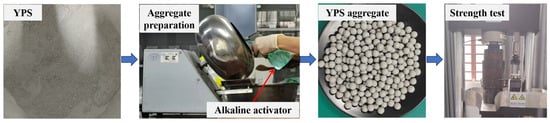
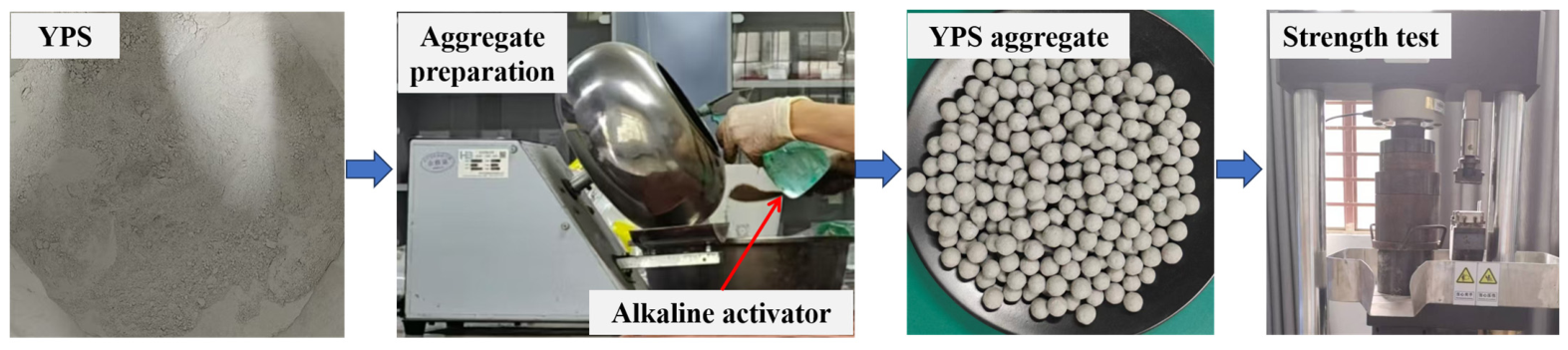
YPS was selected as the sole aggregate precursor because it is generated in large quantities and contains abundant glassy phases with potential pozzolanic activity, yet currently lacks efficient utilization pathways. The YPS used in this experiment was provided by an enterprise in Panzhihua. The granulation process used a disc granulator (model BY-300, maximum speed 36 rpm). To ensure effective bonding between powders, an alkaline activator was continuously sprayed during granulation. The activator was prepared by mixing a 2 mol/L sodium hydroxide solution and water glass with a modulus of 3.3 at a mass ratio of 1:2, and the modulus of the mixed activator was 1.26. This concentration can effectively activate the YPS activity while avoiding powder agglomeration caused by excessively high concentration. After granulation, the prepared coarse and fine aggregates were sealed in bags until reaching a curing age of 28 d. The preparation of the YPS aggregates followed the procedure reported in a previous study [44], in which the YPS pretreatment, powder characteristics, granulation duration and speed, activator dosage, curing conditions, aggregate grading, and aggregate shape were described in detail. The preparation and strength test diagram of YPS aggregates are shown in Figure 1.
Figure 1.
Preparation and strength test diagram of YPS aggregates.
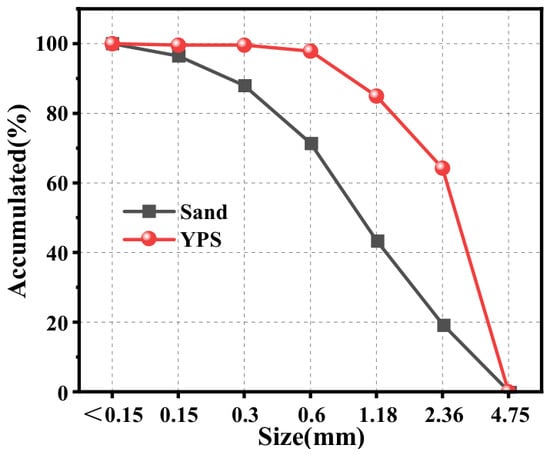
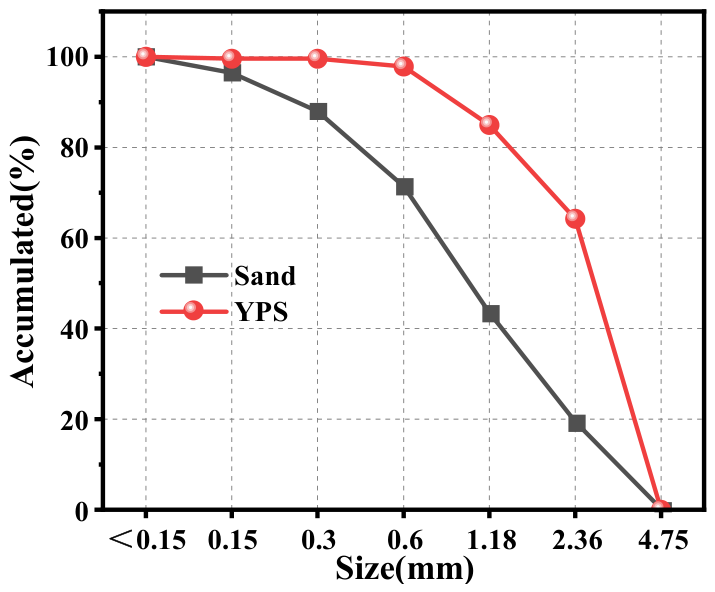
The raw materials used for concrete preparation included P·O 42.5 Lafarge cement (PC), Class II fly ash (FA) provided by Chengdu Zhitong Company, high-density silica fume (SF), and aggregates. The fine aggregates consisted of manufactured sand and YPS fine aggregates, both with particle sizes less than 4.75 mm, and their bulk densities were 1527.5 kg/m3 and 1326.7 kg/m3, respectively. The coarse aggregates were natural crushed stone and YPS coarse aggregates with particle sizes of 4.75–16 mm. Both had a particle size distribution of 60% for 9.5–16 mm and 40% for 4.75–9.5 mm, and their bulk densities were 1469.4 kg/m3 and 1266.4 kg/m3, respectively. YPS aggregates replaced natural aggregates by equal volume. A full replacement of coarse aggregate was adopted to maximize YPS utilization. The fine aggregate replacement ratio was varied to evaluate gradation effects. A systematic coarse aggregate replacement gradient is recommended in future work. The coarse aggregate replacement ratio was 100%, and the fine aggregate replacement ratios were 10%, 20%, and 30%. The relevant properties and particle size curves of YPS aggregates are shown in Table 1 and Figure 2. Both the natural aggregates and the YPS aggregates were used in an air-dry state. The moisture content of the YPS aggregates was 5.0%, and their water absorption was 5.5%. Because the YPS aggregates carried additional moisture into the mix, the effective water-to-binder ratio was higher than the nominal value. It increased slightly with increasing YPS aggregate content, and can be calculated from the aggregate masses and mixing water given in Table 2 as (mixing water + moisture carried by YPS aggregates)/binder. To ensure the workability of concrete, a high-performance polycarboxylate superplasticizer with a water-reducing rate of 25% was added at 1% of the mass of cementitious materials. The specific mix proportions and raw material compositions are shown in Table 3.
Table 1.
Relevant properties of YPS aggregates.
Figure 2.
Particle size curves of YPS fine aggregate and sand.
Table 2.
Chemical composition of raw materials (%).
Table 3.
Mix proportions (g).
2.2. Concrete Preparation
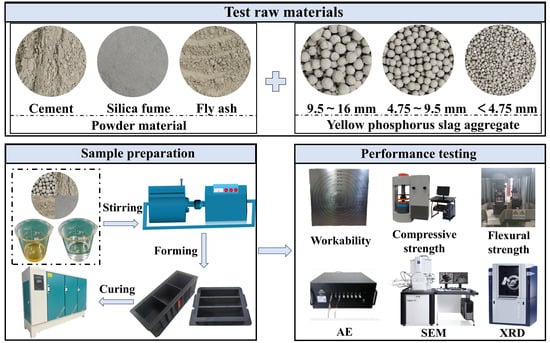
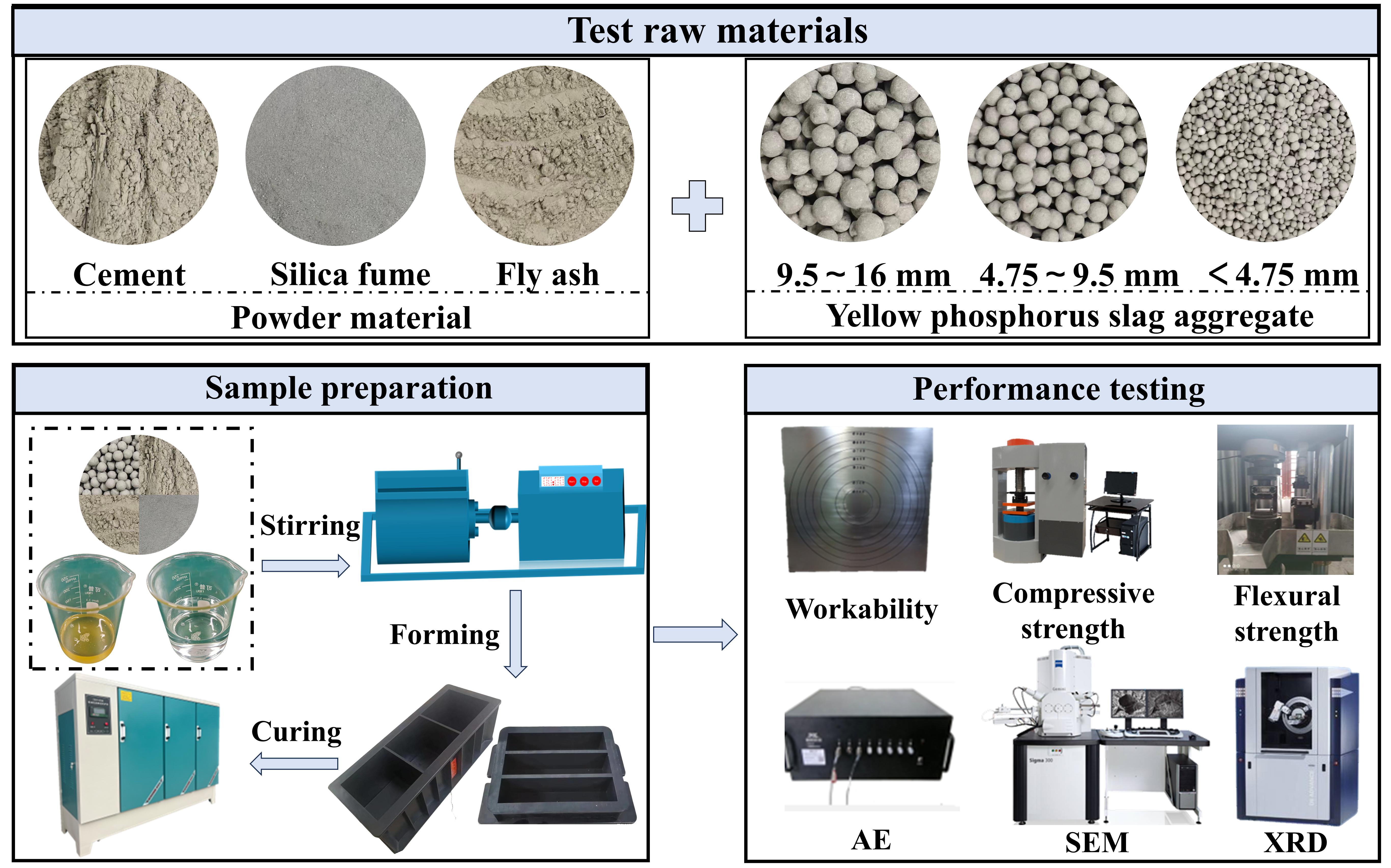
First, the weighed powders were poured into a mixing pot and dry-mixed for 1 min to fully blend. Then, mixing water was added and stirred to ensure sufficient paste to coat the aggregates, thereby reducing the risk of aggregate breakage. Finally, the aggregates were added and mixing continued for 3 min. Subsequently, the workability of the prepared mixture was tested, and then it was cast into 100 × 100 × 100 mm cube and 50 × 100 mm cylinder molds, covered with plastic film to prevent moisture evaporation. After 24 h, the specimens were demolded and placed in a standard curing chamber at 20 ± 2 °C and 95% relative humidity until the testing age. The specific experimental flowchart is shown in Figure 3.
Figure 3.
Flowchart of preparation and performance testing of YPS concrete.
2.3. Test Methods
The workability of concrete was tested according to the Standard for Test Methods of Performance on Ordinary Fresh Concrete (GB/T 50080-2016) [45]. The compressive strength and flexural strength of 100 mm × 100 mm × 100 mm cubic specimens and 100 ×100 ×400 mm prismatic bodies were measured respectively in accordance with GB/T 50081-2019 [46]. The 100 mm cube compressive strengths were automatically converted by the testing system to equivalent 150 mm cube strengths using the conversion factor of 0.95 specified in GB/T 50081-2019, and the exported data are the converted values. Ultrasonic pulse velocity was measured using a ZBL-U5100 non-metallic ultrasonic detector produced by Beijing Zhibolian Technology Co., Ltd., Beijing, China. to evaluate the internal structure of the specimens by observing the propagation speed of ultrasonic waves. An acoustic emission (AE) monitoring system was used to monitor the AE information accompanying the compressive strength test. The AE signals generated during uniaxial compression were recorded using an eight-channel AE acquisition system (Changsha Pengxiang Technology Co., Ltd, Changsha, China.). Cylinder specimens with dimensions of 50 × 100 mm were used for the AE tests. The loading rate was 1 mm/min under displacement control. Two AE sensors were attached to the centres of two opposite lateral surfaces of each specimen, and petroleum jelly was applied between the sensors and the specimen surfaces to ensure effective acoustic coupling. The AE threshold and preamplifier gain were both set to 40 dB. The sampling rate was 1.25 MHz and the record length was 128 k. The cumulative AE energy was defined as the integral of the absolute AE signal voltage over the loading time and is expressed in mV. The same sensor arrangement, threshold, gain, and sampling settings were used for all mixtures, so that the cumulative AE energy values are directly comparable among the groups. The samples for microscopic testing were taken from the crushed concrete fragments after the compressive test. They were first immersed in anhydrous ethanol to terminate hydration, dried in an oven at 60 °C before testing, and then prepared into powder samples with a particle size less than 0.075 mm and block samples with dimensions not exceeding 10 mm × 10 mm × 5 mm for X-ray diffraction (XRD) and scanning electron microscopy (SEM) testing. XRD analysis was performed with Cu Kα radiation over a 2θ range of 5–70°, at a scanning rate of 2°/min and a step size of 0.02°. Three specimens were prepared for each mixture at each curing age, and the reported results are the arithmetic mean of the three measurements. Error bars represent the standard deviation of three replicate specimens.
3. Results
3.1. Slump Flow and Slump
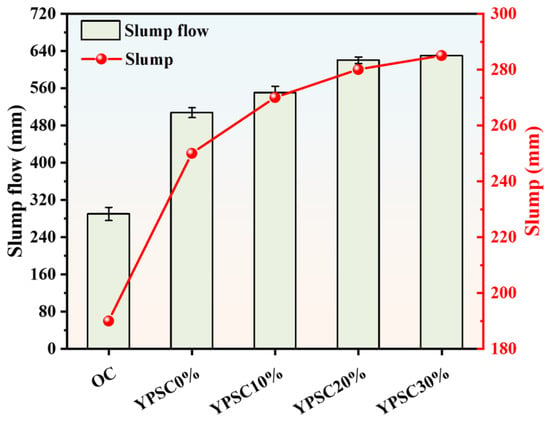
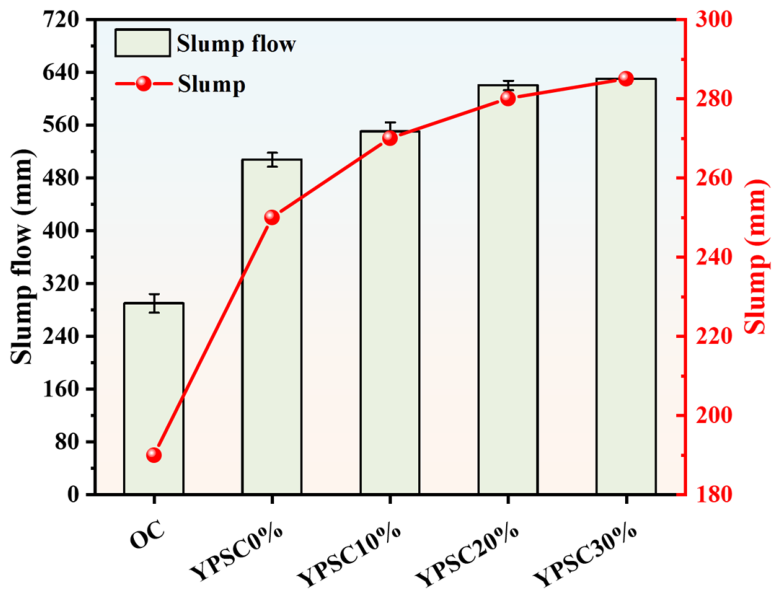
Figure 4 shows the influence of different YPS aggregate replacement ratios on the slump flow and slump of concrete. Both slump flow and slump increased with an increasing aggregate replacement ratio. The slump flow and slump of the OC group were 290 mm and 190 mm, respectively. When YPS coarse aggregate completely replaced natural crushed stone (YPSC0%), the slump flow and slump increased to 507 mm and 250 mm, respectively, which were 74.8% and 31.6% higher than those of the OC group. Furthermore, the slump flow and slump of the YPSC30% group increased by 24.3% and 14%, respectively, compared with the YPSC0% group. Natural aggregates are mostly angular, which increases the friction between aggregates and paste. In contrast, YPS aggregates are rounded and have low mud content, which helps reduce the friction between aggregates and paste [47]. In addition, the high moisture content of YPS aggregates causes them to release some water during mixing, thereby increasing the water-to-binder ratio of the paste. These factors together improved the workability of concrete and may have contributed to a denser matrix.
Figure 4.
Slump flow and slump of concrete with different YPS aggregate replacement ratios.
3.2. Density and Moisture Content
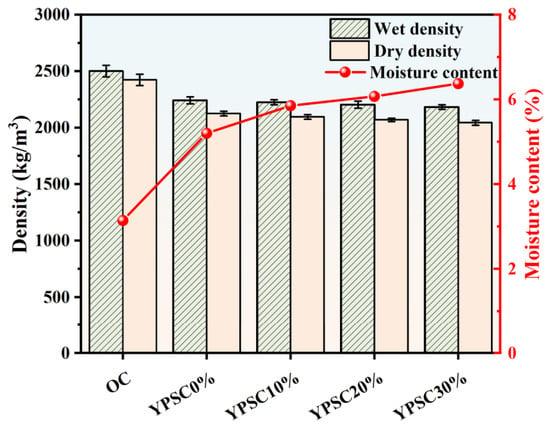
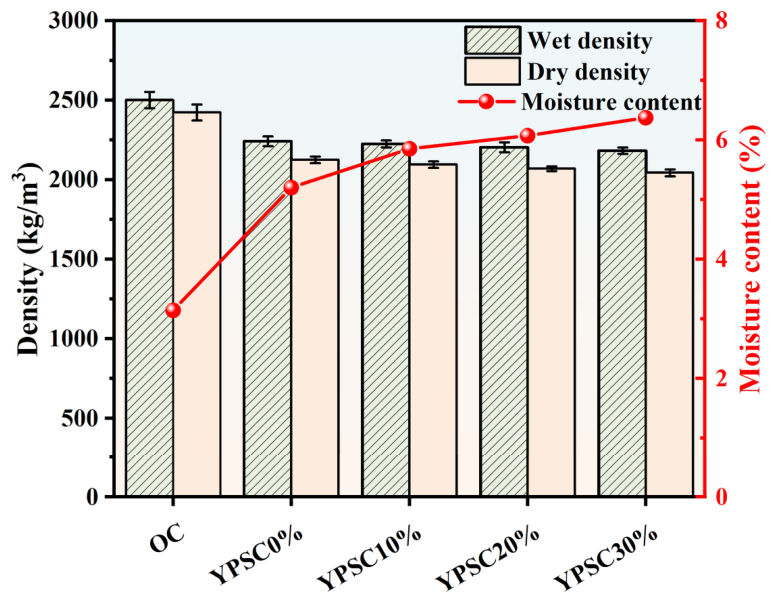
The variation trends of density and moisture content of different specimens with aggregate replacement ratio are shown in Figure 5. With an increasing aggregate replacement ratio, the specimen density gradually decreased, while the moisture content showed the opposite trend. Specifically, when YPS aggregate completely replaced crushed stone (YPSC0% group), the specimen density decreased considerably compared with the OC group. The wet density decreased from 2501.4 kg/m3 to 2242.2 kg/m3, and the dry density decreased from 2422.9 kg/m3 to 2125.7 kg/m3. The moisture content increased from 3.14% to 5.2%. For the three groups using YPS aggregate to replace fine aggregate, the density generally decreased compared with the YPSC0% group, but the difference was small. The moisture content further increased from 5.2% to 6.37%. The main reason for the above changes is that the density of YPS aggregate is lower than that of natural aggregate, resulting in the density of concrete containing YPS aggregate being generally lower than that of the OC group. At the same time, the higher moisture content of the aggregate also made the overall moisture content of YPSC specimens higher.
Figure 5.
Density and moisture content of concrete with different YPS aggregate replacement ratios.
3.3. Water Absorption
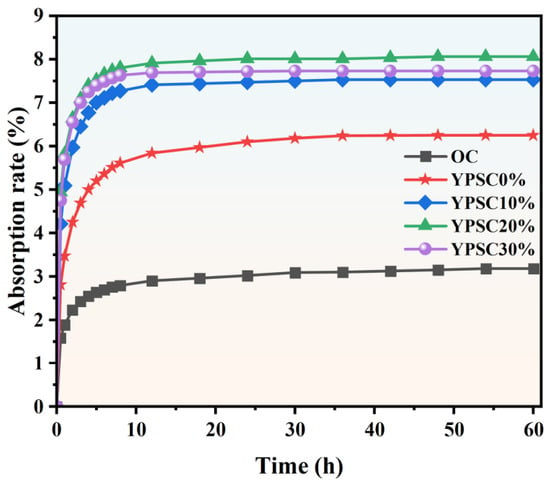
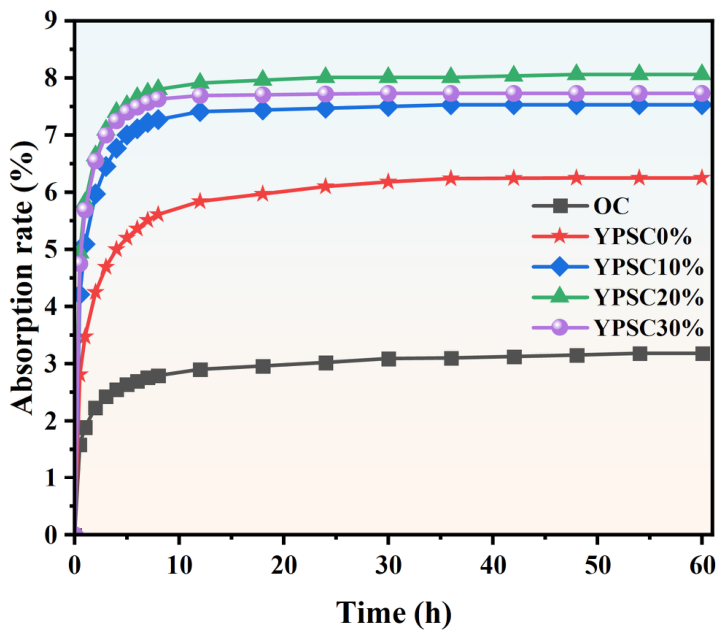
Figure 6 shows the water absorption of different specimens. The water absorption of all five groups exhibited three stages: rapid absorption, slow absorption, and stable absorption. Among them, the OC group had the lowest saturated water absorption, 3.18%, while the saturated water absorption of the YPSC groups was higher than that of the OC group. The saturated water absorption of the YPSC0% group reached 6.25%, 96.5% higher than that of the OC group, which is mainly attributed to the porous structure of YPS aggregate itself. Water penetrates it more easily compared with natural aggregate [48]. In addition, the YPSC10%, YPSC20%, and YPSC30% groups replaced part of the fine aggregate on the basis of YPSC0%, and their water absorption further increased compared with YPSC0%, reaching a maximum of 8.06%.
Figure 6.
Water absorption of concrete with different YPS aggregate replacement ratios.
3.4. Flexural Strength and Ultrasonic Pulse Velocity
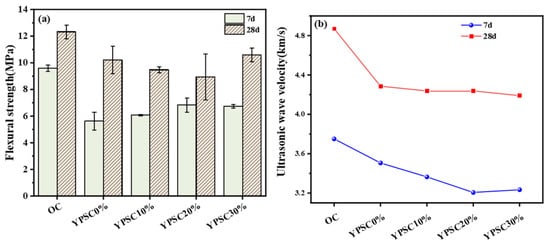
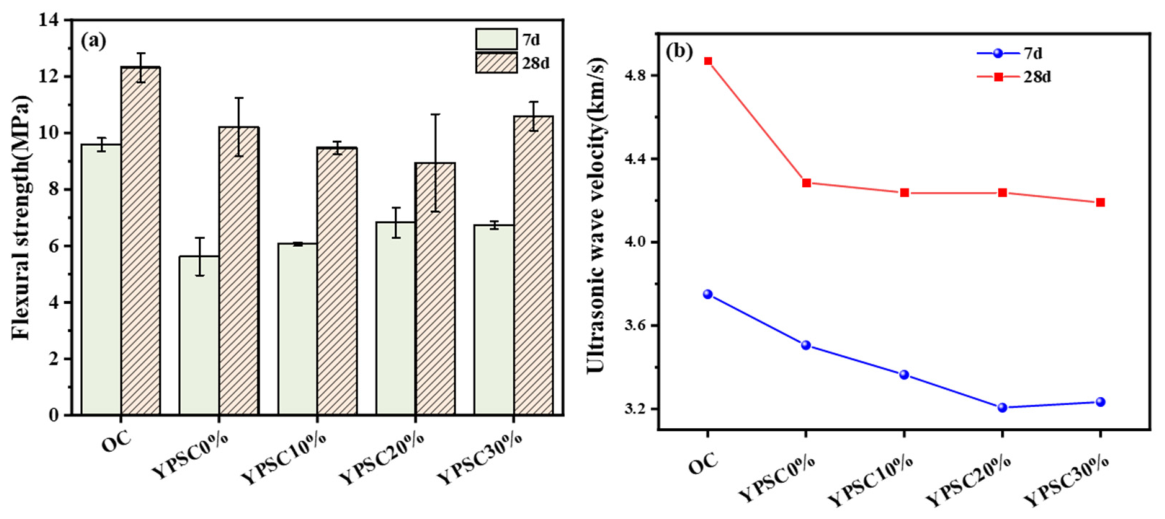
Figure 7 shows the ultrasonic pulse velocity and flexural strength test results of different specimens at 7 d and 28 d. Overall, the ultrasonic pulse velocity at 28 d was higher than that at 7 d for all specimens, indicating that the hydration reaction generally improved the internal compactness of the specimens. Among them, the OC group had the highest ultrasonic pulse velocity, approaching 5 km/s at 28 d, reflecting its relatively dense internal structure. In contrast, the pulse velocities of the YPSC groups at 7 d and 28 d were lower than those of the OC group, but the maximum decrease did not exceed 10%. This is mainly because YPS aggregate itself has many pores, which increases the overall porosity of the specimen and thus reduces the ultrasonic pulse velocity.
Figure 7.
Flexural strength and ultrasonic pulse velocity of concrete with different YPS aggregate replacement ratios. (a) flexural strength; (b) ultrasonic pulse velocity.
In terms of flexural strength, the OC group also performed best, with a 28 d strength of 12.3 MPa, corresponding to the highest pulse velocity. In comparison, the 28 d flexural strength of the YPSC0% group decreased by 17.11% compared with the OC group. This difference is mainly attributed to the porous structure and lower strength of YPS aggregate itself [49], which causes the aggregate to fracture directly under stress, leading to overall specimen failure. As shown in Figure 7, the fracture surface of YPSC specimens did not appear at the interface between aggregate and cement paste, but showed the aggregate itself broken into two parts, indicating that the strength of YPSC specimens is mainly controlled by aggregate strength. In contrast, the 7 d strength of the other three groups was higher than that of the YPSC0% group. The 28 d strengths of YPSC10% and YPSC20% were lower than that of YPSC0%, whereas YPSC30% was comparable to or slightly higher than YPSC0%. The reason for this phenomenon is that the alkaline environment provided by YPS aggregate effectively promoted cement hydration in the early stage, thereby improving early strength [50]. However, this promoting effect gradually weakened in the later stage, and combined with the low strength of the aggregate itself and the inferior gradation compared with manufactured sand, the later strength of the specimens decreased.
The substitution of YPS aggregates did not cause an absolute decrease in later-age flexural strength, since the 28 d strength of all groups remained higher than the corresponding 7 d value. Rather, the YPS substitution reduced the overall strength level and slightly slowed the rate of later-age strength gain. However, formal conformity assessment for pavement flexural strength requires statistical evaluation according to the acceptance rules of the relevant standard, which was not performed in this study. Therefore, this result is presented as a preliminary finding rather than a formal compliance claim.
3.5. Compressive Strength
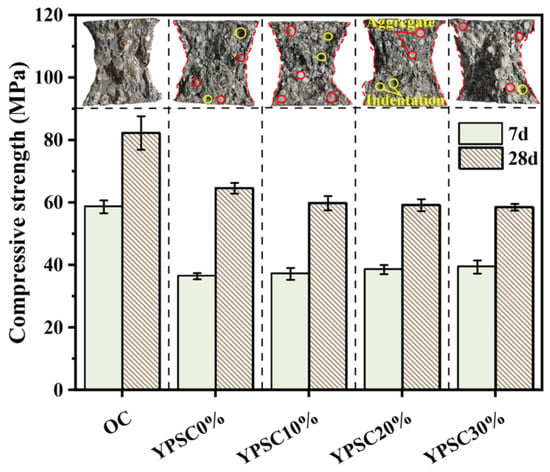
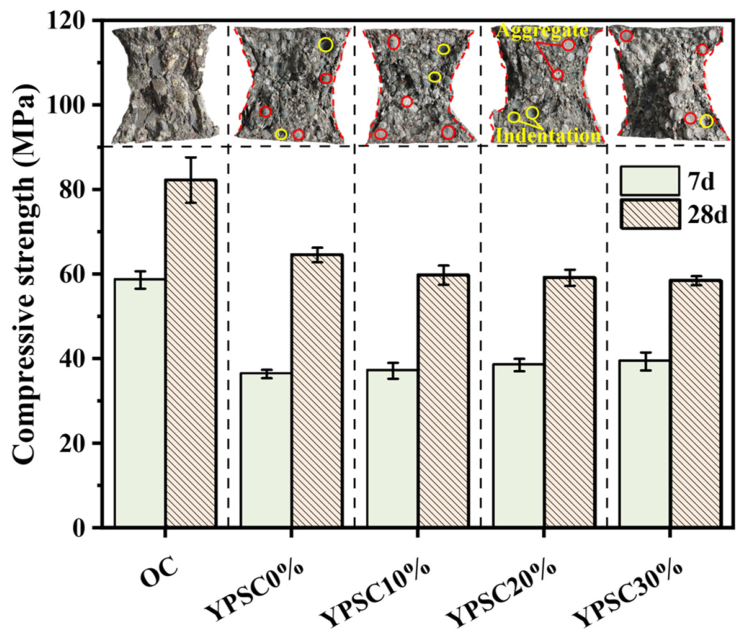
The compressive strength and failure characteristics of different specimens are shown in Figure 8. The failure modes of the five groups were similar, all showing severe damage in the middle and forming concave fracture surfaces, which is basically consistent with the failure characteristics of ordinary concrete. In addition, YPS aggregates did not show obvious aggregation inside the specimens, indicating a relatively uniform distribution. During compression, obvious aggregate fracture traces and indentations left by some aggregates falling off could be observed on the fracture surfaces of YPSC specimens. The indentations mainly reflect localized detachment of aggregate fragments after the specimen had already failed, whereas the fracture surfaces show that the aggregates themselves were broken into two parts. This indicates that the low strength of the YPS aggregate itself is the dominant factor controlling failure, rather than interfacial debonding between the aggregate and the paste [51].
Figure 8.
Compressive strength of concrete with different YPS aggregate replacement ratios.
In terms of compressive strength, the variation trend was similar to that of flexural strength. The addition of aggregate reduced the overall strength of the specimens. Among them, the 28 d strength of the OC group reached 82.3 MPa, while that of the YPSC0% group was 64.6 MPa, a decrease of 21.5% compared with the OC group. This is mainly because YPS aggregate itself has a porous structure, which forms pores inside the concrete prepared from it, thereby reducing the effective load-bearing area of the specimen and leading to a decrease in overall strength [52]. On the other hand, the low strength of the aggregate itself further weakens the specimen strength. Although the 28 d strength of the other three groups was lower than that of the YPSC0% group due to factors such as aggregate strength and gradation, the differences among them were small. This is mainly because the hydration reaction inside the specimen reduces internal humidity, and the water released by the aggregate can be transported to dry areas through the interfacial transition zone, thereby playing an internal curing role and partially improving the strength, effectively offsetting the strength loss caused by the aggregate itself [53,54]. In addition, with increasing fine aggregate content, the 7 d strength of the specimens gradually increased, which is similar to the trend observed for flexural strength mentioned above. Although the addition of aggregate reduced the overall strength of the specimens, the measured mean 28 d compressive strength of all YPSC groups exceeded 50 MPa, which is above the nominal 50 MPa requirement of the C50 grade. This comparison is based on the mean cube strength of three specimens, and formal conformity to a concrete strength class requires statistical assessment according to the acceptance rules of the relevant standard.
3.6. Acoustic Emission
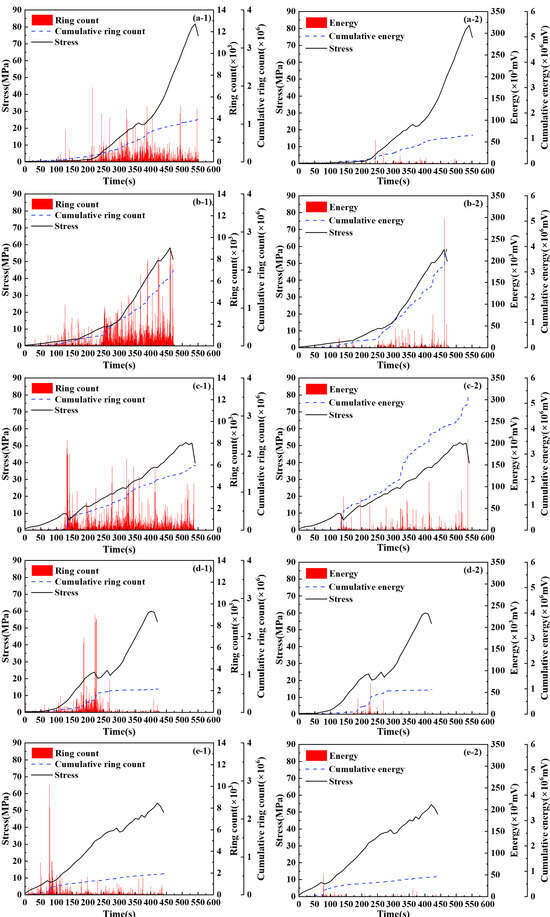
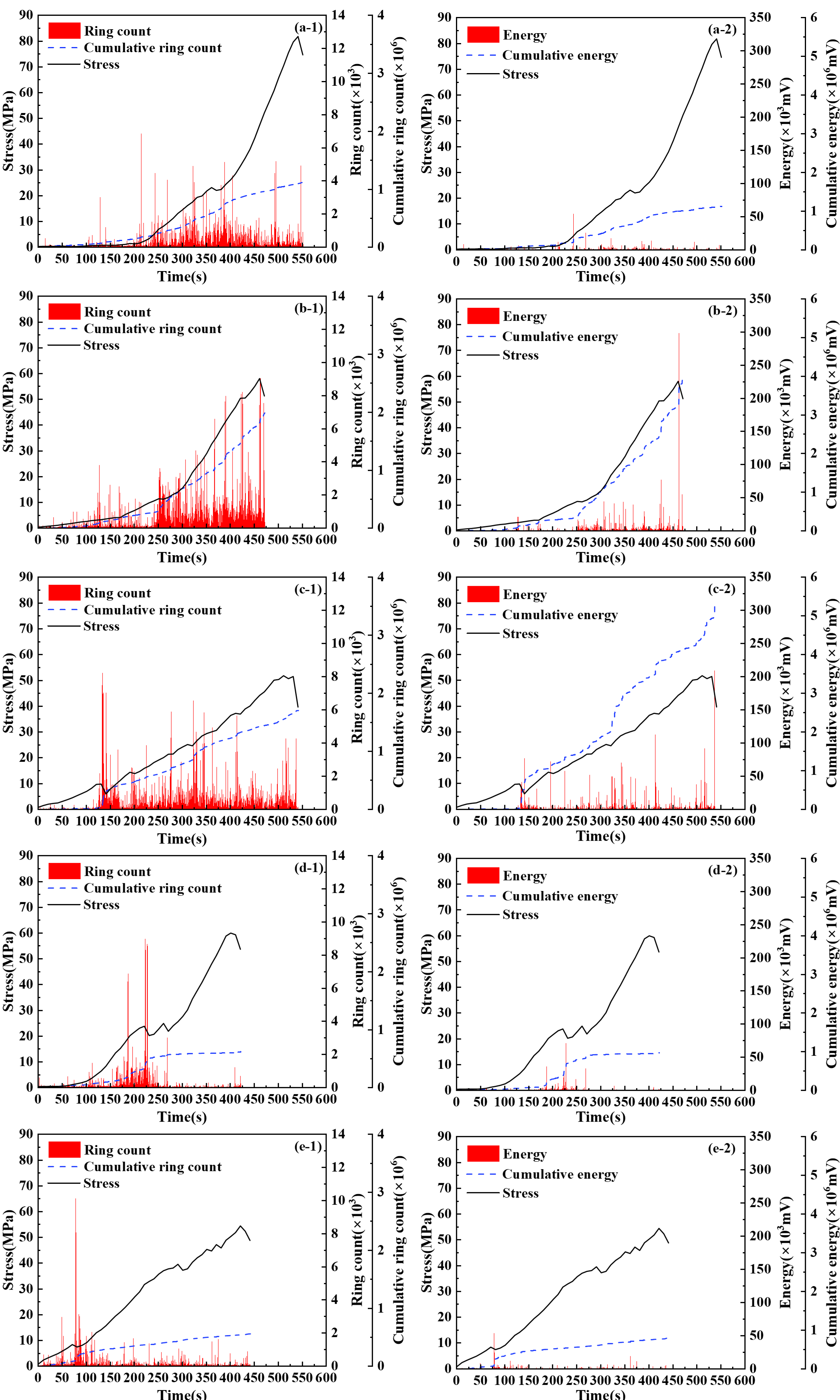
Figure 9 shows the AE test results of different concretes during uniaxial compression. The cumulative ring-down count and cumulative energy reflect the frequency and energy release level of internal crack initiation and propagation, respectively. The OC group had the lowest cumulative AE energy, about 1 × 10⁶ mV, while the cumulative AE energy of YPS aggregate concrete was considerably higher than that of the OC group, indicating that more elastic strain energy was released during compression [55]. Among the YPS aggregate concretes, the YPSC10% group had the highest cumulative AE energy, reaching about 5 × 10⁶ mV; the YPSC0% group followed, at about 4 × 10⁶ mV. With further increases in the fine aggregate replacement ratio to 20% and 30%, the cumulative AE energy decreased, but was still higher than that of the OC group.
Figure 9.
AE test results of different concretes: (a-1) Ring count of OC; (a-2) Energy of OC; (b-1) Ring count of YPSC0%; (b-2) Energy of YPSC0%; (c-1) Ring count of YPSC10%; (c-2) Energy of YPSC10%; (d-1) Ring count of YPSC20%; (d-2) Energy of YPSC20%; (e-1) Ring count of YPSC30%; (e-2) Energy of YPSC30%.
The lowest cumulative AE energy of the OC group is related to its dense internal structure and high-strength natural aggregates. During loading, high-strength aggregates effectively bore the stress, and crack propagation was more tortuous due to aggregate obstruction, resulting in relatively gentle energy release [56]. In contrast, YPS aggregate itself has low strength and a porous structure, and the aggregate interior preferentially fractures under compression [57], releasing a large amount of energy. Therefore, the cumulative AE energy of YPSC specimens was markedly increased. This inference is consistent with the macroscopic failure characteristics (aggregate fracture traces on the fracture surface) and SEM observations (penetrating cracks inside the aggregate), indicating that the failure of YPS aggregate concrete is mainly controlled by aggregate fracture rather than interfacial debonding.
The highest cumulative AE energy in the YPSC10% group may be because an appropriate amount of fine aggregate replacement improved the aggregate gradation, making the internal stress distribution more uniform, but the overall aggregate strength was still low, causing more aggregate particles to fracture in the later loading stage. As the fine aggregate replacement ratio increased to 20% and 30%, the initial porosity inside the specimen further increased, the degree of stress concentration decreased, and energy release tended to be dispersed, so the cumulative AE energy decreased. In addition, the water released by YPS aggregate produced an internal curing effect on the paste, making the interfacial transition zone denser, which also affected the energy release characteristics to some extent [58,59]. The AE test results further confirm that the damage evolution of YPS aggregate concrete is dominated by aggregate fracture, and its cumulative AE energy is markedly higher than that of ordinary concrete, showing a trend of first increasing and then decreasing with an increasing fine aggregate replacement ratio.
3.7. XRD
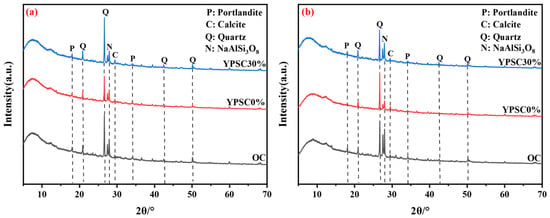
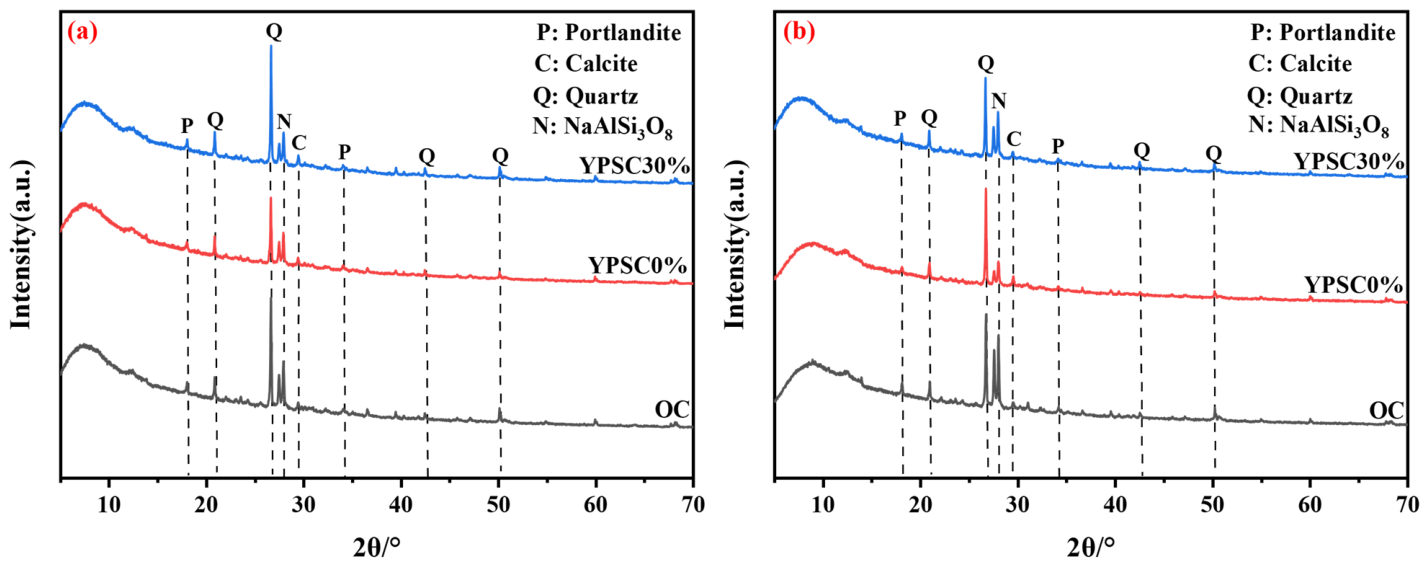
Figure 10 shows the mineral composition of different specimens at 7 d and 28 d. The mineral compositions of the three groups at both ages were mainly quartz (SiO2), calcite (CaCO3), and calcium hydroxide (Ca(OH)2), and a diffuse peak of amorphous C-S-H gel was observed in the range of 20–35°, indicating that aggregate replacement did not cause changes in the mineral composition of the specimens. Further analysis of the 7 d XRD patterns showed that the diffraction peak intensities of the hydration product Ca(OH)2 in the YPSC0% and YPSC30% specimens were higher than those in the OC group, suggesting that the alkaline environment provided by the aggregate may promote cement hydration. With the extension of curing age to 28 d, the Ca(OH)2 peak intensities of the three groups gradually weakened, which is consistent with the consumption of Ca(OH)2 in the secondary hydration reaction to form additional C-S-H gel. The comparison of XRD peak intensities is qualitative, because peak intensity is affected by preferred orientation, the presence of amorphous phases, and overlapping reflections. Therefore, these results are used as supporting evidence rather than as a quantitative determination of phase contents, and replicate sampling for statistical comparison was not performed.
Figure 10.
Mineral composition of different specimens at different ages: (a) 7 d; (b) 28 d.
3.8. SEM
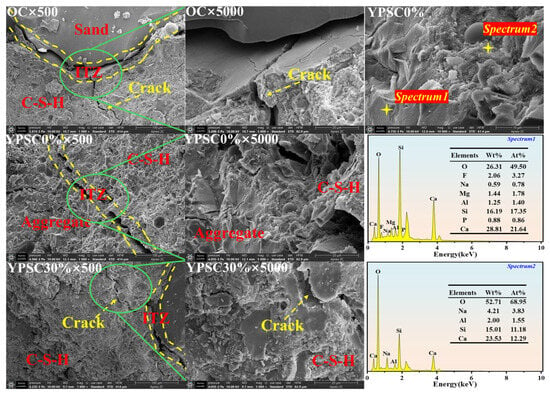
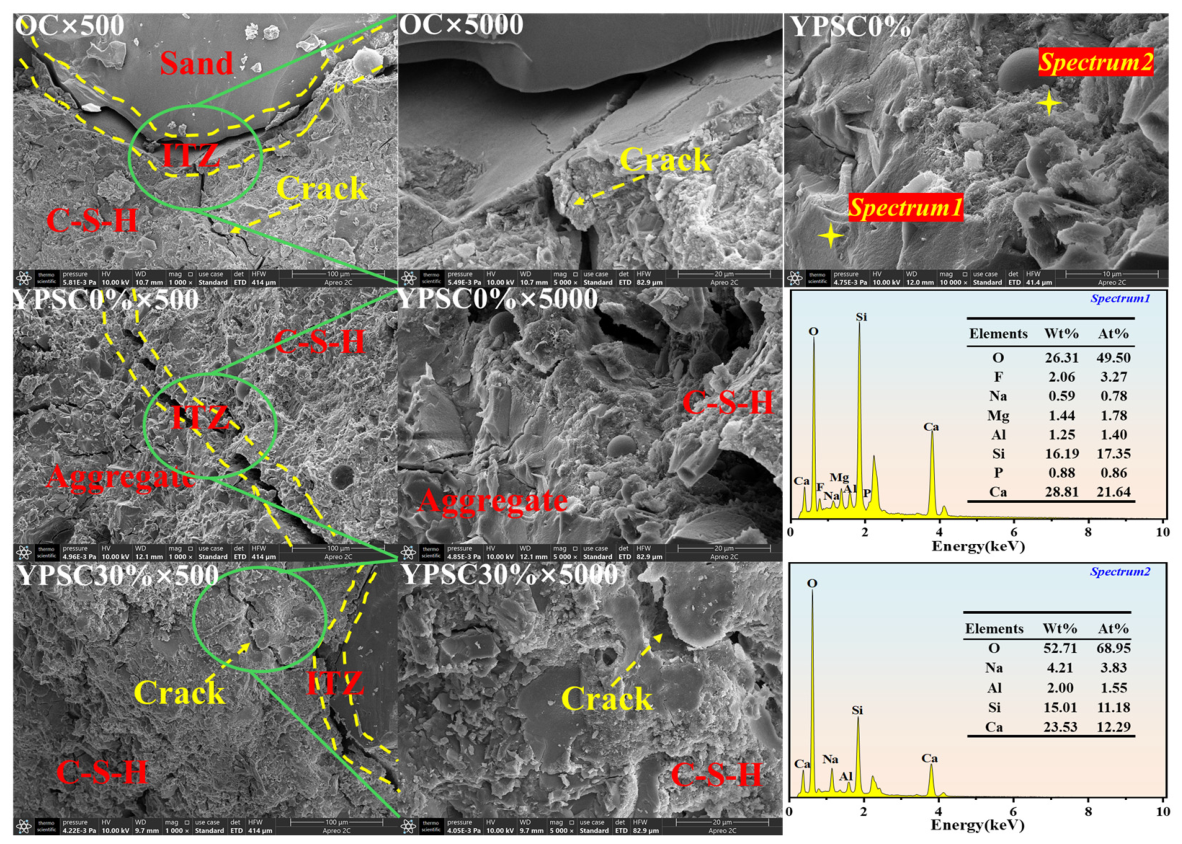
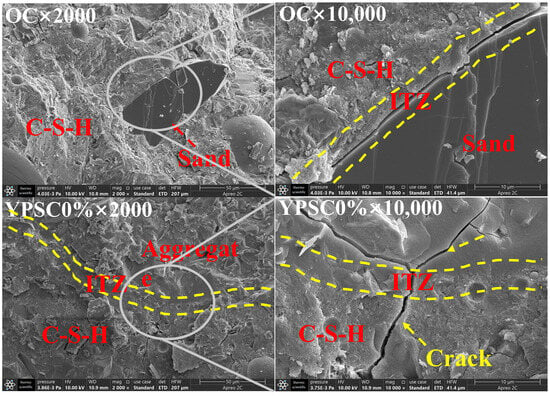
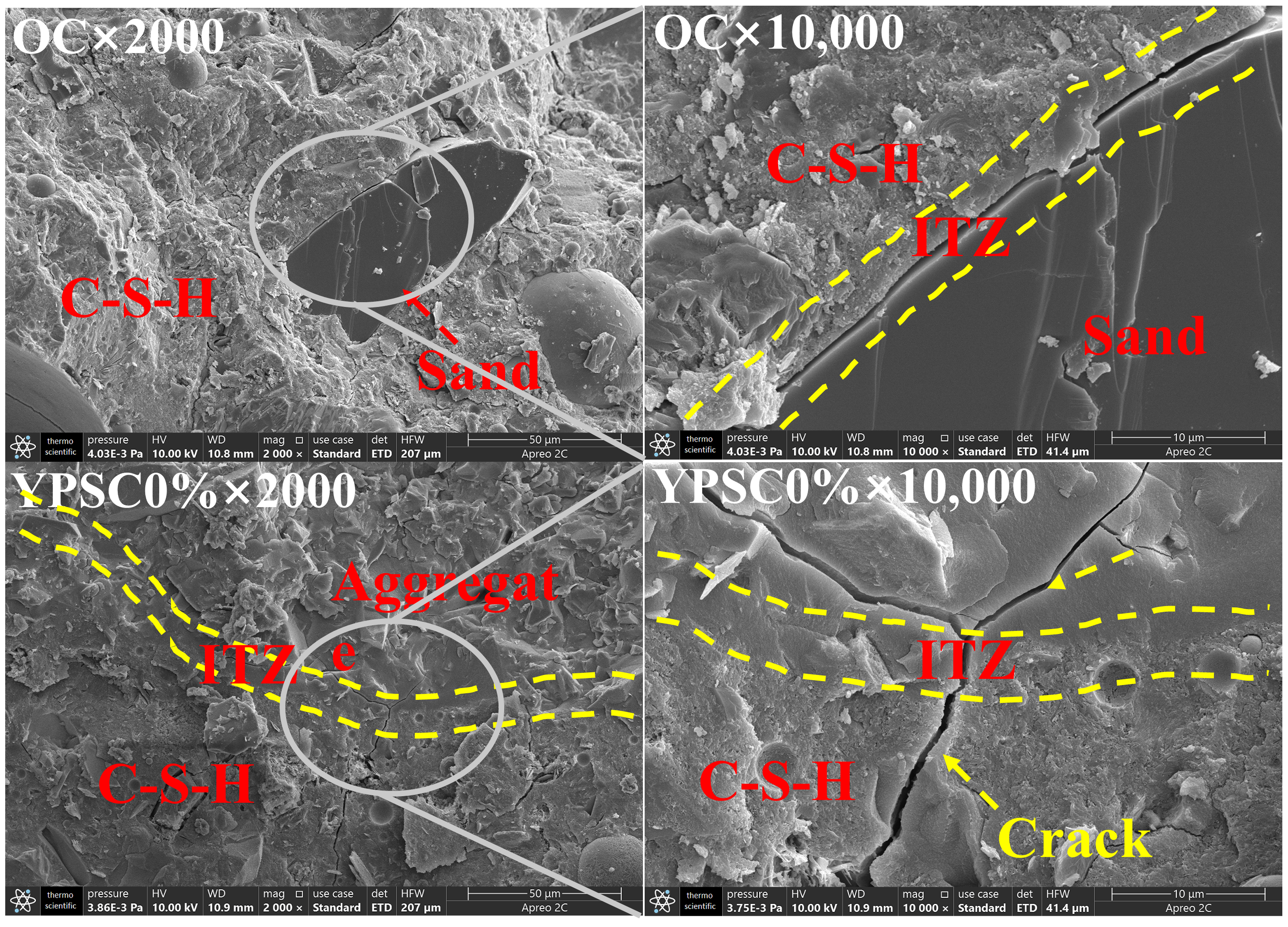
Figure 11 and Figure 12 show the micromorphology of different specimens at 7 d and 28 d, respectively. Fractured block samples from the OC, YPSC0%, and YPSC30% mixes were examined at each curing age, and representative images are presented. SEM was used for qualitative morphological observation only. No statistical quantification of phases, pores, or interfacial features was attempted, and the observed features are therefore not generalized beyond the examined samples. Overall, the structure of 28 d specimens was markedly denser than that at 7 d. At 7 d, obvious cracks were observed in all three groups, and the overall structure was relatively loose. At the same time, the interfacial transition zone (ITZ) bonding of the three groups was relatively loose, with cracks at the connections and nearby. Further energy spectrum analysis of the YPSC0% specimen showed that a small amount of P and F elements were detected in Spectrum 1, indicating that the substance was YPS aggregate. The main elements in Spectrum 2 were O, Si, and Ca, corresponding to hydration products. The bonding between aggregate and paste in the YPSC0% specimen was denser than that in the OC group, but its 7 d strength was lower than that of the OC group, indicating that the strength of YPS aggregate concrete is mainly controlled by the aggregate itself. In addition, the structure of YPSC30% at 7 d was overall denser than that of YPSC0%, which is consistent with the above macroscopic strength.
Figure 11.
Micromorphology of different specimens at 7 d.
Figure 12.
Micromorphology of different specimens at 28 d. Footnote: The letters in the picture represent samples.The number represents the magnification factor.
In contrast, the overall structure of the three groups at 28 d tended to be dense, with no obvious cracks or pores, and the ITZ bonding between aggregate and paste was tighter. In particular, in the YPSC0% specimen, the ITZ between YPS aggregate and paste was difficult to distinguish clearly, but a crack penetrating the ITZ caused by aggregate rupture could be observed. This phenomenon indicates that although YPS aggregate and paste are tightly bonded, the aggregate itself has low strength and is prone to fracture under stress, thereby reducing the overall strength of the specimen. In addition, unreacted raw material particles were still observed in the two groups at 28 d, indicating that the specimens had not fully hydrated and still had potential for continued hydration.
4. Discussion
The present results agree with previous studies that porous artificial aggregates reduce density and strength and increase water absorption [34,35,40,49]. Unlike earlier work focused mainly on macroscopic changes, this study links cold-bonded YPS aggregate characteristics to the mechanical performance and failure behavior of road concrete. The AE results show that the cumulative AE energy of YPS aggregate concrete is 4–5 times that of natural aggregate concrete and peaks at a 10% fine aggregate replacement ratio, first increasing and then decreasing with further replacement. This is attributed to the preferential fracture of low-strength, porous aggregates rather than interfacial debonding. This aggregate-controlled failure mode, supported by fracture-surface and SEM observations, differs from the interface-dominated failure often reported for recycled aggregate concrete and constitutes the main scientific novelty of this study.
The increase in water absorption and decrease in strength with increasing YPS content are consistent with the general pore–strength relationship. However, MIP/NMR was not performed. The porosity, pore-size distribution, and pore connectivity were therefore not quantified, and the pore-related interpretation based on water absorption, density, SEM, and AE energy is qualitative. Strength was evaluated only up to 28 d, and longer ages (e.g., 56 and 90 d) should be included in future work. XRD and SEM indicate that aggregate replacement did not change the hydration product types and that the aggregate–paste interface was tightly bonded. The porous, low-strength aggregate itself remained the main cause of strength reduction. The XRD peak-intensity comparison is qualitative and used only as supporting evidence. Formal statistical significance testing was not performed. The reported differences are based on means and standard deviations of three replicates and should be read as descriptive trends. The C50 designation refers only to the measured mean strength exceeding the nominal 50 MPa requirement, not to formal strength-class conformity, which requires statistical assessment under the relevant standard.
From an engineering perspective, cold-bonded YPS aggregates can fully replace natural coarse aggregate and partially replace manufactured sand, offering a route to reduce natural aggregate consumption and avoid high-temperature sintering in temporary construction roads. Improved slump flow and slump can facilitate mixing and placement, but the high moisture content and water absorption require moisture correction. The aggregate-controlled failure mode implies that mix design and quality assurance should optimize gradation and the fine aggregate replacement ratio. Cost benefits depend on local prices and production scale because the activator and granulation processes add costs; detailed cost analysis and life-cycle assessment were not performed. Although Chinese standards do not set a mandatory upper water-absorption limit for hardened road concrete, the increased absorption raises potential frost and abrasion concerns, which were not evaluated. Previous studies have reported that artificial aggregates prepared from phosphorus-bearing solid wastes can exhibit satisfactory leaching safety under standard test conditions [33,39]. However, these findings cannot be directly extrapolated to the present YPS aggregate concrete, because the leaching behavior depends on the raw material, activator system, aggregate preparation, and service environment. No leaching tests were conducted in this study, so pollutant immobilization and environmental safety are not verified. It should also be noted that the specimens were cured under standard conditions (20 ± 2 °C and 95% RH), which differ from the actual dry and temperature-differential conditions of road service environments; therefore, the present data reflect the material performance under standard curing conditions, and the long-term service performance needs to be verified in the field. Future work should therefore combine durability testing, leaching assessment, life-cycle assessment, statistical analysis, coarse aggregate replacement gradients, and field trials.
5. Conclusions
In this study, cold-bonded YPS coarse and fine aggregates were prepared and used to partially or completely replace natural aggregates by equal volume to prepare concrete. The workability, density, water absorption, flexural strength, compressive strength, and AE characteristics were systematically tested, and the microstructural mechanism was analyzed by XRD and SEM. The main conclusions are as follows:
(1) YPSaggregates markedly improved the workability of concrete. With an increasing replacement ratio, the slump flow and slump continuously increased. The YPSC0% group showed increases of 74.8% and 31.6%, respectively, compared with the OC group. The specimen density decreased, while the moisture content and water absorption increased. The water absorption of the YPSC0% group was 96.5% higher than that of the OC group. This is mainly attributed to the rounded shape, porous nature, and high moisture content of YPS aggregates.
(2) With an increasing aggregate replacement ratio, both flexural strength and compressive strength decreased. The 28 d flexural strength and compressive strength of the YPSC0% group were 17.11% and 21.5% lower than those of the OC group, respectively, and the measured mean 28 d compressive strength (e.g., 64.6 MPa for YPSC0%) exceeded the nominal 50 MPa requirement of the C50 grade, although formal strength-class conformity was not assessed. The porous and low-strength nature of the aggregate itself is the main reason for the strength reduction.
(3) AE results showed that the cumulative AE energy of YPS aggregate concrete was considerably higher than that of the OC group, with the YPSC10% group being the highest, about five times that of the OC group, and it first increased and then decreased with an increasing fine aggregate replacement ratio. The failure was mainly controlled by aggregate fracture rather than interfacial debonding. An appropriate amount of fine aggregate replacement improved the gradation, causing more aggregates to participate in fracture and increasing energy release.
(4) XRD and SEM analyses showed that the incorporation of YPS aggregates did not change the hydration product types. The aggregate–paste interface was tightly bonded, but the porous and low-strength nature of the aggregate itself was the fundamental reason for the strength reduction in concrete. YPS artificial aggregates can fully replace natural coarse aggregate and partially replace manufactured sand to prepare road concrete whose measured mean 28 d compressive strength exceeded the nominal 50 MPa requirement of the C50 grade.
(5) This study is limited to laboratory-scale mechanical and microstructural characterization under standard curing conditions (20 ± 2 °C, 95% RH) that differ from actual road service environments. The durability-related properties of YPS aggregate road concrete, particularly abrasion resistance and freeze–thaw resistance, were not evaluated, and long-term performance and environmental leaching behavior under field conditions remain to be verified. Future work should therefore combine durability testing, life-cycle assessment, and field trials to further validate the applicability of cold-bonded YPS aggregates in road construction.
Author Contributions
Conceptualization, P.C.; Methodology, J.G.; Validation, B.W.; Formal analysis, R.X.; Investigation, J.G., B.W. and P.C.; Resources, R.X.; Data curation, B.W.; Writing—original draft, Z.X.; Writing—review & editing, J.G.; Supervision, P.C.; Funding acquisition, J.G. All authors have read and agreed to the published version of the manuscript.
Funding
This study is financially supported by the Fundamental Research Funds for the Central Universities of Sichuan University (YJ2021148) and the 2025 Science and Technology Research and Development Programme of China Railway 23rd Bureau Group Co., Ltd (No. 2025-A01, No. 2025-z02).
Data Availability Statement
The original contributions presented in this study are included in the article. Further inquiries can be directed to the corresponding author.
Acknowledgments
This study is financially supported by the Fundamental Research Funds for the Central Universities of Sichuan University (YJ2021148) and the 2025 Science and Technology Research and Development Programme of China Railway 23rd Bureau Group Co., Ltd (No. 2025-A01, No. 2025-z02).
Conflicts of Interest
Authors Guo Junfeng, Xi Rongzhang, Wang Bowu, Chen Penghui were employed by the company China Railway 23rd Bureau Group The Third Engineering Co., Ltd. The remaining authors declare that the research was conducted in the absence of any commercial or financial relationships that could be construed as potential conflicts of interest. The authors declare that they have no known competing financial interests or personal relationships that could have appeared to influence the work reported in this paper. Junfeng Guo is an employee of China Railway 23rd Bureau Group The Third Engineering Co., Ltd., which provided funding and technical support for the study. The funder had no role in the design of the study; in the collection, analysis, or interpretation of data, in the writing of the manuscript, or in the decision to publish the results.
References
- Chen, Z.L.; Wang, G.H.; Meng, C.M.; Shao, B.; Shen, Y. Mechanical response of cross-tensioned concrete pavement: Experimental study and finite element. Int. J. Pavement. Eng. 2023, 24, 1–14. [Google Scholar] [CrossRef] [Scilit]
- César, A.; Pradena, M. Sustainable Engineering: Load Transfer Characterization for the Structural Design of Thinner Concrete Pavements. Sustainability 2020, 12, 9153. [Google Scholar] [CrossRef] [Scilit]
- Kumar, R. Influence of recycled coarse aggregate derived from construction and demolition waste (CDW) on abrasion resistance of pavement concrete. Constr. Build. Mater. 2017, 142, 248–255. [Google Scholar] [CrossRef] [Scilit]
- Mallick, R.B.; Radzicki, M.J.; Zaumanis, M.; Frank, R. Use of system dynamics for proper conservation and recycling of aggregates for sustainable road construction. Resour. Conserv. Recycl. 2014, 86, 61–73. [Google Scholar] [CrossRef] [Scilit]
- Hou, C.H.; Li, L.Y.; Hou, L.S.; Liu, B.B.; Gu, S.Y.; Yao, Y.; Wang, H.B. Sustainable and Clean Utilization of Yellow Phosphorus Slag (YPS): Activation and Preparation of Granular Rice Fertilizer. Materials 2021, 14, 2080. [Google Scholar] [CrossRef] [Scilit]
- Jia, R.Q.; Wang, Q.; Luo, T. Understanding the workability of alkali-activated phosphorus slag pastes: Effects of alkali dose and silicate modulus on early-age hydration reactions. Cem. Concr. Comp. 2022, 133, 104649. [Google Scholar] [CrossRef] [Scilit]
- Chen, J.S.; Zhao, B.; Wang, X.M.; Zhang, Q.L.; Wang, L. Cemented backfilling performance of yellow phosphorus slag. Int. J. Min. Met. Mater. 2010, 17, 121–126. [Google Scholar] [CrossRef] [Scilit]
- Liu, H.P.; Ma, L.P.; Huang, X.F.; Yang, J.; Tang, J.X.; Yang, J.; Li, J.D.; Jiang, M. Phase transformation of glass-ceramics produced by naturally cooled yellow phosphorus slag during calcination. J. Alloy. Compd. 2017, 712, 510–516. [Google Scholar] [CrossRef] [Scilit]
- Vafaei, M.; Allahverdi, A.; Dong, P.; Bassim, N.; Mahinroosta, M. Resistance of red clay brick waste/phosphorus slag-based geopolymer mortar to acid solutions of mild concentration. J. Build. Eng. 2021, 34, 102066. [Google Scholar] [CrossRef] [Scilit]
- Liu, X.Y.; Liu, X.M.; Zhang, Z.Q. Application of yellow phosphorus slag in resource recovery and environmental remediation: A review. J. Environ. Manag. 2024, 349, 119397. [Google Scholar] [CrossRef] [Scilit]
- Chen, Q.J.; Ding, W.J.; Sun, H.J.; Peng, T.J. Mineral carbonation of yellow phosphorus slag and characterization of carbonated product. Energy 2019, 188, 116102. [Google Scholar] [CrossRef] [Scilit]
- Wang, Y.H.; Xiao, R.; Hu, W.; Jiang, X.; Zhang, X.; Huang, B.S. Effect of granulated phosphorus slag on physical, mechanical and microstructural characteristics of Class F fly ash based geopolymer. Constr. Build. Mater. 2021, 291, 123287. [Google Scholar] [CrossRef] [Scilit]
- Yu, H.N.; Li, S.J.; Qian, G.P.; Gong, X.B.; Wang, K. Experiment evaluation on the surface treatment of phosphorus slag (PS) micropowder for asphalt modification. Constr. Build. Mater. 2020, 262, 119931. [Google Scholar] [CrossRef] [Scilit]
- Wang, L.; Guo, F.X.; Lin, Y.Q.; Yang, H.M.; Tang, S.W. Comparison between the effects of phosphorous slag and fly ash on the C-S-H structure, long-term hydration heat and volume deformation of cement-based materials. Constr. Build. Mater. 2020, 250, 118807. [Google Scholar] [CrossRef] [Scilit]
- Yang, R.; Yu, R.; Shui, Z.H.; Gao, X.; Xiao, X.G.; Zhang, X.B.; Wang, Y.Y.; He, Y.J. Low carbon design of an Ultra-High Performance Concrete (UHPC) incorporating phosphorous slag. J. Clean. Prod. 2019, 240, 118157. [Google Scholar] [CrossRef] [Scilit]
- Xie, F.Z.; Liu, Z.; Zhang, D.W.; Wang, J.X.; Wang, D.M.; Ni, J.L. The effect of NaOH content on rheological properties, microstructures and interfacial characteristic of alkali activated phosphorus slag fresh pastes. Constr. Build. Mater. 2020, 252, 119132. [Google Scholar] [CrossRef] [Scilit]
- Li, X.H.; Zhang, Q. Influence behavior of phosphorus slag and fly ash on the interface transition zone in concrete prepared by cement-red mud. J. Build. Eng. 2022, 49, 104017. [Google Scholar] [CrossRef] [Scilit]
- Qian, G.P.; Liu, W.; Gong, X.B.; Li, X.; Zhang, Y.L. Property Evaluation of Cement-Stabilized Macadam Modified via Phosphorus Slag Materials. Front. Mater. 2022, 8, 803106. [Google Scholar] [CrossRef] [Scilit]
- Xue, X.L.; Ke, Y.X.; Kang, Q.; Zhang, Q.L.; Xiao, C.C.; He, F.J.; Yu, Q. Cost-Effective Treatment of Hemihydrate Phosphogypsum and Phosphorous Slag as Cemented Paste Backfill Material for Underground Mine. Adv. Mater. Sci. Eng. 2019, 2019, 9087538. [Google Scholar] [CrossRef] [Scilit]
- Liu, X.Y.; Liu, X.M.; Zhang, Z.Q. Recycling and comprehensive utilization of yellow phosphorus slag in building materials: A review. Constr. Build. Mater. 2023, 396, 132384. [Google Scholar] [CrossRef] [Scilit]
- Zhuang, S.Y.; Wang, Q.; Shan, Y.C.; Jia, R.Q.; Zhou, Z.H. New insights into the retardation mechanism of phosphorus slag on the early cement hydration. Cem. Concr. Comp. 2025, 158, 105963. [Google Scholar] [CrossRef] [Scilit]
- Zhang, Z.Q.; Wang, Q.; Yang, J. Hydration mechanisms of composite binders containing phosphorus slag at different temperatures. Constr. Build. Mater. 2017, 147, 720–732. [Google Scholar] [CrossRef] [Scilit]
- Raza, F.; Pathan, D.; Dangre, M.; Deshmukh, N.; Ali Khan, H.; Kumar Shaw, S. A state-of-the-art review on the mechanical behaviours of GGBFS concrete for sustainable development. Mater.Today Proc. 2023. [Google Scholar] [CrossRef] [Scilit]
- Mishra, J.; Nanda, B.; Patro, S.K.; Krishna, R.S. A comprehensive review on compressive strength and microstructure properties of GGBS-based geopolymer binder systems. Constr. Build. Mater. 2024, 417, 135242. [Google Scholar] [CrossRef] [Scilit]
- Cahyani, R.A.T.; Rusdianto, Y. An Overview of Behaviour of Concrete with Granulated Blast Furnace Slag as Partial Cement Replacement. IOP. Conf. Ser. Earth. Environ. Sci. 2021, 933, 012006. [Google Scholar] [CrossRef] [Scilit]
- Amanova, N.; Turaev, K.; Shadhar, M.H.; Tadjixodjayeva, U.; Jumaeva, Z.; Berdimurodov, E.; Eliboev, I.; Hosseini-Bandegharaei, A. Sulfur-based concrete: Modifications, advancements, and future prospects. Constr. Build. Mater. 2024, 435, 136765. [Google Scholar] [CrossRef] [Scilit]
- Hashami, M.; Ongarbayev, Y.; Tileuberdi, Y.; Imanbayev, Y.; Zhambolova, A.; Kanzharkan, Y. Technological Progress in Sulfur-Based Construction Materials: The Role of Modified Sulfur Cake in Concrete and Bitumen. Appl. Sci. 2025, 15, 8790. [Google Scholar] [CrossRef] [Scilit]
- Nguyen, T.T.; Bui, K.N.; Tran, H.N.; Vu, T.T.; Pham, K.H.; Bui, C.X. Moisture Sensitivity of Hot Mix Asphalt Concrete Containing Optimal Sulfur Waste Content at Later Ages and a Proposed Engineering Solution for Flexible Pavement Applications. Int. J. Pavement Res. Technol. 2026, 19, 3400–3420. [Google Scholar] [CrossRef] [Scilit]
- Allahverdi, A.; Pilehvar, S.; Mahinroosta, M. Influence of curing conditions on the mechanical and physical properties of chemically-activated phosphorous slag cement, Powder. Technol. 2016, 288, 132–139. [Google Scholar] [CrossRef] [Scilit]
- Peng, Y.Z.; Zhang, J.; Liu, J.Y.; Ke, J.; Wang, F.Z. Properties and microstructure of reactive powder concrete having a high content of phosphorous slag powder and silica fume. Constr. Build. Mater. 2015, 101, 482–487. [Google Scholar] [CrossRef] [Scilit]
- Jiang, M.; Liu, H.P.; Fan, X.D.; Wang, Z.H. Predicting Gaseous Pollution of Sintered Brick Preparation from Yellow Phosphorus Slag. Pol. J. Environ. Stud. 2019, 28, 1719–1725. [Google Scholar] [CrossRef] [Scilit]
- Jiang, M.; Zhang, J.Y.; Wang, X.R.; Zhan, F.D.; He, Y.M.; Liu, H.P.; Li, T.G.; Li, B.; Ning, P. Migration and transformation behavior of harmful elements of lightweight ceramsite preparation from yellow phosphorus slag. IOP Conf. Ser. Earth. Environ. Sci. 2018, 199, 042033. [Google Scholar] [CrossRef] [Scilit]
- Senneca, O.; Cortese, L.; Di Martino, R.; Fabbricino, M.; Ferraro, A.; Race, M.; Scopino, A. Mechanisms affecting the delayed efficiency of cement based stabilization/solidification processes. J. Clean. Prod. 2020, 261, 121230. [Google Scholar] [CrossRef] [Scilit]
- Duan, Z.H.; Yang, W.; Zou, S.; Liu, H.; Zhao, W.J.; Chen, W.H. A critical review on cold-bonded artificial aggregate developed from solid wastes: From granulation analysis to performance evaluation. J. Build. Eng. 2025, 99, 111588. [Google Scholar] [CrossRef] [Scilit]
- Risdanareni, P.; Schollbach, K.; Wang, J.Y.; De Belie, N. The effect of NaOH concentration on the mechanical and physical properties of alkali activated fly ash-based artificial lightweight aggregate. Constr. Build. Mater. 2020, 259, 119832. [Google Scholar] [CrossRef] [Scilit]
- Liu, X.; Wen, Y.; Chen, S.; Jiang, M.X. Geopolymer cold-bonded lightweight aggregate concrete: Mechanical properties and microstructure. Constr. Build. Mater. 2025, 465, 140261. [Google Scholar] [CrossRef] [Scilit]
- Liu, J.; Niu, R.J.; Hu, J.J.; Ren, Y.R.; Zhang, W.Z.; Liu, G.; Li, Z.L.; Xing, F.; Ren, J. The performance and microstructure of alkali-activated artificial aggregates prepared from municipal solid waste incineration bottom ash. Constr. Build. Mater. 2023, 403, 133012. [Google Scholar] [CrossRef] [Scilit]
- Chuan, H.D.L.; Abd, R.R.; Marwan, K.; Zarina, Y.; Bakri, A.M.M.A.; Doru, B.N.D.; Hamzah, F.; Ratna, E.; Rosnita, M.; Alida, A. Artificial Lightweight Aggregates Made from Pozzolanic Material: A Review on the Method, Physical and Mechanical Properties, Thermal and Microstructure. Materials 2022, 15, 3929. [Google Scholar] [CrossRef] [Scilit]
- GB/T 5085.3-2007; Identification Standards for Hazardous Wastes-Identification for Extraction Toxicity. Ministry of Ecology and Environment the People’s Republic of China: Beijing, China, 2007. (In Chinese)
- Liu, J.; Li, Z.L.; Zhang, W.Z.; Jin, H.S.; Xing, F.; Tang, L.P. The impact of cold-bonded artificial lightweight aggregates produced by municipal solid waste incineration bottom ash (MSWIBA) replace natural aggregates on the mechanical, microscopic and environmental properties, durability of sustainable concrete. J. Clean. Prod. 2022, 337, 130479. [Google Scholar] [CrossRef] [Scilit]
- Liu, J.Z.; Wu, Z.G.; Han, Y.D.; Wang, H.T.; Liu, W.; An, M.Z.; Zhao, Q.X. Green UHPC incorporating non-sintered artificial aggregates derived from iron ore tailings sludge: Mechanical property, fiber network and microstructure. Constr. Build. Mater. 2025, 505, 144636. [Google Scholar] [CrossRef] [Scilit]
- Rahmani, F.; Subedi, A.; Kim, H.; Lee, S.-J. Influence of aggregate characteristics on concrete pavement performance: A review. Innov. Infrastruct. Solut. 2026, 11, 419. [Google Scholar] [CrossRef] [Scilit]
- Puri Priti, A.; Das Aditya, K.; Panda, M. Performance Assessment of Pavement Quality Concrete Composed of Different Combinations of Recycled, Industrial, and Agricultural Waste Materials: A Comprehensive Review. J. Transp. Eng. B 2026, 152, 03126001. [Google Scholar] [CrossRef] [Scilit]
- Zhou, X.L.; Zhu, X.; Luo, H.L.; Zhou, X.J.; Zheng, Y.T.; Xie, J.S.; Zhang, Y.D. Preparation of high-strength artificial aggregate from alkali-activated yellow phosphorus slag and application in high-strength lightweight concrete. Constr. Build. Mater. 2026, 520, 146039. [Google Scholar] [CrossRef] [Scilit]
- GB/T 50080-2016; Standard for Test Method of Performance on Ordinary Fresh Concrete. China Architecture & Building Press: Beijing, China, 2016. (In Chinese)
- GB/T 50081-2019; Standard for Test Methods of Concrete Physical and Mechanical Properties. China Architecture & Building Press: Beijing, China, 2019. (In Chinese)
- Zhou, Y.X.; Guan, Q.F.; Leng, F.G.; Wang, J.; Li, T.J. Utilization of Basalt Saw Mud as a Spherical Porous Functional Aggregate for the Preparation of Ordinary Structure Concrete. J. Wuhan Univ. Technol.-Mater. Sci. Ed. 2024, 39, 364–375. [Google Scholar] [CrossRef] [Scilit]
- Elhusain, L.W.E.; Standing, J.R. Pore- and density-related characteristics of a lightweight aggregate. Proc. Inst. Civ. Eng. Constr. Mater. 2025, 178, 120–133. [Google Scholar] [CrossRef] [Scilit]
- Lu, J.; Wang, J.; Guan, Q.F.; Leng, F.G.; Zhou, Y.X.; Li, T.J. Assessment of the engineering properties of concrete prepared with aggregates developed from waste basalt mud. Case. Stud. Constr. Mat. 2024, 21, e03509. [Google Scholar] [CrossRef] [Scilit]
- Zhao, P.F.; Wang, H.T.; Hua, E.D.; Wang, D.Z. Synergistic Design and Hydration Mechanism of seawater-resistant low-heat cement Using Industrial Byproducts. J. Ceram. Process. Res. 2025, 26, 573–585. [Google Scholar]
- Xu, N.; Guo, M.Y.; Chen, Y.H.; Sa, R.T.Y.; Huo, M.; Ma, S.X. Synergistic Gypsum–Carbonation Strategy and Non-Contact ITZ Quantification for CFBFA Artificial Aggregate Concrete. Materials 2025, 18, 5240. [Google Scholar] [CrossRef] [Scilit]
- Tian, Y.; Qin, Z.P.; Lin, Z.Z.; Shen, P.; Chen, L.F.; Chen, G.X.; Zhang, L.B.; Gao, J.Q.; Liu, S.X.; Yang, N.; et al. Study on the physical mechanical properties and freeze-thaw resistance of energy storage concrete with artificial phase change aggregate. J. Build. Eng. 2025, 99, 111506. [Google Scholar] [CrossRef] [Scilit]
- Ye, W.L.; Dai, M.X.; Li, S.; Hu, J.Y.; Li, S.; Tan, Y.Q. Artificial aggregate as a sustainable substitute for natural aggregate in structure concrete applications. J. Build. Eng. 2025, 108, 112761. [Google Scholar] [CrossRef] [Scilit]
- Zhutovsky, S.; Kovler, K. Influence of water to cement ratio on the efficiency of internal curing of high-performance concrete. Constr. Build. Mater. 2017, 144, 311–316. [Google Scholar] [CrossRef] [Scilit]
- Yue, J.G.; Kunnath, S.K.; Xiao, Y. Uniaxial concrete tension damage evolution using acoustic emission monitoring. Constr. Build. Mater. 2020, 232, 117281. [Google Scholar] [CrossRef] [Scilit]
- Li, P.; Ren, X.D.; Li, J. Damage assessment of concrete via acoustic emission and mesoscopic damage constitutive model. Eng. Fract. Mech. 2024, 303, 110133. [Google Scholar] [CrossRef] [Scilit]
- Qian, L.P.; Huang, B.T.; Xu, L.Y.; Dai, J.G. Concrete made with high-strength artificial geopolymer aggregates: Mechanical properties and failure mechanisms. Constr. Build. Mater. 2023, 367, 130318. [Google Scholar] [CrossRef] [Scilit]
- Yu, A.P.; Liu, T.; Miao, T.J.; Chen, X.D.; Deng, X.L.; Fu, F. Signal Recognition and Prediction of Water-Bearing Concrete Under Axial Compression Using Acoustic Emission and Machine Learning. Struct. Control. Health Monit. 2025, 2025, 6633988. [Google Scholar] [CrossRef] [Scilit]
- Wang, X.X.; Wang, W.J.; Li, Y.X.; Wang, L.; Duan, P.F.; Liu, Y.Z. Water absorption and desorption behavior of lightweight aggregate for internal curing in cement-based materials: A critical review. J. Build. Eng. 2025, 106, 112624. [Google Scholar] [CrossRef] [Scilit]

Disclaimer/Publisher’s Note: The statements, opinions and data contained in all publications are solely those of the individual author(s) and contributor(s) and not of MDPI and/or the editor(s). MDPI and/or the editor(s) disclaim responsibility for any injury to people or property resulting from any ideas, methods, instructions or products referred to in the content. |
© 2026 by the authors. Licensee MDPI, Basel, Switzerland. This article is an open access article distributed under the terms and conditions of the Creative Commons Attribution (CC BY) license.