


Abstract
Shallow-foundation settlement prediction is nonlinear, data-limited and dependent on soil, foundation and loading context. Machine learning accuracy is difficult to interpret when evidence sources, independent units and evaluation designs differ. This systematic critical review searched Scopus and Web of Science through 20 August 2026. Revision-stage reconciliation of the original search records yielded 96 primary reports spanning forward, inverse and explicitly settlement-derived targets, with eight adjacent-outcome papers analysed separately. The primary reports mapped to 64 analysis/provenance codes; 44 reports occupied 12 recurrent codes, and the historical SPT lineage supported 32 reports. These codes are not counts of statistically independent datasets. Fifty-three documented matched comparison settings were identified across 47 reports; rankings remained specific to the common target, evaluation cases and metric. Domain-specific appraisal distinguished missing reporting from demonstrated methodological weaknesses. Separate-source validation and calibrated predictive uncertainty remained limited, while explainability did not establish causality or external validity. A review-derived R0–R5 framework separates generator fidelity, internal and grouped empirical evaluation, external physical evaluation, prospective field testing and monitored use. The evidence supports candidate decision support within evaluated domains, not routine substitution for engineering design.
1. Introduction
Settlement commonly governs the serviceability design of shallow foundations even when ultimate bearing capacity is adequate. The predicted response depends on soil stiffness and stress level, foundation width, shape and embedment, groundwater conditions, construction history, load path and the method used to represent soil variability. Classical procedures based on penetration resistance, elastic influence factors, empirical case histories or consolidation theory remain central to practice, but their predictions can differ substantially because each procedure encodes a particular soil model, database and range of applicability [1,2,3,4]. The difficulty is not only mathematical nonlinearity. It is also evidential: soil properties are spatially variable, measured settlements are unevenly reported, and apparently similar foundations may belong to different geological and construction domains.
Classical settlement evidence also includes full-scale footing observations, plate-load and penetration-based evaluations and comparative studies of measured and calculated response. These sources document the practical variability of settlement prediction across sands and other foundation soils and provide the engineering context against which data-driven models are interpreted [5,6,7,8,9,10,11,12,13,14,15,16,17,18,19].
The consequences of settlement are also visible in documented building damage rather than only in analytical tolerances. A survey of 700 masonry buildings in the Netherlands linked settlement-related ground movement to progressive damage grades, while a later study of 386 surveyed masonry buildings, including 122 on shallow foundations, showed that rotation and angular distortion were more reliable indicators of damage than differential settlement alone [20,21]. Field reconnaissance along the Iskenderun coastline after the 2023 Kahramanmaras earthquake recorded vertical displacement, building tilt and poor-to-mediocre shallow-foundation performance in liquefaction-prone ground [22].
The financial consequences can also be substantial. A recent review of expansive-soil performance reported annual losses exceeding USD 15 billion in the United States and extensive housing damage in Australia, much of it associated with moisture-driven movement of shallow residential footings and slabs [23]. These losses arise not only from severe structural damage but also from repeated crack repair, loss of serviceability, utility disruption, monitoring, underpinning and interruption of occupancy.
Table 1 summarises the principal damage modes associated with nonuniform settlement and explains why the engineering consequence depends on settlement pattern, structural form and foundation–soil interaction.
Table 1.
Settlement-related damage modes and practical consequences for shallow-foundation buildings.
The distinction between visible symptoms and their governing movement is important for model evaluation. Total vertical settlement alone may not describe damage adequately; settlement gradient, rotation, curvature and time history often determine whether the response remains tolerable or develops into progressive cracking and loss of function [20,21,24].
Machine learning offers a natural means of representing nonlinear interactions without prescribing a complete constitutive relationship. Early artificial neural network studies combined foundation geometry, loading and in situ soil indices to predict measured settlement and reported lower errors than selected conventional procedures on common validation cases [26]. Subsequent work introduced neurofuzzy rules, symbolic evolutionary models, support vector methods, ensembles, deep learning, probabilistic analysis and explainable artificial intelligence. Recent models predict not only a scalar settlement but also complete load-displacement curves, permanent rocking settlement, liquefaction response and displacement fields.
The algorithmic families employed in this literature are based on well-known developments in neural network learning, universal function approximation, adaptive neurofuzzy inference, kernel learning, genetic programming, tree ensembles, multivariate adaptive regression splines, gradient boosting, XGBoost and recurrent sequence modelling [27,28,29,30,31,32,33,34,35,36].
The literature has expanded rapidly in methodological scope. Reported coefficients of determination frequently approach unity, and modern studies compare numerous algorithms, optimisation strategies and interpretation tools. Interpretation of such performance values can be challenging across the literature. The studies vary in target definition, evidence origin, sample structure, data division, data pre-processing, tuning and metrics. A formula-generated database measures fidelity to an equation; a finite-element database measures fidelity to a simulator; load points sampled from one laboratory curve are not independent tests; and historical case compilations may be reused across many publications. Accuracy values from these settings are not interchangeable.
Generalisation is particularly important for settlement prediction because the intended application usually concerns a foundation, site or loading condition that was not observed during model development. Random division of individual records can provide a useful interpolation test, but it can also distribute points from the same test, source, site or numerical scenario across training and evaluation subsets. Conventional cross-validation reduces dependence on one split without solving this group dependence. Model selection based on the test set, preprocessing before splitting and duplicate cases introduce additional optimism. These issues can be more influential than the choice between two modern algorithms. Data leakage can create materially overoptimistic scientific claims when preprocessing, grouping or model selection crosses the development-evaluation boundary [37].
The validation problem is consistent with broader statistical learning evidence: performance estimates depend on how resampling units are defined, whether model selection is isolated from evaluation, and whether dependence or dataset shift is represented in the test design [38,39,40,41,42,43]. Calibration and predictive uncertainty similarly require more than dispersion around a point estimate [44,45,46,47,48,49].
Uncertainty and physical credibility add to the problem. Most engineering decisions are about the probability of exceeding a serviceability limit, and many machine learning papers report only point errors. Reliability indices and Monte Carlo simulations or expanded-error statistics do not necessarily have the same probabilistic interpretation and empirical coverage as calibrated prediction intervals. Explanation methods can provide insight into the use of the represented variables by a fitted model, but feature attributions do not make causal soil mechanics or external reliability claims. A model may have low aggregate error but yield unrealistic response curves, and a realistic sensitivity pattern may be limited to a particular simulator or historical database. In general, the quantity predicted, probabilistic object and decision consequence must be explicitly stated for uncertainty-aware engineering [50,51]. Explainability frameworks also differentiate between model-behaviour explanation and causal or external-validity evidence [52,53].
Interpretability tools are complementary diagnostics and not independent validations. Partial-dependence and individual-conditional-expectation plots can show the behaviour of a fitted model on variables represented, and SHAP-based attribution or model-agnostic interpretation frameworks can show the impact of the variables represented on the fitted model, but only under certain conditions, such as the fitted model and the data distribution [54,55,56].
Recent geotechnical reviews of AI highlight the rapid growth of methodologies, as well as persistent issues regarding data provenance, generalisation and interpretability [57,58,59,60,61]. Data-centric geotechnics also highlights the need for useful machine learning to be tied to identifiable data, site context and engineering decisions, and not just benchmark performance [62,63,64]. It is possible that repeated datasets and dependent observations are obscured in a publication-level summary, such as a study that includes many algorithms, but uses a limited number of field compilations, experimental campaigns or numerical frameworks. The findings from wider AI literature reviews are consistent with the above, with calls for more diversity in models and for proper validation [65,66].
The potential and limitations of neural, neurofuzzy and evolutionary modelling, as well as the importance of considering model transparency issues and applicability rather than accuracy, have already been highlighted in previous geotechnical-AI syntheses and methodological discussions [67,68,69,70,71,72,73]. In more recent domain reviews, the expansion of machine learning is observed in geotechnical classification and prediction tasks as well [74,75].
A related scope issue is that there are multiple different uses of settlement. It could be the direct predicted output, the input used in predicting the bearing pressure, a criterion for defining a safe capacity, a threshold transformed to a stability class or a secondary response alongside another machine learning output. These studies provide light on the performance of foundations and are of different kinds. Combining their metrics would make evidence more extensive, but less coherent as a review question.
The difference is important for research and practice. An engineer choosing a settlement model must determine if the test cases reported were from new projects, a historical compilation that has been reused, along one curve or from simulations of one calibrated model. The engineer should also be aware of what was not included in the validation and if there is uncertainty reported in the model relevant to the decision. A review that does not include these details can spur false precision: The most accurate model could just be the one that was tested on the least independent test.
These worries are shared by science as well. New optimisers can be applied repeatedly to an existing database to enhance the computations without altering the geotechnical evidence. On the other hand, a small study with identifiable multi-site data released or prospective validation could make more contribution to engineering readiness. It is important to distinguish between methodological novelty and evidential novelty when evaluating these contributions.
This review examines machine learning for shallow-foundation settlement and load-settlement response through an evidence-centred rather than algorithm-centred framework. Forward settlement and inverse load-settlement formulations are distinguished from settlement-derived reliability, response-factor and threshold-classification tasks. Capacity-only, rotation and energy targets form a separately curated boundary set. Their metrics are not pooled with direct settlement errors. Revision-stage target-rule reconciliation and the resulting report-role changes are documented in Section 2.3.
This review has five objectives. First, it maps the historical, methodological and application development of the literature. Second, it reconstructs dataset genealogy and distinguishes publication count, nominal observations and effective independent engineering units. Third, it evaluates provenance, split design, leakage, external validation, uncertainty, explainability, physical consistency and reproducibility. Fourth, it restricts quantitative model comparisons to matched datasets, targets, splits and metrics and synthesises evidence by geotechnical mechanism. Fifth, it translates the findings into an evidence-readiness framework, minimum reporting standard and research roadmap for engineering adoption. Table 2 summarises the review questions and the evidence dimensions used to answer them.
Table 2.
Review questions and analytical evidence dimensions.
The resulting contribution is a systematic critical synthesis of 96 primary reports and eight curated boundary-performance papers from the original Scopus and Web of Science search. Its central analytical unit is the chain linking publication, analysis/provenance code, independent engineering unit, evaluation domain and supported claim. This structure distinguishes evidence growth from reanalysis and makes the boundaries of reported performance explicit.
Related geotechnical applications provide methodological context for this review, including soil property prediction and decision support [76,77,78,79,80], material state modelling [81,82,83,84,85,86,87,88,89,90,91,92,93,94,95], and geohazard and underground response [96,97,98,99,100,101,102,103,104,105,106,107,108,109,110,111,112]. These studies are relevant to questions of data provenance, validation and transferability, but they do not provide additional observations for the primary shallow-foundation settlement corpus.
Physics-informed and uncertainty-aware geomechanics [51,113,114,115,116], together with explainable and ensemble geomaterial models [117,118,119,120,121,122,123,124,125,126,127,128,129,130,131,132,133,134,135,136,137,138,139], provide complementary context for assessing prediction uncertainty and physical credibility. The present synthesis remains focused on the evidence supporting shallow-foundation settlement and load-settlement prediction.
2. Methods
2.1. Review Design, Objectives and Scope
The review was conducted using a systematic critical review approach that was evidence-centred. Reporting was done according to PRISMA 2020 [140] and the search component was reported according to PRISMA-S [141]. Synthesis was performed in a transparent manner, not using a pooled effect estimate [142], due to the fundamental differences in soil–foundation system, predicted response, evidence origin, independent unit, data division and performance metric of the included studies.
The main review question was: How have machine learning and data-driven methods been developed and validated for predicting settlement and load-settlement behaviour of shallow foundations, and what evidence supports their generalisation and engineering reliability? The review aimed at accomplishing six related tasks: to trace the historical and methodological development of the field; to characterise the origin and independence of the data employed for model development; to trace the re-use and extension of recurring datasets; to evaluate the practices of data-division and leakage; to compare algorithms only within a sufficiently controlled evidence setting; and to assess uncertainty quantification, interpretability, physical consistency and readiness for engineering application.
The scope was limited to isolated, spread, pad, strip, square, rectangular and circular footings, and to unpiled raft and mat foundations where the shallow-foundation response could be separated. The eligible ground conditions were natural, layered, reinforced, improved, treated, cavity-affected and liquefiable soils. Various loading conditions such as static, eccentric, inclined, cyclic, rocking, seismic and liquefaction loading conditions were taken into account. Qualifying forward targets included total, immediate, consolidation, permanent, transient or differential settlement, normalised settlement, vertical displacement, time dependent settlement, or a complete load-settlement response. The recorded protocol also admitted inverse load-settlement formulations, coded separately. During revision, an explicit rule was applied consistently to settlement-derived reliability quantities, response factors and threshold classes; these were retained as separate methodological strata and never pooled with continuous settlement errors. Merely using settlement to predict an unrelated design variable or a capacity-only endpoint was insufficient. Studies based on field observations, laboratory or centrifuge experiments, numerical simulations, analytical equations and engineering design charts were eligible, but these evidence origins were coded and synthesised separately. Machine learning or another identifiable data-driven method had to be central to the prediction procedure. No publication-year restriction was applied, and the review covered all years indexed through 20 August 2026. Database searches were not restricted by language, though English-language full text was required for primary eligibility. Machine learning studies centred on pile-supported or raft-pile systems were treated as adjacent context rather than primary shallow-foundation evidence [143].
The evidence was organised into three levels. The revised primary corpus comprised 96 reports on qualifying settlement or load-settlement tasks, including separately coded derived targets. Eight curated reports addressed capacity-only, rotation, tipping or energy endpoints outside that target rule. A wider contextual literature supplied conventional theory, methodological guidance, parent dataset information and previous reviews. Raftari and Joudaki [144] were excluded from the primary corpus during revision because the implemented target could not be established consistently: the network diagram predicts bearing capacity without settlement as an input, whereas other passages describe settlement-threshold labels. The paper remains contextual evidence of a reporting ambiguity, not a primary settlement-performance result.
2.2. Information Sources and Search Strategy
The literature search was designed and documented in accordance with PRISMA-S principles for reproducible search reporting [141]. Scopus and the Web of Science Core Collection were selected as the two core bibliographic databases because they provide broad, complementary coverage of civil engineering, geotechnical engineering and computational modelling literature and were available through the participating institutions. The final core searches were executed on 20 August 2026. Scopus was searched through the TITLE-ABS-KEY field, whereas Web of Science was searched through the Topic field (TS). No restrictions were applied for publication year, document type or open-access status. No language limit was applied within either database query; English-language full text was required subsequently at the eligibility stage. The protocol records that Compendex access was unavailable. Engineering Village/Compendex, GeoRef and Google Scholar were not searched systematically. The use of these two databases therefore defines the bibliographic coverage of the review and should not be interpreted as evidence that records indexed only in other engineering, geoscience or regional sources are necessarily redundant.
The search syntax combined three concept blocks using the Boolean operator AND. The first block represented the foundation system and included shallow, spread, strip, isolated, raft and mat foundation terminology, together with the broader term footing. The second block represented the predicted engineering response and included settlement, load-settlement, pressure-settlement, load-displacement, vertical displacement and vertical deformation terminology. The third block represented machine learning and data-driven methods and included general terms such as machine learning, artificial intelligence, soft computing, computational intelligence and data-driven, as well as method-specific terms covering neural networks, ANFIS and neurofuzzy systems, support vector methods, decision trees and random forests, boosting methods, Gaussian processes, evolutionary and genetic programming, evolutionary polynomial regression, multivariate adaptive regression splines, extreme learning machines, deep learning, long short-term memory, ensemble learning, physics-informed or physics-guided methods, and explainable artificial intelligence. Truncation was used where appropriate to capture singular, plural and variant expressions. Within each concept block, synonymous terms were linked by OR.
The Scopus search retrieved 172 records and the Web of Science search retrieved 215 records, giving 387 database records before deduplication. The Scopus results were preserved as a structured CSV export. Web of Science records were retained as a structured export together with full-record and cited-reference text files. The exported bibliographic fields supported DOI- and title-based deduplication, title-and-abstract screening, full-text retrieval, reference management and publication-version checks. The complete database strings were retained without retrospective simplification and are reproduced in Supplementary Table S1 so that the search can be rerun exactly.
The exact database queries executed on 20 August 2026 are reproduced in Table 3. The strings are presented without retrospective simplification so that the core searches can be rerun directly.
Table 3.
Exact Scopus and Web of Science search strings executed on 20 August 2026.
The two database strings use the same three concept blocks—foundation system, settlement response and machine learning method—while preserving the database-specific field syntax. Screening and eligibility decisions were applied after retrieval rather than encoded as restrictive search filters.
2.3. Deduplication, Screening and Retrieval
The 172 Scopus records and 215 Web of Science records were combined into a single bibliographic file before eligibility screening. Deduplication was conducted at the record level using standardised DOI and title fields. Exact cross-database matches were identified from three evidence patterns: agreement of both DOI and normalised title; an exact DOI match despite minor title variation; or an exact normalised-title match when a DOI was absent from one or both database records. The matched Scopus and Web of Science entries were merged into one master record while preserving database provenance, source-row identifiers and the bibliographic information required for traceability. This procedure removed 120 duplicate pairs from the 387 retrieved records and produced 267 unique records for title-and-abstract screening.
The 267 unique records were screened using the title, abstract, author keywords, indexed keywords and available bibliographic metadata. Screening used four dispositions: include, uncertain, context and exclude. Records were advanced as primary candidates when the available information indicated direct machine learning or data-driven modelling of shallow-foundation settlement or load-settlement behaviour. Records were marked uncertain when the abstract did not permit a reliable decision and were carried forward to full-text assessment rather than excluded. Relevant reviews, discussions, conventional-method papers and other background sources were retained in a contextual register but were not counted as primary settlement-model evidence.
Title-and-abstract screening and the original data extraction were undertaken by one review author (U.M.), for preliminary dispositions, confidence labels and reasons; the author made the eligibility decisions. The original dispositions were 98 include, five uncertain, 15 context and 149 exclude. The 98 included and five uncertain records formed the original 103-report retrieval set. During revision, a second author (A.Q.B.) manually checked the complete existing review record, including the documented search strategy, screening and eligibility decisions, available full texts, extracted evidence, dataset genealogy and methodological coding. This comprehensive coauthor check was separate from the original workflow. No pre-reconciliation agreement statistic is reported.
In the original primary pathway, full texts were sought for 103 reports, 96 were retrieved and seven were not retrieved. Three of the 96 assessed reports were excluded: one capacity-only paper, one overlapping/repackaged report without materially new eligible analysis, and one design-variable prediction with settlement as an input. The original primary corpus therefore contained 93 reports. Non-retrieval was an access outcome, not a scientific exclusion.
Revision-stage reconciliation reassessed five additional records already present in the original 267-record search set. Sultana et al. [145] moved from the boundary set to the primary inverse-response stratum under the recorded forward/inverse rule. Liu and Liang [146] moved to the primary settlement-threshold stratum under the consistently applied derived-target clarification. Full-text inspection established that Moayedi and Mosavi [147] predict numerical settlement and that Kumar and Sultana [148] predict pressure at prescribed settlement; both were restored from earlier title/abstract exclusions. Jayanthi et al. (ML-SFS-223) remained uncertain because the full text could not be retrieved. Together with the removal of Raftari and Joudaki from the primary corpus, the revised pathway comprises 108 reports sought, 100 assessed, eight not retrieved, four full-text exclusions and 96 primary inclusions. The curated boundary set contains eight reports. Original decisions and revision-stage changes are preserved rather than overwritten.
Supplementary Table S11 identifies the seven original unretrieved reports, the additional revision-stage non-retrieval and all four full-text exclusions. It records bibliographic identities and documented access outcomes; individual retrieval-attempt dates are not available. Figure 1 presents the revision-reconciled pathway, with the original submission counts retained for comparison.
Figure 1.
PRISMA selection flow after revision-stage reconciliation of the same 267 unique search records.
Eligibility was assessed at the report level using predefined criteria covering the foundation system, predicted response, role of machine learning, evidence source, publication type and availability of sufficient methodological information. The primary corpus was restricted to shallow-foundation applications. Eligible systems included isolated, spread, pad, strip, square, rectangular and circular footings, together with unpiled raft and mat foundations where their response could be assessed independently. Foundations on natural, layered, reinforced, improved, treated, cavity-affected and liquefiable soils were considered. Piles, pile-supported foundations, piled or micropiled rafts and other deep-foundation systems were excluded. Studies of tunnels, excavations, retaining systems, embankments, land subsidence and other settlement mechanisms without a qualifying shallow-foundation prediction were also outside the primary scope.
Machine learning, artificial intelligence or another identifiable data-driven method had to be central to the final prediction procedure. Eligible methods included neural and neurofuzzy networks, support vector methods, tree and ensemble models, Gaussian-process approaches, genetic and evolutionary models, multivariate adaptive regression splines, deep-learning architectures and physics-guided or explainable machine learning formulations. Hybrid and surrogate studies were included when the data-driven component directly produced the qualifying settlement response or settlement-related reliability estimate. Incidental references to machine learning, or studies limited to soil property prediction without a direct foundation-settlement model, were excluded.
The revised evidence architecture comprised the 96-report primary synthesis, eight curated boundary reports and contextual sources (Table 4). Publication variants and reused analysis families were linked rather than assumed independent. Capacity-only, rotation, tipping and energy outputs were synthesised separately; qualifying inverse response and settlement-derived tasks remained distinct primary strata. Where several exclusion reasons applied, the first decisive criterion was retained. All original and revision-stage role decisions remain traceable.
Table 4.
Search, eligibility and corpus-role controls.
These controls keep the primary settlement denominator separate from adjacent performance outcomes and contextual sources. Figure 1 shows the corresponding identification, screening, retrieval and eligibility sequence.
2.4. Data Extraction, Dataset Genealogy and Evidence Appraisal
Full-text information was extracted into a standardised evidence matrix for heterogeneous geotechnical prediction studies. U.M. undertook the original extraction; A.Q.B. checked the complete existing extraction record and available full texts during revision, as described in Section 2.3. The source record retained a stable master identifier, full-text decision, citation, publication year, evidence role and the page, table, equation or figure locations supporting the principal entries. Supplementary Table S2 summarises the extraction framework. This revision-stage checking does not imply that two independent extractions were performed at the original stage.
Sample size was extracted at two levels. The nominal sample size reproduced the number presented by the study, whereas the effective independent unit represented the strongest defensible geotechnical unit underlying those records. Depending on the study, this unit could be a site, foundation, independent model test, experimental campaign, complete settlement curve, numerical scenario, loading history or deterministic formula evaluation. Repeated load steps from one curve, multiple points from one test, rows generated from one finite-element scenario and evaluations of one analytical equation were not treated as independent foundations. Where the full text did not permit the independent-unit count to be recovered, the value was recorded as not reported rather than inferred.
The term “effective independent unit” identifies the engineering groups underlying the records. It is not a statistical effective sample size estimated from a correlation model or design effect.
Model evaluation was extracted by development phase. Training, validation, testing, cross-validation and external-validation values were retained separately, together with the metric name and units. Reported correlation, coefficient of determination, root-mean-square error, mean absolute error, percentage-error indices, classification measures and reliability-style indices were not combined unless their definitions and evaluation settings were compatible. Particular attention was given to whether preprocessing and feature selection occurred before or within data splitting, whether the test set participated in architecture or hyperparameter selection, and whether random splitting allowed related sites, experiments, curves or simulation stages to appear in both development and evaluation subsets. External validation was coded only when evaluation used observations or scenarios meaningfully separate from model development; validation of a parent simulator was distinguished from external validation of the trained machine learning surrogate.
The genealogy of the datasets was evaluated by differentiating the originating evidence family from the specific analysis dataset used in each publication. The reports were assigned to the same family if they had common observations; if they were a direct reuse of an explicit data release or parent dataset; or if the authors explicitly stated that they were reusing data and the source descriptions were consistent. Common origin based only on similar sample size, lists of variables, algorithms or software was not considered sufficient evidence. New normalisation, feature selection, modelling methods or data partitions were considered new analysis versions rather than new engineering evidence. A subset was coded when the observations retained from the dataset could be related to a parent source; an extension was coded when an existing parent dataset was supplemented by identifiable new observations or by a new data-acquisition campaign. All identifiable parent sources were linked with derivative compilations. Numerical datasets were linked through their originating model, calibration evidence and scenario-generation procedure; use of the same software alone was not considered sufficient evidence of a common dataset family. If there was a possible overlap in the data but it could not be confirmed, the relationship was marked as probable or unresolved rather than as a confirmed duplicate or an independent dataset.
The genealogy criteria and examples are specified in Supplementary Table S9. Each crosswalk retains the parent source, relationship type, overlap evidence and confidence status. Similar statistics or software are insufficient to establish exact dataset identity. The numerical datasets of Moayedi and Mosavi [147] and Liu and Liang [146] therefore retain analysis-specific codes with probable links to the wider 901-stage design. In contrast, Kumar and Sultana [148] explicitly reuse the 576-point, 58-test dataset and training/testing partition of Sultana et al. [145], so those two publications share one evidence-family code.
Evidence quality was appraised separately for each methodological domain and in relation to the claim made by the study. A “strength” rating indicated that the relevant safeguard was clearly documented and adequate for the stated inference. “Some concern” was assigned when a safeguard was present but an important limitation remained. “High concern” was used when a documented design feature, methodological weakness or explicit absence of a safeguard materially restricted the claimed inference. “Not reported” was used when the available information was insufficient to determine how the issue had been handled. Missing reporting was therefore not automatically interpreted as evidence that leakage, dependence or another methodological failure had occurred. The appraisal covered data provenance, observation independence, representativeness, split and leakage control, internal validation, external validation, uncertainty treatment, interpretability, physical consistency and reproducibility. The domains were assessed independently rather than combined into a single quality score, because strength in one area could not compensate for weakness in another. For example, uncertainty propagation or an explainability analysis did not by itself establish external predictive validity. Each judgement was retained with a brief reason linked to the relevant evidence in the study record.
During revision, the original annotated and mixed appraisal labels were harmonised into one category per report-domain using the decision rules in Supplementary Table S10. The original label, revised category, supporting source record and reason are retained in Supplementary File S2. In the original matrix, several reported “high concern” totals included mixed labels containing those words. Those string-based totals are not used as the revised categorical results. This source-record reconciliation, supported by targeted original-paper checks, is distinct from duplicate independent human appraisal.
2.5. Synthesis and Controlled-Comparison Strategy
The included literature was synthesised using a structured critical narrative approach informed by transparent synthesis-without-meta-analysis principles [142]. The synthesis was organised through predefined evidence strata, controlled comparison sets and explicit statements of incomparability to account for heterogeneity in foundation and soil systems, loading mechanisms, predicted responses, target units, evidence origin, sample independence, data-division procedures and reported performance measures.
The first level of synthesis concerned data provenance. Field case histories, laboratory tests, centrifuge experiments, numerical or finite-element simulations, formula-generated data, chart-derived data and mixed evidence were treated as separate evidential classes. Reported accuracy was interpreted within the class that generated the target. Thus, a model reproducing an analytical settlement equation or a calibrated numerical model was evaluated as a surrogate of that source unless it was tested independently against physical settlement observations. Validation of the parent numerical model was recorded separately from validation of the trained machine learning surrogate.
The second level concerned the predicted response. Continuous forward settlement models were separated from normalised, permanent, transient and time-dependent settlement predictions. Inverse formulations, full load-settlement response models and settlement-derived classification studies were coded as distinct target classes because their outputs and performance measures were not directly interchangeable. Studies were then grouped by engineering mechanism, including conventional static settlement, reinforced or improved foundations, cyclic and transient loading, rocking, liquefaction-related settlement, cavity effects and other special ground conditions.
Validation was characterised using two separate dimensions: the degree of separation between model development and evaluation, and the source of the evaluation targets. Random record holdouts and ordinary cross-validation were treated as internal evaluation, even when the underlying observations originated from field studies. Grouped validation required complete engineering units, such as tests, settlement curves, sites, projects, experimental campaigns, events or numerical scenarios, to remain intact between development and evaluation. The strength of the generalisation claim was therefore limited to the type of unit actually withheld. Preprocessing, feature selection, model selection and hyperparameter tuning were considered protected only when they were confined to the development data. External evaluation was further distinguished according to the source of the independent targets: a separate numerical framework, an independent laboratory campaign, an independent centrifuge campaign, or a genuinely separate field site or project. The source subtypes are EV-NUM, EV-LAB, EV-CEN and EV-FIELD, respectively (Supplementary Table S12). Geological, geographic, event and temporal shifts are additional qualifiers, not substitutes for identifying the evaluation source. Agreement with another numerical model was interpreted as cross-model evidence rather than physical validation, while laboratory or centrifuge transfer was not treated as equivalent to validation on an independent field site. Where source overlap or the development-evaluation boundary could not be established clearly, the externality of the validation was treated as unresolved.
Direct quantitative comparisons were restricted to matched evidence settings. A comparison was considered matched only when the evaluated models used the same identifiable dataset version, the same prediction target, the same evaluation cases or partition, the same evaluation phase and the same performance-metric definition. Similar dataset names, approximately equal sample sizes or use of the same broad source were not considered sufficient when case membership or partitioning differed. Multiple metrics or several algorithm pairs reported within one common setting were treated as components of that setting rather than as separate independent comparisons. The degree to which model selection was protected from the evaluation data was recorded separately, because models may share the same test set while the resulting comparison remains optimistic if that set influenced tuning or model choice. Comparisons involving different targets, evidence sources or incompatible metrics were not pooled into an overall algorithm ranking.
A setting was counted once for a fixed target and evaluation phase, regardless of the number of algorithm pairs or metrics. Separate targets or independent evaluation phases were disaggregated. The 54-entry legacy comparison register was reconciled into documented settings, non-matching comparison types and entries with insufficient matching detail; the complete 96-report coverage crosswalk is provided in Supplementary File S2. “Documented matched” refers to the common cases/partition reported in the source record, not to independently rerunning unavailable raw data. Tuning protection was assessed separately from matching.
The curated eight-paper boundary-performance set was synthesised separately from the 96-report primary corpus. Its bearing-capacity, rotation and energy-dissipation outcomes were used to clarify adjacent serviceability and performance questions but were not pooled with direct-settlement metrics or used to increase the primary included count. Supplementary Table S3 summarises the synthesis strata, comparison rules and allowable interpretations applied throughout the review.
2.6. Review Method Limitations
The systematic search was restricted to Scopus and the Web of Science Core Collection, and English-language full text was required. Relevant publications indexed only in other engineering, geoscience, regional or discovery sources may have been missed. Compendex was unavailable according to the original protocol; no additional reason is asserted for omitting other sources.
The original review did not use duplicate independent screening or extraction. A.Q.B.’s comprehensive manual check of the existing review record and available full texts during revision strengthened consistency, but it does not reconstruct blinded decisions or an inter-rater agreement statistic from the original stage. Eligibility, genealogy and appraisal remain judgement-dependent assessments, with decisions and source-based reasons exposed in the supplements.
Predefined criteria, stable master IDs, source-located extraction, separate record and engineering-unit fields, linked dataset genealogy and explicit contradiction notes support traceability. They do not eliminate reviewer judgement. Original labels and later changes are retained rather than overwritten in the supplementary record.
Seven of the original 103 reports sought were not retrieved (6.8%). Five were indexed as conference papers, compared with 15 of the 96 originally retrieved reports; three missing records date from 1999–2002. Early and conference-based evidence may therefore be underrepresented. Study geography is insufficiently documented for a reliable geographic comparison, and author affiliations are not substituted for study locations. One additional 2025 article (ML-SFS-223) remained unretrieved after reconsideration, giving eight non-retrievals among 108 reports sought in the revised pathway (7.4%). Bibliographic and abstract information was used only to describe these missing records, not to infer eligibility, methods or performance.
3. Results
3.1. Publication Information and Evidence Provenance
The revised primary corpus contains 96 reports spanning 2002–2026. Eighteen reports were published in 2002–2010, eight in 2011–2018, 30 in 2019–2022 and 40 in 2023–2026 (Figure 2). Publication growth reflects increasing methodological variety, but it does not by itself establish growth in independent geotechnical evidence.
Figure 2.
Publication evolution and immediate source of the machine learning targets in the 96 primary reports. Panel (a) shows publication-year counts; panel (b) distinguishes field/case-history/report, physical, numerical/simulator and formula/chart targets. Percentages may differ from 100% by rounding.
The immediate source of the machine learning target was grouped into four mutually exclusive classes: field/case-history/report evidence in 39 reports (40.6%), laboratory or other physical evidence in 17 (17.7%), numerical/simulator output in 32 (33.3%), and formula/chart output in eight (8.3%). Mixed field and laboratory compilations were retained in the physical class, with their detailed origins recorded separately. The complete report-level crosswalk in Supplementary Table S4 links each grouping to its source record; provenance of the training targets is distinct from the source of any additional evaluation.
The principal target was direct continuous settlement or displacement in 72 reports (75.0%), full-response or inverse formulation in nine (9.4%), probabilistic/reliability settlement in seven (7.3%), a derived settlement or response factor in four (4.2%), and settlement-threshold classification in four (4.2%). These mutually exclusive principal-target counts support the landscape summary; secondary tasks are retained in the evidence records. Continuous-settlement errors, inverse-pressure errors, class discrimination and reliability quantities were not pooled. Formula-based reliability studies contribute methodological evidence rather than independent measured-field validation [149].
The 96 reports map to 64 analysis/provenance codes. The difference demonstrates why publication count cannot be read as a count of independent sites, experiments or databases. Historical SPT reuse, the FoRDy family, formula generators and linked physical/numerical datasets are examined in Section 3.2.
The distributions shown in Figure 2 are quantified by publication period, evidence origin and target class in Table 5, which also states the principal interpretive caution for each category.
Table 5.
Primary evidence landscape of the 96 included reports.
The methodological evolution is better described as diversification than as a monotonic improvement in accuracy. Early work was dominated by ANN, neurofuzzy, support vector and symbolic/evolutionary models on compact SPT and laboratory datasets. From 2019 onward, MARS, Gaussian-process, tree-ensemble and hybrid models expanded into reinforced systems, cyclic and transient loading, rocking, liquefaction and full load-settlement responses. Recent studies increasingly include SHAP, uncertainty analysis and deployable tools, yet new algorithms have accumulated faster than new independent evidence, which is why the subsequent synthesis is organised by dataset genealogy and validation strength rather than by algorithm chronology.
Within the direct shallow-foundation literature, conventional granular-soil settlement has been revisited with ANN, ensemble, fuzzy, support vector and optimiser-assisted formulations using SPT, CPT and related descriptors [150,151,152,153,154,155,156,157,158,159,160,161,162,163,164,165,166,167]. These papers broaden the range of algorithms and representations but remain subject to the provenance and validation distinctions used throughout this review.
3.2. Dataset Genealogy and Evidence Concentration
The 96 primary reports mapped to 64 analysis/provenance codes (Figure 3; Table 6). Fifty-two codes supported one report each, while 12 recurrent codes supported 44 reports (45.8%). SPT-189 supported 14 reports, SPT-188 six and FoRDy-140 four. The 576-point clay plate-load family now contains the explicitly linked Sultana and Kumar–Sultana reports. Supplementary Table S5 provides the complete crosswalk. These codes distinguish traceable source groups and analysis versions, not statistically independent datasets, sites or programmes. Probable overlap remains explicit. Relative to the original 61-code structure, removal of one ambiguously merged report and addition of the four eligible reports result in three additional analysis/provenance codes.
Figure 3.
Concentration of publications in recurrent analysis/provenance codes. Panel (a) shows the 12 recurrent codes supporting 44 primary reports. Panel (b) separates these 44 reports from 52 singleton-code reports. The 96-report corpus occupies 64 codes overall; probable broader lineage links remain recorded separately.
The most concentrated genealogy was the historical SPT settlement lineage. Ten canonical SPT family codes supported 32 reports, representing 33.3% of the entire corpus. The central SPT-189 compilation combined 189 historical settlement cases, of which 125 were attributed to Burland and Burbidge. Fourteen reports reused this core for ANN development, explicit ANN equations, neurofuzzy modelling, data-division experiments, robustness assessment, stochastic simulation, evolutionary modelling, optimiser-assisted learning and SHAP interpretation. The original neurofuzzy report explicitly used the same 189 cases, divided into 152 training and 37 validation records, and extracted ten fuzzy rules from the fitted model [168]. The successive publications therefore represent methodological reanalysis of one field-evidence core rather than repeated field confirmation.
The FoRDy rocking-foundation family illustrates a different form of reuse. Four primary reports drew on the same 140 physical experiments assembled from five centrifuge and four shaking-table series. The experiments provided a valuable multi-facility database with meaningful variation in rocking-system capacity and earthquake demand. The permanent-settlement study used these 140 experiments to predict normalised settlement from rocking and ground-motion parameters [169]. Later ensemble and SHAP studies added algorithms and interpretation, but they did not add new experiments. Even within a physical database, the effective information is structured by common facilities, soils, foundations, structures and shaking campaigns. Thus, 140 experiments are more defensible physical units than 140 arbitrary rows, but they are not equivalent to 140 independent sites or geological settings.
Nominal sample size was especially misleading in curve-based studies. One geogrid and biaxial-eccentricity laboratory paper reported 2256 machine learning observations, but those points arose from 35 physical model tests. The geocell-bottom-ash family contained approximately 718 load-settlement rows, while the number of independent physical configurations was not reported. In the numerical full-response family FEM-COH-19CURVE-418, 418 rows represented 19 scenarios with 22 sequential load steps each. Random row splitting in such datasets can place adjacent points from the same physical test or simulated curve in both training and testing subsets. The effective geotechnical unit is therefore the complete test or scenario, not the individual load step.
The genealogy changes the interpretation of the literature in two ways. First, publication and algorithm counts substantially overstate independent data growth in several dominant areas. Second, the remaining 52 single-report families cannot automatically be treated as independent high-quality datasets. Some contain one site-specific compilation, one simulator, one experimental apparatus, repeated curve points or unverified source mixtures. The correct evidential sequence is therefore publication → canonical family → effective independent unit → validation domain. This hierarchy forms the basis for the subsequent analysis of sample independence, leakage and generalisation strength.
Table 6.
Recurrent dataset families and publication-level evidence concentration.
The concentration visible in Figure 3 is resolved at the family level in Table 6, where nominal database size is separated from the strongest defensible independent engineering unit.
This genealogy changes the interpretation of publication growth. Forty-four reports occupy 12 recurrent analysis/provenance codes and 32 reports belong to the broader historical SPT lineage. A publication or code count is therefore not a count of independent engineering replications. The relevant sequence is publication → provenance relationship → engineering unit → evaluation domain → supported claim.
3.3. Effective Sample Size, Validation and Leakage
The credibility of a settlement model depends on the engineering unit and the separation between development and evaluation. Observation independence received high concern in 18 reports (18.8%) and some concern in 78 (81.3%). Split/leakage control received high concern in 13 (13.5%), some concern in 76 (79.2%), not reported in six (6.3%) and strength in one (1.0%). External validation was not reported in 85 reports (88.5%), had some concern in nine and high concern in two; no external-validation strength was assigned. These categories distinguish documented weaknesses from missing information and do not constitute a total quality score. Table 7 and Figure 4 connect sample structure, evaluation design and claim boundaries.
Figure 4.
Records, engineering units and appraisal categories. Panel (a) contrasts nominal row counts with reported complete tests or scenarios in three examples. Panel (b) shows the four-category appraisal of observation independence, split/leakage control, external validation and uncertainty across 96 reports [194,195].
The difference between records and physical tests was larger in load-settlement curve databases. Dal et al. [194] reported 2256 machine learning observations, but these values were sampled from only 35 laboratory model tests. The rows were divided randomly into 1804 training, 226 validation and 226 testing observations. Because load steps from a single test share the same footing, reinforcement, density and loading configuration, a row-level split can distribute adjacent points from the same curve across all three subsets. The resulting test error primarily measures interpolation among closely related curve points, not prediction for an unseen physical test.
The evidential meaning of validation depended on the unit that was withheld. Training fit represented model calibration only, while random record holdouts and ordinary cross-validation primarily assessed performance within the represented data distribution. Repeated cross-validation can reduce dependence on a single partition, but it does not create source independence when related tests, sites or campaigns are distributed across several folds. In the FoRDy rocking study, an initial 98/42 split was followed by tuning with repeated five-fold cross-validation on the 98 training cases and final repeated cross-validation on all 140 cases [169]. The five folds repeated three times produced 15 fold-level evaluations; these evaluations should not be interpreted as 15 independent validation datasets. Because experiments from the same five centrifuge series and four shake-table series could occur in different folds, the reported performance remains evidence of repeated within-family evaluation rather than transfer to an unseen facility or experimental campaign.
A second leakage pathway arose when evaluation data influenced model selection. Across the corpus, test performance was used in some studies to select input subsets, network architecture, optimiser population, training fraction or final model. Such procedures convert the nominal test set into a validation set. The resulting metric can still describe the selected experiment, but it is optimistic as an estimate of performance on untouched data. Related risks arose when feature selection or normalisation was performed before splitting, when synthetic augmentation was generated from the complete database, or when the same literature cases were repeatedly presented as external checks.
The evidence consequently supports a validation rule based on the unit of intended use. Models intended to predict new load steps on a known curve may be evaluated at the row level. Models intended for a new laboratory configuration should withhold complete tests. Site-level tools should withhold projects or source groups, and seismic models should withhold earthquake events or experimental campaigns. Engineering deployment ultimately requires a fixed model evaluated prospectively or on a genuinely separate geographical and geological domain. Until such validation becomes common, reported accuracy should be interpreted as conditional on the dataset family, effective sample size and validation design rather than as an intrinsic property of the algorithm.
The representative cases in Table 7 apply the distinction illustrated in Figure 4 to field, experimental, numerical and formula-generated evidence, linking each validation design to the inference it can support.
Table 7.
Nominal sample size, validation independence and credible inference.
Across the reviewed studies, validation design often changed the evidential meaning of reported performance more substantially than small within-study differences between modern learners. Ordinary cross-validation can stabilise an estimate within a dataset, but it does not create source independence if related rows, tests or sites occur in several folds. Nested cross-validation protects tuning only when preprocessing, duplicate control and feature selection are also confined correctly. These concerns are consistent with broader evidence that data leakage can materially inflate machine learning claims in scientific studies [37].
3.4. Controlled Algorithm Comparisons
The reconciled register identified 53 documented matched settings across 47 of the 96 primary reports. Of the 54 legacy entries, four compared different partitions, targets, evidence sources or residual treatments rather than matched algorithms, and seven lacked sufficient matching detail. The remaining 43 entries were disaggregated into 49 target/phase-specific settings. The four revision-stage primary additions each contributed one additional internal comparison setting [145,146,147,148]. All 96 reports are cross-referenced to the setting register in Supplementary File S2; no retained setting indicates insufficient documented matching, not proof that a study made no comparison.
The strongest historical symbolic-model comparison was conducted by Shahnazari et al. [201], who trained GP, EPR and GEP models on the same 152 SPT-189 records and evaluated them on the same 37 records. Using the figure-level test metrics, GP produced R2 = 0.868, RMSE = 9.03 mm and MAE = 7.18 mm; EPR produced 0.856, 9.46 mm and 7.46 mm; and GEP produced 0.791, 11.38 mm and 9.07 mm. GP therefore performed modestly better than EPR and materially better than GEP on the common split. The article contained a table later in the article reporting a different unexplained metric basis, which caused a reporting inconsistency. The comparison does not imply that GP is the best settlement algorithm, but rather that it is the preferred algorithm for the specific study.
The same metrics that were used globally were not enough when physical behaviour was taken into account. Two ANN realisations for the same problem (SPT-189) were studied by Shahin et al. [202]. Model 2 had slightly better validation statistics than Model 1, with r = 0.89, RMSE = 11.8 mm and MAE = 9.6 mm compared with 0.88, 12.9 mm and 9.8 mm. It had, however, sharp response curves, which did not follow the expected mechanics for portions of the input range. The outcome of this result makes it one of the most convincing examples of a more numerically powerful model being less credible for engineering interpretation.
Optimiser studies in recent years confirmed the conditional character of improvement of the model. Ngo and Tran [203] used the same SPT-189 database and evaluation framework to compare the different models with PSO tuning: gradient boosting, random forest, support vector and nearest-neighbour models. Plain gradient boosting gave the strongest reported test result, with R2 = 0.9484 and RMSE = 6.2528 mm. PSO improved the weaker SVM and KNN models but degraded gradient boosting and random forest. Metaheuristic tuning therefore cannot be assumed to improve an already well-regularised learner; its effect depends on the base algorithm, search space and validation procedure.
Zheng et al. [204] compared their numerical-trained MARS model with 38 centrifuge observations. R2 was 0.946 on the numerical holdout and 0.884 on the centrifuge set, with errors generally within ±30%. The physical check is informative, but the parent FDM had already been validated using the T3-30, T3-50 and T6-30 centrifuge series, which also appear in the later evaluation database. This establishes upstream campaign overlap, not that every one of the 38 observations was used for MARS fitting. The result is bounded numerical-to-centrifuge agreement rather than an unequivocally independent field-site or no-overlap R3 evaluation.
The selected examples in Table 8 cover historical field compilations, physical experiments, optimiser variants and an imbalanced classification task. They were chosen for traceable common evaluation settings and contrasting claim limitations, not to represent a pooled algorithm league table. The Zheng row is retained separately as a numerical-to-physical transfer check. Matching the cases permits a within-setting comparison; it does not remove optimism from test-assisted selection or establish transfer beyond the evaluated source.
Table 8.
Selected within-study model comparisons and a separate numerical-to-physical transfer check.
Two reconsidered reports reinforce the distinction between a matched comparison and independent evidence. Moayedi and Mosavi [147] compared WCA-, EFO- and SCE-trained MLPs on a 901-stage numerical dataset split into 721 training and 180 testing rows. The WCA test RMSE was 0.015175 m, compared with 0.015455 m and 0.015484 m for EFO and SCE. These small differences describe one numerical evaluation, not physical validation. Kumar and Sultana [148] retained the 576-point dataset and the training/testing division used by Sultana et al. [145]. Their reported GBoost test RMSE was 20.33 kPa versus 36.19 kPa for the published ANN baseline. The ANN was not retrained in the later study; source reuse, curve-point dependence and the incompletely specified tuning boundary limit the inference. Its regression-based “external validation” criteria were evaluated on the existing subsets, not on a new physical source.
Source reporting also constrains interpretation. Kumar and Sultana [148] report a maximum-features setting of 13 despite six retained inputs, a test-sample count inconsistent with the stated inherited partition and a training RMSE smaller than the corresponding MAE. These discrepancies are retained in the extraction record; the training-error pair is not used to substantiate model quality. Similar unresolved reporting does not justify inventing corrected values.
The selected controlled comparisons support a bounded conclusion: differences between algorithms are interpretable only within the common dataset, target, evaluation design and metric used for that comparison. Optimisation and ensembling can help, do nothing to, or degrade an already strong learner. Lower performance on a genuinely harder external or physical domain can provide stronger evidence than near-perfect interpolation within a formula or simulator. The literature therefore supports bounded within-study rankings, not a universal best machine learning algorithm for shallow-foundation settlement.
3.5. Uncertainty, Explainability and Physical Consistency
Uncertainty treatment received a strength rating in four reports, some concern in 17 and not reported in 75 of the 96 reports. The four strengths concern explicitly interpreted conditional uncertainty analyses; they do not establish calibrated prediction intervals on independent field sites. Interpretability and physical-consistency strengths were assigned to 56 and 38 reports, respectively. These range from explicit equations and sensitivity analyses to mechanics-based response checks and should not be mistaken for independent validation. Figure 5 and Figure 6 illustrate the distinct evidential roles of point prediction, uncertainty, explanation and physical behaviour.
Figure 5.
SHAP effects and PDP/ICE response diagnostics from the CPT-based study: (a) SHAP summary plot for the input features B, q and qt; (b) partial-dependence (red) and individual conditional expectation (light blue) curves for B (left) and q (right). Adapted from Zhang and Zhang [199].
Figure 6.
Numerical-model, surrogate and reliability workflow for a reinforced-soil foundation. Adapted from Raja, Abdoun and El-Sekelly [189].
Predictive accuracy and uncertainty quality were treated as separate forms of evidence. Metrics such as R2, RMSE and MAE describe agreement between point predictions and observed or generated targets, but do not establish the reliability of a predictive distribution, interval or exceedance probability. Variation across cross-validation folds describes sensitivity to data partitioning, while input-parameter propagation describes the consequences of assumed distributions; neither is automatically a calibrated prediction interval for a new foundation [44,48,49,50,51].
A prediction interval concerns uncertainty associated with a future outcome, whereas a confidence interval concerns an estimated quantity such as a mean response or parameter. Interval evidence depends on the construction method, covered target, empirical coverage, width and evaluation independent of interval tuning. Reliability indices, Monte Carlo estimates and non-exceedance settlements were interpreted under their stated assumptions rather than treated as interchangeable calibrated predictive uncertainty [44,48,49,50,51,206,207].
The earliest substantive uncertainty analyses were developed around the SPT-189 ANN family. Shahin et al. [208] propagated parameter uncertainty and model uncertainty separately through Monte Carlo simulation. For a deterministic settlement estimate of 13.3 mm, the reported 95% non-exceedance settlement was 31.3 mm when input-parameter uncertainty was considered and 20.8 mm when model uncertainty was considered. The two sources were not propagated jointly, and the model-error distribution was calibrated from the same historical family used to develop the ANN. The related conference analysis removed 20 extreme prediction ratios before fitting a Weibull error model and reduced the corresponding 95% design settlement to 19.3 mm [209]. The difference between 19.3 and 20.8 mm shows that risk estimates were materially affected by how difficult cases were retained or removed. These analyses extended evaluation beyond point prediction, while the reported non-exceedance charts remained conditional on the selected historical error model rather than externally verified coverage probabilities.
The robustness study provided a direct physical-credibility diagnostic. Two ANN realisations trained for the SPT-189 problem had similar validation statistics; Model 2 had slightly better point metrics but abrupt, flat or physically implausible response curves over parts of the input range [202]. Accuracy and physical-response checks therefore favored different realisations. One-variable sensitivity did not establish global consistency, but it showed why aggregate error alone was insufficient.
Mechanics-compatible response representations offer a complementary route to physical credibility. Jafarian Kafshgarkolaei et al. [210] used a tailored orthonormal polynomial representation for the response of a thin linear-elastic beam subjected to slamming loads. The relevance to the present review is conceptual rather than application-specific: the study illustrates how the form used to represent a structural response can be designed to respect important response characteristics rather than being judged only by pointwise numerical error. For settlement prediction, the same principle supports evaluating the physical behaviour of the predicted response in addition to conventional accuracy metrics.
Modern explainable-AI tools expanded the range of available diagnostics. Ngo and Tran [203] used SHAP, permutation importance and partial-dependence analysis to examine a reused SPT-189 benchmark. The fitted directions for SPT resistance, footing width, applied pressure and embedment were broadly plausible, but the analysis did not add new sites or establish causal relationships. Zhang and Zhang [199] combined RF importance, perturbation analysis, SHAP, PDP and ICE with Monte Carlo predictions and nominal intervals. Both the displayed SHAP plot and the plotted PDP generally associate larger footing width with higher predicted settlement over the illustrated range. The written PDP interpretation instead describes a reduction over part of that range. The discrepancy is between the written interpretation and plotted response, not a demonstrated disagreement between the SHAP and PDP plots.
Explainability describes a fitted model on represented data, rather than independently establishing the behaviour of the geotechnical system. SHAP, PDP, ICE and sensitivity analysis can support diagnostic comparisons with mechanics and independent observations. The narrative-plot discrepancy in Zhang and Zhang [199] should be retained as a reporting and interpretation issue rather than reconciled selectively. Neither an attribution plot nor a mechanics check establishes causality or external validity [52,53].
The evidence is consistent with a joint credibility rule. Predictive uncertainty needs a stated distribution and evidence of calibration or empirical coverage; explanation requires a clear account of what the model and data associate, and physical credibility requires a response behaviour that is consistent with the mechanics over the intended domain. These properties cannot be inferred from a high R2 value. Model reports should distinguish the related forms of evidence: performance, uncertainty meaning, explanation method, physical checks and domain limits.
The review’s interpretation follows contemporary uncertainty and explainability guidance: error spread, Monte Carlo propagation, reliability indices and predictive intervals are different probabilistic objects [206,207], and SHAP and related methods explain the behaviour of the fitted model, not causality or external validity [52,53].
The engineering interpretation of uncertainty also relies on existing geotechnical concepts of uncertainty including the concepts of parameter uncertainty, factors of safety, model uncertainty and reliability-based design [211,212,213,214,215,216,217]. It should be noted that these sources argue in favour of the distinction between uncertainty propagation and casewise prediction, which is done empirically.
Attribution diagnostics and probabilistic reliability calculations answer different evidential questions. The explanation workflow in Figure 5 characterises fitted model behaviour, whereas Figure 6 shifts to uncertainty propagation; neither removes the need for independent validation.
Taken together, Figure 5 and Figure 6 demonstrate why explainability and probabilistic analysis should be interpreted as complementary safeguards rather than as substitutes for independent validation. A model can be richly explained yet dependent on one small compilation; a reliability workflow can be mathematically coherent yet inherit the assumptions of a single simulator. Readiness therefore depends on the joint strength of provenance, grouped validation, uncertainty meaning, mechanics and reproducibility.
3.6. Special Systems and Loading Mechanisms
Fifty-one of the 96 primary reports addressed a special system, loading mechanism or full-response formulation. The overlapping mechanism map contains 53 memberships: 18 reinforced/improved/skirted, five cyclic/transient, four rocking, five liquefaction, seven layered-ground/cavity/slope/conduit/interaction, five consolidation/time-dependent and nine full-response/inverse/operator memberships. The 51 distinct reports comprise 27 numerical/simulator, 16 physical, five formula and three field/report sources. Supplementary Table S7 retains all memberships and their source records.
Reinforced, improved and skirted foundations formed the largest mechanism group, with 18 reports. The evidence included geogrid- and geocell-reinforced beds, prestressed reinforcement, skirted footings, rigid inclusions, rammed aggregate piers, replacement layers, rapid-impact improvement and treated Sabkha soil. Nine reports used numerical targets, five used laboratory measurements, three combined physical sources and one used field-oriented evidence. This diversity prevents a single reinforced-foundation accuracy ranking. The 2256 records used by Dal et al. [194], for example, originated from only 35 physical tests, so their random row division evaluated interpolation along known curves more strongly than transfer to an unseen reinforcement configuration. By contrast, Raja and Shukla [188] trained an ANN-GWO model on 475 PLAXIS cases whose parent model was anchored to large-scale tests and then compared predictions with additional published experiments. Raja and Shukla [205] used 105 published physical settlement cases and performed limited checks against separate footing evidence. These studies show that reinforcement geometry, soil strength, service pressure and stiffness can be learned within a specified system, but they do not establish one transferable model across geogrids, geocells, skirts, inclusions and column-improved ground.
The broader reinforced-foundation evidence spans the foundational mechanics of reinforced soil and later laboratory, numerical and machine learning studies of geogrids, geocells, skirts, inclusions and improved ground [218,219,220,221,222,223,224,225,226,227,228,229,230,231,232,233,234,235,236,237,238].
Rocking and base-shaking settlement was supported by four publications, all linked to the same FoRDy family of 140 centrifuge and shaking-table experiments. The database combined five centrifuge and four shake-table series and used normalised permanent settlement as the common target. Gajan [169] showed that KNN, SVR and random forest models reduced error relative to a linear baseline under repeated cross-validation, while later publications added stacking, neural networks and SHAP interpretation. The input variables were well informed by the mechanism, e.g., rocking coefficient, slenderness, critical contact-area ratio and earthquake intensity. This is one of the most robust physical-data aspects of the review but the four publications are not four experimental validations. The reviewed FoRDy analyses did not report evaluation in which an entire facility or experimental campaign was withheld; the demonstrated predictive evidence therefore remains within the FoRDy experimental family.
The vertical vibration, cyclic settlement, rocking response and liquefaction-related prediction are provided by the dynamic foundation research as complementary evidence. Physical rocking studies provide capacity, settlement, energy dissipation and self-centring behaviour, while data-driven studies expand the capacity to transient and seismic prediction (e.g., [239,240,241,242,243,244,245,246,247,248]).
Five reports dealt with settlement due to liquefaction, but with varying endpoints and evidence origins. One of the clearest numerical-to-centrifuge transfer checks in the corpus was reported by Zheng et al. [204], who developed the MARS model from 1400 finite-difference cases and evaluated it against 38 centrifuge cases. The shared T3-30/T3-50/T6-30 series create upstream campaign overlap with parent-model validation, so this check is not classified as a clean no-overlap R3-CEN evaluation. Alzabeebee [249] then trained directly on the same 38 centrifuge cases, but a new model was published and not a new family of experiments. Hwang et al. [250] used 770 fully coupled effective-stress simulations supported by laboratory and centrifuge calibration and developed an explicit probabilistic residual treatment. Baris et al. [251] used 353 numerical analyses to study absolute settlement and angular distortion, while Sargin et al. [200] framed 206 case histories from eight earthquake groups as a four-class severity problem. The latter study used the strongest split-first leakage control in this mechanism, although event-level independence remained mixed. Continuous settlement, angular distortion, probabilistic settlement and severity-class metrics were consequently synthesised separately.
Full-response, inverse and operator formulations comprised nine reports, with four numerical, four physical and one field/report source. Their outputs included complete load-settlement curves, inverse pressure at prescribed settlement, hyperbolic curve parameters, displacement fields and learned boundary-value operators. Provenzano et al. [252] used 17 model-footing tests; the three-input formulation retained three whole checking curves outside training and testing. This R2-type checking evidence is distinct from its training-monitored ordinary test set and five-input teacher-forced evaluation. Saride et al. [253] modelled approximately 350 points sampled from geocell-reinforced footing curves, but performance deteriorated in the sparsely represented high-settlement region. Aouadj and Bouafia [254] assembled 518 load points from 110 full-scale tests at more than 60 sites; this was one of the strongest field-oriented sources, although architecture selection used the test data and the data division operated at the load-point level rather than withholding complete sites. Niu et al. [255] extended prediction to complete load-displacement curves and vertical displacement fields using 300 finite-element simulations, while Fu et al. [256] demonstrated transfer of a learned constitutive representation to a different footing boundary problem. These developments increase output richness, but curve-point pseudoreplication, test-assisted selection and incompatible functional metrics remain major limitations.
Sultana et al. [145] contributed an inverse pressure-at-prescribed-settlement formulation from 576 load points belonging to 58 plate-load tests. The common 404/172 split supported an ANN-SVR comparison, but not transfer to an unseen physical test or field site. Liu and Liang [146] contributed a 901-stage numerical settlement-threshold classifier; its reported AUROC values concern binary discrimination, not continuous settlement accuracy. The source also labels an accuracy expression as AUC, which is retained as a metric-definition caveat.
Across all mechanisms, the appropriate validation unit follows the intended use. Reinforcement models require unseen configurations or experimental programmes; cyclic and rocking models require withheld loading histories or campaigns; liquefaction models require independent events or sites; interaction models require new geometries; and full-response models require complete curves or scenarios to remain intact. Mechanism-specific modelling has broadened the settlement literature, but algorithmic accuracy cannot bridge an untested change in soil–foundation mechanism, evidence source or validation domain.
3.7. Boundary-Performance Evidence and Conceptual Demarcation
The eight-report boundary-performance set was retained as an auxiliary conceptual-demarcation analysis. These studies address bearing capacity, bearing pressure, settlement-derived stability, rocking rotation, tipping-over safety or seismic energy dissipation rather than direct settlement prediction. Their purpose is to show how closely related shallow-foundation outcomes differ from the primary review target and why their metrics cannot be pooled with direct settlement evidence. They therefore clarify the boundary of the review question without altering the 96-report primary denominator. Table 9 summarises the eight boundary studies and the distinct adjacent outcomes used for this conceptual demarcation.
Two reports used the same FoRDy family as the primary rocking-settlement studies but predicted different seismic outcomes. Gajan [257] modelled normalised seismic energy dissipation from the 140 centrifuge and shaking-table experiments. Under repeated five- and seven-fold cross-validation, KNN had the lowest average MAPE, whereas SVR showed smaller error variance; both were superior to a decision tree and the linear baseline. Gajan [258] used the same experiments to predict peak rotation and factor of safety against tipping-over. The nonlinear models again exceeded the linear baseline, but the preferred model depended on the endpoint and error criterion. These papers clarify that permanent settlement, hysteretic energy, peak rotation and tipping stability are complementary rocking responses rather than interchangeable targets. Reuse of the same 140 experiments also means that each endpoint paper adds analysis, not a new experimental validation.
The remaining capacity-related boundary evidence includes several uses of settlement that do not model a qualifying response. Phani Kumar and Sudha Rani [259] predicted safe bearing capacity derived under a settlement criterion using 2700 datasets and five ANFIS configurations. This is an indirect serviceability formulation: settlement constrains the definition of capacity but is not itself predicted. Moayedi et al. [260] likewise used settlement as an input to predict the ultimate bearing capacity of circular footings on layered soils. Its 3513 rows came from one PLAXIS design space. The reported test metrics favored ICA-ANN, whereas the authors’ textual interpretation favored PSO-ANN, indicating an internal reporting inconsistency.
The target-role reconciliation places Liu and Liang [146] alongside the primary settlement-threshold classifiers rather than treating the same type of endpoint differently across papers. This revision does not make class accuracy interchangeable with settlement error. In contrast, a capacity value merely defined at a settlement criterion remains a capacity endpoint unless a qualifying forward, inverse or explicitly derived settlement response is actually modelled.
The remaining four reports predicted bearing capacity for improved or reinforced ground. Yousuf et al. [261] conducted 91 laboratory footing tests on lime-treated, geotextile-reinforced silty sand. Their physical programme showed a maximum UBC of 1360 kN/m2 at a geotextile depth of 0.2D and 5% lime. The reported ELM test performance exceeded ANN, but the ML inputs included maximum load, maximum settlement and settlement at UBC derived from the same load-settlement curve used to define the UBC target. That target-proximal circularity weakens the model as evidence for pre-test capacity prediction, even though the laboratory mechanics remain informative. Elsawy et al. [262] combined experimental soil characterisation with full-scale three-dimensional numerical analyses for DSMC-treated collapsible Sabkha soil. Settlement reduction, bulging and stress transfer were examined mechanically, whereas the ML output was numerically calculated UBC; the ML sample size, split and tuning were not reported, and the paper later described the ML data as experimental. This conventional-DSMC study is also a precursor to the primary geogrid-encased DSMC extension, so repeated geometry and numerical evidence must not be interpreted as independent physical validation.
Bong et al. [263] provided a small-sample field-data comparison within the boundary set using 37 aggregate-pier footing tests and leave-one-out cross-validation. A four-variable multiple-regression equation slightly outperformed the DNN and the earlier regression model in the reported comparison. Because the evaluation reused the same small field dataset through leave-one-out resampling, it should be interpreted as internal field-data validation rather than validation on an independent field site. Zeini et al. [264] developed a white-box polynomial model from 245 experimental composite-ground results; its five-fold cross-validation and held-out test performance exceeded random forest and linear regression. The explicit equation and parametric analysis strengthen engineering usability, but the outcome remains bearing capacity.
The boundary analysis distinguishes qualifying forward and inverse load-settlement response, explicitly settlement-derived reliability/factor/classification tasks, and adjacent capacity, rotation or energy endpoints. The first two groups are coded in separate primary strata; the last group remains contextual boundary evidence. A settlement input alone does not turn an ultimate-capacity or design-variable model into a settlement predictor. Performance measures remain tied to the reported target and are not pooled across these formulations.
Table 9.
Curated boundary-performance evidence map.
4. Discussion
4.1. Evidence Growth, Independence and Generalisation
The central synthesis is that methodological growth has outpaced growth in independent engineering evidence. The 96 primary reports map to 64 canonical dataset families/classes, and 44 publications are concentrated in 12 recurrent families. This concentration does not diminish the value of benchmark reuse, but it changes the evidential denominator: a new algorithm applied to an established family contributes methodological evidence rather than a new field, site or experiment. Generalisation claims should therefore be related to the chain of publication–family–unit–domain rather than just to the number of publications or nominal number of rows.
This is also an interpretation that would explain why algorithm rankings cannot be generalised over the corpus. Differences in target definition, evidence source, effective sample structure and validation design can materially affect the interpretation of model performance and may be important when interpreting small within-study differences between modern learners. Leakage-controlled grouped or external validation may produce lower headline accuracy than random record splitting while providing stronger evidence for engineering transfer [37,200].
4.2. Explainability, Uncertainty and Negative Evidence
Explainability and uncertainty strengthen engineering assessment only when their evidential meaning is kept explicit. Feature attribution describes model behaviour, while calibrated predictive uncertainty concerns the frequency or probability of future outcomes. Neither can compensate for dependent data or an evaluation domain that overlaps model development. The most informative studies used explanation and physical checks diagnostically, including cases where implausible response curves, conflicting feature effects or class-specific failure revealed limits that aggregate accuracy concealed [199,200,202].
Negative findings should therefore be treated as part of the evidence rather than as defects to be hidden. Performance degradation under a physically distinct validation source, zero recall for a minority class, discrepancies between written interpretations and plotted responses and implausible sensitivity curves define the boundary of supported use. In a safety-relevant engineering setting, these boundaries are as informative as small improvements in average error.
4.3. Implications for Engineering Use and Future Evidence
The reviewed models provide evidence of predictive performance within particular datasets and evaluation designs, but this evidence does not yet establish readiness for routine engineering deployment. Application to a new project requires validation relevant to the project’s soil conditions, foundation configuration, loading regime and prediction target, together with a protected evaluation process and an explicit treatment of uncertainty. The evidence-readiness framework and reporting standard proposed in this review are intended to support appraisal of such evidence; they should not be interpreted as approval of any individual model for design use.
The damage pathways summarised in Table 1 provide a practical bridge between model output and site decisions. A prediction becomes more useful when settlement, rotation and uncertainty can be related to likely cracking, functional distortion, tilt or utility risk, together with a monitoring or intervention threshold. This connection allows field observations to test whether the model remains inside its supported domain rather than treating a single predicted settlement value as a complete engineering assessment.
5. Limitations and Challenges
A principal limitation of the current evidence base is its substantial heterogeneity in foundation systems, soils, loading mechanisms, target definitions, evidence sources and validation designs. This prevents a statistically meaningful pooled accuracy estimate and makes cross-study algorithm ranking inappropriate. The review therefore prioritises traceable claim boundaries over a single summary effect.
A second limitation is incomplete reporting in the primary literature. Site identifiers, project membership, curve identifiers, split seeds, preprocessing chronology and test-set protection were frequently not reported. When publications did not provide sufficient information to establish independence, independence was classified as not reported or unresolved.
Third, the corpus includes simulator, formula and chart target-emulation studies because they are important to the development of settlement machine learning. Their inclusion broadens methodological coverage but requires strict provenance separation. Near-perfect agreement with a deterministic equation or one numerical model is not evidence of field generalisation. Likewise, upstream calibration of a numerical parent model is not equivalent to external validation of the trained surrogate. Accordingly, cross-model numerical checks, independent laboratory or centrifuge evaluation, and validation on a separate field site were treated as distinct forms of evidence rather than as equivalent types of external validation.
Fourth, uncertainty and explainability remain unevenly reported. Reliability indices, residual distributions, repeated cross-validation variability, Monte Carlo propagation and nominal intervals cannot be interpreted as calibrated casewise predictive uncertainty without empirical coverage. Explainability can expose model behaviour and physical inconsistencies, but it cannot compensate for dependent data or a weak validation domain.
6. Future Research Directions and Engineering-Readiness Roadmap
The evidence base has reached a point where another optimiser on a familiar random split is less valuable than a new, identifiable and reusable engineering dataset. Data releases should preserve project, site, test, campaign, event, curve and numerical-scenario identifiers; provide variable dictionaries and units; and define the intended unit of generalisation before modelling begins. This direction aligns with data-centric geotechnics, which emphasises the engineering value of identifiable data and site context rather than data volume alone [62,63,64].
The R0–R5 framework (Table 10) was developed from the recurring evidence gaps identified across the review, particularly those involving data provenance, independence of engineering units, validation design, external transfer, uncertainty and deployment reporting. It is an author-derived evidence framework rather than a validated scoring instrument, and the R-levels were not used as eligibility criteria for inclusion in the 96-report corpus. The levels describe progressively stronger conditions for the engineering claim that can be supported. R0 represents emulation of a formula, chart or numerical generator without independently demonstrated physical predictive evidence. R1 represents protected internal evaluation using observed targets, while R2 requires evaluation in which complete engineering groups such as tests, curves, sites or campaigns are withheld. R3 requires a fixed model to be evaluated against a genuinely separate physical source, with laboratory, centrifuge and field validation distinguished explicitly. R4 represents prospective field evaluation and R5 represents monitored operational use. The framework therefore describes evidence conditions rather than algorithm quality or a universal model ranking.
Table 10.
Evidence-readiness levels for shallow-foundation settlement machine learning.
Levels are assigned to a stated model, target and evaluation, not uniformly to every result in a publication. Table 11 gives representative assignments and failed criteria. Missing information leaves a level unconfirmed; it does not automatically imply R0. R3-LAB, R3-CEN and R3-FIELD name different physical evaluation sources and do not imply equivalent field relevance. R4 and R5 specify prospective and operational conditions not demonstrated by a qualifying example in the reviewed evidence. The table is illustrative, not a validated 96-report scoring distribution.
Table 11.
Model- and evaluation-specific illustrations of the proposed evidence-readiness framework.
The most urgent shared resource is a multi-site benchmark with preserved load-settlement curves, explicit group identifiers, conventional-method baselines and predefined development/test partitions. Separate benchmark families are needed for static granular settlement, cohesive/consolidation response, reinforced and improved systems, rocking, liquefaction and other mechanisms. Benchmark design should prevent hidden test reuse and should report both nominal rows and effective engineering units. These priorities are consistent with recent calls for benchmarked and decision-relevant data-driven geotechnics [60,64].
A second priority is prospective external validation. Models should be frozen and tested on newly reported projects, with failures and out-of-domain cases published alongside successes. A third priority is decision-focused uncertainty. Settlement models should report exceedance probabilities for relevant serviceability limits and demonstrate calibration or coverage, rather than relying on point error or an uncalibrated reliability-style statistic. Reliability is valuable only when its probabilistic object is explicit and connected to engineering decisions [50,51].
The fourth priority is physical and governance testing. Predefined mechanics checks should evaluate monotonicity, limiting behaviour and response consistency over the intended domain. Explainability should be used diagnostically and reported separately from validation strength. Reproducible code, model parameters, preprocessing pipelines, data dictionaries, split identifiers and software versions should be archived where licensing permits. The objective is not autonomous replacement of geotechnical judgment, but a transparent human-in-the-loop tool whose supported domain is known. Figure 7 summarises these mutually reinforcing requirements as an evidence-readiness roadmap.
Figure 7.
Circular research roadmap showing seven cross-cutting workstreams for shallow-foundation settlement machine learning.
The same evidence gaps translate into a minimum reporting standard for future settlement-ML studies. Table 12 specifies the information needed to make provenance, effective sample size, leakage control, uncertainty, physical consistency and reproducibility auditable across studies.
Table 12.
Minimum reporting standard for shallow-foundation machine learning.
The six readiness levels in Table 10 and the seven nodes in Figure 7 serve different purposes. R0–R5 specify ordered evidence conditions, whereas the Figure 7 nodes are cross-cutting workstreams that must be strengthened throughout the lifecycle. They are therefore complementary rather than a one-to-one mapping.
7. Conclusions
This systematic critical review examined 96 primary reports on shallow-foundation settlement, load-settlement response and separately coded settlement-derived targets, together with eight curated boundary-performance papers. The evidence supports the following conclusions.
Some within-study comparisons reported lower point-prediction errors for machine learning models than for the selected conventional methods or simpler baselines. These findings are conditional on the common dataset, prediction target, evaluation design and metric used in each comparison. Small datasets, repeated evidence families, correlated observations and test-assisted model selection restrict the extent to which these results can be generalised. The reviewed literature therefore supports bounded within-study comparisons rather than universal superiority of any machine learning algorithm.
Publication count is not an independent-evidence count. The 96 primary reports occupy 64 analysis/provenance codes; 44 reports are concentrated in 12 recurrent codes and 32 belong to the wider historical SPT lineage. Probable overlap remains visible. The revised code count reflects source-based eligibility and genealogy corrections, not the discovery of 64 independent databases.
Nominal records often overstate effective sample size. Thousands of load steps can arise from tens of physical tests, hundreds of rows can belong to a small number of curves or numerical scenarios, and formula-generated cases contain no measured foundations. The intended engineering unit (site, project, test, campaign, event, scenario or curve) should determine how data are partitioned and how sample size is reported.
Validation design changes the meaning of reported performance. Random record holdouts and ordinary cross-validation mainly assess the represented distribution; grouped and genuinely separate-source evaluations support different, bounded transfer claims. The revised appraisal separates documented weaknesses from missing information rather than interpreting absent reporting as proven leakage. The four-category matrix and source reasons are provided in Supplementary File S2.
Uncertainty and physical credibility remain incomplete. Four reports received a strength rating for an explicitly interpreted conditional uncertainty analysis; no unequivocal combination of casewise interval coverage and independent field-domain evaluation was established. Feature attribution, formula agreement and simulator consistency remain diagnostics rather than evidence of causality or unrestricted transfer.
Mechanism and target definition must remain explicit. Reinforced, cyclic, rocking, liquefaction, consolidation, interaction and full-response studies cannot be pooled because their data origins, independent units and endpoints differ. Settlement used as an input, serviceability criterion, class threshold or secondary diagnostic is not equivalent to direct settlement prediction.
The available evidence supports candidate decision-support use within evaluated domains rather than routine substitution for conventional engineering design. Application beyond the development domain requires validation appropriate to the relevant soil, foundation, loading and prediction conditions, together with explicit uncertainty assessment and appropriate engineering oversight. Methodological refinement on an established random split may improve model performance, but it does not by itself provide evidence of transfer to a new engineering domain.
The R0–R5 framework, minimum reporting standard and research roadmap are methodological recommendations derived from the evidence gaps identified in this review. Their proposed requirements for provenance, grouped evaluation, independent physical validation, uncertainty assessment and monitored use should therefore be distinguished from empirical findings directly demonstrated by the reviewed studies. The framework is intended to organise evidence and future research rather than to certify the safety or suitability of individual models.
The review also shows that rigorous negative findings are valuable. Performance deterioration under external testing, class-specific failure, narrative-plot discrepancies and implausible response curves should be reported rather than hidden, because they define the boundary of supported use. Future systematic updates should preserve the same publication–family–unit–domain structure so that genuine evidence growth can be distinguished from reanalysis.
For field engineers, the immediate value of the review is to help assess the evidence supporting a proposed prediction model and identify where additional site investigation, conventional analysis or monitoring may still be required [60,62]. Dataset genealogy, validation level and uncertainty information can help distinguish a model evaluated only within its development domain from one supported by stronger transfer evidence [50,51,60,62]. Machine learning predictions may therefore contribute to screening, monitoring and engineering assessment when interpreted together with conventional calculations, site-specific information and professional judgement; neither a low reported error nor an evidence-readiness label alone establishes suitability for a particular design decision [50,51,60].
Supplementary Materials
The following supporting information can be downloaded at: https://www.mdpi.com/article/10.3390/buildings16224488/s1.
Author Contributions
Conceptualisation, U.M. and A.Q.B.; methodology, U.M. and A.Q.B.; systematic review design, U.M.; literature search and screening, U.M.; data curation, U.M.; formal analysis, U.M.; evidence synthesis, U.M.; visualisation, U.M.; validation, A.Q.B., A.A. and A.F.J.; comprehensive revision-stage review-record checking, A.Q.B.; supervision, A.Q.B.; project administration, A.Q.B.; writing—original draft preparation, U.M.; writing—review and editing, U.M., A.Q.B., A.A. and A.F.J. All authors have read and agreed to the published version of the manuscript.
Funding
The authors extend their appreciation to the Deanship of Scientific Research, Islamic University of Madinah, Saudi Arabia, for funding this research.
Data Availability Statement
The evidence synthesised in this review is drawn from the published studies cited in the manuscript. The extracted review information supporting the synthesis is reported in the article and its Supplementary Materials.
Acknowledgments
The authors acknowledge the academic and institutional support of the Department of Civil Engineering, Faculty of Engineering, & Deanship of Scientific Research Islamic University of Madinah, Madinah, Saudi Arabia; the Faculty of Civil Engineering, Universiti Malaysia Sarawak, Kota Samarahan, Sarawak, Malaysia; and the Faculty of Civil Engineering, Universiti Teknologi MARA, Cawangan Sarawak, Kampus Samarahan, Sarawak, Malaysia.
Conflicts of Interest
The authors declare no conflicts of interest.
References
- Terzaghi, K.; Peck, R.B. Soil Mechanics in Engineering Practice; Wiley: New York, NY, USA, 1948. [Google Scholar]
- Schmertmann, J.H. Static cone to compute static settlement over sand. J. Soil Mech. Found. Div. 1970, 96, 1011–1043. [Google Scholar] [CrossRef] [Scilit]
- Burland, J.B.; Burbidge, M.C.; Wilson, E.; Terzaghi. Settlement of foundations on sand and gravel. Proc. Inst. Civ. Eng. 1985, 78, 1325–1381. [Google Scholar] [CrossRef] [Scilit]
- Poulos, H.G. Common procedures for foundation settlement analysis—Are they adequate? In Proceedings of the 8th Australia New Zealand Conference on Geomechanics; Australian Geomechanics Society: Queensland, Australia, 1999; pp. 3–25. [Google Scholar]
- Meyerhof, G.G. Shallow foundations. J. Soil Mech. Found. Div. 1965, 91, 21–31. [Google Scholar] [CrossRef] [Scilit]
- Schmertmann, J.H.; Hartman, J.P.; Brown, P.R. Improved strain influence factor diagrams. J. Geotech. Eng. Div. 1978, 104, 1131–1135. [Google Scholar] [CrossRef] [Scilit]
- Tan, C.K.; Duncan, J.M. Settlement of footings on sands—Accuracy and reliability. Geotech. Spec. Publ. 1991, 27, 446–455. [Google Scholar]
- Maugeri, M.; Castelli, F.; Massimino, M.R.; Verona, G. Observed and computed settlements of two shallow foundations on sand. J. Geotech. Geoenviron. Eng. 1998, 124, 595–605. [Google Scholar] [CrossRef] [Scilit]
- Briaud, J.L.; Gibbens, R.M. Behavior of five large spread footings in sand. J. Geotech. Geoenviron. Eng. 1999, 125, 787–796. [Google Scholar] [CrossRef] [Scilit]
- Consoli, N.C.; Schnaid, F.; Milititsky, J. Interpretation of plate load tests on residual soil site. J. Geotech. Geoenviron. Eng. 1998, 124, 857–867. [Google Scholar] [CrossRef] [Scilit]
- Lehane, B.M.; Cosgrove, E.F. Applying triaxial compression stiffness data to settlement prediction of shallow foundations on cohesionless soil. Proc. Inst. Civ. Eng.—Geotech. Eng. 2000, 143, 191–200. [Google Scholar] [CrossRef] [Scilit]
- Sargand, S.M.; Masada, T.; Abdalla, B. Evaluation of cone penetration test-based settlement prediction methods for shallow foundations on cohesionless soils at highway bridge construction sites. J. Geotech. Geoenviron. Eng. 2003, 129, 900–908. [Google Scholar] [CrossRef] [Scilit]
- Briaud, J.L. Spread footings in sand: Load-settlement curve approach. J. Geotech. Geoenviron. Eng. 2007, 133, 905–920. [Google Scholar] [CrossRef] [Scilit]
- Das, B.M.; Sivakugan, N. Settlements of shallow foundations on granular soil—An overview. Int. J. Geotech. Eng. 2007, 1, 19–29. [Google Scholar] [CrossRef] [Scilit]
- Tarawneh, B.; Nusairat, J.; Hakam, Y. Load testing and settlement of shallow foundation on desert sands. Proc. Inst. Civ. Eng.—Geotech. Eng. 2018, 171, 52–63. [Google Scholar] [CrossRef] [Scilit]
- Eslami, A.; Moshfeghi, S.; MolaAbasi, H.; Eslami, M.M. Piezocone and Cone Penetration Test (CPTu and CPT) Applications in Foundation Engineering; Elsevier: Amsterdam, The Netherlands, 2019. [Google Scholar] [CrossRef] [Scilit]
- Omar, M.; Hamad, K.; Al Suwaidi, M.; Shanableh, A. Developing artificial neural network models to predict allowable bearing capacity and elastic settlement of shallow foundation in Sharjah, United Arab Emirates. Arab. J. Geosci. 2018, 11, 464. [Google Scholar] [CrossRef] [Scilit]
- Omar, M.; Shanableh, A.; Hamad, K.; Tahmaz, A.; Arab, M.G.; Al-Sadoon, Z. Nomographs for predicting allowable bearing capacity and elastic settlement of shallow foundation on granular soil. Arab. J. Geosci. 2019, 12, 485. [Google Scholar] [CrossRef] [Scilit]
- Ibrahim, H.H.; Hummadi, R.A. Dataset on the long-term monitoring of foundation vertical deformations on medium-expansive soil. Data Brief 2025, 59, 111422. [Google Scholar] [CrossRef] [Scilit] [PubMed]
- Peduto, D.; Korff, M.; Nicodemo, G.; Marchese, A.; Ferlisi, S. Empirical fragility curves for settlement-affected buildings: Analysis of different intensity parameters for seven hundred masonry buildings in The Netherlands. Soils Found. 2019, 59, 380–397. [Google Scholar] [CrossRef] [Scilit]
- Prosperi, A.; Korswagen, P.A.; Korff, M.; Schipper, R.; Rots, J.G. Empirical fragility and ROC curves for masonry buildings subjected to settlements. J. Build. Eng. 2023, 68, 106094. [Google Scholar] [CrossRef] [Scilit]
- Baser, T.; Nawaz, K.; Chung, A.; Faysal, S.; Numanoglu, O.A. Ground movement patterns and shallow foundation performance in Iskenderun coastline during the 2023 Kahramanmaras earthquake sequence. Earthq. Eng. Eng. Vib. 2023, 22, 867–881. [Google Scholar] [CrossRef] [Scilit]
- Devkota, B.; Karim, M.R.; Rahman, M.M.; Nguyen, H.B.K. Accounting for expansive soil movement in geotechnical design—A state-of-the-art review. Sustainability 2022, 14, 15662. [Google Scholar] [CrossRef] [Scilit]
- Dalgic, K.D.; Gulen, B.; Liu, Y.; Acikgoz, S.; Burd, H.; Marasli, M.; Ilki, A. Masonry buildings subjected to settlements: Half-scale testing, detailed measurements, and insights into behaviour. Eng. Struct. 2023, 278, 115233. [Google Scholar] [CrossRef] [Scilit]
- Burd, H.J.; Yiu, W.N.; Acikgoz, S.; Martin, C.M. Soil-foundation interaction model for the assessment of tunnelling-induced damage to masonry buildings. Tunn. Undergr. Space Technol. 2022, 119, 104208. [Google Scholar] [CrossRef] [Scilit]
- Shahin, M.A.; Maier, H.R.; Jaksa, M.B. Predicting settlement of shallow foundations using neural networks. J. Geotech. Geoenviron. Eng. 2002, 128, 785–793. [Google Scholar] [CrossRef] [Scilit]
- Rumelhart, D.E.; Hinton, G.E.; Williams, R.J. Learning representations by back-propagating errors. Nature 1986, 323, 533–536. [Google Scholar] [CrossRef] [Scilit]
- Hornik, K.; Stinchcombe, M.; White, H. Multilayer feedforward networks are universal approximators. Neural Netw. 1989, 2, 359–366. [Google Scholar] [CrossRef] [Scilit]
- Friedman, J.H. Multivariate adaptive regression splines. Ann. Stat. 1991, 19, 1–67. [Google Scholar] [CrossRef] [Scilit]
- Koza, J.R. Genetic Programming: On the Programming of Computers by Means of Natural Selection; MIT Press: Cambridge, UK, 1992. [Google Scholar]
- Jang, J.S.R. ANFIS: Adaptive-network-based fuzzy inference system. IEEE Trans. Syst. Man Cybern. 1993, 23, 665–685. [Google Scholar] [CrossRef] [Scilit]
- Cortes, C.; Vapnik, V. Support-vector networks. Mach. Learn. 1995, 20, 273–297. [Google Scholar] [CrossRef] [Scilit]
- Hochreiter, S.; Schmidhuber, J. Long short-term memory. Neural Comput. 1997, 9, 1735–1780. [Google Scholar] [CrossRef] [Scilit] [PubMed]
- Breiman, L. Random forests. Mach. Learn. 2001, 45, 5–32. [Google Scholar] [CrossRef] [Scilit]
- Friedman, J.H. Greedy function approximation: A gradient boosting machine. Ann. Stat. 2001, 29, 1189–1232. [Google Scholar] [CrossRef] [Scilit]
- Chen, T.; Guestrin, C. XGBoost: A scalable tree boosting system. In Proceedings of the 22nd ACM SIGKDD International Conference on Knowledge Discovery and Data Mining, San Francisco, CA, USA, 13–17 August 2016; pp. 785–794. [Google Scholar] [CrossRef] [Scilit]
- Kapoor, S.; Narayanan, A. Leakage and the reproducibility crisis in machine-learning-based science. Patterns 2023, 4, 100804. [Google Scholar] [CrossRef] [Scilit] [PubMed]
- Stone, M. Cross-validatory choice and assessment of statistical predictions. J. R. Stat. Soc. Ser. B 1974, 36, 111–133. [Google Scholar] [CrossRef] [Scilit]
- Kohavi, R. A study of cross-validation and bootstrap for accuracy estimation and model selection. In Proceedings of IJCAI; Morgan Kaufmann Publishers Inc.: Burlington, MA, USA, 1995; pp. 1137–1145. [Google Scholar]
- Varma, S.; Simon, R. Bias in error estimation when using cross-validation for model selection. BMC Bioinform. 2006, 7, 91. [Google Scholar] [CrossRef] [Scilit] [PubMed]
- Cawley, G.C.; Talbot, N.L.C. On over-fitting in model selection and subsequent selection bias in performance evaluation. J. Mach. Learn. Res. 2010, 11, 2079–2107. [Google Scholar]
- Roberts, D.R.; Bahn, V.; Ciuti, S.; Boyce, M.S.; Elith, J.; Guillera-Arroita, G.; Hauenstein, S.; Lahoz-Monfort, J.J.; Schröder, B.; Thuiller, W.; et al. Cross-validation strategies for data with temporal, spatial, hierarchical, or phylogenetic structure. Ecography 2017, 40, 913–929. [Google Scholar] [CrossRef] [Scilit]
- Ovadia, Y.; Fertig, E.; Ren, J.; Nado, Z.; Sculley, D.; Nowozin, S.; Dillon, J.; Lakshminarayanan, B.; Snoek, J. Can You Trust Your Model’s Uncertainty? Evaluating Predictive Uncertainty Under Dataset Shift; Advances in Neural Information Processing Systems 32; Curran Associates Inc.: Red Hook, NY, USA, 2019. [Google Scholar]
- Gneiting, T.; Raftery, A.E. Strictly proper scoring rules, prediction, and estimation. J. Am. Stat. Assoc. 2007, 102, 359–378. [Google Scholar] [CrossRef] [Scilit]
- Gal, Y.; Ghahramani, Z. Dropout as a Bayesian approximation: Representing model uncertainty in deep learning. In Proceedings of the 33rd International Conference on Machine Learning, New York, NY, USA, 19 June 2016; pp. 1050–1059. [Google Scholar]
- Guo, C.; Pleiss, G.; Sun, Y.; Weinberger, K.Q. On calibration of modern neural networks. In Proceedings of the 34th International Conference on Machine Learning, Sydney, Australia, 6–11 August 2017; pp. 1321–1330. [Google Scholar]
- Lakshminarayanan, B.; Pritzel, A.; Blundell, C. Simple and Scalable Predictive Uncertainty Estimation Using Deep Ensembles; Advances in Neural Information Processing Systems 30; Curran Associates Inc.: Red Hook, NY, USA, 2017. [Google Scholar]
- Kuleshov, V.; Fenner, N.; Ermon, S. Accurate uncertainties for deep learning using calibrated regression. In Proceedings of the 35th International Conference on Machine Learning, Stockholm, Sweden, 10–15 July 2018; pp. 2796–2804. [Google Scholar]
- Vovk, V.; Gammerman, A.; Shafer, G. Algorithmic Learning in a Random World; Springer: New York, NY, USA, 2005. [Google Scholar] [CrossRef] [Scilit]
- Phoon, K.K.; Cao, Z.J.; Ji, J.; Leung, Y.F.; Najjar, S.; Shuku, T.; Tang, C.; Yin, Z.Y.; Yoshida, I.; Ching, J. Geotechnical uncertainty, modeling, and decision making. Soils Found. 2022, 62, 101189. [Google Scholar] [CrossRef] [Scilit]
- Phoon, K.-K. What geotechnical engineers want to know about reliability. ASCE-ASME J. Risk Uncertain. Eng. Syst. Part A Civ. Eng. 2023, 9, 03123001. [Google Scholar] [CrossRef] [Scilit]
- Barredo Arrieta, A.; Díaz-Rodríguez, N.; Del Ser, J.; Bennetot, A.; Tabik, S.; Barbado, A.; García, S.; Gil-Lopez, S.; Molina, D.; Benjamins, R.; et al. Explainable Artificial Intelligence (XAI): Concepts, taxonomies, opportunities and challenges toward responsible AI. Inf. Fusion 2020, 58, 82–115. [Google Scholar] [CrossRef] [Scilit]
- Lundberg, S.M.; Erion, G.; Chen, H.; DeGrave, A.; Prutkin, J.M.; Nair, B.; Katz, R.; Himmelfarb, J.; Bansal, N.; Lee, S.I. From local explanations to global understanding with explainable AI for trees. Nat. Mach. Intell. 2020, 2, 56–67. [Google Scholar] [CrossRef] [Scilit] [PubMed]
- Goldstein, A.; Kapelner, A.; Bleich, J.; Pitkin, E. Peeking inside the black box: Visualizing statistical learning with plots of individual conditional expectation. J. Comput. Graph. Stat. 2015, 24, 44–65. [Google Scholar] [CrossRef] [Scilit]
- Lundberg, S.M.; Lee, S.I. A unified approach to interpreting model predictions. Adv. Neural Inf. Process. Syst. 2017, 30, 4765–4774. [Google Scholar]
- Molnar, C. Interpretable Machine Learning, 2nd ed.; Christoph Molnar: Munich, Germany, 2022; Available online: https://katalog.bibliothek.kit.edu/bib/1440080 (accessed on 13 October 2026).
- Ebid, A.M. 35 Years of (AI) in Geotechnical Engineering: State of the Art. Geotech. Geol. Eng. 2021, 39, 637–690. [Google Scholar] [CrossRef] [Scilit]
- Baghbani, A.; Choudhury, T.; Costa, S.; Reiner, J. Application of artificial intelligence in geotechnical engineering: A state-of-the-art review. Earth-Sci. Rev. 2022, 228, 103991. [Google Scholar] [CrossRef] [Scilit]
- Zhang, W.; Gu, X.; Tang, L.; Yin, Y.; Liu, D.; Zhang, Y. Application of machine learning, deep learning and optimization algorithms in geoengineering and geoscience: Comprehensive review and future challenge. Gondwana Res. 2022, 109, 1–17. [Google Scholar] [CrossRef] [Scilit]
- Phoon, K.-K.; Zhang, W. Future of machine learning in geotechnics. Georisk Assess. Manag. Risk Eng. Syst. Geohazards 2023, 17, 7–22. [Google Scholar] [CrossRef] [Scilit]
- Zhang, W.; Gu, X.; Hong, L.; Han, L.; Wang, L. Comprehensive review of machine learning in geotechnical reliability analysis: Algorithms, applications and further challenges. Appl. Soft Comput. 2023, 136, 110066. [Google Scholar] [CrossRef] [Scilit]
- Phoon, K.K.; Ching, J.; Cao, Z.J. Unpacking data-centric geotechnics. Undergr. Space 2022, 7, 967–989. [Google Scholar] [CrossRef] [Scilit]
- Phoon, K.K.; Ching, J.; Shuku, T. Challenges in data-driven site characterization. Georisk 2022, 16, 114–126. [Google Scholar] [CrossRef] [Scilit]
- Phoon, K.K.; Shuku, T.; Ching, J.; Yoshida, I. Benchmark examples for data-driven site characterisation. Georisk 2022, 16, 599–621. [Google Scholar] [CrossRef] [Scilit]
- Sharma, S.; Ahmed, S.; Naseem, M.; Alnumay, W.S.; Singh, S.; Cho, G.H. A survey on applications of artificial intelligence for pre-parametric project cost and soil shear-strength estimation in construction and geotechnical engineering. Sensors 2021, 21, 463. [Google Scholar] [CrossRef] [Scilit] [PubMed]
- Yaghoubi, E.; Yaghoubi, E.; Khamees, A.; Vakili, A.H. A systematic review and meta-analysis of artificial neural network, machine learning, deep learning, and ensemble learning approaches in field of geotechnical engineering. Neural Comput. Appl. 2024, 36, 12655–12699. [Google Scholar] [CrossRef] [Scilit]
- Shahin, M.A.; Jaksa, M.B.; Maier, H.R. Artificial neural network applications in geotechnical engineering. Aust. Geomech. 2001, 36, 49–62. [Google Scholar]
- Musso, A.; Provenzano, P. Discussion of ‘Predicting settlement of shallow foundations using neural networks’. J. Geotech. Geoenviron. Eng. 2003, 129, 1172–1175. [Google Scholar] [CrossRef] [Scilit]
- Shahin, M.A.; Maier, H.R.; Jaksa, M.B. Settlement prediction of shallow foundations on granular soils using B-spline neurofuzzy models. Comput. Geotech. 2003, 30, 637–647. [Google Scholar] [CrossRef] [Scilit]
- Shahin, M.A.; Maier, H.R.; Jaksa, M.B. Closure to ‘Predicting settlement of shallow foundations using neural networks’. J. Geotech. Geoenviron. Eng. 2003, 129, 1175–1177. [Google Scholar] [CrossRef] [Scilit]
- Provenzano, P. Neural-Fuzzy Modelling to Analyse Complex Geotechnical Systems. In Novel Approaches in Civil Engineering; Frémond, M., Maceri, F., Eds.; Lecture Notes in Applied and Computational Mechanics; Springer: Berlin/Heidelberg, Germany, 2004; Volume 14, pp. 159–166. [Google Scholar] [CrossRef] [Scilit]
- Shahin, M.A. A review of artificial intelligence applications in shallow foundations. Int. J. Geotech. Eng. 2015, 9, 49–60. [Google Scholar] [CrossRef] [Scilit]
- Shahin, M.A. Use of evolutionary computing for modelling some complex problems in geotechnical engineering. Geomech. Geoengin. 2015, 10, 109–125. [Google Scholar] [CrossRef] [Scilit]
- Sahare, N.J.; Raheena, M. Application of Genetic Programming in the Field of Geotechnical Engineering—A Review. In Indian Geotechnical Conference; Lecture Notes in Civil Engineering; Springer: Berlin/Heidelberg, Germany, 2025. [Google Scholar] [CrossRef] [Scilit]
- Tado, N.; Medhajit, S.; Pal, D. Forecasting California bearing ratio (CBR) of soil using machine learning algorithms: A review. Res. Eng. Struct. Mater. 2025, 11, 383–398. [Google Scholar] [CrossRef] [Scilit]
- Eyo, E.; Abbey, S. Multiclass stand-alone and ensemble machine learning algorithms utilised to classify soils based on their physico-chemical characteristics. J. Rock Mech. Geotech. Eng. 2022, 14, 603–615. [Google Scholar] [CrossRef] [Scilit]
- Kardani, N.; Aminpour, M.; Raja, M.N.A.; Kumar, G.; Bardhan, A.; Nazem, M. Prediction of the resilient modulus of compacted subgrade soils using ensemble machine learning methods. Transp. Geotech. 2022, 36, 100827. [Google Scholar] [CrossRef] [Scilit]
- Zhang, W.; Wu, C.; Zhong, H.; Li, Y.; Wang, L. Prediction of undrained shear strength using extreme gradient boosting and random forest based on Bayesian optimization. Geosci. Front. 2021, 12, 469–477. [Google Scholar] [CrossRef] [Scilit]
- Chou, J.-S.; Truong, D.-N.; Le, T.-L.; Truong, T.T.H. Bio-inspired optimization of weighted-feature machine learning for strength property prediction of fiber-reinforced soil. Expert Syst. Appl. 2021, 180, 115042. [Google Scholar] [CrossRef] [Scilit]
- Mitelman, A.; Yang, B.; Urlainis, A.; Elmo, D. Coupling geotechnical numerical analysis with machine learning for observational method projects. Geosciences 2023, 13, 196. [Google Scholar] [CrossRef] [Scilit]
- Almajed, A.; Lemboye, K.; Moghal, A.A.B. A critical review on the feasibility of synthetic polymers inclusion in enhancing the geotechnical behavior of soils. Polymers 2022, 14, 5004. [Google Scholar] [CrossRef] [Scilit] [PubMed]
- Baghbani, A.; Costa, S.; Faradonbeh, R.S.; Soltani, A.; Baghbani, H. Modeling the effects of particle shape on damping ratio of dry sand by simple shear testing and artificial intelligence. Appl. Sci. 2023, 13, 4363. [Google Scholar] [CrossRef] [Scilit]
- Egbueri, J.C. Use of joint supervised machine learning algorithms in assessing the geotechnical peculiarities of erodible tropical soils from southeastern Nigeria. Geomech. Geoengin. 2023, 18, 16–33. [Google Scholar] [CrossRef] [Scilit]
- Eyo, E.; Abbey, S. Machine learning regression and classification algorithms utilised for strength prediction of OPC/byproduct materials improved soils. Constr. Build. Mater. 2021, 284, 122817. [Google Scholar] [CrossRef] [Scilit]
- Chen, Y.; Xu, Y.; Jamhiri, B.; Wang, L.; Li, T. Predicting uniaxial tensile strength of expansive soil with ensemble learning methods. Comput. Geotech. 2022, 150, 104904. [Google Scholar] [CrossRef] [Scilit]
- Guan, Q.; Yang, Z.; Guo, N.; Hu, Z. Finite element geotechnical analysis incorporating deep learning-based soil model. Comput. Geotech. 2023, 154, 105120. [Google Scholar] [CrossRef] [Scilit]
- Moayedi, H.; Gör, M.; Khari, M.; Foong, L.K.; Bahiraei, M.; Bui, D.T. Hybridizing four wise neural-metaheuristic paradigms in predicting soil shear strength. Measurement 2020, 156, 107576. [Google Scholar] [CrossRef] [Scilit]
- Mohammadi, M.; Fatemi Aghda, S.M.; Talkhablou, M.; Cheshomi, A. Prediction of the shear strength parameters from easily available soil properties by means of multivariate regression and artificial neural network methods. Geomech. Geoengin. 2022, 17, 442–454. [Google Scholar] [CrossRef] [Scilit]
- Onyelowe, K.C.; Mahesh, C.B.; Srikanth, B.; Nwa-David, C.; ObimbaWogu, J.; Shakeri, J. Support vector machine (SVM) prediction of coefficients of curvature and uniformity of hybrid cement modified unsaturated soil with NQF inclusion. Clean. Eng. Technol. 2021, 5, 100290. [Google Scholar] [CrossRef] [Scilit]
- Onyelowe, K.C.; Aneke, F.I.; Onyia, M.E.; Ebid, A.M.; Usungedo, T. AI (ANN, GP, and EPR)-based predictive models of bulk density, linear-volumetric shrinkage & desiccation cracking of HSDA-treated black cotton soil for sustainable subgrade. Geomech. Geoengin. 2023, 18, 497–516. [Google Scholar] [CrossRef] [Scilit]
- Pawar, A.; Jolly, A.; Pandey, V.; Chaurasiya, P.K.; Verma, T.N.; Meshram, K. Artificial intelligence algorithms for prediction of cyclic stress ratio of soil for environment conservation. Environ. Chall. 2023, 12, 100730. [Google Scholar] [CrossRef] [Scilit]
- Williams, C.G.; Ojuri, O.O. Predictive modelling of soils’ hydraulic conductivity using artificial neural network and multiple linear regression. SN Appl. Sci. 2021, 3, 152. [Google Scholar] [CrossRef] [Scilit]
- Jeremiah, J.J.; Abbey, S.J.; Booth, C.A.; Kashyap, A. Results of application of artificial neural networks in predicting geo-mechanical properties of stabilised clays-a review. Geotechnics 2021, 1, 147–171. [Google Scholar] [CrossRef] [Scilit]
- Armaghani, D.J.; Mirzaei, F.; Shariati, M.; Trung, N.T.; Shariati, M.; Trnavac, D. Hybrid ANN-based techniques in predicting cohesion of sandy-soil combined with fiber. Geomech. Eng. 2020, 20, 191–205. [Google Scholar] [CrossRef]
- Vakili, A.H.; Shojaei, S.I.; Salimi, M.; Bin Selamat, M.R.; Farhadi, M.S. Contact erosional behaviour of foundation of pavement embankment constructed with nanosilica-treated dispersive soils. Soils Found. 2020, 60, 167–178. [Google Scholar] [CrossRef] [Scilit]
- Kardani, N.; Zhou, A.; Nazem, M.; Shen, S.-L. Improved prediction of slope stability using a hybrid stacking ensemble method based on finite element analysis and field data. J. Rock Mech. Geotech. Eng. 2021, 13, 188–201. [Google Scholar] [CrossRef] [Scilit]
- Mali, N.; Dutt, V.; Uday, K. Determining the geotechnical slope failure factors via ensemble and individual machine learning techniques: A case study in Mandi, India. Front. Earth Sci. 2021, 9, 701837. [Google Scholar] [CrossRef] [Scilit]
- Zhang, W.; Li, H.; Han, L.; Chen, L.; Wang, L. Slope stability prediction using ensemble learning techniques: A case study in Yunyang County, Chongqing, China. J. Rock Mech. Geotech. Eng. 2022, 14, 1089–1099. [Google Scholar] [CrossRef] [Scilit]
- Soranzo, E.; Guardiani, C.; Wu, W. Reinforcement learning for the face support pressure of tunnel boring machines. Geosciences 2023, 13, 82. [Google Scholar] [CrossRef] [Scilit]
- Zhang, Z.; Pan, Q.; Yang, Z.; Yang, X. Physics-informed deep learning method for predicting tunnelling-induced ground deformations. Acta Geotech. 2023, 18, 4957–4972. [Google Scholar] [CrossRef] [Scilit]
- Jong, S.; Ong, D.; Oh, E. State-of-the-art review of geotechnical-driven artificial intelligence techniques in underground soil-structure interaction. Tunn. Undergr. Space Technol. 2021, 113, 103946. [Google Scholar] [CrossRef] [Scilit]
- Demir, S.; Sahin, E.K. Predicting occurrence of liquefaction-induced lateral spreading using gradient boosting algorithms integrated with particle swarm optimization: PSOXGBoost, PSO-LightGBM, and PSO-CatBoost. Acta Geotech. 2023, 18, 3403–3419. [Google Scholar] [CrossRef] [Scilit]
- Di Salvo, C. Improving results of existing groundwater numerical models using machine learning techniques: A review. Water 2022, 14, 2307. [Google Scholar] [CrossRef] [Scilit]
- Goudjil, K.; Arabet, L. Assessment of deflection of pile implanted on slope by artificial neural network. Neural Comput. Appl. 2021, 33, 1091–1101. [Google Scholar] [CrossRef] [Scilit]
- Koopialipoor, M.; Fahimifar, A.; Ghaleini, E.N.; Momenzadeh, M.; Armaghani, D.J. Development of a new hybrid ANN for solving a geotechnical problem related to tunnel boring machine performance. Eng. Comput. 2020, 36, 345–357. [Google Scholar] [CrossRef] [Scilit]
- Liu, M.; Liao, S.; Yang, Y.; Men, Y.; He, J.; Huang, Y. Tunnel boring machine vibration-based deep learning for the ground identification of working faces. J. Rock Mech. Geotech. Eng. 2021, 13, 1340–1357. [Google Scholar] [CrossRef] [Scilit]
- Ma, J.; Jiang, S.; Liu, Z.; Ren, Z.; Lei, D.; Tan, C.; Guo, H. Machine learning models for slope stability classification of circular mode failure: An updated database and automated machine learning (AutoML) approach. Sensors 2022, 22, 9166. [Google Scholar] [CrossRef] [Scilit] [PubMed]
- Nanehkaran, Y.A.; Chen, B.; Cemiloglu, A.; Chen, J.; Anwar, S.; Azarafza, M.; Derakhshani, R. Riverside landslide susceptibility overview: Leveraging artificial neural networks and machine learning in accordance with the United Nations (UN) sustainable development goals. Water 2023, 15, 2707. [Google Scholar] [CrossRef] [Scilit]
- Zhang, N.; Zhou, A.; Pan, Y.; Shen, S.-L. Measurement and prediction of tunnelling-induced ground settlement in karst region by using expanding deep learning method. Measurement 2021, 183, 109700. [Google Scholar] [CrossRef] [Scilit]
- Zhang, R.; Wu, C.; Goh, A.T.; Böhlke, T.; Zhang, W. Estimation of diaphragm wall deflections for deep braced excavation in anisotropic clays using ensemble learning. Geosci. Front. 2021, 12, 365–373. [Google Scholar] [CrossRef] [Scilit]
- Zhang, W.; Pradhan, B.; Stuyts, B.; Xu, C. Application of artificial intelligence in geotechnical and geohazard investigations. Geol. J. 2023, 58, 2187–2194. [Google Scholar] [CrossRef] [Scilit]
- Sheng, D.; Yu, J.; Tan, F.; Tong, D.; Yan, T.; Lv, J. Rock mass quality classification based on deep learning: A feasibility study for stacked autoencoders. J. Rock Mech. Geotech. Eng. 2023, 15, 1749–1758. [Google Scholar] [CrossRef] [Scilit]
- Bekele, Y.W. Physics-informed deep learning for one-dimensional consolidation. J. Rock Mech. Geotech. Eng. 2021, 13, 420–430. [Google Scholar] [CrossRef] [Scilit]
- Zhang, P.; Yin, Z.-Y.; Jin, Y.-F. Bayesian neural network-based uncertainty modelling: Application to soil compressibility and undrained shear strength prediction. Can. Geotech. J. 2022, 59, 546–557. [Google Scholar] [CrossRef] [Scilit]
- Abbaszadeh Shahri, A.; Shan, C.; Larsson, S. A novel approach to uncertainty quantification in groundwater table modeling by automated predictive deep learning. Nat. Resour. Res. 2022, 31, 1351–1373. [Google Scholar] [CrossRef] [Scilit]
- Liu, Y.; Yang, Z.; Li, X. Adaptive ensemble learning of radial basis functions for efficient geotechnical reliability analysis. Comput. Geotech. 2022, 146, 104753. [Google Scholar] [CrossRef] [Scilit]
- Mu, H.Q.; Yuen, K.V. Bayesian learning-based data analysis of uniaxial compressive strength of rock: Relevance feature selection and prediction reliability assessment. ASCE-ASME J. Risk Uncertain. Eng. Syst. Part A Civ. Eng. 2020, 6, 04019018. [Google Scholar] [CrossRef] [Scilit]
- Nasiri, H.; Homafar, A.; Chelgani, S.C. Prediction of uniaxial compressive strength and modulus of elasticity for Travertine samples using an explainable artificial intelligence. Results Geophys. Sci. 2021, 8, 100034. [Google Scholar] [CrossRef] [Scilit]
- Zhao, T.; Song, C.; Lu, S.; Xu, L. Prediction of uniaxial compressive strength using fully Bayesian Gaussian process regression (fB-GPR) with model class selection. Rock Mech. Rock Eng. 2022, 55, 6301–6319. [Google Scholar] [CrossRef] [Scilit]
- Daniel, C.; Yin, X.; Huang, X.; Busari, J.A.; Daniel, A.I.; Yu, H.; Pan, Y. Bayesian optimization-enhanced ensemble learning for the uniaxial compressive strength prediction of natural rock and its application. Geohazard Mech. 2024, 2, 197–215. [Google Scholar] [CrossRef] [Scilit]
- Kochukrishnan, S.; Krishnamurthy, P.; Yuvarajan, D.; Kaliappan, N. Comprehensive study on the Python-based regression machine learning models for prediction of uniaxial compressive strength using multiple parameters in Charnockite rocks. Sci. Rep. 2024, 14, 7360. [Google Scholar] [CrossRef] [Scilit] [PubMed]
- Abbaszadeh Shahri, A.; Shan, C.; Larsson, S. A hybrid ensemble-based automated deep learning approach to generate 3D geo-models and uncertainty analysis. Eng. Comput. 2024, 40, 1501–1516. [Google Scholar] [CrossRef] [Scilit]
- Afolagboye, L.O.; Ajayi, D.E.; Afolabi, I.O. Machine learning models for predicting unconfined compressive strength: A case study for Precambrian basement complex rocks from Ado-Ekiti, Southwest Nigeria. Sci. Afr. 2023, 20, e01715. [Google Scholar] [CrossRef] [Scilit]
- Cao, J.; Gao, J.; Nikafshan Rad, H.; Mohammed, A.S.; Hasanipanah, M.; Zhou, J. A novel systematic and evolved approach based on XGBoost-firefly algorithm to predict Young’s modulus and unconfined compressive strength of rock. Eng. Comput. 2022, 38, 3829–3845. [Google Scholar] [CrossRef] [Scilit]
- Dadhich, S.; Sharma, J.K.; Madhira, M. Prediction of uniaxial compressive strength of rock using machine learning. J. Inst. Eng. Ser. A 2022, 103, 1209–1224. [Google Scholar] [CrossRef] [Scilit]
- Davoodi, S.; Mehrad, M.; Wood, D.A.; Rukavishnikov, V.S.; Bajolvand, M. Predicting uniaxial compressive strength from drilling variables aided by hybrid machine learning. Int. J. Rock Mech. Min. Sci. 2023, 170, 105546. [Google Scholar] [CrossRef] [Scilit]
- Ebdali, M.; Khorasani, E.; Salehin, S. A comparative study of various hybrid neural networks and regression analysis to predict unconfined compressive strength of travertine. Innov. Infrastruct. Solut. 2020, 5, 93. [Google Scholar] [CrossRef] [Scilit]
- Gamal, H.; Alsaihati, A.; Elkatatny, S.; Haidary, S.; Abdulraheem, A. Rock strength prediction in real-time while drilling employing random forest and functional network techniques. J. Energy Resour. Technol. 2021, 143, 093004. [Google Scholar] [CrossRef] [Scilit]
- Hasanipanah, M.; Jamei, M.; Mohammed, A.S.; Amar, M.N.; Hocine, O.; Khedher, K.M. Intelligent prediction of rock mass deformation modulus through three optimized cascaded forward neural network models. Earth Sci. Inform. 2022, 15, 1659–1669. [Google Scholar] [CrossRef] [Scilit]
- Hassan, M.Y.; Arman, H. Several machine learning techniques comparison for the prediction of the uniaxial compressive strength of carbonate rocks. Sci. Rep. 2022, 12, 20969. [Google Scholar] [CrossRef] [Scilit] [PubMed]
- Koopialipoor, M.; Asteris, P.G.; Mohammed, A.S.; Alexakis, D.E.; Mamou, A.; Armaghani, D.J. Introducing stacking machine learning approaches for the prediction of rock deformation. Transp. Geotech. 2022, 34, 100756. [Google Scholar] [CrossRef] [Scilit]
- Li, J.; Li, C.; Zhang, S. Application of six metaheuristic optimization algorithms and random forest in the uniaxial compressive strength of rock prediction. Appl. Soft Comput. 2022, 131, 109729. [Google Scholar] [CrossRef] [Scilit]
- Malkawi, D.A.; Rabab’ah, S.R.; Sharo, A.A.; Aldeeky, H.; Al-Souliman, G.K.; Saleh, H.O. Enhancing of uniaxial compressive strength of travertine rock prediction through machine learning and multivariate analysis. Results Eng. 2023, 20, 101593. [Google Scholar] [CrossRef] [Scilit]
- Miah, M.I.; Ahmed, S.; Zendehboudi, S.; Butt, S. Machine learning approach to model rock strength: Prediction and variable selection with aid of log data. Rock Mech. Rock Eng. 2020, 53, 4691–4715. [Google Scholar] [CrossRef] [Scilit]
- Mohammadi, B.M.; Ramezanzadeh, A.; Tokhmechi, B.; Mehrad, M.; Davoodi, S. Estimation of geomechanical rock characteristics from specific energy data using combination of wavelet transform with ANFIS-PSO algorithm. J. Pet. Explor. Prod. Technol. 2023, 13, 1715–1740. [Google Scholar] [CrossRef] [Scilit]
- Moussas, V.C.; Diamantis, K. Predicting uniaxial compressive strength of serpentinites through physical, dynamic and mechanical properties using neural networks. J. Rock Mech. Geotech. Eng. 2021, 13, 167–175. [Google Scholar] [CrossRef] [Scilit]
- Shahani, N.M.; Kamran, M.; Zheng, X.; Liu, C.; Guo, X. Application of gradient boosting machine learning algorithms to predict uniaxial compressive strength of soft sedimentary rocks at Thar Coalfield. Adv. Civ. Eng. 2021, 1, 2565488. [Google Scholar] [CrossRef] [Scilit]
- Skentou, A.D.; Bardhan, A.; Mamou, A.; Lemonis, M.E.; Kumar, G.; Samui, P.; Armaghani, D.J.; Asteris, P.G. Closed-form equation for estimating unconfined compressive strength of granite from three non-destructive tests using soft computing models. Rock Mech. Rock Eng. 2023, 56, 487–514. [Google Scholar] [CrossRef] [Scilit]
- Wang, H.; Zhang, C.; Zhou, B.; Xue, S.; Jia, P.; Zhu, X. Prediction of triaxial mechanical properties of rocks based on mesoscopic finite element numerical simulation and multi-objective machine learning. J. King Saud Univ.—Sci. 2023, 35, 102846. [Google Scholar] [CrossRef] [Scilit]
- Page, M.J.; McKenzie, J.E.; Bossuyt, P.M.; Boutron, I.; Hoffmann, T.C.; Mulrow, C.D.; Shamseer, L.; Tetzlaff, J.M.; Akl, E.A.; Brennan, S.E.; et al. The PRISMA 2020 statement: An updated guideline for reporting systematic reviews. BMJ 2021, 372, n71. [Google Scholar] [CrossRef] [Scilit] [PubMed]
- Rethlefsen, M.L.; Kirtley, S.; Waffenschmidt, S.; Ayala, A.P.; Moher, D.; Page, M.J.; Koffel, J.B.; PRISMA-S Group. PRISMA-S: An extension to the PRISMA Statement for Reporting Literature Searches in Systematic Reviews. Syst. Rev. 2021, 10, 39. [Google Scholar] [CrossRef] [Scilit] [PubMed]
- Campbell, M.; McKenzie, J.E.; Sowden, A.; Katikireddi, S.V.; Brennan, S.E.; Ellis, S.; Hartmann-Boyce, J.; Ryan, R.; Shepperd, S.; Thomas, J.; et al. Synthesis without meta-analysis (SWiM) in systematic reviews: Reporting guideline. BMJ 2020, 368, l6890. [Google Scholar] [CrossRef] [Scilit] [PubMed]
- Liu, L.; Moayedi, H.; Rashid, A.S.A.; Rahman, S.S.A.; Nguyen, H. Optimizing an ANN model with genetic algorithm (GA) predicting load-settlement behaviours of eco-friendly raft-pile foundation (ERP) system. Eng. Comput. 2020, 36, 421–433. [Google Scholar] [CrossRef] [Scilit]
- Raftari, M.; Joudaki, S. Evaluation of load-settlement behavior of shallow footings using hybrid MLP-evolutionary AI approach with ER-WCA optimization. Innov. Infrastruct. Solut. 2024, 9, 203. [Google Scholar] [CrossRef] [Scilit]
- Sultana, P.; Dey, A.K.; Kumar, D. Empirical approach for prediction of bearing pressure of spread footings on clayey soil using artificial intelligence (AI) techniques. Results Eng. 2022, 15, 100489. [Google Scholar] [CrossRef] [Scilit]
- Liu, Y.; Liang, Y. Integrated machine learning for modeling bearing capacity of shallow foundations. Sci. Rep. 2024, 14, 8319. [Google Scholar] [CrossRef] [Scilit] [PubMed]
- Moayedi, H.; Mosavi, A. A water cycle-based error minimization technique in predicting the bearing capacity of shallow foundation. Eng. Comput. 2022, 38, S3993–S4006. [Google Scholar] [CrossRef] [Scilit]
- Kumar, D.; Sultana, P. Enhancing ensemble learning models with Bayesian Optimization for generalised prediction of bearing pressure of spread footings on clayey soil. Geomech. Geoengin. 2026, 21, 1115–1134. [Google Scholar] [CrossRef] [Scilit]
- Ray, R.; Samui, P.; Roy, L.B. Reliability analysis of a shallow foundation on clayey soil based on settlement criteria. J. Curr. Sci. Technol. 2023, 13, 91–106. [Google Scholar] [CrossRef]
- Debnath, S.; Sultana, P. Prediction of Settlement of Shallow Foundation on Cohesionless Soil Using Artificial Neural Network. In Proceedings of the 7th Indian Young Geotechnical Engineers Conference; Lecture Notes in Civil Engineering; Springer: Singapore, 2022; Volume 195, pp. 477–486. [Google Scholar] [CrossRef] [Scilit]
- Erzin, Y.; Gul, T.O. The use of neural networks for the prediction of the settlement of pad footings on cohesionless soils based on standard penetration test. Geomech. Eng. 2013, 5, 541–564. [Google Scholar] [CrossRef] [Scilit]
- Erzin, Y.; Gul, T.O. The use of neural networks for the prediction of the settlement of one-way footings on cohesionless soils based on standard penetration test. Neural Comput. Appl. 2014, 24, 891–900. [Google Scholar] [CrossRef] [Scilit]
- Gnananandarao, T.; Dutta, R.K.; Khatri, V.N. Application of artificial neural network to predict the settlement of shallow foundations on cohesionless soils. In Geotechnical Applications; Lecture Notes in Civil Engineering; Springer: Singapore, 2019; Volume 13, pp. 51–58. [Google Scholar] [CrossRef] [Scilit]
- Gnananandarao, T.; Khatri, V.N.; Dutta, R.K. Bearing Capacity and Settlement Prediction of Multi-Edge Skirted Footings Resting on Sand. Ing. E Investig. 2020, 40, 9–21. [Google Scholar] [CrossRef] [Scilit]
- Mohanty, R.; Das, S.K. Settlement of Shallow Foundations on Cohesionless Soils Based on SPT Value Using Multi-Objective Feature Selection. Geotech. Geol. Eng. 2018, 36, 3499–3509. [Google Scholar] [CrossRef] [Scilit]
- Krishna Pradeep, P.; Sankar, N.; Chandrakaran, S. Settlement Prediction of Shallow Foundations on Cohesionless Soil Using Hybrid PSO-ANN Approach. In Proceedings of SECON’21; Lecture Notes in Civil Engineering; Springer: Cham, Switzerland, 2022; Volume 171, pp. 1005–1014. [Google Scholar] [CrossRef] [Scilit]
- Saranya, R.; Sankar, N.; Chandrakaran, S. Prediction of Bearing Capacity and Settlement from SPT Value Using PSO-ANN. In Proceedings of SECON’21; Lecture Notes in Civil Engineering; Springer: Cham, Switzerland, 2022; Volume 171, pp. 1127–1134. [Google Scholar] [CrossRef] [Scilit]
- Jibanchand, N.; Devi, K.R. Application of ensemble learning in predicting shallow foundation settlement in cohesionless soil. Int. J. Geotech. Eng. 2023, 17, 234–245. [Google Scholar] [CrossRef] [Scilit]
- Lesani, S. Application of Fuzzy System on Settlement of Shallow Footing on Granular Soil. Adv. Eng. Intell. Syst. 2023, 2, 23–33. [Google Scholar] [CrossRef]
- Khajehzadeh, M.; Keawsawasvong, S.; Kamchoom, V.; Shi, C.; Khajehzadeh, A. Developing effective optimized machine learning approaches for settlement prediction of shallow foundation. Heliyon 2024, 10, e36714. [Google Scholar] [CrossRef] [Scilit] [PubMed]
- Yang, X. Prediction of shallow foundation settlement: Usage of hybridized support vector regression model. Multiscale Multidiscip. Model. Exp. Des. 2024, 7, 281–290. [Google Scholar] [CrossRef] [Scilit]
- Yang, J.; Wang, Z. Application of the optimization-based analysis for estimating settlement of shallow foundations on cohesionless soils. J. Ambient Intell. Humaniz. Comput. 2025, 16, 761–773. [Google Scholar] [CrossRef] [Scilit]
- Li, J.; Wu, J.; Hu, W. A hybrid learning approach for simulating settlement of shallow foundation. Multiscale Multidiscip. Model. Exp. Des. 2025, 8, 9. [Google Scholar] [CrossRef] [Scilit]
- Huynh, V.T. Deep Learning-Based Prediction of Shallow Foundation Behavior on Sandy Soils. Transp. Infrastruct. Geotechnol. 2026, 13, 157. [Google Scholar] [CrossRef] [Scilit]
- Ng, W. Machine learning approach for approximating design parameters from engineering charts. Aust. Geomech. J. 2026, 61, 73–87. [Google Scholar] [CrossRef] [Scilit]
- Swarnkar, D.C.; Singh, A.K.; Shubham, K. Application of ANN for prediction of settlement of ring foundation. Signal Image Video Process. 2024, 18, 7537–7554. [Google Scholar] [CrossRef] [Scilit]
- Tarawneh, B.; Bodour, W.A.L.; Ajmi, K.A. Intelligent computing based formulas to predict the settlement of shallow foundations on cohesionless soils. Open Civ. Eng. J. 2019, 13, 1–9. [Google Scholar] [CrossRef] [Scilit]
- Shahin, M.A.; Jaksa, M.B.; Maier, H.R. Neurofuzzy networks applied to settlement of shallow foundations on granular soils. In Applications of Statistics and Probability in Civil Engineering; Der Kiureghian, A., Madanat, S., Pestana, J.M., Eds.; Millpress: Rotterdam, The Netherlands, 2003; pp. 1379–1383. [Google Scholar]
- Gajan, S. Modeling of Rocking Induced Permanent Settlement of Shallow Foundations Using Machine Learning Algorithms. In Geotechnical Special Publication 2023-March (GSP 341); American Society of Civil Engineers: Reston, VA, USA, 2023; pp. 604–613. [Google Scholar] [CrossRef] [Scilit]
- Shahin, M.A.; Jaksa, M.B.; Maier, H.R. Artificial neural network-based settlement prediction formula for shallow foundations on granular soils. Aust. Geomech. J. 2002, 37, 45–52. [Google Scholar]
- Shahin, M.A.; Maier, H.R.; Jaksa, M.B. Neural and neurofuzzy techniques applied to modelling settlement of shallow foundations on granular soils. In Proceedings of the MODSIM 2003: International Congress on Modelling and Simulation, Townsville, Australia, 14–17 July 2003. [Google Scholar]
- Mohammed, M.; Sharafati, A.; Al-Ansari, N.; Yaseen, Z.M. Shallow Foundation Settlement Quantification: Application of Hybridized Adaptive Neuro-Fuzzy Inference System Model. Adv. Civ. Eng. 2020, 2020, 7381617. [Google Scholar] [CrossRef] [Scilit]
- Wan, X. Predicting the Settlement of Shallow Foundation Using Metaheuristic SVR Approaches. Geotech. Geol. Eng. 2023, 41, 4795–4805. [Google Scholar] [CrossRef] [Scilit]
- Han, Y.; Jiang, X.; Wang, Y.; Wang, H. Usage of coot optimization-based random forests analysis for determining the shallow foundation settlement. Geomech. Eng. 2023, 32, 271–291. [Google Scholar] [CrossRef]
- Gajan, S. Application of machine learning algorithms to performance prediction of rocking shallow foundations during earthquake loading. Soil Dyn. Earthq. Eng. 2021, 151, 106965. [Google Scholar] [CrossRef] [Scilit]
- Gajan, S. Predictive modeling of rocking-induced settlement in shallow foundations using ensemble machine learning and neural networks. Front. Built Environ. 2024, 10, 1402619. [Google Scholar] [CrossRef] [Scilit]
- Samui, P.; Sitharam, T.G. Least-square support vector machine applied to settlement of shallow foundations on cohesionless soils. Int. J. Numer. Anal. Methods Geomech. 2008, 32, 2033–2043. [Google Scholar] [CrossRef] [Scilit]
- Samui, P. Support vector machine applied to settlement of shallow foundations on cohesionless soils. Comput. Geotech. 2008, 35, 419–427. [Google Scholar] [CrossRef] [Scilit]
- Samui, P. Use of minimax probability machine regression for modelling of settlement of shallow foundations on cohesionless soil. Int. J. Perform. Eng. 2014, 10, 325–328. [Google Scholar]
- Ray, R.; Kumar, D.; Samui, P.; Roy, L.B.; Goh, A.T.C.; Zhang, W. Application of soft computing techniques for shallow foundation reliability in geotechnical engineering. Geosci. Front. 2021, 12, 375–383. [Google Scholar] [CrossRef] [Scilit]
- Ray, R. Reliability Analysis of a Shallow Foundation on Clayey Soil Based on Settlement Criteria Using MARS and FN Models. In International Symposium on Offshore Geotechnics; Lecture Notes in Civil Engineering 798 LNCE:129-141; Springer: Berlin/Heidelberg, Germany, 2026. [Google Scholar] [CrossRef] [Scilit] [PubMed]
- Moayedi, H.; Abdullahi, M.M.; Nguyen, H.; Rashid, A.S.A. Comparison of dragonfly algorithm and Harris hawks optimization evolutionary data mining techniques for the assessment of bearing capacity of footings over two-layer foundation soils. Eng. Comput. 2021, 37, 437–447. [Google Scholar] [CrossRef] [Scilit]
- Moayedi, H.; Nguyen, H.; Rashid, A.S.A. Novel metaheuristic classification approach in developing mathematical model-based solutions predicting failure in shallow footing. Eng. Comput. 2021, 37, 223–230. [Google Scholar] [CrossRef] [Scilit]
- Rezania, M.; Javadi, A.A. Application of evolutionary programming techniques in geotechnical engineering. In Numerical Methods in Geotechnical Engineering; CRC Press: Boca Raton, FL, USA, 2006; pp. 677–682. [Google Scholar]
- Rezania, M.; Javadi, A.A. A new genetic programming model for predicting settlement of shallow foundations. Can. Geotech. J. 2007, 44, 1462–1473. [Google Scholar] [CrossRef] [Scilit]
- Luat, N.-V.; Nguyen, V.-Q.; Lee, S.; Woo, S.; Lee, K. An evolutionary hybrid optimization of mars model in predicting settlement of shallow foundations on sandy soils. Geomech. Eng. 2020, 21, 583–598. [Google Scholar] [CrossRef]
- Luat, N.-V.; Lee, K.; Thai, D.-K. Application of artificial neural networks in settlement prediction of shallow foundations on sandy soils. Geomech. Eng. 2020, 20, 385–397. [Google Scholar] [CrossRef]
- Raja, M.N.A.; Shukla, S.K. Predicting the settlement of geosynthetic-reinforced soil foundations using evolutionary artificial intelligence technique. Geotext. Geomembr. 2021, 49, 1280–1293. [Google Scholar] [CrossRef] [Scilit]
- Raja, M.N.A.; Abdoun, T.; El-Sekelly, W. Exploring the Potential of Machine Learning in Stochastic Reliability Modelling for Reinforced Soil Foundations. Buildings 2024, 14, 954. [Google Scholar] [CrossRef] [Scilit]
- Jagan, J.; Samui, P. Intelligent computing hybrid models on estimating the consolidation settlement of shallow foundations. Multiscale Multidiscip. Model. Exp. Des. 2024, 7, 3579–3596. [Google Scholar] [CrossRef] [Scilit]
- Jagan, J.; Samui, P. AI-powered simulation models for estimating the consolidation settlement of shallow foundations. Model. Earth Syst. Environ. 2025, 11, 1. [Google Scholar] [CrossRef] [Scilit]
- Sasmal, S.K.; Behera, R.N. Application of artificial intelligence methods for predicting transient response of foundation. Geomech. Eng. 2021, 27, 197–211. [Google Scholar] [CrossRef]
- Sasmal, S.K.; Behera, R.N. Transient Response Prediction of Shallow Foundation Using ANFIS. In Soil Dynamics: Select Proceedings of 7th ICRAGEE 2020; Lecture Notes in Civil Engineering 119 LNCE:389-397; Springer: Berlin/Heidelberg, Germany, 2021. [Google Scholar] [CrossRef] [Scilit]
- Dal, K.; Cansiz, O.F.; Ornek, M.; Turedi, Y. Prediction of footing settlements with geogrid reinforcement and eccentricity. Geosynth. Int. 2019, 26, 297–308. [Google Scholar] [CrossRef] [Scilit]
- Nhat, L.V.; Anh, T.N.; Van, H.T.V. Bayesian-Optimized Ensemble Machine Learning for Predicting Settlement of Cohesionless Soil Under Loads. Transp. Infrastruct. Geotechnol. 2026, 13, 225. [Google Scholar] [CrossRef] [Scilit]
- Shahin, M.A.; Maier, H.R.; Jaksa, M.B. Data division for developing neural networks applied to geotechnical engineering. J. Comput. Civ. Eng. 2004, 18, 105–114. [Google Scholar] [CrossRef] [Scilit]
- Ghani, S.; Kumari, S.; Choudhary, A.K. Geocell Mattress Reinforcement for Bottom Ash: A Comprehensive Study of Load-Settlement Characteristics. Iran. J. Sci. Technol. Trans. Civ. Eng. 2024, 48, 727–743. [Google Scholar] [CrossRef] [Scilit]
- Miri, S.E.; Mohammadnezhad, H. Interpretable Machine Learning for Rocking-Induced Settlement Prediction Using SHAP Analysis. In Proceedings of the 2026 International Interdisciplinary Conference on Artificial Intelligence: Engineering, Health, Finance and Humanities, IICAI 2026, Tehran, Iran, 31 May–1 June 2026. [Google Scholar] [CrossRef] [Scilit]
- Zhang, R.; Zhang, W. A Shallow Foundation Settlement Prediction Method Considering Uncertainty Based on Machine Learning and CPT Data. Appl. Sci. 2025, 15, 12174. [Google Scholar] [CrossRef] [Scilit]
- Sargin, S.; Korkmaz, G.; Yildirim, A.K.; Yalcin Kavus, B.; Karaca, T.K. Estimation of liquefaction-induced settlement of shallow foundation by machine learning with imbalanced data. Sci. Rep. 2026, 16, 11198. [Google Scholar] [CrossRef] [Scilit]
- Shahnazari, H.; Shahin, M.A.; Tutunchian, M.A. Evolutionary-based approaches for settlement prediction of shallow foundations on cohesionless soils. Int. J. Civ. Eng. 2014, 12, 55–64. [Google Scholar]
- Shahin, M.A.; Maier, H.R.; Jaksa, M.B. Investigation into the robustness of artificial neural networks for a case study in civil engineering. In MODSIM 2005 International Congress on Modelling and Simulation; Zerger, A., Argent, R.M., Eds.; Modelling and Simulation Society of Australia and New Zealand: Canberra, Australia, 2005; pp. 79–83. [Google Scholar]
- Ngo, T.T.H.; Tran, V.Q. Predicting and evaluating settlement of shallow foundation using machine learning approach. Sci. Prog. 2024, 107, 00368504241302972. [Google Scholar] [CrossRef] [Scilit] [PubMed]
- Zheng, G.; Zhang, W.; Zhou, H.; Yang, P. Multivariate adaptive regression splines model for prediction of the liquefaction-induced settlement of shallow foundations. Soil Dyn. Earthq. Eng. 2020, 132, 106097. [Google Scholar] [CrossRef] [Scilit]
- Raja, M.N.A.; Shukla, S.K. Multivariate adaptive regression splines model for reinforced soil foundations. Geosynth. Int. 2021, 28, 368–390. [Google Scholar] [CrossRef] [Scilit]
- Abdar, M.; Pourpanah, F.; Hussain, S.; Rezazadegan, D.; Liu, L.; Ghavamzadeh, M.; Fieguth, P.; Cao, X.; Khosravi, A.; Acharya, U.R.; et al. A review of uncertainty quantification in deep learning: Techniques, applications and challenges. Inf. Fusion 2021, 76, 243–297. [Google Scholar] [CrossRef] [Scilit]
- Gawlikowski, J.; Tassi, C.R.N.; Ali, M.; Lee, J.; Humt, M.; Feng, J.; Kruspe, A.; Triebel, R.; Jung, P.; Roscher, R.; et al. A survey of uncertainty in deep neural networks. Artif. Intell. Rev. 2023, 56, 1513–1589. [Google Scholar] [CrossRef] [Scilit]
- Shahin, M.A.; Jaksa, M.B.; Maier, H.R. Neural network based stochastic design charts for settlement prediction. Can. Geotech. J. 2005, 42, 110–120. [Google Scholar] [CrossRef] [Scilit]
- Shahin, M.A.; Jaksa, M.B.; Maier, H.R. Stochastic simulation of settlement prediction of shallow foundations based on a deterministic artificial neural network model. In MODSIM 2005 International Congress on Modelling and Simulation; Zerger, A., Argent, R.M., Eds.; Modelling and Simulation Society of Australia and New Zealand: Canberra, Australia, 2005; pp. 73–78. [Google Scholar]
- Jafarian Kafshgarkolaei, H.; Lotfollahi-Yaghin, M.A.; Mojtahedi, A. A modified orthonormal polynomial series expansion tailored to thin beams undergoing slamming loads. Ocean Eng. 2019, 182, 38–47. [Google Scholar] [CrossRef] [Scilit]
- Phoon, K.K.; Kulhawy, F.H. Characterization of geotechnical variability. Can. Geotech. J. 1999, 36, 612–624. [Google Scholar] [CrossRef]
- Whitman, R.V. Organizing and evaluating uncertainty in geotechnical engineering. J. Geotech. Geoenviron. Eng. 2000, 126, 583–593. [Google Scholar] [CrossRef] [Scilit]
- Duncan, J.M. Factors of safety and reliability in geotechnical engineering. J. Geotech. Geoenviron. Eng. 2000, 126, 307–316. [Google Scholar] [CrossRef] [Scilit]
- Christian, J.T. Geotechnical engineering reliability: How well do we know what we are doing? J. Geotech. Geoenviron. Eng. 2004, 130, 985–1003. [Google Scholar] [CrossRef] [Scilit]
- Fenton, G.A.; Griffiths, D.V. Risk Assessment in Geotechnical Engineering; Wiley: Hoboken, NJ, USA, 2008. [Google Scholar]
- Phoon, K.K.; Retief, J.V. (Eds.) Reliability of Geotechnical Structures in ISO2394; CRC Press: Boca Raton, FL, USA, 2016. [Google Scholar]
- Savvides, A.A.; Papadopoulos, L. A neural network approach for the reliability analysis on failure of shallow foundations on cohesive soils. Int. J. Geo-Eng. 2024, 15, 15. [Google Scholar] [CrossRef] [Scilit]
- Binquet, J.; Lee, K.L. Bearing capacity analysis of reinforced earth slabs. J. Geotech. Eng. Div. 1975, 101, 1257–1276. [Google Scholar] [CrossRef] [Scilit]
- Binquet, J.; Lee, K.L. Bearing capacity tests on reinforced earth slabs. J. Geotech. Eng. Div. 1975, 101, 1241–1255. [Google Scholar] [CrossRef] [Scilit]
- Adams, M.T.; Collin, J.G. Large model spread footing load tests on geosynthetic reinforced soil foundations. J. Geotech. Geoenviron. Eng. 1997, 123, 66–72. [Google Scholar] [CrossRef] [Scilit]
- Huang, C.C.; Hong, L.L. Ultimate bearing capacity and settlement of footings on reinforced sandy ground. Soils Found. 2000, 40, 65–73. [Google Scholar] [CrossRef] [Scilit] [PubMed]
- Soleimanbeigi, A.; Hataf, N. Prediction of settlement of shallow foundations on reinforced soils using neural networks. Geosynth. Int. 2006, 13, 161–170. [Google Scholar] [CrossRef] [Scilit]
- Harikumar, M.; Sankar, N.; Chandrakaran, S. Behaviour of model footing resting on sand bed reinforced with multi-directional reinforcing elements. Geotext. Geomembr. 2016, 44, 568–578. [Google Scholar] [CrossRef] [Scilit]
- Ghani, S.; Kumari, S.; Choudhary, A.K.; Jha, J.N. Experimental and computational response of strip footing resting on prestressed geotextile-reinforced industrial waste. Innov. Infrastruct. Solut. 2021, 6, 98. [Google Scholar] [CrossRef] [Scilit]
- Ebid, A.M.; Onyelowe, K.C.; Salah, M. Load-Settlement Curve and Subgrade Reaction of Strip Footing on Bi-Layered Soil Using Constitutive FEM-AI Coupled Techniques. Designs 2022, 6, 104. [Google Scholar] [CrossRef] [Scilit]
- Ebid, A.M.; Onyelowe, K.C.; Salah, M.; Adah, E.I. Using FEM-AI Technique to Predict the Behavior of Strip Footing Rested on Undrained Clay Layer Improved with Replacement and Geo-Grid. Civ. Eng. J. 2023, 9, 1230–1243. [Google Scholar] [CrossRef] [Scilit]
- Khan, M.U.A.; Shukla, S.K.; Raja, M.N.A. Load-settlement response of a footing over buried conduit in a sloping terrain: A numerical experiment-based artificial intelligent approach. Soft Comput. 2022, 26, 6839–6856. [Google Scholar] [CrossRef] [Scilit]
- Kumar, V.; Priyadarshee, A.; Chandra, S.; Jindal, A.; Rana, D. Behavioral Study of Raft Reinforced with Geogrid and Geocell Through Experiments and Neural Models. Civ. Eng. Infrastruct. J. 2023, 56, 321–332. [Google Scholar] [CrossRef]
- Zhang, J.; An, L.; Li, C.; Dias, D.; Jenck, O. Artificial neural network response assessment of a single footing on soft soil reinforced by rigid inclusions. Eng. Struct. 2023, 281, 115753. [Google Scholar] [CrossRef] [Scilit]
- Fattah, M.Y.; Al-Haddad, L.A.; Ayasrah, M.; Jaber, A.A.; Al-Haddad, S.A. Coupled Finite Element and Artificial Neural Network Analysis of Interfering Strip Footings in Saturated Cohesive Soils. Transp. Infrastruct. Geotechnol. 2024, 11, 2168–2185. [Google Scholar] [CrossRef] [Scilit]
- Shubham, K.; Metya, S.; Sinha, A.K. Surrogate Model-Based Prediction of Settlement in Foundation Over Cavity for Reliability Analysis. Transp. Infrastruct. Geotechnol. 2024, 11, 1294–1320. [Google Scholar] [CrossRef] [Scilit]
- Soni, H.; Saini, A.; Yadav, J.S. Behaviour of Square Footing Over Recycled Concrete Aggregate Resting on Loose Sand: Integrated Experimental and Numerical Analyses. Int. J. Geosynth. Ground Eng. 2022, 8, 64. [Google Scholar] [CrossRef] [Scilit]
- Zhang, J.; Dias, D.; An, L.; Li, C. Applying a novel slime mould algorithm-based artificial neural network to predict the settlement of a single footing on a soft soil reinforced by rigid inclusions. Mech. Adv. Mater. Struct. 2024, 31, 422–437. [Google Scholar] [CrossRef] [Scilit]
- Elsawy, M.; Lakhouit, A.; Alahmari, T.S.; Abdelmeguid, H.; Shaban, M. Role of geogrid-encased deep soil mixing columns in enhancing foundation performance on the reinforced collapsible sandy Sabkha soil. Geomech. Eng. 2025, 42, 409–423. [Google Scholar] [CrossRef]
- Le, H.N.; Bui, H.N.; Chauhan, V.B.; Keawsawasvong, S.; Lai, V.Q.; Paswan, A.P.; Singh, V. Optimize Geogrid Reinforced Foundation Using Multivariate Adaptive Regression Splines Model and Multi-Objective Genetic Algorithm. Transp. Infrastruct. Geotechnol. 2025, 12, 283. [Google Scholar] [CrossRef] [Scilit]
- Avci, Y.; Ekmen, A.B. Artificial intelligence assisted optimization of rammed aggregate pier supported raft foundation systems based on parametric three-dimensional finite element analysis. Structures 2023, 56, 105031. [Google Scholar] [CrossRef] [Scilit]
- Moayedi, H.; Gör, M.; Foong, L.K.; Bahiraei, M. Imperialist competitive algorithm hybridized with multilayer perceptron to predict the load-settlement of square footing on layered soils. Measurement 2021, 172, 108837. [Google Scholar] [CrossRef] [Scilit]
- Jawad, A.S.; Mahdi, H.A.; Al-Zuhairi, A.H.; Al-Rumaithi, A. Bearing Capacity Enhancement of Hexagonal Skirted Footings: Numerical, Regression, and ANN-Based Prediction. Civ. Eng. J. 2026, 12, 1776–1792. [Google Scholar] [CrossRef] [Scilit]
- Gajan, S.; Kutter, B.L. Capacity, settlement, and energy dissipation of shallow footings subjected to rocking. J. Geotech. Geoenviron. Eng. 2008, 134, 1129–1141. [Google Scholar] [CrossRef] [Scilit]
- Soundararajan, S.; Gajan, S. Effects of rocking coefficient on seismic energy dissipation, permanent settlement, and self-centering characteristics of rocking shallow foundations. Geotech. Spec. Publ. 2020, 318, 123–131. [Google Scholar] [CrossRef] [Scilit]
- Alzabeebee, S. Dynamic response and design of a skirted strip foundation subjected to vertical vibration. Geomech. Eng. 2020, 20, 345–358. [Google Scholar] [CrossRef]
- Sasmal, S.K.; Behera, R.N. Prediction of combined static and cyclic load-induced settlement of shallow strip footing on granular soil using artificial neural network. Int. J. Geotech. Eng. 2021, 15, 834–844. [Google Scholar] [CrossRef] [Scilit]
- Sasmal, S.K.; Behera, R.N. Transient settlement estimation of shallow foundation under eccentrically inclined static and cyclic load on granular soil using artificial intelligence techniques. Geomech. Geoengin. 2023, 18, 560–576. [Google Scholar] [CrossRef] [Scilit]
- Gajan, S. Prediction of acceleration amplification ratio of rocking foundations using machine learning and deep learning models. Appl. Sci. 2023, 13, 12791. [Google Scholar] [CrossRef] [Scilit]
- Goh, A.T.C. Seismic liquefaction potential assessed by neural networks. J. Geotech. Eng. 1994, 120, 1467–1480. [Google Scholar] [CrossRef] [Scilit]
- Goh, A.T.C.; Goh, S.H. Support vector machines: Their use in geotechnical engineering as illustrated using seismic liquefaction data. Comput. Geotech. 2007, 34, 410–421. [Google Scholar] [CrossRef] [Scilit]
- Rezania, M.; Javadi, A.A.; Giustolisi, O. Evaluation of liquefaction potential based on CPT results using evolutionary polynomial regression. Comput. Geotech. 2010, 37, 82–92. [Google Scholar] [CrossRef] [Scilit]
- Safayet, M.H.; Tasnim, A.; Ansary, M.A. Probabilistic liquefaction hazard mapping in the DMDP area of Bangladesh: Assessing surficial manifestation and shallow foundation damage using fragility functions. Eng. Geol. 2026, 371, 108886. [Google Scholar] [CrossRef] [Scilit]
- Alzabeebee, S. Application of EPR-MOGA in computing the liquefaction-induced settlement of a building subjected to seismic shake. Eng. Comput. 2022, 38, 437–448. [Google Scholar] [CrossRef] [Scilit]
- Hwang, Y.-W.; Bullock, Z.; Dashti, S.; Liel, A. A Probabilistic Predictive Model for Foundation Settlement on Liquefiable Soils Improved with Ground Densification. J. Geotech. Geoenviron. Eng. 2022, 148, 04022017. [Google Scholar] [CrossRef] [Scilit]
- Baris, A.; Modoni, G.; Paolella, L.; Salvatore, E.; Spacagna, R.L. Settlements and angular distortions of shallow foundations on liquefiable soil. Bull. Earthq. Eng. 2023, 21, 177–206. [Google Scholar] [CrossRef] [Scilit]
- Provenzano, P.; Ferlisi, S.; Musso, A. Interpretation of a model footing response through an adaptive neural fuzzy inference system. Comput. Geotech. 2004, 31, 251–266. [Google Scholar] [CrossRef] [Scilit]
- Saride, S.; Sitharam, T.G.; Puppala, A.J. Prediction of settlements of geocell reinforced sand foundations. In Ground Improvement and Geosynthetics; Geotechnical Special Publication (207 GSP); American Society of Civil Engineers: Reston, VA, USA, 2010; pp. 328–337. [Google Scholar] [CrossRef] [Scilit]
- Aouadj, A.; Bouafia, A. CPT-based method using hybrid artificial neural network and mathematical model to predict the load-settlement behaviour of shallow foundations. Geomech. Geoengin. 2022, 17, 321–333. [Google Scholar] [CrossRef] [Scilit]
- Niu, T.; Huang, M.; Yu, J. Parametric deep learning model for predicting bearing capacity of strip foundation via neural operator. AI Civ. Eng. 2025, 4, 11. [Google Scholar] [CrossRef] [Scilit]
- Fu, Q.; Hashash, Y.M.A.; Jung, S.; Ghaboussi, J. Integration of laboratory testing and constitutive modeling of soils. Comput. Geotech. 2007, 34, 330–345. [Google Scholar] [CrossRef] [Scilit]
- Gajan, S. Modeling of seismic energy dissipation of rocking foundations using nonparametric machine learning algorithms. Geotechnics 2021, 1, 534–557. [Google Scholar] [CrossRef] [Scilit]
- Gajan, S. Data-driven modeling of peak rotation and tipping-over stability of rocking shallow foundations using machine learning algorithms. Geotechnics 2022, 2, 781–801. [Google Scholar] [CrossRef] [Scilit]
- Phani Kumar, V.; Sudha Rani, C. Prediction of safe bearing capacity for settlement criteria using neuro-fuzzy inference system for clayey soils. IOP Conf. Ser. Earth Environ. Sci. 2022, 1086, 012023. [Google Scholar] [CrossRef] [Scilit]
- Moayedi, H.; Kalantar, B.; Dounis, A.I.; Bui, D.T.; Foong, L.K. Development of two novel hybrid prediction models estimating ultimate bearing capacity of the shallow circular footing. Appl. Sci. 2019, 9, 4594. [Google Scholar] [CrossRef] [Scilit]
- Yousuf, S.M.; Khan, M.A.; Ibrahim, S.M.; Ahmad, F.; Samui, P.; Sharma, A.K. An evaluation of square footing response on lime-treated geotextile-reinforced silty sand: Contrasting experimental and computational approaches. Front. Built Environ. 2024, 10, 1495366. [Google Scholar] [CrossRef] [Scilit]
- Elsawy, M.; Lakhouit, A.; Alahmari, T.S.; AbdelMeguid, H.; Shaban, M. Performance assessment of a foundation resting on reinforced collapsible Sabkha soil by deep soil mixing columns using machine learning analyses. Alex. Eng. J. 2025, 118, 591–605. [Google Scholar] [CrossRef] [Scilit]
- Bong, T.; Kim, S.-R.; Kim, B.-I. Prediction of ultimate bearing capacity of aggregate pier reinforced clay using multiple regression analysis and deep learning. Appl. Sci. 2020, 10, 4580. [Google Scholar] [CrossRef] [Scilit]
- Zeini, H.A.; Lwti, N.K.; Imran, H.; Henedy, S.N.; Bernardo, L.F.A.; Al-Khafaji, Z. Prediction of the bearing capacity of composite grounds made of geogrid-reinforced sand over encased stone columns floating in soft soil using a white-box machine learning model. Appl. Sci. 2023, 13, 5131. [Google Scholar] [CrossRef] [Scilit]
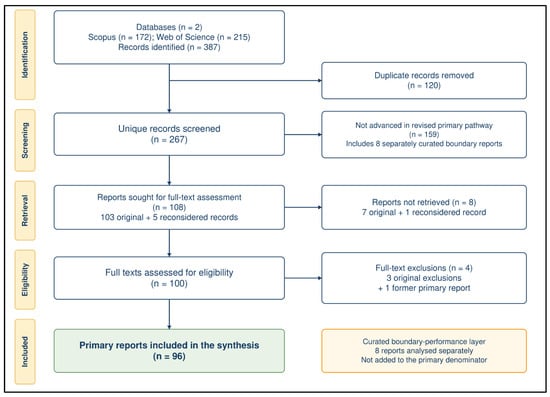
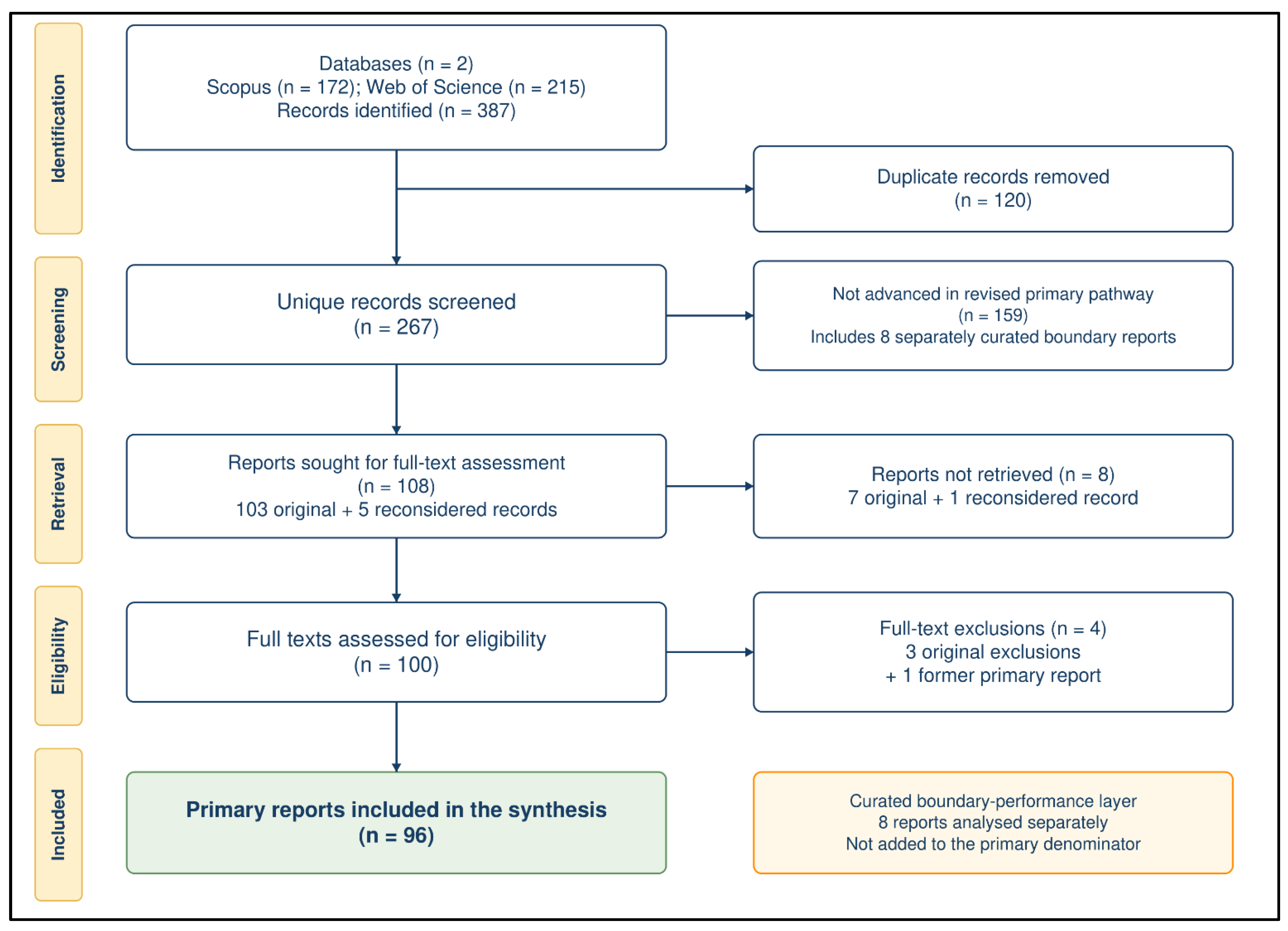
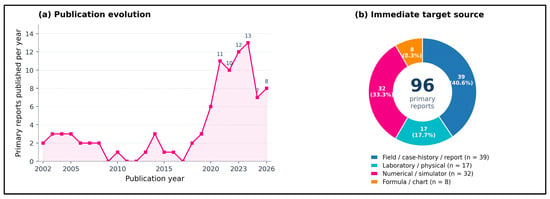
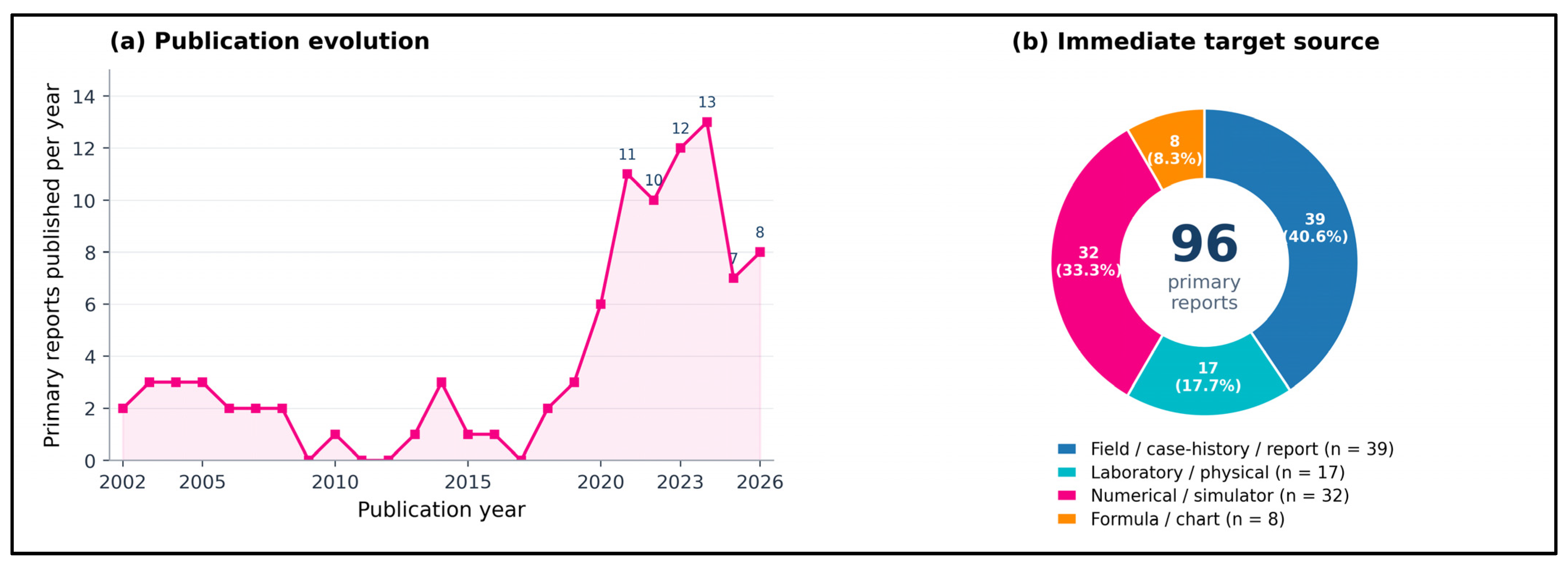
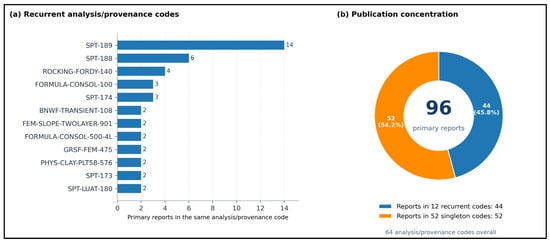
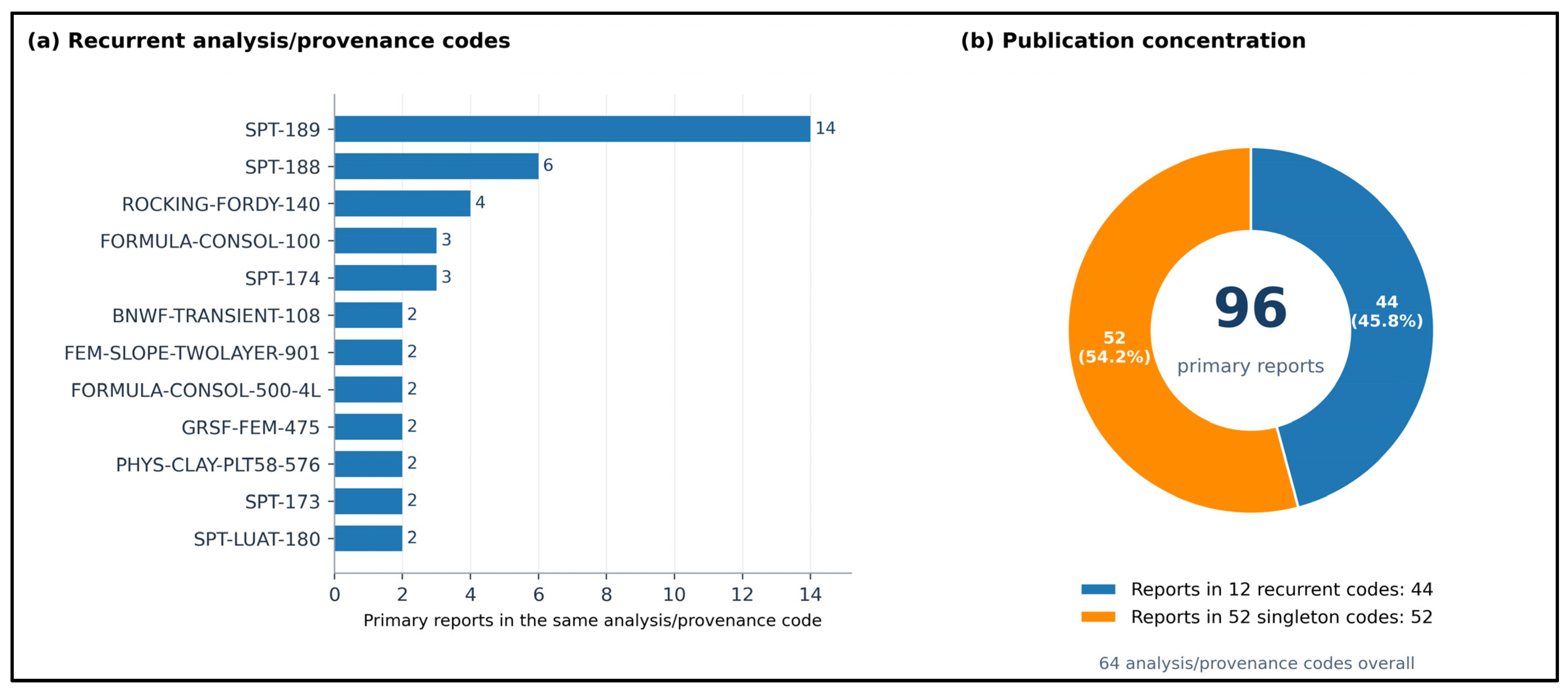
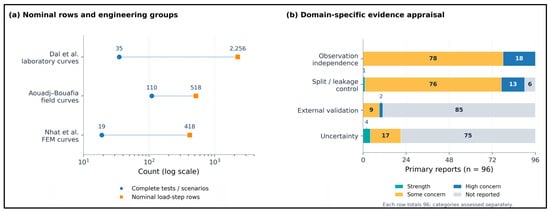
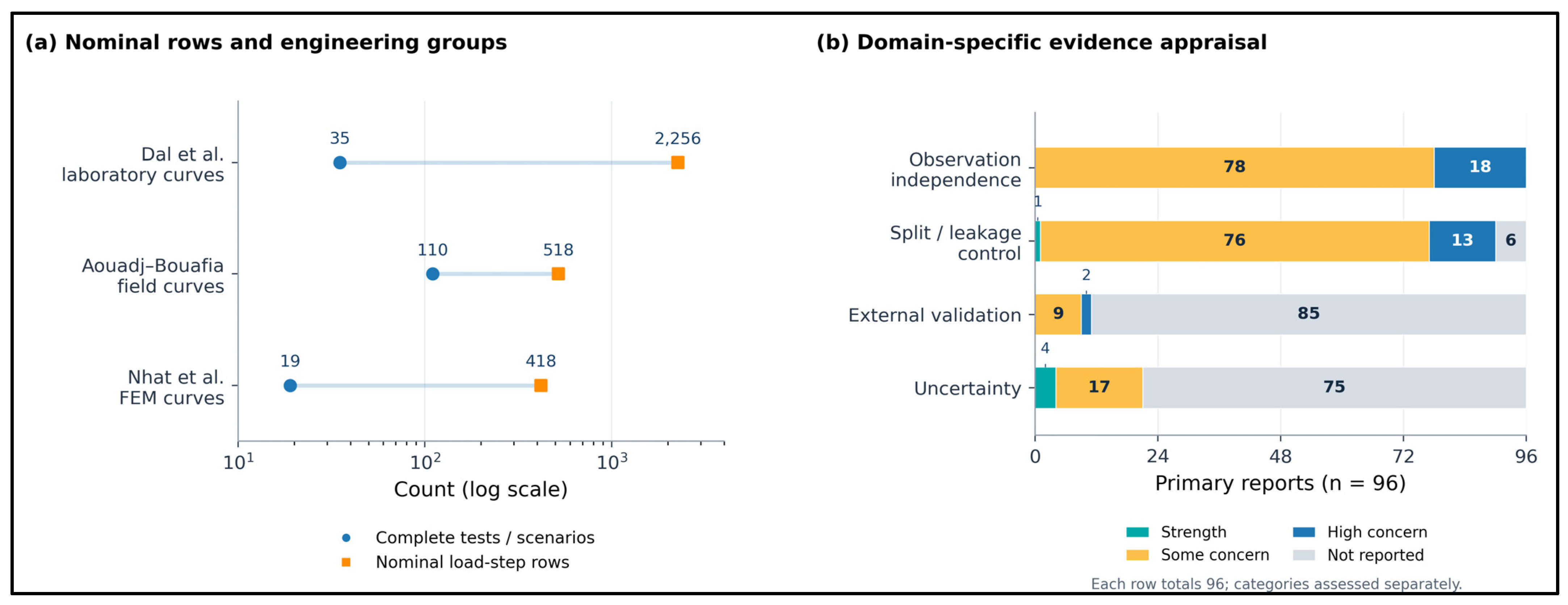
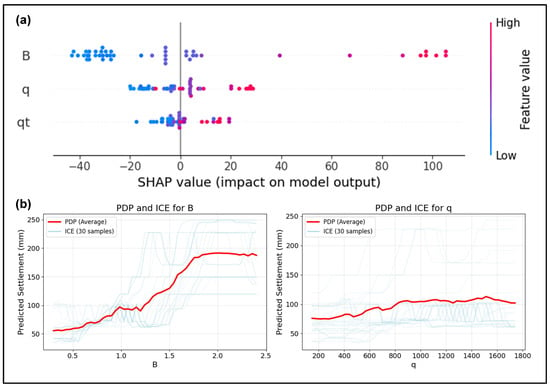
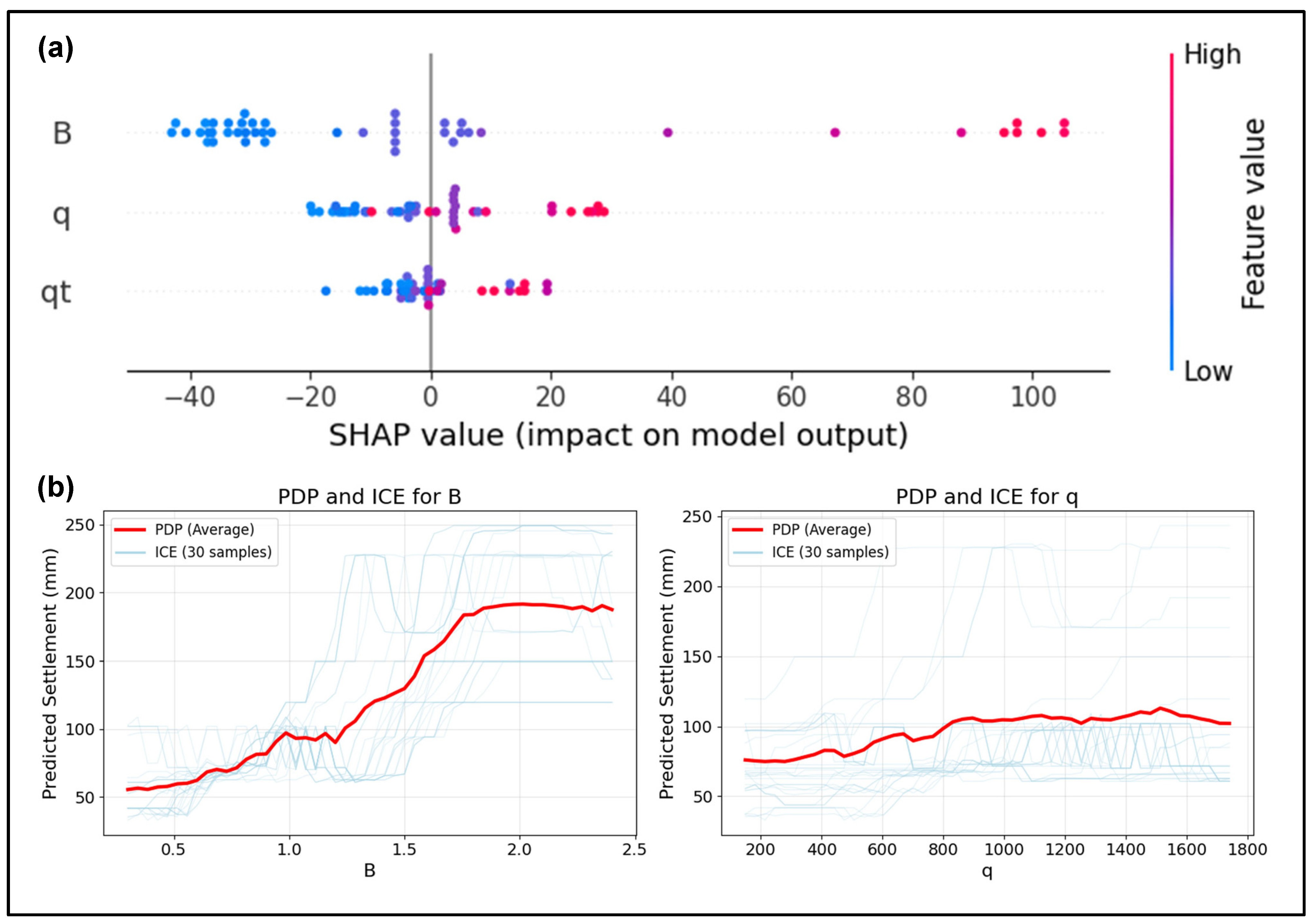
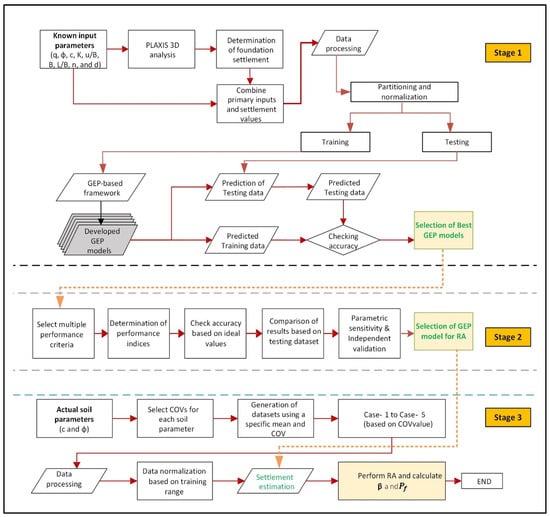
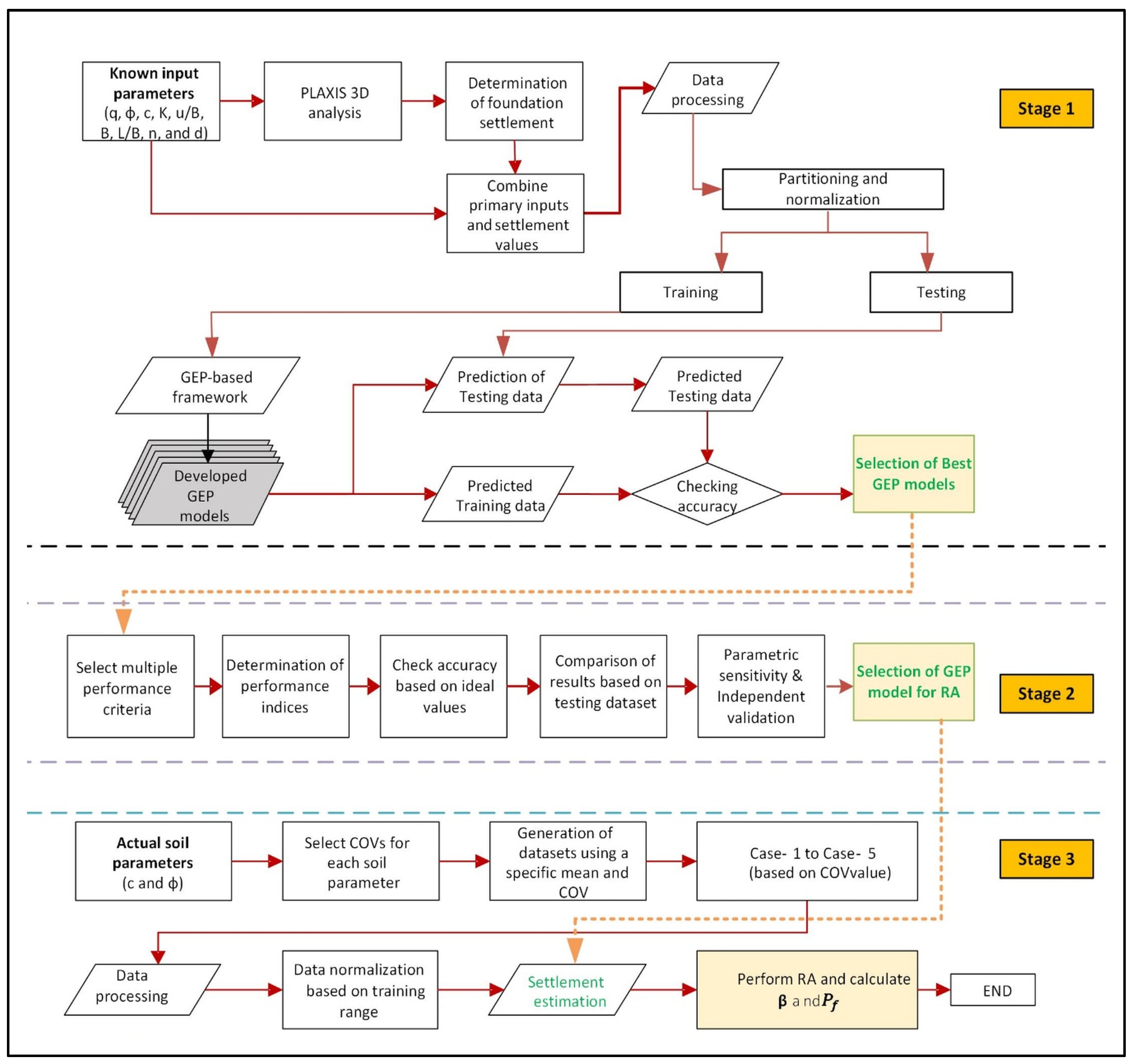
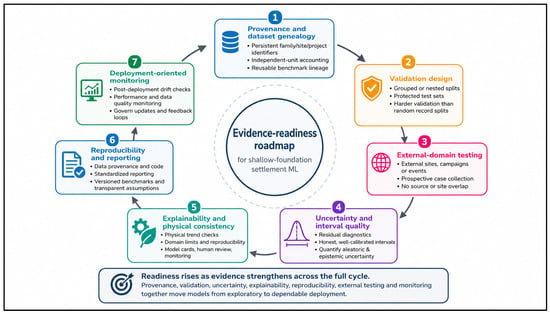
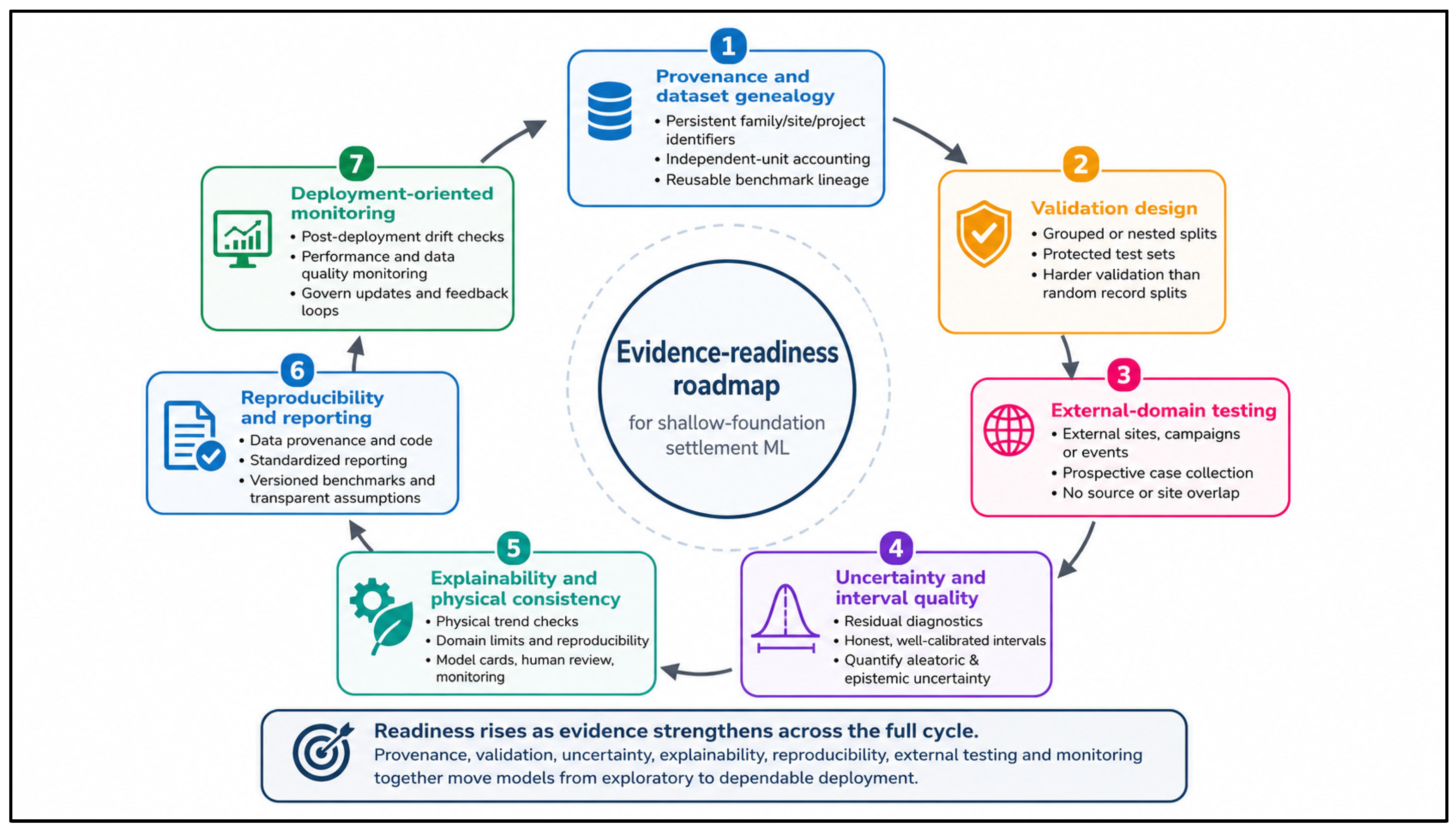

Disclaimer/Publisher’s Note: The statements, opinions and data contained in all publications are solely those of the individual author(s) and contributor(s) and not of MDPI and/or the editor(s). MDPI and/or the editor(s) disclaim responsibility for any injury to people or property resulting from any ideas, methods, instructions or products referred to in the content. |
© 2026 by the authors. Licensee MDPI, Basel, Switzerland. This article is an open access article distributed under the terms and conditions of the Creative Commons Attribution (CC BY) license.