


Abstract
Traditional community governance has been challenged by problems such as the mismatch of needs and insufficient public participation, which has led to the emergence of urban smart communities. Urban smart communities, as the core unit of smart city construction, are characterized by a large population, high density, and high mobility. This study systematically screened 100 articles on smart community governance published during 2014–2024 from the Web of Science database. VOSviewer and CiteSpace were used to conduct a bibliometric and visualization analysis exploring the research hotspots. In combination, the systematic literature review and bibliometrics shed light on four main themes: the application of smart technologies, the forms of public participation, the factors of sustainability, and the impact of community resilience. Identifying the formation, development, and evolution of smart community governance increases the understanding of scholars, suggests future research directions, and provides governance pathways for managers as well as more inclusive policies for policymakers.
1. Introduction
Smart community governance refers to a governance model that utilizes advanced information technology, the Internet of Things (IoT), cloud computing, big data, and other means to digitally and intelligently manage and serve communities [1,2]. Building upon existing literature, smart community governance at the neighbourhood-level refers to a multi-stakeholder collaborative governance paradigm. It takes grassroots community as the basic spatial unit and integrates digital information technologies (IoT, big data, cloud computing, blockchain and artificial intelligence) with institutional arrangements. Beyond simple technical application, it emphasizes multi-party participation of residents, government departments, enterprises and social organizations. Its core goals cover optimizing community public services, reconciling residents’ real-life demands, enhancing public participation, improving community resilience and advancing local sustainable development. Different from top-down smart city governance operating at a city-wide scale, it focuses on bottom-up needs and practical problems occurring within community micro-scenarios. It aims to improve the quality of life of community residents, promote the sustainable development of the community, achieve efficient management of community affairs, and optimize public services through multi-party participation and collaboration [3]. Smart community governance is increasingly becoming a trending topic in global research as well as receiving policy attention in theory and practice. As an important part of smart city construction, smart community governance has become a key path to addressing the challenges of urbanization, optimizing the allocation of public resources, and improving the quality of life of residents [4,5]. However, smart communities still exhibit many governance problems, such as mismatched needs, insufficient public participation, difficult technology integration, information silos, single governance model, and insufficient supervision.
In smart community governance, residents’ needs and expectations often do not match the services provided by the government. In many cases, residents may not be aware of the gap between the services they need and those the government can provide, which leads to ineffective governance. The lack of effective communication and feedback mechanisms exacerbates this mismatch of needs [6,7]. Some residents lack interest in community affairs or do not clearly understand the ways in which they can participate, which results in their voices not being heard. This lack of participation affects the transparency and credibility of governance, depriving governance decisions of a public opinion basis. Smart community governance also relies on the application of modern information technologies, including big data, cloud computing, and the IoT. However, effectively integrating these technologies to serve community governance remains a major challenge. Compatibility between different technologies, the standardization of data, and privacy and security issues may hinder the effective application of technologies [8]. Furthermore, the sharing and flow of information is crucial in smart community governance, yet due to the lack of effective communication mechanisms between various departments and organizations, information silos often occur [9]. Many smart communities still adopt a top-down governance model that lacks flexibility and adaptability. Finally, smart community governance often exhibits insufficient regulation and management, which makes it difficult to implement some of the policies and measures. In the process of smart community governance, it is necessary to promote the participation of government departments, public welfare departments, enterprises, residents and other stakeholders [10].
Smart community governance is receiving increased attention, which helps to improve the national governance system and capacity [11]. The smart community serves as a new paradigm that supplements traditional community tools with advanced information and communication technology (ICT) [12,13]. ICT has enabled communities to meet the needs of residents for a variety of services such as management, business, recreation, and interpersonal interactions more efficiently, conveniently, accurately, and proactively [12]. With the emergence of community corporations, volunteer organizations, social enterprises, and social organizations, communities have been “rediscovered” [14], and community participation has shifted from an emphasis on individual rights to a focus on balancing social and collective responsibilities. In this process, community governance has been given a new meaning. Community governance is a process and behavior that takes the community as the geographical scope and the stakeholders in the community as the main body, that is, the diversified residents participate in the daily management of the community. Based on consensus and public interests, it meets the needs of the community through consultation, coordination and interaction, and collaborative action, with the common goal of improving community life [15].
Most current studies focus only on a single dimension of smart community governance, such as safety evaluation [16], service system [17], or community resilience [8]. Given the lack of a comprehensive assessment tool, evaluations are subjective, making it difficult to systematically identify the key drivers and multi-dimensional synergistic mechanisms. In addition, existing research is fragmented, precluding a full understanding of the various dimensions of smart community governance and complicating the synthesis and application of research results. Therefore, a more focused approach is needed. A systematic literature review and bibliometric analysis serve to summarize existing results, identify knowledge gaps, advance theoretical integration, clarify research directions, construct a unified framework, and compare cross-case studies.
A summary of existing research can assist in the development of a field. Therefore, we conducted a systematic review of the literature on smart community governance, analyzing our results using bibliometrics. Using the Web of Science (WoS) database, we searched for articles related to smart community governance published during the years 2014–2024. Then we used VOSviewer and CiteSpace to analyze the theoretical results, exploring the research hotspots and future trends in smart community governance. Based on our analysis, we define smart community and smart community governance, elaborating on the development of the latter. In addition, we explore the impact of smart community governance and its effective implementation. These synthesised observations provide a reference for other studies on smart community governance. By combining a systematic literature review with bibliometric analysis tools, our study reveals the main hotspots and structure of smart community governance research, filling in gaps in the current research.
2. Literature Review
Communities play a key role in cities, constantly evolving and transforming given their close integration with ecological sustainability, land-use planning, and transportation management [18]. A community, defined as a social group of people living in a certain area, is the foundation of urban society [19]. It is the most basic unit of social governance and plays an important role in urban renewal [20]. A smart community, in particular, is a community that applies new information technology such as the IoT, cloud computing, and big data to digitize and coordinate the daily life of community residents. With the development of urbanization, a smart community, as the basic unit of a smart city, is considered an effective way to solve urban problems [16]. In recent years, a large number of studies have focused on topics such as technology-driven, governance structure, resident participation, and sustainable development. A smart community is not only a result of technological development, but also a reflection of social innovation [21]. For example, Niu et al. [22] emphasize that the core of smart community governance lies in the combination of smart technologies and resilience mechanisms. Community functions are optimized and risk resistance enhanced through resource integration, real-time data processing, and resident participation.
Existing studies provide insights into key research areas such as community governance effectiveness [23], local government responsiveness and public acceptance [24], and local transportation and mobility governance [25], which are important guides for improving policies and management practices [26]. However, the existing literature is neither comprehensive nor dynamic, failing to provide practical guidance. Through a systematic literature review, we can integrate the fragmented knowledge. Specifically, we can identify gaps concerning the disconnect between intelligent technology and governance objectives, the generalization of multi-level governance mechanisms, and the single-dimensional public participation models. This approach allows us to build a more inclusive and adaptive theoretical framework for smart community governance. In the following subsections, we focus on four main themes found in the literature.
The framework adopted for literature organisation in this section was not predefined at the initial stage of this study. We first performed VOSviewer bibliometric clustering on the included literature and induced four core research themes from the objective clustering outputs. Guided by these empirically extracted themes, this section retroactively organises existing literature into four dimensions: application of intelligent technologies, forms of public participation, influencing factors of sustainability, and impacts brought by community resilience for a narrative review.
2.1. Intelligent Technology
The core of smart community governance is the combination of digital technology, social collaboration, and Sustainable Development Goals. This approach transforms community governance from traditional management to intelligent, collaborative, and data-driven governance. The transformation occurs through technological means such as ICT, the IoT, and cloud computing [27]. Smart technologies can be used to build digital frameworks that promote data sharing and transparency as well as improve the efficiency and responsiveness of governance [28]. Smart technologies have been used to govern smart communities around the world. For example, Zhao [29] studies eight pilot “future communities” in Zhejiang Province, exploring digital governance models based on smart sensors and focusing on the daily practices of grassroots grid members in a “smart” environment. In a study focusing on African sub-cities, Ranchod [30] proposes that smart governance in sub-cities needs to closely integrate data technology and citizen participation. Oliveira et al. [12] emphasize that blockchain technology provides significant advantages in decentralized decision-making and trust construction, effectively promoting transparency and efficiency in smart community governance. Similarly, Biasin and Delle [31] maintain that blockchain technology can be used to construct community-level distributed decision-making systems, automate the execution of community rules (e.g., resource allocation, voting on public affairs) through smart contracts, and enhance governance transparency and participation. Advanced ICTs have been found to play an important role in protecting the environment, optimizing resource efficiency, upgrading infrastructure, promoting socio-economic development, and advancing human knowledge in cities [32,33]. However, in smart community governance, attention must be paid to the impact of smart technology on social relations. Specifically, whether the technology truly meets residents’ needs and enhances community cohesion must be determined, so as to avoid viewing technology as supreme. Rather, the benign interaction between technology and society must be realized [34].
Early research mainly focused on basic technologies such as the Internet, the IoT, and cloud computing, emphasizing the important role played by their integration in improving the quality of community services and the living standards of residents. In addition, early studies highlighted the application of intelligent technology in smart community governance, which supported technological innovation and platform construction for the overall development of smart communities. Subsequently, the research focus gradually shifted to the practical application of smart technologies in community governance as well as data dependence, data security, and privacy protection. In recent years, research has extended to the study of community governance and digital empowerment, exhibiting a trend of in-depth integration from technology dependence to grassroots governance.
2.2. Public Participation
In addition to technical support, smart community governance emphasizes resident participation and collaborative multi-stakeholder governance. In smart city programs, public participation is crucial for the urban governance process, which requires urban planners and policymakers to consider real public needs. Correspondingly, the needs and feedback of residents, as the core stakeholders, directly affect the effectiveness of governance [27]. Wu and Xiong [35], who suggest that residents’ willingness to participate can be effectively enhanced through incentives and information transparency, promote the successful implementation of community micro-renewal projects. Han et al. [36] emphasize that resident participation requires institutional support, especially in the context of rapid urbanization, and that improving residents’ willingness and ability to participate through technological means is an important goal for smart community governance. Malek et al. [37] point out that in developing countries, improving residents’ digital literacy and participation awareness is the key to enhancing collaboration in community governance. Through diverse platforms and channels, residents are able to fully express their opinions and demands, participating in the decision-making and management of community affairs. Their participation not only enhances their sense of identity and belonging but also improves the democratic and scientific nature of community governance [38]. The development and governance of smart communities are realized through collaboration among different stakeholders, including citizens. As co-creators, citizens actively determine how their cities become smart by collectively developing a smart community vision and designing concrete initiatives [39,40,41]. The success of smart communities cannot be achieved without the active participation of citizens, who can ensure that the design and implementation of smart community projects are aligned with real-world needs and aspirations, thereby promoting more inclusive and responsive urban development and governance [42,43].
Multi-party collaboration is also important in smart community governance. Spicer et al. [44] contend that it is necessary to strengthen the collaboration among residents, enterprises, and governments, especially in the areas of public service and data governance, to strengthen the community’s right to speak. Similarly, Bevilacqua et al. [45] emphasize the need for a triad of “community-government-professional organizations” for smart community governance. Zhu et al. [46] construct a tripartite mechanism of “government-enterprise-residents” to dynamically optimize the allocation of community resources. Vitálisová et al. [47] emphasize that in the Central and Eastern European regions, residents’ awareness of and participation in community governance are still weak, a weakness closely related to insufficient support and participation mechanisms. However, the above governance still faces challenges, including the coordination of different stakeholders and the standardization of technologies. For example, one issue that must be addressed when multiple actors participate in governance is the formation of reasonable demands based on predictable economic benefits and pluralistic values. Another issue concerns the gradual expansion of the space for cooperation among multiple actors, including community residents, government agencies, and enterprises [48].
Early research focused on the public’s willingness and ability to participate, later focusing on the coordination and promotion of public participation by intelligent technology and multi-party collaboration, respectively. Public participation plays an irreplaceable role in smart community governance, but its implementation is challenging. For example, current smart community governance still faces problems such as the insufficient coordination of residents or their unwillingness to publicly participate. Future smart communities need to pay more attention to the accessibility of technology, transparency of governance, and inclusiveness of the public. Through multi-sectoral collaboration, technological innovation, and public education, the efficiency and fairness of smart community governance can be further enhanced, creating a better quality of life for residents.
2.3. Sustainable Development
Sustainability is an important aspect of contemporary urban planning and policymaking, as it addresses the multifaceted challenges of rapid urbanization and its environmental, economic, and social system impacts [49]. The construction of smart communities is intrinsically linked to the achievement of SDGs and community resilience. Meyer and Auriacombe [50] identify community resilience as a prerequisite for the achievement of sustainable development in African countries, with an emphasis on enhancing community resilience through the optimization of governance structures and resource sharing. Sharifi et al. [51] emphasize that smart community governance directly contributes to SDG 11 (Sustainable Cities and Communities), while also exhibiting synergy in the areas of responsible consumption, clean energy, and water management. Niu et al. [22] construct a model based on resilience assessment, finding that smart monitoring, real-time data analysis, and early warning systems significantly improve the community’s ability to respond to natural disasters. Malek et al. [37] suggest that the social inclusiveness and sustainability of communities can be effectively enhanced through the establishment of a citizen-centered governance framework. This view is consistent with that of Han et al. [36], who observe that the sustainable development of smart communities in China’s smart cities requires a transition from single technology-driven to integrated governance. Bibri and Krogstie [52] argue that smart community governance must couple technological innovation and institutional change. Furthermore, efforts must be synchronized to provide open access to data, reconstruct governance processes, and enhance citizens’ digital literacy to truly achieve the goal of sustainable development. Markantoni and Aitken [53] emphasize that establishing a mechanism for multi-stakeholder collaboration, especially through community empowerment, enhances the participation of residents in low-carbon decision-making. Fu and Ma [54] propose that communities should be viewed as autonomous governance laboratories. Specifically, sustainable governance models should be constructed through the institutionalization of subject empowerment and participatory processes, providing a replicable paradigm for the transformation of urban communities globally.
Sustainable development has both theoretical and practical implications in smart community governance. In terms of evolutionary trends, technology, data, and community participation are the core elements that drive innovation in governance. Integrating advanced technologies, optimizing resource allocation, and promoting community collaboration can not only improve the quality of life of residents but also contribute to the global SDGs. In the future, it is necessary to deepen cross-sectoral cooperation, strengthen policy support, and focus on inclusiveness and fairness to achieve comprehensive development. In practice, smart communities can coordinate the development of the environment, economy, and society through technological innovation, resource optimization, and social participation, providing a replicable model for global urbanization. However, these communities also face the challenges of technological integration, social trust, and the transformation of traditional modes, which require multi-party cooperation and continuous innovation. Thus, low-cost smart solutions and data-driven decision-making support are expected to become an important direction for development.
Smart community governance faces additional challenges. For example, the widespread use of technology has raised issues with privacy and data security, which may further exacerbate social inequalities, especially in areas with an unequal distribution of resources and a serious digital divide [5]. Li and Zhang [3] emphasize that the lack of technology standardization and data-sharing mechanisms is the main hindrance to technology effectiveness. In addition, Wan et al. [10] argue that a technology-driven governance model requires more policy support and multi-party participation. Furthermore, existing governance mechanisms mostly rely on top-down policy implementation models, lacking flexibility and bottom-up feedback mechanisms for residents. Finally, the lack of a multi-party collaboration platform makes it difficult to effectively carry out resource integration and collaboration among governments, enterprises, and residents [55].
2.4. Community Resilience
Community resilience refers to the capacity of a community system to maintain basic functions, recover rapidly, and achieve adaptive transformation when confronting external shocks, a concept whose connotations have evolved through engineering resilience, ecological resilience, and evolutionary resilience, gradually shifting from a return to equilibrium toward learning, adaptation, and transformation. In the context of smart-community governance, such shocks not only include sudden disasters and public emergencies, but also cover long-term pressures such as digital inequality, resource allocation imbalance and institutional change brought by digital transformation. This perspective extends the concern of community governance from post-disaster emergency response to capacity accumulation and institutional development in everyday contexts, highlighting the self-organization and collaborative response of communities under conditions of uncertainty [56]. Different from traditional disaster-oriented resilience research, smart-community-related resilience studies pay special attention to how digital facilities and intelligent tools intervene in community risk coping, while avoiding over-reliance on technical hardware and attaching importance to the role of social dimensions. Research on social resilience adopts social capital as its core explanatory framework, focusing on how the interaction of bonding, bridging, and linking capital generates resilience through pathways such as social learning, collective action, and information communication [57,58,59], while emphasizing the role of multi-actor participation, organizational network linkages, and low-threshold engagement in governance practice [59,60]. Within smart community scenarios, social capital can facilitate the flow of data, information and public resources among residents, government agencies and service providers, further translating relational resources into practical risk-resisting capacity. Grassroots cultural activities are regarded as an important pathway for activating endogenous community dynamics [59,60] and social capital, multi-actor participation, and organizational network linkages constitute the core elements of community resilience governance [61,62,63]. Accordingly, community resilience becomes an indispensable analytical dimension for understanding smart community governance, which is why this study extracts community resilience related content from bibliometric clustering and establishes it as one of the four core research themes.
The literature review in Section 2 summarized the multidimensional characteristics of smart community governance but does not systematically highlight the research hotspots and knowledge structure. The following section further validates and expands on this review using bibliometric methods.
3. Methodology
In accordance with Paul’s [64] recommendations, the methodology for this study combined qualitative and quantitative approaches. The study consisted of two main steps. First, we conducted a systematic literature review, which is a well-established scientific research methodology in the fields of management and social sciences. The review focused specifically on research hotspots in the smart community literature. We conducted a comprehensive search, scanning the relevant literature using clearly stated and easily understood search options and selection criteria (Table 1). The results of the search were replicable, which enables an “assessment of the exhaustiveness of the research” so that “scholars in the field can more confidently use the results in their own research” [65].
Table 1.
Selection stages of literature search.
Second, the selected articles were subjected to a bibliometric analysis using VOSviewer software (1.6.20), which provides a graphical interface [66]. We used bibliometric indicators to provide a more comprehensive understanding of the field and to map emerging trends and knowledge structures over time [67]. The input for the bibliometric analysis consisted of bibliographic details for the scholarly publications obtained from the Web of Science (WoS) [68,69]. The WoS was chosen as the research database because it is one of the most comprehensive bibliometric databases of high-quality, peer-reviewed journals. The database discerns missing references and includes most of the scientific articles in the field of smart communities [51,70,71]. Furthermore, it provides the detailed bibliographic information needed for an accurate analysis using bibliometric software (i.e., VOSviewer).
3.1. Search Keywords
The Web of Science Core Collection databases index the world’s most prestigious and influential journals [56]. To conduct our search, we used the following keyword combinations (“TS” = title, keywords, and abstract) and Boolean operators (“AND/OR”): TS = ((“smart community governance”) OR (“city governance”) OR (“urban governance”) OR (“community governance”) OR (“smart community”) OR (“intelligent community”) OR (“smart governance”) OR (“intelligent governance”)). The search period was set to 2014–2024. Terminology note for reproducibility: In this manuscript, “raw hits” denotes the immediate output count returned from each individual keyword query before merging search outputs; “merged dataset” refers to the combined collection after combining outputs of separate search runs; “unique records” means entries remaining after duplicate-removal processing; “duplicate entries” represent multiple WoS database entries pointing to the identical publication (matched by title-year-DOI).
Original broad searching obtained 50,781 initial records, which were further filtered through multi-stage strict eligibility screening, yielding a final corpus of 100 articles. To test whether the knowledge structure relies heavily on the broad search strategy, we performed sensitivity analysis with narrower Boolean queries combining smart-/digital-/intelligent-community terminology and governance-related terms. Among the 100 included studies, 65 records could be recovered by these narrow queries (see Appendix A for record-wise details). This empirical test shows partial but incomplete overlap between outputs from broad and narrow search formulations. A substantial share of the final corpus (35 out of 100 papers) can only be retrieved under the broad-query framework. Quantitative comparison of thematic distributions and keyword-cluster properties between the narrow-query subset and the full corpus was not implemented in the present analysis.
Each individual keyword query returned raw hit counts reported in Table 2. Records retrieved from these eight separate keyword searches were exported separately and merged into one dataset. After merging the eight independent search results, we obtained a merged dataset of 50,781 records. It should be noted that this 50,781-record dataset was the merged output of eight independent searches, rather than the direct result of a single combined Boolean OR query. The separate-query strategy was adopted to retain transparent per-keyword retrieval statistics for documentation (see Table 2). Since different search terms share overlapping research themes, individual keyword hit counts contain overlapping publications that can be captured by multiple search terms.
The search string incorporated broad upper-level governance-related terms to enhance recall and reduce the risk of missing conceptually relevant papers. As a result, the initial dataset contained noisy records addressing conventional governance topics without smart technology components. Therefore, multi-step manual screening (Figure 1) was performed to filter out publications that did not simultaneously meet three inclusion criteria: community-level spatial scope, smart or digital technology elements, and governance-related research focus.
Figure 1.
The flow chart of the systematic literature review process.
Table 2.
Raw retrieval results for each individual keyword query and filtering outcomes (2014–2024).
3.2. Literature Screening Process
Following PRISMA-2020 systematic review standards, three independent researchers performed the multi-level screening procedure to improve transparency, with all screening rules fully documented prior to the commencement of screening work.
Starting from the merged dataset of 50,781 records (before deduplication), we conducted journal filtering with the EasyScholar browser plugin as the first pre-screening step. EasyScholar was exclusively deployed for metadata extraction (retrieving journal metadata, JCR subject category information, without applying fixed impact-factor cut-offs for direct exclusion). The journal filtering criteria were predefined as follows: (1) retain journals whose JCR subject categories are closely related to urban studies, public administration, computer science, smart city research and community research; (2) no numerical impact-factor threshold was used for exclusion; relatively high-impact journals were only considered as contextual background information rather than formal eligibility criteria; (3) exclude journals with irrelevant disciplinary orientation, predatory journals and journals without stable JCR indexing. After this EasyScholar-assisted journal filtering, 44,090 records were excluded due to mismatched journal subject categories or low relevance, and 6691 records were retained. To evaluate the reliability of the EasyScholar journal filtering step and mitigate potential selection bias, we implemented manual sampling validation. We randomly drew two independent samples: 100 records from the 44,090 excluded records and 100 records from the 6691 retained records. Two researchers independently checked each sampled record against the journal inclusion criteria. Inter-rater agreement was quantified using Cohen’s kappa, yielding κ = 0.81, indicating substantial agreement. Disagreements between the two coders were resolved via group discussion to reach the final classification. Among the 100 sampled excluded records, only 3 records were judged potentially relevant to smart community governance research; zero potentially eligible false-exclusion cases were identified among the 100 sampled retained records. Note that this simple random sampling does not adopt stratified sampling according to exclusion reasons and does not calculate formal confidence intervals. Thus, this test cannot fully eliminate the risk of systematic false exclusion. The sampling validation merely suggests that large-scale systematic discarding of eligible publications through journal-level filtering is unlikely, rather than delivering definitive evidence. Subsequently, the 6691 records retained after journal filtering were imported into Zotero, and duplicates were removed by matching publication title, publication year and DOI information. This deduplication step eliminated 881 duplicate entries, leaving 5810 unique records for title-and-abstract screening. The 5810 records then entered the title-and-abstract screening stage. Three researchers independently assessed each record against unified eligibility criteria. Records were excluded if they failed to satisfy all inclusion requirements, and disagreements among reviewers were resolved through group discussion; unresolved conflicts were submitted to the corresponding senior author for final arbitration. After title-and-abstract screening, 586 candidate records were retained for full-text reading.
All subsequent manual evaluations strictly complied with unified eligibility requirements, where included publications should meet all of the following conditions: publication between 2014 and 2024, peer-reviewed journal article, English language, community- or neighbourhood-level spatial research scope, content containing smart or digital-technology-related elements, and a research theme focused on community-relevant governance; accordingly, records would be excluded if they belonged to non-journal outputs such as conference papers, book chapters, reports, preprints, reviews and errata, focused purely on city- or national-level macro-scale research without community-oriented analysis, only discussed conventional community or urban governance without any smart- or digital-technology elements, or were short communications and editorial materials without original research content. Starting from the pre-processed dataset containing 6691 records, duplicate entries were first removed to leave 5810 remaining records, after which title-and-abstract screening was independently conducted by the three researchers to eliminate records obviously inconsistent with the eligibility criteria, reducing the dataset to 586 candidate records for full-text reading.
These 586 candidate records then underwent independent full-text screening by the three researchers; any article failing to satisfy one or more of the eligibility criteria was discarded even if it had been retrieved by the broad initial search keywords, and a final set of 100 eligible articles was obtained for subsequent bibliometric analysis after completing full-text assessment. Table 2 summarizes the quantitative changes in retrieved publications at different keyword-search stages, while Figure 1 visualises the complete multi-step elimination procedure of this PRISMA-compliant systematic review.
To determine which journals and references have contributed more to the field, we conducted a co-citation analysis. A co-citation analysis identifies pairs of articles that are cited together [72]. According to this definition, the cited-references of the selected articles are also considered in the co-citation analysis. Meanwhile, a keyword co-occurrence analysis reveals which topics receive the most interest in the literature. In this study, the bibliometric analysis consisted of a journal analysis, a co-citation analysis of cited literature, and a co-occurrence analysis of the most popular keywords.
3.3. Bibliometric Visualization Analysis
After literature retrieval and screening, a final sample of 100 valid publications was obtained. VOSviewer 1.6.20 was adopted for bibliometric visualization to explore research characteristics of smart community governance. Three bibliometric networks were constructed, including the cited-source co-citation network, cited-reference co-citation network, and all-keyword co-occurrence network. Full counting was consistently adopted for all three analyses, and association strength was selected as the normalization method.
For the keyword co-occurrence network, the minimum occurrence threshold of keywords was set to 4, the clustering resolution to 1.0, and the minimum cluster size to 3. Both author keywords and Web of Science indexed keywords were included in the analysis. During keyword pre-processing, a custom thesaurus file was applied within VOSviewer for term standardization. We manually built mapping rules to harmonize synonymous terms, abbreviations and singular-plural variants. Generic terms without substantial analytical meaning were manually removed. The default pruning strategy of VOSviewer was applied to optimize visualization outputs.
For the cited-source co-citation network, the minimum citation threshold was set to 5; for the cited-reference co-citation network, the minimum citation threshold was set to 3. Clustering resolution was set to 1.0 and minimum cluster size to 3 for both co-citation analyses, and the default pruning function was used to generate visual maps.
Sensitivity-based robustness checks with alternative thresholds were performed to examine result robustness. Thresholds of 3, 4 and 6 were tested for keyword co-occurrence; thresholds of 3 and 5 for cited-source co-citation; thresholds of 2 and 3 for cited-reference co-citation. Quantitative robustness results including the count of retained nodes, number of clusters, brief descriptions of major-member changes, and Adjusted Rand Index (ARI) values relative to the baseline configuration are provided in Appendix B. ARI was calculated on the intersection of keywords present in both networks to avoid bias induced by asymmetric node sets. The ARI values are 0.64 (minimum occurrence = 3 vs. baseline) and 0.78 (minimum occurrence = 6 vs. baseline). These ARI scores indicate moderate-to-strong stability for core thematic keyword groups within the keyword co-occurrence network, while cluster quantity and peripheral low-frequency keyword assignments vary across different threshold settings. Therefore, the derived thematic knowledge structure exhibits reasonable stability for core interpretive domains but is not completely invariant against threshold parameter choices. It should be emphasized that ARI-based quantitative robustness assessment was only conducted for the keyword co-occurrence network. Robustness for cited-source co-citation and cited-reference co-citation networks was inspected purely through visual comparison without quantitative stability metrics.
4. Results
VOSviewer is widely used to reveal the knowledge structure of a research field by visually depicting keyword co-occurrences and clusters. Therefore, to further examine the selected 100 documents, we used VOSviewer software for the co-citation and keyword co-occurrence analyses. The selected articles were downloaded from the database and input into VOSviewer to construct the bibliometric network. The results of the keyword co-occurrence analysis were expressed as a network of nodes and links, in which the node size is related to the frequency of the co-occurrence and the link width to the strength of the keyword connections. This visual representation reveals the topics that receive more interest and their proportional significance based on frequency. The terms (keywords) that occur at a higher frequency form topic groupings (clusters) on the term map [73]. Alongside static network outputs from VOSviewer, we also employ CiteSpace to conduct temporal bibliometric analyses, including keyword-burst detection. The following section presents both static network results as well as temporal-dynamics outputs to unpack the knowledge structure and research evolution within this domain. This section presents results processed via VOSviewer for static bibliometric analyses, together with temporal-related outputs computed with CiteSpace. Static outputs cover journal co-citation, cited-reference co-citation, and keyword co-occurrence, while temporal analyses include annual publication trends, temporal overlay visualization and keyword-burst detection, which are organised by thematic subject area.
4.1. Annual Publication Trends
The annual publication output of smart-community-governance-related articles is shown in Figure 2. Publication volumes remained low and fluctuated between six and eight papers per year during 2014–2017, corresponding to the initial exploratory phase of this research field. From 2018 onward, publication output entered continuous growth, rising from 14 publications in 2018 up to 38 publications in 2024. The sustained upward trend demonstrates that smart community governance topics have drawn expanding scholarly attention over the past decade and remain an active, fast-developing research domain. Drawing jointly on annual publication statistics and subsequent keyword-burst results, this paper divides the analysed 2014–2024 timespan into three analytically meaningful research phases including the initial exploratory phase covering 2014–2017, the growth phase covering 2018–2020, and the rapid-development phase covering 2021–2024.
Figure 2.
Annual publication trend of the analysed literature sample (2014–2024).
4.2. Journal Analysis
A journal analysis identifies core journals, measures their impact, and analyzes the relationships between them. In research, a journal analysis of a large body of literature can identify journals that have published more papers in a specific field and are cited more frequently. The width of the connecting line between journals indicates the strength of their connection, with a wider line indicating more co-citation or mutual citation relationships. Therefore, analyzing the relationships between journals can help track the dissemination of research on a specific topic, such as smart community governance.
Figure 3 below depicts the varying impact of journals and publications in the selected literature, including the clusters to which they belong. The publications are organized into three different categories, with red, blue, and green showing up most prominently. The red cluster indicates journals that focus on urban sustainability, or the development, planning, and management of cities and communities, as well as the application of technologies in those cities, especially smart cities. Specific topics include urban infrastructure, community services, and urban informatization, topics closely related to smart community governance, and the utilization of technologies to improve community management and residents’ quality of life. The blue cluster indicates journals more focused on energy and environmental management. These journals cover research on energy policy, environmental protection, and sustainable development, providing theoretical and practical references for smart communities. The green cluster indicates journals more focused on policy and management. These journals address policymaking, public management, resource allocation, and government informatization, which guide the design of policies, innovation of management modes, and the interaction between government and community in the governance of smart communities. These publications help researchers facilitate the construction and development of smart communities through policy and management means.
Figure 3.
Chart of co-citation analysis of cited sources using VOSviewer software.
4.3. Co-Citation Analysis
In this section, we discuss the co-citation analysis of the articles, as shown in Table 3 and Figure 4. As opposed to mere citation counting, a co-citation analysis helps to identify the most relevant aspects of a field by identifying articles that cite each other on the same concept or topic. This approach provides valuable insights into commonalities in the literature as well as research streams or clusters, thus helping to identify emerging trends and areas of interest [70,74,75]. Notably, the cited-reference co-citation network represents an aggregated static network assembled from all documents within our 2014–2024 dataset. Frequent citations of older seminal foundational works reflect their function as shared intellectual background for the sample literature, but such citation patterns cannot be used to infer the temporal peak of research activity in our analysed dataset.
Table 3.
Top 10 cited references.
Figure 4.
Chart of co-citation analysis of cited references using VOSviewer software.
As shown in Figure 4 below, these references can be broadly categorized into three groups. The references in the red cluster explore areas of interest such as the conceptual definition of smart cities, governance subjects and modes, assessment systems, and citizen participation. However, the references in the green cluster explore the concepts and dimensions of smart cities, technology applications and data governance, urban governance models, and citizen participation. The references in the blue cluster explore the conceptual evolution of smart cities, development drivers, technology applications and data governance, urban governance models, and challenges and coping strategies.
As can be seen in Table 3, the authors of the most cited reference are Albino, Berardi, and Dangelico (2015), who provide a comprehensive review of research related to smart cities, clarifying the concept, dimensions, performance assessment methods, and practice cases [76]. The authors of the second most cited reference are Caragliu, Del Bo, and Nijkamp (2011), who research the smart cities in Europe. Based on their data analysis, they demonstrate the factors that influence smart cities to coordinate the development of their economy, society, and environment [77]. Although most of the influential references concentrate on sustainable development (as shown in Figure 4), the number of citations (as shown in Table 3) indicates that researchers are interested in understanding different aspects of smart communities.
4.4. Keyword Co-Occurrence Analysis
In this section, we analyze the co-occurrence of keywords present in the sample, a process also known as mapping. Co-occurrence analysis maps keywords that identify different research streams by grouping them into clusters representing content areas. The relevance of these areas is assessed by considering the total link strength and the number of occurrences of the keywords in the sample [86,87]. Figure 5 shows the results obtained using the VOSviewer software. Several main areas in smart community research are displayed. The green cluster indicates technology, including IoT and AI. The red cluster indicates governance, such as urban governance and policy. The blue cluster is dominated by keywords of collaborative urban governance, urban regeneration and redevelopment. The purple cluster indicates social engagement, or public participation. Finally, the yellow cluster indicates community and sustainable development, including environmental governance and sustainable cities. Based on our interpretive assessment of bibliometric patterns, we judge that future research on smart community governance may focus on the three aspects of smart governance, public participation, and urban governance.
Figure 5.
Chart of co-occurrence analysis of all keywords using VOSviewer software.
It should be noted that these algorithm-generated raw clusters are not equivalent to the analytical themes of this paper. Although VOSviewer produces five separate clusters, manual semantic reconstruction is performed combined with theoretical considerations. Table 4 documents the mapping between each raw color-coded VOSviewer cluster, dominant keywords, aggregated total link strength, processing decisions and final thematic domains to improve analytical reproducibility. The red cluster focuses on macro-level policy and government-led practices, whereas the blue cluster emphasizes collaborative governance, model innovation and performance assessment. Essentially, both clusters belong to the broad governance domain. For this reason, we do not adopt governance as a standalone top-level theme; instead, governance-related connotations from both clusters are decomposed and distributed across multiple analytical dimensions. In Figure 5, nodes including resilience, climate change and adaptation are located at the intersection of the red and yellow clusters with dense inter-connections. This indicates that over the past decade, resilience has evolved from a peripheral concept into a core independent issue closely coupled with sustainable development. Accordingly, resilience-related content is extracted and constructed as an individual research theme in this study. Following this inductive procedure, four core research themes are finalized in this study: application of intelligent technologies, forms of public participation, influencing factors of sustainable development, and impacts brought by community resilience.
Table 4.
Mapping between raw VOSviewer keyword co-occurrence clusters and final four thematic domains.
The four thematic sub-sections below are built upon the researcher-interpreted themes derived in Table 4, not the direct VOSviewer raw clustering output.
4.4.1. Application of Intelligent Technology
With the rapid development of science and technology, its application in various fields has increased. Simultaneously, smart community governance, as a new mode of urban management, has become increasingly important. The application of intelligent technology in smart community governance enhances efficiency, improves quality of life, and promotes sustainable development [88]. Smart communities use sensors and other sources to collect data on urban safety, traffic flow, environmental pollution, and so on. The analysis of these data can help policymakers identify problems and propose appropriate solutions to improve the effectiveness of urban safety governance [89]. Smart technologies can also enhance the interaction between residents and city officials. Using mobile applications, residents can provide real-time feedback on community issues and participate in the decision-making process. This interaction not only strengthens residents’ sense of engagement, but also enables leaders to respond more quickly to residents’ needs [90]. In addition, blockchain technology is disrupting the centralized data management of traditional smart community governance through its tamper-proof distributed ledger feature. In its analysis of the key governance aspects of 12 smart city initiatives in Europe and Latin America, one study proposes a community governance platform based on blockchain technology as the key to facilitating collaboration. Blockchain technology enables tracing of the decision-making process of public affairs and automatically enforces incentives for residents’ participation through smart contracts [52]. Using Phoenix, U.S., and Punggol Digital District, Singapore, as examples, another study maintains that blockchain-enabled smart community governance needs to balance technological rigidity and management flexibility [91]. With respect to AI, it is used to improve energy and resource efficiency, transportation systems, waste management, and environmental protection [92]. Thus, intelligent governance facilitates transparent decision-making and multi-subject collaboration through IoT and cloud computing, dynamically optimizes the response efficiency of public facility services based on sensor networks, and uses real-time data monitoring and prediction models to manage energy consumption and pollution emissions [93].
The terms “digital empowerment” [94], “smart governance”, and “smart community” [95] are academic terms widely used by scholars in different fields. Quantifiable, optimizable, and visual features relying on digital technologies are transforming the daily management and risk governance of traditional urban communities [96]. Smart communities strive to enhance government services, citizen well-being and satisfaction, and overall operational effectiveness through AI, ICT, and IoT [85,87]. The application of AI, ICT, and IoT frameworks helps to address various economic, social, and environmental issues arising from urbanization. Moreover, the application of this technology extends not only to traffic monitoring and remote parking, but also to the electronic management of public services in general, such as e-governance [97].
As the construction of digital communities has advanced, the problems have become more obvious, and concepts such as “information silos”, “data barriers”, “efficiency paradox” and “digital ethics” have attracted attention [98]. One study explores the challenges posed by urbanization, emphasizing the key role of digital technology in the development of smart cities and smart municipalities. In particular, it discusses the problems faced by South African cities in the process of digital transformation, such as the lack of a unified smart city concept or digital transformation guidelines. The article also analyzes the current state of digital transformation in the cities of Eastern Cape Province [88]. Another study describes data governance as crucial, providing practical guidance in establishing data ownership and control as well as data sharing mechanisms for smart communities. Finally, this article emphasizes the importance of balancing public and corporate interests while safeguarding data security and privacy in the data governance process [99].
4.4.2. Forms of Public Participation
Public participation plays a crucial role in smart city and smart community governance. Through active participation, citizens are able to better understand the government’s decision-making process and public affairs, thus improving the legitimacy and democracy of policies. At the community level, governments organize public meetings and workshops, then invite citizens to participate directly in the discussions [100]. Many cities, for example, have created specialized platforms that enable citizens to submit comments, share ideas, and participate in voting. Such platforms usually allow citizens to vote on proposals and choose the projects they consider most important [101]. Some cities also launch community participation projects to encourage residents to participate in community planning and construction. These programs usually include volunteer activities or community beautification activities, aiming to enhance residents’ sense of belonging and responsibility to the community. In one study, 31 smart communities in six Chinese cities (Shenzhen, Putian, Huizhou, Dongguan, Zhengzhou, and Luoyang) participated in the validation of an evaluation framework for smart community building. The purpose of the study was to innovate the evaluation methodology based on the residents’ sense of access. In addition, the residents made suggestions to promote the sustainable development of smart communities and make residents feel more satisfied [102].
Multi-subject participation in community governance is a trend in the development of social governance. The primary issues in the design of a public participation system concern the functions undertaken by different subjects, the maximization of their respective utility, and the mechanism of collaboration [103]. The Zhongshunli community in Taipei City is used as an example to study the promotion of sustainable community development through community autonomy and public participation. An analysis of the main players in community governance and their interaction mechanisms illustrates the role of community development associations in organizing residents, clarifying community boundaries, and facilitating participation, as well as the contributions of volunteer groups in providing diverse services [54]. In most renewal projects, the subjectivity of residents in governance is neglected. Instead, residents are only indirectly involved in the planning research or consultation of the project, lacking the opportunity to directly participate in the design or decision-making process. Community governance requires a combination of top-down and bottom-up approaches. The top-down government-led model has caused many social problems [104]. The complex relationships in smart community governance differ from those in a traditional governance model. Specifically, the interaction between different governance subjects and the disconnect between system and practice provide qualitative research perspectives for an in-depth understanding of the complexity of smart community governance [105].
4.4.3. Factors for Sustainable Development
Smart governance promotes economic sustainability by fostering innovation and economic development. For example, by supporting green technology and renewable energy programs, smart communities can reduce dependence on traditional energy sources and promote a green transformation of the economy [106]. Smart community governance also promotes ecological protection and restoration by implementing sustainable environmental policies. For example, smart city technologies can be used to monitor air quality and water resource management, identifying and responding to environmental problems in a timely manner and thereby enhancing the environmental quality of the community [51]. Smart governance emphasizes collaboration between government, the private sector, and civil society to address complex sustainable development challenges. Through multi-party collaboration, smart communities are able to integrate different resources and expertise to develop more comprehensive and effective solutions [107]. One study has explored the dynamic evolution of multi-body participation in community governance in smart cities. Based on an analysis of the game relationship between communities and enterprises in regulation and service provision, the study is able to propose strategies to optimize the governance structure to achieve sustainable community development [38]. The low-carbon development of smart communities needs to be closely linked to the “coupling of technology embedding and rule of law enabling” [108]. Empirical studies also show that there is often a convergence in smart city building. Specifically, the core of a smart city is not the smartness of the technology, but the smartness of the institutions and people to use tools correctly and effectively in the pursuit of people’s well-being, institutional capacity-building, and better spatial arrangements for sustainable, future-proof, resilient, and inclusive cities [36].
4.4.4. Impact of Community Resilience
Community resilience refers to the capacity to provide enhanced early warning, response, and recovery when facing disaster impacts in order to restore community function, and improve through experience and learning [109,110]. Traditional urban communities have relied on the institutional, structural, and spatial aspects of a community to increase resilience. Due to the prevalence of big data, digital empowerment and community resilience have become a focus of research [28]. The level of resilience of urban communities is critical to grassroots stability and the sense of access, well-being, and security of residents, comprising a practical issue that must be confronted in urban governance [111]. Reinforcing smart community resilience, in terms of understanding and addressing uncertainty and risk in a changing environment, has become an important component of sustainable community management. Community resilience can provide residents with a smart, safe, and high-quality lifestyle by utilizing ICT to enhance community systems for sustainable community development [112]. For example, smart communities can collect, process, integrate, and analyze massive amounts of data related to affected infrastructure. Smart resilience has a positive impact on communities, helping them to recover from shocks quickly. Research has provided policy and practice level references for integrating smart community governance, such as strategies for coping with natural disasters and social risks, into the overall resilience framework of a city [113]. Community governance capabilities can be empowered through smart technologies, including conducting big data simulations to determine resilience thresholds and constructing adaptive decision-making models to cope with multiple climate risks [73].
4.5. Temporal Evolution Analysis
4.5.1. Keyword Burst Detection
Figure 6 presents the top 20 keywords with the strongest citation bursts from 2014 to 2024. The burst analysis reveals distinct temporal waves of research emphasis. The earliest burst keywords include “smart growth” (2014–2018) and “urban sustainability” (2014–2017), reflecting the field’s initial orientation toward sustainable urban development. The period 2017–2020 is marked by bursts in “innovation” (2017–2020), “multi-level governance” (2018), “community resilience” (2019), and “public participation” (2020–2021), indicating a shift toward governance processes and social dimensions. The most recent bursts (2021–2024) include “framework” (2021), “systems” (2021–2022), “model” (2022–2024), “renewable energy” (2022), “management” (2023–2024), “information” (2023–2024), and “policy” (2023–2024). Notably, “artificial intelligence” (2021–2022), “energy community” (2022), and “community energy” (2020) also appear, signaling the emergence of technology and energy focused governance themes.
Figure 6.
Top 20 keywords with the strongest citation bursts.
4.5.2. Temporal Overlay Visualization
Figure 7 presents the temporal overlay visualization of the keyword co-occurrence network, where node colors indicate the average publication year of the articles in which keywords appear. The overlay reveals a clear temporal gradient. Keywords located in the green and yellow clusters-such as “smart governance,” “big data,” “IoT,” “blockchain,” “artificial intelligence,” “security,” “healthcare,” and “smart communities”—tend to have later average publication years (2021–2023), indicating their emergence or intensification in recent research. In contrast, keywords in the red and blue clusters-such as “urban governance,” “policy,” “government,” “planning,” “cities,” and “sustainability”-have earlier average publication years, reflecting their foundational role in the field’s early development. The purple cluster (public participation) occupies an intermediate position, with keywords like “public participation,” “community,” and “engagement” appearing across the decade but gaining prominence in the later period.
Figure 7.
Temporal-overlay visualization of keyword co-occurrence network.
4.5.3. Periodization of the Field (2014–2024)
Taken together, the annual publication trend (Section 4.1), keyword burst detection, and temporal overlay visualization enable an interpretive heuristic periodization of the field. We emphasize that these time boundaries are not derived from formal statistical change-point or temporal-clustering analysis; instead, the three segments represent a synthetic reading of multiple descriptive bibliometric signals. We propose three interpretive analytic phases:
Phase 1 (2014–2017): Foundation and conceptual exploration. Publication output was low and stable. Research focused on smart growth, urban sustainability, and the conceptual definition of smart cities. Governance was largely discussed in terms of urban policy and planning, with limited attention to community-level dynamics.
Phase 2 (2018–2020): an interpretively inferred “governance turn”. Publication output began to rise. Keyword bursts in innovation, multi-level governance, community resilience, and public participation indicate a shift from technology-driven and macro-level urban governance toward community-level governance processes, stakeholder participation, and resilience.
Phase 3 (2021–2024): Rapid expansion and thematic diversification. Publication output accelerated sharply. Recent bursts in framework, systems, model, renewable energy, management, information, policy, artificial intelligence, and energy community indicate a diversification of research themes, with increasing attention to integrated governance frameworks, energy transitions, AI applications, and policy-oriented research.
5. Discussion
The global landscape has changed significantly due to population growth and rapid urbanization. These changes raise critical issues regarding climate change, resource consumption, urban congestion, and socioeconomic inequalities. These issues, in turn, have impacted community governance, requiring more complex governance structures, increased cross-sectoral cooperation and coordination, enhanced community participation, and advanced use of smart technologies.
Compared with macro-scale smart city governance literature which predominantly focuses on city-wide policy frameworks and top-down institutional design, community and neighbourhood-scale smart community governance emphasizes grassroots micro-level realities. Different from city-level research, community-scale analysis pays more attention to residents’ daily practical demands, on-site stakeholder interactions, and the physical spatial conditions where governance practices actually unfold. Therefore, this bibliometric review complements broader smart city scholarship by offering a neighbourhood-grounded perspective anchored in tangible built environment contexts.
In cities, digital innovations that address different urban challenges have rapidly proliferated. For example, as noted in a report by Statista Research, smart technologies grew exponentially over the period 2015–2019, and their applicability to different urban structures became more apparent. Given that the application of smart technologies can improve the efficiency and performance of community governance, one of the main challenges that interests researchers is the privacy and security of data [114,115]. This interest has resulted in a large body of research focusing on citizens’ perceptions of smart communities and smart governance, as well as the privacy and security of personal information. The research reveals three major contradictions in smart community governance: the speed of technological iteration versus institutional lag, data access versus privacy protection, and technological elite decision-making versus democratic community participation [116]. Smart community governance must progress past the simple application of technology and realize the two-way coupling of technological tools and institutional innovation through complexity management and system engineering [117].
The observations presented below are separated into two categories: direct empirical findings derived from bibliometric outputs, and interpretive judgements made by the authors. As the bibliometric analysis shows, researchers have focused on multiple aspects of smart community governance. These aspects include expanding the application of smart technologies in communities to address issues such as sustainability, e-governance, and enhanced civic engagement. The annual publication trend and keyword burst analyses provide direct empirical evidence of the field’s growth and thematic shifts, while the periodization into three phases represents an interpretive synthesis of those patterns.
In research on smart community governance, researchers take various approaches. Some articles provide tools for “how to measure”, focusing on the quantification of governance effectiveness [16]. Others provide strategies for “how to change”, focusing on the transformation and upgrading of governance systems [8]. Related literature reviews have separated the evolution of smart cities into stages, from the early stage (1978–2015), to the mid-term (2016–2019), to the near-term (2020–2022), to e-participation. Correspondingly, the research focus has evolved from administrative efficiency (1978–2015), to e-participation (2016–2019), to sustainable policy frameworks (2020–2022). This evolution suggests that smart city governance requires a combination of citizen participation and digital technology [116]. We stress that this three-phase periodization represents a heuristic interpretive synthesis of bibliometric descriptive outputs and is not generated by formal statistical breakpoint analysis. Our own periodization—foundation (2014–2017), interpretively inferred “governance turn” (2018–2020), and rapid expansion (2021–2024) is broadly consistent with this broader trajectory, while providing finer-grained evidence for the community governance domain specifically.
Unlike the previous literature reviews, this study integrates a systematic literature review with visualization and analysis to present a clearer picture of the research trends in smart community governance over the last decade. In addition, this study identifies four main research directions, namely smart technology, public participation, sustainable development, community resilience, and provides temporal evidence for their emergence and evolution. Based on our interpretive assessment of bibliometric patterns rather than definitive bibliometric evidence, this review suggests that future attention should be paid to the application of these four aspects, for example, to collaborative governance and innovative governance models, to improve governance efficiency and capacity.
This study has theoretical and practical significance. Theoretically, based on an integrated, empirical analysis of research on smart community governance, it systematically structures the knowledge system, identifies the core dimensions, reveals interdisciplinary trends, and deepens academic research. It should be emphasised that bibliometric co-occurrence analysis only demonstrates conceptual associations among keywords and cannot prove causal relationships between governance factors. The temporal analyses similarly describe patterns of publication and keyword emergence, not causal mechanisms. Practically, it provides a reference framework for city managers in the areas of policy design, technology application, and community collaboration. These practical suggestions are synthesised from empirical evidence within the reviewed literature and are not directly inferred from keyword co-occurrence patterns alone. For example, the stakeholder participation process should be optimized and technical standards formulated in the future to improve governance efficiency and fairness. The integration of smart technology, public participation, sustainable development, and community resilience in smart community governance not only enriches governance theory but also promotes the modernization and efficiency of community governance in practice. From our interpretive perspective, given the progress of technology and the deepening of governance concepts, the resilience and sustainability of smart community governance may be further enhanced in the future, providing more solid support for urban development.
6. Conclusions
Overall, based on our systematic search and analysis of the literature, we can conclude that all aspects of smart community governance have attracted more attention from researchers. Given the rapid process of urbanization, many cities have realized the great potential of smart communities and are fully engaged in multi-dimensional construction. This expansion of practice will generate a great deal of innovative research. In this study, we conducted a systematic literature review, combined with the visualization function of VOSviewer software, to map the knowledge domain and summarize current research on smart community governance. According to our analysis, the research hot spots are centered on smart technology application, forms of public participation, factors of sustainable development, and the impact of community resilience. The temporal analyses support three interpretive narrative phases in the field’s development: a foundation phase (2014–2017), an interpretively inferred “governance turn” (2018–2020), and a phase of rapid expansion and thematic diversification (2021–2024). These boundaries are for interpretive narrative purposes and do not represent statistically detected objective structural breaks. Based on our interpretive judgement, in the future, these areas need to be addressed in combination to explore the synergistic evolution of technology-institution-culture.
Smart community governance is characterized by several trends. First, technology-driven smart governance becomes more comprehensive with the increasing integration of smart technology and governance, continuously optimizing processes and services. Second, the concept of environmentally sustainable development permeates the whole process as more green governance modes are being explored. At the same time, community resilience must be enhanced; emergency response, recovery, and reconstruction capabilities must be strengthened; and community stability and sustainable development safeguarded. We note that these described trends are observations synthesised from existing publications and supported by temporal bibliometric patterns, rather than predictions proven by bibliometric calculation. These trends will drive smart communities to a higher level as they realize a better vision for development.
This study has several important limitations. First, the literature dataset was exclusively retrieved from the Web of Science Core Collection, and other major databases such as Scopus were not included, which could introduce selection bias related to database coverage. Second, only English-language journal articles published between 2014–2024 were screened, so relevant high-quality non-English publications are excluded. Third, keyword co-occurrence analysis can only reveal conceptual associations among research topics and cannot identify causal relationships between governance phenomena. The temporal analyses describe publication and keyword patterns but do not establish causal mechanisms. Fourth, the journal-level prescreening assisted by EasyScholar relies partly on JCR subject classification and stable JCR indexing status. Although impact-factor was not set as a hard exclusion threshold, this step may still introduce subtle selection bias against regional, emerging, or interdisciplinary non-JCR-indexed outlets. No supplementary sensitivity analysis removing journal-based filtering was performed in this study; multi-stage manual screening at title-abstract and full-text stages was adopted to mitigate such potential bias. In addition, some cutting-edge research outputs have not been formally published or indexed by the database, so the latest research progress may not be captured in a timely manner.
Looking to the future, several promising research avenues deserve further exploration. Future studies could incorporate multi-database bibliometric analysis including Scopus to mitigate database-driven selection bias. More empirical case-study work at the neighbourhood scale is needed to unpack the interplay between digital governance interventions and local built-environment conditions such as housing stock, neighbourhood public infrastructure and community spatial layout. Moreover, mixed-method empirical designs are required to disentangle practical causal mechanisms, since bibliometric mapping alone cannot support causal inference. In addition, more attention should be paid to the coupling relationships among digital technology, multi-stakeholder participation and community resilience within physical community spatial contexts.
Author Contributions
Conceptualization, S.W. and W.L.; methodology, S.W. and D.T.; software, W.L. and Y.W.; validation, W.L. and D.T.; formal analysis, W.L. and Y.W.; investigation, S.W. and W.L.; resources, S.W. and W.L.; data curation, Y.W. and W.L.; writing—original draft preparation, W.L. and S.W.; writing—review and editing, S.W. and W.L.; visualization, S.W. and W.L.; supervision, S.W. and D.T.; project administration, S.W. and D.T.; funding acquisition, S.W. All authors have read and agreed to the published version of the manuscript.
Funding
This research was funded by the Chongqing Federation of Social Sciences (Grant No. 2022BS074), the Humanities and Social Sciences Research Planning Project of Chongqing Municipal Education Commission (Grant No. 22SKGH444), and the Science and Technology Research Program of Chongqing Municipal Education Commission (Grant No. KJQN202201515).
Data Availability Statement
Data are contained within the article.
Conflicts of Interest
The authors declare no conflicts of interest.
Appendix A. Sensitivity Analysis of Narrower Boolean Queries Against the Final 100 Included Articles
| DOI | Title (as in WoS Export) | Year | First Author | Retrieved by Narrow Query (Yes/No) | |
| 01 | 10.1109/access.2015.2500733 | Smart Cities, Big Data, and Communities: Reasoning From the Viewpoint of Attractors | 2016 | Ianuale, N [2] | No |
| 02 | 10.1371/journal.pone.0303687 | Influencing Factors and Realization Paths for Smart Community Construction in China | 2024 | Li, W [3] | Yes |
| 03 | 10.3390/su152015075 | Building Participative E-Governance in Smart Cities: Moderating Role of Institutional and Technological Innovation | 2023 | Myeong, S [4] | Yes |
| 04 | 10.1177/00420980241227807 | Smart Cities at the Intersection of Public Governance Paradigms for Sustainability | 2024 | Grossi, G [5] | Yes |
| 05 | 10.1109/ACCESS.2023.3297507 | Analysis of Public Space in Historic Districts Based on Community Governance and Neural Networks | 2023 | Ding, F [118] | Yes |
| 06 | 10.1007/s12652-021-03451-y | Smart city community governance system based on online and offline aggregation services | 2023 | Zhu, X [8] | Yes |
| 07 | 10.54097/hbem.v6i.6316 | Systematic Literature Review of Smart Community Governance in China: Status, Challenges, and Opportunities | 2023 | Wu, M [9] | Yes |
| 08 | 10.1155/2023/9837762 | Analysis of the Game Behavior of Smart Community Regulatory Participants to Co-Create the Smart City: Post-Human Stakeholder Perspectives | 2023 | Wan, LJ [10] | Yes |
| 09 | 10.3390/su14116687 | Research on Influential Factors of Satisfaction for Residents in Unit Communities—Taking Ningbo City as an Example | 2022 | Lian, X [11] | Yes |
| 10 | 10.3390/su12072926 | Challenges for Connecting Citizens and Smart Cities: ICT, E-Governance and Blockchain | 2020 | Oliveira, TA [12] | Yes |
| 11 | 10.3390/su12218808 | System Building and Multistakeholder Involvement in Public Participatory Community Planning through Both Collaborative- and Micro-Regeneration | 2020 | Liu, L [15] | Yes |
| 12 | 10.3390/su15031923 | CRITIC-TOPSIS Based Evaluation of Smart Community Governance: A Case Study in China | 2023 | Yin, JY [16] | Yes |
| 13 | 10.1155/2021/6690648 | Impact of Smart City Planning and Construction on Community Governance under Dynamic Game | 2021 | Guo, J [17] | Yes |
| 14 | 10.3390/su8100985 | Reconsidering the Geddesian Concepts of Community and Space through the Paradigm of Smart Cities | 2016 | Garau, C [18] | No |
| 15 | 10.3390/su15032684 | Community Governance Based on Sentiment Analysis: Towards Sustainable Management and Development | 2023 | Zhang, XD [19] | Yes |
| 16 | 10.3390/land11091421 | A Study of Resident Satisfaction and Factors That Influence Old Community Renewal Based on Community Governance in Hangzhou: An Empirical Analysis | 2022 | Gao, H [20] | Yes |
| 17 | 10.3390/su10093348 | Evaluation on Construction Level of Smart City: An Empirical Study from Twenty Chinese Cities | 2018 | Li, G [21] | Yes |
| 18 | 10.1007/s10668-024-04514-8 | Evaluation of Smart Community Resilience: Empirical Evidence from Heilongjiang Province, China | 2024 | Niu, S [22] | Yes |
| 19 | 10.1016/j.cities.2021.103274 | Collaborative Neighborhood Governance and Its Effectiveness in Community Mitigation to COVID-19 Pandemic: From the Perspective of Community Workers in Six Chinese Cities | 2021 | Liu, Z [23] | Yes |
| 20 | 10.1016/j.cities.2021.103536 | Government Responsiveness and Public Acceptance of Big-Data Technology in Urban Governance: Evidence from China during the COVID-19 Pandemic | 2022 | Guo, Y [24] | No |
| 21 | 10.1016/j.jth.2021.101264 | Should Bike-Sharing Continue Operating during the COVID-19 Pandemic? Empirical Findings from Nanjing, China | 2021 | Hua, M [25] | No |
| 22 | 10.3390/ijerph17249577 | COVID-19, Urbanization Pattern and Economic Recovery: An Analysis of Hubei, China | 2020 | Yang, W [26] | No |
| 23 | 10.3390/su12208605 | Public Participation in Smart-City Governance: A Qualitative Content Analysis of Public Comments in Urban China | 2020 | Gao, Z [27] | No |
| 24 | 10.3390/land13060758 | Digital and Culture: Towards More Resilient Urban Community Governance | 2024 | Xiang, H [28] | Yes |
| 25 | 10.1093/jcmc/zmad016 | Digital governance with smart sensors: exploring grid administration in Zhejiang’s “Future Community” | 2023 | Zhao, YC [29] | Yes |
| 26 | 10.1177/0042098019896974 | The Data-Technology Nexus in South African Secondary Cities: The Challenges to Smart Governance | 2020 | Ranchod, R [30] | No |
| 27 | 10.3390/su16156669 | Blockchain and Smart Cities for Inclusive and Sustainable Communities: A Bibliometric and Systematic Literature Review | 2024 | Biasin, M [31] | Yes |
| 28 | 10.1016/j.cities.2021.103193 | Are UN SDGs Useful for Capturing Multiple Values of Smart City? Cities 2021, 114, 103193 | 2021 | Grossi, G [32] | No |
| 29 | 10.1016/j.cities.2016.10.005 | Smart Utopia VS Smart Reality: Learning by Experience from 10 Smart City Cases | 2017 | Anthopoulos, L [34] | No |
| 30 | 10.3390/land11081243 | How Governance Tools Facilitate Citizen Co-Production Behavior in Urban Community Micro-Regeneration: Evidence from Shanghai | 2022 | Wu, J [35] | Yes |
| 31 | 10.3390/su15097034 | Understanding Smart City Practice in Urban China: A Governance Perspective | 2023 | Han, Y [36] | Yes |
| 32 | 10.3390/su13010376 | Social Inclusion Indicators for Building Citizen-Centric Smart Cities: A Systematic Literature Review | 2021 | Malek, JA [37] | Yes |
| 33 | 10.1155/2021/5590315 | Game Analysis of Dynamic Planning Evolution for the Optimization of Community Governance Structure in Smart Cities | 2021 | Liang, GF [38] | Yes |
| 34 | 10.3390/su15010325 | Small-Town Citizens’ Technology Acceptance of Smart and Sustainable City Development | 2022 | Baldi, G [42] | No |
| 35 | 10.3390/su151410832 | MaaS Implications in the Smart City: A Multi-Stakeholder Approach | 2023 | Lopez-Carreiro, I [43] | Yes |
| 36 | 10.1016/j.cities.2023.104442 | How ‘smart’ are smart cities? Resident attitudes towards smart city design | 2023 | Spicer, Z [44] | Yes |
| 37 | 10.3390/su14031348 | From Deinstitutionalization to Community-Based Urban Development: Investigating Accessibility of Urban Systems in Calabria through Network Analytics | 2022 | Bevilacqua, C [45] | Yes |
| 38 | 10.1016/j.scs.2022.103791 | How Can Smart City Shape a Happier Life? The Mechanism for Developing a Happiness Driven Smart City | 2022 | Zhu, H [46] | No |
| 39 | 10.1016/j.cities.2021.103363 | Stakeholder Participation in Local Governance as a Key to Local Strategic Development | 2021 | Vitálišová, K [47] | Yes |
| 40 | 10.3390/su15010093 | Innovation of Contemporary Chinese Urban Community Governance under the Perspective of Social Capital: Participation of Multiple Subjects Based on Community Proposals | 2022 | Wang, D [48] | Yes |
| 41 | 10.1007/s11625-020-00889-5 | Sociological modeling of smart city with the implementation of UN sustainable development goals | 2021 | Kolesnichenko, O [49] | Yes |
| 42 | 10.3390/su11195514 | Good Urban Governance and City Resilience: An Afrocentric Approach to Sustainable Development | 2019 | Meyer, N [50] | No |
| 43 | 10.1016/j.cities.2023.104659 | Smart Cities and Sustainable Development Goals (SDGs): A Systematic Literature Review of Co-Benefits and Trade-Offs | 2024 | Sharifi, A [51] | Yes |
| 44 | 10.1016/j.scs.2017.02.016 | Smart Sustainable Cities of the Future: An Extensive Interdisciplinary Literature Review | 2017 | Bibri, S [52] | No |
| 45 | 10.1080/13549839.2015.1058769 | Getting Low-Carbon Governance Right: Learning from Actors Involved in Community Benefits | 2016 | Markantoni, M [53] | No |
| 46 | 10.3390/su12020617 | Sustainable Urban Community Development: A Case Study from the Perspective of Self-Governance and Public Participation | 2020 | Fu, Y [54] | No |
| 47 | 10.3390/su152215895 | Good Governance, Resilience, and Sustainable Development: A Combined Analysis of USA Metropolises’ Strategies through the Lens of the 100 RC Network | 2023 | Kalla, M [55] | No |
| 48 | 10.1002/sd.2182 | Conceptualizing Community Resilience and the Social Dimensions of Risk to Overcome Barriers to Disaster Risk Reduction and Sustainable Development | 2021 | Imperiale, A [56] | Yes |
| 49 | 10.1016/j.cities.2024.105294 | The Effects of Long-Term Policies on Urban Resilience: A Dynamic Assessment Framework | 2024 | Zhang, J [59] | No |
| 50 | 10.3389/fpos.2023.1213240 | Community Resilience and Cultural Sustainability in Two Finnish Urban Neighbourhoods | 2023 | Luonila, M [60] | Yes |
| 51 | 10.1016/j.scs.2023.104637 | Capacitating Urban Governance and Planning Systems to Drive Transformative Resilience | 2023 | Asadzadeh, A [73] | No |
| 52 | 10.3390/su16031320 | A Digital Transformation Framework for Smart Municipalities | 2024 | van der Hoogen, A [88] | Yes |
| 53 | 10.3390/su14020620 | Use of Artificial Intelligence in Smart Cities for Smart Decision-Making: A Social Innovation Perspective | 2022 | Bokhari, S [89] | Yes |
| 54 | 10.3389/frsc.2023.1199041 | Frontiers of Policy and Governance Research in a Smart City and Artificial Intelligence: An Advanced Review Based on Natural Language Processing | 2023 | Dong, L [90] | Yes |
| 55 | 10.1016/j.scs.2020.102360 | Blockchain for Smart Cities: A Review of Architectures, Integration Trends and Future Research Directions | 2020 | Bhushan, B [91] | No |
| 56 | 10.1016/j.ese.2023.100330 | Smarter Eco-Cities and Their Leading-Edge Artificial Intelligence of Things Solutions for Environmental Sustainability: A Comprehensive Systematic Review | 2024 | Bibri, S [92] | No |
| 57 | 10.1109/ACCESS.2020.2992441 | Future Trends and Current State of Smart City Concepts: A Survey | 2020 | Kirimtat, A [93] | Yes |
| 58 | 10.1016/j.hlpt.2023.100755 | Employing Digital Technologies for Effective Governance: Taiwan’s Experience in COVID-19 Prevention | 2023 | Chen, C [94] | No |
| 59 | 10.3390/su15053916 | Urban Computing for Sustainable Smart Cities: Recent Advances, Taxonomy, and Open Research Challenges | 2023 | Hashem, I [95] | Yes |
| 60 | 10.3390/su15032077 | Digital Transformation and Competitive Advantage in the Service Sector: A Moderated-Mediation Model | 2023 | Shehadeh, M [96] | No |
| 61 | 10.1080/14719037.2021.1877794 | The Impact of Technological Innovation on Service Delivery: Social Media and Smartphone Integration in a 311 System | 2022 | Young, M [97] | No |
| 62 | 10.3390/smartcities6010027 | Privacy and Security Concerns in the Smart City | 2023 | Fabrègue, B [98] | Yes |
| 63 | 10.1177/00420980231204835 | Reclaiming Data for Improved City Governance: Barcelona’s New Data Deal | 2024 | Fernandez-Monge, F [99] | Yes |
| 64 | 10.1080/23311886.2024.2388827 | The Role of Smart Governance in Ensuring the Success of Smart Cities: A Case of Thailand | 2024 | Worrakittimalee, T [100] | Yes |
| 65 | 10.1111/cag.12601 | Rethinking Public Participation in the Smart City | 2020 | Levenda, A [101] | Yes |
| 66 | 10.3390/su15086587 | EWM-FCE-ODM-Based Evaluation of Smart Community Construction: From the Perspective of Residents’ Sense of Gain | 2023 | Dong, F [102] | Yes |
| 67 | 10.1007/s11205-013-0347-2 | Sense of Community and Community Participation: A Meta-Analytic Review | 2014 | Talò, C [103] | Yes |
| 68 | 10.3390/su9030370 | Key Variables for Decision-Making on Urban Renewal in China: A Case Study of Chongqing | 2017 | Zhou, T [104] | No |
| 69 | 10.1177/00420980221097590 | Interstitiality in the Smart City: More than Top-down and Bottom-up Smartness | 2023 | Burns, R [105] | No |
| 70 | 10.3390/su14063543 | The Experience and Enlightenment of Asian Smart City Development-A Comparative Study of China and Japan | 2022 | Su, Y [106] | Yes |
| 71 | 10.1080/10630732.2019.1651178 | Smart Governance For Sustainable Cities: Findings from a Systematic Literature Review | 2019 | Tomor, Z [107] | Yes |
| 72 | 10.3390/su14127487 | Digital Transformation and Rule of Law Based on Peak CO2 Emissions and Carbon Neutrality | 2022 | Yang, J [108] | Yes |
| 73 | 10.1016/j.enbuild.2019.04.012 | Achieving Energy Resilience through Smart Storage of Solar Electricity at Dwelling and Community Level | 2019 | Gupta, R [109] | No |
| 74 | 10.1007/s10668-020-00590-8 | Using Social–Ecological Inventory and Group Model Building for Resilience Assessment to Climate Change in a Network Governance Setting: A Case Study from Ikel Watershed in Moldova | 2021 | Ciobanu, N [110] | No |
| 75 | 10.1016/j.scs.2023.104692 | Multiscale GIS Based-Model to Assess Urban Social Vulnerability and Associated Risk: Evidence from 146 Urban Centers of Eastern India | 2023 | Majumder, S [111] | No |
| 76 | 10.1016/j.scs.2020.102704 | Development of Integrated Sustainability Performance Indicators for Better Management of Smart Cities | 2021 | Abu-Rayash, A [112] | No |
| 77 | 10.1016/j.cities.2021.103226 | Pathways to a Resilient Future: A Review of Policy Agendas and Governance Practices in Shrinking Cities | 2021 | Eraydin, A [113] | No |
| 78 | 10.1016/j.scs.2018.02.039 | Security and Privacy Challenges in Smart Cities | 2018 | Braun, T [114] | No |
| 79 | 10.1007/s10796-020-10044-1 | Security, Privacy and Risks Within Smart Cities: Literature Review and Development of a Smart City Interaction Framework | 2022 | Ismagilova, E [115] | No |
| 80 | 10.3390/su14095275 | Emerging Trends and Knowledge Structures of Smart Urban Governance | 2022 | Allam, Z [116] | Yes |
| 81 | 10.1016/j.cities.2016.05.011 | Building up Resilience in Cities Worldwide—Rotterdam as Participant in the 100 Resilient Cities Programme | 2017 | Spaans, M [117] | No |
| 82 | 10.1007/s11365-020-00641-6 | Multi-level governance for sustainable innovation in smart communities: an ecosystems approach | 2020 | Ciasullo, MV [119] | Yes |
| 83 | 10.1016/j.jclepro.2014.12.074 | Toward smart governance and social sustainability for Chinese migrant communities | 2015 | Lin, YL [120] | Yes |
| 84 | 10.3390/ijerph192215279 | Community Services and Social Involvement in COVID-19 Governance: Evidence from China | 2022 | Ding, JW [121] | Yes |
| 85 | 10.1007/s13753-018-0204-7 | Adaptive Process for SMART Community Governance under Persistent Disruptive Risks | 2018 | Okada, N [122] | Yes |
| 86 | 10.1016/j.techsoc.2023.102397 | A literature review of smart technology domains with implications for research on smart rural communities | 2023 | Jakobsen, K [123] | Yes |
| 87 | 10.17645/mac.v6i4.1639 | Delivering Smart Governance in a Future City: The Case of Glasgow | 2018 | Leleux, C [124] | Yes |
| 88 | 10.1155/2022/8420851 | Research on the Influencing Factors of Sustainable Development of Smart Community | 2022 | Wan, LJ [125] | Yes |
| 89 | 10.1177/17480485241261572 | Toward a community-driven approach to urban data-driven governance | 2024 | Bui, M [126] | Yes |
| 90 | 10.3390/en13092268 | Smart and Age-Friendly Communities in Poland. An Analysis of Institutional and Individual Conditions for a New Concept of Smart Development of Ageing Communities | 2020 | Podgorniak-Krzykacz, A [127] | Yes |
| 91 | 10.1177/23409444221091281 | Where smart meets sustainability: The role of Smart Governance in achieving the Sustainable Development Goals in cities | 2023 | Giuliodori, A [128] | No |
| 92 | 10.17559/TV-20210429094941 | Influencing Factors of Smart Community Service Quality: Evidence from China | 2021 | Wang, FK [129] | Yes |
| 93 | 10.1016/j.tele.2017.05.004 | Making (in) the smart city: The emergence of makerspaces | 2017 | Niaros, V [130] | Yes |
| 94 | 10.1016/j.techfore.2020.120150 | The people’s smart city dashboard (PSCD): Delivering on community-led governance with blockchain | 2020 | Marsal-Llacuna, ML [131] | Yes |
| 95 | 10.1177/00208523231167538 | Interpreting digital governance at the municipal level: Evidence from smart city projects in Belgium | 2024 | Esposito, G [132] | Yes |
| 96 | 10.3390/en16062795 | Toward the Smart City Ecosystem Model | 2023 | Kociuba, D [133] | Yes |
| 97 | 10.3390/su15032395 | What Is the Rational Choice of Community Governance Policy | 2023 | Xiang, H [134] | Yes |
| 98 | 10.1145/3062178 | A Multi-Dimensional Smart Community Discovery Scheme for IoT-Enriched Smart Homes | 2018 | Kim, T [135] | No |
| 99 | 10.3390/su12030899 | Smart City Governance in Developing Countries: A Systematic Literature Review | 2020 | Tan, S [41] | Yes |
| 100 | 10.3390/su16051750 | Fostering Smart Citizens: The Role of Public Libraries in Smart City Development | 2024 | Buyannemekh, B [136] | Yes |
| Total records retrieved by narrow query: 65/Total included articles: 100. | |||||
Appendix B. Robustness Test Results of Keyword Co-Occurrence Network Under Alternative Minimum-Occurrence Thresholds
| Network Type | Threshold Setting (Minimum Keyword Occurrence; Clustering Resolution = 1.0) | Number of Retained Nodes | Number of Clusters | Adjusted Rand Index (ARI, Compared Against Baseline Threshold) | Brief Description of Major Cluster-Member Changes |
| Keyword co-occurrence network | Minimum occurrence = 3 | 8 | 161 | 0.64 | Additional low-occurrence peripheral keywords are incorporated into the network. The five core thematic clusters in the baseline are preserved, while newly added peripheral keywords form three extra small clusters and a small fraction of marginal keywords shift across clusters. |
| Baseline (used in manuscript): Minimum occurrence = 4 | 5 | 81 | 1.00 | Baseline configuration adopted to generate Figure 5, with five algorithm-generated raw clusters for thematic interpretation. | |
| Minimum occurrence = 6 | 4 | 35 | 0.78 | Low-frequency marginal keywords are filtered out. The core keywords supporting our four interpretive thematic domains remain consistently grouped; only peripheral minor keywords are removed, with no reshuffling of core cluster membership. |
References
- Ding, S.; Xia, C.; Wang, C.; Wu, D.; Zhang, Y. Multi-Objective Optimization Based Ranking Prediction for Cloud Service Recommendation. Decis. Support Syst. 2017, 101, 106–114. [Google Scholar] [CrossRef] [Scilit]
- Ianuale, N.; Schiavon, D.; Capobianco, E. Smart Cities, Big Data, and Communities: Reasoning from the Viewpoint of Attractors. IEEE Access 2016, 4, 41–47. [Google Scholar] [CrossRef] [Scilit]
- Li, W.; Zhang, L. Influencing Factors and Realization Paths for Smart Community Construction in China. PLoS ONE 2024, 19, e0303687. [Google Scholar] [CrossRef] [Scilit] [PubMed]
- Myeong, S.; Bokhari, S.A.A. Building Participative E-Governance in Smart Cities: Moderating Role of Institutional and Technological Innovation. Sustainability 2023, 15, 15075. [Google Scholar] [CrossRef] [Scilit]
- Grossi, G.; Welinder, O. Smart Cities at the Intersection of Public Governance Paradigms for Sustainability. Urban Stud. 2024, 61, 2011–2023. [Google Scholar] [CrossRef] [Scilit]
- Ciesielska, M.; Viale Pereira, G. The Role of Governance to Support Smart Community Development: A Systematic Literature Review. In Proceedings of the 57th Hawaii International Conference on System Sciences (HICSS-57), Honolulu, HI, USA, 3–6 January 2024. [Google Scholar] [CrossRef] [Scilit]
- Deng, W. Research on the Problems in the Construction of Smart Community in China and Its Countermeasures. In Proceedings of the 3rd International Conference on Economics, Management, Law and Education (EMLE 2017); Atlantis Press: Zhengzhou, China, 2017. [Google Scholar]
- Zhu, X.; Chen, C.; Hu, Y. Smart City Community Governance System Based on Online and Offline Aggregation Services. J. Ambient Intell. Humaniz. Comput. 2023, 14, 3187–3197. [Google Scholar] [CrossRef] [Scilit] [PubMed]
- Wu, M. Systematic Literature Review of Smart Community Governance in China: Status, Challenges, and Opportunities. Highlights Bus. Econ. Manag. 2023, 6, 154–163. [Google Scholar] [CrossRef] [Scilit]
- Wan, L.; Li, S.; Yin, S. Analysis of the Game Behavior of Smart Community Regulatory Participants to Co-Create the Smart City: Post-Human Stakeholder Perspectives. Health Soc. Care Community 2023, 2023, 1–16. [Google Scholar] [CrossRef] [Scilit]
- Lian, X.; Li, D.; Di, W.; Oubibi, M.; Zhang, X.; Zhang, S.; Xu, C.; Lu, H. Research on Influential Factors of Satisfaction for Residents in Unit Communities—Taking Ningbo City as an Example. Sustainability 2022, 14, 6687. [Google Scholar] [CrossRef] [Scilit]
- Oliveira, T.A.; Oliver, M.; Ramalhinho, H. Challenges for Connecting Citizens and Smart Cities: ICT, E-Governance and Blockchain. Sustainability 2020, 12, 2926. [Google Scholar] [CrossRef] [Scilit]
- Ma, H. The Construction Path and Mode of Public Tourism Information Service System Based on the Perspective of Smart City. Complexity 2020, 2020, 884206. [Google Scholar] [CrossRef] [Scilit]
- Bowles, S.; Gintis, H. Social Capital and Community Governance. Econ. J. 2002, 112, F419–F436. [Google Scholar] [CrossRef] [Scilit]
- Liu, L.; Chen, J.; Cai, Q.; Huang, Y.; Lang, W. System Building and Multistakeholder Involvement in Public Participatory Community Planning through Both Collaborative- and Micro-Regeneration. Sustainability 2020, 12, 8808. [Google Scholar] [CrossRef] [Scilit]
- Yin, J.; Wang, J.; Wang, C.; Wang, L.; Chang, Z. CRITIC-TOPSIS Based Evaluation of Smart Community Governance: A Case Study in China. Sustainability 2023, 15, 1923. [Google Scholar] [CrossRef] [Scilit]
- Guo, J.; Ling, W. Impact of Smart City Planning and Construction on Community Governance under Dynamic Game. Complexity 2021, 2021, 1–11. [Google Scholar] [CrossRef] [Scilit]
- Garau, C.; Zamperlin, P.; Balletto, G. Reconsidering the Geddesian Concepts of Community and Space through the Paradigm of Smart Cities. Sustainability 2016, 8, 985. [Google Scholar] [CrossRef] [Scilit]
- Zhang, X.; Yan, Z.; Wu, Q.; Wang, K.; Miao, K.; Wang, Z.; Chen, Y. Community Governance Based on Sentiment Analysis: Towards Sustainable Management and Development. Sustainability 2023, 15, 2684. [Google Scholar] [CrossRef] [Scilit]
- Gao, H.; Wang, T.; Gu, S. A Study of Resident Satisfaction and Factors That Influence Old Community Renewal Based on Community Governance in Hangzhou: An Empirical Analysis. Land 2022, 11, 1421. [Google Scholar] [CrossRef] [Scilit]
- Li, G.; Wang, Y.; Luo, J.; Li, Y. Evaluation on Construction Level of Smart City: An Empirical Study from Twenty Chinese Cities. Sustainability 2018, 10, 3348. [Google Scholar] [CrossRef] [Scilit]
- Niu, S.; Yang, X.; Li, H.; Zhang, J. Evaluation of Smart Community Resilience: Empirical Evidence from Heilongjiang Province, China. Environ. Dev. Sustain. 2025, 27, 14437–14467. [Google Scholar] [CrossRef] [Scilit]
- Liu, Z.; Lin, S.; Shen, Y.; Lu, T. Collaborative Neighborhood Governance and Its Effectiveness in Community Mitigation to COVID-19 Pandemic: From the Perspective of Community Workers in Six Chinese Cities. Cities 2021, 116, 103274. [Google Scholar] [CrossRef] [Scilit] [PubMed]
- Guo, Y.; Chen, J.; Liu, Z. Government Responsiveness and Public Acceptance of Big-Data Technology in Urban Governance: Evidence from China during the COVID-19 Pandemic. Cities 2022, 122, 103536. [Google Scholar] [CrossRef] [Scilit] [PubMed]
- Hua, M.; Chen, X.; Cheng, L.; Chen, J. Should Bike-Sharing Continue Operating during the COVID-19 Pandemic? Empirical Findings from Nanjing, China. J. Transp. Health 2021, 23, 101264. [Google Scholar] [CrossRef] [Scilit] [PubMed]
- Yang, W.; Wang, X.; Zhang, K.; Ke, Z. COVID-19, Urbanization Pattern and Economic Recovery: An Analysis of Hubei, China. Int. J. Environ. Res. Public Health 2020, 17, 9577. [Google Scholar] [CrossRef] [Scilit] [PubMed]
- Gao, Z.; Wang, S.; Gu, J. Public Participation in Smart-City Governance: A Qualitative Content Analysis of Public Comments in Urban China. Sustainability 2020, 12, 8605. [Google Scholar] [CrossRef] [Scilit]
- Xiang, H.; Heng, X.; Zhai, B.; Yang, L. Digital and Culture: Towards More Resilient Urban Community Governance. Land 2024, 13, 758. [Google Scholar] [CrossRef] [Scilit]
- Zhao, Y. Digital Governance with Smart Sensors: Exploring Grid Administration in Zhejiang’s “Future Community”. J. Comput.-Mediat. Commun. 2023, 28, zmad016. [Google Scholar] [CrossRef] [Scilit]
- Ranchod, R. The Data-Technology Nexus in South African Secondary Cities: The Challenges to Smart Governance. Urban Stud. 2020, 57, 3281–3298. [Google Scholar] [CrossRef] [Scilit]
- Biasin, M.; Delle Foglie, A. Blockchain and Smart Cities for Inclusive and Sustainable Communities: A Bibliometric and Systematic Literature Review. Sustainability 2024, 16, 6669. [Google Scholar] [CrossRef] [Scilit]
- Grossi, G.; Trunova, O. Are UN SDGs Useful for Capturing Multiple Values of Smart City? Cities 2021, 114, 103193. [Google Scholar] [CrossRef] [Scilit]
- Sustainable Development Goals (SDGs) in the Smart City: A Tool or an Approach? (An Introduction). In Smart Cities and the un SDGs; Elsevier: Amsterdam, The Netherlands, 2021; pp. 1–11. ISBN 978-0-323-85151-0.
- Anthopoulos, L. Smart Utopia VS Smart Reality: Learning by Experience from 10 Smart City Cases. Cities 2017, 63, 128–148. [Google Scholar] [CrossRef] [Scilit]
- Wu, J.; Xiong, J. How Governance Tools Facilitate Citizen Co-Production Behavior in Urban Community Micro-Regeneration: Evidence from Shanghai. Land 2022, 11, 1243. [Google Scholar] [CrossRef] [Scilit]
- Han, Y.; Cai, J.; Ma, E.; Du, S.; Lin, J. Understanding Smart City Practice in Urban China: A Governance Perspective. Sustainability 2023, 15, 7034. [Google Scholar] [CrossRef] [Scilit]
- Malek, J.A.; Lim, S.B.; Yigitcanlar, T. Social Inclusion Indicators for Building Citizen-Centric Smart Cities: A Systematic Literature Review. Sustainability 2021, 13, 376. [Google Scholar] [CrossRef] [Scilit]
- Liang, G. Game Analysis of Dynamic Planning Evolution for the Optimization of Community Governance Structure in Smart Cities. Complexity 2021, 2021, 5590315. [Google Scholar] [CrossRef] [Scilit]
- Rădulescu, C.M.; Slava, S.; Rădulescu, A.T.; Toader, R.; Toader, D.-C.; Boca, G.D. A Pattern of Collaborative Networking for Enhancing Sustainability of Smart Cities. Sustainability 2020, 12, 1042. [Google Scholar] [CrossRef] [Scilit]
- Karatzimas, S. Government Accounting Literacy as an Attribute of Smart Citizenship. Public Money Manag. 2023, 43, 293–301. [Google Scholar] [CrossRef] [Scilit]
- Tan, S.; Taeihagh, A. Smart City Governance in Developing Countries: A Systematic Literature Review. Sustainability 2020, 12, 899. [Google Scholar] [CrossRef] [Scilit]
- Baldi, G.; Megaro, A.; Carrubbo, L. Small-Town Citizens’ Technology Acceptance of Smart and Sustainable City Development. Sustainability 2022, 15, 325. [Google Scholar] [CrossRef] [Scilit]
- Lopez-Carreiro, I.; Monzon, A.; Lopez, E. MaaS Implications in the Smart City: A Multi-Stakeholder Approach. Sustainability 2023, 15, 10832. [Google Scholar] [CrossRef] [Scilit]
- Spicer, Z.; Goodman, N.; Wolfe, D.A. How ‘Smart’ Are Smart Cities? Resident Attitudes towards Smart City Design. Cities 2023, 141, 104442. [Google Scholar] [CrossRef] [Scilit]
- Bevilacqua, C.; Pizzimenti, P.; Hamdy, N.; Mangiulli, F. From Deinstitutionalization to Community-Based Urban Development: Investigating Accessibility of Urban Systems in Calabria through Network Analytics. Sustainability 2022, 14, 1348. [Google Scholar] [CrossRef] [Scilit]
- Zhu, H.; Shen, L.; Ren, Y. How Can Smart City Shape a Happier Life? The Mechanism for Developing a Happiness Driven Smart City. Sustain. Cities Soc. 2022, 80, 103791. [Google Scholar] [CrossRef] [Scilit]
- Vitálišová, K.; Murray-Svidroňová, M.; Jakuš-Muthová, N. Stakeholder Participation in Local Governance as a Key to Local Strategic Development. Cities 2021, 118, 103363. [Google Scholar] [CrossRef] [Scilit]
- Wang, D.; Li, S. Innovation of Contemporary Chinese Urban Community Governance under the Perspective of Social Capital: Participation of Multiple Subjects Based on Community Proposals. Sustainability 2022, 15, 93. [Google Scholar] [CrossRef] [Scilit]
- Kolesnichenko, O.; Mazelis, L.; Sotnik, A.; Yakovleva, D.; Amelkin, S.; Grigorevsky, I.; Kolesnichenko, Y. Sociological Modeling of Smart City with the Implementation of UN Sustainable Development Goals. Sustain. Sci. 2021, 16, 581–599. [Google Scholar] [CrossRef] [Scilit] [PubMed]
- Meyer, N.; Auriacombe, C. Good Urban Governance and City Resilience: An Afrocentric Approach to Sustainable Development. Sustainability 2019, 11, 5514. [Google Scholar] [CrossRef] [Scilit]
- Sharifi, A.; Allam, Z.; Bibri, S.E.; Khavarian-Garmsir, A.R. Smart Cities and Sustainable Development Goals (SDGs): A Systematic Literature Review of Co-Benefits and Trade-Offs. Cities 2024, 146, 104659. [Google Scholar] [CrossRef] [Scilit]
- Bibri, S.E.; Krogstie, J. Smart Sustainable Cities of the Future: An Extensive Interdisciplinary Literature Review. Sustain. Cities Soc. 2017, 31, 183–212. [Google Scholar] [CrossRef] [Scilit]
- Markantoni, M.; Aitken, M. Getting Low-Carbon Governance Right: Learning from Actors Involved in Community Benefits. Local Environ. 2016, 21, 969–990. [Google Scholar] [CrossRef] [Scilit]
- Fu, Y.; Ma, W. Sustainable Urban Community Development: A Case Study from the Perspective of Self-Governance and Public Participation. Sustainability 2020, 12, 617. [Google Scholar] [CrossRef] [Scilit]
- Kalla, M.; Metaxas, T. Good Governance, Resilience, and Sustainable Development: A Combined Analysis of USA Metropolises’ Strategies through the Lens of the 100 RC Network. Sustainability 2023, 15, 15895. [Google Scholar] [CrossRef] [Scilit]
- Imperiale, A.J.; Vanclay, F. Conceptualizing Community Resilience and the Social Dimensions of Risk to Overcome Barriers to Disaster Risk Reduction and Sustainable Development. Sustain. Dev. 2021, 29, 891–905. [Google Scholar] [CrossRef] [Scilit]
- Carrasco, S.; Ochiai, C.; Tang, L.M. Social Capital and Community Resilience in the Wake of Disasters, Conflicts and Displacements. Int. J. Disaster Risk Reduct. 2024, 115, 105049. [Google Scholar] [CrossRef] [Scilit]
- Jiang, K.; Liang, S.; Wang, F.; Tu, X.; Zhou, L.; Liu, Y. Urban and Regional Economic Resilience: A Manufacturing Supply Chain Network Perspective. Appl. Geogr. 2025, 183, 103741. [Google Scholar] [CrossRef] [Scilit]
- Zhang, J.; Wang, T.; Goh, Y.M.; He, P.; Hua, L. The Effects of Long-Term Policies on Urban Resilience: A Dynamic Assessment Framework. Cities 2024, 153, 105294. [Google Scholar] [CrossRef] [Scilit]
- Luonila, M.; Kumpulainen, K.; Leppänen, A.; Koskinen-Koivisto, E.; Ruokolainen, O. Community Resilience and Cultural Sustainability in Two Finnish Urban Neighbourhoods. Front. Polit. Sci. 2023, 5, 1213240. [Google Scholar] [CrossRef] [Scilit]
- Huang, G.; Li, D.; Zhu, X.; Zhu, J. Influencing Factors and Their Influencing Mechanisms on Urban Resilience in China. Sustain. Cities Soc. 2021, 74, 103210. [Google Scholar] [CrossRef] [Scilit]
- Zhong, Q.; Chen, Y.; Yan, J. Comprehensive Evaluation of Community Human Settlement Resilience and Spatial Characteristics Based on the Supply–Demand Mismatch between Health Activities and Environment: A Case Study of Downtown Shanghai, China. Glob. Health 2023, 19, 87. [Google Scholar] [CrossRef] [Scilit] [PubMed]
- Wang, X.; Xu, S.; Wang, Y. A Framework for Quantifying the Resilience of Urban Agglomeration under Multidimensional Association Rule. Sustain. Futur. 2025, 9, 100550. [Google Scholar] [CrossRef] [Scilit]
- Paul, J. The Art of Writing Literature Review: What Do We Know and What Do We Need to Know? Int. Bus. Rev. 2020, 29, 101717. [Google Scholar] [CrossRef] [Scilit]
- vom Brocke, J.; Simons, A.; Niehaves, B.; Riemer, K.; Plattfaut, R.; Cleven, A. Reconstructing the Giant: On the Importance of Rigour in Documenting the Literature Search Process; AIS Electronic Library: Atlanta, GA, USA, 2009; pp. 2206–2217. [Google Scholar]
- Mora, L.; Bolici, R.; Deakin, M. The First Two Decades of Smart-City Research: A Bibliometric Analysis. J. Urban Technol. 2017, 24, 3–27. [Google Scholar] [CrossRef] [Scilit]
- Donthu, N.; Kumar, S.; Mukherjee, D.; Pandey, N.; Lim, W.M. How to Conduct a Bibliometric Analysis: An Overview and Guidelines. J. Bus. Res. 2021, 133, 285–296. [Google Scholar] [CrossRef] [Scilit]
- Birkle, C.; Pendlebury, D.A.; Schnell, J.; Adams, J. Web of Science as a Data Source for Research on Scientific and Scholarly Activity. Quant. Sci. Stud. 2020, 1, 363–376. [Google Scholar] [CrossRef] [Scilit]
- Guerrero-Bote, V.P.; Chinchilla-Rodríguez, Z.; Mendoza, A.; De Moya-Anegón, F. Comparative Analysis of the Bibliographic Data Sources Dimensions and Scopus: An Approach at the Country and Institutional Levels. Front. Res. Metr. Anal. 2021, 5, 593494. [Google Scholar] [CrossRef] [Scilit] [PubMed]
- Paltrinieri, A.; Hassan, M.K.; Bahoo, S.; Khan, A. A Bibliometric Review of Sukuk Literature. Int. Rev. Econ. Financ. 2023, 86, 897–918. [Google Scholar] [CrossRef] [Scilit]
- Lim, W.M.; Yap, S.-F.; Makkar, M. Home Sharing in Marketing and Tourism at a Tipping Point: What Do We Know, How Do We Know, and Where Should We Be Heading? J. Bus. Res. 2021, 122, 534–566. [Google Scholar] [CrossRef] [Scilit] [PubMed]
- Mark, R.; Anya, G. Ethics of Using Smart City AI and Big Data: The Case of Four Large European Cities. ORBIT J. 2019, 2, 1–36. [Google Scholar] [CrossRef] [Scilit]
- Asadzadeh, A.; Fekete, A.; Khazai, B.; Moghadas, M.; Zebardast, E.; Basirat, M.; Kötter, T. Capacitating Urban Governance and Planning Systems to Drive Transformative Resilience. Sustain. Cities Soc. 2023, 96, 104637. [Google Scholar] [CrossRef] [Scilit]
- Patel, R.; Goodell, J.W.; Oriani, M.E.; Paltrinieri, A.; Yarovaya, L. A Bibliometric Review of Financial Market Integration Literature. Int. Rev. Financ. Anal. 2022, 80, 102035. [Google Scholar] [CrossRef] [Scilit]
- Panetta, I.C.; Leo, S.; Delle Foglie, A. The Development of Digital Payments—Past, Present, and Future—From the Literature. Res. Int. Bus. Financ. 2023, 64, 101855. [Google Scholar] [CrossRef] [Scilit]
- Albino, V.; Berardi, U.; Dangelico, R.M. Smart Cities: Definitions, Dimensions, Performance, and Initiatives. J. Urban Technol. 2015, 22, 3–21. [Google Scholar] [CrossRef] [Scilit]
- Caragliu, A.; Del Bo, C.; Nijkamp, P. Smart Cities in Europe. J. Urban Technol. 2011, 18, 65–82. [Google Scholar] [CrossRef] [Scilit]
- Meijer, A.; Bolívar, M.P.R. Governing the Smart City: A Review of the Literature on Smart Urban Governance. Int. Rev. Adm. Sci. 2016, 82, 392–408. [Google Scholar] [CrossRef] [Scilit]
- Chourabi, H.; Nam, T.; Walker, S.; Gil-Garcia, J.R.; Mellouli, S.; Nahon, K.; Pardo, T.A.; Scholl, H.J. Understanding Smart Cities: An Integrative Framework. In Proceedings of the 2012 45th Hawaii International Conference on System Sciences; IEEE: Maui, HI, USA, 2012; pp. 2289–2297. [Google Scholar]
- Hollands, R.G. Will the Real Smart City Please Stand up? Intelligent, Progressive or Entrepreneurial? City 2008, 12, 303–320. [Google Scholar] [CrossRef] [Scilit]
- Vanolo, A. Smartmentality: The Smart City as Disciplinary Strategy. Urban Stud. 2014, 51, 883–898. [Google Scholar] [CrossRef] [Scilit]
- Lombardi, P.; Giordano, S.; Farouh, H.; Yousef, W. Modelling the Smart City Performance. Innov. Eur. J. Soc. Sci. Res. 2012, 25, 137–149. [Google Scholar] [CrossRef] [Scilit]
- Batty, M.; Axhausen, K.W.; Giannotti, F.; Pozdnoukhov, A.; Bazzani, A.; Wachowicz, M.; Ouzounis, G.; Portugali, Y. Smart Cities of the Future. Eur. Phys. J. Spec. Top. 2012, 214, 481–518. [Google Scholar] [CrossRef] [Scilit]
- Angelidou, M. Smart City Policies: A Spatial Approach. Cities 2014, 41, S3–S11. [Google Scholar] [CrossRef] [Scilit]
- Kitchin, R. The Real-Time City? Big Data and Smart Urbanism. GeoJournal 2017, 79, 1–14. [Google Scholar] [CrossRef] [Scilit]
- Sgambati, S.; Gargiulo, C. The Evolution of Urban Competitiveness Studies over the Past 30 Years. A Bibliometric Analysis. Cities 2022, 128, 103811. [Google Scholar] [CrossRef] [Scilit]
- Bahoo, S.; Alon, I.; Paltrinieri, A. Corruption in International Business: A Review and Research Agenda. Int. Bus. Rev. 2020, 29, 101660. [Google Scholar] [CrossRef] [Scilit]
- van der Hoogen, A.; Fashoro, I.; Calitz, A.P.; Luke, L. A Digital Transformation Framework for Smart Municipalities. Sustainability 2024, 16, 1320. [Google Scholar] [CrossRef] [Scilit]
- Bokhari, S.A.A.; Myeong, S. Use of Artificial Intelligence in Smart Cities for Smart Decision-Making: A Social Innovation Perspective. Sustainability 2022, 14, 620. [Google Scholar] [CrossRef] [Scilit]
- Dong, L.; Liu, Y. Frontiers of Policy and Governance Research in a Smart City and Artificial Intelligence: An Advanced Review Based on Natural Language Processing. Front. Sustain. Cities 2023, 5, 1199041. [Google Scholar] [CrossRef] [Scilit]
- Bhushan, B.; Khamparia, A.; Sagayam, K.M.; Sharma, S.K.; Ahad, M.A.; Debnath, N.C. Blockchain for Smart Cities: A Review of Architectures, Integration Trends and Future Research Directions. Sustain. Cities Soc. 2020, 61, 102360. [Google Scholar] [CrossRef] [Scilit]
- Bibri, S.E.; Krogstie, J.; Kaboli, A.; Alahi, A. Smarter Eco-Cities and Their Leading-Edge Artificial Intelligence of Things Solutions for Environmental Sustainability: A Comprehensive Systematic Review. Environ. Sci. Ecotechnol. 2024, 19, 100330. [Google Scholar] [CrossRef] [Scilit] [PubMed]
- Kirimtat, A.; Krejcar, O.; Kertesz, A.; Tasgetiren, M.F. Future Trends and Current State of Smart City Concepts: A Survey. IEEE Access 2020, 8, 86448–86467. [Google Scholar] [CrossRef] [Scilit]
- Chen, C.-W.; Wei, J.C.-C. Employing Digital Technologies for Effective Governance: Taiwan’s Experience in COVID-19 Prevention. Health Policy Technol. 2023, 12, 100755. [Google Scholar] [CrossRef] [Scilit] [PubMed]
- Hashem, I.A.T.; Usmani, R.S.A.; Almutairi, M.S.; Ibrahim, A.O.; Zakari, A.; Alotaibi, F.; Alhashmi, S.M.; Chiroma, H. Urban Computing for Sustainable Smart Cities: Recent Advances, Taxonomy, and Open Research Challenges. Sustainability 2023, 15, 3916. [Google Scholar] [CrossRef] [Scilit]
- Shehadeh, M.; Almohtaseb, A.; Aldehayyat, J.; Abu-AlSondos, I.A. Digital Transformation and Competitive Advantage in the Service Sector: A Moderated-Mediation Model. Sustainability 2023, 15, 2077. [Google Scholar] [CrossRef] [Scilit]
- Young, M.M. The Impact of Technological Innovation on Service Delivery: Social Media and Smartphone Integration in a 311 System. Public Manag. Rev. 2022, 24, 926–950. [Google Scholar] [CrossRef] [Scilit]
- Fabrègue, B.F.G.; Bogoni, A. Privacy and Security Concerns in the Smart City. Smart Cities 2023, 6, 586–613. [Google Scholar] [CrossRef] [Scilit]
- Fernandez-Monge, F.; Barns, S.; Kattel, R.; Bria, F. Reclaiming Data for Improved City Governance: Barcelona’s New Data Deal. Urban Stud. 2024, 61, 1291–1307. [Google Scholar] [CrossRef] [Scilit]
- Worrakittimalee, T.; Pienwisetkaew, T.; Naruetharadhol, P. The Role of Smart Governance in Ensuring the Success of Smart Cities: A Case of Thailand. Cogent Soc. Sci. 2024, 10, 2388827. [Google Scholar] [CrossRef] [Scilit]
- Levenda, A.M.; Keough, N.; Rock, M.; Miller, B. Rethinking Public Participation in the Smart City. Can. Geogr. Géogr. Can. 2020, 64, 344–358. [Google Scholar] [CrossRef] [Scilit]
- Dong, F.; Yin, J.; Xiang, J.; Chang, Z.; Gu, T.; Han, F. EWM-FCE-ODM-Based Evaluation of Smart Community Construction: From the Perspective of Residents’ Sense of Gain. Sustainability 2023, 15, 6587. [Google Scholar] [CrossRef] [Scilit]
- Talò, C.; Mannarini, T.; Rochira, A. Sense of Community and Community Participation: A Meta-Analytic Review. Soc. Indic. Res. 2014, 117, 1–28. [Google Scholar] [CrossRef] [Scilit]
- Zhou, T.; Zhou, Y.; Liu, G. Key Variables for Decision-Making on Urban Renewal in China: A Case Study of Chongqing. Sustainability 2017, 9, 370. [Google Scholar] [CrossRef] [Scilit]
- Burns, R.; Welker, P. Interstitiality in the Smart City: More than Top-down and Bottom-up Smartness. Urban Stud. 2023, 60, 308–324. [Google Scholar] [CrossRef] [Scilit] [PubMed]
- Su, Y.; Miao, Z.; Wang, C. The Experience and Enlightenment of Asian Smart City Development—A Comparative Study of China and Japan. Sustainability 2022, 14, 3543. [Google Scholar] [CrossRef] [Scilit]
- Tomor, Z.; Meijer, A.; Michels, A.; Geertman, S. Smart Governance For Sustainable Cities: Findings from a Systematic Literature Review. J. Urban Technol. 2019, 26, 3–27. [Google Scholar] [CrossRef] [Scilit]
- Yang, J.; Zheng, C.; Liu, H. Digital Transformation and Rule of Law Based on Peak CO2 Emissions and Carbon Neutrality. Sustainability 2022, 14, 7487. [Google Scholar] [CrossRef] [Scilit]
- Gupta, R.; Bruce-Konuah, A.; Howard, A. Achieving Energy Resilience through Smart Storage of Solar Electricity at Dwelling and Community Level. Energy Build. 2019, 195, 1–15. [Google Scholar] [CrossRef] [Scilit]
- Ciobanu, N.; Saysel, A.K. Using Social–Ecological Inventory and Group Model Building for Resilience Assessment to Climate Change in a Network Governance Setting: A Case Study from Ikel Watershed in Moldova. Environ. Dev. Sustain. 2021, 23, 1065–1085. [Google Scholar] [CrossRef] [Scilit]
- Majumder, S.; Roy, S.; Bose, A.; Chowdhury, I.R. Multiscale GIS Based-Model to Assess Urban Social Vulnerability and Associated Risk: Evidence from 146 Urban Centers of Eastern India. Sustain. Cities Soc. 2023, 96, 104692. [Google Scholar] [CrossRef] [Scilit]
- Abu-Rayash, A.; Dincer, I. Development of Integrated Sustainability Performance Indicators for Better Management of Smart Cities. Sustain. Cities Soc. 2021, 67, 102704. [Google Scholar] [CrossRef] [Scilit]
- Eraydin, A.; Özatağan, G. Pathways to a Resilient Future: A Review of Policy Agendas and Governance Practices in Shrinking Cities. Cities 2021, 115, 103226. [Google Scholar] [CrossRef] [Scilit]
- Braun, T.; Fung, B.C.M.; Iqbal, F.; Shah, B. Security and Privacy Challenges in Smart Cities. Sustain. Cities Soc. 2018, 39, 499–507. [Google Scholar] [CrossRef] [Scilit]
- Ismagilova, E.; Hughes, L.; Rana, N.P.; Dwivedi, Y.K. Security, Privacy and Risks within Smart Cities: Literature Review and Development of a Smart City Interaction Framework. Inf. Syst. Front. 2022, 24, 393–414. [Google Scholar] [CrossRef] [Scilit] [PubMed]
- Allam, Z.; Sharifi, A.; Bibri, S.E.; Chabaud, D. Emerging Trends and Knowledge Structures of Smart Urban Governance. Sustainability 2022, 14, 5275. [Google Scholar] [CrossRef] [Scilit]
- Spaans, M.; Waterhout, B. Building up Resilience in Cities Worldwide—Rotterdam as Participant in the 100 Resilient Cities Programme. Cities 2017, 61, 109–116. [Google Scholar] [CrossRef] [Scilit]
- Ding, F.; Ren, Y.; Goudos, S.; Zhao, Y. Analysis of Public Space in Historic Districts Based on Community Governance and Neural Networks. IEEE Access 2023, 11, 81021–81032. [Google Scholar] [CrossRef] [Scilit]
- Ciasullo, M.V.; Troisi, O.; Grimaldi, M.; Leone, D. Multi-Level Governance for Sustainable Innovation in Smart Communities: An Ecosystems Approach. Int. Entrep. Manag. J. 2020, 16, 1167–1195. [Google Scholar] [CrossRef] [Scilit]
- Lin, Y.; Zhang, X.; Geertman, S. Toward Smart Governance and Social Sustainability for Chinese Migrant Communities. J. Clean. Prod. 2015, 107, 389–399. [Google Scholar] [CrossRef] [Scilit]
- Ding, J.; Xu, J.; Weise, T.; Wang, H. Community Services and Social Involvement in COVID-19 Governance: Evidence from China. Int. J. Environ. Res. Public Health 2022, 19, 15279. [Google Scholar] [CrossRef] [Scilit]
- Okada, N. Adaptive Process for SMART Community Governance under Persistent Disruptive Risks. Int. J. Dis.-Aster Risk Sci. 2018, 9, 454–463. [Google Scholar] [CrossRef] [Scilit]
- Jakobsen, K.; Mikalsen, M.; Lilleng, G. A Literature Review of Smart Technology Domains with Implications for Research on Smart Rural Communities. Technol. Soc. 2023, 75. [Google Scholar] [CrossRef] [Scilit]
- Leleux, C.; Webster, W. Delivering Smart Governance in a Future City: The Case of Glasgow. MEDIA Commun. 2018, 6, 163–174. [Google Scholar] [CrossRef] [Scilit]
- Wan, L.; Jiang, S. Research on the Influencing Factors of Sustainable Development of Smart Community. Math. Probl. Eng. 2022. [Google Scholar] [CrossRef] [Scilit]
- Bui, M. Toward a Community-Driven Approach to Urban Data-Driven Governance. Int. Commun. Gaz. 2024. [Google Scholar] [CrossRef] [Scilit]
- Podgorniak-Krzykacz, A.; Przywojska, J.; Wiktorowicz, J. Smart and Age-Friendly Communities in Poland. An Analysis of Institutional and Individual Conditions for a New Concept of Smart Development of Ageing Communities. Energies 2020, 13, 2268. [Google Scholar] [CrossRef] [Scilit]
- Giuliodori, A.; Berrone, P.; Ricart, J. Where Smart Meets Sustainability: The Role of Smart Governance in Achieving the Sustainable Development Goals in Cities. BRQ-Bus. Res. Q. 2023, 26, 27–44. [Google Scholar] [CrossRef] [Scilit]
- Wang, F.; Zhang, J.; Zhang, P. Influencing Factors of Smart Community Service Quality: Evidence from China. Teh. Vjesn.-Tech. Gaz. 2021, 28, 1187–1196. [Google Scholar] [CrossRef] [Scilit]
- Niaros, V.; Kostakis, V.; Drechsler, W. Making (in) the Smart City: The Emergence of Makerspaces. Telemat. Inform. 2017, 34, 1143–1152. [Google Scholar] [CrossRef] [Scilit]
- Marsal-Llacuna, M.-L. The People’s Smart City Dashboard (PSCD): Delivering on Community-Led Governance with Blockchain. Technol. Forecast. Soc. Change 2020, 158, 120150. [Google Scholar] [CrossRef] [Scilit]
- Esposito, G.; Terlizzi, A.; Guarino, M.; Crutzen, N. Interpreting Digital Governance at the Municipal Level: Evidence from Smart City Projects in Belgium. Int. Rev. Adm. Sci. 2024, 90, 301–317. [Google Scholar] [CrossRef] [Scilit]
- Kociuba, D.; Sagan, M.; Kociuba, W. Toward the Smart City Ecosystem Model. Energies 2023, 16, 2795. [Google Scholar] [CrossRef] [Scilit]
- Xiang, H.; Wang, X.; Wang, Y.; Yang, Y.; Yang, C.; Huang, X.; Bu, Y.; Wang, M. What Is the Rational Choice of Community Governance Policy. Sustainability 2023, 15, 2395. [Google Scholar] [CrossRef] [Scilit]
- Kim, T.; Lim, J.; Son, H.; Shin, B.; Lee, D.; Hyun, S.J. A Multi-Dimensional Smart Community Discovery Scheme for IoT-Enriched Smart Homes. ACM Trans. Internet Technol. 2018, 18, 1–20. [Google Scholar] [CrossRef] [Scilit]
- Buyannemekh, B.; Gasco-Hernandez, M.; Gil-Garcia, J.R. Fostering Smart Citizens: The Role of Public Libraries in Smart City Development. Sustainability 2024, 16, 1750. [Google Scholar] [CrossRef] [Scilit]
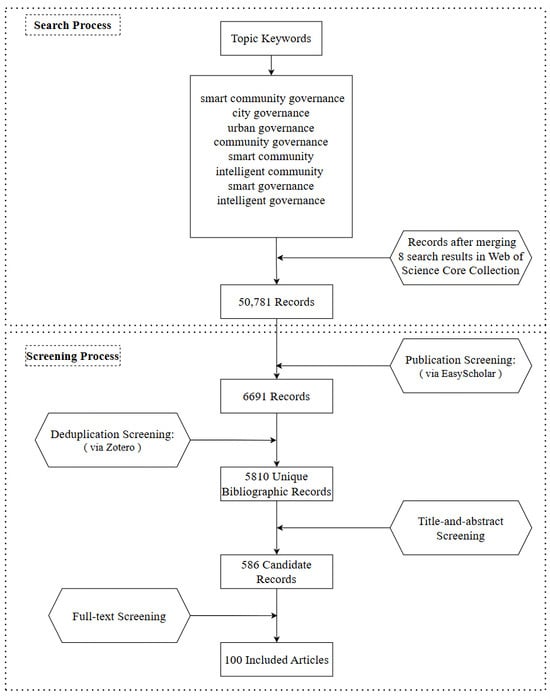
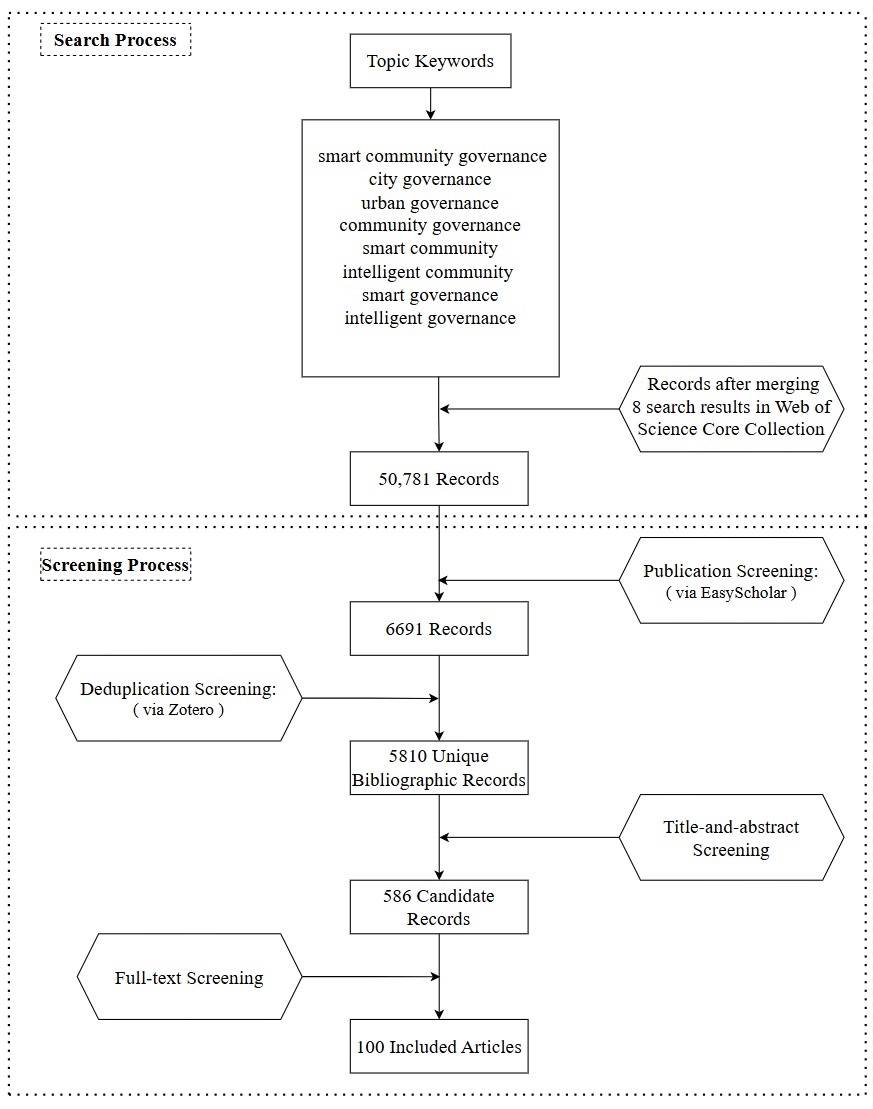
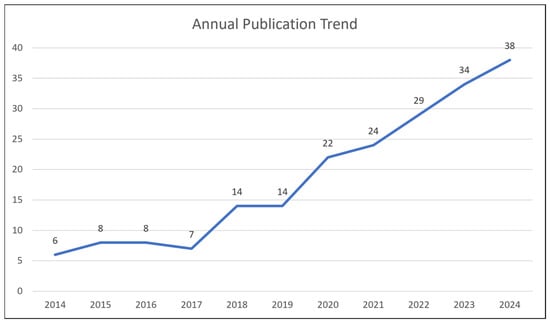
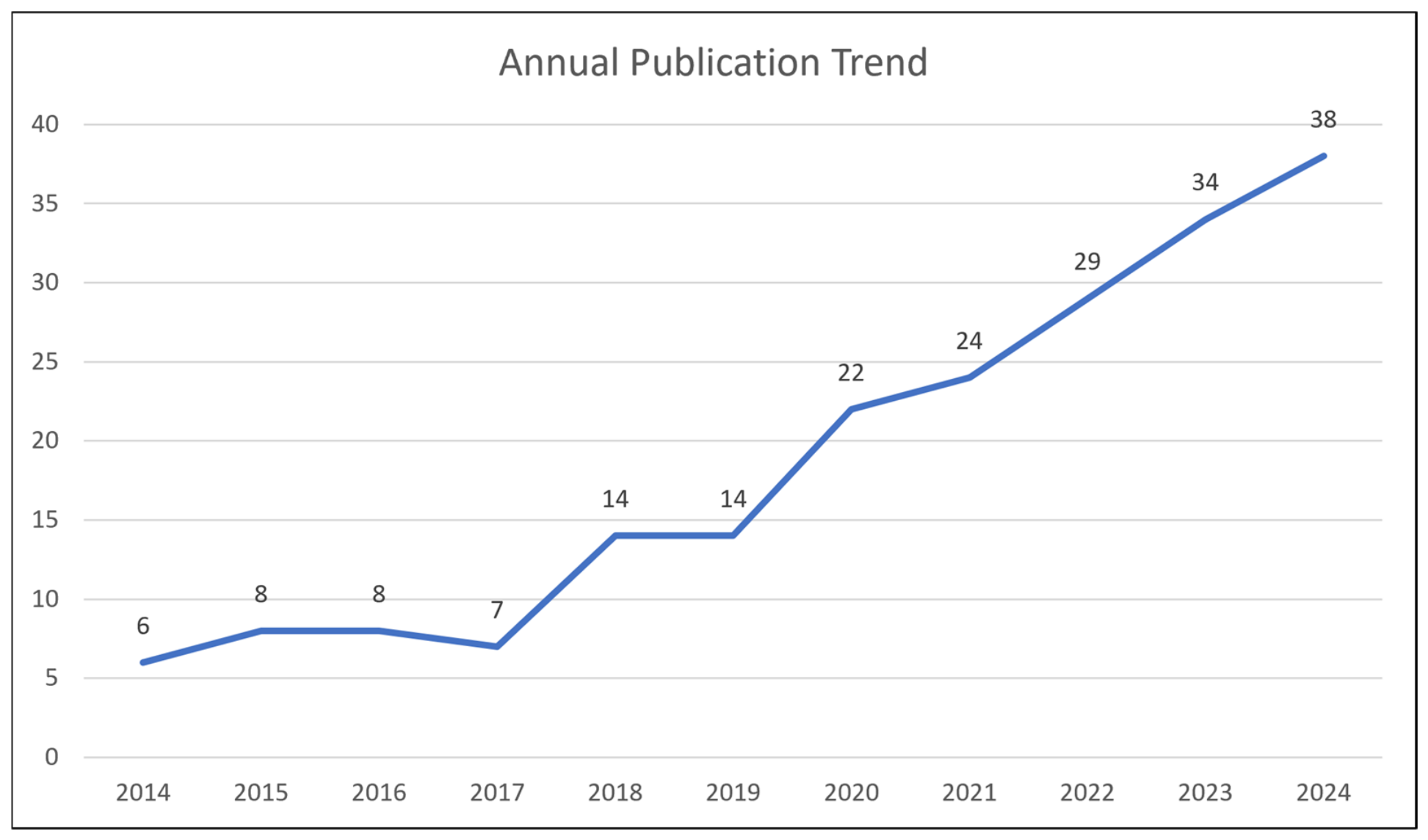
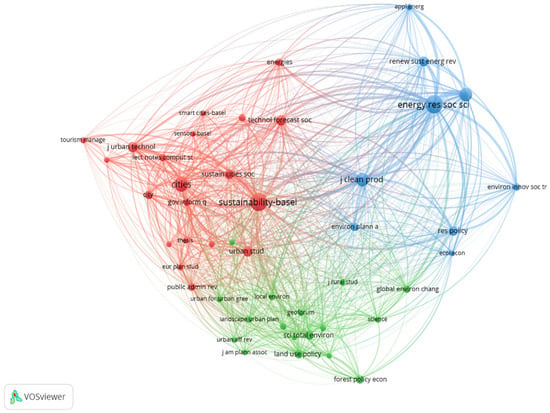
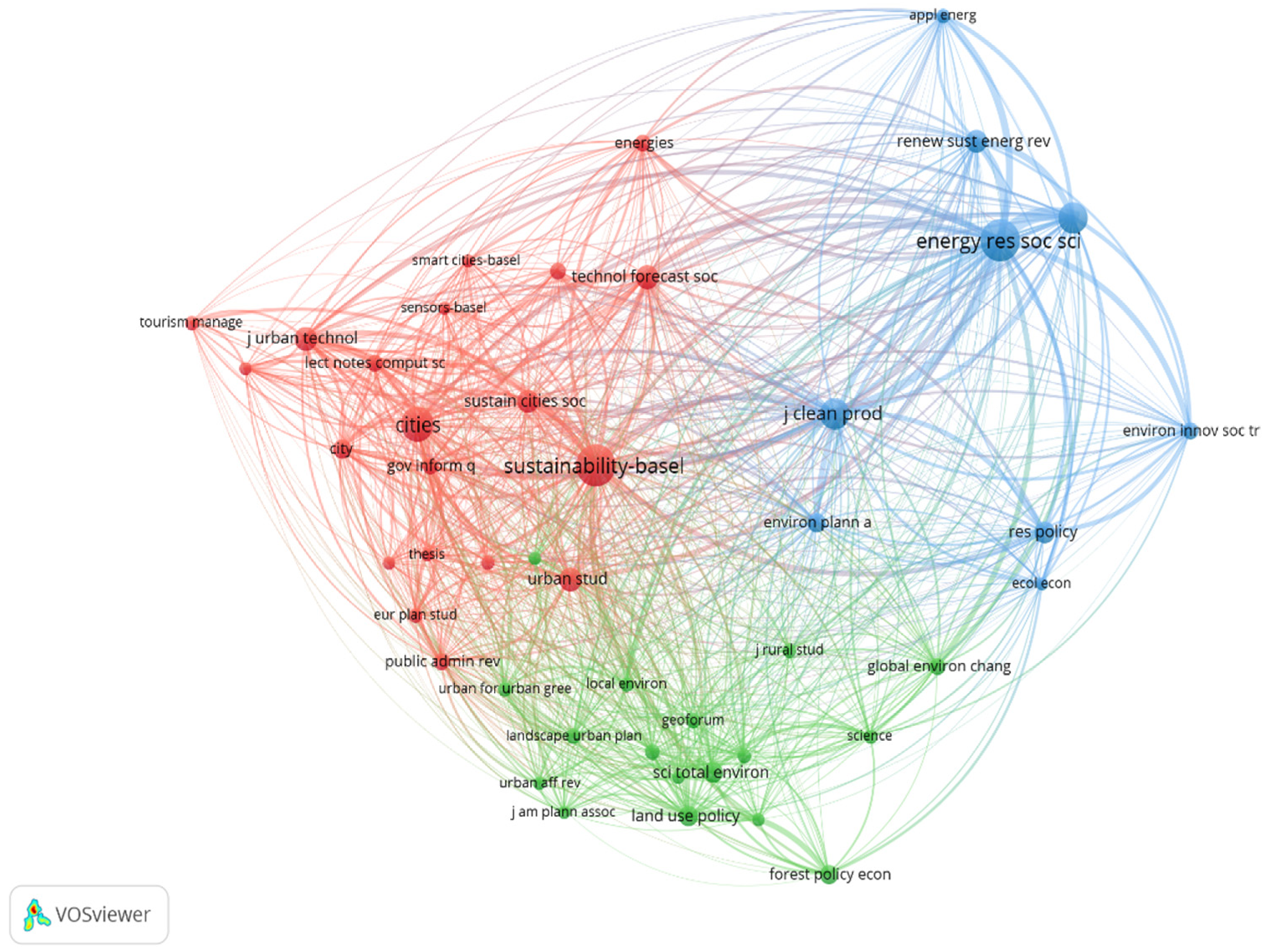
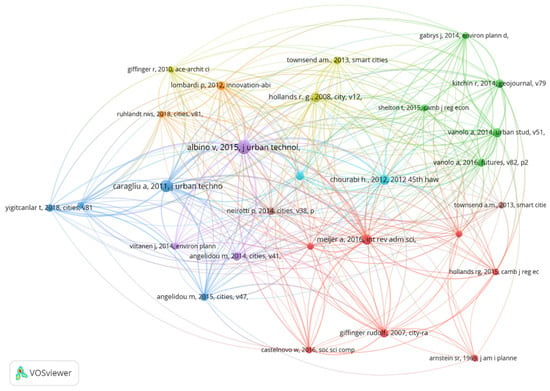
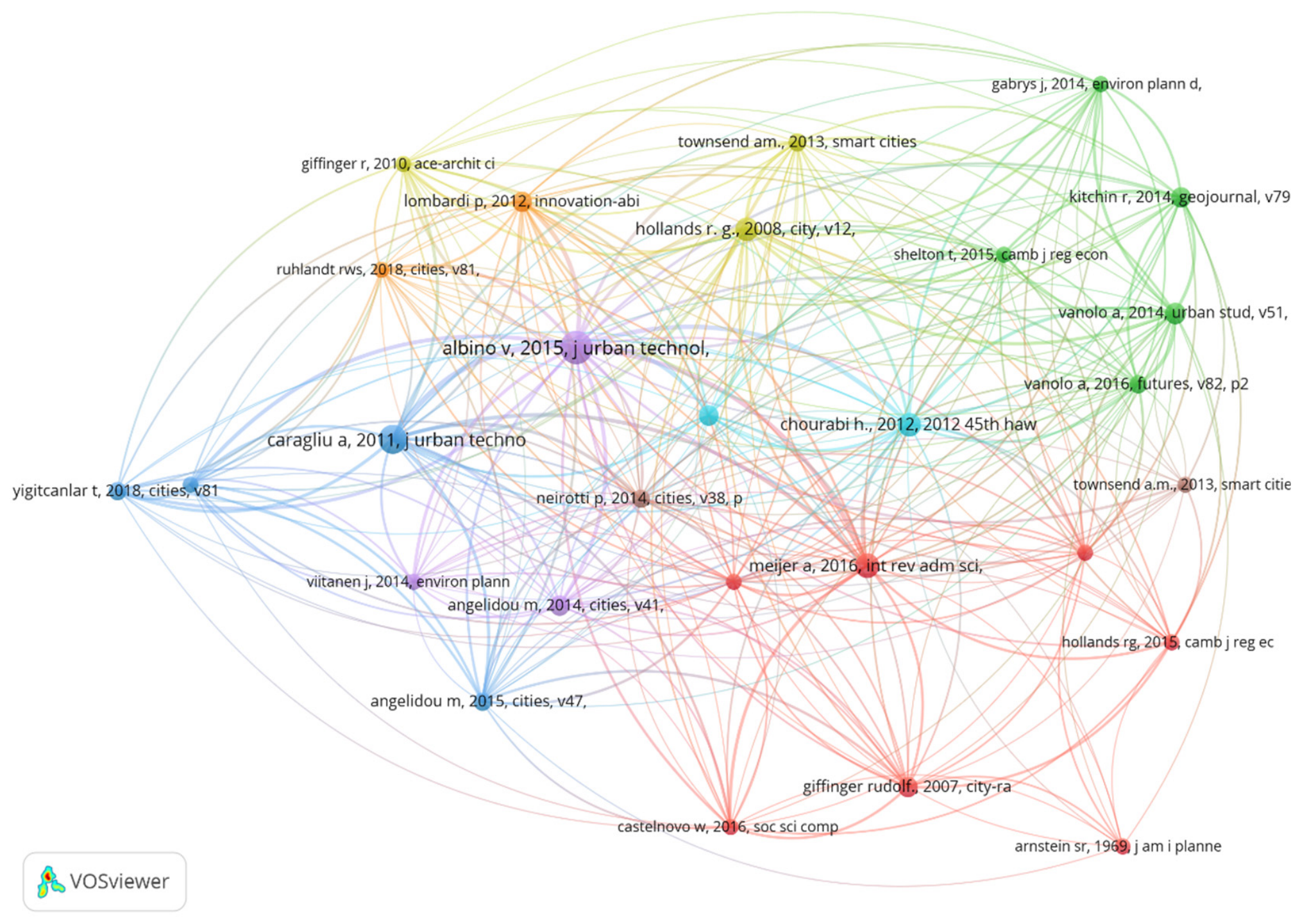
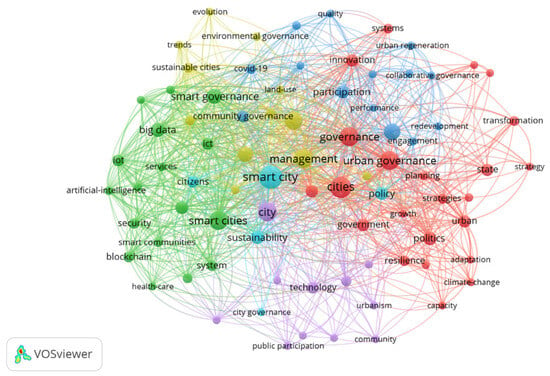
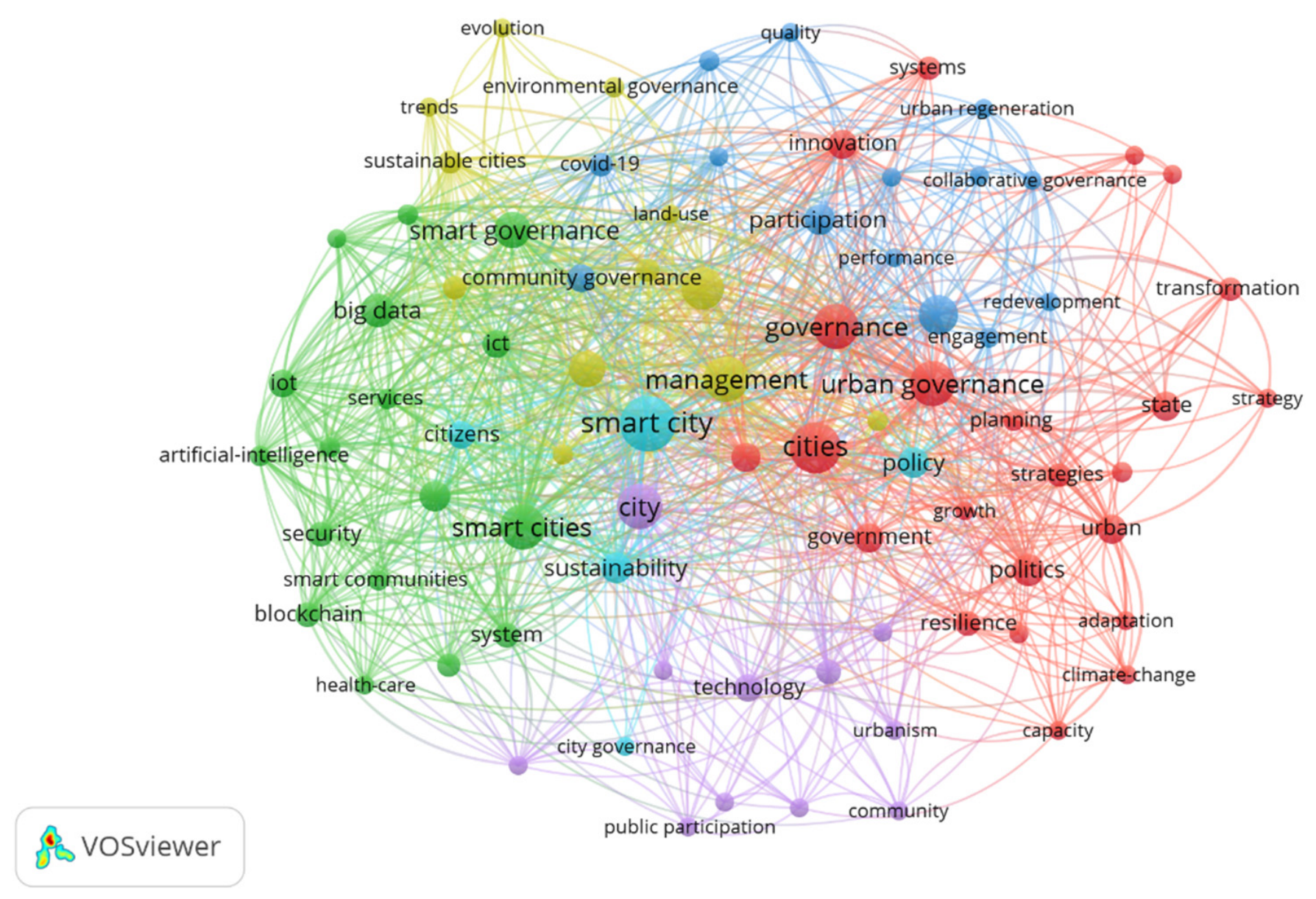
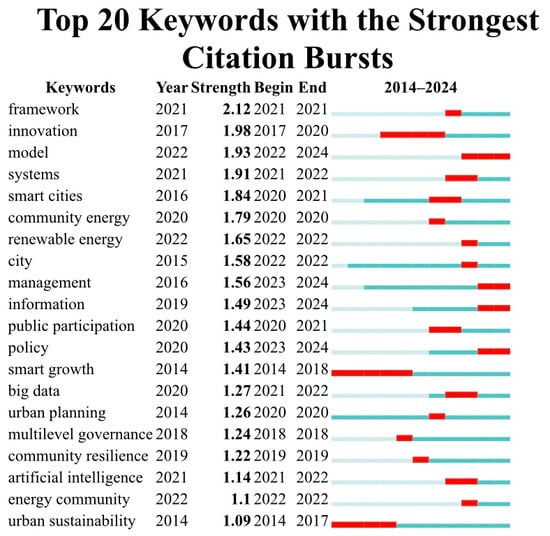
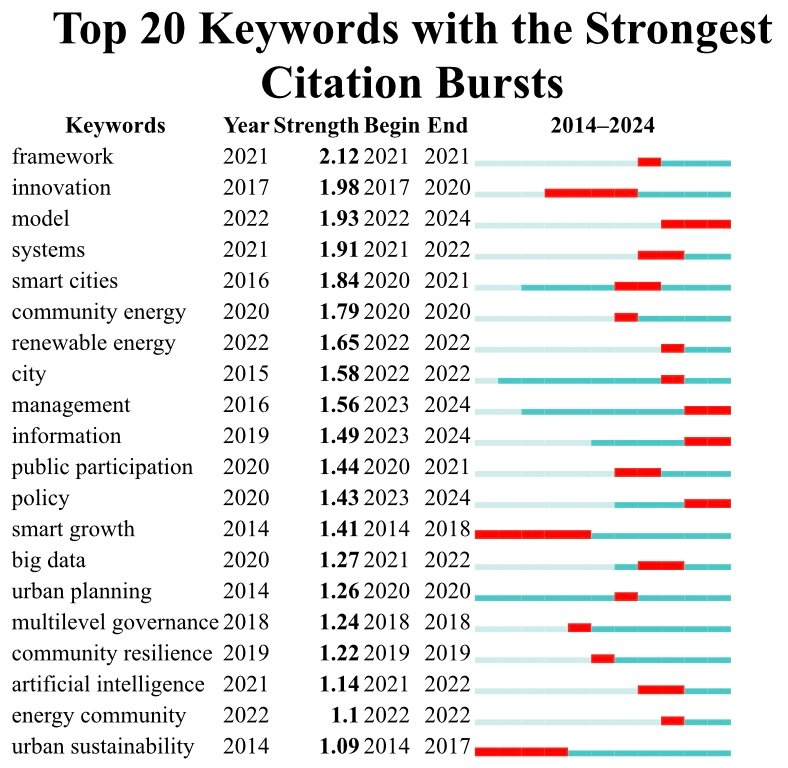
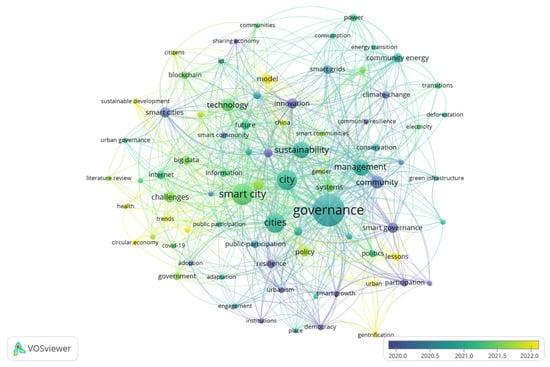
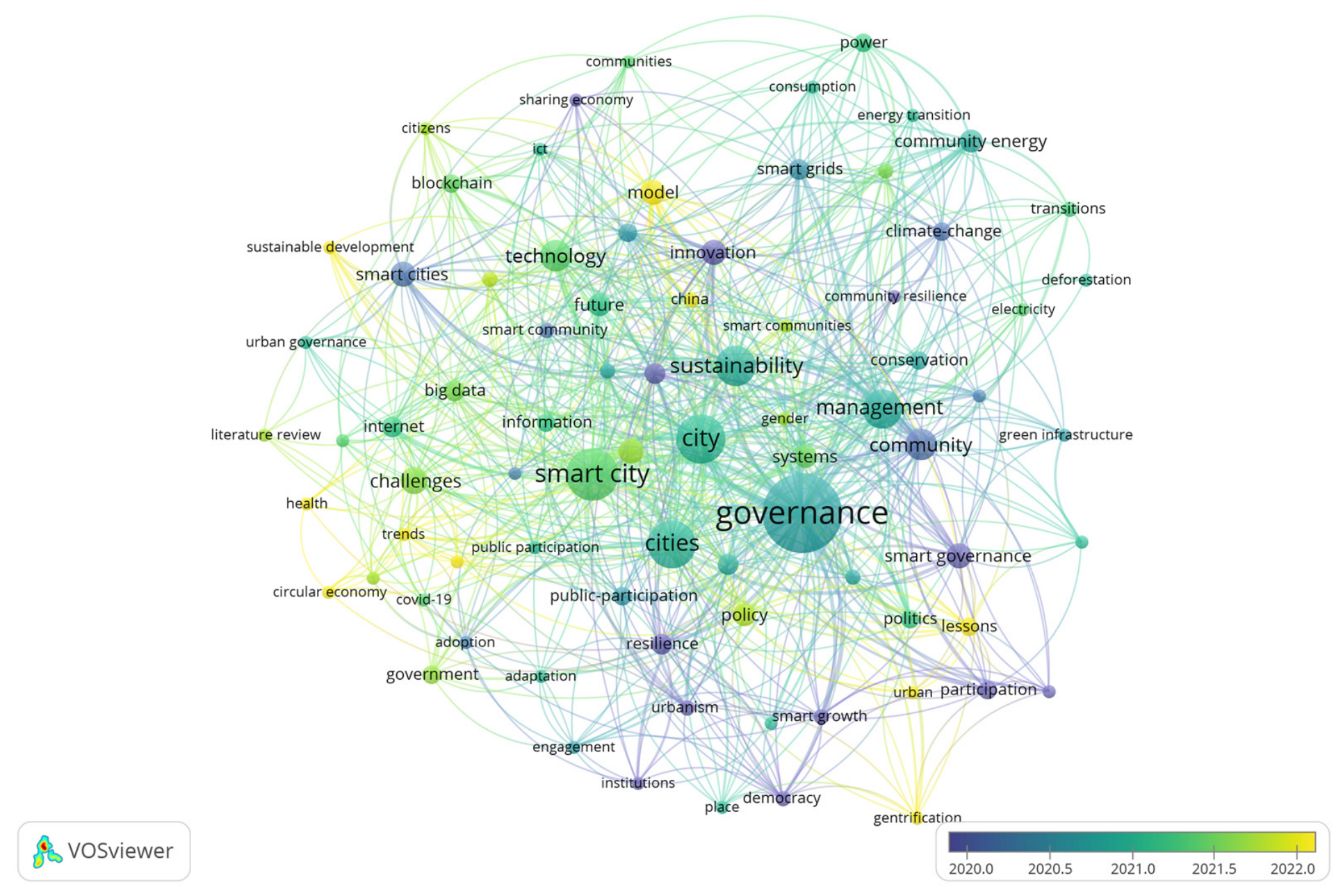

Disclaimer/Publisher’s Note: The statements, opinions and data contained in all publications are solely those of the individual author(s) and contributor(s) and not of MDPI and/or the editor(s). MDPI and/or the editor(s) disclaim responsibility for any injury to people or property resulting from any ideas, methods, instructions or products referred to in the content. |
© 2026 by the authors. Licensee MDPI, Basel, Switzerland. This article is an open access article distributed under the terms and conditions of the Creative Commons Attribution (CC BY) license.