


Abstract
Ecolodge design in the hot–humid Ecuadorian Amazon must account for climate, ecology, construction, culture, and daily operation. This exploratory, conceptual, and framework-oriented study developed a bioclimatic–territorial framework and assessed its content validity using a sequential mixed-methods design with qualitative priority. Development combined an integrative review of 105 original studies, thematic synthesis, and aggregated contextual evidence from a prior academic project involving five ecolodge managers. Ten experts assessed 19 statements for relevance, clarity, coherence, and anticipated applicability, yielding an overall Aiken’s V of 0.858 (95% CI: 0.843–0.872). Following revision and operationalization, an independent panel of eight experts reassessed the framework, yielding V = 0.854 (95% CI: 0.836–0.869); all five dimensions exceeded the prespecified benchmark of 0.80. The consolidated framework connects multiscale territorial diagnosis, project-specific problems, adaptation principles, architectural and operational decisions, required resources and capacities, and 25 verification criteria. An illustrative application in Macas demonstrates the decision sequence and identifies evidence gaps. The contribution is a traceable design-support process that treats documented Amazonian conditions as operational inputs. Expert assessments support content validity; building performance remains untested.
1. Introduction
Ecolodges combine tourism with conservation, environmental education, cultural heritage, and community benefits. Their sustainability depends on decisions about siting, construction, resource use, and management [1]. In the Ecuadorian Amazon, these decisions also connect local knowledge, landscape interpretation, and conservation [2].
Hot–humid conditions require coordinated responses to heat, moisture, rainfall, and solar exposure. Natural ventilation and passive cooling depend on building form, orientation, openings, shading, and surrounding conditions [3,4]. Amazonian vernacular architecture offers adaptation principles through raised floors, permeable envelopes, and protective roofs [5], but their contemporary use requires attention to comfort, construction, and maintenance feasibility [6]. Shuar and Achuar architecture also demonstrates how these responses evolve with settlement patterns, materials, and social practices [7].
Nature-based solutions (NbSs) extend this approach to soil, water, vegetation, and biodiversity by integrating ecological processes into site planning [8]. Building metabolism complements it by examining material and resource flows throughout construction, use, maintenance, and end of life [9]. Together, these perspectives connect environmental strategies with the resources and capacities needed to sustain them.
Their integration into ecolodge design remains incomplete. Vernacular frameworks require territorial adaptation [10]; building-scale NbS research has concentrated on green roofs and façades [11]; and circularity research has emphasized material recovery and recycling [12]. Ecolodge research addresses conservation, participation, education, and management [1], but a common decision structure is needed to connect these concerns with territorial diagnosis, architectural choices, implementation requirements, and verification.
This study develops a conceptual and methodological bioclimatic–territorial framework for ecolodges in the hot–humid Ecuadorian Amazon and assesses its content validity through two independent expert rounds. Its contribution is a traceable sequence connecting territorial diagnosis, project-specific problems, adaptation principles, design decisions, required resources and capacities, and verification criteria across five dimensions. The framework requires these decisions to be justified against documented climatic, ecological, material, cultural, and operational conditions at each project site. Development combined a literature review, thematic synthesis, and aggregated evidence from a prior academic project. The Macas design case illustrates application and verification gaps without establishing measured building performance.
2. Literature Review
2.1. Amazonian Vernacular Architecture as a System of Territorial Adaptation
In hot–humid environments, vernacular adaptation combines raised floors, permeable envelopes, steep roofs, and deep eaves to address ground moisture, air movement, rainfall, and solar exposure. Research on the Shuar jii nee dwelling in Kupiamais shows that performance depends on interactions among form, materials, permeability, and site conditions [5]. Material choices also draw on ecological and construction knowledge concerning selection, availability, durability, and repair [13]. Contemporary application requires consideration of comfort and the feasibility of construction and maintenance [6].
Spatial organization reflects cultural and territorial relationships. Shuar dwellings connect domestic spaces with gardens, forests, and watercourses [14], while Shuar and Achuar architecture changes with settlement patterns, materials, and ways of life [7]. Displacement, land tenure, and community–institutional relationships further shape territorial practices in the Ecuadorian Amazon [15,16]. These findings inform five principles for ecolodge design: relationship with the ground, passive climatic control, material knowledge, repairability, and alignment between spatial organization and cultural practices. Their application requires contextual assessment rather than replication of fixed vernacular forms.
2.2. Nature-Based Solutions and Their Translation into Architectural Design in Hot–Humid Climates
Nature-based solutions (NbSs) protect, manage, or restore ecosystems to address societal challenges while benefiting people and biodiversity [8,11,17]. In hot–humid settings, retaining vegetation, protecting watercourses, using permeable surfaces, and managing infiltration can help maintain ecosystem functions, but their effectiveness depends on local hydrology, topography, vegetation, and ecological conditions [18,19].
For Amazonian ecolodges, these conditions should be assessed before fixing building locations, circulation routes, and drainage. Each intervention should connect a diagnosed problem with an ecological process, maintenance requirements, and verification criteria [17,19]. This integrates NbSs into site planning and operation [8,11], while building metabolism addresses the material, energy, logistical, and maintenance resources needed to sustain them.
2.3. Building Metabolism and Performance over the Life Cycle
Building metabolism examines buildings as systems of material stocks and resource flows that change through construction, use, maintenance, repair, and replacement [9,20]. It complements life-cycle assessment, which evaluates environmental impacts, and circular strategies, which seek to reduce consumption and retain material value through repair, reuse, recovery, and disassembly. Its role here is to connect these flows with territorial conditions and logistical capacity [9,20,21].
In hot–humid environments, moisture, rainfall, and solar exposure make durability and maintenance central to material selection [22,23]. Decisions must also consider treatment, repairability, local construction knowledge, and replacement availability [13].
For ecolodges, this analysis distinguishes material and construction flows from operational flows of water, energy, wastewater, solid waste, and supplies, together with transport and maintenance requirements [9,20,21]. Napo Wildlife Center and Kapawi illustrate how infrastructure, staffing, access, resource management, and community organization shape operation in the Ecuadorian Amazon [24]. Building metabolism therefore connects the framework’s dimensions by examining the resources and capacities needed to implement and sustain architectural and operational decisions.
3. Methodology
The study used a sequential mixed-methods design with qualitative priority to develop and refine the framework through evidence synthesis and two expert-assessment rounds.
3.1. Research Design and Methodological Approach
Literature-derived categories and aggregated territorial evidence informed the preliminary framework, while expert ratings and open-ended comments guided its revision through sequential evidence integration [25,26]. The study assessed framework content validity rather than building performance. The Macas case illustrates the decision sequence; it does not provide performance validation through simulation, monitoring, post-occupancy evaluation, or assessment of an operating ecolodge.
The illustrative application includes an annotated cabin floor plan and section to show how selected framework principles translate into spatial organization and proposed bioclimatic strategies. These drawings serve as design documentation for the Macas case.
Figure 1 summarizes the methodological sequence, informed by mixed-methods integration [25,26], secondary qualitative analysis [27], conceptual framework development [28], and expert content-validity assessment [29]. Section 3.2 details the integrative literature review.
Figure 1.
Methodological process for framework development and content-validity assessment. Note. The eight stages summarize framework development and two sequential expert content-validity assessments. Territorial contextualization used aggregated evidence from a prior academic project. The study did not assess empirical building performance.
3.2. Integrative Literature Review and Conceptual Synthesis
An integrative review synthesized heterogeneous empirical research to identify concepts, relationships, and gaps relevant to framework development [30]. The initial search took place from January to March 2026. During revision, the strategy was reconstructed, audited, and updated in Scopus and Web of Science Core Collection on 17 September 2026, covering database inception to that date without an initial language restriction. Searches used Scopus TITLE-ABS-KEY and Web of Science Topic fields, the latter covering titles, abstracts, author keywords, and Keywords Plus.
Six thematic families covered vernacular architecture and territorial adaptation; hot–humid bioclimatic design; NbS, landscape, and ecosystems; building metabolism, circularity, and life cycle; ecolodges, ecotourism, and operational and experiential performance; and Amazonian territory, culture, and participation. Supplementary Table S1 provides the database-specific search strings, operators, truncation, fields, and temporal coverage. A separately tracked Google Scholar search added four eligible primary studies specific to, or directly transferable to, the Ecuadorian Amazon, using the same eligibility criteria.
Eligible studies were peer-reviewed original research articles with full texts available for assessment and direct evidence relevant to at least one framework dimension. Designs included field and case studies, performance measurements, simulations, experiments, surveys, qualitative and mixed-methods research, life-cycle assessments, and material-flow analyses. Reviews, books, chapters, conference proceedings, theses, and technical documents were excluded from the primary corpus but could serve as contextual sources. The initial record-level deduplication log was not retained, so duplicate counts were not reconstructed retrospectively.
Full-text assessment yielded 105 studies [5,7,13,14,23,24,31,32,33,34,35,36,37,38,39,40,41,42,43,44,45,46,47,48,49,50,51,52,53,54,55,56,57,58,59,60,61,62,63,64,65,66,67,68,69,70,71,72,73,74,75,76,77,78,79,80,81,82,83,84,85,86,87,88,89,90,91,92,93,94,95,96,97,98,99,100,101,102,103,104,105,106,107,108,109,110,111,112,113,114,115,116,117,118,119,120,121,122,123,124,125,126,127,128,129]. References were managed in Zotero, and the study-level matrix recorded bibliographic and contextual characteristics, design, problem, adaptation principles, strategies, resource requirements, verification criteria, findings, limitations, and framework contribution (Supplementary File S1). Verifiable quality-appraisal records were available for 39 studies, assessed using design-appropriate tools. The remaining studies were retained without retrospective scoring. Appraisal neither determined inclusion nor produced a pooled quality score; Supplementary Table S2 reports the detailed results.
3.3. Exploratory Territorial Contextualization Using Aggregated Evidence from a Prior Academic Project
Territorial contextualization used an aggregated synthesis from an unpublished academic capstone project by the same authors concerning an ecolodge design in Macas. No new field data were collected. The prior project gathered information in 2025 from managers of five Ecuadorian Amazon ecolodges, with one questionnaire per establishment. Purposive selection prioritized operational experience and knowledge of architectural and environmental conditions rather than statistical representativeness [130]. The questionnaire comprised five establishment-characterization items and 12 open-ended questions covering physical and architectural characteristics, operation and management, environmental and community impacts, and future development (Supplementary File S2).
Completed questionnaires and participant-level responses were unavailable. Only the retained aggregated synthesis was compared with literature-derived categories; individual responses were not recoded, quotations were not extracted, and response-level completeness could not be assessed. This constituted secondary analysis of an aggregated qualitative synthesis rather than reanalysis of individual records [27].
The synthesis addressed water and energy management, maintenance, staffing, and operating constraints. Comparison with the literature identified convergences, contextual extensions, and gaps that informed the preliminary framework. This evidence was exploratory, neither representative of Amazonian ecolodges nor a test of performance. Table 1 summarizes the evidence sources and their roles in framework development.
Table 1.
Evidence sources and their roles in framework development.
3.4. Development of the Preliminary Bioclimatic–Territorial Framework
The preliminary framework integrated literature-derived categories with the aggregated territorial synthesis following a conceptual framework development approach [28]. Content relevant to ecolodge design, construction, maintenance, and operation was retained; overlapping elements were combined, and content with limited regional relevance was reformulated or removed. The contextual synthesis extended categories where territorial and operational issues were underrepresented.
The resulting structure comprised five interrelated dimensions: bioclimatic; material, construction, and metabolic; landscape and ecosystem; cultural and territorial; and experiential and operational. Territorial diagnosis provided the starting point, addressing climate, topography, hydrology, ecology, materials, cultural practices, and operating conditions. Building metabolism connected resource flows with the technical, human, financial, and logistical capacities required for implementation and operation.
Each dimension comprised an objective, analytical variables, architectural or operational strategies, and preliminary verification criteria. These components linked the issue to be addressed with the conditions examined, the proposed response, and evidence of its incorporation. Some criteria initially lacked defined units, measurement procedures, or reference values.
Before expert assessment, the framework was checked for redundancy and consistency among objectives, variables, strategies, and verification criteria. Figure 2 presents the preliminary version submitted to the first-round panel.
Figure 2.
Preliminary structure of the bioclimatic–territorial framework submitted to first-round content-validity assessment. Note. Prepared by the authors. The Amazonian territory serves as the starting point, while building metabolism operates as a cross-cutting component across the 5 dimensions.
Within the material, construction, and metabolic dimension, “metabolic” refers to resource flows associated with materials and construction. Across all five dimensions, building metabolism offers a broader view of operational resource flows and the capacities needed to manage them.
3.5. First-Round Content-Validity Assessment
In July 2026, experts assessed the preliminary framework against four criteria: relevance, clarity, coherence, and anticipated applicability [29]. Anticipated applicability referred to potential use in planning, designing, constructing, or operating an Amazonian ecolodge, rather than demonstrated performance.
Experts were purposively recruited based on academic, professional, or research experience in at least one framework domain [130].
Recruitment sought disciplinary diversity across bioclimatic and vernacular architecture, hot–humid and Amazonian contexts, sustainable construction, building metabolism, landscape and biodiversity, tourism operations, and community participation. Recorded panel characteristics included qualifications, professional activity, experience, regional work, publications, and potential relationships that could influence assessment. Years of experience characterized the panel but did not determine eligibility. Approximately 40 experts were invited; 10 eligible responses were available at the analysis cutoff. One additional eligible response received after analysis was excluded from the reported statistics.
The assessment was administered through Google Forms and took approximately 15–20 min. Before rating, experts received the study purpose and scope, an informed-consent statement, a conceptual summary, the preliminary framework diagram, and a table of objectives, variables, strategies, and verification criteria.
The questionnaire contained 19 statements: four addressed the overall structure, and three addressed each of the five dimensions. General statements covered the five-dimensional organization, territory as the starting point, building metabolism as a cross-cutting component, and the methodological sequence. Dimension-specific statements addressed variables, strategies, and verification criteria. Each statement received four ratings in separate criterion matrices, using four-point ordinal scales: “not relevant” to “highly relevant,” “not clear” to “completely clear,” “not coherent” to “completely coherent,” and “not applicable” to “directly applicable.” Supplementary Table S4 reports item-by-criterion response distributions and Aiken’s V coefficients.
Open-ended questions addressed missing components, anticipated implementation difficulties, and suggested changes. A final section assessed overall sufficiency, anticipated usefulness, transferability, and diagram clarity. Ratings and written comments jointly informed framework revision.
3.6. Independent Second-Round Reassessment
In September 2026, an independent panel assessed the revised and operationalized framework. Experts were recruited for relevant academic, professional, or research experience across the framework domains, including architecture, construction, environmental sciences, tourism, territorial planning, Amazonian or other hot–humid contexts, sustainable materials, building metabolism, landscape and biodiversity, and community participation.
Before rating, participants reviewed an informed-consent statement, a synthesis of the revised framework and its five dimensions, and the revised diagram. The questionnaire retained 19 statements and the same four-point scales for relevance, clarity, coherence, and anticipated applicability, allowing for descriptive comparison between rounds. It also assessed territorial specificity for each dimension and included global questions on sufficiency, usefulness for decision support, adaptability across Amazonian sites, diagram clarity, overall recommendation, and priority adjustments.
Eight eligible experts completed the assessment. All provided informed consent, confirmed that they had reviewed the framework and diagram, and reported no professional, economic, or personal relationships that could influence their judgments. Responses were analyzed anonymously and in aggregate.
3.7. Data Analysis
Literature-derived categories were compared with the aggregated contextual synthesis and experts’ open-ended comments to identify extensions, gaps, and underrepresented issues [131]. The first author coded the literature and contextual synthesis in an evidence matrix, grouping related codes into themes and higher-order categories. The other two authors reviewed these categories, and disagreements were resolved through discussion. Coding was not independently duplicated, so inter-coder agreement was not calculated. The categories informed the five framework dimensions, their variables, strategies, verification criteria, and the 19 expert-assessment statements. Supplementary Table S3 traces these relationships using aggregated contextual findings because the original manager questionnaires were unavailable.
First-round ratings were organized by expert, statement, and criterion. The 19 statements and four criteria generated 76 statement–criterion combinations and 760 expected ratings across 10 experts; 755 were valid. Second-round data comprised 608 expected ratings across eight experts; 603 were valid. In each round, the five missing ratings were excluded from affected calculations without imputation.
Content validity was quantified using Aiken’s V [132]:
where
Here, r is the expert rating, l0 is the lowest scale score, n is the number of valid ratings, and c is the number of response categories. For the four-point scale, l0 = 1 and c = 4. Aggregated coefficients were calculated from all available valid ratings rather than by averaging previously calculated V coefficients. Precision was estimated using 95% score confidence intervals.
An a priori benchmark of V ≥ 0.80, equivalent to a mean rating of 3.4, guided revision. Unrounded coefficients classified statement–criterion combinations as accepted (V ≥ 0.80), requiring minor revision (0.70 ≤ V < 0.80), or requiring reformulation (V < 0.70). These categories were neither statistical significance thresholds nor automatic rules for retaining or excluding content.
Sensitivity analyses in both rounds assigned missing ratings either the minimum score (1) or the maximum score (4). First-round ordinal inter-rater agreement was also assessed using linearly weighted Gwet’s AC2, with 95% confidence intervals from 5000 bootstrap resamples. Detailed first-round results are reported in Supplementary Table S4.
The rounds were analyzed separately using the same content-validity procedure. Overall and component-level coefficients were compared descriptively because independent panels assessed different framework versions; differences were not interpreted as paired changes or subjected to paired statistical tests. Territorial-specificity ratings and global assessments of sufficiency, usefulness, adaptability, diagram clarity, and overall recommendation were summarized descriptively.
Open-ended comments from both rounds were coded by framework component and observation type: missing content, unclear wording, coherence issues, applicability limitations, or suggested changes. Similar observations were grouped thematically; individual comments were retained when they identified omissions supported by literature or territorial evidence. Coefficients identified content requiring closer examination, while comments clarified concerns and guided revisions. Second-round findings jointly informed the final targeted refinements.
Quantitative analyses were performed in R version 4.5.2 [133]. Statistical plots were generated with ggplot2 and exported at 300 dpi.
3.8. Ethical Considerations
Territorial contextualization used only the aggregated synthesis retained from the authors’ prior academic project. Original questionnaires, participant-level responses, and consent records were unavailable; therefore, individual responses were neither reanalyzed nor reconstructed, and no quotations were attributed to managers or establishments. This synthesis provided exploratory contextual evidence without claims of representativeness or empirical validation.
The first-round assessment involved adult professionals who received study information and provided informed consent online. Ratings were coded and analyzed in aggregate. No ethics committee determination had been obtained before that round; the subsequent determination for the second round does not apply retrospectively.
Before the independent second-round assessment, the Human Research Ethics Committee of Universidad Técnica Particular de Loja (CEISH-UTPL; institutional code DNIVS-CEISH-11-UTPL-30) reviewed protocol 2026-09-INT-EO-SR-005, the consent document, and the assessment instrument. On 18 September 2026, it classified the protocol as no-risk research and exempted it from full ethics review (CEISH-UTPL-(09)-(2026) No. 202). This determination applies exclusively to the second-round protocol.
Permission to acknowledge experts by name and institution was requested separately and was optional. Professional information used to characterize the panels was kept separate from analytical datasets. Ratings received alphanumeric identifiers and were analyzed in aggregate; open-ended comments were de-identified or paraphrased when necessary to reduce identification risk.
4. Results
Results are presented in sequence: evidence synthesis, first-round assessment, framework revision and operationalization, independent reassessment, final consolidation, and illustrative application.
4.1. Literature Review Findings and Development of the Bioclimatic–Territorial Framework
The 105 primary studies were classified by their primary focus into five evidence domains: bioclimatic performance (n = 66), materials and building metabolism (n = 11), site planning and ecological integration (n = 8), cultural continuity and local participation (n = 7), and experiential and operational performance (n = 13). Bioclimatic studies accounted for most of the corpus, with fewer studies in each of the other four domains. Supplementary File S1 provides the study-level matrix.
Five complementary evidence patterns informed framework development. Research on Shuar housing linked passive adaptation to interactions among envelope permeability, shading, roofing, ventilation, and site conditions [5]. Material evidence connected construction and maintenance with ethnobotanical knowledge and wood selection [13], while early-design life-cycle assessment linked material and dimensional decisions to embodied environmental impacts [127]. Landscape research combined spatial design and stormwater modeling to assess nature-based solutions under different rainfall scenarios [87]. Studies of Shuar and Achuar architecture related spatial and material transformations to settlement patterns, identity, and social practices [7,14]. Evidence from Napo Wildlife Center and Kapawi identified differing conservation, community, infrastructure, and operational conditions within the Ecuadorian Amazon [24].
These evidence patterns informed the five framework dimensions: passive climatic adaptation supported the bioclimatic dimension; material sourcing, durability, and life-cycle considerations informed the material, construction, and metabolic dimension; site planning, hydrology, and ecological processes informed the landscape and ecosystem dimension; vernacular knowledge and social practices informed the cultural and territorial dimension; and conservation, infrastructure, resource management, and tourism operations informed the experiential and operational dimension.
Comparison with the aggregated territorial synthesis identified shared concerns about climate adaptation, materials, site protection, local knowledge, and operational capacity. This contextual evidence informed framework development without providing an independent performance test.
4.2. First-Round Panel Composition and Overall Content Validity Assessment
Ten eligible responses from approximately 40 invited experts were included at dataset closure, representing approximately 25% of invitations. An additional eligible response received after analysis was excluded. Eight experts worked primarily in Ecuador, one in South Africa, and one in Italy. Their backgrounds comprised architecture (n = 6), tourism or environmental sciences (n = 3), and anthropology and local development (n = 1); five held doctoral degrees.
Nine experts reported at least 10 years of experience. Seven had worked directly in the Ecuadorian Amazon and one in another hot–humid tropical region, one had relevant theoretical or research experience without fieldwork, and one reported no specific regional experience. Collectively, the panel covered the framework’s main domains, although Ecuador-based and architectural expertise predominated and direct ecolodge operational experience was limited. This composition constrains the transferability of judgments. Self-selection and non-response bias also remain possible because non-respondent characteristics were unavailable.
Of 760 expected ratings, 755 were valid (99.3% coverage), with five missing. Ratings concentrated in the upper categories: the mean was 3.57/4, the median 4, the standard deviation 0.64, and the interquartile range 1. Scores of 3 or 4 accounted for 92.1% of valid ratings.
Overall Aiken’s V was 0.858 (95% CI: 0.843–0.872), exceeding the prespecified benchmark of 0.80. Assigning missing ratings the minimum or maximum score yielded overall coefficients of 0.852 and 0.859, respectively. Under the minimum-score scenario, three affected statement–criterion combinations fell below the benchmark. Ordinal inter-rater agreement was Gwet’s AC2 = 0.741 (95% bootstrap CI: 0.709–0.773), with criterion-specific coefficients ranging from 0.711 to 0.767. Table 2 summarizes participation, rating coverage, and overall results; Supplementary Table S4 provides detailed findings.
Table 2.
Participation, rating coverage, and overall results of the first-round content-validity assessment.
4.3. First-Round Content Validity by Dimension and Overall Framework Structure
The landscape and ecosystem dimension had the highest first-round Aiken’s V (0.922). All dimensions and the overall framework structure exceeded the prespecified benchmark of 0.80 except the experiential and operational dimension (V = 0.791). Its criterion-level ratings and expert comments were therefore examined more closely to guide revision. Table 3 and Figure 3 present the coefficients by framework component.
Table 3.
First-round Aiken’s V by dimension and overall framework structure.
Figure 3.
First-round Aiken’s V by framework dimension and overall structure of the preliminary bioclimatic–territorial framework. Note. The dashed line represents the operational benchmark of V = 0.80. Overall framework structure is displayed separately from the 5 dimensions. Coefficients were calculated from available valid first-round ratings.
4.4. First-Round Content Validity by Criterion and Framework Component
First-round Aiken’s V exceeded the prespecified benchmark of 0.80 for all four assessment criteria: relevance (0.874), coherence (0.869), clarity (0.855), and anticipated applicability (0.832).
Across the five dimensions and overall framework structure, 20 of 24 component–criterion coefficients (83.3%) met the benchmark. Four fell below it: anticipated applicability for the overall structure (0.775), and clarity (0.782), coherence (0.789), and anticipated applicability (0.767) for the experiential and operational dimension. These results identified priorities for clarifying framework scope and the definition and practical interpretation of that dimension. Figure 4 presents criterion-level coefficients across components.
Figure 4.
First-round Aiken’s V by criterion and framework component of the preliminary bioclimatic–territorial framework. Note. The 6 assessed components comprise the 5 framework dimensions and the overall framework structure. The dashed line represents the operational benchmark of V = 0.80. Coefficients were calculated from available valid first-round ratings. Anticipated applicability denotes expected use rather than demonstrated performance in a built project.
At the statement–criterion level, 67 of 76 combinations (88.2%) met the acceptance benchmark, eight (10.5%) required minor revision, and one (1.3%) required reformulation.
4.5. Revisions Derived from the First-Round Content Validity Assessment
First-round ratings and comments identified two main concerns: the apparent exhaustiveness of the five dimensions and the unclear scope of the experiential and operational dimension. The statement concerning dimensional coverage required reformulation for anticipated applicability (V = 0.633) and fell below the benchmark for coherence (V = 0.767). The dimensions were therefore redefined as core, non-exhaustive fields that may incorporate site-specific variables. Of eight combinations requiring minor revision, six concerned the experiential and operational dimension, one concerned cultural-continuity clarity, and one concerned dimensional-coverage coherence.
The revised framework clarified the application sequence detailed in Section 4.6. The experiential and operational dimension distinguished building performance, tourism operation, and visitor experience. Comfort, circulation, privacy, accessibility, safety, visitor profiles, carrying capacity, service continuity, flexibility, and maintenance were linked to establishment scale and available resources. Feasibility, management capacity, and demand were incorporated into this dimension and the cross-cutting analysis of building metabolism.
Bioclimatic strategies were linked more explicitly to site-specific temperature, humidity, air movement, solar exposure, shading, and rainfall. The material, construction, and metabolic dimension was organized around material and component life cycles, covering traceability, durability, maintenance, repair, replacement, disassembly, reuse, resource consumption, and solid waste.
Landscape revisions clarified site fragility, threats and opportunities, resource regeneration, soil disturbance, drainage, vegetation, and biodiversity. Cultural and territorial revisions expanded participation to address governance, decision-making, local aspirations, knowledge transmission, and critical interpretation of vernacular principles. Table 4 summarizes the findings and corresponding revisions.
Table 4.
Principal first-round findings and corresponding framework revisions.
The operational specifications in Supplementary Table S5 were developed after the first round and were therefore not assessed by that panel.
4.6. Revised and Operationalized Bioclimatic–Territorial Framework
The revised framework comprises five dimensions, each with five verification criteria. The bioclimatic dimension addresses thermal conditions and conditioning strategy, moisture, natural ventilation, solar control and daylight management, and rain and ground-moisture protection. The material, construction, and metabolic dimension addresses material origin and traceability, durability and service life, maintenance and replacement, repairability and disassembly, and material and construction resource flows. The landscape and ecosystem dimension addresses physical site disturbance, response to topography and hydrology, vegetation conservation, biodiversity and ecological connectivity, and runoff and erosion control.
The cultural and territorial dimension addresses participation across project stages, incorporation of local knowledge, local employment and supply, reinterpretation of vernacular principles, and governance and decision traceability. The experiential and operational dimension addresses occupancy and resource-based carrying capacity; privacy, circulation, acoustic comfort, and insect protection; accessibility, safety, and emergency response; maintenance, service continuity, and logistics; and visitor experience and landscape connection. Building metabolism connects these dimensions by distinguishing material and construction flows from operational water, energy, wastewater, solid waste, maintenance resources, supplies, and logistics.
Framework application follows six documented steps: diagnose territorial and site conditions; define a project-specific problem or constraint; select and justify an adaptation principle; translate it into an architectural or operational decision; identify technical, human, financial, and logistical requirements for construction, maintenance, and operation; and verify the decision against an explicit indicator and reference value or project-specific rule. Each assessment records supporting evidence, criterion status, and unresolved requirements. Mentioning a strategy in the design narrative alone does not demonstrate that its decision rule has been met.
Supplementary Table S5 specifies each criterion’s indicator, unit or assessment scale, reference value or decision rule, data source, assessment stage, responsible actor, verification method, and expected output. External benchmarks are used where applicable; otherwise, a site- or project-specific rule is required. Five assessment statuses are available: “not assessed,” “does not meet,” “partially meets,” “meets,” and “not applicable.” No aggregate sustainability score is calculated because the framework supports design decisions and verification rather than certification. Subsequent performance assessment is needed to test the outcomes of those decisions.
4.7. Independent Second-Round Reassessment of the Revised Framework
Eight experts completed the independent reassessment. Three held doctoral degrees and five master’s degrees; six reported at least 10 years of experience. Their primary professional or academic activity was based in Ecuador (n = 3), other Latin American and Caribbean countries (n = 3), Africa (n = 1), and multiple regions (n = 1). Four experts reported expertise across multiple framework dimensions. The remaining experts specialized primarily in one of three dimensions: bioclimatic; material, construction, and metabolic; or cultural and territorial.
Of 608 expected ratings, 603 were valid (99.2% coverage), with five missing and excluded without imputation. Overall Aiken’s V was 0.854 (95% CI: 0.836–0.869). Assigning missing ratings the minimum or maximum score yielded coefficients of 0.846 and 0.855, respectively, indicating limited influence on the overall estimate.
All four assessment criteria exceeded the benchmark of 0.80: relevance (0.874), coherence (0.855), clarity (0.852), and anticipated applicability (0.833). The lower applicability coefficient suggested that remaining refinements concerned translation into project-specific use. All five dimensions and the overall framework structure also exceeded the benchmark (Table 5). The experiential and operational dimension scored 0.837, compared with 0.791 in the first round.
Table 5.
Descriptive comparison of first- and second-round Aiken’s V by framework component.
Seven experts considered the framework sufficient with minor adjustments and one sufficient as presented. Mean usefulness for decision support was 4.38/5. Five considered it adaptable to other Amazonian sites following territorial diagnosis, and three probably adaptable. Seven rated the diagram as clear with minor adjustments and one as completely clear. Separately, seven recommended the framework with minor modifications and one as presented.
Territorial-specificity ratings concentrated in the “clearly adapted” and “high specificity” categories. However, one expert rated all dimensions as not specific to the Ecuadorian Amazon, and another rated the experiential and operational dimension as having limited specificity. These judgments informed final refinements alongside the coefficients and open-ended comments.
Table 5 compares coefficients descriptively. Because independent panels assessed different framework versions, between-round differences do not represent paired changes.
4.8. Item-Level Findings and Final Refinements
Of 76 statement–criterion combinations assessed in the second round, 65 (85.5%) met the benchmark of V ≥ 0.80 and 11 (14.5%) required minor revision (0.70 ≤ V < 0.80). None required reformulation (V < 0.70).
Below-benchmark coefficients mainly concerned anticipated applicability in building metabolism, siting, community participation, and experiential and operational content. The lowest coefficient, however, concerned the relevance of building metabolism as a cross-cutting component (V = 0.762). Expert comments indicated a need for clearer conceptual boundaries and operational specificity rather than additional major components.
Requested refinements included distinguishing material and construction flows from operational resource flows, differentiating territorial scales, clarifying participation mechanisms, and strengthening accessibility, maintenance, emergency response, acoustic comfort, insect protection, and service continuity. Quantitative findings and comments jointly informed the targeted adjustments presented in Section 4.9.
4.9. Final Consolidation of the Bioclimatic–Territorial Framework
The independent reassessment supported retaining the five-dimensional structure, with final adjustments focused on conceptual clarification and operational detail. Building metabolism remained cross-cutting, with clearer differentiation between material and construction flows and operational flows of water, energy, wastewater, solid waste, maintenance resources, supplies, and logistics.
Territorial diagnosis was organized across three interdependent scales: macro/territorial, addressing accessibility, infrastructure, governance, tourism, and protected-area conditions; meso/landscape, addressing ecosystems, ecological connectivity, and hydrology; and micro/site, addressing climate, topography, drainage, vegetation, and available resources. Together, these scales define project-specific constraints and opportunities.
Dimensional refinements clarified the use of passive, mixed-mode, or mechanical conditioning according to site, program, and operational requirements; ecological connectivity; context-dependent participation and governance; and thermal and acoustic comfort, accessibility, privacy, insect protection, maintenance, service continuity, logistics, and emergency response.
The consolidated framework connects multiscale diagnosis with a project-specific problem, adaptation principles, architectural and operational decisions, required resources and capacities, and verification criteria. Verification establishes whether a decision meets its documented project requirements; it does not demonstrate achieved building performance.
Territorial specificity arises from interpreting the framework’s five dimensions in relation to documented conditions of the Ecuadorian Amazon. Hot–humid climatic conditions, intense rainfall, and moisture exposure inform ventilation, solar protection, roof design, envelope durability, and ground-moisture control. Ecological and hydrological conditions, including vegetation, drainage, and ecosystem connectivity, inform site selection, landscape conservation, and the management of physical disturbance. Local material availability, construction knowledge, and maintenance capacity guide material selection, treatment, repair, and replacement. Cultural practices and vernacular knowledge inform participation, spatial organization, and the adaptation of traditional architectural principles. Finally, accessibility, supply logistics, staffing, resource availability, and service requirements inform operational feasibility and maintenance planning. These relationships require project-specific assessment rather than the application of uniform design solutions; transfer to another setting therefore requires a new territorial diagnosis and reconsideration of the relevant decisions and verification criteria.
Table 6 summarizes the second-round findings and corresponding refinements. Figure 5 presents the consolidated framework and its relationship to subsequent empirical performance assessment.
Table 6.
Second-round findings and corresponding refinements incorporated into the final consolidated framework.
Figure 5.
Final consolidated bioclimatic–territorial framework for ecolodge design in the hot–humid Ecuadorian Amazon. Note. Amazonian territorial conditions provide the starting point for multiscale diagnosis at macro/territorial, meso/landscape, and micro/site levels. The 5 dimensions organize the principal fields of analysis and may be supplemented with project-specific variables. Building metabolism operates across the dimensions through material, water, energy, wastewater, solid waste, maintenance, and logistical flows. Verification establishes whether framework-guided decisions have been incorporated into the project; thermal, environmental, constructional, ecological, and operational performance requires subsequent empirical assessment.
4.10. Illustrative Application to an Ecolodge Project in Macas
An ecolodge design project in Macas, Ecuador, illustrated the framework’s application using available territorial and architectural information. Ten representative criteria across the five dimensions were examined by linking territorial conditions and project-specific problems to adaptation principles, design decisions, implementation requirements, and verification evidence (Supplementary Table S6). Table 7 summarizes documented decisions and evidence gaps.
Table 7.
Illustrative application and evidence-gap assessment of the framework in the Macas ecolodge design case.
Figure 6 and Figure 7 illustrate the proposed cabin layout and bioclimatic strategies through an annotated floor plan and section. These drawings document design intentions rather than measured thermal or airflow performance.
Figure 6.
Illustrative cabin floor plan for the Macas ecolodge design case, showing spatial organization, orientation, solar exposure references, and indicated wind directions.
Figure 7.
Illustrative north–south cabin section showing proposed low- and high-level ventilation openings, upper timber screens with insect mesh, and underfloor ventilation. The solar path is a schematic reference outside the section plane.
Thermal-comfort and airflow assessments, procurement records, rainwater-system sizing, earthwork and vegetation-retention metrics, participation records, maintenance plans, and resource-based carrying-capacity calculations were incomplete or unavailable. These gaps prevent full verification of the selected criteria.
5. Discussion
Both expert rounds supported the framework’s content validity while identifying areas for conceptual and operational refinement (overall Aiken’s V = 0.858 and 0.854, respectively). However, because independent panels assessed different framework versions, these coefficients cannot establish improvement or decline between rounds. The experiential and operational dimension exceeded the benchmark in the second round (V = 0.837), having fallen slightly below it in the first (V = 0.791). This pattern is consistent with revisions distinguishing building performance, tourism operation, and visitor experience, although the independent-panel design prevents attributing the difference to those revisions. Anticipated applicability remained the lowest-rated criterion (V = 0.833), suggesting that translation into project-specific decisions remains the main area for further refinement.
5.1. Conceptual Integration of Vernacular Architecture, Nature-Based Solutions, and Building Metabolism
The framework connects vernacular adaptation, ecological processes, and resource flows within a territorial design sequence. Vernacular principles are treated as adaptable knowledge whose suitability depends on climate, material availability, maintenance, and local skills [6]. Shuar and Achuar architecture demonstrates how this knowledge evolves with settlement patterns, materials, and social practices [7]. The jii nee dwelling illustrates the interaction of open planning, envelope permeability, deep eaves, palm roofing, and vegetation in passive adaptation [5]. Nature-based solutions extend this approach to siting, topography, drainage, vegetation, and earthworks, linking climatic adaptation with ecological processes during early planning [8,19].
Building metabolism examines the resources and capacities needed to sustain these decisions through construction, operation, maintenance, repair, and replacement. Resource-flow and circularity perspectives help address constraints in supply chains, skills, and funding [9,21]. Evidence from Napo Wildlife Center and Kapawi also highlights the operational importance of infrastructure, staffing, supplies, logistics, and resource management [24].
The proposed framework integrates established ecolodge sustainability concerns [1] into a territorial decision sequence linking diagnosis, design decisions, implementation requirements, and verification. Table 8 compares its stated scope with LEED v5 [134], BREEAM New Construction v7.1 [135], EDGE [136], and the GSTC Hotel Standard v4.01 [137].
Table 8.
Scope-based comparison of the proposed framework with established building and hospitality sustainability systems.
The framework makes interdependencies explicit: ventilation must account for rain and insect protection; vegetation retention must be coordinated with siting, drainage, and access; and material selection must consider local knowledge, treatment, repair, and replacement capacity. The Macas case illustrates this logic and identifies evidence gaps, while the expert rounds support content validity. These findings demonstrate neither superiority over existing systems nor improved building performance.
5.2. Contribution of the Two Expert-Assessment Rounds to Framework Refinement
The first round identified uncertainties about framework scope and application across ecolodges with different scales, staffing, resources, and management models. The favorable assessment of the landscape and ecosystem dimension is consistent with ecolodge research emphasizing conservation and environmental management [1], as well as Ecuadorian Amazonian research linking ecological knowledge, community participation, and landscape interpretation to design decisions [2]. The experiential and operational dimension required clearer boundaries among building performance, tourism operation, and visitor experience. The independent reassessment supported retaining the revised five-dimensional structure. Remaining concerns centered on applying the framework under specific site and operating conditions, particularly the delimitation of building metabolism, differentiation of territorial diagnosis scales, operational specificity of verification criteria, and interpretation of participation mechanisms. These findings informed the targeted refinements summarized in Table 6 and incorporated into the consolidated framework in Section 4.9. However, the independent-panel design does not allow the effects of individual revisions to be isolated. Carrying capacity illustrates the need for context-dependent decision rules. Visitor or room numbers alone overlook site fragility, water and energy availability, waste-management capacity, staffing, and acceptable environmental conditions. McCool and Lime [138] questioned universal numerical thresholds and emphasized the conditions to be maintained and acceptable impacts. Accordingly, the framework relates carrying capacity to territorial conditions, resources, operational capacity, and establishment characteristics.
5.3. Implications for Amazonian Ecolodge Design
Multiscale territorial diagnosis should precede decisions on siting, orientation, spatial organization, and construction systems, while alternatives remain open to comparison [127,139]. It should identify constraints and opportunities related to infrastructure, governance, ecological connectivity, hydrology, climate, topography, vegetation, and resources, as well as implementation capacities and verification requirements. Architectural responses must be assessed against project conditions. Ventilation, raised floors, roof form, shading, materials, and conditioning strategies depend on orientation, rainfall, humidity, airflow, durability, supply, and maintenance capacity. Envelope degradation may also alter expected performance in hot–humid settings [23]. These decisions interact across dimensions: vegetation retention can affect shading, airflow, drainage, circulation, privacy, biodiversity, and maintenance. Early comparison of alternatives should therefore involve relevant technical specialists, managers, and local actors [139].
Operational assessment connects accommodation capacity with water and energy demand, wastewater, solid waste, staffing, maintenance, and logistics. Privacy, safety, accessibility, thermal and acoustic comfort, insect protection, and landscape connections also link architectural decisions to visitor experience and daily operation [1].
In practical application, the six-step sequence described in Section 4.6 guides the design team from territorial diagnosis and project-specific problem definition to architectural decision-making, assessment of implementation requirements, and criterion-level verification. The accommodation and service program is combined with territorial diagnosis to define siting, access, drainage, and protected areas. Climatic analysis informs orientation, building depth, openings, shading, roofing, and conditioning. Construction decisions address exposure, sourcing, skills, repair, and replacement; cultural assessment informs participation and local knowledge; and operational assessment relates occupancy to resource and service capacity. The design is then reviewed against the 25 verification criteria, recording evidence, required changes, and unresolved assessments. Outputs include an annotated site plan, plans and sections explaining climatic strategies, material specifications, an operational resource assessment, and a criterion-level verification record. In the Macas case, the cabin floor plan and section (Figure 6 and Figure 7) document selected spatial and bioclimatic decisions for subsequent review against the verification criteria. The framework supports this process alongside architectural development, engineering calculations, and applicable regulatory review.
5.4. Study Limitations and Directions for Future Research
The study assessed content validity rather than whether framework-guided decisions improve thermal, environmental, constructional, ecological, or operational performance. Independent panels evaluated different framework versions, preventing paired interpretation of between-round differences. Targeted refinements made after the second assessment were not evaluated in a third expert-rating round.
Contextual evidence was limited to the aggregated synthesis from a prior project involving five ecolodge managers. Original questionnaires, individual responses, and consent records were unavailable, preventing response-level reanalysis, completeness assessment, and comparison among establishments. This evidence is exploratory and does not represent the diversity of Ecuadorian Amazonian contexts. Both expert panels were relatively small (10 participants in the first round and 8 in the independent second round), and the first panel was predominantly composed of experts working in Ecuador, particularly in architecture. Findings characterize participating experts and should not be statistically generalized. Further assessments should include additional Amazonian regions and managers, builders, maintenance personnel, community representatives, workers, and users.
The operational criteria documented in Supplementary Table S5 were included in the second-round assessment but have not undergone empirical performance validation through predictive simulation, field monitoring, or application to a built or operating ecolodge. Future research should test and refine the framework through predictive simulations, empirical monitoring, and applications to built projects, documenting decisions from territorial diagnosis through construction and operation. Performance assessment should examine thermal and lighting conditions, water and energy use, wastewater and solid waste, material durability, maintenance, ecological indicators, and stakeholder experiences. Research across different territorial and operational settings should identify criteria requiring recalibration, particularly carrying capacity, visitor experience, accessibility, logistics, participation, maintenance, and service continuity. Longitudinal studies should examine whether the framework remains useful across project stages and supports adjustment as monitoring evidence becomes available.
6. Conclusions
This study developed a bioclimatic–territorial framework for ecolodge design in the hot–humid Ecuadorian Amazon through an integrative review of 105 original studies, thematic synthesis, aggregated contextual evidence from five ecolodge managers, and two expert-assessment rounds. Its five interrelated dimensions connect multiscale territorial diagnosis with project-specific problems, adaptation principles, architectural and operational decisions, implementation resources and capacities, and verification criteria. Building metabolism links resource flows across the dimensions.
The preliminary framework achieved an overall Aiken’s V of 0.858 (95% CI: 0.843–0.872). Following revision and operationalization, an independent panel of eight experts yielded an overall V of 0.854 (95% CI: 0.836–0.869), with all five dimensions exceeding the prespecified benchmark of 0.80. These findings support content validity; independent panels and different framework versions preclude interpreting between-round differences as paired changes. Final targeted refinements were not evaluated in a third rating round.
Supplementary Table S5 operationalizes 25 verification criteria, while the Macas application illustrates their procedural use and identifies evidence gaps. Content validity and illustrative application do not establish achieved building performance. Further application and monitoring are required to assess outcomes and recalibrate criteria across territorial and operational settings.
Supplementary Materials
The following supporting information can be downloaded at https://www.mdpi.com/article/10.3390/buildings16214372/s1, Table S1: Database-specific search strategies; File S1: Study-level evidence matrix for the final analytical corpus; Table S2: Methodological quality appraisal of the final primary corpus; Table S3: Evidence-to-framework trace; File S2: Questionnaire for owners or managers of ecotourism lodges; Table S4: First- and second-round content-validity assessment results; Table S5: Operationalized verification criteria; Table S6: Illustrative application to the Macas ecolodge design project.
Author Contributions
Conceptualization, K.M.-C., M.V.R.-L. and A.N.R.-G.; methodology, K.M.-C.; software, K.M.-C.; validation, K.M.-C., M.V.R.-L. and A.N.R.-G.; formal analysis, K.M.-C.; investigation, K.M.-C., M.V.R.-L. and A.N.R.-G.; resources, K.M.-C., M.V.R.-L. and A.N.R.-G.; data curation, K.M.-C.; writing—original draft preparation, K.M.-C., M.V.R.-L. and A.N.R.-G.; writing—review and editing, K.M.-C., M.V.R.-L. and A.N.R.-G.; visualization, A.N.R.-G. and M.V.R.-L.; supervision, K.M.-C.; project administration, K.M.-C.; funding acquisition, K.M.-C. All authors have read and agreed to the published version of the manuscript.
Funding
This research was funded by Universidad Técnica Particular de Loja (POA VIN-56).
Institutional Review Board Statement
The independent second-round expert assessment was prospectively reviewed by the Human Research Ethics Committee of Universidad Técnica Particular de Loja (CEISH-UTPL; institutional code DNIVS-CEISH-11-UTPL-30). Protocol 2026-09-INT-EO-SR-005 was classified as no-risk research and exempted from full ethics review (CEISH-UTPL-(09)-(2026) No. 202; 18 September 2026). This determination applied only to the second-round protocol; no committee approval or exemption was obtained for the earlier first-round assessment. Territorial contextualization used only an aggregated synthesis from a prior academic project, without reanalysis of individual questionnaires or new participant contact.
Informed Consent Statement
Experts provided informed consent before participating in their respective assessments. The original consent records from the prior project involving ecolodge managers were unavailable for this study; only its aggregated synthesis was used, without reanalysis of individual responses or attribution of quotations.
Data Availability Statement
The study-level literature matrix and aggregated results of the expert assessments are provided in the Supplementary Materials. Individual expert responses are not publicly available because of participant confidentiality. The completed manager questionnaires and participant-level responses from the prior academic project were unavailable for this study.
Acknowledgments
The authors thank the ecolodge managers and the experts who contributed their professional experience and time to the development and assessment of the framework. During the preparation of this manuscript, the authors used ChatGPT (GPT-6.1 Sol, OpenAI)) for English-language translation and editorial refinement. The authors critically reviewed, revised, and verified the resulting text and take full responsibility for the content of the publication.
Conflicts of Interest
The authors declare no conflicts of interest. The funders had no role in the design of the study; in the collection, analyses, or interpretation of data; in the writing of the manuscript; or in the decision to publish the results.
References
- De Grosbois, D.; Fennell, D.A. Sustainability and Ecotourism Principles Adoption by Leading Ecolodges: Learning from Best Practices. Tour. Recreat. Res. 2022, 47, 483–498. [Google Scholar] [CrossRef] [Scilit]
- Sarmiento, F.O.; Bush, M.B.; McMichael, C.N.H.; Chávez, C.R.; Cruz, J.F.; Rivas-Torres, G.; Kavoori, A.; Weatherford, J.; Hunt, C.A. Ecological Legacies and Ethnotourism: Bridging Science and Community in Ecuador’s Amazonia. Sustainability 2024, 16, 4664. [Google Scholar] [CrossRef] [Scilit]
- Sakiyama, N.R.M.; Carlo, J.C.; Frick, J.; Garrecht, H. Perspectives of Naturally Ventilated Buildings: A Review. Renew. Sustain. Energy Rev. 2020, 130, 109933. [Google Scholar] [CrossRef] [Scilit]
- Nagaraju, D.; Mendu, S.S.; Chinta, N.D. Influence of Building Orientation and Thermal Mass Configuration on the Prediction of Natural Ventilation Potential (NVP) of Various Climates of India. Environ. Sci. Pollut. Res. 2024, 31, 34415–34445. [Google Scholar] [CrossRef] [Scilit] [PubMed]
- Torres-Gutiérrez, M.; Correa-Jaramillo, R.; Cueva-Guamán, A. Passive Resilience and Climate Adaptation in Indigenous Housing: Bioclimatic and Thermal Performance Assessment of Shuar Vernacular Architecture in Amazonian Ecuador. Buildings 2026, 16, 2160. [Google Scholar] [CrossRef] [Scilit]
- Foruzanmehr, A.; Vellinga, M. Vernacular Architecture: Questions of Comfort and Practicability. Build. Res. Inf. 2011, 39, 274–285. [Google Scholar] [CrossRef] [Scilit]
- Morocho Jaramillo, D.E.; Mileto, C.; Vegas López-Manzanares, F. The Amazonian Architecture and Challenges Faced in Socio-Spatial Transformation Processes—Shuar and Achuar, Ecuador. Buildings 2024, 14, 842. [Google Scholar] [CrossRef] [Scilit]
- Seddon, N.; Chausson, A.; Berry, P.; Girardin, C.A.J.; Smith, A.; Turner, B. Understanding the Value and Limits of Nature-Based Solutions to Climate Change and Other Global Challenges. Phil. Trans. R. Soc. B 2020, 375, 20190120. [Google Scholar] [CrossRef] [Scilit] [PubMed]
- Fernandes, J.; Ferrão, P. Urban Metabolism-Based Approaches for Promoting Circular Economy in Buildings Refurbishment. Environments 2023, 10, 13. [Google Scholar] [CrossRef] [Scilit]
- Yang, N.; Chen, B.; Xi, J. A Theoretical Design Framework of Contemporary Vernacular Architecture Based on a Scoping Review of the Best Practices Worldwide. Buildings 2024, 14, 3525. [Google Scholar] [CrossRef] [Scilit]
- Kandel, S.; Frantzeskaki, N. Nature-Based Solutions and Buildings: A Review of the Literature and an Agenda for Renaturing Our Cities One Building at a Time. Nat.-Based Solut. 2024, 5, 100106. [Google Scholar] [CrossRef] [Scilit]
- Akhimien, N.G.; Latif, E.; Hou, S.S. Application of Circular Economy Principles in Buildings: A Systematic Review. J. Build. Eng. 2021, 38, 102041. [Google Scholar] [CrossRef] [Scilit]
- Ogeron, C.; Odonne, G.; Cristinoi, A.; Engel, J.; Grenand, P.; Beauchêne, J.; Clair, B.; Davy, D. Palikur Traditional Roundwood Construction in Eastern French Guiana: Ethnobotanical and Cultural Perspectives. J. Ethnobiol. Ethnomedicine 2018, 14, 28. [Google Scholar] [CrossRef] [Scilit] [PubMed]
- Sanz González De Lema, S.; Herrera Herrera, I.E. La Arquitectura Shuar: Ordenando El Espacio Mítico. Rev. Esp. Antropol. Am. 2018, 47, 161–179. [Google Scholar] [CrossRef] [Scilit]
- Martínez-Sastre, J. “Desde tiempos ancestrales”. Construcción identitaria y territorio en la cuenca baja del río Curaray (Amazonía ecuatoriana). Quaderns 2015, 31, 51–73. [Google Scholar]
- Tapia, L. Territorio, Territorialidad y Construcción Regional Amazónica; Abya Yala: Quito, Ecuador, 2004; ISBN 978-9978-22-487-8. [Google Scholar]
- IUCN, International Union for Conservation of Nature. IUCN Global Standard for Nature-Based Solutions: A User-Friendly Framework for the Verification, Design and Scaling up of NbS: First Edition, 1st ed.; IUCN, International Union for Conservation of Nature: Gland, Switzerland, 2020; ISBN 978-2-8317-2058-6. [Google Scholar]
- Chausson, A.; Turner, B.; Seddon, D.; Chabaneix, N.; Girardin, C.A.J.; Kapos, V.; Key, I.; Roe, D.; Smith, A.; Woroniecki, S.; et al. Mapping the Effectiveness of Nature-based Solutions for Climate Change Adaptation. Glob. Change Biol. 2020, 26, 6134–6155. [Google Scholar] [CrossRef] [Scilit] [PubMed]
- Sommese, F. Nature-Based Solutions to Enhance Urban Resilience in the Climate Change and Post-Pandemic Era: A Taxonomy for the Built Environment. Buildings 2024, 14, 2190. [Google Scholar] [CrossRef] [Scilit]
- Ossio, F.; Salinas, C.; Hernández, H. Circular Economy in the Built Environment: A Systematic Literature Review and Definition of the Circular Construction Concept. J. Clean. Prod. 2023, 414, 137738. [Google Scholar] [CrossRef] [Scilit]
- Pomponi, F.; Moncaster, A. Circular Economy for the Built Environment: A Research Framework. J. Clean. Prod. 2017, 143, 710–718. [Google Scholar] [CrossRef] [Scilit]
- Lacasse, M.A.; Gaur, A.; Moore, T.V. Durability and Climate Change—Implications for Service Life Prediction and the Maintainability of Buildings. Buildings 2020, 10, 53. [Google Scholar] [CrossRef] [Scilit]
- Taki, A.; Zakharanka, A. The Impact of Degradation on a Building’s Energy Performance in Hot-Humid Climates. Sustainability 2023, 15, 1145. [Google Scholar] [CrossRef] [Scilit]
- Argudo-Guevara, N.; Domínguez, E.C.S.; del Arce, R.; Moreira, J.L.P. Limitaciones Del Desarrollo Turístico Sostenible: Caso de Dos Ecolodges En La Amazonía Ecuatoriana. Dominio Cienc. 2017, 4, 988–1007. [Google Scholar]
- Fetters, M.D.; Curry, L.A.; Creswell, J.W. Achieving Integration in Mixed Methods Designs—Principles and Practices. Health Serv. Res. 2013, 48, 2134–2156. [Google Scholar] [CrossRef] [Scilit] [PubMed]
- Schoonenboom, J.; Johnson, R.B. How to Construct a Mixed Methods Research Design. Köln. Z. Soziol. 2017, 69, 107–131. [Google Scholar] [CrossRef] [Scilit] [PubMed]
- Ruggiano, N.; Perry, T.E. Conducting Secondary Analysis of Qualitative Data: Should We, Can We, and How? Qual. Soc. Work 2019, 18, 81–97. [Google Scholar] [CrossRef] [Scilit] [PubMed]
- Jabareen, Y. Building a Conceptual Framework: Philosophy, Definitions, and Procedure. Int. J. Qual. Methods 2009, 8, 49–62. [Google Scholar] [CrossRef] [Scilit]
- Lynn, M.R. Determination and Quantification Of Content. Nurs. Res. 1986, 35, 382–386. [Google Scholar] [CrossRef] [Scilit]
- Whittemore, R.; Knafl, K. The Integrative Review: Updated Methodology. J. Adv. Nurs. 2005, 52, 546–553. [Google Scholar] [CrossRef] [Scilit] [PubMed]
- Carpio, R.; Valarezo, F.; Aguirre-Maldonado, E.; Balcázar-Arciniega, C. Influence of the Rustic Bamboo Envelope Construction Technique on the Thermal Performance of Vernacular Housing in the Ecuadorian Coastal Region: The Case of El Carmen-Manabí. Buildings 2024, 14, 3368. [Google Scholar] [CrossRef] [Scilit]
- Ruiz-Valero, L.; Flores-Sasso, V.; Prieto-Vicioso, E.; Fernández-Flores, G. Assessment of Vernacular Housing in the Dominican Republic Using Simulations. Buildings 2024, 14, 3365. [Google Scholar] [CrossRef] [Scilit]
- Chiou, Y.-S.; Elizalde, J.S. Thermal Performances of Three Old Houses: A Comparative Study of Heterogeneous Vernacular Traditions in Taiwan. Sustainability 2019, 11, 5538. [Google Scholar] [CrossRef] [Scilit]
- Oree, V.; Anatah, H.K. Investigating the Feasibility of Positive Energy Residential Buildings in Tropical Climates. Energy Effic. 2017, 10, 383–404. [Google Scholar] [CrossRef] [Scilit]
- Quoc, T.; Do, C.T.; Thuan, L.T. Evaluating the Adaptive Design Solutions toward Tropical Climate of the Indochina-Style Buildings in Hanoi. Malays. Constr. Res. J. 2024, 23, 211–225. [Google Scholar] [PubMed]
- Angkasa, Z.; Aziz, I.; Aziz, A.M.A.; Lisa, D. Bengkilas in the Palembang Limas House, Indonesia: Integration of Thermal and Social Zoning. JDBE 2025, 164–181. [Google Scholar] [CrossRef] [Scilit]
- Rompas, L.M.; Kindangen, J.I.; Woy, V.T. Adaptation of Minahasan Architectural Local Wisdom to Thermal Comfort in Resorts on Bangka Island. ARTEKS J. Tek. Arsit. 2025, 10, 655–664. [Google Scholar] [CrossRef] [Scilit]
- Fatima, W.; Abbas, A.; Haider, H.; Haider, M.; Ali, H. Simulation-Based Evaluation of Building Envelope Retrofitting for Enhanced Thermal Comfort in Hot-Humid Climates: A Case Study of Karachi. J. Eng. Appl. Sci. 2026, 73, 295. [Google Scholar] [CrossRef] [Scilit]
- Mazzone, A. Thermal Comfort and Cooling Strategies in the Brazilian Amazon. An Assessment of the Concept of Fuel Poverty in Tropical Climates. Energy Policy 2020, 139, 111256. [Google Scholar] [CrossRef] [Scilit]
- Mba, E.J.; Oforji, P.I.; Okeke, F.O.; Ozigbo, I.W.; Onyia, C.D.F.; Ozigbo, C.A.; Ezema, E.C.; Awe, F.C.; Nnaemeka-Okeke, R.C.; Onyia, S.C. Assessment of Floor-Level Impact on Natural Ventilation and Indoor Thermal Environment in Hot–Humid Climates: A Case Study of a Mid-Rise Educational Building. Buildings 2025, 15, 686. [Google Scholar] [CrossRef] [Scilit]
- Castillo-DR, R.; Paris-Viviana, O.; Bosch, M. Thermal Performance Evaluation of a Double Skin Façade with Latticework Solar Protection: A Case Study in a Humid Tropical Climate (Panama). Energy Build. 2026, 351, 116747. [Google Scholar] [CrossRef] [Scilit]
- Kindangen, J.I.; Rogi, O.H.A.; Rompas, L.M. Using Metroxylon Sagu Leaves as a Roof Material for Thermal Comfort in Humid Tropical Buildings. Results Eng. 2024, 22, 101999. [Google Scholar] [CrossRef] [Scilit]
- Nasrullah, N.; Hamdy, M.A. Air Conditioning Energy Efficiency and Thermal Comfort in Hotel Buildings in Hot and Humid Tropical Climates: The Case Study of Makassar City Coastal Area Hotel, South Sulawesi, Indonesia. Eng. Technol. Appl. Sci. Res. 2024, 14, 18290–18299. [Google Scholar] [CrossRef] [Scilit]
- Prianto, E.; Bharoto, B. Learning from Javanese Vernacular Theater Architecture: Passive Natural Ventilation Strategies in a Tropical Humid Climate. Herit. Sustain. Dev. 2026, 8, 133–156. [Google Scholar] [CrossRef] [Scilit]
- Adnan, Y.; Jaffar, N.; Razali, H.; Wooi, L.K.; Lim, C.H. Field Measurements of Adaptive Thermal Comfort in Naturally Ventilated Homes of Malaysia’s Hot–Humid Climate. Buildings 2026, 16, 1419. [Google Scholar] [CrossRef] [Scilit]
- Mukhopadhyay, S.; Kumar, N.; Kubota, T.; Bhattacharya, S.P.; Sani, H.A.; Asawa, T. Seasonal Changes in Indoor Thermal Conditions and Thermal Comfort in Urban Houses in the Warm–Humid Climate of India. Buildings 2026, 16, 382. [Google Scholar] [CrossRef] [Scilit]
- Xia, T.; Ali, A.S.; Mahyuddin, N. Multi-Objective Optimization of Window Design for Energy and Thermal Comfort in School Buildings: A Sustainable Approach for Hot-Humid Climates. Sustainability 2025, 17, 8646. [Google Scholar] [CrossRef] [Scilit]
- Mba, E.J.; Sam-amobi, C.G.; Okeke, F.O. An Assessment of Orientation on Effective Natural Ventilation for Thermal Comfort in Primary School Classrooms in Enugu City, Nigeria. EJSD 2022, 11, 114. [Google Scholar] [CrossRef] [Scilit]
- Alhuwayil, W.K.; Abdul Mujeebu, M.; Algarny, A.M.M. Impact of External Shading Strategy on Energy Performance of Multi-Story Hotel Building in Hot-Humid Climate. Energy 2019, 169, 1166–1174. [Google Scholar] [CrossRef] [Scilit]
- Wang, T.; Li, J.; Huang, Z.; Wang, X. Building Performance Simulation and Climate-Adaptive Green Retrofit of Jingzu Jiashu, a Historic Chaoshan Residence in Lingnan Under Hot–Humid and Disaster-Prone Weather Conditions. Buildings 2026, 16, 2743. [Google Scholar] [CrossRef] [Scilit]
- Chávez, U.; Pozo, C.E.D.; Haro, E.T.; Rodríguez, J.M. A Thermal Assessment for an Innovative Passive Cooling System Designed for Flat Roofs in Tropical Climates. Energy Procedia 2016, 91, 284–293. [Google Scholar] [CrossRef] [Scilit][Green Version]
- Pandian R, S.T.; Suresh, S.; Hameed, M.S.; Roobala, C.; Krishnan, B.P.; Janakiraman, S. Experimental and Simulation Analysis of Reflective and PCM-Integrated Roof Systems for Cooling Applications in Warm–Humid Climates. Build. Environ. 2026, 290, 114142. [Google Scholar] [CrossRef] [Scilit]
- Vishnubhotla, L.V.; Shanmugam, S.; Tadepalli, S. Developing Climate-Responsive Passive Strategies for Residential Envelopes in the Warm Humid Climate of South India. OHI 2022, 47, 428–450. [Google Scholar] [CrossRef] [Scilit]
- Gopalakrishnan, S.; Shanthi Priya, R.; Law, Y.K.; Fong, C.S.; Senthil, R. Parametric Investigation of Climate-Responsive Roof Design Strategies for Buildings in India. Eng 2026, 7, 119. [Google Scholar] [CrossRef] [Scilit]
- Doctor-Pingel, M.; Vardhan, V.; Manu, S.; Brager, G.; Rawal, R. A Study of Indoor Thermal Parameters for Naturally Ventilated Occupied Buildings in the Warm-Humid Climate of Southern India. Build. Environ. 2019, 151, 1–14. [Google Scholar] [CrossRef] [Scilit]
- Bai, Y.; Zhang, Y.; Li, Z.; Han, W.; Zhang, Y. Solar Collector-Integrated Liquid Dehumidification for Historic Building Retrofit: Feasibility Analysis and Optimization Design in a Hot-Humid Region of China. Appl. Therm. Eng. 2026, 289, 129810. [Google Scholar] [CrossRef] [Scilit]
- Yemoh, O.O.; Opoku, R.; Takyi, G.; Adomako, E.K.; Uba, F.; Obeng, G. Green Building Adaptation in Hot-Humid Climates: Assessment of Coconut and Corn Husk Fiber Composite Bricks as Energy-Efficient Building Envelopes. Int. J. Build. Pathol. Adapt. 2025, 43, 1522–1540. [Google Scholar] [CrossRef] [Scilit]
- Fecheyr-Lippens, D.; Bhiwapurkar, P. Applying Biomimicry to Design Building Envelopes That Lower Energy Consumption in a Hot-Humid Climate. Archit. Sci. Rev. 2017, 60, 360–370. [Google Scholar] [CrossRef] [Scilit]
- Bastos, L.E.G.; Barroso-Krause, C. Potential of Natural Ventilation in a Tropical Climate. Int. J. Vent. 2007, 6, 87–93. [Google Scholar] [CrossRef] [Scilit]
- Chadalavada, K.; Myneni, K.-K.; Daketi, S. Optimizing Passive Design Strategies in Warm-Humid Climates: A Holistic Framework for Green Building Rating Systems. RHS 2025, 90–101. [Google Scholar] [CrossRef] [Scilit]
- Pragati, S.; Shanthi Priya, R.; Pradeepa, C.; Senthil, R. Simulation of the Energy Performance of a Building with Green Roofs and Green Walls in a Tropical Climate. Sustainability 2023, 15, 2006. [Google Scholar] [CrossRef] [Scilit]
- Rizo-Maestre, C.; Bracamonte-Vega, R.-A.; Pérez-Carramiñana, C.; Echarri-Iribarren, V. Methodology for the Rehabilitation and Improvement of Energy Efficiency in Social Housing in a Hot–Humid Climate with the EDGE App: Case Study in Montería, Colombia. Sustainability 2025, 18, 243. [Google Scholar] [CrossRef] [Scilit]
- Liu, S.; Middel, A.; Fang, X.; Wu, R. ENVI-Met Model Performance Evaluation for Courtyard Simulations in Hot-Humid Climates. Urban Clim. 2024, 55, 101909. [Google Scholar] [CrossRef] [Scilit]
- Hamdy, M.A.; Hamzah, B.; Wikantari, R.; Mulyadi, R. The Effect of Water and Vegetation Elements as Microclimate Modifiers in Buildings in Hot and Humid Tropical Climates. ARTEKS J. Tek. Arsit. 2023, 8, 255–270. [Google Scholar] [CrossRef] [Scilit]
- Toris-Guitron, M.G.; Esparza-López, C.J.; Luna-León, A.; Pozo, C.E. Evaluation of the Thermal Performance of Traditional Courtyard Houses in a Warm Humid Climate: Colima, Mexico. Herit. Sci. 2022, 10, 187. [Google Scholar] [CrossRef] [Scilit]
- Tantachamroon, R.; Chutarat, A. The Cost Effectiveness of Typical Materials in Relation to Indoor Comfort of Passive Cooling Strategies Appropriate for Small One Story House in Chiang Mai, Thailand. In CAADRIA 2008; Pimniyom Press: Chiang Mai, Thailand, 2008; pp. 251–258. [Google Scholar]
- Simbaña Escobar, P.; Rocchio, D.; Alvarado, N.; Cherrez, K. Passive Strategies for Thermal Comfort in Amazonian Cities: The Case of Tena’s Waterfront. Bitácora Urbano Territ. 2024, 34. [Google Scholar] [CrossRef] [Scilit]
- Addy, M.N.; Ateko, B.; Roberts, B.M.; Opoku, D.; Aigbavboa, C.; Kwofie, T.E. Design Optimisation for Embodied Carbon and Thermal Performance of a Courtyard House in the Warm–Humid Climate of Ghana. Archit. Eng. Des. Manag. 2024, 1–22. [Google Scholar] [CrossRef] [Scilit]
- Shaeri, J.; Yaghoubi, M.; Aflaki, A.; Habibi, A. Evaluation of Thermal Comfort in Traditional Houses in a Tropical Climate. Buildings 2018, 8, 126. [Google Scholar] [CrossRef] [Scilit]
- Akshara, A.; Akbar, S.; Sajith, V.; Naseer, M.A. Shape-Stabilised Phase Change Materials for Reinforced Concrete Roof Cooling: Thermophysical Performance Study. Int. J. Therm. Sci. 2026, 225, 110802. [Google Scholar] [CrossRef] [Scilit]
- Marquez, A.; Principe, J.; Seranilla, J.J. Vertical Solar PV Systems for Power Production and Thermal Performance in Tropical Building Envelopes in the Philippines. Buildings 2026, 16, 2603. [Google Scholar] [CrossRef] [Scilit]
- Almansor, N.A.; Thiab, F.A.; Fenjan, R.R. Enhancing Social Activity Through Climate-Adaptive Design in Hot-Humid Campus Open-Spaces: A Case Study of the University of Basrah in Iraq. HBRC J. 2026, 22. [Google Scholar] [CrossRef] [Scilit]
- Hosham, A.F.; Kubota, T. Effects of Building Microclimate on the Thermal Environment of Traditional Japanese Houses during Hot-Humid Summer. Buildings 2019, 9, 22. [Google Scholar] [CrossRef] [Scilit]
- Wu, Z.; Li, J.; Zhang, Y.; Zhang, Z.; Xu, G.; Zhao, H. Learning Sustainable Wisdom from the Past: A Generative Framework for Extracting Climate-Responsive Design Strategies from Vernacular Architecture. Energy Build. 2026, 350, 116669. [Google Scholar] [CrossRef] [Scilit]
- Sharma, P.; Banerjee, R.; Modi, A. A Multi-Criteria Decision Making Framework for Optimal Phase Change Material-Insulation Combinations in Building Envelopes. J. Energy Storage 2026, 141, 119429. [Google Scholar] [CrossRef] [Scilit]
- Leder, S.M.; De Oliveira, A.C.; Leão, C.P.; De Souza, E.L. Exploring How Social Housing Residents Interact with Building Openings in a Hot-Humid Climate. Indoor Environ. 2024, 1, 100038. [Google Scholar] [CrossRef] [Scilit]
- Yuliani, S.; Triratma, B.; Pradnya, D.; Fairuza, K. Energy-Efficient Design of Building Envelopes for Multi-Story Buildings in Tropical Climates. SSRG-IJCE 2025, 12, 108–120. [Google Scholar] [CrossRef] [Scilit]
- Nwankwo, S.I.; Nwankwo, C.V. Post-Occupancy Evaluation of Public and Private Building Architectural Design Performance in the Tropical Rainforest Climate of Owerri, Southern Nigeria. Theor. Appl. Climatol. 2025, 156, 485. [Google Scholar] [CrossRef] [Scilit]
- Dahlan, N.D.; Ghaffarianhoseini, A. Comparative Study on the Thermal Environmental Responses of Indigenous Bamboo and Modern Brick Houses in Hot-Humid Climate of Malaysia. J. Teknol. 2016, 78. [Google Scholar] [CrossRef] [Scilit][Green Version]
- Surendran, V.; Irulappan, C.; Jeyasingh, V.; Ramalingam, V. Thermal Performance Assessment of Envelope Retrofits for Existing School Buildings in a Hot–Humid Climate: A Case Study in Chennai, India. Buildings 2023, 13, 1103. [Google Scholar] [CrossRef] [Scilit]
- Irshad, K.; Habib, K.; Kareem, M.W.; Basrawi, F.; Saha, B.B. Evaluation of Thermal Comfort in a Test Room Equipped with a Photovoltaic Assisted Thermo-Electric Air Duct Cooling System. Int. J. Hydrogen Energy 2017, 42, 26956–26972. [Google Scholar] [CrossRef] [Scilit]
- Mohammadi, A.; Saghafi, M.R.; Tahbaz, M.; Nasrollahi, F. Effects of Vernacular Climatic Strategies (VCS) on Energy Consumption in Common Residential Buildings in Southern Iran: The Case Study of Bushehr City. Sustainability 2017, 9, 1950. [Google Scholar] [CrossRef] [Scilit]
- Esenarro, D.; Perez, J.; Navarro, A.; Ricaldi, R.; Vilchez Cairo, J.; Alvarado Perez, K.M.; Aguilar Vizcarra, D.; Rios Navio, J. Biophilic Strategies for Sustainable Educational Buildings in Amazonian Rural Contexts: An Agricultural School for the Asheninka Community. Architecture 2026, 6, 58. [Google Scholar] [CrossRef] [Scilit]
- Delgarm, N.; Sajadi, B.; Delgarm, S. Multi-Objective Optimization of Building Energy Performance and Indoor Thermal Comfort: A New Method Using Artificial Bee Colony (ABC). Energy Build. 2016, 131, 42–53. [Google Scholar] [CrossRef] [Scilit]
- Debnath, K.B.; Jenkins, D.P.; Patidar, S.; Peacock, A.D. Understanding Residential Occupant Cooling Behaviour through Electricity Consumption in Warm-Humid Climate. Buildings 2020, 10, 78. [Google Scholar] [CrossRef] [Scilit]
- Nugroho, A.M.; Alfata, M.N.F.; Citraningrum, A.; Iyati, W.; Putri, F.A. In-Situ Hygrothermal Evaluation of Ventilation Block as Adaptive Climate Buffer in Contemporary Tropical House of Indonesia. ARTEKS J. Tek. Arsit. 2026, 11, 377–392. [Google Scholar] [CrossRef] [Scilit]
- Petschek, P.; Aung, A.P.P.; Suwanarit, A.; Irvine, K.N. Integration of Building Information Modeling and Stormwater Runoff Modeling: Enhancing Design Tools for Nature-Based Solutions in Sustainable Landscapes. Sustainability 2024, 16, 3694. [Google Scholar] [CrossRef] [Scilit]
- Szlachetka, O.; Witkowska-Dobrev, J.; Baryła, A.; Dohojda, M. Experimental Evaluation of the Sustainable Performance of Filtering Geotextiles in Green Roof Systems: Tensile Properties and Surface Morphology After Long-Term Use. Sustainability 2025, 17, 6242. [Google Scholar] [CrossRef] [Scilit]
- Starzec, M.; Kordana-Obuch, S. Hydrological Performance of Green Roofs: A Combined SWMM and SHapley Additive exPlanations-Based Analysis of Runoff Reduction Mechanisms. Sustainability 2026, 18, 6457. [Google Scholar] [CrossRef] [Scilit]
- Van Onselen, V.M.; Bayrak, M.M.; Gladfelter, S.; Lin, T.-Y. Community Insights on Tourism Development and Nature-Based Solutions for Increased Resilience to Coastal Hazards at Caota Sand Dunes Geopark in Taiwan. Prog. Disaster Sci. 2025, 28, 100472. [Google Scholar] [CrossRef] [Scilit]
- Pirouz, B.; Javadi Nejad, H.; Piro, P. Hydraulic Performance and Capillary Irrigation Feasibility of a Novel Drainage System for Green Roofs. Appl. Sci. 2026, 16, 2292. [Google Scholar] [CrossRef] [Scilit]
- So, S.; Rim, R.; Park, H. Resident Perceptions of Nature-Based Solutions for Flood Mitigation in Phnom Penh, Cambodia. J. Environ. Earth. Sci. 2025, 7, 240–252. [Google Scholar] [CrossRef] [Scilit]
- Doğdu Yücetürk, G.; Ghasemzadeh, B.; Toofan, S.; Neog, R.; Rahimi, L.; Rahnamayiezekavat, P. “Echoes of the Hanging Gardens”: Integrating Phenomenological Lived Experience with Multifaceted Performance of Green Roofs in Iranian Urban Residential Housing. Habitat Int. 2026, 176, 103916. [Google Scholar] [CrossRef] [Scilit]
- Lederer, J.; Gassner, A.; Keringer, F.; Mollay, U.; Schremmer, C.; Fellner, J. Material Flows and Stocks in the Urban Building Sector: A Case Study from Vienna for the Years 1990–2015. Sustainability 2019, 12, 300. [Google Scholar] [CrossRef] [Scilit]
- Andisheh, K.; ShahMohammadi, A.; Coyle, T. A Practical Framework for the Design of Low-Carbon and Circular Building Structures. Sustainability 2025, 17, 5337. [Google Scholar] [CrossRef] [Scilit]
- Araujo, A.F.D.; Caldas, L.R.; Hasparyk, N.P.; Toledo Filho, R.D. Low-Carbon Bio-Concretes with Wood, Bamboo, and Rice Husk Aggregates: Life Cycle Assessment for Sustainable Wall Systems. Sustainability 2025, 17, 2176. [Google Scholar] [CrossRef] [Scilit]
- Conejos, S.; Ubando, A.; Chew, M.Y.L. Design for Maintainability Tool for Nano-Façade Coating Applications on High-Rise Facades in the Tropics. BEPAM 2022, 12, 70–95. [Google Scholar] [CrossRef] [Scilit]
- Rauf, A. Reducing Life Cycle Embodied Energy of Residential Buildings: Importance of Building and Material Service Life. Buildings 2022, 12, 1821. [Google Scholar] [CrossRef] [Scilit]
- Zaki, K.; Alotaibi, R.; Raslan, A. Save It for Later: Understanding How Circular Economy Practices and Global Energy Threats Drive Energy Resilience in Sustainable Hotels. Sustainability 2026, 18, 7781. [Google Scholar] [CrossRef] [Scilit]
- Yum, S.-G.; Kim, J.-M.; Son, K. Natural Hazard Influence Model of Maintenance and Repair Cost for Sustainable Accommodation Facilities. Sustainability 2020, 12, 4994. [Google Scholar] [CrossRef] [Scilit]
- Rodríguez, L.; Cisneros, E.; Pequeño, T.; Fuentes, M.; Zinngrebe, Y. Building Adaptive Capacity in Changing Social-Ecological Systems: Integrating Knowledge in Communal Land-Use Planning in the Peruvian Amazon. Sustainability 2018, 10, 511. [Google Scholar] [CrossRef] [Scilit]
- Celuppi, M.C.; Galvani, E.; Nunes, A.C.D.S.; Tejas, G.T.; Souza, R.M.D.S.D.; Faria, M.R.; Passos, G.N.; Gobo, J.P.A. The Impact of Climate and Vegetation on the Riverside Architecture of the Brazilian Amazon. Sci. Rep. 2026, 16, 23350. [Google Scholar] [CrossRef] [Scilit] [PubMed]
- Simbaña-Tasiguano, M.; Rodríguez-Calvopiña, M.; Oñate-Pazmiño, M.F.; Chamba-Camacho, D.; Llerena-Medina, J.; Sánchez-Cortez, J.L.; Reyes-Vargas, M.V.; Balcázar-Loaiza, S.; Jaque-Bonilla, D. Building the First Amazonian UNESCO Global Geopark: The Strategic Role of Universities in Napo Sumaco. Int. J. Geoheritage Park. 2026, 14, 100287. [Google Scholar] [CrossRef] [Scilit]
- Chérrez Rodas, K.A.; Coloma Casañas, L.F. Modelo Habitacional Participativo Para Comunidades Kichwas Amazónicas. Bitácora Urbano Territ. 2026, 35, 231–245. [Google Scholar] [CrossRef] [Scilit]
- Biedenweg, K. A Framework for Evaluating Forest Conservation Implications of Community-Based Capacity Building: Experiences from the Northern Bolivian Amazon. Conserv. Soc. 2012, 10, 256. [Google Scholar] [CrossRef] [Scilit]
- Peredo, B.; Wurzelmann, S. Indigenous Tourism and Social Entrepreneurship in the Bolivian Amazon: Lessons from San Miguel Del Bala. iipj 2015, 6. [Google Scholar] [CrossRef] [Scilit]
- Orozco-Sibille, F.A.; Cordova-Buiza, F.; Navarroterrazas, C.E.; Solari-García, R.A.; Pulido-Fernández, J.I. Responsible Tourism and Cultural Sustainability in Rural Ecolodges: Evidence from the Peruvian Amazon. GTG 2026, 66, 1562–1570. [Google Scholar] [CrossRef] [Scilit]
- Olaya-Marín, E.J.; Barrios, M.; Salazar-Galán, S. Energy Transition vs. Ecotourism in the Colombian Amazon: Community Perceptions and Sustainability in the San Pedro River Basin. Energy Res. Soc. Sci. 2026, 131, 104499. [Google Scholar] [CrossRef] [Scilit]
- Lebrão, C.; Rosa, L.M.V.; Paim, F.P.; Nassar, P.M.; El Bizri, H.R.; Silva, F.E. Community-Based Ecotourism and Primate Watching as a Conservation Tool in the Amazon Rainforest. Int. J. Primatol. 2021, 42, 523–527. [Google Scholar] [CrossRef] [Scilit]
- Molina, A.M.; Rodríguez-Caldera, E.S.; Erazo, J.A.; Gaviria-Mendoza, C.A.; Pena-García, D.; Rodriguez-Lissirt, M.E. Unveiling the Sustainability Level of Indigenous Tourism Initiatives: The Perspective of Tourism Service Providers in the Municipality of Puerto Nariño, Amazonas. Nurture 2024, 18, 533–554. [Google Scholar] [CrossRef] [Scilit]
- Wallace, G.N.; Pierce, S.M. An Evaluation of Ecotourism in Amazonas, Brazil. Ann. Tour. Res. 1996, 23, 843–873. [Google Scholar] [CrossRef] [Scilit]
- Guerrero-Moreno, M.A.; Juen, L.; Puig-Cabrera, M.; Teodósio, M.A.; Oliveira-Junior, J.M.B. Neotropical Dragonflies (Insecta: Odonata) as Key Organisms for Promoting Community-Based Ecotourism in a Brazilian Amazon Conservation Area. Glob. Ecol. Conserv. 2024, 55, e03230. [Google Scholar] [CrossRef] [Scilit]
- Bachi, L.; Carvalho-Ribeiro, S. Markets for Non-Timber Forest Products (NTFPs): The Role of Community-Based Tourism (CBT) in Enhancing Brazil’s Sociobiodiversity. Forests 2023, 14, 298. [Google Scholar] [CrossRef] [Scilit]
- López, S.C.; Marin, E.J.O.; Morales, C.O.J.; Pérez, C.D.P. Diversidad y Dinámicas Del Ecoturismo En La Amazonia: Estudio de Caso En Florencia- Caquetá, Colombia. HALAC 2024, 14, 553–580. [Google Scholar] [CrossRef] [Scilit]
- Echeverri, A.; Batista, N.M.; Wolny, S.; Herrera-R, G.A.; Andrade-Rivas, F.; Bailey, A.; Cardenas-Navarrete, A.; Dávila Arenas, A.; Díaz-Salazar, A.F.; Hernandez, K.V.; et al. Toward Sustainable Biocultural Ecotourism: An Integrated Spatial Analysis of Cultural and Biodiversity Richness in Colombia. People Nat. 2025, 7, 194–214. [Google Scholar] [CrossRef] [Scilit]
- Quezada-Sarmiento, P.A.; Macas-Romero, J.D.C.; Roman, C.; Martin, J.C. A Body of Knowledge Representation Model of Ecotourism Products in Southeastern Ecuador. Heliyon 2018, 4, e01063. [Google Scholar] [CrossRef] [Scilit] [PubMed]
- Moscoso-García, P.; Quesada-Molina, F. Analysis of Passive Strategies in Traditional Vernacular Architecture. Buildings 2023, 13, 1984. [Google Scholar] [CrossRef] [Scilit]
- Toe, D.H.C.; Kubota, T. Comparative Assessment of Vernacular Passive Cooling Techniques for Improving Indoor Thermal Comfort of Modern Terraced Houses in Hot–Humid Climate of Malaysia. Sol. Energy 2015, 114, 229–258. [Google Scholar] [CrossRef] [Scilit]
- Calderón-Maldonado, T.; Venegas-Tomalá, A.; Romo-Zamudio, C. Estrategias Para La Construcción Sostenible de Viviendas En La Asociación “Shuar Cultural Center” (Ecuador), Adaptadas a Su Entorno Rural. 593DPCEIT 2023, 8, 385–403. [Google Scholar] [CrossRef] [Scilit]
- Kaewunruen, S.; Teuffel, P.; Donmez Cavdar, A.; Valta, O.; Tambovceva, T.; Bajare, D. Comparisons of Stakeholders’ Influences, Inter-Relationships, and Obstacles for Circular Economy Implementation on Existing Building Sectors. Sci. Rep. 2024, 14, 11046. [Google Scholar] [CrossRef] [Scilit] [PubMed]
- Izurieta, G.; Torres, A.; Patiño, J.; Vasco, C.; Vasseur, L.; Reyes, H.; Torres, B. Exploring Community and Key Stakeholders’ Perception of Scientific Tourism as a Strategy to Achieve SDGs in the Ecuadorian Amazon. Tour. Manag. Perspect. 2021, 39, 100830. [Google Scholar] [CrossRef] [Scilit]
- Heidari, A.; Sahebzadeh, S.; Dalvand, Z. Natural Ventilation in Vernacular Architecture of Sistan, Iran; Classification and CFD Study of Compound Rooms. Sustainability 2017, 9, 1048. [Google Scholar] [CrossRef] [Scilit]
- Henna, K.; Saifudeen, A.; Mani, M. Resilience of Vernacular and Modernising Dwellings in Three Climatic Zones to Climate Change. Sci. Rep. 2021, 11, 9172. [Google Scholar] [CrossRef] [Scilit] [PubMed]
- Liu, S.; Kwok, Y.T.; Lau, K.K.-L.; Ouyang, W.; Ng, E. Effectiveness of Passive Design Strategies in Responding to Future Climate Change for Residential Buildings in Hot and Humid Hong Kong. Energy Build. 2020, 228, 110469. [Google Scholar] [CrossRef] [Scilit]
- Bodach, S.; Lang, W.; Hamhaber, J. Climate Responsive Building Design Strategies of Vernacular Architecture in Nepal. Energy Build. 2014, 81, 227–242. [Google Scholar] [CrossRef] [Scilit]
- Zhou, Z.; Xu, Y.; Ouyang, C.; Gui, M.; Jiang, W.; Zhou, C.; Ma, K.; Zhang, J.; Huang, J. Climate Adaptability Research of Vernacular Dwellings in Jiangxi Based on Numerical Simulation—An Example from Nanfeng County. Buildings 2024, 14, 2211. [Google Scholar] [CrossRef] [Scilit]
- Basbagill, J.; Flager, F.; Lepech, M.; Fischer, M. Application of Life-Cycle Assessment to Early Stage Building Design for Reduced Embodied Environmental Impacts. Build. Environ. 2013, 60, 81–92. [Google Scholar] [CrossRef] [Scilit]
- Kindangen, J.I.; Rogi, O.H.A.; Sompie, O.; Mandey, J.C. Zinc Roof Color’s Effect on Temperature and Global Warming Potential in Humid Tropical Buildings. SSRG-IJCE 2025, 12, 240–250. [Google Scholar] [CrossRef] [Scilit]
- Wang, J.; Huang, T. Urban Heat Island Mitigation and Indoor Comfort: A Cost-Effectiveness Analysis of Green Building Solutions for China’s Cities. Sol. Energy 2026, 305, 114232. [Google Scholar] [CrossRef] [Scilit]
- Palinkas, L.A.; Horwitz, S.M.; Green, C.A.; Wisdom, J.P.; Duan, N.; Hoagwood, K. Purposeful Sampling for Qualitative Data Collection and Analysis in Mixed Method Implementation Research. Adm. Policy Ment. Health 2015, 42, 533–544. [Google Scholar] [CrossRef] [Scilit] [PubMed]
- Braun, V.; Clarke, V. Using Thematic Analysis in Psychology. Qual. Res. Psychol. 2006, 3, 77–101. [Google Scholar] [CrossRef] [Scilit]
- Aiken, L.R. Three Coefficients for Analyzing the Reliability and Validity of Ratings. Educ. Psychol. Meas. 1985, 45, 131–142. [Google Scholar] [CrossRef] [Scilit]
- R Core Team. R: A Language and Environment for Statistical Computing; R Foundation for Statistical Computing: Vienna, Austria, 2025. [Google Scholar]
- U.S. Green Building Council. LEED v5 Rating System: Building Design and Construction; U.S. Green Building Council: Washington, DC, USA, 2026. [Google Scholar]
- BREEAM. BREEAM New Construction v7.1 Resources: International New Construction Version 7.1 Technical Standard Summary; BRE Global: Watford, UK, 2026. [Google Scholar]
- International Finance Corporation. EDGE User Guide, Part 1: Building Certification Guidance, Version 3; International Finance Corporation: Washington, DC, USA, 2026. [Google Scholar]
- Global Sustainable Tourism Council. GSTC Hotel Standard v. 4.01 with Performance Indicators and SDGs; Global Sustainable Tourism Council: Washington, DC, USA, 2025. [Google Scholar]
- McCool, S.F.; Lime, D.W. Tourism Carrying Capacity: Tempting Fantasy or Useful Reality? J. Sustain. Tour. 2001, 9, 372–388. [Google Scholar] [CrossRef] [Scilit]
- Han, T.; Huang, Q.; Zhang, A.; Zhang, Q. Simulation-Based Decision Support Tools in the Early Design Stages of a Green Building—A Review. Sustainability 2018, 10, 3696. [Google Scholar] [CrossRef] [Scilit]
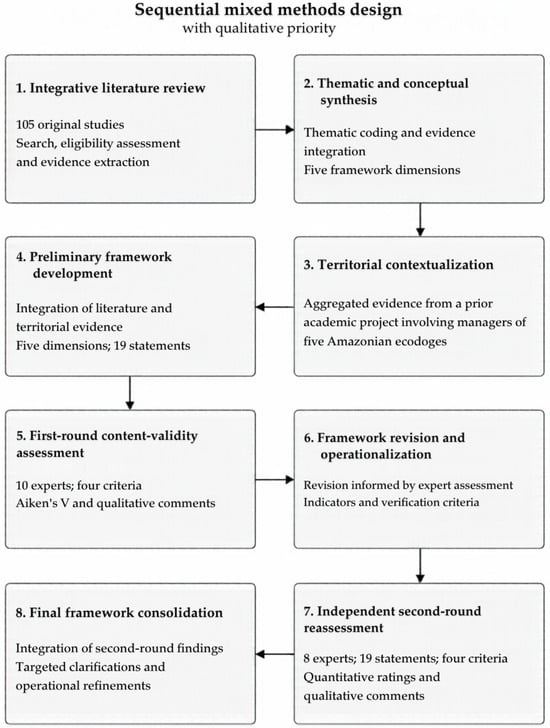
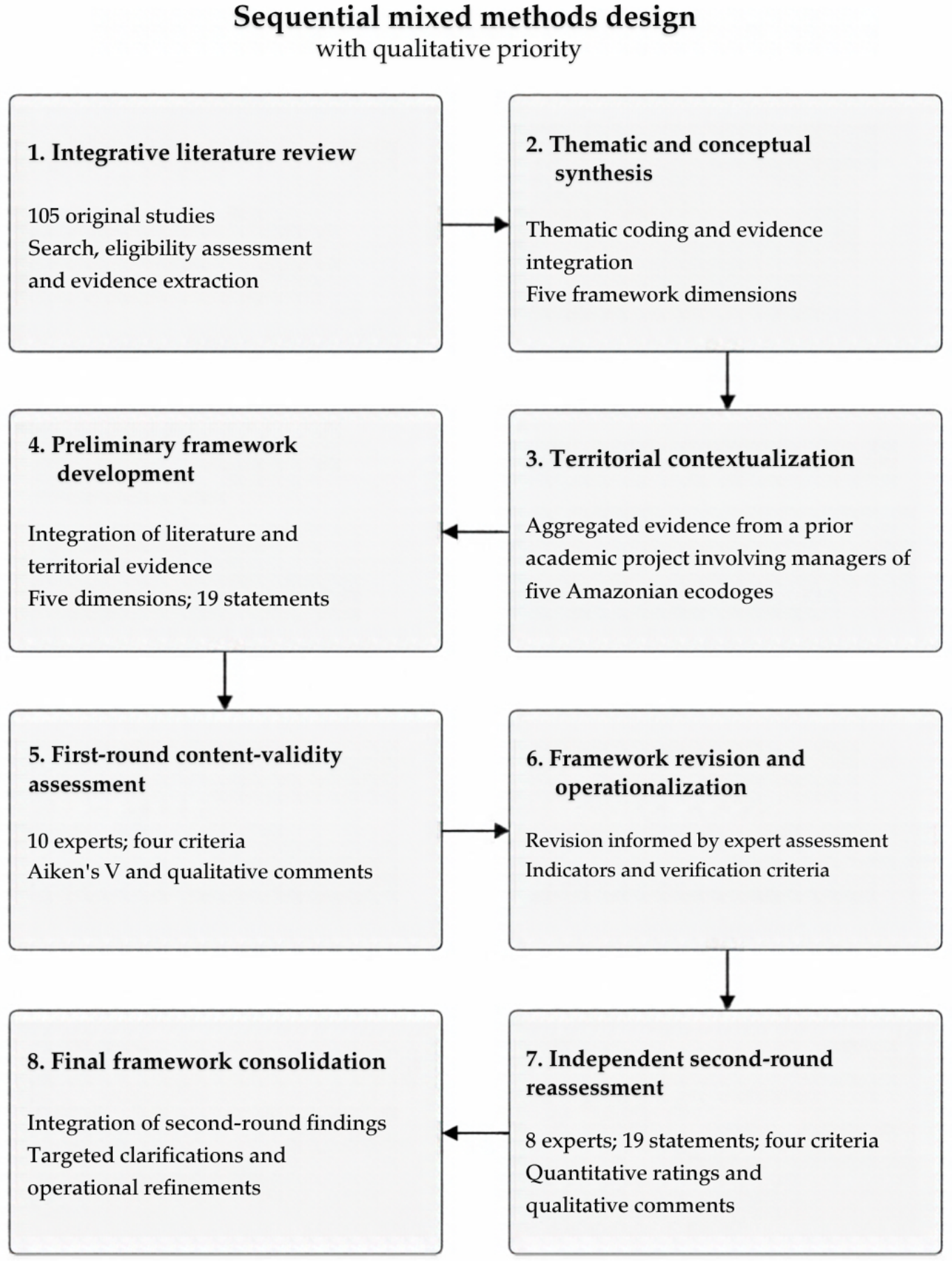
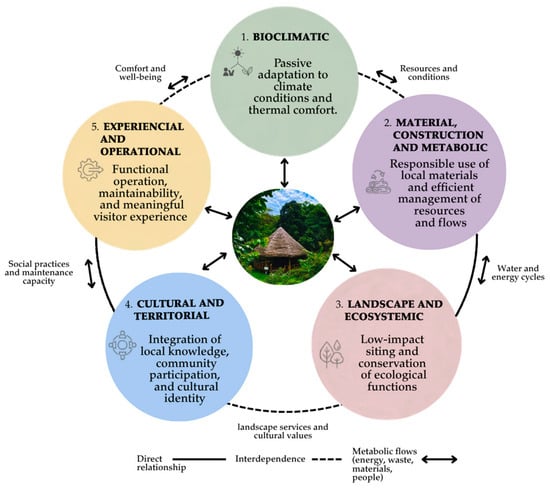
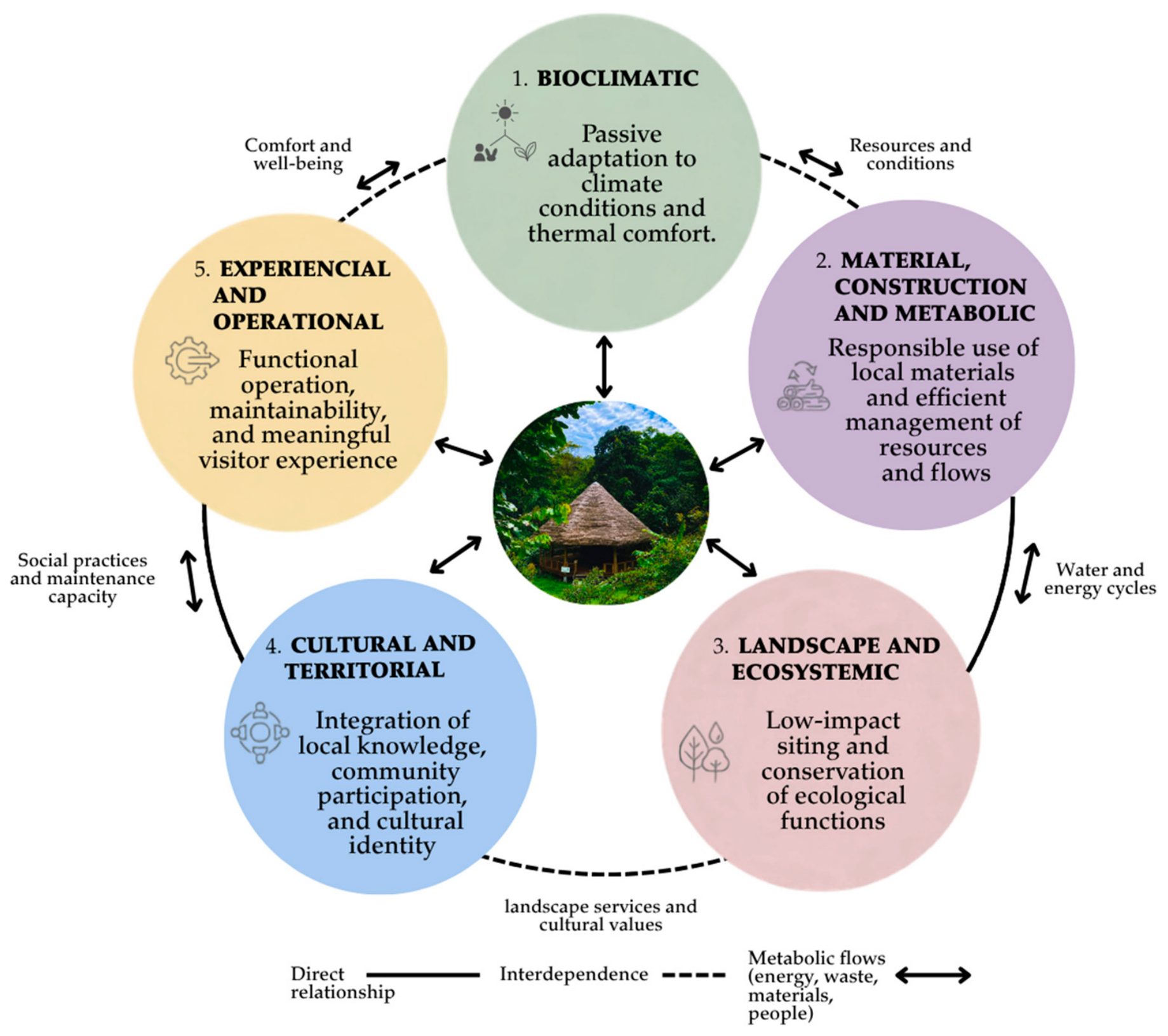
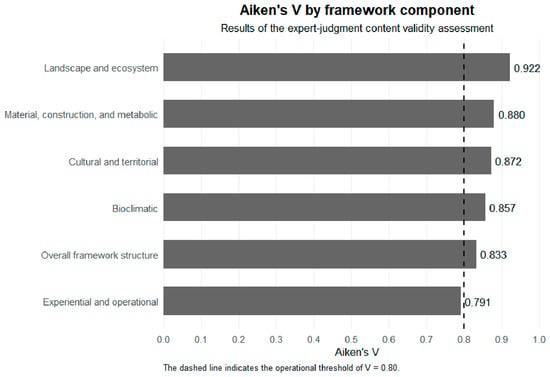
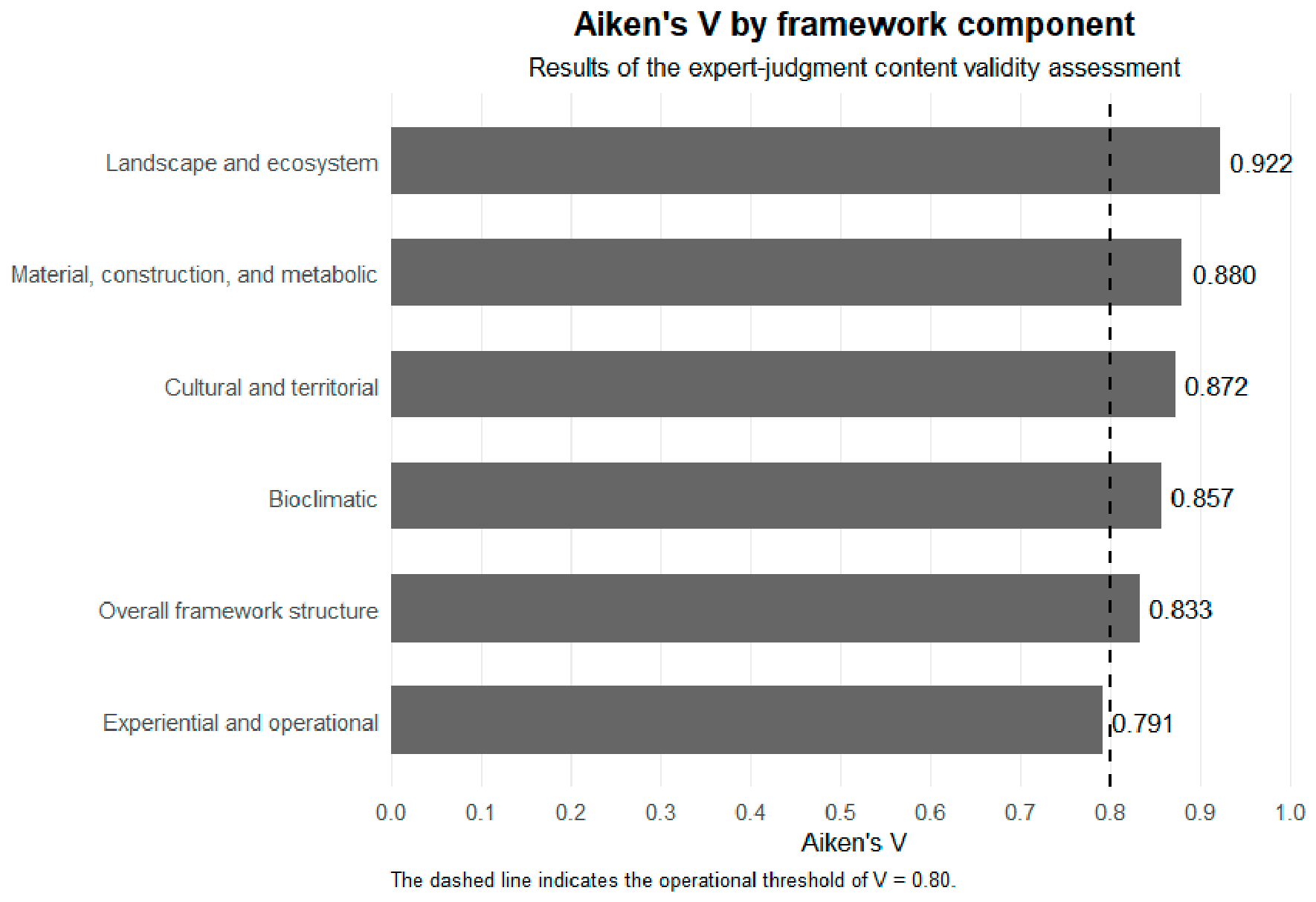
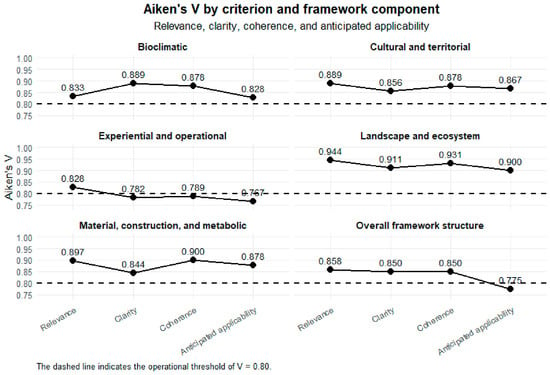
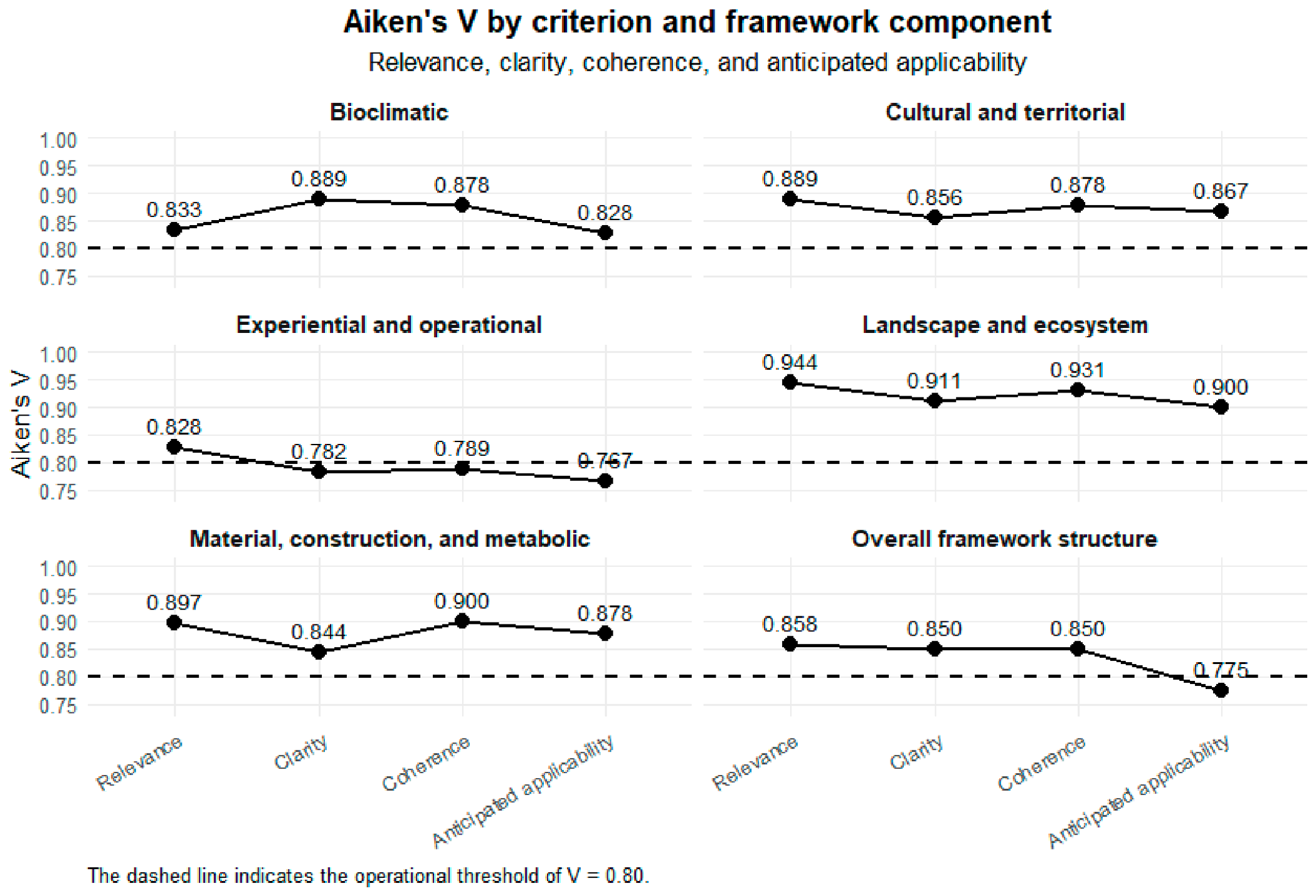
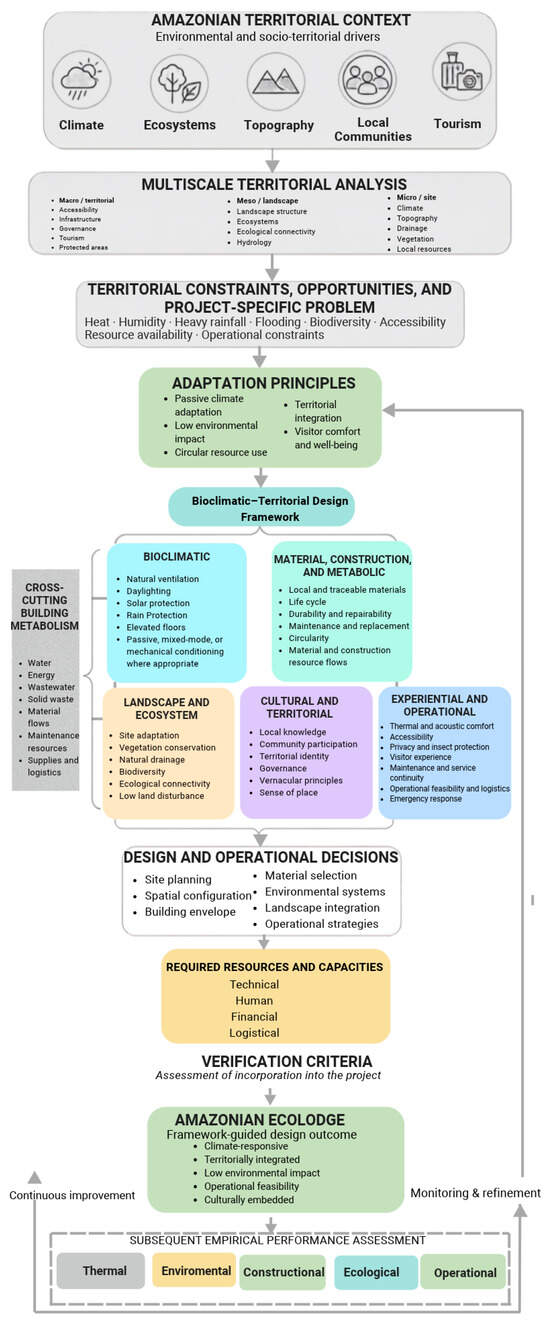
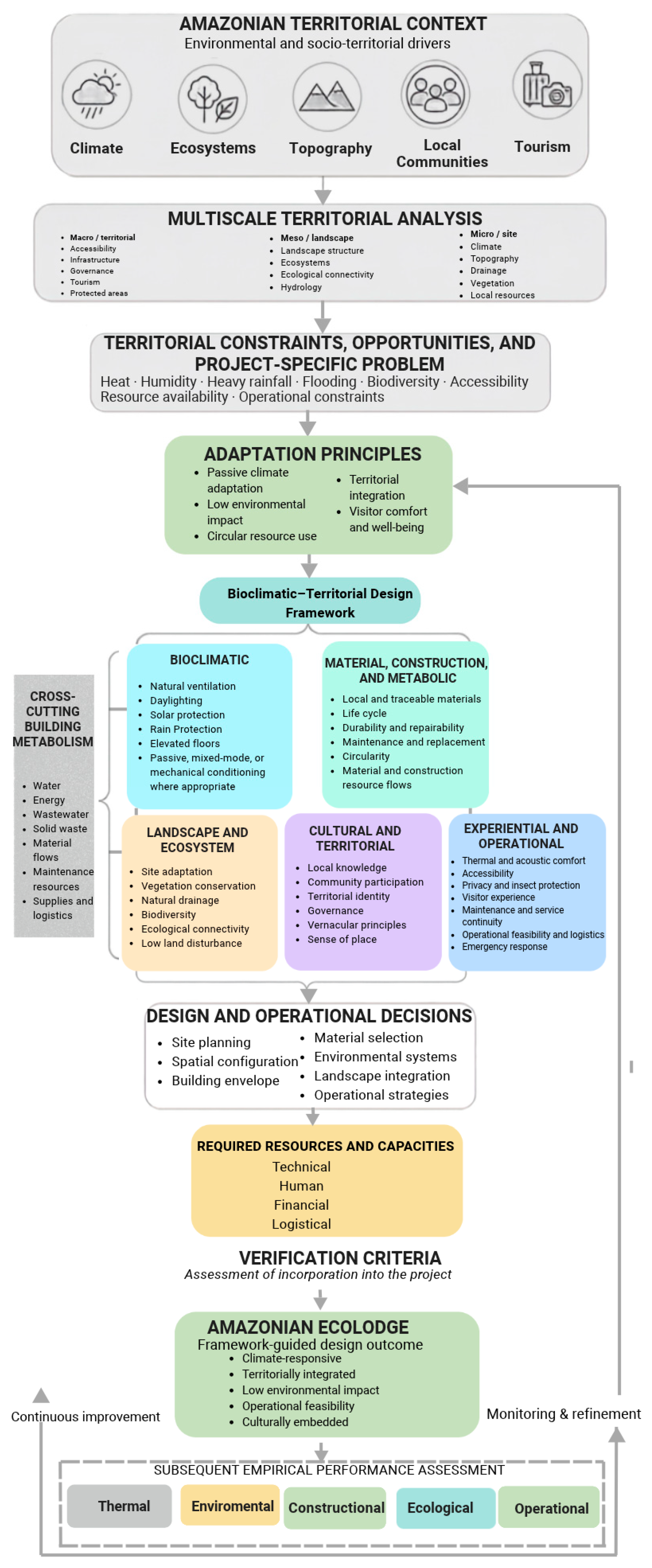
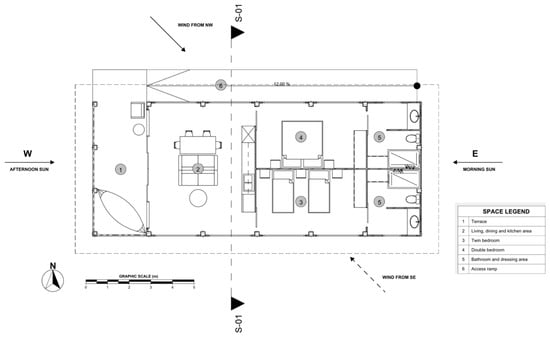
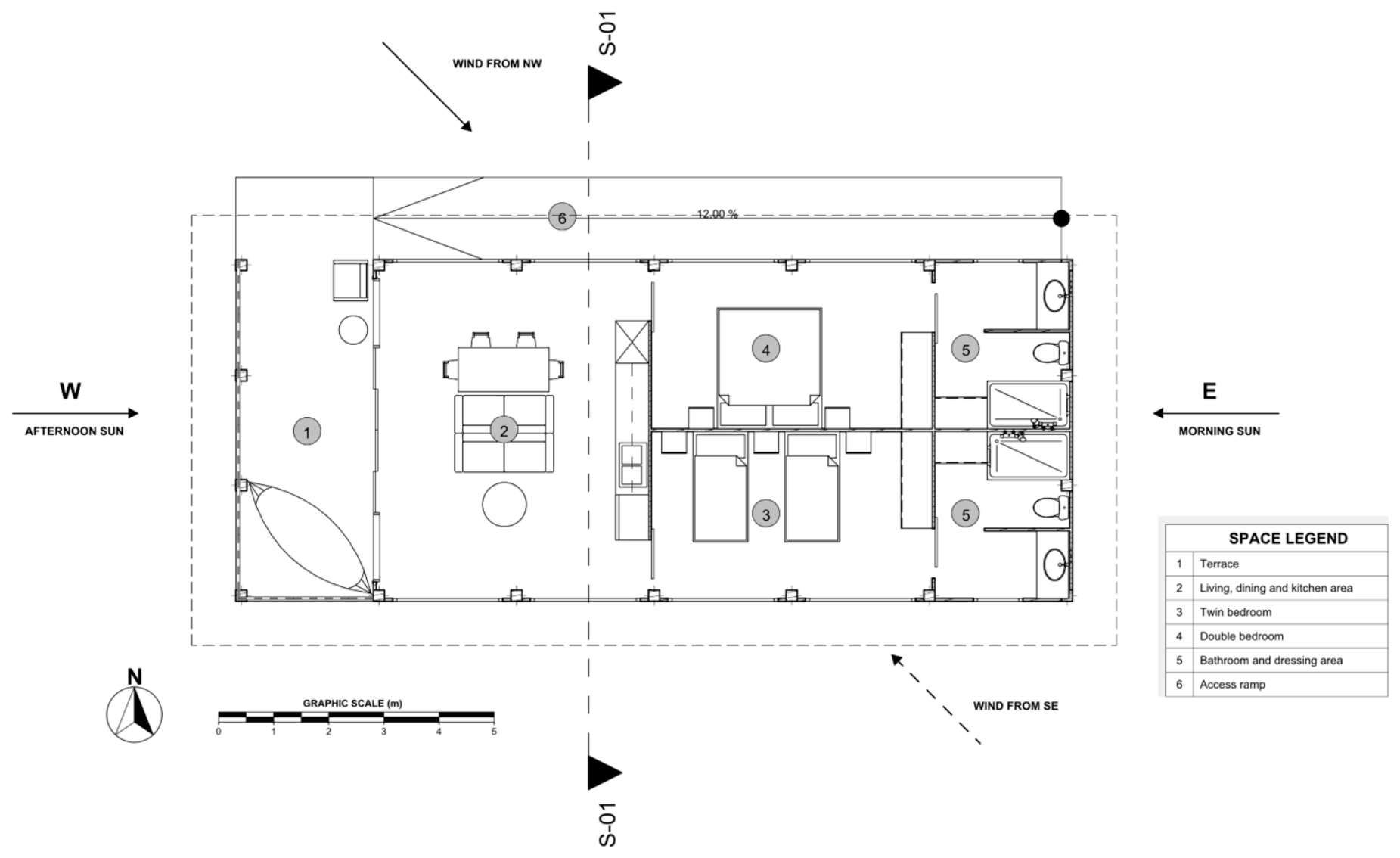
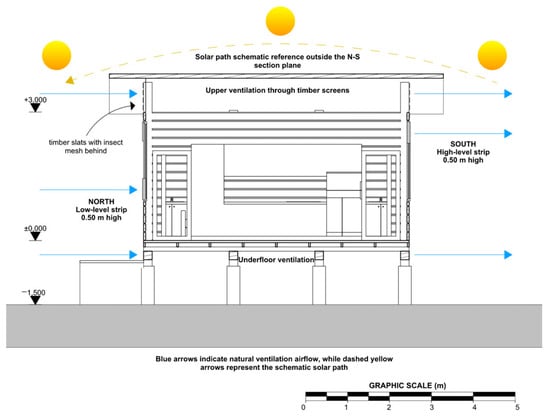
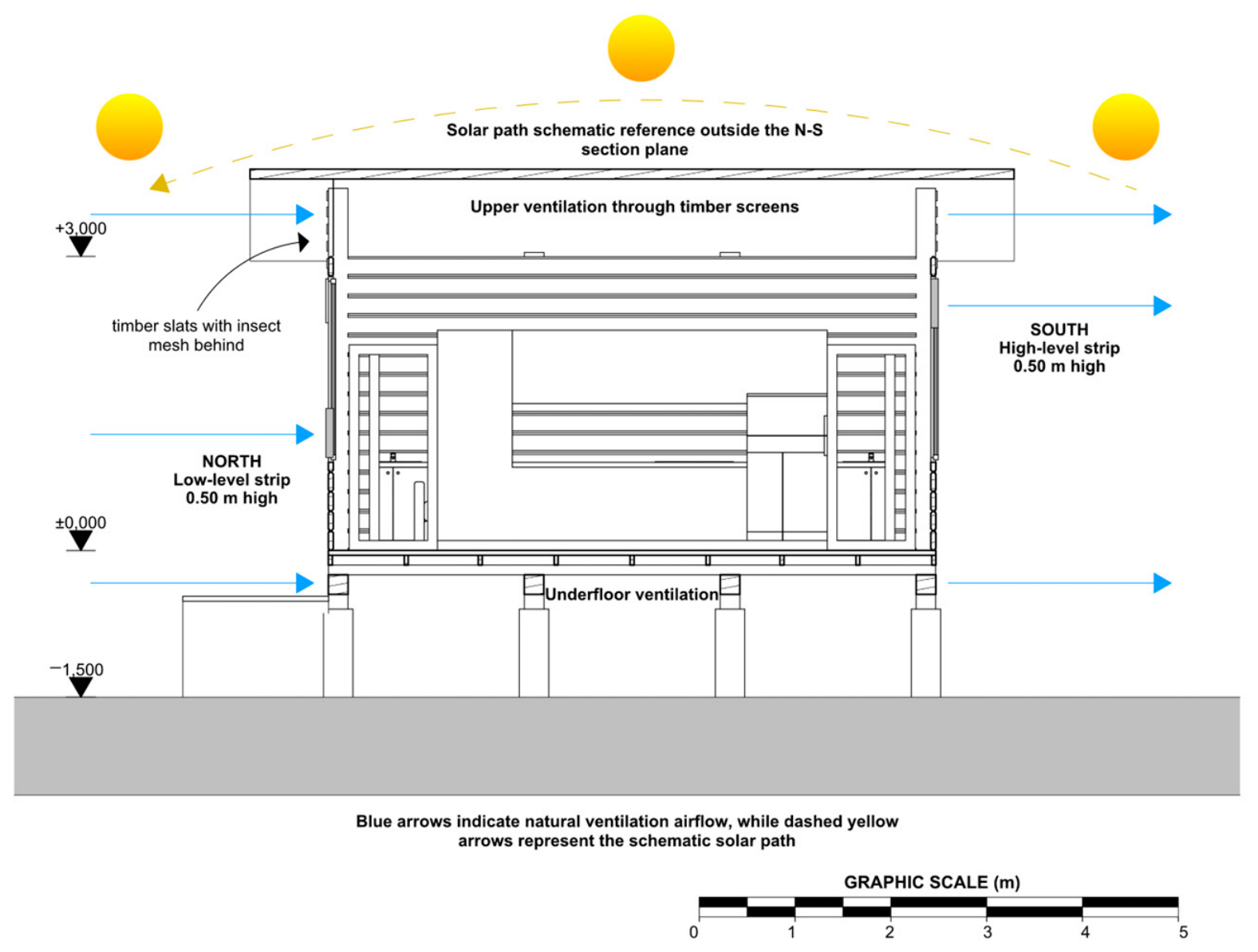

Disclaimer/Publisher’s Note: The statements, opinions and data contained in all publications are solely those of the individual author(s) and contributor(s) and not of MDPI and/or the editor(s). MDPI and/or the editor(s) disclaim responsibility for any injury to people or property resulting from any ideas, methods, instructions or products referred to in the content. |
© 2026 by the authors. Licensee MDPI, Basel, Switzerland. This article is an open access article distributed under the terms and conditions of the Creative Commons Attribution (CC BY) license.